https://amzn.to/3qvgiXZ
order of the day, so care product product
me in is Xzibit open video living room are you busy TVs have is a group of years ago

Play all the time for everyone who is the viewer own my bloke I appreciate your interaction



Maisie Summers-Newton said “all the hard work was worth it” after she won two golds at the Para Swimming World Championships.
The 21-year-old, from Northampton, improved her own European record, claiming SB6 100m breaststroke honours.
She also won a gold in the 200m medley and gained a 400m freestyle silver at the championships earlier this month.
“Being in Manchester was incredible because it meant my family could come and watch,” she said.
She has been a mainstay of the British team since making her debut at the 2018 Europeans in Dublin and is a European, World, Paralympic and Commonwealth champion.
Breaststroke is her main event and she finished in a time of one minute 31.34 seconds to beat her previous best of 01:32.16 set last year, and move closer to the world record of 01:29.87.
Summers-Newton said: “I train eight times a week, two to two-and-a-half hours each session is, getting up at four in the morning and putting all of this effort in.
“When I [swim a personal best] at these major events… that’s where it really shows that it’s paid off and all the hard work was worth it.”
She has combined swimming with teacher training at the University of Northampton and said from March to June she was on a school placement.
Summers-Newton said: “Doing full school hours and also my training hours was quite difficult.
“There were days where I was absolutely exhausted, but I love both and I think it’s really important for me to kind of have my time out of the pool and try not to think about swimming too much, because I think if I was to think about it all the time my head would just kind of explode.”
As well as her university course and placement, she has visited other schools where she was “able to talk to the children all about my sport and swimming and disabilities”.
“I think that’s just creating awareness of it and making it more of a positive thing for children to know about,” she said.
The 21-year-old said she would now take a “well deserved break” before she began to focus on the Paralympic Games in Paris next year.
low-flying of the day. #GoodNight #SeeYouViewersInTheMorning


https://pin.it/3wGwAuw
Pinterest account and give it a follow if you have not already. I also have beanbags on this Pinterest page that are useful for people with cerebral palsy for repositioning to avoid stiffness and pressure sores as they are ultra soft and ultra comfortable. These used to be my favourite beanbags at school when I used to share a flat with some of my friends #ThingsThatAren’tForDisabledPeoplePacificallyCanBeUsefulThingsLike personal care 24 hour can be facilitated by a regular large bin bags feet for comfortable and 24 hour per stroke, and 12, avoiding curvature of the spine and avoiding pressures were from being in the same position directly to related to disabled people, but disabled people aren’t just their disabilities. They are so much more and sometimes you don’t want something that is looking medical or repositioning because you also want to have a next statically pleasing way of repositioning, especially if you live independently in your own home you don’t want everything about you to be medical and medical equipment, wh
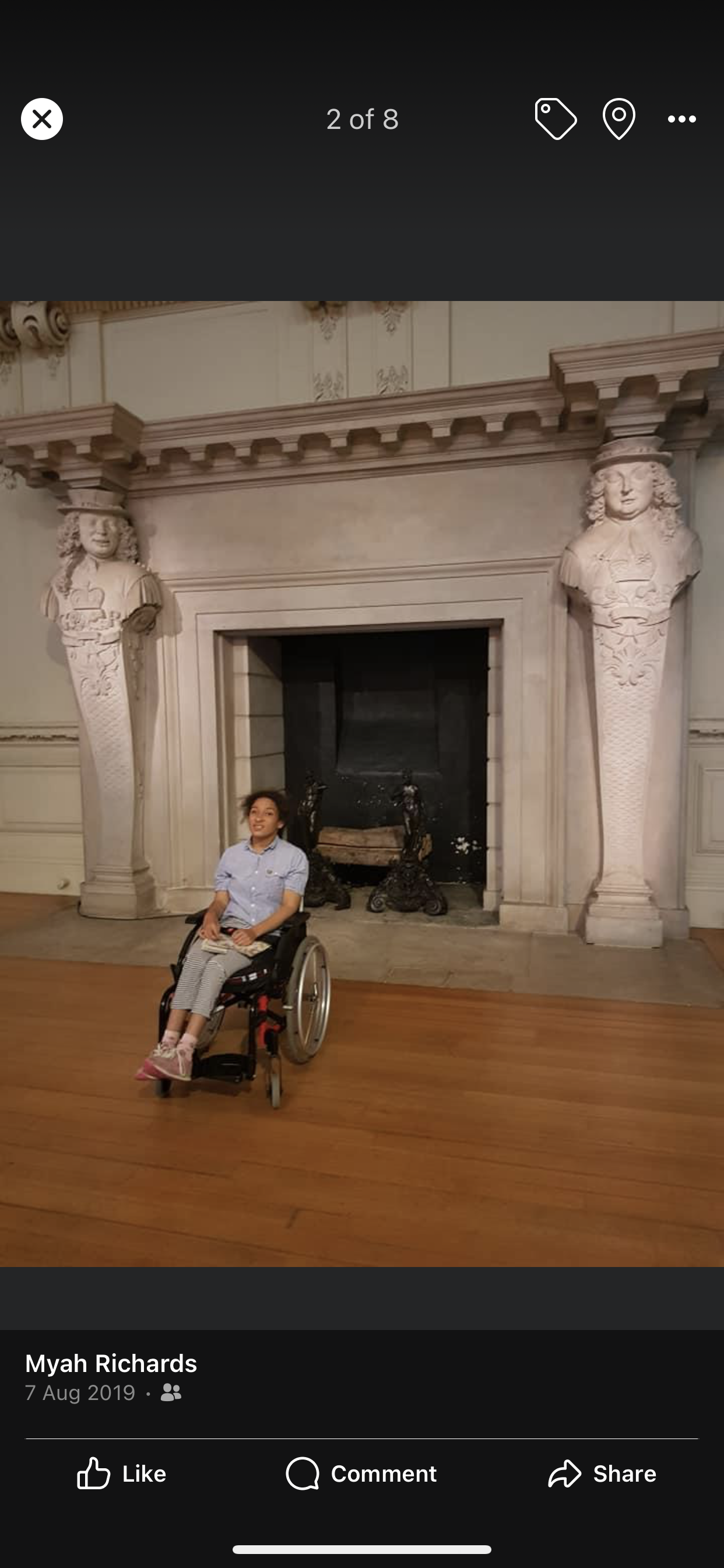
Brown eyes for the Henry the eighth house when I visited there with one of my friends. #Homeowner

next to warm is it rings crowns in Henry the eighth’s house four years ago when I visited there with Grandma community group? Yeah

https://amzn.to/3qoIGuL Affiliate okay item for Ruben Ruben spell Pamplico that call Pam Coser

Mother Struggles To Access Sign Language Classes For Deaf Son
A County Tyrone woman with a deaf baby said she cannot communicate properly with her son due to a difficulty accessing sign language services.
Janine Boyd, 37, whose 10-month old son Mason was born deaf said she constantly worries about his future.
Charities that provide deaf services have said they know it is difficult for families to access services.
There are currently 1,476 deaf children in Northern Ireland, according to a charity.
Ms Boyd’s son is profoundly deaf – he has limited-to-no hearing capability.
Her baby was just a few weeks old when he was diagnosed.
“We were handed booklets and stuff of what to do and told we’d get an appointment for his hearing aids. I didn’t know what to do, I didn’t know anything about being deaf.”
Ms Boyd said charities like the National Deaf Children’s Society (NDCS) gave her some initial support by offering free coaching in basic British Sign Language (BSL).
‘You can’t leave him alone’
But basic classes are not enough.
“I can sign words but I can’t form a sentence so I can’t fully communicate with my son,” she added.
She said Mason, who is already walking, cannot be left alone at any time.
“You can’t even go to the other end of the room without watching him because you can’t shout at him to stop something or if he’s in danger, you just have to sprint to catch him – because he cannot hear anything,” she said.
British Sign Language classes are categorised in six levels from level one (beginner) to level six (advanced) and more advanced classes often have to be paid for.
“Classes for higher levels of sign language are mostly in the evenings. And the classes [for one level] can range in price from £400-£600 per person – so for me and my partner it’s a lot of money,” Ms Boyd explained.
Action Deaf Youth, a Belfast-based deaf charity, does offer free BSL classes for all levels but to take full advantage the charity said families should travel to Belfast to attend them.
Ms Boyd said it is a struggle to do that.
“I’m in Dungannon, that’s an hour away [from Belfast]. We have three kids in the house, what do we do with the kids?
“It’s very hard for us to just go down to Belfast for them [classes] and work, get kids in and out of school, and everything else.”
Service cuts
Caroline Doherty is the director of Action Deaf Youth and said recent budget cuts are having an effect on services.
“Part of our services have been severely impacted by the EA (Education Authority) – we are pausing our youth service come September as we can’t afford to run them. As a small charity we are continuously battling with funds and very reliant on donations.”
The National Deaf Children’s Society said access to sign language classes can be a struggle.
“We are aware that finding suitable, funded BSL courses is very difficult for parents as most of them are delivered by FE [Further Education] colleges in the evenings and they can be quite expensive,” it said.
The NDCS receives funding from the Department for Communities (DfC) and funds are also allocated from the EA to support deaf services.
The charity said it can offer basic Family Sign Language courses for ages 0-5 but after that “it can be difficult for parents to access accredited BSL courses”.
“A lack of support could have a catastrophic impact on deaf children’s development,” the charity said.
In a statement, DfC said family sign language learning remained a “key priority for the department”.
“The sign language team is currently planning this year’s funded courses by assessing current learning priorities with its deaf organisation delivery partners and through feedback from parents of deaf children.”

The EA has services to give extra help to autistic children, those needing support with literacy and numeracy, or those with sensory impairment.
That includes children and young people who are deaf and hard of hearing.
It also funds other organisations to deliver some services for deaf children and their parents.
But the authority is facing a budget squeeze, rising need, and limits on recruitment.
The worry is that it will reduce some of the support it can offer.
And that could affect the present and the future for some children and their families who rely on it.
The department added that it currently funds “a range of courses from an introduction to sign language to a degree equivalent British Sign Language level six course”.
A spokesperson for the EA said in a statement that it “recognises the impact that early language development has on deaf children’s progress.
“The EA also understand that finding suitable funded British Sign Language (BSL) courses is very difficult and often courses are only available in the evenings and are not funded.”
“The EA continues to work closely with charities such as the National Deaf Children’s Society to find solutions for the lack of suitable sign language courses for children, young people and parents.”
Ms Boyd said the current system for deaf children and their families was unfair.
“Any other child has access to proper schooling and the ability to speak, why is a deaf child and their family not given the opportunity of learning sign language to be able to communicate effectively to each other?”
Mason is currently waiting to receive a cochlear implant, which provides the sensation of hearing, but does not restore hearing.
“[The implant] is not always going to make someone fully understand the sentence,” said his mother.
“If you were able to sign a full sentence to someone, they can’t get that wrong. A deaf person will fully understand what you’re telling them with sign.”

https product of the day for everyone to look at to see if they would like to purchase://amzn.to/45heP6i

very very pretty fast replies saying for this evening

The cat trap is out here this evening. #CatOwner #ILoveCats








fundraising :-)
fundraising is back on for the next 2 to 3 weeks minimum to get me to a specialist festival for wheelchair users and people that find mobility difficult as well as funding my personal assistant for both the festival and my last qualifying camping exam
bingo


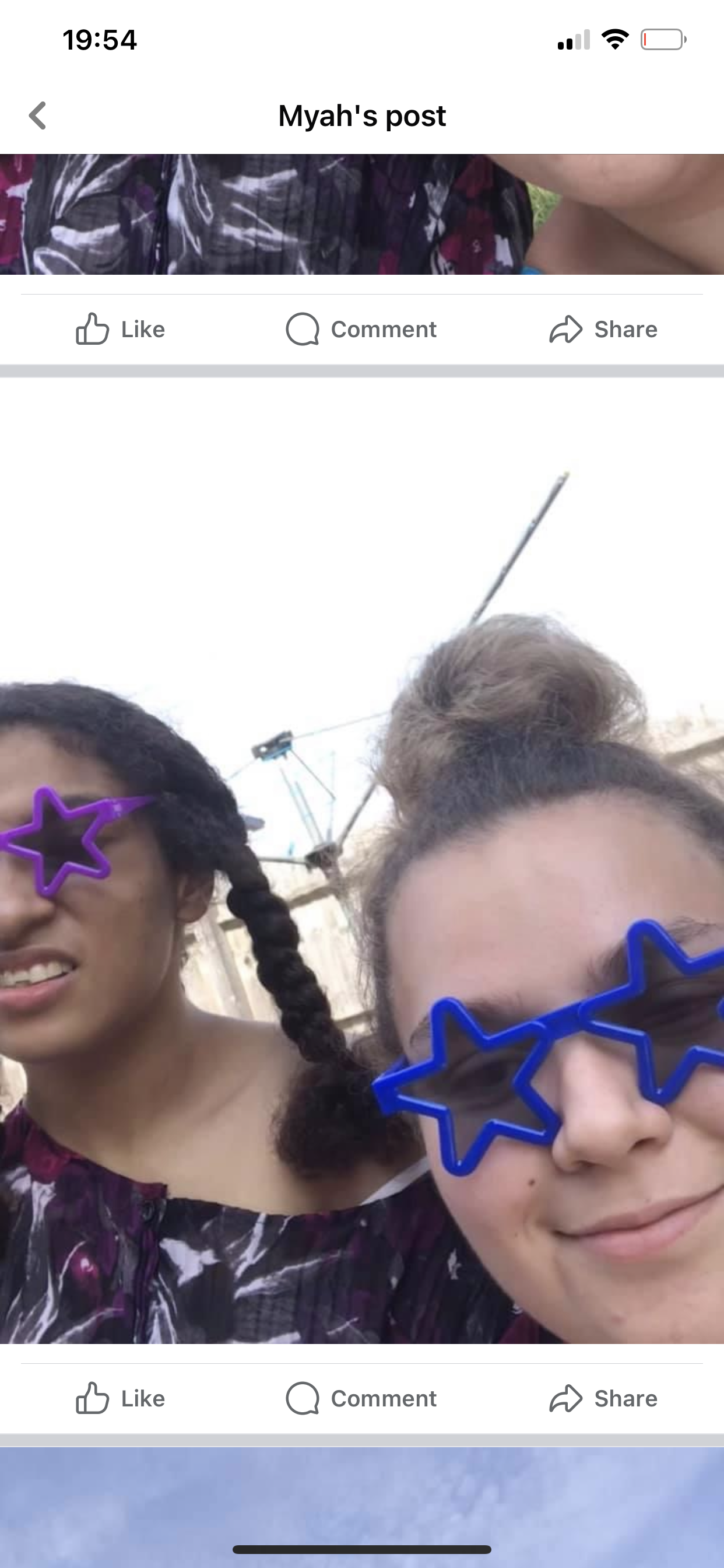
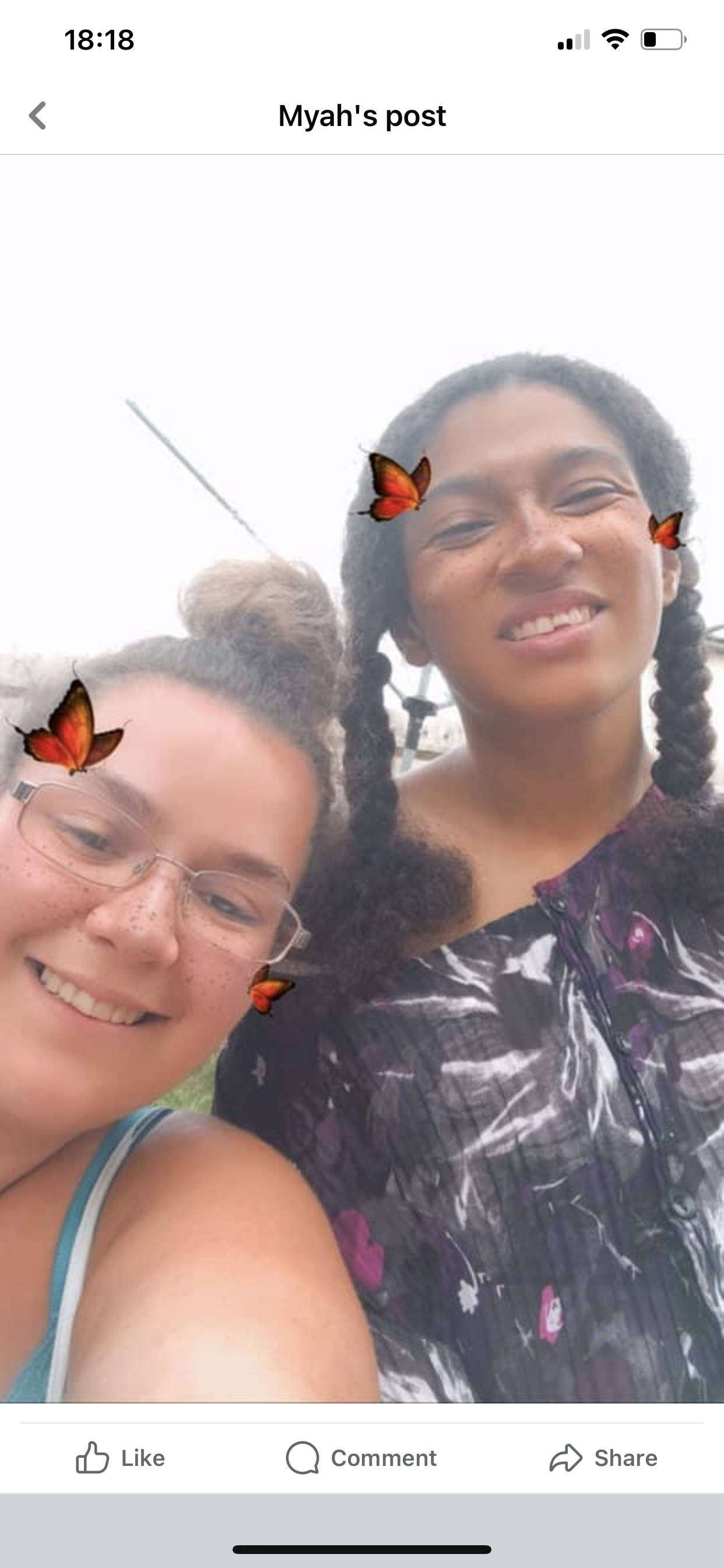
me and my friend being silly three years ago on Wednesday
Double Amputee Boy, 8, Reaches Fell Summit
An eight-year-old boy who had both legs amputated after he was abused as a baby has walked to the summit of a Lake District fell.
Tony Hudgell’s trek up Orrest Head, which overlooks Windermere, has raised more than £19,000 for charity, way beyond his original £500 target.
He was joined by veteran mountaineer Sir Chris Bonington and double amputee former Gurkha Hari Budha Magar.
Tony’s adoptive mother, Paula Hudgell, said seeing him reach the summit was “so incredible”.
“Anybody who knows Tony knows that he is a complete whirlwind,” she said.
“He’s a force to be reckoned with.
“I reckon we could have climbed probably the highest mountain now.
“I think it might have started something.”
Tony, from Kings Hill in Kent, lost both legs after serious injuries were inflicted by his birth parents, who were jailed for 10 years in 2018.
He received Pride of Britain and Points of Light awards for raising more than £1.7m for charity during the pandemic.
His latest challenge supported the Tony Hudgell Foundation, Crohn’s & Colitis UK, the Bendrigg Trust and The Lake District Foundation.
He said his first fundraising walks had left him wanting to climb a mountain.
The family later met Cumbrian guide Steve Watts who made the wish reality.
Mr Watts said they picked Orrest Head because it was the first fell climbed by renowned guidebook author Alfred Wainwright.
However, the author had not prompted the same turnout of wellwishers on the summit as Tony had, he said.
“Talk about endeavour, willpower. For an eight-year-old? Follow that,” Mr Watt said.
“How many more is he going to inspire?
“It’s not just about the money, it’s the legacy.
“It’s opening the world to other children and other adults like Tony and Hari.”
Mrs Hudgell said it had been “so emotional” when Tony was joined as a surprise by Mr Budha Magar, who became the first double above-the-knee amputee to climb Everest in May.
“Hari is a superhero – the same as Tony – and it just shows that, being differently abled, what you can achieve,” she said.
“You can achieve anything if you just put your mind to it.”
Mr Budha Magar lost his legs when he stepped on an improvised explosive device in Afghanistan in 2010.
Surprising Tony near the summit of Orrest Head, he left the eight-year-old speechless.






https://vm.tiktok.com/ZGJgH5dNj/
Play this video audio with Prime, yes that’s nice project that’s good I do I cry remix on my return
hair product of the day for everyone
Times of the day for everyone in this



https://amzn.to/43UoG0Z product of the day. I love you do you spell flower perfect or the next blowup #

Hull Disabled Mum’s Anger At Being Removed From Council
A disabled new mother has complained she is being “pole-axed” from her council seat.
Labour’s Sarah Harper-Riches has served as Hull’s Bricknell ward councillor since May 2022, but has been recalled because she has not attended a formal council meeting since January.
Liberal Democrat-controlled Hull City Council said it had acted in accordance with local government rules.
Ms Harper-Riches said she had been left “absolutely devastated” and “baffled”.
The Local Government Act 1972 allows for recall of a councillor if they have not attended formal meetings for longer than six months, unless they request an extension in advance.
Due to a recent flare-up of her chronic fatigue syndrome, coupled with motherhood, Ms Harper-Riches said she did not submit a request.
However, she insisted she had been active in her ward, attending community events and gathering casework.
Ms Harper-Riches said: “I am absolutely devastated. It feels like I have been pole-axed from the council. I am baffled.
“Had I been notified by the council then of course I would have attended a meeting. But there was nothing.”
Ms Harper-Riches said she was focussed on breast-feeding her daughter and managing her health condition.
“I am a politician but I am a person first and foremost,” she said. “I understand my role as a councillor involves attending meetings but my return to work has to be carefully managed and appropriate.”
‘Archaic’
Hull’s Labour group said Ms Harper-Riches had fallen foul of “archaic” legislation and claimed it was aware of other councils that alerted elected members in advance of disqualification.
Councillor Hester Bridges, deputy leader of the Labour group on Hull City Council, said she was “bitterly disappointed” at the decision to recall Ms Harper-Riches, who she described as “a hard-working councillor”.
Hull City Council said Ms Harper-Riches had not attended a meeting since 19 January.
It added: “As a consequence, the seat she occupied became vacant by virtue of Section 85 of the Local Government Act 1972.”
The authority said Ms Harper-Riches was informed the six-month period had passed prior to the vacancy being made public.
An election will be held to fill the councillor vacancy subject to a request from two electors, the council added.
A Local Government Association spokesman told the BBC it believed the current legislation was “out of date”.
Changes, which would allow councils to hold some statutory meetings remotely, are expected to be voted on in the House of Commons later in the year.


Second time of the day, courtesy of Reidi in the clan for all those few Charles spaniel lovers out there and see Curve and you and

Setting of the day for Monday


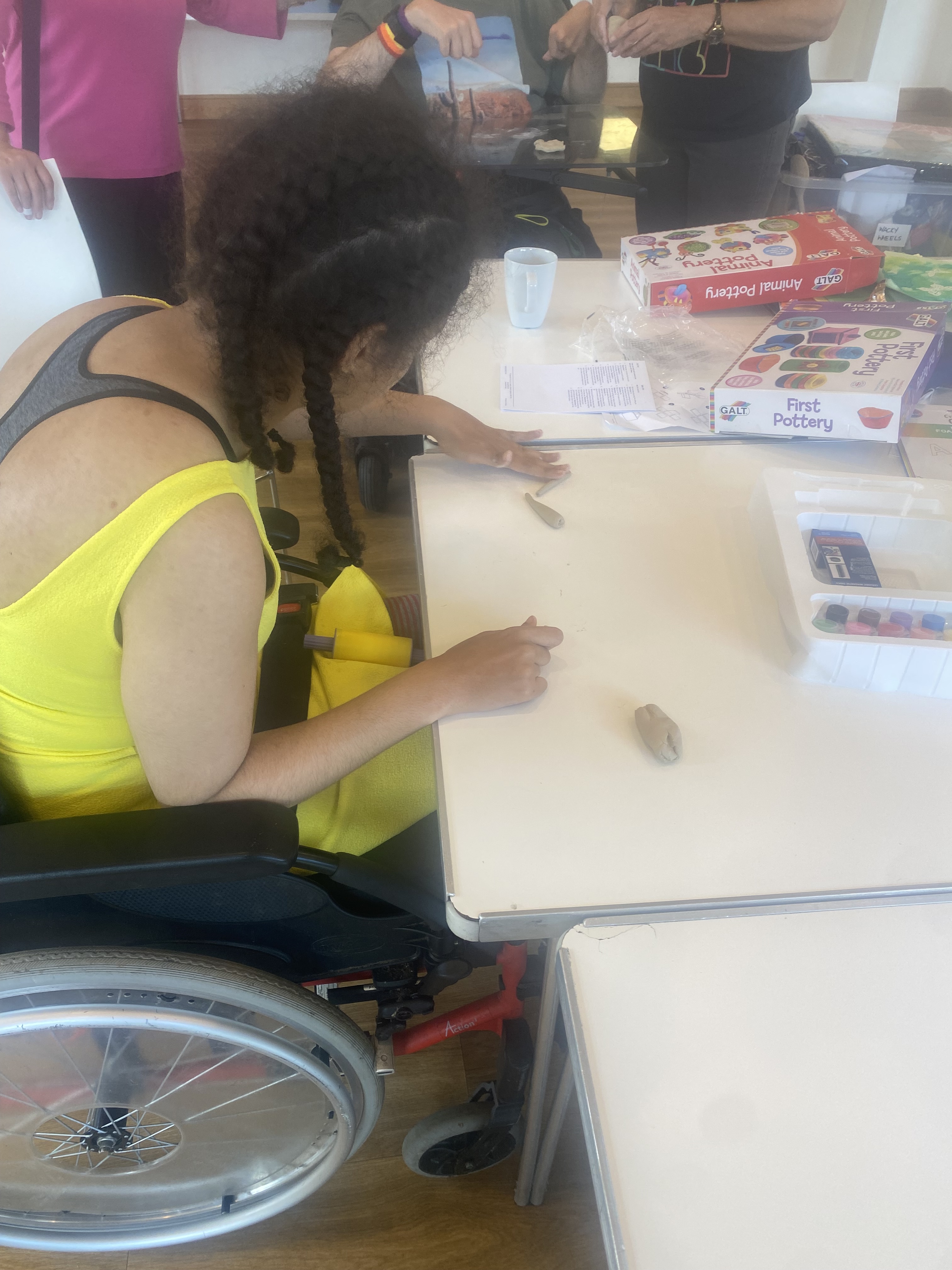
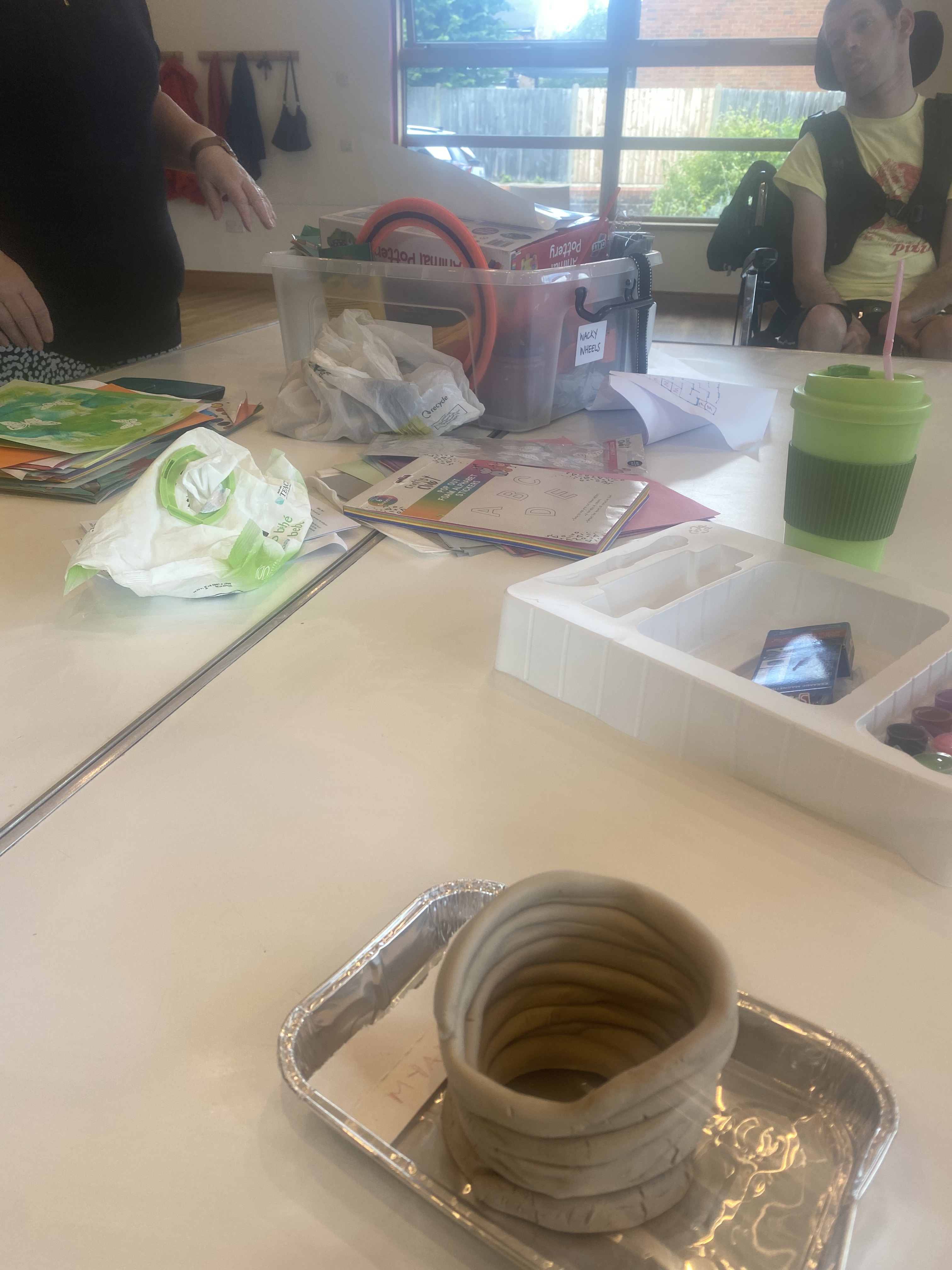
calling Prime for my coil part which I made this morning
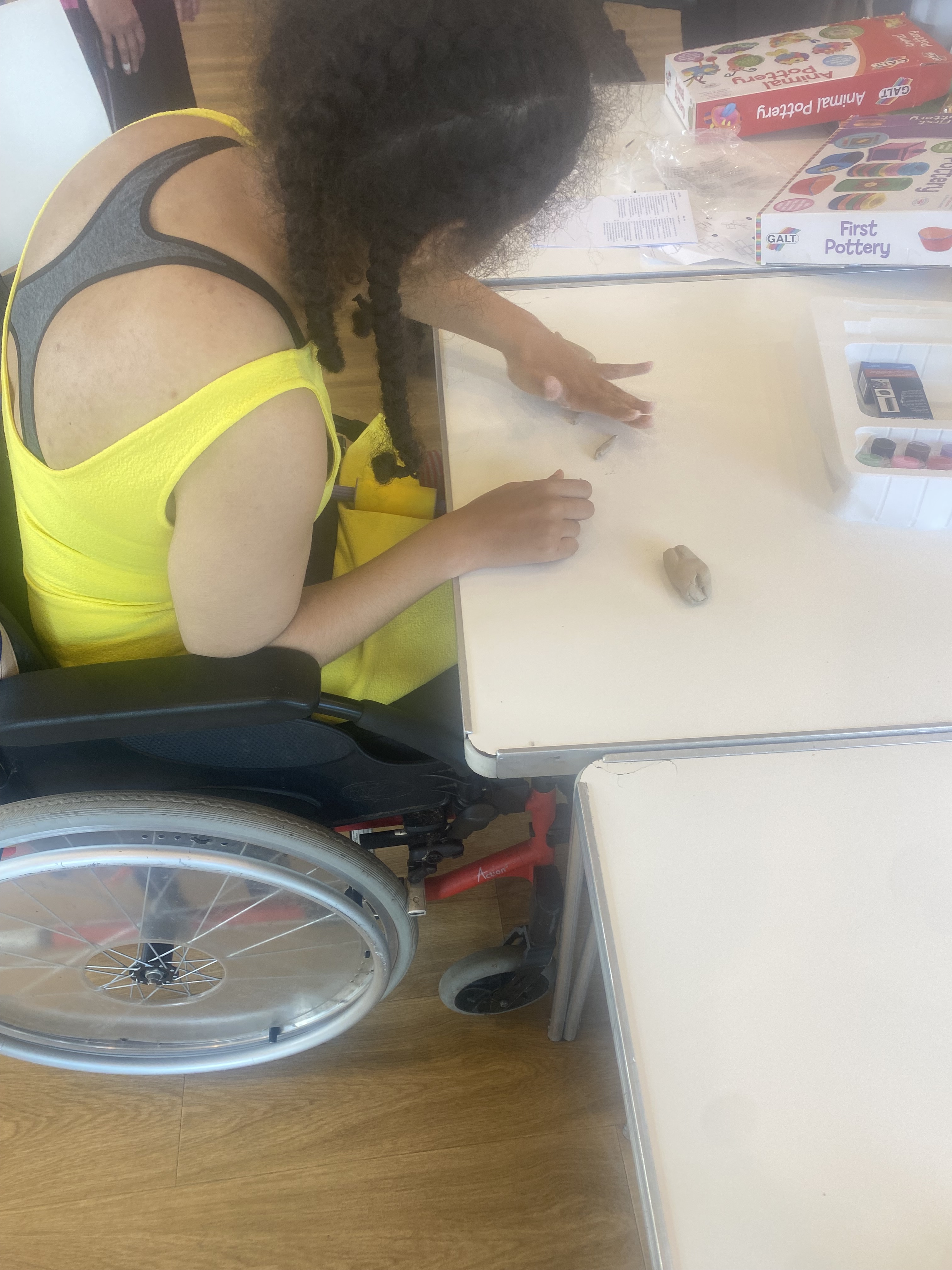
Play heart that I made today at wacky wheels group
A dancer says modifying dolls for poorly children so they look like them “takes away that fear factor”.
Tonia Payne-Cheney from Eckington, Worcestershire, has Ehlers-Danlos syndrome and uses a feeding tube.
She and her friend began modifying teddies first but, because they couldn’t be wiped down in hospital, the 26-year-old started adding feeding tubes to dolls.
“It takes away that fear factor when [children] see it,” she said.
While Barbie brought out a range of inclusive dolls in August last year, Ms Payne-Cheney says she has been modifying dolls for years.
“I can give the dolls to the child…and they can see that they have the same as their doll,” she said.
Her syndrome, an inherited condition, affects the connective tissues supporting her bones.
Ms Payne-Cheney, a dancer and choreographer for Ballet Cymru, said she also goes into schools to help children understand about feeding tubes and uses the dolls as a way to do so.
“They get to hold it and touch it and play with it where they wouldn’t be able to before,” she said.
Ms Payne-Cheney said the children responded “great”.
“Now if a child goes into that school who has a tube they can be confident that everyone will know what it is and know not to touch it,” she said.
Ms Payne-Cheney said she also had other genetic conditions which left her completely bed-bound and had to undergo a “massive brain and spinal operation”.
“I got back to being well…but then I got really poorly again and was in Spain in a coma for five months and now I’ve been left with a breathing tube that I have to have all the time [as well]”.
“But we just have to get on with it, you know I carry on doing my trapeze and dancing and horse-riding,” she said.


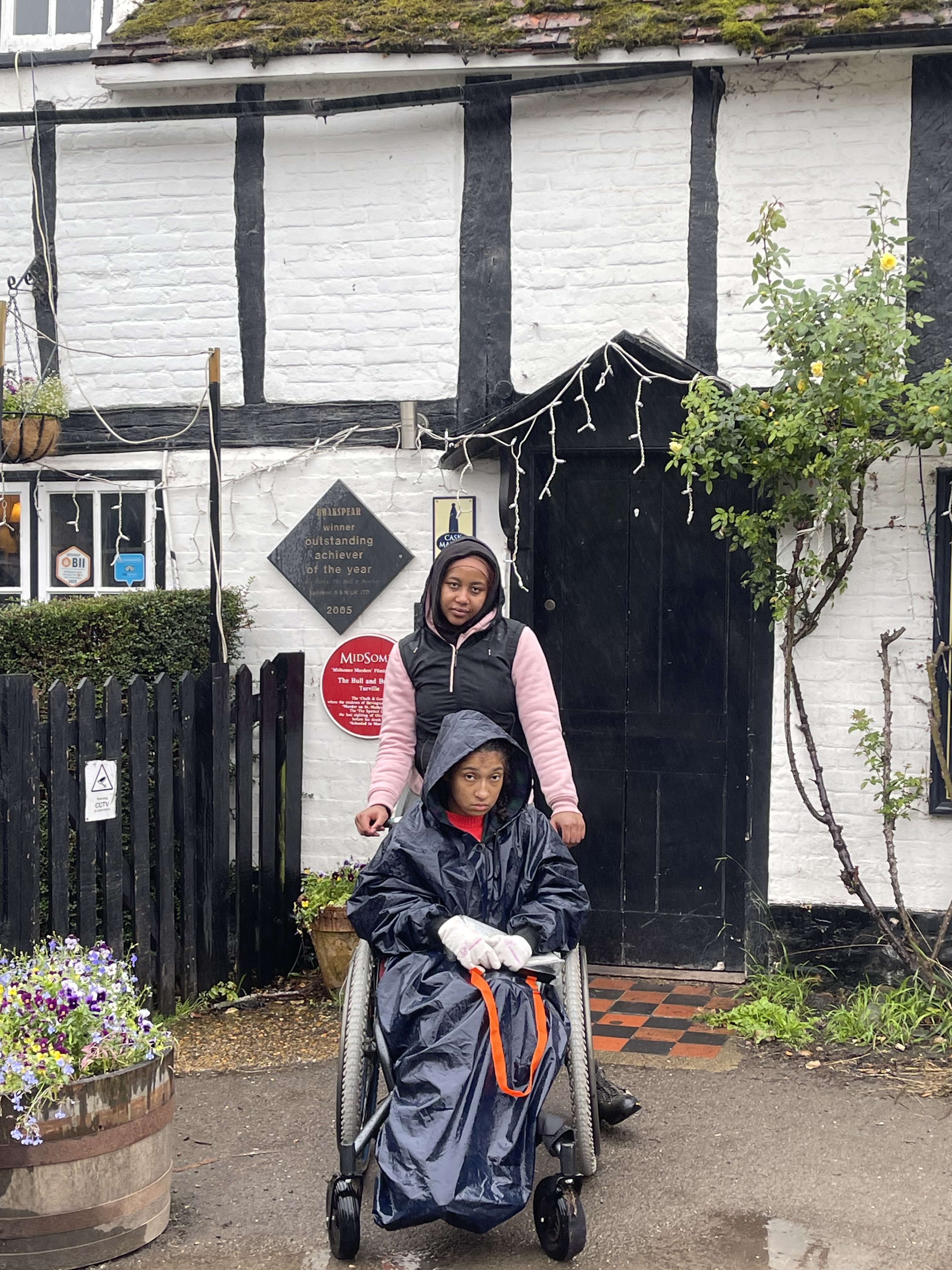
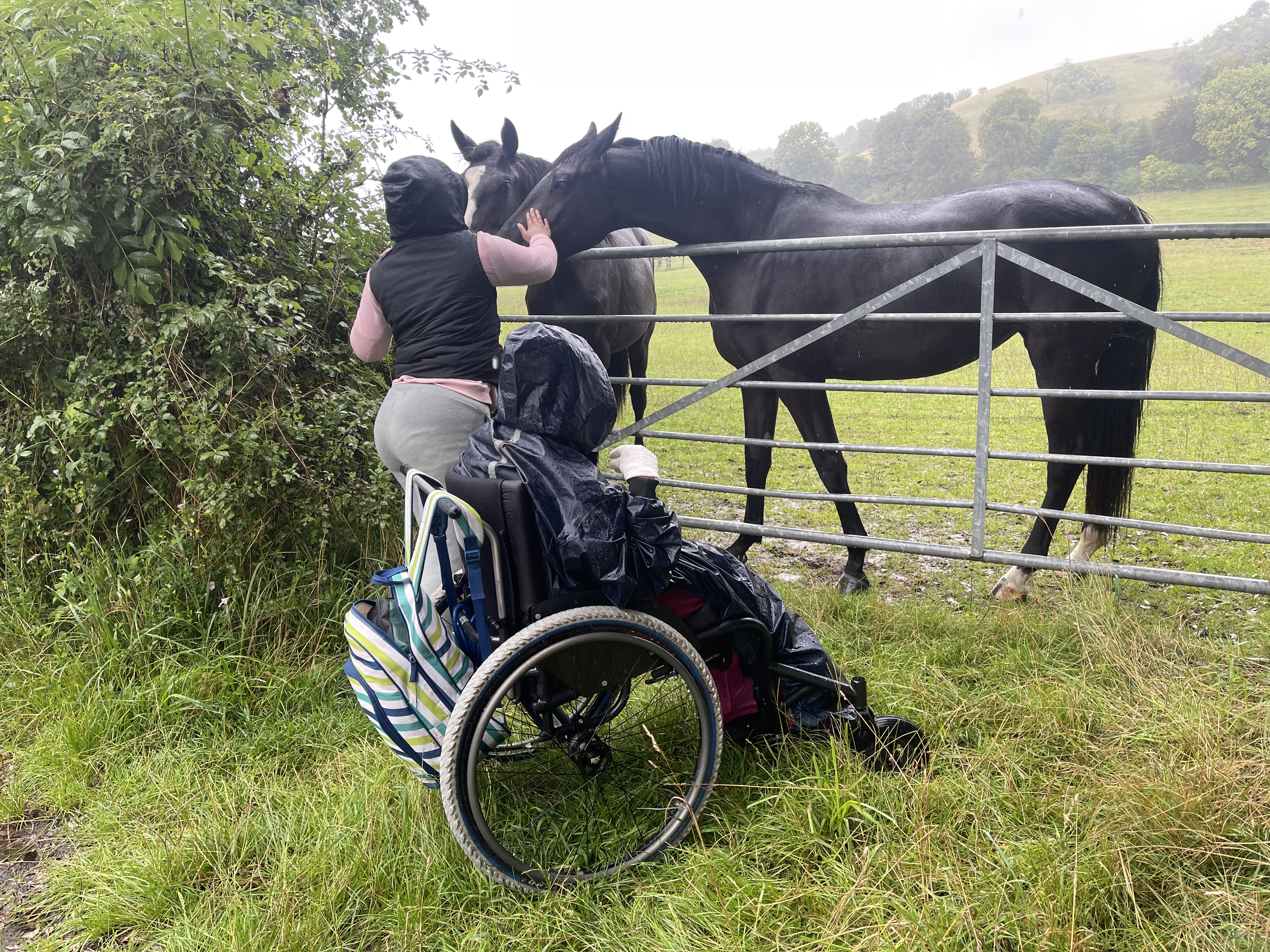
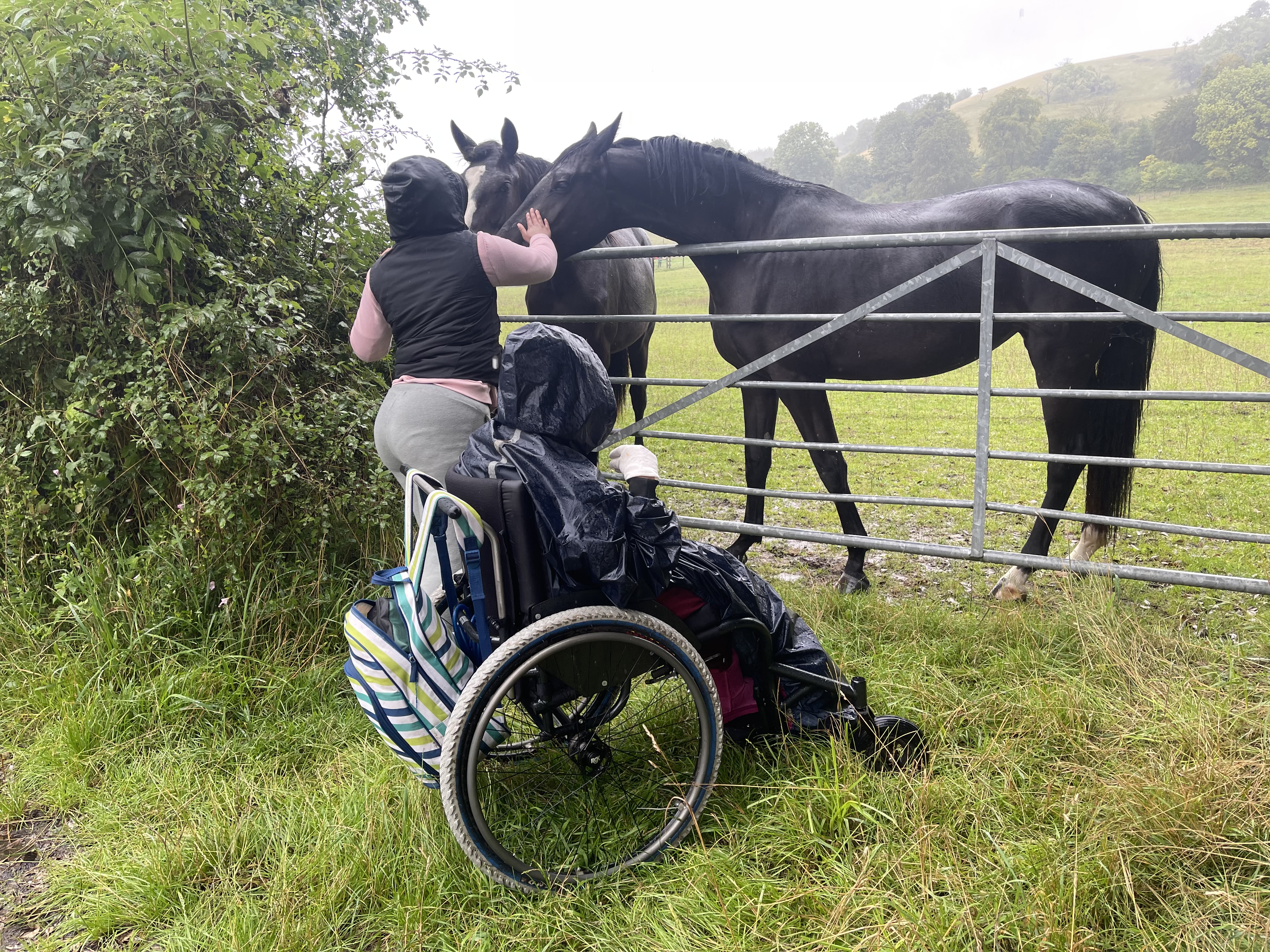
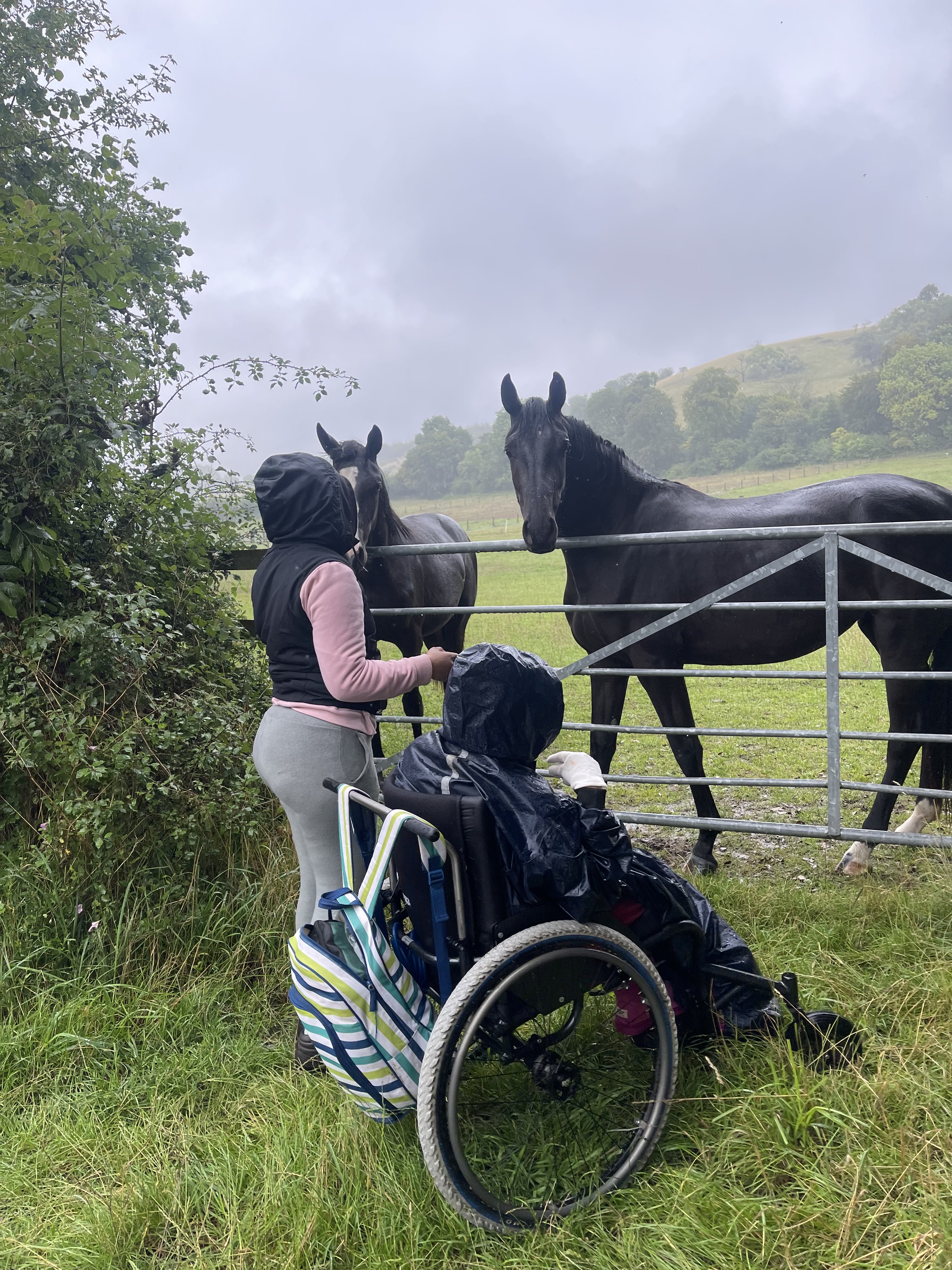
https://amzn.to/3QqZfRp

https://amzn.to/45g4M1j
most of the day

washing out on the campsite to dinner on the weather to pull my #LivePhotos, #WashingOut #CerebralPalsy

https://amzn.to/3OGBYcM item of the day for Saturday

https:/so today I come every day,/amzn.to/43WBRhI
saying for the early risers for Friday

https://amzn.to/3QnT6Wm product of the day for Friday

happy cheerful time of the day for Friday, that Samuel six 🐱
Drag: First Welsh Disabled Troupe To Make Eisteddfod Debut
Being a disabled drag queen has had a massive positive impact on Nicole Bird’s life.
The 27-year-old from Caerphilly joined House of Deviant during the Covid lockdown, and says she has not looked back since.
House of Deviant is the first and only disabled drag troupe in Wales.
“It makes me feel fabulous and confident. I’m proud to be a woman in drag,” Ms Bird said.
The drag queens are preparing to perform at this month’s National Eisteddfod in Boduan, Gwynedd, for the first time.
Ms Bird will be performing in a Welsh-language show called Ffabinogion – a modern twist on some stories from the Mabinogion, a collection of Welsh myths and legends.
None of the disabled drag queens are Welsh speakers themselves, so they have been learning phrases and lines for the show.
“I’ve been enjoying learning Welsh and learning about Wales,” said Ms Bird.
Her co-performer, 31-year-old Sophie Scheeres, also known as Miss Shade B, was one of the drivers behind the creation of House of Deviant.
She was on a night out and asked Gareth Pahl, who went on to found the troupe, if she could be a drag queen.
“I’m trying to use my voice more, be more confident – that’s what I need,” said Ms Scheeres.
“I think it’s amazing to be a different character than who you are. Miss Shade is very sassy,” said Ms Scheeres.
She said she was “nervous” about the eisteddfod performance because Welsh was new to her.
“I’m getting it slowly. It’s a little bit different and a little bit hard, but I’m learning,” she said.
The TikTok content creator
Guiding the queens through the performances is Ellis Lloyd Jones, a TikTok content creator originally from Treorchy, Rhondda Cynon Taf.
He said: “I think it’s really important that we have this representation of different people in the eisteddfod.
“Although the queens don’t speak a lot of Welsh they’re showing they’re really passionate to get into it and learn it and I think that’s something we should celebrate,” Mr Jones added.
For Mr Pahl, 40, watching the group rehearse has been a great source of pride.
He said it had been a “real challenge” that had come at the right time to push the performers out of their comfort zones.
“One of the purposes of the project in not only about growing self-esteem but to show the world what they can do,” he said.
Having performed in drag on-and-off for 22 years, Mr Pahl said his drag alter ego gave him confidence and had an impact “in and out of my drag life”.
He said as a result, he explored how to “use drag performance with adults with learning disabilities to grow confidence and self-esteem.
“It’s a really good tool to help people who sometimes struggle to get their voices heard,” he said.
“There’s a number of reasons why anyone would want to do drag.
“It might be about gender exploration, it might be about self identity and self esteem. It might just be that you really like glitter and fabulous sequins.
“House of Deviant is a celebration of humanity.”
Since creating the group, Mr Pahl said it had been a “crazy, wild journey” that had gone from “strength to strength”.
He said one of the most rewarding feelings for him was watching the impact drag has on the disabled performers.
“When you see that change and just how a person thinks about themselves,” he said.
“Yes, they are showing audiences how great they are, and how fabulous, and what they can do, but also it is having a real profound difference to that individual as well.”
Mr Pahl said there “could be more opportunities”, and there were still “a lot of barriers that society puts in the way of disabled people”.
For drag performer Becky King, from Cardiff, she said she had gained confidence since joining the troupe.
“It makes me feel like a different person. I look young for my age so it makes me feel older,” she said.
She said the upcoming eisteddfod performance meant she was learning “a bit more welsh”, and even learning the language on her phone.
“It’s tricky sometimes, but I’m excited to show the audience my confidence and show them that I can do a good job at performing,” she added.
where are you? (Gateway) very rainy day. #ExamRainingDay


https://amzn.to/43Mpd4U

are you for Thursday #ProductWithAHashtagLookAtThisLinkToSeeIfYouWantToPurchase I am Alessio
how did how did the time in the car with a boy or a chocolate and a smoke makes it all better call Sophie


Symbrachydactyly: Girl To Become Youngest With Bionic Arm
A seven-year-old girl is preparing to return to school with a new bionic arm.
Caitlin, from Wymondham in Norfolk, was born with a condition that left her with no bones in the fingers of her left hand.
She will become the youngest person in the UK to be fitted with a Hero Arm, made by the Open Bionics Foundation.
Her mother Maria says having the new arm will help her lead “a life the same as all her peers”.
Caitlin was born with symbrachydactyly, a condition that occurs in about one in 32,000 births.
Her parents say fundraising efforts have not just helped raise money but awareness of the condition too.
“Lots of donations and just raising people’s awareness of the condition and what we can do to help Caitlin lead… a life the same as all her peers,” Maria said.
Caitlin is now set to make repeated visits to Open Bionics in Bristol to prepare for the £13,000 new bionic arm.
The process will involve assessing the movement rate in her arm and making a plaster cast of her “little arm”.
The prosthetic uses sensors connected to arm muscles which will allow Caitlin to operate her new arm.
The new arm will be ready for Caitlin to in August in time for her return to school in September.
The family has raised more than £18,000 which they hope will future-proof the arm for years to come.
“She’s going to grow quite a lot in the next five years and they will have to recast her and make a new arm,” Maria said.
“We have got the funds there to be able to do that otherwise it’s only a limited thing… we want to be able to provide her that arm in the future as well.”
playing of the day for Thursday for every member of the community and all my viewers are you my blog

https://amzn.to/456shKR
https://amzn.to/3rRV3A6

Florence phone


https://amzn.to/3YifTog
Second phone of the day, I am playing on Thursday


setting of the day for Wednesday for all my time difference community you with and members

https://amzn.to/3Oh81i9

Look at the BBC Proms poster this year and you’ll spot some classical big-hitters – the conductor Sir Simon Rattle and cello superstar Sheku Kanneh Mason. But look closer still and you’ll clock a suave French horn player…and his toes. Felix Klieser has been described as a virtuoso and has performed all over the world, but born without arms he plays the instrument with his left foot.
“It was a little miracle,” Felix says, that he became a French horn player at all.
Not because of his limb difference but because when he asked to learn the instrument, aged four, his family had no idea what he was talking about.
“I’d never been to a concert, I’d never met a horn player and in my family there was no one making music. My parents said: ‘Err, what is a French horn?” he told the BBC’s Access All podcast.
His family did some research and lucked out. In the German city of Göttingen, where Felix grew up “there was one music school and at the music school there was one horn teacher”.
Felix enrolled and a life-time of problem solving began.
Questions rapidly stacked up. How would he play an instrument that requires one hand to support the horn and the other to create the sound? Without fingers, how would he use the valves to change the note?
At first it wasn’t a problem at all. As a child Felix could sit on the floor and reach the mouthpiece with someone holding the horn.
As he grew, he worked with a “creative person who can build strange things” to develop a stand which holds the instrument in place.
As for the lack of fingers, Felix realised he could kick his left leg up and angle his foot to use his dexterous toes just as well.
The position is an impressive sight, even to Felix.
“When I see myself it looks very interesting and very spectacular. But when I play by myself it’s a very comfortable position,” he says. “It’s something I can do for hours.”
The biggest challenge was not an obvious physical one, it was making the French horn actually sound like a French horn.
It consists of a 12ft brass tube, which curls round into an open “bell” where the sound comes out. Horn players put their right hand in the bell to create the familiar, haunting, sound you might have heard in popular film music like Jurassic Park.
Without a hand to put in the bell, Felix realised he would have to create the tone entirely through the way he played.
“There was no teacher who could teach you how to play the horn in this way. It was more trial and error. I’ve just my lips, I’ve just my air,” he says.
“You have to control the air in a different way and take care of the position of your lips, of your tongue. This was maybe the most challenging thing, I practised a lot.”
This technique sets Felix apart from other players.
He was recognised very early on in his studies as exceptional by any standard, but even those closest to him doubted he would be accepted into the classical music world.
As a teenager, Felix studied at Hanover University of Music, Drama and Media and won a prestigious prize. At the time, he and his teacher were interviewed for a newspaper.
The reporter asked Felix if he planned on a professional career.
“My answer was something like: ‘Maybe it could be possible, I don’t know because I’m still at school”.”
Then his teacher, a famous player, interrupted him. “It’s a good hobby for you, but you will never be a professional horn player. Never, never, never. You don’t have the right hand, and the bell works differently. It will never work’.”
It was a sliding doors moment for Felix, who abruptly and unexpectedly learned life offers you two options.
“You have to decide, should I try to show that it is possible or should I give up? These situations happen quite often in my life,” he says.
Rather than strive to become a professional musician, Felix simply wanted to “play the French horn as good as possible,” and see how far that would take him.
It has taken him all over the world, to the south coast of England where he recently completed a two-year residency with the Bournemouth Symphony Orchestra and even on tour with the singer, Sting.
But he says the biggest lesson he learned goes back to his early years.
“The most important thing, when I grew up, is to learn to solve problems,” he says.
“I never knew what is possible for me and what is not possible. But when you have a way of thinking, ‘Ok, I can solve every problem,’ then you have many, many possibilities in your life.
“And this is not a question of having a disability or not, because in the end all of us has something where he or she thinks ‘Ok, there is a limit’.”
Felix faced a serious challenge recently. One that is relatable to all of us – getting through the Covid-19 pandemic.
As a professional musician, he went from having a full concert schedule to nothing.
“I stopped practising because it was not necessary anymore,” he says. “Then I bought a PlayStation and did a lot of PlayStation,” using the controller with his toes.
One day it occurred to him: “Maybe it’s a little bit sad for my horn to be in the case and not to be useful anymore?”
He took it out and they became re-acquainted. After all these years together he gave it a name – Alex. He even bought some googly eyes to bring Alex to life.
Then he cast his eyes around and wondered what non-musical activities Alex could get involved with if he wasn’t being played – cooking was the first to come to mind and to entertain his online followers.
Even now with a full concert schedule once again, Alex lives a very fulfilled and varied life for a horn.
It has been a fun way to connect with fans all over the world but some will get to watch Felix play in London when he takes to the stage at the Royal Albert Hall for his BBC Proms debut on 2 and 3 August.
He will perform Mozart’s Horn Concerto No. 4.
“I’m excited,” he says. “For me the most important thing is to get to know the audience here.
“When you’re young and start a career then you’re looking to play with famous conductors, famous orchestras. But right now I want to play music for people to make the world a little bit more beautiful.”
phone of the evening for your Tuesday evening #SayingOfTheDayYou #SayingForYouTuesdayHashtagSignForYourEvening #NoiseIsThisRosa
https://amzn.to/3OCrNGa


bro you guys if you haven’t seen the postcode for the product code through out the day #Joe #Prime #Relaxation #VideoLinks#GrandadYourselfThePhone



 Same Difference