Appeal For Guide Dog Puppy Raisers
There are more than 1,000 visually impaired people currently waiting for assistance dogs according to charity Guide Dogs and an appeal has been launched for volunteer “puppy raisers”.
BBC Breakfast heard from Lisa Allison who has raised several puppies, who told the programme that she felt so proud of the dogs she helped train to assist people.
Rest In Peace Lisybabe
I am very sad to have just heard that the disability campaigner Lisa Egan, known to many online as Lisybabe, has passed away.
The early days of Twitter and the middle days of Facebook were the early days of online disability campaigning. Lisa and I were connected on both platforms for over 10 years. Although I never met her in person, I learnt a lot about her online.
She studied Film and TV, loved books and cats. We had much in common.
She was a team member at group blog Where’s The Benefit. Same Differencee once cross posted her description of a phone call from the job centre.
She ran her personal blog for many years. It is on the Same Difference blogroll and will forever stay there.
When I was reading the many posts written in tribute to Lisa I came across this thanks to Liz Carr:
Lisa, I hope you now know how much has been written about you online and how much sadness has been expressed in it. Thank you for your support of Same Difference and your online friendship. Rest in Peace.
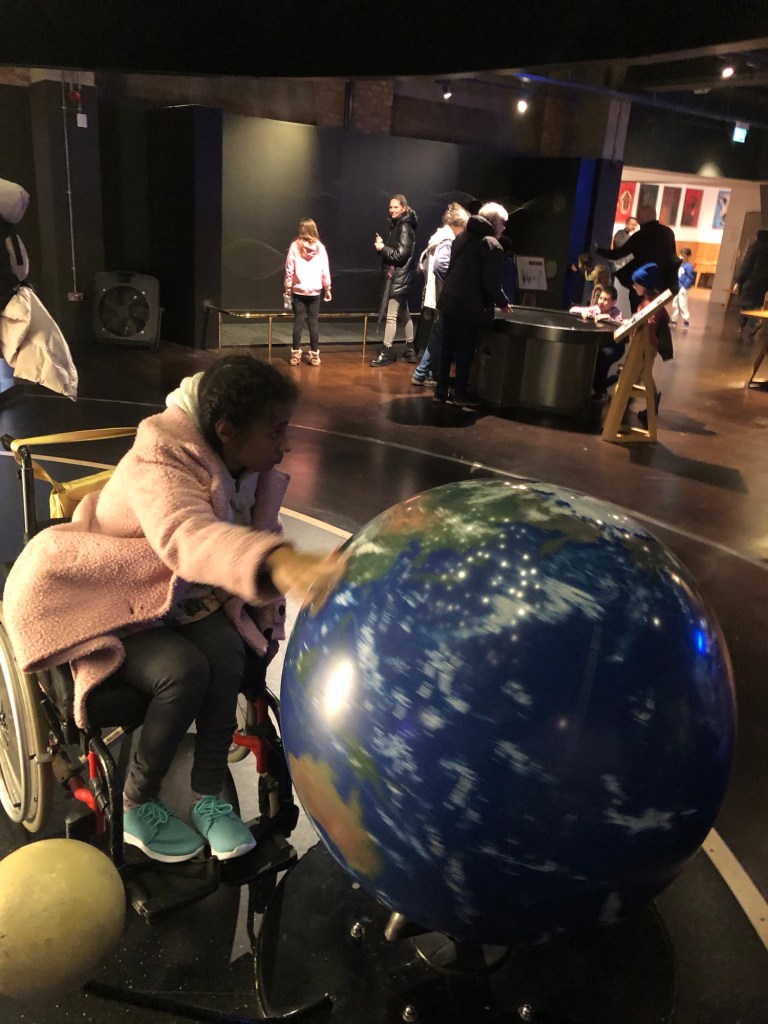
Thermal Experiments at the Science Museum on the Wonderlab experience day, the video.
Waiting at the bus stop in London ready to go to Science Museum and being independent with the help of my PA
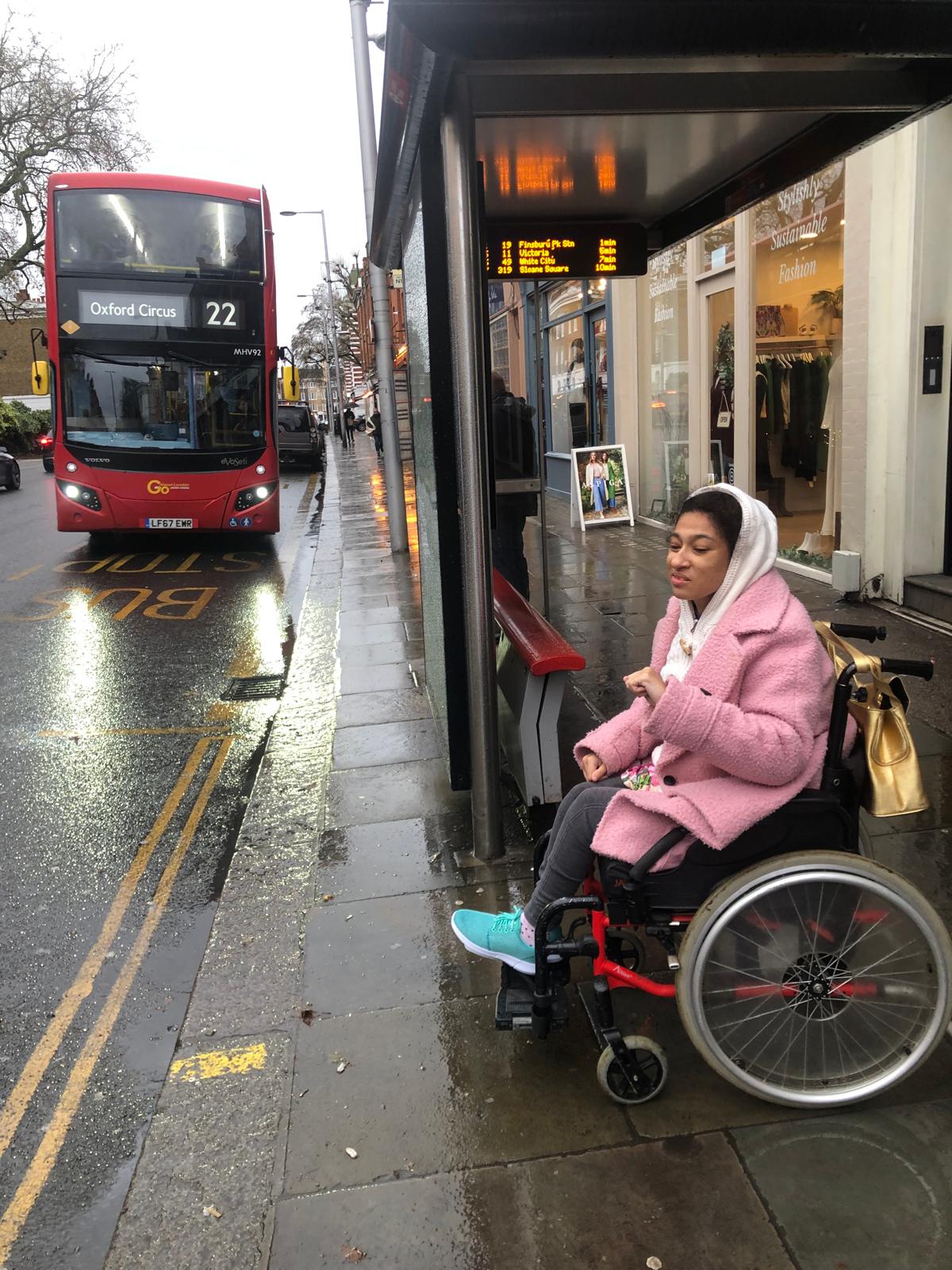
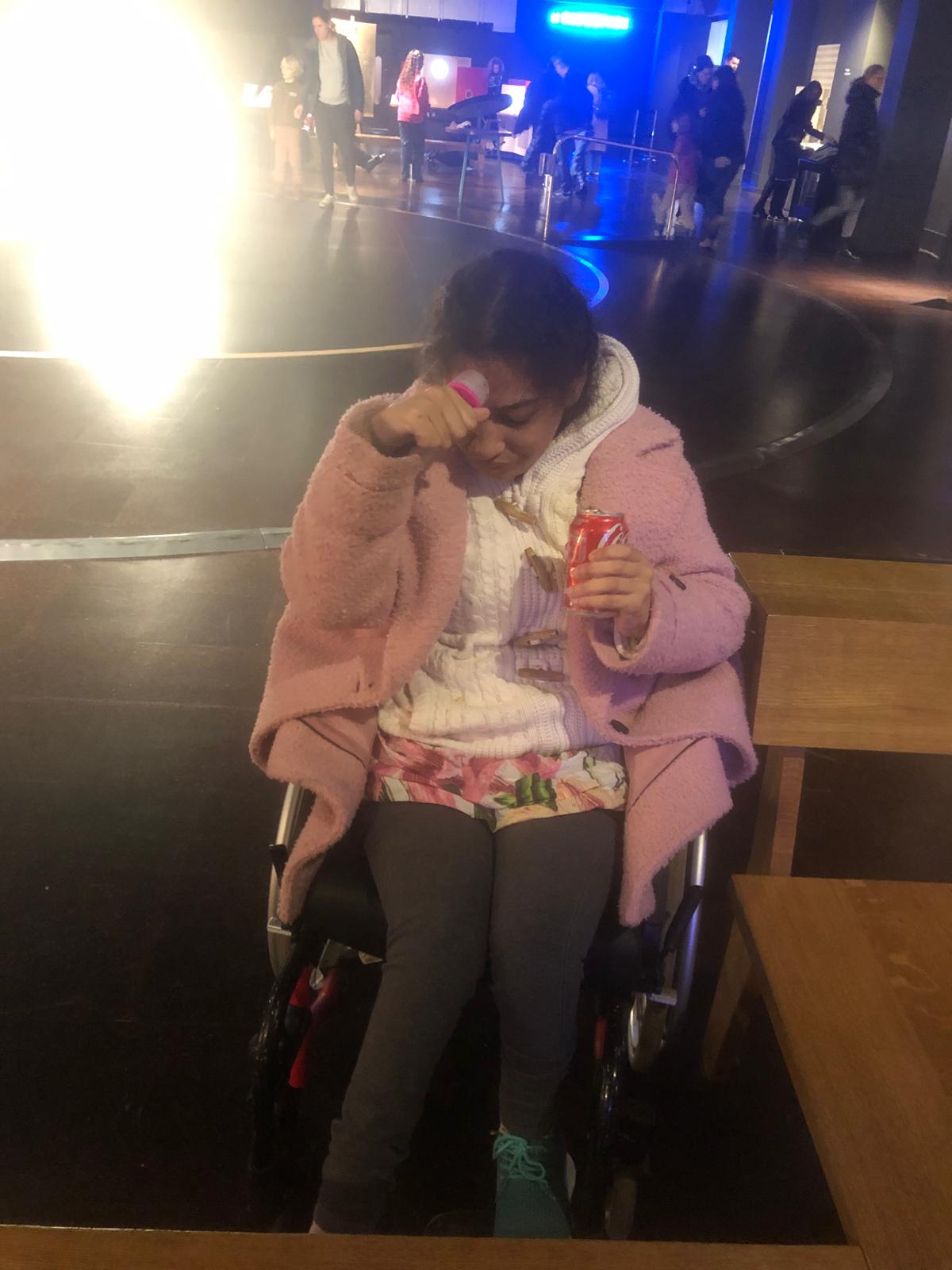
Nobody will stop me
Achievement no 2: Principles of End of Life Care with a Pass of 3. I am very proud of this achievement specially, as I have been able to secure my next opportunity in my life as a volunteer fundraiser for the children and young people’s end of life and palliative care charity ‘Make a Wish’ and I will be starting in February 2025.
My academic achievements for 2024
Achievement no 1: Allergy awareness Qualification with a Pass of 3. I am very proud of my academic achievements and so should you be if you are in education. Don’t let anybody tell you that you cannot achieve anything like they did tell me when I left school.
Myah’s Christmas wish list – Amazon Gift List – https://www.amazon.co.uk/registries/gl/guest-view/I2DJBVTU938B
https://www.tiktok.com/live/event/7450453100579520544?enter_from=share_link
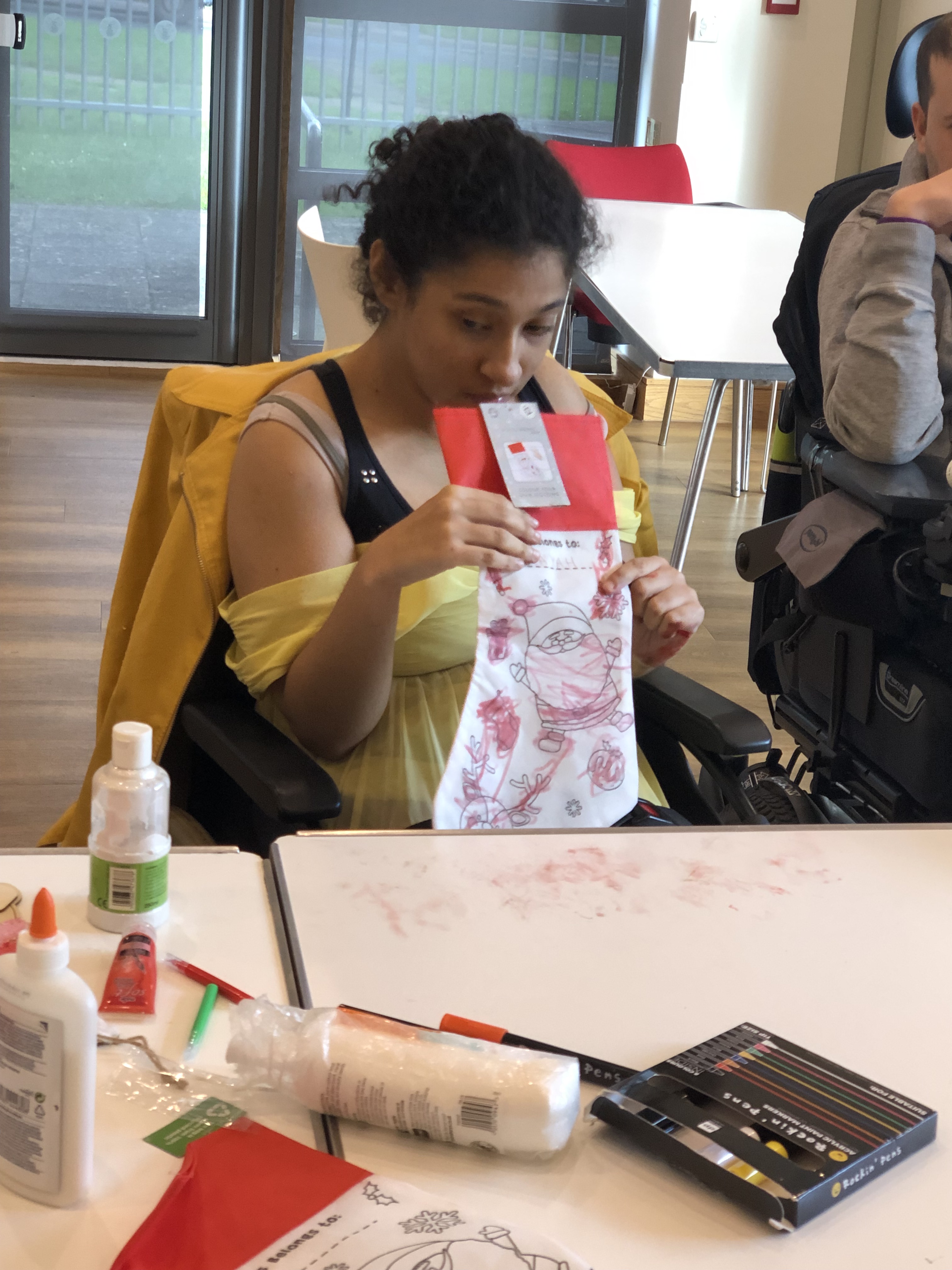
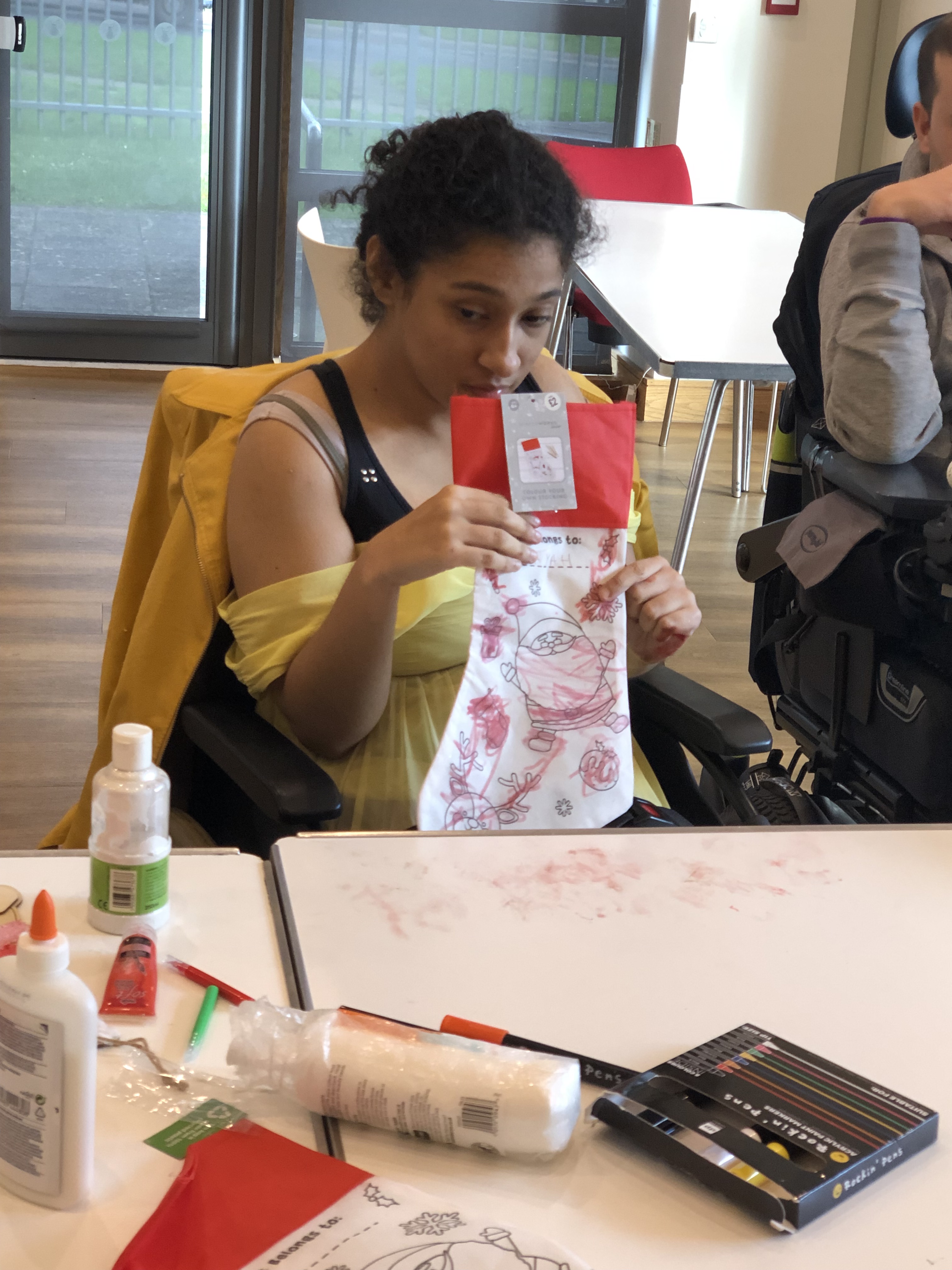
Christmas Crackers. Finish and making home made Christmas Crackers at my activity club.
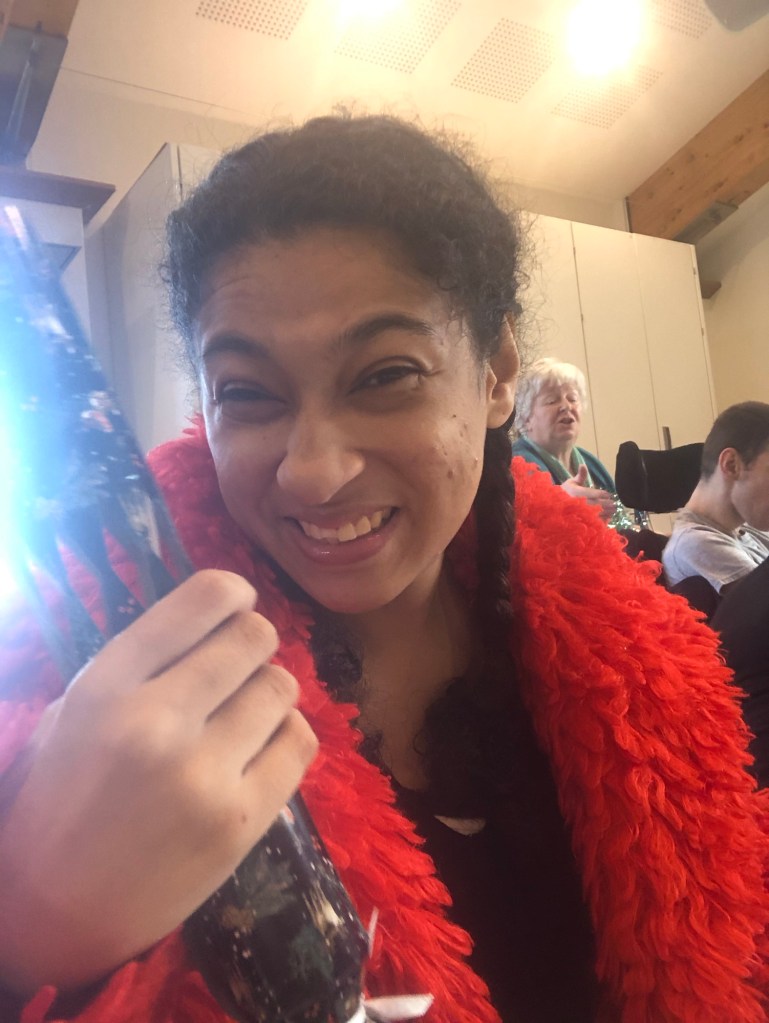
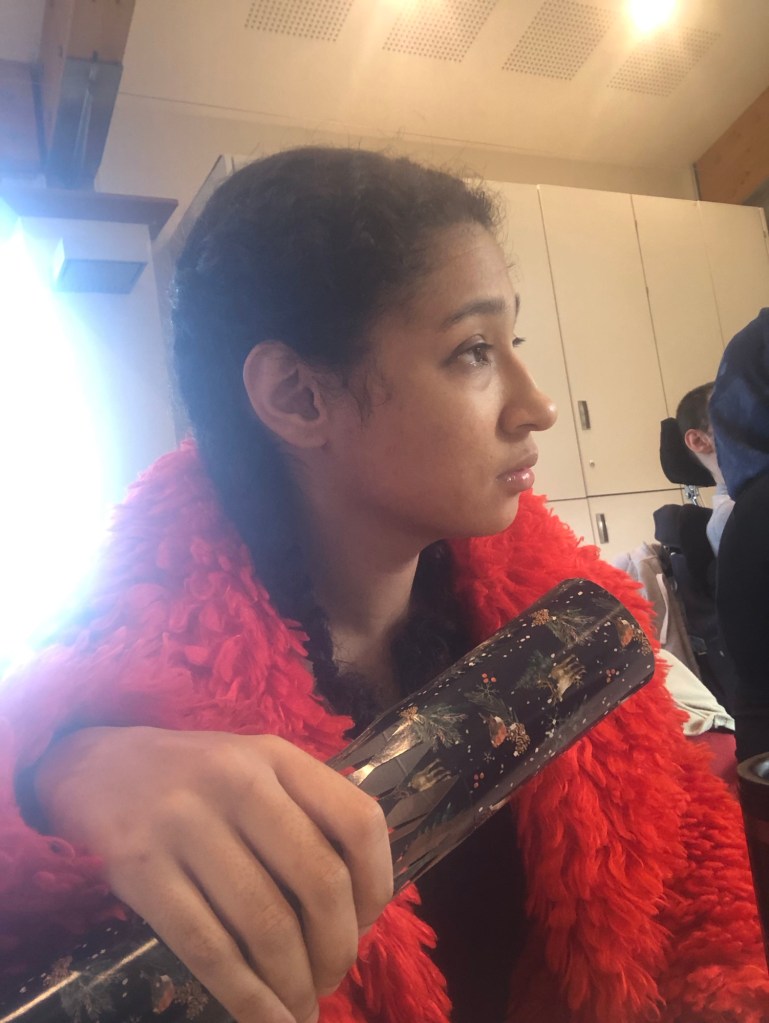
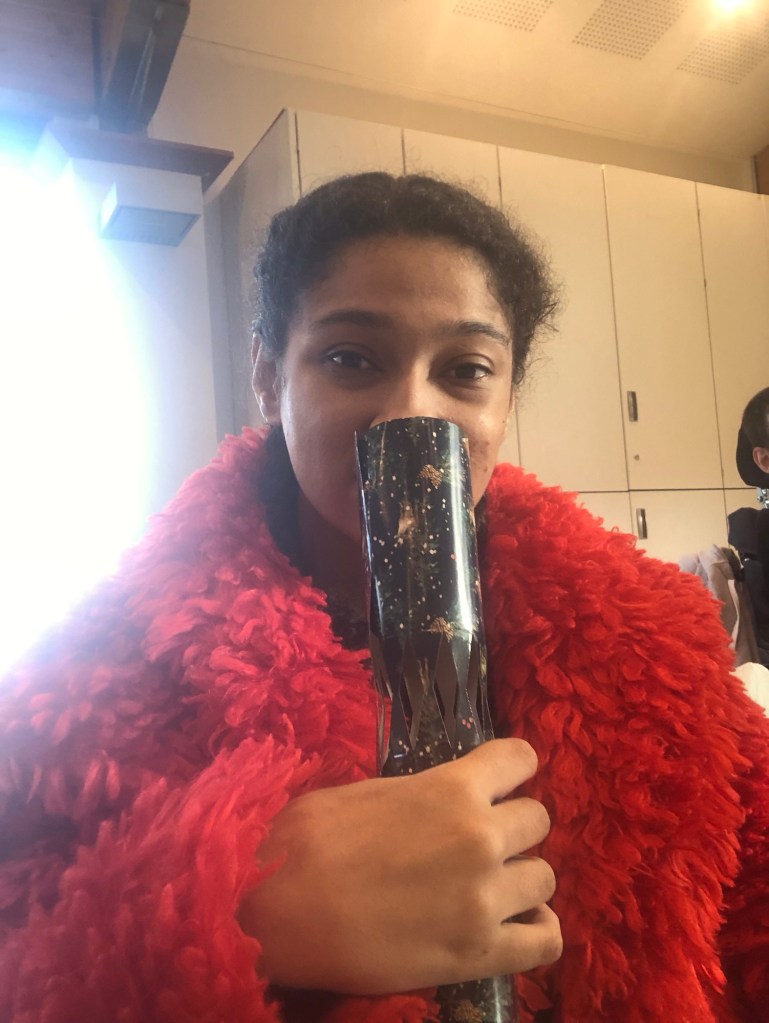
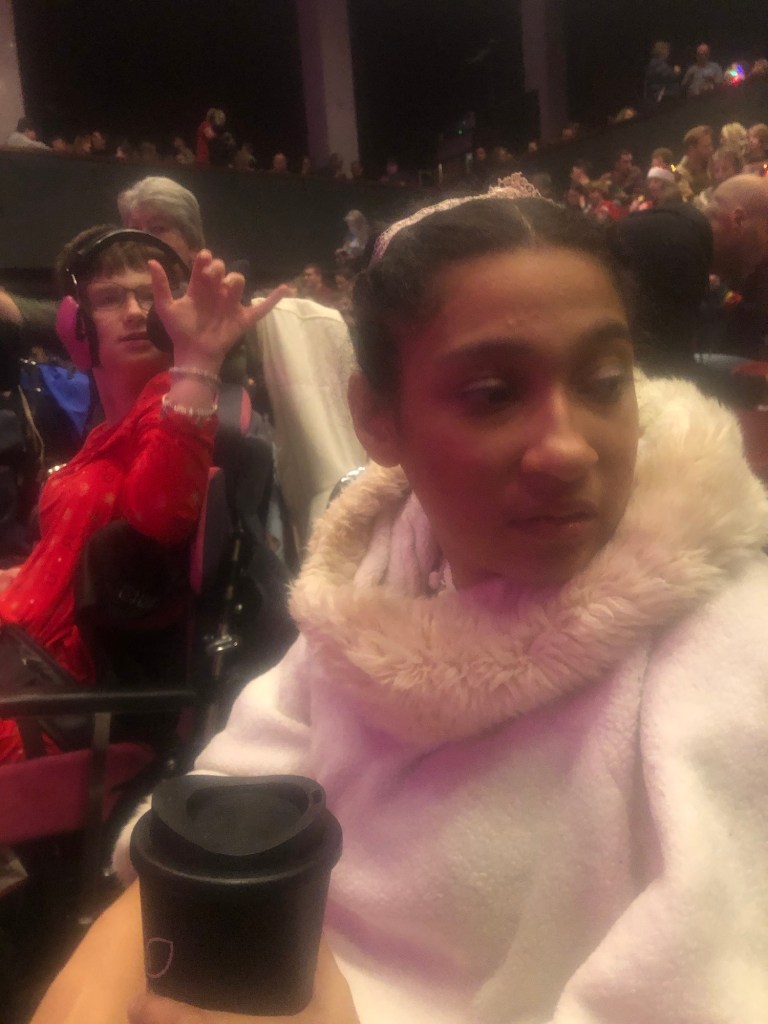

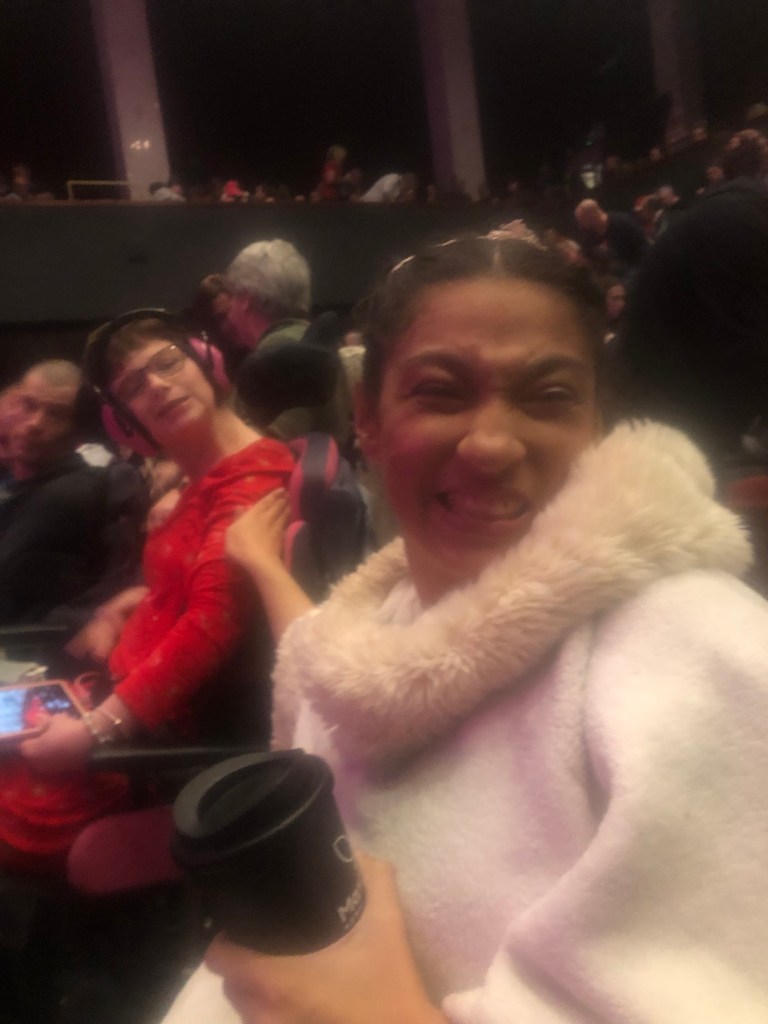
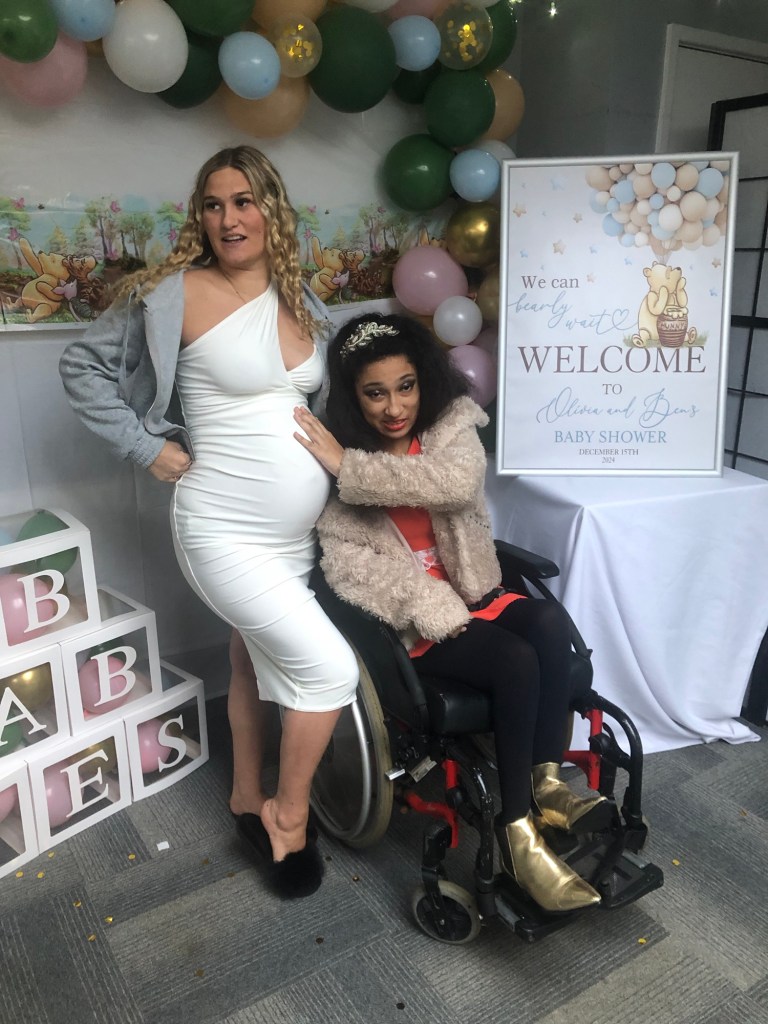
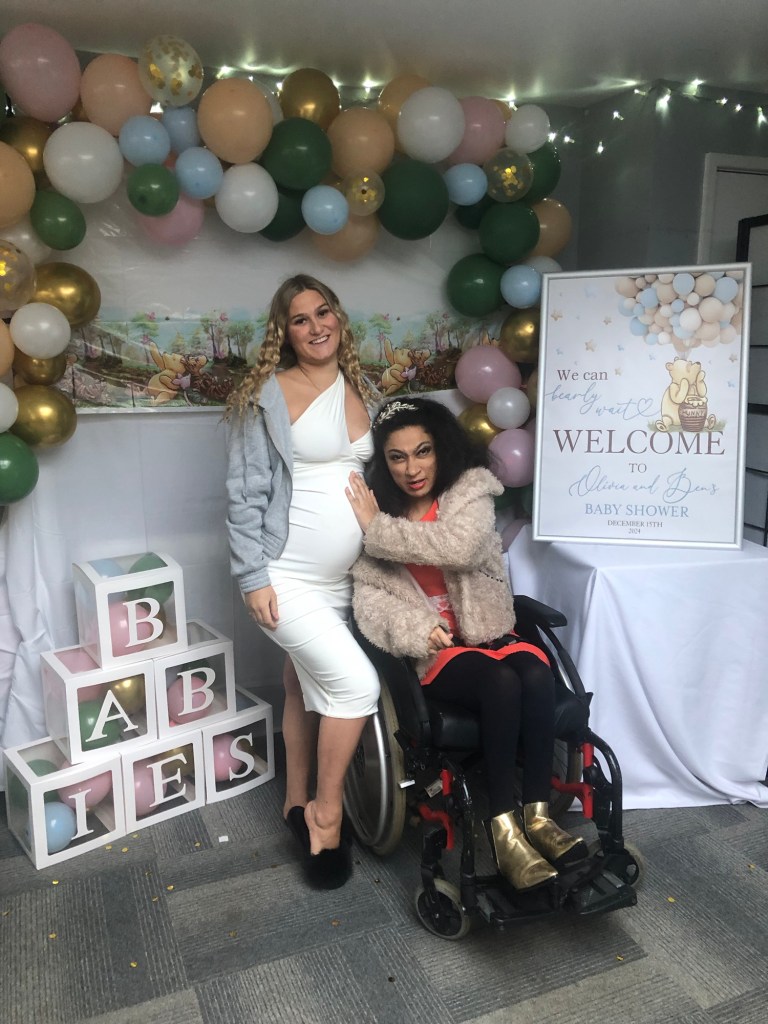
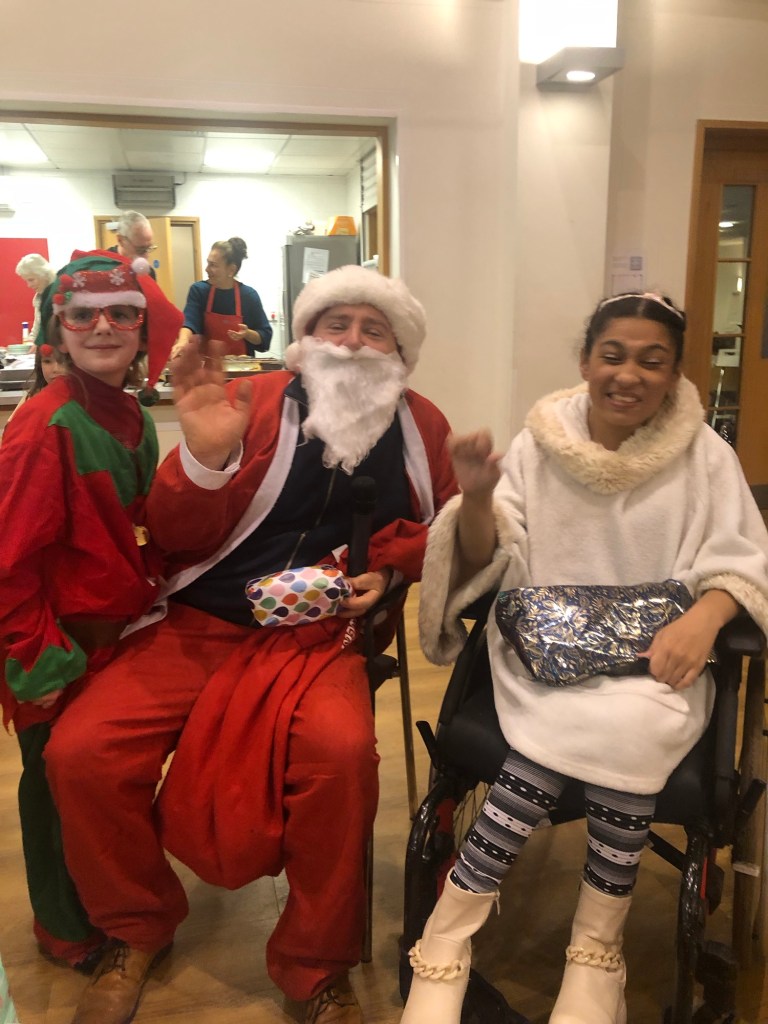
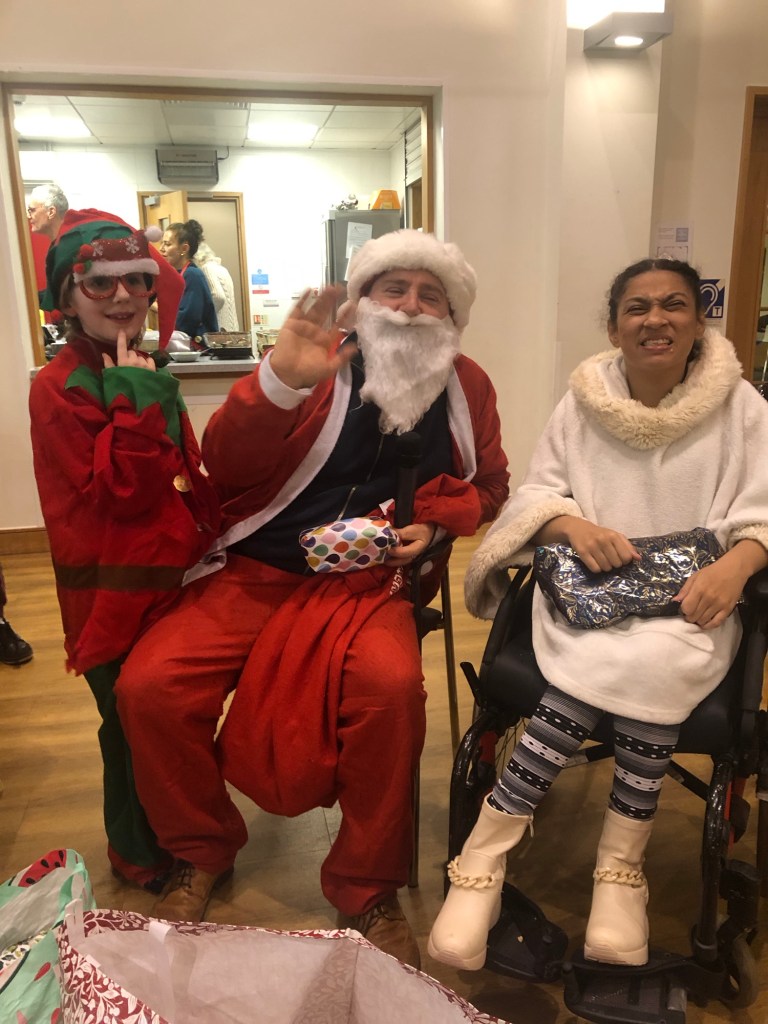
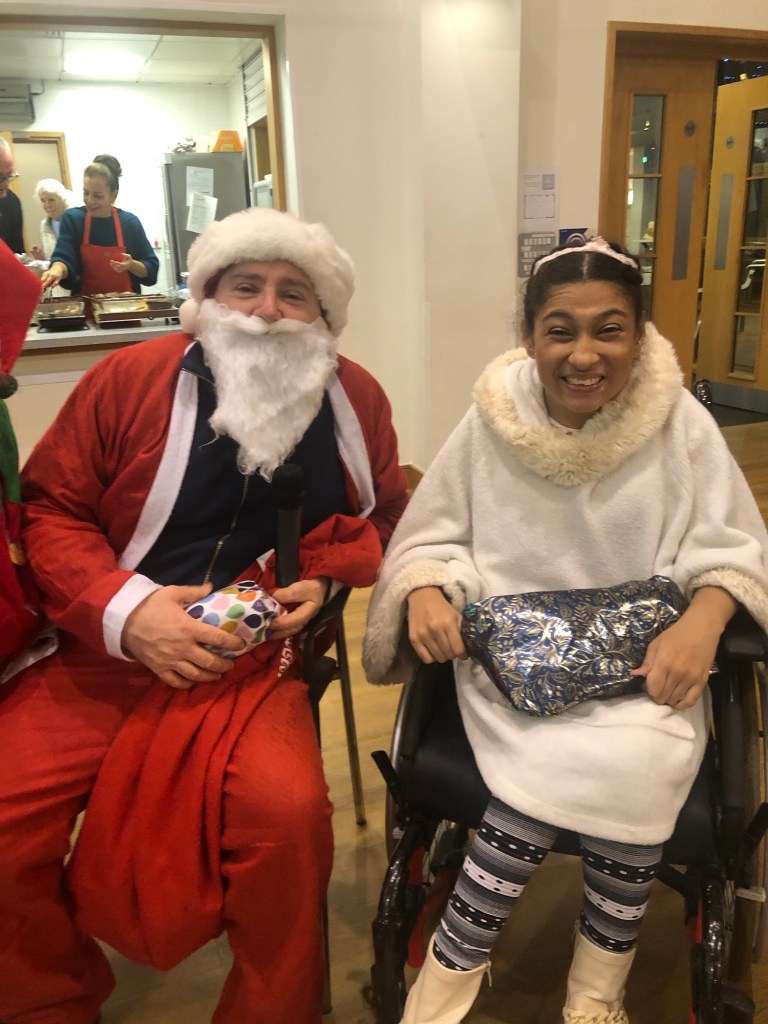
When Santa came to visit dinner club just before Christmas
School Uses British Sign Language In Nativity
Pupils at a school in Cornwall have been learning British Sign Language (BSL) as part of their Christmas nativity play.
“All of the staff, the children, they’ve immersed themselves in learning sign language,” said Janine Clemence, a teaching assistant in year four at St Michael’s Primary School in Helston.
“To see the children signing like they do it just makes my heart melt, it’s wonderful.”
British Sign Language (BSL) is not currently part of the national curriculum but schools can choose to teach it.
Several members of staff at the school, including teachers, teaching assistants and receptionists, have qualifications in BSL.
Miss Clemence, who is deaf, said: “A new child might watch me signing and then before you know it they’re starting to produce sign themselves.
“That’s why it’s so important to have a deaf role model in a mainstream school.”
Out of the 320 pupils at the school, four of them are deaf.
When some of the children were asked how they felt about learning to sign at school they signed: “We love signing with our friends.”
Miss Clemence said: “My vision really is for all mainstream schools to use British Sign Language because British Sign Language is not just for deaf people.
“It is a language that’s beneficial in so many way helping children read, helping children communicate in a variety of ways.”
Chris McCausland: Blind People Don’t Need Inspiring
Strictly Come Dancing winner Chris McCausland has said he doesn’t think blind people “need inspiring”, after he made history as the first blind contestant to take part in the show.
“The biggest benefit to everybody you can make is changing people’s attitudes towards disabilities,” he told BBC News.
The comedian and professional partner Dianne Buswell won the 22nd series of the BBC One show on Saturday after beating 14 other couples to this year’s glitterball trophy.
McCausland, 47, was registered blind after losing his sight to retinitis pigmentosa in his 20s.
He was praised throughout the series for defying expectations of what a blind person could achieve on the dancefloor.
He learned the dance moves by getting down on his hands and knees and feeling Buswell’s feet and legs, to understand what she wanted him to do.
“And sometimes she’d just have to pick one of my limbs up and put it where she wanted, like I was one of them bendy spidermen toys,” he laughed.
Both he and Buswell were figuring it out as they went along, he said.
“Learning the routines was a bit of trial and error really. Dianne hadn’t spent any time with anyone who’s blind even in daily life, and I’d never danced, so neither of us had a clue.
“She had to use a lot of descriptions. She had to use a lot more words than she’s used to when she’s teaching people to dance.”
Some routines were easier than others, he added, with the paso doble proving particularly challenging.
“You get four days to learn these routines, and on Wednesday she was still trying to explain to me what the posture was meant to be.”
‘I’m still aching’
McCausland, who was the bookmakers’ favourite to win on Saturday night, performed three dances with Buswell in the final.
Four days on, he said he was “still aching”.
“People say, ‘Doing Strictly, do you feel fitter?’ And I reckon I will be the fittest I’ve been in a long time, but at the minute I think I’m just recovering,” he said.
“It’s so full on, and the closer you get to the final, the more hours you have to put in. But it’s thoroughly worth it.”
The pair performed routines including their waltz to You’ll Never Walk Alone by Gerry and the Pacemakers in the grand final.
McCausland turned down Strictly twice before finally saying yes.
He joined after a difficult summer for the show, with a number of former celebrity contestants speaking out about their negative experiences on Strictly.
The BBC apologised to Amanda Abbington and upheld some of her complaints against her 2023 dance partner Giovanni Pernice, including those of verbal bullying and harassment, but cleared him of the most serious claims.
The corporation also introduced new duty of care measures, including putting chaperones in rehearsals.
McCausland said he had “no doubt” that people have found it difficult in the past, adding that there was “a lot of pressure” on both dancers and contestants.
“But I think the BBC have gone out of their way to listen to what’s happened and try and create a supportive environment,” he added. “I had no problems.”
They also reprised their couple’s choice routine to Instant Karma by John Lennon.
When they first performed it last month, it went viral on social media thanks to a “blackout moment”, designed to imitate McCausland’s experience with blindness.
They repeated the moment in the final, impressing the judges and getting a score of 38.
McCausland said the idea for the blackout moment was to put viewers and audiences into the dark, and to “surprise them” with what’s possible to come out of the dark.
“I had the idea and I hoped it was received in the way it was intended, and people loved it. They really connected with it. And I was delighted that it wasn’t seen as gimmicky. It was really appreciated.”
But he added that he doesn’t see himself as a “role model” for blind people.
“It’s changing everybody else’s attitudes to what is possible, raising people’s expectations, because that’s where the difference is,” he said.
After McCausland and Buswell topped the public vote on Saturday, the charity Sense praised his win, saying it would “lead to many more disabled people being included in the biggest TV shows”.
Step Change Studios, which offers dedicated blind ballroom classes, also welcomed it, saying McCausland had made “such a positive impact”.
“We’ve seen an increase in the number of people wanting to join our blind ballroom programme – to the point that I can’t respond quickly enough!” founder Dr Rashmi Becker told BBC News.
McCausland said that was “lovely” to hear.
‘I didn’t expect to cry’
“I didn’t expect what we were doing to be appreciated to the level it has been,” he said.
“I never expected dancing to be emotional. I just expected it to be this entertainment show with dancing, and if you were good, people were entertained.
“I didn’t expect people to be moved and for people to cry – I didn’t expect to cry on it – so it’s just been so much more than I ever thought it could’ve been.”
McCausland will not appear on the Strictly live tour, however, because of scheduling conflicts with his stand-up tour, which kicks off in January and takes in more than 250 dates across the UK.
He’s also starring in Bad Tidings, a Christmas comedy-drama that airs on Sky Max this Sunday.
But he has not ruled out dancing again in the future.
“People are saying, ‘You can dance now’. I can’t dance now. I can dance with Dianne,” he said.
“So maybe in the future me and Dianne can do something together,” he added. “Dianne may be able to take me for a spin over the summer!”
Blind Teen And Guide Dog Told To Leave Subway Shop
A blind teenager has said he was left “horrified and embarrassed” after being refused entry to a sandwich shop because he was accompanied by his guide dog, Pilot.
Robbie Lee, 19, said he tried to order food at the Subway sandwich shop on Vicar Lane in Leeds when a manager told him to “get out with the dog”.
Under the 2010 Equality Act it is illegal to refuse access to a disabled person with their guide dog, except in exceptional circumstances.
Mr Lee said Subway had since apologised to him and, in an email, a spokesperson told him that staff at the branch were being retrained.
Mr Lee said the incident happened in October when he took a lunch break from Leeds City College where he is studying backstage theatre.
“I walked across to grab a sandwich, but as soon as I got in the shop he came over and said I couldn’t be inside with my dog,” he said.
Mr Lee said he asked to see the manager and it emerged the staff member he was talking to was, in fact, in charge of the shop.
“I told him it was a service dog. I even brought up the legislation on my phone, but he didn’t care,” Mr Lee said.
Mr Lee’s father, Kev, said after the incident he had lodged a formal complaint to Subway, adding he was angry his son’s independence was taken away from him.
“He was forced to wait outside for his food, and this sort of thing happens to blind people all the time,” he said.
“There’s even a sign on the door at Subway that says service dogs are allowed. Surely everyone knows guide dogs are allowed?”
Kev Lee said Subway had since apologised to his son via email, in which it was stated that staff would be retrained.
Both father and son were also offered a free “foot-long” sandwich when they next visited the store “as a gesture of goodwill”.
However, Kev Lee said the response did not go far enough.
“It’s insulting if they think discrimination against a disabled person is only as serious as offering a free sandwich.
“It’s just not good enough. This affects people’s mental health and makes them feel rejected in society.”
A study for the Guide Dogs charity in 2022, external found that 76% of guide dog owners had been refused access to a business or service, while about half (49%) said they had changed or restricted their plans because they were worried about being challenged or refused access.
Maqsood Sheikh, senior regional campaigns officer for the Royal National Institute of Blind People, said he was disappointed to hear about Mr Lee’s experience, but added that he was not surprised to hear about what had happened.
“We know three-quarters of all blind people are experiencing refusals, not just in fast-food restaurants, but in taxis, hotels, pubs – everywhere.
“It’s a widespread and growing problem because too many hospitality staff and retail staff still don’t understand the law.”
Robbie Lee, who can only sense light and shade since losing his sight as a toddler, said blind people deserved to be treated the same as everyone else.
“We are still human and we don’t want to be discriminated against.”
Kev Lee said: “To anyone else suffering discrimination because of disability you need to be strong about it: report it and raise awareness so businesses are forced to take action.”
Subway has not yet responded to a request from the BBC for a comment.
Paralympian James Brown: My Disability Needs Were Denied In Prison
Paralympian James Brown, who is partially sighted, has given his first broadcast interview to Access All since he won compensation from the government over his treatment in prison.
Brown reached an out of court settlement with the Ministry of Justice after he launched legal proceedings for being denied his access needs in jail.
He’d been given a custodial sentence for glueing himself to a plane as part of an Extinction Rebellion protest.
We also hear from Recoop, a charity which supports older prisoners, about the situation facing other disabled inmates in the UK.
And we hear from the writer Melanie Reid, on why she’s put an end to Spinal Column — her regular updates for the Times newspaper, which documented her trials and tribulations since she became a tetraplegic and a wheelchair user following a riding accident in 2010.
McCausland’s Strictly Win ‘Opens Doors’ For All
When comedian Chris McCausland lifted the 2024 Glitter Ball trophy on Strictly Come Dancing, it represented more than a reality contest win.
For fans living with partial or full sight loss, his journey from a nervy start to his confident and ultimately winning performances broke down barriers.
Fellow blind dancer Shaun Hayward, from Manchester, said McCausland’s triumph showed disabled people “dreaming big” and pursuing their ambitions “fearlessly” – and proved his inclusion was not merely “tokenism”.
There are hopes the message has been received at the highest levels of TV production companies.
Mr Hayward has the hereditary condition retinitis pigmentosa, the same condition as McCausland, but says dancing gives him a sense of “liberty and freedom”.
He said of this year’s Strictly winner: “It was absolutely amazing.
“He’s had a real, real journey and his story has touched the hearts of people.
“For me personally it was great to see because I’ve been banging this drum for years and I really needed someone of Chris’s profile to raise the awareness of dancing for people with sight loss.
“For a blind person that is true liberty, real freedom.”
Mr Hayward’s words echoed those of McCausland himself after being crowned winner.
The 47-year-old dedicated his win to his professional dance partner, Dianne Buswell, “and for everyone out there who’s got told they couldn’t do something or thought they couldn’t do it”.
“It just shows with opportunity and support and determination, anything can happen,” he said.
The pair beat JLS singerJB Gill, actress Sarah Hadland and former Love Islander Tasha Ghouri in Saturday’s live final on BBC One.
Mr Hayward said he had been concerned in the first couple of weeks of McCausland’s Strictly journey.
However, he said the salesman turned comedian had grown into the training and flourished to the point he became the overwhelming bookies favourite.
“It’s not just tokenism,” he said.
“What we need more of when it comes to inclusivity is show what guys like myself and many, many other disabled people have been doing – incredible stuff for years.
“Really shine a light on that in these entertainment shows, just on ordinary people, it doesn’t have to be a celebrity.
“I think there’s a hunger for it nowadays to be quite honest.”
‘Powerful statement’
Harriet Edwards, from the disability charity Sense, told BBC Breakfast: “This is long overdue.
“We hope production companies, TV and media can really see the public want to hear different stories and they want to see see different experiences.”
For the charity Guide Dogs, the assistance of Buswell was key.
A spokesperson said: “Dianne has been a shining example of how we can all take steps to make the world a more inclusive and accessible place.
“The image of Chris holding the glittering trophy aloft is a powerful statement about representation, breaking down barriers and opening new doors in entertainment and beyond.”
Myah’s Christmas wish list – Amazon Gift List – https://www.amazon.co.uk/registries/gl/guest-view/I2DJBVTU938B
Former Paralympian Realises Lifelong Dream To Sing
A former Paralympian has set her sights on a new chapter in her life – music.
Zoe Edge, from Derbyshire, was born with severe athetoid cerebral palsy, external, but she does not see her disability as a limitation.
She won a silver medal in boccia at the 1996 Paralympic Games and has gone on to dedicate her life to fundraising for various charitable causes.
Now she has teamed up with a Chesterfield music producer to realise a lifelong dream to create her own music using artificial intelligence (AI) technology.
Edge, 50, said: “I have written song lyrics since I was a teenager, but because of my disability, I have never been able to sing or record them until now.
“However, thanks to innovative new technology, I have been able to have a ‘voice’.”
She first fell in love with pop music in the 1980s, inspired by acts like Bros and New Kids on the Block.
She uses an electric chair to move around her home in Chesterfield and a special computer-generated voice to communicate.
According to her father Mick Edge, she was always determined to “not let her disability hold her back”.
She travelled the world playing boccia, culminating in a silver medal at the 1996 Atlanta Paralympic Games.
Since then she has enjoyed fundraising for a number of charities, including a sponsored “roll across the pitch” for her beloved Chesterfield FC in early 2024.
Now working alongside producer Lyn Sheppard, Edge has finally realised her dream and created a Christmas song titled “You Must Still Believe in Make-Believe”.
Mr Sheppard said: “The mission was clear, she wanted to sing in her own voice on an original song.
“We eventually discovered AI, we found a sound she liked, and that’s where we are now.”
Edge’s mum Dylis Edge says “she cannot believe” her daughter’s success.
“It’s just unreal,” she said.
“She has difficulty saying her own words, and now she has her own singing voice thanks to AI. It’s brilliant!”
Mr Edge says he will “always be proud” of his daughter.
“She’s amazing at what she’s done,” he adds.
“She never lets anything hold her back. It makes us so proud of her.”
‘I Lost My Sight At 16 But Education Saved Me’
Mohammed Ravat was 16 when he realised he was struggling to see the whiteboard at school.
He was studying for his A-levels but said teachers did not think he was working hard enough and his grades suddenly “plummeted”.
It was then that Mr Ravat, now 25, from Walsall, said he was left with a sense of “grief and isolation” after being diagnosed with an eye condition which led to him losing more of his sight.
He had to drop out of mainstream education but was offered a place at the Royal National College For The Blind (RNC) in Hereford, where he continued to pursue his passion for graphic design.
Mr Ravat has gone on to secure a communications internship at the Beacon Centre in Wolverhampton, a charity which supports people living with sight conditions.
He said the news of his condition was “hard to take” as it was not just about sight loss, it “impacts everything you do”.Media caption,
BBC Radio WM: Mr Ravat spoke about what he called the grieving process you go through on losing your sight
Earlier this week, Sir Elton John revealed he was unable to watch a stage show that he wrote the music for, due to losing his eyesight.
Mr Ravat said it was important to talk about the “grief” that those who are experiencing sight loss go through.
“I was always creative and that was hard to lose because I wasn’t able to do it until a year or two ago when I went to the specialist college,” he said.
His education at the RNC allowed him to continue his passion and study graphic design.
The 25-year-old praised the number of gadgets made available to him, including magnified screens on computers, and encouraged others in a similar situation to take the time to look for the support they need.
“It’s not just the sight loss, it impacts everything,” he said.
“I had to learn how to walk with a long cane, that was quite nerve-wracking and difficult. “
Mr Ravat added that his education had “empowered” him as his disability led him to move away from home to study and helped him learn to cook and clean at a young age.
The support from his family continues to help him through his “sight loss journey” and he credited their positivity to his great-uncle from South Africa, who went blind after contracting meningitis as an infant.
He said his uncle, who went on to be constitutional judge and was appointed to the bench by Nelson Mandela, continued to inspire him to succeed in his career.
A soap actress, whose own father died of bowel cancer, has said she has been able to bring “real personal experience” to the role as she portrays her character’s diagnosis with the disease.
Jennifer Metcalfe, who plays Mercedes McQueen in the E4 show, Hollyoaks, said the story was “incredibly important” to her and she had “jumped at the chance to do anything that might encourage conversation”.
In recent months, Mercedes has undergone chemotherapy and had a stoma bag fitted.
Bowel Cancer UK said including the stoma on screen had helped take “some of the stigma and embarrassment away from it”.
Hollyoaks producers have worked closely with the charity to ensure the soap accurately showed what treatment could be like.
Hairpieces and wigs to cover Metcalfe’s own hair has helped give Mercedes the appearance of losing her hair, while make-up and prosthetics have also been used to create a chemotherapy port on the character’s chest and a post-surgery scar.
Metcalfe, 41, said: “This story is incredibly important to me. When I was aged 15 I lost my dad to bowel cancer and it has impacted my life hugely.
“I have never taken my own health for granted, so when we discussed the storyline I jumped at the chance to do anything that might encourage conversation.”
In one scene in the show, Mercedes is told the heartbreaking news that the treatment was not working and the hospital was not able to access the chemotherapy drugs she needed.
Mercedes is seen with a stoma bag, which is used after bowel cancer surgery if a section of the bowel is removed.
Chief Executive Genevieve Edwards said: “Lot’s of people have spoken to us about how great it’s been to see [in the show] someone living with a stoma and it’s taken some of the stigma and embarrassment away from it.”
Ms Edwards said storylines like this could save lives.
“Seeing a character like Mercedes in a show like Hollyoaks could be enough to get you to go to your GP and have that conversation,” she said.
“The thing about bowel cancer is that when it’s diagnosed at its earlier stages it is treatable and curable and most people will survive that diagnosis – so it could be life-saving.”
Metcalfe said her goal was to give people more confidence to recognise symptoms and take action.
“I’d love people to go away, consider any changes to their bodies and know the right avenues to go to,” she said.
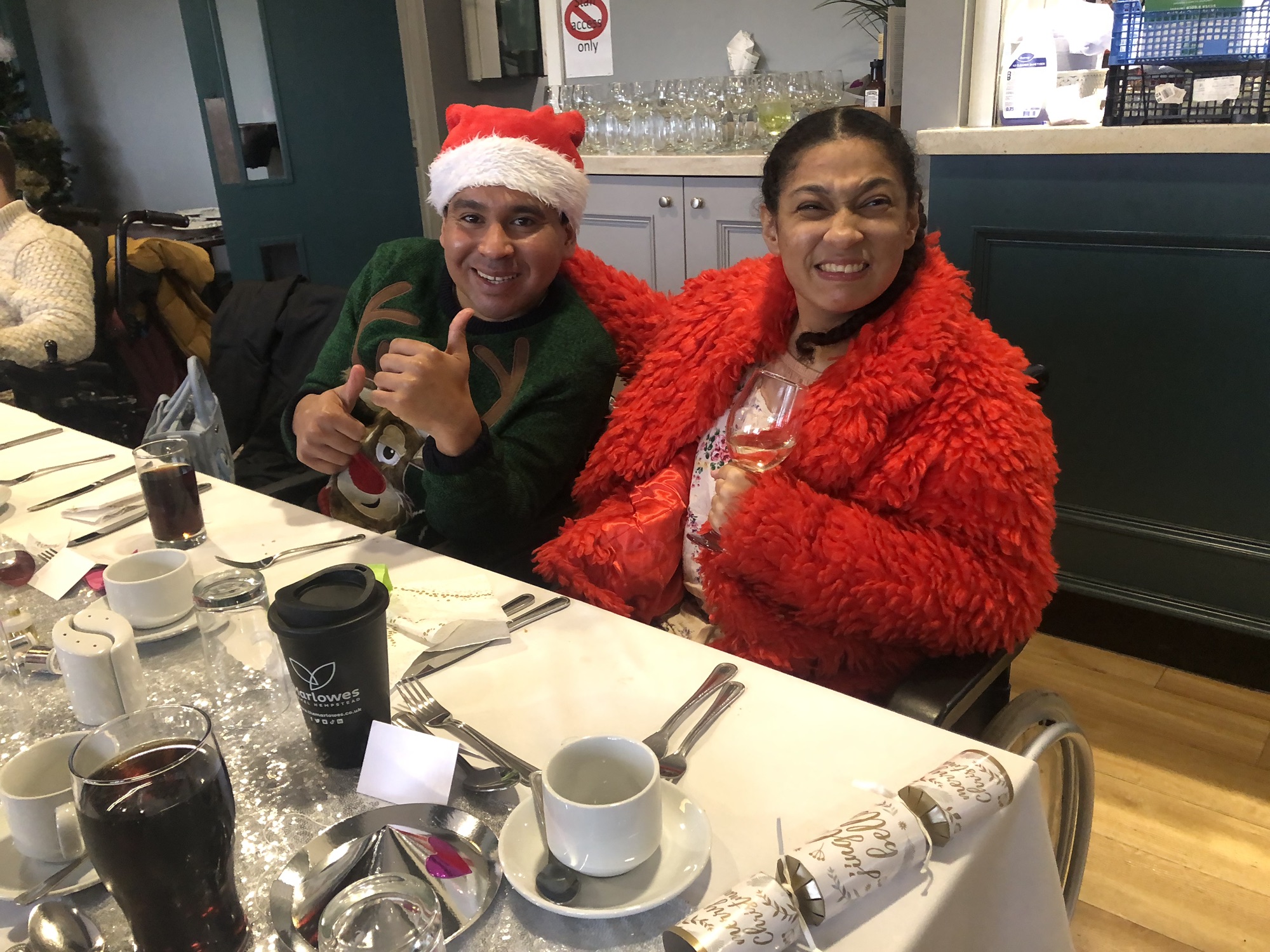
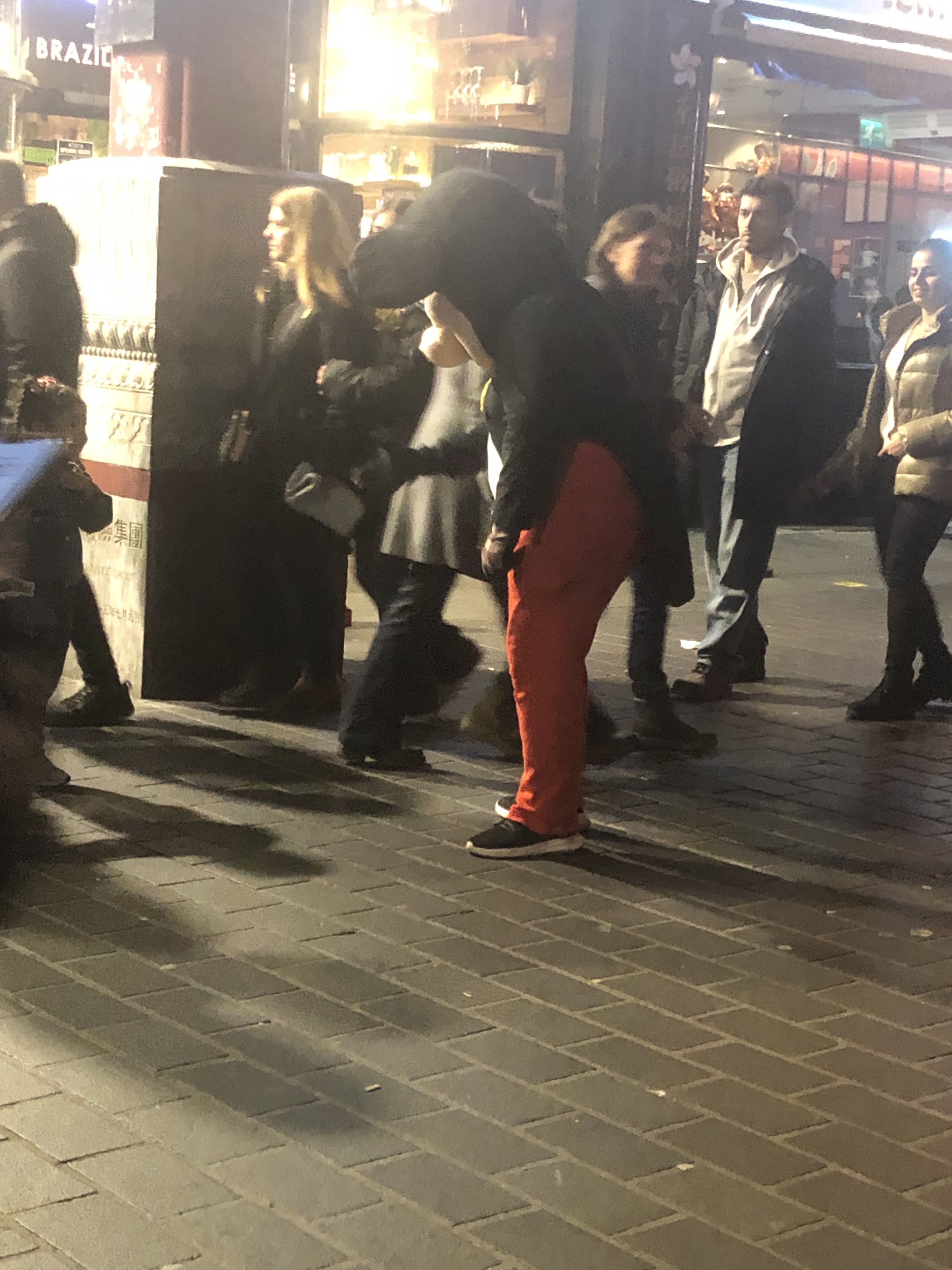
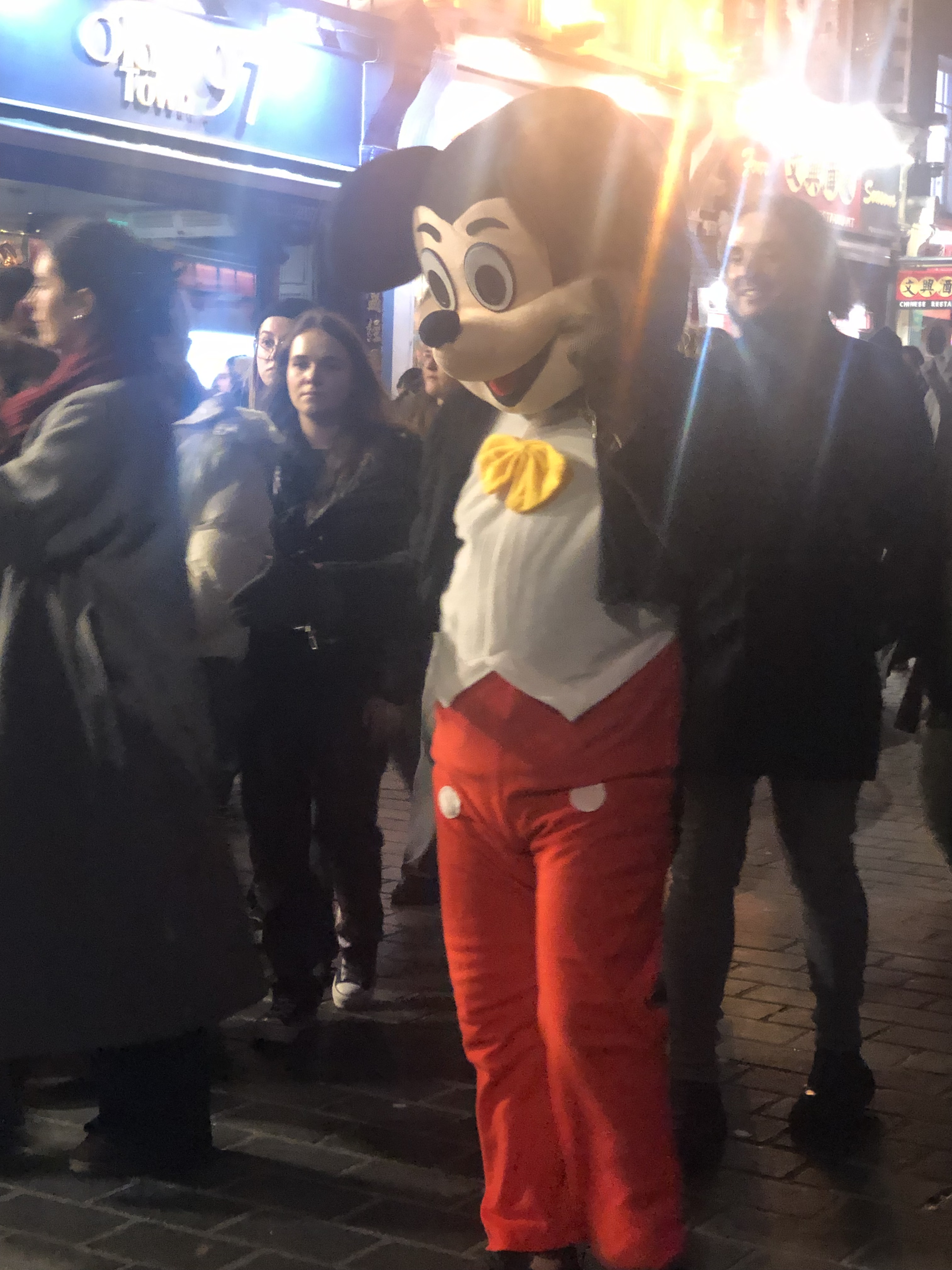
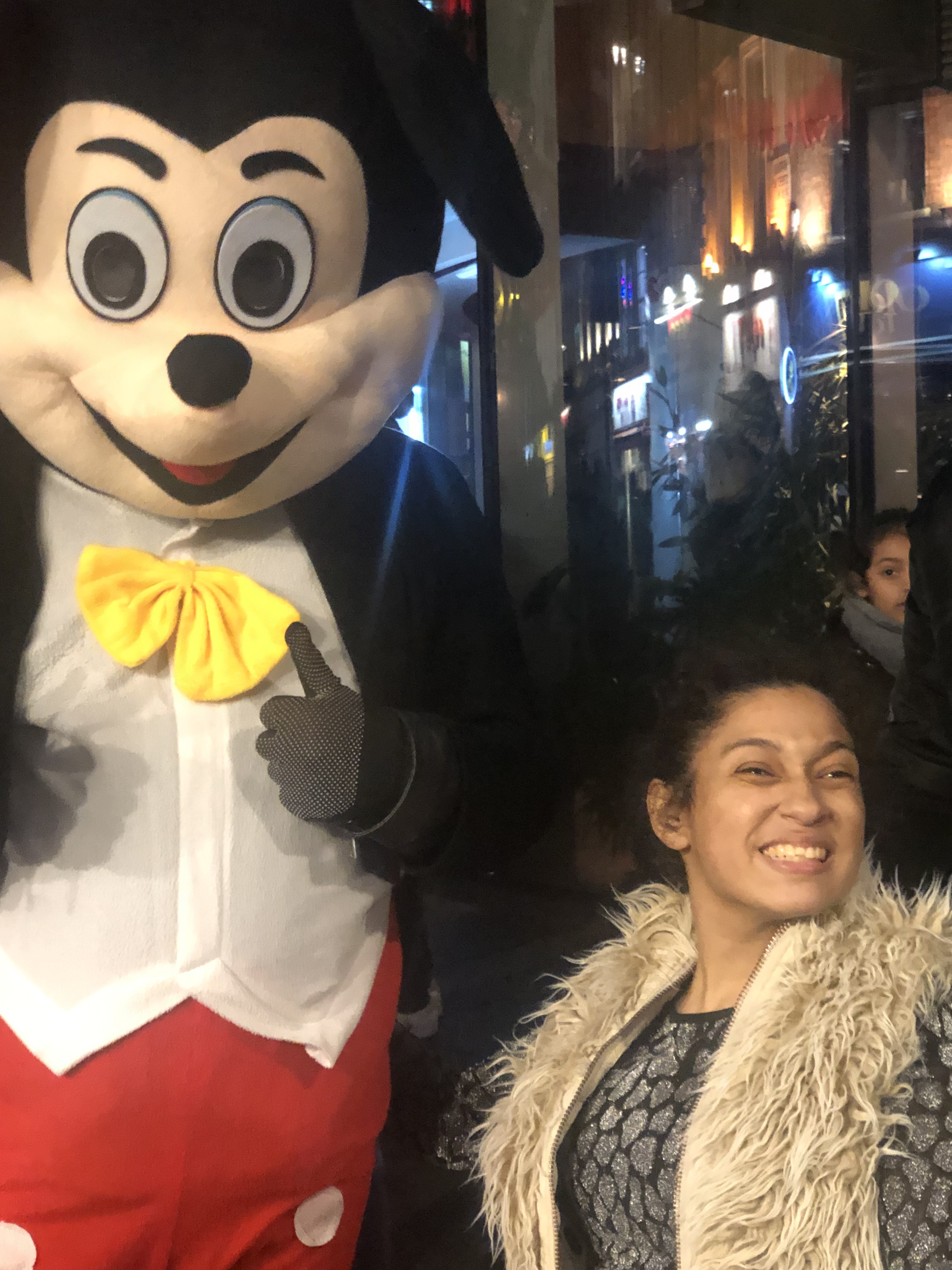
action shot of Mickey Mouse coming forward to greet me and my family
Train Operator Offers Free Sign Language App
A free sign language app is being offered to deaf passengers by Govia Thameslink Railway (GTR).
Passengers will be able to use the SignLive app at all 236 of GTR’s stations, on board trains and with its call centres to help communicate with staff via a trained British Sign Language (BSL) interpreter on their smartphone.
The train company, which runs Thameslink, Great Northern, Southern and Gatwick Express services, is covering the cost of using the app.
Vincent Duffy, GTR’s accessibility improvement manager, said: “SignLive will help our BSL-using customers who may otherwise be discouraged from using the railway, to travel on our trains with confidence.”
GTR previously rolled out the free use of the AIRA smartphone app for blind and partially sighted customers.
AIRA enables passengers with sight loss to navigate railway stations and trains through the assistance of an agent using the camera on their phone.
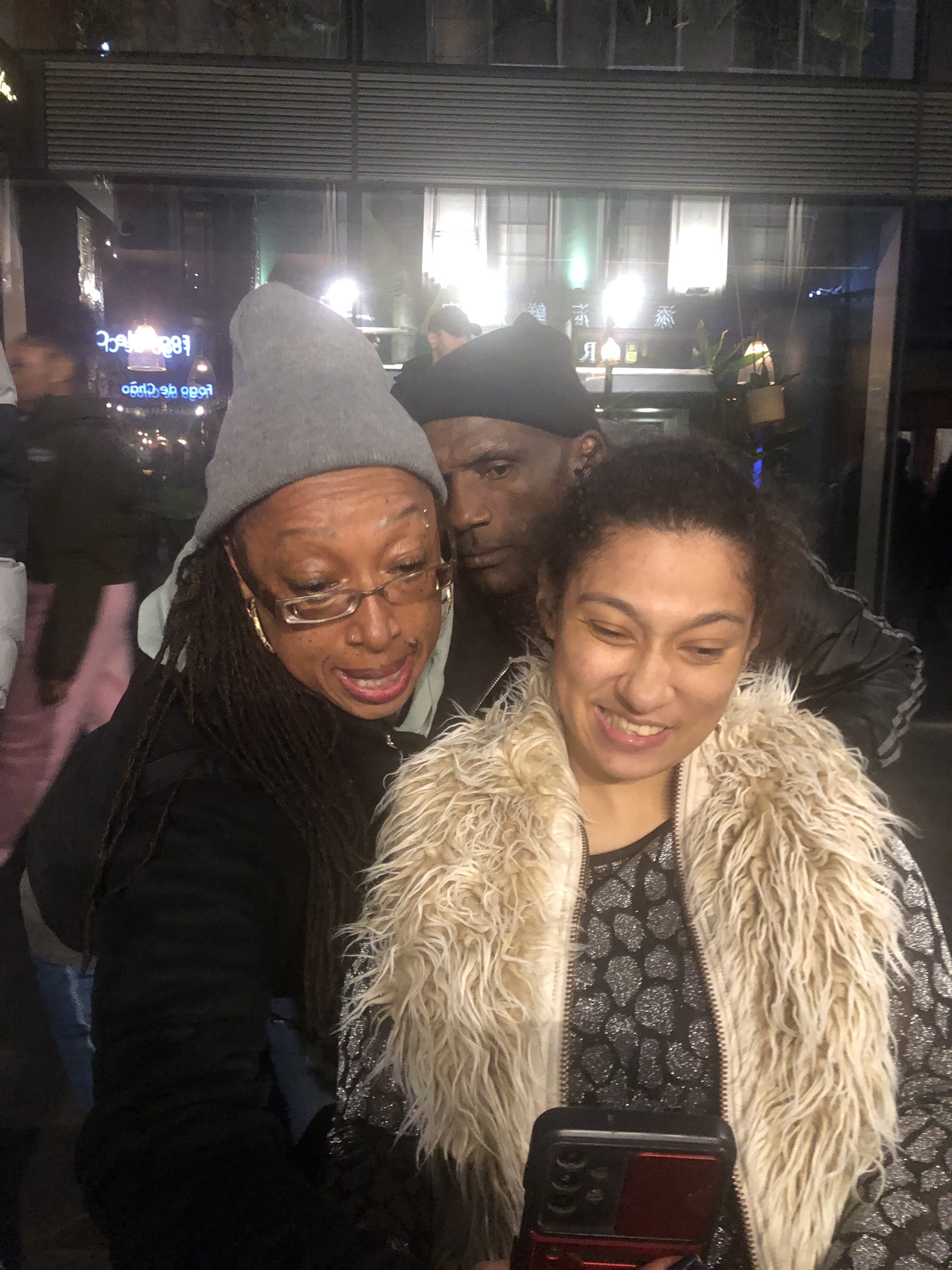
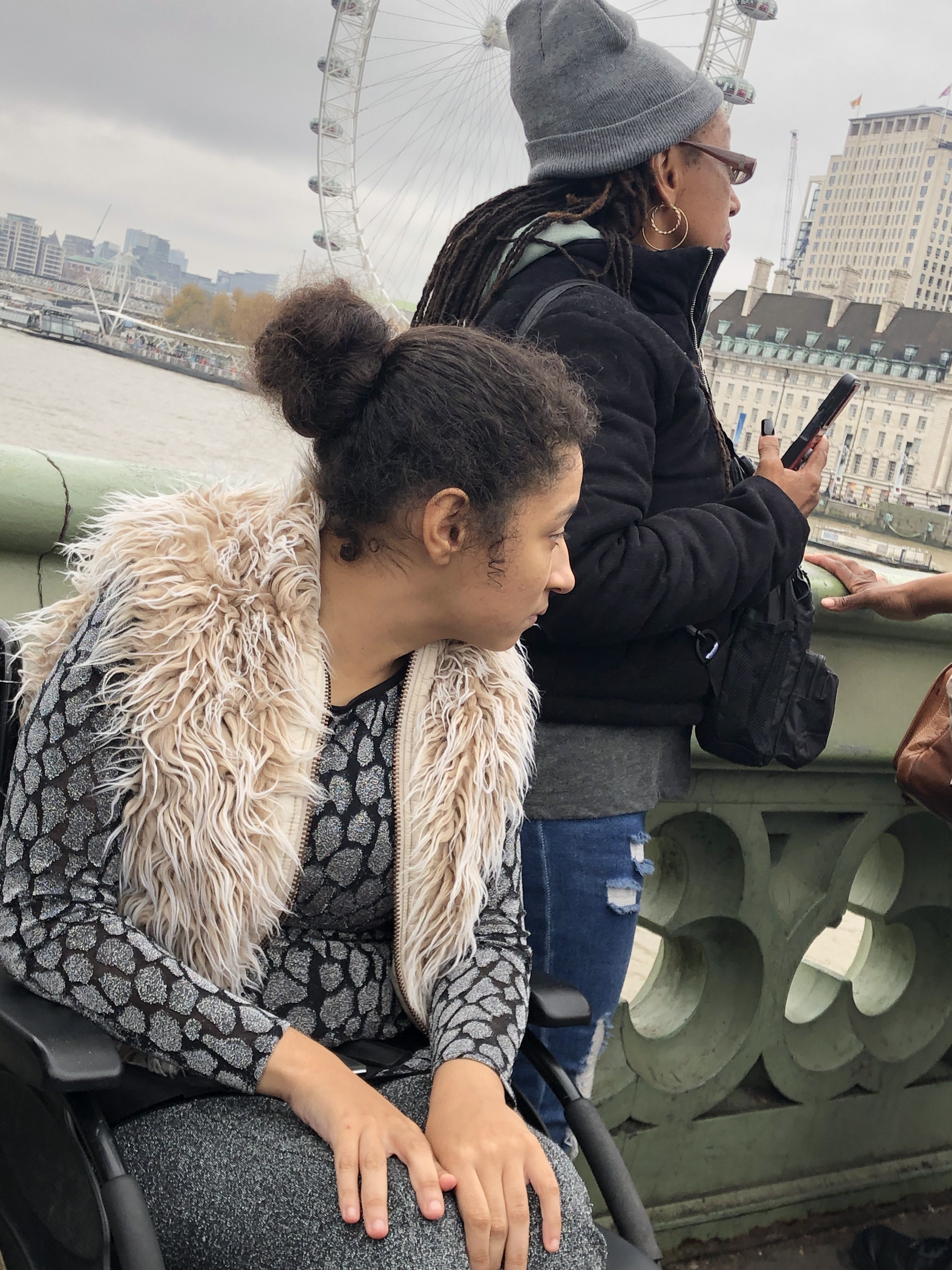
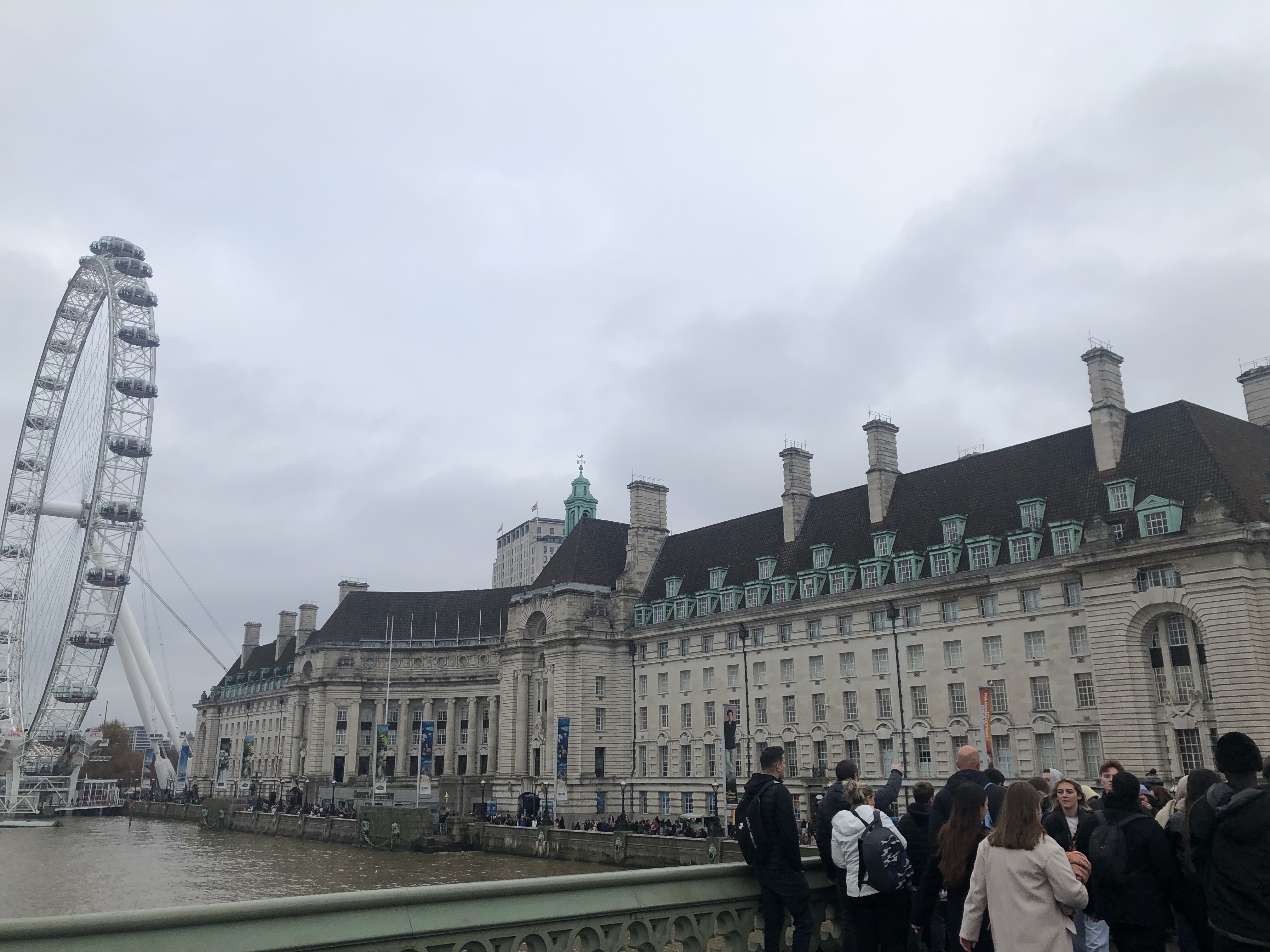
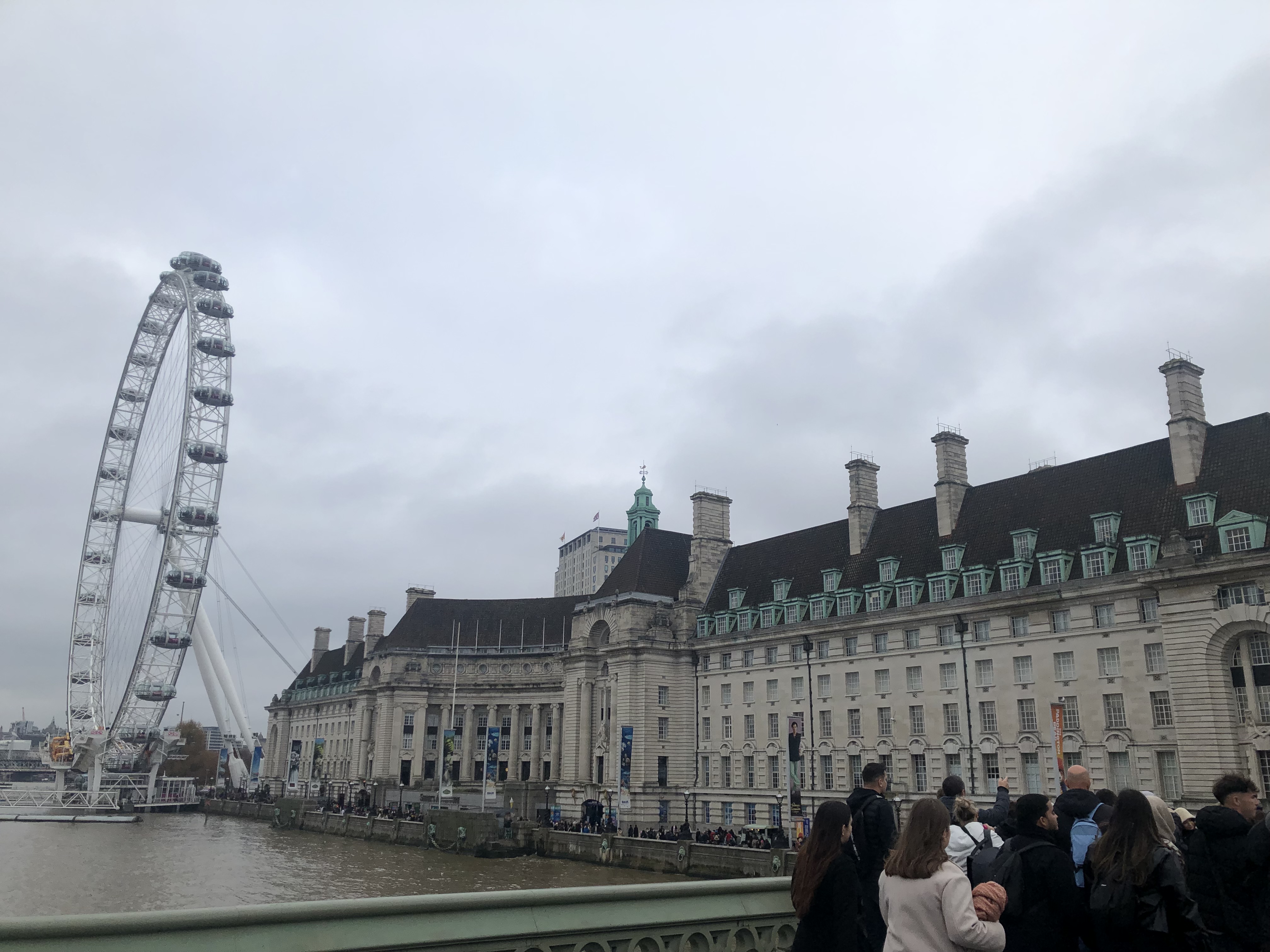
Me and my auntie together for the first time in 15 years, taking pictures of the landmarks and of us together
Sarah Storey ‘Gutted’ To Be Out Of Dancing On Ice
Dame Sarah Storey has said she is “absolutely gutted” to have to pull out of the upcoming series of Dancing on Ice after fracturing her ankle falling over in training.
Britain’s most successful Paralympian posted on social media on Friday to say that an “awkward stumble and fall”, while her left foot was “stuck on the ice”, meant she was unable to take part in the ITV series from January next year.
Dame Sarah thanked those involved with the show and medical staff for ensuring she is “already fixed and home with rehab underway”.
She had been working on her routine alongside pro skating partner Sylvain Longchambon, but will now have to settle for watching from home with her leg up in a cast while on crutches.
The swimmer-turned-cyclist won the 18th and 19th Paralympic gold medals of her career in Paris in September, before hitting the ice rink for show rehearsals.
In a post on Instagram, she wrote: “Absolutely gutted to have my Dancing on Ice training interrupted in this way – just as my first routine with @slongchambon was really coming together!
“An awkward stumble and fall with my left foot stuck on the ice sadly led to me fracturing my left ankle.”
She added: “I’m so fortunate that both Sylvain and Coach @stephenpickavance were by my side and knew exactly what to do and that the medical backup for the show is truly world class.
“The Head of Medical @sharonmorrisonuk wasted no time in getting me to the very best surgeon so I’m already fixed and home with rehab underway!”
‘Another comeback’
The 47-year-old – who has won 30 medals at nine different Paralympic Games – confirmed she was “working with the team at ITV to come up with a plan for what’s next”. She said she was also focusing on getting “back to full power and of course back to my bike ahead of next season!”
“My career has seen so many ups and downs with injury and illness, plus returning after two babies, which means I’m well equipped for another comeback,” she wrote.
Some people online have already starting speculating about her making a potential return to the show in 2026.
Dame Sarah, who was made a dame in the 2013 New Year Honours for services to para-cycling, had been the final contestant named on the show’s line-up – alongside fellow celebrities including Olympic rower Sir Steve Redgrave, TV presenter Michaela Strachan and soap stars Charlie Brooks and Sam Aston.
They will be joined on the ice rink by others including former footballer Anton Ferdinand, Hollyoaks actress Chelsee Healey and reality stars Mollie Pearce and Ferne McCann.
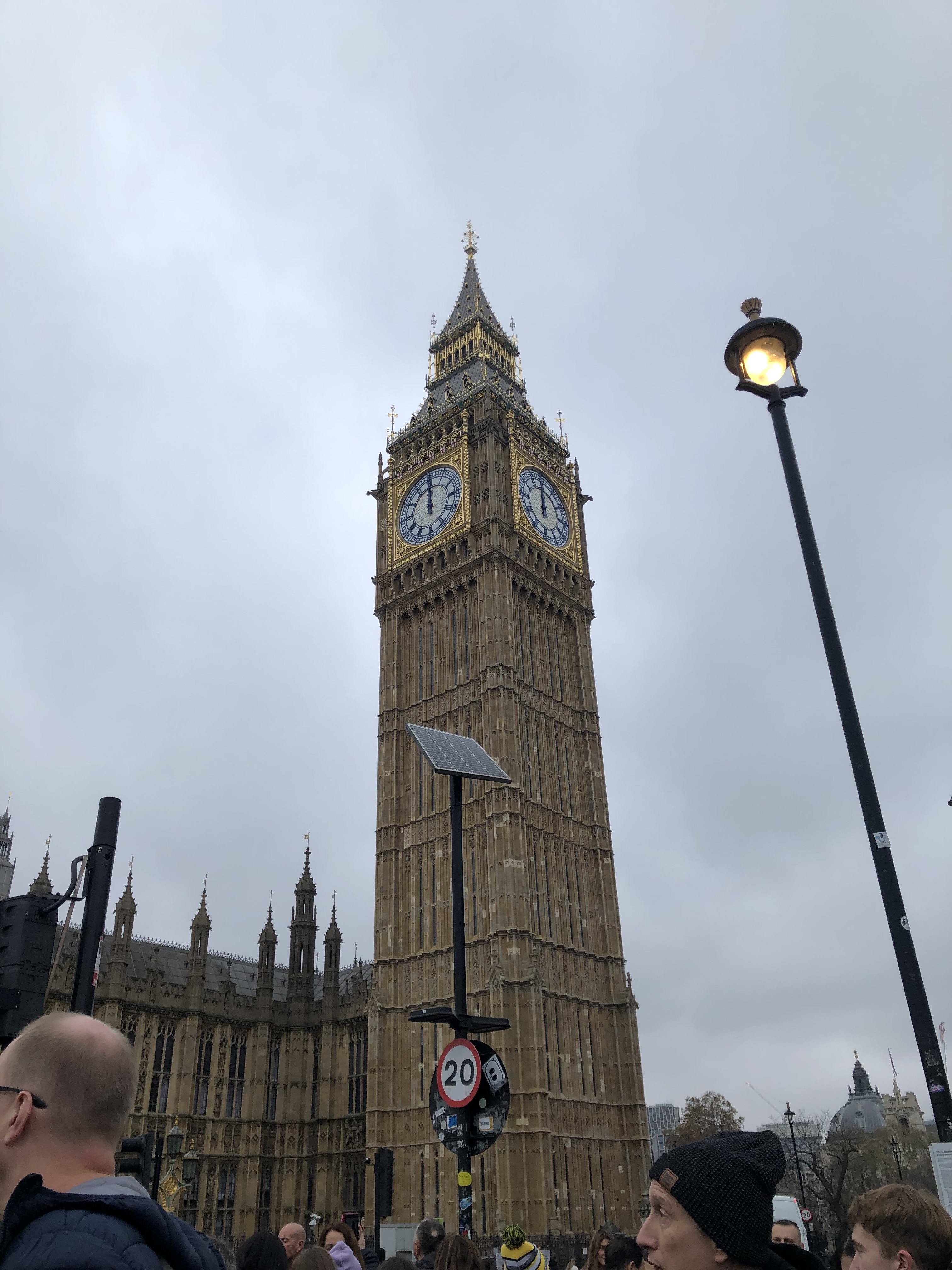
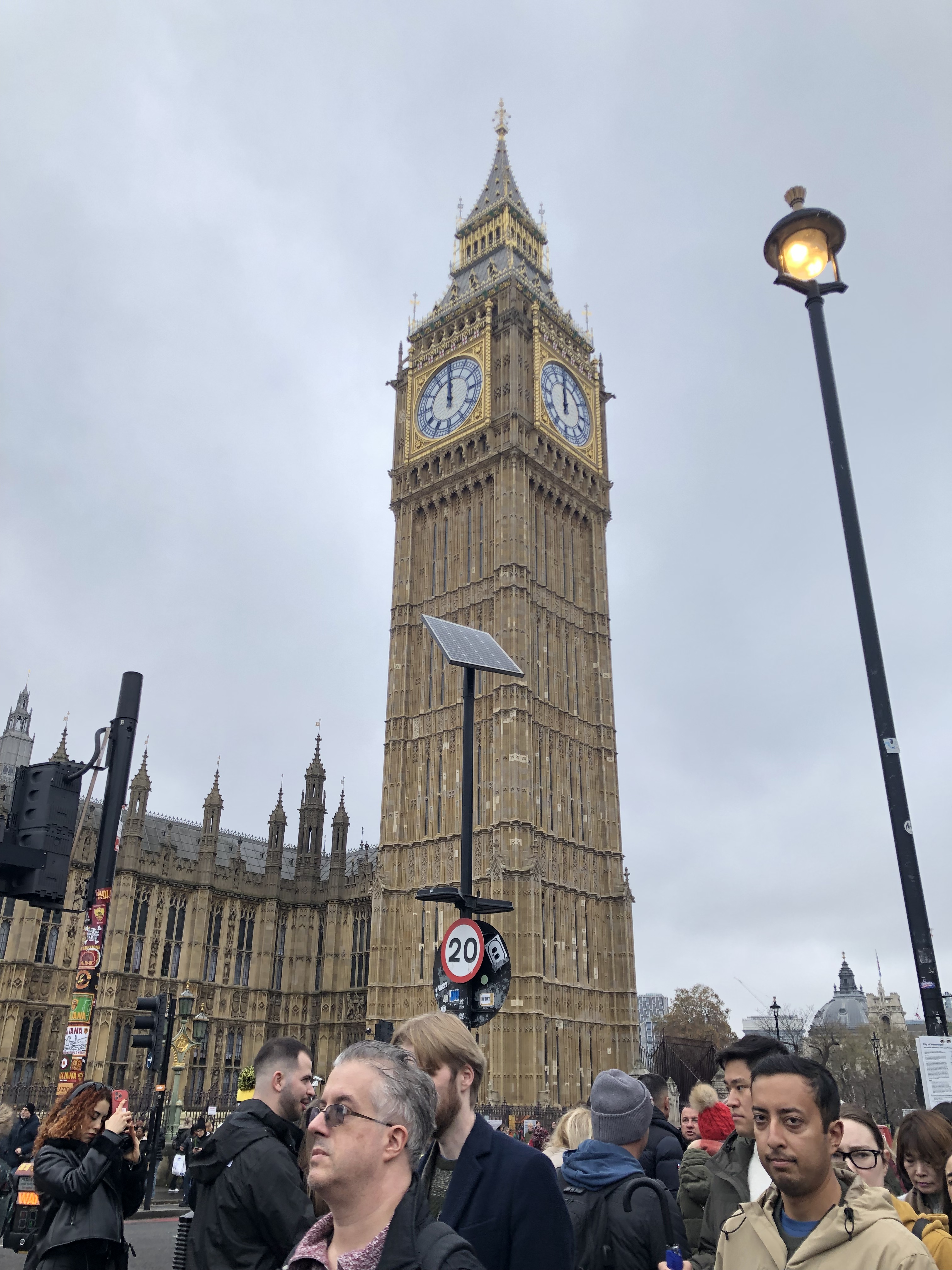
My favourite photos, plus selfies of me from Saturday when I went to London. So nice to see primary after about After about 20 years of them living at a


up close photos of big Ben that I took whilst in London sightseeing with all the family
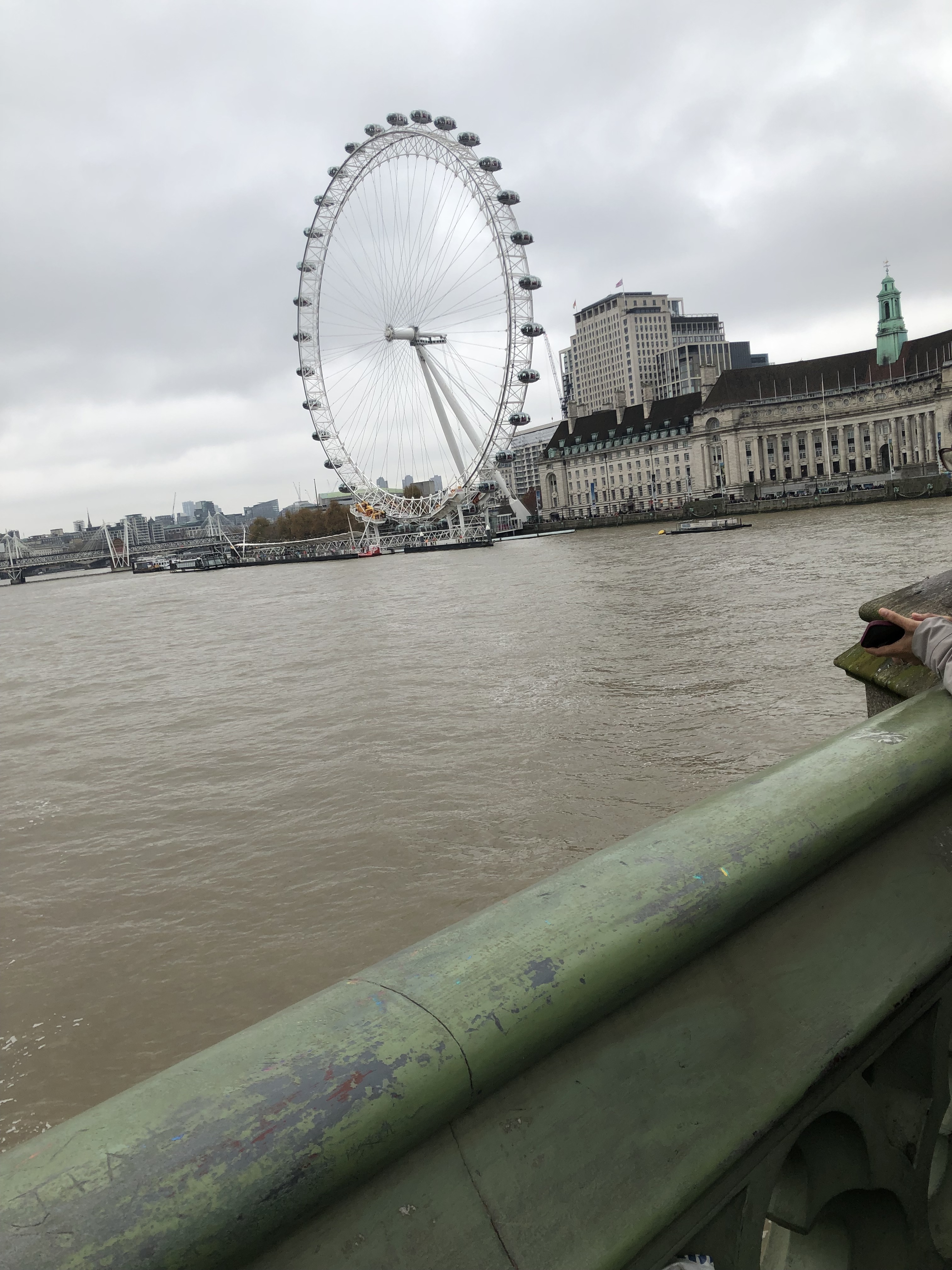
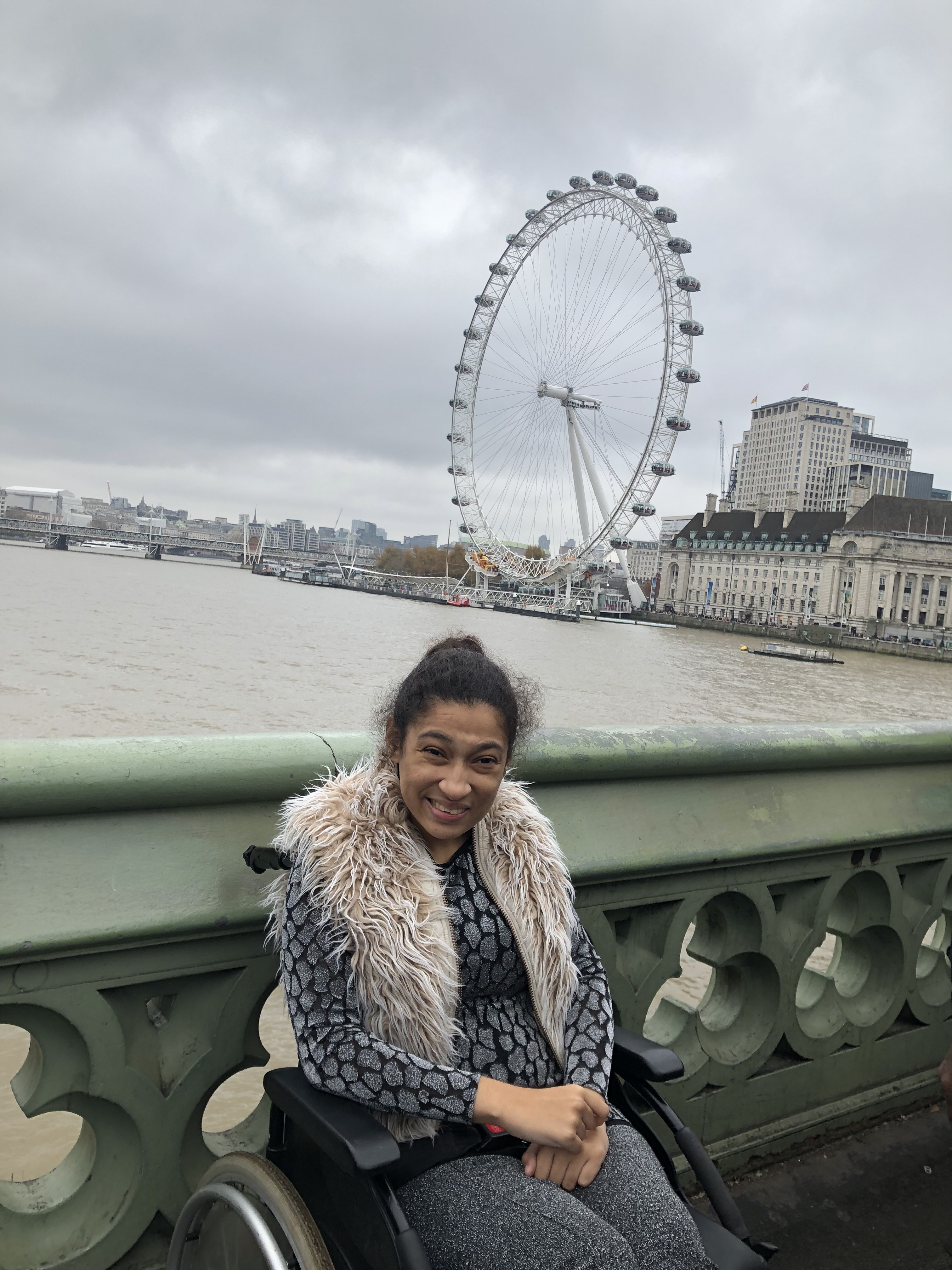
Me my auntie and the River Thames and the London Eye

The Personal Trainer Giving Clients Confidence
A personal trainer for children and adults with learning disabilities said giving his clients confidence was the key to his role.
Callum Foster, 22, from Woodbridge, Suffolk, set up This Ability Coach to offer the sessions from Fortitude Fitness gym in Ipswich.
He was inspired by his grandfather who also worked with children with disabilities.
Edward Wagland, 22, who has Down’s syndrome, attends Mr Foster’s sessions and said they were helping prepare him for the rest of his life.
Mr Foster works as a personal trainer part-time while also working for the Ipswich Town Foundation.
He said his personal training was more than just being about exercise and physical health.
“It’s about making them happy, giving them the confidence and support that they deserve,” he explained.
“They’re amazing individuals and they deserve the recognition and respect that I can give them.
“Seeing them being independent is incredible for me and I’m lucky that I can see it when maybe they don’t.
“It why I do what I do.”
Mr Foster explained he focused on instilling confidence into his clients and said Mr Wagland was “determined, strong and incredible”.
“I want [Edward] to have that support and that feeling that he can talk to anyone which sometimes can be difficult for children with disabilities,” he added.
“At the end of the day he’s the one that shows up every week out of his own time, on top of all the other stuff he’s got going on.
“I can’t do what I do without him, his energy, his support and dedication and the whole reason I do it is to showcase that to people.”
Mr Wagland described his personal trainer as a “genius” who was “excellent” with him.
They have since become good friends.
“He knows a lot about me, he’s always so proud of me and he’s happy in general I’m doing this stuff because it’s good for my health, my social [life], it’s building me up ready for my life,” Mr Wagland said.
“It also helps me to think and have less stress from college.”
Mr Wagland’s mother, Helen Wagland, praised the work Mr Foster had done with her son.
“Not only has Edward gained some sort of independence because he’s doing something on his own with someone like Callum, who is a male role figure to be really applauded, but he’s doing it alone with him,” she said.
“It gives Edward confidence, it gives him independence and independence doesn’t come easily to someone like Edward.
“We’re very grateful, it’s been smashing. Edward loves it, he keeps asking when is his next PT session.”
me and my family at the London Christmas market

Disabled Man Covers 120km In Antarctic Expedition
A stroke survivor from Devon who is aiming to become the first disabled person to ski solo and unsupported to the South Pole has completed his first week on the ice.
Jonny Huntington, from Kingsbridge, has already covered 120km (75 miles) of his Antarctic expedition.
The 38-year-old has skied about eight-and-a-half hours per day, covering up to 23km (14 miles).
Mr Huntington suffered a stroke when he was 28 leaving him with complete left-sided paralysis and was left with permanent brain damage.
The former GB para-athlete still has a significant lack of strength, mobility and control down his left side, which he said had been exacerbated by the cold climate of his surroundings.
“I have taken a few falls,” he said.
“Four in one day is the record, however, it is all about getting back up, brushing yourself down and moving on.”
He said his left leg “freely rotates” as he has little to no movement in his left ankle.
“So, the problem I have is that if the edge of my ski clips on something in the snow it can cause the foot to rotate and the ski to veer towards my other ski,” he said.
“Crossing skis is really not what you want and can often cause you to fall over.”
Mr Huntington is now planning to increase his daily target to consistently hit 24km (15 miles) per day as he progresses into the second week of the expedition.
Through his expedition, he is raising money for four charities including the Invictus Games Foundation, Armed Forces Para-Snowsport Team, Team Forces and The Adaptive Grand Slam Foundation.
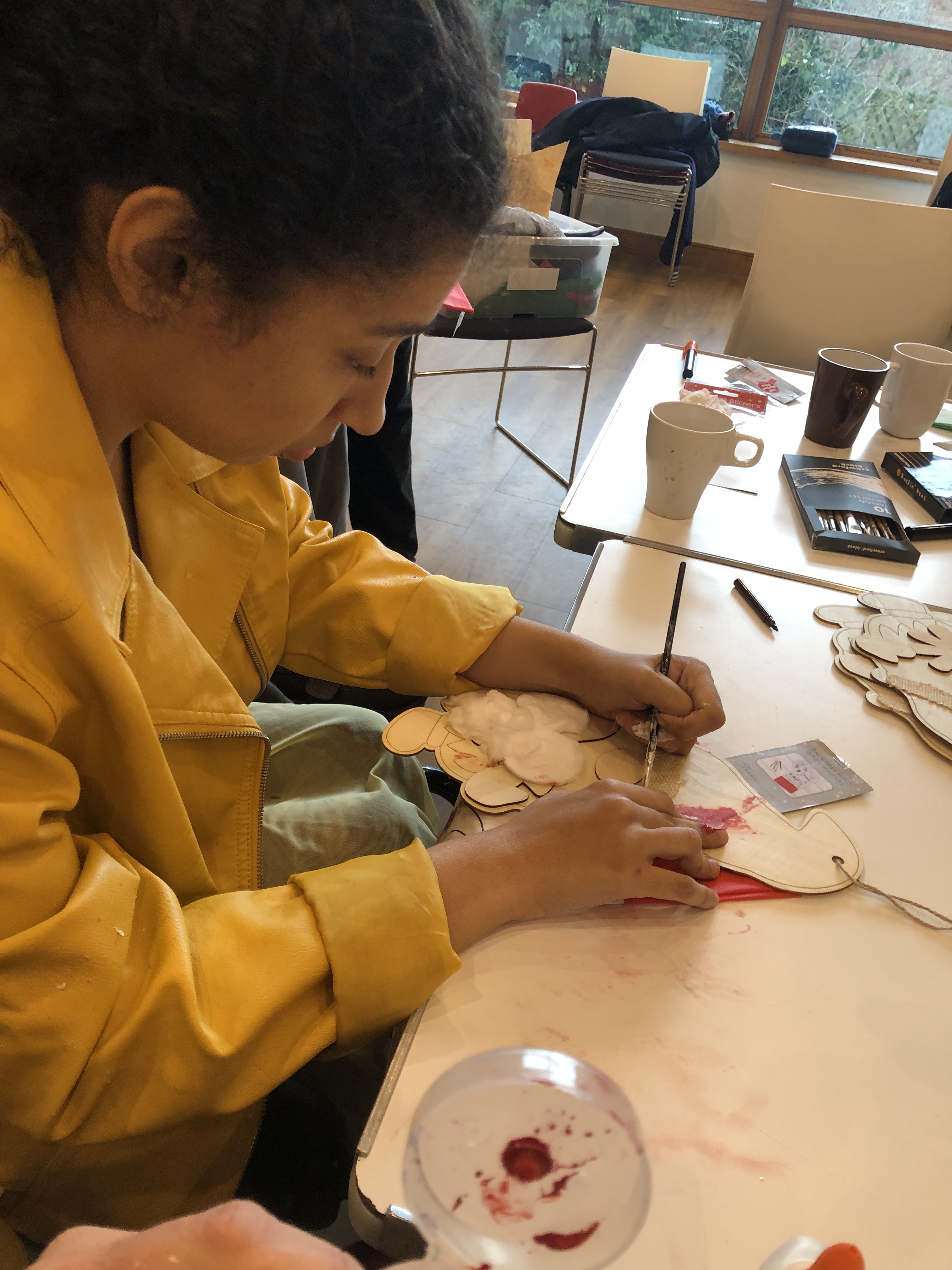
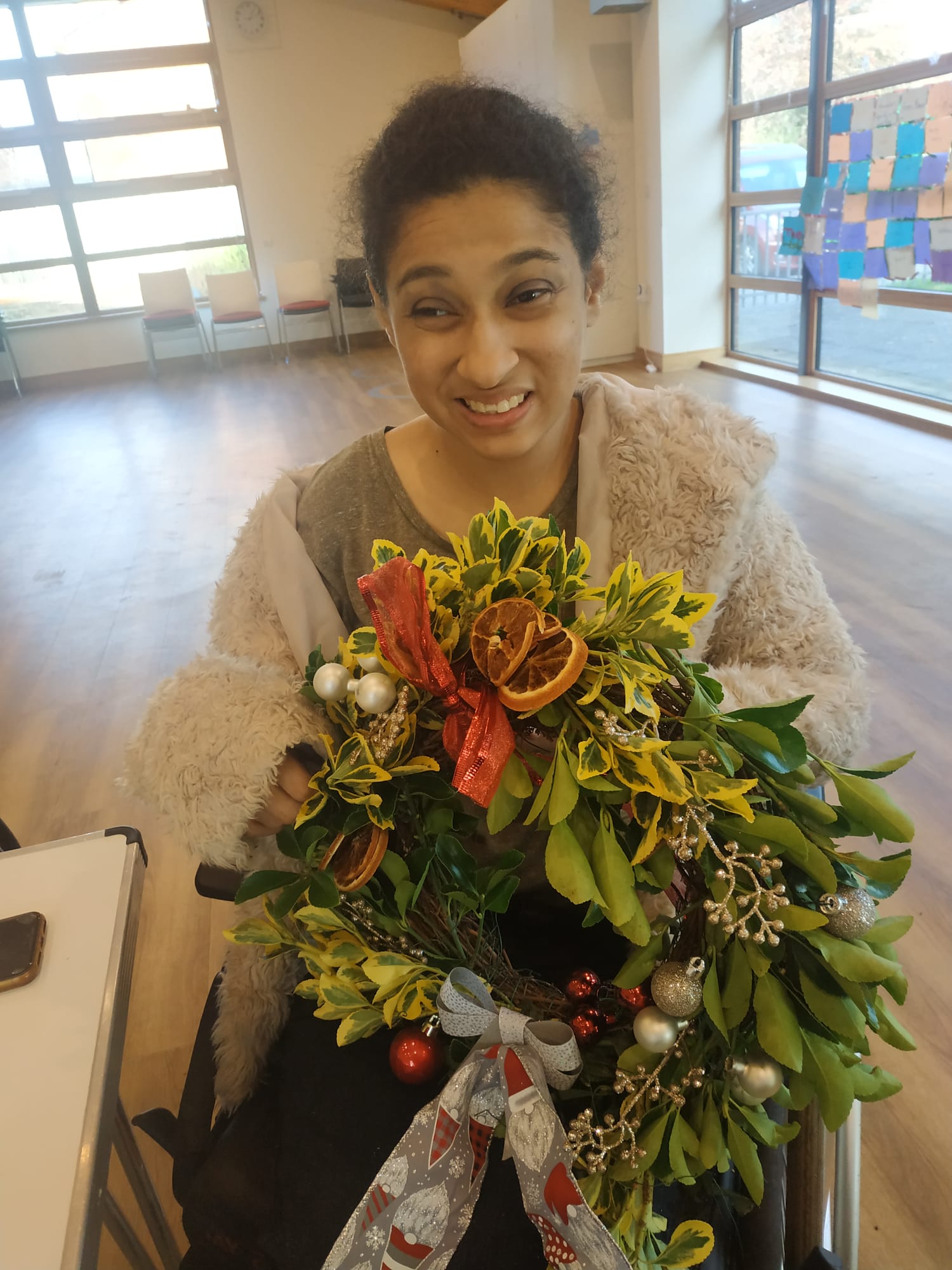
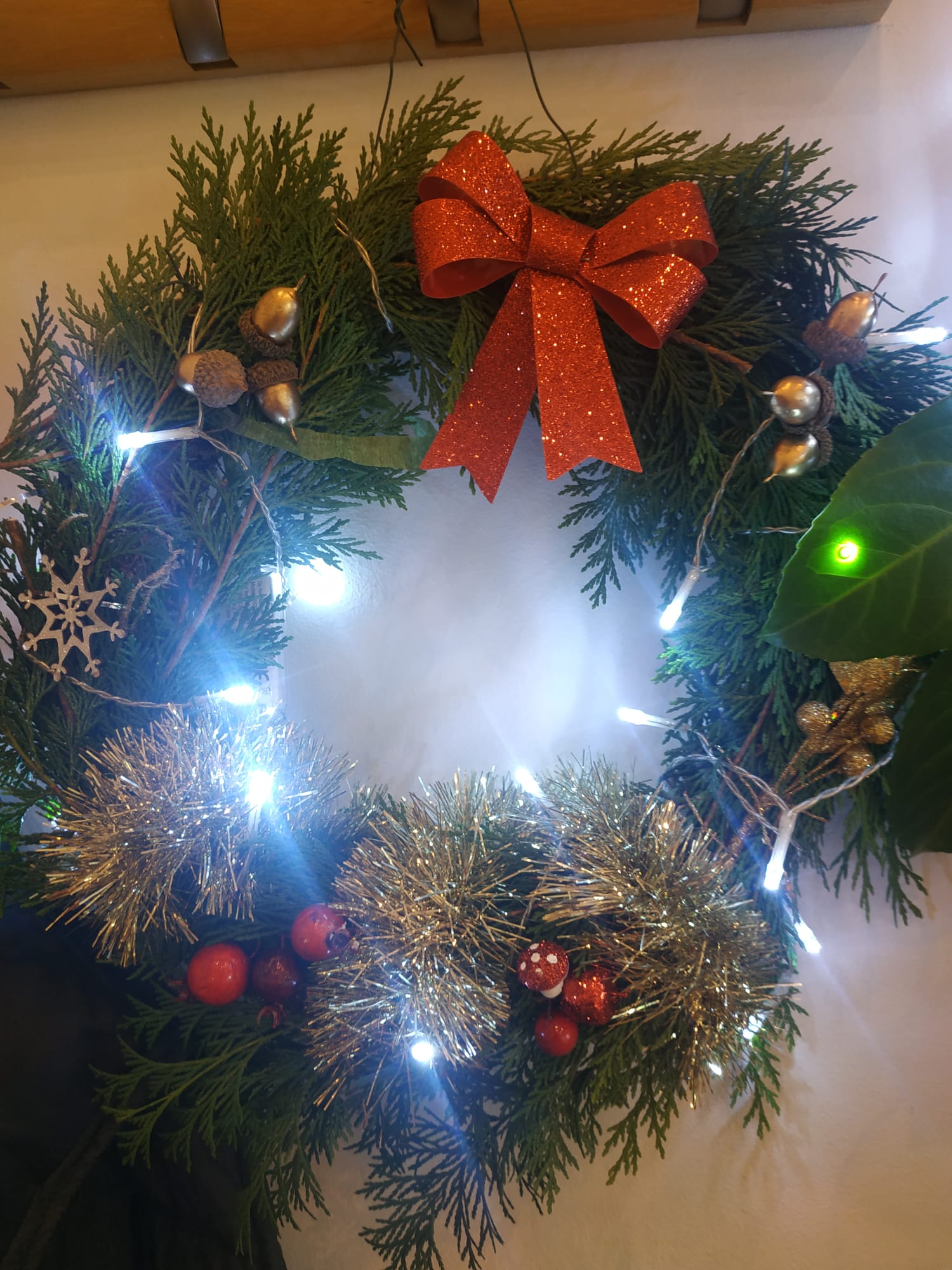
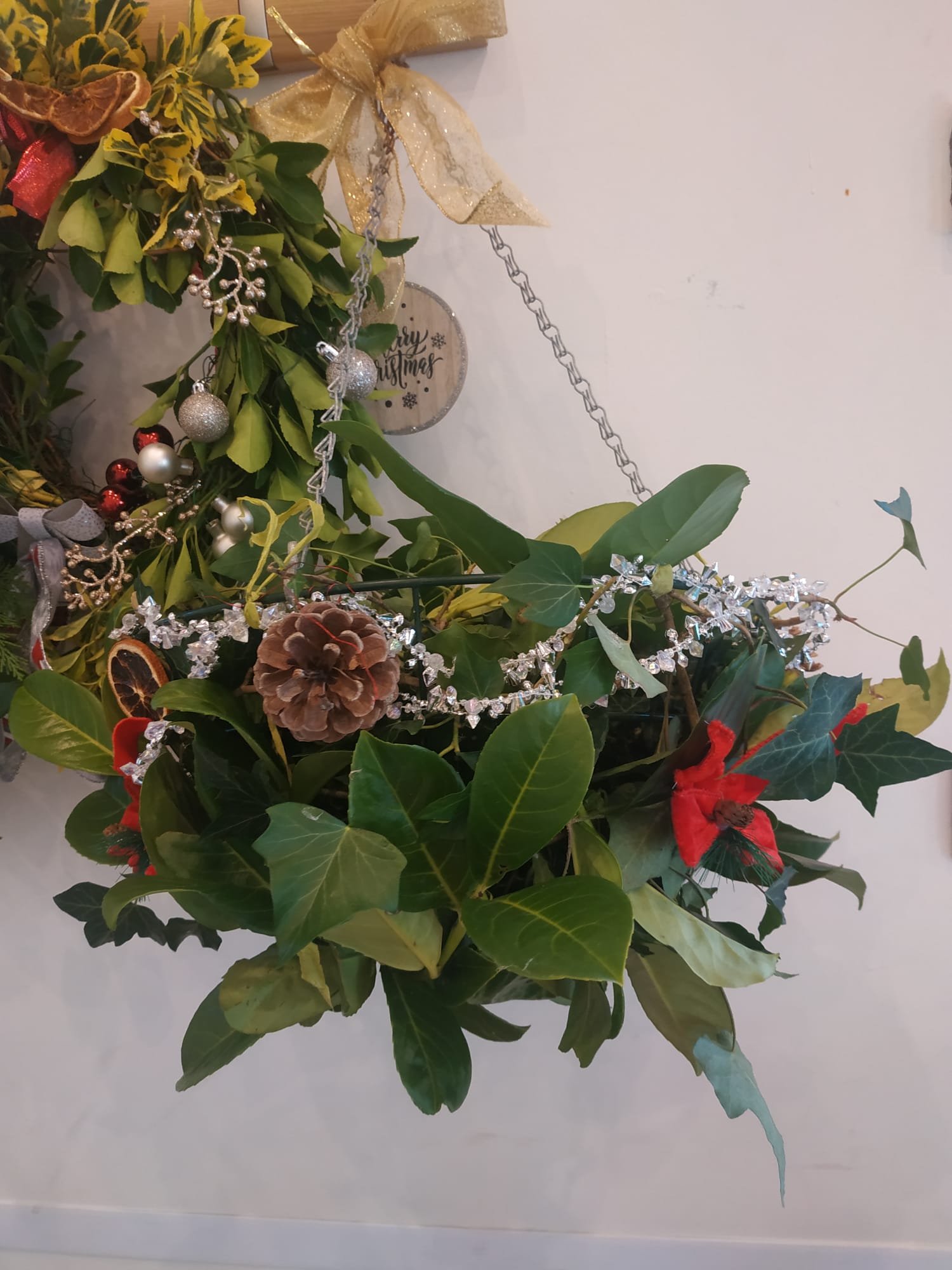
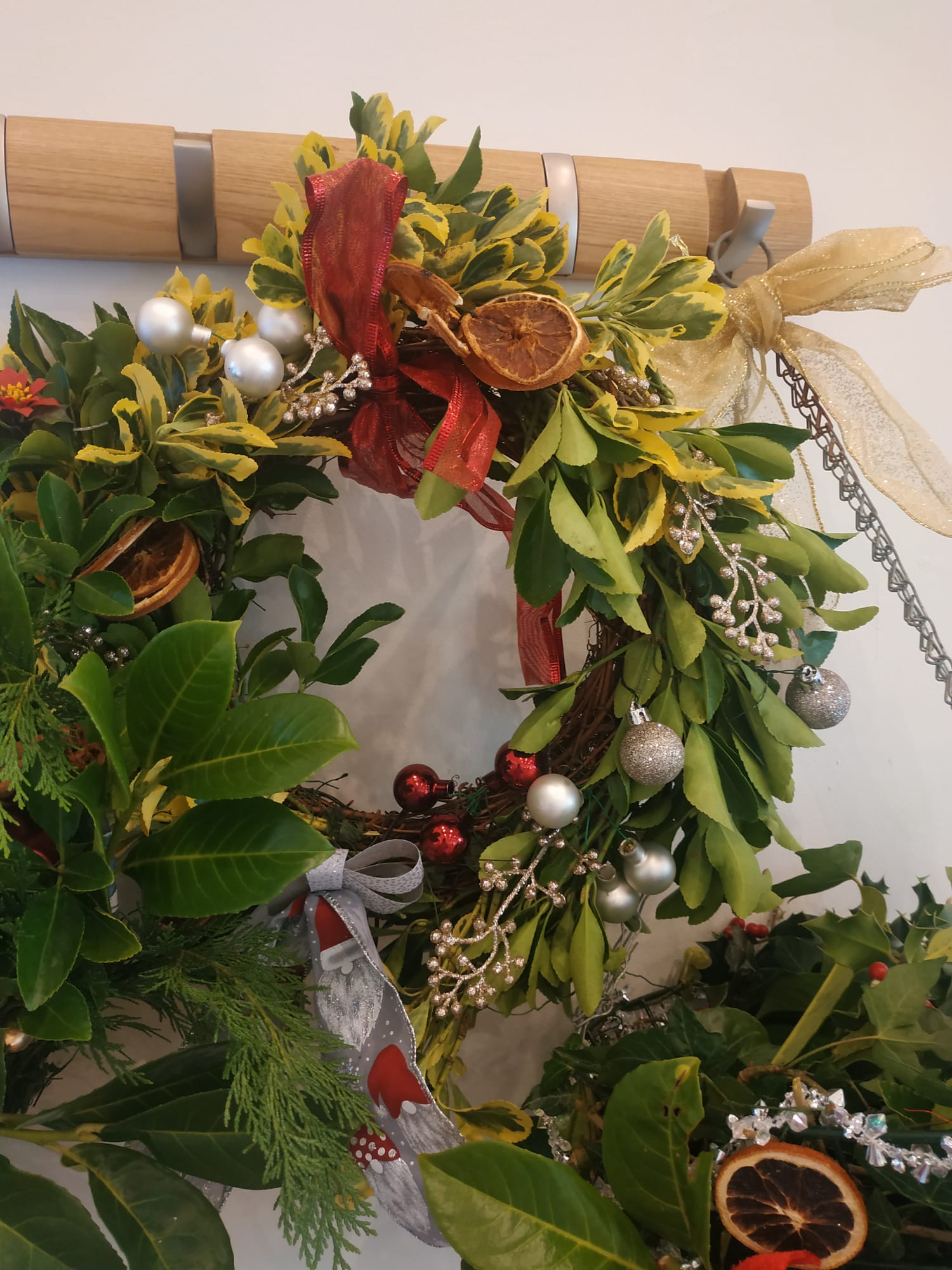
2024 Rees, making with my activity group today

Man Overcome By New Accent Ahead Of Wedding
This is the moment a young man from Birmingham was gifted a new West Midlands accent.
Jack Reeve, 22, who has cerebral palsy, had been using a communication device with a robotic voice.
But ahead of his wedding to fiancee Bethan in 2026, and with the help of special technology, he received a Dudley accent from an anonymous donor.
He was overcome with emotion when he heard how it sounded.
“I chose a voice with a Dudley accent as that is where my fiancee is from,” he said.
“I wanted to make the right choice – it is going to be my voice for the rest of my life.”
O2 Arena Gig Staff Remove Man They Thought Was Drunk
A disabled man has said he was “unfairly removed” from a music event in London, after venue staff mistook his medical condition for being drunk.
Matthew Parrott, 48, from Oxford took his wife, Beth, to London to watch Glass Animals at The O2 Arena on 7 November but missed the headline act when he was removed after suffering a fall.
He told BBC Radio 4’s You and Yours programme that their evidence for him being intoxicated was that he was “stumbling when he walked”.
The O2 apologised and said it was reviewing staff training.
Mr Parrott has had lymphoma, a type of blood cancer which impacts the immune system, since 2007.
Three years ago, he had a bone marrow transplant and, as a result of this, suffers from graft-versus-host-disease. This causes neuropathy – nerve damage – in his feet, among other symptoms.
“Sometimes, I walk in an awkward way. At the concert, I tripped and couldn’t regain my footing. It was an unfortunate accident,” he said.
“It wasn’t a severe injury. I felt okay, so we just wanted to go back to our seats and enjoy the show. We refused to let the fall dampen our spirits.”
“I couldn’t see the show at all”
Once he’d been seen by medical staff at The O2, Mr Parrott says he was met by the venue’s security manager, alongside a group of security guards.
“They refused to let me back in. They said I was intoxicated, which I wasn’t.
“I tried very much to explain that the fall wasn’t a result of drinking too much alcohol, and that it was because I have this medical condition. But we were escorted out and couldn’t see the show at all.
“I had three beers over the course of four and a half hours. We were celebrating my wife’s birthday. She had the same amount, and no one was trying to throw her out.”
A request for a reimbursement of his tickets, which cost £157.70 for the pair, was initially rejected.
“At the time, I offered to take a breathalyser test – but they refused,” said Mr Parrott.
Mr Parrott has now been contacted directly by staff from The O2. He has received a full refund for the Glass Animals show, alongside a pair of complimentary tickets and drink vouchers for an upcoming concert of his choice.
In a statement, the O2 said: “We were sorry to hear of this and our teams have been in touch with Mr Parrot [sic] directly and have reached a resolution on this case.”
It said it prided itself on being “accessible and inclusive” and had recently been recognised by disability charity, Attitude is Everything.
“In this instance, we would like to apologise to Mr Parrot [sic] for the error and emphasise that we are constantly reviewing our procedures and staff training measures to ensure that they’re up to date and fit for purpose.
“We’re committed to building on the work done by our teams so far to ensure that everyone who visits The O2 has a best-in-class experience.”
Matthew Parrott says he wants more people to speak up when they feel they have suffered injustice.
“When you come up against The O2, you feel helpless. I think it’s easy to feel resigned to just accepting that these people can steal a special night from you.
“I’m sure there are a lot of people who have similar stories to me, who haven’t had the opportunity to speak up and point out these injustices.
“It’s unfair to be treated this way because you walk slightly differently to somebody else.”
A spokesperson for the charity Attitude is Everything, which campaigns to improve accessibility at music events, said they were “concerned” to learn about Mr Parrott’s experience.
“We will be reaching out to the organisers to seek clarification about what has happened in this case.”
“We welcome feedback on experiences of live events from disabled customers via our webpage and seek to work with organisers to identify barriers and secure lasting solutions when issues do occur.”
A photo of me outside the London eye. When I went sightseeing with my auntie who came over from saint kitt
meeting Mickey Mouse in London me and Mickey Mouse together
Sign Language Santa To Meet Deaf Children
A sign language Santa will be visiting a church centre to chat to special needs and deaf children in the run-up to Christmas.
A grotto is being set up at the Wesley Centre for All, in Spring Head, Wednesbury on 14 December.
Rotarian Glenn Edwards organised the special visit after he saw two children using sign language to chat to Father Christmas at a Christmas lights switch-on last year.
A school in the area has already booked a slot for its pupils to visit, he said.
The Rotary Club of Wednesbury has contacted all schools in the area to let them know about the event, which will have gifts, toys and lollipops.
A friend of Santa’s, Joshua Gallagher, said British Sign Language was a first language for deaf children and others, including children who lived with deaf parents.
He is a deaf support worker at Sandwell Deaf Community Association, which supports people who are deaf and hard-of-hearing.
Mr Gallagher, also an acting teacher with Thespian Arts, said children using sign language could visit the grotto and talk about what they wanted, rather than make a list.
“Deaf children might write a list to Santa – but they might prefer to use their own language,” he said.
“It adds to the magic of Christmas that Santa knows their language.
“You definitely see more of an interaction. For some it’s the first time they have properly engaged with Santa.
“It’s a lovely thing to see.”
Mr Edwards, who lives in Wednesbury, said the grotto would open at 10:00 GMT, with the first hour being for special needs and deaf children. From 11:00 GMT, it will be open to everyone.
Message from Santa
A signed video by Santa, posted on social media, said: “Hello, how are you all, I’m Father Christmas, and I wish you all a merry Christmas.
“My friends at the rotary club want to let you know I’ll be at the Wesley church in Wednesbury on 14 December between 12 and 3pm.
“Make sure to come along and queue up. It’s free, which is fantastic. Make sure to bring your Christmas list to me so I can give it to my elves, who will sort it out.
“Take care and goodbye.”
Autistic Abuse Case Must Never Happen Again – No 10
The abuse of autistic children that took place at the Whitefield School in Walthamstow, in east London, was “horrendous” and “must never happen again”, the prime minister’s spokesperson has said.
The BBC has obtained footage of children at the school being shoved into padded rooms, thrown to the floor or left alone, sitting in their own vomit.
Responding to the videos, No 10 said the education department was looking at strengthening the guidance on the use of seclusion in specialist schools and would set out more information “as soon as possible”.
Currently the government’s guidance says schools can place disruptive pupils in seclusion or isolation rooms for a limited period.
It also says schools should ensure children are “kept in seclusion or isolation no longer than is necessary and that their time spent there is used as constructively as possible”.
Children’s Commissioner for England Rachel de Souza has called for a review “without delay” of the use of restraint and so-called “calming rooms”, following the BBC revelations.
In a statement, external, she described the experiences of the children involved as “absolutely appalling”, saying “no child should ever be physically restrained under such conditions and with such a lack of compassion, especially those who are so vulnerable”.
Restraint should only ever be used when it was “essential to keep a child safe”, and then “for the shortest time possible”, she added.
A police investigation was launched after staff at the Whitefield school discovered a box of USB memory sticks containing 500 hours of CCTV taken inside the padded room between 2014 and 2017.
The investigation ended earlier this year without any charges.
About 40 children with learning disabilities and severe mental disorders were confined for hours in the rooms – typically without food or drink.
Six families of the children involved have agreed for the BBC to show the footage.
The videos show the children in acute distress and many are seen injuring themselves.
Safeguarding expert Elizabeth Swan said it was “easily the worst footage” she had seen.
“You look at the children and they’re being defeated and responding to that treatment with self-injurious behaviour, it’s torture,” she added.
The school’s local MP Conservative Sir Iain Duncan Smith said the “jaw-dropping” footage should lead to “profound change”.
Asked about the footage, the prime minister’s spokesperson said: “The department is looking at the guidance in this space but it is clearly a horrendous case.
“We are clear that this cannot and should not have happened and should not happen again.”
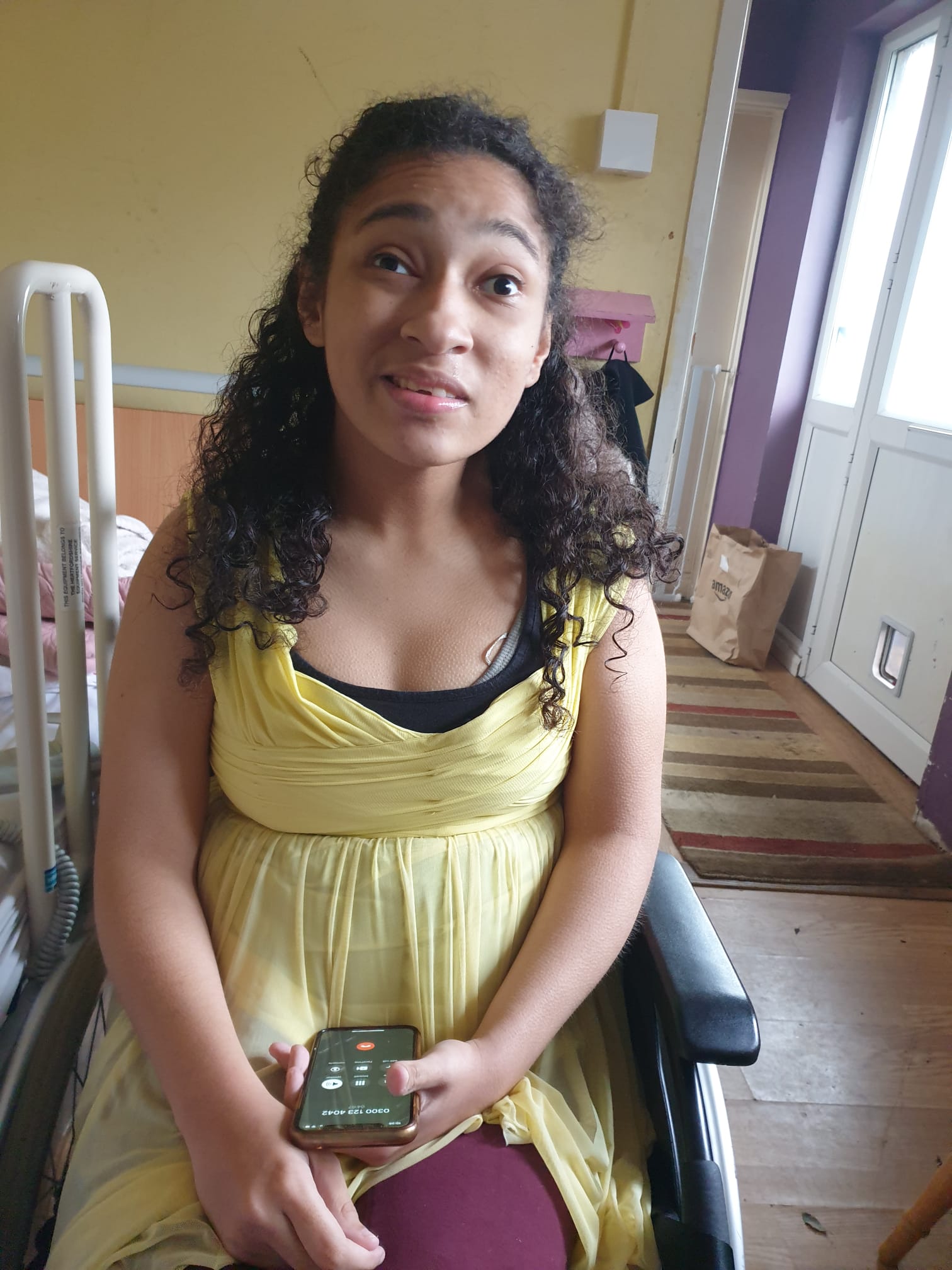
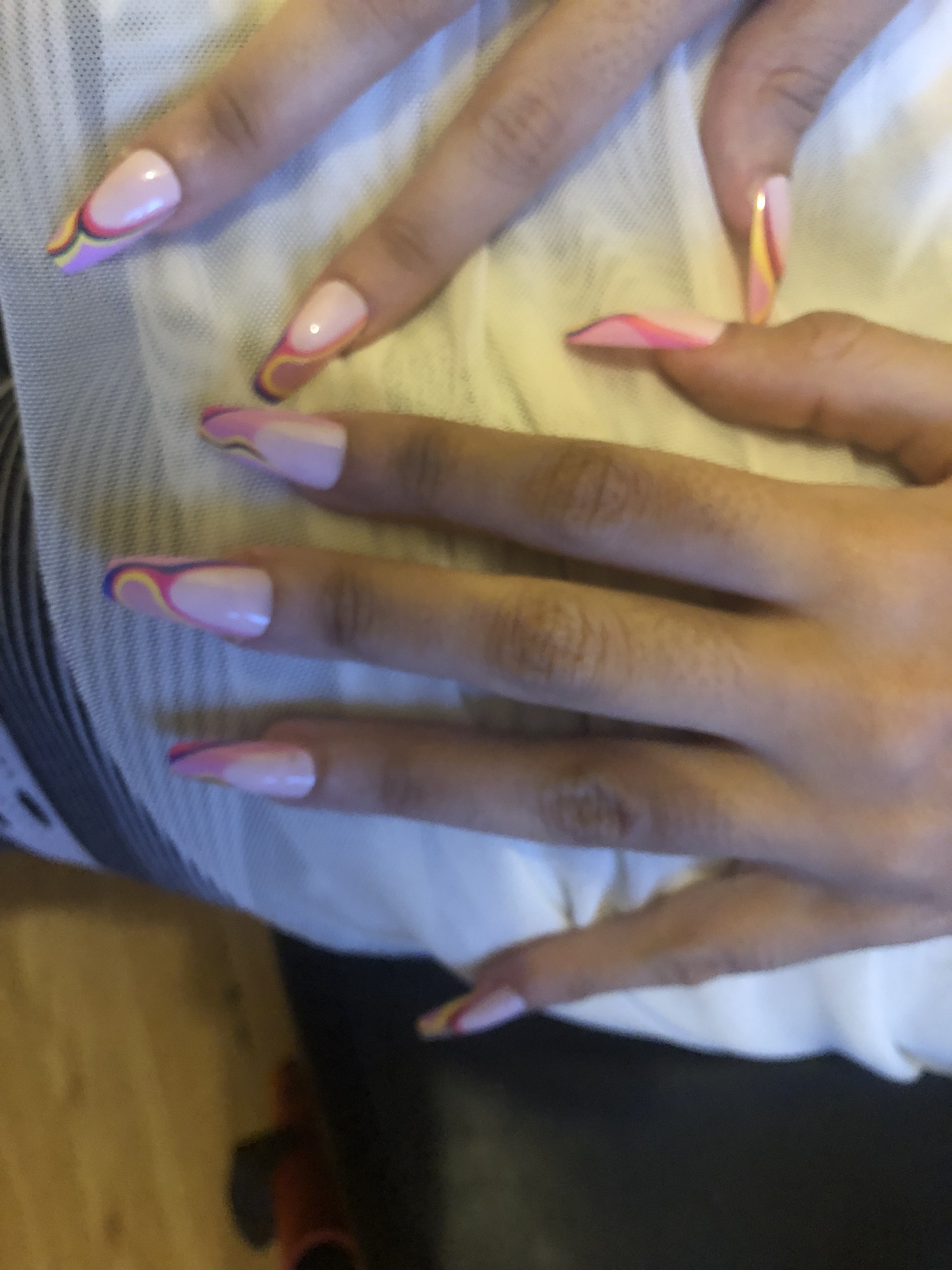
TikTok celebration for my birthday and birthday post nails with my personal assistant did for me. I am 25 now and can’t believe it
White Paper Brings Months More Uncertainty For Disabled Claimants
With many thanks to Benefits And Work.
The Get Britain Working White Paper published today fails to give any information about a proposed overhaul of the health and disability benefits system, instead revealing that a consultation will begin in the Spring
According to the DWP, the government:
“will bring forward measures to overhaul the health and disability benefits system so it better supports people to enter and remain in work and to tackle the spiralling benefits bill. A consultation will be published in Spring as part of a commitment to put the views and voices of disabled people at the heart of any policy changes that directly affect them
A DWP press release makes it clear that ill health and disability are seen as major problems in relation to increasing productivity in the UK, claiming that.
“The UK is also the only major economy that has seen its employment rate fall over the last five years, which has been largely driven by a significant rise in the number of people out of work due to long-term ill health with an outdated employment support system which is ill equipped to respond to this growing challenge.”
Plans in the white paper include:
- extra NHS staff to cut waiting lists in areas of high inactivity;
- an additional 8,500 new mental health staff;
- increased access to Individual Placement and Support (IPS) for severe mental illness, reaching 140,000 more people by 2028/29;
- funding in three trailblazer areas for NHS accelerators to stop people falling out of work completely due to ill health;
- jobcentres to become a new national jobs and careers service, focused on people’s skills and careers instead of just monitoring and managing benefit claims;
- staff at Jobcentres will have more flexibility to offer a more personalised service to jobseekers;
- new coaching academies to upskill jobcentre staff to better support people into work;
- a disability panel set up to ensure the voices of disabled people are at the core of reforms;
- a new supported employment programme called Connect to Work scheme which provides voluntary employment offers to people with disabilities, health conditions or complex barriers to work and will support up to 100,000 people a year at full roll out;
- an independent review into how employers can be better supported to employ people with disabilities health conditions, and to keep them in the workplace.
DWP Secretary of State, Liz Kendall said:
“The Get Britain Working White Paper shows that this Government stands unashamedly for work. We will make sure everyone, regardless of their background, age, ethnicity, health, disability or postcode can benefit from the dignity and purpose work can bring.”
Meanwhile, millions of claimants will spend the Christmas period not knowing what plans the DWP has for them in the coming year or how they will be affected by any proposals to “tackle the spiralling benefits bill”.
You can read the full DWP press release here.
You can download the Get Britain Working White Paper here.
CCTV Shows Whitefield School Pupils Abused And Locked In Padded Room
CCTV from a school obtained by the BBC shows autistic children being shoved into padded rooms, thrown to the floor, restrained by the neck – or left alone, sitting in vomit.
The footage from Whitefield School in north-east London resembles “torture”, one safeguarding expert told us. It shows for the first time the reality of what pupils faced.
A police investigation into the abuse footage, taken inside the special school’s “calming rooms” between 2014 and 2017, ended earlier this year without any charges. However, parents say they have been left to deal with the trauma.
The school says new leadership found the footage after the rooms had been shut and shared it with the police.
About 40 children with learning disabilities and severe mental disorders were confined for hours in the rooms – typically without food or drink.
Six of the families have agreed for the BBC to show the footage. They wanted us to reveal the scale and severity of the trauma their children had experienced – which they feel they have been misled about.
The videos show pupils, many of whom were non-verbal, clearly in acute distress, and many are seen to injure themselves for prolonged periods.
In the footage seen by the BBC, the only time staff at the school in Walthamstow intervene once children are inside the rooms is when a boy repeatedly throws his shoes at the CCTV cameras. They race in to stop him, with one teaching assistant apparently striking him.
“It broke my heart,” said the mother of one of the abused children after viewing the CCTV for the first time. “You wouldn’t even do that to a dog.”
Even now government guidance says only that removing disruptive pupils from classrooms in England must be for a “limited” duration and facilities must be “suitable”.
The BBC has also found evidence of mistreatment in seclusion rooms at other schools across the UK. One autistic child was kept inside a cage.
Meanwhile, local MP Sir Iain Duncan Smith said the Whitefield School footage “must lead to profound change” and described it as “jaw-dropping”.
Safeguarding expert Elizabeth Swan said it was “easily the worst footage” she had seen.
“You look at the children and they’re being defeated and responding to that treatment with self-injurious behaviour, it’s torture,” she said.
The School Prison Cells
Leaked CCTV footage reveals how special school pupils suffered while locked away in so-called ‘calming rooms’.
Whitefield School was rated as outstanding until, in 2017, Ofsted discovered the use of bare, padded rooms without windows to seclude children.
But the existence of the CCTV footage did not become public until 2021, when the BBC learned an investigation had been launched after the discovery of a box of USB memory sticks containing 500 hours of disturbing footage from inside the rooms.
In April, we exposed how safeguarding investigations commissioned by the school had proven that six Whitefield staff had abused pupils – but they were not referred to the government’s Disclosure and Barring Service, which can ban people from working with children, and three of them continued to work at the school.
Since we began investigating, we have obtained leaked school and council documents, and spoken to 17 of the 39 affected families.
Jamie’s mother Deborah watched the calming room footage after police formally invited families to view the abuse, following our report in April.
“You saw them open the door, whack Jamie in his back – he went flying on the floor,” she said, fighting back tears.
‘No-one’s accountable’
Jamie’s coat and bag were placed inside the room with him. Deborah says this shows that it was “calculated” that Jamie he would remain there until the end of the day, even if he calmed down.
She says Jamie suffered his first ever seizure after he began being placed in the calming rooms and believes his treatment directly resulted in his epilepsy.
Stress can contribute to the development of epilepsy or trigger seizures in those with the condition.
Other families told the BBC their children developed PTSD after being placed in the calming rooms. One child’s family said he suffered severe psychological damage and was later detained in a mental hospital because he was at risk of harming himself.
Parents said they complained to the school about unexplained injuries and the use of the rooms – but this did not lead to investigation, even though the evidence from the CCTV cameras was available.
“It’s a cover-up from higher up,” Deborah says. “I don’t see how they could get away with this level of abuse and no-one’s accountable.”
Another family complained after their son repeatedly returned home with injuries to his nose. The CCTV leaked to the BBC shows the boy punching himself in the nose while alone inside the room.
The BBC has spent months trying to find out who knew about concerns around the use of the rooms and why there was no investigation into the harm suffered by children in the calming rooms following Ofsted’s 2017 visit.
After the rooms were shut down, a review by a director of the trust running the school reported that governors and a staff member from the local council, Waltham Forest, had visited the rooms. But it did not record any concerns being raised at the time.
The BBC has learned that the job of reviewing the CCTV was largely left to a single teaching assistant.
Once a week, she downloaded the footage and compared it with written staff observations before sharing any incidents and concerns with bosses.
But she failed to report many of the 20-plus clips showing excessive force – according to a school safeguarding investigation into her conduct, which concluded she turned a “blind eye” to the failings.
It also found that she had abused a child herself by using a pad used for rugby training to push them into the corner of a room. Despite these findings, she was not sacked.
‘Left in a cage’
She told the investigation that contacting the school’s leadership was “hard to do as a teaching assistant” and had become “desensitised” to the footage, according to records of her interview obtained by the BBC.
A different teaching assistant told the safeguarding investigator that she had seen footage of a colleague observing a child masturbating for over an hour. Police reported that they were unable to corroborate what she said.
The BBC has also uncovered other failings affecting children with special educational needs placed in seclusion across the UK, with an autistic child being kept in a cage at one school about 10 years ago.
The area below a stairwell was enclosed by a cage and another cage with a mattress inside at a school called Include in Bury St Edmunds, which offers alternative provision for children outside mainstream education and is run by the charity Catch22.
The mother of the autistic child only discovered these cages were in use when she visited the school without an appointment, having grown concerned about the real nature of what was referred to as “The Den”.
She said the stairwell cage would be covered by a blanket when the child was shouting and that her son was sometimes kept inside one of these cages for up to six hours, without water or access to a toilet.
“Even an animal wouldn’t have been left in a cage for that long”, she says.
Council records state that Ofsted were informed about what the mother found but there was no inspection. Ofsted now says it cannot find any record of a complaint.
Catch22 says the spaces were used by previous leadership and a 2018 council report concluded that there was no proof pupils were locked inside.
Regulation of the use and design of calming rooms is now urgently needed – according to Sir Iain Duncan-Smith.
Following our investigation in April, the Children’s Commissioner also called for changes to guidance on the use of seclusion in special schools – which has not happened. The Department for Education says it is “looking” at ways to “strengthen” it.
The Metropolitan Police says it continues to conduct “wider enquiries” about Whitefield, not relating to abuse. The Crown Prosecution Service declined to comment.
The Flourish Trust, which runs Whitefield, says it has learned from the failings in this case.
Ofsted says responsibility for investigating the harm caused to children following its discovery of the rooms lay with the Department for Education, as regulator, and Waltham Forest.
Although it failed to investigate after Ofsted’s inspection, Waltham Forest says it will now commission a local case review, which it says will be “wholly independent”. It says it had not asked to review CCTV at any point because it did not know it existed.
Waltham Forest also says it has offered counselling to families. But the families told the BBC their children need significant and wide-ranging help to address the abuse they faced – and they will be living with its consequences for the rest of their lives.
Owen Tooth- The First Wheelchair User To Direct Eastenders
A director from Derbyshire has become the first wheelchair user to direct EastEnders since its inception in 1985.
Owen Tooth, 44, from Duffield, directed the popular BBC One soap episode which aired on 14 October to more than 3.5 million viewers.
Mr Tooth described working on the flagship show as “dreamy”.
He added: “It’s just so much to take on, it’s a big show and it’s a big accomplishment to take it on, so I felt really proud of it.”
Mr Tooth has been using a wheelchair for the last four years after a rock climbing accident triggered an autoimmune disease which affects his joints.
He said: “I’m so much more able in my wheelchair, but for a long time I tried to hide the problems I was having.”
He said after becoming a wheelchair user his career “just ended, it was literally like overnight”.
“I was earning a 20th of what I’d been earning before, I couldn’t get work, I couldn’t get meetings,” he added.
“It was an overnight change, and going to meetings and pitching and networking, it was like I was invisible.”
Mr Tooth, who has won awards at multiple film festivals, said his experience working on EastEnders was “overwhelmingly positive”.
“They’ve got crew and they’ve got cast who are wheelchair users there, so for me I’m really used to being on a film set and them having an awful lot of questions and an awful lot of uncomfortable people around me.
“It was just so relaxed there, it was kind of dreamy going into a place where the ground was already laid for me.”
He said becoming a wheelchair user has made him appreciate how much work the film industry needs to do when it comes to people with disabilities.
“It’s not as easy to get into the industry if you have a disability,” he added.
“I think I still thought it was a meritocracy, I still thought talent would rise and that’s not actually true when there’s barriers in the way that really stop you from progressing, you cant cultivate your talent if no one is going to let you.”
Refused Service Yet Again With My Guide Dog – I’m Done Speaking Out’
As a guide dog handler of 25 and a half years, I’ve had hundreds of experiences of being refused service – but online threats and increasing hostility towards disabled people mean I’m giving up on asking publicly for equality and respect.
The last straw came about a week ago. I was already reeling from a number of refusals by restaurants and shops when, once again, I was refused entry because I have a guide dog.
I visited the restaurant, which I have chosen not to name, but was told I couldn’t enter as people could have allergies. This, by the way, is unlawful.
They later changed their reason – saying they simply had no space.
It’s difficult to describe how this feels.
I don’t think you can understand it unless you know what it is like to face daily discrimination.
I compare the feeling to December 2022 when I was briefly robbed of my smartphone near the BBC building in central London.
Unlike street robberies, refusals are rarely violent or physical, but the feeling of being slugged in the gut is identical.
I argue refusals feel worse – because at least I can understand the motivation of robbers.
I have never understood why, when everyone on the planet is one accident or medical condition away from disability, many people seem to lack any empathy and do not attempt to understand how it must feel to be refused service because of a disability.
After failing to politely persuade the restaurateurs that my guide dog was well-behaved and then reiterating that it is unlawful to refuse access, one customer who’d overheard me voiced their disgust at the restaurant’s attitude.
I invited people who witnessed the refusal to leave a review. Two voices from another table, however, said that I had “ruined their meal” and “you should leave”.
I felt as small as a gnat.
My guide dog journey began in 1998, when I first applied to train with one. I had poor partial sight up until the year before when, as a 14-year-old, I became completely blind.
I have a number of eye conditions, but the primary diagnosis are glaucoma and hypertension, which have left me totally blind.Media caption,
BBC’s Sean Dilley learns to live with his new guide dog after long wait
Put simply, leaving my house is hard. Very fatiguingly hard.
I’ve been privileged to work with four wonderful guides – Brandy, Chipp, Sammy and now Shawn.
They’ve been my life, my freedom and independence.
That all feels ripped away from me when I’m refused service.
At the restaurant, more customers expressed their shock at the way I was treated. But for me, the customers who seemed annoyed sparked echoes in my mind of every occasion I’ve shared refusals to social media over the past eight years.
There I’ve faced constant demands to justify why I should want equal treatment and, more perturbingly, threats of violence and even death.
Two years ago, I was refused access to different branches of Tesco in London.
Tesco apologised and promised further training for staff.Media caption,
Guide dog access refusal: Sean was told his dog wasn’t allowed in Tesco twice in one week.
The encounters were captured on a privately owned body-camera. Many people were supportive but large numbers were highly abusive and aggressive.
I have received abuse on many social media platforms. Recently one user, who identified himself as a retired police officer, posted pictures of “victim cards” which, ironically, I was unable to appreciate until described to me by a sighted colleague.
His account was later suspended – but the post was not removed when I reported it.
Other users have asked why I’m sharing my experience of service rejection. I would reply to as many questions as possible and explain that it was simply to shine a torch into a dark corner.
On other occasions, social media users have threatened to punch me, kill my guide dog and tell me I need to “be careful”. One user said my mother should be raped.
Often the most vile abuse comes in the replies to lengthy threads, where discourse seems to get out of hand.
Why would I continue to put myself through this?
In England, Wales and Scotland, the Equality Act 2010 makes it unlawful to discriminate against a disabled person because they have a guide dog with them when accessing businesses or services.
In Northern Ireland, the same is true but the legislation is named the Disability Discrimination Act 1995.
There is a large anomaly in the law though. When taxis and cabs fail or refuse to carry an assistance dog, or attempt to charge more, it is a criminal offence.
When businesses and shops do the same, it’s a civil matter and it’s down to the individual disabled person to gather evidence and pursue them. It’s costly, energy-sapping and mostly not worth doing.
Raising the incidents on social media feels torturous when it means being threatened.
So I’ve had to accept there’s very little I can practically do.
Seeing is easy.
What seems harder for some, though, is trying to understand what it feels like to be barred from businesses when you can’t.
Young Blood Needed To Keep Talking Newspaper Alive
The chairman of a talking newspaper for the visually impaired has said more volunteers are needed to secure the future of the service, which a listener has described as irreplaceable.
The Stafford & Stone audio publication sends memory sticks of local news to more than 100 subscribers, free of charge.
Chairman Mike Hall is proud of the organisation’s 43 year history but fears for its future, having lost 600 listeners over the last 20 years.
“We need young blood, none of us are getting younger,” he said, “more volunteers are crucial, particularly on the management side.”
Mr Hall remembered there being more than 500 talking newspapers across the country, but the Talking News Federation said there was now half that number still in existence.
Stafford & Stone Talking Newspaper is completely self-funded, thanks mainly to donations left in the wills of regular listeners.
But its aging listenership is one of the challenges recognised by the organisation’s chairman.
“When we moved over to digital working, we lost quite a few people then,” he said, “and of course we’ve got competition from people like BBC Local Radio.”
Alison Cardy is a loyal listener, having lost her sight in later life.
She said she enjoyed the poetry, jokes and chatter as well as the news articles.
“You recognise the voices and feel like you know the characters,” she smiled.
She has written thank you messages periodically to the dedicated team of volunteers.
She said it was “very sad” to hear the numbers have dropped so drastically over the last two decades.
Mrs Cardy has promoted the service through Cannock and District Ladies Probus and said she would volunteer for the talking newspaper if she was physically able.
“I’d be lost without it,” she admitted and encouraged volunteers to get involved.

TikTok from with my boss last night when the team and your boss decides it’s time for the party version of superman
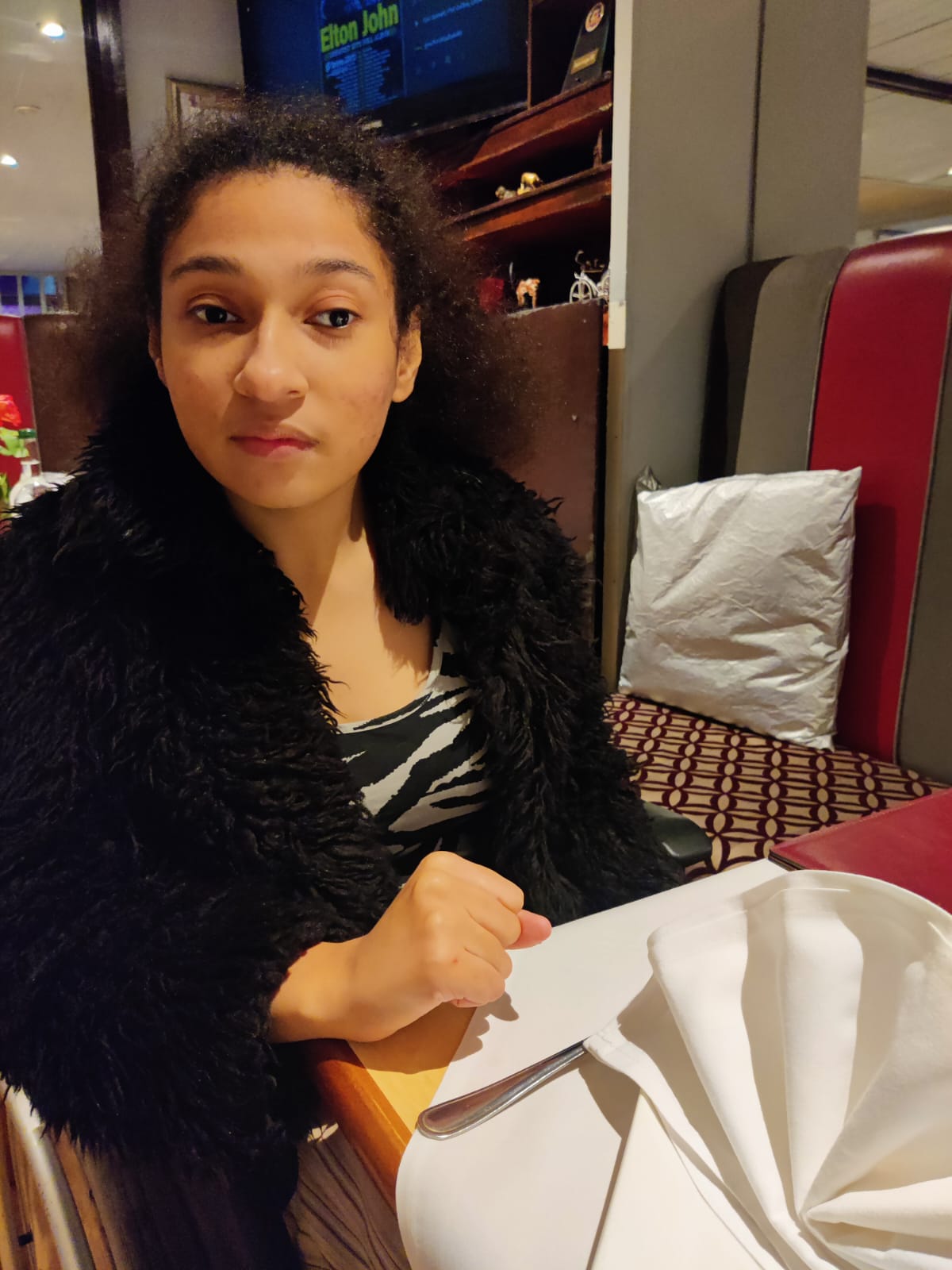
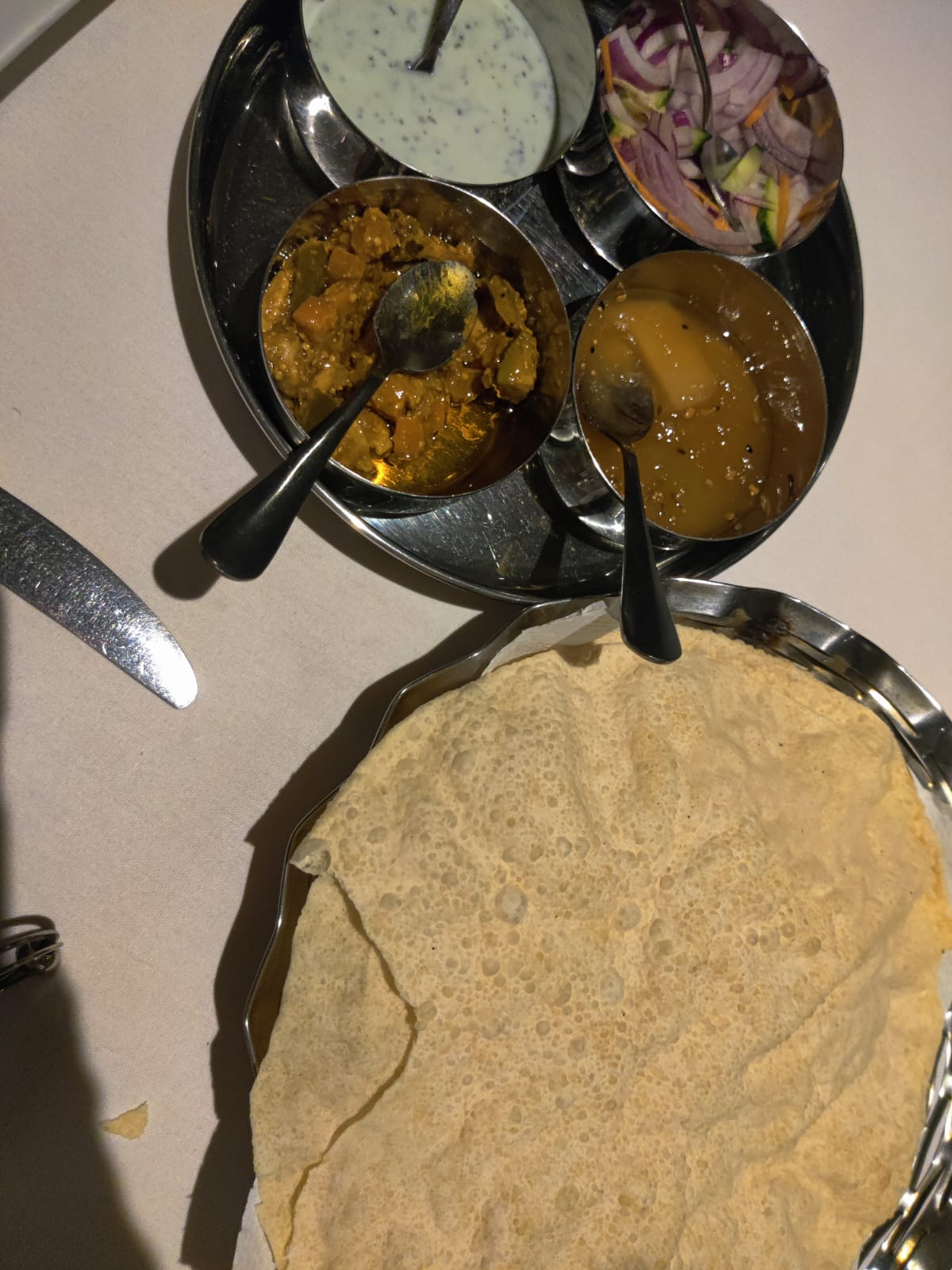
Popadoms and chutneys when we went out for my birthday meal this weekend, me and my Me and my PA for my
Musician Overcomes Hearing Loss To Release Album
“I’ve recorded this album as a celebration of my hearing and overcoming a serious and lifelong condition.”
Tom Gockelen-Kozlowski says it was “shattering” to learn he could lose his hearing at any moment, and he spent the next three years listening to music non-stop.
“My productivity at work dived while I was thinking ‘maybe this is the last time I can listen to The Strokes’ Is This It,'” he says.
Diagnosed with Neurofibromatosis type 2 (NF2), external, he has lost all hearing on his left side and half on his right, but nevertheless he is about to release his debut album.
Tom, 37, from Oxford, goes under the stage name Tom Gk and has used a hearing aid since his mid-20s. He explains that NF2 “basically means I grow non-cancerous tumours on my nerves”.
He says: “They really like growing in the head and around the ears… but the NHS is a marvellous thing and I started on an experimental drug [Bevacizumab] and it’s kept my hearing basically the same for 10 years.”
‘Memorable melody’
Nevertheless, he had to make changes, including leaving his job as a music critic for the Daily Telegraph. During his time there he gave glowing reviews, such as the “moving sense of world-weariness” from Bob Dylan at Hop Farm Festival, external, and some less so (Keane’s Night Train EP, external was “ploddingly predictable”).
So he launched himself into comedy, writing four hour-long shows, including Hearing Loss: The Musical, which he performed at Edinburgh Fringe, external. He still takes to the stage weekly with improv group the Oxford Imps, external.
But Tom’s big ambition was to make an album while he still could.Media caption,
The musician was diagnosed with Neurofibromatosis type 2 (NF2)
On a songwriting retreat organised by Mercury Prize-nominated folk singer Kathryn Williams he met up with Polly Paulusma, who he asked to produce his new batch of songs and help him through the process.
The focus was on tracks with catchy hooks, centred around Tom’s guitar and voice. His love of acts like The Beatles, Beck, The White Stripes, XTC and others shines through.
“I wonder whether because I don’t have the hearing range that everybody does, whether that kind of memorable melody is the top thing,” he says.
The result is the album Somehow We Made it, released on 31 January, and which he describes as “about me and the people around me – it’s been a journey”.
First single Winning, external is a personal song that draws on the idea of cherishing life in the face of adversity.
“There’s a part of you that says I must now take full advantage of everything,” he says.
“That I must live for the moment, I must be winning. The conceit of the song is that it’s pretty hard to do that.”
Another track, One Star, was inspired by a particularly scathing review, in which the former critic received a taste of his own medicine.
‘Very exposed’
It lyrics – “I’m a five star dreamer, four star musician/I’m a three star comic with some two star jokes/You’re my one star, I love you the most” – sum up Tom Gk’s self-deprecating humour, prevalent in most of his work.
“You’ve got to [see the funny side]. Maybe I’ve got a lot of dark things I could sing about but I think that brings humour to my music.”
About One Star he says: “You feel very exposed and naked when you have a review… I channelled that vulnerability and decided to turn it into a love song.”
Tom admits when he plays live he cannot hear the audience. “You’re looking at the faces,” he says, but he also enjoys the “blissful ignorance”.
He adds: “When there’s other noises about I can completely go to pieces”. As a result performing solo currently suits him best, with the “idea of maybe being in a band scarier”.
“Who knows? Maybe the next stage is me playing Glenn Miller style with a 26-piece big band.”
Neurofibromatosis type 2
A genetic condition that causes tumours to grow along nerves, such as those responsible for hearing and balance.
Symptoms include:
- hearing loss that gradually gets worse over time
- hearing ringing or buzzing in the ears (tinnitus)
- balance problems – particularly when moving in the dark or walking on uneven ground
Amputee Calls For Better Access In Public Spaces
A man who lost a leg to cancer is campaigning for better signage and information about access to public buildings.
Phil Grisewood, from Daventry in Northamptonshire, is learning how to walk again after his leg was amputated below the knee earlier this year.
Mr Grisewood, who is now adjusting to life with a prosthetic leg, described his shock at the “loss of his independence”, finding himself unable to perform simple tasks such as opening the front door.
He would like to see a traffic light system in all publicly accessible buildings to help people determine whether they are easily accessible.
The latest government figures, external showed an estimated 16.1 million people in the UK – 24% of the population – had a disability.
Mr Grisewood admitted he previously had “no interest” in accessibility issues but now wanted to raise awareness about the barriers people face.
The former rugby coach said: “I am now a champion for disability rights.
“There isn’t a single, comprehensive, source of information where people can look up a building and find out how people with a range of different impairments rate it for its ease of access.”
He said he wanted to see more “upfront information” to change that.
Nurse Said She Would Have Drowned Patient At Birth
A mental health nurse who said “I would’ve drowned her at birth” and “take her to the vets and get her put down” about vulnerable patients has been struck off.
Kathleen Alexandra Warmington was given a striking-off order by the Nursing & Midwifery Council for serious misconduct.
The community mental health practitioner, who worked in Northamptonshire, admitted making several “inappropriate comments” between August and November 2022.
She was suspended for an initial 18 months which will be replaced with a permanent suspension, although she can choose to appeal.
The hearing was told Warmington’s conduct became a cause for concern after she made numerous comments about patients and colleagues.
While speaking about one service user she said “take her to the vets and get her put down” and also stated another needed “to get a grip”.
The nurse, who had 20 years’ experience in mental health, called another patient a “naughty girl”, adding she was lucky to be given her medication.
She also said to another that “being miserable is a choice” and said “I’m not a fan of that” when discussing ADHD with a patient.
The nurse told another colleague “if she were my daughter, I would’ve drowned her at birth” in reference to someone she was entrusted with taking care of.
‘Risk of harm’
On another occasion she told a colleague to “kiss my white a**” – a comment she said she made as “banter” in an attempt to fit in after moving from a private hospital.
Finally, Mrs Warmington also suggested a patient could go to a crisis house, even though doing so was not considered to be clinically appropriate.
After being told such an admission would be not be permitted, she told the user that no beds were available at the crisis house, even though this was not true.
The panel concluded Mrs Warmington’s fitness to practice was impaired, she had committed misconduct, and her actions had put patients at an “unwanted risk of harm”.
The Northamptonshire Healthcare Foundation Trust has been contacted for comment.
Down’s Syndrome Cafe Facing Closure Due To Deficit
A charity that supports children and young people with Down’s syndrome is facing a £30,000 deficit.
Sunshine and Smiles may have to stop funding its free activity sessions and close its Headingley cafe and shop, which employs 10 young people with Down’s syndrome.
Charity service manager Ailith Harley-Roberts said the organisation was supporting more than 180 families.
“Its a very precious resource for a very important community in Leeds, we just want to make sure we keep offering all that we do,” she said.
The charity began in 2011 as a small group of parents who all had a baby with Down’s syndrome.
Ms Harley-Roberts said it had since “snowballed”.
It runs speech and language therapy sessions for more than 80 children and young people, as well as offering activity sessions, which include swimming, football, music and a baby and toddler group.
All of its services for children, young people and their families are free.
Its cafe, 21 Co. was initially a six-month project but has been running for four-and-a-half years.
It employed six young people with Down’s syndrome when it opened in 2019, but has 10 employees now.
Ms Harley-Roberts said the cafe aimed to change the discourse around people with learning disabilities in employment.
She said:”It helps them building independence, earning money.
“It’s not something that’s common place for someone with Down’s syndrome or any learning disability to be in employment.”
The cafe also supports the local community by selling homemade paintings, jewellery and cards by local makers.
Kate Stephens began working with the cafe in 2019 by selling her paintings and now co-manager.
She said: “It’s a great place to work. It has a really nice community vibe.
“It’s brilliant [for the young people] because they improve on their skills.”
‘Why I Home Educate My Disabled Daughter’
Clarke is educating his 10-year-old daughter Dakota at home after becoming concerned that schools are unable to meet her needs.
He is by no means alone – a BBC investigation has found the number of children being home educated in the south of England has more than doubled in the past five years.
Dakota lives with her family in Portsmouth and has cerebral palsy. This is something dad Clarke says means her writing can be slower than other children her age.
Clarke, an artist who is registered blind, says the decision in February to begin teaching Dakota at home was made to protect her mental wellbeing.
“Schools are doing something one day and a different thing another,” Dakota says.
“I don’t get rushed like I did at school. I’m more relaxed at home.”
The number of children moving to home education shot up during the Covid pandemic and has continued to rise.
The latest government figures suggest mental health is the most common reason for the increase over the past five years.
Dissatisfaction with special educational needs and disabilities (SEND) provision has also risen sharply, according to the latest education census, external.
Clarke says taking Dakota out of school was a decision they made together with his wife.
The government requires children schooled at home to receive full-time education – and they do not have to follow the National Curriculum.
But Clarke, who left school at 14, says his daughter gets the education she needs to thrive.
“We do study English and maths but we also study things she enjoys like Japanese poetry and animation,” he says.
Dakota says her favourite subject is English because she gets to write about Pokemon.
Clarke believes his own visual impairment has helped in the way he teaches Dakota, citing how they need to have continuous conversations about what she writes down.
“She marks her own maths – I’ll give her the formula and she’ll check the answer with a calculator,” he explains.
“If she’s got it wrong, she’ll go back and talk both of us through it.”
The new Labour government has committed to introducing registers for children not in school. It is currently not compulsory for parents to notify councils if they decide to home educate.
“Our mission is to break down the barriers to opportunity, so every pupil has the best life chances,” it says.
“That includes making sure every child is receiving a suitable education for their age, ability, aptitude and any special educational needs whether they are in school or at home.
“We are legislating for Children Not in School registers so local authorities can better identify and support all home educated children, and reforming the SEND system so more children receive earlier and better support to thrive in education.”
‘Beautiful relationship’
Running around in the playground or playing in the park is now something Dakota is unable to do because of her disability.
So playing on her VR headset is a place where “disability doesn’t exist”, her father says.
“I like playing Fortnite and because I have a headset, I can talk to my friends on there and play with them,” Dakota says.
Clarke says the two things he misses most since losing his sight are being able to read a book and watching his daughter grow up.
“The last memory I have of her facial features is from three years ago,” he says.
“We have the most beautiful relationship because she knows I’m blind but that way we engage with the education together.”
an Amazon gift list for guys that want to give me and her and celebrate my birthday
Myah’s birthday list – Amazon Gift List – https://www.amazon.co.uk/registries/gl/guest-view/I2DJBVTU938B
I’m Offered Sex As A Favour Because I’m Disabled
Holly was just 16 when someone asked her if she could have sex because she was disabled.
She has been asked many other questions over the years, such as if she “can have rough sex” or if it needs to be in a wheelchair.
“People think they’re doing you a favour, almost like a sacrifice. The worst thing is I’m not surprised or offended anymore.”
Holly, now 26, has chronic pain and hypermobility syndrome and is one of a number of disabled women who have spoken out to challenge negative stereotypes and stigma when it comes to dating and relationships.
Holly Greader said it was important that happy relationships for those who were disabled were represented.
She started dating her now husband James when she was a teenager, and has been with him for nine years, getting married earlier this year.
“Often in the media disabled people have miserable lives, we’re just a sad story,” she said.
She added she has always felt supported by him, but felt stereotyped by others.
“I was told by people when we first moved in together, that if my health declines he’d leave me.
“For being a burden or too much to handle.”Media caption,
“How do you have sex?”
She said there were assumptions people made about her in school, which some asked to her face.
“When it comes to wheelchair users, it’s always without a doubt almost the first question, can that person have sex?”
She said the boys in her class at school would ask personal and intrusive questions.
“I got asked things like, can you only have sex in a wheelchair? Will your joints dislocate? If I wanted to have rough sex with you, would I be able to?”
Holly said people have also messaged her on social media about sex, an offer she was often made to feel she should be “lucky” for.
Holly would like to see better positive representation in the media, citing that the character Isaac Goodwin in the programme Sex Education was the only good example she has been aware of recently.
Nicola Thomas, 38, from Caerphilly, who is registered blind, said: “One of the more common things people will ask is, how do you have sex? It kind of takes your breath back, it’s such an invasive and personal question.”
Nicola has an auto immune disease – neuromyelitis optica , external– and she lost her sight in one eye 15 years ago and the other five years ago.
“A lot of people see barriers with blindness and I’m definitely one to break those down.”
Nicola’s hobbies include sailing, paddleboarding and travelling, and her next trip is to Hong Kong.
Nicola had a boyfriend when she lost her sight but the relationship broke down.
“I was treated like a burden, people would say you can’t be a carer for her, but I didn’t need a carer.”
She now has a boyfriend who is also visually impaired.
“Even though we’re both blind, we’ll navigate our way round a city, or go on a date on our own. Nothing holds us back.”
Nicola also said she feels stereotyped when people show an interest in her.
“People message on social media asking for dates, their attention shifts or acts differently when I tell them I’m blind.”
“You’re definitely treated like they’re doing you a favour. It puts you off instantly.”
Nicola added: “People do pigeon hole us. I want to breakdown that stereotype, I have a full and happy life.”
Kat Watkins said disabled people have a right to explore their sexual identity and develop relationships just like anybody else.
She is the access to politics project officer for Disability Wales.
“Why are sex and relationships such a taboo for disabled people? There is much more to us than just being able to eat and having a roof over our heads.”
“Living your life and enjoying yourself that’s just part of life, and it doesn’t get highlighted enough for people with disabilities.”
Kat said hearing examples of how people message disabled women was “sadly normalised.”
She said adaptable sex toys and aids can help give people confidence and would like to see them on more mainstream sex sites and outlets.
“You’ve got to be comfortable with yourself and understand your body, so you can tell others how it works. Self love is also really important.”
For more on this story, watch Wales Live on BBC iPlayer.
Charity Helps Disabled People Access Beauty Spots
A Norwich disability group has thanked a Norfolk charity for making a city beauty spot more accessible.
Inclusive Norwich has worked alongside Norfolk Wildlife Trust and Aviva to ensure everyone can enjoy nature, with the latest project at Sweet Briar Marshes off Hellesdon Road being hailed a success.
Wider, hard-packed pathways, lightweight gates and raised pathway edges have been installed to improve accessibility, with plans for more improvements in future.
Dave Shraga, from the group, described the level of accessibility at the reserve, which has been open since May, as “gold standard”.
“They gave us everything we wanted and said, ‘What else do you want?’, which was mind-blowing,” he said.
“To go to that extent of working so hard to do that is part of that culture shift. Part of the ‘gold standard’ is making people feel valid and included and as though they have ownership.”
Sweet Briar Marshes, in the Wensum Valley, is made up of 90 acres (36 hectares) and a mixture of habitats, including mature woodland, wet and dry grasslands.
It is home to rare species of birds, amphibians, insects and flowers.
Matt Wickens, urban nature reserves manager for Norfolk Wildlife Trust, said it asked the community what it wanted from the reserve after it purchased the land in 2022.
“Since those consultations, the themes coming from them – one of them was accessibility and inclusivity.
“So we focused our efforts on that.”
Insurer Aviva, which has a base in Norwich, provided Norfolk Wildlife Trust with £300,000 in match-funding to buy the land.
Mr Shraga said more could be done elsewhere in the county to make sites accessible.
“Going out into nature and having a physical disability doesn’t always go together. The ground can be a bit lumpy and bumpy, there can be stiles, there can be issues with toilets – there’s a whole bunch of things that can make it really hard.
“The beaches in Norfolk are absolutely stunning. Personally I would love to be able to get more on to the beach and maybe even into the sea. But at the moment it’s almost impossible.”
‘Disabled Explorer’ Begins South Pole Solo Ski
A former GB para-athlete has set off to become the first disabled person to ski solo and unsupported to the South Pole.
Jonny Huntington, 38, from Kingsbridge, south Devon, suffered a stroke while serving as an officer in the British Army in 2014 – it left him completely paralysed from the neck down on his left side.
After a decade of rehabilitation and training he begun his challenge of skiing 566 miles (911km) of Antarctic tundra on Monday – an expedition he said would take 40 days.
Mr Huntington said the attempt would be “quite exciting” as “no one with a disability has done this before”.
‘Ultimate test’
Mr Huntington experienced left-sided paralysis following his stroke and has a significant lack of strength, mobility and control down that side.
During his recovery, he became a member of the Armed Forces Para-Snowsport Team and competed for the GB Para Nordic ski team from 2017 to 2020 at World Cups in Ukraine and Finland,
The idea for his South Pole expedition was planted after he stopped skiing competitively.
He said: “I’ll be doing it completely on my own with no sort of help, no resupply, nothing like that.
“Existing somewhere which is fundamentally hostile to life, it’s the ultimate test.”
Mr Huntington is dragging all his equipment and food in a sled, weighing about 110kg (242lbs).
To prepare, he also undertook a 20-day solo expedition in northern Sweden in April.
Mr Huntington has flown into Union Glacier to “spend a few days on the ice” for final preparations, before setting off from Fuchs-Messner on the edge of the Antarctic landmass on 21 November.
He said he was confident he had done the right level of preparation to complete the attempt.
“I’ve done everything I can to make it succeed, but I’ve never been to Antarctica before, it famously has quite strict conditions down there.
“There aren’t disabled explorers, it’s not a job, but I’ll just have to figure out how we can make this work.”
Strictly Blackout Dancer ‘An Amazing Role Model’
Chris McCausland has been described as an “amazing role model” for blind people after he wowed Strictly Come Dancing judges with his new “blackout” routine.
The Liverpool comedian, who lost his sight to retinitis pigmentosa in his 20s and 30s, is the BBC dancing competition’s first blind contestant.
In Saturday’s show on BBC One, McCausland and his professional dancer partner Dianne Buswell performed in complete darkness as a way of highlighting the everyday challenges faced by blind and visually impaired people.
Fellow Liverpudlian Dave Kelly, who also lost his sight to retinitis pigmentosa, praised McCausland for inspiring others.
Mr Kelly is chief executive of Everton-based charity Daisy UK, which helps disabled people and their families reach their full potential.
He said the Strictly “blackout” routine sent a hugely positive message.
“You need people like this who are in the public eye to go out there and show people it can be done,” he said.
“People assume we can’t do anything but there’s nothing Chris can’t do, or me.
“He is a positive role model, there’s someone to look up to and tell the kids, you know, you can do anything.
“You just need that help and support but you’ve got to believe”.
According to the Royal National Institute of Blind People (RNIB), retinitis pigmentosa (RP), external is the name given to a group of inherited eye conditions called retinal dystrophies.
A retinal dystrophy such as RP affects the retina at the back of the eye and, over time, stops it from working.
This means that RP causes gradual but permanent sight loss.
BBC journalist Salim Patel, who also lost his sight to RP, said McCausland was “proving to the world that blindness is no barrier”.
“With the right attitude and with people around you who share that same positive mindset, anything is possible,” he said.
“I hope people acknowledge what Chris has done and see it as a moment to never stereotype a blind person.
“We shouldn’t only just see Chris as ‘that blind dancer’.
“He’s an excellent dancer that just so happens to be blind.”
‘Incredibly moving’
McCausland previously turned the BBC show down, but has been one of the stars of this year’s series.
Rashmi Becker, who founded Step Change Studios to improve dance accessibility, with her blind and partially sighted-students recently taking part in a dance competition in Blackpool, said McCausland is “challenging many perceptions”.
Ms Becker, who is a guardian for her older brother who has sight loss and autism, hopes society gets to a stage where “it isn’t so remarkable to see blind people doing the things that people do, like dancing, and enjoying the things that the rest of us can”.
Debbie Miller, of the Royal National Institute of Blind People (RNIB), said the blackout moment was “incredibly moving”.
“It helped draw people’s attention to what it can be like to not be able to see, and underlined what Chris has said about the need to go beyond our comfort zones and see what we can achieve,” she said.
Strictly Come Dancing contestant Chris McCausland has been praised for performing a dance imitating his experience with blindness.
McCausland and his dance partner Dianne Buswell closed Saturday’s show with their couple’s choice to Instant Karma! (We All Shine On) by John Lennon.
The performance saw the comedian place his hands over Buswell’s eyes as the room faded to black. The lights came back up moments later to show him spinning Buswell around on his shoulders as pyrotechnics flared in the background.
The pair received a score of 33 out of a possible 40 from the judges, with Craig Revel Horwood describing the “poignant blackout moment” as “absolutely spectacular”.
Head judge Shirley Ballas told McCausland – who is the BBC programme’s first blind contestant – that he comes out every week “with your heart on your sleeve, and you give us 100%”.
It follows a performance in 2021 from actor Rose Ayling-Ellis who is deaf. Ayling-Ellis and her dance partner Giovanni Pernice paid tribute to the deaf community by dancing for a short while in complete silence.
It won the former Eastenders star a Bafta for the best must-see TV moment.
McCausland was registered blind after losing his sight to retinitis pigmentosa in his 20s and 30s.
Before Strictly, he insisted he “can’t dance”, saying: “If anybody out there is thinking ‘how the hell is he going to do that?’ then rest assured that I am thinking exactly the same thing.”
Earlier this week, students at the Royal National College for the Blind, in Hereford, where McCausland studied, told the BBC he was defying expectations.
One student said: “Some people think that people that have visual impairments can’t really do anything or can’t do much with their life beside piano tuning.”
“He’s doing so well now, it’s quite surreal but it’s really good, especially for those who don’t know anything about the eye,” they added.
Another student said it would be “really cool if someone who is visually impaired like us” won the competition.
Easy-Fit Prosthetics Offer Hope To Thousands Of Gaza Amputees
Standing between two bars erected at a mobile clinic in Rafah, southern Gaza, Rizeq Tafish concentrates as he takes his first tentative steps in four months.
“My feelings before were sadness and despair. Now I feel happiness and freedom,” he says, grinning afterwards.
Rizeq is one of the first of thousands of wounded Palestinians who should receive new prosthetic limbs from Jordanian doctors using state-of-the-art British technology.
Warning: This report contains graphic details of injuries
Displaced to Rafah, he was wounded by Israeli tank fire as he left Friday prayers in June. With his leg amputated, the blacksmith could no longer work and was feeling desperate.
“I lost my whole life: my job and my hope,” Rizeq says. “There was no one to take care of my wife and baby. I even needed help to use the toilet.”
The human cost of Israel’s destructive year-long war in Gaza is measured not just in lives lost but in lives changed forever.
After analysing emergency medical data, the UN’s World Health Organization (WHO) estimates that at least 94,000 people are injured. More than 24,000 people – one in every 100 Gazans – have a life-changing injury. These include serious burns, trauma to the head and spine and limb amputations.
At the same time, it has become virtually impossible to leave Gaza for medical treatment and only 16 out of 36 hospitals are functional. Rehabilitation services are heavily disrupted. The WHO says just 12% of equipment needed for injured people – such as wheelchairs and crutches – is available.
The Jordanian programme uses innovative prosthetics from two British firms, Koalaa and Amparo. They have easy-to-fit sockets and a new direct moulding technique for lower limbs, which avoid months of waiting and multiple fittings.
“This is a new type of prosthesis. Its main feature is fast manufacture. It means it will be ready for the patient within only one to two hours,” explains Jordanian army doctor, Lt Abdullah Al-Hemaida, who has deftly fitted Rizeq with his replacement leg.
His medical team has already helped dozens of amputees. Each prosthetic limb costs about $1,400 (£1,100), with funding from the Jordanian state and a national charity.
Every fitting is registered digitally allowing for remote monitoring and follow-up procedures.
If it is safe enough, the plan is for two Jordanian mobile units to move around. There is a huge need for prosthetics across all of Gaza among all age groups.
At the al-Aqsa Martyrs hospital in central Gaza, sisters Hanan and Misk al-Doubri are so small that they fit in one wheelchair. Last month, they lost their mother and their legs in an Israeli air strike on their home in Deir al-Balah.
Misk, who is 18 months old, had just learned to walk. Now she struggles to stand on her one good foot. But Hanan, who is three, has much more severe injuries; she was blasted out of her family’s first-floor apartment.
“We try to distract her, but she always returns to asking about her mum,” her aunt, Sheifa says. “Then she asks, ‘Where are my legs?’ I don’t know what to tell her.”
I asked the Israeli military why the al-Doubris were targeted but received no response.
Locals believe the girls’ father, a policeman, who remains in intensive care, may have been targeted. Israel has attacked many people who worked for the security forces in Hamas-governed Gaza.
With Israeli drones overhead, 15-year-old Diya al-Adini surveys the destruction by his home in Deir al-Balah. Around his neck he always wears his prized possession, bought with months of savings: a digital camera.
However, he can no longer use it unaided: he has no arms.
In August, Diya was playing a computer game in a coffee shop when Israel bombed it.
“The speed of the rocket made it hard for me to react. After it hit, I lost consciousness for a few seconds,” Diya recalls. “When I came to, everything was white. It felt like I was watching a movie. I tried to get up, but I couldn’t move at all; I didn’t have any hands to help me.”
Diya used to love swimming and walking his dogs, he did errands on his bicycle and photographed landscapes. Now he relies on his older sister, Aya, to take photos for him. But he is determined to be positive.
“I am trying to plan a good future so that after I get prosthetics, I can work hard and excel to become a famous photographer,” he says. “I need my limbs to return to my photography, and to everything I loved.”
Making his way on the uneven path to the tent camp that he now calls home, Rizeq Tafish has been given crutches to help him adjust to his new prosthetic leg.
“I want to forget the period when I was without my legs and start again. I still consider myself to be whole and complete,” he tells a local journalist working for the BBC in Gaza.
“I could go back to my job or get a different one now that I have my new limb. Just getting my leg back is also giving me back my smile that I want to share with everyone.”
But there are tears of joy as well as smiles when he reaches his family. Rizeq’s mother is overcome as he walks forward without any help to embrace her and his wife praises God as he stands holding their little boy.
Rizeq is just one among many in Gaza learning to cope with a new serious disability but he has taken a step towards getting back his life.

Paralympian Leads Effort To Improve Travel For Disabled People
Paralympic champion Baroness Tanni Grey-Thompson is to lead a new group of experts tasked with improving air travel for disabled passengers.
The Aviation Accessibility Task and Finish Group, announced by the government, will work to make flying accessible for all “from booking to baggage claim”.
“For too long, disabled passengers haven’t had the standard of assistance and service they need,” said Transport Secretary Louise Haigh.
In September, BBC security correspondent Frank Gardner, who uses a wheelchair, had to crawl along the floor of a Polish Airlines LOT plane in order to reach the toilet.
Our correspondent, who has been paralysed since being shot by al-Qaeda gunmen in Saudi Arabia 20 years ago, described his ordeal as both physically deeply uncomfortable and degrading.
LOT, which flies in and out of Heathrow, said it was not its policy to have onboard aisle chairs, while British Airways, Easyjet and other airlines carry them as standard.
It was, our correspondent said, shameful that disabled passengers flying out of British airports should still be discriminated against in this way.
Heathrow, which is not part of the taskforce, said it is “committed to making air travel more accessible”, and has commissioned research on the barriers facing access to air travel – which it would be “pleased to share”.
It added it is working with its airline partners and an advisory panel to “transform the service for passengers requiring support”.
A London Gatwick spokesperson said it welcomes “any initiative to make flying more accessible”.
They said the airport was “proud of the work we do to improve accessibility” and noted it had been recognised for this by Airports Council International, a global organisation of airport authorities.
In August, Baroness Grey-Thompson was forced to “crawl off” a train arriving at London’s King’s Cross after waiting in vain for assistance for 20 minutes.
LNER said later it was investigating what had happened and was “sorry to understand” there had been “an issue” at the station.
The new group, which will also include Sophie Morgan, co-founder of global disability campaign body Rights on Flights, will meet for the first time later this month. It will deliver recommendations and proposed actions to the transport secretary next year, following a nine-month review.
“The taskforce will engage directly with individuals who have first-hand experience of flying with a disability, ensuring the group can act as a platform to advocate for disabled passengers and that consumer voices are at the heart of progress,” the Department for Transport said.
The group “will run in partnership between industry and consumers and look at tackling the biggest barriers to air travel for disabled passengers”, it added.
Issues under consideration may include:
- Being left onboard aircraft without timely assistance
- Poorly handled wheelchairs
- Inadequate service
- Lack of access to toilet facilities
- Limited access to clear information
The group will have industry representation from Jet2, Virgin Atlantic, Ryanair, BA and travel association ABTA, as well as London Stansted, East Midlands, Manchester and Glasgow airports.
It will “agree short and long-term practical and achievable actions that can be implemented by the industry, the regulator or the government”, the Department for Transport said.
“I am looking forward to working with disabled people, industry experts and the Department for Transport to improve access to flying,” said Baroness Grey-Thompson.
“It is essential that the rights of each passenger are protected at every aspect of their journey, so they can travel with the respect they deserve.”
Ms Morgan said: “This is an important milestone in the ongoing fight for rights on flights. For far too long disabled people have suffered when flying and enough is enough.”
She said the group would be “holding airports and airlines to account”.
“We need to improve laws without question, without a shadow of a doubt,” she told BBC Breakfast. “There’s enough horror stories out there”.
She added she hopes the civil aviation authority would be given more power to “fine or punish” airlines that fall short of providing for disabled passengers.
With the creation of the new group of experts, the government had “sent a powerful message to the community and airline industry that change is in the air”, she added.
“Under the leadership of Baroness Grey-Thompson and with accomplished members like Sophie Morgan, this group will help break down barriers and deliver lasting and meaningful improvements to ensure passengers always comes first,” Louise Haigh said.
Fazilet Hadi, head of policy at Disability Rights UK said disabled passengers faced being left on planes, having their wheelchairs damaged, having to deal with bad communications and been subjected to poor standards of passenger assistance.
She added the success of the group will depend on “what action government and industry take.”
Eight-Time Paralympic Champion Christiansen Retires
Eight-time Paralympic gold medallist Sophie Christiansen has announced her Para-dressage retirement.
Christiansen, who was born two months early with cerebral palsy, started riding aged six.
She made her Paralympic debut in 2004 in Athens aged 16 and despite being the youngest member of the GB team in Greece came away with an individual bronze medal.
She won freestyle and team golds and individual silver at Beijing 2008 before claiming three golds at both London 2012 and Rio 2016.
Christiansen was also selected for the delayed Tokyo Paralympics in 2021 but had to withdraw because of a veterinary issue with her horse.
“After a 20-year competitive career, I have decided to retire from Para-dressage,” said the 36-year-old.
“I was once told, ‘when you know, you know’. I used to wonder what this meant, but now I realise that I am more excited about the possibilities of what I could do outside of the sport than doing another four-year cycle of highs and lows as an athlete.”
Christiansen also has competed at European and World Championships and away from the sport has a masters degree in mathematics, which she uses as part of her role as a software developer for Goldman Sachs investment bank.
“Para-dressage has given me so much and sport has empowered me to redefine what I thought was possible and to keep breaking barriers in all areas of my life,” she added.
“I want to work alongside the RDA (Riding for the Disabled), British Dressage and British Equestrian to continue introducing people to the world of Para-dressage so when another ‘me’ comes along, they can also achieve their dreams.”
‘Fashion Wasn’t Meeting My Needs’
A fashion student has used her own experience to create an adaptive fashion and accessory brand for disabled people to “make a change in the industry for the better”.
May Gauntlett, 21, started her brand May Marigold over the summer with her designs recently appearing in an inclusive fashion tour.
The designer, from Norwich, noticed common issues when trying to look for accessible and adaptive clothing.
“I would avoid trying on clothing because changing rooms weren’t fitted for my needs in terms of adaptiveness and neither was the clothing,” she said.
Adaptive clothing is clothing that is designed to fit around a person’s dressing needs or stature.
“It may mean the clothing I make has an extra zip on the end to allow for the movement of prosthetics when dressing,” Ms Gauntlett said.
According to the Research Institute for Disabled Consumers, external, 59% would buy more adaptive wear if it was available from mainstream retailers.
Some 62% of those living with a disability in the UK said it was difficult to find clothes they felt comfortable and happy in because of their disability, health condition or impairment.
Primark announced in January it was planning to offer accessible underwear in its shops, and George at Asda has an Easy On Easy Wear range for under-16s.
May was diagnosed with functional neurological disorder, external (which affects how the brain sends and receives information to/from the rest of the body), postural tachycardia syndrome, external (which affects the heart rate) and joint hyper mobility syndrome, external (very flexible joints) which can affect her ability to create clothing.
She set up her brand after getting a degree in fashion design from the Norwich University of the Arts, having moved to Norfolk from Brighton.
She makes all her clothing by herself, operating her cottage industry out of a rented studio in Norwich.
“When I am creating wear, my dexterity is not where I’d like it to be… I can struggle with sewing as it requires a lot of hand movements and strength,” she said.
“It’s a very time-consuming passion, but it’s the passion that drives me to keep going.”
She said it was a huge moment seeing models wear her clothing at The Inclusive Fashion Tour in Manchester and the feedback was “overwhelmingly positive”.
“Seeing the models’ faces when they got to try something on, and it being easy for them to get into, was the highlight for me,” she said.
“It’s so simple how to include the adaptions needed and I think people are finally starting to feel seen by clothing, which I think is really powerful.
“It’s allowed me to meet an amazing community of people with disabilities and learn about their struggles with fashion and how they want the industry to start including them.”
The community interest company behind the tour reached out to Ms Gauntlett to take part as they were “so impressed with her use of unapologetic colour, and fun, funky designs”.
“Fashion for disabled people is often overlooked, and some adaptive designs available can be very plain,” the company said.
“We love the concept of disabled people who love to have fun with their fashion, being able to do that through May Marigold.”
Ms Gauntlett said her message to the fashion industry would be to “include disabled people, think about the functionality of a design and how people with disabilities would put it on”.
“I think this representation would have been life-changing for me when I was younger… it’s important to remind people that the disabled community is a minority that anyone can join at any time as well,” she said.
She only uses second-hand fabrics to make her designs and cannot remember the last time she bought something new.
“My clothing is priced at what people can afford; being a person with disabilities is extremely expensive with many extra costs already,” she said.
“The big dream for me is seeing people in the disabled community embracing their individuality and being able to get dressed in the morning with a spark of independence.
“To see adaptive fashion walking down the High Street and being embraced by everyone.”

How Blind Yoga Is Helping People With Sight Loss
When 78-year-old Carolyn Wightman had a stroke two years ago her life changed “drastically”.
After losing the sight in one eye, she was suddenly forced to stop driving and seek assistance for household chores, such as cleaning and gardening.
When the vision in her other eye began to deteriorate unexpectedly in February, Carolyn, from East Lothian, turned to Sight Scotland for support.
It recommended its first-ever yoga class designed to promote physical and mental wellbeing among people with visual impairments.
The 60-minute classes, which are all done seated, include meditation, breathing techniques and mindfulness exercises alongside “eye yoga” to help participants relax and reduce stress.
Carolyn, who also suffers from spinal problems, says the classes have improved her flexibility and wellbeing.
“I can’t do harsh exercise and I’m very limited with what I can do – I can’t do walking groups or things like that,” she says.
“The chair yoga is very gentle but very powerful. It’s helped my fitness level.”
Carolyn says she was interested in yoga before her stroke but struggled to find the time to attend a class.
She says it has helped being surrounded by other woman who have similar day-to-day experiences as her.
“My sight loss has been more sudden so it’s taking me longer to adapt,” she says.
“But everyone understands each other because we’ve all got vision loss and sight impairments.
“We don’t have to explain anything to anyone, like why we’re walking with a stick.”
Betty Robertson and Rita Irving from Edinburgh have been coming to the class since April to meet other people in similar situations to them.
The two women both suffer from dry age-related macular degeneration (AMD), an eye disease that blurs the central vision with no treatment.
Rita said she was told by an optician when she was only 14 years old that she would have trouble with her sight when she was older, while Betty said she was “lucky” to make it to 75 before her diagnosis.
Now, they describe their vision as “poor” and “like looking through mist” with difficulties recognising faces – a common symptom of the disease.
They say the class has helped them “to build confidence” and “relax”.
The group’s instructor Tamas Danyi-Nagy says he started practicing yoga seven years ago after suffering from serious neck, shoulder and spinal injuries.
“I decided I wanted to know how the body works and how to manage my anxiety and energies around the body,” he says.
While completing his yoga instructor training, he started to volunteer for Sight Scotland as a befriender, where he would visit a blind woman and help her with her errands.
Tamas, who is now a community activity worker for the charity, says he was inspired to work with visually impaired people by a friend he had as a teenager who was blind.
“He was very dependant on others and always needed to be guided everywhere,” Tamas says.
“Everyone was very gentle with him, but I would always take him to the beach and we would do crazy things together.
“We would go to the cinema and I would audio-describe to him what was happening on the screen.”
It was while reflecting on how yoga helped him to heal after his injuries that Tamas realised he wanted to bring this practice to the blind community to promote mindfulness.
“If I had back pain, I would go on to YouTube and search ‘yoga for back pain’, then watch a video and copy what I’m seeing, while my very good friend wouldn’t have that option.
“That’s when I decided that this knowledge needs to be accessible for everyone, not just people who see.”
Having taught yoga now for just over a year, Tamas designed the classes specifically to include a range of movements, such as shoulder, arm, neck, back, and leg exercises, as well as eye exercises aimed at reducing tension and improving peripheral vision.
Before starting the blind yoga class he had never heard of the practice that he says strengthens the connection between the eye and the nervous system.
The movements experiment with light and dark and different levels of concentration.
Through his research, Tamas discovered that as a visual impairment becomes more serious, people exercise their eyes less as they start to look at everything up close and on bigger screens.
He says: “When you see perfectly, you’re naturally drawn to things around you – people, a tree, a plane in the sky, a bird – so your focus and peripheral vision changes all the time.
“People who are visually impaired sometimes see very narrow parts of an area or not at all, which makes it more difficult to move the muscles in the eye.
“It’s so important for people with visual impairments to make a conscious effort to strengthen the eye muscles and make the eyes as healthy as possible.”
The charity aims to bring the class to more locations and continue working to help visually impaired people gain back independence and bring a community together.
Action shot of me parachuting on Monday and enjoying the competitiveness of me and all my friends

A man with cerebral palsy who had given up hope of getting work has landed a modelling job after featuring in a BBC documentary.
Speaking to BBC Breakfast, Elliot Caswell said he had been “nervous and excited” to get the opportunity.
BBC video journalist Rachel Price spent five years filming Elliot Caswell’s life after meeting him on a plane in 2019.
In the BBC iPlayer documentary A Life of My Own, Elliot, now 25, opened up about his struggles to find work.
However, a senior art director at high street retailer Primark happened to watch BBC Breakfast on the day a segment about Elliot, as well as the documentary, aired.
The art director thought that Elliot would be a perfect model for a new clothing range and got in touch with him on social media through a modelling agency.
On Wednesday, Elliot travelled to Manchester for the two-day shoot.
Video journalist Rachel joined him on set.
“Having watched Elliot for five years from being a shy young lad who looked at his mum to help him talk, it was then amazing to watch him light up the room with his smile and humour,” she said.
Speaking to BBC Breakfast, Elliot said: “Inclusivity is very important when it comes to the world of work.”
Chris Caswell, Elliot’s mum, said that the skills required for modelling were “perfect” for him because he could use his personality.
She told BBC Breakfast that Elliot’s “whole world has changed” since the documentary was released.
“Elliot has some limitations, but he has so much to give. He’s very person-centred – he likes to do customer service things,” she said.
“He has some fantastic skills, but just needs a little bit of support to get a job.”
Elliot told the programme that while he was open to more modelling work in the future, he was looking for customer-facing work – and his dream job would be something connected to Newcastle United, the football team he supports.
Photographer Esmé Moore, who also has cerebral palsy, said it was surprising that it was Elliot’s first shoot.
“When someone has a lot of character, it’s instantly easy to photograph because that can come across on set,” she said.
Charlie Magadah-Williams, head of diversity and inclusion at Primark, said the company was looking for a variety of models for the shoot, and Elliot “really fit the bill for somebody that we were looking to work with”.
“It’s been fantastic to watch Elliot doing what he’s doing and learning his new job,” she said.
She added that as a business, Primark was “really committed to becoming more accessible”, both for their employees and customers.
Halloweenie saying of the day for this time of year
Me holding my pumpkin which I painted and stuck my name on it on Monday. showing it up to you in this picture with me and my artwork.

Item of the day
😘😘🫣
me, my PA and my best friend together yesterday with my friend showing off her artwork, which she also did check out Izzy’s YouTube channel if you can
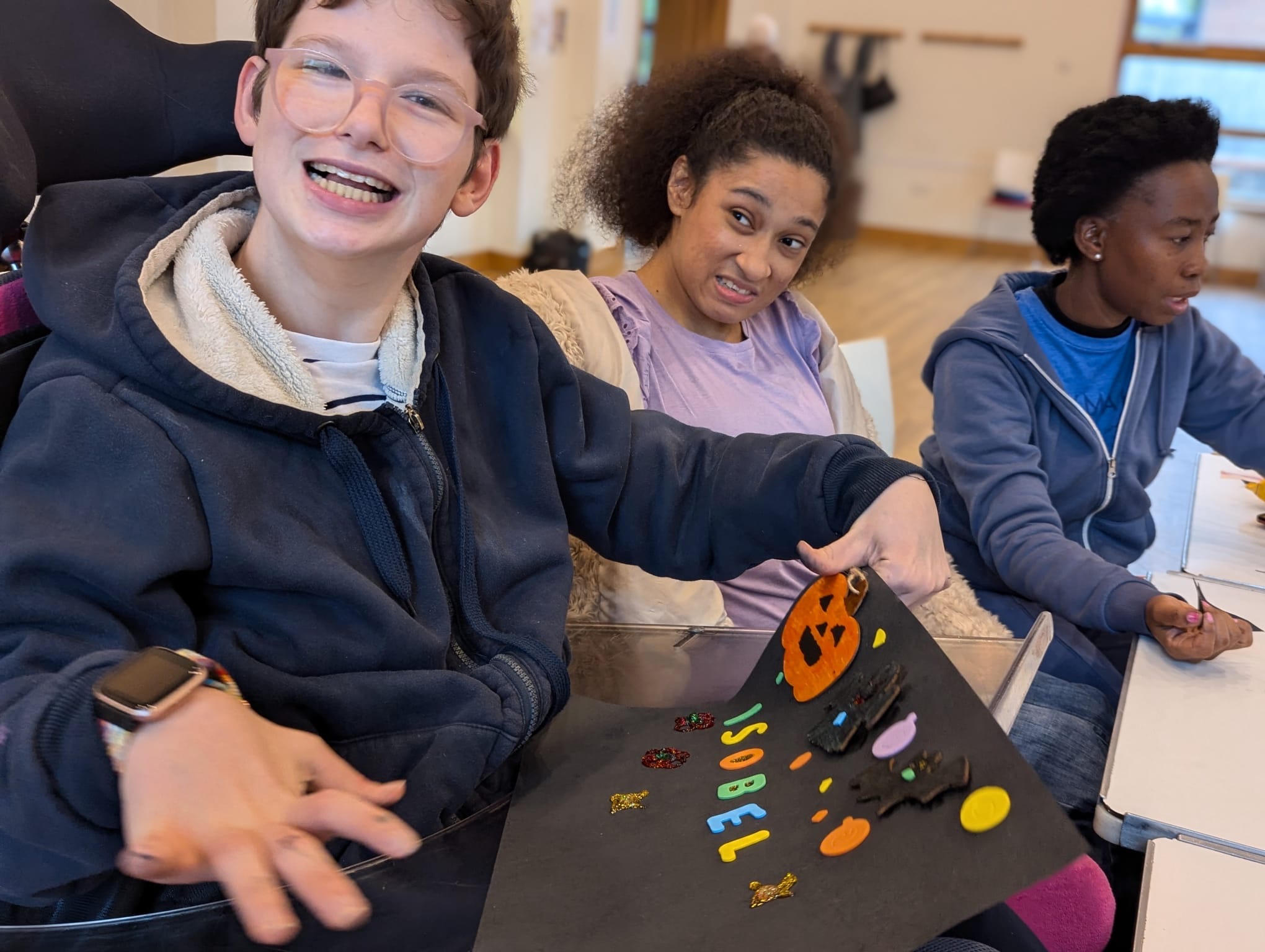
Town Parks To Get Accessible Roundabouts And Paths
Two parks in Hornsea are to get accessible play equipment and new paths, officials said.
Roundabouts and sensory paths will be installed in Hall Garth Park and Jefferson Park.
Councillor Gary McMaster, from East Riding of Yorkshire Council, said it would “make a real difference”.
The £36,000 scheme is being funded by East Riding of Yorkshire Council (ERYC) and the town council.
ERYC did not provide a timeframe for the work.
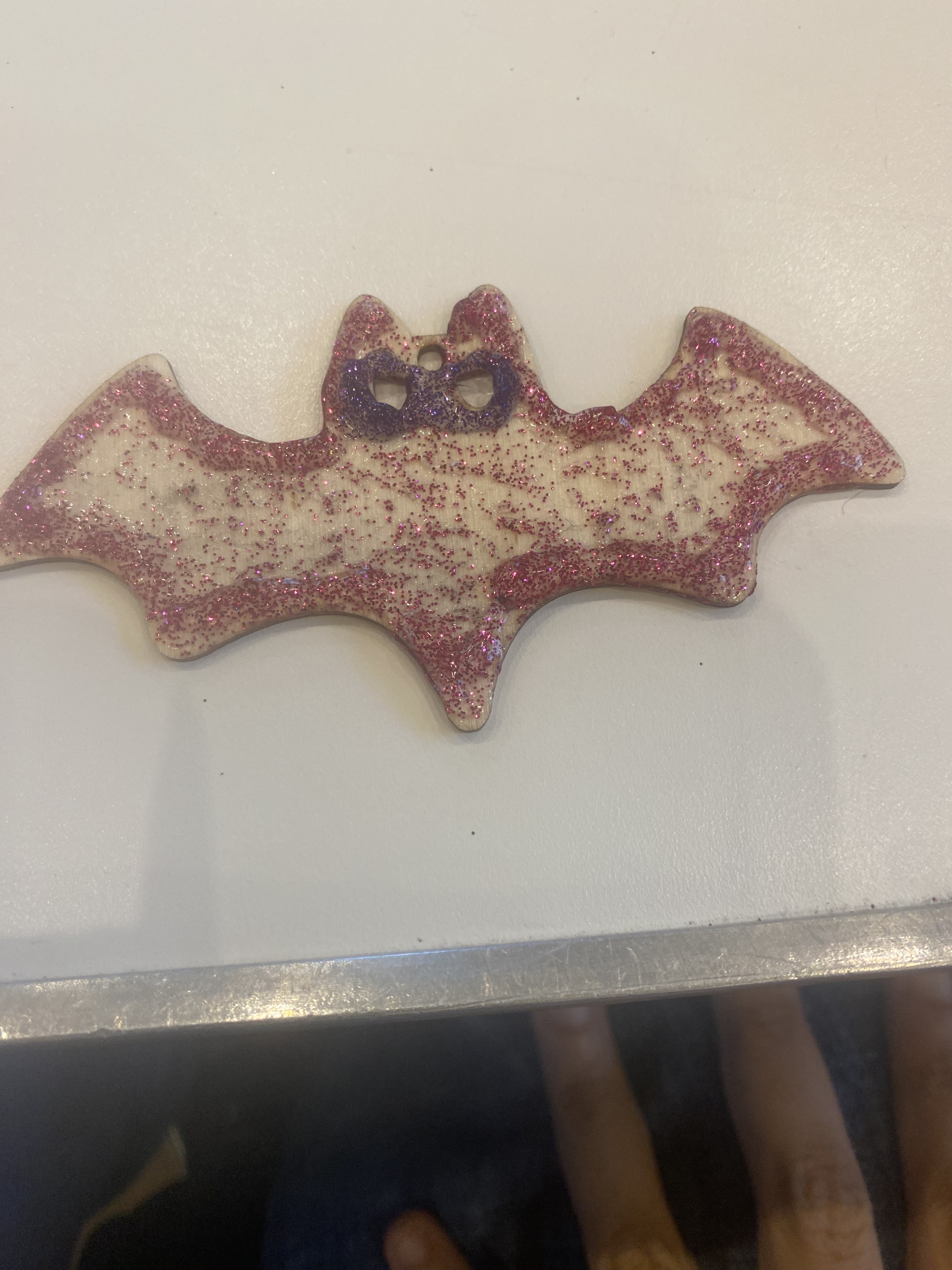
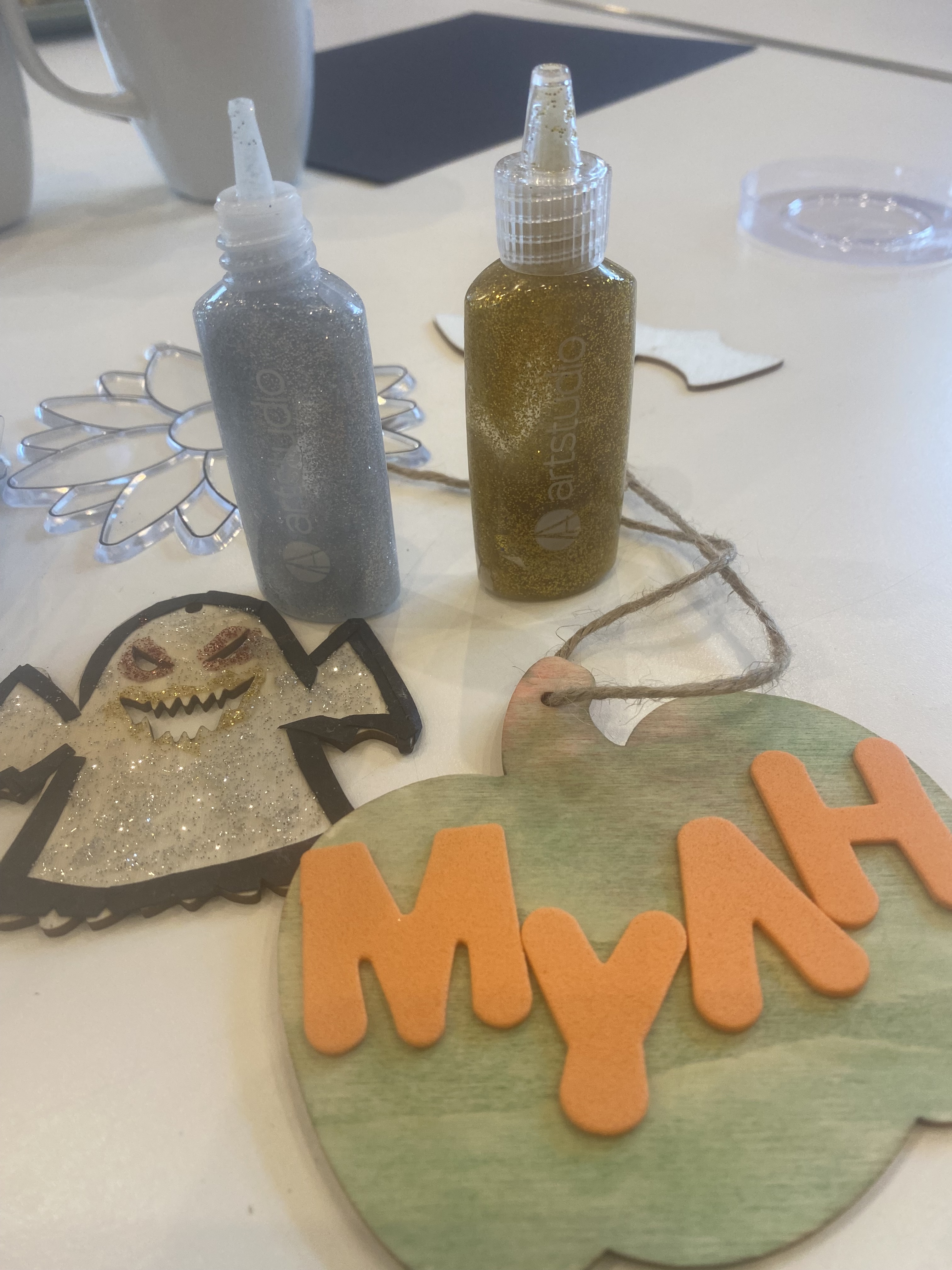
Guide Dog Pups Visit Spooky Castle To Test Resolve
Families across the UK are preparing to visit various spooky-themed events as Halloween looms – and in Warwick, it’s been no different for one set of special youngsters.
This bunch, though, are rather more furry than your average child and will perform important tasks when they come of age.
Like a scene out of Scooby Doo, the group of 12 trainee guide dogs visited Warwick Castle’s Halloween trail as a way to prepare them for remaining calm in unusual environments, where the unexpected may happen along with the occasional loud noise.
But still being young, the attraction toned down the normal level of boos, bogeymen and bumps in the night as the puppies took the next step towards their working lives.
A spokesperson for the charity Guide Dogs said the special training session, during which the puppies were joined by their handlers, provided a “safe and fun experience” to help “build confidence ahead of their first Halloween”.
Trainer Severine Godson said her puppy Opal, her 35th training dog, was normally “very calm”.
She explained: “The environment here did hype her up a little bit which is what we want but she’s taking it all in her stride which is [also] what we want.
“We want them to be able to cope with any environment.
“This is different and she’s coped, which is great.”
Another trainer, Yvonne Smith, started volunteering for the charity after she was diagnosed with pulmonary fibrosis.
She said she was given three to five years to live but her condition improved, which she put down to the exercise gained by running after puppies and walking them.
Her newest trainee is a labradoodle called David.
“When they hit a certain age they get a bit hormonal and they start to forget everything we’ve taught them but David’s got to an age now where he can sort of decided to control himself a little bit,” she said of his resolve.
parachute games with my Bestie at my community activity group we are more than just our illness. We are friends that like to have fun. Who is it?
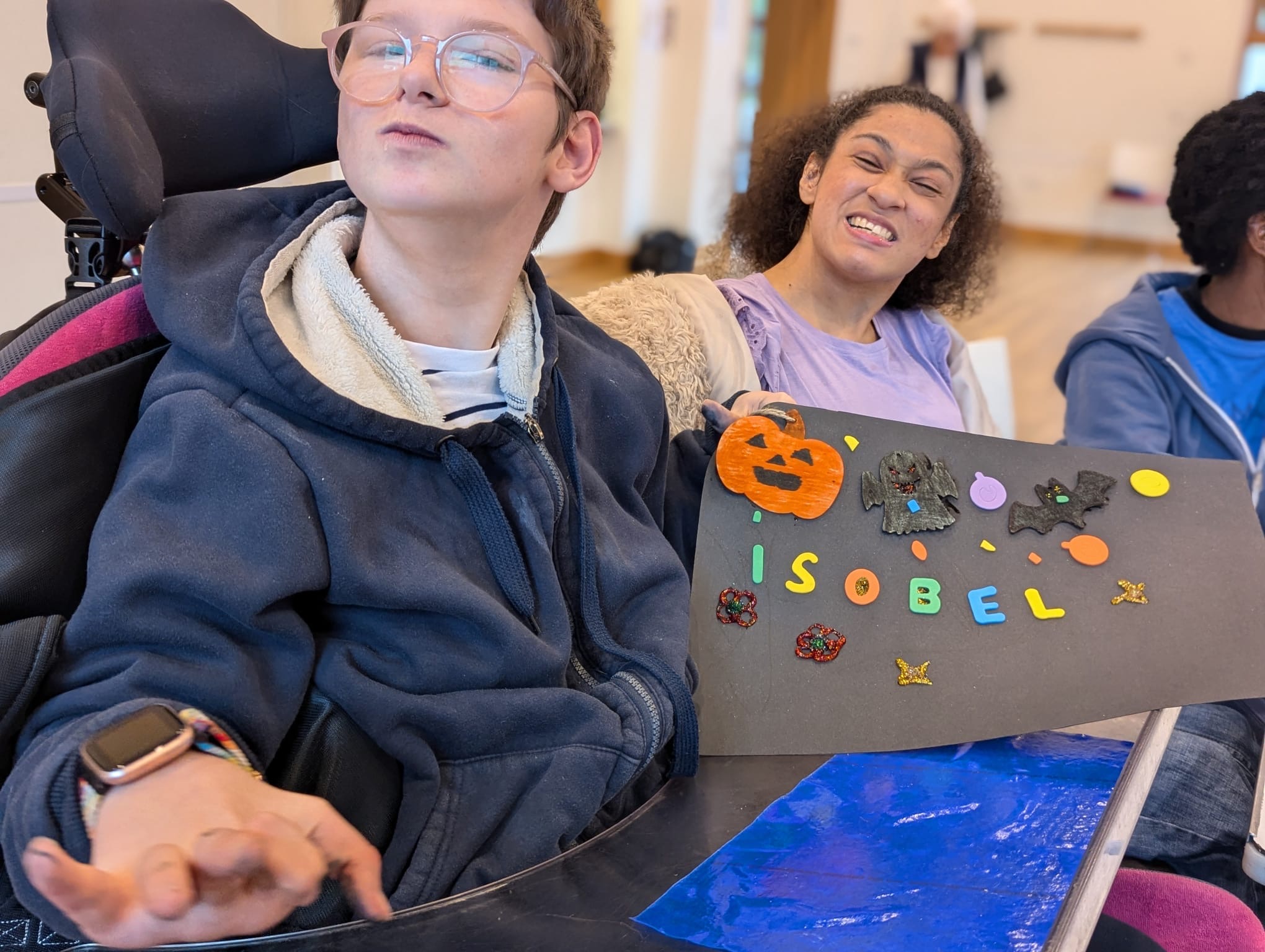
UK’s First Hearing And Sight Loss Survey Launched
The UK’s first survey to collect data on vision and hearing loss has been launched across two counties.
The UK National Eye Health and Hearing Study (UKNEHS), external aims to record data to inform the NHS and policymakers and is a collaboration between sensory loss charities, Anglia Ruskin University (ARU), eye and hearing care professionals and the public sector.
According to the study, the UK does not have an accurate set of data to help shape health policies and programmes and it is estimated that 50% of all sight loss is avoidable.
UKNEHS said Cambridgeshire and Peterborough have been chosen for the project as they both have diverse populations with a range of socio-economic factors and rural and urban areas.
The study has received funding from charities and the National Institute for Health and Care Research.
To carry out the survey, UKNEHS medical professionals will visit 750 randomly chosen households across Cambridgeshire and Peterborough from October this year until February 2025. This will be followed by those aged 50 years and older being invited for a free specialist assessment.
Rupert Bourne, a professor of ophthalmology at ARU and chief investigator for the UKNEHS, said: “Hearing impairment costs the UK an estimated £30bn each year and visual impairment, including sight loss and blindness, £28bn.
“Despite these huge costs, the datasets currently used in the UK are of limited value, due to a reliance on international data, or UK data samples that are either very small scale, or not generalisable to the population as a whole.
“There is subsequently no robust evidence-base upon which to design a prevention strategy or plan services for the future that meet the population’s needs.”
Phase one of the study has seen UKNEHS teams visit care homes in the area to survey the sensory health of residents.
Nik Johnson, the mayor of Cambridgeshire and Peterborough, said: “It’s fantastic news that out and about in the near future there will be teams visiting different areas of the county, and local people in the community will have the opportunity to get involved in this study.”


 Same Difference