
Good night favourite painting for

😻😻😻😻😹😿😿😿😿🙌🏻👏🏻⛳️⛳️🥅🎣⛳️🥅🥅
🤠🤠🤠🤠🤠🤡🤡🤠🤡💩🤡

🤞🙌🏻👌
Link of the day
You said today I come https://amzn.to/48xPDtC
👍👍👍👍👍👎👍👐👐👐👐👐👎
😼😼😼😽😼



Siri open of the morning around for celebration, Easter https://amzn.to/3P3jq6i


Man With Down’s Syndrome Hails ‘Dream’ Job
A 25-year-old man with Down’s Syndrome has said it felt like a dream come true when he was hired as a ranger at a reservoir in Staffordshire.
Ed Daly has worked for just over a year at the Tittesworth Reservoir in Leek and said he loved working outdoors, helping nature and visitors.
“It makes me happy, it does, being with nature,” Mr Daly said.
It comes as recent figures show just under 6% of people with learning difficulties are in employment, despite 65% wanting to work.
Mr Daly, from Leek, is part of a team of five rangers caring for the wildlife haven in the Staffordshire moorlands,
Speaking about how he and the team work at hedge laying, the 25-year-old said: “It’s very rewarding and it makes me feel great to see how it grows. Perfect.”
Mr Daly’s manager, Josie Muncaster, told the BBC: “I would say to anyone thinking of hiring someone with Down’s Syndrome, it’s a fantastic thing to do, overcome your own barriers and your own stereotypes to doing that, because I’ve never looked back on hiring Ed. He’s a brilliant member of the team.”
Mr Daly is supported by an organisation that is part of the Down’s Syndrome Association, which also helps to train employers.
Molly Keal from the Down’s Syndrome Association: “We always say never limit the expectations of your colleague because actually once our candidates are trained in the right way they will continue to exceed expectations as Ed has done in his role with being a ranger here.”
The 25-year-old is hoping to encourage more employers to hire people with Down’s Syndrome and help develop their skills and career ambitions.
Speaking about his job, Mr Daly said: “It felt like a dream come true, really, and I love being in the fantastic team here.”
🫶🏼🫶🏼😼😼

Bitch https://amzn.to/3SVOq9I
💕💜💕💕
lilo and stitch item
Bonus item of the early morning sticks light from Lilo and stitch the movie https://amzn.to/3Ti34cS
Lost or to move the early morning, a frog hat
Spider-Man item aftershave for boys that love the movie, Spider-Man, all the magazines of Spider-Man
Spider-Man aftershave item for the early rises https://amzn.to/3OWhAEf
Kids make upset with my mind with me, but
Thursday mornings big update for the affiliate marketing Pinterest page
Autistic People Held Back By Job Interview Questions – Report
Ambiguous interview questions and application forms are keeping autistic people out of work, a report has found.
While 53.6% of all disabled people are in work, only 30% of autistic people are, the latest official figures show.
One autistic person told BBC News having more tick-boxes in applications might help him to land an interview.
The government has urged employers to “get behind” all recommendations set out in Sir Robert Buckland’s report on autism in the workplace.
Autism is a developmental disability that affects how people perceive the world and interact with others. The Buckland review says there are around a million people with an autism diagnosis in the UK.
Adam Murphy, from Cheltenham, says he is ready for a job after more than 20 years as a full-time carer for his son Ryan, who is autistic and has learning disabilities.
‘Frustrating’ lack of support
But Mr Murphy, who is also autistic, has applied for six jobs since October with no success so far.
He has difficulty filling out forms so usually asks to talk through application questions with an employer over the phone instead – but says some workplaces refuse his request.
“Somebody gave me feedback and said: ‘Well, we can’t help everybody because all autistic people are different, and we can’t put reasonable adjustments in place for everybody’,” Mr Murphy said.
Mr Murphy says having tick-boxes in applications instead of free-form text-boxes, and getting interview questions in advance, are among the other adjustments that would help him.
He describes the rejected requests for support as “really frustrating”, adding: “If we’re not putting the basics into place to begin with to allow those autistic people to apply, then that’s failing them.”
The Buckland review said that for certain jobs, there was evidence that autistic staff could be more productive than neurotypical staff.
The report sets out how businesses and government can work together over the next five years. It lists 19 recommendations for both, including:
- signing up for the an employers’ index for neurodiversity, to access guidance on designing inclusive processes
- offering career-progression training focused on autistic staff
- ensuring careers advisers can give appropriate advice to autistic jobseekers
The Equality Act 2010 made it harder for employers to unfairly screen out disabled people and ensured there was a duty to make reasonable adjustments for people at a substantial disadvantage because of their disability – and some businesses are already championing autistic people in the workplace.
Since opening in 2019, Cafe Track in Northampton has supported more than 120 autistic people into paid employment and work placements.
Ex-teacher Thomas Cliffe set up the social enterprise after feeling “angered” by the lack of employment prospects for autistic people.
He trains and supports businesses to help make their workplaces more accessible.
“It’s not a nice thing to do to employ an autistic person – it’s a good business choice,” he says.
‘Adjustments help me feel safe at work’
Almost all of the staff at CubeLynx in central London – one of hundreds of firms that fed into the Buckland review – are autistic.
One of those is Darcey Isaacs, who has been given various reasonable adjustments to help her work: she works part-time on a very flexible schedule, has access to quiet rooms during the day and uses noise-cancelling headphones.
“Having reasonable adjustments can help me feel safe and valued, and contribute to the company,” she says.
“I am more than just a woman with a disability.”
Ms Isaacs says autistic people’s unique needs, skills, strengths and weaknesses vary – “just like neurotypical people”.
Dr James Cusack, chief executive of research charity, Autistica, said: “To be their best and to ensure they can get the best out of their whole workforce, including autistic people, employers need to change the way that they recruit and support staff.
“This is not about reasonable adjustments for a small number of people – it’s about changes that benefit everyone, because we all think and work differently.”
The review was led by Sir Robert Buckland, who told BBC Breakfast that changing interview processes could help to identify those without an autism diagnosis who “might not even think of themselves as neurodiverse”.
He added: “There is no such thing as ‘normal’, I learnt that a long time ago as a parent bringing up an autistic youngster and I rejoice in that.”
Shaking like candles are lighting of the evening, red wet
Little heart-shaped tea like candles with staying on the web https://amzn.to/48EgK6a
Suitable for Prime kitchen stove for those who remember these kinds of videos with modern tech knowledge E inside with
The radio poor people https://amzn.to/3TdIH0i

https://amzn.to/3Iita9d
Solar system bedding set
Rubber duck to make both prime time for any individual
Set of two rubber ducks to https://amzn.to/48wNRZD
Perfume item of the day/evening
Perfume item of the day https://amzn.to/3STczOd
Item Of The Day
Programmes, top and skirt set item of the day https://amzn.to/3SXcnNH
Fast-Track Severe Disability Group Criteria Revealed
With many thanks to Benefits And Work.
The DWP have revealed the draft criteria they will be using to select claimants for the Severe Disability Group, which will allow fast-track claims for disability benefits. Benefits and Work would like to know if readers with severe, lifelong conditions think they would meet the criteria.
What is the Severe Disability Group?
The purpose of the Severe Disability Group is to improve the disability benefits assessment process for claimants who have conditions which are severely disabling, lifelong and with no realistic prospect of recovery.
Claimants who fit the criteria will not need to complete a detailed application form or go through a face-to-face assessment in order to claim personal independence payment (PIP) or to be found to have limited capability for work-related activity (LCWRA) for employment and support allowance (ESA0 or universal credit (UC).
The introduction of a Severe Disability Group was first consulted on in the Health and Disability green paper in 2021.
The resulting Health and Disability white paper published in 2023 revealed that design and testing of the Severe Disability Group had already begun.
The DWP have now announced that they are widening the testing of the Severe Disability Group, with two separate tests taking place, both relating to PIP. There is more on this below.
How the Severe Disability Group works
Where a claimant is considered likely to meet the criteria for the Severe Disability Group, a short form will be sent to their specialist clinician. The form is similar to the SR1/DS1500 form used for claimants who are terminally ill.
You can download a copy of the SR1 form from the response to this freedom of information request.
If the specialist confirms that the claimant meets the criteria, they will not be required to attend an assessment and will no longer be required to fill in complex forms, such as the PIP ‘How your disability affects you’ form or the ESA50/UC50.
Testing the criteria
The DWP are currently running two tests of the draft Severe Disability Group criteria
One test involves asking a selected group of clinicians to identify patients they believe are suitable.
The other test involves the DWP contacting claimants they consider to be likely to meet the criteria and asking if they would be willing to take part. If they are, the DWP will then contact their clinician and ask them to complete a brief form.
The DWP have said that participation is entirely voluntary, claimants can withdraw at any time and they “will not be financially disadvantaged by taking part.”
Official criteria
In order to meet the Severe Disability Group criteria, the DWP say claimants must :
have an irreversible or progressive condition, confirmed or managed by a secondary care specialist, with no realistic prospect of improvement
have had no significant response to treatment, or treatment will not improve function, or no further treatment is planned
have a severe impairment of physical or mental function (or likely to develop this within 6 months) such that they need assistance from another person to complete two or more activities of daily living
The Secretary of State is satisfied that, for the individual patient the criteria have been fulfilled for:
enhanced Personal Independence Payment (PIP) daily living or mobility components
functional limited capacity for work-related activity (LCWRA) or support group
Our interpretation
There is no published official guidance on how to interpret these criteria. So, please be aware that the definitions below are our understanding of the criteria, they are not official definitions.
An irreversible condition is one that may not deteriorate further but will also not improve, such as a learning disability, ADHD, spinal cord injury or cerebral palsy.
A progressive condition is one that is known to deteriorate, such as osteoarthritis, Parkinson’s disease, COPD or Alzheimer’s disease.
A secondary care specialist is someone who is not in the first line of treatment. So, a GP or mental health nurse would not be included, but a cardiologist or a psychiatrist would be. It appears that you don’t need to be currently seeing a specialist, but you need to at least have had your condition confirmed by a specialist.
There is no planned treatment that will improve your condition further.
Your condition needs to affect two or more activities of daily living to the extent that you need assistance from another person. These activities aren’t defined, but the list of PIP daily living activities would seem to be a likely place to start.
For PIP, you need to be able to meet the threshold for an enhanced award of the PIP daily living or mobility component. If you don’t already get an award, you can check the criteria using the Benefits and Work PIP test.
For UC or ESA, you need to meet the criteria for being in the LCWRA group or the support group. If you don’t currently get either of these benefits you can our UC WCA test for LCWRA or use our ESA test for the support group.
Call Mo 0999 had to get this way. I recommend you watch it
The series I recommend for the document play recommendation of the way
😊😊🤣🤠🥰👍 Brilliant update for the Pinterest page allows one of Tuesday
feel free to share my fundraising page with your friends on Facebook et cetera, so that we can spread the word, enabling more people to choose to. Donate if they wish. Thanks to all that view my content and dressed in it and I would like you to come together as a community and no help me raise money for my best, but inadequate services due to inadequate funding from disability social services, and the lack of appropriate stimulating respite provision in my area

oh, Slo-mo, with a fortune for you all

who is Jade affiliate marketing Pinterest page early update who are you?
good night to those that have had a late night tonight. Good morning to those that choose to rise extremely early.

The ‘Mind-Bending’ Bionic Arm Powered By AI
I was born without lower arms and legs, so I’ve been around prosthetics of all shapes and sizes for as long as I can remember.
I’ve actively avoided those designed for upper arms for most of my adult life, so have never used a bionic hand before.
But when I visited a company in California, which is seeking to take the technology to the next level, I was intrigued enough to try one out – and the results were, frankly, mind-bending.
Prosthetic limbs have come a long way since the early days when they were fashioned out of wood, tin and leather.
Modern-day replacement arms and legs are made of silicone and carbon fibre, and increasingly they are bionic, meaning they have various electronically controlled moving parts to make them more useful to the user.
What the company I visited, Atom Limbs, is doing is combining a range of cutting-edge innovations, including artificial intelligence (AI), into a next-generation bionic arm.
Human motion
Atom Limbs uses advanced sensors and machine learning – where computers train themselves to become more accurate – to interpret electrical signals from a person’s brain and use them to move and manipulate a prosthetic limb.
The arm has a full range of human motion in the elbow, wrist, and individual fingers – and it provides haptic feedback to the wearer on their grip strength.
The arm attaches via a strengthened sportswear-style vest which distributes the weight of the arm evenly. Although it still has some weight to it, it is considerably lighter than other bionic arms I’ve seen.
It’s non-invasive, meaning it doesn’t need any surgery or implants to function. It connects to the wearer’s residual limb firstly with bands of sensors that measure electrical signals, and then via a cup that fits over the top, with the arm connecting via an interface.
Despite avoiding upper-arm prosthetics before, when Atom Limbs said I could have a try at operating a digital version of the arm on a computer screen, via their control software, I was interested enough to say yes.
I do have residual muscles in my arm that I was able to “assign” to corresponding hand, wrist and elbow movements, which proved to be a unique, mind-boggling experience.
The notion of learning how to control a part of the body I don’t have is almost impossible to describe.
Out of reach
However, exciting though this technology is, one issue that is always of concern to disabled people when new products come into being is cost.
The assistive devices landscape is littered with products that, while impressive, can cost many times an average yearly salary. That puts most devices out of reach for many disabled people who statistics show are more likely to be among the poorest in society.
https://emp.bbc.co.uk/emp/SMPj/2.51.0/iframe.htmlMedia caption,
Jason shows the BBC how Atom Limbs’ prosthetic arm works
Atom Limbs says it hopes its arm will be positioned around the $20,000 (£15,000) price point, which – while still a hefty sum of money – is considerably less than many other bionic products on the market.
Ian Adam, a lecturer in prosthetics and orthotics at the University of Derby, says while this may sound like a lot, it is a good price in the industry – though it won’t be for everyone.
“It’s at the cheaper end of the market, but say you had an accident and got a pay-out, well that’s got to last the rest of your life,” he said.
“So I think a lot of patients are canny about what they spend their money on… sometimes people are quite prepared to not use them at all – with upper limb prosthetics it can be just an extra thing that not everybody will decide they need to have.”
And then there are the ethical and practical issues around such products.
In 2022 Britt H Young, herself a bionic arm user, questioned whether the prosthetics “arms race” has focused too much on innovation rather than application.
Social media star Tilly Lockey, who has been using bionic arms since she was 9 years old, is excited about their future potential – but she told the BBC whether this device made a difference would all come down to testing.
“I’ve seen like them change so much first-hand, but I’ve also seen them throughout the development phases,” she said.
“There’s a lot of ambitious projects, but I think the way they truly get there is the back and forth development from the users who actually wear them every day.”
Ultimately, the Atom Limbs arm is still early in development.
The firm is collecting data ahead of regulatory filings in the US, which means it will be some time yet before we see them being used in every day life.
Additional reporting by Tom Gerken.
roster for the update of the day for you all
🥰🥰🥰

please donate to my just giving page if you can when payday comes. Many thanks, Maria
Ryan’s how are you with a green pet name for girls item of the day?
ring, Paul Munday can hopefully encourage positivity🌙😊💕
floral arrangement painting of the day for you all. What’s your favourite colour flower out of all of these I would love to hear that only comment

Dementia Campaigner Wendy Mitchell Dies
A woman who spent 10 years campaigning for dementia awareness has died after writing a moving final blog post.
Wendy Mitchell, from Beverley, died at the age of 68, her two daughters confirmed on social media.
She was diagnosed with early onset dementia in 2014 at the age of 58 and set up a blog soon afterwards called Which Me Am I Today?
Two of her books on the subject were included on the Sunday Times Bestsellers List.
Prior to her diagnosis, Ms Mitchell worked for the NHS in a non-clinical role in York for 20 years.
In an online post announcing her death on 22 February, Ms Mitchell’s daughters Sarah and Gemma wrote: “Our mum died peacefully early this morning. She wrote a blog post before she died so you can read about it from her perspective.”
The final blog post, My Final Hug in a Mug, details Ms Mitchell’s “resilience” since a young child to be able to “cope with whatever life throws my way.”
In the post, she stated: “Dementia is a cruel disease that plays tricks on your very existence.”
In a 2015 Victoria Derbyshire programme for the BBC, Dementia: A Month in the Life, Ms Mitchell spoke about living with early-onset dementia.
She said she first experienced symptoms at 57, when she came out of her office and “didn’t have a clue where she was”, and had to wait for the “fog to clear”.
‘She was a beacon’
“When we lose our memories, it doesn’t mean we lose our emotions inside,” she told the BBC at the time.
Ms Mitchell said her biggest fears were becoming someone she doesn’t recognise, not recognising her daughters and losing her independence.
Steve Milton FRSA, director of Innovations in Dementia, said: “Wendy was a person of true bravery and compassion. She had been fearless in sharing her experience in order that others may learn from it.
“We certainly did. She was a beacon, and so many people have told us over the years that her work has changed their view about dementia – and enabled them to live their lives that little bit less afraid. What more can one ask of a life?”
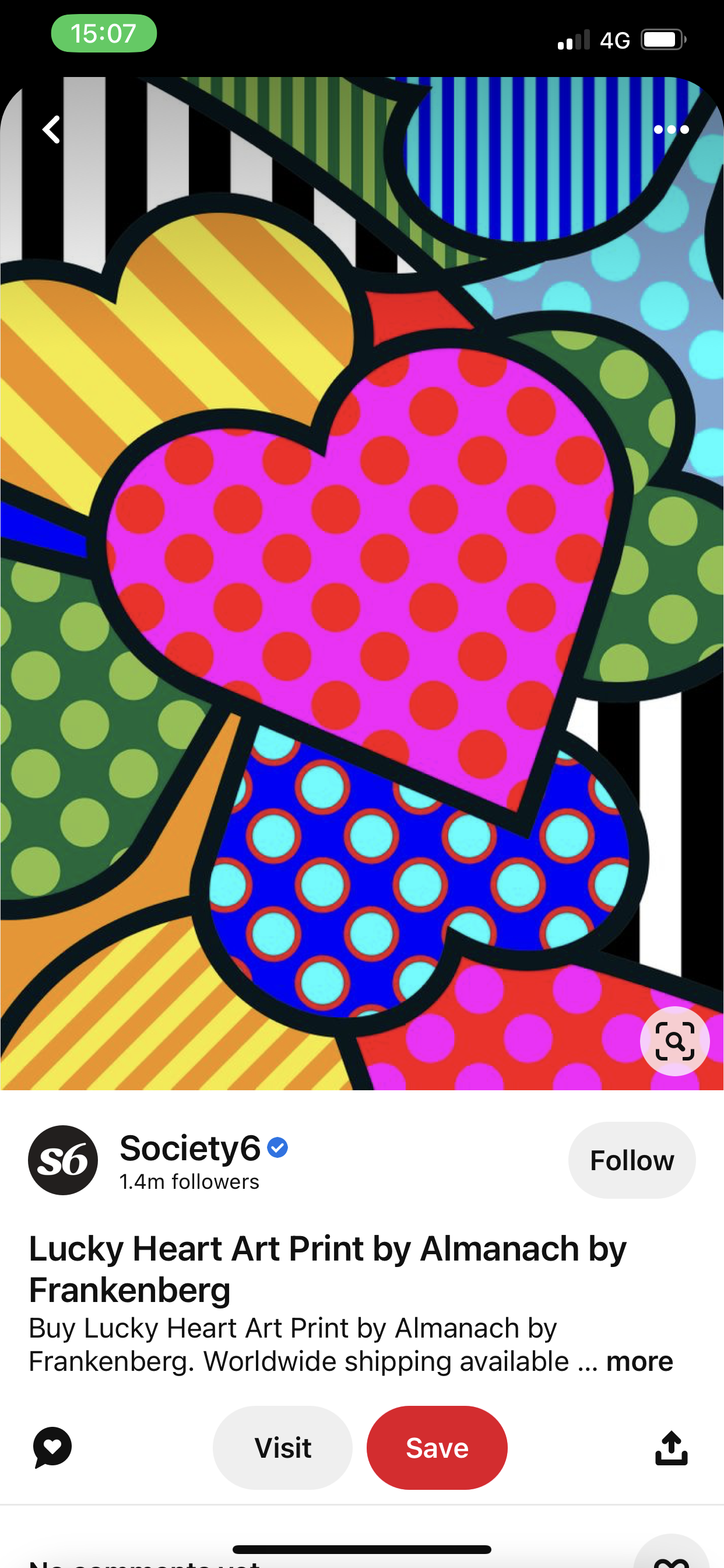
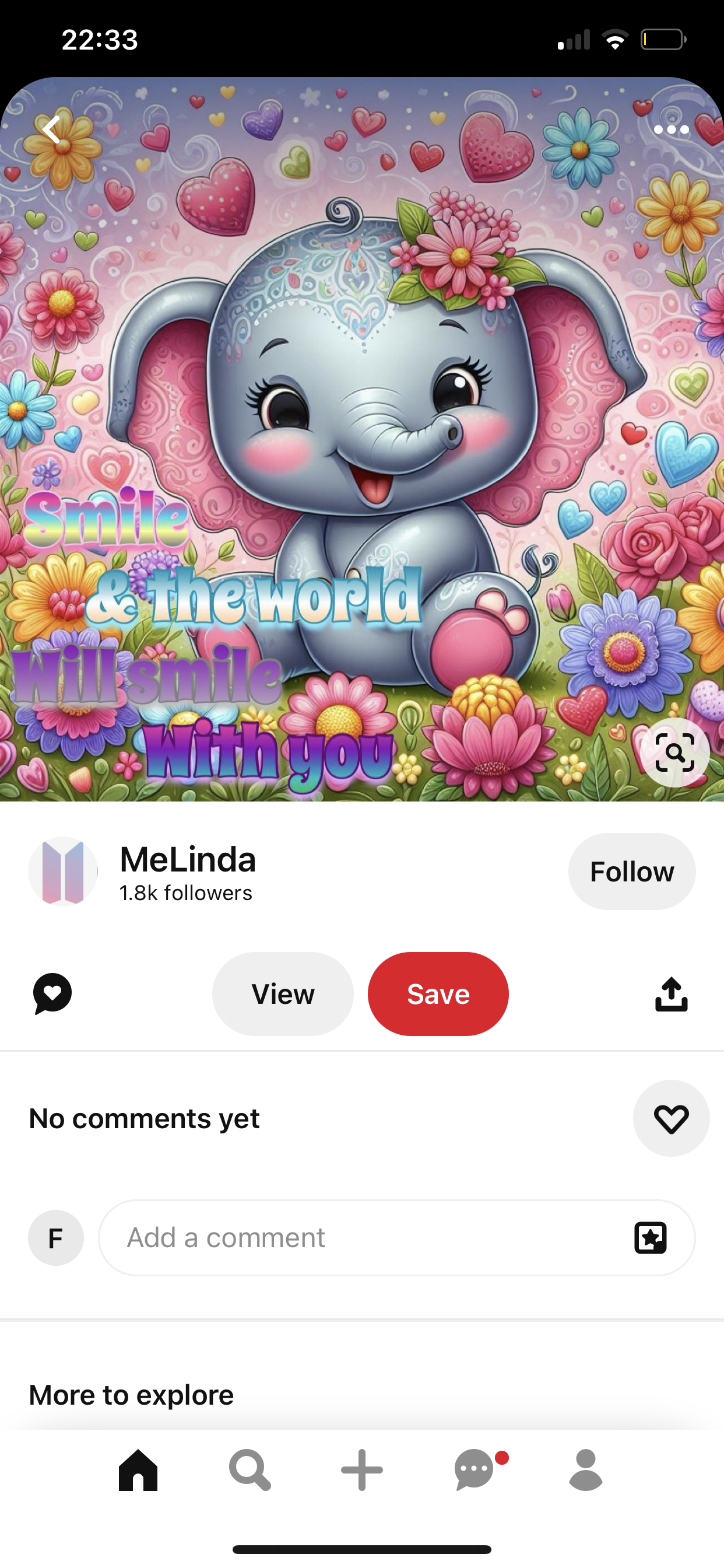
Floral clever painting with blue painted prior and the flowers with in the flying favourite painting of the early evening. How are you all?




 Same Difference