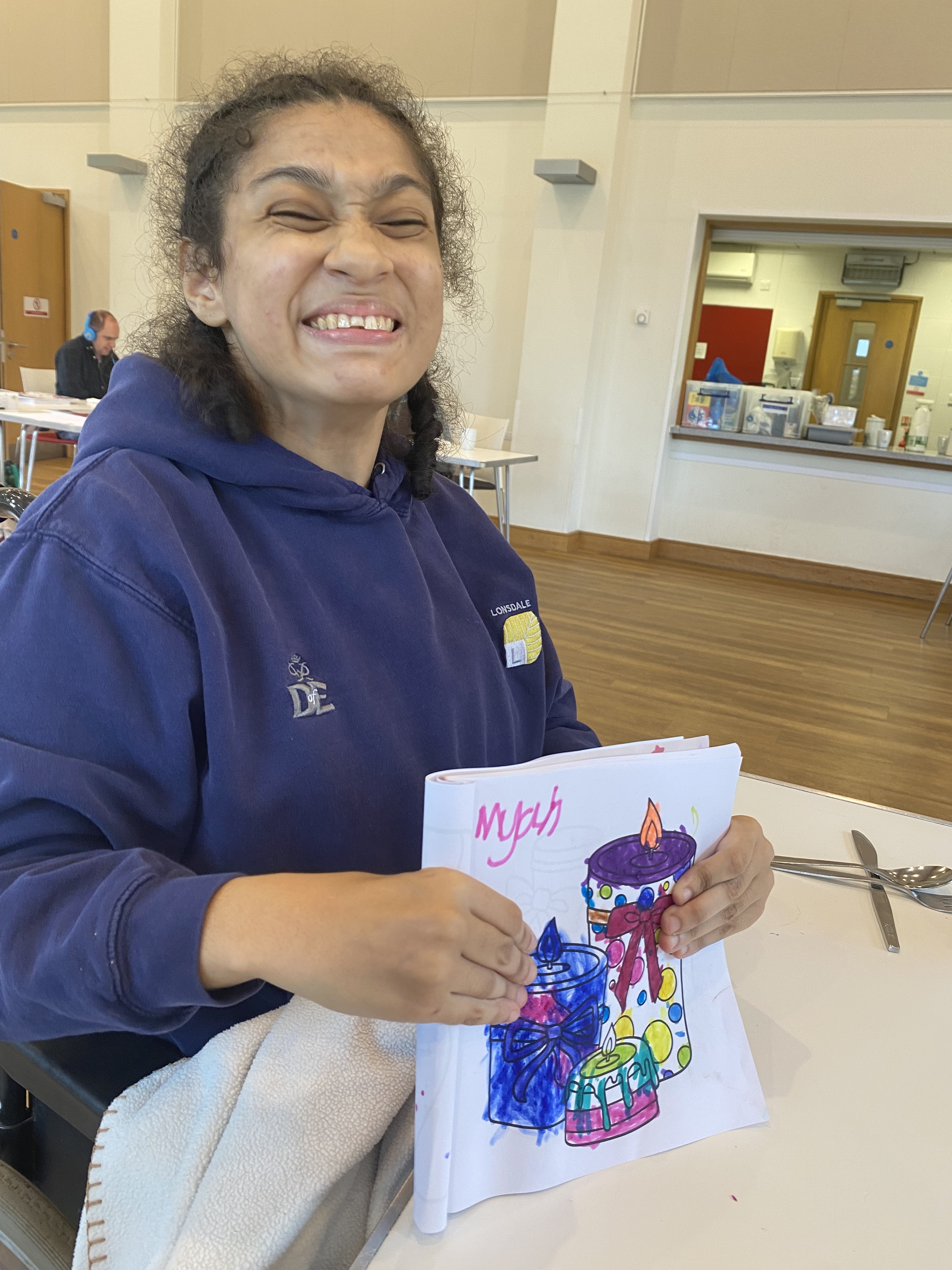
face paint for the light night which was a local community celebration. Community Light Night 2025


Call To Create Official Register Of Assistance Dogs
Groups representing assistance dog users are calling for “stronger legal protections” to protect disabled people who say they are being discriminated against in public spaces.
Campaigners, lead by Assistance Dogs UK (ADUK), say they are often refused access to shops, restaurants, public transport and other services because of their assistance dogs.
Vicky Worthington, executive director of ADUK, said: “Current laws fall short of providing the clarity, protection and consistency needed to ensure fair treatment.”
A government spokesperson said it was illegal for a premises to refuse entry to someone with an assistance dog “with very few exceptions”.
Garry Botterill, a former Sussex Police officer and founder of Service Dogs UK, said there should be a mandatory assistance dog register to give bars, restaurants and other facilities the reassurance that they are legitimate.
“The definition of assistance dogs isn’t great in law, there is no requirement for people to train their dogs to a high standard, to be under an umbrella organisation,” he said.
Mr Botterill explained that people will buy jackets for their dogs to make it appear as though they are service animals.
“That makes it really difficult for service providers to recognise what is a well-trained assistance dog and what is someone utilising something from the internet to make their dog looks like an assistance dog,” he said.
Jordan Chapman, who lives in Coulsdon, Surrey, is a British Army veteran and paramedic who has been partnered with PTSD assistance dog Teddy for three years.
He agrees there should be a database of assistance dogs.
“We have to be sensible with how we apply that, but absolutely there should be a national register to meet a minimum standard of training,” he said.
Mr Chapman explained how he was refused entry to a restaurant, which he regularly visited before having Teddy, because of their dog policy.
“Unfortunately, that’s just a normal thing,” he said.
Toni Brown Griffin, from Tunbridge Wells in Kent, said she was sometimes “shadowed” by security staff when walking around stores or has been refused entry to certain premises altogether.
“It can be quite intimidating,” she said.
Ms Brown Griffin said there was an increasing problem with pet dogs making a nuisance of themselves to working dogs.
She said businesses react to poorly-trained dogs “yapping and weeing” by banning all dogs.
Research from Assistance Dogs International and the International Guide Dog Federation found 43% of assistance dog handlers were refused access to a premises in the past year and 65% reported problems caused by dogs misrepresented as assistance dogs.
Campaigners are heading to parliament on Tuesday to ask the government to strengthen legislation, including by “clearly defining assistance dogs in law, ensuring consistent expectations for training, behaviour and welfare”.
ADUK said it wanted legislative change, but was not calling for a register at this time.
The government spokesperson said: “No one deserves to be held back or treated unfairly because of their disability and the Equality Act 2010 protects everyone against discrimination and ensures disabled people have the right to be treated equally.
“It is illegal to refuse entry to a disabled person with an assistance dog – with very few exceptions.
“Where individuals are concerned they have been a victim of discrimination, there is advice available through the Equality Advisory and Support Service.”
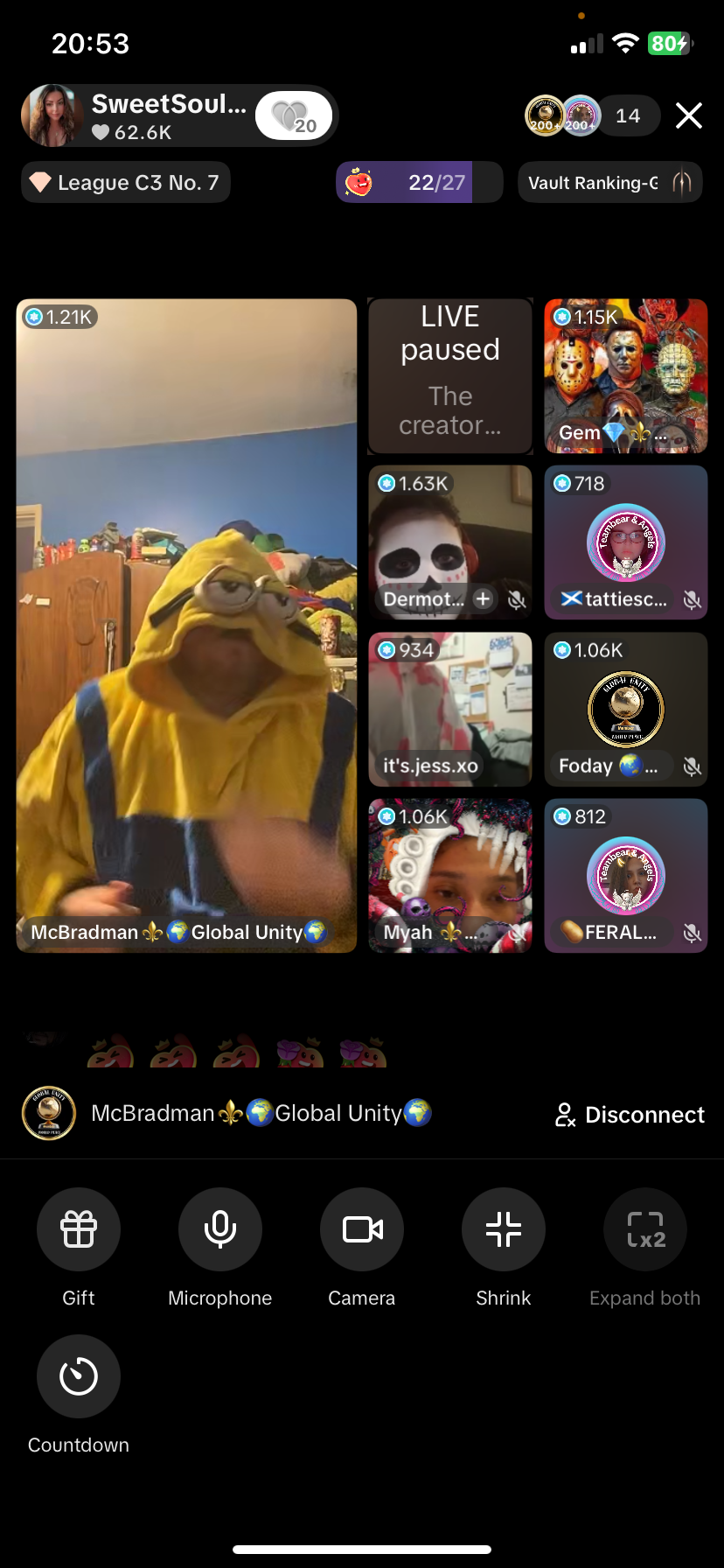
When my TikTok team celebrated Halloween and one of my team members decided that minions are part of Halloween
Geoff Holt Awarded Honorary Degree
A record-breaking disabled sailor paralysed at the age of 18 after diving into shallow water has been presented with an honorary degree.
Geoff Holt MBE, from Wallington near Fareham, Hampshire was the first quadriplegic sailor to cross the Atlantic and went on to set up Wetwheels, a charity that provides specially-designed accessible boats to disabled people.
Bournemouth University said the Honorary Doctorate in Business Administration was in recognition of his courage and resilience in rebuilding his life.
At a graduation ceremony held at the Bournemouth International Centre Mr Holt said it was a “tremendous honour…it’s just wonderful to be recognised”.
After the graduation ceremony Mr Holt said: “It’s just wonderful to be recognised not just for me but for my wife too who is part of my team.”
Mr Holt credits his achievements to his wife Elaine. They met while she was working as a nurse at the hospital where he was treated following his accident.
His advice to students was to focus on what you can change, rather than get bogged down in what you can’t.
He said: “To use a nautical metaphor, it’s about the journey. Things change at sea, the weather changes, the sea state changes and that can be said about the world we live in.
“Things change, and you have to be able to adapt.”
During the 40 years since his accident, Mr Holt has earned numerous honours, including an MBE for his work in disabled sailing, a BBC South Sports Personality of the Year award, and the Stelios Award for Disabled Entrepreneurs.
He circumnavigated Great Britain in a power boat in May-June 2024 and continues to inspire and support others through his involvement with the RNLI and RYA Sailability.
Please Support Us, Deaf Athlete Urges Government
A north London footballer is pleading with the government to help give deaf athletes the same opportunities as other athletes.
Lucindha Lawson from Crouch End is due to represent Great Britain in the 2025 Deaflympics in Tokyo next week – the deaf equivalent of the Olympics – after raising the £4,000 entry cost through donations.
Unlike Olympic and Paralympic athletes, Deaflympics competitors are not eligible for grants and must self-fund their participation.
The government said it was “dedicated to making sport in this country accessible and inclusive for everyone, including deaf people”.
‘Very stressful’
Lawson has represented her country four times at the Deaflympics, a multi-sports event for elite deaf athletes who compete at an international level that takes place every four years.
Speaking to BBC London before reaching her fundraising goal, she said it was “stressful” and “difficult” to raise the money needed to compete.
“We have to ask local communities, charities, businesses to try and raise the money ourselves,” she told BBC London.
“It does affect my career in football.
“It’s very stressful, I am always thinking about the financial aspect, so I might forget about training and it might steer me off the wrong way, whereas if I didn’t have the financial constraints I could just continue (with football).”
She said UK Deaf Sport was going to pay for her to take part, but she would be required to pay back the sum it spends or face being barred from future events.
“I would have to make a repayment plan and pay it out of my own pocket, which really I shouldn’t have to do,” she said.
“I’m representing my country so it’s really disappointing.”
Although she is “really proud” to represent Great Britain, she said she felt “in bit of a trap”.
Being deaf, she is not permitted to take part in the Paralympics and therefore she cannot apply for funding.
Lawson urged the government to “please support us”.
“The Deaflympics is really important to the deaf community,” she said. “This was set up before the Paralympics… but it doesn’t seem like it’s recognised by the government, or world federations.
“Why aren’t we getting funding, because we should all have the same equal opportunities?”
‘Shameful’
Funding for UK Olympians and Paralympians primarily comes from UK Sport, which distributes government and National Lottery money to national governing bodies.
Athletes then receive individual funding through these programmes.
However, there is currently no funding for elite deaf athletes in the UK.
UK Deaf Sport chief executive Chris Ratcliffe told MPs this month it was “shameful” that deaf athletes were missing out on funding.
The government said it could not provide extra funding to high-performance athletes outside of what it already gives “to support Olympic and Paralympic success”.
But it said it did provide £1.2m each year for grassroots activities in deaf sports.
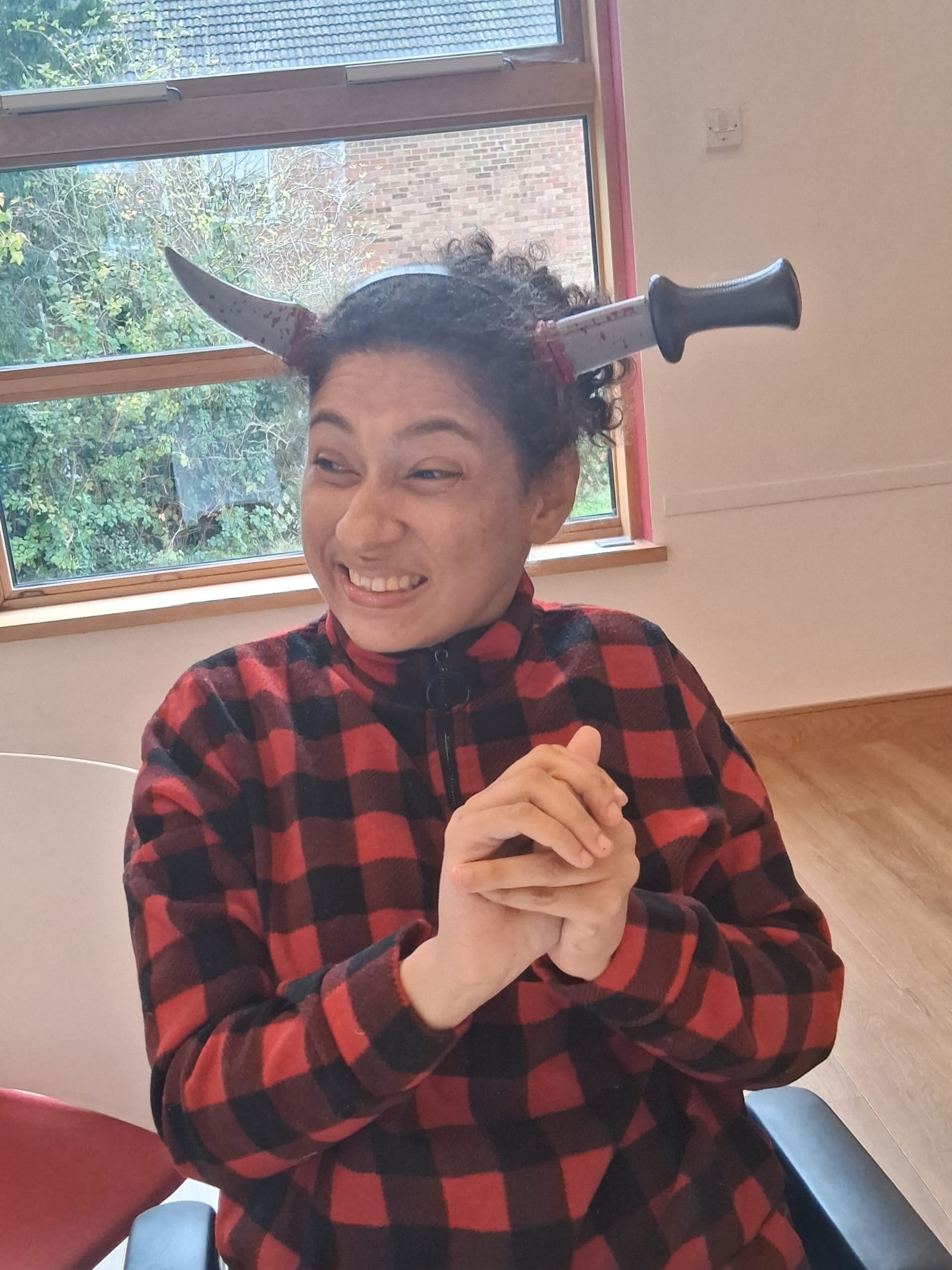
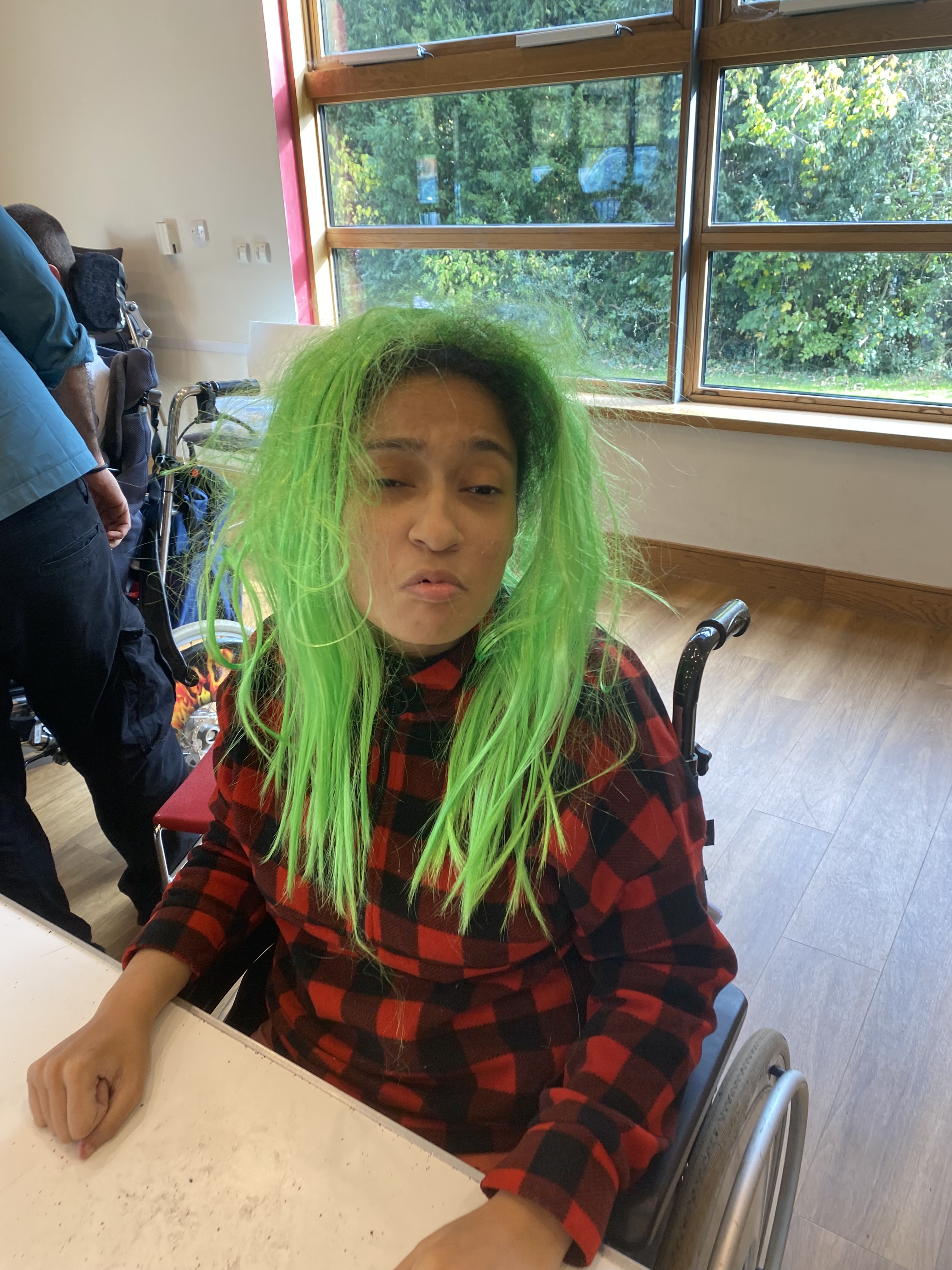
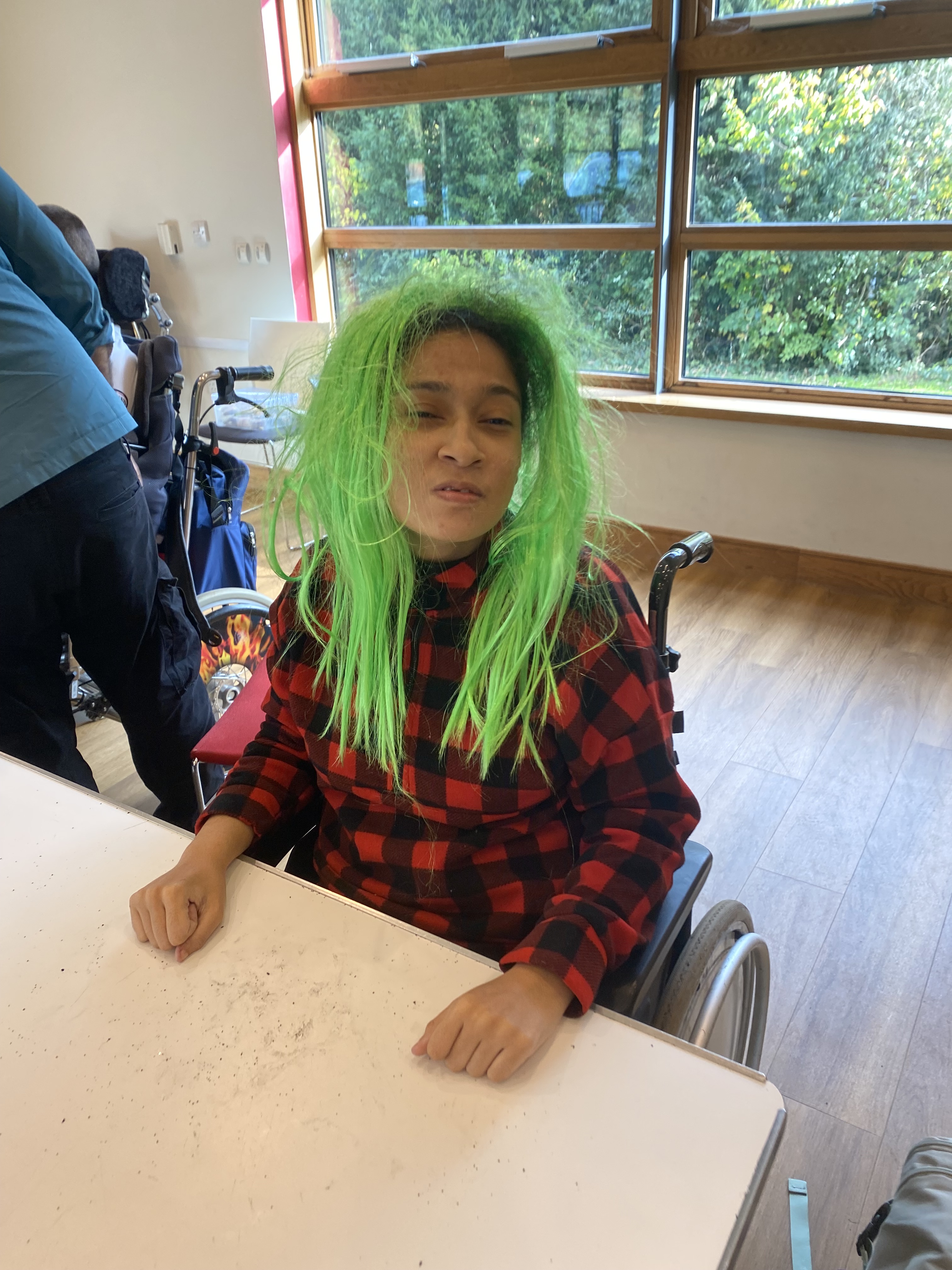
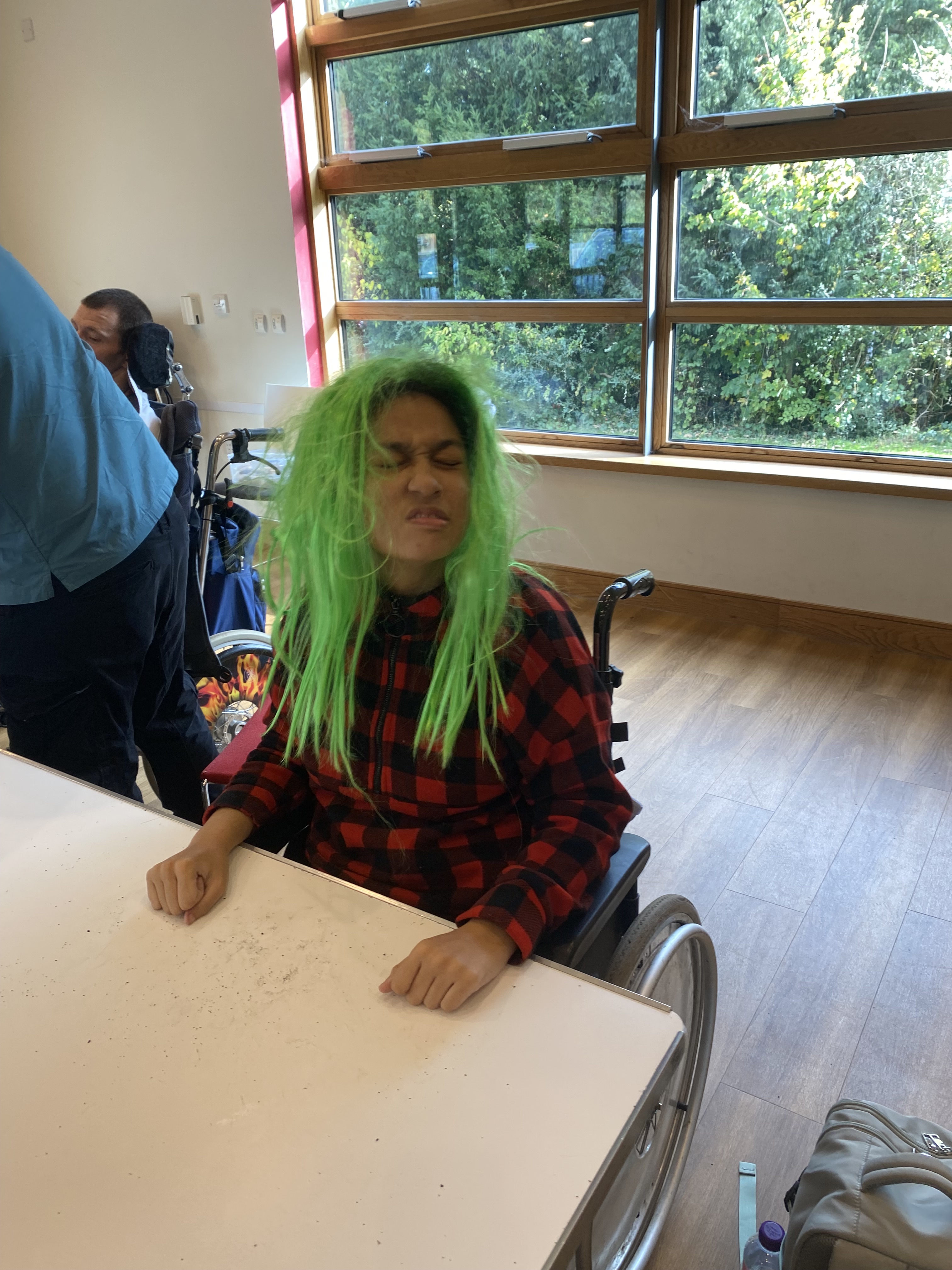
Dressing up for the Halloween at Wacky Wheels. I hope you all had a happy Halloween 2025.
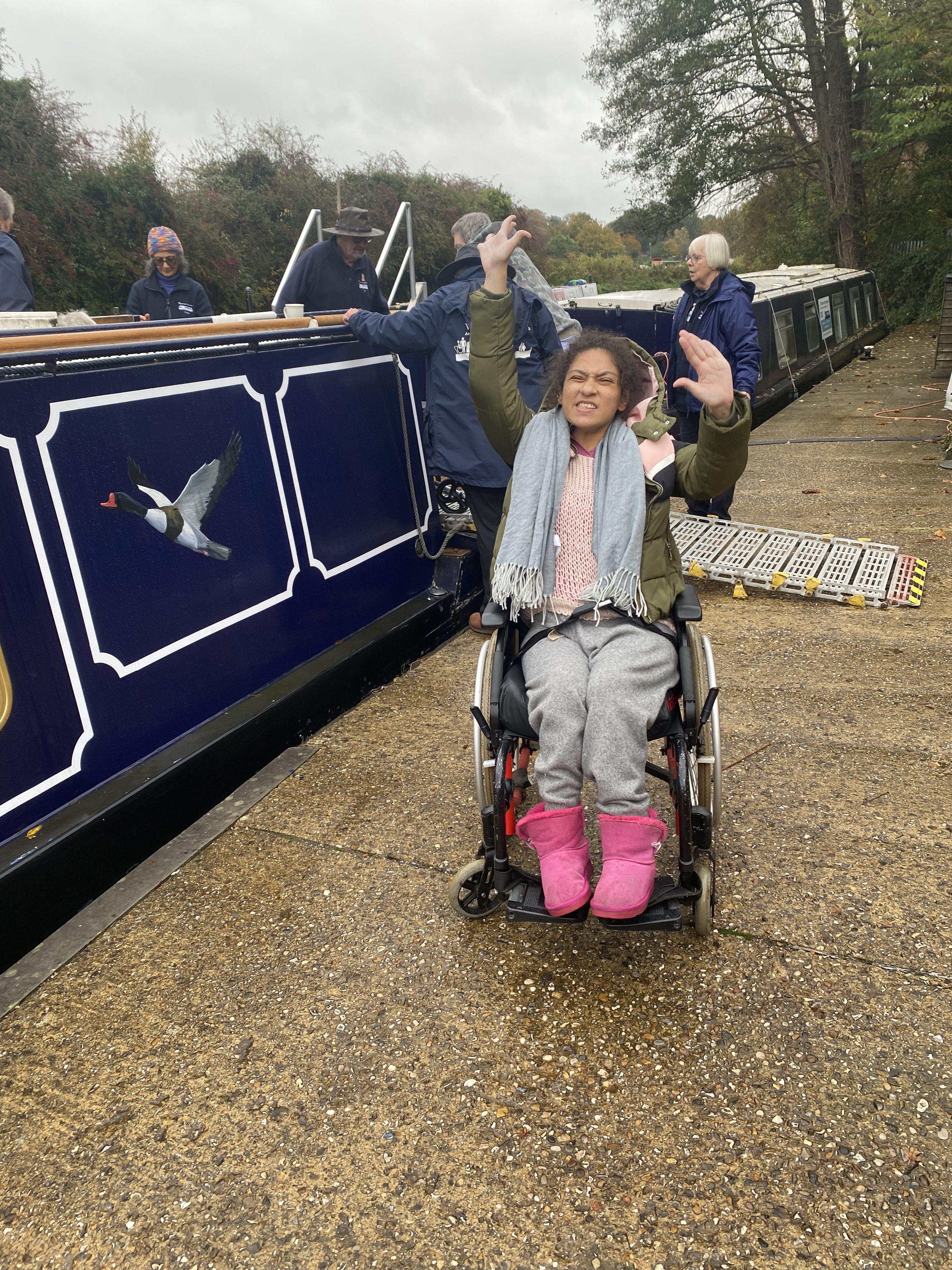
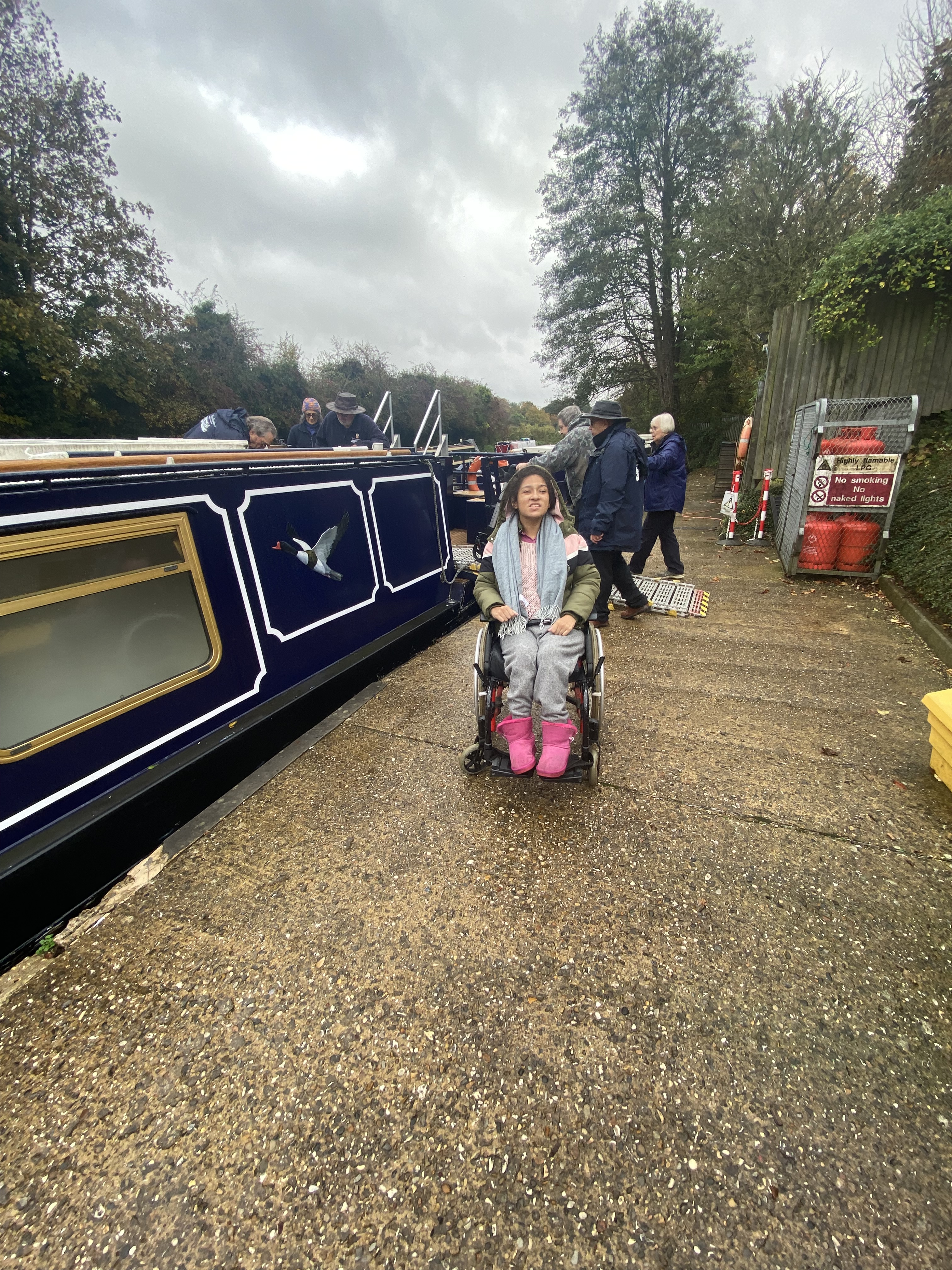
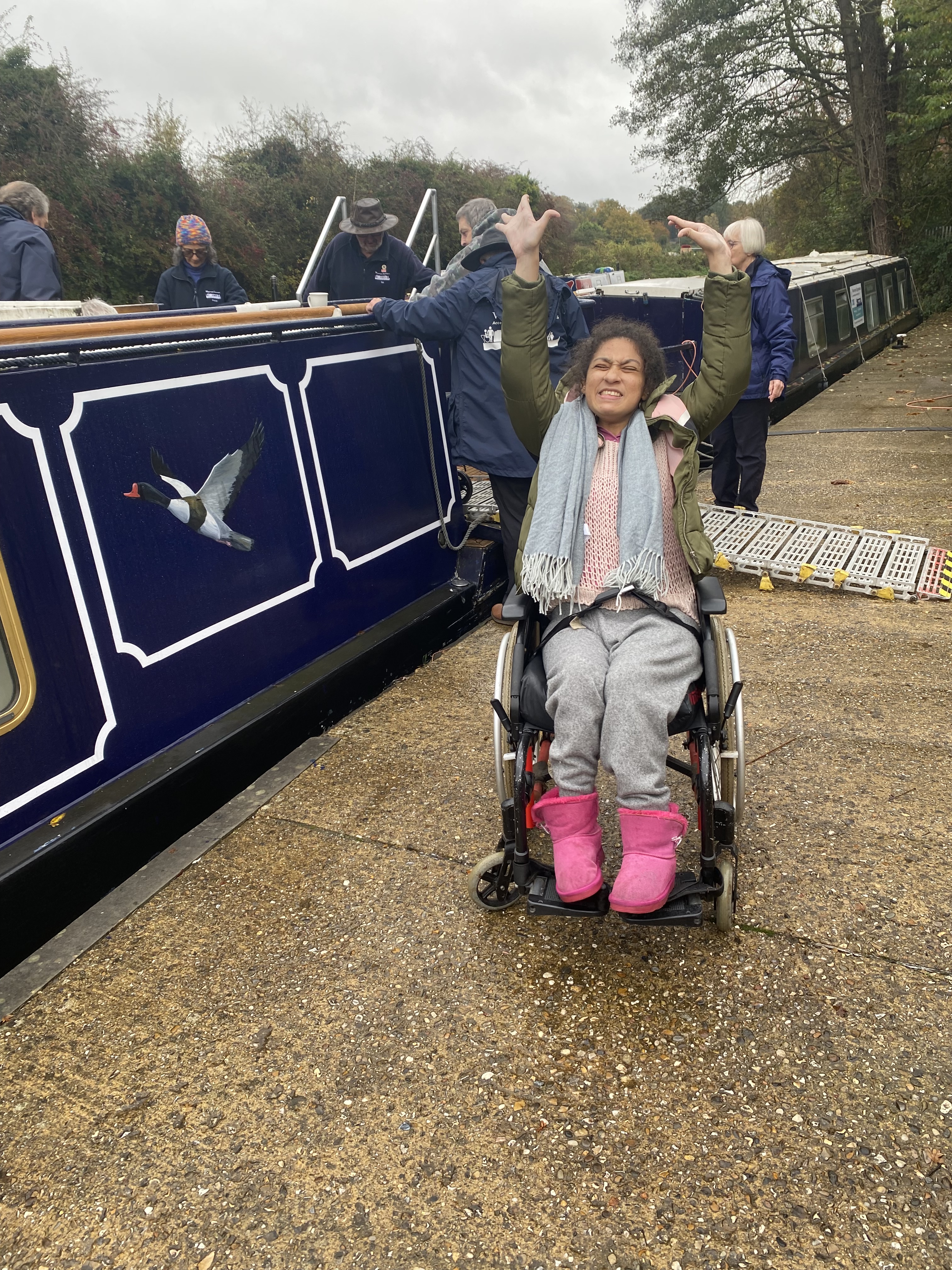
Winter Canal Boat Trip with Friday Club
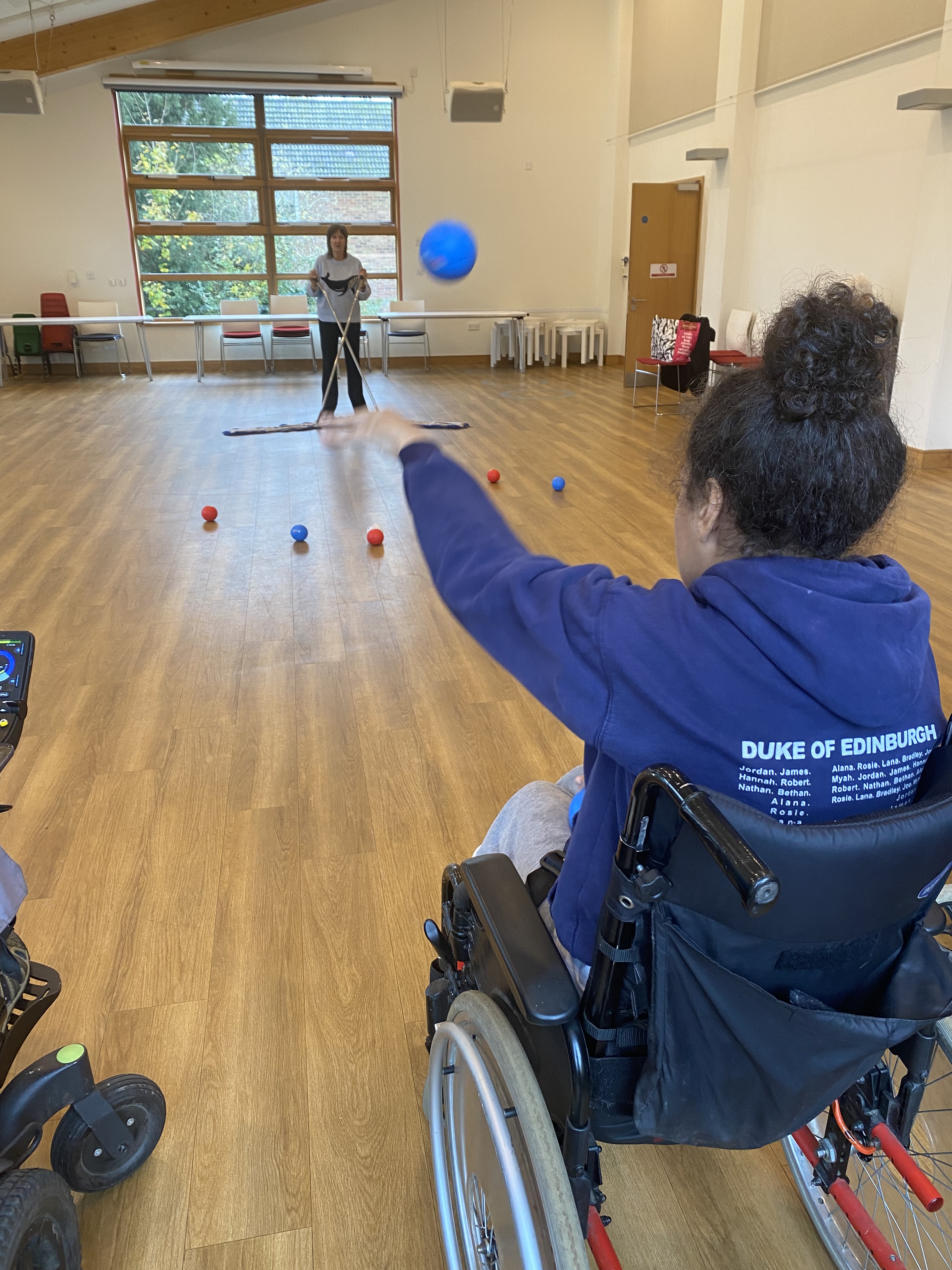
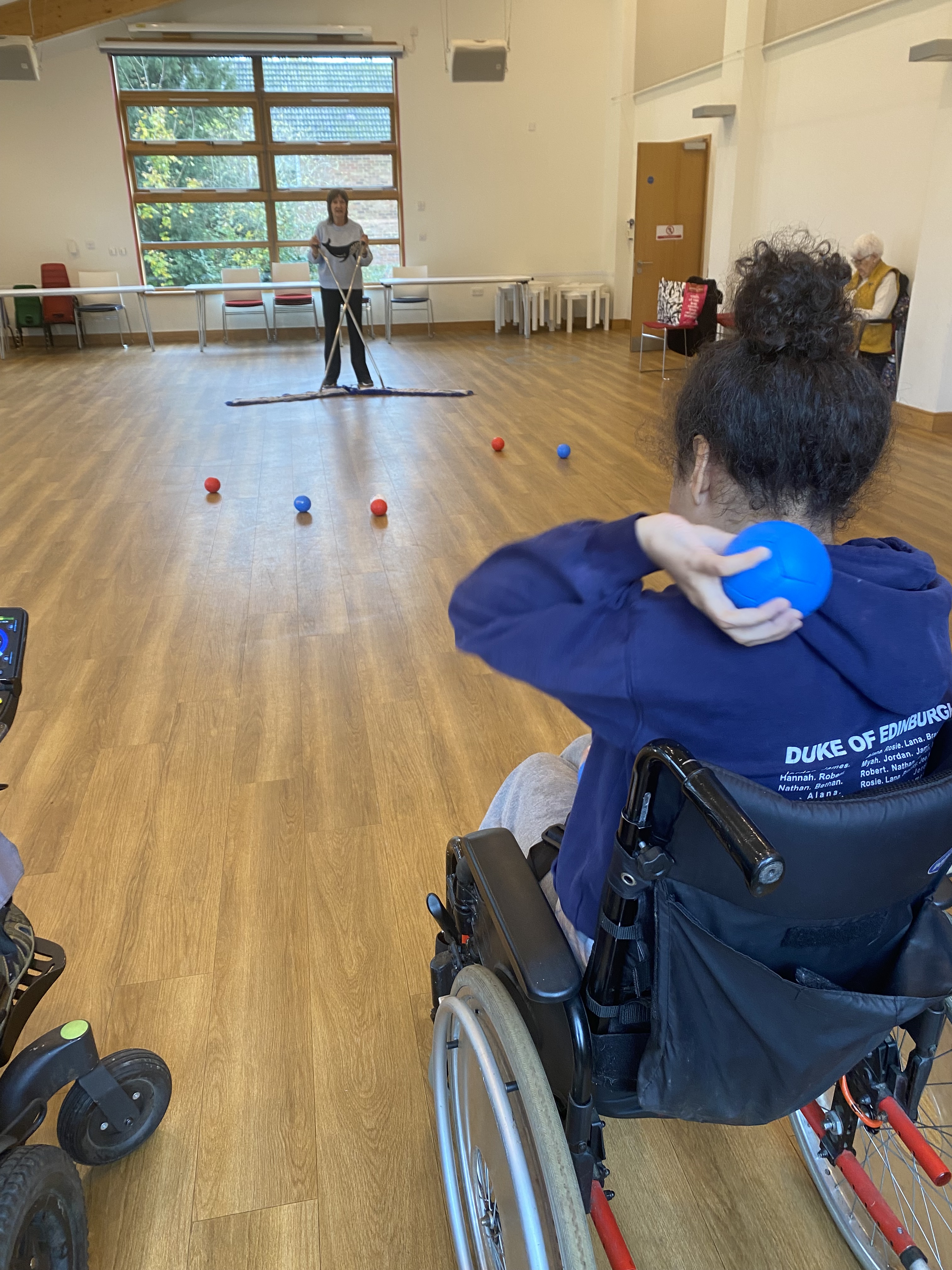
Balls With Wacky Wheels
Balls with Wacky Wheels
Please donate if you can towards my care and support Teams wages/expenses. To enable me to still participate in things with my friends.
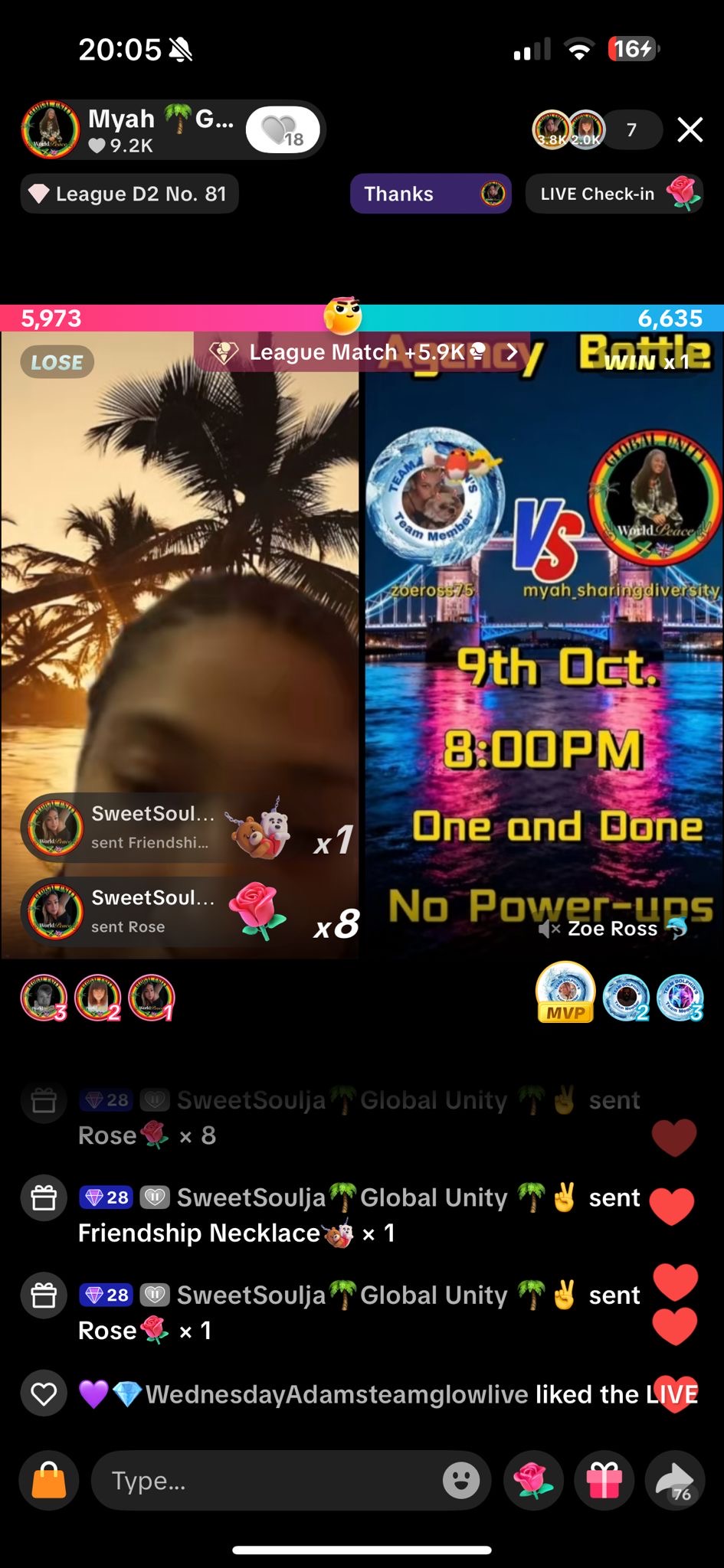
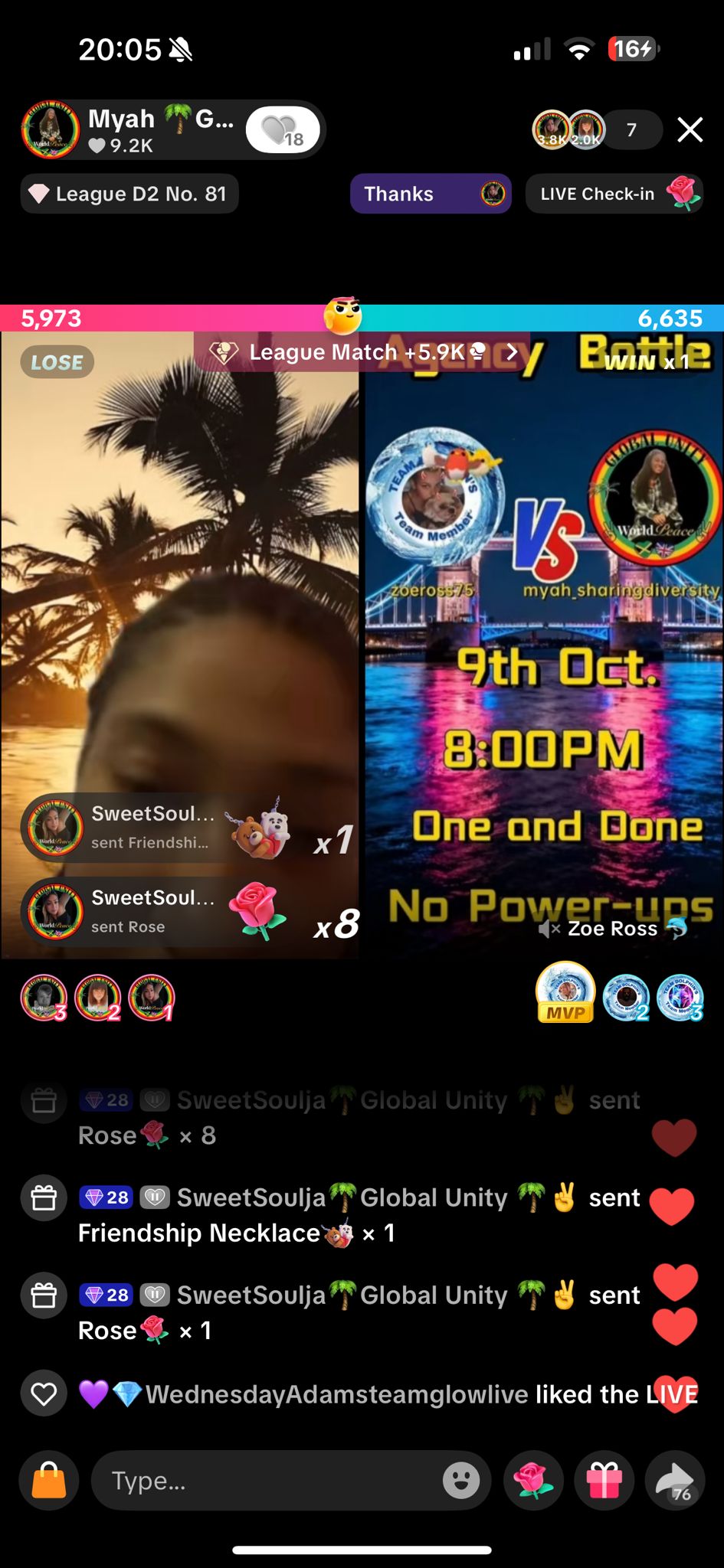
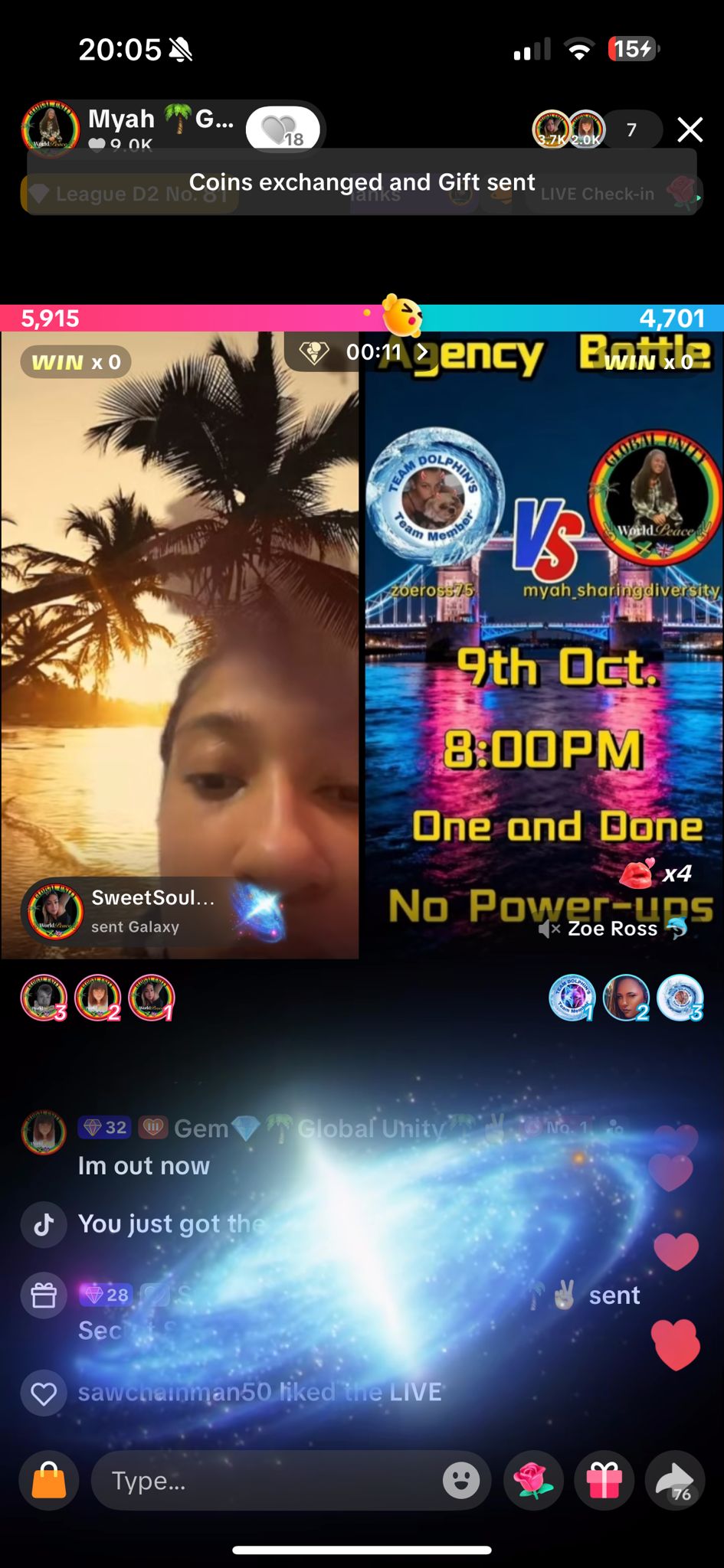
me on live doing my agency battle some of the gifts I received such as roses, friendship necklaces and more a few weeks ago
Campaign Aims To Help Deaf Children Access Football
A grassroots football club has started a campaign to raise awareness of the inclusion of deaf children in the game.
HS Sports, run by Harvey Scholes in Swindon, has made minor adjustments to its communication, which has allowed two young players to play alongside their hearing team-mates.
The campaign has been backed by Swindon Town FC manager, Ian Holloway, who said “it’s about time”, adding there is “no reason a deaf boy or girl couldn’t end up playing top flight football”.
Mr Scholes, who wants other clubs to follow their lead, said he wanted to share the journey of “talented” Stanley and Jacob to show what is possible.
Nine-year-old Stanley was born deaf and received cochlear implants at 14 months old. He plays for three teams, including the England deaf football team.
“I want to get to the level they [Premier League players] are, and work harder and harder,” he said.
He plays alongside Jacob, 10, who wears hearing aids and also plays for three teams – and dreams of playing in the Premier League.
Jacob admitted that it can sometimes be difficult on the pitch with information coming from all directions, but that it has not affected his love for the game.
“Sometimes you mishear your coach, or your players, and sometimes what you need to do,” he said.
They feature in a video made and shared on social media by Mr Scholes, and which has been viewed thousands of times.
Jacob’s dad, Aarron, said he hopes this will stop talented young players with hearing loss being overlooked.
“The looks he gets due to having hearing aids, what we find is they’re seen as a barrier,” he said.
“Just because he has a disability, it doesn’t make a difference. There’s no inability in his work.”
Mr Holloway, who has three deaf children, said being deaf is “something to be proud of”, but added “unfortunately the rest of the world doesn’t always buy into it”.
He said that provided football clubs approach inclusivity correctly, it should not stop young players achieving their goals.
“You need written things everywhere, so they can point at it,” he said.
“As long as we do it correctly… there’s no reason a deaf boy or girl couldn’t end up playing top flight football.”
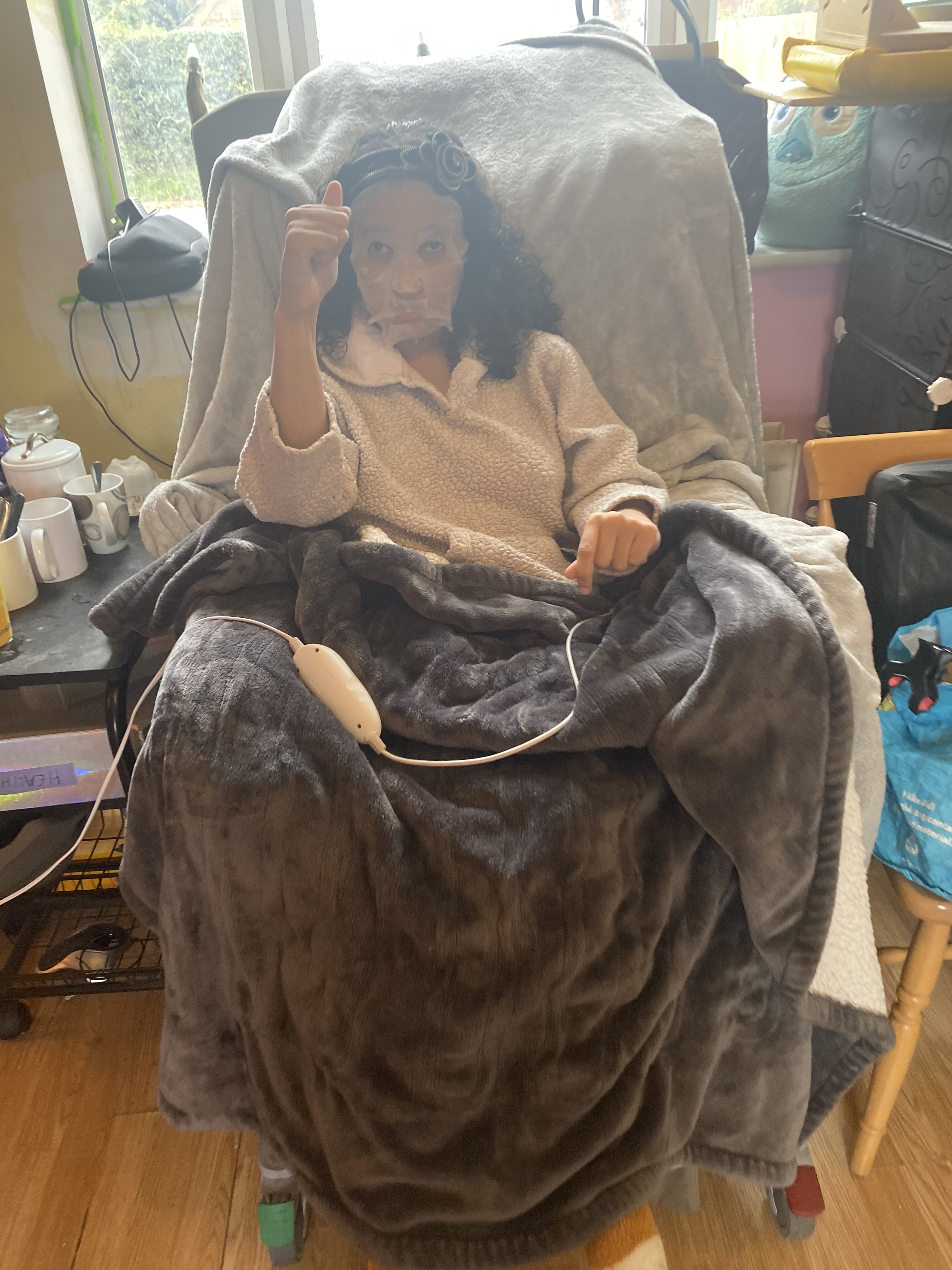
hair Saturday with a face mask and all wall sitting in my armchair
Shops Need ‘Mindset Change’ On Disabled Access
Millions of pounds a month are lost by UK shops and businesses because they are not accessible to people with disabilities, according to an awareness campaign.
Purple Tuesday, which says a “mindset change” is needed, is urging retailers to consider new ways of improving inclusion such as adapting sensory experiences for neurodivergent people.
Some 16 million people in the UK have a disability, and 90% of disabled people found their shopping experience was affected by a lack of accessibility, according to the Business Disability Forum.
Mike Adams, the founder of Purple Tuesday, says retailers and others who offer services need to make changes to the way they operate to attract disabled shoppers.
Purple Tuesday trains businesses and organisations to improve their accessibility and inclusion standards in shops, restaurants and public spaces.
Campaigners gathered in Piccadilly Circus in central London to watch the screens turn purple to celebrate Purple Tuesday, which is also marked in several other countries.
Mr Adams told BBC London: “In terms of the disability population, wheelchair users comprise 8%.
“So we need to think about how businesses can support the other 92% – people with mental health, neurodiversity, long-term health conditions – where some of the accessibility changes that are required aren’t physical ramps and lifts but are more mindset changes that actually cost very little or nothing.”
Jamie Kerroosh, chief healthcare officer at Boots’ Piccadilly shop, said the health and beauty retailer had partnered with Purple Tuesday in the past year to make improvements to increase accessibility.
He told BBC London: “We have done British Sign Language training for all of our colleagues – 52,000 people now with a bit more ability to talk to all of our customers, just simple phrases but still showing a warmer welcome.
“We have partnered with Purple to work on some inclusive packaging.
“That means for those customers that have got either physical challenges or those neurodivergent customers, we now have a bit more understanding through some research we did with Purple on how we can make opening products, using products a little bit easier.”
Purple Tuesday, which is in its eighth year, said research from the University of Bristol and the Money Advice Trust revealed the combined spending power of disabled households in the UK is £446bn a year.
Government research published in July on the accessibility of private-sector products and services for disabled people in the UK found that 88% of people with disabilities had to use workaround solutions, external or compromises when accessing retail businesses.
The Business Disability Forum said in its response to the research that businesses “are putting up barriers which prevent more disabled people spending more money with them”.
The advocacy group added: “Adjustments and accessibility here are really about removing a difficulty which gets in the way of someone spending money with a business.
“If the legal and moral case that every human being is valuable and of equal worth in society doesn’t land with businesses, the profit case certainly should.
Footballer Heartbroken Over MND Diagnosis
A woman who has played football since she was a child is calling for more research into potential links between the sport and motor neurone disease (MND).
Stacy Whittle, 37, from Worcester, was diagnosed with MND in July 2025 having started to experience symptoms last September.
Ms Whittle began with neck pain and an inability to raise her arms above her head, and later her breathing became laboured.
She can no longer walk and uses a ventilator at night, and said it was heartbreaking to know she would not be around to see her two children grow up.
Ms Whittle started playing football aged eight, including for West Bromwich Albion when she was 16 as well as several local teams, and only stopped playing in the season before she was diagnosed.
“More and more sporty people and younger people are being diagnosed with it, and to me it seems like there might be a link,” she said, stressing the need for fundraising for more research to find a cure or treatment.
MND is a degenerative condition that affects the brain and spinal cord.
“No family should have to go through what we are… we’re trying to get through every day.”
Given that her children, aged 11 and 16, play football and rugby, Ms Whittle said they had discussed whether she would have played football had she known she might get MND in the future.
“I said I wouldn’t change it, as growing up playing football are some of the best memories that I have, and I absolutely love it.
“It’s just unbelievable that this is happening to me, I’m only 37, my boys are so young.
“It’s hard to deal with the fact that I’m not going to be there for them growing up, it’s heartbreaking.”
Players from her club, Areley Kings Ladies FC in Kidderminster, set themselves a challenge of covering 2,000 miles in October through walking, cycling, running and swimming with an aim to raise £2,000 for the MND Association.
Team-mate Kat Webster said the MND diagnosis had been devastating for Ms Whittle and her family, and they had wanted to do something positive, and raise money and awareness for the charity.
England Win Thriller To Clinch Wheelchair Ashes
Joe Coyd scored a try two minutes from time as England produced a stunning second-half fightback to beat Australia in the final Test and win the Wheelchair Rugby League Ashes.
Australia led 30-18 at half-time, but England scored six tries after the break to clinch the series 2-0 at the Gold Coast Sports and Leisure Centre in Queensland.
England also came from behind to win the first Test 56-28 on Thursday.
Diab Karim opened the scoring for Australia with a try after two minutes of the second Test.
Two tries from England’s Rob Hawkins, who scored a hat-trick in the opening Test, and one from Finlay O’Neill were cancelled out by two Bayley McKenna scores, and Adam Tannock and Dan Anstey tries.
Jack Brown instigated England’s fightback in the second half, scoring twice and setting up two tries for captain Lewis King, who ended with a hat-trick.
Tries from Zac Schumacher and Anstey brought Australia level at 42-42 before England substitute Mason Billington’s cool final pass sent Coyd over for the winner.
Australia host the Wheelchair Rugby League World Cup in 2026.
England and France have dominated the tournament since its inception in 2008, but the ‘Wheelaroos’ showed their development in this series.
‘Lack Of Interpreters Meant I Believed I Had HIV For Two Days’
A deaf man mistakenly believed he had tested positive for HIV because he couldn’t get access to an interpreter in hospital.
Richard MacQueen, a father-of-three from Dundee, was being treated in A&E for pneumonia and misunderstood the nurse when he was given his test results.
The 42-year-old is profoundly deaf and British Sign Language (BSL) is his first language.
He said he had asked for an interpreter in hospital several times.
“My father was there. He was really the only hearing person in my family who was willing to help but he doesn’t have advanced BSL skills at all and I really needed an interpreter,” he said.
“The doctor brought a nurse, who was a very nice person, but she had very basic sign language skills.
“He used her as a communication method and they were talking about my HIV results, and she did this thumbs up sign and I thought, ‘Well what does that mean?’ Does that mean that I have it? That I am HIV positive, or I’m OK because I’m negative?”
Mr McQueen was confused and upset.
“I was worried about whether I had HIV or not, whether I would face a lifetime of treatment, whether I might die from this. I had no idea how I was going to tell my family.”
Richard says it took two days for a qualified interpreter to arrive and explain he had been given the all-clear.
“If an interpreter was provided initially, I would never have had to have gone through all that,” he said.
Richard is now sharing his experience to launch a new app – the first of its kind in the UK – which links deaf people and BSL users with interpreters.
He hopes it will mean mistakes like the one he experienced won’t happen to anyone else.
SignPort, which has been described as ‘Uber for BSL interpreters’, was developed by the Edinburgh-based charity Deaf Action with the support of a Scottish government innovation scheme.
Richard, who took part in a 10-month pilot for the app, says it’s a huge step forward for the deaf community.
“You can use it all the way from the workplace to a wedding. It’s going to make a massive change for us as deaf people. Finally, we can connect directly to interpreters in one place.
“Always in the past we had to consult with a number of different agencies and service providers – email them, search all this stuff out for ourselves, try to contact interpreters direct and you were really in the dark.
“It was very time consuming, very stressful because you never knew if you were going to have an interpreter.”
The new app brings everything into one place. Users can easily see which interpreters are available.
According to Scotland’s 2022 Census,more than 100,000 people in Scotland can speak BSL. And up to a million have some form of hearing loss.
Phillip Gerrard, chief executive of Deaf Action, said the app would be a “game changer” for BSL users.
“Scotland is indeed leading the way in providing this innovative service. Scotland has a really great tradition of innovation in many areas, but especially for the deaf community and by the deaf community.
“This is going to make a huge difference, not only for Scotland but for the whole of the UK, because as soon as the rest of the UK see what’s here they’re going to want the same.”
The app is free to download and use for deaf BSL users and interpreters, with interpreter fees paid by the person or organisation who makes the booking.
It comes after a review commissioned by the Scottish government in 2019 found the struggle to find interpreters wasn’t always due to a shortage of trained professionals, but because the existing booking system was fragmented and time consuming, leading to missed appointments and barriers to education.
SignPort took two years to develop, with Deaf Action working alongside technology firm Burrotech through the Scottish government’s CivTech programme.
The Scottish government is encouraging businesses to sign up to the app.
Deputy First Minister Kate Forbes said: “This app builds on our commitment to make Scotland a more inclusive place for deaf people. It also represents exactly the kind of innovation we want to see through our CivTech programme – technology that transforms lives and removes barriers.
“This app addresses challenges that have persisted for too long. As a social enterprise, SignPort will reinvest in the very communities it serves, creating lasting change beyond improving bookings. This is community-led innovation at its best.”


Blind Women Launch Naked Calendar To Tackle Stigma
A group of blind women have created a nude calendar to challenge the stigma surrounding vision loss and to show they are “normal women, with normal lives”.
The images for the Weston-super-Mare Blind Naked Calendar 2026 feature nude models’ portraits with a filter, to help depict their own vision loss conditions and will raise money for the charity Deafblind UK.
Josephine Boulter, who is Miss August and November in the calendar, said she came up with the idea after someone made a “patronising” comment while she was on holiday in Butlins.
She said: “It was like he was surprised I could have fun. Then it hit me – let’s do a calendar. Something that says, ‘here we are’.”
She said on the holiday a “patronising” person patted her on the shoulder and said, “well done you. You enjoy yourself”.
“I want to raise awareness that people are more than their sight loss, and hopefully raise a bit of money for Deafblind UK too,” she said.
“I’m fiercely independent, [I] take care of myself.”
Ms Boulter said she was unaware of her vision loss until she was diagnosed at the age of 39 with Bonnet syndrome – a condition in which the brain compensates for missing visual information by filling in the gaps.
“We need people to see us for us, we’re really capable, when you can’t do something you find another way, if you can’t accept it – you move forward,” she added.
Rita Coles, who is Miss April, said she was “proud” she featured in the calendar.
“It was nerve-wracking, but it was good fun,” she added.
Rod Cullen, deputy CEO of Deafblind UK, said when he heard the idea, he thought it was “perfect”.
The charity, which supports people living with a combination of sight and hearing loss, said deafblindness affects 450,000 people in the UK.
When describing the calendar, Mr Cullen said he thought it was “fantastic”.
“To cut through and find something that really resonates with people is a challenge.
“I hope this calendar has done that, and it’s a big challenge for next year to find something else to go along with,” he added.
Guide Dog User Says Access Refusals Are Rising
A guide dog user wrongly turned away from a hotel says such incidents are on the increase.
Kim Milward, from Northampton, said she and her guide dog Woody were stopped from entering the town’s Westone Manor Hotel, where they had been due to stay on Tuesday last week.
Ms Milward, 55, said she was spoken to “through the crack of a door” as she was turned away. She said she told staff the refusal was unlawful, but no senior manager was on site to intervene.
The hotel offered its “sincere apology” and said the situation arose due to a “misunderstanding by a new and junior member of staff”, adding that it would implement extra training.
Ms Milward, who has used a guide dog since 1995, said while she acknowledged the hotel’s apology, she still felt disappointed by the “level of incompetence” it had displayed.
“It’s not just about me, it’s about the next person,” she said.
“Mistakes can happen, but you shouldn’t put people out who aren’t fully qualified.
“Access refusal [for assistance dog users] seems to be happening more. I’m speaking out because I don’t want it to happen to someone else.”
In England, Wales and Scotland, the Equality Act 2010 makes it unlawful to discriminate against a disabled person because they have an assistance dog with them when accessing businesses or services.
In a statement, the hotel, in the Weston Favell area of Northampton, said: “This was entirely our responsibility, and we deeply regret the distress and inconvenience caused to the guest involved.
“As soon as the matter was brought to our attention, we apologised to the guest and have processed a full refund through the agency with which the booking was made.”
Journalist and former BBC presenter Mark Mardell was left feeling “humiliated” after he was told he could not board a Turkish Airlines flight due to having Parkinson’s disease and no doctor’s report.
The broadcaster was unaware of this requirement and was shocked when he could not board his flight home from Istanbul to Gatwick.
“Let’s be clear: this isn’t about paperwork. It’s prejudice dressed up as policy. It’s ignorant, insulting, and frankly medieval,” Mr Mardell wrote on Facebook.
The BBC has approached Turkish Airlines for comment.
“I’d like to stress they are only the airline that had any mention of Parkinson’s,” he told the BBC.
Mr Mardell is a former radio and television journalist who spent 25 years reporting and analysing major world events, notably for BBC Radio 4 and other radio outlets.
In his Facebook post, Mr Mardell said he had checked in his suitcasebut before he could get through security he was told he was not considered fit to fly.
“Rest assured, I wasn’t drunk, violent, or even late. No, my sin was having Parkinson’s,” he said.
“They told us I couldn’t board without a doctor’s letter. At first, I thought they wanted proof that I had Parkinson’s, which was absurd enough. But no – the letter had to say I was safe to fly.
“Apparently, Turkish Airlines has decided that people with Parkinson’s are a danger to themselves or others.”
Mr Mardell had taken the trip to Istanbul with his son Jake and used assisted boarding due to his condition, which he says has resulted in no boarding issues with other airlines.
“Parkinson’s is the fastest-growing neurological condition on the planet. If you think that means we shouldn’t be allowed on planes, you’ve got a problem – and it’s not neurological,” he wrote in his Facebook post.
The Turkish Airlines website states: “Passengers who have Parkinson’s disease are admitted to the flight with a doctor’s report stating that ‘there is no harm in traveling by plane’.
“The report must include a statement specifying that the passenger can travel accompanied or unaccompanied,” the website adds.
A doctor’s report provided must be recent and usually compiled within the last 10 days.
But Mr Mardell listed British Airways, Lufthansa, American, Emirates, and Qantas as examples of major airlines that do not require a doctor’s report if the passenger has Parkinson’s.
“Turkish Airlines stands alone in demanding people with Parkinson’s must bring a doctor’s note. That’s not ‘assistance’; that’s a barrier,” Mr Mardell said.
The journalist said he found most of the Turkish Airlines staff he encountered unhelpful and they left him “staggering” around the airport alone for hours trying to find his suitcase.
Eventually, a helpful member of staff and a member of the public helped him and he located his bag.
Mr Mardell has since returned home to the UK, flying back the following day with Wizz Air.
He posted about his ordeal on Facebook to highlight what has happened in the hope other people with Parkinson’s wouldn’t encounter the same problem.
“I had to rebook, stay in a hotel, and spend the night stranded, all because I have a medical condition, not a contagious disease,” he said.
“People with Parkinson’s everywhere need to know about this Airline’s outrageous policy.”
Yorkshire Buildings To Light Up For Purple Tuesday On 4th November
Buildings in Hull and the East Riding of Yorkshire are to be lit up in purple to advocate for disabled people.
The global initiative, Purple Tuesday, will take place on 4 November, with Hull City Hall, Hull Minster, and Bridlington Spa lighting up from 16:00 GMT to show solidarity.
Visit Hull and East Yorkshire (VHEY) is calling on other organisations across the region to join in.
Enid Adams, who is severely visually impaired and requires a guide dog, said: “Accessibility is important so I can take part in recreational events that others take for granted.
The international movement is aimed at improving the customer experience for disabled people everywhere.
Councillor Nick Coultish, portfolio holder for culture, leisure and tourism at East Riding of Yorkshire Council, said: “From accessible entrances and clear signage to sensory-friendly spaces and staff training, small actions can transform someone’s experience.
“We want to see our towns and villages shining purple and showing that Hull and East Yorkshire truly are for everyone.”
Richard Smelczerczy is autistic with a severe learning disability, as well as having epilepsy and requires one-to-one support at all times.
He said: “Accessibility is not always about physical adaptations.
“Adjusting the noise and light settings can be all that is required for some disabled visitors, to help them feel welcome.”
Self Driving Cars Coming To London
The first driverless taxis are coming to London in 2026 courtesy of Google’s sister company, Waymo. They’ll be on trial in the capital, but will they become an access wonder or woe?
Emma Tracey and Paul Carter quiz Amanda Ventura from Waymo on all the ins and outs on what the new vehicles could mean for disabled people. We also speak to American tech journalist, Steve Aquino, who as a man with anxiety and a visual impairment loves using them to get out and about. And we find out if Emma Vogelmann, the co-CEO of Transport for All, and a powerchair user, would take one for a spin.
here is the gift list which I have created for you guys to pick from to participate in the event as I have always wanted to do an unboxing and this is one of my social media ranges which I would like to come through this birthday help me if you can by borrowing something off this link Check out this Gift List I just created. https://www.amazon.co.uk/registries/gl/guest-view/1UQ0DPDQ3O0L0?ref_=cm_sw_r_apin_ggr-subnav-share_FVVZMZ74CD9QY9DNCSBQ&language=en-US Check out this Gift List I just created. https://www.amazon.co.uk/registries/gl/guest-view/I2DJBVTU938B?ref_=cm_sw_r_apin_ggr-subnav-share_W3M3MV8E52XAZAQ1HSTC&language=en-US there’s two different gift lists due to Christmas upcoming as well you can buy of one or both of the gift list it’s up to you
Nabil Shaban, Co Founder Of Graeae Theatre Company And Sil From Dr Who Dies Aged 72
Same Difference has just heard with sadness of the death of disability campaigner and disabled actor Nabil Shaban.
We share the link to the tribute below with many thanks to his friend Simon Mckeown:
Employment Advisors Move Into GP Surgeries
With many thanks to Benefits And Work.
The government have announced that employment advisors will be moving into GP surgeries and mental health services in nine areas of England, in order to help disabled claimants move into work.
£167 million has been invested in the Connect to Work programme in the following areas:
- North East
- Buckinghamshire
- Oxfordshire
- West Sussex and Brighton
- Berkshire
- Devon, Plymouth, and Torbay
- South Midlands
- York and North Yorkshire
According to the DWP, the programme provides “intensive, personalised help including individual coaching from employment specialists, job matching services, and ongoing support for both participants and employers to ensure sustainable employment outcomes.”
Connect to Work is voluntary, claimants can decline to be referred or to take part.
The support provided in this round of funding includes:
- Using Virtual Reality immersive classrooms to support people with interview practice.
- Running workshops to improve participants’ confidence and communication skills.
- Helping parents and families access affordable childcare so they can re-enter the workforce.
However, at the same time as the DWP announced the latest stage of the roll-out of Connect to Work, the British Standards Institution reported that 31% of employers are turning to AI rather than taking on entry level employees.
This is an issue that is only likely to grow in the coming years. For many claimants who have been out of the jobs market for a long period, but who wish to try to return, entry level jobs may be their only option.
It is hard to see how initiatives like Connect to Work can succeed unless significant encouragement and support, including financial support, is provided to employers. This, however, does not appear to be forthcoming.
In fact, stealth cuts to Access to Work will simply make it less likely that employers will consider taking on disabled employees.
But the team at the DWP remain ever positive, with minister for health Stephen Kinnock saying “This investment is just what the doctor ordered and will help thousands more find the help they need to get back into a job.”
Whilst secretary of state Pat McFadden assured the public “We are giving people a hand up, not a handout, realising their potential and providing them with the skills to succeed as part of our Plan for Change.”
There’s more information on Connect to Work in this DWP press release.
Disability Charity Helps Interns To Self-Employment
A disability charity supporting people with additional needs into self-employment says the project will just “grow and grow”.
SAMEE, which stands for Support and Mentoring Enabling Entrepreneurship, helps about 20 people explore and develop self-employment opportunities.
It is based in Bournemouth but also mentors people remotely and is looking to roll out to other parts of the country.
Project lead Rob Amey said: “These guys and girls have real talent. it just needs people to help bring that out of them… and hopefully make a sustainable business.”
SAMEE started in 2016 to address a lack of support for people who are neurodivergent or who face other challenges.
Speaking on BBC Radio Solent, Mr Amey said: “For many people a nine-to-five job is never going to work.
“When you are considering self-employment, you can fit your work hours around your health needs and your processing needs and how many hours you are comfortable to work at a time.
“We are very bespoke but focused on every aspect of our intern’s life, not just their business.”
Artist Logan, who is a second-year intern, said: “I would sit in my room doing artwork ranging from dark art, scrap modelling and Celtic jewellery.
“At the moment they are helping me overcome my own personal challenges and well as the usual challenges of day-to-day life.”
Logan and his fellow cohort of interns recently held an exhibition at Poole Lighthouse to showcase their skills.
He said: “It can be overwhelming, being an introvert. I’ve always kept my arts and crafts to myself and never really shown it to the public before.”
Mr Amey added: “It’s about everybody feeling valued and if you do have life challenges not being steered down a particular path.
“It’s such a unique opportunity because nobody really teaches self-employment skills.”
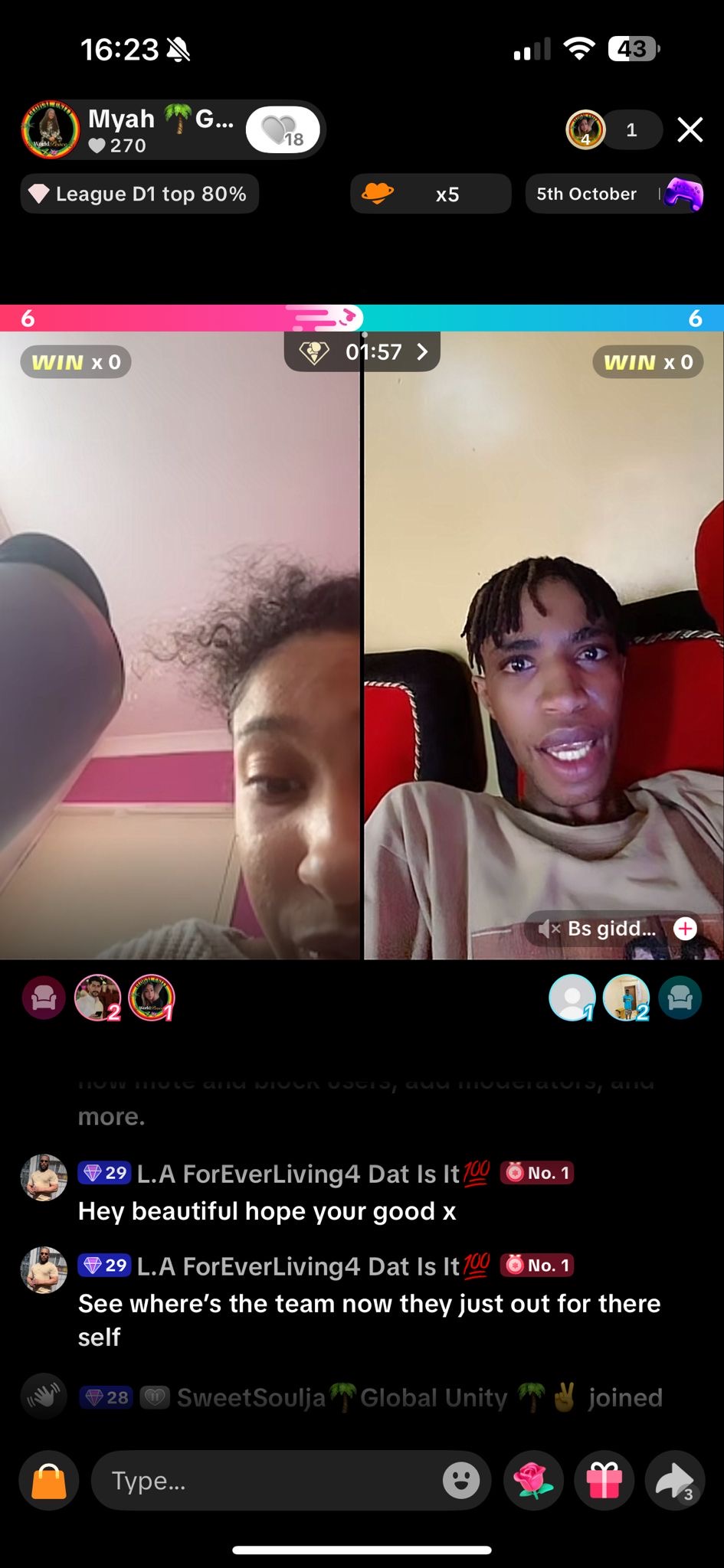
picture of me battling on TikTok which is my main way to fundraisers if you want to do this too then please join my TikTok team. We are recruiting now.
‘Delighted’ Woman Played Clarinet In Brain Surgery
A woman with Parkinson’s disease who played a clarinet while undergoing brain stimulation said she was “delighted” with how it went.
Denise Bacon, 65, from Crowborough in East Sussex, experienced instant improvement in her finger movements as the electrical current was delivered to her brain, doctors at King’s College Hospital said.
The retired speech and language therapist underwent deep brain stimulation (DBS) after suffering symptoms of Parkinson’s.
She was diagnosed with the disease in 2014 and it has affected her ability to walk, swim, dance and play her clarinet.
During a four-hour operation at King’s College Hospital, Keyoumars Ashkan, a professor of neurosurgery, performed DBS to help relieve symptoms while Ms Bacon stayed awake.
DBS is a surgical procedure using electrodes implanted in the brain and is suitable for some patients with disorders such as Parkinson’s.
Ms Bacon was given a local anaesthetic to numb her scalp and skull and had immediate improvement in her fingers on the operating table, allowing her to play the clarinet easily.
She previously played clarinet in the East Grinstead Concert Band until she had to stop five years ago due to her Parkinson’s symptoms.
“I remember my right hand being able to move with much more ease once the stimulation was applied, and this in turn improved my ability to play the clarinet, which I was delighted with,” she said.
“I’m already experiencing improvements in my ability to walk, and I’m keen to get back in the swimming pool, and on the dance floor to see if my abilities have improved there.”
Prof Ashkan said holes half the size of a five pence piece had been made in her skull, after a frame with precise co-ordinates was placed on Ms Bacon’s head “acting as a sat nav” to guide them to the correct positions to implant the electrode.
“We were delighted to see an instant improvement in her hand movements, and therefore her ability to play, once stimulation was delivered to the brain,” he said.
https://vm.tiktok.com/ZNdWYw4uv/
please help me to fundraisers for the reasons that are in the video. Please click the link and go through your TikTok app to watch.
‘Massive Concern’ Over Rising Costs Of Guide Dogs
An aspiring Paralympian who went blind seven years ago has said he is “massively concerned” about the rising cost of guide dogs.
Scott Bailey, 36, was partnered with his labrador Milo through charity Guide Dogs after he lost his sight due to suffering diabetic retinopathy – high blood sugar damaging the back of the eye.
The former dairy farmer said Milo, now five years old, had changed his life after his condition left him “stuck inside”.
But Mr Bailey, from Crewe, in Cheshire, said he was worried the high costs of raising guide dogs could lead to longer waiting times for people who need them.
“It’s a massive concern, with me and Milo as well because Milo is getting older, so I’m going to be on the dreaded waiting list soon,” Mr Bailey said.
“With the cost of raising the puppies going up, the waiting lists are going to get longer and it’s going to get more difficult for Guide Dogs to fund these amazing animals.”
According to Guide Dogs, the cost of raising a dog before it is partnered with an owner has risen from £35,000 to £77,000 over the past five years.
The charity said it also cost about £25,000 to support the dog through its working life until it retired, usually at about nine years old Mr Bailey said, which took the total to £102,000 per dog.
Mr Bailey, a judo competitor hoping to compete at the Los Angeles Paralympic Games in 2028, said the partnership with Milo had had a big impact on his life.
“I always said he’s enabled me to be the girls’ dad again and a better husband,” he said.
“When I lost my sight, I didn’t want to be here. I felt useless and in the way. I couldn’t cope being stuck inside, but Milo gave me that purpose.”
Mr Bailey said he understood the public had long supported Guide Dogs and it had become “one of the most-loved charities in the world”.
Life-Changing Eye Implant Helps Blind Patients Read Again
A group of blind patients can now read again after being fitted with a life-changing implant at the back of the eye.
A surgeon who inserted the microchips in five patients at Moorfields Eye Hospital in London says the results of the international trial are “astounding”.
Sheila Irvine, 70, who is registered blind, told the BBC it was “out of this world” to be able to read and do crosswords again. “It’s beautiful, wonderful. It gives me such pleasure.”
The technology offers hope to people with an advanced form of dry age-related macular degeneration (AMD), called geographic atrophy (GA), which affects more than 250,000 people in the UK and five million worldwide.
In those with the condition, cells in a tiny area of the retina at the back of the eye gradually become damaged and die, resulting in blurred or distorted central vision. Colour and fine detail are often lost.
The new procedure involves inserting a tiny 2mm-square photovoltaic microchip, with the thickness of a human hair, under the retina.
Patients then put on glasses with a built-in video camera. The camera sends an infrared beam of video images to the implant at the back of the eye, which sends them on to a small pocket processor to be enhanced and made clearer.
The images are then sent back to the patient’s brain, via the implant and optic nerve, giving them some vision again.
The patients spent months learning how to interpret the images.
Mahi Muqit, consultant ophthalmic surgeon at Moorfields Eye Hospital in London, who led the UK arm of the trial, told the BBC it was “pioneering and life-changing technology”.
“This is the first implant that’s been demonstrated to give patients meaningful vision that they can use in their daily life, such as reading, writing.
“I think this is a major advance,” he said.
How the implant technology works
For the research, published in the New England Journal of Medicine, external, 38 patients with geographic atrophy in five European countries took part in the trial of the Prima implant, which is made by California biotech Science Corporation.
Of 32 patients given the implant, 27 were able to read again using their central vision. After a year, this equated to an improvement of 25 letters, or five lines, on an eye chart.
For Sheila, from Wiltshire, the improvement is even more dramatic. Without the implant, she is completely unable to read.
But when we filmed Sheila reading an eye chart at Moorfields Hospital, she did not make a single error. After completing it, she punched the air and cheered.
‘I am one happy bunny’
The task took huge concentration. Sheila had to put a pillow under her chin in order to steady the feed from the camera, which can focus on just one or two letters at a time. At some points she needed the device switched to magnification mode, especially to distinguish between the letters C and O.
Sheila began losing her central vision more than 30 years ago, due to loss of cells in the retina. She describes her vision as like having two black discs in each eye.
Sheila gets around using a white cane because her very limited peripheral vision is completely blurred. She is unable to read even the largest street signs when outdoors.
When she had to give up her driving licence, she says she cried.
But after having an implant fitted around three years ago, she is delighted by her progress, as is the medical team at Moorfields.
“I am able to read my post, books, and do crosswords and Sudoku,” she says.
When asked if she ever thought she’d read again, Sheila replied: “Not on your nelly!”
“It is amazing. I am one happy bunny,” she adds.
“Technology is moving so fast, it’s amazing that I am part of it.”
Sheila doesn’t wear the device when outdoors. In part, this is because it requires great concentration – her head has to be held very still in order to read. She also does not want to become over-reliant on the device.
Instead, she says she “rushes her chores” at home each day before sitting down and putting on the special glasses.
The Prima implant is not yet licensed so is not available outside of clinical trials, and it’s unclear how much it may eventually cost.
Nonetheless, Mahi Muqit said he hoped it would be available to some NHS patients “within a few years.”
Dry age-related macular degeneration (AMD), external is the most common cause of sight loss in old age. It’s hoped the technology could be used to help people with other eye conditions in the future.
Dr Peter Bloomfield, director of research at Macular Society, says the results are “encouraging” and “fantastic news” for those who currently have no treatment options.
“Artificial vision may offer a lot of hope to many, particularly after previous disappointments in the world of dry AMD treatment.
“We are now watching closely to see if the Prima implant will be approved for use here in the UK, and crucially whether it could be made available on the NHS.”
The implant would not help restore sight in people born blind, because they don’t have a functioning optic nerve to pass signals to the brain.
https://vm.tiktok.com/ZNdW2dpKd/
a video of a TikTok battle which I took a few weeks ago and was appreciative of every single gift, including the heart breather one of my Team sent me
Baek Se-hee, the South Korean author of the bestselling memoir I Want to Die but I Want To Eat Tteokbokki has died at the age of 35.
Her 2018 book, a compilation of conversations with her psychiatrist about her depression, was a cultural phenomenon with its themes of mental health resonating with readers across the world.
Originally written in Korean, it found international acclaim after its English translation was published in 2022.
The details surrounding her death are unclear.
Baek donated her organs – her heart, lungs, liver and kidneys – which have helped to save five lives, the Korean Organ Donation Agency said in a statement on Friday.
The statement also included comments from her sister, which said that Baek had wanted to “share her heart with others through her work, and to inspire hope”.
I Want to Die but I Want to Eat Tteokbokki, published in 2018, has sold more than a million copies worldwide and been translated in 25 countries.
The runaway bestseller was celebrated for normalising mental health conversations and its nuanced take on inner struggles – most notably, the author’s personal conflict between depressive thoughts and her appreciation for simple joys.
“The human heart, even when it wants to die, quite often wants at the same time to eat some tteokbokki, too,” goes the book’s most famous line. Tteokbokki, which are tubular chewy rice cakes usually eaten with a spicy sauce or stew, is a popular snack in Korean cuisine.
Born in 1990, Baek Se-hee took creative writing in university and worked for five years at a publishing house, according to her short biography on Bloomsbury Publishing, which produced the English version of her 2018 memoir.
Anton Hur, who had translated Baek’s book into English, wrote on Instagram that her organs have saved five people but “her readers will know she touched yet millions of lives more with her writing”.
“My thoughts are with her family,” he wrote.
For a decade she received treatment for dysthymia, a mild but long-lasting type of depression, which formed the basis of her bestseller, said her Bloomsbury bio.
A sequel, I Want to Die but I Still Want to Eat Tteokbokki, was published in Korean in 2019. Its English translation was published in 2024.
Tributes have poured in on social media. “Rest softly,” reads a comment on Baek’s Instagram page. “Thank you for saving us with your honesty.”
Another Instagram user said each time they read Baek’s memoir they found “deep comfort in every sentence and grew alongside it”.
“To create a single book that can lift people up… is no easy task, and I have indescribable respect for you for achieving that,” they wrote.
So Care Saturday lavender body batter to enrich self-care experience
winter fashion item for your Friday
Fridays quote’s are back
Disability Hate Crime: ‘It’s The Worst I’ve Experienced It’
Steven Lacey had gone his whole life without being the target of hate crime, until this last year, in which he has already been abused four times.
The 52-year-old, from London, is physically disabled. He has a cleft hand, a missing fibula and a shortened tibia.
Steven says the last 12 months have been the worst he has experienced in terms of discrimination, and he says he thinks it is not going to improve any time soon.
The latest Home Office figures indicate disability related hate crime is down – but Steven’s lived experience says otherwise.
Throughout his life, Steven has had to deal with stares, patronising attitudes, and being asked “what is wrong with you?”, but he “never felt like it was at a hate crime level”.
Last December, in Brentford, Steven suddenly found himself surrounded by a large group of 14 to 15 year olds who started filming and laughing at him.
“It was terrifying, it was a really intimidating situation. I didn’t know if they wanted to rob me or attack me,” he says.
In February, while Steven was standing outside a hotel bar in Twickenham, a young man came up to him and asked if he was “legless”.
Then, in May, while he was in the foyer of a high-end Manchester hotel, a man in his 30s came up to Steven and asked what hand he masturbated with.
Two weeks ago in Feltham, two older teenage boys approached Steven and asked if his parents were related, and if “you had a baby would it look like you?”.
“The incidents have varied from moments of real unkindness to moments when I’ve felt physically threatened.”
Steven has not reported any of the incidents to the police as he has no faith they will investigate.
“You just feel like you’re going to become another statistic rather than that something will actually be done.”
He feels that hate crime against disabled people is on the rise, pointing to an increasingly polarised Britain and a toxic narrative based on misconceptions about both disability and the benefit system.
“People think, ‘they’ve got a blue badge, lots of entitlement, they are abusing the system and getting more than I am’,” says Steven, who runs a cultural insight agency which specialises in disability and other marginalised groups.
“All these things layer up to this sense of ugliness. It’s created this sense of outrage against disabled people.”
Despite Steven’s experiences, official Home Office figures show recorded disability hate crimes in England and Wales fell by 8% in the year to March 2025.
Offences recorded by the Metropolitan Police are not included in this year’s figures due to changes in how the force records crimes.
Persistently unreported
Rose Simkins, chief executive of Stop Hate, which runs a helpline for victims of hate crime, says the official statistics do not paint the full picture.
“What we know is that people are experiencing more incidents, but it is not coming out in the figures,” she says.
Echoing Steven, Rose says there is a pervasive feeling that the police are too busy to investigate hate crimes against disabled people and fear they will not be taken seriously.
“It’s a huge thing to talk to the police and for many disabled people life is tough enough without adding that burden on top,” she says.
“Sometimes police officers are embarrassed about asking people about their disability, so even if a crime gets recorded, it might not get the label of disability hate crime.”
She points out disability hate crime can also manifest itself in indirect ways that go unrecorded, such as false allegations of benefit fraud.
“Once an allegation has been made it has to be investigated, so you can make somebody’s life really horrendous and you can do it anonymously,” she says.
‘There is more to be done’
Rose says there is often also a lack of understanding around what constitutes a disability hate crime among victims themselves.
Disabled people may see the abuse as just another thing they have to put up with, a view often reinforced by well-meaning family and carers who tell them to ignore it.
“A lot of people think this is just life, there’s nothing to be done.”
A Metropolitan Police spokesperson told the BBC that officers received specialist training on reporting and investigating hate crimes targeting disabled people.
But, they said, “there is more to be done”, adding they continue to work to “improve the service”.
“We will not tolerate hate crime and want to empower anyone who experiences it to make a report, so we can take appropriate action,” the spokesperson said.
Meanwhile, Steven is determined to push back.
“That’s why I’m speaking out,” he says.
“I’m a strong-willed person, I’ve got a successful job, but if that happened to someone else they might not leave the house again.”

Man ‘Scared’ To Book Taxis After Guide Dog Incident
A partially sighted man who uses a guide dog says he feels scared to book taxis after an “upsetting” experience with a driver.
Samuel Willder, 24, from Swindon, relies on his dog, Bryony, for mobility and independence.
He booked a taxi at night from the company Veezu in the Penhill area in September, but claims the driver initially refused to let him into the vehicle. By the end of the journey, he says he was left feeling frightened at the roadside with oncoming traffic.
A Veezu spokesperson said the company took the allegation extremely seriously and had acted immediately by reminding the driver of his legal obligations.
Describing the driver’s reaction when he first saw Bryony, Mr Willder said: “He refused and said, ‘I’m not allowing any dogs into my car’.
“I explained that she’s a guide dog and helps me with my vision, but he still said, ‘No, I’m not allowing guide dogs’.”
Mr Willder said that after informing the driver it was illegal to refuse a guide dog, he was eventually allowed into the vehicle, but the journey was unpleasant.
He claimed during the journey had an “argumentative mood” and was swearing.
Mr Willder added that the driver refused to help him out of the car and dropped him at the wrong location.
He said: “A car was very close to us when we got out, which could have been avoided if he’d helped me…I had to go and find a nearby site to see exactly where I was in town and then struggled to find myself back home.”
Mr Willder said the experience has left him feeling unsafe and scared to use taxis again.
“I don’t want another taxi to treat me the same way,” he said.
Jessica Luke is regional policy and campaigns manager at charity Guide Dogs and a guide dog user.
She said: “It’s almost always illegal to refuse a a guide dog. It’s a deeply harmful form of discrimination.
“It’s prevented me from getting to to work on time, to medical appointments, social events.
“I think it’s really important that staff training includes awareness of the rights of assistance dog owners.”
A Veezu spokesperson said the company was committed to providing a safe, inclusive, and respectful environment for all passengers.
“The drivers conduct fell short of expectations and he has been reminded of his legal obligations and duty of care towards all passengers,” they said.
affiliate fashion item of the day

I Swear- A Review
I Swear is a biographical film which follows John Davidson from Scotland to Buckingham Palace.
As a teenage boy John messes up a chance with a football scout because his early Tourettes Syndrome, which no one yet recognises as a disability, takes hold on the pitch- to everyone’s confusion. His parents, at this moment and many others, lack understanding and consider him rude and foolish.
Viewers are taken through his diffcult secondary school life to his twenties, where a chance meeting with a schoolfriend in a supermarket changes his life for the better. His friend’s mother, Dottie, takes him in and shows him care and understanding. She arranges a job for him with Tommy, who almost ignores his Tourettes and simply asks him to make tea as part of the interview (disabled adults, take note for your future PAs!).
Tommy encourages John to educate the world about Tourettes. Eventually John becomes a campaigner who supports young people and their families who are living with Tourettes as well as educating organisations and authorities. He recieves an MBE for his campaigning and swears at The Queen!
As the title suggests, the film contains a lot of swearing. The good news is that in 2025, unlike 1975, everyone knows that the swearing and tics are completely unintentional and caused by a recognised medical condition.
I’m very glad I went to see this film. I came away with admiration for John Davidson and new information about the history of Tourettes. I recommend it highly.
Join me over on X/Twitter and learn more about my story
AI Sensors Help Hundreds Live Independently At Home
Hundreds of people are now able to live more safely and independently at home in Medway thanks to new care technology.
The system, called Lilli, uses small, discreet sensors and artificial intelligence to understand a person’s daily routines, helping people stay in their homes and avoid unnecessary moves into residential care.
Medway Council said the technology had already helped save £1.6m in its first year.
Brett Burnell, whose father Keith lives with dementia and has the system installed in his flat, said: “I can check that he’s safe within his home and it allows him to continue to be at home for the foreseeable future.”
The programme is delivered by the council’s wholly owned tech partner Kyndi and supports “national health and care goals to move services into communities – and use digital tools to improve care”.
Mr Burnell said: “My dad’s obviously frail and getting older. It means that I can know what my dad is doing on certain occasions.”
He added that both he and his sister have the Lilli app which monitors their father’s activity, and “obviously I can check that he’s eating when the fridge is opened and I know that he’s awake and that he’s able to get everything”.
Councillor Teresa Murray, deputy leader of Medway Council, said the data was “helping us to transform how we deliver care”.
She said that in some cases the data has shown that an individual was no longer able to live alone, but it had also given “much-needed reassurance to families that their loved ones are safe to stay in their homes and communities, which is where they want to be”.
The technology works without cameras or microphones. Instead, small sensors track movement, eating, sleeping, bathroom use and home temperature.
The system learns what is normal for each person and flags anything unusual, such as signs of illness, reduced mobility, or wandering at night.
This helps carers respond earlier and tailor support to individual needs.
Medway is one of several councils trialling the system in response to growing demand for care.
The local authority said it was already helping older people and adults with learning disabilities get faster assessments and avoid health crises.
Evidence produced by the company suggests that for every £1 spent councils can save £45 and free up thousands of carer hours.
Clare Burgess, CEO of Kyndi, said that as well as the financial advantage the technology would offer a “social impact within Medway as people are more connected to their communities”.
“This really makes a difference to people’s lives,” she added.
I Swear- New Film About Tourettes
An actor starring in a film about Tourette’s syndrome said it was the “biggest challenge” of his career.
Robert Aramayo, who is from Hull, plays John Davidson, who became the reluctant poster boy for the condition in 1989 when he was 16.
The Lord of the Rings and Game of Thrones actor said he spent a lot of time with Mr Davidson during filming of I Swear.
“It was a real challenge, probably the biggest challenge I’ve done. Having John there and having his guidance and help was invaluable,” Aramayo said.
‘Pinch yourself moments’
Tourette’s syndrome is an incurable condition, external that causes someone to make sudden, repetitive sounds or movements, known as tics.
Mr Davidson, now 54, is credited as the person who introduced it to many people through a series of documentaries, beginning with John’s Not Mad in 1989.
He was later appointed MBE for his campaigning.
The comedy-drama film by Kirk Jones also features Maxine Peake, Shirley Henderson and Peter Mullan.
While speaking to BBC Radio Humberside, Aramayo praised his colleagues and described them as “incredible actors”.
He said there were “pinch yourself moments” while working with “legends”.
“It was intimidating but also the focus was on telling the best story that we could and that’s why they’re all amazing at what they do,” the actor added.
Aramayo said it was a “surreal experience” when he returned to his home city for a screening of the film, where his history teacher was in the audience.
“It was really, really lovely to be back in the Odeon where I used to go and see all kinds of films there when I was a kid,” he said.
He advised those in Hull who wanted to act to “just go for it”.
“I was lucky enough to be involved in Hull Truck Theatre and they’re amazing and I’m sure there’s loads of groups like that,” he said.
“If you believe it, just go with it.”
I Swear is in UK cinemas from 10 October.
affiliate link of the day for your fashion icon
DWP Privately Admits Phone Delays May Be Driving Rise In Risk Of Claimant Self-Harm
With many thanks to Benefits And Work.
The DWP has privately admitted to stakeholders in the last few weeks that ESA phone delays may be contributing to a rise in the risk of claimants harming themselves. This is in stark contrast to hugely positive findings of the DWP’s customer experience survey, released last week.
The DWP have sent out an appeal to “stakeholders” – groups such as advice agencies and charities – asking for help solving the problem of “pain points” experienced by ESA claimants trying to get through on the phone:
“We are interested in identifying the pain points faced by ESA customers communicating with DWP, particularly issues surrounding telephony and the pain points our customers face when contacting DWP by phone.”
The DWP say that the number of ESA calls they are receiving is increasing and that “unresolved backlogs” are a key factor. But, says the DWP, “the link between backlog management, operational decisions, and customer behaviour isn’t fully understood.”
Additionally, the department is worried that efforts to clear the backlog “may unintentionally drive more customer contact, creating a cycle that strains resources and affects service delivery.”
In other words, they are worried that if they try to clear the backlog, they may make it even worse.
Even more concerningly, the DWP admit that “Additionally, 6 Point plan intervention during these phone calls are rising across all service lines, potentially due to delays impacting the customer experience.”
The 6 Point plan is a series of steps DWP staff are supposed to follow when a claimant says “that they intend to harm or kill themselves”. It includes summoning a colleague to act as a support partner, gathering information to gauge the level of risk and either providing referral advice or summoning the emergency services.
For the DWP to admit that delays in dealing with benefits enquiries could be causing claimant’s such distress that they may harm themselves is, to say the least, unusual.
It is also a very far cry from the findings of the wildly upbeat customer experience survey published last week, which found that:
76 per cent of customers agreed that it was easy to contact DWP about their benefit claim.
80 per cent of customers agreed that it was easy to use DWP services.
80 per cent of customers were satisfied with the time it took DWP to tell them the outcome of their new claim or change of circumstances.
There is no mention whatsoever in the survey results of some claimants becoming so distressed by the difficulties they experience using DWP services that they are at risk of harming themselves.
In their email to stakeholders, the DWP say that “We believe that our shared clients’ experiences are crucial to shaping a better system. Their stories of dealing with DWP processes will help us identify not only practical pain points but also the emotional toll that service delays can have on their lives. We are especially interested in capturing their feelings, anxieties, and any challenges they’ve faced when interacting with these systems.”
The department is asking stakeholders to tell them, in particular, about:
- “Contacting ESA/New Style ESA telephony service lines
- Any difficulties or frustrations they’ve had when interacting with ESA
- Any barriers or challenges faced when liaising with ESA
- Their feelings, anxieties, or positive experiences with these systems and services.
- Suggestions on how these processes could be made more accessible, user-friendly, and emotionally supportive.”
It is a positive thing that the DWP are trying to find ways to make their service more emotionally supportive.
The fact that they are being so secretive about the problem and their apparent reluctance to make the most obvious change of investing more resources in ESA telephony is very concerning, however.
And the chances of any of the findings of this research being made public by the DWP is almost certainly zero.
Disabled Strongwoman Hopes To Tackle Gym Stigmas
A personal trainer (PT) who is the country’s strongest disabled woman is calling for more people with disabilities to lift weights to tackle stigmas.
Louise Greer, who is a PT in Gloucester, said the assumptions she faced discouraged her when she first started lifting weights, but in September won Britain’s Strongest Disabled Man & Woman for the third consecutive year.
Ms Greer had meningitis and sepsis at two years old, resulting in her legs, left arm and her most of the fingers on her right hand being amputated.
The 28-year-old said: “When I started lifting there were no disabled PTs I knew of, especially not in the South West. So I said ‘you know what, I’m going to change that’. So I did.”
Strongman is a sport which sees athletes use raw strength and endurance to lifting, carrying and pulling awkward objects such as logs and stones.
Ms Greer said she discovered her love for the gym while at Hartpury University, but able-bodied PTs would “wrap me up in cotton wool”, telling her to “stay away from weights and stick to cardio-based machines”.
“When I started in the gym scene it was like ‘awh, the disabled kid is trying to get fitter’. I’m like ‘no, I want to bash records’,” she told BBC’s Extra Time programme .
“They said ‘are you ever going to get your PT qualification? Can you?’.”
She has also qualified for the World’s Strongest Disabled Woman, which takes place in Texas in November, and is raising money via a crowdfunder for her trip as she does not receive funding.
Ms Greer, who is originally from Northern Ireland, hopes to inspire more people with disabilities to try lifting weights in the gym.
“Go for it, you’re never going to know. If it doesn’t work, it doesn’t work. I went in saying ‘I will make this work’,” she said.
‘Do your own thing’
“If you want it, there’s going to be a way around it. If you know there’s a sport on and there’s a disabled person, go watch it. You’ll get ideas from it.
“There’s always ways around, If there’s a will there’s a way.”
Gary Clarke, who is the Britain’s first disabled strongman and is a key organiser in the event Ms Greer won, said he’s been training for 32 years after “biting the bullet and not worry what anybody else thought”.
“I knew I had a goal in mind to get bigger and stronger. To to be honest it’s the best thing I’ve done,” the 48-year-old from Chard, Somerset, said.
“Get out and do it, don’t worry about what other people think and do your own thing.”
Fashion item of the day
I appreciate every single purchase through my affiliate links. Here is your fashion item for today happy Wednesday to all.
Job centre work coaches say they are struggling to find employers who can accommodate disabled people and get them into work.
The BBC spoke to two work coaches, who said opportunities are hardest to come by for those with long-term health conditions who may require a level of flexibility or additional support.
It comes as new data obtained by the BBC from the Department for Work & Pensions (DWP) suggests that the number of job seekers finding work each month is falling.
The DWP says they are “reforming a broken system by shifting our focus from welfare to work, skills and opportunities – backed by £1bn a year for employment support by the end of the decade”.
Mark Byers, a work coach of 15 years and a Public and Commercial Services Union rep, says there is a lack of employers able to provide support in the workplace for those with long-term health conditions.
He says work coaches are being stretched as they try to manage their caseloads, adding that his own workload has increased dramatically since he started the job.
“It feels like you are fighting with one arm behind your back,” he says.
“All appointments are 10 minutes, and once you’ve got through the security checks there is not much time. These short appointments mean you’re just being a benefits policeman.”
According to latest estimates, just over half (53%) of working-age disabled people are employed, compared with more than four in five (82%) non-disabled people.
The disability employment rate has not improved since 2019.
Overall, the average proportion of benefits claimants successfully finding work each month – known as the into-work rate – has fallen too.
It was 7.6% in the year to April 2025, below pre-pandemic levels and down from almost 10% in mid-2022.
There were 16,640 work coaches employed by the DWP in August, according to data obtained through a Freedom of Information (FOI) request – the lowest number since March last year and well below the Covid peak of more than 23,000 in 2021.
But the DWP now projects that it has more work coaches than it needs, having estimated a shortfall of thousands earlier in the year.
It has created spare capacity by reducing the amount of support for claimants across the country, including shortening initial meetings and cutting the number of follow-up appointments.
Previously, the Public Accounts Committee criticised what it called the DWP’s “seemingly complacent assurances that this reduction in support has had minimal impact on claimants”.
In March, the government said it wanted to redeploy 1,000 work coaches to provide personalised and “intensive” support to thousands of sick and disabled people.
The redeployed work coaches are not new recruits, but ministers hope they will help with the government’s ambition to achieve an 80% overall employment rate and cut the rising cost of health and disability benefits.
Saul Cahill, a work coach at a busy job centre in Gateshead and another PCS Union rep, says people with health conditions and disabled people are often the most difficult to support into work.
He says delays in other services like the NHS mean it can take longer to find someone suitable employment.
One person he has been supporting, who he says has been “really engaged” in their search for work – despite having a long-term health condition which means they are not required to do so – has been in his caseload since he started four years ago.
Many employers are simply not able to accommodate some disabilities, Saul says, while time constraints also mean he can not help them as much as he would like.
“I might be sitting with someone who is, on paper, doing all the right things and doesn’t seem to be getting any response,” he says.
“I’d love to sit down with them [and] go through the job applications together, and that’s not necessarily possible.
“People get very frustrated.”
Around 1.6 million universal credit claimants are in what’s known as the “intensive work search” category.
They are fit and able to work, but are either not working or working with very low earnings.
These claimants require significant support from a work coach, including meeting weekly for the first 13 weeks of their claim, and either weekly or fortnightly after that.
Almost 300,000 intensive work search claimants have been job-seeking for more than five years, 18% of the total.
Data from August shows there were 95 intensive work search claimants for every work coach.
Job centre funding allows for an average caseload of around 100, according to the National Audit Office (NAO).
But there are regional differences in the average caseloads being managed by work coaches around the country.
Caseloads were highest in Birmingham and Solihull, with an average 115 claimants per work coach, and lowest in South West Wales with 79.
Across Great Britain, the number of people claiming universal credit with no requirement to work – including those deemed unable to work due to ill health – has surged from fewer than 700,000 in January 2020 to more than 3.8 million in August 2025.
Part of the rise in claims is due to people moving on to universal credit from previous benefits, such as employment and support allowance (ESA).
But analysis by the Resolution Foundation think tank shows there has also been a genuine rise in the number of people out of work due to ill health.
In September, the new work and pensions secretary Pat McFadden said reform of the welfare system “must happen” to support people into work and address the rising cost of benefits.
Over the summer, the government walked back on its attempt to cut nearly £5bn off the disability and health-related benefits bill as it faced a rebellion of Labour MPs.
Many of the more significant changes are now subject to a review by disability minister Sir Stephen Timms.
But McFadden said welfare reform was “happening all the time”, adding that he would not rule out any changes.
The current system is “not getting the help to people who could work”, he added.
A DWP spokesperson said ministers were “delivering the biggest reforms to job centres since the early 2000s to end the tick box culture, giving staff the flexibility to offer a more personalised service to jobseekers and help them into good, secure jobs”.
“To help areas with the highest levels of economic inactivity we are rolling out a programme to connect offers of work, health and skills support for the people who need it.”
I’ve been desperate to make a documentary about special educational needs and disabilities (Send) for ages.
You might know me as EastEnders’ Linda Carter but I’m also a mum to my autistic son. He’s also dyslexic and has ADHD.
It took months of perseverance and hard work from my husband and I to try to get the right education for him. At times, it felt like a battle.
That is why I wanted to make this film for Panorama, so I could meet other families who were going through the same thing, and speak to teachers, councils and the government about how Send children are educated in England.
There are more than 1.7 million children in England with Send. It is a broad group, including autistic children and people who struggle with speech and language, have ADHD and physical disabilities, among other conditions.
Schools in England already provide some support to these students but if parents think their child needs extra help they can make an application to their council for what’s called an Education, Health and Care Plan (EHCP).
An EHCP is a crucial document because it is legally binding, states where a child should go to school and outlines how much extra support they should get.
My husband and I spent hours filling in the forms to request an EHCP and many families find the process very frustrating.
Buddy and Tunde
Not long after I meet 15-year-old Buddy, he shows me his favourite cuddly toy, Reindeer Dog.
Buddy’s autistic, meaning his brain experiences and reacts to the world in a different way from many people’s. He struggles with meeting people his own age, understanding his emotions and anxiety. Buddy likes to keep Reindeer Dog close to him.
After moving to London from Scotland in October 2024, Buddy’s mum, Tunde, started applying for schools. She says she tried at least 11 schools but many of them didn’t get back to her, and those that did said they were full or could not give Buddy extra support without an EHCP.
At the start of this year more than 638,000 EHCPs had been issued to children and young people in England, a 10.8% rise on the year before and an 80% increase in six years.
The increase is partly because parents and schools have got better at identifying children who have special educational needs, especially autism, as opposed to there being more children with Send.
It is the second time Buddy and Tunde have applied for an EHCP. Their first application was turned down before Buddy was assessed. Councils reject about a quarter of EHCP applications at the assessment stage, according to the Department for Education.
When they lived in Scotland, Tunde says they did not have to apply for the equivalent of an EHCP. Buddy’s comprehensive school arranged support for his learning, although not for his emotional needs.
Scotland has a different system for helping children with Send; schools there aim to deliver more support without the need for parents to apply for the equivalent of an EHCP.
“It’s a madness,” Tunde says. “[Getting extra support] was so easily done, and it could be easily done again.”
While Buddy is not able to go to school, the council is providing him with 19 hours of lessons per week in the local library.
Tunde tells me the process of applying for an EHCP has been so time consuming she had to stop working as a midwife and health visitor for a time.
“I can’t do the parenting. I can’t get him to these appointments, and work at the same time… I couldn’t get my son seen in the right amount of time and see other people’s babies in the right amount time. And it was a toss up – and my son won,” she says.
We catch up with Buddy after a lengthy speech and language assessment.
“Draining… that’s all I’ve got for you,” he says as he leans against a fence, Reindeer Dog tucked under his arm.
A school for Buddy
It’s September and as millions of children start term, Buddy is still being taught in the library. Two months after I first met him, he’s getting an EHCP but his education is still not settled.
The council agreed to Tunde’s request that he go to an independently run school that works with children who struggle in mainstream schools.
Before Buddy can start there, the school has already taken over the lessons he receives in the library. But Tunde’s now not sure the school will be able to deliver what she believes her son needs to improve his social skills and confidence with children his own age.
“We were all prepared for September… and he’s still not at school, he’s still having one-to-one,” she said.
“I think … preparing to be around other kids and then still just being one-to-one with adults has really knocked him back and made him not want to go to school.”
Southwark Council says it takes Tunde’s concerns very seriously and it will continue to support her family to ensure they receive the provision they need without further delay.
It says it knows how hard it can be for families to navigate the system, and how distressing delays in securing support can be.
It says it has invested in a specialist information and advice team, and now ensures children are assessed by specialist teachers at the earliest stage, and it is open to reviewing the situation when parents are concerned about education placements.
‘The current system is broken’
I know there is another side to this story.
The huge rise in the number of EHCPs is putting councils under severe financial pressure. It is estimated by the Department for Education that English councils are set to run up a total accumulated Send deficit between £4.3bn and £4.9bn by March 2026.
The government says it has invested a billion pounds to help councils pay for EHCPs and £740m on new Send school places.
I went to West Sussex County Council to interview one of few people in local government prepared to talk to me on the record about Send funding.
Jacquie Russell is a Conservative councillor and cabinet member for children, young people and learning.
“The current system is actually very adversarial. Our parents are increasingly tired and anxious and fed up of fighting… Staff sickness levels are really, really high at the moment,” she says.
“The current system doesn’t work. It is broken. It’s not delivering the best outcomes for children.”
Demand for EHCPs is now outstripping funding in West Sussex. In 2015, the council had about 3,400 children with an EHCP. Today there are more than 10,000.
As a result the Send deficit has been growing year-on-year, so that at the end of 2025 it stands at more than £123m.
“That [money] is really essentially meant to be for local services. That would have ordinarily gone to repair your roads… and other local services,” she says.
“The current position is not sustainable.”
The government agrees. It is planning major reforms of the Send system, though final plans have not yet been agreed.
The minister for school standards, Georgia Gould, told me the upcoming reforms were “not taking support away from families”.
“We’re wanting to put more support in earlier,” she said. “Where people have fought for support, and that’s in place, we want to make sure that that support continues.”
She also told me she wanted to work with parents to get the reforms right and to get support at the “earliest possible point rather than having to battle”. The minister added that parents would still have a “legal basis” to get support.
For me, and thousands of other parents of Send children, applying for an EHCP feels like a battle about your child’s future. Who does not want the best possible education for their son or daughter?
But for every parent fighting, there is a council counting the cost.
All eyes are now on the government to see if its reforms can relieve the pressure on so many families.
Former England Rugby Captain Moody Reveals MND Diagnosis
Former England captain Lewis Moody has revealed he has been diagnosed with motor neurone disease and admitted he cannot yet face the full implications of the muscle-wasting condition that killed fellow rugby players Doddie Weir and Rob Burrow.
The 47-year-old, who was part of the 2003 Rugby World Cup-winning side and lifted multiple English and European titles with Leicester, spoke to BBC Breakfast two weeks after learning he has the disease.
“There’s something about looking the future in the face and not wanting to really process that at the minute,” he said.
“It’s not that I don’t understand where it’s going. We understand that. But there is absolutely a reluctance to look the future in the face for now.”
Moody, speaking alongside his wife Annie, says instead he feels “at ease” as he concentrates on his immediate wellbeing, his family and making preparations for when the disease worsens.
“Maybe that’s shock or maybe I process things differently, and once I have the information, it’s easier,” he added.
Moody discovered he had MND after noticing some weakness in his shoulder while training in the gym.
After physiotherapy failed to improve the problem, a series of scans showed nerves in his brain and spinal cord had been damaged by MND.
“You’re given this diagnosis of MND and we’re rightly quite emotional about it, but it’s so strange because I feel like nothing’s wrong,” he added.
“I don’t feel ill. I don’t feel unwell
“My symptoms are very minor. I have a bit of muscle wasting in the hand and the shoulder.
“I’m still capable of doing anything and everything. And hopefully that will continue for as long as is possible.”
MND can progress quickly.
According to the charity MND Association, the disease kills a third of people within a year and more than half within two years of diagnosis, as swallowing and breathing become more difficult.
Treatment can only slow deterioration.
“It’s never me that I feel sad for,” added an emotional Moody.
“It’s the sadness around having to tell my mum – as an only child – and the implications that has for her.”
Speaking from the family home with his wife and their pet dog by his side, Moody was overcome with emotion when he spoke about telling his sons – 17-year-old Dylan and 15-year-old Ethan – the devastating news, saying: “It was the hardest thing I’ve ever had to do.”
“They are two brilliant boys and that was pretty heartbreaking,” Moody said.
“We sat on the couch in tears, Ethan and Dylan both wrapped up in each other, then the dog jumped over and started licking the tears off our faces, which was rather silly.”
Moody said the emphasis was staying in the moment.
“There is no cure and that is why you have to be so militantly focused on just embracing and enjoying everything now,” he said.
“As Annie said, we’ve been really lucky that the only real decision I made when I retired from playing was to spend as much time with the kids as possible. We don’t get those years back.”
A knee problem prevented Moody taking up an invitation to play in the inaugural 745 Game last autumn.
The fundraising cross-code match, which brings together league and union stars, was the brainchild of Burrow and Ed Slater, the former Leicester and Gloucester second row who also lives with the disease.
Burrow died in June 2024, while Slater is now in a wheelchair and struggles to speak without the help of a computer programme.
Moody finds it hard to reconcile that he is now part of the match’s cause, rather than a supporter.
“It is daunting because I love being active and embracing life, whether it’s on the rugby pitch, watching the kids, whatever it is,” he said.
“There’s a lot of questions around what we need to put in place for the future. It’s still so new, I found out two weeks ago.
“I feel slightly selfish in a way that I’ve been reluctant to reach out to anyone, to Ed.
“But there will be a time when I can. And I would like to as well.
“If they’re watching – I’m not ready yet, but I absolutely will [be].”
Elite athletes are disproportionately affected by MND, with a study of Italian footballers suggesting the rate of the disease is up to six times higher than in the general population.
It is thought that by limiting the oxygen available and causing damage to motor neurone cells, regular, strenuous exercise can trigger the disease in those already genetically susceptible.
Moody, who won 71 England caps and toured with the British and Irish Lions in New Zealand in 2005, was nicknamed ‘Mad Dog’ during his playing career, in honour of his fearless, relentless approach to the game.
He played through a stress fracture of his leg for a time with Leicester and once sparked a training-ground scuffle with team-mate and friend Martin Johnson when, frustrated, he abandoned a tackle pad and started throwing himself into tackles.
After coming on as a replacement in the Rugby World Cup final win over Australia in 2003, he claimed a ball at the back of the line-out in the decisive passage of play, setting a platform for scrum-half Matt Dawson to snipe and Jonny Wilkinson to kick the match-winning drop-goal.
Moody has already told Johnson, who captained England to that title, and a couple of other former England team-mates about his diagnosis.
Geordan Murphy and Leon Lloyd, who Moody played alongside at Leicester, have set up a fundraising page to help support him and his family.
But many of Moody’s former team-mates will be learning his news with the rest of the public.
“There will be a time when we’ll need to lean on their support but, at the minute, just having that sort of love and acknowledgment that people are there is all that matters,” he said.
“Rugby is such a great community.
“I said to the kids the other day, I’ve had an incredible life.
“Even if it ended now, I’ve enjoyed all of it and embraced all of it and got to do it with unbelievable people.
“When you get to call your passion your career, it’s one of the greatest privileges.
“To have done it for so long with the teams that I did it with was a pleasure. And I know they will want to support in whatever way they can and I look forward to having those conversations.”
Today Is World Cerebral Palsy Day 2025
Since 2012, Cerebral Palsy organisations worldwide have been marking World Cerebral Palsy Day on October 6th each year.
Here at Same Difference Cerebral Palsy is our disability and is what drove us to start this site.
So every year on this day, we wear green, the colour of CP, and remind readers that today is the day to celebrate anyone with CP who may be in their everyday life.
Also, please remember the priceless place that parent carers have in the CP community. Their 24/7 caring roles will not end at midnight tonight and we could not do anything without them.

Paralympian’s Joy At Making It Down The Aisle
A paralympian has revealed how she surprised the congregation at her wedding after secretly training to make it down the aisle using crutches.
Suzanna Hext, 37, from Cornwall, who has been in a wheelchair since a horse-riding accident in 2012 left her paralysed, tied the knot with partner Gareth in the village of St Just-in-Roseland, in July.
The world-champion swimmer said even her own mother did not know she was planning to be “upright” getting to the altar, and “almost passed out” at the sight.
Hext, who recently uploaded a video of the big day to social media, described it as “the most perfect day – I didn’t want it to end”.
“As soon as we got engaged I told Gareth I really wanted to be upright in some way whilst going down the aisle with my dad,” said the gold-medallist, who was also six months pregnant at the time.
“Having no feeling or functional movement from the waist down, I had to practise and practise, and I had quite a lot of help from the team at the hospital I attend.”
She used a combination of crutches, fixed-leg splints and upper body strength.
“Everyone cheered when I reached the end, their reaction was incredible,” Hext added.
“It was a moment that I will treasure forever.”
Born and raised in Cornwall, her life changed forever when a horse she was breaking in reared up and landed on top of her.
The incident left her with life-changing injuries to her spine, head, pelvis and shoulder.
Years of hospital treatment followed but watching the Paralympics in 2012 encouraged her to stick with sport.
She won various medals as a para equestrian but took up swimming to great success in 2017.
Now living in Calne in Wiltshire, she is also deaf and wears cochlear implants.
Her hearing dog Kimmy, who she has credited with “transforming” her life, had pride of place at her wedding.
Paralympic Chief Expects ‘Reaction’ To Russia Ban Lift
The president of the International Paralympic Committee says he knows “there will be a reaction” from other countries over the decision to lift a ban on Russian and Belarusian athletes.
IPC members voted on Saturday to lift a partial ban, meaning the athletes can compete under their nation’s flags at future international events – such as the 2026 Winter Paralympics.
The partial ban – allowing athletes to compete as neutrals – was introduced in 2023, replacing a full ban after the 2022 Russian invasion of Ukraine.
IPC boss Andrew Parsons told BBC Sport countries have “the right to not like the decision made, and I do understand it. But we are a democratic organisation and our membership has spoken, knowing there will be reaction, knowing it’s a controversial topic”.
The Ukrainian National Paralympic Committee said the IPC had allowed Russia and Belarus to “raise their flags, drenched in the blood of hundreds of thousands of people”.
It added: “[We] condemn this disgraceful decision of the IPC general assembly, which discredits the International Paralympic Committee, and call on all national Paralympic committees worldwide against the admission of those who encroach upon the fundamental human right – the right to life.”
Despite the IPC vote, athletes will still need their individual sporting federations to lift their own bans in order to represent their countries.
For example, while the IPC decision would allow Russian and Belarusian athletes to compete under their own flags at the Winter Paralympics in Milan and Cortina d’Ampezzo in March 2026, the bans from the international bodies that govern the six sports on the schedule in Italy would currently prevent them from doing so.
Parsons, who was speaking at the Para Athletics World Championships in New Delhi, India, added: “Decisions made by the general assembly are made by more than 200 members. They took the decision – my job is to implement that decision.
“Many people know my personal position. I don’t think it’s worth mentioning now. I work for the IPC; I need to follow what is decided by the membership.
“History will tell – I don’t think we are on one side or the other; we are sports organisations. It’s something I don’t think is fair that only the world of sport has to be the one trying to solve issues when it comes to politics.
“I think politicians and world leaders have the power to make it happen, not us. Not sport administrators, not athletes.”
Cafe Helping Autistic Students To Thrive Reopens
A coffee shop in Mountsorrel is providing autistic students with valuable work experience designed to help them build confidence and employment skills.
Breward’s Coffee Shop is one of the enterprises at Homefield College, a specialist centre that offers education, training and independent living for people with learning disabilities.
When working at the cafe, in The Green, students take on responsibilities, including serving drinks, meeting and greeting customers, using the till and handling money, and taking a stock check.
The shop recently reopened after undergoing a major refurbishment, with more space for visitors.
The work at the shop helps the students gain confidence in areas including communication skills, maths, and functional IT, the college said.
Student Jacob Atkinson, 21, said working at the shop had helped him become a lot more confident with people in addition to getting work experience.
Sadie, 17, has been working at the coffee shop for a year and said she had been enjoying the experience.
She said it had helped her “communicate with my peers and be more confident”.
She also added that her favourite thing about working there was “taking the customer’s order”.
Chris Tullin, vice-principal at Homefield College, said: “We’re immensely proud of all students that come to the college, particularly the ones who work here at Breward’s.”
He said the students played a “real part” in the revamp of the shop, which now included bigger serving areas, more space in the kitchen and more seating for visitors.
Why I’m Challenging Nike, Adidas And Puma Over Single Shoes
Stef Reid grew up as a sports-obsessed child, dreaming of playing rugby internationally. But on the eve of her 16th birthday, her life changed forever.
Severe propeller lacerations from a horrific boat accident left doctors with no choice but to amputate her right foot.
Initially she continued to pursue rugby, but her agility and speed weren’t the same and she grew tired of comparing her performance to when she had both feet.
“I didn’t want to give up on my goal just because I was an amputee, but life is constantly changing and we have to update our goals instead of forcing them to work in a reality that no longer exists,” she says.
So she moved on from rugby and took up athletics. Using a light, springy carbon-fibre blade on her right leg, she eventually became a world champion Paralympic long jumper and sprinter for both Canada and Great Britain – winning medals, breaking records and receiving an MBE.
She’s now retired from professional sport, but has shown a similar adaptability and resilience in her new career which includes acting, modelling and broadcasting including competing in Dancing on Ice.
Now she’s campaigning for big brands such as Nike, Adidas and Puma to sell single shoes rather than pairs.
In part it’s about cost – high-end running shoes cost around £200, and when she was competing she only needed one but had to buy two, meaning she wasted hundreds of pounds on shoes she never wore.
Stef Reid’s fight for single shoes
The former Para-athletic world champion challenges footwear companies that she says are failing amputees.
But her biggest motivation – is the principle. Many of the big brands proudly display models with blades in their shop windows, but don’t sell shoes individually for athletes like Stef.
“I loved the bladed mannequins, and I wish 15-year-old Stef had seen those.
“But now I want retailers to match their inclusive imagery with the actual buying experience”.
Stef isn’t alone. While she wears two shoes with her day-to-day prosthetic, many other amputees don’t.
And beyond disability, thousands of people whose feet are different sizes are also affected by having to buy two shoes of the same size rather than two singles.
Nike launched a single shoe programme last year, letting customers buy one shoe at half price at select stores. However this is not clearly advertised, requires the customer to contact the care support team and is not available online.
When Stef raised the issue, she was not pointed to the scheme but instead offered a one-time 15% discount. “That’s not much use in the long term, as I’m always going to have one foot”.
Adidas, which equip the British Paralympic team, also do not sell single shoes online. However they say it is possible to buy a single shoe in some stores, depending on stock. The company added it is in the “advanced stages” of finalising a comprehensive policy.
Puma meanwhile, does not sell any single shoes in store or online and, like Decathlon, did not respond to a request for comment.
While Nike and Adidas have made positive steps towards addressing the issue, Stef thinks sports brands should sell single shoes at all their shops and online as standard practice.
Small steps
Some smaller businesses and grassroots organisations are already proving it is possible.
High street footwear company Schuh sells single shoes for half the price of a pair, while shoe chain Office also allows you to buy odd sized pairs of shoes through their outlet site.
And then there’s small scale solutions such as Jo’s Odd Shoes, founded by Jo O’Callaghan who lost her right leg to complex regional pain syndrome.
The condition makes it too painful to wear a prosthetic limb, leaving her, like many amputees, only needing one of a pair of shoes.
She set up a Facebook Group where members could swap or donate spare shoes. Many retailers also donate shoes to the scheme.
The items are free for members, aside from a small fee for postage and packaging.
It’s a service that air sport athlete Jack Pimblett has benefited from.
Born with talipes, or club foot, which stunted the growth of his right foot and leg, he struggled to find two shoes which fitted well when he was younger.
He often had to put cotton wool in his shoes to fill the extra space.
As an adult, he manages by buying a combination of junior and adult shoe sizes – buying a right shoe in size 5 and a left shoe in size 7.
But this imposes a significant financial strain, with Jack typically spending around £150 for two pairs of shoes.
“It would be nice to be able to buy shoes that fit… [without] paying twice,” he says.
Stef acknowledges the change she’s calling for takes time and money, but urges firms to push forward.
“All it takes is that first step forward in the right direction,” she says.



Jonathan Bryan’s Mum Vows To Continue Legacy
The mother of a teenager who campaigned for the educational rights of non-verbal children has vowed to continue running his charity in his memory.
Jonathan Bryan, 19, from Wiltshire, was born with severe cerebral palsy and died earlier this year.
Unable to walk, hold a pen or communicate verbally, he was taught to read at the age of seven, using his eyes to spell out words on a letter board. He went on to launch the campaign Teach Us Too, which became a charity in 2018.
Asked what Jonathan would want his legacy to be, Chantal Bryan said: “He would love for all children to be taught to read and write in school, regardless of how they look on the outside or the label they’ve been given.”
Jonathan’s journey was captured in a CBBC documentary and his 2018 memoir Eye Can Write, which shared his experiences of disability, education and faith.
Mrs Bryan said she had to take him out of his special needs school to teach him to read and write because literacy was not part of his curriculum.
At the age of nine, Jonathan told her: “I really need to make a difference for children like me in education.”
This determination led him to launch Teach Us Too.
Its mission is to ensure children with complex needs are given the chance to read and write.
“Writing was his big love. It gave him the ability to express himself in words he wouldn’t otherwise have had,” Mrs Bryan said.
She added that her son always believed the “charity is bigger than just my story”.
“There are other children that have learnt to read and write, but there are so many more who could be taught more than they are at the moment,” she added.
Since Jonathan’s death, the family has received letters remembering not only his determination but also his humour.
“His timing wasn’t great because it took him a while to say things, but he loved to put in a witty quip – being able to write gave him the ability to do that,” Mrs Bryan said.
She added that Jonathan also had “an extraordinary faith”.
“It was the one thing that never changed,” she said.
“He felt strongly that none of us talked about death enough. He prepared as much as he could, even writing his own funeral service, explaining before each hymn and reading why he had chosen it.”
Doctors Actor Highlights Healthcare Access Issues
An actor with Down’s syndrome has completed a 16-mile walk in a bid to raise awareness of the barriers people with learning difficulties face when trying to access healthcare.
Rishard Beckett, who played Lawrence in former BBC soap Doctors, walked the canal route from Rugby to Coventry on Thursday.
It came after an NHS-commissioned report said people with a learning disability were, on average, more likely to die from a treatable cause than the general population.
NHS England in the Midlands said GPs were working to ensure people with a learning disability were accommodated by the healthcare system.
Mr Beckett, from Rugby, gave an acting performance with friends during his walk to demonstrate how difficult it can be for people with learning disabilities to answer healthcare questions.
He played the part of a patient who was struggling to respond to questions being asked of him by a doctor.
“I want to help people and make sure that their health is OK,” he told BBC Midlands Today.
Emma O ‘Brien, from charity Grapevine, accompanied Mr Beckett on the walk and said there were “huge barriers” to accessing healthcare.
She said it was easier for people without disabilities to call up a doctor, speak to a receptionist and make an appointment.
“Someone with a learning disability might need reasonable adjustments to be able to do that,” she added.
‘Measurable impact’
The latest Learning from Lives and Deaths – People with a Learning Disability and Autistic People (Leder) paper was published in September by King’s College London.
It analysed the deaths of 3,556 people with a learning disability from January to December 2023 and found 39% of them were classed as avoidable deaths – 18% higher than the rate for the general population.
A spokesperson for NHS England in the Midlands said there had been an improvement in care for people with a learning disability over the past few years, with a “measurable impact on health outcomes”.
They said: “Across the Midlands, GPs are working on ensuring that people with a learning disability get the reasonable adjustments they need to access healthcare including recording specific requirements and offering longer appointment slots.”
Trailer for fellow friend, and TikTok, boss and fellow author
She wrote this book about quality over quantity of the name, suggests things around her family member, who is Perative and got her inspiration from that family member who is palliative so please purchase it on Amazon. If you can, please feel free to share the trailer it’s called quality over quantity by Michelle Newman.
More than a thousand disabled children across the UK are waiting for wheelchairs and mobility equipment that could transform their lives, Whizz Kidz say.
The charity, external, which helps wheelchair users up to 25 years old, has been forced to close its specialist wheelchairs waitlist for the first time in its 35-year history.
They say escalating costs and squeezed NHS budgets are creating a “huge demand” for their service, leading to long delays.
NHS England says it’s working with local healthcare providers to deliver better services and NHS Scotland says it’s committed to ensuring vital services were protected.
The Department for Health Northern Ireland says by the end of August, the regional service had delivered 87% of all wheelchair categories within 13 weeks.
Whizz Kidz recorded a thousand children waiting for equipment when it decided to close the waitlist, but say many more are missing out.
BBC News has spoken to two families about the impact the long waits are having on them.
‘She doesn’t get another childhood’
Wren has cerebral palsy, affecting her speech, all four of her limbs and her posture, meaning she needs help with everyday activities.
At home the 11-year-old uses an NHS manual self propelled chair. It took more than a year to get this chair, well over the NHS’s official target of 18 weeks.
While Wren’s mum, Anna, says the arrival of her NHS chair was greatly received – Wren will soon grow out of it.
Anna also told the BBC it’s heavy and cumbersome, meaning Wren can only self propel it a few metres before she needs help.
The family turned to Whizz Kidz when they were told Wren is not eligible for a powered wheelchair through the NHS.
Whizz Kidz provided her with a chair to use at school, but her family is worried that Wren will soon outgrow that chair too.
Using her powered wheelchair at school is “one way for her to assert her independence,” Anna says. “She has great fun whizzing around.”
But the family is unsure when they’ll get a new one when she grows, given the back-log at the charity.
“I don’t want Wren’s world to get smaller as she gets bigger,” Anna says.
“She doesn’t get another childhood and we want to keep the options open for her for whatever she wants to do.”
Whizz Kidz pointed to a number of factors for the increase in demand for their services.
The charity says NHS wheelchair services were implementing a stricter criteria whilst facing squeezed budgets.
It also said costs were escalating across the industry. The average specialist wheelchair costs £4,800, according to the charity, with inflation continuing to push up the cost of equipment.
Sarah Pugh, CEO of Whizz Kidz called the situation” a national crisis”.
“Behind every statistic is a child missing school trips, missing playtime with friends, or living in pain,” she says.
“This cannot be acceptable in the UK in 2025. We urgently need the public’s support to reopen the list – because childhood can’t wait.”
Whizz Kidz has launched the Childhood Can’t Wait appeal, to raise £750,000 to reopen the waitlist and cut waiting times.
‘I don’t have any independence’
Like most teenagers her age, Ivy loves spending days in the park with her friends, shopping and gaming.
But unlike most teenagers, she relies on her friends and family to help her out.
Ivy has single ventricle circulation, external, a life-limiting heart condition, which means only one side of her heart is working.
Ivy, is able to walk, but only very short distances. It means she’s not eligible for a powered chair, but does have a manual wheelchair from the NHS.
However the exhaustion caused by her condition means she’s unable to propel herself and relies on others to push her.
“I have to rely on my mum to drive me to school—and it’s only a 15-minute walk,” Ivy says.
“I have to have my friends push my manual wheelchair around from lesson to lesson…It’s not fair.”
“I get left out when I’m in the wheelchair because obviously I can’t take myself around.”
Ivy had hoped starting secondary school in 2024 would provide her with more freedom, which is why her mum Emma applied to Whizz Kidz for an electrical attachment for Ivy’s wheelchair to make life easier.
They applied in January that year and are still waiting.
Emma acknowledges that they are not in high need, but says the attachment “would just enhance her [Ivy’s] life massively, to not have to rely on somebody else all the time”.
There’s also a mental and physical toll on the family.
“It gets quite heavy pushing a wheelchair around for 12 hours at a time – your shoulders and your back ache,” Emma says.
Emma’s ultimate goal for Ivy is to live life like any normal teenager and enjoy her life without constraints.
“It would hugely enhance our lives and give Ivy that independence… we would have to make some real big sacrifices to be able to afford the electrical attachment on our own,” Emma says.
The BBC asked the NHS in each part of the UK for their response.
The Department for Health Northern Ireland says by the end of August, the regional service had delivered 87% of all wheelchair categories within 13 weeks.
NHS England told us they offer personal wheelchair budgets for people to pick a wheelchair that meets their individual needs, adding it was working to deliver” better services that improve access and experiences for wheelchair users”.
In Scotland a spokesperson said the government was committed to ensuring vital services were protected and eligibility criteria for the provision of children’s wheelchairs has remained unchanged since 2014.
The Welsh government has not yet responded.
String up birthday card for my grand mothers birthday
Who is me doing a string art project of a birthday card for my grandmothers birthday tomorrow? What do you think?
Claire Lomas’ Family Speaks For First Time After Her Death
The family of a woman who raised nearly £1m for charity have recalled how she was “still bright and sticking her thumbs up” in hospital before she died following a microlight crash.
Claire Lomas, from Melton Mowbray, Leicestershire, began fundraising after a 2007 horse accident left her paralysed, with her efforts including completing the 2012 London Marathon in a robotic suit.
She died five weeks after the air accident in Jordan in 2024.
Now, for the first time since her death, her family have spoken to the BBC about continuing Ms Lomas’s legacy.
Her husband, Dan Spincer, said his wife had been invited to the Middle East by a company to make a documentary, which she was “really excited” about.
“We went out there, and it just went wrong,” he said.
A pre-inquest hearing was told Ms Lomas was flying an adapted microlight in Jordan on 15 July 2024 when it veered off a road after landing and crashed into a rock. She died in hospital five weeks later.
Her father Martin Lomas said: “Even in hospital, in Jordan, she was still bright when we went in to see her.
“She couldn’t speak because she was all tubed up, but she was still bright and sticking her thumbs up.”
Stuart Hall, a close friend of Claire, added: “My last conversation with Claire was in the hospital. I must have spent an hour just holding Claire’s hand and talking. That’s my last memory of Claire.”
Mr Hall and Mr Spincer are now preparing to take on the Great South Run on 17 October – the last of three challenges the pair are doing in wheelchairs to take Ms Lomas’s fundraising efforts past the £1m mark.
The pair have already taken part in the Great North Run and the Great Manchester Run to raise money for the Nicholls Spinal Injury Foundation, a charity which hopes one day to help find a way to reverse spinal injuries.
Mr Hall, known as Pid, said Ms Lomas “could achieve anything”.
“Her big mantra was lamp-post to lamp-post,” he said. “You might not see 26 miles ahead, but you’ll see the next lamp-post, and if you get there, you go to the next lamp-post.”
Ms Lomas was told she would never walk again after she was thrown from her horse at the Osberton Horse Trials in 2007 but a suit with mechanical legs, called ReWalk, helped her to take her first steps again at a rehabilitation centre in East Yorkshire five years later.
The suit used braces to support the legs, motors to help rotate joints, weight and motion sensors and a battery pack.
Feet sensors detect when weight is lifted, motion sensors detect hip movement and upper-body sensors allow users to control movement.
Ms Lomas was the first person in the UK to use the ReWalk suit and wore it to complete the 2012 London Marathon in 17 days.
She used it again to complete the Great North Run in 2016, earning the nickname “bionic woman” for her achievements.
Ms Lomas was also selected to light the Paralympic flame in 2012 and was appointed MBE in 2017 for her fundraising efforts.
Her father said: “She decided she was going to get up, do other things and have a good life – and that’s what she did.”
Agency Battle
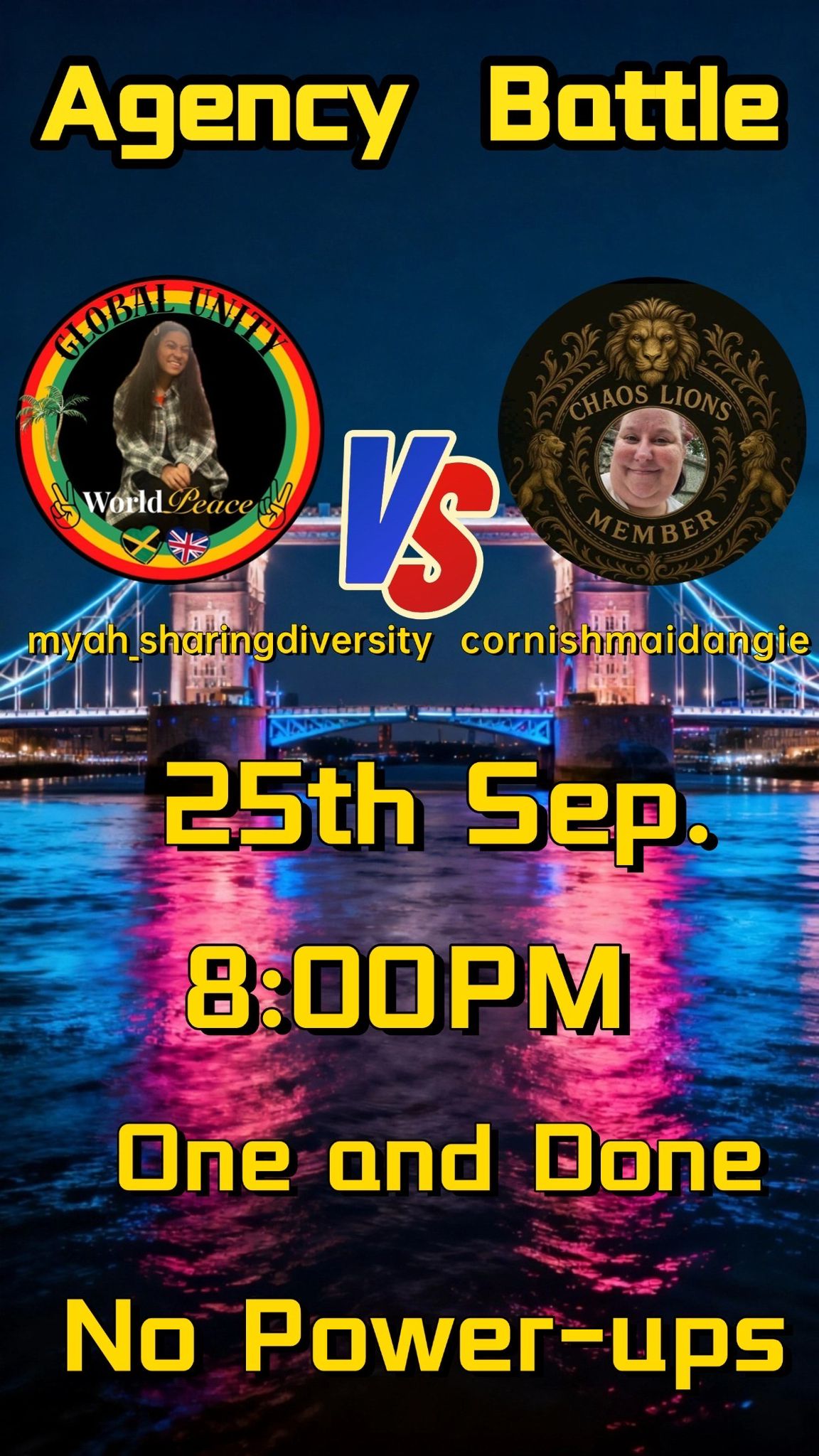
The agency battle is there on the social media platform TikTok please come and support me and touch the screen. If you can and you have TikTok, my name is in the poster
BREAKING: Huntington’s Disease Successfully Treated For First Time
One of the cruellest and most devastating diseases – Huntington’s – has been successfully treated for the first time, say doctors.
The disease runs through families, relentlessly kills brain cells and resembles a combination of dementia, Parkinson’s and motor neurone disease.
An emotional research team became tearful as they described how data shows the disease was slowed by 75% in patients.
It means the decline you would normally expect in one year would take four years after treatment, giving patients decades of “good quality life”, Prof Sarah Tabrizi told BBC News.
The new treatment is a type of gene therapy given during 12 to 18 hours of delicate brain surgery.
The first symptoms of Huntington’s disease tend to appear in your 30s or 40s and is normally fatal within two decades – opening the possibility that earlier treatment could prevent symptoms from ever emerging.
Prof Tabrizi, director of the University College London Huntington’s Disease Centre, described the results as “spectacular”.
“We never in our wildest dreams would have expected a 75% slowing of clinical progression,” she said.
None of the patients who have been treated are being identified, but one was medically retired and has returned to work. Others in the trial are still walking despite being expected to need a wheelchair.
Treatment is likely to be very expensive. However, this is a moment of real hope in a disease that hits people in their prime and devastates families.
Huntington’s runs through Jack May-Davis’ family. He has the faulty gene that causes the disease, as did his dad, Fred, and his grandmother, Joyce.
Jack said it was “really awful and horrible” watching his dad’s inexorable decline.
The first symptoms appeared in Fred’s late 30s, including changes in behaviour and the way he moved. He eventually needed 24/7 palliative care before he died at the age of 54, in 2016.
Jack is 30, a barrister’s clerk, newly engaged to Chloe and has taken part in research at UCL to turn his diagnosis into a positive.
But he’d always known he was destined to share his father’s fate, until today.
Now he says the “absolutely incredible” breakthrough has left him “overwhelmed” and able to look to a future that “seems a little bit brighter, it does allow me to think my life could be that much longer”.
Huntington’s disease is caused by an error in part of our DNA called the huntingtin gene.
This mutation turns a normal protein needed in the brain – called the huntingtin protein – into a killer of neurons.
The goal of the treatment is to reduce levels of this toxic protein permanently, in a single dose.
The therapy uses cutting edge genetic medicine combining gene therapy and gene silencing technologies.
It starts with a safe virus that has been altered to contain a specially designed sequence of DNA.
This is infused deep into the brain using real-time MRI scanning to guide a microcatheter to two brain regions – the caudate nucleus and the putamen. This takes 12 to 18 hours of neurosurgery.
The virus then acts like a microscopic postman – delivering the new piece of DNA inside brain cells, where it becomes active.
This turns the neurons into a factory for making the therapy to avert their own death.
The cells produce a small fragment of genetic material (called microRNA) that is designed to intercept and disable the instructions (called messenger RNA) being sent from the cells’ DNA for building mutant huntingtin.
This results in lower levels of mutant huntingtin in the brain.
Results from the trial – which involved 29 patients – have been released in a statement by the company uniQure, but have not yet been published in full for review by other specialists.
The data showed that three years after surgery there was an average 75% slowing of the disease based on a measure which combines cognition, motor function and the ability to manage in daily life.
The data also shows the treatment is saving brain cells. Levels of neurofilaments in spinal fluid – a clear sign of brain cells dying – should have increased by a third if the disease continued to progress, but was actually lower than at the start of the trial.
“This is the result we’ve been waiting for,” said Prof Ed Wild, consultant neurologist at the National Hospital for Neurology and Neurosurgery at UCLH.
“There was every chance that we would never see a result like this, so to be living in a world where we know this is not only possible, but the actual magnitude of the effect is breathtaking, it’s very difficult to fully encapsulate the emotion.”
He said he was “a bit teary” thinking about the impact it could have on families.
The treatment was considered safe, although some patients did develop inflammation from the virus that caused headaches and confusion that either resolved or needed steroid treatment.
Prof Wild anticipates the therapy “should last for life” because brain cells are not replaced by the body in the same manner as blood, bone and skin are constantly renewed.
Approximately 75,000 people have Huntington’s disease in the UK, US and Europe with hundreds of thousands carrying the mutation meaning they will develop the disease.
UniQure says it will apply for a licence in the US in the first quarter of 2026 with the aim of launching the drug later that year. Conversations with authorities in the UK and Europe will start next year, but the initial focus is on the US.
Dr Walid Abi-Saab, the chief medical officer at uniQure, said he was “incredibly excited” about what the results mean for families, and added that the treatment had “the potential to fundamentally transform” Huntington’s disease.
However, the drug will not be available for everyone due to the highly complex surgery and the anticipated cost.
“It will be expensive for sure,” says Prof Wild.
There isn’t an official price for the drug. Gene therapies are often pricey, but their long-term impact means that can still be affordable. In the UK, the NHS does pay for a £2.6m-per-patient gene therapy for haemophilia B.
Prof Tabrizi says this gene therapy “is the beginning” and will open the gates for therapies that can reach more people.
She paid tribute to the “truly brave” volunteers who took part in the trial, saying she was “overjoyed for the patients and families”.
She is already working with a group of young people who know they have the gene, but don’t yet have symptoms – known as stage zero Huntington’s – and is aiming to do the first prevention trial to see if the disease can be significantly delayed or even stopped completely.
Stoma Swimmer Leading Trek For Kenyan Women
In September 2023, Gill Castle became the first person with a stoma to swim the channel and now she is embarking on a new challenge. She is leading 16 women – most of whom have suffered birth trauma, or have a stoma, or both – up Africa’s highest mountain.
It is a bright, sunny autumn day when we meet in a gravel car park in the Simonside Hills in Northumberland.
Four women, dressed in the pink and blue colours of Mrs Castle’s charity Chameleon Buddies, are throwing rucksacks on to their backs for a training day, ahead of their hike up Kilimanjaro in a fortnight’s time.
“We’ll make our way along the ridge and then up to the top where we should get a fantastic view – we’ve got fantastic weather for it,” Mrs Castle says.
Mrs Castle had a colostomy after she was injured during the birth of her son in 2011.
Since then, she has proved that having a stoma does not have to stop people doing amazing things.
Having posted videos of her swimming with her stoma during the pandemic, she built links with a hospital in Eldoret, in western Kenya, which helps women there with stomas.
These women are often unable to access stoma bags and have limited access to medical help.
So when Mrs Castle became the first woman with a stoma to swim the channel, it was to raise awareness of their struggle and to raise money to help them.
She now travels to the Gynocare Hospital regularly to run support groups as part of her own charity Chameleon Buddies.
Mrs Castle says the decision to climb Kilimanjaro was partly because she “loves a challenge”, but also because she wanted to help other women.
“I wanted to give other people the opportunity to challenge themselves, like I have, and take on the baton and take that up the mountain for all these other women that we are going to support in Kenya.”
Among those training is Julia Robinson, from Allendale, in Northumberland.
Ms Robinson, who turned 40 this year, has been inspired by Mrs Castle’s can-do attitude.
Her son was stillborn in 2015, which she said led to her colitis “taking control” of her and causing her to stay at home due to the pain.
She had two more healthy children, who are now aged five and seven, and in 2021 she was offered a stoma.
“I was unsure at the time but ultimately it’s the best thing I have ever had, it’s given my life back,” Ms Robinson says.
“So this is a challenge to say ‘life’s still got a lot to give’.”
Liz Hinds, from Alnwick, is 54 and has Crohn’s disease.
She had an ileostomy more than two decades ago when she was very ill.
“I’ve never spoke about it in 22 years to anyone, until I met Gill Castle,” Ms Hinds says.
“I’d never shown anyone. My family knew I’d had it, but for me it was a very hidden, quiet thing which I’ve lived with.
“I think at that time I was very young and it wasn’t well known and you didn’t have the support.
“And so for me it always felt a bit of a stigma – for the first time suddenly I’m talking about it openly.”
Ms Hinds is now a trustee of Chameleon Buddies and has visited the hospital in Kenya with Mrs Castle.
She says she feels “humble to suddenly realise how much we have here” and “blessed” to give something back, adding that anyone with a stoma should not let it define them.
Mrs Castle says when they reach the top of the mountain it will be “epic”.
“I know how much it means to everybody to make it to the top and what everyone has gone through in order to get there,” she said.
“So I can’t wait.”
When asked what the Kenyan women thought of it all, Mrs Castle says while they thought it was “crazy”, it was also emotional for them.
“They know what our women on the trek are putting themselves through for them,” she says.
“The temperatures on the summit can down to -15C (5F), so you are talking about people trying to fumble with a stoma bag when it’s really, really cold.
“But I do think everyone is regarding this as sort of a metaphorical mountain for their own trauma.”
Autistic Athlete Angus Leckonby Sets Third Guinness World Record
An athlete has set his third Guinness World Record after becoming the youngest person with an intellectual disability to complete a two mile (3.2km) open water swim.
Angus Leckonby, who is autistic and lives with verbal dyspraxia, added to his tally after taking part in London’s Swim Serpentine open water swimming event on Saturday.
The 23-year-old from Octon in East Yorkshire completed his swim at Hyde Park in 52 minutes and 40 seconds.
His father Matthew Leckonby said it had been “an incredible year” and “never did we imagine Angus would hold three Guinness World Records”.
He said: “The move to triathlon over the past 12 months has been amazing for him.
“We’ve already started looking at events he wants to do next year, and he’s very excited about what the future could hold.”
Angus said: “I am feeling so proud of myself. It was a good swim.
“The hard work is swimming the big distance, but it was exciting. Swimming has helped me a lot, it has been good for me, and it was exciting to get in the water and swim around.”
The latest title follows Angus’s achievements at the TCS London Marathon earlier this year, where he became the fastest and youngest man with an intellectual disability to complete a marathon.
Angus has been using his record-breaking achievements to raise funds for the Special Olympics Great Britain charity which says it uses the power of sport to transform the lives of children and adults with an intellectual disability.
“Angus is a trailblazer and a true inspiration to everyone in the Special Olympics GB family,” said Special Olympics GB chief executive Laura Baxter.
“To achieve three Guinness World Records in one year, across marathon running and open water swimming, shows extraordinary dedication and courage. His achievements prove what is possible when people with intellectual disabilities are given opportunities, support and belief.”
She added the funds raised would help more athletes transform their lives through sport.
BREAKING: Trump Links Tylenol To Autism
President Trump is giving a speech as I type. He is announcing an alleged link between Tylenol and Autism and setting out immediate plans to ban Tylenol during pregnancy except for extreme fever.
I am deeply sceptical about this, readers. Do you have any thoughts? Your comments, as always, are welcome below
Billy Monger Takes Part In Hyde Park Swim Festival
Former racing driver and TV star Billy Monger has taken part in an open water swimming festival with thousands of others in central London.
Monger, whose legs were amputated following a crash at Donington Park in 2017, hailed Swim Serpentine at Hyde Park a “really cool thing to be a part of”.
The 26-year-old from Charlwood, in Surrey – one of 5,000 participants in the event – has set his sights on competing at the Los Angeles Paralympic Games in 2028.
After his swim, he said it was “nice to do an event where there is such a good atmosphere”.
He added: “As much as it is training and it serves a purpose, it is doing something where everyone has a smile on their face and is happy and excited to go out there.”
Broadcaster Ayo Akinwolere also took part in the event which has seen participants take on a variety of distances – half a mile, one mile, two miles or six miles.
Last October, Monger broke an Ironman record at the World Championship in Kona, Hawaii.
In 2021, he raised £3m for Comic Relief with Billy’s Big Challenge, when he walked, cycled and kayaked across England.
Blue Badge Fraud: ‘More Fakes Than Ever Before’
Blue Badges are being faked, doctored, stolen and sold online, fraud investigators are warning.
They are also finding people using badges belonging to family members without them present, and even badges of those who have died – which is illegal.
Paul Slowey, from the Blue Badge Fraud Investigation (BBFI) agency, says he is confiscating “more fake badges than ever before”, and that the Blue Badge scheme is being “thoroughly abused” by those wanting to get free parking that they are not entitled to.
The government says it has strengthened powers by enabling plain clothes officers to inspect Blue Badges and confiscate those being used misused.
The Blue Badge scheme gives disabled people access to specially adapted designated bays.
Badge holders are allowed to park for free in on-street pay-and-display bays and for up to three hours on yellow lines – except where there are loading restrictions.
They are also exempt from paying the London Congestion Charge which costs £15 / day.
Parking can come at a premium, with on-street bays costing as much as £5.90 per hour in some parts of the south-east England.
This makes the badges desirable to thieves and fraudsters, who sell them on.
The BBFI agency, a community interest company run by Mr Slowey from Hampshire, helps local councils check drivers are using Blue Badges correctly.
Fake and stolen badges are being sold online for hundreds of pounds
He says he is confiscating “more fake badges than ever before”, and that the Blue Badge system is being “thoroughly abused”.
Mr Slowey is calling for more enforcement to help check and seize badges, which he hopes will lead to prosecutions.
The use of fake badges, taking up the already limited number of disabled bays, has a knock-on effect.
Steve Swyer, who lives in rural Surrey. has a Blue Badge because he has multiple sclerosis (MS).
He uses a wheelchair so he needs to park somewhere level and with a dropped kerb and which is close to his destination.
He says disabled bays cater to these needs, but often cars are parked in the bays with no Blue Badge displayed.
“It used to make me quite angry but I’ve got so used to it now. It’s just become a part of normal life for me – to pull up and realise you can’t get where you need to go,” Mr Swyer said.
“If I didn’t have the car I’d spend probably 90% of my time indoors, literally not seeing anybody or going anywhere.”
He says he is always fearful someone might break into his car to steal his Blue Badge.
“You’re advertising something that’s very valuable – it makes you a target.”
East Sussex County Council is one of the local authorities now checking for Blue Badge abuse.
Mark Jobling, an investigations officer in the council’s Blue Badge team, says one-in-five badges is being misused.
He says he mostly deals with disabled people’s family members using the badge without the badge holder present, but also has had cases of people using a deceased relative’s badge.
Erika North from Kent works for BBC Children in Need. She also has multiple sclerosis.
Disabled bays near where she lives “are so in demand, often by 10am the few areas that have disabled bays are already full up,” she says.
“My Blue Badge enables me to carry on as I normally should be able to do for as long as possible.
“It’s not some sort of perk”.
Parking in a disabled bay without displaying a valid Blue Badge can result in a fine.
Blue Badge misuse – such as using someone else’s permit – comes with harsher penalties.
It is a classed as fraud and is punishable by an unlimited fine or up to two years in prison.
A new scheme to crack down on Blue Badge misuse was launched in Brighton and Hove in December.
‘Competing priorities’
The charity Disabled Motoring UK is calling for local authorities to be given more resources for enforcement.
The Local Government Association says councils will do what they can, but they have to take into account a number of competing priorities when using their limited resources to take enforcement action against blue badge fraud.
A Department for Transport spokesperson said: “Exploitation of the Blue Badge scheme is completely unacceptable – it is a vital resource helping many people travel with confidence.
It says it is “supporting the police to tackle this issue by working closely with local authorities”.
It says it has strengthened the powers to help local authorities tackle fraud and misuse, and given them the ability to cancel stolen badges.
‘I Created A Successful Business Thanks To A Disability Grant – But Cuts Will Sink It’
Josh Wintersgill has been running a successful business selling products to help wheelchair users travel for six years, but its future hangs in the balance.
He’s been using the government’s Access to Work scheme to help with some of the additional costs of running his company and is afraid that he may lose it after his one-on-one support was slashed by 80%.
The Business Disability Forum (BDF) says businesses and their disabled employees are being “set up to fail,” despite the government’s ambitions to get 80% of disabled people into the workforce.
The Department for Work and Pensions (DWP) said it was reviewing all aspects of the scheme.
Josh needs physical support with most things throughout the day because of his disability. This includes travelling, overnight stays and packing and shipping customer orders. Without this support he says he would not be able to run his company.
The Access to Work grant was providing him with a support worker five days a week, but on reassessment, it was reduced to one day.
He said: “They’re basically with me all the time. They help me in every facet of helping me do my job and without them, I can’t do any of that.”
Josh has appealed the decision and has not had any support since the start of July, when his grant ran out, despite no change in his personal circumstances.
Under the Access to Work scheme, external, companies and employees can apply for grants to help support disabled people in the workplace.
The programme can pay employees and businesses for the extra costs associated with being a disabled worker – things that go beyond what is legally required by employers to provide. It covers a range of things like paying for taxis, assistive technology and British Sign Language interpreters.
Disabled people have told the BBC their awards have been significantly reduced, completely taken away and in some cases left them forced to shut their businesses and turn down job offers.
Josh is currently managing by using his own money to keep the business afloat, but says things are “very tight” and he’ll only be able to do this for the next few months.
“I’m not getting everything done that I used to get done,” he says. “There’s so much to do that it’s just so hard to stay on top of it… it’s just really frustrating.”
Josh says Access to Work helped him get into work and set up his own business, but is fearful of what will happen if that is taken away.
“It’s scary to think that I’m a disabled entrepreneur, helping disabled people and potentially being deprived of doing that.”
“We have a system that’s making it very difficult for you to remain in work,” he adds.
Campaign group Access to Work Collective was set up in response to problems people were facing when applying or reapplying for grants. Its founder, Dr Shani Dhanda said since July they’ve amassed almost 4,000 members.
The group recently sent an open letter to the prime minister asking him to take “urgent” action to fix the “broken” scheme.
‘Affecting the quality of our work’
The lunchtime rush at the Sea Change cafe in Sunderland is under way. The social enterprise employs 25 neurodiverse adults and uses Access to Work to support most of them.
Lexie O’Connor has been at the cafe since it opened in 2019. In between customers she explains how working at the cafe has given her confidence and a sense of pride and now trains others on how to work with neurodiverse and disabled staff.
Lexie’s reapplication took 10 months to come through and when it did the hours for her one-to-one support worker had been greatly reduced, leaving the business to make up the shortfall.
“A lot of employers in that time physically would not be able to manage keeping people like myself employed,” she said.
Lexie says she sees a lot of her colleagues worry about their job prospects because of the problems with Access to Work. The cafe has said it already had to let two members of staff go because support was cut.
“We’re worrying so much about it, it’s affecting the quality of work that we worked so hard to get to in the first place.
“I feel like places like Sea Change are trying their best, they are fighting for people like me.”
‘Set up to fail’
Ministers have widely acknowledged Access to Work as a key driver in getting disabled people in work, but in an interview with the BBC, minister for social security and disability, Sir Stephen Timms, said the problem was the “huge numbers of people wanting it”, adding they had been struggling “to keep up with the demand”.
Spending on the programme increased by 41% in 2023-24 to £257.8m.
In February 2025 about 62,000 applications were waiting to be processed, with 33,000 people awaiting payment, according to the DWP.
A government consultation on Access to Work closed at the end of June with ministers currently reviewing what a new scheme could look like.
Angela Matthews, director of public policy and research at BDF called on the government to make access to work “more efficient and more resourced”.
She told the BBC: “Disabled people are set up to fail and so are employers, because disabled people won’t get what they need to be able to work and employers won’t have the means or the support to provide an inclusive workplace for disabled people.”
Member of BDF, Allianz UK, said despite the size of the insurance business, it had not been immune to the struggles with Access to Work.
Diana Salmon, head of occupational health and safety at the firm, says the biggest issue has been the long waits for awards to be processed. In some cases people are waiting longer than 10 months to start work.
Diana says: “It [the delays] could put people off applying to us… so we do our best but we can’t afford really to pick up the high support costs.”
She referenced a recent example of a new recruit who left the company shortly after starting the role because it took nearly a year to get specialist equipment in place so they could fully carry out the job.
“We want to provide an inclusive environment, but without timely Access to Work funding for colleagues with complex disabilities, they are potentially being excluded,” Diana said.
Diana has herself used Access to Work in a previous job. The money paid for travel costs to visit her team in different locations, which she otherwise wouldn’t have been able to do, but said she sees the value in the programme.
“It would be much more difficult for us to attract, recruit and to retain employees with disabilities [without the scheme],” she said.
In a statement the DWP said: “We inherited an Access to Work scheme that is failing both employees and employers, which is why – as part of our welfare reform – we consulted on how it could be improved.
“We are reviewing all aspects of the scheme and will develop future policy with disabled people and the organisations that represent them.”
It added there had been “no change in Access to Work policy”.
Reform And Danny Kruger- A Match Made In Heaven
With many thanks to Benefits And Work.
Shadow DWP minister Danny Kruger has defected from the Conservative party to join Reform UK, possibly adding to the party’s store of benefits knowledge, but probably not to its supply of compassion for claimants. In fact, Kruger considers that Reform are far too generous when it comes to benefits.
Kruger’s defection comes too late for him to become the Reform spokesperson on welfare benefits, that job having very recently been given to Lee Anderson.
However, Kruger will no doubt be contributing to Reform’s future policy on benefits.
As an Eton, Edinburgh and Oxford educated evangelical Christian son of South African parents – property developer Rayne Kruger and Great British Bake Off judge Prue Leith – Kruger’s formative years were very different to the impoverished start of Lee Anderson.
And as a leader writer for the Telegraph and speech writer for David Cameron, Kruger’s working life was also rather different to that of former coal miner Anderson.
But they will no doubt bond over their shared unhappiness at the number of people receiving PIP for mental health conditions, in particular.
As Anderson assured us earlier this month:
“It’s become fashionable now to have mental health problems, to have your own counsellor, to go for therapy, to have anxiety attacks, to get down to the local benefit centre and sign on for PIP or ESA.”
Kruger aims for a more statistics based assault on claimants, but the sentiment is similar:
“ . . . the incidence of disability in our society is rising by 17% while benefit claims are rising by 34%. For some of the less severe mental health claims, it is far worse. In January 2020, there were 7,000 claims for people with anxiety disorders; this year, there are 31,000. In January 2020, there were 155,000 claims for anxiety and depressive disorders mixed; now there are 365,000.”
And Motability for claimants with mental health conditions is a particular sore point for Kruger:
“One area where the Government do not seem to be looking for savings is in the Motability scheme. It was supposed to help physically disabled people get around, but now we have 100,000 new people a year joining the scheme, many of them not physically disabled at all.”
And again earlier this month:
“I am sorry to hear that there are still no plans to reduce spending on personal independence payments. . . . Given that veto on cuts to PIP, I implore him again to consider the benefits to which PIP is a gateway, such as Motability, disability premiums, council tax discounts and blue badges. Will he promise at least that those entitlements could come down?”
However, Kruger has not always been a fan of Reform’s benefits plans, which he considered far too generous. Just a couple of months ago he was complaining that:
“I do quite like the Reform party and I agree with its Members on lots of things, but there is a problem: they would spend money like drunken sailors. I can see what is happening and I am very worried about it—they will end up in an electoral pact with the Liberal Democrats with a joint ticket to protect welfare spending.”
No doubt, Kruger will do what he can to toughen up Reform’s stance on benefits.
And there is one thing that definitely unites him with the Reform family – a dislike of foreigners claiming benefits, as he explained to DWP minister Stephen Timms when debating the Timms review of PIP:
“I hope that the Minister does not plan to co-produce his plans with foreign nationals—although, knowing Labour lawyers, I expect they will say that the European convention on human rights demands that they do just that. Does he think that subsidising more and more foreign nationals is what the British social security system is for? If not, will he restrict sickness benefits to British nationals only, as we have argued for?”
Reform UK and Danny Kruger seems to be a match made in heaven.
.
‘Every Beach Should Have Accessible Wheelchairs’
A woman has called for all beaches to have accessible wheelchairs after she had an “amazing experience”.
Jo Whitehouse, who took part in triathlons and, in 2011 a Channel swim, hired a beach wheelchair in Ingoldmells, Lincolnshire, this summer.
The 52-year-old said it got her back to her “happy place”, adding: “I did nothing but grin like an idiot, it was amazing to actually be on the beach and get my feet a bit wet.”
A spokesperson for Beach Ability Lincolnshire, which loaned the beach wheelchair to Ms Whitehouse, said it wanted all the county’s beaches to be accessible. The charity is planning to expand its services into two more resorts next year.
It currently has seven wheelchairs to suit different needs and a walker, all of which are free to use at Ingoldmells beach.
Ms Whitehouse, of Huddersfield, West Yorkshire, was diagnosed with multiple sclerosis in 2002.
She was visiting the resort this summer with her husband. She said: “Being in the water, on the beach and by the seaside generally, is one of my happy places.
“Being in the open air and around nature has proven to be beneficial for many people. This is something every council, beach and charity should get behind.”
Sharron Boam, who lives near Mansfield, also hired a beach wheelchair for her 31-year-old son Andrew Boam this summer.
Andrew, who cannot walk or talk, was “laughing his head off” when he was able to get a taste of the sea, his mum said.
“He was very excited because every time we come to Ingoldmells, he’s pointing to the sea and sand but we can’t get him on there.
“As soon as we got on to the sand he was really happy and smiley. It nearly made me cry.”
Mrs Boam added that the beach wheelchairs are important because “otherwise he’d just be sat on the edge watching everyone else”.
Teresa Marie Price, chair of trustees at the charity, said it was working with local councils and parish councils to get permissions to make all Lincolnshire beaches accessible. “We are currently waiting on two resorts’ permissions and hopefully we will be up and running with them in March 2026.”
Mary Powell, tourism manager at Lincolnshire County Council, added that beach accessibility aids were a “great initiative” that had already had fantastic benefits for Ingoldmells visitors with disabilities.
“Anything that improves accessibility on our beaches, meaning families can enjoy the sun and sea together, can only be a good thing,” she said.





Taxi Driver Who Refused To Carry Guide Dogs Fined
A taxi driver who refused to allow two blind customers to get into his vehicle with their guide dogs has been fined £200.
Nozir Rahman, 31, arrived at Chester Railway Station to collect the passengers, but drove away after saying they could not put their dogs in the car.
The passengers had told the firm employing Rahman, KingKabs, that they had assistance dogs when they made the booking, according to Cheshire West and Chester Council.
KingKabs reported Rahman to the local authority’s licensing team, which charged him with an offence under section 170 of the Equality Act.
The council said Rahman, from Chester, gave three different reasons for not carrying the dogs to the complainants, to the taxi company and then to officers of the council when he was interviewed.
He pleaded guilty to the offence at Chester Magistrates’ Court on Wednesday 10 September and was also ordered to pay £300 in prosecution costs and an £80 victim surcharge on top of the fine.
Taxi drivers have a legal obligation to accept assistance dogs unless they have a specific medical exemption certificate, and are made aware of the requirements during their training.
The council said Rahman must now appear before its general licensing sub-committee, which will consider whether he is “fit and proper” to hold a taxi licence.


 Same Difference