Achievements in my 20s, so far part two
Please help me carry on achieving by scanning the QR code with your smart phone and donate me today to enable me to have the support by my side, the tiny due to my conditions, and the barriers that my disability makes me face every day, happy, disability, pride month and be proud of your achievements however, big or small that you’ve managed to achieve for your fulfilment and your achievements matter saying different as much as mine or anybody else’s, I also thought it would just be nice for you to see not only my disability but work I’ve managed to achieve and accomplish from working in a charity shop to attending a Christmas party. These are all achievements that never did I think when I became an adult, I would never be able to do a bit because of help from the specialist care if that continues I can achieve and have been able to achieve more than I ever thought possible. So you never think anything is impossible, because there’s always a way to make the impossible possible Any ideas of raising money would also be helpful such as summer fruits that I could have a stall at et cetera as I want to sell some of the jewellery that I enjoy making any suggestions on where to do that. Obviously I would appreciate it thank you same difference community –https://vm.tiktok.com/ZNd5Sm1Hx/
The Dialogue Express Cafe
On the edge of a 1960s council estate in east London, just a stone’s throw from Stratford station and in the shadow of a concrete tower block, a train carriage has been turned into a café.
The Dialogue Express Café on the Carpenter’s Estate in Newham is run by deaf and hard of hearing staff.
They are being trained by a local social enterprise called Dialogue Hub which aims to increase opportunity and visibility for the deaf community.
Its founder Hakan Elbir told BBC London: “We train them and then we invite Londoners to get in touch and communicate with them in their language.” The language Hakan Elbir is talking about is British Sign Language (BSL).
When they arrive to order their drinks, customers follow a video on a screen at the counter which shows them how to place their order in BSL, which they then copy.
Trainee barista Karissa says it makes deaf people like herself feel less isolated.
She said: “This opportunity is very exciting for me because it connects deaf people with the community.”
Fellow trainee Victor agrees. “It means a lot for me… it’s more than just a job.”
The café is part of what Newham Council calls “inclusive regeneration” – involving residents in the vast redevelopment of the Carpenters Estate.
The £1.4bn masterplan will create more than 2,300 homes on the estate and 50% are due to be affordable social rent homes.
However, the Carpenters Estate has been subject to multiple regeneration plans since 2003. The first residents were moved out in 2004 but no building work has yet taken place and less than half of the existing homes are occupied.
Mayor of Newham Rokhsana Fiaz says Newham Council is committed to the most recent plan and to not regenerate the Carpenters Estate “would be a denigration of my responsibility to deliver homes”.
She pointed out that 73% of residents had voted to support the regeneration masterplan in a 2021 ballot.
Ms Fiaz told BBC London: “We’re doing it in a phase-by-phase approach… and we are confident that across each phase, over the lifetime of delivering on the outline masterplan, we will be able to deliver homes that people can afford.”
Work is due to start next month on renovating one of the estate’s tower blocks.
The whole regeneration project is expected to take 14 years.
Local resident Eileen Barnard who has lived on the estate for 28 years, said: “There’s nothing happening at the moment. We’ve got lots of little projects going on but redevelopment is what we want.”
Eileen’s friend Tahira Ahmad came to try out the Dialogue Express café and is confident local residents will see the planned new homes delivered.
She said: “We really appreciate this because it is bringing all the community together.”
The Dialogue Express Café is open to everyone.
Rose Ayling-Ellis Awarded Honorary Doctorate
Rose Ayling-Ellis has been awarded an honorary doctorate by the University for the Creative Arts (UCA) for her contribution to acting and campaigning for the deaf community.
The multi-award-nominated actress, producer and children’s author said she was “very honoured” to receive the award at London’s Royal Festival Hall.
Ms Ayling-Ellis’ first breakthrough roles were in BBC’s Casualty and EastEnders after graduating from the Surrey-based UCA with an honours degree in fashion design in 2016.
The actress, from Kent, later won Strictly Come Dancing and starred in ITV’s thriller Code of Silence.
Ayling-Ellis, who was born deaf, has used her platform to champion the British Sign Language (BSL) Act and called on the government to increase support for disabled people.
She also appeared in the BBC documentary Old Hands, New Tricks in which she taught a group of retirees BSL.

Gregg Wallace Faces Backlash Over Autism Defence
Former MasterChef host Gregg Wallace is facing criticism from charities and groups working with disabled people after he appeared to link claims of misconduct he is facing to his autism diagnosis.
Several dozen people have come forward to BBC News with allegations about Wallace, including inappropriate sexual comments, touching and groping, which he denies.
In a statement this week, the presenter defended himself and also said he had recently been diagnosed with autism, but that TV bosses had failed to “investigate my disability” or “protect me from what I now realise was a dangerous environment”.
One charity told BBC News that autism is “not a free pass for bad behaviour”, while other groups warned that such remarks risked stigmatising the autistic community.
Wallace has been sacked as MasterChef host, and a report into the accusations is expected to be published shortly. He has said it has cleared him of “the most serious and sensational allegations”.
On Tuesday, Wallace wrote on Instagram: “My neurodiversity, now formally diagnosed as autism, was suspected and discussed by colleagues across countless seasons of MasterChef.
“Yet nothing was done to investigate my disability or protect me from what I now realise was a dangerous environment for over 20 years.”
The Telegraph reported on Thursday that he plans to sue the BBC and the makers of MasterChef for discrimination on the grounds of his autism following his sacking.
And the Times reported friends of Wallace as saying his autism means he can’t wear underwear, and that his condition was partly to blame for his alleged inappropriate behaviour.
Speaking to BBC News, Seema Flower, founder of disabilities consultancy Blind Ambition, said there was “no excuse” for being inappropriate to people in society.
“Where does it leave us if we use autism as excuse to behave in whatever way we like?” she asked.
Her comments were echoed by Emily Banks, founder of neurodiversity training body Enna.
“To be clear: being autistic is never an excuse for misconduct. It doesn’t absolve anyone of responsibility, and it certainly doesn’t mean you can’t tell the difference between right and wrong.”
Dan Harris, who runs the charity Neurodiversity in Business and is himself autistic, said people like him “may miss social cues sometimes”.
“But autism is not a free pass for bad behaviour,” he added.
“Comments like this stigmatise us and add an unfortunate negative focus on our community.”
Last year, the charity Ambitious About Autism dropped Wallace as an ambassador in the wake of the original claims against him.
The comments have also sparked debate online and on radio phone-ins.
On BBC Radio 2’s Jeremy Vine Show, Jessie Hewitson, Director of NeuroUniverse, said people with autism “have been stereotyped since the dawn of time”.
She said she worried that remarks like this risk “forming a connection in peoples’ minds – either that autistic people behave inappropriately in the workplace or that we cannot take personal responsibility”.
But on social media, many people responded positively to Wallace’s post and sent him supportive messages.
And on BBC Radio 5 Live’s Nicky Campbell Show, which dedicated an hour to the topic on Thursday, some callers were sympathetic.
One called Danielle, who is autistic, said people with the condition “can misread situations quite often”.
“I think growing up undiagnosed, you grow up thinking everything you’re doing is wrong because you’re different and you then internalise a lot of that so you’re very oversensitive as well,” she said.
Another caller, Jake, said he thought Wallace should have had support a long time ago.
“You’ve got a man here who’s clearly out of touch, he’s been out of touch for a long time, he’s had nobody putting him back in line, whether that’s an employer, whether that’s a friend, whether that’s anybody, and at the moment that’s what he needs.
“He needs some compassion to get him back where he needs to be and I feel for his mental health.”
Report expected
As the face of BBC One cooking show MasterChef, Wallace, 60, was one of the most high-profile presenters on British television for 20 years.
He stepped aside from the show in November after an initial BBC News investigation, when 13 people accused him of making inappropriate sexual comments.
This week, new claims have come from 50 more people who say they encountered him across a range of shows and settings.
The majority say he made inappropriate sexual comments, while 11 women accuse him of inappropriate sexual behaviour, such as groping and touching.
The inquiry into allegations of misconduct against Wallace has been conducted by an independent law firm on behalf of MasterChef’s production company Banijay.
BBC News has not seen that report, but Wallace said it had found the “most damaging” allegations to be “baseless”.
He also accused the BBC of “peddling baseless and sensationalised gossip masquerading as properly corroborated stories”.
A spokesperson for Wallace has said he denies engaging in behaviour of a sexually harassing nature.
Banijay UK said: “While the external investigation is ongoing, we won’t be commenting on individual allegations. We encourage anyone wishing to raise issues or concerns to contact us in confidence.”
A BBC spokesperson said: “Banijay UK instructed the law firm Lewis Silkin to run an investigation into allegations against Gregg Wallace.
“We are not going to comment until the investigation is complete and the findings are published.”
My FND life video blog part 2
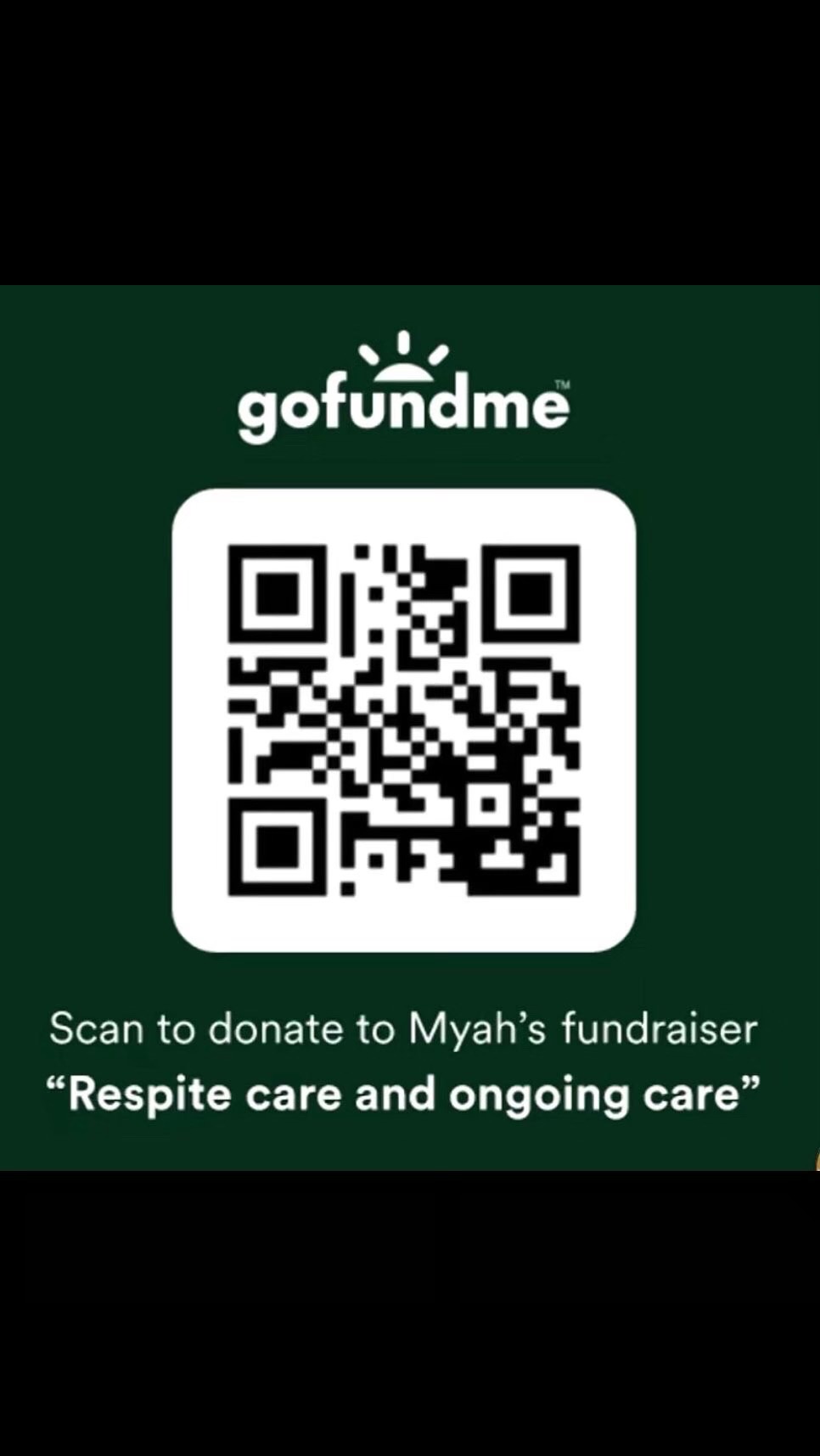
Scared me with your smart phone to donate towards my disability situation and needs to okay
I’ve never seen or followed GB News. Today I know exactly why.
A regular guest of GB News, Lewis Schaffer, recently suggested in an interview on the channel that to reduce the number of disabled people claiming benefits he would “just starve them.” He added “What else can you do? Shoot them?”
The interviewer, Patrick Christys, replied, “Yeah, it’s just not allowed these days.”
Apparently Lewis Schaffer is a comedian. Nothing he has suggested here is the least bit funny. It’s shocking. These ideas belong in 1925, not 2025.
GB News claims to have nothing to apologise for.
If you ask me, Lewis Schaffer and GB News both have a lot to apologise for. But they won’t.
Any human who finds the thought of killing any other human funny doesn’t understand the seriousness of the idea.
The fact that Lewis Schaffer is a comedian scares me. He has fans who look up to him as a celebrity. Fans whose opinions he can influence and maybe even change. He needs to think very carefully about the kinds of opinions he reveals to the public.
What scares me even more is GB News refusing to apologise. Many people follow GB News and respect the organisation. It has even more power than Lewis Schaffer to influence and change the opinions of its audience. It needs to be even more careful about the kinds of opinions it associates itself with.
These comments were made last week. I only hope Ofcom has been informed of them. If I was Ofcom I would be ordering GB News to go permanently off air as soon as possible.
I’ve complained to Ofcom. If you agree that a line has been crossed, please do the same.
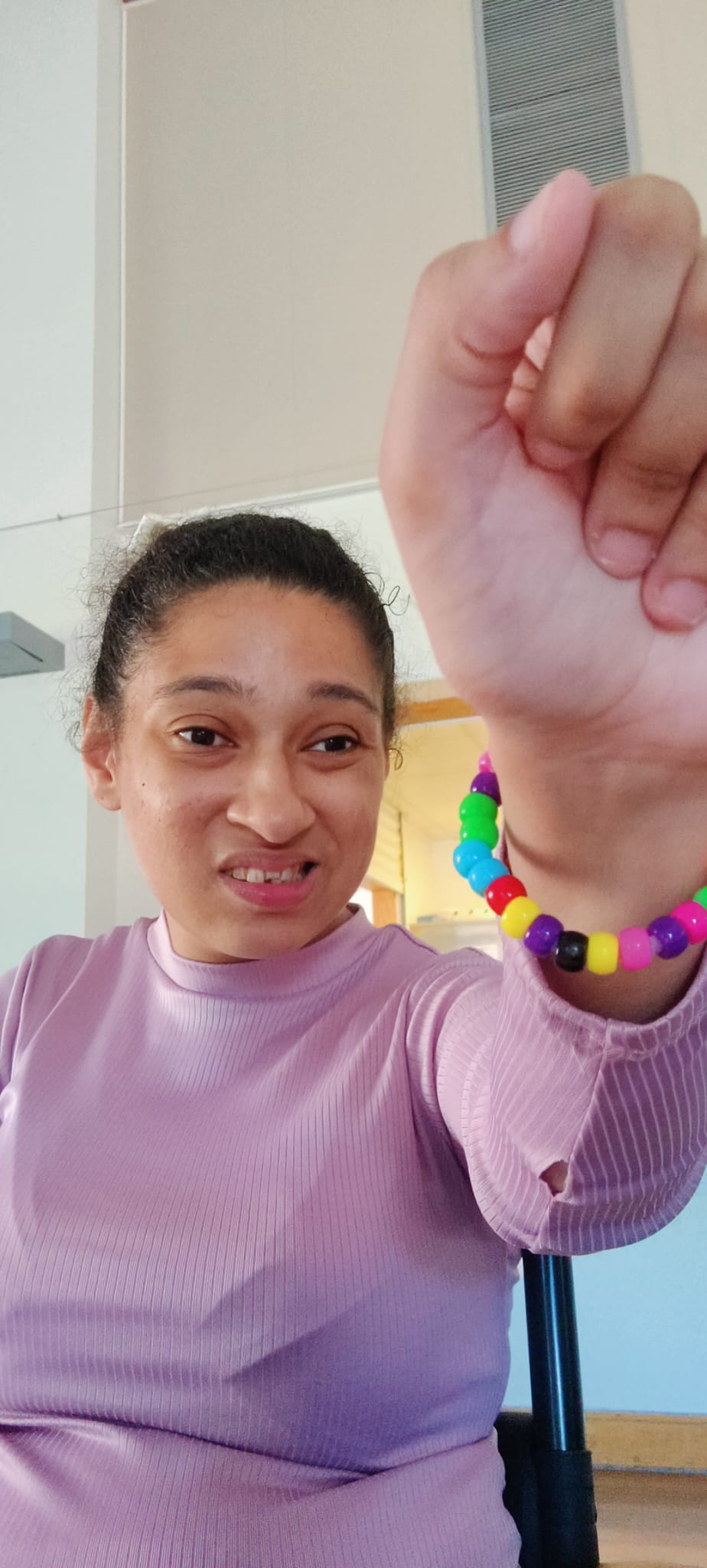
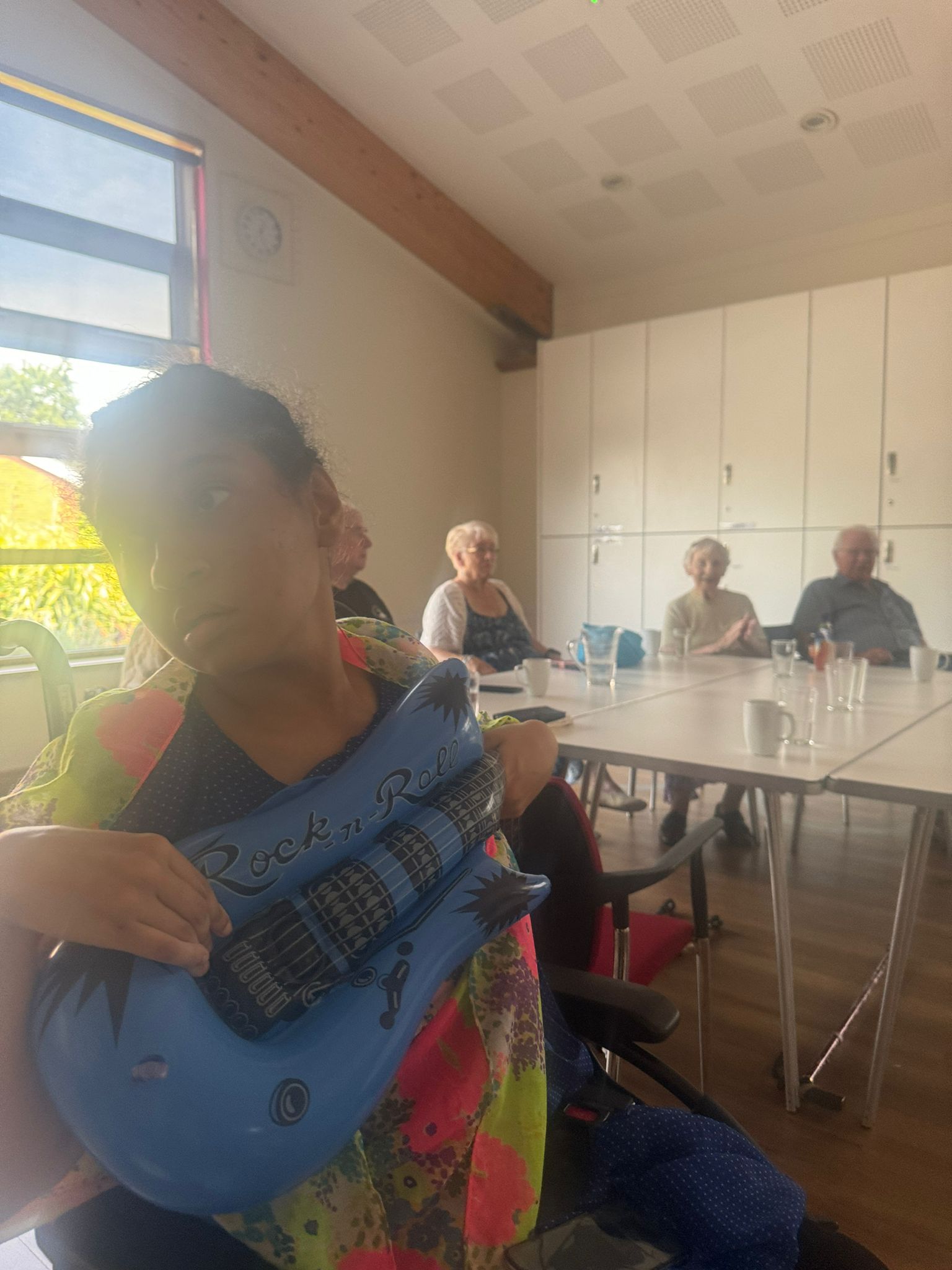
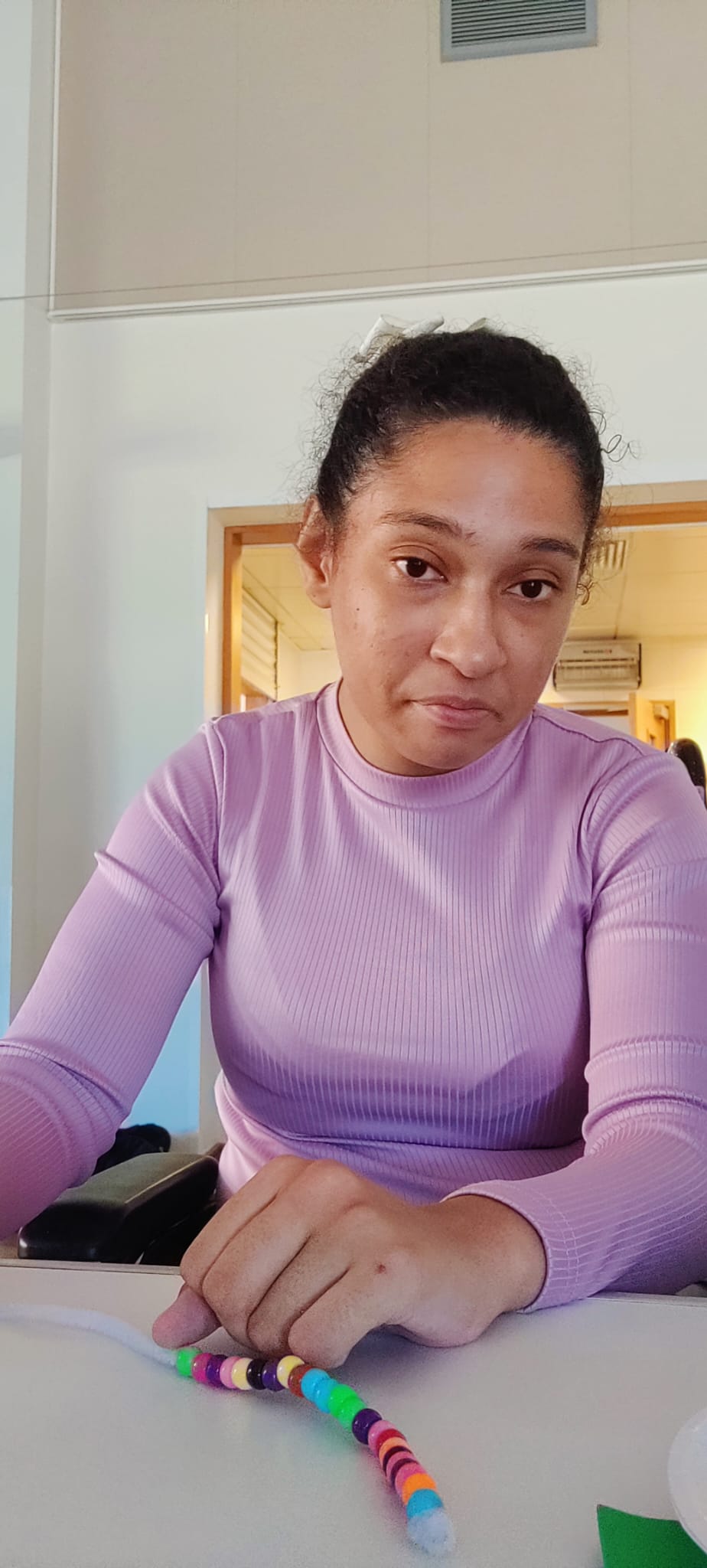
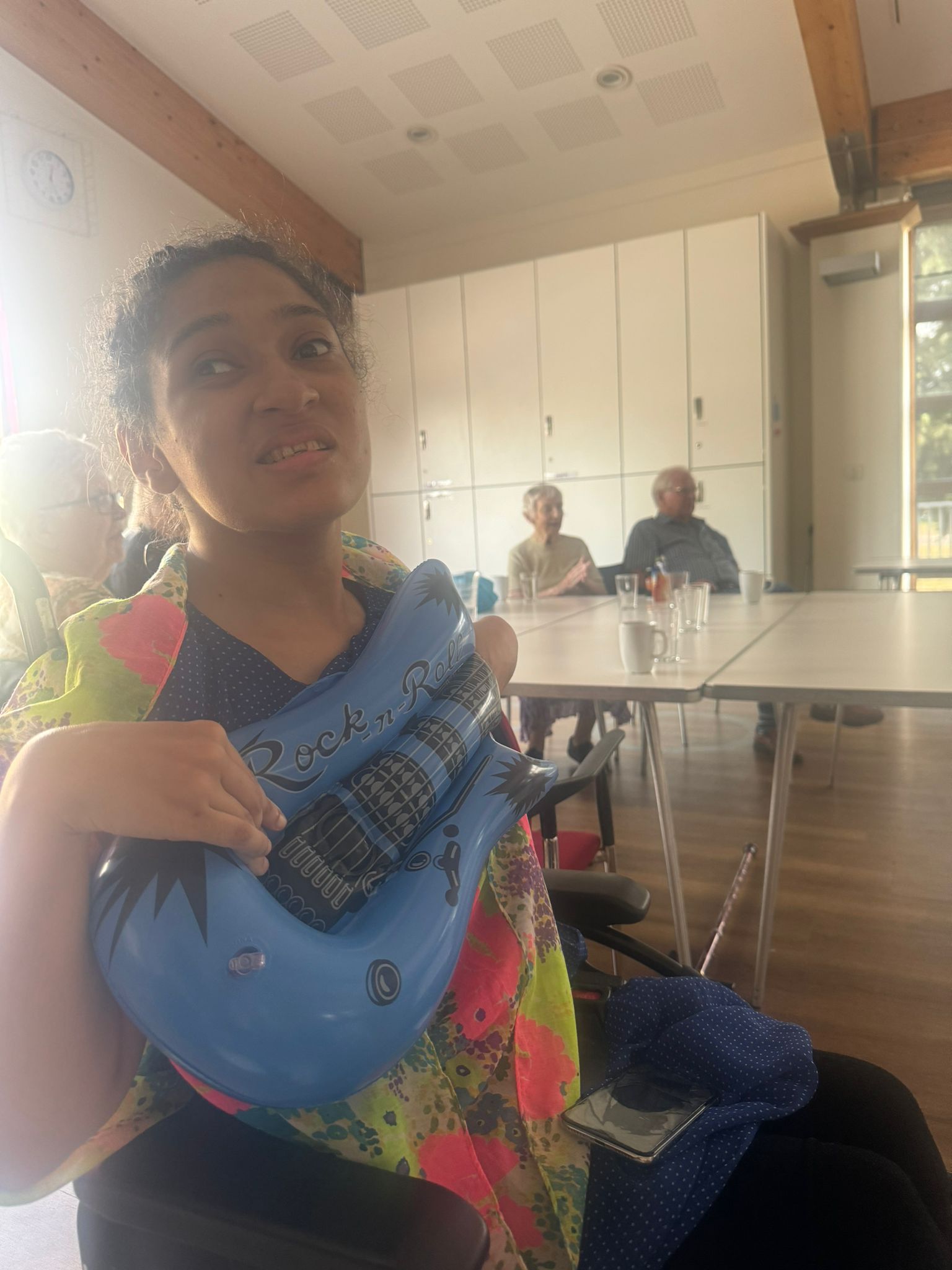

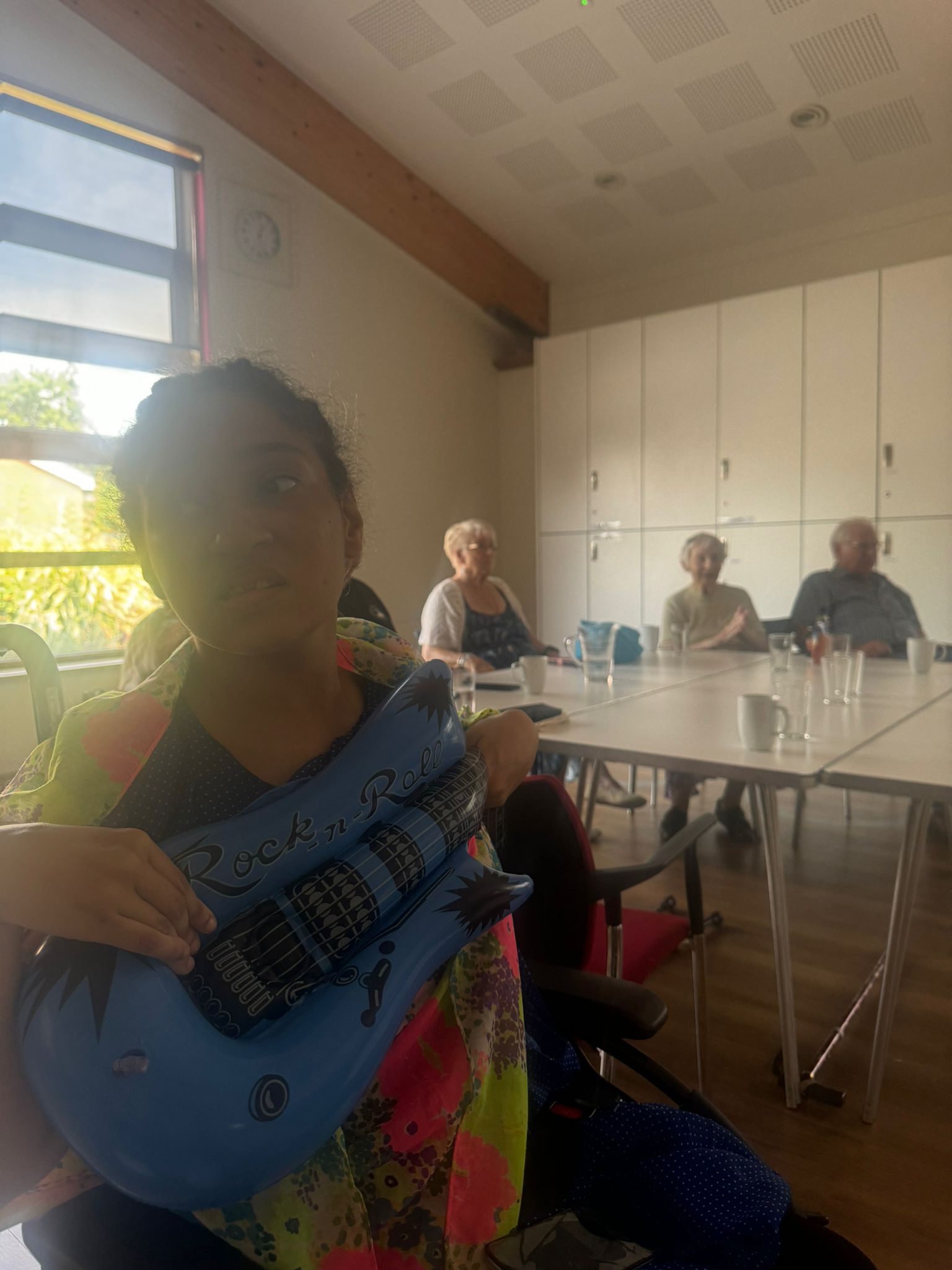
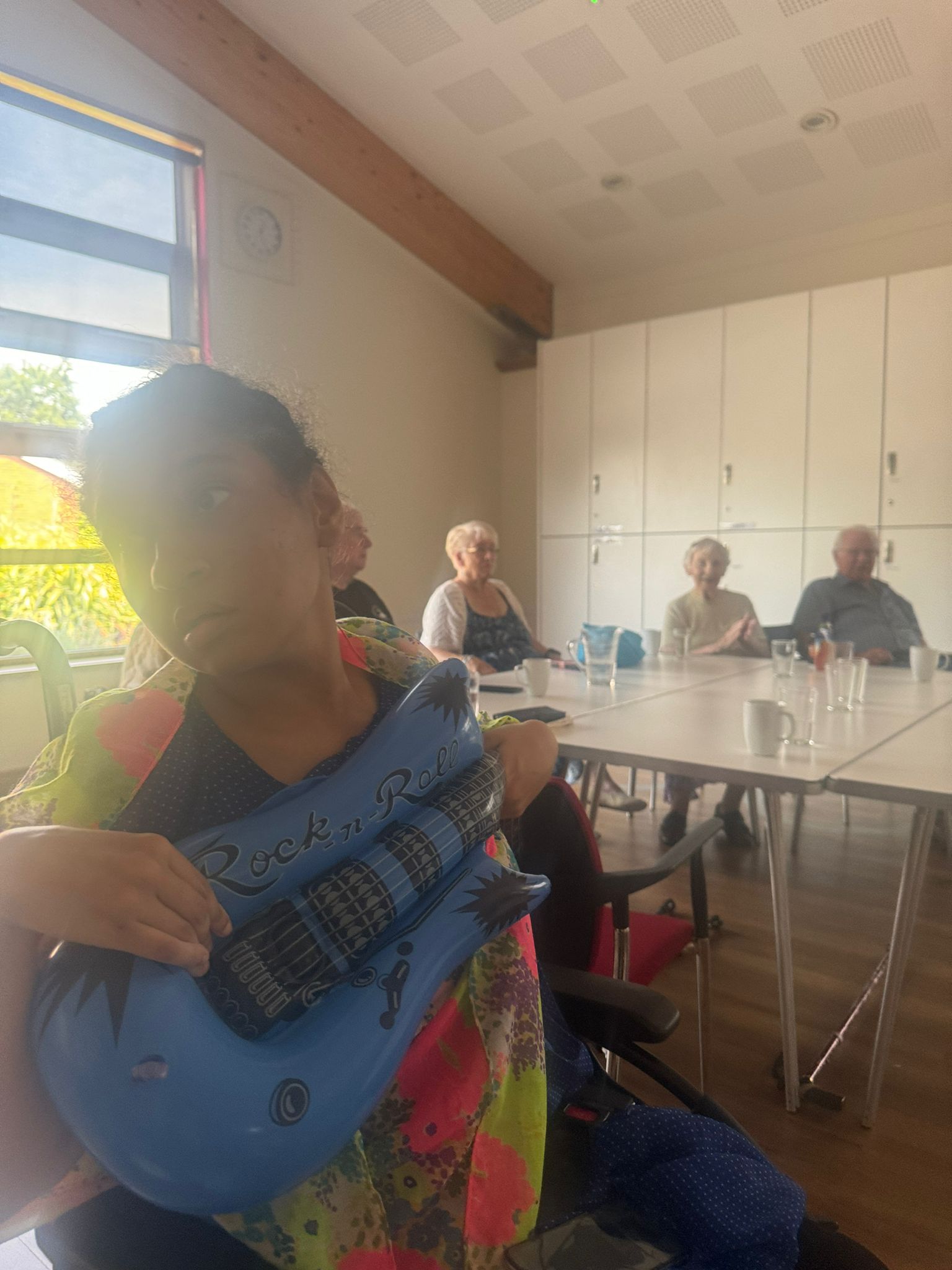
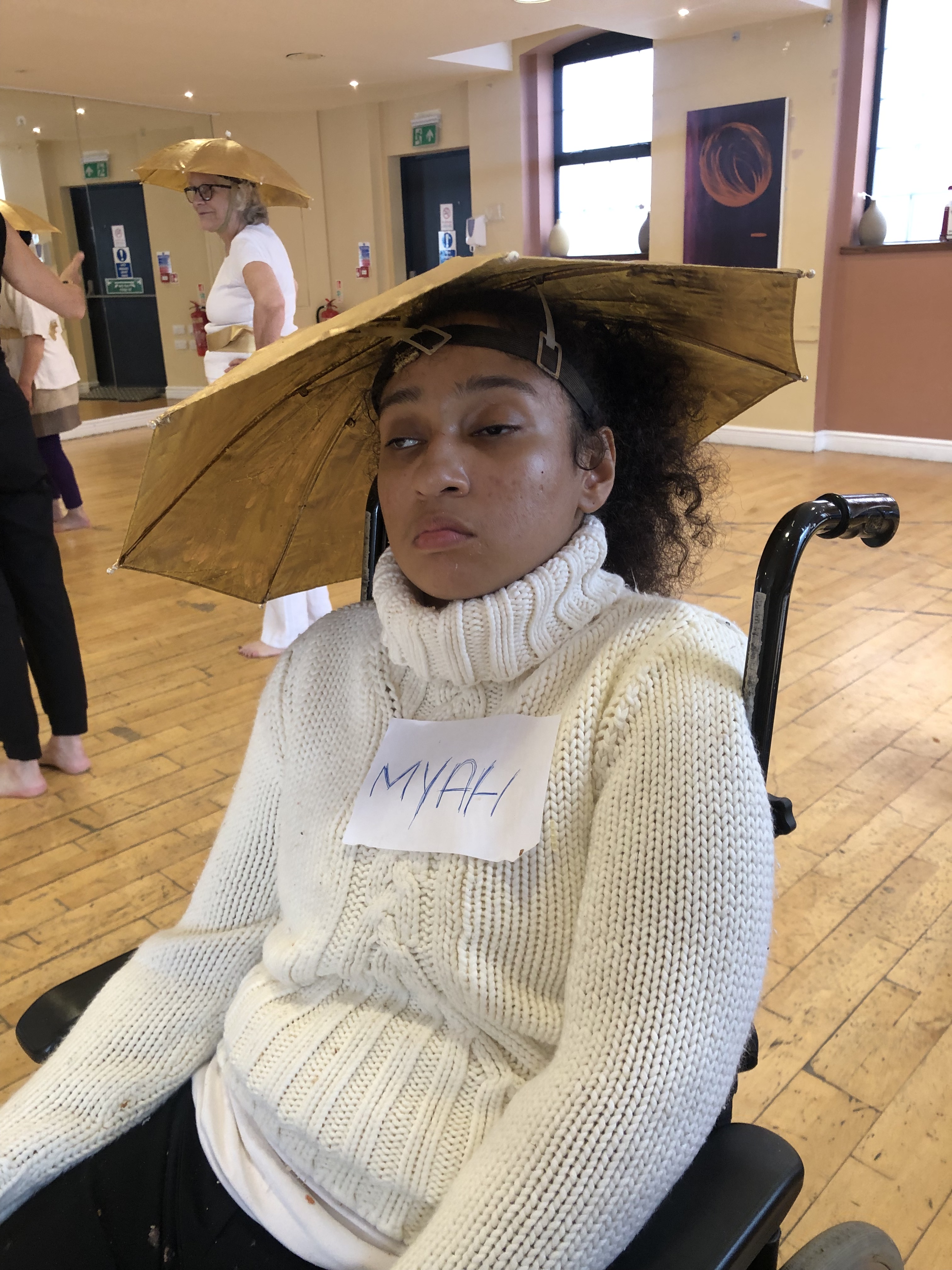
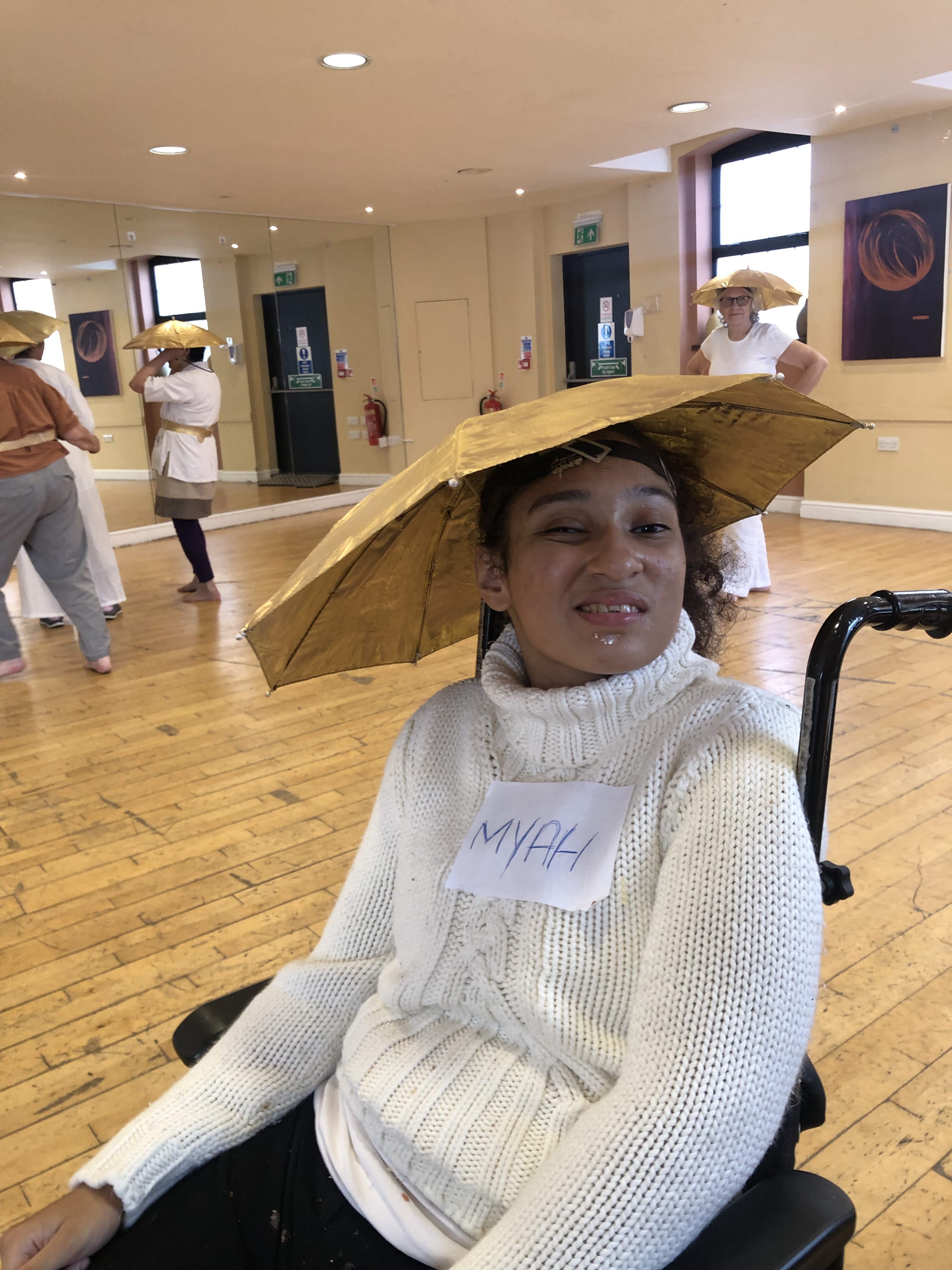
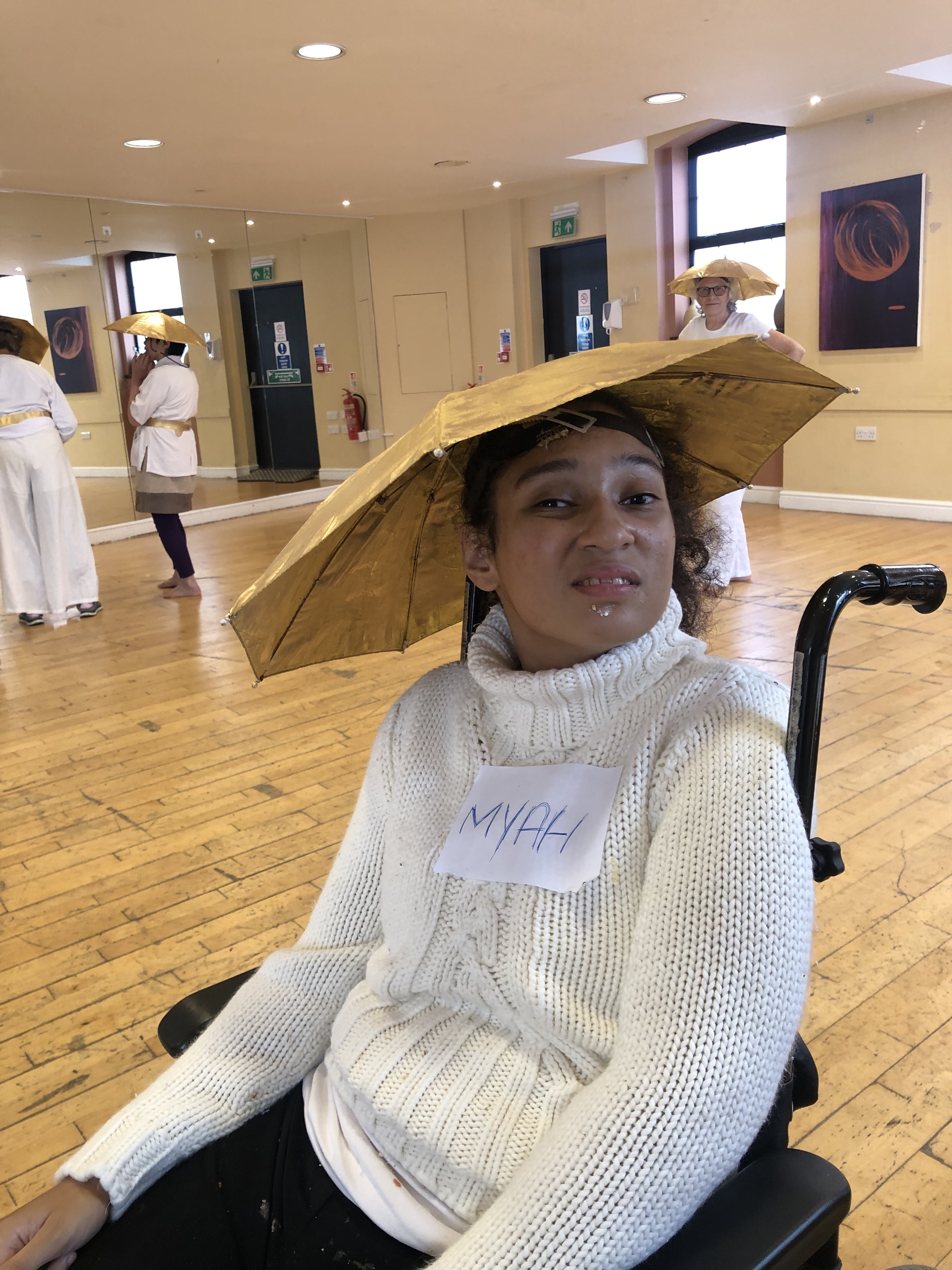
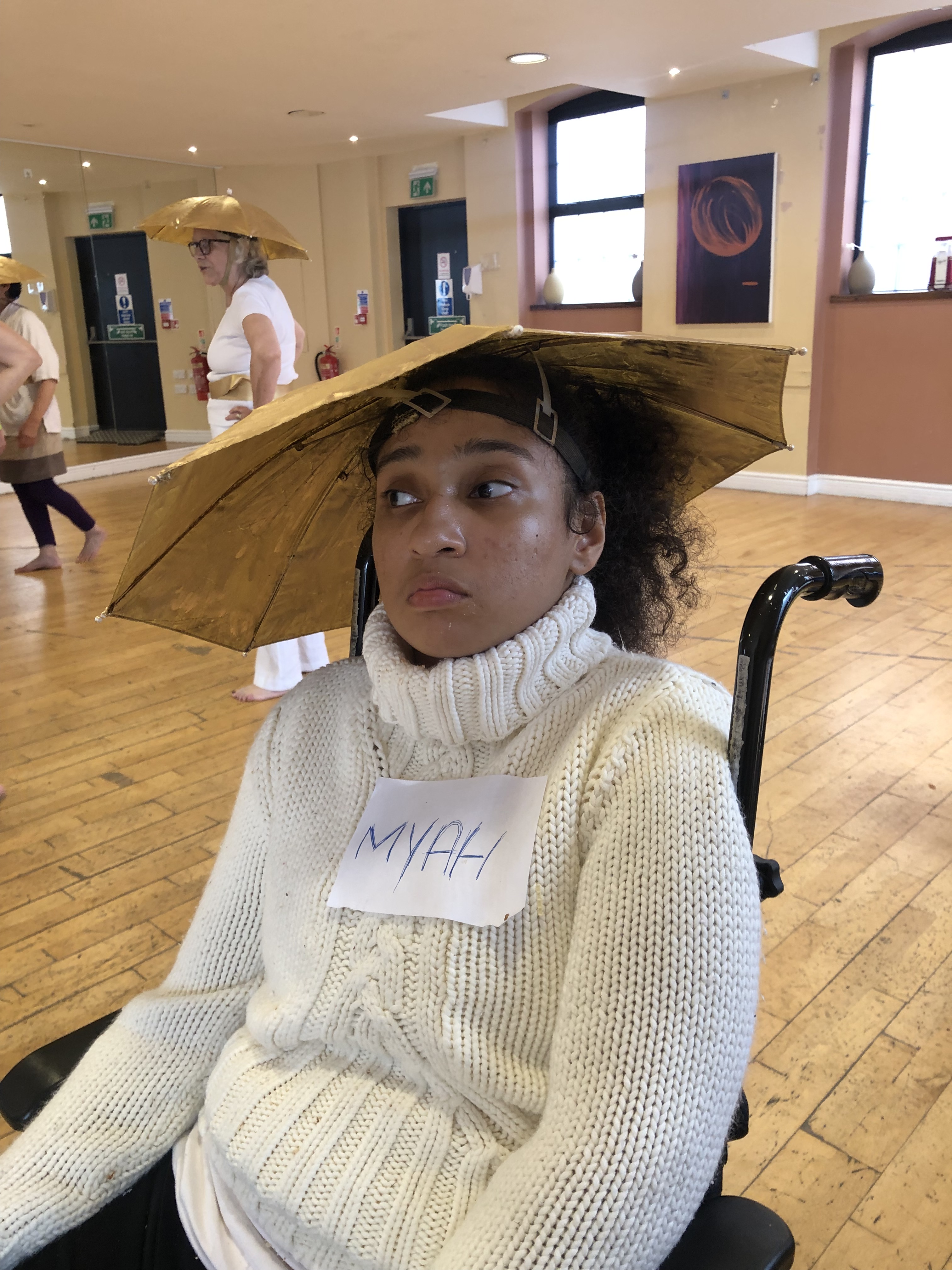
Me, enjoying some of the activities that I have done this month, including a ban, visited my day centre, with blowup instruments for us all to pretend to be musicians
Blind, Fundraising Golfer Refuses To Be Bunkered
A deaf and blind woman who has raised more than £400,000 for charity after she was diagnosed with a rare genetic condition says she hopes her efforts will help to find a cure.
Debbie White, 60, from Warwick, experienced hearing and sight loss throughout her childhood, however it was not until she was 21, when her younger brother discovered he had Usher Syndrome type II, that she was also diagnosed.
Despite it worsening, Ms White has for more than 30 years raised funds for Fight for Sight, a charity supporting research to treat sight loss.
Recently she has also been aiding a charity that helped her rediscover her love for golf despite her condition, swinging her way to raising thousands more.
Ms White said her diagnosis explained what she experienced during her early life.
“It was a Eureka moment,” she explained. “I realised then why I’d knocked glasses of water over, or couldn’t see in a nightclub, or missed that goal in hockey.
“I could understand why it was all happening, I wasn’t just clumsy, there was a reason for it.”
The 60-year-old added that in the 1980s she had made the decision not to have children as she feared they could have experienced similar struggles, however she stressed that science and research were “far better now”.
“It’s by no means a bad thing to have Ushers and you can live a full life, but at the time there was not the research,” she said.
She hoped that along with her brother, she would be part of the “breakthrough” in new treatments for Usher Syndrome.
Ms White’s latest event, a charity golf day held at Stoneleigh Deer Park Golf Club on Wednesday, raised £14,800.
She said 20% of the proceeds were donated to England and Wales Blind Golf, a charity which helped her rediscover her passion for the sport while her eyesight continued to deteriorate.
“I played golf until 2006, but gave up as I lost my competitive edge. I can see to hit a ball, but I can see it’s flight.
“People would say ‘your ball is over there’ but ‘over there’ doesn’t mean anything to me.”
Ms White said playing golf with the support of charity helped her mental health and enabled her to meet lots of new friends.
The 60-year-old added that she needed to “up her fundraising game” now that she had two charities to support.
Sign Language Boards For City’s Playgrounds
Children in Leeds are being encouraged to learn sign language, with educational boards being put up in playgrounds across the city.
The boards showing the British Sign Language (BSL) alphabet and a selection of words have been placed in 10 play areas with the aim of helping youngsters communicate.
The Leeds Deaf Children’s Society, which successfully applied for a grant to fund the boards, said it would help those unable to hear feel “less isolated” among their peers.
Bryony Hughes, from the society, said: “We needed to use the money to improve the communication skills of local deaf children and we thought putting the signs in parks was a way we could reach as many families as possible.”
Ms Hughes explained: “Our son is profoundly deaf and wears cochlear implants.
“When he’s not wearing them, we sign with him and it’s important he has an additional way of communicating with us, and also with other deaf people.”
The sign language boards have been installed in children’s play areas at Pudsey Park, Horsforth Hall Park and Bramley Park, as well as in Yeadon Tarnfield Park and Stanningley Park.
They have also been placed in Springhead Park in Rothwell, Heritage Village, Blands Avenue in Allerton Bywater, Cross Flatts Park and East End Park.
Leeds councillors Helen Hayden and Mohammed Rafique said: “The new signs are a great improvement to the playgrounds, encouraging interaction between all children, deaf and hearing.
“Learning basic BSL is useful to any person, and we’re hoping this will reach many local families and help them learn a new language.”
Terminally Ill Sailor Plans Next Challenge
A terminally ill sailor says she started planning her next challenge just three hours after completing a solo voyage around the British Isles.
Jazz Turner, an engineer from Seaford, East Sussex, arrived back at Brighton Marina on Monday, exactly four weeks after setting off to become the first disabled person ever to complete the feat without support.
She battled through huge waves, heavy winds and even ran aground in Folkestone, Kent, a day before completing her 2,070 mile (3,331km) trip.
Ms Turner, whose next charity challenge is still being kept closely under wraps, said she was “pleased to be home”.
She told BBC Radio Sussex: “There were definitely times where I was screaming at the boat and screaming at the wind and all I wanted was to go back into harbour.
“The sea has an annoying habit of whenever you are ready to give up it brings you back.
She said: “The worst part was being apart from my assistance dog Phoebe.
“Arriving back in Brighton was very overwhelming.
“I knew people had been following my journey, but you don’t really get a sense of that when it’s just you and the boat and the sea.”
She said: “It was a shock to see so many people I didn’t know who had just come along to cheer.”
Ms Turner said of running aground off Kent: “It wasn’t my finest moment.
“Mistakes happen and it’s what you do after which defines you.”
She also got caught in high winds and storms.
“I didn’t enjoy the thunder and lightning as I was about 100 miles offshore.
“All I could think was I had a big metal mast sticking up and I was the tallest thing out there.”
The 26-year-old lives with Ehlers Danlos Syndrome, a debilitating genetic condition that affects connective tissue.
But this has not stopped her from raising £52,000 so far from the challenge for her charity, Sailability, which helps people with disabilities access sailing.
Carolyn Turner, Jazz’s mother, said: “It’s a relief to have her home.
“I’m a sailor as well and I know what the conditions can throw at you.
“We can’t really put into words how proud we are of her and all she has achieved.”
Chris Turner, her father, said: “I’m glad all the modifications I did to her boat held up.”
The record-breaking sailor said: “It was probably easier for me because I was just dealing with what I had to deal with daily.
“My parents didn’t know what was going on.
“I couldn’t have done it without their total, unwavering support.”
Autistic Actress Brings ‘Authenticity’ To New Role
An autistic actress starring in a new musical says she is proud to represent the autism community and educate others on the disability.
Katie Cailean was diagnosed with autism as a teenager and says she is drawing on her own lived experience to bring authenticity to the role.
Katie is making her professional theatre debut in the musical Indigo at the Curve Theatre in Leicester.
She plays Emma, a non-speaking autistic teenager with synaesthesia – a neurological condition found to enhance memory and learning – who has to adjust to a new family set-up.
Originally from Glasgow, Katie graduated from The Italia Conti Academy of Theatre Arts in 2023.
“It feels really nice to represent a group of people who aren’t often represented authentically in the theatre,” she says of her role in Indigo. “It’s really cool.”
Indigo shares the story of three generations of women all from the same family who come together after the grandmother Elaine is diagnosed with Alzheimer’s and moves back into the family home with daughter Beverly and granddaughter Emma.
Katie adds that visitors come to see the show and each have their own personal individual connection to the story.
“Some people say they’re coming into it with one particular angle, maybe with a family member who is dealing with Alzheimer’s, or they might know someone who is autistic or perhaps don’t know about autism.
“People are coming to it and learning something new from this story, which is important.”
Scott Evan Davis wrote the songs in the musical and says he does not want the full focus to be on Katie’s character but how she uses her disability to educate others.
“I want this to be a story about a family, healing, connections – with a character who happens to be autistic.
“Emma is fine who she is, and everybody else just needs to get on the same page. I always say it’s about a story of a girl who has a hard time communicating, but she teaches others how to. That’s the kind of story I wanted to tell.”
The Disability Pride Flag
July Is Disability Pride Month
Terminally Ill Sailor Completes 2,000 Mile Voyage
A terminally ill sailor has completed her solo voyage around the British Isles, becoming the first disabled person ever to complete the feat without any support.
Jazz Turner, an engineer from Seaford, East Sussex, arrived back at Brighton Marina this afternoon at 12.30 BST, exactly four weeks after setting off on 2 June.
On completing the course Ms Turner told BBC South East: “It’s been a hell of a journey and I’m just so grateful for everyone because I couldn’t have done it alone, it may have been a solo trip, but it’s taken a small army.”
She battled through huge waves, heavy winds and even ran aground in Folkestone, Kent, days before completing her 2,070 mile (3,331km) trip this afternoon.
The 26-year-old lives with Ehlers Danlos Syndrome, a debilitating genetic condition that affects connective tissue, but this did not stop her from raising £45,000 for charity.
“The best point was rounding the northern most part of Scotland and just screaming out because I didn’t think I’d get that far, then it was a bit of a scramble to plot the second leg,” she said.
Her parents Chris and Carolyn Turner said they were “incredibly proud but very tired”.
Mr Turner said: “I think the worst part for her was the thunder and lightning, as well as going against the 35 knot (40mph) winds in Scotland and Falmouth.
“She’s pretty much sailed non-stop for four weeks.”
Ms Turner, a full time wheelchair user, completed the voyage without any support, so had to use her anchors and the spring tide to get off the rocks in Folkestone on Sunday morning.
She has been using her 27ft (8m) boat named Fear for the solo, non-stop and unassisted navigation and said the journey was physically exhausting at times, but that it feels “unreal” to have done it.
“With a lot of imagination and a rather large army to help and although you might have to do things differently, but if you can dream it, you really can do it,” she said.
Ms Turner was diagnosed with Ehlers Danlos Syndrome, which causes fainting and seizures, when she was 18.
Due to complications, doctors have told her that her condition is now terminal.
She originally hoped to complete the trip in four to eight weeks. Ms Turner has raised more than £45,000 for her charity Sailability, which helps people with disabilities access sailing.
Deaf Actor Is Huge Talent, Says Adrian Scarborough
Adrian Scarborough has said a deaf actor who appeared alongside him in crime show The Chelsea Detective is “a huge talent” who will “go a long, long way”.
Jude Powell from High Wycombe, Buckinghamshire, made his TV debut playing a deaf and non-verbal barman.
Co-star Scarborough is best known for his role in comedy Gavin and Stacey.
Powell, 21, said Scarborough “made me feel very welcome” and added: “It’s so wonderful that there are many more opportunities for deaf actors now compared with six or more years ago.”
He also paid tribute to deaf actress Rose Ayling-Ellis “for making such a big difference and driving positive change.”
Powell’s acting journey began at Heathlands School for deaf children in St Albans, where he had the opportunity to perform on screen.
He later joined Deafinitely Theatre in London, which “had a huge impact on my acting career by teaching me to express emotion more physically and clearly.”
Acting gave him the chance “to bring a unique layer of expression to the screen and stage through British Sign Language (BSL), which is my first language”, he continued.
In the Chelsea Detective episode Myths and Legends, which centres on a stolen coin, Powell plays the role of Jake Green, who works at a pub and also scours the River Thames for treasure as a mudlark.
He said different BSL interpreters and consultants were on set each day, “to ensure that deaf and hearing actors work together smoothly”.
“Most of the crew have deaf awareness, and one of the main characters is played by deaf actress Sophie Stone,” he said.
“On my first day on set, Adrian spotted me, came over to say hello, and used a bit of sign language, like the sign for ‘nice’.”
Scarborough, who comes from Berkhamsted in Hertfordshire, was full of praise for the new actor.
“He really is an extraordinary guy. Just completely brilliant – it was so wonderful to watch him acting.
“We have another deaf actor in the show, Sophie, and it was really wonderful to have moments of them together.
“He writes and makes film too. I think he’s a huge talent and will go a long, long way.
“You’ll be seeing a lot more of him, for certain.”
Blind Glastonbury Volunteer Says Others Should ‘Try It’
A man has said that being blind has not held him back from volunteering at Glastonbury Festival.
Jacob Hare, 21, from Nottingham, is an Oxfam steward and encourages other people with disabilities and impairments to “definitely give it a go”.
He said that while festivals can be “pretty tricky” at times, due to the different terrains and festival obstacles, he feels incredibly supported by his “Oxfamily”.
Mr Hare, who attends the festival alongside his mum, Louise Potter, said he also could not do it without her and describes her as being his “second pair of eyes”.
He told BBC Radio Somerset that he tries to be as “capable as possible” when he is stewarding but said that there are some things that he “just can’t do”.
Mr Hare has less than 10% of his vision remaining and compares anything that he is still able to see as “blotchy” and as though he is “looking through a colander”.
The 21-year-old student added: “My vision reduces a lot when it’s dark and so getting around is made even harder, but Oxfam has been really good and has made any adjustments that I need.”
Mr Hare and his mum said that they enjoy going to Glastonbury Festival together and hope that more people with disabilities and impairments will give stewarding a go.
Being blind and volunteering at Glastonbury
Nottingham student Jacob, who is blind, volunteers for Oxfam with mum Louise from Kent.
Mr Hare also describes Oxfam as “such a lovely community” and said that there are “always familiar faces around to ask for a hand”.
He added: “If you can do it and want to do it, then definitely give it a go.”
Just six months ago, musician Grace Cope, 19, was unable to perform in front of anyone. Now she is lead vocalist on a song to raise awareness of Tourette’s syndrome and being mentored by a veteran producer who has worked with The Rolling Stones, Led Zeppelin and Duran Duran.
Diagnosed with Tourette’s in 2021, Grace, of Bedford, has campaigned for three years on TikTok to reduce the stigma around her neurological condition.
Yet over the same period, her own tics have worsened, derailing her A-level exams and forcing her to leave her job as a teaching assistant at a special educational needs and disabilities (Send) school.
“I was in a big pit of depression,” she says. “I’d lost all hope and I thought I wasn’t going to ever be able to do anything.
“I was like, ‘What is the point of leaving the house? What is the point of even getting up in the morning to do anything?'”
Writing and playing music, alone in her room, offered Grace some rare moments of solace.
“Music is really the thing that’s saved me from my Tourette’s,” she says.
“When I play, my tics calm down instantly. Music calms me down. I focus on the drumbeat or I work out which chords are being played. Music is a massive escape.”
That is why, despite some hesitancy, she auditioned to sing as part of a national awareness campaign organised by charity Tourettes Action.
She led a choir, all of whom have Tourette’s, on a cover version of Nina Simone’s Don’t Let Me Be Misunderstood, external, recorded at London’s Olympic Studios.
The song was described by the charity’s chief executive Emma McNally as a “heartfelt plea for understanding and acceptance” from the Tourette’s community.
According to Tourettes Action, the condition affects one in 100 school-aged children and more than 300,000 people in the UK.
“Meeting people with Tourette’s, being together in that space, it was so nice,” says Grace.
“It’s like taking a big deep breath and letting it all go when you’re with other people with the condition.”
During the recording, Grace met veteran music producer Chris Kimsey.
Over six decades, he has worked with some of the music industry’s biggest names, including Marillion, Killing Joke, INXS, Jimmy Cliff and Peter Frampton, as well as the Stones, Led Zeppelin and Duran Duran.
After hearing Grace’s own music, he vowed to help her.
“Immediately, I went ‘Oh my God, this woman’s got so much talent,'” he says, recalling their meeting.
“Not only does she have a beautiful voice but her lyrics were very good, her sense of melody was excellent but, above that, the production of what she did – her use of reverb and balance and instruments – was quite incredible.”
Kimsey is now mentoring Grace as she writes and records her own music.
“What I can do is I can help introduce her to some other musicians; add an instrument or a string arrangement or a bass guitar,” he says.
“She’s got a very special talent and she needs help… it’s a very exciting cause to be on board with.”
Grace released her first single Dead or Alive in March and it has since been streamed in more than 50 countries.
She’s also been playing at open-mic nights across Bedford, attempting to conquer her fear of performing in public.
She is writing and recording new music and plans to release an EP in the coming months.
Grace says her dream is to tour, performing her music to live audiences and continuing to raise awareness about the condition she says no longer defines her.
“I always saw Tourette’s as me; like I was just Tourette’s, and that’s all I was,” she says.
“I don’t feel like that any more. I can now say I’m a singer-songwriter. I produce my own music and I can put it out to the world.”
A woman who made history as the first model with Down’s syndrome to feature on the front cover of Vogue said she was honoured to be making her acting debut.
Ellie Goldstein, from Essex, plays Nancy in the new series of Malory Towers on CBBC.
Doctors said the 23-year old would never be able to walk or talk when she was born.
“I am so honoured to have been a part of this fantastic series. I’m beyond excited to see my episodes and share them with everyone,” she said.
Now in its sixth season, Malory Towers follows the adventures of a group of girls at a boarding school in post-war Britain.
“I was nervous to go on set but when I saw the school house, it wasn’t a dream, it was really true and I loved filming every scene at Malory Towers in school house,” she said.
“Down’s syndrome means I’ve got an extra chromosome – lucky me. Diversity should be out there and people should not be hidden in boxes. They need to be seen.”
Patricia Hidalgo, director Children and Education at the BBC said it had “long been a leader in championing diversity and representation, both on screen and behind the scenes”.
“When children see themselves and their peers represented, it fosters empathy, belonging and a deeper understanding of others,” she said.
The first episode featuring Ellie, which is episode eight in the series, is available on BBC iPlayer on 30 June and airs on CBBC on 1 July.
Youngest MBE Winner Takes On ‘Poo Plod’
The youngest person to receive an MBE has dressed as a toilet for a five-mile “poo plod” to raise money for accessible facilities at her school.
Carmela Chillory-Watson, from Dorset, is walking and wheeling from her school in Branksome to Bournemouth Pier, and back, accompanied by her mother, Lucy, who is dressed as an inflatable emoji poo.
She hopes to raise at least £9,000 for washing and drying facilities at the school, which will allow disabled students to go to the toilet independently.
The 11-year-old, who has LMNA congenital muscular dystrophy – a progressive muscle-wasting condition, said it would enable them to “feel more independent”.
Carmela, originally from Wiltshire, was diagnosed with the condition in 2017, aged three, and has since taken on 25 fundraising and awareness campaigns, often dressed in superhero costumes.
Reflecting on her MBE in the King’s Birthday honours, she said: “I can’t find the words, honestly, I was thrilled.
“I love helping charities, I love fundraising for them and I will just do anything to help and give everyone hope for the future and for the charities.”
Carmela said she hoped her latest challenge would draw attention to a cause that meant a lot to her personally, and expressed the importance of remote controlled toilet facilities that allowed people with physical disabilities to use toilets on their own.
“Other people, and myself, like to be independent in the toilet,” she said, adding it would “give them a sense of dignity”.
Teachers, pupils and parents from the school, all dressed in various toilet-themed outfits, set off on the walk with Carmela and her mother at 09:00 BST.
The CandleWala
Same Difference Sat Down with The Candlewala — This Is Their Story
At first glance, The Candlewala might seem like a charming small business selling scented candles inspired by Indian nostalgia. But behind every flame is a powerful story of family, identity, and purpose.
We sat down with Sharon Sondh, a seasoned Marketing Director with a 20-year career under her belt, and her brother Hari — the heart and hands behind The Candlewala — to learn how a quiet idea turned into a movement of meaning.
“I Started It for My Brother”
Sharon has worked at the highest levels of global marketing, but nothing means more to her than The Candlewala — a brand she built from scratch for Hari.
Hari has cerebral palsy and attended a special needs school in Scotland. Later, he earned a BSc in IT, graduating at 30 — an incredible milestone. But after six years of applying for jobs and receiving no offers, his confidence, like so many in his position, began to wear thin.
That’s when Sharon stepped in. Using her skills in branding and marketing, she created The Candlewala — a business that gives Hari meaningful work, a daily purpose, and the pride of knowing he’s building something truly special.
What Heritage Means to Us
The Candlewala isn’t just about wax and wicks. It’s about memories — bottled in glass, lit with love.
“Our candles are rooted in nostalgia,” Sharon explains. “They’re shaped by the smells, sounds and stories of home — the scent of garam chai after school, the fizz of nimbu pani on a sticky summer afternoon, the soft hug of your Nani’s dupatta.”
For many in the South Asian diaspora, identity is layered — British, Asian, somewhere in-between. The Candlewala helps hold those threads together. Each scent is a nod to a moment, a feeling, a place — captured in colour and flame.
They don’t follow trends. Their candles are memory-led, identity-led. Designed for homes that smell of both toast and tadka — and celebrate that beautiful mix.
The Inspiration Behind the Business
The name “Candlewala” means “the one who brings candles” — and for them, that’s Hari. Every candle is packed by Hari himself from their family home in Scotland, with help from Mum and Dad.
The idea came from their mother, who always lit a candle while cooking to help mask the smell of masala. That small ritual sparked something bigger: candles that not only freshen the air, but also evoke home, culture, and belonging.
And every order supports something deeper. For each candle sold, 50p is donated to Cerebral Palsy Scotland, helping others like Hari be seen, supported, and given a fair shot.
The Challenges — And the Quiet Power of Showing Up
Hari’s journey is one of quiet resilience. At school, expectations were low — but Hari never stopped showing up. He learned to swim, played five-a-side football, joined the Boys’ Brigade. He earned his degree. He sent out his CV.
And for six years, he didn’t get a job offer.
That kind of rejection would wear anyone down. But Hari never stopped believing he had something to offer. And now, through The Candlewala, he does — every single day.
“We need to stop underestimating people with disabilities,” Sharon says. “Hari is not the exception. He’s the proof. It’s time we made room.”
Favourite Scent? Easy — Garam Chai
When asked which candle means the most, Sharon doesn’t hesitate: Garam Chai.
“It takes me straight back to my childhood, walking in from school to the smell of chai simmering on the stove. That memory lives in this candle.”
A new scent is also on the way — one that celebrates their East African roots. Jambo Africafe is a deep roast coffee blend inspired by afternoons on a veranda in Nairobi, where time slowed and life felt full.
Advice for Young Creators? Just Start.
“If I could give one piece of advice to anyone starting a business, it would be: just start,” says Sharon. “Start today. Start at 5pm. Start with what you have. Don’t wait for perfect — it doesn’t exist.”
The Candlewala is proof of that. It began with a spark, a purpose, and the belief that scent could carry stories. Today, it’s a thriving business, a family mission, and a reminder that home isn’t always a place — sometimes, it’s something you light.
You can get 10% off your order at http://www.thecandlewala.com with code SAMEDIFFERENCE10
part 1 of the canal boat cruise blog
One of the canal boat cruise blog part 2 to follow tomorrow where I talk about what we doing on the canal Barry and walk that you can also book as they had broke you used for different things including young carers it away and many more other supporting jobs for charities to support the most turn reporting to the sciatic in a caring role will be in Jan or even
Lantern making food this year with my wakey wheels I think mine is made better than last year
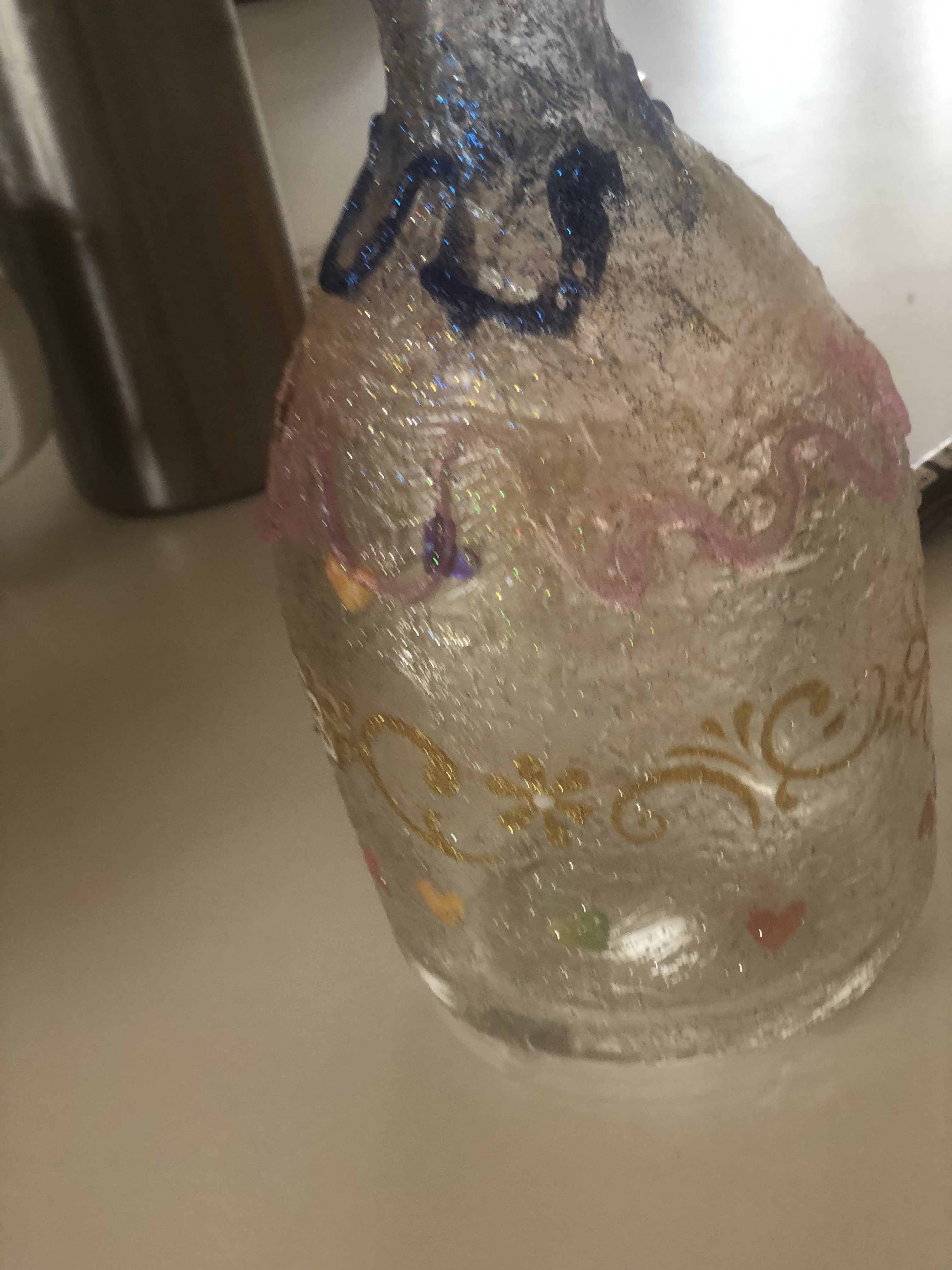
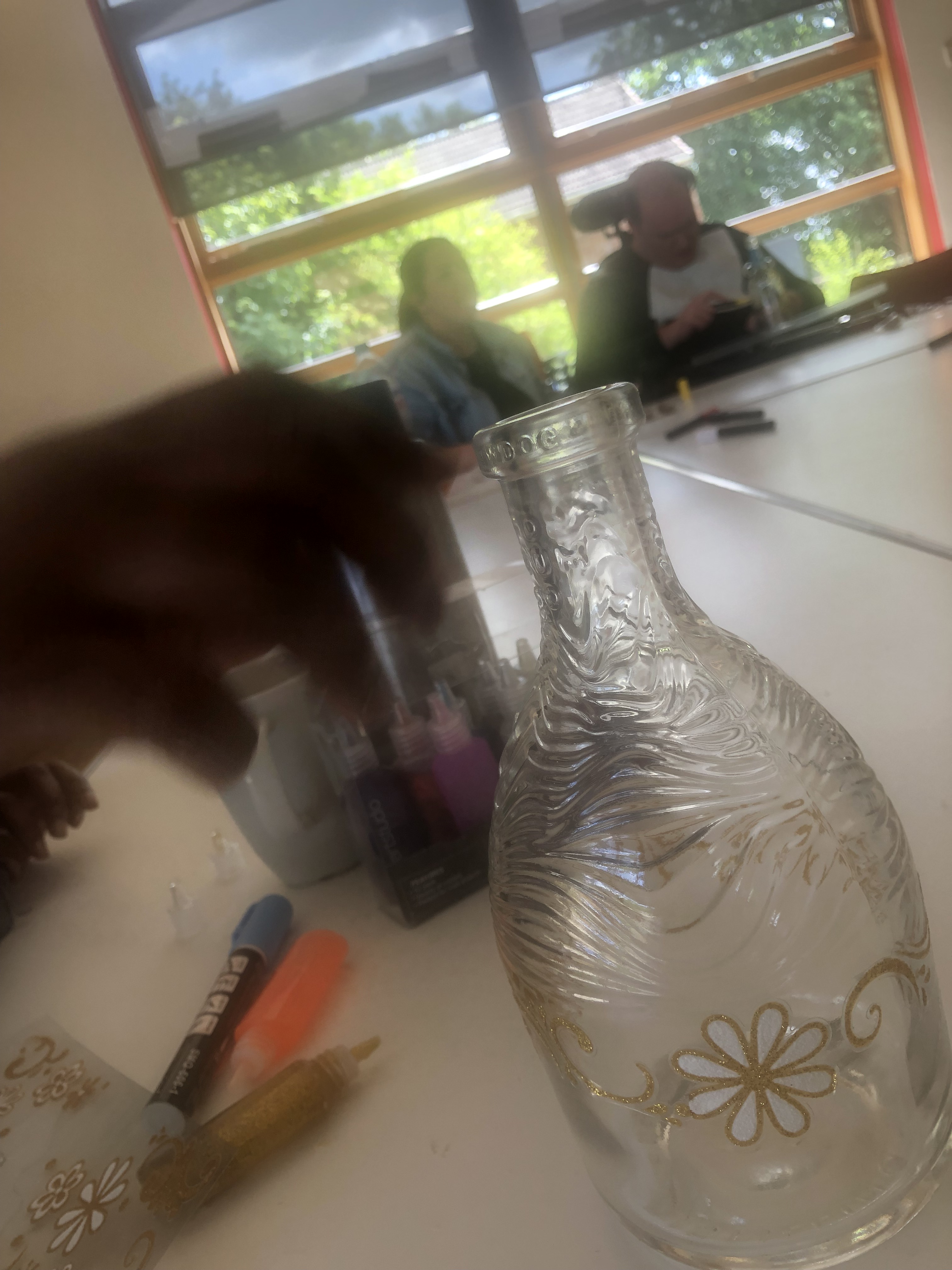
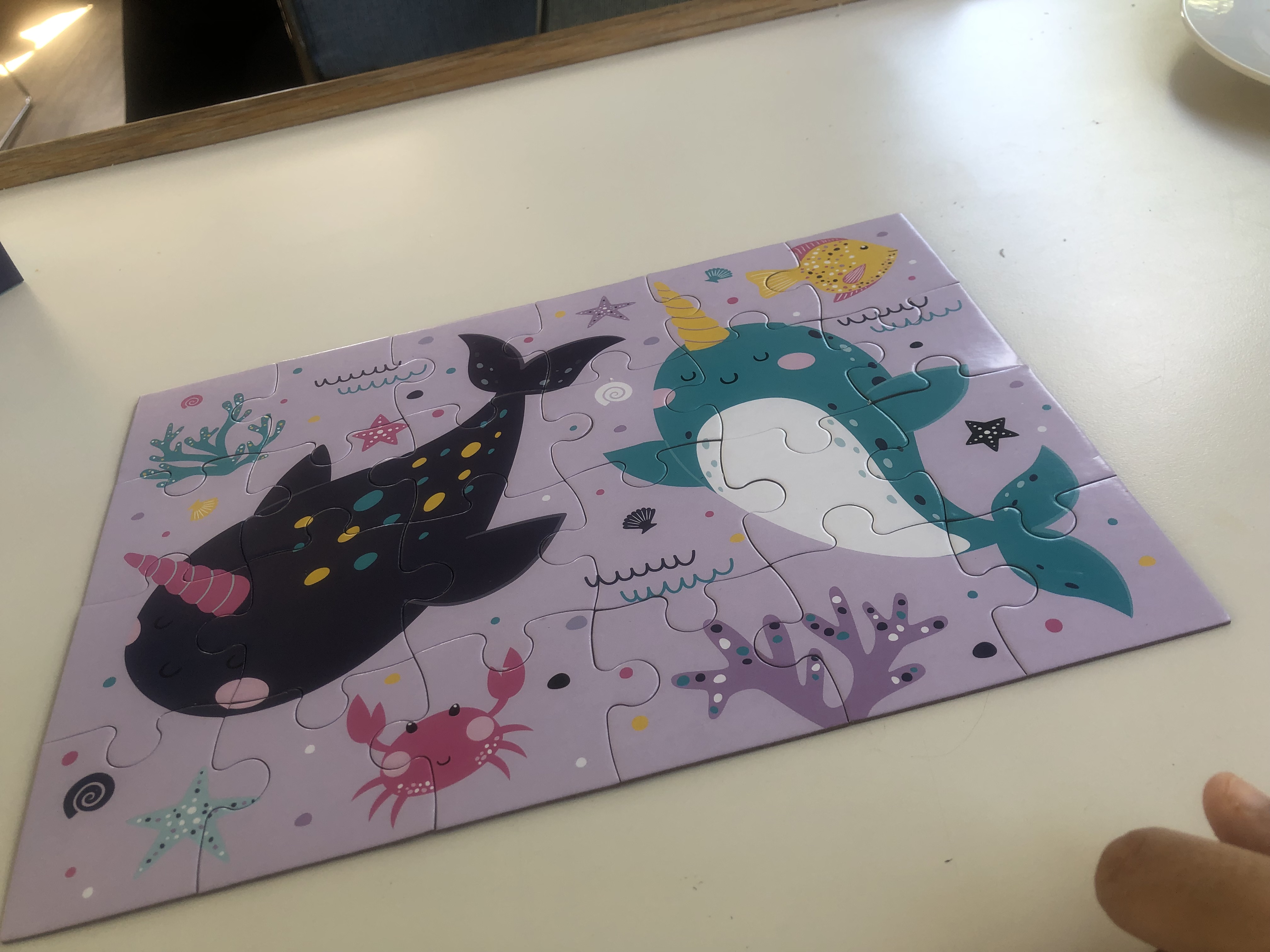
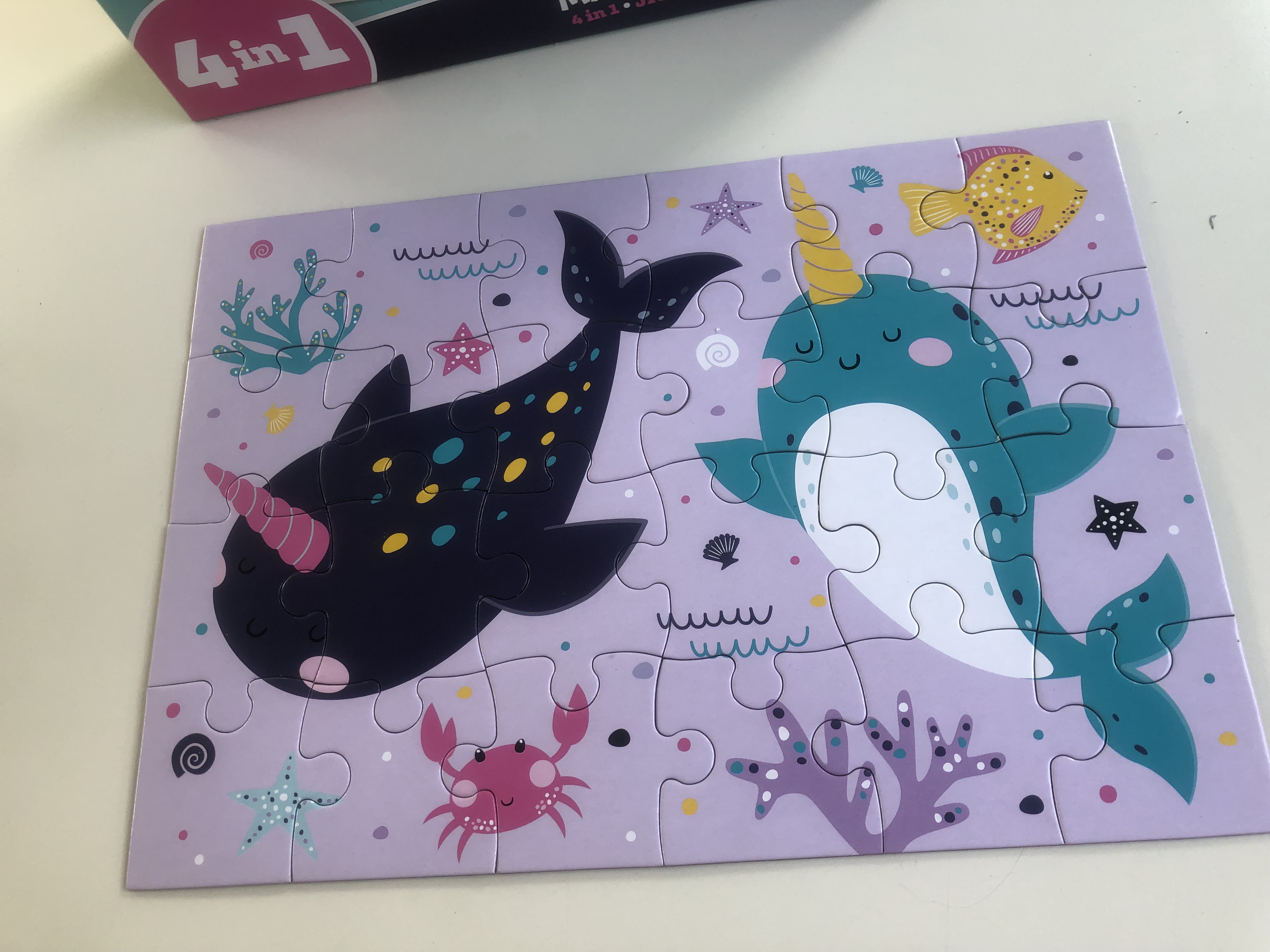
‘I Want To Inspire Other Amputees To Chase Dreams’
Double amputee Daisy-May Demetre is determined to not let anything stop her from achieving her dreams.
At the age of 14, Daisy-May, from Birmingham, has carved out a successful modelling career, appearing in fashion weeks across the world and adverts for huge brands like Nike, TK Maxx and Primark.
As she prepares to model during Birmingham Fashion Week in September, she spoke to the BBC, encouraging amputees to be confident and go for “whatever they want” in life.
“Your disabilities shouldn’t define you, you can believe in anything,” she said.
The model was 18 months old when she had her legs amputated after being born with Fibular Hemimelia, a condition where part or all of the fibula bone in the leg is missing.
She said that strutting on a catwalk was a statement to represent the “strength, beauty and power of being different”.
“I don’t need perfect legs to walk a powerful path. The only thing I need is courage and I’ve got plenty of that,” she added.
Her dad Alex said that finding out about Daisy-May’s condition was a “really tough time” where he turned to alcohol and gambling, and lost around £70,000.
However, when Daisy-May was seven he spotted a disabled modelling agency on TV and was motivated to turn his life around and help her reach her dreams.
“She inspired me to become better and get over the adversities. Her disability became my ability and I promised her that she would model around the world,” he said.
“I tried everything, gambling is an awful addiction and it was really tough to get out of but after that promise I stopped there and then.”
In May, she took part in a 5km run in Greece named Spetsathlon to inspire inclusivity, which she completed in two hours with help from her dad.
She said that although the race was “really hard” and caused her to get blisters, she was glad to have completed it.
“I was proud that I actually made it through the finish line, ” she said.
Her dad described Daisy-May as a “gift to be treasured” and said the main objective of the race was to inspire inclusivity in Greece.
“I want to inspire other amputees to do whatever they want, their disabilities shouldn’t define them,” Daisy-May said.
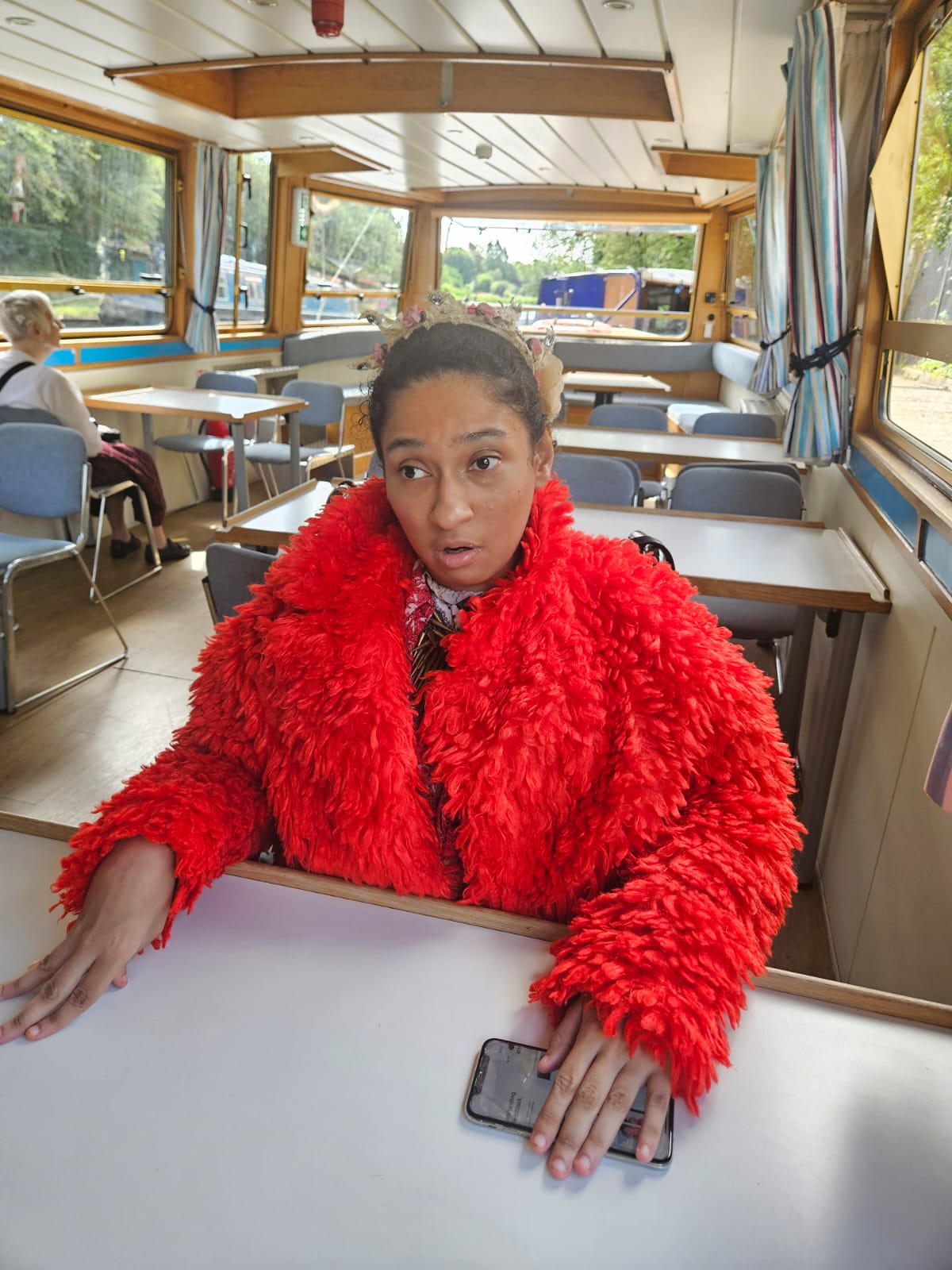
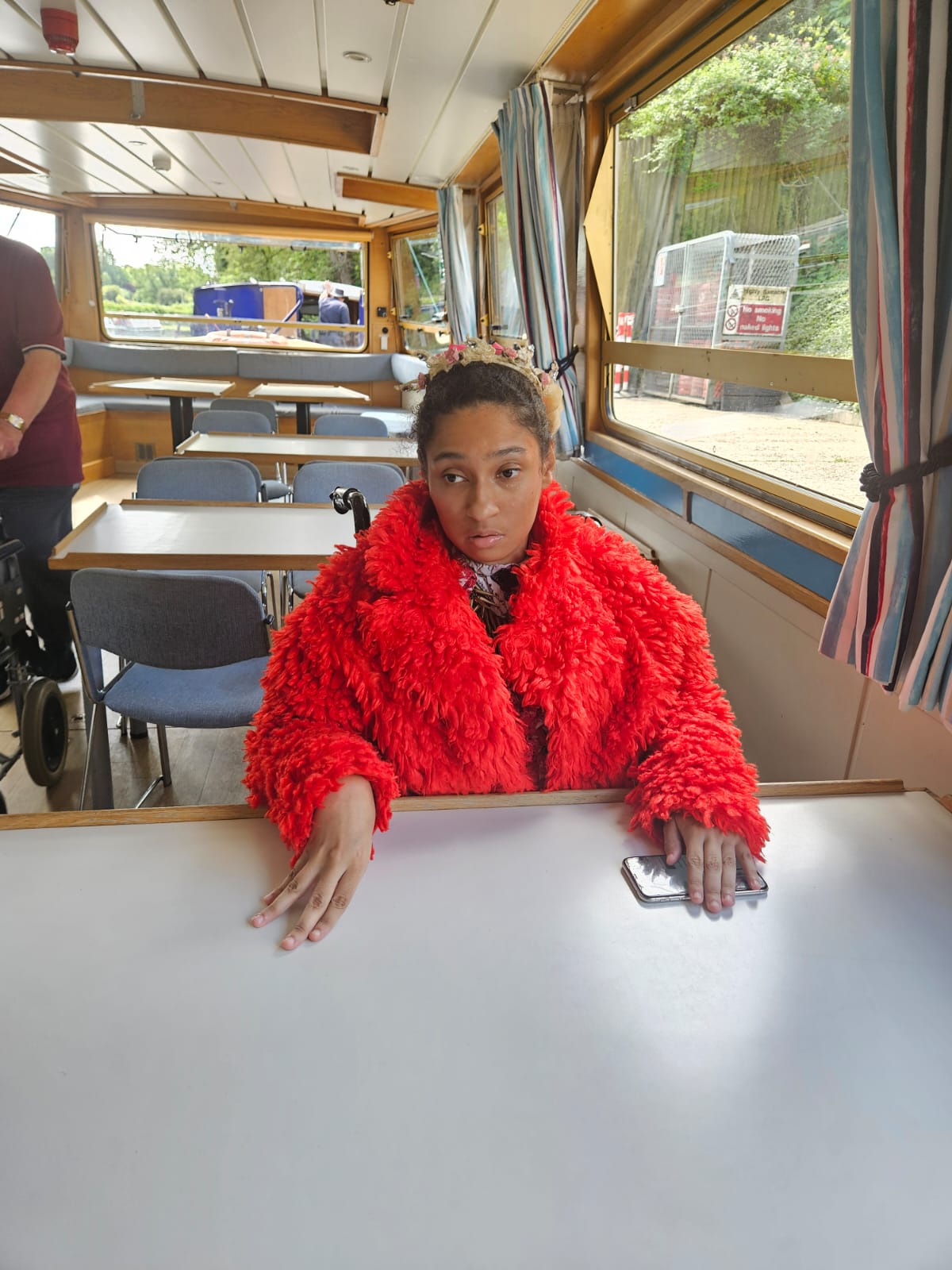
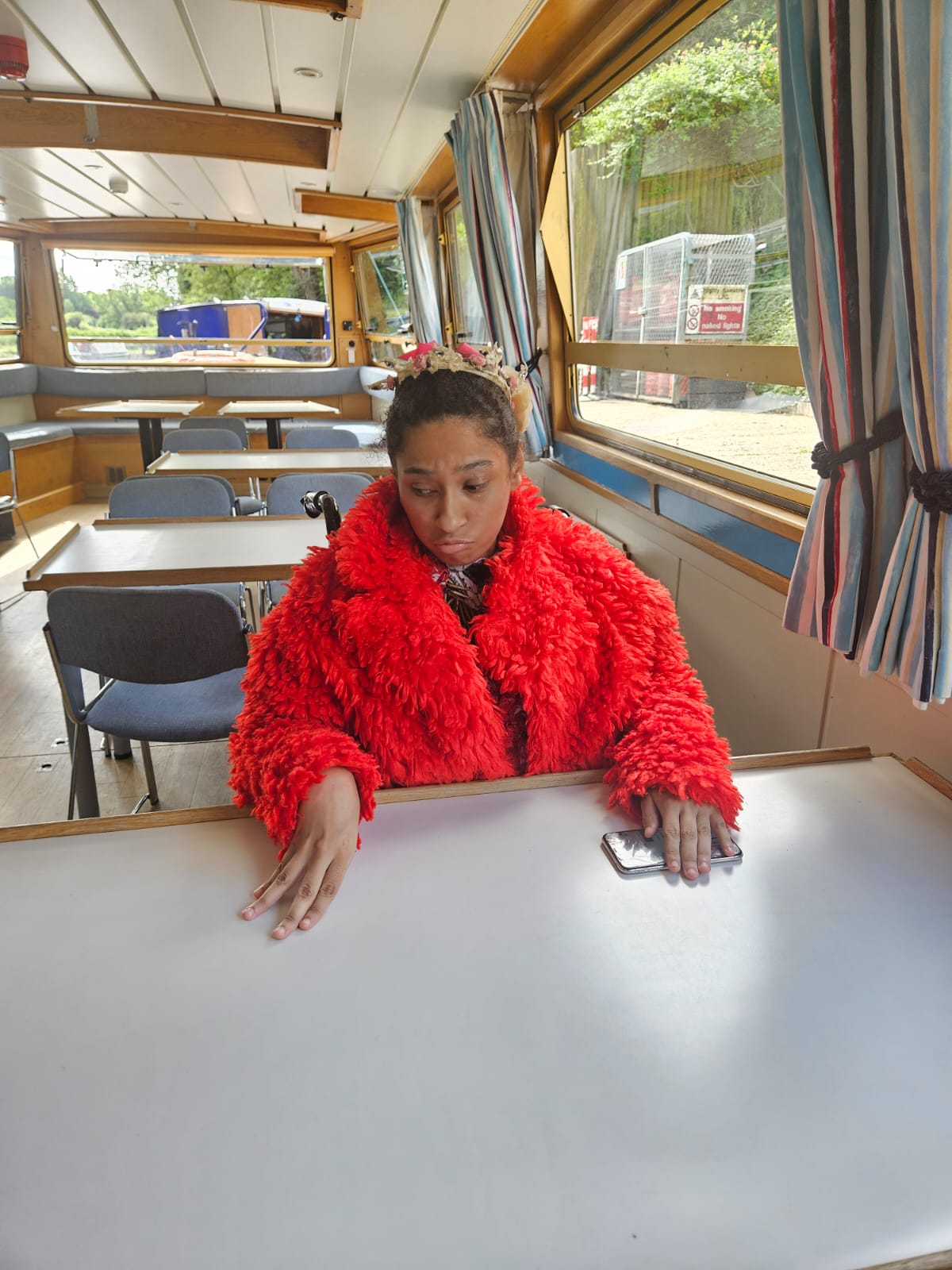
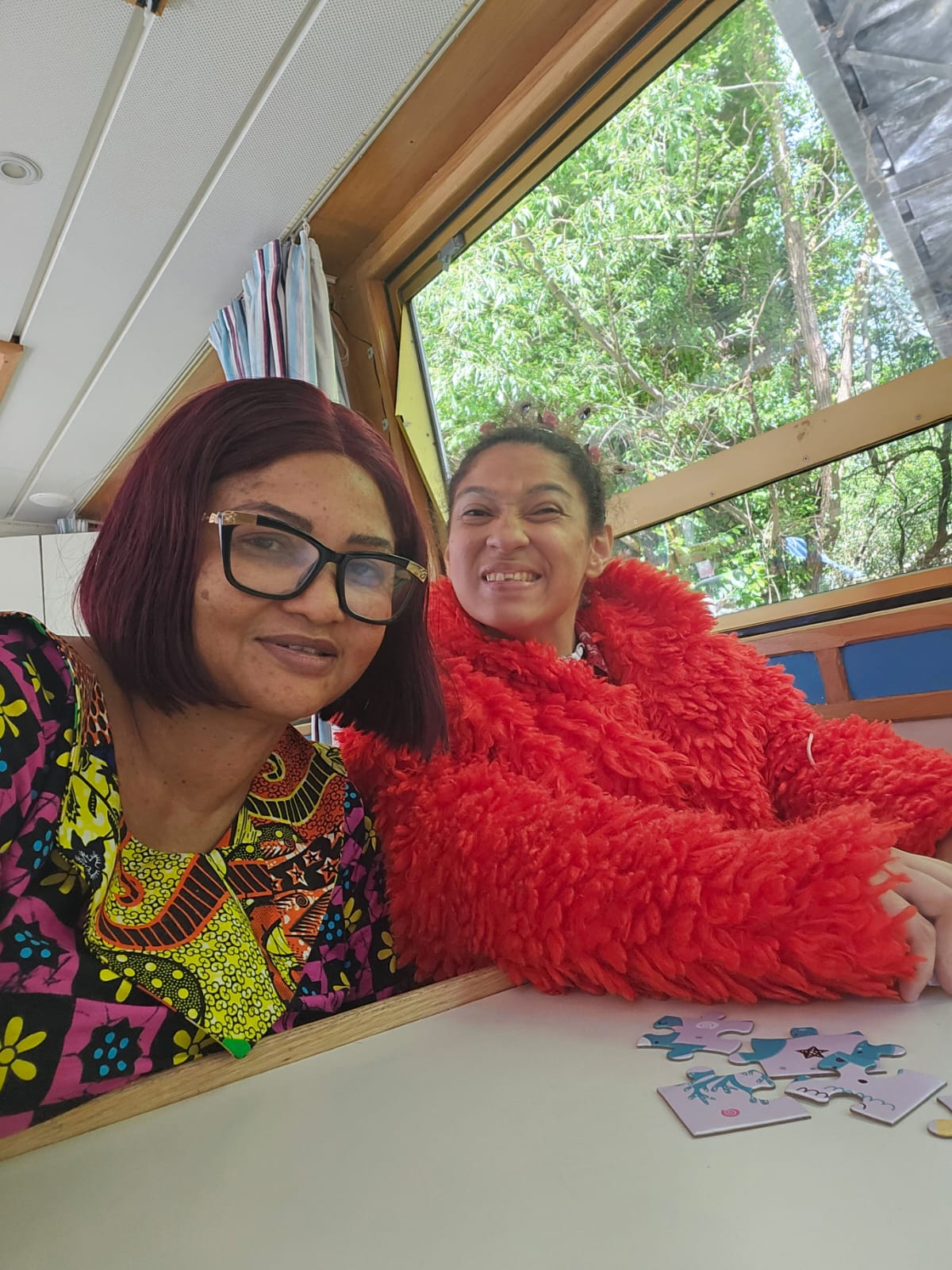
My day out , On a canal boat cruise, which I enjoyed. It is a fairly accessible boat which we could all get on manual wheelchair users. We enjoyed it very much me my friends and my PA here is some pictures/videos of us on the canal boat cruise
Blind Man ‘Humiliated’ After Father’s Day Pub Row
A blind man said he felt “humiliated” and was “left in tears” after he was forced to leave a pub when a row broke out over a table booking.
Wayne Pugh, from Stoke-on-Trent, said he was disrespected by staff when his family went to the Chatterley Whitfield in Tunstall on Saturday for an early Father’s Day celebration.
It came after the table he booked specifically to allow enough room for his guide dog, Liberty, was unavailable, leading to the family being given another table Mr Pugh claimed was not suitable.
A spokesperson for the pub said they were sorry Mr Pugh felt let down and a full investigation was being carried out.
Mr Pugh told BBC Radio Stoke: “In all honesty, I just wanted to sit there crying. I’m fed up with these access issues – 88% of guide dog owners go through it.”
He went to the pub with his mother, father and brother, having booked a table months before, but once they arrived, they found out the table had been given to a larger party.
He said they were given a different table but it meant his dog Liberty was in the way of customers, who had to clamber over her to get to the bar.
His mum and brother were overheard at the bar saying they would “leave a Google review”, Mr Pugh said, when a member of staff ordered them to get out of the pub.
When Mr Pugh got up to leave, he said a “complete stranger” accused him of swearing and causing trouble.
He said he was then approached by a staff member, who told him he could “clearly see” the number of customers they had, referring to the problem over his booking.
Mr Pugh said it was this comment that caused him so much upset, leaving him “humiliated, dismissed and in tears”.
“It cuts like a knife because obviously my guide dog and me are invisible to them. They’re not seeing me for me and my disability,” he added.
‘Make this right’
Mr Pugh posted about the row on Facebook, external, which has been shared more than 6,000 times and garnered 5,700 reactions and 1,500 comments.
He said it was the latest incident he had experienced, having previously had taxis drive past him when they spot his dog, and shops acting like he was a “nuisance”.
While he did not hold any hatred for the pub’s staff, he wanted to see changes and wider awareness of blind people’s situations.
“Everywhere I go there is a possibility that someone is going to say ‘you’re not welcome’…let’s make this right,” he added.
A spokesperson for Chatterley Whitfield, which is owned by Greene King, said it was investigating the incident, which they described as “isolated” and said they would carry out further training for their staff.
“As an inclusive business we want everyone to feel safe and welcome in our pub. We recognise that on this occasion that the guest felt let down, and we apologise for that,” they said.
‘I Don’t Need To Hide My Tics After Charity Song’
A woman from Pool has been chosen to sing in a choir to record a song to highlight Tourette’s syndrome.
Sophie Willoughby, 38, joined a group of singers who all have the condition to record the Nina Simone song ‘Don’t Let Me Be Misunderstood’, external to help charity Tourettes Action raise awareness.
“It’s the perfect song for this campaign because Tourette’s syndrome is one of the most misunderstood disorders,” Mrs Willoughby said.
Tourettes Action said the condition affects one in 100 school-aged children and more than 300,000 people in the UK.
‘I didn’t know’
Mrs Willoughby said her symptoms began when she was eight years old when she started grunting, coughing and humming.
They worsened, she said, and she was diagnosed with Tourette’s syndrome three years later in 1998.
Mrs Willoughby said school had been very difficult and she had not wanted to go because she had not been sure what was happening.
She said: “I didn’t know what was going on, I’d blink, I’d tic and my eyes would twitch.”
This drew looks from other pupils, she said, and from teachers, too.
“I had a teacher mimic me,” she said.
“I didn’t know I was doing it so I didn’t know why the teacher was mimicking me back and it was really upsetting.”
Child psychologists were assigned to her, but she said they did not understand why she did not want to go to school.
“I was the child that was treated like I was misbehaving, with them saying I was a problem and that I didn’t want to go to school,” she said.
‘Comfortable in my own skin’
It is people with Tourette’s syndrome being misunderstood that inspired Mrs Willoughby to take part in the charity music video.
She said: “I’ve never been around people with Tourette’s syndrome so to go to London and do that video with so many wonderful, beautiful people – to be accepted and to feel comfortable in my own skin and with who I am and to feel free to tic was the most special experience I’ve ever had.”
She said being with others with the syndrome made her realise how much she had hidden her tics.
“From that I have learned so much. To feel accepted and accept myself and I now feel I don’t need to hide who I am and I don’t need to hide my tics,” she said.
She said: “The experience has had a longer lasting lifetime effect.
“I am who I am and I am learning not to be embarrassed because I’ve always felt I’m the weirdo, I was always treated like the weird child, like the problem.
“Being in that room was a sort of love and acceptance from people that understand and that was the amazing part for me.”
With many thanks to Benefits And Work.
DWP disability minister Stephen Timms repeatedly misled parliament by untruthfully claiming that personal independence payment (PIP) claimants over state pension age “will not be affected by the proposed changes”. Timms has finally admitted that the DWP currently have no idea how to avoid the proposed 4-point rule affecting pension age PIP reviews.
Ever since last April, Benefits and Work has been trying to get to the truth of Timms frequently repeated statement in connection with the proposed 4-point rule that: “In keeping with existing policy, people over State Pension Age are not routinely fully reviewed and will not be affected by the proposed changes.”
We pointed out that pip claimants over state pension age are subject to a light touch review every ten years and that they may also ask for a change of circumstances review if their condition changes.
In the year to January 2025, 12,300 pension age PIP claimants had a planned award review.
In addition, 19,238 pension age PIP claimants had a change of circumstances review in the same period.
We wanted to know how claimants in these circumstances could avoid the four-point rule, unless the DWP was exempting all claimants over pension age.
We even went so far as to ask readers to ask their MPs to put two specific questions to Timms on this subject.
Conservative MP Alicia Kearns kindly asked those questions and Timms replied on 16 May.
In relation to whether PIP claimants of pension age who request a change of circumstances review will be required to score at least four points in one daily living activity, instead of answering “Yes” or “No”, Timms fudged desperately:
“All claimants are required to notify the Department of any change to their circumstance, be that an improvement or deterioration in their needs. Upon notification of a change, a Case Manager will consider what further action might be required to ensure the claimant is receiving the correct level of support.”
However, Chris Law of the SNP asked the same question as Alicia Kearns and on 6 June received a different answer:
“In keeping with existing policy, people on state pension age are not routinely fully reviewed and will not be affected by these changes. We are considering further how the 4-point minimum requirement will affect claimants over state pension age who report a change of circumstances, and we will provide further information in due course.”
In other words, pension age PIP claimants who request a change of circumstances review will be subject to the 4-point rule and run the risk of losing their daily living award altogether, unless the DWP can come up with a way to get round it, which they haven’t yet.
And, in truth, the same will almost certainly apply to claimants subject to a 10 year light-touch review. Because it isn’t a review unless you make a decision on continuing entitlement and you can only do that using the law as it stands, not the law as you would like it to be.
It’s yet another example of the ways in which the Green Paper reforms are half-baked, at best.
When he became disability minister, Timms claimed that he would create a new era of transparency at the DWP, as part of an effort to restore trust in the department.
In this case, Timms could have been transparent and truthful from the outset by saying that the 4-point rule would not affect “the majority” of pension age PIP claimants. He chose not to – over and over again – and that choice leaves claimants with no reason to trust anything he tells them in the future.
Many thanks to the excellent Rightsnet website for welfare rights workers for alerting us to the written question and answer.
Visually Impaired Voters To Trial Ballot Paper Aid
A system to help blind and partially sighted people to vote is to be trialled in two Highland Council by-elections.
It involves cardboard templates with cut-out areas that match up with each voting box when placed on top of a ballot paper.
The templates have Braille and embossed areas next to each box.
Highland Council said it was trialling the system after a recent survey suggested people with visual impairments felt they could not vote in secret.
The ballot paper overlay is expected to be made available during the Scottish Parliament elections next year.
Derek Brown, Highland Council’s returning officer, said: “When everyone can cast their vote freely and confidently, we all move closer to a fairer, more representative society.
“Accessible voting isn’t just a right – it’s a powerful reminder that every person matters, and every vote shapes the future we share.”
Other aids will also be available during voting, including magnifiers and large print ballot paper copies.
Staff will also be available to provide support.
Voters will take to the polls to elect new councillors for the Cromarty Firth and Eilean a’ Cheò (Skye and Raasay) wards on 19 June.
A full list of candidates standing in the two by-elections can be found on Highland Council’s website.
Tom And Caroline Bridge Win Race Across The World
Mother and son Caroline and Tom Bridge have crossed the finish line first to become the winners of the fifth series of Race Across The World.
The BBC One show saw five pairs race a distance of about 8,700 miles (14,000km) between the Great Wall of China, north of Bejing, and Kanniyakumari, the southernmost tip of India.
Caroline said: “We must never doubt ourselves again, ever, ever, ever.”
“It’s a really good feeling. I’m lost for words. I can’t believe it: 51 days racing through countries that I never thought I’d go to, and never thought we’d come this far, and never thought we’d achieve so much. And I’ve never been prouder of my mum,” said Tom.
The winning duo will share a cash prize of £20,000.
Teams had to pass seven checkpoints in China, Nepal and India on their route to the finish line.
As usual, all pairs were banned from travelling by air, and instead were given a budget of £1140 per person for the journey – the cost of a one-way plane ticket.
They could not use their smart phones or bank cards while seeking out their own transport, food and accommodation.
According to ratings body Barb,, external just under 6 million viewers per episode have been tuning in or catching up on iPlayer within a seven day period.
This means the series was the most watched programme in the UK across all channels and streaming platforms during each week it aired, with the exception of the week Eurovision was broadcast.
The mother and son duo thought the show would be a unique opportunity to create treasured memories.
Both were from Hargrave near Bury St Edmunds in Suffolk, but only Tom, 21, had travelling experience as he had spent about 10 months in South America and Europe.
During the show Caroline, 60, opened up about how she felt she had, in recent years, lost her identity outside of being a mother and a wife.
Meanwhile her son found new confidence when he told strangers about his cerebral palsy for the first time.
Campaigner Who ‘Changed Countless Lives’ Dies Aged 19
An “inspirational campaigner” for the rights of non-verbal children has died at the age 19, his family has confirmed.
Jonathan Bryan, from Chippenham, Wiltshire, was born with severe cerebral palsy and failing kidneys. Unable to walk, hold a pen or communicate verbally, he was taught to read at the age of seven, communicating with his eyes using a special board covered with letters.
During his lifetime, he starred in CBBC’s My Life: Locked In Boy documentary and authored several books.
A spokesperson for Jonathan’s charity, Teach Us Too, said: “Jonathan was a remarkable young man whose voice and vision changed countless lives.”
Classed as having Profound and Multiple Learning Difficulties (PMLD), his first school placed him on a sensory curriculum – which meant he was not being taught to read or write.
But his mother took him out of school and taught him using an alphabet board.
He then started campaigning for every non-verbal child to be taught to read and write.
“Disabled children with communication issues are not being taught in special schools. They are being babysat,” he previously said.
His petition, created in 2016, calling on the government to reform the special needs curriculum, so that all disabled children had the opportunity to access literacy, has more than 875,000 signatures.
For his campaigning for better educational opportunities for non-verbal children, he received the prestigious Diana Legacy award in 2017.
‘He showed the world what is possible’
He released his first book, Eye Can Write in 2018, in which he spoke about how he learned to read and the profound difference it made to his life.
The proceeds went to Jonathan’s charity, Teach Us Too.
He also communicated regularly through his blog, Eye Can Talk, with his final post appearing in December 2024, where he spoke of being accepted onto the Creative Writing course at Bath Spa University.
Teach Us Too, paid further tribute to Mr Bryan, saying he was an “inspiration”.
“We are deeply saddened by the death of our founder.
“His courage, insight, and determination challenged perceptions and championed the rights of children who are too often overlooked.
“He showed the world what is possible when we presume competence and truly listen. As those who loved him and continue his vision, we are honoured to carry his light forward,” a spokesperson said.
Tony Hudgell ‘Over The Moon’ To Get Beckham Gift
A 10-year-old boy who had both legs amputated after being abused as a baby has been gifted a signed football shirt by David Beckham.
Tony Hudgell was given an Inter Miami shirt from Beckham, who co-owns the US club, with Tony’s adoptive mother Paula saying the England legend had been “quietly following his journey”.
Mrs Hudgell, from West Malling in Kent, said the gesture was “really lovely” and Tony was “absolutely blown away” having received the shirt.
She added: “There was a little card as well which said ‘keep doing what you are doing'”.
Mrs Hudgell said Tony was “absolutely over the moon” and described Beckham as “such a lovely guy and really generous”.
The Tony Hudgell Foundation said on X the gift had come after a “tough week”, external where the parole board confirmed Tony’s birth mother Jody Simpson would be released from prison.
Simpson was given a 10 year prison sentence in 2018 alongside Anthony Smith having been found guilty of causing Tony’s near-fatal injuries.
The pair were found to have hurt him so badly at six-weeks-old that his legs had to be amputated.
Tony was later adopted by Paula and Mark Hudgell and has since raised millions of pounds for charity and received the British Empire Medal for services to the prevention of child abuse.
In 2024, he underwent surgery to be fitted for new prosthetics to allow him to walk without crutches.
Beckham, who is also a co-owner of Salford City, is set to be knighted in King Charles’ birthday honours.
Blue Badge Renewal Dubbed ‘Bureaucracy Gone Mad’
A man who has had a prosthetic leg for half a century has described a request for more medical information to renew his Blue Badge as “bureaucracy gone mad”.
Raymond Dingwall,72, from Biggleswade, Bedfordshire, lost his leg to bone cancer in 1976, and said he had never experienced a problem renewing his disabled parking permit before.
He said that after he applied, he received an email asking for more details, including letters of diagnosis, consultant letters – and proof of care requirements.
A spokesperson for Central Bedfordshire Council said “all applications are treated as new applications, and we require supporting evidence to ensure fairness and consistency for all applicants”.
“The information they require I cannot give them as the surgeon who looked after me when I was very poorly has died,” said Mr Dingwall.
“I have not kept documentation of all the illnesses I have and I have never had a letter from a hospital consultant.”
Mr Dingwall, who used to play semi-professional football for Stevenage FC, had to have his right leg amputated in 1976 because he had bone cancer, and he needed it removed to prevent the spread of osteosarcoma.
He had long running chemotherapy and after 12 months he was told the cancer had spread to his lung. He then had part of his left lung removed.
He said he now struggled to get about mainly due to his secondary “complaints” – he has chronic heart failure, an arthritic left knee, kidney stones, skin cancer on his head and has undergone radiotherapy for prostate cancer.
He says he needs the Blue Badge, which expires in August, as “if the weather was bad I need to park near the shops as I would be like Bambi”.
“People with conditions that are never going to change and only deteriorate are effectively put through the process as if you have applied from day one, which seems ludicrous,” Mr Dingwall said.
A spokesperson for the council said he had been contacted by telephone to explain what he needed to do, and he had agreed to provide the information required to process his application.
They added: “Our procedures and practices align with national guidance as set out by the Department for Transport and are followed by other local authorities.”
EastEnders star Jamie Borthwick has been suspended by the BBC after using a slur against people with disabilities on the set of Strictly Come Dancing.
The offensive remark was made last November during filming for the BBC dance show’s flagship Blackpool week, the Sun on Sunday reported, external.
The BBC said his language was “entirely unacceptable and in no way reflects the values or standards we hold and expect”.
The newspaper said that Borthwick, who plays Jay Brown – a key long-running character on the soap – apologised for “any offence and upset”.
BBC News has approached his representatives for a comment.
Disability charity Scope said Borthwick should reflect on what he said and educate himself.
“We hope he takes the opportunity to get to know the reality of disabled people’s lives,” said the organisation’s media manager Warren Kirwan.
‘Deeply embarrassed’
Borthwick is said to have made the offensive remark on a phone video while backstage during rehearsals at the Blackpool Tower Ballroom.
He reportedly used the term to describe the people of the seaside town.
In his statement to the Sun on Sunday, Borthwick said: “I want to apologise sincerely and wholeheartedly for the words I used in the video showing my reaction to making it through Blackpool week on Strictly.”
He added: “It is no excuse, but I did not fully understand the derogatory term I used and its meaning.
“That is on me completely.
“Now I am aware, I am deeply embarrassed to have used the term and directed it in the way I did.”
Borthwick rose to fame for his portrayal of Jay Brown (previously Mitchell) in BBC soap EastEnders.
He has starred in it since 2006, making him one of the longest-serving actors on the show.
He has won a British Soap Award for best dramatic performance from a young actor, and an Inside Soap Award for best actor.
The 30-year-old took part in the latest series of Strictly, where he was paired with professional dancer Michelle Tsiakkas.
It marked a return to the ballroom for him, after he won the 2023 Christmas special.
He made it through to Blackpool week – seen as a key milestone in the contest – but was voted off later in November, making him the ninth celebrity to leave the show.
His offensive remark is the latest controversy to hit Strictly, which celebrated its 20th anniversary last year.
Last month, former contestant and radio host Wynne Evans announced he was leaving his BBC Radio Wales show after the broadcaster “decided not to renew” his contract.
He had been taking time off his daytime show after apologising for making what he described as an “inappropriate and unacceptable” comment during the Strictly live tour launch in December.
A-ha Star Morten Harket Diagnosed With Parkinson’s
A-ha frontman Morten Harket has been diagnosed with Parkinson’s disease.
The news was announced on Wednesday on the Norwegian synth-pop band’s official website in an article written by their biographer Jan Omdahl, which also revealed the singer had already undergone brain surgery twice.
Harket, 65, said he had “no problem accepting the diagnosis”, adding: “With time, I’ve taken to heart my 94-year-old father’s attitude to the way the organism gradually surrenders: ‘I use whatever works’.”
A-ha are best known for their megahit Take On Me, external – which features Harket’s famous falsetto – taken from their 1985 debut album Hunting High and Low.
Omdahl, who penned the A-ha biography The Swing of Things, wrote: “You know him as A-ha’s iconic frontman, a divinely gifted singer, reluctant pop star, solo artist, songwriter, eccentric thinker, father of five and a grandfather too, but in recent years Morten Harket has also been a man battling his own body.
“This isn’t the sort of news anyone wants to deliver to the world, but here it is: Morten has Parkinson’s disease.”
He went on to note how the singer’s condition had until now remained strictly private, but for a few people in his immediate circle who knew he was ill.
Omdahl also wrote about how the “unpredictable consequences” and stress of going public with the illness had led to him holding off making an announcement.
“Part of me wanted to reveal it,” Harket told him. “Like I said, acknowledging the diagnosis wasn’t a problem for me; it’s my need for peace and quiet to work that has been stopping me.
“I’m trying the best I can to prevent my entire system from going into decline. It’s a difficult balancing act between taking the medication and managing its side effects.”
He noted: “There’s so much to weigh up when you’re emulating the masterful way the body handles every complex movement, or social matters and invitations, or day-to-day life in general.”
According to the NHS website, Parkinson’s disease, external is caused by “a loss of nerve cells in part of the brain called the substantia nigra” which leads to “a reduction in a chemical called dopamine in the brain.”
Dopamine plays a vital role in regulating the movement of the body, and so symptons can include involuntary shaking, slow movement, and stiff and inflexible muscles; as well as depression and anxiety.
‘I don’t feel like singing’
Omdahl stressed that while Harket will have to live with the disease for the rest of his life, medication and brain surgery at the Mayo Clinic in the US have, he said, “softened the impact of his symptoms”.
He said the star underwent an advanced neurosurgical procedure – called deep brain stimulation (DBS) – in June last year, in which “electrodes were implanted deep inside the left side of his brain.”
In December 2024, Harket underwent a similar procedure on the right side of his brain, he added, which was also successful.
While he can still drive his car, Harket is less sure about his future as a singer.
“The problems with my voice are one of many grounds for uncertainty about my creative future,” he said.
His group’s biographer described how, on good days, Harket shows “virtually no sign of many of the most familiar physical symptoms of Parkinson’s” but still requires a “round-the-clock effort” to balance medication, signals from the electrodes in his brain, sleep, blood sugar and his mindset – to keep the symptoms at bay.
“This isn’t always successful, and is more like a never-ending rollercoaster ride,” added Omdahl.
Asked by the writer if he can sing now at all, Harket replied: “I don’t really know. I don’t feel like singing, and for me that’s a sign.
“I’m broadminded in terms of what I think works; I don’t expect to be able to achieve full technical control. The question is whether I can express myself with my voice.”
He added: “As things stand now, that’s out of the question. But I don’t know whether I’ll be able to manage it at some point in the future.”
Other stars who have lived with Parkinson’s include fellow singer Ozzy Osbourne, actor Michael J Fox and late boxing champion Muhammad Ali.
Harket said he was now going to “listen to the professionals”, urging fans “don’t worry about me”.
“Spend your energy and effort addressing real problems, and know that I am being taken care of.”
He revealed he has been working on new song lyrics but was “not sure” if he’ll be able to finish and release them.
“Time will tell if they make it. I really like the idea of just going for it, as a Parkinson’s patient and an artist, with something completely outside the box.
“It’s all up to me, I just have to get this [announcement] out of the way first.”
Harket, who has also enjoyed a solo career, was knighted in Norway in 1992 – alongside his A-ha bandmates Paul Waaktaar-Savoy and Magne Furuholmen – for their services to Norwegian music, and international success.
Furuholmen posted a message of support on Instagram, alongside an old picture of the band together, writing: “Our thoughts are first and foremost with Morten and his family at a difficult time adjusting to the changes that this condition has brought into their lives.”
He said that while the news “brings sadness” they remained grateful for “all the amazing memories” and felt “lucky” that “people continue to find meaning, hope and joy in our shared musical legacy.”
Designing Inclusive Soundscapes
A press release:
Unlocking the Power of Outdoor Musical Play for the Visually and Hearing Impaired

To mark Deafblind Awareness Week starting on the 23rd June, Percussion Play is highlighting how outdoor music therapy can benefit those who are Deafblind.
Deafblindness is a combined impairment of sight and hearing that affects over 450,000 people in the UK. While it doesn’t always mean a complete loss of vision or hearing, it can in some cases. The impact of deafblindness varies widely from person to person, for some, it may require only minor adjustments to daily routines. In contrast, others may depend on support from others for communication and mobility.
Percussion Play, the world’s leading designer and manufacturer of outdoor musical instruments, has long been advocating the benefits deafblind individuals can receive through music therapy, supporting clients create outdoor music gardens to be used as therapy for those with sensory impairments.
One such client is a School in Western Pennsylvania who is using outdoor music therapy to enhance the lives of its students- all through sound and vibration. The Western Pennsylvania School for Blind Children, which has over 190 students, an adult day program for graduates of the school, as well as a child care center for the employees of the school, has created outdoor music areas for everyone to enjoy with Percussion Play instruments,
A generous donor, Ray Wojszynski, funds a program named the Creative Arts Series, where performers visit the school and introduce music and the arts to students. Mr. Wojszynski has donated a range of outdoor musical instruments to give current and future students something tangible, lasting, and permanent to enjoy.

The instruments chosen by the school and Sue Wiedder, Director of Development and Communications, include the Harmony Flowers, the Sunflower Petal Drum, and the Tubular Bells, which are a firm favorite. All the instruments are perfect for the students who use wheelchairs (75% of students use one for mobility) based on the varying heights of all the selected instruments.
Sue Wiedder comments on how they chose the instruments; “The students that attend our school are visually impaired or blind with additional medial complexities and physical and cognitive disabilities. Some of the children have residual vision, but all are legally blind. In addition, we do have students that are non-verbal and rely on adaptive communication devices to express their thoughts and feelings. Therefore, we had to take our time deciding which instruments would be best for our special population of students. We originally had some items chosen, but when I talked to Robin, the Co-Founder of Percussion Play, he told me about the Tubular Bells and a story of how a student who was deaf and blind enjoyed ringing the bells because they could feel the vibrations of the chimes.”
The school has 5.5 acres of land within an urban city and decided to create multiple areas for the students to play with the instruments. All of the instruments were installed by the school’s buildings and grounds staff after the lockdowns due to COVID were finished.
Sue Wiedder says, “Each student has a whole educational team including a teacher of the visually impaired, speech and language pathologist, physical and occupational therapists, orientation and mobility specialists, a school psychologist and case managers. All of the teachers can see how much they have enhanced our students’ lives.”

Kelly Welsh, Certified Teacher of the Visually Impaired (TVI) at the school, says about one of her students; “Isaiah is primarily a tactile learner meaning he accesses his environment and surroundings by touch. He does have some light perception in one eye, hence him soaking up the sun in one of the pictures. Due to his profound hearing and visual loss, he needs to use his other senses such as touch and smell, to better understand what is going on around him. Within the classroom, he uses sign language for core vocabulary words such as eat, drink, go, more, finished. He uses tactile symbols and physical prompts to help him throughout his school day. As for the Tubular Bells, Isaiah is probably feeling the movement of the bells as they are played as well as the vibrations that come from striking the bells. Isaiah loves movement and gross motor activities so it’s not a surprise that he enjoyed the bells as much as he did.”

The Tubular Bells in situ.
Sue Wiedder concludes;“I can’t say enough positive things about the installations. It’s such a great asset for our school, especially for the population of students that we have. The big thing is accessibility. But when you see a student with the mallets in their hands and they’re banging on the Tubular Bells, seeing the smiles on their faces and their reaction, that makes it all worth it – music is amazing. All I heard was such calming and pleasant sounds.”
Jody Ashfield, CEO of Percussion Play comments; “Ultimately, we support the campaign for systemic changes in musical instrument design, public space accessibility, educational practices, and mental health support to enable people who are deafblind to reap the benefits of creating music in the great outdoors. By rethinking how we structure musical play environments, especially outdoors, we can better serve blind and hearing-impaired individuals, tapping into their potential and improving their quality of life through equitable access to music and play.”
Percussion Play has seen growing global demand for its inclusive outdoor instruments, which are found in schools, community centres, places of worship, libraries, hospitals, and senior living communities. Designed to bring people together through the universal language of music, these instruments promote curiosity, creativity, and collaboration across all age groups.
Terminally Ill Sailor Sets Off Solo Around The UK
A terminally ill 26-year-old woman from East Sussex has set off on a solo voyage sailing around the British Isles.
Jazz Turner, an engineer from Seaford, lives with Ehlers Danlos Syndrome, a debilitating genetic condition that affects connective tissue.
The full-time wheelchair user left Brighton Marina on Monday on the 2,070 mile (3,331km) trip she hopes to complete within four to eight weeks.
She said was feeling “nervous and excited” and was hoping to become the “first disabled person to undertake a solo and non-stop circumnavigation of the UK and Ireland”.
Ms Turner was diagnosed with the illness, which causes fainting and seizures, when she was 18.
Due to complications, doctors have told her that her condition is now terminal.
She told BBC Radio Sussex: “I’m just looking forward to getting out there now.
“It has been a long time coming.”
Despite not being able to swim and being prone to seasickness, she has previously represented Great Britain in para-inclusive sailing events
She said: “The worst part about it is when there is no wind.
“I can’t use my engine as part of the record attempt.
“So when there’s no wind I go wherever the tide wants. Drifting is really hard to deal with mentally when you want to be making progress.”
Ms Turner is raising money for Sailability, a charity that enables people with disabilities or who come from a difficult background to get into sailing.
New Coroner’s Verdict In Jodey Whiting Case
With many thanks to Benefits And Work.
A second inquest into the death of Jodey Whiting has finally been held and has found that failings by the DWP “precipitated” her death.
Many readers will have followed Jodey’s mother, Joy Dove’s, years long battle to get the truth about her daughter’s death acknowledged.
Jodey died in February 2017. Her ESA had been stopped after she failed to attend a work capability assessment.
Jodey had been seriously ill with pneumonia, had been receiving treatment for a cyst on the brain and was taking strong painkillers. Nonetheless, she had been refused a home assessment for her ESA and failed to open the appointment letter for a WCA at an assessment centre.
As a result, her benefits were stopped.
The Independent Case Examiner later found that the DWP failed five times to follow its own safeguarding procedures.
Yet an inquest into Jodey’s death lasted less than an hour and failed to even look at the part the DWP played in the tragedy.
After years of struggling by Joy Dove, the Court of Appeal finally ordered a new inquest so that both Jodey’s family and the general public would have an opportunity to find out what role the DWP’s failings had in her death.
That hearing took place today and coroner Clare Bailey, recorded a conclusion of suicide which, she said, had been precipitated by the mistaken withdrawal of benefits by the DWP.
However, the coroner held that she had heard of many changes and new structures at the DWP which left her satisfied that no wider recommendations were needed.
Joy Dove said “I have always believed that Jodey took her life due to failings by the DWP and today the coroner has confirmed that the mistakes made by the DWP in the way they handled Jodey’s case caused to her death.
“It should not have taken an eight-year fight for justice to get to where we are today. It has been an uphill battle trying to get answers and accountability, but I would never give up. I was determined to keep fighting for justice for Jodey.
“It is clear from the coroner’s conclusion that had the DWP followed their own protocols at the time of Jodey’s death then her benefits would not have been terminated, causing her so much distress she felt she had no way out.
Merry Varney, partner at law firm Leigh Day, who represented Joy, added:
“Today’s conclusion shows the importance of thorough inquests that properly investigate how a death occurred. Without them, the dangerous and sometimes deadly way that those unable to work due to ill health or disability are treated by the DWP will remain covered up and unchecked.”
The Farmer With Muscular Dystrophy
A farmer living with a degenerative disease has shared how he adapted life on the farm to overcome the challenges of his condition.
Andrew Laidlow, 52, has muscular dystrophy – a progressive condition which causes muscles to weaken.
Handling sheep, climbing up and down a tractor and carrying out maintenance work at his farm in Dufton, near Appleby in Cumbria, may have become difficult tasks, but with support from his family and a few adaptations, he continues to run the business.
“I’ve got so much going for me in life at the minute and I live in such a beautiful place,” he said.
“You do get down thinking about the future from time to time, but really I’ve got such a good support.”
Mr Laidlow’s condition means it is hard for him to handle sheep, but instead of giving up farming, they switched from textile sheep to Herdwicks, which are smaller and easier to handle for the rest of his family without his help.
He uses step ladders to get into his tractor and access to the farm has been changed to reduce trip hazards.
“When you’re active all your life you don’t want to stop, but you just need to adjust things,” Mr Laidlow said.
“It’s incredibly frustrating, you see something like a gap in a drystone wall, it used to take me half an hour to fix beforehand.”
‘Getting old quick’
Speaking to BBC Radio Cumbria’s Mike Zeller at Breakfast, the father-of-three said he first noticed his symptoms at the start of the coronavirus lockdown, when he found it hard to get into the tractor or climb the stairs at night.
“I know when you get tired and a bit achy at night sometimes all of those are difficult, but it just seemed to be too consistent,” Mr Laidlow said.
Initially he thought it was a result of being unfit and overweight, so he tried to address that and attended appointments with chiropractors and physiotherapists.
It was one of those professionals who suggested his problems might stem elsewhere, which kickstarted the process of receiving a diagnosis.
“It was a shock obviously, because when you start reading up about it – it’s the beginning of a lifechanging thing,” Mr Laidlow said.
“But in the same breath – and I know it sounds stupid – I was a bit relieved that I was diagnosed with something, because I was thinking ‘I’m getting old too quickly, I can’t continue doing what I’m doing for a living’.”
Accessible countryside
With support from his family and careful planning, he has adapted farm life to work for him, but also for others who may struggle with their mobility.
His daughter Katie, 18, who also works on the farm, said they worked to make footpaths on their land more accessible.
“We tried our best to replace stiles with gates,” she said.
“Just simple things like making sure they’re wide enough to allow wheelchairs and pushchairs – it does affect everybody really.”
The teenager recently ran the Manchester marathon in aid of charity Muscular Dystrophy.
The event day was the first time she ran on roads, having trained on the farm, fields and surrounding fells.
“Living here with a hill in every direction I go in, I do think it helped me massively for running the marathon – I think it improved my overall stamina and endurance,” she said.
EastEnders Actor’s Anger Over Pip Changes
“Pip goes some way to recognising that we are not on an even playing field,” EastEnders actor and disability advocate Lisa Hammond has said.
The north Londoner is one of many signatories on the campaign to urge the government to stop the proposed changes to Personal Independence Payments (Pip).
Deaf and disabled people are asking the prime minister in an open letter to adopt a different approach, after the Department for Work and Pensions announced what it called the biggest shake up to “rebalance” the welfare system.
The proposed changes from the government include changing the eligibility criteria for Pip, which campaigners said would be “catastrophic” for those who need support most.
More than 140 celebrities including activists Liz Carr and Jack Thorne have signed the open letter, which was released on Tuesday.
Comedian, actor and author, Samantha Baines, is an advocate for hearing loss and has signed the letter.
Ms Baines, from Southwark, told the BBC: “This is a huge issue.
“Thousands of households are going to be driven into poverty or further into poverty because of this.
“For every pound cut from Pip, that’s going to lead to £1.50 in additional costs for local authorities. This has been viewed as a human rights violation by the UN.”
Ms Hammond added: “We are not benefit scroungers, we are human beings who are trying to get by and live our lives.”
The proposed changes from the government to the welfare system include reintroducing reassessments for those who have the capability to work, changing the eligibility criteria for the Pip, rebalancing payment levels in Universal Credit and delaying access to the health element of Universal Credit until the claimant is 22.
The campaign Taking the Pip stated that if the plans went ahead “700,000 families already living in poverty will face further devastation”.
‘Human beings, not statistics’
Ms Hammond told the BBC: “The government’s narrative is all about getting disabled people back to work but Pip has nothing to do with working, it’s a benefit to support the things around our lives.”
Under the proposed changes, claimants would not qualify for Pip unless they scored a minimum of four points in a single daily living activity.
Benefits expert Lee Healey, who has worked with disabled people for more than 30 years, said the proposed system was more likely to drive disabled people into poverty than work.
Mr Healey told the BBC: “On the face of it that might not sound a lot, but it’s a bit of a sneaky way of cutting support for people.”
He added the government needed to create working environments that disabled people could thrive in first.
“The key thing is a culture change. Show compassion, respect, that’s going to make a massive difference to disabled people. They are human beings not statistics,” he said.
‘People’s lives and dignity’
The government said it believed the changes would end “years of inaction” when it came to one in eight people not currently being in work or education.
It also said the number of people receiving Pip had become “unsustainable and has more than doubled since the pandemic”.
A government spokesperson said: “We are determined to support people in all parts of the country by tackling poverty and creating secure, well-paid jobs.
“Pip is a part of the way that we support disabled people and people with long-term health conditions. But it’s right that we rebalance the system to ensure support is targeted to those who need it most.”
But the signatories of the campaign believe that proposed cuts will prevent disabled people from contributing to society.
Ms Baines said: “It’s going to cost us more money in the long run and affect individual people’s lives and their dignity.”
Disabled Student Films Bus Trips To Show Challenges
A disabled photography student has travelled more than 850 miles on buses across England to highlight the challenges faced by disabled bus pass users.
Dan Bowhay, who is visually impaired, travelled for up to 10 hours a day, catching 26 buses over 10 days from Land’s End to Berwick-upon-Tweed.
The final-year student at Arts University Bournemouth (AUB) has made a 10-hour film documentary about his trip.
He says Between These Times is a “slow cinema” style film which aims to show “how agonisingly slow it is to travel by bus”.
The 22-year-old, from Bishops Waltham, Hampshire, began his challenge on 26 January and completed it on 6 February.
Limitations on his bus pass meant he could only travel after 09:00 on weekdays and could not enter Scotland or Wales.
Mr Bowhay, who developed cataracts in both eyes at the age of four, has limited vision in just one eye.
He says moving out of home after university feels “unviable” due to a lack of public transport.
He said: “I attend a lot of hospital appointments at Southampton, and getting there independently is pretty impossible.
During his trip, he said only three of the 26 buses had audio announcements, and one had visual announcements.
He said: “I had to spend a fair amount of time sort of looking out the window and trying to work out, actually, where I am, where I need to get off.”
Mr Bowhay said he experienced delays of up to 40 minutes, had difficulties scanning his pass, and sometimes waited several hours for connections.
He is calling for more investment in bus services and for more understanding of the challenges faced by disabled people using public transport.
The film will be shown at AUB’s summer show from 10 to 21 July and at Aberrations Collective’s Show in Copeland Gallery, London, from 31 July to 3 August.
The screenwriter behind hit TV drama Adolescence has told the BBC the government’s planned benefit changes are “punching down” on disabled people.
Jack Thorne, who is autistic and won critical acclaim for the Netflix drama, said the plans were “wrong and dangerous and that we need to be challenging them as a society”.
The government announced plans in March to make £5bn welfare cuts amid increasing demand and to encourage people back into work.
The Department for Work and Pensions (DWP) said: “We are determined to support people in all parts of the country by tackling poverty and creating secure, well-paid jobs.”
Thorne told the BBC’s Access All podcast that the plans were going to cause “severe hardship” for thousands of disabled people and “enough is enough”.
He said: “It is very expensive being a disabled person. And the extra payments are required for people to have any quality of life.”
According to the charity Scope, disabled households face an average of £1,010 extra costs per month.
“I’m aware of friends of mine that are really struggling right now, and it makes me incredibly angry that talented, brilliant people are being denied the support that they need in order to lead a reasonable quality of life,” Thorne said.
“I don’t understand why I live in a country now where we punch down quite as much as we do and it worries me about the future direction of travel.”
Changes to benefits include freezing the “health element” of Universal Credit for existing claimants at £97 per week and reducing the amount for new claimants to £50 from 2026.
Parliament is also set to vote on plans to tighten eligibility criteria for Personal Independence Payments (Pip), which is used to cover the additional costs of being disabled, whether you work or not.
Thorne was one of more than 100 influential disabled people to sign an open letter to Prime Minister Keir Starmer, which said of the cuts: “This is not reform; it is cruelty by policy.”
The letter, published as part of the new #TakeThePIP campaign, was signed by actors Liz Carr and Doctor Who star Ruth Madeley, as well as comedians Rosie Jones and 2018’s Britain’s Got Talent winner Lee Ridley, otherwise known as Lost Voice Guy.
They say the changes to the way Pip will be awarded is a “radical departure from the current system”.
Currently those receiving the benefit must score 12 points across various activities in the assessment, but from 2026 four of the 12 points must come from one single activity for the applicant to receive the highest rate.
The signatories said these changes mean those who “can’t wash below the waist, for example, could now not qualify and lose vital benefits”,
“For us, Pip is not a benefit – it is access to life. Without it, people are left housebound and isolated.”
Thorne, who has written dramas including His Dark Materials, Toxic Town and the stage play Harry Potter and the Cursed Child said: “They’re [the government] worried about all these different things, but the answer to that is not [to target] the people who are suffering the most.
“Talented, brilliant people are being denied the support that they need in order to lead a reasonable quality of life.”
Thorne was diagnosed autistic as an adult and lived with an intense skin condition called cholinergic urticaria in his 20s, meaning he was allergic to heat and his own body movements. He spent six months in bed “because every time I moved, I was having an allergic reaction”.
He says he has been passionate about supporting and representing the disabled community ever since.
“They [the government] just got this one so wrong, and I don’t think it’s been done with enough consultation with the disabled community. And I think if they did consult meaningfully, they would discover what they need to do here. And it’s not this.”
A consultation on some of the planned changes to benefits is available to fill in online until 30 June.
The DWP added: “Pip is a part of the way that we support disabled people and people with long term health conditions.
“But with the number of people claiming Pip doubling since the pandemic, it’s right that we rebalance the system to ensure support is targeted to those who need it most.
“Alongside this, as part of our Plan for Change, we’ve increased the ‘national living wage’, uprated benefits, and are helping over one million households by introducing a fair repayment rate on Universal Credit deductions.”
Thorne received critical acclaim earlier this year for his Netflix drama Adolescence, which he co-wrote with actor Stephen Graham and told the story of a 13-year-old boy accused of murdering a girl in his class.
The show sparked national debates about the impact of social media and “manosphere” influencers, particularly on boys, and led to a meeting with the prime minister to talk about protecting people online.
“It’s been amazing, Adolescence having the impact it has had. We’re still all reeling from it.”
He said since the meeting the Women and Equalities Select Committee had started an investigation into the manosphere and a group of Labour MPs are “pushing very hard” for legislative changes to protect people using the internet.
Thorne says Starmer was “very sincere and he was very interested in Adolescence and I’m really grateful for that”.
“And I think he needs to be as interested in this,” he added.
Charity Hopes More People Will Learn Braille
A woman who is visually impaired said she jumped at the chance to learn Braille despite it being like “another language”.
Jenny Stafford said she had hoped to study Braille when she started to lose her sight but was told no one taught it in the island.
She said learning the system which enables blind and visually impaired people to read and write would give her “another level of communication” and allow her to read the Braille labelling on her medication.
Ms Stafford was among those who attended an event organised by the Royal National Institute of Blind People (RNIB) and local charity EYECAN at Jersey Library on Wednesday celebrating 200 years of Braille.
Ms Stafford had a test to see if her fingers were sensitive enough to use Braille and a lesson to learn some of the letters of the alphabet.
She said learning was challenging but the opportunity was “amazing”.
“It’s like another language but it’s very, very interesting and at the moment I’m enjoying it, but it is early days,” she said.
Mark Coxshall from sight charity EYECAN said very low numbers of people were currently learning Braille with the charity.
He said they did not know how widespread the skill was in the island and the charity was motivated to grow the number of people learning with them.
“We’ve got two people learning at the moment and we’ve got three people identified through their parents who want to make sure the learning is available to their children,” he said.
Dave Williams, from RNIB, opened the event and said he wanted to highlight the importance of Braille for those who are visually impaired.
He said he used Braille to read bedtime stories to his son and “actually proposed to my wife using a braille scrabble board”.
Mr Williams added: “Braille means independence, it means opportunity and it means we as blind people have the ability to write our own story.”
The visit to Jersey was part of a year-long RNIB Braille and Beyond UK tour of libraries to mark the 200th anniversary of Braille.
support with gifting and tapping the screen when you can, but the minimum is you have to tap the screen in your colleague/team members agency battle come and join us. We appreciate and respect. All diversity is whether physical impairment, illness, or learning impairment/learning diversity. We appreciate all diversities and respect everybody with these conditions/diversity and different ways.

With many thanks to Benefits And Work.
The Labour Party is knowingly hugely discriminating against women by using its 4 point or higher rule to reduce the number of personal independence payment (PIP) awards. Currently, daily living component award rates for males and females are just 0.7% apart, but from November 2026 under Labour’s plans, 32% of male claimants are likely to get an award, compared to 25% of female claimants, a ten times greater difference
The shock effect of the proposal that only claimants who get 4 points or more for at least one PIP daily living activity will be eligible for an award was revealed in the response to a Freedom of Information Act request by Winnie Clark.
The DWP’s answer shows that, of those who currently receive an award of the daily living component of PIP:
1,307,000 are male, of whom 39% (507,000) are awarded less than 4 points in all daily living activities.
1,584,000 are female, of whom 52% (818,000) are awarded less than 4 points in all daily living activities.
If these claimants all receive the same points scores on review, it will mean that the number of awards to males will reduce by 509,730 whilst the number of awards to females will reduce by 823,680.
The result will be that instead of 277,000 more women than men being in receipt of PIP, when all the reviews are completed 800,000 current male claimants will still be getting PIP daily living whilst only 766,000 women will have an award.
Male PIP awards will outnumber female awards for the first time.
According to the DWP’s StatXplore tool, at present award rates by gender are almost identical:
Male: 47.77% of claimants get an award of the daily living component.
Female: 47.08% of claimants get an award of the daily living component.
This is a difference of 0.7%
But from November 2026:
32% of new male claimants are likely to get an award of the daily living component.
25% of new female claimants are likely to get an award of the daily living component.
This is a difference of 7%, ten times larger
So, any MP who votes in favour of Labour’s 4 point rule will knowingly be creating a benefits system that puts disabled female claimants at a very significant disadvantage compared to disabled male claimants.
It would be a shocking outcome for any MP to choose to support.
A garden inspired by a young boy from Dumfries and Galloway has won a RHS Silver Gilt medal at this year’s Chelsea Flower Show.
Scottish-based designers Duncan Hall and Nick Burton said they were “over the moon” to be presented with the award for the “Down’s Syndrome Scotland Garden”, which was inspired by Hall’s eight-year-old nephew Liam.
The designers said the garden aimed to celebrate the joyful, unique qualities that people with Down’s syndrome bring to society while highlighting some of the daily challenges and barriers they face.
It will be on show in London until 24 May before it is relocated to its permanent home in Palacerigg Country Park in North Lanarkshire.Media caption,
Liam inspired the garden at Chelsea Flower Show
Designed for the Scottish charity Down’s Syndrome Scotland, the garden is part of a collection of show gardens being displayed at the prestigious flower show.
Hall said his nephew Liam was the perfect inspiration for the garden.
“He’s full of joy, compassion, he’s very affectionate and encapsulates all the things in our garden that we are trying to express,” he said.
Hall and Burton said the garden incorporates a weaving path that takes visitors to two distinct areas reflecting the contrasting moods of calmness and playfulness.
On this path, a water pool appears to be a barrier to progress, symbolising the daily challenges faced by people with Down’s syndrome.
However, a submerged bridge within the water pool allows the ‘barrier’ to be overcome and allows visitors arrive at a welcoming shelter designed to look and feel like a warm and comforting ‘hug’.
The ‘hug’ has been designed to reflect the compassion, kindness and joy that comes naturally to so many people with Down’s syndrome, the designers said.
Hall and Burton said they where delighted to win their first silver gilt medal, and hoped visitors would take a moment to look a little closer and see the deeper meaning behind what the garden stands for.
Hall said: “We hope our garden will allow people to reflect on the daily challenges faced by people with Down’s syndrome, so they can reconsider misconceptions about their abilities, and appreciate the many joyful, positive qualities they bring on a greater level to society.”
Eddie McConnell , the chief Executive of the charity Down’s Syndrome Scotland, said: “Duncan and Nick have captured the spirit of people with Down’s syndrome brilliantly in their garden design while not shying away from some uncomfortable truths.
“People with Down’ syndrome, like so many disabled people, still face prejudice and discrimination and that needs to stop.”
Inkfire
When Imali Chislett set up a marketing agency in 2018, she never imagined it would turn into an award-winning champion of workplace inclusion.
All she knew was, as a wheelchair user and living with chronic illness, the traditional workplace was not for her.
Ms Chislett and her husband, Cameron, launched Bournemouth-based Inkfire, which claims to be the UK’s first disability-led marketing and tech agency.
As part of its services, it has helped more than 200 businesses embed inclusivity into their operations.Media caption,
Inkfire is entirely staffed by people with disabilities and chronic illnesses
“I had some really terrible experiences, as did my husband, in the workplace,” said Ms Chislett.
“We both realised that traditional nine-to-five working didn’t suit us. We knew we needed something different and tried to build jobs that worked for us.
“In doing that, we had so many positive conversations where people said ‘we need this too’.
“We didn’t fully perceive how far it would get at the beginning but it has developed and morphed into this incredible space that we have now.”
Last month, Inkfire was named winner of the Inclusive Workplace Experience category at the Disability Smart Awards, hosted by the Business Disability Forum.
The award recognises small organisations that value the health and wellbeing of workers and have inclusive practices.
Ms Chislett said: “Our entire team have disabilities and chronic illnesses and everybody has lived experience, so we very much bring that knowledge to the table when we approach work.
“It’s good to show businesses that this is what you can achieve.
“Our message is, talk to people with disabilities, find out how you can help.
“Don’t guess what somebody will need because we are here and more than happy to chat.”
Shoes Designed For People With Foot Drop
Jeanette Russell has never been more delighted with a new pair of shoes.
They were created by a skilled designer but they are not the latest in high-end fashion.
The shoes have been specially designed to stop Jeanette falling over – and they are life-changing.
The black boot-like creations are for people like Jeanette who suffer from foot drop, a condition caused by her MS that makes it difficult for her to walk unaided without tripping or falling over.
“I just put the boots on and I can drive, I can do the gym I can go hill-walking,” says Jeanette.
“I can walk over terrain that is really rough and can walk normally down the street with confidence and strides, when before I had a rolling gait which gave me a really sore back.
“I haven’t had any falls since I’ve been wearing the shoes.”
Foot drop, which is also known as drop foot, affects many people who have conditions affecting the nervous system, like MS or cerebral palsy, or people who have had a stroke.
They struggle to keep their toes lifted, making walking difficult and tiring. As a result, they are more likely to fall.
Now researchers at Queen Margaret University (QMU) in Edinburgh have invented a shoe which they hope will tackle this problem by providing the right kind of support to the foot, keeping the wearer upright and safer.
Prof Derek Santos is one of the QMU researchers who designed the shoe.
He says the concept is quite simple but very effective. The use of adjustable Velcro straps helps the shoe to fit each user and support at the ankle.
“You can adjust the elastic depending on your disability,” he said.
“If you have a weaker muscle or a totally paralysed muscle you can actually activate the elastic to compensate for these things.
“You can also tighten the elastic more on one side than the other.
“If you have a foot that inverts, sometimes people tend to trip over, so the boot will actually put your foot in a much better position by simply adjusting the tension in the elastics.”
The research team believe the new footwear could improve the wearer’s walking and prevent hundreds of thousands of falls in the UK.
But as it is a global problem, Dr Kavi Jagadamma, senior lecturer at QMU, says they want to help people around the world and adapt the shoe to individual needs.
“We are particularly interested in developing simple designs like sandals where this could be integrated for people in hot countries or people living in low income countries, where people can’t afford expensive boots,” he said.
“The simple sandals might be more accessible and also culturally more normal to wear. So that’s our ambition going forward.”
Professor of physiotherapy Cathy Bulley is also part of the QMU research team. She says the fact that it looks like a normal piece of clothing is a big advantage.
“We felt we needed another option for people that was more comfortable to wear, easier to put on and generally that people are more likely to keep using.
“We’ve been working on the clever but low-tech solution.”
Jeanette, a former army nurse, says her physical confidence has been restored by the shoe. She has even been able to return to the challenging hill-walks she loves.
“I’m looking forward to getting a hiking boot in this design so I can get up Ben Nevis.
“I’m also hoping to be marching past the cenotaph this November, with pride in my boots. “
What causes foot drop?
Foot drop – or drop foot – usually affects one foot and can have an impact on a person’s ability to walk.
It can be a temporary condition that may get better on its own or with treatment, but for some people the condition is permanent.
It can be caused by damage to a nerve that runs down the leg making it difficult to lift or move the foot and toes, often from a sports injury, slipped disc in the spine, lack of movement, or nerve problems caused by diabetes.
According to the NHS, less common causes of foot drop include:
- inherited conditions like Charcot-Marie-Tooth disease
- muscle weakness caused by muscular dystrophy, spinal muscular atrophy or motor neurone disease
- damage to the brain or spinal cord caused by a stroke, cerebral palsy, Parkinson’s disease or multiple sclerosis
Story Of Sign-Language Educated Pair ‘Remarkable’
The story of the first two people known to have been educated by sign language is “remarkable” and should be better known, according to the author of a book on the pair.
While this would not be unusual today, John and Framlingham Gaudy, from West Harling, near Thetford, Norfolk, were born in the mid-17th Century.
The brothers went on to be trained as artists at Bury St Edmunds, Suffolk, and at the London studio of the royal court’s favourite portrait painter, Sir Peter Lely.
Peter Jackson, curator of The Deaf Museum and Archive in Manchester and author of a book on the brothers, admitted it “really annoys” him that their achievements were so little known.
“The book I’ve written on them is the only one that I know about,” he said.
John (1639-1709) and Framlingham ((1641-1673) were born into a wealthy land-owning family, which included MPs and lawyers.
They realised the siblings, who were deaf and unable to speak, could not follow their older brothers to grammar school in Bury St Edmunds.
Instead, they turned to the well-read West Harling parish priest and teacher, John Cressener.
“A letter says he found ‘a most remarkable book’ which had a finger-spelling sign system,” said Mr Jackson, from the British Deaf History Society.
“He educated the boys alongside his own hearing sons and daughters, all educated together in his home.”
While there is evidence of deaf people being taught through lip-reading at this time, this was the earliest evidence he had found of people being educated using an early version of British Sign Language, he explained.
It proved successful and the brothers began their art training with a distant cousin Matthew Snelling, part of the artists’ colony in Bury St Edmunds.
Mr Jackson said: “When they went on to Sir Peter Lely’s studio in London, they were actually trained by George Freeman, who also had deaf daughters and knew how to sign.”
John was considered the more talented of the pair, but as he did not sign his work, there is only one painting known to have been by him.
This is a self-portrait, which the British Deaf History Society was able to acquire in 2016, thanks to a grant from the Art Fund.
It shows him as a 17th-Century gentleman, wearing an elaborate wig, with lace at his neck.
“Framlingham was more academic; he preferred to write his own letters, whereas John found it a chore,” said Mr Jackson.
“He was known for wearing a thick black coat with deep pockets in which he’d carry a piece of slate and chalk, so when he met people he could communicate by writing – lots of deaf people still use that method, but with paper and pen.”
He died in 1672 having written his own will, which was signed by a barrister.
Mr Jackson said: “It’s the first will handwritten by a deaf person that I know of in the world – there are other wills for deaf people, but they all say ‘written on behalf of’ the person.”
It was the discovery of the will that sparked the curator’s research because it was “proof that deaf people could indeed read and write before deaf education started in 1760”.
John gave up painting, except for pleasure, after he became his father’s heir, inheriting the estate in 1669 and becoming Sir John Gaudy.
Mr Jackson said: “John Cressener’s son Henry, who had been educated alongside Sir John using sign language, became his interpreter. With his support, he took two of his tenants to court and won when they refused to pay their rent.”
His son Bassingbourne inherited the estate, but it was sold after he died without an heir.
Mr Jackson spent years digging out the details from family papers held in the British Library and Norfolk Record Office, which he published in a book called The Gaudy Manuscripts.
So, why does he feel the story is so little known?
“It’s partly because John Cressener was a nobody; just a priest in a remote church in the middle of nowhere,” he said.
“I thought the story was remarkable and I think it’s a shame it’s not better known.”
Major Disability Golf Championship Tees Off
Some of the world’s most talented golfers have arrived in Buckinghamshire for the third staging of The G4D Open.
The golfers, who have varying disabilities, compete over the Duchess Course at Woburn in Milton Keynes.
Michelle Lau, who has a world ranking of 93 and plays at Cambridge Country Club, said the sport helped her become “more settled in myself as an autistic individual”.
She added while the disabilities “are how we get classed in this tournament… first and foremost it’s the golf that matters”.
The inclusive championship began in 2023 and features nine sport classes over multiple impairment groups.
About 80 men and women players, both amateur and professional, compete for three days from Thursday to Saturday across 54 holes
Ms Lau started playing golf in 2021 as she had struggled with the “social side” and noise of other team sports.
She said: “Golf really helped because it does build confidence and it is somewhere I feel I can completely be myself.
“I can stim, I can make noises, I can fidget, I can do whatever and most people understand that is how I process the world.
“The other side is it’s an outdoor sport. I have a lot of sensory issues and that makes it challenging because of the noise or temperature changes… but it’s putting myself out there and just seeing what I can do.”
Professional golfer Brad Smith, from Norfolk, said he had lost his leg after he was diagnosed with bone cancer about eight years ago.
He said he was amazed at how inclusive the sport could be, adding events like G4D showcased “how good disabled players are” and how they work around limitations.
“The world’s best players turn out and play. This is our major championship and brings the best in the world,” he said.
“Hopefully it inspires kids even adults thinking of taking up the game.”
The director of golf development at the R&A, which helps organise the event, said the life stories of the golfers were “inspirational”.
Kevin Barker added the competition provided the opportunity to change perceptions of the sport and show its inclusivity.
Players range in age from 18 to 79 and 20 countries are represented at the competition.
A handicap system is also in place.
Chris Foster, 92nd in the world, said it was “the pinnacle for disability golf, this is basically the open for us.”
“We have all been classified based on the disability we have. I’m in standing one as a through hip leg amputee, but it doesn’t mean I’m with other amputees
“It’s essentially kind of the level that it is when you wear the prosthetic.”
Guide Dog User Warns Taxi Drivers To Follow Law
A man with a severe sight impairment has issued a warning to taxi drivers telling them they have to accept guide dogs by law.
Nathan Major-Kershaw, 29, from Hull, said he had experienced drivers complaining when he had brought his dog Jackson into their cars, with one saying he could refuse to accept him as a passenger.
The BBC has contacted the taxi firm he uses for a response.
In a social media post headed “this is a message for the city’s taxi drivers”, Mr Major-Kershaw said: “If you do refuse to take a guide dog, you can, and will if it happens to me, be reported to licensing and have your licence revoked.
Mr Major-Kershaw said, when he took a taxi in Hull, the driver complained he would have to clear dog hair from his vehicle after the journey.
He said the driver told him he had the right to refuse to take him as a passenger if he chose.
The Equality Act 2010, external states taxis must carry guide dogs and other assistance dogs.
On its website, the charity Guide Dogs states, external: “If the passenger is a guide dog owner, it is a criminal offence to refuse to carry their dog or to charge extra for doing so.
“The only exception to this is if the driver has a medical exemption certificate from the licensing authority due to a genuine medical condition that is aggravated by exposure to dogs.”
Mr Major-Kershaw said he asked the taxi driver if he had an exemption certificate but he did not.
In his post he said: “If you’re going to drive a taxi, learn your legal obligations when it comes to disabled passengers”.
Mr Major-Kershaw said he had since got in touch with the taxi company which said it would talk to the driver.
Gold-Winning Paralympic Equestrian Star Dies Aged 76
Paralympic equestrian star Anne Dunham died on Sunday at the age of 76.
Ms Dunham, from Wiltshire, was a world champion rider with a career spanning 23 years.
Starting at the Atlanta Games in 1996, Ms Dunham won 10 Paralympic medals, six of them gold.
Ms Dunham had grown up with a love of horses, working in a stables from an early age, and she was determined not to give up on the sport when she was diagnosed with multiple sclerosis at the age of 27.
Ms Dunham’s Paralympic golds included five team wins between Atlanta and Rio and an individual gold in Beijing in 2008.
She won 32 major World Championship dressage medals, including 19 golds.
Ms Dunham retired in 2017 at the age of 68.
She said it had been a “hard decision”, but she knew it was right and “time to give others a chance”.
She was awarded an OBE in the same year for services to Para-sport.
‘Passion and professionalism’
Penny Briscoe, the Paralympics GB chef de mission, said in a statement: “Anne was a wonderful, dedicated and devoted member of the Paralympics GB team whom I had the absolute pleasure of knowing since 2002.
“While her remarkable achievements over 20 years in Para dressage speak for themselves, what always stood out for me was her commitment to being her absolute best and encouraging the best from those around her.
“Anne really was a team player and represented the heart and soul of Paralympics GB with passion and professionalism.
“The world of Para sport will miss her greatly and my deepest sympathy goes out to her family and friends.”
‘I Am Deaf’ Cards Issued By Police For Emergencies
A police force has issued small cards that deaf people can use during an emergency to communicate with others.
The cards from Cambridgeshire Police say “I am deaf” and are being distributed by the Cambridgeshire Deaf Association (CDA).
They have a QR code on the back that links to a video service, which offers remote interpretation via a video call.
Matthew Wheeler, from the CDA, said the cards were a “great first step” in allowing deaf people to express themselves.
He said many deaf people found it “really hard to communicate with the police and there’s a lot of barriers”.
Mr Wheeler said the card could be kept on hand in case of emergency and shown to the police, who would then understand to use the sign video service.
“You have an interpreter wherever you are, even if anything happens like a car crash or you need to ask a police officer something, you can have a conversation,” he said.
PC Jake Weldon, from Cambridgeshire Police, said the force began working with the CDA to better understand how it could support people who were deaf or hard of hearing.
“Some [people] have had really positive experiences of this, some have had more negative ones,” he said.
“We can make it easier and simpler for the police to understand this person has this need.”
Mum Who Campaigned For Cannabis Law Change Dies
A campaigner who fought for permission to treat her son’s epilepsy with cannabis has died aged 45, after being diagnosed with cancer.
Hannah Deacon’s son Alfie, from Kenilworth, Warwickshire, would have 150 seizures a week before he started taking medical cannabis.
In 2018, his family celebrated with other campaigners as the government legalised the use of the drug.
Ms Deacon’s website said: “We are heartbroken to share that Hannah Deacon died on Tuesday 6 May, surrounded by those who loved her, after a short and brutal illness.”
It added she was “remarkable, determined, tenacious, and fiercely compassionate”.
“Her fight to find treatment for her son Alfie’s rare and severe epilepsy led to a breakthrough that changed his life and ultimately changed the law.”
Nearly six weeks ago on Instagram, Ms Deacon said in order to focus fully on her health, she was stepping down as chair and trustee of Medcan Family Foundation, which works on behalf of families to access “life-saving cannabis derived medications”.
She said she was also temporarily stepping back from her responsibilities with Maple Tree Consultants, which describes itself as a group of UK medical cannabis experts, and the Medical Cannabis Clinicians Society.
Alfie became front and centre of campaigns for the use of cannabis oil when he was aged seven.
It came about when Ms Deacon petitioned the government in March 2018 after she found his condition improved when he was given a cannabis-based medication in the Netherlands, where it was legal.
In 2022, Ms Deacon said her son, then 10, had been free of seizures for two years since using medical cannabis.
The statement on her website said she transformed the lives of “thousands of patients and families, never stopping in her work to push for better access, better care, and a better understanding of medical cannabis”.
It added: “More than anything, Hannah’s most proud and important role was being a mum.”
The website also said the “devastating loss” to her partner, Drew, and children was “impossible to put into words”.

A range of stylish loungewear at best comfortable for lounging around, but stylish at the time, especially for those chronically ill girlies that want to lounge around, but still be stylish sexy and everything in between https://amzn.to/43eqW5W


https://amzn.to/42X2vbJ
The affiliate links from me being Amazon associate are back who liked them when I used to do them because I am enjoyed affiliating products for you so I thought I’d bring it back from today. You first thing of it being back is a top and bottom set, but please let me know if there is any item. You would like me to affiliate next. Otherwise I will be bringing out a range of items for you. Every week and they will be different every month. This could be things to clean your home hobbies such as arts and craft kits or clothing, shoes, jewelry, or even a handbag is


Paralympian Breaks Marathon Record On Crutches
A former Team GB Paralympian has broken the record for running a marathon on crutches in the fastest time.
David Wetherill, who played table tennis at three Paralympic Games, has used crutches every day since he was 10 due to having a bone condition called multiple epiphyseal dysplasia (MED).
Mr Wetherill, who lives in Plymouth but grew up in Torpoint, in Cornwall, completed the London Marathon on Sunday in 5:59:05, beating the previous record of 6:11:11.
He said beating the record, combined with raising money for charity, made it “one of the most beautiful days of my life”.
‘A bit dazed’
“It was unbelievable, honestly, probably the best achievement I’ve ever done”, he told John Acres at Breakfast on BBC Radio Devon.
“That sense of achievement is unparalleled it was incredible.”
Mr Wetherill said the aim of completing the race in under six hours was motivating him towards the end of the marathon.
“When I crossed the line I was a bit dazed,” he said.
“To beat it by 12 minutes in the end, obviously in the back of my mind that was driving me forward.
“The reason why we were doing this though was driving me much, much more.”
He added: “Yesterday was one of the most beautiful days of my life, if not the most beautiful.”
Mr Wetherill ran the marathon to raise money for type 1 diabetes charity Breakthrough T1D.
“I have unbelievable gratitude and thanks to everyone who has supported us,” he said.
“We have raised about £15,000 and that’s what it’s all about really and that has just blown us away.
“The time and getting to the finish line is just beyond what we could have ever dreamt.”
Paralympian Missing In Las Vegas Found – Police
A British Paralympian who went missing in Las Vegas has been found safe, police in the USA have confirmed.
Sam Ruddock, from Rugby in Warwickshire, was reported missing by friends and family after he was last heard from on 16 April.
He had travelled to the US on 13 April to watch a Wrestlemania event, with his disappearance reported to Las Vegas police on 24 April.
A statement from the force said Ruddock, who has competed in shot put, cycling and sprinting, had been “located safe”.
His friend Lucy Hatton had described his disappearance as “really, really out of character” and that she and his family were desperate for information.
Posting on social media on Monday evening, she celebrated that he had been found.
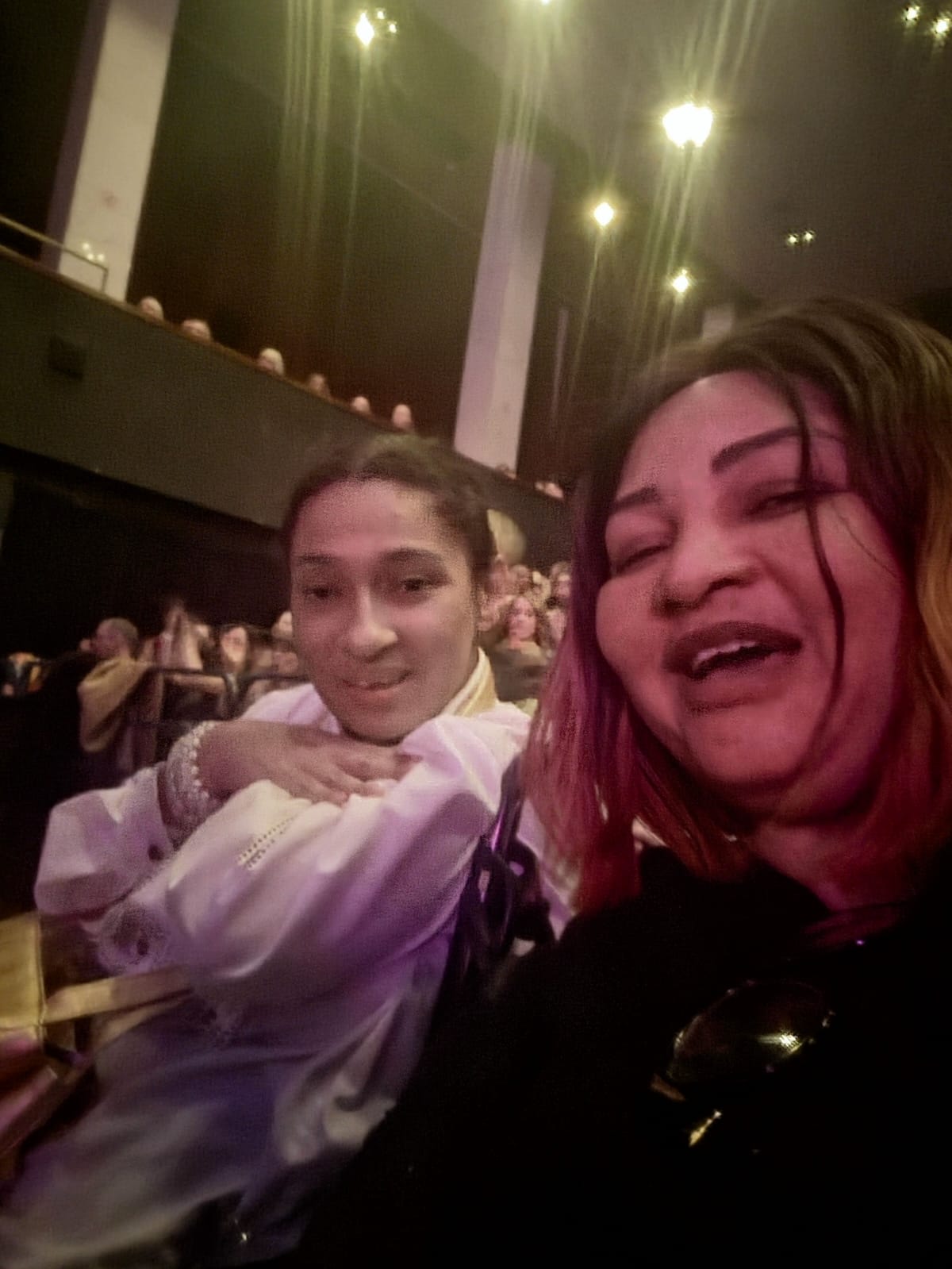

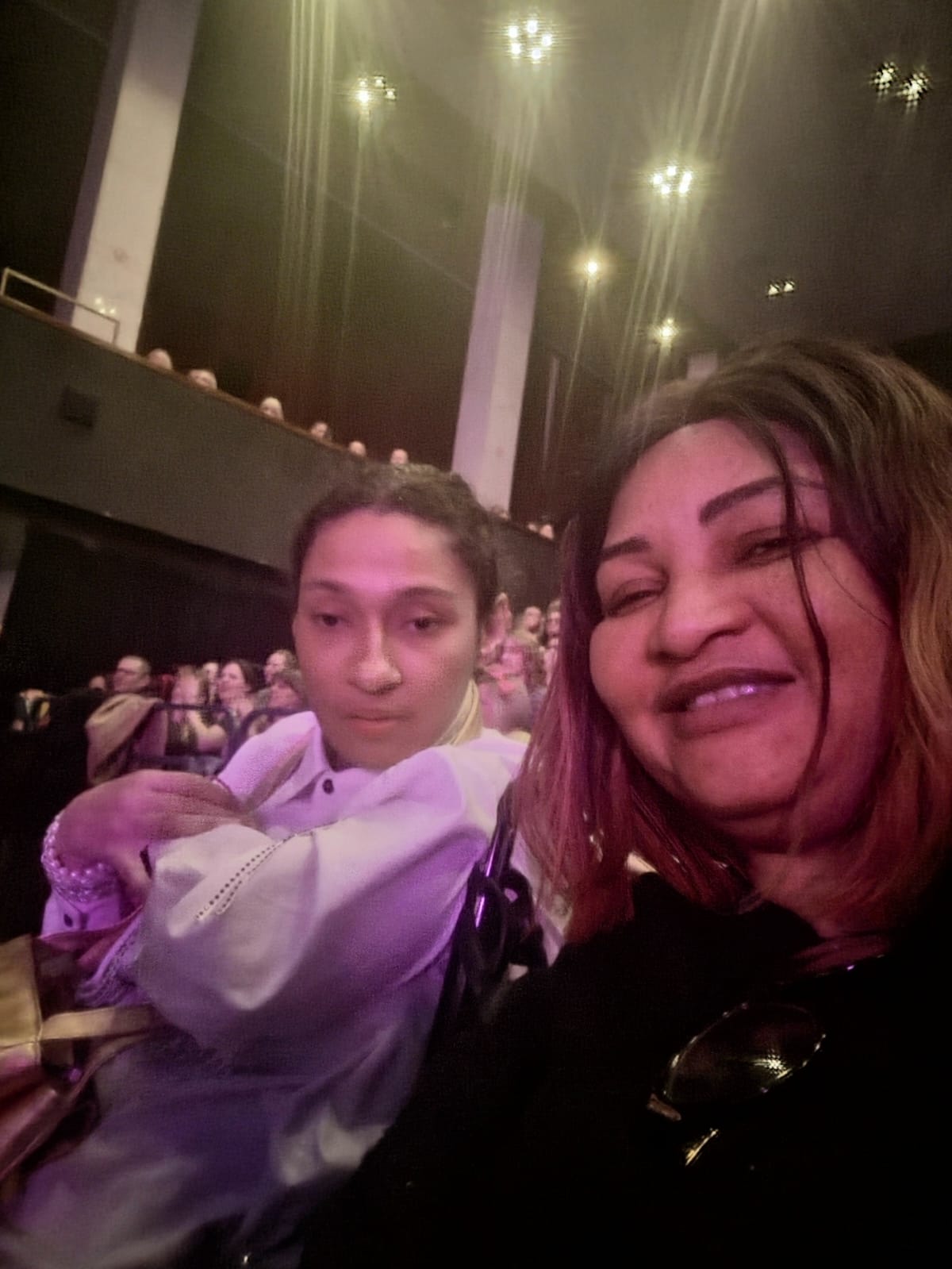


Blind Veteran Makes Candles For VE Day
“Making candles allows me to channel my thoughts and emotions into something beautiful.”
Tony Haskey has made a batch of candles to commemorate the 80th anniversary of VE Day.
The 65-year-old from Poole is selling them in aid of Blind Veterans UK, which has supported him since he became visually impaired.
“I hope that people can burn a candle, think of those who laid down their lives for us, and know that the candle is burning in their memory,” he says.
“It would be a wonderful thing for me and my heart,” he adds.
Mr Haskey has adapted his candle-making process because of his sight loss.
“I use talking scales to weigh up the fragrance, I’m using and I purchase wax in blocks of certain weights so I can cut them to the right size, consistently,” he explains.
Mr Haskey joined the Royal Marines aged 16.
But later, on an overseas operation, he felt something amiss with his vision, and a medic told him he had an incurable eye condition.
He says: “I was feeling low, I had to return to the UK alone and leave my unit and comrades behind.”
He was diagnosed with retinitis pigmentosa, a condition which worsens over time.
Retinitis pigmentosa
It is an inherited eye condition that affects the photoreceptor cells responsible for capturing images from the visual field.
These cells line the back of the eye in the region known as the retina and help with low light, peripheral vision, and seeing detail and colour.
As these cells die there is a gradual decline in vision.
More than 80 causative genes have been identified, and faults in any one of these can cause the disease.
Mr Haskey was 27 when he was diagnosed, and he says his world “fell apart”.
“I was absolutely devastated by the news,” he recalls.
“I went home from the hospital and started to contemplate what I’d been told. I got depressed and felt that was the end for me.
“The career I’d set up to do well in had come to an end. I didn’t know what job opportunities were available to me.
“I was frightened and alone.”
But Blind Veterans UK sent him to its rehabilitation centre in 1993 to learn about basic housekeeping, cooking and computer literacy skills.
He says when he arrived he was in a “deep void with no self-confidence, no self-worth and no self-belief” but that each day there was a “new beginning”.
Half of the profits for his candles will go towards the charity.
Speaking about VE Day’s anniversary, he says: “As someone who is still fortunate to be here today, I look back at the legacy that the young men and women left behind and fail to see how anyone couldn’t acknowledge their worth.
“We have our liberty today because of their sacrifice.”


British Paralympian Reported Missing In Las Vegas
Friends and family of a British Paralympian who went missing in Las Vegas are appealing for help in finding him.
Sam Ruddock from Rugby in Warwickshire, who has competed in shot put, cycling and sprinting, had travelled to the United States to watch a WrestleMania event and was last heard from on 16 April.
His close friend Lucy Hatton said his disappearance was “really, really out of character” but that he had not “been in quite the right head space” recently.
She said Las Vegas police were aware and were treating him as a missing person.
Ms Hatton said her friend, who has cerebral palsy, was a “fantastic human being” who enjoyed going into schools to “inspire the next generation”.
She said she drove him to the airport on 13 April and knew he had been staying at a hostel in Las Vegas before the big wrestling event.
Mr Ruddock was “very active on social media”, she said, so when all contact stopped on 16 April, she said “it started to raise flags”.
His mother, Fran Ruddock from Lincoln, said he normally spoke to her every day and was usually “very sociable”.
She asked anyone who might know him, in the UK or United States, to get in touch if they had information.
“Anything at all to piece together the gaps,” she said.
Along with his mother, Ms Hatton said she alerted the police in the UK and they raised the case with police in the United States and with Interpol.
She said she had also spoken to the hostel where he had been staying and was told he had not checked out, but his possessions had been left in his room.
British Cycling said it understood he had been reported missing to police in the United States and the UK.
A spokesperson added: “We urge anyone who has been in contact with Sam since 16 April or may have any information of his whereabouts to contact their local police department as soon as possible.”
Lincolnshire Police confirmed there was an active missing persons investigation.
A Foreign Office spokesperson said: “We are supporting the family of a British man reported missing in Las Vegas and are in contact with the local authorities.”

Pass the Pig Game
Played pass the pig game with Izzy before our wacky wheels group finish for Easter? She attended the group with me. Did this with blowup pigs that we threw and then whatever side it landed on it gave us a score, depending on which way it landed. Pass the pig is a great game, if any of you want to try even for those with limited hand function because the pigs are large and inflatable so will not injure anyone. Take a look at this video and see if you would like to play with some of your friends or groups.

Disability PAs turn hairstylist. My PA style of this month

Prescott’s Son To Run London Marathon For Dementia
The son of John Prescott is running the London Marathon to raise money for dementia research in memory of his father.
The former deputy prime minister died at the age of 86 in November 2024 after living with Alzheimer’s disease for a number of years.
David Prescott said as well as fundraising, he was taking part in the race to raise awareness of the condition.
“It’s the biggest killer of people in the UK,” he said.
“For every one dementia researcher there’s four researchers looking into cancer research.
“So there’s a big inequality in terms of funding and in terms of mindset,” said Mr Prescott.Media caption,
David Prescott: Dementia research needs more money
Speaking on BBC Radio Humberside’s Breakfast Show, Mr Prescott admitted that he did not know much about the disease prior to his father’s illness.
He said that dementia needed to be “put at the heart” of the new NHS 10-year plan.
“We need to have the same vigour that we tackled Covid with,” he said.
In a statement, the Department of Health and Social Care said it was committed to providing high-quality care to people with dementia.
“We will put Britain at the forefront of transforming treatment for dementia, continuing to fund high-quality research into the disease and ensuring that new clinically and cost-effective treatments are rolled out in a safe and timely way,” a spokesperson said.
Lord Prescott was first elected as Labour MP for Hull East in 1970 and held the seat for almost 40 years. He served as deputy prime minister between 1997 and 2007.
His funeral service at Hull Minster in January was attended by most of the Labour cabinet, including Prime Minister Sir Keir Starmer and former prime ministers Tony Blair and Gordon Brown, who all gave eulogies.
Mr Prescott said the floods of tributes paid to his father had made him feel like he was “being hit by a Tsunami”.
“To see the kind of response from people on social media, coming up to us at work, when I’m out and about and just hearing the tributes from everyone really whose lives were touched by him was just overwhelming,” he said.
“It was just lovely to see that kind of response from the people of Hull.”


The Blind Sailor
A woman who has helmed a blind sailing team representing Great Britain says the sport gives her a “sense of freedom”.
Sally Rodrigues, 47, from Bristol, was born fully sighted, but was diagnosed with an eye inflammation condition called uveitis aged six. It left her with almost no vision.
Ms Rodrigues, however, is a self-avowed “adrenaline junkie” – and has always loved the sea. This combination led her to join Britain’s blind sailing group, GBR Blind Sailing, in 2008, through which she has competed in various international races.
“I’ve got a very positive brain,” Ms Rodrigues said. “My blindness has not crushed that in any regard. I’m utterly irrepressible.”
Describing how she uses her other senses to help her navigate at sea, she said: “Your hearing and your sense of wind on your face and your body awareness of where the boat is going, you can feel all that through your body.”
Her team took second place at the Blind Match Racing World Championships in France in 2024.
Ms Rodrigues, who trains at Horfield Leisure Centre in Bristol, is now hoping to qualify for another sailing competition, which is being held in October.
“I think it takes more to shock or scare if you don’t have one of your senses,” she said.
“Sailing is a complete break from reality. If you don’t concentrate fully you could potentially have quite a nasty accident, which is mentally and physically exhausting but is something you train for.
“My trainer always says: Get comfortable being uncomfortable.”
Blind content creator and TikTok star Lucy Edwards says she’s “so excited” to be on a health kick to undergo IVF, but reveals the dilemma she faced in deciding to screen out the very gene that made her blind.
“I’m so broody,” the 29-year-old tells the BBC Access All podcast.
Lucy and her husband Ollie married at Kew Gardens two years ago and are now ready to start a family – but there are complications to consider.
Lucy has the rare genetic condition Incontinentia Pigmenti (IP) and lost her sight due to this aged 17, just months after meeting Ollie.
The condition runs through the female line – Lucy’s mum has IP although isn’t blind, her Grandma did too and her great-aunt was blind in one eye.
Lucy is totally blind, but, if she had been a boy, she may not have survived.
The abnormal IP gene is located on the X chromosome. Women have two X chromosomes, while males have X and Y, meaning the appearance of the gene can be more catastrophic in male pregnancies.
“My grandma actually had nine miscarriages,” Lucy says.
This is one of the facts that played into the complicated decision Lucy and Ollie made to opt for pre-implantation genetic testing, a special type of IVF where embryos are created outside of the body and screened for the genetic condition. Only those embryos which are not affected by the condition are placed back into the womb.
Without medical intervention, Lucy says there would be four potential outcomes to any pregnancy she carried: A healthy and unaffected boy or girl, an affected boy she would likely miscarry or who would be born with severe brain damage or an affected girl.
She pauses, then laughs: “That sounds horrible, doesn’t it? That’s me.”Media caption,
Blind influencer Lucy Edwards on writing and IVF
And that’s the quandary. IVF will edit out the very thing that has made Lucy who she is today – a journalist, advocate, author and broadcaster.
It is an emotive topic of debate. The most well-known conversation is around Down’s syndrome and the number of women who choose to abort a pregnancy once their baby is tested and diagnosed as having the condition. The question is around the value people place on other peoples’ lives which may not look like our own.
In 2021 campaigner Heidi Crowter, who herself has Down’s syndrome, challenged legislation allowing foetuses with the condition to be aborted up until birth. She took her case to the High Court arguing the rules were discriminatory to disabled people who could live a good life. She lost the case and the subsequent argument she made at the Court of Appeal. The European Court of Human Rights (ECHR) later rejected it as well, but Heidi continues to campaign to have the law overturned.
It is something Lucy is very aware of and she and her husband have spent a long time considering.
“It’s understanding that it is removing that part of me that makes me, me,” Lucy says. “It’s such a personal decision and I know that I’m opening myself up for possible designer baby discussions, but I know I’m doing it for the right reasons.”
Lucy says first being diagnosed with IP and then losing her sight as a teenager were both traumatic events and she wants to minimise the likelihood of miscarriage to limit any future traumatic load.
She says she found it impossible to “knowingly” consider having a baby naturally once she knew the science was available to give a baby the healthiest start possible.
“If I had a baby and, unknowingly, I had a gorgeous, gorgeous baby with disabilities, I would be so thankful, so happy and amazed but knowingly having this gene? That’s why we’re having IVF.”
IP doesn’t just cause blindness, it can also cause severe epilepsy and more difficult outcomes. Lucy says having the option to ensure complications were not passed on felt like both a responsibility and a privilege previous generations did not have.
“Whether we like it or not, we have to be responsible here. Maybe a responsible issue for you, if you have IP or another genetic disorder, is to have a child naturally and we are not judging you in any shape or form, this is just our decision.”
In response to their openness around this decision comments were overwhelmingly positive from Lucy’s fans which she thinks might be because she is so “disability positive” in her everyday life – “I love being blind,” she frequently states.
But Lucy says responses have been different around the world. When she was working in Japan and her content was reaching audiences unfamiliar with her story, she faced a lot more trolling.
“I got a lot of abusive comments that go into my spam filter questioning why I would be a mother,” she says. “I know that I’m going to get a lot of abuse, but I’m just going to block them.
“I’m going to be OK. All I think about is the other mothers that have come before me who are competent, capable and resilient.”
Lucy, who is known for her How Does A Blind Girl… series of videos, is overjoyed by the prospect of IVF but she has also been frank about the fact she currently does not qualify, owing to her current weight, a sensitive element of IVF treatment that many keep to themselves.
NHS guidelines specify your Body Mass Index (BMI) must be 30 or under to qualify – a healthy BMI is considered to be between 18.5 and 24.9.
“I need to be a BMI of 30 and I’m very open that I need to lose 9kg,” Lucy says. “I’ve already lost 15kg.”
Her health journey has involved swimming, lifting weights and many runs with Ollie tethered to her as her sighted guide. She has also found a love for batch cooking nutritious meals which she posts about on all of her channels on Instagram, TikTok and YouTube and the workarounds she has developed as a blind cook.
“I wanted a positive representation of losing weight online because it’s all about this blinking jab,” she says, referring to weight loss injections. “I just wanted to lose it healthily, have lots of nice food, talk about meal prep and just smile and run.”
Once she hits the required BMI, Lucy will qualify for three rounds of IVF on the NHS.
She will contact her consultant, after which she has to “spit in a cup” and offer up her DNA for genetic testing and analysis.
Over a period of about three months, a genetics team will “make a bespoke test to find the gene within my eggs,” Lucy explains.
Meanwhile Lucy will inject herself with trigger shots to stimulate the follicles within her ovaries to increase the number of eggs produced which will be retrieved, and then made into embryos with Ollie’s sperm.
The embryos will then be tested so only ones without the IP gene will be possible candidates. Those embryos will be “shuffled about” so Lucy and Ollie don’t know which will be selected in terms of gender or other genetic qualities, and implanted into Lucy, who will carry the baby to term.
Lucy can’t wait for the moment she holds her baby in her arms.
“It will never stop being a thing within my mind that this gene is being eradicated,” she admits. “But I am very happy in my decision.”
A few days ago Lucy posted on Instagram, her cardigan tightened at the back with a hairband to make it smaller and fit.
“I’ve lost so much [weight] that my clothes are too loose now so we had to tie it up with a bobble,” she tells her followers.
“Fingers crossed [we’re] only a few weeks away from ringing the clinic.”
‘You Don’t Look Like Someone Who Gets An MBE’
Disabled people should be more fairly recognised in the honours system as part of the government’s push to make awards reach a wider range of people, says Carly Jones, an advocate for the rights of autistic women and girls.
But she tells BBC News she has seen firsthand how people’s attitudes need to change, including after she was appointed MBE in 2018.
Carly remembers being at a doctors’ surgery where there was a call for a Miss Emby.
“We’re all looking round and I said: ‘Is it Jones MBE’?” realising the award had been mistaken for a surname.
“You don’t look like the sort of person who would have one,” Carly was told.
“I don’t know what that meant,” says Carly, who campaigns to help women with autism in education, employment and health services.
Not only was Carly appointed MBE, she’s on one of the honours committees that decides who else should receive an award, such as knighthoods, CBEs, MBEs and OBEs, in the New Year and King’s Birthday Honours.
As a disabled woman herself, she wants to make sure the charity and community work of people with disabilities isn’t overlooked and taken for granted.
An important part of that is to encourage more people to put forward nominations.
“Everyone knows someone who deserves an honour,” says Carly, who wants to “challenge the myth that this is a system for the elite”.
In terms of the honours committee, she says: “We can only look at what’s put in front of us.”
There is also a concern, she says, that people shouldn’t think that someone has received an award just because of a disability – “because that would devalue the system”.
There is scrutiny to make sure that those receiving awards of all types have personally worked very hard for good causes. “It can’t just be someone who donates a million pounds and then gets a knighthood,” she says.
Carly, who wasn’t diagnosed with autism until she was an adult, experienced homelessness and lived in a hostel, and she wants the honours to reflect those who have come from a difficult position but have made a big difference helping others.
The Cabinet Office says the number of people with mental and physical disabilities receiving awards has been increasing over the past decade – from 6.3% of recipients in the New Year Honours in 2015 to 15% in the list for 2025.
These were not broken down by type or level of award, but overall it is the highest number to date of disabled award winners.
It’s a positive sign in the push for the honours to be more representative, but it is still below the proportion of people with disabilities, with the 2021 census figures suggesting almost 18% of people in England and Wales had a disability.
Sir Stephen Timms, Minister for Social Security and Disability, said he was “delighted to see more disabled people rightly recognised and celebrated for their remarkable achievements”.
But the government has accepted there are wider problems with many groups being under-represented in the honours – in terms of geography and social class – particularly in the higher awards, such as knighthoods, damehoods and CBEs.
An independent chair is going to be recruited to improve diversity and outreach within the honours process – and Carly says they will be checking through all levels of awards.
It follows a BBC analysis revealing that in the most recent New Year Honours only 6% of higher awards went to people in the north of England and 4% to people from working-class backgrounds.
The most recent New Year Honours had been presented as recognising “unsung heroes” and “community champions”. But in practice the higher awards were heavily skewed towards people from wealthier backgrounds, particularly in London and the south-east.
Prime Minister Sir Keir Starmer says he wants the honours system to be “properly diverse and reflective of UK society”.

Paralympic Star In Hotel After No-Fault Eviction
A Paralympic champion who faced homelessness after a no-fault eviction has said the stress of it has left her with debilitating headaches.
Megan Giglia, who won gold for Team GB in track cycling at the 2016 Paralympics, told the BBC she and her nine-year-old child had to leave her rented Stockport home in March after being given notice by her former landlord.
After seeking help from Stockport Council’s homelessness prevention services, she has moved into a hotel funded by Stockport Homes while she applies for homes on the housing register.
The provider, which manages the authority’s social housing, said it knew the situation was “distressing and frustrating” and had done everything to help.
Giglia suffered a stroke and brain haemorrhage in 2013 which left her with weakness on her right side and difficulties with balance.
Stockport Homes said she needed a level access flat or bungalow with a level access shower after an assessment of her medical needs.
However, she said she disagreed over the type of social housing property she needs and would be happy with a house with stairs.
“They’re not allowing me a choice,” she said.
She said she was at a loss as to how the situation had come about.
“I just don’t know how I’ve ended up in this,” she said. “I get severe headaches from the stress of it all. It’s not great, but I manage because I have to.”
She said the situation had also impacted her sporting career and she had to leave a talent academy for the British shooting team where she was aiming to compete at the “highest level”.
The 40-year-old moved to Greater Manchester from Kent for access to sports and training facilities.
Her win in Rio de Jainero was Team GB’s first medal of that event and came just months after she won two golds at the UCI Para-cycling World Championships.
She was made an MBE in the 2017 New Year Honours for services to cycling.
A Stockport Homes representative said decisions around housing offers were “never taken lightly”.
“Sadly, this challenge isn’t unique to Stockport,” they added.
“Unfortunately there simply isn’t the accommodation available in the numbers needed to meet the demand.”
What’s A Sign Name? Rose Ayling-Ellis Explains
I found this interesting and I thought you might too, readers.
“I made a real decision when I was, like, 11 that I wasn’t gonna be like a typical teenager,” says Bella Ramsey.
Talk about an understatement.
By the time Bella was 13, they had been cast in the world’s biggest TV show at the time, Game of Thrones.
And when the actor, now 21 years old, speaks to BBC Newsbeat, it’s the night after walking the red carpet at the London premiere of The Last of Us season two.
The smash-hit adaptation of the PlayStation video game was a critical and ratings success, launching the young star to full-on leading role status.
“I think it’s quite a unique experience,” Bella, who’s originally from Nottingham, England, modestly admits.
The rest of this article contains spoilers for The Last of Us season one.
Bella, who uses gender-neutral pronouns, plays Ellie in the HBO drama, set in a post-apocalyptic future where humanity has been almost wiped out by cordyceps.
The deadly parasitic fungus turns humans into zombie-like creatures, but Ellie is immune from infection and is humanity’s last hope for a cure.
In the first season viewers saw a father-daughter relationship slowly blossom between Ellie and mercenary Joel, played by Pedro Pascal.
After escorting the 14-year-old on a dangerous journey across the USA to meet doctors working on a vaccine, it becomes apparent Ellie must die for a potential remedy to be produced.
Rather than sacrifice her, Joel kills the medics and flees with the unconscious teenager.
When she awakes, he lies to her about what happened, and season one’s cliffhanger ending leaves viewers with the strong impression that Ellie is well aware of the deception.
So when the new season begins, five years later, “obviously there’s tension in that relationship,” says Bella.
“It was quite horrible to play.”
Young Bella’s vow to not be a “typical teenager” was actually less about their career and more about their relationship with their parents, they say.
No screaming matches, no slamming doors.
“So I never went through that with my dad,” says Bella. “Me and my dad are great.”
“So it was kind of sad to do that with Ellie and Joel.”
But, Bella adds, Ellie “is very justified in her feelings about everything”
Ellie is 19 in season two, not too much younger than Bella, who began shooting the first series back in 2021.
Number two was delayed by the 2023 Hollywood strikes, so a lot has happened for Bella in the meantime.
There’s symmetry there.
“It’s so fun getting to step back into a character but with kind of new revelations about her and about me in my own life,” says Bella.
“There’s always like a merging of me and whatever character I’m playing and that happens times 10 with Ellie because I’m spending so much time in her skin.”
Bella’s recently spoken publicly about being diagnosed with autism while working on the first series of the show.
“It was something that I didn’t really think about too much before,” Bella starts.
“Actually, no, that’s a lie. I did, because I said that I was neurodiverse before, and then I was like, ‘Why don’t I just say what it actually is, which is, yeah, I’m autistic.”
Bella says opening up has allowed them “to be a bit more free” and hopes it will inspire others.
“You can be in industries like this and openly say that you’re autistic, why there shouldn’t be sort of such a stigma around that and such a fear around that,” says Bella.
“So I’m very proud to be able to say it out loud and also just to bring more awareness.
“Autism comes in all different shapes and sizes, and and I’m not someone that people would maybe typically see and go like ‘oh, you’re autistic’.”
Bella also identifies as non-binary, and the new series of The Last of Us more deeply explores Ellie’s same-sex relationship with Dina, played by Isabella Merced.
“I feel like we’re still figuring out how to portray queer storylines in the media in a way that feels very authentic but that also feels very genuine in terms of the story,” says Bella.
“That’s what The Last of Us does so well, I think, with Ellie and Dina.
“It doesn’t feel like it’s like representation added on top to check a box – it really feels like it’s just a part of the story.
“So that was what was exciting about getting to portray this sort of relationship in this medium.”
The Last of Us has already been commissioned for a third series after a positive critical reception for season two, so Bella – and Ellie – will still be growing up in the public eye for a while yet.
It’s something that “comes with pros and cons,” says Bella.
“But it’s kind of lovely that my growth and development has been immortalised on-screen.
“I feel very grateful for that.”
But Bella says there’s one thing that doesn’t get any easier.
“The more that you grow up, you just realise how little you know, I think. And I think that’s something that Ellie is also discovering.”
The Last of Us Season two launches on Sky and streaming service NOW on Monday 14 April.
Wheelchair Basketball Club Receives £24k Donation
A wheelchair basketball club described by its members as “a family” is set to thrive, thanks to a £24,045 donation.
The funding will support the Bath Romans, a team of young wheelchair users, by covering training, coaching, and tournament costs for the next three years.
The donation also includes new home and away kits which the young players helped design and will wear at tournaments.
The donation came through Omaze, an organisation that runs charity prize draws.
Bath Romans is part of Nova Sports, a not-for-profit organisation offering inclusive sporting opportunities for young people with disabilities, neuro-divergences, and their siblings.
In just four years the club has built a strong, vibrant community of players and families.
Jenny Johnson, who co-founded Nova Sports with her husband Alex, called the funding a “fantastic boost.”
She said: “This will not only mean our players will turn up to matches looking the part and feeling confident, but the main benefit is the security it brings.
“We now know we can enter the tournament series again next season and we can commit to these kids that their club isn’t going anywhere.”
Jenny and Alex, who met while studying sport and social sciences at the University of Bath in 2012, have dedicated their lives since 2017 to developing inclusive sports programmes in the region and launched Bath Romans in 2021.
Mr Johnson, who coaches the team, said: “Many of these kids don’t join PE at school because they’re not catered for.
“We create a space where they can thrive, make friends and feel proud. They go back to school with medals and stories – it gives them something they haven’t had before.”
Chrissie, whose 14-year-old daughter Ana joined the club in 2021, said the transformation has been remarkable.


 Same Difference