💚🇬🇧💜

karaoke, the other
last night holiday yesterday night home today
last night activity for me and one of my friends

off my holiday please continue to praise my name so I can do
First Ever Paralympics Fan Zones Come To London
Two official fan zones have opened in London, allowing people to watch the Paralympic games, for free, on large screens.
The main fan zone at Battersea Power Station, south west London, will also provide visitors with the opportunity to try some Paralympics sports such as wheelchair racing, wheelchair fencing and boccia.
The other fan zone is located at Westfield shopping centre in west London.
Both areas have previously hosted fan zones for the Olympics, but this is the first time the Paralympics have been shown.
The new Paralympic viewing areas join a nationwide network of fan zones that opened on Wednesday, just ahead of the Paralympic opening ceremony.
The zones in London, Birmingham, Liverpool, Bristol and Southampton will be open for each of the 11 days of the Paralympics.
Organisers say there will also be opportunities to meet Paralympians from previous Games at some of the venues.
ParalympicsGB CEO David Clarke said: “I’m absolutely delighted that fans and supporters will have the chance to come together, watch and enjoy the Paris 2024 Paralympic Games at a number of fan zones across the country – and of course celebrate the achievements of ParalympicsGB athletes.
“The fan zones, along with the opportunities to have a go at a variety of Paralympic sports, present the public with a unique chance to really embrace these Games and all that Paralympic sport can offer.”
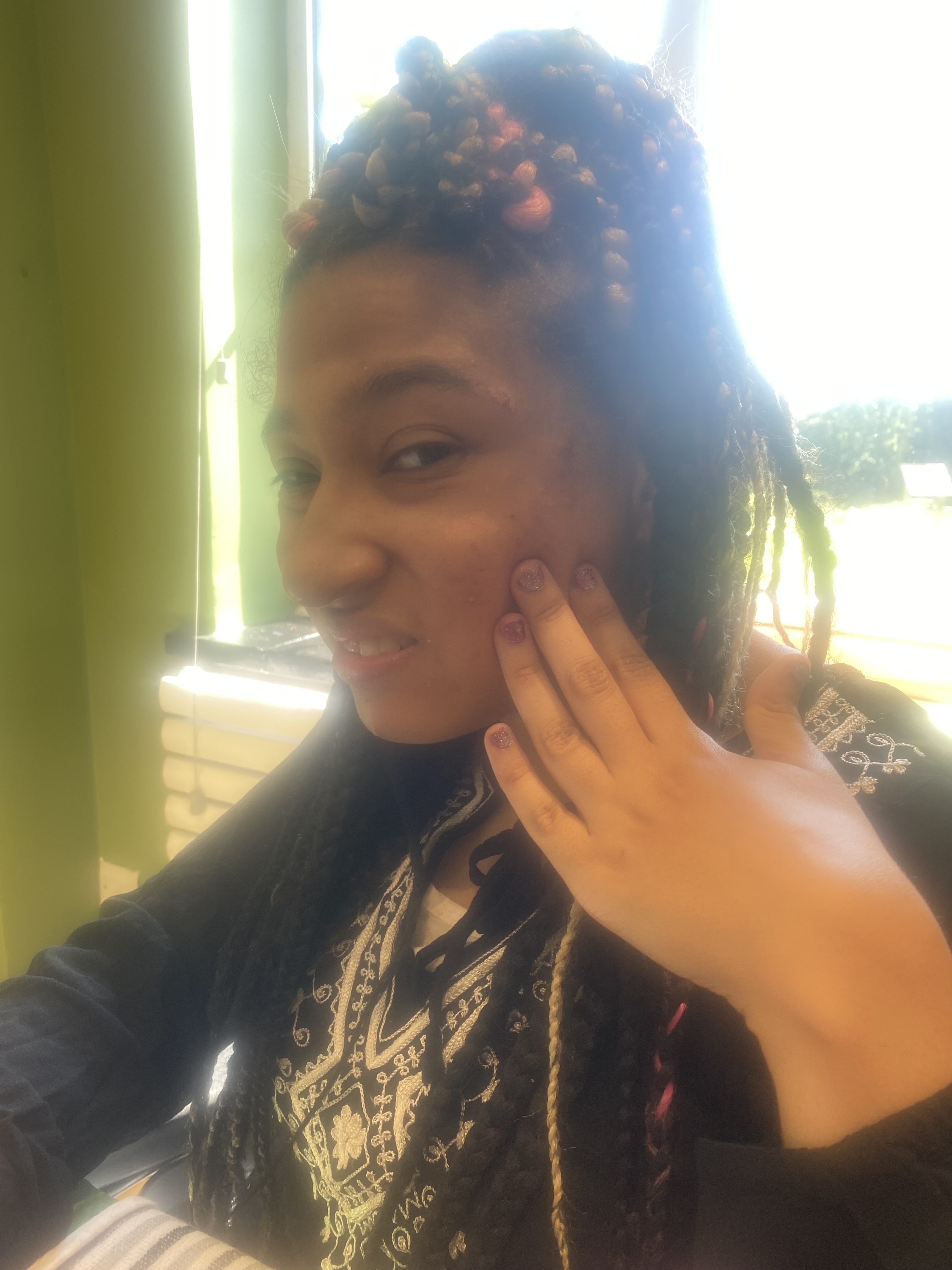
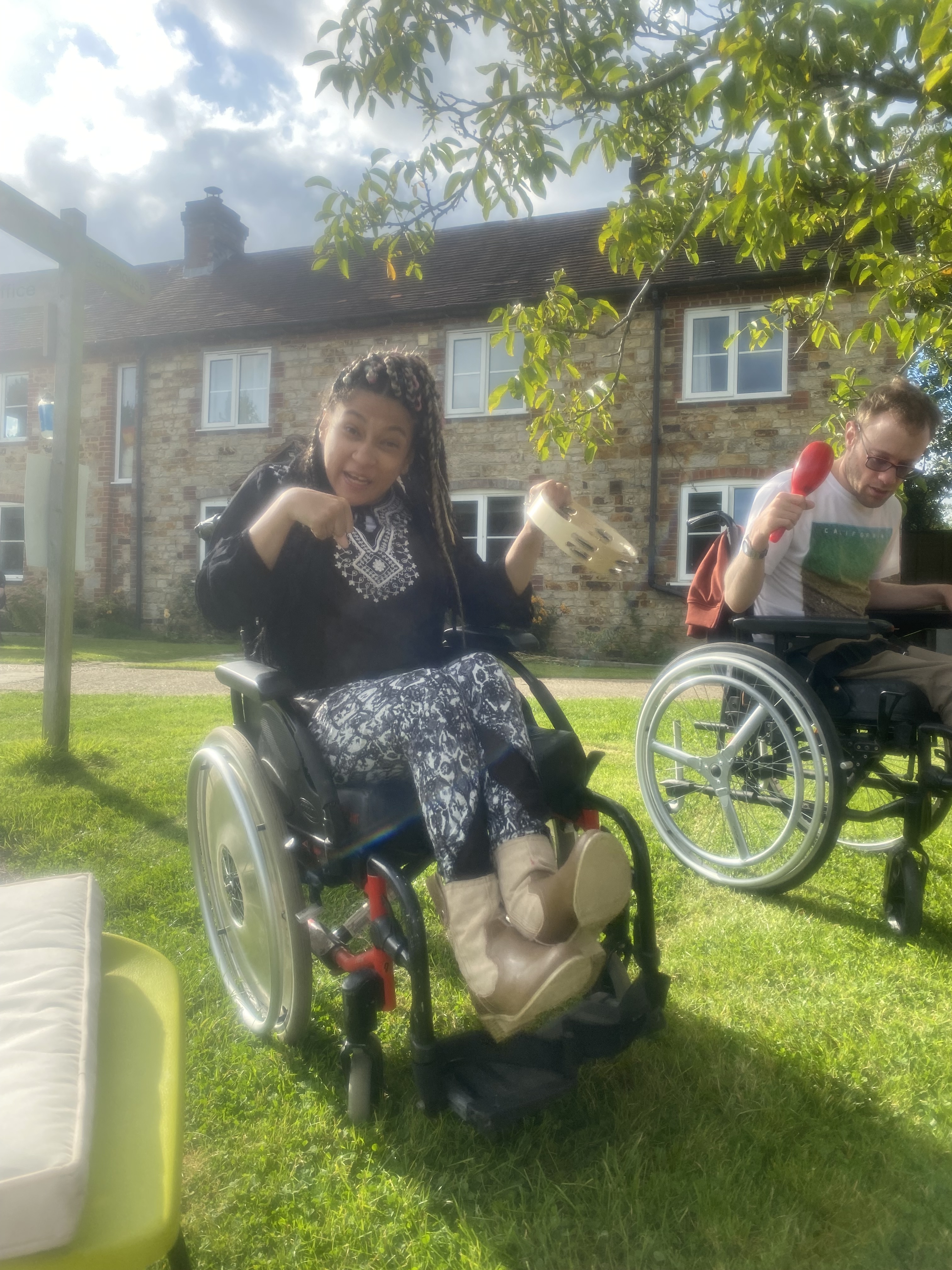
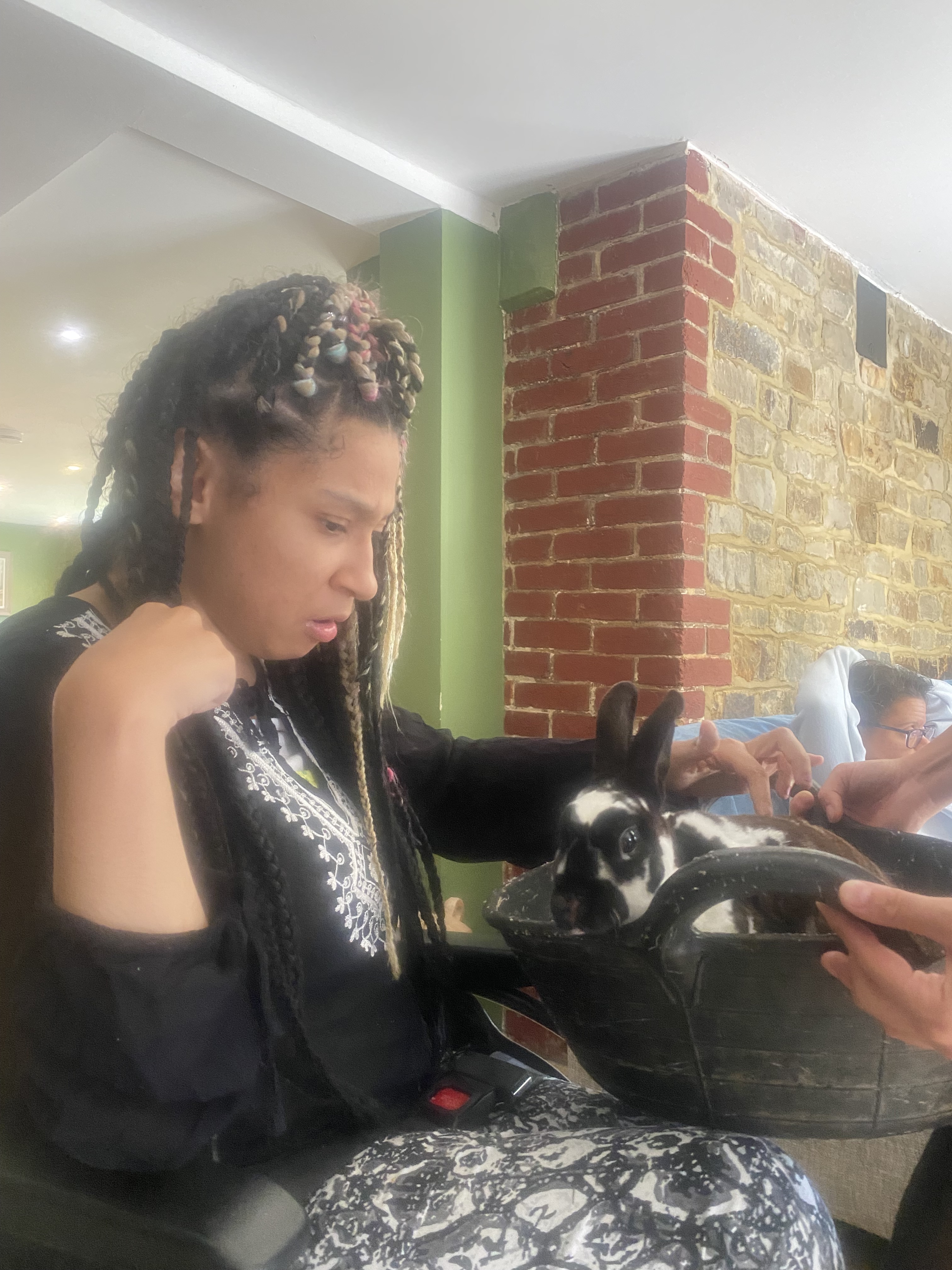
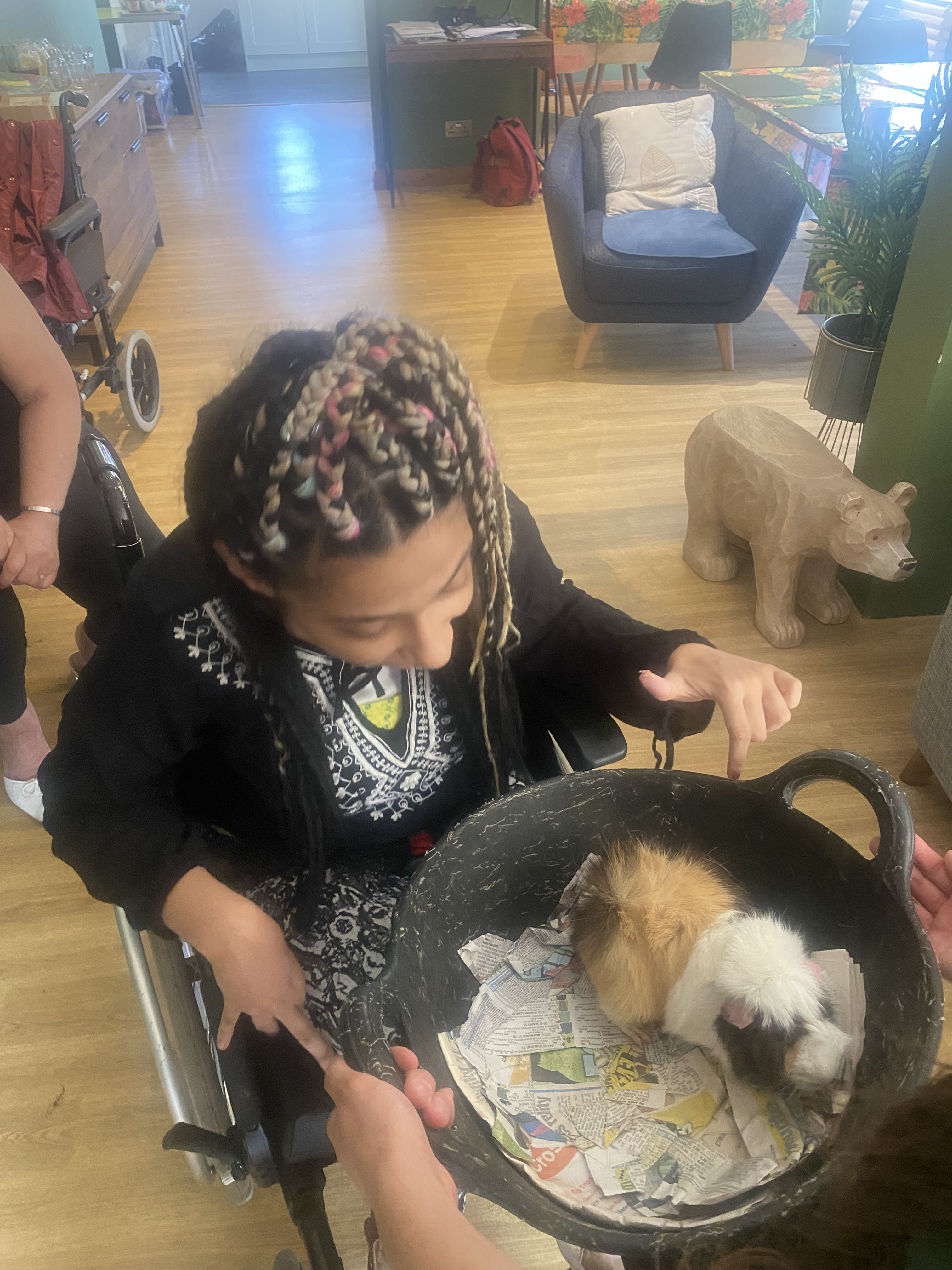
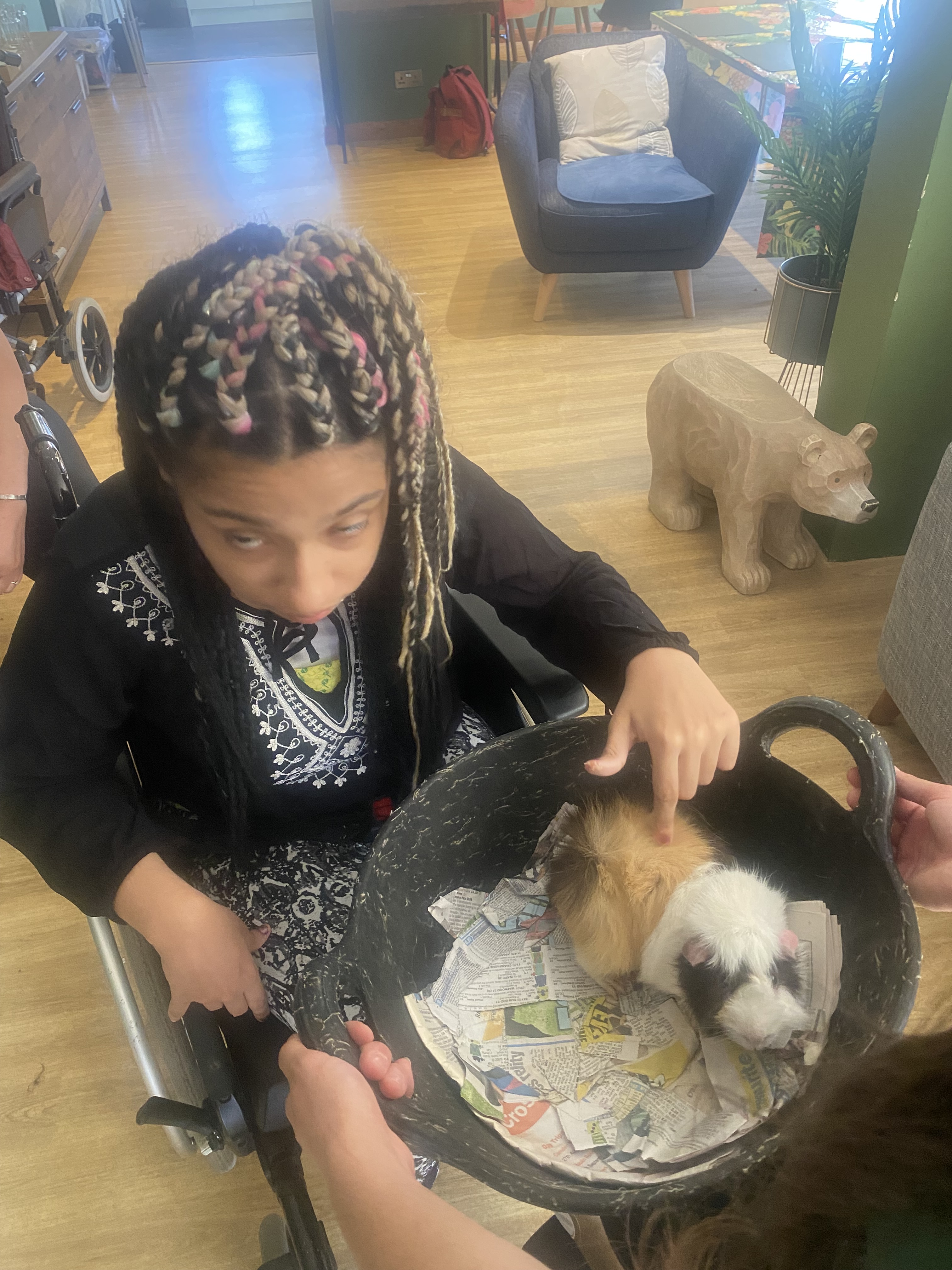
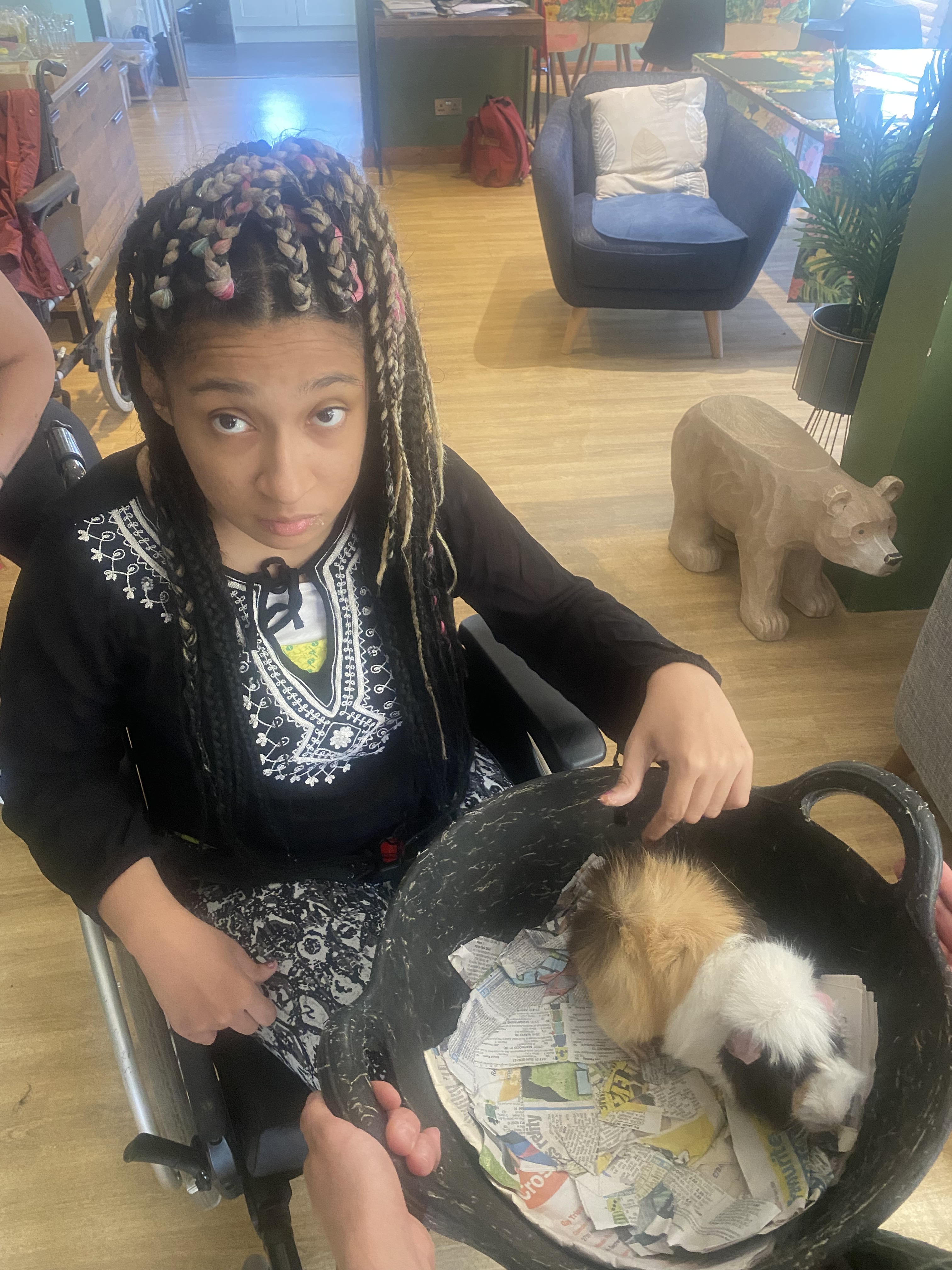
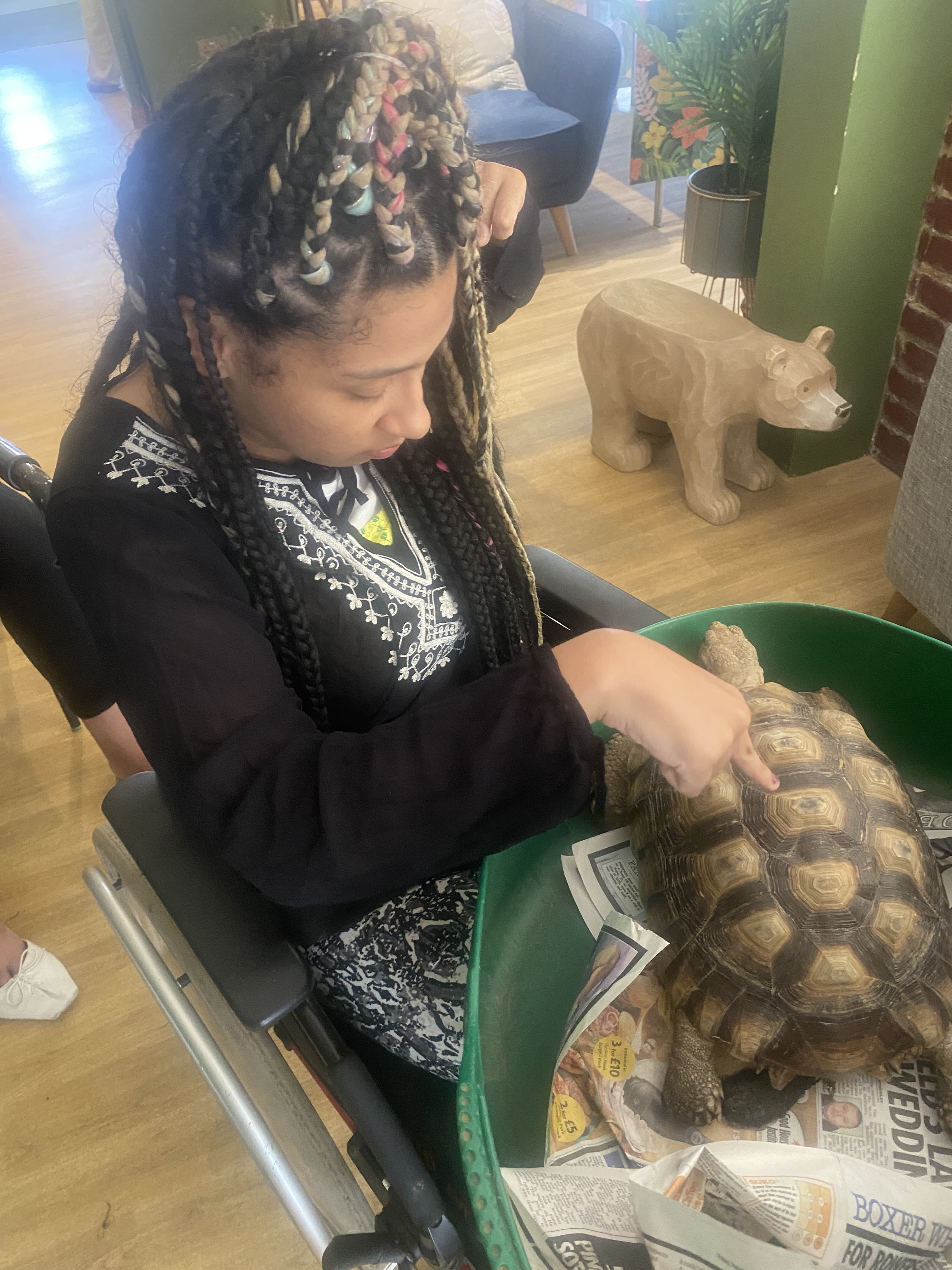
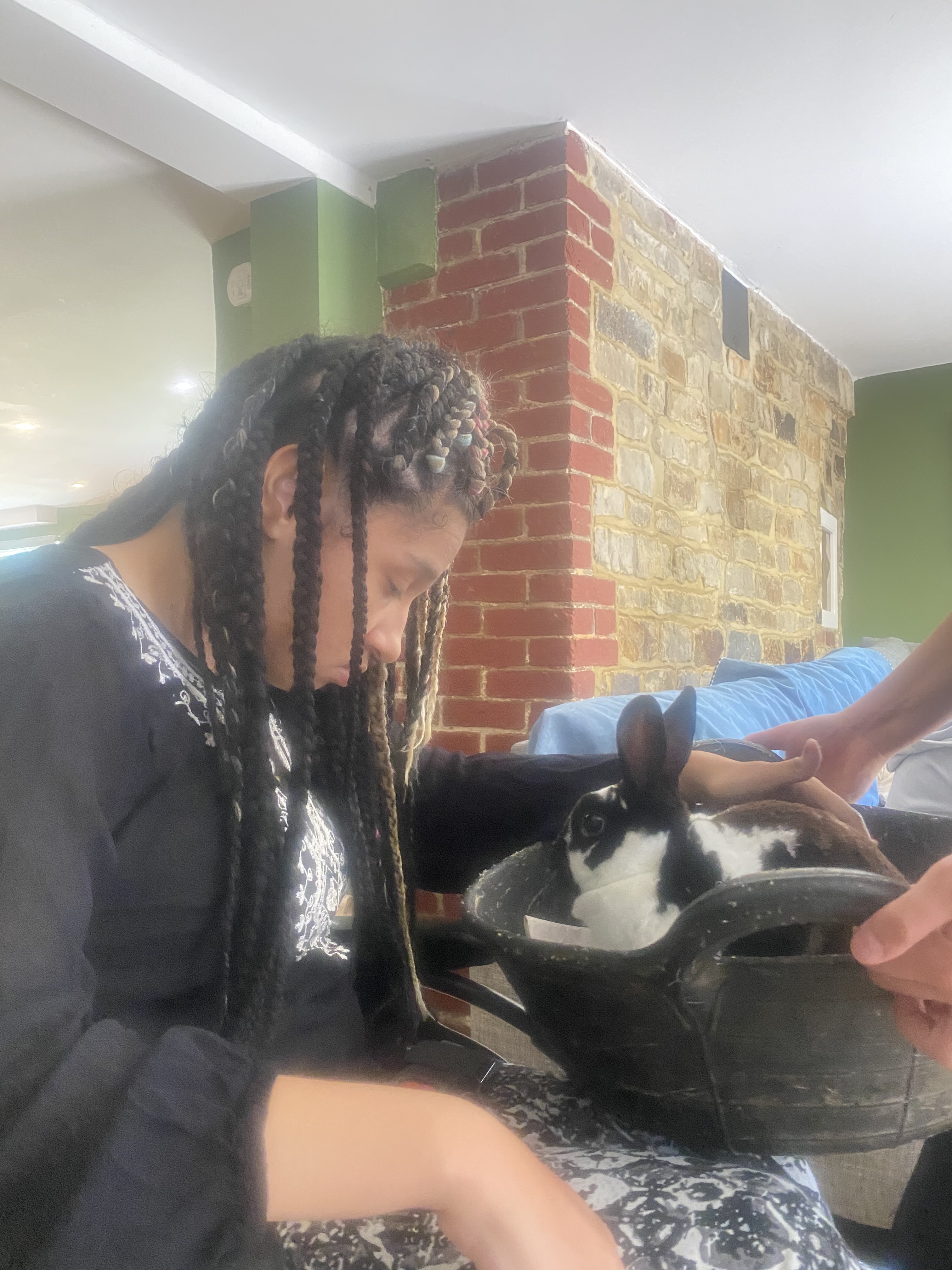
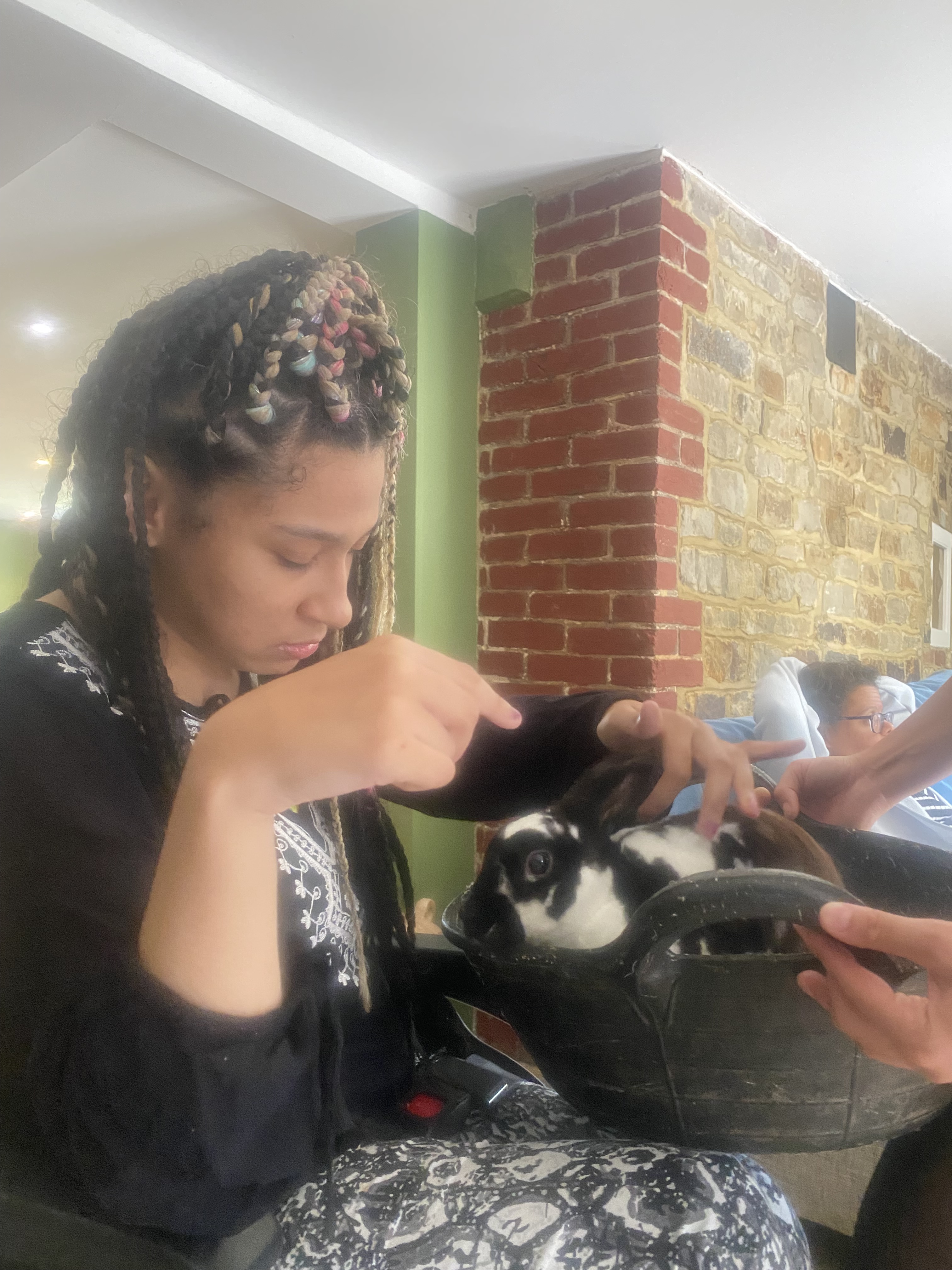
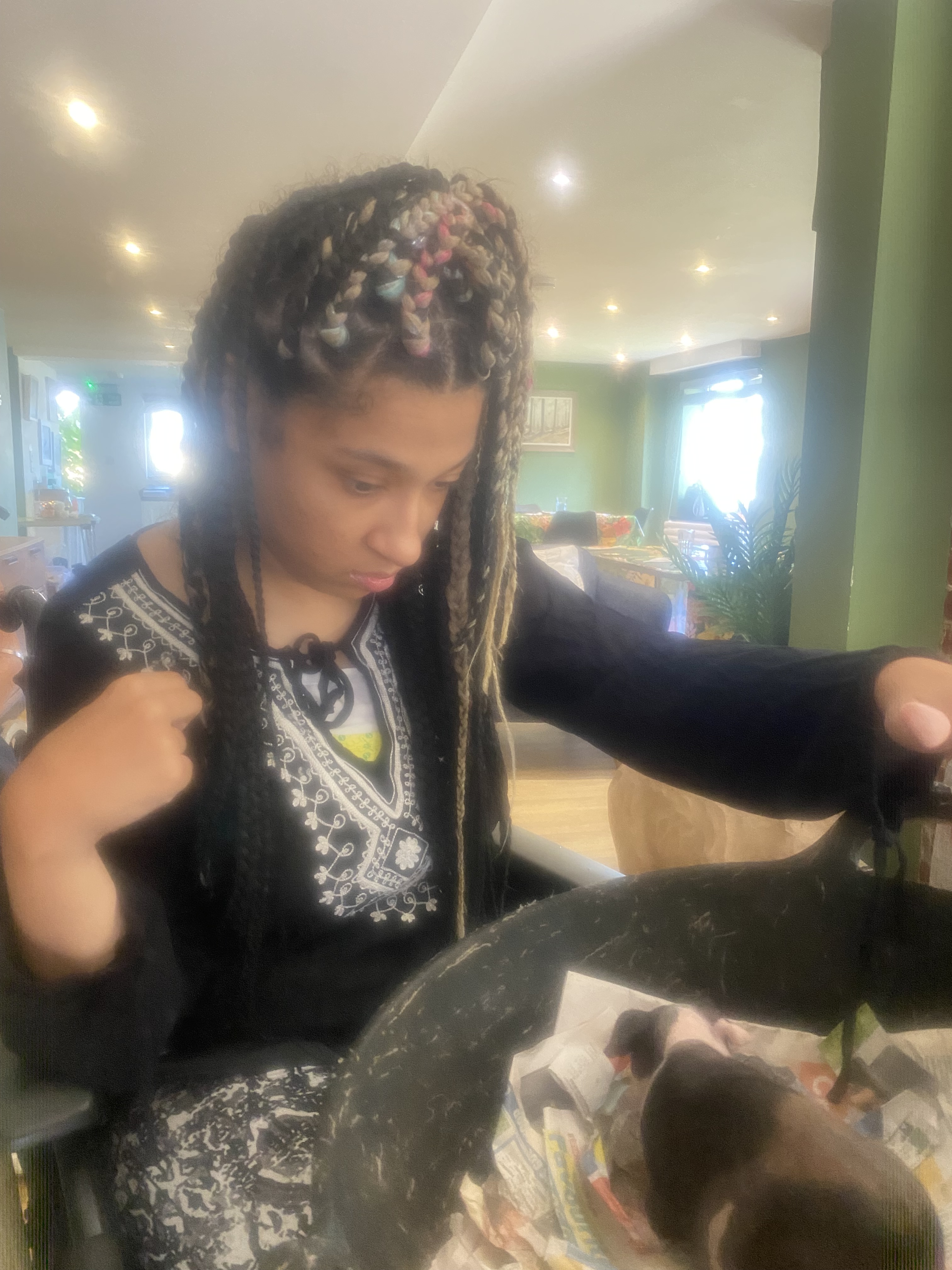
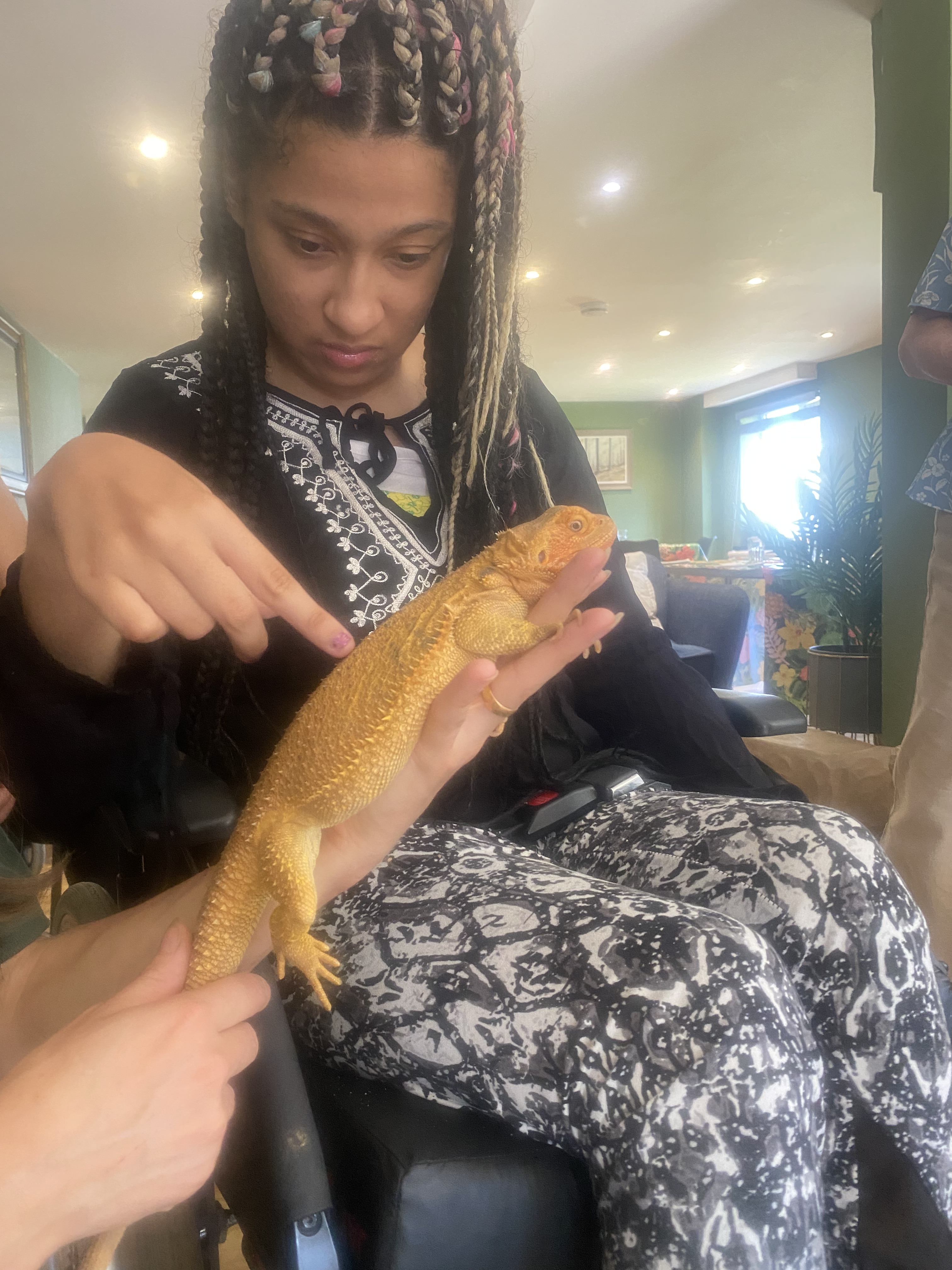
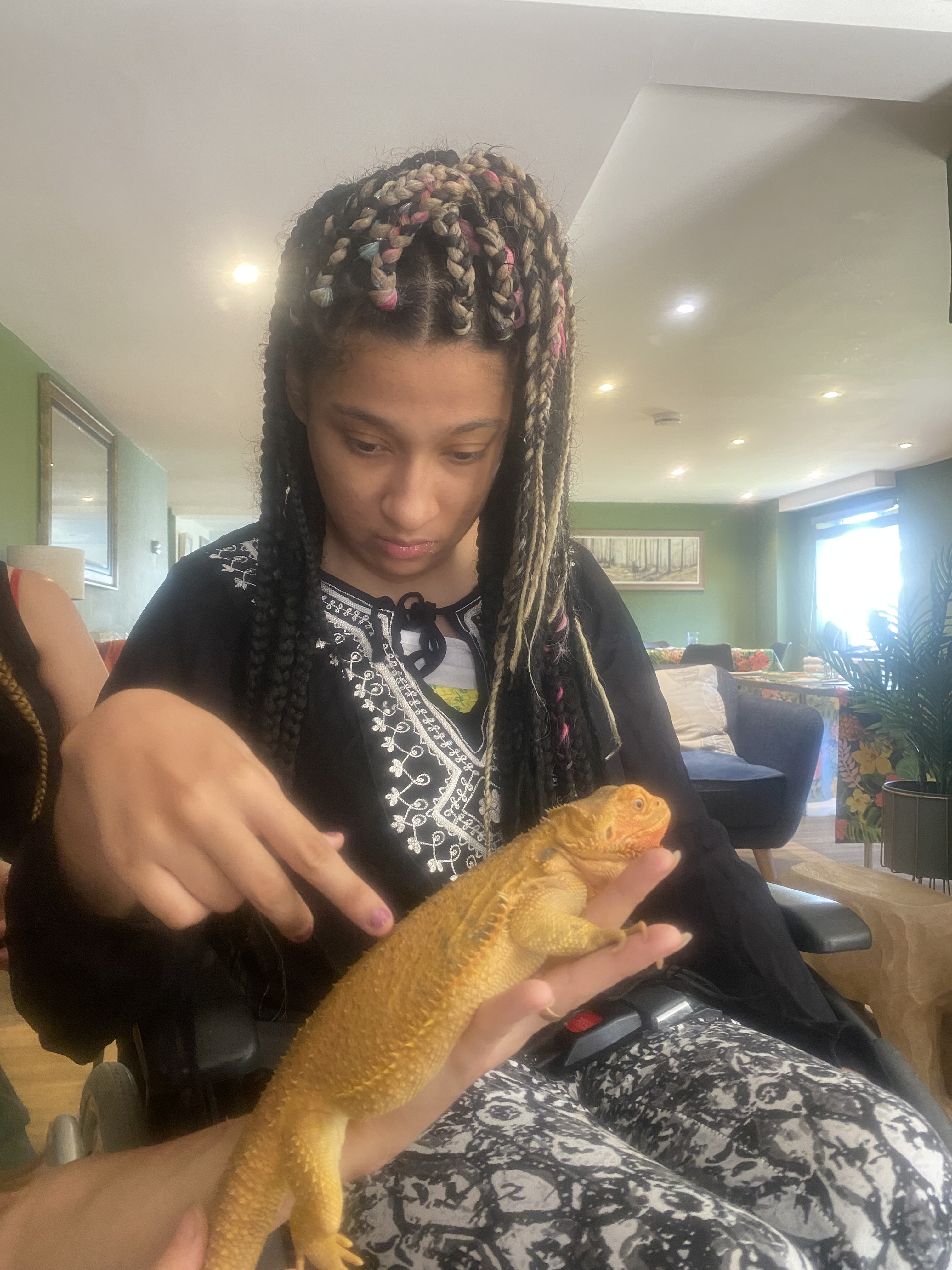
today respite travels enjoyed animal encounters


Communication Aids To Be Rolled Out To More Playgrounds
A charity which supports families of children with special educational needs and disabilities has been asked to make 11 more communication boards for playgrounds after a successful pilot.
The Leicestershire SEND Hub made two visual aids, which were put in place at Queen’s Park, in Loughborough, in February.
The boards contain letters, words, numbers and symbols, which children and young adults can point at, to help them communicate.
Megan Stewart, who designed the boards, said they have orders for 11 more locations – 10 parks and one school – across the county.
Miss Stewart, from Leicestershire SEND Hub, said she based it on PECs books, which stands for Picture Exchange Communication System, that her son used.
She said her son, now aged eight, was completely non-verbal until he was five-and-a-half years old.
“He could choose the cards and semi-construct a sentence with it.”
Talking about the design of the aids, she said: “We started off with a set of squares, and filled in things you might need to say at a park.
“We added in an alphabet because some children learn to finger spell instead of talking, and some numbers.
“We added on all the information around it so people knew what it was.”
She added the project was to “increase inclusively”.
“We want parents and children, who maybe have never come across this before, to see these boards and learn about it, so SEN children can communicate with non-SEN children.”
Talking about the interest in the boards, Robert Martin, co-CEO of Leicestershire SEND Hub, said: “It’s still in the early stage but it’s really exciting that people are coming to us and engaging without us advertising.
“As a charitable organisation, it is great to use our resources and our funding to the best effect.”
Charnwood Borough Council fitted the two communication boards in Loughborough.
Councillor Anne Gray said: “The boards have helped make the play area a more inclusive space, and we hope that they have made it easier for autistic, neurodivergent and learning-disabled children to have a little more fun this summer.”
festival
candle making with droid and made of flower candle
Disabled Jobseeker ‘Openly Discriminated Against’
A job coach supporting a disabled woman at an interview with a restaurant chain said she was left “aghast” when the recruiter “openly discriminated” her client.
Heidi Smith, managing director of Learning Abilities CIC, accompanied the woman to Toby Carvery in Billingham, Teesside, last week.
Ms Smith claimed when the interviewer realised she had disabilities, she was told the job “isn’t going to work” as the branch was busy and suggested she looked for a “more leisurely” role.
A Toby Carvery spokesman said they had received a complaint and were taking the matter “very seriously”, but added they could not comment on the specific case.
Ms Smith alleged her client was called over for the interview and she then explained she was there as a job coach to support her due to her disabilities.
She said: “Straightaway, this lady didn’t enquire what the disabilities were, had no kind of awareness, no kind of patience and she just said ‘this isn’t going to work if she’s got disabilities’.
“I think I was just very aghast, because I couldn’t really believe what I was hearing and I’ve also got to remember that I’ve got a vulnerable client with me.”
‘Extremely busy’
Ms Smith said as part of the application process her company, which works with people with autism and learning difficulties, “job matches” people to roles so they can ensure they are suitable for them.
They attend the interview with the applicant to ensure they understand what is being asked and help reword questions if needed.
Ms Smith added her client would have disclosed her disability when applying, however she claimed they were told she would not have been invited for an interview had the recruiter been aware.
Ms Smith said they were told the restaurant was “extremely busy” and even the “most capable” of employees struggled in that environment.
She claimed the recruiter did not address her client directly, “ignored her” and spoke to her instead.
Ms Smith said: “We have had interviews and we’ve had work placements where you know that somebody’s been discriminated against, but it’s never as open as that and I was just more concerned about [my client] and how she was taking it.”
‘She’s determined’
A spokesman for Toby Carvery said the chain was proud of its record as an inclusive employer.
They said: “We know from our employee survey data that we support many employees with learning disabilities to have successful careers, clearly demonstrating our commitment to providing equal employment opportunities for all.”
Ms Smith said the woman handled the situation “with grace” and was one of her “most determined clients.”
“All she really wants is a job. She wants to work, she’s put out hundreds of applications – I personally have taken her to about 12 interviews.
“And every time it’s come back with a ‘no’ for one reason or another.”
A spokesman for the chain confirmed a complaint had been received but added it would not comment on the specific case.
“We will fully investigate the concerns raised but it is not helpful to do so in public and we will not be commenting further until we have explored the matter fully,” he added.
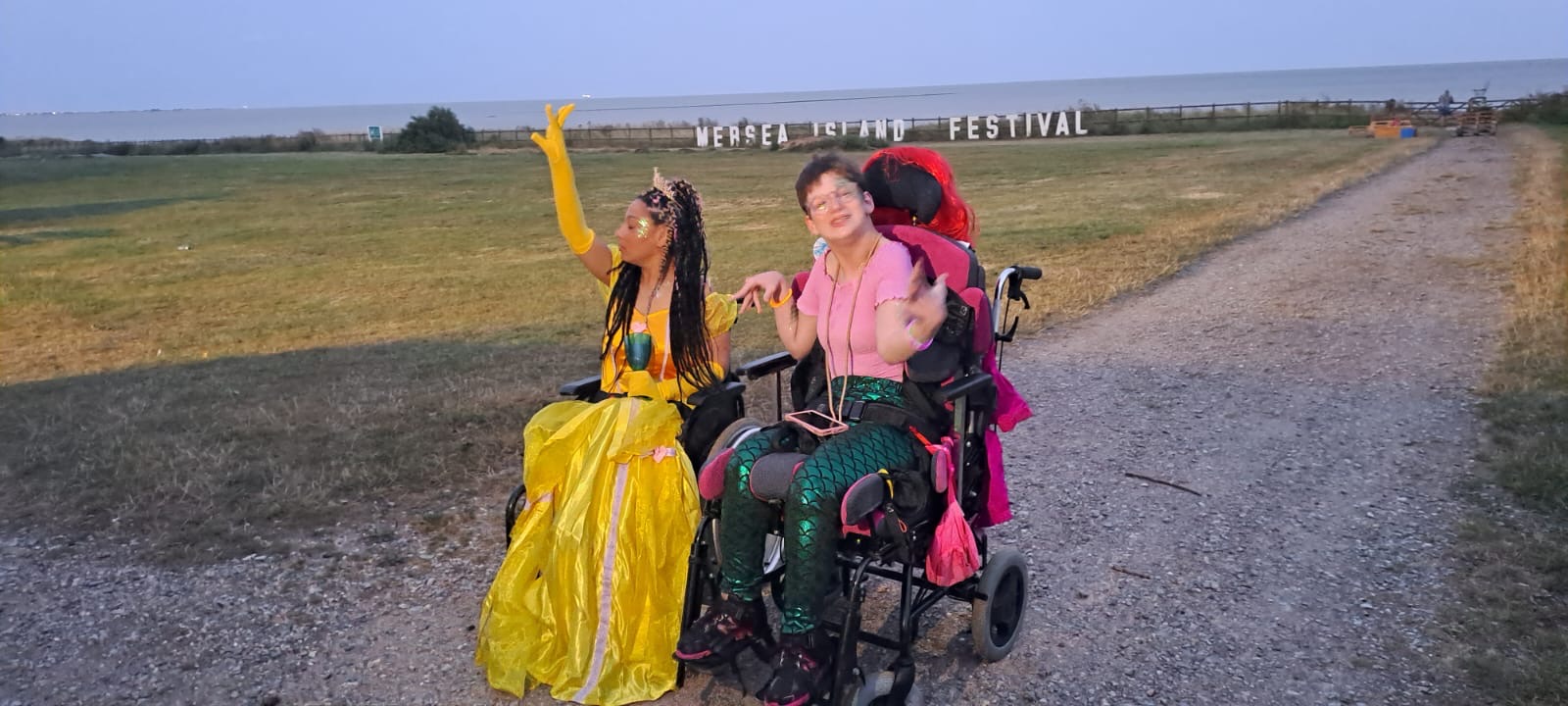
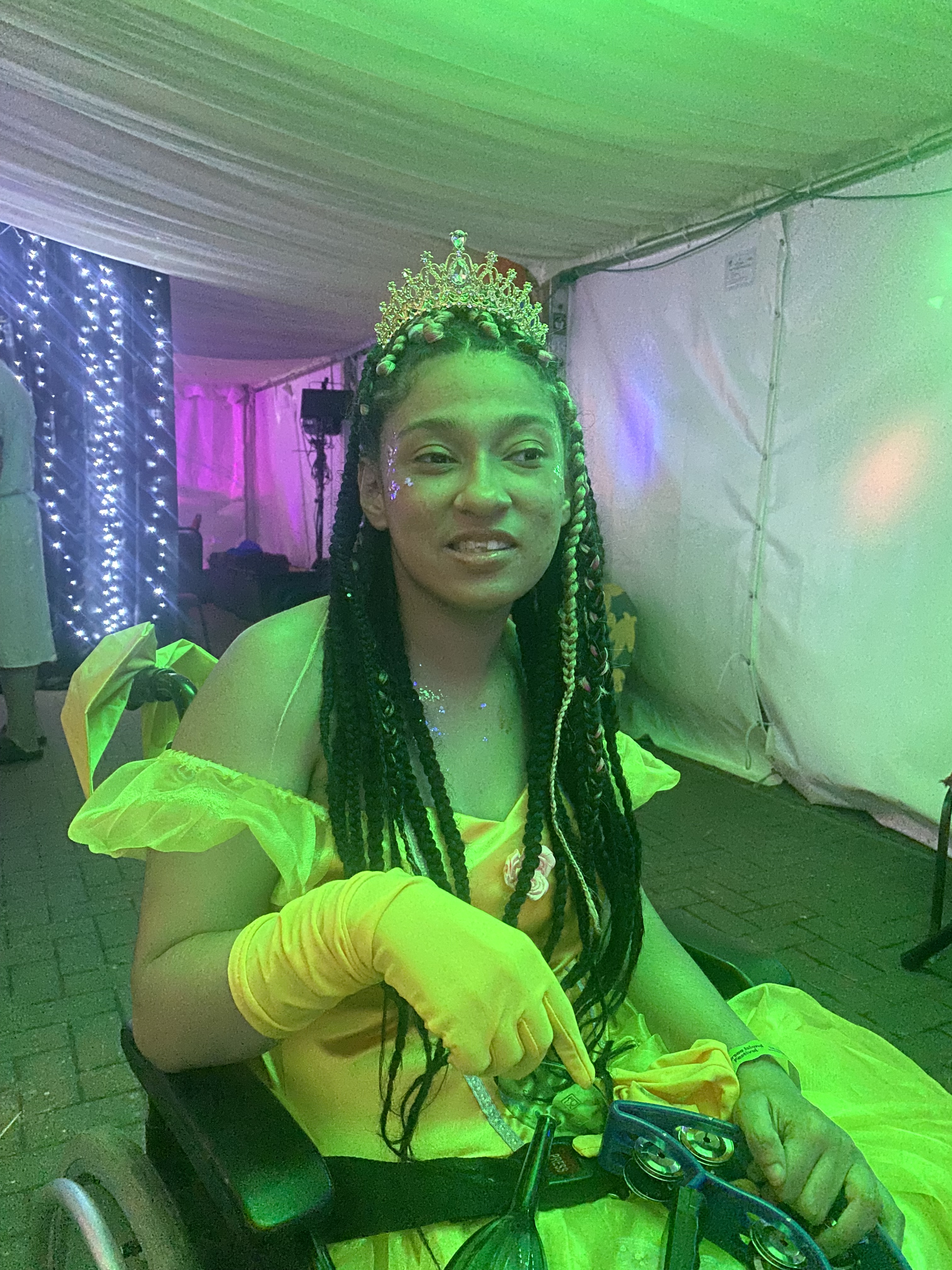
dress up as
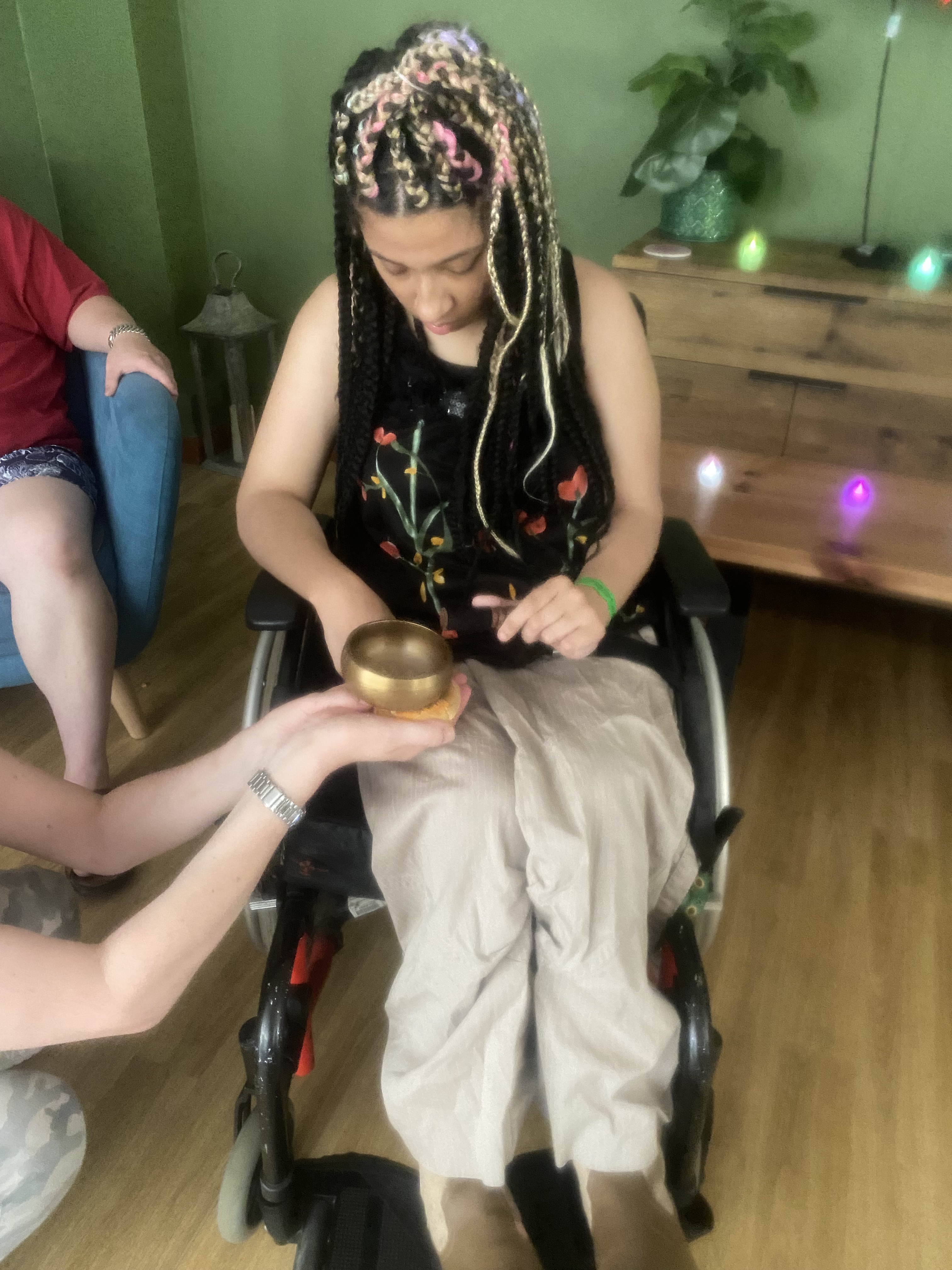
relaxation session with Ray and annoy making bowl
Tanni Grey-Thompson Forced To ‘Crawl Off’ Train
Baroness Tanni Grey-Thompson was forced to “crawl off” an LNER train arriving at London’s King’s Cross.
Speaking to BBC Radio 4’s Today programme, the 11-time Paralympic gold medallist said she had initially booked assistance to help her off the 19:15 train from Leeds, but missed it and instead travelled on the 19:45.
She said she should have been helped off but after waiting for 20 minutes, no one arrived so she had to try to disembark herself.
LNER has said it is investigating what happened and said it was “sorry to understand there was an issue” at the station.
Baroness Grey-Thompson, who lives in Stockton, Teesside, said: “There was no one there to meet me and I waited five minutes before putting anything on social media because you’re meant to leave five minutes. After 16 minutes of waiting at King’s Cross, there was no one in sight.
“There were a couple of cleaners but they’re not insured or able to help me off. So I decided that I would crawl off the train.
“I’m going to Paris later today, I’ve got a few bags. I chucked them on the platform, I had to get out of my chair, sit on the floor by the door which is not pleasant and then crawl off.”
Although she went on the later train, she “had a contract” to be met at the other end.
“Legally I am allowed to turn up and ask to get on a train.
“We were meant to have level boarding in the UK on 1 January 2020 under the Disability and Discrimination Act but government has kicked the can down the road.
“I can just about get off the train if I need to, but there are loads of people that can’t.
“I can’t really crawl but sit on the floor and drag my legs. There was no one around and I was very angry last night.
“If the train manager hadn’t seen me crawling off, I would have had to pull the emergency cord and I would have delayed the train going north.”
An LNER spokesperson said: “We are sorry to understand there has been an issue at London King’s Cross station on Monday evening.
“We are in the process of investigating this and are in contact with the customer directly.”
The Disability Discrimination Act 2005 required that all trains were to be made accessible by 2020, but many carriages still do not comply with the rules.
Alison Kerry, head of communications at disability equality charity Scope, said Baroness Grey-Thompson’s experience “is a sad reminder that far too often disabled people get treated like second-class citizens”.
“On the eve of the Paralympics it highlights how much further we need to go; it shouldn’t be this difficult for a wheelchair user to use public transport,” she added.
The Department for Transport has been approached for comment.
When a shell exploded near Oleksandr Budko, the 26-year-old found himself buried alive and in “terrible pain” from injuries that would lead to the amputation of both his legs.
The Ukrainian soldier was helping to defend the north-eastern Kharkiv region from invading Russian forces in August 2022, when his unit was attacked.
Two years on, he’s the star of a reality TV show in which multiple women battle for his affection.
One advert for the Ukrainian version of hit US series The Bachelor shows a smartly-dressed Oleksandr staring wistfully at a flower. In another, he answers questions in military fatigues before performing a series of pull-ups in a gym.
Speaking to me in a rose garden in Kyiv, the veteran-turned-celebrity is in good spirits despite being tired after a busy week.
Oleksandr says he’s hoping to find love on the show after breaking up with his girlfriend last January – but thinks it will be difficult to choose a partner with “millions of people watching”.
His motivations aren’t just romantic. He also wants to use his appearance on the show to raise awareness of the challenges facing disabled Ukrainians.
“This show is watched by millions of people, and it presents a huge opportunity to positively influence their outlook,” he says.
He wants to show that injured veterans are not “outsiders, but full members of society who are living a good life.
“In my case, my life is now even better than before the war, better than before I got injured.”
Oleksandr is always on the go, telling me he spent the previous night filming a music video.
His life wasn’t always like this. In the years before Russia’s full-scale invasion, he was working as a barista in a Kyiv restaurant while studying graphic design.
He says his dreams were “down to earth”: travelling, discovering the world, and growing professionally. He wanted to start a family.
But Oleksandr’s life was turned upside down two years ago, when he became one of hundreds of thousands of Ukrainian men to join the army.
In August 2022, he was stationed near Izyum, an occupied city on the front lines of the Russian advance. It was invaded in the early days of the war and used by Russia as a key military hub to supply its forces from the east.
The city was liberated by Kyiv just a month after Oleksandr was seriously injured while defending the nearby Ukrainian position.
“I felt the earth shift onto me. I felt a terrible pain in my legs and realised that it would mean the amputation of my legs,” he said.
“I screamed from horrific pain and shouted for people to hear me.”
He says he knew his comrades were alive, and they dug him out of the ground and provided first aid. But that’s when he knew his legs were badly hurt.
“I understood that I had lost my legs at the moment of injury, two or three seconds after I felt the pain.”
Oleksandr survived but much of Izyum was left in ruins. At the time, authorities said they had found more than 400 bodies in graves near the city.
Despite a challenging recovery, Oleksandr was able to walk with prosthetic legs within six months.
“When I didn’t have prostheses, I had to move around in a wheelchair. I discovered how inaccessible and unsuited Kyiv was for wheelchair users, even though it’s the capital city,” he says.
“In the historic old town you can’t go anywhere. You can’t cross the road on your own and you can’t go inside any building because there are stairs everywhere.”
War injuries mean Oleksandr’s experience is becoming increasingly common in Ukraine. While there’s no official data recording the number of people injured during the war, tens of thousands are estimated to have lost limbs.
This has resulted in the creation of a separate reality show, called Legs Off – which Oleksandr presented – capturing the difficulties faced by disabled people as they move around Ukrainian cities.
As well as presenting, the veteran has also written a book, won medals at the Invictus Games, and performed with a ballet troupe in the US – all while recovering from his injuries.
He’s so popular in Ukraine that The Bachelor’s application portal crashed shortly after it was announced Oleksandr would take on the main role in the upcoming season.
Producers of The Bachelor are casting the veteran as a symbol of hope.
“Despite his amputations, Oleksandr rides a bike, drives a car, and climbs mountains. He lives life to the fullest,” says Natalia Franchuk, from STB, the network on which the show will air later this year.
“If television is about filming reality, then who better could be the star of The Bachelor now? Who else would be better suited in a country at war?”
selfie of me sitting in the train station holiday

me dressed up as well at the fancy dress party last night holiday one has come to an end on my way to
Tributes To MND Champion Who Created ‘Vital’ Euan’s Guide
One of Scotland’s leading champions for people with disabilities has died 21 years after being diagnosed with motor neuron disease (MND).
Euan MacDonald, 50, was diagnosed with the condition that affects the brain and nerves at age 29.
He created the unique Euan’s Guide, a disability review website and smart phone app for disabled people, their families and their carers.
Along with his father Donald, he also set up an internationally-recognised centre for MND research at Edinburgh University.
Speaking to BBC News, Donald praised his son’s “immense bravery”.
“He always tried to protect his mother, and his father too about some of the difficult things,” he said. “Courage was a huge part of his character.
“He was wasn’t an egocentric person but I’m sure he would be proud of what has been started.”
Inspired by one of Mr MacDonald’s own ideas, the Euan MacDonald Centre for MND research established SpeakUnique – a project that created personalised synthetic voices for people who had lost their natural voice.
The centre’s director Professor Siddharthan Chandran said Mr MacDonald would be greatly missed.
He said: “The common thread that runs through these three remarkable initiatives are his courage, selflessness, ability to galvanise and inspire people to come together, to work with one another to make a difference,” he said.
“Euan was an extraordinary man who, through his vision, advocacy and leadership, brought hope and helped transform the lives of countless people living with MND and other disabilities.”
Mr MacDonald was born in Sheffield in 1974.
Shortly afterwards, his family moved to Edinburgh where he eventually enrolled at George Watson’s College before moving to Glenalmond College in Perthshire.
After studying at the universities of St Andrews and Edinburgh, he worked for investment bank Dresdner Kleinwort in London.
Four years after his diagnosis, Mr MacDonald and his father founded the Euan MacDonald Centre through a philanthropic gift.
In 2009, he was awarded an MBE in the Queen’s Birthday Honours list in recognition of his contribution to services for people with MND.
In 2013, Mr MacDonald, his sister, Kiki, and their father Donald created Euan’s Guide – a registered charity which made tens of thousands of accessible toilets safer for people with disabilities.
Edinburgh university said the guide is a “vital resource” for wheelchair users, their families, friends and carers to share their knowledge of accessible places across the UK.
Prof Sir Peter Mathieson, Edinburgh university principal and vice-chancellor, said he was was “so sad to learn that we have lost the inspiring and remarkable Euan MacDonald”.
He said: “Euan was an extraordinary person whose advocacy for the MND community has helped to push the boundaries of research in this area.
“His impact at the university will continue to live on through our MND research and the Euan MacDonald Centre, which bears his name in tribute.”


Tattoo Artist Told Her Deafness ‘Would Be An Issue’
A woman who was told her deafness would “be an issue” in becoming a tattoo artist has defied doubters and become the go-to person in her community for body art.
Naomi Dalby, 37, said deaf clients regularly travelled from Glasgow and London to be inked by her in Barton-upon-Humber.
The 37-year-old from Hull said she often fixed tattoos customers had got elsewhere that hadn’t turned out right due to a “barrier” in communicating with their tattooist.
Ms Dalby, who believes she is the only deaf tattoo artist in the UK, said she was “very surprised” to learn she had been named a finalist in BBC Radio Humberside’s Make A Difference Awards.
Ms Dalby, who was born deaf, said watching her mother being tattooed cemented her ambition at age nine to become a tattoo artist.
Early on in her career, she said she was told by other tattoo artists that her “deafness would be an issue” because her first language was British Sign Language.
But she said her deaf clients had told her that not one of them had been happy with their experiences of being tattooed by artists who can hear, and there had been serious miscommunications.
Ms Dalby explained that when she herself had got tattoos on her back, she had been unable to lip-read, and some were not as described because English was her second language.
Paul Gardner said it had been a different experience being tattooed by Ms Dalby.
The 38-year-old, who is deaf, said: “It was fantastic, because we could video call [beforehand] and speak from the heart and connect. I’ve not been having that before.”
Ms Dalby said she “so appreciated being recognised” in the awards’ community category, which recognises those who have helped to change the lives of others.
She added: “People say to me, ‘I thought deaf people can’t drive, I thought deaf people can’t dance’. It’s breaking down these stereotypical thoughts. I think it’s important to say it’s not true, we can do everything – and more.”
Ayling-Ellis ‘Excited’ To Make History As TV Host
Actress and former Strictly winner Rose Ayling-Ellis says it’s “really exciting” to become the first deaf person to host live sports coverage on TV.
The EastEnders star will be one of Channel 4’s hosts of the Paralympic Games, which begin in Paris next week.
Ayling-Ellis will host a daily show, Afternoon Live, alongside Clare Balding from the Athletes’ Village, with live British Sign Language (BSL) signing.
The actress said the Paralympics was “a great opportunity to show people what us disabled people can do”.
For the opening and closing ceremonies, Balding will be joined by broadcaster and former wheelchair basketball player Ade Adepitan and Paralympic swimming champion Ellie Simmonds.
Channel 4’s presenting line-up will also feature former rugby union player Ed Jackson, racing driver-turned-pundit Billy Monger, BBC Radio 1 presenter Vick Hope, and comedian Josh Pugh.
‘Breaking barriers’
Ayling-Ellis said the Paralympics “breaks people’s barriers of understanding what we are capable of”.
“Really, though,” she added, “we shouldn’t be trying to prove this to people.”
“It is really exciting that I am the first deaf person to host a live sports TV show. People seem to think that hosting a show is also to do with hearing, but now I’m here to prove that doesn’t have to be.”
The 29-year-old said she has had “lots of training” before taking on her first hosting job.
“I didn’t realise how hard it is,” she said. “I did panic a bit and think, what have I signed up for?
“But I really love it. I’m really enjoying it. I’m so excited to be doing it.”
Ayling-Ellis joined EastEnders in 2020, and became the first deaf contestant to compete on Strictly Come Dancing the following year. She left EastEnders in 2022.
She was also the first person to deliver a CBeebies bedtime story in sign language.
“My career so far has been quite mad, and this is another job for me to challenge myself really,” she continued.
“It is such a big challenge. No-one deaf has ever done this before. I think I’m addicted to being the first of doing something, and that is what I want to do.”
Ayling-Ellis said that, when she talks to the Paralympians, she does not “want it to become an inspirational story so everyone else feels better about their lives”.
“It’s for everyone to learn from and understand more about disability and that this is all just normal.”
Ayling-Ellis was also the first deaf person to deliver the Alternative MacTaggart lecture at the Edinburgh TV Festival, and helped launch the first deaf Barbie.
Last year, she made her West End debut in the Shakespearean romantic comedy As You Like It, being nominated for an Olivier Award for her performance.
Balding, who has presented Wimbledon and the Olympics this year, called the Paralympics the “peak of the summer of sport”.
She noted that a lot of live presenting is reliant on talkback, the system that allows directors and editors to communicate with on-screen presenters through an earpiece.
“So we’re finding different ways of doing things like that and it’s so important to take on that challenge and take new steps,” Balding said.
“When Paralympic athletes like Jonnie Peacock, Ellie Simmonds, Jodie Cundy or Lauren Steadman have appeared on Strictly, the first question has been ‘Well, how?’ And now, with Rose, [to] work on a live programme, you might say, ‘How is a deaf presenter going to?’
“We’re going to show you. We’re not going to tell you how, we’re going to show you.”
Channel 4’s coverage of the Paris 2024 Paralympic Games will begin with the opening ceremony on 28 August, with the closing ceremony on 8 September.
More Accessible Menopause Support Needed, Experts Say
Women with learning disabilities and autism are struggling to access appropriate support during the menopause, experts have said.
While some experience earlier menopause with more pronounced symptoms, many are not routinely screened or asked about their experiences.
The health inequalities associated with the problem are the focus of a survey launched across the North East and Cumbria, asking healthcare workers for their views on the issue.
Professor Yitka Graham, head of Sunderland University’s Helen McArdle Nursing and Care Research Institute, said findings will be used to “empower women with learning disabilities and reduce inequities in healthcare”.
She said the majority of studies published on the issue focus on clinical aspects, “with little focus on how the menopause affects women with learning disabilities and their experiences of care”.
The North East and Cumbria Learning Disability Network (NECLDN) is working with the university to conduct the survey, which represents an early stage of a wider project looking into how best to achieve “reasonably adjusted care” for women during the peri-menopause and menopause.
Prof Graham said awareness of menopause can be low for this group of women, with research showing there are few resources available for carers and health professionals.
Initial findings revealed issues including a lack of support for women who have nobody to take them to healthcare appointments following the deaths of their mothers, who would have accompanied them in earlier life.
‘Symptoms dismissed’
Charity Dimensions UK said women with autism and learning disabilities experience barriers in accessing healthcare support including a lack of understanding from professionals, who “cannot understand how some women communicate and might struggle to diagnose their symptoms”.
Dr Megan Bowes, the charity’s health and wellbeing lead, said symptoms were too often “dismissed as behaviours of distress rather than linked to changes in a person’s health”.
“It is really important that health professionals and support staff record any changes being noticed, so that people who are supported can get the healthcare and support they require,” she added.
Dr Bowes said it was essential for individuals to understand their bodies and symptoms and highlighted steps taken at the charity to prepare women for the menopause.
They include:
- Easy to read resources on the topic
- Arranging appointments when support staff well known to the woman are available to attend
- Discussing key points and concerns to raise prior to appointments
- Requesting written notes and longer appointment times
- Ensuring communication needs are met
- Seeking support from community learning disability nurses
A woman with learning disabilities, who works with Dimensions, said using a traffic light system to reflect moods can let people know when she is struggling and to provide additional support, and she urged people to talk about their symptoms with their support network, GP or other health professional.
Interpreting Music For Deaf Audiences
Just because you can’t hear music, it doesn’t mean you can’t connect with it.
Profoundly deaf in one ear, Marie Pascall struggled to pick up the lyrics at concerts without the help of a performance interpreter – so she became one herself.
She now runs Performance Interpreting, a British Sign Language service for major events – including the BBC Proms – where her team will be interpreting Beethoven’s ‘Choral’ symphony in the concert Ninth by Heart in August 2024.
A performance in itself
The goal of an interpreter is to express the whole experience of witnessing a performance, not just what instrument is playing or the words of a song. Every element needs to be communicated – the rhythm, the tone, the emotional meaning of the lyrics as well as what those lyrics are, the personality of the performer, and anything they might say.
Marie has a performing arts background and told BBC Bitesize about the reasoning behind this approach: “People get fixated that music is about sound, but every piece of music that’s composed has to come from a personal feeling.
“The composer will project that feeling into the music, and that’s transcended out to the audience. So it’s actually a feeling that we’re trying to reflect, because that’s what the audience will hold on to as a memory.”
Why no two interpreters are the same
As well as signing any lyrics, interpreters use their whole body to represent the music. As people’s responses to music are extremely personal, no two interpreters would express it in exactly the same way.
Marie said: “It’s rare that we would do a whole classical piece for two or three hours. We want to make sure what we’re delivering is meaningful, so we might show that the trumpets are playing but we wouldn’t stay on there for three minutes pretending to play the trumpet.”
They use body language to show the shape of the notes, their length and speed, and how the music makes them feel. Marie said: “If it’s operatic, the end note might be sung for 10 seconds. We would continue to elongate the note using our hands and our facial expressions.”
When there are no lyrics to translate
When there are no lyrics to sign, it’s a balancing act between the interpreters expressing what it is like to experience the music and allowing the audience to enjoy elements of the performance they can sense for themselves. It is usual for interpreters to introduce the music with some detail of who the performers are and what instruments are being played.
Marie said: “Then they may introduce the tone, the tempo through their hands. And if the music changes, we would show them – the pace has changed, now it’s the trumpets, now it’s the drums. If it’s gentle or if it’s really loud and prominent, we would show that through our body language.”
Every interpreter has their own way of moving their body – and some are more suitable for certain types of music than others. Marie added: “For classical music, we tend to allocate the work to people that have a very elegant style, so they may be more gentle with their hands and their delivery. I describe it as like a ballet dancer compared to a hip hop dancer.”
It can take anything from 20 to more than 100 hours of work to prepare for a performance. Interpreters research the band, orchestra or singers as well as the music to ensure they are familiar with the lyrics and the meaning of the tunes. Not all performers provide a setlist so interpreters look on websites which show lists from previous performances to get an idea of potential pieces.
Choral music, such as Prom 42: Beethoven’s Ninth by Heart, is often sung in a language other than English (in this case, German), so interpreters will spend time studying an English translation.
What sets a good interpreter apart
It’s a job that can be physically demanding, Marie warned. Interpreters tend to work in pairs to prevent fatigue because: “if you become burned out, the quality of your work is affected”.
Lots of energy is required keep up the enthusiasm levels, as well as strong interpreting skills that convey emotion. Flexibility is also key as there can be last-minute changes to the setlists and running orders.
Marie explained that it can take between seven and 10 years to become a sign language interpreter and, after that, she recommended working for three years to hone those skills, before learning to be a performer interpreter on an official course.
As well as making performances accessible to deaf audiences, Marie is also keen that a career in interpreting is open to deaf people – and with the right tools to fit their individual needs that’s entirely possible. Interpreters who wear hearing aids may have equipment that amplifies the sound. Other people work off captions or have a second interpreter opposite them giving them the lyrics, which they will then interpret themselves.
Marie said: “It’s great to see a deaf performer or interpreter because they’re a role model for other deaf customers. Their expressiveness of the language can be phenomenal.”
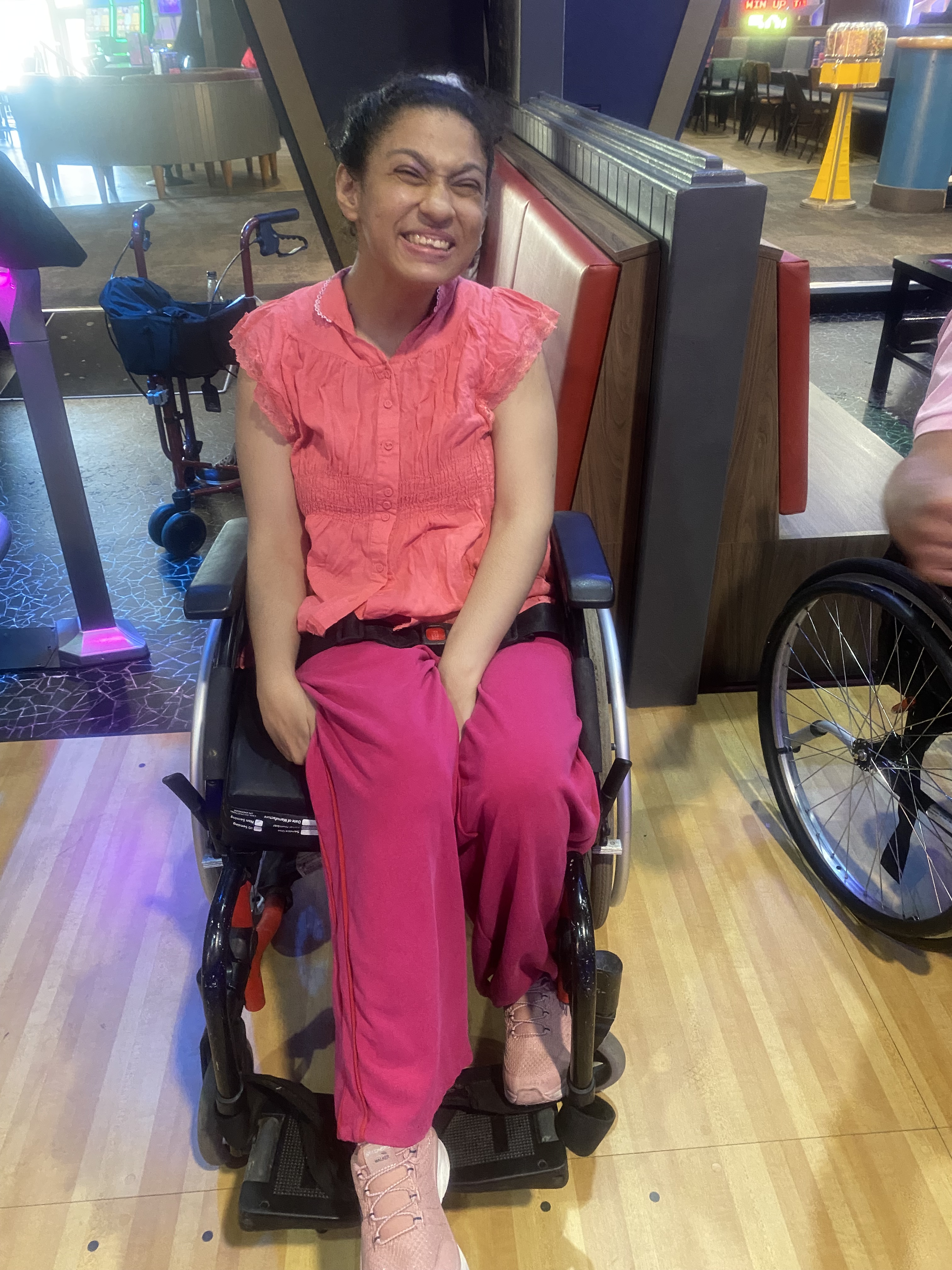
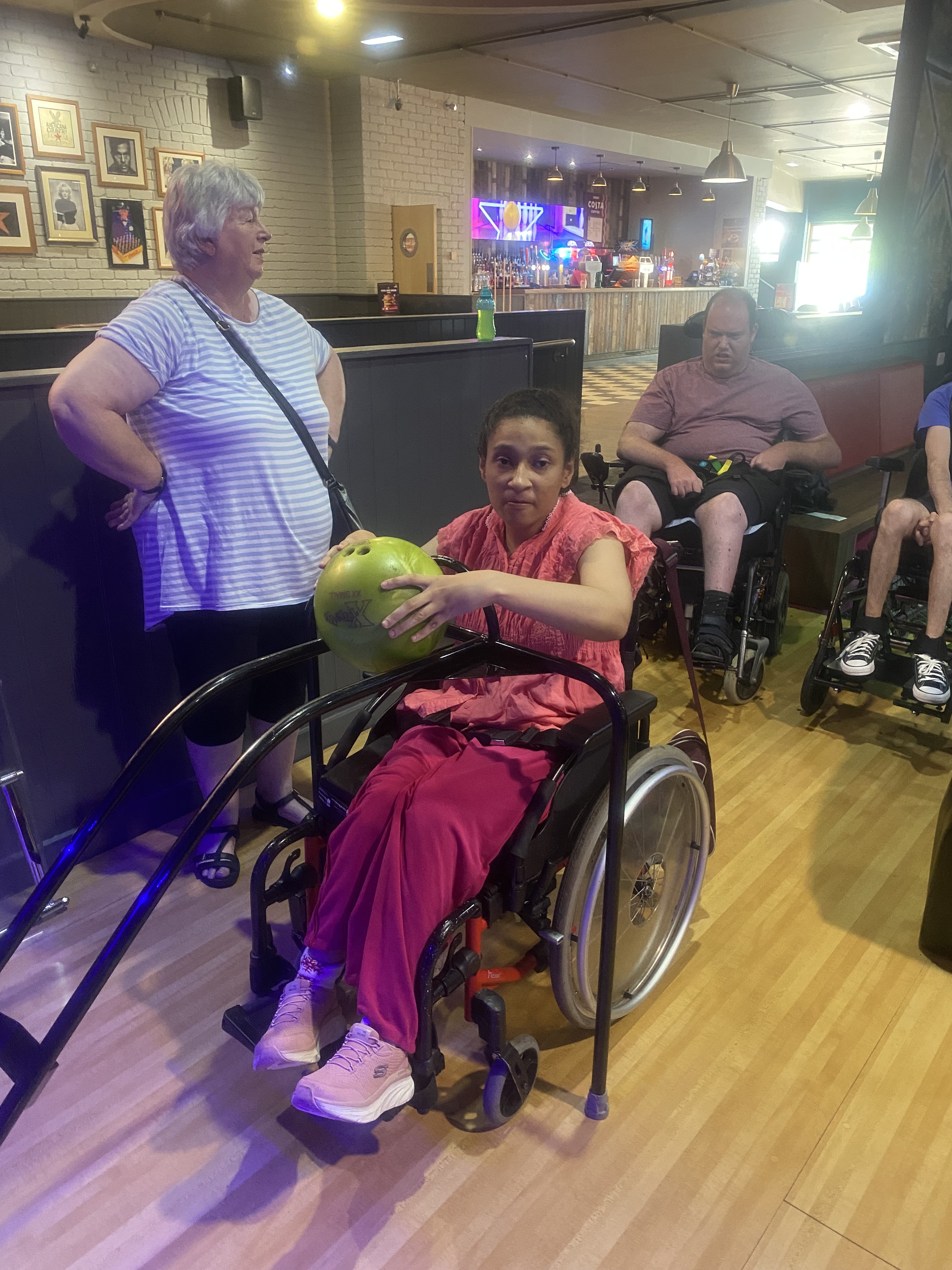
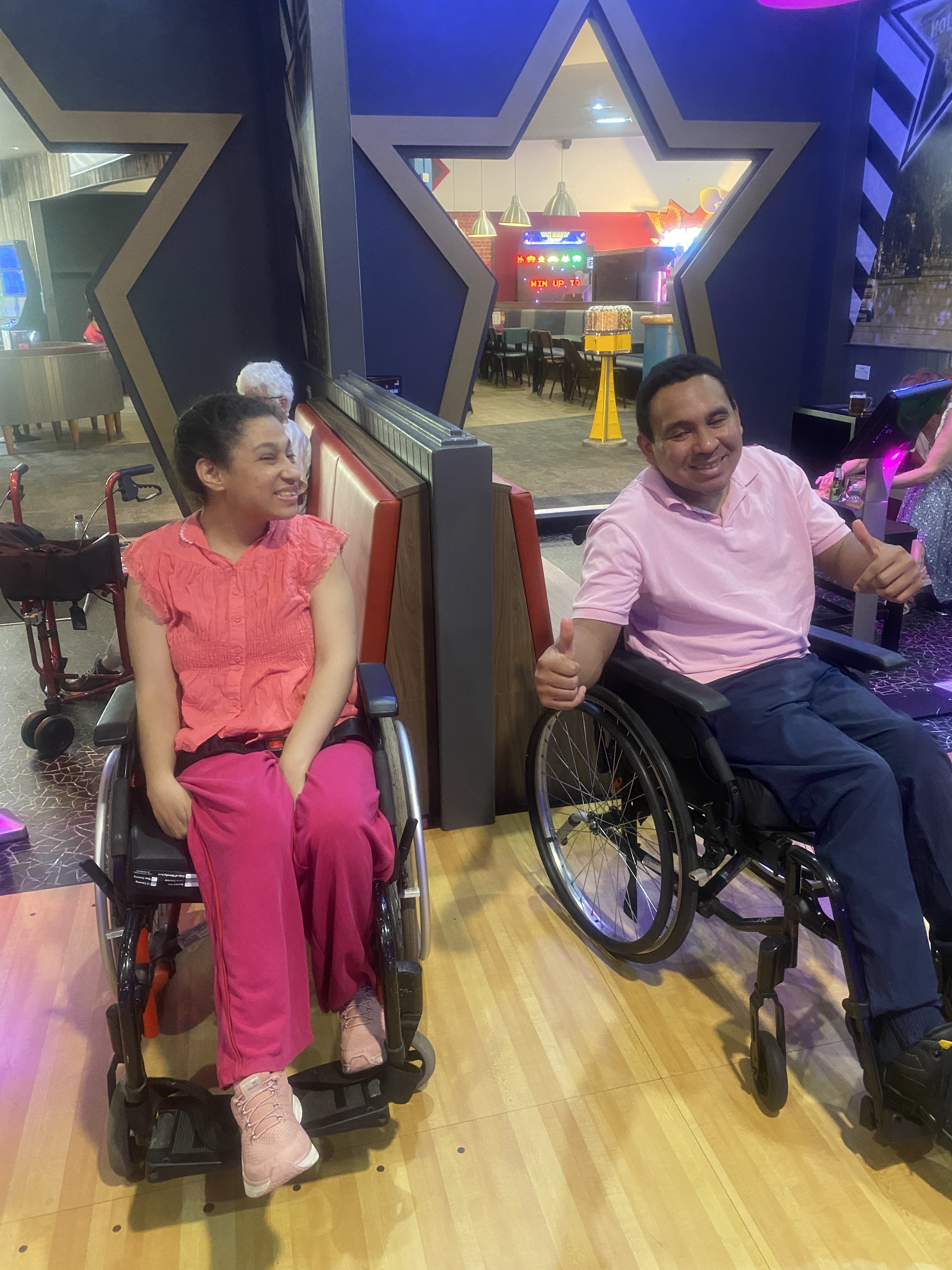
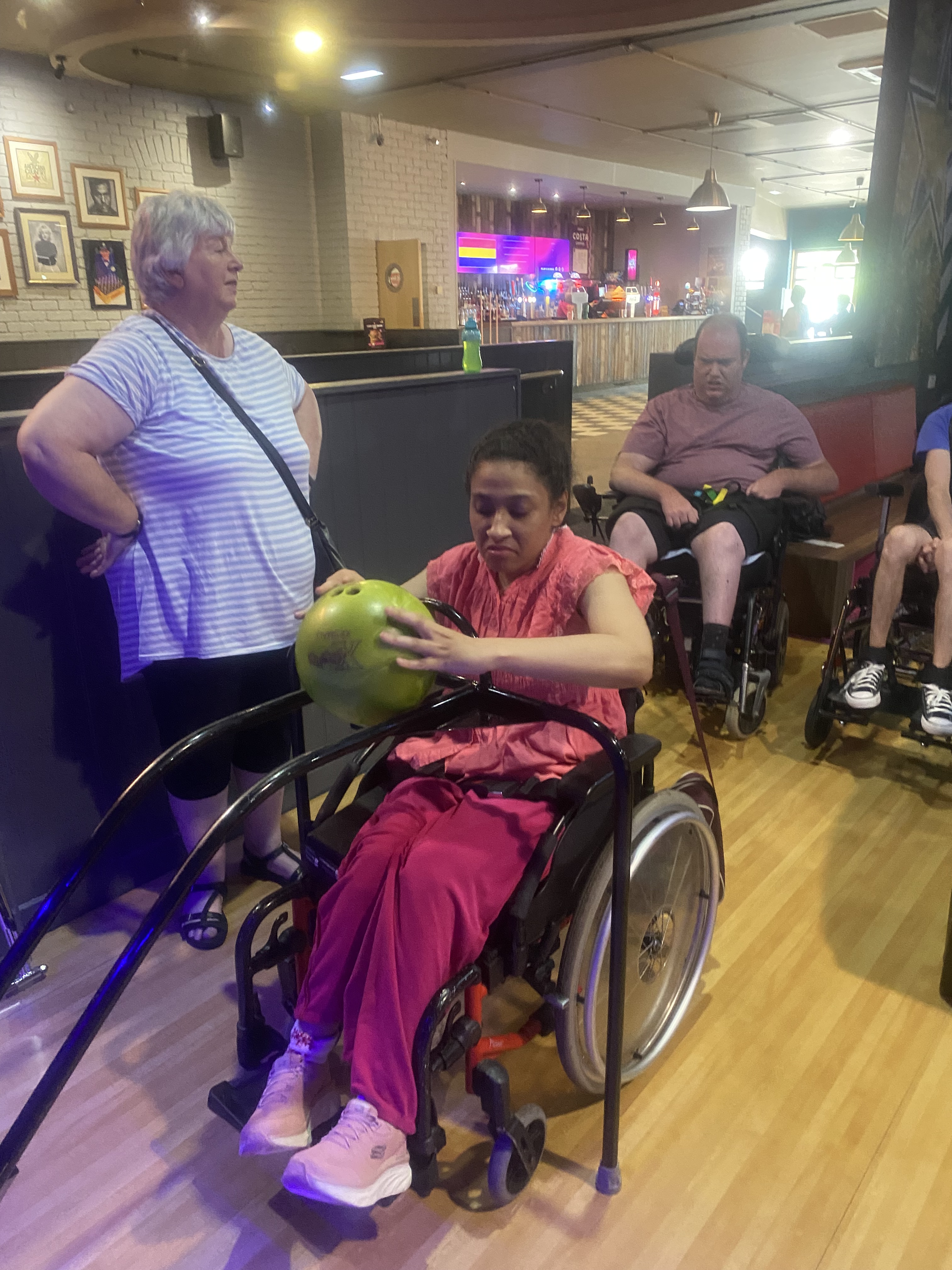
out to the bowling alley with my activity group last Monday look how much for me and my friends had
Weather Presenter Speaks Out About On-Air Panic Attack
On Tuesday, a weather presenter in Australia experienced a panic attack while broadcasting and had to finish early.
Nate Byrne, who works for ABC News Breakfast, spoke to the BBC about how he handled the moment with the support of colleagues, and of the messages of support from the public.
Valentina Petrillo Set To Be First Transgender Paralympian
Valentina Petrillo is set to become the first openly transgender athlete to compete at the Paralympic Games, having been selected to represent Italy in Para-athletics in Paris.
The 50-year-old sprinter – who competes in the women’s T12 classification, for athletes with visual impairments – transitioned in 2019.
Petrillo, who will run in the T12 200m and 400m, told BBC Sport that her participation at the Games would be an “important symbol of inclusion”.
But Mariuccia Quilleri, a lawyer and athlete who has represented a number of fellow athletes who oppose Petrillo’s participation in women’s races, said inclusion had been chosen over fairness and “there is not much more we can do”.
Last year, Petrillo won two bronze medals at the World Para Athletics Championships.
The Paralympic Games run from 28 August to 8 September.
Andrew Parsons, president of the International Paralympic Committee (IPC), told BBC Sport that while Petrillo would be “welcome” in Paris under current World Para Athletics policies, he wants to see the sporting world “unite” on its transgender policies.
What do the rules say?
Currently, there is no unified position in sport towards transgender inclusion.
The IPC allows international sport governing bodies to set their own policies.
There are significant differences between World Athletics’ policies and those of World Para Athletics.
World Athletics has banned transgender women from competing in the female category at international events. Its president, Lord Coe, said the decision was to “maintain fairness for female athletes above all other consideration”.
Under World Para Athletics’ rules, a person who is legally recognised as a woman is eligible to compete in the category their impairment qualifies them for.
The rules go on to say that “World Para Athletics will deal with any cases involving transgender athletes in accordance with the International Olympic Committee’s transgender guidelines (as amended by the IOC from time to time) and any applicable World Para Athletics regulations.”
Parsons said last year that the IPC was not considering a ruling across all Paralympic sports.
But, in an interview in Paris last weekend [10 August], he said he was only comfortable with that stance “for the moment”.
“I do think that the sport movement has to, guided by science, come up with better answers for these situations and for transgender athletes,” Parsons said.
“We need to, based on science, have a better and probably a united answer to this population.
“We need to come up with a valid, solid, sound answer for that population.”
Asked if he was prepared for criticism of the IPC when Petrillo competes, he said: “I am prepared for the criticism.
“But again we need to respect our rules, we cannot disrespect our rules. So sometimes as an individual I think one way or another, but we need to follow our constitution, we need to follow our own rules and in the specific sports the rules of the international federations need to be respected.
“So for the moment World Para Athletics rules allow her to compete, so she will be welcome as any other athlete.”
He added: “I think it is just fair that we treat [transgender athletes] respectfully. But I do think science should give us the answer, because we also want to be fair with the other athletes in the field of play. It is a very difficult question. And science hopefully will be able to give us the answer. And what I would like to see in the future is that the whole of sport has a united position on it.”
Who is Petrillo?
Who is Petrillo?
In a previous interview with the BBC, Petrillo said she knew she was a woman from as young as nine.
At the age of 14, Petrillo was diagnosed with stargardt disease, a degenerative eye condition.
Petrillo won 11 national titles in the male T12 category for athletes with visual impairment between 2015 and 2018.
With her wife’s support, in 2018 she started living as a woman, and in January 2019 she began hormone therapy.
“My metabolism has changed,” she previously told the BBC.
“I’m not the energetic person I was. In the first months of transition I put on 10kg. I can’t eat the way I did before, I became anaemic, my haemoglobin is low, I’m always cold, I don’t have the same physical strength, my sleep isn’t what it was, I have mood swings.
“I’m not the same as before.”
She said her times became slower too, adding: “As a sportsperson, to accept that you won’t go as fast as before is difficult. I had to accept this compromise, because it is a compromise, for my happiness.”
However, she has won medals at both World Para Athletics Championships and National Para Championships since transitioning, and has competed in masters athletics events against non-disabled women.
Sports scientist Professor Ross Tucker said: “Male advantage is created through development and so it is essentially laid down over years and years of exposure to testosterone. The solution that sport has tried to come up with is to say well if the source of that advantage is testosterone then let’s lower it and then the athlete is free to compete.
“But that doesn’t work because there is an asymmetry there because some of the changes that testosterone causes, like the increased muscle mass, increased strength, the shape and size of the skeleton, those changes don’t go away. There are some, like haemoglobin levels, certain elements of the cardiovascular system that may go away.
“But the strength advantages, all the evidence that exists suggests that even when you remove testosterone in an adult those advantages continue to exist in that person. So therefore sport has to realise that it can’t take away that male advantage, reduce it slightly yes, but certainly it doesn’t get removed. And the only conclusion you can then draw is that the person still has male advantage even when their testosterone is lower.”
What has Petrillo said about the Paralympics?
Asked for her reaction to her Paralympics selection, Petrillo told BBC Sport: “I have been waiting for this day for three years and in these past three years I have done everything possible to earn it.
“I deserve this selection and I want to thank the Italian Paralympic Federation and the Italian Paralympic Committee for having always believed in me, above all as a person as well as an athlete.
“The historic value of being the first transgender woman to compete at the Paralympics is an important symbol of inclusion.”
Petrillo said “everyone will have their questions” but only a “minority” will understand her story.
Asked what she would say to those who do not agree with her presence in Paris and believe it to be unfair, Petrillo said: “This is not a lifestyle choice for me, this is who I am.
“And the way I am, like all transgender people who do not feel they belong to their biological gender, should not be discriminated against in the same way that race, religion or political ideology should not be discriminated against.
“And sport that imposes rules based on a binary way of thinking does not factor this in. It is sport that has to find a solution and excluding transgender athletes is clearly not that solution.
“Ultimately, in the seven years in which transgender athletes have been able to compete in the female category, the number of instances in which they have stood out for their sporting results have been very few and far between.”
What have others said?
In 2021, more than 30 female athletes signed a petition that was sent by Quilleri to the president of the Italian Athletics Federation and the ministries for Equal Opportunities and Sport challenging Petrillo’s right to compete in women’s races.
When approached for comment on Petrillo’s selection for the upcoming Paralympics, Quilleri told the BBC: “Every federation can choose between the concepts of inclusion and sporting fairness. World Athletics has chosen the principle of the Olympic spirit, that is to say they have stayed true to the idea of fair competition.
“On the other hand, the Italian Paralympic federation has chosen inclusion.
“It is the visually-impaired athletes who will be beaten by Valentina Petrillo that will have to take up the protests with their federation. For unfortunately it is those at the top of the federations who have allowed this to happen.”
Disability rights campaigners welcome new facility that ‘gives them confidence’ to travel on Northern services
| A press release: |
| Two disability-rights campaigners have welcomed the introduction of a new facility which improves accessibility for passengers. |
| Jimmy Simpson and Lauryn Bell both use Sunderland Station’s passenger assist meeting point – a designated place where customers can wait and request assistance from staff to board a train.The pair, who run the Adventures of Jimmy and Lauryn Facebook page, said it will give more disabled people the confidence to travel by train. It comes as Northern is planning to set up passenger assist points at dozens of other stations across its network.“We think the assist point is a brilliant addition to Sunderland station and it will be amazing to see it rolled out at more stations,” said Jimmy.“The assist point will enable so many more people to access trains independently. “A lot of disabled people worry about the ‘what ifs’ when travelling by train, so this will give them the confidence to know they can meet someone at the station and get that support.”At Sunderland Station, which is operated by Northern and used by more than 430,000 people a year, the assist point was installed in April.Northern’s Accessibility User Group (NAUG) is currently working with the operator to develop and deliver more assist points for the benefit of passengers. Jason Wade, regional director for Northern in the North East, said: “We’re delighted to see this new assist point in Sunderland is making it easier for passengers to travel on our services.“We’re constantly reviewing feedback from our customers and working to improve accessibility, to ensure that people of all ages and abilities can get where they need to go.”Northern’s Passenger Assistance Team is on hand to help people discuss and plan their journeys 24 hours a day, seven days a week (excluding Christmas Day).Where possible, the operator recommends that people book assistance two hours in advance by calling 0800 138 5560 (Text Relay 18001 0800 138 5560). Portable ramps are available at staffed stations across Northern’s network and on board all trains to facilitate boarding.Northern is the second largest train operator in the UK, with 2,500 services a day to more than 500 stations across the North of England. |
Woman Honours Mum By Fundraising For Assistance Dog
A woman has raised thousands of pounds to pay for an assistance dog in memory of her late mother.
Martha Hall, 30, lives with cerebral palsy and wanted to help a family get a dog similar to her beloved assistance Labrador Greg, who her late mother Libbi adored.
Ms Hall, from Cheltenham in Gloucestershire, fundraised £5,000 by walking 100 miles (161km) with Greg throughout May and June.
The money has been used to pay for the training of new assistance dog Libbi – who is currently being socialised.
Ms Hall, whose life was changed when she was paired with Greg two years ago, said it was a “big challenge” to complete the challenge as she gets tired quickly.
She was raising money for Dogs for Good, a charity which trains dogs to assist adults and children with disabilities, children with autism and adults with dementia.
The 30-year-old said she was “very emotional” to learn she had reached her fundraising goal on the same day she hit the 100-mile mark.
Ms Hall said her mother, who died on Boxing Day 2023 following a cancer diagnosis, was “so proud to be Greg’s granny” and naming an assistance dog after her would be “a fitting legacy”.
Labrador Libbi was born on 30 May.
“It was a lot of emotion because I’ve been working for it for two months and to achieve it was just so massive,” Ms Hall said.
“Seeing the photos of her, a lot of tears but happy tears, and excitement as well to watch her journey unfold,” she added.
Ms Hall will receive “pupdates” as Libbi is socialised by volunteers, and will get the opportunity to meet her with Greg once she is settled.
First Deaf Miss South Africa Crowned After Divisive Competition
Mia le Roux has become the first deaf woman to be crowned Miss South Africa following a divisive competition which saw one finalist withdraw after being trolled over her Nigerian heritage.
In her acceptance speech, Ms Le Roux said she hoped her victory would help those who felt excluded from society to achieve their “wildest dreams, just like I am”.
She said she wanted to help those who were “financially excluded or differently abled”.
Last week 23-year-old law student Chidimma Adetshina pulled out of the competition following allegations that her mother may have stolen the identity of a South African woman.
Ms Adetshina was born in South Africa to a Nigerian father and a mother of Mozambican origin.
She had been at the centre of a social media storm for several weeks, with many people, including a cabinet minister, questioning her right to represent the country.
She said she had been the victim of “black-on-black hate”, highlighting a particular strain of xenophobia in South Africa known as “afrophobia”, which targets those from other African countries.
Ms Le Roux, 28, was diagnosed with profound hearing loss at the age of one and has a cochlear implant to help her perceive sound.
She said it had taken two years of speech therapy before she was able to say her first words.
After winning, the model and marketing manager said: “I am a proudly South African deaf woman and I know what it feels like to be excluded.
“I know now that I was put on this planet to break boundaries and I did it tonight.”
Amazon Amazon affiliate item of the day will her sleeping bag with Paula for the winter month for my wheelchair users out there
stylist raincoats for program that are wheelchair either full-time will tell uses stylish and fun who were getting wet and protect the chair as much https://amzn.to/3AtLcEE
Amazon Amazon affiliate
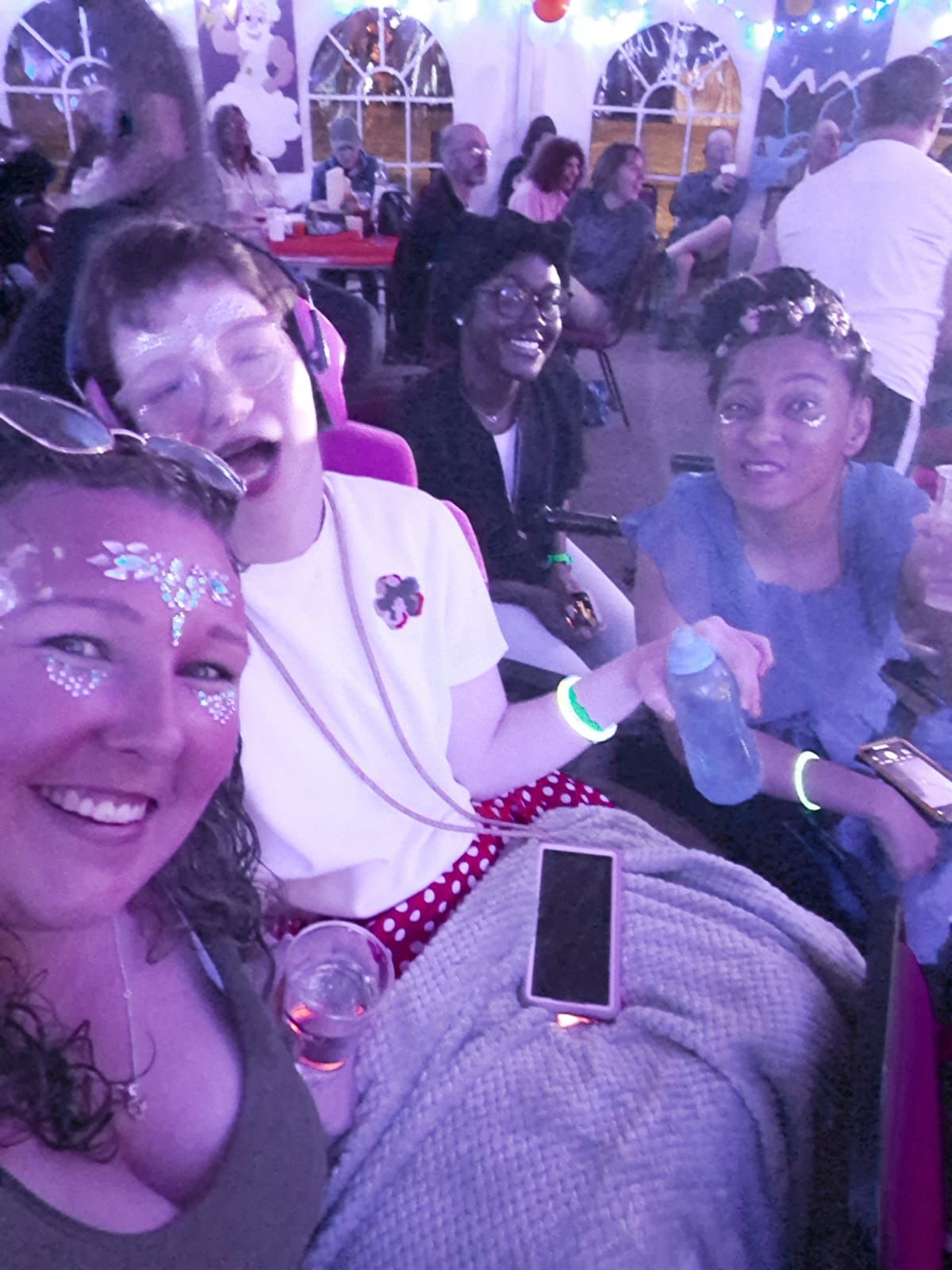
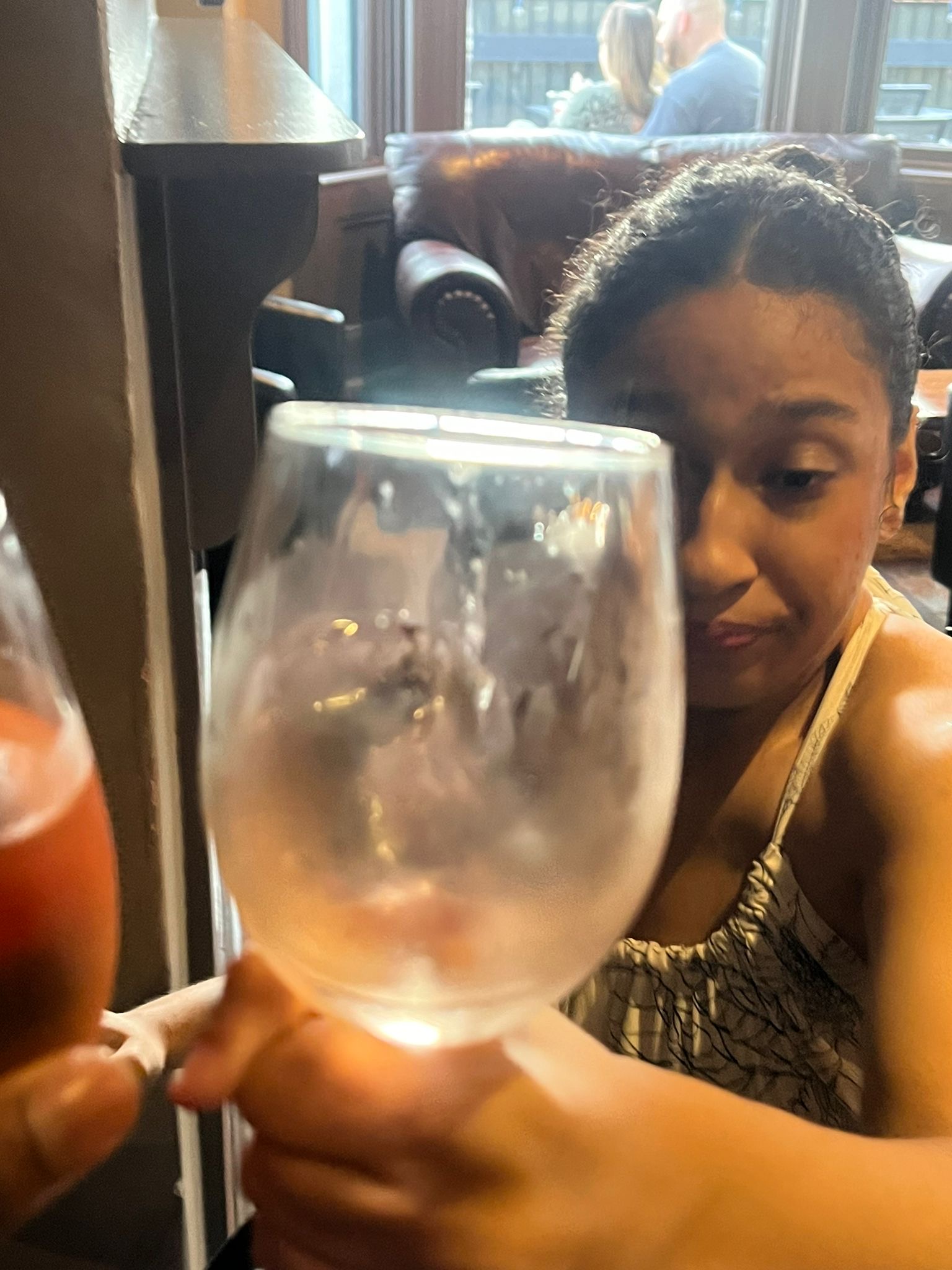
me realising that the wine glass that I was drinking from is the size of my head lmaoo
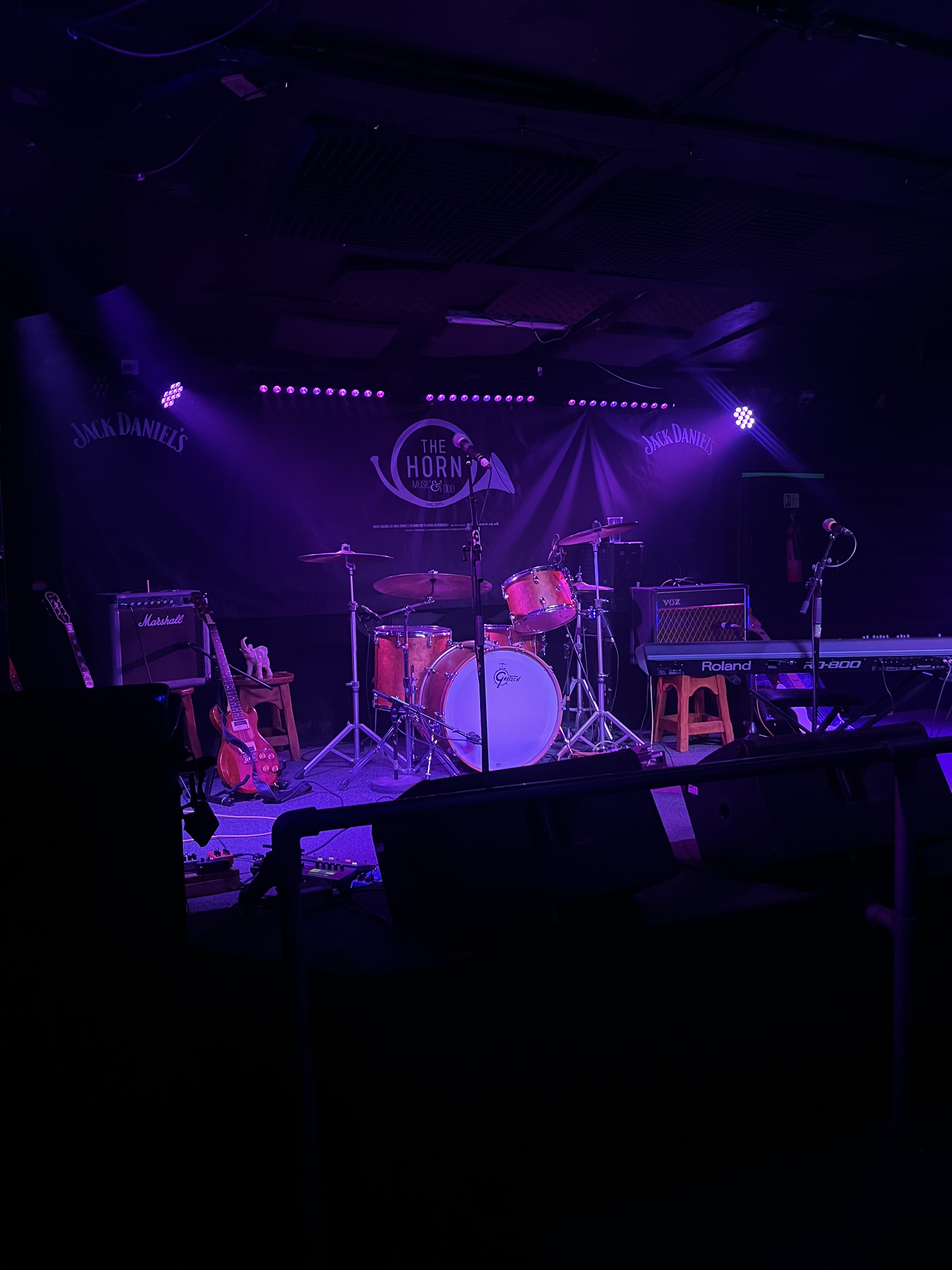
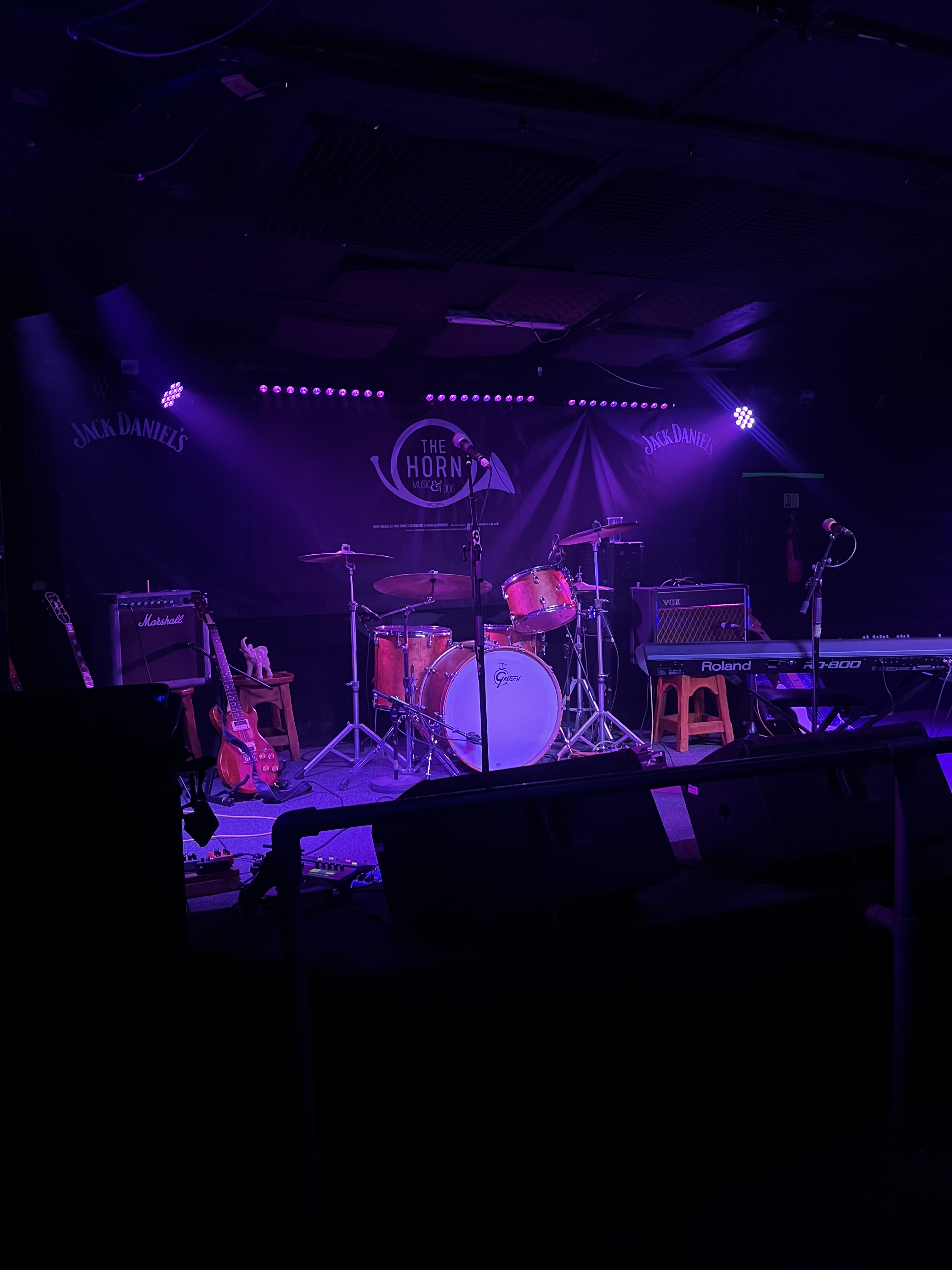
pictures of stage lighting and some of the band

no Saturday night night out with lead personal assistant for my disability in the best team leader I Kadabra




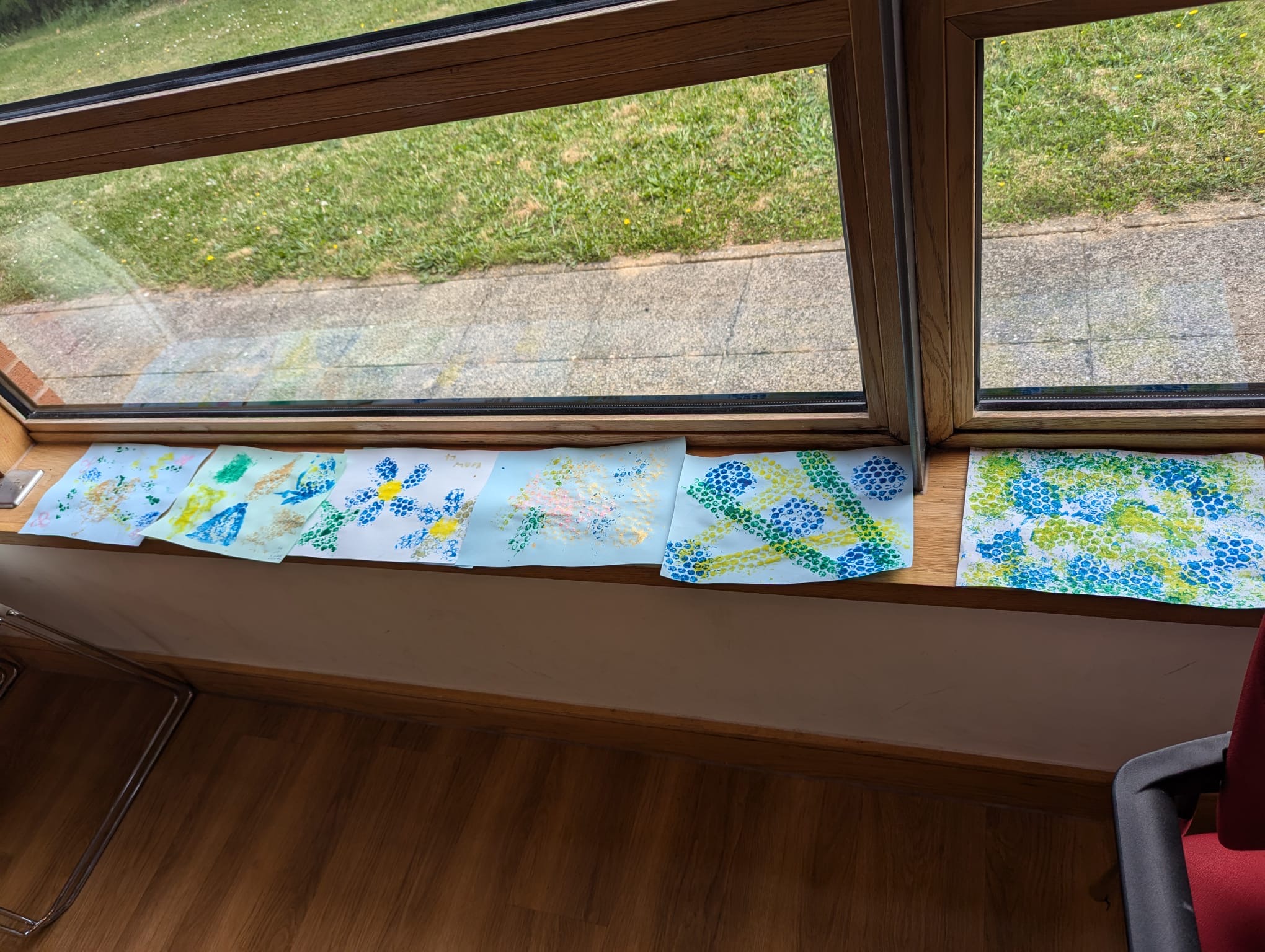
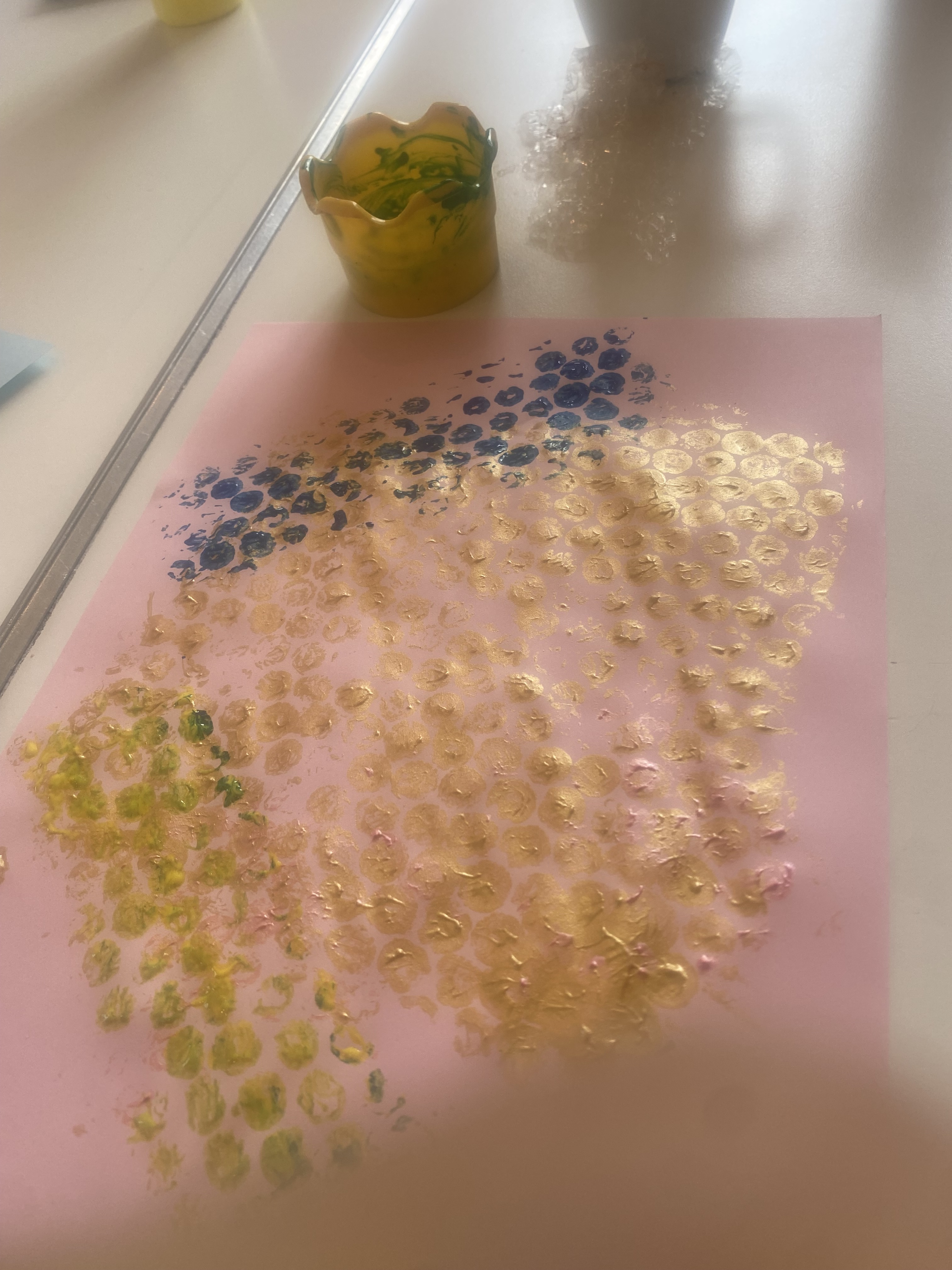
bubble wrap painting the tied at last week activity group look at this I love the unique orbit
Improvements in airport accessibility continues since pandemic, with “more work to do” as demand increases
| A press release: |
| Annual report from the UK Civil Aviation Authority shows standards increasing with no airports currently in the lowest category.11 airports rated ‘very good’ between April 2023 to March 2024, although mixed progress across the country.As demand for accessibility services increases, regulator says more still needs to be done to make the experience of disabled passengers as good as for other passengers and make air travel accessible for all. |
| No UK airport has received a ‘poor’ rating for their accessibility performance over the last year according to a report by the UK Civil Aviation Authority, for the first time since 2020.The regulator has published its annual Airport Accessibility report, ranking every airport in the UK – with an annual passenger volume of more than 150,000 – on their accommodation and treatment of passengers with reduced mobility and disabilities. In the last decade the regulator’s Airport Accessibility Framework has helped drive improvements at airports across the UK.Against a backdrop of stronger demand for assistance services, 11 airports were rated ‘very good’ for accessibility, 12 airports were rated ‘good’, and only five airports were rated as ‘needs improvement’.Anna Bowles, Head of Consumer Policy and Enforcement at the UK Civil Aviation Authority, said: “Making aviation accessible to all is an important part of our work to protect the public and enable the aerospace sector. Progress is being made, and not rating any airports ‘poor’ this year is welcome, but there’s more work to do, especially by those airports we have rated ‘needs improvement’ in our report. We will continue to work with the sector to ensure that standards are maintained and improved.”This year’s ratings show that the following achieved a ‘very good’ rating:Belfast City and City of Derry – who exceeded ‘very good’ targets once again.Cornwall Newquay, East Midlands, Glasgow Prestwick, Leeds Bradford, London Stansted, Newcastle and Teesside. Glasgow maintained its ‘very good’ rating, while Southampton airport improved its assistance services to be better meet passenger needs and improve its rating from last time.The majority of airports received a ‘good’ ranking: Aberdeen, Belfast International, Birmingham, Bournemouth, Edinburgh, Exeter, Inverness, London City, London Luton, Manchester, and Sumburgh.London Heathrow has received a ‘good’ rating, progressing on its ‘needs improvement’ rating from 2022/2023, after investing in a significant number of staff for their accessibility support services.A number of airports remain in the ‘needs improvement’ category: Bristol, London Gatwick, Cardiff Wales, Liverpool and Norwich.The UK Civil Aviation Authority launched the Airport Accessibility Framework in 2014, clearly setting out a key set of standards for airports. The framework details how the regulator expects all passengers with disabilities and reduced mobility to be treated and commits to posting accessibility results annually in order to hold the aviation industry to account.In its first decade the initiative has facilitated significant improvement in airport accessibility, including millions of pounds of investment in improved service and facilities. This year, the report was written against a backdrop of significant increase in demand as passengers indicated a drop in satisfaction with airport performance.For the first time, this year’s report also includes a deep dive accessibility assessment of airports undertaken throughout the reporting year. This year, London Heathrow, London Stansted, and London Luton were assessed in greater depth, and this new aspect of the report will continue in future years. The regulator continues to work alongside airports to improve the experience of aviation travel for passengers with reduced mobility. The Civil Aviation Authority encourages airports to increase staffing and invest in equipment during winter when demand for flights is lower.The regulator also now has a representative that has attended forum meetings of the top 16 airports most used by passengers, to observe and allow greater understanding of how groups are operating and are being used by airports. In addition, the Civil Aviation Authority has today published its accessibility framework, providing guidance on accessibility for airlines.The Civil Aviation Authority has consulted with passengers, the aviation industry, and disability charities, consultants, and consumer groups on how to best structure and implement this new Framework. This guidance will complement the airport framework and as with airports, it will be used to provide transparency on performance and help focus and drive improvements where needed in the accessibility of airlines flying from the UK. |
Love Island Star Tasha Joins Strictly Line-Up
Love Island star Tasha Ghouri, from North Yorkshire, has been announced as the sixth celebrity contestant to take part in the next series of Strictly Come Dancing.
The model, author and podcaster, who uses a cochlear implant, became Love Island’s first deaf contestant when she appeared in 2022, eventually finishing joint fourth on the ITV show with boyfriend Andrew Le Page.
Ms Ghouri, from Thirsk, was born deaf and is an advocate for the deaf community.
She said: “I can’t believe I’m going to be on Strictly Come Dancing. I’ve been watching the show since I was little and it’s a firm Ghouri family favourite, so this is a total dream come true.”
Ms Ghouri released her debut novel, Hits Different, in June and she hosts the Superpowers with Tasha podcast.
‘Make everyone proud’
As a child, she attended a dance school in Thirsk run by teacher Hannah Tweddle.
In 2022, before Ms Ghouri’s appearance on Love Island, Ms Tweddle told the BBC: “When she was younger, we didn’t really make too many changes for her.
“She could hear enough and with very bassy music she picked up the rhythm and the sound really easily. She was good.”
Today, Ms Ghouri has more 2.2 million followers across her social media networks.
She has worked with Number 10 Downing Street and the Department for Education to champion issues on behalf of people who are deaf.
She said going on the BBC’s Strictly Come Dancing would be “an unforgettable experience”.
“I hope to represent and make everyone proud out on that dancefloor,” she added.
In 2021, actress Rose Ayling-Ellis was the first deaf contestant to win Strictly Come Dancing.
Strictly Come Dancing returns to BBC One for the 20th year this autumn, with other contestants including comedian Chris McCausland, JLS singer JB Gill and opera singer Wynne Evans.
Chris McCausland To Be Strictly’s First Blind Contestant
Chris McClausland was the first celeb to be confirmed for this year’s series, which also made him the show’s first blind contestant.
The comedian is a regular face on flagship comedy shows such as Have I Got News for You and QI.
Speaking to ITV’s This Morning on Monday, he said his participation in Strictly was the “worst kept secret” in showbusiness following weeks of newspaper reports.
The national disability charity, Sense, welcomed news that he was joining the show, calling it a “pivotal moment” for disability representation.
“I don’t dance, I haven’t danced, I can’t dance, I can’t see the dancing I will have to do. What can possibly go wrong?,” joked McCausland, who lost his sight in his 20s.
New Flight Check-In Aims To Ease Stress For Disabled
A new airport check-in process has been set up to provide “stress-free” and “calm” assistance for people with hidden disabilities to catch a flight.
The service has just been introduced at Birmingham Airport, where specially-trained staff will assist people who will wear sunflower lanyards to identify them.
The airport said its aim was to ensure those passengers who need it will get the specific help they require.
Bosses have stressed though that the scheme does not fast track the check-in process for those passengers.
“This new process ensures we can fully support our customers with the help they need, whether from the check-in point to the aircraft or just through the security process,” said Chris Wilson, head of terminal operations.
The lanyard is a discreet means of make others aware the passenger has a hidden disability.
Eligible customers are required to register with the airport’s assisted travel desk when they arrive at the airport.
“This new scheme will help better manage the service offered to customers registering directly with the Assisted Travel team upon arrival,” said Andy Wright, from Birmingham Airport’s accessibility forum.
“This will ensure the resource can now be better utilised to support those for whom the sunflower lanyard policy was originally created.”
Disabled Bride May Have To Take Bus To Her Wedding
Where’s the recognition that disabled people get married, too, and may need accessible wedding cars, too?
A woman has said being unable to have her dream wedding as a result of her disability is “really upsetting”.
Due to transport issues, Sarah Tunnicliffe, 41, may have to travel 40 minutes in her wheelchair to her big day on 30 August, wearing her dress, or use a public bus.
She said the lack of availability of accessible wedding cars and the cost of renting wheelchair friendly vehicles meant she was stuck.
Sarah was diagnosed with limb-girdle muscular dystrophy, external, a progressive muscle disease, when she was 16, and lost the ability to walk in her late 30s.
“It’s sad. It’s disappointing. It’s just mentally exhausting… constant problem solving all the time,” said Sarah, from Cardiff.
After her diagnosis, she said her main goal, at just 16, was to get married before she was no longer able to walk.
“It was really important to me… as time went on I thought ‘well this is going to get harder and harder’,” she said.
‘Dreams of walking down the aisle’
In her early 30s, when a number of falls and broken bones meant she had to purchase her first wheelchair, she ruled out ever tying the knot.
“I said ‘that’s it, I’m not getting married now’,” she said.
“I’ve had all these dreams about the big white flowy dress, walking down the aisle arm in arm with my father… I was adamant.”
However, after a proposal from her fiance Jamie two years ago, she had a change of heart, but has encountered several problems since.
As for transport to her wedding, Sarah said the two best options for her – with her wedding only a month away – is travelling the 40-minute journey in her chair and wedding dress – or taking a public bus.
“Several ideas have been floated about how I could get there – but the legalities of traveling down Newport Road (in Cardiff to the venue) on the back of a tractor trailer I think are questionable,” she joked.
Why is it so difficult for Sarah to get transport?
Her initial plan was to drive herself in her own accessible vehicle, although she had to sell it a few years ago for financial reasons.
But she said she has found next to no accessible wedding vehicles, with her only option renting a general accessible vehicle for a minimum of three days for about £600 – for just the 10-minute drive.
“There’s just been so many times where I’ve been let down [with previous rentals]… I just don’t want that disappointment on my wedding day,” she said.
“I’d rather either go on my chair, but everyone says ‘you can’t do that’… or the bus, it’s about 14 minutes so it’s not that bad.”
Sarah has considered getting a taxi to her wedding, but due to the size of her wheelchair, has to partially dismantle it, against the advice of her doctors, to just about fit in them – and that’s without a wedding dress.
“I got stuck in the taxi at my sister’s wedding. I was a bridesmaid… they had to lift me out,” she said.
Sarah said these are problems that happen every day for wheelchair users, whether it’s her attempting to get to a hospital appointment or taking her pet to the vet.
“I accept things on a day to day basis, things are challenging… [but] I thought the wedding day would be different,” she said.
She said another thing she dreamed of was a child was going out with a group of friends to try on wedding dresses.
“That’s just not going to happen for me,” she said.
“In some ways that is really upsetting… it was something that I always dreamed of.”
She said a majority of bridal shops are either upstairs, have stairs or are quite small and “boutiquey”.
“My chair is quite big and bulky, but equally, I can’t stand anymore, so I can’t ‘step into a dress’,” she said.
“I know that planning a wedding is not supposed to be easy and plain sailing… but I’m so tired. It’s so disheartening.
“There’s certain things that I’ve not done because I don’t have the energy to spend in it, like getting a cake.”
‘Nothing’s gonna stop me’
However, despite the challenges, Sarah said she is certain she is going to have the “most amazing” day.
She said after realising “I can’t have the dress, I’m not having the car”, the main thing for her was the venue, which she secured in Cardiff’s Royal Welsh College of Music & Drama.
“At least it can be set in a beautiful place… I love dancing, so I’ve got my DJ, and I’ve got a venue, and I’ve got food,” she said.
“I love [Jamie] to bits… and I just want to celebrate that with him and everybody else.
“Nothing’s gonna stop me. Nothing’s going to put a downer on it.”
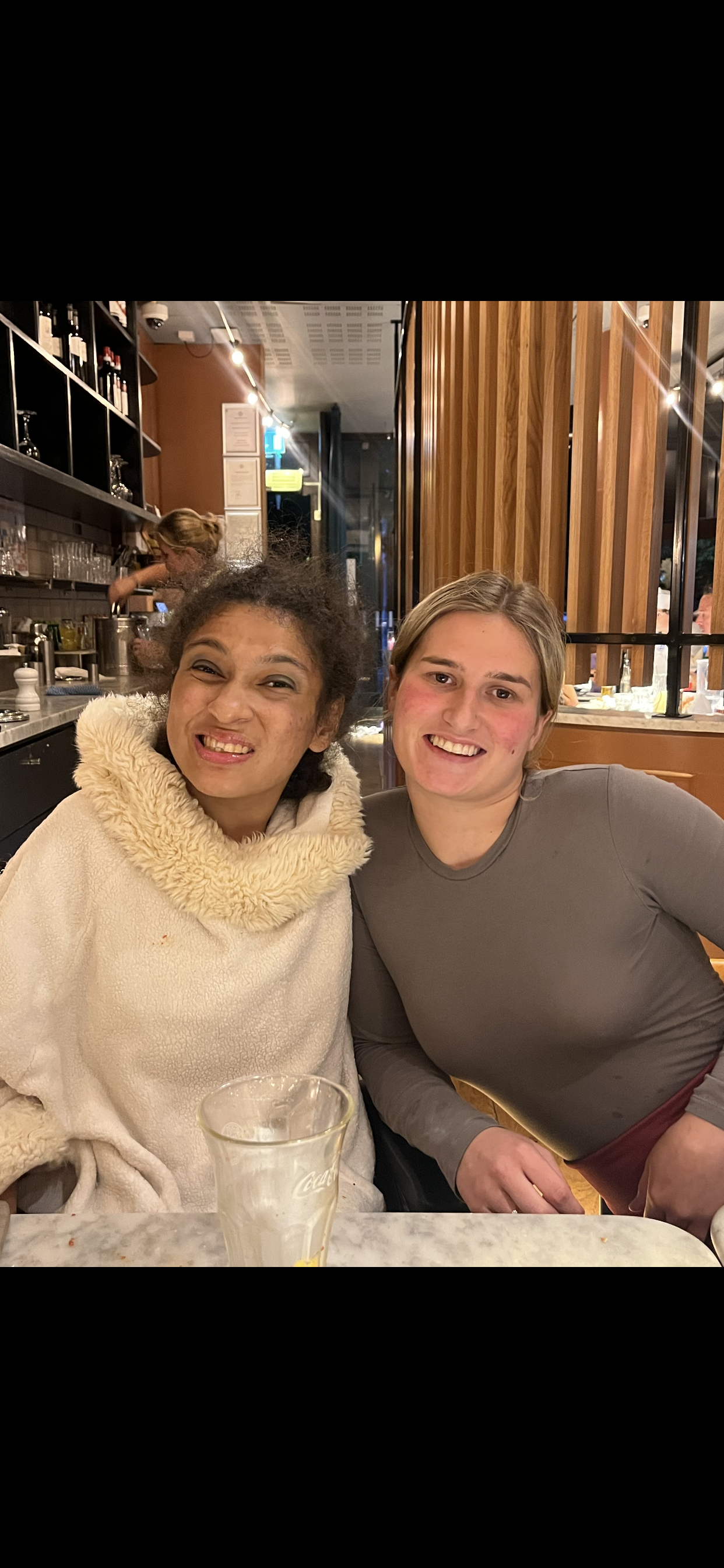
out for pizza with a friend from my level one health and social care class last Saturday thank you for coming Olivia
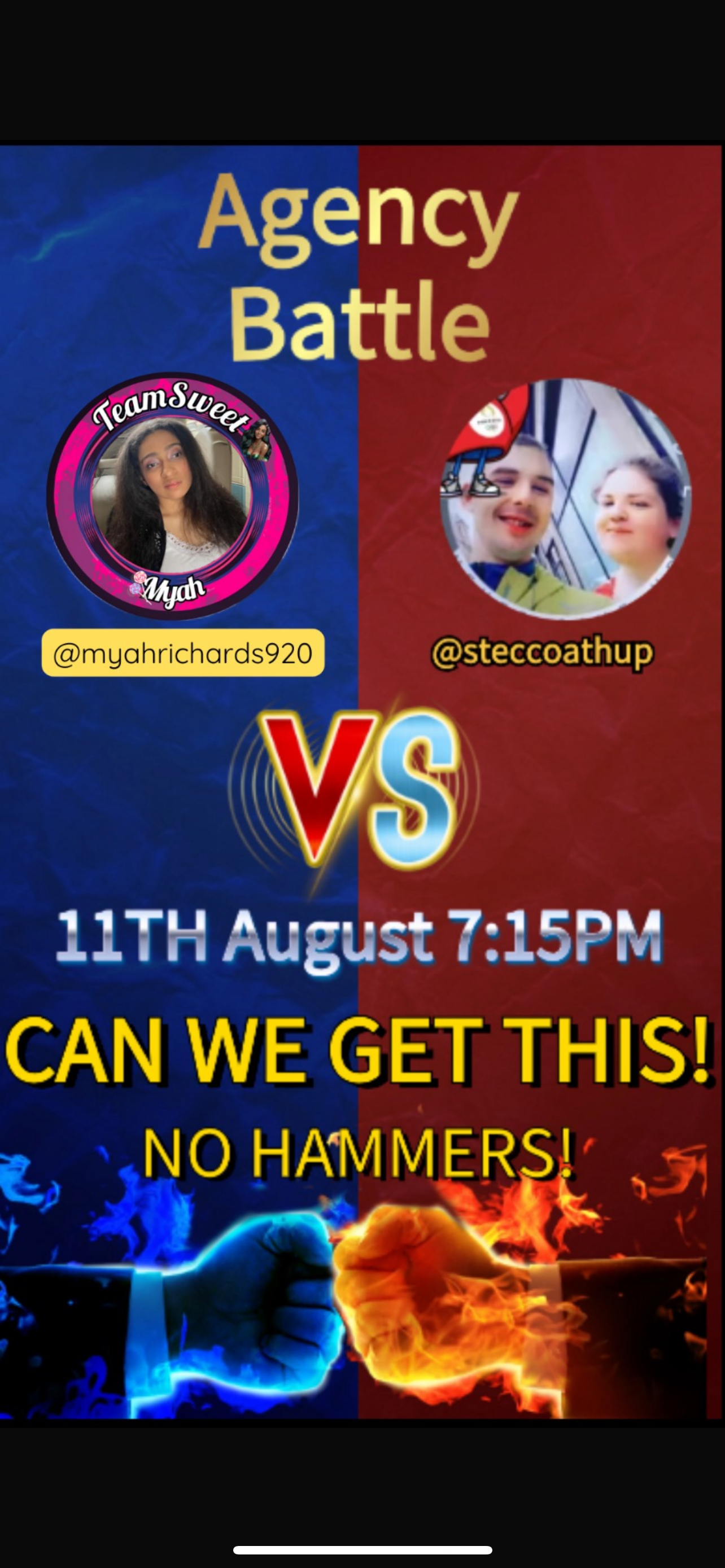
this week with my new TikTok team come and join if you are on TikTok and not with a TikTok to be one


Blind Group’s First Dive With Trailblazer Scuba Diver
A group of visually impaired people have gone diving for the first time after being inspired by a blind scuba diver bidding to set a new world record.
Lancashire duo Mohammed Salim Patel and Shaun Gash, who is paraplegic, are aiming to break down barriers and be the first blind person and paraplegic amputee to dive together when they go to Egypt in September.
Ten people who are visually impaired joined Mr Patel on an open water dive at Capernwray Diving Centre in Carnforth, Lancaster.
Latif Lewis said diving had always been on his bucket list but that he “never thought it would be possible”, while Usman Zahid said it was “magical” and “one of the best experiences of my life”.
The dive was funded by the Primary Club charity, which supports grassroots visually impaired sports in the UK.
Mr Patel, a BBC journalist from Blackburn, said: “They can’t see underwater and use the normal sign language that people use under the water, so we have devised with [Mohamed Mokhtar Elazab] – our diving instructor – a tactile way through touch, through feel.”
Mr Zahid said his first dive was an “unreal” experience.
He said: “I never thought I would be able to do anything like this. That was honestly one of the best experiences I have ever had.
“It was so magical underneath; swimming with the fish, even touching them and hearing all the sounds.”
Hamzah Waheed said he also loved his first scuba dive, adding: “It was fun. I want to go again.
“I don’t want to leave now.”
Mr Lewis praised Mr Patel for “showing us we can do it”.
He said: “It has always been in my bucket list. I always wanted to try this but I never thought it would be possible.
Mr Patel, 30, said it was “very humbling” that the group had “an experience of something they probably never thought they would be able to do”.
He said: “You don’t need to see to scuba dive. There’s so many benefits.
“To hear it was magical and it was the best thing they’ve ever done – I know it is true because I’ve experienced it myself.
“That was why I was so eager for others to experience it, too.”
Massive Response To PIP Vouchers Green Paper Consultation
With many thanks to Benefits And Work.
There has been a massive response to the Modernising Support Green Paper, Stephen Timms, the DWP minister for disability has revealed. And whilst the government is still not offering any certainty that the proposal to replace PIP cash payments with vouchers will be dropped, they do seem to be distancing themselves from the Conservative’s proposals.
Timms was answering a question on behalf of the secretary of state for Work and Pensions from Labour MP Cat Smith:
“To ask the Secretary of State for Work and Pensions, when she plans to publish her Department’s response to the consultation entitled Modernising support for independent living: the health and disability green paper, published in April 2024.”
Timms replied:
“The consultation on the Modernising Support Green Paper closed on Monday 22 July. Over 16,000 responses have been received and we will review these responses.
“The proposals in this Green Paper were developed by the previous government. We will be considering our own approach to social security in due course.”
The number of responses is more than ten times higher than were given to the DWP consultation on changes to the work capability assessment, which was launched in September 2023. That consultation received 1,348 replies.
It is likely that the vast majority of responses will have been negative in relation to most of the proposals for changes to PIP. It is encouraging to learn that so many people took the trouble to respond and it will have left the government in no doubt about the size of the fight they will have on their hands if they try to push through any of the more controversial ideas in the Green Paper
The form of words used by Timms “We will be considering our own approach to social security in due course.” is identical to that used by Baroness Sherlock in the House of Lords last week.
Whilst it lacks any certainty, the phrase does suggest that Labour are planning to disown most of what the Conservatives have proposed.
Benefits and Work readers, who we know responded in large numbers to the Green Paper, can congratulate themselves on having spoken out so powerfully on behalf of the many PIP claimants who found the consultation too overwhelming to reply to.
Student Finds Donor In Search For His Father’s Voice
A student who uses text-to-speech software to communicate has selected two voices, which combined together will create his new voice.
Christian Wilson, who studies at the University of Worcester, has verbal dyspraxia, a difficulty in placing muscles in the correct position to produce speech.
He had been on a search for someone with a Birmingham and Warwickshire accent, as his late father was from Warwickshire and a Birmingham City supporter.
Mr Wilson said he was tired of sounding like a Star Wars character and, after receiving 15 voice submissions, has found two to blend into his own.
He described feeling emotional when he listened through to the voice submissions with his family.
“As I was listening to them, I knew I was getting closer to my dream, something that I thought never would happen.
“I hope to use my new voice to share my experiences with other people – that would be great,” he said.
Mr Wilson’s sister felt an instant connection to the Birmingham accent he selected for his new voice.
He said: “I liked the voice originally but when my sister heard it she said ‘that is you’.”
The student previously said to share an accent with his father, who died suddenly from an aortic aneurysm, would be a dream come true.
“I can’t remember my dad, but to have his voice would mean he could live on through me,” said.
The two voices will now be combined by engineers at Speak Unique to create a digitised voice to replace the one he currently uses.
Mum’s School CCTV Plea After Autistic Son Attacked
The mother of a young boy with complex needs has called for all special schools to have CCTV after her son was attacked by a teaching assistant.
Her 13-year-old son Tobie, from Wolverhampton, is autistic and non-speaking.
He was kicked, pushed and had his head held down in the 20 minute assault, and his mother Charlotte said a security camera had picked up the full extent of the attack.
“To see that man attack him in a place he thought was safe – it was just horrendous,” Charlotte said.
Tobie’s attacker, William Kevin Clifford, 61, pleaded guilty to child cruelty at Wolverhampton Crown Court earlier this month and was given a suspended sentence of nine months.
Warning: This story contains details of an attack that some readers may find distressing
The attack happened in the playground of Tettenhall Wood School in Wolverhampton, a special school where Tobie is a pupil.
The school said it had “followed all processes correctly” and that “children’s safety and wellbeing were always at the heart of everything we do.”
The footage is grainy but it is clear that Tobie was attacked repeatedly over the course of 20 minutes.
At one point Tobie tried to stand up and Clifford launched himself at the boy, pushing him down and forcing his face to the ground.
Tobie tried to crawl away but the teaching assistant followed him, and kneed him in the back as he was crouched behind a small gate in the playground.
https://emp.bbc.co.uk/emp/SMPj/2.53.9/iframe.htmlMedia caption,
William Clifford was given a suspended sentence for the 20 minute attack on Tobie
Clifford’s court appearance was the first time Charlotte had seen the footage, despite her son being attacked in April 2023.
“I was devastated, I was horrified,” she said. “For the life of me I cannot understand what would make a person want to do that.”
Tobie had always loved school. The 13-year-old, who has a mental age of two, needs one-on-one support and Charlotte had always trusted the adults around him.
When she got the call from the school to say that her son had been harmed by a member of staff, she could not quite believe it.
“I had to ring the head teacher back. I thought it must have been a genuine mistake, but then she confirmed it again, that my child had been attacked.”
Tobie had come home that night agitated and distressed, but because he is non-speaking, he was unable to tell his mum what had happened.
Charlotte soon began to see the evidence. She had been told by the police to “body map” Tobie and found bruises and marks all over him.
“If that security camera had not picked it up, then we would never have known what had happened Tobie,’ Charlotte said.
“If this could happen in Tobie’s school, with a formidable team of staff, it can happen anywhere.”
Charlotte has no problems with the school, which she described as “excellent”. She believes that all education settings where there are vulnerable children should have CCTV in the corridors, in the classrooms and in the playground and that it should be kept for at least 12 months.
Currently, it is down to the individual school to decide whether it wants CCTV.
Campaigners in the past have taken a petition to the Scottish Parliament but their call to make surveillance mandatory was rejected over concerns about the balance between privacy and protection.
Beth Morrison, founder of Positive and Active Behaviour Support Scotland, supports more than 4,000 families across the UK – the majority have come to her because their child has come home from school with unexplained injuries.
She said CCTV would protect children with complex needs who were not able to tell their parents if something had happened to them.
“We are not calling for CCTV in all schools, only settings where there are vulnerable children,” she said.
“So many of our children can’t speak, they can’t tell us what happened. They’re not credible witnesses. If something has happened, there’s nothing, there’s no cameras, there’s no footage, no evidence.
“We cannot get justice without CCTV.”
The Association of School and College Leaders said that privacy and cost were among the issues schools had to consider and serious incidents like this were rare.
Charlotte said Tobie’s whole world had changed, and he struggled to trust anyone, but despite what happened, she said he was still “very resilient”.
“I’m so proud of him, he’s back in the same school, with his trusted adults – who I know and trust too. He’s doing so well, despite what that man did to him.”
‘I Was Made To Feel Like A Burden At Heathrow’
A disability rights activist and her mum have said they were made to feel like a “burden” by Heathrow Airport and British Airways (BA) staff because of their disabilities.
Jo and Amy Pohl got back to the UK on Monday after a holiday in the US. They then took another BA flight, a domestic service from Heathrow to Newcastle.
The pair said they were made to feel “undignified” at every stage from airport security until boarding the plane at Terminal Five.
BA and Heathrow Airport have apologised for the treatment of the women and say they are investigating what went wrong.
Amy, who is based in Hartlepool and has more than three million TikTok followers, is a full-time wheelchair user due to a neurological condition called complex regional pain syndrome (CRPS).
Jo, who lives in Rugby, walks with a crutch due to a degenerative condition affecting her joints.
“We had so many issues as soon as we got through the doors,” Amy told BBC News.
They arrived in the terminal 20 minutes before their check-in opened, when Amy said her mum was “really struggling” with joint pain following their transatlantic flight.
She said she asked a member of staff if they could help find a chair for Jo and was allegedly told: “She can sit on the floor.”
Amy said: “I went back to my mum and I told her this but luckily somebody had seen her struggling and they offered her a seat.”
‘Wobble all over the place’
The pair said they faced a 90-minute wait to access the security screening designated for people with disabilities and their associated equipment.
Jo said she was then asked to get out of a wheelchair that had been provided by the airport, and to hand over her crutch to be scanned – which is normal procedure – but they failed to give her a temporary walking aid.
Then, Jo said, she tried to go to the front of the queue security scanner queue only to be told to go to the back by a staff member, to which she replied: “I’ve got no crutch, I’ll fall over.” Another customer then let her cut in, she said.
After the scanner bleeped, Jo said she was patted down, still without her crutch, causing her to “wobble all over the place”.
Jo added the staff “lacked empathy” towards her.
They said they arrived at the boarding gate about 45 minutes before their flight was due to leave, to check about their special assistance boarding.
Amy said: “Instead of talking to me, she (the member of staff) talked to my assistant and said, ‘can they walk?’ in front of everyone.
“She could have just looked at me and asked: do you have any access needs to get on this plane?”
They said they were then told by the boarding agent there was no record of the pre-booked special assistance, which had been arranged in April.
“I told them downstairs about five times that I need an aisle chair. And I double-checked and they said it was going to be ready waiting for me when I need to get on the plane,” Amy said.
‘My heart just dropped’
Amy also said she was “promised” she would be boarded first, which is standard practice for passengers who require help getting on a plane.
They said they were then told if they went down in a lift, the special assistance staff would meet them to board first.
“Just as we came out of the lift we could see a flood of people coming down the escalator and on to the plane,” Amy said.
She added: “My heart just dropped.”
Only one of the two people required to help Amy on to the plane then arrived with the aisle chair.
“He was apologetic and he was really the only person that day that showed me any empathy,” Amy said.
A second person eventually arrived to help Amy board the already-full plane, she said.
Jo said: “So she had to go through a sea of people – I could hear people tutting and rolling their eyes as we’re going down.”
She said the treatment they received over their disabilities, from check-in to boarding, was “undignified”.
“You feel like a piece of meat and you feel like a burden,” Jo added.
Amy said she would like to see an agency established to better hold organisations to account that provide services to disabled people.
‘We deeply apologise’
A BA spokesperson said: “We’re sorry for the unacceptable experience our customers had and don’t underestimate the impact it will have had on them.
“We have been in touch with our customers directly to apologise and assure them we are investigating this issue urgently.”
They added BA was “committed to learning from these incidents”.
A Heathrow Airport spokesperson said: “We want Heathrow to be a welcoming and accessible airport for every passenger and we are very disappointed that the service provided on this occasion didn’t meet our standards.
“We are conducting a review with our accessibility service partner to understand what went wrong. We deeply apologise for the distress caused.”
Disabled Workers Helping To Grow Business
Scotland’s disability employment gap has been stubbornly high for years.
But there are signs that more employers are making an effort to recruit disabled people.
One company told BBC Scotland News that there is a “talent reservoir” other businesses could benefit from if they look differently at recruitment.
Michael Warren has a learning disability and has always found job interviews difficult.
He said: “I don’t remember what to say.
“I can’t read properly and I can write a little but not much.”
But he added that does not mean he is not a good employee.
The company he works for, ACS Clothing, has recently revamped its employment strategy, resulting in a workforce that is made up of 15% disabled people.
It is trying to tailor jobs to people, rather than shoehorning workers with learning disabilities into roles they might find complicated.
Mr Warren admitted: “I’m more excited to go to work.
“I’m on time more, I’ve got more friends that understand me.”
Michael Cusack, is head of sustainability for the company, which sorts and distributes clothes for hire across the UK.
Before Brexit the firm hired a lot of people from Eastern Europe.
But that has become more difficult in recent years and, as a result, the company has actively become more “tolerant and balanced” with its new hiring approach.
Mr Cusack added: “We were struggling, as are a lot of businesses.
“We’re creating a talent reservoir of people we can bring into the business to help our business grow.”
He said the company had ambitions to develop its hiring processes to include more people with physical disabilities.
“We are open to expanding,” Mr Cusack added.
“You’re tapping into a talent pool that’s got huge potential.”
Rachael Hill, an Edinburgh-based jobs coach, urged more companies to adapt their approach.
After experiencing ADHD symptoms, she said a previous manager took the time to understand how to improve her working environment.
She said that without the support of senior leaders she would not have had the self-confidence to run her own business.
Ms Hill explained: “It’s definitely about working with the individual, building that confidence, and igniting that belief in themselves.”
Complex needs
According to the Office for National Statistics, there were 777,000 economically inactive adults in Scotland last year.
About a quarter of a million were classed as disabled or long-term sick.
However, about 50,000 of those people were looking for a job.
Moving people off welfare and into employment is a challenge governments have faced for years.
The new UK government said getting disabled people into high-quality jobs is part of its plan for growth.
There is some evidence that Scotland’s disability employment gap has reduced recently, although it is still the highest in the UK.
But there are suggestions that this is because people who are already in work are reporting disabilities such as mental health issues, ADHD and autism.
Chirsty McFadyen, from the Fraser of Allander Institute, said the biggest challenge is getting people with more complex needs into work.
“That’s when the government is going to have to start really thinking about how to get disabled people who are out of work into work,” she added.
The UK government said it would devolve “more power to local areas so disabled people can benefit from joined-up work, health and skills support”.
A spokesperson added it will also enshrine in law “the full right to equal pay for disabled people to help close disability pay gaps”.
First Ever ‘Blind Barbie’ Doll Released
The blind Barbie doll will be heading to toy shop shelves today.
It’s the latest of their line which includes the first Barbie with Down’s syndrome and aims to increase representation across its range of toys.
The company that makes Barbie dolls, Mattel, partnered with the American Foundation for the Blind (AFB) in the US, and the Royal National Institute of Blind People (RNIB), to design the new doll.
Barbie’s design contains lots of features that will not only make her more accurately reflect a blind person, but also will be interesting for children who are blind or who have low vision to play with.
This Barbie doll will come with a cane and dark glasses, and will feature textured clothing so children who are blind, or have low vision, can feel the outfits she’s wearing.
Her eyes will also look slightly up and out, to reflect some blind people’s gaze.
And on the box she comes in, Barbie will be spelled in Braille, which is language made of raised dots that blind people can feel to read things.
Broadcaster and disability activist from Birmingham, Lucy Edwards, campaigns to raise awareness of blindness and sight loss.
She lost her eyesight when she was 17, and says a blind Barbie “means everything” to her.
“As a teenager, I felt isolated by losing my eyesight and not seeing role models like me.
“I was embarrassed by my cane – but knowing Barbie had a cane would have made me feel so differently about mine and helped me feel less alone on my journey to accept and embrace my blindness.”
Debbie Miller, from the Royal National Institute of Blind People, said: “It’s wonderful to think that children with a vision impairment can now play with a Barbie that looks like them.
“We’re so pleased with the details that have gone into designing this new Barbie, the tactile clothes as well as the cane and the sunglasses.
“It’s an acknowledgment that not everyone can see well, which means a lot to the blind and partially sighted community… helping children and adults with sight loss feel like they belong and are recognised.”
History-Maker Storey To Compete In Ninth Paralympics
Great Britain’s most successful Paralympian Sarah Storey says being selected for a ninth Games was a “pinch-me moment” after she was named on Monday in a 23-strong cycling squad for Paris 2024.
The 46-year-old made her debut as a swimmer in Barcelona in 1992 aged 14 before switching to cycling in Beijing in 2008.
She won a record-breaking 17th Paralympic gold in Tokyo in 2021 in the C4-5 road race to move one gold ahead of Mike Kenny and become GB’s most decorated competitor.
Unlike in her previous Games as a cyclist, Storey will not compete on the track and will instead focus on the time trial and road race events which will take place in Clichy, near Paris.
“I’m thrilled to have the chance to put on the ParalympicsGB kit again,” Storey told BBC Sport.
“It is a pinch-me moment and is a dream I didn’t know I had as a kid.
“It has been a huge motivation since the lockdown Games in Tokyo to get to Paris and to be able to have all those spectators there. It feels like a home Games again.
“For me, it is all about trying to defend my two road titles from Tokyo. I am also double world champion from Glasgow in 2023 in those two events.
“These Games will have two different courses so every time you get on the start line it is a different challenge that lies ahead and you need different skills.
“I think that is what keeps it exciting, keeps everyone guessing and keeps me working hard to see if I can pull out another great performance.”
She is joined on the team by fellow Tokyo gold medallists Kadeena Cox, Jody Cundy, who will be competing at his eighth Games, Jaco van Gass and Ben Watson plus husband and wife Neil and Lora Fachie and their sighted pilots Corrine Hall and Matt Rotherham.
The team also includes current world champions Lizzi Jordan and Danni Khan, Daphne Schrager, Archie Atkinson, Blaine Hunt, Fin Graham and Fran Brown.
Tokyo medallists Sophie Unwin and Jenny Holl, James Ball and Steve Bate are also named along with pilots Steffan Lloyd and Chris Latham and Paralympic debutant Matt Robertson.
Track events take place from 29 August-1 September followed by road events from 4-7 September.
The GB cycling team enjoyed their most successful Paralympic Games ever in Tokyo, coming home with 24 medals with every rider winning a medal.
Graham won two silvers in the C3 category on his Games debut in Tokyo but the 24-year-old Scot has claimed world gold on the track and road since then and is hoping for more in France.
“In Tokyo I was able to fully focus on performance without the crowd and extra distractions so I could just focus on getting the best out of myself,” he told BBC Sport.
“Now I know what performances to go through to get that out of myself, so hopefully I can enjoy the atmosphere more, soak it up and experience the Games for what it is.
“It will be exciting to have a full Games with friends and family there.”
Having finished second behind team-mates Van Gass and Watson in the individual pursuit and road race respectively, Graham wants to go one better in Paris.
“Jaco and I have had some good battles and it keeps you focused in training, but I’ve been going well on the road in both the time trial and road race this season,” Graham added.
“Going to Tokyo I had only won one World Cup bronze, but since then I’ve won six world championships and multiple World Cups so I feel my performances have stepped on since then.
“I feel a lot stronger and hopefully in Paris it will all lead to good results. If I can come back with one gold I would be over the moon.”
Gamers with disabilities say a culture shift in studios is leading to a more inclusive experience.
Developers are increasingly designing games to take account of people with sight-loss, motor skills issues and other conditions.
Visually impaired gamer Kellie says something as simple as increasing the writing size on-screen for those with partial sight loss or providing better colour contrast options are a step in the right direction.
Companies, like Dundee-based Konglomerate Games, are working to open up the gaming market to those with complex physical needs, with a game designed to help young people with cystic fibrosis.
A former Strictly Come Dancing contestant has said his time on the show left him with “injuries that still affect me to this day”.
Paralympian Will Bayley, who appeared on the show in 2019, was left in “horrific pain” after practising a jump in rehearsals with his professional partner Janette Manrara.
The 36-year-old table tennis champion told The Sun he didn’t want to do the jump , externaland his coach had also told the show beforehand that he “can’t do jumps”.
A BBC spokesman said it had “longstanding protocols for dealing with injuries if they occur and that includes contestants receiving all necessary treatment and support as required.”
A representative for Manrara told BBC News: “Janette had a great time dancing with Will and one of her favourite moments on the show was doing their contemporary couples choice.
“Her celebrity partner’s safety and enjoyment was always the priority throughout her time on Strictly. Janette has never received any complaints and has maintained friendships with all her partners, including Will.”
Bayley left the series in week seven after sustaining the injury, saying at the time that he was “gutted [his] Strictly journey had come to an end.”
He is the latest celebrity to speak out about his negative experience on the show after Zara McDermott and Amanda Abbington made allegations against their former dance partners, Graziano Di Prima and Giovanni Pernice respectively.
Speaking about the accident, Bayley said a table was brought out during rehearsals for him to practise the jump.
“I said, ‘I’m not sure I can land safely’, but everyone assured me I would be fine,” he recalled.
Bayley was born with arthrogryposis which affects all four of his limbs and limits the range of motion in the joints. He was also diagnosed with Non-Hodgkins Lymphoma during childhood.
Bayley said the injury was sustained after Manrara allegedly told him to redo the jump because his earlier attempt was “rubbish” and he needed to show more passion.
“I was really determined, so I went for it and smiled at the camera. When I landed I just had the most horrific pain. I still have flashbacks now,” he said.
Bayley underwent reconstructive knee surgery in January last year, after tearing his anterior cruciate ligament while on the programme.
‘No duty of care’
Following the accident, Bayley claims the paramedic on site took him to a hotel room and put ice on his knee.
He said he “didn’t go to hospital until two days later, where they finally scanned my leg and told me I needed to pull out”.
“I should have been taken to hospital as soon as I had the accident, but all they cared about was trying to get me to dance.”
The Paralympian, who was made an MBE in 2017, said bosses made him feel like the injury was his fault and there was no duty of care after the injury.
“No one has ever contacted me from the BBC or said sorry,” he said.
Bayley’s request to gain compensation for loss of earnings from the BBC was denied, but the broadcaster paid for him to have surgery in 2020.
During this time, the athlete said he “put on three stone and was struggling with depression”.
Bayley said he thought his partner Manrara was “under a lot of pressure by the bosses to perform a certain way and I think it was them pushing me that caused the accident”.
“She was a passionate teacher and she was part of the decision to do the jump. I feel she could have protected me more, but I didn’t have an issue with her. It was mentally hard and I didn’t want to let her down.”
Leading disability charities have urged the government to pause Conservative plans for “worrying” and “dangerous” changes to disability benefits.
The previous government opened a public consultation into a major overhaul of Personal Independence Payments (PIP), which could involve replacing monthly cash payments with a vouchers system or one-off grants towards particular costs.
New Work and Pensions Secretary Liz Kendall has not said whether she supports or opposes the thrust of her Tory predecessor’s proposals, but has kept the consultation open.
A Department for Work and Pensions (DWP) spokesperson told the BBC it would “rebuild a [welfare] system that works for everyone and fuels growth”.
PIP payments, worth between £290 and £737 per month for about 2.6 million recipients, are aimed at helping with the extra costs associated with having a disability.
The payments are available to people with a long-term physical or mental health condition who have difficulty carrying out everyday tasks, even if they are working.
The Conservatives raised concerns that spending on the benefit is expected to grow by 52% from 2023-24 to £32.8bn by 2027-28, driven in part by a rise in claimants with mental health conditions.
Launching a public consultation on a proposed overhaul in April, then-Work and Pensions Secretary Mel Stride said he was concerned about PIP’s “sustainability”, arguing it was unclear that it was effective and providing value for money.
His consultation suggested the reforms could involve removing cash payments for those with mental health conditions, while offering improved access to mental health treatments as an alternative.
However, charities say replacing regular cash payments would create further barriers to support, risking pushing more disabled people into poverty.
Bryony Moss, who has cerebral palsy and serious problems with her mental health, said she was “anxious” and “really nervous” that she could lose hundreds of pounds a month as a result.
The 26-year-old from Buckinghamshire, who needs help with most daily tasks, told the BBC: “I use quite a large chunk of that money to pay for my support worker to help me.
“But I also use it to help me with going to my horse riding. So I ride with Riding for the Disabled and I do that because it’s a form of physio for me, it keeps me active but it’s also a safe space where I can be myself.”
Bryony said her independence would be severely impacted by losing her support worker, because she would be forced to rely on her parents whenever she wanted to go anywhere.
Bryony’s mother, Sasha, 64, said ministers should also consider the reasons why a rising number of people were claiming PIP because of problems with their mental health, suggesting that it was partly down to insufficient access to early interventions, including a lack of counsellors in schools.
She recalled that her daughter had suffered with her mental health while being bullied at school for her disability, but received “very little support” from overstretched NHS services, contributing to Bryony’s struggles with post-traumatic stress disorder (PTSD) and severe depression in adulthood.
Five leading disability charities – Disablity Rights, Scope, Mencap, Sense and the National Autistic Society – have suggested to the BBC that the proposed reforms are harmful and should be paused.
Mikey Erhardt, campaigner at Disability Rights UK, said he was “shocked and frustrated that the government has not taken the opportunity to stop this consultation”.
David Southgate, policy manager at Scope, said the government should scrap the “dangerous” proposals and put forward “a more positive” way of making PIP “better work” for disabled people.
A DWP spokesperson said: “Disabled people and those with health conditions deserve equal rights to live a fulfilling life just like everybody else.
“Welfare is a key part of helping those who want to work to do so which is why we will rebuild a system that works for everyone and fuels growth.”
The consultation closes on 23 July.
out any pancakes today before going to see my friend for drinks tonight? #FridayAndSaturdayNightOnSunday.
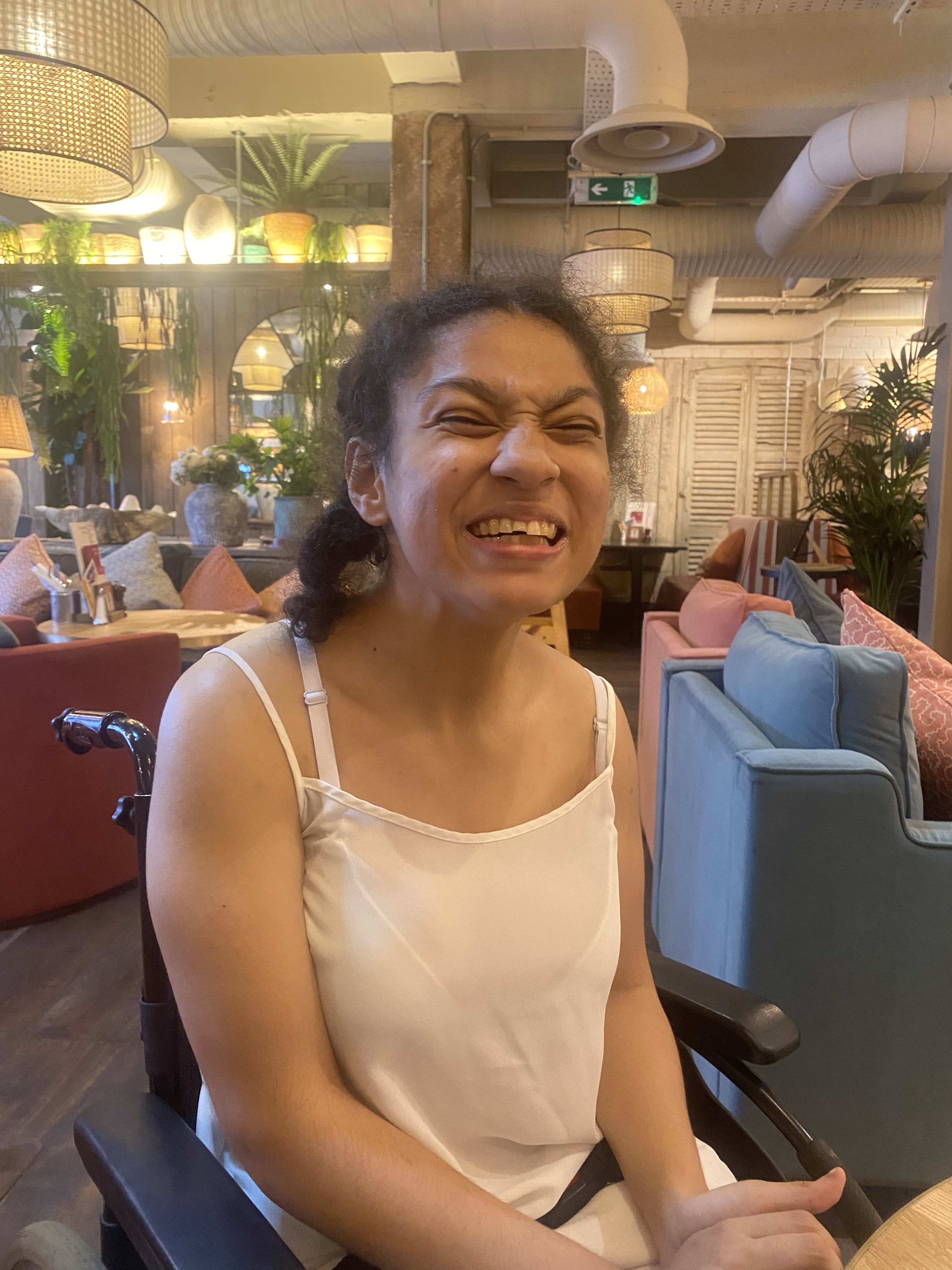
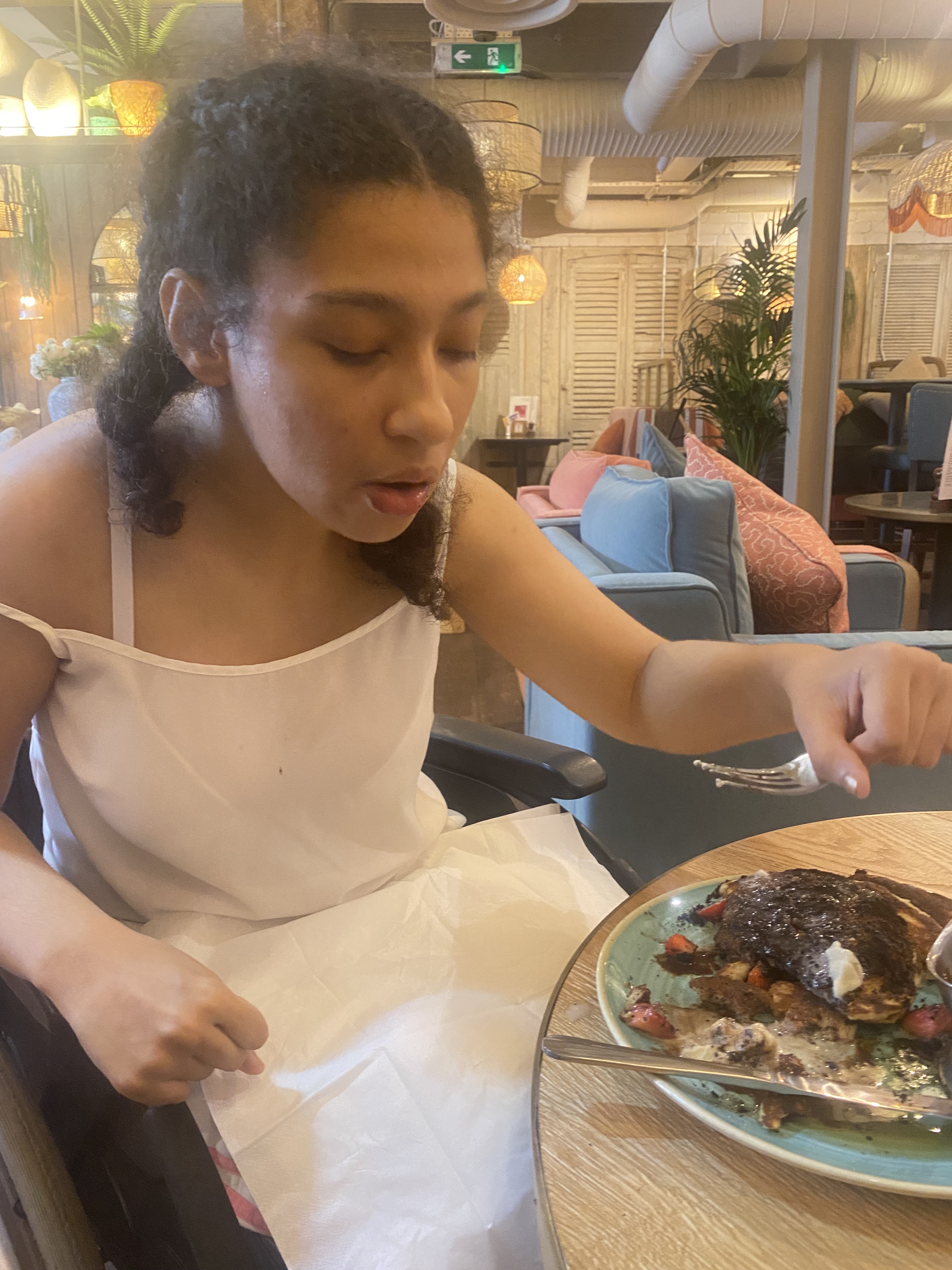
top fan and finding my purpose support my fundraising journey to pay for the rest care which I need and desire



‘Amazing’ Disability Campaigner To Get Blue Plaque
A woman who campaigned throughout her life for disability rights will be honoured with a blue plaque.
Mary Elsworth Greaves was born in Newcastle in 1907 and contracted polio as a child, which left her severely disabled.
She played a key role in getting the Chronically Sick and Disabled Persons Act 1970 passed into law, which made councils responsible for the welfare and housing of disabled people.
The plaque will be installed on her childhood home at 2 Lish Avenue in Whitley Bay, North Tyneside.
The law also gave disabled people the right to equal access to recreational and educational facilities, along with council-provided transport.
Known for her practical and determined approach, she once stated: “I don’t want to sit at home having everyone be nice to me.
“I’d rather go out and do things and have people being nasty to me if they feel so inclined, and then I’ll fight back.”
‘Absolutely amazing woman’
Whitley Bay North councillor Joe Kirwin said: “Mary Greaves was an absolutely amazing woman, it is because of people like her that we have the disability allowance and blue parking badges.
“Britain would be a much worse place without the achievements of Mary and her contemporaries.
“They really drove forward how disabled people are seen in our society.”
Baroness Joyce Quin, who nominated Mary Greaves for the blue plaque, said: “Her crucial role and achievements need to be highlighted, not forgotten.”
Wheelchair User Criticises Lack Of Accessible Homes
A disabled woman has criticised the lack of accessible rental properties after she was forced to move into temporary accommodation following a house fire.
Nerys Pearce said she lost “everything” when her home, in Ascot, Berkshire, was badly damaged in the blaze earlier this year.
Following the fire “money couldn’t buy” an accessible rental property for her to live in while her home was repaired, she said.
Habinteg, a housing association that focuses on accessible properties, said that only 9% of homes in the UK have “even the most basic” accessibility features.
Ms Pearce is a wheelchair user after being paralysed from the chest down during her time serving in the army.
Since the blaze, she said it had been “literally impossible” to find a temporary property that met all of her needs.
“There are very few properties on the market that are actually truly accessible or that you can make truly accessible,” she said.
“Every property I viewed that was completely inaccessible made me get hit in the face by my disability, and that emotionally was very difficult, especially when you’re dealing with something like a catastrophic house fire and being homeless.”
Charity Disability Rights UK said disabled people were often “forced into unsuitable rented accommodation” due to a shortage of accessible homes on the private housing market.
Fazilet Hadi, head of policy at Disability UK, said many disabled people were being “forced” into the private sector despite it “not being the best place” for them.
Christina McGill, director of social impact and external affairs at Habinteg, said: “Very few houses are one size fits all.”
“It’s not surprising that disabled people who need accessible homes find it much more challenging to find properties that are suitable for them across all types of sectors,” she added.
Mrs Pearce is now in temporary accommodation that she said was “the best” she could find.
“My house has still not been repaired and hasn’t started yet – so it still feels like you’re talking about a crazy, weird dream,” she said.
“I was left homeless and my dog was very hurt and I own nothing and dealing with the stress and the fallout of that is really difficult.”
A spokesperson for the Ministry of Housing, Communities and Local Government said: “Housing is one of the government’s top priorities and everyone deserves a home they feel safe in.
“We are a matter of days into a new government, and we will set out policies on accessible housing in due course.”
There was always his family. When he was bullied at school, and beaten, they were there to embrace him when he came home. And when the war started and he was terrorised by the sound of bombs falling, someone always said things were going to be ok.
Muhammed was heavy and found movement difficult. He spent his days sitting in an armchair. If he needed anything, there was a niece or nephew to help.
Muhammed Bhar was 24 and had Down’s syndrome and autism. His mother, Nabila Bhar, 70, told the BBC: “He didn’t know how to eat, drink, or change his clothes. I’m the one who changed his nappies. I’m the one who fed him. He didn’t know how to do anything by himself.”
On 27 June the war came back to the Bhar family’s neighbourhood and Muhammed’s small world shrank further. Along with other residents of Shejaiya, east of Gaza City centre, the Bhars were given orders to evacuate by the Israel Defense Forces (IDF).
The IDF was advancing into Shejaiya in pursuit of Hamas fighters fighting from tunnels and houses. But the Bhars were tired of moving.
In a weary tone, Nabila, who is a widow, reeled off the names of relatives’ homes where they’d sought shelter.
“We evacuated around 15 times. We would go to Jibreel’s place, but then there would be bombing at Jibreel’s place. We would go to Haydar Square, but then there would be bombing at Haydar Square. We would go to Rimal, but then there would be bombing at Rimal. We would go to Shawa Square, but there would be bombing at Shawa Square.”
The fighting intensified in the streets around them. They would hide in different parts of the house, often in the bathroom when shooting became especially intense.
“We were under siege for seven days. The tanks and soldiers were all around the house… Muhammed was staying on his sofa…and he didn’t like sitting anywhere except for there,” says Nabila.
For Muhammed war meant loud, violent sounds, the air vibrating with the concussion from shells exploding nearby. None of this could be explained to him.
“He would panic and say, ‘I’m scared, scared’,” Nabila remembers.
“He would say, ‘Hey, hey’, thinking that someone wanted to hit him. He was always scared, fearful. We would come around him, comfort him. He didn’t understand much. His autism made it very difficult.”
On 3 July, according to the family, the IDF raided their home on Nazaz Street. Nabila says there were several dozen soldiers with a combat dog – animals used to find Hamas fighters, and check for booby traps and explosives.
At first she heard them “breaking in and smashing everything” before the soldiers and dog arrived in the room.
Referring to Muhammed, she says: “I told them, ‘He’s disabled, disabled. Have mercy on him, he’s disabled. Keep the dog away from him.’”
Nabila saw the animal attack Muhammed.
“The dog attacked him, biting his chest and then his hand. Muhammed didn’t speak, only muttering ‘No, no, no.’ The dog bit his arm and the blood was shed. I wanted to get to him but I couldn’t. No-one could get to him, and he was patting the dog’s head saying, ‘enough my dear enough.’ In the end, he relaxed his hand, and the dog started tearing at him while he was bleeding.”
Around this point, says Nabila, the soldiers took the young man into another room, and away from the dog. They tried to treat his wounds.
A terrified Muhammed, who had always depended on his family for help, was now in the care of combat soldiers, who had come from streets where they’d been fighting close quarter battles with Hamas.
“They took him away, put him in a separate room, and locked the door. We wanted to see what happened to him. We wanted to see Muhammed, to see what had become of him,” says Nabila.
“They told us to be quiet and aimed their guns at us. They put us in a room by ourselves, and Muhammed was alone in another room. They said, ‘We will bring a military doctor to treat him.’” At one point, according to Nabila, a military doctor arrived and went into the room where Muhammed was lying.
Muhammed’s niece, Janna Bhar, 11, described how the family pleaded with soldiers to help him. “We told them Muhammed was not well, but they kept saying he was fine.”
After several hours, it is not clear how many, the family was ordered at gunpoint to leave, leaving Muhammed behind with the soldiers. There were pleas and cries. Two of his brothers were arrested by the army. They have still not been released. The rest of the family found shelter in a bombed out building.
They returned a week later to a sight that haunts Muhammed’s brother Jibreel. He produces his mobile phone and shows our cameraman a video of the scene.
Muhammed’s body is lying on the floor. There is blood around him, and a tourniquet on his arm. This was most probably used to stop heavy bleeding from his upper arm. Jibreel points to gauze used to bandage a wound, and remarks on the blood that clotted after the tourniquet was applied.
“They were trying to stop the bleeding. Then they left him without stitches or care. Just these basic first aid measures. Of course, as you can see, Muhammed was dead for a period of time already because he was abandoned. We thought he wasn’t at home. But it turned out he had been bleeding and left alone at home all this time. Of course, the army left him.”
It is not clear what exact injury caused Muhammed’s death. Nor what happened to him in the time his family last saw him, and when his brother returned and filmed the dead young man on the floor. He was buried shortly after the family found him, in an alley between houses because it was too dangerous to take the corpse to the mortuary, or a graveyard. There was no post-mortem and no certificate of death.
The family is demanding an investigation but with fighting still going on, and so many dead, it is hard to be hopeful that will happen any time soon. In response to queries from the BBC the IDF said they were checking on the report.
Nabila is left with an image of her dead child that refuses to go away. “This scene I will never forget… I constantly see the dog tearing at him and his hand, and the blood pouring from his hand… It is always in front of my eyes, never leaving me for a moment. We couldn’t save him, neither from them nor from the dog.”
Special Needs College Helps Woman Into Work
A Sussex student with special educational needs is looking forward to her first paid supermarket shift, following specialist training at her college in Kent.
The Oaks Specialist College in Tonbridge has created an on-site supermarket to enable students with learning disabilities to develop skills.
The scheme has helped Jenny Beesley to find a job at Tesco in Uckfield.
Ms Beesley studied maths, English and employability skills at the college from November 2022 and carried out work experience at the store this year.
‘A real future’
The 21-year-old, who lives in nearby Buxted and is known by many of the customers, said her favourite part of the job was “meeting people”.
Checkout manager Kelly Chadwick said: “She’s great at what she does.”
Jackie Thurtle, project lead at The Oaks, said current “into employment” statistics for young people with additional needs was at an all-time low with 4.8% finding jobs.
She said it was vital other employers followed suit.
She added: “This programme has given Jenny, and others that are on it, a real future with a real company.
“A proper job, a proper wage, in a landscape that isn’t built for young people that have additional needs.”
my Hannibal garden known which I painted at one of my groups today for project for Monday

Paralysed Woman Inspires Mammogram Robot
A woman who is paralysed from the chest down is helping scientists in York develop a robot so people with mobility issues can receive breast screening.
Jane Hudson, 53, from Harrogate, was unable to get an accurate mammogram because she could not get into the right position for the X-ray machine. She was diagnosed with breast cancer a few months later.
Scientists at the University of York have now started working on a prototype robotic arm system which will support the patient’s upper body weight.
Ms Hudson said: “I’ve faced many difficulties and challenges in the wheelchair and you do sometimes feel like you don’t get listened to, so for something positive to come out of this is great.”
‘I felt really humiliated’
Breast screening uses a test called mammography which involves taking X-rays of the breasts.
Screening can help to find breast cancers early when they are too small to see or feel.
Ms Hudson was invited for a mammogram at York Hospital because it was accessible but she was unable to position herself correctly in the machine for an X-ray to take place.
She said: “I did feel really humiliated. It takes a lot to upset me and I did feel very upset when I left the hospital that day because I just felt this is a regular screening for any woman and yet again a disability is stopping that from happening.”
A few months later Jane was diagnosed with stage 3 breast cancer which had spread to her lymph nodes.
“That’s when I started thinking if this had been picked up earlier maybe it wouldn’t have spread,” she said.
She contacted Dr Roisin Bradley, a consultant radiologist at York and Scarborough NHS Trust who is the Director of Breast Screening for North Yorkshire, to complain about the lack of accessibility for breast screening.
Dr Bradley said: “Jane’s passion stuck with me and I felt there must be something that we can do to make mammography more accessible.”
She found out about the work that Dr Jihong Zhu was carrying out in the Robot Assisted Living Lab in the Institute for Safe Autonomy at the University of York and asked if he could help.
Dr Zhu, who had previously developed assistive dressing robots for use in social care, visited the hospital to observe the breast screening process and then set to work.
He said: “My hope is that my robot can help people, that’s the ultimate goal of my lab. When Roisin came to me with this problem, that’s what I would like my robot to do so I got really excited about this.”
The robot takes the weight of the patient and adjusts their body into the right position for the X-ray to be taken.
It would benefit people with paralysis, people who have had strokes, those with limited upper body strength and people with severe disabilities.
Dr Zhu said he hoped his robot would be fully functional and safety-checked within the next three years.
Dr Bradley said: “For the severely disabled that haven’t been able to get any mammograms, there’s also a cohort of women that have got mammograms but they’re just not quite as good as they could have been because of their physical difficulties so hopefully we’ll be able to get better screening tests for them.”
Ms Hudson said: “This new project has the potential to change the future of screening and offers a lot of hope for people with paralysis like mine.
“I am delighted to be part of the project to help develop the robot.”
a selfie of me last night when my personal assistant for my disability straighten my hair
me in a pro but I love
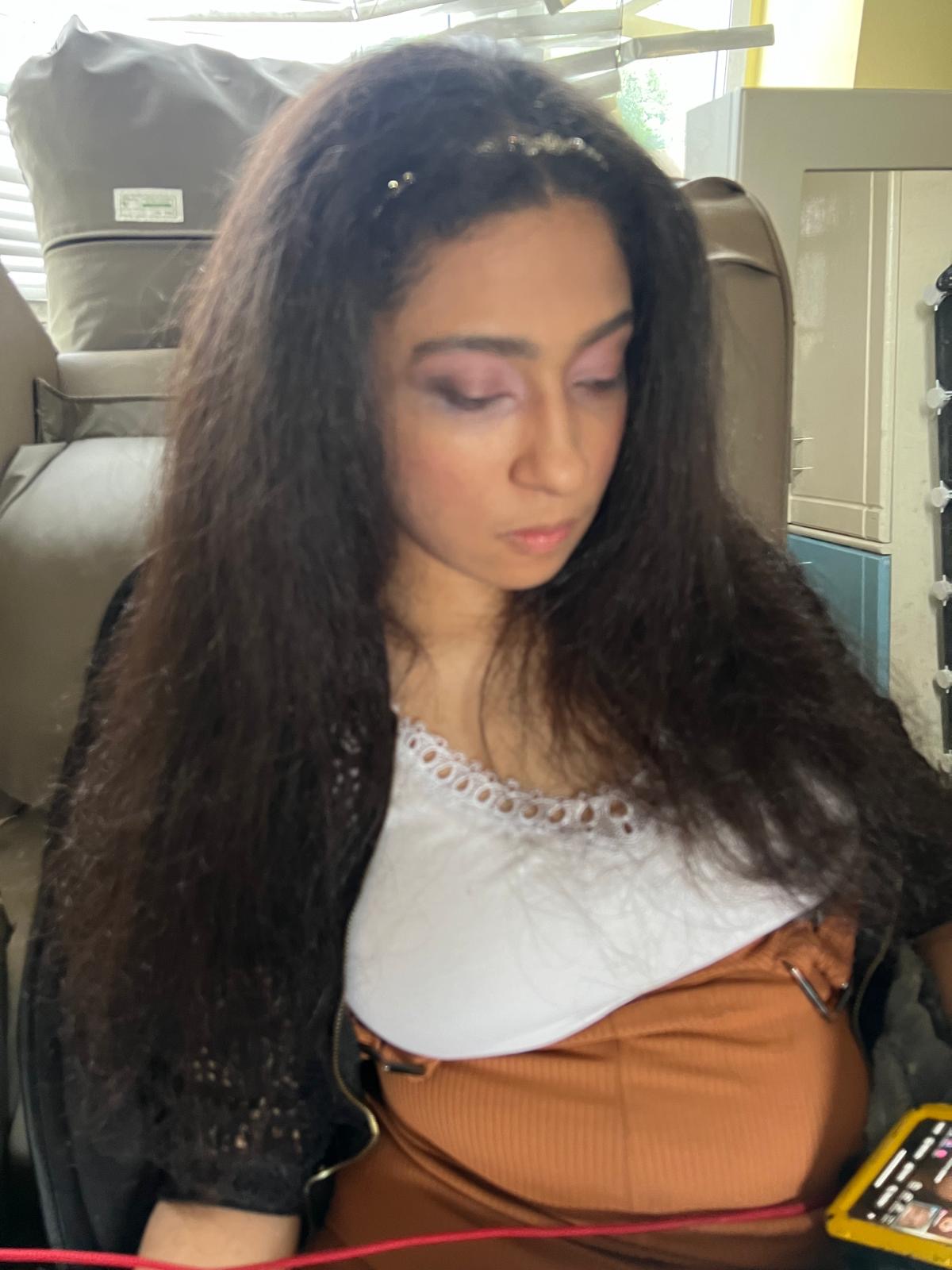
#MeWithClaytonHair #MyNightOut
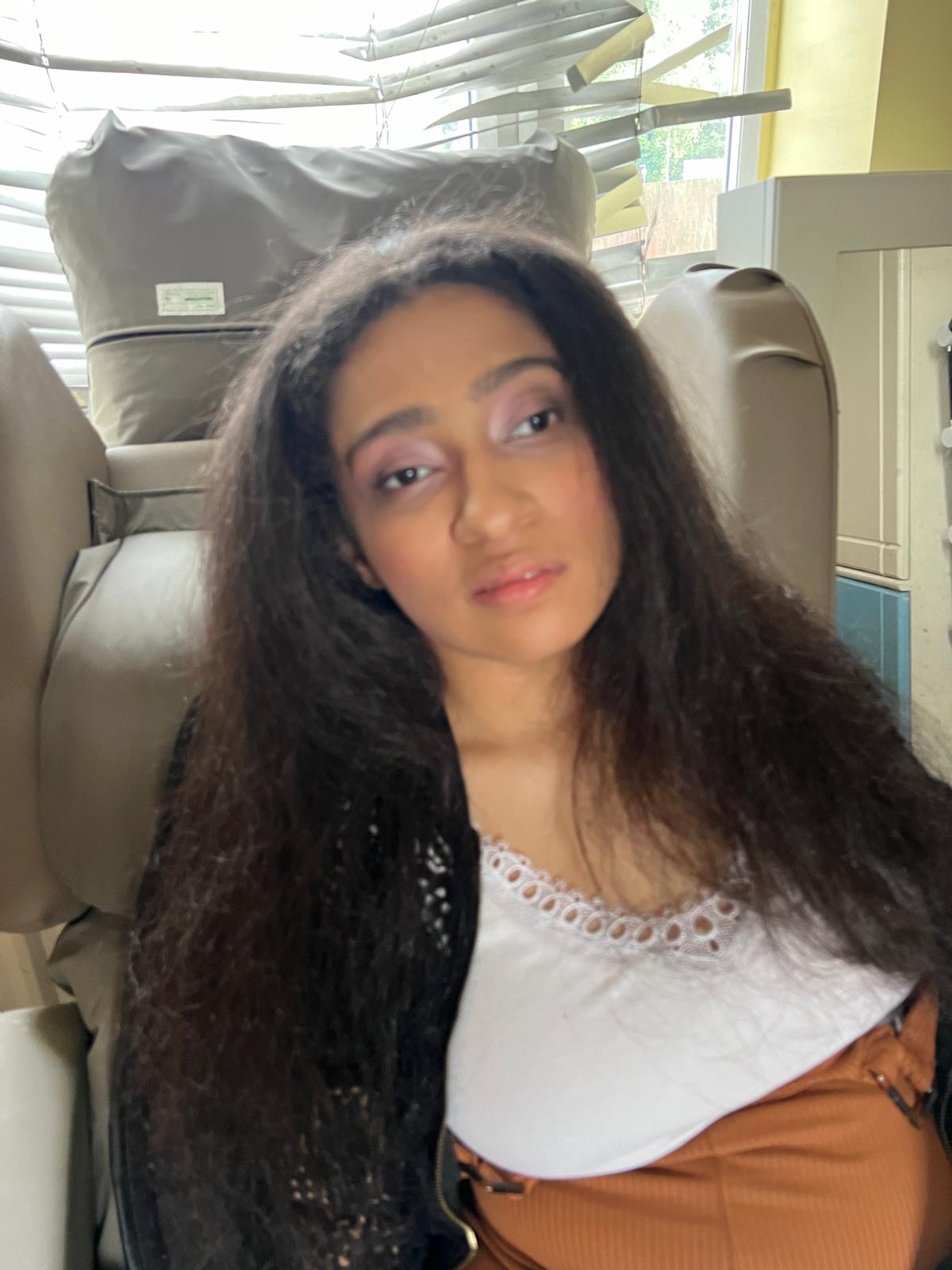
Student Searches For His Father’s Voice
A student who uses text-to-speech software to communicate is searching for a new voice so he can share the same accent as his late father.
Christian Wilson, who studies at the University of Worcester, is hoping people will submit recordings of their voices so they could become his voice.
The student said to share an accent with his father, who died suddenly from an aortic aneurysm, would be a dream come true.
He is looking for someone with a Birmingham accent with a Warwickshire twang as he said his dad was from Warwickshire and a Birmingham City supporter.
“I can’t remember my dad, but to have his voice would mean he could live on through me,” said.
Mr Wilson has verbal dyspraxia, a difficulty in placing muscles in the correct position to produce speech.
“I’m from Bromsgrove and was born in Birmingham, I want to sound like a person from Birmingham and not a character from Star Wars or Cyborg from Doctor Who,” he said.
“When I was younger I used to get jealous of all my friends because they all had what I wanted but if I found my voice it would be a dream come true.”
People with a Birmingham or Warwickshire accent are being encouraged to submit recordings of them reading the words: “Hello, my name is Christian and it’s great to meet you. I study at the University of Worcester, and I live in the Midlands”.
Once two favourite voices have been chosen, known as voice donors, the software at Speak Unique will combine them into a unique voice to replace the one he currently uses.
The voice donor will be expected to record themselves reading aloud 150 sentences.
sign of summer positivity for you today
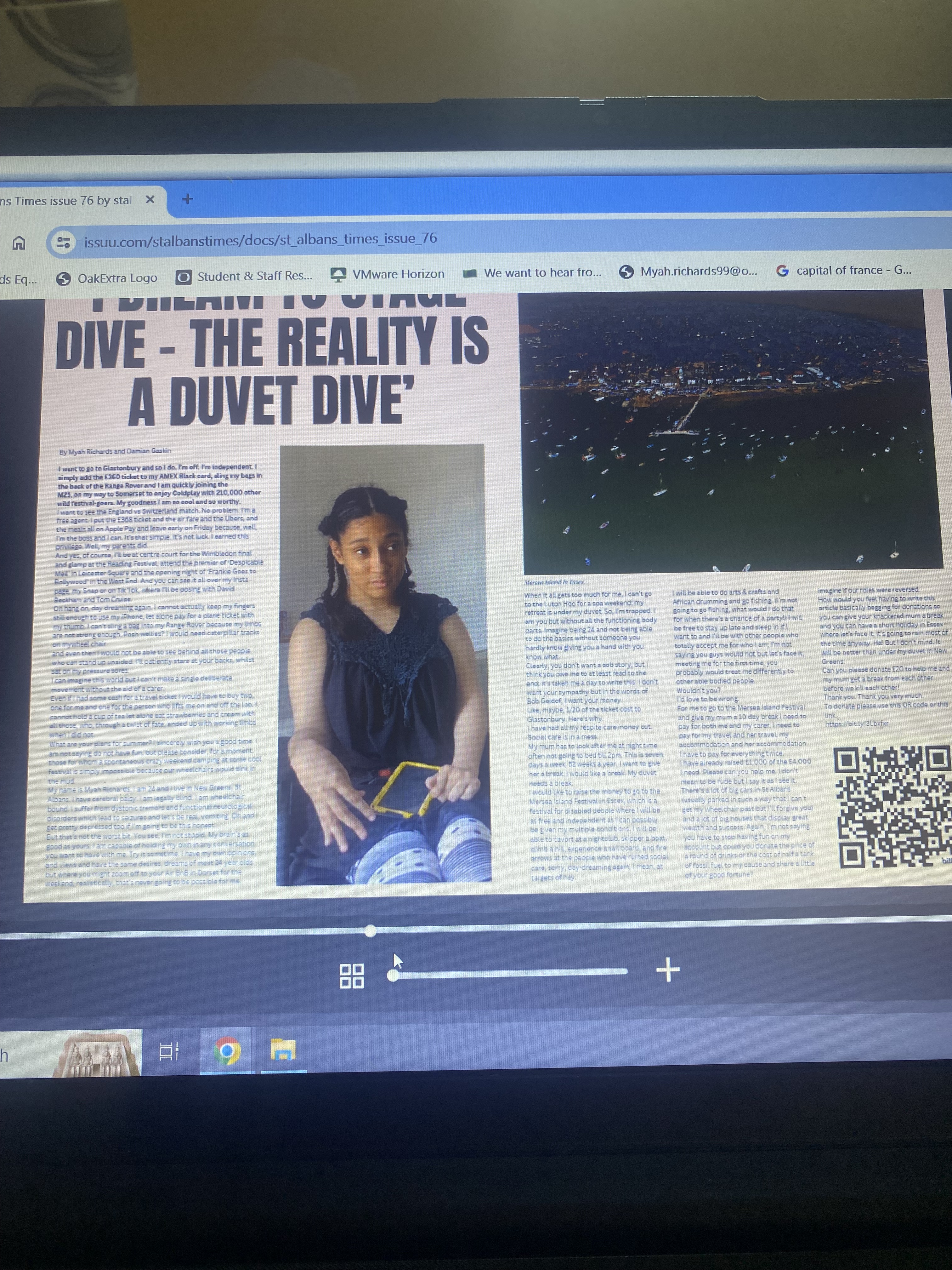
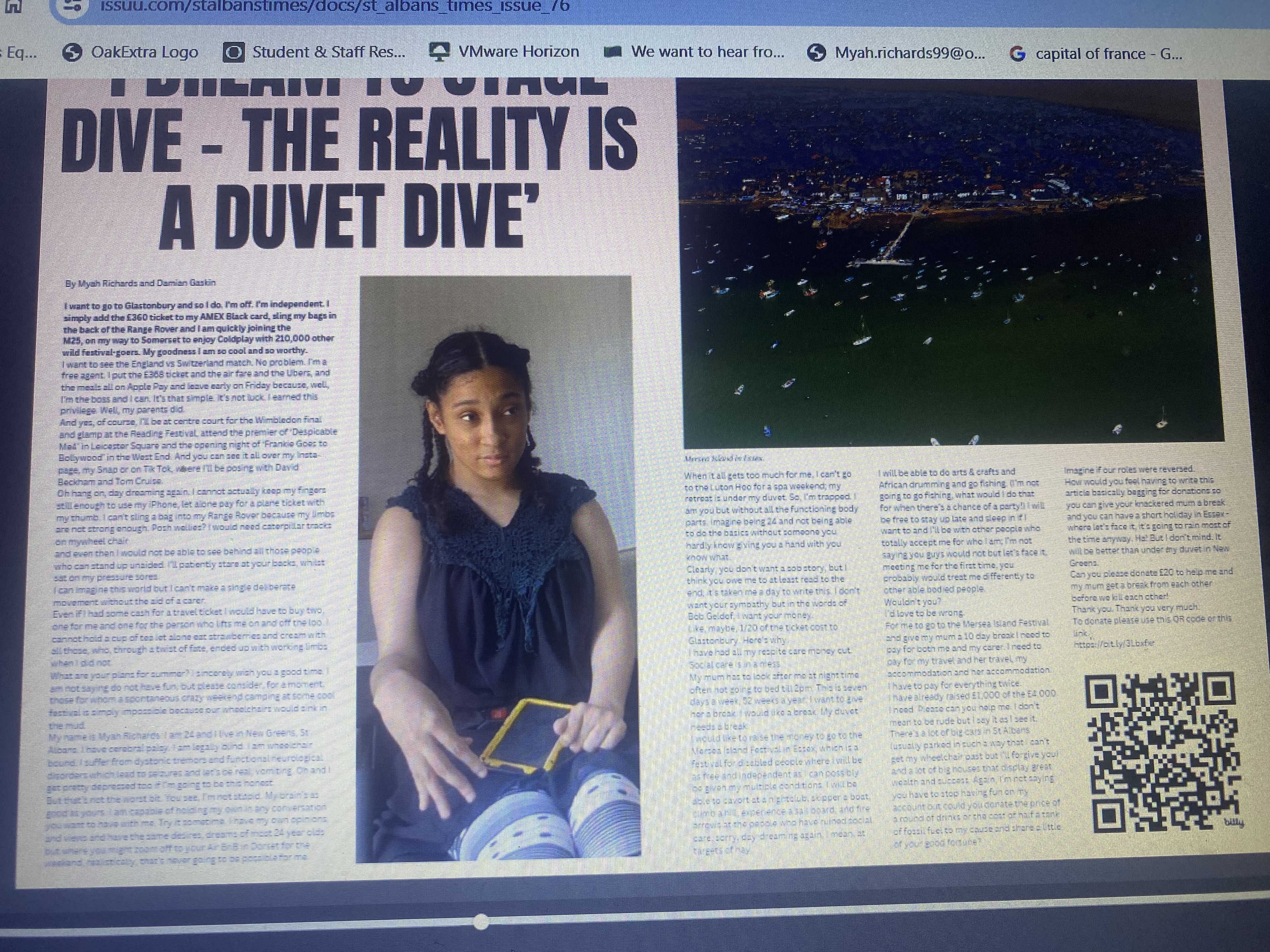
When Luca was born in a Perth hospital two years ago, it flipped his parents’ world in ways they never expected.
With the joy came a shocking diagnosis: Luca had cystic fibrosis. Then Australia – Laura Currie and her husband Dante’s home for eight years – said they couldn’t stay permanently. Luca, his parents were told, could be a financial burden on the country.
“I think I cried for like a week – I just feel really, really sorry for Luca,” Ms Currie says. “He’s just a defenceless two-and-a-half-year-old and doesn’t deserve to be discriminated against in that way.”
With a third of its population born abroad, Australia has long seen itself as a “migration nation” – a multicultural home for immigrants that promises them a fair go and a fresh start. The idea is baked into its identity. But the reality is often different, especially for those who have a disability or a serious medical condition.
It is one of few countries that routinely rejects immigrants’ visas on the basis of their medical needs – specifically if the cost of care exceeds A$86,000 ($57,000; £45,000) over a maximum of 10 years. New Zealand has a similar policy but Australia’s is much stricter.
The government defends the law as necessary to curb government spending and protect citizens’ access to healthcare. It says these visas aren’t technically rejected. But neither are they granted. Some can apply for a waiver, although not all visas allow it. They could also appeal the decision but the process is lengthy and expensive.
Campaigners see this as discriminatory and out of step with modern attitudes towards disability. And after years of fighting for it, they are hoping for change in the coming weeks, with an official review of the health requirements under way.
Laura Currie and Dante Vendittelli had moved from Scotland for jobs that Australia desperately needs. She is a nursery teacher and he is a painter-decorator. They had started their application for permanent residency before Luca was born. But now they feel like the life they built here and the taxes they paid meant little.
“It’s like, we’re here for you [Australia] when you need us, but when the roles are reversed and we need you, it’s like, nope, sorry, you cost too much money, you go back to your own country.”
Australia has form when it comes to its strict immigration policies. It had its own version of “stop the boats”, which sent people arriving by boat to offshore detention centres in Papua New Guinea and the Pacific Island of Nauru and made controversial headlines in recent years. It was only in the 1970s that it entirely rid itself of the “White Australia” policy that started in 1901 with the Immigration Restriction Act, which limited the number of non-white immigrants.
The disability and health discriminations, which also date back to 1901, are still in place, says Jan Gothard, an immigration lawyer: “We still treat people with disability in the same way as we did in 1901 and we think they’re not people who are welcome in Australia.”
She is part of Welcoming Disability, an umbrella group that’s been pressuring the government to overhaul the law, external. Surprisingly, Australia’s Migration Act is exempt from its own Disability Discrimination Act.
Put simply, it doesn’t matter how long you’ve lived in Australia, if you were born in Australia, if you have private health insurance or even if you can pay for the support yourself – if you are deemed too much of a financial burden, you will fail the health requirement.
The government says that 99% of visa applicants meet the health requirement – 1,779 of them did not meet the bar between 2021 and 2022, according to official figures.
Immigration minister Andrew Giles, who declined to be interviewed, recently said , externalthat “any child born in Australia and adversely affected by the migration health rules can apply for ministerial intervention”, and that he himself had “positively intervened” in cases.
But families say that the process is gruelling at an already difficult time.
The price to stay
“There’s so much in your life going on when a child is sick, so much struggle and you’re struggling and begging and asking for petitions, asking people to help you,” says Mehwish Qasim, who knows the challenge first-hand. She and her husband Qasim fought to stay in Australia in a case that drew global attention.
Their son Shaffan was born in 2014 with a rare genetic condition and a damaged spinal cord. He needs around-the-clock care. The couple, originally from Pakistan, intended to return eventually, but Shaffan’s birth changed everything. Now, getting on a plane would risk his life.
Finally, in 2022 they were told they could stay. For those eight years, Qasim, a trained accountant, was unable to work in his chosen profession. Instead, he found jobs in cafes, in supermarkets and taxi apps to make ends meet.
“They should realise that’s a very difficult situation – you shouldn’t put people in the limelight,” Ms Qasim says.
Ms Currie and her husband aren’t giving up either – Australia is home now for Luca and they are filling jobs that the country needs. They’re hoping that is enough to win them their appeal. If they lose, they will have 28 days to leave the country.
For Luca, the sticking point is a pricey drug, Trikafta. He is not on it and may not even be compatible with it. But it’s the basis of Australian estimates of his treatment – around A$1.8m That puts his medical costs over the permissible limit – A$86,000 over 10 years, also known as the Significant Cost Threshold.
While campaigners have welcomed the recent rise of the threshold – from A$51,000 to A$86,000 – they still don’t think it reflects average costs.
The government’s own data shows it spends at least $17,610 per year on the average citizen – the most recent figures from 2021-2022 showing $9,365 per head on health goods and services and a further A$8,245 per person on welfare costs. Over a 10-year period – the maximum period assessed for a visa – that would amount to more than A$170,000. So campaigners have questioned how the government comes up with the threshold, which is half of that amount.
They also want the cost of educational support to be removed from the calculations. This impacts families whose children have been diagnosed with conditions such as Down Syndrome, ADHD and autism.
It’s a snag that has hit Claire Day’s plans for her and her family to follow her brother, who moved to Australia a few years ago.
Her younger daughter Darcy, who is nearly 10, has Down Syndrome. She’s been told by migration experts that because of that, she has little chance of being granted a visa.
On an overcast afternoon in Kent, she talks wistfully of the life she is looking forward to Down Under. Sunshine is no small attraction, but also “the lifestyle – [I want] a better environment for the children to grow up in,” she says.
An officer with London’s Metropolitan Police force for 21 years, she wants to take advantage of a major recruitment drive by Australian police forces. Their social media feeds are full of promotional videos fronted by former British police officers, showing them living the Australian dream, patrolling the beach in sand buggies and relaxing in the surf. They make up just some of the 30,000 British people who moved to Australia last year, according to government statistics.
Ms Day has not one, but two job offers – from Queensland’s police force and from South Australia. As part of the job, she’s also entitled to a permanent visa. Now, she is not so sure.
“I had hoped that it wouldn’t be an issue because Darcy doesn’t have any medical problems. She’s fit and she’s healthy, she goes to school and she participates in clubs and all of that sort of stuff.”
Stories like this have convinced campaigners that, at its heart, the policy is ableist.
“If we say to people with disability, ‘you’re not welcome here, we’re saying directly to people living with disability in this country, ‘you’re not welcome here either,” Dr Gothard says.
“[We’re saying] you know, given the opportunity, we would rather not have you.”
Social worker Shizleen Aishath says she was “gobsmacked” to find out about the health requirement – and she discovered it the hard way.
A former UN employee, she came to Australia for a further degree with every intention of returning to the Maldives. But she had an emergency C-section when her son Kayban was born in 2016. Forceps were used during the delivery. Kayban had undiagnosed haemophilia and suffered a serious brain bleed. He now needs round-the-clock care and the family chose to stay in Australia.
But Kayban was refused a temporary visa because he was deemed too much of a burden – although the family have private health insurance and don’t use state resources. The rest of the family were granted their visas.
“Disability is the only thing that stops you from migrating, there is nothing else,” Ms Aishath says.
After a lengthy appeal, Kayban was allowed to remain. His family is now preparing for their next fight – to stay in Australia indefinitely.
Family Upset Over ‘Diabolical’ Care Home Closure
A man with severe learning disabilities is facing being moved out of the care home he has lived in for 36 years.
Gordon Froud, who has autism and epilepsy, has lived at Parrot Farmhouse in Shinfield, Berkshire, since he was 16 and was told it would be his “forever home”.
But his family have now been informed he will have to move out by the end of October, a decision they have branded as “diabolical” and “a disaster”.
Dimensions, the not-for-profit company that runs the site, said the home was closing because of its “age and condition”.
Colin and Anna Froud – Gordon’s parents – believed the farmhouse was the ideal home for their son and described helping to convert it in the 1980s.
“We were told ‘it’s a home for life’ – and we were hoping that was what was going to happen,” said 76-year-old mum Anna.
“He went there at 16 – he’s 52 now. He loves all the staff.”
His father Colin, 80, said the decision to shut the home – which is on Arborfield Road and home to six residents – was a “disaster”.
“To move him would be diabolical and we don’t think it’s right,” he said.
Gordon’s sister Kelly is worried about the impact on their parents.
“They don’t drive so they’re worried Gordon will be placed somewhere they can’t get to, they won’t be able to visit him, they’re worried he won’t settle, that he will panic,” she said.
“Parrot Farm is all he knows and all he wants.”
In a statement, Dimensions said: “In the event that the right new home has not been found for someone by the end of October, the timeline can be extended.
“Every colleague will be able to keep their job, working in the local area.
“The decision to close Parrot Farmhouse reflects the age and condition of the property.”
Councillor David Hare, executive member for adult services, health and wellbeing at Wokingham Borough Council, said the home was run privately and the closure had not been the authority’s decision.
“We will work closely with Dimensions, the people who live at the home and their families, to find safe and appropriate alternative homes to live in,” he added.
another selfie of me with my stylist, beautiful

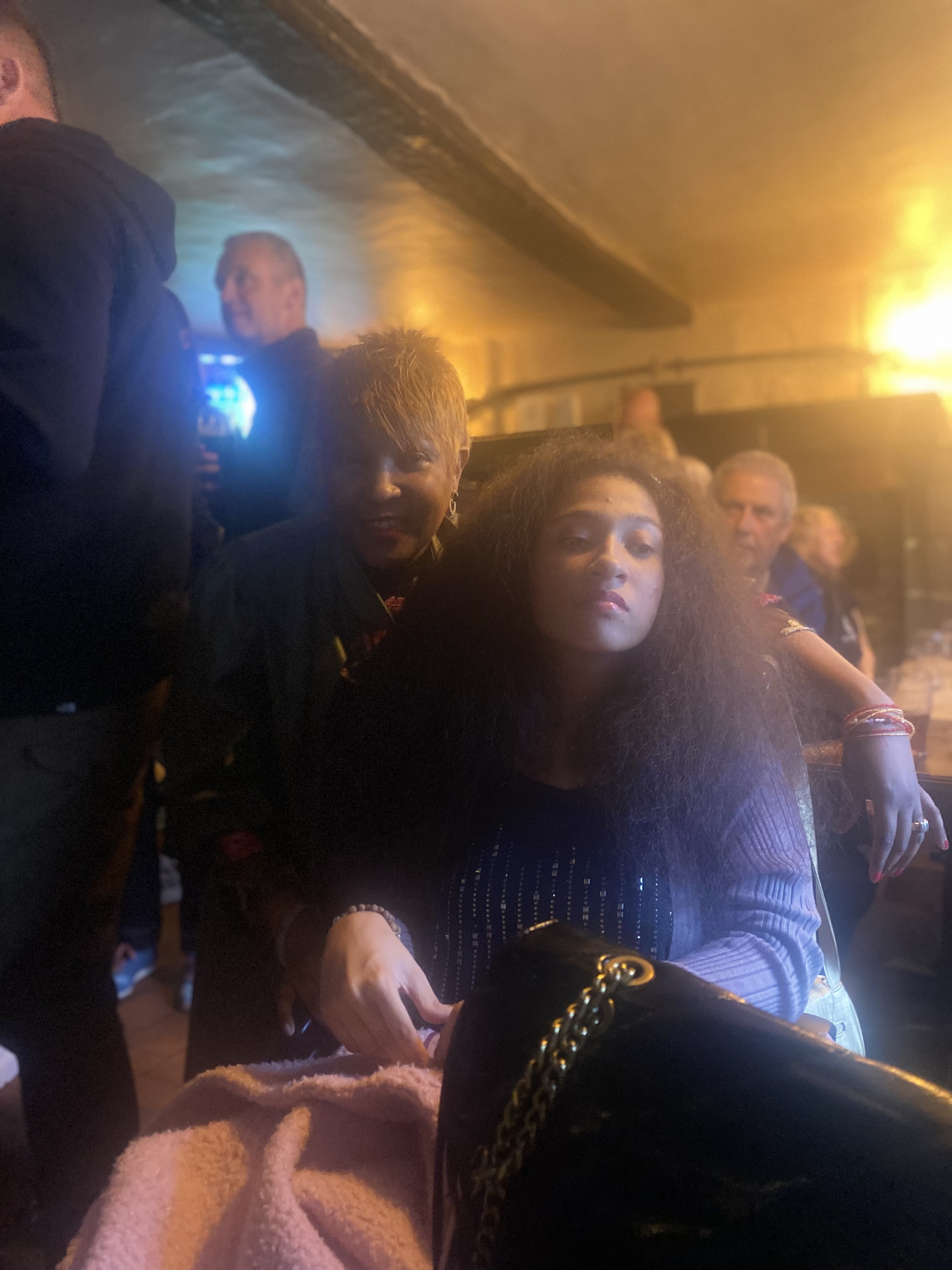
pictures of the
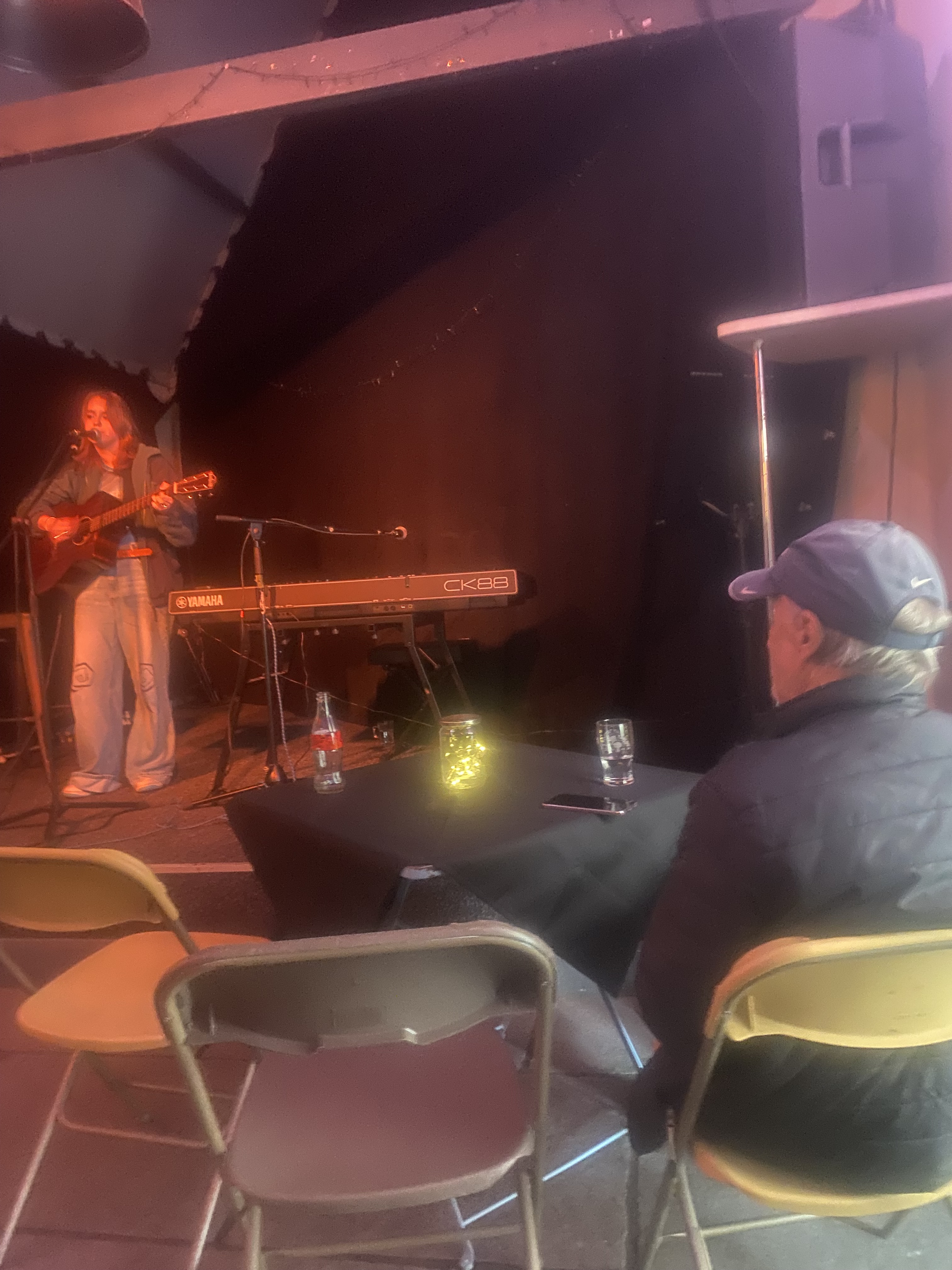
up at localise music event today
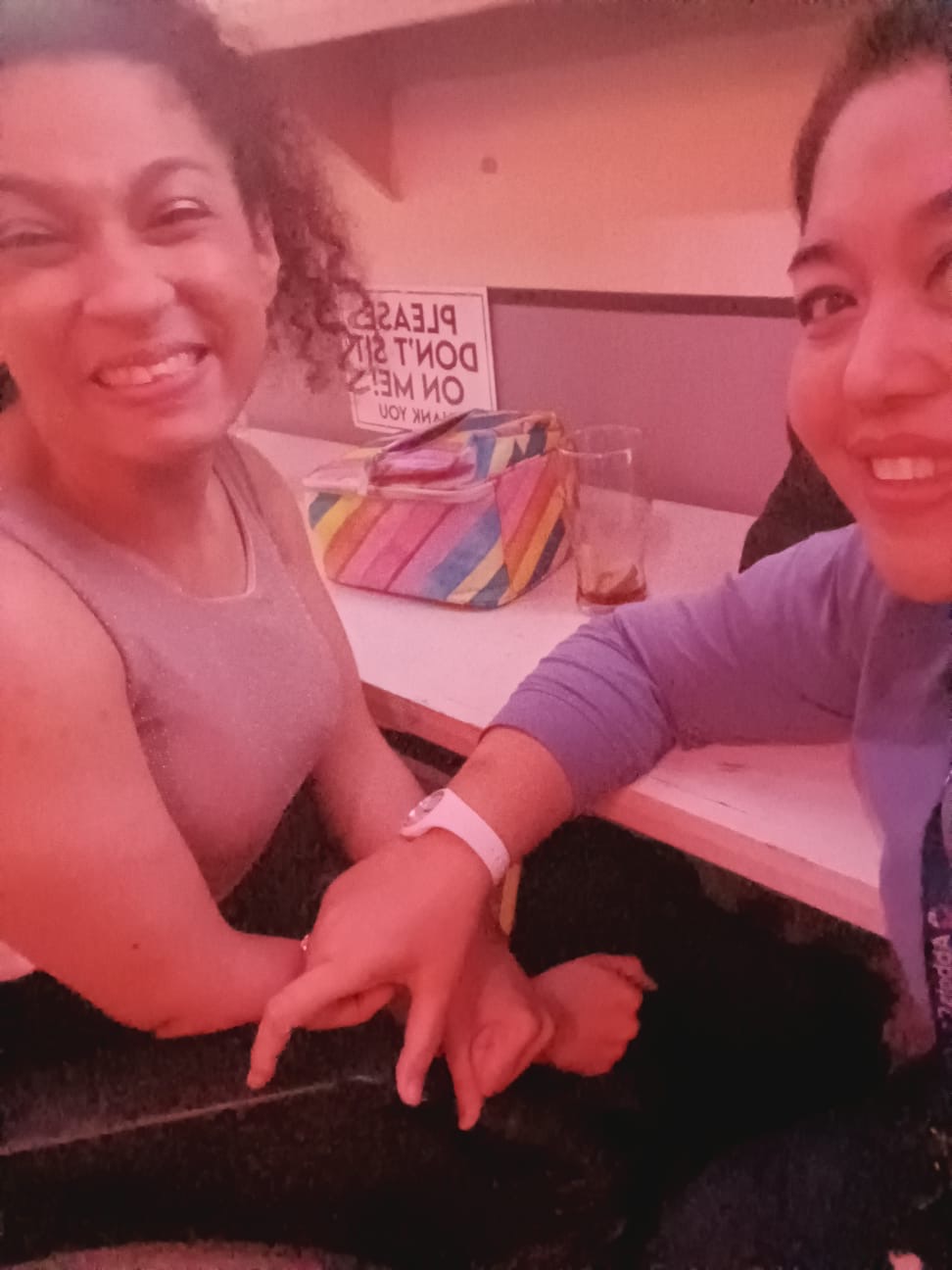
with the new member of my Care team today welcome to
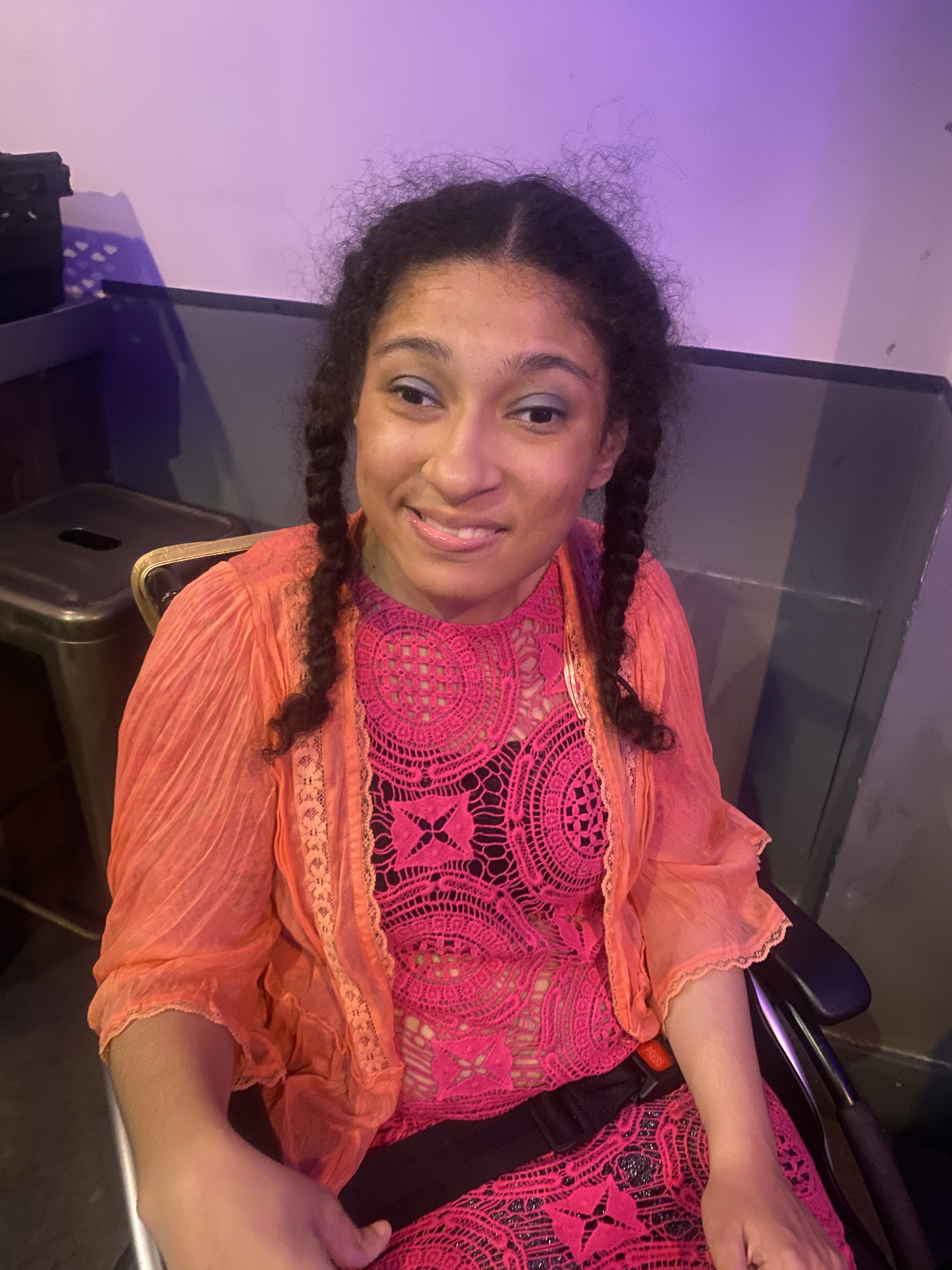

my first or second make up look for us


Lovely full photo of me all grassed up today. I enjoyed all the live music that I have seen over the last week and
Saturday, Sophie, and welcoming Florence to my Care team of personal assistant for my disability
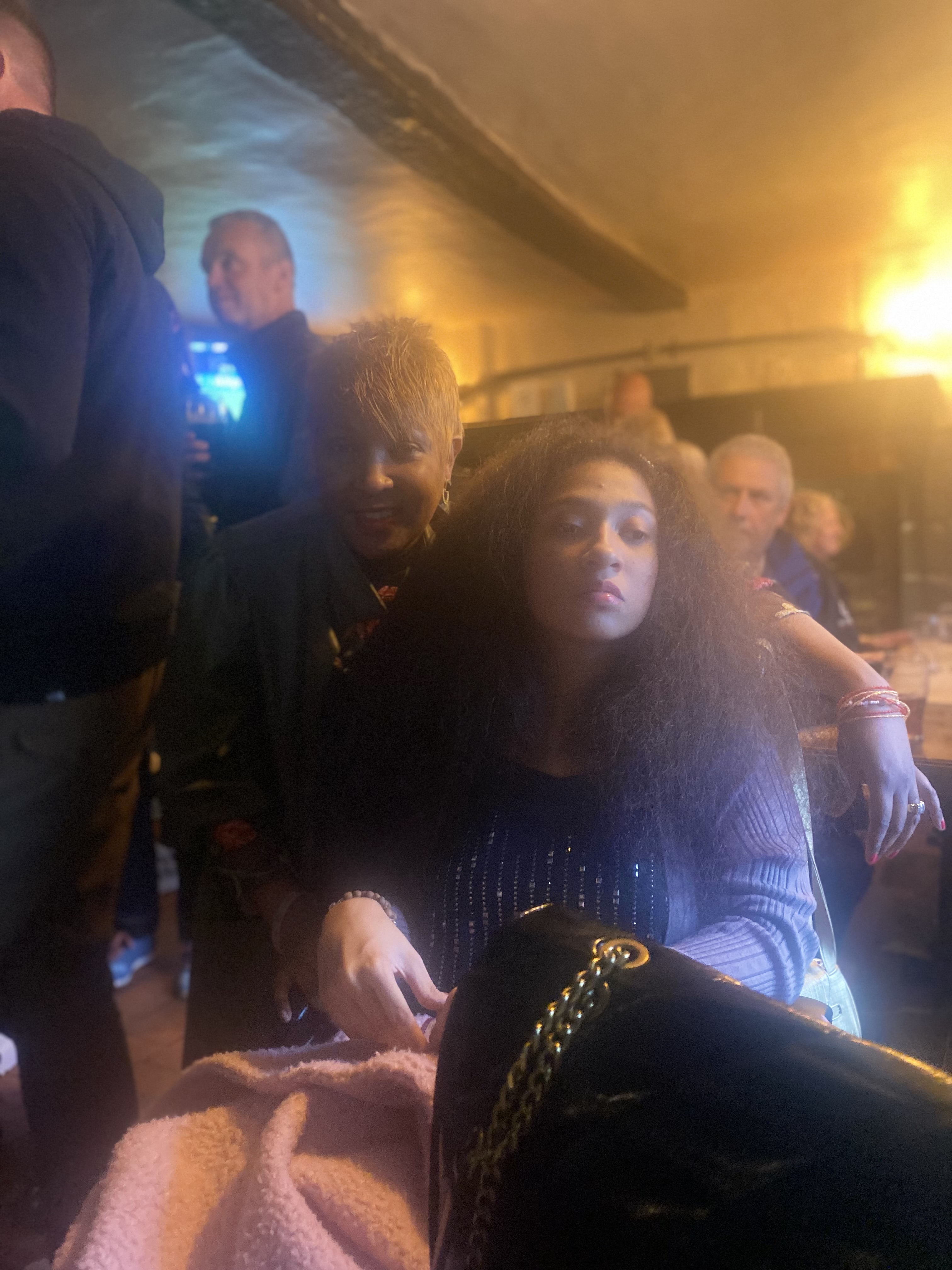

some selfies from when I went to see the live music, I enjoyed it and this is a selfie of me showing off my make up



Thousands more ex-servicemen and women will receive compensation for hearing loss suffered during training or combat, the BBC has learned.
Military personnel are repeatedly exposed to loud noises, such as gunfire and bombing, during their careers.
The Ministry of Defence (MoD) has opposed many claims made by veterans experiencing hearing loss, arguing other sources of noise were to blame, individuals should have worn protection or their claims were too late.
Now it has accepted exposure to noise in the military has been a cause of hearing loss and that people discharged after 1987 could be eligible for compensation.
The MoD has been approached for comment.
Between 2012 and 2020, the MoD paid £72m in compensation for military hearing loss, settling more than 9,000 cases.
But it is likely this new court agreement will result in many more service people receiving payments, with up to 10,000 currently making claims.
Simon Ellis, from Hugh James solicitors, who is representing nearly 5,000 military personnel, called the development “ground-breaking”. His firm expects many more claimants to come forward.
“[Veterans] have had their careers prematurely ended, other employment opportunities denied to them, and their personal lives irrevocably changed,” he said.
“People who put their lives on the line in the service of our country should expect that they are not put in additional unnecessary danger by their employer.”
In a case last year which paved the way for the new scheme, James Barry, who is in his 30s, was awarded £700,000 after developing hearing loss and tinnitus.
The MoD accepted it had a “duty of care” to veterans and abandoned its argument that claims should have been brought sooner.
Barney Barnett, a 44-year-old ex-commando who joined the Royal Marines aged 16, also suffers from tinnitus and finds it hard to understand people when there is background noise.
“It affects me every day, I tend not to moan about it, I just get on with it,” he told the BBC.
Mr Barnett served in Iraq and Afghanistan where he went on patrols from forward operating bases and was repeatedly involved in combat, sometimes as a sniper team commander.
He told the BBC he had fired or been attacked with weapons including rifles, grenades, general purpose machine guns, light machine guns, 50 calibre machine guns, anti-tank missiles, mortars, and bombs.
Videos he shared from conflicts abroad capture the roar of armoured vehicles or helicopters landing, punctured by constant gunfire.
In one picture he can be seen wearing small earplugs, but he said that was a rare occurrence. He says he was either not given hearing protection or he was not able to wear it for operational reasons.
“If you get engaged by the enemy, whether that’s an IED, whether that’s indirect fire, whether it’s a burst of automatic fire, the last thing you have time to do is think about your hearing,” he said.
“Your main concern is those on the ground with you. Staying alive.”
In 2014, Mr Barnett went before a military board and it was decided he was medically unfit to continue in the Royal Marines because of noise-induced hearing loss.
He struggled to find work in civilian life and served with MI5. Later an online assessment for the security service deemed him unsuitable due to his poor hearing.
He is now an operations director in a security firm but must avoid loud environments such as concerts.
Mr Barnett’s attempts to claim compensation began seven years ago and he hopes the new legal agreement with the MoD means it will now be resolved quickly.
He says compensation would help him buy more advanced hearing aids and allow his life to move forward.
“People don’t see what we’ve been through,” he said.
“We’ve done our battling, we’ve been on operations, we’ve come home.
“The government speeding this whole process up, as opposed to battling it out in court, will mean the world to people.”
The military introduced hearing protection in the 1970s but Nicholas Hill, an acoustics engineer who has given evidence in many cases, says it was difficult for soldiers to wear all the time.
He said “every firearm ever made, if you fire it with unprotected ears, just once, can damage hearing”.
A handful of cases will go to trial next year, to determine the level of compensation veterans should receive.
Hugh James solicitors said after this is decided, any claimants will be able to resolve their cases without the need to go to court, if they can show their hearing loss resulted from service in the military.
They must have served at some point after 1987 when a change in the law suspended legal immunity for the government in cases involving service personnel.
The MoD agreement follows negotiations led by Hugh James solicitors and allows the government to continue fighting cases brought by other law firms, although sources close to the case believe this is unlikely to happen.
The agreement was reached at the High Court on Monday and lawyers said it would not change with the incoming Labour government.
Runner With Down’s Syndrome Invited To New York Race
A teenage runner with Down’s syndrome has been invited to take part in races across the globe.
Lloyd Martin, 19, made history as the youngest person with a learning disability to complete a marathon when he took part in the London event in April, setting a Guinness World Record.
Since then, he’s received invitations to run the New York Marathon, the Paris Marathon, and the Great North Run in Newcastle.
But Lloyd was disappointed to miss out on competing in his family’s hometown event, the Cardiff Half Marathon in October, due to a late application.
Everything changed on Thursday morning when Lloyd and his mother received a surprise invitation, live on BBC Radio Wales, to participate.
“Wow, my hometown,” said Lloyd.
His mother and running guide, Ceri Hooper, 54, added: “How amazing is that. Thank you so much.
“He’s speechless, grinning from ear to ear.”
Ceri, who represented Wales in cross-country running as a teenager and has completed the London Marathon four times, said: “We got our applications in too late.
“Lloyd’s aunties and uncles are running it too, so it was gutting.”
The family, originally from Cardiff but now living in Surrey, said the response to Lloyd setting a record has been overwhelmingly positive.
“It’s just mad. We’ve been recognised in airports, locally, or just walking down the road,” said Ceri.
“Everyone comes up to Lloyd to shake his hand and ask for selfies.
“I’ve become his full-time PA overnight, it makes him so happy.”
Lloyd will take part in the Great North Run in August, followed by the Paris Marathon in November, and the New York Marathon in April 2025.
“We are very excited,” said Ceri. “We’ve started planning our trips and booking flights. We can’t wait to go.”
Training is in full swing for Lloyd, who increased his running regimen to three times a week in July.
When asked for advice for aspiring marathon runners, Lloyd said: “Anything is possible. Look after people, your loved ones, and people with disabilities.”
Blind Gamers Say Accessibility Is A ‘Must-Have’
Kellie Dingwall is one of a growing number of visually impaired people who are getting into online gaming.
“One of my best friends and I got closer through playing games online, and it became a weekly thing,” she told BBC Scotland.
“Now, it’s a little community of blind gamers.”
Gaming studios are increasingly thinking about things like sight-loss or motor skills issues as they open up games to a whole new audience.
Disabled gamers have pointed to a culture shift in games development with features now built in “from the ground up”.
Kellie says the changes can be as simple as increasing the writing size on-screen for those with partial sight loss or providing better colour contrast options.
Other games have more tailor-made elements.
“The other day, I found a game that would let me use text-to-speech, and it would read out letters or options in conversations, for example,” Kellie said.
Despite the move towards accessibility, Kellie says she can be hesitant when trying new games.
“I tend to look at reviews before I buy,” she said.
“I generally prefer not to pre-order games because I don’t know what the accessibility features would be like.”
James Kyle, who works for RNIB Scotland, has been running a gaming group for visually impaired people like him.
“There’s no reason why people with no vision should be left out,” he said.
One of the game styles he highlights is an audio game, where players wear headphones and navigate through a 3D audio world, guided by sound effects and audio descriptions.
James said his blind users’ gaming group involves people from Scotland, Northern Ireland, England and other parts of the world.
Video games development is estimated to be worth £350m a year to the Scottish economy, and developers are more conscious about their markets.
Dundee has a long association with games development and Abertay University, within the city, says ensuring accessibility is central to what it teaches.
Dr Lynsay Shepherd from the university, said: “Disabled gamers have been left out for too long.
“Steps need to be taken to ensure everyone can experience the fun of playing games.”
She said accessibility was “drilled in” to students from day one.
“We make sure that is discussed all the way through, and the challenges that are there as well,” she said.
Growth in accessibility has been “massive” in recent years according to Dr Shepherd, and she believes eye-tracking for people with physical limitations could be the next field of interest.
“Webcams on laptops have become very high quality,” she said.
“These can be used to capture the eyes to control the machine, and that can be baked into games.
“It’s going to become much more accessible to a wider range of people very soon.”
Different disabilities
Opening up the gaming market to those with complex physical needs is also being tackled in Dundee.
Konglomerate Games designed a game to help young people with Cystic Fibrosis.
It uses the player’s breath to control mini-games, like firing darts at balloons.
The idea is they have fun while performing necessary breathing exercises.
“We’re trying to bring games to people with different disabilities or conditions, so they can improve their lives,” chief executive Jamie Bankhead said.
“The market is huge. If kids can play games and get something beneficial out of it, that’s great.”
Mr Bankhead said developers needed to be conscious of people’s motor skills, and whether physically holding a controller can be off-putting, or if its vibrations might be uncomfortable.
He said accessibility features were “becoming more and more of a must-have not a nice-to-have”.
“People are starting to actively refuse to play games that don’t have the bare minimum and that should only get more and more prevalent across all games,” he said.
What The Main Parties Are Saying About Disability
There are 16 million disabled people in the UK – almost a quarter of the population – but many say they have felt “invisible” during this election campaign.
The BBC podcast, Access All, asked the main parties about their policies on disability, social care and mental health, and Radio 4’s More or Less examined what they said.
Conservatives
The Conservatives want to “reform disability benefits” and tighten up what it calls a “sick-note culture”, saying people are now three times more likely to be assessed as not fit for work than a decade ago.
The party’s manifesto says it would create 60,000 new school places and 15 new specialist schools for children with special educational needs (SEND).
It says “mental health should have parity of esteem with physical health” and, as such, it plans to increase the number of clinical placements for those experiencing severe mental illness by 140,000 places.
The Conservatives want to cut £12bn from the UK’s £69bn welfare bill. Disability benefits alone are expected to rise from £39bn to £58bn in 2028/29.
Around £14bn of that is due to increasing Personal Independence Payment (PIP) costs, paid to people with long-term physical or mental health conditions who need support with everyday tasks.
The manifesto gives little detail on the changes beyond pledging a “more objective” assessment and restrictions on claims from people with mental health problems.
There is currently a 12-week consultation on changes to PIP which proposes using medical diagnosis over assessments and replacing PIP cash payments with vouchers and catalogues.
Launched on 29 April, it will be concluded come what may on 4 July, although any changes would require a law to be passed under the next government.
Mims Davies, Minister for Disabled People, Health and Work, says: “I think it’s very reasonable post-Covid, when you see a two-thirds increase, in spending to look at what’s happened. We have a responsibility to make sure that taxpayers’ money is well spent.”
More or Less: Ms Davies says there has been a two-thirds increase in spending since the pandemic. However, if we look at incapacity and disability benefits together with carer’s allowance and housing support in real terms in 2019/20, and we compare that to current spending on the same things in 2024/25, the rise is actually around 40%, not more than 60%.
Labour
Labour wants to improve access to mental health care with specialist professionals in every school and a recruitment drive for an additional 8,500 NHS mental health staff. It also wants special educational needs (SEN) expertise in mainstream schools.
The party wants to get disabled people into work by reforming the Work Capability Assessment, although it has not given details, and by introducing mandatory disability pay gap reporting.
Deputy leader, Angela Rayner says: “Small changes in the workplace can really mean that you have great assets in the people that work for you who can bring around those profits.
“By making sure that employers have to report their disability pay gap, that should reduce, as we have seen in the gender pay gap.”
According to the Office for National Statistics (ONS), the pay gap between disabled and non-disabled employees is 13.8%.
There are strong phrases in the manifesto like “there will be consequences for those who do not fulfil their obligations”.
Ms Rayner says the emphasis is on those who “can work” and “helping people to reach their full potential”.
More or Less: Mandatory gender pay gap reporting was introduced in 2017 for employers with 250 or more employees. They have to submit the average difference in hourly pay between men and women. Since then, the gap has fallen from 9.1% in 2017 to 7.7% in 2023.
Although this might look like a success, closer inspection of ONS figures shows the gap had already fallen significantly before this regulation was introduced. This has led some to question how significant the policy was.
Liberal Democrats
Social care is at the heart of leader Sir Ed Davey’s plans. The Liberal Democrats want to reform PIP to stop “unnecessary reassessments” and give disabled people the right to work from home.
It wants to have a mental health professional in every school, bring an end to “out-of-area” mental health placements so people can be treated near home, and introduce one-hour targets for police to hand over someone experiencing a mental health crisis to the relevant service.
Many disabled people have care packages but report a lack of carers to employ. According to the King’s Fund think tank, in 2022/23 there were 152,000 vacancies, or 9.9% of available roles.
As well as providing free personal care (Scotland already has this), the Lib Dems want to introduce a minimum wage for carers, £2 an hour above the national minimum wage, and establish a Royal College of Care Workers.
Sir Ed says this will total about £3.7bn annually. He plans to pay for it by promising to reverse tax cuts the Conservatives have given to the big banks since 2016.
More or Less: Sir Ed’s plan includes spending an extra £2.7bn a year on free personal care by 2028/29. That sounds like a lot but the Health Foundation, the independent charity, estimates it would cost more than twice as much.
The party says it would take into account other money in the system, referring to the Conservatives’ delayed plan to introduce a lifetime cap on personal care of £86,000, due to be introduced next year.
That hasn’t stopped the Lib Dems using it as a building block for their proposed upgrade, and have suggested it will provide £3.6bn a year towards their plans.
The Conservatives are still committed to this cap, but the Institute for Fiscal Studies says the funding set aside for this has already been absorbed into the current care system.
Scottish National Party
The SNP manifesto contains one sentence on disabled people: “Scrap proposed punitive welfare reforms for sick and disabled.”
This most likely relates to the Conservative plan to tighten up the criteria for Work Capability Assessment, which looks at how capable people are of working. The Tories want to reduce those being assessed by 424,000 by 2028/29.
Some benefits including both child and adult disability payments are devolved to Scotland.
“We look at benefits as something people are entitled to,” Marion Fellows, the party’s disabilities spokesperson says.
“We also fund free prescriptions, we’ve introduced a child payment for impoverished families where 100,000 children have been lifted out of poverty.
“The only way to get anything done in the UK parliament, if you are not in power, is to work with other parties and to push the agenda forward.”
More or Less: Ms Fellows mentioned 100,000 children have been lifted out of poverty due to the Scottish Child Payment. This claim comes from a Scottish government report, which predicted the future impact of policies compared with what might have happened without them – the difference between them is the number we’re interested in.
The report acknowledged it relied on a lot of assumptions and, while the report predicts Scottish government policies as a whole will keep 100,000 children out of relative poverty, the Scottish Child Payment related to 60,000 children.
Green Party
The Greens want to put mental health care on a “truly equal footing with physical health” by offering therapies within 28 days and providing trained counsellors in every school and sixth form college.
The party wants to create a “career structure for carers” and offer free personal care with an investment of £20bn per year.
The Green Party’s Mags Lewis says it wants to “restore the value of disabled benefits” with a 5% rise “immediately”. A bill paid for by a windfall tax on some fossil fuels and “taxing the billionaires“.
The Greens also want to provide another 150,000 social houses a year, with “a good proportion” being accessible.
More or Less: The current government has consistently missed its targets to build 300,000 homes annually since 2019.
The Green Party doesn’t promise to build 150,000 social homes a year, just provide them. It proposes local authorities could buy or refurbish older housing stock, which were likely built before accessibility regulations came in.
Plaid Cymru
Plaid wants to adopt the UN Convention on the Rights of Disabled People into UK law, which protects the right to live independently and reform the Mental Health Act.
Liz Saville Roberts, the Westminster leader of the party, wants to reduce waiting times for people waiting for neurodiversity assessments, such as autism and ADHD, but says Wales needs more funding.
“We’re always being told that Wales is funded to a greater level per head than England, this is true, but we’re not funded [per head] as highly as, say, London is.”
She wants the patient to be at the centre of their care with greater control and access to their personal information.
More or Less: Government figures show Wales receives £13,967 per head, which is lower than Scotland and Northern Ireland, but 11% above the UK average. London gets £14,486 per person.
Part of London’s high figure is because the capital also receives the highest capital spending in the UK, largely driven by spending on transport, which is used by those who live and visit.
If we excluded that and only looked at current expenditure on services, then Wales has higher funding per resident than London.
Reform UK
Reform’s manifesto says “the benefit system is broken” and would be changed within 100 days.
Assessments for PIP and Work Capability would be face-to-face and include an independent medical assessment “to prove eligibility for payments”.
Those with severe disabilities or serious long-term illnesses would be exempt from regular re-assessment.
Reform UK declined to take part in Access All’s election interviews. However, on the recent BBC Question Time leaders’ special, Nigel Farage said 9.2 million people of working age are not in employment, adding: “They’re not all layabouts, there are many people, I bet we all know people on benefits who’d love to get back to work.”
More or Less: On the latest figures, economic inactivity has actually increased to 9.4 million – 27% are students, 18% look after the family home, and 30% are long term sick. That’s 2.8 million people. That number has increased significantly since the pandemic, up by 33%, far outstripping growth in the working age population, only 2% over the same time.
StomaBabe ‘Treated With Contempt’ At Taylor Gig
An influencer with a chronic illness who uses a stoma bag said she felt she could not “drink or move” during a Taylor Swift concert after members of the crowd criticised and “shoved” her for doing so while she was there.
Holly Fleet, 30, known online as StomaBabe, said in a post on X, external she was “treated with contempt” whenever she went back to her spot in the crowd at the London show despite explaining she had a medical condition, and was “continuously shoved” by a parent for refusing to remove a backpack containing medical supplies.
She also said Wembley Stadium failed to provide advice to her before the event about bringing in medical supplies and drinks, and did not have enough accessible toilets available during the concert.
A stadium spokesperson said they were sorry to hear about Ms Fleet’s experience, adding Wembley was “committed to providing an inclusive experience for all disabled guests”.
Ms Fleet, from north London, said she bought a VIP standing ticketfor the 22 June gig because she did not think a disabled seated ticket would be available due to how popular Taylor Swift is.
She told BBC London she needed to empty her stoma bag regularly, and to drink often because the operation she had had meant she was susceptible to dehydration.
She said at previous gigs it had not been so hard “to get in and out” and she “didn’t think people would take too much offence to it” – especially given that Swift’s set would be several hours long.
However, Ms Fleet said when she went to get drinks and brought them back “I must have had about four different people have a go at me about that”.
She also said she was shoved repeatedly by two women in front of their children because she had a backpack on containing her medical supplies.
“I had my backpack on. One of them taps me on the back and was like, ‘can you take that off please?’ and I said: ‘No, it’s got medical supplies in so I can’t take it off’… The next thing you know, she was just shoving me… really pushing me. And these were two mums who were both with their teen daughters.”
Ms Fleet claimed when she turned around to ask what the problem was, the woman laughed at her and then carried on shoving her, making her feel “really upset”.
“I had to move behind them because I couldn’t put up with being shoved like that,” she said.
“I felt like from every angle – I can’t have a drink, I can’t have my backpack on, I can’t go to the toilets. Everything felt so awful,” she said.
“I felt like I couldn’t drink, I couldn’t move.”
Ms Fleet, who also has ADHD, said she eventually “felt so overwhelmed by the whole thing that I literally ended up just phasing out”.
She said although she kept a hidden disabilities sunflower lanyard on as she was going to and from the toilet, a woman had an issue with her returning to her position with her friend, telling Ms Fleet “we’ve been here for hours” and accusing her of being “disgraceful”.
“I did get a bit depressed when I got home, I did cry and stuff because I thought, ‘is this how it’s always gonna be for me now, am I always gonna experience this?’ I might not be able to go to concerts again now.”
Ms Fleet also complained there was a lack of information on the Wembley website about whether bags containing medical supplies and liquids would be allowed into the stadium, such as the rehydration drinks she needs after her operation.
She said that despite contacting Wembley’s accessibility team with questions she never received a response. A spokesperson for the stadium said that Ms Fleet was sent automatic reply via email linking to the website’s FAQs section, which asked people to get back in touch if their query was not answered – which she did not do.
Ms Fleet also said there was “one disabled toilet near my section and the queue for that was insane”, with people without special keys to access the disabled toilets “holding the door open” for each other and people banging on the door shouting at her to hurry up.
She is encouraging people to have more respect for each other at concerts, and is asking venues like Wembley to offer better communication for people with additional needs or disabilities, including how long queues outside are likely to be and to provide contact phone numbers rather than just an email address.
‘We pride ourselves on being inclusive’
A spokesperson for Wembley Stadium said: “We would urge all our guests who might require specialist help or assistance, to contact our customer engagement team who are fully trained in disability awareness and have undertaken specific training to support all of our guests.
“Wembley Stadium is committed to providing an inclusive experience for all disabled guests, regardless of whether their disability is visible or non-visible.”
They added that the stadium had three Changing Places facilities and 147 accessible toilets and had been adapted to make it “accessible to all”.
“We pride ourselves on being an inclusive stadium,” the spokesperson added.
“We also work with expert partners and specialist user groups to provide a range of services and facilities which can be accessed by guests with specific requirements.”


 Same Difference