‘Sight Loss Aids Would Help Me Vote Independently’
Blind and partially-sighted voters have welcomed proposals by their local MP to help them vote independently.
Carlisle Labour MP Julie Minns proposed a new law to ensure polling stations had audio and tactile voting aids.
Local people with sight loss described having to ask others to help them cast their vote and not being entirely sure of having marked the ballot paper correctly.
The government said it was exploring ways to improve the system. Cumberland Council, which runs elections in Carlisle, has been approached for comment.
John Atkinson, from Carlisle, is blind due to glaucoma and said he had used folds in the ballot paper as a guide to where to place his cross at last year’s general election.
He said he could not “guarantee” he had voted for the candidate he intended, but thought he had done.
Of Minns’ proposed new law, he said: “I think it will be a good thing, really, especially for myself – then I’ll be able to do it more independently.”
Susan Fox, from Brampton in the Carlisle constituency, needed help from her husband to vote last year and said the MP’s proposal was “excellent”.
Terri Balon, regional campaigns officer for RNIB in north-west England, said the charity was concerned some people with visual impairments were not voting because of the barriers they faced.
“People don’t believe the system is accessible,” she said
The charity said it had successfully trialled a device with a tactile template, a McGonagle Reader, that could be placed over a ballot paper.
A connected speaker or set of headphones announces the names of candidates.
Improving the system
A subsequent report by RNIB recommended returning officers provided such devices where needed and the charity said some electoral authorities had bought them.
The Ministry for Housing, Communities and Local Government said the government was committed to “making elections accessible” and it was exploring “ways to improve the system”.
Deaf Pupil Wins Legal Fight For BSL Interpreter
A deaf teenager has won a legal fight against Fife Council to have a British Sign Language interpreter in her class for school lessons.
Niamdh Braid, 16, from Glenrothes, launched an action against her local authority last year after missing out on essential learning.
She has been deaf since birth and wears hearing aids, but the teenager struggles to hear in noisy environments. Her preferred language is British Sign Language (BSL).
Niamdh often cannot understand what is taking place during class time and her learning has been affected as a result.
Her efforts to try to keep on top of her lessons without an interpreter left her “exhausted”.
She told BBC Scotland News: “At the end of the school day I’m so tired. I have to leave class sometimes and take a break because it is just so much.
“I come home and I have to go to my bed at half past seven or eight o’clock at night. That’s not normal for a 16-year-old.”
Auchmuty High School, where Niamdh is an S5 pupil, does have specialised deaf provision through teachers of the deaf.
This is a qualified role used in schools across Scotland.
But in some cases the post only requires a BSL level 3 qualification. A BSL interpreter must have at least Level 6 BSL qualification.
Niamdh and her parents had previously asked the school for a BSL interpreter but their request was turned down.
A complaint to Fife Council was also rejected.
Following this, and with financial support from charity National Deaf Children’s Society, Niamdh raised her own legal action against the local authority.
Niamdh said: “Deaf children are eight times more likely to leave school with no qualification and that shouldn’t be the case because deafness is not a learning disability. We are able to learn, we are able to achieve anything.”
Early last year in a tribunal, it was ruled that Niamdh was being placed at a “substantial disadvantage” and was “at risk of feeling isolated, withdrawn, unsupported and not listened to” without advanced BSL interpretation.
The ruling also stated that Fife Council’s BSL provision was only up to Level 2 qualification
During the case, Fife Council had argued that there was no spare capacity to assign Niamdh regular input and BSL support without the need to recruit additional staff. The tribunal rejected the complaint.
The tribunal’s ruling said the failure to provide advanced BSL support meant the claimant was “missing things in class and does not know what she is missing”.
Fife Council initially appealed the decision but in December that appeal was rejected.
The local authority has now said it will not challenge the ruling any further.
Fife Council must now provide BSL support at a qualified interpreter level in all of Niamdh’s National Qualifications classes. A recruitment process is under way.
In a statement, Fife Council’s head of education services, Angela Logue, said: “We have been working very closely with Niamdh and her family to meet her needs as identified by the tribunal.”
Niamdh’s father Steve Braid told BBC Scotland News: “It’s disgusting that we’ve had to fight as hard as we have, and as hard as Niamdh’s had to fight. We’ve been quite lucky as, in the end, we’ve got to where we have but there’s a lot of people out there who won’t fight as hard or don’t realise what they are entitled to.
“I’m immensely proud of what’s she’s done. She’s so passionate about wanting to take this all further and prove that just because she’s deaf doesn’t mean to can’t do something. She’s very stubborn.”
The legal action was funded by the National Deaf Children’s Society.
Mark Ballard, its head of policy in Scotland, told BBC Scotland News: “Deafness, by its very nature, means that children can just disappear into the back of the classroom.
“That’s why we hope that every local authority in Scotland will look at this and put in place the support that deaf children need, rather than those children and their parents having to go all the way to a tribunal to get what should be theirs as a right.”
Boy, 13, Diagnosed With Motor Neurone Disease
The family of a boy living with motor neurone disease have said it was a “massive shock” for him to be diagnosed at the age of 13.
Kyle Sieniawski, from Pontypridd, Rhondda Cynon Taf, started to lose mobility in his left arm last year before experiencing other neurological symptoms.
Almost a year after she first noticed the symptoms, Kyle’s mum told BBC Radio Wales Breakfast that his conditions had deteriorated to a point where he can no longer feed himself.
Motor neurone disease is an uncommon condition that mainly affects people in their 60s and 70s.
Kyle was diagnosed with MND on 17 January – almost a year after his mum Melanie first noticed symptoms.
“He wasn’t walking straight and was using one arm to support the other,” she said.
Kyle was initially taken to the Royal Glamorgan Hospital in Rhondda Cynon Taf for tests followed by an MRI scan.
Doctors initially thought he had enterovirus, external which is an infection that can cause illness in babies, children, and teens.
But his family became concerned when his condition began to deteriorate further.
“In October his right arm started to become a bit shaky. By November he was struggling to walk up the stairs,” his mum said.
Kyle’s aunt Heather thought it was MND after researching the symptoms, but it still came as a “massive shock”.
“With the tears that have been spilled the last few months it’s been like a river,” said Heather.
Kyle needs support when eating and walking and has spent the past few weeks at Noah’s Ark Children’s Hospital in Cardiff.
Heather said it was “unbelievable” he was so cheerful, which was having a positive impact on the rest of the family.
“I don’t think a lot of children would react in the same way. He is an inspiration,” she said.
The teenager spends his time playing games with his family including Connect Four, and has a VR headset that allows him to watch films hands-free.
His family said they felt “really positive” after discussions were held about a clinical trial which could slow down the disease.
But they were left “devastated” after it was put on pause.
The family said they felt there was “no hope” without the trial, according to Heather.
“It will make a difference. I’m hoping because he is so young he has the energy to fight it,” she added.
Heather said the response from the community had been “absolutely outstanding” with people setting up fundraisers “left, right and centre”.
“One lady even offered a luxury caravan the family can use to spend some time with Kyle. It’s been amazing. I can’t get over it,” she said.
Service Dog And Owner Told To Leave Subway
A woman with multiple sclerosis said she felt “discriminated against” after being told to leave a Subway sandwich shop as she was with her assistance dog.
Louise Harris, 42, said she entered the Subway on Pavement in York on Saturday with Bella when a staff member told her: “You can’t come in with a dog.”
Ms Harris said she told the worker Bella was an assistance dog and was allowed to enter under the Equality Act, however he told her they “only accept guide dogs”.
Subway is yet to responded to a request from the BBC for a comment in response.
Ms Harris said her family had travelled from Stoke-on-Trent to York to see the city centre ice trail and stopped off at the sandwich shop for lunch.
“When I got through the door, a staff member shouted at me from behind the counter,” she said.
Ms Harris, who was diagnosed with multiple sclerosis (MS) in 2007, told the staff member the dog was wearing an assistance coat and said she “assists me with my disability”.
She said he replied: “I don’t care what your dog has got on, we only accept guide dogs.”
Under the 2010 Equality Act it is illegal to refuse access to a disabled person with their assistance dog, except in exceptional circumstances.
Ms Harris said she paid for the sandwiches she had pre-ordered online and was told to leave the shop.
“It put a dampener on the day, it felt like I’m not counted as a member of the public,” she said.
“I felt very discriminated against, upset, I didn’t feel like a real person.”
She said all businesses and employees should gain training in order for them to understand the law.
“[MS] affects quite a lot of my day-to-day living, like opening doors, picking things up off the floor – if I drop anything Bella will pick it up,” she said.
“Basically, without her, I wouldn’t be able to go anywhere.”
Ms Harris had to leave a Staffordshire pub due to the same issue in 2023.
She added: “You don’t want to go in shops and feel discriminated against from the word go, you want to be able to feel the same as everybody else.”
Disabled Snooker Player ‘Blown Away’ By Donations
A world number one snooker player said he had been “blown away” by support after revealing he could not afford to compete at the first-ever World Disability Snooker Championship.
David Church, 29, from Norwich, spoke to the BBC last week, and said with few sponsorship opportunities and no TV coverage he would struggle to take part in the tournament, which begins later this month in Thailand.
He had originally set an online fundraising target, external of £1,000 to cover flights, accommodation and entry fees – but has since raised almost £5,000.
Church said he “couldn’t thank people enough” for their donations.
“On Wednesday I’d accepted it probably wasn’t going to happen,” he said.
“But then my phone went crazy where people had seen the story online.
“I’m just blown away.”
Church, who was born with Moebius syndrome – a rare condition that affects facial muscles and eye movement – said he had recently got engaged and was due to become father in April.
He said he would spend the money on future tournaments, flights and accommodation.
“It takes a lot of pressure off me personally and a quite a bit off my mental health to be honest.
“I’d like to think I’ve put the work in – on and off the table – and I deserve a bit of luck here and there.
“I’m just chuffed to bits.”
World Disability Billiards and Snooker (WDBS), the tournament’s hosts, previously told the BBC that while it provided “significant funding” to reduce the “cost burden on players”, it could not fund the large amount of competitors taking part.
Competitors were required to fund themselves and stay at an agreed hotel costing £68 per night.
The winner of all eight separate categories will take home a minimum prize of £1,000.
“If I play well I’ve got a great chance [of winning],” Church added..
“It’s time to put in the hard work and get in some preparation.”
The tournament begins on 25 February.
Blind On A Night Out: ‘You Wouldn’t Recognise Your Attacker’
Women with visual impairments have not been sufficiently included in conversations about violence against women and girls, the Royal National Institute of Blind People (RNIB) has said.
Georgia Hussey, a 20-year-old student from Belfast, rarely goes out socialising at night because she said the easiest way to protect herself is to stay at home.
“If I’m out in the street and I can’t see my friends because it’s dark, I’m just going to panic.
“I don’t want my friends to feel a responsibility over me either.”
Laura Cummings from RNIB said the reality is that there are additional challenges for women who have sight loss.
“So if you’re a woman and you go out, and you have additional challenges, perhaps you are attacked.
“You won’t recognise your attacker, you won’t be able to describe your attacker to the police. These things are on peoples’ minds.”
Ms Hussey was registered blind at birth.
“I’m not convinced that if something were to happen, I would be able to find myself a way out safely,” she told BBC News NI.
Many of her peers wouldn’t think twice about heading out for the evening. Life as a young blind woman means she’s concerned about her safety and feeling vulnerable.
“Not being able to tell at night in the dark who is around me is unsettling.”
She also dislikes getting a taxi and getting home often involves a planned lift from her mum.
In September, a new strategy to tackle violence against women and girls was launched at Stormont.
A few months later in December, PSNI Chief Constable Jon Boutcher warned that inadequate officer numbers was affecting his service’s ability to deal with violence again women and girls.
Dawn Hopper, from Antrim, has glaucoma and is registered as severely sight impaired.
She said she can feel vulnerable on a night out.
“When I have Micky [her guide dog] with me, or the cane, it brings extra attention, there’s a perception there perhaps that I don’t see anything.
“The idea of a night out in a pub is challenging, with your drinks on a table, how do you know what drink is yours?
“So I think when you’re visually impaired you have to take control of what situation you are safe in. It shouldn’t be that way.
“I would love to get out and have a wee boogie, go to the nightclub, and I’m sure people think it’s very strange, that girl with the white cane and then she’s out dancing. So it’s always a challenge to keep pushing them [doors] open.”
Safe travel is also a concern for Dawn.
“I wouldn’t be able to tell if we were going down a different road or different route.”
Stephen Anton, from the Licensed Taxi Operators Association, told BBC News NI the industry is actively working to help protect vulnerable people.
“Legal taxis used correctly are safe. Book a legal taxi, for two reasons. The drivers are qualified, properly insured and have been vetted with a correct licence.
“Taxi companies have to have a licence too, log every journey, which means if there is an issue, you have some recourse.”
Mr Anton said pre-booking taxis, having a conversation about journey routes or preferences with your driver and sharing a journey electronically with a friend or family via app options can reassure passengers.
He added that many vehicles also have built in sat-nav devices, which could allow audio descriptions of routes switched on to further reassure passengers of their journeys.
Taxi drivers are under a duty to carry guide, hearing or certain other assistance dogs in their vehicles, with exceptions for drivers with certain medical conditions
A driver who refuses to carry one, or makes a charge for doing so, is guilty of an offence and could be fined up to £1,000
Other issues were raised by the women which they say act as barriers to going out at night.
There were concerns about street advertising, empty bottles or litter dropped on the floor creating hazards. Or, if they sat a handbag beside them on the floor, trusting that it won’t be lifted.
There have been initiatives within the hospitality sector to become more inclusive for those with vision impairment.
Last year, Derry City and Strabane District council passed a notice of motion which would see how QR codes could be made available at local venues to allow easy access to menus, which is currently being scoped out.
Model With Cerebral Palsy Champions Adaptive Clothes
Elliot Caswell has cerebral palsy and, like many disabled people, struggles to find clothes that are easy to put on.
Now he is one of the models for Primark’s range of clothes adapted for adults with disabilities.
The 25-year-old from Newcastle says adaptive clothing is life-changing for him and he hopes all major retailers will soon be providing their own ranges.
‘Life-Changing’ Brewery Given The Go-Ahead
A microbrewery providing training for adults with disabilities and neurodivergence has been given the green light.
The Count Me In Collective brews and sells beer at The Castle Tap, and now Reading Borough Council has approved the use of the organisation’s own premises.
Founder Becky Whinnerah said the project had already been operating by collaborating with other breweries, but the approval meant the project could go ahead “all guns blazing”.
“This brewery is going to happen. We’re really excited,” she said.
She said the trainees were “a great group of people”.
“We’ve got this fantastic bunch of trainees, so we’ve got people with learning disabilities, we’ve got people who are autistic, we’ve got people who are wheelchair-users, people with anxiety, ADHD,” she said.
“We work closely with them to give them the work experience, but also training in how to brew from start to finish with all aspects of brewing.
“And they’re an absolute privilege to work with.”
Local support
She said there had been “a huge amount of goodwill”, and the support of other local breweries had been invaluable.
“As a result, the beer that we made, one of them ended up being pulled at the Great British Beer Festival,” she said.
“To be able to take one of our trainees there and for him to see that beer be poured was life-changing.”
With planning permission approved, Ms Whinnerah said the collective could now start getting their premises ready, and were hoping get it up and running by the summer.
“There’s still some bits and bobs that need doing but fingers crossed let’s aim for that,” she said.
Despite the challenges, Ms Whinnerah said she was determined.
“We are so bloody minded,” she said. “Nothing is going to stop us.”
Traitors Fan-Favourite Inspires £46k Charity Gifts
A Traitors finalist has helped boost donations to a learning disability charity by more than £46,000.
Alexander Dragonetti told BBC Radio Cambridgeshire he was “so grateful” for donations to Mencap after the charity helped his late brother.
During the series, the former British diplomat, who attended Oundle School, Northamptonshire, said if he won, he would donate some of his prize money to the organisation.
Jon Sparkes, chief executive of the charity, said: “Telling his story has inspired a tremendous wave of generosity from the public.”
Mr Dragonetti, 38, said his brother, who had global development delay and autism, used to go to summer camps set up by Mencap.
While he was voted out of the show in the final and did not win, Mr Dragonetti told BBC Radio Cambridgeshire his hope of donating some prize money was “effectively happening” as fans touched by his story had made donations.
“Anything I can do to try and raise the profile of that would be fantastic,” he said.
“I know first-hand it’s really hard for carers, parents, siblings of special needs children to both look after children and be political advocates, and if there is anything I can do to add my voice to that and be helpful then that would be my most proud takeaway.”
More than 2,000 people gave to the Peterborough-based charity, with some taking to social media to share their reasons and encouraging others to donate.
Mr Sparkes said: “Despite not winning on Friday night, Alexander remained faithful to the end and captured the hearts of the nation – he is our champion.
“These donations are needed more now than ever as people with a learning disability continue to face extensive inequalities every day.”
Mary O’Hagan, Mencap’s executive director of fundraising, said: “Every penny will help us ensure people with a learning disability can live happy and healthy lives.”
How Traitors Winner Became ‘Proud Of Disability’
The joint winner of hit TV show The Traitors has revealed how he was “ashamed” of having cerebral palsy when he was a child, but learned to be proud of it.
Jake Brown, from Barrow-in-Furness in Cumbria, and former soldier Leanne Quigley triumphed as the last remaining faithfuls in the final broadcast on BBC One on Friday.
Jake, who revealed he had the condition at the end of the series, told BBC Radio Cumbria he realised he was doing those with a disability a “disservice” by trying to hide it.
The 28-year-old said he was proud of his game-plan of being “true to myself” and the outpouring of support from people in his home town had touched his heart.
“I know the struggles of having a disability growing up and I was very ashamed of it,” he said.
“I tried to hide it and wanted to be normal, but once I’d met fellow people with cerebral palsy and started playing football for the England cerebral palsy football team, I realised actually I’m doing a disservice here.
“It’s something to be proud of.
He realised he needed to “start spreading awareness”, adding: “I don’t want another six-year-old boy sat at home thinking ‘I hate this disability, I want to be normal’.”
Jake said he was planning to spend the prize money on a holiday with his wife Shannon, “because she’s my biggest supporter”, and helping his mother and father who supported him with his condition.
Finally able to talk about the show, he said: “Honestly it still feels like a dream.
“I can’t believe what has just happened. I’m on cloud nine now.
“It has been a real struggle keeping quiet, it’s been a lot of pressure, telling literally no-one.
“It was almost like still being in the game and not trusting anyone.”
‘Love yourself’
An average audience of 7.4m watched the finale of the third series of the show.
It featured faithfuls Francesca Rowan-Plowden, Alexander Dragonetti, Leanne and Jake go up against the last remaining traitor Charlotte Berman.
After weeks of challenges, murders, roundtables and banishments, the final prize fund stood at £94,600.
Ex-soldier Leanne and project manager Jake were the final two and split the money after revealing they were both faithfuls.
Jake said seeing himself on television was “weird and surreal” and he believes the reason for his success was that he was just himself on the show.
“I was true to myself I’m really proud of how I did.
“That touches my heart to know that everyone was so proud. My game plan was to just be me.
“You’ve got to love yourself, that’s my motto.”
Work Begins On Permanent Gym For Disabled Children
Work has begun on what is thought to be the world’s first fully accessible play centre for children with physical disabilities.
The 14-acre (5.7-hectare) site, next to Severn View Services, in South Gloucestershire, is set to be the first permanent home of the charity Gympanzees, which works to create exercise and play facilities for disabled children and young people.
The facility is expected to open in 2026 but the charity still needs to raise the second half of their £8m target to complete all necessary renovations.
Karina Kay, whose son Joel uses the service, said she was amazed by the “big” and “spacious” new space.
“It’s a good support network Joel can come along to and then I can meet other parents who use the service,” she said.
“Having somewhere that is a permanent location to come to any day of the week, not just in the holidays, will be such a good opportunity for him to have a safe space with everything that he needs,” she said.
“It will be amazing for Joel, it’s such a big and spacious place.
“It will really help him mobilise and will be really fun at the same time.”
Gympanzees have been operating through pop-up events in temporary homes around Bristol since 2018 and have attracted tens of thousands of attendees.
“People are travelling from around the country to come to us, and they’re staying in hotels,” said Stephanie Wheen, founder of Gympanzees.
“The need is absolutely massive, and the feedback we get is immense.”
The facility will include a trampoline room, soft play and sensory rooms among others.
Cutting edge equipment is being brought in to ensure that everything in the new space is as inclusive as it can possibly be, Ms Wheen said.
“We have things like the inner walk, which is a cross trainer for our most physically disabled children.
“It can be the first time that they have been out of breath in their whole lives and the first time they’ve ever had exercise,” she added.
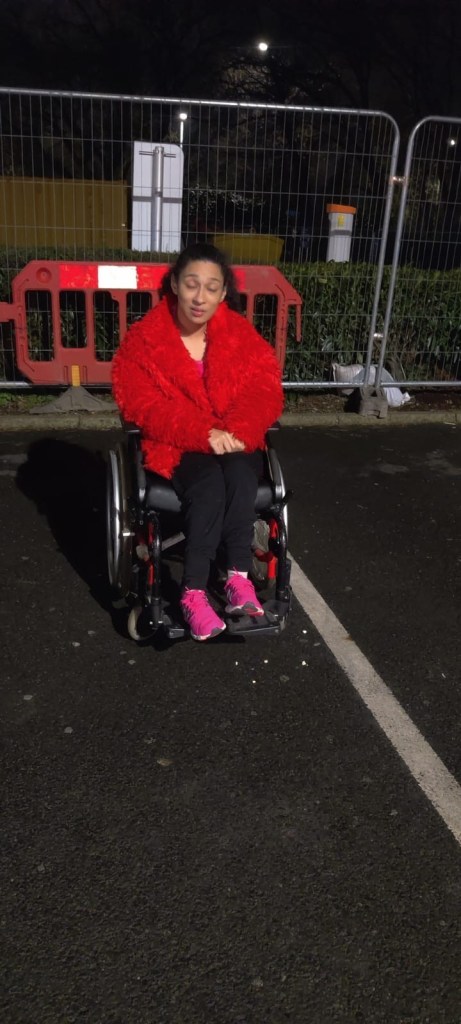
My diet on Wednesday film baby girl

Paralympian Wants Better Cancer Care For Young People
Paralympic rowing champion Erin Kennedy said more young people with cancer should be given better wraparound care following their diagnosis.
Kennedy, 32, was diagnosed in May 2022, had chemotherapy in December 2022, a double mastectomy and reconstruction in January 2023 and was later given the all-clear.
The 29-year-old cox, who lives in Henley and is a member of the town’s Leander Club, was BBC Radio Berkshire’s breakfast guest editor on Thursday.
She said she was grateful to be treated at a specialist unit for young people at the Royal Surrey County Hospital in Guildford.
But others are not so lucky because most units stop treating young people at 24 and cannot benefit from their expert staff, like social workers.
“There are lots of considerations [for young people with cancer]. Back in 1990, the mean age for buying a first house was in your 20s. Now it’s significantly later. That brings with it instability financially,” Kennedy said.
“You’re less likely to be married when you’re getting these diagnoses so that means less household income coming in and often you’re put straight onto sick pay. And that’s not great.
“The cost of cancer is quite great and it’s all this wraparound care that can support you.”
About 250 people under 30 get diagnosed with breast cancer in the UK every year.
“I was really fortunate to be in that really small minority who had really specialised care in that 25 to 30 category,” Kennedy added.
“I would love to see that care gap being closed over the next few years.”
Louise Soanes, the Teenage Cancer Trust’s chief nurse, said: “We have got amazing, specialist nurses and specialist units that ensure that young adults don’t fall off a cliff edge around treatment and support them in other areas of care.”
The charity has 28 specialist cancer units at hospitals in the UK and funds 92 nurses and youth support coordinators.
Benefit Cheats Could Be Stripped Of Driving Licences
Convicted benefits cheats who fail to pay back the taxpayer could be stripped of their driving licences, under government plans to crack down on fraud.
Those who repeatedly cheat the system and have debts of £1,000 or more could be punished with a driving ban of up to two years.
Fraudsters can already be jailed in the most serious cases – but Work and Pensions Minister Alison McGovern said it would provide an additional “tool in the box” to chase repayments.
The plans also include new powers to force banks to hand over account information about benefit claimants to help target investigations, echoing a scheme announced by the previous Conservative government.
But this is likely to face strong opposition from the banks and privacy campaigners.
Providing false information to obtain benefits can see fraudsters hit by fines, while serious cases of conspiracy to defraud can attract prison sentences of up to ten years, under current laws.
Pressed on whether the power to disqualify drivers would provide an additional deterrent, McGovern told BBC Breakfast it would provide a “backstop” to chase repayment from those determined to “evade collection”.
She added that the department already tries to collect fraudulently claimed benefits via banks or the PAYE system, but the licence powers could help with those who still “don’t want to co-operate”.
According to latest annual figures, overpayments due to fraud amounted to £7.4bn last year, around 2.8% of total welfare spending.
A further £1.6bn (0.6%) was overpaid due to inadvertent errors by claimants, with £0.8bn (0.3%) overpaid because of errors by the DWP.
Ministers have estimated greater access to banking data could save taxpayers £1.5bn over five years, by helping DWP investigators identify suspect claims more effectively.
But campaign groups have warned that it will invade claimants’ right to financial privacy, and could lead to legitimate claimants being wrongly investigated.
In a letter to Kendall in September, the directors of Big Brother Watch and Age UK described the plans as “mass financial surveillance powers” which they said would “represent a severe and disproportionate intrusion into the nation’s privacy”.
Tory bill failed
Currently, the department can only request such financial information where it has reason to suspect fraud, and only in individual cases.
The previous government argued broader powers to obtain banking information in bulk would help investigators catch previously undiscovered fraud cases.
But a Tory bill to deliver the scheme failed to make it through Parliament before July’s election.
Under that plan, financial institutions would have been required to send information to the DWP about bank accounts receiving benefit payments that indicated a “potential risk” of fraud or error, or face fines for not complying.
An official assessment of the law said the system would be “fully automated, running within existing banking systems” and be rolled out gradually from 2027.
At the time, Labour attacked the Tory legislation as “poorly delineated” – while Tory ministers argued wide-ranging powers were necessary to ensure they could apply to all types of future banks, including accounts with newer, online-only providers.
Conservative shadow work and pensions secretary Helen Whately said the government’s bill was a “continuation” of work started by the previous government and Labour “must do more to tackle the spiralling welfare budget”.
‘Living abroad’
Since entering government, Labour has pledged that only “very limited information” will be shared with the department under its equivalent plan, but is yet to set out in detail how its system will work.
DWP minister Andrew Western confirmed last year this will include cases where claimants are “living abroad” without notifying the department, although a timeframe for this has yet to be specified.
Accounts could also be flagged if they are holding more than £16,000, the usual savings limit for being able to claim Universal Credit.
In a change from Tory plans, the government has said the new powers will not be used to target payments of the state pension.
Ministers have sought to reassure critics by emphasising that the DWP will not have powers to “access” bank accounts.
But campaigners have told the BBC they believe this is a “misdirection”, as the measures would give DWP the power to instruct banks to access the information on its behalf.
Call The Midwife Confronts A Brutal Reality In An Unflinching New Storyline This Week
Call the Midwife is back in full swing with its 14th season, ready to tug at our heartstrings again.
In its third episode of the season, the show continued its trend of tackling deep-rooted societal issues with sensitivity and an unflinching spotlight. This time, it took on internalised ableism by exploring the abandonment of children due to disability.
For many disabled people watching, all too familiar with negative reactions to the ‘burden of disability’, it would have felt heart-wrenchingly close to home.
A baby girl is born to an excited first-time mum desperate to meet her daughter. Upon her birth, however, the midwife notices something on her lower back, later identified as spina bifida, a congenital disability that causes a gap in the spine.
Without even a moment in her mother’s arms, the sweet baby girl is rushed to the hospital to be looked over and taken to surgery. A couple of scenes later, the midwife walks in on the mother packing to leave the maternity home.
When questioned, she says, with heartbreak in her voice, that she cannot take care of the baby and she’s going home. She and the father believe that “the state” can take better care of her than they can because it’s not possible for them to parent a disabled child.
The parents’ immediate detachment from their daughter and suppressed disgust at her disability was horrifying and well done. We feel sympathy for their struggle, but the audience also experiences intense revulsion for how easily and quickly the parents walk away from their newborn baby. Neither of them held or looked at her, not once. The parents don’t even give her a name. The nuns later call her June.
Unable to comprehend what has happened, the parents seem to be numbed by the child’s disability. What’s most apparent is that their internalised ableism – and a profound misunderstanding of disability – have led to this choice. Internalised ableism is a form of oppression brought about by the absorption of commonplace negative messages about disability. These attitudes were particularly prevalent, noxious and unchecked in the mid-20th century.
This attitude, when left unchallenged, can result in precisely what we see play out on screen: the abandonment or rejection of disabled people, even our own blood. Call the Midwife has accurately depicted such attitudes in the ’50s and ’60s throughout its run.
Though we still have a long way to go in the modern day, both on screen and in daily life, our understanding of disability then was even less sophisticated than it is now, and many parents rejected their children if they were born with a disability.
A considerable number of children were consigned to institutions instead of living at home with their families, something we saw in a series-three episode when a young girl with Down’s syndrome became pregnant while living in one such state home.
We’ve seen the theme of ableism pop up repeatedly throughout the series’ run, particularly during the excellently produced, long-lasting Thalidomide storyline, and when Fred and Violet first met their adopted son Reggie and were unsure of how his Down’s syndrome would impact their lives.
The show also spotlights the struggles of social services. After the parents decide to give up their rights to June, a social worker visits the maternity home to say that the state cannot take her due to the additional “financial burden” her care would demand.
The social worker asserts that the parents must “take her on” because they have the financial means to do so.
Despite offers of far more robust in-home support than parents in the UK can expect today, the parents refuse to reconsider, claiming that caring for her would prevent them from having other children.
Both the social services’ and the parents’ response to this adorable baby expose the internalised ableism that lives in us all. Negative, implicit associations ensure that everyone involved assumes the baby will be a “burden” and that her disability will be an automatic barrier to fulfilment.
No one knows this for sure: through the ableist lens such things are just assumed.
The Nonnatus House residents take over June’s care temporarily. Watching the baby jump between carers, all while thriving after life-saving surgery, is a gut-wrenching watch. We see glimpses of a tiny child, too small to voice her own needs, being carefully tended to by people who have rejected their own internalised ableism and know the child as she is: an innocent baby.
Eventually little June is taken to the orphanage run by the nuns, given an opportunity at a new life, and she leaves with only a letter from her mother explaining why she abandoned her.
Call the Midwife masterfully explores this baby’s brutal start to life, exposing the varying impacts of internalised ableism while highlighting the importance of caring for all children, no matter their circumstances.
While many in the audience undoubtedly would have preferred to see the parents judged a little more for their rejection of an innocent baby, the show approaches the subject fairly. All involved are allowed their feelings and no one is judged too harshly for their decisions.
But the overarching theme is sadness for the child, who will live her life knowing her parents abandoned her for being disabled.
The show also avoids focusing on one person’s response or interaction with the child – instead, the episode pans out, allowing everyone’s perspective airtime, and highlighting the broad spectrum of people involved in an abandoned child’s journey.
Once again, Call the Midwife confronts a brutal reality: internalised ableism too often prevents people from seeing the person before the disability.
EMR Introduces Accessibility Maps For Passengers
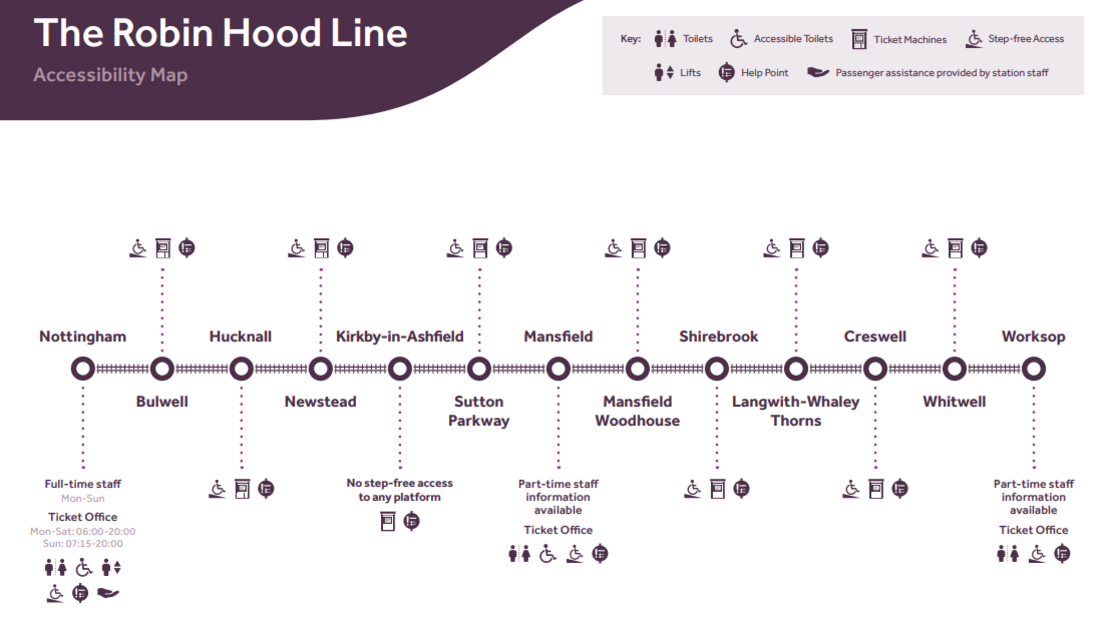
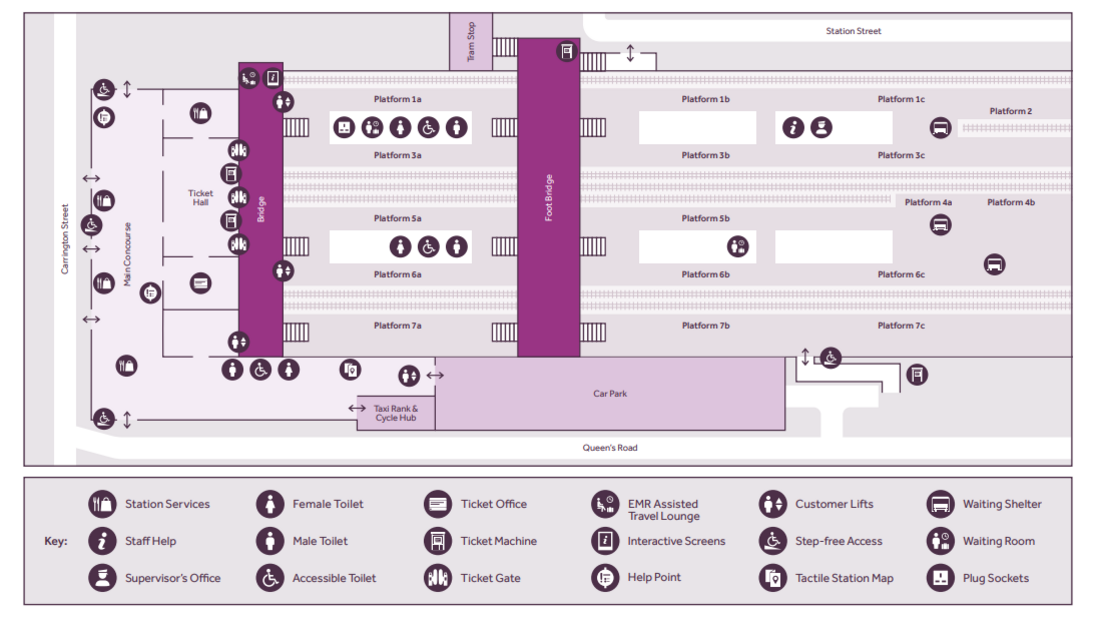
East Midlands Railway (EMR) has launched maps to provide disabled passengers with “key accessibility information” across its stations.
The train operator said the maps outline step-free access points, accessible toilets, parking facilities and assistance services.
EMR said the maps were created using feedback from members of its accessibility panel, made up of disabled customers that regularly engage with the company.
There are currently Nottingham Station, Robin Hood Line and EMR Network accessibility maps, with more being created “throughout the year”, said EMR.
Philippa Cresswell, customer service director at EMR, said: “We are always looking for ways to improve our services and make the information we provide more accessible and inclusive.
“We hope these new maps will prove useful to customers in planning their journeys and will be rolling out further versions later this year.”
Disabled Athlete To Open ‘Life Changing’ Gym
Opening a gym for people with a disability has been a dream come true for Jennifer Smyth.
The 10-year project took hard work, perseverance and a significant personal financial investment.
But she says it was all worth it as the Maydown facility outside Londonderry officially opens on Friday.
Jennifer was a talented young athlete but a fall during training in September 2013 changed her life.
‘We all need exercise’
Aged 17, the gymnast sustained a broken neck and became quadriplegic after the accident.
Since that day, she vowed to open her own gym to help others keep fit and socialise.
“After my injury, I had no gym to go to which was fully accessible,” she told BBC News NI.
“You can go to a regular gym and train parts of your body that work but you can’t train the parts of the body that don’t work.
“So I wanted to create a gym that I could train my whole body. We all need exercise so making a gym that’s fully accessible for all really was my dream to create.
“We’re fully accessible and all the equipment is fully adapted or created for people with disabilities. It has been a big investment but we are a charity.”
‘Life changing’
Brooke Canning and Jennifer, both from County Londonderry, came together and bonded over their life-changing injuries in 2023.
Brooke, from Ballykelly, said: “I was involved in a road accident three years ago where I suffered a spinal cord injury similar to Jennifer so I met Jennifer after my accident and she’s been a great help so far.
“I was initially paralysed from my neck down and through months of physio I finally gained strength in my arms.
“This gym is going to be life changing to a lot of people out there that are in similar situations like me as I’m a wheelchair user.”
Jennifer’s mum Pamela says she is really proud of her daughter.
“It is just fantastic to see it, 110% behind her,” she said.
“She is such a humble girl. She does not want this to be about her.
“She’s been to America and she has trained on a lot of this equipment that she has put in here and she knows the benefit, not just in terms of the equipment but in the social interaction that she and the others will get from it.
“She wants to share that. She wants other people to be their best and have a really good journey themselves.”
Kim Gregg, a clinical specialist physiotherapist, says the gym is a significant development.
“It really is priceless for this patient population,” she said.
“There really is nothing like this in Northern Ireland.
“In a normal set of circumstances, a gym will maybe have one piece of equipment that’s appropriate for someone who has a neurological condition but this gym has various pieces of equipment so people can get a really full workout, so very beneficial indeed.
“It’s not cheap at all. Everything to do with disability comes with a set of zeros at the end. Anyone in this position will know that when they go to buy any piece of kit it’s several thousand pounds so there’s been significant investment.
“Each one of these pieces of kit has a high degree of technology to be able to assist these patients, so it comes at a high tariff.”
Holly Deane, a volunteer at the new gym, thinks it will make a profound difference to those who use it.
“I’m very much interested in studying physio next year,” she said.
“I thought it would be a great experience to reach out to Jennifer and volunteer here in her gym to get more experience with her physios.
“It’s important to me because it’s really promoting workouts for people who have neurological conditions and disabilities and Jennifer’s really worked hard in making this possible.
“It’s so special seeing a place now in Northern Ireland that people can come and work out as its just as important for them to work out as people who are able.
“It’s inspiring for me and that’s why it’s special.”
Disney carousel Christmas decoration outside the toy shop, Hamleys video of a Disney fairy will outside the toy shop family
Due to Social Services opinions, that if I do not fundraise for my PAs to support me at my volunteer job; I will risk losing it which I don’t want to do but they are forcing me to either fundraise the money myself that I need for me to do this volunteer job and be a functioning adult in the society. They are telling me that they can refer me to somebody that can help me to chose a volunteer job even though I have chosen one; and I have secured it. Apart from the support and funding to do this I have secured fully and it should be starting on Monday 25th February 2025. Please help me to not have to give this up on this opportunity. I have graduated college especially to take this opportunity.
Wheelchair Dancer Returns To Class After Paralysis
A dancer who suffered life changing injuries and lost the use of both her legs has said rejoining her childhood dance school was like “coming home”.
Claire Booth, 38, first joined Alyson Livesey’s Academy of Dance in Manchester when she was four years old and was there for 14 years.
But her dreams of being a professional dancer were shattered when in her 20s she was hit by a drunk driver and now has to use a wheelchair.
After seeing an advert for a new adult tap dance class at her former school she decided to “give it a go” and said it had brought out the “cheeky, silly side” she had as a child.
“Dance was the last thing on my mind,” she said.
“I had generalised anxiety disorder, I’ve got mental health issues and I’ve got a lot of things that makes me want to stay home and not do things outside.”
Ms Booth was reunited with her childhood dance teacher Alyson Livesey who has since adapted the classes so she can take part.
She moves with the rest of her class and taps with her hands using tap gloves and a board.
“She has done amazing,” Ms Livesey said.
“When Claire was younger we used to have a little saying, ‘even if your head drops off you still carry on dancing’ and she recites that back to me now.”
Ms Booth said: “Everyone has their trials and tribulations in their life and everyone faces things.
“Coming back here I didn’t feel nervous, this is where I belong.
“If I can inspire another person in a wheelchair to join a class and do what I’m doing then that would be amazing.”
Me in the limousine when I graduated from school in my lovely dress with my hair, straightened for
Another clearer, video of me doing karaoke on
Public Toilet Anxiety Left UC Woman Trapped At Home
A woman who said she feared leaving her home for several weeks because she was so anxious about whether she would find a public toilet is calling for change.
Lucy Smith-Butler, from Rochdale in Greater Manchester, was diagnosed with ulcerative colitis at the age of 17.
Symptoms include stomach pain and having to rush to the toilet urgently and often.
The 25-year-old said it would “make people’s lives easier” if there were better access to public toilets and cleaner facilities.
Rochdale Borough Council said there were public toilet facilities at 19 of its parks and cemeteries, plus 17 public toilets within libraries and public buildings, as well as five changing places toilets.
But not all councils can afford their upkeep.
‘More access’
Lucy, a fashion blogger who lives in Littleborough, said at one stage during an “awful flare up” she did not leave her home for six weeks because it was not worth “the anxiety”.
Two years after being diagnosed, she had surgery which led to her have a stoma bag fitted.
While she said the stoma gave her “her life back” she said there still needs to be a “clean place” for her to change it when she is out.
She said: “It would help a lot of people if there were more public toilets and it would make people’s lives easier if they had more access to them, and they were cleaner.
“It’s just that anxious feeling of not knowing if I’ll find one or what the state of the toilet is.”
According to Crohn’s and Colitis UK, half a million people live with inflammatory bowel disease and nine out of 10 “plan their journeys around toilet availability”.
Marianne Radcliffe, from the organisation, said that adequate toilet provision was “a matter of public health and should be a priority for those in power”.
Public toilets have existed on UK high streets for more than 150 years but there is no legal requirement for local authorities to provide them, meaning they are often closed down if councils feel they cannot afford their upkeep.
‘No funding’
The British Toilet Association estimates about 60% of public toilets have closed since 2010.
The association’s Raymond Martin said that because there was no legislation to provide them, there was “no funding” and councils had to use money for other things such as street cleaning and bin collection, and that public conveniences often “take the biggest hit of all”.
The association is calling for there to be a statutory duty on local authorities to provide toilets, and for the government to appoint a “toilet commissioner”.
Mr Martin said the association was meeting with ministers again in February.
The Local Government Association said: “The lack of public toilets can disproportionately affect vulnerable groups, including older people, people with disabilities, those with medical conditions, babies and children and people that find themselves sleeping rough.
“Funding pressures have caused councils to rethink provision, the maintenance of a public toilet could cost a council £25,000 a year, a figure which is greatly impacted by the condition in which they are left by their previous users.
“Vandalism and anti-social behaviour cost councils millions of pounds a year which means councils having to invest into more regular cleaning and better security, meaning that the taxpayer foots the bill for vandalism in this most basic of public provisions”.
It said many councils had attempted to address and prevent gaps in provision and multi-year funding settlements would enable local government to plan the transformation, rather than the closure, of facilities.
Vital Managed Migration Safeguard For Disabled Claimants
With many thanks to Benefits And Work.
The DWP’s “complex needs” safeguard could prevent thousands of vulnerable disabled claimants from losing their benefits when they are forced into managed migration to universal credit (UC).
From February, the DWP aims to send out 63,000 migration notices a month to employment and support allowance (ESA) claimants. It seems likely that some of the most vulnerable ESA claimants, who may not have had contact with the DWP for years, will now begin to be caught in the DWP dragnet.
So, it’s vital that claimants and support workers are aware of the complex needs guidance. This can offer additional help and protection to people who may struggle with making, or maintaining a claim for UC.
Claimants who are accepted as having complex needs are entitled to additional support, including things like:
- Additional time to make a claim
- A home visit
- Communication in alternative formats
Taking your needs into account when considering whether a sanction should apply
There is no strict definition of complex needs, anything that could affect your ability to make and maintain a claim to UC can be considered. This could include issues such as:
- a physical or mental health condition
- risk of suicide or self-harm or risk of harm to others
- abuse of drugs or alcohol
- domestic abuse
- homelessness
- sensory loss (hearing and visual impairments)
- care leaver
- unable to use a computer
- no bank account
If you have already begun a claim to UC, you can report your complex needs in your UC journal and a UC agent must then record these on the support needs section of the DWP’s records.
You should then receive support from a complex case coach.
Complex case coaches carry out ‘investigative work’ to support claimants who are approaching their claim-by date but who have not yet made a claim. This includes claimants who:
- the DWP have not been able to make contact with at all
- have been contacted, but they still have not made a claim
- have additional barriers to making a claim
- have complex needs
Once a claimant has been referred to the complex case coach, they should remain on their worklist until a claim to UC has been completed or their legacy benefits are terminated and no claim to UC has been made.
However, before a complex case coach claim can be closed in this way, there is a process that should be gone through which includes a referral to an advanced customer support senior leader and a review with a Higher Executive Officer.
In some cases, even if no progress has been made, it may be judged that it is not safe to terminate the claimant’s legacy benefits and the complex case coach will continue trying to contact the claimant at semi-regular intervals.
Only after all support options have been exhausted can the claimants legacy benefits finally be terminated.
It is clear that the complex needs process is an important safeguard for claimants who may struggle, especially with the mandatory migration process, but also with the ongoing requirements of a UC claim. If you think they apply to you or your client, ensure that you inform the DWP.
We’ve included more information in our updated 52 page guide to Successful ESA to UC Managed Migration, which members can download from the ESA/UC Guides page
We have also published two DWP documents on complex cases which members can find in the UC Migration Resources section on the same page.
My karaoke on Monday morning, the time in joyed my activity group. What a good musical start to a Monday morning
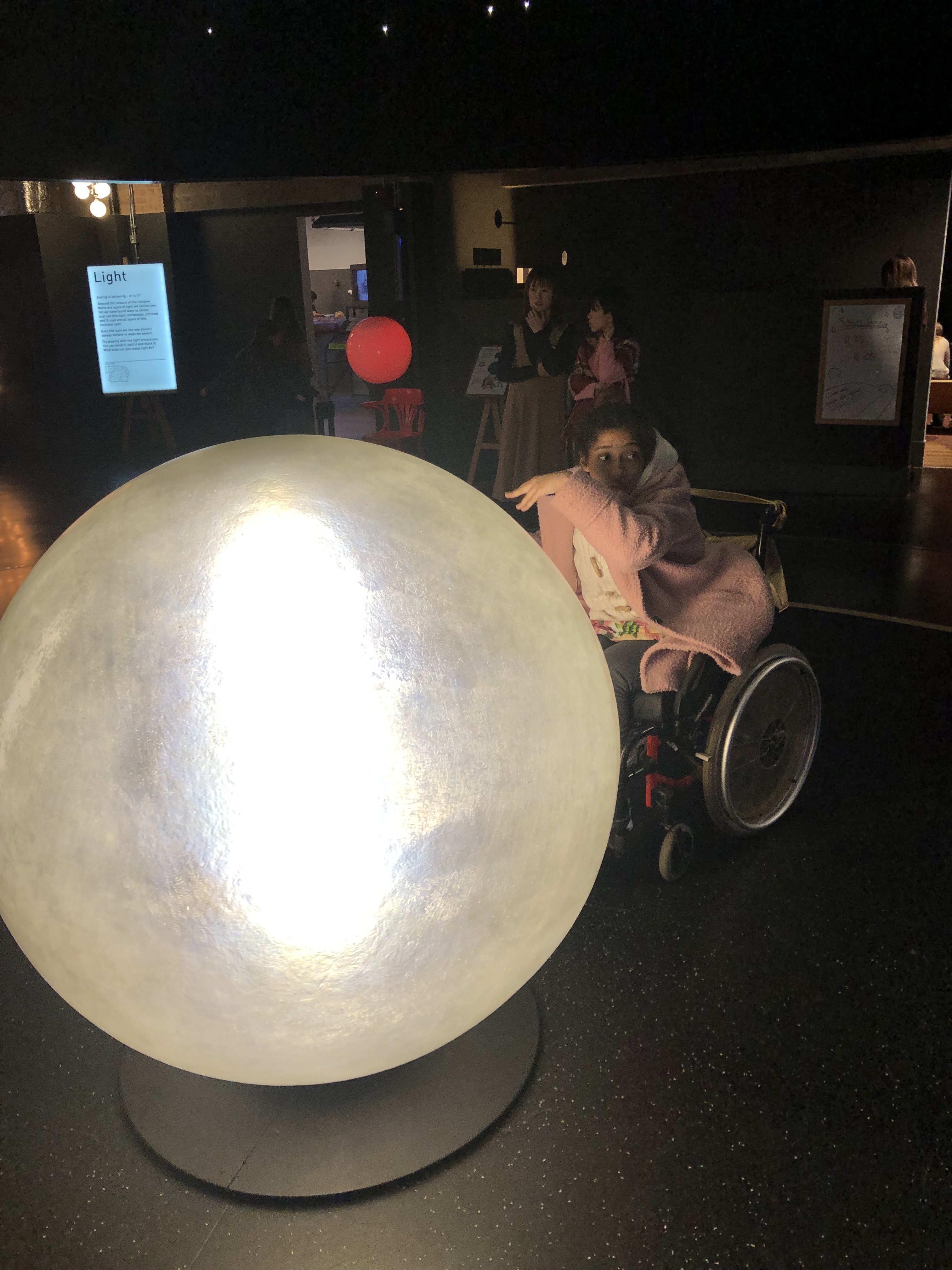
Learning all about the Sun and it’s raised at the science museum when I went on my trip with my PA there
Gavin & Stacey Script Raises £50,000 For Charity
A signed copy of the Gavin & Stacey finale script has raised more than £50,000 for charity in an online raffle.
Robert Wilfort, who plays Stacey’s brother Jason West in the popular BBC show, donated the script to a charity in his hometown of Chesham, Buckinghamshire, as a raffle prize.
The winning ticket was drawn on Monday, with proceeds going to The Theatre Shed, external, an inclusive theatre company bringing together disabled and non-disabled children.
Gavin & Stacey was first screened in 2007 and about more than 19.1 million viewers have now watched the final episode of the show, first screened on Christmas Day.
The series tells the story of Gavin, from Billericay, Essex, and his romance with Stacey from Barry, Vale of Glamorgan, and the intertwined lives of their friends and family.
More than 4,500 people bought the £5 tickets, after Wilfort decided to raise funds through a raffle rather than an auction.
“I knew the show finale would be popular, to put it mildly, and I thought it would be good to do something with that popularity,” he said.
“There’s a fantastic charity near to me, I’ve had a long association with them, so I got in touch and said, ‘Shall we raffle off the script?'”
Alice Connor, artistic director of The Theatre Shed, said the gesture was “beyond generous”.
“Being able to raise money like this is so imperative to help us keep going. We don’t get any statutory funding, and it’s been a tough year for us as a small charity,” she said.
The group “incorporates sign language into everything we do” and every show was written and choreographed by the young people, Ms Connor added.
She said the money would “create access to the arts for those who would usually be unable to access it”.
Warwick Davis To Receive Prestigious Bafta Fellowship
Actor and TV presenter Warwick Davis will receive this year’s Bafta Fellowship, the British Academy’s highest honour.
The Surrey-born actor is known for appearing in the Harry Potter and Star Wars film series and has presented the ITV game show Tenable since 2016.
In a statement, Davis described the Fellowship as an “incredible honour” and thanked Bafta “for believing in my journey”.
“I accept this Fellowship in honour of everyone living with dwarfism or any form of difference, reminding us that our uniqueness can be our greatest asset,” he said.
Davis, 54, has spondyloepiphyseal dysplasia congenita, a rare form of dwarfism.
Throughout his career, he has advocated for a more inclusive screen industry and is the founder of Willow Management, an agency dedicated to representing actors under 5ft or over 7ft tall.
Davis said: “The Fellowship, to me, embodies the spirit of inclusivity, creativity, and collaboration that Bafta stands for.
“This recognition is not just about the body of work I’ve contributed but also about the people who’ve stood by me and the audiences who have made this journey worthwhile.”
He continued: “I also want to acknowledge the wonderful colleagues and friends who’ve worked behind the scenes – costumers, makeup artists, camera crews – who quietly and tirelessly pour their hearts into every production.
“I look forward to continuing to champion fresh perspectives, advocate for better representation, and inspire the next generation of storytellers to dream big.”
The Fellowship recognises industry figures who have made an outstanding contribution to film, television or games.
Previous recipients include Alfred Hitchcock, Steven Spielberg, Dame Judi Dench, Dame Vanessa Redgrave, Martin Scorsese, Sidney Poitier and Dame Helen Mirren.
Davis began his career aged 11 as Wicket the Ewok in 1983’s Star Wars: Episode VI – Return of the Jedi.
He continued to appear in the franchise over subsequent decades, most recently in 2019’s The Rise of Skywalker.
His other film credits include Willow, The Hitchhiker’s Guide to the Galaxy, and the horror-comedy Leprechaun film franchise.
Davis is perhaps most familiar to audiences for his role as Professor Filius Flitwick in the Harry Potter series of films, which he appeared in between 2001 and 2011.
He appeared in BBC TV series Life’s Too Short, which he created with Ricky Gervais and Stephen Merchant.
Bafta chair Sara Putt described Davis as a “talented, much loved and truly inspiring figure who has captivated audiences over many decades”.
Last year, Davis’s wife Samantha, the co-founder of dwarfism charity Little People UK, died aged 53.
Davis described her as his “favourite human” and said “her passing has left a huge hole in our lives as a family”. An inquest into her death was due to open this week but was adjourned until a later date.
The nominations for the Bafta Film Awards will be announced on Wednesday 15 January, with Conclave, Emilia Pérez, Anora and The Brutalist expected to make the shortlists.
LA Wildfire Victims Include 2 With CP
I was heartbroken to read yesterday that two of the 16 people who have lost their lives in the LA wildfires had cerebral palsy.
This post was shared on Linkedin last week and I wanted to share it here somehow. Now seems like the right time:
https://www.linkedin.com/feed/update/urn:li:activity:7282806168811368448/
Please find a way to click the link above if you can.
Paralympian Makes Disability Power List Top 10
A former Paralympian said she was “blown away” to have been recognised as one of the most influential disabled people in the UK.
Beth Moulam, who retired from sport in 2022 after representing GB at the Tokyo Paralympics, has been listed in the top 10 of the Shaw Trust Disability Power 100 for the second time.
The 31-year-old communicates using a piece of technology that detects eye movement through a camera or tracker, similar to that used by rugby legend and MND campaigner, Rob Burrow.
Ms Moulam, from York, has been recognised for her work advocating for people who use alternative forms of communication.
The Disability Power 100 recognises and celebrates the 100 most influential and trailblazing people in the country with a disability.
Ms Moulam topped the Grassroots and Community Advocate category, placing her in the overall top 10 most influential disabled people in the UK.
She said: “When I made the list again this year I was blown away. It is a tough competition made up of leading lights who are influencing the disability landscape.”
The former elite athlete, whose cerebral palsy was caused at birth by a lack of oxygen, represented GB in the specialised disability sport of boccia.
‘Humbling’
Ms Moulam said the last 18 months had been “a whirlwind” of full time study for a MA in Social Policy and, in her spare time, advocating for those who use augmentative and alternative communication (AAC).
“Whether I am attending a board meeting, delivering a lecture, leading a workshop, or talking at a school assembly, I’m achieving my aim of creating greater awareness of AAC and engaging allies for AAC users,” she added.
In July 2024 she was awarded an honorary doctorate in health by Manchester Metropolitan University for her Paralympic achievement and for her advocacy work around AAC.
She said it was “humbling to be rewarded for doing something you love with a passion”.
Ms Moulam said the late Rob Burrow had done “a great job of raising awareness of electronic communication devices”.
“His celebrity status as a rugby player gave him a platform to raise awareness of motor neurone disease and, as a by-product of that, this type of equipment,” she said.
Ms Moulam said her own sporting career had also given her an awareness raising platform, which alongside her voluntary advocacy work included “lecturing, public speaking, delivering workshops and training and mentoring”.
She said: “It is all about awareness raising and my passion around empowering other people who use communication resources.”
Video about my shoppable content and ongoing fundraising, and all about my TikTok affiliate via TikTok shop and my shoppable content.
UK Athletics Charged With Manslaughter Over Death Of Paralympian
UK Athletics and the organisation’s former head of sport Keith Davies have been charged with manslaughter over the death of Paralympian Abdullah Hayayei.
Hayayei died aged 36 after a metal cage fell on him while training at Newham Leisure Centre, London in July 2017.
The Crown Prosecution Service (CPS) has charged UK Athletics Limited with “corporate manslaughter and a health and safety at work act offence”.
Davies, 77, has been charged with “gross negligence manslaughter and a health and safety at work act offence”.
UK Athletics and Davies will appear at Westminster Magistrates’ Court on 31 January.
Hayayei was training for the World Para-athletics Championships in London at the time of the incident.
The United Arab Emirates thrower had been set to compete in the F34 shot put, discus and javelin events.
Hayayei, a father of five, finished sixth in the javelin and seventh in the shot put when making his Paralympic debut at Rio 2016.
London 2017 was due to be his second appearance at a World Championships. At the 2015 event in Doha, Qatar, Hayayei finished fifth in the discus and eighth in the shot put.
A moment of silence was held in honour of Hayayei during the opening ceremony of the World Para-athletics Championships at London Stadium.
An experiment that we were shown when we went showing in one of the science museum shows all about eruption and all about explosion.
Disabled Man Completes South Pole Trek
A former GB para athlete has become the first disabled person to ski solo and unsupported to the South Pole.
Jonny Huntington, from Kingsbridge, Devon, covered 566 miles (911km) of Antarctic ice in 46 days despite the effects of a debilitating stroke he suffered in 2014.
The 38-year-old set off from Fuchs-Messner on 21 November 2024 and arrived at the South Pole on Monday.
Throughout his expedition, he skied in extreme conditions, including freezing temperatures and 24-hour sunlight, while dragging a 242lb (110kg) sled carrying his food and equipment.
Speaking via a satellite phone on arrival at the South Pole, Mr Huntington said: “It’s been a bit of a whirlwind since getting here. It’s pretty emotional.
“My right leg is pretty sore, which I think is probably reasonable, because it’s done most of the work.”
Only 52 people have successfully skied to the South Pole without support but Mr Huntington is understood to be the first explorer with a disability to do so.
A former Army officer, Mr Huntington was left paralysed from the neck down on his left side when he suffered a stroke at the age of 28.
It took years of rehabilitation before he was able to fully walk again and he was left with restricted movement down his left side.
He said the final stage of his expedition was much more challenging because he encountered huge ice formations called sastrugi, as well as soft snow, which made progress difficult.
“This has been tough, the injury has certainly made it more difficult,” said Mr Huntington.
“In the last couple of weeks I have been in a position where I’ve worried if my good side is going to survive this.”
During his stroke recovery, Mr Huntington became a member of the Armed Forces Para-Snowsport Team (AFPST), which ignited his love for skiing.
‘Refused to stop’
He went on to join the GB para Nordic ski team, competing between 2017 and 2020 at World Cups in Lviv, Ukraine, and Vuokatti, Finland, as well as the inaugural European Paralympic Committee Games in Poland in 2020.
The idea for the South Pole expedition came after he stopped skiing competitively and he planned and trained for the expedition for five years.
He said: “I don’t think I’ve pushed any boundaries in the sense of the route I’ve done, or anything like that – but, at the same time, I’ve dragged a pretty mangled body through that route.
“I’m just a normal bloke from South Devon – like, there is no magic formula and there’s nothing special about me to enable me to have done what I’ve done.
“On this trip, I kept putting one foot in front of the other until I got to the end.
“When things were really tough, I just refused to stop putting one foot in front of the other.”
Mr Huntington said he was looking forward to celebrating his achievement with a steak and a glass of red wine.

McDonald’s Workers Make Fresh Harassment Claims
McDonald’s workers have said they are still facing sexual abuse and harassment, a year after the boss promised to clean up behaviour at the fast-food chain.
One 19-year-old worker, Matt, told the BBCsome of his colleagues were scared of going into work, and that managers would “touch up” other members of staff.
Since the BBC’s original investigation into the company, the UK equality watchdog has heard 300 reported incidents of harassment. It now plans to intervene again.
A McDonald’s spokesperson said the company had undertaken “extensive work” over the past year to ensure it has industry-leading practices in place to keep its workers safe.
The UK boss of McDonald’s has been summoned on Tuesday to answer MPs’ questions for a second time, including over claims of sexual abuse. You can follow the hearing live on the BBC website.
Warning – this article contains distressing content
Claims include:
- A worker quit her job in the West Midlands at the end of 2023, after she says managers inappropriately touched her and customers sexually harassed her. When she raised it, she says she was told to “suck it up”.
- A 16-year-old current employee based in the West Midlands says he was bullied, shouted at and sworn at by managers.
- A female worker, 20, says a male manager sent her topless pictures. She left her McDonald’s branch in the East of England in August.
These claims all relate to events after November 2023, when the boss of McDonald’s UK, Alistair Macrow first appeared in front of parliament’s Business and Trade Committee.
Mr Macrow told MPs then that the firm was taking action to improve working conditions, after the BBC uncovered widespread concerns over the treatment of staff.
However, one current and two former workers from different parts of the country, claim that the restaurant audits that were promised, were stage-managed by the branches.
More than 700 current and former junior employees are now taking legal action against the firm, accusing it of failing to protect them.
‘Scared to go in’
Matt said he quit his McDonald’s branch in the Midlands last year because of what he calls a “toxic” work environment.
He said he was bullied for having a learning disability and an eye condition.
“And then it was stuff you noticed, managers and staff being racist to other staff. Managers trying to touch other staff up,” he said.
He said some staff members felt scared to go into work, because they feared something “horrible” happening.
Matt said the work culture had not changed by the time he left in May.
‘Just banter’
Alan, not his real name, said he has been repeatedly subjected to “degrading and humiliating” verbal abuse by his colleagues at a McDonald’s branch in southwest Scotland.
“It’s just homophobic slurs a lot, sometimes to my face, sometimes behind my back,” the 19-year-old said.
When he reported the problem to a senior manager, he says he was told it was “just a bit of banter”.
Alan has worked in other fast-food restaurants where he said homophobia was taken more seriously.
“It just seems like McDonald’s don’t care as much,” he said.
‘Sex for shifts’
Claire, not her real name, who worked at a branch in the Midlands until May 2023, says a shift manager asked her for sex in return for extra shifts, which she refused. She was 17, he was in his 30s.
“You don’t expect that to happen,” she said. “It was totally inappropriate.”
Like most McDonald’s workers, Claire was employed on a zero-hours contract.
McDonald’s outlets are run as franchises, so local managers are responsible for employing the staff for their restaurants. Across the UK, 89% of their workers are on zero-hours contracts.
McDonald’s says workers can choose to switch to minimum guaranteed hours. But we have spoken to 50 workers across the country who say they were not given that choice.
Some workers told the BBC the insecure hours leads to an imbalance of power. Others, however, said zero-hours contracts worked well for them.
Claire says she felt “dependent” on her managers for work. “I was always asking for more shifts, as I needed more money,” she said.
A McDonald’s spokesperson said that in 2018, it offered all employees the choice of a flexible or guaranteed hours contract, and that every staff room should still display information on how to request one.
“Additionally, after four weeks in role, every new employee has a formal conversation with management – in which managers check that employees are aware of the option of a guaranteed hours contract,” the company said.
The company said it did not recognise the incident where a manager asked for sex in return for shifts. “If provided with sufficient information we would ensure a full investigation is carried out, and appropriate action taken if necessary,” the company said.
Liam Byrne, chair of the Business Select Committee, which will question Mr Macrow later on Tuesday, told the BBC the situation was “appalling”.
“There is a clear pattern of abuse here that suggests that McDonald’s has become a hotbed of harassment and it’s incredibly serious,” he said.
“And when the boss of McDonald’s came before us last year he promised that he would root out this problem and it’s quite clear that he’s failed.”
‘Traumatised’
Most McDonald’s staff are aged between 16 and 25. For many, it is their first job.
Even senior managers are often young.
Elliott, not his real name, was in charge of a store in the South of England by his early twenties. He left last February.
“If I had a sister, or if I had a daughter, I wouldn’t want them working in McDonald’s,” he said.
When the McDonald’s boss spoke to MPs in 2023 he said the company had stopped a practice of moving managers around so they could avoid disciplinary action.
But Elliott says that days after Mr Macrow gave evidence, a manager was moved to his store to avoid being disciplined, following allegations they had sent sexually explicit messages to female colleagues who were 16-18 years old.
Following the BBC investigation, McDonald’s brought in outside consultants, Price Waterhouse Cooper (PwC), to audit their restaurants and check on the wellbeing of their staff. But Elliott says the franchise he worked for “rigged” its inspection in February.
“They were meeting the best employees, hand-plucked from different stores,” he said. “The people that can be coached on the correct answers.”
According to Elliot the audit gave the restaurant a 100% rating. Yet, he told us, two months before the audit, a manager working there had been accused of performing a Nazi salute to a Jewish employee. He said PwC was not told of this allegation.
“I think I am a bit traumatised by it,” he said. “And I think I’ll continue to have bad memories of my employment for the rest of my life.”
PwC said that while it doesn’t comment on individual clients, its site visits are “subject to a stringent set of processes” and are refined as required.
A McDonald’s spokesperson said PwC’s independent site visits “play a crucial role” in assessing each restaurant against specific criteria and ensuring standards are met.
“In the few instances where our expectations have not been met, we have taken prompt corrective action,” the spokesperson said.
“The assessment procedures are under constant review by PwC and were refined early in the programme to ensure that employee interviews – which form part of the assessment – are selected randomly by independent assessors, further safeguarding the integrity of the process.”
The BBC first began investigating working conditions at McDonald’s in February 2023, after the company signed a legally binding agreement with the Equality and Human Rights Commission (EHRC), in which it pledged to protect its staff from sexual harassment.
After our investigation was published in July 2023, McDonald’s apologised and set up a new unit to deal with complaints.
The EHRC also set up a dedicated hotline for abuse claims.
More than 160 people approached the BBC with allegations after our initial investigation, while 300 incidents were reported to the EHRC.
Now, the watchdog says it is taking stronger action against the fast-food chain.
In a new statement provided exclusively to the BBC, the EHRC said: “We are actively working with McDonalds to update our ongoing legal agreement in light of serious allegations raised by our work with the company, and the BBC investigation.”
Its action plan will involve strengthening the existing measures – which included providing more training and conducting a survey of workers – as well as announcing new steps, the BBC understands.
McDonald’s said the agreement with the EHRC was signed “with the intention that it continues to evolve to ensure the robust measures we have in place are aligned with any updated guidance”.
Separately, law firm Leigh Day said it had been instructed to start legal action against McDonald’s by hundreds of staff and former staff, with more than 450 restaurants implicated in the claims.
A McDonald’s spokesperson said: “Ensuring the 168,000 people that work in McDonald’s restaurants are safe is the most important responsibility for both us and our franchisees, and we have undertaken extensive work over the last year to ensure we have industry-leading practices in place to support this priority.
“Any incident of misconduct and harassment is unacceptable and subject to rapid and thorough investigation and action.”
The company said: “Our relentless focus on eliminating all forms of harassment at McDonald’s is led by a newly created team and informed by the experience and guidance of external experts.”
It said it had rolled out company-wide programmes to improve safeguarding, drive awareness and enhance training, and in addition to the four existing channels, it had introduced an additional way for employees to speak up, confidentially, at any time, allowing employees to “instantly raise issues digitally”, and which was “specifically designed to ensure they feel empowered to speak up”.
It also said its new investigations unit was “dedicated to rooting out any behaviour that falls below the high standards” it demands of its workers.
“We are confident that we are taking significant and important steps to tackle the unacceptable behaviours facing every organisation,” the spokesperson added.
It said its latest anonymous employee survey showed that 92% of its franchisees’ people are now comfortable speaking up, and 93% believe management will act.
“However, we know that we must be constantly vigilant, and we will challenge and confront any behaviour that falls below those standards,” it said.
What to do if you have been sexually harassed at work
- Report it: The charity Victim Support, external suggests telling your manager, HR representative or trade union
- Keep a record: Include dates, times and details of any incidents. Save any relevant emails.
- Get help: Victim Support operates a free and confidential 24/7 helpline and live chat service. Call 0808 16 89 111 or use the live chat at: victimsupport.org.uk/live-chat.
- Call the police: If sexual harassment escalates into violence, threats or sexual assault, report this to the police by calling 101. If you are in danger, call 999.
If you have been affected by any of the issues in this story, information and support is available via the BBC Action Line.
Some of the names in this story have been changed to protect identities.
Volcano and trapping bubbles in oxygen, here is the explainer talking about volcanoes, bubbles and trapping oxygen within these.
Learning Guitar Helped Me Cope With Going Blind
Learning to play the guitar helped Craig Brown cope with the shock of going blind at the age of 30.
The former engineer and motorbike enthusiast, from Leicester, said he initially struggled to deal with the impact of losing his sight.
“My whole life turned upside down, and I spent ages moping and just sitting around,” said the 34-year-old.
“My dad, who is a massive guitar collector, said ‘Why don’t you give playing a go?'”
Mr Brown said: “My world was quite dark and gloomy, but taking up his suggestion cracked the shell of my depression and helped me cope with going blind.”
Mr Brown said he had visited the opticians when his sight began to fade and was referred to a specialist at the Leicester Royal Infirmary.
“They told me my retinas had started to detach from my eyeballs as a result of type 1 diabetes, which I have had since I was six.
“I had some laser surgeries, but they did not work, and eventually my sight more or less failed.”
A new community
Mr Brown said: “Learning the guitar gave me something to focus on.
“You might think you don’t need your eyes to play guitar, but you have to see where your fingers are on the strings, so it was a challenge.
“I stuck velvet dots on the neck of my guitar so I could work.
“I went online to try to learn a bit from other people and then started posting some videos on social media.
“I didn’t think anyone would be interested, but I was surprised to find they were, and they said some really nice things.
“It’s a strange thing to say, but going blind has helped me find a whole new community and also given me what I describe as a new kind of sight.”
Mr Brown has now set up a social media profile called Blind Guitar Guy, and has 1,000 followers on TikTok.
He said he hoped to expand his following to help him raise money for the Leicester-based Vista charity, which helps people with sight loss.
“Vista helped me so much when I was registered blind, ” Mr Brown said.
“When I lost my licence, they helped me get a disabled bus pass, they helped me adapt my home. They made a real difference at a hard time in my life.
“I want to try to give them something back. I have set up a fundraising page for them.
“I’ve started small, but if I get £100 for them, I’ll get Vista’s logo tattooed on my bicep and put the video of it online for everyone’s entertainment.”
Mr Brown said he now hoped to work with the charity to help other blind and partially-sighted people learn the guitar.
Vista has been contacted for comment.
Appeal For Guide Dog Puppy Raisers
There are more than 1,000 visually impaired people currently waiting for assistance dogs according to charity Guide Dogs and an appeal has been launched for volunteer “puppy raisers”.
BBC Breakfast heard from Lisa Allison who has raised several puppies, who told the programme that she felt so proud of the dogs she helped train to assist people.
Rest In Peace Lisybabe
I am very sad to have just heard that the disability campaigner Lisa Egan, known to many online as Lisybabe, has passed away.
The early days of Twitter and the middle days of Facebook were the early days of online disability campaigning. Lisa and I were connected on both platforms for over 10 years. Although I never met her in person, I learnt a lot about her online.
She studied Film and TV, loved books and cats. We had much in common.
She was a team member at group blog Where’s The Benefit. Same Differencee once cross posted her description of a phone call from the job centre.
She ran her personal blog for many years. It is on the Same Difference blogroll and will forever stay there.
When I was reading the many posts written in tribute to Lisa I came across this thanks to Liz Carr:
Lisa, I hope you now know how much has been written about you online and how much sadness has been expressed in it. Thank you for your support of Same Difference and your online friendship. Rest in Peace.
Thermal Experiments at the Science Museum on the Wonderlab experience day, the video.
Waiting at the bus stop in London ready to go to Science Museum and being independent with the help of my PA
Nobody will stop me
Achievement no 2: Principles of End of Life Care with a Pass of 3. I am very proud of this achievement specially, as I have been able to secure my next opportunity in my life as a volunteer fundraiser for the children and young people’s end of life and palliative care charity ‘Make a Wish’ and I will be starting in February 2025.
My academic achievements for 2024
Achievement no 1: Allergy awareness Qualification with a Pass of 3. I am very proud of my academic achievements and so should you be if you are in education. Don’t let anybody tell you that you cannot achieve anything like they did tell me when I left school.
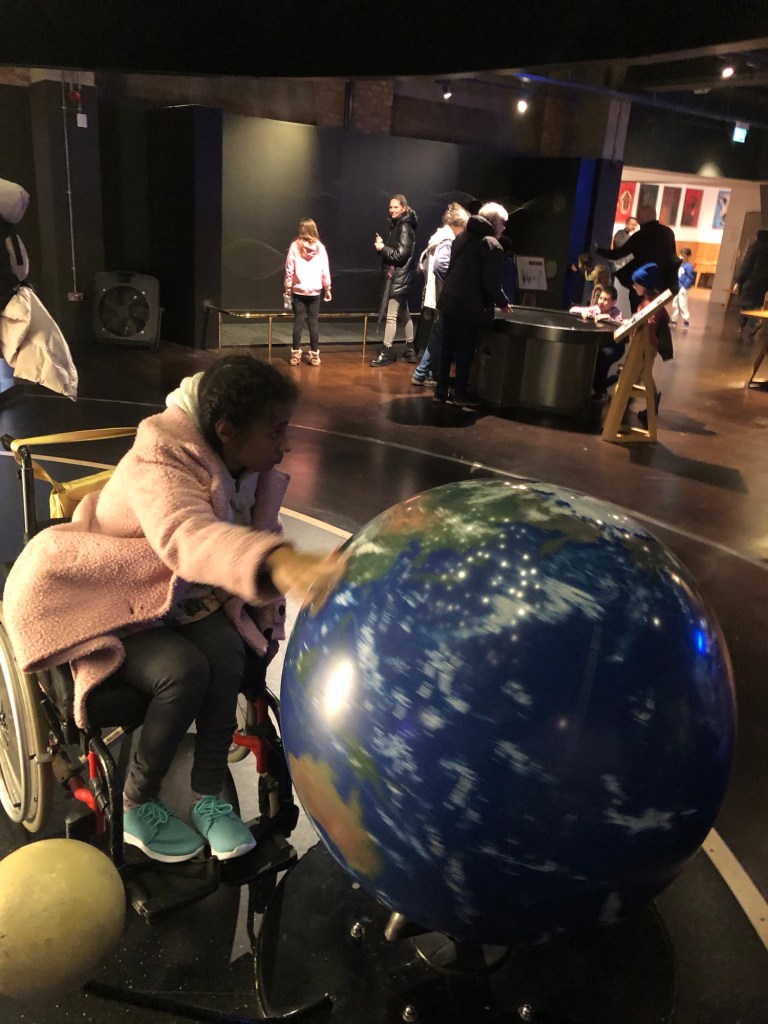

Myah’s Christmas wish list – Amazon Gift List – https://www.amazon.co.uk/registries/gl/guest-view/I2DJBVTU938B
https://www.tiktok.com/live/event/7450453100579520544?enter_from=share_link
Christmas Crackers. Finish and making home made Christmas Crackers at my activity club.

When Santa came to visit dinner club just before Christmas
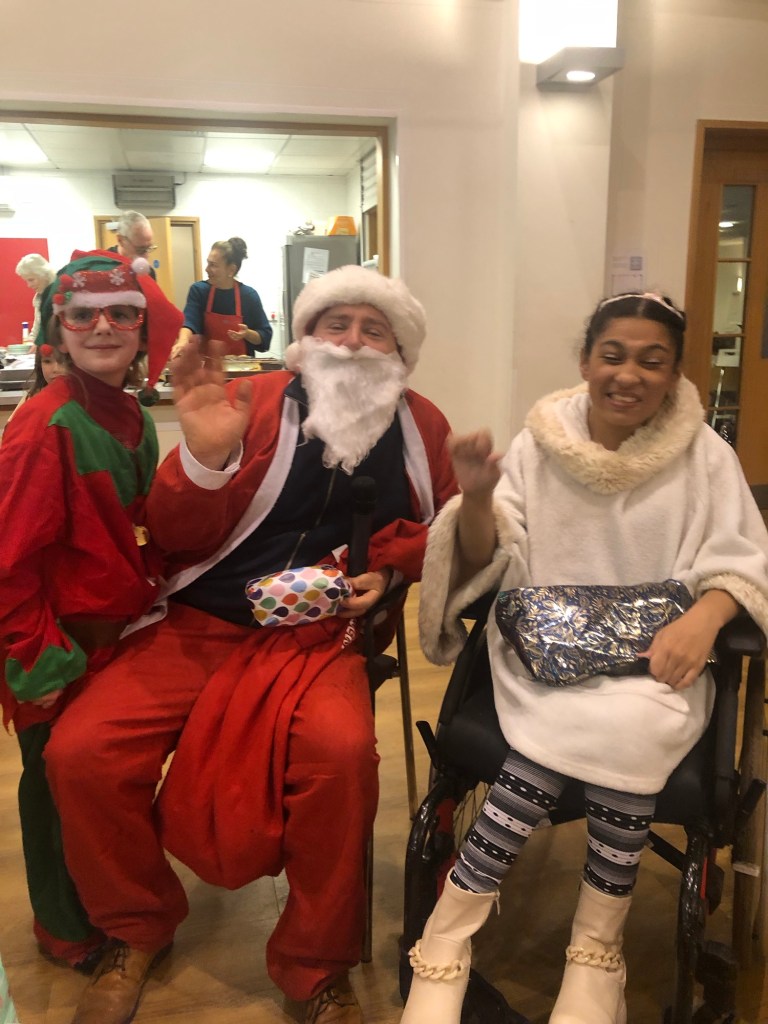
School Uses British Sign Language In Nativity
Pupils at a school in Cornwall have been learning British Sign Language (BSL) as part of their Christmas nativity play.
“All of the staff, the children, they’ve immersed themselves in learning sign language,” said Janine Clemence, a teaching assistant in year four at St Michael’s Primary School in Helston.
“To see the children signing like they do it just makes my heart melt, it’s wonderful.”
British Sign Language (BSL) is not currently part of the national curriculum but schools can choose to teach it.
Several members of staff at the school, including teachers, teaching assistants and receptionists, have qualifications in BSL.
Miss Clemence, who is deaf, said: “A new child might watch me signing and then before you know it they’re starting to produce sign themselves.
“That’s why it’s so important to have a deaf role model in a mainstream school.”
Out of the 320 pupils at the school, four of them are deaf.
When some of the children were asked how they felt about learning to sign at school they signed: “We love signing with our friends.”
Miss Clemence said: “My vision really is for all mainstream schools to use British Sign Language because British Sign Language is not just for deaf people.
“It is a language that’s beneficial in so many way helping children read, helping children communicate in a variety of ways.”
Chris McCausland: Blind People Don’t Need Inspiring
Strictly Come Dancing winner Chris McCausland has said he doesn’t think blind people “need inspiring”, after he made history as the first blind contestant to take part in the show.
“The biggest benefit to everybody you can make is changing people’s attitudes towards disabilities,” he told BBC News.
The comedian and professional partner Dianne Buswell won the 22nd series of the BBC One show on Saturday after beating 14 other couples to this year’s glitterball trophy.
McCausland, 47, was registered blind after losing his sight to retinitis pigmentosa in his 20s.
He was praised throughout the series for defying expectations of what a blind person could achieve on the dancefloor.
He learned the dance moves by getting down on his hands and knees and feeling Buswell’s feet and legs, to understand what she wanted him to do.
“And sometimes she’d just have to pick one of my limbs up and put it where she wanted, like I was one of them bendy spidermen toys,” he laughed.
Both he and Buswell were figuring it out as they went along, he said.
“Learning the routines was a bit of trial and error really. Dianne hadn’t spent any time with anyone who’s blind even in daily life, and I’d never danced, so neither of us had a clue.
“She had to use a lot of descriptions. She had to use a lot more words than she’s used to when she’s teaching people to dance.”
Some routines were easier than others, he added, with the paso doble proving particularly challenging.
“You get four days to learn these routines, and on Wednesday she was still trying to explain to me what the posture was meant to be.”
‘I’m still aching’
McCausland, who was the bookmakers’ favourite to win on Saturday night, performed three dances with Buswell in the final.
Four days on, he said he was “still aching”.
“People say, ‘Doing Strictly, do you feel fitter?’ And I reckon I will be the fittest I’ve been in a long time, but at the minute I think I’m just recovering,” he said.
“It’s so full on, and the closer you get to the final, the more hours you have to put in. But it’s thoroughly worth it.”
The pair performed routines including their waltz to You’ll Never Walk Alone by Gerry and the Pacemakers in the grand final.
McCausland turned down Strictly twice before finally saying yes.
He joined after a difficult summer for the show, with a number of former celebrity contestants speaking out about their negative experiences on Strictly.
The BBC apologised to Amanda Abbington and upheld some of her complaints against her 2023 dance partner Giovanni Pernice, including those of verbal bullying and harassment, but cleared him of the most serious claims.
The corporation also introduced new duty of care measures, including putting chaperones in rehearsals.
McCausland said he had “no doubt” that people have found it difficult in the past, adding that there was “a lot of pressure” on both dancers and contestants.
“But I think the BBC have gone out of their way to listen to what’s happened and try and create a supportive environment,” he added. “I had no problems.”
They also reprised their couple’s choice routine to Instant Karma by John Lennon.
When they first performed it last month, it went viral on social media thanks to a “blackout moment”, designed to imitate McCausland’s experience with blindness.
They repeated the moment in the final, impressing the judges and getting a score of 38.
McCausland said the idea for the blackout moment was to put viewers and audiences into the dark, and to “surprise them” with what’s possible to come out of the dark.
“I had the idea and I hoped it was received in the way it was intended, and people loved it. They really connected with it. And I was delighted that it wasn’t seen as gimmicky. It was really appreciated.”
But he added that he doesn’t see himself as a “role model” for blind people.
“It’s changing everybody else’s attitudes to what is possible, raising people’s expectations, because that’s where the difference is,” he said.
After McCausland and Buswell topped the public vote on Saturday, the charity Sense praised his win, saying it would “lead to many more disabled people being included in the biggest TV shows”.
Step Change Studios, which offers dedicated blind ballroom classes, also welcomed it, saying McCausland had made “such a positive impact”.
“We’ve seen an increase in the number of people wanting to join our blind ballroom programme – to the point that I can’t respond quickly enough!” founder Dr Rashmi Becker told BBC News.
McCausland said that was “lovely” to hear.
‘I didn’t expect to cry’
“I didn’t expect what we were doing to be appreciated to the level it has been,” he said.
“I never expected dancing to be emotional. I just expected it to be this entertainment show with dancing, and if you were good, people were entertained.
“I didn’t expect people to be moved and for people to cry – I didn’t expect to cry on it – so it’s just been so much more than I ever thought it could’ve been.”
McCausland will not appear on the Strictly live tour, however, because of scheduling conflicts with his stand-up tour, which kicks off in January and takes in more than 250 dates across the UK.
He’s also starring in Bad Tidings, a Christmas comedy-drama that airs on Sky Max this Sunday.
But he has not ruled out dancing again in the future.
“People are saying, ‘You can dance now’. I can’t dance now. I can dance with Dianne,” he said.
“So maybe in the future me and Dianne can do something together,” he added. “Dianne may be able to take me for a spin over the summer!”
Blind Teen And Guide Dog Told To Leave Subway Shop
A blind teenager has said he was left “horrified and embarrassed” after being refused entry to a sandwich shop because he was accompanied by his guide dog, Pilot.
Robbie Lee, 19, said he tried to order food at the Subway sandwich shop on Vicar Lane in Leeds when a manager told him to “get out with the dog”.
Under the 2010 Equality Act it is illegal to refuse access to a disabled person with their guide dog, except in exceptional circumstances.
Mr Lee said Subway had since apologised to him and, in an email, a spokesperson told him that staff at the branch were being retrained.
Mr Lee said the incident happened in October when he took a lunch break from Leeds City College where he is studying backstage theatre.
“I walked across to grab a sandwich, but as soon as I got in the shop he came over and said I couldn’t be inside with my dog,” he said.
Mr Lee said he asked to see the manager and it emerged the staff member he was talking to was, in fact, in charge of the shop.
“I told him it was a service dog. I even brought up the legislation on my phone, but he didn’t care,” Mr Lee said.
Mr Lee’s father, Kev, said after the incident he had lodged a formal complaint to Subway, adding he was angry his son’s independence was taken away from him.
“He was forced to wait outside for his food, and this sort of thing happens to blind people all the time,” he said.
“There’s even a sign on the door at Subway that says service dogs are allowed. Surely everyone knows guide dogs are allowed?”
Kev Lee said Subway had since apologised to his son via email, in which it was stated that staff would be retrained.
Both father and son were also offered a free “foot-long” sandwich when they next visited the store “as a gesture of goodwill”.
However, Kev Lee said the response did not go far enough.
“It’s insulting if they think discrimination against a disabled person is only as serious as offering a free sandwich.
“It’s just not good enough. This affects people’s mental health and makes them feel rejected in society.”
A study for the Guide Dogs charity in 2022, external found that 76% of guide dog owners had been refused access to a business or service, while about half (49%) said they had changed or restricted their plans because they were worried about being challenged or refused access.
Maqsood Sheikh, senior regional campaigns officer for the Royal National Institute of Blind People, said he was disappointed to hear about Mr Lee’s experience, but added that he was not surprised to hear about what had happened.
“We know three-quarters of all blind people are experiencing refusals, not just in fast-food restaurants, but in taxis, hotels, pubs – everywhere.
“It’s a widespread and growing problem because too many hospitality staff and retail staff still don’t understand the law.”
Robbie Lee, who can only sense light and shade since losing his sight as a toddler, said blind people deserved to be treated the same as everyone else.
“We are still human and we don’t want to be discriminated against.”
Kev Lee said: “To anyone else suffering discrimination because of disability you need to be strong about it: report it and raise awareness so businesses are forced to take action.”
Subway has not yet responded to a request from the BBC for a comment.
Paralympian James Brown: My Disability Needs Were Denied In Prison
Paralympian James Brown, who is partially sighted, has given his first broadcast interview to Access All since he won compensation from the government over his treatment in prison.
Brown reached an out of court settlement with the Ministry of Justice after he launched legal proceedings for being denied his access needs in jail.
He’d been given a custodial sentence for glueing himself to a plane as part of an Extinction Rebellion protest.
We also hear from Recoop, a charity which supports older prisoners, about the situation facing other disabled inmates in the UK.
And we hear from the writer Melanie Reid, on why she’s put an end to Spinal Column — her regular updates for the Times newspaper, which documented her trials and tribulations since she became a tetraplegic and a wheelchair user following a riding accident in 2010.
McCausland’s Strictly Win ‘Opens Doors’ For All
When comedian Chris McCausland lifted the 2024 Glitter Ball trophy on Strictly Come Dancing, it represented more than a reality contest win.
For fans living with partial or full sight loss, his journey from a nervy start to his confident and ultimately winning performances broke down barriers.
Fellow blind dancer Shaun Hayward, from Manchester, said McCausland’s triumph showed disabled people “dreaming big” and pursuing their ambitions “fearlessly” – and proved his inclusion was not merely “tokenism”.
There are hopes the message has been received at the highest levels of TV production companies.
Mr Hayward has the hereditary condition retinitis pigmentosa, the same condition as McCausland, but says dancing gives him a sense of “liberty and freedom”.
He said of this year’s Strictly winner: “It was absolutely amazing.
“He’s had a real, real journey and his story has touched the hearts of people.
“For me personally it was great to see because I’ve been banging this drum for years and I really needed someone of Chris’s profile to raise the awareness of dancing for people with sight loss.
“For a blind person that is true liberty, real freedom.”
Mr Hayward’s words echoed those of McCausland himself after being crowned winner.
The 47-year-old dedicated his win to his professional dance partner, Dianne Buswell, “and for everyone out there who’s got told they couldn’t do something or thought they couldn’t do it”.
“It just shows with opportunity and support and determination, anything can happen,” he said.
The pair beat JLS singerJB Gill, actress Sarah Hadland and former Love Islander Tasha Ghouri in Saturday’s live final on BBC One.
Mr Hayward said he had been concerned in the first couple of weeks of McCausland’s Strictly journey.
However, he said the salesman turned comedian had grown into the training and flourished to the point he became the overwhelming bookies favourite.
“It’s not just tokenism,” he said.
“What we need more of when it comes to inclusivity is show what guys like myself and many, many other disabled people have been doing – incredible stuff for years.
“Really shine a light on that in these entertainment shows, just on ordinary people, it doesn’t have to be a celebrity.
“I think there’s a hunger for it nowadays to be quite honest.”
‘Powerful statement’
Harriet Edwards, from the disability charity Sense, told BBC Breakfast: “This is long overdue.
“We hope production companies, TV and media can really see the public want to hear different stories and they want to see see different experiences.”
For the charity Guide Dogs, the assistance of Buswell was key.
A spokesperson said: “Dianne has been a shining example of how we can all take steps to make the world a more inclusive and accessible place.
“The image of Chris holding the glittering trophy aloft is a powerful statement about representation, breaking down barriers and opening new doors in entertainment and beyond.”
Myah’s Christmas wish list – Amazon Gift List – https://www.amazon.co.uk/registries/gl/guest-view/I2DJBVTU938B
Former Paralympian Realises Lifelong Dream To Sing
A former Paralympian has set her sights on a new chapter in her life – music.
Zoe Edge, from Derbyshire, was born with severe athetoid cerebral palsy, external, but she does not see her disability as a limitation.
She won a silver medal in boccia at the 1996 Paralympic Games and has gone on to dedicate her life to fundraising for various charitable causes.
Now she has teamed up with a Chesterfield music producer to realise a lifelong dream to create her own music using artificial intelligence (AI) technology.
Edge, 50, said: “I have written song lyrics since I was a teenager, but because of my disability, I have never been able to sing or record them until now.
“However, thanks to innovative new technology, I have been able to have a ‘voice’.”
She first fell in love with pop music in the 1980s, inspired by acts like Bros and New Kids on the Block.
She uses an electric chair to move around her home in Chesterfield and a special computer-generated voice to communicate.
According to her father Mick Edge, she was always determined to “not let her disability hold her back”.
She travelled the world playing boccia, culminating in a silver medal at the 1996 Atlanta Paralympic Games.
Since then she has enjoyed fundraising for a number of charities, including a sponsored “roll across the pitch” for her beloved Chesterfield FC in early 2024.
Now working alongside producer Lyn Sheppard, Edge has finally realised her dream and created a Christmas song titled “You Must Still Believe in Make-Believe”.
Mr Sheppard said: “The mission was clear, she wanted to sing in her own voice on an original song.
“We eventually discovered AI, we found a sound she liked, and that’s where we are now.”
Edge’s mum Dylis Edge says “she cannot believe” her daughter’s success.
“It’s just unreal,” she said.
“She has difficulty saying her own words, and now she has her own singing voice thanks to AI. It’s brilliant!”
Mr Edge says he will “always be proud” of his daughter.
“She’s amazing at what she’s done,” he adds.
“She never lets anything hold her back. It makes us so proud of her.”
‘I Lost My Sight At 16 But Education Saved Me’
Mohammed Ravat was 16 when he realised he was struggling to see the whiteboard at school.
He was studying for his A-levels but said teachers did not think he was working hard enough and his grades suddenly “plummeted”.
It was then that Mr Ravat, now 25, from Walsall, said he was left with a sense of “grief and isolation” after being diagnosed with an eye condition which led to him losing more of his sight.
He had to drop out of mainstream education but was offered a place at the Royal National College For The Blind (RNC) in Hereford, where he continued to pursue his passion for graphic design.
Mr Ravat has gone on to secure a communications internship at the Beacon Centre in Wolverhampton, a charity which supports people living with sight conditions.
He said the news of his condition was “hard to take” as it was not just about sight loss, it “impacts everything you do”.Media caption,
BBC Radio WM: Mr Ravat spoke about what he called the grieving process you go through on losing your sight
Earlier this week, Sir Elton John revealed he was unable to watch a stage show that he wrote the music for, due to losing his eyesight.
Mr Ravat said it was important to talk about the “grief” that those who are experiencing sight loss go through.
“I was always creative and that was hard to lose because I wasn’t able to do it until a year or two ago when I went to the specialist college,” he said.
His education at the RNC allowed him to continue his passion and study graphic design.
The 25-year-old praised the number of gadgets made available to him, including magnified screens on computers, and encouraged others in a similar situation to take the time to look for the support they need.
“It’s not just the sight loss, it impacts everything,” he said.
“I had to learn how to walk with a long cane, that was quite nerve-wracking and difficult. “
Mr Ravat added that his education had “empowered” him as his disability led him to move away from home to study and helped him learn to cook and clean at a young age.
The support from his family continues to help him through his “sight loss journey” and he credited their positivity to his great-uncle from South Africa, who went blind after contracting meningitis as an infant.
He said his uncle, who went on to be constitutional judge and was appointed to the bench by Nelson Mandela, continued to inspire him to succeed in his career.
A soap actress, whose own father died of bowel cancer, has said she has been able to bring “real personal experience” to the role as she portrays her character’s diagnosis with the disease.
Jennifer Metcalfe, who plays Mercedes McQueen in the E4 show, Hollyoaks, said the story was “incredibly important” to her and she had “jumped at the chance to do anything that might encourage conversation”.
In recent months, Mercedes has undergone chemotherapy and had a stoma bag fitted.
Bowel Cancer UK said including the stoma on screen had helped take “some of the stigma and embarrassment away from it”.
Hollyoaks producers have worked closely with the charity to ensure the soap accurately showed what treatment could be like.
Hairpieces and wigs to cover Metcalfe’s own hair has helped give Mercedes the appearance of losing her hair, while make-up and prosthetics have also been used to create a chemotherapy port on the character’s chest and a post-surgery scar.
Metcalfe, 41, said: “This story is incredibly important to me. When I was aged 15 I lost my dad to bowel cancer and it has impacted my life hugely.
“I have never taken my own health for granted, so when we discussed the storyline I jumped at the chance to do anything that might encourage conversation.”
In one scene in the show, Mercedes is told the heartbreaking news that the treatment was not working and the hospital was not able to access the chemotherapy drugs she needed.
Mercedes is seen with a stoma bag, which is used after bowel cancer surgery if a section of the bowel is removed.
Chief Executive Genevieve Edwards said: “Lot’s of people have spoken to us about how great it’s been to see [in the show] someone living with a stoma and it’s taken some of the stigma and embarrassment away from it.”
Ms Edwards said storylines like this could save lives.
“Seeing a character like Mercedes in a show like Hollyoaks could be enough to get you to go to your GP and have that conversation,” she said.
“The thing about bowel cancer is that when it’s diagnosed at its earlier stages it is treatable and curable and most people will survive that diagnosis – so it could be life-saving.”
Metcalfe said her goal was to give people more confidence to recognise symptoms and take action.
“I’d love people to go away, consider any changes to their bodies and know the right avenues to go to,” she said.
action shot of Mickey Mouse coming forward to greet me and my family
Train Operator Offers Free Sign Language App
A free sign language app is being offered to deaf passengers by Govia Thameslink Railway (GTR).
Passengers will be able to use the SignLive app at all 236 of GTR’s stations, on board trains and with its call centres to help communicate with staff via a trained British Sign Language (BSL) interpreter on their smartphone.
The train company, which runs Thameslink, Great Northern, Southern and Gatwick Express services, is covering the cost of using the app.
Vincent Duffy, GTR’s accessibility improvement manager, said: “SignLive will help our BSL-using customers who may otherwise be discouraged from using the railway, to travel on our trains with confidence.”
GTR previously rolled out the free use of the AIRA smartphone app for blind and partially sighted customers.
AIRA enables passengers with sight loss to navigate railway stations and trains through the assistance of an agent using the camera on their phone.
Me and my auntie together for the first time in 15 years, taking pictures of the landmarks and of us together
Sarah Storey ‘Gutted’ To Be Out Of Dancing On Ice
Dame Sarah Storey has said she is “absolutely gutted” to have to pull out of the upcoming series of Dancing on Ice after fracturing her ankle falling over in training.
Britain’s most successful Paralympian posted on social media on Friday to say that an “awkward stumble and fall”, while her left foot was “stuck on the ice”, meant she was unable to take part in the ITV series from January next year.
Dame Sarah thanked those involved with the show and medical staff for ensuring she is “already fixed and home with rehab underway”.
She had been working on her routine alongside pro skating partner Sylvain Longchambon, but will now have to settle for watching from home with her leg up in a cast while on crutches.
The swimmer-turned-cyclist won the 18th and 19th Paralympic gold medals of her career in Paris in September, before hitting the ice rink for show rehearsals.
In a post on Instagram, she wrote: “Absolutely gutted to have my Dancing on Ice training interrupted in this way – just as my first routine with @slongchambon was really coming together!
“An awkward stumble and fall with my left foot stuck on the ice sadly led to me fracturing my left ankle.”
She added: “I’m so fortunate that both Sylvain and Coach @stephenpickavance were by my side and knew exactly what to do and that the medical backup for the show is truly world class.
“The Head of Medical @sharonmorrisonuk wasted no time in getting me to the very best surgeon so I’m already fixed and home with rehab underway!”
‘Another comeback’
The 47-year-old – who has won 30 medals at nine different Paralympic Games – confirmed she was “working with the team at ITV to come up with a plan for what’s next”. She said she was also focusing on getting “back to full power and of course back to my bike ahead of next season!”
“My career has seen so many ups and downs with injury and illness, plus returning after two babies, which means I’m well equipped for another comeback,” she wrote.
Some people online have already starting speculating about her making a potential return to the show in 2026.
Dame Sarah, who was made a dame in the 2013 New Year Honours for services to para-cycling, had been the final contestant named on the show’s line-up – alongside fellow celebrities including Olympic rower Sir Steve Redgrave, TV presenter Michaela Strachan and soap stars Charlie Brooks and Sam Aston.
They will be joined on the ice rink by others including former footballer Anton Ferdinand, Hollyoaks actress Chelsee Healey and reality stars Mollie Pearce and Ferne McCann.
My favourite photos, plus selfies of me from Saturday when I went to London. So nice to see primary after about After about 20 years of them living at a


up close photos of big Ben that I took whilst in London sightseeing with all the family
Me my auntie and the River Thames and the London Eye

The Personal Trainer Giving Clients Confidence
A personal trainer for children and adults with learning disabilities said giving his clients confidence was the key to his role.
Callum Foster, 22, from Woodbridge, Suffolk, set up This Ability Coach to offer the sessions from Fortitude Fitness gym in Ipswich.
He was inspired by his grandfather who also worked with children with disabilities.
Edward Wagland, 22, who has Down’s syndrome, attends Mr Foster’s sessions and said they were helping prepare him for the rest of his life.
Mr Foster works as a personal trainer part-time while also working for the Ipswich Town Foundation.
He said his personal training was more than just being about exercise and physical health.
“It’s about making them happy, giving them the confidence and support that they deserve,” he explained.
“They’re amazing individuals and they deserve the recognition and respect that I can give them.
“Seeing them being independent is incredible for me and I’m lucky that I can see it when maybe they don’t.
“It why I do what I do.”
Mr Foster explained he focused on instilling confidence into his clients and said Mr Wagland was “determined, strong and incredible”.
“I want [Edward] to have that support and that feeling that he can talk to anyone which sometimes can be difficult for children with disabilities,” he added.
“At the end of the day he’s the one that shows up every week out of his own time, on top of all the other stuff he’s got going on.
“I can’t do what I do without him, his energy, his support and dedication and the whole reason I do it is to showcase that to people.”
Mr Wagland described his personal trainer as a “genius” who was “excellent” with him.
They have since become good friends.
“He knows a lot about me, he’s always so proud of me and he’s happy in general I’m doing this stuff because it’s good for my health, my social [life], it’s building me up ready for my life,” Mr Wagland said.
“It also helps me to think and have less stress from college.”
Mr Wagland’s mother, Helen Wagland, praised the work Mr Foster had done with her son.
“Not only has Edward gained some sort of independence because he’s doing something on his own with someone like Callum, who is a male role figure to be really applauded, but he’s doing it alone with him,” she said.
“It gives Edward confidence, it gives him independence and independence doesn’t come easily to someone like Edward.
“We’re very grateful, it’s been smashing. Edward loves it, he keeps asking when is his next PT session.”
me and my family at the London Christmas market

Disabled Man Covers 120km In Antarctic Expedition
A stroke survivor from Devon who is aiming to become the first disabled person to ski solo and unsupported to the South Pole has completed his first week on the ice.
Jonny Huntington, from Kingsbridge, has already covered 120km (75 miles) of his Antarctic expedition.
The 38-year-old has skied about eight-and-a-half hours per day, covering up to 23km (14 miles).
Mr Huntington suffered a stroke when he was 28 leaving him with complete left-sided paralysis and was left with permanent brain damage.
The former GB para-athlete still has a significant lack of strength, mobility and control down his left side, which he said had been exacerbated by the cold climate of his surroundings.
“I have taken a few falls,” he said.
“Four in one day is the record, however, it is all about getting back up, brushing yourself down and moving on.”
He said his left leg “freely rotates” as he has little to no movement in his left ankle.
“So, the problem I have is that if the edge of my ski clips on something in the snow it can cause the foot to rotate and the ski to veer towards my other ski,” he said.
“Crossing skis is really not what you want and can often cause you to fall over.”
Mr Huntington is now planning to increase his daily target to consistently hit 24km (15 miles) per day as he progresses into the second week of the expedition.
Through his expedition, he is raising money for four charities including the Invictus Games Foundation, Armed Forces Para-Snowsport Team, Team Forces and The Adaptive Grand Slam Foundation.
2024 Rees, making with my activity group today
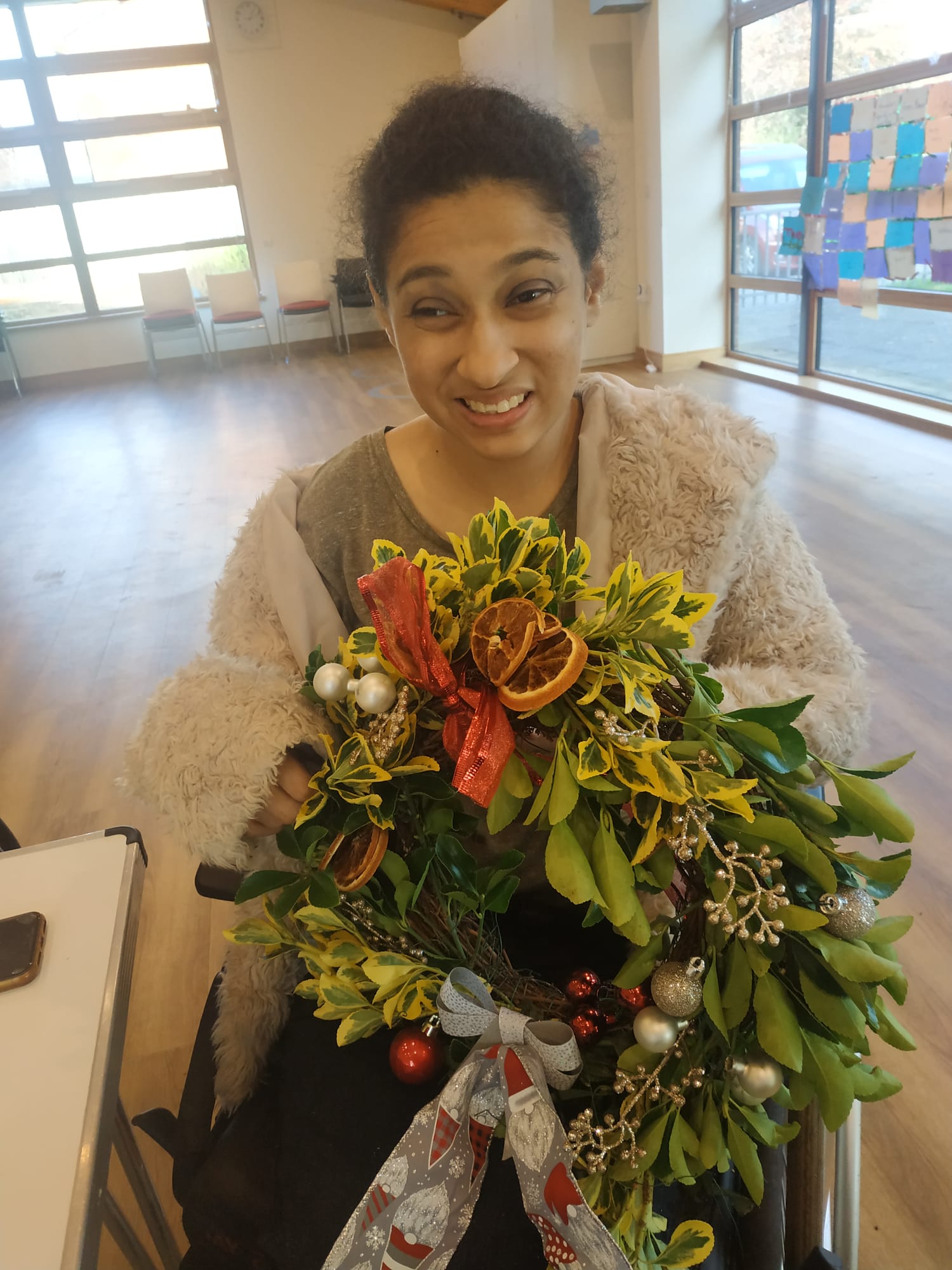

Man Overcome By New Accent Ahead Of Wedding
This is the moment a young man from Birmingham was gifted a new West Midlands accent.
Jack Reeve, 22, who has cerebral palsy, had been using a communication device with a robotic voice.
But ahead of his wedding to fiancee Bethan in 2026, and with the help of special technology, he received a Dudley accent from an anonymous donor.
He was overcome with emotion when he heard how it sounded.
“I chose a voice with a Dudley accent as that is where my fiancee is from,” he said.
“I wanted to make the right choice – it is going to be my voice for the rest of my life.”
O2 Arena Gig Staff Remove Man They Thought Was Drunk
A disabled man has said he was “unfairly removed” from a music event in London, after venue staff mistook his medical condition for being drunk.
Matthew Parrott, 48, from Oxford took his wife, Beth, to London to watch Glass Animals at The O2 Arena on 7 November but missed the headline act when he was removed after suffering a fall.
He told BBC Radio 4’s You and Yours programme that their evidence for him being intoxicated was that he was “stumbling when he walked”.
The O2 apologised and said it was reviewing staff training.
Mr Parrott has had lymphoma, a type of blood cancer which impacts the immune system, since 2007.
Three years ago, he had a bone marrow transplant and, as a result of this, suffers from graft-versus-host-disease. This causes neuropathy – nerve damage – in his feet, among other symptoms.
“Sometimes, I walk in an awkward way. At the concert, I tripped and couldn’t regain my footing. It was an unfortunate accident,” he said.
“It wasn’t a severe injury. I felt okay, so we just wanted to go back to our seats and enjoy the show. We refused to let the fall dampen our spirits.”
“I couldn’t see the show at all”
Once he’d been seen by medical staff at The O2, Mr Parrott says he was met by the venue’s security manager, alongside a group of security guards.
“They refused to let me back in. They said I was intoxicated, which I wasn’t.
“I tried very much to explain that the fall wasn’t a result of drinking too much alcohol, and that it was because I have this medical condition. But we were escorted out and couldn’t see the show at all.
“I had three beers over the course of four and a half hours. We were celebrating my wife’s birthday. She had the same amount, and no one was trying to throw her out.”
A request for a reimbursement of his tickets, which cost £157.70 for the pair, was initially rejected.
“At the time, I offered to take a breathalyser test – but they refused,” said Mr Parrott.
Mr Parrott has now been contacted directly by staff from The O2. He has received a full refund for the Glass Animals show, alongside a pair of complimentary tickets and drink vouchers for an upcoming concert of his choice.
In a statement, the O2 said: “We were sorry to hear of this and our teams have been in touch with Mr Parrot [sic] directly and have reached a resolution on this case.”
It said it prided itself on being “accessible and inclusive” and had recently been recognised by disability charity, Attitude is Everything.
“In this instance, we would like to apologise to Mr Parrot [sic] for the error and emphasise that we are constantly reviewing our procedures and staff training measures to ensure that they’re up to date and fit for purpose.
“We’re committed to building on the work done by our teams so far to ensure that everyone who visits The O2 has a best-in-class experience.”
Matthew Parrott says he wants more people to speak up when they feel they have suffered injustice.
“When you come up against The O2, you feel helpless. I think it’s easy to feel resigned to just accepting that these people can steal a special night from you.
“I’m sure there are a lot of people who have similar stories to me, who haven’t had the opportunity to speak up and point out these injustices.
“It’s unfair to be treated this way because you walk slightly differently to somebody else.”
A spokesperson for the charity Attitude is Everything, which campaigns to improve accessibility at music events, said they were “concerned” to learn about Mr Parrott’s experience.
“We will be reaching out to the organisers to seek clarification about what has happened in this case.”
“We welcome feedback on experiences of live events from disabled customers via our webpage and seek to work with organisers to identify barriers and secure lasting solutions when issues do occur.”
A photo of me outside the London eye. When I went sightseeing with my auntie who came over from saint kitt
meeting Mickey Mouse in London me and Mickey Mouse together
Sign Language Santa To Meet Deaf Children
A sign language Santa will be visiting a church centre to chat to special needs and deaf children in the run-up to Christmas.
A grotto is being set up at the Wesley Centre for All, in Spring Head, Wednesbury on 14 December.
Rotarian Glenn Edwards organised the special visit after he saw two children using sign language to chat to Father Christmas at a Christmas lights switch-on last year.
A school in the area has already booked a slot for its pupils to visit, he said.
The Rotary Club of Wednesbury has contacted all schools in the area to let them know about the event, which will have gifts, toys and lollipops.
A friend of Santa’s, Joshua Gallagher, said British Sign Language was a first language for deaf children and others, including children who lived with deaf parents.
He is a deaf support worker at Sandwell Deaf Community Association, which supports people who are deaf and hard-of-hearing.
Mr Gallagher, also an acting teacher with Thespian Arts, said children using sign language could visit the grotto and talk about what they wanted, rather than make a list.
“Deaf children might write a list to Santa – but they might prefer to use their own language,” he said.
“It adds to the magic of Christmas that Santa knows their language.
“You definitely see more of an interaction. For some it’s the first time they have properly engaged with Santa.
“It’s a lovely thing to see.”
Mr Edwards, who lives in Wednesbury, said the grotto would open at 10:00 GMT, with the first hour being for special needs and deaf children. From 11:00 GMT, it will be open to everyone.
Message from Santa
A signed video by Santa, posted on social media, said: “Hello, how are you all, I’m Father Christmas, and I wish you all a merry Christmas.
“My friends at the rotary club want to let you know I’ll be at the Wesley church in Wednesbury on 14 December between 12 and 3pm.
“Make sure to come along and queue up. It’s free, which is fantastic. Make sure to bring your Christmas list to me so I can give it to my elves, who will sort it out.
“Take care and goodbye.”
Autistic Abuse Case Must Never Happen Again – No 10
The abuse of autistic children that took place at the Whitefield School in Walthamstow, in east London, was “horrendous” and “must never happen again”, the prime minister’s spokesperson has said.
The BBC has obtained footage of children at the school being shoved into padded rooms, thrown to the floor or left alone, sitting in their own vomit.
Responding to the videos, No 10 said the education department was looking at strengthening the guidance on the use of seclusion in specialist schools and would set out more information “as soon as possible”.
Currently the government’s guidance says schools can place disruptive pupils in seclusion or isolation rooms for a limited period.
It also says schools should ensure children are “kept in seclusion or isolation no longer than is necessary and that their time spent there is used as constructively as possible”.
Children’s Commissioner for England Rachel de Souza has called for a review “without delay” of the use of restraint and so-called “calming rooms”, following the BBC revelations.
In a statement, external, she described the experiences of the children involved as “absolutely appalling”, saying “no child should ever be physically restrained under such conditions and with such a lack of compassion, especially those who are so vulnerable”.
Restraint should only ever be used when it was “essential to keep a child safe”, and then “for the shortest time possible”, she added.
A police investigation was launched after staff at the Whitefield school discovered a box of USB memory sticks containing 500 hours of CCTV taken inside the padded room between 2014 and 2017.
The investigation ended earlier this year without any charges.
About 40 children with learning disabilities and severe mental disorders were confined for hours in the rooms – typically without food or drink.
Six families of the children involved have agreed for the BBC to show the footage.
The videos show the children in acute distress and many are seen injuring themselves.
Safeguarding expert Elizabeth Swan said it was “easily the worst footage” she had seen.
“You look at the children and they’re being defeated and responding to that treatment with self-injurious behaviour, it’s torture,” she added.
The school’s local MP Conservative Sir Iain Duncan Smith said the “jaw-dropping” footage should lead to “profound change”.
Asked about the footage, the prime minister’s spokesperson said: “The department is looking at the guidance in this space but it is clearly a horrendous case.
“We are clear that this cannot and should not have happened and should not happen again.”
TikTok celebration for my birthday and birthday post nails with my personal assistant did for me. I am 25 now and can’t believe it
White Paper Brings Months More Uncertainty For Disabled Claimants
With many thanks to Benefits And Work.
The Get Britain Working White Paper published today fails to give any information about a proposed overhaul of the health and disability benefits system, instead revealing that a consultation will begin in the Spring
According to the DWP, the government:
“will bring forward measures to overhaul the health and disability benefits system so it better supports people to enter and remain in work and to tackle the spiralling benefits bill. A consultation will be published in Spring as part of a commitment to put the views and voices of disabled people at the heart of any policy changes that directly affect them
A DWP press release makes it clear that ill health and disability are seen as major problems in relation to increasing productivity in the UK, claiming that.
“The UK is also the only major economy that has seen its employment rate fall over the last five years, which has been largely driven by a significant rise in the number of people out of work due to long-term ill health with an outdated employment support system which is ill equipped to respond to this growing challenge.”
Plans in the white paper include:
- extra NHS staff to cut waiting lists in areas of high inactivity;
- an additional 8,500 new mental health staff;
- increased access to Individual Placement and Support (IPS) for severe mental illness, reaching 140,000 more people by 2028/29;
- funding in three trailblazer areas for NHS accelerators to stop people falling out of work completely due to ill health;
- jobcentres to become a new national jobs and careers service, focused on people’s skills and careers instead of just monitoring and managing benefit claims;
- staff at Jobcentres will have more flexibility to offer a more personalised service to jobseekers;
- new coaching academies to upskill jobcentre staff to better support people into work;
- a disability panel set up to ensure the voices of disabled people are at the core of reforms;
- a new supported employment programme called Connect to Work scheme which provides voluntary employment offers to people with disabilities, health conditions or complex barriers to work and will support up to 100,000 people a year at full roll out;
- an independent review into how employers can be better supported to employ people with disabilities health conditions, and to keep them in the workplace.
DWP Secretary of State, Liz Kendall said:
“The Get Britain Working White Paper shows that this Government stands unashamedly for work. We will make sure everyone, regardless of their background, age, ethnicity, health, disability or postcode can benefit from the dignity and purpose work can bring.”
Meanwhile, millions of claimants will spend the Christmas period not knowing what plans the DWP has for them in the coming year or how they will be affected by any proposals to “tackle the spiralling benefits bill”.
You can read the full DWP press release here.
You can download the Get Britain Working White Paper here.
CCTV Shows Whitefield School Pupils Abused And Locked In Padded Room
CCTV from a school obtained by the BBC shows autistic children being shoved into padded rooms, thrown to the floor, restrained by the neck – or left alone, sitting in vomit.
The footage from Whitefield School in north-east London resembles “torture”, one safeguarding expert told us. It shows for the first time the reality of what pupils faced.
A police investigation into the abuse footage, taken inside the special school’s “calming rooms” between 2014 and 2017, ended earlier this year without any charges. However, parents say they have been left to deal with the trauma.
The school says new leadership found the footage after the rooms had been shut and shared it with the police.
About 40 children with learning disabilities and severe mental disorders were confined for hours in the rooms – typically without food or drink.
Six of the families have agreed for the BBC to show the footage. They wanted us to reveal the scale and severity of the trauma their children had experienced – which they feel they have been misled about.
The videos show pupils, many of whom were non-verbal, clearly in acute distress, and many are seen to injure themselves for prolonged periods.
In the footage seen by the BBC, the only time staff at the school in Walthamstow intervene once children are inside the rooms is when a boy repeatedly throws his shoes at the CCTV cameras. They race in to stop him, with one teaching assistant apparently striking him.
“It broke my heart,” said the mother of one of the abused children after viewing the CCTV for the first time. “You wouldn’t even do that to a dog.”
Even now government guidance says only that removing disruptive pupils from classrooms in England must be for a “limited” duration and facilities must be “suitable”.
The BBC has also found evidence of mistreatment in seclusion rooms at other schools across the UK. One autistic child was kept inside a cage.
Meanwhile, local MP Sir Iain Duncan Smith said the Whitefield School footage “must lead to profound change” and described it as “jaw-dropping”.
Safeguarding expert Elizabeth Swan said it was “easily the worst footage” she had seen.
“You look at the children and they’re being defeated and responding to that treatment with self-injurious behaviour, it’s torture,” she said.
The School Prison Cells
Leaked CCTV footage reveals how special school pupils suffered while locked away in so-called ‘calming rooms’.
Whitefield School was rated as outstanding until, in 2017, Ofsted discovered the use of bare, padded rooms without windows to seclude children.
But the existence of the CCTV footage did not become public until 2021, when the BBC learned an investigation had been launched after the discovery of a box of USB memory sticks containing 500 hours of disturbing footage from inside the rooms.
In April, we exposed how safeguarding investigations commissioned by the school had proven that six Whitefield staff had abused pupils – but they were not referred to the government’s Disclosure and Barring Service, which can ban people from working with children, and three of them continued to work at the school.
Since we began investigating, we have obtained leaked school and council documents, and spoken to 17 of the 39 affected families.
Jamie’s mother Deborah watched the calming room footage after police formally invited families to view the abuse, following our report in April.
“You saw them open the door, whack Jamie in his back – he went flying on the floor,” she said, fighting back tears.
‘No-one’s accountable’
Jamie’s coat and bag were placed inside the room with him. Deborah says this shows that it was “calculated” that Jamie he would remain there until the end of the day, even if he calmed down.
She says Jamie suffered his first ever seizure after he began being placed in the calming rooms and believes his treatment directly resulted in his epilepsy.
Stress can contribute to the development of epilepsy or trigger seizures in those with the condition.
Other families told the BBC their children developed PTSD after being placed in the calming rooms. One child’s family said he suffered severe psychological damage and was later detained in a mental hospital because he was at risk of harming himself.
Parents said they complained to the school about unexplained injuries and the use of the rooms – but this did not lead to investigation, even though the evidence from the CCTV cameras was available.
“It’s a cover-up from higher up,” Deborah says. “I don’t see how they could get away with this level of abuse and no-one’s accountable.”
Another family complained after their son repeatedly returned home with injuries to his nose. The CCTV leaked to the BBC shows the boy punching himself in the nose while alone inside the room.
The BBC has spent months trying to find out who knew about concerns around the use of the rooms and why there was no investigation into the harm suffered by children in the calming rooms following Ofsted’s 2017 visit.
After the rooms were shut down, a review by a director of the trust running the school reported that governors and a staff member from the local council, Waltham Forest, had visited the rooms. But it did not record any concerns being raised at the time.
The BBC has learned that the job of reviewing the CCTV was largely left to a single teaching assistant.
Once a week, she downloaded the footage and compared it with written staff observations before sharing any incidents and concerns with bosses.
But she failed to report many of the 20-plus clips showing excessive force – according to a school safeguarding investigation into her conduct, which concluded she turned a “blind eye” to the failings.
It also found that she had abused a child herself by using a pad used for rugby training to push them into the corner of a room. Despite these findings, she was not sacked.
‘Left in a cage’
She told the investigation that contacting the school’s leadership was “hard to do as a teaching assistant” and had become “desensitised” to the footage, according to records of her interview obtained by the BBC.
A different teaching assistant told the safeguarding investigator that she had seen footage of a colleague observing a child masturbating for over an hour. Police reported that they were unable to corroborate what she said.
The BBC has also uncovered other failings affecting children with special educational needs placed in seclusion across the UK, with an autistic child being kept in a cage at one school about 10 years ago.
The area below a stairwell was enclosed by a cage and another cage with a mattress inside at a school called Include in Bury St Edmunds, which offers alternative provision for children outside mainstream education and is run by the charity Catch22.
The mother of the autistic child only discovered these cages were in use when she visited the school without an appointment, having grown concerned about the real nature of what was referred to as “The Den”.
She said the stairwell cage would be covered by a blanket when the child was shouting and that her son was sometimes kept inside one of these cages for up to six hours, without water or access to a toilet.
“Even an animal wouldn’t have been left in a cage for that long”, she says.
Council records state that Ofsted were informed about what the mother found but there was no inspection. Ofsted now says it cannot find any record of a complaint.
Catch22 says the spaces were used by previous leadership and a 2018 council report concluded that there was no proof pupils were locked inside.
Regulation of the use and design of calming rooms is now urgently needed – according to Sir Iain Duncan-Smith.
Following our investigation in April, the Children’s Commissioner also called for changes to guidance on the use of seclusion in special schools – which has not happened. The Department for Education says it is “looking” at ways to “strengthen” it.
The Metropolitan Police says it continues to conduct “wider enquiries” about Whitefield, not relating to abuse. The Crown Prosecution Service declined to comment.
The Flourish Trust, which runs Whitefield, says it has learned from the failings in this case.
Ofsted says responsibility for investigating the harm caused to children following its discovery of the rooms lay with the Department for Education, as regulator, and Waltham Forest.
Although it failed to investigate after Ofsted’s inspection, Waltham Forest says it will now commission a local case review, which it says will be “wholly independent”. It says it had not asked to review CCTV at any point because it did not know it existed.
Waltham Forest also says it has offered counselling to families. But the families told the BBC their children need significant and wide-ranging help to address the abuse they faced – and they will be living with its consequences for the rest of their lives.
Owen Tooth- The First Wheelchair User To Direct Eastenders
A director from Derbyshire has become the first wheelchair user to direct EastEnders since its inception in 1985.
Owen Tooth, 44, from Duffield, directed the popular BBC One soap episode which aired on 14 October to more than 3.5 million viewers.
Mr Tooth described working on the flagship show as “dreamy”.
He added: “It’s just so much to take on, it’s a big show and it’s a big accomplishment to take it on, so I felt really proud of it.”
Mr Tooth has been using a wheelchair for the last four years after a rock climbing accident triggered an autoimmune disease which affects his joints.
He said: “I’m so much more able in my wheelchair, but for a long time I tried to hide the problems I was having.”
He said after becoming a wheelchair user his career “just ended, it was literally like overnight”.
“I was earning a 20th of what I’d been earning before, I couldn’t get work, I couldn’t get meetings,” he added.
“It was an overnight change, and going to meetings and pitching and networking, it was like I was invisible.”
Mr Tooth, who has won awards at multiple film festivals, said his experience working on EastEnders was “overwhelmingly positive”.
“They’ve got crew and they’ve got cast who are wheelchair users there, so for me I’m really used to being on a film set and them having an awful lot of questions and an awful lot of uncomfortable people around me.
“It was just so relaxed there, it was kind of dreamy going into a place where the ground was already laid for me.”
He said becoming a wheelchair user has made him appreciate how much work the film industry needs to do when it comes to people with disabilities.
“It’s not as easy to get into the industry if you have a disability,” he added.
“I think I still thought it was a meritocracy, I still thought talent would rise and that’s not actually true when there’s barriers in the way that really stop you from progressing, you cant cultivate your talent if no one is going to let you.”
Refused Service Yet Again With My Guide Dog – I’m Done Speaking Out’
As a guide dog handler of 25 and a half years, I’ve had hundreds of experiences of being refused service – but online threats and increasing hostility towards disabled people mean I’m giving up on asking publicly for equality and respect.
The last straw came about a week ago. I was already reeling from a number of refusals by restaurants and shops when, once again, I was refused entry because I have a guide dog.
I visited the restaurant, which I have chosen not to name, but was told I couldn’t enter as people could have allergies. This, by the way, is unlawful.
They later changed their reason – saying they simply had no space.
It’s difficult to describe how this feels.
I don’t think you can understand it unless you know what it is like to face daily discrimination.
I compare the feeling to December 2022 when I was briefly robbed of my smartphone near the BBC building in central London.
Unlike street robberies, refusals are rarely violent or physical, but the feeling of being slugged in the gut is identical.
I argue refusals feel worse – because at least I can understand the motivation of robbers.
I have never understood why, when everyone on the planet is one accident or medical condition away from disability, many people seem to lack any empathy and do not attempt to understand how it must feel to be refused service because of a disability.
After failing to politely persuade the restaurateurs that my guide dog was well-behaved and then reiterating that it is unlawful to refuse access, one customer who’d overheard me voiced their disgust at the restaurant’s attitude.
I invited people who witnessed the refusal to leave a review. Two voices from another table, however, said that I had “ruined their meal” and “you should leave”.
I felt as small as a gnat.
My guide dog journey began in 1998, when I first applied to train with one. I had poor partial sight up until the year before when, as a 14-year-old, I became completely blind.
I have a number of eye conditions, but the primary diagnosis are glaucoma and hypertension, which have left me totally blind.Media caption,
BBC’s Sean Dilley learns to live with his new guide dog after long wait
Put simply, leaving my house is hard. Very fatiguingly hard.
I’ve been privileged to work with four wonderful guides – Brandy, Chipp, Sammy and now Shawn.
They’ve been my life, my freedom and independence.
That all feels ripped away from me when I’m refused service.
At the restaurant, more customers expressed their shock at the way I was treated. But for me, the customers who seemed annoyed sparked echoes in my mind of every occasion I’ve shared refusals to social media over the past eight years.
There I’ve faced constant demands to justify why I should want equal treatment and, more perturbingly, threats of violence and even death.
Two years ago, I was refused access to different branches of Tesco in London.
Tesco apologised and promised further training for staff.Media caption,
Guide dog access refusal: Sean was told his dog wasn’t allowed in Tesco twice in one week.
The encounters were captured on a privately owned body-camera. Many people were supportive but large numbers were highly abusive and aggressive.
I have received abuse on many social media platforms. Recently one user, who identified himself as a retired police officer, posted pictures of “victim cards” which, ironically, I was unable to appreciate until described to me by a sighted colleague.
His account was later suspended – but the post was not removed when I reported it.
Other users have asked why I’m sharing my experience of service rejection. I would reply to as many questions as possible and explain that it was simply to shine a torch into a dark corner.
On other occasions, social media users have threatened to punch me, kill my guide dog and tell me I need to “be careful”. One user said my mother should be raped.
Often the most vile abuse comes in the replies to lengthy threads, where discourse seems to get out of hand.
Why would I continue to put myself through this?
In England, Wales and Scotland, the Equality Act 2010 makes it unlawful to discriminate against a disabled person because they have a guide dog with them when accessing businesses or services.
In Northern Ireland, the same is true but the legislation is named the Disability Discrimination Act 1995.
There is a large anomaly in the law though. When taxis and cabs fail or refuse to carry an assistance dog, or attempt to charge more, it is a criminal offence.
When businesses and shops do the same, it’s a civil matter and it’s down to the individual disabled person to gather evidence and pursue them. It’s costly, energy-sapping and mostly not worth doing.
Raising the incidents on social media feels torturous when it means being threatened.
So I’ve had to accept there’s very little I can practically do.
Seeing is easy.
What seems harder for some, though, is trying to understand what it feels like to be barred from businesses when you can’t.
Young Blood Needed To Keep Talking Newspaper Alive
The chairman of a talking newspaper for the visually impaired has said more volunteers are needed to secure the future of the service, which a listener has described as irreplaceable.
The Stafford & Stone audio publication sends memory sticks of local news to more than 100 subscribers, free of charge.
Chairman Mike Hall is proud of the organisation’s 43 year history but fears for its future, having lost 600 listeners over the last 20 years.
“We need young blood, none of us are getting younger,” he said, “more volunteers are crucial, particularly on the management side.”
Mr Hall remembered there being more than 500 talking newspapers across the country, but the Talking News Federation said there was now half that number still in existence.
Stafford & Stone Talking Newspaper is completely self-funded, thanks mainly to donations left in the wills of regular listeners.
But its aging listenership is one of the challenges recognised by the organisation’s chairman.
“When we moved over to digital working, we lost quite a few people then,” he said, “and of course we’ve got competition from people like BBC Local Radio.”
Alison Cardy is a loyal listener, having lost her sight in later life.
She said she enjoyed the poetry, jokes and chatter as well as the news articles.
“You recognise the voices and feel like you know the characters,” she smiled.
She has written thank you messages periodically to the dedicated team of volunteers.
She said it was “very sad” to hear the numbers have dropped so drastically over the last two decades.
Mrs Cardy has promoted the service through Cannock and District Ladies Probus and said she would volunteer for the talking newspaper if she was physically able.
“I’d be lost without it,” she admitted and encouraged volunteers to get involved.



 Same Difference