History-Maker Storey To Compete In Ninth Paralympics
Great Britain’s most successful Paralympian Sarah Storey says being selected for a ninth Games was a “pinch-me moment” after she was named on Monday in a 23-strong cycling squad for Paris 2024.
The 46-year-old made her debut as a swimmer in Barcelona in 1992 aged 14 before switching to cycling in Beijing in 2008.
She won a record-breaking 17th Paralympic gold in Tokyo in 2021 in the C4-5 road race to move one gold ahead of Mike Kenny and become GB’s most decorated competitor.
Unlike in her previous Games as a cyclist, Storey will not compete on the track and will instead focus on the time trial and road race events which will take place in Clichy, near Paris.
“I’m thrilled to have the chance to put on the ParalympicsGB kit again,” Storey told BBC Sport.
“It is a pinch-me moment and is a dream I didn’t know I had as a kid.
“It has been a huge motivation since the lockdown Games in Tokyo to get to Paris and to be able to have all those spectators there. It feels like a home Games again.
“For me, it is all about trying to defend my two road titles from Tokyo. I am also double world champion from Glasgow in 2023 in those two events.
“These Games will have two different courses so every time you get on the start line it is a different challenge that lies ahead and you need different skills.
“I think that is what keeps it exciting, keeps everyone guessing and keeps me working hard to see if I can pull out another great performance.”
She is joined on the team by fellow Tokyo gold medallists Kadeena Cox, Jody Cundy, who will be competing at his eighth Games, Jaco van Gass and Ben Watson plus husband and wife Neil and Lora Fachie and their sighted pilots Corrine Hall and Matt Rotherham.
The team also includes current world champions Lizzi Jordan and Danni Khan, Daphne Schrager, Archie Atkinson, Blaine Hunt, Fin Graham and Fran Brown.
Tokyo medallists Sophie Unwin and Jenny Holl, James Ball and Steve Bate are also named along with pilots Steffan Lloyd and Chris Latham and Paralympic debutant Matt Robertson.
Track events take place from 29 August-1 September followed by road events from 4-7 September.
The GB cycling team enjoyed their most successful Paralympic Games ever in Tokyo, coming home with 24 medals with every rider winning a medal.
Graham won two silvers in the C3 category on his Games debut in Tokyo but the 24-year-old Scot has claimed world gold on the track and road since then and is hoping for more in France.
“In Tokyo I was able to fully focus on performance without the crowd and extra distractions so I could just focus on getting the best out of myself,” he told BBC Sport.
“Now I know what performances to go through to get that out of myself, so hopefully I can enjoy the atmosphere more, soak it up and experience the Games for what it is.
“It will be exciting to have a full Games with friends and family there.”
Having finished second behind team-mates Van Gass and Watson in the individual pursuit and road race respectively, Graham wants to go one better in Paris.
“Jaco and I have had some good battles and it keeps you focused in training, but I’ve been going well on the road in both the time trial and road race this season,” Graham added.
“Going to Tokyo I had only won one World Cup bronze, but since then I’ve won six world championships and multiple World Cups so I feel my performances have stepped on since then.
“I feel a lot stronger and hopefully in Paris it will all lead to good results. If I can come back with one gold I would be over the moon.”
Gamers with disabilities say a culture shift in studios is leading to a more inclusive experience.
Developers are increasingly designing games to take account of people with sight-loss, motor skills issues and other conditions.
Visually impaired gamer Kellie says something as simple as increasing the writing size on-screen for those with partial sight loss or providing better colour contrast options are a step in the right direction.
Companies, like Dundee-based Konglomerate Games, are working to open up the gaming market to those with complex physical needs, with a game designed to help young people with cystic fibrosis.
A former Strictly Come Dancing contestant has said his time on the show left him with “injuries that still affect me to this day”.
Paralympian Will Bayley, who appeared on the show in 2019, was left in “horrific pain” after practising a jump in rehearsals with his professional partner Janette Manrara.
The 36-year-old table tennis champion told The Sun he didn’t want to do the jump , externaland his coach had also told the show beforehand that he “can’t do jumps”.
A BBC spokesman said it had “longstanding protocols for dealing with injuries if they occur and that includes contestants receiving all necessary treatment and support as required.”
A representative for Manrara told BBC News: “Janette had a great time dancing with Will and one of her favourite moments on the show was doing their contemporary couples choice.
“Her celebrity partner’s safety and enjoyment was always the priority throughout her time on Strictly. Janette has never received any complaints and has maintained friendships with all her partners, including Will.”
Bayley left the series in week seven after sustaining the injury, saying at the time that he was “gutted [his] Strictly journey had come to an end.”
He is the latest celebrity to speak out about his negative experience on the show after Zara McDermott and Amanda Abbington made allegations against their former dance partners, Graziano Di Prima and Giovanni Pernice respectively.
Speaking about the accident, Bayley said a table was brought out during rehearsals for him to practise the jump.
“I said, ‘I’m not sure I can land safely’, but everyone assured me I would be fine,” he recalled.
Bayley was born with arthrogryposis which affects all four of his limbs and limits the range of motion in the joints. He was also diagnosed with Non-Hodgkins Lymphoma during childhood.
Bayley said the injury was sustained after Manrara allegedly told him to redo the jump because his earlier attempt was “rubbish” and he needed to show more passion.
“I was really determined, so I went for it and smiled at the camera. When I landed I just had the most horrific pain. I still have flashbacks now,” he said.
Bayley underwent reconstructive knee surgery in January last year, after tearing his anterior cruciate ligament while on the programme.
‘No duty of care’
Following the accident, Bayley claims the paramedic on site took him to a hotel room and put ice on his knee.
He said he “didn’t go to hospital until two days later, where they finally scanned my leg and told me I needed to pull out”.
“I should have been taken to hospital as soon as I had the accident, but all they cared about was trying to get me to dance.”
The Paralympian, who was made an MBE in 2017, said bosses made him feel like the injury was his fault and there was no duty of care after the injury.
“No one has ever contacted me from the BBC or said sorry,” he said.
Bayley’s request to gain compensation for loss of earnings from the BBC was denied, but the broadcaster paid for him to have surgery in 2020.
During this time, the athlete said he “put on three stone and was struggling with depression”.
Bayley said he thought his partner Manrara was “under a lot of pressure by the bosses to perform a certain way and I think it was them pushing me that caused the accident”.
“She was a passionate teacher and she was part of the decision to do the jump. I feel she could have protected me more, but I didn’t have an issue with her. It was mentally hard and I didn’t want to let her down.”
Leading disability charities have urged the government to pause Conservative plans for “worrying” and “dangerous” changes to disability benefits.
The previous government opened a public consultation into a major overhaul of Personal Independence Payments (PIP), which could involve replacing monthly cash payments with a vouchers system or one-off grants towards particular costs.
New Work and Pensions Secretary Liz Kendall has not said whether she supports or opposes the thrust of her Tory predecessor’s proposals, but has kept the consultation open.
A Department for Work and Pensions (DWP) spokesperson told the BBC it would “rebuild a [welfare] system that works for everyone and fuels growth”.
PIP payments, worth between £290 and £737 per month for about 2.6 million recipients, are aimed at helping with the extra costs associated with having a disability.
The payments are available to people with a long-term physical or mental health condition who have difficulty carrying out everyday tasks, even if they are working.
The Conservatives raised concerns that spending on the benefit is expected to grow by 52% from 2023-24 to £32.8bn by 2027-28, driven in part by a rise in claimants with mental health conditions.
Launching a public consultation on a proposed overhaul in April, then-Work and Pensions Secretary Mel Stride said he was concerned about PIP’s “sustainability”, arguing it was unclear that it was effective and providing value for money.
His consultation suggested the reforms could involve removing cash payments for those with mental health conditions, while offering improved access to mental health treatments as an alternative.
However, charities say replacing regular cash payments would create further barriers to support, risking pushing more disabled people into poverty.
Bryony Moss, who has cerebral palsy and serious problems with her mental health, said she was “anxious” and “really nervous” that she could lose hundreds of pounds a month as a result.
The 26-year-old from Buckinghamshire, who needs help with most daily tasks, told the BBC: “I use quite a large chunk of that money to pay for my support worker to help me.
“But I also use it to help me with going to my horse riding. So I ride with Riding for the Disabled and I do that because it’s a form of physio for me, it keeps me active but it’s also a safe space where I can be myself.”
Bryony said her independence would be severely impacted by losing her support worker, because she would be forced to rely on her parents whenever she wanted to go anywhere.
Bryony’s mother, Sasha, 64, said ministers should also consider the reasons why a rising number of people were claiming PIP because of problems with their mental health, suggesting that it was partly down to insufficient access to early interventions, including a lack of counsellors in schools.
She recalled that her daughter had suffered with her mental health while being bullied at school for her disability, but received “very little support” from overstretched NHS services, contributing to Bryony’s struggles with post-traumatic stress disorder (PTSD) and severe depression in adulthood.
Five leading disability charities – Disablity Rights, Scope, Mencap, Sense and the National Autistic Society – have suggested to the BBC that the proposed reforms are harmful and should be paused.
Mikey Erhardt, campaigner at Disability Rights UK, said he was “shocked and frustrated that the government has not taken the opportunity to stop this consultation”.
David Southgate, policy manager at Scope, said the government should scrap the “dangerous” proposals and put forward “a more positive” way of making PIP “better work” for disabled people.
A DWP spokesperson said: “Disabled people and those with health conditions deserve equal rights to live a fulfilling life just like everybody else.
“Welfare is a key part of helping those who want to work to do so which is why we will rebuild a system that works for everyone and fuels growth.”
The consultation closes on 23 July.
out any pancakes today before going to see my friend for drinks tonight? #FridayAndSaturdayNightOnSunday.
top fan and finding my purpose support my fundraising journey to pay for the rest care which I need and desire



‘Amazing’ Disability Campaigner To Get Blue Plaque
A woman who campaigned throughout her life for disability rights will be honoured with a blue plaque.
Mary Elsworth Greaves was born in Newcastle in 1907 and contracted polio as a child, which left her severely disabled.
She played a key role in getting the Chronically Sick and Disabled Persons Act 1970 passed into law, which made councils responsible for the welfare and housing of disabled people.
The plaque will be installed on her childhood home at 2 Lish Avenue in Whitley Bay, North Tyneside.
The law also gave disabled people the right to equal access to recreational and educational facilities, along with council-provided transport.
Known for her practical and determined approach, she once stated: “I don’t want to sit at home having everyone be nice to me.
“I’d rather go out and do things and have people being nasty to me if they feel so inclined, and then I’ll fight back.”
‘Absolutely amazing woman’
Whitley Bay North councillor Joe Kirwin said: “Mary Greaves was an absolutely amazing woman, it is because of people like her that we have the disability allowance and blue parking badges.
“Britain would be a much worse place without the achievements of Mary and her contemporaries.
“They really drove forward how disabled people are seen in our society.”
Baroness Joyce Quin, who nominated Mary Greaves for the blue plaque, said: “Her crucial role and achievements need to be highlighted, not forgotten.”
Wheelchair User Criticises Lack Of Accessible Homes
A disabled woman has criticised the lack of accessible rental properties after she was forced to move into temporary accommodation following a house fire.
Nerys Pearce said she lost “everything” when her home, in Ascot, Berkshire, was badly damaged in the blaze earlier this year.
Following the fire “money couldn’t buy” an accessible rental property for her to live in while her home was repaired, she said.
Habinteg, a housing association that focuses on accessible properties, said that only 9% of homes in the UK have “even the most basic” accessibility features.
Ms Pearce is a wheelchair user after being paralysed from the chest down during her time serving in the army.
Since the blaze, she said it had been “literally impossible” to find a temporary property that met all of her needs.
“There are very few properties on the market that are actually truly accessible or that you can make truly accessible,” she said.
“Every property I viewed that was completely inaccessible made me get hit in the face by my disability, and that emotionally was very difficult, especially when you’re dealing with something like a catastrophic house fire and being homeless.”
Charity Disability Rights UK said disabled people were often “forced into unsuitable rented accommodation” due to a shortage of accessible homes on the private housing market.
Fazilet Hadi, head of policy at Disability UK, said many disabled people were being “forced” into the private sector despite it “not being the best place” for them.
Christina McGill, director of social impact and external affairs at Habinteg, said: “Very few houses are one size fits all.”
“It’s not surprising that disabled people who need accessible homes find it much more challenging to find properties that are suitable for them across all types of sectors,” she added.
Mrs Pearce is now in temporary accommodation that she said was “the best” she could find.
“My house has still not been repaired and hasn’t started yet – so it still feels like you’re talking about a crazy, weird dream,” she said.
“I was left homeless and my dog was very hurt and I own nothing and dealing with the stress and the fallout of that is really difficult.”
A spokesperson for the Ministry of Housing, Communities and Local Government said: “Housing is one of the government’s top priorities and everyone deserves a home they feel safe in.
“We are a matter of days into a new government, and we will set out policies on accessible housing in due course.”
There was always his family. When he was bullied at school, and beaten, they were there to embrace him when he came home. And when the war started and he was terrorised by the sound of bombs falling, someone always said things were going to be ok.
Muhammed was heavy and found movement difficult. He spent his days sitting in an armchair. If he needed anything, there was a niece or nephew to help.
Muhammed Bhar was 24 and had Down’s syndrome and autism. His mother, Nabila Bhar, 70, told the BBC: “He didn’t know how to eat, drink, or change his clothes. I’m the one who changed his nappies. I’m the one who fed him. He didn’t know how to do anything by himself.”
On 27 June the war came back to the Bhar family’s neighbourhood and Muhammed’s small world shrank further. Along with other residents of Shejaiya, east of Gaza City centre, the Bhars were given orders to evacuate by the Israel Defense Forces (IDF).
The IDF was advancing into Shejaiya in pursuit of Hamas fighters fighting from tunnels and houses. But the Bhars were tired of moving.
In a weary tone, Nabila, who is a widow, reeled off the names of relatives’ homes where they’d sought shelter.
“We evacuated around 15 times. We would go to Jibreel’s place, but then there would be bombing at Jibreel’s place. We would go to Haydar Square, but then there would be bombing at Haydar Square. We would go to Rimal, but then there would be bombing at Rimal. We would go to Shawa Square, but there would be bombing at Shawa Square.”
The fighting intensified in the streets around them. They would hide in different parts of the house, often in the bathroom when shooting became especially intense.
“We were under siege for seven days. The tanks and soldiers were all around the house… Muhammed was staying on his sofa…and he didn’t like sitting anywhere except for there,” says Nabila.
For Muhammed war meant loud, violent sounds, the air vibrating with the concussion from shells exploding nearby. None of this could be explained to him.
“He would panic and say, ‘I’m scared, scared’,” Nabila remembers.
“He would say, ‘Hey, hey’, thinking that someone wanted to hit him. He was always scared, fearful. We would come around him, comfort him. He didn’t understand much. His autism made it very difficult.”
On 3 July, according to the family, the IDF raided their home on Nazaz Street. Nabila says there were several dozen soldiers with a combat dog – animals used to find Hamas fighters, and check for booby traps and explosives.
At first she heard them “breaking in and smashing everything” before the soldiers and dog arrived in the room.
Referring to Muhammed, she says: “I told them, ‘He’s disabled, disabled. Have mercy on him, he’s disabled. Keep the dog away from him.’”
Nabila saw the animal attack Muhammed.
“The dog attacked him, biting his chest and then his hand. Muhammed didn’t speak, only muttering ‘No, no, no.’ The dog bit his arm and the blood was shed. I wanted to get to him but I couldn’t. No-one could get to him, and he was patting the dog’s head saying, ‘enough my dear enough.’ In the end, he relaxed his hand, and the dog started tearing at him while he was bleeding.”
Around this point, says Nabila, the soldiers took the young man into another room, and away from the dog. They tried to treat his wounds.
A terrified Muhammed, who had always depended on his family for help, was now in the care of combat soldiers, who had come from streets where they’d been fighting close quarter battles with Hamas.
“They took him away, put him in a separate room, and locked the door. We wanted to see what happened to him. We wanted to see Muhammed, to see what had become of him,” says Nabila.
“They told us to be quiet and aimed their guns at us. They put us in a room by ourselves, and Muhammed was alone in another room. They said, ‘We will bring a military doctor to treat him.’” At one point, according to Nabila, a military doctor arrived and went into the room where Muhammed was lying.
Muhammed’s niece, Janna Bhar, 11, described how the family pleaded with soldiers to help him. “We told them Muhammed was not well, but they kept saying he was fine.”
After several hours, it is not clear how many, the family was ordered at gunpoint to leave, leaving Muhammed behind with the soldiers. There were pleas and cries. Two of his brothers were arrested by the army. They have still not been released. The rest of the family found shelter in a bombed out building.
They returned a week later to a sight that haunts Muhammed’s brother Jibreel. He produces his mobile phone and shows our cameraman a video of the scene.
Muhammed’s body is lying on the floor. There is blood around him, and a tourniquet on his arm. This was most probably used to stop heavy bleeding from his upper arm. Jibreel points to gauze used to bandage a wound, and remarks on the blood that clotted after the tourniquet was applied.
“They were trying to stop the bleeding. Then they left him without stitches or care. Just these basic first aid measures. Of course, as you can see, Muhammed was dead for a period of time already because he was abandoned. We thought he wasn’t at home. But it turned out he had been bleeding and left alone at home all this time. Of course, the army left him.”
It is not clear what exact injury caused Muhammed’s death. Nor what happened to him in the time his family last saw him, and when his brother returned and filmed the dead young man on the floor. He was buried shortly after the family found him, in an alley between houses because it was too dangerous to take the corpse to the mortuary, or a graveyard. There was no post-mortem and no certificate of death.
The family is demanding an investigation but with fighting still going on, and so many dead, it is hard to be hopeful that will happen any time soon. In response to queries from the BBC the IDF said they were checking on the report.
Nabila is left with an image of her dead child that refuses to go away. “This scene I will never forget… I constantly see the dog tearing at him and his hand, and the blood pouring from his hand… It is always in front of my eyes, never leaving me for a moment. We couldn’t save him, neither from them nor from the dog.”
Special Needs College Helps Woman Into Work
A Sussex student with special educational needs is looking forward to her first paid supermarket shift, following specialist training at her college in Kent.
The Oaks Specialist College in Tonbridge has created an on-site supermarket to enable students with learning disabilities to develop skills.
The scheme has helped Jenny Beesley to find a job at Tesco in Uckfield.
Ms Beesley studied maths, English and employability skills at the college from November 2022 and carried out work experience at the store this year.
‘A real future’
The 21-year-old, who lives in nearby Buxted and is known by many of the customers, said her favourite part of the job was “meeting people”.
Checkout manager Kelly Chadwick said: “She’s great at what she does.”
Jackie Thurtle, project lead at The Oaks, said current “into employment” statistics for young people with additional needs was at an all-time low with 4.8% finding jobs.
She said it was vital other employers followed suit.
She added: “This programme has given Jenny, and others that are on it, a real future with a real company.
“A proper job, a proper wage, in a landscape that isn’t built for young people that have additional needs.”
my Hannibal garden known which I painted at one of my groups today for project for Monday

Paralysed Woman Inspires Mammogram Robot
A woman who is paralysed from the chest down is helping scientists in York develop a robot so people with mobility issues can receive breast screening.
Jane Hudson, 53, from Harrogate, was unable to get an accurate mammogram because she could not get into the right position for the X-ray machine. She was diagnosed with breast cancer a few months later.
Scientists at the University of York have now started working on a prototype robotic arm system which will support the patient’s upper body weight.
Ms Hudson said: “I’ve faced many difficulties and challenges in the wheelchair and you do sometimes feel like you don’t get listened to, so for something positive to come out of this is great.”
‘I felt really humiliated’
Breast screening uses a test called mammography which involves taking X-rays of the breasts.
Screening can help to find breast cancers early when they are too small to see or feel.
Ms Hudson was invited for a mammogram at York Hospital because it was accessible but she was unable to position herself correctly in the machine for an X-ray to take place.
She said: “I did feel really humiliated. It takes a lot to upset me and I did feel very upset when I left the hospital that day because I just felt this is a regular screening for any woman and yet again a disability is stopping that from happening.”
A few months later Jane was diagnosed with stage 3 breast cancer which had spread to her lymph nodes.
“That’s when I started thinking if this had been picked up earlier maybe it wouldn’t have spread,” she said.
She contacted Dr Roisin Bradley, a consultant radiologist at York and Scarborough NHS Trust who is the Director of Breast Screening for North Yorkshire, to complain about the lack of accessibility for breast screening.
Dr Bradley said: “Jane’s passion stuck with me and I felt there must be something that we can do to make mammography more accessible.”
She found out about the work that Dr Jihong Zhu was carrying out in the Robot Assisted Living Lab in the Institute for Safe Autonomy at the University of York and asked if he could help.
Dr Zhu, who had previously developed assistive dressing robots for use in social care, visited the hospital to observe the breast screening process and then set to work.
He said: “My hope is that my robot can help people, that’s the ultimate goal of my lab. When Roisin came to me with this problem, that’s what I would like my robot to do so I got really excited about this.”
The robot takes the weight of the patient and adjusts their body into the right position for the X-ray to be taken.
It would benefit people with paralysis, people who have had strokes, those with limited upper body strength and people with severe disabilities.
Dr Zhu said he hoped his robot would be fully functional and safety-checked within the next three years.
Dr Bradley said: “For the severely disabled that haven’t been able to get any mammograms, there’s also a cohort of women that have got mammograms but they’re just not quite as good as they could have been because of their physical difficulties so hopefully we’ll be able to get better screening tests for them.”
Ms Hudson said: “This new project has the potential to change the future of screening and offers a lot of hope for people with paralysis like mine.
“I am delighted to be part of the project to help develop the robot.”
a selfie of me last night when my personal assistant for my disability straighten my hair
me in a pro but I love
#MeWithClaytonHair #MyNightOut
Student Searches For His Father’s Voice
A student who uses text-to-speech software to communicate is searching for a new voice so he can share the same accent as his late father.
Christian Wilson, who studies at the University of Worcester, is hoping people will submit recordings of their voices so they could become his voice.
The student said to share an accent with his father, who died suddenly from an aortic aneurysm, would be a dream come true.
He is looking for someone with a Birmingham accent with a Warwickshire twang as he said his dad was from Warwickshire and a Birmingham City supporter.
“I can’t remember my dad, but to have his voice would mean he could live on through me,” said.
Mr Wilson has verbal dyspraxia, a difficulty in placing muscles in the correct position to produce speech.
“I’m from Bromsgrove and was born in Birmingham, I want to sound like a person from Birmingham and not a character from Star Wars or Cyborg from Doctor Who,” he said.
“When I was younger I used to get jealous of all my friends because they all had what I wanted but if I found my voice it would be a dream come true.”
People with a Birmingham or Warwickshire accent are being encouraged to submit recordings of them reading the words: “Hello, my name is Christian and it’s great to meet you. I study at the University of Worcester, and I live in the Midlands”.
Once two favourite voices have been chosen, known as voice donors, the software at Speak Unique will combine them into a unique voice to replace the one he currently uses.
The voice donor will be expected to record themselves reading aloud 150 sentences.
sign of summer positivity for you today
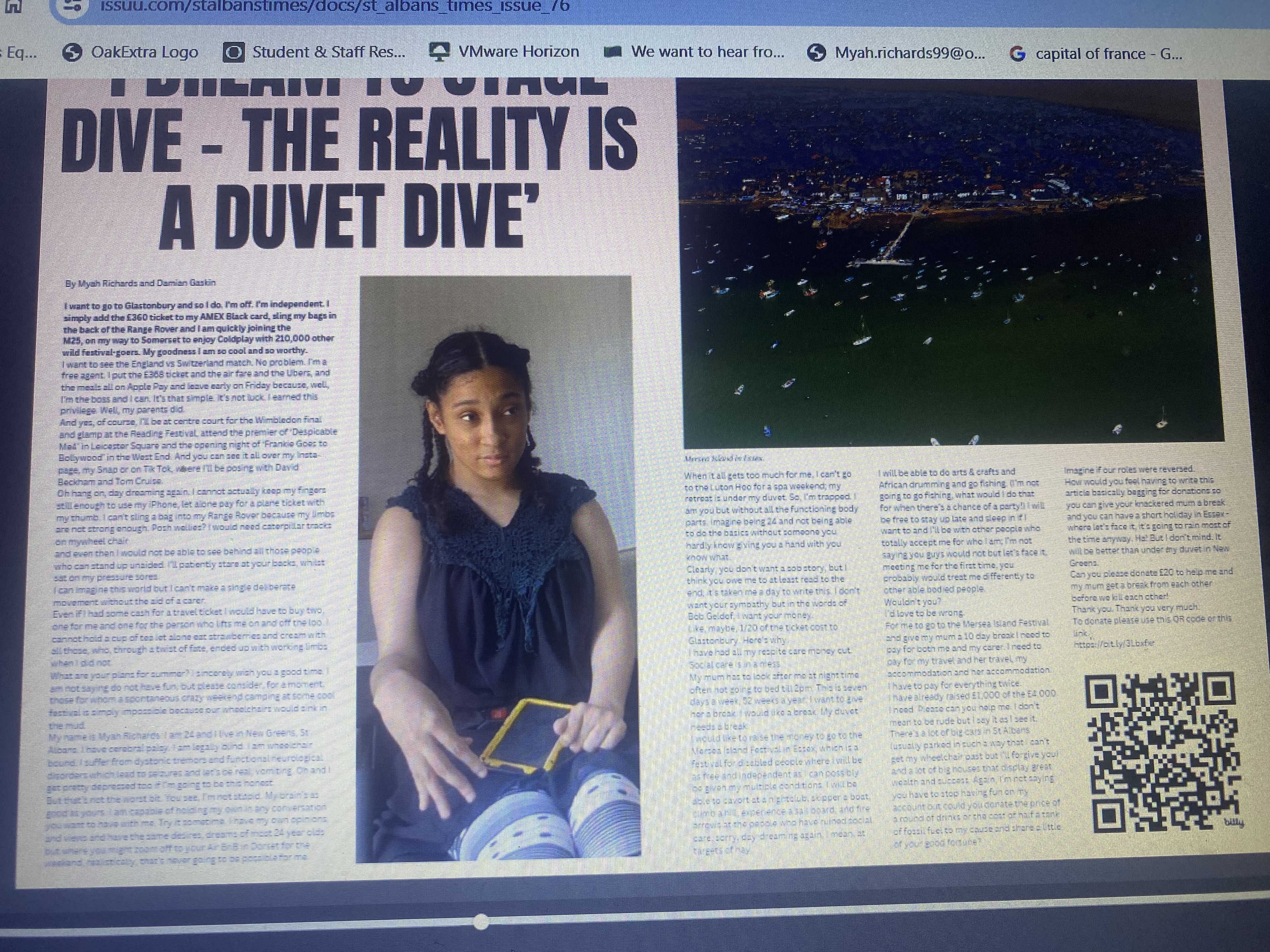
When Luca was born in a Perth hospital two years ago, it flipped his parents’ world in ways they never expected.
With the joy came a shocking diagnosis: Luca had cystic fibrosis. Then Australia – Laura Currie and her husband Dante’s home for eight years – said they couldn’t stay permanently. Luca, his parents were told, could be a financial burden on the country.
“I think I cried for like a week – I just feel really, really sorry for Luca,” Ms Currie says. “He’s just a defenceless two-and-a-half-year-old and doesn’t deserve to be discriminated against in that way.”
With a third of its population born abroad, Australia has long seen itself as a “migration nation” – a multicultural home for immigrants that promises them a fair go and a fresh start. The idea is baked into its identity. But the reality is often different, especially for those who have a disability or a serious medical condition.
It is one of few countries that routinely rejects immigrants’ visas on the basis of their medical needs – specifically if the cost of care exceeds A$86,000 ($57,000; £45,000) over a maximum of 10 years. New Zealand has a similar policy but Australia’s is much stricter.
The government defends the law as necessary to curb government spending and protect citizens’ access to healthcare. It says these visas aren’t technically rejected. But neither are they granted. Some can apply for a waiver, although not all visas allow it. They could also appeal the decision but the process is lengthy and expensive.
Campaigners see this as discriminatory and out of step with modern attitudes towards disability. And after years of fighting for it, they are hoping for change in the coming weeks, with an official review of the health requirements under way.
Laura Currie and Dante Vendittelli had moved from Scotland for jobs that Australia desperately needs. She is a nursery teacher and he is a painter-decorator. They had started their application for permanent residency before Luca was born. But now they feel like the life they built here and the taxes they paid meant little.
“It’s like, we’re here for you [Australia] when you need us, but when the roles are reversed and we need you, it’s like, nope, sorry, you cost too much money, you go back to your own country.”
Australia has form when it comes to its strict immigration policies. It had its own version of “stop the boats”, which sent people arriving by boat to offshore detention centres in Papua New Guinea and the Pacific Island of Nauru and made controversial headlines in recent years. It was only in the 1970s that it entirely rid itself of the “White Australia” policy that started in 1901 with the Immigration Restriction Act, which limited the number of non-white immigrants.
The disability and health discriminations, which also date back to 1901, are still in place, says Jan Gothard, an immigration lawyer: “We still treat people with disability in the same way as we did in 1901 and we think they’re not people who are welcome in Australia.”
She is part of Welcoming Disability, an umbrella group that’s been pressuring the government to overhaul the law, external. Surprisingly, Australia’s Migration Act is exempt from its own Disability Discrimination Act.
Put simply, it doesn’t matter how long you’ve lived in Australia, if you were born in Australia, if you have private health insurance or even if you can pay for the support yourself – if you are deemed too much of a financial burden, you will fail the health requirement.
The government says that 99% of visa applicants meet the health requirement – 1,779 of them did not meet the bar between 2021 and 2022, according to official figures.
Immigration minister Andrew Giles, who declined to be interviewed, recently said , externalthat “any child born in Australia and adversely affected by the migration health rules can apply for ministerial intervention”, and that he himself had “positively intervened” in cases.
But families say that the process is gruelling at an already difficult time.
The price to stay
“There’s so much in your life going on when a child is sick, so much struggle and you’re struggling and begging and asking for petitions, asking people to help you,” says Mehwish Qasim, who knows the challenge first-hand. She and her husband Qasim fought to stay in Australia in a case that drew global attention.
Their son Shaffan was born in 2014 with a rare genetic condition and a damaged spinal cord. He needs around-the-clock care. The couple, originally from Pakistan, intended to return eventually, but Shaffan’s birth changed everything. Now, getting on a plane would risk his life.
Finally, in 2022 they were told they could stay. For those eight years, Qasim, a trained accountant, was unable to work in his chosen profession. Instead, he found jobs in cafes, in supermarkets and taxi apps to make ends meet.
“They should realise that’s a very difficult situation – you shouldn’t put people in the limelight,” Ms Qasim says.
Ms Currie and her husband aren’t giving up either – Australia is home now for Luca and they are filling jobs that the country needs. They’re hoping that is enough to win them their appeal. If they lose, they will have 28 days to leave the country.
For Luca, the sticking point is a pricey drug, Trikafta. He is not on it and may not even be compatible with it. But it’s the basis of Australian estimates of his treatment – around A$1.8m That puts his medical costs over the permissible limit – A$86,000 over 10 years, also known as the Significant Cost Threshold.
While campaigners have welcomed the recent rise of the threshold – from A$51,000 to A$86,000 – they still don’t think it reflects average costs.
The government’s own data shows it spends at least $17,610 per year on the average citizen – the most recent figures from 2021-2022 showing $9,365 per head on health goods and services and a further A$8,245 per person on welfare costs. Over a 10-year period – the maximum period assessed for a visa – that would amount to more than A$170,000. So campaigners have questioned how the government comes up with the threshold, which is half of that amount.
They also want the cost of educational support to be removed from the calculations. This impacts families whose children have been diagnosed with conditions such as Down Syndrome, ADHD and autism.
It’s a snag that has hit Claire Day’s plans for her and her family to follow her brother, who moved to Australia a few years ago.
Her younger daughter Darcy, who is nearly 10, has Down Syndrome. She’s been told by migration experts that because of that, she has little chance of being granted a visa.
On an overcast afternoon in Kent, she talks wistfully of the life she is looking forward to Down Under. Sunshine is no small attraction, but also “the lifestyle – [I want] a better environment for the children to grow up in,” she says.
An officer with London’s Metropolitan Police force for 21 years, she wants to take advantage of a major recruitment drive by Australian police forces. Their social media feeds are full of promotional videos fronted by former British police officers, showing them living the Australian dream, patrolling the beach in sand buggies and relaxing in the surf. They make up just some of the 30,000 British people who moved to Australia last year, according to government statistics.
Ms Day has not one, but two job offers – from Queensland’s police force and from South Australia. As part of the job, she’s also entitled to a permanent visa. Now, she is not so sure.
“I had hoped that it wouldn’t be an issue because Darcy doesn’t have any medical problems. She’s fit and she’s healthy, she goes to school and she participates in clubs and all of that sort of stuff.”
Stories like this have convinced campaigners that, at its heart, the policy is ableist.
“If we say to people with disability, ‘you’re not welcome here, we’re saying directly to people living with disability in this country, ‘you’re not welcome here either,” Dr Gothard says.
“[We’re saying] you know, given the opportunity, we would rather not have you.”
Social worker Shizleen Aishath says she was “gobsmacked” to find out about the health requirement – and she discovered it the hard way.
A former UN employee, she came to Australia for a further degree with every intention of returning to the Maldives. But she had an emergency C-section when her son Kayban was born in 2016. Forceps were used during the delivery. Kayban had undiagnosed haemophilia and suffered a serious brain bleed. He now needs round-the-clock care and the family chose to stay in Australia.
But Kayban was refused a temporary visa because he was deemed too much of a burden – although the family have private health insurance and don’t use state resources. The rest of the family were granted their visas.
“Disability is the only thing that stops you from migrating, there is nothing else,” Ms Aishath says.
After a lengthy appeal, Kayban was allowed to remain. His family is now preparing for their next fight – to stay in Australia indefinitely.
Family Upset Over ‘Diabolical’ Care Home Closure
A man with severe learning disabilities is facing being moved out of the care home he has lived in for 36 years.
Gordon Froud, who has autism and epilepsy, has lived at Parrot Farmhouse in Shinfield, Berkshire, since he was 16 and was told it would be his “forever home”.
But his family have now been informed he will have to move out by the end of October, a decision they have branded as “diabolical” and “a disaster”.
Dimensions, the not-for-profit company that runs the site, said the home was closing because of its “age and condition”.
Colin and Anna Froud – Gordon’s parents – believed the farmhouse was the ideal home for their son and described helping to convert it in the 1980s.
“We were told ‘it’s a home for life’ – and we were hoping that was what was going to happen,” said 76-year-old mum Anna.
“He went there at 16 – he’s 52 now. He loves all the staff.”
His father Colin, 80, said the decision to shut the home – which is on Arborfield Road and home to six residents – was a “disaster”.
“To move him would be diabolical and we don’t think it’s right,” he said.
Gordon’s sister Kelly is worried about the impact on their parents.
“They don’t drive so they’re worried Gordon will be placed somewhere they can’t get to, they won’t be able to visit him, they’re worried he won’t settle, that he will panic,” she said.
“Parrot Farm is all he knows and all he wants.”
In a statement, Dimensions said: “In the event that the right new home has not been found for someone by the end of October, the timeline can be extended.
“Every colleague will be able to keep their job, working in the local area.
“The decision to close Parrot Farmhouse reflects the age and condition of the property.”
Councillor David Hare, executive member for adult services, health and wellbeing at Wokingham Borough Council, said the home was run privately and the closure had not been the authority’s decision.
“We will work closely with Dimensions, the people who live at the home and their families, to find safe and appropriate alternative homes to live in,” he added.
another selfie of me with my stylist, beautiful

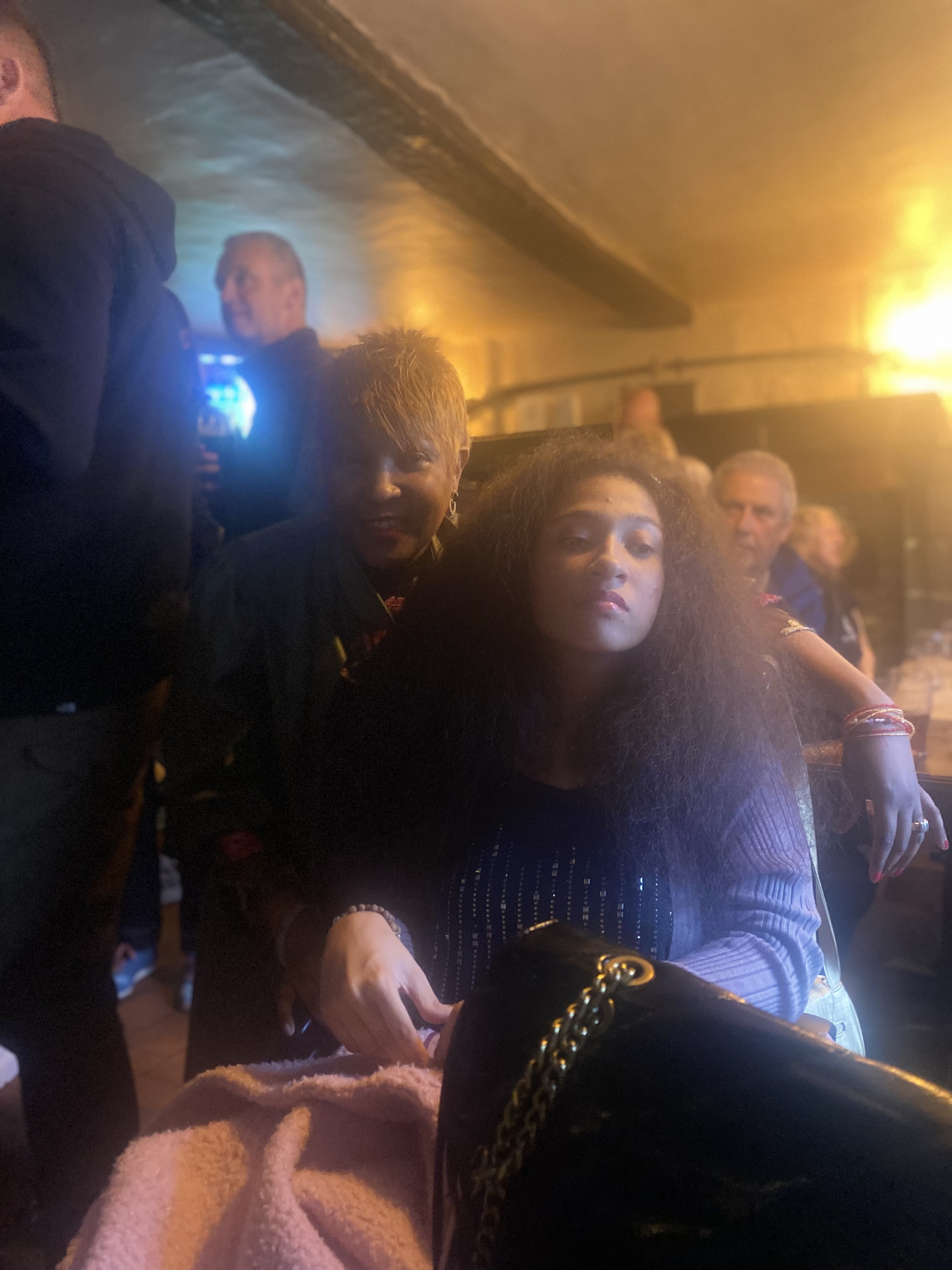
pictures of the
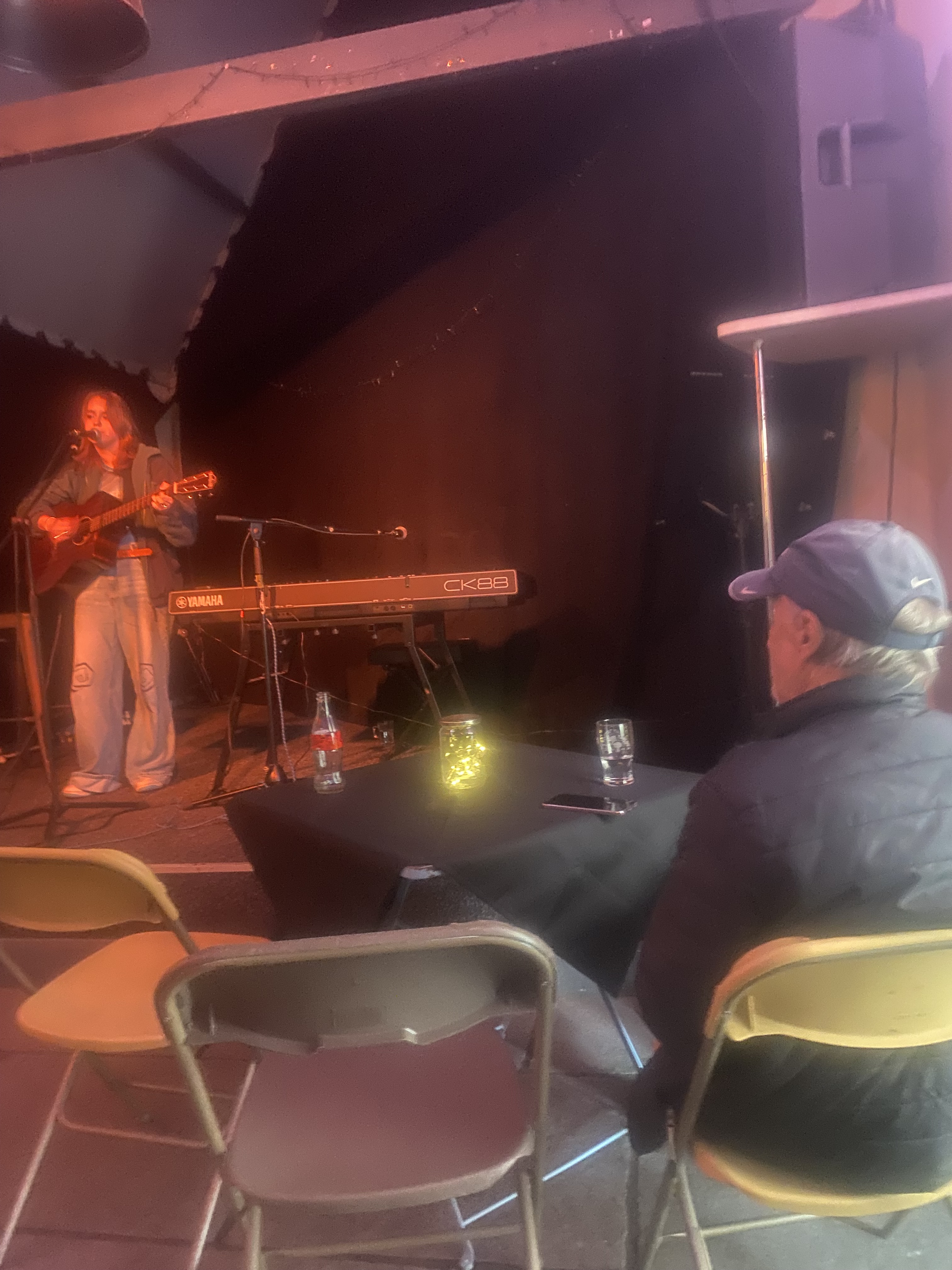
up at localise music event today
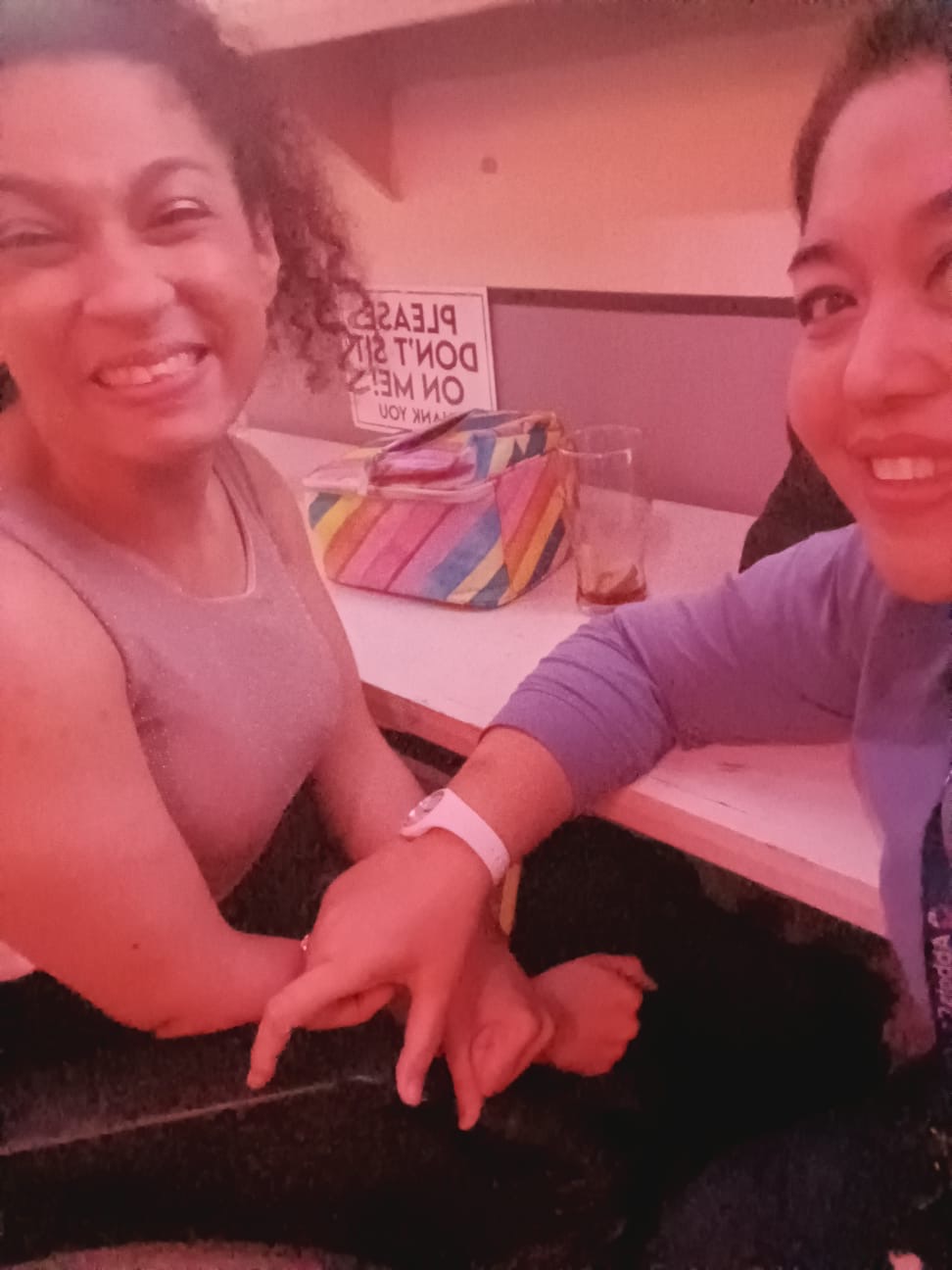
with the new member of my Care team today welcome to

my first or second make up look for us


Lovely full photo of me all grassed up today. I enjoyed all the live music that I have seen over the last week and
Saturday, Sophie, and welcoming Florence to my Care team of personal assistant for my disability



some selfies from when I went to see the live music, I enjoyed it and this is a selfie of me showing off my make up



Thousands more ex-servicemen and women will receive compensation for hearing loss suffered during training or combat, the BBC has learned.
Military personnel are repeatedly exposed to loud noises, such as gunfire and bombing, during their careers.
The Ministry of Defence (MoD) has opposed many claims made by veterans experiencing hearing loss, arguing other sources of noise were to blame, individuals should have worn protection or their claims were too late.
Now it has accepted exposure to noise in the military has been a cause of hearing loss and that people discharged after 1987 could be eligible for compensation.
The MoD has been approached for comment.
Between 2012 and 2020, the MoD paid £72m in compensation for military hearing loss, settling more than 9,000 cases.
But it is likely this new court agreement will result in many more service people receiving payments, with up to 10,000 currently making claims.
Simon Ellis, from Hugh James solicitors, who is representing nearly 5,000 military personnel, called the development “ground-breaking”. His firm expects many more claimants to come forward.
“[Veterans] have had their careers prematurely ended, other employment opportunities denied to them, and their personal lives irrevocably changed,” he said.
“People who put their lives on the line in the service of our country should expect that they are not put in additional unnecessary danger by their employer.”
In a case last year which paved the way for the new scheme, James Barry, who is in his 30s, was awarded £700,000 after developing hearing loss and tinnitus.
The MoD accepted it had a “duty of care” to veterans and abandoned its argument that claims should have been brought sooner.
Barney Barnett, a 44-year-old ex-commando who joined the Royal Marines aged 16, also suffers from tinnitus and finds it hard to understand people when there is background noise.
“It affects me every day, I tend not to moan about it, I just get on with it,” he told the BBC.
Mr Barnett served in Iraq and Afghanistan where he went on patrols from forward operating bases and was repeatedly involved in combat, sometimes as a sniper team commander.
He told the BBC he had fired or been attacked with weapons including rifles, grenades, general purpose machine guns, light machine guns, 50 calibre machine guns, anti-tank missiles, mortars, and bombs.
Videos he shared from conflicts abroad capture the roar of armoured vehicles or helicopters landing, punctured by constant gunfire.
In one picture he can be seen wearing small earplugs, but he said that was a rare occurrence. He says he was either not given hearing protection or he was not able to wear it for operational reasons.
“If you get engaged by the enemy, whether that’s an IED, whether that’s indirect fire, whether it’s a burst of automatic fire, the last thing you have time to do is think about your hearing,” he said.
“Your main concern is those on the ground with you. Staying alive.”
In 2014, Mr Barnett went before a military board and it was decided he was medically unfit to continue in the Royal Marines because of noise-induced hearing loss.
He struggled to find work in civilian life and served with MI5. Later an online assessment for the security service deemed him unsuitable due to his poor hearing.
He is now an operations director in a security firm but must avoid loud environments such as concerts.
Mr Barnett’s attempts to claim compensation began seven years ago and he hopes the new legal agreement with the MoD means it will now be resolved quickly.
He says compensation would help him buy more advanced hearing aids and allow his life to move forward.
“People don’t see what we’ve been through,” he said.
“We’ve done our battling, we’ve been on operations, we’ve come home.
“The government speeding this whole process up, as opposed to battling it out in court, will mean the world to people.”
The military introduced hearing protection in the 1970s but Nicholas Hill, an acoustics engineer who has given evidence in many cases, says it was difficult for soldiers to wear all the time.
He said “every firearm ever made, if you fire it with unprotected ears, just once, can damage hearing”.
A handful of cases will go to trial next year, to determine the level of compensation veterans should receive.
Hugh James solicitors said after this is decided, any claimants will be able to resolve their cases without the need to go to court, if they can show their hearing loss resulted from service in the military.
They must have served at some point after 1987 when a change in the law suspended legal immunity for the government in cases involving service personnel.
The MoD agreement follows negotiations led by Hugh James solicitors and allows the government to continue fighting cases brought by other law firms, although sources close to the case believe this is unlikely to happen.
The agreement was reached at the High Court on Monday and lawyers said it would not change with the incoming Labour government.
Runner With Down’s Syndrome Invited To New York Race
A teenage runner with Down’s syndrome has been invited to take part in races across the globe.
Lloyd Martin, 19, made history as the youngest person with a learning disability to complete a marathon when he took part in the London event in April, setting a Guinness World Record.
Since then, he’s received invitations to run the New York Marathon, the Paris Marathon, and the Great North Run in Newcastle.
But Lloyd was disappointed to miss out on competing in his family’s hometown event, the Cardiff Half Marathon in October, due to a late application.
Everything changed on Thursday morning when Lloyd and his mother received a surprise invitation, live on BBC Radio Wales, to participate.
“Wow, my hometown,” said Lloyd.
His mother and running guide, Ceri Hooper, 54, added: “How amazing is that. Thank you so much.
“He’s speechless, grinning from ear to ear.”
Ceri, who represented Wales in cross-country running as a teenager and has completed the London Marathon four times, said: “We got our applications in too late.
“Lloyd’s aunties and uncles are running it too, so it was gutting.”
The family, originally from Cardiff but now living in Surrey, said the response to Lloyd setting a record has been overwhelmingly positive.
“It’s just mad. We’ve been recognised in airports, locally, or just walking down the road,” said Ceri.
“Everyone comes up to Lloyd to shake his hand and ask for selfies.
“I’ve become his full-time PA overnight, it makes him so happy.”
Lloyd will take part in the Great North Run in August, followed by the Paris Marathon in November, and the New York Marathon in April 2025.
“We are very excited,” said Ceri. “We’ve started planning our trips and booking flights. We can’t wait to go.”
Training is in full swing for Lloyd, who increased his running regimen to three times a week in July.
When asked for advice for aspiring marathon runners, Lloyd said: “Anything is possible. Look after people, your loved ones, and people with disabilities.”
Blind Gamers Say Accessibility Is A ‘Must-Have’
Kellie Dingwall is one of a growing number of visually impaired people who are getting into online gaming.
“One of my best friends and I got closer through playing games online, and it became a weekly thing,” she told BBC Scotland.
“Now, it’s a little community of blind gamers.”
Gaming studios are increasingly thinking about things like sight-loss or motor skills issues as they open up games to a whole new audience.
Disabled gamers have pointed to a culture shift in games development with features now built in “from the ground up”.
Kellie says the changes can be as simple as increasing the writing size on-screen for those with partial sight loss or providing better colour contrast options.
Other games have more tailor-made elements.
“The other day, I found a game that would let me use text-to-speech, and it would read out letters or options in conversations, for example,” Kellie said.
Despite the move towards accessibility, Kellie says she can be hesitant when trying new games.
“I tend to look at reviews before I buy,” she said.
“I generally prefer not to pre-order games because I don’t know what the accessibility features would be like.”
James Kyle, who works for RNIB Scotland, has been running a gaming group for visually impaired people like him.
“There’s no reason why people with no vision should be left out,” he said.
One of the game styles he highlights is an audio game, where players wear headphones and navigate through a 3D audio world, guided by sound effects and audio descriptions.
James said his blind users’ gaming group involves people from Scotland, Northern Ireland, England and other parts of the world.
Video games development is estimated to be worth £350m a year to the Scottish economy, and developers are more conscious about their markets.
Dundee has a long association with games development and Abertay University, within the city, says ensuring accessibility is central to what it teaches.
Dr Lynsay Shepherd from the university, said: “Disabled gamers have been left out for too long.
“Steps need to be taken to ensure everyone can experience the fun of playing games.”
She said accessibility was “drilled in” to students from day one.
“We make sure that is discussed all the way through, and the challenges that are there as well,” she said.
Growth in accessibility has been “massive” in recent years according to Dr Shepherd, and she believes eye-tracking for people with physical limitations could be the next field of interest.
“Webcams on laptops have become very high quality,” she said.
“These can be used to capture the eyes to control the machine, and that can be baked into games.
“It’s going to become much more accessible to a wider range of people very soon.”
Different disabilities
Opening up the gaming market to those with complex physical needs is also being tackled in Dundee.
Konglomerate Games designed a game to help young people with Cystic Fibrosis.
It uses the player’s breath to control mini-games, like firing darts at balloons.
The idea is they have fun while performing necessary breathing exercises.
“We’re trying to bring games to people with different disabilities or conditions, so they can improve their lives,” chief executive Jamie Bankhead said.
“The market is huge. If kids can play games and get something beneficial out of it, that’s great.”
Mr Bankhead said developers needed to be conscious of people’s motor skills, and whether physically holding a controller can be off-putting, or if its vibrations might be uncomfortable.
He said accessibility features were “becoming more and more of a must-have not a nice-to-have”.
“People are starting to actively refuse to play games that don’t have the bare minimum and that should only get more and more prevalent across all games,” he said.
What The Main Parties Are Saying About Disability
There are 16 million disabled people in the UK – almost a quarter of the population – but many say they have felt “invisible” during this election campaign.
The BBC podcast, Access All, asked the main parties about their policies on disability, social care and mental health, and Radio 4’s More or Less examined what they said.
Conservatives
The Conservatives want to “reform disability benefits” and tighten up what it calls a “sick-note culture”, saying people are now three times more likely to be assessed as not fit for work than a decade ago.
The party’s manifesto says it would create 60,000 new school places and 15 new specialist schools for children with special educational needs (SEND).
It says “mental health should have parity of esteem with physical health” and, as such, it plans to increase the number of clinical placements for those experiencing severe mental illness by 140,000 places.
The Conservatives want to cut £12bn from the UK’s £69bn welfare bill. Disability benefits alone are expected to rise from £39bn to £58bn in 2028/29.
Around £14bn of that is due to increasing Personal Independence Payment (PIP) costs, paid to people with long-term physical or mental health conditions who need support with everyday tasks.
The manifesto gives little detail on the changes beyond pledging a “more objective” assessment and restrictions on claims from people with mental health problems.
There is currently a 12-week consultation on changes to PIP which proposes using medical diagnosis over assessments and replacing PIP cash payments with vouchers and catalogues.
Launched on 29 April, it will be concluded come what may on 4 July, although any changes would require a law to be passed under the next government.
Mims Davies, Minister for Disabled People, Health and Work, says: “I think it’s very reasonable post-Covid, when you see a two-thirds increase, in spending to look at what’s happened. We have a responsibility to make sure that taxpayers’ money is well spent.”
More or Less: Ms Davies says there has been a two-thirds increase in spending since the pandemic. However, if we look at incapacity and disability benefits together with carer’s allowance and housing support in real terms in 2019/20, and we compare that to current spending on the same things in 2024/25, the rise is actually around 40%, not more than 60%.
Labour
Labour wants to improve access to mental health care with specialist professionals in every school and a recruitment drive for an additional 8,500 NHS mental health staff. It also wants special educational needs (SEN) expertise in mainstream schools.
The party wants to get disabled people into work by reforming the Work Capability Assessment, although it has not given details, and by introducing mandatory disability pay gap reporting.
Deputy leader, Angela Rayner says: “Small changes in the workplace can really mean that you have great assets in the people that work for you who can bring around those profits.
“By making sure that employers have to report their disability pay gap, that should reduce, as we have seen in the gender pay gap.”
According to the Office for National Statistics (ONS), the pay gap between disabled and non-disabled employees is 13.8%.
There are strong phrases in the manifesto like “there will be consequences for those who do not fulfil their obligations”.
Ms Rayner says the emphasis is on those who “can work” and “helping people to reach their full potential”.
More or Less: Mandatory gender pay gap reporting was introduced in 2017 for employers with 250 or more employees. They have to submit the average difference in hourly pay between men and women. Since then, the gap has fallen from 9.1% in 2017 to 7.7% in 2023.
Although this might look like a success, closer inspection of ONS figures shows the gap had already fallen significantly before this regulation was introduced. This has led some to question how significant the policy was.
Liberal Democrats
Social care is at the heart of leader Sir Ed Davey’s plans. The Liberal Democrats want to reform PIP to stop “unnecessary reassessments” and give disabled people the right to work from home.
It wants to have a mental health professional in every school, bring an end to “out-of-area” mental health placements so people can be treated near home, and introduce one-hour targets for police to hand over someone experiencing a mental health crisis to the relevant service.
Many disabled people have care packages but report a lack of carers to employ. According to the King’s Fund think tank, in 2022/23 there were 152,000 vacancies, or 9.9% of available roles.
As well as providing free personal care (Scotland already has this), the Lib Dems want to introduce a minimum wage for carers, £2 an hour above the national minimum wage, and establish a Royal College of Care Workers.
Sir Ed says this will total about £3.7bn annually. He plans to pay for it by promising to reverse tax cuts the Conservatives have given to the big banks since 2016.
More or Less: Sir Ed’s plan includes spending an extra £2.7bn a year on free personal care by 2028/29. That sounds like a lot but the Health Foundation, the independent charity, estimates it would cost more than twice as much.
The party says it would take into account other money in the system, referring to the Conservatives’ delayed plan to introduce a lifetime cap on personal care of £86,000, due to be introduced next year.
That hasn’t stopped the Lib Dems using it as a building block for their proposed upgrade, and have suggested it will provide £3.6bn a year towards their plans.
The Conservatives are still committed to this cap, but the Institute for Fiscal Studies says the funding set aside for this has already been absorbed into the current care system.
Scottish National Party
The SNP manifesto contains one sentence on disabled people: “Scrap proposed punitive welfare reforms for sick and disabled.”
This most likely relates to the Conservative plan to tighten up the criteria for Work Capability Assessment, which looks at how capable people are of working. The Tories want to reduce those being assessed by 424,000 by 2028/29.
Some benefits including both child and adult disability payments are devolved to Scotland.
“We look at benefits as something people are entitled to,” Marion Fellows, the party’s disabilities spokesperson says.
“We also fund free prescriptions, we’ve introduced a child payment for impoverished families where 100,000 children have been lifted out of poverty.
“The only way to get anything done in the UK parliament, if you are not in power, is to work with other parties and to push the agenda forward.”
More or Less: Ms Fellows mentioned 100,000 children have been lifted out of poverty due to the Scottish Child Payment. This claim comes from a Scottish government report, which predicted the future impact of policies compared with what might have happened without them – the difference between them is the number we’re interested in.
The report acknowledged it relied on a lot of assumptions and, while the report predicts Scottish government policies as a whole will keep 100,000 children out of relative poverty, the Scottish Child Payment related to 60,000 children.
Green Party
The Greens want to put mental health care on a “truly equal footing with physical health” by offering therapies within 28 days and providing trained counsellors in every school and sixth form college.
The party wants to create a “career structure for carers” and offer free personal care with an investment of £20bn per year.
The Green Party’s Mags Lewis says it wants to “restore the value of disabled benefits” with a 5% rise “immediately”. A bill paid for by a windfall tax on some fossil fuels and “taxing the billionaires“.
The Greens also want to provide another 150,000 social houses a year, with “a good proportion” being accessible.
More or Less: The current government has consistently missed its targets to build 300,000 homes annually since 2019.
The Green Party doesn’t promise to build 150,000 social homes a year, just provide them. It proposes local authorities could buy or refurbish older housing stock, which were likely built before accessibility regulations came in.
Plaid Cymru
Plaid wants to adopt the UN Convention on the Rights of Disabled People into UK law, which protects the right to live independently and reform the Mental Health Act.
Liz Saville Roberts, the Westminster leader of the party, wants to reduce waiting times for people waiting for neurodiversity assessments, such as autism and ADHD, but says Wales needs more funding.
“We’re always being told that Wales is funded to a greater level per head than England, this is true, but we’re not funded [per head] as highly as, say, London is.”
She wants the patient to be at the centre of their care with greater control and access to their personal information.
More or Less: Government figures show Wales receives £13,967 per head, which is lower than Scotland and Northern Ireland, but 11% above the UK average. London gets £14,486 per person.
Part of London’s high figure is because the capital also receives the highest capital spending in the UK, largely driven by spending on transport, which is used by those who live and visit.
If we excluded that and only looked at current expenditure on services, then Wales has higher funding per resident than London.
Reform UK
Reform’s manifesto says “the benefit system is broken” and would be changed within 100 days.
Assessments for PIP and Work Capability would be face-to-face and include an independent medical assessment “to prove eligibility for payments”.
Those with severe disabilities or serious long-term illnesses would be exempt from regular re-assessment.
Reform UK declined to take part in Access All’s election interviews. However, on the recent BBC Question Time leaders’ special, Nigel Farage said 9.2 million people of working age are not in employment, adding: “They’re not all layabouts, there are many people, I bet we all know people on benefits who’d love to get back to work.”
More or Less: On the latest figures, economic inactivity has actually increased to 9.4 million – 27% are students, 18% look after the family home, and 30% are long term sick. That’s 2.8 million people. That number has increased significantly since the pandemic, up by 33%, far outstripping growth in the working age population, only 2% over the same time.
StomaBabe ‘Treated With Contempt’ At Taylor Gig
An influencer with a chronic illness who uses a stoma bag said she felt she could not “drink or move” during a Taylor Swift concert after members of the crowd criticised and “shoved” her for doing so while she was there.
Holly Fleet, 30, known online as StomaBabe, said in a post on X, external she was “treated with contempt” whenever she went back to her spot in the crowd at the London show despite explaining she had a medical condition, and was “continuously shoved” by a parent for refusing to remove a backpack containing medical supplies.
She also said Wembley Stadium failed to provide advice to her before the event about bringing in medical supplies and drinks, and did not have enough accessible toilets available during the concert.
A stadium spokesperson said they were sorry to hear about Ms Fleet’s experience, adding Wembley was “committed to providing an inclusive experience for all disabled guests”.
Ms Fleet, from north London, said she bought a VIP standing ticketfor the 22 June gig because she did not think a disabled seated ticket would be available due to how popular Taylor Swift is.
She told BBC London she needed to empty her stoma bag regularly, and to drink often because the operation she had had meant she was susceptible to dehydration.
She said at previous gigs it had not been so hard “to get in and out” and she “didn’t think people would take too much offence to it” – especially given that Swift’s set would be several hours long.
However, Ms Fleet said when she went to get drinks and brought them back “I must have had about four different people have a go at me about that”.
She also said she was shoved repeatedly by two women in front of their children because she had a backpack on containing her medical supplies.
“I had my backpack on. One of them taps me on the back and was like, ‘can you take that off please?’ and I said: ‘No, it’s got medical supplies in so I can’t take it off’… The next thing you know, she was just shoving me… really pushing me. And these were two mums who were both with their teen daughters.”
Ms Fleet claimed when she turned around to ask what the problem was, the woman laughed at her and then carried on shoving her, making her feel “really upset”.
“I had to move behind them because I couldn’t put up with being shoved like that,” she said.
“I felt like from every angle – I can’t have a drink, I can’t have my backpack on, I can’t go to the toilets. Everything felt so awful,” she said.
“I felt like I couldn’t drink, I couldn’t move.”
Ms Fleet, who also has ADHD, said she eventually “felt so overwhelmed by the whole thing that I literally ended up just phasing out”.
She said although she kept a hidden disabilities sunflower lanyard on as she was going to and from the toilet, a woman had an issue with her returning to her position with her friend, telling Ms Fleet “we’ve been here for hours” and accusing her of being “disgraceful”.
“I did get a bit depressed when I got home, I did cry and stuff because I thought, ‘is this how it’s always gonna be for me now, am I always gonna experience this?’ I might not be able to go to concerts again now.”
Ms Fleet also complained there was a lack of information on the Wembley website about whether bags containing medical supplies and liquids would be allowed into the stadium, such as the rehydration drinks she needs after her operation.
She said that despite contacting Wembley’s accessibility team with questions she never received a response. A spokesperson for the stadium said that Ms Fleet was sent automatic reply via email linking to the website’s FAQs section, which asked people to get back in touch if their query was not answered – which she did not do.
Ms Fleet also said there was “one disabled toilet near my section and the queue for that was insane”, with people without special keys to access the disabled toilets “holding the door open” for each other and people banging on the door shouting at her to hurry up.
She is encouraging people to have more respect for each other at concerts, and is asking venues like Wembley to offer better communication for people with additional needs or disabilities, including how long queues outside are likely to be and to provide contact phone numbers rather than just an email address.
‘We pride ourselves on being inclusive’
A spokesperson for Wembley Stadium said: “We would urge all our guests who might require specialist help or assistance, to contact our customer engagement team who are fully trained in disability awareness and have undertaken specific training to support all of our guests.
“Wembley Stadium is committed to providing an inclusive experience for all disabled guests, regardless of whether their disability is visible or non-visible.”
They added that the stadium had three Changing Places facilities and 147 accessible toilets and had been adapted to make it “accessible to all”.
“We pride ourselves on being an inclusive stadium,” the spokesperson added.
“We also work with expert partners and specialist user groups to provide a range of services and facilities which can be accessed by guests with specific requirements.”
Artist Helps Visually Impaired Fans At Glastonbury
An artist spent the weekend helping blind and partially-sighted people to enjoy their experience at Glastonbury Festival.
Zoe Partington, a contemporary visual artist from Shropshire, was part of a new team of visual guides helping fans find their way around the site.
Glastonbury organisers created the support team in a bid to attract more visually-impaired visitors and “bring more areas of the festival to life” for them.
Ms Partington, of Cleobury Mortimer, who is partially-sighted herself, told BBC Radio Shropshire the experience had been “amazing”.
“It’s been brilliant. This has been the first year where we’ve had sighted guides available for blind and partially-blind people, to help them get to wherever they want to go and just have a fantastic time,” she said.
She praised the infrastructure that organisers had put in place, including the accessible campsite, showers, toilets and staff.
Ms Partington, who also gives advice on accessibility to museum and galleries, said many visually-impaired people had previously told her they would not go to the festival because of concerns over accessibility.
But since the creation of the new visual guides team, she has since been told by many of them that they would now consider it.
“It’s definitely been a success and we just want to build on it,” she added.
Speaking of her own experience, she said Paloma Faith was her favourite act of the weekend, describing her set as “absolutely brilliant”.
With many thanks to Benefits And Work.
Figures produced by the DWP show that, at present rates, it will take almost ten years to work through the backlog of outstanding personal independence payment (PIP) planned award reviews. This means that over 74,000 claimants are likely to be getting a lower award than they are entitled to.
A Freedom of Information request by a Benefits and Work member asked the DWP to provide the outstanding number of PIP reviews, the cause of the backlog and how long it would take to clear.
The DWP responded that “As of 31st May 2024, there were 392,000 Award Reviews outstanding in England and Wales.”
The department said there was no timeline for clearing the backlog and that:
“The main reason for the length of time to complete PIP award reviews is very high demand for PIP. We are seeing unprecedented numbers of new claims being made. To manage this demand, and ensure cases are put into payment as soon as possible, we are prioritising these claims.”
The DWP claimed that it is recruiting additional case managers and that assessment providers are “taking steps to increase the number of Healthcare Professionals they employ”. However, they also stressed that “it takes time to train and consolidate new entrants”.
However, the latest quarterly PIP statistics published earlier this month, show that in the last quarter the DWP only managed to reduce the backlog of outstanding award reviews by 10,000. The figures show that 120,000 new award reviews were registered and 130,000 were cleared.
So at the current rate it would take just short of 10 years to work through the entire backlog.
And, in fact, the most recent quarter was the only one in the last year that the backlog was actually reduced. In preceding quarters it either went up or remained the same.
Given that the number of PIP new claims is continuing to rise month on month, with the last quarter seeing a record breaking quarter of a million new claims, it is doubtful whether new recruits will be able to do much to cut the review backlog.
Also according to DWP statistics the outcome of planned award reviews over the last five years has been:
- Increased 19%
- Maintained 54%
- Decreased 7%
- Disallowed 20%
On this basis, the backlog includes:
- 74,480 claimants getting a lower award of PIP than they are entitled to
- 27,440 claimants getting a higher award than they are entitled to
- 78,400 claimants who are no longer entitled to PIP, in the view of the DWP.
It is hard to see how this situation can be resolved in the near future. In the meantime, tens of thousands of claimants will continue to receive yet another annual communication from the DWP telling them that their review has not yet taken place and that their current award will remain in payment.
‘I’m Forced To Choose Love Or Disability Benefit’
A woman with a chronic pain condition has said she is being forced to choose between love and affording to live due to benefit restrictions.
Rose Kindred, from Ipswich, lives with hypermobile Ehlers-Danlos Syndrome (EDS) and wants to move in with her partner, but current benefits rules mean her payments would be slashed, making it unaffordable for them both.
She got in touch with the BBC via Your Voice, Your Vote, concerned about the way disabled people were treated within the benefits system.
“I think it’s a cruel system that forces disabled people to choose between the security of living and love,” she said.
Ms Kindred, 26, has been declared unfit for work by the Department for Work and Pensions (DWP) because of her condition, which causes the body’s collagen to mutate on a genetic level, leaving her with joint hypermobility and poor balance and co-ordination.
She receives a £405.40 Personal Independence Payment (PIP) per month and £809.64 in universal credit every four weeks.
Ms Kindred said she found it “nonsensical” that her parents’ income was not considered but if she moved in with her partner, who earns about £30,000 a year, a government benefits calculator suggested she would lose her universal credit payments.
“I’d like to move in with my partner of five years but unfortunately we can’t because of the living-as-if-married clause from the Department for Work and Pensions.
“That’s £405 a month to live on entirely, that’s before I pay for a private physio, which makes up for what the NHS can’t provide for me.”
“I’m basically stuck living with my parents because that’s the only option available to me.”
Ms Kindred also raised concerns about proposed changes to PIP by the Conservatives that would see changes to the way payments are made.
The charity Ehlers-Danlos Support UK said it had concerns about proposed changes to PIP.
In a statement, it said: “EDS is misunderstood and diagnosis can take decades. This makes it hard to evidence the daily struggle of living with this illness.
“We are concerned by the proposed changes to PIP and reached out to our members to better understand their experiences.
“We have encouraged them to respond to the consultation.
“Our Adviceline has also seen a significant rise in members asking for help with benefits which is indicative of the growing problems people with EDS face in the UK.”
Accessible Debate For Deaf And Disabled Voters
A special election debate will take place to allow the deaf and disabled community to be heard by key political candidates.
The event, hosted by the Cambridgeshire Deaf Association (CDA), will be in Peterborough on Thursday and feature British Sign Language interpreters and captions.
It is the second accessible debate to be hosted by the CDA and aims to help attendees ask candidates questions about the issues faced by people with disabilities or hearing impediments.
Andy Palmer, chief executive of the CDA, said it was difficult to decide who to vote for, when the issues “are not actually in a language that people can access.”
He told the BBC: “People want to go into a voting booth knowing who they want to vote for.. I think it’s hard to build up that idea unless you’ve had some of your questions answered.
“Unfortunately, it’s difficult for people to work out what they want to vote for when the issues they’re interested in aren’t spoken about.
It’s even worse if they are being spoken about but they’re not actually in a language that people can access.
“It’s really important, especially during an election, that people have as much information as possible before they make their decisions.”
Organisers hope to live-stream the event and expect the topics discussed to include hate crime, benefits, employment, the proposed changes to Personal Independence Payment (PIP), education health and care.
The Conservative, Labour, and Liberal Democrat candidates will take part.
It will be held on Thursday 27 June at 18:30 BST at the Allia Future Business Centre, Peterborough.
💞💞🐦⬛🐦⬛
💜💜🥲🥲🤣


Friday night vibes with Saturday night


goodnight everyone

Good Morning
Good morning :-)
Fl0wer

saying of the day for all my viewers of my block
goodnight to all my followers
Tell Them You Love Me
Tell Them You Love Me explores the extraordinary story of Anna Stubblefield, an esteemed university professor who becomes embroiled in a controversial affair with Derrick Johnson, a non-verbal man with cerebral palsy. The relationship, and the criminal trial that followed, would challenge our perceptions of disability and the nature of consent.
Anna Stubblefield was a respected academic and a disability rights advocate; passionate in her belief that the most essential part of the human experience is the ability to communicate.
Derrick Johnson was a 30-year-old man with cerebral palsy and had never spoken a word in his life. As a child it was also determined that he had severely limited intellectual capacity.
But Anna disagreed with this diagnosis, and when she first told Derrick’s family that she could help him communicate they were thrilled. His mother and brother had always sensed there was more going on inside Derrick, and they were eager to know what he thought about all day long, when he might be in pain, what his hopes and dreams were.
Anna began working with him using a highly controversial technique that involved training him to overcome his physical impairments so that he could type on a keyboard. After two years she was delighted to report that not only could Derrick communicate, but he had learned to express complex thoughts, attend college classes, and write thoughtful essays. Derrick, she said, was a highly intelligent man.
But there was more. Despite tremendous risks to her career and her personal life, she had become intimate with Derrick. They were in love, she said. But when the relationship was disclosed to Derrick’s family Anna was arrested and charged with sexual assault.
The trial that followed would be one of the most complex and divisive criminal cases in recent times. It would raise questions about Anna’s motivations and the validity of the relationship itself.
Through exclusive footage and interviews with those on both sides of the case, this feature documentary weaves a riveting and endlessly nuanced story about communication, race, and sex.
I watched this recently with great interest. I came away wondering why the family was prepared to accept Derrick’s academic intelligence, but yet found it so difficult to see him as an adult who could understand an adult relationship.
More of my thoughts on FC can be found here.
Stoma-Friendly Facilities Added To Public Toilet
Facilities to help people with stomas have been introduced at a toilet in a town hall.
The Parish of St Helier said a shelf, a full-length mirror, hooks to hang belongings on and new bins had been added to the building’s main disabled toilet.
Stomas are an opening in a person’s abdomen to help divert one end of the colon, with a pouch placed over it to collect faeces – a stoma bag – after they have a colostomy operation.
The parish said on X, formerly Twitter, that more than 200 people in Jersey had a stoma and it hoped the facilities could help make their lives easier.
People can end up with a stoma as part of treatment for conditions including bowel cancer, Crohn’s disease, diverticulitis and bowel incontinence.
Colostomy UK, external said hooks could help patients to hang personal items up while changing their stomas bags, while a shelf space enabled them to spread out other items easily.
The charity added that a long mirror helped people when changing their stoma and having a bin in the toilet meant user could dispose of their bag in private.
Connor Burgher, the parish’s head of engagement and town centre manager, said the facilities were added following a request from someone who lived locally.
Mr Burgher said: “Not all disabilities are visible and, if this makes people feel more comfortable to visit the Town Hall or St Helier, then it will have achieved its aim.”
Pupils Mocked And Put In Headlocks By School Staff
A senior staff member at an independent school for children with special educational needs has been recorded by BBC Panorama saying how he wanted to drown a pupil in a bath “like a kitten”.
An undercover reporter spent almost seven weeks at Life Wirral in Wallasey and witnessed staff using offensive language to mock pupils for their neurodiversity or learning disabilities, as well as manhandling them into dangerous headlocks.
Last year, Wirral Metropolitan Borough Council paid the school nearly £1m. Whistleblowers told Panorama abuse was still happening there 12 months after the council was warned of problems.
The school’s CEO, Alastair Saverimutto says he “does not condone the behaviour revealed by the programme and five members of staff have been suspended”.
Places at the school – for secondary school age children – cost between £50,000 and £150,000 a year per child, depending on the support they need.
Wirral council has paid out more than £2.2m in total since the school opened in 2021. Ofsted has rated the school “good”.
Warning: This report contains offensive language
During her time undercover, Panorama reporter Sasha Hinde did work experience with sports staff at the school.
She saw some staff trying to do their best for pupils, but for the most part witnessed children being treated cruelly by the adults charged with taking care of them.
In the recorded conversation with head of operations Paul Hamill, he laughs and tells her the child he had fantasised about killing had overheard his comments.
“Just the thought of squeezing him while he’s scratching me arms, trying to wriggle out,” he recalled saying.
The pupil was taught off-site for two hours, four days a week, by two members of staff led by Mr Hamill – who had earlier described the child as a “little serial killer”, and said he deserved to sit in a room, “a padded cell on his own for the rest of his life”.
He told the reporter that after another incident involving the same child, who he said had smashed up a classroom and threatened him, he “threw him all over the place” but that “on the paperwork it was like I guided him effectively”.
When shown the footage, the child’s grandmother described Paul Hamill as a “violent, aggressive man… who should not be around children”.
Panorama wrote to Paul Hamill about these allegations. He did not respond.
During almost seven weeks at Life Wirral, Panorama’s reporter also witnessed:
- A mental wellbeing coach describing the school as “full of retards” and calling a teenager with dyspraxia the offensive term “flid”
- The same staff member saying that one pupil was behaving well because he had “beaten him into being a bit of a [expletive] bitch”
- Three members of staff using homophobic and sexist language towards pupils, calling one a “ponce” to his face and describing him as a “batty boy” to another pupil
- One of those staff members grabbing a pupil’s head and drawing what another child close by said was a penis on his face
- Pupils at the school being called “sketty”, a slang term for a promiscuous woman
- The head of sport putting a pupil in a headlock, mocking his reaction and then pushing him to the ground
- Another staff member dragging a pupil, who had been sitting at a laptop with headphones on, out of his chair and into a headlock
- The school’s CEO, who had been sacked as a special police constable for gross misconduct, saying he had used a police-style restraint involving a pressure point on a child, which had “[expletive] nailed him”
When Panorama showed the undercover footage to Dame Christine Lenehan, former director of the Council for Disabled Children, external, she said the school was “fundamentally unsafe” with “no respect for the young people”.
“There must be really poor leadership here, because leadership sets a culture of value. Leadership sets a culture of how we behave and what we do,” she said.
The mother of the boy who was subjected to homophobic abuse by staff says she fought for 18 months to get her son into the school as she thought it would help him.
When she was shown Panorama’s undercover footage, she said she was “disgusted” to hear such language in a setting for vulnerable children.
Like all the other children at the school, this child had an Education Health and Care Plan or EHCP, a legal document which set out his needs and how they should be met.
The Panorama reporter saw children being taunted for their neurodiversity or learning disabilities. One staff member told her, “We’re a school full of retards, we’re not the SAS love. Like, chill out.”
And another staff member mocked children for shouting, for making high-pitched noises, and for their tics – repetitive movements that can be associated with neurodiversity.
A child replied: “This is why we get no work done, because you’re insulting us.”
The school is led by headteacher Sarah Quilty who says in a promotional video that she has spent most of her career “working with children and helping children and it’s something I’ve really enjoyed and get a lot of fulfilment out of”.
During a catch-up meeting with the undercover reporter, Ms Quilty told her “some of our staff can be a little bit aggy with them [the pupils] you know and get quite wound up themselves.”
Wirral Council was warned about problems at the school in February 2023.
Sue Peacock, an independent Send (special educational needs and disabilities) advocate, told Panorama she had been helping a child, who had left the school, raise her concerns with the authority. In a statement shared with the authority the child wrote:
“I will never set foot in Life school again. Because of peer on peer abuse I witnessed, teacher on student abuse, physical restraints – police style. Lack of understanding about disabilities, staff saying incidents are not as bad as described.”
Wirral Council said it had investigated, including speaking to parents and children.
There were some concerns, but most gave positive reports about the school. The Department for Education was also alerted and asked Ofsted to inspect the school. Inspectors maintained its “good” rating.
Shortly afterwards, Panorama was contacted by whistleblowers reporting further concerns.
As well as witnessing offensive language targeted at the children, the reporter faced sexualised comments herself on a regular basis and was told to “get her tits out” by one staff member, while two others laughed.
‘I’m an entrepreneur, not a special educational needs specialist’
Panorama’s undercover reporter met the school’s CEO, Alastair Saverimutto. He told her he had big ambitions for his Life School business saying he wanted “100 schools” and to become the “first billion-pound educational division in the country”.
He is recorded saying that headteacher Ms Quilty is going to be “the richest head in the country”, saying “she’s going to be so minted”.
Mr Saverimutto also told our reporter he had been nicknamed “The Savage” during his time as a special constable for Merseyside Police, because he was “the first in to all the trouble”.
He told her he had used a police-style restraint on a pupil who had been lashing out.
Mr Saverimutto said the child had ignored a 10-second warning and, when the boy failed to calm down, he had “[expletive] nailed him”. “Straight in and he hit the floor. I just did one pressure point and he was gone.”
Mr Saverimutto, a former professional rugby player and ex-chief executive of Bournemouth Football Club, was sacked from the police in September last year, after failing to declare debts during police vetting.
According to figures from the Department for Education, the number of pupils with EHCPs taught in independent schools has risen by more than 160% since 2015.
Whilst background checks are carried out, those wanting to open an independent special school don’t need to have teaching experience or any knowledge of the Send sector. They are not required to employ qualified teachers and they can use their own curricula.
In addition to Mr Saverimutto saying he has suspended staff, his lawyers say school staff are suitably trained and that he personally “denies ever using inappropriate force on, or behaving aggressively towards, a pupil”.
They add the school “prides itself in having an excellent reputation transforming pupils’ educational experience and achieving positive outcomes for children who may not have succeeded in a traditional educational setting”.
Panorama wrote to head teacher Sarah Quilty. She did not respond.
Head of sport, Ollie, said the school was a “stressful and a demanding environment” and that he had “never harmed a student in any situation that has required physical intervention”.
The school’s mental wellbeing coach, Dan, told Panorama “isolated comments” in the staff room away from pupils were “simply dark humour” and a “well-studied coping strategy in high pressure professions”.
He said he had never had “any malicious intent towards” pupils, who he says he “has a great deal of care” for.
Wirral Metropolitan Borough Council says the “behaviours” outlined by Panorama “can only be described as truly appalling” and that “the impact the events have had on the families of the children who were attending the school concerned is devastating”.
It says it is investigating and Merseyside Police has been alerted.
The Department for Education says, “all pupils have now been removed from the school” and it is in contact with the council “to make sure an alternative education is provided”.
It says it will “take enforcement action including permanent closure should the school try to reopen”.
pictures of the musicians
pictures of the musicians
concert content continued
Geoff Holt MBE Completes Latest Challenge
A man who is paralysed from the chest down said he circumnavigated Great Britain in a power boat to prove to “other profoundly disabled people that barrier free boating is possible”.
Geoff Holt MBE, originally from Portsmouth, set off from Tower Bridge in London on 13 May and returned after three and a half weeks.
He said crossing the finish line felt “euphoric”.
The challenge has so far raised more than £75,000 for Mr Holt’s charity Wetwheels, which provides specially-designed accessible boats to disabled people of all ages to use.
Mr Holt said he drove the boat for the whole trip but travelled with two other crew members, with his wife meeting them at each of their 19 port stops with an accessible motor home for him to sleep in.
In total they travelled around 1,800 miles (2897km), spending up to 10 hours a day at sea.
Mr Holt said the challenge took its toll, with the movement of the boat causing the wheelchair to rub the skin on his back.
But despite that, it was “an incredible trip”.
“It’s only pain,” he said.
The trip also raised awareness of the charity and its fundraising initiative, Finishing The Dream.
“My inbox is bursting with people wanting to get involved,” he said.
The money raised will go towards buying four more accessible boats, which Mr Holt said he “designed so that everyone can drive the boats”.
“For a moment in time they get to sit in the captain’s chair,” he said.
‘Overwhelming’
Mr Holt said the trip was a “physical and emotional” challenge for him – not least because he had kidney surgery just two weeks before setting off.
But he said it was also “amazing”, especially the leg along the west coast of Scotland, which had “some of most beautiful scenery” he had ever seen.
And coming home, he said, was “overwhelming”.
“When we got round the corner and saw Tower Bridge… it was just euphoric,” he said.
https://vm.tiktok.com/ZGebXFfNG/TikTok video of some of the concert that I saw last night
call from last night and some selfies in the concert


Photo of the day

hey the musician on stage yesterday


saying for the day for all of my viewers
yes of the afternoon call midday
Photo of the day
Pinterest pictures
://pin.it/4ufjShwTchttps://pin.it/1Zn37u9U2
Cancer Campaigner Kate Rackham Dies
Tributes have been paid after the death of a teacher who raised awareness of incurable secondary breast cancer.
Kate Rackham was diagnosed with oestrogen-receptive breast cancer at the age of 39.
The Manchester-based teacher, who shared updates on her life with her 17,000 followers on the X platform, helped set up the Fighting to be Heard charity to raise awareness of the condition and provide support for those with the condition.
A post on her account on Thursday read: “If you’re reading this, it means I have died. But do not cry for me. I have lived my life on my own terms, the way I have wanted to.”
‘A wonderful woman’
In her post, she said she had joined the social media platform “because I needed an outlet” but “what I got was so much more”.
“You made me feel validated in my feelings and much less alone. Thank you.”
Former BBC newsreader Beccy Barr, who attended the same school and has been diagnosed with abdominal cancer, posted a tribute, saying: “In recent months we reconnected and she was incredibly empathic and supportive of my terminal diagnosis as she handled her own. What a wonderful woman.”
Nicola Nuttall, whose daughter Laura, 23, died of brain cancer while achieving a bucket a list of ambitions, posted that she was “heartbroken that we’ve lost this truly incredible woman”.
Speaking about climbing Pendle Hill with Ms Rackham, in memory of Laura, Nicola added: “Kate really knew how to live, she wanted to come up Pendle but wouldn’t wait for better weather because she knew better than anyone the value of a single day.
“We nearly got blown off but it was brilliant, so glad we met.”
Skip twitter post by shitscaredmum
Allow Twitter content?
This article contains content provided by Twitter. We ask for your permission before anything is loaded, as they may be using cookies and other technologies. You may want to read Twitter’s cookie policy, external and privacy policy, external before accepting. To view this content choose ‘accept and continue’.
The BBC is not responsible for the content of external sites.
End of twitter post by shitscaredmum
‘Such dignity’
Ms Rackham previously told BBC Radio 5 Live about her “heartbreaking” struggles with hair loss.
“It’s really hard losing your hair. It’s not just losing your hair, it’s losing your eyelashes and eyebrows as well.
“That’s the difference between looking like you are rocking a bald head and looking like you are on chemotherapy,” she said.
She said her diagnosis “came as a massive shock”, and that prior to it, she had lumps that she had got checked out, but with no family history she was told not to worry.
When she noticed another lump, she said she did not get it checked straight away.
In her role as trustee of Fighting To Be Heard, Ms Rackham said her aim was “to raise awareness in a bid that no one else goes through what we are all going through”.
Also known as advanced or metastatic breast cancer, secondary breast cancer occurs when a cancer that began in the breast spreads to another part of the body.
It is estimated that in England in 2020-2021, more than 57,000 patients were living with metastatic breast cancer.
It is the leading cause of death for females aged 35 to 49 in England and Wales.
On Thursday, Lord Jim Knight, who sits in the House of Lords, paid tribute to Ms Rackham, saying: “This made me stop today and turn off the noise. Such dignity.”
Educational technology businesswoman Emma Stokes also posted: “Thank you for sharing your journey with grace and dignity. I hope wherever you are, you are no longer in pain.”
Sensory Room For SEND Children Launched At Church
A £30,000 sensory room for children with special educational needs and disabilities (SEND) is set to open at a Bradford church.
The facility, which would also benefit young people who have fled domestic and sexual abuse, was launched by former Leeds United footballer Leigh Bromby and Harrogate Town captain Josh Falkingham.
The room, at LIFE Church on Wapping Road, aimed to help improve children’s communication, speech and language skills and was funded by the charity KidsOut.
A KidsOut spokesperson said the room would have a “wonderful effect on hundreds of Bradford children”.
The interactive space featured colourful lights, projections and bubble tubes and would help children “find a calm space”, charity chief executive Sara Williams said.
“In this room we can take children to the beach and teach them how to cross the road,” she said.
“Bradford has some of the most disadvantaged children in the UK – whether that is from poverty, disability, sickness, or being a victim of crime – and we want to make sure we can get our units to be utilised by as many children that need it as possible.”
The sensory room would also be available for children who lived in refuges or safe houses.
Rob Hutcheson, LIFE Church Bradford general manager, said he “can’t wait for the room to officially open”.
“Many local families face complex needs and challenges on a daily basis,” he said.
“We have begun conversations with our local community partners, who are helping to identify the families who will most benefit from the installation and who often cannot get access to this kind of provision.”
The KidsOut charity, which provided “positive experiences and creates happy memories” for vulnerable and disadvantaged children, has funded 23 sensory rooms around the country.
Fundraising Father Has Cycling Record Confirmed
A cyclist’s week-long crossing of 43 UK counties has been confirmed as a new world record.
Scott Mitchell, from Endmoor, South Cumbria, cycled through 43 of England’s 48 counties to share awareness of muscle-wasting conditions.
Guinness has now confirmed his achievement in June 2023 was a world record, external.
Mr Mitchell said he would continue doing challenges for his son, Alex, who lives with Becker muscular dystrophy.
Mr Mitchell set off from Cornwall on 16 June and travelled across England, finishing in Lancashire six days later.
He raised almost £7,300 for Muscular Dystrophy UK, a charity he has supported since his son’s diagnosis nine years ago.
Mr Mitchell said he wanted to raise awareness about there being currently no cure for Becker muscular dystrophy.
‘Just the start’
“More than anything, I need the world to see what I’m doing, why I’m doing it, and to spread the word,” he said, adding: “For Alex, the basics are hard – getting out of bed, getting from room to room – but it affects him mentally as well as physically.
“The progression of his condition is becoming increasingly obvious and impacts every aspect of his life, which is heartbreaking to watch as a parent.”
Mr Mitchell said getting the world record title was “amazing” but it was “just the start” as he plans to complete a bigger challenge in 2025.
My night out last night

A press release:
“In A Flash” YouTube and Spotify
Country music was built on the backs of musicians who spent grueling hours on America’s endless highways between low-paying gigs, self-medicating in their downtime to deal with chronic pain, loneliness and boredom. It’s what Americana upstart Gene Moran has witnessed all too often from people in his life. He explores the danger of those long, slow hours in his new single “In A Flash.”
The former teacher out of Mesa, Arizona has worked through a lot just to play smoky rooms and juke joints. Born with cerebral palsy, Moran had to develop his own playing style and get over a crippling stage fright before he could bring his high, lonesome tunes to audiences.
“Starting from when I was 15, I’ve always wanted to be in bands like my friends in high school,” he explains. “But I had a hang up about being disabled and playing on stage and thought I would look stupid.”
“In A Flash” deals with putting anxious thoughts to bed with an unhealthy mix of alcohol, nicotine and prescription pills. In a dusty croak reminiscent of Steve Earle, Moran delivers an unvarnished look at life on the road over a rambling guitar line that wouldn’t sound out of place on any ‘70s speed-addled trucker tune.
“Smoking cigarettes for breakfast, my dinner’s alcohol, two hours of shut eye, if I even sleep at all, so I just keep on going, life goes by in a flash,” he sings. “I gotta bad, bad feeling, tonight might be my last.”
Moran says the tune has caught on in the rooms away from those long white lines, with audience members approaching him and sharing how relatable they found the strung-out bit of honky-tonking.
“I wrote it in the parking lot of a pharmacy while waiting for a prescription refill,” he said. “One of the things I like about this song is almost every time I play it live, people come up to me and tell me that they can relate to this song because they have similar experiences in their own lives and they don’t feel so alone.”
The single follows “Dead Man’s Guitar,” a direct reckoning with the events that pushed him to overcome his disability and develop his own guitar-picking style. Both tunes are chock full of the sort of lonely, twangy songwriting that would have filled up jukeboxes in desert diners during the era of the 45 singles.
Teen Barred From Skydive ‘Due To Down’s Syndrome’
The mother of a teenager who turned up to a planned charity skydive says she was told he couldn’t jump because he has Down’s syndrome.
Lloyd Martin, 19, whose family are from Cardiff, had raised £2,500 for his gymnastics club ahead of the sponsored tandem skydive in Wiltshire.
Lloyd became a Guinness World Record holder in April for being the youngest person with his specific disability to complete a marathon anywhere in the world.
GoSkydive has apologised and said they now want to get to know Lloyd better before taking him skydiving.
Lloyd had been looking forward to the skydive near Salisbury on Thursday but his mum, Ceri Hooper, said she was told it was now called-off.
Ms Hooper said the head instructor explained it was because of worries about how Lloyd would react during the jump.
“We’re used to having many doors shut in our faces in the past, but this just brings everything back,” Ms Hooper said.
“We turned up, we did the briefing, everything was fine.
“But then he [the instructor] came over. He said ‘we don’t know how someone with Down’s syndrome is going to react when they jump out of a plane’.
“Well, you don’t know how anyone is going to react when they jump out of a plane,” Ms Hooper added.
“We were all shocked. They didn’t come and talk to Lloyd.”
Ms Hooper said medical checks by Lloyd’s GP confirmed he was “fit to jump” and she says the company knew about Lloyd’s disability when they booked.
“I can’t believe they allowed us to book,” Ms Hooper added.
“We’ve raised all this money, the fundraising for the gym, we’ve all had days off work, we’ve arrived, and it’s a ‘no’.”
Lloyd’s grandparents had travelled from Cardiff to cheer him on, but the incident had left Lloyd very disappointed.
“The rest of the team decided not to jump because Lloyd couldn’t, and Lloyd was disappointed about that,” she said.
“We’ve had so many barriers, so many doors shut in our face in the past.
“We’ve felt we’re getting somewhere with inclusivity, and then this happens.”
GoSkydive’s managing director Gordon Blamire said he supports his team’s decision to “get to know Lloyd better before taking him skydiving”.
“There is no doubt that we could have better communicated the requirement for Lloyd to be assessed prior to his visit to GoSkydive, for this we are extremely apologetic.
“We continue to learn and improve our interactions and this instance drives direct change in our policies.
“While we understand the frustrations of Lloyds’ family, our commitment is to Lloyd’s wellbeing. We want the opportunity to get to know Lloyd, his conditions and what he needs from us before we can take him skydiving.”
The national governing body, British Skydiving, says anyone with a disability should speak to the chief instructor at the sky diving school before entering into any commitment.
ITV Agrees To Make BSL Version Of Election Debate
ITV has agreed to add a British Sign Language version of an election debate programme to its on-demand platform, after pressure from a deaf campaigner.
The debate between Prime Minister Rishi Sunak and Labour leader Sir Keir Starmer, aired on Tuesday evening, included subtitles but not a live translation.
Katherine Rowley told BBC News she “felt very disappointed” that she could not follow the debate live.
In response to a letter from Ms Rowley’s lawyer, ITV said signing on live broadcasts “involves a considerable degree of planning and additional resource”.
The Communications Act 2003, external says at least 5% of broadcasters’ content must be translated into sign language.
The Act says most content should include subtitles.
But many who use BSL as their first language struggle with English subtitles because, studies suggest, external, deaf people’s reading ability is lower than average.
Research suggests, external this is because reading is based on spoken language, which many deaf children struggle to acquire.
Miss Rowley’s lawyer, Chris Fry, told BBC News that equality laws should be updated to close the 5% target “loophole” to make sure key content in the public interest is available in accessible formats.
“My kids tune into Horrible Histories sometimes, and they’ve got BSL on there,” he says.
“If you’re going to provide it on kids’ broadcasts, great – but what makes broadcasts on the elections less important than that?”
He said there are additional accessibility issues around elections, such as visually impaired people receiving leaflets through the post.
On 30 May, Mr Fry sent a pre-action legal letter to ITV, to pressure it into including live signing in its debate on 4 June.
ITV’s response, sent on 31 May, said it recognised Miss Rowley would be “disappointed” sign language could not be provided for the live broadcast, but that she had “no basis to bring a claim” of discrimination.
A spokesperson said a BSL version of Tuesday’s programme – and of next week’s multi-party debate – would be available on its on-demand platform within 24 hours of broadcast.
And all ITV election content would carry subtitles.
‘Very disappointed’
ITV also said in its letter that accessibility and inclusion were “extremely important” and “we strive continuously to improve the level of accessibility across our channels and platforms”.
Miss Rowley said on Wednesday: “I felt very disappointed that I couldn’t follow last night’s debate. It’s an important time of our life, voting.”
“Equality shouldn’t have to be an afterthought,” she added.
In 2021, Miss Rowley – a member of the Labour Party – won a claim against the government after two of its televised Covid briefings did not include sign language.
As part of the firm, Inspire Legal, Mr Fry is calling on political parties to provide BSL translations of their broadcasts and manifestos during the election campaign.
The BBC said on Wednesday that it would include live British Sign Language and subtitles on its leader debates, as part of its aim “to make this election the most accessible to date”.
Its first election debate, with representatives from the seven biggest parties, is on Friday 7 June. ITV’s next one is on Thursday 13 June.
The studio that is home to the Harry Potter tour has partnered with a charity to improve accessibility for people with visual impairments.
The Warner Bros Studio Tour in Leavesden, Hertfordshire, has sponsored three guide dogs in training named after JK Rowling’s characters Harry, Ron and Hermione.
The charity Guide Dogs will use the funds to cover training, food and veterinary expenses.
New initiatives will be introduced to the tour over the next 12 months to help staff and visitors, including iPads that can be used to magnify signs and descriptions.
The Warner Bros Studio Tour has welcomed guide dogs into the venue since it first opened in March 2012.
Visitors can explore sets from the Harry Potter film franchise such as the Great Hall, Gringotts Wizarding Bank and the Forbidden Forest.
The charity, Guide Dogs, will also provide staff at the tour with training resources about helping visitors with visual impairments.
They will also be taught how to safely guide a person with sight loss around the site.
Kerry Kernan, head of children, young people and families at Guide Dogs, said: “Through our consultation, advice and training, we hope to encourage change across the UK attractions industry to become more accessible for people with sight loss.”
Disability Inclusive Band Celebrates 10th Birthday
“It has probably given us more confidence in being able to do things we wouldn’t imagine were possible,” says Lucy, a drummer and singer in Delta 7.
The seven-piece band described as a post-punk rock ensemble by the community interest company (CIC) that supports it, is turning 10 years old.
The group, based in Eastbourne, East Sussex, features members each with differing disabilities.
“As one of our other band members would say, there’s no such thing as can’t,” Lucy continued.
Julia Roberts from Culture Shift CIC, which is based in Brighton, said the band grew after a 10 week music course in 2014.
Speaking to Danny Pike on BBC Radio Sussex, she said: “It wasn’t something we set out to do, it happened organically.
“I can’t believe it’s been 10 years actually, all of us feel like it’s a major achievement.”
The group was created from “a shared love of performing, positive energy and mutual support”, a Culture Shift spokesperson said.
Delta 7 is currently funded by People’s Health Trust, with money raised through the Health Lottery South East.
Fraser, who plays drums and sings in the band, said: “We’ve played at some really cool venues and been entered for a BAFTA award.
“I hope that Delta 7 can continue and we manage to get some more funding.”
Another band member, Craig, said his favourite part of being in the band was “friendship – everyone is amazing”.
The group has also featured in two documentaries: DELTA 7EVEN and We Rise directed by Rosie Baldwin, and runs workshops for others who want to learn about song writing and musicianship.
The group is celebrating its anniversary with a gig at The Cinque Ports Club in Uckfield on the 14 June.
Parents Call For Abortion Law Change
A couple who have a daughter with Down’s syndrome called for a change in the law on abortion.
Steve and Natalie, from Northampton, said the birth of Verity, 15 months ago, had changed their view on the current legislation.
At the moment, pregnancies which involved foetuses with Down’s syndrome could be terminated up to the point of birth.
The couple want legislation for Down’s syndrome amended so that it is in line with the 24-week cut-off for standard pregnancies, which Natalie said was “about equality”.
“She [Verity] wants to eat, she wants to sleep, she wants to have a clean bum – she has no extra needs than any other child her age,” Natalie added.
People with Down’s syndrome are born with an extra chromosome, usually by chance due to a change in the sperm or egg before birth. There are estimated to be around 47,000 people with Down’s syndrome in the UK.
According to the Down’s Syndrome Association, external, people who have Down’s syndrome will have some level of learning disability, but also a range of abilities.
“Some people will be more independent and do things like get a job,” it said.
“Other people might need more regular care.”
Steve added: “I was very much of the old-fashioned view that I didn’t want to take on that burden – that was the word that would have been in my head at the time.
“Now I can see how many possibilities there are for any child with a disability.”
The law as it stands effects a range of disabilities – but an amendment that had been due to be voted on this week would have only changed the abortion law as it relates to Down’s syndrome.
A vote will not now be taking place due to Parliament being dissolved after the calling of the general election for 4 July.
It would have been a free vote, with MPs not forced to follow a party line.
However, some charities and professional bodies said the current legislation gave parents the time to get medical advice and make difficult decisions.
Jane Fisher, chief executive of Antenatal Results and Choices, said a change to the law “would put undue pressure on women and families at a time that it would feel almost unbearable”.
She added: “You’re grappling with what to do, you’re gathering information, you’re taking advice from your medical team… if you’re told you have days, or even hours to make that decision… it makes a really distressing circumstance even worse.”
In November 2022, a woman with Down’s syndrome lost a legal challenge to the existing law – the 1967 Abortion Act, external as amended by the 1990 Human Fertilisation and Embryology Act, external – when judges at the Court of Appeal decided it did not interfere with the rights of living disabled people.
Heidi Crowter argued that the rules discriminated against people with Down’s syndrome and “doesn’t respect my life”.
She later said she would take her case to the European Court of Human Rights.


Rugby League Legend Rob Burrow Dies Aged 41
Leeds Rhinos and Great Britain rugby league great Rob Burrow has died.
Burrow, who was 41, had lived with motor neurone disease (MND) since being diagnosed in late 2019.
The diagnosis came just two years after he retired from playing, following a stellar 17-year career that included winning eight Super League Grand Finals, three World Club Challenges and two Challenge Cups.
Burrow’s death was announced by the Rhinos, who called their former scrum-half and hooker “a true inspiration throughout his life whether that was on the rugby league field or during his battle with MND”.
The Prince of Wales said Burrow would be remembered as a “legend” with “a huge heart”.
In 2022, Burrow was presented with the Helen Rollason Award at the BBC’s Sports Personality of the Year ceremony, with his ex-Leeds team-mate Kevin Sinfield also recognised.
Burrow was given the award for relentless fundraising and raising awareness of MND while battling the illness himself.
Burrow spent his entire club career with Leeds and made more than 400 appearances between 2001 and 2017.
https://emp.bbc.co.uk/emp/SMPj/2.52.1/iframe.htmlMedia caption,
Burrow honoured with Helen Rollason Award while Sinfield accepts special award
One of the most successful rugby league players in history, Burrow was made an MBE in the 2021 New Year Honours for his services to the sport and for his work in the MND community.
Burrow and his great friend Sinfield were both made CBEs in the 2024 New Year Honours. The pair have helped to raise more than £15m for MND charities since Burrow’s diagnosis.
Burrow struck a defiant tone on learning he had MND.
“The worst thing for me is people pitying me,” he said. “I know it’s going to come, but I want to be as normal as ever.
“While I am able-bodied and feel fit and strong and healthy, I want to do normal things and not be treated any differently.”
Burrow and wife Lindsey, who married in 2006, had children Jackson, Maya and Macy together.
In announcing his death on Sunday, Leeds said of Burrow: “He never allowed others to define what he could achieve and believed in his own ability to do more.
“The outpouring of love and support that Rob and the whole Burrow family have received over the last four and a half years meant so much to Rob.
“In particular, the rugby league family and MND community have rallied around Rob to inspire him, thank you for your support.
“For those who knew Rob throughout his life, his determination and spirit in the face of MND over the last four and a half years came as no surprise.
“Rob never accepted that he couldn’t do something. He just found his way of doing it better than anyone else.
“He will continue to inspire us all every day. In a world full of adversity. We must dare to dream.”
Talking Newspaper For Blind Celebrates 40 Years
A talking newspaper is celebrating 40 years of service to blind and partially-sighted people.
Wirral Talking Newspaper is run by volunteers and provides free weekly recordings of local news and magazine features to people on the Wirral.
The service began in 1984, using police custody interview tapes that had been wiped and donated by Merseyside Police.
The newspaper had 600 regular listeners at its peak.
Its loyal fan base includes volunteer Harry Jones, who has been listening for 40 years.
He said: “I’m not one who is able to access the news very easily, online or on my phone, so the recordings I get from Wirral Talking Newspaper are my only opportunity to get news locally.
Mr Jones, a volunteer on the registrars team and a member of the service’s management committee, said listeners “like the fact that someone with a familiar voice comes into their homes every fortnight and informs them about the local news”.
Ron Walker, who was himself blind, started Wirral Talking Newspapers with a group of people in Birkenhead in 1984.
The newspaper was originally recorded on cassettes, but the service’s 180 listeners now receive their news, gathered from the Wirral Globe and local magazines, via an MP3 memory stick which is delivered to them directly.
Five teams make up the service including administrators, recording and technical crews, readers and a magazine team.
‘Until the lights go out’
Pat Phew, chair of Wirral Talking Newspapers, joined the service as a volunteer in 2000.
She said: “The cassettes were given to us by the police, cleaned of course so they were blank tapes and we were able to use them for free so no funding was required.”
Ms Phew said that although Wirral Talking Newspapers was given a legacy to help maintain its standards since the pandemic, it has been difficult to secure funding.
She said: “Our listeners are generous and do send us donations but long-term there is no future, as our listeners are of the generation aged 70 plus, and nowadays there is so much on the internet, it is easier to access for visually-impaired people.
“But we will be with our listeners all the way, until the lights go out.”
Photo with a friend

my trip to my friends
good luck for exams results.
I hope you achieve what you want to achieve and get the needed certification to move on to further education or employment. I wish you every success on whatever you are moving on to and for your future.
good morning to everyone hope you have a successful day and have a good weekend and have every success next week . Sending lots of positivity for the start of your week. Happy Friday everyone.
A press release:
|
DWP Bank Surveillance Law Dropped
With many thanks to Benefits And Work.
The DWP’s plan to force banks to carry out surveillance on claimants’ accounts has fallen at almost the last hurdle, as a result of the prime minister’s decision to call a general election.
The Data Protection and Digital Information Bill had passed all its stages in the House of Commons and got as far as the committee stage in the House of Lords. It was virtually certain to become law in the near future.
The new law would have obliged banks to pass on information to the DWP relating to whether claimants’ accounts had gone over the capital limit and whether claimants had been using their account abroad for an extended period. It would have affected almost nine million people.
More worryingly still, the law was not limited just to banks. It would have allowed the DWP to order any organisation to hand over any information it required or face a large fine. Bank surveillance was just the thin end of a very large wedge.
The UK Information Commissioner had criticised the wording of the new law as being too loose, over 40 organisations had condemned the proposals and petitions against it had gathered over 100,000 signatures.
Nonetheless, the government was determined to push the bill through, regardless of the level of opposition.
But, whilst many other bills were passed in a hurry in the last days of this parliament, there was sufficient opposition in the House of Lords to prevent the bank surveillance bill being nodded through.
So, in the end it was not protestors who stopped the DWP getting new snooping powers, it was prime minister Rishi Sunak.
It will still be open to a new government to revive some or all of the bill, however.


 Same Difference