Ambulance Sign Language App Will Help ‘Save Lives’
An ambulance service is using a video app to improve its care for people with a hearing impairment.
From May 2024, all North East Ambulance Service (NEAS) vehicles will have an iPad equipped with SignVideo.
The app allows patients and crews to interact with a British Sign Language (BSL) interpreter on screen.
Rachel Austin, co-ordinator at Hartlepool Deaf Centre, said the service would “help to save more lives”.
Ambulance crews will be able to use the app 24 hours a day, 365 days of the year to help assess the patient’s condition and explain the next steps of their treatment.
It can also be used non-emergency situations, such as for community engagement teams providing advice and training.
‘Achieve equality’
Ms Austin said Deaf BSL users struggled to access many services because of communication barriers and a lack of support, and welcomed the new scheme.
She added: “It will help to save more lives, ensure people get the best outcome and help achieve equality between Deaf and hearing people.”
NEAS inclusion manager Mark Johns said the ambulance service was committed to high quality care and prompt, effective communication in emergencies for all patients.
Mr Johns said: “Although our health advisors have access to BSL relay to support patients over the phone, we know our crews and Deaf/BSL patients sometimes face communication barriers.
“This partnership with SignVideo means that when a patient who is Deaf or uses BSL, we are able to triage and communicate more easily.”
Training for frontline staff will be complete by Spring 2025.
Blind Girls Aloud Fan Slams Inaccessible Ticket Site
A Girls Aloud fan says getting the tickets to their concert was such a stressful experience he nearly missed out on going.
George Plumridge has retinitis pigmentosa and night blindness, and said the Ticketmaster website was “really inaccessible” and despite having all the tools he “just couldn’t do it”.
He said he has successfully booked tickets for theatre shows at the West End as their websites use a separate accessibility platform, and said Ticketmaster should “take a leaf out of their book”.
Ticketmaster said the accessibility of its site and ensuring that fans have equal access to events is of the utmost importance.
Mr Plumridge, 32, from Pontyclun, Rhondda Cynon Taf, was diagnosed with his condition aged eight, and said he was so stressed booking the tickets for Girls Aloud that he ended up getting timed out.
“You have to be so quick on the site, you get into a queue and there’s this timer and you’re panicking.
“I was filling the boxes wrong, because it wasn’t clear to me in terms of where you should write what, and I ended up getting timed out.
“I tried because I thought I have the tools, I’ve got my screen reader and a huge monitor so how can I not do it, but I just couldn’t,” he said.
He added it was really frustrating because it did not have to be like that, and not being able to do a simple thing like booking tickets and having to rely on someone else took away his independence.
“I’ve booked West End tickets to take my niece to see Frozen, and their booking system is so different.
“They have a separate platform, and all I had to do was register and show proof of my disability and then book, I had a completely stress-free experience.
“I was able to book disabled access tickets and tickets for my niece and family who were coming with me – it was so much easier.”
He said Ticketmaster would benefit from a similar concept.
“It would alleviate a lot of stress, and would mean I could get tickets independently rather than having to rely on other people.
“I appreciate that there are disability tickets, but if your disability doesn’t involve your sight then you could still navigate the website quickly, but with a visual impairment, it’s just impossible,” he said.
Mr Plumridge said he then gets anxious about potential issues at gigs despite going to them for years.
“I’m always apprehensive about going and my first thought is ‘am I going to get in? Or am I going to do something that makes me not get in?’.
“It’s things like the bouncers beckoning you forward when you are queuing, or the queue moving and me not seeing, and then the scanners and making sure I am doing it right, or bumping into someone.
“Because it’s dark, I find it harder to see, and one thing I have experienced when on a night out is being refused entry because staff assume I am intoxicated because my pupils don’t dilate like everyone else’s because of my disability so I am always worried about that,” he said.
He says he uses a cane because it makes him feel comfortable, but is a little hesitant that it could make him a target for pick pocketers.
And when picking tickets, standing or seating has its pros and cons.
“In seated I feel safer because of my allocated space, but the arenas with tiered seating worry me, and I do love a good dance, so I usually opt for standing.
“There are disabled tickets, but you can only go with one person, and I understand why that is, but sometimes you just want to enjoy a gig with a group of friends.”
However, Mr Plumridge said regardless of the barriers, being able to go to a gig is “incredible”.
“It’s about the atmosphere and being able to hear it. I love being able to feel the music and the beat, being with the fans. The buzz you get.
“I just can’t wait to see Girls Aloud reunite and perform.”
Director of the Royal National Institute of Blind People Cymru (RNIB) Ansley Workman said there were far too many unnecessary barriers to blind and partially sighted people being able to access live music.
“From buying tickets online, to venue access and feeling fully included in performances, the accessibility of live concerts really lags behind other experiences like visiting theatres or museums.
“Ticketing sites, organisers and venues need to listen to blind and partially sighted people to be able to find solutions that work. If other live experiences can get it so right, there really isn’t any excuse for live music to keep getting it wrong.”
What does Ticketmaster do for accessibility?
Andrew Parsons, managing director at Ticketmaster UK said: “Ticketmaster was the first ticketing agent to make accessible tickets available online in 2019.
“We are constantly reviewing our processes and we take on board all feedback to make improvements wherever we can.
“Our fan support team is always on hand to help, and we encourage any fan to reach out should they need assistance at any time.”
A Canadian travel blogger is speaking out on the barriers to flying for wheelchair users after a “terrifying” ordeal being carried off a plane.
Tori Hunter, 26, posted a video of her disembarking the flight with the help of staff at an airport in Costa Rica.
She seemed visibly distressed while being precariously carried down the steps in an aisle wheelchair.
Passengers are unable to bring their own wheelchairs on to the main cabin of aircraft for safety reasons.
There was no aircraft bridge so all the passengers had to depart on steps.
Ms Hunter has very little neck movement, and uses an electric wheelchair, due to a neuromuscular condition called spinal muscular atrophy.
The creator and blogger from Toronto has documented her travels around the world.
But during her experience getting off the plane in Costa Rica this month, she felt she was in danger.
“I hope this process is something I never have to experience again, I love travelling and I’ll never let it stop me from experiencing the world.”
In an ideal world, she told the BBC, airplanes would be fully accessible by allowing people to stay in their wheelchairs and therefore avoiding any unsafe transfers to and from the aircraft.
Rights on Flights, a global initiative that aims to achieve accessible air travel for all, say that this is happening “all too often.”
“We are sad and frustrated to see yet another bad experience for disabled passengers when travelling by plane. It’s very visible how uncomfortable and fearful Tori is feeling getting off of the flight.”
Usually wheelchairs are recovered from the hold and used to take the owner from the aircraft into the terminal via a bridge.
When Ms Hunter landed in Liberia, she said she was carried off the flight in an aisle wheelchair which was inadequately equipped.
It had “no armrests, straps that wouldn’t tighten enough to keep my body in, and front wheels that were busted off”.
In the video posted on Instagram she said that she was “distraught and absolutely terrified”.
Staff tried to do their best but it was a harrowing experience. Her father had to hold her head to prevent an injury.
Ms Hunter said she had provided information about her situation, several months in advance.
“If the airline and the airport had more open lines of communication, then they could have ensured that we were parked at a jet bridge or that a ramp or hydraulic lift was available.”
A statement from Air Canada – which operated the flight – said the airport was unable to provide an aircraft bridge so they had to use an alternative method.
All protocols for helping customers with disabilities were followed, it said.
“However, as part of our accessibility plan, we will be reviewing airport procedures, including for smaller foreign stations, with the aim of working with local airport and other partners to find ways to provide more consistent service.”
One of the most common complaints for wheelchair users about travelling is about the transfer on and off planes.
Another is the way wheelchairs are treated when kept in the hold.
The US Department of Transportation stated that 11,527 wheelchairs were damaged or lost in 2023.
Disabled Benefit Claimants May Have Been Mistreated
The government is being investigated by the equalities watchdog over claims that its treatment of disabled benefits claimants may have broken the law.
The Equality and Human Rights Commission (EHRC) is looking at whether the department failed to make reasonable adjustments for people with learning disabilities or long-term mental health conditions, during health assessments for some benefits.
The EHRC said it was “extremely worried” about the Department for Work and Pensions’ (DWP’s) behaviour towards some claimants.
The DWP said it took equality laws “incredibly seriously” and would “continue to co-operate with the Commission”.
Applicants for some benefits go through a health assessment determination, which considers whether a consultation or medical examination is required as part of a person’s health assessment – and what format it should take.
The EHRC began looking into the department after a group of MPs recommended it investigate the deaths of vulnerable claimants, by suicide and other causes, between 2008 and 2020.
Speaking to BBC Radio 4’s Today programme, Akua Reindorf KC – a commissioner at the EHRC – said some coroners’ reports have described “tragic, knock-on consequences” of things going wrong.
She cited the case of Errol Graham, who died by starvation when his benefits were stopped. She said what the EHRC would decide is whether cases such as Mr Graham’s amounted to unlawful discrimination under the Equality Act 2010, external.
EHRC chairwoman Baroness Kishwer Falkner said the investigation had been launched because “we have decided we need to take the strongest possible action”.
She added: “The DWP is responsible for vital support which many disabled people rely on, including personal independence payments, employment and support allowance and universal credit. Access to that support must be fair and must meet the requirements of the Equality Act 2010.”
Mark Winstanley, chief executive of Rethink Mental Illness, said: “People severely affected by mental illness rely on the DWP for essential support.
“We hope this investigation by the EHRC is the catalyst that finally leads to real change in how people severely affected by mental illness are supported by the state.”
A DWP spokesperson the department was “committed to providing a compassionate service to all our customers”.
“Benefits assessments are carried out by qualified health professionals with reasonable adjustments available to protect vulnerable claimants,” they added.
Ms Reindorf said the investigation was a “very big piece of work” and would take months to complete.
Conservative MP Craig Mackinlay has returned to the Commons after losing his hands and feet to sepsis.
MPs across the chamber cheered his arrival back in Parliament.
With many thanks to Benefits And Work.
A claimant has received £50,000 in compensation because of “victimising”, “unlawful” and “oppressive” behaviour by a Jobcentre Disability Employment Adviser and work coaches.
The profoundly deaf claimant was in receipt of JSA and spent 6 years trying to get proper support to move into work from his local jobcentre in Leeds.
But staff there:
- repeatedly failed to provide the claimant with a BSL interpreter;
- sanctioned him, after providing a poorly qualified interpreter whose lack of skills prevented the claimant from providing evidence that he was looking for work;
- refused to give the claimant access to video conferencing calls during and after the pandemic;
- sent an internal email suggesting that the claimant had already used too many Jobcentre resources and needed ‘firm work coaching’ using directions and sanctions.
The claimant told the tribunal:
“I do feel that the Job Centre and the DWP have not wanted to help me because it is too difficult and too expensive for them. I also feel that most DWP staff do not understand the difficulties facing me as a profoundly deaf person.”
Unusually, the claim was brought in an employment tribunal rather than the county court.
But the employment tribunal decided it could hear the case because it considered the Jobcentre to be an Employment service-provider for the purposes of Section 55 of the Equality Act.
The tribunal judge considered that the internal email from a Disability Employment Adviser was victimising, unlawful and oppressive. In awarding exemplary damages, the judge held that:
“This is the sort of email or conduct which anyone in receipt of services from a job centre would fear, that if job coaches or others are challenged, there will be reprisals.”
The tribunal’s award consisted of:
- £33,000 by way of injury to feelings incorporating aggravated damages of £5000;
- £10,000 exemplary damages in respect of an email sent about him:
- £6880 by way of interest.
You can read a more detailed account by Kirklees Citizens Advice and Law Centre, who represented the claimant so effectively.
You can read the full judgement here.
Thanks to Rightsnet, the website for welfare rights workers, for highlighting this case.
😆🥰😂🤠🥰😂

Metro Disabled Access ‘Shame’ For Paralympic Paris
It is “absolutely scandalous” that more has not been done to improve accessibility on Paris’s underground trains network ahead of the Paralympics, a leading French disability charity has said.
APF France Handicap said the Metro was a “big black spot” on the city’s Paralympic legacy.
The president of the International Paralympic Committee said he understood the “frustration”, but pointed to “massive investment” in the city’s buses.
French wheelchair users told the BBC the lack of accessibility on the Metro was a source of “shame”.
Before Paris was awarded the Games in 2017, organisers had put accessibility at the centre of their bid, external, promising “accessible infrastructure and attitudes befitting the most visited country on Earth”.
Paris is expecting 350,000 disabled fans, external to visit for the Games this summer.
Shuttle buses and accessible taxis are being provided to help disabled people travel around.
But Nicolas Mérille, APF’s national advisor on universal accessibility, said the authorities had not made lasting changes to improve it.
“The legacy is very, very weak,” he said.
“And obviously the big black spot is the Metro.”
TikTok influencer Arthur Baucheron is so popular in France that he has been selected to be a torchbearer ahead of the Games.
But Mr Baucheron, who counts French president Emmanuel Macron among his Instagram followers, finds it nearly impossible to use the Metro to get around his own capital city.
He says it is his “dream to take the Metro”.
Ahead of the Games, Braille markers have been added to handrails and audio announcements have been brought in to make stations more accessible for some disabled people.
But only one of the 16 Metro lines is fully wheelchair-accessible, with lifts, step-free access and no gaps between the trains and platforms.
Mr Baucheron told BBC News it was a “shame” not to be able to access more stations, adding that he sometimes has to take three buses to see his friends in the city.
“It’s really complicated to go from point A to point B without using a taxi, for example, but that’s more expensive and we don’t all have the money to take a taxi every time we need to go somewhere,” he said.
Out in the suburb of Maisons-Laffitte, just over 11 miles from Paris city centre, Nicolas Caffin is waiting for the 19:16 train into town.
We meet him outside the station, where two guards escort us through the ticket barriers and down to the platform, before setting up the ramp to get on to the train.
He later tells us he cannot always depend on the same level of service he gets as when he is travelling with a team from the BBC.
Mr Caffin has previously lived in England, and says he finds the tube in London more reliable, with more than a third of the Underground’s 272 stations accessible for wheelchairs.
“When one line is shut, they have a substitute plan for wheelchairs,” he tells us as the train heads towards Auber station, in central Paris.
“But in France, if one line is shut, you have to rely on buses. There’s no choice.”
We are heading to a bar on the River Seine to see some of Mr Caffin’s friends. He goes into town about five times a week, for appointments and to socialise.
The bar is one stop away on Metro Line 8, which would get us there within 15 minutes of getting off the train at Auber.
But because the line is not accessible, we have to leave the station to find a bus stop, taking more than 30 minutes to reach our final destination.
We are with Mr Caffin during a national holiday in France, so the streets are quiet, but it is still a bumpy walk between bus stops, dodging the high kerbs that block access to some of the zebra crossings.
Parisian authorities have invested €125m (£107m) in the city’s buses in the run-up to the Games, which are all now accessible and can accommodate two wheelchair users each.
Andrew Parsons, president of the International Paralympic Committee, told the BBC he was disappointed there had not been more improvements to the Metro in the lead-up to the Games.
But he said it would have required a change in the law and “monumental” investment to make a significant impact in the seven years of preparation.
“It made it virtually impossible,” he said.
Instead, he pointed to the authorities’ “massive investment” in the city’s buses.
“We understand a degree of frustration not having the Metro, but we also like to highlight a positive outcome and legacy from these Games, which is to invest in the bus transport system, making it accessible,” he said.
A spokesperson for the RATP Group, which operates public transport in Paris, said the Metro network is “very old and one of the densest in the world”, making it difficult and costly to make widespread changes.
Mr Caffin says he has to “fight hard all the time” as a disabled person in Paris – but adds that “there is always a solution”.
“It’s not always easy to go out. But when you know places and you know people, there’s always a way to get around it.”
Woman’s Fears Over Deaf Mother’s Care
A woman who believed her father had a “painful” death because his deafness meant he did not get appropriate support said she was worried the same thing was now happening to her mother.
Carol Spencer, who is partially deaf, grew up using British Sign Language (BSL) with her parents Alan and Barbara Spencer, who were both unable to hear.
She said Alan’s death was “traumatic, chaotic, painful” because she believed there was a lack of BSL interpreters in the health system, and she felt she was going through “the exact same thing” again with Barbara being unwell.
The NHS said it was sorry the family, from Northampton, had “experienced challenges”.
Alan Spencer lived with Parkinson’s disease for 12 years and died with bowel cancer in November, aged 88.
His daughter said his death was distressing and she would “never, ever stop feeling guilty for that, because I should have done more”.
She said her mother, 83, was now unwell and in a recent six-week stay at Northampton General Hospital she saw a BSL interpreter just once.
Barbara, who has the reading age of a seven or eight-year-old, has since been discharged to a care home.
Jenny Dawkins from charity Deafconnect, based in Northampton, said the organisation heard similar stories “nearly every day”.
While the NHS should provide a BSL interpreter “this doesn’t always happen”, she said.
Legal duty
The Northamptonshire integrated care board, which oversees NHS services in the county, said: “The local NHS has a legal duty to ensure services are accessible to all members of the community and provide additional support where this is required or requested, such as providing information in alternative languages or formats.
“NHS services will also book interpreters including BSL interpreters for patients with additional needs.
“Although we are not able to comment on individual cases, we are sorry this family has experienced challenges accessing these services and we would encourage them to contact us directly via our Patient Experience team, so we can more robustly investigate the challenges they have been experiencing.”
Northampton General Hospital said it could not comment on individual cases, but said anyone with concerns should contact the relevant department.
Palmer Winstanley, acting chief executive, said the hospital “always tried to accommodate requests for interpretation services, such as BSL, to support our patients while they are receiving care”.
💕 meeting one of my new bike carers which I am friend raising to employees #Sarah #InterviewingMyStar #MyStar

Same Difference recently discovered this counselling service where any disabled client can be matched with a disabled counsellor, who shares their disability if possible.
We think this is a great idea, long overdue.
About us
Formed in 2016, we have the UK’s largest range of counselling services for individuals & those affected by disabilities with a comprehensive range of therapies.
Origin
Our services started as Deaf4Deaf counselling & psychotherapy. We supported deaf, hard of hearing & deafened people with quality counselling delivered in their choice of communication. This could be BSL, oral or spoken English; the service was mainly provided via face-to-face video consultations.
DisabilityPlus
We formed and amalgamated Deaf4Deaf into DisabilityPlus in 2022. The new service enabled us to provide a comprehensive range of services for disabled people and those effected by disabilities.
Changing Futures
Our new counselling services bought together mental health specialists from all over the UK into one service. This enabled adults and teenagers to have a choice of benefits available, including highly specialised services such as cerebral palsy, spinal cord injured & motor neurons as examples.
Assured Service
Bringing together a large team had its challenges; most counsellors with disabilities could not advertise themselves as disabled because some general paying public would not see their private practices as something they want to use. Therefore a limited number of professionals we could employ were registered for each service & therefore not suitable for us. Three years of finding and vetting counsellors was undertaken by us until we had a large team of registered quality counsellors & psychotherapists. Each counsellor has UKCP or BACP registration with national professional bodies of counselling.
Referrals
As a respected service providing a comprehensive range of therapies specifically to disabled people and those affected. A large number of organisations refer adults for counselling. This includes some of the largest providers of workplace support, including the largest employment support company Health Assured.
As our service developed, referrals from local mental health teams, doctors & legal professionals increased with lawyers & solicitors as a small example.
Payment Options
With most disabled people unemployed, we planned to offer many payment options. Over the last six years, we built a good relationship with the NHS providing BSL counselling. As we have increased our service range with some highly specialised services, we continued to support adults with free assessments & applications for free to the user NHS-funded counselling.
Alongside NHS-funded sessions, we also offer adults and teenagers the option to self-pay for an immediate start with vastly reduced session fees.
Pride
We take pride in what we deliver; this is not a money-making business; we are a service that closes a gap evident for disabled people. We have become the largest provider of complex care psychological therapies with counsellors passionate about providing services for their community.
saying of the day for all

me and the member of my team taking a selfie to get

City’s Floating Bus Stops ‘Dangerous’, Says RNIB
Blind and visually impaired groups have called for a rethink on a city’s “dangerous” floating bus stops.
The bus stops, which have been introduced in Cambridge, have a cycle lane between the stop and the rest of the pavement which is intended to allow passengers to get on and off safely while cyclists can keep moving.
The Royal National Institute of Blind People, external (RNIB) and the city’s CamSight charity fear visually impaired people risk stepping into the path of cyclists.
Neil Shailer, from the Cambridgeshire County Council’s, external Highways & Transport Committee, said adding tactile strips to the stops was a “really sensible” idea but they were waiting for government guidance.
Tahmina Begum from local charity CamSight, external said: “It may not be obvious to the cyclist if a person is visually impaired, so therefore they are not going to anticipate that this person is going to step into the [cycle lane] because they haven’t seen the cyclist.
“We do support a ban for forthcoming [floating bus stops].
“RNIB suggested adapting the ones that already exist and in doing so it would not just benefit the visually impaired but the general public.”
Ms Begum, who has a severe sight impairment, said public transport was the most viable option for visually impaired and blind people to get around.
“For those things to be then made a little bit inaccessible or potentially dangerous, it is enough to sometimes put people off… we have had people say they’ve not been out as much,” she said.
‘Dangerous’ design
Vivienne Francis. chief social change officer with the RNIB, said evidence suggests the floating bus stop design was “dangerous” but encouraged changes to be made rather than having an outright ban, which has been called for in cities including London and Manchester with a petition due to be handed in to the prime minister.
“We want to see a halt to building new bus stops with cycle lanes, and at the same time, existing floating bus stops need to be adapted so that they are safe and accessible to blind and partially sighted pedestrians,” said Ms Francis.
Mr Shailer said: “The idea of putting in tactile strips and making sure that cyclists and pedestrians know where the crossing points are seems like a really sensible decision but we have to wait on the design guide given to us by the government.”
A Department for Transport spokesperson said local authorities were “responsible for these schemes… but we expect them to engage with disability groups and follow our guidance which clearly sets out that all infrastructure designs should be accessible for everyone”.
Universal Credit Claimants Must Seek 18 Hours Work
People claiming universal credit and working fewer than 18 hours a week will be expected to look for more work, after a change to the welfare system that starts on Monday.
Before now, claimants only had to work 15 hours.
The new rule is part of broader reforms to the welfare system that the government announced last month.
The Department for Work and Pensions said the rule change meant 180,000 people would have to work more.
The government was also “radically expanding” the support available to help people “on their journey off benefits”, said Work and Pensions Secretary Mel Stride.
But the charity Turn2Us urged the government to reconsider the policy, which it said could have a “drastic impact” on people with long-term health conditions, caring responsibilities or with irregular incomes.
The 18 hours a week – which is around half a full-time working week – applies to people earning the minimum wage. Someone earning more per hour can work fewer hours, as long as their total earnings meet the Administrative Earnings Threshold (AET) set by the government.
From Monday the AET will be £892, which is what you would earn in a month if you worked for 18 hours a week at the minimum wage.
If a claimant is earning less than the threshold they will be asked to look for more, or better paid, work.
If a couple is earning less than £1,437 between them, they will be expected to try to increase their earnings.
Amazon affiliate Pinterest
just giving for those that want to donate towards my respite care by the end of July by the beginning
🤠

A record-breaking disabled sailor has begun a month-long circumnavigation of Britain to raise money for his sport.
Geoff Holt MBE, from Fareham, Hampshire, set off earlier in a powerboat from Tower Bridge in London.
The 58-year-old, who was the first quadriplegic sailor to cross the Atlantic, hopes to raise £1.2m for his disability charity Wetwheels.
Mr Holt, who was paralysed in a swimming accident, said the adventure would be his “most daring” challenge.
In 2007, he circumnavigated Britain in a trimaran and completed his solo crossing of the Atlantic three years later.
The latest voyage – titled ‘Finishing The Dream’ – will help to fund four more powerboats for his Wetwheels Foundation, which helps disabled people to get on to the water.
Mr Holt and two colleagues will drive a Wetwheels boat 1,500 miles (2,400km) around the coastline.
He previously said: “There’s some really, really rough waters – the North Sea, going round the top of Scotland, that whole north-west coast of the UK.
“The top left corner of Scotland is called Cape Wrath and it’s not called Cape Wrath for nothing. So it should be an adventure, exciting and I’m really looking forward to it.”

Study Calls For Better Film Captions For The Deaf
Filmmakers could improve cinema experiences for deaf people by putting more thought into captioning, according to the University of Sheffield.
Research found that poor quality, missing or lagging captions led to deaf audiences feeling excluded through not fully experiencing film-making techniques like suspense.
A team from the University of Sheffield and a research and design company based in the city worked with members of the deaf community on the project.
Their work has produced six recommendations for the media industry, highlighting opportunities to improve the accessibility of entertainment.
Members of the deaf community, who have been deaf all their lives and use British Sign Language (BSL) as their first language, took part in the research project.
They were asked about their experiences of watching some well-known films with captions such as Jaws, The Hunchback of Notre Dame and A Quiet Place.
One of the research team, Dr Ryan Bramley, from the University of Sheffield’s School of Education, is an expert on the social impacts of film.
He said their research found that certain descriptions of sound lacked key information that was central to the plot:
“For example, in Jaws, the participants were aware that there was ‘famous’ music in the clip, but they told us that the captions did not convey that the music represented the shark getting closer.
“This impacted how much suspense they felt during the film.”
Sheffield-based research and design company, Paper, also worked on the study.
Beth Evans from Paper said: “Programmes like Stranger Things have gone viral for their captioning being so immersive and creative.
“The captioners worked during the production and got advice from Hollywood orchestrators to help choose the best descriptions of sound to encompass the genre and feel of the moment for deaf audiences.”
Hamza Shaikh, a trustee of the British Deaf Association, took part in the project and said he hoped it would diminish barriers for deaf individuals like himself who struggle to enjoy cinema outings fully.
“I hope this collaborative effort will catalyse the cinema industry to re-evaluate its practices and prioritise accessibility for all patrons,” he said.
The project has resulted in a new film Rethinking Subtitles, external and six guidelines for the media industry, highlighting potential commercial opportunities to improve the accessibility of films and TV programmes for deaf audiences.
The recommendations have also been submitted as evidence to parliament’s Culture, Media and Sport Committee inquiry, external into British film and high-end television.
💜💕💕💜

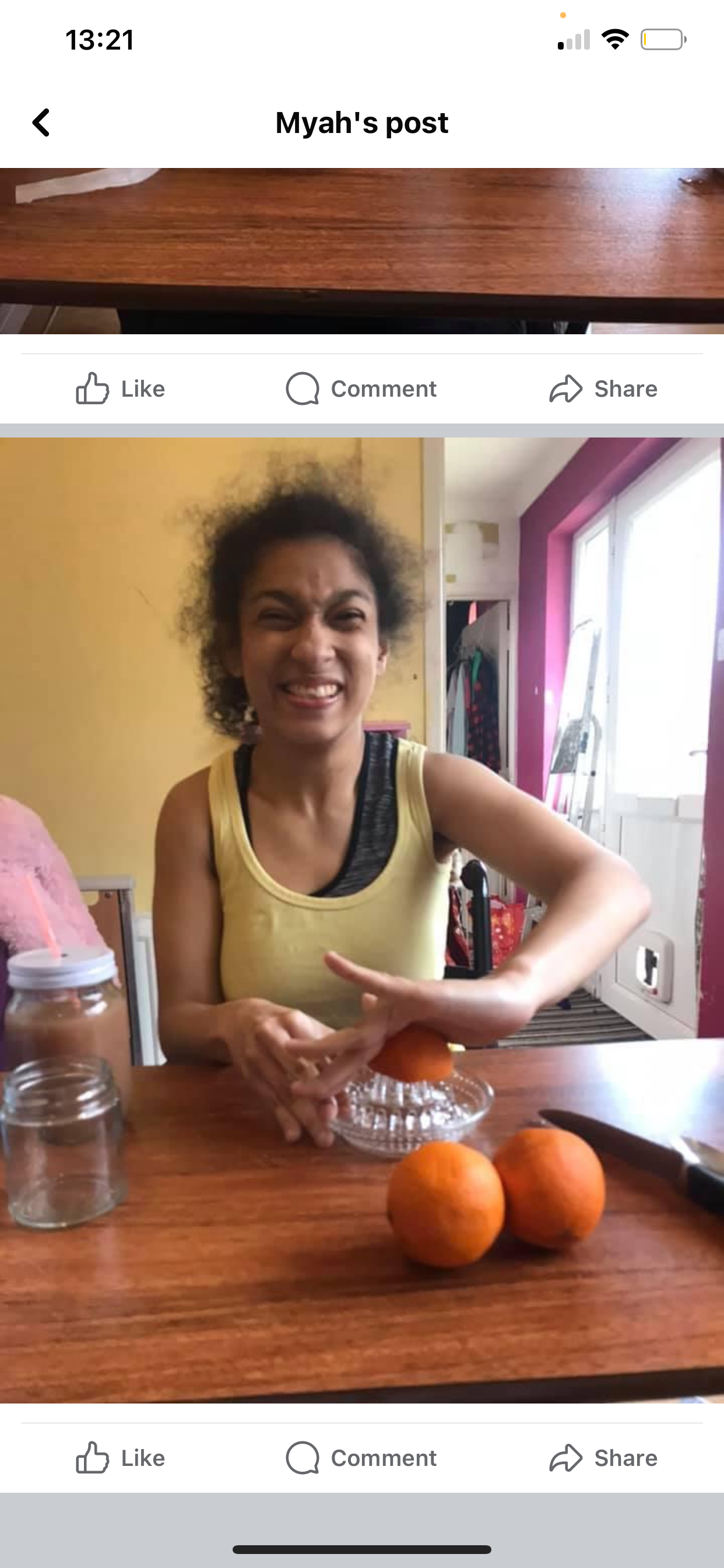
juicing oranges to make grass so
painting of the day for Sunday

saying for positivity of the day for Saturday

Amazon affiliate Pinterest update of the day
Amazon https://amzn.to/3UFUQL1
item of the evening for you all
Former Paralympian John McFall is working with the European Space Agency on a ground-breaking study to see if it’s feasible for someone with a physical disability to live and work in space. BBC News has been following his progress as he undergoes astronaut training.
It’s a test that any budding astronaut has to go through. But it’s not for the fainthearted – or the claustrophobic.
With a clang, the door slams shut, enclosing John McFall in the darkness of a coffin-sized metal box.
The spinning begins.
He’s in a giant centrifuge, being whizzed around and around, to mimic the extreme gravitational forces of a rocket launch – and the even more extreme G-Forces of coming back down.
“The faster it spins, the higher the G load,” John explains.
“And today we’re going to be going up to about 6 Gs – so six times the force of gravity. It replicates what it would be like during re-entry into the atmosphere in a Soyuz capsule.”
The test is part of John’s training programme with the European Space Agency.
In 2022 he was selected as their first astronaut candidate with a physical disability, to work on a ground-breaking study to see if he could go to space safely.
John’s an amputee, he lost the lower part of his right leg in a motorcycle accident when he was 19.
He usually wears a hi-tech prosthesis. But he’s taken it off to test the effects of the centrifuge on his upper-leg.
ESA flight surgeon Maybritt Kuypers is monitoring him.
“It’s the first time we have had an amputee in the centrifuge,” she explains.
“The astronaut is basically lying on their back in a sort of seated position, so this influences the blood flow – also in the leg. We were curious to see how that would affect him, but it went really well.”
John’s paused his career as an orthopaedic surgeon to take a leap into the unknown of astronaut training.
He’s moved from the UK to the European Astronaut Centre in Cologne, Germany.
He isn’t guaranteed a space flight, but this study will see what needs adapting to make it possible – the spacecraft, spacesuits or his various prosthetic legs.
Today he’s assessing his running blade.
Sport is a big part of his life, John’s a former medal-winning Paralympic sprinter. And keeping fit in space is crucial to maintain muscle mass and bone density.
John’s using a special anti-gravity treadmill, which recreates the weightless conditions on the International Space Station (ISS). A pocket of air lifts him slightly, artificially making him lighter.
He explains how his body weight pushes his blade into the ground, compressing it so it bounces back up again to give him a natural spring to propel him forward.
But the treadmill lightens him to about 80% of his body weight, so his blade doesn’t work as well.
“I notice that the blade is too stiff,” he explains. “That’s because I’m lighter and putting less force into the blade, so it’s bending less, and therefore giving me less spring back.”
He thinks he’d need a bendier blade – but there’s more.
On a parabolic flight last year, where John experienced weightlessness for the first time, he found his day-to-day, hi-tech, microprocessor prosthetic leg would need recalibrating.
In fact, John thinks he might need several prosthetic legs on the ISS.
“There would be a prosthesis for running, a back up for the microprocessor prosthesis, and then there’s the mechanical one, which will probably need to be worn inside the spacesuit for launch and return,” he explains.
“I’ll need a bit of a wardrobe of prosthetic hardware.”
ESA is the first space agency to carry out a project like this.
Until now, John’s disability would have prevented him from becoming an astronaut. But Frank De Winne, the head of the European Astronaut Centre, wants to change that.
“We think this is a great opportunity because we have so many great talents – people that have a disability, like we see with John,” he says.
“Why should we not try to harvest this talent for great missions like astronaut missions?”
The move to Germany is a big change for his wife Sonia, a former Olympic gymnast, and their three young children Fin, Isla and Immy.
Around the dinner table, they talk about their dad’s new job. Their friends think it’s “cool”. Fin can’t believe his dad has swapped being a doctor for a job where he might be sent “into the big black void” of space.
Sonia says John’s new career is 100% right for him.
“It’s a big thing in our family that you go for every opportunity,” she says. “And for me, this was an opportunity and he’s gone and taken it. I hope he gets the reward for it, which is eventually going to space and showing people that it’s possible.”
From a taste of space on a parabolic flight to taking a spin in a giant centrifuge, follow ESA astronaut John McFall as he studies whether it’s possible for someone with a disability to go into space.
Back at the centrifuge, it slows to a stop and the door clangs open. John gives a thumbs up.
“It was brilliant,” he says with a grin.
“And do you know what? I didn’t actually notice my right leg at all throughout the whole thing. It was probably the most comfortable part of me throughout the whole process. And that’s really good to know for this flight study.”
John’s about halfway through the project and so far hasn’t found anything that would stand in the way of a mission.
And every taste of space is confirming to John he’s made the right choice, because this could change people’s perceptions.
“I like to think that it will broaden their horizons and their knowledge of what someone with a physical disability is capable of,” he says.
“But I also hope that they see me as just John. Because I am just John and I want to be an astronaut and I happen to have a physical disability. This is the message that we’re trying to deliver.”
favourite painting of the day
💜❣️❣️

💜💜
A “baking and brewing” company is back in business a year after the appearance of a sinkhole forced it to relocate.
The Equal Brewkery, in Norwich, has been offered a new home in a disused shipping container in Whitlingham Country Park on the edge of the city.
The community enterprise, which supports people getting back into work, had to close in May 2023 when the sinkhole appeared close to its former home in the Ipswich Road Community Hub.
Founder Bill Russell said: “After a year looking for a new home, we’re looking forward to getting back to helping the people who really need us.”
Mr Russell, an ex-headteacher, set up Equal Brewkery in 2017 after he suffered a stroke.
He said he wanted to show others that a physical or mental disability was not a barrier to “being part of society”.
“The work we do supports people who are so often ignored or dismissed by society,” he said.
“We are teaching skills and confidence, but we are also showing people that they are a valued part of our community.”
The combined bakery and micro-brewery passes on “vitally important skills” including how a business works, preparation of stock, marketing, teamwork – and sharing and developing knowledge.
All money generated from the sales of the goods go back into the organisation and bread they make will be available from the flint barn in Whitlingham Country Park on a Monday and Tuesday.
With support from the insurer Aviva, the enterprise raised more than £15,000 to transport a shipping container into a brewery.
Carl Bilham, Aviva Change Integration Manager and volunteer, said: “Projects like this are hugely important to the local community, teaching valuable skills, getting people ready for the workplace and inspiring them towards a better tomorrow.”
afternoon saying for you all including



The black leather sofa in the corner of Dr Ellen Wiebe’s office looks out of place in a doctor’s surgery.
But this is no ordinary clinic. Canadian clinician Dr Wiebe is showing Liz Carr, a comedian, actress and disability rights campaigner, where people sit when they come to end their lives with the help of a doctor.
“They can snuggle up with their loved ones if they want,” says Dr Wiebe. “It’s a good place for some people.”
Carr became a wheelchair user after becoming ill when she was only seven years old.
“Apart from the fact I don’t have the desire, I think probably I would be eligible [for assisted dying] under Canadian law,” Carr suggests to Dr Wiebe.
Dr Wiebe doesn’t disagree – though she does tell Carr she would have to convince her she was “suffering unbearably” in order to be given a cocktail of drugs to end her life.
In Canada, people with a disability can have an assisted death, provided they feel they are suffering intolerably and their condition cannot be reversed.
Carr has been a vocal opponent of assisted dying for more than a decade. But in the last six months, the debate has accelerated, with Scotland set to debate an assisted dying bill this autumn, and Labour leader Sir Keir Starmer saying he would back a UK-wide change to the law.
The Silent Witness actress is concerned about how this could affect vulnerable or disabled people. These fears are central to her new documentary Better Off Dead?, in which she makes the case against assisted dying in the UK.
Assisted suicide is banned in England, Wales and Northern Ireland, with a maximum prison sentence of 14 years. While there is no specific offence of assisted suicide in Scotland, euthanasia is illegal and can be prosecuted as murder or culpable homicide.
Just last week, broadcaster Esther Rantzen, who is terminally ill with lung cancer, begged MPs to attend a debate on a petition which argues that “terminally ill people who are mentally sound and near the end of their lives should not suffer unbearably against their will”.
Carr is afraid that changing the law for terminally ill people could eventually result in those who are poor, disabled or mentally ill being allowed to have an assisted death in the UK – or even feeling compelled to do so.
The actress says the possibility is “terrifying”.
She points to Canada where the law was changed in 2016 to allow those whose death was “reasonably foreseeable” to have an assisted death, and then changed again in 2021 to include those with a medical condition who were “suffering unbearably”.
Journalist Melanie Reid, who became tetraplegic (paralysed from the neck down) in 2010 after a horse-riding accident, doesn’t see a potential change to the law as something to fear, and tells Carr she has “a human right to decide what happens to my body”.
She believes the law should also allow people who are not terminally ill, but who are suffering in other ways, to end their lives.
But Dr Katherine Sleeman, a specialist in palliative care, says she is concerned for people who may feel they are a burden to their families.
“Patients will say to me: ‘I don’t want to go to a care home really, but I know my family want me to do it and I know it will be easier for them so I think I’m going to say yes’,” Dr Sleeman explains.
“Substitute the words ‘go to a care home’ with ‘have an assisted death’ and I think it’s a completely different picture.”
The specialist believes no assisted dying law can be completely safe, and that some people who do not really want to die will always “slip through the net”.
Lord Falconer, a King’s Counsel who has sponsored four bills that would allow people with less than six months to live to have medical assistance to die, says assisted dying should only be for those with a terminal illness – and that there would need to be legal safeguards to protect vulnerable people.
“Being disabled is most certainly not the same as being terminally ill,” he tells Carr. “The line in the sand for me is terminal illness and it goes no further than that.”
Better Off Dead?, BBC One and iPlayer, will air on Tuesday 14 May at 21:00
good night saying for all

no saying of the day good night from later on


including one of my favourite pets, a pet and flowery saying for you all Taxi saying so🤠


link of the day
Teen Aiming To Become First Deaf F1 Driver
A 16-year-old has his sights set on becoming the world’s first deaf F1 driver.
Caleb McDuff, from Newport, became deaf when he was two years old, after a number of severe ear infections.
His parents made the decision to have cochlear implants fitted which allow him to experience the sensation of hearing.
However, they were told the impact of this would mean Caleb had to avoid contact sports.
After learning this, his dad, Ian McDuff, quickly started researching activities that would be accessible.
“I came across a Canadian driver called Kris Martin who’s a deaf driver trying to get in NASCAR and he sort of inspired me to look at motor sport,” he said.
He bought four-year-old Caleb a go-kart for Christmas and he’s been racing ever since.
“I don’t know what I would be doing if I wasn’t racing,” Caleb said.
Until last year, Caleb wasn’t able to use his cochlear implants comfortably under his helmet which meant taking them out and driving in complete silence.
However, he said that this challenge has made him the driver he is today.
“I think it helped me focus more on what’s ahead of me than what’s surrounding with the sound.
“It makes me a unique person, because people will be like, ‘how do you race in silence?’, and I’m like ‘that’s just me’.”
Ian said Caleb has learnt how to feel the car rather than listen to it.
“He actually felt the car changing in different situations which was very impressive.
‘”He could even feel the presence of another kart because the air vibration was different.”
But, despite excelling as a silent driver, there were limitations to the level he could compete at without hearing.
That changed when Caleb signed for Team BRIT, the world’s first competitive all-disabled team earlier this year.
The team has been working to design new ways of communicating with him.
Team BRIT’s Lucy Sheehan explained: “Caleb’s cochlear implants have sound processors.
“They listen and transmit signals through his skull into receivers which are connected to the nerve in his ears.
“We’ve created a technology which means he can wear the processors outside of his helmet.’’
It means, for the first time, he can communicate with his engineer and team radio, but most significantly, he can also hear the car.
Describing the feeling of racing with sound, Caleb said “when you exit the pits and just floor down the car and the best part of going from first, second to third and just hear that roar from the engine.
“Just to hear all that pops and bangs, that’s the best part of racing I’d say.”
The team are now working with Caleb on other ways of communicating with deaf drivers, including those who don’t use cochlear implants.
Caleb hopes that with this new technology he will one day be able to compete in the same racing class as his idol, Sir Lewis Hamilton.
“That’s the top motorsport you could ever be in. If I was to make it to F1, I will be the first deaf F1 driver. If we get there fast enough.”
However, one of the major barriers on achieving this dream is the cost of competing in F1.
“It’s a very expensive sport and financially I can only go so far. So we have to find financial backing as well,” said Ian.
“So, even if he’s the best driver in the world, if we haven’t got the right back up behind us then it’s not going to go much further.”
But, for Ian, he gets enough out of watching his son excel in the sport.
“To think back to when we first learned he was deaf that we just didn’t think he have a career in any kind of professional sport or that he may have even struggled to get some ordinary jobs.
“We were completely unaware of what was possible.”
His dad said: “Everybody is just in awe of him and I’m in awe of him and he just doing such a good job.
“It’s just incredible that this little kid from south Wales is becoming a star.”
It is important for Caleb that he shows people you can achieve whatever you set your mind too.
He said “What I want to do is show people that your disability doesn’t stop you from doing what you want to do.
“Keep being you and just follow your dream, because like, I am deaf but I didn’t let that stop me.”
😆😆😁❤️🔥 positive saying of the day
jump address for adults
smart fashion item of the day
positive saying for sunny Sunday

favourite sunny painting of the day. I hope everybody enjoying the sunny weather got it today like me.

I finished new hair💕🐦⬛
hey my New has

good night saying for Saturday


pencil set item of the day
#Friends #3Memory #MeAndMarkCollege
positive saying of the
positivity on this Friday

Hove Boxing Club Makes Sport Accessible
A boxing club in East Sussex says it wants its accessible coaching programme to be made available in other gyms across the South East of England.
Brighton & Hove Amateur Boxing Club’s adaptive boxing programme is backed by the World Boxing Council (WBC) and has weekly sessions for people with a range of disabilities.
Kieran Green, who has cerebral palsy and leads the programme at the club, says the gym teaches “a safer style of boxing – it’s not just for getting hit”.
The programme includes sessions for wheelchair boxers and people with Parkinson’s disease.
‘Fitness and fun’
Brighton & Hove Amateur Boxing Club first opened in 1946 and has seen Tyson Fury, Lennox Lewis and Chris Eubank walk through its doors.
The club wanted to make the sport more accessible and so developed a carefully planned programme to deliver training safely.
Mr Green explained the sessions taught a range of skills, including defence.
“It’s actually highly skilled, high tempo. It’s all about the fitness and fun as well as the sport,” he said.
Johnny Dawson-Ellis travels from Kent every week to attend the training.
“Being in a wheelchair is sometimes difficult. It’s good to get out the stress and it’s a great stress reliever to come down and do some boxing here,” he said.
Victoria Lacy has been boxing since 2019 and thinks other boxing gyms should run similar programmes.
She said: “Everybody has got this concept of a disabled person not being able to look after themselves, not doing their own stuff, and it’s far from the truth.”
Mr Green says he wants to see the programme rolled out to other boxing gyms across the South East, and, competing in exhibition bouts himself, also wants adaptive boxing to become a Paralympic sport.
what is that saying of
Staff were filmed hitting, kicking and leaving special school pupils in their own urine, the BBC has found.
Despite the school proving abuse in so-called “calming rooms”, some staff are still employed there and have not been barred from working with children.
Parents say they have not been allowed to see the footage and were misled about the use of isolation.
Whitefield School said it acted in pupils’ best interests and was not obliged to make barring referrals.
In 2021, a sealed box containing 44 memory sticks of CCTV footage from inside three of the rooms was discovered by new leadership at the school in Walthamstow, north-east London. It is one of the UK’s largest special schools with about 370 pupils.
The BBC then revealed a joint Metropolitan Police and local authority investigation had been launched into “organised abuse” by staff between 2014 and 2017 – when the rooms were closed.
Now, we have obtained confidential school investigations written by an HR consultant it employed to review the footage and staff conduct.
These reveal appalling abuse and neglect affecting 39 pupils, many who are not able to speak.
Six staff were proven to have abused children on the balance of probabilities but were not sacked – and at least one referral to the Disclosure and Barring Service (DBS) was recommended but not made.
From leaked school and council reports, information requests, and interviews with current and former employees, our investigation can reveal:
- Pupils were left alone in the rooms for up to four hours, with footage showing them naked, sitting in urine and eating crumbs off the floor
- Children were “slammed”, kicked and hit with force “without obvious justification”, while rhino pads – often used in rugby training – were deployed to push pupils inside
- The HR consultant identified more than 20 CCTV clips of excessive force and records of police notes described possible assaults – but despite this the Crown Prosecution Service did not recommend prosecutions
- A whistleblower who worked at the school describes what they saw on CCTV as “torture” – and says the rooms were worse than cells
The whistleblower approached the BBC because they believe the school’s investigations had amounted to a “whitewash”.
“You’ve ended up with staff with no sanctions against them, no learning or awareness, no serious case review to look at what went wrong,” they said.
The Children’s Commissioner for England says the BBC’s findings are “horrifying” and rules on seclusion should be tightened.
“There is no place for any of that behaviour and it needs to stop,” Dame Rachel de Souza says.
The BBC has spoken to nine of the 39 affected families who say they are still being denied answers. We have also seen evidence that one family has been misled by the police.
Many special schools use spaces outside of classrooms to address sensory needs or aggressive behaviour. But children were locked alone in Whitefield’s calming rooms, which were bare and without natural light. One was a former stationery cupboard.
Government guidance states that seclusion should only be used for an “appropriate” amount of time – but Dame de Souza believes these rules were “really stretched” at Whitefield.
One of those put in the rooms was David Gloria, now 20, who has diagnoses of autism, ADHD and OCD.
Despite school records of his placement, he does not feature in any of the 500 hours of footage handed to the police – highlighting the scale of seclusion at the school.
His father, Ricardo, says he asked about the use of the calming rooms when David started being placed in them and was wrongly told that staff always remained with pupils.
David soon began coming home distressed, leading his dad to grow suspicious. So Ricardo demanded to see the rooms and records of the times his son was put there.
The BBC has seen one observation report of a three-hour placement.
In it, David is clearly upset, recorded crying on 38 separate occasions over the period, asking to leave throughout. He is also observed saying he is “confused” and “does not understand” why he is there.
Significant self-injury is recorded – the boy slaps and punches his head, hits his stomach and throws himself into the wall. After two hours, David is twice observed urinating but is not allowed to leave.
After about three hours, the staff member records he would now be returned to his classroom to “recover”.
Education consultant Elizabeth Swan told the BBC the report alone warranted a voluntary DBS referral against staff monitoring David.
His father Ricardo, a police officer, visited the room and said it was worse than a prison cell. He spotted a CCTV camera inside and demanded staff show him one of the videos.
Ricardo says the footage shocked him. He says it begins with David being “assaulted” by staff who put a knee in his back and pushed him inside the room – force which is not recorded in the written observation. He was then neglected.
“My son was in a panicked state and crying and self harming, begging them for water and food and they just ignored him – it’s torture,” Ricardo said.
The boy who appears in more of the original CCTV footage than any other – over 55 hours – is Ashley. He was 12 at the time.
His family says his time in the calming rooms led to him being sectioned in 2020 – his escalating behaviour included him recently jumping out of a moving car.
Ashley is now 22. His mother says his anxiety has become so heightened he rubs his head on the floor so aggressively he has big sores from carpet burns.
“It’s so unbelievable that you could keep a human being in a room the size of a cupboard and expect them to be OK,” Sophie says.
“I thought he was being placed into a sensory room with beanbags and nice colourful lights.”
The leaked documents describe a staff member pinning him up against the wall of a room and hitting him with such force his body is recorded as “jolting” before he then becomes unsteady on his feet.
The external consultant found that the incident constituted proven physical abuse and said the teacher had shown no remorse or concern for Ashley’s welfare when interviewed, suggesting a “potential absence of learning”.
She concluded that the teacher should be dealt with under the school’s disciplinary policy with a referral made to the DBS.
But the BBC has learned this was not made and they continue to teach at the school – a decision Elizabeth Swan describes as “unfathomable”.
This staff member who appeared to strike Ashley was also not prosecuted, despite being interviewed by the police in relation to over 40 video clips of concern.
The same teacher also fleetingly appears in footage visiting a child inside one of the rooms after the pupil had wet themselves and wiped their face, according to the documents.
The child later appears to pick crumbs off the floor and is finally dressed – without being cleaned – about 90 minutes after arriving. On a separate occasion, a non-speaking child is left sitting in urine.
Another mother, Halima, says the school only told her that her non-speaking son, Abdulahi, had been placed in the rooms on two occasions, but he appears in 11 videos passed to the police.
Separately, the Metropolitan Police has told the family about a single “stand-alone isolated” incident. But the BBC has learned of another occasion where he was repeatedly pushed – in what records of police notes described as a “possible assault” with him then having been left alone walking on his knees, crying.
The BBC’s findings highlight how children have more rights in young offender institutions than in school seclusion, safeguarding expert Elizabeth Swan says. She says a youth custody regime with no external scrutiny had, in effect, been enabled at Whitefield.
Dame Rachel de Souza believes the significance of the failings means a referral should be considered to the national safeguarding board, which reviews cases for learning.
She says staff proven to have abused children should be sacked and that DBS referrals should be made when they have been advised.
Flourish Learning Trust, which runs the school, told the BBC that a new leadership team had taken over after the calming rooms had been shut, shared the footage with the police and learned from the failings.
It said some staff had resigned since its investigations were completed but three who returned have received extensive training. It said it complied with employment law and the local authority, Waltham Forest, was content with its conduct.
Separately, one staff member was sacked by the Trust. But the Trust added it was not legally obligated to make DBS referrals for the six staff members who were not sacked despite its investigation findings proving they abused pupils. The school says this is because they were not removed from their roles – but had rather been suspended.
Government guidance says suspension qualifies as removing a staff member from a role. The DBS also told us the duty to refer staff is not altered by a decision to suspend them.
We asked Waltham Forest why it had not made the referrals itself, given the severity of the abuse proven by the consultant. It said it acted in accordance with requirements.
The BBC has also learned that the use of seclusion varies widely in England. Information requests received from 375 special schools revealed that 50 schools isolate pupils in rooms on occasion, typically involving monitoring of them through doors or windows, or on cameras. A handful said pupils can be locked in the rooms.
A government spokesperson described the abuse at Whitefield School as “abhorrent” and said its guidance on seclusion provided clarity on the difference between punitive and non-punitive use.
Parents have repeatedly requested footage of their children inside the rooms from the police and local authority investigation.
They say the Met Police has blocked its release and either told them it is too distressing or would breach privacy law.
The force says it is unable to comment while enquiries continue into non-Whitefield staff, understood to relate to other professionals who may have had knowledge of concerns.
Wheelchair user Kat Watkins has said a doctor assumed she was not having sex because of her disability.
The 37-year-old from Swansea said she was also told she was “a very odd shape” by the consultant while having a smear test.
She is one of more than 30 adults who told BBC Wales Live they have faced barriers to healthcare due to their disabilities.
The Welsh government said it was “very disappointing” to hear these stories.
Due to her condition, osteogenesis imperfecta – which creates brittle bones – Ms Watkins said gaining proper healthcare is almost impossible.
She said she now avoids seeking medical attention due to her “traumatic” past experiences.
“I’ve been fighting for the last 37 years to get through barriers and they’re still there. So for me they’re more than just barriers, it is a constant battle,” she said.
Ms Watkins described the smear test, saying the consultant recommended cancelling them in the future as she was not sexually active at the time.
“He was making the assumption that I wasn’t having sex because I’m a disabled person,” she said.
Despite telling staff the best way to position her body, she said they also treated her like a “textbook example”, rather than as an individual.
It meant she had to revisit several times until they were able to obtain a result.During another visit to hospital she said she felt she was not listened to or believed by staff when she told them she had broken several bones in her leg – it was later confirmed that it was broken in five places. “I got a letter back to say the doctor had done everything correctly and they couldn’t see any problems,” she said.
“I was heartbroken, I was completely dismissed – all my feelings were dismissed.”
Swansea Bay health board said it could not comment on individual cases but it would be happy to discuss Ms Watkins’s concerns with her.
‘I was failed completely’
Michelle Penny has never had a smear test due to lack of access and, like Ms Watkins, she feels failed by the healthcare system.
“I just hope and pray that nothing is going wrong, I’m crossing my fingers and hoping for the best,” said the 39-year-old.
She has been left almost bedbound by Myalgic encephalomyelitis and struggles to leave home to attend medical appointments.
“Everyone needs healthcare of some type, but if you can’t get to them then you’re failed completely,” she said. Ms Penny has not seen a GP in around six years, and has routine asthma appointments over the phone – but says it is not satisfactory. “You could tell them anything they’d have to believe you because they can’t see you,” she added.She has backed calls for at-home tests to detect for HPV, which are currently undergoing a trial in England.
Other examples people shared with Wales Live include:
- A man said that, during a fit he couldn’t control, he heard staff say he was doing it on purpose
- A women said a lack of ways to contact her surgery puts her off contacting them after it recently took 339 attempts to get through on the phoneline
- A deaf woman claimed she had her BSL interpreters cancelled by a hospital, as they had seen her speak and so assumed she could lip read
- A women said private tests confirmed that new symptoms weren’t a part of her existing disability after NHS doctors insisted that they were
“We see a lot that many who have had battles and barriers with healthcare, no longer have anything to do with it, as a result they say they have new impairments or conditions have worsened,” said
Alex Harrison, disability equality officer at Disability Wales, said that many people who have “battles” with healthcare simply disengage from it.
“As a result they say they have new impairments or conditions have worsened
Wales has the highest proportion of disabled people in the UK at 26%, according to the organisation, and Ms Harrison said communication is a common barrier many can face to healthcare services.”Many feel like they’ve just been ignored or are too much work to engage with,” she said.
“We hear so much that people are just waiting and waiting for contact and then it never coming.”She believes disability equality training and more opportunities to feedback is needed to create change.Ms Harrison added: “Training should be delivered by a disabled person and we also think the creation of some advisory groups for health boards that people with different conditions could sit on, could engage with them and hear lived experience.”
The Welsh government said: “It’s very disappointing to hear these stories and we expect people with disabilities to be listened to and treated respectfully when they access NHS services.”Our Disability Rights Taskforce is working with disabled people and organisations to make recommendations to improve the lives of disabled people in Wales.”

Ministers Seek To Overhaul PIP
Disabled people could face major changes to how the personal independence payments (PIP) benefit works, as the government tries to tackle the rising number of claimants with a mental health condition.
Reforms to PIP could include stopping regular cash payments, and instead offering claimants one-off grants for things like home adaptations.
The number of people claiming PIP in relation to anxiety and depression has soared in recent years, leading Prime Minister Rishi Sunak to say on Monday: “We need to do something about that.”
The disability charity Scope described the plans as a “reckless assault on disabled people”.
The plans are subject to a 12-week consultation, ending on 23 July.
It is highly unlikely there will be enough time to implement the changes before the general election, which is expected to take place by the end of the year.
How much is PIP? Who can claim it?
PIP was introduced in 2013 to replace Disability Living Allowance for people of working age to help with extra living costs caused by long-term disabilities or ill health.
How much people are given depends on how difficult they find everyday tasks and getting around. The maximum weekly payment is £184.30.
You can claim PIP whether you have a job or not – and many claimants have told BBC News disability correspondent Nikki Fox the payments are essential to help them stay in work.
The most recent statistics, external say more than 3.3 million people in Britain receive PIP to help with the extra cost of living with a health condition or disability. Some claimants are of retirement age but are eligible because they received support when they were of working age.
The cash can be used for things like special diets, additional laundry, accessible transport and higher insurance costs.
The government says spending on PIP is expected to grow by 52% from 2023/24 to £32.8bn by 2027/28.
The number of monthly new claimants in England and Wales, where the main condition was anxiety and depression, grew from an average of 2,200 a month in 2019 to 5,300 a month last year.
And the government says the rise to the benefits bill is “unsustainable”.
In Scotland, PIP is being replaced with Adult Disability Payment, external.
Paul Harris, from Barnard Castle, gets £72.65 a week in PIP payments to help with extra costs associated with his anxiety and depression – such as for specialist therapy apps and counselling.
He stopped his job as a property manager in 2016 after developing panic attacks that got so bad he would burst into tears in the office and lock himself in the toilet.
He has not been able to work since then and says PIP is the “last stronghold” of benefits that can support him.
Mr Harris said: “I used to call myself zero, because I had zero money coming in. I had no job… so in a weird way, just a little bit of money coming in just sort of changed those thoughts.”
He does receive employment and support allowance, but cannot claim job seekers’ allowance because he says his mental health is a barrier to applying for jobs, despite previously seeking support from the Jobcentre.
He said the money he receives “does not solve the problems”, adding: “It’s not a miracle cure – it doesn’t mean we can go off on holidays and live this frivolous lifestyle.”
Mr Harris does not believe there is enough long-term support available for those with mental health issues.
night pay for all thank you to all my blogging family
I am of the day and
saying of positivity and selfie of the day

honeybee dinner plate item of the afternoon
honey, honey bee https://amzn.to/3UBQc1D


 Same Difference