just giving for respite care for those that want to know
Katie Price Fighting To Keep Harvey At College
Katie Price is fighting to keep her son at his residential college in Gloucestershire.
Funding for Harvey, who is autistic, to stay at National Star College, near Cheltenham, could soon be stopped by Katie’s local authority.
West Sussex County Council plans to cut the financial support this June. But the TV star has now appealed the decision so her 21-year-old son can stay at the college for another year.
The council has been approached for a comment.
Speaking on The Katie Price Podcast, she said: “Anyone who has got a child with needs or anything like that, you do like EHCP forms, statementing to keep them in or get them to another school.
“So I’m doing that with Harvey because obviously the government, they pay for his schooling.
“So I’m filling that out. We’ve appealed it. So I’m just sorting all of that out.”
The former model had previously told fans that it was a “nightmare” sorting out where Harvey would live.
Harvey, who also has Prader-Willi syndrome, septo-optic dysplasia and a learning disability, has been at the college since 2021.
“With someone like Harvey you need the transitional move, you need to do it slow,” she said.
“I’m trying to find somewhere nearer or something for Harvey but three months isn’t a long time.”
The family filmed his move into the college as part of BBC documentary Katie Price: Harvey and Me.
Candid scenes showed the highs and lows for Harvey as he settled into his accommodation, and living without his mum for the first time in his life.
National Star College did not want to comment on the case.
Good night staying for all of those that like positive sayings come and join me now on TikTok live for those of you that are on

tea for Sunday

item of the day for you all for Sunday
Amazon Pinterest
phone case for smart phone
women’s pyjamas, Odae style black grey and pink all in one
Women’s pyjama https://amzn.to/3Wi6yO7
pyjama Odae style men’s pyjamas
white leather jacket
pick up two trousers loose fitting red and black
candy floss looking feather chandelier
https://amzn.to/3wjY2nd
yellow we golden bedding set
Lemon versus rain for you all
no emoji notes on your fridge
same of the evening for you all as well as good
but I’ll be in summer outfit
ha incorrect cat necklace for women
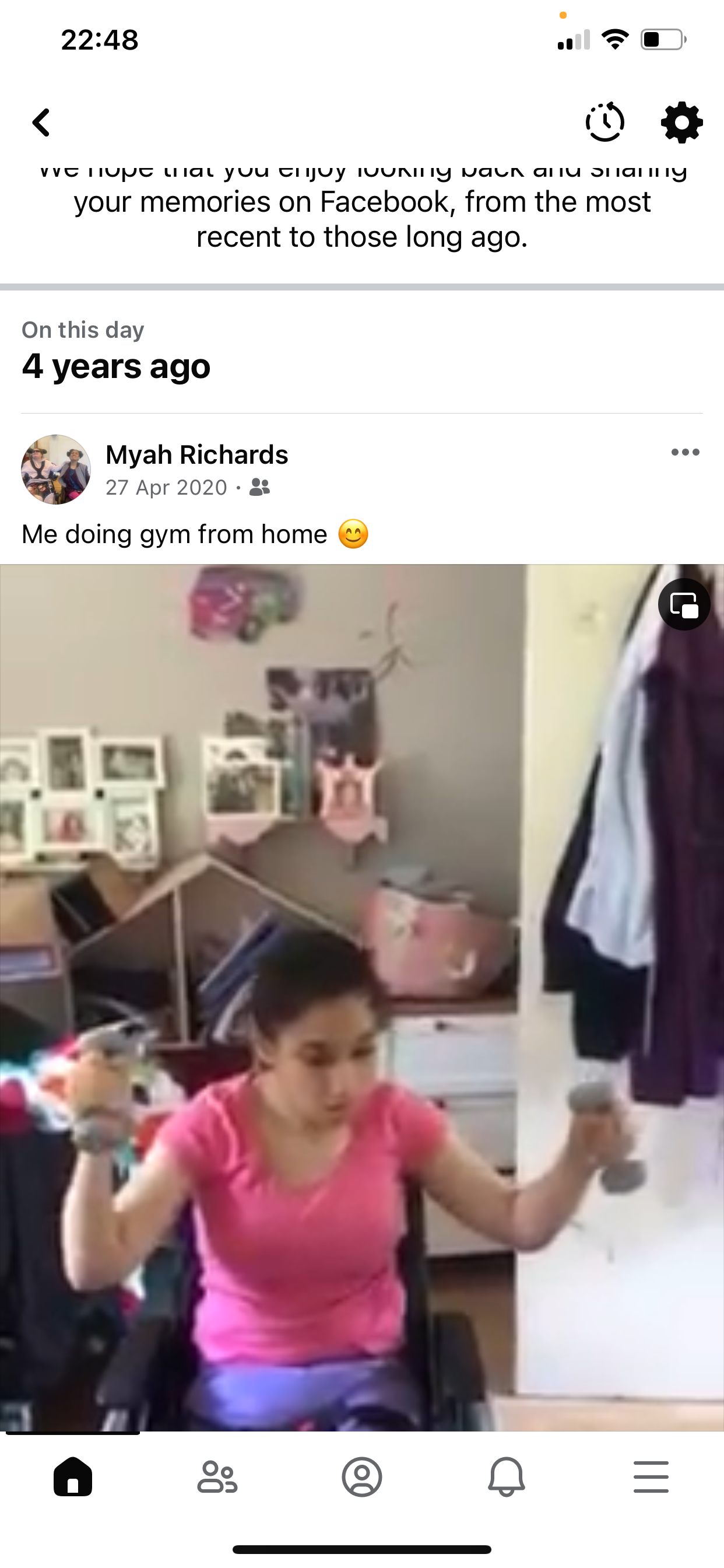
me and a lockdown exercise workout
perfect design for small dogs
frog shaped dog bed
body wash flannels
https://amzn.to/3WdVvpm
wallpaper suitable for nature lovers bedroom
toy Sweetcreek pro
play birthday cake for imaginative play

Sophie of the day

evening saying/good night

Northants Guide Dog And Robot Best Friends After Date
A guide dog has conquered her fear of delivery robots after going on a date with one.
Amelia, a Labrador from Raunds in Northamptonshire, reacted badly to Levi the robot when they crossed paths during a walk.
The delivery company that owned Levi invited Amelia to its depot to try to break the ice.
And Amelia’s owner said the technophobic dog was now taking electronic couriers in her stride.
White boxes on wheels with aerials sticking out of them have become a common sight in some towns and cities as they trundle down pavements and across roads delivering takeaways and packages.
But David Holmes, Amelia’s owner, discovered that, while the robots may be familiar to most people, they were new to Amelia.
He said: “Amelia took me to the kerb, and she started barking, growling and pulling me into the road.
“I heard a little trundling noise behind me. Obviously, I didn’t know what it was, and when I got home, my wife said to me ‘did you meet the robot?’ and then it all clicked.”
Mr Holmes posted about his experience on social media and it came to the attention of Gareth Chisholm, general manager at DPD’s depot in Milton Keynes.
He said; “I wanted to reach out to see if we could do any sort of acclimatisation and make the dog and the robot best friends.”
He brought them together at the depot to see what would happen.
He said: “We didn’t really have a plan of how we were going to introduce them – we knew we had to do it slowly with treats.
“She started off very apprehensive, but once the treats came through, she got more involved to the point where we were able to walk the robot past Amelia with very little reaction and she got more and more accepting of it being in the area.”
The tests were then repeated on a pavement outside the depot, to reflect a real-life environment.
Amelia passed with flying colours. She did not react to Levi’s presence.
Soon afterwards, Mr Holmes discovered that the familiarisation session had really worked.
He said: “I went out for lunch and I had my wife with me and she said there was a robot there.
“Because Amelia didn’t react, I didn’t know.”
Last item of the day
some of the early evening for you https://amzn.to/3wk0bzg
item of the early evening for
Amazon private Pinterest update for you
second positivity painting/saying good day for you all
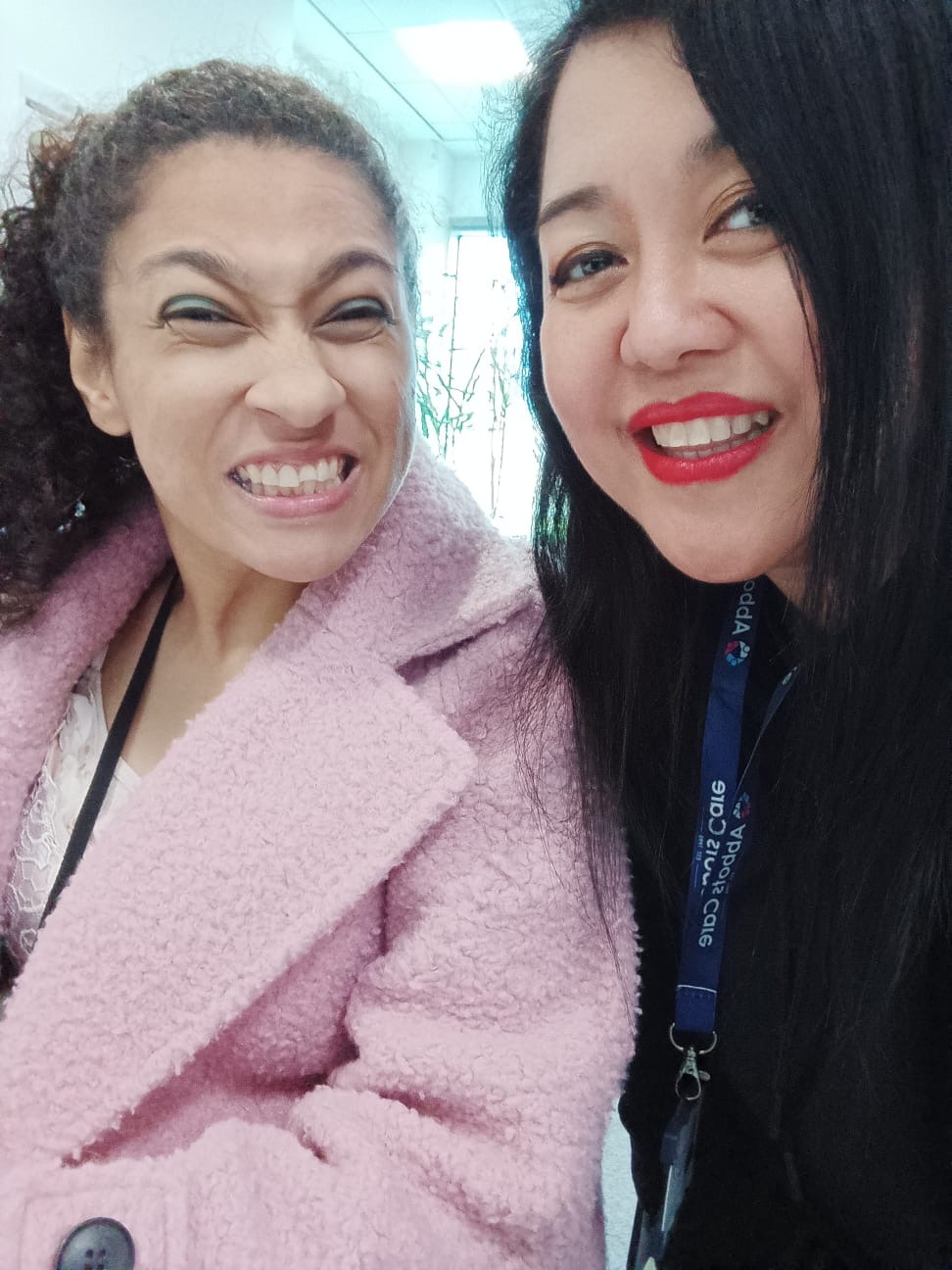
photos of me and mine PA who went with me to my college interview yesterday she is my replacement PA for Mollie
positivity saying of the day for you all

Guide Dogs Taught To Deal With Delivery Robots
A sight-loss charity is teaching trainee guide dogs how to deal with delivery robots after owners reported their pups were unnerved.
The Guide Dogs training centre in Leamington Spa has teamed up with the firm behind the tech so dogs-in-training could be familiarised with it.
Starship Technologies donated a robot shell to the charity and pledged to support working dogs reacting to the machines on the streets.
Staff at the charity said they were “really pleased” with the progress already made by apprentice guide dog Vinny, external.
Autonomous six-wheeled delivery bots travel on pavements to deliver food, groceries and packages.
They were introduced in Milton Keynes six years ago and since expanded to towns around the UK, with firms such as the Co-op and DPD opting in.
Guide dog trainer Paul Lennon explained a couple of service users had highlighted dogs’ “strange reactions” to them.
“We expect the use of them to really go up over the next few years,” he said.
“We really wanted to have a training aid [to make sure] they’re not going to be held back by things that they meet on the streets.”
Golden retriever Vinny’s training introduced him to the static bot in a room strewn with boxes, toys and sniff matts, with movement incorporated later.
Scattered treats fostered a “positive association”, Mr Lennon explained, adding he was “really pleased” with the two-year-old’s progress.
“We’ll do this time and time again just to make sure that the dogs are really happy with it,” he said.
Ryan Holroyd-Case from Starship Technologies said its partnership with the charity would deepen their understanding of how guide dogs interacted with the tech.
“Over the years we’ve conducted testing with guide dogs to observe their reactions,” he said.
“We’ve found many dogs work very well around our robots without distraction, but some need a little more support.”
The Leamington-based guide dog training centre is the largest in the country, supporting about 250 owners in the area.
“I was frustrated, lonely and unhappy during lockdown.”
That was the experience of Peter Livingstone during the pandemic, and he hopes the UK Covid-19 Inquiry will examine how people with learning disabilities coped.
He was speaking during an event to mark the inquiry arriving in Northern Ireland next week.
Peter, who is 35 and has disabilities, moved back to live with his parents during the pandemic.
He said being isolated from his friends during lockdown was tough.
“I was so lonely and when I had to go into hospital for treatment it depended on which matron was on if people were allowed in to visit me,” Peter said.
Not being able to see family members was stressful and sad, he added.
Peter hopes people with learning disabilities will be given a voice so lessons can be learned and views recorded for the future.
Senior politicians, health officials and key decision makers who were charged with guiding Northern Ireland through the pandemic will appear before the UK Covid Inquiry from 30 April to give evidence.
Secretary to the inquiry Ben Connah said he wanted local people to continue coming forward to tell their stories and help shape the final report’s recommendations.
Speaking at the Ulster Museum, where an exhibition marks key moments of the pandemic, Mr Connah said the inquiry’s presence in NI was important.
“The inquiry will be examining the core decision making in NI and hearing stories from members of the public to help the inquiry build a fuller picture of how the pandemic affected local people and the UK as a whole,” Mr Connah said.
He said it was not too late for people to get in touch.
Bereaved Families for Justice in Northern Ireland have said they are not satisfied with aspects of the inquiry and have called for Northern Ireland to have its own separate investigation.
Mr Connah, who has met families on numerous occasions, said he had tried to reassure them that their stories and concerns were important and key to the inquiry’s overall findings.
The UK Covid Inquiry was established in June 2022 to examine the UK’s response to and the impact of the Covid-19 pandemic and to learn lessons for the future.
It was established as a direct result of campaigning from Covid Bereaved Families for Justice who had been calling for a wide-reaching statutory inquiry that would establish the truth about how so many people lost their lives and whether any deaths could have been prevented.
Module 2c of the Inquiry will look at how the structures within NI responded and communicated with the UK government, decision-making, public health response, decisions made and by whom and how those decisions were informed.
adopted not saying for you puppy lovers

cute dog pay for your nighttime
sing for the nighttime

good night Sally
of the evening
item of the evening
lockdown memory I love this photo of me and my favourite photos of me doing period of lockdown
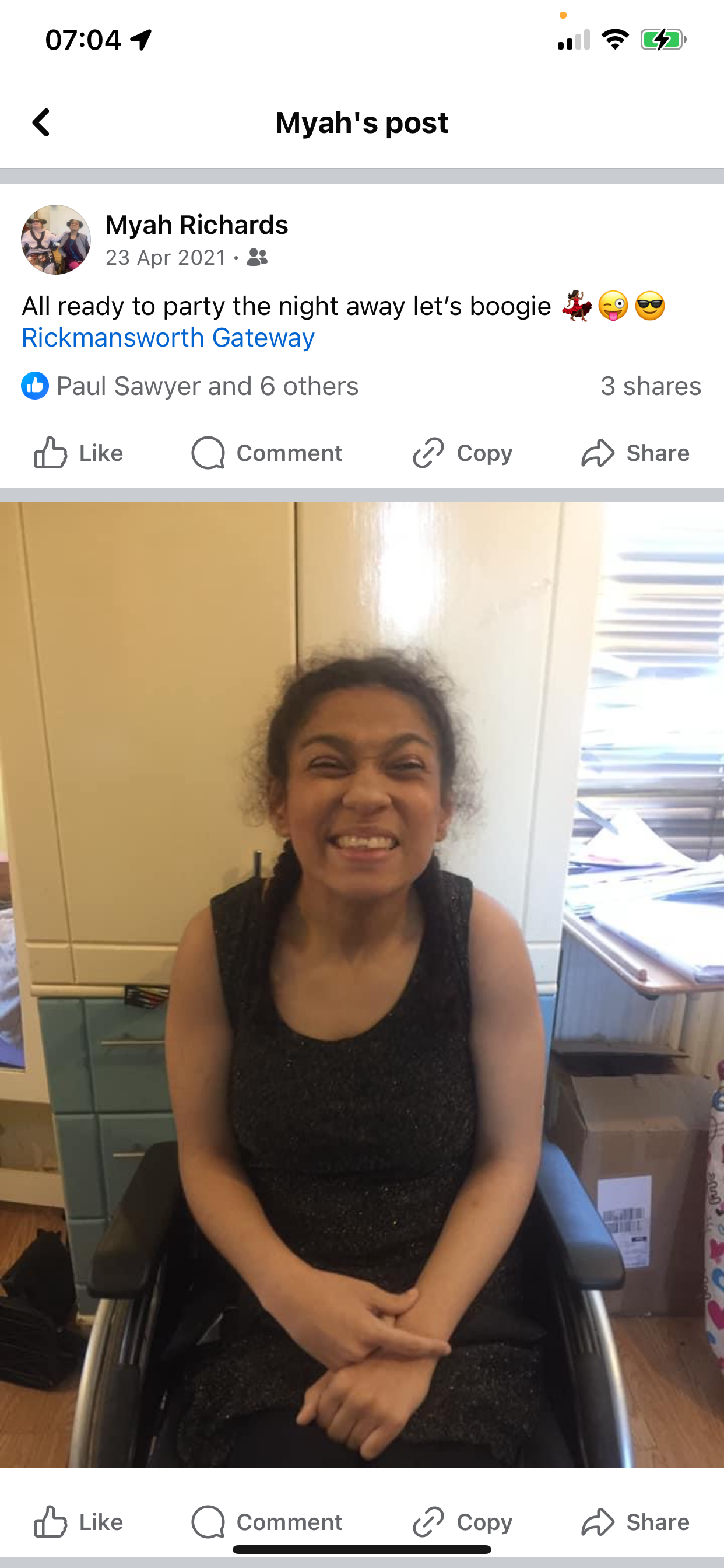
happiness bro wishing you all successful day in employment college or university of volunteering opportunities today

children girls early item of the day
CP Man Runs Six Major Marathons
A difficult birth left Andrew Tomlinson with a brain injury which made his chances of ever walking slim.
But more than 30 years later, he believes he is the first runner with cerebral palsy to complete all six of the world’s major marathons.
On Sunday, the 40-year-old from Glasgow crossed the London Marathon finish line in under four hours.
He has previously completed races in New York, Chicago, Tokyo, Boston and Berlin.
Andrew said building up to the London race had taken three years of his life.
“At the end I was fighting against all the emotions – pride, joy, finishing … but also sadness too, because it’s finished.
“I wanted to go back to the start.”
Andrew has hypertonic cerebral palsy, which means he suffers from tightening muscles and regular spasms.
It affects his the mobility down the left hand side of his body and means he walks with a visible limp and has slurred speech.
He receives regular treatment as symptoms can flare up, causing him severe discomfort.
“It’s one of the worst pains,” he says.
He says keeping active also helps control some of the pain, making it more bearable to live with the condition.
“Running also hurts but I’ve noticed that the more I run the less the cerebral palsy hurts, so it’s actually helping me,” he says.
There are about 16,000 people with cerebral palsy in the UK, and it affects everyone differently.
Along with the physical impact of the condition, Andrew has also suffered socially, which is why he made the decision to take up running.
He says cerebral palsy can often isolate him from others. In 2019 he realised that he’d got himself into a rut and that something had to change.
“I’d come home from work and play a games console by myself and one day I thought I really have to challenge this, cerebral palsy was winning.
“I spoke to a friend who suggested I try a marathon. I thought, I don’t even know if I’ll manage a 10k, let alone a marathon.”
Marathon ‘miracle’
Within six months, Andrew had travelled to Berlin to complete his first world major marathon. The next year he joined his local road running club, which he says enhanced his life.
“I now have a hobby and a social life,” he adds.
His mum Linda says that the fact Andrew is able to walk, let alone run marathons, is a miracle after a difficult birth left him with damage to his brain.
“He had lack of oxygen to the brain but we didn’t realise at first,” she says.
“When he was one we noticed he wasn’t using the left hand side of his body. I took him to the doctor who referred him to a specialist.
“It was then we were told he has cerebral palsy and that he might never walk.”
‘A true inspiration’
Linda took medical advice and Andrew attended physiotherapy at Glasgow’s Yorkhill hospital for sick children.
Within two years he took his first steps.
“He tripped up and fell often, even today he struggles – but when he does fall he gets straight back up again.
“But running seems to have the opposite effect. When he runs he relaxes, it’s like he’s not got cerebral palsy.”
Linda says she worries about Andrew on his solo travels around the world completing marathons, but knows he’s doing what he loves.
“He puts an awful lot of work in, he never complains and he tries so hard to keep himself mobile.
“He’s a true inspiration.”
Women With Learning Disabilities Star In Menopause Film
A film has been made by and for women with learning disabilities or autism to explain that perimenopause and menopause symptoms are not “embarrassing or scary”.
Ace Anglia, based in Stowmarket, has worked with Suffolk Libraries to share what happens before and after periods stop. The film features women supported by the organisation.
Nicole Smith, from the libraries’ Menopause and Me Project, external, said the aim was to “reflect different experiences” and to show people they were not alone.
Women in the video, external explain that moods can change, you can forget things, and symptoms are different for everyone.
Shenah, who features in the film, said: “People with menopause matter. Making more people aware of menopause is really important.”
Rae, who was also filmed, said: “It is important to make this film for women who are about to go through menopause to understand what it is and how it changes your body.”
The video explains that it is “natural”, that having a healthy diet or taking HRT can help, and that it can be beneficial to talk to support workers, friends or family members.
“The menopause is not embarrassing. It’s not scary. It’s natural. You can speak up about it. You are not alone,” the film explains.
Ms Smith said: “We want to reflect different experiences of the menopause and perimenopause in the resources we produce – whether that is from a sexual orientation, cultural or, in this case, learning disability and autism perspective.
“We want people to be able to not only identify with what they hear or read but also feel supported and, most importantly, not alone.”
A spokesperson for Ace Anglia, said: “We approached Suffolk Libraries to suggest creating some accessible information for women with a learning disability as part of the Menopause and Me project.”
Teams are also working to develop resources in more accessible and easy-to-read formats.
good night saying for everybody that likes saying of the day





 Same Difference