Skip to content

Gary Bourlet Asks Why It Is OK For Politicians To Ignore People With Learning Disabilities

May 21, 2014

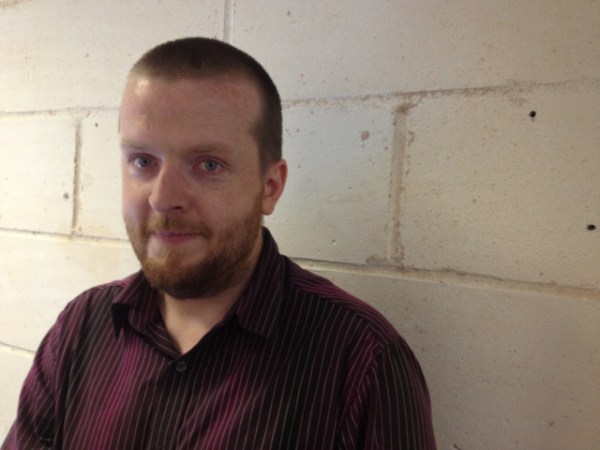
Gary Bourlet wants to give people like himself, with learning disabilities, a greater voice and presence so they feature in places other than “secret footage on Panorama”, referring to Winterbourne View, where the abuse of patients with learning disabilities was exposed by the BBC in 2011. To this end, he has set up People First England,to encourage adults with learning disabilities, rather than care professionals, to participate in politics and appear on TV and radio discussing stories that affect them.

“We want people speaking for themselves about issues that concern them, rather than the professionals,” he says. “We want greater powers to be seen, to vote, to be included, have the same opportunities in social life, education and employment as everyone else.” Bourlet, 55, has launched the user-led charity with disability rights activist Kaliya Franklin.

More than one million people with learning disabilities are eligible to vote. Bourlet says: “Politicians get upset if they don’t get anyone from the grey vote, the black and minority ethnic vote, or young people. But when it comes to people with learning disabilities, it’s not an area they’re worried about.” He adds that people are confused by the political process and politicians’ language: “They don’t make it accessible to us … they talk in jargon.” Research by learning disability charity, United Response, showed that 39% of its users voted in the 2010 election, compared with 65% of the general population.

As the People First England’s website states: “There is an election coming and the rights of people with learning difficulties have been under attack. It’s time for action.” Bourlet’s first piece of work for the charity is a video about the avoidable death of 18-year-old Connor Sparrowhawk, who drowned last year in a specialist unit run by Southern Health NHS foundation trust. Says Bourlet: “Big institutions cost more money than having people in society … why not put it [the funds] towards putting people [living] in the community?”

A police investigation into physical abuse allegations at a residential school in Wales run by the charity MacIntyre, adds urgency to Bourlet’s message.

Bourlet and Franklin work from their respective homes in Kent and the Wirral as a job share, splitting a full-time equivalent annual salary of £30,000.

Bourlet’s sense of social injustice stems from growing up feeling like “a square peg in a round hole”. As a toddler, he was often kept away from other children at his north London nursery, in case – he recalls the staff’s words – “they caught epilepsy”.

It was here that Bourlet, who has a mild learning disability, mild autism and epilepsy, realised he was being treated differently from his peers. Similar treatment at a residential school 120 miles from home for children with behavioural problems, and a social services day centre, drove him to become a disability campaigner. Determined and confident when speaking about work, he turns nervous and hesitant when describing how “mother and father didn’t have a say in what school I should go to. I was 13 … sent away from family.” Returning home once every six weeks, he remembers, “you had to be good for long to get your freedom, so it was like punishment [being there] … children were seen but not heard”.

Aged 18, he was institutionalised for another six years making paving slabs for £4 a week (“even in 1978 that was rubbish”) at a social services day centre. “I had no self-esteem, I was low in confidence … I was in a bad temper – it’s the place that makes you into a bad-tempered person. You get no trust – you don’t trust anybody. That was when I started thinking ‘what can I do – why are we being ignored?'”

He had a chance to air his grievances at a Mencap meeting about council day centres: “It was the first time being able to speak up and feel experiences were shared and listened to.” He made a speech criticising day centres’ catering, spoke about learning disability to the Greater London Authority and in 1984 launched a London-based People First.

Bourlet and his peers blazed a civil rights trail for people with learning disability. Over 30 years, he has helped to develop a number of user-led learning disability organisations and supported councils to move people with learning disability out of residential care to live in the community. What does he feel has changed most since he began campaigning? Public attitudes and the increased use of community-based care over institutions, he replies. “But it has not happened quickly enough,” he adds.

Bourlet has 12 hours a week of support from a personal assistant and benefits such as disability living allowance of about £43 a week. This helps him to get out, but, he says, life “can be lonely – being in the community but not [participating]socially”.

He believes one way to change attitudes is awareness training about people with learning disabilities among young people so future politicians “will have that in mind”.

Gavin Harding was the first person with a learning disability to be elected a councillor in 2011, for Labour in Selby, Yorkshire. Bourlet would eventually like more people with learning disabilities to be councillors and MPs: “If we can get people elected, we could see a bigger change in all our policies and laws.”

His advice for young people with a learning disability: “Follow your dreams, be inspired, this is the beginning of your journey.”

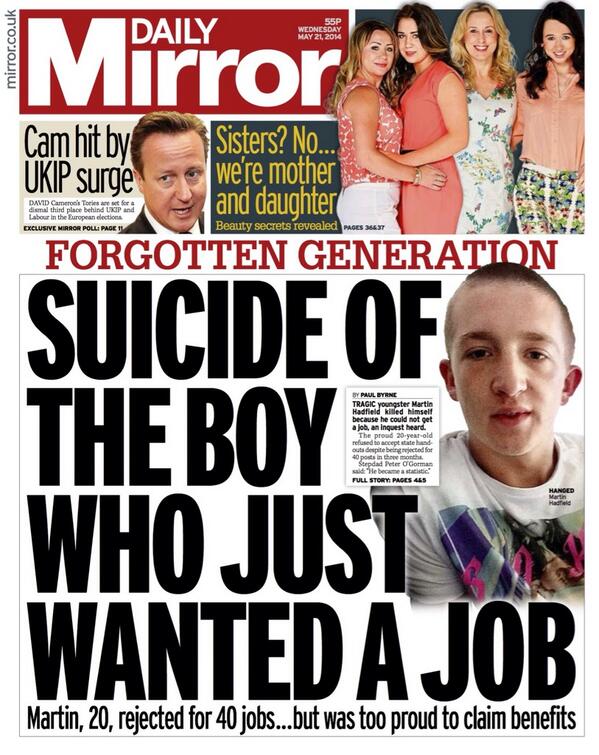
Daily Mirror Front Page: 21 May 2014

May 21, 2014


Full story here.

Embedded image permalink

Feminism Must Stop Ignoring Disabled Women

May 21, 2014

Says Frances Ryan in this very good piece for the New Statesman.

Withdrawal Of Night Care Breached Human Rights- Victory For Elaine McDonald At The ECHR!

May 20, 2014

I’m so pleased to read this. I covered the case of Elaine McDonald when it first hit the headlines, and it stayed in my mind, because it affected me deeply.

The European Court of Human Rights (ECtHR) has decided today (20 May 2014) that the withdrawal of nighttime care from Mrs McDonald by the Royal Borough of Kensington and Chelsea breached her human rights for a period of almost a year before proper care planning processes were completed. Steve Cragg QC and Steve Broach acted for Mrs McDonald in the domestic proceedings and the ECtHR, instructed by Disability Law Service.


The judgment in McDonald v UK is the first time that a breach of Article 8 ECHR, the right to respect for private and family life, has been identified by the ECtHR in a case concerning the provision of services or support to a disabled person. The ECtHR held that the withdrawal of nighttime care was an interference with Mrs McDonald’s right to respect for private life, and that for the relevant period this interference was ‘not in accordance with the law’ because of the admitted failures of the care planning in her case. Although the Court of Appeal found that care planning had not been carried out properly in that period, a finding upheld by the Supreme Court, none of the domestic courts considered this to be a breach of Article 8 ECHR.


An important aspect of the judgment is the focus on Mrs McDonald’s human dignity, and in particular the extension of the principles established in Pretty v UK, a case on assisted dying, to the arena of the provision of welfare support.


A further key finding by the ECtHR was that the withdrawal of nighttime care constituted a negative interference with Mrs McDonald’s Article 8 ECHR rights, which meant she did not need to establish any positive obligation to provide the support she was seeking. This is likely to be very helpful to future challenges to cuts to disabled people’s care packages, not least because any such cut which is implemented without a proper reassessment or care plan review is highly likely to involve a breach of Article 8.


Mrs McDonald has been awarded damages of 1,000 Euros by way of just satisfaction.


Ian Wise QC represented Age UK in its intervention in the case in the Supreme Court.


Steve Cragg QC is available for media comment on the judgment. The press release from the ECtHR can be downloaded here .

Mark Wood: Sister Cathie Donates Money To Mental Health Charity

May 20, 2014

THE family of a vulnerable man, who starved to death after his benefits were cut, have donated the money he was wrongly refused to charities.

Cathie Wood hopes to prevent others ending up in a similar situation to her late brother, Mark, so has given some of the money to mental health charity Oxfordshire Mind.

Mr Wood, 44, had his benefits cut to just £40 in March last year, after Atos Healthcare assessed him as being fit to work.

An inquest into his death in February, which concluded with a narrative verdict, heard he weighed just 5st 8lb when he died of malnutrition in August last year.

A month later, the Department for Work and Pensions reviewed its decision to make the cut and launched an internal review into his case, after Ms Wood and her mother Jill Gant, from Abingdon, appealed.

She has received about £500 and has split the money, so far, between Oxfordshire Mind, the Green Party, The Biscuit Fund, Oxfordshire Animal Sanctuary, the Trussell Trust and Oxfordshire Welfare Rights (OWR) – all groups her brother supported or who could have helped him.

Ms Wood said: “I gave the donation to Mind in memory of Mark and to help prevent others suffering as he did because he, and others around him, were not aware of the benefits service offered by Mind and OWR.

“If he, and we, had known about the practical, efficient and caring help available to make appeals against benefits removal decisions – we think he probably would not have died.

“My mum also attended a carers’ support group at Mind when Mark lived with her so we are grateful for that.”

Ms Wood and her mother worked with Oxfordshire Welfare Rights (OWR) to appeal to the DWP.

Mr Wood, who lived in Bampton, had obsessive compulsive disorder, Asperger’s syndrome, phobias about food, pollution, paint fumes, and social situations, and cognitive behavioural problems.

The donation of about £100 to Mind is specifically for the Benefits for Better Mental Health team.

Project manager David Bryceland welcomed Ms Wood’s generosity.

He said: “I really do believe if Mark had been able to get to us, we could have sorted his benefits issues and this would not have happened.

“Donations we receive from people allow us to be creative with how we deliver the service, unlike state contracts which are very tightly controlled.

“We work with people who are in a similar situation to Mark and advise them what they can do. We also work closely with OWR for the more complex cases.”

Anyone wishing to speak to the Benefits for Better Mental Health team can call its hotline on 01865 263756 or email bbmh@oxfordshire-mind.org.uk

Prof Malcolm Harrington ‘Did Not Trust ATOS’

May 20, 2014

Professor Malcolm Harrington, who carried out the first three independent reviews of the work capability assessment told the work and pensions committee last week that he ‘did not trust Atos’, that the DWP team set up to implement his recommendations was ‘disbanded’ and that the system was ‘wrong at every stage’.

Professor Malcolm Harrington and Dr Paul Litchfield gave evidence to the Work & Pensions Committee on 14 May 2014 about the Work Capability Assessment and the outcomes and progress on recommendations in their respective reviews.

Professor Harrington made it clear that the principle of having a process of assessment was not wrong, rather that there was something wrong at every stage of the process.

“I thought it was impersonal, mechanistic and lacked transparency and there was poor communication, both between the parties taking part in the assessment and to the claimant.

“You have to have some system of assessment, but it has to be more humane and more individual-focused.”

Both Professor Harrington and Dr Litchfield have made comments that the decision maker should be central to the process and that this works better when they have direct contact with the medical assessors.

“When they all knew each other and talked to each other and it seemed to work a lot better.”

Harrington says, however, that although those “people working inside the Department made a serious effort to improve the way in which they did their bit… I did not trust Atos to get a sufficiently good assessment done, but the fact that there seems to be no improvement at all, I find very disappointing.”

Professor Harrington also raised concerns about the quality of personnel employed by Atos to carry out the assessments:

“You are asking supposedly highly qualified people to do a very boring job and some of them admit that they are not actually looking at these people—they are not caring for them, they are processing them. The danger is that the quality of the people who do that will not be of the optimum.”

He went on to say: “I think we ought to look seriously at alternatives to the private contractor. I talked to Kate Green (Shadow Minister for Disabled People) a bit about this, just kicking around ideas about whether the provident associations and the charities, with their medical advisers and a process of triage, could not actually get a better job done than we currently have with a private contractor doing it.”

Professor Harrington made further comments about how the system appeared to work well in the pilot areas when incapacity benefit claimants were reassessed (migrated), which he puts down to the decision makers having more time to make decisions, without the pressures of targets. This failed to work well when they were told they had to make 10 – 12 decisions a day.

He stated that the process for reassessment for certain conditions is flawed:

“I think the frequency of reassessments is illogical. They are not looking at individual cases. Some of those people come back for another assessment when it is clear that they don’t need one.

“Some are going to be in a deteriorating condition, like Parkinson’s, and are never going to work, so why don’t we just make that decision now and give them the support they need?”

And for groups of people with particular health conditions: “Doing it the way the DWP are doing it at the moment, using outside contractors and a computerised system, does not work well.

“I think.. you would have to have semi-specialised individualised to deal with some of the groups, like people with mental health and learning disabilities. Those assessors ought to have some degree of training specifically in that.”

He found that, despite his reports being welcomed, there were no resources to be able to make the necessary changes:

“The dedicated team I had in Leeds that was driving a lot of the recommendations was disbanded or downgraded or something, so that sort of the disappeared and that momentum went as well.”

He also raised concern that no alteration has been made regarding fluctuating conditions:

“As you know, some of these conditions vary greatly from month to month, or week to week, and quite dramatically. One week you might be able to work, and another week you cannot work at all. For the Government to say that there is no need to change the descriptors for fluctuation is wrong.

“The Government have also missed a trick over introducing a sliding scale, as I would call it, for the points.”

As he rightly states: The government fails to look at “the employability aspect as opposed to… work capability. The problem then is the real world test.”

Dr Litchfield took on the mantle of carrying out the fourth review of the WCA, publishing his report in December 2013.

He agrees that: “Co-locating health professionals and decision makers would encourage joint working and make for better decision making”.

He also raised concerns about the rate of overturned decisions:

“When we looked at the data, the rate of overturn was well over 50%. Paying money to a health care professional to give you an assessment if you are going to overturn that decision in more than 50% of cases does not seem terribly logical.”

He made specific comments about how the assessment is carried out with claimants who have learning disabilities:

“I think it is absolutely critical for that group that questions are framed in a way that they are likely to understand, that testimony from those who know them best is taken fully into account and…that inferences are not drawn on the basis of oblique questioning… First, I think that, particularly with that group, that can lead you into errors. Secondly, I think that if you draw conclusions in that way, it undermines trust—people think you are trying to catch them out.”

In support of the recommendation that decision makers should be central to the whole process, he feels they should be sending out the ESA50 before deciding on the need for a face to face assessment:

“It also strikes me that it helps to simplify the whole process. One of the problems I think that we have in the current system is that it has become over-complex. Stripping out some of that complexity would help in speeding things up. If you are not going for as many face-to-face assessments, you are speeding things up.”

Read the full transcript from the oral evidence session here

Disabled Students’ Allowance ‘It’s About Choosing My Life’

May 20, 2014

It was a short written statement from the universities minister, David Willetts, to parliament just before the Easter break and, for those affected, it was a shock. The government intended to “modernise” the Disabled Students Allowance (DSA) – grants given to disabled students in England to help meet extra study costs incurred because of their disabilities. From September 2015 it will only pay for support for students with specific learning difficulties, such as dyslexia, if their needs are “complex”, although the definition of this, and who decides it, remains unclear. It will no longer pay for standard computers for disabled students, or for much of the higher specification IT it now subsidises. And it will no longer fund non-specialist help, likely to include note-takers and learning mentors. The costs of specialist accommodation will be met only in exceptional circumstances.

For students such as Toby Satchell, now doing his GCSEs and hoping to start university in 2016, the consequences could be life-changing. He has dyslexia, arthrogryposis – which affects joints and muscles – and a language disorder. In school he has one-to-one support to help with note-taking, writing and computer work. “At university I would be hoping for the same sort of help,” he says. “Without it, I couldn’t do it.”

In a climate of government cuts, many of those working with disabled students had expected some reduction in funding for computer equipment. But the other changes were a shock, they say, because they had not been flagged up in their regular discussions with the government over the past few months.

“The implications are potentially very, very damaging but the greatest difficulty we have at the moment is that the announcement made by Mr Willetts is so unclear,” says Paddy Turner, chair of the National Association of Disability Practitioners (NADP).

Turner says that while the changes are not due to come in for another 18 months, and current disabled students will be protected for 2015-16, staff are already seeing prospective students who are reconsidering their 2015 entry applications because they are worried that the changes will affect them.

His concern is that hard-up universities will be unable to support disabled students if they have to pick up the tab for support that the DSA has covered until now, and that this would undo years of work that has helped open up higher education to disabled students.

“This is going to have a disastrous effect on students with specific learning difficulties because it looks very clearly that he [Willetts] is trying to remove them from the DSA,” he says. “It looks like a knee-jerk reaction to recent reports that specific learning difficulties and dyslexia aren’t really disabilities at all.” In March, Cambridge University Press published The Dyslexia Debate, co-authored by Julian Elliott, professor of education at Durham University, which suggested that the term dyslexia should be abandoned as it lacked scientific rigour and educational value.

So worried is the NADP about the government’s decision that only students defined as disabled under the Equalities Act should be eligible for DSA that it is consulting lawyers. “How are you going to decide who is and isn’t disabled under the act because that’s usually only decided in court?” asks Turner. Until now, eligibility for DSA has been based simply on basic medical evidence that students have needs that will affect their studies.

The National Union of Students is also concerned and will hold a national lobby of MPs on 6 June in protest at the changes.

Hannah Paterson, the union’s disabled students officer, says: “The fear for me is that like a lot of the government cuts already impacting on disabled people it shuts them out of society. It’s going to stop people going to university.”

She has dyslexia, and the DSA paid for a voice recorder, computer and mind-mapping software for her undergraduate studies. “I don’t think I could have achieved the grades I did or even completed the course if I hadn’t had the support from the DSA,” she says.

Caroline Hands, 43, a third-year psychology student at Bangor University feels the same. She has dyslexia, dyspraxia, mild Asperger’s and ADHD, as well as mobility problems because of an artificial hip. She says she was written off at school, but now has an interview for a PhD place. “The DSA hasn’t just helped me to attain a degree and get an education,” she says. “It has helped me to do well.”

The DSA has paid for a computer able to support special software that allows her to dictate work, and paid for a replacement when it broke – her dyspraxia makes her more likely to drop things. “Without the support I have received I would have gone through life believing I was incapable of achieving anything,” she says. “I would hate to think someone else at the start of that would not be able to get through it. After all that has been done to help disabled people to live productive lives, we are putting the bar up again.”

Research carried out by the Equality Challenge Unit last year showed that the prospects of disabled graduates are significantly better than those of non-graduates. In 2012, 71% of disabled graduates had gained employment compared with 42% of disabled non-graduates.

While the number of students receiving DSA increased from 53,300 in 2011-12 to 54,900 in 2012-13, the amount paid out has actually gone down, from £125.1m in 2011-12 to £119.9m in 2102-13.

Turner suggests that this is because of the work that has already been done with the Department for Business, Innovation and Skills and the Student Loans Company to improve the system.

Sally Freeman, chair of the Association of Dyslexia Specialists in Higher Education, says she was particularly shocked by the announcement because relations between the government and disability practitioners have been good, and have helped to achieve considerable advances for disabled students. “Our responsibility is to make sure the students we support don’t now become disadvantaged,” she says.

Under the existing DSA arrangements, a student can receive up to £5,161 a year for specialist equipment such as laptops and voice recognition software and £20,520 for non-medical helpers such as note-takers and library support, plus up to £1,724 for general costs incurred because of their disability, such as travel expenses. The responsibility for meeting many of these costs will now pass to universities, without any extra funding, with some institutions likely to be hit much more than others. Christopher Snowden, president of Universities UK, says: “Although this rebalancing will have an impact on all institutions attracting disabled students, conservatoires and other institutions specialising in arts-based provision have particularly high proportions of students claiming DSA. Any shift towards greater institutional funding could disproportionately affect those institutions.”

Marion Lamb, head of student disability services at University College London, who concedes that her institution is likely to be among those least affected, says not all the changes are bad if they force universities to improve inclusivity in teaching and learning. “Many UCL students have their own computing equipment and so do not need DSA to purchase a basic laptop,” she says. “But we do need to make sure that those students who are financially pressurised have access to the resources they need.”

Tony Stevens, of Disability Rights UK, says the charity has already noticed that more disabled people are questioning the wisdom of going to university. “If you start messing around too much with things that have served universities and disabled people well, some of the widening participation gains that have been made could drop off,” he says. “They aren’t as embedded as you might imagine.”

Toby, in the midst of school exams, is still unsure where his university ambitions will lead him but says the decisions made about the DSA will have an impact on the choices he makes about university which, in turn, are likely to affect the rest of his life. “It’s about choosing my life,” he says.

Chelsey Jay

May 20, 2014

An aspiring model who was forced to abandon her career after developing a rare condition has finally achieved her dreams by landing a job as adisabled model.

Chelsey Jay, 23, was horrified when she was struck down with a condition known as Postural Tachycardia Syndrome (PoTS) which caused her to faint every time she stood up.

Chelsey, from Witham, Essex, suddenly became confined to a wheelchair, and was forced to quit her modelling drea

But in a remarkable change of fortune, she has managed to secure a contract with a disabled modelling company, and has gone on to model for big name brands such as online fashion store, Boohoo.

Chelsey said: ‘When I was diagnosed with PoTS I thought my dreams were over.

‘I’d just started modelling, then suddenly I was crawling around the house on my knees and using a wheelchair – I even had to sit down to brush my teeth.

‘But after talking about my experiences online I caught the attention of a modeling agency called Models Of Diversity.

‘They campaign to get more diversity within the modeling industry, and before long they signed me up.

‘Now, my life has completely changed – I’ve modelled for brands like Boohoo, and done the catwalk at lots of different events.

‘I might not be able to walk the catwalk like the other girls do, but I give it my all in my wheelchair instead.

‘Whenever I do a shoot I ask the photographer to tell me exactly what they want – and I’ll do everything I can to do it.

‘I might not be able to stand up, but I can model just as well as anyone else.

‘I thought I was going to have to give up on my dreams, but now I’m living them.’

Chelsey was struck down with PoTS during a busy shift on the stroke ward Broomfield Hospital in Chelmsford.

Chelsey said: ‘I had a 15 hour shift ahead of me on the ward and I was just getting started.

‘I was fine and then all of a sudden felt faint. I hadn’t had breakfast so I assumed it was that.

‘I went to the staff room to grab something to eat, and when I came back out I fainted.

‘Everyone ran towards me and the next thing I knew I’d been taken to A&E. Apparently I was unresponsive and people were really worried.

‘It was really scary, I had no idea what was happening to me.’

Chelsey began a long process of referrals, tests and investigations before finally being diagnosed with the condition in October 2012.

She said: ‘It was really hard at first. I’m always the loud, lively one that loves a laugh, but suddenly my life was different. I had a wheelchair and a mobility scooter and everything changed.’

But after speaking about her experiences online, she was spotted by Models Of Diversity.

Chelsey said: ‘I met up with them and almost immediately I was doing a photo shoot for Boohoo.

‘It was just such a whirlwind and now I’m constantly busy either modeling or campaigning.

‘I might be different to other models but I never let my disability phase me. On shoots I’m always professional and try to do exactly what the photographer wants, people think disabled people are incapable of certain things, but we just adapt.

‘I’ll lay down, or sit, and try lots of different poses – I’m not just a one trick pony. Doing catwalk in a wheelchair is daunting, but I just go for it.

‘You’d think the reaction to a disabled model might be confusion or upset, but I only ever get positive reactions.

‘The public are definitely ready to see disabled models in the fashion industry.’

Now, Chelsey’s career is going from strength to strength. Chelsey said: ‘I can’t quite believe how busy I am at the moment and how exciting everything is.

‘Not only do I get to model, but I’m also the ambassador for disabled models at Models of Diversity, so I head the campaign to get the industry to use disabled models too.

‘I’ve even had a meeting with an MP who is going to raise the issue in parliament. It’s about time we saw a change in the type of girls that are used in the fashion industry – everyone needs to be represented.

‘It’s crazy to think that just a year ago I thought my life was over. But thanks to Models Of Diversity, my amazing family, and my wonderful boyfriend Ashley, I couldn’t be happier.’

Angel Sinclair, CEO, of Model’s Of Diversity, said: “Chelsey is a remarkable young woman.

‘She is an incredibly brave person and I know she is going to make it as a known model. She campaigns tirelessly for models of diversity and is so selfless, she’s done incredible things for us.

‘As soon as I met her I immediately saw her potential and I knew we were onto a winner.

‘She’s modelled for Boohoo, for bridal shows, and she’s even modelled for Velvet Amour – Jean-Paul Gaultier’s first plus sized model. She goes to castings and most likely will be the only disabled model there, but she is always amazing.

‘I’m very proud of her, she’s amazing.’

To find out more about Chelsey visit her website at http://www.chelseyjay.co.uk. For more information about Models of Diversity visit http://www.modelsofdiversity.org.

The Battle To Beat Polio

May 20, 2014


This is on iPlayer for the next 6 days. I’m watching as I type.


Stephanie Flanders, former BBC economics editor, has a very personal interest in the battle to beat polio. Her father, Michael Flanders, one half of the world-famous singing duo of the 50s and 60s, Flanders and Swann, was paralysed by the infection when he was 21. He used a wheelchair for the rest of his life, and died early at 53 through complications caused by the disease. Stephanie was just six.

But the desperate search for a vaccine was far from straightforward. Stephanie discovers that it is the story of decades of battling between good and bad science, celebrity scientists with giant egos, prepared to take enormous risks to be first with a vaccine, and countless innocent victims. By the end, Stephanie realises there might have been a polio vaccine years earlier, and hundreds of thousands might have been spared, including her Dad.

Support #Justice4Sanaz

May 19, 2014

Thanks to Disabled People Against Cuts.

Sanaz Raji was awarded a three-year scholarship with the Institute of Communications Studies (ICS) in September 2009, University of Leeds but was unjustly removed from her studies and left in penury. This is despite the University of Leeds’ failure to follow its own procedures.

In order to fight this injustice we believe that Ms Raji deserves to remain in the UK and take her fight to judicial review. This requires your help with Ms Raji’s immigration status. Currently Ms Raji is has her case for leave to remain before the UKBA and it is imperative that she remain in the UK to be able to attend court and give herself the possibility of a fair trial.

Ms Raji has no other abode than the UK and has been her for almost a decade. If she is removed from the UK then she will have to rebuild a life from scratch and unable to functionally defend herself against a well-funded British public institution. We would like to request any help you can offer to stop this further injustice.

Ms Raji began her PhD in October 2009, but after three months into her research project on the Iranian Diaspora post 9/11, was wholly dissatisfied with the supervision she received and in February 2010 made a complaint to the ICS Research Postgraduate Tutor, requesting a change of supervisors. Instead of assisting Ms Raji’s request, as indicated in the University of Leeds Research Student Handbook of the University of Leeds, the Postgraduate Research Tutor forced Ms Raji into a unworkable supervisory arrangement that left her open to further institutional racism and victimization by the supervisory team designated to her research project. Additionally, Ms Raji did not receive the required ten supervision meetings as stipulated in the Research Student Handbook.

Despite passing her upgrade transfer viva in September 2010 and making good progress on her research, Ms Raji’s scholarship was wrongfully revoked on the 15th August 2011, two weeks before the start of the 2011-2012 academic year. The ICS breached their own rules and conditions concerning the removal of a scholarship, indicating,

Student whose progress or conduct is considered unsatisfactory may have their Scholarships terminated. In such cases four weeks’ notice should be given to enable the student to make domestic arrangements.” (ICS Research Scholarship General Conditions 2009-2010).

As a result of these actions by the ICS, Ms Raji cannot continue her research and finish her PhD project.

The unjust removal of Ms Raji’s scholarship has left her in a state of destitution and homelessness for two years, which has gravely affected her health. Recently, Ms Raji was hospitalized at Leeds General Infirmary for two weeks with functional limb weakness, a condition brought about due to the extreme stress that she has been under.

Ms Raji survives on the kindness of friends and her supporters from the Justice4Sanaz campaign, many of whom are utterly shocked that the ICS treat their friend in such a cruel and vindictive manner. We, as members of the Justice4Sanaz cannot understand why Ms Raji, a published author who has written for media outlets like the Guardian, Tehran Bureau/Public Broadcasting Service and academic books and journals, such as Journal of Middle East Women’s Studies, be taken off her scholarship and her world-class research project in such an atrocious and inhumane manner.

For two year Ms Raji has fought to have her scholarship reinstated so that she can complete her PhD. Despite going through the University of Leeds internal appeals procedure, which took almost a year to provide a final decision, and the Office of Independent Adjudicators for Higher Education, which took an additional nine months to make a decision, Ms Raji has not found an equitable solution to the horrendous situation she is in.

As this is a matter of utmost urgency we would appreciate it if you could join as quickly as possible in making sure justice prevails.

Please sign and share the Petition to support Sanaz Raji

Read more about the Justice4Sanaz campaign here

A Benefit Claimant’s Open Letter To David Cameron

May 19, 2014

Please share widely.


One year on, the misery continues for group member of Respect For the Unemployed & Benefit Claimants

An ‘Open Letter’ to David Cameron10 Downing Street
cc Ed Miliband  & Natascha Engel MP

I’m writing in a desperate attempt to be heard regarding the situation I find myself in. On the 1st June 2013 my husband Andrew Siddall was killed in an awful road accident along with his best friend. Another biker from Sheffield was also killed in the same accident.

Before his death my husband had been receiving Disability Benefits. In his younger days my husband worked at Bolsover Colliery, after leaving school he went on to work as a builder / roofer. Taking part in the construction of Carsington reservoir dam. He retired early on health grounds. He was a member of Derbyshire Bikers.

I buried my husband on Thursday, June 13.

We informed the benefits office two days after his death. ALL benefits were promptly stopped, leaving our family with no source of income & no explanation as to what we must do or where to turn for help & assistance – we had the ‘safety net’ removed, in free-fall.

I spent the next few weeks visiting the Benefits Office & making phone calls in a state of pure grief & desperation trying to get help. However, I was passed from one department to the next, each time no one had a clue as to what I was entitled to – they were simply not interested. I was told if I had been 45 years old at the time of my husbands death I would have been able to claim a ‘Widows Pension Allowance’. I was 45 on the 2nd August, just two months after his death.   
     
Jobcentre Plus informed me that the only thing I could do, was to make a claim for Jobseekers Allowance. I pointed out that I thought JSA was for people looking for work – she replied in an irritated voice “Well you are fit for work aren’t you” ? I was absolutely shocked & devastated. I was grief stricken, I didn’t know what day it was or what planet I was on. I couldn’t eat, sleep or function properly – I think its fair to say I was in ‘traumatic shock’. I was constantly vomiting & having panic attacks. I had been with my husband since I was 14 years old – I didn’t know what to do. I didn’t want to live anymore.

With the help of family members, I filled in various forms for benefits. These ‘forms’ are a ‘minefield’ in trying to understand & ‘overtly complicated’ at best. We finally received a letter regarding a claim for Employment Support Allowance. It took them so long in dealing with the claim & after a period of four weeks struggling with no money whatsoever, I was forced to work in the local shop to ensure I could feed the family – working 16 hours a week.

From that point onwards I’ve had nothing but trouble with North East Derbyshire District Council regarding Housing & Council Tax Benefits. Mistake after mistake & misinformation from the benefits agency. It has resulted in over a hundred letters in nearly a year, informing me what I should be paying. No sooner had one letter been sent out, the council would change its mind yet again – throwing me into financial chaos. They sent letter after letter asking for more information & suspended my claim on numerous occasions – this in turn created huge rent arrears & threats of eviction. Letters sent regarding impending court action seeking to evict us, has caused me to become seriously depressed. I spent days upon days visiting the housing department trying to provide the information they required.

Finally I received a letter stating that my Housing & Council Tax had been reviewed & that I was no longer in arrears. I was  told how much I needed to pay – My relief was instant, it was now February 2014 & this nightmare had been going on for months. I was earning £100 per week working, & receiving child tax credits for my daughter who was doing a childcare course. I was getting tax credits for myself, calculated that I could just about manage to survive & pay the rent, council tax etc – little did I know that my ordeal was far from over …..

I then received a letter from HMRC regarding Tax Credits, asking for more information regarding my daughter (Jade) – I contacted her learning provider (AgeUK) asking for more details regarding the educational course she was on. All the details were was passed onto HMRC – the swift result was …. all tax credits promptly stopped. In a state of panic I rang HMRC to investigate & was told it was because my daughter was doing an ‘advanced childcare course’, & therefore I wasn’t entitled to any tax credits.

HMRC have stated that I’m not entitled to working tax credits because my daughter was classed as a ‘non dependent’ – they also stated I would have to be working at least 30 hours a week before being entitled. I approached my employer & requested more hours not realising what else I could do. I did managed to increase my hours from 16 to 26. I inform the council of the change in circumstances in work hours & that tax credits had been stopped.

The council reviewed both my Housing & Council Tax benefit twice over a period of weeks with incorrect information. A final review stated that I must pay £96 rent plus council tax & water charges – in total I have less than £40 a week to buy food, gas, electric plus other living expenses. In addition the council have informed me that I now owe over £1,400 in arrears & £322.83 council tax arrears. HMRC are harrassing me for £3,000 in repayment in tax credit.

Nearing the anniversary of my husbands death, it’s clear that my nightmare is to continue. There is no safety net for me – there is no social security provision ! I’m at my wits end, not knowing which way to turn. I cannot survive on such a small amount of money & god only knows where the money is going to come from to pay these arrears. I’m sorry to bore those who have taken the time to read my story, but I have not chosen the situation I find myself in – I’ve fallen on bad times, stuck in quicksand, struggling to get out while people simply walk on by – conclusion ….. #help.

North East Derbyshire District Council have sent a letter addressed to my husband ‘Andrew Siddall’ a year after his death demanding £1,400 within 14 days – despite being told a thousand times, my husband has died …..  

Finally I urge readers to support & sign the petition calling for a ‘Public Inquiry’ regarding the systematic abuse of Benefit Claimants >> http://t.co/bHg7eM2pZS

yours sincerely

Karen Siddall wife of Andrew

Capita Offering Up To £900 A Day For PIP Assessments

May 19, 2014


Many thanks to the brilliant Benefits And Work.


Capita has more than doubled the amount it is willing to pay health professionals to carry out PIP assessments as the company struggles to to deal with the massive backlog in PIP medicals. The company is now boasting of the ‘Potential to earn significant sums as a result of our new incentive scheme’ which will see assessors able to earn £900 a day.

Back in February we highlighted a Capita advert for PIP assessors at what we regarded as bargain basement rates of £40 per report, rising to £60 if the report was a grade A or B.

Now, however, Capita is adverting the same posts, but paid at a rate of £150 per report, provided the assessor carries out at least 21 assessments.

Initially, assessors will be paid £60 per report. But once they are ‘approved’ the payment per report increases rapidly the more assessments they carry out.

According to Capita:

Approved is defined as achieving 4 consecutive Grade A and B reports following training.’

However, the incentive scheme does not mention any requirement that reports have to be grade A or B in order to attract the £150 payment, once approval has been gained.

Capita is also offering the ‘Opportunity to undertake up to 6 assessments a day for an extended period’, giving the potential to earn a staggering £900 a day. At least we can’t accuse them of being bargain basement payment rates anymore.

However, one major concern is that in evidence given to the Commons Work and Pensions committee, the DWP, Atos and Capita all claimed that the average time taken to carry out and write up a PIP assessment was two hours. This was the excuse for the huge backlog of medicals.

Given that almost all Capita medicals are home visits, completing 6 assessments a day means working 12 hours plus travel time within a 20 mile radius.

How many claimants would want to be the last visit of the day for nurses and occupational therapists working those sort of hours in order to take advantage of Capita’s incentive scheme?

There is a further concern. Capita say that:

‘The Incentive period will be reviewed in November 2014.’

At that point Capita will be hoping that most of the backlog has been cleared, given that Iain Duncan Smith has claimed that the problems with PIP assessments will all have been sorted out by the Autumn.

So, for assessors looking to make a pile of cash, the pressure is on to carry out as many assessments as possible between now and November, when the pay rates may plummet again.

Which, to some, may sound like a huge incentive to cut corners and make huge assumptions about claimant’s conditions and their effects in order to cram in as many medicals as possible in the next six months.

Here at Benefits and Work, we’d also like to know if Capita and Atos have been given another large lump of taxpayer’s cash to pay these sort of rates.  But we also know that any attempt to discover the truth will be met with a refusal to reveal the truth on the grounds of ‘commercial confidentiality’.

Deaf Awareness Week

May 19, 2014

A press release for Deaf Awareness Week, which runs this week:

You can easily help someone who suffers from hearing loss during this year’s Deaf Awareness Week.

In the UK one person in every six suffers some sort of hearing loss, causing exclusion from conversations and often society.

Helping someone understand the products and technology that are available is one very useful way of helping, and can lead to people being included in conversations, listen to the television or even talk on the phone with help of specialised equipment.
Monday 19-25 May 2014  is Deaf Awareness Week which aims to improve understanding of the different types of deafness by highlighting the many different methods of communication used by deaf, deafened, deaf-blind and hard of hearing people.

Talking on the phone and keeping in touch daily with friends and family is something most of us take for granted.  However, those with hearing loss have special needs and require special products.  There are many telephones available suitable for homes with different hearing needs, so individuals can set their preference of sound levels that work with or without hearing aids and are often used successfully by those who are registered profoundly deaf.

Mobile phones like the amplicomms M7000 phone has amplification up to 100 times louder than a regular mobile.  And, a wireless TV Listener, such as the amplicomms TV2400 headset, means that volume levels on TV’s etc. can be amplified without disturbing everyone else!  More importantly it has a built-in microphone so the headset can be switched on or off to pick up close proximity noises too, so users aren’t excluded from conversations and noises around them.   Specially designed home phones that are Hearing Aid compatible may also help some deaf people to chat on the phone with friends and relatives, such as the PowerTel 60+.

European Sales Director for Amplicomms, Ran Meyrav says “Products like amplified mobiles and domestic telephones help people with hearing loss take back their independence and stay connected with friends and family. Sadly, too many people ignore their hearing loss and slip into a life of isolation and frustration when there’s really no need to.”

Supported by over one hundred deaf charities and organisations under the umbrella of the UK Council on Deafness, Deaf Awareness Week involves a UK wide series of national and local events.

A wide range of amplicomms assistive listening devices are available from Action On Hearing Loss (formerly RNID) on 01733 361199 (textphone 01733 238020) or visit: www.actiononhearingloss.org.uk


Debbie Purdy In New Right To Die Law Change Battle

May 19, 2014

HER landmark legal battle to allow her husband to accompany her to a foreign clinic to end her life led to new government guidance on the right to die. Now Debbie Purdy, the multiple sclerosis sufferer, has revealed that she is too frail and impoverished to make the journey to the Dignitas clinic in Switzerland.

In an interview with The Sunday Times, Purdy, 51, said she hoped to die at home in Bradford, where she lives with Omar Puente, her jazz musician husband.

To do so she is having to consider various strategies that would pose the least likelihood of anyone who helped her to die then having to face arrest and prosecution. One is for a friend or relative to prepare a lethal potion for her to drink unaided through a straw. She is concerned, however, that someone without medical training could provide a dose that is insufficient to kill her.

“I am not going to Dignitas because the cost is huge and because it would be too difficult,” she said. “When I won the court battle I could probably have got to Switzerland. Now I could not do that. Then I had money, now I don’t.

“It costs a lot of money to go to Switzerland and you have to spend several days there because you need to make sure you have thought about the options.”

Despite her increasing infirmity, Purdy renewed her call for politicians to change the law on assisting a suicide, which carries a maximum 14-year sentence.

Her current predicament means she is fearful about how her life will end, particularly as she cannot predict how quickly her condition will ravage her body.

“Ten years ago I could walk. The next stage was a wheelchair that I could control myself. Then I had to use an electric chair. Now I find it difficult to sit up because it’s hard to keep my head upright,” she said.

“I use voice recognition to make my computer work and I need hoists to do anything. I spend most of my day in bed watching news bulletins on television. I have spasms in my legs and my condition keeps changing. That is why I need the law to be looked at again urgently.”

Six years ago Purdy argued in the High Court that it would be a breach of her human rights if Puente had the prospect of being prosecuted hanging over him if he accompanied her to Dignitas.

The case led Kier Starmer, then director of public prosecutions, to issue new guidelines to clarify the circumstances in which relatives and friends would not face prosecution if they accompanied a loved one to the suicide clinic.

“The guidelines say that if a friend or relative — though not a campaigner or a doctor — is motivated by compassion rather than by greed or financial reward, then they will not be prosecuted,” said Purdy.

She believes the guidelines, although they are untested, would be applicable if someone were helped to die on British soil.

However, she shares the concerns of Chris Woodhead, a former chief inspector of schools who has motor neurone disease, that although the guidance exists, the law still classifies assisting a suicide as a crime. As a result, each case is assessed individually by the Crown Prosecution Service with police often interviewing relatives and friends.

Purdy is watching with interest the case of M, a man who suffered a massive stroke that left him able to communicate only by blinking.

M, whose wife does not want to help him to die, has asked for the guidance to be altered to allow medical professionals and campaigners to assist a suicide without facing prosecution. A legal ruling is expected this summer.

Purdy supports M but ultimately thinks the law needs to change, although she fears politicians lack the will to tackle such a sensitive issue ahead of a general election. “Politicians are cowardly. It’s time the 1961 Suicide Act reflected what is going on in people’s lives right now,” she said.

“Omar, who just wants me to be cured, which is not going to happen, thought that winning the 2008 court case would take my mind off my illness. In a way he was right.

“I did all kinds of thing afterwards. I used to love skydiving but that wasn’t possible by then. Instead I went to Airkix in Manchester, which is a wind tunnel that lifts you 4ft or 5ft off the floor so that you feel you are flying.

“I would find it impossible now, but I have photographs of Omar and me doing that.”

Purdy, who underwent several unsuccessful cycles of IVF, said that being a mother might have meant she “could possibly cope with more than I want to now”.

She added: “People sometimes want to survive for their children, to provide stability and love for their children.”

While Purdy said the 2008 court judgment had eased her worry about her death, those concerns have now returned.

“I am back in the position that I was in 2008 when I spent 23½ hours a day thinking: how am I going to die? What am I going to do?” she said.

ESA Sanctions Rise 334% Show DWP Figures

May 19, 2014


The number of sanctions applied to ESA claimants rose 334% between December 2012 and December 2013, according to new DWP statistics.

The report shows that since the new ESA sanctions regime was introduced on 3 December 2012, there has been a steady increase in the number of sanctions applied, from 1,102 in December 2012 to 4,789 in December 2013.

The total number of adverse sanction decisions over the period 3 December 2012 to 31 December 2013 was 28,702:

  • 5,889 were applied for failure to attend a mandatory interview and
  • 22,814 were applied for failure to participate in work related activity

In addition, the statistics show that, of the 28,702 decisions:

  • 13,994 were reviewed and in 8,508 cases, the decisions were overturned. This equals a “success” rate of nearly 61% and
  • 331 cases were appealed, 90 of those (27%) were overturned on appeal

Since the new JSA sanctions regime was introduced on 22 October 2012, there have been a total of 1,028,819 adverse JSA sanction decisions up to the end of December 2013.

Of those 1,028,819 decisions:

  • 317,411 were reviewed – 146,486 were overturned
  • 34,503 were appealed – 6,158 were overturned at appeal

The DWP statistical release is available on the .Gov website

Paul Nuttall, UKIP MEP, On The NHS

May 18, 2014

Scary stuff, from his website.

NHS Reform

Dear Editor,

I would like to congratulate the coalition government for bringing a whiff of privatisation into the beleaguered National Health Service. The fact that successive governments have undertaken what they call ‘substantial’ changes to the NHS should tell us all we need to know: there is something fundamentally wrong with how we treat the ill in our country.

The NHS is the second biggest employer in the world, beaten only by Walmart, but as with all state monopolies, it is costly, inefficient and stuffed with bureaucrats. In New Labour’s NHS, for every nurse there is a manager and vital workers, such as midwives, are falling in numbers.

The problem, however, goes far deeper. I would argue that the very existence of the NHS stifles competition, and as competition drives quality and choice, innovation and improvements are restricted.

Therefore, I believe, as long as the NHS is the ‘sacred cow’ of British politics, the longer the British people will suffer with a second rate health service.

Paul Nuttall MEP

How can the government’s new ESA specialist claim he knows nothing about all the deaths?

May 18, 2014

Mike Sivier's avatarMike Sivier's blog

Dr Paul Litchfield, here pictured giving evidence at another committee meeting, so it's probably another load of tripe. Dr Paul Litchfield, here pictured giving evidence at another committee meeting – so it’s probably another load of tripe.

An evidence session on Employment and Support Allowance and Work Capability Assessments was held by the House of Commons Work and Pensions Committee on Wednesday – and was notable for the fact that the ‘expert’ hired to review the system claimed to know nothing about the thousands of deaths taking place because of the current system.

Dr Paul Litchfield OBE was hired to take over from Professor Malcolm Harrington to carry out the fourth annual independent review of the assessment process. It seems Prof Harrington was replaced amicably, but evidence has come to light that he was not happy with political decisions that ran against his findings.

A claim that the government was taking “appropriate steps” in areas singled out for improvement by Prof Harrington was disproved when it was revealed…

View original post 597 more words

‘World First’ Braille Phone Goes On Sale

May 18, 2014

This sounds amazing to me. I think it’s a big step forward for those who need it. I do hope it sells very well.

London-based firm OwnFone has released what it says is the world’s first Braille phone.

The front and back of the phone is constructed using 3D printing techniques and can be customised.

Other companies have designed Braille phones in the past, but OwnFone says its device is the first of its kind to go on sale.

For those who can’t read Braille, the company can print raised text on the keypad.

The phone, currently only available in the UK, retails for £60 and according to its inventor Tom Sunderland, 3D printing the front and back of the device helped to keep the costs down.

“3D printing… provides a fast and cost-effective way to create personalised Braille buttons,” he says.

The device is designed to provide an instant connection between blind users and their friends and family.

Haptic touchscreen

In 2012, OwnFone launched what was one of the world’s first partially 3D printed phones.

A year later, the company developed a special child-friendly version called 1stFone, a credit-card sized device with programmable buttons for crucial contacts.

OwnFone’s new Braille phone is based on these previous two devices, keeping its small form factor and colourful design.

“The phone can be personalised with two or four Braille buttons which are pre-programmed to call friends, family, carers or the emergency services,” Mr Sunderland told the BBC.

“This is the first phone to have a 3D printed keypad and for people that can’t read Braille, we can print texture and raised text on the phone. Our 3D phone printing process is patent pending.”

Those who wish to buy the phone can create a custom design on the company’s website.

However, at £60 it’s the most expensive of the three available options, with their previous models selling for £40 and £50.

While this may be the first Braille phone available to consumers, the idea is not an original one.

India-based start-up Kriyate built a prototype Braille-enabled smartphone in 2013, featuring a repressible Braille display and feedback controls (known as haptic touch) that beep or vibrate after receiving certain commands.

Some visually impaired users of mobile phones may not see the need for this device however, with features such as Apple’s VoiceOver becoming more sophisticated.

VoiceOver is a “screenreader” that allows users to navigate their phone using gesture-based controls.

There are also a number of apps on both the Apple Store and Google Play that allow for an easier reading experience for the visually impaired.

Extract From ‘What The F*** Is Normal’ By Francesca Martinez

May 17, 2014

This has been published by the Guardian today. It’s long, but moving and hilarious. Do read.

Disabled And Broody: My Impossible Choice

May 17, 2014

I’ll be listening to this, on BBC Radio 4, Tuesday, 20th May at 4pm.

Award-winning presenter Julie Fernandez draws on personal experience to explore an agonising decision: whether to have children, if it means passing on disabilities?

Julie’s children would have a 50/50 chance of inheriting her brittle bone disease and she and her husband decided not to take the risk. It was a painful choice – at odds with Julie’s strongly-felt beliefs about disability equality.

In this programme she talks with disarming honesty to others faced with a similar choice, including actor Warwick Davis and wife Sam who have two children – both have inherited Warwick’s condition, a rare form of dwarfism. She also follows a couple embarking on a complex form of reproductive medicine. Pre-implantation Genetic Diagnosis is a type of IVF treatment which involves screening embryos for genetic defects at only 8 cells. It offers many disabled parents their only chance of having the healthy baby they long for. But making the choice not to pass on disability raises complex issues. As Julie herself says, “If my parents had made that choice, I would not be here.”

Whilst some fear the recent developments in genetic screening are a form of eugenics, contributors also talk about the painfully raw feelings passing on a disability can evoke.

Julie Fernandez asks the big questions about a philosophically challenging issue which divides disabled people in this country; and reveals our attitudes to disability generally.

Blue Badge Fraud Prosecutions Double In Three Years, Figures Show

May 17, 2014

Blue badge fraud prosecutions have doubled over three years, figures from English councils have revealed.

The Local Government Association (LGA) said professionals such as architects and lawyers were among the offenders.

Some were caught using a dead relative’s pass or leaving a disabled person at home to get free parking while shopping or at work, it said.

The figures showed that there were 686 successful council prosecutions last year, up from 330 in 2010.

Councils have been cracking down on parking fraud and using new powers to confiscate blue badges they suspected were being used by someone other than the lawful holder.

Some local authorities have set up special enforcement teams to tackle the fraud.

‘Shocking’

Chairman of the LGA’s economy and transport board Peter Box condemned misuse of the badges.

“It is shocking how low some people are stooping in order to con a few hours of free parking, including using a dead relative’s blue badge or leaving a disabled parent trapped in their home,” Mr Box said.

“Councils are determined to do everything in their power to protect the quality of life for our disabled and vulnerable residents.”

The nationwide blue badge scheme allows holders to park free in pay-and-display areas and for up to three hours on yellow lines.

According to the LGA, Stoke-on-Trent City Council, Hull City Council and Plymouth Council recently managed to secure their first prosecutions against those guilty of blue badge fraud.

Manchester City Council has achieved a 100% conviction rate, with more than 500 prosecutions over the last five years, it said.

At least two million disabled people hold blue badges across the UK, with those living in London exempt from the congestion charge.

People who are registered blind, receive war pensioners’ mobility support, have a disability that means they cannot walk or struggle to walk, and drivers with a severe disability in both arms are among those eligible for a blue badge.

Can England’s A&E units spot the malnourished? Mark’s story revisited

May 16, 2014

Ann McGauran's avatarAnn McGauran

Mark Bothwell, who's on jobseeker's allowance. He says he hasn't been eating properly for years. Mark Bothwell, who’s on jobseeker’s allowance (JSA). He says he hasn’t been eating properly for years.

Mark Bothwell (above) came into the London food bank today. He’s had a painful problem with his shoulder for some time that leaves him unable to accept many types of physical work, and he also has depression. He’s been waiting for months for his claim for employment and support allowance (ESA) to be processed. Not that this 29-year-old is likely to be better off financially by transferring over from JSA, but he would at least be relieved of  some stress. He says: ‘It’s a job-stopping illness, so the positive thing (about changing benefits) is not having to worry about job hunting.’

Last week, he described two recent trips to the accident and emergency (A&E) unit at the local hospital – the Queen Elizabeth in Woolwich. He says that terrible chest pain drove him to…

View original post 897 more words

Councils Reject 1637 DHP Claims By Disabled People

May 16, 2014


Councils rejected more than 1,600 applications for help from disabled people hit by the bedroom tax last year, potentially undermining claims that the policy is not discriminatory.

Lawyers acting for disabled tenants challenging the reform are considering using the findings – from Inside Housing research – if they are given permission to take their case to the UK’s highest court.

Freedom of information requests, showed at least 1,637 applications for discretionary housing payments made by disabled people impacted by the bedroom tax were rejected by just 49 councils last year.

The overall figure is likely to be much higher, as 154 other councils responding to requests did not record the data.

In February, Court of Appeal judges ruled that the availability of DHP to people with disabilities meant the bedroom tax did not unlawfully discriminate against them.

Emma Burgess, a solicitor at Public Law Solicitors, which acted in the challenge, said: ‘We argued strongly that disabled people were still left worse off because there is a risk – which is being realised – that disabled people may not be supported by DHP.

‘It is not outside the realms of possibility that the court will allow new evidence to be introduced if it materially affects the case.’

A spokesperson for disability charity Scope said: ‘This is yet more evidence that this policy has landed disabled people with another extra cost. They’re being forced to move, or find extra cash they don’t have to pay their rent.’

She said permission is being sought to appeal to the Supreme Court in April, following the Court of Appeal decision.

Giles Peaker, a partner at Anthony Gold solicitors, said: ‘This neatly demonstrates the gap between what the government argued in court about DHP, and how it actually operates.’

A spokesperson for the Department for Work and Pensions said: ‘Our guidance is clear that where disability benefits are clearly earmarked for care and mobility costs, local authorities should consider disregarding it in DHP applications.’

Thalidomide: The Fifty Year Fight

May 16, 2014

I am watching this as I type. I just thought it might interest some of you.

Fighting for a better deal for kids with cerebral palsy

May 16, 2014

A press release:


A new campaign and parliamentary inquiry launches this month focused on getting a better deal for children with cerebral palsy across the UK. 
 
There are estimated to be 30,000 children in the UK with cerebral palsy.  However support is inconsistent, leading to very different outcomes for different children.  
 
Action Cerebral Palsy is a consortium of specialist charities including Paces Sheffield working with children with cerebral palsy and their families.  One of the primary objectives of the campaign will be to call for more consistent access to early and intensive support.
 
Norman Perrin Chief Executive and co-Founder of Paces said: This is an exciting moment. We at Paces are delighted that an initiative of ours in hosting a dinner at Yorkshire Sculpture Park in November 2012 for leaders of UK centres like Paces has finally come to fruition in Action Cerebral Palsy.
 
Chair of Action Cerebral Palsy, Amanda Richardson says: “In our centres, we see every day the amazing progress that children with cerebral palsy can make, given the right support. But we are fully aware that only a small proportion of the 1,800 children born with cerebral palsy every year receive the early and intensive intervention that can transform their lives.  By joining forces, we aim to get a better deal for all children with cerebral palsy.”  
 
Early and intensive intervention can lead to significantly better outcomes for children with cerebral palsy and significant future benefits for society.  With appropriate intervention, high levels of neuro-plasticity can be harnessed, allowing undamaged parts of the brain to take over some of the functions of the damaged part. A child’s motor learning at this early stage will form the foundation for the independence that they can achieve in later life, independence that will enhance individual outcomes, improve participation in all aspects of life, reduce the costs of social and health care, and for many, enable greater academic achievement and ability to work.
 
Action Cerebral Palsy will campaign for: 
 
•	Every child with cerebral palsy in the UK to have consistent access to high-quality services, enabling them to achieve their full potential
•	Higher expectations of the potential outcomes for children and young people with cerebral palsy 
•	The earliest possible identification, assessment and diagnosis for infants and very young children with cerebral palsy
•	A national early intervention programme for young children with cerebral palsy, with ring-fenced funding
•	Better guidance and training for professionals working with children with cerebral palsy 


Louise Taylor, mother of 7-year-old Sonny who has cerebral palsy and attends PACE, one of the consortium centres, said: [feel free to replace this with a quote from a parent from your own centre, focused on intensive or early intervention – I have parental quotes for Fareham and NICE so far]
 
“When Sonny was born we were given details of a bleak and uncertain future, but he is now highly motivated and has made massive achievements since he started to attend PACE.  Early and intensive support for children like Sonny really can benefit not only the child, but also all those around him.  We also know that the financial support Sonny will need in the future is now significantly less, thanks to all the improvements he has made.”
 
Jabeen Akhtar, mother of two disabled children aged 3 and 4 who attend Paces School said:
Both of my children are making great progress at Paces School and I want them to continue here. Getting the education I want for them now has been a huge battle for me. I have had to take their cases to Tribunals. The early years are so important. Parents like me should not have to fight like this. 
 
Paul Maynard, MP for Blackpool North & Cleveleys and the only Member of Parliament with cerebral palsy is supporting Action Cerebral Palsy.  This month he is launching a parliamentary inquiry to identify the policy changes needed to help children with cerebral palsy achieve their full potential.
 
This inquiry will build on the recent Government announcement that health bodies will now be obliged to discuss with parents the educational advice, guidance and intervention services available to children with complex developmental and/or sensory needs, such as cerebral palsy, in the very early years. This is a very positive step and will lead to a more joined-up approach between the early years education and health systems, meaning parents can ensure that their children receive crucial support that they may not have been aware of.
The inquiry will explore the more fundamental changes needed to improve early intervention and more joined up working across education and health services for children with cerebral palsy.
Triple gold Paralympic medalist Sophie Christiansen OBE is also supporting Action Cerebral Palsy, she said: 
 
“I'm supporting Action Cerebral Palsy as I know from personal experience the massive variation of help available for kids with cerebral palsy, dependent on where you live.  If children with cerebral palsy are going to reach their full potential, they should all have access to the same high-quality services.  It not only makes social sense, but also financial sense."
 
For more information about Action Cerebral Palsy or Paces, please contact: 
Norman Perrin CEO Paces Sheffield
- 0114 284 4488
- normanperrin@pacessheffield.org.uk

The One Show Covers PIP Assessment Delays

May 16, 2014

This is from Wednesday, but it is worth seeing.

School Bans Fish Because Of Pupil Allergy

May 15, 2014

A primary school in Swindon has banned fish ‘from the school environment’ because one pupil has a very severe fish allergy.

Robert Le Kyng Primary School wrote to parents in March, asking them to avoid putting fish or fish products in lunchboxes. The school also changed its menu to protect the student who suffers a severe anaphylactic reaction to any contact with fish.

Head teacher Susan Smith told the BBC this was a ‘life threatening issue’ and made it clear that the school would not have taken such a drastic action in any other situation.

She said this pupil’s fish allergy is the most severe food allergy among pupils at the school, although other children do have allergies.

She said the decision was not taken lightly.

Some parents feel they have not been consulted and the whole school should not be affected “for one child.”

However, personally I was very pleased to read this story.

As a physically disabled person, I have debated for some time in my own mind about whether allergies can be considered disabilities. I think it is safe to say that a life threatening allergy can be considered disabling. At the very least there can be no doubt that this child has a very serious medical condition.

As a passionate supporter of inclusive education, particularly for those academically able to benefit from one, I am very pleased that this mainstream school has taken what some may see as an unusual, and even drastic, action in order to safely include the child. The child’s allergy to fish in no way affects their academic abilities or lessens their right to be educated in a mainstream environment.

The school should be given a great deal of credit for making this adjustment in order to make the environment safe for the child to be educated in. Under the Equality Act 2010, schools and workplaces are required to make ‘reasonable adjustments’ for disabled people. The school may have had this law in mind when making the policy, but many of you may not consider this adjustment reasonable.

And yes, readers, there is room for the argument that this was not a reasonable adjustment. How far should banning food for reasons of allergy go, you might well ask? Well, several schools have already been banning nuts for reasons of allergy for several years. Does this surprise you? It doesn’t surprise me at all.

Why should fish be any different for this particular school, while this pupil attends?

There is room for the argument that this child should go home for lunch. However, everyone knows that lunchtime at school was the time when we socialised with our friends. Should this child really miss out on the social side of school because they are allergic to fish? What if they did go home for lunch, came back and sat next to a child who had eaten fish for lunch and had a severe reaction anyway?

You might be thinking that perhaps this child should be home schooled. After all, surely fish is not cooked or bought in their home. However, here again, I ask, should this child miss out on the social side of school because of their allergy to fish?

To the Robert Le Kyng Primary School, I send my full support of this decision, along with sincere thanks for being inclusive. To the parents who felt they were not consulted, to those who criticised the decision, I ask: What would they do, and what would they expect the school to do, if their child had this severe allergy to fish or any “uncommon” food?

Readers, before you criticise the school’s decision, I ask you also to consider the question above.

Jess Thom Heading To Edinburgh Fringe With Backstage In Biscuit Land

May 15, 2014


Investigation Launched Into Treatment Of Downs Teen After Bank Holiday School Arrest

May 15, 2014

An investigation has been launched into the police treatment of Down’s Syndrome teenager Abdulkarriem Al-Faisal.

Al-Faisal, 19, was given a caution for burglary after being found inside Haringey Sixth Form Centre in White Hart Lane on the May bank holiday Monday.

Roshina Al-Faisal described the treatment of her son by the police as “outrageous”, alleging that he had been kicked and forced to the floor by police officers, despite having a heart condition and learning difficulties.

She has called for Haringey police to withdraw his caution.

The Directorate of Professional Standards are now investigating Mrs Al-Faisal’s claims following an official complaint.

The DPS is responsible for investigating incidents where police conduct has been called into question.

A Haringey police spokesperson said: “We are aware that a complaint has been made to the Department Directorate of Professional Standards.

“Whilst this is being investigated, it would be inappropriate to comment.”

In a written statement on the petition-starting website Change.org, Mrs Al-Faisal said: “I went to the police station and found my son confused and in tears in a cell without his shoes or coat. His fingerprints had been taken, he had been swabbed for DNA and his details had been put on record.

“Abdulkarriem was only released nine hours later, after the intervention of a lawyer and his school’s head of disability and learning support. The police had made him sign a caution for burglary. This will mean he has a criminal record.

“Abdulkarriem told me he had been kicked by the police officers and forced to the floor, and an officer had put his knee in his back. My son has a heart condition.”

Haringey police have previously said that proper safeguards for vulnerable detainees were followed.

MPs Raise UC Fraud Fears

May 15, 2014

Government attempts to cut fraud by introducing the Universal Credit risk being “seriously undermined” by issues with housing benefits, MPs say.

The Work and Pensions Committee warned that gaps in the system could also increase the number of self-employed people working for “cash in hand”.

But the government said its reforms were expected to cut losses due to fraud by £1bn over the next five years.

Universal Credit merges six working-age benefits into a single payment.

These are jobseeker’s allowance, income-related employment and support allowance, income support, child tax credit, working tax credit and housing benefit.

Universal Credit is gradually being rolled out, with completion expected by 2017.

Under the current housing benefit system, local authorities can cross-check claims across a range of data relating to other council services.

The committee said that, unless the Department for Work and Pensions (DWP) could cross-check Universal Credit claims in a similar way, it could be less effective in tackling fraud and error.

‘Optimistic’

The MPs expressed particular concern over the management of the £24bn-a-year housing benefit element of Universal Credit, which accounts for fraud and error losses of £1.2 billion, more than double any other core benefit.

The Department for Work and Pensions is relying on a new real-time information (RTI) system developed by HM Revenue and Customs to facilitate the collection of PAYE income tax in order to calculate claimants’ monthly benefit entitlements.

What is Universal Credit?

  • Those receiving income-based jobseeker’s allowance, income-related employment and support allowance, income support, child tax credit, working tax credit and housing benefit will receive a single universal credit payment in future
  • It will be paid once a month, rather than fortnightly or weekly, and will go directly into a bank account
  • Different groups will be moved on to the new system between now and 2017
  • A series of pathfinder pilots has been launched in England for new claimants

But the committee said it had received evidence from the Local Authority Investigation Officers Group which voiced concern that RTI might even increase the number of people working for “cash in hand”.

“RTI cannot provide the complete solution, as it will not apply to a significant proportion of claimants who are paid outside the PAYE system, including the self-employed,” the committee said.

“Moreover, the full gains of RTI in relation to reducing benefit fraud and error are largely dependent on the successful national implementation of Universal Credit, which is at least three years away by the most optimistic schedule.”

The committee’s chairman, Labour MP Dame Anne Begg, said: “Through the use of RTI, Universal Credit has the potential over the longer term to substantially reduce fraud and error in the benefits system.

“However, this could be seriously undermined because of the uncertainty about how DWP will administer the housing element of Universal Credit without increased risks of fraud and error.”

But a DWP spokesman said: “Universal Credit is expected to reduce losses due to fraud and error by £1bn in the next five years when it’s fully in place.

“This modern, simpler and easier-to-administer benefit is running successfully and we are continuing to work closely with local authorities to ensure its continued safe and secure rollout.

“We are absolutely committed to doing all we can to reduce the level of fraud and error in the benefit system, which has fallen since 2010.”

Don’t Send Chris, 21, To Another Secure Hospital

May 14, 2014

From Change.org:

My son spent another birthday incarcerated in a mental health unit last year. This was his 21st birthday but it was memorable for all the wrong reasons as we had just found out that he had been subjected to the most appalling physical and emotional abuse by his paid hospital carers. For all of us this was another devastating blow- this was not for the first time Chris has suffered abuse. My son had been the subject of a serious human rights abuse case in the courts previously, and we had beenassured this would never happen again, that this time he would be SAFE.


Chris has a diagnosis of severe autism and severe learning difficulties and this combined, with a severe speech and language deficit, leaves him unable to communicate verbally and as such he is extremely vulnerable. Yes he has a diagnosis, but he has wonderful attributes too. He is funny, lively, handsome, never boring, and, as is natural for someone with his diagnosis, he can become upset and frustrated by many things but mostly this is now because of the severely restricted lifestyle thrust upon him.


My beautiful son has always been very active and a privateoutdoor space had been identified as a basic necessary requirement, an environment where he could use his energy productively. Yet despite the assurances of the Local Authority following a High Court Ruling in 2012 and a morerecent Mental Health Tribunal, instead of the sensory garden he was promised (in front of a Judge,) he has to wander around aimlessly in an empty bog land and the play equipment supplied by us has long been removed by the ‘clinical team’.


The Local Authority and the NHS have also failed to act on independent Social Worker’s Report they had commissioned. Two years on, Chris has adapted to this environment where he’s left to claw up clumps of mud, grass and whatever else may be lurking in the ground which he chews, simply because he is starved of the everyday stimulation the rest of society take for granted. His frustration of his predicament has become unbearable to witness. He has suffered appalling physical disfigurement through self-injury. The consequences of his outbursts due to his lack of exercise, activity and education result in him being administered high levels of medication and placed in physical restraint. This includes the ‘prone’ restraint, a dangerous method of holding people face down. We have made our concerns known but we are ignored. It’s absolutely chilling that places like this still exist, places where they, in our view, are a law unto themselves and Chris is  referred to in a perfunctory manner summed up with the phrase ‘His needs are being met’. The cost of this placement is astronomical.


It has become clear to us, his family, that his biggest challenge is that he has the misfortune to live in an area under a Local Authority and now NHS services too who have a proven track record within the court system of having failed him miserably. What is more alarming is that this is continuing. The real tragedy is that my son has never been given a chance to live a life. Chris was put here as there was nowhere else for him to go and he is now serving what can only feel like a life sentence under the Mental Health Act. The Local Authority had quite simply failed in their duty of care to organise any transition planning for him throughout his formative years. The result is a life lost.   


Here is a young man who has not a malicious bone in his body, he is not a criminal, he simply lacks capacity. Chris is one of life’s innocents.


I am his mother and I ask everyone, how can this happen in a civilised, democratic society in 2014?  I feel I am losing him mentally and physically. His brother loves him deeply, he is heart-broken and devastated. We are being ignored. The Local Authority even tried to silence our family advocate. Over the years we have been shouted down at meetings and there have been attempts to discredit our good family name. At one stage, Chris was refused access to his family for several weeks, and regardless of the unlawfulness of these actions one can only imagine the emotional trauma Chris was forced to endure by him not being able to comprehend why his family were totally missing. The NHS have not employed an independent person as suggested by the Judge at the Mental Health Trust meeting months ago.The garden they promised is not going to happen. Chris continues to languish, he recently ate a live frog in the bog land and has nowhere he can use his energy outside his locked flat.


We know there are amazing organisations that can help my son together with a bespoke housing provider. They have said they will happily work with Chris and us to provide a safe and stimulating environment- and it would cost far less than the amount currently being spent! The professionals do not want to know. They considered these offers very “unhelpful”. They just want to move him on to yet another hospital and put him behind closed doors once again. Out  of sight, out of mind.


My son deserves to live a meaningful life. Please join our campaign to give Chris a voice and a life. We implore you to sign your name on this petition that simply asks for Chris to have an independent assessment that will afford him the opportunity of a home and not another institution

Stephen Sutton Dies

May 14, 2014

His mother posted this very moving message at Stephen’s Story just a few minutes ago:

My heart is bursting with pride but breaking with pain for my courageous, selfless, inspirational son who passed away peacefully in his sleep in the early hours of this morning, Wednesday 14th May. The ongoing support and outpouring of love for Stephen will help greatly at this difficult time, in the same way as it helped Stephen throughout his journey. We all know he will never be forgotten, his spirit will live on, in all that he achieved and shared with so many.

Love,
His mom x

My thoughts are with his parents, wider family and friends at this extremely difficult time.

JobCentre Insider: ‘Stitching Up Claimants Is All Part Of Job’

May 14, 2014

Last week Iain Duncan Smith met a whistle-blower who has worked for his Department for Work and Pensions for more than 20 years.

Giving the Secretary of State a dossier of evidence, the former Jobcentre Plus adviser told him of a “brutal and bullying” culture of “setting claimants up to fail”.

“The pressure to sanction customers was constant,” he said. “It led to people being stitched-up on a daily basis.”

The man wishes to be anonymous but gave his details to IDS, DWP minister Esther McVey and Neil Couling, Head of Jobcentre Plus, who also attended the meeting.

“We were constantly told ‘agitate the customer’ and that ‘any engagement with the customer is an opportunity to ­sanction’,” he told them.

Labour MP Debbie Abrahams, the member of the DWP Select Committee who set up the meeting, has renewed her call for an inquiry into inappropriate sanctioning.

“I am deeply concerned that sanctions are being used to create the illusion the Government is bringing down unemployment,” she said.

Sanctions pre-date the Coalition as a way of ensuring benefit claimants, who include the jobless and sick and disabled people on Employment Support Allowance, attend appointments and apply for jobs. But under the Tory-led Government, they have soared – to 897,690 a year from the most recent data.

Sanctions can last from a couple of days to three years, and leave claimants destitute.

Abrahams says that ­sanctioned people only continue to be counted as unemployed as long as they continue to sign on.

The DWP says most people who receive a sanction remain on Jobseeker’s Allowance for the duration of their sanction and so will be included in the claimant count.

IDS and his department have repeatedly denied there are targets for sanctions.

“They don’t always call them targets, they call them ‘expectations’ that you will refer people’s benefits to the decision maker,” the whistle-blower says. “It’s the same thing.”

He claimed managers fraudulently altered claimants’ records, adding: “Managers would change people’s appointments without telling them. The appointment wouldn’t arrive in time in the post so they would miss it and have to be sanctioned. That’s fraud. The customer fails to attend. Their claim is closed. It’s called ‘off-flow’ – they come off the statistics. Unemployment has dropped. They are being stitched up.”

For 20 years, the whistle-blower loved his job as an adviser. He says: “It was really rewarding helping people into work.”

But he says the culture changed after the election of the Coalition.

“Customers were being deliberately and inappropriately targeted,” the whistle-blower says. “I would see people crying in frustration, knowing they have been stitched up. Yet my Jobcentre was held up as a shining example to others. One of the district managers came to congratulate us. He said, ‘I see these people hanging round the precinct, being lazy, drinking, taking drugs’. That was a very senior leader. Another said, ‘These people are taking your money’. There was a total disrespect for the customer.”

Advisers were told to “inconvenience” benefit claimants, he says. “I was told see them face to face, agitate them. ‘Let’s inconvenience the customer’, they said, ‘get on these people from day one’.

“They were treated appallingly, lots of conditions put on them. Many of them were vulnerable people with low self-esteem or coming back off sick. We were setting customers up to fail.

“If I do my job well and their claim is managed well, there should be fewer sanctions. Instead, good advisers were the ones who sanctioned more people. It was a daily mantra, ‘Have you sanctioned anyone?’             

I particularly remember a well-qualified father, he was desperate to work, with a wife and child to support. I was told to agitate him. They said, ‘Tell him he’s got to apply for factory and labouring jobs. Change his contract. If he doesn’t take the jobs, stop his benefit’. It was a trap.”           

When managers refused to listen, he became sick with stress. “My body just gave up,” he says. “I had high blood ­pressure, I was put on beta-blockers. I was in a state of physical collapse.”

Debbie Abrahams, MP for Oldham East and Saddleworth, says Esther McVey had agreed to a sanctions inquiry, but has since made a U-turn.

She says: “Just what are Iain Duncan Smith and Esther McVey trying to hide?

“This Government has developed a culture in which Jobcentre Plus advisers are expected to sanction claimants using unjust, and potentially fraudulent actions, in order get people off the dole.

“This creates the illusion the Government is bringing down unemployment.

“The last thing Iain Duncan Smith and Esther McVey want is for this uncomfortable truth to be uncovered.”

Last night a spokeswoman for the DWP said: “We take any allegations such as this ­seriously and will ­investigate.

“Our frontline staff work hard to support people off benefits and into work, and it’s only right that we ask claimants to do everything they can to look for work in return. Unemployment is falling, there are record numbers of people in jobs and there are 600,000 vacancies.”

‘Bedroom Tax’ In High Court Today Over Disabled Children’s Care Needs

May 14, 2014

With thanks to the Welfare News Service.


The Coalition government, will today (May 14th 2014) face another challenge against their controversial ‘bedroom tax’ housing policy.

Child Poverty Action Group (CPAG) will represent Susan and Paul Rotherford on behalf of their severely disabled grandson, Warren, later today at the High Court (The Royal Court of Justice), in a judicial review challenge to the ‘bedroom tax’.

The case brought by CPAG, concerns the housing benefit restrictions for social tenants introduced in April 2013, which CPAG argue unlawfully discriminates against disabled children who need overnight care.

Warren, who is aged 13, suffers from Potokoi-Shaffer Syndrome, a very rare genetic disorder that causes him significantly severe cognitive and physical disabilities. He requires continual 24-hour care by at least two people at all times.

He lives with his grandparents, who both suffer from disabilities themselves, and struggle to look after him, needing the help of two paid carers who stay overnight at least twice a week.

The family lives in a three bedroomed bungalow, which has been specially adapted, to meet Warren’s complex care needs. Susan and Paul share one room, with Warren having his own room.

The third bedroom is used for overnight stays by the carers as well as storing crucial equipment for Warren.   Without the help of overnight carers, Warren would have to be put into residential care at substantial cost to the local authority.

Current bedroom tax regulations only allow for an additional bedroom if the claimant or their partner “require overnight care”, following the decision of the Court of Appeal in Burnip v Secretary of State for Work and Pensions.

Consequently, as there is no provision for children who need an overnight carer, as well as restrictions on the size criteria in social tenants, introduced in April 2013, the family have been deemed to be “under-occupying” and their housing benefit has been reduced.

CPAG argue that this discriminates against disabled children contrary to Article 14 of the European Convention on Human Rights, and that there is no rational justification for the exclusion of children from the exemption for overnight carers.

Mike Spencer, Child Poverty Action Group’s solicitor, said:

“We are challenging the fairness of the law in only allowing an extra bedroom for adults who need overnight care, but not for disabled children.

“Paul and Sue Rutherford do a tremendous job caring for their disabled grandson Warren, but the severity of his disability means they cannot cope with his round-the-clock needs alone so the room for a carer is essential.

“If they are not protected from the bedroom tax then Warren may have to go into a care home, the cost of which to the taxpayer would dwarf the amount needed to exempt the carer’s room from the bedroom tax.

“This is one of those cases where we are really just asking for common sense and fairness to prevail.”

You can find out more background on this case here.


By Jenny Howarth (Additional content by CPAG and published with permission)

Stephen Sutton’s Condition Deteriorates

May 14, 2014

The family of Stephen Sutton, the Staffordshire teenager who raised more than £3million for the Teenage Cancer Trust, have told his supporters that his condition has worsened in the last 24 hours.

The 19-year-old from Burntwood was re-admitted to hospital on Sunday after being released at the beginning of May.

Today (Tuesday) his family wrote on the Stephen’s Story Facebook page: “Unfortunately in the last 24 hours Stephen’s condition has deteriorated to where he can no longer communicate through this page himself.

“Unfortunately the breathlessness which had him re-admitted to hospital is due to the regrowth of tumours which are blocking his airways, and not just due to infection as we had all been hoping.

“He is currently comfortable and stable, and we will let you know of any further developments.

“Right now however, as a family, we wish for a certain amount of privacy for us to spend what time he has remaining with him.

“We appreciate everyone’s concern, and for all the love and goodwill sent his way, and indeed ours too, we thank you deeply x.”

Last month, Stephen had posted a message from his hospital bed saying goodbye to supporters.

The emotional message prompted a surge in donations to the Teenage Cancer Trust and gained worldwide attention with the help of a string of celebrities.

The overwhelming support he received from well-wishers, including bedside visits from comic Jason Manford and Prime Minister David Cameron, saw him stage a remarkable recovery and he was released from hospital last week.

More than 25,000 have signed a petition calling for Stephen to be awarded a knighthood.   

CAN DO ATTITUDE v CAN’T DO ATTITUDE

May 14, 2014

katie750's avatarHAVOC IN HALIFAX

early school days early school days

Can Do Attitude v  Can’t Do Attitude

I spent two years from 1996-1998 looking for a mainstream school that would both welcome and give Nadia a positive educational experience.   I started by looking for primary schools near to our village in Northumberland.   We were passionate about inclusion despite an Educational Psychologist report saying Nadia had “severe cognitive difficulties and would never be able to attend a mainstream school.”

Our local schools said “No” and this became a common theme as I persevered and persistently visited schools in Newcastle, Middlesbrough, York, Leeds and eventually to Halifax, West Yorkshire.   Driven by the equal rights that Nadia had to an inclusive education, I had heard that Calderdale was one of two local authorities that had signed the UNESCO Salamanca Statement on Inclusive Education (1) so was hoping for a more supportive approach.

I travelled down to meet the Education and…

View original post 786 more words

First intuitive monitoring solution for care homes launched in the UK

May 13, 2014

A press release:

CLB’s technology will address overall care quality concerns highlighted in a recent BBC Panorama documentary, by enabling care home staff to respond quickly to resident emergencies 

London, UK – 13th May, 2014 – Staff in homes caring for the elderly and people with learning disabilities, will now be able to identify and respond faster to potential safety issues following the launch of the first acoustic monitoring (AM) solution in the UK care sector.

The technology developed by AM experts, CLB, responds to a recent BBC Panorama documentary ‘Behind Closed Doors: Elderly Care Exposed’. The programme highlighted examples of poor care, including the need to better support staff in attending unnoticed calls for help by residents.

The BBC programme also revealed that over a third of homes who have received warning notices from the regulator, the Care Quality Commission, since 2011, are still failing to meet basic standards. Whilst these organisations are in place to regulate health and social care services, these in isolation are not sufficient to ensure safer care.

To address these issues, CLB’s solution represents an essential way for care homes to ensure residents are safe and their privacy is maintained. If residents are unable to physically alert staff to a problem and no alternative monitoring technology is in place, such as video, there is the potential for them to be left unattended until the next periodic room check. AM sensors installed in resident’s rooms are able to identify a concerning sound without human intervention, such as a cry for help, and alert staff immediately.

CLB’s AM solution provides a less intrusive form of monitoring and is particularly effective at night, when staff are under greater pressure. When a concerning sound is identified, the instant alerting system ensures staff can respond as soon as an incident occurs. As a result care quality is improved, helping provide residents with greater independence, whilst ensuring they receive the most appropriate care. In addition, it makes better use of staff time and delivers efficiency savings for the care homes.

Mathijs de Bruin, director of CLB, said: “Caring for people with differing conditions is very challenging and it is crucial that we support staff to deliver high quality care. There is increasing attention on the quality of care within the industry and technology can play a very positive role in enabling staff to provide care as and when it is needed.

“We are bringing 30 years of expertise in developing and implementing proven acoustic monitoring solutions, already widely adopted across Germany, Belgium and the Netherlands, to the UK. We have not only provided care quality benefits but delivered efficiency gains across many care organisations large and small.”

Stichting Prisma, is one of those care organisations, based in the Netherlands that has worked successfully with CLB. Annalies van Hest, a night care team leader for the organisation said: “Our key priority is to provide our residents with the best care possible and when you are caring for more than one person, you need support to be able to make the right decisions.

“CLB’s solution helps us by ensuring no incidents go unnoticed and because the system monitors sound, there is no risk of residents being unable to reach a call button or bell to attract attention.”

CLB’s AM solution helps to support resident’s independence and wellbeing whilst empowering them to take control of their own care and support, as outlined the Department of Health’s Care and Support White Paper 2012, Caring for our Future.

Van Hest said: “With acoustic monitoring, we can help residents live more independently. By taking away the consistent presence of a night care worker, the residents feel like they can do more things on their own and are much happier. The CLB technology is a big part of our organisation and we cannot do without it any more – I think it is the future and its use will continue to increase.”

UKIP’s Magnus Nielsen Says ‘Removing Vote From Certain Groups Would Increase Its Value’

May 13, 2014

As a Muslim woman, I already have more than enough reasons to strongly dislike this man.

It has not been revealed in the article below whether he wants the vote stripped from disabled people. I would be very interested to find this out. However, readers, I wouldn’t be surprised if his list of ‘certain groups’ does include us, would you?

The decision to extend the vote to middle class people and women in the nineteenth century was a mistake which should be reversed, a Ukip candidate has suggested.

Magnus Nielsen, who is standing for the party in West Hampstead said the UK should start reducing the number of people entitled to vote.

“I sometimes think the people who fought for the vote in 1832 and 1888 and so forth, trying to extend the franchise were probably doing the wrong thing,” he told an election hustings in West Hampstead.

“I think perhaps we should start reducing the franchise.”

The 1832 Reform Act extended the vote beyond the aristocracy in England and Wales, while the 1888 County Councils act extended the right to vote in local elections to female ratepayers.

Nielsen suggested that removing the vote from certain groups including criminals would increase its value.

“Generally speaking when you start taking things away, or threatening to take things away, people start clamouring and say they really want it.”

Nielsen hit the headlines recently after posting a series of Islamophobic comments on his Facebook profile.

He claimed that Islam was “organised crime” and Muhammad it’s “gang leader”. 

He also agreed to speak at a number of EDL rallies whilst standing to become an MP in the 2010 general election, after reportedly stating that Muhammad was a “criminal psychopath” and “psychiatrically deranged.”

A Ukip spokesperson said last month that they would investigate Nielsen’s comments about Islam. However, it is not clear what, if any, action has been taken against him.

Swimmers With Asperger’s And Dyspraxia Not Eligible For Paralympics Under New Rules

May 13, 2014

Adam Blackburn, 16, has Asperger’s syndrome and difficulties with his coordination. He is also a keen swimmer and he cannot remember a time when he did not swim. He is the only member of his local swimming club with a disability, but a coach there saw his potential and has spent time developing his talent.

Adam takes his training seriously now and swims for two hours or more each week. His father, Craig Blackburn, would like his son to have the opportunity to swim and compete more. Competitive swimming in the regions is administered by British Swimming and the Amateur Swimming Association (ASA), and these bodies follow the classifications set down by the International Paralympic Committee (IPC) for swimmers with disabilities.

But Adam does not fit into any of their classifications. He was recently tested for the IPC S14 category, which caters for swimmers with learning difficulties, but just failed to meet the required score on the IQ test.

Up until last year, Adam would have been able to compete under a category that was unique to Britain – S17. It was introduced for swimmers with Developmental Coordination Disorder (DCD) – or dyspraxia – a condition that is not recognised by the IPC’s classification system.

The abandonment of the S17 category has left Adam and many young people like him with no opportunities to progress from local competitions to regional, let alone national or international swimming meets. Yet S17 swimmers used to comprise 5-10% of entries at disability swimming events.

Gillian Hindle, a former disability classification coordinator, doesn’t understand why the S17 category has ended. “I thought the legacy of the Paralympics was inclusion,” she says, “and this seems to me to be exclusion.”

British Swimming and the ASA’s reason for no longer supporting S17 is simple: dyspraxia is not recognised abroad. “As the national governing body for swimming, the ASA and British Swimming mirror the international processes and procedures to ensure compliance with the IPC,” a spokeswoman for the ASA says. “Unfortunately, swimmers with dyspraxia are not recognised internationally as being eligible for competitive para-swimming.”

However, the ASA is keen to point out that swimmers who once qualified as S17 are now free to enter the same competitions as able-bodied swimmers. “We still support and continue to support all disabled swimmers at grassroots level who do not meet the eligibility criteria set out by IPC for para-swimming, with opportunities being provided through mainstream competitions,” the spokeswoman adds.

But Craig Blackburn is scathing about the decision to withdraw S17. “I think it is an utter disgrace,” he says, and is less than enthusiastic about his son competing against other children without disabilities. At one such event, he noticed that Adam was being picked on by other teenage boys because he was different.

“The children have to compete against other non-disabled children,” he says, “but because of their disability, they don’t train as well, they don’t learn as well, so therefore they are going to be slower.

“They can’t compete with the able-bodied because of their disability, but they can’t compete with the disabled because of the type of their disability. They are disabled, but as far as the ASA is concerned, they are not.”

Christopher Robertson is a lecturer in inclusive and special education at the University of Birmingham’s school of education. He explains that someone affected by DCD cannot compete on equal terms with an able-bodied person.

“If someone is severely affected by dyspraxia,” he says, “one would expect that it would cause major difficulties in terms of organisation and planning and perception – for example, being able to recognise distances when reaching out for something.

“It could impact on speed of movement, strength of movement, and all those things that we do on a day-to-day basis.”

He believes that those with DCD should be given the opportunity to become involved in sports at all levels.

Mary Butler has been involved with disability swimming for over 30 years. She was a director of the English Federation of Disability Sport, and is now a East Midlands’ regional swimming coordinator for disability sport events.

Butler is organising the region’s disability swimming championships, due to take place in Leicester this weekend.

Against official British Swimming/ASA policy, she has included the S17 classification in her gala. An alternative “official” championship has been arranged for June, fully endorsed by British Swimming and the ASA, with no S17 category swimmers.

Some of the young swimmers at these events are competing for places in the Paralympic team for Rio 2016. Robertson accepts that, because it is a spectrum disorder, categorising dyspraxia in any meaningful and consistent way is fraught with difficulties. But the value in participation and competition for those concerned is worth the effort, he thinks.

“The way to think these things through is not to say ‘How do we exclude?’ but to ask ‘What can we do to include?'”, he says. “And if that is messy and awkward, and involves people falling out over things, then so be it.”

EDM 1330: PIP Assessment Delays

May 13, 2014

Please consider asking your MP to sign this.

That this House notes with concern the lengthy delays occurring in the processing of personal independence payments (PIP), with the National Audit Office (NAO) finding that claimants wait an average of 107 days, and often significantly longer; further notes that these delays are having a severe impact on seriously ill and disabled citizens, who are pushed into financial insecurity, poverty or destitution as a result; further notes with concern the additional stress and worry these delays cause at what is already an extremely difficult time; further notes that the NAO also found that PIP will cost almost three and a half times more to administer than disability living allowance, and takes twice as much time to process; condemns the refusal to pay PIP for the first three months after someone becomes ill or disabled, further lengthening delays and leaving newly ill or disabled people without any means of support through no fault of their own; further condemns the decision to pay carer’s allowance only to people who are caring for a person in receipt of PIP, exacerbating the financial strain on newly disabled people and their families; deplores that the Government has once again permitted unscrupulous, uncaring and inefficient companies such as Atos and Capita to profit from damaging the wellbeing of ill and disabled citizens; further condemns the Government’s lack of compassion for disabled people; and calls on the Secretary of State for Work and Pensions to take action to address those delays as a matter of urgency.

Deka Robotic Arm Gets Official US Approval

May 13, 2014

A robot arm capable of picking up delicate objects has been approved for use by US medical authorities.

The Deka Arm has fingers that can move much like real ones making it easier for amputees to feed themselves, zip up clothes and unlock doors.

The arm has a much greater range of movement than existing devices many of which are based around metal hooks or designs more than 100 years old.

US Army veterans helped to test and refine the prosthetic limb.

The Arm was developed with $40m (£24m) of research cash provided by the US Defense Advanced Research Projects Agency (Darpa). That money was part of a larger $100m Revolutionising Prosthetics research project run by Darpa that aimed to radically improve the range of robot limbs available to those who have lost upper limbs.

While prosthetics have improved in recent years, much of the development work has been done on legs rather than replacements for lost arms and hands. This is because of the formidable engineering challenges of reproducing the co-ordinated movement of human hands and fingers.

Currently, officially approved designs for replacement arms are often based around split metal hooks – a design first drawn up in 1912.

By contrast, the Deka Arm has been designed to resemble real limbs as much as possible.

“It was designed to produce near-natural upper extremity control to injured people who have suffered amputations,” Darpa spokesman Justin Sanchez told Reuters.

The device uses electrodes which detect tiny muscle twitches wearers make as they learn to control the 10 different movements the prosthetic arm can carry out.

“This prosthetic limb system can pick up objects as delicate as a grape, as well being able to handle very rugged tools like a hand drill,” said Mr Sanchez.

The US Federal Drug Administration, which oversees the prosthetic approval process, said the Deka Arm is designed for those who lost their arm at the shoulder, mid-upper arm or mid-lower arm.

The Deka Research firm behind the Arm was founded by renowned engineer Dean Kamen who invented the Segway scooter and many other devices.

Please Sign To Stop Disabled Girl’s Eviction!

May 13, 2014

Readers, can I please ask you to join me in signing this:

Hi my name is Charlotte I’m 16 years old, my family and I (my mum, my disabled dad who was injured whilst serving in the armed forces, my two sisters, my brother and myself who is severely disabled) are going to be evicted onto the streets by a very well-known corporate landlord under section 21 of the housing act which means for no reason what so ever. There is a loop in the law that allows landlords to evict vulnerable families onto the streets without even getting anywhere near a court to defend themselves. It’s merely paper work and then bailiffs are sent in to evict you onto the streets. When we asked why we were being evicted the landlord said it was ‘because I am disabled’ we have been threatened with social services coming in and putting me into a hospital or care home permanentlyand my brother and sisters into care, while my parents will be on the streets when we are evicted.

 The Council are refusing to house us as we refused a house which our occupational therapist and doctors all agreed was completely unsuitable. It was where friends of mine and my sisters were burnt alive in. The house was still burnt out and couldn’t be adapted for my disability. And private landlords won’t take us as they won’t allow disabled adaptations.

 The council also told my parents to put me in care or a hospital and they will then house the rest of my family, but with me they will not house us as I’m physically disabled. We have had threats, been emotionally blackmailed and been discriminated against at every turn. We have been in this house for 18 years, the eviction only came when we applied for a disability facilities grant. They tried to cover their backs by saying we were over crowded however this was proven wrong by their own documentation and was left purely to me being disabled. The village is where we have lived for 18 years and where we all went to school and my younger sister still does, the village is where my parents and family have support from neighbors and friends who help out when I’m in admitted hospital, it’s where my older sister works and attends college and where my younger brother attends a nearby secondary school, It’s even where my granddad is buried. If we moved out of Otterton we wouldn’t have this support and as many people who care for someone who is ill or disabled will know, it’s near impossible to make that support network it’s only because we’ve been here so long and the loving locals of our village that we have managed it.

 I’ve lost everything because of my disability. We have just managed to get special education in my home in Otterton where tutors come and teach me it’s taken years for this to put in place and my doctors have just arranged for specialist treatment in UCLH part of Great Ormond Street Hospital, with a team of people ready to take over down here but that can’t happen till I have a secure home in the local area and the longer this goes on the worse I’m getting. There recently has been a house come up in the village but the council are refusing for us to even go and see it as they have decided not to help us anymore because our refusal of an unsuitable house. This house could be our only chance to stay in Otterton and keep our family together, as not many houses come up in Otterton and the local area so once it’s gone we will be on the streets. Please sign my petition to help us stay in Otterton, so we can have the property that has become available in the only place we have help.

 Thank you.

UKIP Campaign Van Parks In Disabled Bay

May 12, 2014

In Morpeth, according to Twitter.


ukip


NOT the place for it!


Richard And Judy Make Assisted Suicide Pact

May 12, 2014

TV personalities Judy Finnigan and husband Richard Madeley have said they have agreed to an assisted death pact should one of them fall seriously ill.

In an interview with the Daily Telegraph, Madeley said: “If Judy was really ill and in logical mind…

“I wouldn’t give a tuppenny if there was a risk of being prosecuted. I’d do what was right for my wife.”

Finnigan added: “And I’d do the same. Stuff it all! We’ve made ourselves give each other a pledge along those lines.”

Madeley continued: “If, when the time came… Judy said to me, ‘But what about you? What about the risk of prosecution?’, I’d say, ‘That’s my problem, I’ll deal with that, don’t worry about it.’ And for me, it would be the locked room, the bottle of whisky and the revolver. I wouldn’t want to mess around.”

Alistair Thompson, a spokesman for Care not Killing, said in a statement: “This is another deeply depressing and misguided set of comments from two much-loved celebrities, who should know better.

“These headline-grabbing comments go against the advice of organisations like the World Health Organisation which says that discussions about suicide and assisted suicide need to be handled very carefully to prevent taking your own life or helping someone to die appear normal.

“Changing the law so you can kill a loved one, or be killed would put many vulnerable people at risk who might be pressured into ending their life, because they might feel that they had become either a care or financial burden.

“Before making similar comments I hope that Richard and Judy might investigate more thoroughly the amazing quality of palliative care we have in this country and visit one or more of the UK’s outstanding hospices. How we maintain both with an ageing population and in times of austerity is what we desperately need to discuss.”

Charity Dying in Dignity, which campaigns for a change in the law to allow assisted dying, would not comment directly on the couple’s interview but said in a statement: “Dying people should not have to suffer against their wishes at the end of life, and neither should loved ones be forced into a position where they have to break the law to help them die.

“The law needs to change to provide choice and greater protection for both.

“To that end the Assisted Dying Bill will shortly be debated by the House of Lords. This change in the law would result in fewer dying adults – and their families – facing unnecessary suffering at the end of their lives.

“The Bill is supported by an overwhelming majority of the British public. This is a problem that can no longer be ignored, and it is time for Parliament to act.”

Madeley and Finnigan are best known for fronting ITV show This Morning and their Channel 4 talk show.

They also run a book club for retailer WH Smith, which has been going for 10 years.

Madeley continues to work on TV and radio, doing stints on BBC Radio 5 live, The One Show and Channel 5’s The Wright Stuff.

But Finnigan, who is now writing her second novel, says she has no interest in a return to TV.

“You get to a point where you think, ‘I cannot bear to interview another soap star. I just can’t.’ We were always being given soap stars who had a storyline about having Aids or something. But you can’t sit there and talk to them about Aids when they’re actors! The whole thing just became more and more artificial and more and more silly and irrelevant to me and I just lost interest, really.”

Disabled And Behind Bars

May 12, 2014

Nikki Fox is well behaved. She’s never been to prison. This is a good thing anyway, but particularly so because Nikki has muscular dystrophy, and gets around in a mobility scooter.

The UK’s prison population is getting older, and as a result the prison service has to manage increasing numbers of inmates with physical disabilities. Can it cope with their needs?

Nikki speaks to former inmates, justice officials, and The Prisons Minister to investigate whether disabled prisoners experience harsher treatment than others. She discovers a world where staff refuse to push wheelchairs, disabled prisoners are held in the wrong level of security, lack of access can mean weeks without showering, and where one man’s experience left him on a life support machine.

Is a system so reliant on Victorian buildings able to provide the sort of equal access and treatment expected in the outside world? Does prison culture discriminate against disabled people in ways that are now unacceptable in normal society? Are staff sufficiently trained to help with varied physical needs in an era of government cuts and fewer resources? Is it even fair to expect them to do so?

Nikki asks what the prison service and the government are doing to improve conditions for disabled people, and avoid a “double punishment”, at the same time as ensuring they face justice. She hears about schemes encouraging prisoners to help each other, the push to develop new more accessible prisons, and the sentencing options open to judges.

Nikki sets out on her scooter to tackle these issues and discover what it’s really like to be “Disabled and Behind Bars”.

Fibromyalgia Awareness day…

May 12, 2014

ravenswyrd1's avatarRamblings of a Fibro Fogged Mind

Morning Folks,

Well, its Fibro day again where did that year go? Answers on a post card please 🙂

I wanted to have something profound and engaging to say today but to be honest I just don’t have the spoons…

I had two craft fairs to do over the weekend exhausting but fun…

And I’m also setting up a WordPress site for a new piece of action I’m involved in called #women2gether, This is a possible legal challenge to the ICC to investigate the UK government and other countries governments for the targeting women as well as others with Austerity Legislation. This is a group of women that are bringing this challenge so it’s primarily about women and how austerity measures and legislation is targeting women and causing both extreme hardship and death…

So that’s exciting and scary and a great deal of work. 🙂 spoon heavy work lol…

The other…

View original post 328 more words

Making Molly’s Memories

May 12, 2014

MOLLY BENT and her family are in a race against time. After receiving the news that Molly, 7, was going blind because of a hereditary condition, her family in Manchester drew up a wish list of things for her to see before she loses her sight entirely.

Now The Sunday Times has helped her to fulfil one of her wishes by organising a trip to the theatre.

Her parents, Eve, 26, and Chris, 27, a civil servant, learnt of Molly’s plight last December after 18 months of tests. The cause is a rare hereditary disorder called retinitis pigmentosa, for which there is no cure.

Molly’s sight is already deteriorating. She has difficulty seeing in dim light, she often falls over and she says that people look like “fuzzy teddy bears” at a distance.

Molly Bent is keen to see the pyramids and the ‘Queen’s palace’

Her parents are concerned that their two other children, Charlotte, 5, and Samuel, 2, may also have inherited the condition and they are tested regularly.

According to her mother, Charlotte has been “brilliant”, pointing out obstacles to her elder sister on the walk to school. “It makes me very proud,” Eve Bent said.

Determined to use the time well before Molly loses her sight completely, the Bents encouraged her to draw up a wish list of things she wanted to see. Among the items are the pyramids in Egypt and “the Queen’s palace”, as well as a theatre production.

Her parents set up a web page called Making Molly’s Memories and in just three months have raised £60,000.

This weekend The Sunday Times helped Molly to tick off one item from her list when it arranged for her and her mother to see Charlie and the Chocolate Factory in the West End of London. The Rubens Hotel, near Buckingham Palace, provided a complimentary room for them for the night.

Eve said: “Molly loves the world and wants to see as much of it as she can, while she can.”

To donate, go to gofundme.com/makingmollysmemories

Troops Facing ‘Mental Health Cost’ Of Afghan War

May 12, 2014

There has been a “significant increase” in the number of UK veterans of the Afghanistan conflict seeking mental health treatment, says a charity.

Combat Stress said it had received 358 new Afghanistan veteran referrals in 2013, compared with 228 in 2012.

The charity, currently supporting more than 660 Afghanistan veterans, said the issue would become heightened as UK forces prepared to leave the country.

The government said it had invested £7.4m on mental health services.

Combat Stress said it had found that veterans generally waited an average of 13 years after serving before they sought help, but this had fallen to an average of 18 months for Afghanistan veterans.

‘Hidden wounds’

The mental health charity said its total caseload of more than 5,400 veterans across the UK was the largest in its 95-year history.

Case study

Stephen Coyle was a corporal clerk in the Adjutant General’s Corps. He did three tours of Afghanistan and suffered post-traumatic stress disorder caused by being under “constant stress”.

The 28-year-old, from Bootle, received counselling from charity Talking2Minds after suffering for about a year.

“I became emotionally numb and distant, as in, if I didn’t feel, I couldn’t be hurt. I was trying to push being positive all of the time and hide my feelings.

“I could bottle up a lot, I did bottle up a lot, so when I did go, that was it, I was very sad and in a deep and dark place.

“I was not sleeping, constantly going over what was making me sad, not finding anything to be happy about. Looking at my little boy, who I adore, and still not being happy.

“Whereas now, I look at him, and I’m happy, sunshine, that’s all I can describe him as, bright yellow sunshine. That’s my little boy, and that’s the difference.”

It offers free clinical treatment programmes at its specialist centres, community and outreach support, occupational therapy and a 24-hour helpline.

Its chief executive, Cmdr Andrew Cameron, said: “A small, yet significant number of veterans who serve in the armed forces each year continue to relive the horrors they experienced on the front line. Day in, day out, they battle these hidden psychological wounds, often tearing families apart in the process.”

He said 20% of veterans were like to suffer from mental ill health and needed specialist support, adding that the charity was planning to provide services at the same level for the next five years as demand was not expected to fall.

“We cannot allow the ex-servicemen and women who suffer from the invisible injuries of war to go unnoticed and untreated. This is an unnecessary drain on society and our veterans and families deserve better,” he added.

The Ministry of Defence said it had invested £7.4m to improve mental health services and ensure they were available for everyone who needed them.

A spokeswoman said: “We want to further reduce the stigma of mental illness, encouraging even more people to come forward, and we will continue to work closely with Combat Stress to help veterans access the wide range of support available.”

Zero Hours Contract Workers Scared To Job Hunt

May 12, 2014

Employees on zero hours schemes are too afraid to search for a new job and feel excluded from the sense of security other full-time workers enjoy, a study has shown.

Conciliation service Acas said it was receiving around 70 calls a week about zero hours contacts, and a feeling of “effective exclusivity” of being tied to a single employer was emerging as a major concern.

Their data showed many zero hours workers experienced “a deep sense of unfairness and mistrust”.

The Government has been consulting on the use of zero hours contracts amid calls from unions and campaign groups to have them banned.

Labour has pledged to tackle abuses of zero hours contracts if it wins the next general election.

Read: Miliband promises new zero-hours contract rights

Usher Syndrome

May 12, 2014

Nick Sturley still recalls the train journey home from a hospital visit in London when he was 10 years old. His mother sat opposite him, reassuring him that she was fine, but even at that age he was a master at reading visual cues, and he could tell that something was wrong.

At the hospital, Sturley had been given eye drops and a range of tests. Afterwards, he sat in an office while his mother talked to the doctor. Being deaf, he had no idea what they were saying, and it was only later, through letters between home and his boarding school, that his mother explained that he had “tunnel vision”. He says that when he was “diagnosed as profoundly deaf when I was 10 months old [it] was a bad enough shock for my parents, but to be told I would also go blind was devastating”.

Sturley had been diagnosed with Usher syndrome, a genetic condition that affects hearing, vision and balance. Usually, the hearing loss is there from birth. The discovery of a gradual reduction in vision – people notice that they are finding it harder to see at night and that their peripheral vision is narrowing – often comes much later.

There is a debate that most people who are deaf or blind encounter at some stage – which is easier to deal with? For many who already have one condition, it is unthinkable to have both. Sturley’s sight decreased through his 20s, and he says his lowest point was a period of loneliness in the summer of 1999. He could barely see, and found himself alone in his flat while his friends were away. “I drank and smoked quite a lot and was very depressed.” But the growth of the internet helped him out of his “dark hole” and he set up UsherLife, which connects people with Ushers, in the virtual and real world.

Despite being forced to give up a full-time media career at 31, Sturley knew that he “wasn’t the sort who would sit in front of the telly all day”. He uses screen magnification on his computer: he has written three pantomimes starring deaf actors, two novels, and written and directed two sign-language films.

He now communicates using hands-on British Sign Language (BSL), feeling the signs people are making with his hands. He says that one of his biggest frustrations is that he cannot do things spontaneously any more: he needs a communicator guide in order to go out socially. But he has a positive attitude, and says he tries “to sweep it aside and get on with it until the next moment”.

Writer Cristina Hartmann, from San Francisco, knew she had Usher from a young age, but while she didn’t hide it, she “never talked about it either”. Then last year, she “came out” in a blog for an online community. She says the response “was huge and unexpected”. She describes it as a weight off her shoulders, but adds: “I didn’t want people to define me by a condition I happen to have.”

Impulsive by nature, Hartmann explains that having Usher has made her “a more careful and cautious person than I would be otherwise”. She makes sure she has a friend with her at parties, and memorises public transport schedules. And while having Usher can make her feel “unsure what is happening around me, which is bewildering and unsettling”, it has also made her “learn how to appreciate what I have when I have it … friends, family, and people who show kindness to me”.

For Emma Boswell, the biggest blow after her diagnosis was losing her driving licence. Twenty years on, she still misses driving in the countryside, but says that having Usher has made her “independent and tough”. She is married and has two young children. After being diagnosed with cancer two years ago, she decided to help other deaf people with the disease by setting up a support group in London. She is the chair of the International Usher Network and works for the charity Sense.

The support each person with Usher needs is different, she says. Some need help with communication, others with mobility. People with Usher can find their diagnosis “traumatic, devastating, upsetting and distressing … but many have a good life, some go to college and university, travel, have good jobs and have children, adjusting to their needs as their sight deteriorates”.

While diagnosis can be deeply distressing, it can also give people the opportunity to seek new goals: 36-year-old James Clarke aims to run 100 races and has done 59 so far.

“Accept the way you are. Be true,” reads an anonymous poem by a Manchester artist/photographer with Usher. The poem explains how people with Usher see the world through a different lens: “My fingers are my eyes, my hands are my ears,” the opening lines say. “I create my sense of space with my mind.”

Charity Shop Letter Causes Outrage Online

May 11, 2014

Integrate Charity Shop


An unidentified individual has caused an outrage on social media by attacking a local charity shop.

The sender was concerned about the potential damage caused to the authors home value by the Integrate Charity Shop on Liverpool Road in Penwortham.

Integrate Charity Shops posted the letter on their Facebook page, with the following statement: “Thanks to the anonymous sender of this letter. We would have liked a name and address to enable us to respond personally, but unfortunately the sender omitted these details.

“We are sorry if you find our shop tacky, but, with the amount of customers we have had since we opened, you are in the minority! The new shop sign is on order, and we are proud of the work we do, proud of being a part of Integrate Social Enterprises, and proud of the help and support we offer to adults with learning disabilities – and for this we won’t apologise!”

The result of said letter has been an outpouring of both support for the charity and outrage towards the anonymous sender. The charity has also received a large amount of new likes and followers on their Facebook and Twitter accounts respectively. You can follow the posts on Twitter via the the TeamIntegrate hashtag.

This isn’t the first time an attack on charities has backfired recently, with the Mail On Sunday triggering a huge increase in donations to foodbanks.

Louise Taylor, Project and Key Worker for Integrate, said: “I was initially disappointed and upset when I saw the letter knowing how much work & effort had gone into the opening and running of the new shop. It’s not just a charity shop to raise funds but provides opportunities for service users to gain valuable employability and social skills.

“The response has been very encouraging though with plenty of people vowing to visit the shop and showing their support for Integrate.”

Integrate Ltd was established in 1983 to provide supported housing for individuals with Learning Disabilities. They won a Selnet Awards in 2013 for their continuing contribution.

The shop has now added an “as seen on TV” banner to its “jeans £1.50″ sign to its window, after being featured on BBC North West Tonight.


Gravestone For Joseph Merrick’s Mother

May 11, 2014

A new memorial headstone has been unveiled on the Leicester grave of the mother of Joseph Merrick, who became known as the Elephant Man.

The family of Mary Jane Merrick were unable to afford a headstone when she died in 1873.

A group dedicated to keeping her son’s memory alive organised the event at Welford Road Cemetery.

Joseph Merrick died in 1890 at the age of 27. His name has also been inscribed on the gravestone.

Merrick, who suffered from a rare bone disorder, spent four years at a Leicester workhouse before he persuaded a showman to exhibit him.

He was dubbed the Elephant Man before being rescued by London surgeon Frederick Treves.

Merrick’s bones are stored at the Royal London Hospital in Whitechapel.

Jeanette Sitton, founder of the Friends of Joseph Merrick, said: “This gravestone will finally allow floral tributes to be laid in a cemetery, in his name, on his mother’s grave.”

The group says it is committed to educating people across the world about Merrick’s life and legacy of courage, to increase tolerance of people with disabilities.

Disabled Man Uses Robotic Arm In Trial

May 10, 2014

A man has been using an artificial robotic arm for everyday tasks under a trial being run by a Coventry college.

Jonathan McGeown, who has Duchenne muscular dystrophy, is involved in a project by students at Hereward College. The arm, which is fixed to a wheelchair, comes from Canada and costs about £28,000.

BBC Midlands Today’s Cath Mackie reports.

In The PIP Queue For A Year And Counting

May 10, 2014

A disabled man with cancer has been forced to wait more than a year for a decision on his claim for the coalition’s new disability benefit, thanks to a “catalogue of incompetence” by the company paid to assess him.

Disability News Service (DNS) has reported on a series of disabled claimants who have had to wait up to nine months to hear whether they will be awarded the new personal independence payment (PIP), which is gradually replacing working-age disability living allowance (DLA).

But Ian Pearson has now been waiting since 17 April 2013, following a string of mistakes by Atos Healthcare, and a failure by the Department for Work and Pensions (DWP) to ensure his claim was dealt with properly.

Atos has already been allowed to pull out early of its contract to assess people for employment and support allowance (ESA) – the new out-of-work disability benefit – after being hounded by disabled campaigners and MPs over its performance.

But it is now beginning to face similar concerns over its two lucrative contracts to assess people for PIP, in London and the south of England, and in Scotland and the north.

While Pearson has been waiting more than a year for his claim to be assessed, his health condition has worsened, and he has struggled to pay for transport for the regular trips from his home in Barrow-in-Furness to hospital. His only income is his ESA.

Pearson, who has problems understanding forms and paperwork, said the delays had left him “frustrated”, and struggling both financially and emotionally.

He said: “The stress has made my treatment more difficult because I have been worried about how I am going to cope.

“How can people in power treat people like me like this? I am fed up with being treated as though I don’t matter.”

Lucy Mayou, the Citizens Advice and Macmillan welfare benefits adviser who has been helping him, said the way his claim had been dealt with by Atos and DWP had been “one fiasco after another”.

She said PIP claims were generally taking about six months, but added: “I haven’t come across any that have lasted this long and have been such a catalogue of errors.

“It just feels like nobody cares. His only income is ESA, and PIP would have been a huge help to him throughout the year had it been awarded when it should have been.”

Pearson’s ordeal began last June, with a 90-mile round-trip to an Atos assessment in Lancaster. When he arrived at the assessment centre, Atos kept him waiting for an hour before telling him they had no record of his appointment, and sending him home.

They later admitted they had made a mistake and agreed to arrange a home visit.

In August, an Atos assessor visited Pearson at home, and told him he would hear within about a fortnight whether his claim had been successful.

But he heard nothing, so Mayou contacted DWP’s PIP department on 4 October, and was told that Atos had yet to pass on the results of the assessment.

Later that month, Atos admitted that it had been unable to find a paper version of the assessment and did not have an electronic version.

Mayou continued to press DWP and Atos, submitting official complaints, and writing to Pearson’s MP, Labour’s John Woodcock.

On 24 January, Atos told Woodcock that it had been “experiencing issues in uploading Mr Pearson’s report”, but hoped to “have this resolved shortly”.

But still Atos was unable to send a completed file to DWP.

By 24 February, Atos was claiming the file had finally been sent to DWP.

Two weeks later, DWP said Atos had still not sent through Pearson’s file, and told Mayou that “the responsibility for chasing up the file lies with the client”.

Following another complaint, DWP’s PIP department revealed what had happened to cause the latest delay: Atos had admitted that its assessor had – after making an amendment to Pearson’s file – mistakenly thought it had been sent to DWP.

Four days later, on 11 March, Atos again claimed that it had sent the file to DWP.

Another delay followed, with no hint that the claim was about to be resolved, and when Mayou contacted DWP yet again, on 26 March, she was told that the results of Pearson’s Atos assessment were still outstanding.

This time, Atos was claiming that it needed to make some “audit changes” to his file.

On 17 April, DWP finally confirmed that it had received the file, but the fiasco was still not over.

DWP had now decided that the Atos assessment report contained “serious inconsistencies and a lack of information”, so it was unable to make a decision.

Atos was told to talk directly to a healthcare professional of Pearson’s choosing – his GP.

Even then, there was one last delay… because the DWP case worker was off sick.

This week, Pearson is still waiting for a decision on his PIP claim, nearly 13 months after it was submitted.

Mayou said: “When he should have been concentrating on his treatment, he has had the added worry and stress of trying to sort out a catalogue of incompetence.

“And to be told by DWP that it was the client’s responsibility to chase up Atos was beyond comprehension.

“I think it is unbelievable that there does not seem to be any kind of accountability.”

Despite Pearson’s ordeal, DWP has so far refused to apologise.

A DWP spokesman said: “PIP is a completely new benefit with a new face-to-face assessment and regular reviews.

“In some cases this end-to-end claims process is taking longer than the old system of disability living allowance, which relied on a self-assessment form.

“We are working with providers to ensure that all the steps in the process are as smooth as they can be and the benefit is back-dated so no one is left out-of-pocket.”

An Atos spokesman said: “PIP is a new benefit and there have been some early issues with the end-to-end process, including the part for which we are responsible, the assessment.

“DWP and the providers are working hard to increase capacity and reduce the backlog.

“In this particular case there were some specific problems relating to the completion of a full and accurate report.

“We will be writing to the claimant to apologise.”

Meanwhile, the Commons work and pensions committee will hold a public meeting in Newcastle on Tuesday (13 May) to hear from members of the public about their experiences of ESA and the work capability assessment (WCA).

The meeting will take place in Newcastle United Football Club’s Moncur Suite between 10.30am and 12.30pm, and evidence from the meeting will inform the committee’s inquiry into ESA and the WCA.

Siobhan Meade- The Blind Woman Who Filmed Disability Hate Crimes

May 9, 2014

A blind woman who was regularly sworn at by bullies and nearly mugged took to wearing a body camera so police could identify the culprits.

Siobhan Meade, 30, said the weekly abuse she suffered relating to her disability “nearly destroyed” her life.

She handed camera footage to police, who spoke to the perpetrators, and the abuse she had suffered in Stevenage, Hertfordshire, stopped.

A police spokesman said this kind of hate crime was “under-reported”.

Ms Meade, who has been blind since the age of 16, said that after she moved from Norfolk last November “numerous incidents of disability hate crime” had made her life “uncomfortable”.

‘Last resort’

“[It has] ranged from being sworn at in the street, young people circling me and deliberately walking me into lampposts and nearly being mugged,” she said.

“They actually said ‘let’s mug her and see how much she can see’… I was horrified.

“It was extremely distressing and it nearly destroyed me as a person… It was intimidating beyond belief.”

She said filming the culprits was a “last resort” but as she could not identify the individuals it was “the only way I was going to be able to gather evidence”.

On her own initiative, she asked some UK companies for a body-worn camera she could test.

“The police had been so supportive and given me lots of reassurance, so when I took the footage to them they were able to deal with it,” she said.

Hertfordshire Police said hate crime was “under-reported for many reasons” and the force encouraged victims to come forward.

“We are committed to ensuring people with disabilities have increased support and opportunity to report incidents in a safe and secure environment, either to the police or via a third party,” a spokesman said.

Ms Meade said the abuse had now stopped and she no longer felt the need to wear the camera.

“You get the odd silly comment but nothing to the extent it was,” she said.

Hollow victory for DWP after ‘ESA deaths’ tribunal

May 9, 2014

Mike Sivier's avatarMike Sivier's blog

Seen to be done: The tribunal took place at the Law Courts in Cardiff (pictured), in public - which allowed friends of Vox Political to hear the case. Seen to be done: The tribunal took place at the Law Courts in Cardiff (pictured), in public – which allowed friends of Vox Political to hear the case.

It is with a heavy heart that I must report that a tribunal has upheld the Information Commissioner’s decision that my Freedom of Information request, seeking an update on the number of sickness benefit claimants who have died, was vexatious.

The tribunal agreed unanimously that my blog article, to which I appended a single line suggesting other readers should also submit FoI requests to demonstrate that there are many people who want the latest figures released, was an abuse of the system.

If you are unaware of the situation or your memory needs to be refreshed, you can read the article here.

But judge Chris Ryan criticised both the Information Commissioner and the Department for Work and Pensions for every other…

View original post 1,205 more words

An Open Letter To Michael Gove

May 9, 2014

I’ve just come across this on Facebook. I know and love several teachers, which is why I am sharing it.

This is first and foremost shared as a tribute to Gareth Utting and to all special teachers who make a difference.

But, this being a disability blog, I feel I must explain the very small disability link in this post.

That is that I know there are disabled teachers in England. The NUT has a special group and seat for them. There must also be many teachers who are parent or family carers of disabled children.

I have to wonder- how many of them are facing this level of pressure? We haven’t heard their stories, but through sharing this letter, hopefully we can stop them having stories like this one to tell.

29th April 2014

Dear Mr Gove,

I am writing to inform you of the death of Mr Gareth Utting, a teacher of English at a secondary school in Shropshire.

Gareth died at the age of 37 of a massive heart attack. There were a few contributory factors to his death, but looming large was the word ‘stress’. He leaves me a widow with three children, aged fourteen, four and one.

This is not the angry rant of a bereaved person. I haven’t got anywhere near angry yet. I am still reeling with shock and wondering if there was anything I could have done to prevent my husband’s death. When these thoughts beset me, I keep coming back to the fact that I should have done more to help him get out of teaching. And how can that be right, to think that? I love teaching. In the few weeks since Gareth died, I have heard and read so many tributes from his students that attest to the positive impact that a good teacher can make. I should be proud that my husband was a teacher. But right at this moment, I’m not. I’m sorry that he was. Because if he had a different job, he might still be with us.

I don’t pretend to know the ins and outs of the changes that have hit teachers in the last few years. I qualified as a teacher myself but have been at home raising our young children, so have not been directly involved. But I can tell you what I see around me.

Teachers like Gareth have changed.

Their hopes for the young people in their care have not changed. Neither has their willingness to go the extra mile to help those young people to succeed. But the work-load that they struggle under and the pressures that are applied to them from above have greatly increased. If this led to better education for our children, then I would be supporting these changes. But I don’t see better education. I see good teachers breaking under the load. I see good teachers embittered and weary. I see good teachers leaving the profession. I see good teachers never even entering the profession, for fear of what lies ahead. I see pupils indoctrinated with achievement targets, who are afraid to veer from the curriculum in case it affects their next assessment; pupils for whom ‘knowledge’ is defined by a pass mark and their position within a cohort.

Within this atmosphere, my husband struggled to help his pupils in every way he could. The comments that they have left on social media reflect a teacher-pupil relationship that was honest, helpful and mutually respectful. He taught them English, and they did well at it. But he also taught them about life, and love, and self-esteem. But he did this in spite of, not because of, the current state of the education system.

Gareth is at peace now. But I have some difficult choices to make.

Do I return to a profession that takes so high a toll? When my four-year-old son says he wants to be a teacher, do I smile or try to talk him out of it? When I see Gareth’s colleagues, do I congratulate them for being so amazing, or encourage them to explore other career options?

Mr Gove, I don’t envy you your job. I don’t know the best way to achieve a high standard of education for all pupils, everywhere. But I do know this: People don’t become teachers to be slackers, for the pension or for the name badge.

Here’s an interesting theory of mine that I was discussing recently with my husband. If you took away all external inspection and supervision, all targets and reviews, if teachers were left to themselves to teach what they wanted to teach, the way they wanted to teach it, what do you think would happen?

This is what I think: Every teacher that I know cares deeply about their subject and their students. They would teach marvellously. They would share knowledge and encourage each other. They would deal with problems (including less-than-perfect pupils and teachers) with the professionalism that they possess in spades.

Of course we cannot remove all monitoring of teachers and schools. But it seems to me that you have forgotten this basic fact: Teachers love to teach, and they want to do it well.

I don’t know what I want to ask of you. All I know is that the situation as it stands is wrong. On behalf of all the teachers and pupils out there, I beg you to go back to the drawing-board. Learn from your mistakes. Gain knowledge.

And please don’t send me your condolences.

Yours,
Alison Utting.

PLEASE LIKE AND SHARE IF YOU LOVE A TEACHER. Maybe we can get them to listen.


The Artist Taxi Driver Interviews Sue Marsh

May 9, 2014


NUS blasts David Willetts over changes to disabled students’ support

May 8, 2014

argotina1's avatarBenefit tales

David Willetts is “arrogant and out of touch” in seeking “unfair” cuts to disabled students’ funding, according to the National Union of Students.

Mr Willetts, the universities and science minister, says today in a written ministerial statement that he wants to “modernise” the Disabled Students’ Allowance.

The NUS said dyslexic students needing support for computer equipment to aid their studies would lose out, and warned the costs of specialist accommodation for disabled students may not be met by DSA.

The changes “look to rebalance responsibilities between government funding and institutional support,” Mr Willetts says in his statement.

Times Higher Education reported last week that the level of support offered to some disabled students varies widely between different universities.DSA can pay for assistance including specialist equipment such as computer software; non-medical helpers, like a note-taker or reader; or extra travel costs.The maximum funding per student is £5,161 for specialist equipment…

View original post 160 more words

End The Awkward

May 8, 2014

Colin Pilinger Dies Aged 70

May 8, 2014

British planetary scientist Colin Pillinger, best known for his 2003 attempt to land a spacecraft on Mars, has died aged 70, his family have said.

Prof Pillinger was at his home in Cambridge when he suffered a brain haemorrhage and fell into a deep coma.

His family said he later died at Addenbrooke’s Hospital without regaining consciousness.

His death was “devastating and unbelievable”, they said in a statement.

‘Unfinished business’

The space scientist built a probe to search for Martian life, naming it Beagle 2 after Charles Darwin’s HMS Beagle.

It was the first time an individual researcher had sent their own vessel into space.

The spacecraft vanished without trace but Prof Pillinger carried on pushing space agencies to complete what he called “unfinished business on Mars”.

He was a professor in interplanetary science at the Open University, where he headed the Department of Physical Sciences until 2005.

He was awarded a CBE in 2003.

Prof Pillinger was married to Judith with whom he had two children, Shusanah and Nicolas.

He also had MS, which is why I am covering his sad death here.


Nadia Clarke’s Letter To Bedford Uni

May 8, 2014

Readers, after all Nadia Clarke’s struggles for a mainstream education, which Same Difference has followed for several years, it is a real shame that I am having to write this post about her today.

Nadia has kindly allowed me to share her letter to Bedford Uni here. I feel really upset that a disabled young person, who shares my disability and who has inspired me for quite some time, has had an experience like this at a Uni. I am hoping to support Nadia in a further campaign on this issue and will keep you posted, readers.

Dear Sir/Madam, 

Thank you for meeting me last week but I am still shocked. I cannot believe that the University will have their last intake of the Disability Studies students in 2015. It is impossible for me to complete in three years, as the University were previously informed, I need more time due to my complex needs. I cannot complete the work in this time frame, it is frustrating but because there are so many barriers for me, it cannot be done no matter how hard I work. I need lots of different types of support and understanding from my own team and also from the University.

There are many barriers for me as a deaf and disabled woman but just like many young people I have a dream of studying and living independently, and it is important to achieve those dreams. I am 22 and I wanted a degree to help me in the future with my long term goals for my career. After the meeting, the open day was great, it is such an interesting course. It was great to meet the new students and tutors and complete a seminar activity. I had already completed lots of the activities prior to the open day and was really excited to share my work with Navin. I feel I gained a lot from doing this in learning, thinking in new ways and also being able to bring my own experiences of disability to the work I have completed.

I have been planning my move to Bedford University with my team of PA’s for several months, as well as attending several meetings with my social worker and supporting organisations. I feel like this time has been completely wasted. I also feel that the University wasted my time by not calling me and my family in advance of the meeting to tell us the information about the course. It was possible to have given us the information before the meeting, but you decided to wait for the meeting which meant we were unprepared for it. The University had more than 24 hours notice and we could have been spared the six hour round trip from Halifax, the large financial cost to me including petrol and an overnight stay in a hotel and a full day learning about my dream course that I will never be able to attend. This was unfair and not acceptable.

If in the future disabled students want to study it is important to think about their education and them as a person rather than focusing on money, which it is evident that the University is doing by cutting the only Disability focused course in the country. It is a sad and disappointing to learn that the University that I was proud to become a part of does not value people over profit.

I wish the last of the Disability Studies students all the luck in the world and hope you understand everything I have said in this letter.

Nadia Clarke

‘Look Down’- A Disabled Person’s Challenge To ‘Look Up’

May 7, 2014

This is Gary Turk’s ‘Look Up.’


In just a couple of weeks, it’s gone absolutely viral. I was sent it yesterday and it did make me think, readers, BUT: Then I saw @BipolarBlogger’s challenge to it, which also has a very, very good point.


She posted hers yesterday. It hasn’t gone viral- yet. Will it, readers?


Corrie Looking For New Disabled Character Howie

May 7, 2014

Coronation Street bosses have confirmed that the soap will introduce a new disabled character named Howie in the autumn.

The show’s team have put out a public casting call as they begin the hunt for the right actor to play the role.

Writing on Twitter, Coronation Street‘s casting director Janet Hampson described Howie as a “cheeky chap” in his 40s who will have a visible disability.

A Coronation Street spokesperson told the Manchester Evening News: “Howie is a new disabled character that is being written into storylines starting on screen in the autumn.

“He will be connected to a current cast member, although that’s all we can say at this stage.”

Auditions for the new role are expected to take place over the next few weeks.

Current character Izzy Armstrong, played by wheelchair user Cherylee Houston, is the first disabled Coronation Street regular and has been on screen for four years.

Read more: http://www.digitalspy.co.uk/soaps/s3/coronation-street/news/a569348/coronation-street-to-introduce-new-disabled-character-howie.html#~oDAMbZN7TPMfy9#ixzz312uimXz7
Follow us: @digitalspy on Twitter | digitalspyuk on FacebookCoronation Street bosses have confirmed that the soap will introduce a new disabled character named Howie in the autumn.

The show’s team have put out a public casting call as they begin the hunt for the right actor to play the role.

Coronation Street's new set at MediaCityUK

© ITV

Coronation Street

Writing on Twitter, Coronation Street‘s casting director Janet Hampson described Howie as a “cheeky chap” in his 40s who will have a visible disability.

A Coronation Street spokesperson told the Manchester Evening News: “Howie is a new disabled character that is being written into storylines starting on screen in the autumn.

“He will be connected to a current cast member, although that’s all we can say at this stage.”

Auditions for the new role are expected to take place over the next few weeks.

Current character Izzy Armstrong, played by wheelchair user Cherylee Houston, is the first disabled Coronation Street regular and has been on screen for four years.

Keith Ordinary Guy Trying To Report Government Ministers To Police

May 7, 2014

On Friday, 2nd May, 2014.

The Fake Sign Language Interpreter Is Back In This Strange LiveLens Advert

May 7, 2014

Limping Chicken are, quite rightly, extremely offended.

Review: The Autistic Brain

May 7, 2014

When Temple Grandin was diagnosed with autism, her parents were told she should be institutionalised. They didn’t choose that route- and what a loss it may have been to the world of autism, and the world in general, if they had.

Today, Temple Grandin is one of the most accomplished adults with autism in the world. She is a bestselling author of several books. She is a university professor of animal science, however in The Autistic Brain she goes back to her roots and attempts to explore ‘the strength of a different kind of mind,’ one attached to an autistic brain.

Temple Grandin’s sense of humour shines out at readers from the very first sentence of the book, in which she offers to be our ‘guide on a tour of the autistic brain.’ She uses both her personal experiences, gained over a life with autism, and insights from various brain scans she has undergone during her life so far.

The first chapter of the book explains the meanings of autism, and the signs that could suggest the disorder. In the late 1940s, as a young child, Temple Grandin was tested for epilepsy and deafness before her diagnosis. Although she could hear, she had difficulty understanding some consonant sounds, ‘such as ‘the “c” in cup.’ But, she explains, speech therapy, and patience from the adults in her home life, were a great help.

The second chapter ‘lights up’ the autistic brain for readers, by explaining MRI scans experienced by the author herself. The third continues the theme of science, by sequencing the autistic brain. The fourth explains sensory problems in detail, particularly sensitivity to sound, which Temple Grandin experiences herself.

In the second part of the book, which begins with the fifth chapter, the author attempts to rethink the autistic brain. She considers how to look past the label of autism as a reason for a symptom, or for something an autistic person finds challenging, to the biological cause of that symptom or challenge.

Chapter six contains useful tips for people with autism about ‘knowing your own strengths.’ This focuses on the characteristics exhibited by autistic people ‘that we would call strengths if they belonged to a normal person.’

The seventh chapter focuses on visual processing, We learn in this chapter that Temple Grandin thinks in pictures, as do several, but importantly not all, other people with autism.

The final chapter gives useful tips to autistic people on how to go ‘from the margins to the mainstream.’ The book ends with a very useful graphic for people with autism, in which Temple Grandin suggests suitable jobs, based on the kind of thinker the person is- picture, like the author, word-fact, (journalist) or pattern (computer programmer.)

This book is undoubtedly aimed first and foremost at people with autism and their family members. However it also makes a very interesting and informative read for people with other disabilities, or people with no disability, who simply wish to learn more about the very unique workings of that very unique body part- the autistic brain.

Unwell person incited to commit suicide – on David Cameron’s Facebook page

May 7, 2014

Mike Sivier's avatarMike Sivier's blog

Just when you think you’ve seen the lowest the Conservatives can go, something happens that is completely beyond the pale.

Yesterday a message was posted to David Cameron’s Facebook page from a person who said they were going to commit suicide because they had been wrongly sanctioned.

The response – from one of Cameron’s supporters – was as follows: “Well get on with it then.”

This serious disability hate remark has been allowed to remain ever since – on the Prime Minister’s own Facebook page, which we are led to understand is overseen by professionals who, let’s not forget, paid for people to visit it and press the ‘Like’ button in order to make him look popular, and who may reasonably be expected to moderate such offensive behaviour off the page before it causes any real harm.

You can read more details on the Atos Miracles Facebook page.

Part…

View original post 473 more words

Epileptic Woman’s Legal Challenge Of The ‘Prison Book Ban’

May 7, 2014

I was very interested to watch a short report on this on the latest edition of Newsnight. We will learn more about the legal case in the coming days. For now the case simply proves yet again that ‘disability is everywhere.’

We’ve learned this evening that the Ministry of Justice is facing a legal challenge over the controversial policy that became known by the shorthand “prison book ban”.

Its proper name is the Incentives and Earned Privileges Scheme (no wonder they found a nickname) and it came into force in November. It was part of a crackdown on the kind of small packages prisoners were allowed to receive – many of which, the inmates argued, included books key to their rehabilitation.

Tomorrow the Ministry of Justice will receive a 2,000-page bundle of papers including 44 pages detailing the claims laid out by lawyers for a claimant known as “BGJ” – who will provide the first test case in an attempt to get the policy overturned.

Now BGJ is a woman serving a life sentence – she’s epileptic, highly educated and is described by her legal team as “in despair” by the policy, which prevents her from accessing reading matter.

Her lawyers say the effects of this policy are particularly hard felt by women and by those on life sentences who depend on what they receive from the outside world to keep them motivated and incentivised.

The Ministry of Justice has told the lawyers bringing the test case that they are too late – as you are only allowed to appeal against a policy within a three-month period, which in this case has now passed.

But the lawyers I’ve spoken to say they are challenging that rule in this case. They say that although the policy was introduced in November, its implementation has been done in a piecemeal way, coming in at different prisons at different times. They say it only started to affect their client in the past 10 days.

The challenge now gets passed to a judge who will decide whether it’s allowed to proceed. If it does, and it wins, then it means the government will have to look very hard at whether they can continue with a policy once a precedent against it has been set.

Later this week the Howard League for Penal Reform will attempt to bring forward their own case – claiming the rules are unlawful.

We should be hearing a response from the justice secretary by the end of the week. The advice I have seen on the BGJ’s case suggests the team could have a very serious chance of winning.

CP Man’s Parents Told To Give Him Physio Themselves

May 7, 2014

I have CP, and I completely agree with what his mother says in the video about the serious damage that could be done to him if they do anything wrong while treating him at home. That is a real risk that has always scared me, and it’s the reason why I have never allowed my parents to provide me with physio at home.


The parents of a severely disabled Wiltshire man have been told they must give their son physiotherapy themselves after the NHS cut funding for the treatment.

John Morrison, 30, from Devizes has cerebral palsy – a condition which affects his arms and legs. But his parents are angry after the NHS withdrew funding for the treatment, but offered training to show them how to do it themselves.

The BBC’s Steve Knibbs reports.

Downs Teen, 19, Arrested For Going Into School On Bank Holiday Monday

May 6, 2014

This is crazy. The police were, of course, right to go to the school, as the alarm went off. However, once reaching the incident, surely they should have tried to ask him some questions at the scene before arresting him?

This case proves yet again how desperately the police need full training in how to recognise all disabilities, and how to behave towards disabled people.

A teenager with Down’s Syndrome was arrested, handcuffed and held in a police cell for nine “terrifying” hours after trying to go to school on the Bank Holiday.

Abdul Al-Faisal, 19, was questioned on suspicion of burglary after setting off the alarm at Haringey Sixth Form Centre in White Hart Lane, Tottenham, at 10am yesterday.

He had left his favourite Chicago Bulls basketball cap in the classroom and wanted to collect it.

Police responding to the alarm raced to the school and after scanning CCTV identifed what they described as a “male suspect”. Abdul was arrested and taken to the cells for questioning. His worried parents called police to report their son missing after searching streets near his home in Hornsey for two hours.

They were horrified to learn he had been apprehended around an hour earlier.

His mother, who is lodging a formal complaint against the Met, said on arrival at the police station she found her confused son in a cell without his shoes or coat, in tears.

His fingerprints had been taken, he had been swabbed for DNA and his details had been put on record, his parents say.

Nine hours later, after the intervention of a lawyer and the college’s head of disability and learning support, he was released with a caution for burglary which will remain on his criminal record.


Ms Al-Faisal told the Standard: “Anyone can see my son has Down’s Syndrome. He has the mental capacity of a ten to 12-year-old.

“Because of his condition he has a strong attachment to things and that’s why he went to school because he just wanted his Chicago Bulls hat. That’s his favourite basketball team.

“I’m extremely disappointed with the way police handled him.” 

Abdul left his home in Hornsey on his own and is thought to have walked three miles to the college, where he studies creative arts, and reportedly climbed through an open window, triggering the alarm.

Police arrived and found Abdul inside the building having located his cap.

Ms Al-Faisal said: “It was terrifying. I was totally alarmed when they told me he was involved in a burglary.

“I went into the police station and my son was sitting in a cell crying. They had taken his coat and his shoes. He was terrified.

“I explained to the officers he had Down Syndrome’s and expected them to release him.

“But one officer said that didn’t give him the right to break into the school. I told him a child with Down’s Syndrome does not have the capacity to understand. They had no sympathy.

“They fingerprinted him, photographed him, took DNA swabs and he was put on the system. He was treated as a criminal. He shouldn’t have been questioned without us being there. They should have just told him not to do it again and taken him home.”

After being arrested at 10am, Abdul remained in a cell until 7.30pm when he was released. 

Ms Al-Faisal added: “He doesn’t realise the situation. He is shaken up and so distressed. He has never been in trouble before.”

His father Muhammad Al-Faisal said: “When they found out my son had Down’s Syndrome it should have been dismissed immediately. We said they were making a terrible mistake.”

A police spokesman said Abdul had been treated as a vulnerable person and correct procedures were followed.

He said: “Police were called at shortly before 10am yesterday following an alarm activation. Officers attended and found evidence suggesting a break-in.

“A check of CCTV identified a suspect and a search of the premises found a male on the premises. The male was arrested on suspicion of burglary and taken to a north London police station.

“The male arrested, aged 19, was noted as being a vulnerable adult and safeguards provided for vulnerable detainees by the PACE Code of Practice were followed. He was later given a caution for burglary and released.” Abdul has been a student at the college, which his parents said he “loves”, for four years.

He was featured in a national photography exhibition in 2012 called Shifting Perspectives, for challenging preconceptions of those with Down’s Syndrome.

Under UC, You Can Be Sanctioned For Refusing A Zero-Hours Contract

May 6, 2014

Benefits can now be removed for at least three months from those who don’t apply to zero-hours jobs.

Zero hours contracts are a con from a jobseeker’s perspective.

If you don’t get any work for weeks (perfectly possible under this arrangement) are you actually employed or unemployed?

The government has made its decision; on the Department for Work and Pensions (DWP) website a response to a Freedom of Information request states:

“We expect claimants to do all they reasonably can to look for and move into paid work. If a claimant turns down a particular vacancy (including zero-hours contract jobs) a sanction may be applied, but we will look into the circumstances of the case and consider whether they had a good reason.”

Those on the frontline of the war between claimants and the state – jobseekers themselves – know that whenever the DWP talks of discretion like this it means sanctions for all.

UnemployedNet has written before about the problems caused by zero hours for those who work under these conditions.

More than a third of them want more work, and a CIPD report found that 40% of workers had shifts cancelled without notice, making it hard for them to budget their spending.

The arrangement suits employers but not workers; one-in-five has been penalised if they were unavailable for work, suggesting that the arrangement does not always offer the flexibility and fairness some believe.

Applying sanctions of an immediate loss of benefits for three months to those who don’t apply for pretend jobs – as some of this work clearly is – shows the government is focused on selling its high employment story at the expense of jobseekers.

These non-jobs shouldn’t count as employment given that they don’t guarantee hours, but they do count towards national statistics, and this must be why the coalition is so keen to push people into them.

They rarely benefit those who need most help – jobseekers – but the support of government and business means they are likely to be forced on the workless for a while yet.

Just another day at the jobcentre…

May 6, 2014

thelovelywibblywobblyoldlady's avatarThe lovely wibbly wobbly old lady

Reposted from an article by Kate Belgrave NUJ

This excellent article by Kate sums up the Kafkaesque conditions meted out to jobseekers; it’s a long article but is well worth reading and just remember, these stories are true!

Interviews with unemployed and underemployed people reveal the exacting impact of dealing with jobcentres and workfare programmes. The UK government’s new ‘Help to Work’ scheme, with daily jobcentre visits, compulsory workfare and sanctions, looks set to do anything but ‘help’ jobseekers.

This week, the government rolled out its ridiculous Help To Work scheme: a punitive, expensive, already-discredited arrangement which will push the long-term unemployed into workfare, and/or daily trips to the jobcentre, and ‘intensive support’, whatever that is. Looks like the useless G4S will be in the mix, too. “There’s no something for nothing any more,” George Osborne informed Daybreak when he revealed his Help To Work plans…

View original post 3,413 more words

Janet Tracey DNR Case Goes To Court Of Appeal

May 6, 2014

The case of a dying woman who was not consulted before a “do not resuscitate” notice was placed in her medical records is due to be heard in the Court of Appeal.

Janet Tracey, who had terminal lung cancer, died in hospital in Cambridge three years ago.

Her family are pushing for a national policy about how the notices should be used in the NHS in England.

Addenbrooke’s Hospital says its doctors acted in Mrs Tracey’s best interests.

Mrs Tracey, who managed a care home for the elderly, was suffering from advanced lung cancer when she was taken to hospital after a serious car crash.

Janet Tracey’s husband and daughters were distressed when a “do not resuscitate” notice was put in her hospital records.

It was cancelled after the family complained, though a second was later put in place – after talks with the family and two days before Mrs Tracey died at the age of 63.

No-one suggested resuscitation was needed when she died.

‘Lack of information’

Mrs Tracey’s daughter, Kate Masters, 47, said: “The situation really has to change so that no other families are left like mine are.

“How someone’s end of life is handled really does live with the family forever.

“At the moment, the policy on managing resuscitation is down to each trust – including each ambulance trust.

“The end result is that nobody gets any clear information when it comes to patient level. And that can be heartbreaking.”

Mrs Tracey’s husband, Dave, 66, said: “There needs to be some clarity, so people can understand the situation and what is going on with your particular loved one at the time.

“This has been going on so long. I personally can’t turn a corner in my life while this case is hanging over us.”

‘Decision-making process’

Resuscitation is a complex area – doctors and nurses have to assess whether the intervention is likely to restore breathing, or leave the patient more ill.

Another of Mrs Tracey’s daughters, Alison Noeland, 43, said: “We’ve had contact from relatives of patients, who have been through a similar experience, that they shouldn’t have to go through.

“And some doctors have been contacting us too, saying they hope that we can bring some change.”

The family’s solicitor, Merry Varney from Leigh Day, said: “This case is not about giving patients the right to demand cardio-pulmonary resuscitation in any circumstance.

“This is about the decision-making process, and the rights of patients to be involved in how those decisions are made, and to know that those decision have been made about them.”

A spokesman from Cambridge University Hospitals NHS Foundation Trust said: “The issues that will be considered by the Court of Appeal have now been considerably reduced.

“It would be inappropriate to comment further at this stage.

“Previously the High Court judge ruled that that Addenbrooke’s Hospital doctors acted professionally and in the best interest of Mrs Tracey.”

No figures about the use of resuscitation notices are collected centrally. The Department of Health said it could not comment while legal proceedings continued.

DWP Faces ‘Cover Up’ Claims Over Work Choice ‘Fraud’ Investigation

May 6, 2014

The Department for Work and Pensions (DWP) is facing accusations of a cover-up, after clearing one of its specialist welfare-to-work providers of fraud allegations, despite refusing to interview either of the two whistleblowers.

Perveen Sud and Reena Gour came forward last year to describe how the Work Choice provider Seetec had been artificially inflating the number of jobs it said it was finding for disabled people.

Sud and Gour described to Disability News Service (DNS) how Seetec offered Work Choice clients as free labour to charities and other host organisations, and then paid their wages for the next six months while allegedly pretending to DWP that the salaries were instead being paid by the host organisations.

Three organisations then told DNS how they had accepted disabled job-seekers for six-month placements, even though it was made clear to Seetec that they were just volunteer roles, they would not be paid, and there would be no jobs available at the end of the six months.

Despite this, Seetec – which provides Work Choice services in west and north London and has more than 800 employees – is alleged to have logged the placements as “job outcomes”, claiming payments from the government both at the beginning and end of the six months.

Seetec was able to make a profit because the amount it received from DWP – thousands of pounds for every client who completed six months in a job – was hundreds of pounds a month more than it paid the clients, who only had to work 20 hours a week at minimum wage to qualify for a job outcome.

Sud and Gour, both former employees of Seetec, passed on their concerns to DWP last August.

A DWP spokeswoman told DNS earlier this month that the investigation into their claims had found “no fraud” had taken place.

But she refused to say whether the investigation reached any other conclusions, or whether it had criticised Seetec.

Now DNS has confirmed that neither of the whistleblowers was interviewed by the DWP investigation team.

Sud said: “We have the evidence but we were never ever called. It is a bit concerning because [the fraud] was so blatant.”

She said DWP’s conclusion that there was no evidence of fraud was a “surprise” and “makes no logical sense”.

And she said she was “upset and angry” with the way DWP dealt with the “investigation”, and added: “If they have done a thorough investigation, how is that possible without even talking to the whistleblowers?”

Gour said she also had not been interviewed by DWP, or asked for her evidence.

She said: “DWP didn’t want to speak to us. When someone makes an allegation, the first thing should be to come back and ask questions, but they haven’t done anything at all, not even a phone call.

“Companies like Seetec can get away with things like this. It’s not nice, it’s unethical.”

After speaking to the two whistleblowers, DNS passed their concerns to DWP, which has so far refused to comment on why it failed to interview them.

Labour’s shadow employment minister, Stephen Timms, who tabled a parliamentary question about the fraud allegations last November, after having the claims passed to him by DNS, said this week: “I am deeply worried that the DWP does not even appear to have investigated these allegations properly.

“Complacency in this area is disastrous. Government departments must be vigilant on fraud, DWP above all.”

Seetec declined to comment.

Stephen Sutton Defends ‘Duping’ Accusations

May 6, 2014

Inspirational teenager Stephen Sutton has been forced to defend himself against cruel accusations that he has ‘duped’ people.

Stephen, who has incurable bowel cancer, has raised more than £3.1 million for the Teenage Cancer Trust after his plight touched the hearts of people around the world.

The 19-year-old previously issued a heartbreaking farewell to his social media followers and said he was nearing the end.

But during the past week his health has dramatically improved. On Friday, he was discharged from hospital and told him he could return to his home in Burntwood, Staffordshire.

Following the news of Stephen’s release, twitter user @Shaneobrmay081 wrote to former footballer Stan Collymore, who has backed the inspirational teenager’s campaign.


Collymore retweeted his message, which said: “Quick question Stan. That kid you raised 1000s for left hospital how’d that happen? Lots feel duped.”

Writing on the Birmingham Mail’s Facebook page, Sarah Hill added: “Am I the only one who thinks something is not quite right here? While I hope I am wrong it feels like we are being conned.

“One minute he tweets saying he is dying and won’t see the next day, then all of a sudden he is being released to go home. As I said, I hope I am wrong but I have a strange feeling about this.”

Stephen, who on Friday met Prime Minister David Cameron who described him as “inspirational”, felt forced to defend himself.

In a message he said: “Sorry to disappoint you! So you know, I still have my cancer and it’s incurable, if that makes you feel less ‘duped’ x”

He received the backing of many people on the social media site. @annamarieb19 said: “@_StephensStory think what you have achieved and your strength is amazing. keep strong and ignore negativity x”

Stephen’s Facebook page has more than half a million likes and he is followed by 180,000 people on Twitter.

When Stephen broke the news he was going home to supporters on his Facebook page, he wrote: “I have some more great news… I’ve been discharged from hospital!!

“After being at a point where it seemed like I’d never make it out it feels so awesome to be able to put that. The recovery I’ve undergone recently is quite remarkable .

“This extra period of time I now have feels like a gift, one that I’m determined to use productively. I’ll probably be straight back to doing some crazy stuff/events/etc soon, but for now, it just feels great to be home!!”

Hours before he was discharged, PM Cameron visited him and praised his astonishing fundraising work.

Mr Cameron said: “He’s amazing, just an inspiration.

“Anyone who watches that video on YouTube just can’t help but be impressed by his bravery and courage but also his incredible warmth and passion for life. It really is extraordinary.

“He’s also got a great sense of humour, a great sense of fun, his bucket list is extraordinary. The really amazing thing is how much money he has raised. It has gone global, millions of pounds for an excellent cause.”

To donate to Stephen’s fundraising campaign for the Teenage Cancer Trust, visithis JustGiving web page.

Free Maureen Fernandes

May 6, 2014

Readers, please join me in signing this.

Maureen Fernandes is a 30 year old lady who has lived happily with her family all her life. Her main carer was her mother who sadly died in April 2014. Maureen had been admitted to Leicester Royal Infirmary for treatment of her diabetic foot. At the time, no doubt the consultant was able to obtain consent for these interventions. 

Following her mother’s death, Social Services commenced a tale about Maureen wishing to live in a care home/residential home. The tale is distinctly unconvincing as Maureen had just lost her mother and secondly why would someone who lived happily with her family all her life suddenly wish to live away from them. Indeed, video evidence taken at the time demonstrates Maureen’s unhappiness at being taken to the care home. It is clear this temporary transfer caused her untold distress. 

Her mother’s funeral had not even taken place, yet social services were unsympathetic enough to destablise this family. A day after she was told of her mother’s death, social services took her to a care home. There was no reason why Maureen could not come home to live with her family until the funeral of her mother was over. 

On each of these decisions, the family were not consulted. This has caused severe distress to Mr Fernandes, her elderly father. The distress has been demonstrated by the helplessness he has felt that the family unit has been disturbed during the most traumatic time in their lives – the death of their beloved mother. 

Social services have no video/written evidence that Maureen wishes to live in a care home. Indeed, their admissions conflict with video evidence obtained by her family as to her wishes. 

Mr Best, her current Consultant has not responded to questions as to why this patient has been distressed in this manner. No recent multi-disciplinary meetings have taken place and the family has been removed from the decision making process. Social services appear to be acting unilaterally with the nafarious aim of putting words in Maureen’s mouth and snatching her from her long term home for their own reasons. 

We therefore ask Mr Norman Lamb to ensure that the rights of this vulnerable individual is maintained. She should have the right to live with her family if that is what she wishes to do.

It is notable that imprisoning someone in a care home is cheaper for social services than actually developing a care package so the person can live independently in the community.

Hazel Fernandes stated today :- 

“We have known Maureen all her life and she has lived with us happily all her life, what if she did not have this unfortunate decubitus foot ulcer, she would still be with us?!”


Related links 

Free Maureen Fernandes  https://www.facebook.com/pages/Maureen-Anne-Fernandes/663365237071715 . Contains video footage of her wishes. 

DWP Advisers Now Calling For Welfare Reform Cumulative Impact Assessment

May 3, 2014

The government’s own benefits advisers have called on the Department for Work and Pensions (DWP) to assess the overall impact of its far-reaching programme of welfare reforms on disabled people, a task ministers have repeatedly claimed is impossible.

A study published this week by the social security advisory committee (SSAC) says that such an assessment can and should be done, even though it accepts it would be difficult.

MPs and disabled activists – including the Pat’s Petition campaign and, later, the WOW petition campaign – have been demanding since at least 2011 that ministers carry out a cumulative impact assessment (CIA) to find out how disabled people have been hit by the totality of the government’s welfare reforms and cuts.

The SSAC study says the impact of the coalition’s welfare reforms on disabled people is “particularly important”, because households receiving disability-related benefits are likely to be claiming a combination of benefits, so those reforms could “successively reduce household income”.

And, it adds, those claimants receiving disability-related benefits are less able to enter work, or move to lower-cost housing, as a response to cuts in social security.

The committee’s report, The Cumulative Impact of Welfare Reform, lays out three ways in which DWP should be able to carry out such research.

It suggests further analysis of figures already produced by the Treasury to assess the impact of changes in the chancellor’s budget on households with different income levels, so as to assess the cumulative impact of welfare reform on “vulnerable” groups such as disabled people, with the findings published within six months.

It also suggests producing a range of case study examples, as well as further social research, such as surveys, interviews and focus groups.

The study says DWP should consider “mitigating” any impact its research reveals the reforms have had on “vulnerable” groups, such as disabled people.

Paul Gray, who chairs the committee, said its members believed that “maximum efforts should be made on an ongoing basis to evaluate the overall impact of this reform programme”.

He said: “We believe that more can and should be done to identify and evaluate the interaction between elements in the welfare reform agenda, particularly as they affect vulnerable groups.”

The report accepts that such research would be difficult, but Gray, a retired civil servant who was previously DWP’s second permanent secretary, says: “The inability to produce the perfect study should not prevent the highest priority being given to producing the best possible combined analysis as these reforms are progressively implemented.”

Pat Onions, founder of Pat’s Petition, welcomed the new study.

She said: “Disabled people and carers have been worried that all the changes taken together were affecting the same group of people repeatedly.

“Reforming the welfare system at the same time as NHS reform in England, reduction of local authority budgets for social care and many other services, including blue badges and the Independent Living Fund and the end of legal aid [for some cases], always sounded like a recipe for disaster.

“No one would make wholesale change on this scale without assessing the impact. We have always questioned why they are prepared to run this experiment on disabled people.

“We ask the government to stop this massive programme of piecemeal change until they can review the impact of all these changes, taken together, on disabled people and their carers.”

Ian Jones, a co-founder of the WOW campaign, said more than 104,000 people signed the WOW petition, which called for a CIA of the government’s welfare reforms and a “new deal for sick and disabled people”, while a motion supporting the e-petition was passed in the Commons in February.

He said: “The WOW campaign believes that this government’s refusal to listen to its people and their representatives brings parliament into disrepute.

“The WOW campaign believe that the real reason for this refusal is that this government are scared of the public’s reaction when it becomes clear that they have targeted sick and disabled people with a disproportionate share of the austerity cuts made necessary by the ‘criminal’ actions of some UK bankers.”

He said the campaign would continue to try to convince the government to “do the right thing”.

Kate Green, Labour’s shadow minister for disabled people, said the report was “really important”.

She said: “They are absolutely right to say, as I have said, that there is no reason whatsoever not to try to carry out a meaningful impact assessment of the cumulative effects of policies on – among others – disabled people.

“They do say it is particularly complex and I agree with that, but that is not a reason not to make the attempt.”

She added: “Disabled people have really borne the brunt of government policies on spending cuts and changes in policy in the last few years and I think it is particularly important therefore that the cumulative effect is properly assessed and understood.

“I think it can be done. It needs to be done.”

So far, DWP has refused to say whether it accepts the findings of the committee or if ministers still believe that a CIA cannot and should not be carried out.

At least three work and pensions ministers have previously ridiculed the idea.

Mark Hoban, at the time the Conservative minister for employment, said last July that a CIA would be “so complex and subject to so many variables that it would be meaningless”.

Esther McVey also dismissed the idea, telling Disability News Service (DNS) that the information gathered would be “incoherent and inconsistent”.

And Mike Penning, her successor as minister for disabled people, told MPs last month that a CIA was not possible because there were “no real results that can be broken down and are reliable enough to show the effect on disabled people”.

DNS has already revealed that – despite the claims of its ministers – DWP is now helping the Equality and Human Rights Commission and the Treasury to develop a way of assessing the cumulative impact of spending decisions on different equality groups.

‘Shoestring Army’ to battle government-imposed ‘slavery’ in the courts

May 3, 2014

Mike Sivier's avatarMike Sivier's blog

Energising: Keith Lindsay-Cameron prepares to take his case to the police. Energising: Keith Lindsay-Cameron prepares to take his case to the police.

An activist from Somerset is raising his own ‘Shoestring Army’ to crowdsource funds and mount a legal challenge against the government’s new Claimant Commitment for jobseekers, after police said they were unable to arrest Iain Duncan Smith and Lord Freud for breaching the Human Rights Act.

Keith Lindsay-Cameron, of Peasedown St John, near Bath, was advised to obtain the services of a solicitor and raise a legal challenge in the courts after he made his complaint at Bath police station on Friday (May 2).

He said the conditionality regime that is part of the new Claimant Commitment will re-cast the relationship between the citizen and the State – from one centred on ‘entitlement’ to one centred on a contractual concept in which the government provides a range of support only if a claimant meets an explicit set of responsibilities…

View original post 590 more words

Cancer sufferer’s benefits are cut – and the chattering classes demonise HIM

May 2, 2014

Mike Sivier's avatarMike Sivier's blog

The vindictiveness of our Conservative-led government knows no bounds.

Not only has the government cut a man’s state benefits after he was diagnosed with cancer, but its supporters then attacked him in the local newspaper’s comment column – even though they knew nothing about his situation.

The gentleman concerned is Pete Woodcock of Scunthorpe who, according to a report in the Scunthorpe Telegraph, has been unemployed for around eight years.

Rather than sit around, he has spent his time volunteering in the community – for up to 40 hours per week – while also job hunting.

But when his doctors told him he had cancer, DWP officials cut his benefit money by 40 per cent (from £140 per week to £84). This is because attending hospital on both sides of the Humber meant he was unable to attend job clubs and had to claim a sickness benefit instead.

“When…

View original post 632 more words

Sir Roger Bannister Reveals Parkinsons

May 2, 2014

Sir Roger Bannister, the first man to run a mile in less than four minutes, has revealed he has Parkinson’s disease.

Sir Roger, 85, made sporting history with his landmark run at Oxford’s Iffley Road track on 6 May 1954.

The former neurologist said: “I am having troubles with walking. Ironically, it’s a neurological disorder – Parkinson’s disease.”

He was diagnosed with the condition three years ago.

Sir Roger told BBC Radio Oxford: “I have seen, and looked after, patients with so many neurological and other disorders that I am not surprised I have acquired an illness.

“It’s in the nature of things, there’s a gentle irony to it.

“I am being well looked after and I don’t intend to let it interfere – as much as I can.

“Just consider the alternatives – that is the way I look at it. One of my pleasures in life, apart from running, has been walking. Intellectually I am not [degenerating] and what is walking anyway?”

 Sir Roger had planned to retire at the 1952 Olympic Games if he won the 1500m – he came fourth

Sir Roger shocked the world when he ran a mile in three minutes 59.4 seconds to become the first person to break the four-minute barrier.

Bannister was helped by Sir Christopher Chataway and Chris Brasher, who acted as pacesetters.

Brasher died in 2003 after a short illness and Chataway died from cancer in January.

Bannister may be best remembered for the sub-four minute mile, but he said his 1954 Commonwealth Games gold medal was the pinnacle of his athletics career.

The Vancouver Games were held only months after he broke the four-minute barrier, but the race was made all the more important as his chief adversary, Australia’s John Landy, had broken his famous record 46 days before.

‘Special race’

Bannister took the title in a Games record 3:58.8, leaving Landy, who clocked 3:59.6, to take the silver.

“The race between the two of us was a very, very special race,” he said.

“It determined which would be regarded as the superior runner in history.”

Six decades on, he has warned a breakthrough in the fight against Parkinson’s could still be some way off.

“I know quite a lot about it and have treated a lot of people with it,” he said.

“I am aware of all the research that’s been done. I think it will take some time before there is a breakthrough, but the management and drug treatments are improving all the time.”

Panorama Programme Prompts Police Probe

May 1, 2014

A police inquiry has begun following a BBC Panorama programme about alleged abuse at a care home in Essex.

An undercover reporter working at the Old Deanery home in Braintree filmed footage appearing to show a partially paralysed woman being slapped.

The home’s owners have sacked a member of staff and suspended seven others.

An Essex Police spokesman said: “The BBC’s Panorama programme was viewed by detectives and, as a result, an investigation has now begun.”

The spokesman added: “The force did request advance preview viewing of the programme, but this was declined.

“If members of the public wish to report any allegations of crime relating to this matter they are asked to contact Essex Police.”

The Biscuit Fund- A Crumb Of Hope

May 1, 2014

In February, the police issued photographs of two elderly women who had been brutally attacked and then robbed in their homes in Bristol and Rotherham.

A few days later, both women received an anonymous letter.

“We wanted to write to you with a small donation,” the letter said. “Although there are bad apples out there, there are many whose hearts have been touched by your ordeal.”

It was signed: “Please accept our love, thoughts and very best wishes. The Biscuit Fund.”

Last July, John, an unemployed man, sat with his severely ill son 90 miles from home while the boy waited for an operation.

John failed to make his appointment at the Jobcentre and was sanctioned. At the hospital, as weeks passed, John ran out of funds at his boy’s bedside, and stopped eating.

One night, he posted how desperately hungry he was on Facebook. The next day, he received a mysterious message.

“Dear John, we would like to send you some money for food. It’s a gift – with love, The Biscuit Fund.”

Sarah, a mum of three and carer for a disabled child, had missed meals for months and was living on food bank handouts when she received a supermarket delivery. “Here is food to fill your cupboards,” a note said. “From The Biscuit Fund.”

Philanthropy is often associated with millionaires. The Biscuit Fund is an anonymous army of around 50 ­volunteers who are mainly on low incomes – and have mostly met only through social media.

Many have disabilities and mental health issues, many are themselves going through tough times, all are dedicated to helping people in crisis with what small amounts they can spare.

They call themselves The Biscuit Fund because of the amount spent by ministers on biscuits. Last year, health ministers alone spent £100,000 on tea and biscuits in six months while savaging the NHS with cuts.

A few weeks ago, The Biscuit Fund wrote to me to ask whether they could help someone who had been in the Real Britain column. I asked them to meet me without disclosing their identities.

So, a couple of weeks ago, I found myself waiting by a London Tube station. Two people calling themselves Jemima and Gerald emerged from the escalator. We sat in a cafe in the nearby market.

“In 2011,” Jemima says, “I began noticing people weren’t putting the usual pictures of their dinner and kids on Facebook. Lots of people were posting about how they were struggling.”

Jemima, 34, has fibromyalgia, ME and depression, and lives on basic disability benefits with two children. She is part of several online groups that post about disability and benefits, and having to fight ATOS assessments.

“One day, I saw a desperate post saying, ‘My fridge-freezer has broken and I can’t possibly afford a new one. We’ve lost all the food in our fridge and have nothing to eat’.

“I posted to say, ‘There’s a woman in real trouble here, could anyone spare £10?’ and 20 people said yes. There was such a big response, I ended up sending her £270 for a new fridge.

“I started to realise this was something we could do.”

A year later, the group is a registered charity with 48 agents in places including London, Oxford, Wiltshire, Newcastle, Scotland and Cornwall.

The Biscuit Fund doesn’t receive applications. Agents watch social and traditional media, scouring Facebook and local papers. They agree by majority vote who they are going to help.

“There are no admin costs,” says Gerald, 42. “Every penny goes to people who need it.”

They have prevented suicides, and restored people’s faith in human nature. So far around 100 people have been helped with around £10,000 – some just with £10 to put the electricity back on.

Others include a deposit on a flat for a heavily pregnant woman escaping an abusive partner.

Even though the money is a gift not a loan, some people have paid their money back, or gone on to use the money to help others in need.

Isn’t this David Cameron’s Big Society in action? Jemima and Gerald laugh.

“It’s Coalition policies that are pushing people into poverty,” Jemima says.

If anything, The Biscuit Fund represents the small society – modest acts of kindness from neighbour to neighbour, based entirely on trust. A modern-day band of Robin Hoods – they save from their own pockets to help and empower the very poorest.

The fund is a powerful foil to the welfare reform rhetoric of scroungers and skivers.

“When you don’t have money, money is the most important thing in the world,” Jemima says. “You are so powerless and so helpless. But it’s not just about the money, it’s about giving people hope.

“Some of the people we have helped have been so poor they have literally been sitting at home with a bottle of pills in their hand thinking, ‘I can’t do this any more’. We’ve given them the breathing space to fight again.”

Gerald is a graphic designer, a Biscuit Fund agent and Jemima’s partner. One day, Jemima had confided in him that her own boiler was broken but that she didn’t want to ask the fund for help. He sent her the £250 to fix it.

She cooked him a meal to say thank you. “The rest is history,” Jemima says.

Philanthropy is often associated with millionaires, but really it’s just Greek for “Love of Humanity”. Which makes The Biscuit Fund about the purest philanthropy around.

The Facts Behind The ATOS Death Threat Claims

May 1, 2014

With many thanks to the brilliant Benefits And Work.


Benefits and Work has obtained documents via the Freedom of Information Act that may undermine claims by Atos that its staff were the subject of nearly two thousand episodes of assault or abuse, including death threats, by claimants in 2013 alone. Atos used the claim to justify wanting to exit early from the contract to carry out work capability assessments (WCAs).

In February of this year, the Financial Times reported that Atos wanted to end its contract for carrying out work capability assessments because of “persistent death threats against staff”.

The FT quoted someone close to the company as saying “It is becoming incredibly difficult for our staff; it’s pretty unpleasant,”

Atos claimed that they were experiencing about 163 incidents of the public assaulting or abusing staff each month, which would add up to around 1,956 incidents throughout the year.

This was, by any standards, a very serious accusation.

Characterising thousands of sick and disabled claimants as violent thugs that Atos could no longer expose its staff to is likely to have increased the level of prejudice against benefits claimants. It may even have contributed to a rise in the number of violent hate-crimes committed against disabled people.

Many commentators cast doubt on the claims, with some even going so far as to contact individual police authorities to try to find out how many times they had been called out to Atos assessment centres.

When Benefits and Work initially asked the DWP for a breakdown of the 163 incidents a month by type, the DWP denied any such information existed, claiming:

Atos are not required to provide any documentation to the Department in respect of threats towards their staff or any associated security incidents. Therefore we do not hold the information at this time.’

Unfortunately for the DWP we had also asked for, and obtained, copies of instructions issued to Atos on reporting ‘Unacceptable Claimant Behaviour’. This guidance made it clear that Atos were under a duty to report every such incident to the DWP.

We asked for a review of the DWP’s response and this time we received a single sheet which provides a month-by-month breakdown of all the incidents of violence and abuse reported by Atos to the DWP throughout the whole of 2013. The DWP noted that the figures relate to “all benefits, not ESA exclusively, although the majority of the assessments carried out were Work Capability Assessments.”

The full figures for the whole of 2013 are:

Difficult claimant / verbal abuse / threats 946
Security called/police called 215
Weapons 36
Alcohol/drug fuelled aggression 42
Aggression from companions 58
Recording/attempted recording/photographing 47
Demonstrations/protests 29
Bomb threat 2
Threat made to staff – direct or implied 110
Staff assaulted 5
Threatening/offensive mail 9
DV – threat 15
Near miss 163
Media, threats 1 (should be 6)
Total incidents 2013 1,678 (should be 1,683)

The figures are confusing, it’s true and we are now seeking further clarification.

For example, there is a category of ‘Difficult claimant / verbal abuse / threats’ with 946 incidents but an entirely separate category for ‘Threat made to staff – direct or implied’ with just 110 incidents. It’s not clear what a ‘Difficult claimant’ is or why threats are listed under this category and under a separate category as well. It is not even clear whether the same incident may be listed under several different headings.

But three of the most important figures from our point of view, are:

Security called/police called’ 215

Threat made to staff ‐ direct or implied 110

Staff assaulted 5

Benefits and Work would be the first to agree that no deliberate assaults on Atos staff can possibly be justified.

But some episodes of abuse or assault may not even be attacks at all.

Atos carry out many thousands of medicals every month throughout the whole of the UK. Often these are on people with severe mental health conditions who should not be there in the first place and who may be feeling vulnerable, cornered and afraid when examined by strangers with no specialist mental health knowledge or skills. In these circumstances their distress may be misunderstood and misrepresented as aggression when it is, in fact, panic or fear.

In view of this, an average of one alleged assault every two and a half months, does not seem shockingly high. It does, however, seem shockingly different from the impression given by Atos of a constant barrage of 163 assaults, death threats and episodes of abuse a month.

If the figure of 110 threats or implied threats against staff is also correct then that adds up to nine threats a month. Again, it is unacceptable, but very different from the figure of 163 incidents a month.

By not breaking down the figures, Atos may have given a hugely misleading impression of how many times their staff have, in reality, been the subject of assaults or threatening behaviour.

It would be reasonable to expect an employer to call the police every time a serious threat was made to harm one of their staff or if an actual assault took place. In-house security would be likely to be called if a claimant was raising their voice or behaving in a way that an Atos assessor found threatening or alarming.

In 2013 this happened on average 18 times a month, with no indication of what proportion of these incidents involved calling the police rather than in-house security. Again, it’s a very long way indeed from 163 times a month.

Even if you add absolutely everything together – including attempts to record interviews, ‘near misses’ (whatever they may be), ‘difficult claimants’ and demonstrations outside assessment centres – and completely ignore the fact that these figures cover other benefits assessments too, the total still adds up to 23 incidents a month fewer than claimed by Atos.

Readers can decide for themselves whether they believe Atos’ claims by downloading the whole year’s figures here.

Blogging Against Disablism Day 2014: Disablism Is Everywhere

May 1, 2014

I know, it’s that time of year again. Blogging Against Disablism Day.

I did remember on time. How could I forget? I love this day. I love this event and everything it symbolises.

Because I live with my disability every single day. In my adult life, in my professional life, I blog against disablism every single day.

Usually on this day of the year, I share a piece of my original writing with you. Don’t worry, as it turns out, this year is no different.

But this year, the piece is inspired by a sad thought, and the recent sad events in New Malden. It’s called Disablism Is Everywhere.

Disablism Is Everywhere


When I first met the Internet,

I had a favourite site.

It was called Ouch, it was run by the BBC,

And I quickly realised it was always right.


It told me many stories

And helped me tell many more

It invented many funny phrases,

One of which I always kept in store.


Disability Is Everywhere, one section would proudly cry

I would always read that section,

And it would always make me laugh,

Even though its initials spelled DIE.


In fact it was on Ouch

That I first discovered BADD

A very good idea

(Puns always did make me glad!)


As I have grown older,

I have discovered that disability is everywhere

In some way, big or small

Even when you think ‘disability can’t be here!’


But I have also found out with sadness,

That if disability is everywhere,

Then so is disablism.


Disablism is the racism and the sexism of ‘us lot’

If you don’t know the concept yet, please add it to your pot

Of concepts, of big and complicated words.

Because disablism is the enemy of disability.


I promise you disablism really does exist

Its not just a word dreamt up by little old me,

Invented out of the mist.


Disablism is the enemy of disability.

Like Voldemort and Harry Potter

Disability is cursed by disablism.

For as long as disability lives, disablism will never DIE.


Disablism does, and will, follow us all everywhere we go,

And this is something we all need to know,

We must all unite,  to blog, write, and fight against disablism,

Every single day, until the day we DIE.


Bob Hoskins Dies Aged 71

April 30, 2014

British actor Bob Hoskins, who was best known for roles in The Long Good Friday and Who Framed Roger Rabbit, has died of pneumonia at the age of 71.

Hoskins’ agent said he died on Tuesday in hospital, surrounded by family.

The star won a Bafta and was Oscar nominated in 1987 for crime drama Mona Lisa, in which he starred opposite Sir Michael Caine and Robbie Coltrane.

He announced he was retiring from acting in 2012 after being diagnosed with Parkinson’s disease.

“We are devastated by the loss of our beloved Bob,” the actor’s wife Linda and children Alex, Sarah, Rosa and Jack said in a statement.

“Bob died peacefully at hospital last night surrounded by family, following a bout of pneumonia.

“We ask that you respect our privacy during this time and thank you for your messages of love and support.”

The actor, who was born in Suffolk but grew up in London, started out on the stage before embarking on a television and film career.

On the small screen, he appeared in shows such as Play for Today, On the Move, Van der Valk and BBC drama The Street.

On film, his credits also included Mermaids, Hook, Mrs Henderson Presents and Made in Dagenham.

His last film role was as one of the seven dwarves in 2012’s Snow White and the Huntsman, starring Kristen Stewart.

Dame Judi Dench, who starred opposite Hoskins in Mrs Henderson Presents, told the BBC News website: “I’m so very sorry to hear this news, and am thinking of his family at this sad time.”

Hoskins was Bafta nominated twice prior to his Mona Lisa win, for The Honorary Consul in 1984 and The Long Good Friday in 1982.

He was also nominated for a television Bafta for his role in Dennis Potter’s BBC musical drama, Pennies from Heaven.

UK film critic Jason Solomons called The Long Good Friday “a great Londoner’s movie”.

“London ran through him like a stick of rock,” he added.

Tributes to the actor have appeared swiftly on Twitter, with Bafta saying it was “deeply saddened” to learn of his death.

Actress Vicky McClure, who worked with Hoskins on Shane Meadows’ 1999 film A Room for Romeo Brass, said: “He was one of the best. I feel honoured to have met & worked with him.”

Sherlock creator and actor Mark Gatiss, who appeared as Rat opposite Hoskins’ Badger in a 2006 adaptation of The Wind in the Willows, tweeted a picture of the two together, praising Hoskins as “a true gent and an inspiration”.

Stephen Fry added: “That’s awful news. The Long Good Friday [is] one of the best British movies of the modern era. A marvellous man.”

Roald Dahl’s Marvellous Children’s Charity stimulates innovation in family resilience

April 30, 2014


A press release:

Roald Dahl’s Marvellous Children’s Charity today announced that it will be funding thirteen innovative projects to help make life better for seriously ill children. At a launch event in London, the charity showcased the new projects, which all intend to pioneer new ways to help whole families cope emotionally with the effects of having a child with a chronic illness or disability.

Families caring for a seriously ill child particularly need emotional resilience to deal with a range of feelings including anger, guilt, sadness and blame. This new programme will stimulate creative responses to the question of why some families are more resilient than others when faced with these feelings and with the challenges – and privileges – of caring for a child or young person with a serious long-term illness.

Richard Piper, CEO of Roald Dahl’s Marvellous Children’s Charity, said: “The desire to stimulate creativity and be inventive runs deep in our veins here at the charity and that’s why I’m so excited about our Family Resilience Programme. Roald Dahl’s stories are full of crazy inventions. Many worked, such as Willy Wonka’s Everlasting Gobstoppers, while some didn’t quite go to plan, such as George’s marvellous medicine which turned his grandma into a giant chicken! While Roald Dahl’s Marvellous Children’s Charity steers clear of made-up medicines, each one of our family resilience projects will create new learning about how to help families to thrive when faced with situations in which any of us would struggle.”

Some projects concentrate on a particular stage of the family’s journey such as diagnosis, treatment or a life-changing event.  For example, Roald Dahl’s Marvellous Children’s Charity is working in partnership with Together for Short Lives to help terminally ill young people and their carers to have more open conversations about dying, death and bereavement. 

Other projects are trying out new ways to reduce isolation and increase confidence, or focusing upon particular family members such as siblings and parents. For instance, the programme is supporting Sebastian’s Action Trust to employ a part-time Dad’s Support Worker who will work on a one-to-one and group basis with dads who have a life-limited, seriously ill child.

At the launch workshop, special guest speaker Dr Kate Oulton, from the Centre for Nursing and Allied Health Research at Great Ormond Street Hospital for Children, said: “Despite the challenges many families of seriously ill and disabled children face in their everyday life, some show a resounding ability to cope with their situation and adopt a positive outlook that can lead to personal transformation. This programme gives much-needed recognition to the fact that the lives of these families do not have to be dominated by stress and sorrow.”

Roald Dahl’s Marvellous Children’s Charity hopes that the emphasis of this two year programme on finding inventive and practical strategies will help contribute to the growing knowledge of which particular interventions work for different family members at specific times. The charity will champion the most promising new approaches to encourage them to be widely used by other people and organisations across charity, health and social care sectors, in order to help as many children and families as possible.

Judge refuses DWP leave to appeal ruling on Universal Credit reports

April 30, 2014

ukcampaign4change's avatarCampaign4Change

By Tony Collins

An information tribunal judge has unexpectedly refused consent for the Department of Work and Pensions to appeal his ruling that four reports on the Universal Credit programme be published.

The ruling undermines the DWP’s claim that there would be “chilling effect” if the reports were published.

The judge’s decision, which is dated 25 April 2014, means the DWP will have to publish the reports under the FOI Act  – or it has 28 days to appeal the judge’s refusal to grant consent for an appeal.  The DWP is certain to appeal again. It has shown that money is no object when it comes to funding appeals to keep the four reports secret.

In 2012 John Slater, who has 25 years experience working in IT and programme and project management, had requested the UC Issues Register, Milestone Schedule and Risk Register. Also in 2012 I requested a UC project assessment review by the…

View original post 951 more words

Jobcentre Adviser: “I am unable to emphasise enough, what a massive con and waste of taxpayer’s money the Work Programme is.”

April 30, 2014

Jobcentre adviser: “The reforms have been designed to hide the numbers of unemployed.”

April 30, 2014

Learning Disabled Care Home Residents ‘Duped Up’ Finds Survey

April 30, 2014

Large quantities of anti-psychotic drugs are being given to people with learning disabilities who are resident in hospitals or care homes.

Figures, compiled after the scandal at Winterbourne View care home, show almost two-thirds of residents are given the drugs on a regular basis, rather than when required.

The figures also show that more than a third of residents are subject to hands-on restraint.

Mencap called the findings disgraceful.

The data comes from the Learning Disability Survey, which was carried out in response to the expose by the BBC’s Panorama of shocking standards of care for people with learning disabilities at the Winterbourne View care home, near Bristol.

This the first time the data has been gathered.

‘Over-medicated’

Anti-psychotic drugs are meant to be used only when required, but the survey found that of those being prescribed the drugs, just 4.8% were being given them solely on an “as needed” basis.

The survey, conducted by the Health and Social Care Information Centre, showed that 3,250 people were resident in hospitals or specialised care homes in September 2013 and that:

  • Keeping someone in one of the units costs up to £4,500 a week
  • Almost half of residents (46%) did not have a care plan in place to help them move out

Earlier figures, released in December from the same survey, showed that around one in five residents was staying in a hospital ward 100km or more from home.

Under a government guarantee following the review into proceedings at Winterbourne View, councils and clinical commissioning groups have until June to move residents out of those units and into community care closer to home.

Jan Tregelles, chief executive of Mencap, and Vivien Cooper, chief executive of The Challenging Behaviour Foundation, said: “That some of the most vulnerable people in our society are in settings where they are regularly restrained, over-medicated and kept in isolation is utterly disgraceful.

“In addition, the fact that this appalling ‘care’ is costing the public purse, in many cases, up to £4,500 per week demands that urgent questions are asked and answers provided.

‘Restrained 45 times’

“It is not enough for the government to say it should not be happening. It is happening to people’s sons and daughters, brothers and sisters and, what’s more, people are continuing to go into these places faster than they are coming out. The failure to stop this happening is an utter disgrace.”

Steve Sollars, whose son was at Winterbourne View, said: “It is devastating to hear that this is still happening. My son, Sam, was restrained 45 times in a six-month period. We will never know how much more he was subjected to for the rest of his two-year time there.

“When he came out of Winterbourne View, Sam was unrecognisable because of what he had been through. He is now flourishing in the place where he is. Good care is possible and everything must be done to stop abuse and suffering of people who find themselves in similar places to Sam.”

All the care institutions involved in the survey are registered with regulator the Care Quality Commission.

The CQC’s mental-health lead, Dr Paul Lelliott, said: “The Learning Disability Census presents a picture of some unacceptable practices. Over half the patients had been subject to at least one incident of restraint or seclusion, self-harming, an accident or physical assault in the three months prior to the census.

“Almost half of the patients had no discharge plan in place. The report will provide CQC with additional information to support our inspection activity of these services.”

Care and Support Minister Norman Lamb said: “People with learning disabilities or autism deserve the best possible care, so the widespread use of antipsychotics and restrictive practices is extremely concerning. This is intolerable and needs to change.

“I want to see progress on these issues when the next set of data is published later this year.”

Katie Hopkins Wants ‘Unemployed Person’s Uniform’

April 29, 2014

I’ve been wondering for some time what would be the next piece of nonsense to come out of Katie Hopkins’ mind.

I’ve just read the answer to my question, and I’m shocked, scared, and thanking goodness that Katie Hopkins doesn’t have political power. If she did, unemployed, sick and disabled people would be in serious trouble today. Think Germany, 1939.

Give Feedback


Liverpool Council Boycotts Help To Work

April 29, 2014

Liverpool City Council has become the first council in the country to boycott the government’s new ‘Help to Work’ scheme which launched this morning.

Under new rules jobseekers who have been unemployed for more than two years will have to either sign on everyday, undergo intensive training or take unpaid work.

The work placements include six months of 30 hour weeks and may include activities such as gardening, running community cafes or restoring historical sites and war memorials.

The Department for Work and Pensions announced that more than 70 organisations have signed up to participate in the scheme.

But a number of charities, including Oxfam, the YMCA and the Salvation Army, made it clear that they would not be taking part.

In Liverpool the City Council has joined up with Volunteer Centre Liverpool and other voluntary organisations in the city who have refused to support the scheme.

Nick Small cabinet member for Employment, Enterprise & Skills, described the government scheme as “immoral and unworkable”.

The councillor, who represents the City Centre & Kensington Fields ward,  said he had written to Minister of State for Employment and MP for Wirral West Esther McVey to outline the City Council’s objections to the plans.

He said: “We won’t be taking part in this and I’d encourage Liverpool charities and voluntary organisations to have nothing to do with it also. 

“It’s wrong that people should be forced to do so-called voluntary work or face losing their benefits, but it’s also not an effective way of getting people back to work.

“The results of the Government pilots on workfare show that it has no more impact on reducing unemployment than standard support at Job Centre Plus. 

“Sadly, Help to Work like the rest of the Government’s welfare reform agenda seems to be more about demonising people who’ve lost their jobs, rather than empowering people to get new skills and get back to work.

The controversial Work Programme, which saw many jobseekers doing unpaid work for companies including Tesco and the Pound Shop,  had a 19% success rate of getting people into work.

In Liverpool the scheme helped 17% of those eligible to find work while in Wirral the figure was just 18%.

The new programme is aimed at those who have already undergone the Work Programme and still not found a job.

A pilot scheme, which involved more than 15,000 people, had limited success in getting people back into work.

The percentage claiming benefits who went on the scheme were two to four per cent more successful in finding work than a control group of people who received standard Job Centre support.

FaceDementia- The Facebook App That Simulates Dementia

April 29, 2014

Facebook users are being invited to experience what it is like to live with dementia in a bid to raise greater awareness about the disease.

The FaceDementia app, by Alzheimer’s Research UK, “takes over” personal Facebook pages, and temporarily erases important memories, mimicking how dementia affects the brain.

Users can watch their personal photos, important details and status updates disappear before their eyes.

FaceDementia web page

Their real page remains intact.

The app does not hold on to any data or scramble a user’s real timeline or Facebook information, instead presenting an overlay to show the effects of dementia.

People can also watch short videos featuring people affected by dementia explaining what impact the symptoms, simulated by FaceDementia, have had on them or their relative.

Rebecca Wood, chief executive of Alzheimer’s Research UK, said: “Facebook’s appeal is that it can gather your friends and family and keep them close, with memories and contacts all contained within one space. It also develops a diary of your life since you joined the site and documents your thoughts and musings during that time.

“We wanted to use these Facebook features to illustrate how those thoughts and memories can be confused, or forgotten altogether, as experienced by some of the hundreds of thousands of people across the UK living with dementia.

“Stigma around dementia is due in part to a lack of public awareness and understanding, so FaceDementia will be invaluable in helping people better understand the condition.”

She urged people to take part and share the app with their friends and family on Facebook.

Panorama- Behind Closed Doors: Elderly Care Exposed

April 29, 2014

I’ll be watching this on Wednesday, 9pm, BBC1.


Panorama investigates what life can be like inside the world of elderly care and asks if parts of the system are letting down a generation. Secret filming inside two of Britain’s care homes uncovers what can happen away from the eyes of relatives and inspectors. It shows the lives of some elderly and vulnerable people blighted by poor care. Care workers have been suspended and others convicted of assault following the filming – revealing residents being neglected and mistreated.

Why Cancer Trends On Social Media

April 29, 2014

Sharing a personal story of battling cancer can be an act of catharsis – and in the era of social media, it’s increasingly being used as a fundraising tool.

“Stephen’s Story” has gripped the UK. Stephen Sutton, age 19, used his Facebook page to document his story of living with bowel cancer. When he composed what he thought was his final post last week, he shared a photo of himself giving a thumbs up from his hospital bed. It resonated with people and prompted a surge in donations to the charity Teenage Cancer Trust. The total now stands at £3 million raised.

The British comedian Jason Manford played a role in spreading the story. He was the first to post a selfie with the hashtag #ThumbsUpForStephen. Other celebrities quickly followed suit. “It was just one of those phenomena on social media that happens so rarely and really took off” Manford told BBC Trending. “I’ve not done anything special. The celebrities just amplified Stephen’s story but he was the variable because he’s so inspirational.”

But Stephen is not alone in posting his story online. In fact, there are multiple organisations encouraging people to share their stories – often not necessarily to raise money but to also raise awareness. “Social media has transformed healthcare and given patients a voice like never before” says Matthew Zachary, a cancer survivor and the founder and CEO of Stupid Cancer, which works to empower those affected by young adult cancer. There are also countless sites and personal blogs dedicated to encouraging conversation about cancer. The Cancer Sucks Facebook page asks people to “sound off about cancer and do not hold back! Tell us your stories, your losses, your victories and whatever you want.”

Other cancer survivors continue their blogs long after they’ve finished treatment. One of those is Merylee’s Breast Cancer Battle Blog which was started to keep everyone updated on her treatment. “I am now 31 & Cancer FREE!” she says. “Please add people to this blog and get the awareness out there that this can happen to anyone at any age.” These blogs raise awareness, but the latest trend has been to raise funds directly after sharing a personal narrative. For example, Jessica Martin in the US set up a blog for her son Sammy who was diagnosed with cancer when he was two years old. She began a fundraising campaign called Shave it for Sammy. Family and friends shaved their heads and raised thousands of dollars in the process. This year Sammy himself shaved his head. “He didn’t cut his hair, he “shaved it.” Jessica writes. “Because cancer stinks, right, Mom?!”


The potential to raise money for cancer charities on social media is huge. As we reported on this blog last month, £8 million was raised within 6 days for Cancer Research UK because of the #nomakeupselfie trend. The Under the Red Dress project caught international media attention when New Zealand woman Beth Whaanga released a series of photos on Facebook showing the changes to her body after cancer treatment. As these many examples – including Stephen’s story – show, the combination of personal narrative and social media campaigning is a powerful one. “Social media is not just not just recognising that people have a voice.” say Matthew Zachary of Stupid Cancer. “It’s leveraging it for change.”

Admiring Autism

April 28, 2014

Since her young son was diagnosed as autistic, Sara Dunn has been attempting to help “challenge the myths surrounding autism” with a camera.

The photographer has been documenting her experiences with her son and other families affected by autism through photography.

Ms Dunn, 27, from Chester, stays with families for 48 hours to take images and wants to stage a public exhibition of her work, Admiring Autism.

“Some people have said to me they don’t believe in autism, my son’s just a naughty child. I’ve been told autistic children don’t know how to love. They do,” she said.

“Usually these children are having very complex sensory experiences and they’re in distress, with some adults perceiving it as misbehaving. It’s pretty scary.”

Ms Dunn and her fiancé have a two-year-old son called Frank. After initially wondering if he was deaf, a doctor then mentioned autism.

“We thought we would have a fight on our hands by all the horror stories you hear about diagnosis taking years, but it was easy with Frank due to the severity of his needs”, she said.

By the time he was 23 months old he was diagnosed as autistic.

The paediatrician told Ms Dunn it was the “first time she had diagnosed a child under two with the condition”.

“It was really hard, I’m quite optimistic about it now but at the time I kind of grieved – it was a fork in the road”, she explained.

Following the diagnosis, she decided to start taking photos of Frank to help her cope.

“I did it initially to remind myself that there are good days and there are small achievements. Before I knew it I also wanted to photograph the bad days to show the professionals involved”, she said.

“Through the photography, I’ve realised the small triumphs that he has. More regular eye contact, more hugs, starting to understand simple commands like ‘bath’ or ‘juice’, it’s a good reminder of how enjoyable these children are.”

She added the images helped her manage “Frank’s meltdowns and when he hits me”.

After posting her images on social media, other families around the UK started to get in touch to say they were also going through a similar experience.

She then decided to find out about “other people’s ups and downs of autism” by staying with other families.

The National Autistic Society said just over one in 100 of the population have autism, but there is no register or exact count kept.

It varies from mild to so severe a person may be almost unable to communicate and require round-the-clock care.

I met Ms Dunn as she stayed with the Callaghan family, from Preston. She had been sleeping on a camp bed in the hall downstairs and had just accompanied the family on a trip to the park.

Lewis Callaghan, four, was diagnosed with autism when he was two. He doesn’t speak, but uses the Picture Exchange Communication System – a set of cards containing images to help non-verbal people communicate.

His mother Amanda, 42, said: “We have had comments like, ‘he will grow out of it’, but it’s a life-long condition.

“Others think they shy away from social interaction with people, but as you can see Lewis wants to interact with strangers. I think it’s very misunderstood.

“It’s a very wide spectrum, you could have one child who is so sensitive to noise that they have to wear ear defenders all the time, or so sensitive to touch they can’t wear normal clothes. It can go from one extreme to another and everything in between.”

Like Frank, Lewis is a “sensory seeker” who explores the world around him by touching everything. During the interview with his mum, Lewis pulled the BBC tag cord I was wearing many times.

More than 15 families from north-west England and further afield are now involved in the project.

Looking back at Admiring Austism, Ms Dunn said her images “show a couple of things people may think autistic people don’t do, like kisses, hugs and smiles”.

She hopes her collection will go on display during National Autism Awareness Month next year and eventually wants to expand it to cover the lives of older children and adults with autism.

The National Autistic Society has called it an “inspirational project”.

Ms Dunn said she had “fears for the future”, but the photos were helping to create a small community to share her worries and experiences.

“We should admire these children, because they do achieve, but we should also admire the parents and carers as they do go through many struggles but they get through it and carry on, every single day,” she said.

Disability Horizons #DisabledAchievers Campaign

April 28, 2014

Sandy Kalyan MP Tweets On #NewMalden, Disabled People React

April 28, 2014

Readers, South African MP Sandy Kalyan had this to say about Tania Clarence recently.

https://twitter.com/SantoshVKalyan/status/460402002020028416


Disabled people, with and without Spinal Muscular Atrophy, are shocked and responded with great emotion:


“If My Son Lived At Home, I Wouldn’t Be Here Now”

April 28, 2014

Jane Raca on her son, James, and the New Malden case.

In the summer of 1999, I was sitting on Whitby beach with my husband, Andrew, and our two-year-old toddler, Tom. There was a strong breeze that kept blowing sand into our ice creams, but the sky was bright blue, and the sun danced on the surface of the sea.

I didn’t know that the next day would bring a tsunami with it, one that would destroy the life I knew and leave me to rebuild a completely different one. I was only 24 weeks pregnant and my waters broke. Three days later, James was born weighing just 1lb 12oz, with extensive brain damage.

Until then, Andrew and I had lived in a state of comfortable ignorance, as affluent professionals. We had a nanny for Tom, and a nice house. James’s birth catapulted us into a different world, of life-and-death decisions, social workers, and the isolation caused by society’s lack of understanding about disability.

James is now 15, and has cerebral palsy, epilepsy, severe learning disabilities, and is severely autistic. He is doubly incontinent, can’t walk or talk, and can’t use his left hand.

Most people go silent when I recite this list. I like to add, then, that James is blond, blue-eyed and handsome, has a great sense of humour and will swipe the apple out of your lunch box before you can blink. It’s taken me 15 years, though, to be able to speak about him with equanimity, and I nearly didn’t make it at all beyond the first five years.

The seismic shock of his early birth, followed by the grinding reality of 24-hour caring with no support, led me ultimately into a state of suicidal depression. I escaped because I had a complete breakdown. Recognising that I couldn’t carry on, I used my skills as a former lawyer to take the council to court to get James into a residential school.

When the news broke last week that Tania Clarence, a nice, middle-class mother in New Malden, south London, appeared to have killed her three disabled children, I heard interviews with shocked neighbours saying how she had seemed so nice, she had seemed to be so happy and in control. We do not know what has happened in Mrs Clarence’s case – that is for the courts to decide – but the comments from the neighbours did make me think about my situation. There was a disparity between the coping face I had presented to the world and the awful reality I was living with at home.

It had probably been more insidious because at first we could cope. When James was discharged after four months in the neonatal unit, we were just grateful that he was alive. He was easily portable and particularly cute, with a ready smile and no obvious movement difficulties.

Then he became bigger and heavier, and my back began to ache from carrying him up the stairs. He grew out of the nappies I could get at the supermarket and we had to have special incontinence pads. The pushchair was replaced with a wheelchair, and a lift-hoist and ramps were installed in our house.

Knowing James may never walk was one thing. Getting his first blue badge in the post gave me the first of many days of searing emotional pain. James started to have seizures; always at night, and mostly silently. I would find him in the morning, sometimes blue-tinged and staring vacantly, having been sick. My sleep became restless with anxiety. I woke at every murmur, and would get up each time to check he was OK. Once his stiff arm got stuck in the bars of his cot and I raced in to find him in agony.

Then the nights took on a sinister new turn, as his autistic behaviour became more pronounced. He would often move his bowels in the night and play with the result, creating what we came to call “poo-fests”. It took hours to shower him from head to foot; to change the bed and disinfect the walls.

By the time James was five, I had given up all idea of work and was a full-time carer. In order for Andrew to function at his job, I had taken over most of the night duty.

Andrew and I were living in parallel universes. I was juggling several hospital appointments a week along with medication charts and a cohort of visiting therapists. The therapists gave me jobs to do such as standing James in a special frame, or stretching his stiff arm.

All the time I was stupefied by a lack of sleep. Meanwhile, Andrew was trying to come to terms with days that started with him calling an ambulance because James had stopped breathing, then continued with him putting on a suit and advising clients.

Tom, our other son, had become silent and withdrawn, until one day he burst out that he must be the loneliest boy in the world. We realised that we had been so busy caring for James that we hadn’t even had time to teach Tom to ride a bike. After that we took turns to take Tom out for a pizza or a film. We couldn’t take James because he was, by then, so terrified of change that he would attack us if we took him out of the house. The family was split and I, in particular, was under house arrest.

When James was five, Andrew and I attended an appointment with James’s community consultant, who made the mistake of asking how we were. We both broke down and wept. She asked us if we had any respite and we didn’t know what she meant. We discovered, then, that James was a “child in need” under legislation and that the local authority had been under a statutory duty to support him from birth. Five years too late, we were appointed our first social worker. It was then that we discovered the world of cash-strapped councils, and inefficient social-services departments.

It took a year – and an appeal – to get two nights of respite a month, when James would stay at a specialist centre. At first, to have even these little breaks was akin to a survivor in a desert being given a few drops of water. It saved our lives, and despite the tiny quantity, was intoxicating. We now had a baby daughter, Elizabeth, and we managed to give her and Tom trips out of the house, like normal families.

It wasn’t enough, though, and the inexorable downward spiral continued. I stopped being able to cope but, when asked how I was, I would still give a smile and say “fine”. The sense of unreality between the self I was presenting outside and the way I was feeling inside intensified.

I didn’t dare lose control, because my outward composure was the only thing that made sense to me and enabled me to deal with other people. What would we all do if I let out the feelings of panic and hopelessness that had taken over my life and just disintegrated?

But then I began to have images flash into my mind of drowning myself in our local reservoir. I didn’t plan the thoughts, they just popped up. I would suddenly be dreaming that I was at the edge of the water, with a ball and chain around my ankle. I would be about to wade in to the cool water until it closed over my head and shut out the chaos above. I never thought of hurting James or the other children, and the suicidal thoughts remained just that: thoughts.

I watched Rosa Monckton’s documentary, When a Mother’s Love is Not Enough, about mothers in my situation who had contemplated killing themselves and their children (Monckton herself has a daughter with Down’s syndrome). I understood their logic that if they couldn’t carry on, they would take their children with them in order to protect them. They didn’t want to leave them behind, being so vulnerable.

I have never wished James had died as a baby. Loving him has enriched my life immeasurably and he is the bravest, funniest person I know. He has an iPad now for evenings, which is locked in a safe outside his bedroom at school. After watching the staff open it a few times, he cracked the code, crawled over and fetched it out himself.

He now lives a full and happy life at Dame Hannah Rogers’ Trust in Devon, where he is checked every 15 minutes at night for his epilepsy, by nurses who work shifts, not 24 hours a day. We visit him every school holiday, and because of the expert psychological input he has had, we can take him out on trips. We have a wheelchair-adapted van, and he will come out with us to places such as the beach, which we couldn’t have contemplated when he lived at home.

Some people have still found it difficult to accept how I could “let go” of the care of my son if I really loved him. The answer is that I haven’t really let him go. I am still in charge of his life, and deal with his carers, doctors, social workers and teachers. We Skype him on his iPad and I send him letters and chocolate buttons every week. To the extent that he can’t live with us any more, the answer is simple. If he were still at home, I wouldn’t be here now.