Weekend Cartoon
Thanks to Crippen.
Half A Million Americans Support McKinnon
A popular U.S. civil liberties group last night dramatically backed the case for computer hacker Gary McKinnon to face justice in the UK.
In a significant breakthrough for the Daily Mail’s campaign of behalf of the 43-year-old Asperger’s sufferer, the American Civil Liberties Union described his plight as ‘tragic’.
In a letter to Foreign Secretary David Miliband, the group – which has more than half a million members – said Mr McKinnon was facing removal to the U.S. under an Extradition Act which is ‘lopsided’ and ‘unfair’ to Britain.
 Vulnerable Gary McKinnon with his mother Janis. The American Civil Liberties Union described his plight as ‘tragic’
The ACLU wants him to face prosecution for hacking into 97 NASA and Pentagon computers – offences committed while he was searching for proof of the existence of alien life – in the UK in the ‘interests of justice’. This process would automatically halt extradition.
The intervention came as the Tory justice spokesman attacked the ‘crude and clumsy’ Extradition Act, and demanded ministers ensure ‘ justice is done’.
The developments are a huge boost to Mr McKinnon, who experts have warned could commit suicide if his extradition to the U.S. is not halted by Home Secretary Alan Johnson.
Supporters pointed out that even huge numbers of Americans did not want the hacker to be punished in the U.S. for crimes which were committed on British soil, from the bedroom of his North London flat.
 Supporters outside the U.S. Embassy in London throw paper planes to support Gary
In the letter, ACLU executive director Anthony Romero told Mr Miliband the ‘unfair lopsided aspect’ of the treaty meant that while Americans could only be extradited to the UK if ‘probable cause’ had been established, there was no equivalent provision for Britons facing extradition to the U.S.
The letter was released as UK civil rights group Liberty delivered a hamper to new U.S. ambassador Louis Susman containing letters from the ACLU and Liberty, as well as ‘Don’t let Gary go’ paper planes.
Last night Liberty director Shami Chakrabarti said: ‘The intervention of Liberty’s sister, the American Civil Liberties Union, proves that Britain’s Extradition Act is an international embarrassment.
‘Vulnerable people like Gary McKinnon can be bundled off to other countries when they ought to be dealt with at home.
‘If Parliament doesn’t amend Britain’s rotten Extradition Act to put discretion and common sense back into the system, other vulnerable sons and daughters are bound to suffer.’
Dominic Grieve QC, the Tory justice spokesman, said: ‘The Gary McKinnon case throws into sharp relief the crude and clumsy extradition procedures Britain now has in place.
‘The Extradition Act was introduced after 9/11, so that we could fast-track terrorist suspects to face trial abroad. The intention was reasonable. But it was never intended to operate in cases like this, diluting the safeguards protecting such a vulnerable man – and a British citizen at that.
‘Ministers must make every effort to see justice done for Gary McKinnon.’
Last month, two High Court judges ruled that they could not stop the Government from sending Mr McKinnon to the U.S. But they said that if he is extradited ‘his mental health will suffer and there are risks of worse, including suicide’.
Crucially, the judges also said the hacker could be prosecuted in London.
Mr Johnson insists he does not have the power to halt the extradition.
A Home Office spokesman said: ‘The Government is satisfied that our extradition relations with the U.S. are balanced, fair and working well.’
Hilary Lister Already Planning Next Trip
Disabled yachtswoman Hilary Lister, the first female quadriplegic to sail solo around Britain, today said she will need a “bigger boat” for her next adventure. Lister, 37, was greeted by cheering crowds as she reached landfall a day early at Dover, Kent, yesterday at the end of a three-month odyssey. Speaking at a homecoming reception in Dover, the Oxford-educated biochemist refused to rule out another epic voyage and said she was “completely overwhelmed” by the achievement. Despite it being less than 24 hours since she had arrived back on dry land, she was already looking at “the next project”. Lister was buffeted by high winds, held up by poor weather and was at one stage admitted to hospital during the trip which saw her sail clockwise from the coast of Devon in May.
Hilary Lister Completes Her Solo Sail
I have been following Hilary Lister’s story for a very long time, so I am thrilled to read this:
A disabled yachtswoman has become the first female quadriplegic to sail solo around Britain.
Hilary Lister, 37, was applauded as she sailed into Dover harbour, in her home county of Kent.
Her spokesman, Paul Taroni, described the journey as “an amazing triumph over adversity”.
I am sure you’ll all agree that Hilary Lister is truly DisAbled and that her success is very well deserved. She is one of the success stories of this blog. I wish her all the best for the rest of her life.
Kate Winslet To Narrate Autism Movie
Oscar-winning actress Kate Winslet is to provide the English narration for an Icelandic documentary exploring autism.
Directed by Fridrik Thor Fridriksson, The Sunshine Boy follows a mother’s attempt to understand her severely autistic 11-year-old son.
The film sees her travel halfway across the world to Texas to the well-known autism therapist Soma Mukhopadhyay.
The Sunshine Boy will have its international premiere at the Toronto Film Festival next month.
“I am delighted and honoured that Kate agreed to do the narration,” said Margret Dagmar Ericsdottir, who gives the film’s first-person account.
“Her contribution plays an instrumental role in increasing awareness for autism, which many claim is the world’s fastest-growing epidemic.”
Icelandic musicians Bjork and Sigur Ros also contribute to the film.
Winslet won a best actress Oscar earlier this year for her performance in the post-World War II drama The Reader.
Weekend Cartoon
Thanks to Crippen.

Blind Man Arrested Over Protest
A blind man who complained to police about cars parking on a pavement was arrested when he threatened to let down the vehicles’ tyres.
Daniel Duckfield, from Narberth, Pembrokeshire, said he and his guide dog had to walk in the road when paths were blocked by illegally-parked cars.
He has complained about being cautioned and put in a cell after his arrest.
Dyfed-Powys Police said it was investigating Mr Duckfield’s complaints.
Mr Duckfield, who became blind in December 1999, claimed police were not doing enough to tackle motorists parking illegally on pavements near his home.
He said he had repeatedly complained to officers about cars blocking his path when he went out of his house, forcing him and his guide dog to walk on a main road.
Last week, after phoning officers and feeling he was getting no help, he went a step further.
He said: “I said all right, if you’re not going to do anything I’ll do something myself, I’ll let the tyres down and I’ll write ‘no parking’ on the windscreen.
“I went to the door [and] locked the door. By the time I got 50 yards down my street there was a policeman running towards me.
“He told me he was going to arrest me because I had threatened to let tyres down and threatened to write on windscreens.”
Mr Duckfield said he was taken to a police station and held in a cell before being cautioned.
He said: “I thought it was absolutely disgusting. I came back here and I sat down and I almost cried but I thought, no, the temper took over me.”
Mr Duckfield said the arrest meant he would no longer be asked to visit schools with his guide dog.
Dyfed-Powys Police said the force had held a crackdown on illegal parking in Narberth last month.
A spokesperson added: “It is unfortunate Mr Duckfield decided to take matters into his own hands on this occasion.”
The spokesperson added Mr Duckfield’s complaints would be fully investigated.
Nadia Clarke Passes Two GCSEs
I’m very pleased to read this:

It was a day of mixed emotions today for GCSE student Nadia Clarke, who had to have the entire curriculum taught to her in sign language.
After an extraordinary exam marathon, which saw her picking out words for her answers on her computerised voicebox, the 17-year-old landed two entry-level passes in maths and science, but narrowly missed out on geography and religious studies.
Cruelly, her combination of cerebral palsy and deafness was compounded a month ago by swine flu. The virus floored her and left her with a tracheostomy.
“Completely unexpectedly, the surgeon took a look yesterday and said: ‘We’ll take the trach out and see how she does’,” said Nadia’s father, Andy. In the Nadia tradition, which has seen the 17-year-old fight and overcome obstacle after obstacle, she is doing fine.
It was in 1998 that the Guardian first told the story of Nadia, whose family moved across the country to find their bright but severely disabled daughter a place in mainstream education. She eventually found places at Halifax’s Savile Park primary and Ryburn high school.
“She’s disappointed to have missed the two GCSEs,” said her father. “But she’ll come round to seeing what an achievement just taking the exams has been.
“Ask Nadia a geography question or something about religious studies, and she’ll have the answer. But the GCSEs demanded longer, written explanations. For Nadia, it’s been like taking exams in a foreign language. If they’d been in ‘Nadia-language’, she’d have been well away.”
The results will not affect Nadia’s plans to start at Calderdale college in Halifax this autumn, on a BTec in health and social care. Longer term, she is aiming for a career in healthcare, helping other young people.
Her hopes of a gap year travelling after college are intact, and there will be celebrations this weekend with her family. There will be glasses raised, too, to the rota of eight support workers who scribed Nadia’s GCSE answers and who have been crucial to her inclusion in mainstream schooling.
This is part of the Inclusion Rules! debate at Same Difference.

London 2012 Olympic And Paralympic Stamps Launched
First-class stamps depicting 10 of the sports which will be included in the London 2012 Olympic and Paralympic Games have been unveiled.
Artists have designed images of events including athletics, canoeing, diving and the Paralympic sport of boccia.
The stamps will go on sale in October, and two more sets showing another 20 sports will be launched in later years.
The Royal Mail said the aim was “to highlight both the sporting and cultural legacy” of the Games.
Previously, limited edition stamps were created to mark London’s winning of the Games and the handover of the Olympic flag from China to the UK.
‘Festival of sport’
The latest collection features images of three Paralympic sports – dressage, archery and the less well-known event of boccia.
The latter sees competitors trying to land coloured leather balls as close as possible to a white “jack” ball.
 |
 These stamps will be a wonderful way to celebrate the London 2012 Games These stamps will be a wonderful way to celebrate the London 2012 Games Lord Coe
London 2012 chairman |
There are also seven stamps featuring the Olympic disciplines of canoe slalom, track athletics, diving, judo, badminton, weightlifting and basketball.
London 2012 chairman Lord Coe said: “It is a huge honour to have stamps created in celebration of the Games and we look forward to working with Royal Mail over the next three years.
“These stamps will be a wonderful way to celebrate the London 2012 Games and mean that the whole country can get involved in this fantastic festival of sport between now and 2012.”
The collection goes on sale on 22 October, followed by later sets showing other sports in 2010 and 2012.
Julietta Edgar, the Royal Mail’s head of special stamps, said: “Royal Mail has always been there to celebrate and commemorate significant moments in our history and the London 2012 Olympic Games is one of the greatest events on the planet.
“We hope these stamps play their part in the countdown to the Games, but also to highlight both the sporting and cultural legacy of this wonderful event.”
An Open Invitation
I’ve been asked to post the below by Amanda Hickey.
Open Invitation
To all parents, teachers and carers of autistic children to contribute to a new book about the brighter side of living with an autistic child.
Everyone who cares for these children will understand that they can be very funny ,honest, endering and mischievious, its this that I would like to capture in the form of short stories about the funny little moments that happen in an autistic household or school or respite house etc.
No story is too short and names can be changed to protect identity. 30% of all proceeds from the book when published will go direct to charities and support groups for autism.
you can email them to me direct at amandahi09@hotmail.com
looking forward to hearing from you
many thanks
Amanda Hickey.
Results of Report on Muscular Dystrophy Care
NHS care for patients with muscle-wasting disorders is often “inadequate and not acceptable”, MPs and peers say.
The All-Party Parliamentary Group on Muscular Dystrophy inquiry found huge variations in life expectancy.
People with the disorders also often faced long waits for wheelchairs and having to pay for physiotherapy, the report said.
The government said it expected the local NHS to provide services to meet people’s needs.
There are more than 60 different types of muscular dystrophy and related neuromuscular conditions, affecting some 60,000 people across the country.
They cause muscles to waste and weaken, making it hard to do even the most simple tasks and many of those affected do not make it to adulthood.

The diseases cause muscle weakness and wasting
|
The cross-party group of MPs and peers, which was supported by the Muscular Dystrophy Campaign in its inquiry, gathered evidence from doctors, patients and health managers.
It found there was a “postcode lottery” when it came to life expectancy, which politicians said would have been a national scandal if it had been related to cancer.
In the north east, sufferers can expect to live to 30 whereas elsewhere those with the condition struggled to reach 18.
The report also accused the NHS of relying on charities to provide support to families affected.
Dave Anderson, the MP who led the inquiry, lost a brother and sister to the disease. He said: “It is very clear that the standard of care provided to these patients by the NHS is often inadequate and not acceptable.”
‘Appalled’
Cross-bench peer Lord Walton, a founder of the Muscular Dystrophy Campaign, was one of the key members of the group and he said he was “appalled” by much of the evidence heard.
The report concluded by calling for official guidelines to be given to trusts to ensure high standards of care as well as a review of skills in the health workforce.
|
I hope that the report will help to put pressure on the NHS to start providing the standard of care that these patients so dearly need and deserve Philip Butcher, Muscular Dystrophy Campaign
|
It also recommended that each of the 10 health regions in England and Scotland, Wales and Northern Ireland should appoint a specialist to oversee services.
Phillippa Farrant has a seventeen-year-old son with a rare muscle-wasting condition and she said getting treatment on the NHS had been a struggle.
“You just feel as though you are battling the system the whole time and that your whole life is based around hospital appointments,” she said.
“We have got something fairly local but in other parts of the country they are travelling hundreds and hundreds of miles to get to the specialist places, which is completely wrong.”
‘Meeting community needs’
Philip Butcher, chief executive of the Muscular Dystrophy Campaign, agreed that improvements were needed.
“I hope that the report will help to put pressure on the NHS to start providing the standard of care that these patients so dearly need and deserve.”
A spokesman for England’s Department of Health said it recognised the importance of providing high-quality, personalised care for people with long term conditions such as muscular dystrophy.
He added: “We expect the NHS to commission services to meet the needs of its local communities.
“However, muscular dystrophies are to be included in an updated list of specialised services to help local NHS organisations plan services.”
A Welsh Assembly government spokeswoman said it was already taking action to improve muscular dystrophy services.
Weekend Cartoon
Thanks to Crippen.

Man With Aspergers Has X Factor
X Factor judge Louis Walsh has defended the decision to allow a man with Asperger’s Syndrome to audition for the talent show.
Scott James, 21, told judges he did not leave home for seven years because of his condition.
“Is he under too much pressure? I think it has to be his choice,” Walsh told the Radio Times.
People with Asperger’s, a form of autism, struggle with communication and social relationships.
James, from Stockton-on-Tees, will be seen on TV screens shortly in the new series of the talent competition.
‘Massive reality check’
He impressed judges with his rendition of the song, You Raise Me Up.
Walsh was asked by the Radio Times if someone like James would be able to deal with the strain of appearing on the ITV1 show.
“I don’t think they can, if I’m honest. People don’t realise the pressure that these acts are under, especially when they’re competing with everybody else backstage.
Asked if it was fair on James to allow him to appear, Walsh said: “Nobody forces anybody to go to an audition. I think it’s a real-life story. Is he under too much pressure? I think it has to be his choice.”
He conceded that James probably did not know what he was letting himself in for at the beginning.
“Initially, no… I think it’s a massive reality check for some people.”
Earlier this year, Susan Boyle came second in Britain’s Got Talent but was later taken ill in London suffering from exhaustion after the series ended.
It sparked a debate about whether vulnerable people should take part in reality shows.
Accessible Music Festivals
 The Beautiful Octopus tent, aimed at people with disabilities, at the Paradise Gardens festival, east London. Photograph: Hayley Madden
Poppy Collie, a 23-year-old newcomer to the summer festival scene, has been pleasantly surprised by her experience.
Collie, who has Down’s Syndrome, might have been overwhelmed by crowds, let down by poor signposting or frustrated by inadequate access. Festivals are often not user-friendly for those with physical or learning disabilities.
Yet Collie had no complaints about the free two-day Paradise Gardens festival in London’s East End earlier this summer. She particularly enjoyed the tent housing the Beautiful Octopus Club, a London club night for people with disabilities, which provided sign language interpreters for deaf audience members. “It was cool and really welcoming. It was easy to get around the area and find out what was on. There was lots of space and I didn’t feel crowded at all,” says Collie.
The festival is evidence of a burgeoning effort among organisers to make such events more accessible.
However, Collie’s experience is still too often the exception to the rule. The Independent Street Arts Network (ISAN) is encouraging organisers to improve provision for physically and learning disabled audiences and performers. The Arts Council-funded network has produced guidance written by the disability awareness group Attitude is Everything. Their access toolkit is based on an audit of three free events last year, a park-based event (Paradise Gardens), a small, city centre festival (Winchester Hat Fair) and a larger festival (Stockton International Riverside Festival).
The guidance praises London’s annual Liberty deaf and disability arts festival for providing sign language interpreters, a wheelchair loan service and a power point for electric wheelchairs. ISAN says that common problems that disabled festival goers face include inaccessible toilets, unclear signage, unsuitable furniture in refreshment areas and trip hazards.
The guidance, which will be reissued this autumn, stresses the importance of marketing and promotion. Events must be advertised to local disabled groups; stewards should offer advice on where to watch shows and escort people where necessary; signage must be clear and sign language interpreters should work with performers so they are immersed within performances. “Festivals are about the whole community coming together. We also want to see more deaf and disabled artists performing,” says Julian Rudd, ISAN co-ordinator.
The tide seems to be turning. Glastonbury, for example, has its own disability access guide and offers a disabled camping area and free tickets for carers. This year, Attitude is Everything helped organisers to showcase disabled artists.
Rudd says improving accessibility need not cost more. Inexpensive solutions include offering disabled parking closer to the event or encouraging trainee sign language interpreters to volunteer. “There’s no reason why these kind of ideas cannot be mainstream in a few years.”
• For more information go to streetartsnetwork.org.uk
Please read: Information regarding government proposals relating to disability benefits.
This is a guest post by Stacey Riley. Stacey blogs here. Thanks to Stacey.
Especially if you or someone you know claim Attendance Allowance (AA) or Disability Living Allowance (DLA)
The government have introduced proposals which would scrap these benefits, handling this money over to social services, who would then have the power to asses a person’s care needs, taking the choice out disabled people’s hands. Social would decide how a person’s personal budget would be spent, not the disabled person themselvelves: the person who really knows their own needs. Many people who currently claime these benefits may lose vital help under the new assessment scheme.
I have emailed the Disabled Persons Minister Joseph Shaw, asking for clarification on this issue. You can find his contact details here. If I do not get a reasonsonable answer to my query, I shall be contacting my local MP, and the relevant Shadow Minister/Spokesperson in the Conservative and Liberal Democrat parties. I urge you to do the same.
I would recommend reading this useful information.
You can find the relevant Green Paper on these proposals here.
A petition is available. Unfortunately the ability to create petitions is not available on the No. 10 website while the Prime Minister is on his holidays.
PLEASE PLEASE pass on this information. I only found out about these proposals via my mum reading a letter in the local paper. Many disabled people are not aware of these changes and how it could affect them. The media, and even some disability groups are not aware of the devastating impact these changes could have on disabled people and their families. This is because has used the phrase ‘disability benefits’ and not referred to DLA directly, so the threat posed by this Green Paper, has not been picked up upon had it referred to DLA explicitly.
The cynic in me says that was probably deliberate to minimise the outcry caused by these proposals.
Full Results From The UK University Disability Survey
Some UK universities are failing to provide accessible accommodation or facilities to disabled students, an investigation has found.
A report by the Muscular Dystrophy Campaign suggests one in 10 disabled students were not be able to live or eat on university sites.
About 40% of the 78 institutions surveyed did not have rooms for carers, resulting in students living at home.
Universities UK says disabled students benefit from a wide range of support.
The report, by the charity’s Trailblazers nationwide network of 16-30 year olds, questioned universities across the UK.
Almost all said they could provide support in lectures or seminars for students with mobility difficulties.
But only four universities said that every one of their buildings had a fully accessible toilet for disabled students.
Some 40% of universities said they did not provide a particular prospectus aimed at students with disabilities
Most, but not all, universities, said they ran a disability equality scheme.
Clearing ‘difficulties’
Universities were asked to answer 15 questions on whether they provided certain facilities which disabled students might reasonably require.
Answers were provided by either the student union or a university disability advice unit.
Coventry University in the West Midlands was able to answer “yes” to most questions, and achieved a score of 94%.
|
Don’t be put off by people saying you can’t do a course because of disability Trailblazers
|
The University of Bedfordshire came out lowest, with 33% of questions answered positively.
Oxford and Cambridge were excluded from the survey. The institutions have 69 colleges between them, and their answers would disproportionately affect the overall results.
The researchers were also critical of the clearing system – where students who do not achieve the grades they need for their degree offers can search for an alternative place.
The clearing system only gives disabled students one month to find a course and research whether it suited their needs, they said.
They also ranked the websites of the top 100 universities in the UK on how much information they provided for students with disabilities.
One in 10 of these did not provide any information searched for, the report found, but 12 out of 100 were given a maximum rating of five.
‘Significant improvements’
The report says: “Trailblazers recommend choosing a university based on what you think is the best course for you.
“Don’t be put off by people saying you can’t do a course because of disability.
“Most subjects can be studied by anyone if you have the qualifications, skills and dedication. Therefore, extensive research into potential courses is key to a happy university experience.”
Under the Disability Discrimination Act, which came into force in 2005, universities must make reasonable changes to their premises to make them more accessible to disabled students .
Diana Warwick, chief executive of Universities UK, said: “This report acknowledges the wide range of support offered by universities for disabled students.
“The statistics in the report show that initiatives introduced by universities have led to significant improvements in facilitating access to university and offering support while studying.
“Universities recognise that there is always room for improvement and this is an ongoing process. They are continually monitoring provision in order to improve the support they can offer.
“The recommendations and tips for students in this report are useful.”
A spokesperson for the University of Bedfordshire said: “The University welcomes people from diverse backgrounds and we are constantly looking to improve facilities at all of our five campuses.
“This includes a £74m investment to rebuild the main Luton campus, including a new campus centre, and there are several highly-qualified staff dealing with the special needs of the students.”
Disabled Students Are Penalised
One in five disabled students is being denied access to teaching and study rooms and libraries at universities in Wales, according to a survey.
As part of a guidebook for students with disabilities, undercover research at universities was carried out by the Muscular Dystrophy Campaign.
It found that of the eight institutions it looked at in Wales, only one had a freshers’ guide to disabled facilities.
The assembly government said it will seriously consider the findings.
The research was carried out by the Muscular Dystrophy Campaign’s Trailblazers – a network of 16-30-year-olds who campaign for the rights of young disabled people.
In Wales, the facilities at eight institutions were looked at: Swansea University, Cardiff University, UWIC Cardiff, Aberystwyth University, Bangor University, Glamorgan University, Glyndwr University, and Lampeter University.
Lauren West, 18, from Cardiff, was one of the researchers, said: “Universities need to understand how to make it easier for disabled students to have the same great experience as any other student – attending university is one of the biggest decisions anyone makes.
“I knew that because of my disability I would have less choice and it would take longer and a lot more planning for me to decide on the right university.
“That doesn’t even include the extra struggle to get all of the care arrangements in place.”
Results showed that five of the universities said there were building restrictions in place on some of their properties that would delay the installation of lifts or other adaptations.
None of the eight said that every one of its buildings had at least one accessible toilet with a hoist.
Five had no disabled union group or society, however all eight had accessible accommodation and rooms for personal assistants in their halls of residence.
Consider report
Phillip Butcher, of the Muscular Dystrophy Campaign, said: “Every student has the right to make their choices of university based on academic and social concerns rather than because of the practical facilities available.
“It is vital to ensure all students have access to the same opportunities.”
In response a spokeswoman for the assembly government said: “The assembly government regards it as critically important that our educational institutions fully respond to the needs of all learners including disabled learners.
“All Higher Education Institutions (HEIs) in Wales are obliged to produce a Disability Equality Scheme which sets out the steps the institution is taking to meet the needs of disabled learners.”
She said premium payments for disabled students were paid to support institutions and there was a drive to further the involvement of disabled students, as part of developing a more inclusive culture.
“The assembly government will nevertheless seriously consider the findings of the report in formulating its new higher education strategy, action plan and targets for the sector,” she said.
“The newly-appointed Disability Equality Expert Advisory Group, chaired by Social Justice Minister Dr Brian Gibbons will also be examining this issue.”
In My Heaven
Original writing today. Enjoy!
In My Heaven
In my Heaven there are no wheelchairs
In my Heaven everyone takes the stairs
In my Heaven there is no need for lifts
In my Heaven all have movement, the most priceless of gifts.
In my Heaven there are no white sticks
In my Heaven there are no guide dogs
In my Heaven there is no Braille
In my Heaven there is no excuse to fail.
In my Heaven there is no Sign Language
In my Heaven no one needs a hearing aid
In my Heaven we all hear the spoken word
In my Heaven we all understand exactly what is said.
In my Heaven we all drive cars
In my Heaven we are all sports stars
In my Heaven we all run free
For in my Heaven there is no disability!
Weekend Cartoon- Chosen in Honour of Riam Dean’s Victory
Thanks to Crippen.
Pakistan Blind Cricket Team Denied Visas
I was pleasantly surprised today to learn that Pakistan has a blind cricket team. Unfortunately, this article is not nearly as pleasant:
Earlier this week it was members of a pipe band from Pakistan that were denied visas to travel to Britain, now it is the country’s blind cricket team.
Pakistan’s blind cricketers are the reigning world champions. The squad members have just finished attending a nine-day training camp, ahead of what was supposed to be a four-match UK tour (on the invitation of Blind Cricket England and Wales).
But the team’s visa applications have been rejected.
The UK Border Agency says it did not have sufficient evidence to be convinced the players would return to Pakistan once the tour was over.
‘Hurt and insulted’
Sitting in his Islamabad home, beside a table packed with sporting trophies, is the chairman of the Pakistan Blind Cricket Council, and former blind cricket captain Syed Sultan Shah.
|
It feels like we are being denied our rights Syed Sultan Shah, Chairman of the Pakistan Blind Cricket Council
|
He says he is stunned by the decision: “We provided letters from our council, and from the Pakistan Cricket Board, who confirmed they would cover all costs,” he says.
“The English Cricket Board supplied our names and passport numbers. The Pakistan ministry of sport gave us official leave to travel. We all signed affidavits to say we would return, and if we did not, our families would be penalised. What more could we do?
“When we toured the UK in 2002 and 2006, nobody stayed behind. We just want to play cricket.”
Mr Shah says the players had all taken leave from work, and that hundreds of thousands of rupees (thousands of pounds) had been spent on the training camp, new kit and on the visa applications themselves.
“But it’s not the money. It feels like we are being denied our rights. We are all very hurt, very disturbed and feel very insulted by this,” he says.
No apology
The UK Border Agency insists its ruling is justified.
“We will make no apology for maintaining tough border controls created to prevent abuse of the immigration system,” it states.
“If applications do not contain the necessary evidence and we are not satisfied individuals will return at the end of their visit their visas will be refused.”
The statement adds that “UKBA is committed to facilitating sporting, cultural and arts exchanges”.
Eighteen of the 21 Pakistani players and officials that applied to travel, including the manager and assistant manager, are totally or partially blind.
Many were part of the team that won the World Cup on home soil in 2006, at a tournament in which England also competed.
“As a blind person, playing cricket changed my life,” says Mr Shah. “I can’t tell you how much confidence it gives us, and what it took to win the World Cup.”
“But this has really been a big blow. And we are worried we won’t be able to defend our title in the future.”
The next World Cup is scheduled to be held in England.
Sense Calls For Government Action
I’ve been asked to publish the below by Alessandra Moscadelli from Sense.
Changes to support for disabled people – have your say
The social care system in this country is not working and the Government plans to make changes.
The big question
What changes to make and how to pay for them?
You may have seen the press coverage of the Government consultation about this and will have noticed a big focus on the needs of older people who need personal care.
However this is not the only group covered by the proposals in this green paper. It is vital that the Government also hears the views of other groups: people who were born with a disability; disabled people of working age; older people who can wash and dress themselves but need other support such as a communicator guide.
Deafblind people must be heard
If deafblind people and their families don’t tell the Government what they want, then their voices won’t be heard and their needs may not be met in any new system. Now is the time to get involved!
You can do this in several ways. Firstly, you can attend one of the Government’s consultation events. These are happening all over England between now and the end of October. To book go to: www.coievents.co.uk/careandsupport, telephone 020 7261 8400 or email careandsupport@coi.gsi.gov.uk.
You can find details of other ways to get involved, including joining the debate on facebook, signing up for email updates and writing your own response at http://careandsupport.direct.gov.uk/.
Sense will be doing a response and we encourage all deafblind people and families to let us know what you think to inform our response. If you haven’t had a copy of our consultation questionnaire please ask for a copy.
Details of Riam Dean’s Victory

Miss Dean was born with her left forearm missing
|
A disabled woman from north-west London has won her employment tribunal against clothing giant Abercrombie and Fitch.
Riam Dean, 22, who has a prosthetic arm, claimed she was “diminished” for not fitting the “look policy” at the Savile Row store in central London.
A central London tribunal awarded Miss Dean £8,000 for unlawful harassment and ruled that Abercrombie and Fitch failed to comply with employment law.
But the tribunal found Miss Dean did not suffer disability discrimination.
Miss Dean, who has just finished exams at Queen Mary University in east London, had claimed she was made to work in the stockroom for not fitting the brand’s “all-American” image.
The tribunal heard she resigned from the store following the spat and was left “distraught”.
|
Riam showed great courage in bringing this case against a huge multi-national company Steve Beverley, Miss Dean’s solicitor
|
Abercrombie and Fitch maintained throughout the hearing that it valued inclusiveness.
But the tribunal upheld Miss Dean’s claim that she had been unlawfully harassed for a reason relating to her disability.
The judge found that Abercrombie and Fitch’s handling of the row had failed to comply with employment law.
The tribunal surmised that Miss Dean, from Greenford, was wrongly dismissed.
But her claim of direct disability discrimination was described as “not well founded”.
‘Felt humiliated’
Miss Dean was awarded £136 basic compensation and £1,077 for loss of earnings.
The panel, which accepted she felt “humiliated” and experienced a “loss of confidence” following the dispute, also awarded her £6,800 for hurt feelings.

Abercrombie and Fitch’s Savile Row shop is its flagship UK store
|
Miss Dean, who was forced to work in the stockroom after wearing a cardigan to cover her prosthetic arm, had originally sued the company for up to £20,000.
The ruling stated: “The tribunal is satisfied the reason for the claimant’s dismissal was her breach of the look policy in wearing a cardigan.
“Whilst the tribunal is satisfied the claimant’s dismissal was a consequence of her unlawful harassment, it can not be characterised direct disability discrimination.”
Solicitor Steve Beverley, who represented Miss Dean at the tribunal, said: “I’m delighted for Riam who showed great courage – not only in bringing this case against a huge multi-national company, but in facing a challenging cross examination.
“It is all very well having glossy staff handbooks dealing with discrimination procedures – but you must actually apply them.”
Riam Dean Wins Case Against Abercrombie and Fitch
I’ve just recieved a message on Facebook informing me that Riam Dean has won her case against Abercrombie and Fitch. I’m very pleased to hear this. Riam Dean has my best wishes and is, of course, truly DisAbled.
Hawking Among Recipients of US Medal of Freedom
President Barack Obama has awarded the highest US civilian honour – the Presidential Medal of Freedom – to 16 people praised as “agents of change”.
Recipients included South African human rights champion Archbishop Desmond Tutu and British scientist Stephen Hawking.
Tennis player Billie Jean King and former Irish President Mary Robinson were also honoured at the White House.
Posthumous medals were awarded to US gay-rights activist Harvey Milk and Republican Senator Jack Kemp.
Veteran US Senator Edward Kennedy was among the recipients, but his fight against brain cancer meant he was too ill to attend the ceremony.
Mr Obama said: “These extraordinary men and women, these agents of change, remind us that excellence is not beyond our abilities, that hope lies around the corner, and that justice can still be won in the forgotten corners of this world.”
The Presidential Medal of Freedom is given to individuals who have “made an especially meritorious contribution to the security or national interests of the United States, or world peace, or cultural or other significant public or private endeavours”.
Previous recipients have included former British Prime Minister Tony Blair and former South African President Nelson Mandela.
Threat of Remploy Action Ballot
Disabled workers at a factory in Aberdeen could ballot for industrial action if their pay demands are not met, it has emerged.
Remploy employs 26 staff with varying special needs.
A spokesman for the government-run organisation said the economic climate had prevented it from increasing wages by the requested £20 a week.
But shop stewards said the workers needed the rise to maintain their quality of life.
Founder of Special Olympics Dies
Bid To Improve Disabled Justice
A partnership aimed at giving disabled people better access to justice will see Scotland’s legal sector team up with disability organisations.
The scheme, coordinated by Capability Scotland, will allow disabled people to voice their concerns to police officers, solicitors and policy makers.
It comes after a survey suggested 40% of people with disabilities felt excluded from the justice system.
The poll also indicated 38% had been a victim of crime.
The Scottish Government, the Scottish Prison Service and the Association of Chief Police Officers in Scotland (ACPOS) are among the bodies involved.
Richard Hamer, director of External Affairs at Capability Scotland, said: “This collaborative approach is an excellent opportunity to bring together all those with an interest in ensuring that the justice system is accessible to all.
“We hope this will be the beginning of a longstanding relationship which will draw on disabled people’s skill and experience to improve the Scottish justice sector for all.”
‘Increase confidence’
A survey of 175 people last month, found 42% of those with disabilities had direct experience of the justice system. The most likely reason was being a victim of crime.
Nearly 10% said they had been involved in a tribunal such as employment, mental health or additional support needs.
Solicitor General Frank Mullholland QC, speaking on behalf of the Crown Office and Procurator Fiscal Service, said: “This ambitious and exciting new programme will help us to identify, develop and coordinate measures to improve access to justice for all disabled people.
“We will continue to work hard to increase the confidence of disabled people in the criminal justice system, and to encourage and facilitate disabled victims of crime to come forward.”
The scheme will conclude with a national conference, attended by Justice Secretary Kenny MacAskill, in November.
A Blind Artist
 Zoe Legg, a visually impaired student starting a BA Textiles for Fashion course at Basingstoke College of Technology, with some of her artwork “Identity”. Photograph: Graham Turner
I was 17 when my sight began to deteriorate. I started having trouble reading things in the distance. I just thought I needed glasses, but I was diagnosed with Stargadts disease, a genetic condition that causes progressive sight loss and usually leads to blindness.
I gave up the art foundation course I’d been studying. I’d always been a visual, creative person, with an eye for design. With my sight getting worse, I couldn’t see the point.
At first, I played it down and just tried to get on with it. Determined not to end up on benefits, I worked as a cleaner and a chambermaid. I didn’t tell some of my friends. I appeared to be carrying on as normal. By the time I was 20, I was struggling. I was nervous crossing the road. I couldn’t find my friends in the pub; often I didn’t want to leave the house. In a world where I could only see blocks of colour, I started to feel isolated. I started to suffer panic attacks, and eventually had to give up work.
I enrolled at the Royal National College for the Blind in Herefordshire, where I studied remedial therapies, such as Indian head massage. I started yoga and learned breathing and relaxation techniques, which helped a lot.
I had my son Rhys at 25. My relationship broke up soon afterwards and I became a single parent. People are often curious about how I coped, but you just manage. The key is to keep everything tidy and orderly, so you can find everything. We managed fine until my son stopped using his buggy – I used it as my “guide dog” – but it got difficult after that. When I was taking him to school, I’d bump into the other children, almost knocking them flying. Getting a guide dog was a relief. Having her around to watch Rhys in the park was very reassuring.
A run of terrible luck made me re-evaluate. My granddad died, then my uncle. Then, two years ago, my dad died suddenly, closely followed by my nan. My dad was only 59. He was my best friend, so it hit me really hard.
In the months that followed, I realised I wasn’t just grieving for the members of my family I’d lost. For the first time, I was also grieving for the loss of my sight. It was a real turning point.
It was my dad who’d instilled a love of art in me. He’d shown me how to draw people, explained the idea of perspective. It had been 15 years since I’d done any art, but I started to draw and paint again. It was such a liberating feeling.
I started an access course in art and design last September. I’ve realised that being visually impaired doesn’t have to stop me expressing myself through art.
I’ve learned to work in different ways. I get visions in my head, which I try to translate into my work. I’m experimenting with working with more tactile materials, such as felt and weaves. I’m also starting to work with embroidery and ceramics. I use a pen for drawing now, instead of a pencil, so I can make out the shapes more easily. Once I’ve finished the course, I hope to go on to a degree course in textiles for fashion. It’s taken some time, but I finally feel as if I have found my purpose in life.
Motherhood Conquers All
 Amie Slavin with her children Sophie (three) and Jihana (15 months). Photograph: Fabio De Paola
Hard labour, as a lifestyle choice, has more to recommend it than I could have guessed. From those first few hours of holding Sophia, my firstborn, curled on my forearm learning to breastfeed, to the most recent round of pre-breakfast Ride a Cockhorse, bouncing two “fine ladies” on my tired knees, I have been a fan.
But I always knew that parenting would present different challenges for me, compared with more mainstream mothers because I have been blind since 1997.
The practicalities of bringing up children without eyesight are not, for the most part, nearly as hard as you might think. Changing nappies isn’t especially difficult if you’re used to doing everything by touch. There’s no mystery about it. I don’t explore faecal matter with my fingers, neither do I leave my baby half-cleaned. I simply use a combination of touch and smell to determine how cleaning is progressing, and if it gets out of hand and I begin to lose the will to live, well, 10 minutes suffices for a bath and change of clothes: foolproof.
Feeding is also achievable, if slightly more exciting. In the early days of weaning, I would collect a spoonful of food with my right hand while lightly resting my left hand on her right shoulder. In this way I could monitor the position of her head and use my thumb to assess the in (and especially out) flow. I didn’t aim the spoon directly in but used my fingertips to detect her mouth and its degree of openness.
Next would come the lightning transition from obliquely hovering spoonful to precisely administered tasty mouthful without jabbing the gums, touching the soft palate or twanging the lips or tongue.
Running my household is more complex, yet still not impossible. Recently, for instance, while sorting laundry, I flicked the corner of a duvet cover into Sophia’s abandoned water cup, tipping it on to the floor. I reached for the kitchen roll and knocked over a brand new bottle of multi-surface cleaner which, defying its “sealed” status, sloshed its contents liberally over the kitchen’s cork tiles.
Throwing kitchen roll on to the spilled water, I set about wiping up the surface cleaner. My wonderfully helpful (and terrifyingly valuable) new guide dog instantly joined in, diving first into the surface cleaner (to my panic) and then, on my rebuff, seizing the water-soaked kitchen roll and dancing off with it.
Flustered and swearing by now, I chased and caught the dog and paper, sending one from the room and the other to landfill; mopped up the surface cleaner, recaptured my laundry and began to congratulate myself on a household crisis averted.
Brimming with competence, I returned to make the supper I should have started half an hour earlier. Deftly chopping three huge garlic cloves in record time and hurling them at the hot pan … I missed completely!
Still, avoidance of these annoying minor disasters is possible by taking extra time and using forethought.
I am working hard to establish good enough relationships with my daughters that they don’t get any ideas about taking advantage of my blindness. So far, I’ve come down hard on Sophia’s “I’ve finished my food but I don’t want you to feel,” (obviously unfinished food then), and her plaintive aside to her father, “Don’t let her touch my wrist because she’ll make me wear long sleeves,” and it seems to be paying off. I’m hoping to instil in them the understanding that I am able to detect bad behaviour by means more sophisticated than mere eyesight.
I’m unlikely to win future battles with my girls along the lines of “You’re not going anywhere dressed like that.” I’m actually quite at ease with the reality that they must be taught to respect and value themselves enough to make their own good decisions on dress and behaviour as they grow into their teenage years.
But the most difficult thing to deal with is not changing nappies, or feeding and cooking, or the exhausting minefield of sightless household management (even the most difficult of such things are possible to overcome by letting go of pride sufficiently to ask for help, if all else fails). No, the really difficult and demoralising challenge I face is other people’s attitudes to impairment in general, and to blind parents in particular.
There aren’t many blind parents and we are consequently marginalised. My health visitor tells me that while she can easily get me the free Book Start pack in any of 26 languages, there is no possibility of getting it in braille/print, a combination of print and pictures with braille text that allows blind parents to read with sighted children. There is, in fact, no source of such books for sale in the UK, despite the fact that they are relatively easy to produce.
Equally shocking to me was the absence of any of the NHS pregnancy and birth information in either braille, audio or electronic formats. I embarked on motherhood blind, in more than one sense.
B ut all of this pales into insignificance when compared with the way people treat me. Traffic slows down to watch me walking with my guide dog and children. Strangers, and even friends, will seize the slightest chance to ask my husband if I can cook and change nappies. People gawp shamelessly every time I wipe a nose or tie a shoelace and openly express surprise that I am not oblivious to my children’s actions when they are not physically attached to me.
As Sophia grows bigger and cleverer, the suspicion among the general public that she is my carer is becoming almost tangible. Just last weekend, for instance, her adherence to the highway code prompted an admiring comment from a passer-by. I turned to smile at the onlooker, pleased that our road safety training was being appreciated, only to find the words being hurriedly bitten back, the person moving swiftly away, as they apparently drew the conclusion that the careful road-crossing was not for my three-year-old’s benefit, but for mine.
I am regularly quizzed about my ability to feed and clean my children, the sceptical tone of the questioning barely concealing the suspicion that it’s really my husband who does everything. Some people will even ignore my girls’ cries for mummy, assuming that, with a mother like me, they must be meaning daddy (which has led, on several occasions, to a gratifying clarification as their screams intensify until they are returned to me).
The truth is that some aspects of blind parenting are a frustrating slog. It is, of course, harder for me than it is for other mothers to do all sorts of things. This is life as I know it, though. I am not surprised by struggle and difficulty. They are old adversaries for anyone determined not to be excluded from life by a severe disability.
There are bonuses too, such as my older daughter’s burgeoning vocabulary, born of the necessity to make her meaning clear to me, and the extraordinary gentleness my reared-by-touch babies regard as the norm.
The only real killer is the assumption that I must be a lonely inadequate, incapable of functional living and normal family life. Sometimes, when I tell people about my children in their absence, I sense a moment’s pause while they try to decide if it can be true that I have children. There is a drawing back, as though I may be in the grip of psychosis. The pause will end with a querulous countering: “But you can’t see. How can you have kids?”, as though I may not be aware that I am blind.
This was summed up for me recently when, escaping the mayhem of a family Saturday at home, I slipped out for an hour’s quiet shopping. Lurking guiltily around the designer perfumes, I overheard a woman telling her child (with no attempt to lower her voice) how lovely it was for me to have a guide dog as, “It’s company for her.”
My response to this was, I confess, somewhat crisp.
This is part of the debate on DisAbility and parenting.
Brilliant Brains?

|
By Laura Schocker
BBC News Magazine |

Hollywood movies rarely deal with disability – except for autism, when characters are typically shown as having special intelligence. Why do we like to think everyone with autism is especially gifted?
In one evening, he memorised every name and number from A to G in the phone book. While waiting for a meal in a restaurant, he committed the entire tableside jukebox to memory.
A dropped box of toothpicks? One glance and he is certain that 246 have spilt on the floor.
His mind was like a computer and, for years, Dustin Hoffman’s Rain Man character has often been the first reference point for autism.

Dustin Hoffman’s Raymond Babbitt – setting the mould for autistic savant characters
|
Other films since this 1988 release have depicted similar areas of brilliance that are sometimes associated with autism, known as savant qualities.
In 1998, for instance, Mercury Rising told the story of a nine-year-old autistic boy who used his savant abilities to crack a $2bn encryption code.
And in Mozart and the Whale, a 2006 film about two savants with Asperger’s syndrome, a high-functioning type of autism, Josh Hartnett’s character could glance at his watch and then calculate exactly how long he has had his job as a taxi driver.
The link between autism and savant skills in cinemas is clear, but does art really imitate life? Do people with autism always have an amazing intellectual skill?
“The simple answer is no,” says Dr Stuart Murray professor of contemporary literature and film at the University of Leeds and author of the book Representing Autism. “By far, the majority of people with autism do not have any kind of savant ability.”
‘Autism celebrities’
In fact, the current estimate is that one or two in 200 people with an autism spectrum disorder have a savant talent, according to the National Autistic Society, although the exact numbers are still unknown in the UK.
|
WHAT IS AUTISM?
A developmental disability that influences how a person communicates and relates to others
Often referred to as a spectrum disorder – because it affects people differently
Asperger syndrome is a type of autism at the less severe end of that spectrum
More than half a million people in the UK have an autism spectrum disorder
Source: National Autistic Society
|
Well known savants – including Kim Peek, who partially inspired Rain Man, Steven Wiltshire, a London artist who can recall entire cityscapes after brief observation, and Daniel Tammet, author of Born on a Blue Day, about living as an autistic savant – are the exception to the autism rule, Dr Murray says.
“These people are almost like autism celebrities,” he says. “It’s not something that crops up very much in the day to day life of living with autism.”
So if autistic savants are the exception and not the norm, why are they are they so over-represented in films?
“It’s a very sexy way of looking at autism,” says Jonathan Kaufman, president of Disability Works in the US and technical consultant for Adam, a new Hollywood film featuring a leading character with autism.
While his work with Adam, which went on general release in the UK at the weekend, was about capturing the day-to-day nuances of a person with Asperger’s – something he wishes would happen more often – he understands why many films have seized on savants.
“It focuses on the almost superhuman nature of the disability itself,” he says. “Somebody who is gifted has always had a place in society.”
They tend to be the stories audiences want, says Dr Murray. Films about disabilities typically focus on two types of story lines, he says. Either:
- the disability provides some kind of incredible skill or quality that “makes up” for the negative, or
- the person finds a way to “rise above” adversity
“It doesn’t seem to be as bad to be severely autistic if you’re also skilled at maths or music,” he says. “If it seems to be that with your disability comes an extraordinary ability, it takes away the worst aspects of being disabled.”
Artistic licence
This can be a comfort to audiences.

Stephen Wiltshire in a BBC documentary called Fragments of Genius
|
“Everybody who is not disabled is fundamentally very scared by the possibility of becoming disabled,” says Dr Murray.
But what about people who do have autism? While mainstream movies with autistic characters may increase awareness about the disability, how does it affect what the public expect of the condition?
“I have spoken to many families who say that they feel really depressed and devastated when they get this portrayal,” says Uta Frith, emeritus professor of cognitive development at the University of College London.
While she understands films have artistic license to create compelling stories, the aftermath can be difficult for parents of children with autism.
“It seems almost like their fault that their child isn’t like that.”
And it can go beyond childhood. Robyn Steward, a 22-year-old in London with Asperger’s syndrome says some people still think she’s the Rain Man.
“People expect you, as an autistic person, to be really good at maths, or a walking calculator,” she says. In reality, she doesn’t care much for numbers. “Everyone is an individual and has their own interests and not everybody is a savant. So maybe people see it in Rain Man. But that’s not the full story.”
|
ASPERGER’S AND AUTISM
Many of recent films about autism have focused on characters with Asperger syndrome, says Dr Murray
People with Aspergers tend to have average or above average intelligence, but struggle to read social signals or understand jokes, metaphor or sarcasm
In Adam, for instance, Rose Byrne, who plays Adam’s love interest, asks him, “Could you give me a hug?” He says yes and stands there until she makes things a bit clearer – “Adam, I’d like you to give me a hug.”
 |
What type of story would Steward like to see on the big screen? Something a bit closer to her own experience, maybe with a character diagnosed later in life, she says.
Dr Murray agrees. As a father of two children on the autistic spectrum, he says he relates more to something like The Black Balloon, an Australian film released last year. The story focuses on a family living with an autistic son and depicts scenes with the boy running down the street naked or throwing himself down on the supermarket floor.
It may not be as romantic as the story of a maths genius, but it’s the reality, says Dr Murray.
“We’ve all had the supermarket thing happen. This rings true to us in a way that somebody doing the square root of a million and nine doesn’t,” he says.
The film was not a box office hit in the UK. It went straight to DVD.
No Less Knowledge
A deaf quiz team have beaten the BBC’s Eggheads and won £23,000.
The five challengers, called One Less Sense, were given questions in sign language on the hit teatime show.
They went on to defeat the Eggheads, only the 38th time they have lost in 554 games.
A source said: “One Less Sense had a really wide range of knowledge and were very calm in front of the cameras.”
The Eggheads have previously faced teams of athletes, magicians and postmen.
Weekend Cartoon
Thanks to Crippen.
Cambodia Cancels Competition
A beauty pageant for victims of Cambodia‘s millions of landmines has been cancelled after the government denounced the event as an insult to disabled people.
Khieu Khanarith, a government spokesman, said today that the Miss Landmine contest, which was to have taken place this Friday, would “make a mockery of Cambodia’s landmine victims. The government does not support this contest.”
Twenty contestants aged 18 to 48 were due to appear in a photo exhibition in the capital, Phnom Penh, with members of the public invited to vote for their favourite over the internet.
The winner, due to be announced in December, was to receive a crown and a custom-made prosthetic limb.
Organisers of the event, held for the first time in Angola in 2007, said they had failed to persuade the Cambodian authorities to reverse their decision in last-ditch talks this morning.
“I am extremely disappointed with the government’s decision,” the pageant’s Norwegian director, Morten Traavik, said. “I have tried to find a solution but we cannot reach an agreement.”
Last week the country’s ministry of social affairs warned the organisers that the event would damage “the dignity and honour of our disabled, especially women”.
Traavik said he still hoped to proceed with the online vote, with the winner to be announced on New Year’s Eve. Photographs of the contestants, all wearing crowns and evening wear, can be viewed on the pageant’s website.
Traavik said the pageant was the victim of a misunderstanding by the Cambodian government, which had previously given it its blessing.
He said the contest was designed to raise awareness of the dangers posed by unexploded landmines and to enhance the participants’ sense of self-worth.
Previous plans for beauty pageants have run into trouble in Cambodia, a country still coming to terms with its tragic past. In 2006 the country’s prime minister, Hun Sen, cancelled a Miss Cambodia contest, saying he would not allow the event to go ahead until poverty had been more than halved.
The Cambodian countryside is littered with an estimated 4m to 6m landmines and other unexploded ordnance laid during the civil war. The weapons kill or injure hundreds of civilians every year.
Blindness In Bollywood
A blind Indian is preparing for what is believed to be the first time a person with such a disability will perform a starring role in a Bollywood film.
Naseer Khan, 36, is all set to make his debut in a film called Shadow.
It features him as a gunman with normal vision who performs various death-defying stunts.
His appearance marks a radical change for an industry renowned for its glamorous women and muscle-flexing men who are free of disability or blemish.
‘Normal life’
Mr Khan, from Kanpur in north India, completely lost his vision when he was a teenager. He had struggled with partial blindness since birth.

Bollywood stars such as Akshay Kumar tend to be all conquering heroes
|
But in the film, he plays a swashbuckling character without any obvious impairment.
“I want to prove to the world that having a disability doesn’t change anything, one can still continue leading a normal life,” he said.
Naseer Khan’s action scenes in the film include racing a jet ski, diving, rotating a motorbike, performing stunts on a burning car and jumping off the 38th floor of a building.
Mr Khan, who co-produced the film, stars alongside actors Milind Soman and Hrishita Bhatt.
He decided to take the plunge into the world of acting a few years ago when he happened to be on the sets of a film directed by his friend.
“I thought that acting wasn’t a difficult job at all, all you need is time and money,” he said. “Of course I have changed my opinion now!”
Naseer Khan belongs to a family of leather industrialists and real estate agents. His passion for Bollywood films brought him to Mumbai and his new career of film production.
“I have always tried to do everything that a person with normal eyesight can do. For example I have received training in leather tanning and also done a course in repairing electronic goods. I can fix video cassette recorders and dish antennas with ease.
“I do take the help of a normal-sighted person while fixing electronic goods. I instruct them on how to repair the product after detecting what the problem is,” he says.
And it’s not just action scenes – Naseer also dances in the film, an essential requirement for any Bollywood blockbuster.
This, he says, was one of his most difficult challenges since he could not see what the choreographer wanted him to do.
He therefore learnt his dance moves by touching and feeling the choreographer’s movements.
“There were times when I felt scared doing dangerous stunts but I was determined to complete them. I thought if a certain scene was integral to the film then it had to be shot despite the difficulties.
“The primary objective of making this film is not commercial success. I just want to inspire people to follow their dreams and aspirations.
“Impossible is not a word in my dictionary.”
The film is set to be released later this month.
Autism Hits Body Language Skill
Problems processing visual information may stop those with autism interpreting body language, harming their ability to gauge others’ emotions, a study says.
Researchers say people with autism have problems recognising physical displays of emotion, but also general difficulty perceiving certain sorts of motion.
They suggest in Neuropsychologia this may contribute to problems with social interaction, characteristic of autism.
The National Autistic Society said the UK study was an interesting one.
A team from the University of Durham studied 13 adults with autism and found the patients had difficulty identifying emotions such as anger or happiness when shown short animated video clips.
Silent movies
The characters had no faces, nor did they speak, so the participants were asked to judge the emotion based on the body language of the figure alone.
Along with 16 adults with no autism diagnosis, they were also shown a number of dots on a computer screen and asked which way they were moving. A proportion of dots moved noticeably to the left or right, while the others moved randomly.
|
The way people move their bodies tells us a lot about their feelings or intentions, and we use this information on a daily basis to communicate with each other Anthony Atkinson
Lead author |
The performance of the autism group was significantly below that of the others in both tests, leading researchers to speculate that there may be serious differences between the ability to process visual information.
They point to an area of the brain needed for the perception of motion called the superior temporal sulcus, and cite previous research which has found that this area responds differently in people with autism.
“The way people move their bodies tells us a lot about their feelings or intentions, and we use this information on a daily basis to communicate with each other.
“We use others’ body movements and postures, as well as people’s faces and voices, to gauge their feelings,” said Anthony Atkinson, who led the research.
“People with autism are less able to use these cues to make accurate judgements about how others are feeling.
“We now need to look further to see how exactly this happens and how this may combine with potential difficulties in attention.”
It is thought as many as half a million people in the UK have a form of autism, a lifelong developmental disability which can severely affect how a person makes sense of the world around them.
Gina Gomez De La Cuesta, of the National Autistic Society, said the study was an interesting one.
“It certainly takes us on. We know of these problems with emotion recognition but to start to unpick the reasons why is helpful. There appear to be difficulties at the very basic processing level.
“But we really need to see this repeated in more people and then we can start thinking about how we act on it.”
A Compensation Case With A Difference
An Australian family is suing KFC claiming their daughter became brain damaged and crippled after eating a chicken wrap tainted with salmonella.
Their lawyer told the New South Wales state Supreme Court in an opening statement there was no doubt that Monika Samaan, then seven, developed salmonella poisoning from a chicken wrap bought from a KFC outlet in Sydney in 2005.
“There is little or no doubt that chicken was reported by all scientists, at the time of these unhappy events occurring, as being the source of that salmonella,” lawyer Anthony Bartley said.
Officials for KFC, which is operated by Louisville, Kentucky-based Yum Brands, could not immediately be reached for comment.
The girl, now 11, attended court in a wheelchair.
Bartley said she had acquired spastic quadriplegia and an intellectual disability since the poisoning.
Bartley said the court would hear “disturbing and quite unsettling” evidence about the practices in KFC kitchens during the trial.
I’ve heard of suing hospitals, but this takes the chicken!
Hawking Joins College Cash Campaign
Professor Stephen Hawking has called on Gordon Brown to release cash withheld from a Gloucestershire college.
Last month Cheltenham’s National Star College was told a grant of more than £5m from the Learning and Skills Council (LSC) was being withdrawn.
The money was to improve capacity and facilities for students with complex physical disabilities.
Professor Hawking has asked the prime minister to find funding to “enable this invaluable project to go forward”.
He has written a letter to Mr Brown with his daughter Lucy, who is vice-president of the college’s fundraising appeal.
They said: “On the basis of the unique and national nature of the college’s provision and the extremely specialised needs of its students we write to urge you to reconsider the funding position of the National Star College.”
|
We are all struggling to come to terms with it, we are all hoping they will change their minds Kate Green, National Star College capital appeal director
|
The world-famous physicist originally met students from the college at the Cheltenham Literature Festival in 2007.
The college was one of more than 140 that had their building projects frozen by the LSC in December after money for a multibillion-pound government re-building scheme ran out.
The college, which caters for 350 students, expected to receive funding to help complete the major part of its building work, including creating new classrooms, and accommodation for students.
Earlier this month, college representatives met with Further Education Minister Kevin Brennan, and a petition on the Downing St website has gained 3,149 signatures so far.
Kate Green, the college’s capital appeal director said they have redeveloped part of the campus, but it opens out on to “wasteland”.
“It’s a great period of uncertainty for everybody at the college, student and staff,” she said.
“This is something that’s so important for the future of the college.
“We are all struggling to come to terms with it, we are all hoping they will change their minds.”
Hain Supports McKinnon
Welsh Secretary Peter Hain has suggested that British computer hacker Gary McKinnon should face trial in the UK rather than be extradited to the US.
He told the Daily Mail the offence was committed “on British soil” and should be “assessed in a British context”.
Mr McKinnon’s mother Janis Sharp said Mr Hain’s words were “refreshing”, but the Lib Dems called on the government to do more to prevent the extradition.
The 43-year-old is accused of hacking into US military computers in 2001/02.
Denies malice
Authorities in the US say Mr McKinnon accessed 97 government computers belonging to organisations such as the US Navy and Nasa.
They also claim he caused damage costing $800,000 (£487,000).
Mr McKinnon, who has Asperger’s Syndrome, admits hacking, but says his actions were not malicious or damaging, and he was actually looking for information on UFOs.
He could face 60 years or more in prison if convicted.
Last week, he lost his latest appeal against extradition when two High Court judges ruled it was “a lawful and proportionate response” to his offence.
|
For Peter Hain to stand up and talk from the heart was so refreshing Janis Sharp
Gary McKinnon’s mother |
Mr Hain told the Mail the law was “just following its course,” but said he “would have preferred it if I had been in the position to have a say on this”.
“We could then have had a position where it could have been assessed in a British context – after all, he was sitting in his bedroom by a computer, as a kind of computer geek zapping the American defence system and therefore he was committing an offence on British soil,” he said.
Home Secretary Alan Johnson said last week Mr McKinnon was accused of “serious crimes… immediately following the 9/11 attacks”.
But Mr McKinnon’s mother told GMTV: “I was so upset when the home secretary spoke about 9/11, spoke about the people who died and mentioned Gary’s name.
“It was almost like he was trying to incriminate him in some way, so for Peter Hain to stand up and talk from the heart was so refreshing.”
Leading lawyers
Mr Johnson has said it would be illegal for him to intervene in Mr McKinnon’s case, but the Lib Dems claim he does have the power to do so.

Peter Hain described Mr McKinnon as ‘a computer geek’
|
Home affairs spokesman Chris Huhne said: “Now that leading lawyers have made it clear that they believe Alan Johnson has the power to stop the extradition of Gary McKinnon, the Home Office can’t persist with its claim that he is powerless to act.
Interact With Sense!
I’ve been asked to publish the below by Alessandra Moscadelli, the New Media Coordinator at Sense.
Sense is celebrating the launch of a new interactive section of the website, which includes multimedia materials such as videos, audio interviews, stories in pictures, surveys, comments and links to online networks such as Facebook, Youtube and Twitter.
Sense recognise that social networks can be a truly interactive experience for some, but not for everyone. There are still barriers to overcome for them to be completely accessible to deafblind people. This is why Sense is joining forces with teams of developers, organisations, individuals and campaigners who all work towards the same goal: identifying and discussing accessibility issues to find solutions.
Alessandra Moscadelli, New Media Coordinator at Sense is hoping to spark up a lively debate around the accessibility of the new generation of web applications where millions of people gather to discuss issues that are important to them.
If you are deafblind and would like to contribute to this discussion please take part in the survey.
Visit the Interact section.
GB Quad Team Win World Team Cup

GB’s quad team celebrate their victory
|
Great Britain’s quad wheelchair tennis team won a third World Team Cup in Nottingham on Sunday with a 2-0 victory over the United States.
World number seven Jamie Burdekin came from a set down to defeat world number four Nick Taylor 2-6 6-1 6-2.
Peter Norfolk avenged his defeat by David Wagner in last weekend’s British Open singles final to wrap up victory, beating the world number one 7-5 7-6.
Britain’s women’s team finished second after losing 2-0 to the Netherlands.
It was Britain’s first foray into the women’s final, but top seeded Netherlands proved too strong.
World junior number one Jordanne Whiley, 17, put up a promising performance before eventually succumbing to world number two Korie Homan 6-3, 6-2.
Britain’s number two, Lucy Shuker, was comprehensively outplayed by world number one Esther Vergeer, with the 28-year-old Dutchwoman, who is unbeaten since January 2003, wrapping up a 6-0 6-0 victory to give the Netherlands their 22nd World Team Cup women’s title.
The men’s victory was made all the sweeter for Paralympic champion Norfolk, who was replaced as world number one by Wagner last week.
“It’s such a great feeling to get the World Team Cup trophy back after seven years and to do it on home soil and with that kind of support from the crowd is awesome,” he said.
“It’s been a testing week with plenty of rain, but it’s been a great experience and a great performance and one we can build on ahead of 2012.”
Government Assures McKinnon’s Welfare
The government has promised to help ensure the welfare of a computer hacker with a form of autism who faces extradition to the US to stand trial.
Gary McKinnon, 43, who has Asperger’s Syndrome, is accused of the biggest ever military computer hack in 2001/02.
Labour’s deputy leader Harriet Harman told the BBC it would be illegal to intervene over his extradition.
But the government would push for him to serve any prison sentence in the UK if he was convicted, she said.
‘Very difficult’
Ms Harman said: “There certainly have been assurances sought and given that if, and when, the extradition takes place… his health needs will be attended to.”
Mr McKinnon, from north London, and his supporters have argued he should not be extradited because of his disorder – a form of autism. He maintains he was only ever seeking UFO evidence.
Harriet Harman: “Gary McKinnon should be properly looked after when he’s over there”
Home Secretary Alan Johnson has said he would be breaking the law if he blocked Mr McKinnon’s extradition.
He said he could only prevent extradition in very specific cases such as when a death sentence could be involved or if the person had already been extradited to the UK from elsewhere.
But Mr McKinnon’s mother Janis Sharp, who criticised the government for not protecting her son’s rights, said Lord Carlile had told the home secretary he could stop the extradition.
Mr Johnson’s predecessor Jacqui Smith formally gave the extradition the go ahead in October 2008.
Writing in the Sunday Times, Mr Johnson acknowledged it was “understandable” that many would be sympathetic to “someone who appears to be a misguided, vulnerable young man”.
But he added “the crimes he is accused of are far from trivial” and said Mr McKinnon “should be tried fairly for them in a court of law and in the country where the impact of those crimes were felt”.
|
The crimes he is accused of are far from trivial Alan Johnson
Home Secretary |
The home secretary also denied extradition law was wrong, arguing it was appropriate for “an age where crime is increasingly indifferent to national borders”.
Glasgow-born Mr McKinnon could face 60 years or more in prison if convicted in the US.
He admits hacking by accessing 97 government computers belonging to organisations such as the US Navy and Nasa, but denies it was malicious. He also denies the allegation he caused damage costing $800,000 (£487,000).
Mr McKinnon has always insisted he was looking for classified documents on UFOs, which he believed the US authorities had suppressed.
He has challenged refusals by the home secretary and the director of public prosecutions (DPP) to try him in the UK.
|
US-UK EXTRADITION TREATY
2003 treaty, agreed in aftermath of 9/11 attacks
Offence must be punishable by one year or more in jail in both countries
US has to prove “reasonable suspicion” for extradition of a British citizen
To extradite an American from the US, British must prove “probable cause”
Since 2004, 46 people have been sent from the UK to the US for trial, and 27 from the US to the UK
|
But the DPP refused to order a UK trial, saying the bulk of the evidence was located in the US and Mr McKinnon’s actions were directed against the US military infrastructure.She also said it was not the place of ministers to intervene in the justice system.
And two judges rejected his court bid to avoid extradition, ruling that it was “a lawful and proportionate response” to his offence, even though they conceded he might find extradition and prison in the US “very difficult indeed”.
Mr McKinnon has already appealed unsuccessfully to the House of Lords and the European Court of Human Rights.
But the case has led to a political row, with Tory leader David Cameron saying it raised “serious questions” about the extradition pact between the US and UK.
Liberal Democrat home affairs spokesman Chris Huhne has argued the American government would not “hang one of their citizens out to dry in the same way”.
A letter has been sent to US President Obama signed by 40 British MPs asking him to step in and “bring this shameful episode to an end”. Ms Sharp has also called on the president to intervene.
Weekend Cartoon
Thanks to Crippen.
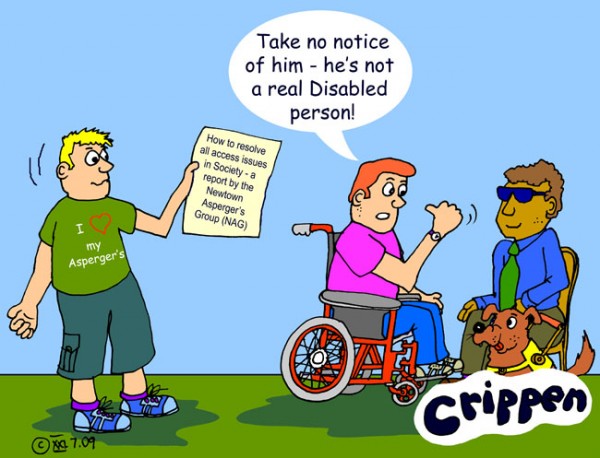
McKinnon’s Mum Appeals To Obama
The mother of a UK computer hacker facing extradition to the US has called on President Barack Obama to intervene.
Janis Sharp spoke after her son, Gary McKinnon, 43, of London, who has Asperger’s Syndrome, lost a court bid to avoid extradition.
The US wants to try Mr McKinnon for what it calls the biggest military computer hack ever in 2001/02. He maintains he was seeking UFO evidence.
Ms Sharp said: “Please hear us, Obama. I know you would do the right thing.”
A letter has been sent to the US president signed by 40 British MPs asking him to step in and “bring this shameful episode to an end”.
|
I’m just praying, please hear us, Obama, because I know you would do the right thing Janis Sharp
Gary McKinnon’s mother |
Speaking outside the High Court, Ms Sharp said President Obama should help those campaigning on her son’s behalf make the world “a more compassionate place”.
“Obama wouldn’t have this. He doesn’t want the first guy extradited for computer misuse to be a guy with Asperger’s [Syndrome], a UFO guy.
“I’m just praying, please hear us, Obama, because I know you would do the right thing,” she added.
Glasgow-born Mr McKinnon admits hacking by accessing 97 government computers belonging to organisations such as the US Navy and Nasa, but denies it was malicious. He also denies the allegation he caused damage costing $800,000 (£487,000).
He has always insisted he was looking for classified documents on UFOs, which he believed the US authorities had suppressed.
Supreme Court challenge
Mr McKinnon has challenged refusals by the home secretary and the director of public prosecutions (DPP) to try him in the UK.
But the DPP refused to order a UK trial, saying the bulk of the evidence was located in the US and Mr McKinnon’s actions were directed against the US military infrastructure.

Gary McKinnon suffers from Asperger’s Syndrome
|
Mr McKinnon could face 60 years or more in prison if convicted in the US.
Whether or not he can appeal to the new UK Supreme Court – due to launch in October – will be decided later, Lord Justice Burnton, one of two High Court judges to hear his case, said earlier.
The two judges ruled extradition was “a lawful and proportionate response” to his offence, even though they conceded he might find extradition and prison in the US “very difficult indeed”.
Mr McKinnon’s lawyers argued extradition was “unnecessary, avoidable and disproportionate”.
Karen Todner said her client was “clearly not equipped” to deal with the American penal system.
‘Out to dry’
Tory leader David Cameron said the case raised “serious questions” about the extradition pact between the US and UK.
“Gary McKinnon is a vulnerable young man and I see no compassion in sending him thousands of miles away from his home and loved ones to face trial.”
|
US-UK EXTRADITION TREATY
2003 treaty, agreed in aftermath of 9/11 attacks
Offence must be punishable by one year or more in jail in both countries
US has to prove “reasonable suspicion” for extradition of a British citizen
To extradite an American from the US, British must prove “probable cause”
Since 2004, 46 people have been sent from the UK to the US for trial, and 27 from US to UK
|
Liberal Democrat home affairs spokesman Chris Huhne claimed the American government would not “hang one of their citizens out to dry in the same way”.
“The [UK] government must ensure that the US-UK Extradition Treaty is repealed and that its replacement treats US and British citizens equally,” he said.
But Home Secretary Alan Johnson insisted he had no power to demand the trial take place in the UK.
“Mr McKinnon is accused of serious crimes and the US has a lawful right to seek his extradition, as we do when we wish to prosecute people who break our laws.”
He added that he had “clear assurances from the US” that Mr McKinnon’s health and welfare needs would be met.
Mr McKinnon has already appealed unsuccessfully to the House of Lords and the European Court of Human Rights.
Hacker Gary McKinnon Loses Appeal
UK hacker Gary McKinnon has lost his latest High Court bid to avoid extradition to the United States.
US authorities want to try the 43-year-old, from Wood Green, north London, for breaking into US military and Nasa computers in 2001 and 2002.
Mr McKinnon admits hacking, but denies it was malicious or that he caused damage costing $800,000 (£487,000).
He had challenged refusals by the home secretary and director of public prosecutions to try him in the UK.
‘Lawful and proportionate’
|
If the law says it’s fair to destroy someone’s life in this way then it’s a bad law. Janis Sharp
|
Glasgow-born Mr McKinnon had asked the court to rule on whether the CPS was right to say he could not be prosecuted in the UK, and also whether his Asperger’s Syndrome meant he could not be extradited to the US.
But, in a 41-page ruling, the judges said extradition was “a lawful and proportionate response to his offending”.
He faces up to 70 years in prison if convicted in the US of what prosecutors have called “the biggest military computer hack of all time”.
Speaking outside the High Court, his mother, Janis Sharp, said her son had been “naive enough to admit to computer misuse without having a lawyer and without one being present”.
“We are heartbroken. If the law says it’s fair to destroy someone’s life in this way then it’s a bad law.”
|
US-UK EXTRADITION TREATY
2003 treaty, agreed in aftermath of 9/11 attacks
Offence must be punishable by one year or more in jail in both countries
US has to prove “reasonable suspicion” for extradition of a British citizen
To extradite an American from the US, British must prove “probable cause”
Since 2004, 56 people have been sent from the UK to the US for trial, and 26 for US to UK
US courts have granted about 70% of UK extradition requests, while nearly 90% of US requests have been granted
|
Mr McKinnon accessed 97 government computers belonging to organisations including the US Navy and Nasa.
He has always insisted he was looking for classified documents on UFOs which he believed the US authorities had suppressed.
In February the Crown Prosecution Service refused to bring charges against Mr McKinnon in the UK.
The decision followed a ruling last October by then Home Secretary Jacqui Smith to allow his extradition.
Mr McKinnon has already appealed unsuccessfully to the House of Lords and the European Court of Human Rights and his latest judicial reviews in the High Court are likely to be his last chance.
His lawyers say the authorities have not given proper consideration to his Asperger’s Syndrome, which could have “disastrous consequences,” including suicide, if he was to be extradited.
They argued he was “eccentric” rather than malicious and should be tried on lesser charges in the UK to protect his mental health.
DisAbility on Stage
Following successful previews in Melbourne, London and at Leicester Comedy Festival, disabled comedian Liz Carr brings her new show to the Soho Theatre on the 7th, 8th, 14th and 15th August 2009. Written and performed by Carr and directed by New York-based actor and director Christine Bruno, “It Hasn’t Happened Yet!” follows burgeoning comedian Alex Saunders as she navigates her way through the minefields of disability and comedy with wheelchair and alter-ego in tow.
“Nothing is sacred with Liz Carr and Melbourne is seldom graced with a talent like hers. Her play, which tells the story of Alex tackling the mainstream as a crip jokester, is a finely hewed piece where theatre and stand-up are seamlessly interposed.”
Art of Difference, Melbourne 2009
Originally commissioned in 2007 by The Arena, Wolverhampton and supported by The Arts Council, It Hasn’t Happened Yet! will be touring the UK in autumn 2009.
All shows are wheelchair accessible and will be captioned for deaf and hard of hearing audience.
Book on 0207 478 0100 or http://www.sohotheatre.com
From Facebook.
MS Woman Wins Right To Die Fight
A woman with multiple sclerosis has made legal history by winning her battle to have the law on assisted suicide clarified.
Debbie Purdy wanted to know if her husband would be prosecuted if he helped her end her life in Switzerland.
Five Law Lords ruled the Director of Public Prosecutions must specify when a person might face prosecution.
Ms Purdy, 46, from Bradford, said she was “ecstatic” at the ruling and she had been given her life back.
The Director of Public Prosecutions Keir Starmer said he would publish an interim policy on when prosecutions could occur by September before putting the issue out to public consultation. Permanent policy will be published next spring.
Ms Purdy said the Law Lords’ decision was “a huge step towards a more compassionate law”.
“I’m ecstatic – I feel like I’ve been given a reprieve.
“I want to live my life to the full but I don’t want to suffer unnecessarily at the end of my life.
It’s not for the state to choose how Debbie Purdy and others live or die. It must be the choice of the individual, with protection from the state for those who help
“The decision means that I can make an informed choice, with Omar, about whether he travels abroad with me to end my life because we will know exactly where we stand.”
No one has been prosecuted for assisting someone’s death, although the law says they could potentially face 14 years in prison.
The House of Lords, the highest court in the land, said the law was not as clear and precise as it should be.
Five Law Lords unanimously backed Ms Purdy’s call for a policy statement from the Director of Public Prosecutions on when someone might face prosecution for helping a loved one end their life abroad.
Ms Purdy said she would like to see the policy distinguish between “what is acceptable and what isn’t” so people in situations like hers could make decisions about what to do.
A spokesman from the Ministry of Justice said any change in the law was up to parliament.
“In a free vote on the issue on 7 July, the House of Lords rejected an attempt to decriminalise assisted suicide in circumstances where terminally ill people are helped to travel to countries where assisting dying is lawful,” he said.
Human rights
The Law Lords also said she had the right to choose how she died, under Article 8 of the European Convention on Human Rights.
|
That must be better than the current legal muddle Sarah Wootton, Dignity in Dying
|
In a summary of their decision, the Law Lords said: “Everyone has the right to respect for their private life and the way that Ms Purdy determines to spend the closing moments of her life is part of the act of living.
“Ms Purdy wishes to avoid an undignified and distressing end to her life. She is entitled to ask that this too must be respected.”
She had previously lost challenges in the High Court and Court of Appeal. The Lords ruling was her last chance of success in the UK legal system.
Ms Purdy, married to Cuban violinist Omar Puente, was diagnosed with primary progressive MS in March 1995. She can no longer walk and is gradually losing strength in her upper body.
DPP Keir Starmer: “I will be issuing a policy on assisted suicide”
She has suggested that at some point she may travel to Switzerland to take a lethal dose of barbiturates prescribed by doctors at the controversial Dignitas organisation.
More than 100 UK citizens have so far ended their lives at Dignitas, and no-one who has accompanied them has ever been prosecuted on their return to the UK.
However, the reasons why legal action has not been taken have never been made clear.
‘Significant victory’
Ms Purdy had previously said if the law was not clarified she would have had to end her life earlier than she wanted to.
Sarah Wootton, chief executive of Dignity in Dying, said: “This historic judgement ensures the law keeps up with changes in society and crucially, provides a more rational deterrent to abuse than a blanket ban which is never enforced.
|
Without exception, every disability rights group in the country, are completely opposed to any changing of the laws on assisted suicide and euthanasia Right To Life
|
“That must be better than the current legal muddle.
“The ruling is significant because it distinguishes between maliciously encouraging someone to commit suicide and compassionately supporting someone’s decision to die.”
Former Lord Chancellor, Lord Falconer, said it was a “very significant victory”.
Simon Gillespie, chief executive of the MS Society, said: “There are 100,000 people with MS across the UK and most will live about as long as any of us.
“The key to living well with MS is getting the right care and support from the point of diagnosis, including palliative care when it’s needed.”
Attacking the decision, Phyllis Bowman, executive officer of Right To Life, said the group would be consulting its lawyers about what action it could take.
“Much as we sympathise with Ms Purdy, we are extremely concerned about the manner in which this will leave the vulnerable – that is the disabled, the sick, and the aged.
“Without exception, every disability rights group in the country, are completely opposed to any changing of the laws on assisted suicide and euthanasia.”
Riam Dean Launches ‘Imperfect’ Campaign
Just a quick post to ask you to check out this Facebook group which has been set up to support the ‘Imperfect’ campaign, launched by law student Riam Dean, who is currently attempting to sue clothing company Abercrombie and Fitch for discrimination.
I hope you all understand the play on words in the campaign’s name.
US Police ‘Didn’t Know’ Man Was Deaf
Officers who used pepper spray and a Taser to remove a man from a store bathroom found out only later he was deaf and mentally disabled and didn’t understand they wanted him to open the door, police said today.
A spokesman for the Mobile, Alabama police department said the officers’ actions were justified because the man was armed with a potential weapon: an umbrella. But relatives of Antonio Love, 37, have asked for a formal investigation and said they plan to sue both the police and the store.
“I want justice,” Love’s mother, Phyllis Love, said today.
The woman said her son hears only faintly, has the mental capacity of a 10-year-old and didn’t realise that it was the police who were trying enter the bathroom.
“He thought the devil was out there trying to get in to get him,” she said.
Antonio Love, in a written statement and in a television interview given in sign language about the confrontation, said he had a badly upset stomach on Friday and went into a Dollar General store to use the restroom.
Police spokesman Christopher Levy said today store workers called police complaining that a man had been in the bathroom for more than an hour with the door locked. Officers knocked on the door and identified themselves, but the person didn’t respond. Officers used a tire iron to open the door, but the man pushed back to keep it shut. Officers sprayed pepper spray through a crack trying to subdue the man, Levy said. They shot the man with a Taser when they finally got inside, he said.
Officers didn’t realide Love was deaf or had learning disabilities until he showed them a card he carries in his wallet, Levy said. He was arrested on a charge of disorderly conduct, but officers released him and took him home after a magistrate refused to issue a warrant.
Levy said officers were justified in using force against Love since he had an umbrella.
“The officers really worked within the limits of our level-of-force policy,” he said. “We had no information about who this guy was.”
Phyllis Love said her son, who has worked in the garden department at a Lowe’s home improvement store for several years, was scared when he realised someone was trying to get into the bathroom with him. He put water on his face after being hit with pepper spray, she said.
“He didn’t know it was a policeman until they busted the door in on him,” she said. “He had a knot on his head from where it hit him.”
Levy said police wish the confrontation had never occurred. The internal investigation will include a review of Love’s complaints that officers laughed at him after realising he was deaf, he said. “We’ll make whatever efforts we can to resolve this situation, hopefully so this man will be able to trust police in the future so we can help him. Obviously, it’s going to be a rough road,” he said.
Team GB At The World Team Cup

Lucy Shuker helped the GB women to an opening win
|
Great Britain made a winning start to the 25th Invacare World Team Cup in Nottingham with victories in the men’s, women’s, quad and junior tennis events.
The men’s team beat Italy 2-1 to secure a quarter-final on Wednesday against the top seeds from the Netherlands.
The women’s team of Jordanne Whiley, Lucy Shuker and Louise Hunt defeated Spain 3-0 and will play the United States in the last eight.
The quad team, led by Paralympic champion Peter Norfolk, beat Sweden.
Norfolk eased to a comfortable 6-2 6-0 win over Johan Andersson while Jamie Burdekin came from 3-0 and 4-2 down in the first set of the opening rubber to defeat Sweden’s Anders Hard 7-5 6-0.
Burdekin and Andrew Lapthorne clinched the doubles to give GB a 3-0 win in their first round-robin game and they next face Italy, who lost 2-1 to Israel in their opener.
Dermot Bailey, Philip Cochrane and Josh Steels also gave Britain a winning start in the junior event, Bailey won his singles on his World Team Cup debut and later pairing up with Steels, another debutant, to win the doubles and complete another 3-0 victory.
Danny Crates Bows Out
Former Paralympic T46 800m Gold medal winner Danny Crates bows out of the sport with a third place at Crystal Palace and says he couldn’t have finished his career anywhere else.
Available to UK users only
Vodpod videos no longer available.
Nothing But A Number
More of my original writing today. Enjoy!


Nothing But A Number
‘Normal’ is the number of people who can walk
Those who don’t walk on their toes.
‘Normal’ is the number of people who can talk
Those who breathe through their own nose.
‘Normal’ are the number who use the spoken word
Not those who sign, point or smile.
‘Normal’ are the number who believe in God, world’s Lord
Not those who can’t run a mile.
‘Normal’ is the number of people who can hear
Not those who are born with one missing ear.
‘Normal’ is the number of people who can see
‘Normal’ is right, or so they tell me.
‘Normal’ is the number of people who can stand
Not those born in what others call a strange land.
‘Normal’ is the number of girls who wear high heels
Not those who watch with jealousy from seats on four wheels.
‘Normal’ is the number of boys who kick footballs
Not those who watch with jealousy through small holes in big brick walls.
‘Normal’ is the number of adults who can drive
‘Normal’ is the number of babies who survive.
They’ve been told more are ‘normal’ than those who are not
That’s all that makes them think they have some things we haven’t got.
But this ‘normal’ is only a number, you see
I’m as ‘normal’ as you, and you’re as ‘normal’ as me!
Weekend Cartoon
Thanks to Crippen.
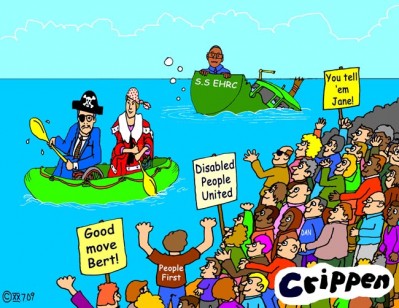
Norfolk Reaches British Open Semi Finals
World number one and defending champion Peter Norfolk eased into the last four of the British Open quad singles after a comprehensive straight-sets win.
Norfolk beat former champion Shraga Weinberg of Israel 6-0 6-1 and will next face Dorrie Timmermans.
Thanks to BBC Sport.
Nigel Brooke Again
Here’s another cartoon by Crippen based on Nigel Brooke’s story. Which one do you prefer?
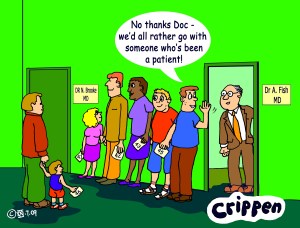
Autistic Twins Decision Demanded
A mother of autistic twins has appealed for a quick decision from Essex social services over the future education of her sons.
Sharron Spain says she has found a specialist college that perfectly suits their needs but has been awaiting a decision from Essex County Council since January.
Vodpod videos no longer available.
Midweek Cartoon
I loved Dr Nigel Brooke’s story so much that I asked DisAbled cartoonist Crippen to do a cartoon based on it. Here’s the result. Enjoy.
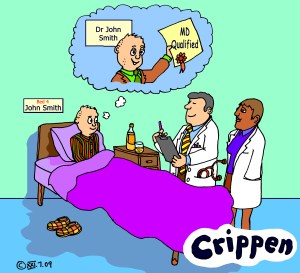
Surgery Cures Scoliosis
|
|
|
||||||


Sir Bert Massie Resigns From EHRC
Sir Bert Massie, the former head of the Disability Rights Commission, finally resigned from the Equality and Human Rights Commission on Saturday 18th July, over the reappointment of Trevor Phillips as the Commission’s Chair.
In his resignation letter to Harriet Harman, the minister for equalities, Massie said he had long been concerned about “corporate governance” at the EHRC, adding: “The chairman’s conduct in various ways has damaged the commission’s external reputation.”
Trevor Phillips was not available for comment.
From Patient To Doctor
Dr Nigel Brooke’s desire to join the medical profession was one shaped by his own illness.
As a child the 34-year-old consultant spent weeks at a time each year being treated for his cystic fibrosis.
“I saw doctors working long hours, but I saw how rewarding it was,” he said.
“I realised that with my interest in science that was probably the way I would like to go.
“I was diagnosed with cystic fibrosis (CF) at the age of three and as a school child I used to spend two weeks at a time in hospital, on average four times a year.”
CF is an inherited condition affecting the glands that produce body fluids or secretions.
|
I think that insight helps me when dealing with parents Nigel Brooke
|
In CF, these secretions are stickier and thicker than normal. This hinders the functioning of important organs, such as the lungs and digestive system.
Nigel said he hoped his own experiences of living with a chronic condition had given him an insight into the lives of his patients.
“I think I have an empathy and know how you being ill impacts on the rest of the family,” he said.
“And I also know about how kids with chronic illness have to put up with it every day of their lives and how that impacts on them.
“I think that insight helps me when dealing with parents.
“My lungs are not bad now and are relatively healthy, but I did have a lot of infections when I was younger.”
Cross-infection dangers
Nigel, now a consultant paediatrician at Doncaster Royal Infirmary, said he had wanted to work in the area of cystic fibrosis, but had found this impossible, because of fears of cross-infection endangering both his health and that of the patient.
“I think I would have liked to have worked with CF patients because if you have the inside knowledge it does make it easier and it is nice to be able to give something back.

Cystic Fibrosis hinders lung function
|
“It would have been nice to be able to do some research in that area, but it was not possible and looking after sick, very fragile, babies does give me a buzz. To see them survive is amazing.”
Nigel was recently awarded the Academic Life Award from the Cystic Fibrosis Trust for his remarkable achievements in life.
Rosie Barnes, chief executive of the trust, said Nigel was an inspiration proving that it is possible to not only keep and hold a demanding job with CF, but also to have a full and active life.
“He has inspired others by training to become a doctor whilst dealing with the challenges of daily life with CF.
“Nigel also shows that those with CF can excel at sports, running the Sheffield half marathon in 2007 and raising over £2,000 for charity.”
Tough training
Nigel said that the rigours of a medical career had been tough and only made possible by understanding colleagues.
“The training for medicine is quite intense and the hours quite rough and it is obviously quite antisocial and that does impact on your health,” he said.
“You get more tired being on call.
|
Cystic Fibrosis
Cystic fibrosis (CF) affects more than 8,000 people in the UK and is the commonest inherited disease.
It is the UK’s most common life-threatening inherited disease
It’s estimated about five babies are born with CF each week in the UK
|
“But I do the amount of work I can.
“I have very understanding colleagues so if there is a patient I can’t see often my colleagues will go and see them for me.
“I can’t treat anyone with CF, because of the dangers of cross-infection, but there is always a named consultant looking after them so I am unlikely to come across them.
“The only time I am aware of coming across CF patients is when I am on the ward and then they are in cubicles, but that risk is there.”
Nigel also works with a charity called Dream Flight where he annually takes nearly 200 children away to Florida for the trip of a lifetime.
Dr Jim Littlewood, chairman of CF trust and a retired paediatrician, said Nigel is just one of a handful of medics with the condition, as many found the odds stacked against them.
“Having CF does give them empathy, but a medical career is full of problems,” he said.
“In the medical, nursing profession or physiotherapy if you have CF you can be a problem to patients coughing up germs and the patients can be a problem to you and you can certainly catch a nasty infection from them.”
I must add that one of the reasons why I am truly inspired by this story is that when I was very young, I thought of being a physio because of my inside knowledge of CP! But it’s a similar story, since I soon realised that of course this would be impossible.
Of course Dr Brooke is a truly DisAbled inspiration who has my best wishes.
Lady Campbell Resigns From EHRC
 Jane Susan Campbell, Baroness Campbell of Surbiton, at her home in Surbiton, Surrey. Photograph: Martin Godwin
The embattled Equalities and Human Rights Commission suffered a further shock today with the resignation of a high-profile commissioner, Lady Campbell, the fourth senior figure to quit the organisation this year.
The baroness, a hugely respected disability rights campaigner who hit the headlines this month for her impassioned opposition in the Lords to a bill to legalise assisted dying, is believed to have quit in response to the reappointment on Wednesday of Trevor Phillips as EHRC chair.
Phillips has presided over internal tensions at the commission in recent months and been forced to fight off criticism over the future direction of the equalities body. Until this week, there was speculation he would not be given a second three-year term.
Critics have been scathing of Phillips’ management style, his alleged closeness to government, and his perceived shifting of the tone and style of the commission’s approach – from a campaigning strategy for tackling inequality and discrimination to one of “fairness”.
Campbell, a wheelchair user, was a former commissioner of the Disability Rights Commission before it was merged into the EHRC in 2007. She was made an independent crossbench peer in 2006, having been chair of the social care body Social Care Institute for Excellence.
Her resignation follows the departure of a former chief executive, Nicola Brewer, a fellow commissioner, Kay Hampton, and the director of strategy, Patrick Diamond, all in March.
The EHRC commissioner, Bert Massie, said in March that there had been concerns among some commissioners over its performance.
Maria Eagle, the minister responsible for EHRC in the government equalities office, said: “I have great deal of respect for Jane Campbell and the work she has done for the commission. She’s a great person; losing someone of Jane’s calibre is a loss for the commission.”
Nail Salon Refuses Wheelchair User

Ms Williams says she wants to highlight the way she was treated
|
A woman claims she was told she would not be served at a nail salon because she was in a wheelchair.
Laura Williams, 28, who has muscular dystrophy, says she was reduced to tears after twice being refused service at Hollywood Nails in Port Talbot.
The salon in the Aberafan Shopping Centre disputes her account and says she was asked to return on a different day.
Two carers who were with her say they support her claims.
Ms Williams, from Cwmavon, said she had been a customer at the salon for around two years.
She said she had her nails done at the salon about four weeks ago and after they started growing returned last week to have them “refilled.”
“They said ‘no – not today’ so I did not think anything of it and went back on Monday,” she said.
“Again they said no so we asked them why and he said ‘because you are in a wheelchair and I do not like you’.
“My carer went back in then and said can she make an appointment or something, come back another time? and he said no.”
Ms Williams said it was the same man who had served her on previous visits.
“I was shocked. I have never come across anything like that,” she added.

The nail salon said Ms Williams was asked to return on a different day
|
“I burst into tears when my carer went back in. The people in the next shop came out and gave me tissues.
“One of my carers went and got a security guard.”
She said she made a complaint to the manager of the shopping centre but added in no way did she blame him, as she had always been treated well when visiting the complex.
Ms Williams has now created a site on the social networking site Facebook detailing her allegations.
“I just want to put my point across – they should not be treating people like that,” she added.
When a reporter from the BBC Wales news website visited the salon, he was told the manager was not available.
However a short time later a woman called and said she was the manageress and denied Ms Williams’s allegations.
She said whenever Ms Williams visited the shop she was the one who served her.
She said as she was not available staff asked Ms Williams to return another day.
She said the staff spoke little English so there may have been a misunderstanding but denied they refused to serve her because she was in a wheelchair or they did not like her.
She said the shop was happy to serve customers with wheelchairs.
Ms Williams was accompanied on Monday by two respite carers from the Swansea Neath Port Talbot Crossroads charity.
Manager Gareth Williams said: “It would appear that, in this particular instance, standards exhibited by the retailer involved apparently fell short of such widely recognised values.
“We [have] confirmed to Laura Williams that, if she were to consider pursuing the matter under anti-discrimination procedures via regulatory or legal bodies, we would in these circumstances be happy to provide the written statements of our staff members who were present at the time.”
Weekend Cartoon
Thanks to Crippen.
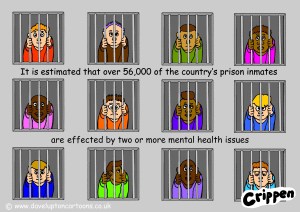
Otto Baxter’s Back
He still hasn’t found love, and he’s still looking. Here, he answers BBC Ouch’s 13 Questions.
Tories To Cut Disability Red Tape
Families of disabled children will get one-off assessments by “crack teams” of medical experts under plans by the Tories to cut red tape, it has emerged.
Writing in the Independent, Conservative leader David Cameron said the current system left families in “a world of bureaucratic pain”.
The Tory leader’s severely disabled son, Ivan, died in February aged six.
Mr Cameron wrote about the confusion he and his wife Samantha felt when they learned of Ivan’s disabilities.
|
I am determined to make life simpler for parents David Cameron
|
He is due to make a speech on this subject at the Research Autism conference in London.
Mr Cameron said: “Life for parents of disabled children is complicated enough without having to jump through hundreds of government hoops.”
Forms and queues
He said parents of disabled children currently faced answering the same questions repeatedly, writing out large numbers of forms and waiting in phone queues.
Mr Cameron added: “I am determined to make life simpler for parents.”
Ivan died after suffering with cerebral palsy and severe epilepsy.
Describing his feelings on learning of Ivan’s disabilities, Mr Cameron said it felt like being on a journey which he never intended to take, without a clue as to which direction to go in.
He also reiterated plans to halt the closure of special schools.
The conflict of interest whereby local education authorities both decide who gets specialist education and pay for it needs to be resolved, Mr Cameron added.
The Tory leader also promised an increase in the number of health visitors and a clear entitlement to respite care.
Sense Survey For Deafblind People
I’ve just recieved this comment, and I thought it deserved a post of it’s own.
Hello,

Sense, the UK deafblind charity is appealing to all deafblind people based in the UK to get in touch with us to let us know:

-what stops them being fully included in their community.
-what rights would most improve their life,
-what frustrations they face,
-what could help them to be more included in their local community; what helps or hinders them to get out and about;
-what they want Sense to do about the barriers they face;
-what they would be able and willing to do about them and how Sense could support them?

Could you please help us reach deafblind people who may be reading your blog?
Gladly.
The Nadia Effect
 Nadia Clarke has done GCSEs and has been a Youth Parliament delegate. Inclusion, says her mother, Katie, ‘is a rocky road but it can be travelled’ Photograph: Christopher Thomond
In 1998, the Guardian told the story of Nadia Clarke, whose family moved across the country to find their bright but severely disabled daughter a place in mainstream education.
It was an admirable but depressing saga of the problems, and sometimes prejudice, that led the six-year-old’s parents to give up jobs, uproot their three other children and travel 100 miles from a sought-after village to a town with an iffy reputation for schooling.
“The headlines about Halifax at the time were all to do with trouble at the Ridings school,” says Katie Clarke, Nadia’s mother, while her daughter nips upstairs in her wheelchair lift in a teenage hunt for make-up. “But it wasn’t too long before Calderdale council was getting better stories in the papers. They were about Nadia.”
They deserved to be good, because the gamble that left readers in 1998 rooting for a brave spirit locked in cerebral palsy combined with deafness, has paid off, and handsomely. Nadia, now 17, comes downstairs again to talk about her GCSEs, her coming place at Calderdale college, election victory as the local youth parliament’s delegate to Calderdale council, and a conference she is about to address in Birmingham, on inclusion and the value of direct payments that allow families to construct their own package of support.
It is quite some package in the case of the Clarkes, who now have six children plus assorted pets, overflowing their home in a Halifax sidestreet, even when Clarke is out directing the charity she runs, and her husband, Andy, is at work as a psychologist. Nadia has eight support workers and a pace of communicating, through signing and an electronic voicebox fitted to her pink and purple wheelchair, that demands time and patience.
Inputting her GCSE work involved hours for her helpers, as did scribing her answers. Simply answering a question about her feelings on first going to Savile Park primary school, which had its own difficulties at the time in terms of Sats and league tables, takes a couple of minutes; but it also introduces the “Nadia effect” which, her family and helpers have no doubt, makes inclusion of any child in this position rewarding for everyone.
“Nothing is simple,” says Katie, whose turbo-charged character has been inherited by all her children, larking about in photographs that wallpaper the loo and kitchen, which show Nadia embraced and beaming with the others. “It’s a rocky road at times, but it can be travelled.”
Back in Northumberland in 1998, where there was talk of some parents sending their children to private school if Nadia went to the village primary and gobbled up time and resources – as they saw it – the family dreamed of a school where their child could tackle the same life as everyone else, just as she did at home.
It took two years to find, starting when Nadia was only four. Katie and Andy sent every primary in the family’s part of Northumberland a letter, making no bones about their child’s complex needs but underlining the positive, rewarding side. None felt that they could cope, and the county council’s option was a 50-minute taxi ride to a special school. So moving entered the agenda.
Nadia’s brother Sean, a year older and currently in the US on a pre-college stint at Camp America, was up for it, and her small sisters Nicky and Reay were young enough to cope. But where to? “Middlesbrough was lovely about Nadia,” says Katie, but there were logistical problems with a house and jobs. Leeds said come, but we can’t assess Nadia until you’re here, which was a gamble too far.
“Then I discovered that Calderdale had signed the Salamanca agreement, committing to wholly inclusive schooling, along with Newham down in London,” says Katie. “I’ll never forget when Andy and I went to see Bob Hayfield, the head of special needs. He just said: ‘We need to find the best mainstream school for you so Nadia can go to the same school as her brothers and sisters. It was like hearing a symphony orchestra playing in your head.”
The key to Calderdale’s decision to resource children such as Nadia is recognising that everyone benefits from having a Nadia at the same table in the primary school, or at the secondary school’s next desk. When she turned 12, her family found exactly the same welcome from Ian Adam, the headteacher at Ryburn high school, who said: “We haven’t done this before and we’ll make mistakes, but we want it to work.”
The council held that attitude universally. Officers had looked at events in Spain that led to Unesco’s Salamanca initiative in 1994. They established two resource centres for deaf children at primaries, one at Savile Park, where the emphasis was on welcoming everyone.
Attitudes like that are the key, says Katie, rather than logistical challenges such as the Victorian stone stairs at the primary (since rebuilt), which joined the list of obstacles that Nadia had to overcome. “It isn’t just attitude, but the real sense that Nadia has people around her who share her, and our, very high expectations. People saying well done, keep on.”
Nadia chips in at this point, after getting new batteries fixed in her voicebox – running out of power just as we met was a typical small glitch. “I was excited about meeting new friends at Savile Park,” she says. Although her movements are restricted by the cerebral palsy, you can see the recall in her wide grin and expressive eyes.
“Now I’m off to college and then after that uni, I hope, maybe travel the world for a year, and then go on to my dream of working in healthcare.” Inputting that sentence takes a couple of minutes, and Nadia’s support worker Adele Kneen helps me with the robotic American voice’s struggles over “Savile” and “uni”. But as with celebrated fellow victims of paralysis such as Professor Stephen Hawking, you soon think: “So what? Tell me more.”
“It’s really good fun being with Nadia,” says Kneen, who is helping the transition to Calderdale college, where the pair have spent the morning inventing and overcoming possible problems on a risk assessment. Like most teenagers, Nadia goes into town with friends and they come back for sleepovers.
“Is it true that you have arguments with your sisters sometimes?” I ask. “I like my brothers,” she quips back through the voicebox, supplemented by the small movements which – a Herculean task – she has mastered to use as British Sign Language.
Nadia’s story, which certainly has many chapters to come, is now one of a series of similar case studies highlighted by the Alliance for Inclusive Education and Parents for Inclusion. They have plenty of possible conferences lined up, beyond the two that she is currently working on, feeding her speeches into the voicebox with Kneen, so that her argument will come out at a normal – if American robotic – pace.
There’s the fight to get disabled people equal access to training in the apprenticeships, skills, learning and children’s bill, now being considered by the House of Lords; the same campaigning over the equality bill, recently published, and demands that the government consult the disabled more widely before ratifying a new United Nations convention. “All hands to the pump,” says Simone Aspis, campaigns and policy co-ordinator for the alliance. Don’t doubt that Nadia will be there.
This post is part of the Inclusion Rules! debate at Same Difference.
Crates Announces His Retirement

Crates carried the flag for Great Britain at the Beijing opening ceremony
|
Former Paralympic gold medallist Danny Crates has announced his retirement from athletics.
Crates, who took gold in the T46 800m at Athens in 2004, will run his final race at Crystal Palace on 25 July.
“I’ve had a fantastic career over 11 years,” the 36-year-old Heybridge athlete told BBC Essex.
“But the last two years haven’t gone quite according to plan and it’s been quite frustrating because I think I had more to give.”
“The only frustration I have is that time-wise I don’t think I ever ran as fast as I think I could have,” he added.
Alongside his Olympic triumph, he also won titles at European, world and World Cup level, as well as taking silver in the Sydney Paralympics of 2000.
He also had the honour of carrying the flag for Great Britain in opening ceremony of last year’s Beijing Games.
However, he has struggled with injury in the last 18 months and also had some of his lottery funding cut ahead of this season.
“People are surprised that I’m retiring – everyone seems to think I was going to go to 2012,” he admitted.
“But I think it was always my aim to retire around this time – my age is 36 and London for me was always going to be a long shot.
|
Every time I put the GB vest on I was immensely proud to do so and I never took lightly the fact I was running for Great Britain
Danny Crates
|
Crates has been one of Britain’s most successful Paralympic athletes for a decade but remained humble about his achievements.
“I’d like to be remembered as someone who had an athletic’s career, rather than someone who won all of the time, because I didn’t – I had highs, I had lows,” he said.
“But every time I put the GB vest on I was immensely proud to do so and I never took lightly the fact I was running for Great Britain.”
It’s A Life Or Death Situation
Last week, the House of Lords first debated, then rejected, a new law that would have made it legal to help terminally ill or disabled people to die.
This law sparked a lot of discussion among disabled people on the issue of ‘assisted suicide,’ so let me present both sides of the debate to you.
Disabled journalist, Tom Shakespeare, writes in the Guardian: As a supporter of disability rights, I back the right of disabled people to have control over the time and manner of their death, so they can avoid unbearable suffering and achieve dignity in dying. Being disabled in itself is no reason to die, but for many of those who have terminal illness, controlling the circumstances of their death becomes very important.
Disabled peer, Lady Jane Campbell, writes, also in the Guardian: Not one organisation of or for disabled and terminally ill people has campaigned for the changes proposed. This includes organisations that advocate on behalf of people with multiple sclerosis and motor neurone disease; two disabling conditions that are often referred to when describing who would benefit most from this legislation.
The amendments’ supporters are unable to reconcile the fact that with the exception of a few vocal individuals, backed by the powerful Dignity in Dying, assisted dying legislation is not supported by the people it is intended to benefit. They appear not to have noticed that the days of others knowing what is best for disabled and terminally ill people are past. We are now empowered and we know what we need to play a full part in society. We want help to live – not help to die.
If the state were to sanction any person to assist another in the ending of that person’s life, it would put at risk the lives of the very people who need every encouragement to live. We would be feeding in to the stereotype that our lives are so tragic, burdensome and insufferable that we must want to die. It takes extraordinary personal will to rise above such views. Many do not, especially when such views are held by loved ones.
Personally, I’m disabled, and I have to agree with Lady Campbell. I want help to live, not help to die. I’d much rather have the life I’ve got than no life at all. More than that, in my opinion, assisted suicide, euthanasia, or whatever you want to call it, is just as bad as murder. I could never ask anyone I love to live with murdering me. That wouldn’t be love.
Your comments are very welcome, as always.
Weekend Cartoon

Thanks to Harry Thomas.
Career High Ranking For Shuker After Wimbledon Debut
Lucy Shuker has risen to a career-high doubles ranking of sixth in the world after reaching the Wimbledon final.
The British number one, partnered by Australian Daniela Di Toro, lost to the Dutch pairing of Korie Homan and Esther Vergeer 6-1, 6-3.
It was the first time that Shuker, who trains in Taunton, has appeared in the Championships at Wimbledon.
“There was some disappointment, but to get to the final was a great achievement,” said the 29-year-old.
She added: “To play at Wimbledon for the first time was incredible. I look forward to hopefully having another chance again next year.”
Something In The Air
 Wonder and admiration … Something in the Air
Long before the vogue for site-responsive theatre and shows that are ever more interactive, multisensory and intimate, there was Oily Cart, a remarkable and pioneering company whose work with children and those with complex disabilities has always been way ahead of the theatrical game. Over the years, I’ve seen this company turn a school hall into a tented Aladdin’s cave of bright jewelled colours and transform swimming pools into playgrounds of the imagination.
Their latest piece – created for children with disabilities or autistic-spectrum disorders, and cannily commissioned by the Manchester international festival – is a kinaesthetic adventure for an audience of 12 at a time. Created in collaboration with aerialists Ockham’s Razor, it conjures a forest-like setting where the sound of wildlife mingles with eerie music as the cast fly through the air like exotic birds. We watch from flower-covered chairs that rise up into the air, swing, turn and bounce up and down. We feel as if we are flying, too, freed from the restraints of our bodies and gravity itself. The show is truly participatory, unlike so many others in which it seems as if the cast are having more fun than the audience.
There are characters who sing and play (in all senses of the word), but the emphasis is very much on spectacle, as leaves flutter to the ground and a strange silver creature tumbles on a rope. There is plenty to reflect on, too, not least in the slivers of mirror – rather like thin slices of moon – hanging from the roof that are then detached and used to show the children their own central place in this strange, forest world.
The pace of the piece is meditative, but there is comedy as well: as red balls are dropped from the ceiling and bounce on the floor, their size and depth gradually increase, and our chairs rise and fall with them.
There is much, too, about the need to work together and the way that successful flying requires trust and support and the help of others in a show that genuinely integrates circus into the performance. Where Oily Cart has gone before, mainstream theatre for adults often follows a couple of years later. So expect flying seats at the National sometime around 2011 – but for the moment, watch Oily Cart with wonder and admiration.
Disability Hate Crimes Going Unseen
 |
|
|||||||

Inclusion
An original poem for you today, readers. Enjoy!
Inclusion
I have every right to be here in this school
Not according to the mainstream, though, they just don’t think I’m
Cool. I wish I could set them straight somehow and let them see
Let them see just how much knowledge is trapped inside of me.
Until they can see that, none of us have a chance
So please, can’t you show them, tell them to give us all a second glance?
I have no one else to ask but you
Only you can make my dream come true, so please go out and say
No to special education, today and every day!
Wimbledon On Wheels
World number one Esther Vergeer and Korie Homan made history as the inaugural winners of the Wimbledon women’s wheelchair doubles title.
The Dutch pair beat Britain’s Lucy Shuker and Daniela di Toro of Australia 6-1 6-3 in the final.
“This is a huge event and I’m so proud to have won,” Vergeer told BBC Sport.
French pair Stephane Houdet and Michael Jeremiasz beat Dutchman Robin Ammerlaan and Japan’s Shingo Kunieda 1-6 6-4 7-6 (7-3) to win the men’s doubles.
Vergeer, whose unbeaten singles record stretches to 350 matches, teamed up with world number two Homan this year and the formidable pair already have the Australian and French Open titles to their name.
Against Shuker and Di Toro they made a blistering start, rushing into a 5-0 lead, and, although the Anglo-Australian pair saved two set points in the sixth game, Vergeer served out the first set.
The Dutch pair won the opening game of the second set before Shuker and Di Toro rallied by winning the next three games to lead 3-1.
But once again, Vergeer and Homan showed their class and they won five games in a row with Homan clinching the famous win with a forehand cross-court winner.
“Each year when I saw the men’s tournament taking place here I really wanted to be there and when they announced that there would be a women’s event this year, I was so keen to take part,” Vergeer added afterwards.
“It is one of the only titles that hasn’t been on my list at any stage and now it is and I am so proud for myself and Korie. This is one that I really wanted.”

Houdet and Jeremiasz pose with the men’s doubles trophy
|
Despite the defeat, Somerset-based Shuker was keen to take some positives from her Wimbledon debut.
“It was an awesome experience and while obviously it was disappointing to lose, it was great to play here and we have to build on this and look forward.”
Houdet and Jeremiasz added the Wimbledon crown to their Paralympic and French Open titles after edging a tense third-set tie-break against Ammerlaan, who was chasing his third title in a row after triumphing with Ronald Vink, and Kunieda.
Ammerlaan and Kunieda made the better start and dominated the opening set but the Paralympic champions recovered well with some lovely touches at the net and rasping ground strokes, winning three games in a row to take the set.
With the French benefitting from some loud support and looking more aggressive, both Ammerlaan and Kunieda had to hold their serve to stay in the match but in the tie-break, Houdet and Jeremiasz again looked the stronger to seal victory with Houdet throwing his racket into the air in delight.
“We have achieved so much as a partnership and this is certainly one of our career highlights,” said Jeremiasz, who partnered Britain’s Jayant Mistry to victory in the inaugural event in 2005.
“Winning with Jayant was special, because he is such a good friend, but it is great to share something like this with Stephane.”
Houdet added: “I think communication played a big part in our victory – we spoke a lot and helped each other on when the other was struggling.
“It was a tough game but now we have won the French Open and Wimbledon, we are aiming for the Grand Slam.”
Mother Admits Aiding ME Suicide

Lynn Gilderdale had suffered from ME for about 17 years
|
A mother of a prominent ME sufferer and campaigner has admitted aiding and abetting the suicide of her daughter.
Bridget Kathleen Gilderdale, 54, of Stonegate, near Heathfield, Sussex, pleaded guilty to the charge at Lewes Crown Court.
But she denied a charge of attempted murder and one of aiding and abetting attempted suicide.
Lynn Gilderdale, 31, who had chronic fatigue syndrome, or ME, was found dead at their home on 4 December.
The offences are alleged to have taken place between 2 December and 4 December.
Judge Richard Brown set a provisional trial date for 12 January 2010 and ordered the case to be tried by a High Court judge.
After Ms Gilderdale was charged, her family said she retained their “unconditional support”.
Lynn Gilderdale battled ME for 17 years, relatives said.
Braille Factory Awarded £1m Grant
A £1m grant awarded to the Royal National Institute for the Blind will allow it to produce millions more pages of Braille every year.
Vodpod videos no longer available.
Not In My Name!
Thanks to Sunny at Pickled Politics:
Hope Not Hate have sent out this email request:
In just two weeks the BNP will be taking their seats in the European Parliament. We need to send the strongest possible message that they are not there in our name. Over 80,000 people have already done just this by signing our Not in my Name petition – I want you to sign it next. All you need to do is click this link – you can add your name with just one click:
http://action.hopenothate.org.uk/notinmyname
I need your help in showing that Griffin and Brons don’t represent us – that they don’t speak for Britain. I’m currently organising who we’re going to hand our petition in to at the European Parliament on July 14th and I want to make sure we have as many names on it as possible. Please sign up now and then invite all of your friends to do the same:
Thank you.
I have already signed, and I hope that you will take the time to do the same.
BBC NEWS | England | Beach Hut Designs Are Exhibited
Andrew Emery, the Boscombe sea change project manager, speaks about the national and international designs for beach huts for disabled users, which are on display in Bournemouth.
Vodpod videos no longer available.
Complicated Pregnancies Increase Autism Risk
Complications during pregnancy and giving birth later in life may increase the risk of having a child with autism, a review of dozens of studies suggests.
Researchers found the bulk of studies into maternal age and autism suggest the risk increases with age, and that fathers’ age may play a role too.
The mothers of autistic children were also more likely to have suffered diabetes or bleeding during pregnancy.
The US review of 40 studies appears in the British Journal of Psychiatry.
The recorded number of children with autism has risen exponentially in the past 30 years but experts say this is largely due to improved detection and diagnosis, as well as a broadening of the criteria.
The cause of the condition is unclear, and the review team from the Harvard School of Public Health said there was “insufficient evidence” to point to any one prenatal factor as being significant.
They did however note that nine out of 13 studies suggested an increased risk for older mothers, a demographic group which has grown in the last three decades.
This ranged from a risk 27% higher for those aged between 30-34 compared to those aged 25-29, and over 100% higher for those over 40 compared to those under 30.
For fathers, every five years increased the chances of a child with autism by nearly 4%.
|
It is like trying to complete a huge jigsaw puzzle – we still just don’t know how all the pieces fit together Richard Mills
Research Autism |
The biological reasons for why this may be are unclear, but the researchers speculated that potential chromosomal abnormalities in the eggs of older women and mutations in the sperm of older men may be a factor.
Gestational diabetes – which affects four in 100 pregnancies – was associated with a two-fold increase in the risk of autism, while bleeding in pregnancy was alleged to carry an 81% increased risk.
However, the team noted that there was little information given about when in pregnancy bleeding occurred. Common and often inconsequential in early pregnancy, later on it can signify serious problems.
Such bleeding may deprive the baby of oxygen – a condition known as fetal hypoxia – and this is turn impacts upon the developing brain, potentially raising the risk of autism.
The team also found associations with medication use, with a particularly strong link with drugs for psychiatric problems.
However, they acknowledged it was impossible to tell whether this was a result of the medication itself or the genetic traits which may be shared between autism and conditions requiring such treatment.
Researchers said the key challenge was to work out how genetics and the environment interacted with each other to produce autism.
“The rising prevalence, coupled with the severe emotional and financial impact on the families, underscores the need for large, prospective, population-based studies with the goal of elucidating the modifiable risk factors, particularly those during the prenatal period,” wrote lead author Hannah Gardner.
“Future investigations of prenatal exposures should also collect DNA to study potential gene-environment interactions.”
Richard Mills of Research Autism said such reviews of existing studies were “very useful indeed”.
“Age is a very interesting line of inquiry, but it is very hard to tease out one clear factor. It is like trying to complete a huge jigsaw puzzle – we still just don’t know how all the pieces fit together.”
Swine Flu Girl Was Special School Pupil
A girl, thought to be six years old, has died at Birmingham Children’s Hospital after contracting swine flu.
NHS West Midlands said the girl, who had other serious health problems, died on Friday evening. It is not known if flu contributed to her death.
It was initially reported she was nine years old. Her death is the third swine-flu related fatality in the UK.
The other two deaths were in Scotland. There have been 1,604 extra confirmed cases in England since Friday.
The total number of cases in England has reached 4,968 with the UK’s total now rising to 5,937.
‘Hygiene procedures’
The Health Protection Agency confirmed 588 new cases of swine flu in the West Midlands region on Monday, taking the total number of cases in the region to 2,104.
The youngster who died is believed to have been a pupil at a special school in Birmingham which caters for children with learning difficulties.
Dr Helen Carter, consultant in public health for NHS West Midlands, said: “Our thoughts are with the family of the patient at this very sad time.
“The family have asked for the patient’s identity to be kept private and we will not be releasing any further details.
“It is important to remember that our experience here has been that the vast majority of cases with swine flu are mild.”
Dr Helen Carter, NHS West Midlands: “Our thoughts are with the family”
Health Secretary Andy Burnham said: “Tragic as today’s death is, I would like to emphasise that, across England, the majority of swine flu cases have not been severe.
“I would reiterate that the risk to the general public remains low and we can all play our part in slowing the spread of the virus by following simple hygiene procedures.”
Asked if he feared more West Midlands deaths, Professor Steve Field, chairman of the Royal College of General Practitioners, said: “(We) thought there would be a few more than this with the numbers of cases that we’ve got.
“Actually, it’s a surprise that more people haven’t died in a way because you’d expect more from seasonal flu.
“More people will die from the heat in the next few days if we’re not careful than they will from flu.”
Last week health officials in the West Midlands and London said swine flu cases would be clinically diagnosed, rather than being confirmed by laboratory results.
The new policy means swabbing will take place only for a small number of cases to keep track of the strength of the virus.
Containment phase
Doctors will also use the drug Tamiflu more selectively, targeting only people with symptoms.
Chief medical officer Sir Liam Donaldson stressed that many parts of the UK were still in the containment phase.
But he warned there could be “tens of thousands of cases” of swine flu each week by the autumn because the virus was more likely to thrive in the colder months.
Dr Hamish Meldrum, head of the British Medical Association (BMA), said on Monday the public could rely on doctors to “step up to the mark” as swine flu spreads.
Some 366 retired GPs have joined a BMA register, saying they are willing to treat patients if the flu pandemic reaches crisis point.
In Denmark, health officials confirmed they observed a case of resistance to Tamiflu in a patient with swine flu.
The State Serum Institute, which aims to prevent and control infectious diseases, said: “The person is well now and no further contagion with the resistant virus has been detected.”
Being DisAbled At Glastonbury

Glastonbury has disabled viewing platforms at all its main stages
|
Mud, big crowds, dodgy toilets and 1,000 acres of mayhem – they are all part of the essential Glastonbury experience.
But for some fans they also present huge practical challenges.
For Paul Carter, an amputee who has lost his legs, the main problem has just been getting around the massive site at his first Glastonbury.
“On Friday I didn’t leave my tent until two or three o’clock in the afternoon because I was just not prepared to go out in the mud,” he says.
“And then it was a bit of a deathtrap. We had to find a space near the Pyramid Stage and just stay there all day.”
Mr Carter, who is writing for Disability Now magazine, adds: “They can’t control the weather and it is a farm at the end of the day and there’s only so much they can do, but it doesn’t make it any easier on us.”
And of the festival’s notorious toilets, he says: “If you find out where the accessible toilets are, they’re usually quite good because they’re usually reasonably clean and reasonably tidy. Finding where they are is the tricky part.”
More and more disabled fans are coming to the festival as organisers attempt to make it simpler to get around – even if the mud is here to stay.
Since 2005, the festival has been advised on improvements by Attitude is Everything, an organisation that works for better access to live music.
|
If you camp in one of the other fields, you’ve just got tent upon tent upon tent and guide ropes everywhere Graham Griffiths
Attitude Is Everything |
They help run the disabled campsite, which now has 1,000 campers, including designated personal assistants and a limited number of friends.
“The way that it’s laid out is designed to be accessible,” says Attitude is Everything’s Graham Griffiths.
“If you camp in one of the other fields, you’ve just got tent upon tent upon tent and guide ropes everywhere. Here, there are accessible lanes so you can get out and about and move around the site easily.”
The campsite’s other facilities include accessible toilets and showers and charging points for motorised wheelchairs.
“We’ve really seen a lot of changes year on year with a lot of the things we’ve suggested being implemented,” Mr Griffiths says.
“They’ve got a second viewing platform at the main stage this year. They’ve also introduced a shuttle bus that takes disabled people from the accessible campsite around the site.”
Tony Lawson had been to the festival three times before a motorcycle accident in 1993.
“Ever since then, I’ve needed crutches and walking sticks. I have mobility problems,” he explains.
|
The crutch always goes down first… so I probably fall over less than anybody else when it’s muddy Tony Lawson
|
“Now, with the disabled campsite and everything, it’s great. But years ago I just had to come with a bunch of friends and they had to carry the gear.
“Getting around the site is difficult but you live with it.”
Mr Lawson is now at Glastonbury for his 16th time, and has experienced some legendary mudbaths over the years. But he has one advantage in a quagmire, he says.
“The crutch always goes down first and tests the ground before you walk on it, so I probably fall over less than anybody else when it’s muddy.”
This year, for the first time, one of the stages has been given over to disabled artists for a day.
The stage, in the Shangri-La area of the festival, was hosted by Club Attitude, which also puts on regular gigs and club nights in London and beyond.

Spaceships Are Cool played at Glastonbury on Saturday
|
For Rob Maddison, singer and guitarist with Spaceships are Cool, playing Glastonbury was “a dream come true”.
“This time a year ago I was still in hospital and thought I might not be doing music again, so to come and play Glastonbury Festival with my own band was excellent,” he says.
Mr Maddison started the band in 2006 but was diagnosed with a rare spinal tumour in February 2008.
He now uses a wheelchair and his Glastonbury appearance came a year to the day after leaving a spinal rehab unit in Sheffield.
“Everybody’s been overwhelmingly helpful and it’s certainly encouraged me to think I’d try the whole camping experience and be here for a few days next year,” he says.
But the wider live music scene needs to do more to provide better access, he believes.
“I’ve been gigging as a musician for 15 or 20 years, completely ignorant of how much I took for granted – like if a venue is downstairs, which a lot of them are,” he says.
“I’ve done shows where I’ve literally had to be carried up four flights of stairs in a venue packed with people, and it’s just not safe.”
Club Attitude promoter Graeme Wall says things have improved, and bands like Mystery Jets – whose singer Blaine Harrison has spina bifida – have forced people to think about the issue.
‘Ghetto’ danger
But he is keen for his gigs to avoid being known as disabled nights. “We’ve always been clear that what we didn’t want to do is create another ghetto,” he says.
“We don’t organise gigs that only have disabled artists on, or that are only aimed at bringing disabled audiences in. That isn’t the point.
“The club has got a reputation for being accepting of non-mainstream music and attitudes, so people will come along just because they know it will be an interesting night.”
Most music venues are keen to make things easier, he says, even if obstacles will always remain.
“At the end of the day, obviously there are physical things you can do to improve access to a venue.
“But what makes a huge difference is just having a positive attitude towards trying to make sure that somehow you make things work.”
Cameron, Twitter and “retarded racists” of the BNP
Here’s a nice Twitterspat that has emerged between two Tory PPCs over David Cameron’s remarks on the BNP at Imperial College London yesterday.
Now I’m checking with CCHQ exactly what Cam did say, but novelist and wannabe MP Louise Bagshawe thinks he described the BNP as “retarded racists”. [UPDATE: It turns out Cameron did use the phrase in the Q&A not his speech]
She Tweeted:
David Cameron: the BNP “are retarded racists”. No fence sitting there!
However, another PPC Maria Hutchings – who famously confronted Tony Blair about the lack of facilities for her own son with special needs – didn’t see the funny side.
@LouiseBagshawe Sadly not a very positive message for learning disabled people.Particularly sad after Mark Harpers’ impassioned plea at PMQs
Bagshawe stood by her party leader, though, replying with this Tweet:
@MariaHutchings a beloved cousin has Down’s, so I see your point, but IMO “retarded” is accurately employed for BNP, not for the disabled
UPDATE: A spokeswoman for David Cameron says: “David has strongly held views on the BNP but he didn’t mean to cause any offence with these comments”.
Tory MP Maclean To Leave Commons
|
||||||

A store manager yesterday denied intimidating a disabled employee at a branch of clothing retailer Abercrombie & Fitch. Riam Dean, born with part of her left arm missing, said she was given permission to wear a cardigan to cover her prosthetic limb, but was later removed from the shopfloor because it did not adhere to the firm’s dress code. Maria Barbera, the store manager at the store in Savile Row, London, denied being aggressive towards Dean and the firm’s lawyer said Dean had exaggerated events. Dean’s lawyer said she had suffered harassment. The tribunal reserved judgment until July 8.
Gene linked to causes of autism

The new gene linked to autism gives hope for the future
|
Abnormalities in a gene important for learning and memory have been identified as a cause of autism, according to medical researchers.
The University of Aberdeen findings could hold the key to the future development of new treatments.
Researchers said it was another step forward in understanding the disorder.
It has been estimated that about 50,000 people in Scotland have the condition which affects how a person communicates and relates to others.
Rare chromosomes
In a study published in the Journal of Medical Genetics, the scientists explained how their investigations into the gene EIF4E began with the study of one child with severe autism.
The boy attended Aberdeen Royal Infirmary’s Genetics Clinic where he was found to have a rare re-arrangement of chromosomes.
Using state-of-the-art genetic mapping techniques, researchers went on to discover that the re-arrangement had disrupted the EIF4E gene.
|
We are very excited to have made the link between autism and a gene that is already known to play a key role in memory and learning Dr Zosia Miedzybrodzka
University of Aberdeen |
The team then looked in more detail at the make-up of EIF4E in 120 other families with autism.
They found that four children from two families also had abnormalities in this gene.
Dr Zosia Miedzybrodka, reader in medical genetics, said:”Our discovery is particularly important because several genetic signalling pathways, already known to cause autism, are channelled through this gene.
“Our finding paves the way for development of new treatments for this common and upsetting condition.”
The parents of the child with the rare re-arrangement of chromosomes, who wish to remain anonymous, said: “The team have done a brilliant job and we are delighted that the work that started with our son brings such hope for the future”.
The research was funded by the Scottish Government’s Chief Scientist Office, NHS Grampian, University of Aberdeen and an anonymous donation to the University’s Development Trust.
DisAbled Woman Sues Clothes Store
This is shocking and awful. I hope she succeeds with the compensation claim, and wish her all the best for her exam results.
A woman claims clothing firm Abercrombie & Fitch made her work in the stockroom because her prosthetic arm did not fit the shop’s image.
Riam Dean told an employment tribunal she felt “diminished” and “humiliated” by the incident at its Saville Row store in central London.
The 22-year-old law student is suing for disability discrimination and seeking up to £20,000 in damages.
The company said she “exaggerated” the impact of the experience on her life.
Miss Dean, who was born with her left forearm missing and wears a prosthetic arm, said she was granted special permission to wear a cardigan to cover the join in her arm.
|
No-one could have prepared me for such debasement Riam Dean
|
But she told the tribunal she was later removed from the shop floor and made to work in the stockroom because the cardigan did not adhere to the strict dress code.
Miss Dean told the tribunal, in central London, she felt “taunted” when her manager told her she could return to the floor of the firm’s flagship store if she removed the cardigan.
She said: “I felt personally diminished, humiliated and could not argue a point I could never win.”
She told the hearing she would have stayed with the company until her law qualification was complete, had she not been “bullied” out of her job.
Miss Dean added that when she left the company she “wasn’t the same person”.
“I was always prepared for children to be curious about my disability, but to be faced with adult bullying, no-one could have prepared me for such debasement,” she said.
Genevieve Reed, a close friend of Miss Dean, told the tribunal: “The girl who once felt invincible started to question whether this was the first of a series of obstacles she would come up against to her disability.
“To watch my extraordinary friend’s character and spirit crushed by a large corporation was heartbreaking.”
But Akash Nawbatt, representing Abercrombie & Fitch, argued Miss Dean had deliberately played up the effect of her experiences.
He referred to a medical assessment Miss Dean underwent to secure disability funding for university.
The report described her as “becoming socially-isolated” and unable to use public transport because of anxiety.
However, Mr Nawbatt told Miss Dean: “Just as you are exaggerating in the report, you are exaggerating what happened at Abercrombie and the effect it had on you.”
Miss Dean has just finished her final exams at London’s Queen Mary University.
Paralympic Sports Centre Unveiled
An £11m sports and therapy centre for people with disabilities has been officially opened.
It is hoped that Point4 at the Royal National College for the Blind in Hereford will encourage more people with disabilities to take up sport.
The venue hosts the 2010 World Blind Football Championship and is home to the English Blind Football Squad.
It will also be used as a base for the West Midlands Paralympic Training Camp for London 2012.
It has football pitches, two gymnasiums, a hydrotherapy pool and relaxation zones.
A five-year revamp, costing £21m, has been launched to develop residential facilities.
The BNP Responds on DisAbility
Jai at Pickled Politics recently asked the BNP 85 questions. The BNP have now responded to 20 of them. One of these questions relates to DisAbility:
19. How will a BNP government ensure the safety, protection and welfare of Britain’s current and future disabled population, considering that a senior member of the BNP has been on record as stating that he supports forced euthanasia of the handicapped and others deemed to be “a waste of time, money and resources”, including the very old and (especially) newborn babies, in response to the death of David Cameron’s baby in spring 2009?
Once again a single member said something stupid. What he said has nothing to do with BNP policy. The BNP have not passed the Abortion Laws that since 1967 have killed 6 million babies in Britain. Nor are the BNP the government that allows abortion for babies over 24 weeks if they are disabled. Many of the disabled in this country are lucky to have ever been born seeing as they can aborted at any time under the present abortion laws. They are lucky to be alive today due to Labour, Liberal and Tory policies which made a disability as grounds for a late abortion. The BNP respect all our people. Many of our top activists are also either disabled or have family members who suffer from disabilities.
Below is a story about comments made by individual Tory councillors talking rubbish, so does this mean the Tories are anti-disabled and will sterilise the White working class?
A sick Tory has suggested saving cash by killing off disabled children in care.
Senior councillor Hugh Jackson made the vile remark just days after David Cameron visited his area and claimed the party had changed.
Tory John Ward, who sits on Medway council, Kent, quit on Tuesday after calling for jobless mums, like Karen Matthews, to be sterilised.

Teacher Training To Spot Dyslexia
More teachers will be trained to identify and support children in England with dyslexia, as a report says greater expertise is needed in schools.
Government adviser Sir Jim Rose, who recently reviewed the English primary school curriculum, said parents also needed guidance on the help available.
Children’s Secretary Ed Balls has announced £10m for extra help, including training for 4,000 teachers.
Charity Dyslexia Action called it a “landmark report”.
“I have met many parents who have struggled to get the right support for their children,” said Mr Balls, launching the report on Monday with Sir Jim at Lyndhurst School in Southwark, south London.
“Sir Jim’s recommendations mean that every child’s reading needs will be monitored, those who need extra help will receive one to one support, and children with severe literacy difficulties will have the help of a specialist dyslexia teacher.
“We are going to say loud and clear today, through Jim Rose’s report, that dyslexia exists, it is a condition where there should be help for every child in every school.
“We are going to make sure that every teacher gets some basic training to recognise the issues.”
Training for 4,000 teachers means that there will be at least one specialist teacher for each local group of schools, he said.
Defining dyslexia
The report also says the government should commission online training courses for teachers to help them find the right techniques for teaching literacy.
And it says there should be clearer guidance for parents about what help is available for dyslexia.
In his report, Sir Jim defines dyslexia as a “learning difficulty which primarily affects skills involved in accurate and fluent word-reading and spelling”.
The charity Dyslexia Action said it was a “great step forward” to have a definition of dyslexia which those affected could recognise and accept.
Sir Jim says dyslexia should not be treated as a distinct category of people, but as a continuum, much like other disorders.
He adds that children with dyslexia need to be taught in a highly-structured way, with a strong emphasis on the phonic structure of language.
Those with dyslexia can experience mild or more severe difficulties, according to dyslexia organisations.
However, some educational experts question how helpful it is to define dyslexia in such broad terms.
Professor Julian Elliott, head of education at Durham University, questioned how dyslexia differed from children who simply found reading difficult.
He said: “Most definitions – including I suspect the one in this report – simply describe children who have difficulty learning to read and write.
“We’ve known for generations there are plenty of such kids in society.
“They do need special help – but what they don’t need is some pseudo-medical label. It’s just really woolly thinking.”
‘Clarity’
Dyslexia Action’s chief executive, Shirley Cramer, said reading difficulties were a classic symptom of dyslexia, but that other difficulties were often also involved, and some could occur together.
She described dyslexia as a “basket of issues” and said many people with dyslexia can experience difficulties with:
- phonological awareness (the connection between sounds and the letters that produce them)
- verbal memory
- attention
- organisation
- sequencing
Dr John Rack, a member of Jim Rose’s expert advisory group, said:
“This report represents a landmark for dyslexia in the UK.
“Finally, we have agreement on the definition of dyslexia, based on careful consideration of the research literature.
“That definition has been accepted by the UK’s national dyslexia organisations and should therefore provide the clarity which has been lacking in the past.”
The National Union of Teachers welcomed the report, but warned that training for 4,000 teachers might not be enough.
“While this is a good start, it is likely that we will require more teachers trained in the future to address the needs of children and young people coping with dyslexia,” said its general secretary, Christine Blower.
Government Aims High With Diversity Targets

Earlier this week the Government Equalities Office and the Cabinet Office announced an action plan to increase the representation of women, ethnic minorities and disabled people on more than 1,200 public bodies, arguing that their presence is necessary, not simply in the services of a fairer society, but to society in general is better served by public services and policies.
The argument is sound and the action plan has been welcomed. But will it succeed in its aims or will it join a pile of well-meaning initiatives that has failed, so far, to increase the real representation of those from under-represented groups across the public sector?
The government says it makes “no apology” for setting high targets in future for new appointments to public bodies. By 2011, it wants 50% of such appointments to be women, 14% to be disabled people and 11% to be from an ethnic minority background.
These figures will be regulated by the Office of the Commission of Public Appointments to ensure those newly appointed to public bodies reflect more fairly the mix of people in the wider community.
But if there is no apology for high targets here, then perhaps remorse is needed elsewhere. It is fair to say that the government has attempted to increase diversity within the public sector workforce – but at the most senior levels, progress has been very limited, and that was reflected last year, when the government set its five-year targets for increasing female representation at the most senior levels of central government.
It said that by 2013, it wants 39% of senior civil servants to be women and 34% of top management posts to be filled by women by 2013: much lower targets than Harriet Harman, in her role as minister for women and equality, announced last Wednesday.
Will the new measures solve the problem? It will be a slow process. The total number of appointments covered by the new targets is about 1,300 people a year, so the overall rise in increasing diversity on public bodies will be slow. But the overall trend is welcomed by many of those already on public bodies.
Former lawyer Naseem Malik, a commissioner at the independent police complaints commission, who is a non-executive director of Blackburn with Darwen primary care trust and a part-time immigration judge in the Asylum and Immigration Tribunal, says she hopes that publicising existing public appointees from under-represented groups will encourage more people to take up public appointments, although she warns that people do need to be properly prepared for the work involved.
The public sector often regards itself as leading the field in diversity, so it was something of a shock when last week also saw another report out showing that the public sector is now trailing private companies in promoting race diversity.
Published by Race for Opportunity, the employer’s league table on race diversity initiatives in 79 organisations has two private sector firms, BT and Pearson, top of the list. The top-rated public sector employer is the Ministry of Defence, third on the list. Fourth on the list is what was the business department before it was merged with the universities department, and the Home Office came fifth.
This is a humiliating finding for the government, which is committed to increasing the diversity of the public sector workforce, and for Harman, a long-time proponent of public sector diversity. At this week’s launch of the new action plan, warmly received by her audience, Harman gave a typically forthright defence of the need for diversity in public life, saying diversity is necessary to ensure decisions are made by people with wide experience of life.
She also told headhunters and recruitment firms they need to “fish in different pools”, criticising them for too often recycling the same people into different public body posts, and said people should apply for public posts not to promote themselves, but because their skills and expertise are needed. “We need you to step forward,” she said.
The article above is from Friday. I wish I’d read it earlier. Still, It’s good news, and progress.
Sensehub
I have just received this information by email from Caroline Schmitz, who works for the UK’s deafblind charity, Sense:
To mark this week’s international Deafblind Awareness Week, Sense has created a new portal called the Sensehub at www.sensehub.org.uk. It will allow people to enter and share a world of sensory experiences online.
Sensehub will feature lots of interactive elements, including
- Sensori, a live twitter feed that captures every twitter relating to senses like smell, taste, touch, sight and hearing,
- Sensemarks, a live feed of bookmarks capturing everything about the senses, and
- a whole new way of tagging your facebook photos.
From the weird to the wonderful, you’ll find it all here. On behalf of the UK’s 250,000 deafblind people, we would greatly appreciate if you could help us share this portal link.
If you would like more information visit www.sense.org.uk
I hope that some of you will find this useful, and to those who blog about DisAbility, I ask you to spread the word.
Girl Learns To Hug For First Time

Megan’s family have waited years to share a loving hug with her
|
A seven-year-old girl with physical and learning disabilities has learned to hug her family for the first time.
Megan Bailey, from Rhyl, Denbighshire, is almost blind and has struggled to communicate all her life.
Now though, with the help of Sense, a national deaf-blind charity, she is learning to communicate and can show her affection.
Her mother, Natalie, said: “When we touch her arms she opens them up for a big hug.”
She added: “It’s made us all incredibly happy that she can now show us her affection.”
Megan suffers from a series of difficulties caused by a genetic condition which was picked up before her birth in a scan.
She and her family are members of Sense Cymru, and attend workshops where they socialise with other deaf-blind people and their families.
Megan attends a special education school, where she is visited regularly by a multi-sensory impairment specialist from Sense, who has helped her and other pupils communicate with each other.

The family has been supported by deaf-blind charity Sense
|
The youngster is beginning to work with Makaton, a communication system using gestures and signs for key words.
Sense estimate there are 384 deaf-blind people in Denbighshire alone and hope cases like Megan’s will help highlight the challenges faced by people with similar conditions.
Megan will soon be leaving for her third Sense holiday, where she will spend time with other deaf-blind children.
Her father, Lee, an RAF officer, said: “Sense has guided us to the right people to help Megan and support our family.”
Her mother Natlie added: “Megan will be able to remain at her school until she’s 19 and we hope life will be better for her with improved communications so that she can learn more about the world.
“We hope that she will continue to have opportunities to develop through a network of specialised support people.
“And, most importantly, we want her to continue to be happy.”
Sense is running a Deafblind Awareness Week from 22 June to 28 June.
Row Over BNP Man’s Taxi Contract
Council chiefs have admitted that they would make the parents of a black or Asian child with special needs to travel to school in a taxi driven by a firm run by BNP supporters.
In a move anti-fascist campaigners described as ‘outrageous’, council chiefs said they had awarded the family taxi firm run by Corsham town councillor Mick Simpkins a renewed school run contract, and said that they would not fund an alternative if a black or ethnic minority parent objected to their child being transported to school.
Other white parents who have already objected to their children being transported to school by the firm were refused council funding for an alternative, and the council said it would be no different for an ethnic minority family.
Cllr Simpkins said he would treat all children transported by his firm, be they ‘black, Asian or anything in between’ exactly the same, and said parents who protested were attempting ‘to put us out of business’.
The row blew up after the Simpkins family, who all work for the firm, stood as candidates for the British National Party in and around Corsham earlier this month. Cllr Simpkins is also standing as the party’s parliamentary candidate at the next general election.

The firm was awarded a council contract to ferry children with special needs to school in nearby Chippenham, often without chaperones. Some 18 months ago, one parent, Cheryl Walker, objected to her daughter, who has special needs, being taken to school by the firm.
“I was told that it was a BNP taxi or nothing, basically. I asked if they could just give me the money they would pay them but they said no to that, or to providing a different taxi firm.
“I’m not the only one who won’t put their child in those taxis. There aren’t any children from ethnic minorities that need this transport at the moment, but it could happen. I really don’t think the council would say the same to a black parent as they said to me, but there’s no way we’d no unless it happened,” she added.
A spokesman for Wiltshire Council said there was no problem with the firm transporting children, and that their membership of the BNP was not an issue. “We have a duty to the people of Wiltshire to get the best value services across the whole of the council. We have a rigorous process to ensure all drivers who transport children on behalf of Wiltshire council have satisfactorily completed all the relevant checks,” he said.
“Our strict, open tendering process allows all contracts to be carefully chosen based on a number of criteria.
“These criteria include value for money and quality, but take no account of race, religion, gender or political leaning. Should we have any complaints about the delivery of any of our services, we would of course investigate them fully.”
Cllr Simpkins said his firm provided a valuable service to special needs children, and was a service provided regardless of ethnic background.
He described the objections by Cheryl Walker and others last year as ‘an attempt to put us out of business’. “Well, mum now has to take her child to school herself while we still have our council contracts for the other school children,” he said.
“The fact is the council, the school and we are only concerned with getting the children to and from school safely and because they all have different special needs, each one is treated specially. There is no room for playing politics with the children.
“I’m surprised no one has asked the obvious. Yes, they are all white but would be treated exactly the same if they were black, Asian or anything in between,” he added.
A spokesman for Unite Against Fascism, which organised a demonstration after Cllr Simpkins was elected unopposed to Corsham Town Council two years ago, said the situation was ‘outrageous’.
“This is quite shocking.”
Shuker Ready For Wimbledon Debut
|
Somerset-based Lucy Shuker will be the sole British representative in this year’s wheelchair doubles events at Wimbledon from 3-5 July. Although the men’s competition is in its fifth year, this is the first time that women’s doubles have been included and Shuker is thrilled to be involved. “When it was announced that there was going to be a women’s doubles event, I really wanted to be there,” she said. “It’s a real dream come true to have the chance to play at Wimbledon.” Shuker, who took up wheelchair tennis in 2003 after a motorcycle accident left her paralysed, will be playing with Australian Daniela di Toro at SW19 after the pair teamed up in Australia for a couple of tournaments earlier this season. “Although my ranking was high enough to give me a chance of a place, Dani’s wasn’t,” she told BBC Sport. “But she won the doubles at last month’s Japan Open which got her ranking up so we are really looking forward to the challenge. “Some of the guys who have played in the men’s event over the last few years have said that the style of play that Dani and I have with plenty of volleys and drop shots and slice should work better on the grass than it does on other surfaces like clay.” As well as Shuker and di Toro, world number one singles and doubles player Esther Vergeer will team up with world number two Korie Homan in a formidable all-Dutch pairing while Jiske Griffioen of the Netherlands will play with Frenchwoman Florence Gravellier while the field is completed by another Dutch player Sharon Walraven and Germany’s Katharina Kruger.
Shuker and di Toro will train together for four days before the event at the National Tennis Centre in Roehampton using their grass court to hone their skills. “Although competing at last year’s Beijing Paralympics was one of my career highlights so far, in tennis terms Wimbledon is a massive competition so I think it will be the biggest event I’ve played in,” said the Briton. “Hopefully we can do ourselves justice.” In the men’s doubles, the defending champions Robin Ammerlaan and Ronald Vink of the Netherlands both return, but with different partners. Ammerlaan will play with Japan’s Shingo Kunieda, who is the current singles number one and who was part of the 2006 winning pairing with Satoshi Saida while Vink plays with compatriot Maikel Scheffers. Michael Jeremiasz, who won the inaugural 2005 event with Britain’s Jayant Mistry, will play with compatriot Stephane Houdet, the doubles world number one as they bid to add the Wimbledon crown to their Paralympic gold medal from Beijing. Beijing silver medallists Stefan Olsson and Peter Wikstrom will be hoping for revenge on the French pairing. |
|||

Happy Birthday Same Difference!
This blog is two years old today. I’m pleased to say it keeps growing bigger and better by the day. None of this would have been possible without you, readers. So THANK YOU every single one of you for your support.
Happy Birthday Same Difference, may you continue to grow and improve for many years to come.
Bushell Sets 100m World Record
Paralympic silver medallist Mickey Bushell has set a 100m wheelchair world record in Ibach, Switzerland.
The 19-year-old from Telford, who races in the T53 class after being born without seven vertebrae in his back, clocked 14.69 seconds.
In doing so, Bushell dipped below the previous mark by three one-hundredths of a second.
Bushell finished runner-up to gold medallist Josh George from the United States in Beijing last summer.
He continued a successful evening by triumphing in the T53 200m in 27.58.
Also at the meeting, Paralympic gold medallist Dave Weir recorded a double success with wins in the T54 800 and 1500m, beating home favourite Marcel Hug in both races but Hug gained revenge by taking the 5000m.
There was also a win for Shelly Woods in the T54 5000m.
Minority Status Call For Sign Language
I imagine many Deaf people are very happy about this:
Signing should be treated as an indigenous and minority language, a professor will argue at a conference on Scotland’s “lesser used” languages.
Prof Graham Turner, of Heriot-Watt University in Edinburgh, will be a speaker at Voices of the West in Inverness on Saturday.
He said records of sign language in Britain could be traced back to 1575.
Prof Turner said in terms of numbers of users and political support it received, it was in a minority.
Gaelic and Cornish will also be tackled at the conference being hosted for a second year by higher education institution, UHI.
Prof Turner said there had not been the same scientific studies of signing as spoken languages.
|
Sign language is not an artificially created language Prof Graham Turner
|
The first studies were carried out in America in 1960 and in the UK in 1975.
He also argued that it was indigenous and developed naturally.
Prof Turner added: “Sign language is not an artificially created language.
“There is a record of it being used in 1575 as part of a marriage ceremony where a deaf man used signs while giving his vows.
“Some of the signs he used then are the same, or very similar, to those used today.”
Other speakers include Culture Minister Michael Russell, broadcaster Lesley Riddoch and Dr Christine Robinson, director of Scottish Language Dictionaries.
Last year’s conference called for a unified strategy to protect British minority languages such as Gaelic and Welsh.
Orkney-based expert Dr Donna Heddle said without one they would become “devalued and lost”.
I can hear, but still think this is a great idea. Comments are very welcome below.
New Blog: DisAbled People Against The BNP
The British National Party are not just racist- they are every ‘ist’ under the sun. Unfortunately, they’ve recently been given the opportunity to share their unbelievably terrible views with the European Parliament.
A couple of DisAbled people, who wish to be known only as Harry Thomas and Cerebral Person, were horrified, terrified and disgusted when they discovered that, in response to the death of Ivan Cameron, son of David Cameron, leader of the Conservative Party, senior BNP member Jeffery Marshall claimed in an internet forum discussion: “We live in a country today which is unhealthily dominated by an excess of sentimentality towards the weak and unproductive. No good will come of it.”
Later, in response to comments made by others on the site, Marshall is alleged to have written: “There is not a great deal of point in keeping these people alive after all.”
He said that the comments were taken out of context. However, we choose not to believe him. We feel we have good reasons to be against the BNP.
So, we have set up a brand new blog called DisAbled People Against The BNP.
This blog was born out of frustration. We hope to use it to prove to a certain politician that we are not at all unproductive!
We have big plans for this blog, so watch this space! Whether you are DisAbled, like both of us, or you simply agree that attitudes like Jeffery Marshall’s are unacceptable, we welcome your support and are both very grateful for it.
Cerebral Person can be reached on cerebralperson@hotmail.co.uk
Putticks’ Funeral Has Taken Place
A funeral service has taken place for a couple from Wiltshire who jumped to their deaths at Beachy Head after their disabled son died.
Neil, 34, and Kazumi Puttick, 44, leapt from the cliff tops near Eastbourne, East Sussex, with the body of five-year-old Sam in a rucksack on 1 June.
The service for all three was held at All Saints Church in Westbury.
An inquest into their deaths was opened and adjourned by the Sussex coroner and a full hearing will be held later.
Sam’s body was found in the rucksack about 400ft down the cliffs, alongside his parents’ bodies, after coastguards on routine patrol first saw what they thought were two bodies part-way down the cliff face.
A second rucksack found nearby by rescuers was filled with toys.
Schoolboy Calls For MS Campaign
A teenager whose mum has multiple sclerosis has led a march to the Scottish Parliament. Ryan McLaughlin, 14, is campaigning for vitamin D to be made available to all schoolchildren and pregnant women. Morag Kinniburgh reports.
Vodpod videos no longer available.


