Motability drivers under the age of 30 say they are “horrified” by rule changes that mean their vehicles will be fitted with compulsory black boxes.
They will monitor driving habits, such as speed and braking, and will provide a weekly rating.
More than four red ratings over 12 months could see drivers removed from the Motability scheme, which allows eligible disabled people to lease a new car using part of their benefit payments.
Critics say the UK-wide change will affect disabled people’s freedom and ability to work, but Motability says it is about “keeping prices down and keeping people safe”. It says it has removed 300 drivers since a pilot scheme began in Northern Ireland in September.
‘Disabled people need to have the choice’
Actor Keron Day, 25, who starred in the hit Netflix show Sex Education, has cerebral palsy and uses a specially adapted wheelchair accessible vehicle (WAV). The car has a steering aid and indicators on the floor, as well as buttons for lights, wipers, gears and the handbrake.
Day says the car is an “amazing piece of technology”, but feels angry at having to have a black box fitted and his driving assessed when his access requirements mean he “can’t simply jump into another vehicle” or use public transport easily.
“Disabled people need to have the choice, just like everybody else,” he says.
“If I passed [my driving test] aged 17, I would have 13 years of a mandatory black box. None of my non-disabled peers would have that.
“We all have to pass the exact same driving tests that everybody else does, so it’s not a point about our safety.”
Black box car insurance has become a popular option for young drivers, who are often deemed to be more high-risk, as it offers lower insurance premiums.
Motability enables disabled people who have issues getting around to exchange their higher-rate mobility allowance for a new car. Although “premium” vehicles such as BMWs and Mercedes were removed from the scheme at the end of last year.
During last year’s Budget, the government removed its tax break on insurance and it must now cover 12% on each insurance premium. It must also now pay VAT on some vehicles meaning the scheme will need to pay out an additional £300m from 1 July.
Nigel Fletcher, chief executive of the Motability Foundation, said that would be the equivalent of a price rise of £1,100 for every driver on the scheme.
“A lot of disabled people won’t be able to afford that, so we’re now having to try and work out how can we make changes to the scheme that protects pricing as much as we possibly can,” said Fletcher.
He added that black box was about “keeping prices down and keeping people safe” and its data had also found younger drivers to be the highest risk.
He said, of the 300 drivers removed from the scheme, one had driven 117mph in a 30mph zone.
“This a serious safety issue, not just for that individual, but everyone else in that community.
“They will get lots of warnings before they get taken off the scheme. And then if they are taken off the scheme, we will need to start looking at what our policies are around allowing them back onto the scheme in the future.”
Motability has also decided that every vehicle with a named driver aged 30 or under will have the device fitted – which could include family, friends and personal assistants (PAs) who drive the vehicle.
“As a disabled person, my independence could be taken away as a result of a non-disabled person’s actions,” Day says.
“I’m experienced enough with PAs to know that not all PAs are amazing drivers. And that’s just a reality of life. I find the consequences horrifying.”
Motability will start to bring in the changes on new leases from 13 April for the first 15% of its 930,000 customer base. Then it will “review and analyse” whether to introduce it across the board.
‘There is a difference whenever I drive’
Eva Hanna, 21, has a car with hand controls and says she is happy to have a black box, but feels the amber and red reports she has received for jerky driving is a direct result of her adaptations and thinks the scheme needs to be looked at.
“The braking and acceleration can be a bit more sensitive, because obviously it’s not the same as using your feet,” she says.
“You have to pull on the brake a little, or you have to pull on the accelerator to get it going. So I’ve found that during my journey I might have braked too hard or accelerated too harshly.”
She says she has received amber ratings when commuting to Belfast for work and a red score when she had to brake sharply on a country road.
In comparison, when her parents have driven the vehicle manually, they received green scores.
“I know I’m not a dangerous driver, but there is a difference whenever I drive. I’ll always get knocked down a bit on the smoothness,” she says.
“I worry because the scheme is so great. For people to be kicked off just because of small things that aren’t their fault, it would be such a big let-down to a lot of disabled people.”
Fletcher says this was not something Motability was aware of, but it would look into and would continue to gather information over the coming months.
As well as the black box, Motability has introduced recommendations that drivers take a break every hour and aim not to do more than six journeys a day. If that is exceeded, the driver will receive a red score, but it will not impact their lease.
It has also halved the number of miles drivers can make each year before they pay an excess.
Drivers will now be able to drive 10,000 miles before paying 25p on any miles travelled over that limit. Previously, the mileage was 20,000 with an excess of 5p a mile.
Motability says its average drives clock up 7,500 miles a year and Scotland’s version of the scheme was still considering the cap.
But for Day, the recommendations are frustrating and impede his independence.
“I live in rural Cornwall, everything is an hour away,” he says.
“If I wanted to go to London, which is where the majority of my work is, and I had to stop every hour, I couldn’t get to work. It’s just madness.”
Even so, he is excited for the “freedom and access to the world” his new vehicle on the scheme will give him.
“I wouldn’t be able to go to work without mine,” he says. “I wouldn’t be able to have a social life.”
A government spokesperson said Motability was able to implement the new black box changes as it is an “independent scheme”.
They added that customers would “still be able to lease a car with just their qualifying disability benefit, and there will still be cars available through the scheme which require no advance payment”, following the changes announced in the Budget.
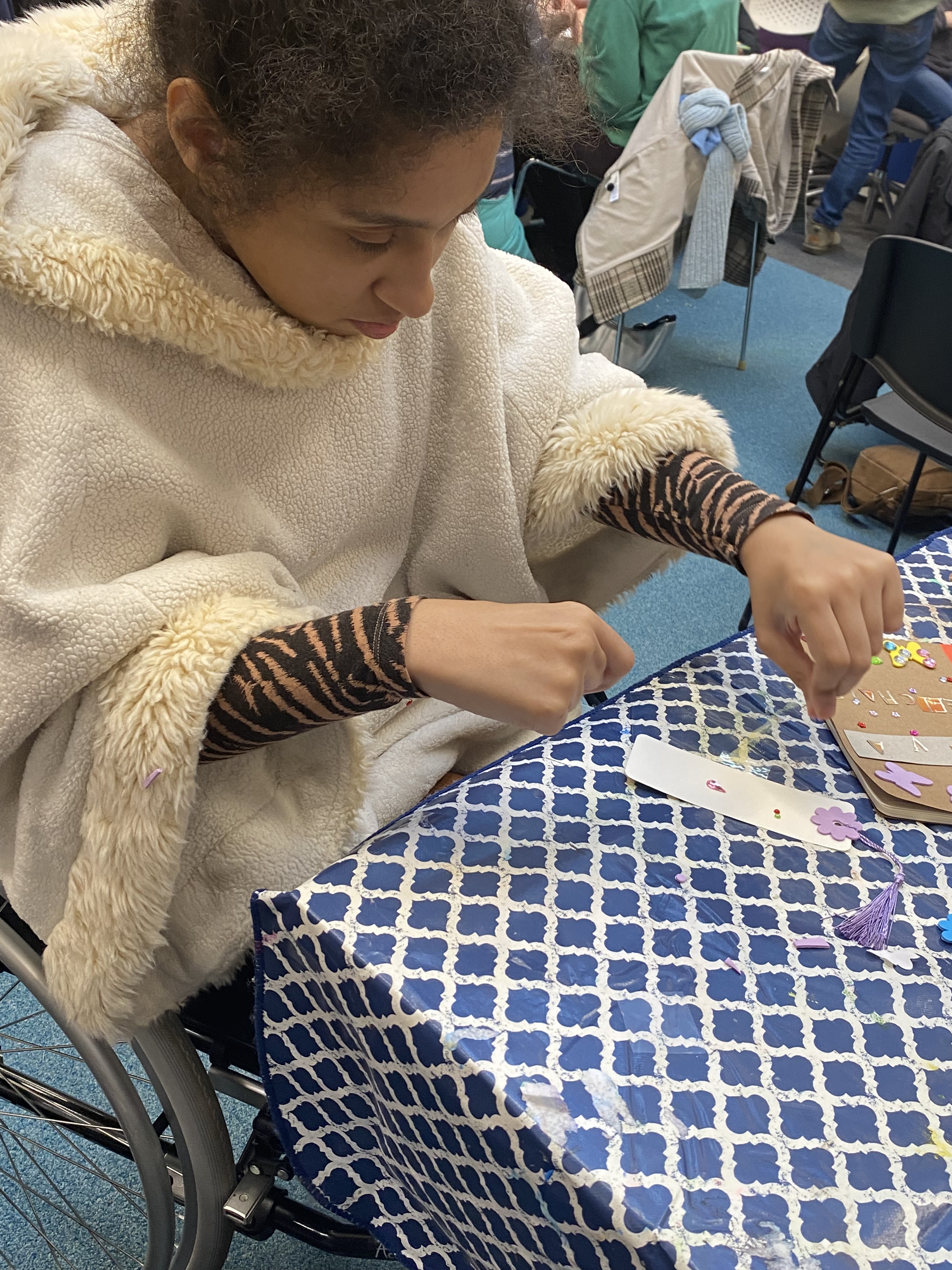
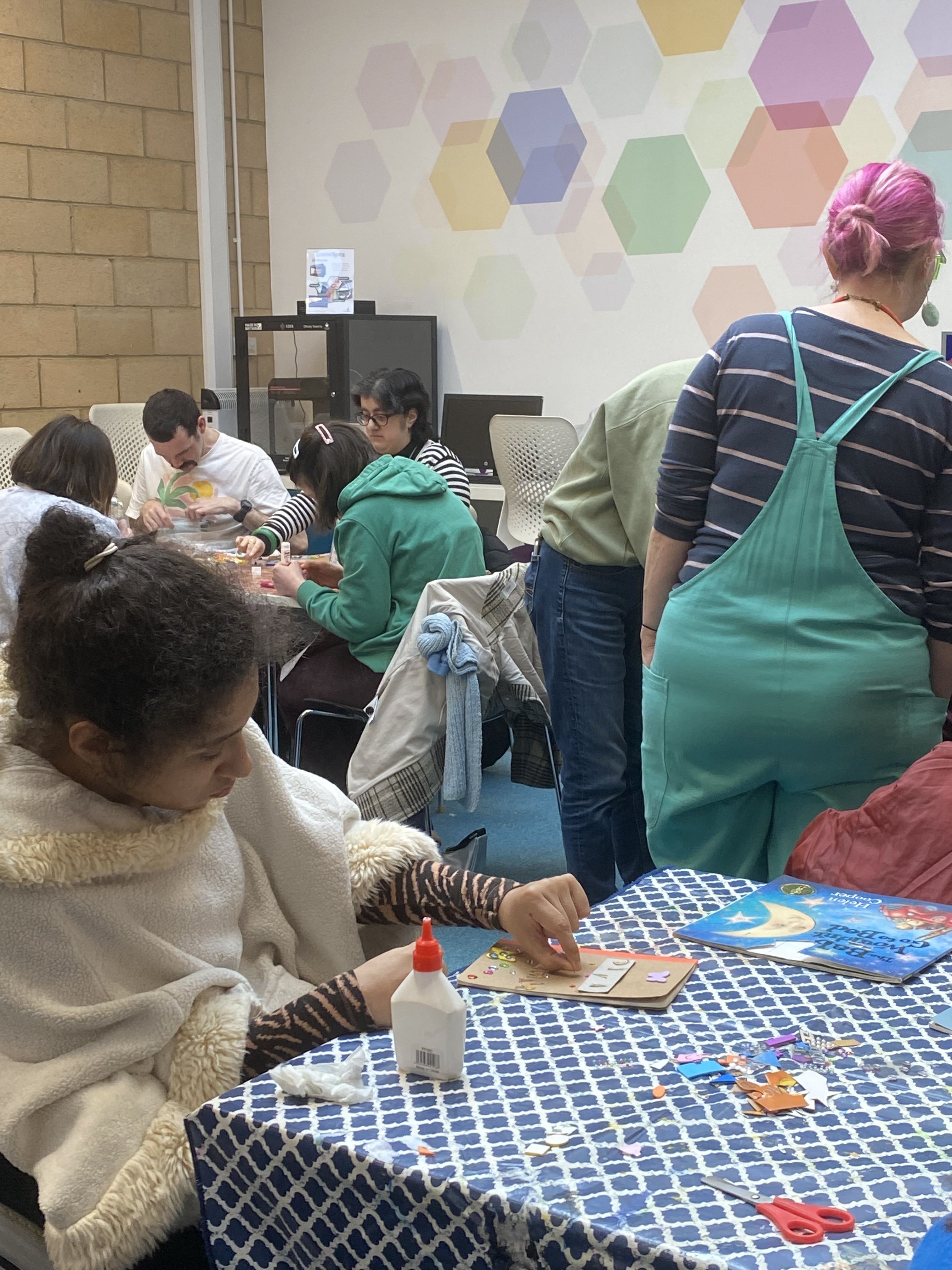
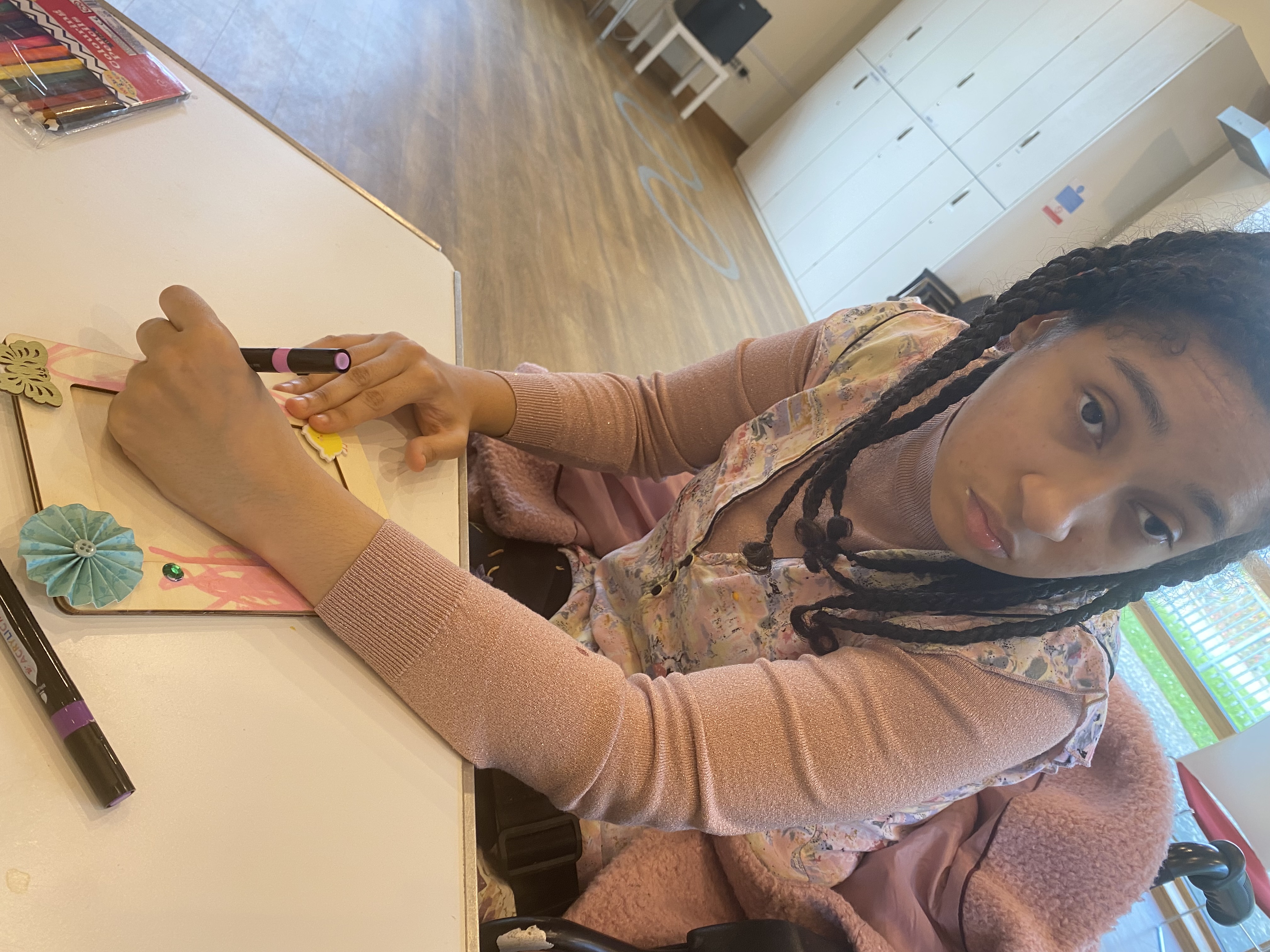
Action shot of me decorating my bookmark and designing it how I want it with diamantés to represent the diva that I am
‘I Adore Her Now’: Mother Learns To Cope With Child’s Autism In A Country With Little Help
Martha Ongwane looks adoringly at her bouncy, giggling four-year-old, unable to believe that just two years ago she had wanted to kill her.
Non-verbal, biting and unable to sit still, her daughter Rachael, who had been diagnosed with autism, had slowly overwhelmed Martha leaving her desperate and depressed.
She was shunned by her neighbours in the east African country of Malawi, who blamed her for what Rachael was doing. Martha was told to lock her little girl inside.
There was no sympathy, and little understanding of autism and how it should be treated.
Martha describes how she had poured poison into a cup, intending Rachael to drink it.
“I told myself it would be better if she died because that would mean she would rest and that would be the end of our problems.
“[But] my heart didn’t let me. I changed my mind and cried so much,” she says softly, looking down at her hands.
Two years on, it is hard to imagine that scene as mother and daughter share a loving domestic moment.
Rachael clambers onto her mother’s lap as they sit on the floor of their home in Mzuzu, northern Malawi.
The girl laughs, hugging Martha’s face, as the 33-year-old cuts vegetables to serve with nsima, a thick porridge made from maize, for lunch.
The transformation has been incredible and is largely down to the family getting access to expert care.
On one of their many visits to Mzuzu Central Hospital, Rachael was referred to Saint John of God, an organisation that helps disabled children.
Funded mainly by the Catholic Church, it not only provides community-based mental health services, but it has a school for children with special educational needs. It became a lifeline for the family.
Martha and her husband also received counselling.
Once isolated and stigmatised, the couple found a support network and educators who were able to deal with Rachael’s issues.
But most here are not so lucky.
According to statistics from the World Health Organization, Rachael is one of more than 60 million people worldwide who are on the autistic spectrum.
Autism, or autism spectrum disorder, is a neurodevelopmental disability – meaning it affects how the brain develops – and it influences how people communicate, relate to others and process the world around them.
It exists on a spectrum, affecting individuals in different ways and to varying degrees.
Many autistic people can show certain characteristics, including intense focus, strong memory and innovative thinking.
But in countries where spending on mental health and behavioural disorders is not a priority, often only those with extreme behavioural differences or challenges are noticed, and with that comes stigma and discrimination.
In Malawi, for example, there are just two developmental paediatricians for the population of over 22 million people, and three consultant psychiatrists.
The word autism does not exist in the country’s most commonly spoken language, Chichewa. It is often translated as “ozelezeka” meaning someone who is mentally challenged, or “ofuntha” meaning someone who is troublesome.
There are also a whole host of misunderstandings of autism.
Saint John of God is trying to change perceptions.
In a community centre not far from Martha’s home, religious elders, both Christian and Muslim, gather together on green plastic chairs. They are here for an autism awareness session run by the organisation.
Many here believe witchcraft is a root cause of autism and the discussion begins with the participants laying out what they think.
A vicar, with a large gold cross around his neck, says everyone knows that people can bewitch each other. Another man stands up claiming magic can be used against pregnant women and that is why children have autism.
Christopher Mhone from Saint John of God acknowledges there is little understanding of autism but uses these sessions to nudge the participants into a different way of viewing autism, showing that practical interventions can help deal with the symptoms.
Reflecting on Martha and Rachael’s case he says that “for a woman to come to a point where she feels like she should kill her child – as a nation we have failed her. Her burden has become so impossible to bear that she does not have the emotional and psychological capacity to cope.”
Mhone says most autism support is provided by the non-governmental or charity sector.
Life on the Spectrum
Africa Eye investigates the hidden struggles and reality of living with autism in Malawi
While basic mental health services such as assessment and referral are accessible at district and primary care levels, there is only one government-run psychiatric referral facility in the whole country – Zomba Central Hospital.
“Autism is not even mentioned in the Disability Act. For me, that tells you about the issue of visibility of the problem. If you don’t know you have this problem, there’s no way you can begin to sort it out,” Mhone says.
The BBC contacted Health Minister Madalitso Baloyi to request an interview about national provision for children with autism but did not receive a response.
Access to quality healthcare is limited in Malawi, and many turn to traditional healers and witch doctors as the first port of call for any medical or mental health problem.
This was the route that Natasha Lusinje took for her five-year-old son, Shalom.
Three-hundred kilometres (186 miles) south of Mzuzu, in a barren compound outside the capital, Lilongwe, the young boy, who is non-verbal and cannot feed himself, sits playing alone.
Natasha is alert, anxious.
“There are so many people who have told me this child was bewitched. People magically tied his tongue so he could not speak,” she says.
Nearly three-quarters of people in Malawi believe in witchcraft and Natasha is one of them.
For her, it offers both a reason for her son’s behaviour and a solution.
She has decided to take Shalom to a traditional healer in search of a cure. BBC Africa Eye is given rare access to their experience.
They travel by bus to the healer’s home on the outskirts of the capital.
Wearing a long white dress, the healer, Maness Sanjelekani, faces the wall and begins chanting: “We give praise to you God this evening, as you have sent your lamb seeking for healing here. Because he doesn’t have a soul, because evil people from the dark did this to him.”
She has no medical qualifications but the healer says in her view there are two types of autism – the one from God, which she cannot change, and the one from Satan which she can heal.
She says Shalom has the latter.
This is completely unfounded both medically and scientifically.
Natasha handed over 26,500 kwacha ($15; £11.50) and over the course of three weeks, Shalom is bathed with herbs and forced to drink herbal remedies daily, but he remains non-verbal. Natasha is also instructed to use a “treatment” that involves putting small cuts on Shalom’s skin.
When confronted about this, Sanjelekani denied any form of child abuse.
“I can only say I am trying to save his life. I am trying my best to save him,” she says.
When questioned about claims of two types of autism, accused of running a scam, and asked to admit she is lying, she says: “Let me just accept I have failed this child.”
Natasha eventually took Shalom home but still clings to her faith that God will help her find a cure. For her, this is still the only hope.
Back in Mzuzu, Martha helps Rachael get dressed in her blue-and-white chequered school uniform. She has been going to a Saint John of God school for a year now.
In the Mzuzu facility, the organisation has the capacity to help more than 600 children a year.
Rachael is learning to speak and when her name is called in class, she jumps up, grabs her friend’s hand and encourages her to stand and sing with her.
In the well-maintained gardens, young adults – some with Down’s syndrome, others with cerebral palsy, and autism – carefully tend their crops.
“I want us to conceptualise disability in a positive way,” says Mhone.
“Disability is ability, in a different way. And if society begins to understand that, then there will be less stigmatisation, and they will be looking at the positive things that can come out of those with disabilities.”
Martha can hardly believe the change in her daughter and in their lives.
She has shared her story in the hope that it will help other mothers and wishes she had got help sooner.
“When I look at her, I feel so guilty. Every day I think about the fact that my daughter could have been dead.
“I adore her now.”
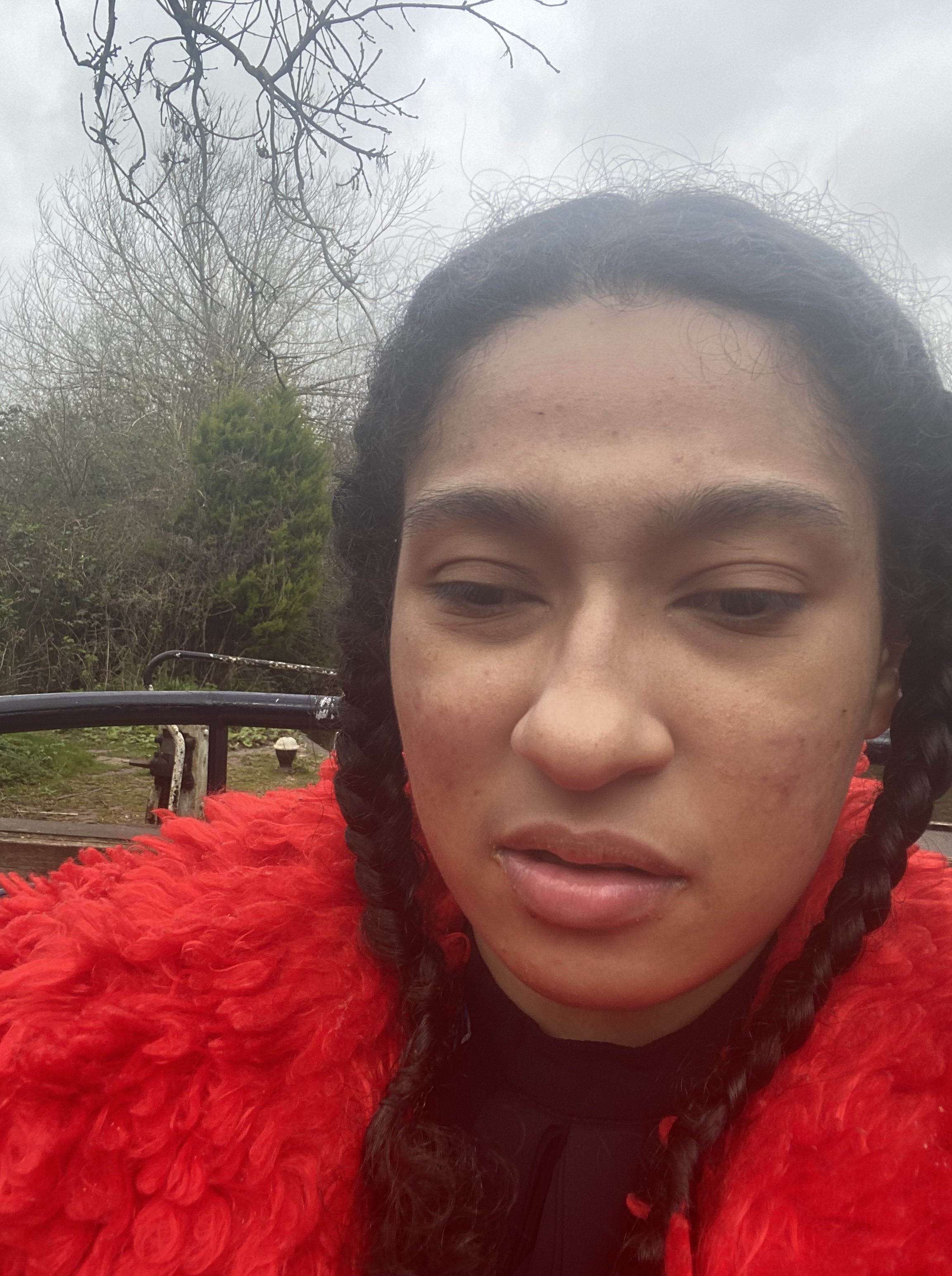
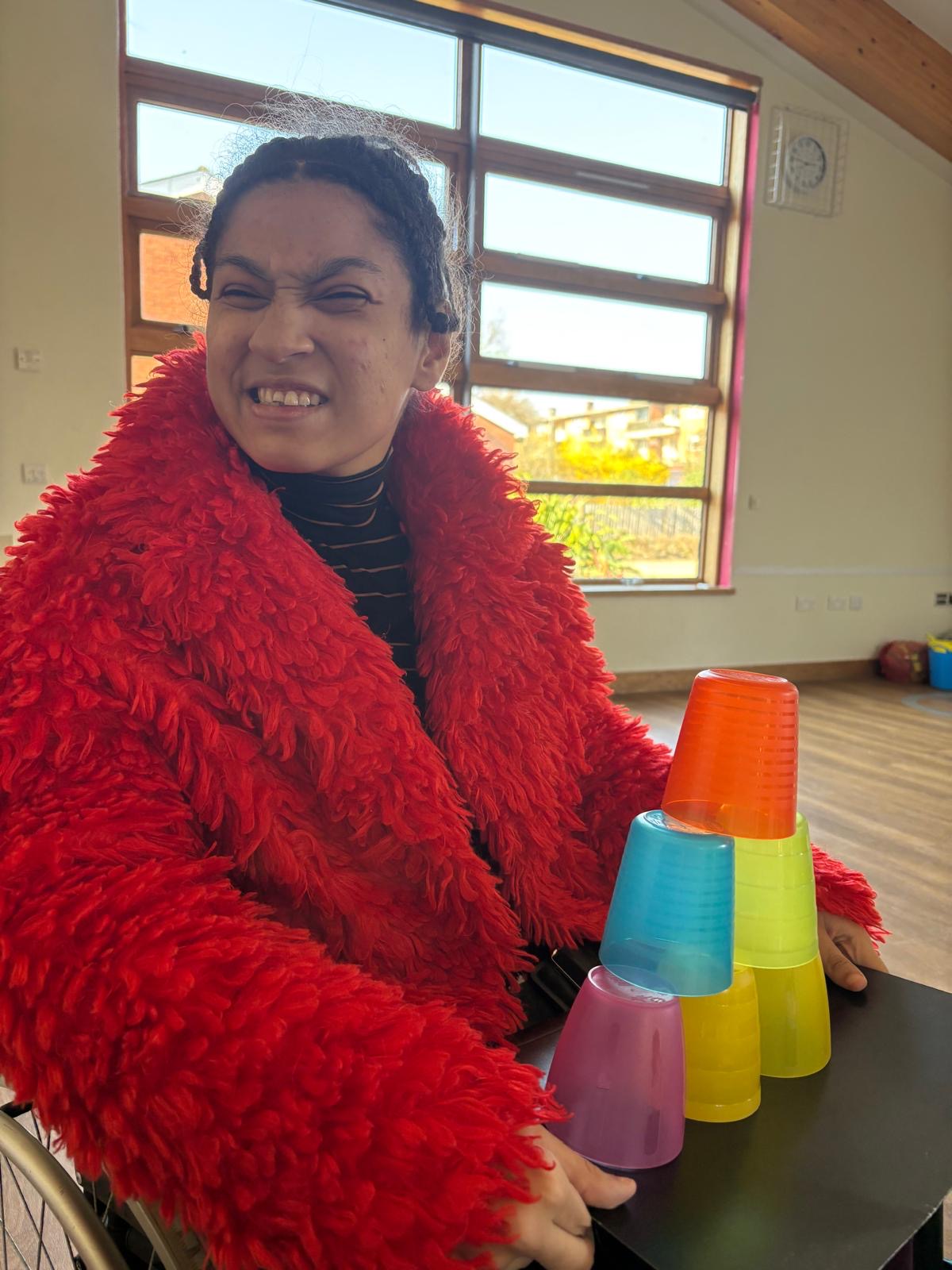
 Happy Easter to those who celebrate it and hope you get an overload of chocolate eggs this year for Easter 2026.
Happy Easter bank holiday to all I hope you enjoy my content and have enjoyed it so far this year. Please let me know if there’s anything more of my life you would like to see such as stay in the lives or more.
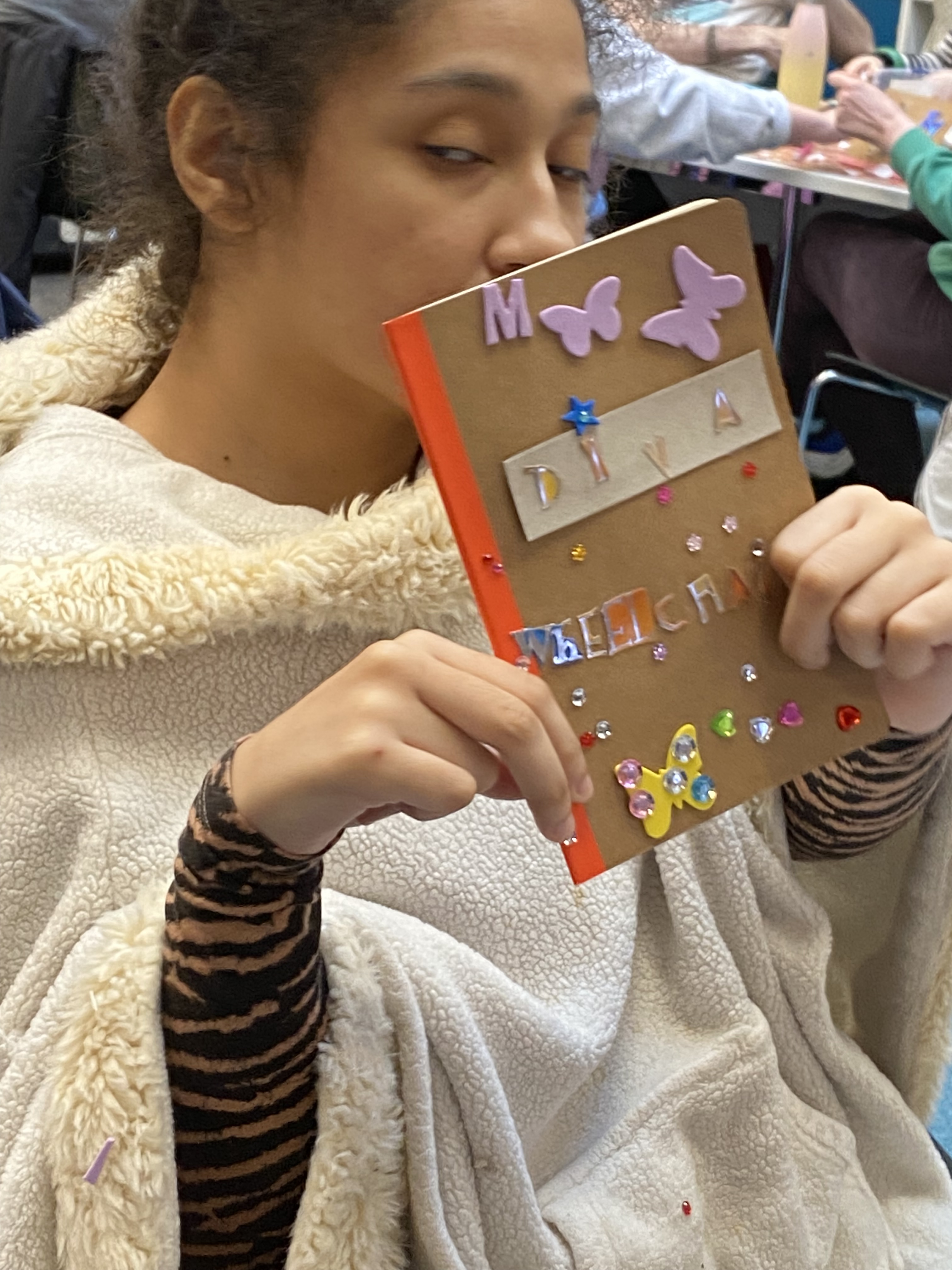
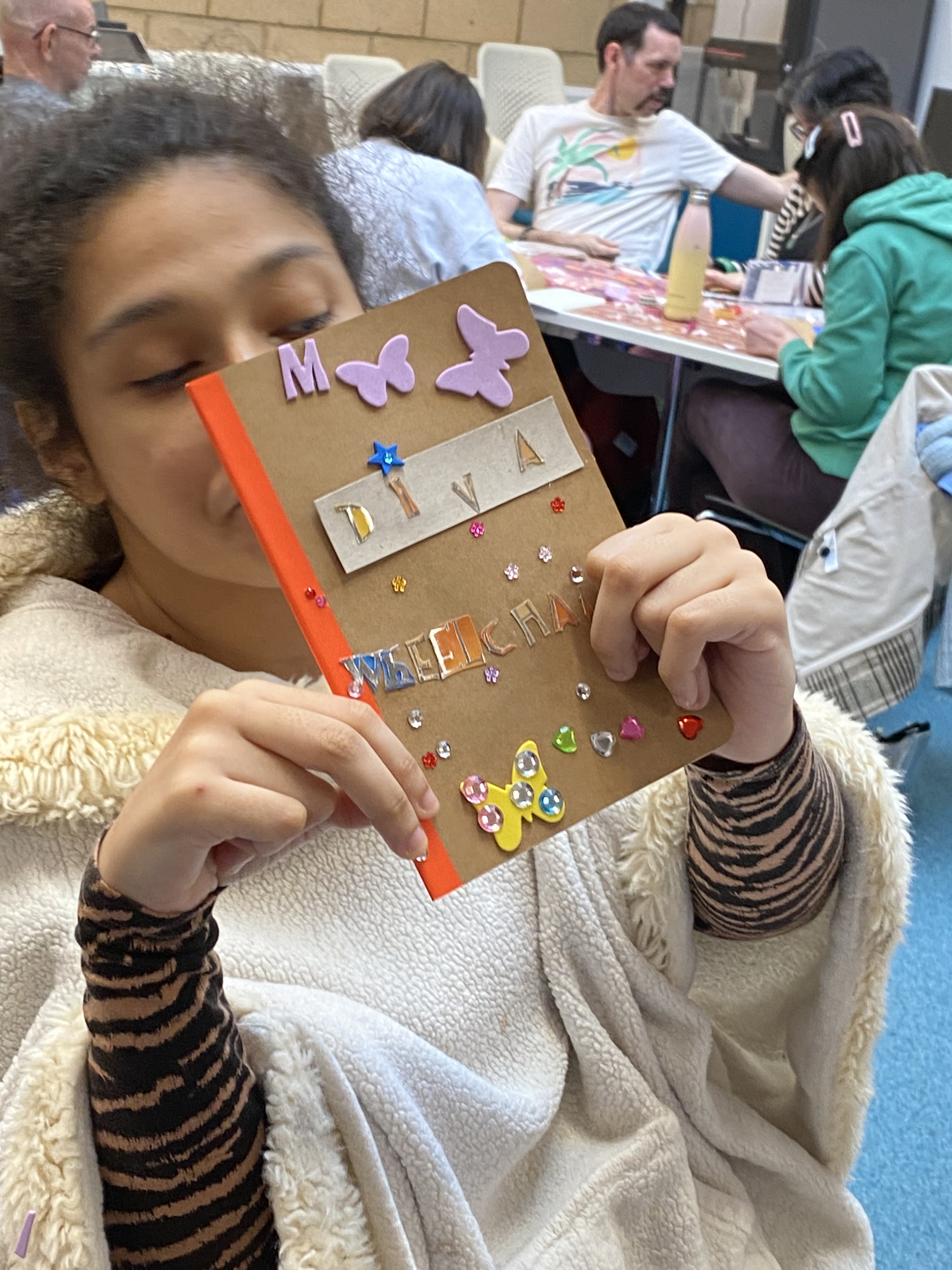
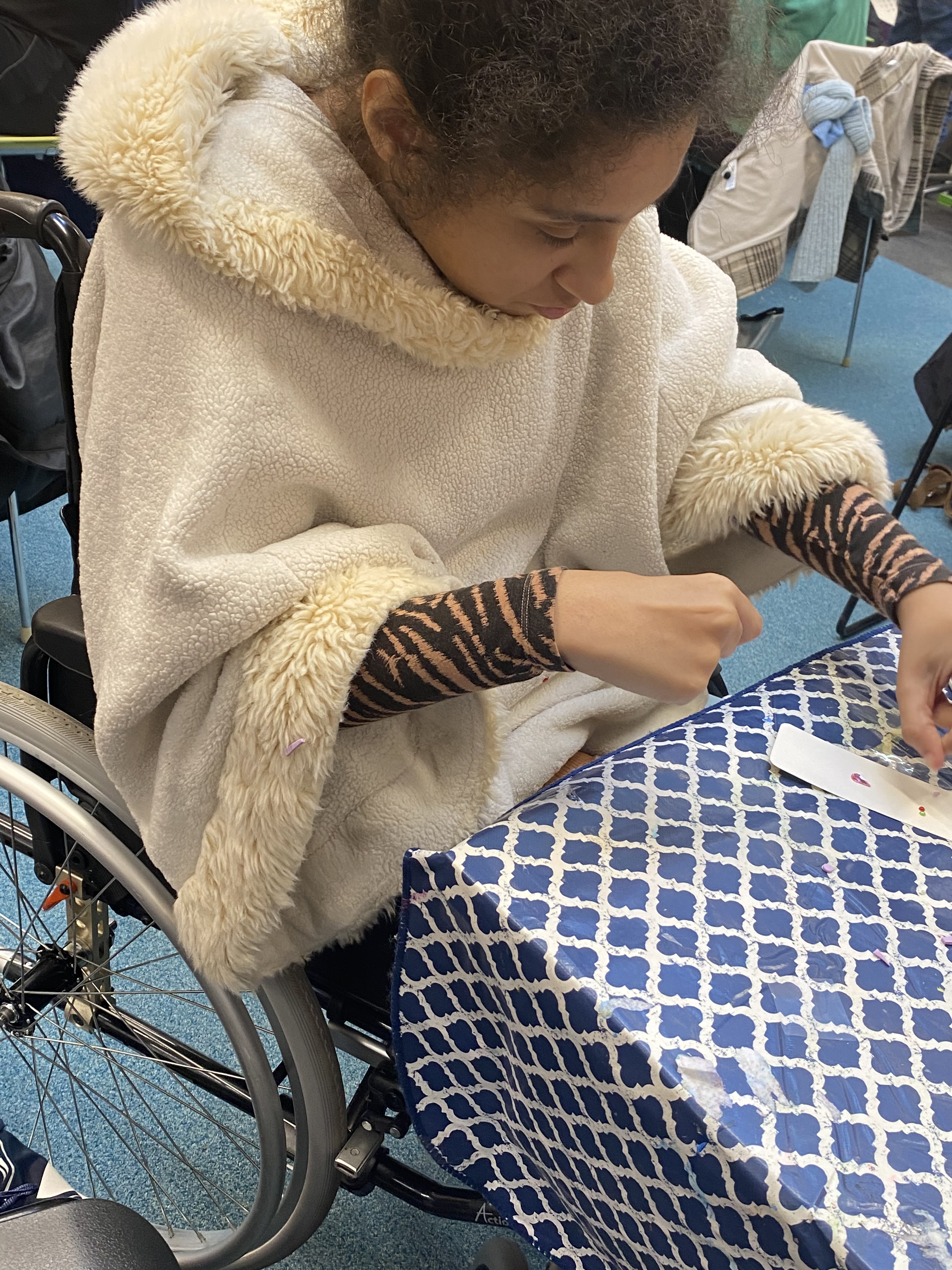
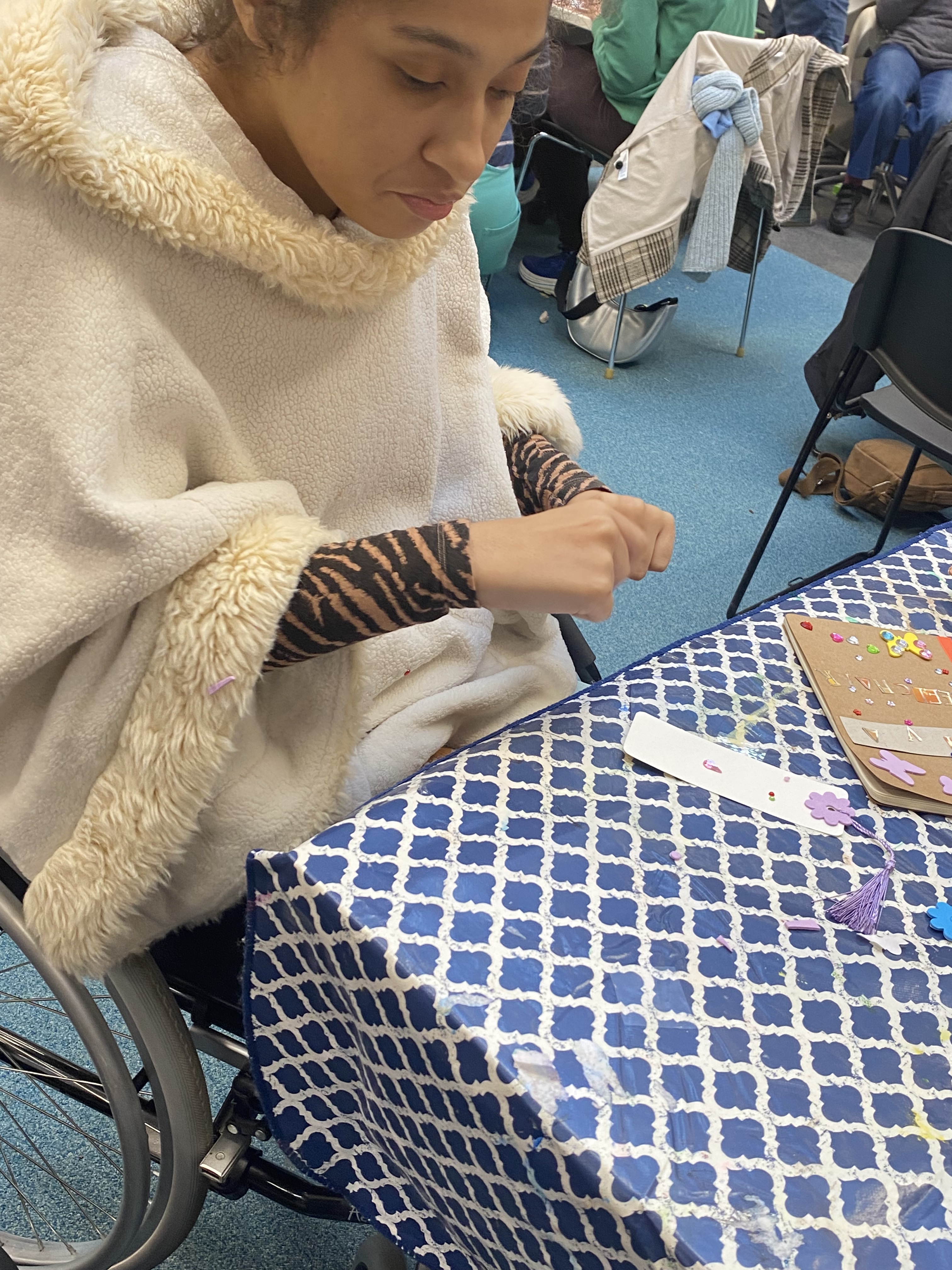
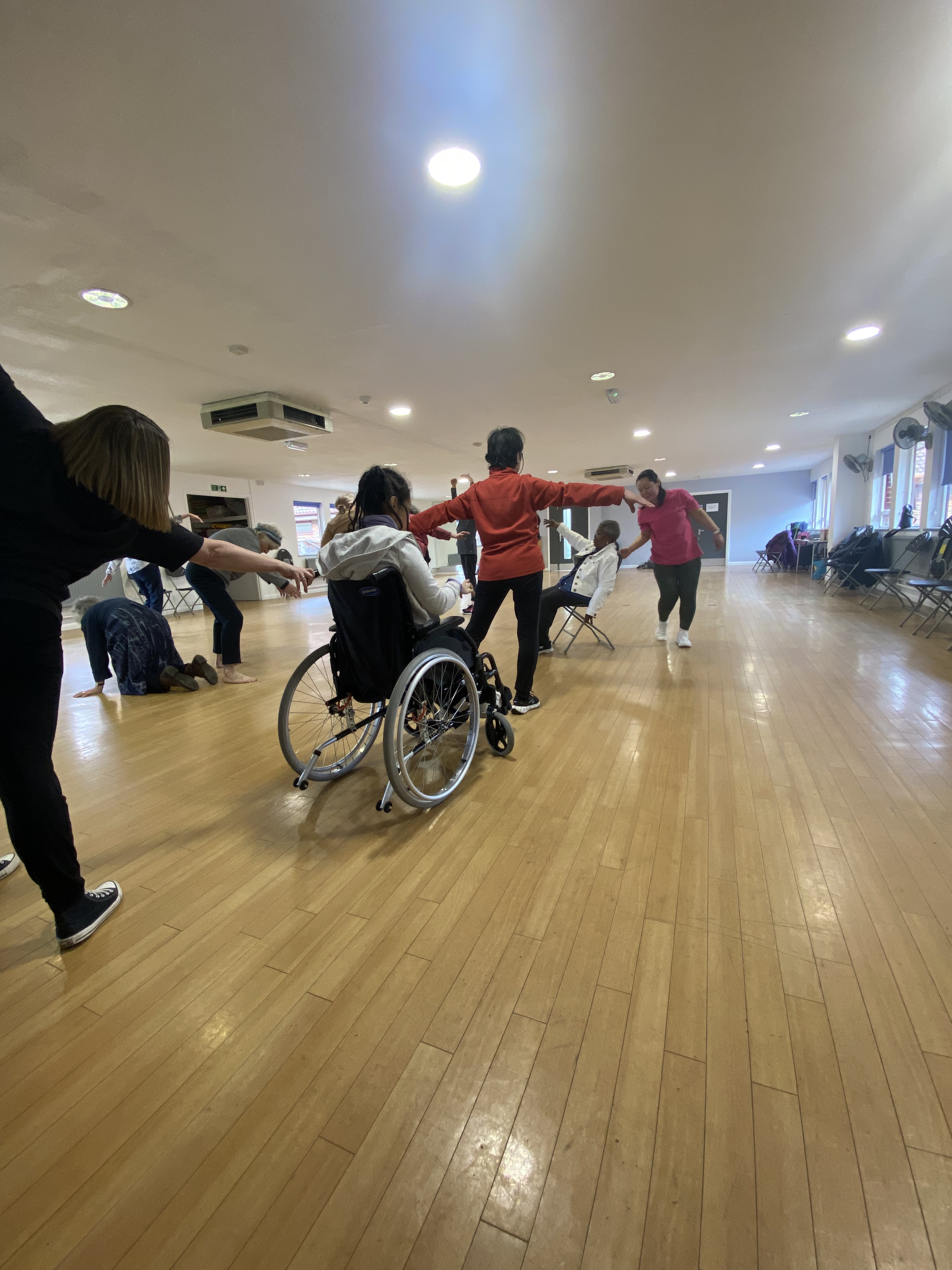
This is the videomy dance class. Here I am learning about music, movement and travelling when dancing.
When Gracie McGonigal was starting out in her acting career, she was told she would likely struggle to find roles because of her disability.
Now she’s in the new series of Bridgerton, one of the biggest TV shows on Netflix.
McGonigal was born with a limb difference – her arm stops just below her elbow joint – but she said she “hadn’t realised” she had a disability at all until she began acting professionally.
“I know that sounds crazy because I literally don’t have one of my hands, but when I started working in theatre, other people see it,” she told the BBC Access All podcast.
McGonigal knew she wanted to pursue acting in secondary school, and attended the Brit School at sixth form, a performing and creative arts institution.
From there, she attended Mountview Academy during the pandemic, before auditioning to drama schools for a university degree.
She said it was these auditions which occasionally cast doubt on her potential to find future roles because of her disability.
“I was getting quite unhelpful chat about casting and whether I would be a good option to take on as a student with the knowledge that I might not have any work in the future, because there might not be a role for me,” she said.
But McGonigal said those comments only spurred her on.
“You have to forge your own path – how are they going to have cast me already?” she said.
“They don’t know I exist yet. The universe doesn’t know I’m going to be an actor one day.”
She decided to take a step back from performing arts institutions and sought advice from friends who also had a limb difference and worked in the industry.
She had worn a prosthetic hand during auditions as she thought she would then be judged for her acting abilities and not her disability, but one of her friends encouraged her to stop wearing a prosthetic and “own” it instead.
“I think at the end of the day, you should do things that you want to do. If you feel really comfy wearing a prosthetic, you do that because that feels like the most authentic version of yourself,” McGonigal said.
“But, for me, it didn’t feel like the most authentic version of myself at that time.
“I was just trying to please other people, instead of doing things that made me feel strong and powerful.”
McGonigal has since been cast in numerous roles in the West End and landed the role as Hazel in season four of the hit Netflix period drama Bridgerton.
No-one with a limb difference has been on the show before, with Gracie saying it has become more than just an acting job.
“I’ve had to have a conversation with myself and realise, ‘Oh, no, so the impact of me doing things is greater than me just being happy that I’ve booked a job,'” she said.
She described joining the Bridgerton cast as both “nerve-wracking” and “the best” experience.
She said it was daunting at first, as many actors in the cast already knew each other from previous seasons, but that she soon felt “part of the family”.
“They were so gracious and wonderful and accepted me with open arms, it was really lovely to get to know everybody,” she said.
McGonigal’s character Hazel is a maid in the show, which can involve carrying “giant silver trays and baskets of sweet treats”.
“I was making sure that I carried appropriately sized things that I could not drop in scenes, being mindful of my arm so that I didn’t ruin any takes by accident,” she said.
McGonigal described Hazel’s character as very “fun to play”, adding: “She’s witty, she’s bubbly, she’s a bit of an airhead but then also very wise.”
She said her limb difference was mentioned only briefly on the show between characters Benedict and his mother Violet.
As Hazel is a maid, Benedict questions if Violet is OK with Hazel having a limb difference, to which Violet replies that it is not a problem if she can do the work.
“It was mentioned in a very small thing, genuinely blink and you’ll miss it, which was actually nice,” Gracie said.
She said it felt like a gesture from the writers to ensure the show was “acknowledging that she has a disability”.
On set McGonigal said her disability was not made a “thing”, and her costumes were tailored to suit her limb difference.
“My arm is a part of me, but it’s an extension of me,” she said.
“It’s not my most exciting feature, ideally. It’s not all of who you are.”
Since season four’s release, McGonigal said the fan response had been “unbelievable”.
“There is so much content being made online of people either with limb differences or just disabled in general, they have loved it so much, it’s been amazing.”
She feels herself and others are still “paving the way” for representation in the acting industry for people with disabilities.
“Disability is not a dirty word,” she said.
“I’m a very happy disabled person who’s thriving and doing well and acting.”
She said disabled people who want to get into acting shouldn’t be deterred by the idea that disabled actors would be “fighting for the same jobs”.
“I think when we’re sitting far back sometimes it’s hard to see the potential, but if there are more disabled actors, there will be more jobs and we will have lots of opportunities,” she said.
“So join in, get your training, or not, and give it a go, because it might end up well for you.”
Rob Burrow’s Father Dies After Short Illness
The father of rugby league star and Motor Neurone Disease (MND) campaigner Rob Burrow has died after a short illness, Leeds Rhinos has announced.
In a statement, the club said it was “with deep sadness that the club has learnt of the passing on Monday of Geoff Burrow after a period of ill health”.
The club paid tribute to Leeds-born Burrow, saying he had been a “tireless campaigner” for the MND community following Rob’s diagnosis with the disease in December 2019, and continued to do so after his son’s death in June 2024.
“A devoted husband, father and a grandfather, Geoff brought Rob to his first ever game at Headingley and started his love of the Rhinos,” the statement said.
The club added: “Geoff was always a champion for those who did not have a voice throughout his career as a trade union representative.
“The club would like to pass on our deepest condolences to Geoff’s wife Irene and the Burrow family at this sad time.”
Jamie Jones-Buchanan, a former Leeds Rhinos player and the club’s current chief executive, said Burrow was “always there” with them at matches.
“He loved rugby league. He loved what Rob did and he was part of the team, always will be,” he said.
“He’ll always be part of our history, our heritage.”
Last November, Burrow attended the opening of the Rob Burrow Centre for Motor Neurone Disease at Seacroft Hospital in Leeds.
At the time, he said the fact the facility had become a reality proved “dreams come true”.
The £6.8m centre was funded through donations to the Leeds Hospitals Charity, with much of the cash raised with the help of a campaign spearheaded by the rugby league player’s friend and former team-mate Kevin Sinfield.
Following the centre’s opening, Burrow said the centre was “not just for MND sufferers and their families, but for all the staff. The staff are marvellous, they’re angels”.
Reacting to the news of Burrow’s death, Craige Richardson, director of estates and facilities at Leeds Teaching Hospitals NHS Trust, said: “We are really sorry to hear the news about Geoff Burrow.
“Geoff played a huge role in the development of the new Rob Burrow Centre for Motor Neurone Disease.
“He came to every stakeholder and development meeting over the two years, and he championed all the work taking place to build the centre.
“He had so much energy and enthusiasm to help create a legacy for Rob and support the MND community.”
Richardson added that it was “a significant moment to share Geoff and Irene’s first view of the new centre when it opened”.
“He loved it and he was incredibly proud. That will stay with us all,” he said.
“His passion for research and to find a cure for MND is something we will continue as a trust, as the centre progresses its first research projects this year.
“Our thoughts are with Irene and the entire Burrow family.”
‘Amazingly Inclusive’ Martial Arts Club Celebrated
A martial arts club where students “kick and punch with love and respect” has been recognised for its inclusive support of the community.
Nam Yang, based on London Road in Brighton, was presented with a Parent Carers’ Council award for excellence in the charity and voluntary sector.
Sam Byford-Winter, co-founder of Nam Yang, thanked instructors and volunteers for their “amazing” work to make the outreach work a reality.
Anita, whose son Josh attends classes, nominated “unsung heroes” Nam Yang for the award because of how “amazingly inclusive” the club is.
Josh started training with Nam Yang during the pandemic as part of a collaboration with Brighton Table Tennis Club, something that Anita says, “saved our lives”.
At first, Nam Yang ran private sessions at Josh’s home, but over time he was able to attend a weekly session at the gym in a mixed class.
“It’s given us all a sense of belonging, a sense of community,” she said.
Nam Yang’s diverse club membership includes people with disabilities, refugees and asylum seekers, members of the LGBTQ+ community and those from low-income households.
Anita has seen more than just the physical benefits of attending sessions adding that being welcomed in has also helped build Josh’s confidence.
She said: “If you are a part of one thing, it’s a gateway to feeling a part of everything.”
Inclusion and integration are central to the club with mixed ages, abilities and backgrounds training together.
Sam said this made people more “accepting and understanding of everybody’s needs”.
“It’s really lovely to have that nice balance of a national champion training in the same room as somebody with Down’s syndrome,” he added.
“If all we teach people at the end of the day is to kick and punch, then I think we’ve failed them a little bit.”
The club also works closely with local charities including supporting a volunteer-run scheme which provides meals and entertainment for adults with learning disabilities.
It previously gained recognition nationally, becoming the UK’s first martial arts “Club of Sanctuary” for its support of refugees and asylum seekers.
Sam remains committed that martial arts should be accessible and inclusive for all and that “nobody should be left behind”.
“We have a saying that we kick and punch each other with love and respect, and that sums us up quite nicely,” he said.
Councillor Fights Guide Dog Access Refusals
A north London councillor has described a “stark reminder” of everyday barriers faced by disabled people after repeatedly being refused entry to businesses with her guide dog.
She told the Local Democracy Reporting Service these refusals remain an “indignity” despite the Equality Act 2010.
Hanna Matin, a Liberal Democrat councillor for Alperton, qualified for her guide dog Wendy in 2021 after living with retinoblastoma, and since her 2022 election she has prioritised raising awareness among local businesses.
Her work, supported by Guide Dogs UK, has led Brent Council to target firms that deny access to assistance dogs.
‘I will make a difference’
Any refusal reported to Guide Dogs or another Assistance Dogs UK member can be flagged to Brent Council’s licensing team.
The council will then remind the business of its legal duties and responsibilities.
Matin’s campaign was motivated by being turned away soon after receiving Wendy, an experience she says no one should face.
“In the summer of 2021, I was denied access to sit inside the Costa Coffee on Wembley High Road. I was quite shocked as Costa is such a well established chain across the country. That was the moment I told myself, ‘I will one day do something to make a difference’.”
Matin said the refusal to allow Wendy in had happened at various premises, which she put down to a lack of awareness of either what an access dog is – or the laws businesses must follow.
Costa Coffee’s official policy is that “assistance dogs remain welcome in all branches” and that it continues to train staff to ensure customers “feel included”.
The company added: “While this specific incident dates back several years, we continue to provide clear guidance and training to our teams to ensure all customers can access and feel included in our stores, where we aim to create a warm and welcoming environment.”
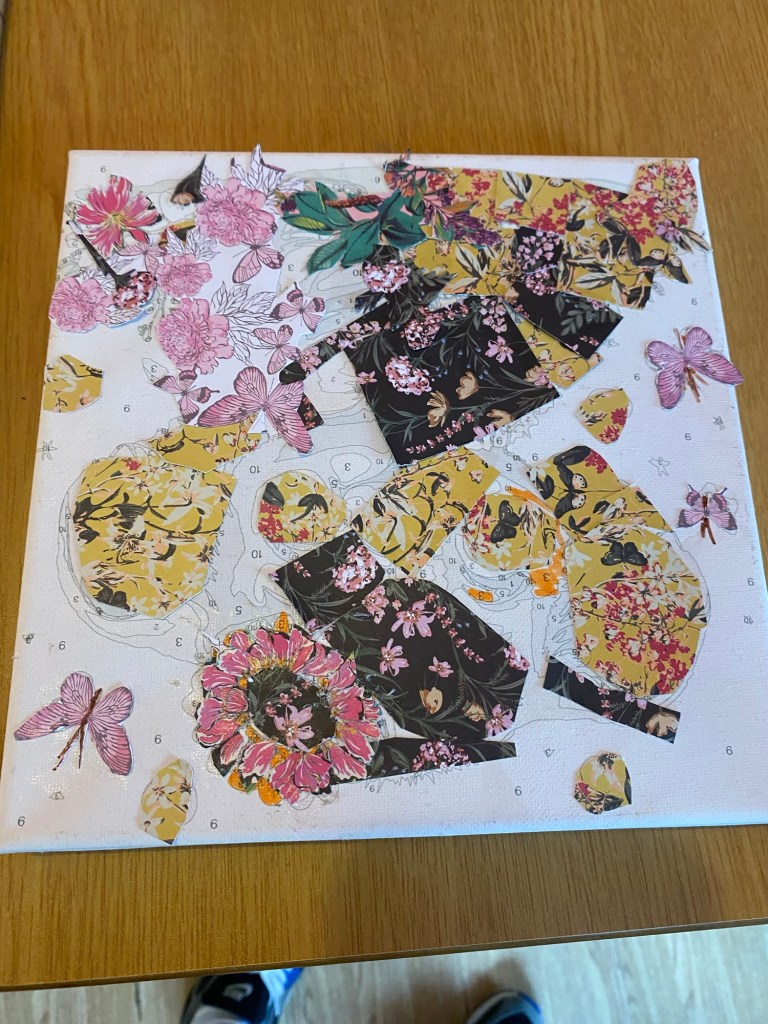
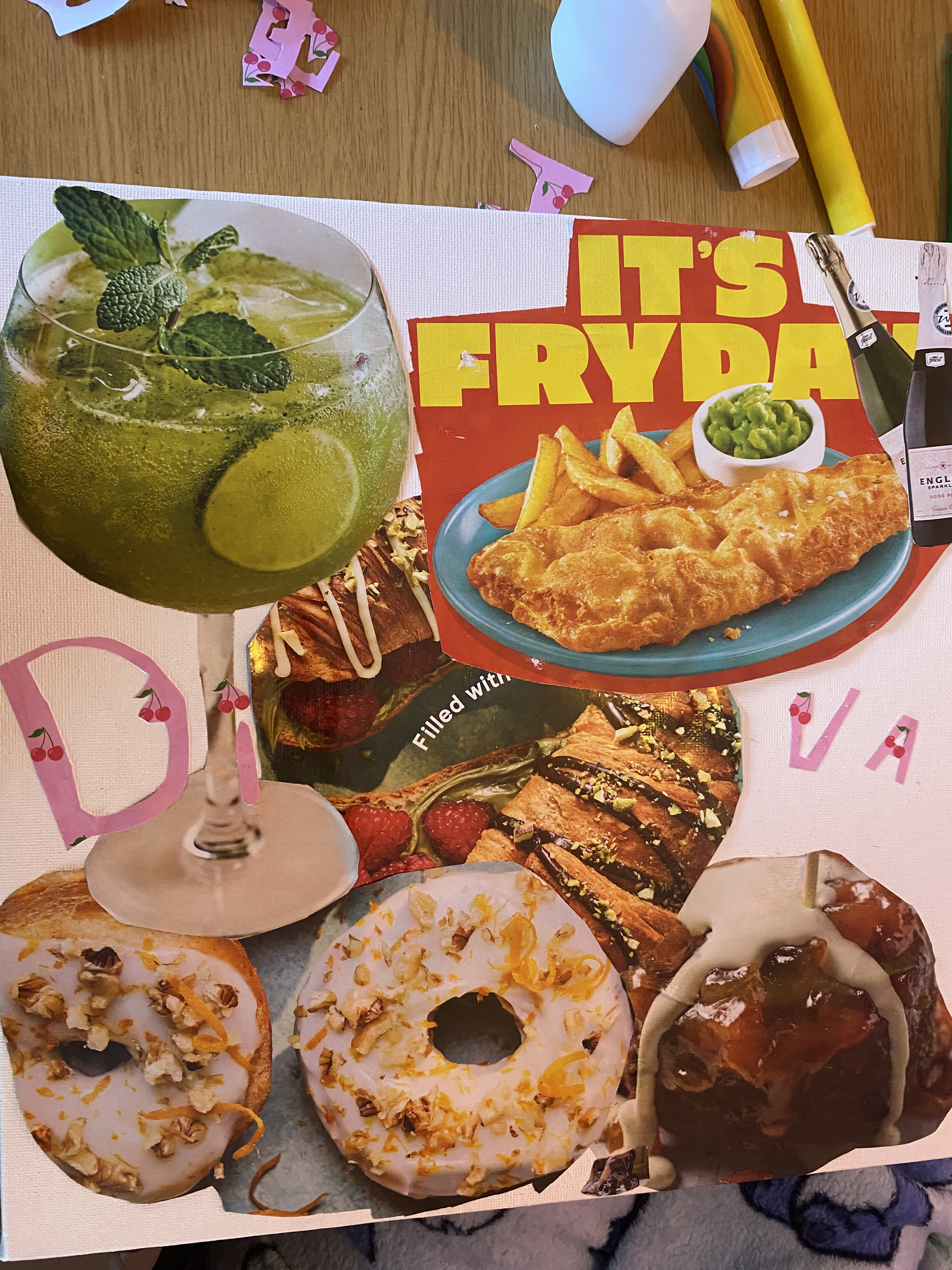
canvas collage of my ideal Friday night treats that would make me feel rich even if I am not
Blind Patients Ask Hospital Staff To ‘Walk In Our Shoes’
Blind people have accused hospitals in Coventry and Warwickshire of discrimination, with one woman saying she was not even alerted to food and medicine placed next to her.
Partially sighted Sarah Lewis said the only way she found meals during a stay at George Eliot Hospital in Nuneaton was “if I reached later for a drink and put my hand in it”.
Dexter, who did not want to give his surname, said his neighbours and GP receptionist would read University Hospital Coventry letters to him because staff refused to send them in an accessible format.
Trusts for both hospitals said they were committed to listening to patients and learning from their experiences. George Eliot’s chief nursing officer said she was “very sorry” high standards had fallen short.
Lewis spent three weeks in hospital after breaking some bones in her hip.
She said staff would come to her bedside to ask why her medication was still there.
“I was told why haven’t you taken the tablets? Because you didn’t tell me you were putting them down there,” she said.
The extra barriers she has faced to try and communicate with the hospital had left her feeling vulnerable and needy.
Dexter, 40, has multiple sclerosis. He said despite the word “blind” being written next to his bed, he did not feel he got any extra help during a recent stay at University Hospital Coventry.
At one point, five doctors were brought into his ward without being introduced and all he could see were shadows.
“It’s not going to take a lot to make a difference,” he said.
“I’m not asking for multimillion-pound initiatives. I’m just asking for people to put yourself in my shoes – how would you like to be dealt with?”
Hugh Sorrill, chief executive officer at the charity Coventry Vision Hub, said their experiences were sadly common.
“Whenever I’ve talked to people here almost everyone who’s been in hospital recently has said they’ve had all of those issues – so it’s pretty much across the board,” he said.
Hugh did not think the treatment was deliberate, but came from a lack of awareness of the impact of sight loss.
But he said solutions such as offering information in large print did not have to be expensive.
“Hospitals have a duty to train their staff to approach visually-impaired people in an appropriate fashion – it’s not rocket science.”
The Royal National Institute of Blind People (RNIB) said blind and partially-sighted people “have a legal right to receive accessible health and care information, but too often this right was denied, creating serious risks to health and wellbeing”.
A spokesperson added: “How can anyone attend a hospital appointment if the letter about it was sent in a format you can’t read?”
A spokesperson for University Hospitals Coventry and Warwickshire NHS Trust said: “We are committed to ensuring reasonable adjustments are made to provide equitable access for all patients.
“The trust made every effort to resolve the concerns raised and, where appropriate, offer alternative methods of communication.
“We continue listening to feedback and to develop our disability awareness training in order to ensure staff can provide appropriate support.”
Meanwhile, Fiona Burton, chief nursing officer at George Eliot Hospital said: “We are very sorry to hear that the patient’s experience was not in line with the high standards which we hold ourselves to.
“We expect all our staff to provide appropriate support to patients with sight issues, or any disability, while under our care and we will review the training and support our staff are provided with as a result of this feedback.”
Airport Staff Blindfolded To Understand Sight Loss
The charity Guide Dogs has been training the staff at Exeter Airport to be “sighted guides” to make it more accessible for visually-impaired passengers.
Staff have been learning how different sight conditions can change how much a customer can see and how to offer assistance if someone requests it.
Working in pairs, the training involves one person wearing a blindfold, while the other guides them around check-in desks, through security and onto a flight all the time describing where they are going and what is around them.
It was hoped the training would allow staff to help those with sight loss navigate the busy airport environment.
Check-in, security, getting to the gate and boarding the plane; airports are busy, bright, noisy places that many of us find stressful.
Brandon Hulcoop says it is worse if you are blind.
He travels independently by bus and train, but finds airports a particularly intimidating experience.
“Getting members of staff to blindfold themselves and try to navigate an airport, it makes people feel exactly the way we feel and to be honest thats absolutely blinking terrified!”
He added he was pleased the airport was taking up this challenge and training its staff to help.
At the start of the course the airport staff are taught by the trainer about the different visual impairments customers might have so they get a better understanding of someone’s needs .
Carol Butler from Guide Dogs said: “One of the myths we try and bust is that people with sight loss can’t see anything at all.”
She added, that the “‘sim specs’ show what people can do with their functional vision.
“So you get central or peripheral vision and different sight conditions can affect the ways people see.”
Mandy Darling works for the charity Devon in Sight which said there were 51,000 people living in the county with a level of sight loss that seriously impacts on their lives.
She sits on the airport’s Passengers with Reduced Mobility group and has been advising them on what it is like to travel with a sight impairment.
She said their passenger assistance programme had been “a real asset, a real support to people with disabilities who are able to travel.”
Mariia Gorbacheva from Exeter Airport said: “It’s very important to educate us as staff members to ensure that all passengers travelling from our airport are able to have the best possible experience, make sure everyone is included, make sure we are aware of the best way to support them.”
Recondition- Accessible Clothes Brand
When a fashion student broke her ankle, she suddenly realised how inaccessible everyday clothes were.
The revelation after Ellie Brown’s injury in 2021 led to her setting up Recondition, a disability friendly clothes label.
The brand works with people with disabilities to create adaptable jeans, stoma bags, and other pieces of clothing.
Brown, from Manchester, said people – including herself before her injury – could be “naive” when it came to what accessibility looked like, yet subtle changes such as replacing buttons with poppers was “not rocket science”.
She said: “A lot of people who don’t have someone necessarily close to them or they don’t have a disability themselves are quite naive to what accessibility looks like.
“I definitely was.”
She looked into how the relationship between disability and fashion worked and “found this whole area of fashion that I had no idea even existed”.
From that light bulb moment, Recondition, which Brown said created every piece with accessibility and style in mind, was born.
“People want something that physically works for them, the function is there; with Recondition, it’s all about like marrying those two together.”
She said many of the features they had added to clothes were “not rocket science”.
Julie Blagbrough became a wheelchair user seven years ago and, overnight, she said she had to rethink her wardrobe.
“There isn’t any fashion for wheelchair users.
“You’re mainly in things like jogging bottoms and pyjamas, stretchy, elasticated waist.
“It made me feel like I’d lost my identity in a way.”
She is part of the Recondition codesign group, who make small changes to make fashion feel good again.
Julie said she loved not only the look of the jeans they produced but – with features like pockets on the front to make them really accessible and straps so she can lift her legs and a hook on the zip – they made “it really easy to get dressed”.
“They also look really trendy as well.”
She added: “It just makes me feel really happy to be able to walk outside and feel like I’m part of society.”
One of Recondition’s best-selling items are stoma bag covers.
Lucy Smith-Butler, from Rochdale, Greater Manchester, was diagnosed with ulcerative colitis in 2017.
The Recondition model and fashion blogger said: “When I was lying in the hospital bed I was like ‘what am I going to wear; this is going to change my body how do I adapt to that?’.”
“I always say my stoma bag is just new accessory. It’s just another bag and that was where the whole idea came from to like make covers for it and have it as an accessory.”
Paige Dease is a Recondition customer and loves the label, which she says “allows her to rock her jeans”.
She said: “Seeing stoma bags that are glittery and frilly it shows people that we’re not just patients we’re actually people.”
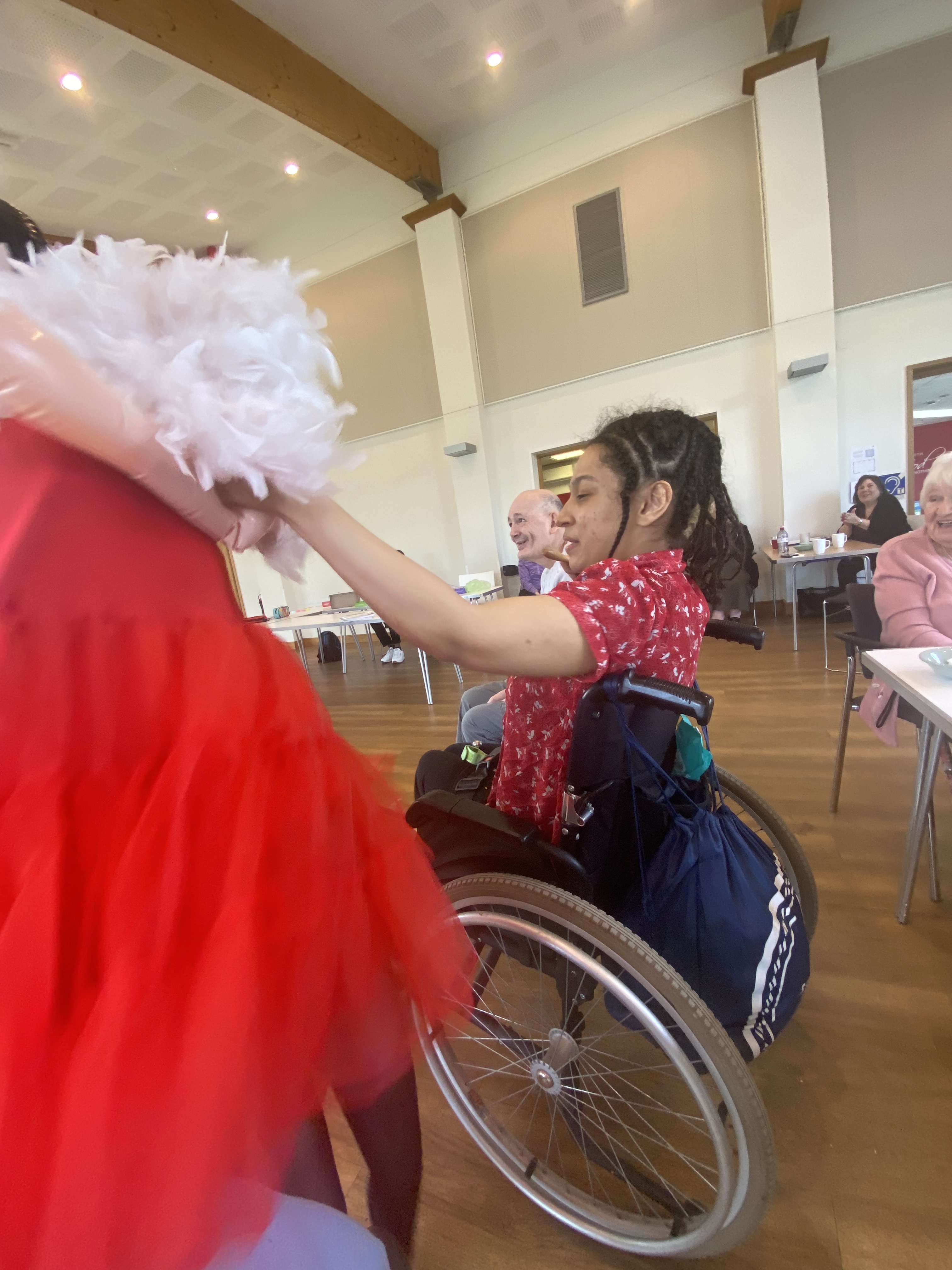
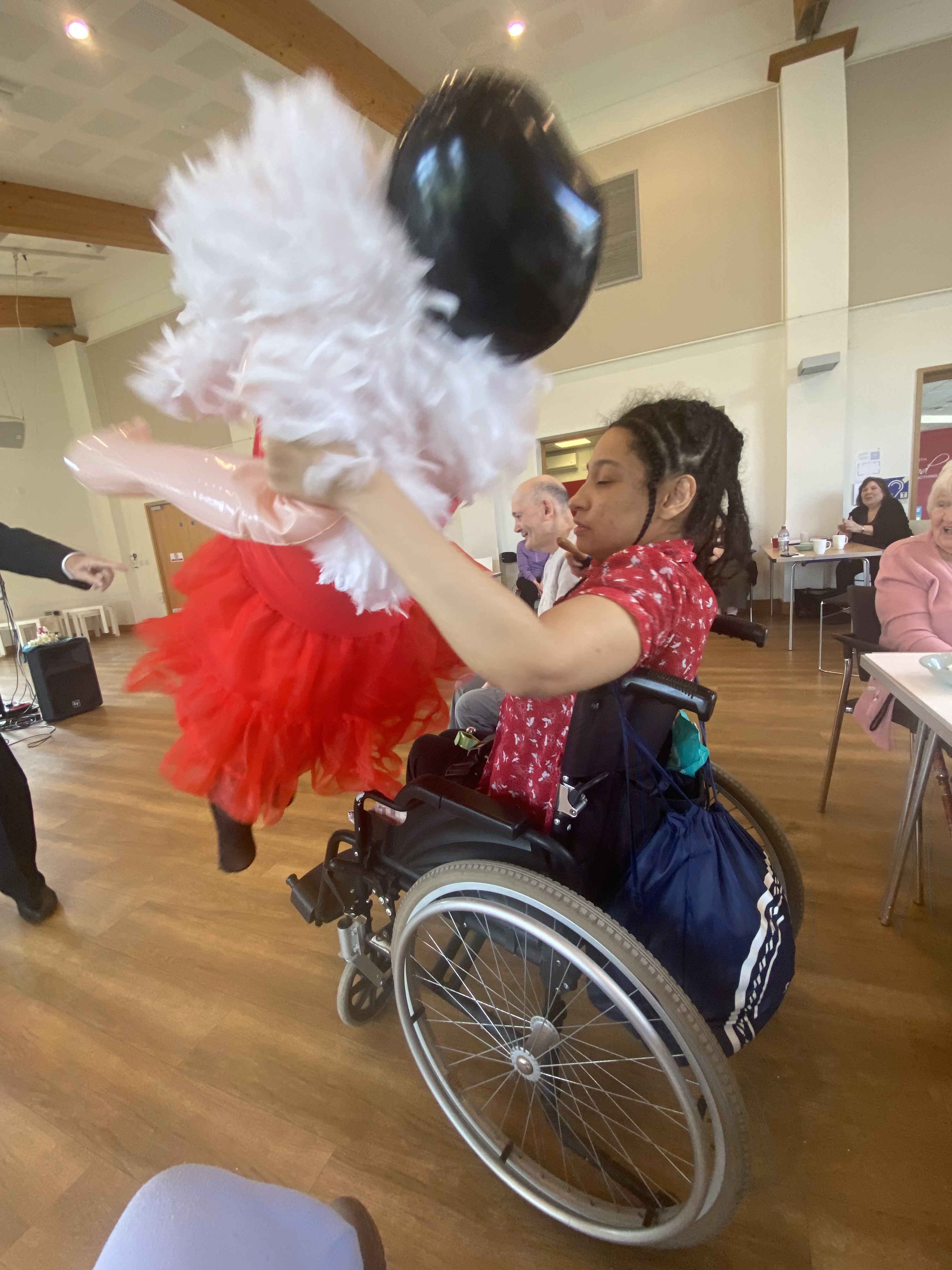
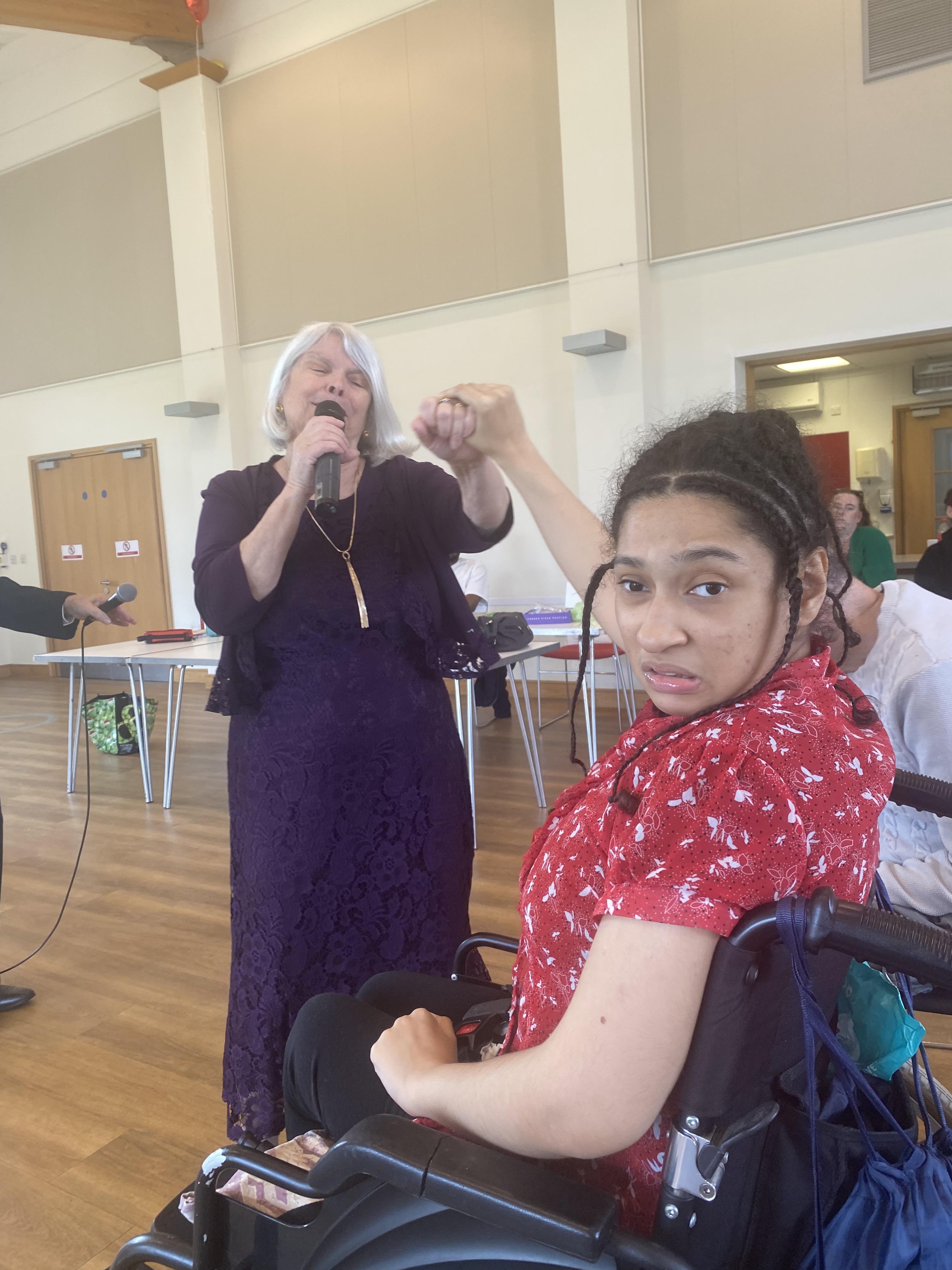
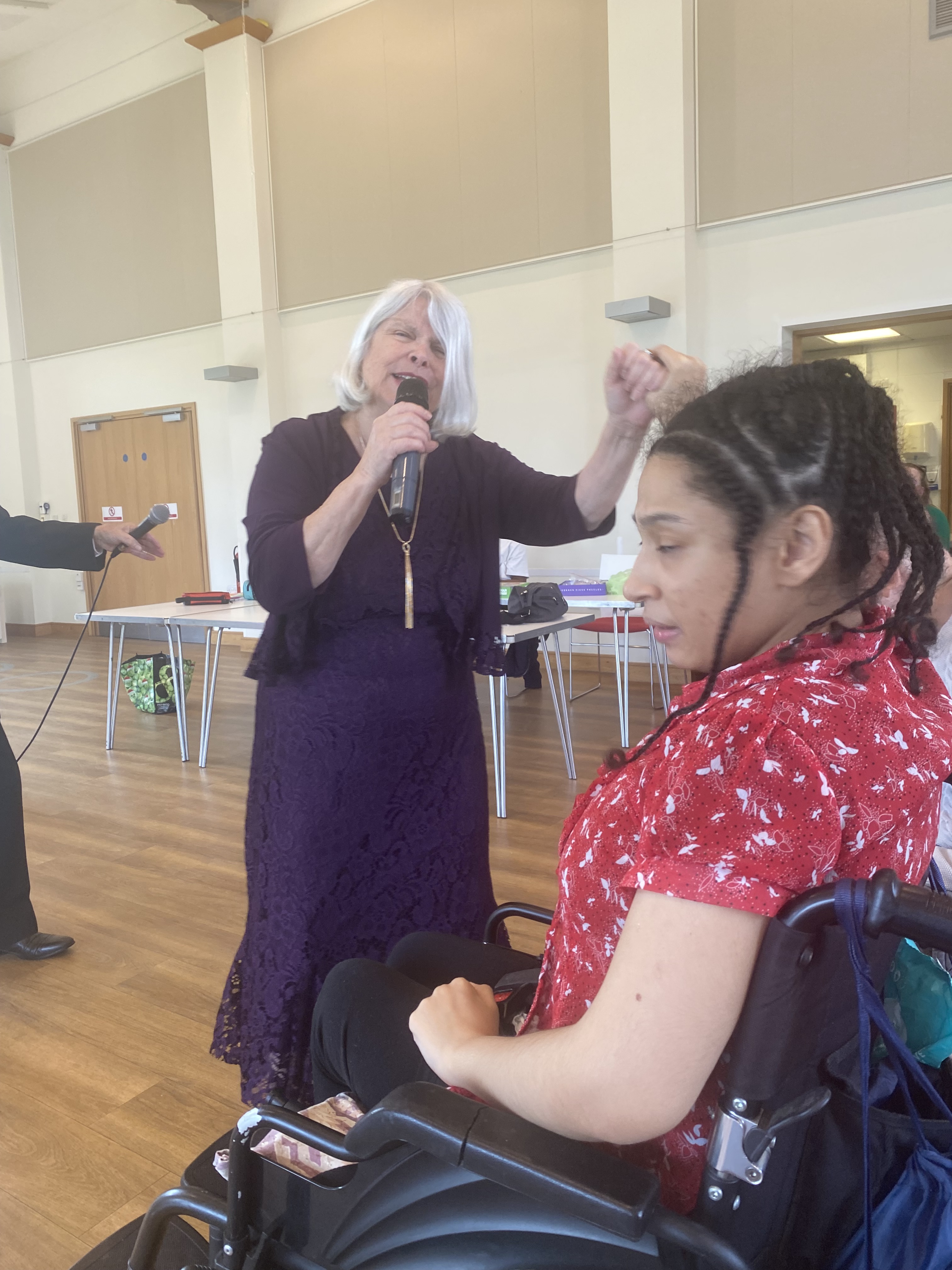
when the performers give you a blowup woman with a tutu skirt and feather bower for you to dance with.
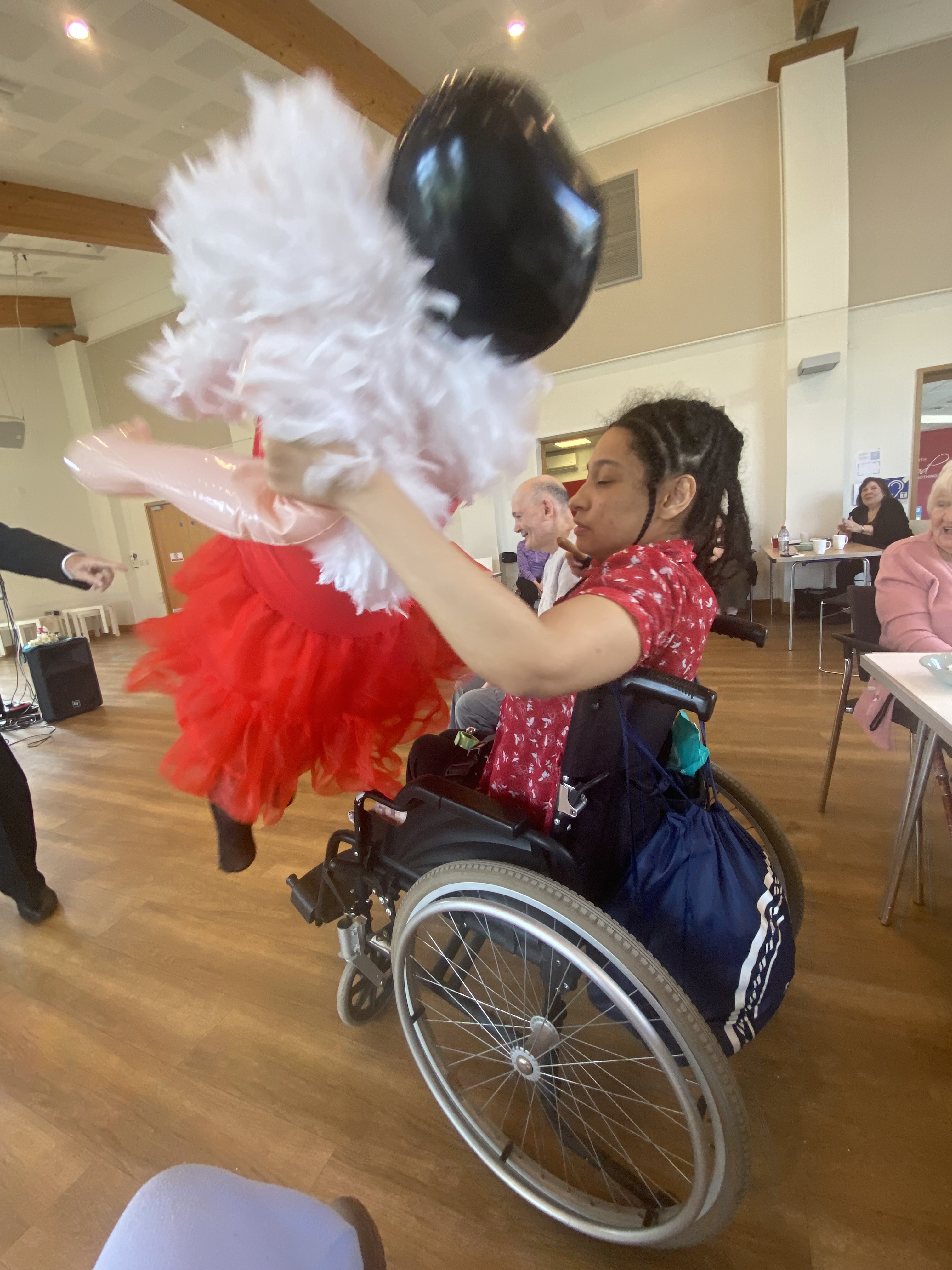
Fightback Asking For Advice About PIP Assessments
Dyslexic MP Demands ‘Sincere Apology’ From Trump
A Somerset MP has called for a “sincere apology” after US President Donald Trump said people with learning disabilities should not be president.
President Trump’s taunting remarks were aimed at California Governor Gavin Newsom, who has dyslexia. Trump also said Newsom, a potential Democratic presidential candidate, was “dumb” and made fun of his difficulty with reading and spelling.
Yeovil MP Adam Dance, who is dyslexic himself, said the comments were “deeply troubling, offensive and completely out of step with reality” and Trump owes the “dyslexic community a sincere apology”.
The White House doubled down on its criticism of Gavin Newsom when approached for comment by the BBC.
Dyslexia, a learning condition that disrupts how the brain processes written language, is believed to affect around 10% of the population, according to the British Dyslexia Association.
Trump told reporters in the Oval Office on Monday that Newsom “has admitted that he has learning disabilities, dyslexia”.
“Honestly, I’m all for people with learning disabilities, but not for my president,” he said.
“I don’t want, I think a president should not have learning disabilities, OK? And I know it’s highly controversial to say such a horrible thing.”
Mum So Proud Of Deafblind Son’s Eastenders Debut
A mum whose five-year-old deafblind son has made his acting debut in Eastenders has said she is “so proud” of him and she hopes it will “break down barriers” for disabled children.
Harvey Hind, from Clitheroe, Lancashire, appeared in Wednesday’s episode of the BBC One soap, playing Arlo, a pre-school boy who is registered blind.
His mother Kimberly said: “I hope Harvey featuring in EastEnders shows other disabled children, especially those who are deafblind, that they can achieve anything.
“Harvey loves being in the spotlight but for us the most important thing will always be raising awareness and breaking down barriers so every disabled child gets the same opportunities as anyone else.”
She said: “Harvey did amazingly at the filming, I’m so proud of him. There were four cameras on him but he took it all in his stride.”
In the episode, Arlo and his mother visited Lauren Branning and Peter Beale’s house, where Arlo plays with their son, Jimmy, who was revealed to be blind in a storyline last year.
Arlo’s mother is shown to give Lauren advice on raising a blind child.
Away from the television storyline, when he was about four weeks old, Harvey failed his newborn screening hearing test, and his mum noticed a flicker in his eye around the same time.
The family paid for a private consultation and he was diagnosed as blind at three months old.
He walks using a red-and-white striped cane, which is used by deafblind people, and uses British Sign Language (BSL) to communicate.
He also wears cochlear implants which give him access to sound.
Kimberly said she found the first two years of Harvey’s life difficult as she struggled to communicate with her son, and had to leave work to care for him as he was becoming increasingly distressed attending a mainstream nursery.
Disability charity Sense eventually assigned a specialist in working with deafblind children to the family, which Kimberly said was “life-saving” for her.
She added: “I was so anxious when I found out Harvey was deafblind, so his character’s storyline resonated with me a lot.
“I didn’t have any experience with disability and I kept imagining the worst-case scenarios.
“Luckily, with the support of organisations like Sense, Harvey is now a really happy child who is eager to learn, loves exploring and has a cheeky personality.”
MP Raises Case Of Woman Involuntarily In Care Home
An MP has asked the government to investigate how a disabled woman was moved to a nursing home against her will.
Lucinda Ritchie was not allowed to return to her adapted bungalow in Billingshurst, West Sussex, in February after a hospital stay for pneumonia and was instead taken to a nursing home.
John Milne, the MP for Horsham, asked the government to “look into Lucinda’s case” in the House of Commons on Tuesday.
Parliamentary under-secretary Jake Richards MP said he was “very happy to deal with that case in writing”.
Ritchie, a master’s student and charity ambassador, was admitted to hospital with pneumonia in April and suffered further complications that prolonged her stay.
Her condition deteriorated within two days at the nursing home after her discharge and she returned to hospital.
Ritchie has multiple disabilities. She has a tracheostomy and has primarily used eye-gaze technology to communicate since 2017.
Prior to her hospital admission, Ritchie had 24 hour, one to one nursing in her own home.
On the day she was transferred, Ritchie told the BBC that she was “devastated” and wanted to get back to her own home.
Chief nursing officer Allison Cannon said NHS Sussex’s “absolute priority is to ensure that Lucinda is able to receive safe, high quality, care that meets her health needs”.
NHS Sussex had “actively worked with the health professionals in hospital, Lucinda, her family, and her representatives to consider how she could be safely supported to leave hospital”, according to Cannon.
She said it was “not clinically safe for Lucinda to go home straight away, but we are meeting with all partners every week to work to support a safe discharge to her home”.
Milne told the Commons that “against her express wishes”, Ritchie had been moved into a nursing home an hour away from her family and “denied the right to return”.
He asked Richards to work with government departments “to ensure that people’s basic human rights are protected when it comes to medical decision making”.
Richards said: “The practicalities of that case are for colleagues in at the Department of Health and Social Care, but he’s absolutely right to say that human rights in a health setting are incredibly important.”
The department was contacted for comment.
Trump Says Presidents ‘Should Not Have Learning Disabilities’ As He Mocks Newsom’s Dyslexia
Donald Trump has said he believes people with learning disabilities should not be president, as he renewed his taunts at California Governor Gavin Newsom over his dyslexia.
President Trump said Newsom, a potential Democratic White House contender, was “dumb”. He also made fun last week of the California governor’s difficulty with reading and spelling, prompting Newsom to call him “a brain-dead moron”.
The National Center for Learning Disabilities told the BBC it was “disturbed by and strongly condemns” the Republican president’s remarks.
Dyslexia, a learning condition that disrupts how the brain processes written language, affects as many as one in five Americans.
“With a low IQ person, you know, because Gavin Newscum has admitted that he is a, that he has learning disabilities,” Trump told reporters in the Oval Office on Monday. “Newscum” is Trump’s nickname for the governor.
“Honestly, I’m all for people with learning disabilities, but not for my president. I don’t want, I think a president should not have learning disabilities, OK? And I know it’s highly controversial to say such a horrible thing.”
He added: “The President of the United States, Gavin Newscum, admitted that he has learning disabilities, dyslexia. Everything about him is dumb.”
Newsom made fun of Trump for appearing to accidentally refer to the governor as president. “NO THANK YOU, WE BELIEVE IN FREE ELECTIONS!” he posted on X.
During an on-stage conversation last month with the mayor of Atlanta, Georgia, Newsom discussed his dyslexia.
“I’m like you,” the governor told the audience as he cited his poor exam results and difficulty reading.
“You’ve never seen me read a speech, because I cannot read a speech,” he added.
His remarks to a predominantly black audience sparked a chorus of conservative claims that he was talking down to African-American voters.
Trump also accused Newsom of racism and posted on Truth Social that he “can’t read, has dyslexia, and has a mental disorder – A Cognitive Mess!”
Newsom shot back at Trump on social media, saying: “I spoke about my dyslexia.
“I know that’s hard for a brain-dead moron who bombs children and protects pedophiles to understand.”
The National Center for Learning Disabilities criticised Trump’s comments on Monday.
The centre’s chief executive, Jackie Rodriguez, told the BBC that dyslexia does not impair a person’s intelligence, judgement or ability to lead.
“In fact,” she said, “people with learning disabilities have risen to the upper echelon of every public office in the United States, including former presidents.”
Past US presidents, including George Washington, John F Kennedy and Woodrow Wilson, may have had dyslexia, according to some researchers.
About 15% of the US population is affected by dyslexia, according to the US Department of Health and Human Services. Some estimate the figure may be as high as 20%.
Dance Centre Aims To Break Down Barriers
A County Durham charity working to transform lives through dance is seeking a new studio where disabled and non-disabled dancers can train, create and perform together.
TIN arts, which has been operating since 1999, said over recent years demand has soared but capacity was limited due to the size of its current space in Pity Me, Durham.
A fundraising appeal has been launched to transform a former county council building in Spennymoor into a purpose-designed, fully accessible dance training centre.
The charity said it would become a “vibrant, inclusive creative hub that breaks down the physical barriers that have held dancers back for decades”.
As well as a shortage of space in its current building, some areas are inaccessible leaving some prospective participants unable to participate fully.
Tin Arts said its high-quality studios and facilities would reduce waiting lists and “reflect the ambition and talent of the artists”.
The charity’s executive director, Martin Wilson, said: “For too long, we’ve had a community that welcomes everyone but a building that doesn’t.
“The TIN Dance House will remove those barriers for good – this is about creating a home where everybody belongs.”
A parent whose child currently attends classes said: “It lets people take themselves and their development seriously.
“It gives them a poise and a presence that challenges perceptions of disability and demands that the world take them seriously too.”
We Might Regret This
Kyla Harris, the co-creator and star of BBC comedy drama series We Might Regret This, has been with her partner for eight years.
But they won’t move in together, because it means she could lose some of her means-tested funding.
“No-one should have to decide whether to choose love or to pay their bills,” she says.
It’s an issue she draws on in her series, co-created with Lee Getty, which follows Freya, an artist with tetraplegia – a partial or complete loss of sensory and motor function in all four limbs – her boyfriend, Abe and best friend, Jo.
The Guardian has described the series as “trailblazing” and Harris says she wants the show to delve into issues that have “really not been on screen before”.
Anyone receiving means-tested benefits, for example universal credit, can have them reduced when moving in with a partner because you are treated as a household – meaning incomes, savings and circumstances are considered together.
Means-tested social care funding from the local authority may also be impacted by living with a partner, but these rules vary depending on your area.
The impact of benefit reductions can be greater on disabled people because of the additional daily living expenses they have.
According to a report from the charity Scope, for the year 2024-5, disabled households need on average an additional £1,095 a month to have the same standard of living as non-disabled households. Here, the standard of living refers to the ability to afford goods and services as well as carry out household tasks and manage finances.
The Department for Work and Pensions stressed the existence of several non-means-tested benefits for disabled people, including the personal independence payment (PIP), which supports “millions” each year. There is also attendance allowance.
“Eligibility for means-tested benefits doesn’t always become immediately restricted following a change of circumstances, but we encourage all claimants to report changes,” a spokesperson added.
Harris believes the rules around funding mean things like getting married and moving in with a partner pose a dilemma for many disabled people.
These are not talked about much because “a lot of people also don’t think that disabled people could be in relationships… or are entitled to sex and intimacy and love”.
In Harris’s view, the issue is “just not common knowledge and I think it needs to be”, adding she hopes the series starts a conversation.
A spokesperson for Disability Rights UK said people feeling unable to live with their loved ones because it may affect their benefits status was “nothing short of cruel”.
But Harris also thinks it’s important to bring “light and levity” to the situations disabled people go through and she strives to do this in her show.
“There have been so many awful situations that I’ve been in that you can’t help but laugh,” she continues.
The series also delves into what it means for others to profit from disabled identity.
For example, Freya’s wedding planning is turned into a problematic and cringeworthy social media campaign by her agents, the Olivias, played by Emma Sidi and Hanako Footman.
They shorten phrases like “inclusive representation” to “inclush-representash” and urge her to adopt the hashtag “wheely in love” to help it go viral.
The writer says it was “hilarious” to see the Olivias so unaware of how wrong their approach is, but also adds that “people make mistakes and that’s okay”.
Ultimately, Harris hopes people learn from the show. “I see disability as my biggest teacher and being disabled has taught me that irrespective of what people think and what I encounter, I am worthy of getting married.
“I am worthy of loving. I am worthy to be loved,” she says. “And I want people to feel that about themselves.”

Disability Panel Warns Police About Blue Lights Use
A police force on a mission to have a more diverse and inclusive culture has been told by a panel of people with autism that its use of flashing blue lights could cause distress.
Cambridgeshire police and crime commissioner, Darryl Preston, organised an event where people with neurodiverse conditions and those with caring responsibilities were shown body-worn footage of police interactions with disabled people.
The panel told police how emergency lights could heighten anxiety and raised the importance of “calm, sensory-aware communication”.
Cambridgeshire Police said it could “positively review our current practices” using the feedback.
Preston said the consultation was about “building trust, increasing understanding and ensuring our services are fair and inclusive”.
“Hearing directly from people with lived experience of autism provides us with invaluable insight into how police encounters are perceived and how improvements can be made,” he said.
Other “key learnings” from the event included consideration of using plain-clothed officers at certain incidents, and a greater awareness of the “Right Care, Right Person” model, external, to make sure people having a mental health crisis receive support from the most appropriate agency.
Attendees included representatives from social care champion Healthwatch, external and the UK advocacy charity, VoiceAbility, external.
A member of VoiceAbility, Sean, said: “This was a very interesting and informative session. The videos were very interesting to watch. The police explained everything well and I felt they listened to my feedback.”
Lucy Kennedy, from Healthwatch, said it was an “incredibly interesting experience”.
“We were pleased to be able to support those attending to inform police practice and training, and are delighted that as a result of the event one of our panel members is planning to become a regular volunteer for the Community Scrutiny Panel, external,” she said.
Rose Ayling Ellis Writes Children’s Story
I loved Sleepovers, like I did all of Jacqueline Wilson’s books. Usually late at night, hiding under my duvet with a torch, trying to not get caught on a school night. I loved the emotional depth, the messiness, the tragedy, the way her stories never pretended that everything is perfect.
What stayed with me, however, was something that felt small at the time but was actually huge. There was a disabled character in that book. Not as a lesson, not as a historical figure. Not a ‘problem to fix’. Just a character. A person. Existing.
That representation mattered, but the sadness came with it too, because even as a child, I noticed how rare it was; what I never saw were deaf characters. So I did what children do. I imagined them. I pretended characters were like me. I drew hearing aids on my Barbie. I made space for myself where none existed.
When you grow up not seeing yourself in stories, you don’t stop imagining. You imagine more, but imagination shouldn’t have to replace representation. So, I didn’t wait for change – I created the children’s book I wished I had growing up.
The Big Bang! is a story about three cats learning how to communicate with each other. I didn’t want the story about “overcoming”, I didn’t want an “inspiration” narrative. I wanted this story to be about trying and trying again. About making mistakes, learning, adapting and meeting each other halfway.
Halo and Rocky don’t just expect Casper to change, they learn that they have to do the work too. No one is left behind, no one is made to prove themselves. That is what real inclusion looks like. Not spotlighting difference, but normalising it.
Some people may ask, “Surely no child is thinking in that much depth?” Or, “Why is everything so ‘woke’ these days?” But if you’re only noticing representation now, then you’re one of the lucky few who didn’t need it.
For some of us, not seeing ourselves was impossible to ignore. And the truth is, I don’t want children to think about representation at all, in fact, I want the opposite. I want them to not notice it. I want it to feel natural, for them to just enjoy the story, falling in love with the characters and be entertained. Because the absence was loud for me and I hope it is quieter for deaf children today.
But children today are growing up with new challenges that many of us didn’t have.
I used to go to my local library to get books, then to Blockbuster to rent DVDs. It feels like a precious memory now. A time where life felt slower and choices felt more thoughtful.
As I got older, the torch under the duvet became a laptop, and the rented DVD became endless scrolling. My attention span got shorter as libraries started closing down. Now only one in seven primary schools has a library, and access to reading feels more fragile than ever.
World Book Day has never felt more important. I remember those days my brother dressed as Willy Wonka and I just wanted to be a fairy. Now that memory reminds me not to take stories, books or imagination for granted.
Now I put time limits and blockers on my phone. I put it away when I’m watching a film or a good drama. I read more. I’m more creative. My mental wellbeing is the best it’s been, I’m more patient. Reading slows us down in a world that constantly speeds us up.
If it’s making this much of a difference to me, what is doing to a child’s brain? Reading gives children something that technology can’t, having an imagination that isn’t algorithm-led.
I hope I’ve inspired you in some way not by my story or by being deaf but by something simpler. To slow down, to be more present. To make more space for stories, for imagination, and for each other. Next time you buy that book, really do make time for it.
Books don’t just teach us how to read, they teach us how to see. In a world that moves ever so fast, learning how to really see each other might be the most important story of all.
Rose Ayling-Ellis wrote The Big Bang! for World Book Day on Thursday 5 March 2026 – The Big Bang! is available now, and you can find out more about World Book Day at its website.
For years, Ryder, 10, who is visually impaired, has experienced football matches involving his favourite team with commentary from his parents.
But for a recent Cardiff City game he was loaned a virtual reality (VR) headset, transforming the way he connects with the sport.
Ryder described the experience at the club’s home game against Luton Town in March – as “100 out of 10”, saying he could “see everything”.
The headset, by GiveVision, allows fans to zoom in on the action, giving people like Ryder an enhanced match day or entertainment experience.
“Usually, all I can see are a couple of shapes and blurs, so I just look out for the blue shirts,” said Ryder, a Cardiff season ticket holder.
“When we score I can’t see it so I have to wait for the crowd.
“The headset was a lot better, I could see everything – all the goals, defending and goalkeeper saves. It was amazing.
“I had the choice to look around the stadium or watch the game, I could zoom in and out of the pitch whenever I wanted.”
Ryder was born with microphthalmia and coloboma – when one or both eyes are abnormally small and underdeveloped.
“It doesn’t hold him back,” said his mum, Kirsty.
“He goes on the biggest rollercoasters, biggest water slides, he plays football, he’s on the go non-stop.”
His dad David said that at games Ryder – who aspires to become the Cardiff City drummer – relies on commentary from his parents and the noise of the crowd.
David said he contacted GiveVision, a UK company who are developing technology that can enhance sporting and entertainment events for visually impaired people, believing the headset would be “great for Ryder”.
Stan Karpenko of GiveVision said: “We introduced the headset because over one million fans in the UK are currently excluded from live match day experiences.
“Currently, the attendance rate across the UK is approximately one visually impaired spectator for every 3,000 fans.”
He added: “To put that in perspective at Principality Stadium, we typically see under 25 users per match.”
Although available at a limited number of sporting venues, the company are planning to help a lot more venues adopt their technology.
“A number of Premier League venues will be coming online soon,” Karpenko said.
“Because many stadiums still do not offer this service, we loan the kit to supporters for free to help fans like Ryder and his family enjoy the match day experience.
“Any fans interested in a loan can contact us and we will happily provide a device.”
Ryder’s experience was certainly an enjoyable one and his mum could not help but feel emotional during the game.
“Cardiff City is his favourite place in the world, so for him to follow that game and being able to bring things closer to him through the headset has been really beneficial,” Kirsty said.
“I think he was a bit blown away with it all. I asked him how he rated his day out of 10, he said 100, and that it was the best day ever.
“I felt very emotional, knowing how passionate he is about Cardiff. It made us realise how much he’s missed out on.”
Ryder’s parents said although the experience had been unforgettable, it was “bittersweet” because the headset was given to him on loan.
“I feel like we’ve given him this opportunity and then we’ve sort of taken it away from him,” Kirsty said.
The couple are in discussions with the club in the hope of making more events more accessible to him in the future, while they also hope that talking about his experience can help raise awareness.
“Hopefully things will progress and we can get Ryder one for every game and hopefully anyone who needs them has access to them,” David said.
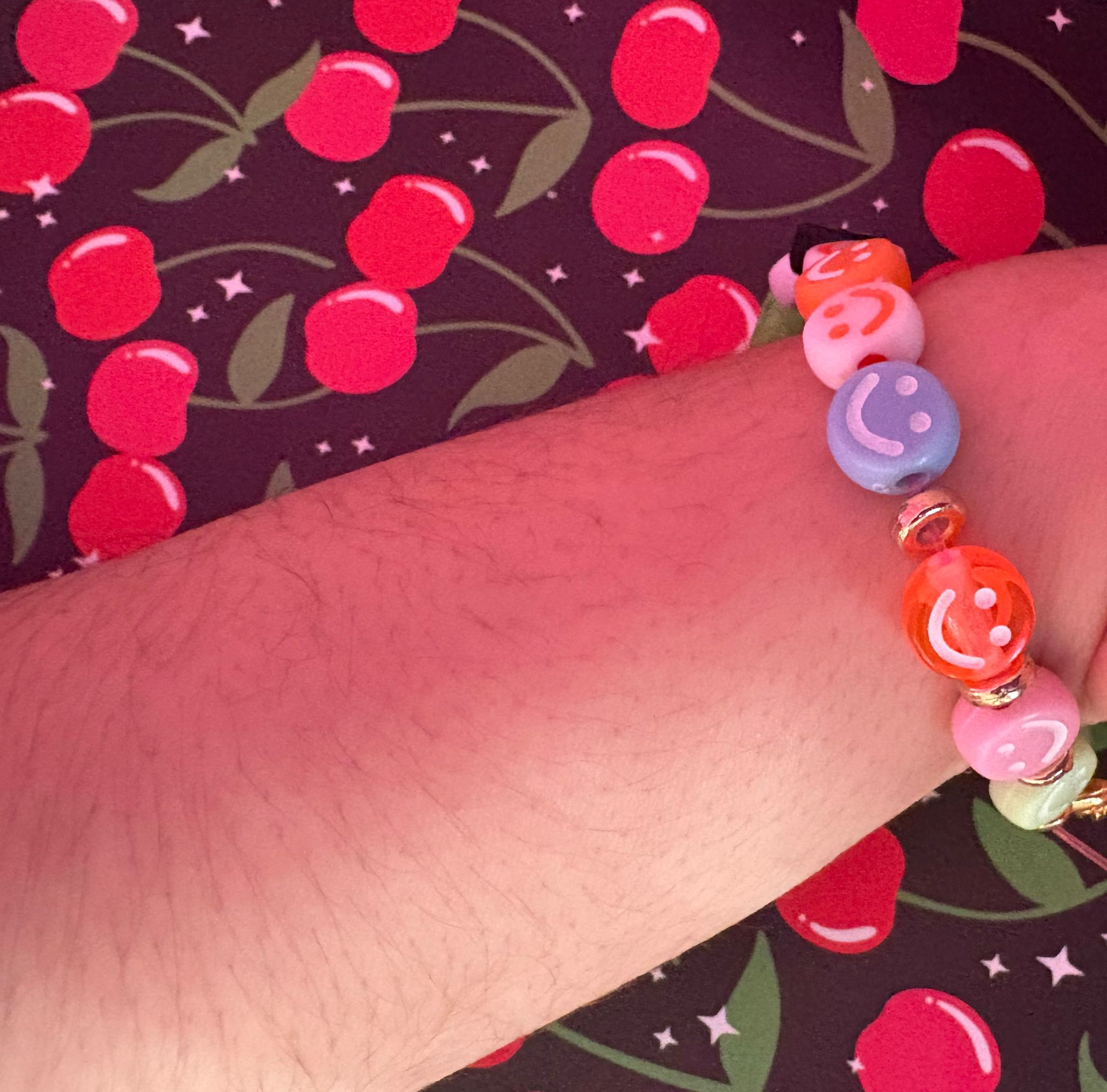
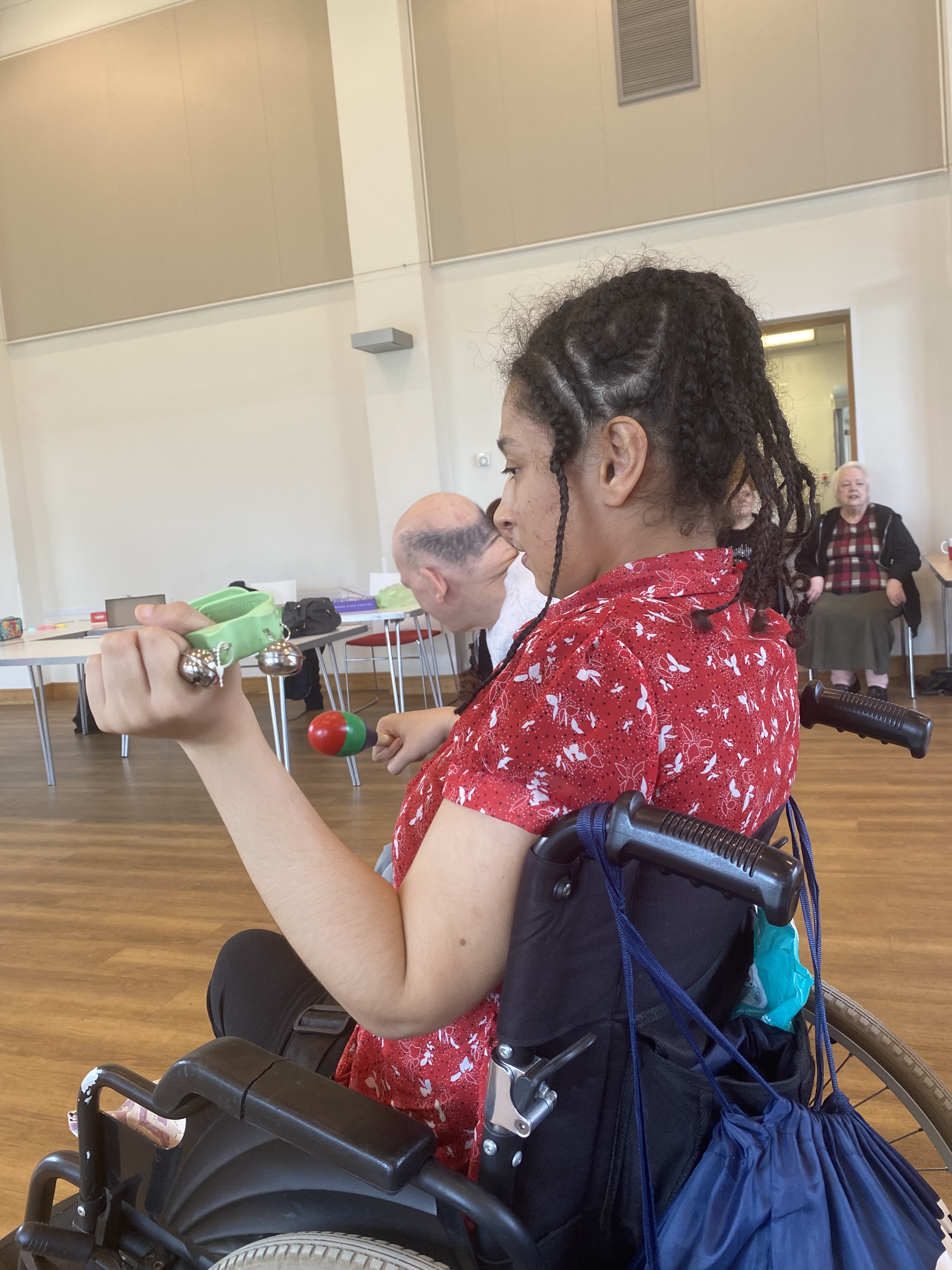
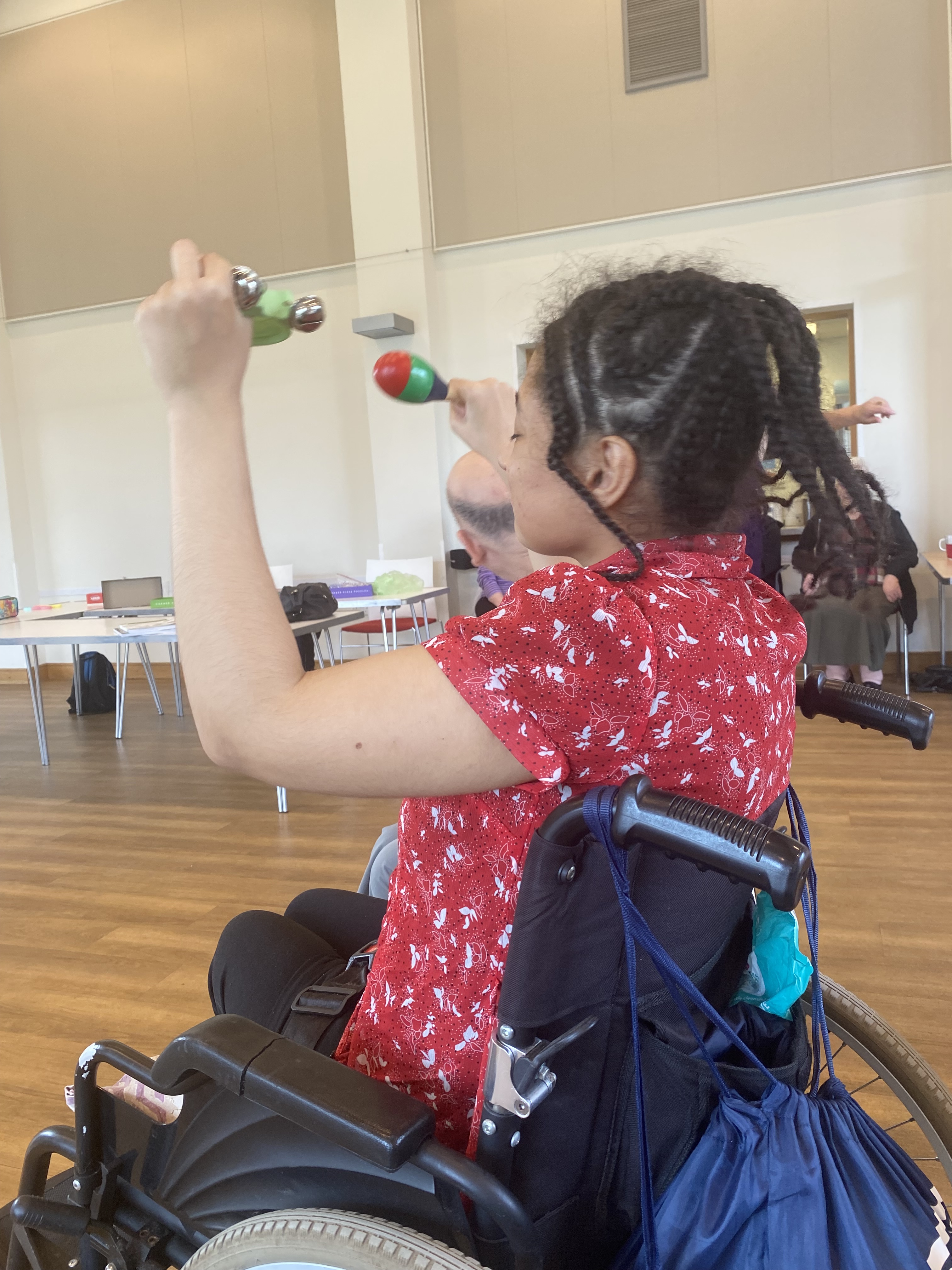
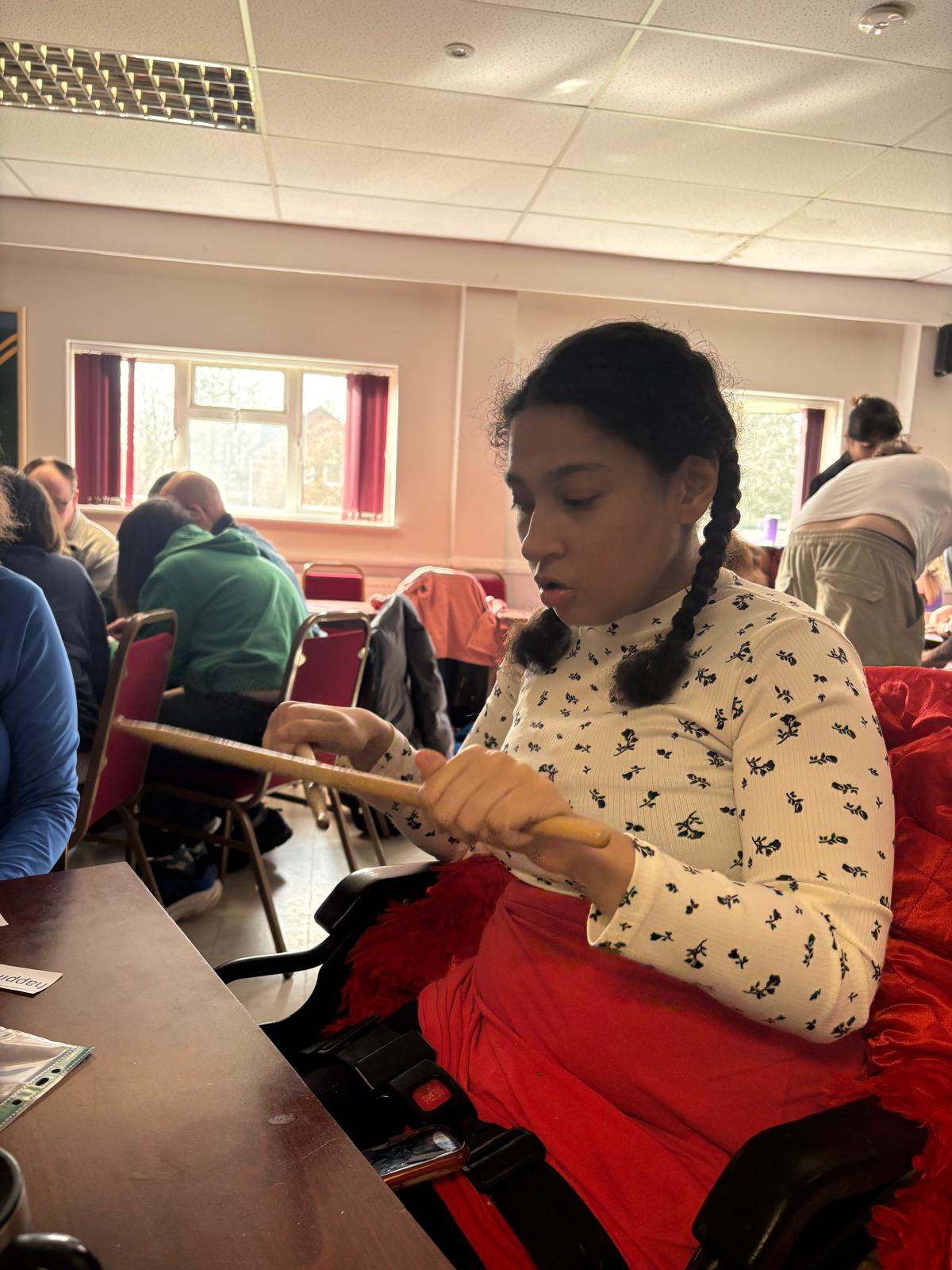
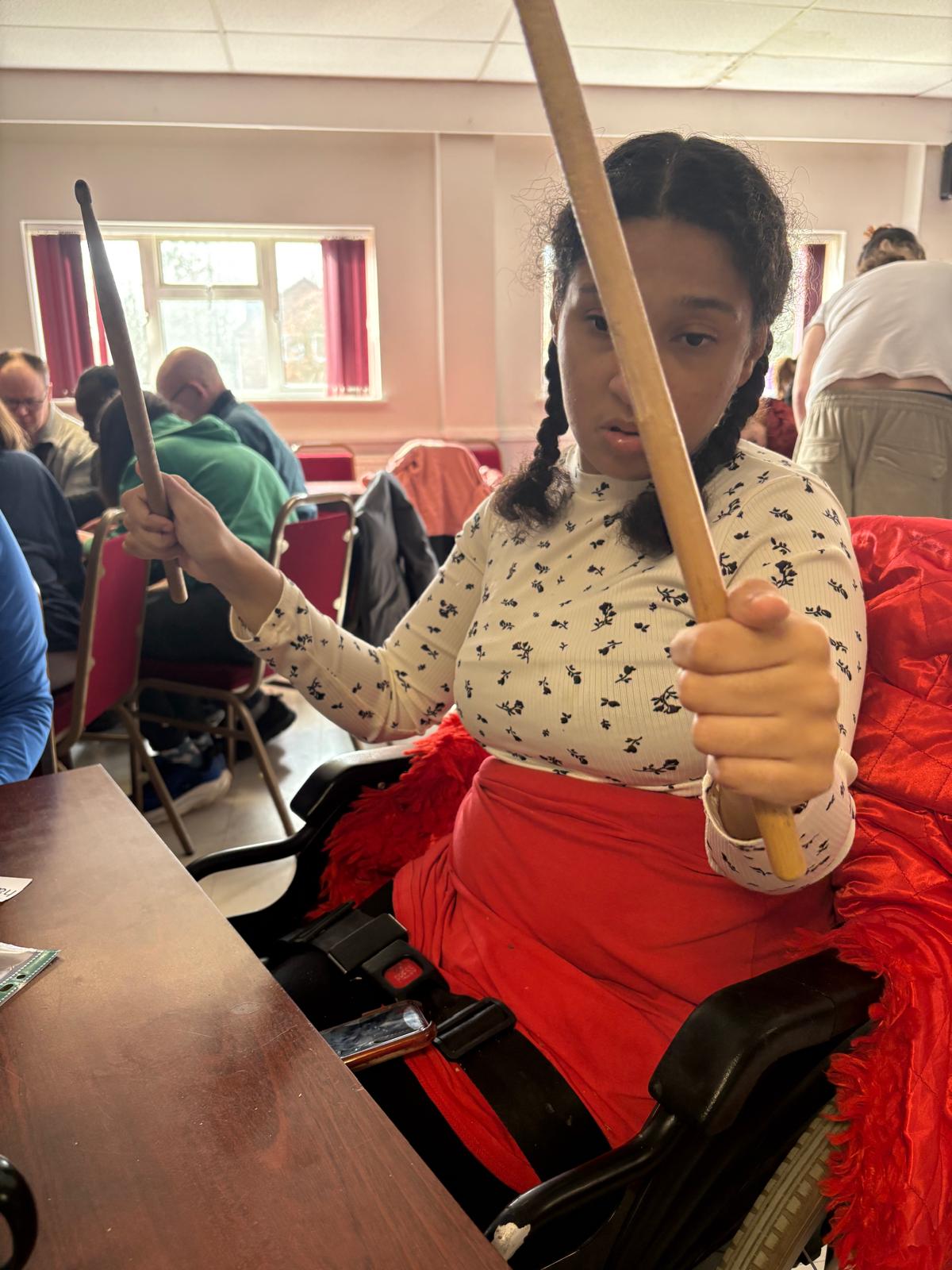
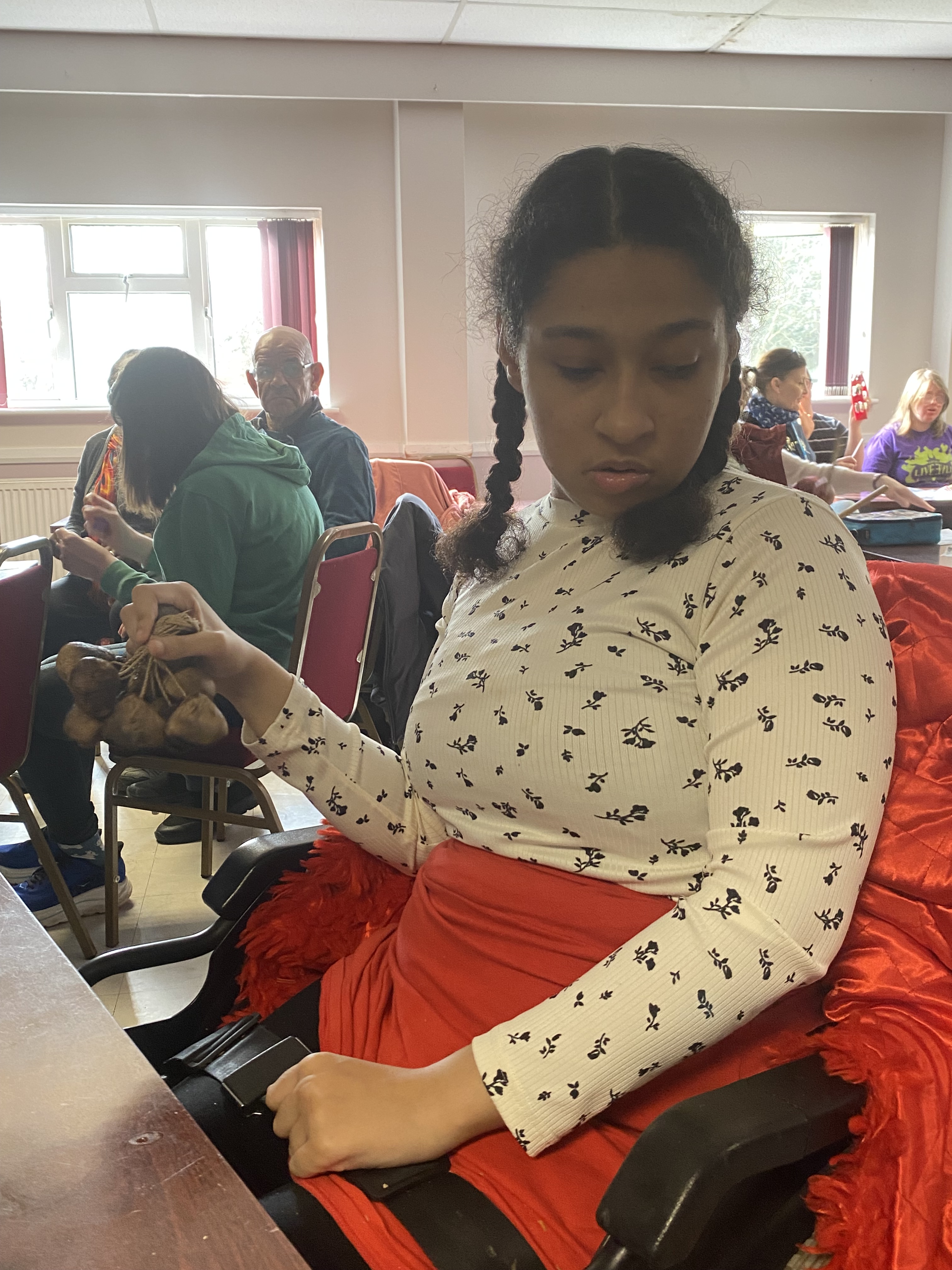
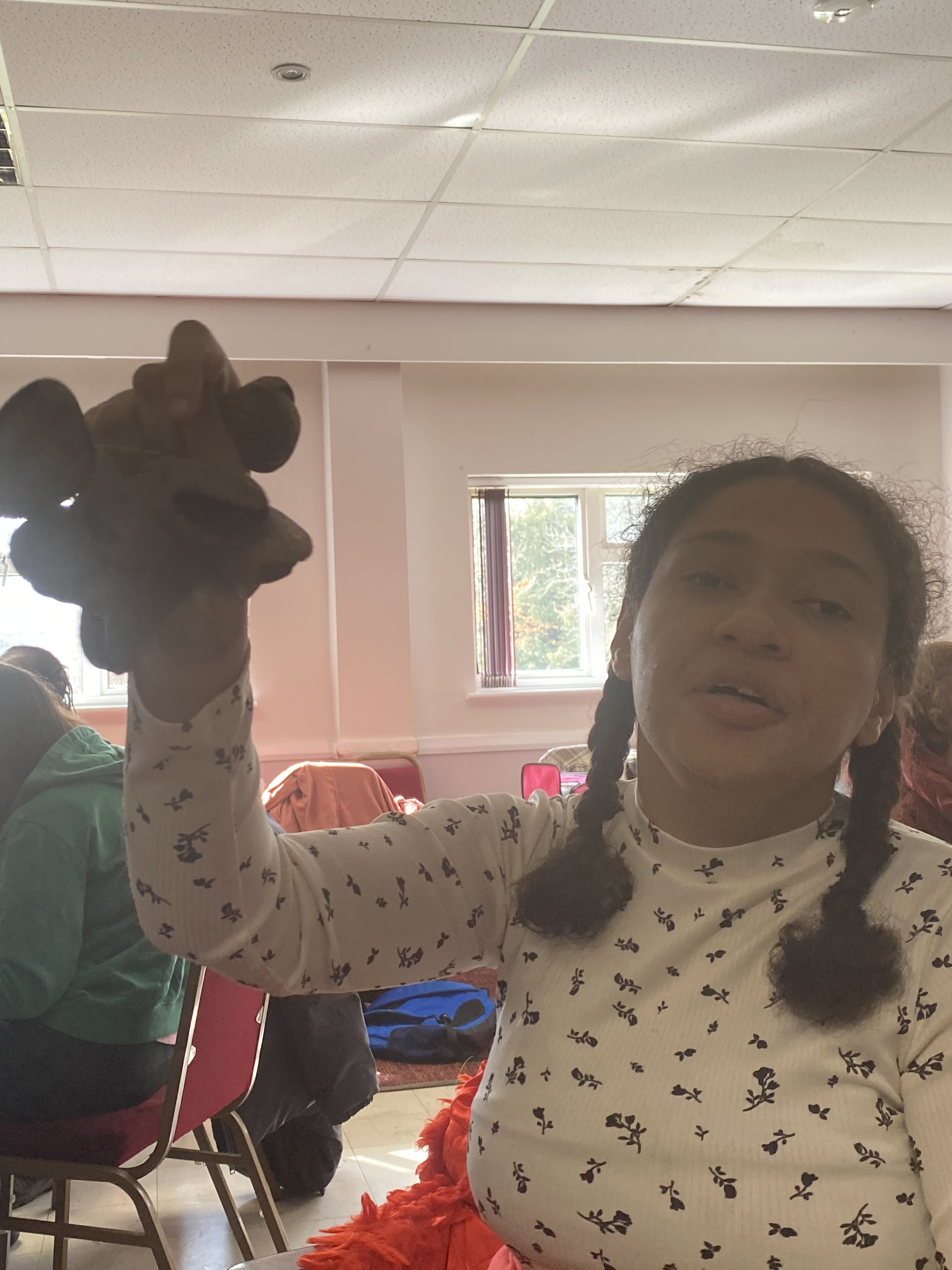
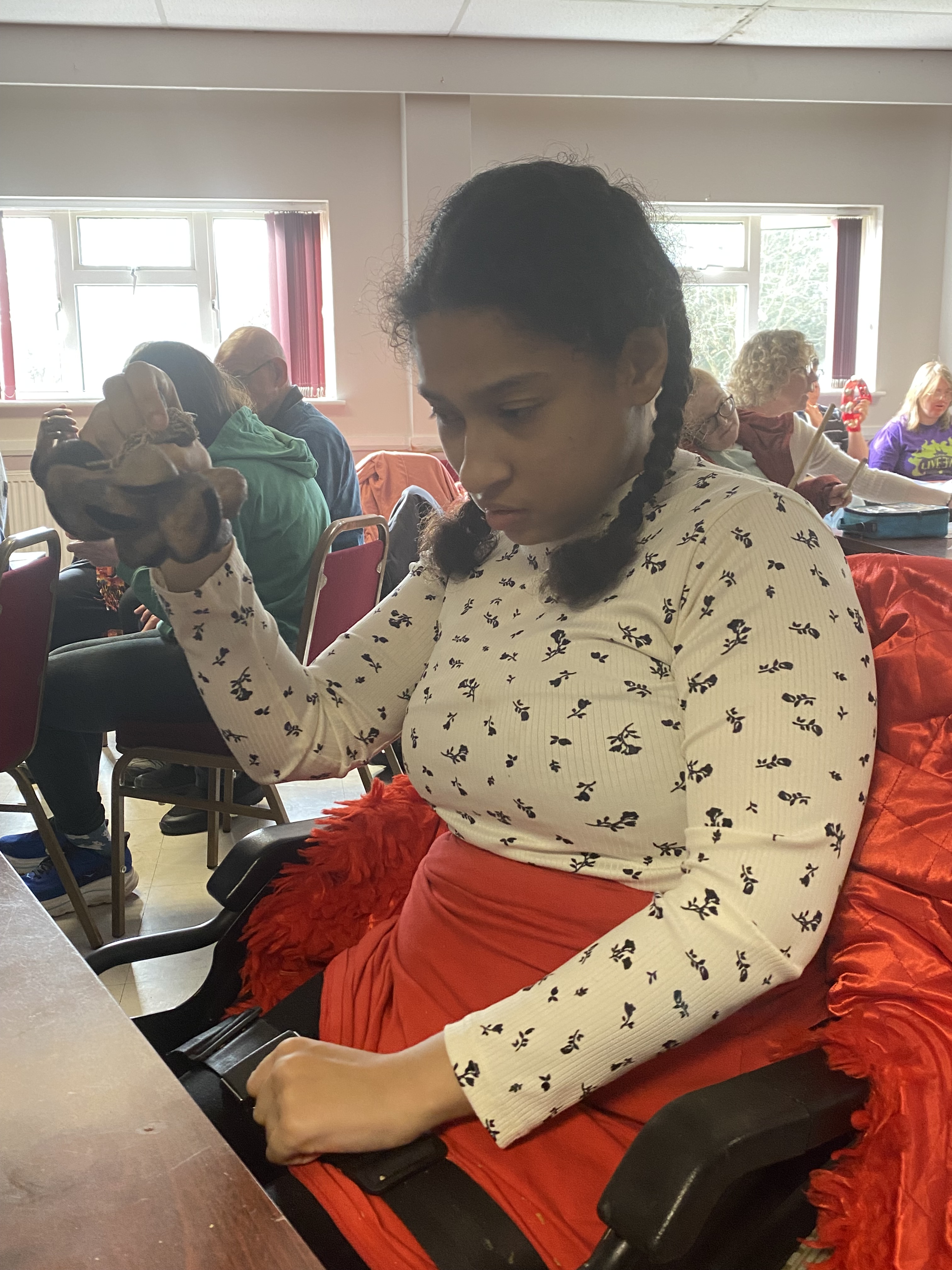
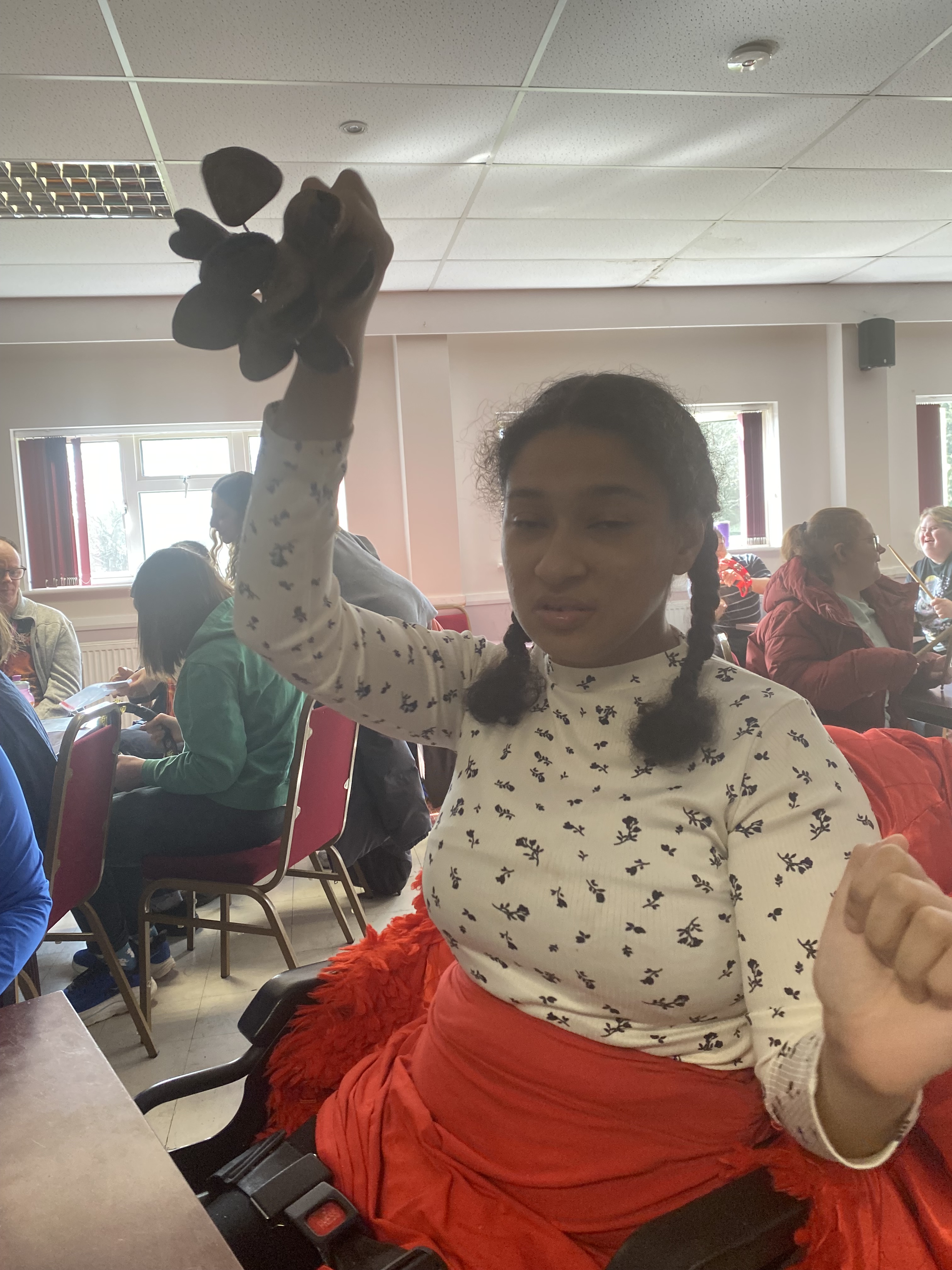
here are some photos of me participating in the music workshop playing maracas, drum’s sticks and creating a song.
we used provided words to create a song and learnt about different tempos and dynamics in music as well as having a go reproducing them.
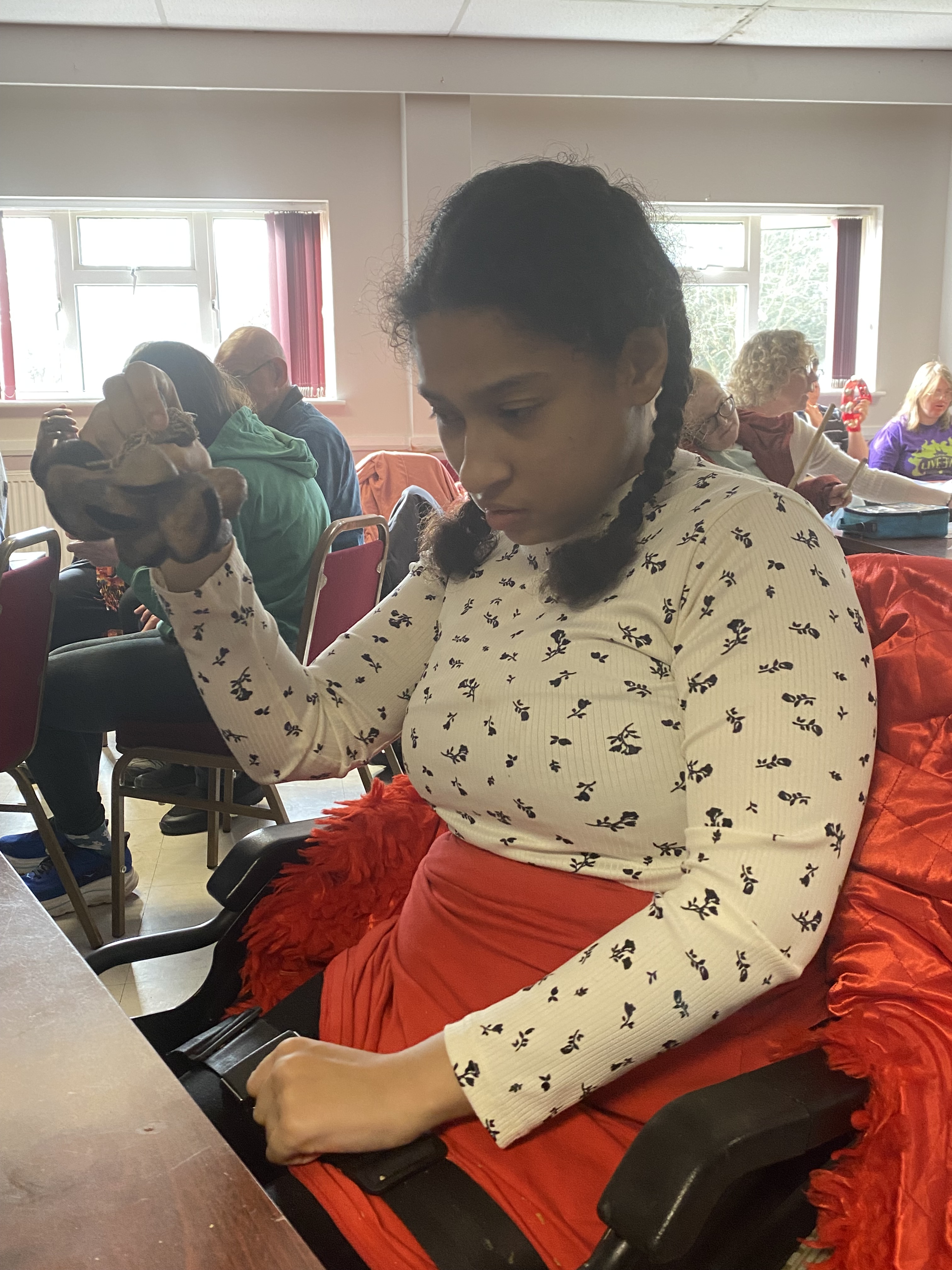
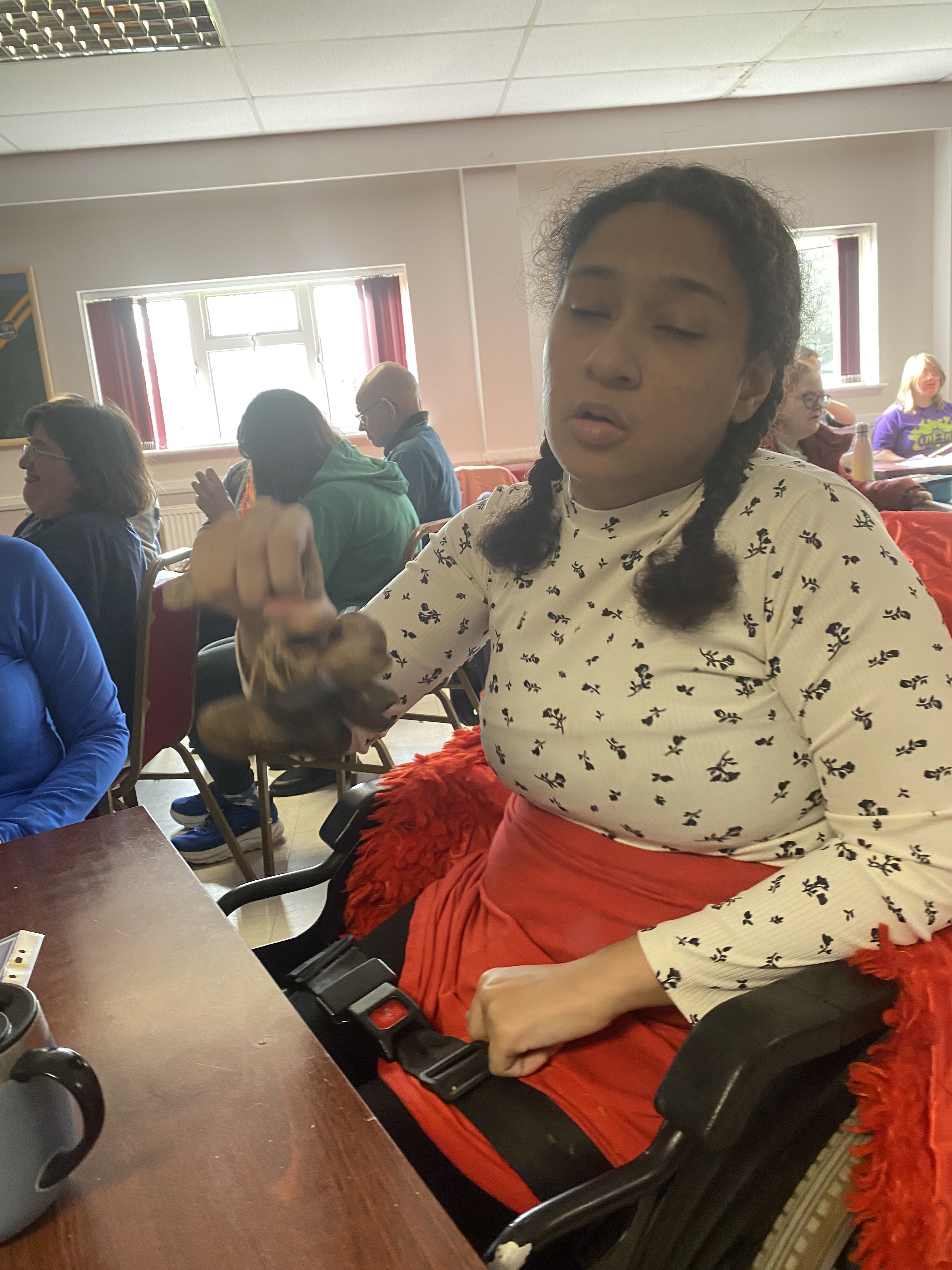
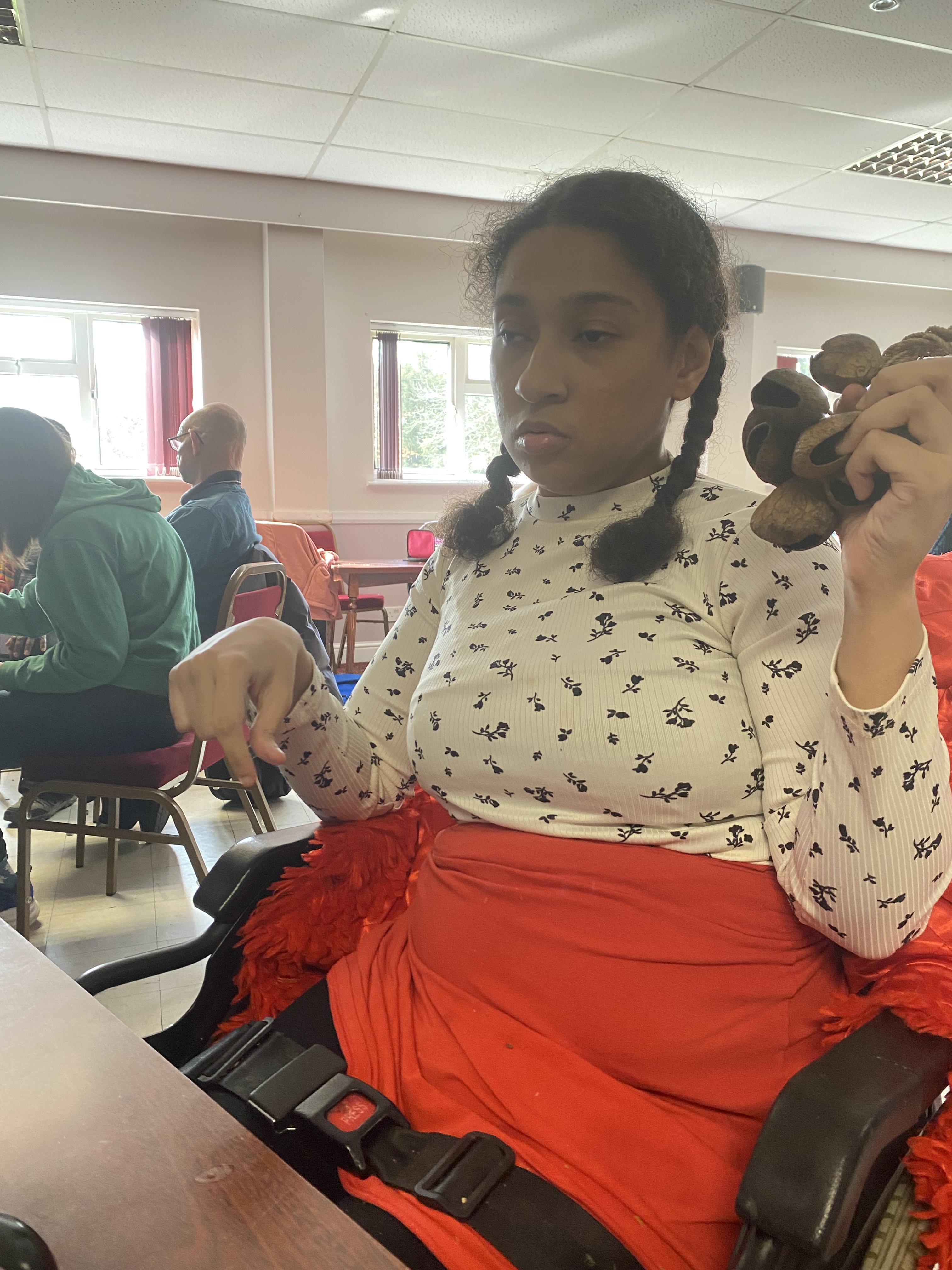
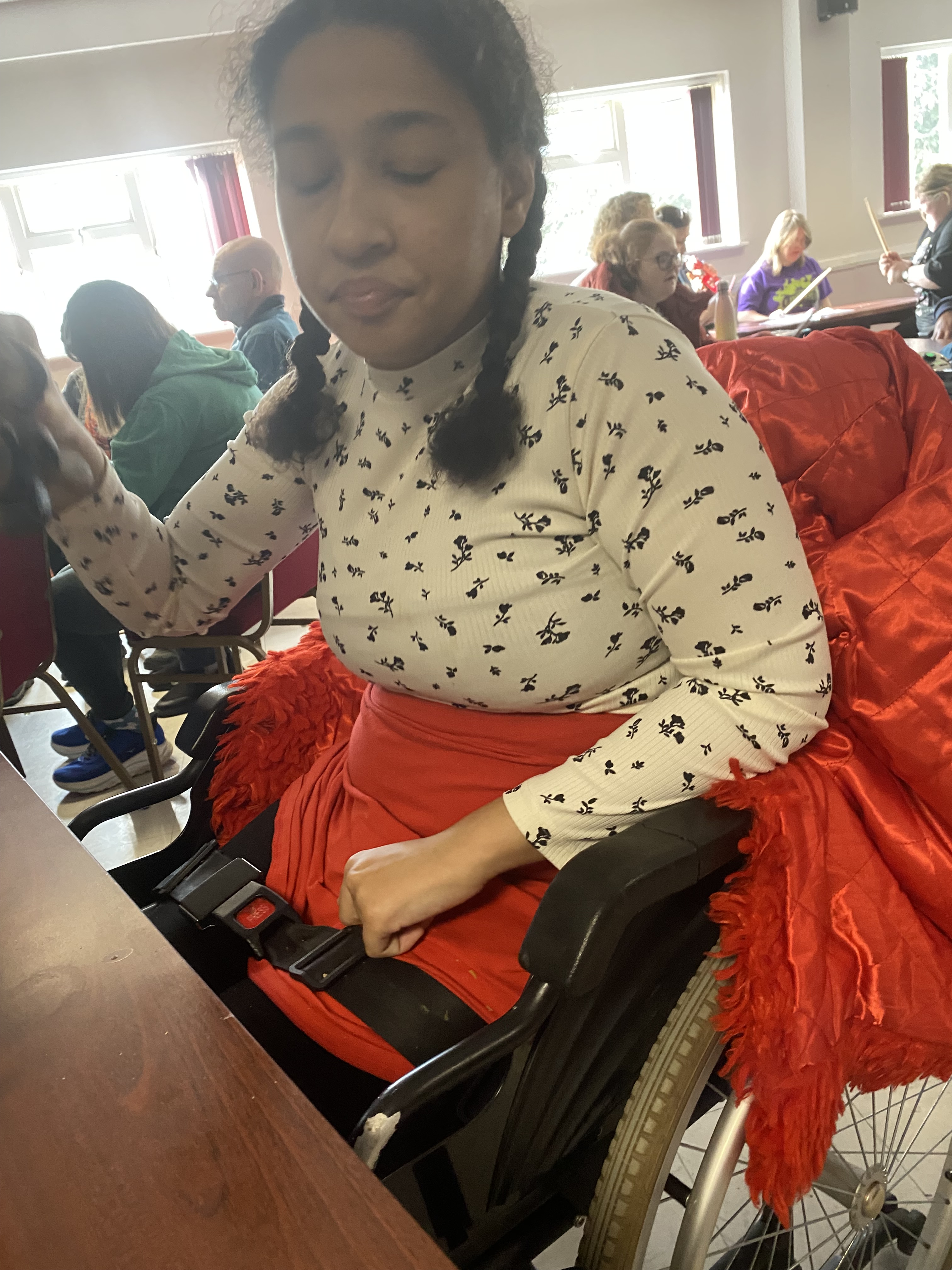
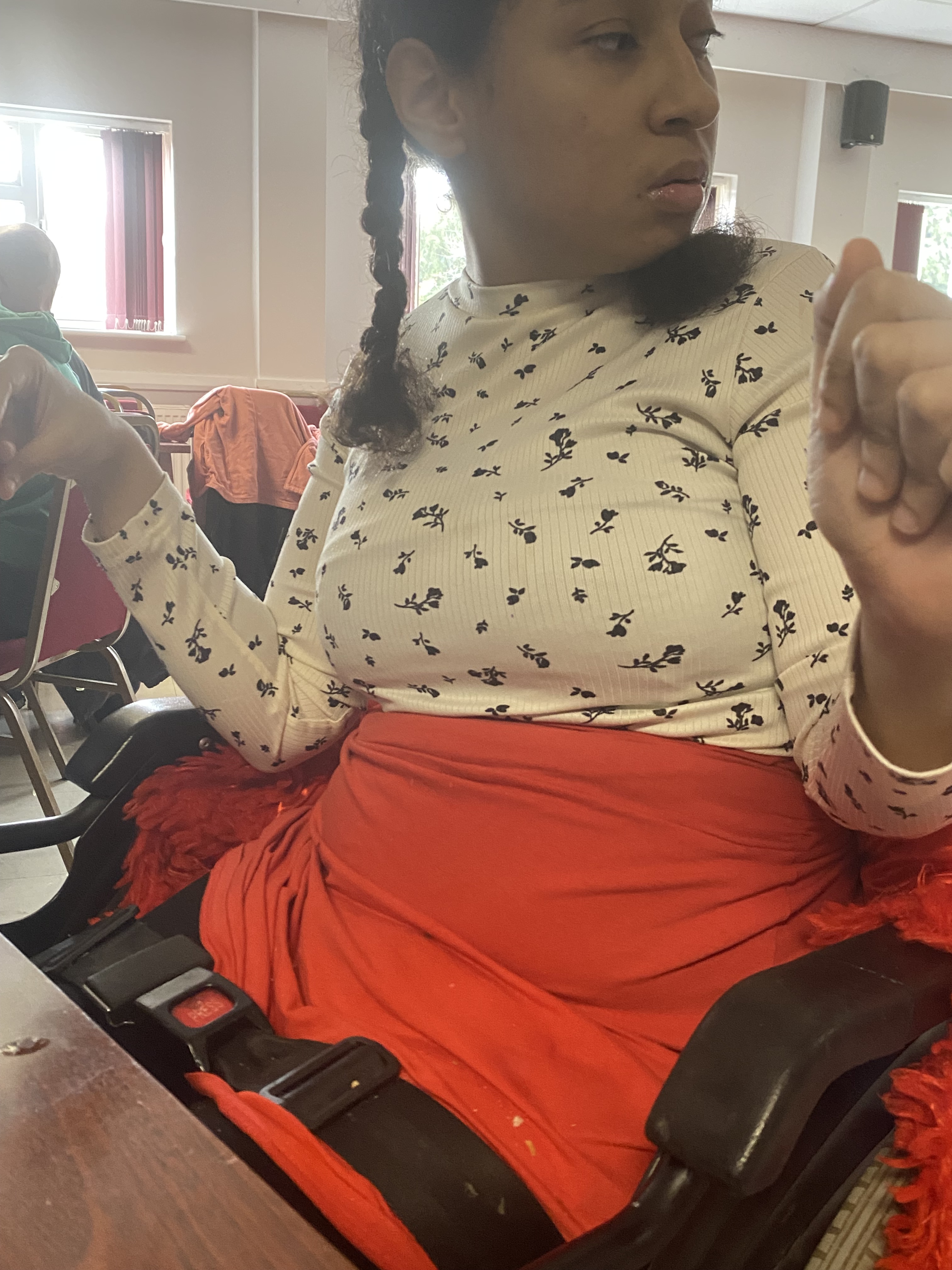
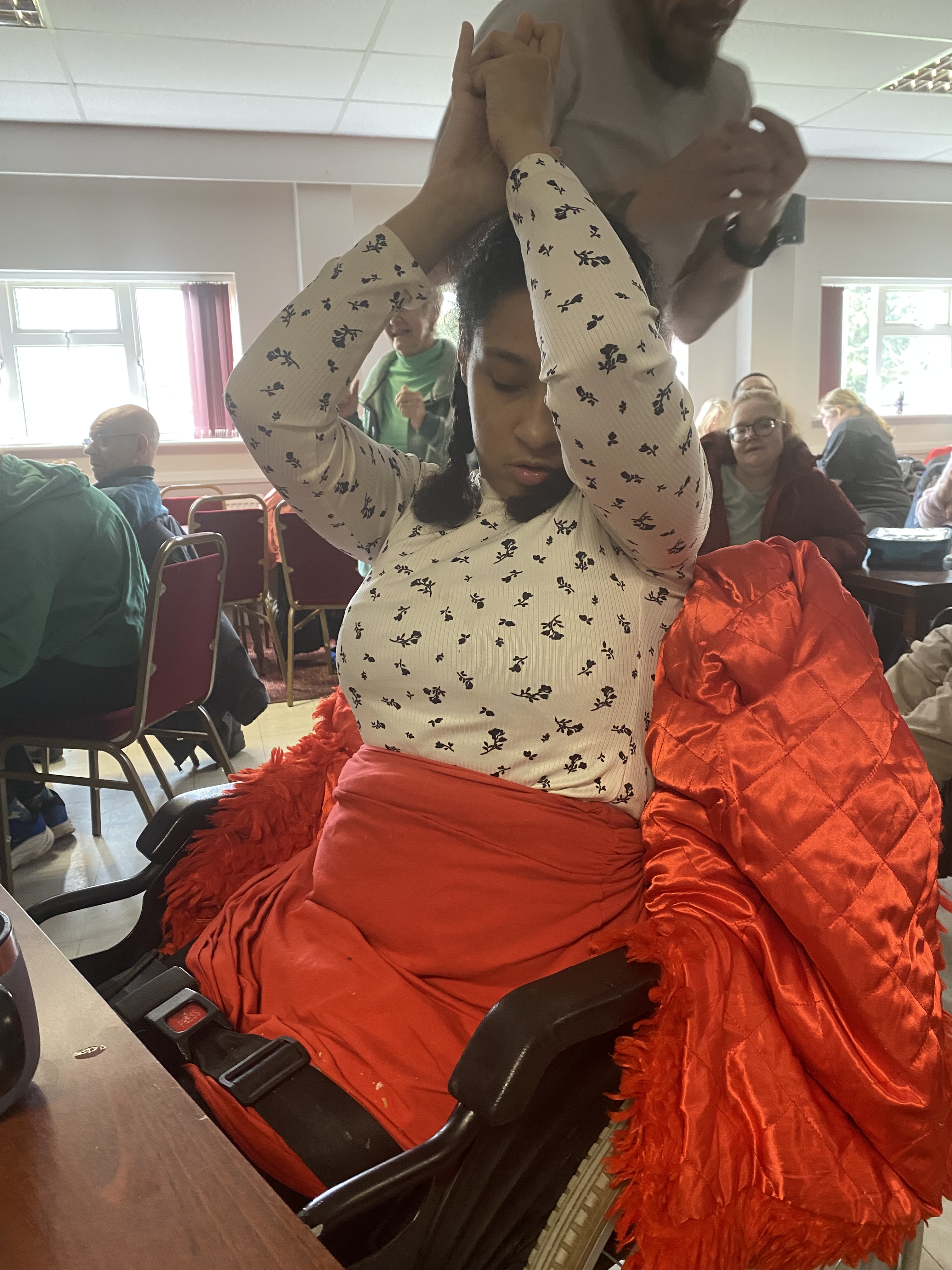
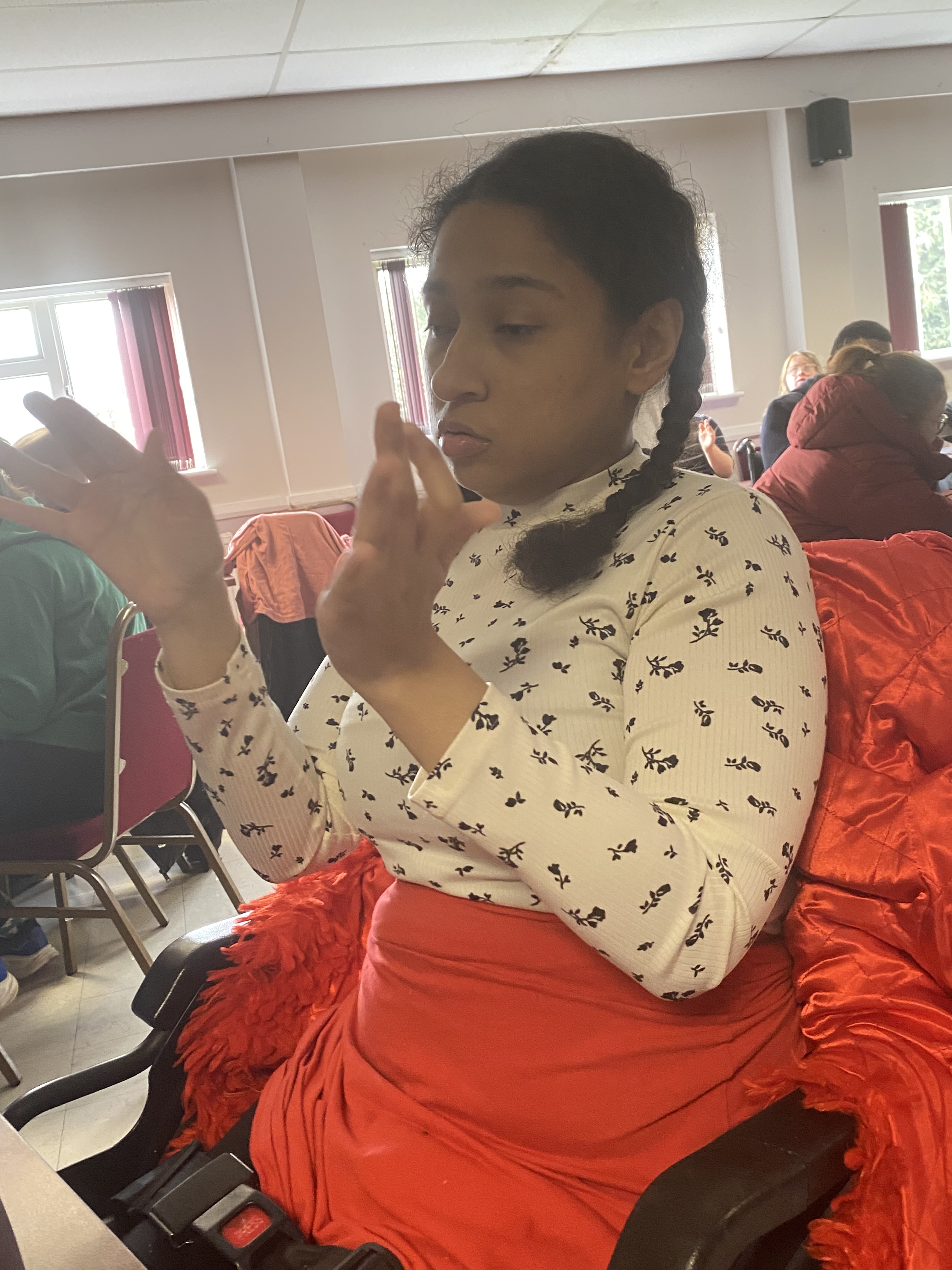
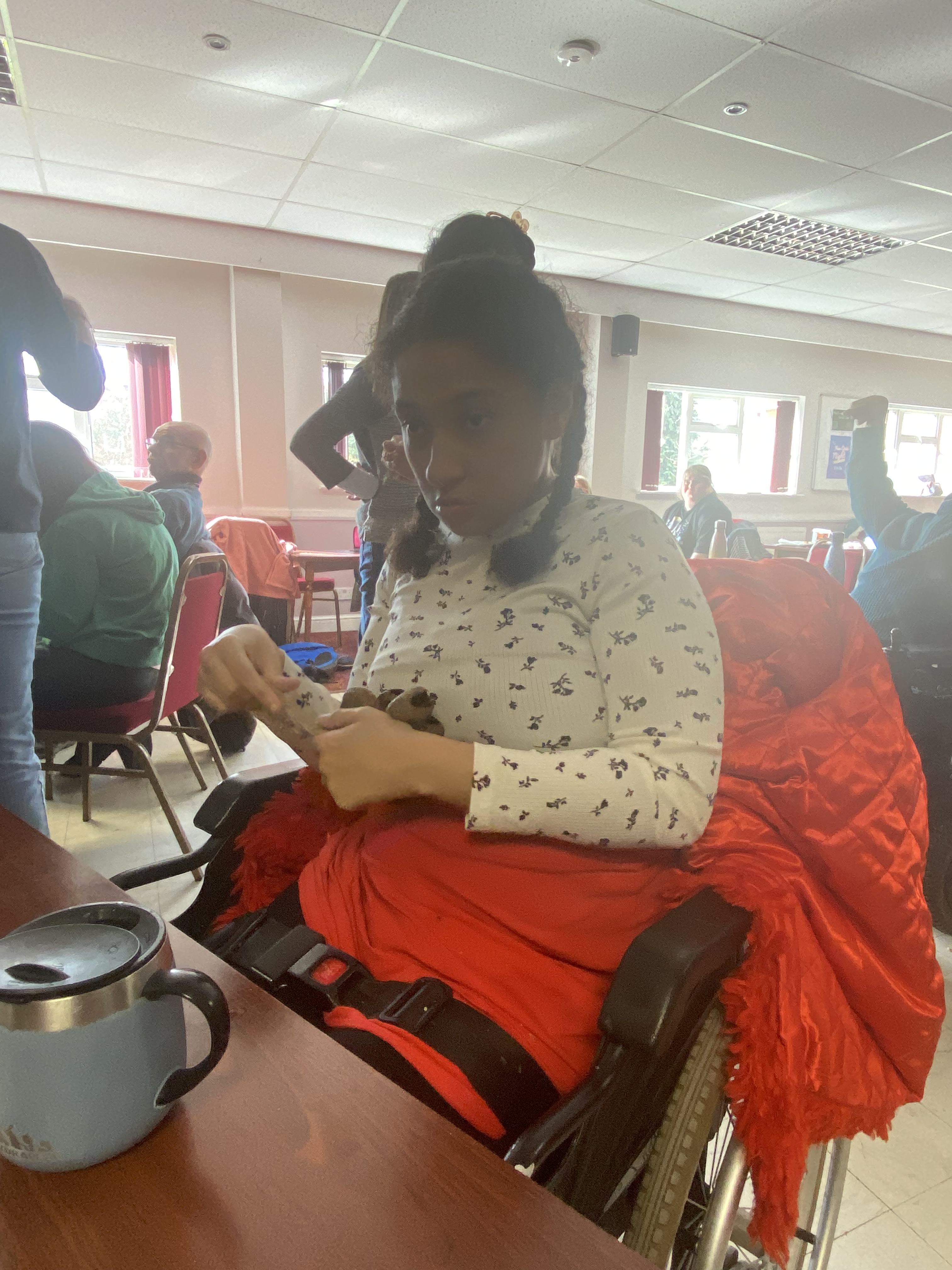
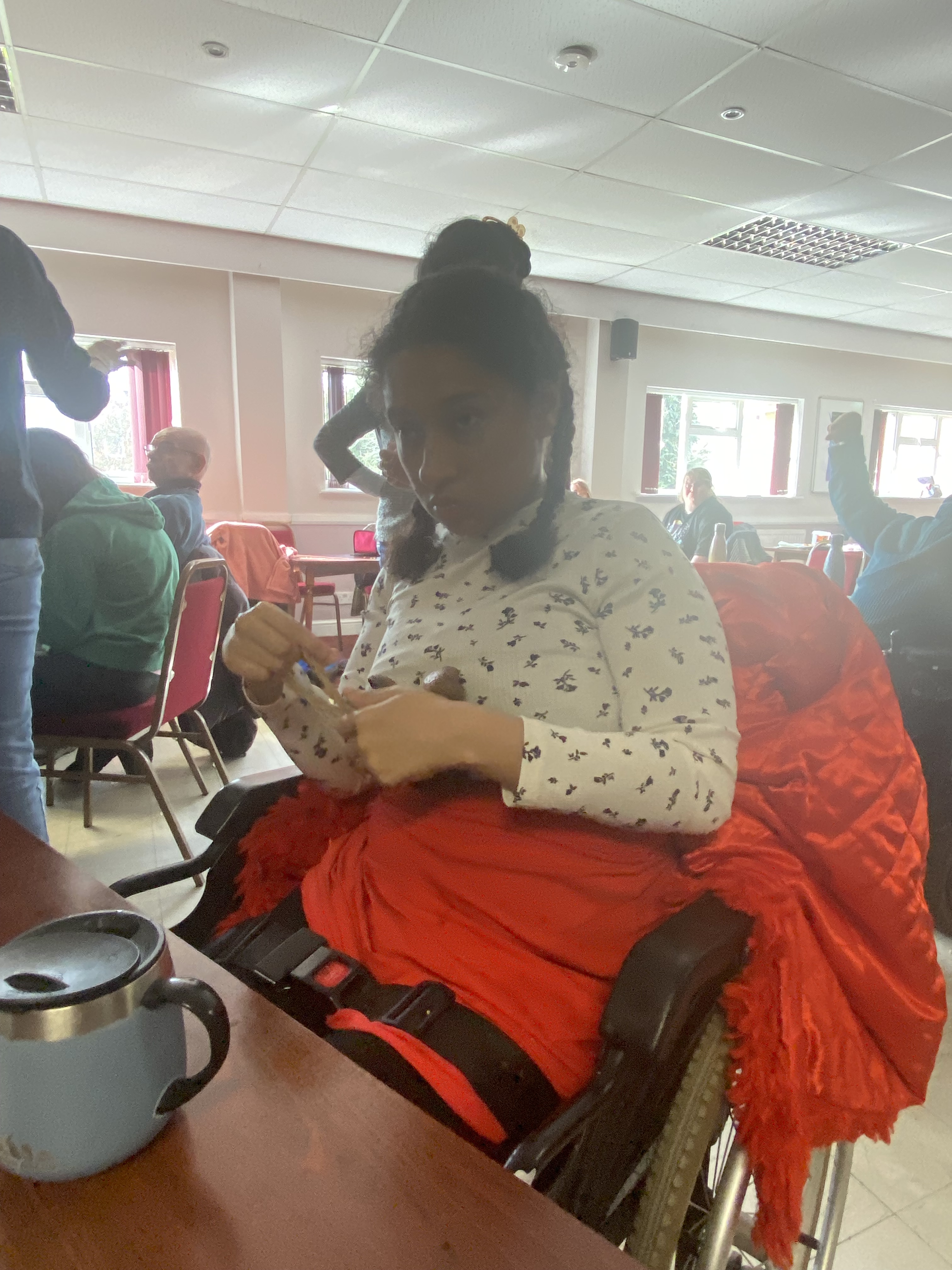
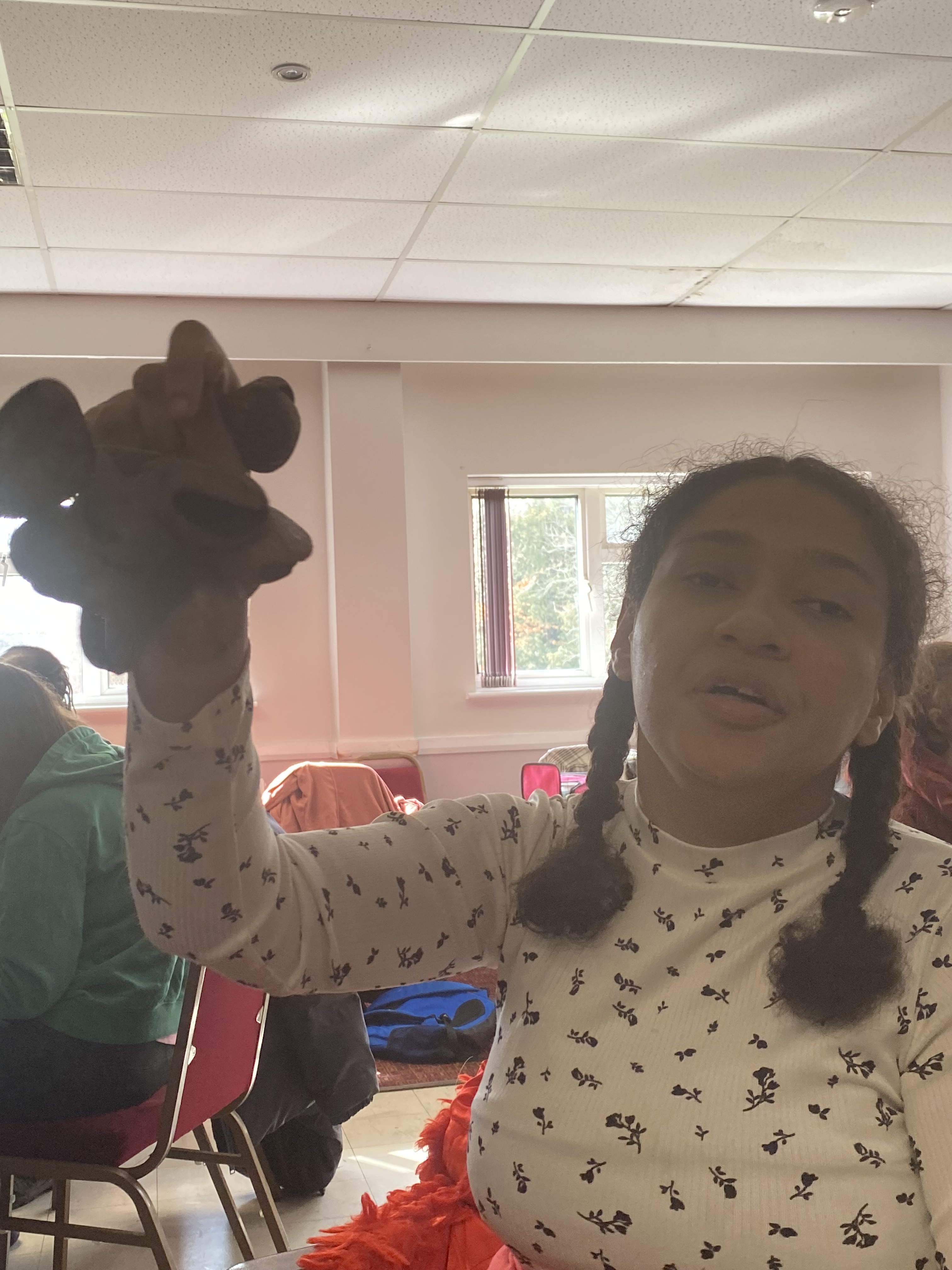
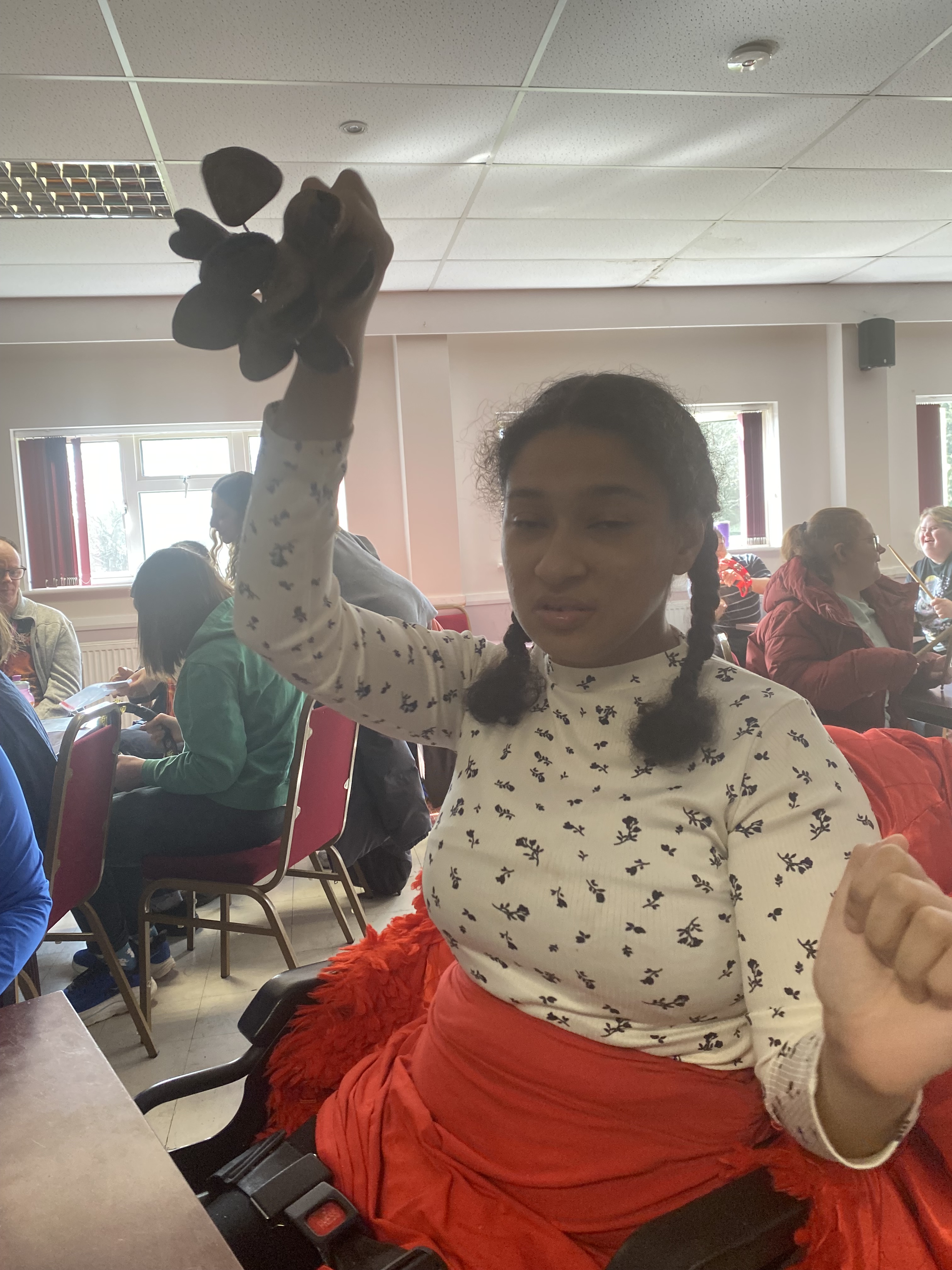
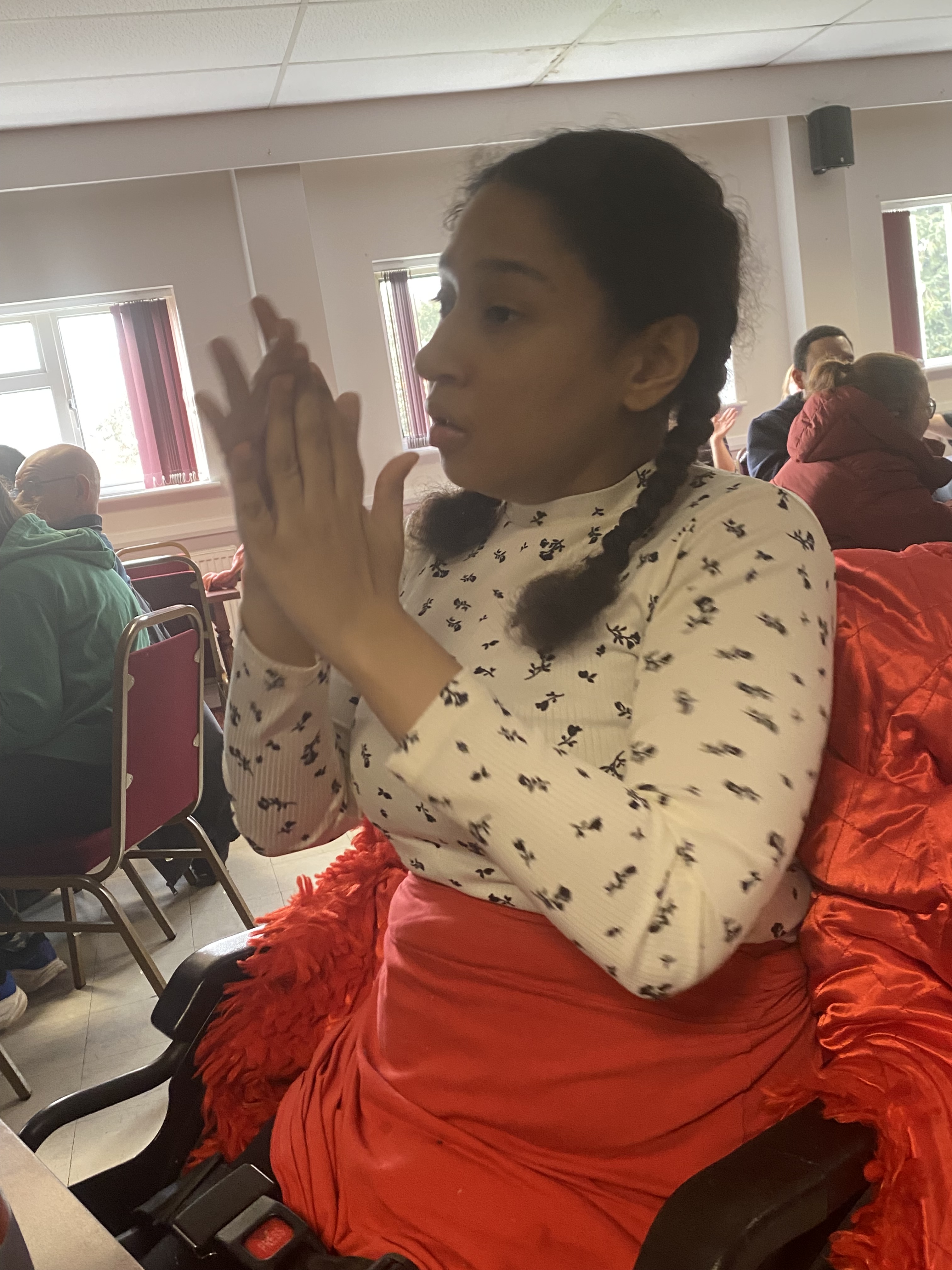
this is inclusion. People may think that a quality of life is a flashy car or a very wellpaid career, but for me it’s being able to participate in my community, as I did before Functional Neurological Disorder (FND).
I cannot do this with insufficient funding, so here I am trying to somehow make the invisible visible by sharing my story. The quality of my life and people like me depends on funding providers that rely on box ticking exercise. I have a rare FND condition with fluctuating severity, so there is no box to tick. On the other hand, all the difference to my quality of life comes with the right support, such as from their specialist PA team and when my medical needs are met to participate in activities like today it makes up the quality of my life and makes feel like a human being again.
The quality of my life depends on people who make the decision actually caring about me and my right as a human, including the right to dignity, respect and appropriate privacy.
Making Canvasses to raise money. Join me on Whatnot this afternoon or in future sales to buy my canvases
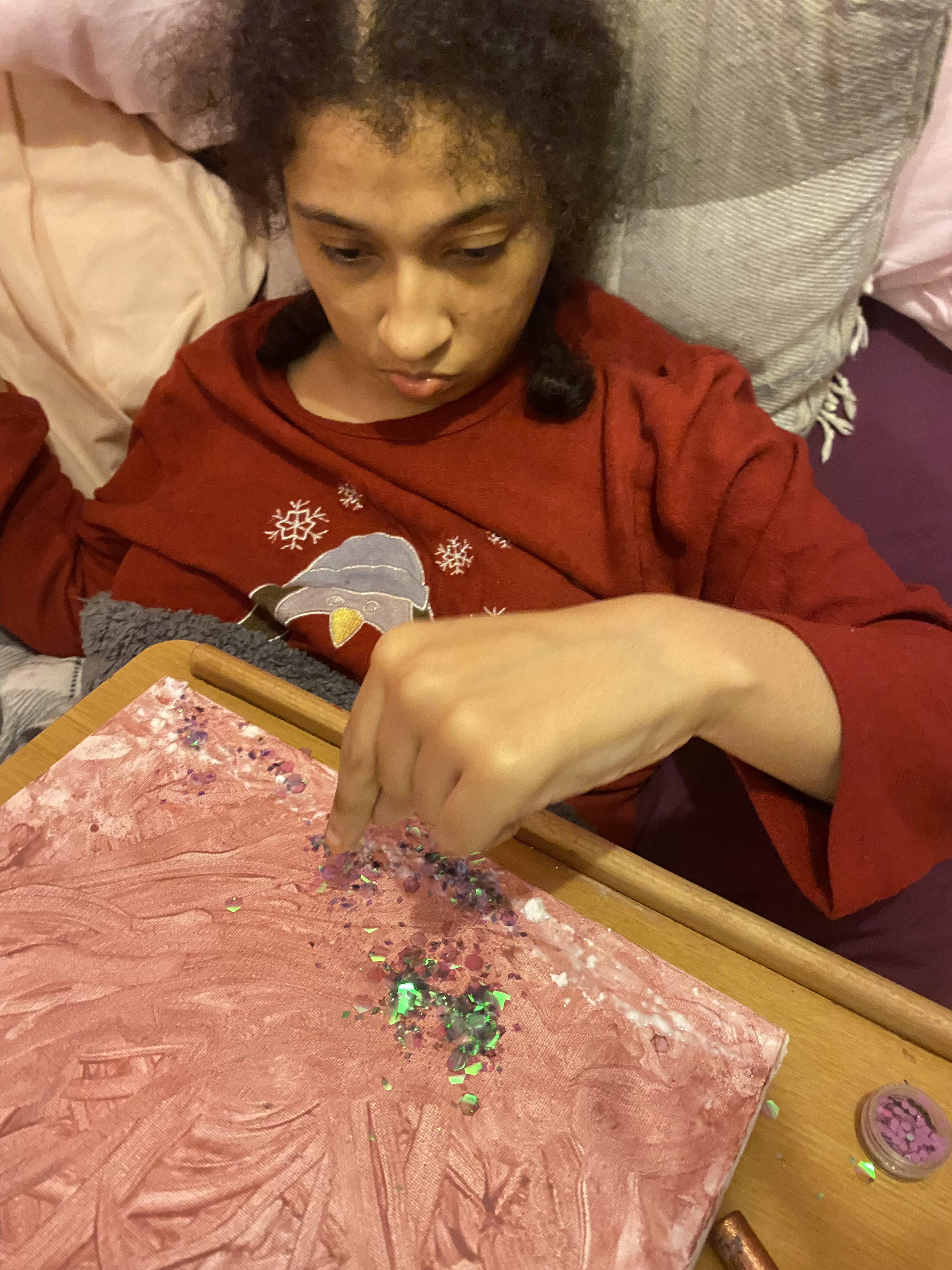
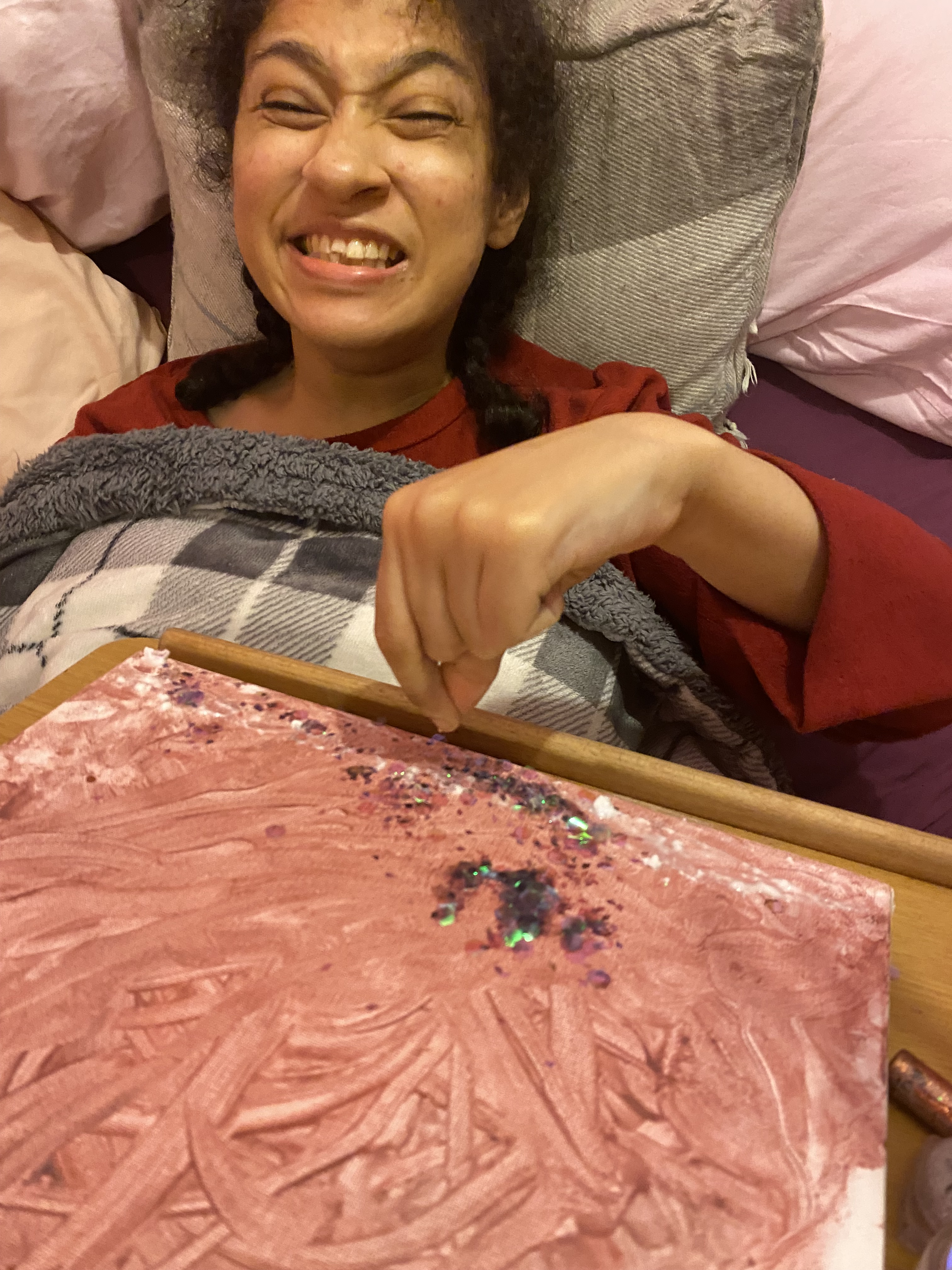
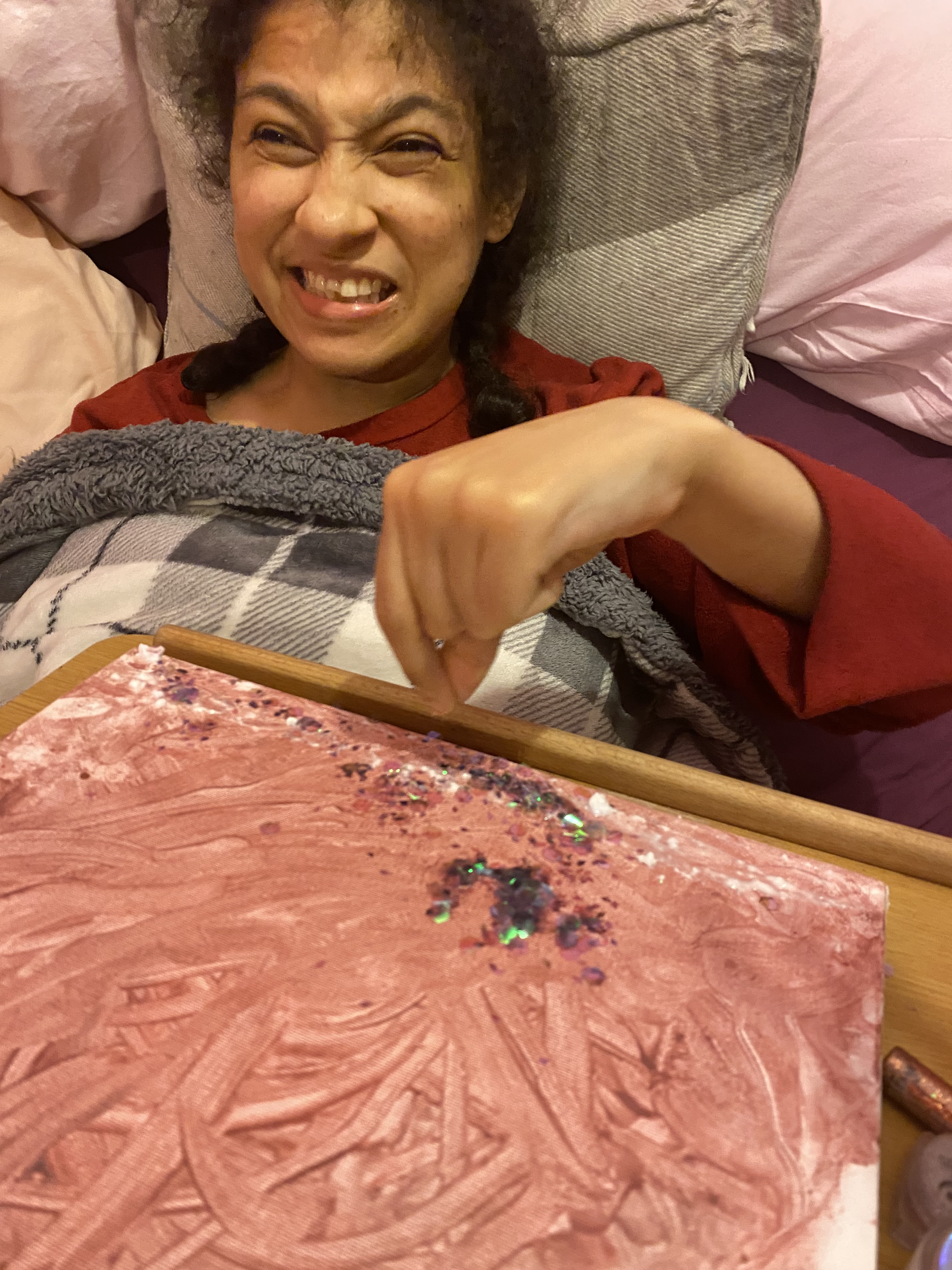
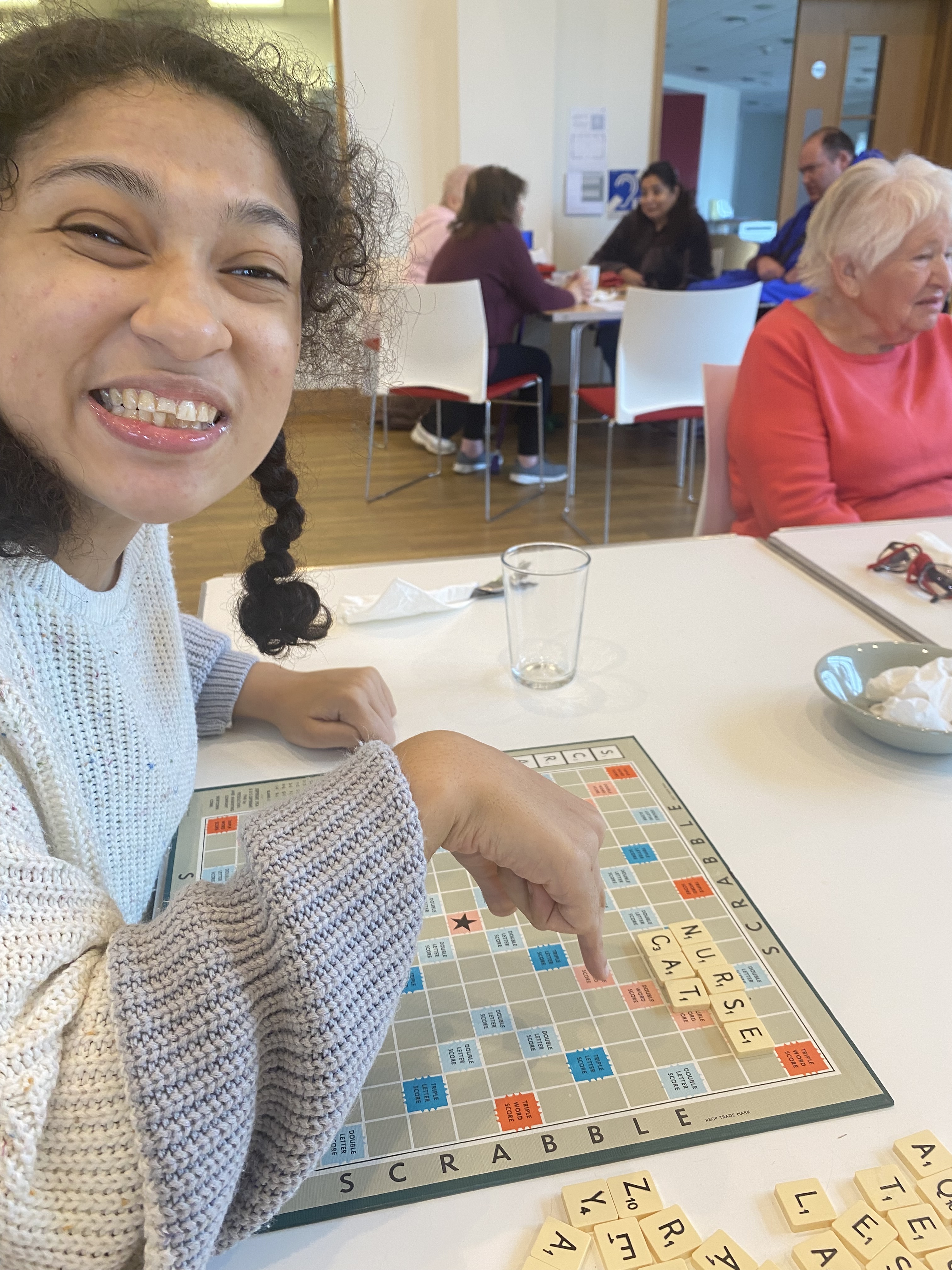
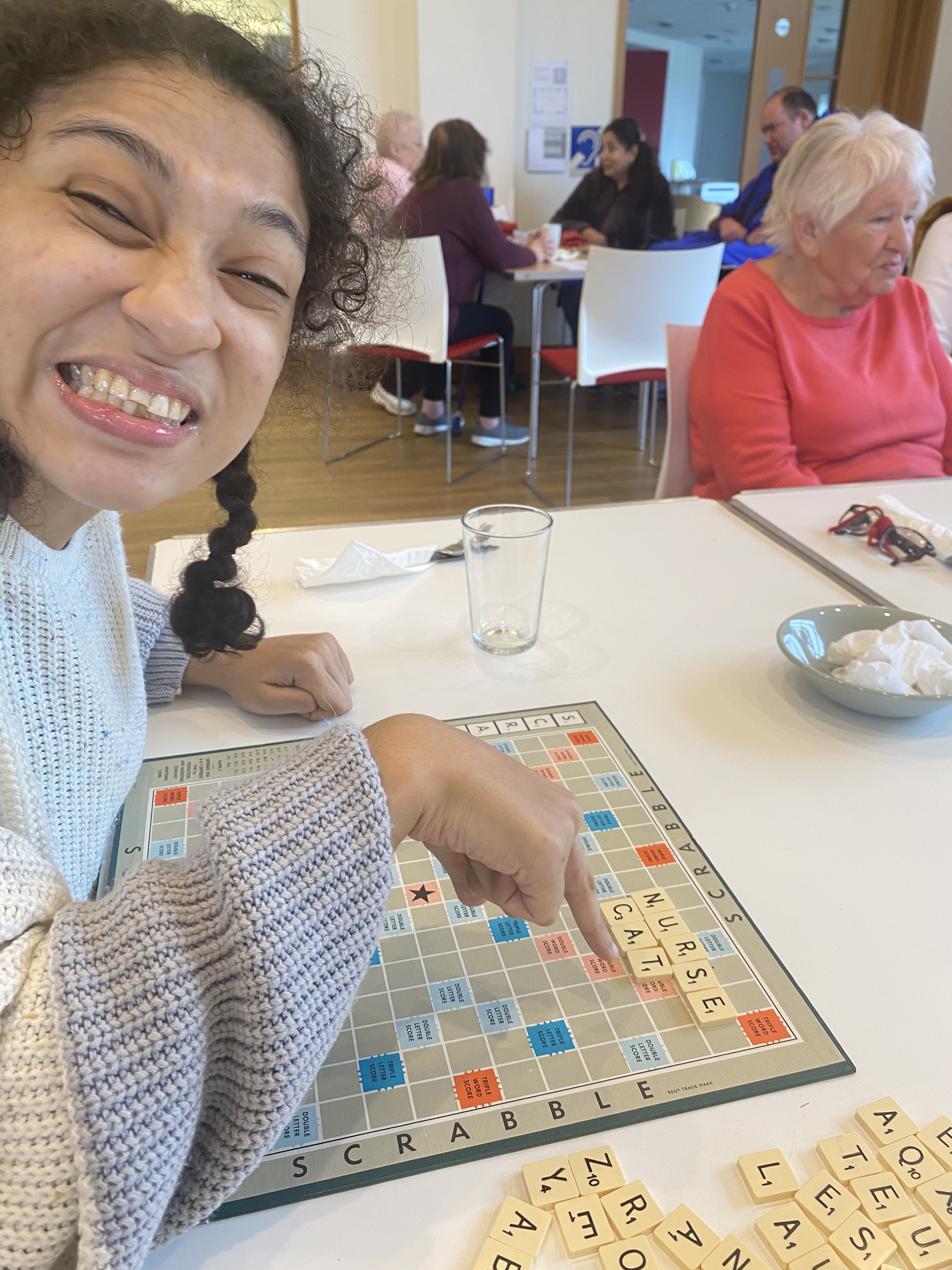
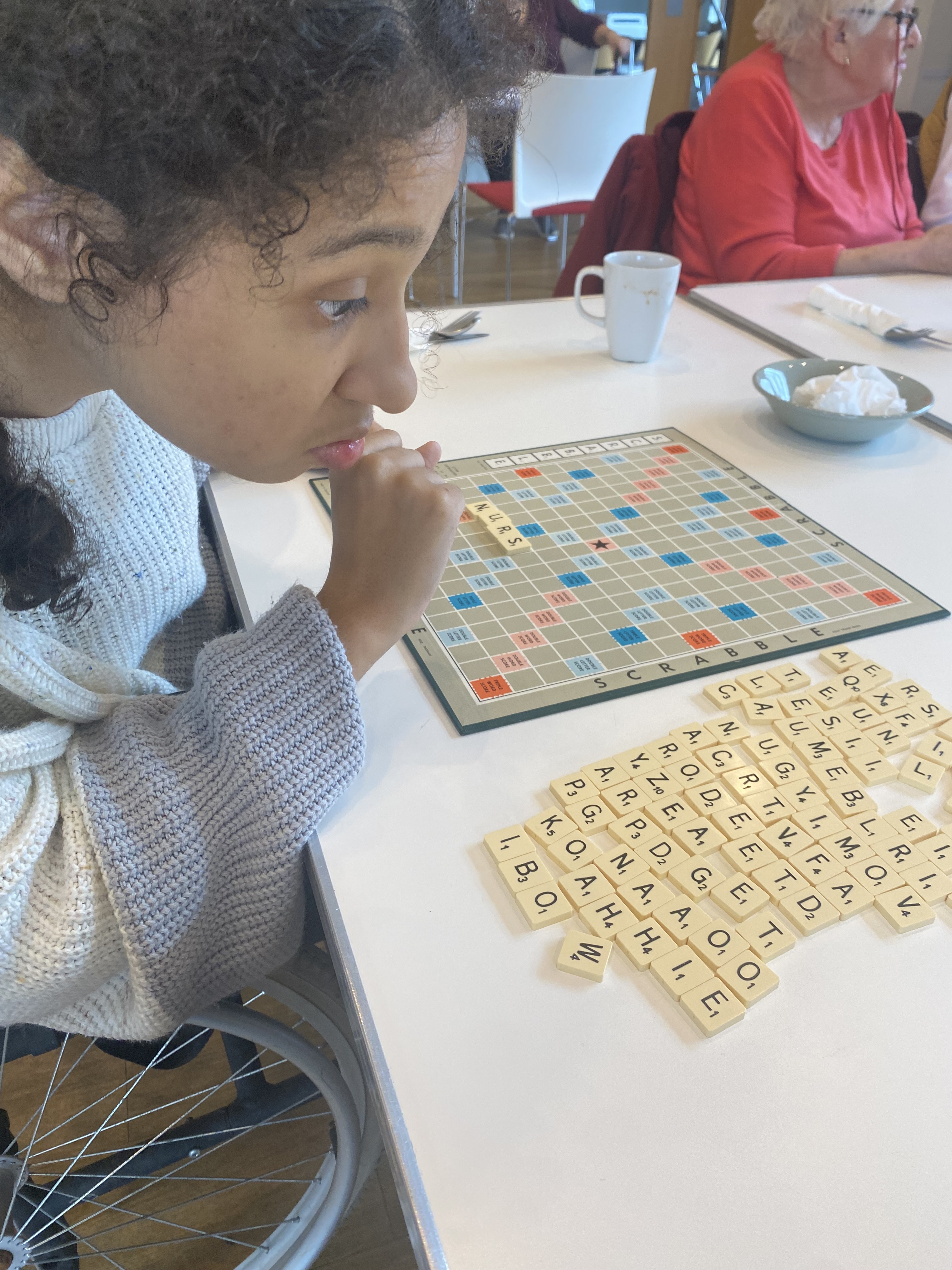
PAs are support us to have showers or maintain personal hygiene they mean that we are able to try a new things such as why do social services put limits on our capabilities to be able to live the life we want and participate fully in our communities of which we live
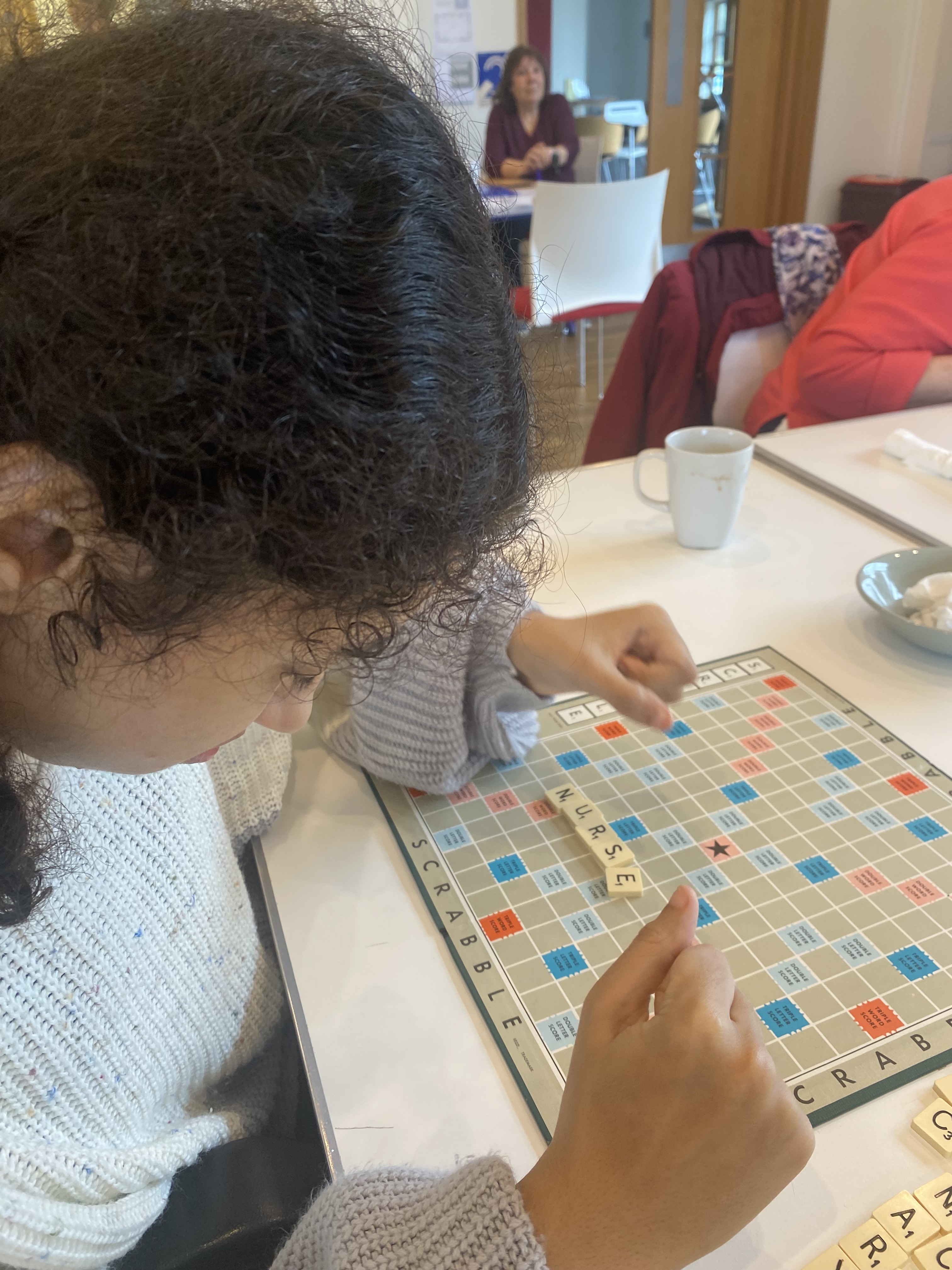
you’re not disabled by our disabilities and deal with every day we disabled by funding system that doesn’t want to enable us. It wants to disable us to make us small and to make us feel like we are incapable/inadequate to contribute to the society we live in.Having disabilities doesn’t mean we don’t want a purpose and we don’t want a life. We’re entitled to a quality of life and not just to exist. The Care Act 2014 is supposed to ensure that we as disabled people wouldn’t have to battle for the things we need and we are entitled to live the life we choose. A lot of councils don’t listen to the Care Act and still make us battle for the obvious things, which makes me cross and also makes me smile because you don’t realise how ignorant they are. this is not fair😅😡🥵 and actually makes me proud when I achieve things, like this Scrabble at Friday Club. The battle we have to go through to get there and the amount of self advocacy we have to do as disabled people is just unreal, infuriating frustrating. It’s a form of neglect and is not allowed.
Bingo may not be the first thing you think of when you think of climate change.
But when you play with pictures of ideas for tackling the issue instead of numbers, it can help people like Patrick and Michael McKinney understand how they can make a difference.
The brothers both have special needs and live in supported accommodation.
They have completed a climate change training course for people with learning disabilities – thought to be the first of its kind in the UK.
Their accommodation is in Newtownstewart in County Tyrone.
And their top tips?
For Patrick, it is buying pre-loved clothes instead of new.
And for Michael, who loves gardening and growing flowers, it is collecting food waste for compost.
Michael is responsible for turning off the lights when the brothers leave the house in their new hybrid electric car.
Patrick mows the grass in the garden and puts the cuttings on the compost heap.
Both help sort recycling in their house and have reusable water bottles for when they go to the gym.
Patrick said the training was all “very good” – talking about animals, walking and learning about things they could do differently in the house.
The brothers attended classes over the course of several weeks in 2025.
‘Becoming a mum inspired me’
Hanna Coney works with the brothers in their Sperrins Supported Living Services.
She became a mother last year and found herself thinking more about the world her child would grow up in.
She thought the training would help build the brothers’ confidence and independence, but was surprised by just how much they got involved.
“The conversation of climate change can be quite a frightening topic, but I suppose for us as support workers, it’s to make sure that we’re not fear mongering the people we support.
“And they’ve really taken off with it.”
The training will be rolled out to other support services in 2026.
‘It’s been empowering’
According to the chief executive of Positive Futures, one of the groups behind the project, those with learning disabilities are affected differently by climate change.
Agnes Lunny said developing the training with Keep Northern Ireland Beautiful had broken down barriers faced by her members.
“They get excluded from all sorts of issues facing all citizens.
“I’m not saying that that’s a malicious intent, but it’s just, ‘oh, well, you know, it’s too difficult, we can’t really do it, we can’t make our material accessible, we can’t do it and really, they don’t understand anyway’.
“Well, of course they don’t, if the information isn’t shared and if the information that is shared is inaccessible.
“So it’s been incredibly empowering.”
What is climate change training?
Climate change training teaches people about how their choices affect the planet and how they can do things differently to reduce their impact.
The plastic bag levy has been used to fund the training, provided by Keep Northern Ireland Beautiful.
The charity’s Strategic Lead for Climate Action, Scott Howes, developed the course and adapted it for a special needs pilot.
“It’s as much about action as about involvement in being in the natural world,” he said.
“So they’re encouraged to go out, walk in the woods, make drawings of the natural world, explore places with friends, and to come back and talk about what they’ve discovered.
“From that, we lead into thinking about how we can impact the natural world, the damage we can do to it, and the whole range of different ways that we can reduce our impact.”
Relaxing in bed
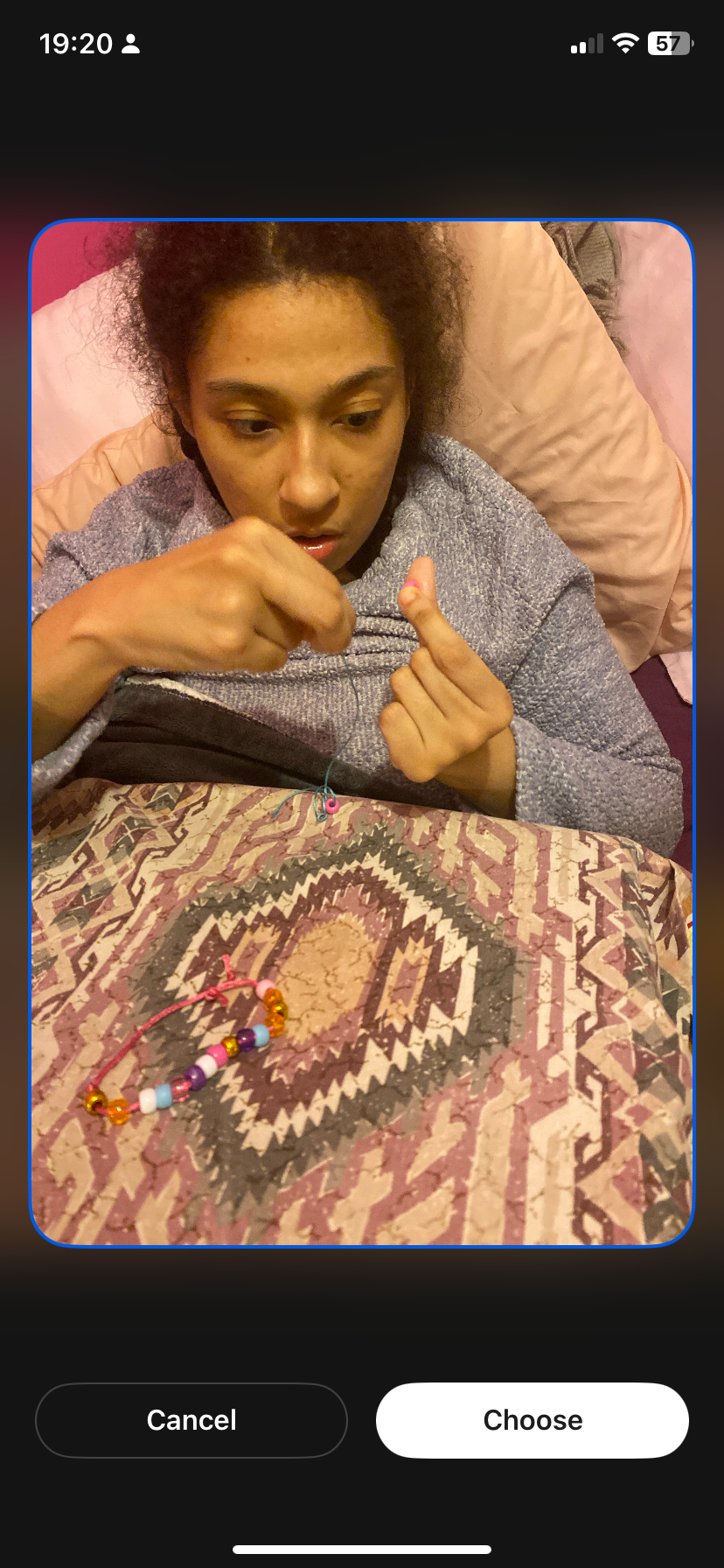
Little bit of Joy found on the pharmacy run
when me and my PA did the pharmacy run last week this is what we had the pleasure of seeing in one of the window displays of one of the shops which we passed on our way to the pharmacy finding the little moments of joy where I can otherwise your life just becomes chronic illness all of the time
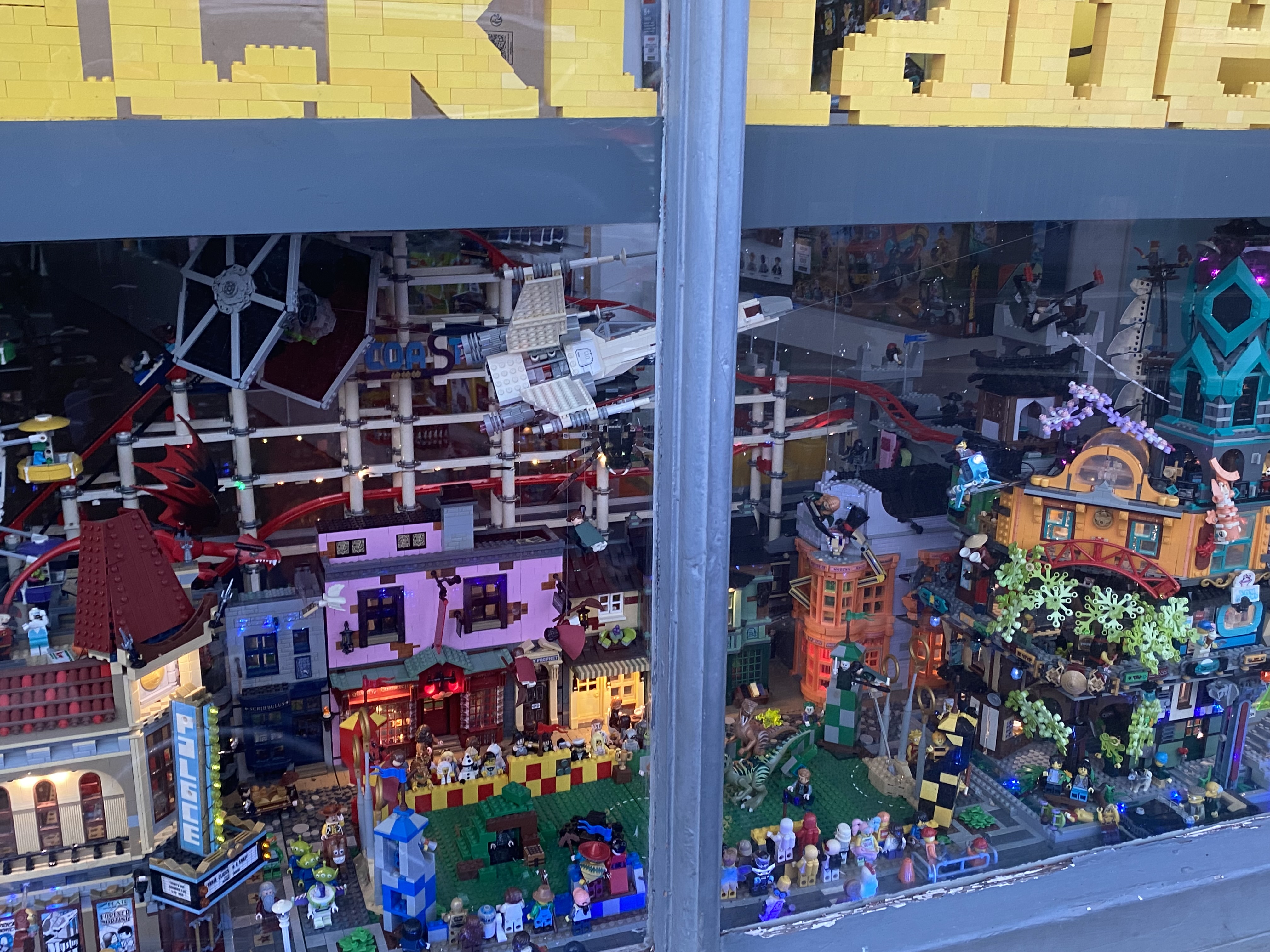
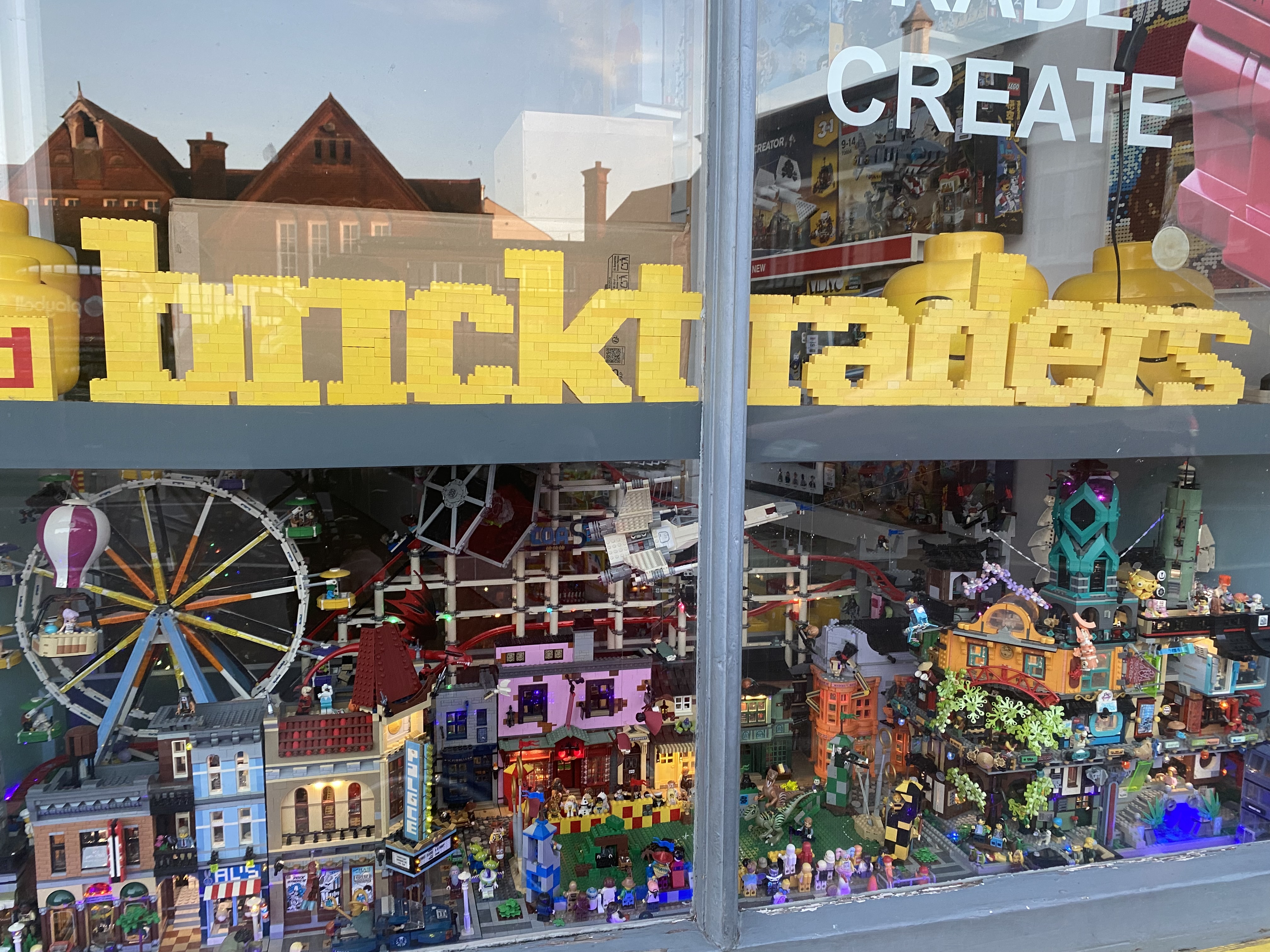
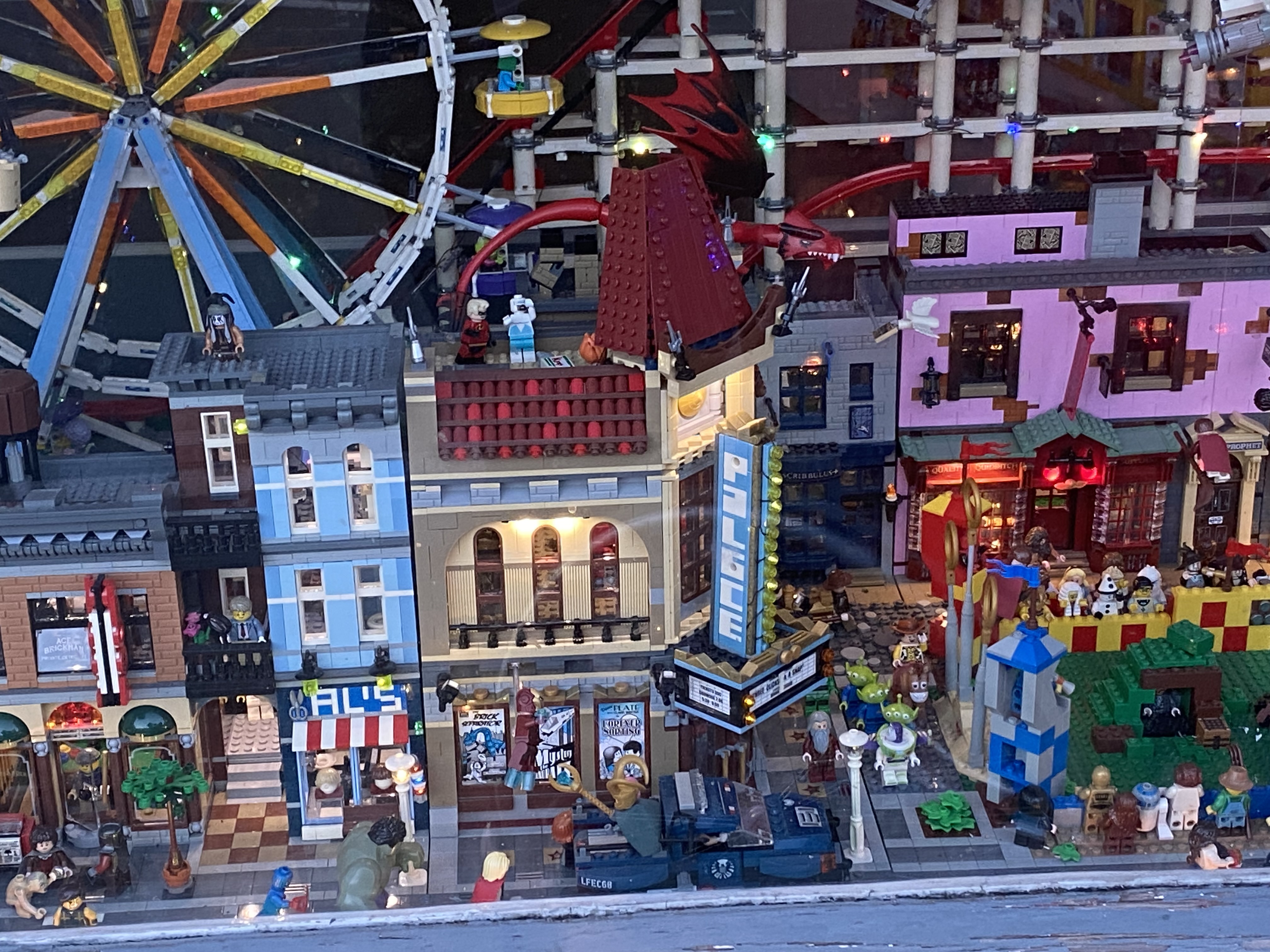
Bath Salts making project with Wacky Wheels
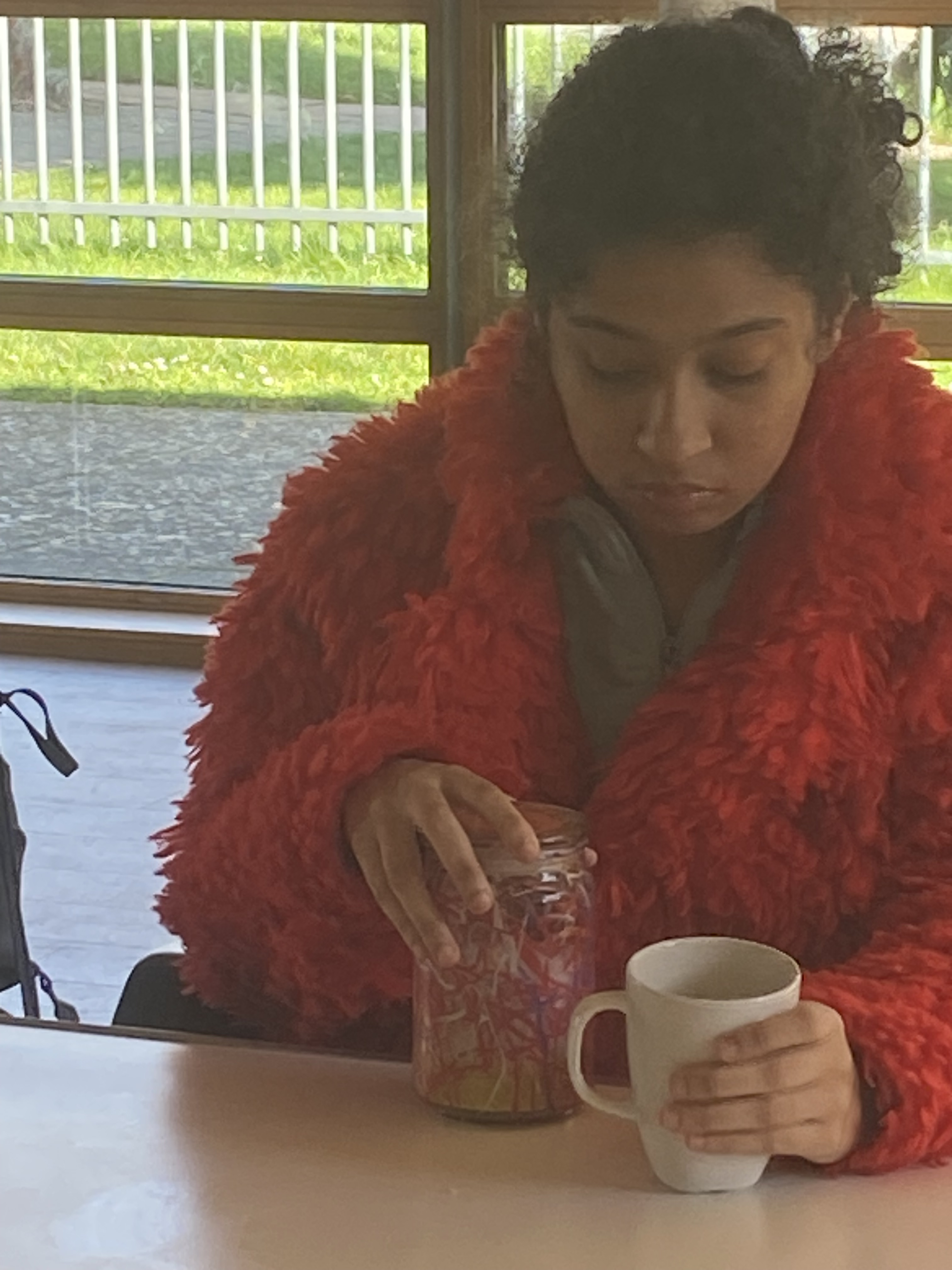
My Monday activity group which I have attended since I was 13 years old and still attend to this day.
Can An AI Recruiter Really Spot A Good Carer?
Just half an hour after she applied for a care job, Mollie Cole-Wilkin’s phone rang.
Sitting at home, she answered it. But the voice on the line was not a human’s.
She was speaking to “Ami”, an AI‑powered telephone interviewer developed by homecare company Cera.
“It didn’t sound like AI at all. My mum was in the other room. We thought it was just another person. We just couldn’t believe it,” she says.
The call lasted about five minutes, and at the end, Cole-Wilkin, of Long Stratton, Norfolk, was told she had passed the screening.
It then made her an appointment for a one-to-one interview, with a real person. After successfully passing this, she was told she had the job.
The system, which is audio-only, has already screened 14,600 applicants in total, recruiting 1,028 carers.
Cera, one of England’s largest homecare providers, supports 2.5 million visits a month and says its AI system helps speed up hiring in a sector facing rising demand.
The adult social care system is likely to need almost 440,000 more, external care workers by 2035.
Ami conducts initial interviews using the same script every time, scoring applicants out of 100 based on their attitude and experience.
Cole-Wilkin, 23, had previously left a job in a GP’s surgery after a difficult experience and moved into administration, but missed “being physically helpful for other people” and “making people smile”.
When she tried applying for care roles again, the AI felt unexpectedly encouraging.
As someone who stammers occasionally, she found it less intimidating than a human.
“It was nice to know that I wasn’t going to be judged… I get very anxious, especially face to face,” she says.
“It did give responses like ‘I’m happy you shared that with me’ and it was quite a rewarding conversation.”
Cera says Ami has halved the time from application to first interview and doubled job offers for the same recruitment spend since its launch in August 2025.
It says standardised questions reduce bias and give candidates like Mollie, who find traditional interviews stressful, a fairer chance.
The system is built to meet Care Quality Commission standards, it adds.
Not everyone is won over, however. Critics say algorithms cannot read the subtle cues that matter in care.
Janet Beacham, director of Swift Care Solutions in Colchester, is a former nurse with more than 45 years’ experience in the healthcare sector and believes only a human can judge genuine empathy.
“If they haven’t got care in their heart then they’re not going to be a good carer… They’ve got to have the right personality and have the right skills,” she says.
For Beacham, human intuition still matters.
“The first screening should be a review of the CV and then an initial telephone conversation, but actually a person‑to‑person one,” she says.
She argues that care workers enter clients’ homes as guests, and only a person can sense whether someone is genuinely suited to such a role.
But Lucy Kruyer, branch manager at Cera’s Colchester office, says the technology is now essential.
Speeding up recruitment, she argues, helps unblock hospital discharge delays.
“People don’t want to be laying in a hospital waiting for care because they can’t come home without the care,” she says.
Human recruiters still run checks and lead in‑person training before anyone starts work.
So, what is a phone call with a robot recruiter like? I decided to put Ami to the test.
The system uses a soft, calm female voice; a familiar choice in tech, though evidence that female voices build trust is limited.
She asks why I want the role and checks my experience, right to work and driving licence.
When I push her about car insurance costs, she says they vary but that some carers pay about £30 to £60 extra per year. Questions about training receive clear answers.
To see how she handled pushback, I tested her. When Ami asked about shifts, I said I couldn’t work Saturdays because I’m essentially a taxi service for my child.
Nor could I work Friday nights, I told her, because I liked fish and chips on a Friday.
Ami stayed perfectly calm. Fish and chips, she said, sounded like an important family tradition, but stressed that carers did need to work at least one weekend day.
I offered Sundays instead. She checked: Sundays yes, Friday nights and Saturdays no. I confirmed – and I’d passed the screening.
Large language models such as Ami work through patterns and associations. In this case, that is enough to move a candidate forward before a human picks up the process.
Cera receives 500,000 applications a year. Traditional recruitment, it says, leaves applicants waiting days or weeks – long enough for many to drop out or find other jobs.
Founder and chief executive Dr Ben Maruthappu argues he is expanding, not reducing, the workforce.
“We’re using AI to recruit more people faster, not replace them… Recruitment and staffing remain major challenges for health and social care,” he says.
Ami can call multiple candidates at once, he says, so cuts waiting times “from days to seconds”, freeing staff to supervise carers and focus on training and safety.
Cera also uses a separate AI tool to arrange cover when carers call in sick. Kruyer says this used to involve hours of phoning around.
“I’ve got 177 carers out on the floor today so for me the phones are constantly ringing,” she says.
“We can’t be answering phones and trying to get cover at the same time… We know it’s working in the background, giving us a green light when we’ve got a carer that’s saying yes.”
Carers then confirm details with staff. Preventative AI is also used in the Cera app to help workers log clients’ symptoms and pick up issues such as urinary infections, and it has also helped the government roll out a predictive falls tool., external
Maruthappu believes the bigger risk is standing still.
“The real question shouldn’t be whether we use AI – it should be how we use it to widen opportunity,” he says.
Cera is now licensing its recruitment agent to companies in other sectors, including dentistry.
In March 2025, the government announced it would take a “test and learn” , externalapproach to funding AI in the public sector, to “push innovation” but has yet to develop a legal framework for its use in care.
What do others think of the use of AI in recruiting care workers?
Gavin Edwards, head of social care at trade union Unison, says technology can play a valuable role in freeing up staff time, allowing for better care.
“With major workforce shortages across the social care sector, help in increasing capacity and easing workload pressures is welcome,” he says.
“But AI can’t wash or clean anyone, issue medication or carry out the many complex tasks care workers do.
“Nor would it be wise to use it to make decisions about the care needed by each individual. Those are tasks for trained, skilled professionals.
“There are also important considerations for recruitment. Any use of AI must be transparent, fair, and fully compliant with equality and employment laws.”
A spokesperson for the Local Government Association says technology can help build capacity in care when used alongside human support but warns that care is “fundamentally person-centred”.
It says AI must be co-designed with people who use care services and that “a human in the loop” should oversee decisions, with strong safeguards in place.
The Department of Health and Social Care has been asked to comment.
Bafta Film Awards host Alan Cumming has described this year’s ceremony as a “trauma triggering” debacle following a furore that blew up after a Tourette’s campaigner involuntarily shouted a racial slur while two black actors were on stage.
Posting on Instagram Cumming said: “I’m so sorry for all the pain Black people have felt hearing the word echoed around the world. I’m so sorry the Tourettes community has been reminded of the lack of understanding and tolerance that abounds regarding their condition.”
He added: “We were all let down by decisions made to both broadcast slurs and censor free speech.”
The slur was audible when the BBC broadcast the ceremony on a two-hour delay, and the corporation’s executive complaints unit is now investigating.
Cumming wrote: “The only possible good that could come of this is a reminder that words matter, that rushing to judgement about things that we are not fully cognisant is folly, that all trauma should be recognised and honoured.”
He went on to congratulate “all the artists whose work was overshadowed by the night’s events”.
The BBC has apologised several times since the broadcast on 22 February, and the ceremony remains unavailable to watch on iPlayer after the corporation removed it the following day.
In a statement issued on the same day, Bafta said it wanted to acknowledge the “harm this has caused, address what happened and apologise to all”.
Cumming had already apologised to the audience from the stage at the time for the language heard during the ceremony.
The BBC has since said a second racial slur was edited out of the show, and that broadcasting the one aired when Sinners stars Michael B Jordan and Delroy Lindo were on stage was a “serious mistake”.
Davidson, from Galashiels in the Scottish Borders, has said the BBC should have “worked harder to prevent anything that I said” from being broadcast.
Meanwhile, Lindo told Vanity Fair that he and Jordan “did what we had to do” as they carried on presenting the category, but also said he wished “someone from Bafta spoke to us afterward”.
B&Q Backs Stoma-Friendly Toilet Campaign
Persistence has paid off for a campaigner after a large retail chain backed his call for more stoma-friendly toilets.
Tony Beckingsale from Bristol said it gives him “confidence” and will make a “huge difference” to the stoma community.
DIY retailer B&Q has now rolled out upgrades to the disabled toilets at all its stores including practical additions including a door hook for clothing or bags, a shelf for medical supplies and a mirror so users can see their stoma and bag when changing.
Stomas, which are used by around 200,000 people in the UK and often fitted because of bowel diseases and attach to a hole – or stoma – in the abdomen, allowing waste to be diverted out of the body.
“It’s an invisible disability”, said Beckingsale.
“And if people can’t see that there’s a disability, they don’t think one exists,” he added.
The Traitors star Mollie Pearce from Bristol, has also appealed for better facilities after several incidents in which she has had to use the floor of public toilets to change her own stoma bag.
She said she would often have to plan her day around where the toilets are which would “trigger anxiety”.
Although Pearce welcomes retailers upgrading their facilities, she still feels opening and closing times are a problem.
She said some close quite early, which has “ended with me having an accident when I was out”.
The model and healthcare assistant said “companies maybe aren’t aware that this is what we need”.
“So it’s just kind of shouting about it and making sure people know how much it would help us”.
Ben Youngs Investigates: How Safe Is Rugby?
In the wake of Lewis Moody’s motor neurone disease diagnosis, England’s most-capped men’s player, Ben Youngs, sets out to re-examine the game that has defined his life. Is there a link between concussion and long-term brain health? And is the sport he loves – that he takes his son to play – safe?
At a time when rugby is being celebrated and participation is on the rise, growing concerns around the impact of concussion on players are reshaping conversations off the pitch. Ben sets out on a journey of discovery – starting with an emotional discussion with former teammate Moody, hearing about life since his MND diagnosis.
After speaking with experts and learning there is still no proven link between rugby and MND, Ben goes to see former England international Steve Thompson, who reveals he can longer remember winning the 2003 World Cup and shares the challenges of living with dementia. When former Wales international Alix Popham and England World Cup winner Kat Merchant also explain to Ben the challenges of living with serious brain conditions and the importance of raising awareness around brain health in rugby, Ben reaches a crossroads in his journey. After discussing what he has learned with his wife, he decides to undergo his own brain tests.
Continuing to research the link between rugby and long-term brain health, Ben then looks at what is being done by the sport’s governing bodies to ensure safety in the game, from new technologies to strengthened protocols. Speaking to former teammate and fellow British and Irish Lion Anthony Watson, Ben wrestles with a difficult question: was their generation part of the problem? And to what extent are players responsible for their own safety?
By the end of his journey, Ben sees a sport striving to change. The stories he hears underline the need for greater protection and continuing research but also the enduring beauty of the game he loves. For rugby to thrive, he believes it must keep moving forward, for today’s players and for the next generation.
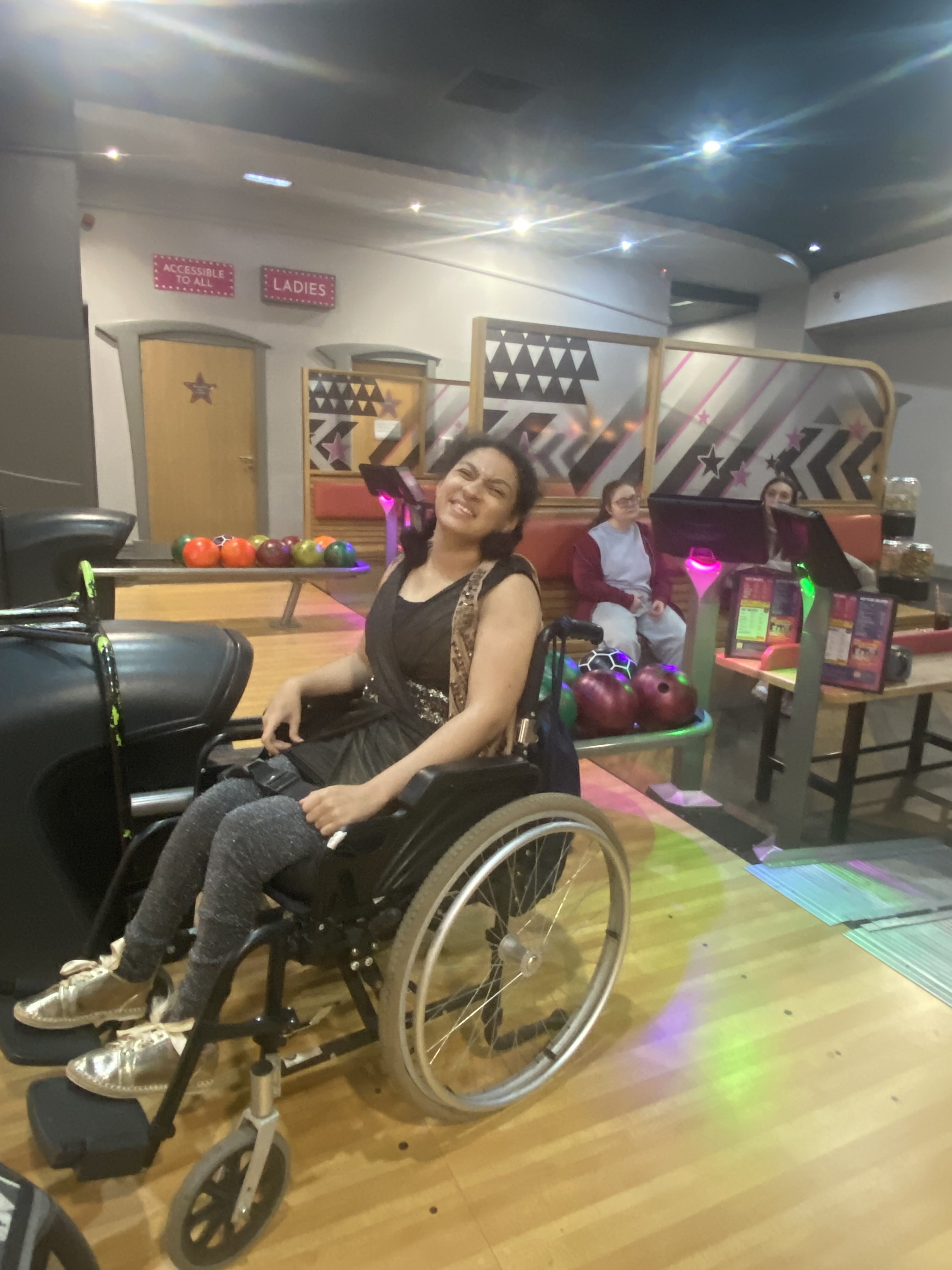
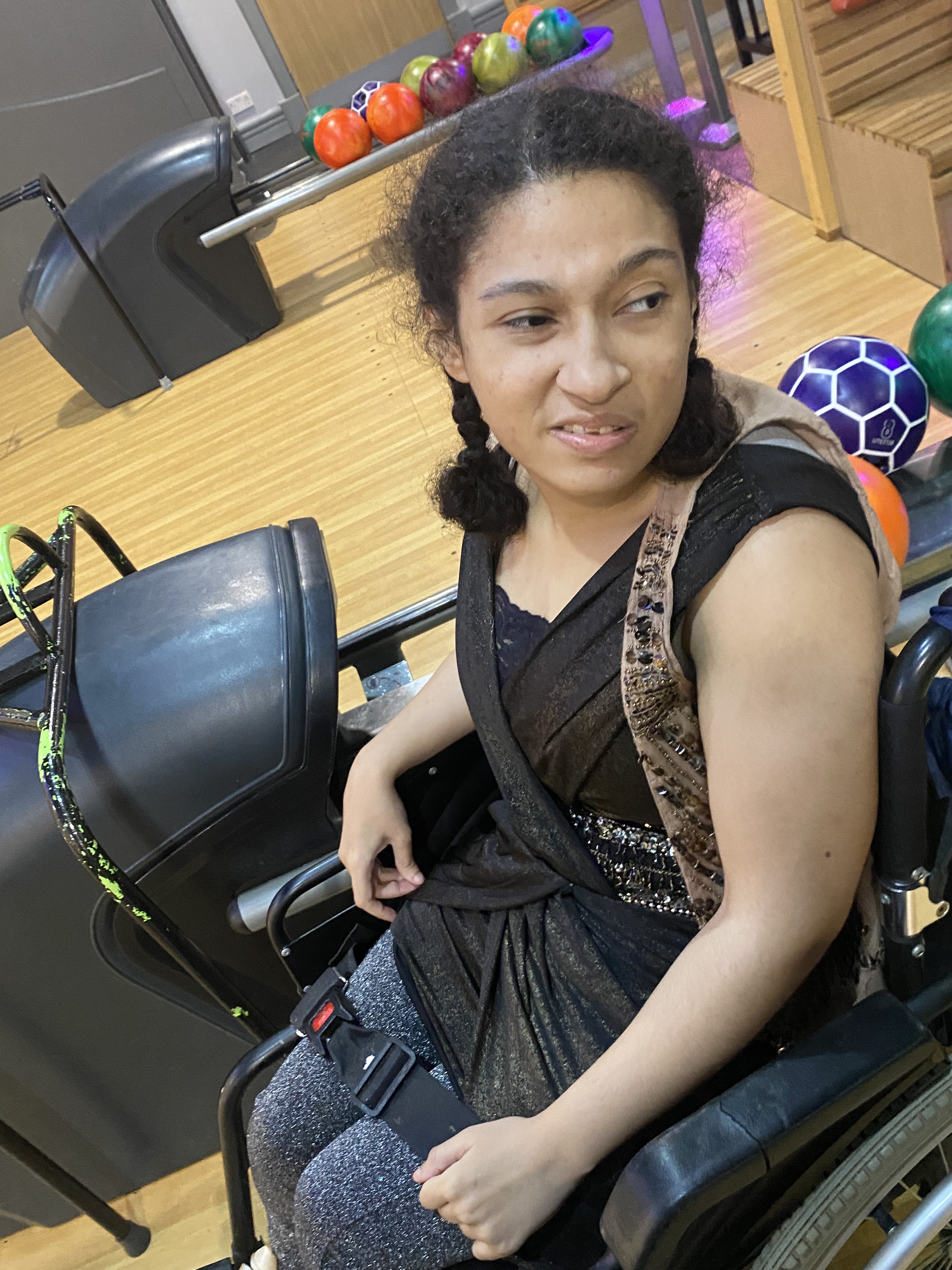
Man With MND Invents Gadgets To Help In Daily Life
A technology expert who lives with Motor Neurone Disease (MND) has used his skills to create a range of gadgets to make his daily life easier.
Andrew Herbert, 55, from Skipton, was a keen cyclist and runner before being diagnosed four years ago with the condition, which affects nerves found in the brain and spinal cord.
He has since invented tools, including a motorised device which rolls back his bed covers, to help make himself more independent.
Andrew, who works as chief technology officer at a Leeds-based finance firm, said he now had had “over 100 sensors in the house” which allowed him to control domestic appliances.
MND leads to the weakening and stiffening of nerves over time and usually affects how sufferers walk, talk, eat and breathe.
Progression of the disease can be rapid – with more than half of those affected dying within two years of being diagnosed.
It is a relatively rare condition most common in people over 50, but adults of any age can be affected.
About 5,000 adults in the UK have the disease at any one time.
Andrew said of his MND diagnosis that it was “quite a shock at the time, because I’ve always looked after myself”.
“It was quite devastating for my family, too, because of the known outcome and what potentially I would have to go through and how they would be affected by that,” he said.
Andrew’s wife, Nicola Herbert, said her husband’s technological know-how had given him a greater degree of independence than he might otherwise have had, given his condition.
She said: “It’s just inspirational, really, how brave he’s been and how he’s put his time to really purposeful pursuits rather than whiling away the time.
“He’s just so inventive and positive all the time.”
The gadgets devised by Andrew have meant the workload for care staff has also been lightened.
Carer Lauren Sykes said: “Andrew switches between the laptop, the computer and his phone.
“If he wasn’t doing that, I’d be doing a lot of tasks for him, but he just does things by himself.
“So that saves a lot of time and I can be off doing something else, while he’s working.”
Andrew said he was deploying technology to make life a little more comfortable, not just for him but to inspire others who were in a similar situation.
Such is his enthusiasm for tech-savvy solutions, that he has shared his tips on social media.
“I think it’s really important to have purpose in your life and the technology that I invent and the work that I do gives me that,” he explained.
Decorating glass jars project with acrylic pens
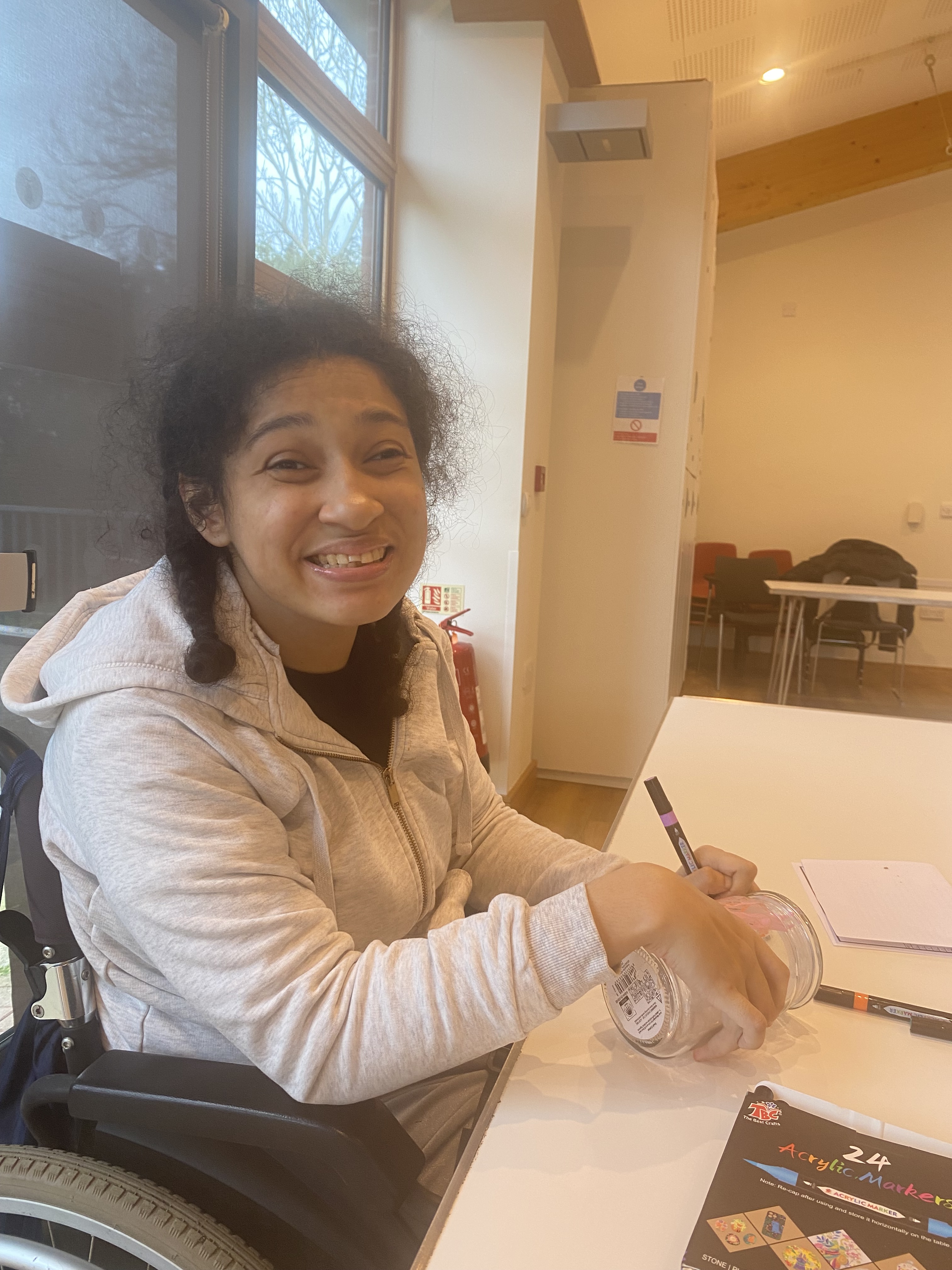
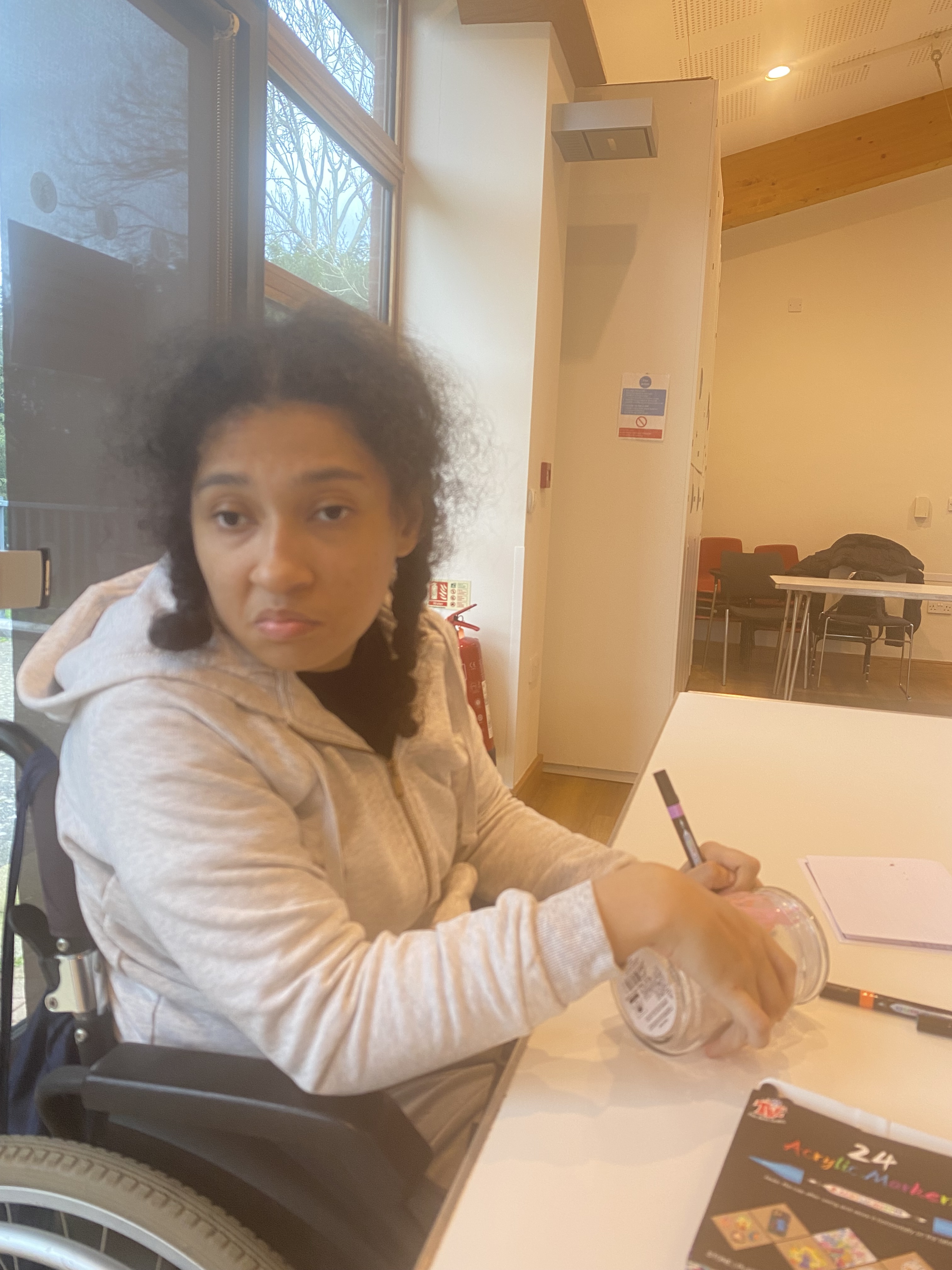
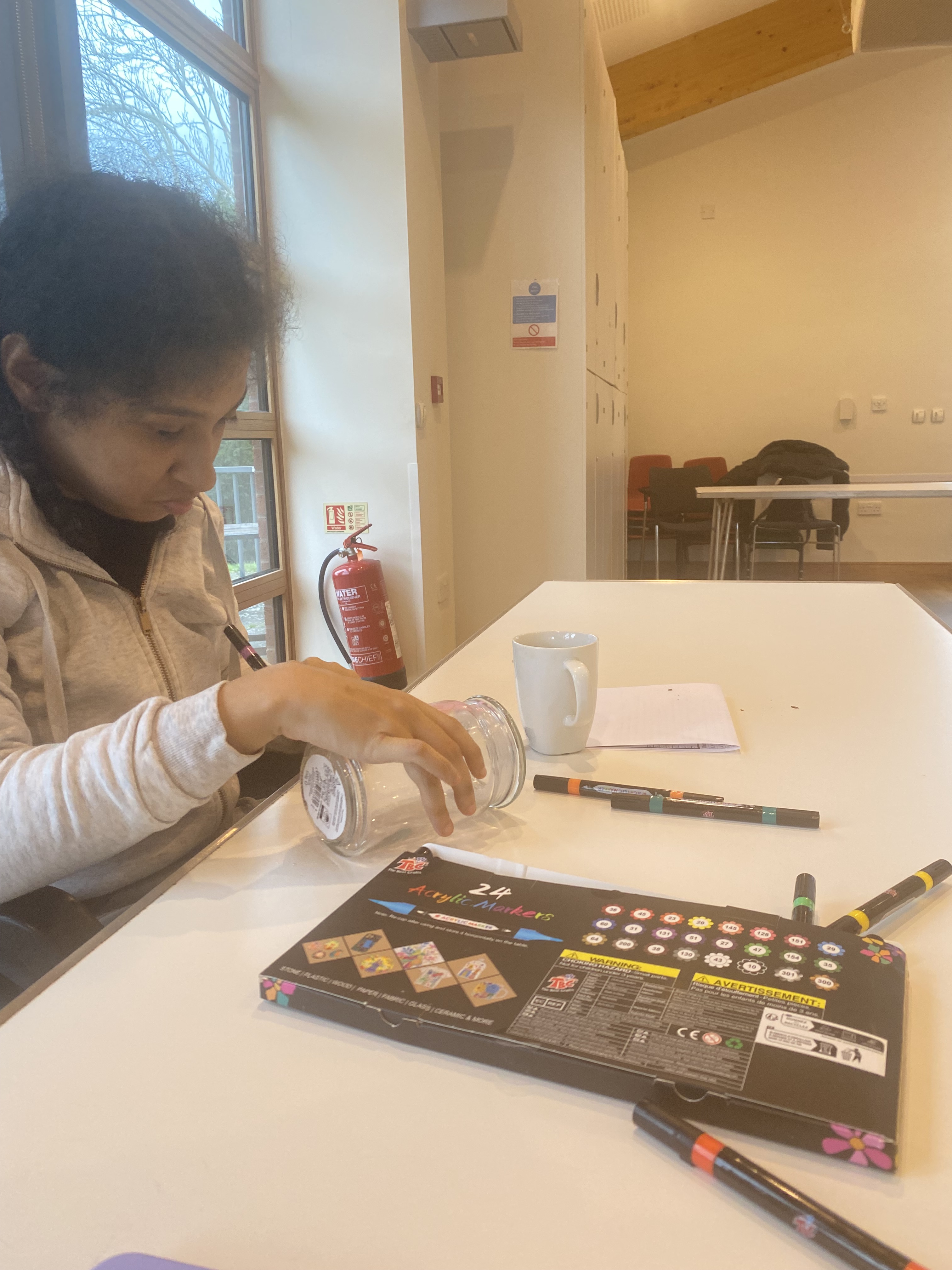
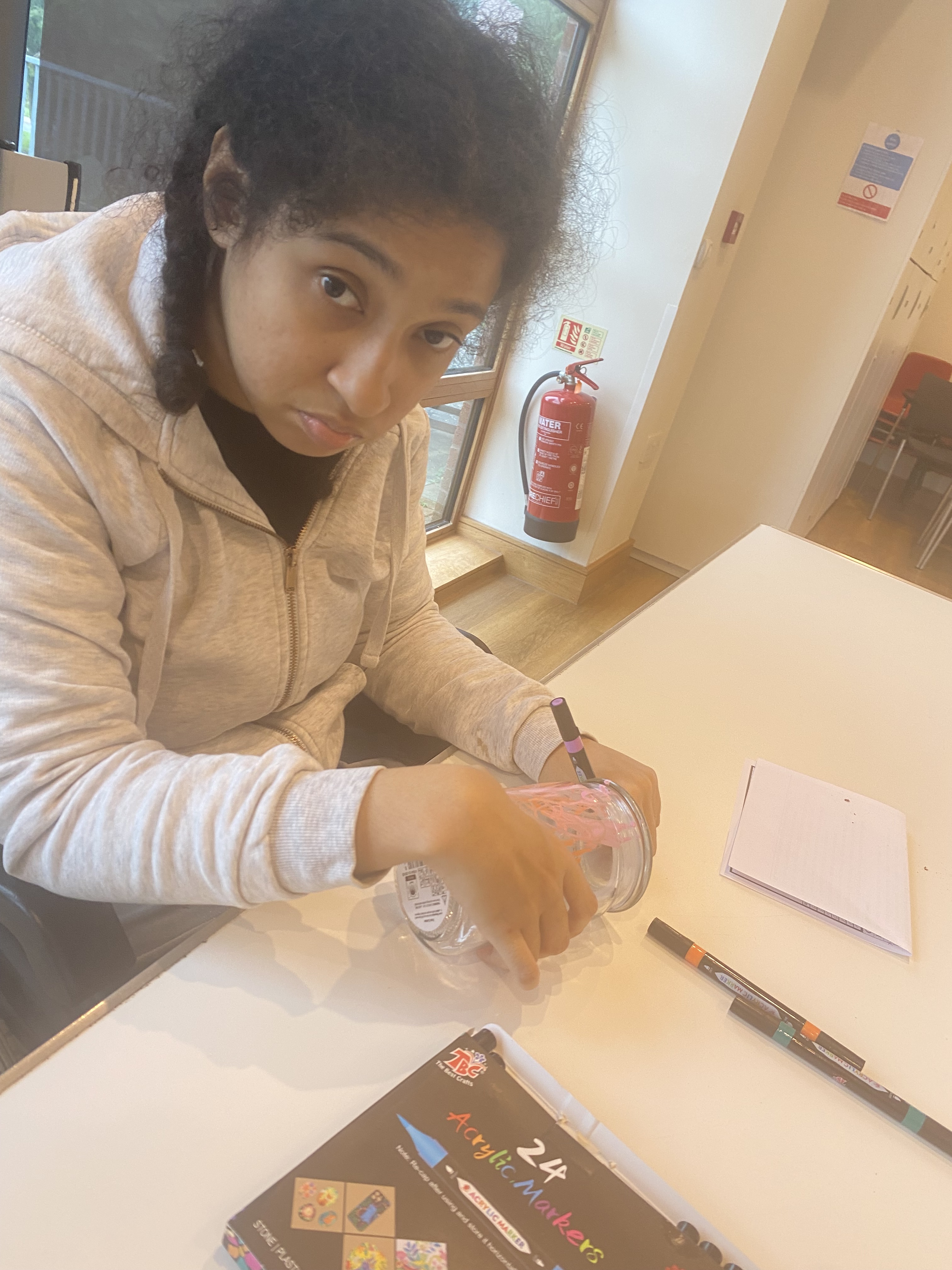
Decorating the glass jar with acrylic pens, ready for bath salts making project next week.
Bowling with one of my activity groups
I enjoyed going bowling with some of my friends on Wednesday.
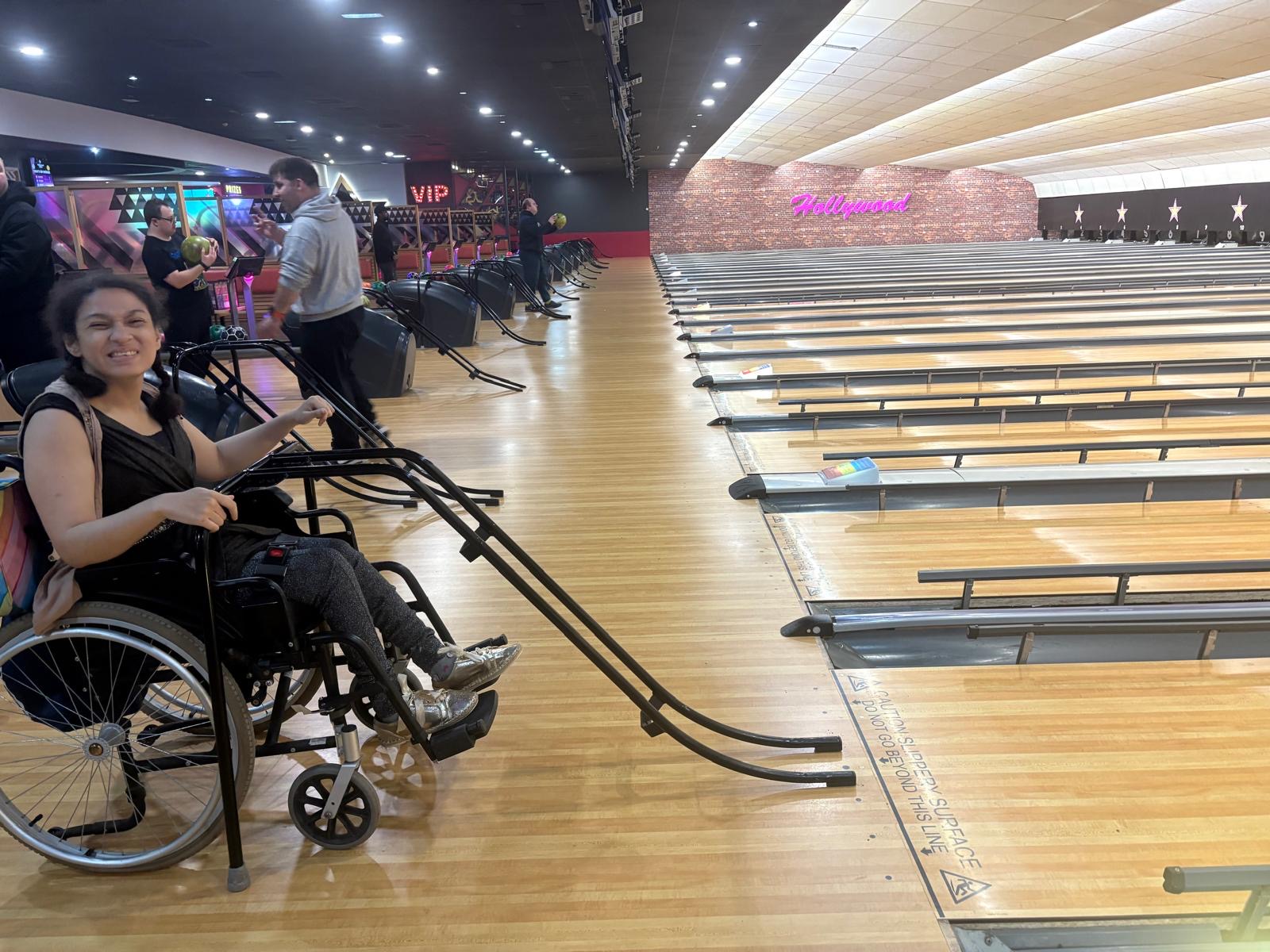
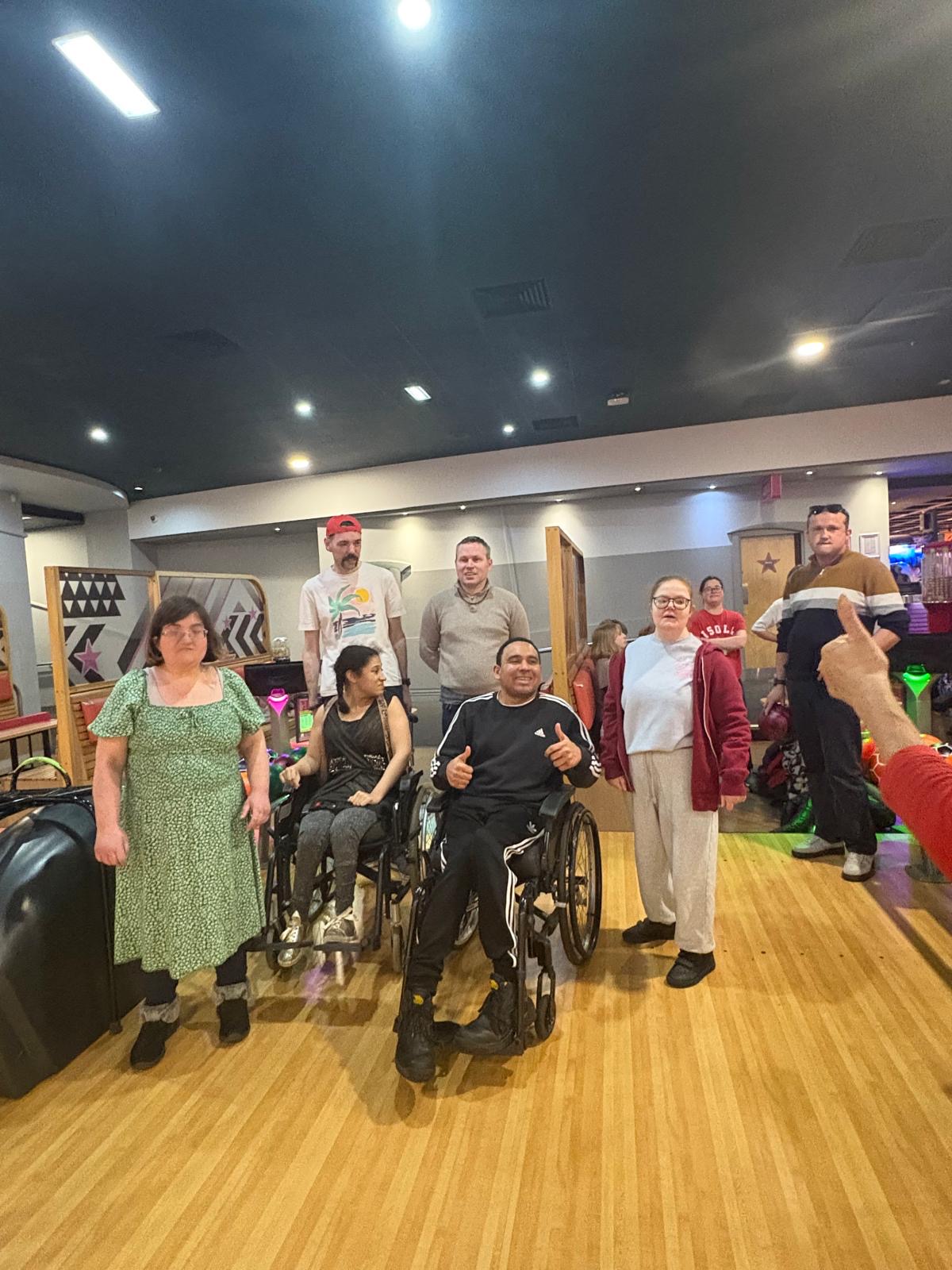

Instagram Investigating AI Profiles ‘Fetishising’ Disabled People
Instagram’s parent company, Meta, is investigating AI-generated social media accounts that sexualise disabled people appearing on its platform.
It comes after the BBC flagged dozens of profiles showing AI-generated images of women with disabilities, including Down’s syndrome or vitiligo.
Some profiles post fake images and videos of women with missing limbs, visible scarring or in wheelchairs. Many are in sexualised positions, wearing revealing clothing.
Some accounts have amassed hundreds of thousands of followers in a matter of months. One profile, claiming to be conjoined twins, has about 400,000 followers, despite only joining Instagram in December 2025.
Kamran Mallick, chief executive of Disability Rights UK, said the emergence of “accounts that fetishise, mock, or monetise the identities of disabled people is nothing short of horrific”.
He added: “What we have here is technology weaponised to strip disabled people of their agency and dignity, turning our lived experiences into digital caricatures for the profit and titillation of others.”
Medical charities have also voiced concern. A spokesperson for Gemini Untwined, which funds specialist surgery for rare newborns joined by the head, said portraying conjoined twins as entertainment was “morally reprehensible”.
They added: “We witness first-hand the medical challenges that these children and their families endure, which makes the portrayal of conjoined twins as a form of entertainment or spectacle especially problematic.”
Dr Amy Gaeta, from the University of Cambridge, told the BBC she researches how AI shifts power in relation to gender and disability. She said the internet is “flooded” with free and low-cost generative AI image-making tools.
Generative AI is a type of software that creates new content based on patterns it has learned from existing data in response to a user’s prompt.
Gaeta said while some tools have restrictions on content, like banning sexually explicit prompts, others do not or can be easily bypassed.
“Sometimes, without my prompting or intent, hypersexualized images of disabled people will be generated. This clearly shows a bias in the datasets that these tools are trained upon,” she said.
An Ofcom spokesperson said it was “tracking how AI is evolving, the risks that may emerge, and what actions may be needed to address them”.
They said the watchdog’s online safety rules require tech firms to tackle illegal content and protect children from harmful material – including abusive or hateful content.
The Online Safety Act requires platforms like Instagram to apply terms of service consistently, including where content mocks people based on protected characteristics, like their disability.
The Equality and Human Rights Commission said the accounts flagged by the BBC were “deeply disturbing”, adding: “It’s vital there are robust regulatory powers in the digital space to protect people from harm.”
A spokesperson for Meta said it was investigating the content and that it removes material that promotes sexual exploitation or attacks people based on protected characteristics.
While these accounts are generating fake personas, there is serious concern over the commands for the generative tools behind them.
Alison Kerry, head of communications at disability equality charity Scope, said the practice amounted to “discrimination dressed up as content”.
She added: “These AI images don’t appear from nowhere – they’re built from real disabled people’s images, often without consent – and unmoderated comment threads turbocharge objectification and harassment.”
Gaeta said moderation on sites like Instagram is not strong enough.
“Even when safeguards are in place, it has been proven relatively easy to bypass these if someone is insistent enough on doing so,” she said.
“Big tech needs to be held accountable just as much as misogyny and ableism need to be tackled.”
Tourette’s Campaigner Says BBC ‘Should Have Worked Harder’ To Stop His Slur Being Aired
Tourette’s campaigner John Davidson has said the BBC should have “worked harder to prevent anything that I said” at the Bafta Film Awards being broadcast, and questioned why he was seated near a microphone.
Davidson, whose condition involves involuntary tics, shouted a racist slur while black actors Michael B Jordan and Delroy Lindo were on stage at Sunday’s ceremony.
Davidson told Variety, external: “I remember there was a microphone just in front of me, and with hindsight I have to question whether this was wise, so close to where I was seated, knowing I would tic.”
The BBC reiterated that the offensive language “arose from involuntary verbal tics associated with Tourette syndrome”, adding: “We apologise that this was not edited out prior to broadcast and it has been removed from BBC iPlayer.”
On Tuesday, the corporation’s chief content officer Kate Phillips told staff that another racial slur had been edited out of the broadcast.
In contrast, the one shouted when Lindo and Jordan were on stage “was aired in error and we would never have knowingly allowed this to be broadcast”, she said.
Davidson, from Galashiels in Scotland, said he shouted about 10 different offensive words during Sunday’s ceremony as a result of his tics, but the media coverage has given the impression the N-word was the only one.
Variety reported that he has contacted Warner Bros in order to apologise directly to Jordan, Lindo and Sinners production designer Hannah Beachler, who also spoke about hearing racial slurs.
Meanwhile, Google has apologised after sending a news alert, external about the story which included the N-word.
“We’re very sorry for this mistake,” the company said of the computer-generated alert. “We’ve removed the offensive notification and are working to prevent this from happening again.”
Davidson told Variety that the studio behind the film I Swear, which tells the story of his struggles with Tourette’s, held discussions with Bafta before the ceremony about the possibility of his ticking.
“StudioCanal were working closely with Bafta, and Bafta had made us all aware that any swearing would be edited out of the broadcast,” he said.
“I have made four documentaries with the BBC in the past, and feel that they should have been aware of what to expect from Tourette’s and worked harder to prevent anything that I said – which, after all, was some 40 rows back from the stage – from being included in the broadcast.”
‘Comprehensive review’
Awards ceremonies often have microphones placed at various spots around the auditorium, to pick up ambient crowd noise as well as applause and cheering.
In a statement on Monday, Bafta said it acknowledged the “harm this has caused, address what happened and apologise to all”.
In a letter to its members on Tuesday, the organisation said it wanted to “assure all our members that a comprehensive review is under way”.
After shouting the slur, Davidson said he chose to leave the auditorium “so as not to cause any more upset”, adding that Bafta found him a private room with a monitor to watch the rest of the ceremony.
Davidson said he “had as much right to attend as anyone”, as the subject and executive producer of I Swear, which was nominated for five awards.
“I also knew that as voting members, most people in the audience would have seen I Swear and would be well prepared, well educated and well informed about my condition,” he said.
Davidson said he was “aware of how physically and mentally difficult it would be for me to attend”, adding: “I can’t begin to explain how upset and distraught I have been as the impact from Sunday sinks in.”
‘The opposite of what I believe’
In his interview with Variety, Davidson also said: “I want to be really clear that the intent behind them [the tics] is zero. What you’re hearing is a symptom – not my character, not my thought, not my belief.”
He said he felt a “wave of shame an embarrassment” after shouting the racial slur.
“Tourette’s can feel spiteful and searches out the most upsetting tic for me personally and for those around me,” he explained. “What you hear me shouting is literally the last thing in the world I believe; it is the opposite of what I believe.
“The most offensive word that I ticked at the ceremony, for example, is a word I would never use and would completely condemn if I did not have Tourette’s.”
Several figures in the Tourette’s community have also sought to explain the condition.
Writing on Instagram,, external Baylen Dupree, star of US reality series Baylen Out Loud, explained: “Tourette’s doesn’t pull from hatred – it often pulls from anxiety, from fear, from the very thing you’re most scared of saying.
“The brain misfires on what feels charged or taboo. It doesn’t excuse the hurt a word carries. Words matter. History matters. Pain matters. But so does neurological reality.”
BBC News understands the producers editing the ceremony for its delayed BBC broadcast were doing so from a TV truck and simply did not hear the slur shouted when Lindo and Jordan were on stage.
But Channel 4’s former head of news and current affairs, Dorothy Byrne, rejected that defence in an interview with BBC Radio 4’s Today programme on Wednesday.
“John needed a BBC person next to him at all times to support him, but also to relay and be aware of anything that he said,” Byrne reflected.
“So there needed to be, in the written plan, a means by which the people in the truck would be aware of what happened in the room.”
‘Deeply traumatising’
Former BBC News executive and Conservative communications chief Sir Craig Oliver said the TV truck defence was “kind of entering into the dog-ate-my-homework territory”.
“It’s increasingly obvious that we live in a time where there are going to be controversial things at live events, and there is going to be potential reputational damage to the BBC,” he said.
“So does it have that grip, does it have that process in place? And increasingly it seems like the answer is no.”
Meanwhile, BBC Radio 1 DJ Oré Olukoga has expressed his disappointment with how the situation has been handled by the corporation.
Olukoga, the station’s early weekend breakfast host, wrote on X, external that the “incident at the Baftas and the reaction to it has been deeply traumatising”.
“I understand all the nuances at play and would never want to minimise someone’s plight, but as a Black man who works for the BBC, I am deeply, deeply disappointed in how it’s been handled,” he said.
A Quick Thanks To Eastenders
This is a quick and short post to thank Eastenders for their recent coverage of three very important disability issues at different stages of life.
- Nugget’s epilepsy, caused by a tragic event, just beginning in his teenage years.
- Penny’s pregnancy, thankfully the result of a ‘normal’ romantic relationship (is there any such thing?). Sadly Jack initially reacted with concern related to her disability but thankfully he now seems to have changed his mind.
- Nigel’s dementia, in older age, which will eventually lead to his life ending.
Eastenders have made this disabled viewer feel very happy, included, wanted and welcomed in recent months. They deserve thanks and I look forward to seeing how all three storylines play out.
My respite care will not be funded by social care, who would like me to go to a respite care home instead. A care home is an inadequate solution for the disability I live with- functional neurological disorder, as well as, cerebral palsy. I have tried it in the past and instead of giving me and my family a break, it had a terrible impact on my mental health. That meant my family was even more stressed. It is mentally destroying to go there because there are people with severe disabilities who cannot communicate at all. This feels like a punishment and mentally I can’t cope in that environment. It also makes my FND worse. Social care told me they’d never fund a personal budget for my respite care/ direct payment, which I have for the rest of my support. They continue refusing to put my respite care element in my direct payment/personal budget package. They will only pay for me to go to a respite care home of their choice and brokerage are saying I do not have a say in this; and that they will find one that says they can meet my needs. I do not see how they will do that, as there is no training for FND that I can even send my own staff on. My own staff on the other hand know me well and know how and when to call my doctor and nurses.
The ‘Brilliant Invention’ Helping Cancer Patients
When Tim Morgan was diagnosed with chronic lymphatic leukaemia he started going through radiotherapy – but his treatment hit a roadblock when it triggered his claustrophobia.
The 63 year-old from Telford was being treated at the Royal Shrewsbury Hospital, and the radiotherapy involved a thermoplastic mesh mask moulded to fit the shape of his head and neck. He managed to go through the first two doses but needed a further 10.
“I had a panic attack, I couldn’t do it. The holes are just so tight, I had to stop halfway though,” he said.
He wanted to complete the treatment instead of going on to chemotherapy. That is when he was told that there was a new mask that could help.
Lingen Davies Cancer Support, which helps people living with the disease in Shropshire, Telford and Wrekin and Mid Wales, has funded surface guided radiotherapy technology (SGRT) on two radiation machines at the Royal Shrewsbury Hospital.
This allows patients to receive radiology with an open-face mask and is something not widely available on the NHS.
“You can see, you can open your eyes, you can breathe through your nose and your mouth,” Morgan said.
“The full face mask, you can’t even open your lips. I still found it slightly claustrophobic but towards the end I got quite used to it.”
With the new mask, staff also helped Morgan with breathing exercises.
He said the mask had made a real difference, since his claustrophobia is something he has suffered with since he was a child.
“It’s a brilliant, brilliant invention, I wouldn’t be able to do it otherwise,” he said.
“The panic attack I had, I just could not go ahead with it, but this other one it makes it so much easier.”
“In the future as we develop this service, more patients who would ordinarily refuse treatment or require sedation can instead be offered an alternative option,” said Amanda Welsh, chief dosimetrist at the hospital.
“Who knows where this cutting-edge technology will take us in the future.”
Naomi Atkin, CEO of Lingen Davies, added: “This technology has completely transformed the experiences of those in our region receiving radiotherapy treatment.
“Hearing Tim’s lived experience highlights the huge difference SGRT has made for those facing cancer treatment.
“SGRT is not yet widely offered in NHS Trusts but we want to ensure people across Shropshire, Telford and Wrekin, and Mid Wales have access to its wide-ranging benefits, including reduced treatment and waiting times as well as improved wellbeing and quality of life.”
Visiting the Valentine’s Day selfie props, whilst on respite and taking photos next to and in front of them
Hold My Hand- UK’s First BSL Dating Show
A contestant on the UK’s first British Sign Language (BSL) dating show says he hopes it teaches people about the deaf community – and shows they can “have banter” too.
Oliver Scott is among the first to take part in the new series, Hold My Hand, which follows deaf or children of deaf adult (CODA) contestants as they navigate dating through BSL.
The 27-year-old from Norwich tells BBC Newsbeat, through an interpreter, the show felt “refreshing” after always questioning “why couldn’t I be a contestant on something like that” when watching other dating shows.
It is the latest from LumoTV, a deaf-led streaming platform, and is presented by deaf identical twins Hermon and Heroda Berhane.
Created with the deaf and signing community, the three-part series aims to highlight deaf culture and identity in a way that isn’t widely seen on screen.
Oliver grew up in a deaf family where BSL was his first language so he “didn’t feel the need” to get a hearing aid or a cochlear implant.
He says he often thought about what it would be like to be on a TV show, but worried about how it would work.
“We’d say it’s impossible because of the communication, everybody talking, the different games are quite fast-paced, the gossip, the drama,” he explains.
“How would I get to know people? It might be quite difficult.”
However, he says he had a “fantastic experience” on Hold My Hand and felt he could “genuinely get to know a girl better”, while having “a bit of banter”.
Back in 2022, model and dancer Tasha Ghouri became the first deaf contestant on ITV dating show Love Island.
Oliver says Tasha is a “brilliant representative” of somebody that uses a cochlear implant – a small electronic device that helps her to hear – within mainstream media.
However, he feels its important to show that deaf people have different communication preferences.
“They might see Tasha and think she speaks very well and think all deaf people are the same, and that’s not the case,” he says.
“I prefer to use British Sign Language. That is my first language. So I think we need more reflection of British Sign Language users in the mainstream.”
Oliver hopes people can learn more about the deaf community by watching Hold My Hand, and also challenge some misconceptions.
“We can be naughty, we can be mischievous, we can be cheeky, we can have fun, we can have great banter too,” he says.
“It’d be really nice to expose hearing people to that too.”
Across wider media, he feels representation has been improving but he would like to see a deaf BSL user on a “mainstream reality show”.
Teri Devine, associate director of inclusion for the charity Royal National Institute for Deaf People, says Hold My Hand is a “huge milestone” for representation of the deaf community.
“It really matters. Everybody wants to see somebody that’s like themselves,” says Teri.
“So if you see somebody on television that’s a deaf person that’s going on a date, you think: ‘Oh, actually I can do that’.'”
Teri adds that it can also help people find their “role models” which can encourage them to feel like “they can achieve anything they set their minds to”.
The environment in which a date takes place can also make a difference for a deaf person, Teri explains.
She says places which are quieter and brighter so the deaf person can see their date’s face and read their lips can help make navigating dating easier.
There has been increased representation of the deaf community in recent years on television, including actress Rose Ayling-Ellis becoming the first deaf contestant to compete, and win, Strictly Come Dancing in 2021.
Ayling-Ellis also made history when she became the first deaf person to host live sports coverage on TV as one of Channel 4’s hosts for the 2024 Paris Paralympic Games.
– Hold My Hand is available to stream on LumoTV and YouTube
Night out ready selfie- make up and all, in my hotel room ,whilst on my respite break
UK Athletics Pleads Guilty To Corporate Manslaughter
UK Athletics has pleaded guilty to the corporate manslaughter of Paralympian Abdullah Hayayei.
Hayayei died aged 36 after a metal cage fell on him while training at Newham Leisure Centre, London in July 2017.
UK Athletics pleaded not guilty to the charge in March 2025 but entered a fresh plea on Friday at an Old Bailey hearing.
Keith Davies, the head of sport for the 2017 World Para-athletics Championships, also pleaded guilty to a health and safety charge, having previously denied gross negligence manslaughter.
Prosecutor Karen Robinson asked the court to set a two-day sentencing hearing in early June, confirming the prosecution would not seek a trial and the outstanding charges would be dealt with at the conclusion of the sentencing.
Davies, 78, was granted continued bail on the condition he liaise with the Probation Service for a pre-sentence report.
Hayayei was training for the World Para-athletics Championships in London at the time of the incident.
The United Arab Emirates thrower had been set to compete in the F34 shot put, discus and javelin events.
Hayayei, a father of five, finished sixth in the javelin and seventh in the shot put when making his Paralympic debut at Rio 2016.
London 2017 was due to be his second appearance at a worlds. At the 2015 event in Doha, Qatar, Hayayei finished fifth in the discus and eighth in the shot put.
A moment of silence was held in honour of Hayayei during the opening ceremony at London Stadium.
Dream Catcher Art Project at the Day Light Club
I enjoyed taking part in this project. This is where my personal assistants make a real difference, enabling me to participate fully in my commitments.
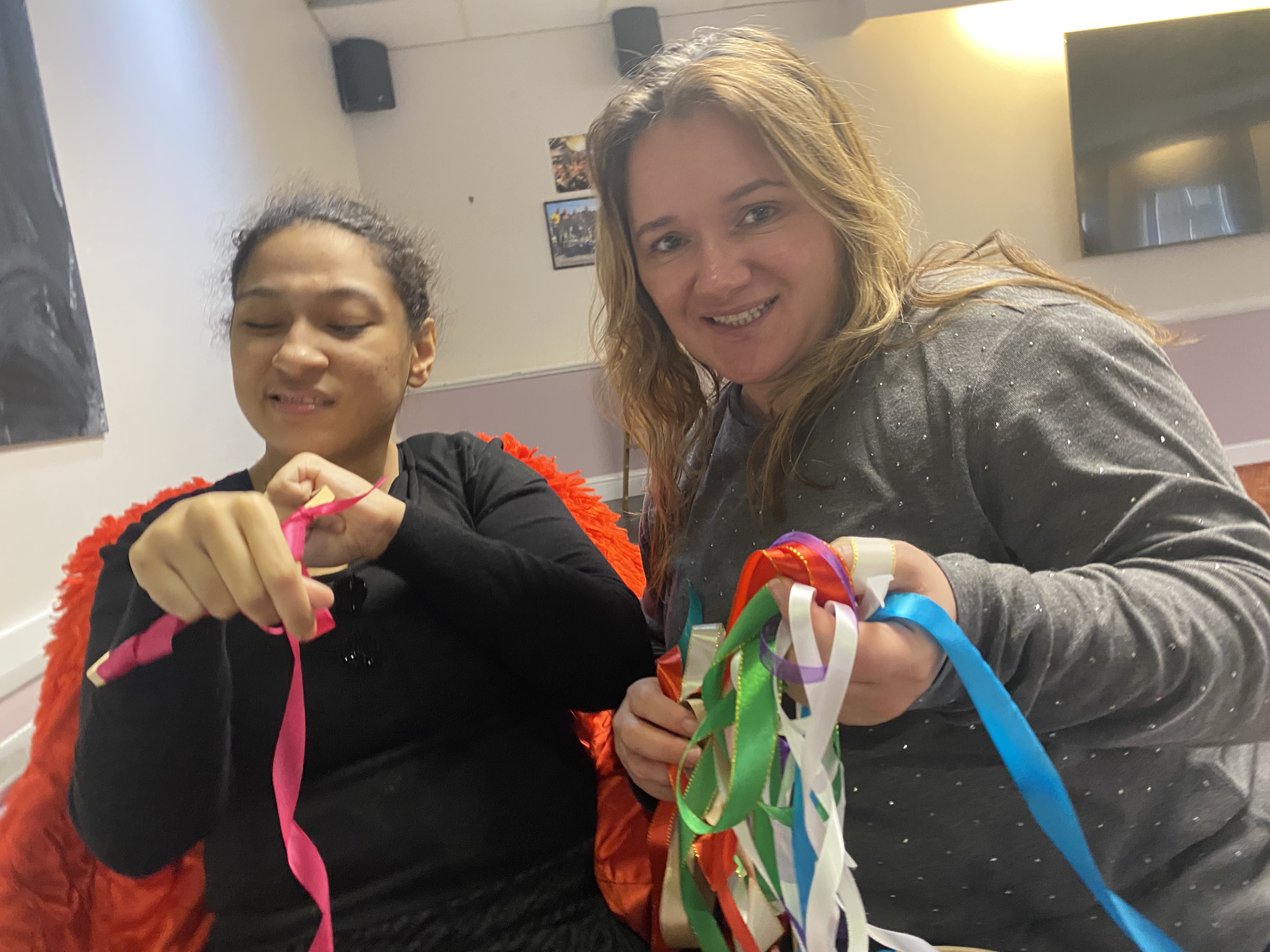
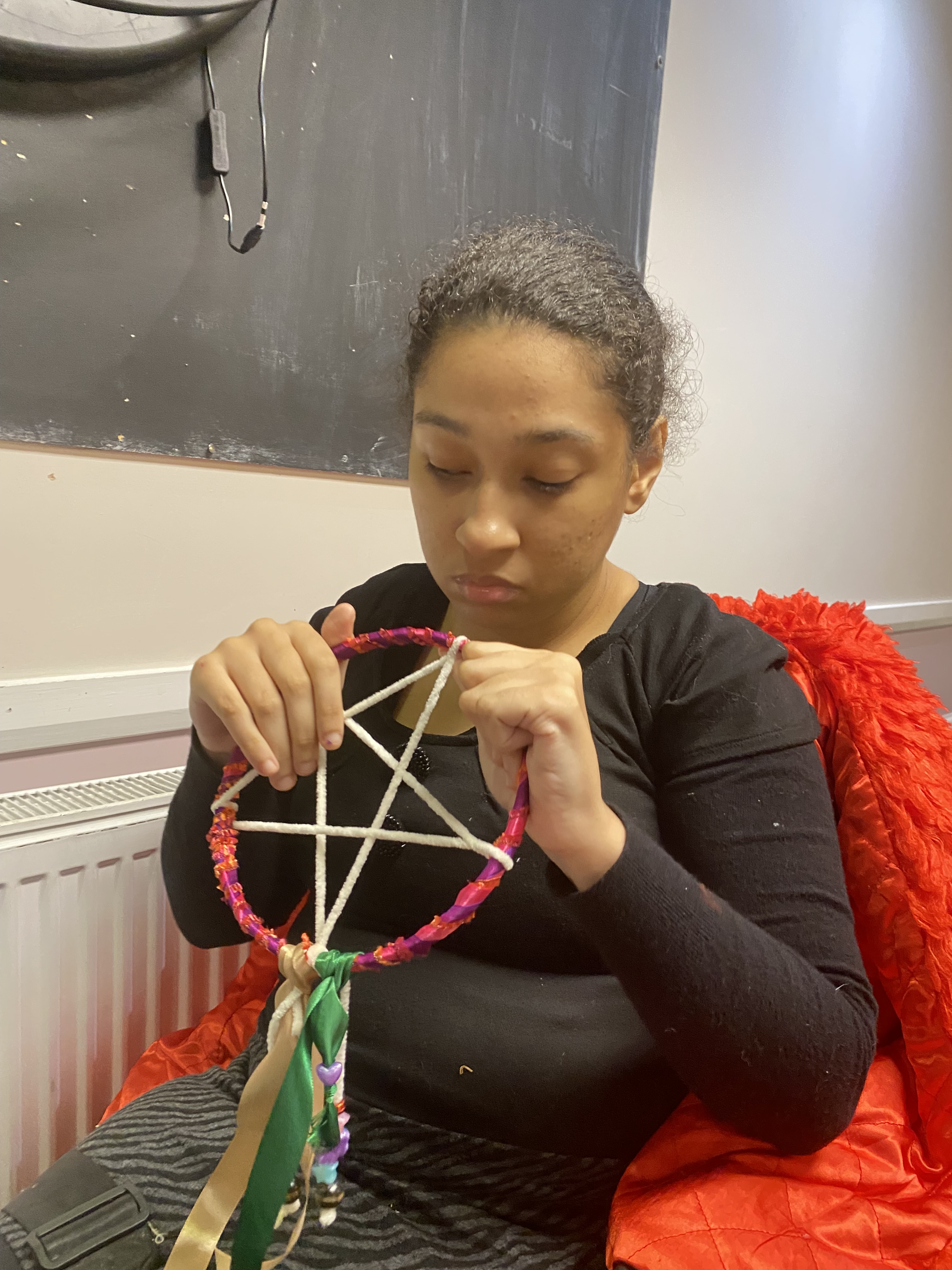
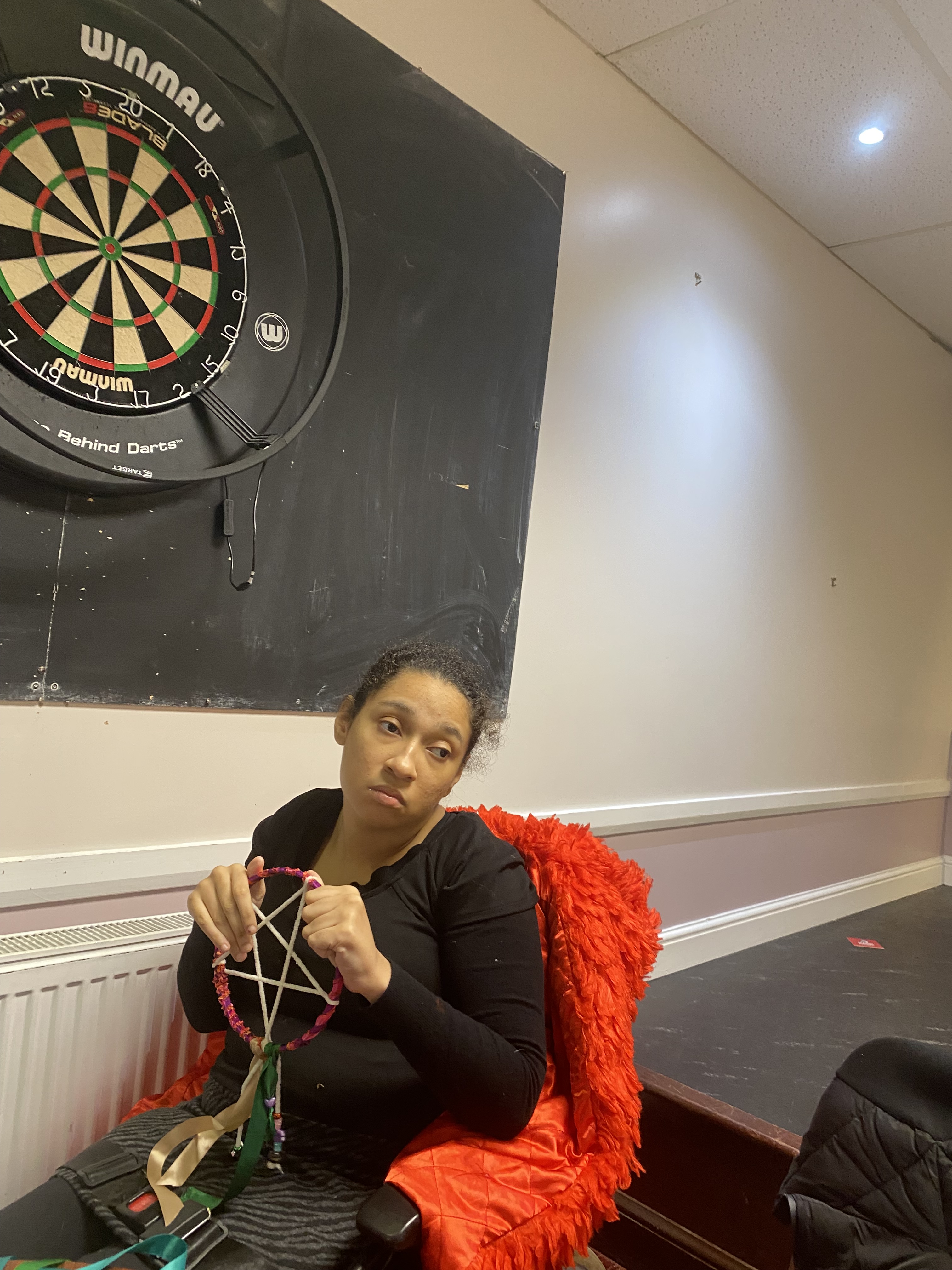
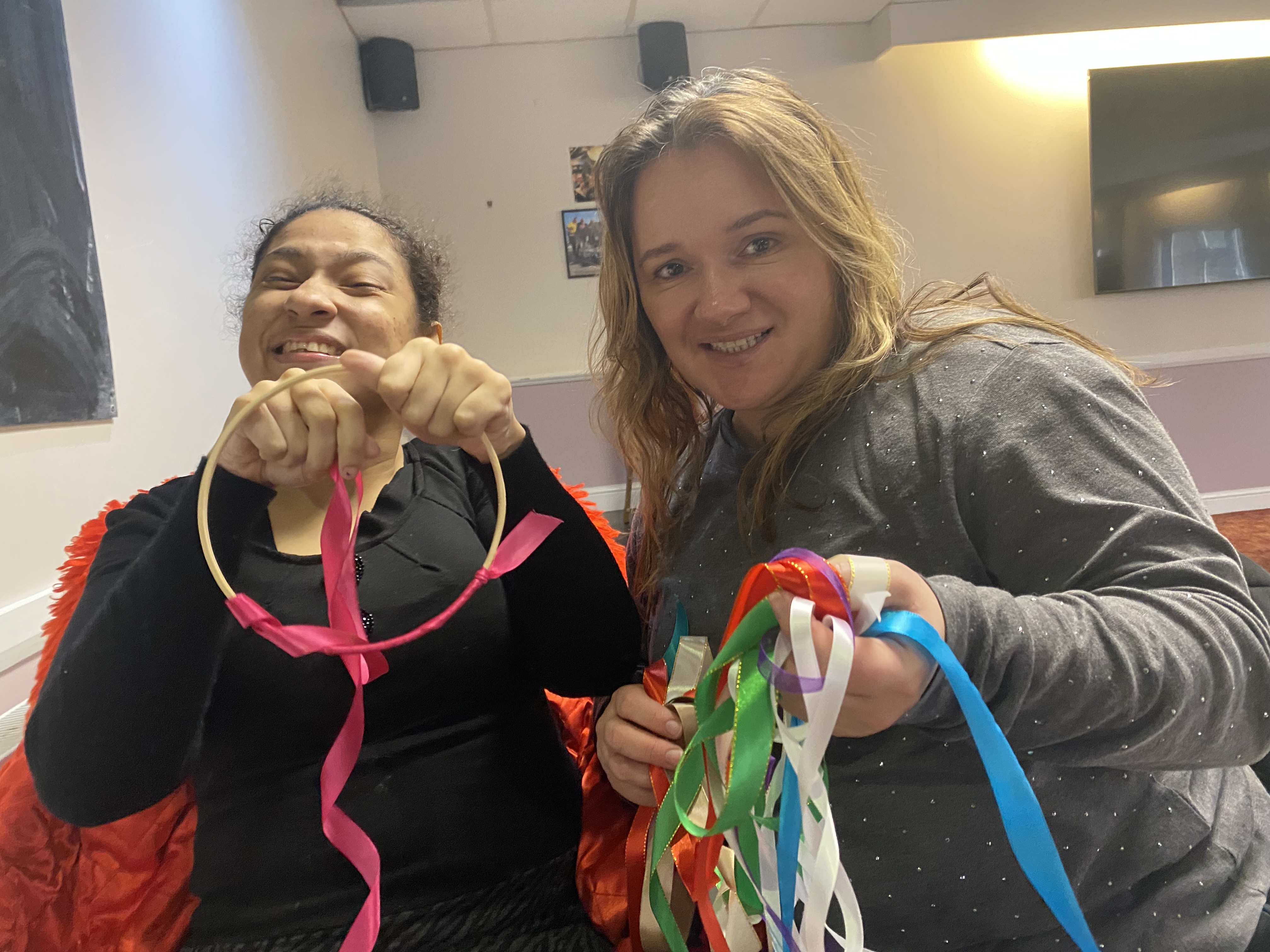
Blind Gamer’s Two-Hour Live Stream For Charity
Blind gamer Dom Hall attracted thousands of viewers during a two-hour gaming session which he streamed live on two social media platforms.
The 39-year-old had 1,387 viewers and 27,500 likes on TikTok, 120 viewers on Twitch and attracted followers from the UK, USA, Canada and the Netherlands.
Hall also raised more than £300 for the iSightCornwall charity which is celebrating its 170th year.
He said he was nervous because he needed to play Mortal Combat with the sound coming from the game and people asking questions at the same time. “All the sound coming through at once was a bit tricky,” he added.
A tumour in his optic nerve left Hall with only 10% sight when he was three years old and total loss of sight by the age of 35.
Hall has been a keen gamer since he was five, saying he was attracted to the colours and the interaction with other people.
But when he completely lost his sight he thought he would have to stop gaming.
“I thought this is it, there goes the hobby,” he said. “But thankfully I did a bit of research into it and found there are games being made today that are accessible for visually impaired people. You can play games entirely through sound by games that support it.
“This is done by screen readers that read out everything on screen for you or the text, as well as audible cues for visual things in a surround sound headset,” he said.
‘Sight loss journey’
Hall is iSightCornwall’s assistive technology advisor and his colleague Beth Perry helped him with viewers questions on the live stream.
“We see people at all stages of their sight loss journey,” said Perry.
“I’ve seen some people come in absolutely convinced there’ll never do something again, something they used to really, really love.
“They have an hour appointment with Dom and they come out and they’re almost excited to go home and try it a different way,” she said.
Peppa Pig Hearing Loss Story May ‘Remove Stigma’
An upcoming Peppa Pig episode in which George gets a hearing aid could help to “remove some stigma” around hearing loss, the head teacher of a prominent school for deaf children said.
Peppa’s brother receives the device for partial hearing loss in the upcoming storyline from an audiologist voiced by Gladiators star Fury.
The episode has been developed in partnership with the National Deaf Children’s Society and is due to come out on 9 March.
Paul Burrows, head teacher at the Royal School for the Deaf in Derby, said the story was “very important” in helping deaf children “not feel so different”.
Burrows said: “I am not quite sure [I would use] the word normalised but what it is doing is making having a hearing aid, going to the audiologist… just part of life and I think having as much representation as you can of that is fantastic.
“It is very important for them [the students] themselves, it allows them to not feel so different, it might kind of remove some stigma.
“But I think actually for me the importance of this will be wider than the deaf young person.
“I think it will be for their brothers and sisters, their families, their friends, the people they go to school with because they will all see it.”
Burrows said the school taught their students to be “proud of their deafness” and emphasised the “solution is not always just – ‘let’s get a hearing aid'”.
“We are big supporters of British Sign Language (BSL) for example as a way of communicating,” he said.
“So the technology is one side of it but I think equally we need to teach people that being deaf is just a part of who they are, there is nothing wrong with you if you are deaf, that’s just you – it’s part of your makeup.”
George’s audiologist is voiced by Jodie Ounsley, also known as Fury from Gladiators, who uses a cochlear implant.
The former England rugby union international said she sometimes felt “lonely” growing up as she was “probably” the only deaf person in her school.
She said: “I can just imagine if I had something like that when I was younger and saw it on TV… just normalising it, I think that would have had a huge impact on me.”
The school in Derby was founded by Dr William Roe in the 1890s after witnessing a young deaf man being bullied.
Roe was “struck by the social and educational exclusion of deaf people” and so set out on a world wide tour to raise awareness and funds, the school said.
It currently accepts students aged three to 19.
Patients Describe ‘Culture Of Abuse’ As 15 Hospital Staff Arrested
Patients, relatives and whistleblowers have described a culture of abuse at a mental health hospital, while 15 staff members have been arrested following allegations of rape, ill-treatment and neglect.
St Andrew’s Healthcare in Northampton, which provides specialist care for about 600 people with complex mental health needs, is the subject of three police investigations following alleged assaults and the deaths of two patients.
The charity that runs the private hospital said it had dismissed several staff members and was delivering an urgent action plan to address the issues.
St Andrew’s Healthcare said it was committed to “full transparency” and took a “zero-tolerance approach to any allegation of harm or poor practice”.
The Care Quality Commission (CQC) rated the hospital as inadequate last year and imposed an urgent condition on its registration, and new admissions have been restricted.
Warning: This article contains distressing content
Anne, whose name has been changed, told the BBC she was horrified by the injuries sustained by her daughter while she was a patient at St Andrew’s Healthcare.
“They were restraining her with four adults and on one occasion she was knelt on by a male member of staff,” she said.
“She was waking up every night for months and was obviously in a severe amount of pain with her ribs,” she added.
Anne said her daughter had “lost half her body weight” and showed “all the symptoms of being malnourished”.
“She lost the use of her hand while in long-term segregation” and on two occasions she had suffered severe burns from coffee, she added.
Anne has made a series of safeguarding referrals to West Northamptonshire Council, but said she had not gone to the police due to the lack of witnesses and CCTV.
“It’s traumatic. Something’s got to change and the only way things can change is by people now speaking out,” Anne said.
Northamptonshire Police said 15 people had been arrested as part of investigations into incidents at the hospital that reportedly took place since October 2024. Ten people remain under suspicion and have been bailed or released pending inquiries.
- Eight people were arrested on suspicion of wilful neglect and ill-treatment in relation to an alleged assault in July 2025 on a man with a brain injury. One person was also arrested on suspicion of rape. All remain on bail
- Five people were arrested on suspicion of corporate manslaughter and gross negligence manslaughter following the death of a man in February 2025. Four face no further action while one person remains on bail for the offence of wilful neglect by a care worker
- One woman was arrested on suspicion of assault and ill-treatment or wilful neglect following an incident on 29 June 2025 and remains on bail
- One person was arrested in relation to an investigation into gross negligence manslaughter following the death of a teenage girl in October 2024. Police said no further action would be taken
‘Horrendous injuries’
Jamie, whose name has been changed, was a staff member at St Andrew’s Healthcare until recently and has spoken out about “massive safeguarding issues” at the hospital.
“I’ve seen senior nurses goading a patient,” he said.
He added that a patient who was being observed on a one-to-one basis by staff had incurred “horrendous injuries” after self-harming when staff were withdrawn.
On another occasion, Jamie said he had been locked in a room with an “extremely violent” patient after a nurse refused to open the door.
He also described bed-bound patients being ignored while screaming in distress and others being roughly handled.
“When you do restraints, you’re supposed to do them in a certain way, and some patients were getting pulled to the floor by their arms – that’s not restraint,” he said.
He claimed that instances of what he considered “cruelty and neglect” were due to poor culture and unqualified staff who “didn’t have enough experience”.
An employee, who wanted to remain anonymous, told the BBC they were now “ashamed” to work at St Andrew’s Healthcare.
“It is so sad, some staff trusted to work with patients have acted so terribly. Not all staff are bad, but the organisation needs to take action to make sure patients are protected,” they said.
‘My wrists popped’
Beth Sheridan, 26, from Northampton, was a patient at St Andrew’s Healthcare in 2021 and said staff would “fall asleep quite a lot – at one point I managed to do something to myself where I needed CPR because one of them was asleep”.
“[Staff would] bend people’s arms back, be dragging them across the floor,” she said.
Sheridan said staff once came to restrain her after an emergency alarm had been pulled and “they bent my wrists back and one of my wrists popped”.
She continued: “I was screaming out saying that it was hurting. Nobody cared. Nobody told them to stop. No-one told them it was wrong.”
The charity’s services are largely commissioned by the NHS and it had an income of almost £220m in the year ending March 2024.
During an executive meeting, recorded and leaked by a staff member, Sanjith Kamath, the hospital’s medical director, said the charity may not be able to continue in its current state of “significant financial stress”.
However, St Andrew’s Healthcare said in a statement that the hospital was being reshaped “to be a smaller, more focused charity”.
“In the year ending March 2025, we made a small surplus, giving us the resilience to navigate the financial challenges we currently face,” it said.
St Andrew’s Healthcare said it had reported the cases subject to Northamptonshire Police investigations to the force and launched internal investigations.
“All staff were immediately suspended and several staff were dismissed. We referred several members of staff to the Nursing and Midwifery Council,” the spokesman said.
The hospital said the use of restraint was carefully planned and only undertaken as a last resort, but it acknowledged “care hadn’t always met the standards patients deserve” and apologised to those affected.
It added it had introduced new training for all front-line staff, had significantly reduced the use of agency staff and had now installed CCTV on most wards.
Blind Couple Say Sight Loss Is No Barrier To Love
A blind couple from Scarborough have said they hope the story of their upcoming marriage can inspire other visually impaired people who are nervous about dating.
Malcolm Day and Sarah Brooks are due to tie the knot in September after meeting on holiday in Blackpool in June 2024.
They will marry a year to the day since Sarah, who became visually impaired in 2016, made the 260-mile (418km) trip from Winchester in Hampshire to the North Yorkshire coast to live with Malcolm.
Sarah said: “I was calling it love at first sight and trying to do everything to make sure Malcolm felt the same, but I didn’t have to work that hard.”
The pair originally met at an event attended by 80 visually impaired people at a hotel in Blackpool, according to Malcolm, who has been blind since he was 14.
“I knew two or three people in the group. They’d invited me along and said, ‘come and have a good time. You’ll meet some new people’,” he explained.
“I never intended meeting someone like Sarah.”
Malcolm said he proposed to Sarah during a karaoke night in June last year when they returned to the seaside resort for another holiday a year after they first met.
“We’d decided we were going to do Sonny and Cher’s I Got You Babe,” he said.
“I completely messed it up because my mind was somewhere else. I was distracted by thinking, ‘I’ve got this ring in my pocket’.
“There’s a line in the song that says, ‘she wears my ring’. So when I got down on one knee I said, ‘there’s something in that song I’m going to put right’.
Remembering that moment, Sarah said: “I didn’t know at all, I didn’t see it coming.”
In September, the couple bought a house together in Scarborough, where Malcolm is originally from, and that is where they live now with their three dogs.
“In the last three or four months, we’ve been discovering each other’s eyesight as two blind people,” Malcolm said.
“I’ve learned a lot about what Sarah can see, and Sarah has learned a lot about what I can see.
“We joke to people that we have one good eye between us.”
Sarah said that for their wedding in September, her bridesmaids would all be visually impaired.
“My friends, my lovely, lovely blind girlfriends – nine of them – will be on the bridesmaid list,” she said.
“Mostly, it’s a big blind community getting together.”
Irena Valchera, who is visually impaired and works for social inclusion charity Eye Matter, and who will also be one of Sarah’s nine bridesmaids, said many of the organisation’s members had found dating a tough challenge.
“It must be very difficult to overcome that shyness or thinking, ‘maybe I am not good enough’,” she said.
“It must be very scary and isolating.
“We have in Eye Matter young people who I know are suffering because of that.”
However, Malcolm and Sarah said they wanted their successful relationship to inspire other blind people who were nervous about meeting new people.
“Everybody has something that holds them back. Sight loss doesn’t have to be that thing,” said Sarah.
“We can still get out there. We can still do it. We can still go on a blind date.”
It’s nearly 200 years since the birth of a British aristocrat who became the first Muslim member of the House of Lords.
But few have heard of Lord Henry Stanley, who “defied convention and his family’s wishes” when he converted to Islam in 1859, according to historian Jamie Gilham.
Little remains of Stanley’s letters and diaries “which is really frustrating but adds to the idea that he was a private man,” he said.
Since medieval times, a relatively small number of Brits had become Muslims while travelling abroad.
But Gilham said Stanley was notable as he had influence politically and on his lands in Cheshire and Anglesey.
Born in 1827, Stanley was the eldest of 10 children given free rein to develop their own thoughts and beliefs.
The wider family, whose aristocratic ancestors can be traced to Norman times, had members belonging to various Christian denominations and at least one who was Jewish during Victorian times.
Family historian Lady Carla Stanley, who is married to the current Lord Stanley, said they were “free thinking” and born to educated, well-travelled mothers.
“They were people who did things,” she added. “It was acceptable to be argumentative.
“Thinking, debate, discussions were OK as opposed to a ‘get off my land, I’m going shooting’ attitude.”
Like many educated Victorians, Stanley was dazzled as a child by travelogues and the Arabian Nights tales.
He also had a hearing impairment which affected his schooling, and he left Eton after one year to study with a private tutor.
Gilham said Stanley’s father, who was an MP, and his mother – who helped establish the first women’s college at Cambridge University – had “great expectations for their first-born”.
However his struggles with hearing meant “his family worried greatly about his future prospects”.
“He only really started to shine when he went to Cambridge and learned Arabic,” Gilham added.
Within a year, the 20-year-old was employed as an assistant to the then Foreign Secretary, Lord Palmerston in 1847.
Over the following decade, Stanley worked for the diplomatic service, with postings in the Turkish-based Ottoman Empire, as well as Greece and Bulgaria.
“Stanley came to appreciate the social and the spiritual benefits Islam provided the Ottomans,” Gilham said.
It was also a time when various European empires were reaching their peak yet faced republican or nationalistic revolts.
“From letters, we see that Stanley experienced both political and spiritual crises,” Gilham added.
“He didn’t lose faith in God but he certainly had theological doubts. He did question the literal accuracy of the Bible, for example, and the letters between his parents show that he didn’t go to church for the first time in his life.
“Unusually for Britain in the mid-Victorian period, Stanley did gravitate towards Islam – the religion of the Ottoman Turks – and symbolically at that time, around 1849-50, he gave up wine.”
Disillusioned with Britain’s expanding imperialism, Stanley quit the diplomatic service in 1858 and decided to become a Muslim some months later while travelling in Arabia.
“There’s little account of his religious conversion and beliefs,” Gilham said. “It’s just things that you can read in some of the family letters.”
Press reports of Stanley’s conversion emerged in Sri Lanka on his visit there in 1859, before news travelled back home to Cheshire – where it was reported in the local Macclesfield Courier and then the national outlets in London.
Some reported that he made a pilgrimage to Islam’s holiest site in Mecca and adopted the name Abdul Rahman – Arabic for “servant of the merciful Lord” – although evidence is unclear, Gilham added.
“Letters show his parents were absolutely furious and equally embarrassed and humiliated that their son would convert to Islam from Christianity.
“His father said to his mother, ‘Is he mad? What can he possibly mean by parading himself in our colonies and our possessions in the degrading position he occupies?’
“His mother replied to his father that the newspaper report in the Macclesfield Courier ‘made me feel sick’.”
They later issued a public denial that their son had converted to Islam however Stanley wrote to one of his brothers that “I have always been a Mussulman [Muslim] at heart”.
Secret wedding
In 1862, he married a Spanish Catholic lady in Algeria under Islamic law, but kept their relationship secret until his father’s death seven years later.
It emerged his wife was already legally married to a Spanish man at the time of their wedding, although it’s unclear if Stanley was aware of this, Gilham said.
The couple registered their marriage under English law after he became the third Lord Stanley of Alderley and second Baron Eddisbury on his father’s death in 1869.
“The Spanish husband was still alive until 1870 so again, the marriage wasn’t actually valid.
“But it was eventually made valid when they remarried in 1874 and that was a Roman Catholic ceremony, which kind of raised eyebrows,” Gilham explained.
“I think he was respecting the religion of his partner, his wife.”
Pub closures
After inheriting his father’s lands and titles, he took his place as a non-partisan crossbench peer in the House of Lords in 1869 and became its first Muslim member.
“I don’t know how many of his peers would have known that he was a Muslim,” Gilham said.
“I guess they would have because they read the newspapers and knew he was involved in Orientalist societies.”
Lord Stanley inherited lands in north Cheshire, including the village of Alderley Edge – better known as an affluent area near Manchester that’s popular with Premier League footballers.
“Famously or infamously, he did close some of the public houses on the Alderley Park estate,” Gilham added.
Following the death of an uncle in 1884, Lord Stanley inherited the Penrhos estate in Anglesey, north Wales, where he contributed to the upkeep of local churches.
He also paid for windows with geometric designs rather than traditional figurative scenes, in line with Islamic rulings against the drawings of creatures.
“As a Muslim, Stanley respected Christianity as a sister faith of Islam – of its shared Abrahamic roots,” Gilham said.
Eve Hawwa Iqbal-Khokhar, an English woman who converted to Islam and volunteers in the Manchester Muslim community, said she “felt compelled to visit” the churches after finding out about Lord Stanley’s life just before a family holiday to Anglesey.
“History really excites me and learning about the first converts to Islam in Victorian Britain is so exciting – especially a local aristocrat of Lord Stanley’s standing.”
She described the churches’ designs as a “visual feast”, adding they form part of “a rich tapestry of our past”.
However as a supporter of the political union of the UK nations, Lord Stanley disapproved of teaching Welsh in local schools.
“He really respected language,” Gilham said. “But I guess in this case it was about the union and the union was more important to him.”
He described Lord Stanley as someone who “didn’t believe in the extension of empire”, adding: “He believed in the consolidation of the empire as it was.
“And so he spoke out in the Lords about preserving the empire, but also about looking after its people.
“He was a conservative man but also a Victorian. He did defy convention in many respects – and a crucial respect in terms of religion – but in other ways he didn’t.”
Lord Stanley died at the age of 76 during the Islamic holy month of Ramadan in 1903 and was buried in unconsecrated ground on his Alderley estate, in a service led by an imam from the Ottoman Embassy in London.
“In some respects he was ahead of his time and he is starting slowly to be recognised and reclaimed to some extent,” said Gilham.
“He was not showy and maybe that was to the detriment of his legacy but I hope people will start to recognise him a little more than maybe he has been so far.”
Having my make up done for my first night out of 2026
My pyjama day/weekend
this is what a lot of my weekends look like, as a chronic ill girly, who relies on PAs, but inadequately funded. That puts pressure on my unpaid caregivers I.e my family, that live with me. We need to make changes to the system, so to allow our family to be our family, rather than our caregivers.
CP Healthcare Is A Never Ending Battle For Adults
https://www.bbc.co.uk/news/articles/cjwz3xl2gevo
A woman with cerebral palsy says guaranteed annual health checks for people with her condition could end “fragmented” health care.
Adults with cerebral palsy risk developing early-onset health conditions like chronic pain, mobility difficulties and cardiovascular disease.
Molly Lane, who lives in Salisbury in Wiltshire, said: “You spend your life navigating a fragmented [health] system. For some people, it’s a never-ending battle.”
A spokesperson for the Department of Health and Social Care (DHSC) said the government was “strengthening care for people with complex long-term conditions, including cerebral palsy” through its 10 Year Health Plan.
This includes shifting more healthcare to the community by bolstering GP and pharmacist services.
Cerebral palsy is a developmental disability which impacts movement and co-ordination.
It affects about 130,000 adults in the UK, yet routine health checks are not guaranteed.
Lane, 29, decided to share her story after seeing an Instagram post by comedian Rosie Jones, who also has cerebral palsy, sharing the Doctor Won’t See Us Now campaign.
It is calling for annual health checks so people with the condition can avoid long hospital or GP waiting lists when they are already struggling with their health.
After being diagnosed age two, Lane said as a child she received really “brilliant” care from the NHS, including offers of physio and occupational therapy.
But when she reached 19, she said this level of support dwindled and she faced long waits for basic support. It was not until a flare-up at 25 where she realised how little care she had had as an adult with cerebral palsy.
“Everything kicked in and I got referred back to all the specialists I needed,” she said. “From that point, I realised what I missed.”
Lane added: “Adults with cerebral palsy are 14 times more likely to die from respiratory conditions. If you are constantly ill, it can be hard to have the energy to bring issues forward.
“A lot of people with disabilities are taught not to raise their voice, not to be demanding. But never be afraid of complaining or going through the processes. All this campaign is asking for is GP health checks.”
Emma Livingstone, Co-founder and CEO of UP – The Adult Movement for Cerebral Palsy, which is running the campaign, added: “Preventive healthcare is crucial to reducing unnecessary hospital admissions and ensuring a better quality of life for people with CP.”
The DHSC said, as well as the 10 Year Health Plan, Integrated Care Boards across the country were working to provide tailored support for adults with cerebral palsy.
A spokesperson added: “We are committed to ensuring that people with cerebral palsy get the support they need to lead fulfilling, healthy and productive lives.”
Teen Had To Tell Deaf Mum Her Dad Might Die
https://www.bbc.co.uk/news/articles/c5yk9qkwed4o
Hospital staff asked a teenage boy to tell his deaf mother that her father might die, according to the findings of an ombudsman.
The Parliamentary and Health Service Ombudsman said University Hospitals Birmingham (UHB) NHS Trust failed to follow national guidance, by repeatedly using children to interpret critical medical information for their deaf family members.
Alan Graham, who was born deaf and used British Sign Language (BSL) as his first language, died in September 2021 after being treated at the Queen Elizabeth Hospital.
His daughter, Jennifer Petty, who is also deaf, complained about her father’s care. The NHS trust apologised adding “we did not get things right”.
The 52-year-old also raised the issue of hospital staff using her children as interpreters.
The investigation by the ombudsman found the concerns she raised caused significant distress and affected the family’s ability to grieve.
investigates complaints about government departments, other public organisations and the NHS in England.
Their inquiry discovered clinicians asked Petty’s son, who was 16 at the time, to explain that his grandfather might not survive the night and CPR should not be attempted if his condition worsened.
The 75-year-old died the following day.
During an 11-week period in hospital, professional BSL interpreters were provided on only three occasions, the ombudsman found.
Instead staff regularly relied on Petty’s son and daughter, who was 12, to translate complex medical information, including details about the 75-year-old’s condition.
The 52-year-old said the situation was deeply upsetting for the whole family and it was “totally unacceptable” that her children were placed in the position of delivering bad news about their grandfather’s condition.
“My children just wanted to visit their grandad and be there for him as family members but they were constantly being asked to translate by the staff,” she said.
“Having to deliver the bad news about my dad’s prognosis was extremely upsetting for all of us.”
The ombudsman said the trust did not consistently make reasonable adjustments for a deaf patient and his family, despite clear requirements set out in national guidance.
Worry and stress
Rebecca Hilsenrath KC, chief executive of the ombudsman, said public services must be accessible to everyone.
She said deaf patients and their families should not face extra barriers when getting healthcare.
By failing to provide BSL interpreters consistently, the trust caused unnecessary distress in the weeks before Graham’s death, she added, and NHS leaders needed to learn from the case.
The former furniture maker and keen fisherman, originally from Dundee, had moved to Birmingham to be closer to his grandchildren.
He was first admitted to hospital in June 2021 following a fall and was diagnosed with heart failure.
A spokesperson for UHB said: “We offer our sincere apologies to [the family] for their experience, at what was a very difficult time for them.
But, after being discharged in August, he was readmitted with similar symptoms and died two weeks later.
The ombudsman found that the lack of interpreters did not affect the medical treatment he received but did cause worry and stress to his family and limited his daughter’s ability to communicate with clinicians.
The trust was told to draw up an action plan, apologise to the family and make compensation payments of £900 to each grandchild and £750 to their mum.
“We recognise that we did not get things right and understand the impact this had on them.”
Since 2021, actions have been introduced to help deaf patients, including strengthening awareness and accessibility arrangements to ensure patients’ communication needs are better met, they added.
Deaf Patients Condemn Lack Of NHS Interpreters
https://www.bbc.co.uk/news/articles/cx201vrpnx7o
Deaf people say a shortage of interpreters working with the NHS has left them feeling misunderstood, frustrated and facing delays to treatment.
Millie Neadley, 22, from Hull, said she had a “frustrating” year-long wait for surgery on a broken nose after appointments were cancelled because a British Sign Language (BSL) interpreter was not available.
A survey by hearing loss charities RNID and SignHealth, published in 2025, found 7% of respondents who required a professional to help with communication at appointments always had one.
NHS Humber and North Yorkshire Integrated Care Board (ICB) said the small number of qualified BSL interpreters was a long-term challenge needing national attention.
Millie said not having an interpreter made her “feel like I’m being ignored” and at risk of “missing out on essential information”.
According to Millie, staff have called her on the telephone to discuss appointments despite her explaining she cannot hear.
“They still carry on ringing, which is frustrating as I have to rely on other people to find out what they want – meaning I have no independence,” she added.
On the day of her surgery, she was told the interpreter had cancelled, but an available nurse was capable of basic signing.
Millie’s mother Joanne Neadley, who is also deaf, said: “It had been delayed, delayed, delayed and she just wanted it over with, because she couldn’t breathe.
“So to arrive at 7am and be told, ‘no interpreter’ it’s just not appropriate.”
Joanne said the nurse was “lovely”, but the situation was “not acceptable”. She added: “We want a proper BSL-qualified interpreter.”
According to RNID and SignHealth, more than 15 million adults in England are deaf or have hearing loss, with about one million unable to hear most conversational speech. There are an estimated 73,000 deaf BSL users.
The charities surveyed 1,114 people who were deaf or had hearing loss and lived in England.
Of the 208 respondents who said they needed a communication support professional, such as a BSL interpreter, 63% said one was rarely or never provided for appointments, while 28% said one was sometimes provided.
Their report, titled Still Ignored: The Fight for Accessible Healthcare, concluded that the NHS lacked “the systems in place to fulfil the right to accessible healthcare” within the deaf community.
It also found deaf people felt “disrespected”, “excluded” and often had to rely on friends and family members to translate.
Rachel Duke, 38, from Hull, said she was a sixth-generation member of a profoundly deaf family.
She described how the simple act of calling her GP surgery by telephone at 8am for an appointment was not possible and she had to ask someone to help.
She often arrived at appointments to find no interpreter had been arranged, which left her relying on family members.
On one occasion, she took her son, who is also deaf, to the GP and watched a display screen to see when his appointment was called.
“I was waiting a long time,” she said. “I went to reception and said, ‘I’ve been waiting for my son’s appointment’. They said, ‘We called your name, but you never came?’.
“There was nothing on the display screen.
“Then they said: ‘Sorry, we have to delay it now and book another appointment because you’ve missed it’.”
Rachel added: “I don’t want to rely on hearing people. I want to do it myself. Equality, that’s what we need.
“I feel like we’re at the bottom. We’re never understood.”
Heather Peachey, a level 6 BSL interpreter from Barton-upon-Humber, said she was the only qualified, registered interpreter in North or North-East Lincolnshire.
She began signing when her younger sister was diagnosed profoundly deaf aged five.
However, she said becoming a qualified interpreter was not easy.
“I had to stop part way because I ran out of money. I eventually became registered about 14 years ago after my dad left me the money to complete the training.
“It’s the same as learning any other language, it’s all self funded. There are very few universities offering BSL units.
“If you take somebody who’s never signed before, they’re probably looking at six, seven years to become competent and qualified as an interpreter.”
Signature, the BSL exam board, said learning to become a level 6 interpreter was likely to cost about £6,000, depending on the training provider.
‘Few and far between’
Only experienced, level 6 interpreters can attend medical appointments and surgeries, according to the NRCPD, external, a voluntary regulator for language service professionals.
It lists five interpreters living within 25 miles of Hull.
Sarah Regan, the residential manager at the Hull Deaf Centre, said qualified individuals were “few and far between”.
“There’s just not enough training. If you went into any school in Hull and asked them what they want to do, I doubt you’d get one coming back saying they want to be a BSL interpreter.
“The people who are learning sign language, paying out of their own pockets, should be applauded and encouraged financially with some money from the government.”
A spokesperson for RNID said equal access to healthcare was “a basic human right”, but their research had “exposed widespread failings affecting people who are deaf when accessing NHS services”.
The BBC asked NHS England and the Department of Health and Social Care to comment. Both referred us to the ICB, which works to reduce health inequalities across the Humber and North Yorkshire region.
A spokesperson for the ICB acknowledged interpreter provision needed to be improved and the body had been working closely with the Hull Deaf Centre to highlight the barriers people faced.
It had created new training tools for NHS staff, including films made with deaf people.
“The small number of fully qualified BSL interpreters in the region, and the seven‑year training route, is a long-term challenge that needs national attention,” the spokesperson said.
“We are working with NHS partners to make real and urgent improvements.
“This includes looking at the deaf patient journey from first contact through to complaints, making better use of BSL‑enabled technology, improving how interpreters are booked, increasing deaf awareness training for staff and making sure services meet the Accessible Information Standard.”
Khudee- Pakistan’s First Cafe Run By The Differently Abled
Our editor recently visited this restaurant, where she had a lovely lunch served by staff who need a little extra support in the workplace. She was very pleased to find such an organisation in Pakistan and asks local readers to support it as much as possible.
Cafe Khudee is another dynamic element by the Karachi Vocational Training Center for the empowerment of differently-abled individuals. Khudee is a state-of-the-art cafe and bakery with a stunning ambiance and exquisite taste. All menu is prepared by our specially-abled individuals under expert supervision. Khudee is a bright example of how far differently-abled individuals can go if they are treated and guided rightly. This cafe is a clear illustration of dedication and consistent work toward empowerment.
Wheelchair Camera ‘Is Milestone For Disabled Film-Makers’
A London film-maker with brittle bone disease has patented what he believes to be the world’s first wheelchair camera system.
Chris Lynch, from Stratford, east London, worked with engineers to make filming more accessible. The specialist equipment attaches a Steadicam to the side of a wheelchair with a mount, with the operator using a control panel placed on their lap.
Lynch’s system has already been used in productions like Channel 4’s Paralympic Homecoming and BBC documentary, In the Driving Seat.
The 44-year-old said: “This is a milestone within the disabled community. It means that I can shoot and be a camera operator, something I’ve wanted to do for a long time.”
Since 2007, Lynch has created a number of media companies specialising in documentaries and podcasts, but filming was always a problem.
“Filming wasn’t accessible, so I decided to create a camera system that could be not only be viewed as a gateway to disabled filmmakers, but a product that would add production value to any set,” Lynch said.
“I set up Diverse Made Media with a production arm because I wanted to make more of these wheelchair operated cameras and show aspiring disabled film-makers that production is possible for them.”
He worked with Jack Charge from Tilta, a company that specialises in cinematography equipment, and together they created the specialist kit.
Charge said: “This is a brand new system and is the first of its kind being mounted on to a wheelchair, which takes all the weight.
“It means that you have a wide variety of situations you can use this in like live broadcasts, music videos or even fast tracking shots for long periods.”
Lynch is now showcasing the system to studios, film-makers and students.
Jasmine Larkman is a university student at Liverpool Media Academy in east London and has hemiplegia.
She had her first go on the kit while at an arts conference last week.
Larkman said: “I can’t use my body on the right side, so with this kit there are so many ways you can use it. It’s really accessible for lots of people.”
Owen Tooth, director for Eastenders, is the long-running soap’s first wheelchair user to trial the system.
He said: “I’m most excited as a director, it opens up storytelling possibilities that were out of reach before.
“Looking at a system like this, there’s so much I can do, it feels so freeing.”
Lynch told the BBC that people within the disabled community had “resigned themselves to the fact that they can’t do these tasks” and it has always been a barrier for them.
He added: “That has been embedded for many, many years.
“I’d love to see more and more people be able to access this equipment across the industry. It’s exciting and I can’t wait to see where it takes us.”
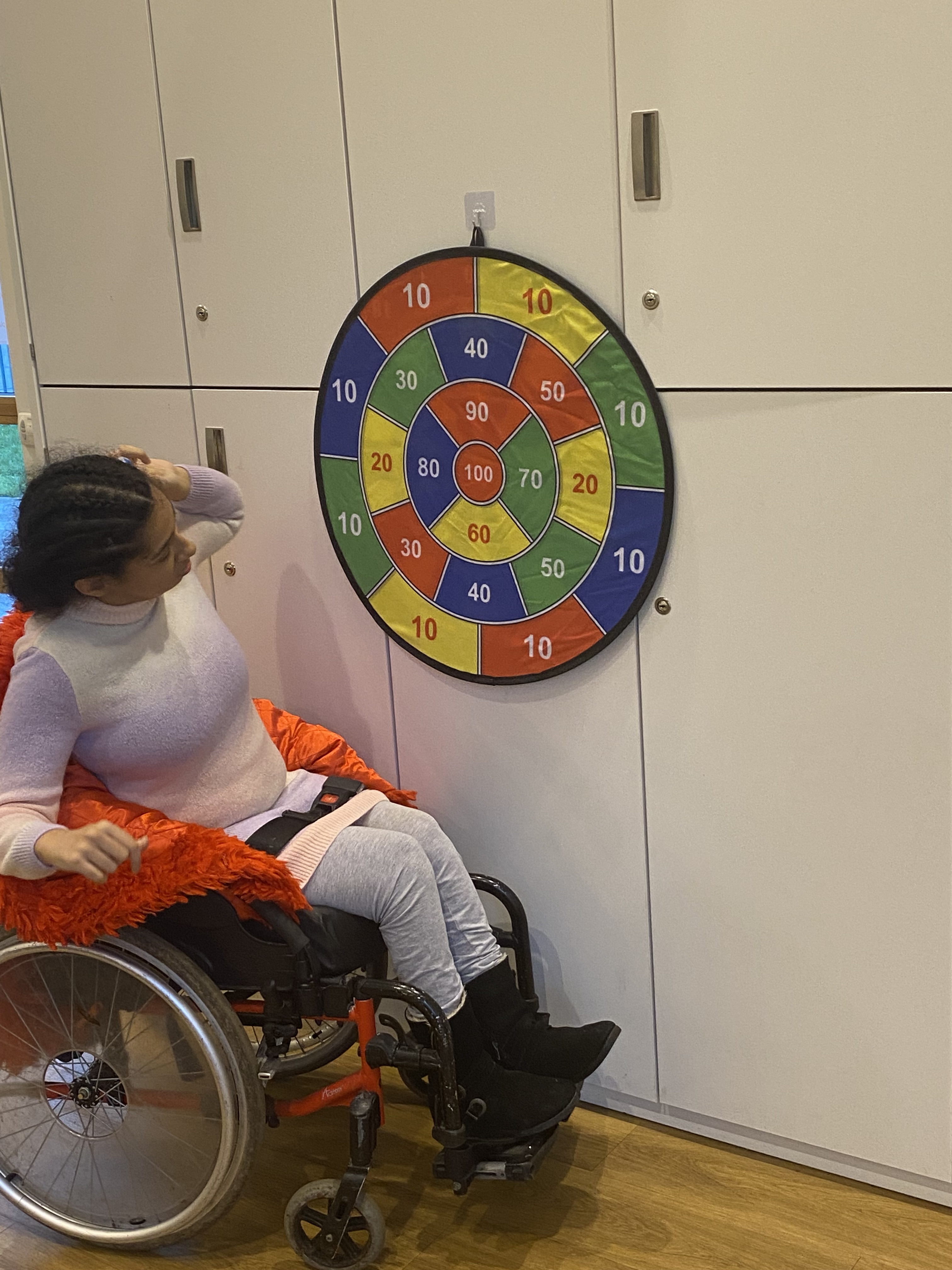
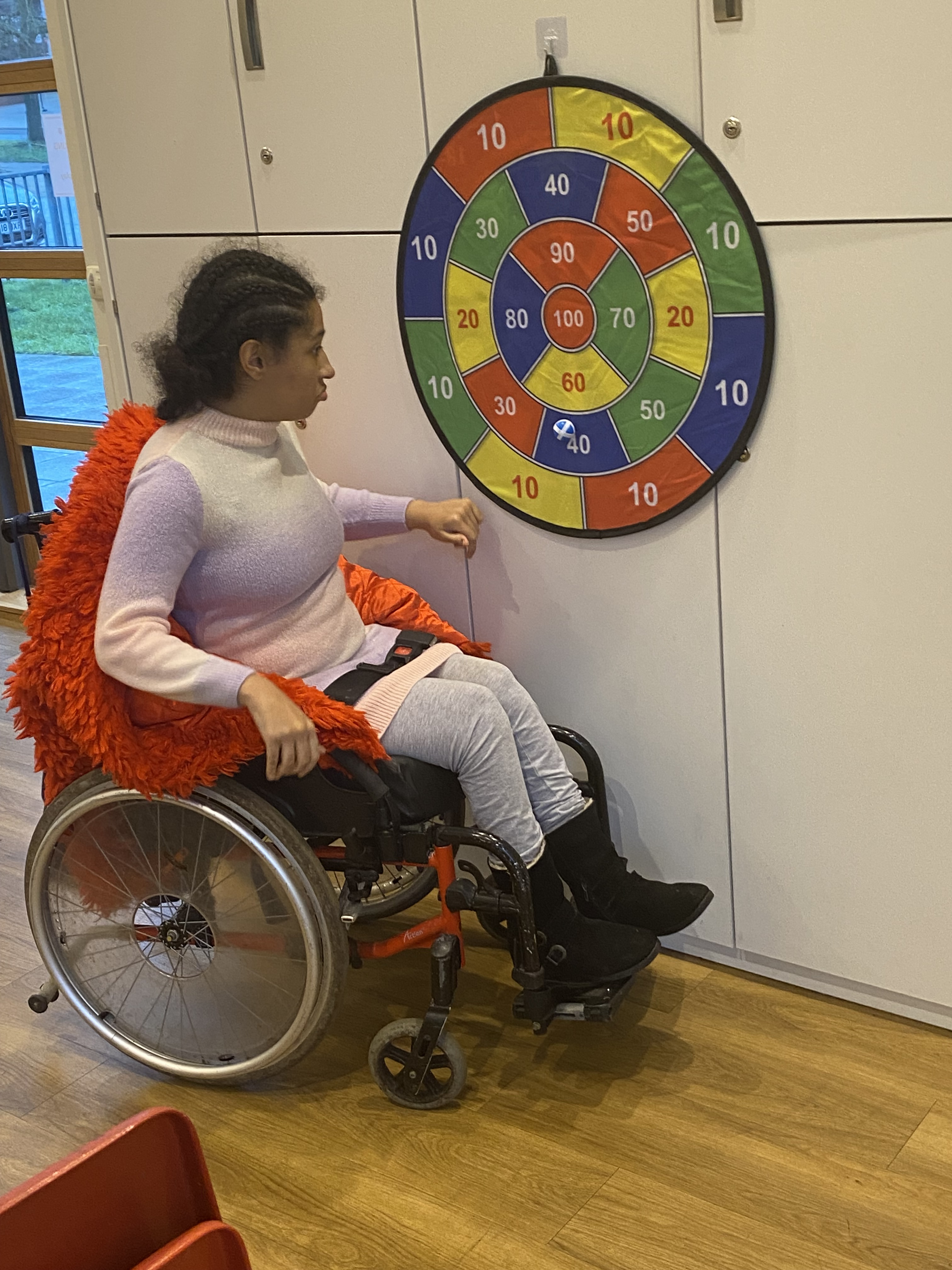
me interacting with who were in the inclusive
first time giraffes and I’m proud I won it’s not only about being there to support my health. It’s about helping me engage in games in this case class.
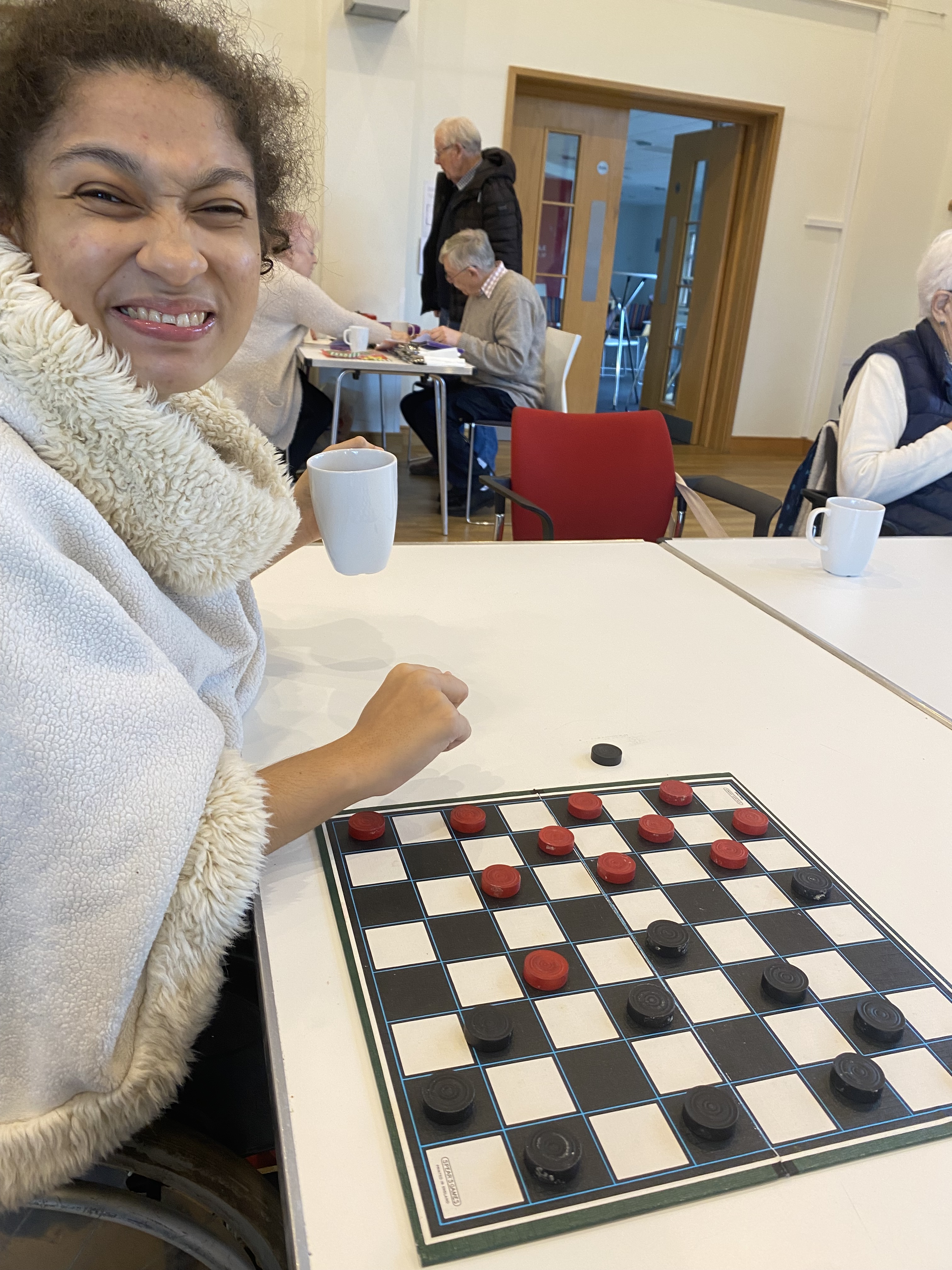
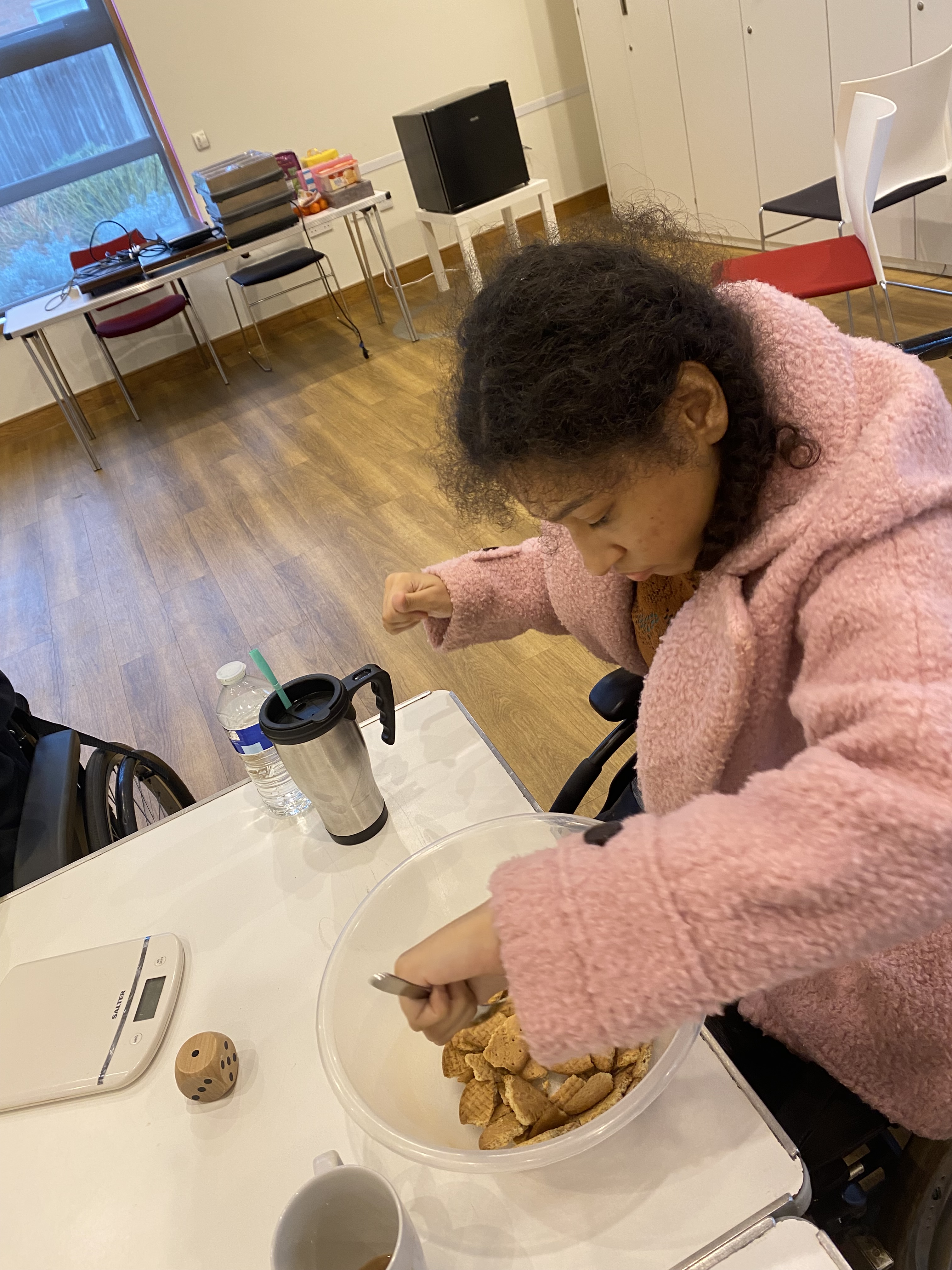
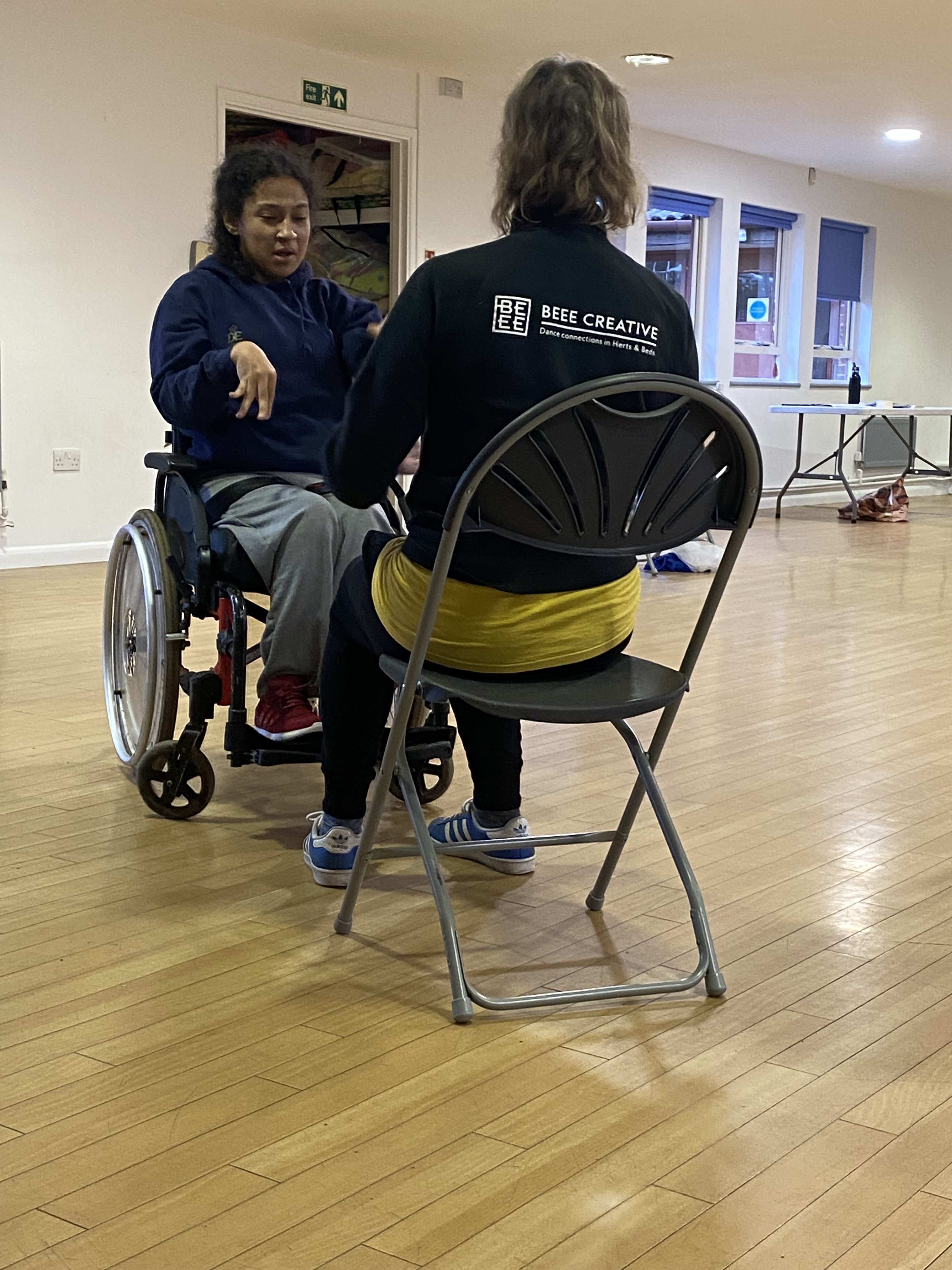


 Same Difference