Artist Helps Visually Impaired Fans At Glastonbury
An artist spent the weekend helping blind and partially-sighted people to enjoy their experience at Glastonbury Festival.
Zoe Partington, a contemporary visual artist from Shropshire, was part of a new team of visual guides helping fans find their way around the site.
Glastonbury organisers created the support team in a bid to attract more visually-impaired visitors and “bring more areas of the festival to life” for them.
Ms Partington, of Cleobury Mortimer, who is partially-sighted herself, told BBC Radio Shropshire the experience had been “amazing”.
“It’s been brilliant. This has been the first year where we’ve had sighted guides available for blind and partially-blind people, to help them get to wherever they want to go and just have a fantastic time,” she said.
She praised the infrastructure that organisers had put in place, including the accessible campsite, showers, toilets and staff.
Ms Partington, who also gives advice on accessibility to museum and galleries, said many visually-impaired people had previously told her they would not go to the festival because of concerns over accessibility.
But since the creation of the new visual guides team, she has since been told by many of them that they would now consider it.
“It’s definitely been a success and we just want to build on it,” she added.
Speaking of her own experience, she said Paloma Faith was her favourite act of the weekend, describing her set as “absolutely brilliant”.
With many thanks to Benefits And Work.
Figures produced by the DWP show that, at present rates, it will take almost ten years to work through the backlog of outstanding personal independence payment (PIP) planned award reviews. This means that over 74,000 claimants are likely to be getting a lower award than they are entitled to.
A Freedom of Information request by a Benefits and Work member asked the DWP to provide the outstanding number of PIP reviews, the cause of the backlog and how long it would take to clear.
The DWP responded that “As of 31st May 2024, there were 392,000 Award Reviews outstanding in England and Wales.”
The department said there was no timeline for clearing the backlog and that:
“The main reason for the length of time to complete PIP award reviews is very high demand for PIP. We are seeing unprecedented numbers of new claims being made. To manage this demand, and ensure cases are put into payment as soon as possible, we are prioritising these claims.”
The DWP claimed that it is recruiting additional case managers and that assessment providers are “taking steps to increase the number of Healthcare Professionals they employ”. However, they also stressed that “it takes time to train and consolidate new entrants”.
However, the latest quarterly PIP statistics published earlier this month, show that in the last quarter the DWP only managed to reduce the backlog of outstanding award reviews by 10,000. The figures show that 120,000 new award reviews were registered and 130,000 were cleared.
So at the current rate it would take just short of 10 years to work through the entire backlog.
And, in fact, the most recent quarter was the only one in the last year that the backlog was actually reduced. In preceding quarters it either went up or remained the same.
Given that the number of PIP new claims is continuing to rise month on month, with the last quarter seeing a record breaking quarter of a million new claims, it is doubtful whether new recruits will be able to do much to cut the review backlog.
Also according to DWP statistics the outcome of planned award reviews over the last five years has been:
- Increased 19%
- Maintained 54%
- Decreased 7%
- Disallowed 20%
On this basis, the backlog includes:
- 74,480 claimants getting a lower award of PIP than they are entitled to
- 27,440 claimants getting a higher award than they are entitled to
- 78,400 claimants who are no longer entitled to PIP, in the view of the DWP.
It is hard to see how this situation can be resolved in the near future. In the meantime, tens of thousands of claimants will continue to receive yet another annual communication from the DWP telling them that their review has not yet taken place and that their current award will remain in payment.
‘I’m Forced To Choose Love Or Disability Benefit’
A woman with a chronic pain condition has said she is being forced to choose between love and affording to live due to benefit restrictions.
Rose Kindred, from Ipswich, lives with hypermobile Ehlers-Danlos Syndrome (EDS) and wants to move in with her partner, but current benefits rules mean her payments would be slashed, making it unaffordable for them both.
She got in touch with the BBC via Your Voice, Your Vote, concerned about the way disabled people were treated within the benefits system.
“I think it’s a cruel system that forces disabled people to choose between the security of living and love,” she said.
Ms Kindred, 26, has been declared unfit for work by the Department for Work and Pensions (DWP) because of her condition, which causes the body’s collagen to mutate on a genetic level, leaving her with joint hypermobility and poor balance and co-ordination.
She receives a £405.40 Personal Independence Payment (PIP) per month and £809.64 in universal credit every four weeks.
Ms Kindred said she found it “nonsensical” that her parents’ income was not considered but if she moved in with her partner, who earns about £30,000 a year, a government benefits calculator suggested she would lose her universal credit payments.
“I’d like to move in with my partner of five years but unfortunately we can’t because of the living-as-if-married clause from the Department for Work and Pensions.
“That’s £405 a month to live on entirely, that’s before I pay for a private physio, which makes up for what the NHS can’t provide for me.”
“I’m basically stuck living with my parents because that’s the only option available to me.”
Ms Kindred also raised concerns about proposed changes to PIP by the Conservatives that would see changes to the way payments are made.
The charity Ehlers-Danlos Support UK said it had concerns about proposed changes to PIP.
In a statement, it said: “EDS is misunderstood and diagnosis can take decades. This makes it hard to evidence the daily struggle of living with this illness.
“We are concerned by the proposed changes to PIP and reached out to our members to better understand their experiences.
“We have encouraged them to respond to the consultation.
“Our Adviceline has also seen a significant rise in members asking for help with benefits which is indicative of the growing problems people with EDS face in the UK.”
Accessible Debate For Deaf And Disabled Voters
A special election debate will take place to allow the deaf and disabled community to be heard by key political candidates.
The event, hosted by the Cambridgeshire Deaf Association (CDA), will be in Peterborough on Thursday and feature British Sign Language interpreters and captions.
It is the second accessible debate to be hosted by the CDA and aims to help attendees ask candidates questions about the issues faced by people with disabilities or hearing impediments.
Andy Palmer, chief executive of the CDA, said it was difficult to decide who to vote for, when the issues “are not actually in a language that people can access.”
He told the BBC: “People want to go into a voting booth knowing who they want to vote for.. I think it’s hard to build up that idea unless you’ve had some of your questions answered.
“Unfortunately, it’s difficult for people to work out what they want to vote for when the issues they’re interested in aren’t spoken about.
It’s even worse if they are being spoken about but they’re not actually in a language that people can access.
“It’s really important, especially during an election, that people have as much information as possible before they make their decisions.”
Organisers hope to live-stream the event and expect the topics discussed to include hate crime, benefits, employment, the proposed changes to Personal Independence Payment (PIP), education health and care.
The Conservative, Labour, and Liberal Democrat candidates will take part.
It will be held on Thursday 27 June at 18:30 BST at the Allia Future Business Centre, Peterborough.
💞💞🐦⬛🐦⬛
💜💜🥲🥲🤣


Friday night vibes with Saturday night
goodnight everyone

Good Morning
Good morning :-)
Fl0wer
saying of the day for all my viewers of my block
goodnight to all my followers
Tell Them You Love Me
Tell Them You Love Me explores the extraordinary story of Anna Stubblefield, an esteemed university professor who becomes embroiled in a controversial affair with Derrick Johnson, a non-verbal man with cerebral palsy. The relationship, and the criminal trial that followed, would challenge our perceptions of disability and the nature of consent.
Anna Stubblefield was a respected academic and a disability rights advocate; passionate in her belief that the most essential part of the human experience is the ability to communicate.
Derrick Johnson was a 30-year-old man with cerebral palsy and had never spoken a word in his life. As a child it was also determined that he had severely limited intellectual capacity.
But Anna disagreed with this diagnosis, and when she first told Derrick’s family that she could help him communicate they were thrilled. His mother and brother had always sensed there was more going on inside Derrick, and they were eager to know what he thought about all day long, when he might be in pain, what his hopes and dreams were.
Anna began working with him using a highly controversial technique that involved training him to overcome his physical impairments so that he could type on a keyboard. After two years she was delighted to report that not only could Derrick communicate, but he had learned to express complex thoughts, attend college classes, and write thoughtful essays. Derrick, she said, was a highly intelligent man.
But there was more. Despite tremendous risks to her career and her personal life, she had become intimate with Derrick. They were in love, she said. But when the relationship was disclosed to Derrick’s family Anna was arrested and charged with sexual assault.
The trial that followed would be one of the most complex and divisive criminal cases in recent times. It would raise questions about Anna’s motivations and the validity of the relationship itself.
Through exclusive footage and interviews with those on both sides of the case, this feature documentary weaves a riveting and endlessly nuanced story about communication, race, and sex.
I watched this recently with great interest. I came away wondering why the family was prepared to accept Derrick’s academic intelligence, but yet found it so difficult to see him as an adult who could understand an adult relationship.
More of my thoughts on FC can be found here.
Stoma-Friendly Facilities Added To Public Toilet
Facilities to help people with stomas have been introduced at a toilet in a town hall.
The Parish of St Helier said a shelf, a full-length mirror, hooks to hang belongings on and new bins had been added to the building’s main disabled toilet.
Stomas are an opening in a person’s abdomen to help divert one end of the colon, with a pouch placed over it to collect faeces – a stoma bag – after they have a colostomy operation.
The parish said on X, formerly Twitter, that more than 200 people in Jersey had a stoma and it hoped the facilities could help make their lives easier.
People can end up with a stoma as part of treatment for conditions including bowel cancer, Crohn’s disease, diverticulitis and bowel incontinence.
Colostomy UK, external said hooks could help patients to hang personal items up while changing their stomas bags, while a shelf space enabled them to spread out other items easily.
The charity added that a long mirror helped people when changing their stoma and having a bin in the toilet meant user could dispose of their bag in private.
Connor Burgher, the parish’s head of engagement and town centre manager, said the facilities were added following a request from someone who lived locally.
Mr Burgher said: “Not all disabilities are visible and, if this makes people feel more comfortable to visit the Town Hall or St Helier, then it will have achieved its aim.”
Pupils Mocked And Put In Headlocks By School Staff
A senior staff member at an independent school for children with special educational needs has been recorded by BBC Panorama saying how he wanted to drown a pupil in a bath “like a kitten”.
An undercover reporter spent almost seven weeks at Life Wirral in Wallasey and witnessed staff using offensive language to mock pupils for their neurodiversity or learning disabilities, as well as manhandling them into dangerous headlocks.
Last year, Wirral Metropolitan Borough Council paid the school nearly £1m. Whistleblowers told Panorama abuse was still happening there 12 months after the council was warned of problems.
The school’s CEO, Alastair Saverimutto says he “does not condone the behaviour revealed by the programme and five members of staff have been suspended”.
Places at the school – for secondary school age children – cost between £50,000 and £150,000 a year per child, depending on the support they need.
Wirral council has paid out more than £2.2m in total since the school opened in 2021. Ofsted has rated the school “good”.
Warning: This report contains offensive language
During her time undercover, Panorama reporter Sasha Hinde did work experience with sports staff at the school.
She saw some staff trying to do their best for pupils, but for the most part witnessed children being treated cruelly by the adults charged with taking care of them.
In the recorded conversation with head of operations Paul Hamill, he laughs and tells her the child he had fantasised about killing had overheard his comments.
“Just the thought of squeezing him while he’s scratching me arms, trying to wriggle out,” he recalled saying.
The pupil was taught off-site for two hours, four days a week, by two members of staff led by Mr Hamill – who had earlier described the child as a “little serial killer”, and said he deserved to sit in a room, “a padded cell on his own for the rest of his life”.
He told the reporter that after another incident involving the same child, who he said had smashed up a classroom and threatened him, he “threw him all over the place” but that “on the paperwork it was like I guided him effectively”.
When shown the footage, the child’s grandmother described Paul Hamill as a “violent, aggressive man… who should not be around children”.
Panorama wrote to Paul Hamill about these allegations. He did not respond.
During almost seven weeks at Life Wirral, Panorama’s reporter also witnessed:
- A mental wellbeing coach describing the school as “full of retards” and calling a teenager with dyspraxia the offensive term “flid”
- The same staff member saying that one pupil was behaving well because he had “beaten him into being a bit of a [expletive] bitch”
- Three members of staff using homophobic and sexist language towards pupils, calling one a “ponce” to his face and describing him as a “batty boy” to another pupil
- One of those staff members grabbing a pupil’s head and drawing what another child close by said was a penis on his face
- Pupils at the school being called “sketty”, a slang term for a promiscuous woman
- The head of sport putting a pupil in a headlock, mocking his reaction and then pushing him to the ground
- Another staff member dragging a pupil, who had been sitting at a laptop with headphones on, out of his chair and into a headlock
- The school’s CEO, who had been sacked as a special police constable for gross misconduct, saying he had used a police-style restraint involving a pressure point on a child, which had “[expletive] nailed him”
When Panorama showed the undercover footage to Dame Christine Lenehan, former director of the Council for Disabled Children, external, she said the school was “fundamentally unsafe” with “no respect for the young people”.
“There must be really poor leadership here, because leadership sets a culture of value. Leadership sets a culture of how we behave and what we do,” she said.
The mother of the boy who was subjected to homophobic abuse by staff says she fought for 18 months to get her son into the school as she thought it would help him.
When she was shown Panorama’s undercover footage, she said she was “disgusted” to hear such language in a setting for vulnerable children.
Like all the other children at the school, this child had an Education Health and Care Plan or EHCP, a legal document which set out his needs and how they should be met.
The Panorama reporter saw children being taunted for their neurodiversity or learning disabilities. One staff member told her, “We’re a school full of retards, we’re not the SAS love. Like, chill out.”
And another staff member mocked children for shouting, for making high-pitched noises, and for their tics – repetitive movements that can be associated with neurodiversity.
A child replied: “This is why we get no work done, because you’re insulting us.”
The school is led by headteacher Sarah Quilty who says in a promotional video that she has spent most of her career “working with children and helping children and it’s something I’ve really enjoyed and get a lot of fulfilment out of”.
During a catch-up meeting with the undercover reporter, Ms Quilty told her “some of our staff can be a little bit aggy with them [the pupils] you know and get quite wound up themselves.”
Wirral Council was warned about problems at the school in February 2023.
Sue Peacock, an independent Send (special educational needs and disabilities) advocate, told Panorama she had been helping a child, who had left the school, raise her concerns with the authority. In a statement shared with the authority the child wrote:
“I will never set foot in Life school again. Because of peer on peer abuse I witnessed, teacher on student abuse, physical restraints – police style. Lack of understanding about disabilities, staff saying incidents are not as bad as described.”
Wirral Council said it had investigated, including speaking to parents and children.
There were some concerns, but most gave positive reports about the school. The Department for Education was also alerted and asked Ofsted to inspect the school. Inspectors maintained its “good” rating.
Shortly afterwards, Panorama was contacted by whistleblowers reporting further concerns.
As well as witnessing offensive language targeted at the children, the reporter faced sexualised comments herself on a regular basis and was told to “get her tits out” by one staff member, while two others laughed.
‘I’m an entrepreneur, not a special educational needs specialist’
Panorama’s undercover reporter met the school’s CEO, Alastair Saverimutto. He told her he had big ambitions for his Life School business saying he wanted “100 schools” and to become the “first billion-pound educational division in the country”.
He is recorded saying that headteacher Ms Quilty is going to be “the richest head in the country”, saying “she’s going to be so minted”.
Mr Saverimutto also told our reporter he had been nicknamed “The Savage” during his time as a special constable for Merseyside Police, because he was “the first in to all the trouble”.
He told her he had used a police-style restraint on a pupil who had been lashing out.
Mr Saverimutto said the child had ignored a 10-second warning and, when the boy failed to calm down, he had “[expletive] nailed him”. “Straight in and he hit the floor. I just did one pressure point and he was gone.”
Mr Saverimutto, a former professional rugby player and ex-chief executive of Bournemouth Football Club, was sacked from the police in September last year, after failing to declare debts during police vetting.
According to figures from the Department for Education, the number of pupils with EHCPs taught in independent schools has risen by more than 160% since 2015.
Whilst background checks are carried out, those wanting to open an independent special school don’t need to have teaching experience or any knowledge of the Send sector. They are not required to employ qualified teachers and they can use their own curricula.
In addition to Mr Saverimutto saying he has suspended staff, his lawyers say school staff are suitably trained and that he personally “denies ever using inappropriate force on, or behaving aggressively towards, a pupil”.
They add the school “prides itself in having an excellent reputation transforming pupils’ educational experience and achieving positive outcomes for children who may not have succeeded in a traditional educational setting”.
Panorama wrote to head teacher Sarah Quilty. She did not respond.
Head of sport, Ollie, said the school was a “stressful and a demanding environment” and that he had “never harmed a student in any situation that has required physical intervention”.
The school’s mental wellbeing coach, Dan, told Panorama “isolated comments” in the staff room away from pupils were “simply dark humour” and a “well-studied coping strategy in high pressure professions”.
He said he had never had “any malicious intent towards” pupils, who he says he “has a great deal of care” for.
Wirral Metropolitan Borough Council says the “behaviours” outlined by Panorama “can only be described as truly appalling” and that “the impact the events have had on the families of the children who were attending the school concerned is devastating”.
It says it is investigating and Merseyside Police has been alerted.
The Department for Education says, “all pupils have now been removed from the school” and it is in contact with the council “to make sure an alternative education is provided”.
It says it will “take enforcement action including permanent closure should the school try to reopen”.
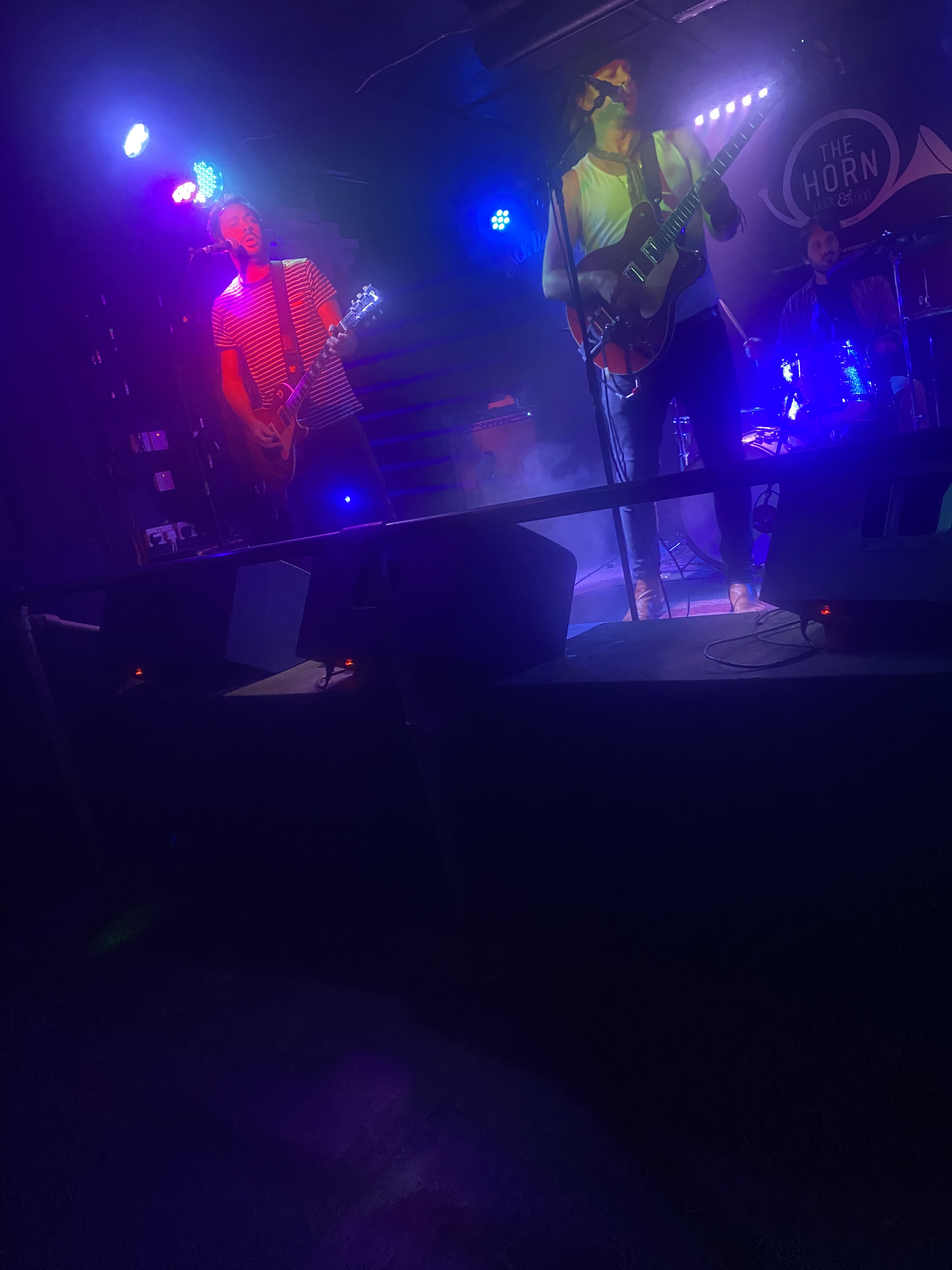
pictures of the musicians
pictures of the musicians
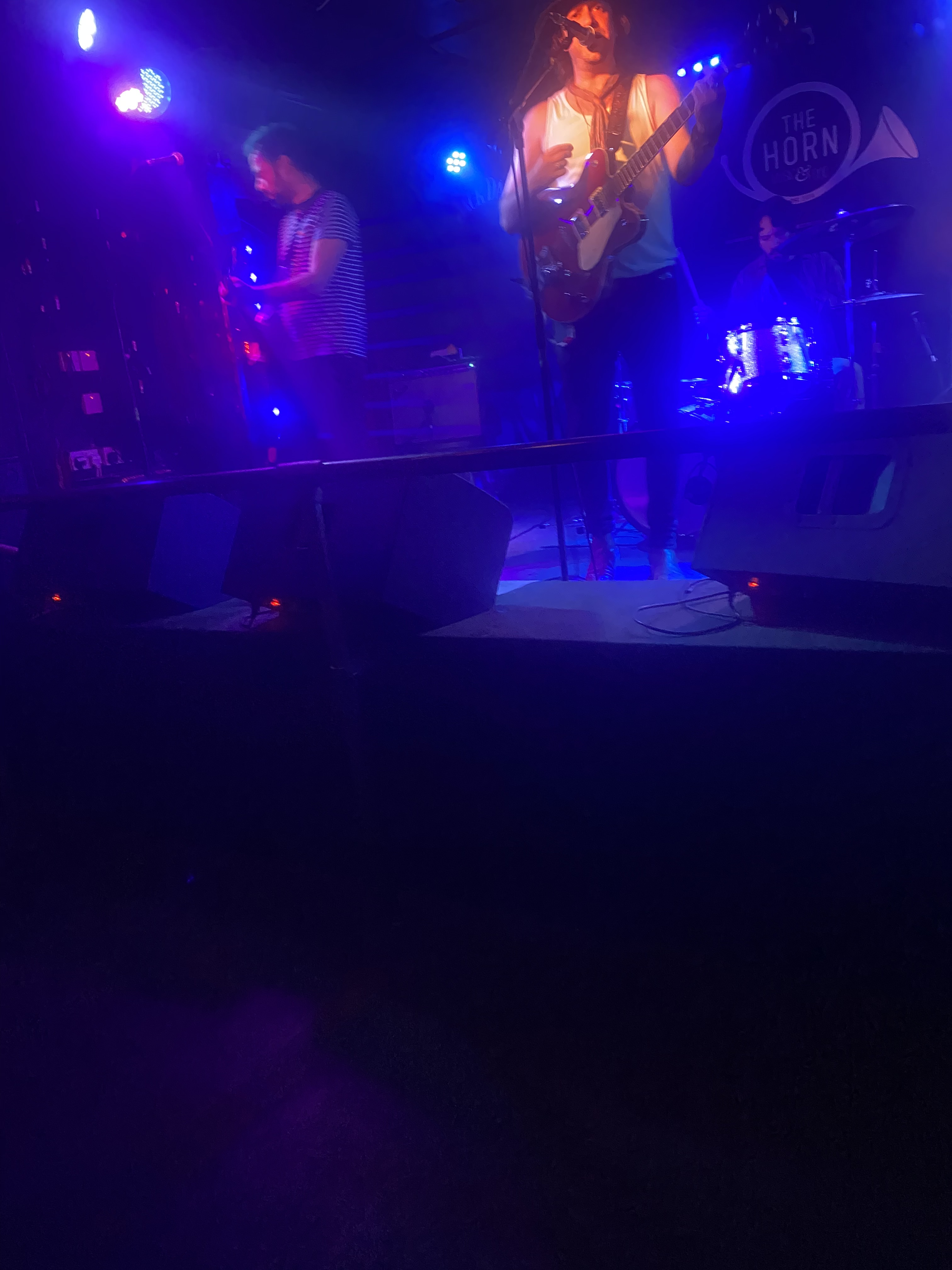
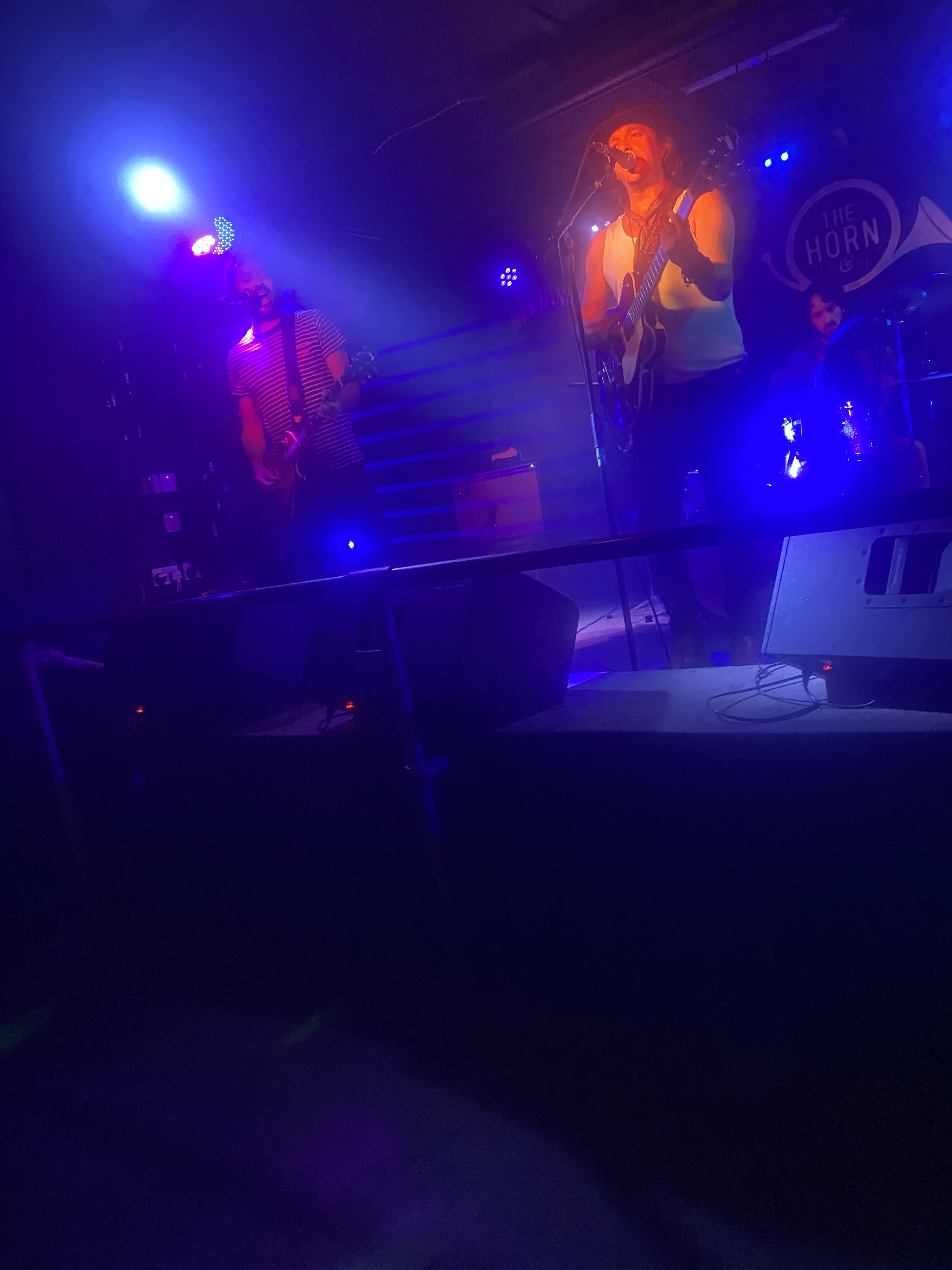
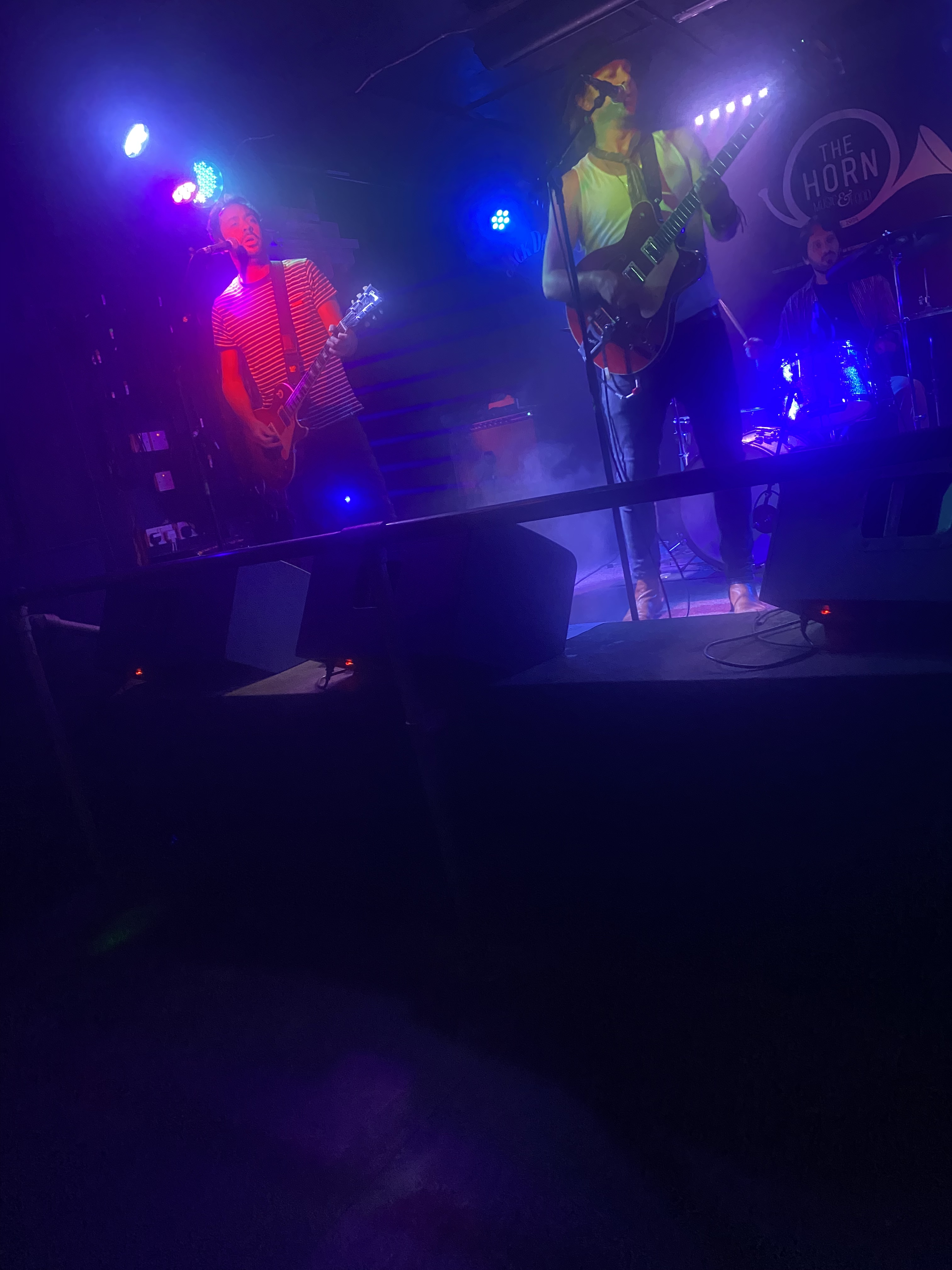
concert content continued
Geoff Holt MBE Completes Latest Challenge
A man who is paralysed from the chest down said he circumnavigated Great Britain in a power boat to prove to “other profoundly disabled people that barrier free boating is possible”.
Geoff Holt MBE, originally from Portsmouth, set off from Tower Bridge in London on 13 May and returned after three and a half weeks.
He said crossing the finish line felt “euphoric”.
The challenge has so far raised more than £75,000 for Mr Holt’s charity Wetwheels, which provides specially-designed accessible boats to disabled people of all ages to use.
Mr Holt said he drove the boat for the whole trip but travelled with two other crew members, with his wife meeting them at each of their 19 port stops with an accessible motor home for him to sleep in.
In total they travelled around 1,800 miles (2897km), spending up to 10 hours a day at sea.
Mr Holt said the challenge took its toll, with the movement of the boat causing the wheelchair to rub the skin on his back.
But despite that, it was “an incredible trip”.
“It’s only pain,” he said.
The trip also raised awareness of the charity and its fundraising initiative, Finishing The Dream.
“My inbox is bursting with people wanting to get involved,” he said.
The money raised will go towards buying four more accessible boats, which Mr Holt said he “designed so that everyone can drive the boats”.
“For a moment in time they get to sit in the captain’s chair,” he said.
‘Overwhelming’
Mr Holt said the trip was a “physical and emotional” challenge for him – not least because he had kidney surgery just two weeks before setting off.
But he said it was also “amazing”, especially the leg along the west coast of Scotland, which had “some of most beautiful scenery” he had ever seen.
And coming home, he said, was “overwhelming”.
“When we got round the corner and saw Tower Bridge… it was just euphoric,” he said.
https://vm.tiktok.com/ZGebXFfNG/TikTok video of some of the concert that I saw last night
call from last night and some selfies in the concert


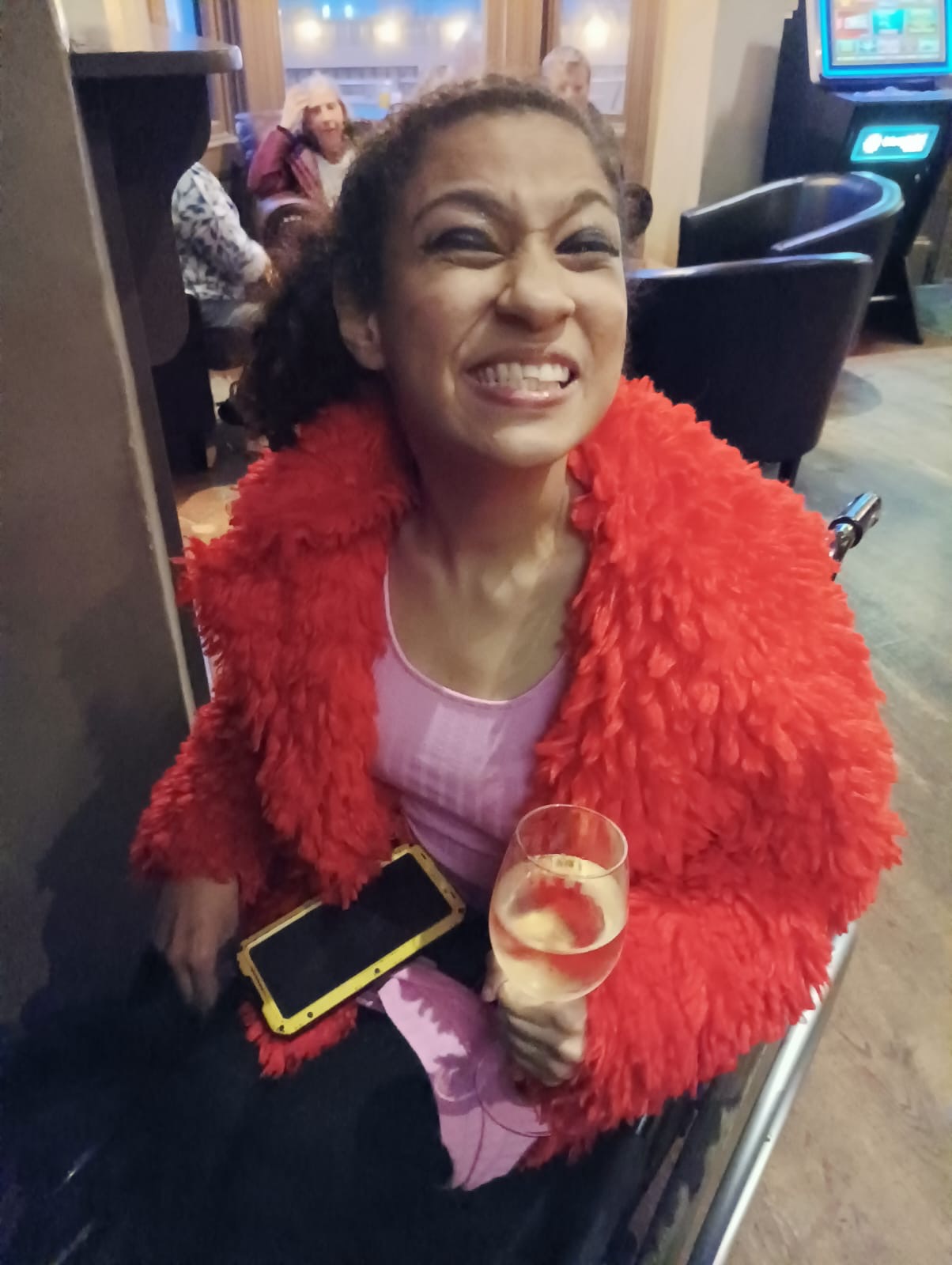
Photo of the day

hey the musician on stage yesterday

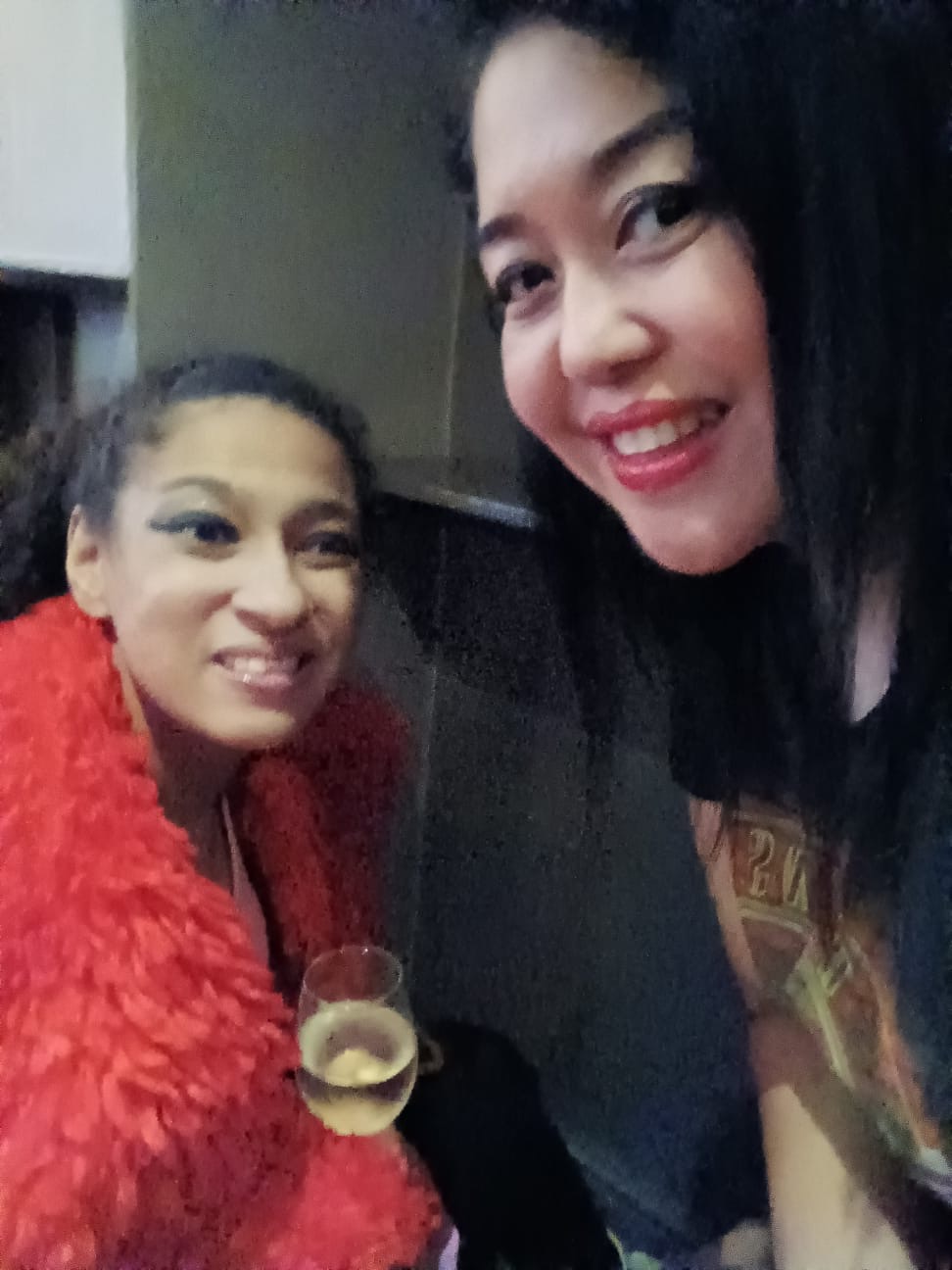
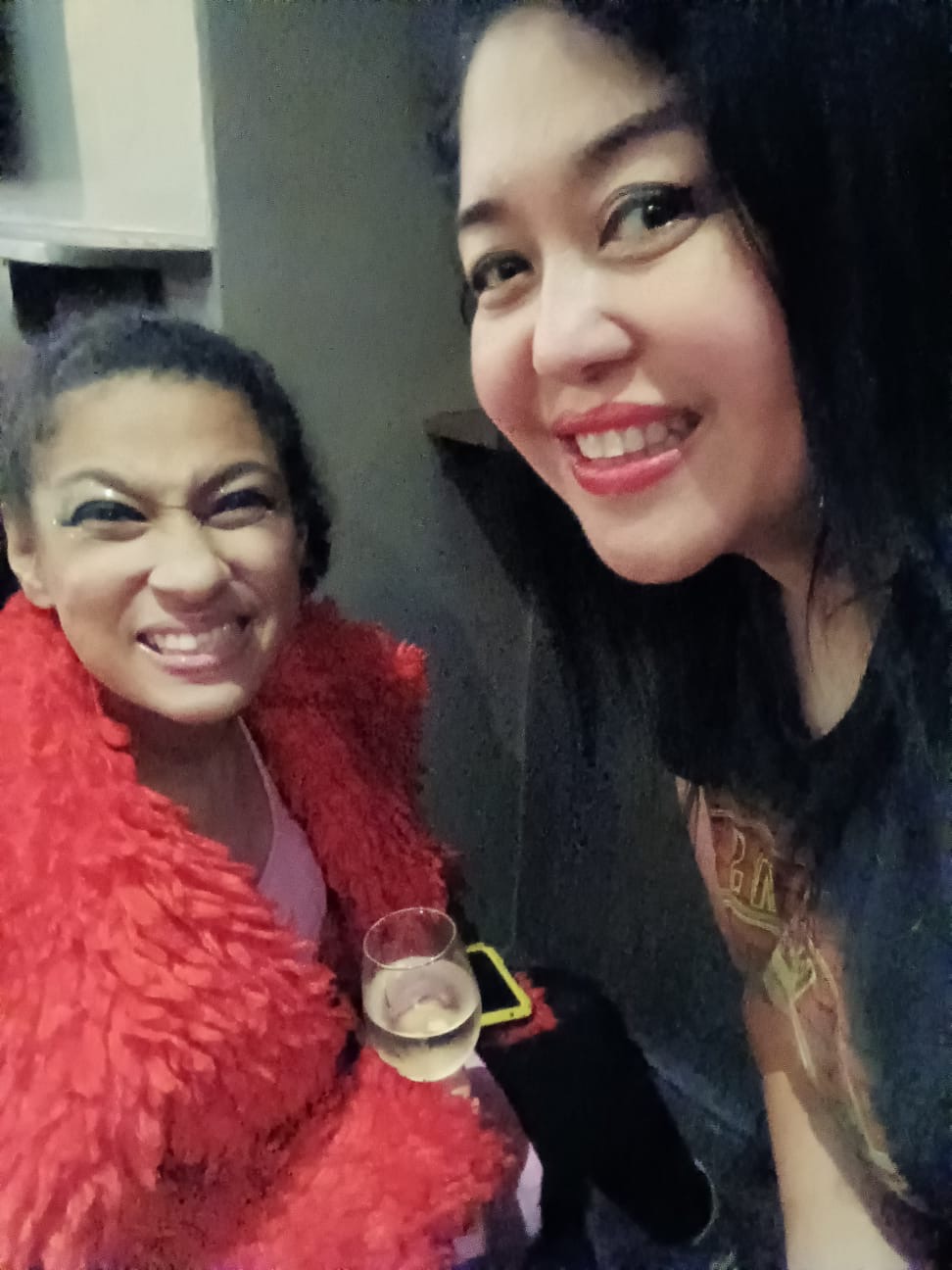
saying for the day for all of my viewers
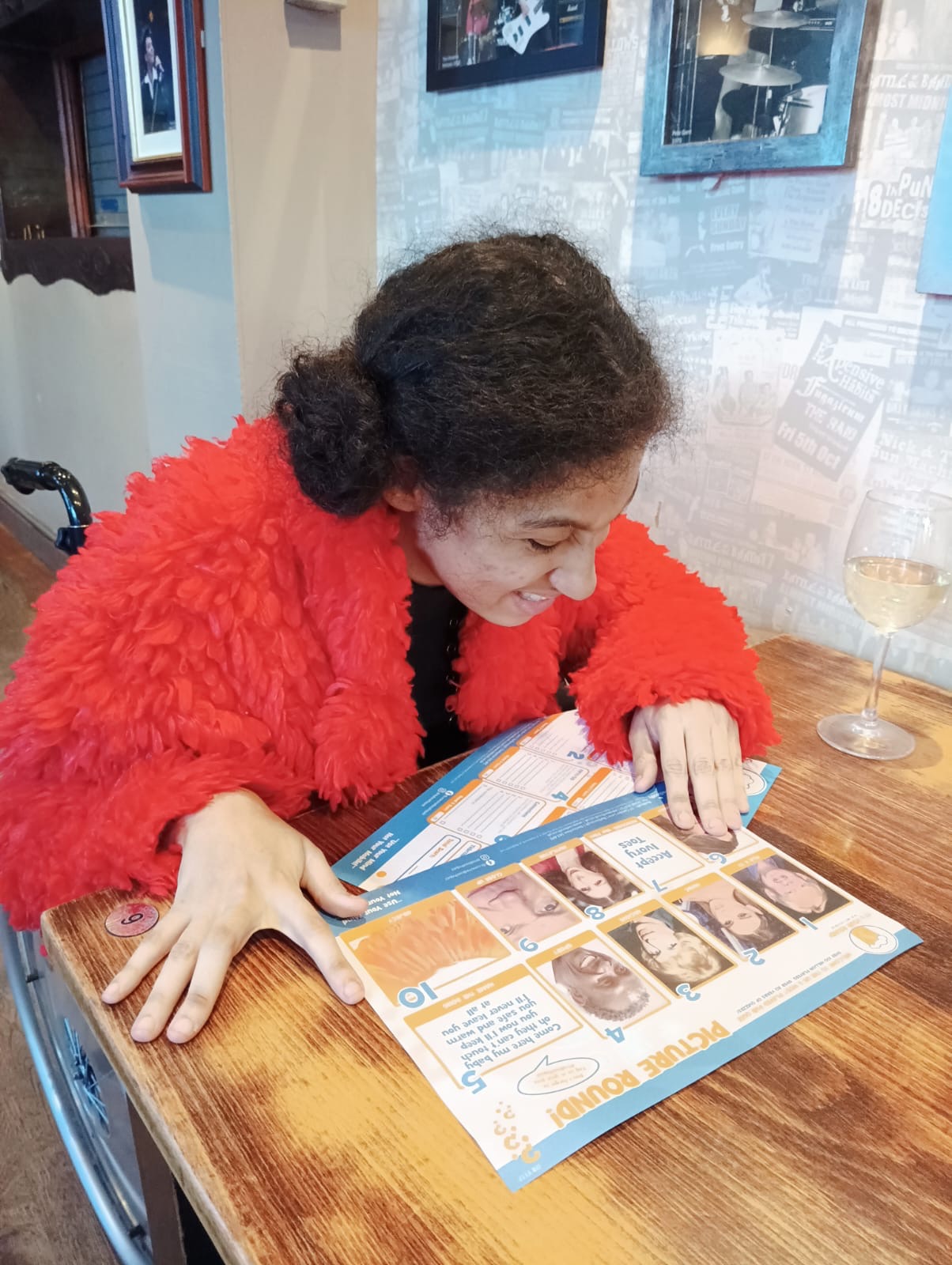
yes of the afternoon call midday
Photo of the day
Pinterest pictures
://pin.it/4ufjShwTchttps://pin.it/1Zn37u9U2
Cancer Campaigner Kate Rackham Dies
Tributes have been paid after the death of a teacher who raised awareness of incurable secondary breast cancer.
Kate Rackham was diagnosed with oestrogen-receptive breast cancer at the age of 39.
The Manchester-based teacher, who shared updates on her life with her 17,000 followers on the X platform, helped set up the Fighting to be Heard charity to raise awareness of the condition and provide support for those with the condition.
A post on her account on Thursday read: “If you’re reading this, it means I have died. But do not cry for me. I have lived my life on my own terms, the way I have wanted to.”
‘A wonderful woman’
In her post, she said she had joined the social media platform “because I needed an outlet” but “what I got was so much more”.
“You made me feel validated in my feelings and much less alone. Thank you.”
Former BBC newsreader Beccy Barr, who attended the same school and has been diagnosed with abdominal cancer, posted a tribute, saying: “In recent months we reconnected and she was incredibly empathic and supportive of my terminal diagnosis as she handled her own. What a wonderful woman.”
Nicola Nuttall, whose daughter Laura, 23, died of brain cancer while achieving a bucket a list of ambitions, posted that she was “heartbroken that we’ve lost this truly incredible woman”.
Speaking about climbing Pendle Hill with Ms Rackham, in memory of Laura, Nicola added: “Kate really knew how to live, she wanted to come up Pendle but wouldn’t wait for better weather because she knew better than anyone the value of a single day.
“We nearly got blown off but it was brilliant, so glad we met.”
Skip twitter post by shitscaredmum
Allow Twitter content?
This article contains content provided by Twitter. We ask for your permission before anything is loaded, as they may be using cookies and other technologies. You may want to read Twitter’s cookie policy, external and privacy policy, external before accepting. To view this content choose ‘accept and continue’.
The BBC is not responsible for the content of external sites.
End of twitter post by shitscaredmum
‘Such dignity’
Ms Rackham previously told BBC Radio 5 Live about her “heartbreaking” struggles with hair loss.
“It’s really hard losing your hair. It’s not just losing your hair, it’s losing your eyelashes and eyebrows as well.
“That’s the difference between looking like you are rocking a bald head and looking like you are on chemotherapy,” she said.
She said her diagnosis “came as a massive shock”, and that prior to it, she had lumps that she had got checked out, but with no family history she was told not to worry.
When she noticed another lump, she said she did not get it checked straight away.
In her role as trustee of Fighting To Be Heard, Ms Rackham said her aim was “to raise awareness in a bid that no one else goes through what we are all going through”.
Also known as advanced or metastatic breast cancer, secondary breast cancer occurs when a cancer that began in the breast spreads to another part of the body.
It is estimated that in England in 2020-2021, more than 57,000 patients were living with metastatic breast cancer.
It is the leading cause of death for females aged 35 to 49 in England and Wales.
On Thursday, Lord Jim Knight, who sits in the House of Lords, paid tribute to Ms Rackham, saying: “This made me stop today and turn off the noise. Such dignity.”
Educational technology businesswoman Emma Stokes also posted: “Thank you for sharing your journey with grace and dignity. I hope wherever you are, you are no longer in pain.”
Sensory Room For SEND Children Launched At Church
A £30,000 sensory room for children with special educational needs and disabilities (SEND) is set to open at a Bradford church.
The facility, which would also benefit young people who have fled domestic and sexual abuse, was launched by former Leeds United footballer Leigh Bromby and Harrogate Town captain Josh Falkingham.
The room, at LIFE Church on Wapping Road, aimed to help improve children’s communication, speech and language skills and was funded by the charity KidsOut.
A KidsOut spokesperson said the room would have a “wonderful effect on hundreds of Bradford children”.
The interactive space featured colourful lights, projections and bubble tubes and would help children “find a calm space”, charity chief executive Sara Williams said.
“In this room we can take children to the beach and teach them how to cross the road,” she said.
“Bradford has some of the most disadvantaged children in the UK – whether that is from poverty, disability, sickness, or being a victim of crime – and we want to make sure we can get our units to be utilised by as many children that need it as possible.”
The sensory room would also be available for children who lived in refuges or safe houses.
Rob Hutcheson, LIFE Church Bradford general manager, said he “can’t wait for the room to officially open”.
“Many local families face complex needs and challenges on a daily basis,” he said.
“We have begun conversations with our local community partners, who are helping to identify the families who will most benefit from the installation and who often cannot get access to this kind of provision.”
The KidsOut charity, which provided “positive experiences and creates happy memories” for vulnerable and disadvantaged children, has funded 23 sensory rooms around the country.
Fundraising Father Has Cycling Record Confirmed
A cyclist’s week-long crossing of 43 UK counties has been confirmed as a new world record.
Scott Mitchell, from Endmoor, South Cumbria, cycled through 43 of England’s 48 counties to share awareness of muscle-wasting conditions.
Guinness has now confirmed his achievement in June 2023 was a world record, external.
Mr Mitchell said he would continue doing challenges for his son, Alex, who lives with Becker muscular dystrophy.
Mr Mitchell set off from Cornwall on 16 June and travelled across England, finishing in Lancashire six days later.
He raised almost £7,300 for Muscular Dystrophy UK, a charity he has supported since his son’s diagnosis nine years ago.
Mr Mitchell said he wanted to raise awareness about there being currently no cure for Becker muscular dystrophy.
‘Just the start’
“More than anything, I need the world to see what I’m doing, why I’m doing it, and to spread the word,” he said, adding: “For Alex, the basics are hard – getting out of bed, getting from room to room – but it affects him mentally as well as physically.
“The progression of his condition is becoming increasingly obvious and impacts every aspect of his life, which is heartbreaking to watch as a parent.”
Mr Mitchell said getting the world record title was “amazing” but it was “just the start” as he plans to complete a bigger challenge in 2025.
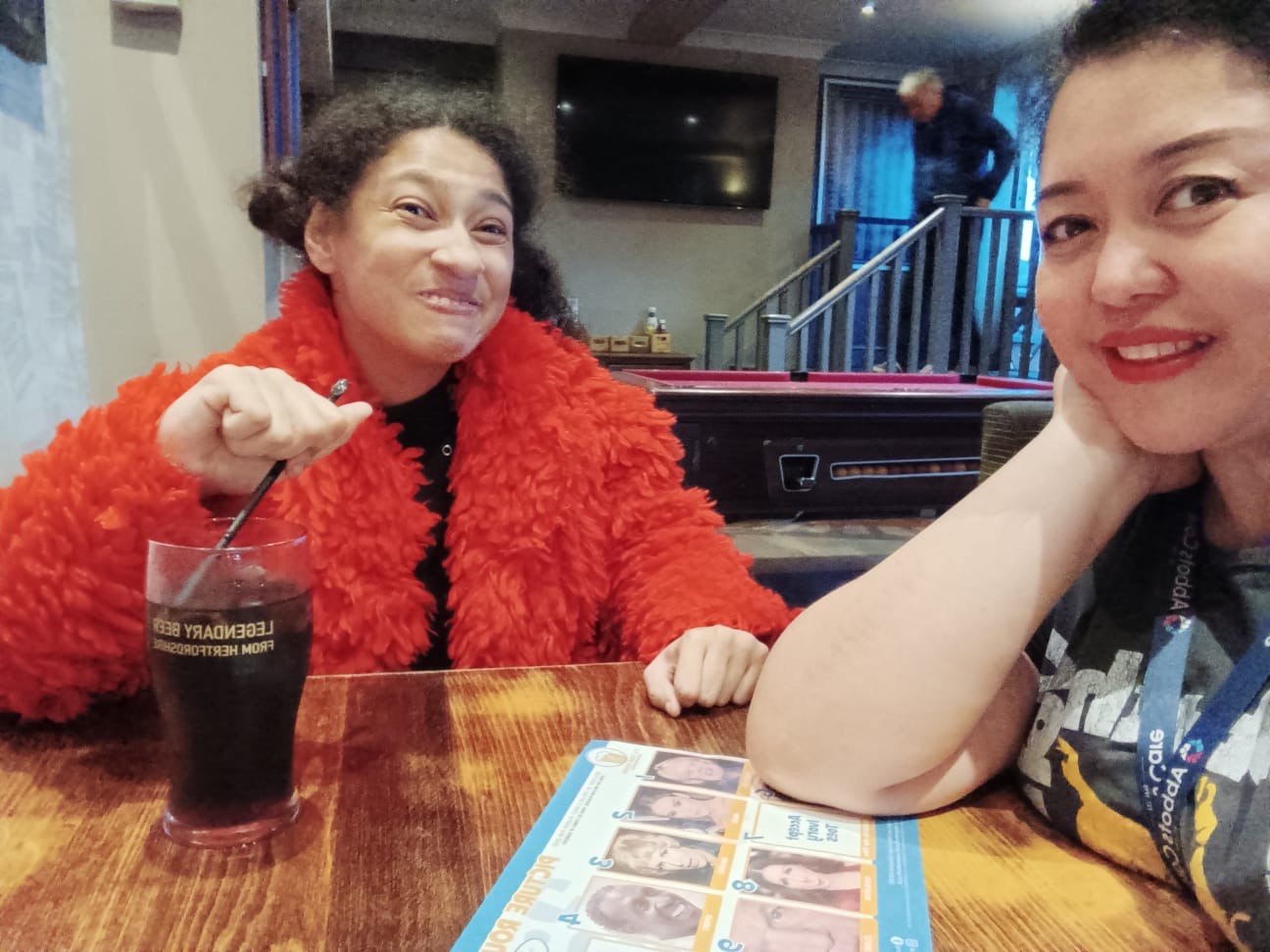
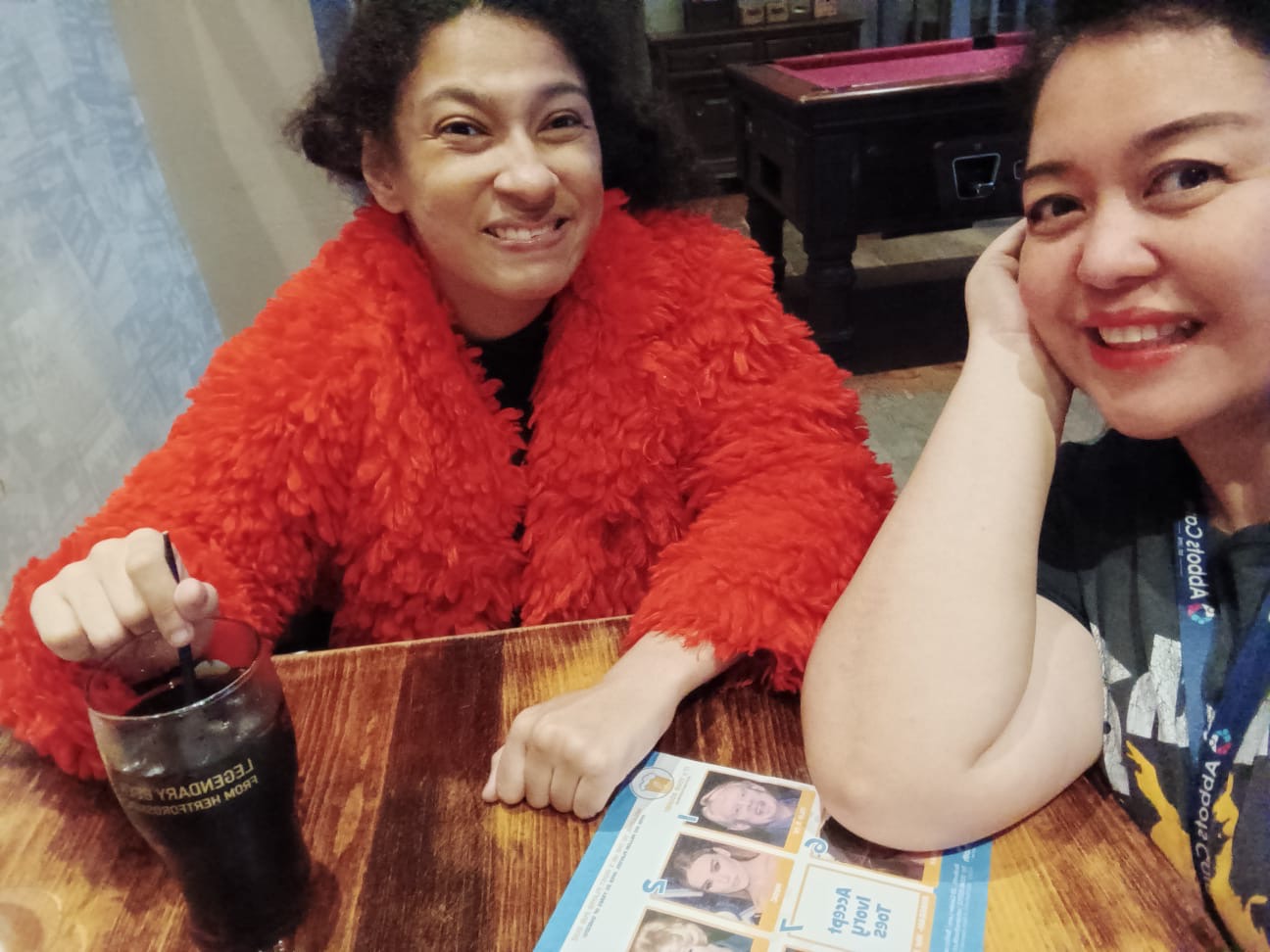
My night out last night

A press release:
“In A Flash” YouTube and Spotify
Country music was built on the backs of musicians who spent grueling hours on America’s endless highways between low-paying gigs, self-medicating in their downtime to deal with chronic pain, loneliness and boredom. It’s what Americana upstart Gene Moran has witnessed all too often from people in his life. He explores the danger of those long, slow hours in his new single “In A Flash.”
The former teacher out of Mesa, Arizona has worked through a lot just to play smoky rooms and juke joints. Born with cerebral palsy, Moran had to develop his own playing style and get over a crippling stage fright before he could bring his high, lonesome tunes to audiences.
“Starting from when I was 15, I’ve always wanted to be in bands like my friends in high school,” he explains. “But I had a hang up about being disabled and playing on stage and thought I would look stupid.”
“In A Flash” deals with putting anxious thoughts to bed with an unhealthy mix of alcohol, nicotine and prescription pills. In a dusty croak reminiscent of Steve Earle, Moran delivers an unvarnished look at life on the road over a rambling guitar line that wouldn’t sound out of place on any ‘70s speed-addled trucker tune.
“Smoking cigarettes for breakfast, my dinner’s alcohol, two hours of shut eye, if I even sleep at all, so I just keep on going, life goes by in a flash,” he sings. “I gotta bad, bad feeling, tonight might be my last.”
Moran says the tune has caught on in the rooms away from those long white lines, with audience members approaching him and sharing how relatable they found the strung-out bit of honky-tonking.
“I wrote it in the parking lot of a pharmacy while waiting for a prescription refill,” he said. “One of the things I like about this song is almost every time I play it live, people come up to me and tell me that they can relate to this song because they have similar experiences in their own lives and they don’t feel so alone.”
The single follows “Dead Man’s Guitar,” a direct reckoning with the events that pushed him to overcome his disability and develop his own guitar-picking style. Both tunes are chock full of the sort of lonely, twangy songwriting that would have filled up jukeboxes in desert diners during the era of the 45 singles.
Teen Barred From Skydive ‘Due To Down’s Syndrome’
The mother of a teenager who turned up to a planned charity skydive says she was told he couldn’t jump because he has Down’s syndrome.
Lloyd Martin, 19, whose family are from Cardiff, had raised £2,500 for his gymnastics club ahead of the sponsored tandem skydive in Wiltshire.
Lloyd became a Guinness World Record holder in April for being the youngest person with his specific disability to complete a marathon anywhere in the world.
GoSkydive has apologised and said they now want to get to know Lloyd better before taking him skydiving.
Lloyd had been looking forward to the skydive near Salisbury on Thursday but his mum, Ceri Hooper, said she was told it was now called-off.
Ms Hooper said the head instructor explained it was because of worries about how Lloyd would react during the jump.
“We’re used to having many doors shut in our faces in the past, but this just brings everything back,” Ms Hooper said.
“We turned up, we did the briefing, everything was fine.
“But then he [the instructor] came over. He said ‘we don’t know how someone with Down’s syndrome is going to react when they jump out of a plane’.
“Well, you don’t know how anyone is going to react when they jump out of a plane,” Ms Hooper added.
“We were all shocked. They didn’t come and talk to Lloyd.”
Ms Hooper said medical checks by Lloyd’s GP confirmed he was “fit to jump” and she says the company knew about Lloyd’s disability when they booked.
“I can’t believe they allowed us to book,” Ms Hooper added.
“We’ve raised all this money, the fundraising for the gym, we’ve all had days off work, we’ve arrived, and it’s a ‘no’.”
Lloyd’s grandparents had travelled from Cardiff to cheer him on, but the incident had left Lloyd very disappointed.
“The rest of the team decided not to jump because Lloyd couldn’t, and Lloyd was disappointed about that,” she said.
“We’ve had so many barriers, so many doors shut in our face in the past.
“We’ve felt we’re getting somewhere with inclusivity, and then this happens.”
GoSkydive’s managing director Gordon Blamire said he supports his team’s decision to “get to know Lloyd better before taking him skydiving”.
“There is no doubt that we could have better communicated the requirement for Lloyd to be assessed prior to his visit to GoSkydive, for this we are extremely apologetic.
“We continue to learn and improve our interactions and this instance drives direct change in our policies.
“While we understand the frustrations of Lloyds’ family, our commitment is to Lloyd’s wellbeing. We want the opportunity to get to know Lloyd, his conditions and what he needs from us before we can take him skydiving.”
The national governing body, British Skydiving, says anyone with a disability should speak to the chief instructor at the sky diving school before entering into any commitment.
ITV Agrees To Make BSL Version Of Election Debate
ITV has agreed to add a British Sign Language version of an election debate programme to its on-demand platform, after pressure from a deaf campaigner.
The debate between Prime Minister Rishi Sunak and Labour leader Sir Keir Starmer, aired on Tuesday evening, included subtitles but not a live translation.
Katherine Rowley told BBC News she “felt very disappointed” that she could not follow the debate live.
In response to a letter from Ms Rowley’s lawyer, ITV said signing on live broadcasts “involves a considerable degree of planning and additional resource”.
The Communications Act 2003, external says at least 5% of broadcasters’ content must be translated into sign language.
The Act says most content should include subtitles.
But many who use BSL as their first language struggle with English subtitles because, studies suggest, external, deaf people’s reading ability is lower than average.
Research suggests, external this is because reading is based on spoken language, which many deaf children struggle to acquire.
Miss Rowley’s lawyer, Chris Fry, told BBC News that equality laws should be updated to close the 5% target “loophole” to make sure key content in the public interest is available in accessible formats.
“My kids tune into Horrible Histories sometimes, and they’ve got BSL on there,” he says.
“If you’re going to provide it on kids’ broadcasts, great – but what makes broadcasts on the elections less important than that?”
He said there are additional accessibility issues around elections, such as visually impaired people receiving leaflets through the post.
On 30 May, Mr Fry sent a pre-action legal letter to ITV, to pressure it into including live signing in its debate on 4 June.
ITV’s response, sent on 31 May, said it recognised Miss Rowley would be “disappointed” sign language could not be provided for the live broadcast, but that she had “no basis to bring a claim” of discrimination.
A spokesperson said a BSL version of Tuesday’s programme – and of next week’s multi-party debate – would be available on its on-demand platform within 24 hours of broadcast.
And all ITV election content would carry subtitles.
‘Very disappointed’
ITV also said in its letter that accessibility and inclusion were “extremely important” and “we strive continuously to improve the level of accessibility across our channels and platforms”.
Miss Rowley said on Wednesday: “I felt very disappointed that I couldn’t follow last night’s debate. It’s an important time of our life, voting.”
“Equality shouldn’t have to be an afterthought,” she added.
In 2021, Miss Rowley – a member of the Labour Party – won a claim against the government after two of its televised Covid briefings did not include sign language.
As part of the firm, Inspire Legal, Mr Fry is calling on political parties to provide BSL translations of their broadcasts and manifestos during the election campaign.
The BBC said on Wednesday that it would include live British Sign Language and subtitles on its leader debates, as part of its aim “to make this election the most accessible to date”.
Its first election debate, with representatives from the seven biggest parties, is on Friday 7 June. ITV’s next one is on Thursday 13 June.
The studio that is home to the Harry Potter tour has partnered with a charity to improve accessibility for people with visual impairments.
The Warner Bros Studio Tour in Leavesden, Hertfordshire, has sponsored three guide dogs in training named after JK Rowling’s characters Harry, Ron and Hermione.
The charity Guide Dogs will use the funds to cover training, food and veterinary expenses.
New initiatives will be introduced to the tour over the next 12 months to help staff and visitors, including iPads that can be used to magnify signs and descriptions.
The Warner Bros Studio Tour has welcomed guide dogs into the venue since it first opened in March 2012.
Visitors can explore sets from the Harry Potter film franchise such as the Great Hall, Gringotts Wizarding Bank and the Forbidden Forest.
The charity, Guide Dogs, will also provide staff at the tour with training resources about helping visitors with visual impairments.
They will also be taught how to safely guide a person with sight loss around the site.
Kerry Kernan, head of children, young people and families at Guide Dogs, said: “Through our consultation, advice and training, we hope to encourage change across the UK attractions industry to become more accessible for people with sight loss.”
Disability Inclusive Band Celebrates 10th Birthday
“It has probably given us more confidence in being able to do things we wouldn’t imagine were possible,” says Lucy, a drummer and singer in Delta 7.
The seven-piece band described as a post-punk rock ensemble by the community interest company (CIC) that supports it, is turning 10 years old.
The group, based in Eastbourne, East Sussex, features members each with differing disabilities.
“As one of our other band members would say, there’s no such thing as can’t,” Lucy continued.
Julia Roberts from Culture Shift CIC, which is based in Brighton, said the band grew after a 10 week music course in 2014.
Speaking to Danny Pike on BBC Radio Sussex, she said: “It wasn’t something we set out to do, it happened organically.
“I can’t believe it’s been 10 years actually, all of us feel like it’s a major achievement.”
The group was created from “a shared love of performing, positive energy and mutual support”, a Culture Shift spokesperson said.
Delta 7 is currently funded by People’s Health Trust, with money raised through the Health Lottery South East.
Fraser, who plays drums and sings in the band, said: “We’ve played at some really cool venues and been entered for a BAFTA award.
“I hope that Delta 7 can continue and we manage to get some more funding.”
Another band member, Craig, said his favourite part of being in the band was “friendship – everyone is amazing”.
The group has also featured in two documentaries: DELTA 7EVEN and We Rise directed by Rosie Baldwin, and runs workshops for others who want to learn about song writing and musicianship.
The group is celebrating its anniversary with a gig at The Cinque Ports Club in Uckfield on the 14 June.
Parents Call For Abortion Law Change
A couple who have a daughter with Down’s syndrome called for a change in the law on abortion.
Steve and Natalie, from Northampton, said the birth of Verity, 15 months ago, had changed their view on the current legislation.
At the moment, pregnancies which involved foetuses with Down’s syndrome could be terminated up to the point of birth.
The couple want legislation for Down’s syndrome amended so that it is in line with the 24-week cut-off for standard pregnancies, which Natalie said was “about equality”.
“She [Verity] wants to eat, she wants to sleep, she wants to have a clean bum – she has no extra needs than any other child her age,” Natalie added.
People with Down’s syndrome are born with an extra chromosome, usually by chance due to a change in the sperm or egg before birth. There are estimated to be around 47,000 people with Down’s syndrome in the UK.
According to the Down’s Syndrome Association, external, people who have Down’s syndrome will have some level of learning disability, but also a range of abilities.
“Some people will be more independent and do things like get a job,” it said.
“Other people might need more regular care.”
Steve added: “I was very much of the old-fashioned view that I didn’t want to take on that burden – that was the word that would have been in my head at the time.
“Now I can see how many possibilities there are for any child with a disability.”
The law as it stands effects a range of disabilities – but an amendment that had been due to be voted on this week would have only changed the abortion law as it relates to Down’s syndrome.
A vote will not now be taking place due to Parliament being dissolved after the calling of the general election for 4 July.
It would have been a free vote, with MPs not forced to follow a party line.
However, some charities and professional bodies said the current legislation gave parents the time to get medical advice and make difficult decisions.
Jane Fisher, chief executive of Antenatal Results and Choices, said a change to the law “would put undue pressure on women and families at a time that it would feel almost unbearable”.
She added: “You’re grappling with what to do, you’re gathering information, you’re taking advice from your medical team… if you’re told you have days, or even hours to make that decision… it makes a really distressing circumstance even worse.”
In November 2022, a woman with Down’s syndrome lost a legal challenge to the existing law – the 1967 Abortion Act, external as amended by the 1990 Human Fertilisation and Embryology Act, external – when judges at the Court of Appeal decided it did not interfere with the rights of living disabled people.
Heidi Crowter argued that the rules discriminated against people with Down’s syndrome and “doesn’t respect my life”.
She later said she would take her case to the European Court of Human Rights.


Rugby League Legend Rob Burrow Dies Aged 41
Leeds Rhinos and Great Britain rugby league great Rob Burrow has died.
Burrow, who was 41, had lived with motor neurone disease (MND) since being diagnosed in late 2019.
The diagnosis came just two years after he retired from playing, following a stellar 17-year career that included winning eight Super League Grand Finals, three World Club Challenges and two Challenge Cups.
Burrow’s death was announced by the Rhinos, who called their former scrum-half and hooker “a true inspiration throughout his life whether that was on the rugby league field or during his battle with MND”.
The Prince of Wales said Burrow would be remembered as a “legend” with “a huge heart”.
In 2022, Burrow was presented with the Helen Rollason Award at the BBC’s Sports Personality of the Year ceremony, with his ex-Leeds team-mate Kevin Sinfield also recognised.
Burrow was given the award for relentless fundraising and raising awareness of MND while battling the illness himself.
Burrow spent his entire club career with Leeds and made more than 400 appearances between 2001 and 2017.
https://emp.bbc.co.uk/emp/SMPj/2.52.1/iframe.htmlMedia caption,
Burrow honoured with Helen Rollason Award while Sinfield accepts special award
One of the most successful rugby league players in history, Burrow was made an MBE in the 2021 New Year Honours for his services to the sport and for his work in the MND community.
Burrow and his great friend Sinfield were both made CBEs in the 2024 New Year Honours. The pair have helped to raise more than £15m for MND charities since Burrow’s diagnosis.
Burrow struck a defiant tone on learning he had MND.
“The worst thing for me is people pitying me,” he said. “I know it’s going to come, but I want to be as normal as ever.
“While I am able-bodied and feel fit and strong and healthy, I want to do normal things and not be treated any differently.”
Burrow and wife Lindsey, who married in 2006, had children Jackson, Maya and Macy together.
In announcing his death on Sunday, Leeds said of Burrow: “He never allowed others to define what he could achieve and believed in his own ability to do more.
“The outpouring of love and support that Rob and the whole Burrow family have received over the last four and a half years meant so much to Rob.
“In particular, the rugby league family and MND community have rallied around Rob to inspire him, thank you for your support.
“For those who knew Rob throughout his life, his determination and spirit in the face of MND over the last four and a half years came as no surprise.
“Rob never accepted that he couldn’t do something. He just found his way of doing it better than anyone else.
“He will continue to inspire us all every day. In a world full of adversity. We must dare to dream.”
Talking Newspaper For Blind Celebrates 40 Years
A talking newspaper is celebrating 40 years of service to blind and partially-sighted people.
Wirral Talking Newspaper is run by volunteers and provides free weekly recordings of local news and magazine features to people on the Wirral.
The service began in 1984, using police custody interview tapes that had been wiped and donated by Merseyside Police.
The newspaper had 600 regular listeners at its peak.
Its loyal fan base includes volunteer Harry Jones, who has been listening for 40 years.
He said: “I’m not one who is able to access the news very easily, online or on my phone, so the recordings I get from Wirral Talking Newspaper are my only opportunity to get news locally.
Mr Jones, a volunteer on the registrars team and a member of the service’s management committee, said listeners “like the fact that someone with a familiar voice comes into their homes every fortnight and informs them about the local news”.
Ron Walker, who was himself blind, started Wirral Talking Newspapers with a group of people in Birkenhead in 1984.
The newspaper was originally recorded on cassettes, but the service’s 180 listeners now receive their news, gathered from the Wirral Globe and local magazines, via an MP3 memory stick which is delivered to them directly.
Five teams make up the service including administrators, recording and technical crews, readers and a magazine team.
‘Until the lights go out’
Pat Phew, chair of Wirral Talking Newspapers, joined the service as a volunteer in 2000.
She said: “The cassettes were given to us by the police, cleaned of course so they were blank tapes and we were able to use them for free so no funding was required.”
Ms Phew said that although Wirral Talking Newspapers was given a legacy to help maintain its standards since the pandemic, it has been difficult to secure funding.
She said: “Our listeners are generous and do send us donations but long-term there is no future, as our listeners are of the generation aged 70 plus, and nowadays there is so much on the internet, it is easier to access for visually-impaired people.
“But we will be with our listeners all the way, until the lights go out.”
Photo with a friend

my trip to my friends
good luck for exams results.
I hope you achieve what you want to achieve and get the needed certification to move on to further education or employment. I wish you every success on whatever you are moving on to and for your future.
good morning to everyone hope you have a successful day and have a good weekend and have every success next week . Sending lots of positivity for the start of your week. Happy Friday everyone.
A press release:
|
DWP Bank Surveillance Law Dropped
With many thanks to Benefits And Work.
The DWP’s plan to force banks to carry out surveillance on claimants’ accounts has fallen at almost the last hurdle, as a result of the prime minister’s decision to call a general election.
The Data Protection and Digital Information Bill had passed all its stages in the House of Commons and got as far as the committee stage in the House of Lords. It was virtually certain to become law in the near future.
The new law would have obliged banks to pass on information to the DWP relating to whether claimants’ accounts had gone over the capital limit and whether claimants had been using their account abroad for an extended period. It would have affected almost nine million people.
More worryingly still, the law was not limited just to banks. It would have allowed the DWP to order any organisation to hand over any information it required or face a large fine. Bank surveillance was just the thin end of a very large wedge.
The UK Information Commissioner had criticised the wording of the new law as being too loose, over 40 organisations had condemned the proposals and petitions against it had gathered over 100,000 signatures.
Nonetheless, the government was determined to push the bill through, regardless of the level of opposition.
But, whilst many other bills were passed in a hurry in the last days of this parliament, there was sufficient opposition in the House of Lords to prevent the bank surveillance bill being nodded through.
So, in the end it was not protestors who stopped the DWP getting new snooping powers, it was prime minister Rishi Sunak.
It will still be open to a new government to revive some or all of the bill, however.
Ambulance Sign Language App Will Help ‘Save Lives’
An ambulance service is using a video app to improve its care for people with a hearing impairment.
From May 2024, all North East Ambulance Service (NEAS) vehicles will have an iPad equipped with SignVideo.
The app allows patients and crews to interact with a British Sign Language (BSL) interpreter on screen.
Rachel Austin, co-ordinator at Hartlepool Deaf Centre, said the service would “help to save more lives”.
Ambulance crews will be able to use the app 24 hours a day, 365 days of the year to help assess the patient’s condition and explain the next steps of their treatment.
It can also be used non-emergency situations, such as for community engagement teams providing advice and training.
‘Achieve equality’
Ms Austin said Deaf BSL users struggled to access many services because of communication barriers and a lack of support, and welcomed the new scheme.
She added: “It will help to save more lives, ensure people get the best outcome and help achieve equality between Deaf and hearing people.”
NEAS inclusion manager Mark Johns said the ambulance service was committed to high quality care and prompt, effective communication in emergencies for all patients.
Mr Johns said: “Although our health advisors have access to BSL relay to support patients over the phone, we know our crews and Deaf/BSL patients sometimes face communication barriers.
“This partnership with SignVideo means that when a patient who is Deaf or uses BSL, we are able to triage and communicate more easily.”
Training for frontline staff will be complete by Spring 2025.
Blind Girls Aloud Fan Slams Inaccessible Ticket Site
A Girls Aloud fan says getting the tickets to their concert was such a stressful experience he nearly missed out on going.
George Plumridge has retinitis pigmentosa and night blindness, and said the Ticketmaster website was “really inaccessible” and despite having all the tools he “just couldn’t do it”.
He said he has successfully booked tickets for theatre shows at the West End as their websites use a separate accessibility platform, and said Ticketmaster should “take a leaf out of their book”.
Ticketmaster said the accessibility of its site and ensuring that fans have equal access to events is of the utmost importance.
Mr Plumridge, 32, from Pontyclun, Rhondda Cynon Taf, was diagnosed with his condition aged eight, and said he was so stressed booking the tickets for Girls Aloud that he ended up getting timed out.
“You have to be so quick on the site, you get into a queue and there’s this timer and you’re panicking.
“I was filling the boxes wrong, because it wasn’t clear to me in terms of where you should write what, and I ended up getting timed out.
“I tried because I thought I have the tools, I’ve got my screen reader and a huge monitor so how can I not do it, but I just couldn’t,” he said.
He added it was really frustrating because it did not have to be like that, and not being able to do a simple thing like booking tickets and having to rely on someone else took away his independence.
“I’ve booked West End tickets to take my niece to see Frozen, and their booking system is so different.
“They have a separate platform, and all I had to do was register and show proof of my disability and then book, I had a completely stress-free experience.
“I was able to book disabled access tickets and tickets for my niece and family who were coming with me – it was so much easier.”
He said Ticketmaster would benefit from a similar concept.
“It would alleviate a lot of stress, and would mean I could get tickets independently rather than having to rely on other people.
“I appreciate that there are disability tickets, but if your disability doesn’t involve your sight then you could still navigate the website quickly, but with a visual impairment, it’s just impossible,” he said.
Mr Plumridge said he then gets anxious about potential issues at gigs despite going to them for years.
“I’m always apprehensive about going and my first thought is ‘am I going to get in? Or am I going to do something that makes me not get in?’.
“It’s things like the bouncers beckoning you forward when you are queuing, or the queue moving and me not seeing, and then the scanners and making sure I am doing it right, or bumping into someone.
“Because it’s dark, I find it harder to see, and one thing I have experienced when on a night out is being refused entry because staff assume I am intoxicated because my pupils don’t dilate like everyone else’s because of my disability so I am always worried about that,” he said.
He says he uses a cane because it makes him feel comfortable, but is a little hesitant that it could make him a target for pick pocketers.
And when picking tickets, standing or seating has its pros and cons.
“In seated I feel safer because of my allocated space, but the arenas with tiered seating worry me, and I do love a good dance, so I usually opt for standing.
“There are disabled tickets, but you can only go with one person, and I understand why that is, but sometimes you just want to enjoy a gig with a group of friends.”
However, Mr Plumridge said regardless of the barriers, being able to go to a gig is “incredible”.
“It’s about the atmosphere and being able to hear it. I love being able to feel the music and the beat, being with the fans. The buzz you get.
“I just can’t wait to see Girls Aloud reunite and perform.”
Director of the Royal National Institute of Blind People Cymru (RNIB) Ansley Workman said there were far too many unnecessary barriers to blind and partially sighted people being able to access live music.
“From buying tickets online, to venue access and feeling fully included in performances, the accessibility of live concerts really lags behind other experiences like visiting theatres or museums.
“Ticketing sites, organisers and venues need to listen to blind and partially sighted people to be able to find solutions that work. If other live experiences can get it so right, there really isn’t any excuse for live music to keep getting it wrong.”
What does Ticketmaster do for accessibility?
Andrew Parsons, managing director at Ticketmaster UK said: “Ticketmaster was the first ticketing agent to make accessible tickets available online in 2019.
“We are constantly reviewing our processes and we take on board all feedback to make improvements wherever we can.
“Our fan support team is always on hand to help, and we encourage any fan to reach out should they need assistance at any time.”
A Canadian travel blogger is speaking out on the barriers to flying for wheelchair users after a “terrifying” ordeal being carried off a plane.
Tori Hunter, 26, posted a video of her disembarking the flight with the help of staff at an airport in Costa Rica.
She seemed visibly distressed while being precariously carried down the steps in an aisle wheelchair.
Passengers are unable to bring their own wheelchairs on to the main cabin of aircraft for safety reasons.
There was no aircraft bridge so all the passengers had to depart on steps.
Ms Hunter has very little neck movement, and uses an electric wheelchair, due to a neuromuscular condition called spinal muscular atrophy.
The creator and blogger from Toronto has documented her travels around the world.
But during her experience getting off the plane in Costa Rica this month, she felt she was in danger.
“I hope this process is something I never have to experience again, I love travelling and I’ll never let it stop me from experiencing the world.”
In an ideal world, she told the BBC, airplanes would be fully accessible by allowing people to stay in their wheelchairs and therefore avoiding any unsafe transfers to and from the aircraft.
Rights on Flights, a global initiative that aims to achieve accessible air travel for all, say that this is happening “all too often.”
“We are sad and frustrated to see yet another bad experience for disabled passengers when travelling by plane. It’s very visible how uncomfortable and fearful Tori is feeling getting off of the flight.”
Usually wheelchairs are recovered from the hold and used to take the owner from the aircraft into the terminal via a bridge.
When Ms Hunter landed in Liberia, she said she was carried off the flight in an aisle wheelchair which was inadequately equipped.
It had “no armrests, straps that wouldn’t tighten enough to keep my body in, and front wheels that were busted off”.
In the video posted on Instagram she said that she was “distraught and absolutely terrified”.
Staff tried to do their best but it was a harrowing experience. Her father had to hold her head to prevent an injury.
Ms Hunter said she had provided information about her situation, several months in advance.
“If the airline and the airport had more open lines of communication, then they could have ensured that we were parked at a jet bridge or that a ramp or hydraulic lift was available.”
A statement from Air Canada – which operated the flight – said the airport was unable to provide an aircraft bridge so they had to use an alternative method.
All protocols for helping customers with disabilities were followed, it said.
“However, as part of our accessibility plan, we will be reviewing airport procedures, including for smaller foreign stations, with the aim of working with local airport and other partners to find ways to provide more consistent service.”
One of the most common complaints for wheelchair users about travelling is about the transfer on and off planes.
Another is the way wheelchairs are treated when kept in the hold.
The US Department of Transportation stated that 11,527 wheelchairs were damaged or lost in 2023.
Disabled Benefit Claimants May Have Been Mistreated
The government is being investigated by the equalities watchdog over claims that its treatment of disabled benefits claimants may have broken the law.
The Equality and Human Rights Commission (EHRC) is looking at whether the department failed to make reasonable adjustments for people with learning disabilities or long-term mental health conditions, during health assessments for some benefits.
The EHRC said it was “extremely worried” about the Department for Work and Pensions’ (DWP’s) behaviour towards some claimants.
The DWP said it took equality laws “incredibly seriously” and would “continue to co-operate with the Commission”.
Applicants for some benefits go through a health assessment determination, which considers whether a consultation or medical examination is required as part of a person’s health assessment – and what format it should take.
The EHRC began looking into the department after a group of MPs recommended it investigate the deaths of vulnerable claimants, by suicide and other causes, between 2008 and 2020.
Speaking to BBC Radio 4’s Today programme, Akua Reindorf KC – a commissioner at the EHRC – said some coroners’ reports have described “tragic, knock-on consequences” of things going wrong.
She cited the case of Errol Graham, who died by starvation when his benefits were stopped. She said what the EHRC would decide is whether cases such as Mr Graham’s amounted to unlawful discrimination under the Equality Act 2010, external.
EHRC chairwoman Baroness Kishwer Falkner said the investigation had been launched because “we have decided we need to take the strongest possible action”.
She added: “The DWP is responsible for vital support which many disabled people rely on, including personal independence payments, employment and support allowance and universal credit. Access to that support must be fair and must meet the requirements of the Equality Act 2010.”
Mark Winstanley, chief executive of Rethink Mental Illness, said: “People severely affected by mental illness rely on the DWP for essential support.
“We hope this investigation by the EHRC is the catalyst that finally leads to real change in how people severely affected by mental illness are supported by the state.”
A DWP spokesperson the department was “committed to providing a compassionate service to all our customers”.
“Benefits assessments are carried out by qualified health professionals with reasonable adjustments available to protect vulnerable claimants,” they added.
Ms Reindorf said the investigation was a “very big piece of work” and would take months to complete.
Conservative MP Craig Mackinlay has returned to the Commons after losing his hands and feet to sepsis.
MPs across the chamber cheered his arrival back in Parliament.
With many thanks to Benefits And Work.
A claimant has received £50,000 in compensation because of “victimising”, “unlawful” and “oppressive” behaviour by a Jobcentre Disability Employment Adviser and work coaches.
The profoundly deaf claimant was in receipt of JSA and spent 6 years trying to get proper support to move into work from his local jobcentre in Leeds.
But staff there:
- repeatedly failed to provide the claimant with a BSL interpreter;
- sanctioned him, after providing a poorly qualified interpreter whose lack of skills prevented the claimant from providing evidence that he was looking for work;
- refused to give the claimant access to video conferencing calls during and after the pandemic;
- sent an internal email suggesting that the claimant had already used too many Jobcentre resources and needed ‘firm work coaching’ using directions and sanctions.
The claimant told the tribunal:
“I do feel that the Job Centre and the DWP have not wanted to help me because it is too difficult and too expensive for them. I also feel that most DWP staff do not understand the difficulties facing me as a profoundly deaf person.”
Unusually, the claim was brought in an employment tribunal rather than the county court.
But the employment tribunal decided it could hear the case because it considered the Jobcentre to be an Employment service-provider for the purposes of Section 55 of the Equality Act.
The tribunal judge considered that the internal email from a Disability Employment Adviser was victimising, unlawful and oppressive. In awarding exemplary damages, the judge held that:
“This is the sort of email or conduct which anyone in receipt of services from a job centre would fear, that if job coaches or others are challenged, there will be reprisals.”
The tribunal’s award consisted of:
- £33,000 by way of injury to feelings incorporating aggravated damages of £5000;
- £10,000 exemplary damages in respect of an email sent about him:
- £6880 by way of interest.
You can read a more detailed account by Kirklees Citizens Advice and Law Centre, who represented the claimant so effectively.
You can read the full judgement here.
Thanks to Rightsnet, the website for welfare rights workers, for highlighting this case.
😆🥰😂🤠🥰😂

Metro Disabled Access ‘Shame’ For Paralympic Paris
It is “absolutely scandalous” that more has not been done to improve accessibility on Paris’s underground trains network ahead of the Paralympics, a leading French disability charity has said.
APF France Handicap said the Metro was a “big black spot” on the city’s Paralympic legacy.
The president of the International Paralympic Committee said he understood the “frustration”, but pointed to “massive investment” in the city’s buses.
French wheelchair users told the BBC the lack of accessibility on the Metro was a source of “shame”.
Before Paris was awarded the Games in 2017, organisers had put accessibility at the centre of their bid, external, promising “accessible infrastructure and attitudes befitting the most visited country on Earth”.
Paris is expecting 350,000 disabled fans, external to visit for the Games this summer.
Shuttle buses and accessible taxis are being provided to help disabled people travel around.
But Nicolas Mérille, APF’s national advisor on universal accessibility, said the authorities had not made lasting changes to improve it.
“The legacy is very, very weak,” he said.
“And obviously the big black spot is the Metro.”
TikTok influencer Arthur Baucheron is so popular in France that he has been selected to be a torchbearer ahead of the Games.
But Mr Baucheron, who counts French president Emmanuel Macron among his Instagram followers, finds it nearly impossible to use the Metro to get around his own capital city.
He says it is his “dream to take the Metro”.
Ahead of the Games, Braille markers have been added to handrails and audio announcements have been brought in to make stations more accessible for some disabled people.
But only one of the 16 Metro lines is fully wheelchair-accessible, with lifts, step-free access and no gaps between the trains and platforms.
Mr Baucheron told BBC News it was a “shame” not to be able to access more stations, adding that he sometimes has to take three buses to see his friends in the city.
“It’s really complicated to go from point A to point B without using a taxi, for example, but that’s more expensive and we don’t all have the money to take a taxi every time we need to go somewhere,” he said.
Out in the suburb of Maisons-Laffitte, just over 11 miles from Paris city centre, Nicolas Caffin is waiting for the 19:16 train into town.
We meet him outside the station, where two guards escort us through the ticket barriers and down to the platform, before setting up the ramp to get on to the train.
He later tells us he cannot always depend on the same level of service he gets as when he is travelling with a team from the BBC.
Mr Caffin has previously lived in England, and says he finds the tube in London more reliable, with more than a third of the Underground’s 272 stations accessible for wheelchairs.
“When one line is shut, they have a substitute plan for wheelchairs,” he tells us as the train heads towards Auber station, in central Paris.
“But in France, if one line is shut, you have to rely on buses. There’s no choice.”
We are heading to a bar on the River Seine to see some of Mr Caffin’s friends. He goes into town about five times a week, for appointments and to socialise.
The bar is one stop away on Metro Line 8, which would get us there within 15 minutes of getting off the train at Auber.
But because the line is not accessible, we have to leave the station to find a bus stop, taking more than 30 minutes to reach our final destination.
We are with Mr Caffin during a national holiday in France, so the streets are quiet, but it is still a bumpy walk between bus stops, dodging the high kerbs that block access to some of the zebra crossings.
Parisian authorities have invested €125m (£107m) in the city’s buses in the run-up to the Games, which are all now accessible and can accommodate two wheelchair users each.
Andrew Parsons, president of the International Paralympic Committee, told the BBC he was disappointed there had not been more improvements to the Metro in the lead-up to the Games.
But he said it would have required a change in the law and “monumental” investment to make a significant impact in the seven years of preparation.
“It made it virtually impossible,” he said.
Instead, he pointed to the authorities’ “massive investment” in the city’s buses.
“We understand a degree of frustration not having the Metro, but we also like to highlight a positive outcome and legacy from these Games, which is to invest in the bus transport system, making it accessible,” he said.
A spokesperson for the RATP Group, which operates public transport in Paris, said the Metro network is “very old and one of the densest in the world”, making it difficult and costly to make widespread changes.
Mr Caffin says he has to “fight hard all the time” as a disabled person in Paris – but adds that “there is always a solution”.
“It’s not always easy to go out. But when you know places and you know people, there’s always a way to get around it.”
Woman’s Fears Over Deaf Mother’s Care
A woman who believed her father had a “painful” death because his deafness meant he did not get appropriate support said she was worried the same thing was now happening to her mother.
Carol Spencer, who is partially deaf, grew up using British Sign Language (BSL) with her parents Alan and Barbara Spencer, who were both unable to hear.
She said Alan’s death was “traumatic, chaotic, painful” because she believed there was a lack of BSL interpreters in the health system, and she felt she was going through “the exact same thing” again with Barbara being unwell.
The NHS said it was sorry the family, from Northampton, had “experienced challenges”.
Alan Spencer lived with Parkinson’s disease for 12 years and died with bowel cancer in November, aged 88.
His daughter said his death was distressing and she would “never, ever stop feeling guilty for that, because I should have done more”.
She said her mother, 83, was now unwell and in a recent six-week stay at Northampton General Hospital she saw a BSL interpreter just once.
Barbara, who has the reading age of a seven or eight-year-old, has since been discharged to a care home.
Jenny Dawkins from charity Deafconnect, based in Northampton, said the organisation heard similar stories “nearly every day”.
While the NHS should provide a BSL interpreter “this doesn’t always happen”, she said.
Legal duty
The Northamptonshire integrated care board, which oversees NHS services in the county, said: “The local NHS has a legal duty to ensure services are accessible to all members of the community and provide additional support where this is required or requested, such as providing information in alternative languages or formats.
“NHS services will also book interpreters including BSL interpreters for patients with additional needs.
“Although we are not able to comment on individual cases, we are sorry this family has experienced challenges accessing these services and we would encourage them to contact us directly via our Patient Experience team, so we can more robustly investigate the challenges they have been experiencing.”
Northampton General Hospital said it could not comment on individual cases, but said anyone with concerns should contact the relevant department.
Palmer Winstanley, acting chief executive, said the hospital “always tried to accommodate requests for interpretation services, such as BSL, to support our patients while they are receiving care”.
💕 meeting one of my new bike carers which I am friend raising to employees #Sarah #InterviewingMyStar #MyStar

Same Difference recently discovered this counselling service where any disabled client can be matched with a disabled counsellor, who shares their disability if possible.
We think this is a great idea, long overdue.
About us
Formed in 2016, we have the UK’s largest range of counselling services for individuals & those affected by disabilities with a comprehensive range of therapies.
Origin
Our services started as Deaf4Deaf counselling & psychotherapy. We supported deaf, hard of hearing & deafened people with quality counselling delivered in their choice of communication. This could be BSL, oral or spoken English; the service was mainly provided via face-to-face video consultations.
DisabilityPlus
We formed and amalgamated Deaf4Deaf into DisabilityPlus in 2022. The new service enabled us to provide a comprehensive range of services for disabled people and those effected by disabilities.
Changing Futures
Our new counselling services bought together mental health specialists from all over the UK into one service. This enabled adults and teenagers to have a choice of benefits available, including highly specialised services such as cerebral palsy, spinal cord injured & motor neurons as examples.
Assured Service
Bringing together a large team had its challenges; most counsellors with disabilities could not advertise themselves as disabled because some general paying public would not see their private practices as something they want to use. Therefore a limited number of professionals we could employ were registered for each service & therefore not suitable for us. Three years of finding and vetting counsellors was undertaken by us until we had a large team of registered quality counsellors & psychotherapists. Each counsellor has UKCP or BACP registration with national professional bodies of counselling.
Referrals
As a respected service providing a comprehensive range of therapies specifically to disabled people and those affected. A large number of organisations refer adults for counselling. This includes some of the largest providers of workplace support, including the largest employment support company Health Assured.
As our service developed, referrals from local mental health teams, doctors & legal professionals increased with lawyers & solicitors as a small example.
Payment Options
With most disabled people unemployed, we planned to offer many payment options. Over the last six years, we built a good relationship with the NHS providing BSL counselling. As we have increased our service range with some highly specialised services, we continued to support adults with free assessments & applications for free to the user NHS-funded counselling.
Alongside NHS-funded sessions, we also offer adults and teenagers the option to self-pay for an immediate start with vastly reduced session fees.
Pride
We take pride in what we deliver; this is not a money-making business; we are a service that closes a gap evident for disabled people. We have become the largest provider of complex care psychological therapies with counsellors passionate about providing services for their community.
saying of the day for all

me and the member of my team taking a selfie to get

City’s Floating Bus Stops ‘Dangerous’, Says RNIB
Blind and visually impaired groups have called for a rethink on a city’s “dangerous” floating bus stops.
The bus stops, which have been introduced in Cambridge, have a cycle lane between the stop and the rest of the pavement which is intended to allow passengers to get on and off safely while cyclists can keep moving.
The Royal National Institute of Blind People, external (RNIB) and the city’s CamSight charity fear visually impaired people risk stepping into the path of cyclists.
Neil Shailer, from the Cambridgeshire County Council’s, external Highways & Transport Committee, said adding tactile strips to the stops was a “really sensible” idea but they were waiting for government guidance.
Tahmina Begum from local charity CamSight, external said: “It may not be obvious to the cyclist if a person is visually impaired, so therefore they are not going to anticipate that this person is going to step into the [cycle lane] because they haven’t seen the cyclist.
“We do support a ban for forthcoming [floating bus stops].
“RNIB suggested adapting the ones that already exist and in doing so it would not just benefit the visually impaired but the general public.”
Ms Begum, who has a severe sight impairment, said public transport was the most viable option for visually impaired and blind people to get around.
“For those things to be then made a little bit inaccessible or potentially dangerous, it is enough to sometimes put people off… we have had people say they’ve not been out as much,” she said.
‘Dangerous’ design
Vivienne Francis. chief social change officer with the RNIB, said evidence suggests the floating bus stop design was “dangerous” but encouraged changes to be made rather than having an outright ban, which has been called for in cities including London and Manchester with a petition due to be handed in to the prime minister.
“We want to see a halt to building new bus stops with cycle lanes, and at the same time, existing floating bus stops need to be adapted so that they are safe and accessible to blind and partially sighted pedestrians,” said Ms Francis.
Mr Shailer said: “The idea of putting in tactile strips and making sure that cyclists and pedestrians know where the crossing points are seems like a really sensible decision but we have to wait on the design guide given to us by the government.”
A Department for Transport spokesperson said local authorities were “responsible for these schemes… but we expect them to engage with disability groups and follow our guidance which clearly sets out that all infrastructure designs should be accessible for everyone”.
Universal Credit Claimants Must Seek 18 Hours Work
People claiming universal credit and working fewer than 18 hours a week will be expected to look for more work, after a change to the welfare system that starts on Monday.
Before now, claimants only had to work 15 hours.
The new rule is part of broader reforms to the welfare system that the government announced last month.
The Department for Work and Pensions said the rule change meant 180,000 people would have to work more.
The government was also “radically expanding” the support available to help people “on their journey off benefits”, said Work and Pensions Secretary Mel Stride.
But the charity Turn2Us urged the government to reconsider the policy, which it said could have a “drastic impact” on people with long-term health conditions, caring responsibilities or with irregular incomes.
The 18 hours a week – which is around half a full-time working week – applies to people earning the minimum wage. Someone earning more per hour can work fewer hours, as long as their total earnings meet the Administrative Earnings Threshold (AET) set by the government.
From Monday the AET will be £892, which is what you would earn in a month if you worked for 18 hours a week at the minimum wage.
If a claimant is earning less than the threshold they will be asked to look for more, or better paid, work.
If a couple is earning less than £1,437 between them, they will be expected to try to increase their earnings.
Amazon affiliate Pinterest
just giving for those that want to donate towards my respite care by the end of July by the beginning
🤠
A record-breaking disabled sailor has begun a month-long circumnavigation of Britain to raise money for his sport.
Geoff Holt MBE, from Fareham, Hampshire, set off earlier in a powerboat from Tower Bridge in London.
The 58-year-old, who was the first quadriplegic sailor to cross the Atlantic, hopes to raise £1.2m for his disability charity Wetwheels.
Mr Holt, who was paralysed in a swimming accident, said the adventure would be his “most daring” challenge.
In 2007, he circumnavigated Britain in a trimaran and completed his solo crossing of the Atlantic three years later.
The latest voyage – titled ‘Finishing The Dream’ – will help to fund four more powerboats for his Wetwheels Foundation, which helps disabled people to get on to the water.
Mr Holt and two colleagues will drive a Wetwheels boat 1,500 miles (2,400km) around the coastline.
He previously said: “There’s some really, really rough waters – the North Sea, going round the top of Scotland, that whole north-west coast of the UK.
“The top left corner of Scotland is called Cape Wrath and it’s not called Cape Wrath for nothing. So it should be an adventure, exciting and I’m really looking forward to it.”

Study Calls For Better Film Captions For The Deaf
Filmmakers could improve cinema experiences for deaf people by putting more thought into captioning, according to the University of Sheffield.
Research found that poor quality, missing or lagging captions led to deaf audiences feeling excluded through not fully experiencing film-making techniques like suspense.
A team from the University of Sheffield and a research and design company based in the city worked with members of the deaf community on the project.
Their work has produced six recommendations for the media industry, highlighting opportunities to improve the accessibility of entertainment.
Members of the deaf community, who have been deaf all their lives and use British Sign Language (BSL) as their first language, took part in the research project.
They were asked about their experiences of watching some well-known films with captions such as Jaws, The Hunchback of Notre Dame and A Quiet Place.
One of the research team, Dr Ryan Bramley, from the University of Sheffield’s School of Education, is an expert on the social impacts of film.
He said their research found that certain descriptions of sound lacked key information that was central to the plot:
“For example, in Jaws, the participants were aware that there was ‘famous’ music in the clip, but they told us that the captions did not convey that the music represented the shark getting closer.
“This impacted how much suspense they felt during the film.”
Sheffield-based research and design company, Paper, also worked on the study.
Beth Evans from Paper said: “Programmes like Stranger Things have gone viral for their captioning being so immersive and creative.
“The captioners worked during the production and got advice from Hollywood orchestrators to help choose the best descriptions of sound to encompass the genre and feel of the moment for deaf audiences.”
Hamza Shaikh, a trustee of the British Deaf Association, took part in the project and said he hoped it would diminish barriers for deaf individuals like himself who struggle to enjoy cinema outings fully.
“I hope this collaborative effort will catalyse the cinema industry to re-evaluate its practices and prioritise accessibility for all patrons,” he said.
The project has resulted in a new film Rethinking Subtitles, external and six guidelines for the media industry, highlighting potential commercial opportunities to improve the accessibility of films and TV programmes for deaf audiences.
The recommendations have also been submitted as evidence to parliament’s Culture, Media and Sport Committee inquiry, external into British film and high-end television.
💜💕💕💜

juicing oranges to make grass so
painting of the day for Sunday

saying for positivity of the day for Saturday

Amazon affiliate Pinterest update of the day
Amazon https://amzn.to/3UFUQL1
item of the evening for you all
Former Paralympian John McFall is working with the European Space Agency on a ground-breaking study to see if it’s feasible for someone with a physical disability to live and work in space. BBC News has been following his progress as he undergoes astronaut training.
It’s a test that any budding astronaut has to go through. But it’s not for the fainthearted – or the claustrophobic.
With a clang, the door slams shut, enclosing John McFall in the darkness of a coffin-sized metal box.
The spinning begins.
He’s in a giant centrifuge, being whizzed around and around, to mimic the extreme gravitational forces of a rocket launch – and the even more extreme G-Forces of coming back down.
“The faster it spins, the higher the G load,” John explains.
“And today we’re going to be going up to about 6 Gs – so six times the force of gravity. It replicates what it would be like during re-entry into the atmosphere in a Soyuz capsule.”
The test is part of John’s training programme with the European Space Agency.
In 2022 he was selected as their first astronaut candidate with a physical disability, to work on a ground-breaking study to see if he could go to space safely.
John’s an amputee, he lost the lower part of his right leg in a motorcycle accident when he was 19.
He usually wears a hi-tech prosthesis. But he’s taken it off to test the effects of the centrifuge on his upper-leg.
ESA flight surgeon Maybritt Kuypers is monitoring him.
“It’s the first time we have had an amputee in the centrifuge,” she explains.
“The astronaut is basically lying on their back in a sort of seated position, so this influences the blood flow – also in the leg. We were curious to see how that would affect him, but it went really well.”
John’s paused his career as an orthopaedic surgeon to take a leap into the unknown of astronaut training.
He’s moved from the UK to the European Astronaut Centre in Cologne, Germany.
He isn’t guaranteed a space flight, but this study will see what needs adapting to make it possible – the spacecraft, spacesuits or his various prosthetic legs.
Today he’s assessing his running blade.
Sport is a big part of his life, John’s a former medal-winning Paralympic sprinter. And keeping fit in space is crucial to maintain muscle mass and bone density.
John’s using a special anti-gravity treadmill, which recreates the weightless conditions on the International Space Station (ISS). A pocket of air lifts him slightly, artificially making him lighter.
He explains how his body weight pushes his blade into the ground, compressing it so it bounces back up again to give him a natural spring to propel him forward.
But the treadmill lightens him to about 80% of his body weight, so his blade doesn’t work as well.
“I notice that the blade is too stiff,” he explains. “That’s because I’m lighter and putting less force into the blade, so it’s bending less, and therefore giving me less spring back.”
He thinks he’d need a bendier blade – but there’s more.
On a parabolic flight last year, where John experienced weightlessness for the first time, he found his day-to-day, hi-tech, microprocessor prosthetic leg would need recalibrating.
In fact, John thinks he might need several prosthetic legs on the ISS.
“There would be a prosthesis for running, a back up for the microprocessor prosthesis, and then there’s the mechanical one, which will probably need to be worn inside the spacesuit for launch and return,” he explains.
“I’ll need a bit of a wardrobe of prosthetic hardware.”
ESA is the first space agency to carry out a project like this.
Until now, John’s disability would have prevented him from becoming an astronaut. But Frank De Winne, the head of the European Astronaut Centre, wants to change that.
“We think this is a great opportunity because we have so many great talents – people that have a disability, like we see with John,” he says.
“Why should we not try to harvest this talent for great missions like astronaut missions?”
The move to Germany is a big change for his wife Sonia, a former Olympic gymnast, and their three young children Fin, Isla and Immy.
Around the dinner table, they talk about their dad’s new job. Their friends think it’s “cool”. Fin can’t believe his dad has swapped being a doctor for a job where he might be sent “into the big black void” of space.
Sonia says John’s new career is 100% right for him.
“It’s a big thing in our family that you go for every opportunity,” she says. “And for me, this was an opportunity and he’s gone and taken it. I hope he gets the reward for it, which is eventually going to space and showing people that it’s possible.”
From a taste of space on a parabolic flight to taking a spin in a giant centrifuge, follow ESA astronaut John McFall as he studies whether it’s possible for someone with a disability to go into space.
Back at the centrifuge, it slows to a stop and the door clangs open. John gives a thumbs up.
“It was brilliant,” he says with a grin.
“And do you know what? I didn’t actually notice my right leg at all throughout the whole thing. It was probably the most comfortable part of me throughout the whole process. And that’s really good to know for this flight study.”
John’s about halfway through the project and so far hasn’t found anything that would stand in the way of a mission.
And every taste of space is confirming to John he’s made the right choice, because this could change people’s perceptions.
“I like to think that it will broaden their horizons and their knowledge of what someone with a physical disability is capable of,” he says.
“But I also hope that they see me as just John. Because I am just John and I want to be an astronaut and I happen to have a physical disability. This is the message that we’re trying to deliver.”
favourite painting of the day
💜❣️❣️

💜💜
A “baking and brewing” company is back in business a year after the appearance of a sinkhole forced it to relocate.
The Equal Brewkery, in Norwich, has been offered a new home in a disused shipping container in Whitlingham Country Park on the edge of the city.
The community enterprise, which supports people getting back into work, had to close in May 2023 when the sinkhole appeared close to its former home in the Ipswich Road Community Hub.
Founder Bill Russell said: “After a year looking for a new home, we’re looking forward to getting back to helping the people who really need us.”
Mr Russell, an ex-headteacher, set up Equal Brewkery in 2017 after he suffered a stroke.
He said he wanted to show others that a physical or mental disability was not a barrier to “being part of society”.
“The work we do supports people who are so often ignored or dismissed by society,” he said.
“We are teaching skills and confidence, but we are also showing people that they are a valued part of our community.”
The combined bakery and micro-brewery passes on “vitally important skills” including how a business works, preparation of stock, marketing, teamwork – and sharing and developing knowledge.
All money generated from the sales of the goods go back into the organisation and bread they make will be available from the flint barn in Whitlingham Country Park on a Monday and Tuesday.
With support from the insurer Aviva, the enterprise raised more than £15,000 to transport a shipping container into a brewery.
Carl Bilham, Aviva Change Integration Manager and volunteer, said: “Projects like this are hugely important to the local community, teaching valuable skills, getting people ready for the workplace and inspiring them towards a better tomorrow.”
afternoon saying for you all including


 Same Difference