We Might Regret This
Kyla Harris, the co-creator and star of BBC comedy drama series We Might Regret This, has been with her partner for eight years.
But they won’t move in together, because it means she could lose some of her means-tested funding.
“No-one should have to decide whether to choose love or to pay their bills,” she says.
It’s an issue she draws on in her series, co-created with Lee Getty, which follows Freya, an artist with tetraplegia – a partial or complete loss of sensory and motor function in all four limbs – her boyfriend, Abe and best friend, Jo.
The Guardian has described the series as “trailblazing” and Harris says she wants the show to delve into issues that have “really not been on screen before”.
Anyone receiving means-tested benefits, for example universal credit, can have them reduced when moving in with a partner because you are treated as a household – meaning incomes, savings and circumstances are considered together.
Means-tested social care funding from the local authority may also be impacted by living with a partner, but these rules vary depending on your area.
The impact of benefit reductions can be greater on disabled people because of the additional daily living expenses they have.
According to a report from the charity Scope, for the year 2024-5, disabled households need on average an additional £1,095 a month to have the same standard of living as non-disabled households. Here, the standard of living refers to the ability to afford goods and services as well as carry out household tasks and manage finances.
The Department for Work and Pensions stressed the existence of several non-means-tested benefits for disabled people, including the personal independence payment (PIP), which supports “millions” each year. There is also attendance allowance.
“Eligibility for means-tested benefits doesn’t always become immediately restricted following a change of circumstances, but we encourage all claimants to report changes,” a spokesperson added.
Harris believes the rules around funding mean things like getting married and moving in with a partner pose a dilemma for many disabled people.
These are not talked about much because “a lot of people also don’t think that disabled people could be in relationships… or are entitled to sex and intimacy and love”.
In Harris’s view, the issue is “just not common knowledge and I think it needs to be”, adding she hopes the series starts a conversation.
A spokesperson for Disability Rights UK said people feeling unable to live with their loved ones because it may affect their benefits status was “nothing short of cruel”.
But Harris also thinks it’s important to bring “light and levity” to the situations disabled people go through and she strives to do this in her show.
“There have been so many awful situations that I’ve been in that you can’t help but laugh,” she continues.
The series also delves into what it means for others to profit from disabled identity.
For example, Freya’s wedding planning is turned into a problematic and cringeworthy social media campaign by her agents, the Olivias, played by Emma Sidi and Hanako Footman.
They shorten phrases like “inclusive representation” to “inclush-representash” and urge her to adopt the hashtag “wheely in love” to help it go viral.
The writer says it was “hilarious” to see the Olivias so unaware of how wrong their approach is, but also adds that “people make mistakes and that’s okay”.
Ultimately, Harris hopes people learn from the show. “I see disability as my biggest teacher and being disabled has taught me that irrespective of what people think and what I encounter, I am worthy of getting married.
“I am worthy of loving. I am worthy to be loved,” she says. “And I want people to feel that about themselves.”

Disability Panel Warns Police About Blue Lights Use
A police force on a mission to have a more diverse and inclusive culture has been told by a panel of people with autism that its use of flashing blue lights could cause distress.
Cambridgeshire police and crime commissioner, Darryl Preston, organised an event where people with neurodiverse conditions and those with caring responsibilities were shown body-worn footage of police interactions with disabled people.
The panel told police how emergency lights could heighten anxiety and raised the importance of “calm, sensory-aware communication”.
Cambridgeshire Police said it could “positively review our current practices” using the feedback.
Preston said the consultation was about “building trust, increasing understanding and ensuring our services are fair and inclusive”.
“Hearing directly from people with lived experience of autism provides us with invaluable insight into how police encounters are perceived and how improvements can be made,” he said.
Other “key learnings” from the event included consideration of using plain-clothed officers at certain incidents, and a greater awareness of the “Right Care, Right Person” model, external, to make sure people having a mental health crisis receive support from the most appropriate agency.
Attendees included representatives from social care champion Healthwatch, external and the UK advocacy charity, VoiceAbility, external.
A member of VoiceAbility, Sean, said: “This was a very interesting and informative session. The videos were very interesting to watch. The police explained everything well and I felt they listened to my feedback.”
Lucy Kennedy, from Healthwatch, said it was an “incredibly interesting experience”.
“We were pleased to be able to support those attending to inform police practice and training, and are delighted that as a result of the event one of our panel members is planning to become a regular volunteer for the Community Scrutiny Panel, external,” she said.
Rose Ayling Ellis Writes Children’s Story
I loved Sleepovers, like I did all of Jacqueline Wilson’s books. Usually late at night, hiding under my duvet with a torch, trying to not get caught on a school night. I loved the emotional depth, the messiness, the tragedy, the way her stories never pretended that everything is perfect.
What stayed with me, however, was something that felt small at the time but was actually huge. There was a disabled character in that book. Not as a lesson, not as a historical figure. Not a ‘problem to fix’. Just a character. A person. Existing.
That representation mattered, but the sadness came with it too, because even as a child, I noticed how rare it was; what I never saw were deaf characters. So I did what children do. I imagined them. I pretended characters were like me. I drew hearing aids on my Barbie. I made space for myself where none existed.
When you grow up not seeing yourself in stories, you don’t stop imagining. You imagine more, but imagination shouldn’t have to replace representation. So, I didn’t wait for change – I created the children’s book I wished I had growing up.
The Big Bang! is a story about three cats learning how to communicate with each other. I didn’t want the story about “overcoming”, I didn’t want an “inspiration” narrative. I wanted this story to be about trying and trying again. About making mistakes, learning, adapting and meeting each other halfway.
Halo and Rocky don’t just expect Casper to change, they learn that they have to do the work too. No one is left behind, no one is made to prove themselves. That is what real inclusion looks like. Not spotlighting difference, but normalising it.
Some people may ask, “Surely no child is thinking in that much depth?” Or, “Why is everything so ‘woke’ these days?” But if you’re only noticing representation now, then you’re one of the lucky few who didn’t need it.
For some of us, not seeing ourselves was impossible to ignore. And the truth is, I don’t want children to think about representation at all, in fact, I want the opposite. I want them to not notice it. I want it to feel natural, for them to just enjoy the story, falling in love with the characters and be entertained. Because the absence was loud for me and I hope it is quieter for deaf children today.
But children today are growing up with new challenges that many of us didn’t have.
I used to go to my local library to get books, then to Blockbuster to rent DVDs. It feels like a precious memory now. A time where life felt slower and choices felt more thoughtful.
As I got older, the torch under the duvet became a laptop, and the rented DVD became endless scrolling. My attention span got shorter as libraries started closing down. Now only one in seven primary schools has a library, and access to reading feels more fragile than ever.
World Book Day has never felt more important. I remember those days my brother dressed as Willy Wonka and I just wanted to be a fairy. Now that memory reminds me not to take stories, books or imagination for granted.
Now I put time limits and blockers on my phone. I put it away when I’m watching a film or a good drama. I read more. I’m more creative. My mental wellbeing is the best it’s been, I’m more patient. Reading slows us down in a world that constantly speeds us up.
If it’s making this much of a difference to me, what is doing to a child’s brain? Reading gives children something that technology can’t, having an imagination that isn’t algorithm-led.
I hope I’ve inspired you in some way not by my story or by being deaf but by something simpler. To slow down, to be more present. To make more space for stories, for imagination, and for each other. Next time you buy that book, really do make time for it.
Books don’t just teach us how to read, they teach us how to see. In a world that moves ever so fast, learning how to really see each other might be the most important story of all.
Rose Ayling-Ellis wrote The Big Bang! for World Book Day on Thursday 5 March 2026 – The Big Bang! is available now, and you can find out more about World Book Day at its website.
For years, Ryder, 10, who is visually impaired, has experienced football matches involving his favourite team with commentary from his parents.
But for a recent Cardiff City game he was loaned a virtual reality (VR) headset, transforming the way he connects with the sport.
Ryder described the experience at the club’s home game against Luton Town in March – as “100 out of 10”, saying he could “see everything”.
The headset, by GiveVision, allows fans to zoom in on the action, giving people like Ryder an enhanced match day or entertainment experience.
“Usually, all I can see are a couple of shapes and blurs, so I just look out for the blue shirts,” said Ryder, a Cardiff season ticket holder.
“When we score I can’t see it so I have to wait for the crowd.
“The headset was a lot better, I could see everything – all the goals, defending and goalkeeper saves. It was amazing.
“I had the choice to look around the stadium or watch the game, I could zoom in and out of the pitch whenever I wanted.”
Ryder was born with microphthalmia and coloboma – when one or both eyes are abnormally small and underdeveloped.
“It doesn’t hold him back,” said his mum, Kirsty.
“He goes on the biggest rollercoasters, biggest water slides, he plays football, he’s on the go non-stop.”
His dad David said that at games Ryder – who aspires to become the Cardiff City drummer – relies on commentary from his parents and the noise of the crowd.
David said he contacted GiveVision, a UK company who are developing technology that can enhance sporting and entertainment events for visually impaired people, believing the headset would be “great for Ryder”.
Stan Karpenko of GiveVision said: “We introduced the headset because over one million fans in the UK are currently excluded from live match day experiences.
“Currently, the attendance rate across the UK is approximately one visually impaired spectator for every 3,000 fans.”
He added: “To put that in perspective at Principality Stadium, we typically see under 25 users per match.”
Although available at a limited number of sporting venues, the company are planning to help a lot more venues adopt their technology.
“A number of Premier League venues will be coming online soon,” Karpenko said.
“Because many stadiums still do not offer this service, we loan the kit to supporters for free to help fans like Ryder and his family enjoy the match day experience.
“Any fans interested in a loan can contact us and we will happily provide a device.”
Ryder’s experience was certainly an enjoyable one and his mum could not help but feel emotional during the game.
“Cardiff City is his favourite place in the world, so for him to follow that game and being able to bring things closer to him through the headset has been really beneficial,” Kirsty said.
“I think he was a bit blown away with it all. I asked him how he rated his day out of 10, he said 100, and that it was the best day ever.
“I felt very emotional, knowing how passionate he is about Cardiff. It made us realise how much he’s missed out on.”
Ryder’s parents said although the experience had been unforgettable, it was “bittersweet” because the headset was given to him on loan.
“I feel like we’ve given him this opportunity and then we’ve sort of taken it away from him,” Kirsty said.
The couple are in discussions with the club in the hope of making more events more accessible to him in the future, while they also hope that talking about his experience can help raise awareness.
“Hopefully things will progress and we can get Ryder one for every game and hopefully anyone who needs them has access to them,” David said.
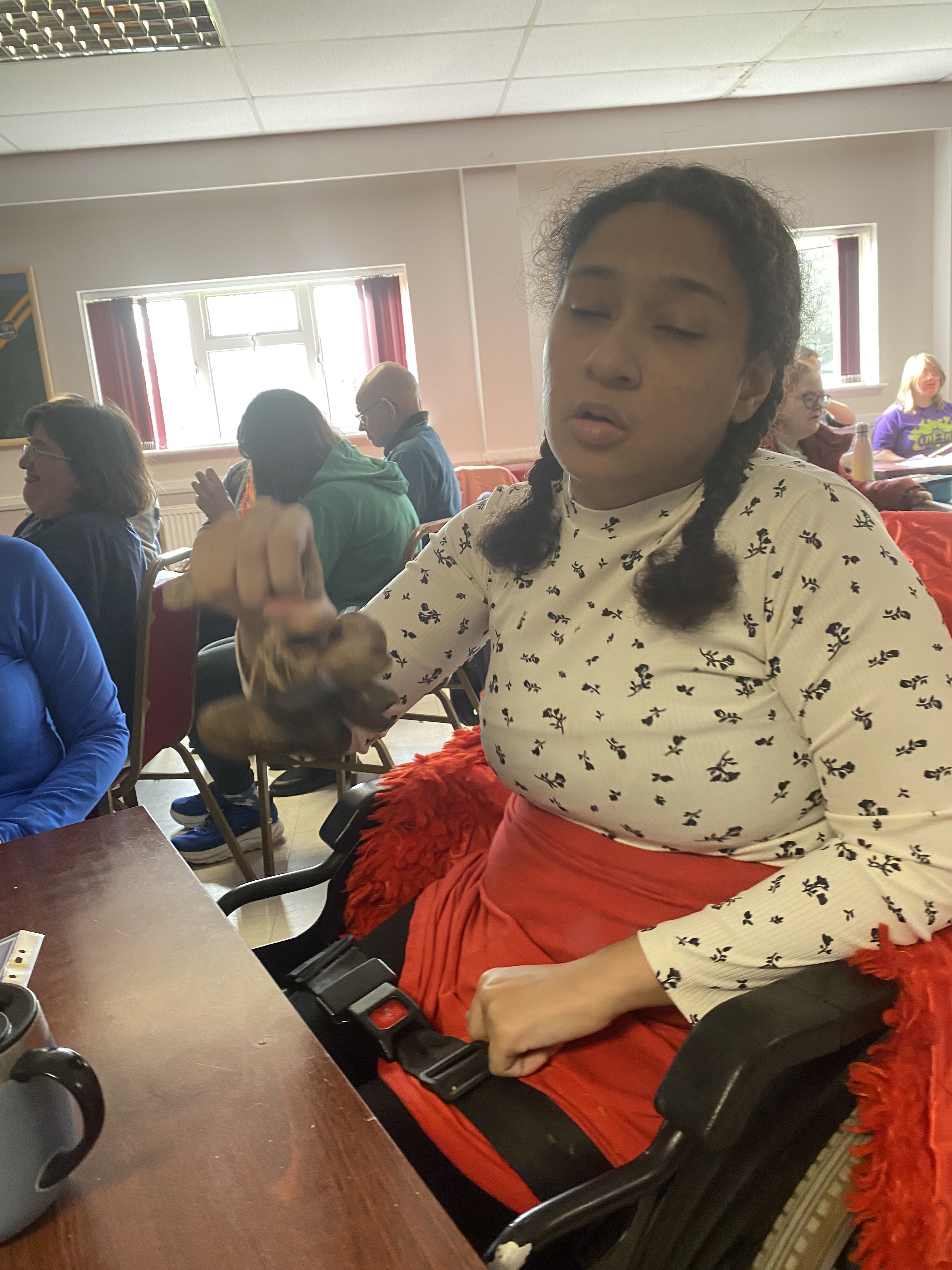
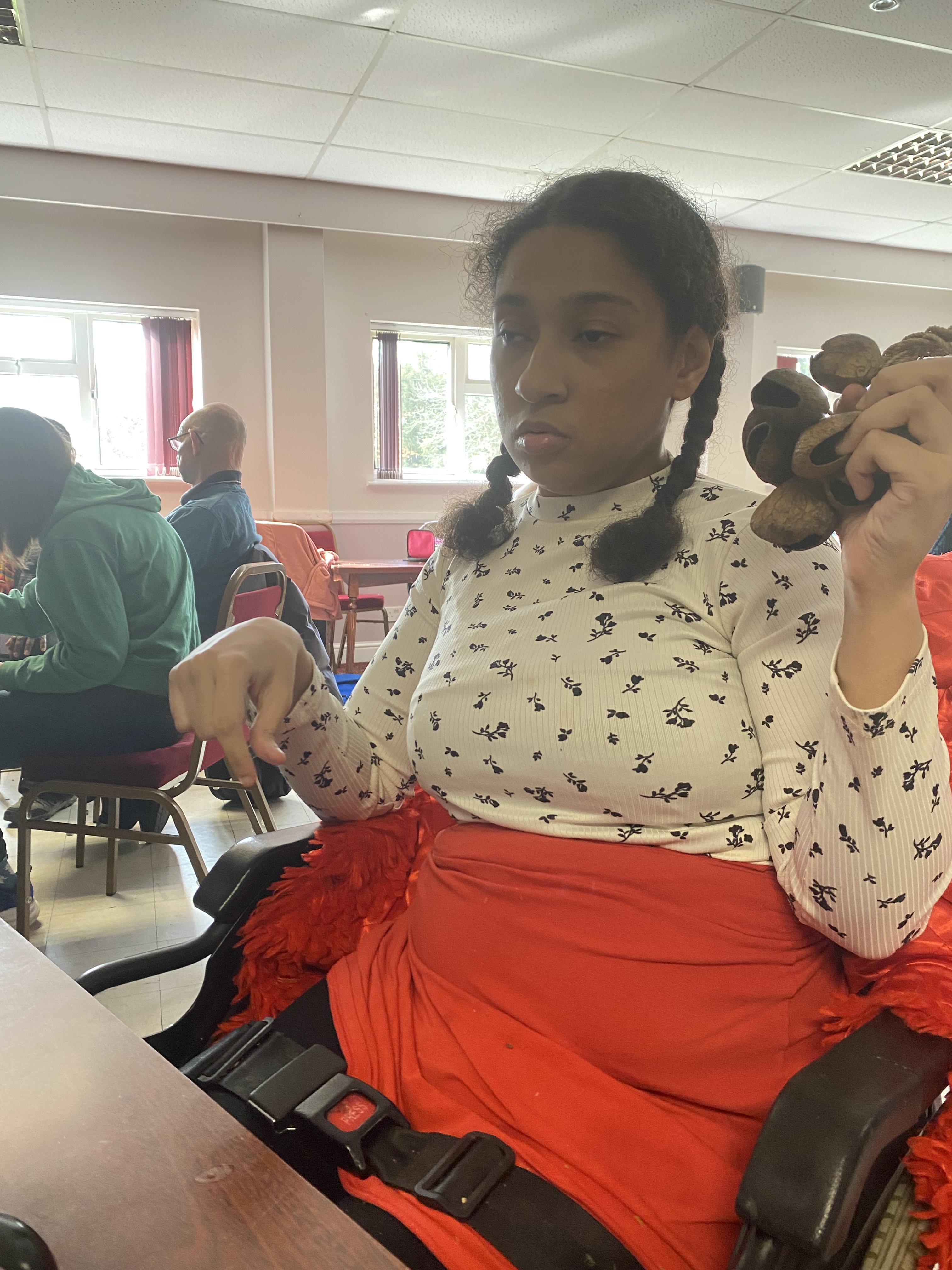
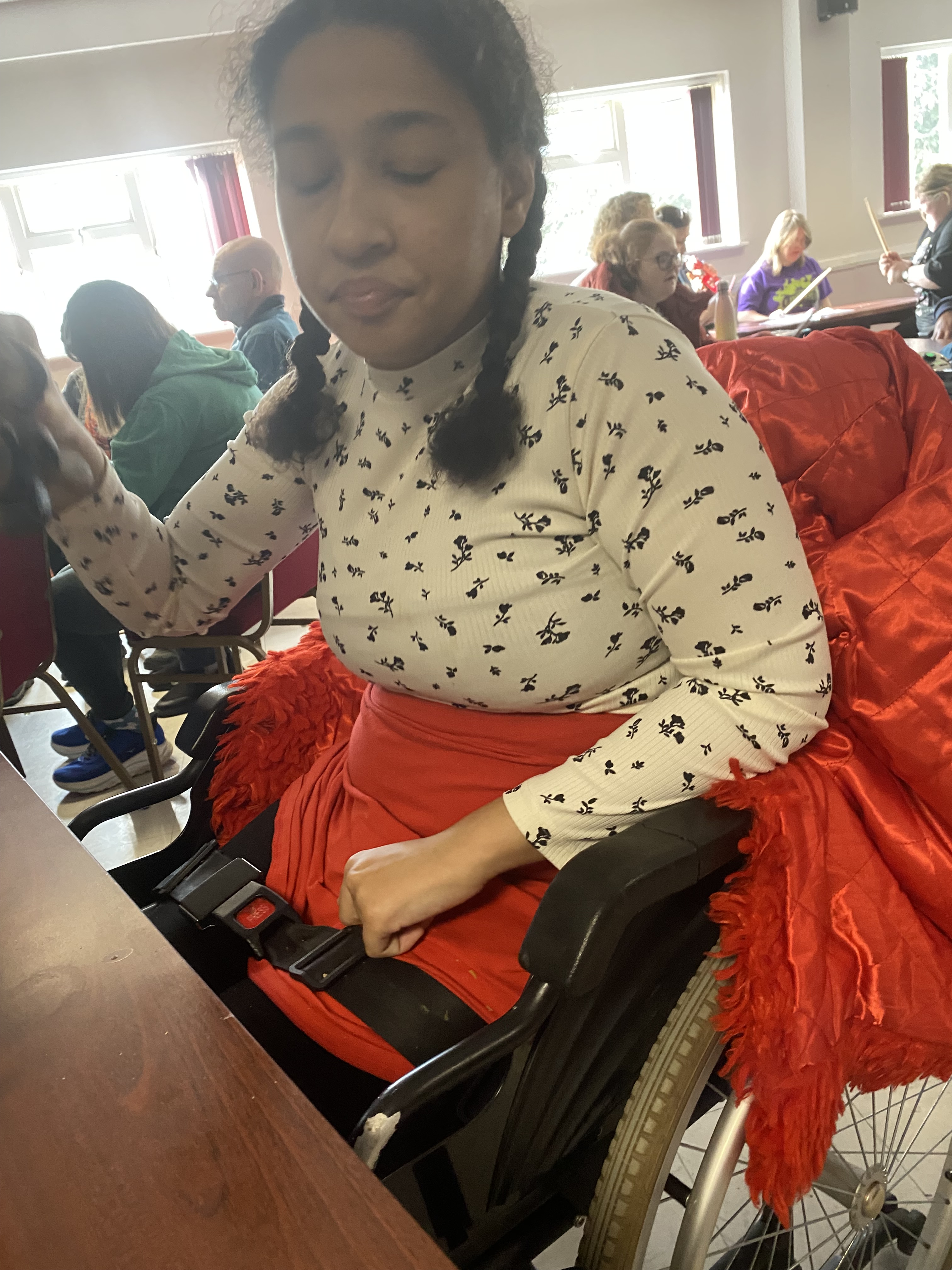
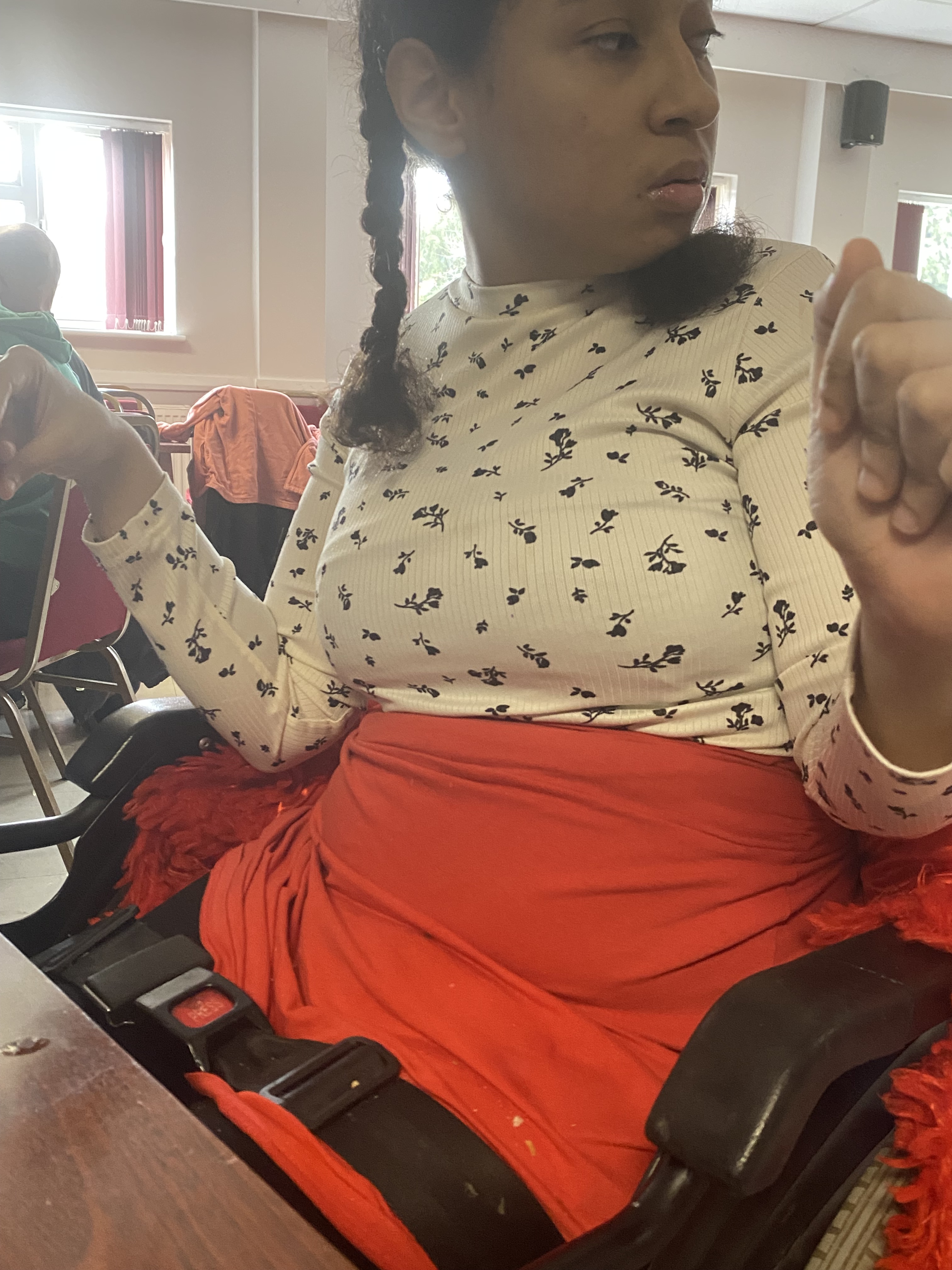
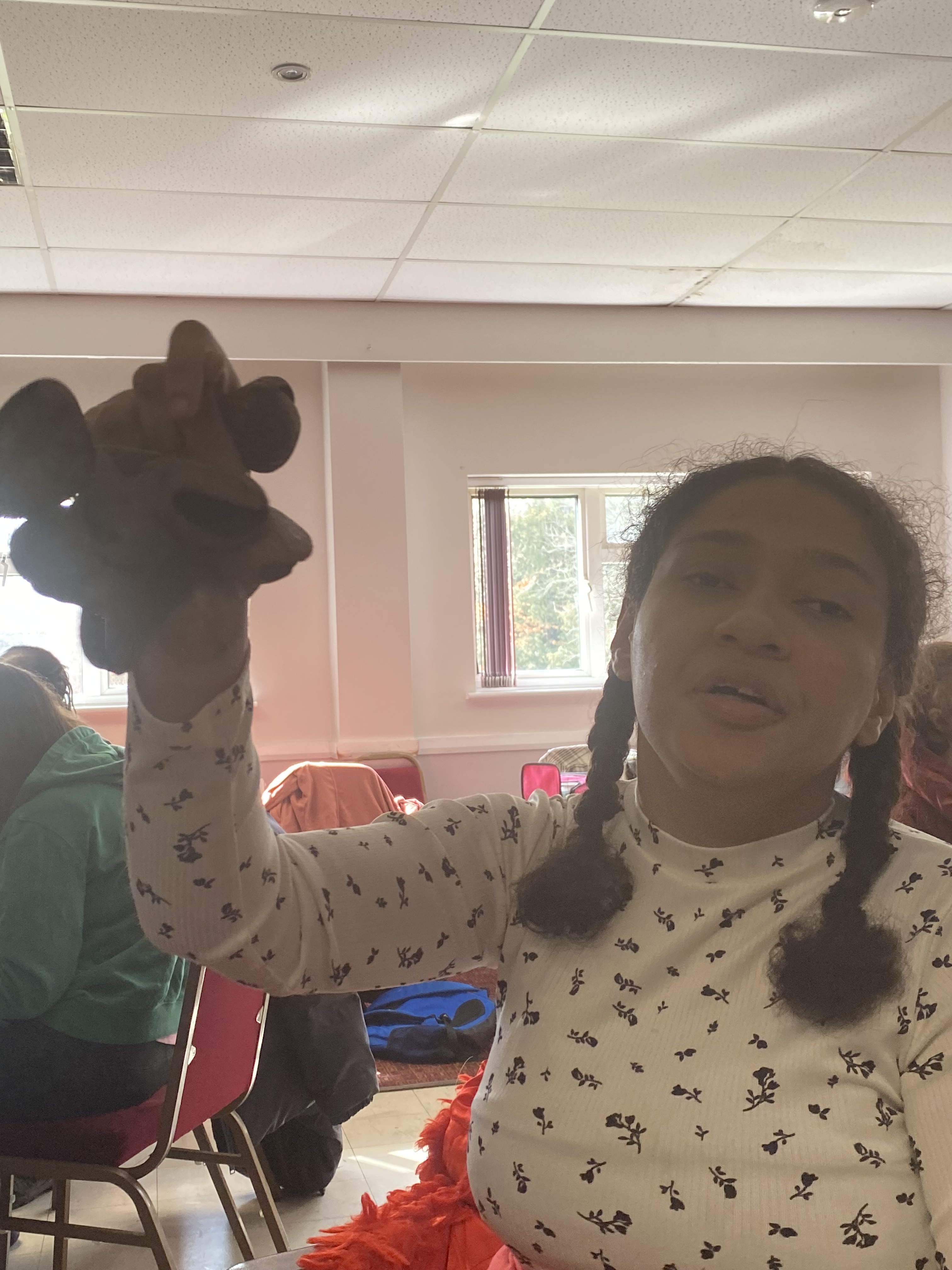
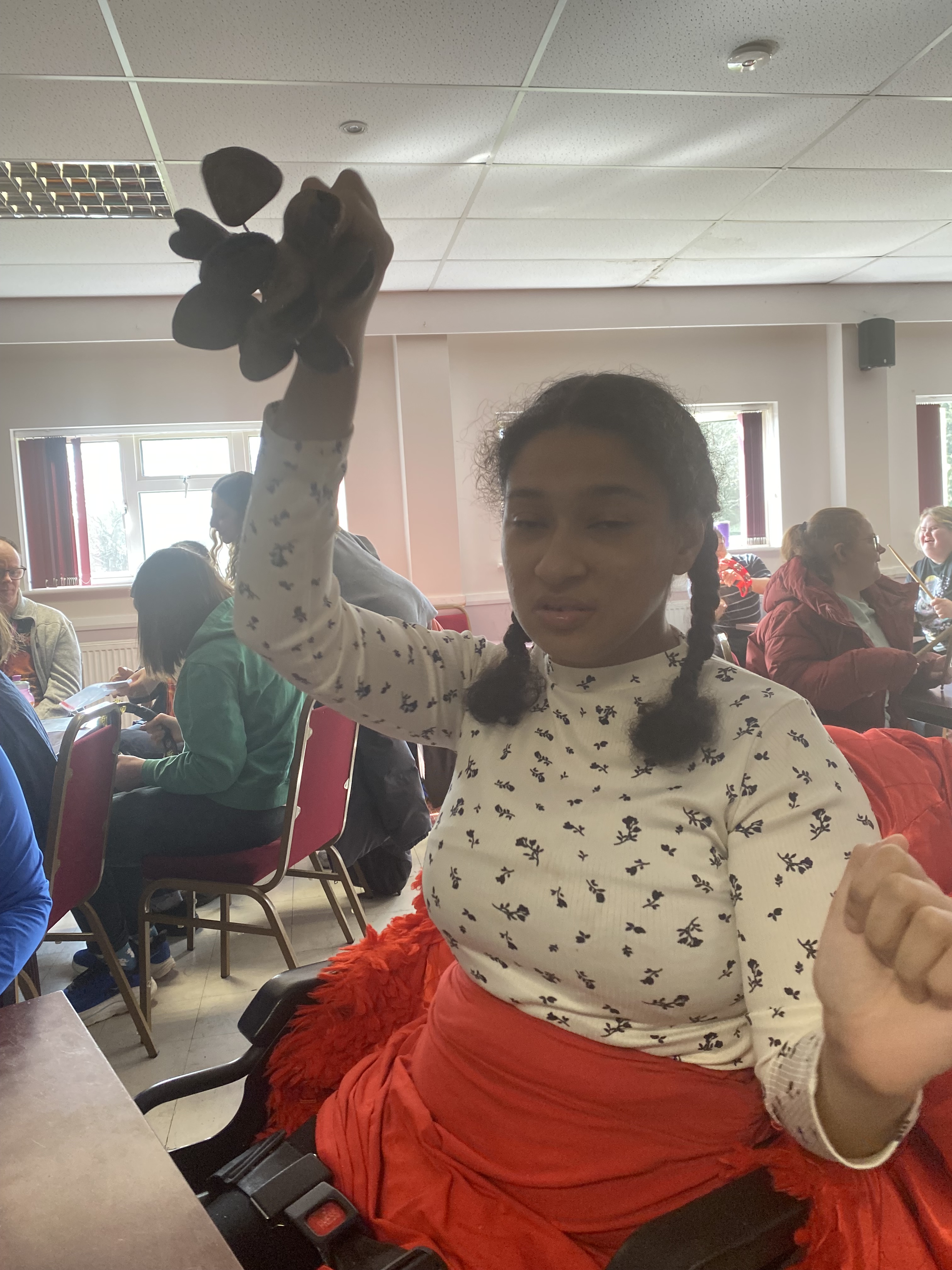
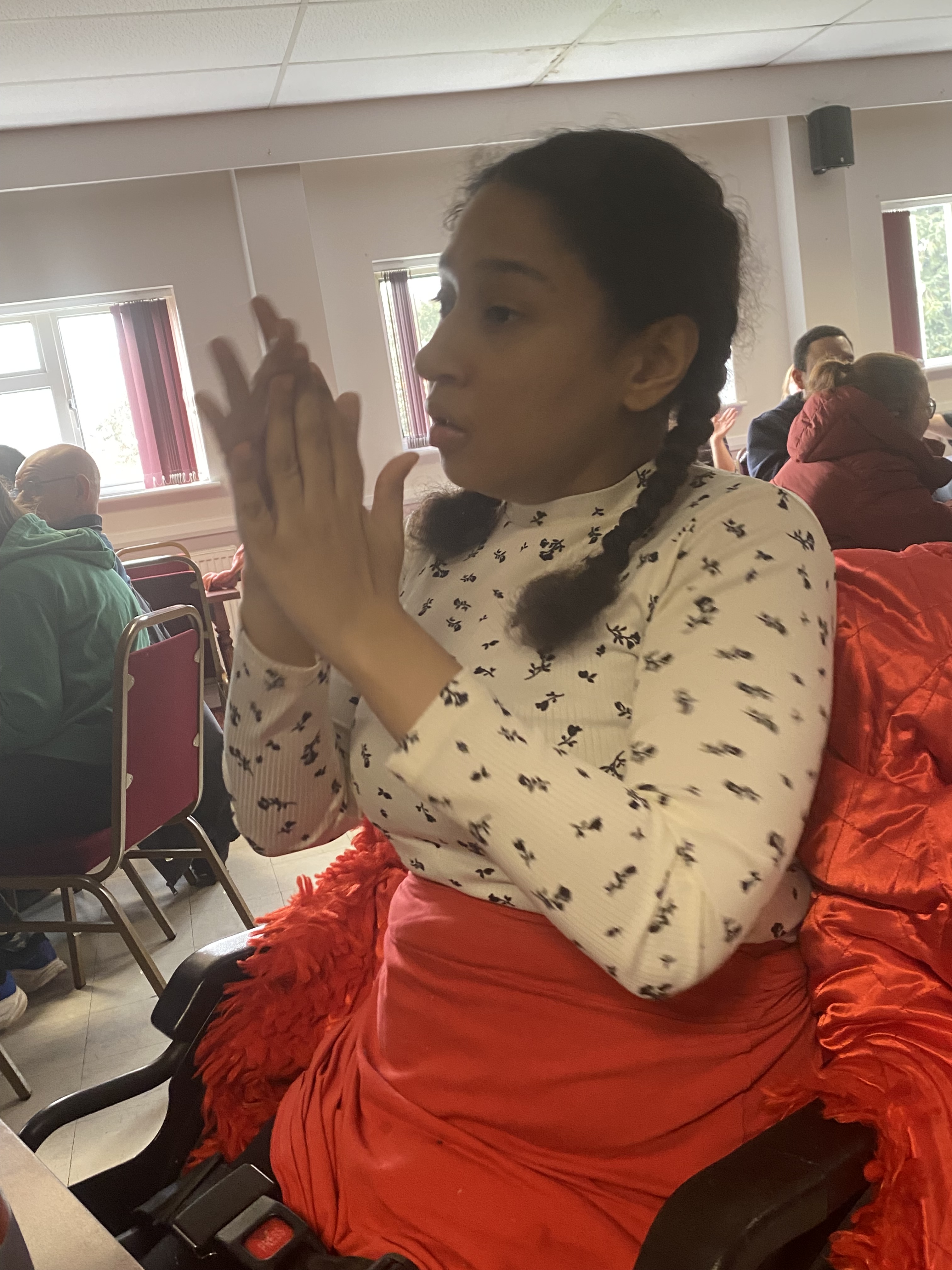
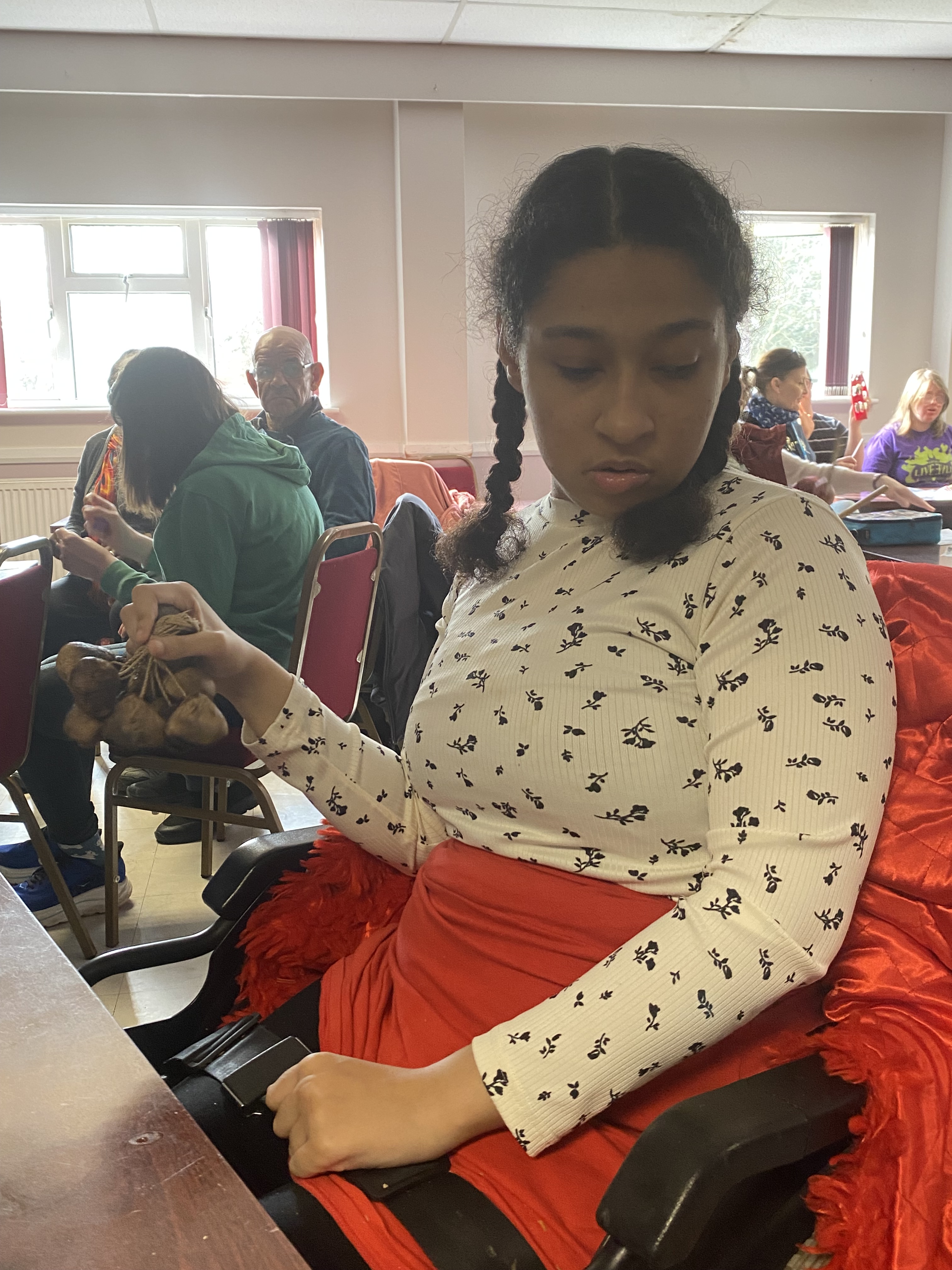
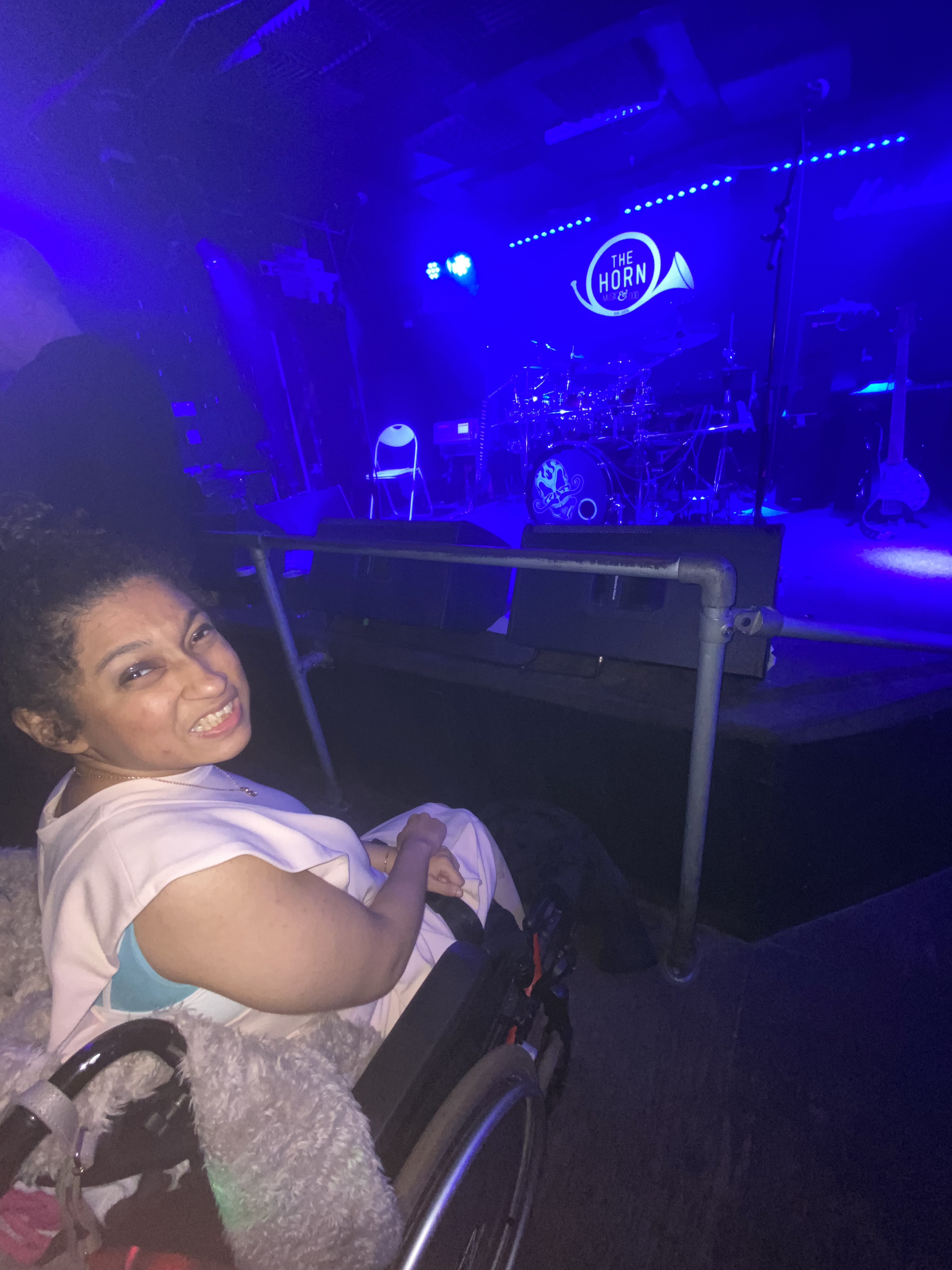
here are some photos of me participating in the music workshop playing maracas, drum’s sticks and creating a song.
we used provided words to create a song and learnt about different tempos and dynamics in music as well as having a go reproducing them.
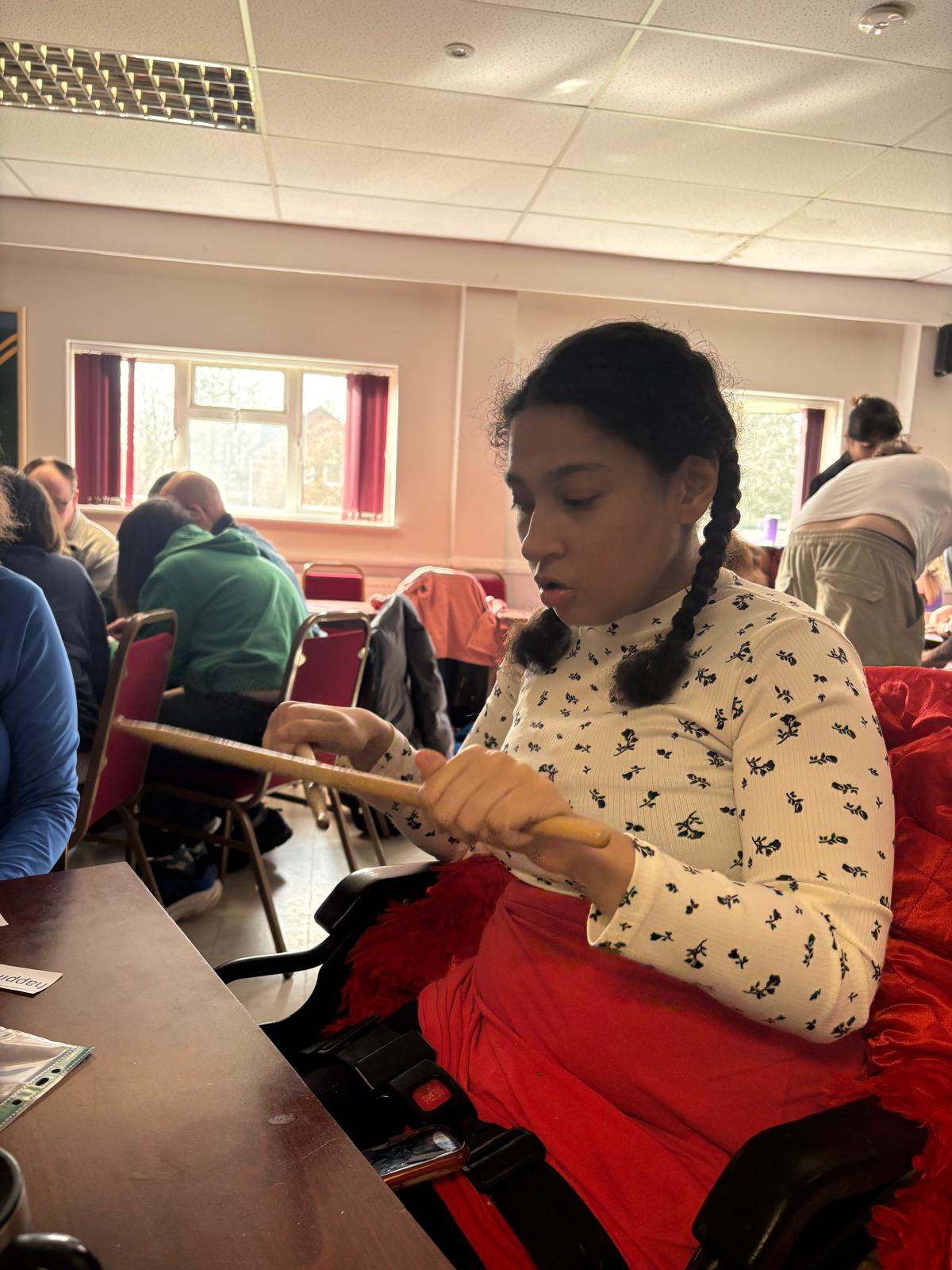
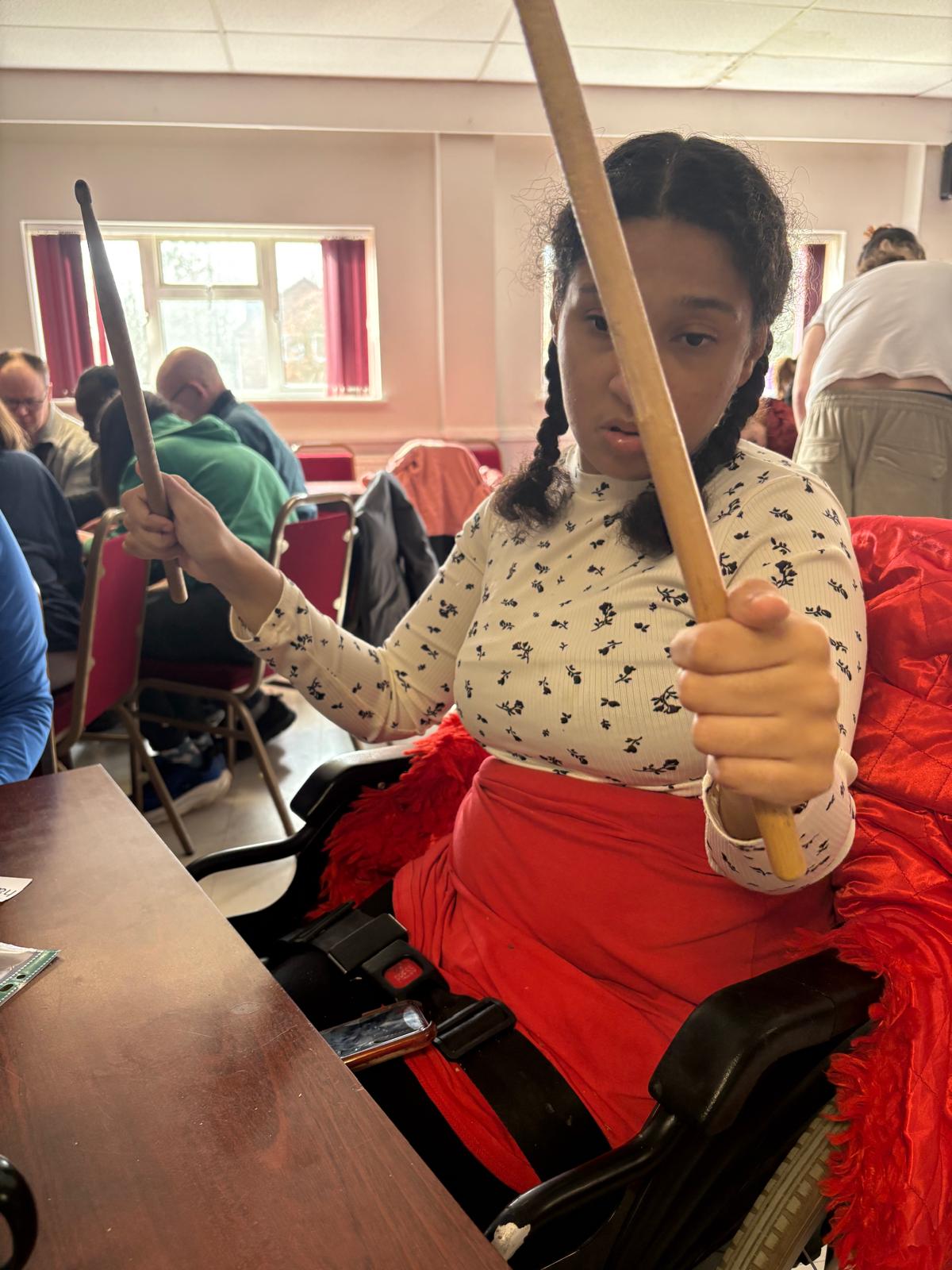
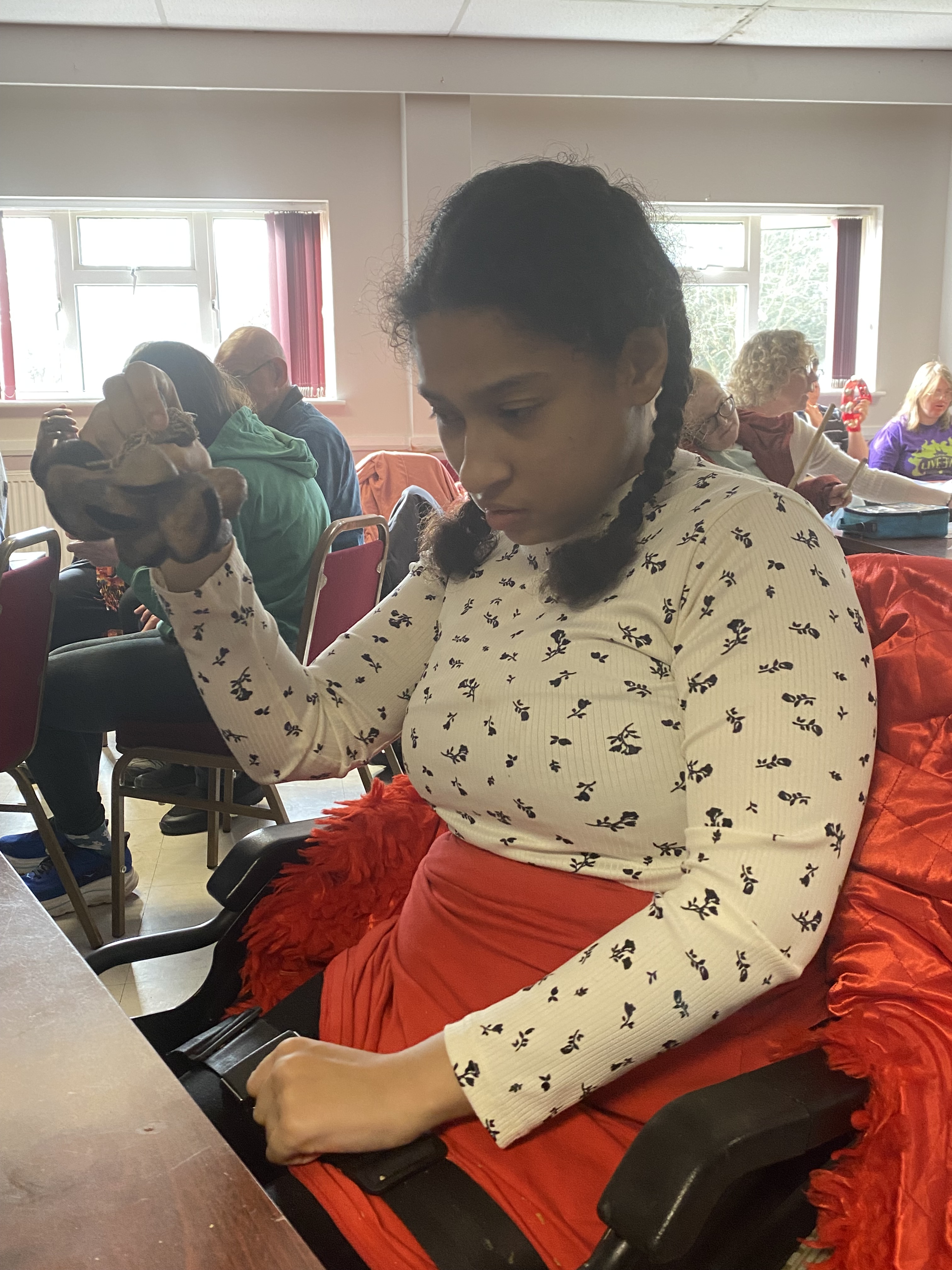
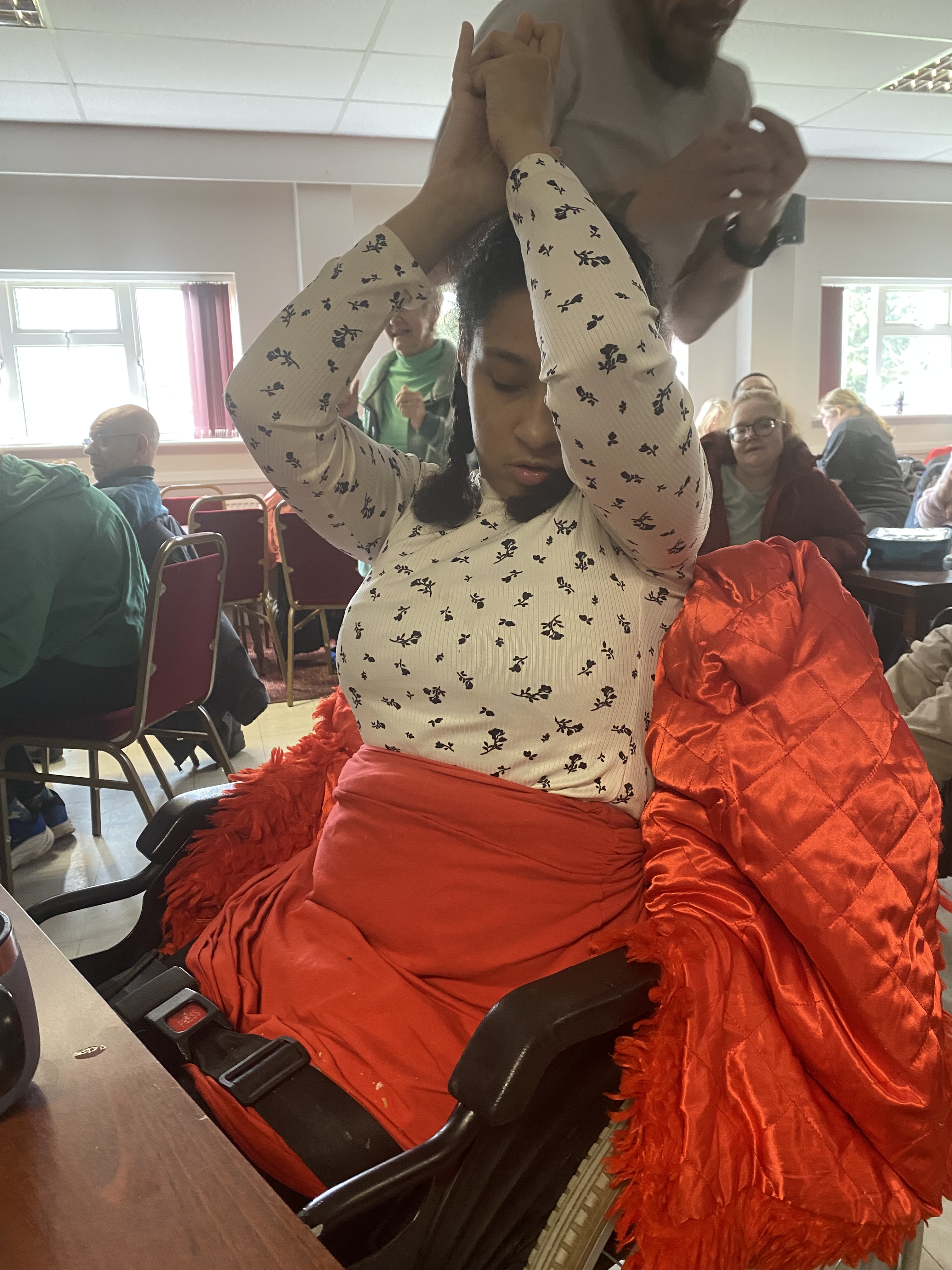
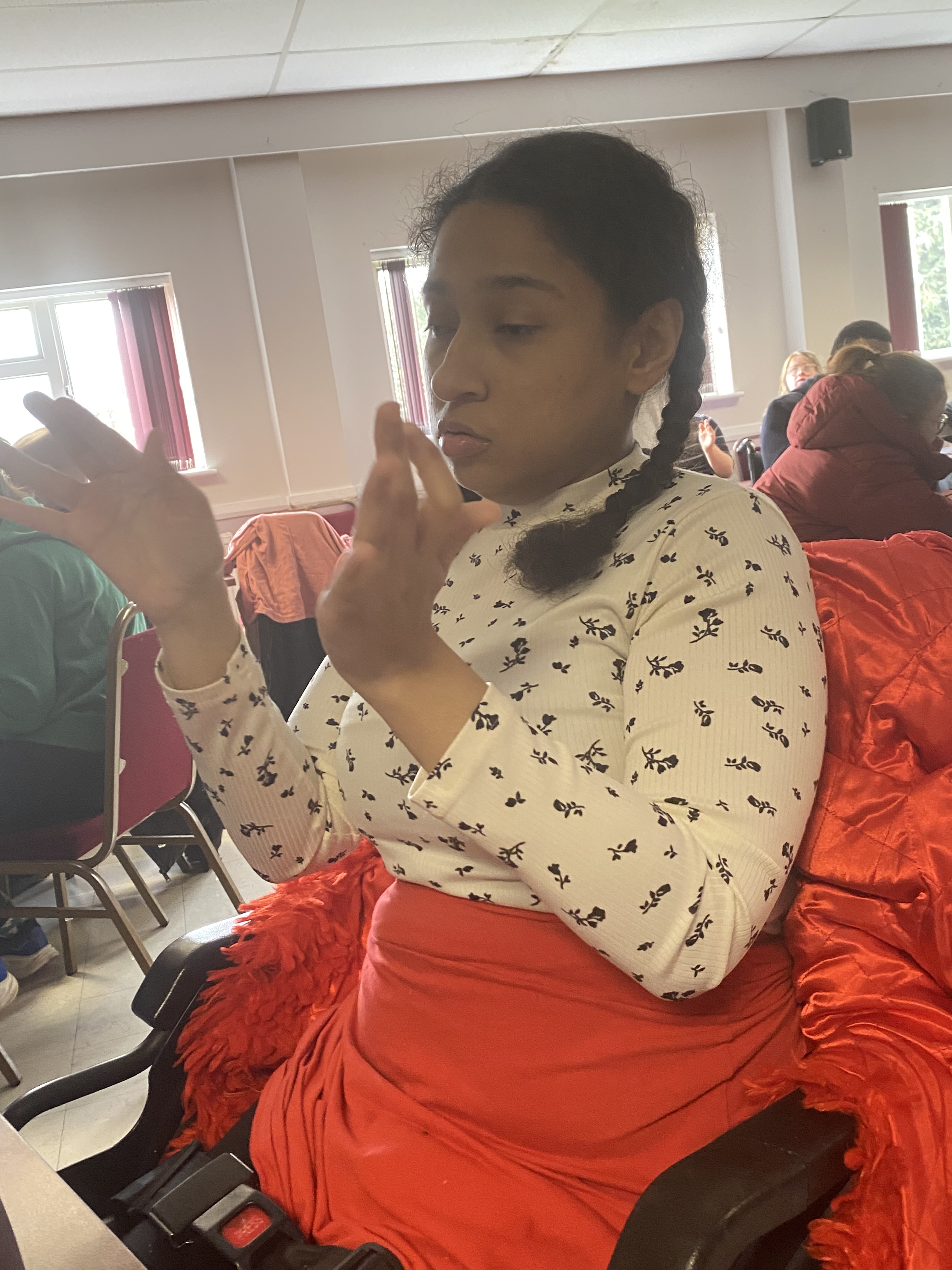
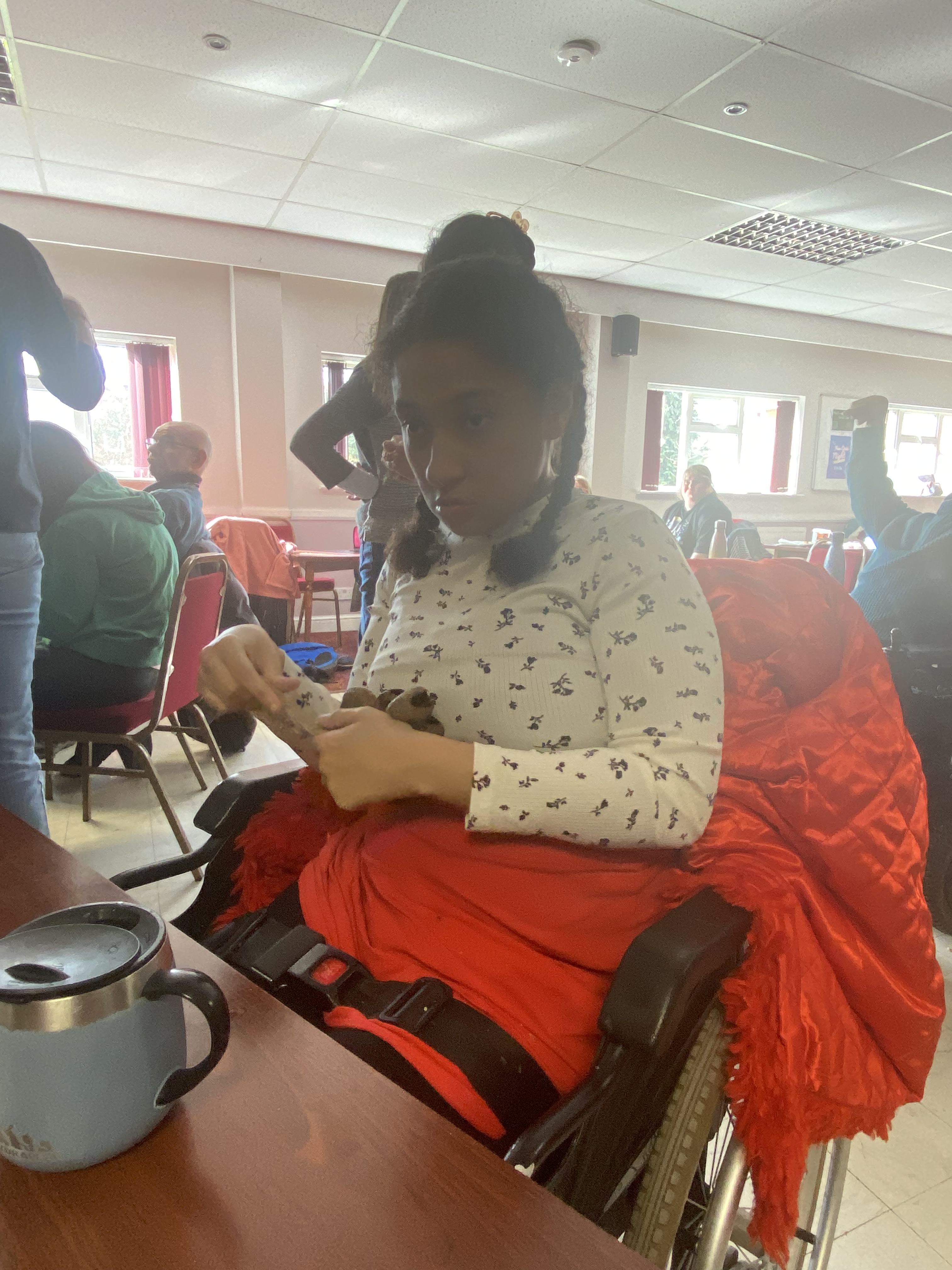
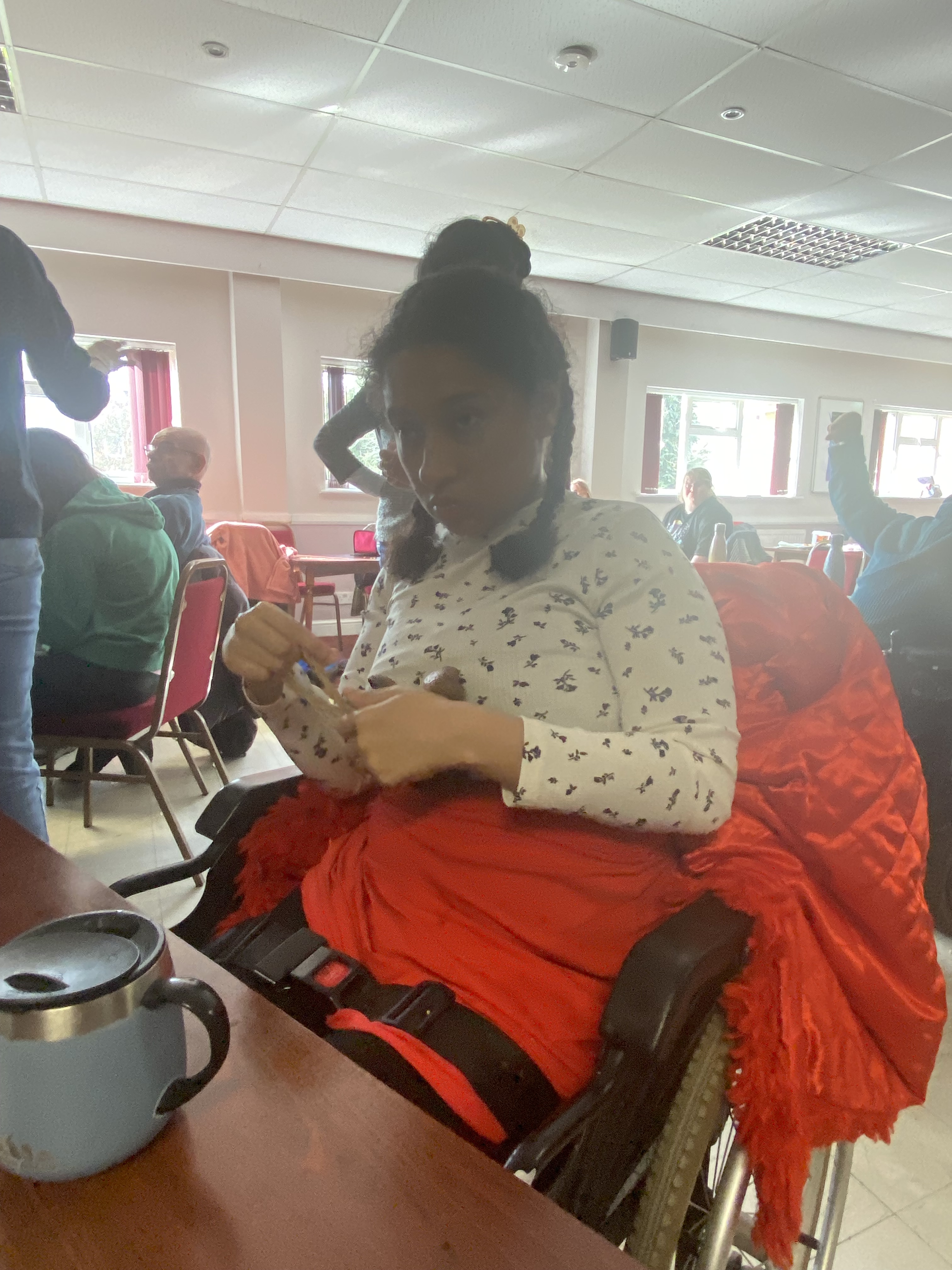
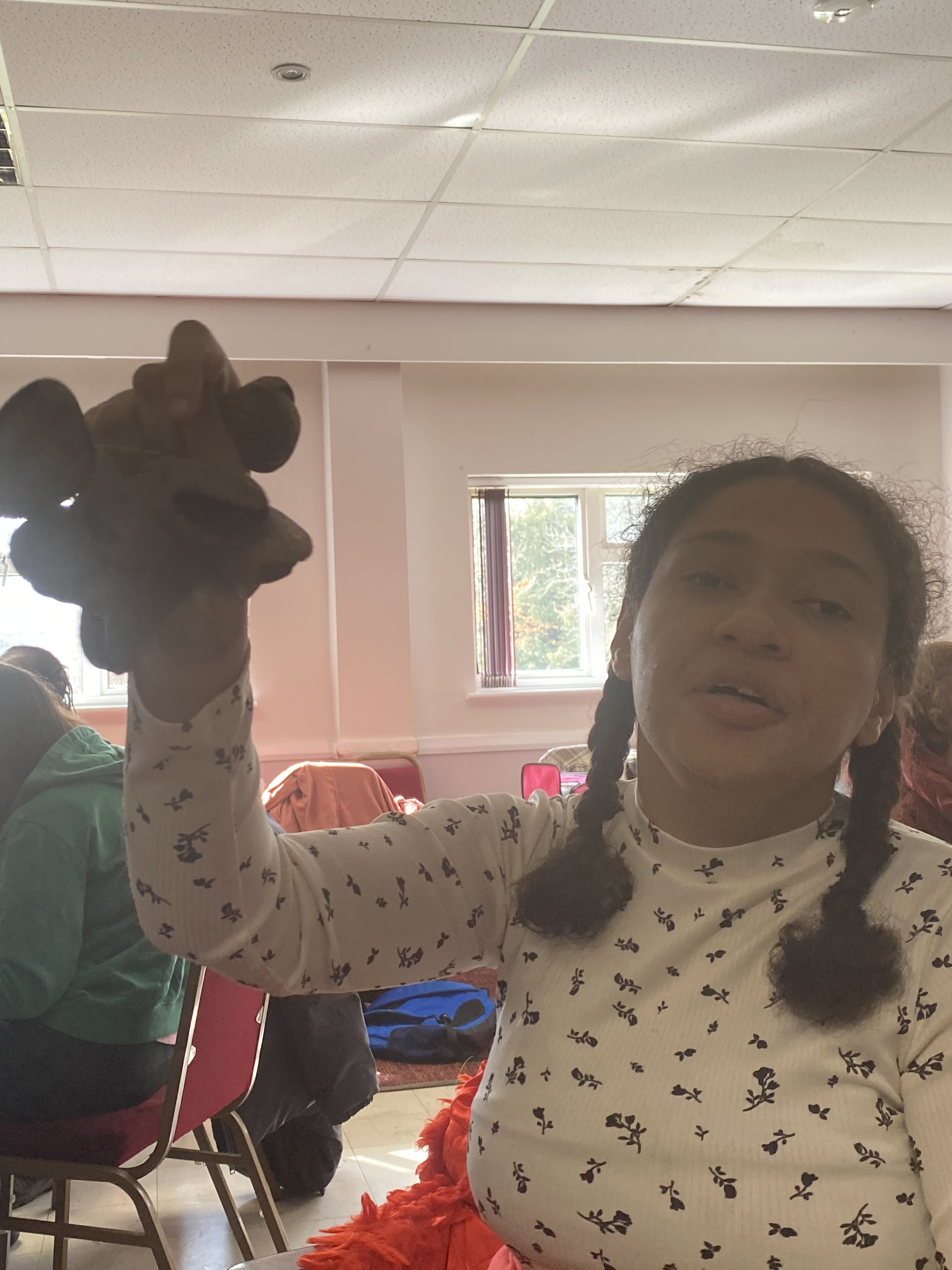
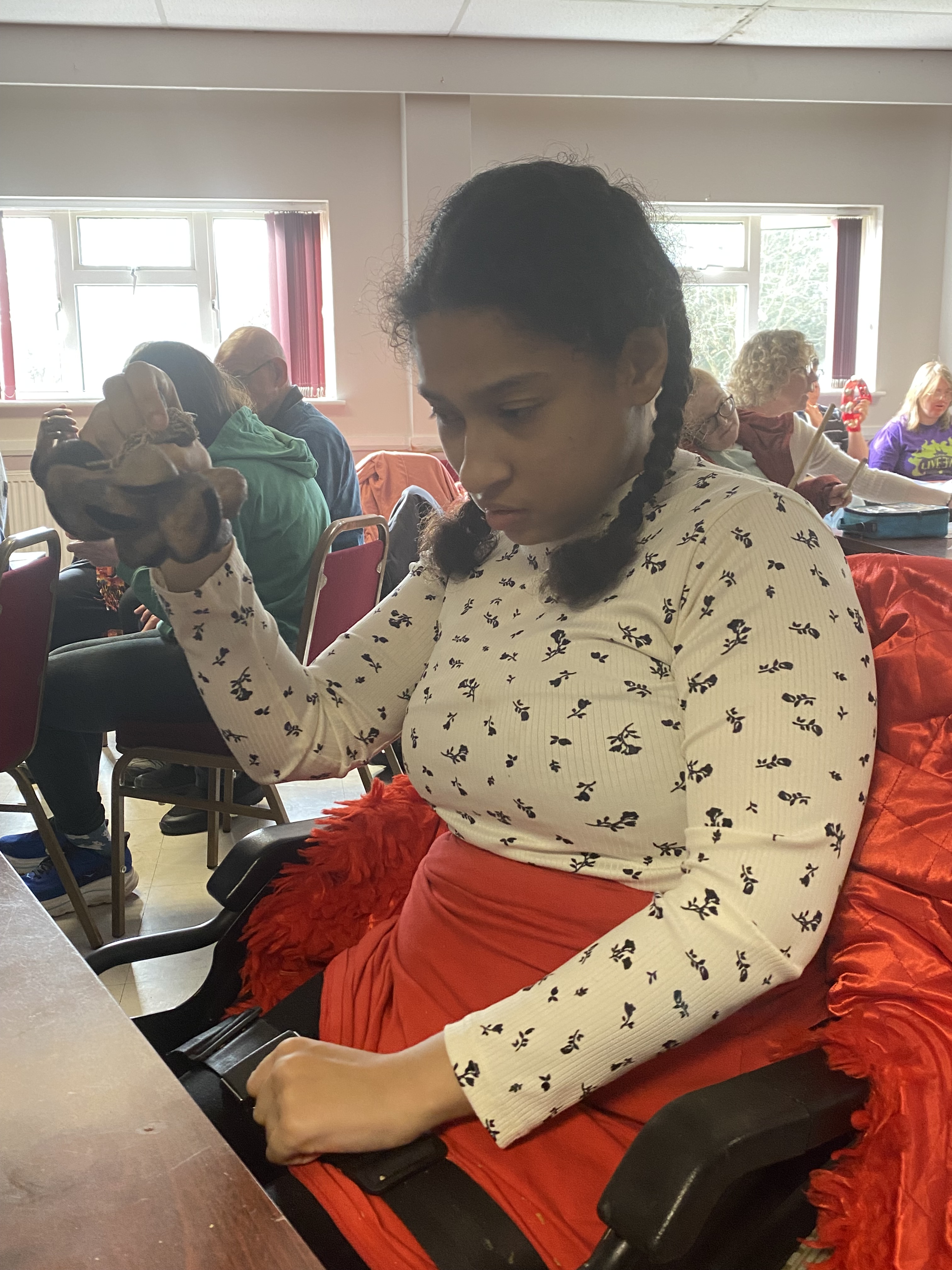
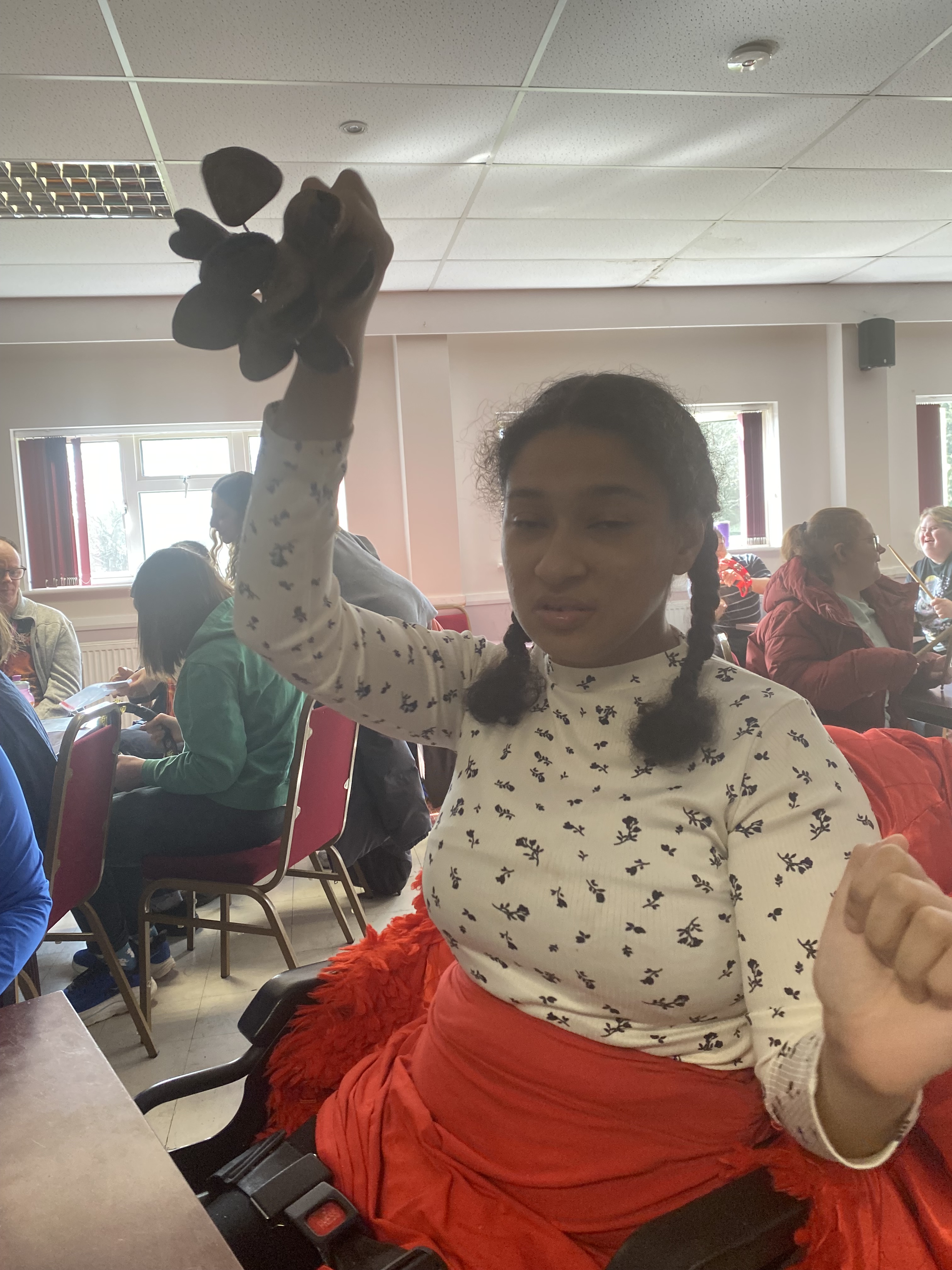
this is inclusion. People may think that a quality of life is a flashy car or a very wellpaid career, but for me it’s being able to participate in my community, as I did before Functional Neurological Disorder (FND).
I cannot do this with insufficient funding, so here I am trying to somehow make the invisible visible by sharing my story. The quality of my life and people like me depends on funding providers that rely on box ticking exercise. I have a rare FND condition with fluctuating severity, so there is no box to tick. On the other hand, all the difference to my quality of life comes with the right support, such as from their specialist PA team and when my medical needs are met to participate in activities like today it makes up the quality of my life and makes feel like a human being again.
The quality of my life depends on people who make the decision actually caring about me and my right as a human, including the right to dignity, respect and appropriate privacy.
Making Canvasses to raise money. Join me on Whatnot this afternoon or in future sales to buy my canvases
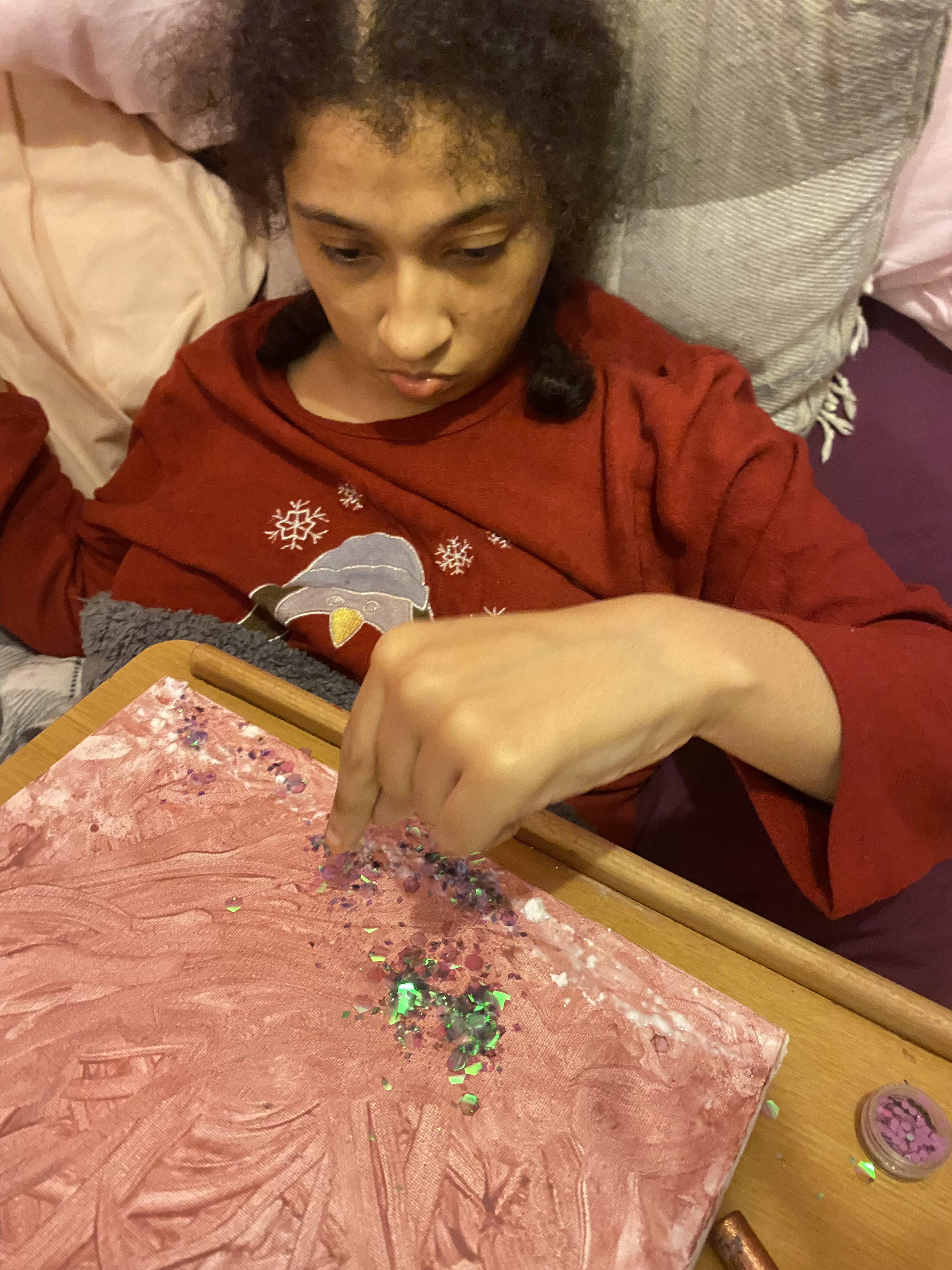
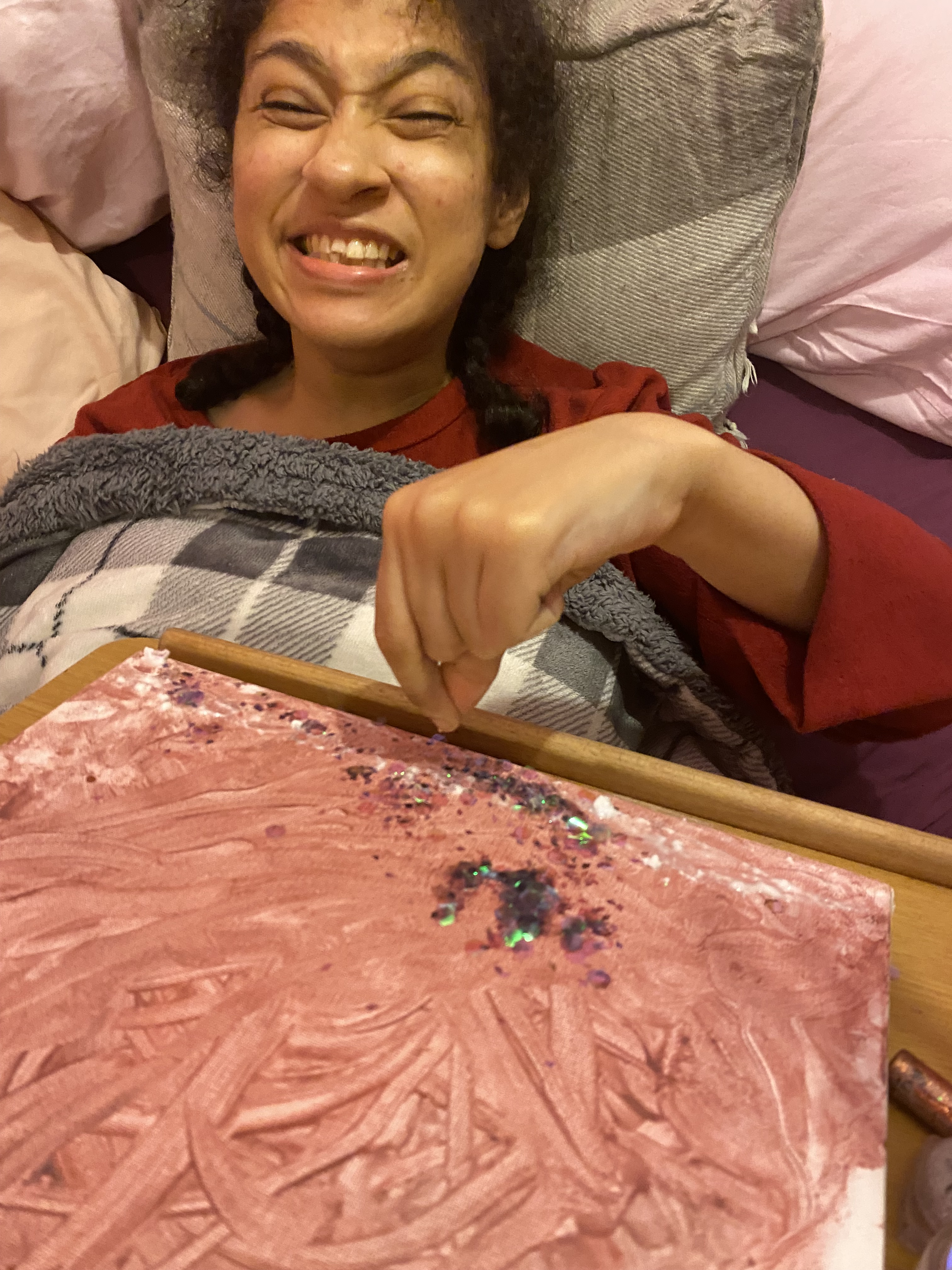
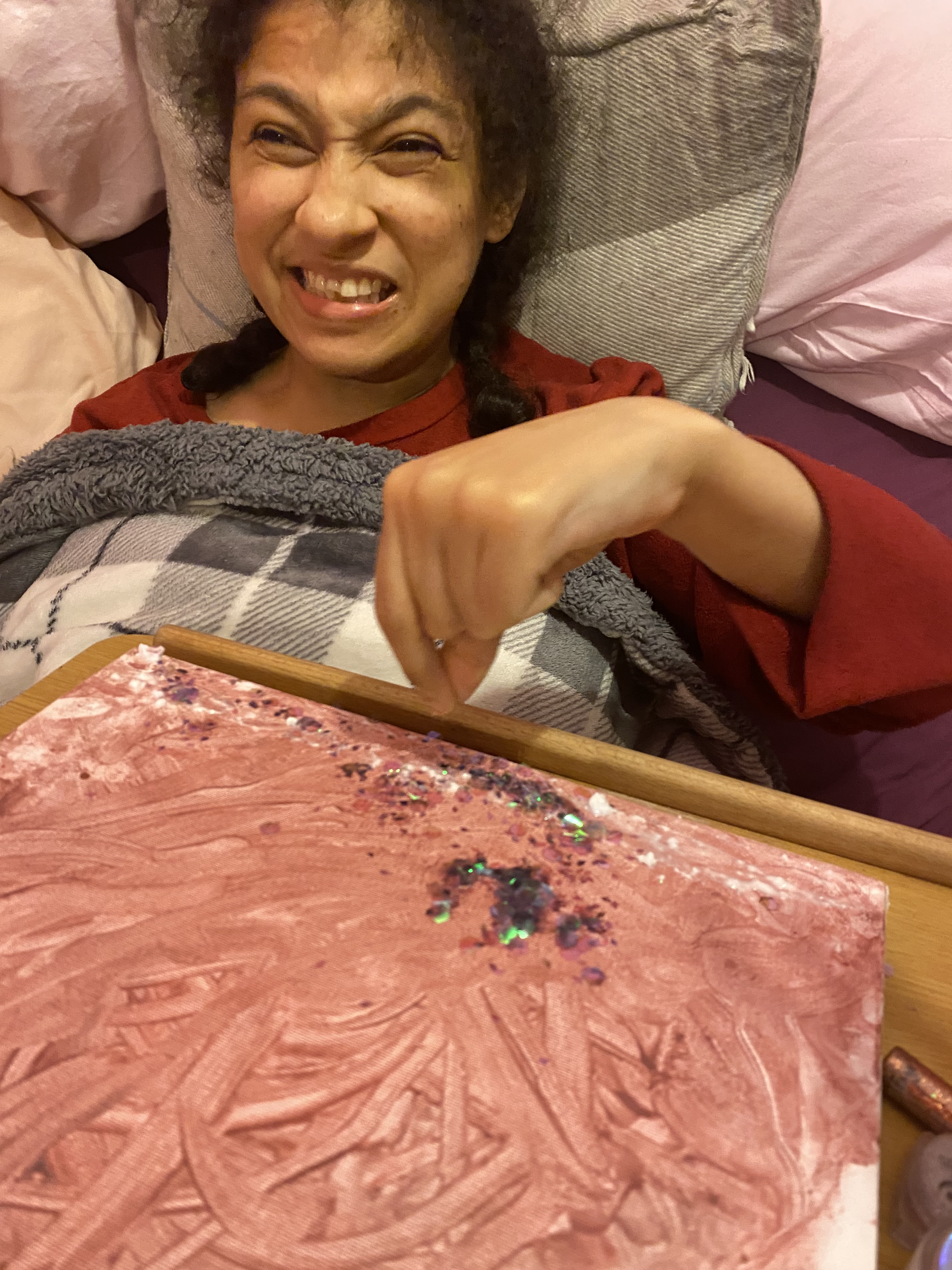
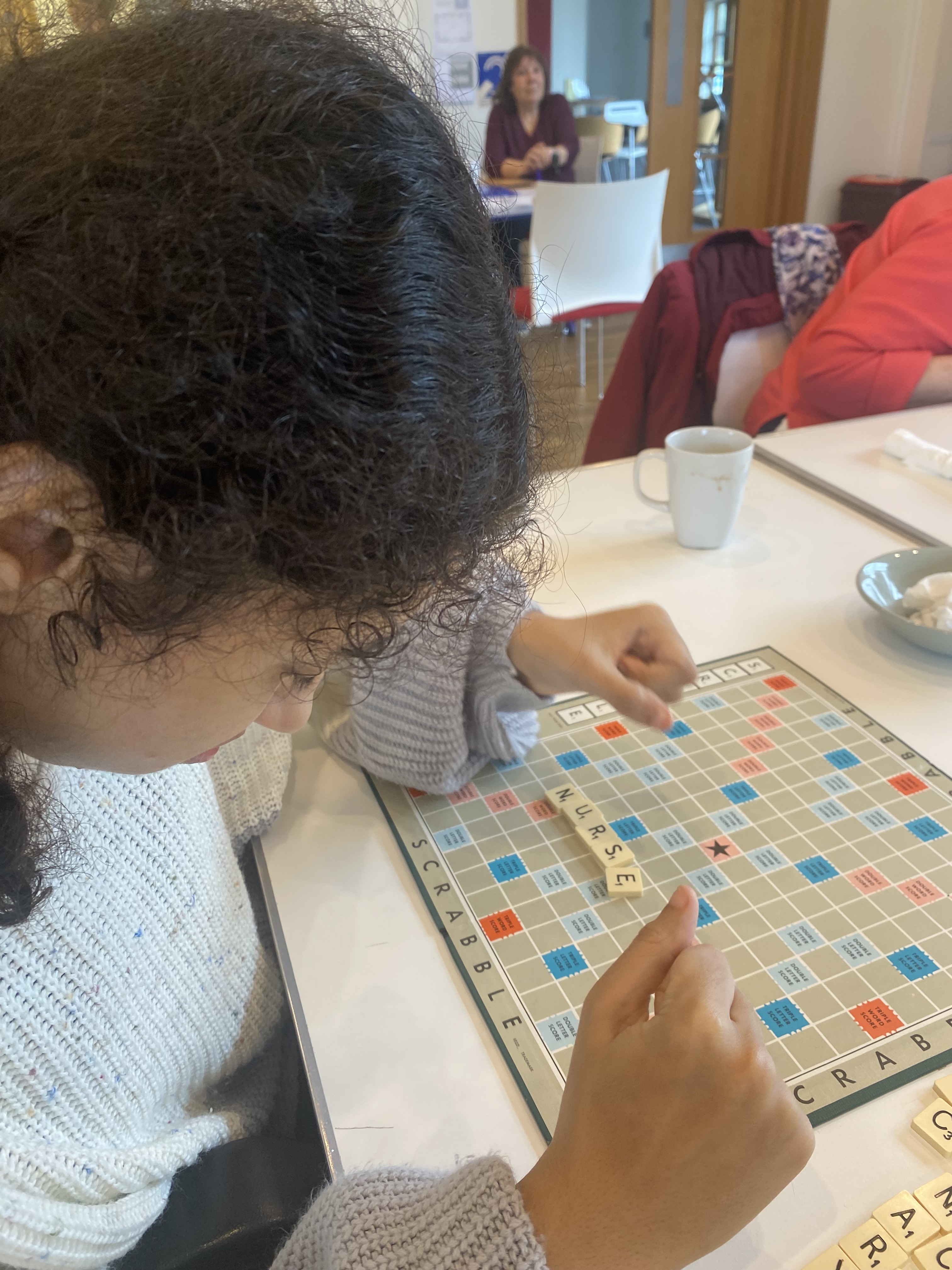
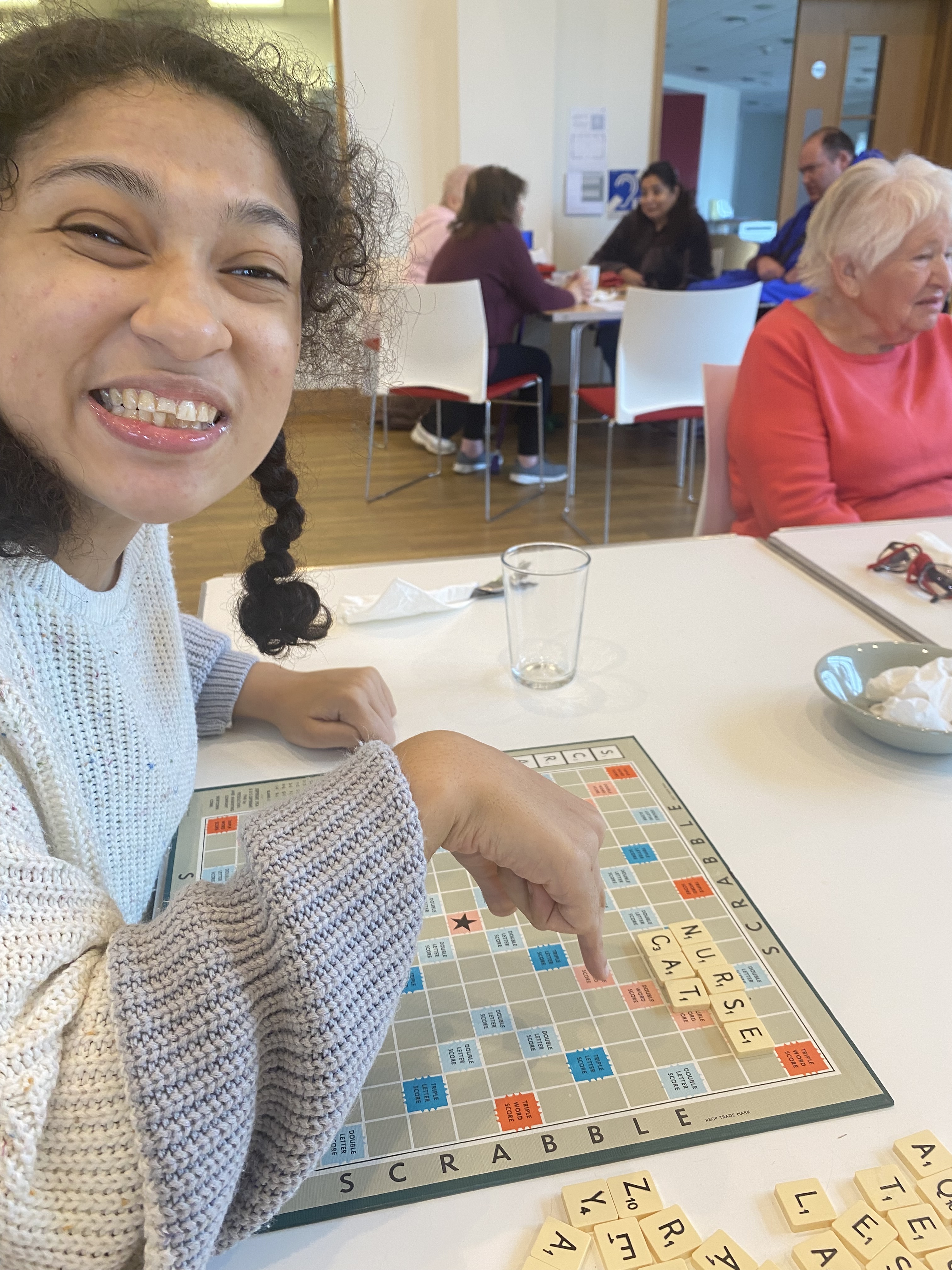
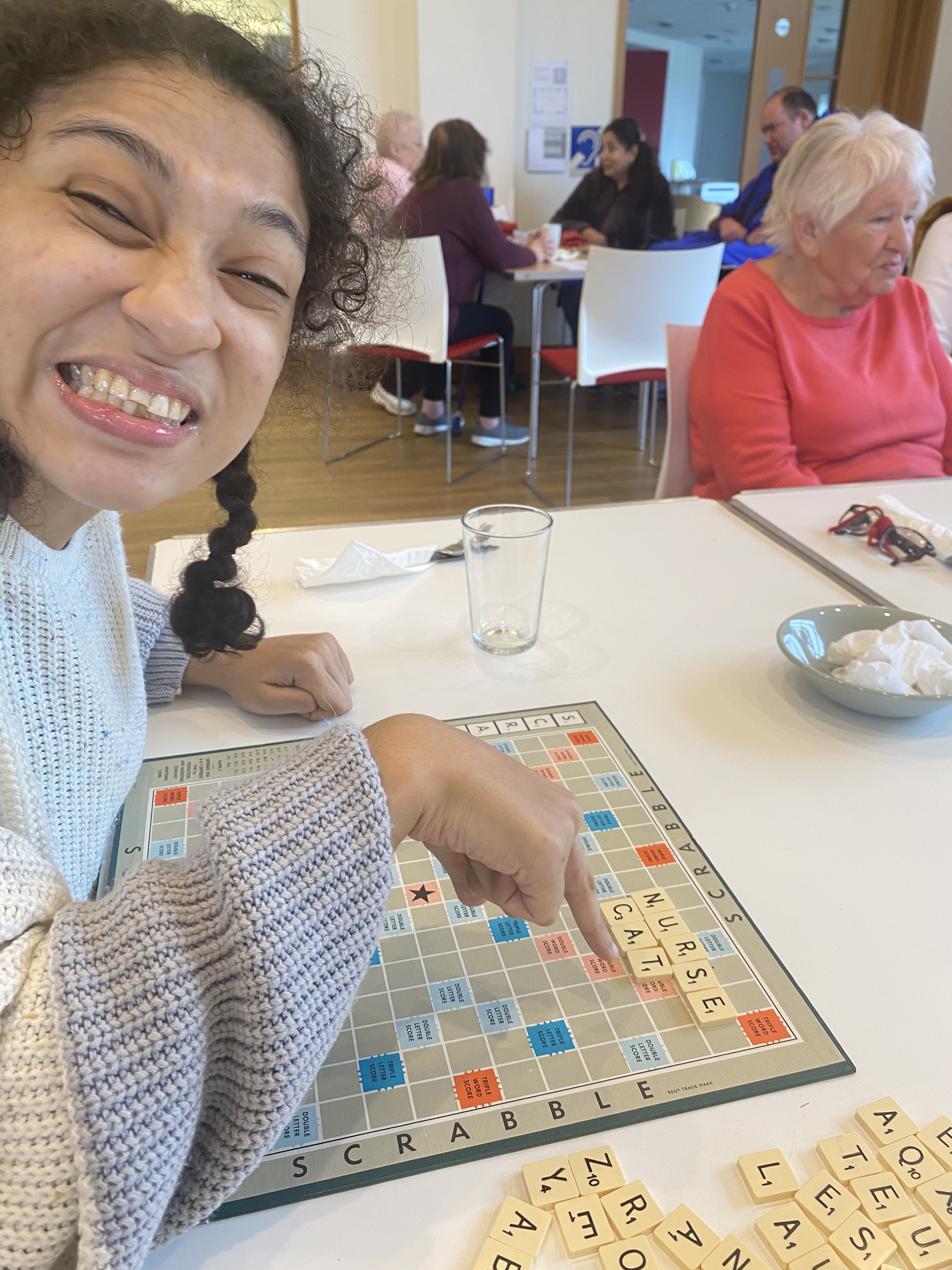
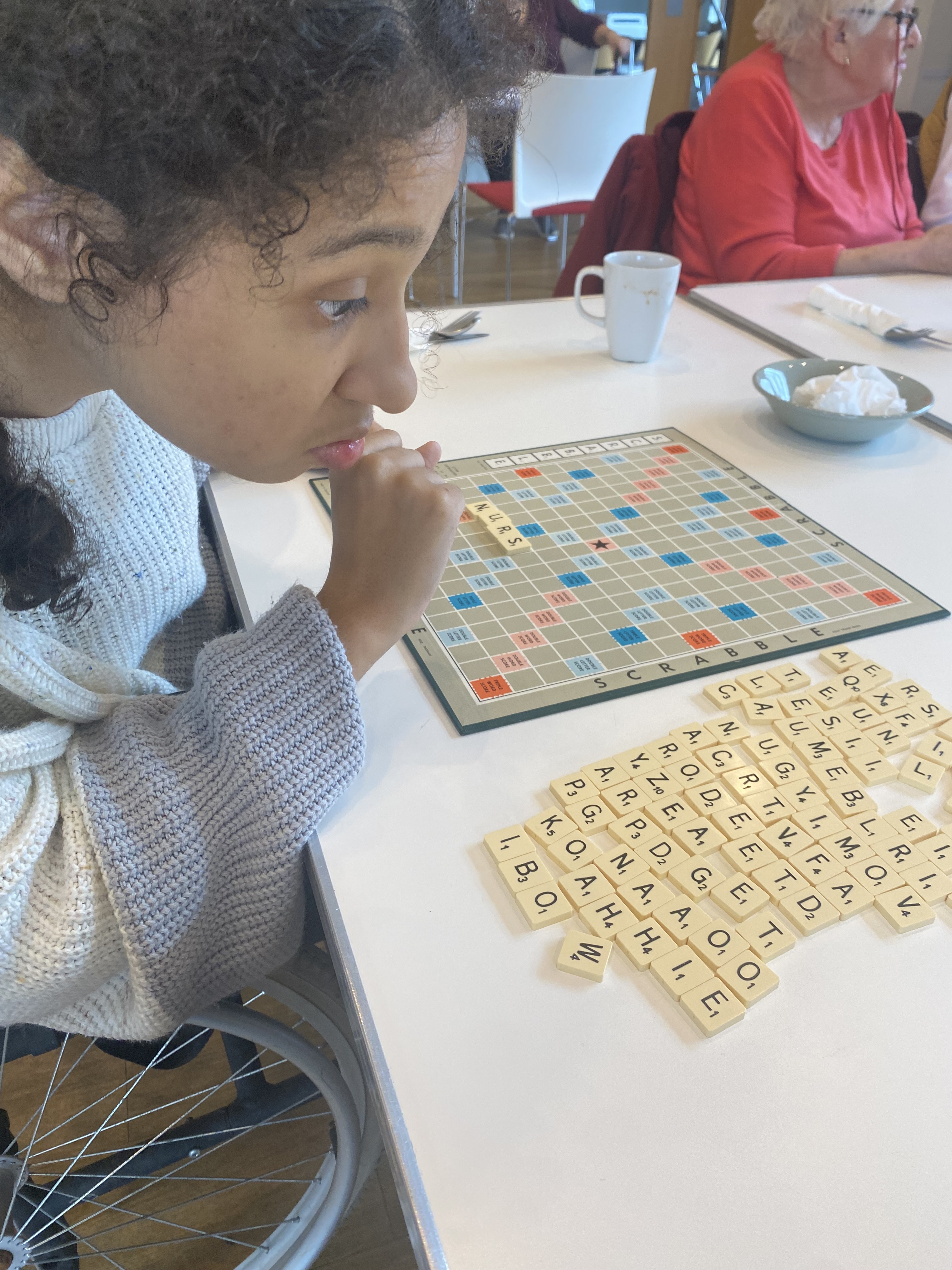
PAs are support us to have showers or maintain personal hygiene they mean that we are able to try a new things such as why do social services put limits on our capabilities to be able to live the life we want and participate fully in our communities of which we live
you’re not disabled by our disabilities and deal with every day we disabled by funding system that doesn’t want to enable us. It wants to disable us to make us small and to make us feel like we are incapable/inadequate to contribute to the society we live in.Having disabilities doesn’t mean we don’t want a purpose and we don’t want a life. We’re entitled to a quality of life and not just to exist. The Care Act 2014 is supposed to ensure that we as disabled people wouldn’t have to battle for the things we need and we are entitled to live the life we choose. A lot of councils don’t listen to the Care Act and still make us battle for the obvious things, which makes me cross and also makes me smile because you don’t realise how ignorant they are. this is not fair😅😡🥵 and actually makes me proud when I achieve things, like this Scrabble at Friday Club. The battle we have to go through to get there and the amount of self advocacy we have to do as disabled people is just unreal, infuriating frustrating. It’s a form of neglect and is not allowed.
Bingo may not be the first thing you think of when you think of climate change.
But when you play with pictures of ideas for tackling the issue instead of numbers, it can help people like Patrick and Michael McKinney understand how they can make a difference.
The brothers both have special needs and live in supported accommodation.
They have completed a climate change training course for people with learning disabilities – thought to be the first of its kind in the UK.
Their accommodation is in Newtownstewart in County Tyrone.
And their top tips?
For Patrick, it is buying pre-loved clothes instead of new.
And for Michael, who loves gardening and growing flowers, it is collecting food waste for compost.
Michael is responsible for turning off the lights when the brothers leave the house in their new hybrid electric car.
Patrick mows the grass in the garden and puts the cuttings on the compost heap.
Both help sort recycling in their house and have reusable water bottles for when they go to the gym.
Patrick said the training was all “very good” – talking about animals, walking and learning about things they could do differently in the house.
The brothers attended classes over the course of several weeks in 2025.
‘Becoming a mum inspired me’
Hanna Coney works with the brothers in their Sperrins Supported Living Services.
She became a mother last year and found herself thinking more about the world her child would grow up in.
She thought the training would help build the brothers’ confidence and independence, but was surprised by just how much they got involved.
“The conversation of climate change can be quite a frightening topic, but I suppose for us as support workers, it’s to make sure that we’re not fear mongering the people we support.
“And they’ve really taken off with it.”
The training will be rolled out to other support services in 2026.
‘It’s been empowering’
According to the chief executive of Positive Futures, one of the groups behind the project, those with learning disabilities are affected differently by climate change.
Agnes Lunny said developing the training with Keep Northern Ireland Beautiful had broken down barriers faced by her members.
“They get excluded from all sorts of issues facing all citizens.
“I’m not saying that that’s a malicious intent, but it’s just, ‘oh, well, you know, it’s too difficult, we can’t really do it, we can’t make our material accessible, we can’t do it and really, they don’t understand anyway’.
“Well, of course they don’t, if the information isn’t shared and if the information that is shared is inaccessible.
“So it’s been incredibly empowering.”
What is climate change training?
Climate change training teaches people about how their choices affect the planet and how they can do things differently to reduce their impact.
The plastic bag levy has been used to fund the training, provided by Keep Northern Ireland Beautiful.
The charity’s Strategic Lead for Climate Action, Scott Howes, developed the course and adapted it for a special needs pilot.
“It’s as much about action as about involvement in being in the natural world,” he said.
“So they’re encouraged to go out, walk in the woods, make drawings of the natural world, explore places with friends, and to come back and talk about what they’ve discovered.
“From that, we lead into thinking about how we can impact the natural world, the damage we can do to it, and the whole range of different ways that we can reduce our impact.”
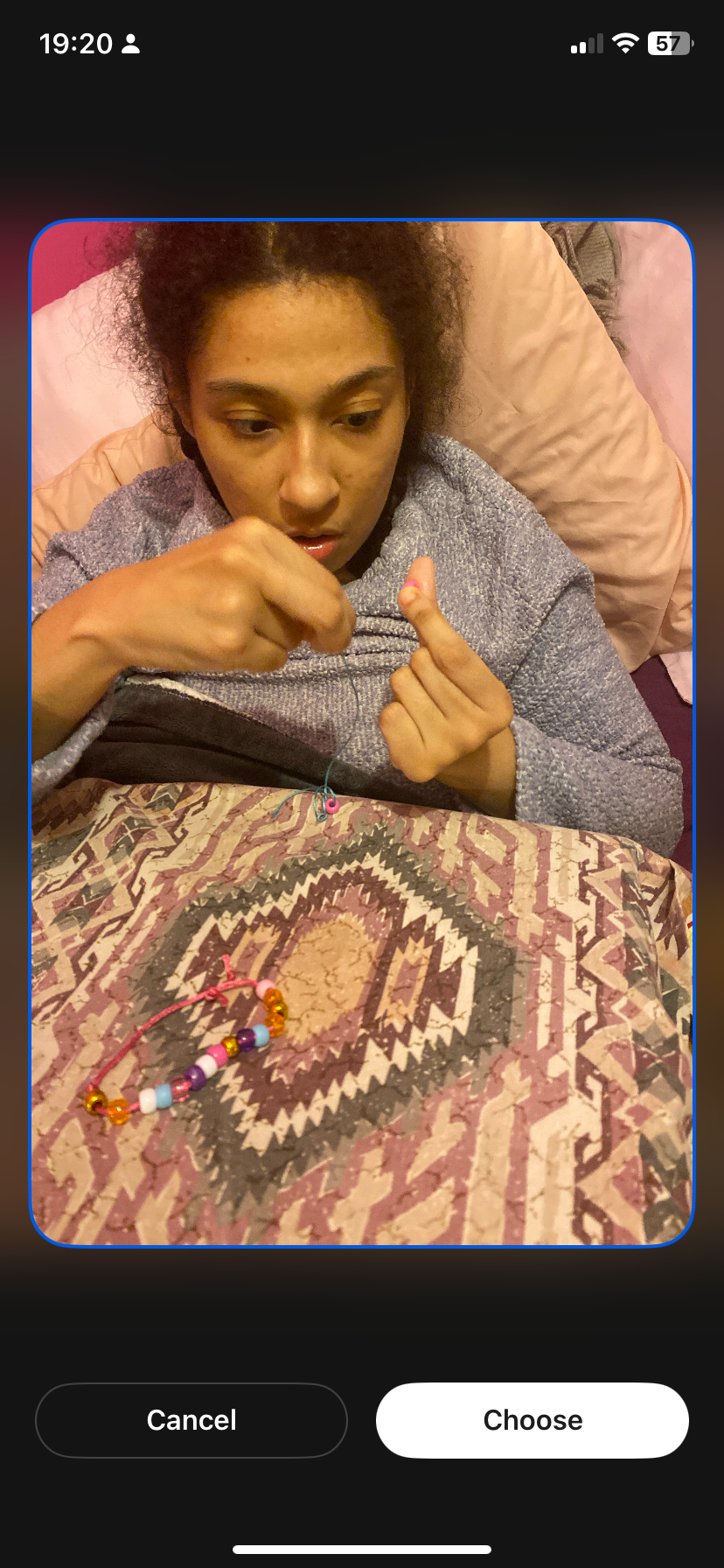
Relaxing in bed
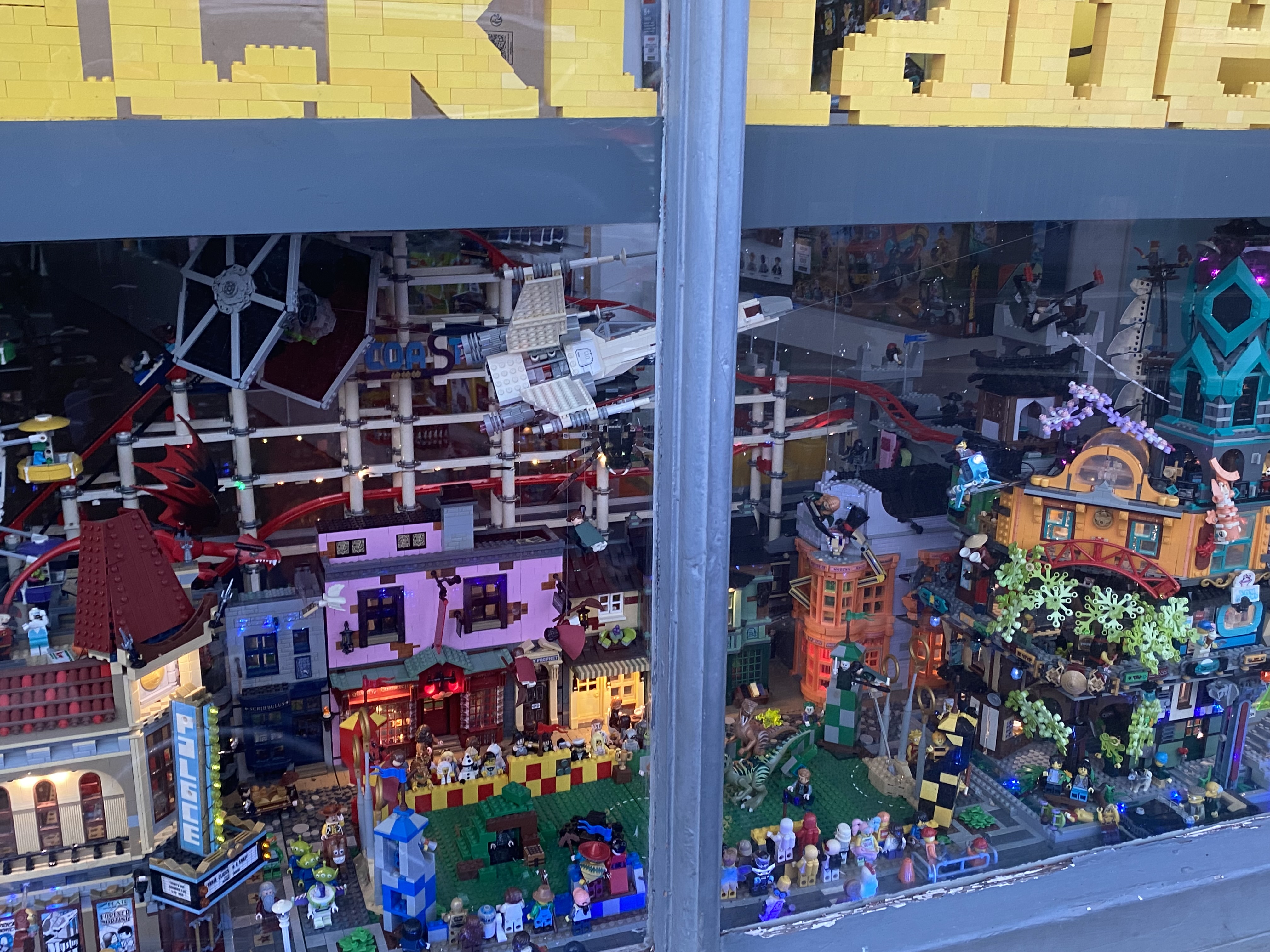
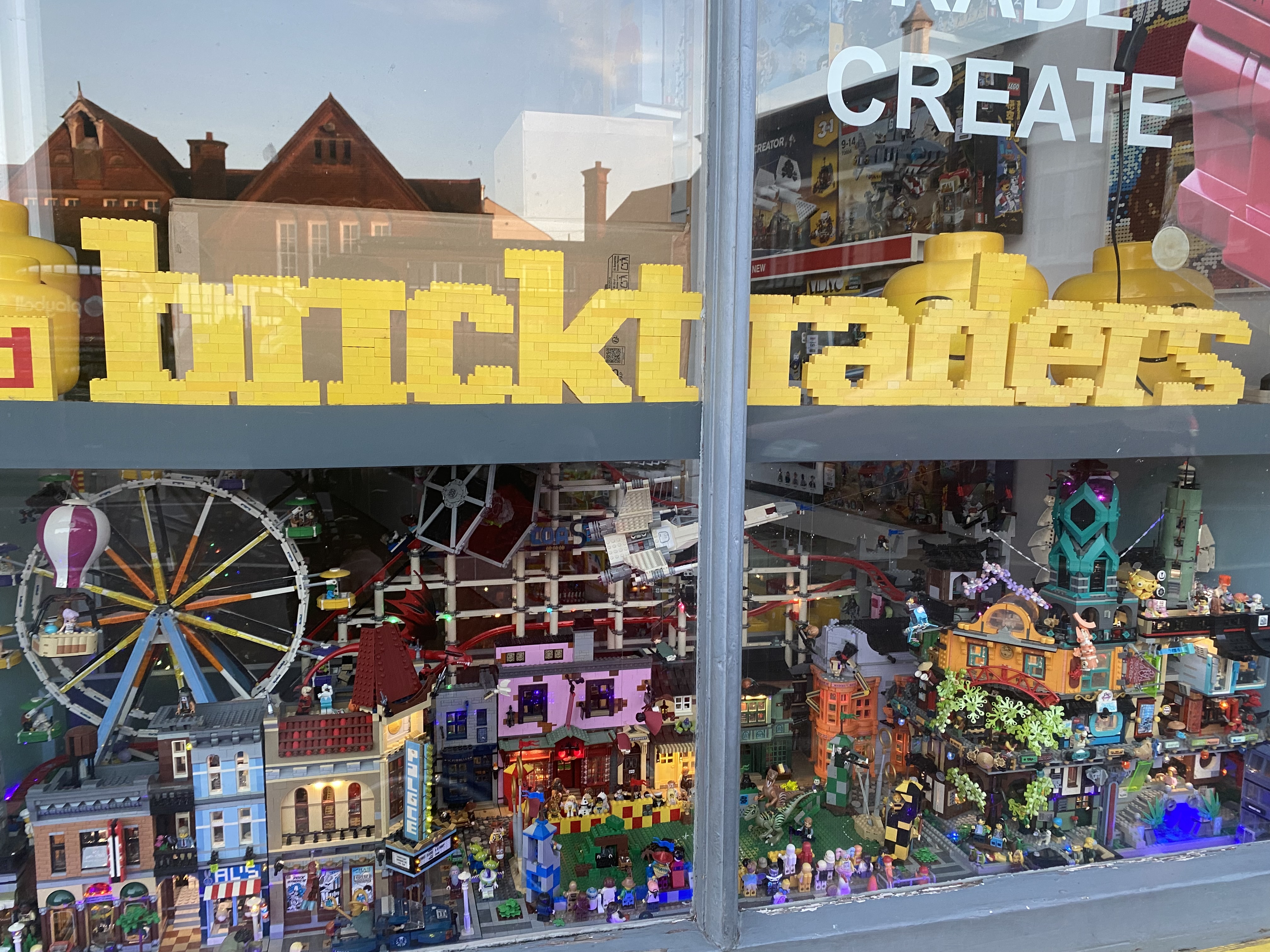
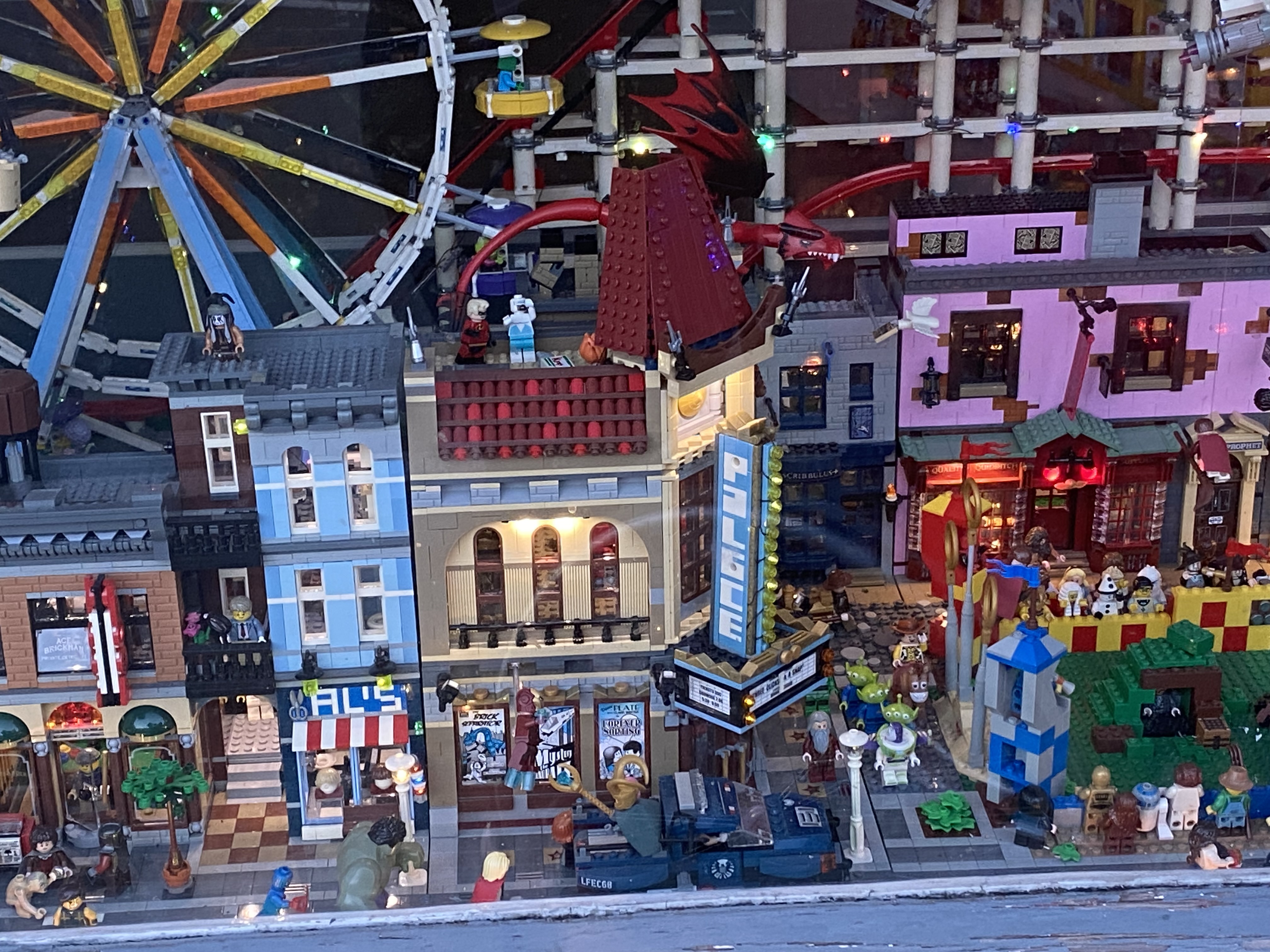
Little bit of Joy found on the pharmacy run
when me and my PA did the pharmacy run last week this is what we had the pleasure of seeing in one of the window displays of one of the shops which we passed on our way to the pharmacy finding the little moments of joy where I can otherwise your life just becomes chronic illness all of the time
Bath Salts making project with Wacky Wheels
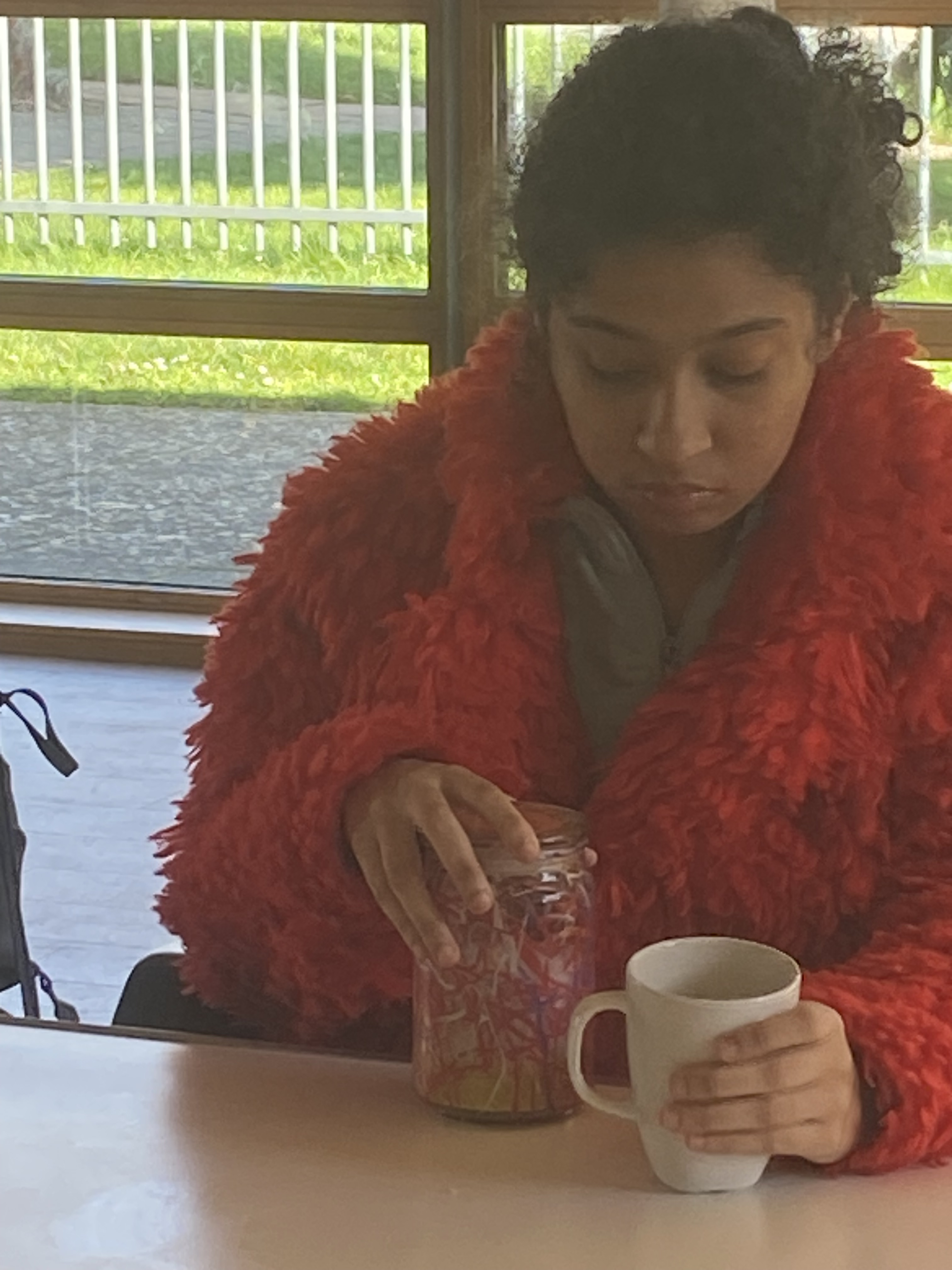
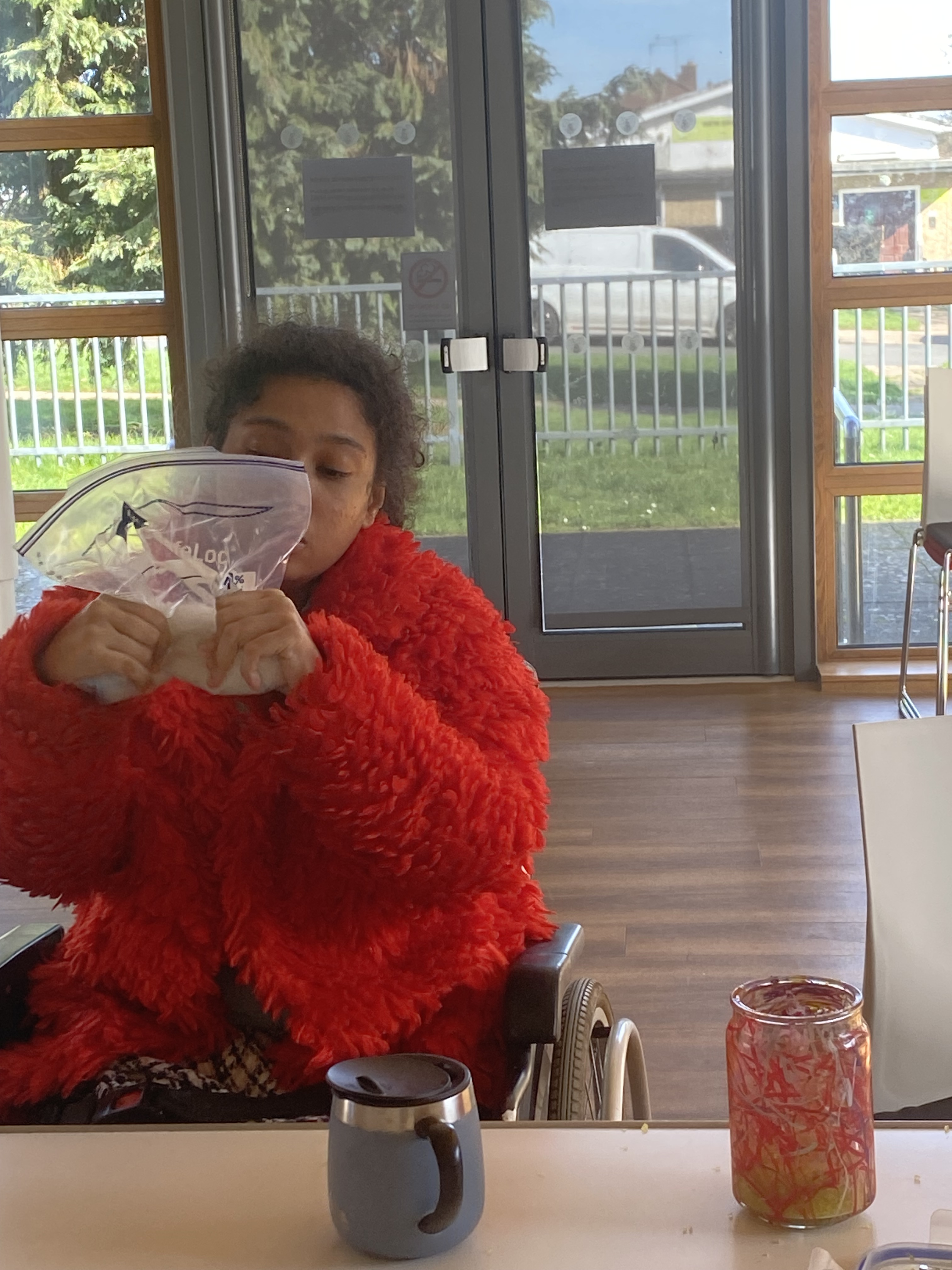
My Monday activity group which I have attended since I was 13 years old and still attend to this day.
Can An AI Recruiter Really Spot A Good Carer?
Just half an hour after she applied for a care job, Mollie Cole-Wilkin’s phone rang.
Sitting at home, she answered it. But the voice on the line was not a human’s.
She was speaking to “Ami”, an AI‑powered telephone interviewer developed by homecare company Cera.
“It didn’t sound like AI at all. My mum was in the other room. We thought it was just another person. We just couldn’t believe it,” she says.
The call lasted about five minutes, and at the end, Cole-Wilkin, of Long Stratton, Norfolk, was told she had passed the screening.
It then made her an appointment for a one-to-one interview, with a real person. After successfully passing this, she was told she had the job.
The system, which is audio-only, has already screened 14,600 applicants in total, recruiting 1,028 carers.
Cera, one of England’s largest homecare providers, supports 2.5 million visits a month and says its AI system helps speed up hiring in a sector facing rising demand.
The adult social care system is likely to need almost 440,000 more, external care workers by 2035.
Ami conducts initial interviews using the same script every time, scoring applicants out of 100 based on their attitude and experience.
Cole-Wilkin, 23, had previously left a job in a GP’s surgery after a difficult experience and moved into administration, but missed “being physically helpful for other people” and “making people smile”.
When she tried applying for care roles again, the AI felt unexpectedly encouraging.
As someone who stammers occasionally, she found it less intimidating than a human.
“It was nice to know that I wasn’t going to be judged… I get very anxious, especially face to face,” she says.
“It did give responses like ‘I’m happy you shared that with me’ and it was quite a rewarding conversation.”
Cera says Ami has halved the time from application to first interview and doubled job offers for the same recruitment spend since its launch in August 2025.
It says standardised questions reduce bias and give candidates like Mollie, who find traditional interviews stressful, a fairer chance.
The system is built to meet Care Quality Commission standards, it adds.
Not everyone is won over, however. Critics say algorithms cannot read the subtle cues that matter in care.
Janet Beacham, director of Swift Care Solutions in Colchester, is a former nurse with more than 45 years’ experience in the healthcare sector and believes only a human can judge genuine empathy.
“If they haven’t got care in their heart then they’re not going to be a good carer… They’ve got to have the right personality and have the right skills,” she says.
For Beacham, human intuition still matters.
“The first screening should be a review of the CV and then an initial telephone conversation, but actually a person‑to‑person one,” she says.
She argues that care workers enter clients’ homes as guests, and only a person can sense whether someone is genuinely suited to such a role.
But Lucy Kruyer, branch manager at Cera’s Colchester office, says the technology is now essential.
Speeding up recruitment, she argues, helps unblock hospital discharge delays.
“People don’t want to be laying in a hospital waiting for care because they can’t come home without the care,” she says.
Human recruiters still run checks and lead in‑person training before anyone starts work.
So, what is a phone call with a robot recruiter like? I decided to put Ami to the test.
The system uses a soft, calm female voice; a familiar choice in tech, though evidence that female voices build trust is limited.
She asks why I want the role and checks my experience, right to work and driving licence.
When I push her about car insurance costs, she says they vary but that some carers pay about £30 to £60 extra per year. Questions about training receive clear answers.
To see how she handled pushback, I tested her. When Ami asked about shifts, I said I couldn’t work Saturdays because I’m essentially a taxi service for my child.
Nor could I work Friday nights, I told her, because I liked fish and chips on a Friday.
Ami stayed perfectly calm. Fish and chips, she said, sounded like an important family tradition, but stressed that carers did need to work at least one weekend day.
I offered Sundays instead. She checked: Sundays yes, Friday nights and Saturdays no. I confirmed – and I’d passed the screening.
Large language models such as Ami work through patterns and associations. In this case, that is enough to move a candidate forward before a human picks up the process.
Cera receives 500,000 applications a year. Traditional recruitment, it says, leaves applicants waiting days or weeks – long enough for many to drop out or find other jobs.
Founder and chief executive Dr Ben Maruthappu argues he is expanding, not reducing, the workforce.
“We’re using AI to recruit more people faster, not replace them… Recruitment and staffing remain major challenges for health and social care,” he says.
Ami can call multiple candidates at once, he says, so cuts waiting times “from days to seconds”, freeing staff to supervise carers and focus on training and safety.
Cera also uses a separate AI tool to arrange cover when carers call in sick. Kruyer says this used to involve hours of phoning around.
“I’ve got 177 carers out on the floor today so for me the phones are constantly ringing,” she says.
“We can’t be answering phones and trying to get cover at the same time… We know it’s working in the background, giving us a green light when we’ve got a carer that’s saying yes.”
Carers then confirm details with staff. Preventative AI is also used in the Cera app to help workers log clients’ symptoms and pick up issues such as urinary infections, and it has also helped the government roll out a predictive falls tool., external
Maruthappu believes the bigger risk is standing still.
“The real question shouldn’t be whether we use AI – it should be how we use it to widen opportunity,” he says.
Cera is now licensing its recruitment agent to companies in other sectors, including dentistry.
In March 2025, the government announced it would take a “test and learn” , externalapproach to funding AI in the public sector, to “push innovation” but has yet to develop a legal framework for its use in care.
What do others think of the use of AI in recruiting care workers?
Gavin Edwards, head of social care at trade union Unison, says technology can play a valuable role in freeing up staff time, allowing for better care.
“With major workforce shortages across the social care sector, help in increasing capacity and easing workload pressures is welcome,” he says.
“But AI can’t wash or clean anyone, issue medication or carry out the many complex tasks care workers do.
“Nor would it be wise to use it to make decisions about the care needed by each individual. Those are tasks for trained, skilled professionals.
“There are also important considerations for recruitment. Any use of AI must be transparent, fair, and fully compliant with equality and employment laws.”
A spokesperson for the Local Government Association says technology can help build capacity in care when used alongside human support but warns that care is “fundamentally person-centred”.
It says AI must be co-designed with people who use care services and that “a human in the loop” should oversee decisions, with strong safeguards in place.
The Department of Health and Social Care has been asked to comment.
Bafta Film Awards host Alan Cumming has described this year’s ceremony as a “trauma triggering” debacle following a furore that blew up after a Tourette’s campaigner involuntarily shouted a racial slur while two black actors were on stage.
Posting on Instagram Cumming said: “I’m so sorry for all the pain Black people have felt hearing the word echoed around the world. I’m so sorry the Tourettes community has been reminded of the lack of understanding and tolerance that abounds regarding their condition.”
He added: “We were all let down by decisions made to both broadcast slurs and censor free speech.”
The slur was audible when the BBC broadcast the ceremony on a two-hour delay, and the corporation’s executive complaints unit is now investigating.
Cumming wrote: “The only possible good that could come of this is a reminder that words matter, that rushing to judgement about things that we are not fully cognisant is folly, that all trauma should be recognised and honoured.”
He went on to congratulate “all the artists whose work was overshadowed by the night’s events”.
The BBC has apologised several times since the broadcast on 22 February, and the ceremony remains unavailable to watch on iPlayer after the corporation removed it the following day.
In a statement issued on the same day, Bafta said it wanted to acknowledge the “harm this has caused, address what happened and apologise to all”.
Cumming had already apologised to the audience from the stage at the time for the language heard during the ceremony.
The BBC has since said a second racial slur was edited out of the show, and that broadcasting the one aired when Sinners stars Michael B Jordan and Delroy Lindo were on stage was a “serious mistake”.
Davidson, from Galashiels in the Scottish Borders, has said the BBC should have “worked harder to prevent anything that I said” from being broadcast.
Meanwhile, Lindo told Vanity Fair that he and Jordan “did what we had to do” as they carried on presenting the category, but also said he wished “someone from Bafta spoke to us afterward”.
B&Q Backs Stoma-Friendly Toilet Campaign
Persistence has paid off for a campaigner after a large retail chain backed his call for more stoma-friendly toilets.
Tony Beckingsale from Bristol said it gives him “confidence” and will make a “huge difference” to the stoma community.
DIY retailer B&Q has now rolled out upgrades to the disabled toilets at all its stores including practical additions including a door hook for clothing or bags, a shelf for medical supplies and a mirror so users can see their stoma and bag when changing.
Stomas, which are used by around 200,000 people in the UK and often fitted because of bowel diseases and attach to a hole – or stoma – in the abdomen, allowing waste to be diverted out of the body.
“It’s an invisible disability”, said Beckingsale.
“And if people can’t see that there’s a disability, they don’t think one exists,” he added.
The Traitors star Mollie Pearce from Bristol, has also appealed for better facilities after several incidents in which she has had to use the floor of public toilets to change her own stoma bag.
She said she would often have to plan her day around where the toilets are which would “trigger anxiety”.
Although Pearce welcomes retailers upgrading their facilities, she still feels opening and closing times are a problem.
She said some close quite early, which has “ended with me having an accident when I was out”.
The model and healthcare assistant said “companies maybe aren’t aware that this is what we need”.
“So it’s just kind of shouting about it and making sure people know how much it would help us”.
Ben Youngs Investigates: How Safe Is Rugby?
In the wake of Lewis Moody’s motor neurone disease diagnosis, England’s most-capped men’s player, Ben Youngs, sets out to re-examine the game that has defined his life. Is there a link between concussion and long-term brain health? And is the sport he loves – that he takes his son to play – safe?
At a time when rugby is being celebrated and participation is on the rise, growing concerns around the impact of concussion on players are reshaping conversations off the pitch. Ben sets out on a journey of discovery – starting with an emotional discussion with former teammate Moody, hearing about life since his MND diagnosis.
After speaking with experts and learning there is still no proven link between rugby and MND, Ben goes to see former England international Steve Thompson, who reveals he can longer remember winning the 2003 World Cup and shares the challenges of living with dementia. When former Wales international Alix Popham and England World Cup winner Kat Merchant also explain to Ben the challenges of living with serious brain conditions and the importance of raising awareness around brain health in rugby, Ben reaches a crossroads in his journey. After discussing what he has learned with his wife, he decides to undergo his own brain tests.
Continuing to research the link between rugby and long-term brain health, Ben then looks at what is being done by the sport’s governing bodies to ensure safety in the game, from new technologies to strengthened protocols. Speaking to former teammate and fellow British and Irish Lion Anthony Watson, Ben wrestles with a difficult question: was their generation part of the problem? And to what extent are players responsible for their own safety?
By the end of his journey, Ben sees a sport striving to change. The stories he hears underline the need for greater protection and continuing research but also the enduring beauty of the game he loves. For rugby to thrive, he believes it must keep moving forward, for today’s players and for the next generation.
Man With MND Invents Gadgets To Help In Daily Life
A technology expert who lives with Motor Neurone Disease (MND) has used his skills to create a range of gadgets to make his daily life easier.
Andrew Herbert, 55, from Skipton, was a keen cyclist and runner before being diagnosed four years ago with the condition, which affects nerves found in the brain and spinal cord.
He has since invented tools, including a motorised device which rolls back his bed covers, to help make himself more independent.
Andrew, who works as chief technology officer at a Leeds-based finance firm, said he now had had “over 100 sensors in the house” which allowed him to control domestic appliances.
MND leads to the weakening and stiffening of nerves over time and usually affects how sufferers walk, talk, eat and breathe.
Progression of the disease can be rapid – with more than half of those affected dying within two years of being diagnosed.
It is a relatively rare condition most common in people over 50, but adults of any age can be affected.
About 5,000 adults in the UK have the disease at any one time.
Andrew said of his MND diagnosis that it was “quite a shock at the time, because I’ve always looked after myself”.
“It was quite devastating for my family, too, because of the known outcome and what potentially I would have to go through and how they would be affected by that,” he said.
Andrew’s wife, Nicola Herbert, said her husband’s technological know-how had given him a greater degree of independence than he might otherwise have had, given his condition.
She said: “It’s just inspirational, really, how brave he’s been and how he’s put his time to really purposeful pursuits rather than whiling away the time.
“He’s just so inventive and positive all the time.”
The gadgets devised by Andrew have meant the workload for care staff has also been lightened.
Carer Lauren Sykes said: “Andrew switches between the laptop, the computer and his phone.
“If he wasn’t doing that, I’d be doing a lot of tasks for him, but he just does things by himself.
“So that saves a lot of time and I can be off doing something else, while he’s working.”
Andrew said he was deploying technology to make life a little more comfortable, not just for him but to inspire others who were in a similar situation.
Such is his enthusiasm for tech-savvy solutions, that he has shared his tips on social media.
“I think it’s really important to have purpose in your life and the technology that I invent and the work that I do gives me that,” he explained.
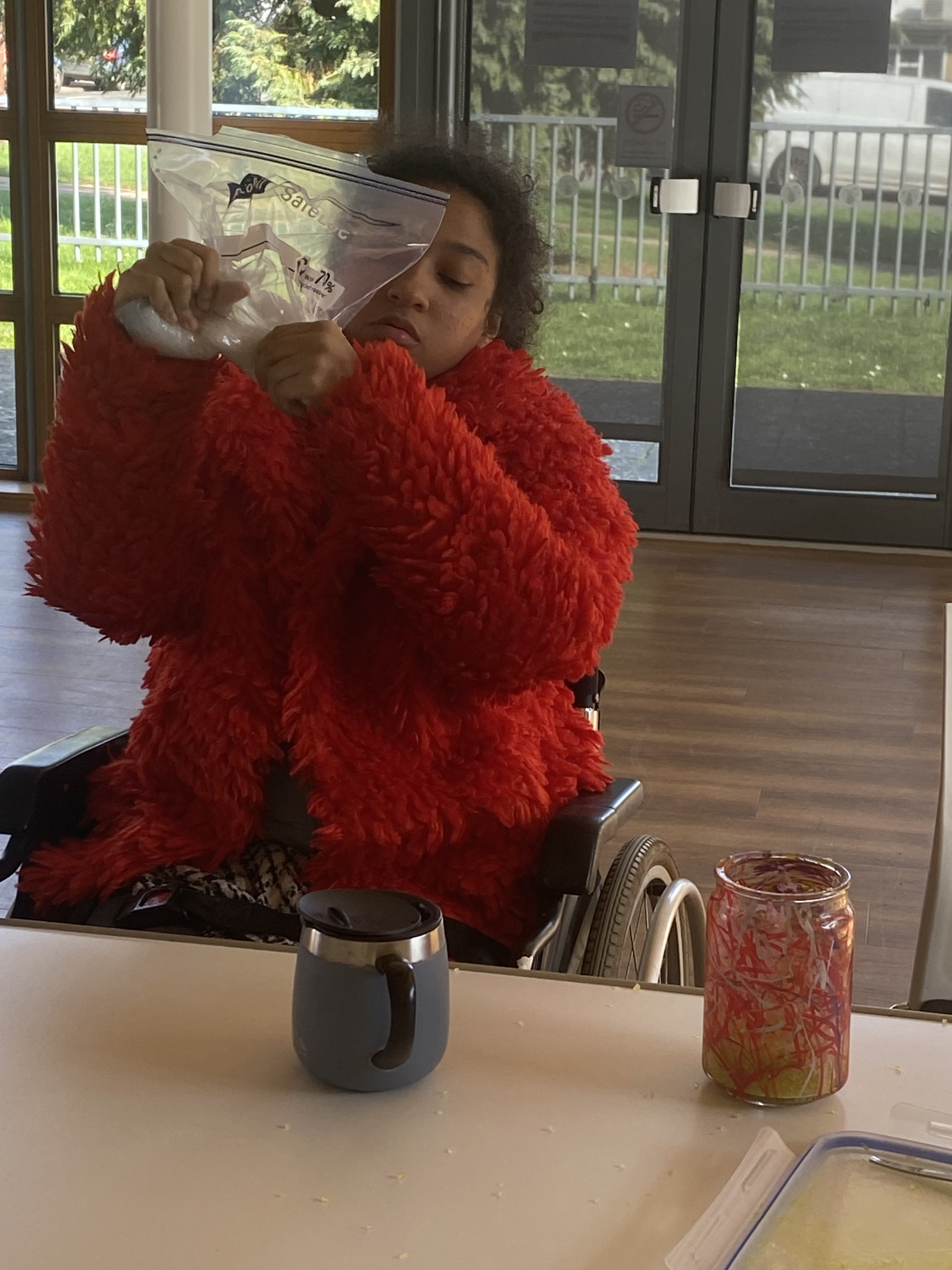
Decorating glass jars project with acrylic pens
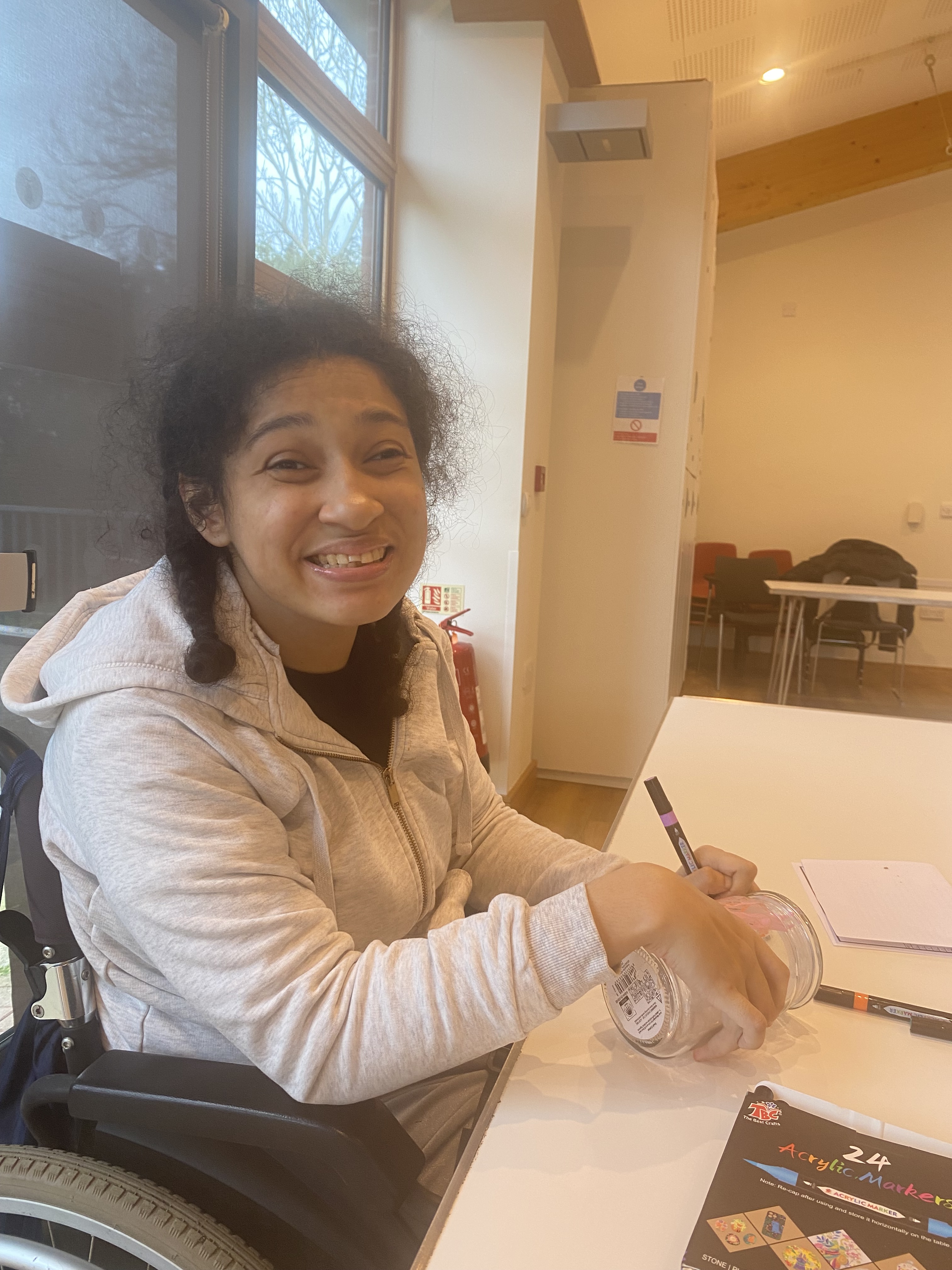
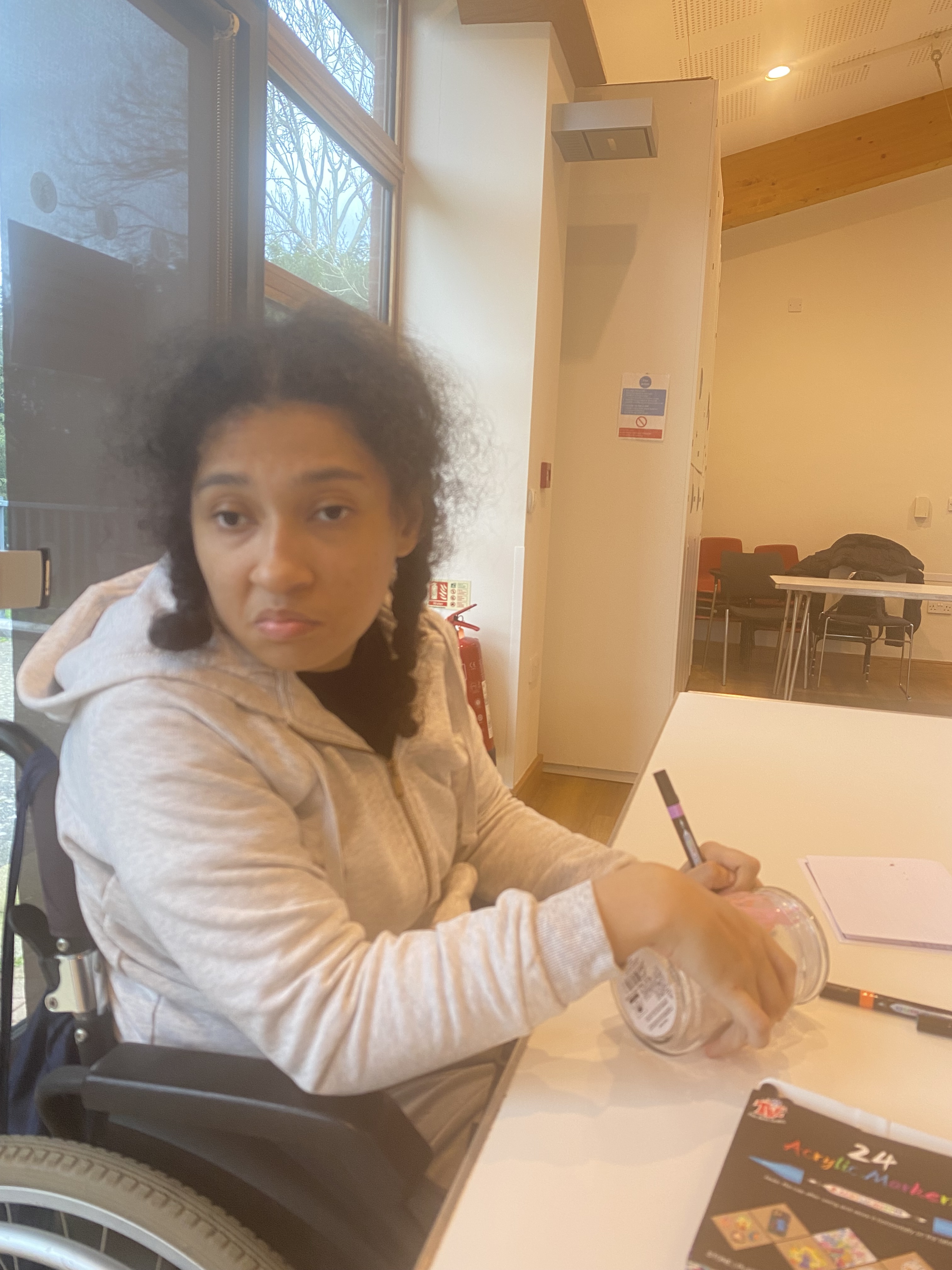
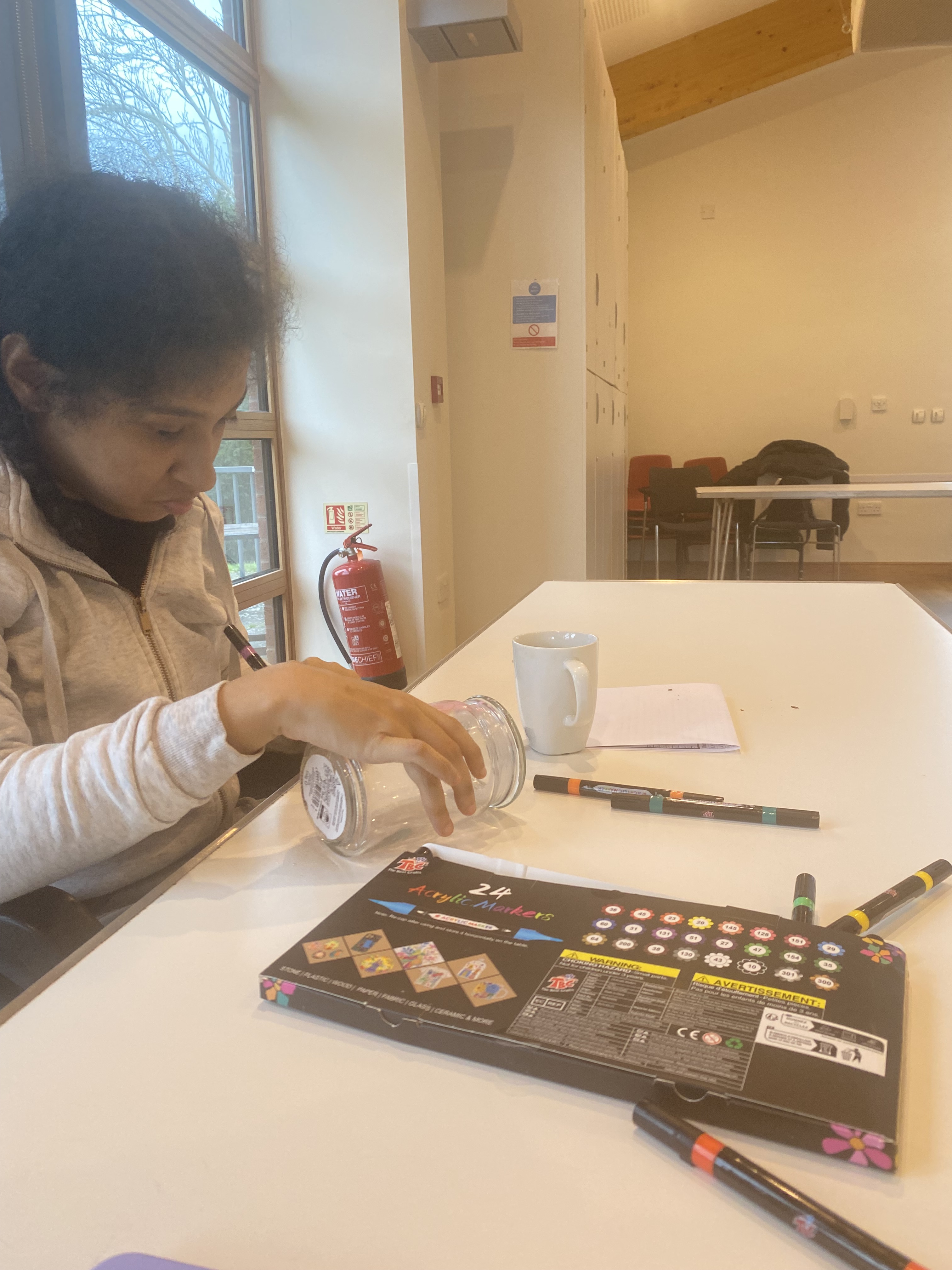
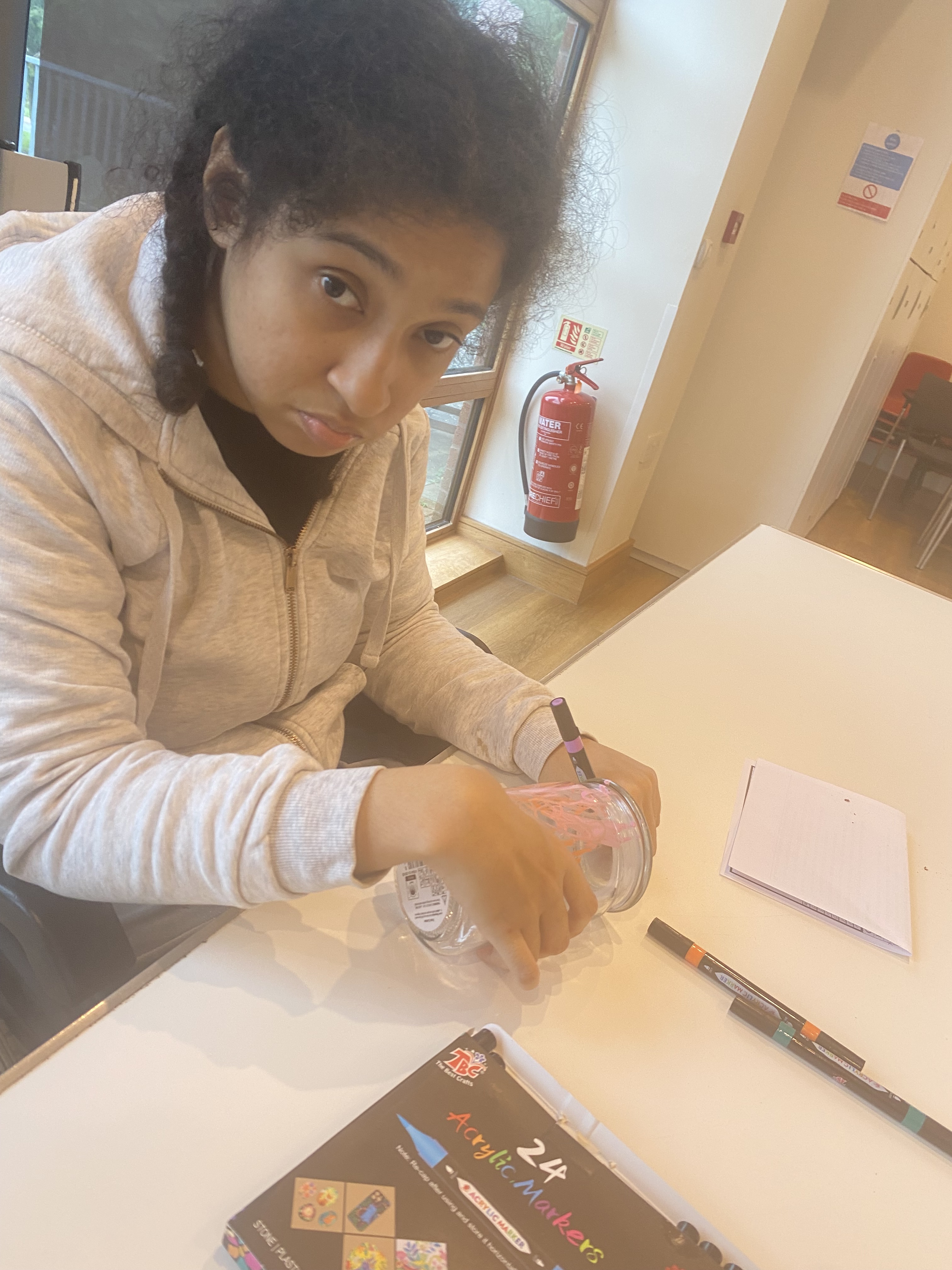
Decorating the glass jar with acrylic pens, ready for bath salts making project next week.
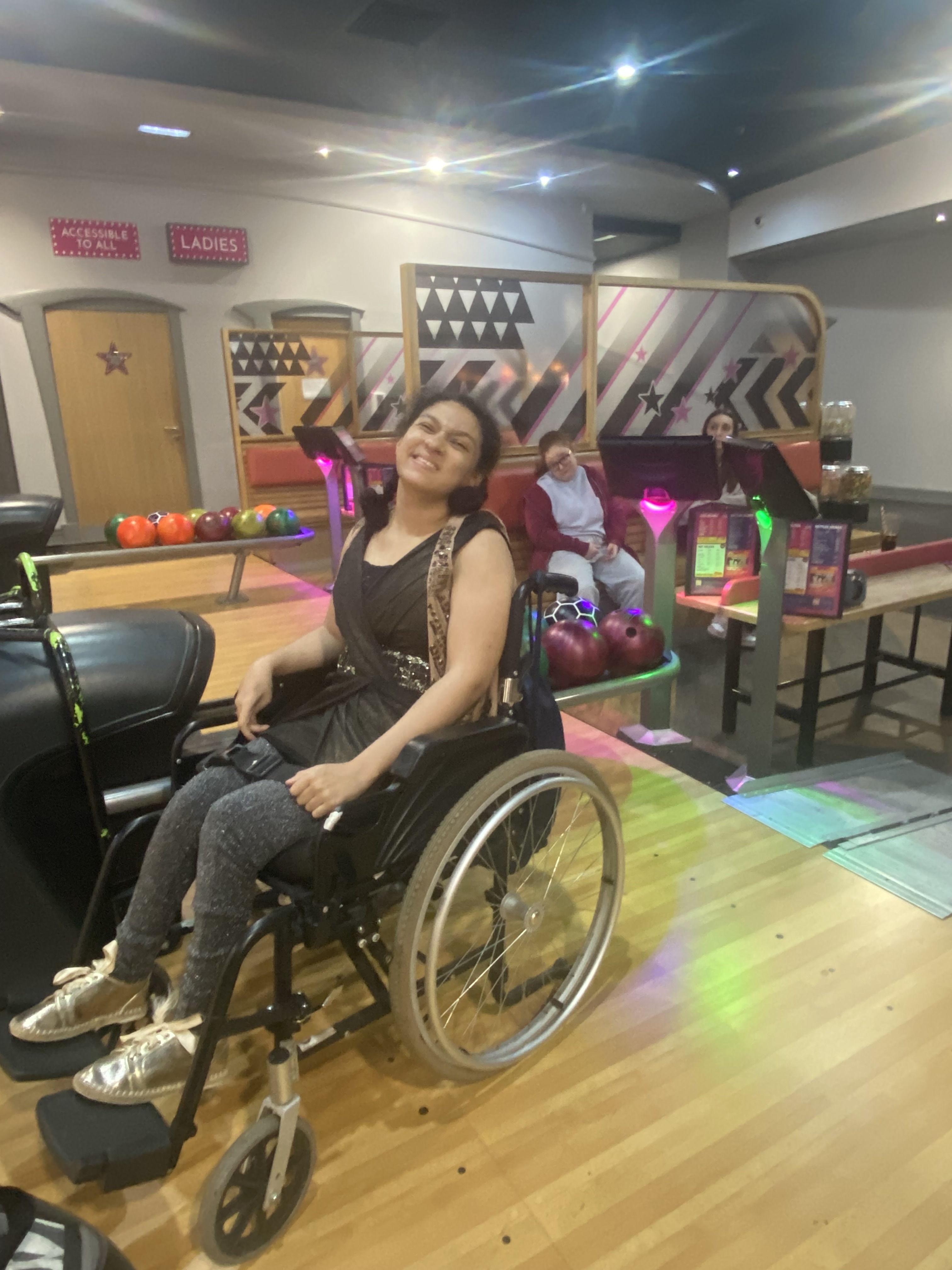
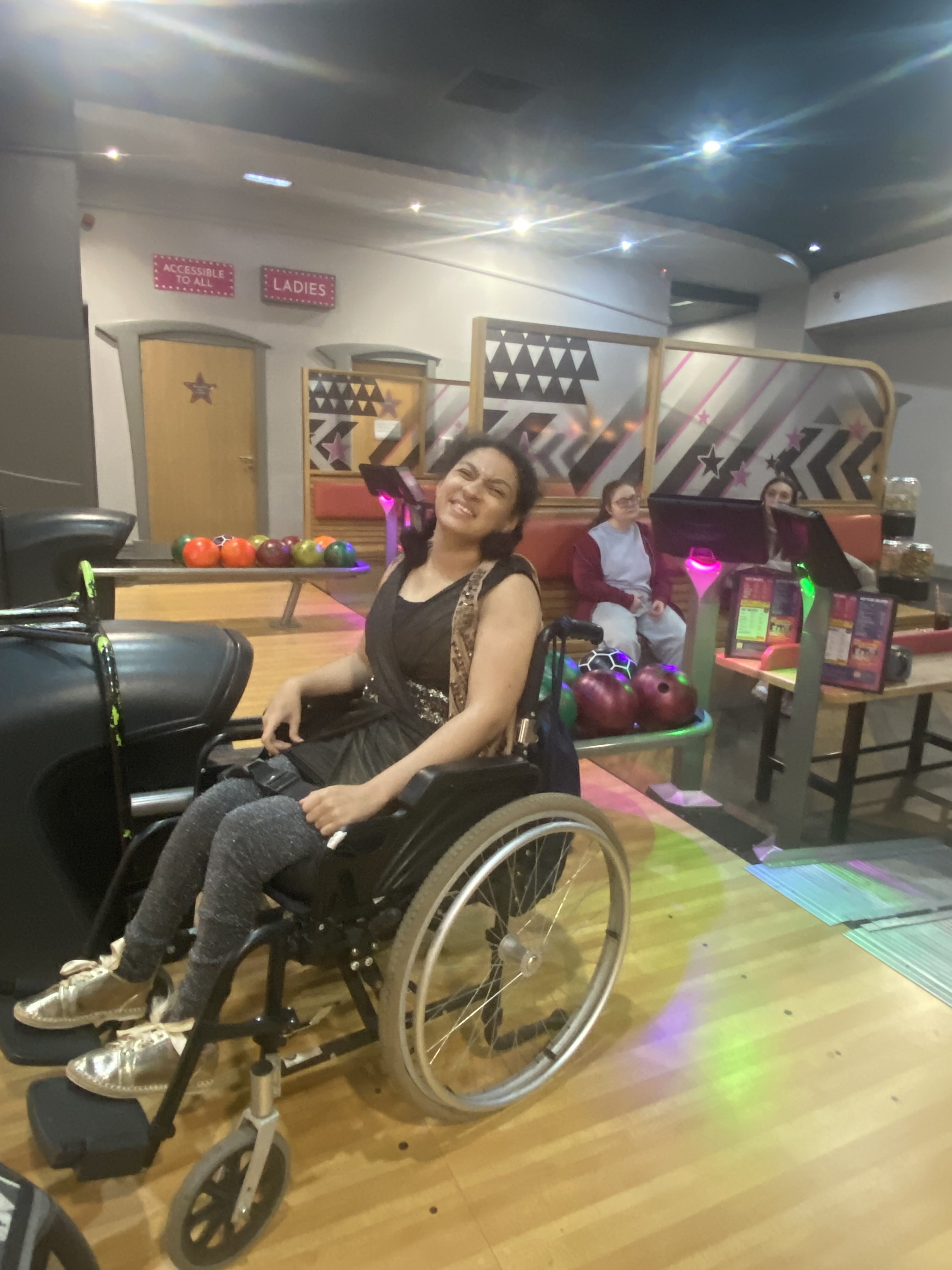
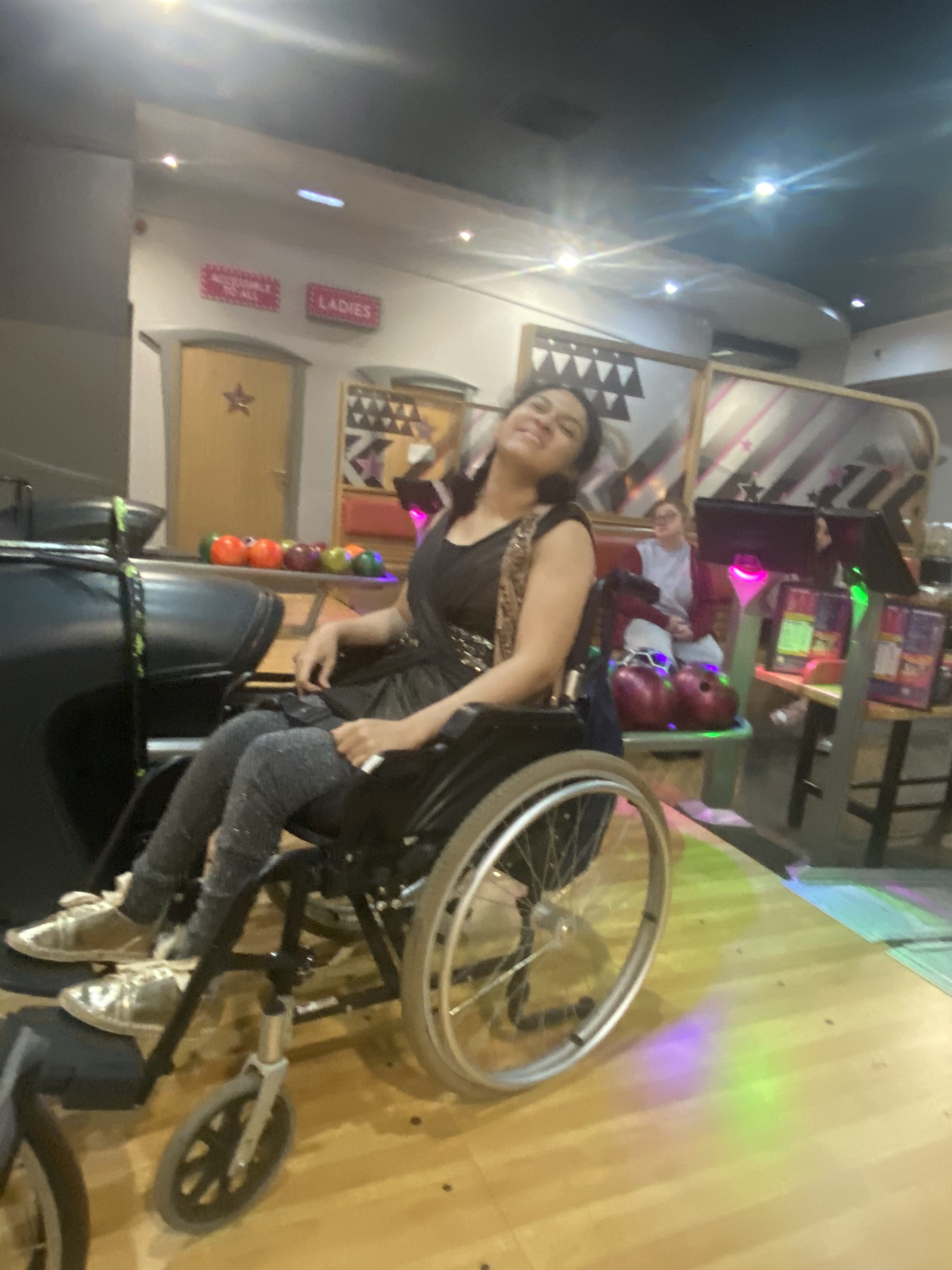
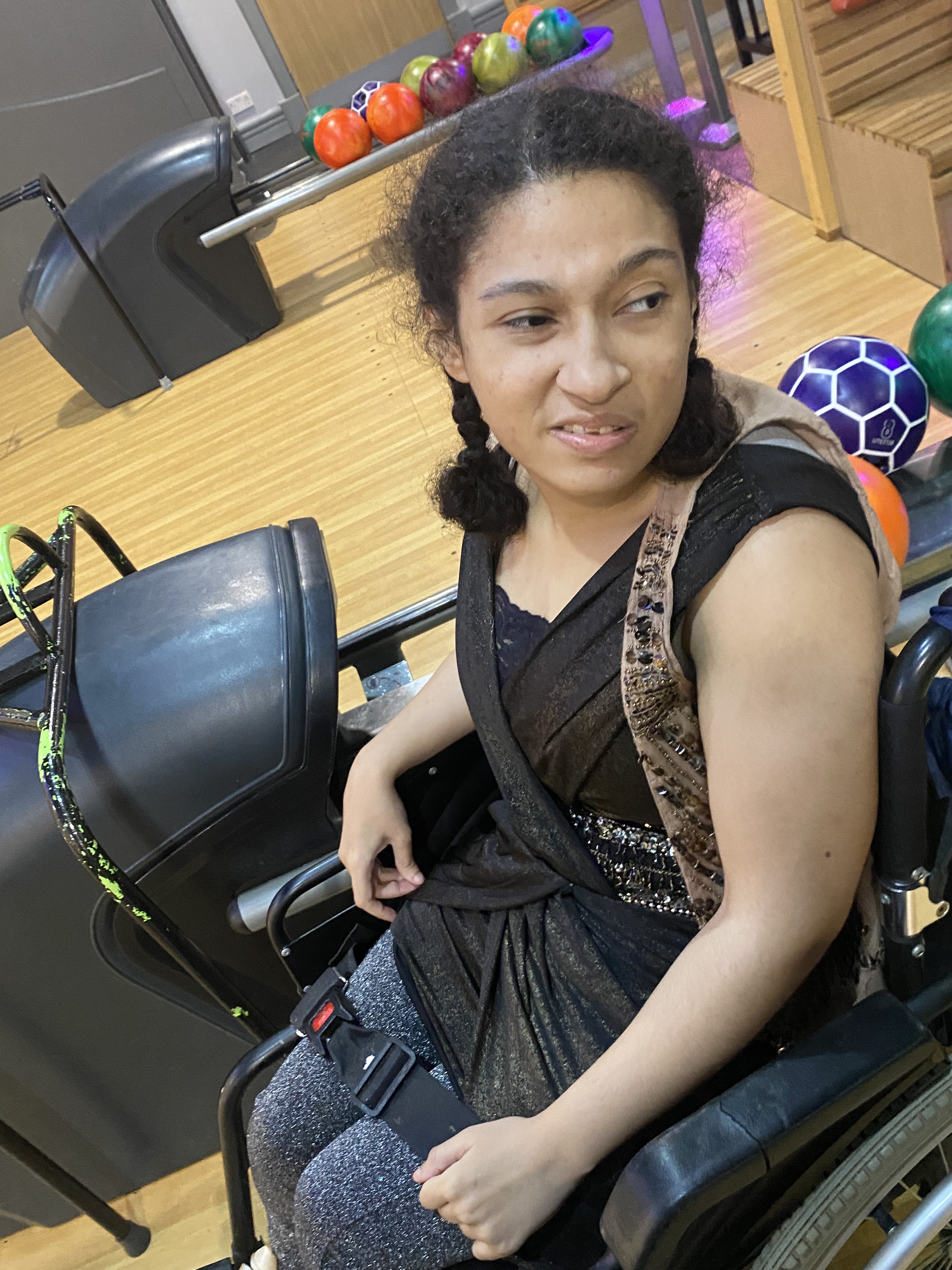
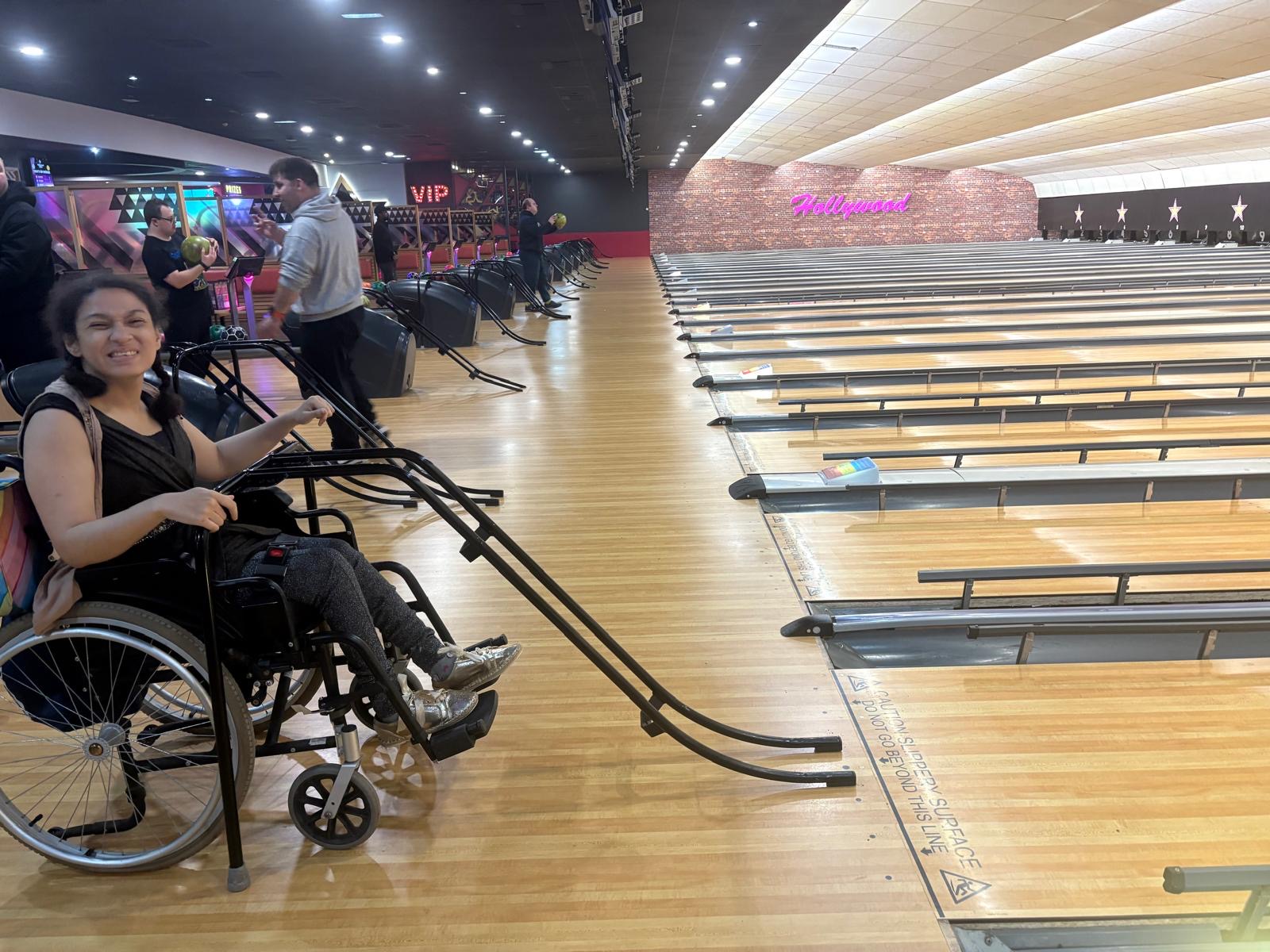
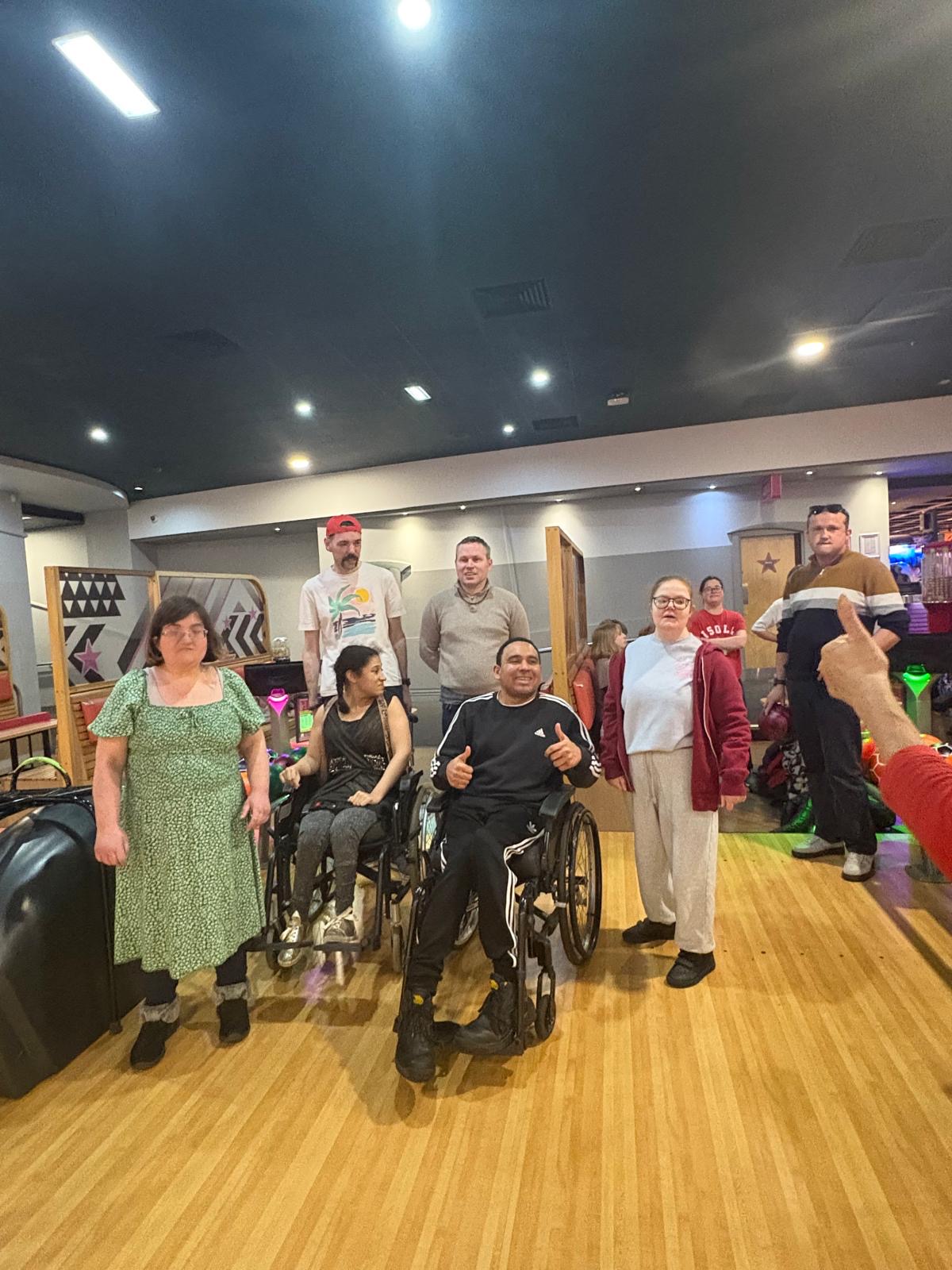
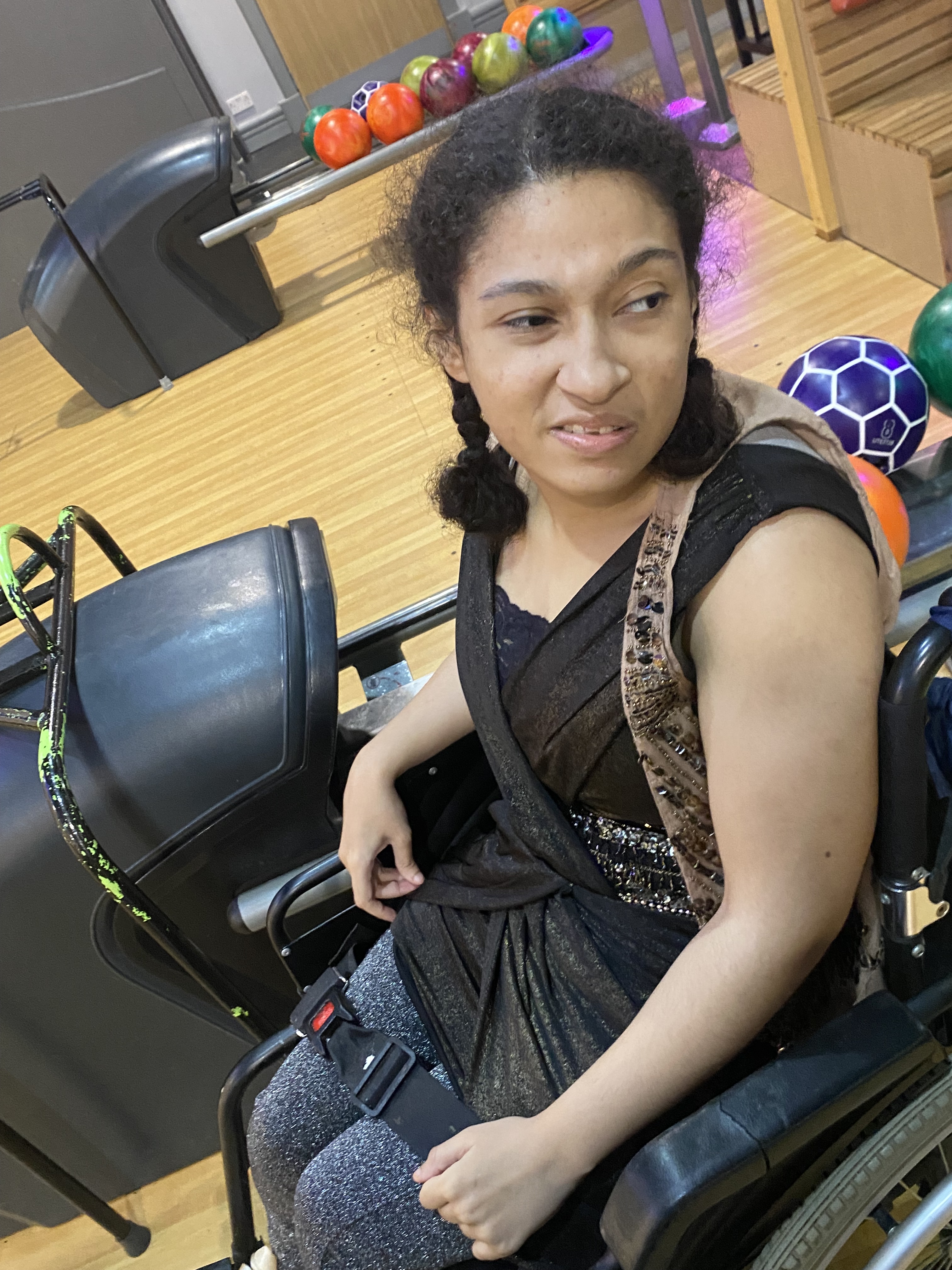
Bowling with one of my activity groups
I enjoyed going bowling with some of my friends on Wednesday.

Instagram Investigating AI Profiles ‘Fetishising’ Disabled People
Instagram’s parent company, Meta, is investigating AI-generated social media accounts that sexualise disabled people appearing on its platform.
It comes after the BBC flagged dozens of profiles showing AI-generated images of women with disabilities, including Down’s syndrome or vitiligo.
Some profiles post fake images and videos of women with missing limbs, visible scarring or in wheelchairs. Many are in sexualised positions, wearing revealing clothing.
Some accounts have amassed hundreds of thousands of followers in a matter of months. One profile, claiming to be conjoined twins, has about 400,000 followers, despite only joining Instagram in December 2025.
Kamran Mallick, chief executive of Disability Rights UK, said the emergence of “accounts that fetishise, mock, or monetise the identities of disabled people is nothing short of horrific”.
He added: “What we have here is technology weaponised to strip disabled people of their agency and dignity, turning our lived experiences into digital caricatures for the profit and titillation of others.”
Medical charities have also voiced concern. A spokesperson for Gemini Untwined, which funds specialist surgery for rare newborns joined by the head, said portraying conjoined twins as entertainment was “morally reprehensible”.
They added: “We witness first-hand the medical challenges that these children and their families endure, which makes the portrayal of conjoined twins as a form of entertainment or spectacle especially problematic.”
Dr Amy Gaeta, from the University of Cambridge, told the BBC she researches how AI shifts power in relation to gender and disability. She said the internet is “flooded” with free and low-cost generative AI image-making tools.
Generative AI is a type of software that creates new content based on patterns it has learned from existing data in response to a user’s prompt.
Gaeta said while some tools have restrictions on content, like banning sexually explicit prompts, others do not or can be easily bypassed.
“Sometimes, without my prompting or intent, hypersexualized images of disabled people will be generated. This clearly shows a bias in the datasets that these tools are trained upon,” she said.
An Ofcom spokesperson said it was “tracking how AI is evolving, the risks that may emerge, and what actions may be needed to address them”.
They said the watchdog’s online safety rules require tech firms to tackle illegal content and protect children from harmful material – including abusive or hateful content.
The Online Safety Act requires platforms like Instagram to apply terms of service consistently, including where content mocks people based on protected characteristics, like their disability.
The Equality and Human Rights Commission said the accounts flagged by the BBC were “deeply disturbing”, adding: “It’s vital there are robust regulatory powers in the digital space to protect people from harm.”
A spokesperson for Meta said it was investigating the content and that it removes material that promotes sexual exploitation or attacks people based on protected characteristics.
While these accounts are generating fake personas, there is serious concern over the commands for the generative tools behind them.
Alison Kerry, head of communications at disability equality charity Scope, said the practice amounted to “discrimination dressed up as content”.
She added: “These AI images don’t appear from nowhere – they’re built from real disabled people’s images, often without consent – and unmoderated comment threads turbocharge objectification and harassment.”
Gaeta said moderation on sites like Instagram is not strong enough.
“Even when safeguards are in place, it has been proven relatively easy to bypass these if someone is insistent enough on doing so,” she said.
“Big tech needs to be held accountable just as much as misogyny and ableism need to be tackled.”
Tourette’s Campaigner Says BBC ‘Should Have Worked Harder’ To Stop His Slur Being Aired
Tourette’s campaigner John Davidson has said the BBC should have “worked harder to prevent anything that I said” at the Bafta Film Awards being broadcast, and questioned why he was seated near a microphone.
Davidson, whose condition involves involuntary tics, shouted a racist slur while black actors Michael B Jordan and Delroy Lindo were on stage at Sunday’s ceremony.
Davidson told Variety, external: “I remember there was a microphone just in front of me, and with hindsight I have to question whether this was wise, so close to where I was seated, knowing I would tic.”
The BBC reiterated that the offensive language “arose from involuntary verbal tics associated with Tourette syndrome”, adding: “We apologise that this was not edited out prior to broadcast and it has been removed from BBC iPlayer.”
On Tuesday, the corporation’s chief content officer Kate Phillips told staff that another racial slur had been edited out of the broadcast.
In contrast, the one shouted when Lindo and Jordan were on stage “was aired in error and we would never have knowingly allowed this to be broadcast”, she said.
Davidson, from Galashiels in Scotland, said he shouted about 10 different offensive words during Sunday’s ceremony as a result of his tics, but the media coverage has given the impression the N-word was the only one.
Variety reported that he has contacted Warner Bros in order to apologise directly to Jordan, Lindo and Sinners production designer Hannah Beachler, who also spoke about hearing racial slurs.
Meanwhile, Google has apologised after sending a news alert, external about the story which included the N-word.
“We’re very sorry for this mistake,” the company said of the computer-generated alert. “We’ve removed the offensive notification and are working to prevent this from happening again.”
Davidson told Variety that the studio behind the film I Swear, which tells the story of his struggles with Tourette’s, held discussions with Bafta before the ceremony about the possibility of his ticking.
“StudioCanal were working closely with Bafta, and Bafta had made us all aware that any swearing would be edited out of the broadcast,” he said.
“I have made four documentaries with the BBC in the past, and feel that they should have been aware of what to expect from Tourette’s and worked harder to prevent anything that I said – which, after all, was some 40 rows back from the stage – from being included in the broadcast.”
‘Comprehensive review’
Awards ceremonies often have microphones placed at various spots around the auditorium, to pick up ambient crowd noise as well as applause and cheering.
In a statement on Monday, Bafta said it acknowledged the “harm this has caused, address what happened and apologise to all”.
In a letter to its members on Tuesday, the organisation said it wanted to “assure all our members that a comprehensive review is under way”.
After shouting the slur, Davidson said he chose to leave the auditorium “so as not to cause any more upset”, adding that Bafta found him a private room with a monitor to watch the rest of the ceremony.
Davidson said he “had as much right to attend as anyone”, as the subject and executive producer of I Swear, which was nominated for five awards.
“I also knew that as voting members, most people in the audience would have seen I Swear and would be well prepared, well educated and well informed about my condition,” he said.
Davidson said he was “aware of how physically and mentally difficult it would be for me to attend”, adding: “I can’t begin to explain how upset and distraught I have been as the impact from Sunday sinks in.”
‘The opposite of what I believe’
In his interview with Variety, Davidson also said: “I want to be really clear that the intent behind them [the tics] is zero. What you’re hearing is a symptom – not my character, not my thought, not my belief.”
He said he felt a “wave of shame an embarrassment” after shouting the racial slur.
“Tourette’s can feel spiteful and searches out the most upsetting tic for me personally and for those around me,” he explained. “What you hear me shouting is literally the last thing in the world I believe; it is the opposite of what I believe.
“The most offensive word that I ticked at the ceremony, for example, is a word I would never use and would completely condemn if I did not have Tourette’s.”
Several figures in the Tourette’s community have also sought to explain the condition.
Writing on Instagram,, external Baylen Dupree, star of US reality series Baylen Out Loud, explained: “Tourette’s doesn’t pull from hatred – it often pulls from anxiety, from fear, from the very thing you’re most scared of saying.
“The brain misfires on what feels charged or taboo. It doesn’t excuse the hurt a word carries. Words matter. History matters. Pain matters. But so does neurological reality.”
BBC News understands the producers editing the ceremony for its delayed BBC broadcast were doing so from a TV truck and simply did not hear the slur shouted when Lindo and Jordan were on stage.
But Channel 4’s former head of news and current affairs, Dorothy Byrne, rejected that defence in an interview with BBC Radio 4’s Today programme on Wednesday.
“John needed a BBC person next to him at all times to support him, but also to relay and be aware of anything that he said,” Byrne reflected.
“So there needed to be, in the written plan, a means by which the people in the truck would be aware of what happened in the room.”
‘Deeply traumatising’
Former BBC News executive and Conservative communications chief Sir Craig Oliver said the TV truck defence was “kind of entering into the dog-ate-my-homework territory”.
“It’s increasingly obvious that we live in a time where there are going to be controversial things at live events, and there is going to be potential reputational damage to the BBC,” he said.
“So does it have that grip, does it have that process in place? And increasingly it seems like the answer is no.”
Meanwhile, BBC Radio 1 DJ Oré Olukoga has expressed his disappointment with how the situation has been handled by the corporation.
Olukoga, the station’s early weekend breakfast host, wrote on X, external that the “incident at the Baftas and the reaction to it has been deeply traumatising”.
“I understand all the nuances at play and would never want to minimise someone’s plight, but as a Black man who works for the BBC, I am deeply, deeply disappointed in how it’s been handled,” he said.
A Quick Thanks To Eastenders
This is a quick and short post to thank Eastenders for their recent coverage of three very important disability issues at different stages of life.
- Nugget’s epilepsy, caused by a tragic event, just beginning in his teenage years.
- Penny’s pregnancy, thankfully the result of a ‘normal’ romantic relationship (is there any such thing?). Sadly Jack initially reacted with concern related to her disability but thankfully he now seems to have changed his mind.
- Nigel’s dementia, in older age, which will eventually lead to his life ending.
Eastenders have made this disabled viewer feel very happy, included, wanted and welcomed in recent months. They deserve thanks and I look forward to seeing how all three storylines play out.
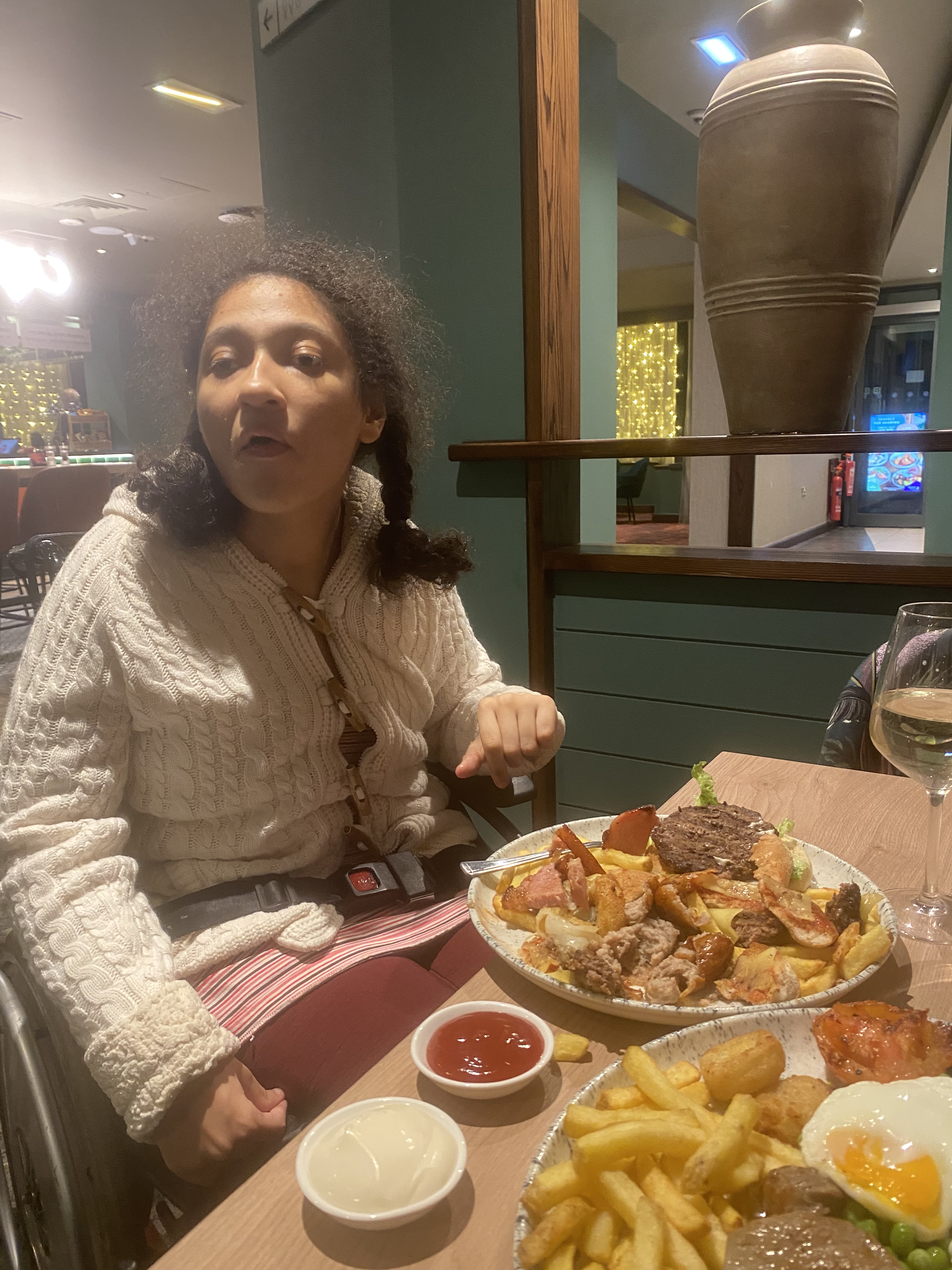
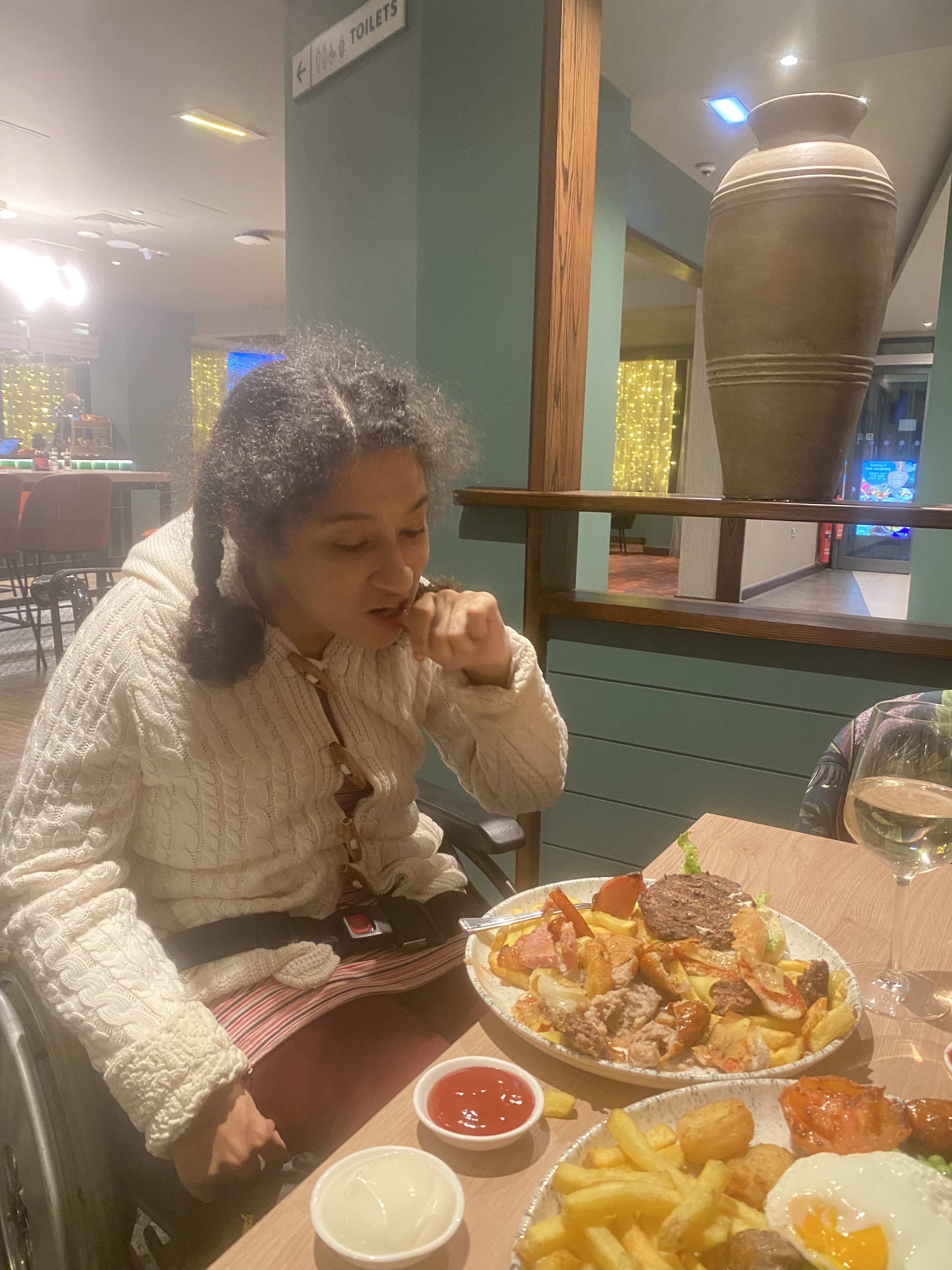
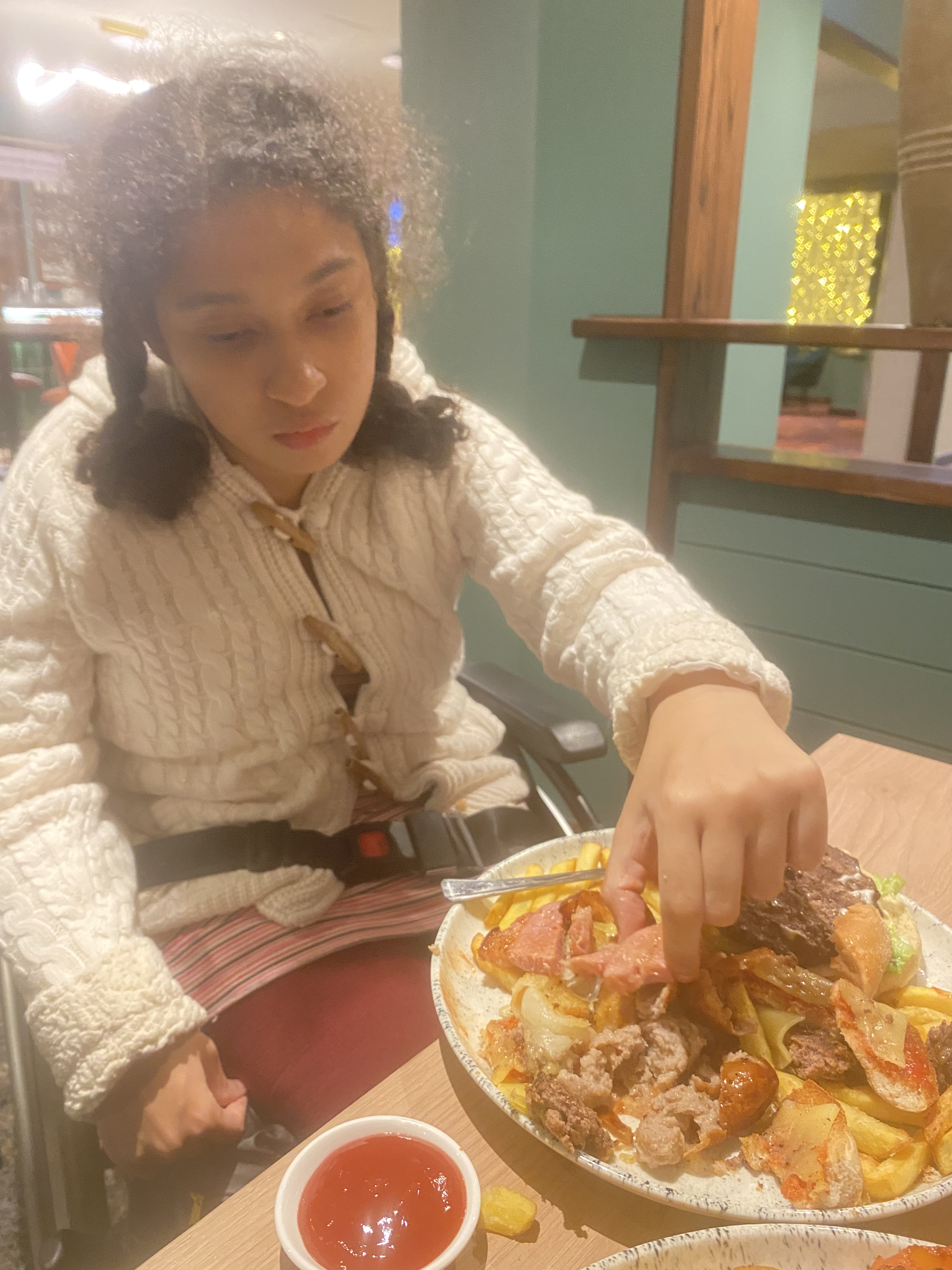
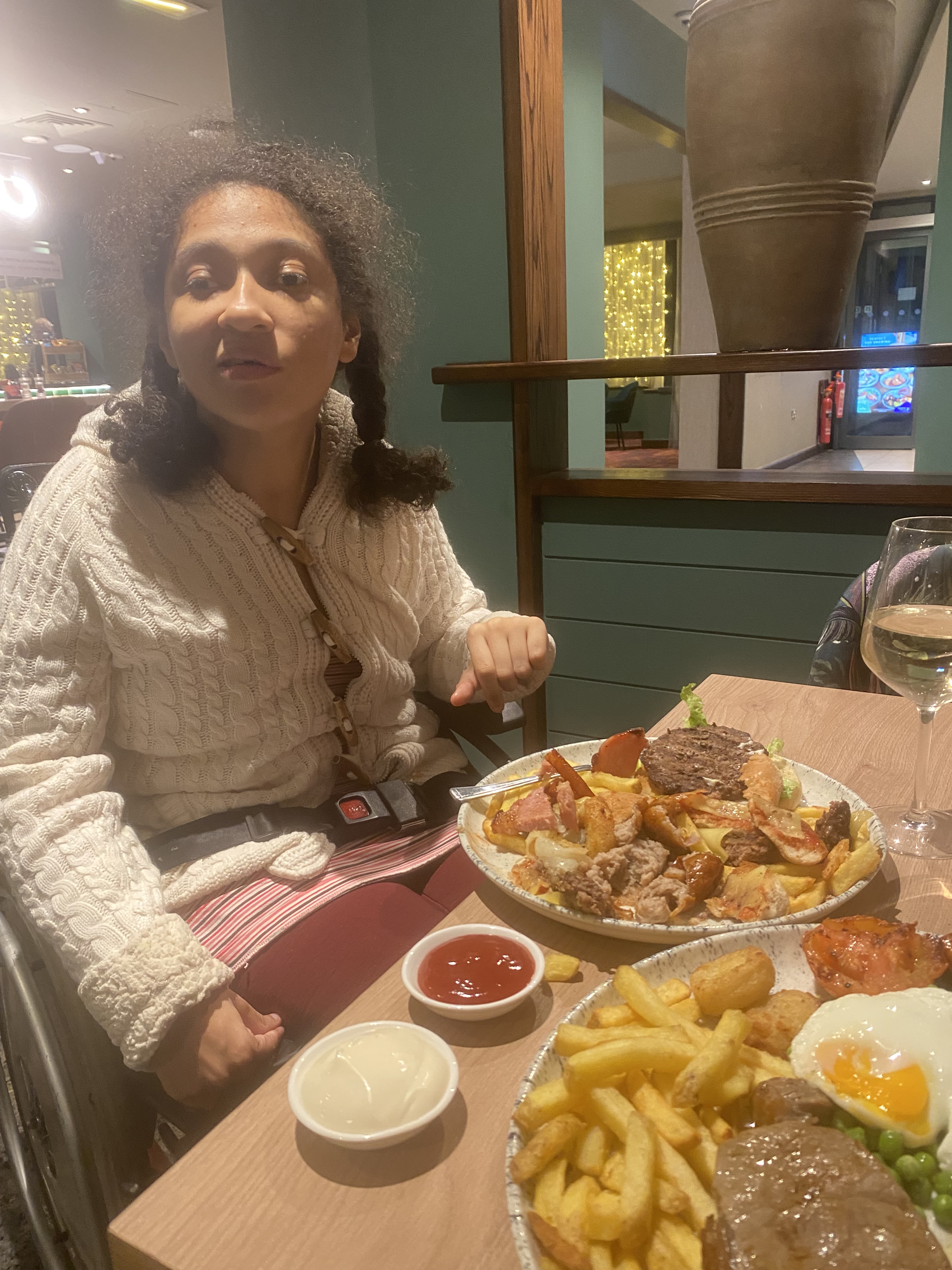
My respite care will not be funded by social care, who would like me to go to a respite care home instead. A care home is an inadequate solution for the disability I live with- functional neurological disorder, as well as, cerebral palsy. I have tried it in the past and instead of giving me and my family a break, it had a terrible impact on my mental health. That meant my family was even more stressed. It is mentally destroying to go there because there are people with severe disabilities who cannot communicate at all. This feels like a punishment and mentally I can’t cope in that environment. It also makes my FND worse. Social care told me they’d never fund a personal budget for my respite care/ direct payment, which I have for the rest of my support. They continue refusing to put my respite care element in my direct payment/personal budget package. They will only pay for me to go to a respite care home of their choice and brokerage are saying I do not have a say in this; and that they will find one that says they can meet my needs. I do not see how they will do that, as there is no training for FND that I can even send my own staff on. My own staff on the other hand know me well and know how and when to call my doctor and nurses.
The ‘Brilliant Invention’ Helping Cancer Patients
When Tim Morgan was diagnosed with chronic lymphatic leukaemia he started going through radiotherapy – but his treatment hit a roadblock when it triggered his claustrophobia.
The 63 year-old from Telford was being treated at the Royal Shrewsbury Hospital, and the radiotherapy involved a thermoplastic mesh mask moulded to fit the shape of his head and neck. He managed to go through the first two doses but needed a further 10.
“I had a panic attack, I couldn’t do it. The holes are just so tight, I had to stop halfway though,” he said.
He wanted to complete the treatment instead of going on to chemotherapy. That is when he was told that there was a new mask that could help.
Lingen Davies Cancer Support, which helps people living with the disease in Shropshire, Telford and Wrekin and Mid Wales, has funded surface guided radiotherapy technology (SGRT) on two radiation machines at the Royal Shrewsbury Hospital.
This allows patients to receive radiology with an open-face mask and is something not widely available on the NHS.
“You can see, you can open your eyes, you can breathe through your nose and your mouth,” Morgan said.
“The full face mask, you can’t even open your lips. I still found it slightly claustrophobic but towards the end I got quite used to it.”
With the new mask, staff also helped Morgan with breathing exercises.
He said the mask had made a real difference, since his claustrophobia is something he has suffered with since he was a child.
“It’s a brilliant, brilliant invention, I wouldn’t be able to do it otherwise,” he said.
“The panic attack I had, I just could not go ahead with it, but this other one it makes it so much easier.”
“In the future as we develop this service, more patients who would ordinarily refuse treatment or require sedation can instead be offered an alternative option,” said Amanda Welsh, chief dosimetrist at the hospital.
“Who knows where this cutting-edge technology will take us in the future.”
Naomi Atkin, CEO of Lingen Davies, added: “This technology has completely transformed the experiences of those in our region receiving radiotherapy treatment.
“Hearing Tim’s lived experience highlights the huge difference SGRT has made for those facing cancer treatment.
“SGRT is not yet widely offered in NHS Trusts but we want to ensure people across Shropshire, Telford and Wrekin, and Mid Wales have access to its wide-ranging benefits, including reduced treatment and waiting times as well as improved wellbeing and quality of life.”
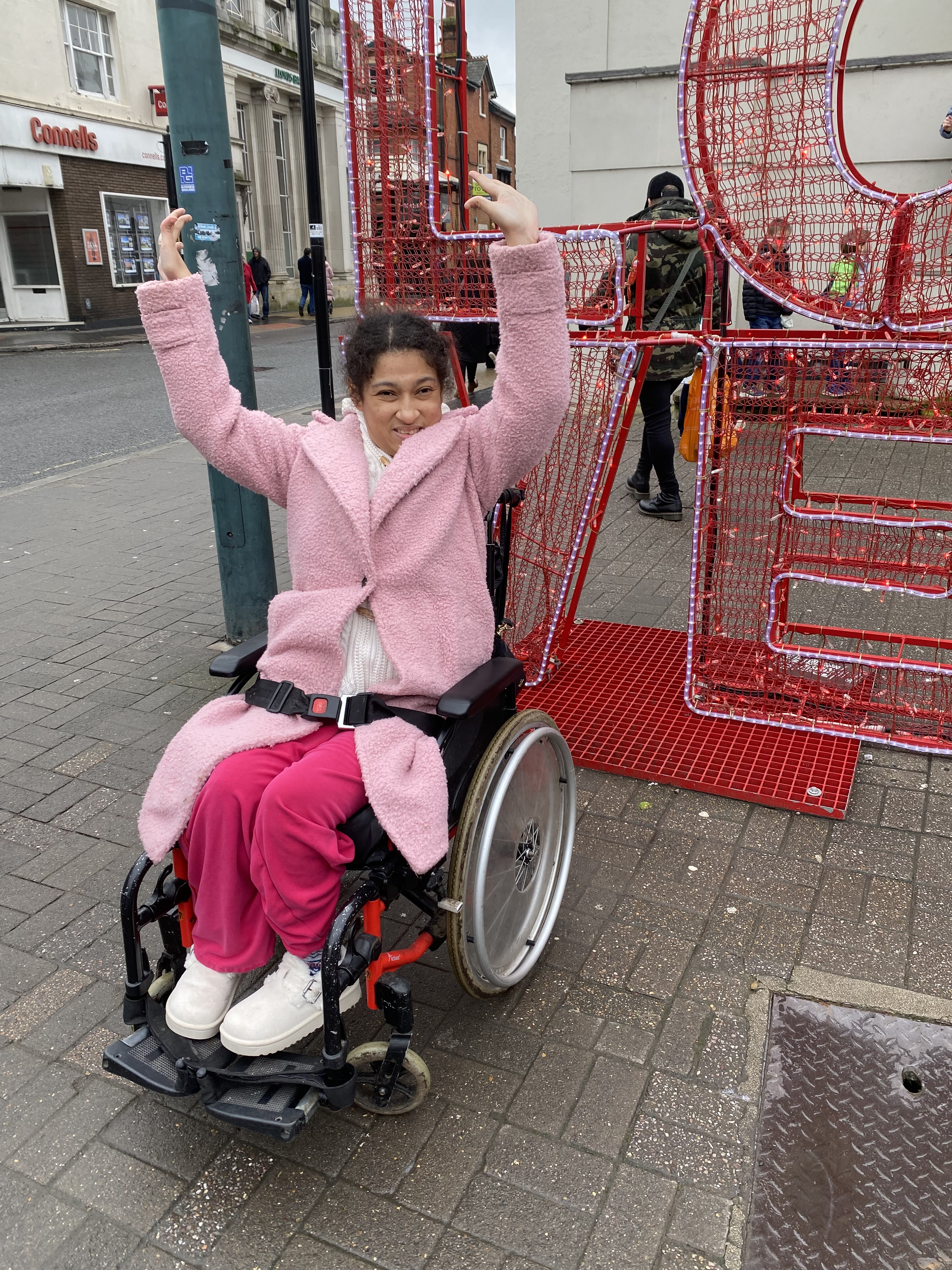
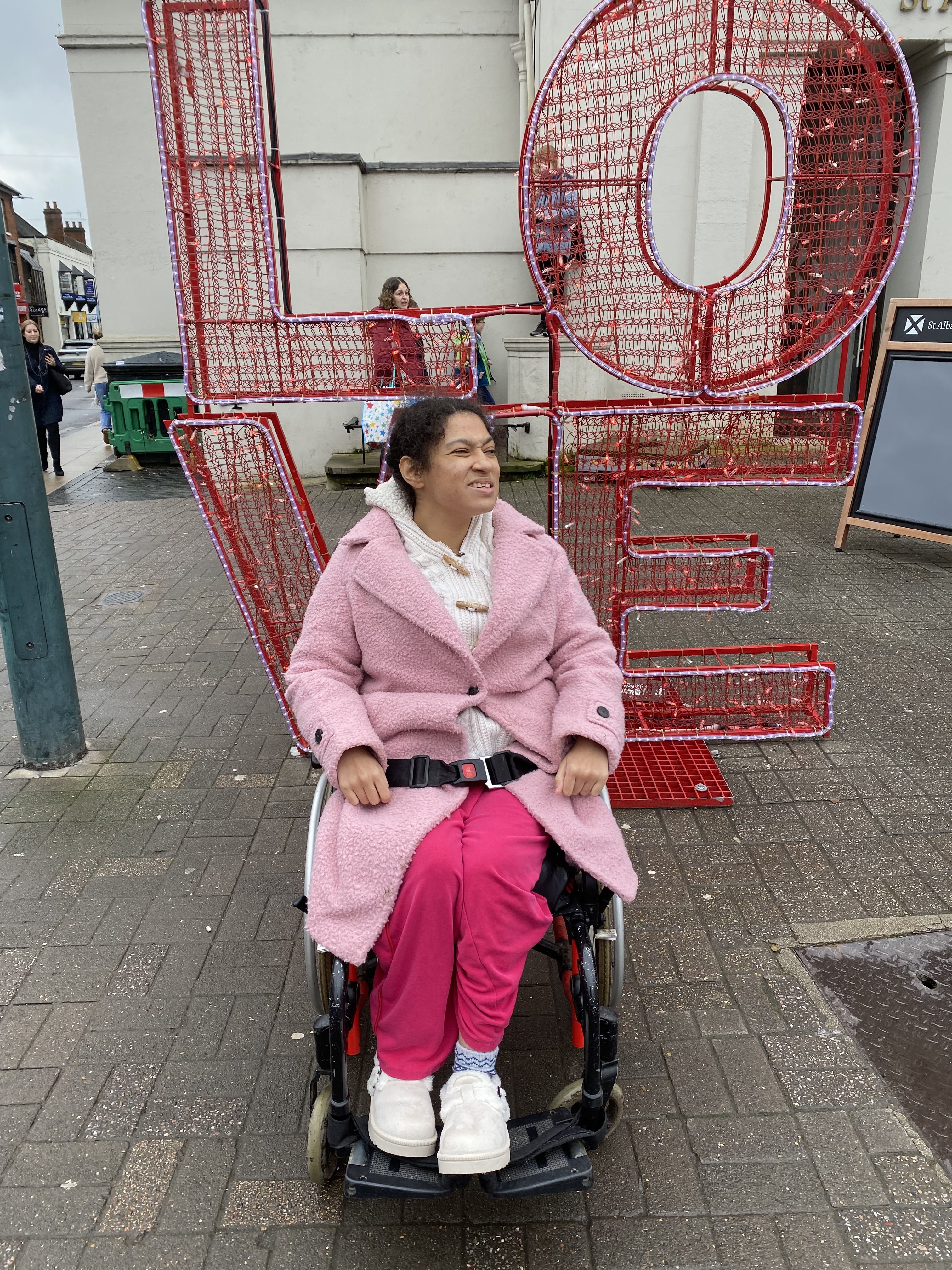
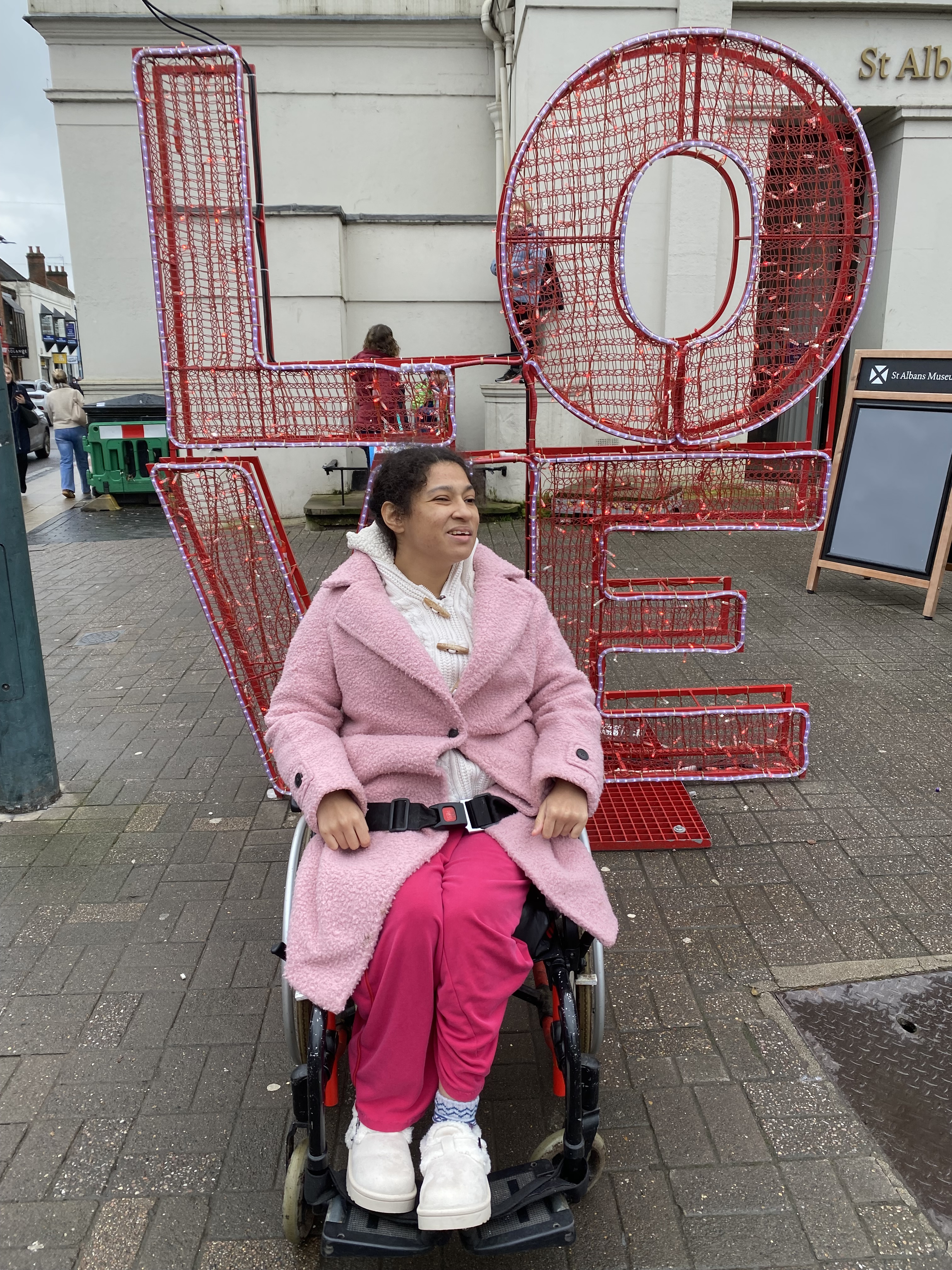
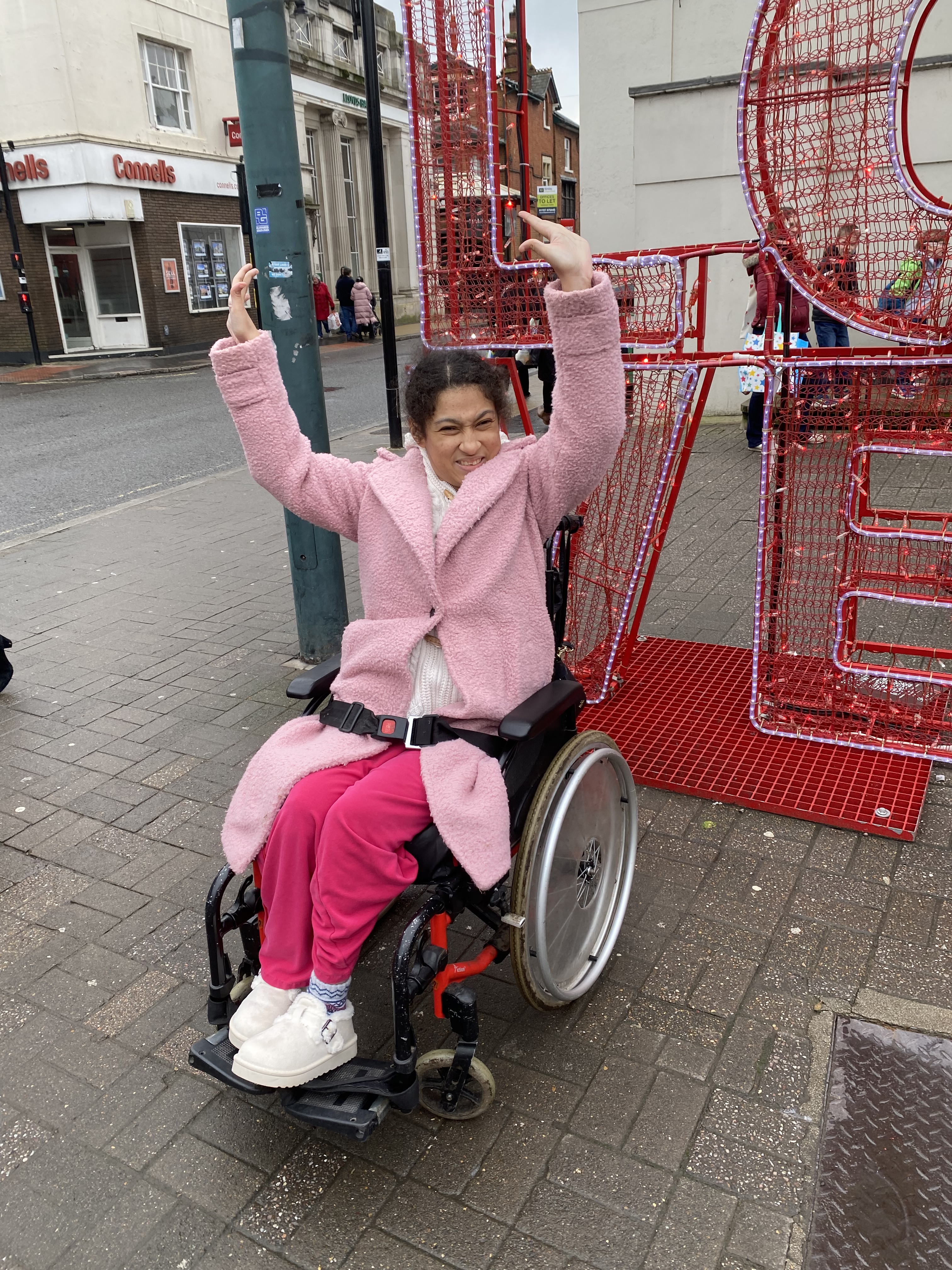
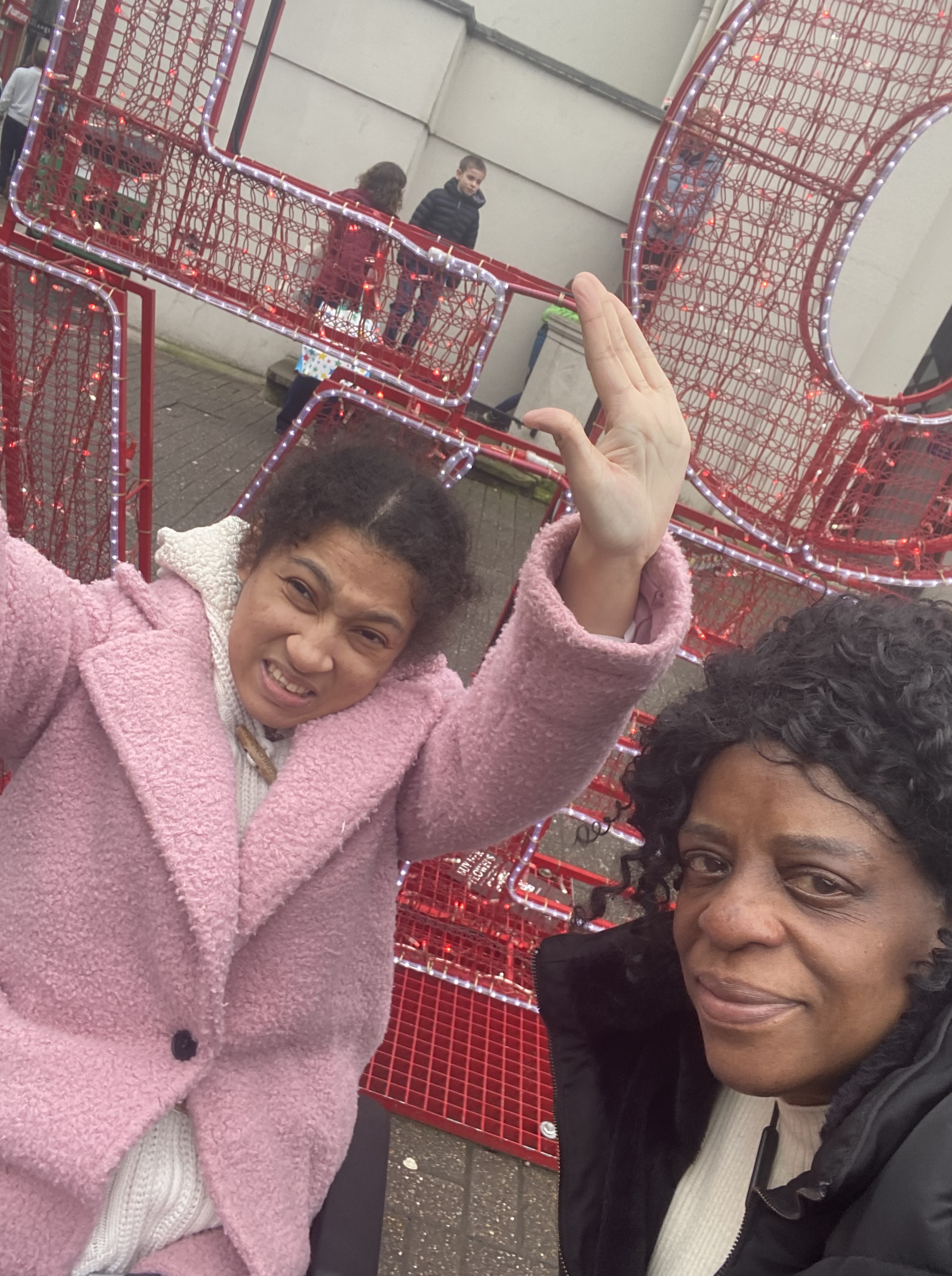
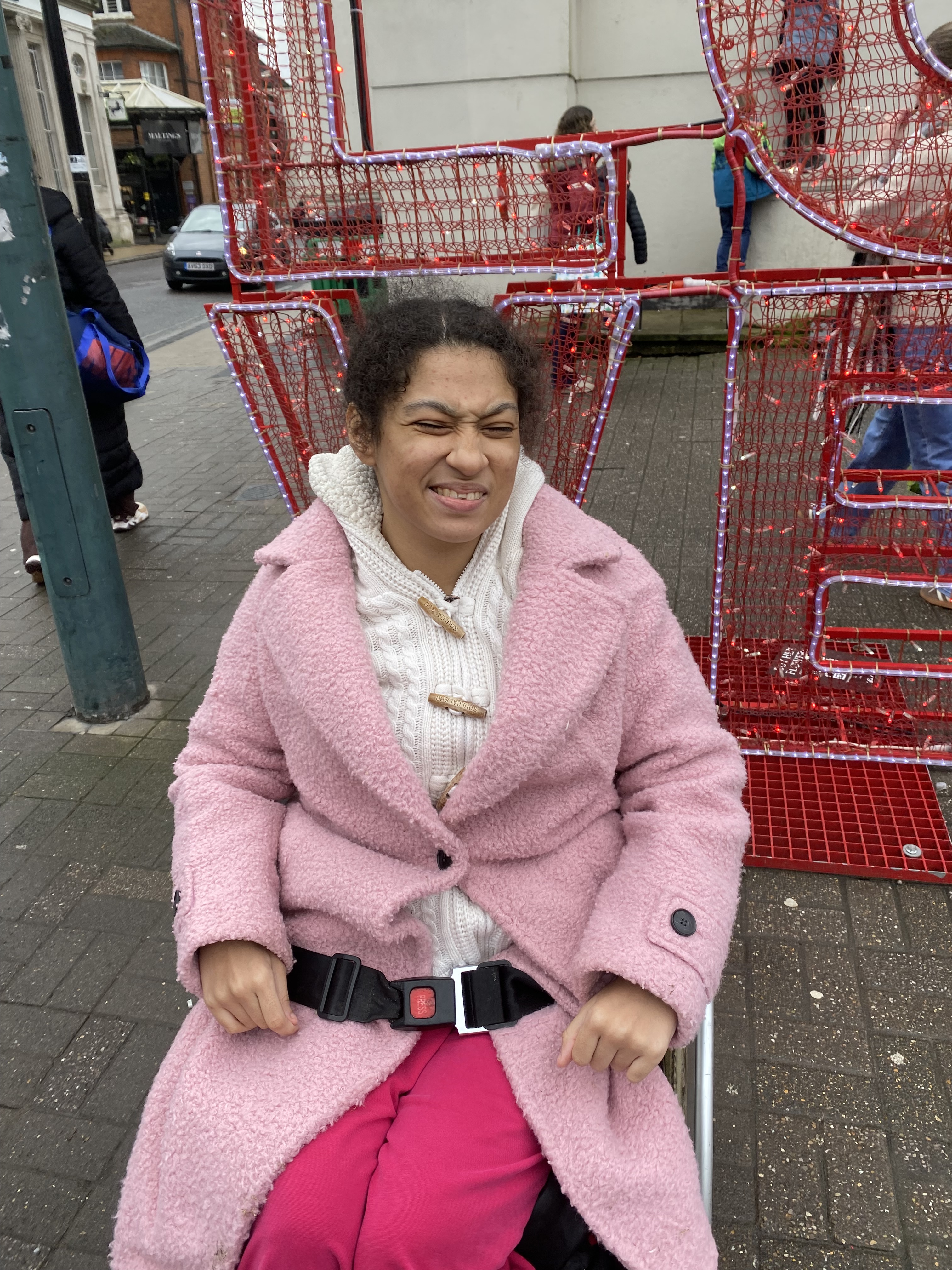
Visiting the Valentine’s Day selfie props, whilst on respite and taking photos next to and in front of them
Hold My Hand- UK’s First BSL Dating Show
A contestant on the UK’s first British Sign Language (BSL) dating show says he hopes it teaches people about the deaf community – and shows they can “have banter” too.
Oliver Scott is among the first to take part in the new series, Hold My Hand, which follows deaf or children of deaf adult (CODA) contestants as they navigate dating through BSL.
The 27-year-old from Norwich tells BBC Newsbeat, through an interpreter, the show felt “refreshing” after always questioning “why couldn’t I be a contestant on something like that” when watching other dating shows.
It is the latest from LumoTV, a deaf-led streaming platform, and is presented by deaf identical twins Hermon and Heroda Berhane.
Created with the deaf and signing community, the three-part series aims to highlight deaf culture and identity in a way that isn’t widely seen on screen.
Oliver grew up in a deaf family where BSL was his first language so he “didn’t feel the need” to get a hearing aid or a cochlear implant.
He says he often thought about what it would be like to be on a TV show, but worried about how it would work.
“We’d say it’s impossible because of the communication, everybody talking, the different games are quite fast-paced, the gossip, the drama,” he explains.
“How would I get to know people? It might be quite difficult.”
However, he says he had a “fantastic experience” on Hold My Hand and felt he could “genuinely get to know a girl better”, while having “a bit of banter”.
Back in 2022, model and dancer Tasha Ghouri became the first deaf contestant on ITV dating show Love Island.
Oliver says Tasha is a “brilliant representative” of somebody that uses a cochlear implant – a small electronic device that helps her to hear – within mainstream media.
However, he feels its important to show that deaf people have different communication preferences.
“They might see Tasha and think she speaks very well and think all deaf people are the same, and that’s not the case,” he says.
“I prefer to use British Sign Language. That is my first language. So I think we need more reflection of British Sign Language users in the mainstream.”
Oliver hopes people can learn more about the deaf community by watching Hold My Hand, and also challenge some misconceptions.
“We can be naughty, we can be mischievous, we can be cheeky, we can have fun, we can have great banter too,” he says.
“It’d be really nice to expose hearing people to that too.”
Across wider media, he feels representation has been improving but he would like to see a deaf BSL user on a “mainstream reality show”.
Teri Devine, associate director of inclusion for the charity Royal National Institute for Deaf People, says Hold My Hand is a “huge milestone” for representation of the deaf community.
“It really matters. Everybody wants to see somebody that’s like themselves,” says Teri.
“So if you see somebody on television that’s a deaf person that’s going on a date, you think: ‘Oh, actually I can do that’.'”
Teri adds that it can also help people find their “role models” which can encourage them to feel like “they can achieve anything they set their minds to”.
The environment in which a date takes place can also make a difference for a deaf person, Teri explains.
She says places which are quieter and brighter so the deaf person can see their date’s face and read their lips can help make navigating dating easier.
There has been increased representation of the deaf community in recent years on television, including actress Rose Ayling-Ellis becoming the first deaf contestant to compete, and win, Strictly Come Dancing in 2021.
Ayling-Ellis also made history when she became the first deaf person to host live sports coverage on TV as one of Channel 4’s hosts for the 2024 Paris Paralympic Games.
– Hold My Hand is available to stream on LumoTV and YouTube
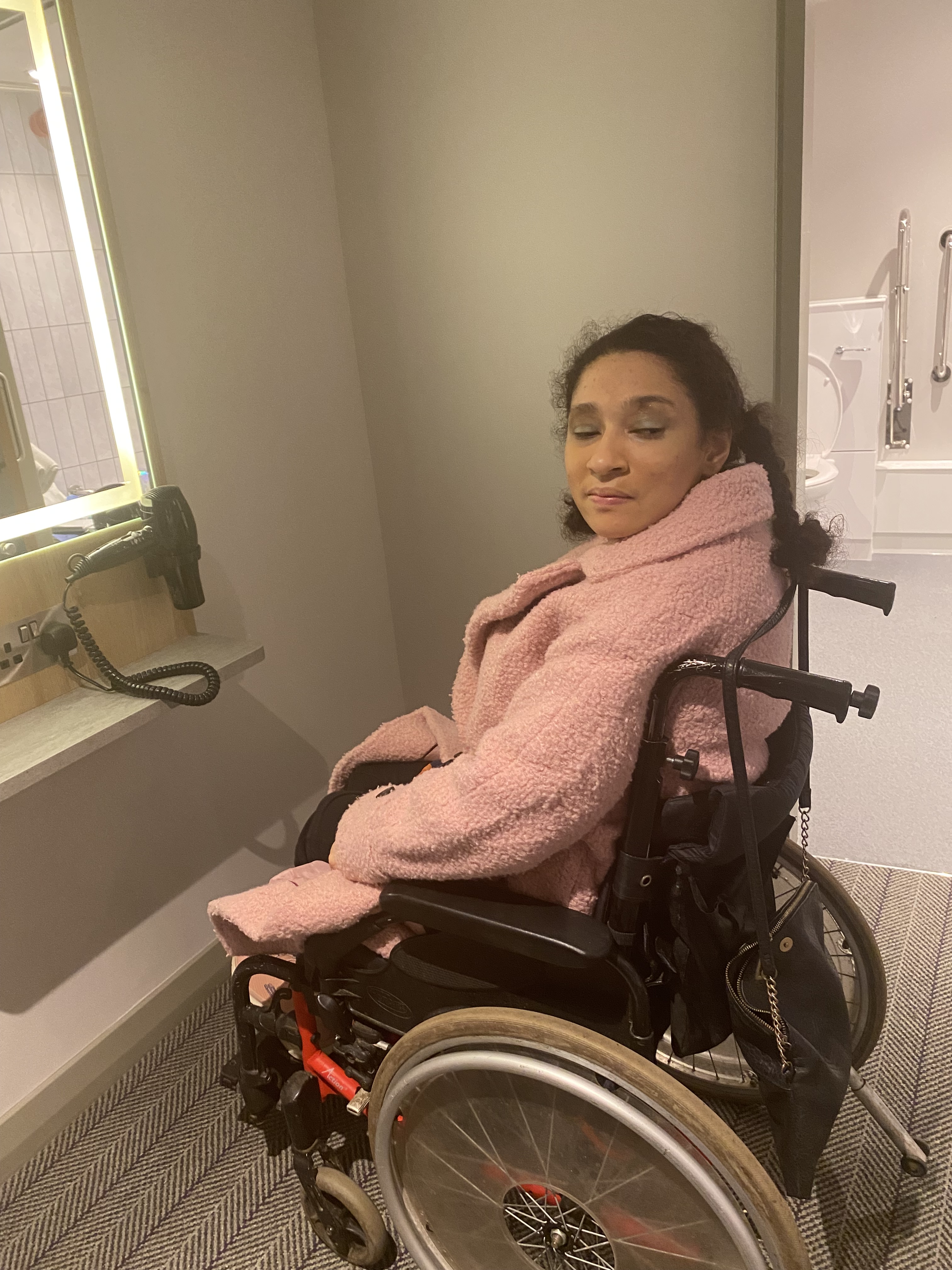
Night out ready selfie- make up and all, in my hotel room ,whilst on my respite break
UK Athletics Pleads Guilty To Corporate Manslaughter
UK Athletics has pleaded guilty to the corporate manslaughter of Paralympian Abdullah Hayayei.
Hayayei died aged 36 after a metal cage fell on him while training at Newham Leisure Centre, London in July 2017.
UK Athletics pleaded not guilty to the charge in March 2025 but entered a fresh plea on Friday at an Old Bailey hearing.
Keith Davies, the head of sport for the 2017 World Para-athletics Championships, also pleaded guilty to a health and safety charge, having previously denied gross negligence manslaughter.
Prosecutor Karen Robinson asked the court to set a two-day sentencing hearing in early June, confirming the prosecution would not seek a trial and the outstanding charges would be dealt with at the conclusion of the sentencing.
Davies, 78, was granted continued bail on the condition he liaise with the Probation Service for a pre-sentence report.
Hayayei was training for the World Para-athletics Championships in London at the time of the incident.
The United Arab Emirates thrower had been set to compete in the F34 shot put, discus and javelin events.
Hayayei, a father of five, finished sixth in the javelin and seventh in the shot put when making his Paralympic debut at Rio 2016.
London 2017 was due to be his second appearance at a worlds. At the 2015 event in Doha, Qatar, Hayayei finished fifth in the discus and eighth in the shot put.
A moment of silence was held in honour of Hayayei during the opening ceremony at London Stadium.
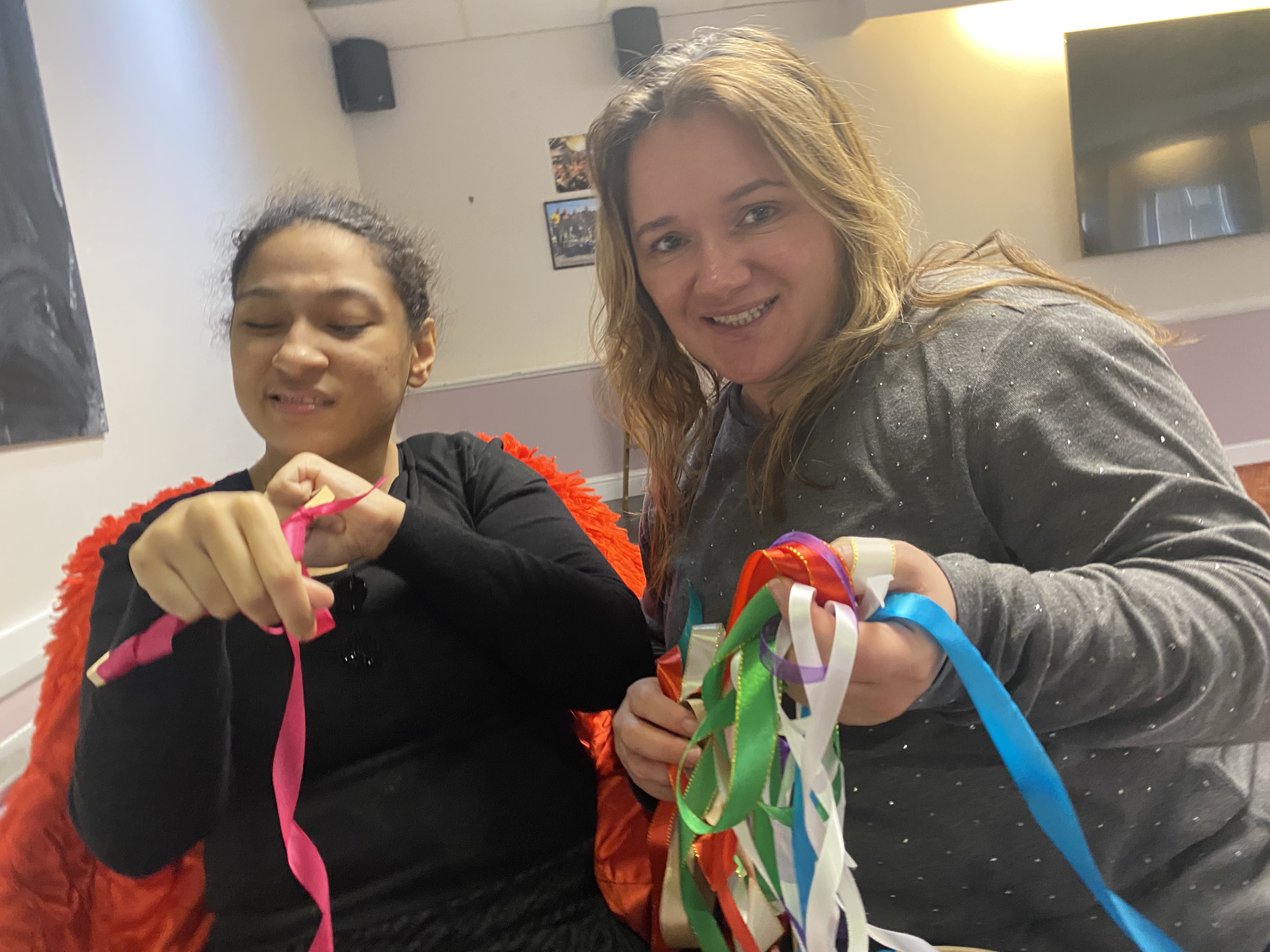
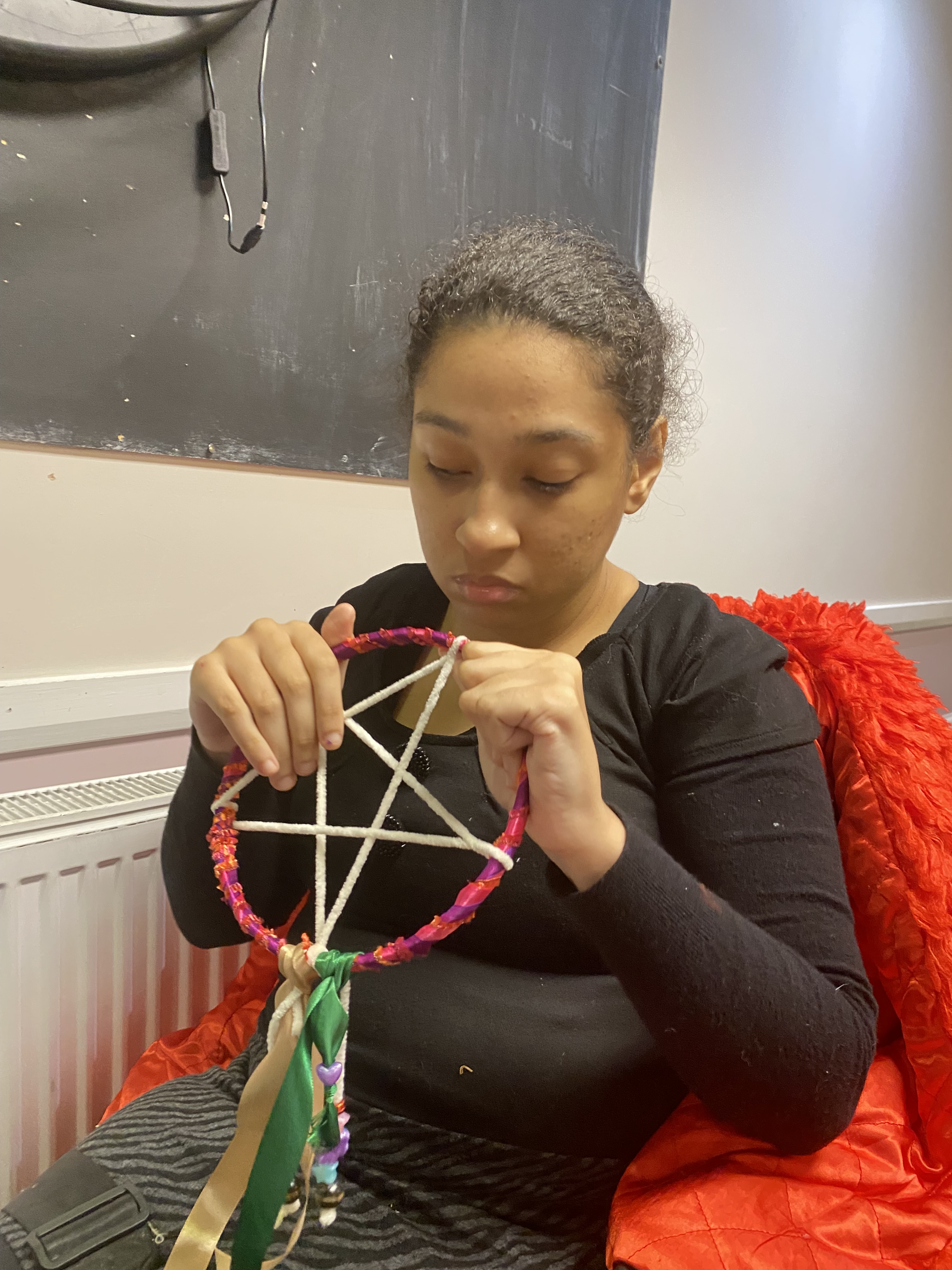
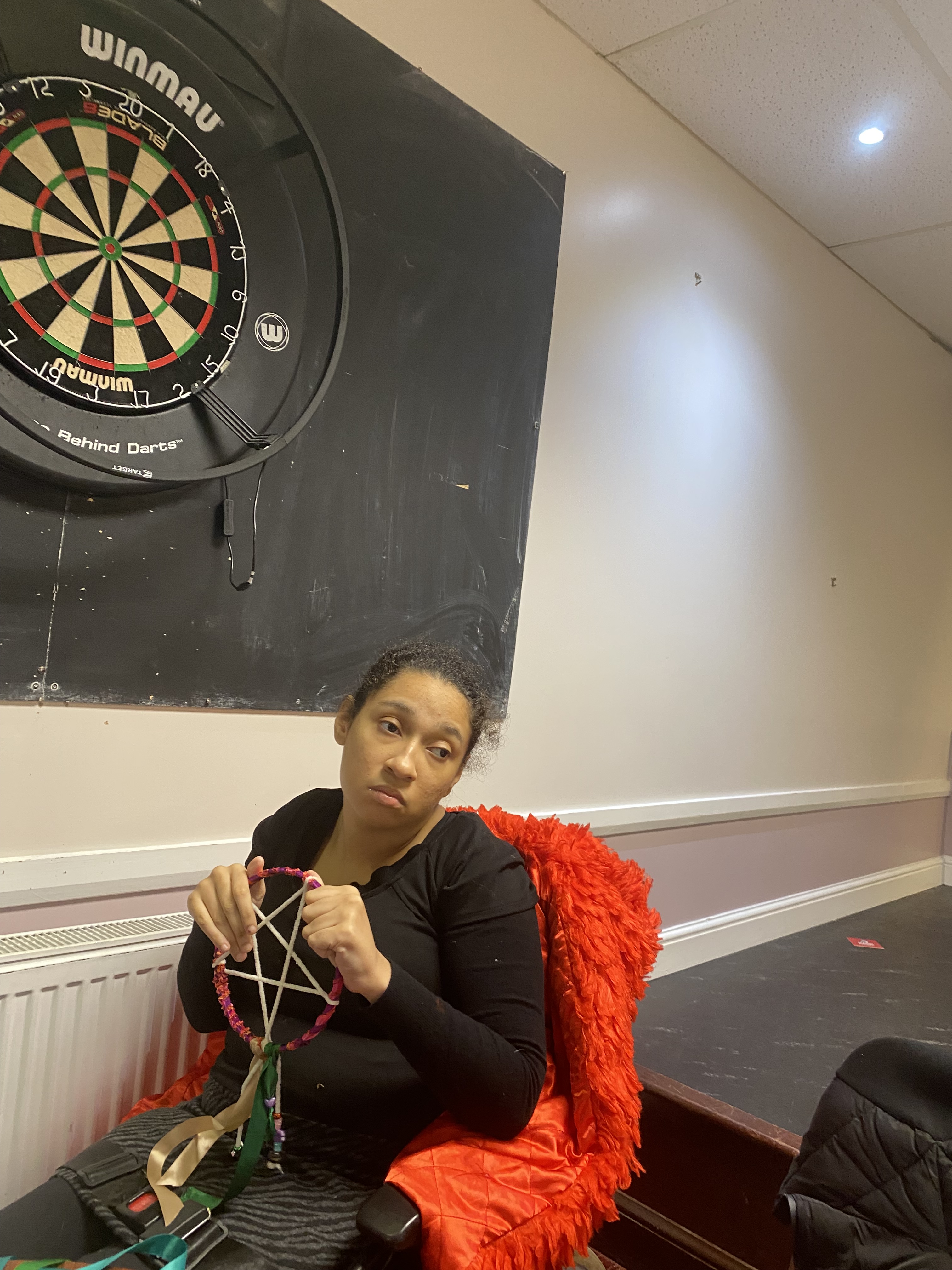
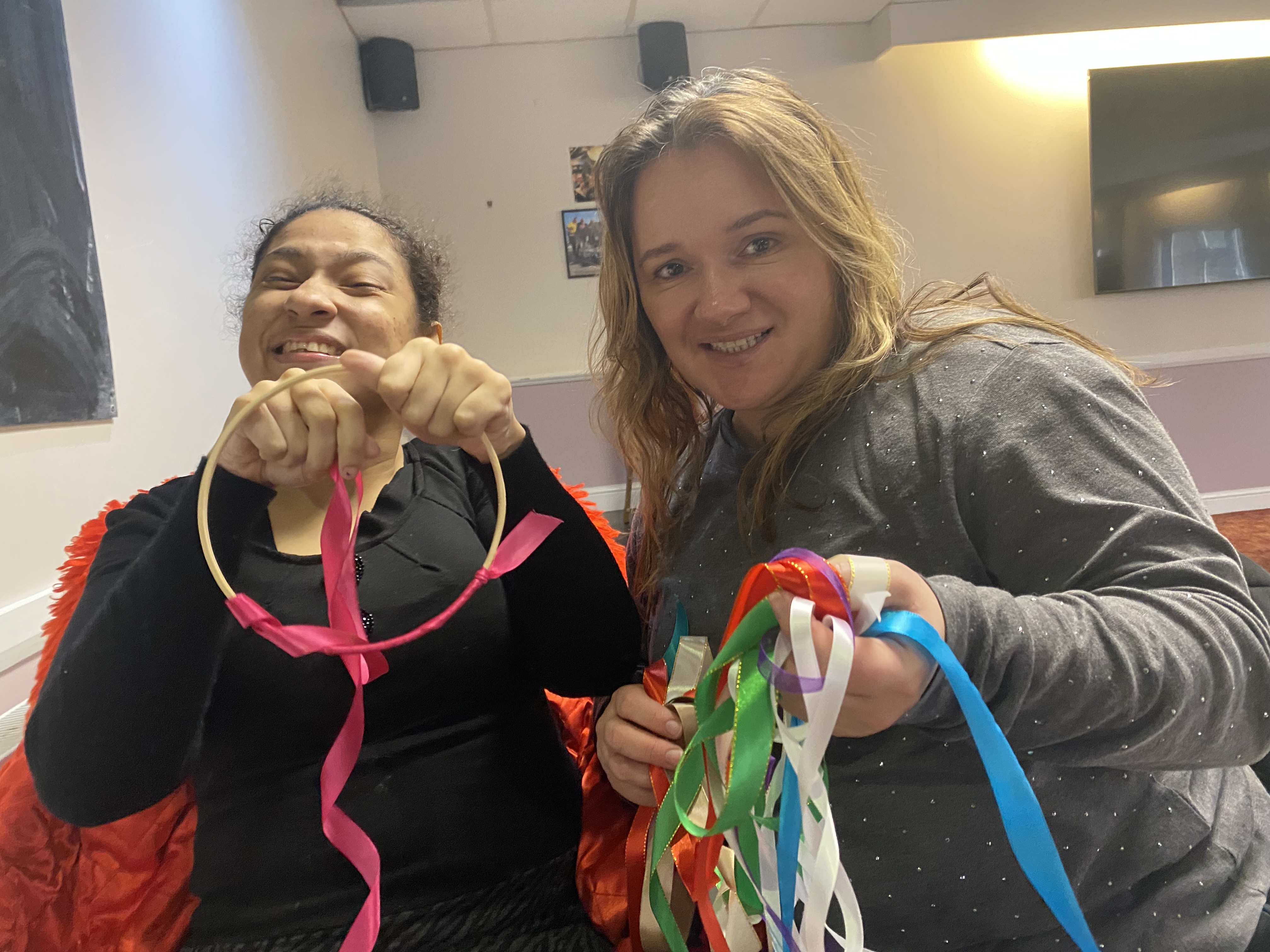
Dream Catcher Art Project at the Day Light Club
I enjoyed taking part in this project. This is where my personal assistants make a real difference, enabling me to participate fully in my commitments.
Blind Gamer’s Two-Hour Live Stream For Charity
Blind gamer Dom Hall attracted thousands of viewers during a two-hour gaming session which he streamed live on two social media platforms.
The 39-year-old had 1,387 viewers and 27,500 likes on TikTok, 120 viewers on Twitch and attracted followers from the UK, USA, Canada and the Netherlands.
Hall also raised more than £300 for the iSightCornwall charity which is celebrating its 170th year.
He said he was nervous because he needed to play Mortal Combat with the sound coming from the game and people asking questions at the same time. “All the sound coming through at once was a bit tricky,” he added.
A tumour in his optic nerve left Hall with only 10% sight when he was three years old and total loss of sight by the age of 35.
Hall has been a keen gamer since he was five, saying he was attracted to the colours and the interaction with other people.
But when he completely lost his sight he thought he would have to stop gaming.
“I thought this is it, there goes the hobby,” he said. “But thankfully I did a bit of research into it and found there are games being made today that are accessible for visually impaired people. You can play games entirely through sound by games that support it.
“This is done by screen readers that read out everything on screen for you or the text, as well as audible cues for visual things in a surround sound headset,” he said.
‘Sight loss journey’
Hall is iSightCornwall’s assistive technology advisor and his colleague Beth Perry helped him with viewers questions on the live stream.
“We see people at all stages of their sight loss journey,” said Perry.
“I’ve seen some people come in absolutely convinced there’ll never do something again, something they used to really, really love.
“They have an hour appointment with Dom and they come out and they’re almost excited to go home and try it a different way,” she said.
Peppa Pig Hearing Loss Story May ‘Remove Stigma’
An upcoming Peppa Pig episode in which George gets a hearing aid could help to “remove some stigma” around hearing loss, the head teacher of a prominent school for deaf children said.
Peppa’s brother receives the device for partial hearing loss in the upcoming storyline from an audiologist voiced by Gladiators star Fury.
The episode has been developed in partnership with the National Deaf Children’s Society and is due to come out on 9 March.
Paul Burrows, head teacher at the Royal School for the Deaf in Derby, said the story was “very important” in helping deaf children “not feel so different”.
Burrows said: “I am not quite sure [I would use] the word normalised but what it is doing is making having a hearing aid, going to the audiologist… just part of life and I think having as much representation as you can of that is fantastic.
“It is very important for them [the students] themselves, it allows them to not feel so different, it might kind of remove some stigma.
“But I think actually for me the importance of this will be wider than the deaf young person.
“I think it will be for their brothers and sisters, their families, their friends, the people they go to school with because they will all see it.”
Burrows said the school taught their students to be “proud of their deafness” and emphasised the “solution is not always just – ‘let’s get a hearing aid'”.
“We are big supporters of British Sign Language (BSL) for example as a way of communicating,” he said.
“So the technology is one side of it but I think equally we need to teach people that being deaf is just a part of who they are, there is nothing wrong with you if you are deaf, that’s just you – it’s part of your makeup.”
George’s audiologist is voiced by Jodie Ounsley, also known as Fury from Gladiators, who uses a cochlear implant.
The former England rugby union international said she sometimes felt “lonely” growing up as she was “probably” the only deaf person in her school.
She said: “I can just imagine if I had something like that when I was younger and saw it on TV… just normalising it, I think that would have had a huge impact on me.”
The school in Derby was founded by Dr William Roe in the 1890s after witnessing a young deaf man being bullied.
Roe was “struck by the social and educational exclusion of deaf people” and so set out on a world wide tour to raise awareness and funds, the school said.
It currently accepts students aged three to 19.
Patients Describe ‘Culture Of Abuse’ As 15 Hospital Staff Arrested
Patients, relatives and whistleblowers have described a culture of abuse at a mental health hospital, while 15 staff members have been arrested following allegations of rape, ill-treatment and neglect.
St Andrew’s Healthcare in Northampton, which provides specialist care for about 600 people with complex mental health needs, is the subject of three police investigations following alleged assaults and the deaths of two patients.
The charity that runs the private hospital said it had dismissed several staff members and was delivering an urgent action plan to address the issues.
St Andrew’s Healthcare said it was committed to “full transparency” and took a “zero-tolerance approach to any allegation of harm or poor practice”.
The Care Quality Commission (CQC) rated the hospital as inadequate last year and imposed an urgent condition on its registration, and new admissions have been restricted.
Warning: This article contains distressing content
Anne, whose name has been changed, told the BBC she was horrified by the injuries sustained by her daughter while she was a patient at St Andrew’s Healthcare.
“They were restraining her with four adults and on one occasion she was knelt on by a male member of staff,” she said.
“She was waking up every night for months and was obviously in a severe amount of pain with her ribs,” she added.
Anne said her daughter had “lost half her body weight” and showed “all the symptoms of being malnourished”.
“She lost the use of her hand while in long-term segregation” and on two occasions she had suffered severe burns from coffee, she added.
Anne has made a series of safeguarding referrals to West Northamptonshire Council, but said she had not gone to the police due to the lack of witnesses and CCTV.
“It’s traumatic. Something’s got to change and the only way things can change is by people now speaking out,” Anne said.
Northamptonshire Police said 15 people had been arrested as part of investigations into incidents at the hospital that reportedly took place since October 2024. Ten people remain under suspicion and have been bailed or released pending inquiries.
- Eight people were arrested on suspicion of wilful neglect and ill-treatment in relation to an alleged assault in July 2025 on a man with a brain injury. One person was also arrested on suspicion of rape. All remain on bail
- Five people were arrested on suspicion of corporate manslaughter and gross negligence manslaughter following the death of a man in February 2025. Four face no further action while one person remains on bail for the offence of wilful neglect by a care worker
- One woman was arrested on suspicion of assault and ill-treatment or wilful neglect following an incident on 29 June 2025 and remains on bail
- One person was arrested in relation to an investigation into gross negligence manslaughter following the death of a teenage girl in October 2024. Police said no further action would be taken
‘Horrendous injuries’
Jamie, whose name has been changed, was a staff member at St Andrew’s Healthcare until recently and has spoken out about “massive safeguarding issues” at the hospital.
“I’ve seen senior nurses goading a patient,” he said.
He added that a patient who was being observed on a one-to-one basis by staff had incurred “horrendous injuries” after self-harming when staff were withdrawn.
On another occasion, Jamie said he had been locked in a room with an “extremely violent” patient after a nurse refused to open the door.
He also described bed-bound patients being ignored while screaming in distress and others being roughly handled.
“When you do restraints, you’re supposed to do them in a certain way, and some patients were getting pulled to the floor by their arms – that’s not restraint,” he said.
He claimed that instances of what he considered “cruelty and neglect” were due to poor culture and unqualified staff who “didn’t have enough experience”.
An employee, who wanted to remain anonymous, told the BBC they were now “ashamed” to work at St Andrew’s Healthcare.
“It is so sad, some staff trusted to work with patients have acted so terribly. Not all staff are bad, but the organisation needs to take action to make sure patients are protected,” they said.
‘My wrists popped’
Beth Sheridan, 26, from Northampton, was a patient at St Andrew’s Healthcare in 2021 and said staff would “fall asleep quite a lot – at one point I managed to do something to myself where I needed CPR because one of them was asleep”.
“[Staff would] bend people’s arms back, be dragging them across the floor,” she said.
Sheridan said staff once came to restrain her after an emergency alarm had been pulled and “they bent my wrists back and one of my wrists popped”.
She continued: “I was screaming out saying that it was hurting. Nobody cared. Nobody told them to stop. No-one told them it was wrong.”
The charity’s services are largely commissioned by the NHS and it had an income of almost £220m in the year ending March 2024.
During an executive meeting, recorded and leaked by a staff member, Sanjith Kamath, the hospital’s medical director, said the charity may not be able to continue in its current state of “significant financial stress”.
However, St Andrew’s Healthcare said in a statement that the hospital was being reshaped “to be a smaller, more focused charity”.
“In the year ending March 2025, we made a small surplus, giving us the resilience to navigate the financial challenges we currently face,” it said.
St Andrew’s Healthcare said it had reported the cases subject to Northamptonshire Police investigations to the force and launched internal investigations.
“All staff were immediately suspended and several staff were dismissed. We referred several members of staff to the Nursing and Midwifery Council,” the spokesman said.
The hospital said the use of restraint was carefully planned and only undertaken as a last resort, but it acknowledged “care hadn’t always met the standards patients deserve” and apologised to those affected.
It added it had introduced new training for all front-line staff, had significantly reduced the use of agency staff and had now installed CCTV on most wards.
Blind Couple Say Sight Loss Is No Barrier To Love
A blind couple from Scarborough have said they hope the story of their upcoming marriage can inspire other visually impaired people who are nervous about dating.
Malcolm Day and Sarah Brooks are due to tie the knot in September after meeting on holiday in Blackpool in June 2024.
They will marry a year to the day since Sarah, who became visually impaired in 2016, made the 260-mile (418km) trip from Winchester in Hampshire to the North Yorkshire coast to live with Malcolm.
Sarah said: “I was calling it love at first sight and trying to do everything to make sure Malcolm felt the same, but I didn’t have to work that hard.”
The pair originally met at an event attended by 80 visually impaired people at a hotel in Blackpool, according to Malcolm, who has been blind since he was 14.
“I knew two or three people in the group. They’d invited me along and said, ‘come and have a good time. You’ll meet some new people’,” he explained.
“I never intended meeting someone like Sarah.”
Malcolm said he proposed to Sarah during a karaoke night in June last year when they returned to the seaside resort for another holiday a year after they first met.
“We’d decided we were going to do Sonny and Cher’s I Got You Babe,” he said.
“I completely messed it up because my mind was somewhere else. I was distracted by thinking, ‘I’ve got this ring in my pocket’.
“There’s a line in the song that says, ‘she wears my ring’. So when I got down on one knee I said, ‘there’s something in that song I’m going to put right’.
Remembering that moment, Sarah said: “I didn’t know at all, I didn’t see it coming.”
In September, the couple bought a house together in Scarborough, where Malcolm is originally from, and that is where they live now with their three dogs.
“In the last three or four months, we’ve been discovering each other’s eyesight as two blind people,” Malcolm said.
“I’ve learned a lot about what Sarah can see, and Sarah has learned a lot about what I can see.
“We joke to people that we have one good eye between us.”
Sarah said that for their wedding in September, her bridesmaids would all be visually impaired.
“My friends, my lovely, lovely blind girlfriends – nine of them – will be on the bridesmaid list,” she said.
“Mostly, it’s a big blind community getting together.”
Irena Valchera, who is visually impaired and works for social inclusion charity Eye Matter, and who will also be one of Sarah’s nine bridesmaids, said many of the organisation’s members had found dating a tough challenge.
“It must be very difficult to overcome that shyness or thinking, ‘maybe I am not good enough’,” she said.
“It must be very scary and isolating.
“We have in Eye Matter young people who I know are suffering because of that.”
However, Malcolm and Sarah said they wanted their successful relationship to inspire other blind people who were nervous about meeting new people.
“Everybody has something that holds them back. Sight loss doesn’t have to be that thing,” said Sarah.
“We can still get out there. We can still do it. We can still go on a blind date.”
It’s nearly 200 years since the birth of a British aristocrat who became the first Muslim member of the House of Lords.
But few have heard of Lord Henry Stanley, who “defied convention and his family’s wishes” when he converted to Islam in 1859, according to historian Jamie Gilham.
Little remains of Stanley’s letters and diaries “which is really frustrating but adds to the idea that he was a private man,” he said.
Since medieval times, a relatively small number of Brits had become Muslims while travelling abroad.
But Gilham said Stanley was notable as he had influence politically and on his lands in Cheshire and Anglesey.
Born in 1827, Stanley was the eldest of 10 children given free rein to develop their own thoughts and beliefs.
The wider family, whose aristocratic ancestors can be traced to Norman times, had members belonging to various Christian denominations and at least one who was Jewish during Victorian times.
Family historian Lady Carla Stanley, who is married to the current Lord Stanley, said they were “free thinking” and born to educated, well-travelled mothers.
“They were people who did things,” she added. “It was acceptable to be argumentative.
“Thinking, debate, discussions were OK as opposed to a ‘get off my land, I’m going shooting’ attitude.”
Like many educated Victorians, Stanley was dazzled as a child by travelogues and the Arabian Nights tales.
He also had a hearing impairment which affected his schooling, and he left Eton after one year to study with a private tutor.
Gilham said Stanley’s father, who was an MP, and his mother – who helped establish the first women’s college at Cambridge University – had “great expectations for their first-born”.
However his struggles with hearing meant “his family worried greatly about his future prospects”.
“He only really started to shine when he went to Cambridge and learned Arabic,” Gilham added.
Within a year, the 20-year-old was employed as an assistant to the then Foreign Secretary, Lord Palmerston in 1847.
Over the following decade, Stanley worked for the diplomatic service, with postings in the Turkish-based Ottoman Empire, as well as Greece and Bulgaria.
“Stanley came to appreciate the social and the spiritual benefits Islam provided the Ottomans,” Gilham said.
It was also a time when various European empires were reaching their peak yet faced republican or nationalistic revolts.
“From letters, we see that Stanley experienced both political and spiritual crises,” Gilham added.
“He didn’t lose faith in God but he certainly had theological doubts. He did question the literal accuracy of the Bible, for example, and the letters between his parents show that he didn’t go to church for the first time in his life.
“Unusually for Britain in the mid-Victorian period, Stanley did gravitate towards Islam – the religion of the Ottoman Turks – and symbolically at that time, around 1849-50, he gave up wine.”
Disillusioned with Britain’s expanding imperialism, Stanley quit the diplomatic service in 1858 and decided to become a Muslim some months later while travelling in Arabia.
“There’s little account of his religious conversion and beliefs,” Gilham said. “It’s just things that you can read in some of the family letters.”
Press reports of Stanley’s conversion emerged in Sri Lanka on his visit there in 1859, before news travelled back home to Cheshire – where it was reported in the local Macclesfield Courier and then the national outlets in London.
Some reported that he made a pilgrimage to Islam’s holiest site in Mecca and adopted the name Abdul Rahman – Arabic for “servant of the merciful Lord” – although evidence is unclear, Gilham added.
“Letters show his parents were absolutely furious and equally embarrassed and humiliated that their son would convert to Islam from Christianity.
“His father said to his mother, ‘Is he mad? What can he possibly mean by parading himself in our colonies and our possessions in the degrading position he occupies?’
“His mother replied to his father that the newspaper report in the Macclesfield Courier ‘made me feel sick’.”
They later issued a public denial that their son had converted to Islam however Stanley wrote to one of his brothers that “I have always been a Mussulman [Muslim] at heart”.
Secret wedding
In 1862, he married a Spanish Catholic lady in Algeria under Islamic law, but kept their relationship secret until his father’s death seven years later.
It emerged his wife was already legally married to a Spanish man at the time of their wedding, although it’s unclear if Stanley was aware of this, Gilham said.
The couple registered their marriage under English law after he became the third Lord Stanley of Alderley and second Baron Eddisbury on his father’s death in 1869.
“The Spanish husband was still alive until 1870 so again, the marriage wasn’t actually valid.
“But it was eventually made valid when they remarried in 1874 and that was a Roman Catholic ceremony, which kind of raised eyebrows,” Gilham explained.
“I think he was respecting the religion of his partner, his wife.”
Pub closures
After inheriting his father’s lands and titles, he took his place as a non-partisan crossbench peer in the House of Lords in 1869 and became its first Muslim member.
“I don’t know how many of his peers would have known that he was a Muslim,” Gilham said.
“I guess they would have because they read the newspapers and knew he was involved in Orientalist societies.”
Lord Stanley inherited lands in north Cheshire, including the village of Alderley Edge – better known as an affluent area near Manchester that’s popular with Premier League footballers.
“Famously or infamously, he did close some of the public houses on the Alderley Park estate,” Gilham added.
Following the death of an uncle in 1884, Lord Stanley inherited the Penrhos estate in Anglesey, north Wales, where he contributed to the upkeep of local churches.
He also paid for windows with geometric designs rather than traditional figurative scenes, in line with Islamic rulings against the drawings of creatures.
“As a Muslim, Stanley respected Christianity as a sister faith of Islam – of its shared Abrahamic roots,” Gilham said.
Eve Hawwa Iqbal-Khokhar, an English woman who converted to Islam and volunteers in the Manchester Muslim community, said she “felt compelled to visit” the churches after finding out about Lord Stanley’s life just before a family holiday to Anglesey.
“History really excites me and learning about the first converts to Islam in Victorian Britain is so exciting – especially a local aristocrat of Lord Stanley’s standing.”
She described the churches’ designs as a “visual feast”, adding they form part of “a rich tapestry of our past”.
However as a supporter of the political union of the UK nations, Lord Stanley disapproved of teaching Welsh in local schools.
“He really respected language,” Gilham said. “But I guess in this case it was about the union and the union was more important to him.”
He described Lord Stanley as someone who “didn’t believe in the extension of empire”, adding: “He believed in the consolidation of the empire as it was.
“And so he spoke out in the Lords about preserving the empire, but also about looking after its people.
“He was a conservative man but also a Victorian. He did defy convention in many respects – and a crucial respect in terms of religion – but in other ways he didn’t.”
Lord Stanley died at the age of 76 during the Islamic holy month of Ramadan in 1903 and was buried in unconsecrated ground on his Alderley estate, in a service led by an imam from the Ottoman Embassy in London.
“In some respects he was ahead of his time and he is starting slowly to be recognised and reclaimed to some extent,” said Gilham.
“He was not showy and maybe that was to the detriment of his legacy but I hope people will start to recognise him a little more than maybe he has been so far.”
Having my make up done for my first night out of 2026
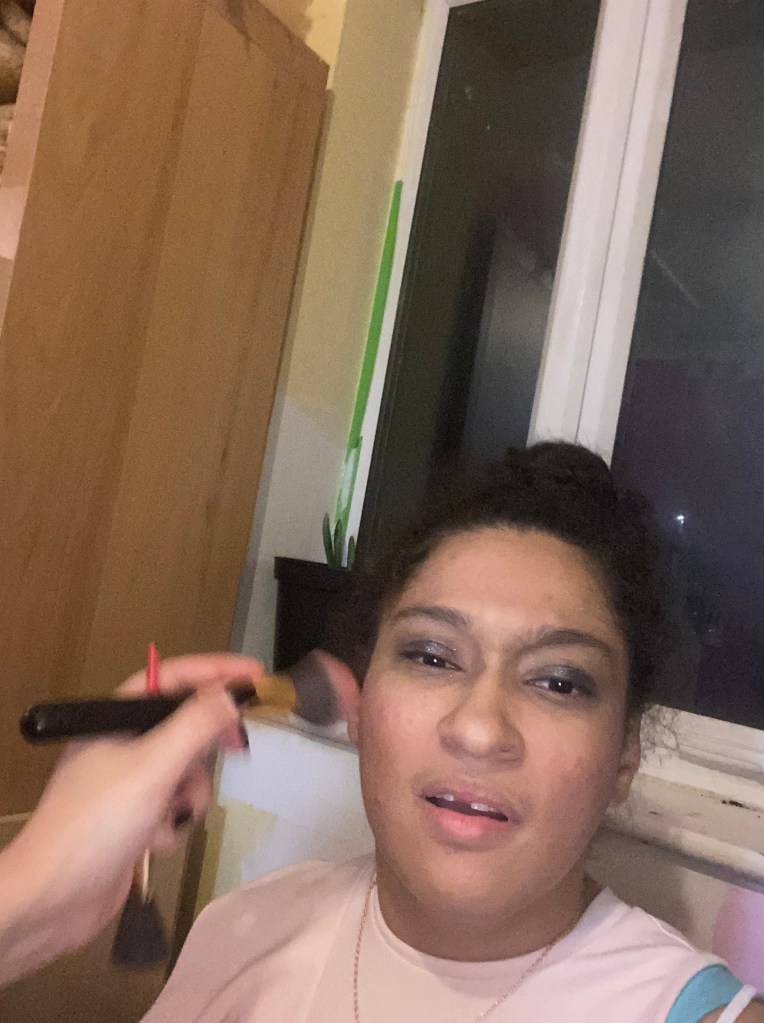
My pyjama day/weekend
this is what a lot of my weekends look like, as a chronic ill girly, who relies on PAs, but inadequately funded. That puts pressure on my unpaid caregivers I.e my family, that live with me. We need to make changes to the system, so to allow our family to be our family, rather than our caregivers.
CP Healthcare Is A Never Ending Battle For Adults
https://www.bbc.co.uk/news/articles/cjwz3xl2gevo
A woman with cerebral palsy says guaranteed annual health checks for people with her condition could end “fragmented” health care.
Adults with cerebral palsy risk developing early-onset health conditions like chronic pain, mobility difficulties and cardiovascular disease.
Molly Lane, who lives in Salisbury in Wiltshire, said: “You spend your life navigating a fragmented [health] system. For some people, it’s a never-ending battle.”
A spokesperson for the Department of Health and Social Care (DHSC) said the government was “strengthening care for people with complex long-term conditions, including cerebral palsy” through its 10 Year Health Plan.
This includes shifting more healthcare to the community by bolstering GP and pharmacist services.
Cerebral palsy is a developmental disability which impacts movement and co-ordination.
It affects about 130,000 adults in the UK, yet routine health checks are not guaranteed.
Lane, 29, decided to share her story after seeing an Instagram post by comedian Rosie Jones, who also has cerebral palsy, sharing the Doctor Won’t See Us Now campaign.
It is calling for annual health checks so people with the condition can avoid long hospital or GP waiting lists when they are already struggling with their health.
After being diagnosed age two, Lane said as a child she received really “brilliant” care from the NHS, including offers of physio and occupational therapy.
But when she reached 19, she said this level of support dwindled and she faced long waits for basic support. It was not until a flare-up at 25 where she realised how little care she had had as an adult with cerebral palsy.
“Everything kicked in and I got referred back to all the specialists I needed,” she said. “From that point, I realised what I missed.”
Lane added: “Adults with cerebral palsy are 14 times more likely to die from respiratory conditions. If you are constantly ill, it can be hard to have the energy to bring issues forward.
“A lot of people with disabilities are taught not to raise their voice, not to be demanding. But never be afraid of complaining or going through the processes. All this campaign is asking for is GP health checks.”
Emma Livingstone, Co-founder and CEO of UP – The Adult Movement for Cerebral Palsy, which is running the campaign, added: “Preventive healthcare is crucial to reducing unnecessary hospital admissions and ensuring a better quality of life for people with CP.”
The DHSC said, as well as the 10 Year Health Plan, Integrated Care Boards across the country were working to provide tailored support for adults with cerebral palsy.
A spokesperson added: “We are committed to ensuring that people with cerebral palsy get the support they need to lead fulfilling, healthy and productive lives.”
Teen Had To Tell Deaf Mum Her Dad Might Die
https://www.bbc.co.uk/news/articles/c5yk9qkwed4o
Hospital staff asked a teenage boy to tell his deaf mother that her father might die, according to the findings of an ombudsman.
The Parliamentary and Health Service Ombudsman said University Hospitals Birmingham (UHB) NHS Trust failed to follow national guidance, by repeatedly using children to interpret critical medical information for their deaf family members.
Alan Graham, who was born deaf and used British Sign Language (BSL) as his first language, died in September 2021 after being treated at the Queen Elizabeth Hospital.
His daughter, Jennifer Petty, who is also deaf, complained about her father’s care. The NHS trust apologised adding “we did not get things right”.
The 52-year-old also raised the issue of hospital staff using her children as interpreters.
The investigation by the ombudsman found the concerns she raised caused significant distress and affected the family’s ability to grieve.
investigates complaints about government departments, other public organisations and the NHS in England.
Their inquiry discovered clinicians asked Petty’s son, who was 16 at the time, to explain that his grandfather might not survive the night and CPR should not be attempted if his condition worsened.
The 75-year-old died the following day.
During an 11-week period in hospital, professional BSL interpreters were provided on only three occasions, the ombudsman found.
Instead staff regularly relied on Petty’s son and daughter, who was 12, to translate complex medical information, including details about the 75-year-old’s condition.
The 52-year-old said the situation was deeply upsetting for the whole family and it was “totally unacceptable” that her children were placed in the position of delivering bad news about their grandfather’s condition.
“My children just wanted to visit their grandad and be there for him as family members but they were constantly being asked to translate by the staff,” she said.
“Having to deliver the bad news about my dad’s prognosis was extremely upsetting for all of us.”
The ombudsman said the trust did not consistently make reasonable adjustments for a deaf patient and his family, despite clear requirements set out in national guidance.
Worry and stress
Rebecca Hilsenrath KC, chief executive of the ombudsman, said public services must be accessible to everyone.
She said deaf patients and their families should not face extra barriers when getting healthcare.
By failing to provide BSL interpreters consistently, the trust caused unnecessary distress in the weeks before Graham’s death, she added, and NHS leaders needed to learn from the case.
The former furniture maker and keen fisherman, originally from Dundee, had moved to Birmingham to be closer to his grandchildren.
He was first admitted to hospital in June 2021 following a fall and was diagnosed with heart failure.
A spokesperson for UHB said: “We offer our sincere apologies to [the family] for their experience, at what was a very difficult time for them.
But, after being discharged in August, he was readmitted with similar symptoms and died two weeks later.
The ombudsman found that the lack of interpreters did not affect the medical treatment he received but did cause worry and stress to his family and limited his daughter’s ability to communicate with clinicians.
The trust was told to draw up an action plan, apologise to the family and make compensation payments of £900 to each grandchild and £750 to their mum.
“We recognise that we did not get things right and understand the impact this had on them.”
Since 2021, actions have been introduced to help deaf patients, including strengthening awareness and accessibility arrangements to ensure patients’ communication needs are better met, they added.
Deaf Patients Condemn Lack Of NHS Interpreters
https://www.bbc.co.uk/news/articles/cx201vrpnx7o
Deaf people say a shortage of interpreters working with the NHS has left them feeling misunderstood, frustrated and facing delays to treatment.
Millie Neadley, 22, from Hull, said she had a “frustrating” year-long wait for surgery on a broken nose after appointments were cancelled because a British Sign Language (BSL) interpreter was not available.
A survey by hearing loss charities RNID and SignHealth, published in 2025, found 7% of respondents who required a professional to help with communication at appointments always had one.
NHS Humber and North Yorkshire Integrated Care Board (ICB) said the small number of qualified BSL interpreters was a long-term challenge needing national attention.
Millie said not having an interpreter made her “feel like I’m being ignored” and at risk of “missing out on essential information”.
According to Millie, staff have called her on the telephone to discuss appointments despite her explaining she cannot hear.
“They still carry on ringing, which is frustrating as I have to rely on other people to find out what they want – meaning I have no independence,” she added.
On the day of her surgery, she was told the interpreter had cancelled, but an available nurse was capable of basic signing.
Millie’s mother Joanne Neadley, who is also deaf, said: “It had been delayed, delayed, delayed and she just wanted it over with, because she couldn’t breathe.
“So to arrive at 7am and be told, ‘no interpreter’ it’s just not appropriate.”
Joanne said the nurse was “lovely”, but the situation was “not acceptable”. She added: “We want a proper BSL-qualified interpreter.”
According to RNID and SignHealth, more than 15 million adults in England are deaf or have hearing loss, with about one million unable to hear most conversational speech. There are an estimated 73,000 deaf BSL users.
The charities surveyed 1,114 people who were deaf or had hearing loss and lived in England.
Of the 208 respondents who said they needed a communication support professional, such as a BSL interpreter, 63% said one was rarely or never provided for appointments, while 28% said one was sometimes provided.
Their report, titled Still Ignored: The Fight for Accessible Healthcare, concluded that the NHS lacked “the systems in place to fulfil the right to accessible healthcare” within the deaf community.
It also found deaf people felt “disrespected”, “excluded” and often had to rely on friends and family members to translate.
Rachel Duke, 38, from Hull, said she was a sixth-generation member of a profoundly deaf family.
She described how the simple act of calling her GP surgery by telephone at 8am for an appointment was not possible and she had to ask someone to help.
She often arrived at appointments to find no interpreter had been arranged, which left her relying on family members.
On one occasion, she took her son, who is also deaf, to the GP and watched a display screen to see when his appointment was called.
“I was waiting a long time,” she said. “I went to reception and said, ‘I’ve been waiting for my son’s appointment’. They said, ‘We called your name, but you never came?’.
“There was nothing on the display screen.
“Then they said: ‘Sorry, we have to delay it now and book another appointment because you’ve missed it’.”
Rachel added: “I don’t want to rely on hearing people. I want to do it myself. Equality, that’s what we need.
“I feel like we’re at the bottom. We’re never understood.”
Heather Peachey, a level 6 BSL interpreter from Barton-upon-Humber, said she was the only qualified, registered interpreter in North or North-East Lincolnshire.
She began signing when her younger sister was diagnosed profoundly deaf aged five.
However, she said becoming a qualified interpreter was not easy.
“I had to stop part way because I ran out of money. I eventually became registered about 14 years ago after my dad left me the money to complete the training.
“It’s the same as learning any other language, it’s all self funded. There are very few universities offering BSL units.
“If you take somebody who’s never signed before, they’re probably looking at six, seven years to become competent and qualified as an interpreter.”
Signature, the BSL exam board, said learning to become a level 6 interpreter was likely to cost about £6,000, depending on the training provider.
‘Few and far between’
Only experienced, level 6 interpreters can attend medical appointments and surgeries, according to the NRCPD, external, a voluntary regulator for language service professionals.
It lists five interpreters living within 25 miles of Hull.
Sarah Regan, the residential manager at the Hull Deaf Centre, said qualified individuals were “few and far between”.
“There’s just not enough training. If you went into any school in Hull and asked them what they want to do, I doubt you’d get one coming back saying they want to be a BSL interpreter.
“The people who are learning sign language, paying out of their own pockets, should be applauded and encouraged financially with some money from the government.”
A spokesperson for RNID said equal access to healthcare was “a basic human right”, but their research had “exposed widespread failings affecting people who are deaf when accessing NHS services”.
The BBC asked NHS England and the Department of Health and Social Care to comment. Both referred us to the ICB, which works to reduce health inequalities across the Humber and North Yorkshire region.
A spokesperson for the ICB acknowledged interpreter provision needed to be improved and the body had been working closely with the Hull Deaf Centre to highlight the barriers people faced.
It had created new training tools for NHS staff, including films made with deaf people.
“The small number of fully qualified BSL interpreters in the region, and the seven‑year training route, is a long-term challenge that needs national attention,” the spokesperson said.
“We are working with NHS partners to make real and urgent improvements.
“This includes looking at the deaf patient journey from first contact through to complaints, making better use of BSL‑enabled technology, improving how interpreters are booked, increasing deaf awareness training for staff and making sure services meet the Accessible Information Standard.”
Khudee- Pakistan’s First Cafe Run By The Differently Abled
Our editor recently visited this restaurant, where she had a lovely lunch served by staff who need a little extra support in the workplace. She was very pleased to find such an organisation in Pakistan and asks local readers to support it as much as possible.
Cafe Khudee is another dynamic element by the Karachi Vocational Training Center for the empowerment of differently-abled individuals. Khudee is a state-of-the-art cafe and bakery with a stunning ambiance and exquisite taste. All menu is prepared by our specially-abled individuals under expert supervision. Khudee is a bright example of how far differently-abled individuals can go if they are treated and guided rightly. This cafe is a clear illustration of dedication and consistent work toward empowerment.
Wheelchair Camera ‘Is Milestone For Disabled Film-Makers’
A London film-maker with brittle bone disease has patented what he believes to be the world’s first wheelchair camera system.
Chris Lynch, from Stratford, east London, worked with engineers to make filming more accessible. The specialist equipment attaches a Steadicam to the side of a wheelchair with a mount, with the operator using a control panel placed on their lap.
Lynch’s system has already been used in productions like Channel 4’s Paralympic Homecoming and BBC documentary, In the Driving Seat.
The 44-year-old said: “This is a milestone within the disabled community. It means that I can shoot and be a camera operator, something I’ve wanted to do for a long time.”
Since 2007, Lynch has created a number of media companies specialising in documentaries and podcasts, but filming was always a problem.
“Filming wasn’t accessible, so I decided to create a camera system that could be not only be viewed as a gateway to disabled filmmakers, but a product that would add production value to any set,” Lynch said.
“I set up Diverse Made Media with a production arm because I wanted to make more of these wheelchair operated cameras and show aspiring disabled film-makers that production is possible for them.”
He worked with Jack Charge from Tilta, a company that specialises in cinematography equipment, and together they created the specialist kit.
Charge said: “This is a brand new system and is the first of its kind being mounted on to a wheelchair, which takes all the weight.
“It means that you have a wide variety of situations you can use this in like live broadcasts, music videos or even fast tracking shots for long periods.”
Lynch is now showcasing the system to studios, film-makers and students.
Jasmine Larkman is a university student at Liverpool Media Academy in east London and has hemiplegia.
She had her first go on the kit while at an arts conference last week.
Larkman said: “I can’t use my body on the right side, so with this kit there are so many ways you can use it. It’s really accessible for lots of people.”
Owen Tooth, director for Eastenders, is the long-running soap’s first wheelchair user to trial the system.
He said: “I’m most excited as a director, it opens up storytelling possibilities that were out of reach before.
“Looking at a system like this, there’s so much I can do, it feels so freeing.”
Lynch told the BBC that people within the disabled community had “resigned themselves to the fact that they can’t do these tasks” and it has always been a barrier for them.
He added: “That has been embedded for many, many years.
“I’d love to see more and more people be able to access this equipment across the industry. It’s exciting and I can’t wait to see where it takes us.”
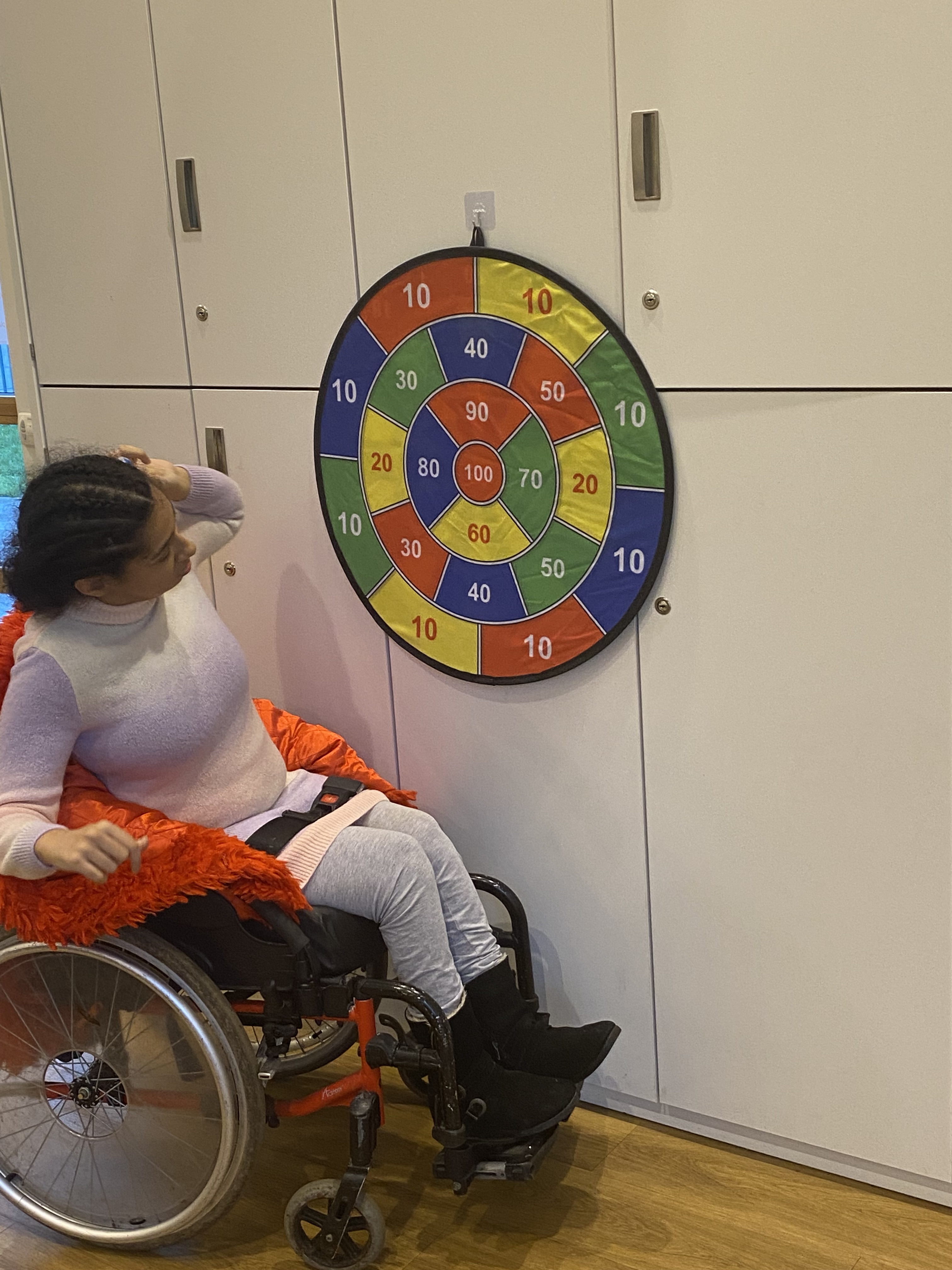
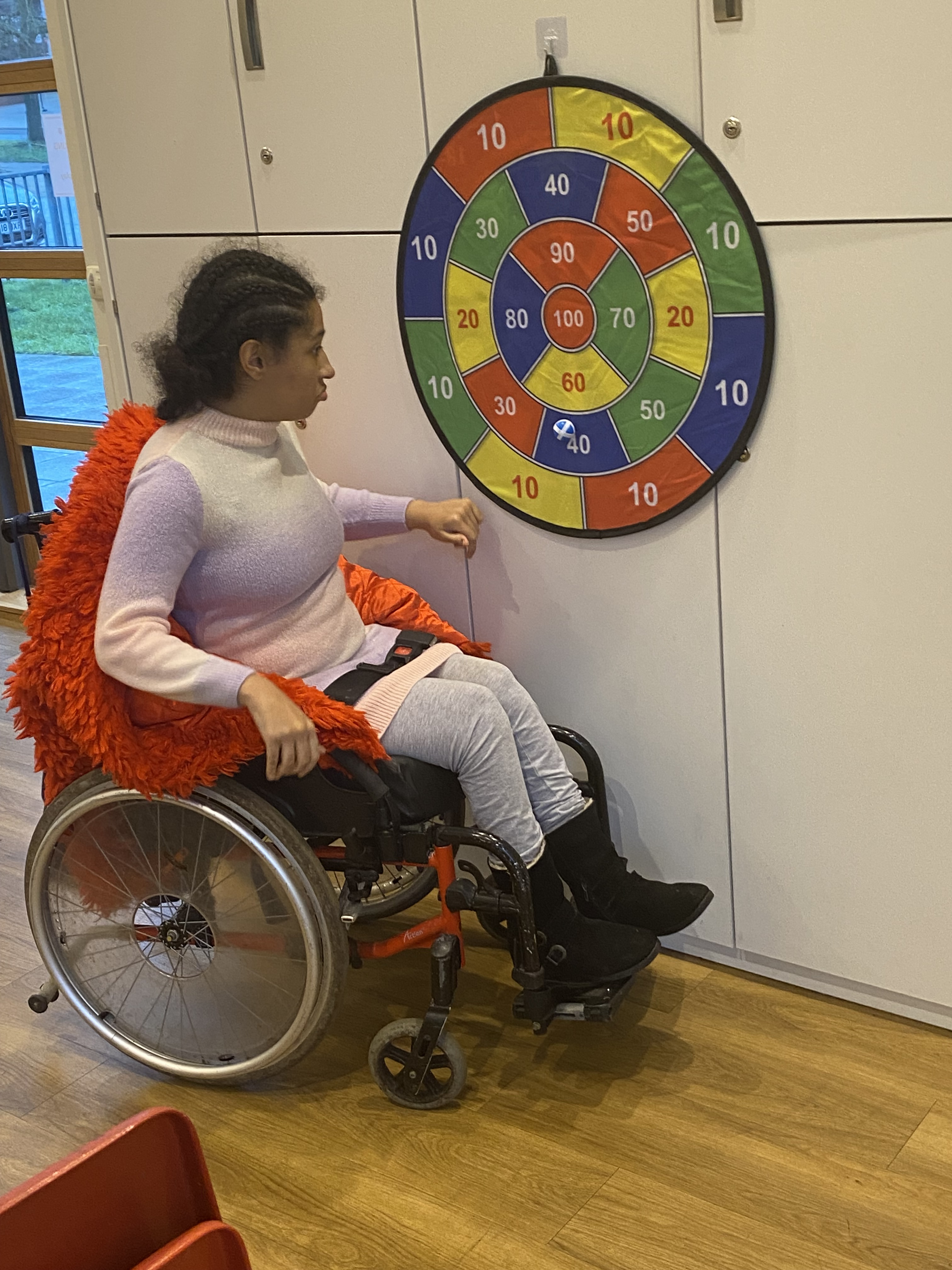
me interacting with who were in the inclusive
first time giraffes and I’m proud I won it’s not only about being there to support my health. It’s about helping me engage in games in this case class.
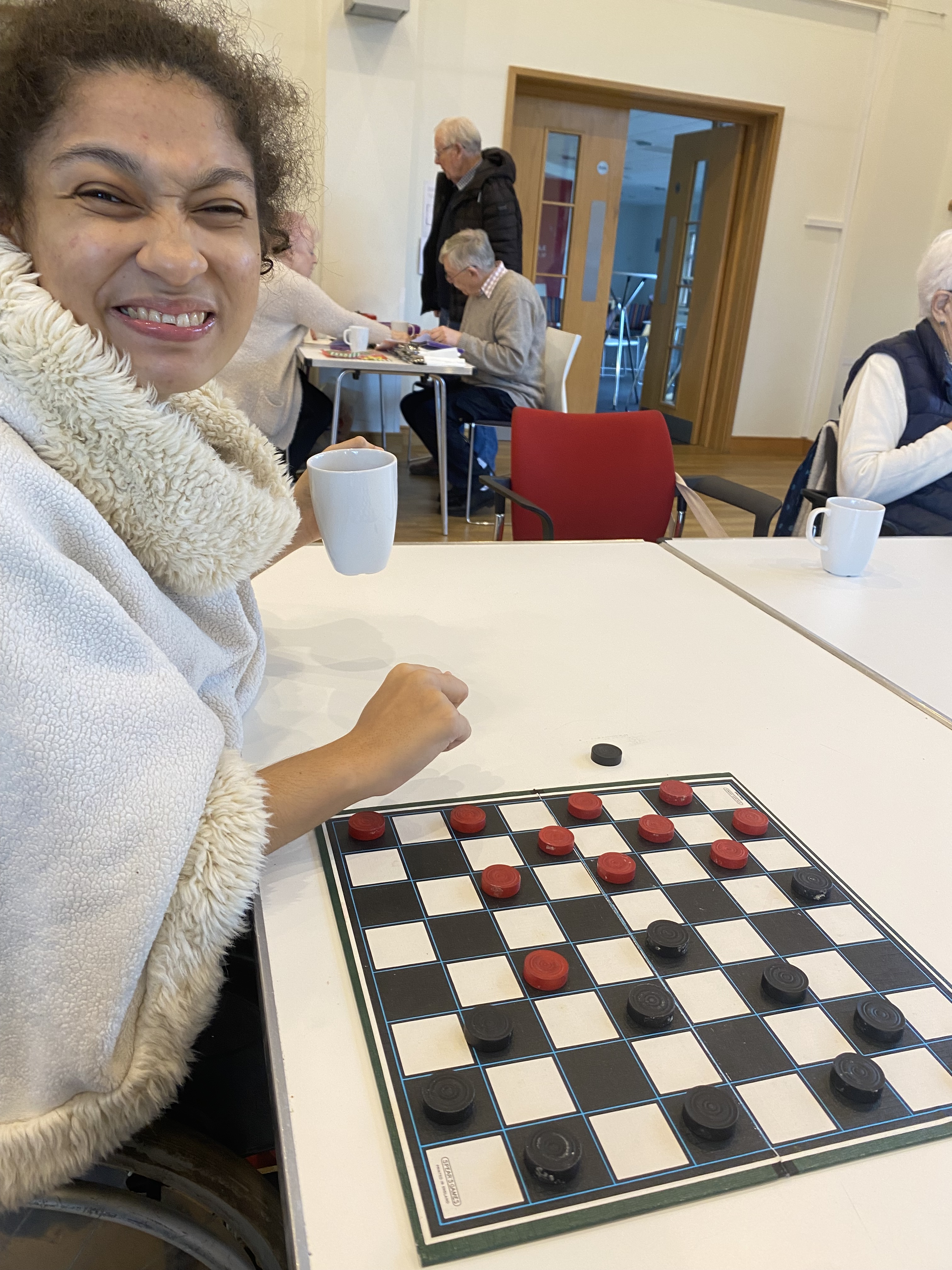
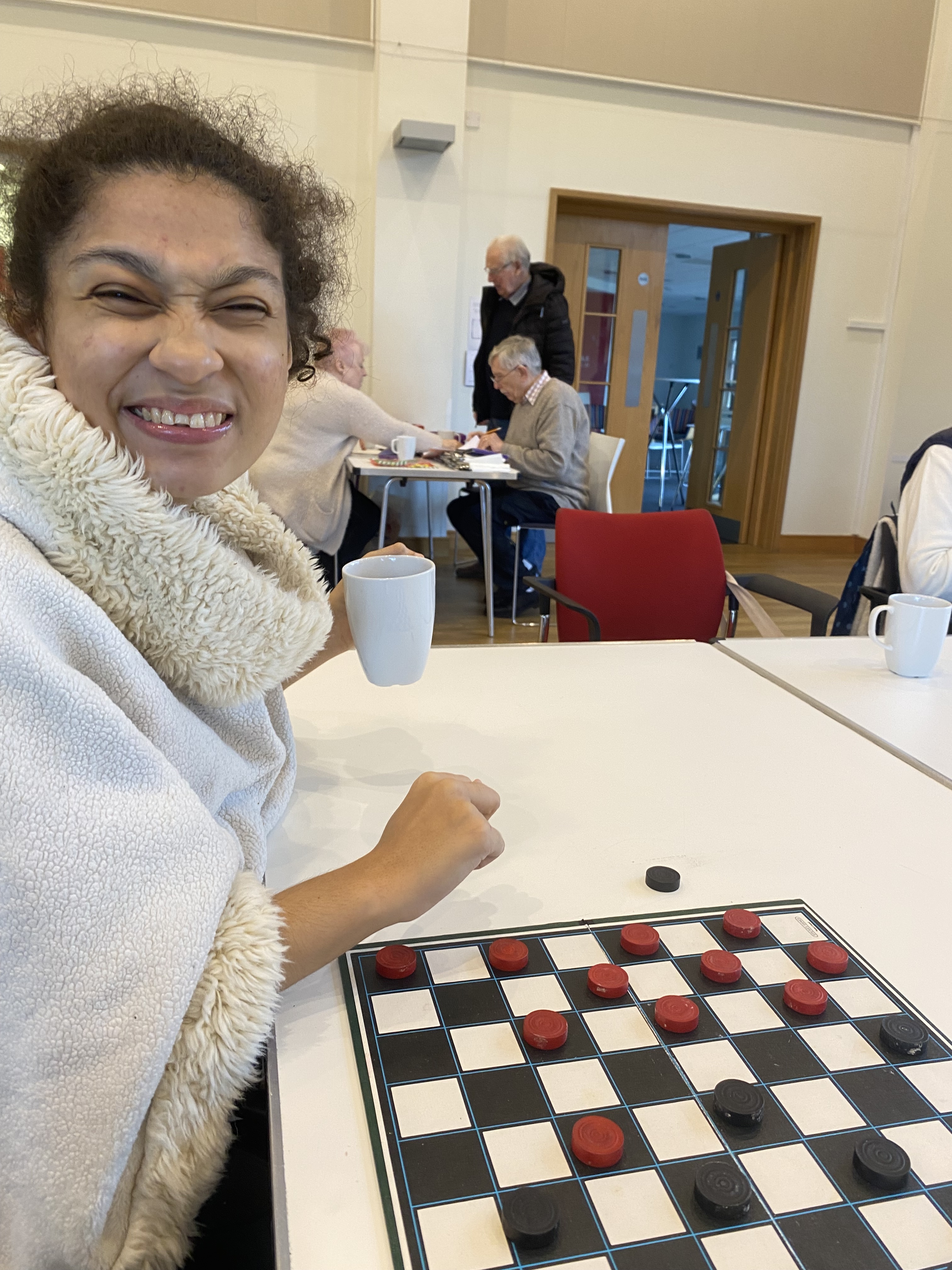
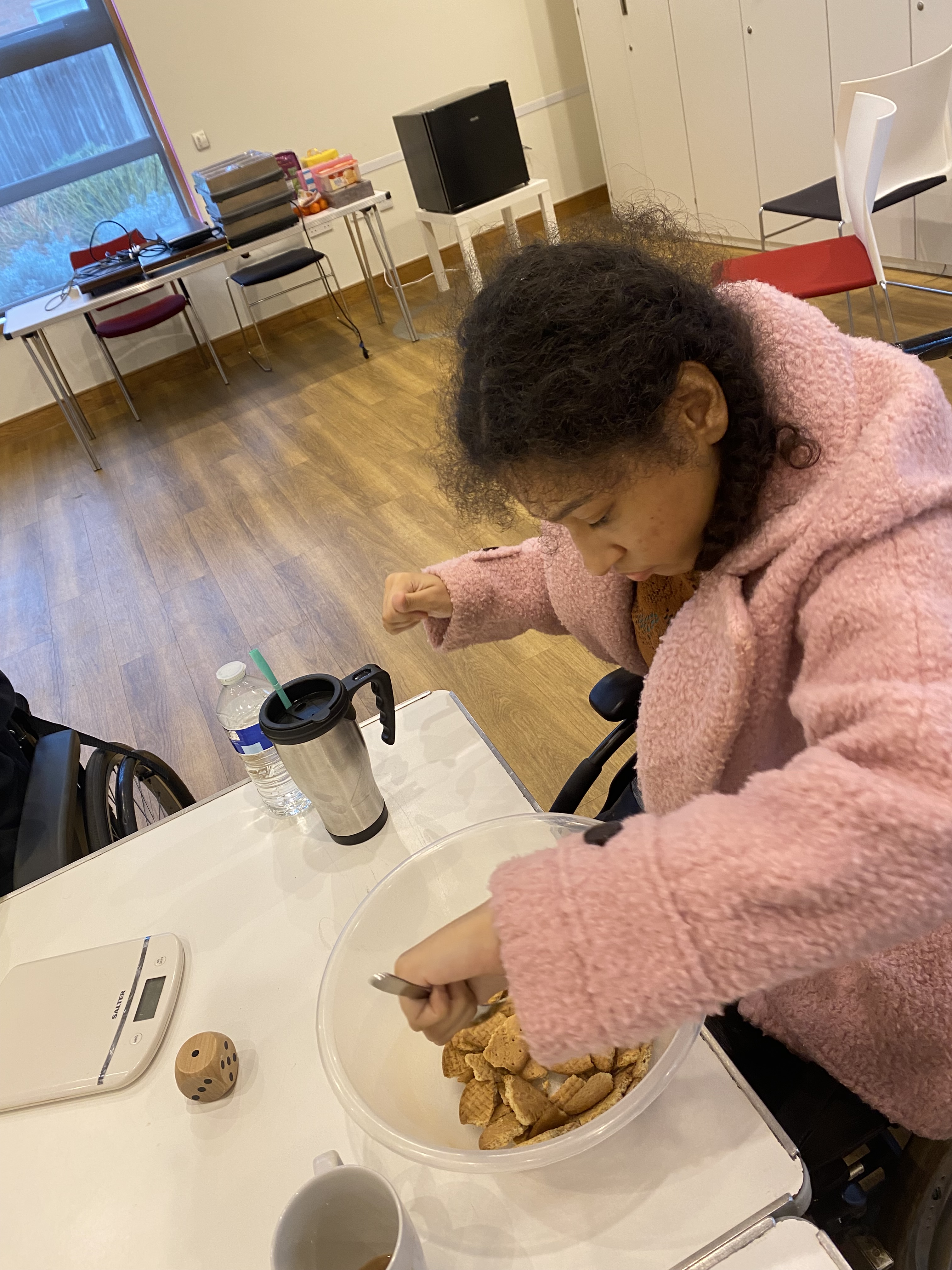
lazy Saturday vibes as you can
stress ball project complete at my Monday activity group stay tuned for the rest of 2026 adventures upcoming this is just the start of 2026 plan
thank you to everybody that viewed my post and I wish you a happy happy 26
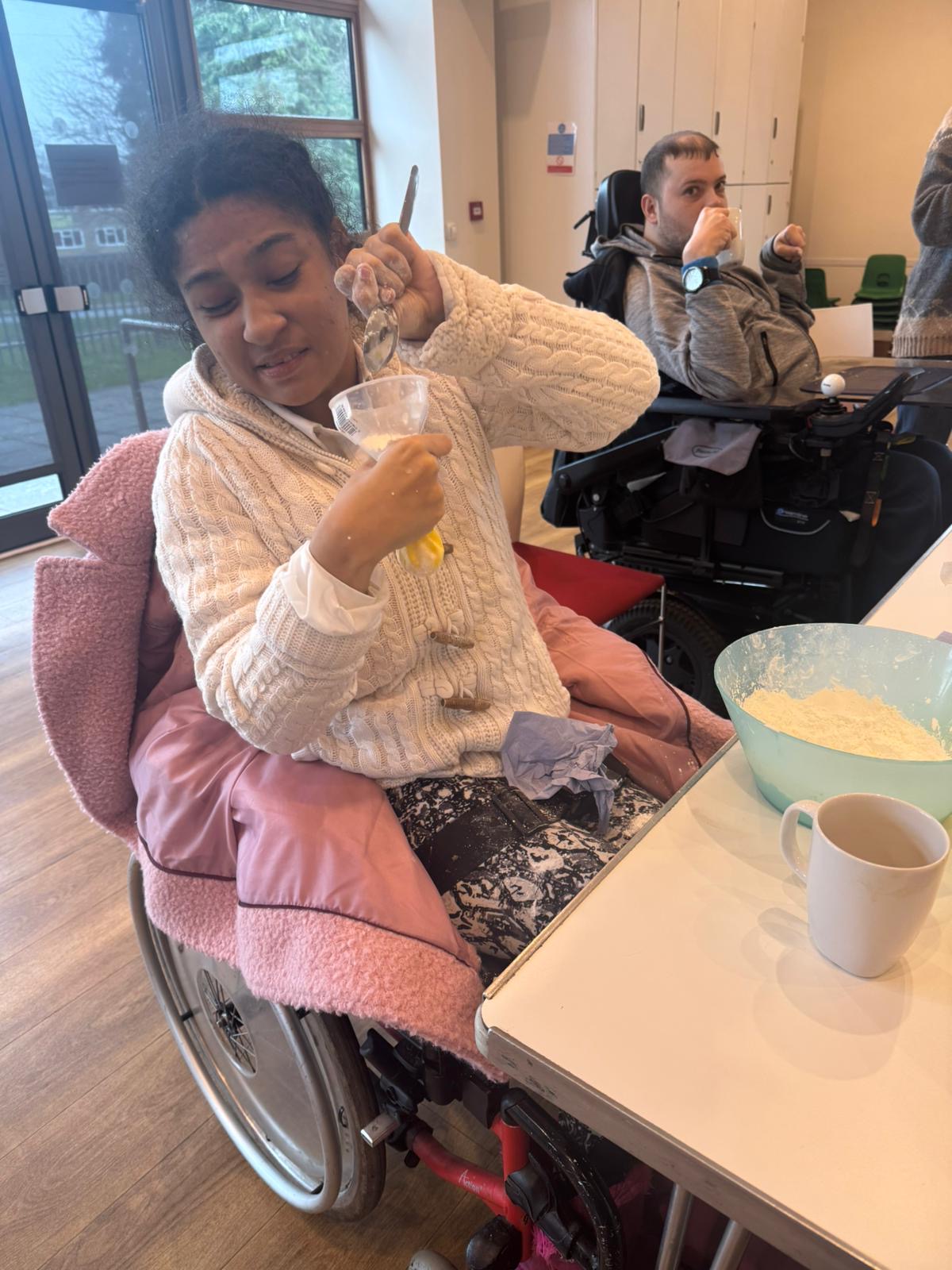
Barbie® Introduces The First Autistic Barbie Doll, Championing Representation For Children Through Play

Mattel, Inc. unveiled today its first-ever autistic Barbie doll created with guidance from the autistic community to represent common ways autistic people may experience, process, and communicate about the world around them. This doll invites more children to see themselves represented in Barbie.
Developed for more than 18 months in partnership with ASAN, a non-profit disability rights organization run by and for autistic people that advocates for the rights of the autistic community, this doll joins the Barbie Fashionistas collection, which features the most diverse range of skin tones, hair textures, body types, and various medical conditions and disabilities.
“Barbie has always strived to reflect the world kids see and the possibilities they imagine, and we’re proud to introduce our first autistic Barbie as part of that ongoing work,” said Jamie Cygielman, Global Head of Dolls, Mattel. “The doll, designed with guidance from the Autistic Self Advocacy Network, helps to expand what inclusion looks like in the toy aisle and beyond because every child deserves to see themselves in Barbie.”
In close collaboration with ASAN, the Barbie design team made intentional design choices for the autistic Barbie doll to authentically reflect some experiences individuals on the autism spectrum may relate to. The autistic Barbie doll features and accessories include:
- Body: The autistic Barbie doll features elbow and wrist articulation, enabling stimming, hand flapping, and other hand gestures that some members of the autistic community use to process sensory information or express excitement.
- Eye Gaze: The doll is designed with an eye gaze shifted slightly to the side, which reflects how some members of the autistic community may avoid direct eye contact.
- Accessories: Each doll comes with a pink finger clip fidget spinner, noise-cancelling headphones and a tablet.
- Fidget Spinner: The doll holds a pink finger clip fidget spinner that actually spins, offering a sensory outlet that can help reduce stress and improve focus.
- Headphones: Pink noise-cancelling headphones rest on top of the doll’s head as a helpful and fashionable accessory that reduces sensory overload by blocking out background noise.
- Tablet: A pink tablet showing symbol-based Augmentative and Alternative Communication apps (AAC) on its screen serves as a tool to help with everyday communication.
- Sensory-Sensitive Fashions: The doll wears a loose-fitting, purple pinstripe A-line dress with short sleeves and a flowy skirt that provides less fabric-to-skin contact. Purple shoes complete the outfit, with flat soles to promote stability and ease of movement.
“As proud members of the autistic community, our ASAN team was thrilled to help create the first-ever autistic Barbie doll. It is so important for young autistic people to see authentic, joyful representations of themselves, and that’s exactly what this doll is. Partnering with Barbie allowed us to share insights and guidance throughout the design process to ensure the doll fully represents and celebrates the autistic community, including the tools that help us be independent. We’re honored to see this milestone come to life, and we will keep pushing for more representation like this that supports our community in dreaming big and living proud.” – Colin Killick, Executive Director, Autistic Self Advocacy Network (ASAN)
As part of the doll launch, Barbie is teaming up with advocates for the autistic community, including mother-daughter duo Precious and Mikko Mirage, autism advocate and creative entrepreneur Madison Marilla, and autistic fashion designer and visual artist Aarushi Pratap, to celebrate their lived experiences and lifestyles. The Barbie team filmed a unique video with them to capture and honor their personal experience with autism and delighted reactions to seeing the autistic Barbie doll for the first time. The video is available to view on the Mattel YouTube channel.
“Dolls have always brought me comfort, stability, and joy. I’ve been collecting Barbie dolls since I was four years old, and now this autistic Barbie will be one of my favorites,” said Madison Marilla, Autism Advocate and Creative Entrepreneur. “My good friend said these words to me, let yourself out and don’t hold yourself in, and it taught me how to educate people about autism. This autistic Barbie makes me feel truly seen and heard. I hope all the kids I’ve mentored feel the same when they see her, and I hope people who aren’t autistic feel educated and gain a better understanding of autism when they see this doll.”
Consistent with the Fashionistas dolls representing individuals with type 1 diabetes, Down syndrome and blindness, the autistic Barbie doll was named and created with the community’s guidance to allow more children to see themselves in Barbie. This doll, along with the entire Fashionistas collection boasts over 175+ looks, can help children better understand the world around them by encouraging doll play outside of a child’s own lived experience. It’s yet another step in making the Barbie brand a more inclusive reflection of the children who play with it.
Building on the importance of feeling understood and connected through play, beginning in 2020, Barbie set out to research the short- and long-term benefits of doll play through a multi-year study with researchers at Cardiff University, finding that playing with dolls activates parts of children’s brains involved in empathy and social processing skills. In recent years, the study has continued to build on these findings, suggesting that doll play could help develop social skills for all children, including those who display neurodivergent traits commonly associated with autism.
To celebrate the launch, Barbie will donate more than 1,000 autistic Barbie dolls to leading pediatric hospitals that provide specialized services for children on the autism spectrum, including Children’s National Hospital in Washington, D.C., Children’s Hospital Los Angeles (CHLA), and Rady Children’s Hospital Orange County. This donation is intended to bring moments of joy, comfort, and representation to the community, reinforcing the power of play to foster connection and confidence.
The autistic Barbie doll is now available on Mattel Shop and from major retailers.
Revolutionary Eye Injection Saved My Sight, Says First-Ever Patient
Doctors say they have achieved the previously impossible – restoring sight and preventing blindness in people with a rare but dangerous eye conditon called hypotony.
Moorfields hospital in London is the world’s first dedicated clinic for the disorder and seven out of eight patients given the pioneering treatment have responded to the therapy, a pilot study shows.
One of them – the first-ever – is Nicki Guy, 47, who is sharing her story exclusively with the BBC.
She says the results are incredible: “It’s life-changing. It’s given me everything back. I can see my child grow up.
“I’ve gone from counting fingers and everything being really blurry to being able to see.”
Currently, she can see and read most lines of letters on an eye test chart.
She is one line away from what is legally required for driving – a massive change from being partially sighted, using a magnifying glass for anything close up and having to navigate around the house and outside largely using memory.
“If my vision stays like this for the rest of my life it would be absolutely brilliant.
“I may not ever be able to drive again but I’ll take that!” she says.
With hypotony, pressure within the eyeball becomes dangerously low, leading it to cave in on itself.
It can happen if there is poor production of the natural jelly-like fluid inside the eye, following trauma or inflammation, for example.
Sometimes it’s a side effect of eye surgery or certain medications. Without treatment people can go blind.
Before now, doctors have tried using steroids and silicone oil to plump up the eye. But this can be toxic over long periods and doesn’t restore much vision.
Even when the cells at the back of the eye used for sight are working, the silicone oil is difficult to see through, causing blurry vision.
The experts from Moorfields decided to try a different approach with something they already had in their cupboard – a low-cost, transparent, water-based gel called hydroxypropyl methylcellulose or HPMC.
It’s already used in some types of eye surgery.
But rather than using it as a one-off, the Moorfield’s team decided to inject it into the main part of the eye as a new type of therapy.
When Nicki first had eyesight problems back in 2017, just after her son was born, she was initially given lots of silicone oil in her right eye, which was failing.
She says it had lost its normal shape and “sort of collapsed” or “crumpled like a paper bag” due to hypotony. The treatment did little to help.
And a few years later, her left eye started to fail in the same way.
“After I lost vision in my left eye, I thought, ‘there has to be something else we can try’,” she explains.
“Sheer determination. I was just like ‘I’m not giving up'”.
Her eye doctor Mr Harry Petrushkin said, together, they decided to do something entirely new – fill the eye with something that you can see through.
“The idea that we might be causing harm to somebody who has only really one eye with a treatment that may or may not work was nerve-wracking,” he recalls.
“We came up with this as a solution and amazingly it worked.
“Really, we could not have dreamt of her having the outcome that she has had.
“Somebody, who by all rights should have lost her vision in both eyes… is now living normally. That’s completely remarkable. We couldn’t have hoped for better.”
He says the same treatment could potentially help hundreds or even thousands of people each year in the UK. It comes down to whether they still have viable cells at the back of the eye that allow vision.
“We knew with Nicki there was vision to gain and she would get better if we could make her eye round and hard again.”
They’ve treated 35 patients so far, thanks to funding from the Moorfields Eye Charity, and have now published the outcomes of the first eight in the British Journal of Ophthalmology.
The treatment is given once every three to four weeks for around 10 months in total.
The researchers hope that with time, they will get even better at working out who could benefit.
“It’s been a fantastic story. The results are really promising but it’s early days,” says Petrushkin.
‘I’m Just A Disabled Kid But I Could Change The Law’
A 17-year-old boy with cerebral palsy said it was a “surreal moment” to have his petition on fire safety debated in Parliament.
Lucas has been campaigning for evacuation chairs to be compulsory in schools after being left “petrified” on his own in his wheelchair in an upstairs room when a fire broke out.
His experience at Hyde High School in November inspired him to launch his #NoStudentLeftBehind campaign to improve fire safety for disabled students.
“I’m just a disabled kid from Manchester and I am possibly changing the legislation. It’s amazing,” said Lucas, from Tameside in Greater Manchester.
“I want to see no student being left behind. They should feel safe.”
The small electrical fire at his school was quickly extinguished and no-one was hurt but Lucas said he was scared as he did not know the extent of the fire after being told to stay upstairs.
“I was petrified because I know how quickly the fire can spread,” he said.
“We all know the biggest killer in the fire is the smoke.”
More than 100,000 people have signed his petition for every school and college to have an evacuation chair and training.
His petition has since been debated by Parliament.
“It was just a surreal moment hearing all the MPs to say my name,” he said.
“They’ve done their research about me.”
‘Unbelievable’
Jacob Collier MP, who sits on the Petitions Committee, said it was positive that the Minister [for Schools Standards Catherine McKinnell MP] committed to meeting with Lucas.
“He’s done really well to get that commitment from the Minister and I think it’s great that the government is open also to acting on this so that we can ensure that disabled children are safe in school.”
Lucas has joined forces with the Emergency Group, a company that who provide life-saving emergency equipment including evacuation chairs and defibrillators.
Nick Cox, from the group, said: “I think it’s inspiring. It’s a story that needs to be told.
“For a 16-year-old boy when he initially started it, to get where we are now, it’s unbelievable.
“We have had literally, and I’m not exaggerating, hundreds of people saying to us that they’ve been in the same situation in schools, colleges, universities.
“It’s quite a common occurrence and it shouldn’t be, it really shouldn’t be.”
From The Tennis Court To The Pages Of Vogue
A woman with a rare genetic condition who has modelled for Vogue says she never wants to give up coaching tennis.
Alice Dyer, 20, from Arnold in Nottinghamshire, lives with connective tissue disorder hypermobile Ehlers-Danlos Syndrome, which causes her joint pain and extreme fatigue.
She discovered tennis when she was 14 years old after a “have a go” session at Nottingham Tennis Centre.
Now she uses her wheelchair to coach children between three and 10 years of age and says: “Kids don’t expect to have a disabled coach and they might not have met a wheelchair user before, so I am very grateful that I can introduce kids to that.”
Growing up, she recalls how she wore ankle and knee braces and wrist supports to prevent her joints from dislocating. At school she could not take part in activities like physical education (PE).
“It was hard to explain to my friends why I couldn’t do certain things,” she says.
Discovering wheelchair tennis gave her a “feeling of freedom”.
“I turned up and had a go,” she says. “I was rubbish, but I enjoyed it.
“It connects me to so many different people. It’s something that my body can do.
“I never thought it would lead to me working here as a coach.”
She was about 18 years old when she landed her first modelling job.
“By putting myself out there, it means that other people have someone who is like them in media,” she says.
Alice has worked with brands like Wimbledon e-commerce and online retailer Zalando. Her latest job was with Vogue Philippines in a portfolio celebrating diversity and inclusivity.
She found out she was in Vogue at home after her dad screamed her name on a Monday morning.
“It’s a surreal feeling and I haven’t fully processed it yet,” she says.
Alice had been approached for an editorial shoot in London in May last year, but after months of silence, she had no idea where the photos would end up.
“Not everybody gets into Vogue,” she adds.
Alice says the modelling industry is making moves with representation, but there is a long way to go.
“It’s one thing to have a disabled model in a campaign, but if the clothes don’t fit or aren’t accessible, that’s very different,” she says.
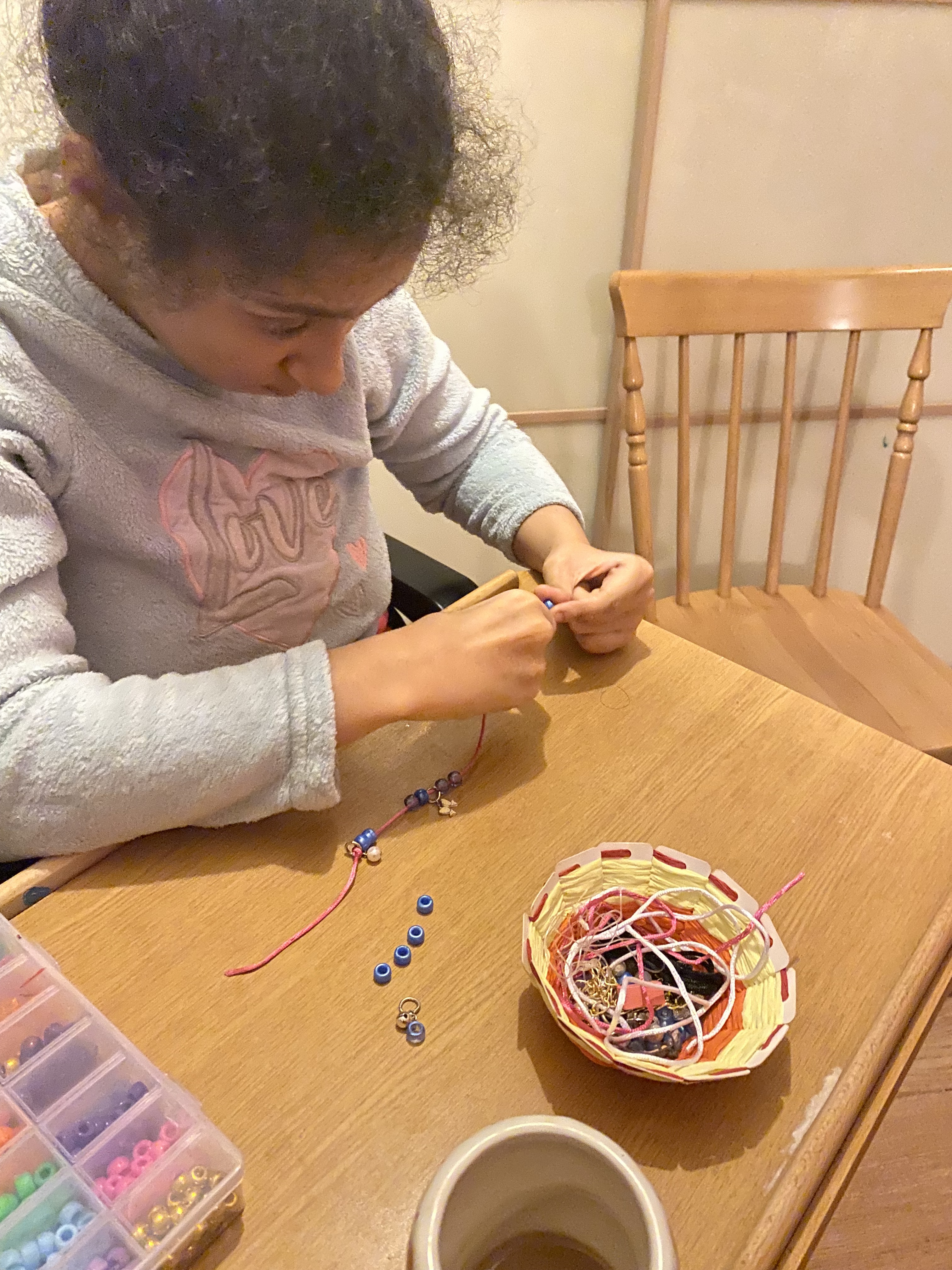
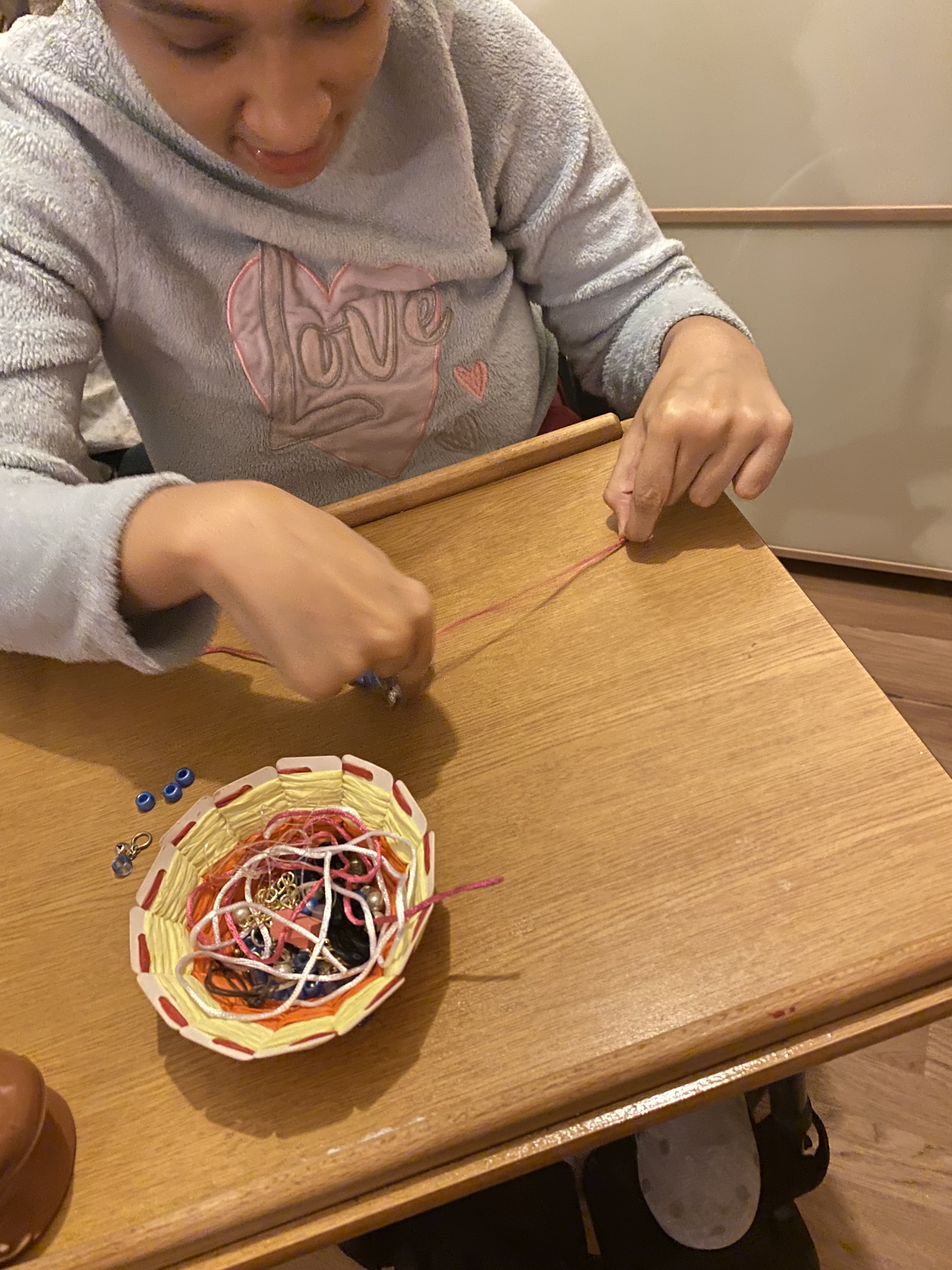
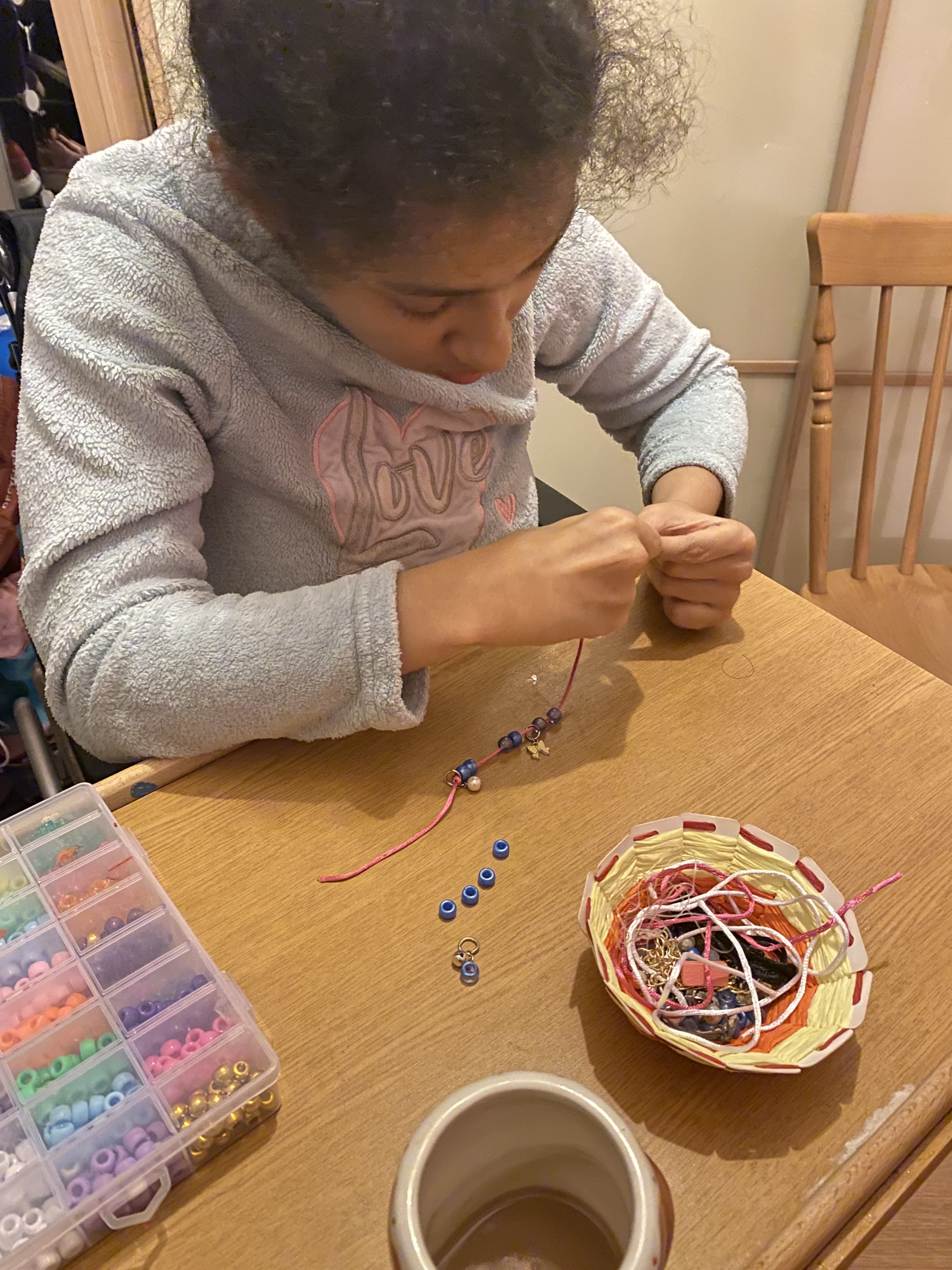
I Would Have Been Selfish Not To Share Twins’ Muscle Disease Diagnosis, Jesy Nelson Says
Singer Jesy Nelson has pledged to “shout from the rooftops” to campaign for all babies to get tested for a rare muscle disease at birth.
The former Little Mix star recently discovered her seven-month-old daughters have Spinal Muscular Atrophy (SMA) and will “probably never walk”, but the condition isn’t included in screening for newborn babies.
“That’s what’s frustrating,” she told ITV’s This Morning on Wednesday. “If this was the card I was always going to get dealt and there was nothing I could do about it, then it’s almost easier for me to accept.
“But when you know that there is something that can be done about it, and it is life changing to your child, that’s the part that I cannot accept.”
The singer became emotional as she told presenters Cat Deeley and Ben Shephard her life had “completely changed” since the diagnosis.
Nelson, 34, has called for SMA to be part of an NHS blood test that is normally carried out at five days old, and currently tests for 10 other conditions.
Speaking days after she posted a video on social media announcing her twins’ condition, Nelson said: “I have this platform, and I almost feel like I’ve got a duty of care to raise awareness about it.
“And a little part of me feels, and I don’t know if this is even crazy to say this, I feel selfish to keep this to myself and not potentially save a child’s life.”
Nelson added she has had to rapidly learn how to look after her daughters Ocean Jade and Story Monroe Nelson-Foster.
“It’s just so much to deal with whilst you’re also trying to deal with this horrendous thing that’s just happened.”
The singer said doing that while also simply trying to be their mum was “the part that I’m still struggling with”, and was comforted by Deeley as she became emotional.
“I won’t lie. The part that really gets me, is I just want to be their mum, I don’t want to be a nurse.
“So it’s hard, but, yeah, I just want to reiterate that if this is caught [diagnosed] from birth, it’s just life changing.”
‘They are still smiling’
She added that it “makes me so sad” to watch back videos of her girls and now be able to spot the signs that their legs were gradually moving less during their first weeks.
“That’s how quick it is. And that is why it is so important and vital to get treatment from birth, and it is detected from birth,” she said.
The girls have now had treatment in the form of a one-off infusion, she explained.
“It essentially puts the gene back in their body that they don’t have. It stops any of the muscles that are still working from dying.
“But any that have gone, you can’t regain them. That’s why if you catch it early [it’s better]. Now it will just be down to a case of constant physio.”
She continued: “We’ve been told that they will probably never walk. They’ll probably never regain their neck strength. They are going to be in wheelchairs.
“But there have been so many stories where parents have been told this, and their children have gone on to do incredible things. So I believe that you’ve just got to manifest this into existence.
“They are still smiling. They’re still happy. They have each other, and that’s the main thing that I’m like so grateful for, because they could be doing this by themselves, but they’re twins and they’re going through this together, and I think it’s beautiful.
“So all I can do is just try my best to be there for them, give them positive energy, keep doing physio.”
On Tuesday, Health Secretary Wes Streeting told ITV News that Nelson was “right to challenge and criticise how long it takes to get a diagnosis”.
He said he was “determined to look not just at screening for SMA, but to make much better use of genomic medicine”.
In 2021, a life-changing gene therapy drug called Zolgensma was approved by the NHS to treat babies with the disease.
According to the charity SMA UK, the drug delivers a healthy copy of the affected gene to the body, but timing is critical because irreversible damage may have already occurred in the nervous system.
Scotland will start routinely screening babies for SMA from the spring, and the National Screening Committee is currently reviewing whether to introduce it across the UK.
Nelson added her voice to a campiagn by SMA UK to introduce routine screening to the NHS newborn blood spot test, which currently looks for conditions including cystic fibrosis, sickle cell disease and a range of inherited metabolic diseases, but not SMA.
An NHS spokesperson said three new treatments for SMA had been rolled out since 2019, helping hundreds of children.
“The UK National Screening Committee is looking at whether the NHS should introduce routine screening to identify the condition in early life via a heel prick blood test – and the NHS is supporting further evaluation to inform the Committee’s decision.
“The Generation Study is also evaluating whether genomic sequencing could be adopted more widely as part of standard newborn screening in the NHS, including testing for SMA.”
‘I’ve Been Denied Cervical Screening Four Times’
A woman who uses a wheelchair said she had “given up” trying to have a cervical screening after turning up for an appointment to find she could not get inside a treatment room.
Emily Salter, who is unable to walk after falling from a 9m (30ft) cliff seven years ago, said she had tried to arrange for the screening, known as a smear test, four times but appointments had been cancelled due to accessibility issues.
The 33-year-old, from Preston, Lancashire, said: “I thought the NHS would be a safe place for me to go without having to worry or panic beforehand.”
An NHS England spokesperson said screening services are “expected to make reasonable adjustments” to support women with disabilities.
This includes “ensuring suitable facilities and access to specialist equipment where needed”, the NHS spokesperson added.
A survey by the Spinal Injuries Association found two-thirds of women with physical disabilities had not been able to attend a smear test appointment.
Just under half of those cited accessibility issues as the top reason for this.
“When I’m on the phone I always say I’m in a wheelchair, I can’t stand up, just to make them aware” said Salter.
“You turn up and the building has steps to go inside. The next one, the room was that small that the wheelchair wouldn’t fit next to the bed.
“And then the fourth one, they actually rang me to cancel because they said it wasn’t accessible.”
‘Entirely preventable’
Dharshana Sridhar, campaigns manager at the Spinal Injuries Association, said: “The system is not made for women’s health to start with and then it’s even worse for women with disabilities.
“And then some of the barriers are actually entirely preventable, like inadequate equipment, like a lack of height adjustable examination beds, but none of this has been happening for decades.”
Local screening teams can “offer practical support such as longer appointments at accessible sites and alternative clinic options” to help women with physical disabilities, the NHS spokesperson said.
But Salter said she had “given up”, adding: “I don’t know what more I can do to access these services.”
“I just think it’s very sad that we’re put in a position where we feel bad about ourselves because we can’t access the healthcare,” she said.
“I’m grateful for what the NHS has done for me. They’ve showed me I can live again.
“Life doesn’t end when you have a spinal cord injury but I want my life to continue and if I can’t have these checks for cancer then they’re not going to be able to catch it quick enough.”
Sally Jones, from Ellesmere Port, Cheshire, was left paralysed from the waist down after a motorbike crash in January 2020.
The 45-year-old has a history of abnormal cells in the family so she said she had been left feeling worried that she had not been able to have the test.
“I try to put it at the back of my mind,” she said.
“I think given the family history as well, I’m probably one of the people that should be going for regular tests.
Sally said she had also been left humiliated after she was given no option but to have her coronavirus vaccination outside due to a lack of access at the site.
“It’s a battle,” she said.
You’ve got to be proactive and you’ve got to row your own boat and you’ve got to keep on nagging to be heard.”
‘My Student Inspired Me To Spread Braille Message’
The founder of a braille and large print business said she hoped to make the Isle of Man a more “accessible and inclusive” place for people with visual impairments.
Natasha Molyneux-Smith spent years working at a secondary school with Evie Roberts, a 16-year-old Manx girl who is completely blind.
“Just because we only have a handful of braille users does not mean that we restrict their access to text,” explained Natasha.
Having started her company Dot and Type in September, Natasha has called on public venues and workplaces to offer more resources for visually impaired people.
She said thousands of people also travelled to the island for the TT Races, and the island had an opportunity to be a “flagship for accessibility if all of our menus were (also made available in) braille and large print”.
Evie, who was born with bilateral anophthalmia, said working with Natasha had resulted in the “first time I’ve ever seen a menu”, something she described as “an amazing experience”.
The teenager said it gave her added independence as well as taking away the responsibility from someone else to read the entire menu to her.
She explained: “For someone with sight when you go out for a meal, you just go into a restaurant and look at what you want to eat and you don’t think about it.
“I’ve never had that.”
Natasha said: “That really struck home to me. It made me realise this is why I’m doing my business.”
One of the first companies on the Isle of Man to introduce braille and large print menus is Just Pizza and Pasta in Douglas.
Owner Mitch Sorbie said he wanted to make sure no-one felt excluded.
He said he sometimes hosted groups from local charity Sight Matters.
“I’m looking forward to the first time they come in and we give them the menus… to see their facial expression of being included, I think that’ll be great,” he said.
It was the restaurant’s way of showing “someone else is thinking about them”, he added.
Payout Over Sign Language Failure For Man In Care
A council in west London has apologised after failing to provide adequate support for a deaf man receiving care who required British Sign Language (BSL) interpreters.
Hammersmith and Fulham also agreed to pay the man’s granddaughter £450 and “review its processes” on interpreters with BSL.
The Local Government Ombudsman found several faults with the service provided by the council, including that staff at a care home, referred to as Care Home B, were not trained in BSL, contrary to the man’s care requirements.
A council spokesperson said they “wholeheartedly” apologise to the family and that they are working to ensure the same issues do not arise again.
The ombudsman said the man, referred to as Mr Y, had a number of health conditions, was profoundly deaf and used sign language to communicate, according to the Local Democracy Reporting Service.
His daughter, Ms Z, was his main carer. Miss X, his granddaughter, is a qualified BSL interpreter.
In March 2024, Mr Y was discharged from hospital following which he received a care plan.
It noted that his first language was BSL and that he required a BSL interpreter although, because of difficulties finding carers with such skills, Ms Z was asked to help them communicate with Mr Y.
Council ‘to review processes’
In September 2024, Care Home B told the council it had met with Mr Y’s family and that they were happy for him to move there as long as the BSL outreach support was provided.
The care plan said care home staff should learn basic BSL skills, but the home said it had received no training in BSL or deaf awareness.
In December 2024, Mr Y was transferred back to another care home shortly after which he was admitted to hospital, where he died.
During this period Miss X had complained to the council on various points regarding her grandfather’s care.
A series of actions were agreed with the council, including apologising to Miss X, making a payment to her of £450 and reviewing its processes regarding the provision of BSL interpreters.
A Hammersmith and Fulham Council spokesperson said: “We wholeheartedly apologise to the family. Finding specialist British Sign Language and deaf relay interpreters for care homes can be very difficult and we’re working to make sure this doesn’t happen again.”
Ex-EastEnders Star’s Ultra-Swim Of Length Of Lake Geneva
A former EastEnders actor from Brighton is planning to take on an epic ultra-swim of the length of Lake Geneva to raise money for his son’s school.
Will Ellis, who played villain Theo Hawthorne, is planning the 70km (43 miles) swim in August. It has only been completed by 16 people so far.
His son Odie has Mowatt-Wilson Syndrome, affecting his development, and the swim will raise money for his school, Downs View, in Woodingdean, Brighton.
“They’re in desperate need of funds to keep the school running so I thought it was a great opportunity to do something really crazy and raise some money,” Ellis said.
As well as being famous for playing Theo in the soap in 2023, Ellis is also well-known as an ultra-endurance swimmer and has a podcast on open-water swimming.
He has swum the English Channel and around Jersey, which he says he will do again as part of his training for Lake Geneva.
His six-year-old son is non-verbal and doctors said he may never talk or walk, although he is now walking with the help of splints.
Ellis said: “Life expectancy can range because no-one really knows, so we have to be grateful for every day with him, grateful that he’s happy.”
Downs View is hoping to raise £15,000 for a new soft play, as the school’s room needs refurbishment and cannot be used in its current condition.
Head teacher Vanessa Hickey said: “Lots of our children here have complex needs, a lot of them have autism, communication issues, and a learning disability as well.
“What’s important are the skills the soft play develops, like dexterity and motor skills, as well as it being an outlet for energy, particularly on wet days.”
Ellis says he expects to be in the water for between 24 and 30 hours, without a wetsuit, and despite a busy training schedule, there are no guarantees he will complete the challenge.
“You have to just turn up for these swims, controlling what you control, because there is a lot of luck. and it has to shine on you that day.”
carol service by candlelight that I went to at my local church a few days ago PAs and employing them has changed my life for the better
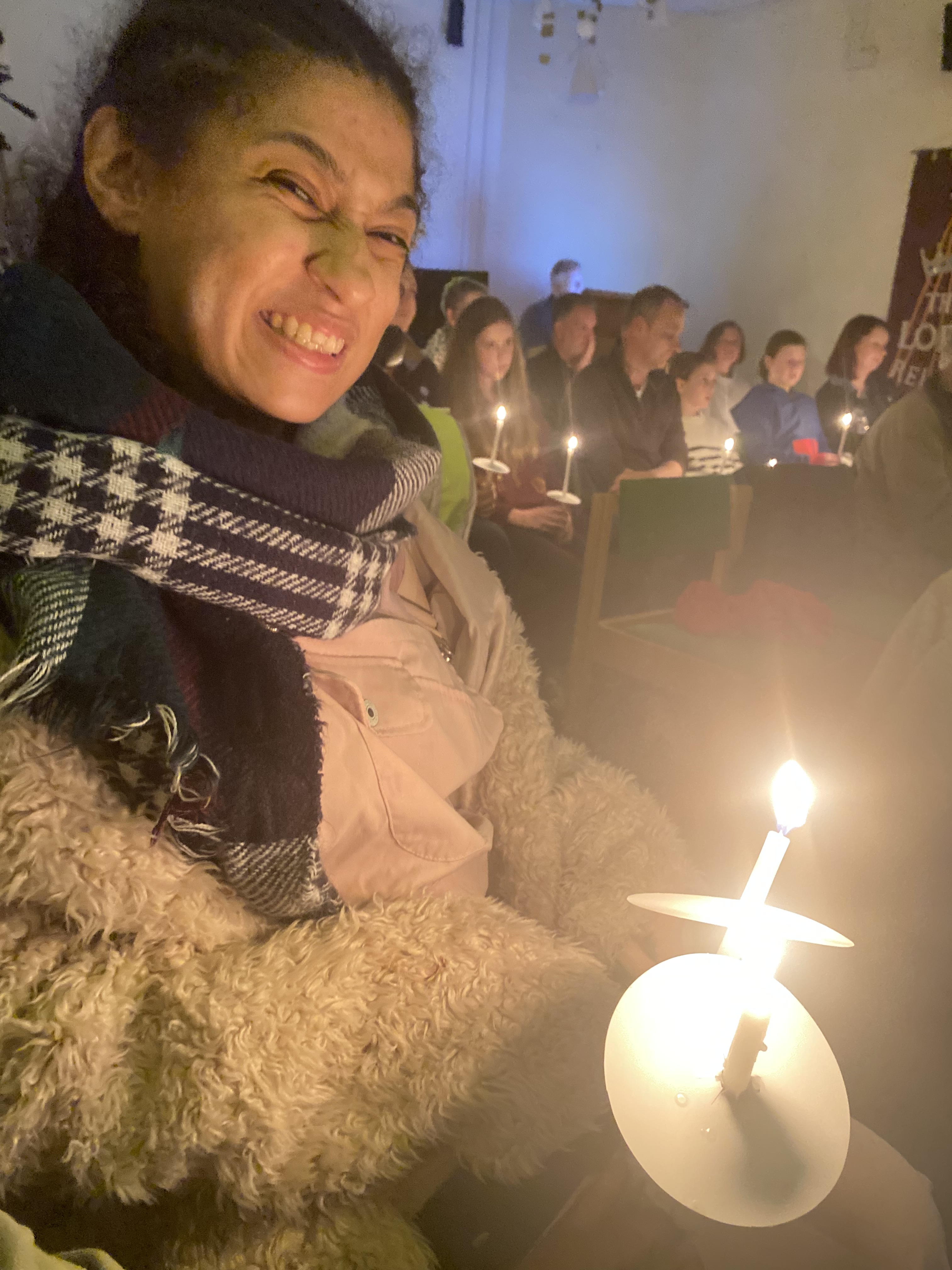
even though I have to find raise and fund some of my support it’s better quality of life and I am achieving more to help me achieve it life even more in 2026 please donate to my go fund me or comment go from me in the comments and I will reply to the comment with the link
Selfie at the wacky wheels Christmas party 2025
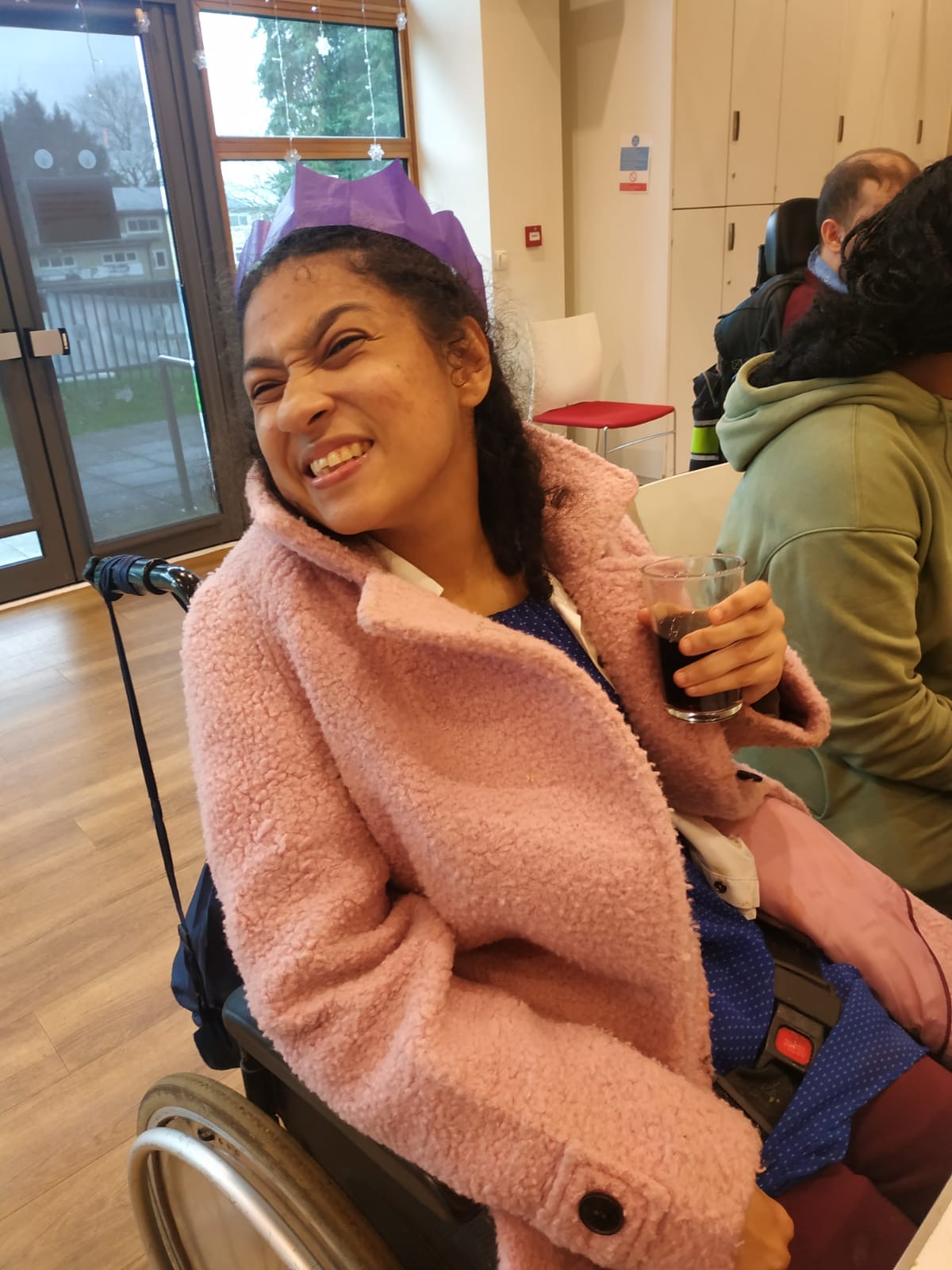
diamond heart Christmas decorations that me and my personal care Assistance have been working on as one of our Christmas project


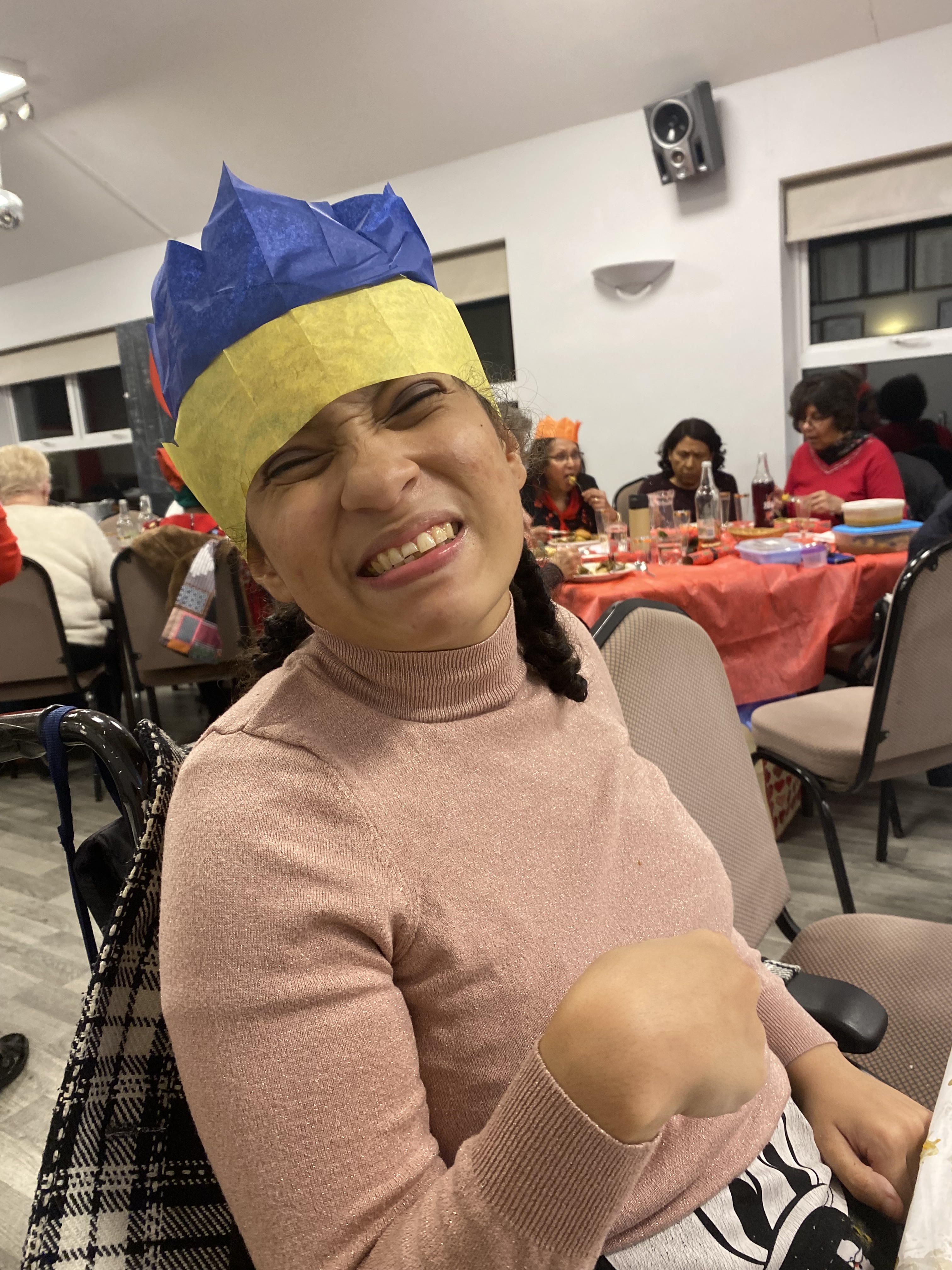
happy Christmas Day from find the ability 23 as Mrs. Claus happy Christmas Day everyone.

action short of me doing the diamond art Christmas decorations which I am going to string out and hang on my tree and my grandmother‘s Christmas tree too
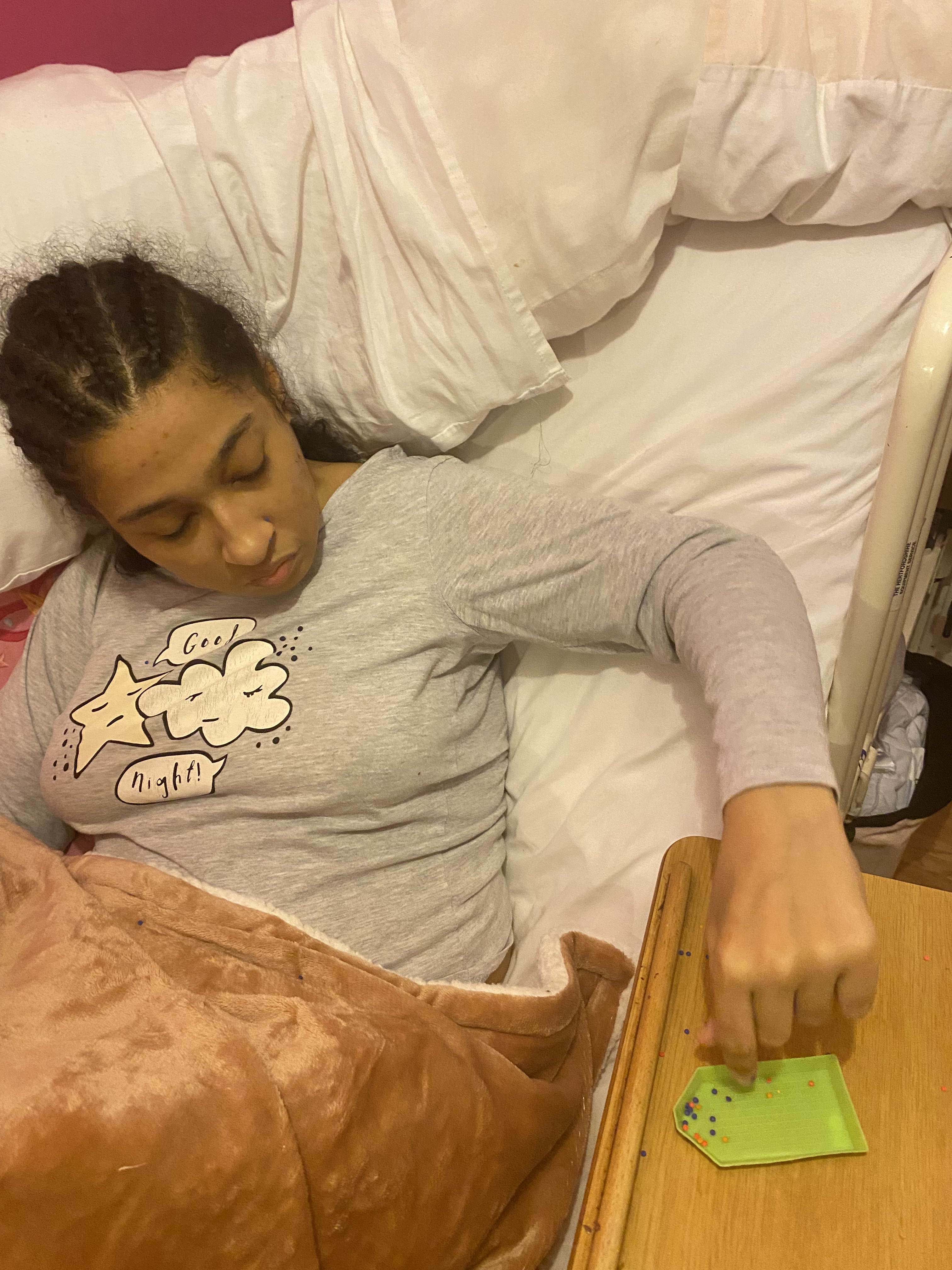
a video that I created using black white photos of my chosen nieces as I’m proud to be an auntie by choice
when the evening in the life with me diamond art Christmas decoration making edition please take a moment to watch my evening in life by clicking on the video
Video of the stage dancers at the 2025 panto
video of the finale of the panto that I enjoy the most since I’ve been going for many years now with different social groups and friends for
a video of me at Friday club’s Christmas party 2025
‘Lack Of Physio Leaving Our Children To Suffer’
Lack of physiotherapy is putting the health of children with physical difficulties at risk, a group of parents has said.
The families of children with scoliosis – curvature of the spine – say Sirona Care and Health is failing to supply experienced physiotherapists to Claremont School in Bristol.
The complaints follow a decision by Sirona to reduce the number of physiotherapists at the school and instead instruct unqualified teaching staff how to manage scoliosis.
After being contacted by the BBC, Sirona commissioned a review of its children’s therapy service. A spokesperson said its priority was “the safety and wellbeing of the children and families we support”.
One of the parents, Helen, has a 15-year-old son named Sam who was born with severe cerebral palsy. As part of that condition, his spine is curved.
Helen said his scoliosis could be managed with appropriate physiotherapy and equipment at Claremont, a special school.
But the mother, from Bedminster in Bristol, claims community interest company Sirona made his scoliosis far worse from May 2024 to March 2025 as his school chair had been set up the wrong way round.
She said that his ribs looked stretched in X-rays by March 2025 and that his whole torso was becoming deformed.
“I just watched his back concertina,” she said. “Over a 10-month period, Sam’s spine went from 20 degrees to over 90 degrees and after a catastrophic collapse, he’s now in excruciating pain. It was entirely preventable.”
She added: “Sam is in excruciating pain because his scoliosis means the top of his pelvis is rubbing on his bottom rib.
“This in itself won’t necessarily shorten his life, but our choice, as parents, is to decide whether to leave him in agony for the rest of his life, or let him undergo a lengthy and risky operation which he may not survive.”
Sirona announced a reduction of physiotherapists at Claremont in June 2024, saying it would boost home visits.
Parents have told the BBC the decision led to experienced physiotherapists handing in their notice.
Helen wrote a complaint about the changes to Sirona but it described her letter as “aggressive and abusive”.
She said that, as a consequence, she withdrew her consent for Sirona to treat Sam.
Instead, she said she is using her life savings to pay for a private physiotherapist, costing £90 an hour.
Another parent, Julian, said he was also unfairly accused of being aggressive by Sirona.
He said a formal investigation had been carried out into his daughter Gemma’s care but he “didn’t see any action” so continued to contact the company.
Julian said he and his partner then received a letter saying Sirona had been informed they had been “aggressive and threatening” towards the therapy team.
Sirona told them they were being given a “second stage warning about modifying their daughter’s care”, Julian said.
The company also told the parents that their daughter would no longer be seen in their home and would be seen only at school, with a member of staff present in order to “protect the therapists”, the father said.
He added: “We were not being threatening. When we challenged them on [the warning] they could not give us a solid example of why that was done.”
Julian also said because the family had “stepped in” to make sure her physio treatment had continued, they had manage to avoid complication such as acute pain, bowel blockages, interrupted sleep and seizures which said could “all be life threatening”.
The group of parents, whose children all attend Claremont, have now written an open letter that criticises Sirona’s cuts to school physiotherapy.
The letter says a number of parents have contacted Sirona and the special education needs team at Bristol City Council to raise their concerns about the “profoundly negative impact on the development of our children at Claremont”.
‘Deeply concerned’
The letter continues: “The absence of therapists on a daily basis is not acceptable and is having a detrimental effect on them and represents a cut in service.”
The parents say all of their children have ECHPs – an education, care and health plan, which is a legal document outlining their needs, including therapy, and which unlocks funding.
“As their parents, we want to know what is happening with this funding,” the parents write.
“What is being done to reinstate the provision our children need?
“We are also deeply concerned about the poor communication regarding the changes, which has come third hand without any explanation.”
‘We will act’
Sirona declined to comment about the families’ allegations but told the BBC its external review, which began on 1 December, is expected to run until mid-February.
In a statement, spokesperson Mary Lewis, Sirona’s chief nursing officer, said: “We have ensured that all concerns raised with us have been formally recorded and will be shared with the review team, and we are working closely with our partners throughout the process.
“The inquiry will look in depth at how the service is operating across all settings. It will identify what is working well, what may need to improve, and whether any factors within Sirona or the wider system could impact the delivery of the standard of care we expect.
“An Appreciative Inquiry is a structured, transparent and strengths-based method that examines the experience of those receiving care and those providing it.
“We will act on the findings of the review. Our priority remains the safety and wellbeing of the children and families we support, and ensuring our staff have the conditions they need to deliver high-quality care.”
the very musical performance of Aladdin that I saw in panto this year 2025 watch the video to see some of what I saw in this video blog
‘High-Tech Prosthetic Arm Would Be Life-Changing’
A teenager born without the lower part of her right arm is seeking to raise £20,000 to buy a high-tech bionic arm she said could transform her life.
Sadie, 17, from Winnersh, previously used a prosthetic arm as a young child but stopped as she felt it was hampering her independence.
But now, with her potentially starting university next year, she said the Hero Pro would enable her to complete everyday tasks that she can sometimes struggle with.
A campaign has currently raised £4,500 with other fundraising set to take place in early 2026, including a runner who is set to take on the Thames Path Ultra Challenge for Sadie’s benefit.
“Coming up to 18, I need more independence and I have always relied on my parents a bit. It really hit me when I went to secondary school and realised I was doing a lot more by myself. Two hands would make life a lot easier,” Sadie said.
She recalled that her earlier use of the prosthetic arm “felt like a nuisance”.
But she said the Hero Arm, which can pick up a maximum of 25kg, would be life-changing.
Sadie said tasks that other people might take for granted, like tying her hair and cooking, can be difficult.
“It sounds silly but they’re the little things, everyday tasks that Sadie wants to do alone now. She doesn’t want me and her dad helping her,” Sadie’s mum Sarah added.
“I feel so emotional but in such a fantastic way,” she added.
“It’s great to see. Sadie is a really determined character and always has been from the day she pulled off her prosthetic arm and threw it down.”
visiting the Christmas selfie decorations in my local town 2025
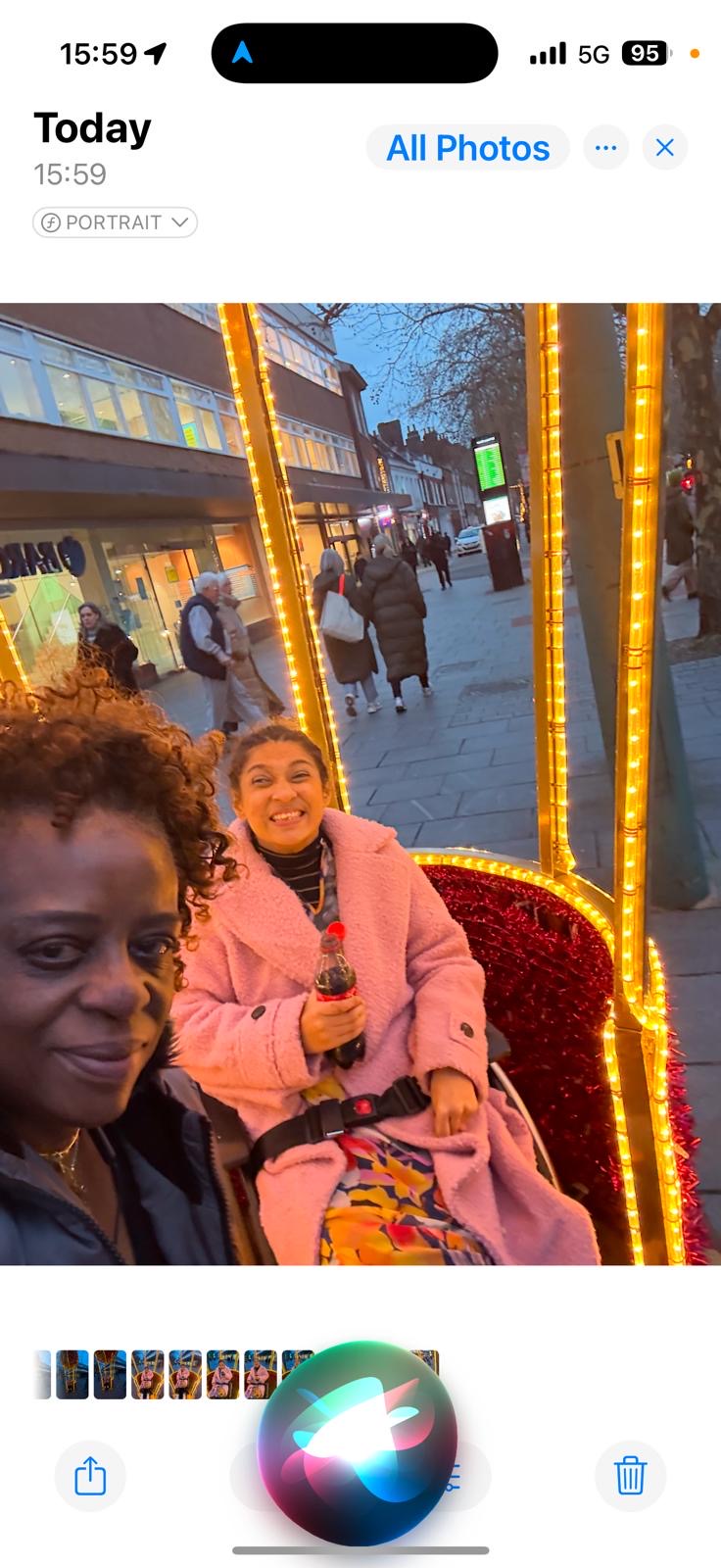
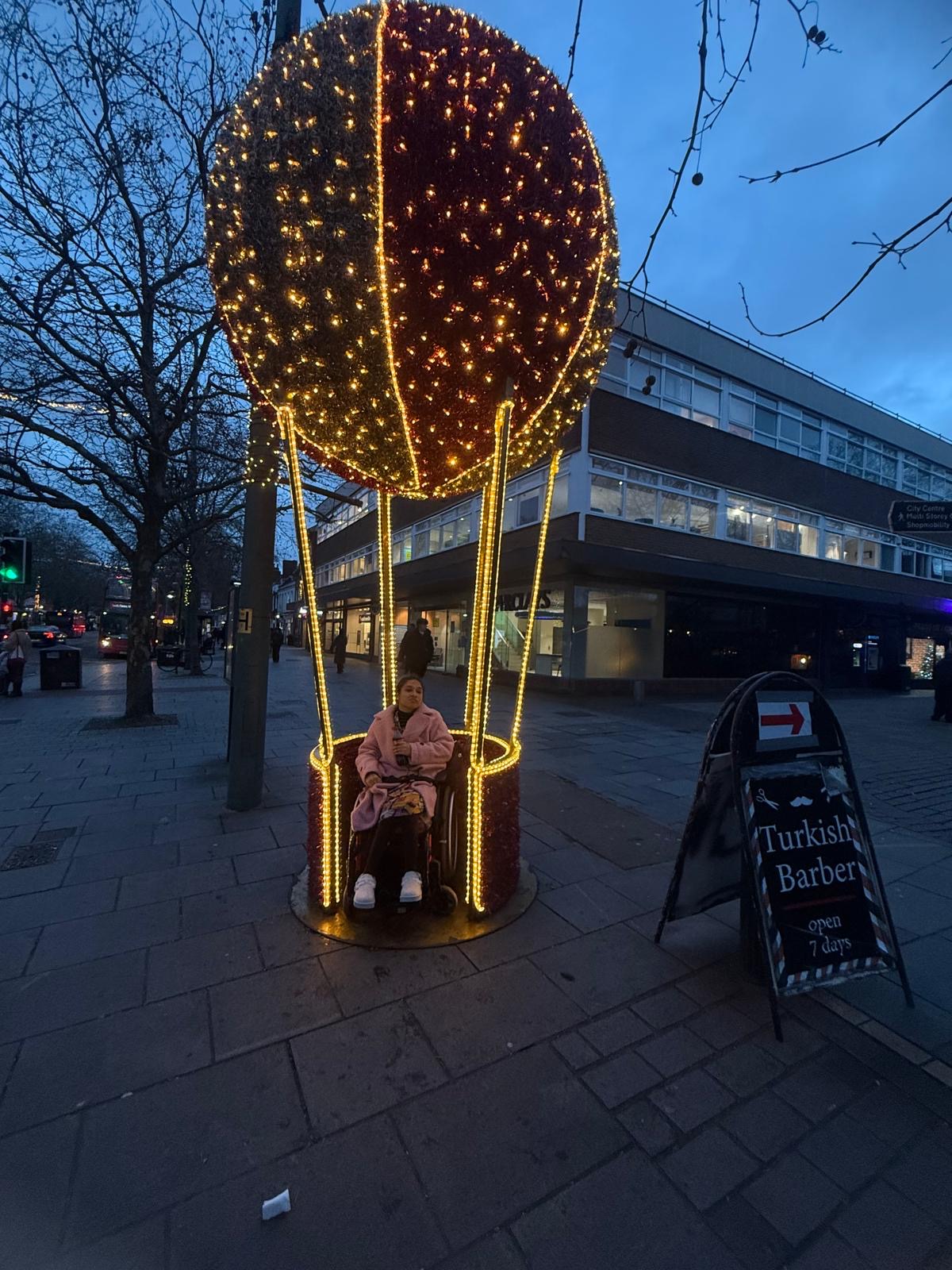
Sensory Grotto Makes Santa Visits Accessible
A charity has built a sensory grotto to make visiting Santa accessible to all.
Focus Birmingham, which cares for people with visual impairments and complex needs, aims to create a sense of calm with the grotto’s adaptable soft lights, gentle sounds and different textures.
It created the experience to make Christmas more inclusive and ensure that there was a “safe space” for everybody to enjoy a visit with Santa.
“The family’s reactions are amazing to what we do, it fills my heart all year,” staff member Thomas Ward said, adding that it gave “something to the wider community”.
Mr Ward said that the charity celebrated all events across Birmingham and Christmas time incorporated “lots of love”.
“We do this to give an opportunity for everyone to see Father Christmas, regardless of their age, their additional needs,” he said.
CEO of Focus Birmingham Kate Burke said the grotto was just one of many accessible events that the charity held with others, including Christmas fetes, bingo and sing-alongs.
“It’s so important because we believe everybody has the right to live life to the full and reach their potential,” she said.
Ms Burke said that Christmas could be a time with more barriers for those with care and support needs, so the charity made sure people had the same opportunities.
The charity’s specialist mini buses cost more than £400,000 a year to help keep the centre accessible.
It appealed for support for its Christmas campaign this year to help fund the transport service.
Adam Pearson Is Worried About Some Uses Of AI
Dr Shani Dhanda speaks to us from Tokyo where she’s delivering a keynote speech at the world’s first Accountability Summit which has brought together 500 companies who made disability pledges in the past two years to see just how well they’re doing. Plus she reveals how she would ideally celebrate IDPD
CEO of Paralympics GB, Dave Clarke, tells us what he thinks about marking the day and reveals the latest research about the number of disabled people getting involved in sport and what’s holding others back.
Plus, we have Hollywood film star, presenter and campaigner, Adam Pearson, in the house. He’s just been announced as the patron of Face Equality International. He talks about the challenges AI can pose for someone with a facial difference and gives us the inside scoop on his next big film role….a man he once loathed as a child, but has come full circle to love.
Intrigued? – Get your party hat on and take a listen!

Santa’s Little Yelpers Socialise With Saint Nick
Guide dog puppies have been preparing for Christmas with a visit to Santa’s grotto as part of their early socialisation training.
A dozen puppies and their raisers, who care for them during the first year of their lives, explored the grounds and gardens at Delapré Abbey in Northampton before seeing Father Christmas.
It was organised by sight loss charity Guide Dogs to help build their confidence in unfamiliar environments.
Claire Purr, the charity’s puppy development adviser, said it served as a reminder of why the charity needed to triple the number of its volunteer puppy raisers in the UK.
“Santa’s been amazing, and it is a fun thing, but actually it’s really good for their training too for them to learn to be around all these different things,” she said.
“There would be no guide dogs without puppy raisers; we need people to raise our puppies to help them on their journey to be successful guide dogs.
“We don’t have that many homes at the moment, so it’s been a challenge this year getting people on board.”
Linda Whitwell, one of the county’s most experienced puppy raisers, said the festive visit was “something different” for her 12-week-old labrador called Hollie.
“She [Hollie] seemed to really enjoy it,” she said.
“It’s nice that it’s all different experiences and it’s good for them anything like that.”
There are 12 volunteer puppy raisers in Northamptonshire, who introduce them to different experiences and prepare them for their formal guide dog training.
If they complete their training, they go on to become assistance dogs for people with sight loss.
Ms Whitwell – looking after her 17th dog – said the role of a puppy raiser “is very rewarding”.
“Although the cat wouldn’t agree with me,” she joked.
“It’s a lot of fun, it’s all experiences, socialising them and going to different places.
“If we go on holiday, we take them with us because it’s all new scenes and the seaside.
“People often say to me ‘I’d love to do it, but I just couldn’t let them go’.
“You’ve got to get the mindset [that] it’s not my dog and I’m doing this to change somebody’s life.”
auntie on Wills to my best friend’s kids my first morning for filling my duty as an auntie on Wells visiting my friend and her twins

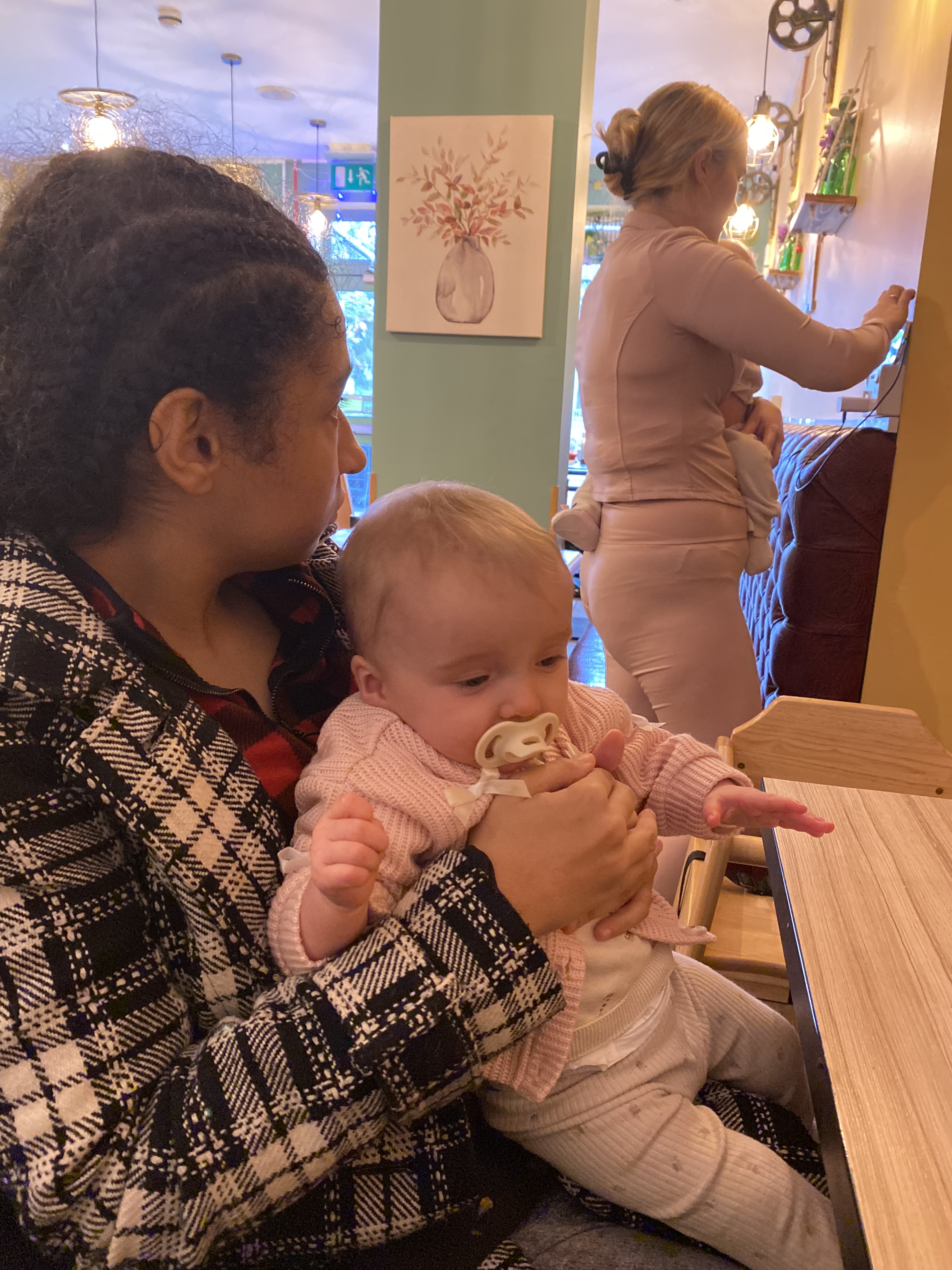
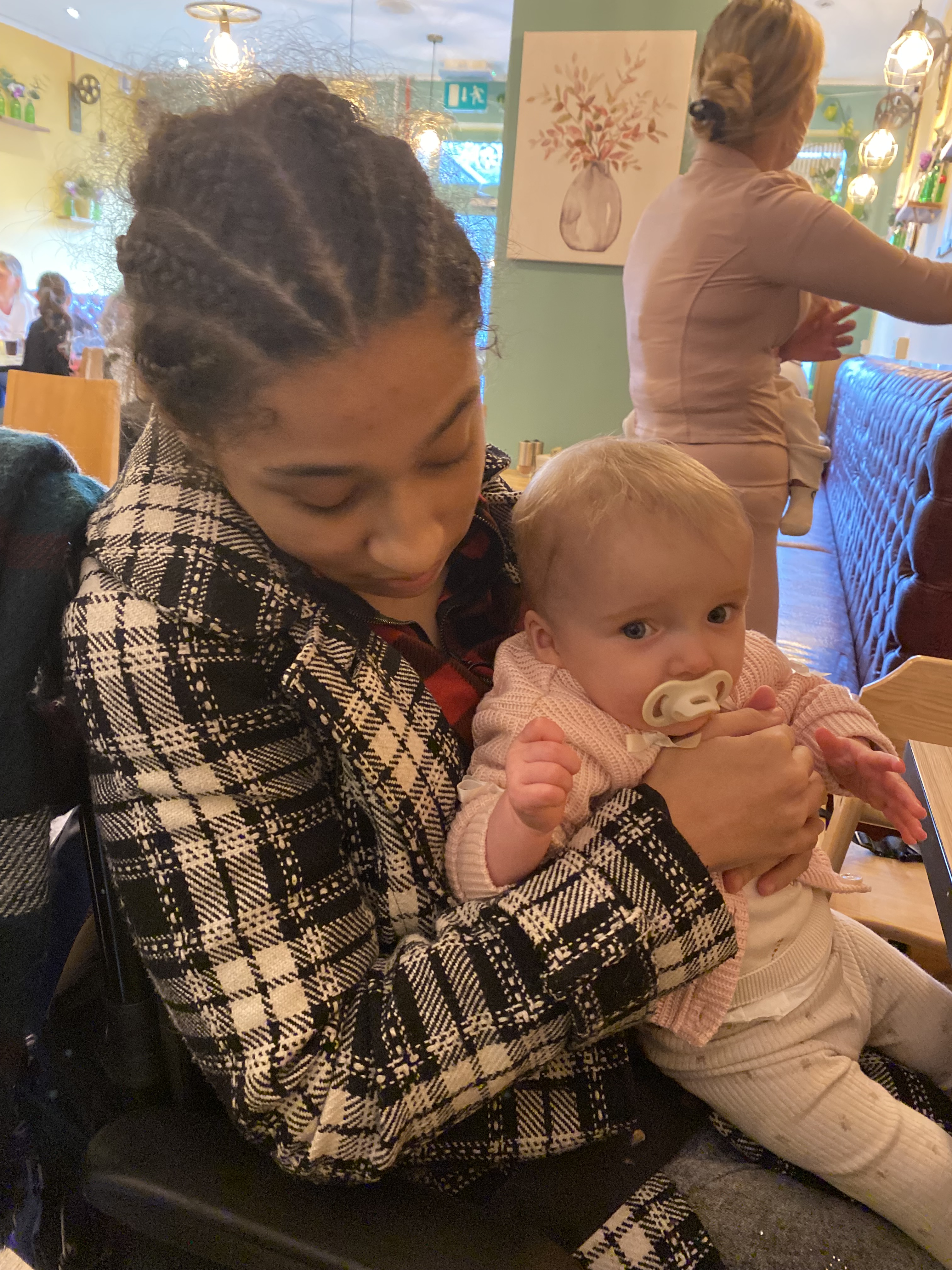
Mosaic tea coaster making this is one of the projects I enjoyed in the week leading up to Christmas

Mosaic tea coaster making


 Same Difference