More than a million unemployed people are receiving no government support to get back into work as they fall between cracks of different national schemes, an analysis for the Local Government Association has revealed.
With thanks to Welfare Weekly.
88% of unemployed parents of disabled children express a strong desire to return to work, according to a new survey published today.
However, the survey of over 900 parents by the Working Families charity reveals how parents of disabled children face enormous challenges in balancing work and caring responsibilities.
The findings expose the extent to which parents of disabled children value the opportunity to work but face a lack of flexibility in the jobs market, with 77% struggling to find a job with the right number of hours. 87% said finding a job with a flexible work pattern was a major barrier.
Almost four in ten parents had given up work more than six years ago, making their future employment prospects even more difficult. The Working Families charity says employers are missing out on a range of skills and talents.
79% of unemployed parents said they had no choice but to give up work soon after their child was diagnosed. According to the Working Families charity, this common occurrence could have been avoided by employers allowing parents time to adjust to change in their caring responsibilities.
“Combining work and caring is very challenging. There is never any flexibility around the timing of my son’s hospital and other appointments. I just need to drop everything and be there”, said one parent.
Another parent said: “I gave up work when my son was diagnosed and it was around five years before I could consider going back to work. Then four years of looking for a job that was
flexible enough.”
A shortage of part-time flexible employment opportunities means parents of disabled children will struggle to return to work, says the Working Families charity.
The majority of in-work parents surveyed by the charity reported facing a ‘difficult’ or ‘impossible’ battle in finding suitable and affordable childcare, due to a significant lack in specialist childcare providers. Where it was available, prices were significantly more expensive than for non-disabled children’. One parent reported being asked to pay £16 per hour by the only provider in their area.
“Only one local provider offers suitable childcare for my son, but at £16 per hour this is far too expensive”, she said.
Working Families is calling on all parties to commit to a ‘statutory right to a period of adjustment leave, to enable families to weather relatively short-term life crises such as the onset of disability of a partner, parent or child, or other major change in their caring responsibilities, without having to give up work’.
A cost analysis carried out on behalf of the charity by a leading consultancy firm, suggests this could result in a potential annual net gain to the economy of up to £500 million.
Working Families says a ‘six week period of adjustment leave, paid at Living Wage levels should be introduced as a matter of urgency’.
Jobs in the public sector should be ‘flexible by default’, says Working Families. Government ministers should also encourage private sector employers to adopt a ‘Happy to Talk Flexible Working’ approach to employing new staff.
The charity is also calling for the appointment of a junior minister with responsibility for increasing the availability of affordable childcare for disabled children.
Sarah Jackson, CEO of Working Families, said: “More needs to be done to support the parents of disabled children to either stay in work or to re-enter the workforce.
“Childcare has repeatedly been shown to be a major barrier to work for these parents and we call on the next Government to commit to appointing a minister with specific responsibility for urgently driving up the national supply of suitable, good quality and affordable childcare for disabled children.
“Furthermore, we have shown that the introduction of a legal right to paid adjustment leave on or soon after diagnosis of a child’s disability or special need would have a positive outcome not only on the family’s economic future but on the state’s as a whole.”
How Do Blind People Put On Makeup?
January 14, 2015
Putting on make-up is tricky enough if you have practised in front of a mirror for years. But how do blind people do this most visual of things?
“I use a brush, do five swirls across my blush and tap it to remove the excess,” says Christine Ha in a YouTube video which shows how she applies make-up without a mirror. Ha is blind and received much attention after becoming the winner of the US series of Masterchef in 2012. “I smile to find the apples of my cheeks, then lightly brush [the blush] on from the apples to my temples.”
“Like my cooking,” Ha writes on her blog, “it all comes down to sense of touch and lots of practice.”
She lost her sight slowly as an adult and had to relearn how to make herself up. With eyes, she says, “Once you feel the brush on your lashes, that’s when you know to start stroking the mascara on.” Becoming familiar with the length of the mascara wand beforehand, helps her to gauge the approach towards her lashes. Some feel that a shorter wand, like a sample-size one, makes it easier to apply the make-up accurately.
If you can’t see, applying make-up is not simply about working at it until you achieve the look you want. It’s an exercise in trying to look your best using your sense of touch and methodically counting the number of brush strokes or finger swipes to ensure an even coating.
Blind people develop innovative ways of doing daily chores. If something accidentally drops on the floor, for instance, the best way to find it is to systematically sweep hands in a wide circle to make sure no part of the surface is left unexplored. A similar method can be used for applying foundation.
Methodically does it
Visually impaired fashion blogger Emily Davison, who was on this month’s Ouch podcast, puts her make-up on in front of a “very large magnifying mirror which is freestanding”, to take full advantage of her remaining eyesight. She says eye make-up gives her confidence because it takes the focus away from how they look and from that often asked question: “How much can you see?”
As well as clothes tips, she also gives make-up advice to her readers. For eye shadow, she says, you’ve got to resist the natural urge to use your fingers, adding: “You will never achieve as much definition as you would with a brush.”
People who have never been able to see need to be shown some real basic techniques, and to learn from others before practising on themselves. Davison gives instructions like: “Place your index finger on the outer corner of your eyelid and pull it slightly so that the eyeliner glides smoothly across the surface.” She urges visually impaired women to avoid liquid eyeliner and instead opt for the more crayon-like products as they glide on smoothly and dry quickly, which helps avoid smudging.
Eyeliner can be tricky to put on without sight, because you experience little sensation in your eyelids, making it difficult to feel how it has been applied. Some blind people get liners permanently tattooed on for this reason. Lips are more sensitive and so lipliner is easier to do.
Davison says that “blending in make-up is particularly important for blind people”, who can’t see where lines have appeared between colours, or where foundation ends and skin or hair begins. If make-up is done well she believes it helps to kill off any ideas people might harbour “that blind people don’t know what they’re doing.”
Cara Gibbons lost her sight suddenly through illness at 19. She started wearing make-up again in her 20s, when family told her that she looked pale and tired.
She has a secret weapon for avoiding a common lipstick problem. When it’s on and smudges have been blotted with a tissue, she says: “I put my finger in my mouth and pull it out. This takes any lipstick off the inside of your lips, that could otherwise end up on your teeth.”
She says that for clothes, hair and make-up, having at least one trusted, honest person to rely on is vital. “My friends are happy to check whether there’s eye shadow on my cheeks or if I have managed to apply my make-up evenly, but they are much more subtle than mum and my sister, who will say straight out if something looks horrible on me,” she says.
But she doesn’t live with them, so her motto when going it alone is “keep it simple”. She asks at make-up counters in shops about which foundation suits her skin tone and says that “for eye make-up, I stick with browns and creams, which I think suit everyone”.
While Gibbons plays it safe, Emily Davison likes to change her make-up with the seasons. “I wear coral lipstick in summer,” says Davison, “and plums in autumn and winter.” She says that you can get seasonal changes and trends right without sight, by reading fashion blogs and new product reviews, “and talking to lots of different make-up counter consultants until you find one who wants to help rather than give you the hard sell. Take it from somebody who has bought lots of make-up and regretted it.”
Disability Campaigner Removed From Odeon Cinema Because Of The Sound Of His Ventillator
January 13, 2015
I’m shocked by this. He’s a member of charity campaigning organisation Trailblazers.
JSA Claimant: At The Jobcentre, We’re Not Considered People
January 13, 2015
An extract from Kate Belgrave’s latest article, on Jobcentres.
“They [jobcentre advisers] are working by their own system to push themselves up the ladder at our expense. Because we come in to sign on, we’re not [considered] people. That’s what it is. That’s what it has become like. I’ve worked [in administration] and I’ve paid my taxes like everyone else. Coming to a place like this – it’s so degrading.”
“I have to do daily signon. They didn’t say why. One day I come in and the next minute they told me I have to do daily signon. So you who is genuinely looking for work, you haven’t got nowhere to turn. I’ve decided that if I can’t find work in what I’ve worked in, I will go back to doing some sort of carework to fill the gap. But now they [the jobcentre] have told me that they can’t do anything to help to get my CRB check. How am I going to find that money? It’s £65 and we get £140 a fortnight [in JSA]. So that means I have to either go without – and I’m already going without for gas, electric and all these things. How are we supposed to get out there to work when they’re not helping us in any way at all? My definition of a jobcentre is that when you go in there, there is somebody to assist you. But there is nobody there to assist you.
“I have to come in every single day. I don’t know from one to another what time it is. Today, I came in at ten o’clock. Tomorrow, I’m in at 11.05am. The day after, I might go back to 9am or 3.30pm. I don’t know. They’ve messed me about so much I haven’t been able to go to my drop-in centre. My drop-in centre is so helpful. I pay my own fares and everything as well to go there. I have got use of the computer and advisers there. They are a world of good to me, but coming here [for daily signon], I cannot get there, because my drop in centre is from 9 to 12.”
“The government has to really check and see what they’re [jobcentres] are doing. There’s no help for the unemployed. They think that people love to be unemployed. I do not love to be unemployed. If somebody walked up the road now and offered me a job, I would take it. [I was made redundant] – the company that I was working for, they closed down so many branches. These sorts of places, they don’t give you no confidence to go out to work. If I wasn’t a person who keeps on going, they would break me down. I would end up being on the tablets and being at the doctors. That’s how they deal with you.”
Jim Starr’s Tankchair Nightmare
January 13, 2015
Have you got a Tankchair? Have you had a similar experience?
It was a dream Christmas present – a motorised wheelchair that was supposed to allow a disabled dad to enjoy trips to the countryside and the beach with his family. But it has turned into a nightmare ‘four year’ legal battle because the Tankchair imported from America didn’t work. Now Jim Starr from Dorchester says he’s lost all hope of getting his chair back or any refund. Richard Slee reports.
Channel 4 Bosses Will Lose Bonuses If Diversity Guidelines Not Met
January 13, 2015
*Writes screenplay about Muslim lesbian wheelchair using group of friends, submits to Channel 4*
Seriously though, I think this is a step in the right direction. I would suggest less I’m Spazticus, more Last Leg and a title change for The Undateables! (I love the programme but I still hate that title!)
Programme makers must ensure 50 per cent of the lead roles are female, if no other minority groups feature.
Drama and comedies must “reflect the experiences of under-represented groups” in modern Britain in order to qualify for a YES which will be ticked in a YES/NO diversity box when programmes are being commissioned.
Entertainment shows – such as panel shows – must demonstrate, across a series, 25 per cent female on-screen representation as well as a minimum of 15 per cent guests or presenters who are LGBT, ethnic minority, disabled or “another underrepresented group.”
The statistical on-screen diversity targets become decisive if a commission has failed to satisfy another set of requirements such as giving airtime to underrepresented groups.
Executives who fail to demonstrate that they have actively worked to hit the ambitious diversity targets which Channel 4 has set itself will find the “variable pay” – or bonus – element of their salaries cut.
“It will be a black mark against that person,” said David Abraham, the Channel 4 chief executive, at a Parliamentary launch of the charter, which was endorsed by Ed Vaizey, the Communications Minister.
Senior executives, including Jay Hunt, Channel 4’s chief creative officer, can add 20 per cent to their salaries through bonus pay, while general staff are entitled to an extra 10 per cent depending on performance.
Mr Abraham could lose up to an additional 30 per cent of his salary if he failed to meet his own targets.
Channel 4 programmes which meet the diversity requirements include Cucumber, Russell T Davies’s new drama about contemporary gay life (LGBT characters and reflects “communities in modern Britain”) and comedy series The Last Leg (featuring disabled comedy performers).
Whilst Channel 4 might have difficulties launching a predominantly white period drama like Downton Abbey, its new epic saga, Indian Summers, set in the Himalayan foothills in 1932 will qualify. The colonial tale features roles for actors including Nikesh Patel, Roshan Seth and Lillete Dubey alongside lead Julie Walters.
The commitments extend to factual programmes, such as Educating Yorkshire, which must feature ethnic minority or LGBT contributors as well as off-screen roles – 15 per cent of the production team in scripted shows should be from an ethnic minority or have a disability.
Mr Abraham said the targets, backed by a new £5m investment, had legal backing – “It is positive action, not positive discrimination”.
Lenny Henry, who last year attacked an industry-wide failure to improve BAME representation on and off screen, had “turbo-charged” the debate, Mr Abraham said.
Oona King, the former Labour MP who is now Channel 4’s diversity executive, drew up the Diversity Charter after discovering that there were fewer BAME people working in television now than 5 years ago. Previous diversity initiatives had failed because they were not backed up incentives, like hitting executives in the pocket, she admitted.
Baroness King of Bow said: “It’s better to set out what has to be done rather than tinker around the edges. Diversity has to be a consideration right at the start where programmes are commissioned.”
The new targets would not prevent some good programmes from being commissioned. “We just have to look harder to find talented people from these groups.”
Channel 4 said that “young white people from low income families outside London” should also be considered “underrepresented” groups, so that award-winning actors don’t routinely emerge from a “golden circle.” Young screenwriters from the north of England will be mentored through a new scheme.
Stereotypes must also be challenged, added Baroness King. “Gay men are allowed on TV as long as they’re funny – ‘Graham Norton and Alan Carr, you can come in.’”
An industry-wide monitoring scheme called Diamond (Diversity analysis monitoring data) will be used to collate figures, such as the number of women over 50 employed on screen by each broadcaster, a move towards transparency welcomed by Harriet Harman, shadow Culture Secretary.
Recent figures quoted by Lenny Henry found that only 5 per cent of those working in the UK creative industries came from BAME backgrounds, against 12.5 per cent of the total population.
The BBC has announced a new executive development scheme, more traineeships and a £2.1m diversity creative talent fund for the development of ideas from BAME individuals across all genres.
Sky pledged that by the end of 2015 20 per cent of the stars and writers of its UK-originated TV shows would come from a BAME background.
Timpson’s Offering Free Dry Cleaning To Unemployed Jobseekers
January 13, 2015
I’m sharing this for what it’s worth. If nothing else it’s a high street chain trying to help by offering a service that may be useful.
Do you think it will make any difference?
Firm #Timpson offering free #drycleaning for #unemployed #jobseekers
The High Street chain Timpson is offering to dry clean suits for unemployed people for nothing. It hopes this will help them succeed in #JobInterviews
Getting suits dry cleaned usually costs in the vicinity of £10, which can be prohibitive for unemployed people looking to return to #work.
The Timpson chain, which also offers key-cutting and shoe repairs, has put up posters outside its stores proclaiming: “If you are unemployed and need an outfit cleaned for an interview, we will clean it for free.”
Timpson, which started in Manchester in 1865 and now has 1,395 stores around the UK, is not asking people to prove they are unemployed to get the free drycleaning.

Matthew And Jessica From Last Week’s Undateables On London Live
January 12, 2015
The opening episode of Channel 4’s series of the Undateables sees London’s Matthew trying to find love.
The 31-year-old has problems with communication due to a stammer.
He also has some strange specific physical requirements of any prospective partner – they need to be 16 inches from shoulder to shoulder.
The show sees Matthew on a date with Jessica and three months later the couple are still together.
Charlotte Rigg
January 12, 2015
A woman who suffers from a little known disease which affects her mobility said she no longer visits her local shopping area due to ridicule she faces there.
Charlotte Rigg suffers from Ehlers-Danlos Syndrome which affects her connective tissue and mobility.
The medical condition largely leaves her wheelchair bound.
Charlotte, from West Drayton, said she no longer visits Uxbridge because of the ridicule she has faced there.
She is now trying to raise more awareness about the condition.
And here’s her blog, EDS and Lottie, which is also now in the Same Difference blogroll.
DWP: Confidential Mail
January 12, 2015
Readers, I don’t know how many of you remember this story from 2012 about the Royal Mail opening DWP letters.
However, reader Rob McDowall has just shared something very useful on Facebook:
DEPARTMENT FOR WORK AND PENSIONS CONFIDENTIAL MAIL:
If you are sending letters, claim forms, evidence and reports to the DWP for disability and employment and support allowance benefits; the DWP have a contract which allows Royal Mail to open and sort letters on their behalf.
If you do not wish the Royal Mail to open your DWP confidential letters, write PRIVATE AND CONFIDENTIAL or PRIVATE ADDRESSEE ONLY on the outside of envelope.
The Royal Mail will not open any such labelled mail and will instead forward it on to the relevant DWP office for opening.
Over A Million Unemployed People ‘Falling Between Service Cracks’
January 12, 2015
Following on from what Debbie Abrahams said last week…
Is the fear of sanctions stopping people applying for JSA?
A study by the National Institute of Economic and Social Research found that in December’s unemployment figures, the number of jobless people not claiming Jobseeker’s Allowance has passed one million for the first time.
This means that they will not be receiving government support through schemes such as the Work Programme to get back into work, and the size of this group has grown by 28% in the last 18 months, NIESR’s report found.
The LGA said councils were being left to ‘pick up the pieces’ in a bid to prevent the most vulnerable people slipping further into long-term unemployment and disengagement.
However, authorities would not be able to continue doing so without appropriate funding and the LGA reiterated its call for national education, skills and employment schemes to be devolved.
LGA chair David Sparks said that although unemployment overall was falling, this disguised the plight of many who were falling through the cracks.
‘Too many are let down by national job schemes which are unable to identify or help them because they have not signed on at their local Jobcentre Plus,’
‘Councils across the country are desperate to ensure no-one is left behind and have sought to support those being forgotten by these national services by using their local knowledge, expertise and connections with local organisations and services to target their hardest to reach residents.’
Devolved provision would allow councils to expand currently successful schemes to reduce long-term unemployment by a third by the end of the next parliament, he said.
Current successful schemes included an initiative in Bradford to invest over £10m in local employment and skills schemes, while North Tyneside Council had set up an outreach team in partnership with Jobcentre Plus to provide specialist advice for the long-term unemployed. A quarter of those given advice were helped into work.
In Surrey, a £750,000 council programme targeted at people aged 16 to 19 not in education, employment or training has successfully increased the take-up of apprenticeship and work opportunities, halving the number of NEETs in the county.
Also, a locally led Work Programme in Gateshead led to a 42% increase in the number of 18-to-24-year-olds in work, significantly better than the 28% achieved by the Work Programme.
Heather Rolfe, the lead author of the report for NIESR, said town halls were in a unique position to bring together services and forging partnerships.
‘It is through such work that they are able to help unemployed people who are beyond the reach of national programmes,’ she added.
Sister Calls For Publication Of Tim Salter Case Review
January 12, 2015
The sister of a partially sighted man who killed himself after his benefits were cut is calling on the UK government to publish details of its secret review into his case, one of 60 internal investigations of suicides linked to benefit changes it has carried out since 2012.
Linda Cookson, 60, found the body of her brother, Tim Salter, 53, who was agoraphobic and suffered mental health problems, in his home in Stourbridge in September 2013. There was no food in his house, no money in his bank account, and in the dustbin she found a letter from a housing association threatening him with eviction.
A few months after his suicide, Staffordshire coroner Andrew Haigh ruled that a major factor in Salter’s death was that his state benefits had been “greatly reduced, leaving him almost destitute”.
Cookson, a grandmother of six, and her family are devastated by his death. He lived close by, just 50 yards from her home, and she passes his house every day.
“He was a lovely, lovely man” she said. “When he was younger he was very generous, very kind. He would always say, ‘Don’t worry about me, you’ve got your own family to worry about.’”
Two years on, Cookson believes her brother should never have been assessed as fit for work and has written a number of letters to the Department for Work and Pensions (DWP), seeking an independent investigation into its decisions. She maintains that “red flags” – including a previous suicide attempt by her brother in 1989 that left him partially sighted – that should have triggered a duty of care towards him were ignored by those assessing him as fit for work and in the subsequent decision to cut his incapacity benefit.
But the replies she received in return had left her frustrated and angry, she said.
The latest, on 8 December 2014, from an independent case examiner (ICE) at the DWP, said: “Having looked at the facts of it, I have not upheld your complaint.”
Cookson said: “I feel let down by the system. Every time I get a letter, I hope I’m going to get closure. But every one I’ve opened has made me more angry. No one is admitting their mistakes.”
Cookson, who wrote to the Guardian after reading that the DWP had conducted 60 unpublished investigations, said: “I was really shocked to find out that 60 people have killed themselves after benefit decisions. It’s the vulnerable people who are going to be affected the worst. The DWP need to publish these reviews.”
Cookson believes that her brother should never have been assessed as fit for work. “The chap who assessed my brother was a physiotherapist,” she said. “He didn’t know anything about mental health. They should have taken notice of the first paragraph of his statement, that he had attempted suicide, that he had low moods. You’d think they would say, ‘We better tread carefully here.’ The system does not cater for mental health problems.”
There is growing concern over the way benefits are administered in relation to vulnerable individuals and although mental health groups caution against making crude links between any one factor and suicides, there are calls for those with mental health problems to be assessed by people with experience in those issues.
The ICE examination ruled that, although Salter had “told Atos Healthcare professionals that he sometimes felt suicidal”, this was “not a declaration of an intention to attempt suicide (for which the DWP has detailed guidance for staff)”. However, it admitted that “it is an indication of mental health issues”.
It concluded: “Mr Salter was without doubt vulnerable but JCP [Jobcentre Plus] were clearly unaware to the extent of that vulnerability. Had Mr Salter provided further information during the decision-making process, the extent of those issues may have come to light.”
Salter was told, by letter, that he could appeal against the decision, but never did, nor did he offer more information about his mental health issues. This, said Cookson, was “part of his condition. He didn’t want to ask for anything.”
The letter revealed that a peer review of Salter’s death had been carried out in February 2013, but there were “no grounds to say that the medical report completed by the healthcare professional was medically unreasonable or that the work capability assessment was not completed in accordance with professional standards”.
While there has been a recognition, by a judicial review in May 2013, that those with mental health issues are “substantially disadvantaged” by the fitness for work assessment, the courts have not yet ruled on what the DWP should do to remedy this.
A final judgment by a three-judge panel, which ruled that the DWP had failed to make reasonable adjustments to ensure those with mental health issues were treated fairly, is currently being awaited by mental health groups, which will determine what the panel think the DWP should do about it.
Anita Bellows, of Disabled People Against the Cuts, said Slater’s case showed “serious errors by the DWP and Atos and their completely inhumane impacts”.
Bellows has said she believes 60 to be an underestimate of the number of suicides linked to benefit decisions and called for a public inquiry.
“At DPAC we receive emails where suicide attempts are completely dismissed and reports by assessors produce inaccurate and false accounts – the problems in the system are endemic and inexcusable,” she said.
Tom Pollard, the policy and campaigns manager of Mind, said: “The DWP say that the work capability assessment is not a medical test. But people with mental health issues can have conditions which impact social interaction. There is not a clear divide between the medical impact of their condition and social interaction. It’s not like a bad back.”
Many of those with mental health issues find it difficult to explain their condition to a stranger, for instance.
Pollard said that he feels the 60 peer reviews investigated by the DWP since February 2012 should be examined together and the results of any lessons learned or key issues that may emerge published.
He said: “If they looked at a number of reviews, in the name of transparency and in order to help us help them they should be able to say, ‘These are they key issues that have arisen from the reviews.’”
Publishing the information might help people slipping through the net, he said.
When contacted by the Guardian, the DWP said it had no plans to publish the 60 peer reviews into suicides linked to benefit changes. All were carried out separately and none led to further reviews. One recommended updating staff guidance, it said.
A DWP spokesman said: “Since its introduction in 2008 there have been four independent reviews of the work capability assessment and we have made significant improvements to make it better, fairer and more accurate. We carry out peer reviews in certain cases to establish whether anything should have been done differently but a peer review in itself does not necessarily mean that mistakes were made.”
Wednesday’s Work & Pensions Select Committee hearing was pretty damning of the Government’s sanctions policy. We heard from Matthew Oakley who was commissioned by the Govt to do a limited review on JSA sanctions. Mr Oakley hoped that ‘as a matter of course the DWP would undertake further investigations’ into sanctions including their appropriateness. So the Government’s own reviewer of sanctions was saying that the review the Government commissioned from him wasn’t enough! And yet the Government have refused to do any further investigation, even after the tragic deaths of David Clapson and the other we hear about. This is one of the reasons I pushed for the Select Committee to do our own inquiry. What I found really useful from the hearing was confirmation from Professor Dwyer, one of the experts giving evidence, that people in low pay work in receipt of tax credits could be targeted next with sanctions as UC is rolled out; it is already in the autumn statement that tax credits will reduce over the next few years & this could be how the Government are intending to do it. That would hit a third of my Oldham & Saddleworth constituents who are in work. There were some harrowing accounts of very poorly people literally discharging themselves from hospital to make JCP appointments for fear of being sanctioned and there seemed a consensus from the witnesses that sanctions should not be used for people who are sick or disabled. There was more evidence on the association of people accessing food banks directly as a result of sanctions; it was confirmed that 30% of recipients of food parcels from the Trussell Trust have been sanctioned (in Oldham it is 60%). The final points for me were clues on why the Government is pushing sanctions so hard: it was confirmed that in 2013/14 it is estimated that £250m had been withheld as a result of JSA sanctions following the introduction of the new sanctions regime and that 1 in 4 people who are sanctioned leave JSA, for more than half of them this isn’t for employment. To the Government it is just about money and getting people off the unemployment register. PLEASE DO SHARE THIS.

Well I’ve received my PIP award and hooray I’ve ‘scored’ more points than on my DLA and yet, despite this I’ve been awarded ‘Standard’ rates for both Daily Living & Mobility Elements, to explain how this makes a real difference to me read on.
To get PIP at all, you must score between 8 – 11 points in both daily living / Mobility and to get the Enhanced rate it’s 12 points; the 2 elements are valued differently with
the Daily Living standard rate being £53.00 and the enhanced rate £79.15 per week,
for Mobility, the standard rate is £21.00 and the enhanced rate is £55.25 per week.
This differs greatly from the old DLA which had three levels of award, the rates which are/were worth for care
lowest rate – £21.55
middle rate – £54.45
highest rate – £81.30
and for the mobility component
lower rate – £21.55
higher rate – £56.75
I believe…
View original post 151 more words
Disability Hate Crimes Up 213% Since 2007
January 11, 2015
The statistics, released by the Crown Prosecution Service, show that 4,000 cases have been brought since 2007 when the offence was introduced.
Cases have involved verbal abuse, kicking a guide dog, setting fire to a wheelchair or attacks on cars displaying the blue badge that allows those with mobility problems to park near their destination.
The devastating impact of the crime was highlighted in 2009 when Fiona Pilkington, 38, of Barwell, Leicestershire, killed herself and her 18-year-old disabled daughter Francesca after being targeted by yobs. Their bodies were found in a burnt-out car.
Last year 574 disability hate crime cases were recorded, compared with 183 in 2007/8. However, Stephen Brookes, of the UK Disability Hate Crime Network and Disability Rights charity, said the figures were probably much higher.
He said: “I believe the number of people actually suffering is equivalent to the number who report religious and race hate crime each year – 60,000.”
Former director of public prosecutions Ken MacDonald last year said the police and CPS regularly overlook the crime despite “lots and lots of cases involving disabled people being abused, injured, or murdered”.
A CPS spokesman said last night the body launched a Disability Hate Crime Action Plan in 2014 to tackle the issue.
Tories Sending Out Fake Council Letters On Mansion Tax
January 11, 2015
Politicial Scrapbook report that Tory candidate Simon Marcus is sending out these letters to people in Hampstead and Kilburn.
Reportedly, the letters are designed to look like genuine local authority notices:

Political Scrapbook has more, but as they say, vulnerable elderly people are likely to be very worried on receiving one of these.
How many other candidates are sending similar letters?
Burger King Brighton Asks Disabled Man To Pay For Toilet Use
January 10, 2015
Of course disabled people and pregnant women should be exempt from any payment policy for toilets, in any restaurant. And to make it even worse, Burger King refuse to apologise!
A DISABLED man was banned from using the toilets at a fast-food restaurant.
Shaun Thorogood, 30, who has cerebral palsy, is the latest customer to tell The Argus they were refused entry to the loos at the Burger King restaurant in North Street, Brighton.
However, the fast-food giant has refused to apologise to the family.
Shaun’s mother, Wendy Thorogood, came forward after reading about pregnant Karen Gunner, who featured in The Argus after being refused use of the toilets at the city centre restaurant.
Mrs Thorogood and her son visited the burger bar – entering through the Duke Street entrance – but a security guard refused to let them enter the toilets unless they paid £1.
Mrs Thorogood said: “Shaun is not very good at walking on his own so before I went to order the food I went to take him to the toilet. There was a man standing there who said he couldn’t let us in if we didn’t have a receipt.
“When I said we didn’t he said I could pay a pound or order our food first to get a receipt. I only had a £5 note and he didn’t have any change and he said I would have to go to the counter.
“I couldn’t leave Shaun. I can understand they don’t want people who are not customers using their loos, but it was a really quiet day.
“Shaun’s registered blind. He can’t walk anywhere without me holding his arm. It would have been obvious he is disabled and [the security guard] could have shown some discretion.
“For me to go over and get a receipt would have taken ten minutes – what did they want, a 30-year-old man wetting himself in their restaurant?”
Burger King bosses blamed Christmas staff for refusing to allow six-month-pregnant Karen Gunner from using their loos in December but promised staff would be reminded to allow any pregnant ladies to spend a penny for free.
They issued an apology to Ms Gunner but told The Argus they did not want to apologise to the Thorogoods or comment on their policy for allowing disabled customers to use their toilets.
The incident drew criticism from Caroline Lucas, MP for Brighton Pavilion.
She said: “This is just the kind of anti-common sense example of a policy being taken too far.
“It beggars belief that a business would deem this sort of treatment of people acceptable and allow it to happen in the first place, let alone again.
“I trust that the store’s management will apologise immediately and train its staff appropriately in future to ensure this never happens again.”
Rosemary Frazer, campaigns manager at disability charity Scope, said: “Companies should have a clear and transparent policy on whether disabled people can use their accessible toilets for free.
“Disabled people often find town and city centres don’t meet their needs. As a wheelchair user I know it can be incredibly difficult to find accessible toilets.”
In The US, Maximus Refuse Treatment As Well As Benefits
January 10, 2015
Readers, yesterday, high profile disability campaigner and friend of Same Difference, Sue Marsh, announced on her blog that she has accepted a new job with Maximus, the soon-to-be providers of the WCA.
Readers, from the reactions to this news that I saw on Facebook and Twitter yesterday, few of you are going to be happy to read what comes next.
But, in the spirit of Charlie Hebdo and with the professional values of journalism firmly in my mind, I will make no secret of my personal opinion on Sue Marsh’s new job.
Readers, I am happy for Sue Marsh.
Now before you all rush to unfollow me, please listen to why.
Readers, of course Same Difference is a place for you all to discuss your lives and experiences. But by you telling each other and me your experiences and problems, I feel, we will change very little.
In order to change what is wrong or bad about our lives (and there is a lot to change!) we must get the mainstream to listen to us.
Whether that is my mum reading one of my posts and starting to think about an aspect of my life that had never crossed her mind before, or a mainstream media organisation giving coverage to a disability issue, or Maximus giving Sue Marsh a job, I like to see it all as the same thing- them starting to try to listen to us. And once they start to listen, I hope that they with their power will help us to make changes.
Readers, I know we have felt sold out and betrayed in the past when disabled people or carers have entered positions of power. Think David Cameron and Paul Maynard. And readers, both those times, by both of those people, I have felt betrayed right there with you.
But readers, the difference that I see is this: we knew Sue Marsh before she entered this position of power. We have direct access to Sue Marsh now and if we keep direct access to Sue Marsh, we can help her do her new job well and represent our opinions and ideas to Maximus. And readers, because we knew her before, if she does go wrong and do a Paul Maynard, we can form a queue to break her wheelchair! And believe me, readers, I’ll be first in that queue.
So back to the original point of this post, readers. This morning I found, on DPAC’s blog, a letter from Maximus about a US employee in which Maximus had decided that her medication was not medically necessary.
With thanks to DPAC, the letter is below:
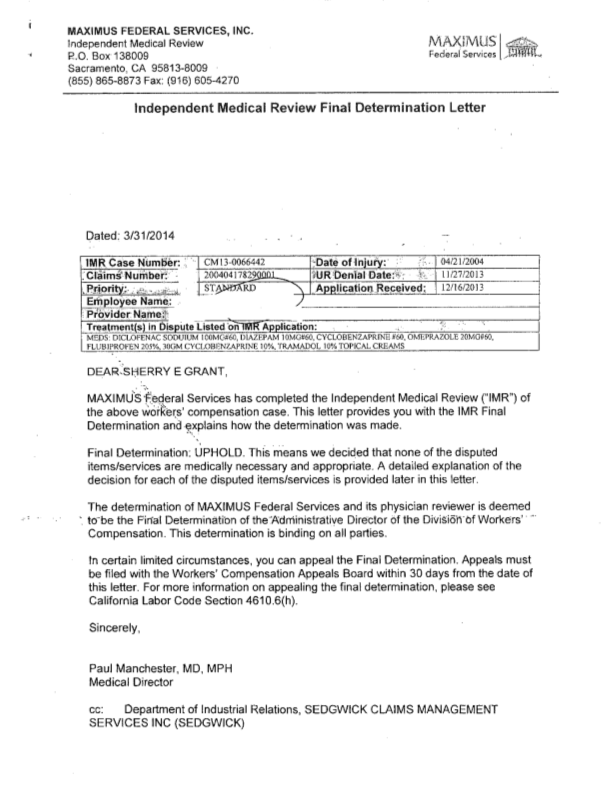
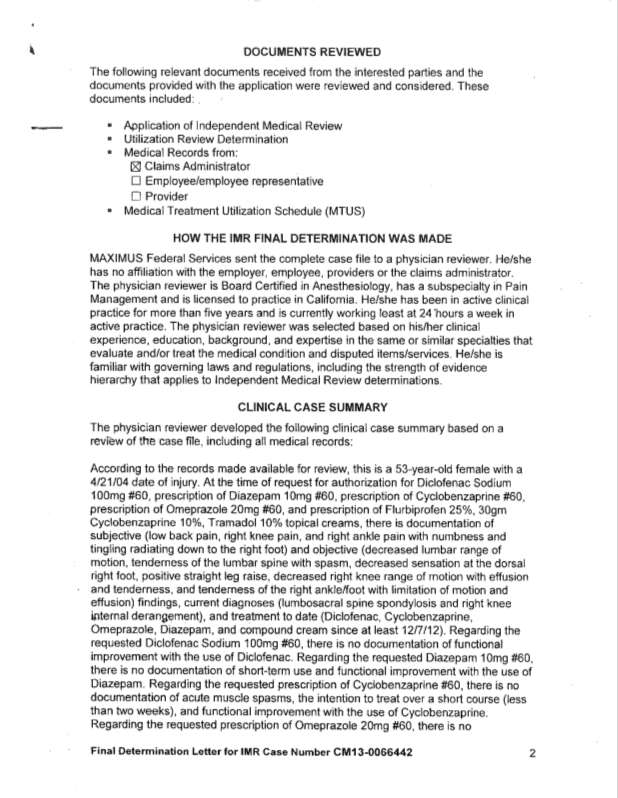
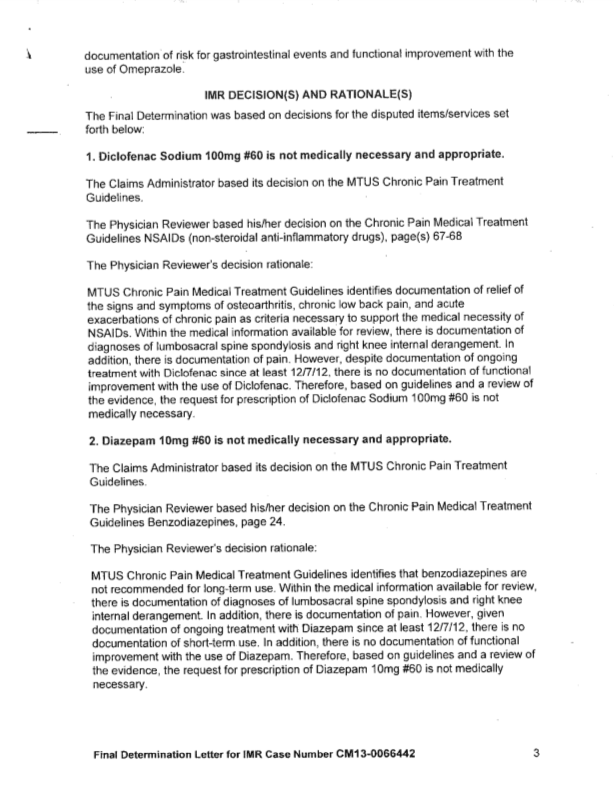
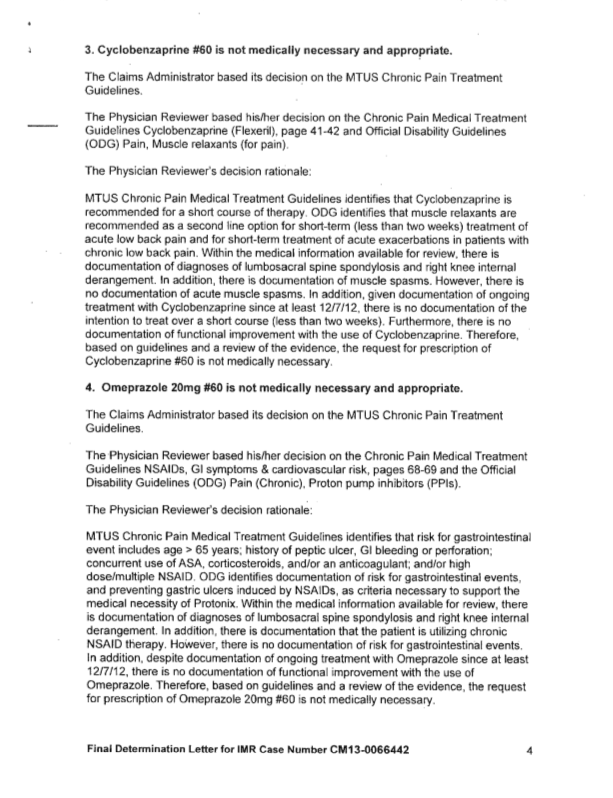
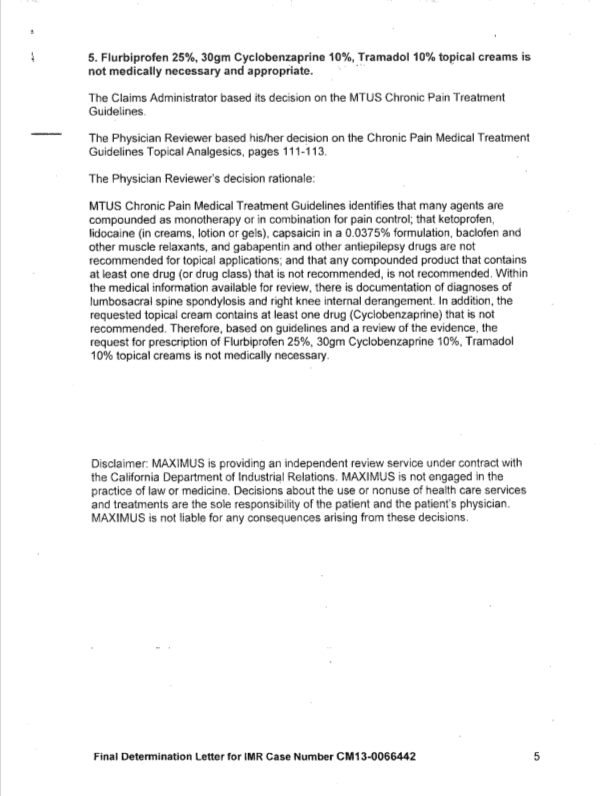
DPAC ask in their article: Will Maximus be allowed to behave in the same way in the UK?
Readers, of course I hope not.
Readers, I hope that if they start to try, Sue Marsh will do everything in her power to stop them.
Should Pavement Parking Be Banned In England And Wales?
January 9, 2015
Vehicles being parked on pavements can be annoying for some walkers but for those who have difficulty getting around, being forced to walk in the road to get past cars is especially dangerous.
Jobcentre staff under pressure to strip claimants of benefits for no good reason, North East MPs claim
January 9, 2015

Ministers have refused to apologise after MPs from across the North East highlighted the “cruel and inhumane” treatment of benefit claimants in the region.
Officials such as Jobcentre staff had been encouraged to strip claimants of benefits for no good reason, MPs said.
In a Commons debate led by Newcastle Central MP Chi Onwurah, MPs highlighted a series of wrong decisions and abuse of benefit claimants.
They included:
* Veterans injured in Afghanistan or Iraq stripped of benefits after they were told they were fit to work
* A Newcastle man stripped of benefits because he was accused of failing to seek work in the days after his father died
* A man in Bishop Auckland constituency who was a collecting a sick daughter from school and was accused of inventing a “fictional child”
South Shields MP Emma Lewell-Buck said her constituents had been “humiliated
View original post 617 more words
Let Mike Stay In His Community
January 9, 2015
From Change.org:
My brother Mike is 47, a kind and gentle man. He has downs syndrome and now also dementia. Mike has lived with my mother for years but she is 67 and no longer able to care for him.
We’ve found a fantastic care home in Wigton, which is Mike’s hometown, close to our mum. They already look after three other people with learning disabilities and they’re willing to take him but the local authorities are saying no. That’s why I’ve started this petition so that Mike has a chance to be cared for in his community.
The authorities haven’t explained why Mike can’t stay at the home in Wigton, I worry it is bureaucracy or funding. Instead they have recommended a unit miles away that is for the elderly. But Mike isn’t elderly and he is part of the community in Wigton and deserves to be able to live near his friends and family.
The Government has repeatedly made promises that people with learning disabilities should be cared for in their community near to loved ones, not shut away miles from home in units. This is an opportunity to keep that promise for one family.
Next week we have a meeting with the local authorities, we want to show them the support that exists for people like Mike, with learning disabilities, to get good care close to home.
Please help me fight for my brother and keep my family today. Sign my petition to give Mike a chance here.
Thank you,
Jennifer
Campaigner Gail Ward shares ths summary of an Inside Housing article on Facebook.
Plans to share a host of data on benefit claimants, including health records and IT literacy, with landlords and charities have been condemned by a national tenant organisation.
Michael Gelling, chair of the tenants’ and residents’ Organisation of England (TAROE), said the government’s proposals for Universal credit claimants went ‘too far’ and were ‘very, very dangerous’.
The Department for Work and Pensions (DWP) is until Monday consulting on measures to allow sharing of information about claimants between the department, councils, housing associations, Citizens Advice bureaux, credit unions and charities. This is to enable organisations to provide support to claimants to stop them falling into arrears or struggling with debt.
Data to be shared includes details of debts, benefits, health conditions, qualifications, and level of digital skills. Mr Gelling said: ‘I don’t know how secure my landlords’ IT systems are.’
He added: ‘It’s very, very dangerous stuff without having a conversation with people. [The information] is none of social landlords’ business, as long as the rent is getting paid.
‘The DWP shouldn’t be telling organisations people are on universal credit. Some people, not everybody, can actually manage their benefits and get on with their life. Why does the landlord need to know?’
A housing expert, who did not want to be named, said she was ‘surprised at how extensive’ the information set to be shared was.
Housing associations and councils have called for more data-sharing with the DWP so that they will know when tenants are claiming – universal credit and they can be offered support.
Under the draft regulations, universal credit claimants must be told about the information sharing and can object.
The consultation document says objecting to information sharing can ‘undermine’ an individual’s claim. ‘Claimants will therefore need to be advised about the possible adverse consequences of objecting,’ the document says.
A DWP spokesperson said objecting to information sharing could make it difficult for claimants to get the support they need, but it would have no impact on their claim.
She added the proposals had been drafted in conjunction with councils and representative organisations, and that there were safeguards in place to protect the information.
Under universal credit, tenants who previously had their rent paid to their landlord will receive their benefit for housing costs directly.
Social landlords are concerned that some tenants will consequently fail to pay their rent, and fall into rent arrears.

As Gail Ward adds: This is absolutely scary to many.Health conditions that people may want to keep private,financial data that should be private. This is a clear breach of privacy and for the disabled will be yet another human and disability right destroyed.
Stats On WCA Audio Recordings
January 8, 2015
With many thanks to Benefits And Work.
The DWP have released statistics on the number of work capability assessments (WCA) that have been recorded between December 2012 and February 2014.
Claimants have the right to ask for their WCA face-to-face assessment recorded by the DWP, though this has not been extended to personal independence payment assessments. This right was not publicised until July 2013, when information about the option to have your medical recorded was included in standard letters sent out to claimants.
The total number of recordings requested in this period was 4,060, amounting to just 0.66% of all the assessments carried out. Nonetheless, 1080 of these were cancelled. The reasons for the cancellations are not given, but claimants often report being told that the recording equipment was broken or not available when they turned up for their assessment.
Crucially, the DWP have not released any information on whether claimants who have their assessment recorded are more or less likely to be found capable of work or placed in the support group.
How A Dog Taught A Child With Autism To Say ‘I Love You’
January 8, 2015
What happens to the dogs who are trained but don’t quite make it as fully-fledged guide dogs?
Many thanks to campaigner Pat Onions, who shared this on Facebook:
Private Eye this Fortnight: A4E Using Untrained Advisers Working with the Disabled
In the ‘In the Back’ section of this fortnight’s Private Eye, 9th-22nd January 2015, is the piece ‘Welfare Gap’. This reports the claims made by a former employee and whistleblower, Chris Loder, at an employment tribunal in Manchester, that the ‘welfare to work’ provider is using untrained or inexperienced personnel to deal with claimants with a variety of mental and emotional problems, such as the mentally ill, those with learning difficulties and people who are drug or alcohol dependent. According to Loder, he was recruited by A4E to work helping unemployed people find jobs in 2012. In February 2014, the Blackpool office started using untrained advisers to deal with clients with the above problems.
The article quotes Jessica Pilling, a former ministerial adviser with 14 years’ experience of working with the disabled, stating her concerns about the companies’ policy. She says, ‘The approach that you take with somebody with mental health problems when coaching them into work is not the same as someone without, and it’s incredibly dangerous to think it is’.
A4E, as might be expected, deny the charge, stating that its staff complete ‘safeguarding training’ and ‘have access to a dedicated safeguarding team’. It also claims to work with specialist partners so that customers are given extra individual support according to their personal needs.
I have to say, I’m highly sceptical of A4E’s claims. As many left-wing bloggers like Tom Pride and Johnny Void have pointed out, so much of the welfare to work strategy pursued by ATOS and now Maximus is basically pseudo-scientific, self-help woo. It’s stuff concocted by the type of alleged experts, who fill the government’s Nudge Unit, largely drawn from the rubbish now filling the self-help shelves of booksellers like Waterstones. It’s a train wreck waiting to happen. Not that this will deter the coalition, who are little more than hucksters ready to peddle any old rubbish, so long as they make a massive profit out of it
Pleas to the government to suspend its benefit sanctions regime pending a fundamental review of its impact – especially on the mentally ill and disabled – were made at the first session of a broad inquiry by the department of work and pensions select committee.
In a two-and-half hour session involving academics, food banks administrators, disabled groups and employment service professionals, the select committee repeatedly heard the sanctions regime had changed over the last two years, creating a punitive culture of fear – especially amongst the disabled.
Mathew Oakley, the independent reviewer for sanctions appointed by the DWP did not join in their fiercest criticism of the system but said it would be wise for the government to undertake a general stock-take of the system in view of the extent to which it has changed over the past two parliaments.
He was one of many witnesses that said the government lacked systematic information on what happened to jobseeker’s allowance claimants if they are sanctioned including whether they went into work, the black economy or instead disengaged, leading to the growing gap between the number unemployed and the numbers claiming JSA.
Dr David Webster, visiting professor of Glasgow University, claimed the system had a gradually parallel secret penal system – a view dismissed by one Tory committee member as ‘completely absurd and bizarre’. Webster said the DWP may now be saving as much as £275m a year due to claimants being stopped.
Tony Wilson, the Centre for Social and Economic Inclusion, said sanctions “are running so far ahead of what works we should suspend the applications of sanctions unless we have a much clearer idea of what works and the impact of sanctions”.
Paul Farmer, the chief executive officer of mental health charity Mind said sanctions amongst those on employment support allowance has risen from 1,700 a month to 4,800 a month, adding there had been a disproportionate impact on people on mental health.
He claimed 60% of those on ESA have a mental health problem, yet in only 8% of cases were GPs being contacted as required in guidance to seek their views on the pressing ahead with sanctions.
Chris Mould, the chairman of the Trussell Trust, one of the chief organisers of food banks in the UK, said there had been a radical change in the way very disproportionate decisions were being taken since the latter part of 2012 , adding it was clear some job centres were being more punitive than others. He said in too many cases it takes too long for a claimant to secure redress if they have had their benefit withdrawn.
Kirsty McHugh, the chief executive of Employment Related Services Association, the representative body for the employment support sector, also called for an overhaul including the introduction of an “early warning” system which could be used at first offence rather than imposing a sanction. She added frontline employment providers of the work programme should be given more discretion about when they should report jobseekers to Jobcentre Plus for potential sanctioning.
She also called for greater clarity across the system about which jobseekers are classed as “vulnerable” and should be exempt from sanctions.
McHugh said “For a minority of people, receiving a sanction can be the wake up call they need to help them move into work. However, for the vast majority of jobseekers, sanctions are more likely to hinder their journey into employment.”
Labour would end this Government’s demonisation of benefits claimants – Chi Onwurah MP
January 8, 2015

This afternoon I will be leading a debate on the treatment – or more accurately the demonisation – of benefits claimants.
On my website I publish monthly pie charts of the issues constituents raise with me. Benefits is consistently in the top three.
Benefits claimants are by definition going through a tough time; they may have lost a job, have an illness or disability or are in low-paid or part time work, or they are caring for young children or relatives, making it harder to work.
They need our support, our care, concern for and understanding of the challenges they face. As our Shadow Secretary of State Rachel Reeves has said:“Jobcentres, and the HMRC offices that currently administer tax credits, are vital public services that British citizens pay for with their taxes. People who use them have as much right to expect fair and respectful treatment as patients in…
View original post 822 more words
Brain Surgery For Epilepsy- But At What Cost?
January 7, 2015
There are 1,000 epilepsy-related deaths a year, approximately 600 of which are attributable to SUDEP (Sudden Unexpected Death in Epilepsy). Most people who die are young, often in their 20s.
World’s Largest Autism Study Aims To Find Best Support
January 7, 2015
Autism is a broad and varied condition which very little is known about.
A very interesting document. Please read… And please share…..
January 7, 2015

Today I received a very interesting document. It consists of the governments latest plans regarding sanctions. It makes very interesting reading. That is if you don’t get too angry and stop reading. For this reason I have taken out the “worst” bits. I shall put a little explanation alongside each one. Sources of this document etc shall remain nameless but you need to read this and share it.
LIE!!….Sanctions make people too scared to live, too scared to do anything but what the Job Centre tell them to do. SANCTIONS KILL.
Support is also given with job-searching and skills but at its heart the system relies on people seeking employment for themselves. It is therefore critical to get people to comply and we know sanctions play an important role in encouraging claimants to comply. DWP research shows[5] that:
72 per cent of JSA claimants and 61 per cent of ESA…
View original post 645 more words
Employees Can’t Be Forced On To Fit For Work Scheme
January 6, 2015
With many thanks to Benefits And Work.
Guidance issued by the DWP last week on the new Fit for Work scheme makes it clear that referrals can only be made to the scheme with the consent of the employee. It also makes it clear that most health assessments will be carried out over the telephone.
Fit for Work is the new DWP scheme intended to cut sickness absence and ESA claims by getting sick employees back to work more quickly. In England and Wales the scheme has been outsourced to a branch of Maximus, the company also talking over the work capability assessment contract from Atos later this year. In Scotland fit for work is being delivered by the Scottish government.
GPs and employers can refer employees for an occupational health assessment via the Fit for Work service once they have been off sick for a month, provided that there is a reasonable prospect of the employee retuning to work. The employee must consent before a referral can be made.
Fit for work will carry out a ‘biopsychosocial holistic assessment’ of the employee over the telephone and draw up a return to work plan on the basis of that call. In a small number of cases a face-to-face assessment will be carried out.
For GPs, the attraction of a referral is that once a return to work plan has been drawn up by Fit for Work the GP will no longer be responsible for providing sick notes.
Employers receive a tax exemption of up to £500 per year, per employee on medical treatments recommended by Fit for Work to help their employees return to work.
Download Fit for Work guidance for employees here.
Claiming PIP – watch out for 20 metre discrepancy!
January 6, 2015
Are you in the process of claiming PIP or asking for a mandatory reconsideration? I had an email just before Christmas from Tired Git who has experienced precisely this, he offers the following advice:
“I wondered if you were aware of the discrepancy I have found in how the DWP interpret distances when they determine how far we are capable of walking to set the level of PIP awarded. In the application form for PIP the tick-box options for distances applicable to deciding the awarding of high or standard mobility are:
- Less than 20 metres
- 20 metres to 50 metres
However, Schedule 1 part 3 (2) of the Social Security (Personal Independence Payment) Regulations 2013 (as it appeared 16/12/2014 on the legislation.gov.uk website) contains the following definitions:
- d. Can stand and then move using an aid or appliance more than 20 metres but no more than 50 metres. 10 points
- e…
View original post 199 more words
Comment on Guardian article about suicides caused by DWP. Writer says they are retired a JC worker, No way of verifying of course but fits entirely with whistleblower reports and leaked department memos.
Can be found under this article: http://www.theguardian.com/society/2015/jan/03/benefits-sanctions-leading-suicides-dwp-depression#comment-45677126
and was spotted by tweeter @imajsaclaimant

Chris Goodchild- Diagnosed With Asperger’s At 42
January 6, 2015
Nearly half a million adults in the UK have autism, but haven’t been diagnosed, according to new research.
This week on Breakfast we’re taking a closer look at what it’s like to live with the condition some call an invisible disability.
We met Chris Goodchild, who wasn’t diagnosed with Asperger’s syndrome until the age of 42.
The Alternative Limb Project- Personalised Prosthetics
January 5, 2015
Sophie de Oliveira Barata started her career making realistic-looking artificial limbs for amputees.
Royal College Of GPs Says Autism Patients ‘Failed By System’
January 5, 2015
Autism is a condition that affects more than 600,000 people in the UK but it is often one that can be overlooked.
Tory Councillor Says Food Banks Are Only Used By Those With Drug, Alcohol Or Mental Health Problems
January 5, 2015
This Tweet was sent after Casualty recently covered malnutrition caused by benefit sanctioning.

Mark Winn has reportedly since deleted his Twitter account after the backlash it caused.
The Undateables Series 4 Starts Today
January 5, 2015
I’ll be watching. Will you?
Top Civil Servant Warned To Keep Parkinsons Diagnosis Secret
January 4, 2015
One of the UK’s most senior former civil servants has disclosed that he was warned to keep his disability secret for fear it would end his career.
Andrew McDonald, the founding chief executive of Independent Parliamentary Standards Authority (IPSA), which oversees MPs’ expenses, said colleagues warned him against being open about his diagnosis with Parkinson’s disease eight years ago.
Mr McDonald, who also has prostate cancer, was speaking after taking over as chairman of Scope, one of the UK’s biggest disability charities.
It came as new research by the charity found that three quarters of disabled people believed they had lost out on a job opportunity because of negative attitudes towards disability from a would-be employer.
Of those more than four in 10 said it happened “every time” or “a lot of the time” they had applied for a job or attended an interview.
Mr McDonald, who spent 20 years in the Civil Service, was diagnosed with Parkinson’s in 2007 and prostate cancer three years later.
As a result of his experience, he took on a leading role in implementing changes to support for disabled staff in the Civil Service.
He said: “When I was first diagnosed with Parkinson’s, I wanted to get on with my life but I also wanted to be open with my team.
“But colleagues advised me not to do so – ‘because you will be labelled as a disabled civil servant and it will end your career’.
“I was really shocked – I decided I wanted to go ahead all the same because if I didn’t, I felt I was making it more difficult for the next person.
“And [I thought] if these attitudes persisted in the Civil Service, a relatively liberal and enlightened employer, what were things like elsewhere?”
“That experience left me with the clear conviction that we need to act to make our workplaces more open to discussion of illness and disability.
“We need them to be safe and supportive environments in which everybody feels their voice will be heard. And we all – disabled or not – have a responsibility to bring that about.”
Prototype- Viktoria Modesta
January 3, 2015
I’ve just heard about this singer and her song. Meet the world’s first amputee pop star.
LD GP Health Checks ‘Show Results’ Finds Study
January 3, 2015
A scheme getting GPs to offer health checks to patients with learning disabilities in England is helping to pick up problems, research suggests.
A study in Lancet Psychiatry, looking at data for more than 8,000 patients, found surgeries in the scheme were twice as likely to identify problems.
But many patients who are entitled to the checks are still missing out.
The Down’s Syndrome Association said there was a lack of awareness that the health checks were available.
Learning disability health checks were introduced in 2008 through GPs surgeries as a way of monitoring the health of this vulnerable group of people.
NHS England decided to pay GPs as part of an incentive scheme for carrying out the health checks.
People with learning or intellectual disabilities, such as Down’s syndrome, are known to have significantly poorer health than other people.
This is because they find it more difficult to talk about symptoms and are less likely to make appointments to talk about their health problems.
‘Barriers’
Lead researcher Andre Strydom, reader in intellectual disabilities at University College London, said there was good evidence that health checks for people with learning disabilities could help identify previously unrecognised health problems.
His study, comparing the results of health checks performed by GP surgeries who signed up to the scheme and those surgeries who did not, found that health concerns were picked up twice as often when surgeries got involved.
“We found that surgeries who did health checks did much better – they offered blood tests, reviewed the patients’ medication, and drew up health action plans for the next year.”
But even with six out of 10 surgeries signed up to the scheme in England, 40% of patients with learning disabilities did not receive a health check.
Dr Strydom said this may be owing to the fact that a large number of people with these disabilities were not on the list to receive a health check.
Either they were not known to local social services or their GP, or they were known but had been given the wrong patient code which meant they missed out when the list was collated, he said.
Stuart Mills, information officer at the Down’s Syndrome Association, said there could be many reasons why this group of people were not being offered the health checks.
“It’s a relatively complicated picture. It’s down to a lack of awareness, not being on the disability register, and the fact there are more barriers for people with Down’s syndrome.”
He said the Association wanted to increase awareness that people with Down’s syndrome were entitled to a health check.
The charity has also produced information booklets for GPs about potential health problems, which can include hearing and sight problems, thyroid conditions and muscular-skeletal problems. Depression is also a common health issue.
Although there was evidence some people were being given good health checks, others reported that their health checks were poor and lasted only 15 minutes, however.
A Brief Review Of The Theory Of Everything
January 2, 2015
The Theory of Everything is a story of great things. Two great minds meet at Cambridge, a great university, where they experience and enjoy a great love.
Stephen Hawking, at the start, is a student. Like any other young man, he avoids doing his homework-to the point where he accidentally-on-purpose spills tea on the worksheet and has to write his work on the back of a train timetable!
Like any other young man, he attends a university party. There, like countless other young men have done over time, he meets and falls for a beautiful girl- Jane Wilde.
But just as their love, with all its dancing, laughter and striking normality, is getting started, along comes a great disability- Motor Neurone Disease.
This story of the world’s greatest mind and his great romance then takes, almost, a cruel twist as he is told he has two years to live.
The movie then becomes the story of how Stephen and Jane Hawking coped as he slowly lost all his physical abilities. When he loses his voice to a breathing tube, they find an old fashioned alphabet board. At this point the script comes up with one of many moments of humour in the middle of great sadness. They meet a speech therapist who thinks that Stephen Hawking is the most brilliant man she has ever met and says to Jane ‘You must worship the ground beneath his wheels.’
But, in between coping with great disability and the great sadness that it brought to both of them, they remain, for as long as possible, a “normal” family. They even have three children- to the surprise of their friends who naturally wonder if the disability affects ‘Everything?’
Overall, the movie focuses on the many positive things Stephen Hawking has done with his life. As we now know, he is a miracle case of MND, still alive after over 50 years of its constant company.
The only slightly negative thing that might be said about the movie is that a lot of the action takes place in sequences of music, meaning that you might miss something if you look away from the screen at some points.
It might feel like the movie doesn’t cover everything, but rather brief moments in flashes. But then, how could anyone fit over 50 years of greatness into two brief hours?
Perhaps a disabled actor could have been found to play Stephen Hawking in the later stages of the movie. However, overall, Eddie Redmayne does a brilliant job and Felicity Jones comes a very close second as Jane. They have made no secret in the media of the amount of research they have both put into their roles, and it is easy to see that their hard work will pay off.
Two People With MND Review The Theory Of Everything
January 1, 2015
‘The theory of everything’ is out in cinemas on Thursday. The movie, which has received four nominations for the Golden Globe Awards, follows the life of physicist Stephen Hawking as a student at Cambridge University, when he meets his first wife Jane and is diagnosed with motor neurone disease.
Sarah Ezekiel and David Setters, who are both living with motor neurone disease and are members of the MND Association, have reviewed the film for the Today programme.
Motor neuron disease (MND) is rapidly progressive and terminal. It affects the brain and spinal cord: people can still think and feel, but their muscles refuse to work.
If you want to find out more about it you can visit the Motor Neurone Disease Association website: http://www.mndassociation.org.
Making Waves Canada GoFundMe Campaign
January 1, 2015
An email from a dear friend of Same Difference:
Dear Friends and Family,
In the spirit of giving this holiday season, I would really appreciate it if you would consider donating to Making Waves Canada, a not-for-profit that has been a huge part of my life since I started at McGill University.
Making Waves Canada is raising money to sustain and expand our program.
Making Waves Canada is the national organization of 13 (and counting) Chapters throughout Canada. Each chapter runs an affordable and accessible swimming program to children with special needs. Since 2005, we have helped over 2,000 children with disabilities learn to swim. All members of the organization are volunteers. I am currently involved with Making Waves Canada as a director on the board.
I got involved with Making Waves Montreal (a chapter of Making Waves Canada) in my first year at McGill, and taught the same child, Marie, my entire four years. It was by far the most valuable experience of my undergraduate career. Many of you know that I was able to work in Lebanon as an International Making Waves Ambassador because of my connection to Making Waves Montreal.
Parents with a disabled child have numerous additional expenses, and ensuring their child has one-on-one swimming instruction should not be a financial burden. Your support would go directly towards ensuring the current fee of approximately $5-10 per lesson stays the same. Essentially, you’re donations are ensuring our organization can continue to operate as an assessable and affordable program, and expand to new towns and cities throughout Canada.
Here is the link to donate: http://www.gofundme.com/hiaec0
To find out more information about what we do, please visit our website http://www.makingwavescanada.org/
If you have any questions or would like more information, please let me know.
Thanks for your support!
—
Alia Jan
A dad was sent a letter asking him to go on a health check-up for disability benefits – two months after he died.
The grieving widow of Stuart Mullins, 53, hit out today after her late husband was asked to undergo the medical tests for Disability Living Allowance.
Widow Julia, 54, registered his death on October 15 using the Tell Us Once service – meant to ensure a death is reported to most government organisations at once.
But she was outraged to get a letter addressed to her husband from Atos Healthcare to carry out the disability benefits check for the Department of Work and Pensions.
Mrs Mullins said: “It was disgusting, absolutely disgusting. I was so upset and it was really upsetting at the time as you are already missing someone at Christmas.”
The letter, dated December 21, requested that Stuart attend an assessment for his benefit claim at Newport Medical Examination Centre on January 20.
But Stuart, of Newport, South Wales, died from cancer on October 14.
Wales News Service 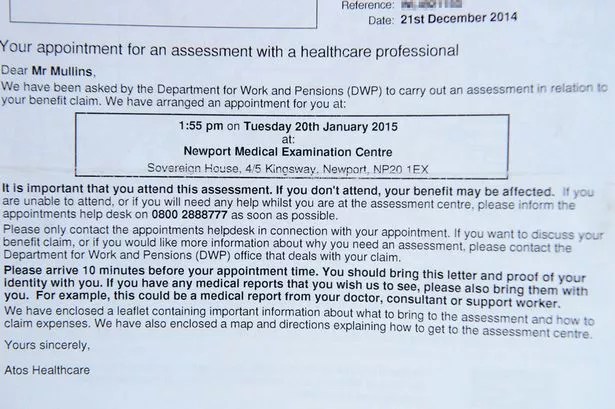
Father-of-one Stuart had using a walking stick and wheelchair due to limited mobility in his left leg and ankle.
He was claiming Disability Living Allowance for his immobility.
Stuart died at his family home in Somerton, Newport, just months after being diagnosed.
Mrs Mullins said: “He was a lovely, wonderful man. He made so many people happy and he is sorely missed.”
Atos Healthcare – which provides independent assessments on behalf of the DWP for a range of government benefit schemes – has apologised for the blunder.
A spokeswoman for Atos said: “We are sorry for any distress this has caused.
“Unfortunately, unless we are asked by the Department to withdraw a case from our system, we will automatically send out a letter.”
A DWP spokeswoman said: “Our thoughts are with the family of Mr Mullins.
“We are sincerely sorry for the mistake that was made and understand the distress that this has caused.”
2014: Same Difference Year In Review
December 31, 2014
It’s been a depressing year here, readers, but I hope next year will be better!
Same Difference 2014 Review
January brought Bedroom Tax stories galore
February brought debates on PIP, WOW and more
March brought the birthday of Scope’s current name,
April brought the New Malden deaths- who’s to blame?
May brought tributes to a great, wise poet
June brought more tributes as we felt sadness and showed it
July brought me 10 minutes of Sky News fame
August brought buckets of ice- what a game!
September brought worries and warnings and stats
October brought cuts and ‘cures’ but no cats!
November brought yet more DWP madness
December ended a year of disability world sadness
Right To Die Campaigner Debbie Purdy Dies
December 30, 2014
I’ve come back to some very sad news today, readers. Right to die campaigner Debbie Purdy recently died of natural causes.
I did not agree with her views on the right to die. However the news of the death of a disabled person always causes me a special kind of pain, and today is no exception.
RIP Debbie Purdy. My thoughts are with her family.
Harassment by Work Programme Providers of the lowest form
December 30, 2014

The abuses of work programme providers have been blogged many times before but I am sure many of you agree all abuses must be blogged time and time again until these providers leave those in the ESA Support Group alone and more so if they have a degenerative condition that has a terminal prognosis.
So with the above in mined I turn to one lady from Bristol who has terminal cancer at just 37 years old and has a life expectancy of 0 – 3 years so it is sad indeed that she can expect just half her life lived, she says in her facebook message that she has come to terms with what will happen (very brave indeed) but the short life left would be much better if she was not harassed by work programme provider Prospects Group @ProspectsGroup and I for one agree.
It is hard enough having…
View original post 413 more words
The Return Of Same Difference
December 30, 2014
I am back from a wonderful and much-needed Christmas holiday. This means that Same Difference is also back after a two-week break.
I will bring you new content as soon as I can, hopefully starting today.
This will include the usual poetic review of the year.
I will do my very best to make this year’s content bigger and better than ever before.
With best wishes
Samedifference1
Christmas Holiday
December 13, 2014
Readers, today, I’m going on a Christmas holiday.
I’d like to thank you all sincerely, because 2014 has been a great year for Same Difference. I never imagined that the site would be where it is today.
I still appreciate every hit. I still read every comment. And I promise that no matter how big the site gets, these two things will continue always.
The site will return in the New Year, so your usual New Year review poem may be a little late.
I leave you with a promise that in 2015, I’ll do everything I can to make the site even bigger and better.
Season’s Greetings!
Claimant Death: Mike Sivier’s Letter To Dame Anne Begg
December 12, 2014
A commenter on yesterday’s article about the death of a claimant at Ashton-Under-Lyne Job Centre raised an important point.
The comment was intended to harshly criticise the piece by misrepresenting it as saying Job Centre staff are responsible for forming government policies. Of course they aren’t – but as human beings with responsibility for their own actions, they may certainly choose whether to carry out those policies. They have personal responsibility for what they do. This means they must also take responsibility for the consequences of their actions.
The response to the commenter was that there is an advisor at Ashton-Under-Lyne Job Centre Plus whose decision led to the death of a claimant and that person must live with the fact for the rest of their life. It is possible they may have to pay a penalty for it (along with those who gave the orders), if some of us get what we want from a future government. If and when that happens, resigning may seem like a much better option.
But that won’t happen at all, if nobody investigates what happens.
Here’s a letter to Dame Anne Begg, chair of the Commons Work and Pensions Committee, asking for that investigation. Perhaps readers of this article may wish to write to their own MP, asking them to support the request.
Claimant Freezes To Death After Sanctioning. JC+ Staff Were ‘Only Following Orders’
December 12, 2014
Vox Political reports on this shocking incident:
It is striking that this article from The Poor Side of Life reaches us so soon after Vox Political was told that “likening David Cameron to the Nazi party is absolutely incredible and down-right disgusting”. The article’s author writes:
I was stopped by a homeless chap who wanted to congratulate us on our hard work. He said that he hated this Job Centre. His friend who lived on the streets with him had been sanctioned after being taken off the sickness benefits that he was on and was put on Job seekers Allowance. He had severe mental health and addiction problems. He was sanctioned, and without warm clothes and very little food he fell asleep on the streets and never woke up. He died of hypothermia. People had passed him and thought that he was asleep. He didn’t stand a chance. And what do the Job Centre staff say? “We are only following orders.” Most don’t feel any guilt or remorse. And we know that this government doesn’t either.
“We are only following orders.” Isn’t that what the German soldiers at the extermination camps told the war crimes judges at Nuremberg?
Let us await the trial of Ashton-Under-Lyne Job Centre Plus staff with eagerness. In the meantime, there are other stories in the article, so please give it a visit.
ESA Stats: 80% Of January-March Claimants Still Waiting For Assessment
December 11, 2014
With many thanks to Benefits And Work.
ESA statistics released by the DWP today show that only 20% of people who claimed employment and support allowance (ESA) in January to March of this year have had an assessment. The figures also show a continuing rise in the proportion of claimants found incapable of work and the percentage placed in the support group.
The latest quarterly work capability assessment (WCA) statistics show that, of those people who submitted a claim between January and March 2014:
20% have had an assessment
40% are still waiting
41% are no longer claiming, largely because they got better or died.
(The figures are rounded).
Of those who made a claim in this period and who have had a decision:
24% were found fit for work
76% were found to be entitled to ESA, of whom:
14% were placed in the work-related activity group
62% were placed in the support group

The figures represent another big increase in both the percentage of claimants being found eligible for ESA and the percentage being placed in the support group.

It is likely that these totals will alter once all claims, reconsiderations and appeals for the period have been dealt with. But what is not in doubt is that many tens of thousands of claimants who should be in the support group are currently forced to remain in the assessment phase for periods of a year or more.
You can download the full statistical summary from this page.
A Warning To Volunteers!!!
December 11, 2014
From reader Jane Lauppen on Facebook.
VOLUNTEER WARNING! VOLUNTEER WARNING! VOLUNTEER WARNING!
May I remind volunteers,carers and the disabled especially, those usually on the lowest income bar being homeless, that the coalition is checking on volunteers for fraud in case they are working.
The government is sending mandatory job centre interview appointments to account for their voluntary work and any ‘payments’ attached in the form of a fee and expenses. The threat is if that volunteer does not attend,any benefit they maybe on will be stopped.
Please be aware that the kind generosity which induces a willing eagerness to participate in time spent helping others and ticking boxes for organisations such as local councils,universities and colleges etc.is now under close scrutiny by government under a presumption that the volunteer is guilty until proven innocent.
The hostile tone of these letters and the assumptions being made by government
is sufficient to warrant a risk assessment by volunteers for their own safety before embarking on volunteering.
Until this is stopped,many volunteers will be lost.
If anyone has received such a letter, please let me know- I would like to publish it.
On The Subject Of Useless Work Skills Courses…
December 11, 2014
As readers of this site will know, I’ve been chasing the DWP for details of the useless “work skills” and “employability skills” courses that JSA claimants must attend on the threat of sanctions… people report being forced to attend courses where they have to build towers out of drinking straws, roll marbles down tubes and tear up pieces of paper to reassemble in the interests of accquiring teamwork skills… Some people I’ve spoken to even said they were threatened when they dared to complain to providers about the courses they were sent on. This all goes on because ritual humiliation of and aggression towards people who are out of work is thought to be absolutely fine in our day and age….
The DWP press office ignored my questions about this, of course, so I sent the department an FOI. I asked for lists of providers of these courses, how funding streams work, how much providers like Reed and A4e charge for attendance on these courses, what sort of quality control is in place, what standards (if any) course providers must meet to provide these courses and if the courses are indeed compulsory – ie, why are people threatened with sanctions if they refuse to attend, or say a course does not match their skill set? Surely the DWP can share its own rules re: whether people are threatened with sanctions if they refuse to attend these so-called skills courses.
Needless to say, the DWP responded with a section 12 – cost of information extraction exceeding the £600 limit, etc. The DWP said it does hold some of the requested information, though, so I’ll be redrawing the request. I’m particularly interested in the costs of these courses. People have sent me some intriguing possible cost figures – the sort of money that would suggest these course providers are on course to have a very merry Christmas.
DWP Admit one metre rule for PIP is “Unfounded”
December 11, 2014
Anyone dealing with an incorrect mobility award for PIP – Take Note:
A FOI request has revealed the DWP admit the One Metre Rule is unfounded and agree ” it is time to review this figure” .
Read the full response below:
In your DLA1A Adult January 2014 form, titled Disability Living Allowance Notes, on page 10
question, 26 titled: Getting around outdoors:
You state: ‘the average adult step is just under one meter.’
I would like to be provided with the source of this statement.
Thank you for contacting us and bringing this to our attention.
Information published online quotes: ‘The average person’s stride length is approximately 2.5
feet long, although this is dependent on age and health. It’s difficult to find a source of this
information which is typically quoted without reference.’
Investigations show that we have used this figure for many years and it has not been reviewed
recently. Discussions with a DWP Medical Policy Advisor have resulted in an agreement that it
is time to review this figure.
Thank you once again. It is feedback such as this which helps us improve the service we
provide to our customers.
Back To Work Schemes Making Mental Health Issues Worse, Says Charity
December 11, 2014
The government’s back-to-work schemes are ineffective and damaging for people with mental health problems, according to campaigners.
The charity Mind says unemployed people with mental health problems should be moved from mainstream programmes onto a specialist scheme.
Mind surveyed 439 people supported by the government’s Work Programme.
The government says it has helped thousands of people with mental illnesses into work.
The coalition government introduced the Work Programme – a key plank in its welfare reform agenda – in 2011. Participants are given support but can face sanctions if they fail to comply with certain conditions.
According to Mind, 83% of people they surveyed said using the programme and the government’s job centre services had made their mental health worse.
Three quarters of those polled said they felt less able to work as a result of being on these schemes, the charity said.
At the same time, the schemes were ineffective for people with mental health problems, as only 5% of people had been helped into work, campaigners claimed.
‘Perverse’
The charity is calling for the government to introduce a specialist scheme for people with mental health problems. The Work Programme is a government welfare-to-work programme introduced in Great Britain in June 2011.
“It’s perverse that programmes which are supposed to help those who are unwell and struggling to get into work are having the opposite effect, damaging their health,” said Paul Farmer, Mind’s chief executive.
“These schemes are not appropriate for people with mental health problems. If someone is out of work because of depression and anxiety, simply asking them to attend a CV writing course is a waste of time and money, as it doesn’t address the real problems they are facing.
“Forcing people to engage in these activities, and cutting their benefits if they struggle to do so, is inappropriate and counter-productive.
“This approach assumes people don’t want to work and the only way to motivate them is to withdraw financial support, which only causes greater anxiety and stress, and makes returning to work less likely.”
A spokesman for the Department of Work and Pensions defended the government’s schemes.
“Mind are overlooking the fact that previous jobs schemes simply didn’t do enough for people with mental health conditions,” he said.
“Everyone is different and so the Work Programme looks at an individual’s barriers to work and tailors the support specific to their needs.
“It has already helped thousands of people with mental health conditions into work – instead of just writing people off on sickness benefits as often happened in the past.”
James Rudge: The One-Armed Man Who Somersaults On Rooftops
December 11, 2014
James Rudge was born with one arm and is earning a reputation online doing parkour around Bristol, the city he loves.
Rudge is not intimidated when it comes to skirting walls or somersaulting off them.
He works in customer services as a day job but spends his spare time in Stokes Croft, where the parkour artists of Bristol congregate to find new and exciting environments to jump around.
The 21-year-old became passionate about parkour, an urban sport that mixes acrobatics and athletics, and the similar discipline of free running, in 2005, aged just 12, after he watched a Channel 4 documentary about the activity, called Jump Britain.
Not intimidated by the apparent physicality of the discipline, Rudge quickly immersed himself in parkour, regularly travelling from Bath to Bristol to join the growing numbers of parkour enthusiasts, before moving there permanently.
The holistic training practice, as it is described by most who do it, requires excellent strength and balance, and practitioners have often been compared to cats or described as ninjas for their fluid and graceful movements.
At the heart of it is a desire to get from A to B in a quick and stylish way. Eugene Minogue, from Parkour UK, says that they are always looking for new routes to get them where they want to go more efficiently.
For Rudge, who was born with his lower forearm missing, navigating environments is not new to him.
“I have always been climbing things,” he says. “Even as a kid I’d be scaling trees and running around.”
He says he has never had reason to consider how having one arm affects him physically, and even in parkour he only focuses on what he can do.
“It would be different if I had lost it because of some accident or trauma,” he says, “but I have only ever known my body in this way so for me there isn’t anything I can’t do.
“Climbing is probably harder than if I had both hands,” he says, “but it just means I have to try and be stronger in my right arm.”
He is currently trying to get strong enough to do handstands on one arm, and says it is tough as he still needs more strength to hold himself steady.
But his balance has always been as good as his peers because he has learnt to move, run and jump with one arm.
Minogue says that this kind of continuous practice and repetition of movements is an integral part of parkour and isn’t any different if you have a disability.
“We have a thing called ‘breaking jumps’, which is when you have mastered a movement you have never done before,” he says.
“At the heart of parkour is a mindset of getting to know and challenging the movement of your body, so it may be that Rudge has a stronger core or strength in another part of his body and this is actually something that others around him could learn from.”
It is about overcoming fear and perception as much as it is about becoming adept at a particular skill, he says.
As with all who do parkour, Rudge has entered into this learning process to become better, but he doesn’t have anybody in the same group who he can look to for advice in the best ways to move with one arm.
YouTube helped here, he explains. When he was first becoming interested in the practice, he searched the internet and came across another free runner, Max Runham, based in London.
Runham used a prosthetic arm in many of his videos, and Rudge tried the same for a while.
“I tried to use it to give me extra support in getting up high walls and especially for handstands to give me balance, but I found I was putting pressure more on my right arm and it was very cumbersome,” he says.
He moves more freely without it on, and can use his stump much more productively to pull himself up onto ledges.
Parkour has been adapted for disabled people before, with experts citing its inclusivity as one of its most attractive features.
In Houston, Texas, parkour is used to teach people with a number of different disabilities ways to move their bodies, and James Gallion who has cerebral palsy does parkour to experience movement and a feeling of confidence he doesn’t get in his day-to-day life.
ESA Newsflash!!! WRAG To Support Group!!!
December 10, 2014
Spotted on Facebook. Sharing because it might be useful for some readers.
ESA NEWSFLASH !!!!!!!!!!!! WRAG to SUPPORT GROUP
ATTENTION ALL.
Attended an ESA, WRAG appeal today, for the purpose of using Reg 35a ESA Regulations 2008. In regard that making someone attend a work based interview,would put that person or members of public at risk.
Case was adjourned. Currently the DWP have applied to 2nd Tier Tribunal using Reg 26(4a), regarding that the Tribunal service are asking for more evidence to overturn DWP decisions, which the DWP are appealing is Errors of Law,from the Tribunal asking for more evidence to make judgements. 2nd Tier Tribunal have kept the ruling and DWP have now appealed to Appeal Court over these rulings.
Basically what this means. Is if you are currently going to Tribunal or appealing where Reg 35a is to be used, your case will be adjourned. The Judge today, informed us due to this appeal by DWP, Judgements on Reg 35a ESA Regulations 2008 cannot be decided until appeal court has sorted this issue out. Therefore it may take until End of February 2015, before any case where Reg 35a is being used will be resolved.
This was from a Tribunal Chair today from Truro Tribunal service today.
Have You Seen This Man?
December 10, 2014
Spotted on Facebook:

Senior DWP Manager Congratulates Staff For Hitting Sanctions Targets
December 10, 2014
Spotted on Twitter:

DWP Telling Single Parents To Leave Young Children Home Alone, Claims MP
December 10, 2014
SINGLE parents participating in the Government’s flagship back-to-work scheme are being told to leave children as young as nine at home unsupervised in order to attend, according to a North-East MP.
Labour’s Jenny Chapman, the member for Darlington, told MPs some of her constituents undertaking the Work Programme had been to see her to raise their concerns about advice given to them.
Speaking during work and pensions questions in the Commons on Monday (December 8), she said: “Single parents in the Work Programme in Darlington have been to see me because they are being told to leave their nine and ten-year-old children at home unsupervised during the school holidays to be able to attend.
“Will you urgently look into this and make sure that this foolish, dangerous, reckless advice is never given to parents?”
Employment minister Esther McVey said it was key to ensure the right support was being offered to lone parents.
She went on: “Obviously, we work closely with charities like Gingerbread to ensure that when people are lone parents that actually the hours they have to work and the commitments they have to live up to are actually fit around their lifetime and also the children they are looking after.
“That is really key in offering the right support for those lone parents.”
This Work Programme aims to provide support, work experience and training for up to two years to help people find and stay in work.
It was launched in 2011 with the goal of helping 2.1 million people by March 2016.
In a leaflet explaining the Work Programme, published in December 2012, the Department for Work and Pensions (DWP), said those with young children would have their benefits protected.
The leaflet said: “Reforms of benefits and tax credits are designed to improve work incentives
for all, and make financial support much simpler and more transparent.
“Benefit recipients will be expected actively to look for work, and where this is not possible to prepare for work – except for a few exceptional groups, for example those who are seriously disabled or have very young children.”
It added: “Some people with health problems… continue to receive incapacity benefits; lone parents with younger children and some other groups are eligible for Income Support.”
Tanzania: Albinos ‘Being Killed Like Animals’
December 9, 2014
A new campaign launched in Tanzania aims to protect albino people after a rise in the number of them being murdered.
Emily Brothers: Transgender, Blind, Gay Labour PPC
December 9, 2014
Emily Brothers has announced she will be running as a Labour MP in Sutton & Cheam, becoming the first openly transgender to run for Parliament for a major party.
Emily Brothers has announced she will run for parliament in Sutton & Cheam as a Labour candidate. Labour came third in 2010.
She told PinkNews.com: “There is vast under-representation of disabled people and people with transgender experience in public life, and there is of course vast under-representation of women in parliament, and that needs to change.
“That means people like me stepping forward, and some people will find that difficult.”
Mr Brothers said she felt the public wanted their elected officials to be honest, which is why she is speaking up.
“In an ideal world I wouldn’t be speaking out about my past because it’s very private.
“However I recognise that as a politician the key thing is trust. If I’m not honest about my life experience people may be critical of me being secretive.”
Speaking of the impact she hoped to have, Ms Brown said she hoped to break down “barriers” if elected and said: “Hopefully some positive will come from it, not just for me but for other people who have gender identity issues or backgrounds.”
Ms Brown is a prominent speaker and campaigner on disability issues. She is a former head at the Equality and Human Rights Commission and a former President of the National Federataion of the Blind. She lost her sight to glaucoma when a child.
This is a link to Stella Young’s famous TED talk from April 2014.
I have only today heard it for the first time. It’s funny, educational, thought provoking and most of all, ironically, inspirational.
I’m not surprised it’s had millions of views, and may it have millions more.
Stella Young’s Letter To Her 80 Year Old Self
December 9, 2014
The very sad news of Stella Young’s death hit me, and many of my Facebook friends, very hard yesterday.
Today, I found this beautiful letter that Stella Young recently wrote to her 80 year old self. I agree with much of it, so I repost it here in tribute to Stella.
Dear eighty-year-old me,
Eighty, hey? Eighty.
Eighty is a long way from where I write to you now. Fifty years, in fact.
To be honest, I’ve never thought a great deal about you, eighty-year-old Stell. I tend not to think about living to some grand old age. Then again, I don’t think about dying either. I suppose you do; you’re eighty. You’ve done a lot of things. Seen a lot of things. You almost certainly have a hover-chair by now. When I was seven and watched an episode of Beyond 2000 that featured a floating armchair, I thought we’d definitely have one of those by fifteen, at the latest. As we both now know, the twenty-first century has been nothing if not a tremendous lie.
I suppose I can’t really write this letter to you without talking about the assumption, the expectation, that people like us die young.
One of my most beloved crip heroes, Harriet McBryde Johnson, wrote in her memoir about her realisation at four years old, while watching a Muscular Dystrophy Telethon, that she was a little girl who was going to die young. The telethon was famous for its host, Jerry Lewis, trotting out adorable disabled children and telling us all that they were going to die. Most disability charity hinges on that notion – that you need to send your money in quick before all these poor, pitiful people die. Peddling pity brings in the bucks, yo.
When it comes time for Harriet to start kindergarten and she isn’t dead yet, she says to herself, ‘Well, I might as well die a kindergartener.’ When she starts high school and she isn’t dead yet, she thinks, ‘Well, I might as well die educated.’ When she graduates from law school and she still isn’t dead yet, at twenty-seven, she decides, ‘Well, I might as well die a lawyer.’ Harriet is thirty before she realises that it is, in fact, too late to die young. And so she spends the rest of her life protesting against that awful Muscular Dystrophy Telethon. Not just because it handed her a false death sentence, but because pity gets in the way of our rights. There’s been much talk of Lewis bringing his telethon to Australia, but don’t worry, eighty-year-old Stell, you totally kicked that one in the dick.
I fall into this trap of talking about Harriet as though she was a friend. She was, in a way. Hers was one of your ‘coming out’ books. Remember those days back before you came out as a disabled woman? You used to spend a lot of energy on ‘passing’. Pretending you were just like everyone else, that you didn’t need any ‘special treatment’, that your life experience didn’t mean anything in particular. It certainly didn’t make you different from other people. Difference, as you knew it then, was a terrible thing. I used to think of myself in terms of who I’d be if I didn’t have this pesky old disability.
Then, at seventeen, something shifted. To borrow from Janis Ian, I learned the truth at seventeen.
That I was not wrong for the world I live in. The world I live in was not yet right for me.
I started learning about the social model of disability. Reading all the disability studies resources I could lay my hands on. I devoured the memoirs of other disabled people. And I completely changed the way I thought about myself.
I stopped unconsciously apologising for taking up space. I’m sure you can scarcely imagine that now; a world where disabled people, women in particular, are made to feel like we’re not really entitled to inhabit public spaces.
I started changing my language. To jog your memory, back when you’re still thirty there are all kinds of fights about whether we are allowed to say ‘disabled people’ at all. It’s ‘people with disabilities’ that’s all the rage. ‘Cause we’re, like, people first, you know? And if we don’t say that we’re people, folks might get confused. But I’ve never had to say that I’m a person who’s a woman, or a person who is Australian, or a person who knits. Somehow, we’re supposed to buy this notion that if we use the term disabled too much, it might strip us of our personhood. But that shame that has become attached to the notion of disability, it’s not your shame. It took a while to learn that, so I hope that you’ve never forgotten.
I started calling myself a disabled woman, and a crip. A good thirteen years after seventeen-year-old me started saying crip, it still horrifies people. I do it because it’s a word that makes me feel strong and powerful. It’s a word other activists have used before me, and I use it to honour them.
Unlike Harriet, I’ve never thought I was going to die young. But I’m aware, sometimes painfully so, that there are people who do. At thirty, there are already people quick to tell me I’ve had a good innings. Most recently, an anaesthetic nurse who was about to knock me out before a very minor procedure on my right elbow asked me how old I was. I told her, and she looked down at me in my funny little hairnet in a bed you could have laid three of me end-to-end on, and she said, ‘Oh, well, you’re doing very well then, aren’t you.’
‘Am I? AM I?’ I wanted to ask, but I was already drifting off to sleep. Some people are such c—s.
Still, what she’d said did alarm me a little, so I asked a doctor. Two, in fact. Apparently, people with this dicky bone thing usually have small lungs and so we’re a wee bit more prone to nasty colds turning really nasty. But that’s about the extent of it. At this point, there aren’t a lot of old people with this thing around, but it’s hardly surprising. From where I sit, it wasn’t so long ago we stopped institutionalising disabled people, locking them away in places that killed their souls and then their bodies. To think of how far we’ve come in my first thirty years makes me pretty bloody excited about the next fifty.
So you know what you’re going to do? You’re going to rug up in winter, eat your vegies, slap on some Vicks VapoRub and get the f— on with it.
I will do everything I can to meet you, eighty-year-old Stell.
By the time I get to you, I will have loved with every tiny little bit of my heart and soul. Right now at thirty, there’s a significant love in your life. He’s lovely. He makes his old Lego into jewellery for you. He makes you a coffee every single morning, and he doesn’t expect you to be civil before you’ve consumed it. If he accidentally buys the biggest carton of milk that’s too heavy for you to lift, he pours it into smaller bottles so you can manage. Whether there’s one great love or many, you will have loved and been loved, obscenely well.
By the time I get to you, you won’t be a grandmother. Kids are cute, but f— they’re hard work. You decided many years ago, despite every man and his dog sending you those articles from New Idea and Woman’s Day about ‘The World’s Smallest Mother’ or ‘My Miracle Pregnancy’ that, in fact, you don’t want your own kids. Even though we both know how much you like to do the opposite of what people expect of you, and the personal is political and all that, kids are too important for that. You’re not very committed to the parenting bit, and you hear that’s a pretty big part of the deal.
By the time I get to you, I will have lost people I love. At thirty, you’ve never lost someone dear to you to death. There was great-nana Stella, but she was very old and you were still so little. There was Ruby, the dog you didn’t even know you actually loved until she was gone. You’ve come very close to losing your best friend, but she stayed and you get to keep loving her and texting during TV shows that wouldn’t be the same without her. Losing someone is the thing that terrifies you more than anything. You will have been through that terror, and survived.
By the time I get to you, I’ll probably have lost Mum and Dad. Dear Mum and Dad, who never wanted me to be anything other than what I am. Who never expressed a scrap of disappointment that I wasn’t quite what they were told to expect. Who, despite being told not to have any more children because of the risk they’d have my condition, went on to have my two beautiful sisters. I think that’s the thing I love them for the most; that they didn’t see disaster, when those around them could speak of little else.
By the time I get to you, I’ll have written things that change the way people think about disability. I’ll have been part of a strong, beautiful, proud movement of disabled people in Australia. I’ll have said and written things that pissed people off, disabled and non-disabled people. You will never, ever stop challenging the things you think are unfair.
You will write some fiction, in which the central character is a disabled teenage girl. Because f— knows that wasn’t around when you were growing up and desperately searching for characters you could truly relate to. Somebody might, at some point, call you the crip incarnation of Judy Blume. Who knows?
By the time I get to you, I’ll be so proud. The late Laura Hershey once wrote about disability pride, and how hard it is to achieve in a world that teaches us shame. She said, ‘You get proud by practising’. Thanks to my family, my friends, my crip comrades and my community, I’m already really proud. But I promise to keep practising, every day.
Listen, Stell. I can’t tell you for certain that you and I will ever meet. Perhaps that thing I always say flippantly, usually with a third glass of wine in my hand – that I’m here for a good time not a long time – perhaps that’s true.
But on my path to reach you, I promise to grab every opportunity with both hands, to say yes as often as I can, to take risks, to scare myself stupid, and to have a shitload of fun.
See you in our hover-chair, lady.
Love, Stell x
‘Landmark’ £8M Compensation For CP Boy
December 9, 2014
A health trust is to pay a “landmark” £8m compensation settlement to a severely disabled teenager after his family sued it for medical negligence.
Job Advert Says ‘CV Will Go In Bin If You’re On Benefits’
December 9, 2014

Yes, readers, and the full story is even worse.
Readers, please report this shocking page to Facebook as soon as you can.
In case you don’t know how, go to the drop down menu next to ‘message’ and click ‘report page.’
This is an American page but the point is, Facebook shouldn’t be hosting it.
We Have Lost Two Court Cases Today
December 8, 2014
Autism-Friendly Toy Shopping Event Goes National
December 8, 2014
A mother’s campaign has led to toy stores around the country holding autism-friendly shopping sessions this Christmas.
Chris Hart- Refused Benefits And Left On Crisis Loan Because He Asked For Help With Form
December 8, 2014
A DISABLED Plymouth job-seeker was refused benefit payments and left relying on a crisis loan because he wanted help understanding a document before he signed it.
Chris Hart, 47, from Plympton, was refused job seeker’s allowance (JSA) and hardship payments because he asked for support before he signed the agreement.
Now Mr Hart’s legal challenge against the Department of Work and Pensions (DWP) has led to a top judge agreeing that part of the contract signed by out-of-work benefit claimants does not comply with the law.
Judge Christopher Ward said the agreement breached Mr Hart’s rights, because he was told he did not have the right to have the document examined before he signed it.
Judge Ward said: “I do not consider that the section of the jobseeker’s agreement entitled ‘My rights’ is compliant with the law.”
Mr Hart, speaking to the Disability News Service, said: “The fact that I get confused easily, misunderstand and have cognitive processing problems associated with specific learning difficulties means that I am recognised as a vulnerable adult.
“My behaviour can be viewed by the state as problematic, but is typically associated with Asperger’s syndrome.
“I have been arrested, had support withdrawn, lost a job and had repeated benefit sanctions, so entering into an agreement with the DWP that uses my social behaviour as a term of a contract that I’ve not been informed of, most definitely upsets me, and puts me at risk.”
The agreement requires job seekers to say what they will do to find work. But Mr Hart’s impairments mean he finds it difficult to keep jobs without support – his last job ended when the support that had allowed him to work was withdrawn.
He had attended an interview with Plymouth’s Jobcentre Plus in January 2012 to start a new claim for JSA. But he requested support from a DWP disability employment adviser so he could examine the jobseeker’s agreement to make sure he would get the support he needed.
Mr Hart said: “I wanted the right to have my needs considered before I signed that contract.”
But Jobcentre Plus refused, said he was being unreasonable and turned down his claim for JSA.
He was also refused hardship payments by DWP, and was forced to accept a crisis loan instead.
As a consequence he had his housing benefit withdrawn, leaving him heavily in debt.
Mr Hart believes the judge’s conclusions could mean that every one of the millions of jobseeker’s agreements that have been signed could also be ruled unlawful.
Despite disability charities, Citizens Advice and care workers all advising him to sign the jobseeker’s agreement, he embarked instead on a two-year legal battle to have his rights recognised. He lost his first appeal in 2012, but Judge Ward concluded that the ‘My Rights’ section of the jobseeker’s agreement did not comply with the law.
The judge has now asked DWP to explain how the system allows a decision-maker to consider the disability-related aspects of a jobseeker’s agreement.
Disability Activist, Comedian, Writer: Stella Young Dies Aged 32
December 8, 2014
I am very sad to read this tonight, readers. RIP Stella. I heard of you often and agreed with many of your opinions.
Prominent disability activist, writer and comedian Stella Young has died aged 32.
A family statement said she passed away unexpectedly on Saturday evening.
“With great sadness we acknowledge the passing of Stella Young, our much-loved and irreplaceable daughter and sister,” the statement said.
“Stella passed away on Saturday evening, unexpectedly, but in no pain.
“A private funeral will take place soon, followed by a public event in Melbourne, with more details to come.
“Our loss is a deeply personal one. We request privacy during this difficult time.”
Leaders pay tribute to Stella Young
Tributes have poured in for Ms Young who was the former editor of the ABC’s disability news and opinion website, Ramp Up.
ABC managing director Mark Scott described her as “an unforgettable communicator and a passionate advocate”.
“As a writer and broadcaster Stella was sharp and incisive, challenging and provocative,” he said in a statement.
“She was very warm and generous, the first to laugh and to make us all laugh.
“Stella helped us understand disability issues by sharing with a raw honesty about her own life and forcing us to reconsider how we think about disability and create an environment where those with disability can best get on with their own lives.
“She took great delight in challenging conventional wisdom and lazy thinking.”
Federal Opposition Leader Bill Shorten paid tribute to Ms Young, saying she was “a fierce advocate for people with disabilities”.
“She has battled discrimination because of her disability. But she was a much larger than life figure and she’s going to be sorely missed.”
Australians have also taken to social media to remember Ms Young.
Federal Assistant Minister for Social Services Mitch Fifield tweeted that Ms Young would “be sorely missed”.
“Extremely sad to hear of the passing of Stella Young. She was a ceaseless advocate for a better deal for people with disability,” Mr Fifield tweeted.
Paralympian Kurt Fearnley said the world would be “less interesting” without her.
“She fearlessly challenged every stereotype of disability,” Mr Fearnley tweeted.
Comedian Josh Thomas tweeted “Stella Young is so terrific. A hilarious, rare and super cool lady. Heart breaking news.”
Ms Young was born in Stawell, in country Victoria, with Osteogenesis imperfecta, a genetic disorder that causes bones to break easily.
Stella Young: A life of advocacy
Ms Young’s advocacy began at the age of 14 when she conducted an access audit on the shops on the local main street.
She was an ambassador for Our Watch and has been a member of various boards and committees in the disability sector.
Ms Young proudly described herself as a “crip” despite objections by others.
I want to live in a world where we don’t have such low expectations of disabled people that we are congratulated for getting out of bed and remembering our own names in the morning.
Stella Young
“People get all up in arms when I describe myself as a crip because what they hear is the word ‘cripple’ and they hear a word you’re not allowed to say anymore,” she told 720 ABC Perth in 2012.
“Crip is a word that I find empowering the same way that some members of the gay community, but not all members of the gay community, find the word ‘queer’ empowering.”
Ms Young was a member of the Victorian Disability Advisory Council, the Ministerial Advisory Council for the Department of Victorian Communities, the Youth Disability Advocacy Service and Women with Disabilities Victoria.
She was a two-time state finalist in Melbourne International Comedy Festival’s Raw Comedy competition and hosted eight seasons of Australia’s first disability culture program, No Limits, on Channel 31.
She had been a regular contributor to ABC’s The Drum since 2011, writing about issues for disabled people in the wider community and the disability services sector.
Ms Young also wrote for Mamamia and The Punch.
She campaigned hard against the idea that having a disability made her exceptional or brave.
“I want to live in a world where a 15-year-old girl sitting in her bedroom watching Buffy the Vampire Slayer isn’t referred to as achieving anything because she’s doing it sitting down,” she said in April this year.
“I want to live in a world where we don’t have such low expectations of disabled people that we are congratulated for getting out of bed and remembering our own names in the morning.
“I want to live in a world where we value genuine achievement for disabled people, and I want to live in a world where a kid in Year 11 in a Melbourne high school is not one bit surprised that his new teacher is a wheelchair user.”
“Disability doesn’t make you exceptional, but questioning what you think you know about it does.”
Ms Young studied to become a teacher, before beginning a career in journalism.
How Many More James Knights Are There?
December 6, 2014
I can’t help wondering, readers.
The family of a man with a learning disability say they are horrified that their local council put him “up for auction” on a care website.
Emma Knight found Devon County Council was inviting companies to bid to look after her 45-year-old brother James.
The website listed other personal details that James’s family say could easily identify him.
Devon County Council says it was not an auction and it needs to be open and honest with care providers.
James Knight suffered brain damage at birth, and for 28 years lived in a residential home in Exeter.
‘Sensitive to individual’
But when that home closed, Devon County Council listed him on a website available to all care companies across the county to invite them to accommodate him.
Emma Knight told BBC Radio 4’s You and Yours: “The care home he’s in at the moment identified my brother on this tender website and told me about it.
“There’s a huge amount of detail on there from every aspect of James’s life – personal, as well as his day-to-day routine.”
The website also listed what the potential care providers could expect to get from the council for James’s care, which was £500 a week.
Devon County Council said: “We would like to stress that this process is not a bidding process, nor is it an auction to the lowest offer.
“It’s a process that has to be sensitive to the individual and their family, and honest and open with potential care providers.”
‘Public knowledge’
Emma has complained to the Information Commissioner’s Office about the sharing of her brother’s details and she thinks inviting care homes to bid for James’s care is wrong.
She says: “I think that this sort of tendering should be stopped and it should be public knowledge who is listed on this website.”
James’s family has now found him a new home that costs more than the advertised tender. Devon County Council has agreed to pay.
Peter Hay, who speaks for the Association of Directors of Adult Social Services, said: “A number of councils have moved to this individual purchasing arrangement to support greater personalisation of care.
“We’re trying to improve quality – it’s not about price. The individual’s information is not publicly available. “
The Association of Directors of Adult Social Services said it did not know how many councils used similar online tools to place people in need of residential care.
However, six local authorities, including Birmingham, are using an online tool that does the reverse – allowing the public to view places available in care facilities that may be suitable for their relatives.
An ESA claimant has explained how an Atos work capability assessor asked her why she had not yet killed herself, after she admitted suffering with depression.
Abi Fallows described the interview on the I bet I can find a million people who DON’T want David Cameron as our PM Facebook group after reading Vox Political‘s article on the hidden cost of the Coalition Government’s benefits policy.
“At my last Atos ‘assessment’, when mentioning depression, the ‘assessor’ asked me why I hadn’t killed myself yet,” she told astonished members of the Facebook group.
‘Zero Hours Contracts Are Forcing Me Out Of Teaching’
December 5, 2014
This is a really sad story. A parent carer of a child on the autistic spectrum, who is also a highly qualified teacher, has been forced to leave the profession she loves due to zero hours contracts.
Why Have YouTube Removed Videos In Memory Of Sick/Disabled People?
December 5, 2014
A video in remembrance of sick and disabled persons, who died because of Britain’s draconian welfare reforms, has been removed from YouTube, disability rights campaigner Samuel Miller tells us.
He adds that another comprehensive video list of British welfare-related deaths has also been removed from the YouTube video site.
Here at Vox Political we can only echo his question:
Did the British government demand that YouTube remove these videos?
Same Difference can’t help wondering the same thing, readers.
Legal Action Over Access To Work Changes
December 5, 2014
Law firm Leigh Day, is taking legal action against The Secretary of State for Work and Pensions, Iain Duncan Smith, on behalf of the campaign group ‘Stop Changes to Access to Work’ over its lack of guidance and “inconsistent, unlawful and opaque application of its policy” toward the Access to Work scheme (AtW)
According to Ellen Clifford a member of the steering group for Stop Changes to Access to Work, and an AtW user, the scheme provides vital support to disabled people to help them to overcome work-related obstacles ensuring that people with a disability are able to take up work and maintain their position in the workforce.
The scheme is delivered by the Department for Work and Pensions through Jobcentre Plus.
In a letter before action, sent on Friday 21 November, the law firm challenges the DWP to publish a document, running to over 700 paragraphs, detailing the criteria for eligibility and the rules that will be applied to people’s claims, which is purportedly in existence but not publically available.
Leigh Day claim that the lack of publically available guidance on the scheme is unlawful.
The letter also describes what it calls the ’30 hour rule’ as an example of the ‘apparently inconsistent, unlawful and opaque’ way in which the scheme has been applied by the Department for Work & Pensions.
In June 2011, the guidance was changed so that where a claimant required a support worker for 30 hours or more a week, AtW would fund that support on the basis of an annual salary, rather than an Agency worker employed on an hourly basis.
A number of end users voiced their concerns about the 30-hour rule. Most significantly deaf users, the specific requirements of a sign-language interpreter render it unworkable to employ them on a full-time annual basis.
On 15 May 2014 the Minister announced that the 30-hour rule was under review. As a result, the so-called ’30 hour rule’ (although it was never clearly communicated or published as such) was suspended.
The suspension was said to be in place for the duration of the review of AtW, announced in the same statement, which was said to be going to last for three months.
Despite this statement, those affected by the 30-hour rule continue to wait for any indication as to the future of this rule.
The letter states that the Department for Work & Pensions is obliged to apply any policy that it has consistently and across the board. As there is no published guidance, and so any updates to it are not made public, the current status of the 30-hour rule is unknown. This, the letter states, is unlawful.
The Government has now got 14 days to respond to the letter before formal legal action is taken in the High Court. It has been asked to publish the current, and any future, guidance (and any other relevant rules or policies) on AtW.
It has also been asked to revisit the AtW grants of all those affected by the ’30 hour rule’ and to reinstate the funding to which they were entitled prior to the imposition of that rule.
Ugo Hayter from law firm Leigh Day who is representing the ‘Stop Changes to Access to Work’ group said:
“The failure by the Department of Work & Pensions to publish clear guidance on such a crucial scheme is, we believe, unlawful.
“Access to Work users, who depend on the support provided to them by the scheme, are having their support arbitrarily cut or suspended, this is putting their employment and their businesses at serious risk.
“The Secretary of State should now ensure his department deals with this matter urgently. It should publish clear AtW guidance and resolve the many outstanding claims.”
Ellen Clifford, on behalf of Stop Changes to Access to Work said:
“This scheme is key to safeguarding both the social and financial inclusion of disabled people in society.
“The support it provides, such as travel grants, special aids or equipment and support workers, transforms lives and safeguards careers, it cannot continue to be applied so haphazardly and in such an opaque manner.”
Untrained Staff Being Drafted In For PIP Decision Making
December 4, 2014
With many thanks to Benefits And Work.
The quality of decision making for personal independence payment (PIP), is being called into question following the revelation that hundreds of staff without the proper experience and training are being temporarily promoted to the rank of PIP decision maker.
The promotions are being made because Atos and Capita have taken on many more health professionals to clear the backlog of PIP applications. Without hundreds more decision makers the bottleneck would simply move from the assessors to the decision makers.
According to the Public and Commercial Services union:
“Pressure of work continues to affect PIP members in other ways. There are high numbers of staff on temporary promotion: at one site 50 staff are on TDA [Temporary Duties Addition for staff acting up to a higher grade]. There is an expectation that even more Decision Makers will be needed as reassessment ramps up. Despite this, there are no permanent promotion opportunities. Transfers out of PIP are being blocked. There are reports of a harsh Managing Attendance regime at some sites.”
The mass promotions appear to be having an effect throughout the DWP:
“PCS were recently informed that the training for new apprentices has been very poor: they have been given just two weeks’ classroom training. When the apprentices start their consolidation there are very few Band B staff available to help them because so many staff are on TDA as Decision Makers.
“Training for all grades was reported as poor.”
With poorly trained and under qualified staff being drafted in as temporary decision makers, it is even more vital that the difficulties you face are spelt out as plainly and in as much detail as possible in your PIP application and backed up with supporting evidence where this is available.
Reasonable Adjustment For Disabled People Claiming JSA? NOT
December 4, 2014
Let’s start with a bit about the ritual humiliations people have to put up with when they claim jobseekers’ allowance:
I was at Kilburn jobcentre early this morning. Everyone had to come in to sign on between 9am and 11am, because the jobcentre is closed this afternoon. This meant that the signing-on exercise was even more pointless than usual. I was at the jobcentre today with Eddie, the 51-year-old man with learning and literacy difficulties who I’ve been accompanying to the jobcentre for about three months. He’s no closer to getting a job than he was when we started. Today’s effort certainly would not have helped. His jobcentre adviser didn’t even look at Eddie’s jobsearch sheet. The adviser just said hello, made a couple of notes in the computer, and that was the end of that.
Staff wouldn’t say why the jobcentre would be closed this afternoon. Whatever the reason, they should have just excused everyone from their sign on sessions this week rather than making them come to the jobcentre for two minutes. “We’re cattle,” several people said as they were herded quickly to advisers. There was already a crowd outside the jobcentre by 9am when I arrived. The whole thing was just pointless. People had to make a trip all the way to the jobcentre in the rain for a rubber stamp. Daily sign on regimes are the same. People can’t argue the toss, because they’re unemployed and so they’re not allowed to challenge anyone, or any point. They have no rights. They can’t complain. They just have to follow meaningless, pointless and patronising instructions. I do sometimes wonder when being unemployed became such a hideous crime. The freedoms people lose are not just financial. They might as well be tagged.
It really is like that. Today, a security guard tried to stop me from accompanying Eddie to his appointment. There is inevitably a scene like this. The guards look constantly for reasons to get in everyone’s faces. They pick people up for no end of so-called infringements. Last week, a security guard tried to confiscate my coffee, even though it was nearly finished. They tell people off for eating – a problem for Eddie, who is diabetic and sometimes needs to eat the biscuits he always carries with him. Today, it was You Can’t Go With Him, which was laughable – and new, at least for us. Eddie is entitled to have someone along, particularly as he needs help when he’s writing things down. It’s never been a problem in the past.
Abnormally Funny People Show- Live
December 4, 2014
Abnormally Funny People is ‘a group of gifted standup comedians strutting their funny stuff.’ As the name might suggest, they also have disabilities.
As well as doing live shows, they have a monthly disability-related podcast, the latest edition of which was recorded last night in London. This was the first time that the podcast was recorded in front of a live audience. The event marked the annual UN International Day of Disabled People, which was held yesterday.
The panel was made up of several well known disabled stand-up comedians. Simon Minty and Steve Best, the founders of Abnormally Funny People, were joined by Paul Carter, Tanyalee Davis, Chris McCausland and Lee Ridley, better known as Lost Voice Guy. Steve Best is the only member of the group who is non-disabled, but as the others said, in one of the funniest moments of the evening, they are inclusive!
The evening began with the panel sharing their disability-related moments of the month. Paul Carter’s particularly sticks in my mind. When at a dinner with a group of thalidomide survivors (he isn’t a thalidomide survivor, but he does have short arms) he was worried about what to eat. He described very humorously how eating spaghetti bolognese outside your own house with short arms is never a good idea!
Chris McCausland provided the first set of stand-up comedy. I was very pleased that his set didn’t focus on his blindness, instead covering ‘normal’ topics, ranging from fatherhood and choosing baby names to the (extremely hot) weather when he visited Brazil.
Tanyalee Davis followed. Again, her set didn’t focus on her disability, dwarfism. Instead, she covered her relationship with her boyfriend, who is of average height. Her focus was on sex, a topic that, sadly, few disabled people are ever open about. So, a disabled woman’s sex life was not something I expected to see covered in a live comedy show. However, I am a disabled woman myself and so, for me, the surprise was a pleasant one.
Then the panel reviewed and rated some useful products aimed at disabled people. The two that stick in my mind are the hydrant hydration system, which is basically a bottle with a straw, and a talking alarm clock. The panel decided that the bottle with a straw would simply be good for anyone with a hangover, and Chris McCausland didn’t like the talking alarm clock- not because it wasn’t useful to him as a blind person but because he and his wife are parents to a toddler, haven’t slept for over a year and the clock kept waking them up!
Lost Voice Guy completed the comedy line-up with a set that did, unlike the other two, focus on his disability. However, this is to be expected because, as a man with Cerebral Palsy, he is the first stand up comedian to use a communication device. He has built his stand-up career on the fact that he has ”lost his voice” and has a communication aid which makes him sound very similar to Stephen Hawking. Luckily for Lost Voice Guy, the audience was too busy appreciating his very funny jokes (he was in a Steps tribute band called Ramps) to mind too much about the fact that they were coming out of an Ipad!
I had never seen any Abnormally Funny People shows before last night. So, at the start of the evening, I wasn’t quite sure what to expect. However, by the end, I was wondering where the first part of the group’s name came from. Because in my eyes, there is nothing abnormal about their comedy. They may look a little different to most, but they are all extremely funny people- and, surely, at a comedy show, that’s all that really matters.
A global call for awareness of psoriasis as a disability
December 3, 2014
A press release:
International Federation of Psoriasis Associations publishes issue brief on psoriasis and disability to raise awareness of the physical and social barriers people with psoriasis and psoriatic arthritis face in their daily lives
Today, on the International Day of Persons with Disabilities, the International Federation of Psoriasis Associations, IFPA, launches an issue brief highlighting the physical and social barriers that people with psoriasis and psoriatic arthritis face, calling governments around the world to action.
Earlier this year, at the 67th World Health Assembly, the WHO member states recognized that psoriasis is not only a serious non-communicable disease, but that it also can be a disabling one. Yet, there is still little or no understanding in the international community, among policy makers or the general public of the disabling nature of the disease.
IFPA Executive Committee Treasurer Josef de Guzman, who has extensive experience in working with psoriasis and disability issues in the Philippines and the WHO Western Pacific Region, has often encountered this lack of understanding:
“Today, not many people think of psoriasis as a disability but this needs to change. People with psoriasis suffer a number of limitations and restrictions in their lives due to their impairments and are faced with enormous barriers as they try to interact with society. Just because you have psoriasis it doesn’t mean that you don’t have hopes and dreams like anyone else, yet physical impairments, stigma, discrimination and negative attitudes among the public hinder people with psoriasis from full and equal participation in society.”
To raise the awareness and understanding of how psoriasis can be disabling, IFPA recognized the need for an issue brief on this important matter. Even with the, often severe, physical and social challenges and barriers that confront people with psoriasis, they regularly find themselves excluded from national disability programs.
Kathleen Gallant, IFPA Secretary and Chair of the IFPA Task Force on Noncommunicable diseases, explains the importance of the calls to action in the issue brief:
“Most don’t realize how disabling psoriasis and psoriatic arthritis can be, especially in terms of the Convention on the Rights of Persons with Disabilities. The International Day of Persons with Disabilities is an excellent opportunity to call for inclusion of psoriasis and psoriatic arthritis into both international and national health and disability forums and strategies to ensure that persons living with these diseases are given the opportunities they need and deserve.
***
About the issue brief:
The issue brief, titled “Psoriasis can be disabling but shouldn’t be a barrier to full participation in society” is launched on the International Day of People with Disabilities, December 3, 2014, and is available for download at www.ifpa-pso.org.
Calls for action in the issue brief:
- Acknowledge that psoriasis, regardless of its severity, continues to hinder people with the disease from their full and effective participation in society, and that governments, the United Nations agencies and other international organizations include psoriasis and psoriatic arthritis in disability forums and policy;
- Include the rights of persons with disabilities in the post-2015 agenda on disability and development;
- Encourage governments to integrate psoriasis and psoriatic arthritis in their national health and disability plans;
- Raise awareness of the serious nature of psoriasis to help fight stigma and discrimination and remove barriers that hinder people with psoriasis from participating fully and equally in society; and,
- Encourage member states to initiate mechanisms that will protect people with psoriasis from discrimination, stigmatization and vilification.
About the International Federation of Psoriasis Associations, IFPA
The International Federation of Psoriasis Associations, IFPA, is the non-profit umbrella organization for the majority of psoriasis associations from around the world. Today, IFPA has more than 50 member associations covering all regions of the world. IFPA’s mission is to be the unifying global voice of all psoriasis associations, supporting, strengthening and promoting their cause at an international level.
You can learn more about psoriasis and disability by watching our film, “Psoriasis is a disabling disease”, here.
Please visit our website www.ifpa-pso.org to learn more about IFPA, our members and our activities.
Contact
For more information about the issue brief, please contact Ms Susanne Hedberg, IFPA Program Officer Advocacy and Policy, susanne.hedberg@pso.se.
Two Minute Silence For DWP/ATOS Deaths
December 3, 2014

Vox Political‘s friend Jim Moore is asking for people across the UK to stop and observe two minutes’ silence at 11am today (December 3), as a mark of respect for the people who have died as a result of the welfare ‘reforms’ administered by the Department for Work and Pensions (DWP), Atos and any other organisation involved in what he described as “this set of senseless deaths”.
Citizens of the UK have been paying their respects to the long-term sick and disabled people who have lost their lives while going through the DWP/Atos benefits process since 2012, when it was first revealed that 10,600 had lost their lives between January and November 2011.
Since then, the DWP has refused to provide any information on subsequent deaths, in spite of several high-profile Freedom of Information requests.
Please take the time to show your own respect – not only for the known deceased, but also for (it is feared) the many thousands whose deaths are, as yet, unknown to the public.
(Image above from National Remembrance for the DWP/Atos Dead Facebook group – https://www.facebook.com/groups/420430254683362/)
Same Difference shares this post in the interest of publicising the silence. I will personally be participating in the silence.
Readers, I would like to add that, today being the International Day of Disabled People, I will also have in my thoughts for those two minutes every disabled person who has died as a result of disability.
Katie Hopkins’ Latest Offensive Disability Tweet
December 3, 2014
This is seriously offensive to anyone who has mental health issues or suicidal thoughts. Also anyone who has lost someone they love to suicide.

Stephen Hawking: Artificial Intelligence Could End Human Race
December 2, 2014
Professor Stephen Hawking has told the BBC that artificial intelligence could spell the end for the human race.
Disabled DWP Worker Wins £13000 Unfair Dismissal Payout
December 2, 2014
A disabled Angus woman forced to lie on the floor at work to alleviate pain has won a £13,000 settlement from the Department for Work and Pensions (DWP).
Ann Marie Caldwell, of Slade Gardens, Kirriemuir, felt so pressured to return to work at the DWP in Dundee she was prepared to kneel at her desk.
The UK Government agency has been criticised by a Dundee employment tribunal judge over its handling of the case, after the panel ruled they had sacked her unfairly.
Tribunal chairman Ian McFatridge said he found it “a quite extraordinary state of affairs” that the DWP failed to timeously process an application for injury benefit leave, deciding instead to sack the 51-year-old.
A £12,971.04 payout has now been ordered, with a further hearing to be held to ascertain compensation for pension loss.
The tribunal heard the agency had not followed its own policies in respect of injury benefit leave which, if granted, means the employee is no longer dealt with under its sickness absence policy.
Ms Caldwell was eventually granted injury benefit leave but the decision to sack her was taken before her application was approved, due to delays by the DWP in processing her case. As a result she never received that benefit.
Mr McFatridge said: “It appeared to the tribunal to be a quite extraordinary state of affairs if an employer was able to withhold this benefit from their employee simply by failing to process the application for injury benefit leave in time.”
He added: “It was absolutely incumbent upon them to wait until this was determined one way or the other.”
Ms Caldwell had also claimed she was unfairly dismissed on the grounds of disability — but that was rejected by the panel.
She had suffered from clinical depression for several years and began to suffer severe back pain during her employment, the tribunal heard.
The DWP had initially denied she was disabled but by the time of the tribunal hearing the agency conceded she was.
While working in the Dundee office, Ms Caldwell was in such pain after sitting at her desk that she was forced to lie on the floor for spells to relieve the discomfort and also kneeled down at her computer to continue working.
She felt pressured into returning to work too early despite the fact she had still been signed off by her GP, the tribunal heard, and felt threatened by her line manager and other management after her case was deferred to a decision maker, which meant her job was at risk.
The tribunal found while the DWP instructed eight occupational health reports on her condition, none of the assessments was done face-to-face with her, nor did the adviser seek a report from her GP or seek access to her medical records.
The DWP thought only 11 people out of the 400 employed at the pension centre could do her job and her absence would affect the service to vulnerable pensioners.
The tribunal said: “Unfortunately for the respondents, this statement was rather blown out of the water by the evidence of Ms Fenwick (line manager) to the effect that because of the Government’s austerity measures there was absolutely no possibility of Ms Caldwell being replaced.”
The tribunal also noted Ms Caldwell was “desperate to get back to work and was highly motivated to do so”.
It said the agency has made substantial adjustments to enable her to return to work in a standing-up job, for three hours a day.
The agency paid for a taxi to get her to and from work and allowed breaks and time to lie down in the first aid room as required.
Ms Caldwell said she was delighted with the tribunal’s findings and criticised DWP management for their “very clinical” handling of her case.
She said: “It was never about the money for me, it’s the moral thing. I was a very motivated, loyal employee in my duty and to be thrown out with the rubbish was awful.
“It was done very clinically, I couldn’t believe the way they treated me. I do miss the work but I don’t miss the environment I was working under.
“I was in so much pain but there’s no leeway.”
Ms Caldwell’s solicitor Ryan Russell, of Muir, Myles Laverty, said: “First and foremost I am absolutely delighted for my client.
“However, this is yet another case against a government department that I have been instructed in where a disabled employee has been unfairly dismissed.
“The DWP are one of, if not the largest employer in the UK with the full resources of the state behind them, accordingly they are held to highest standard in these types of cases.
“Sadly, I can say that this is not the last case of this kind as I have others in the pipeline.
“The volume of employment tribunal cases against government departments such as DWP in recent times is extremely alarming. This is not a problem confined to Dundee I am afraid to say.”
A spokesperson for the DWP said: “We’re currently considering the judgment in this case.”
The Sisters Of Invention- This Isn’t Disneyland
December 2, 2014
The Sisters Of Invention are a disabled band based in Australia. Here are full details about them and their song.
And here, readers, your Tuesday Treat, is their song, This Isn’t Disneyland.
I find it catchy and I really like the lyrics!
Motability ‘Stopping Grants For The Least Able’
December 2, 2014

No. Same Difference agrees, ATOS Miracles. But thanks for the very useful graphic.
The Mainstream School Teaching Everyone Sign Language
December 2, 2014
This is a week old, but it deserves coverage. I can hear and I’ve always wanted to learn Sign Language. So I thank this primary school. This is inclusion in action and is part of Inclusion Rules.
A Kent primary school is teaching all its pupils sign language.
JobCentre Staff Sent This To A Depressed Woman Found Fit For Work
December 1, 2014
From ATOS Miracles on Facebook:
“The cure for depression?! Deemed fit to work by ATOS & this was mailed to me by Job Centre staff!! All those wasted years, when all I needed to do was click a button!! Don’t I feel foolish???!!”
What do YOU think?
CBT can be useful but…..if depression et al could be cured by an online CBT course there’d be a lot of happy people out there. the fact they call it ‘the blues’ raises alarm bells for this admin. ~H

Three Hundred Thousand Disabled People Living In Unsuitable Homes
December 1, 2014
About 300,000 disabled people are stuck on housing waiting lists across the UK, forced to make do in accommodation that does not meet their needs, according to a charity report.
In No Place Like Home, published on Monday, Leonard Cheshire Disability accused the government and housing developers of failing disabled people.
The charity wants the government to make housing developers build all new homes so they are easy to adapt (so-called “lifetime homes”) if a resident was to become disabled, and for 10% of large developments to be fully wheelchair accessible so that disabled people can live independently and pursue job opportunities across the country.
Chief executive Clare Pelham said: “While most of us will spend Christmas day visiting friends and family and sharing food with our loved ones, thousands of disabled people will be unable to get in the door to visit the people they love. Even worse, many face the reality of having to wash in the same kitchen sinks where they peel their brussel sprouts because they can’t get upstairs to their bathrooms, or having to use commodes in the same dining rooms where they ate their Christmas lunch.
“Councillors need to show some understanding about what this feels like – and take steps to ensure houses in their area are suitable for all the people who live there, including disabled people.”
The charity sent freedom of information requests to 305 councils and 151 authorities responded, saying they had a total of 162,910 disabled people on their housing waiting lists. Extrapolating the results across the country would mean over 300,000 disabled people are waiting for suitable accommodation.
Carlene Evans, 33, from Bolton, Greater Manchester was born with cerebral palsy. The welfare benefits officer has been on the disability housing register for eight years and has lived since 2007 in a bungalow she says is intended for old people and in a community without people of her own age.
“I can’t access my front door, I have to use the side entrance,” she said. “Not all internal doors have been made wide enough for a wheelchair and the kitchen units are too high for someone who’s a full-time wheelchair user. On the basis that my house doesn’t meet all my needs that means there’s a costly social care package for everything I can’t do.”
Leonard Cheshire also found 84% of councils had no information about wheelchair-accessible housing, leaving people languishing in unsuitable accommodation with little hope.
Nigel Househam’s seven-year-old son David has Duchenne muscular dystrophy, a progressive condition that causes immobility. David struggles to use the stairs in their house, in Boston, Lincolnshire and health professionals have advised the family they need to move but they have been told they face a wait of years. “It’s quite upsetting to find in this day and age this council and its partners have put nothing in place to help people like us,” said Househam. “He [David] has told us a number of times, all he wants for Christmas is a new home. When you hear things like that you just go quiet.”
The Local Government Association said councils were doing what they could amid huge demand. “Councils need to be able to build and provide more social housing as well as the infrastructure we need,” a spokesman said. “They desperately want to build new homes and do more to support accessible and adaptable homes, but are hampered in work to build new homes by centrally set Treasury restrictions on investment in housing.”
Stephen Williams, the communities minister, said local authorities should plan for a mix of housing, based on the community’s needs and added: “The government is introducing new building regulations to help ensure many more disabled friendly homes are built to high standards of accessibility. This includes the first ever building regulation for fully wheelchair accessible housing, along with an intermediate standard similar to lifetime homes.”
WCA: Results Of Fifth and Final Review
December 1, 2014
With many thanks to Benefits And Work.
The fifth and final review of the work capability assessment (WCA) published yesterday, appears to conclude that the WCA is perceived as being so unfair that it cannot survive into the next decade. The report’s author, Dr Paul Litchfield, favours a period of stability for the present test whilst a completely different system is brought in to replace it by around 2020.
Past its prime
In his report, Dr Litchfield points out that the WCA has been in operation for six years and has been in a state of constant change throughout that period. And yet ‘despite these changes and some undoubted improvements, there remains an overwhelming negative perception of the WCA’s effectiveness amongst people undergoing an assessment and individuals or organisations providing support to them.’
The author questions ‘whether an assessment designed in the early part of this century will best meet society’s needs in its third decade.’
If a new test is designed, he goes on to say, ‘then sufficient time must be allowed and suitable expertise must be deployed to create and test a tool which is both robust and meets the requirement for perceived fairness. In the meantime, my counsel would be to let the current WCA have a period of stability – it is by no means perfect but there is no better replacement that can be pulled off the shelf.’
Sadly, for current claimants, this means at least another five years of unfair and ineffective assessments.
Support group mystery
Dr Litchfield also points out the increasing number of claimants being placed in the support group – up from 10% to 47% – and the fact that the most common justification for support group entry is now regulation 35 (2) (b): that there would be a risk of harm to the claimant or someone else if they were not placed in the support group.
In many cases the claimant has a mental health condition which is judged to mean that they may be at risk of harming themselves or others.
Litchfield goes on to point out, disapprovingly, that two thirds of the claimants who are placed in the support group because of regulation 35 are not subject to a face-to-face assessment, the recommendation is made on the papers only. Dr Litchfield comments that:
‘The Reviewer understands from personal clinical experience how difficult it is to arrive at a sound judgement in this type of situation and is surprised that so many colleagues feel able to offer a professional opinion without the benefit of a face-to-face assessment. This would appear to be an area that warrants early further investigation by the Department and its provider.’
The preponderance of paper-based recommendations could be due to the fact that they are quicker and cheaper than face to face assessments. It might be because many Atos health professionals do not have the experience and confidence in their skills to carry out face to face assessments of people with more severe mental health conditions. It might be due to prejudice. Or there may be some other explanation entirely.
Whatever the reason, Dr Litchfield’s comments are as close to open criticism of Atos as you are likely to find in any formal review of the WCA.
You can download the final independent review of the WCA from this link.
WARNING! About Non-Emergency Ambulance Service
December 1, 2014
WARNING! WARNING! IF you have an appointment to go to hospital and need the non-emergency ambulance service and also use a powered chair, bare in mind my experience:
On September the 3rd, I had a journey with Zone2zone non-emergency ambulance service. The driver failed to secure my powered wheelchair properly and thus damaged the plug to the control panel. I have made a number of attempts to get Zone2zone to pay the £176 repair bill. I was only able to get the repaired wheelchair back on the 29th of November (not the fault of the repairer). I have not received any compensation from Zone2zone or even a proper apology. I refuse to use their services ever again and suggest that other powered wheelchair users do the same.
RIP Jenny Cross
December 1, 2014
Tributes have been paid to a woman with special needs who died after being struck by a car.
Jenny Cross, 36, was fatally injured when she was hit by a vehicle yesterday afternoon.
In a statement her devastated dad Steve paid tribute to his daughter, the Manchester Evening News reports.
He said: “Jenny was a very special person who had the ability to light up a room. She was loved so much by all of her family, her father, brothers, aunties, uncles, nieces and nephews who will miss her greatly.
“Jenny had a great love of animals and kept a number of different animals as pets.
“She was always meticulous in the way she cared for them and gave them a huge amount of love. Her current pets were a pair of chinchillas called Mango and Pineapple,” her father continued.
“Jenny was a very kind and caring person and loved her family, especially the children.
“Jenny had special needs and had to deal with medical problems throughout her childhood and adult life. She had problems to deal with which most of us wouldn’t experience in a whole lifetime.
“Despite everything, Jenny got on with life and tried to be as normal as possible. In recent years Jenny was cared for by a loving friendly team from Salford Social Services to whom we are truly thankful.”
On Facebook, Jenny’s brother Brian Cross wrote: “killing me to tell everyone, but my sister, my life and sole Jennifer across died tonight after being knocked down on the East Lancashire Road in Salford.”
Jenny died in hospital after being struck by the vehicle in Salford, Greater Manchester. She had gone missing twice in the past six months but returned after police appeals.
Police are investigating and believe other drivers may have had to take action to avoid Jenny on the road before she was hit at around 5.35pm.
PC Ed Lister, from Greater Manchester Police, said: “Firstly, our thoughts are with the family of Jenny at this terrible time and we have specially trained officers supporting them throughout the ordeal.
“We believe some drivers may have had to avoid her and if you were one of them, I would urge you to come forward.”
A Survey On SEN
December 1, 2014
Making The Most Of Life With CF
November 29, 2014
Tim Wotton was told he wouldn’t live past 17 because of cystic fibrosis, but having reached 43 he lives every day like it could be his last.
Every hour of every day is important for me as I never know when I will run out of time. Having the life-limiting condition cystic fibrosis (CF) drives my thirst for life.
I dress each day like it’s my last day on Earth, and never leave my favourite clothes in the wardrobe waiting for that special moment. I don’t see the need to gripe about the small things I hear around the office, instead I take time each day to appreciate something natural like a sunset or landscape. Every day should be punctuated by special moments.
For most of my adult life I was never happier than when my weekends were crammed full – I call them Windows 7 weekends.
I gave them that name because there are seven “windows” of social opportunity after work ends for the week: Friday evening, Saturday morning, afternoon and evening, and Sunday morning, afternoon and evening.
If I were able to fill all seven slots with an activity of some kind – sport, lunch, dinner, shopping, cinema, family, partying – then, in my mind, I was savouring every moment.
This full-on lifestyle spanned my late teens, university, all my twenties and early thirties, and was driven by the likelihood that I would die young.
Nowadays I have different priorities, but I still take full advantage of those windows in each day to fit in quality time with family, socialising, my business consultant job, and not forgetting my vital exercise in the form of hockey on Saturdays and evening gym sessions.
Cystic fibrosis is one of the UK’s most common life-threatening inherited diseases, affecting over 10,000 people. It affects the internal organs, especially the lungs and digestive system, by clogging them with thick sticky mucus, making it hard to breathe and digest food. Each week, five babies are born with the condition, but also each week three young lives are also lost to it. There is currently no cure.
My wife, Katie, and seven-year-old son, Felix, provide the necessary motivation to keep on top of my survival battle and offer me a ready supply of life-affirming memories.
Katie, a senior nurse, understood my medical needs from day one, and was hardly ever phased by the sights and sounds of CF. I frequently cough so hard and for so long that I go into spasm and end up being sick on myself – often as I’m getting ready to go to work. A single coughing fit can last longer than an hour, and is exhausting. My wife pitches in to assist me, and has taken my life-expectancy worries in her stride. She appreciates my zest for life but reminds me to pace myself at times.
Felix has grown up surrounded by medical paraphernalia and has become accustomed to seeing me use my bizarre-looking nebulizer and taking my 40 tablets per day, which he calls “Daddy’s sweets!”
I’m around for them as much as possible, and give Felix quality time, coaching him to play hockey, taking my turn to get up early with him at the weekend, going on family days out and taking Katie out for dinner. I achieve these things against a daily backdrop of two to three hours of treatment to maintain my CF, as well as regular visits to the GP, chemist and hospital. I’m only as healthy as my last treatment, so I have to think of it all as enabling rather than diminishing my life.
One cruel twist is that CF can be a lonely and solitary condition as us CFers are advised not to meet face-to-face for fear of making ourselves more ill from cross-infection (different people can carry different bacteria). It means we cannot socialise easily or give each other regular support.
This segregation of patients was enforced in CF clinics over four years ago, so I am no longer able to engage in waiting room small-talk with others who have the same condition as me. I’ve not been able to see my older CF mentor Chris in all that time, and can only connect via email now.
Although we can use social media, it’s a shame that CF folk can’t openly meet up and chew the fat. By not being able to see each other’s body language, we miss out on the most powerful form of communication.
As much as I despise my daily health battle, it has given me a perspective on life that many people may never attain or will only encounter later in life. People with a life-threatening condition have a pronounced ability to not only identify, but fully appreciate magic moments, as they contrast so strikingly with the usual daily hardship. I find it liberating to look at each day as potentially my last day on Earth.
Tim Wotton appeared on the latest podcast from BBC Ouch and has written a book How Have I Cheated Death?
DWP Gets Tough On ESA Claimants
November 28, 2014
With many thanks to Welfare Weekly.
The Department for Work and Pensions has today announced a number of changes to Employment and Support Allowance (ESA) and Work Capability Assessments (WCA).
Some of those changes are outlined below:
“Today we are announcing a package of ESA measures to improve further the support we offer disabled people and people with health conditions.
“In early 2015 we are introducing a number of pilots to help us better understand what support ESA claimants need to help them move back into work. The more intensive support pilot will increase the frequency and intensity of Work Coach support for the first six months following completion of the Work Programme.
“The more intensive support pilot will increase the frequency and intensity of Work Coach support for the first six months following completion of the Work Programme.
“In specific ESA ‘hotspots’ (areas that need the most help) we will be piloting a more active regime for ESA claimants. Those awaiting a WCA will be offered voluntary employment-related Work Coach interventions and we will also be testing occupational health advice for Work Coaches and back pain management support for claimants with this common musculoskeletal condition.
“From early 2015, we are implementing a trial of the Claimant Commitment for ESA claimants at various stages of the claimant journey. Universal Credit claimants are required to accept a Claimant Commitment as a condition of entitlement, so the trial will inform our preparation for the cultural transformation that the introduction of Universal Credit requires for claimants and staff.
“The trial will take place in a single Jobcentre Plus District, with the groups being ESA claimants:
- awaiting a WCA (participation will be voluntary for this group);
- following a WCA (when allocated to the Work Related Activity Group); or
- who have completed their participation on the Work Programme.
“The Claimant Commitment helps to focus claimants on their work related requirements including, where appropriate, proactive work search that treats looking for work as a full time activity. For the first time claimants’ obligations are recorded in one place, clarifying both what they are expected to do in return for benefits and support, and exactly what happens if they fail to comply.
“We intend to introduce a measure to allow for a new extended period of sickness on Jobseeker’s Allowance (JSA) in April 2015.
“This will mean that claimants who expect to be sick for less than 13 weeks can opt to remain on JSA rather than switch to ESA. This will allow them to continue to benefit from the support of the Jobcentre to help them return to work – as soon as they have recovered from their health condition.
“We intend to introduce a measure to prevent claimants being paid the ESA assessment rate where a claimant has been found fit for work, but makes a repeat claim for benefit and has not developed a new condition or had a significant worsening of their condition.
“We would still need to consider the repeat claim but while we are considering it, and pending any appeal against our refusal of that claim, no ESA would be paid although JSA could be claimed. This is due to be introduced next spring and should help ensure that claimants found fit for work claim JSA and remain closer to the labour market, rather than looping around the ESA system.
“We will evaluate the results of these pilots and consider any changes needed as part of the next spending review.”
Responding to the announcement, Chief Executive of Citizens Advice Gillian Guy said:
“Employment Support Allowance is not fit for work. The Government’s failure to get right support for sick and disabled people is unacceptable. We have long campaigned to make ESA fit for work, and the changes proposed by Government today do not appear to address the deep-seated problems with this system. More than 180,000 people have come to us for help with ESA in the past year.
“Urgent changes to fit for work tests must be made to reduce waiting times and improve the accuracy and consistency of the assessments. Many Citizens Advice clients have been left for up to six weeks whilst waiting for a second opinion on their claim, whilst other people have been charged more than £100 by GPs for medical evidence to support their appeal. Ministers must ensure no one claiming ESA is left without financial support whilst challenging an assessment decision. Anyone who is sick or disabled and in need of support has every right to expect a system which is fair, gets decisions right first time and where they do not have to pay for medical evidence to support their claim.”
IB To ESA Transfer Stats
November 27, 2014
Many thanks to Benefits And Work.
Statistics released today by the DWP show that only 7% of incapacity benefit to employment and support allowance (ESA) claimants were found capable of work in 2013, with almost 60% being placed in the support group. The figures raise a huge question mark over what the transfer process has achieved, other than causing enormous hardship, distress and, in some cases, the death of claimants.
The figures also show that decision makers are now ten times more likely to disagree with Atos health professionals who find a claimant fit for work than they were in 2009. Decision makers overruled Atos one in every five times that a claimant was considered fit for work by Atos in 2013. When reconsideration decisions and appeal decisions are also taken into account, the level of error by Atos begins to look colossal.
The figures also show a big increase in the proportion of ESA claimants getting into the support group on mental health grounds. There has also been a major rise in the proportion of claimants who do not have to have a face to face assessment before being place in the support group.
The DWP released the statistics to coincide with the fifth independent review of the work capability assessment.
Apart from the first section on IB to ESA transfers, all the figures below relate to initial claims for ESA. They don’t include repeat assessments or incapacity benefit to ESA transfers.
Comparison of initial claims, IB to ESA claims and reassessments
When the effect of appeals is taken into account, there is a big difference between initial claims, incapacity benefit to ESA claims and ESA reassessments.
In 2013, for initial claims:
- 39% were placed in the support group
- 26% were placed in the work-related activity group (WRAG)
- 34% were found fit for work
For ESA reassessments, the percentages were:
- 53% were placed in the support group
- 35% were placed in the WRAG
- 12% were found fit for work
For IB to ESA transfers, the percentages were:
- 59% were placed in the support group
- 34% were placed in the WRAG
- 7% were found fit for work
The figures for IB to ESA reassessment raise a big question mark over whether the whole expensive and deeply distressing process has been worthwhile, when only 7% of transferred claimants in 2013 were found to be fit for work.
Atos versus decision makers
There has been a big increase in the percentage of occasions on which the ESA decision maker (DM) has overruled an Atos finding on initial claims, almost always to the advantage of the claimant.
In 2009, where Atos said the claimant was fit for work the DM agreed in 98% of cases and placed the other 2% in the WRAG.
By 2013 where Atos said the claimant was fit for work the DM agreed in only 80% of cases and placed 17% in the WRAG and 4% in the support group. (Percentages don’t agree due to rounding)
In 2009, where Atos said the claimant should be in the WRAG, the DM agreed in 98% of cases and placed the other 2% in the support group.
By 2013 where Atos said the claimant should be in the WRAG, the DM agreed in 96% of cases and placed 4% in the support group.
In 2009 where Atos said the claimant should be in the support group, the DM agreed in 99% of cases and put 1% in the support group.
By 2013 the decision maker agreed in 100% of cases.
Support group awards
The total number of claimants placed in the support group on initial claim has risen from 31,000 in 2009 to 141,000 in 2013
Mental health awards
There has been a big increase in the proportion of claimants assigned to the support group on initial claim because of mental health. The percentage is up from 25% of those in the support group to 48% of those in the support group.
The proportion of claimants with a mental health condition getting into either group on initial claim has risen from 37% in 2009 to 45% in 2013.
By far the most common reason for an award of ESA on mental health grounds is a depressive episode, accounting for 50% of all awards.
Other anxiety disorders accounts for 18% of the total.
Age
Age can make a big difference to outcomes, with young people aged 16-24 being more likely to be placed in the support group.
In 2009 of claims by 16-24 year olds:
- 16% went into the support group
- 32% went into the WRAG and
- 52% were found fit for work.
There were a total of 39,000 claimants in this group.
By 2013
- 49% went into the support group,
- 23% went into the WRAG and
- 27% were found fit for work.
There were a total of 45,000 claimants in this group, down from 58,000 in 2012.
For claimants aged 25 and over in 2009:
- 11% went into the support group,
- 35% went into the WRAG and
- 54% were found it for work.
There were a total of 260,000 claimants in this age group.
By 2013:
- 38% went into the support group,
- 27% went into the WRAG and
- 35% were found fit for work.
There were a total of 320,000 claimants in this age group, down from a high of 290,000 in 2012.
Paper based assessments
There has been a huge increase in reliance on paper-based assessments for initial claims. These are up from 6% in 2009 to 28% in 2013. These are claimants who are assigned to the support group based on a review of the documents, without needing to have a face to face assessment from Atos.
Regulation 35, physical or mental health risk
Those being placed in the support group because of the exceptional circumstances rules – that there would be a risk to their health or the health of someone else if they were not found to be incapable of work-related activities – has more than doubled from 17% to 38% between 2009 and 2013.
In 2009 47% of these regulation 35 decisions were because of a face to face assessment and 53% were paper based. By 2013 the face to face assessments had fallen to 34% and paper based increased to 66%. These figures have remained similar since 2010.
You can download all of the statistics from the .gov.uk website
NHS Islington: #BringStephenHome
November 27, 2014
I’ve just signed this with pleasure on Change.org:
My son Stephen is 19 years old. I love him to bits but right now I am desperately worried for him.
He has autism and finds it hard to communicate. For over a year now he has been living in a unit at St Andrew’s Hospital, Northampton, which is 80 miles from our home in London.
He has learning difficulties but he is being kept under the mental health act at a psychiatric unit, with patients much older and with a range of different conditions.
He has the sweetest smile but since he has been there I haven’t seen it once. It’s not the right place for him – even his consultant agrees he should not be on the mental health register and should be moved somewhere more suitable.
We have to travel miles each weekend to see him and sometimes we only see him for a few minutes, sometimes we travel all the way to see him, only to be told that we are not allowed a visit. And other times he has been put on so many drugs he just falls asleep. It’s is heartbreaking to have to leave Stephen there. He is covered in bruises and has gashes all over his head from where he has hit himself from being anxious.
Right now the local authority is reviewing where to place Stephen. They want to move him to another hospital in Colchester but that won’t solve anything.
We want Stephen to have a better quality of life; to be able to spend time outdoors, to be around his family more often. Ideally we want Stephen to live with us as a family with the support of carers. He should also be taken off the the mental health register, so he has more freedom for how he lives his life.
Other families who have loved ones with autism have successfully fought to have them live in homes with specialist carers near loved ones. And the Government made promises that people with autism and other learning difficulties should be cared for in their communities with the help of their families but this promise is being broken for Stephen.
Stephen is being let down by the institutions that are meant to be caring for him – locked up in a hospital and lost to a system that wants to tick boxes instead of care for my son.
Stephen deserves to be allowed to live a life in safe place with carers who understand his needs and surrounded by people that love him.
Please sign my petition and help my family but most of all help my son.
My petition was set up and established by leading Autism campaigner & Ambassador Kevin Healey.
Severely Disabled Ellie McDonald, 19, Mental Age 5, Must Have Fit For Work Test Says DWP
November 26, 2014
The family of a severely disabled teenager who has the mental age of a five-year-old have been left furious after benefits officers demanded the girl be put through a fitness-to-work assessment.
Ellie McDonald, 19, suffers from the extremely rare genetic disorder called Chromosome 7 Deletion, which means she is unable to eat, sleep or walk without the help of mother Louise.
In preparation for Ellie leaving her special needs school, her mother and her full-time carer applied for employment support allowance (ESA) to replace their child benefit payments.
But the family were shocked to be told Ellie would need to be tested to rule out her being fit for work – a process Miss McDonald branded ‘bureaucracy gone mad’.
Louise McDonald is angry that her daughter Ellie – who has a mental age of five and cannot walk or eat without help – has been told she will have to undergo a fitness-to-work assessment.
The family, from Bradford, West Yorkshire, have hit out the government’s refusal to realise that Ellie, who cannot read or write and needs around the clock care, is entirely unfit to work.
They will now have to wait up to a year to receive medical tests, in which time they fear they’ll miss out on around £200 a month they are entitled to.
Miss McDonald, 42, said: ‘Ellie is completely reliant on us – she is unable to do anything for herself and has been in care from birth.
‘Two weeks before she left her special needs school we applied for employment support allowance as we would no longer be receiving child benefit.
‘They told us she would have to have another screening process to rule out she is unfit for work – even though the doctor has sent a note to show how disabled she is.
‘We filled this form out asking what Ellie could and couldn’t do. It was a joke – just crosses in every box. Ellie can’t read, write, talk or even sleep without help.’
The teenager, who turns 20 next month, was born with part of a chromosome missing and has to be sedated each night due to the part of her brain which induces sleep being disabled.
She also lives with one kidney – meaning she is prone to frequent infections – as well as bowel and bladder paralysis and 70 per cent curvature of her spine.
Miss McDonald, who lives with partner Ben, 38, and Ellie’s younger sister Megan, seven, and ten-year-old brother Joshua, added: ‘The system is too bureaucratic and it sees us as figures instead of people.
‘Surely anyone can see Ellie will never be able to be independent, let alone work. I know they only want to check to avoid fraud, but if you look fraud only accounts for one per cent of disability allowances.’
She added: ‘It’s a standard case of “computer says no” and it’s made things really difficult.
‘It’s a waste of public money and a drain on the NHS – they know of Ellie’s condition but will now have to conduct a series of degrading tests on her for the sake of proving what we all already know.’
The family receives £310 every four weeks for disability living allowance and £141 every fortnight for employment support allowance.
The family say she’ll continue to go to her day care centre after she finishes at her special school.
A DWP spokesman said: ‘No-one should doubt our commitment to ensuring that people who need an assessment get the best possible service and are seen in the quickest possible time.’


 Same Difference