Skip to content

Robert White- Stand Up Comedian With Asperger’s

August 5, 2014

A man with Asperger’s syndrome finds being a professional stand-up comic easier than any office job. Why?

Robert White had 67 jobs in seven years and kept getting fired due to his often very literal interpretation of life, born of having Asperger’s syndrome.

“A team leader in one call-centre where I worked had a list of rules on everything,” he says. “It didn’t specifically say that I was not allowed to wear a Gareth Gates’ mask. So I made one from a magazine and wore it for three hours.” He was asked to leave.

Now a stand-up comedian, White is happier and says it’s far easier to understand than an average office situation. He says: “On stage, I can make jokes in the context of making jokes. Saying the same things at work was perceived as a misunderstanding of the social situation and seen as inappropriate.”

In promotional material, White calls himself an Asperger’s, gay, dyslexic, cross-lateral, web-toed, ex-con, musical comedian. “Cross-lateral” means that unusually, his dominant eye is on the opposite side of his body to his dominant hand.

White’s new Edinburgh Fringe show, The Curious Incident of the Gag and the Gun-Crime, is a play on the title of the popular book about a teenager with Asperger’s but also refers to an incident that landed him in prison for three months.

The explanation of how he found himself in prison is characteristically complicated. When a relationship ended he admits his actions were not standard ones. “A normal person would get very drunk but, because I have Asperger’s, I decided to play a practical joke which got misconstrued by the police…”

He won’t go into detail about what happened for fear of giving away too much about his Fringe show but says: “Prison was easier for me than for a lot of people because I’m someone who exists in my head, while many people [in prison] are very physically active.”

While on remand, White became depressed and composed music in his mind to “heal” himself. “There wasn’t any proper paper and pens to write it down with, so I started spreading toothpaste over newspapers and pulled my fingers through it to write notes,” he says. This led to a spell in the psychiatric wing and the assessment which gave him the belated Asperger’s diagnosis.

White’s comedy is an energetic and unpredictable mix of audience participation, improvised songs with keyboard accompaniment, and groan-worthy one-liners with wordplay such as: “My present boyfriend is unusual, because it is unusual to get a partner as a gift.”

Before each show he prepares himself to counteract the natural Asperger’s syndrome responses he might have when on stage.

“I write things on my hand to remind myself how I should be – to program in aspects of social interactions,” White says. “On one finger I put, ‘just do, keep on’, because it is very tempting to melt down or even shut down if something difficult occurs.

“On another finger I write ‘groan’ to remind myself that the audience groaning is not always a negative thing. They might be doing the pantomime thing and actually enjoying it.”

*Robert White’s the Curious Incident of the Gag and the Gun-Crime… Plus More Stuff! is at Heroes at the Hive as part of the Festival Fringe in Edinburgh.


Gonads to the spare room subsidy? The lady doth protest too much?

August 5, 2014

Thai Downs Baby Gammy: Conflicting Claims And Press Reactions

August 4, 2014

An Australian couple have denied abandoning a baby boy with Down’s Syndrome, who was born to a surrogate mother in Thailand.

Pattharamon Chanbua, 21, was paid by the couple to have their child. But they took home only one baby when she had twins, leaving behind Gammy.

The parents of baby Gammy have told local media that they only were only told about his healthy twin sister.

But the surrogate said the father visited the twins in the hospital.

Ms Chanbua has claimed that she was asked by the couple to have an abortion once they knew about Gammy’s condition. But she refused as it was against her Buddhist beliefs.

She plans to keep Gammy and raise him as her own child. Besides Down’s syndrome, the six-month-old baby has a congenital heart condition and a lung infection.

The case has made international headlines and caused an uproar particularly in Australia, where both Prime Minister Tony Abbott and Immigration Minister Scott Morrison have expressed regret over the situation.

line

Press reaction

  • “It is an act so cruel and mercenary you struggle to believe anyone who thinks they have what it takes to be a parent could go through with it… The ripple effect of their choices will be felt by thousands of people.” – Herald Sun
  • “Is this then, who we are now? A nation so rich that we can easily hurdle the problem of infertility by travelling abroad to pay poorer women to have our children; and yet so poor in spirit that we would then abandon those infants for the crime of being born… somehow less than perfect? The answer is no. Not all of us are like that. Good people [have] opened their wallets and donated… to Gammy’s care.” – The Australian
  • “It is a matter of shame to me that the parents who abandoned baby Gammy to his fate are Australian. But I would like all Thai readers to know that Australians almost to a man and woman have stood up in outrage at the unconscionable behaviour of these parents. Surrogacy lawyers, children’s rights activists and a broad cross section of the general public have expressed their disbelief rallied in support of Gammy.” Reader’s letter, Bangkok Post
line

The parents reportedly told Channel 9 that they had a daughter of Gammy’s age but she did not have a brother.

They said they had experienced trouble with the surrogacy agency, describing it as “traumatising”.

The unnamed couple, who live south of Perth, also denied any knowledge of a son to the Australian Broadcasting Corporation.

“We saw a few people at the hospital. We [didn’t] know who the surrogate was – it was very confusing. There was a language barrier,” they said.

They added that they had saved for a long time to pay for the surrogacy and it had “taken every cent we have”. They have been told that the agency now no longer exists, claims the father.

But Ms Chanbua told Fairfax Media that the father, who is in his 50s, “came to the hospital to take care of the girl but never looked Gammy in the face or carried him”, even though the two babies stayed next to each other.

She also said she was now considering suing the parents.

Politicians have since weighed in, with Mr Abbott calling it an “incredibly sad story”. He said the Australian government would look into the case,

Mr Morrison meanwhile said that the law surrounding the case was “very, very murky” and noted that the case had happened in another country’s jurisdiction.

His office told the Associated Press news agency that Gammy might be eligible for Australian citizenship. If he became a citizen, he would be entitled to free medical care in Australia.

The Attorney-General’s Department said in a statement sent to the BBC that, together with Thai authorities, the Australian government was now examining “broader legal and other issues relating to surrogacy in Thailand”.

It is illegal to pay for surrogacy in Australia, so couples have to find a surrogate who is happy to carry the child for no payment beyond medical and other reasonable expenses.

The difficulty in finding such surrogates has prompted some Australians to head overseas for commercial surrogacy arrangements.

So far only three Australian states – the Australian Capital Territory, New South Wales and Queensland – ban their residents from doing so. Gammy’s biological parents reside in Western Australia.

Commercial surrogacy is largely unregulated in Thailand and is a flourishing industry, although the military government is now looking into cracking down on clinics following Ms Chanbua’s case, report agencies.

An online fundraising campaign so far has raised more than $210,000 (£124,800) to help her with Gammy’s medical expenses.

Tara Palmer-Tompkinson Reveals Autism Diagnosis

August 4, 2014

Tara Palmer-Tomkinson has battled with substance abuse, hyperactivity and has long been the subject of tabloid fodder thanks to her hard-partying, socialite lifestyle.

But the 42-year-old godchild of Prince Charles has since had a revelation. She has since been told she’s been living with autism.

“I was diagnosed as having a high degree of autism,” she told the Mail on Sunday in an interview.

“It was a shock but could explain why I’ve always lived my life at such a frantic level.

“I was even given Ritalin as a child to make me concentrate. No one could understand why I behaved a certain way. I do fidget and ramble when I speak, but I’m totally aware and focused.”

She went on to claim that she feels many assume her sometimes erratic or unusual behaviour to be the result of drugs.

“Sometimes it might seem like I’m on something, but I’ve worked hard to stay off drugs since I left rehab in 1999,” she said.

However, she said learning from her psychologist that she was on the high autistic spectrum was actually a” relief.” 

“I had a reason for my odd behaviour. It’s probably why I’m very driven and always throwing myself into everything that I do.

“Now I’m beginning to understand myself, I don’t ever want to of back to feeling like some mad woman.”

Autism is a lifelong developmental condition that affects how an individual person relates to and communicates with other people, and how they make sense of the world around them.

It is a spectrum condition, which means that people with autism may share certain difficulties, but that it will affect their lives in different ways.

Often, females who suffer from autism are diagnosed later on in their lives for a number of reasons. Not least because as a gender, they are often better able to follow social actions by delayed imitation and therefore mask the signs.

This means that thousands of autistic girls struggle through early life, aware that they are different but not why they are different.

Elsewhere in the interview, she discussed her past struggles to overcome drug addiction.

“I really regret the first time I did coke,” she said. “It was with a boyfriend and while I don’t regret the fun I had on it, I do wish I had never started.

“I started lying to everyone close to me. I became deceptive and deceitful at hiding the fact that I was using.

“When you get sober only your family and good friends are pleased. I’ve learned that sobriety doesn’t suit everyone around you.

“I went to a friend’s house for the weekend and they told me they had put a joint in my bedroom in case I wanted to light up before bed. I decided not to stay.

“Then the host escorted me to my car and said, ‘You were so much more fun when you were stoned.’ I left in floods of tears.

“I’ve ditched all the toxic people I used to have around me and I won’t stay anywhere that drugs are being used.”

When The Government Smear The Sick And Disabled, It’s Because Of This Book

August 4, 2014

Some of our least favourite people contributed to a book entitled Malingering and Illness Deception in 2003, that seems to provide much of the ammunition used by the current government to demonise claimants of disability and incapacity benefits.

One of the relevant chapters is ‘Malingering, insurance medicine and medicalization of fraud’ by John LoCascio of the criminal American insurance giant Unum, that has been heavily involved in British social security work since the 1990s.

The other is ‘Origins, practice and limitations of Disability Assessment Medicine’ by Mansel Aylward, the Unum puppet who was formerly chief medical officer at the Department for Work and Pensions.

Mike Sivier explains in detail here.

Mum Of Disabled Toddler Forced To Sit On Floor Of Bus

August 4, 2014

The mum of a brain-damaged boy was left in tears after being forced to sit on the floor of a bus when passengers refused to moved from the disabled area.

Alisha Frost, 24, had no choice but to cling on to two-year-old Jack’s buggy when even the bus driver declined to come to her aid.

She boarded the Stagecoach bus X4 service from Cardiff to Merthyr on Wednesday at 2.55pm, after finishing a rare shopping trip in the Welsh capital, and wanted to travel home to Pontypridd, when they encountered the problems.

The full-time mother and carer for her son, who has brain damage and cerebral palsy, said: “When we got on to the bus I noticed some people were sitting in the disabled area on the pull-down seats, so I asked the driver if he would be able to ask them to move so I could park my son’s buggy there.

“He told me he wouldn’t ask them for me and I needed to ask them myself.” 

She added:”I politely asked the people, who were in their 60s or 70s, if they would mind moving to one of the other free seats so I could park the buggy, but they said no.

“They told me they didn’t have to move for me and told me to just fold the buggy up and sit my son on my knee.

“I explained that I couldn’t do this as my son is disabled and he needs the correct support or he flings himself forwards. They still wouldn’t move and the driver didn’t get involved.

“In the end I had to sit on the floor and as I didn’t have enough room to put the brake on the buggy I had to hold it myself so it wouldn’t move as the bus drove.”

As her journey came to an end and the mother and son left the bus, Alisha broke down in tears and told the driver she thought it was “disgraceful” he had refused to help her.

She told Wales Online: “When I got home and told my mother, and my partner Steven, they were both so angry that people could have treated us so badly.

“I’m furious about the whole situation and have been so upset since – it’s just wrong that we were treated in this way.” 

A spokesman for Stagecoach in South Wales said: “We are deeply concerned to learn of this incident.

“All of our drivers receive formal customer care training, so it is extremely disappointing to be told of this lady’s and her child’s experience, which falls far below the standard that we expect and regularly achieve from the vast majority of drivers employed by us.

“The matter is currently under investigation with a view to remedial action being taken and we offer our unreserved apologies to the lady in question and her son.”

DWP And HMRC Joining Forces Over Benefit Overpayments

August 4, 2014

I find this quite worrying. It’s from last week, but it seems to have been missed. I thought it was something we should all be aware of.

Over the next few months, the Department for Work and Pensions (DWP) and HM Revenue and Customs (HMRC) will be working together to uncover benefit fraud and error across six social security benefits, including Housing Benefit.

The DWP will use ‘Real Time Information’ (RTI) from HMRC to identify cases where claimants have either failed to declare, or have under-declared, their income from earnings or from non-state pensions. RTI is a new system for collecting Pay As You Earn (PAYE) tax information from employers and pension providers, who are now required to provide HMRC with income details immediately after each payment they make.

This exercise is expected to run between September 2014 and April 2015. During this time, HMRC will pass on Real Time Information about earnings and pensions to the DWP and local authorities, so that they can match it with their benefit records.

The DWP estimates that they will identify 300,000 overpayments as a result of this initiative, of which more than 200,000 are expected to relate to Housing Benefit only cases.

If you’re found to have received a benefit overpayment because you haven’t provided your full income details to the DWP, or to the local authority in the case of Housing Benefit, the DWP or local authority will take action to recover the overpayment from you. They may also decide to start a criminal investigation for fraud.

The Former DWP Staff Now Helping Claimants

August 4, 2014

Three disgruntled former civil servants have been inundated with pleas for help after they set up a website offering emergency advice to welfare claimants who believe their benefits have been wrongly docked.

The three women behind the initiative, who all worked for the Department for Work and Pensions (DWP), allege that many Jobcentre staff are instructed to veto a set proportion of claims. The allegation is strongly denied by the department. The women, who are based in the North-east of England and have not made their names public, launched the website in June without any fanfare.

In the last few days it has gone viral and the women have been bombarded by claimants accusing the DWP of unfairly cutting their benefits.

On one day last week the website, jobseekersanctionadvice.com, received 200 messages, half from people protesting against being wrongly penalised.

The website organisers, who have called on support from five other people with DWP experience, worked until after midnight to clear the backlog.

One of the organisers, “Jean”, said she had become disillusioned by the treatment meted out to some claimants during her final years at a Jobcentre, alleging that staff were pressurised to sanction needy people for the smallest mistake in their claim.

“I decided one Sunday to resign and I never went back. I had loved the job until the last three years but then I could see the way things were going. I got tired of fighting the system,” she said.

“I became active on forums offering advice to people, the more I became involved, the more outraged I became.”

With two like-minded ex-colleagues, she decided to set up the website to offer free advice to claimants.

“We didn’t promote the website, we had a few inquiries and helped a few people. Then it got picked up and everything went bananas,” she told The Independent.

“It’s a harsh environment… everything is designed to trip people up, they are asked to do things that are unsuitable. Some offices are OK and others aren’t – it all depends what manager you have.”

An internal investigation by the DWP last year concluded there were no secret targets, either nationally or locally, for sanctioning benefits.

A spokesman said: “Every day up and down the country our Jobcentre advisers are successfully helping people off benefits and into work.

“We now have an employment rate which has never been higher and record numbers of people in jobs.

“Decisions on sanctions aren’t taken lightly, but it’s only right that people claiming benefits should do everything they can to find work if they are able.

“There are no targets for sanctions and we have a well-established system of hardship provision in place.”

But Mark Serwotka, general secretary of the PCS union, said: “It’s a disgrace how, for political reasons, Jobcentres are being turned from places where unemployed people go to get help into places of fear for many claimants.

“We want the sanctions regime scrapped entirely, it serves no purpose other than to demonise and punish people for being out of work.”

He said a recent PCS survey of Jobcentre staff found almost two-thirds said they had experienced pressure to refer claimants for a sanction inappropriately.

French Hospital Opening Wine Bar For Terminally Ill Patients

August 3, 2014

The French have long been famed for their unshakeable belief in the health benefits of a glass of wine. Now, a hospital in central France plans to take things a step further by opening a wine bar aimed at improving the quality of life of terminally ill patients.

The bar at Clermont-Ferrand University Hospital will open in September.

It will be housed in the hospital’s palliative care centre and patients will be able to invite friends and family to share a drink with them.

The first of its kind in France, the bar would “cheer up the difficult day-to-day existence of patients”,” the head of the centre, Virginie Guastella, told AFP. “The aim is to ‘re-humanise’ patients by improving the quality of their day-to-day existence and also by giving them the pleasure of being able to offer and receive.”

The bar would also allow families facing bereavement to “create moments of conviviality” despite being in a hospital environment, she added. “It’s a little detail but it can make all the difference.”

Staff at the hospital will receive special training from a social anthropologist on how to handle patients who come to the bar, which in addition to wine will also stock beer, whisky and champagne.

Capita Call Centre Worker: Benefit Reform ‘Shambles’ Pushing Disabled People To Suicide

August 3, 2014

With many thanks to the Welfare News Service.


Sick and disabled claimants are experiencing severe distress and some are even close to suicide due to botched disability benefit reform, an insider has revealed.

Personal Independence Payments (PIP) are replacing Disability Living Allowance (DLA) for Britain’s sick and disabled, but the assessment process which should take no longer than 26 weeks is sometimes taking twice as long.

The insider, or should we say whistleblower, is a call centre worker for the private contractor Capita, who together with the disgraced private healthcare firm Atos are responsible for assessing PIP claimants on behalf of the Department for Work and Pensions (DWP).

The two companies are set to make £540 million from the new benefit in the next five years. Atos will receive the larger share of around £400 million, despite heavy criticism and a poor record in delivering ‘fit for work’ tests for Employment and Support Allowance (ESA), while Capita will make roughly £140 million.

PIP can be claimed by sick and disabled people regardless of their employment status.

Under the new disability benefit PIP, claimants are required to attend face-to-face assessments to determine their eligibility and the level of benefit they will receive. The whistleblower claims that mismanagement, IT problems and staff shortages are to blame for a backlog of 145,000 cases.

While waiting to be assessed for PIP, many sick and disabled people are often left penniless and unable to pay their rent, because their DLA has been stopped, the whistleblower said.

Speaking to the Daily Mirror, the whistleblower said:

“I’ve had people on the phone crying their eyes out and saying they are going to commit suicide.

“On one occasion I had to call an ambulance because they said they had stopped taking their medication. Some people have been going for months and months without money.”

“We’ve started getting calls from people saying their DLA will run out in a month’s time and they’ve not even got an appointment for an assessment.

“Others have been left with nothing because their DLA has been stopped. People have lost their home because they can’t pay their rent.”

She continued: “It’s a shambles. Day in, day out there are people ringing up to say, ‘Why is my appointment cancelled?’ I’ve seen appointments cancelled time and time again.”

According to the whistleblower, Capita call centre staff have been given instructions on what excuses to use when claimants ask why their PIP assessment has been delayed or cancelled. “I am having to lie on a daily basis about why things are taking so long”, she said.

Minister for Disable People Mark Harper told the Daily Mirror: “By the autumn, we anticipate that no one will be waiting for an assessment for longer than 26 weeks.”

Capita said they would be hiring more staff to help reduce the backlog.


If you have been affected by the issues raised in this news report please call the Samaritans on 08457 90 90 90 (UK only) or visit their website.

Alison Lapper Interview

August 2, 2014

In today’s Guardian, Alison Lapper talks art, sons and coalition cuts.

Australian Couple Abandon Surrogate Downs Baby Gammy

August 2, 2014

Why are these things still happening? All that effort to have children, but no sign of knowing what unconditional love is.

A campaign for a baby with Down’s Syndrome left with his surrogate Thai mother by an Australian couple has raised over $120,000 (£70,000).

The six-month-old boy, named Gammy, also has a congenital heart condition and needs urgent medical treatment.

Pattaramon Chanbua was left to care for him after his Australian parents only wanted his healthy twin sister.

She was paid $15,000 (£9,000) to be a surrogate for the couple, whose identities remain unknown.

Mrs Pattaramon was told of the child’s condition four months after becoming pregnant and the couple asked her to have an abortion but she refused, saying it was against her Buddhist beliefs.

The 21-year-old, who already has two children, says she cannot afford to pay for the expensive treatment to deal with his life-threatening heart condition.

“The money that was offered was a lot for me. In my mind, with that money, one, we can educate my children, we can repay our debt,” she told Australia’s ABC broadcaster.

Thai newspaper Thairath published Gammy’s story last week and an online campaign to raise money for his treatment was launched shortly afterwards.

So far hundreds of people have donated more than $120,000 (£70,000) towards the fund’s $150,000 (£90,000) target.

‘Horrible neglect!’

There were also dozens of messages of support for Gammy and her mother, and several expressing outrage at the Australian couple’s actions.

“May this selfish and heartless couple be exposed and shamed for this horrible neglect!” one comment read.

A spokesman for Australia’s foreign affairs department told the AFP news agency it was “concerned” by the reports and was in consultation with Thai authorities over surrogacy issues.

Tares Krassanairawiwong, a Thai health official, said it was illegal to pay for surrogacy in Thailand.

“Surrogacy can be done in Thailand but it has to comply with the laws. A surrogate has to be related to the intended parents and no money can be involved.”

Boy, 16, Jailed For Rape That Left Girl With Mental Age Of 8

August 2, 2014

A 16-year-old boy who beat and raped a girl in a park in Luton, leaving her with the mental age of an eight year old, has been given a discretionary life sentence.

Luton Crown Court heard the boy, aged 15 at the time, repeatedly hit the 14 year old on the head with a bottle and kicked her at Lewsey Park in January.

He admitted rape and causing grievous bodily harm at a previous hearing.

He will serve a minimum of six and a half years in a young offenders unit.

‘Sickening and abhorrent’

Emergency services were called to the park shortly before 21:00 GMT on 19 January after the girl was found unconscious.

Prosecutor Beverly Cripps told the court the boy was armed with a knife when the pair met in the park. Soon after he carried out the “ferocious” attack.

After beating her he dragged her to a quiet area of the park before raping her, she said.

The boy – who was known to his victim – then took her mobile phone to make it look as though she had been mugged, the court was told.

The court heard the girl’s family was told by doctors she could die after she underwent three brain operations.

She now has a mental age of eight and uses a wheelchair.

Judge Michael Kay QC set a tariff of 14 years, which means the boy will be able to apply for parole after six and a half years.

The boy’s plea of not guilty to attempted murder was accepted by the prosecution.

Judge Kay said: “Even the most case-hardened judge can be confronted with a set of facts that still have the capability to shock. This is one such case.”

Describing his actions as “sickening and abhorrent”, the judge told the teenager: “I predict you will spend considerably longer in custody than the minimum term.”

JobCentre Advisor ‘Disciplined For Not Sanctioning Enough’

August 1, 2014

Spotted at Welfare News Service Facebook page. Published here with many thanks to editor Steven Preece.

A JC adviser has just told me to my face that she has been disciplined for not referring enough jobseekers for potential benefit sanctioning. She was not willing to disclose the exact nature of that disciplinary action. This comes after IDS has insisted that there are no targets for advisers. She didn’t know at the time that I am a journalist, but after informing her of who I am (WNS Editor) she has requested that I do not disclose her identity, out of fear she would be sacked. If there are any other JC staff reading this who would like to disclose similar information I would be more than willing to grant full anonymity.

editor@welfarenewsservice.com

Deborah Hopkins Reinstated As A Labour PPC For 2015

August 1, 2014

Some pleasantly surprising, very welcome progess.

A Labour candidate who described the Coalition as “murdering b******s” has been re-instated by the party.

Deborah Hopkins has said she will fight the next election as the candidate for St Austell and Newquay, after her suspension was lifted by Labour’s National Executive Committee.

The suspension came after she issued a series of foul-mouthed Tweets in which she suggested that Government officials were intentionally killing people.

In one message, she described employees at the Department for Work and Pensions as “evil” and suggested they seek “population control by starvation.”

In another, she claimed Conservative Party objectives included “killing the sick, starving the disabled, evicting the poor, destroying the hopes of children, stealing billions from the public.”

She also praised Russell Brand, the left-wing comedian who has called for a “joyful revolution”, writing: “Your eloquent, meticulous passionate rage inspirational. Tear the bloody walls down.”

In a further message, she told a fellow Twitter user: “I’d call you a c— but you have neither the depth or the warmth.”

Ms Hopkins has spoken at Labour Party conference and been photographed alongside the shadow Cabinet members. The Tories said her candidature raises questions about Ed Miliband’s judgement.

St Austell is held by Stephen Gilbert, a Liberal Democrat. Labour were last year in third place behind the Tories.

Revealing her re-instatement on Facebook, Ms Hopkins wrote: “We are pleased to announce that my suspension has been lifted. I am delighted to be the PPC for St Austell and Newquay again.

“I am looking forward to rejoining the rest of the Cornwall Labour family, campaigning for all people struggling with the Coallition Cost of Living Crisis.

“Let’s get back to business and work for a Labour majority in 2015. See you on the doorsteps…”

A Labour Party spokesman confirmed she had been reinstated after apologising.

Louise Medus-Mansell’s Thalidomide Family

August 1, 2014

I can’t imagine what my dad thought or felt when a grim-faced doctor led him to a delivery room an hour after my birth,” says Louise Medus. “All I know is that he almost fainted with shock when I was fully revealed and blurted out: ‘Surely you’re not going to allow a child in this state to live.’”

Louise was born at Chase Farm Hospital in Enfield, Hertfordshire, on 23 June 1962 to David and Vicki Mason. Her mother had been prescribed thalidomide to prevent morning sickness.

“Like the other parents of thalidomide babies, I’m sure they were expecting a fully formed baby and some of us didn’t have arms, some of us didn’t have legs, some of us didn’t have arms or legs. Some of us had facial disfigurements and some were so deformed that they couldn’t survive.”

I’m speaking to Louise at the home she shares in Cheltenham with her second husband Darren, also a thalidomide survivor, two round-the-clock carers, and two dogs.

Originally devised in 1957 by the German pharmaceutical company Grünenthal as a risk-free sedative designed to combat morning sickness in pregnant women, thalidomide was first licensed in the UK in 1958 by the drinks company Distillers, under the brand name Distaval.

Despite anecdotal evidence from 1959 that suggested a surge in rare birth defects, the heavily marketed but insufficiently tested drug remained on sale in 46 countries. Altogether 180m tablets were sold until it was withdrawn in the winter of 1961, after irrefutable evidence linking its use to a dramatic global spike in the birth of deformed babies.

Louise’s mother, Vicki, had been prescribed the drug only a few weeks prior to its withdrawal from the market and the irreversible damage was done. Louise was one of the 550 British thalidomide babies who survived beyond their first few months of life.

Almost immediately, her father, David, regretted his reaction when he’d first seen his baby girl. In his memoir he wrote: “I was filled with remorse for the terrible thing I had proposed, in my wild grief, for my stricken little daughter. Remorse merged into the first stirrings of a father’s natural love and possessiveness, and a determination to provide Louise with the best that life could give her.”

On the advice of doctors – advice now discredited – her father decided that Louise’s wellbeing would be best served in residential care. She was sent to Chailey Heritage, a home in East Sussex for children with disabilities, when she was five weeks old. She only saw her parents at weekends and, as she grew older, during school holidays. “I never got the chance to bond with my parents and I’m sure that has been detrimental to our relationship and how we function now,” she says.

Louise stayed at Chailey until she was 17 and it’s an experience about which she clearly feels deep conflict: “I believe my dad made the decision that I was to go away and my mum didn’t have a say, but I do sort of understand where my parents were coming from.

“Dad was only 22 and Mum was 21, and they weren’t supported by the medical people to try and bring me up at home. Other thalidomiders [as Louise and others call themselves] were brought up at home and had big family networks to help them – and they weren’t as disabled as I was. But it’s impossible to say how different my life would have been if I’d been brought up at home.

“When I did try to talk about it with my mum, when I was about 10, it caused great upset, so I never brought it up again. Even though it affected me – and it did, big time – I wasn’t of an age to understand what kind of pressure they were under.”

That understanding came later and, as Louise recounted in her 2009 memoir No Hand To Hold & No Legs To Dance On, becoming a parent herself in 1988 with her first husband John, crystallised her disbelief at her parents’ decision to send her away. “Whether my daughter Emma was disabled or not, I physically and mentally wouldn’t have been able to do it. She is my daughter – she is part of me. My flesh and blood. Like my son Jack. I couldn’t.”

Louise’s father, David, spearheaded a bitter legal battle from November 1962 to April 1973 against Distillers on behalf of all the families affected by thalidomide. Eventually the company was forced to take public responsibility for the scandal and to adequately compensate the families involved.

The settlement package of £26m, distributed between 370 families and the creation of the Thalidomide Trust, was 10 times Distillers’ original offer of compensation but Louise feels that her father’s obsession with the case, no matter how well-intentioned, succeeded at the expense of his relationship with her. “Thalidomide took up the best part of my dad’s life,” admits Louise. David and Vicki went on to have three other children unaffected by thalidomide: Claire, Lindsey and David.

Her mother was so emotionally wounded by the whole experience that it also affected their relationship and it has never really recovered; Louise assumed a skewed role for a child, that of her mother’s protector. “Years later my dad told me about a time when we were discussing the case and mum walked into the room, and I deliberately changed the subject. I could see that when it’s being discussed she looks like she’s been punched in the stomach, so I protect her from being hurt as none of it was her fault.

“I was 11 when the case ended and by that point our relationship was too far gone. Every time I went home I was a stranger for the first few days. By the time it came to the end of the campaign I was just starting to become a woman, a teenager.

“I loved it when I was at home. I got spoilt and I wasn’t just a number, like I was at Chailey, so those moments were something I cherished. But my parents simply didn’t have time to get to know me and because I spent so little time with my real family I didn’t understand the unwritten rules of family life.

“My understanding was mostly picked up from books, television or studying the dynamics of animals like hamsters and how they protected their young. That’s how I learned about family values. It didn’t come naturally to me and I still don’t understand Mum and Dad’s family.”

Despite her unconventional upbringing and lack of traditional parental nurturing, Louise doesn’t begrudge her father’s actions, describing him in the recent BBC documentary Thalidomide: The Fifty-Year Fight, as her hero. “I haven’t been the most perfect daughter because I’ve never understood how families work. Sure, I wish he had spent more time with me but, if he had, he wouldn’t have had time to do what he did. And all those other thalidomiders, not only in England but everywhere else, wouldn’t have got the compensation and the whole thing wouldn’t have snowballed in the way it has.

“There wouldn’t have been the Thalidomide Trust; adapted cars wouldn’t have happened as quickly. Disabled people probably wouldn’t have come out in to the community as fast as they did. So looking at things historically, it would have been really selfish of me to say I wish he’d spent more time with me.

“I’ve got a bond with my kids, I’ve got a bond with my husband, so why wish for something that would have changed history?”

Louise, whose own children are now 26 and 23, has been estranged from her parents for six years and hasn’t seen her brothers, sisters, nieces and nephews during that time. Despite all the hurdles she’s had to face in her life – or perhaps because of them – her capacity for acceptance, forgiveness and understanding is remarkable.

“Having to deal with my problems frustrates and upsets me and I suppose it does make me angry, but because I’ve lived with it all my life I just get on with it,” she says.

“The problem is the emotional side of wishing to be able to do things and not being able to. If I’m in a playful mood with my husband or kids, I can’t just go up and put my arms around them and give him a big hug. I have to actually ask them to come down to me so I can hug them. That’s hard.

“But there are positives,” says Louise, who sits on the National Advisory Council for the Thalidomide Trust. “Thalidomide has made me stronger. It has made me able to understand that there are always people worse off than me and it has given me the opportunity to go into schools to open children’s eyes about disability and discrimination, and to prove to people that having a disability doesn’t mean you can’t do things. You just have to do them differently.

“It also means I’m able to be part of a campaign to make the German government finally force Grünenthal to take responsibility for what happened and to fully address the guilt that mothers and fathers of thalidomide babies feel.

“The parents were never recognised as being victims of thalidomide. They were the ones who had to see their babies born with deformities that were unimaginable at that time. They are the ones that had to make the decisions either to leave their child or to bring them up and the parents are still suffering.

“Not only from guilt for taking the drug, but also from all those years of wondering what is going to happen to their child. All these anxieties that the parents had to go through – and are still going through – have never, ever been recognised.

“All the parents I’ve spoken to still feel that guilt, even though it’s not their fault. Thalidomide has not only affected the survivors, it has affected the survivor’s siblings, their parents and their children. So you don’t just have a thalidomide baby – you have a thalidomide family.”

No Hand To Hold & No Legs To Dance On by Louise Medus is out now priced £9.99, published by Accent Press. To order a copy for £7.99, including free UK p&P, go to theguardian.com/bookshop or call 0330 333 6846

Graffiti Artist King Robbo- Banksy’s Rival- Dies Aged 45

August 1, 2014

Graffiti artist King Robbo, who rose to prominence in London in the 1980s and notoriously feuded with fellow artist Banksy, has died.

The 45-year-old had been in a vegetative state since 2011 when he was found at the bottom of a flight of stairs with a head injury.

His team paid tribute to him after he died on Thursday, claiming he “changed the art world forever”.

Robbo’s tit-for-tat feud with Bansky was the subject of a TV documentary.

On Robbo’s website, his team wrote: “Peace and respect to Robbo’s close family and friends… the Crew of Team Robbo and WRH and all his many fans and supporters around the world.

“Team Robbo – “All the way” – Robbo changed the art world…forever!”

Banksy’s tribute

King Robbo’s notorious feud with Banksy began in 2009 when the Bristol-based artist painted over a Robbo tag along Regent’s Canal in Camden, which dated from 1985.

Robbo then painted his name over Banksy’s artwork, which depicted a painter and decorator hanging wallpaper over the original tag.

The street war continued and the pair painted over each other’s work numerous times.

The feud re-ignited interest in Robbo’s work, which he said gave him the impetuous to return to the art scene, and an exhibition of his paintings was subsequently held in a London gallery.

Team Robbo said he was the self-appointed king of the London graffiti scene in its 1980s heyday.

At 6ft 8in tall, he was an imposing figure on the graffiti scene, his team said.

“He was a bit of a scallywag. However you do silly things when you’re younger, but we’re now talking about a 45-year-old man,” his team said.

Banksy has paid tribute to Robbo on his website, listing the names of the graffiti crews was a part of: “Robbo WRH WD PFB – RIP”.

The Learning Disabled People Who Live Miles Away From Home

August 1, 2014

People with learning disabilities can find themselves in care hundreds of miles from home and their loved ones, with little or no choice on how they should be looked after, campaigners say. Now there are calls for a change in the law to allow disabled people and their families the statutory right to decide what kind of care is best.

Sara Ryan’s son Connor Sparrowhawk was eighteen when he died during a stay at a care centre in Headington, Oxford. He had autism, epilepsy and a learning disability and had been staying at the centre for assessment for four months at the time of his death.

Angry that he had died in a place meant to keep him safe, Ryan started a social media campaign under the name Justice for LB (Connor’s nickname was Laughing Boy) which gathered a huge amount of support and funding towards legal representation for an inquest into her son’s death- a campaign which is ongoing.

Using that same support, another more ambitious campaign has emerged which is attempting to initiate a private members’ bill – the LB Bill – to try and put the choices of disabled people and their families at the heart of the decision-making process.

The idea began with blogger Mark Neary who says: “I think we should be starting with the fundamental principle that a learning disabled person should be living in their own home, whether that be with their family, on their own with support, in a small group. If the state then thinks otherwise they should have to prove their case before a court.” Such issues are close to home for Neary whose autistic son Steven Neary was unlawfully placed in a care unit for a year in 2009. The judge concluded that the council’s use of a “deprivation of liberty” order unlawfully deprived Stephen of his freedom.

Lawyer and disability campaigner Steve Broach quickly got in touch with Mark Neary to offer his support to the LB Bill. He says that their proposition is in agreement with one of the fundamentals in Article 19 of the UN Convention on the Rights of Persons with Disabilities (CRPD), the right to independent living.

He argues that at present, in the UK system, ratification does not give disabled people an enforceable right to independent living – because for rights in international treaties to become real here, they have to be “incorporated” into the law through an Act of Parliament.

“What we are hoping for,” he says, “is that we will make this into such a big issue that MPs cannot ignore it. We are struggling with a huge social question. Why are people with learning disabilities being put in these facilities? This campaign feels exciting, it’s incredibly authentic and feels like it may be a tipping point.” But he is keen to be realistic. “It’s very early days. We need to spend the next few months really figuring out what should go in the Bill.”

Connor Sparrowhawk’s death reignited debate about assessment and treatment units. In 2011 abuse of patients with learning disabilities at Winterbourne View, a privately run unit, was exposed by BBC’s Panorama. In the wake of the scandal, the Department of Health and a wide range of groups including NHS England, and the Local Government Association, signed a concordat that pledged to “support everyone inappropriately placed in hospital to move to community-based support as quickly as possible and no later than 1 June 2014.”

Earlier this year the Care Services Minister Norman Lamb said that the effort to move people with learning disabilities out of hospital had been an “abject failure”. The June target date came and went and disabled people and their families are still waiting.

One such family is that of Josh Wills, a 13-year-old with severe autism. His father Phil Wills says his son self harms so badly that his life is in danger and so needs specialist care. Until he was eleven Josh lived in Cornwall with his family where his father says he was content – he used to run on the dunes, skip in the park with his friend and visit the shops.

When the teenager’s self harming increased in July 2012 it was decided, by the local NHS commissioning group, that he needed to be placed in a unit. The unit that was chosen was in Birmingham, 260 miles away from home. His parents, Phil Wills and Sarah Pedley, agreed because there was nothing suitable locally and it would be just for a six-month assessment period to give everyone an understanding of the support and services Josh needed.

Almost two years later, Josh is still in Birmingham – a five-hour trip for his family. His self-harming has become so bad that he bit off part of his tongue and has recently needed surgery on an infected hand.

Josh’s father is keen to stress that the care his son has received is excellent but the problem for them is that Cornwall is his home where he’s comfortable and where his family are.

“People ask why I don’t move to Birmingham,” he says, “but that is taking away Josh’s chance to come home.”

Last week the Wills family received good news when Care Minister Norman Lamb summoned them to Westminster to tell them that he will ensure Josh returns to his community.

Unable to give a definitive date, Lamb says of the situation: “People with complex needs deserve the best possible care, in their own communities with the right support. I have shared the concern and frustrations of Josh’s parents. I am pleased that progress is now being made.”

Now the government has announced that a new steering group will prepare a guide on care for people with learning disabilities which will be released in October. Headed up by Sir Stephen Bubb, chief executive of the Charity leaders’ organisation, Acevo, NHS England announced that the group will also include healthcare, charity and voluntary sectors, as well as people with learning disabilities and their families. Campaigners including Broach and Neary are, however, concerned that there has been little information about the latter so far.

But Sir Stephen wants everyone to join forces on this issue. “People with learning disabilities, communities, charities and social enterprises must come together to realise this vision – and I hope as many people as possible will share their knowledge, expertise and experience to shape what we do and how we do it.”

Jan Tregelles, chief executive of Mencap, who sits on the steering groups adds it will produce a blueprint for developing the services needed to ensure that people with a learning disability can be well supported in their communities. “Ultimately this will end the unacceptable culture of long term placements in inpatient units, where people are at significant risk of abuse and neglect,” she says.

Disabled campaigners are keen that decisions are made soon. A court hearing on Friday will decide whether or not a 20-year-old autistic woman, Claire Dyer, will be moved to a specialist unit in Brighton, 240 miles from her home. The campaigners are hopeful that if their Bill is successful it could signal the end of such long-distance care for people with learning difficulties and lead to significantly improved community care.

First Commonwealth Games Gold For David Weir

August 1, 2014

Six-time Paralympic champion David Weir put in a majestic display to win his first Commonwealth Games gold medal in the men’s T54 1500m.

The Englishman, 35, powered clear on the back straight to win in three minutes 21.67 seconds.

Silver went to Australia’s Kurt Fearnley (3:23.08) with Canada’s Alex Dupont (3:23.62) taking bronze.

Earlier, England’s Jade Jones won her first senior medal with bronze in the women’s T54 1500m.

The 18-year-old, who is mentored by Baroness Tanni Grey-Thompson, raced smartly in the tricky conditions.

She chased eventual winner Angie Ballard of Australia and runner-up Diane Roy of Canada over the final lap and held on comfortably for bronze.

11-time Paralympic champion Baroness Tanni Grey-Thompson on David Weir

“This was a masterclass in sprinting from David Weir at the end. He made it look incredibly easy and the margin of victory is massive by the end. I think he was leaving it until this season to see if he would carry on until Rio 2016 but in my opinion he simply has to.”

“I didn’t realise a medal was in my grasp until I crossed the line,” said Jones.

“It’s a really good building block for me to progress from now.”

Weir took a break last season after winning four golds at London 2012, but he admitted that the lure of representing England for the first time in his illustrious career was key to him returning to the sport.

“This medal is special because it wasn’t on my list until now,” he told BBC Sport. “It means a lot to me to represent England and I am passionate about my country.

“This is why I carried on after 2012. It felt like London out there with so many English flags and it has been great.

“I had to come here in good shape to prove I am at my best and I can still do it at 35.”

Both Weir and Jones will compete for Great Britain in next month’s IPC Athletics European Championship  in Swansea.

Reform Row Threatens ‘Way Of Life’ For Camphill Residents With LD

July 31, 2014

By 10.30am the Botton Village wood workshop, nestled deep in North Yorkshire’s Danby Dale, is in full swing. Light streams through dust on to work benches. James Marsh is carefully drilling holes in pieces of beech which will make up part of a child’s toy, while Jonathan Buchanan demonstrates how small carved horses are joined together on a carousel to make a Christmas decoration.

Both workers have learning disabilities. They are provided with full-time care and support at Botton, one of the first co-operative Camphill communities founded 60 years ago on the principles of Rudolf Steiner.

The 600-acre site boasts four working farms, an organic seed factory, a bakery and cafe, a Steiner school, church and concert hall. Members of the community share large homes, in which learning disabled residents, non-disabled families with children and volunteer co-workers all live together. The businesses provide employment for the 280 Botton residents, of whom around 150 have learning disabilities.

Buchanan, who is in his 50s and has lived at Botton for more than 25 years, is happy working with wood and living with his host family. “I like Botton. I want to stay here, as long as nothing changes,” he says.

But some volunteers fear the way of life and ethos in communities like these are under threat.

In a Camphill village, co-workers voluntarily dedicate their time to the life of the community and the support of its vulnerable residents. In return they receive free accommodation, food and travel costs – even an occasional family holiday – funded by the charity.

Nick Assirati, a former policeman, managed a natural forest as a co-worker at the Oaklands Park community in the Forest of Dean. “I found that it ticked every single box for me. It’s completely sustainable. It’s based in Christianity, and the politics of land use. There is a massive philosophy behind it,” he says. “You live in a very informal way. It’s not a service user-provider model, it’s much more a community in the true sense of the word.”

Traditionally, villages such as Botton have separated work from personal payment. But the Camphill Village Trust (CVT), which manages nine of the 61 Camphill villages across Britain, now requires that its co-workers become regular, paid members of staff with terms and contracts. A new managerial team has been appointed for each community, and the co-operative management groups of the past have been stood down.

Today, only a few of the communities controlled by CVT have significant numbers of voluntary co-workers left. Longstanding co-workers are considering leaving the Camphill movement as a result of the change, and former volunteers have expressed their anger.

Mark Moodie has been involved with The Grange, another Camphill community in the Forest of Dean for 25 years, including running an offshoot business called Camphill Water. He says the core Camphill vision of able-bodied and disabled people living and working together has been lost. “Camphill has now defined itself very narrowly as a place for looking after people with special needs. But it was a bigger project. It was a whole social experiment,” he says.

The changes followed a series of reports that raised concerns about the quality of care the communities provide for learning disabled residents. In 2012, the Charity Commission reported “serious concerns about the lack of proper control by the trustee body” and “inadequacy of record keeping”, particularly around benefits to co-workers. It instructed the organisation to “introduce a clear policy” on remuneration for co-workers, and also to ensure they were educated in “the rules and regulations with regard to the safeguarding of vulnerable beneficiaries”.

Meanwhile the Care Quality Commission investigated standards at Botton in 2011 with a follow-up in 2013. Though it passed the inspection, questions were raised about roles and responsibilities and whether learning disabled residents were given sufficient opportunity to exercise personal choice. Further investigations are ongoing at a second community, Delrow in Hertfordshire.

Huw John, appointed as chief executive of CVT in 2011, said at the time that the reports concluded that “the community at present doesn’t demonstrate a strong understanding of its responsibilities as a social care provider, and that whilst it operates as a community, the way in which the needs of each villager are assessed, understood and supported need to be more individually focused”.

Two years ago, Martin Routledge, head of operations at charity In Control was asked by CVT to undertake a review of its communities. He held gatherings creating opportunities for residents, families of residents with learning disabilities, and co-workers to express their views and debate the future. “There were important things about the communities that many felt it was important to try to preserve but also changes that needed to take place,” says Routledge. “These were not just to comply with the law, modern and reasonable expectations on helping people stay safe and commissioner expectations. They were also about people with learning disabilities having a greater right to self-determination that was more evident in some communities than others.

“In our view the trustees and managers of the charity were trying hard to achieve this balance of necessary change while maintaining things precious to many. Sadly, some co-workers and families did not appear to see this and took up very hostile positions. Having met hundreds of families and people with learning disabilities, we felt that these angry voices were to some extent overshadowing the views of many who wanted both preservation of some important traditions but also welcomed important improvements. In Botton we felt that the voices that needed to be heard more loudly were those of the people with learning disabilities themselves.”

An online petition protesting against the changes to the way Camphill communities are organised has gathered more than 7,000 signatures. Back in North Yorkshire, local professionals who support the Botton community and fundraise for it, have set up a campaign group to fight the changes which they believe will lead to the eventual dissolution of the community.

“This is a critical battle,” says Action for Botton founder member James Fearnley, who is not a village resident but moved his family to the area three decades ago so that his children could attend the Steiner school. “The CVT has struck at the absolute heart of Camphill. [People] do not work for money, [they] work as part of a relationship. It’s based on this understanding of a better way of organising our lives.”

Financial modelling carried out by the campaigners suggests that the cost of keeping the villages open with staff replacing co-workers will rocket – placing extra stress on their local councils’ care and support budgets.

The Botton co-workers are now considering splitting from the CVT to avoid the new rules being imposed. At a public meeting held last week, they stated their intention to become an independent, self-funding community.

The Centre for Welfare Reform argues that Camphill’s dilemma is a symptom of the broader culture of commodification in our public services – social care in particular. Richard Davis, co-author of a CWR report, believes the CVT trustees were alarmed by the CQC investigations. “I think my primary concern is the mindlessness with which people accept regulation,” he says. “It’s almost as if the purpose is to be safe, first and foremost. The goodwill of the people who are living there and the real purpose comes a very poor second,” he says.

The CVT says the changes it is introducing follows recent tax advice and it insists they will not undermine its core values. John says: “Whilst we are now required to have employment contracts with our co-workers, our commitment to the care and support we offer to our beneficiaries will remain unaffected. Our ethos will remain strong.”

• Some names have been changed

Is This What They Mean By #disabilityconfident? Disabled Staff Twice As Likely To Get Sacked From The DWP

July 31, 2014

johnny void's avatarthe void

cameron-disabilityOne of the ways the DWP has tried to cover up the vicious attacks on disabled people has been the gushing and cringe-making Disability Confident campaign.

This has mostly involved endlessly tweeting the hashtag #disabilityconfident and organising corporate events where large employers and Ministers all meet up to tell each other how wonderful they are being to disabled people.  Then they can all go back to sending disabled people on workfare safe in the knowledge that the campaign they invented has told them that’s okay.

You might expect however that the DWP’s own treatment of their disabled staff would be exemplary.  This is after all the branch of government which also includes the Office for Disability Issues.  The shocking truth, as revealed in their own research, is that disabled employees at the DWP are twice as likely to get sacked as non-disabled staff and just half as likely to get…

View original post 376 more words

Confirmed – The FULL Impact of Cuts Disabled People Face

July 31, 2014

Cross posted from here at the request of Sue Marsh.

“Since the coalition came to power, sick and disabled people have claimed we are being fundamentally harmed by the coalition welfare reforms. Not scroungers or skivers, but  people living with long term serious illnesses like me, or who live with physical disabilities. Adults AND children. Young and old. People with terminal conditions, people with kidney or heart failure, people waiting for transplants and even people in comas. None have been spared. The government repeatedly assure you they have.
The government have of course denied that they are putting an unreasonable share of austerity cuts on us. Repeatedly and often aggressively. This is how they resound to the UN of all people :
http://www.dailymail.co.uk/news/article-2681313/The-Brazil-Nut-strikes-IDS-anger-former-Marxist-Raquel-Rolnik-attacks-benefit-cuts.html
Since 2011, almost every main voice involved in the services and systems that support sick and disabled people have argued that we must know how all of the changes TOGETHER have affected us so particularly.
Everything we rely on has been cut severely – in some cases by up to 40%. Disability benefits, sickness benefits, social care services, housing support, legal aid for tribunals, respite care, the independent living fund, council tax relief, higher education funding, everything.
It is very possible that if you were affected by one of the changes, you were affected by several or even all of them. 
Whilst the government paid lip service to assessing what impact their reforms would have on sick and disabled people, they only did so one by one. They always claimed it was impossible to assess them all together and specifically, how they would affect disabled people when combined.
It has been a long and dishonest journey. As with so many things, the government have done everything in their power to keep the figures from the public.
They said that it wasn’t possible despite a petition gathering over 100,000 signatures calling for what they called a “cumulative impact assessment” or CIA.
http://epetitions.direct.gov.uk/petitions/43154 (Scroll down for gov response)
The government treated the debate it generated in parliament – a debate sick and disabled people themselves worked so hard for – like a Punch and Judy show of partisan nonsense. You can watch it for yourself if you click on the following link :
http://www.parliament.uk/business/committees/committees-a-z/commons-select/backbench-business-committee/news/mps-debate-welfare-reform-e-petition/
They said it wasn’t “robust” when both the very well respected Dr Simon Duffy from the Centre for Welfare Rerform and the equally well respected think tank Demos produced models they believed were viable.
And finally, just 2 days ago, Lord Freud, the failed millionaire ex-banker who re-designed our entire welfare system in just 3 weeks, wrote an official response to the SSAC, the government’s own Social Security Advisory Committee, who also called for a CIA relating to disability, confirming yet again, that he believed it was impossible to assess all of the changes sick and disabled people have faced and claiming that the IFS, the all powerful Institute for Fiscal Studies, agreed with him.
This was yet another lie from Freud – there is no other word for it. As the IFS have confirmed

“We can’t find anything we have written down saying we can’t do a CIA….We do think it is possible to do a CIA of tax and benefit changes for the disabled population as a whole.”

As it happens, they did one themselves for Wales
 
http://dera.ioe.ac.uk/18405/2/120228reformsummaryen.pdf
Today, at the request of the European Human Rights Commission, (EHRC) NIESR, the National Institute for Economic and Social Research have produced a definitive CIA and it is shocking equalityhumanrights.com/commission-welcomes-report-financial-policy-making-and-modelling-cumulative-equality-impacts …

“Figure 4.9 shows that households with disabled children lose out by more in cash terms than households with disabled adults, with households with disabled children and adults losing out by more than either group – around £1,500 per household per year on average.

 “Households with no disabled adults or disabled children in the 7th and 8th deciles [wealthier households] actually gain slightly from the reform package, whereas households with disabled adults or children (or both) lose out. At the bottom of the distribution, households with no disabled people, or with disabled adults, do not lose as much on average as households with disabled children, or both disabled adults and children. In percentage terms the distributional effects are fairly regressive across all four groups, with households with disabled adults and children doing worst of all up to the top decile.”

As one of the authors, Jonathan Portes says in an article for the Guardian today 

“Modelling the cumulative impact is feasible and practicable – at least by gender, age, disability and ethnicity. Our model isn’t perfect and could be improved, but it can be done…..Families that have a disabled adult or child lose perhaps five times as much proportionally as better-off able-bodied families.”

 There is now absolutely no doubt at all that sick and disabled people have been hit over and over again by a barrage of cuts and the more vulnerable the family; the more disabled people within it; the more they have lost. 

The DWP, Iain Duncan-Smith, Lord Freud and many of their pet right wing media outlets have kept this information from the public through every possible means. They will probably do so again today.
But over 100,000 people signed the WOW petition.
http://epetitions.direct.gov.uk/petitions/43154
Think tanks and charities and many journalists know that this is hugely significant. And as ever, we can and will make our own news.
PLEASE, CROSS POST THIS IF YOU HAVE A BLOG, WRITE ABOUT IT IF YOU HAVE A COLUMN, FIND A SLOT FOR IT IF YOU ARE A PRESENTER, TWEET IT OR SHARE IT IF YOU ARE A SOCIAL MEDIA USER, SEND IT TO EVERYONE AND ANYONE YOU THINK MIGHT CARE OR WHO COULD HELP YOU GET IT TO A WIDER AUDIENCE. 
 
YOU CAN USE THE BUTTONS BELOW THIS ARTICLE TO SHARE IT TOO. 
 
We now know that this government have harmed the very people they promised us they would protect. They have harmed the very people that voters never wanted to be harmed. They have lied about the harm being done at every stage and have actively tried to keep it from both parliament and the media.
If ever a story needed to be seen and understood, it is this. If you never bothered to click on the links in an article for more information before, click on these. It is a shameful and repellant story and those responsible have no place whatsoever within 100 miles of Westminster.”

Sign The Petition For An Inquiry Into The Benefit Sanctions That Killed David Clapson

July 30, 2014

johnny void's avatarthe void

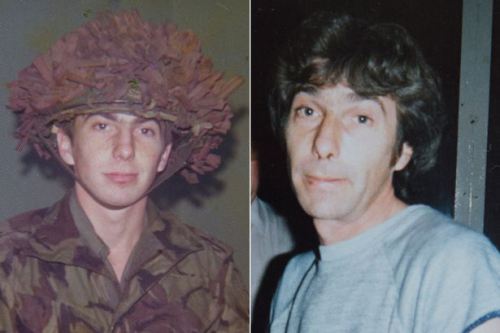
MAIN--David-ClapsonThe family of David Clapson – the former soldier who recently died after his benefits were stopped as punishment for missing a meeting at the Jobcentre – have launched a petition calling for an inquiry into benefit sanctions.

In his sister’s own words:

“My brother, David Clapson, a diabetic ex-soldier, died starving and destitute because he was penalised by the Job Centre for missing a meeting.

“David had his £71.70 weekly allowance stopped meaning that he couldn’t afford food or electricity. He was penniless, starving and alone. His electricity card was out of credit meaning the fridge where he should have kept his diabetes insulin chilled was not working. Three weeks after his benefits were stopped he died from diabetic ­ketoacidosis – caused by not taking his insulin. 

“David wasn’t a “scrounger”. He had worked for 29 years; 5 years in the Army – including two years in Northern Ireland…

View original post 229 more words

The Man Who Plays The Horn With His Feet

July 30, 2014

Felix Klieser was born with no arms, so uses his feet to do most things. This includes eating, dressing, writing … and being a professional French horn player.

The musician has toured with Sting, is working on a second album and has a diary full of concert bookings up to December 2015.

The 23-year-old German recently became an ambassador for the One-Handed Musical Instrument Trust (OHMI), which helps fund the development of adapted or specially designed instruments for musicians with one hand and other limb differences. Rising star Nicholas McCarthy, a one-handed pianist, also supports the charity and it is due to be mentioned in the House of Lords on Wednesday in a debate about giving disabled children equal opportunities to learn how to make music.

Felix Klieser spoke to Ouch:

How do you play the horn with no arms?

The instrument is on a stand. With my left foot, I press the keys which are known as valves. The mute, (which changes the sound), is on a separate stand that rolls. I use my right foot to move that in and out of the bell (the bit at the end of the horn). When I started playing at age four, the horn was on the ground and I sat in front of it to play, my head level with the mouthpiece. But when I grew up, that was no longer possible, so I started to think about how I would hold the instrument. I went to a creative person who can build strange things and told him what the problem was. He made my first stand, which was fixed and couldn’t be dismantled. We developed and developed it and the one I have now is perfect. I can take it to pieces and transport it in a box.

Musicians usually alter the horn’s sound by putting their right hand in the bell, do you do the same with your right foot?

No. The body should be relaxed while playing so putting my right foot in the bell wouldn’t work. I change the sound with my mouth and my air stream instead and sometimes I don’t know how I do it. If I want to play an emotion, I think of something, like being in a bath of warm water when it’s raining outside. It’s like when you speak and you are happy, you make a different sound to when you are sad. You can’t explain what you are doing.

Can you play anything else?

I am fascinated by all the different things you can do with the horn and have never wanted to play another instrument. The horn is really rich, with lots of different colours. You can do many emotional things with it. A lot of Hollywood music is horn music. The violin always sounds the same, the piano sounds almost always the same, but the horn can make different types of sounds.

Outside of music, why do you dislike talking about living with no arms?

Because my life is very easy. I am a musician and I want to play concerts; the rest is private for me. When you go on stage, you are in public, with a lot of people looking at you. I hate public life. I am what I am and I do what I do but I don’t want to become famous, I just want to be a normal person. I want to give people a nice time and touch them with music. Music is not a technical thing for me, it is emotional.

Me On Sky News Live- Discussing Driverless Cars

July 30, 2014

You may have noticed I haven’t been around today- the reason why is below!


The Challenges Facing The New Minister For Disabled People

July 30, 2014

Britain has a new Minister of State for Disabled People – Mark Harper, MP for the Forest of Dean. As he gets to grips with his new brief – the fourth person to do so in this government – Kate Ansell outlines some of the responsibilities he has inherited.

The coalition is making substantial reductions to welfare spending, as well as making significant budget cuts elsewhere, as part of its reforms.

The new disability minister will be responsible for overseeing the wide-ranging changes to disability benefits, from the high living costs some disabled people have, to support for those who can’t work at all, or those who find themselves temporarily unemployed.

He’ll be taking on board recent rule changes to allowances which enable disabled people to work more effectively, and the narrowing of entitlements to funds which allow disabled students to access assistive technology and other services.

The government says they currently spend 50 billion pounds on disability benefits, and that Disability Living Allowance (DLA) claims alone have increased by 35% in the last decade. There may be some agreement that reform was needed, but campaign groups believe disabled people have been hit disproportionately by the changes.

Though often reported separately, it is possible that individuals are affected by more than one reform. For example, many of those who lose their entitlement to Employment Support Allowance (ESA) are likely to find themselves hit by cuts to DLA too.

Beyond benefits

The Independent Living Fund (ILF) – which gives financial support so that severely disabled people can live independently – is earmarked for closure next year. The government says that the money will be transferred to local authorities who will be solely responsible for care provision in the future, but the funds won’t be ring-fenced, meaning local authorities could use it for other services.

Sue Elsegood from Greenwich is 47 and has received ILF since the early 90s. She has a team of five paid personal assistants on rota and says she is “terrified” that her local authority will put her in residential care rather than pay for the level of support she currently receives with help from the ILF.

She has a room for her assistants at home and had to apply for a discretionary housing payment so she didn’t have to pay what critics have dubbed the “bedroom tax”. “It turned out fine, but it takes time and effort,” she says.

DLA has been given to disabled people since 1991 to pay for extra costs related to disabilities. Now changing to Personal Independence Payment (PIP) the government says they want to help those with the greatest need. As a result, some people will lose the benefit.

Lisa Egan, who runs the campaigning blog Where’s The Benefit? believes she meets the criteria for PIP, but is worried about being reassessed every few years – everyone will be, which is one of the major differences between DLA and PIP. She fears she will be turned down and have to appeal against the decision and is worried she won’t receive support in the interim.

Egan most fears the removal of Severe Disability Premium (SDP), a payment made to some disabled people on low incomes, which is being gradually cut as part of the changes to Universal Credit.

“My impairment causes overheating. I’m sitting here with three fans pointed at me. I forked out for a half-price air conditioner a couple of years ago.” She also bought a dishwasher because she lacks the energy to cook and wash up – extra costs she says she couldn’t have afforded without SDP, or DLA.

Access to Work

The government says the benefit changes are designed to help get disabled people into work and have also set up a programme to give employers confidence in employing disabled people, the other side of the employment problem – only 49% of disabled people have a job.

Those who can work but need support to do so can currently claim an Access to Work grant. Recently, however, criteria have been tightened and the system changed. The government says it has increased the funding available overall, but the changes have not been welcomed by everyone.

One of the groups hardest hit by these changes is deaf people. Charlie Swinbourne, editor of the Limping Chicken blog, says: “Our readers have told us that when they’re trying to get support from Access to Work, they are often told to phone which is crazy considering they are deaf.

“People are finding their jobs in jeopardy because they’ve had support taken away, or reduced, or because they’re waiting too long to know if they’ll get support.”

Last month, the government announced it was reviewing the changes, including the impact on deaf people, suspending some of the measures which affect deaf people in the meantime. Although this review has been welcomed, [Swinbourne says] uncertainty remains and adds to other work and welfare anxieties.

Local cuts

Outside the national benefits system, disabled people report that cuts to council and NHS budgets have had a huge impact on their lives. Jemma Brown has had direct experience of this. She is both blind and has mental health problems. She has been assessed and it has been agreed that she needs care but her local council will only pay a small proportion, indicating she will need to pay the rest. Brown says she can’t because they haven’t taken her debt into consideration. She says: “I was awarded seven pounds a week for care – putting me in a position where I can’t afford the basic care I need to live a normal life.”

Brown has also been waiting over a year for a major needs assessment from an occupational therapist, but says that, on an everyday basis, cuts to council services have created a string of difficulties. She regularly walks into trees with overhanging branches because she can’t see, she says this didn’t happen before the council changed the way it manages open spaces to save money.

On a national level, the DWP told the BBC they carry out thorough impact assessments on all their policies, as well as equality impact assessments on any policies that might have a disproportionate affect on disabled people.

There’s a general election next year, and the indications are that welfare reform will be a huge issue. Nick Clegg has withdrawn his support for the so called “bedroom tax” in its current form, stating he doesn’t believe disabled adults should have to pay. This is a significant change, considering that it was his own party that helped vote the reform through in the first place, and commentators have speculated this U-turn is to win back votes.

It is another policy which has contributed to the much-reported general unrest in the disability community. “One of the biggest fears is uncertainty,” says Sue Elsegood. “Things are very stressful at the moment. I’m anxious at not knowing what will happen. There are so many bureaucratic barriers.”

More cuts are expected though charities and campaigners have already voiced concerns that disabled people have been too harshly affected by the austerity measures. It remains to be seen how Mark Harper will take on the challenge.

Kate Ansell is a disabled journalist specialising in social affairs. She has directed two Panorama films about the way welfare reform is affecting disabled people.

How People With Learning Disabilities Are Expected To Live

July 30, 2014

With many thanks to Kate Belgave.

Yesterday, I went to the home of a Kilburn man who is 51, has mild learning difficulties and currently signs on. He has worked all his life in hotels and in kitchenwork, but found it harder to get and keep work during the recession. He’s been out of work for four years now and is depressed about it. He doesn’t read or write very well and thinks that is the reason he’s finding it difficult to get another job. More on that soon.

For now, he wanted to show me his flat. It’s the tiny, single room in Kilburn you see here – so small that it was difficult for the four of us who were there to fit into all at once. His rent is paid in housing benefit – which means that his landlord gets housing benefit for renting this tiny little room out as a flat.


There was a bed, a broken fridge, another fridge in the middle of the room that this man had bought to keep his diabetes medication in, because it must be kept cool, and a broken oven. He’d got a second smaller oven with two hotplates to sit on top of the broken oven so that he’d at least have hotplates that worked. You can see that in the video. This man has complained to his landlord about the mice and cockroaches that live under the broken oven, but nothing has been done.

There are no windows in this “flat” – just a door that leads to a shared path down the side of the house. In the heat, the room has been nearly uninhabitable. To cap things off, he says he has to do a jobsearch of about seven to ten jobs a week and has been threatened with sanctions if he doesn’t. He has been sent on the work programme. He wants another job. I’ll add to this story and have a lot more video to post, but – have this to think on for now. Here we are in 2014. Austerity’s over, you know. For some.


Case Of David Clapson Sparks Calls For National Inquiry

July 29, 2014

Some have asked if this would have happened if David Clapson had not been a former soldier.

I, however, see this as a very small piece of progress. I’m always grateful for progress, whatever the reasons for it.

The case of a diabetic former soldier from Stevenage, who died after his benefits were sanctioned, has led to calls for a national review.

Last week, the Advertiser told the story of David Clapson, who could not afford electricity to keep his insulin cool after his jobseeker’s allowance of approximately £70 a week was suspended on June 28 last year.

Just three weeks later – on July 20 – he died aged 59 at his home in Hillside from fatal diabetic keto-acidosis, which the NHS calls “a dangerous complication of diabetes caused by a lack of insulin.”

Talking to the Advertiser, leader of Stevenage Council Cllr Sharon Taylor said the case was “the most tragic story I have heard in 18 years of being a councillor.”

She also revealed that she had forwarded letters about the case, sent between David’s sister Gill and the Department for Work and Pensions (DWP), to Dame Anne Begg.

In one letter, the DWP – which administers jobseeker’s allowance – said it was “confident that the correct procedures were followed for the administration of benefit.”

Dame Begg is the chair of the work and pensions select committee, which examines DWP expenditure, administration and policy.

Following our exclusive coverage of the story last week, The Mirror carried the case on its front page on Monday.

Talking to the Mirror, MP Debbie Abrahams – a member of the work and pensions select committee – said “For this poor man to die in such a disgraceful way is a scandal.

“But it is sadly not a surprise to hear that the sanctions regime has cost another life.”

She also said that she had pushed for an independent inquiry into sanctions, but the government had published only a limited inquiry on the last day before its summer recess, preventing discussion.

“If Iain Duncan Smith and Esther McVey have nothing to hide, they should not fear a focused, independent inquiry,” she added.

Cllr Taylor said: “I want the DWP to carry out an inquiry into how they get vulnerable people in touch with local organisations that can help them. We need a review of that at the national level.”

David’s sister, Gill, told the Advertiser: “You have made a huge difference. You helped me get there because your story started it when it was shared by Sharon Taylor.

“I just want them to have a look at their procedures.”

How can the arts be more inclusive?

July 29, 2014

‘ATOS Discriminates Against Disabled People- And The DWP Allow It’

July 29, 2014

With many thanks to the Welfare Neews Service and Mr John Lockett.


I became aware of your website last year and have been a weekly visitor ever since. I myself have been experiencing the joy of Atos – and now the Department for Work and Pensions (DWP) – for over a year now.

Leaving aside that I was wrongly assigned to the ‘Work-Related’ Activity Group (WRAG) and had my case illegally sent for Mandatory Reconsideration by the DWP, those may be stories for another time.

My immediate concern is the fact that DWP allowed Atos to blatantly discriminate against disabled people and yet refused to acknowledge this, let alone actually do anything about it! It is now clear why – they are indulging in this themselves.

When I was first contacted by Atos, I made clear that, due to fatigue caused by my disabilities, that I must sleep in the afternoon. Atos continually sent me afternoon appointments and despite DWP being copied to any correspondence, I never heard from them on the matter.

Eventually, after two formal complaints, Atos finally sent me a morning appointment which was cancelled shortly thereafter and the process promptly began again! Again, deafening silence from the DWP.

When I pointed out to Atos that they were calling people for assessments they knew to be disabled and yet provided no disable parking, they responded by stating that disabled parking was available in the street immediately outside the centre.

When I again challenged this and provided photographic evidence that it was a lie, they lied again and essentially re-stated the original lie. Again, deafening silence from the DWP.

As stated above, DWP have been copied into all correspondence between myself and Atos yet, when I received the appointment letter for Jobcentre Plus this was not only for four days hence (two of which were a weekend) at a time of year when many people are away on holiday, but yet another afternoon appointment.

I immediately telephoned and explained (again) why a morning appointment was necessary and they sent me yet another afternoon appointment. It took a formal and quite strong letter before I received a suitable appointment.

I have not been in a Jobcentre since 1995 when DWP or whatever it was called at the time, gave me a little green card and classified me as disabled.

My local Jobcentre has, I believe moved twice since then. I had to attend my first WRAG (Work Related Activity Group) interview this morning and, despite having written three times to ‘Marion’ at the Burnley Jobcentre, they have provided no details as to the location (other than the postal address) and no details on parking availability at all, let alone parking for disabled drivers.

That aside, the visit was actually a pleasant surprise as ‘Marion’ patiently explained to me that I was now in the Support Group and that it would be unnecessary for me to visit again for three years! In that hour, I received more information that was actually relevant to my case and more sensibly explained than any other thus far. I do however, as I explained to her, intend to pursue the discrimination issue.

To minimise the chance of error and lateness, I located the Jobcentre on a map and went out early yesterday (Sunday) morning to locate and scout the location and found that:

  • The entrance to the Jobcentre is not on the street stated in the postal address, but another street, which provides no on-street parking whatsoever, let alone for disabled people.
  • The street stated in the postal address is, at its closest more than thirty metres from the entrance to the building and, while there is parking available on this street, it is usually all taken unless one is very early or lucky.
  • The building itself has a car park which has two disabled spaces, but this is controlled by a keypad and barrier and appears to be for staff only. The car park to the east of the building is contract parking only on weekdays.

How simple would it have been for them to have answered my queries on this or to have taken Atos to task for their failure? Yet in their arrogance, incompetence or both, the DWP appear to believe that the Equalities Act and Disability Discrimination Act do not apply to them.

You might ask: Why hasn’t he contacted his MP? I have, and not only has he proven to be of less practical use than a unicycle, he does not even bother to respond, but then he is a Lib-Dem and part of the odious coalition who compounded this Labour-initiated mess.

You might also ask: Why hasn’t he contacted the Equalities Office? I have, three times. The last time I directed the complaint to the principal Minister (now ex-Minister) Sajid Javid, castigating him for his Ministry’s failure to respond. Not even an acknowledgement was received at any time.

Regards,

Mr John Lockett


Alison Lapper Given Honorary Doctorate From Brighton Uni

July 29, 2014

Artist Alison Lapper, who was born without arms, has been awarded an honorary doctorate for her contribution to the arts and as an ambassador for those with disabilities.

Lapper said she was “completely overwhelmed” as she accepted the honour from the University of Brighton to a standing ovation at a ceremony held at the Brighton Dome on Friday.

Lapper, who graduated in 1993 with a first-class honours degree in fine art from the university, said: “I never thought or imagined in all these years that I would be back here to receive this amazing honour.”

She said she had promised herself she would not become emotional but there were tears as she praised those who had helped her in her career, including university staff, from caretakers to lecturers.

Lapper said: “The fact that I came away with a first-class degree still blows my mind. But I never felt like I was the only disabled student, although I was. I was able to do everything everyone else did.”

She is also well known after posing for Marc Quinn for the sculpture Alison Lapper Pregnant, which appeared on the fourth plinth in London’s Trafalgar Square.

Lapper is known around the world for her work but said her son Parys, who was in the audience, is “my greatest piece of art work and creation”.

Presenting the award, Professor Bruce Brown, pro vice-chancellor (research), described the artist as a “Titan of the human spirit” and a “force for everything that is good”.

He said: “Alison’s creative intelligence has served to challenge and change our notions of physical beauty, normality, disability and sexuality.”

Despite her significant challenges, he said, academics at the then Brighton School of Art recognised her talent and said she “removed every obstacle standing in the way of her ambition to become an independent fine artist – if not a famous one”.

Born without arms and with shortened legs, Lapper uses photography, digital imaging and painting to question physical normality and beauty. A member of the Mouth and Foot Painting Artists of the World, she has used her body as subject matter for artworks.

In one she put herself into the image of the world’s best-known symbol of femininity, the Venus de Milo.

What The Five Week Wait Will Mean For Families With Deaf Children

July 29, 2014

From the ToUChstone blog:

The proposal to increase the waiting time for financial support when people lose their jobs, as part of the Universal Credit scheme, does nothing to help claimants find work. Combined with the delays in processing claims it is likely to be 5-6 weeks before many claimants receive any Universal Credit. At the National Deaf Children’s Society we are particularly concerned about the likely impact on families with deaf children.

The financial costs of having a deaf child may not be as obvious as for other disabilities, but they are very real. For example, children may have to attend frequent appointments with audiologists and a young child may need new hearing aid moulds several times a year. Attending these appointments is not only likely to involve travel costs, but may also require parents to take time off work, in some cases without pay. Deaf children often fall behind with their education, and many parents of deaf children use their disability living allowance to pay for extra tuition in core subjects. Suitable childcare and out of school activities are often hard to find and may involve extra expense on travelling or paying for an extra child to attend to help with communication.

If the parent of a deaf child becomes unemployed and has to claim Universal Credit, a wait of 5-6 weeks before receiving benefit is likely to place them in the position of having to choose whether to use their DLA to meet the child’s needs or whether to use it to keep the household running while they wait for benefit. Parents may be unable to afford to take their child to audiology appointments, or may have to cancel extra tuition or after-school activities. Many deaf children already fall behind their hearing counterparts in education, and delays in getting the aids they need, or the extra tuition that helps to redress the balance, will have long-term effects compounding this.

The situation could be even worse for families with older children due to the lengthy delays being experienced by claimants for the Personal Independence Payment that has replaced DLA for over-16s. Families in this position may have nothing to fall back on while they wait for one of these two new benefits to finally be processed and put into payment.

The National Deaf Children’s Society Stolen Futures campaign highlights the many services for deaf children and young people that have already been reduced or withdrawn as a result of spending cuts. This increased delay before benefit is paid only makes a bad situation worse. We urge the Government not to implement the longer waiting period and to ensure that all benefits are processed efficiently and paid on time.

Saving Our Safety Net logo (75px)Saving Our Safety Net is a new campaign from the TUC that aims to defend a decent welfare system that provides help to those who need it, when they need it. You can find out more at the www.savingoursafetynet.org

There’s A Cardboard Cutout Of David Cameron On Amazon And The Reviews Are Absolutely Hilarious

July 29, 2014

Celebrity Chef Ross Burden, 45, Dies After Leukaemia Battle

July 28, 2014

Celebrity chef Ross Burden has died aged 45 after a battle with cancer.

New Zealand-born Ross first gained TV fame reaching the final of Masterchef in 1993 before going on to appear regularly alongside Ainsley Harriott on Ready Steady Cook.

In 2010 he returned to New Zealand to join the judging panel on the country’s first MasterChef series.

His sister, Kirsten Hughes, is reported to have said the former model was diagnosed with a form of leukaemia last July, but died after contracting an infection during a bone marrow transplant.

She told the New Zealand Herald that Burden had been one assignment away from completing a Masters in Maori Studies at Auckland University.

“He’s just a friendly, compassionate guy – nothing was too much trouble,” she said.

“He was my big, fantastic incredible, larger-than-life brother.

“Right up until probably a week-and-a-half ago, he was making his next lot of plans. He had the world map out.”


Fellow TV chefs paid tribute to Ross on Twitter, who died on July 17.

James Martin tweeted: “Just heard the sad news my old Ready, Steady, Cook colleague Ross Burden has passed away. My thoughts go out to friends and family. RIP Ross”

Phil Vickery added: “Very sad news my friend and fellow chef Ross Burden died!”

Aldo Zilli said: “Remembering the good times on this very sad day for the Ross Burden family my thoughts are with you.”

Great British Bake Off’s Paul Hollywood tweeted: “I’m so sorry to hear the news that Ross Burden has died.. appearing for years in Ready, Steady Cook, my thoughts are with his family x”

Burden is survived by his sister, mother Anne and extended family.

Justice For Harry Procko

July 28, 2014

HEALTH chiefs are looking into the death of a four-year-old autistic boy who died just days after going to hospital with a suspected tummy bug.

Harry Procko’s parents took him to the GP when he started vomiting and having diarrhoea on June 18.

The St Ann’s parents took him to the Queen’s Medical Centre’s accident and emergency department because the symptoms had not gone away two days’ later.

Richard Clements and Marika Procko, who have six other children, returned to the hospital with Harry the following day for further checks but say they were discharged after he was observed and weighed.

Just 48 hours later, Richard found his son “blue and not breathing”. After the family called an ambulance, which took Harry to hospital, the four-year-old was briefly revived before being pronounced dead.

Mr Clements, a full-time carer for his three autistic children, said he just felt overwhelming panic.

“There is no way of describing it. I’ve lost parents, I’ve lost sisters, aunts and uncles, but you don’t expect this at all.

“The shock factor is unbelievable. It is awfully quiet without him; he was literally 24 hours a day we had to do everything around him.

“It goes without saying that we’re missing him terribly.”

The 47 year old added: “He was very much the boss of the house. We would be watching children’s TV at 3am. He didn’t sleep much.

“The autism made him very delayed – he didn’t talk, he didn’t walk. We only got about five steps out of him and the only word he could say was ‘mum’ but he was happy.”

The family have complained to Nottingham University Hospitals NHS Trust, which runs the QMC, as they believe his care was “inadequate”.

Stephen Fowlie, NUH medical director, said: “We extend our most sincere condolences to the family for their tragic loss and remain in contact with them.

“After every unexpected child death there is a multi-agency review to ensure that we understand what contributed to such a sad loss. NUH is contributing to that review of Harry’s care.

“We are also conducting an internal review of his treatment at NUH and we will share the findings with his parents as soon as it is completed.”

An inquest into Harry’s death will be held later.

Harry’s parents are holding an event to ask for Justice For Harry on Sunday 10th August. Full details here.

Independent Extra Costs Commission launched today

July 28, 2014

A press release from Scope:

Today marks the launch of a year-long independent inquiry. It will explore the extra costs that disabled people and families with disabled children face in England and Wales.


Disabled people and their families should be able to learn, work and get involved in the community without extra costs. But instead they must spend £550 a month on average on disability-related costs. From paying more for transport to work to the cost of an electric wheelchair, from higher energy costs to more expensive insurance, disabled people and families with disabled children pay more just to live independent lives.


Robin Hindle Fisher chairs the Extra Costs Commission. He has brought together high-profile, expert Commissioners including independent consumer advocate and Vice Chair of the Fuel Poverty Advisory Group Teresa Perchard and TV presenter and disability campaigner Sophie Morgan. They will consider evidence and steer concrete solutions to drive down extra costs.


Share your experiences of extra costs


The Commission is seeking evidence from disabled people and parents of disabled children. They want to hear:

·         your experiences of extra costs

·         how extra costs affect your life and financial situation.


Submit formal evidence to the Commission


The Commission is also seeking formal evidence from researchers, policy makers, local authorities, businesses, consumer rights experts, Disabled People’s Organisations and advice agencies, and more. They welcome evidence in response to two main questions.


1.  Rebalancing markets

Disabled people rely on private sector companies for many products and services. We’ve made huge progress in opening up opportunities for disabled people over recent years. Advances in technology have brought big improvements in independence and participation. But all too often, these come at a high – sometimes prohibitively high – cost.

Political parties and the commercial sector are starting to recognise disabled people’s spending power, but businesses, investors and governments have taken few steps to harness the so-called ‘Purple Pound’.

The Commission:

·         wants to know how the market is working for disabled people

·         wants to know about the quality, choice, price and availability of products and services

·         welcomes suggestions for how markets could better drive down extra costs.


2.  Changing infrastructure

Inaccessible housing, town-planning, transport, energy and services can make life cost more. For example there is a strong correlation between suitability of housing and disability-related spending.

The Commission:

·         wants to know how this affects disabled people.

·         welcomes suggestions on changing infrastructure to improve access, meet needs and drive down extra costs.

The Extra Costs Commission means a real opportunity to drive down the extra costs disabled people and their families face. But they need your evidence and experiences to make a difference. Please get involved.

What I’d Ask David Cameron

July 27, 2014

The brilliant Mike Sivier informs us today that Ed Miliband would like to see a Public Prime Minister’s Questions.

Mike asks his readers what we would ask David Cameron at such an event.

My top three questions would be:


1. Why are you, the father of a disabled child, betraying disabled people and carers by hitting us hardest with your welfare reform policies?


2. Why are you, once a parent carer, not doing anything to raise Carers’ Allowance? You say your party is for Hard Working People yet you don’t pay the hardest working people in the world the National Minimum Wage.


3. Why do you think there is a ‘bias’ towards the inclusion of disabled children in mainstream schools? My parents, or the parents of any one of my friends, can and will happily tell you that the exact opposite is true. Your claims hurt us because they suggest you are trying to reverse all our hard work for inclusion. We struggled, our parents battled, we left each other and moved schools. We didn’t do all this so that anyone could come and reverse it all.

I would tell him that many disabled people voted for him because we thought he understood, since his own son was one of us. I would tell him that many of our parents voted for him because they thought that having a son like us made him one of them. They, too, thought he understood.

I would tell him that now we feel he has betrayed his son’s community, and his own community. I would tell him how very strong and special that community is. I would tell him how very, very much it hurts us that we have been betrayed by one of our own- one of our own who had the power to do the very opposite of everything he has used that power to do to us.


Disabled People In Britain Face ‘Hidden Housing Crisis’ Finds Charity

July 27, 2014

Disabled people are experiencing a hidden housing crisis, says a new report suggesting that many are having to wash in their kitchens and sleep in their living rooms because their homes are ill-designed for their needs.

The charity Leonard Cheshire Disability claims that as many as five million people now need a disabled-friendly home, a number set to rise as the population ages. A survey for the charity’s Home Truths campaign finds that almost three-quarters of people with mobility problems do not have an accessible door into their building. More than half say their buildings do not have doors and hallways wide enough for a wheelchair.

The report cites the example of Sue Frier, 52, a wheelchair user. Unable to get upstairs, she has been confined to the ground floor of her house, sleeping in her lounge and washing at her kitchen sink. Once a week she pays £30 to have a bath at a Leonard Cheshire care home. She cannot use her garden because her housing association refuses to provide a ramp.

“Not adapting homes condemns people to the misery of Victorian strip washes and ultimately possibly to leaving their homes and incurring massive care costs, when they would prefer to live independently,” said Clare Pelham, the charity’s chief executive.Of those people with mobility problems, more than half say they find it difficult to sleep in their bedrooms, while one in five say they find it very difficult to use their stairs.

Another case study featured in the report is that of “Elizabeth”, who has multiple sclerosis and is unable to use the stairs in her house and was only able to move home after receiving advice from a solicitor. “I waited nine years for suitable housing,” she said. “Being washed in the kitchen is no fun.”

Leonard Cheshire Disability is calling for all new homes to be built to “Lifetime Homes Standards”, with wider doors and walls strong enough to take grab-rails. It also wants 10% of all new homes to have full wheelchair accessibility standards and a commitment from all political parties that any new settlements, such as the planned garden cities, are built with disabled-friendly housing.

The number of disabled people in the UK has risen from 10.1 million in 2003 to 12.2 million in 2013. There are currently around 1.2 million wheelchair users in the UK, a number is expected to increase.

A recent report by Habinteg and South Bank University estimated that there was an unmet housing need for wheelchair users in England of almost 80,000 homes.

Francesca Martinez- TED Talk 2014

July 26, 2014

CCTV Images Of The Men Who Attacked Autistic Boy In Pimlico

July 25, 2014

Readers, do you know these people? Please share widely.


CAM


Campaign Urges Improved Portrayal Of LD On TV And Radio

July 25, 2014

This has my full support.


The Mental Health Foundation has urged supporters to sign an online petition calling on industry regulator Ofcom to change the way people with learning disabilities are represented on television and radio.

Launched earlier this month by the Foundation for People with Learning Disabilities as part of a larger campaign on hate crime, the petition aims to gather 5,000 signatures and persuade Ofcom to take their concerns “seriously”.

Characters with learning disabilities in soap operas, radio and television programmes are often “small and tokenistic”, says Jill Davies, research programme manager at the foundation, who has played a pivotal role in the campaign. She argues that characters with learning disabilities are often depicted as being “vulnerable” and “disadvantaged”, with programme creators all too often focusing primarily on the character’s disability.

A guide encouraging broadcasters to make five key changes to address these issues was also published alongside the petition.

A reference group, made up of people with learning disabilities, most of which had experienced hate crime, harassment or bullying helped compile the list of tips for the media. It encourages television and radio shows to include a variety of different types of learning disabilities along with suggestions to include people with learning disabilities on a range of programmes such The One Show and Newsnight. It also asks the media to “mind its language”, stressing that words such as “moron”, “retard” and “spastic” are often used on television programmes. The guide also stipulates that the media should not refer to someone with a disability as “suffering”; “We do not suffer from anything – we are not objects of pity. We are just like everyone else but happen to take a little bit longer to learn things.”

“They are like you and I,” stresses Davies. “It can be really oppressive when people look down on them.” She says the reference group are keen to change the way the general public view people with learning disabilities and identify the media’s role as key in this.

“We believe the way people with learning disabilities are portrayed in the media has a huge impact on how the public view them,” the petition declares. So far more than 700 people have pledged their support but Davies urges more to join the petition. “We’d like Ofcom to take us seriously,” she says.

Those signing the petition write messages of support and agreement along with sharing personal experiences. One commenter wrote: “media portrayal can make a huge difference to public perceptions – and improvement of public perception is badly needed for those with learning disabilities.”

The BBC announced plans earlier this month to quadruple the number of disabled people it puts on TV by 2017 – the corporation stated at the time that only 1.2% of people it portrays or represents on TV are disabled.

In the past, Channel 4 has been considered as leading the way with the success of its coverage of the Paralympics at the London 2012 Games, but the channel’s efforts haven’t come without controversy. In 2013, as Channel 4’s chief creative officer, Jay Hunt, announced the return of shows The Undateables, I’m Spazticus and Adam Hills’ acclaimed The Last Leg, she was also keen to dismiss any notion that the channel’s commitment to disability programming was “tokenism”.

A ‘Free School’ For Autistic Children- From 1980

July 25, 2014

Free schools for children with autism are gradually being setup in the UK by community groups, with another one due to open in Easter 2015. But in the 1970s, parents in Sunderland clubbed together to create what they saw as a real need back in a time when autism wasn’t such a well-known disability.

In the 70s Paul Shattock’s autistic son Jamie was six. Although they say he was a lovely child his parents – like many parents with autistic children – found they needed extra support.

“He slept 4 hours a night,” says Shattock. “In the end the only option we had was for him to go to a residential school.”

But the specialist centre available to them was in Aberdeen, some 394km (245m) away from their home in Sunderland. “I had to take him, that was the worst day of my life, I cried my eyes out and he did too,” Shattock says.

Unhappy with his son being so far away, Shattock, who is the chairman of Education and Services for People with Autism in Tyne and Weir, wanted to do something to change the situation and so teamed up with local parents who had children on the autism spectrum.

Paul was desperate for his son Jamie to be closer to the family

They all wanted their children to be closer to home and still receive the correct care and education, so looked into setting up their own residential school.

The group started by purchasing a a former Jewish day school in Sunderland that needed quite some restoration. Despite raising the £70,000 needed to buy the building funds were low and the work was eventually done by the parents, with help from young unemployed people on Government training schemes.

“It was a wreck, a real ‘seat of the pants’ operation,” says Shattock but reports there was tremendous support from the community. “We spent four years fundraising. Every working men’s club in Sunderland had social events, we approached leek clubs, pigeon fanciers’ associations, rotary clubs and round tables for funds…we tried everything. It was a Sunderland venture, a local venture.”

By 1980 Shattock’s mission to provide a local residential school for autistic children was complete.

On opening there were just two pupils in attendance. It was the first specialist autism school in the country offering a full residential service 52 weeks per year. But very quickly that figure grew to 12 children aged five to 16 and local authorities began to fund places.

But the school was the start of something much bigger. The founders realised there was a need for something more as the children became older and reached leaving age. The perceived need led to the setting up of a new college catering for young people aged over 16.

This time the parents took out bank loans secured against their houses in order to buy an old vicarage. It too is still running today and provides education placements for young people aged 13-19 yrs with autism, learning disabilities, other disabilities and/or mental illness.

Paul Shattock (left) endeavoured to open a school for autistic children after his son Jamie was diagnosed in 1975

In 1998 Mr Shattock received an OBE for over 30 years of services to the autism community.

More on how free schools for children with autism are becoming more prevalent can be read here.

Boy With Dwarfism ‘Barred From Buses With His Bike’

July 25, 2014

A boy with a form of dwarfism says he has been barred from buses five times in a fortnight in a row over his bike.

Kain Francis, 17, from Kingstanding, Birmingham, said the bike was a “lifeline” to a social life as he did not have “much stamina” to walk.

Kain, who is 3ft 5in (1.04m) tall, said one driver asked him for proof he was disabled.

National Express West Midlands said it would issue Kain a letter to show on buses to allow him on with his bike.

Kain said he was not allowed on buses in Sutton Coldfield, Kingstanding and Birmingham city centre with the bike, leaving him “pretty disgusted”, annoyed and “stressed”.

‘A freak show’

Kain said he told one driver the bike was “my wheelchair”.

He said: “I use my bike to get around everywhere… My bike’s a lot smaller than any of the other usual bikes.

“It’s embarrassing when you have to get on the bus and then get off the bus.

“It’s awkward, almost like you’re holding up the whole bus.”

His mother, Luan Cridland, 43, said she was “completely irate” when Kain told her one driver asked for proof he was disabled.

Miss Cridland said: “He’s a good lad. He doesn’t need people looking at him like he’s some sort of freak show.”

A National Express West Midlands spokesman said bikes were not allowed on buses for health and safety reasons.

“The area where bikes would go is already a well-used space with buggies and pushchairs which get priority,” he said.

He apologised “for any offence, stress or inconvenience caused to Kain” and said it would issue him with a letter confirming he had access to the company’s buses.

Kain said the promise of the letter, which he has not yet received, was “reassuring”.

DWP Limbo: “Sometimes I Think I Would Be Better Off Dead”

July 25, 2014

From yesterday’s Guardian:

Tucked away in this week’s work and pensions select committee report on employment-related disability benefits is a section on an innocuous-sounding policy called Mandatory Reconsideration (MR).

Its blandness hides a host of Kafka-esque sins, however; this is truly a monstrously perverse and bureaucratic generator of poverty and stress.

Here’s an example of one claimant’s experience of being caught up in the strange limbo-land of MR, taken from research by Citizens Advice Bureau:

It has affected me badly. Financially I am struggling – when I pay gas, electricity and bedroom tax I have nothing left. I sometimes don’t have enough money to buy food. Sometimes I go hungry. Sometimes I just have toast as it’s cheaper

So what is MR and how do you get caught up in it? MR kicks in when claimants of ESA or Employment and Support Allowance (unemployment benefit for people who cannot work as a result of illness or disability) are tested and declared fit for work, and subsequently wish to appeal against that decision.

In the past the claimant could lodge a formal appeal directly with the tribunal service. Since October however, they are required to submit an informal appeal to the Department for Work and Pensions (DWP), who must “reconsider” the fit for work decision – a “second opinion” if you like – before allowing the claimant to proceed to tribunal.

The thinking behind this, according to the DWP, is that MR offers an opportunity to resolve disputes quickly, ease pressure on tribunals, and allow decisions to be revised if appropriate. In 2013-14, there were 233,000 appeals, each costing the taxpayer an estimated £248, and clogging up the courts. One in 10 decisions were reversed at tribunal. In theory, trying to address these pressures by sifting out incorrect decisions before they go to court is sensible.

Except in practice it doesn’t work sensibly at all. Entering the MR process is too often a long, complex, expensive experience that leaves many claimants – assuming they have the stamina to enter it in the first place – stuck in a slow-moving DWP machine: stressed, impoverished, and in some cases dependent on loan sharks and food banks.

What goes wrong? First, most ESA claimants who wish to receive benefit income over the period of MR are required to switch from ESA to Job Seeker’s Allowance (JSA). Quite why claimants are forced to claim a fit for work benefit when they are arguing they are unfit for work is unclear. Nor is there a financial saving from moving claimants from assessment-rate ESA to JSA for the duration of the MR (claimants get the same amount, while it actually costs the DWP around £160 to process the switch). But apply for JSA they must do.

Unfortunately, switching to JSA triggers multiple problems. First, in coming off ESA many claimants find their other benefits (such as housing benefit) are automatically stopped, potentially plunging them into rent arrears. Second, when they move to JSA, claimants become subject to tight job-seeker conditionality; so if they fail to apply for enough jobs (even though they consider themselves unfit for work) they can be sanctioned and have their benefit docked, leaving them without unemployment benefit income.

This assumes, however, that the JSA application is successful. The Work and Pensions committee report notes that – incredibly – some claimants are advised by the DWP to come off ESA but are subsequently refused JSA by Jobcente officials because they are deemed to be “unfit for work” (even though they are appealing a decision that deemed them “fit for work”). This can leave claimants penniless: “unable to claim either ESA or JSA”, the report points out.

All this chaos might be more bearable if the MR was expedited swiftly. The optimistic informal aspiration of the DWP at the time of the introduction of MR was to process cases in two weeks. The reality is DWP does not have a target completion time. According to evidence to the committee submitted by the Z2K charity the time taken

Varies greatly from two months to much longer

CAB interviewed 20 people who had undergone MR. Not a single person received a decision in two weeks. The quickest decision was five weeks, the longest more than 12 weeks. A CAB advisor told me recently that the MR time scale could be “months… six months is not unusual”. During this period, her clients got by, she said, by going into debt with loan sharks, cutting back on living essentials, and accepting charity food parcels.

The then disability minister Mike Penning told the committee in June that the DWP was keen to “speed up the process” but was caught in a backlog of ESA reconsiderations. It would not be setting a time limit, however, on the grounds that “if we get the decision right, it will be worth the time”.

Here’s another CAB case study:

Eric, 57, had a brain injury as a result of an industrial accident at work and has severe mobility issues and poor coordination. He was refused ESA and told to attend Jobcentre Plus to sign on for JSA. When he got there, however, his job coach told him that, because he had a fit note [a note from his GP saying he was unfit for work], he couldn’t claim JSA. The job coach was extremely sympathetic and Eric noted that the staff were very apologetic. They encouraged him to request a reconsideration of his ESA decision.
Because he was not entitled to either JSA or ESA, Eric was living on £50 per week from his Disability living allowance (DLA) award. He couldn’t pay household bills and was struggling to put money on the electric meter. He was referred for a food parcel but because the food bank was four miles away and because he uses crutches, he didn’t think he could carry the goods back, so didn’t take it.
Eric felt angry and abandoned. He said “Sometimes I think I would be better off dead.

Now, why would a social security system put any of its citizens through all that?

What is curious is that before MR, the DWP already reconsidered every decision before it went to appeal. Judge Robert Martin, president of the social entitlement chamber of the first tier tribunal told the committee that introducing MR would be justified only if it led to a more rigorous appraisal of fit-for-work decisions. We don’t know if it has. Of CAB’s 20 interviewees, just two had the original fit for work decision overruled at MR stage. The rest went on to appeal. But as DWP has never published statistics for the old reconsideration process, CAB says there’s no way of telling if the new system works any better.

But perhaps MR has another function: to slow the rate of appeals by making it as difficult as possible for claimants to proceed. Indeed, Martin noted that there was “dubious advantage” in MR, not least because claimants now had to make, in effect, two appeals. According to the report:

Judge Martin also believed that the introduction of MR, rather than leading to a justified reduction in appeals, might discourage claimants who might have had “winnable” cases from appealing, because they found the process too onerous.

Whether they are justified or not, the number of appeals has reduced rapidly since the introduction of MR. Between January and March 2014 there were 11,455 appeals lodged, compared to 109,000 in the same period the previous year. The DWP says it does not know yet if MR caused this dramatic (89%) fall. The Tribunal Service, however, suggested to the committee that the DWP’s administrative tardiness may well have been a factor:

If they [the DWP] make fewer decisions, we get fewer appeals

Unfortunately, it is the very poorest who have to take the strain as a result of these delays. It is a cause of significant emotional and financial pressure. As a consequence of this uncertainty, says CAB:

Most clients reported a decline in their mental health

The select committee makes sensible recommendations in its report: scrap the requirement for claimants to move to JSA for the duration of the appeal; oblige the DWP to assess whether MR is having the “undesired effect” of deterring potential appellants; introduce a time-limit for completion of MR.

But arguably these address only the malign symptoms of an ESA system whose failings create too many appeals in the first place. As the committee’s report concludes:

A fundamental redesign of the ESA end-to-end process is required

York University Releases Report On PIP For DWP

July 24, 2014

Many thanks to Benefits And Work.

A report of research carried out by Social Policy Research Unit, University of York on behalf of the Department for Work and Pensions has been released.

The small-scale study comprised 36 qualitative interviews with claimants and those who support them, and 12 group discussions with Department for Work and Pensions (DWP) staff who are responsible for administering PIP’s processes.

The aim was to provide a snapshot of the early implementation of the new benefit and identify potential areas for improving delivery.

At the same time as this research was conducted, DWP was closely monitoring the implementation of PIP and taking actions to address any issues during the settling in period.

The report recognised that the findings are not necessarily representative of PIP processes in general as they are based on a small number of claimants from a particular moment in its implementation during September – October 2013, and DWP has already taken action to improve the implementation.

Summary of findings:

Some of the claimants interviewed were well informed about PIP before they claimed but others appeared to know very little. Most claimants experienced the initial telephone call of the claiming process as unproblematic, although DWP call centre staff reported that many claimants did not have the requisite information available.

The form How your disability affects you (known as PIP2) worked well for most people. Claimants for whom the PIP2 worked less well included those who felt they were not able to get across adequately how their condition affected them and those who found particular questions stressful, intrusive or embarrassing to answer. Having access to help from professionals and third party organisations was much valued by those able to do so.

For most claimants the assessment by a health professional was largely straightforward. Those who found engaging with the process difficult included people with mental health problems which may have led to them not explaining fully how their condition affected them.

DWP case managers, relying on reports from health assessors to make decisions, found that the quality of reports varied. Having to ask for clarification or correction led to delays in processing claims.

Decision letters were generally well received by claimants. Disallowed claimants appreciated receiving a follow-up call to explain the decision. This helped some to understand better how to ask for a mandatory reconsideration.

Ideas for improving the PIP claiming process were made by claimants and by DWP staff. These included suggestions for improving: the way claimants were informed about the benefit; the effectiveness and efficiency of the claims process; the claimant experience; and internal processes.

The full report can be found here

A further consultation on the PIP assessment process – running until 5th September 2014 – is currently being carried out by the DWP and claimants or advice workers can give their views here

Our thanks to Jim Allison for spotting this for us

Being Blind In Israel And Gaza

July 24, 2014

As fighting continues in Gaza and Israel, two blind women, one Israeli and one Palestinian, describe how they experience war through hearing it, and how it affects their lives.

“The sounds that come are different”, says Dalal Al-Taji, a blind Palestinian woman from the Gaza strip. She lived through three previous wars, one in Lebanon and two in Gaza, prior to the current troubles and has become used to the noises of war. “I know when the bombings are coming from the sea,” she says, “And I know when bombings are coming from planes because it’s closer, high above your head.

“Another thing we have are drones. We call them zannana in Arabic because they go zin, zin, zin. I can hear them all the time.”

On the other side of the divide, warnings via Twitter and the sound of air raid sirens alert Naama Shang when trouble is near.

Shang lives with her husband in the central Israeli city of Raanana, just north of Tel Aviv and almost 99km (61m) from the Gaza strip. They are both blind and so rely on their hearing to know what’s happening and what action they should take.

Dalal Al-Taji (right) is usually a teacher but hasn’t left the house for two weeks

“If we can hear [the air raid siren] – and there were instances where we couldn’t hear it – we have 90 seconds to get to a bomb shelter”, says Shang, who was recently asked by her local social services if she needs help to get to one. She doesn’t, because newer buildings in Israel have integrated shelters and she has one in her flat.

Al-Taji says that while some Palestinians in Gaza get flyers and phone calls telling them to leave the area, for her, the sound of bombing is the only warning that trouble is getting close. She says that at 45km (28m) long with a population of 1.6 million, Gaza is so densely populated that there’s no place for shelters. Keeping safe is difficult for her.

“Either you have to stay in your house, or you have to try to go somewhere far from the border”, she says. Al-Taji chooses to stay in her house, she says: “We have to keep windows open because if any bombing happens and it shakes, then the glass doesn’t break.”

Although they are on opposite sides, the conflict has affected the women’s day to day lives in similar ways and both have felt unable to leave their homes.

In usual circumstances, Shang has good mobility and can get around her town. Due to the troubles, she moved a planned trip forward and left Israel for the UK late last week.

Before the trip, she says she stayed home unless absolutely necessary. “I didn’t want to be caught out and not know where to go. It’s very hard to just follow other people or to see signs.”

Al-Taji hasn’t been out of her house for two weeks now. She works as a teacher but never travels unaccompanied because she says Gaza’

Unlike Shang, Al-Taji has no plans to get out any time soon. “First of all, the border is closed, you can’t really leave. Secondly, and most importantly, I can’t just leave my house, my friends, my family, my people.”

Shang and Al-Taji have a lot in common besides living in a conflict zone. They have both spent time in Scotland and are both music enthusiasts.

“One thing that keeps going through my mind is that Dalal and I are on the same side,” says Shang. “We say the same things, we experience the same things. It brings the point even closer to home. We both want peace. We want to live and be with our loved ones.”

In Touch can be heard every Tuesday at 20:40 on Radio 4 and later via podcast or the BBC iPlayer.

How Do You Conduct A Choir Without Eyesight?

July 24, 2014

How do you conduct a choir if you can’t see the music or the performers in front of you?

For blind opera singer Victoria Oruwari this is the challenge she faces as she joins four other visually impaired musicians who have come together for a conducting masterclass before publicly taking the baton and leading a performance of their chosen music at London’s Wigmore Hall.

Run by the Royal National Institute of Blind People, the class aims to help blind and visually impaired musicians gain a greater understanding of the role of a conductor as well as giving them the opportunity to learn from one of the country’s best.

Victoria is completely blind and says that, when she is performing, she doesn’t really think about what the conductor is doing.

So having to master the skill in just one day is a real challenge, especially as she has to learn the complicated gestures by touch.

BBC News joined Victoria as she was put through her paces.

To watch a subtitled version of this video, click here

A Mother’s Appeal For Help- Disability Hate Crime

July 24, 2014

This mother is desperately trying to find the people who did this to her son- to give him his confidence back.

The mainstream media haven’t picked it up yet- can we get them to? Kindly reblog retweet share everywhere possible.

Didn’t want to post this, but I’m really beginning to think that the boys who tried to kill my son are going to get away with it.
I can’t help but feel that if I’d illegally parked I’d soon be found.
They did far more than stab him, they’ve also taken away the only bit of independence he had, which took us almost two years to prepare him for. I’m now too frightened to let him back out, and I‘m getting the fallout from that too.
The media are totally uninterested in the attempted murder of an Autistic boy, not so much as a reply to my emails to help catch these “people”. Please share, to show my amazing son that what I’ve always taught him is true, that there are consequences to actions, and that these “people” will face those consequences, and that there are still good people out there. Tweet it, share it, take a sec to show him he matters. One parent to another, please, I cannot have them get away with this, I just can’t.

The attackers are described as three black males, two are possibly Hispanic, aged up to 22. One had curly wet-look type hair, he was wearing a grey jumper, this is the one who actually stabbed Eamonn, The other two had very close shaved haircuts and darker clothing.
It was totally unprovoked and my son was so frightened of them that he ran away after they verbally abused him, but was chased and when he ran out of breath and had to stop, one of them stabbed him mm’s from his jugular artery, and walked off.
The attack occurred on June 4th around 7;30pm in Pimlico, which to jog your memory, was the day of the state opening of parliament.

Government Say They Will Change Treatment Of Sanctioned Claimants After Report

July 24, 2014

But will they, readers?

Independent report shows systematic failings in the way benefit sanctions are communicated and processed
Providers of the government’s work programme have been required to bring in sanctions when they know the claimants had done nothing wrong. Photograph: Andrew Matthews/PA

The government is to overhaul the way it treats benefit recipients threatened by sanctions, after an independent report it commissioned showed systematic failings in the process, including disproportionate burdens placed on the most vulnerable.

The report found that the way in which the Department for Work and Pensions (DWP) communicated with claimants was legalistic, unclear and confusing. The most vulnerable claimants were often left at a loss as to why their benefits were stopped and frequently they were not informed about hardship payments to which they were entitled, the report said.

It also revealed serious flaws in how sanctions were imposed; providers of the government’s work programme were required to bring in sanctions when they knew the claimants had done nothing wrong, leaving those people “sent from pillar to post”.

The independent report was written for the DWP by Matthew Oakley, a respected welfare expert who has worked as an economic adviser for the Treasury and for the centre-right thinktank Policy Exchange.

The report was completed some weeks ago, but publication of its 17 reform proposals was delayed.

Oakley said that the system was not fundamentally broken, but his criticism was all the more damaging for a government that has consistently described the benefit sanctions regime as fair.

The DWP responded to the report by saying it would be altering the way it talked to benefit claimants, setting up a specialist team to look at all communications, including claimant letters.

The sanctions regime, and the confusing way in which it is administered, has been one reason behind the growth in the public’s use of food banks.

In a new commitment, the DWP promised that if vulnerable claimants claimed for hardship on or before their signing day, they would receive a hardship payment at their normal payment date.

The department also promised it would take steps to ensure local authorities did not dock housing benefit and that they gave claimants a clear chance to comply with sanctions, and that there was consideration over whether work programme providers could be empowered to make decisions on sanction referrals.

Oakley’s report said: “No matter what system of social security is in place, if it is communicated poorly, if claimants do not understand the system and their responsibilities, and if they are not empowered to challenge decisions they believe to be incorrect and seek redress, then it will not  fulfil its purpose. It will be neither fair nor effective.”

His terms of reference, he said, were about the way sanctions were administered on mandatory back-to-work schemes (covering a third of those claimants at risk of being sanctioned), but the proposed reforms would be relevant to the entire benefits system.

The report said sanction letters “were, on the whole, found to be complex and difficult to understand”.

It added that partly owing to the legal requirements the department had to fulfil when it wrote to claimants, the letters were overly long and legalistic in their tone and content; they lacked personalised explanations of the reason for sanction referrals; and they were not always clear about the possibility of, and process surrounding, appeals or applications for hardship payments. The letters were particularly hard to understand for the most vulnerable claimants – so those most in need of the hardship system “were the least likely to be able to access it”.

The report said: “Actual and sample letters that the review team saw were hard to understand (even for those working in the area), unclear as to why someone was being sanctioned and confusingly laid out.”

The review found that many people “expressed concerns that the first that claimants knew of adverse decisions was when they tried to get their benefit payment out of a cash point but could not”.

The report also said that Jobcentre advisers had highlighted the damage that sanctions imposed on the most vulnerable.

It stated: “Many advisers also highlighted the difficulties of communicating with particular groups of claimants. In particular, many advisers identified a ‘vulnerable’ group who tended to be sanctioned more than the others because they struggled to navigate the system. This concern for the vulnerable claimants was consistent throughout the visits.

“For these groups, particular difficulties were highlighted around the length of time it could take to ensure some claimants fully understood what was required of them, and in conveying that a ‘sanction’ could entail the loss of benefit for a prolonged period of time.”

The report also criticised the failure of Jobcentres to highlight hardship payments. It said: “A more specific concern surrounding the hardship system was that only those claimants that asked about help in Jobcentre Plus were told about the hardship system. Advisers, decision-makers and advocate groups argued that this meant that groups with poorer understanding of the system were less likely to gain access.

“Since, on the whole, more vulnerable claimants are those with the poorest understanding of the system, this suggests that some of those most in need are also those least able to access hardship.”

The report also found that providers of mandatory work schemes were unable to make legal decisions about claimants’ reasons for missing appointments and so had to impose sanctions.

“This means that they have to refer all claimants who fail to attend a mandatory interview to a decision-maker even if the claimant has provided them with what would ordinarily count as good reason, in Jobcentre Plus.

“This situation results in confusion as the claimant does not understand why they are being referred for a sanction. A very high proportion of referrals for sanctions from mandatory back-to-work schemes are subsequently cancelled or judged to be non-adverse.”

New Approach response to DWP select committee’s report on WCA enquiry

July 24, 2014

ESA Needs Fundamental Redesign, Finds Report

July 23, 2014

With many thanks to Benefits And Work.


The flaws in the Employment and Support Allowance (ESA) system are so grave that simply “rebranding” the assessment used to determine eligibility for ESA (the Work Capability Assessment (WCA)) by appointing a new contractor will not solve the problems, says the Work and Pensions Committee in a report published today.

The Committee calls on the Government to undertake a fundamental redesign of the ESA end-to-end process to ensure that the main purpose of the benefit – helping claimants with health conditions and disabilities to move into employment where this is possible for them – is achieved. This will take some time, but the redesign should be completed before the new multi-provider contract is tendered, which is expected to be in 2018.

In the meantime, the Committee recommends that DWP implements a number of other changes in the shorter-term to ensure better outcomes and an improved service for claimants. These include:

  • DWP taking overall responsibility for the end-to-end ESA claims process, including taking decisions on whether claimants need a face-to-face assessment, rather than this decision being made by the assessment provider.
  • DWP proactively seeking “supporting evidence” on the impact of a claimant’s condition or disability on their functional capacity, rather than leaving this primarily to claimants, who often have to pay for it. DWP should seek this evidence from the most appropriate health and other professionals, including social workers and occupational therapists, rather than relying so heavily on GPs.
  • The “descriptors” used to assess functional capability in the WCA being applied more sensitively.
  • Placing claimants with a prognosis of being unlikely to experience a change in their functional abilities in the longer-term, particularly those with progressive conditions, in the Support Group and not the WRAG.

Dame Anne Begg MP, Committee Chair, said

“Many people going through the ESA claims process are unhappy with the way they are treated and the decisions which are made about their fitness for work. The current provider of the WCA, Atos, has become a lightning rod for all the negativity around the ESA process and DWP and Atos have recently agreed to terminate the contract early.

“But it is DWP that makes the decision about a claimant’s eligibility for ESA – the face-to-face assessment is only one part of the process. Just putting a new private provider in place will not address the problems with ESA and the WCA on its own.

“We are therefore calling for a number of changes which can be made to improve ESA in the short-term, while also recommending a longer-term, fundamental redesign of the whole process.

“We hope that the new Minister for Disabled People, who was appointed last week, will respond positively to our constructive recommendations for improving the ESA process.”

One of the key issues which the Report identifies is that ESA is not achieving its purpose of helping people who could work in the short to medium term to move back into employment.

Read the full report on the Parliament website here

RIP David Clapson

July 22, 2014

Is this how we treat our former soldiers?

“Lessons must be learned” from the death of a Stevenage diabetic who could not afford electricity to keep his insulin cool after his benefits were stopped.

One year ago on Sunday (July 20), former soldier David Clapson died aged 59 at his home in Hillside from fatal diabetic keto-acidosis, which the NHS calls “a dangerous complication of diabetes caused by a lack of insulin.”

His jobseeker’s allowance of approximately £70 a week – on which his family says he was reliant – had been suspended three weeks before on June 28, for missing meetings.

According to his family, Mr Clapson was found “alone, penniless and starving” a short distance from a pile of printed CVs, with nothing to his name but £3.44, six tea bags, a tin of soup and an out-of-date tin of sardines.

The coroner found that David – a former BT engineer of 16 years, who had served two years in Northern Ireland with the Royal Corps of Signals during The Troubles – had nothing in his stomach when he died.

Now his sister, Gill Thompson, says “lessons must be learned” by the Department for Work and Pensions (DWP) before vulnerable benefit claimants are sanctioned in future.

She said: “I rang him regularly to check on him and so did friends, but because he was such a quiet and private person neither family nor friends knew just how bad it was.

“Apparently the DWP rely on information from the claimant, support workers or medical professionals to understand the level of vulnerability.

“Should his severe condition not been taken into consideration when issuing this sanctions? Should someone have checked his file?”

In a letter sent by the DWP regarding the case, head of benefit centres – Claire McGuckin – said “I am confident that the correct procedures were followed for the administration of benefit.”

Gill said: “I am disgusted with the DWP response and now feel I should make this more public.

“David should have been helped by health professionals not persecuted by the authorities. He was not a scrounger but wouldn’t seek help. He needed true professional and clinical support which never came.

“The authorities should have been more willing to understand and help a vulnerable adult before they die.

“The signs were there and lessons must be learned to ensure cases like this are truly eliminated from a fair society.”

A spokesman for the DWP said: “Our sympathy is with Mr Clapson’s family.

“Our advisers work closely with claimants to support them into work, and if someone is in a vulnerable situation we take that into account if they tell us.

“Sanctions are only used as a last resort when claimants fail to do everything they can in return for benefits, however hardship payments are available so they can continue to meet their basic needs.”

Communication Failures Lead To Surprise JSA Sanctions Finds CAB Report

July 22, 2014

Citizens Advice has called for further improvements to the sanctions system, as today the Independent review of the operation of Jobseeker’s Allowance JSA sanctions validated by the Jobseekers Act 2013 is published. The review found that the DWP and Jobcentre Plus need to improve communication with claimants who have been sanctioned, particularly those who are vulnerable.

Citizens Advice Chief Executive Gillian Guy said:

The JSA sanctions regime can create more barriers for people already struggling to find work. Communications failures mean sanctioned claimants often don’t know they’ve been sanctioned, why, and what next steps are available to them.  We see huge numbers of people whose ability to make ends meet has been shattered when they’ve been sanctioned, in some cases forcing them into debt or to a foodbank.  

There’s been a 60 per cent increase in people with JSA sanction problems coming to Citizens Advice Bureaux since the extension of the minimum sanction period from one week to four in October 2012. One of the knock-on effects often experienced by clients is that the sanction led to their housing benefit being stopped, when the rules say it shouldn’t be.

Jobcentre Plus and DWP have a lot of work to do to make sure people know where they stand and where to turn for help. The effectiveness and proportionality of the JSA sanctions regime needs to be addressed, including a reduction in the current minimum four week sanction period. People who can work should be able to and receive the support they need to gain employment.  That’s why we need a system that sets people up to succeed, and doesn’t put them in an impossible position where dealing with a sanction means it’s harder for them to look for a job.

Citizens Advice has found that many JSA claimants are already struggling to make ends meet. From October to December last year:

  • 1 in 4 Citizens Advice clients with a JSA sanction problem had dependent children
  • 1 in 4 identified as being disabled of suffering from a long term health condition
  • 1 in 6 also had a debt problem
  • 1 in 10 had issues with rent arrears or threat or reality of homelessness

Why the Tories should know privatising Job Centres won’t work

July 22, 2014

Mike Sivier's avatarMike Sivier's blog

Parked on the dole: Closing Job Centres and handing responsibility for finding work to private companies would condemn thousands - if not hundreds of thousands - of people to a life on benefits (if they don't get sanctioned and starve). Parked on the dole: Closing Job Centres and handing responsibility for finding work to private companies would condemn thousands – if not hundreds of thousands – of people to a life on benefits (if they don’t get sanctioned and starve).

It’s incredible that allies of George Osborne are backing proposals to shut down all Job Centres and let private companies fill the void.

The proposal to let the private sector find work for Britain’s unemployed is actually being considered for inclusion in the Conservative Party’s election manifesto for 2015, according to the Huffington Post.

It quotes a ‘senior Tory’ who told The Sun: “Introducing competition into the job search market is a natural Conservative thing to do.”

This means Conservatives are naturally unimaginative, if not altogether stupid.

Have they already forgotten the lessons learnt from the way work programme provider companies treated jobseekers that were sent their way…

View original post 241 more words

Even The Work Programme Advisors Think It’s Shit

July 22, 2014

Hundreds Of Disabled People Sent On Workfare Every Week, Is Unpaid Work The New Segregation?

July 22, 2014

johnny void's avatarthe void

workfare-tesco Disabled activists protesting in 2007 against Tesco, an early pioneer of unpaid work. Pic from here

The new Minister for Murdering Disabled People, Nick Harper has teamed up with David Cameron this week to boast about huge numbers of disabled people being sent to work without pay, often for profit making companies.  The gushing press release forms part of the DWP’s cringe-making Disability Confident campaign, the latest gimmick to cover up the endless vicious attacks on disabled people by the department.

According to the figures around 45,000 people registered as disabled with Jobcentres have been referred to an unpaid work placement since 2011.  Of those 29,000 were sent on the Work Experience programme and 16,000 on Sector Based Work Academies, which the DWP now appear to be claiming leads to a guaranteed real job.  This is a lie, Sector Based Work Academies promise a job interview only as this…

View original post 479 more words

Disabled Woman Assaulted At Victoria Station

July 22, 2014

Readers, please share widely in case anyone knows anything about this terrible incident.

A 46-year-old disabled woman was assaulted at Victoria station on Monday, 9 June at around 12.30pm.

PC Michael Willoughby said: “The woman was leaving the station via the northern concourse, when her motorised wheelchair accidentally clipped the foot of a smartly-dressed blonde woman.

“The victim apologised, but the woman became verbally abusive, swearing at the victim who carried on towards the Buckingham Palace Road exit.

“As she was preparing to leave the station, a man grabbed her chair, tilted it backwards and began swearing at her.

PC Willoughby added: “The victim was scared that she was going to be tipped over, and shouted at the man to leave her alone.

“He did eventually let go, but continued to shout abuse at the woman as she left.

“Fortunately she was not injured, but she was left feeling intimidated and was initially too scared to report what had happened.

“We will not accept any form of abuse or violence on the rail network and are working hard to identify both the man and the woman involved in this incident.”


Do you know this man?

Anyone with information is asked to call 0800 40 50 40, or text 61016, quoting SSUB/B15 of 18/07/14. Information can also be passed to the independent charity Crimestoppers on 0800 555 111.

Senior Tories Urging IDS To Shut Down All JobCentres

July 21, 2014

Readers, would we celebrate this? There’s a poll here too.

Iain Duncan Smith is reportedly being urged by senior Tories to shut down all Jobcentres and let private companies and charities to step in to help Britain’s unemployed back to work.

The proposal, backed by allies of chancellor George Osborne, is being considered for potential inclusion in the party’s election manifesto for 2015, in what would be a radical step for Britain’s system to help people into work.

One senior Tory figure told The Sun: “Introducing competition into the job search market is a natural Conservative thing to do. Tailoring help from experts for what people really need will work far better than the clumsy one-size-fits-all state solution.”

However, Duncan Smith is believed to be sceptical about the idea, with a source describing the proposal as “expensive and complicated”.

This comes as a report by David Cameron’s favourite think-tank Policy Exchange called for Jobcentres to be split up and forced to compete with charities and the private sector to help people into work.

Just over a third (36%) of Jobcentre users find sustained work because deep-rooted problems fail to be addressed, the report said, adding that they could be replaced with “Citizen Support” centres to better help jobseekers.

“The way public services are currently structured means that often a jobseeker ends up being passed from pillar to post,” said Guy Miscampbell, an economics and social policy research fellow at Policy Exchange.

“This is confusing for the individual, creates barriers to help them into work and is expensive.

“Services have improved enormously, but there is still a lot more to do. What is needed is a radical overhaul of the system which puts the needs of the jobseeker first.”

In response the Policy Exchange report, a spokesperson for the Department for Work and Pensions said: “Every day up and down the country our Jobcentre advisers are working closely with local authorities and other organisations to help people off benefits and into work. We now have an employment rate which has never been higher and record numbers of people in work.

“The Work Programme – which is run by private providers who are paid by results – is helping more people than any previous employment programme and has already helped 300,000 into lasting work, and through Universal Credit we are redefining the contract between benefit claimants and the welfare state and helping to make work pay.”

Do Disabled Children Miss Out On PE?

July 21, 2014

PE provision for children with disabilities in mainstream schools is lacking and could damage Britain’s Paralympic prospects in the future, according to a survey carried out by the Youth Sport Trust.

John Maguire has been to visit a school in Essex to find out how the problem is being tackled.

No More Mr Nice Disabled Guy

July 21, 2014

Disabled comedian Laurence Clark admits that sometimes he’s not been very nice to people who have tried to help him – but he doesn’t care. Much.

We disabled comedians have always enjoyed focusing on the unusual things the public says to us, it has proved a rich vein of comedy, as there’s seemingly no end to the range of bizarre reactions we can get.

In the past, strangers have mistaken my cerebral palsy for drunkenness and, when taking my kids out trick-or-treating, neighbours have handed sweets to me instead of to my kids. I have assumed they were being patronising but, as I use a power wheelchair, maybe they thought I was dressed up as Davros, Doctor Who’s arch-nemesis.

A drawback to bringing up awkward disability moments in front of a mainstream comedy audience is that you may be asking them to laugh at things they may have done themselves. So disabled comics have to work hard to create an atmosphere where it’s OK to laugh.

Humorous though it often is, concentrating on what members of the public say is only one side of the story. The other side is me, and how I respond to it. You see, if I’m completely honest, I handle those interactions very badly. Very badly indeed.

In my Edinburgh Fringe show I recount times where I’ve reacted by losing my temper and screaming blue murder to the amazement of onlookers, calling an esteemed colleague an obscenity, making a waiter cry and biting a policeman’s ankle.

Why do I lose my temper? Sometimes it’s because I’ve had a bad day, other times I’ve had my space invaded, but most often it’s caused by what I’m beginning to realise is a serious aversion to other people being polite, helpful… or nice.

Everything you’ve ever seen and read, tells you to be nice. When we were kids our parents told us to be nice. At that age we never listened but maybe the world would be a better place if we still negotiated using only the threat of wedgies and wet willies.

I’ve come to hate nice. To my way of thinking, nice is not nice. Nice is in fact bad because nice causes me problems.

Let me explain nice. Although I’m a wheelchair user, I can walk up steps if I take my time and use a handrail. It may look like a horrific accident waiting to happen, but I’m actually quite steady. What gets in my way, however, is someone being spontaneously nice by grabbing my arm to give me support which can cause me to lose my balance and fall.

If a total stranger accosted you and made you tumble down a flight of steps, you’d be justified in telling them where to shove it. But when they act nicely, with the best of intentions, supporting me because they’re worried I might fall. You can’t shout at them and feel good about it. Perversely, in some ways I find open hostility easier to deal with.

Being nice to others requires anticipating their needs and desires. What I need is to be left alone. What I desire is peace and quiet. Nine times out of 10 the public get this horribly wrong.

Another example. When I’m out shopping, I’m often asked if I would like an item fetching down from a higher shelf and, before I have the time to reply, they pass it to me. The person is always trying to be helpful but since when was an offer of help a rhetorical question? I don’t know how to deal with this stuff now – it happens so often.

The other week I had a supermarket assistant follow me round the store for ages, offering help. I repeatedly said no thanks, tried shooing her away and even told her I’d throw a bag of wholemeal penne pasta at her, but she just kept smiling. After an hour I had a basket overflowing with groceries I never wanted which I then had to ask someone else to put back on the shelves for me. But this person also didn’t understand my cerebral palsy speech pattern so smiled at me a lot, even though I could have been asking for his PIN number. All very polite and nice but terribly infuriating.

I’d like to think that it’s perhaps understandable why I don’t always respond to niceness with niceness but there are a number of past incidents which have left me with feelings of remorse. For my Fringe show, I’ve set myself the challenge of revisiting some of these moments of instant regret and trying to make amends.

Having recently hit 40, I’m a bit more chilled out and don’t get quite so wound up. I’ve come to realise that my stand-up material shouldn’t just be about giving positive PR for disabled people, so I’ve created a show in which I look at how unpleasant I can be.

Surely there’s room for a bit more honesty now that portrayals of disabled people are broader. Equal representation should include those times when we get it wrong and, like me, behave like an idiot.

Mother Facing Fine For Taking Terminally Ill Son For Term Time Holiday

July 21, 2014

Readers, please share everywhere. The mainstream madness that is fines for term time holidays has finally hit us lot.

A mother is being fined for trying to take her terminally-ill son on what could be his last holiday during term time.

Maxine Ingrouille-Kidd could be charged up to £120 and prosecuted if she presses ahead with plans to take Curtis, 13, out of school for the trip.

Her son is a blind quadriplegic and has cerebral palsy and has only been given a few years left to live. He also suffers epileptic fits.

Doctors have told Maxine he could die any time between the ages of 14 and 19.

She said: “My son is 14 in October and this may well be his last holiday.

“He is never going to have a career, he is going to spend the rest of his life with us looking after him.

“I asked for a holiday request form and was absolutely flabbergasted and shocked when the response was ‘no’.”

Maxine, 56, and her husband Peter, had wanted to take the family on a cruise to celebrate the couple’s silver wedding anniversary.

Initially they had tried to book it during the school holidays but a disabled cabin was not available.

Maxine said: “I am a law-abiding citizen and this has been very stressful

“The only relaxation he can get is swimming, so a cruise ship with a pool where he can also enjoy the sensory motion of a boat is ideal for him.”

The recently deposed education minister, Michael Gove, introduced tougher sanctions for parents who take their children out of school during term-time.

Prior to this parents were able to take children out of school for 10 days a year but are only allowed to do so now in “exceptional circumstances”.

John Osman, leader of the local council, said: “This case does sound exceptional. I am keen to talk to the head teacher.”

An online petition by campaign group 38 Degrees against the new rule changes has received nearly a quarter of a million signatures.

Only 11 MPs Show Up To Debate On Autism & Education

July 20, 2014

View image on Twitter


Parents have voiced their anger that just 11 politicians turned up to a parliamentary debate on provision of education for children with autism yesterday (July 17).

The debate was opened by the Liberal Democrat MP for Burnley, Gordon Birtwistle, who said he was ‘pleased’ with the turn out:

“I am pleased that there are a number of Members in the Chamber today who wish to debate this important subject,” he said.

However, footage of the debate received a rather different response from parents and autism awareness campaigners on Twitter.

Anna Kennedy, who set up a school for children with autism and was awarded an OBE for her campaigning work for autistic children, tweeted: 


https://twitter.com/AnnaKennedy1/status/489789911793688577/photo/1

“Parents pin their hopes on events like this,” Anna told Parentdish.

“You’ve got to give credit to the MPs that were there to speak up for families, but such low attendance is disheartening and seems to suggest that most MPs don’t care. That’s the feedback I’m getting from families with autism.”

During the debate Gordon Birtwistle raised the issue of the difficulties faced by parents when trying to get a diagnosis for their child, and the problems this can cause for that child’s education.

“Children with statements of special educational needs are eight times more likely to be excluded than their peers, and children with no statement are 11 times more likely to be excluded,” he said.

However, Anna didn’t feel the debate covered any new ground.

“They were just talking about things parents already know: that getting early diagnosis is a postcode lottery, as is what services are available to a family.

“The fact so few MPs show up to these debates means that every time they just go over the same ground and that doesn’t led to anything changing.

“My sons, Patrick and Angelo were diagnosed in 1994 and 1997 and I’m not hearing anything different in 2014. It’s quite sad. Awareness is improving but it needs to be more than that.”

The Parliamentary Under-Secretary of State for Education Edward Timpson pointed out that this was the third debate on the autism and education in the last 18 months, which he said “is a rather better return than we had over the previous 10 years.”

But Anna didn’t feel that this was cause for congratulation:

“I think there were about three people at the last debate and two of them looked like they were asleep!” she said.

“If I could have a meeting with the new Education Minister, Nicky Morgan, I’d tell her that she really needs to listen at a grass roots level to people with autism and their families, to hear what they’re going through.

“At the moment it feels like families are not being listened to, and they’re being penalised because their child has a disability.”

Tesco Participate In Workfare…

July 19, 2014

Yesterday, someone asked me if there is a list of companies which participate in workfare. I responded that I don’t have a full list.


However I’ve just seen this Tweet which tells me that if anyone does have, or want to have, a list, they can add Tesco to it.


And they don’t seem afraid to admit it, either.

Scooby Doo investigates the bedroom tax and IDS

July 18, 2014

Liars! The National Charity Who Are Deceiving The Public About Their Role In Workfare

July 18, 2014

johnny void's avatarthe void

WorkFare-not-workingSome of the UK’s largest charities have a dirty little workfare secret and one of the best known has even resorted to telling bare-faced lies about their involvement in forced work.

In a statement on their website, updated on 14th July 2014, Age UK say:  “Age UK, the national charity which includes our 453 shops, is not involved in the mandatory welfare to work scheme.”

This will come as a surprise to G$S who have recently announced that an Age UK training centre in Preston will be acting as Placement Brokers for the recently launched and very much mandatory Community Work Placements.  Age UK’ have claimed up until now that only local branches, who are managed independently of the national charity, are involved in workfare.  But according to the charity themselves these training centres are a division of the national organisation, they are not locally run.

Whilst one…

View original post 374 more words

The Guardian Are Liveblogging The Assisted Dying Debate

July 18, 2014

Here, for those of you who would like to follow it.

The Criptarts Oppose The Assisted Dying Bill

July 18, 2014

Thanks to Crippen.

Not Dead Yet USA Write An Open Letter To The UK House Of Lords

July 18, 2014

Spotted here.

As the British House of Lords prepares to hold debate on an assisted suicide bill modeled after Oregon’s law, American disability rights advocates from Not Dead Yet weigh in regarding the American experience. In an open letter to the House of Lords, John Kelly summarized arguments that helped defeat assisted suicide bills in three New England states this year.

Not Dead Yet USA today announced an advocacy and outreach effort to the British House of Lords, which is to debate an assisted suicide bill, HL 6, in Parliament on Friday, July 18. In addition to blogging and Twitter support, the group released an open letter to the House of Lords by Northeastern regional director, John Kelly.

“Over the past year, we have beaten back Oregon-style assisted suicide bills throughout the Northeast,” said John Kelly, “I wanted to share that experience with the House of Lords.”

“Bill 6, like the American bills, draws on shoddy science to create reckless public health policy,” wrote Kelly in the letter. The letter summarized the disability rights arguments against assisted suicide, with a list of problems including the impossibility of accurate diagnosis, the threat to depressed people, inevitable cost calculations, dangers for elderly people, and prejudice against disability.

Kelly wrote, “What we disabled people see in legalizing assisted suicide is that some people get suicide prevention, while others get suicide assistance, based on value judgments and prejudice.”

“We are joining our sister group Not Dead Yet UK and other advocates against this bill, which leaves vulnerable people unprotected,” said Not Dead Yet USA president Diane Coleman. Not Dead Yet UK plans to hold a rally on Friday at the House of Lords to voice opposition to the bill.

Not Dead Yet USA’s research analyst Stephen Drake blogged about UK proponents’ strategy of avoiding comparisons with the European countries with legalized euthanasia, such as Belgium, which has allowed euthanasia based on disability and has made children eligible as well.

“Instead,“ Drake wrote, “UK assisted suicide advocates have taken to pointing to the United States as a shining example of how assisted suicide can be contained and safeguarded.”

“People tend to forget that slippery slopes don’t just happen,” Drake said. “Incrementalist strategies – taking planned steps toward a desired result – are commonly called ‘slippery slopes,’ but they are really political advocacy working for partial victories toward a final policy goal.”

Bill HL 6 will either be defeated during the debate or, more likely, referred to a committee for more investigation.

Novel About Asperger’s Student Wins Crime Writing Award

July 18, 2014

A novel about a student with Asperger’s syndrome who investigates a murder has won a top award for crime writing.

Rubbernecker by Belinda Bauer has been named crime novel of the year at the Theakstons Old Peculier Crime Writing Festival in Harrogate, North Yorkshire.

Bauer’s fourth novel, it tells the story of Patrick Fort, an anatomy student who suspects the body he is dissecting is a murder victim.

It beat books by Denise Mina, Malcolm Mackay, Elly Griffiths and Stav Sherez.

Mina was going for a hat-trick after winning the prize for the past two years.

Bauer’s win comes four years after her debut novel Blacklands won the British Crime Writers’ Association’s Gold Dagger Award.

The award ceremony kicked off the four-day Harrogate festival, which will also feature a talk by JK Rowling about writing crime fiction under the pseudonym Robert Galbraith.

Tanni Grey Thompson: Assisted Dying Is A Dangerous Path

July 18, 2014

Paralympic multi-gold medallist Baroness Tanni Grey-Thompson, has spoken out against the legalisation of assisted dying, warning that a bill proposed by former Labour Lord Chancellor Lord Falconer does not have “adequate safeguards”.

Speaking to the BBC, Baroness Grey-Thompson also suggested that allowing people the “right to die” was “a really dangerous path to go down”, as some people might feel they were a burden to society and therefore had a “duty to die”.

Assisted Dying: What Do Disabled People Think?

July 17, 2014

The Assisted Dying Bill is due to receive a second reading in the House of Lords on Friday. As has been demonstrated this week, it’s a divisive issue, and can be confusing.

While some say it’s a simple argument about choice, others, including many with disabilities, say it has much wider implications.

Campaign groups such as Dignity in Dying who agree with Lord Falconer, who introduced the Bill to the Lords, are keen to point out that public support is very firmly on their side.

And others, including Sarah Wooton, chief executive of Dignity in Dying, says 79% of disabled people support a change in the law.

The figure she quotes is from a poll commissioned by her organisation in which YouGov surveyed 1,036 disabled people. It’s potentially confusing because a survey from the disability charity Scope reports a quite different story: “70% of disabled people are concerned about pressure being placed on other disabled people to end their lives prematurely, if there were a change in the law.” So which of the surveys do we buy into?

Actor Liz Carr is keen to highlight that people already have the choice and it’s not against the law to take one’s own lives. Carr has a disability herself and, along with many organisations of disabled people in the UK, does not support assisted dying.

Those against are concerned that, if passed, the bill would have a negative impact on the most disabled and vulnerable in our society.

Dignity in Dying are clear to point out that they advocate assisted dying – where terminally ill yet mentally competent people take prescribed medication to end their life. It’s not assisted suicide, voluntary euthanasia or euthanasia. They’re not the same thing. They’ve also said to me that this issue is not about disabled people.

Disability campaigners such as Baroness Jane Campbell say it’s a “dangerous time” to consider any change to the law. She says that the economic downturn and austerity has led to a serious hardening of attitudes towards vulnerable members of society, with pensioners and disabled people being routinely branded as “scroungers” or accused of being a “burden”.

She argues that in the current climate, relaxing the law on assisted suicide would be like an open invitation to those with something to gain from pressuring them into ending their lives.

Last weekend wasn’t too positive for those like Baroness Campbell who are against the bill, with Desmond Tutu and former Archbishop of Canterbury Lord Carey showing support for assisted dying for those with a terminal illness.

Of all the evidence, Lord Carey said the Tony Nicklinson case had “exerted the deepest influence on him”.

This was, once again, a little confusing. Nicklinson’s case was desperately sad but he would not have qualified for an assisted death because he was not terminally ill.

Those who are in favour of the bill have made quite an impact, but what about those who are against, like Pamn who has motor neurone disease (MND)?

Pam can only communicate by using technology which she controls by moving her eyes. Although some may look at her and think, “if that were me, I’d want the choice to end my life,” Pam most certainly doesn’t want to die, or for the bill to be passed.

She told me: “People may assume that all disabled people don’t have a good quality of life and would want to die. I am concerned that if assisted dying became law, then people would look at me and ask why I am alive and not asking to be killed.”

Pam’s case also throws up the dangers of diagnoses. She was diagnosed with MND, a severely life-shortening condition for most people, but 20 years later she’s still watching films and box-sets (she’s currently obsessed with True Detective), reading books and asking me for smoothie recipes.

No one can predict what’s going to happen on Friday, all we know is that a record number of peers have registered to speak and that this issue is complex, and whether you’re for or against, it’s a subject that invokes passion on both sides.

A Very Scary Thought…

July 17, 2014

It has been pointed out on Facebook today that more than 90% of suicide attempts (non-assisted) fail.

Failed suicide attempts today, (non-assisted) are seen as a cry for help.

Today, under the current law, when someone survives a suicide attempt, I would like to hope that they are provided with the help they were crying for. I would like to hope that their lives improve as a result of the help provided.

However:

Another point has been made on Facebook today, one which sent shivers right through me.

Consider this, under a changed law.

Person attempts suicide… (physically healthy, non-assisted)
Assisted suicide legal.
Person unconscious at hospital.
Staff finish the person off, cause you know they obviously wanted to be dead…

Is that a possibility?

What a scary thought, readers.

Assisted Dying: Whose Soul?

July 17, 2014

Juli's avatarjuxtaposed

I’m all for a law which permits an assisted death. I’m also for ‘living wills’ to be legally respected. I’m for these on the principle of Free Will which, at the most basic level of physical existence, means the right to do with my body as I see fit, for me. If I make a ‘mistake’ then that is my consequence. Yes, probably we could get into an elongated set of what-if overrides – throwing your body in front of a train, for example: that obviously inflicts consequences on others, as does sprinting naked at your child’s school sports day. I’ve done neither of those, by the way. But, for the purposes of assisted dying – as with abortion – I think only those personally and directly affected have any right to try to effect a different choice. By persuasion, that is, not coercion.

I’d read and heard a variety…

View original post 1,723 more words

Conservatives set to launch ‘incoherent’ attack on human rights

July 17, 2014

Mike Sivier's avatarMike Sivier's blog

Sacked: Dominic Grieve's reservations about Legal Aid cuts put him at adds with the Coalition government; it seems his concern over a planned attack on human rights led to his sacking. Sacked: Dominic Grieve’s reservations about Legal Aid cuts put him at adds with the Coalition government; it seems his concern over a planned attack on human rights led to his sacking.

Now we know why former Attorney General Dominic Grieve got the sack – he is said to have opposed a forthcoming Conservative attack on the European Court of Human Rights, which he described as “incoherent”.

Coming in the wake of his much-voiced distaste for Chris Grayling’s cuts to Legal Aid, it seems this was the last straw for David Cameron, the Conservative Prime Minister who seems determined to destroy anything useful his party ever did.

The European Court of Human Rights was one such thing; Winston Churchill helped set it up after World War II and its founding principles were devised with a large amount of input from the British government. It is not part of the European Union…

View original post 528 more words

An exercise in hope: The Biscuit Fund steps to help Kevin after his benefits are sanctioned

July 17, 2014

Ann McGauran's avatarAnn McGauran

Kevin Jobbins, who's living on £7 a fortnight for food, following a benefit sanction Kevin, who’s living on £7 a fortnight for food, is offered help from charity the Biscuit Fund

Something marvellous has happened! Those of you who’ve been following this blog for a while will know that the accounts people share of their lives – at the Greenwich food bank (part of the Trussell Trust network of food banks) and elsewhere – are often very grim. So I don’t get to use the word marvellous very often. There you go, I sneaked the word in again.

This week was different. There was some brilliant news for one of the food bank’s clients. A small charity called the Biscuit Fund was alerted via Twitter to my recent interview with Kevin .  It has now come forward  to offer Kevin some very well targeted and timely help.

He was left trying to exist on a food budget of £3.50 a week after he…

View original post 542 more words

Clegg’s Shock U-Turn On #BedroomTax

July 17, 2014

https://scontent-b-lhr.xx.fbcdn.net/hphotos-xfp1/t1.0-9/10527461_10204131356025609_487827223994295529_n.jpg

BBC Vows To Quadruple Disabled Characters And Staff By 2017

July 16, 2014

The BBC has pledged to quadruple the number of disabled people it puts on TV by 2017 as part of a “radical” package of measures across the corporation including a new disability champion.


BBC director general Tony Hall said the corporation would “work tirelessly [to] open up many more opportunities for disabled people at the BBC”, less than a month after he announced plans to improve its black, Asian and minority ethnic (BAME) representation.


According to the BBC’s own figures, only 1.2% of people it portrays or represents on TV are disabled. It has pledged to increase this to 5% within three years.


The BBC said the statistics were based on peaktime programming on its four main channels, BBC1 to BBC4.


Along with its target to quadruple on-air representation and portrayal from 1.2% to 5% by 2017, it said it would look to increase the percentage of all BBC staff who are disabled from 3.7% today to 5.3% in 2017, and disabled leadership roles from 3.1% to 5% in the same period.


Channel 4 has stolen a march on the BBC in terms of disability programming in recent years, beginning with its coverage of the Paralympics at the London 2012 Games.


Some of the stars of its Paralympics coverage went on to present their own shows, including Adam Hills, with The Last Leg, and Arthur Williams. Other Channel 4 shows have proved more controversial, including The Undateables and I’m Spazticus.


The BBC said on Wednesday it would appoint a pan-BBC disability executive to champion disabled talent and projects and open up more opportunities for disabled people to work across the corporation.


Hall said: “It is vital we reflect the public we serve – both on- and off-air. While the BBC has some good schemes in place, we must and can do significantly more.  That’s why we want to quadruple on-screen representation and open up many more opportunities for disabled people to work at the BBC.  


“We will now work tirelessly to achieve our new ambitions, and reserve the option of going even further in the future.”


The BBC said Hall would be advised on the issue by members of the Independent Diversity Advisory Group.


Its members include Baroness Tanni Grey-Thompson, a former wheelchair racer and TV presenter who won 16 Paralympic medals, and former BBC executive Tanya Motie.

Stephen Hawking On Why He Supports Assisted Dying

July 16, 2014

Cambridge scientist Stephen Hawking is backing the Assisted Dying Bill which is being debated by peers on Friday.

The 72-year-old cosmologist said it was “discrimination against the disabled to deny them the right to kill themselves that able bodied people have.”

He said safeguards would be needed to ensure the person truly wanted to die.

Lord Falconers’s bill proposes allowing doctors to prescribe a lethal dose to terminally ill patients judged to have less than six months to live.

More than 130 peers have put their names down to speak.

The Bill would enable doctors to help patients die by prescribing a lethal dose of drugs.

Two physicians would have to certify that the patient was terminally ill and expected to die within six months.

‘Freedom of the individual’

Prof Hawking said it would be “wrong to despair and commit suicide, unless one is in great pain, but that is a matter of choice.

“We should not take away the freedom of the individual to choose to die.”

But he admitted that he had once briefly tried to end his life when he had a tracheostomy – an operation to fit a breathing tube.

“I briefly tried to commit suicide by not breathing. However, the reflex to breathe was too strong.”

This interview with Prof Hawking is part of the wider coverage of the differing views on this issue running on BBC News this week in the run-up to the debate.

SEN Students Write Mystery Novel

July 16, 2014

 A press release:

SEN students smash novel writing! 


A group of 8 students from Blackfriars SEN school in Newcastle have written and published a 120 page mystery story in just five days as part of a unique partnership with the White Water Writers voluntary project.


The group of students, which includes diagnoses of epilepsy, dyslexia, Tourette’s, diabetes and six separate diagnoses of autism spectrum disorder, were asked only to write a book set in World War 1, with an element of time travel and an element of mystery. 


The writers brainstormed on storyboarded their narrative on the first day, drafted it for two more days and polished and proofread for the last two.  Dr joseph Reddington, who developed the process described it as “After the first day, each writer takes responsibility for a character’s path though the novel. So if I’m responsible for ‘Dorothy’ I look at these scenes, I make sure that Dorothy’s story has life and vigor, that it flows narratively and that she is a rich three-dimensional character, I trust my fellow writers to be doing the same with their responsibilities and when Dorathony is influenced by their actions so am I.  Dorothy spends much of the book with “Steve” so I spend much of my time writing with “Steve’s writer”.

Dr Yvonne Skipper, Psychology Lecturer from Keele University, who worked with the students throughout the week, said: “It’s been really enjoyable to work with this group of students, fantastic to watch them all gel with one another. It was interesting to see how they pieced together the narrative and they’ve been so creative. The story we have isn’t from one mind; it’s instead a combination of sub-plots, which have come together. The students have really weaved them together in a beautiful way; it’s been wonderful to watch.”

Rebecca Snape, one of the people leading the project at Blackfriers, said: “It was a fantastic project to get involved with and it’s good to see a concrete end result to the pupils’ hard work. The concept behind the writing process works brilliantly because it entails more than just the production of the book (even though this is a significant achievement in itself, of course!). It also enables young people to develop key skills, which they can carry forward both in the short term at school, but also in the long term, such as when they apply for jobs. I’ve done Creative Writing as part of my degree, so the project seemed like something which would supplement it nicely, but I was taken aback as to just how rewarding it has been. It’s been a thoroughly enjoyable experience, and I think next time I feel I can’t do something I’ll think of this project!”


Quotes from the writers:

“I feel amazed we’ve actually done a book in a week. “

“I can’t believe I’m 12 years old and I’ve got my own book”


White Water Writers are working with a range of groups all over the country, including gifted and talented students, primary schools, SEN schools, and people from a care background. 

Examples Of ESA Sanctions

July 16, 2014

From the always brilliant Benefits And Work.

As we reported at the beginning of July, sanctions against ESA claimants have increased fourfold in the course of a year up to December 2013.  Members can download a detailed guide on how to prevent and overturn ESA sanctions from the ESA section of the members area, but we also though it would be useful to read some actual examples of how people get hit by ESA sanctions.  We’ve collected these from a range of online sources.

Please feel free to tell us your sanctions story using the comments feature.

This claimant received a letter to say they had missed an appointment with Seetec . They were advised they did not need to attend due to a clash with an appointment with Mind. Even after explaining this, they are still receiving only £50 a fortnight.

This claimant is on ESA because of mental health issues and was told to attend a work-related activity. They were sanctioned even though their Doctor kept on issuing sick notes to say they were not well enough to attend.

This person called the DWP and was informed that their ESA had been sanctioned because they had declared they had been self-employed for over a year. In fact the discussion was about making jewellery as a hobby.

A 37 year old agoraphobic, unable to get very far from home and some days unable to go out at all was transferred to ESA and placed in the Work-related activity group. The claimant missed a third interview after the second one had not gone so well. That interview was rescheduled but they missed the new one too; due to being unable to attend. They had to explain in advance. Their benefit had been reduced to £47 pounds a fortnight and they did not receive any notification.

A selection of examples of people on ESA being sanctioned can also be found inthis report by the Scottish Citizens Advice Bureaux called “Sanctioned: what benefit?” which was published this month, including:

An East of Scotland CAB reports of a client and partner who came in to enquire about their joint ESA. The client has been placed in the Work Related Activity Group and missed an appointment at Jobcentre Plus (JCP). The client says that she was not notified and normally receives a letter, due to her memory problems. When the client spoke to her JCP adviser, she was told that they didn’t write to her, but they told her about her appointment at her last one; therefore, they would be sanctioning her. The client suffers from a number of mental and physical conditions, some of which are the side effect of cancer treatment in the past.

A West of Scotland CAB reports of a client who has been awarded the work-related activity component of ESA. He has ME, for which he has a letter from his doctor, saying he is unable to hold down a job. He was unwell last week and could not attend a meeting with the Work Programme provider, and informed them of this. Today he was at the Work Programme provider but was again feeling unwell. He spoke to them and explained, and they said if he went home the Jobcentre would sanction him. He called the CAB, who explained to him that as part of being in the Work-Related Activity Group he had to attend these meetings. The client did not know this and thought they were voluntary. The CAB explained that if he was sanctioned he would have to request a mandatory reconsideration and that he would get no money in this period.

An East of Scotland CAB reports of a client who was in receipt of ESA (work group) but had not attended an interview at a Work Programme provider, resulting in sanctions, with his benefit reduced to around £11 per week. This was despite producing a doctor’s certificate saying he was not fit to travel as he had been diagnosed with terminal cancer of the liver and investigations were being currently undertaken on a prognosis as to whether he had 6 to 24 months to live. The client had been confined to bed for the past three days and requested use of a CAB phone to contact ESA to determine his award. The client completed the phone call but received no help from the DWP, merely being given the standard story that he had missed his interview and had been sanctioned. No account was taken of the medical certificate. The impression was given that the DWP adviser was “reading from a script” from which he could not deviate nor offer alternative advice. A food parcel was arranged.

A West of Scotland CAB reports of a client who had his ESA sanctioned as he failed to attend a meeting with the Work Programme provider. He is a former member of the armed services and has recently had his medication changed so he can begin to work with his Community Psychiatric Nurse and Combat Stress [a charity], as the client suffers from Post-Traumatic Stress Disorder and is extremely forgetful. On the morning he was due to attend the Work Programme he forgot he had an appointment with his Support Worker to see how he was coping with the changes in his medication. He phoned Working Links and explained the situation which was accepted and a new appointment provided. Despite this the client has been sanctioned. The bureau has assisted him in requesting a mandatory reconsideration and were advised that this could take up to two weeks. However, we are now ten weeks down the line and no decision has been made.

An East of Scotland CAB reports of a client who has had his ESA sanctioned. He attended his appointment but was left sitting which caused him a lot of pain. When this became too much for him he went to the reception desk and explained what was wrong and that he couldn’t wait. As he had already signed in he says the girl said she would let the person he was seeing know. He then requested another appointment and received a letter with this information. The client attended this appointment and then a few days later his benefit was sanctioned.

Here at Benefits and Work we asked you, in November 2013 what your sanction experiences are and some of you responded:

An ESA claimant in the work-related activity group who suffers from agoraphobia and depression was harassed every two days to attend an interview even though her husband had explained she was too ill to leave the house. The threat to cut her benefit meant that she took an overdose and was hospitalised.

A similar story was told here.

This story relates to someone has been sanctioned even though his illness stops him from being available in the mornings (severe bowel problems and incontinence which are known about). His attendance is insisted upon at these times although he is unable to do so and also has uncontrolled epilepsy.

We have also been told; “I had to leave my abusive job due to my mental health issues and I’ve been sanctioned 4 weeks! Since this I haven’t been able to eat and my anxiety is at an all time high and I have no where to turn! This is wrong!”

John Evans Explains Why We Must #SaveILF

July 16, 2014

In today’s Guardian.

I was 25 when I broke my neck. I completed my rehabilitation and ended up living with friends. But the arrangement broke down and I was left no alternative but to enter residential care as there was no support in the community back in the 1970s. I cherished my freedom so the thought of a residential home terrified me – I thought of it as prison.

I said from the outset that I was not going to spend the rest of my life living in such a place. They weren’t sure whether I was confused or crazy

It did not take long after my arrival at the Leonard Cheshire home to start discussing alternatives. One of the other residents was moving out (although only because he was marrying someone who could, and would, support him), and he passionately believed in an independent living solution. We’d found out about the independent living movement in the US and started Project 81 (so called because 1981 was the first international year of disabled people), which aimed to help disabled people access funding for self-directed care.

We had to convince the authorities that our independent living idea was a viable option. The late disabled singer Ian Dury described us as the “escape committee”. I would not take no for an answer. In 1983 I finally moved into my own flat with personal assistants. My life was transformed because I had control over decisions about my support; I’ve employed my own PA now for more than 30 years. I need help with washing, dressing, eating, working and socialising – things most people take for granted. Without PAs, I can’t do any of these.

My move paved the way for thousands of other people with disabilities to follow suit and for the last government’s personalisation agenda, which had the potential to transform the lives of all those needing care and support. But with the impending closure of the Independent Living Fund (ILF) next year, I am concerned about the future for the 19,000 people who depend on it. I myself am lucky enough to live in Hampshire and have built up a positive dialogue with the council. We have already been working together on the transition from ILF to council funding.

But many ILF users don’t live in areas where the council takes this appraoch to independent living. They are understandably scared by the prospect of having to move back into residential care.

Independent living has been one of the most positive and life-changing policies for disabled people in the last 30 years. We can’t give up on it. It also helps the economy and fosters inclusive communities help disabled people to be part of the society they live in. The world is better if independent living is an integral part of it. How sad for everyone, not only disabled people, if future generations are denied it.

Newly Unemployed People Will Be Forced To Wait Five Weeks For Benefits Under UC Finds TUC

July 16, 2014

A press release from the TUC:


Most people who lose their jobs will soon have to wait five weeks before they get any cash help, according to small print in the Universal Credit rules uncovered by the TUC as it launches a new campaign today (Wednesday), Saving Our Safety Net. A YouGov poll reports opposition of almost four to one to the five-week wait.

Currently most newly unemployed people have to wait two weeks they get their first benefit payment. But under new Universal Credit rules people will not be eligible for any help for a week and must then wait a further month for their benefits to be paid in arrears. This means that, other than the few who receive emergency help, any new claimants will have to wait at least five weeks for any cash.

In a new report Universal Credit: the problem of delay in benefit payments published today (Wednesday), the TUC says that this new and deliberate delay to payments means that worries about money are likely to distract new claimants from looking for work, drive them into the hands of payday loan lenders and increase demand on food banks.

The new five-week wait will apply to anyone making a fresh claim for social security benefits, regardless of how long they have held their job or how much they have paid in National Insurance contributions.

Saving Our Safety Net launches today with a petition against the five-week wait. The campaign will highlight how government welfare reforms are undermining safety net protection for working people, which the TUC says is as much part of our welfare state as the NHS.

A TUC commissioned YouGov poll finds that the five-week wait is opposed by almost four to one (70 per cent to 18 per cent). Fewer than one in seven people (13 per cent) say they have heard of the proposal and more than half (52 per cent) say it makes them think less favourably of the government’s welfare reforms.

Seven out of ten people (70 per cent) say that they would be worried when asked to imagine losing their job and not being entitled to receive any JSA for five weeks. Of those who said they would be worried, the top concerns were meeting rent or mortgage payments (69 per cent), buying food (52 per cent), and paying energy bills (23 per cent).

The poll also finds that opposition to the five week wait extends across the political spectrum. Potential Conservative voters oppose the policy by 55 per cent to 37 per cent, and potential UKIP voters were significantly more critical, opposing the policy by 71 per cent to 21 per cent.

TUC General Secretary Frances O’Grady said: “While it is right to deal with people who abuse the system, the government is now undermining the welfare safety net that any of us might need. Making people who have contributed all their lives – but who are simply unlucky enough to lose their jobs – wait five weeks before receiving any help is both cruel and vindictive. Just as with the bedroom tax, it shows that ministers are desperately out of touch with the lives of ordinary people, many of whom do not have any savings to fall back on.

“People who lose their jobs need to be concentrating on looking for a new one, not worrying about whether they have enough money to pay the mortgage, keep up with their rent or feed their children.

“We already know that Universal Credit is way over budget and in the intensive care ward. The five-week wait is yet another ill-thought out idea and should be enough to send the whole policy back to the drawing board. It’s a policy designed to benefit Wonga, not the British people.

“It’s not surprising so few people know about the five week wait when the government has kept it under wraps. We are launching the Saving Our Safety Net campaign to expose government welfare plans for what they are – undermining the National Insurance safety net to which nearly everyone at work contributes.”

NOTES TO EDITORS:

– The TUC report Universal Credit: the problem of delay in benefit payments can be found at https://www.tuc.org.uk/sites/default/files/BenefitsDelayed2014.pdf

– Full details of the polling commissioned by the TUC can be found at https://www.tuc.org.uk/sites/default/files/FiveWeekWaitPoll2014.pdf

– Information on the timetable for the national rollout of Universal Credit can be found at http://www.turn2us.org.uk/information__resources/benefits/universal_credit/universal_credit_timetable.aspx

– The Saving Our Safety Net campaign website and five-week wait petition has been launched today (Wednesday) at www.savingoursafetynet.org

Blindness And Bereavement

July 16, 2014

Something I’ve never thought about before- but very educational. Comments welcome.

The loss of a loved one is tough, but blindness presents particular challenges when coping with a death in the family. Dave Williams, who works for a software company in Worcester, is blind and shares his recent experiences of bereavement on this week’s In Touch.

I was on holiday in the Mediterranean when I got the call – my mum had been taken critically ill and I had to return home as soon as possible.

In the UK, blind people intending to travel by train or plane are often encouraged to book assistance well in advance. But what if your journey is unexpected, as mine was?

Luckily the staff at Lisbon airport were helpful when I turned up clutching my passport and white cane. A few hours later, I arrived at intensive care.

When you can’t see things like skin complexion, the flicker of eyelids, or facial expressions, your imagination attempts to fill in the blanks. To get a sense of mum’s condition, I became fixated on the mysterious sounds of life support equipment and the medical jargon I heard.

After hours sat at mum’s bedside, the prospect of standing up was nerve-wracking. I feared becoming entangled in the profusion of tubes and wires leading to and from the hospital bed.

I was aware that family and friends were waiting for news. Getting outside the hospital building in search of a decent mobile phone signal is easier said than done, especially when faced with the mobility challenges of: secure entrances, cavernous foyers and a maze of corridors.

Thankfully I was not alone. My sister, who is also blind, was a great comfort. Together we adapted to our surroundings, located the canteen, and other facilities. A problem shared and all that.

The doctors and nurses on the front line were very supportive and willing to answer our questions up until our mum’s eventual passing, and beyond.

The hospital gave us a bundle of leaflets detailing how to register a death and where to find emotional support.

With the bottom just fallen out of our world, it didn’t occur to either of us to ask about Braille or large print alternative versions of Care After Death or The Bereavement Guide. Surely this information has been made accessible somewhere?

The funeral directors helped with form filling and advised on flowers and how mum should be presented in the chapel of rest but, inevitably, we were forced to take some of the visual decisions on trust. We felt more confident choosing music though, and writing a eulogy which I read in Braille.

I felt a slight sense of relief that mum had chosen a cremation rather than a burial. I didn’t fancy teetering on the edge of a freshly dug grave as the coffin was lowered in to the ground.

Putting our mum’s affairs in order would have been complicated had she not made a plan. Making arrangements would have been harder without our energetic relatives who drove us everywhere, and supported us in so many other ways.

Sighted people are able to look at old photos and letters to help the grieving process. My photography skills leave a bit to be desired, and mum could see so didn’t write to me in Braille.

I have ended up with: some old crockery, a couple of sound recordings and lots of memories. It doesn’t feel enough. Can my sighted friends and colleagues tell from my face when I am thinking of mum, I wonder?

I doubt I will ever fully understand the relationship between blindness and bereavement. But I have come to appreciate that a little planning and preparation goes a long way, even more so when the people left behind can’t see.

Make a will. Write a funeral plan. Make sure these documents are accessible to the people who need them. It makes life so much easier.

And to our mum. For being stoic and thoughtful throughout your life, thank you.

The benefits support worker: The £6.31 minimum wage is not enough to live on

July 16, 2014

Ann McGauran's avatarAnn McGauran

Returning to the work being done at King’s Church in Catford this week,  I talked to Andy, who is a  paid support worker. This church in South-East London sees social action and reaching out to the community as a priority.

He reports that since the most recent changes in welfare benefits, most of his work has involved giving benefits advice. “The changes might not affect everyone, but they have hit most of the group we work with particularly hard. Some of them are from very disadvantaged backgrounds. There’s been a demise in manual work, and the £6.31 minimum hourly rate is not enough to live on, even with housing benefit – and that’s if they’re lucky enough to work.”  London, for those on minimum wage or no wage is not a city where you can live with dignity. This minimum wage is of course set far below the new London…

View original post 682 more words

Leading Doctors Back Lord Faulkner’s Assisted Dying Bill

July 16, 2014

Leading doctors have called for terminally ill patients who are suffering “unendurably” to be able to end their lives with doctors’ help, in an 11th hour attempt to persuade the Lords to back such plans.

Twenty-seven senior figures, including 11 present or former presidents of royal medical colleges and a former NHS medical director, have written to every peer urging them to back Lord Falconer’s bid to legalise assisted dying, which is due to come before parliament on Friday.

“We believe it would provide the option of relief to a small but significant number of patients who suffer unendurably during the terminal days or weeks of a difficult illness despite the best that palliative care can offer,” they write.

More than 100 peers are already scheduled to speak in the debate, which will be the first on a bill to legalise assisted dying since 2006.

The doctors include Sir Richard Thompson, the president of the Royal College of Physicians, which represents the UK’s 30,000 hospital doctors; Sir Michael Rawlins, the former chair of the National Institute for Health and Care Excellence (Nice), which sets standards in the NHS; and Dr Graham Winyard, who was the NHS’s medical director in England from 1993 to 1999. All 27 have expressed their views in a personal rather than representative capacity.

The letter has been organised by Sir Terence English, a former president of the Royal College of Surgeons, who is also a patron of Dignity in Dying. The signatories ask peers to recognise “that the narrow scope of the bill does not allow for assisted suicide when the patient is not terminally ill, as is practised in Switzerland, nor for voluntary euthanasia, as in Belgium and Switzerland, where a doctor administers the lethal medication”.

The doctors seek to refute one of the biggest objections to Falconer’s private member’s bill by stressing that it would “minimise the potential for coercion by others and ensure that the decision to end life is taken solely by the patient”. The bill would allow adults in England and Wales with less than six months to live to receive help to end their lives. Two doctors would independently confirm the patient’s state of health and that he or she had made an informed decision to die. One of the two doctors would then provide the drugs with which the patient would end their life, if he or she asked for them.

Rawlins said that as he would end his own life if he became gravely ill, everyone in that position should have the same right. “I strongly believe that, subject to appropriate safeguards, people whose lives have become intolerable from physical illness should be helped to die. I myself, under such circumstances, would most certainly seek to do so, and as a pharmacologist I would have the knowledge of how to do it. It would therefore be hypocritical of me to deny others the same opportunity.”

Another signatory, Professor John Ashton, the president of the Faculty of Public Health, told the Guardian earlier this month that doctors should be prepared to act as “midwives” to help terminally ill patients die days or weeks early.

Assisted dying would empower patients, the doctors write. “We hope that assisted dying or, as some would have it, physician-assisted suicide for the terminally ill, will become legal and thereby allow dying patients who meet the criteria to have this degree of control over the final days of their life. The alternative is for them to have to consider a number of unpalatable options, including help from friends or relatives or travelling abroad to die without the advice and support of a sympathetic physician.”

Lord Carey, the former Archbishop of Canterbury, revealed at the weekend that he had changed his mind on assisted dying. He said he now supported it “in the face of the reality of needless suffering. In strictly observing the sanctity of life, the Church could now actually be promoting anguish and pain, the very opposite of a Christian message of hope”, he said.

The current archbishop of Canterbury, Justin Welby, however, has said Falconer’s bill is “mistaken and dangerous”. The church wants the peer to withdraw his bill and a royal commission to investigate the issue.

The Royal College of Physicians (RCP) and Royal College of GPs (RCGP) are both opposed to assisted dying. In their most recent surveys of their members’ views, 73.2% of hospital doctors and 77% of family doctors said they were against legalising it.

Dr Maureen Baker, the RCGP chair, said: “Terminal illness is an extremely stressful time that causes many patients to become depressed and frightened. The college is opposed to a change in the law to permit assisted dying because it would be impossible to implement without eliminating the possibility that patients may be in some way coerced into the decision to die.”

It is also worried that legalisation would be the start of “a slippery slope” which would lead to the right to an assisted death being extended to those who could not consent on grounds of capacity and those who are severely disabled.

Christian groups also criticised the dctors’ intervention.

Alistair Thompson, a spokesman for the campaign group Care Not Killing, said: “These are a number of doctors who are contrary to the vast majority of the medical professionals who do not support assisted suicide and euthanasia. When it is discussed by doctors, as it was at the British Medical Association conference, it is always rejected. The letter is nothing new, and previous iterations of it haven’t come to anything.”

Andrea Minichiello Williams, the chief executive of Christian Concern, said: “This bill masquerades as compassionate but would quickly become an instrument of oppression of the most vulnerable in society. There is all the difference in the world between removing treatment and actively killing someone. Once that line is crossed we open the floodgates to cruelty and abuse.

We must not allow doctors to move from practising care to facilitating death. If we do, we break the bond of trust and place those who need doctors most at the greatest risk from them.”

A Ministry of Justice spokesman said: “The government believes that any change to the law in this emotive area is an issue of individual conscience and a matter for parliament to decide, rather than government policy.”

IDS – doing what Cameron wants him to do.

July 16, 2014

thelovelywibblywobblyoldlady's avatarThe lovely wibbly wobbly old lady

Yes, Iain Duncan Smith keeps his job.  The BBC seems not to have noticed this. 

So why is he still there?  Political Scrapbook has two theories:

one is that they didn’t want to justify the supposed leak of his demotion by a Spad on a train;

and the other is that anyone else taking on the job would have to admit to the grave problems with UC, so best leave it alone.

 I have another theory – that he stays put because he’s doing what Cameron wants him to do.  Michael Gove went, to great rejoicing in every school staffroom in the country; teachers vote, and some might vote Tory.

IDS would have gone to exultation among the poorest – who never vote Tory.

Esther McVey keeps her job too (and a seat in the cabinet, which is meaningless) but Mike Penning has gone.  He had shown far too…

View original post 77 more words

Fightback Against Byteback And Their Grubby Workfare Exploitation

July 15, 2014

johnny void's avatarthe void

byteback

A computer repair shop in Bristol has become one of the first companies to be caught boasting about forcing people to work without pay on the latest workfare scheme.

Byteback IT Solutions were recently featured in the Bristol Post after being visited by George Osborne due to their involvement in Community Work Placements.  These placements involve six months full time workfare under the threat of benefits being stopped.

This is a wonderful arrangement according to the company’s director Andy Town who said: “We recycle old computers so if they turn it on and make it work, everyone’s a winner but if they don’t, there’s nothing to break and it hasn’t cost us anything,”

When challenged on twitter about this vile exploitation, the company claimed, in a string of now deleted tweets, that people on workfare are ’employees of the state’, as if it’s perfectly acceptable for private  companies to…

View original post 296 more words

The best #IDS #reshuffle Tweets

July 15, 2014

alittleecon's avataralittleecon

Despite rumours last week (repeated here) that Iain Duncan Smith was to be moved in David Cameron’s reshuffle, he seems to have clung on. Many on Twitter reacted with disbelief. Here are some of the best Tweets I found on the subject:

https://twitter.com/OwenJones84/status/488971713695465472

View original post 79 more words

Ben Baddeley Has Had SDR Operation After Mirror Readers Donated £20000

July 15, 2014

I have been following his story closely through Same Difference. I am very happy to read that he has improved, and that he and his family are happy.

This is the moment brave Ben Baddeley walks again after his final life-changing operation – thanks to Mirror readers.

The 10-year-old cerebral palsy sufferer faced being stuck in a wheelchair when he was denied treatment by Tory NHS cuts.

But our kind readers raised £20,000 after we highlighted his case – and his family elected to pay for selective dorsal rhizotomy (SDR) treatment privately.

Footy-mad Ben – filmed taking his first tentative steps in hospital – has just had his second and final op and proud mum Amy could not be happier.

She told how the delicate surgery had transformed her son’s ability to walk.

The 29-year-old said: “We walked him up and down the hospital corridor with him holding my hands, just getting him used to his new legs.

“His right leg is almost perfect, the left one needs some more work but is improving all the time and he just wants to be up and about after the operation.

“You just would not believe how different he is.

“He is loving it, he wants to be moving now.”

He underwent his first SDR operation in April after the Mirror revealed in a series of stories how the NHS had cruelly dropped his treatment.

Money poured in from readers to pay for SDR at Queen’s Medical Centre, Nottingham.

And the second operation was completed at the weekend.

Proud mum Amy said it was “nothing short of a miracle” watching her son walk now.

She paid tribute to all those who made his treatment possible, adding: “Dozens of donors did not give their names or addresses as they wanted to give anonymously.

“We thank every single one of them.”

One £7,440 donation came from a businessman with five healthy grandchildren.

He read our stories and could not bear to let Ben wait for his vital second op.

The first procedure saw a catheter inserted into Ben’s spine to stop a “bad” nerve linked to his condition hampering his movement. The second relaxed Ben’s muscles further and helps him move more freely.

He originally endured 18 months of intense physio to get ready for NHS treatment. But funding was pulled at the last minute as it ‘did not show relative cost or clinical effectiveness’.

Dozens of other children had their hopes of walking dashed when their operations were also axed earliert this year.

Amy, car worker husband Gary, 37, and their other son Joshua, five, of Silverdale, Staffs, will continue to fund raise in order to pay for equipment and physio needed for Ben to build up the strength in his legs.

Cerebral palsy is usually caused by an injury to the brain before, during or after birth and it affects muscle control and movement.

No two people are affected in the same way.

Some have such mild cases it is barely noticeable. Others need help with every aspect of daily life.

The injury to the brain does not get worse but the effects can change over time.

There are treatments but no complete cure. It is estimated that one in every 400 UK children is affected by cerebral palsy, with 1,800 babies diagnosed each year.

You can donate to help by clicking here.

Assisted Suicide: Stop It Before It Starts!

July 15, 2014

With DPAC this Friday.

The Falconer Bill is another in a round of Bills advocating assisted suicide for those who are terminally ill. Previous Bills of this nature have been defeated because quite simply they are considered dangerous. The Bill will be debated in the Lords on 18th July.

Join us on Friday 18th July, outside the House of Lords in the lay-by (almost) opposite the Peers’ Entrance Palace of Westminster from 9.30 am onwards.  We aim to be there all day so don’t worry if you can’t get there that early or can’t stay all day, just come when you can and show your opposition.  Key times for media will be from 9.30 – 1.30.   Bring placards, banners and please wear black and / or red.

Why is assisted suicide dangerous for disabled people?

The report of the self-styled ‘commission’ funded by those who are leading and financing the pro assisted suicide lobby say assisted suicide should not be offered to disabled people who are not terminally ill ‘at this point in time’[i]so don’t fool yourself we’re not next on the list

While we fight for human rights for assistance in life, support and independent living, against devastating cuts we have a Bill suggesting people need assisted suicide. In a time when the NHS is being decimated when social care is being decimated, and the ILF is facing closure- is the only assistance we’ll get for suicide?

Then they say we’re safe, there are safeguards!  Since when were disabled people safe from having their lives (and deaths) dictated to them by others  – or seen as anything other than ‘suffering’ from impairments when it is often society, the care and health systems, and millionaire politicians policies that consistently fail to address our human rights in life, often viewing us as a burden and a drain on resources.

We don’t have the financial millions of the pro assisted suicide lobby nor the slick web sites. We don’t pay campaigners to lobby. But we have the history and determination to keep fighting while our human rights and dangers to us are ignored

The Bill

The bill being debated would initially allow people who are terminally ill, have less than 6 months to live and who consent, to have assistance from a doctor to end their lives.  We oppose it because:

●We do not believe that the bill has sufficient safeguards to make sure diagnoses are accurate, consent it informed or that undue pressure is not put on anyone to use this act.

●The law should exist to protect the majority, in particular those who have no voice, little power and the greatest needs.   The bill would mean that doctors who assist anyone to end their lives would be immune from prosecution.

●The most recent assisted suicide and euthanasia laws in Europe illustrate that bills like this are initially introduced for terminally ill people only in order to get passed, however, very quickly, the definitions are extended to include disabled people, those with dementia, children and even those experiencing ‘existential angst’.

●The majority of doctors, including the BMA and the Royal College of General Practitioners have overwhelmingly voted against legalising assisted suicide and euthanasia in the UK because they believe it will change the relationship between doctor and patient and the role of the doctor from healer to killer.

●Negative changes in public attitudes towards disabled people are increasing- note, when people who are not disabled want to commit suicide, we try to talk them out of it, but when a disabled person wants to commit suicide, we focus on how we can make that possible.

We believe that the campaign to legalise assisted suicide reinforces deep-seated beliefs that the lives of old and disabled people are not worth as much as other people’s. That if you are disabled or terminally ill-you are simply a burden.

assisted-suicide-cartoon

Disabled people need assistance to live – not to die.  At a time when cuts to welfare and social care are having devastating effects on our lives and when the NHS is being dismantled bit by bit, day by day, disabled, ill and older people are struggling to get the basic help they need to live their lives.

We need the right to live with dignity before Parliament rushes to legalise this so called ‘right to die’.  This is why we must continue to make our voices heard against all the indignities we are forced to endure

So join us on Friday 18th July, outside the House of Lords in the lay-by (almost) opposite the Peers’ Entrance Palace of Westminster from 9.30 am onwards.  We aim to be there all day so don’t worry if you can’t get there that early or can’t stay all day, just come when you can and show your opposition.  Key times for media will be from 9.30 – 1.30.   Bring placards, banners and please wear black and / or red.

Sign up to our Thunderclap with Twitter or Facebook HERE

Please sign the Petition against the Bill HERE


[i] http://www.notdeadyetuk.org/notdeadyet-articles.html

It Looks Like Mike Penning Has Gone…

July 15, 2014

Esther McVey seems to have got Us Lot back.

Manchester United Refuse To Sell Season Tickets To Disabled Fans, Claims Tanni Grey Thompson

July 15, 2014


Suddenly, I like Manchester United a lot less.

Manchester United turned disabled fans away from Old Trafford, claims Baroness Tanni Grey-Thompson.

The 11-time Paralympic gold medallist called for the Government to do more to force Premier League clubs to cater for disabled supporters and pleaded with the Government to tackle the problem.

Her comments come after Mike Penning, the disabilities minister, said clubs needed to tackle a ‘woeful’ lack of facilities.

Baroness Grey-Thompson, an independent crossbench peer, said at question time in the House of Lords: “Certain Premier League football clubs such as Manchester United refuse to sell season tickets to disabled supporters and they only have 42% of the accessible seating that they should.

“At other clubs, it is impossible to buy one because of the lack of accessible seating.

“What steps are the Government taking to ensure fair ticketing for all spectators and fans?”

The claims come as Manchester United announced they have sold all 55,000 season tickets in record time – at the earliest point since the stadium was expanded to 76,000 fans in 2006.

The remaining 21,000 seats are used to accommodate away fans and supporters who want to attend individual matches.

Lord Gardiner of Kimble, answering for the Government, said: “The Equality Act prohibits discrimination against disabled people in provision of goods, facilities and services.”

He said the issue was ‘absolutely a fixture’ at Premier League meetings and called out ministers who ‘ought to know better and do better’.

He said: “The Government is committed to ensuring all spectators have enhanced and appropriate access to sporting venues and services and that professional sports clubs are aware of their responsibilities towards disabled spectators.”

A number of lords also hit back at the moneybags football clubs and urged them to do better to deal with the issue.

Labour’s Lord Faulkner of Worcester called for the law to be ‘properly enforced’ and said only three Premier League clubs complied with the number of disabled spaces they were required to provide.

Lord Gardiner said that Premier League football clubs had ‘very considerable means and they should be looking to do very much better’.

Labour’s Lord Foulkes of Cumnock said: “There is a country that is better than we are at access for disabled people, better at training young people in football, cheaper as far as access to the stadia are concerned, better in terms of all the facilities in the stadia, whose example we could well follow. That country is the Federal Republic of Germany.”

Lord Gardiner said there were ‘lessons to be learnt for many countries’ about the abilities of the German players who won the World Cup.

Pressed by Labour spokesman Lord Rosser on the need for further legislation, Lord Gardiner said ‘no one would rule it out’ if it became necessary.

But he said that legislation could be a ‘blunt instrument’.

Independent Films offers a role in TV Commercial

July 15, 2014

Spotted on Disability Arts Online. I can’t wait to watch this advert!

Closing date: 21 July 2014

Independent Films

Location: London-based

Remuneration:Agreements: £300 bsf plus £8500 buy-out for 12 month uk/eire tv and Worldwide Internet This means the Job pays £300 for the days work, The £8500 buy-out for usage is paid once the footage is aired.

Description:Gus Fernald is a casting scout, currently looking for a disabled woman, female, roughly 27 – 45 who is a wheelchair-user to appear in a commercial for a pet product.

She should be natural looking with a warm engaging face.
Must love dogs. If the person was dog-assisted that would be ideal but failing that needs to be very comfortable with dogs as the commercial is all about the relationship between the lady and her assistance dog.

We are holding a casting on Wednesday 16th July in Soho, London, Times tbc.
OR I CAN TRAVEL TO PUT PEOPLE ON FILM AT THEIR LOCATION

Actual filming dates: 30th/31st July
Location: london
Height: Any
Appearance: Any
Pay category: Above Equity

How to apply:
If you are interested in being considered for the role, please send in picture/s of yourself (these can be snaps taken with a phone) together with your location, age and contact details to legezer@gmail.com or please call Gus if you have any questions: 07957 474805

legezer@gmail.com

Guardian Letters On Assisted Dying

July 15, 2014

A collection of views on both sides of the debate.

DWP Awards ATOS £10M Contract- To Continue Providing IT For The WCA

July 14, 2014

So, dear readers, it seems we haven’t really got rid of ATOS after all. I should have known it was just far too good to be true.


The Department for Work and Pensions (DWP) has awarded Atos a contract worth £10 million a year to continue providing IT services to support work capability assessments after it steps down as the main supplier next year.

Atos is due to exit its controversial DWP contract for health and disability assessments by February next year, instead of the original end date in August.

The French multinational has come under fire for the number of work capability decisions that have been overturned and the firm recorded roughly 163 incidents of abuse or assault on staff in 2013.

The firm announced its intention to walk away from the contract in February and the government confirmed that Atos would exit the agreement early in March.

However this new contract means the firm will continue to provide the IT for the assessments until at least 2016, with allowances for it to be extended until 2020. 

The contract, which the DWP described as an ‘interim arrangement’, was negotiated and set up without any competition.

No competition

The department said that this was for ‘technical reasons’, some of which were set out in the award notice, which was published in the Official Journal of the European Union (OJEU) at the end of last week.

The DWP said that an alternative provider would not be able to set up the new services in time without there being “an unacceptable level of service transition and delivery risk failure”.

In the OJEU notice, the department also claimed: “Another supplier would be unable to provide the IT services using the existing hardware, software, premises, etc, because the physical assets are owned by the current provider of the assessment services rather than the Authority.”

The DWP said: “Another supplier would be unable to replicate the current IT services because there is insufficient documentation to build them.”

It also said that another supplier wouldn’t be able to replace the physical assetes on a like-for-like basis because some of the assets were out-of-date and now unavailable.

‘Interim arrangement’

The DWP told ComputerworldUK that although a new provider is expected to take over the contract next year, the IT will be transferred separately and at a later date.

A spokesperson said: “The DWP is seeking a new provider to help increase the volume of assessments carried out and improve the claimant experience, in particular looking to reduce waiting times and modernise delivery, including looking to replace the current IT.

“To make sure claimants get a good service during transformation, we are transferring the IT separately, and at a later date, than the rest of the service [which transfers in 2015].

“We have therefore asked Atos to continue to provide the current IT services for a further year. In the meantime work has started on planning for how we replace the IT.”

Early exit payment

In a statement to Parliament in March, disability minister Mike Penning MP said that Atos had paid the department to terminate its contract early.

He said: “I am pleased to confirm that Atos will not receive a single penny of compensation from the taxpayer for the early termination of their contract, quite the contrary, I can also confirm that Atos has made a substantial financial settlement to the Department for Work and Pensions.”

However the DWP refused to disclose the figure paid by Atos when contacted by ComputerworldUK.

The contract for healthcare assessments between the DWP and Atos was awarded in 1998. It was renewed for seven years in 2005 and then extended for a further three in 2010 through to 2015.

New Documentary Wants Disabled Young People Planning Summer Holiday

July 14, 2014

Disability And Sex: Let’s Be Frank About Sex Toys

July 14, 2014

That’s the title of this article, published today at Disability Horizons.

If this topic is not your cup of tea, please forgive me. I try very hard to provide a good mix of information so that there is something for everyone.

If you’re surprised that disabled people know what sex toys are, too, please think again. This stopped surprising me long ago.

Jo Beecham’s Cancer Plan: Poison In The Fridge

July 14, 2014

When I was first diagnosed, I was focused on cure. I took two clinical trials, plus two rounds of chemotherapy. However, when the cancer came back a year after my initial treatment, I was told I couldn’t be cured. I decided to take control, and procured a barbiturate drug from Mexico that is sitting in my fridge. Every now and then I take it out and have a look: it gives me great comfort.

When the time comes, I will draw the line for myself. I want to be quite present, propped up in bed, having a conversation with people. I want someone to hold my hand.

There are five friends who want to be there. Over time people have opted in, opted out, and I’m just getting consistency in terms of people committing. Their being present in a room is not considered aiding and abetting, but I will need to be well enough to get the drug from the fridge, go back up the stairs and have the presence of mind to measure it out. Well enough – and brave enough.

I’ve drawn the line.


I’m assuming that because the cancer is in my liver, I will see my body filling up with fluid. My ankles will swell, my face will go yellow. That’s my line. But I can’t know the order of events. I have had days where I’ve thought: “Right, today’s the day, I can’t bloody stand it.” But it’s not really the day. Maybe I will pass the line and miss it. Maybe I have to bring the line closer.

It would be nicer to be iller and to submit to the help of people, but I can’t put anyone in that position. I have to be emotionally and physically well enough to follow through – to take a very, very difficult decision, but one I passionately believe I should have a choice over. I hope I live to see the passage of Lord Falconer’s bill to legalise assisted dying, but I doubt I will. I have very little time left.

I don’t break the law – I’m not that sort of person. On top of everything else, you have to deal with your anxiety about doing it. Yet I did give about $600 to a stranger in Mexico for a drug that may or may not be what it says it is. I was terrified it wouldn’t arrive or would be blocked at customs. I’ve had it in the fridge for over a year now.

It’s hard, but I have to think about taking the drug. I’ve been assured by people on an online forum that if you take an anti-sickness pill, followed by the drug and then a bit of alcohol or chocolate – because the drug is very bitter – you will fall asleep and die. It will be peaceful. And that’s all I want. I don’t want to end up incapacitated, taken to the commode, turned in my bed, out of my mind, unrecognisable to myself.

I can understand people wanting to go down the palliative-care route. There is some part of me that thinks, “Oh, just submit to the care. Just allow yourself to submit to it.” (This is the route I’m going down at the moment.) They will take care of you. And I’m sure that people who are ill want the system to take care of them. But no one can guarantee I will have a good death. I’ve been told that the likelihood is I will need 24-hour care, probably sleeping for most of the time. I can see that some people might like that. And maybe, if I start taking morphine and drifting off anyway, that might be OK for me too. But I want to have the choice.

I went overboard. I also bought powder from China. It was terrifying to me, the handling of it. I had to cut the Mylar bag, to measure it. It was so pungent. I was getting confused about grams. There’s a sort of dust that flies out of a powder. When I got it in the bottle and managed to put it in the fridge, I thought, thank God for that.

I told everybody the drugs were in the fridge. One of my sisters was very resistant to the idea. She hated it, understandably. She became anxious I was going to take my life at any point. I am the youngest of three girls. My middle sister is almost eight years older than me. She was very protective of me from the beginning. But the luxury of having a terminal illness that happens over months is that you can bring people along over time. She has seen me get increasingly ill and is much more an advocate of assisted dying than she was. She certainly doesn’t want me to suffer. Nor do my parents.

Permission is a big part of this. I am constantly looking for permission. “Is this OK? I’m going to go.” I’ve been told a lot of people die when their loved ones leave the room. People say: “You can go now,” which suggests that when you’re in this place that I’m in, you want people who are alive to give you permission to go. Which, of course, is very hard to do.

I feel I’m living very well at the moment because I’m thinking about a good death. I’m having real communication with people. And it’s because I’m connected to people that I feel I can live.

The crazy thing is, I’ve written about what I’m doing, some friends are making a film of me, and some part of me feels that when I’m dead I can find my way back to myself. That’s so illogical, but the thought is giving me comfort. I will be in the public domain. It will be easier to find me. All these crazy things we think about when we don’t know where we’re going.

The idea of losing yourself, losing your consciousness, is huge. I’m terrified of losing the person I am. I’ve got to leave little markers for me to find my way back.


As told to Paula Cocozza

They think it’s all over ….. it isn’t!

July 14, 2014

A good point well made.

thelovelywibblywobblyoldlady's avatarThe lovely wibbly wobbly old lady

In celebration of the Football World Cup, Nick over at ILegal has this to say:-

5 World Cup stadiums wouldn’t be big enough 
to seat every benefit claimant awaiting a 
sickness assessment!

As we speak, assume 200,000 people fill the Maracana football stadium in Rio De Janeiro, Brazil as Germany & Argentina fight it out for the World Cup.

In Great Britain we would need five of these massive stadiums to seat around 750,000 people awaiting a basic sickness test & somewhere near 250,00 awaiting disability tests.  That’s around one million people going by for months on end without the much needed cash they need to live on.

This is the state of chaos which exists within Great Britain as we go about the most atrocious welfare reforms we’ve ever seen.  In Great Britain we don’t consider this to be a national scandal!

View original post

Sanctioning ESA Claimants For Refusing Treatment Is ‘Unethical’ Says Sarah Woollaston MP

July 14, 2014

Stripping benefit claimants of their allowances if they refuse to go to undergo treatment for depression would be “unethical and completely ridiculous”, a senior Tory MP has said.

Existing welfare rules mean it is not possible to require claimants to have treatment, such as therapy or counselling, as a condition of receiving sickness benefits.

Senior ministers now believe the rules should be reviewed in order to reduce the “huge” numbers of people who are declared unfit for work due to mental health problems.

However Sarah Wollaston, the Conservative chairman of the health select committee, said that forcing people into counselling would present “profound ethical issues”.

She urged David Cameron to “squash” the proposals amid concerns about the damage they are doing to the image of the Conservative party.

She said: Consent is a very important principle and to link some kind of compulsion to that treatment would be grossly unethical. There would be a serious risk of a doctor being challenged and taken to the GMC.

“You would get people going to GPs having a prescription so they could demonstrate they have got treatment. Enormously wasteful of time. Far better to get on with parity of esteem.

“This kind of thing is enormously damaging for the Conservatives. No 10 urgently need to squash this. Do they think this is ethical? Do they think there is any evidence this will work? I have long supported the principle of offering individual placement and support to help get people into work, but this needs to be immediately clarified.”

The first moves towards potential reform are expected in a series of pilot schemes to be launched within weeks.

The trials, jointly designed by the Department of Health and the Department for Work and Pensions, will test ways of combining treatment for mental health problems with support to find work.

According to the government, 46 per cent of benefit claimants receiving Employment and Support Allowance, the main benefit for ill and disabled people, have mental health problems.

This means that the proposal to enforce treatment could apply to an estimated 260,000 claimants, who receive up to £101 per week each in ESA.