Skip to content

Sweden’s Cerebral Palsy Beer

July 17, 2013

I’d prefer it to be wine myself, but hey, can’t have everything! Though readers, if anyone fancies creating CP wine, do let me know!

In Gothenburg, Sweden, bars and restaurants with good disability access are being rewarded with beer instead of a more traditional certificate.

The specially brewed beer, dubbed CPA or cerebral palsy beer, is a hybrid of Indian pale ale and American pale ale and is described by the makers as “one that everyone will want to stock in their bar”. The bottle features a stylised picture of a woman with cerebral palsy in a wheelchair.

The Gothenburg Cooperative for Independent Living (GIL) is behind the beer campaign and hopes to take discussion about disability to new audiences.

“We like to cause a stir and make people react and create feelings,” says GIL’s Anders Westgerd. “Disabled people are marginalised in media and hence you have to do something non-traditional to create feelings and make people angry.”

The beer helps to highlight the lack of access in the city’s bars and restaurants. An equality law was passed in 2010 which should have seen level floor access and accessible toilets put in place but, Westgerd says, the laws were not enforced.

GIL’s recent campaigns have been very creative. Last year they brought out a “retard doll”, hoping people would choose to buy it and belittle it rather than patronise a real disabled person.

They also dotted 30 refrigerators around the city in February, each plastered with a quote from the movie Independence Day, such as: “This is not the time or place to have the same old discussion”. The connection with disability issues? They say fridges are not a “sexy” subject and, like disabled people, are usually tucked away at home. Some may consider these to be sizeable leaps in logic but such stunts do get people talking.

Last month a UK survey revealed that almost eight out of 10 people could not name a disability charity. The poll by nfpSynergy took a sample of 1,000 people over the age of 16.

July’s Ouch disability talk show debates whether UK charities and organisations are being creative enough when drumming up disability awareness – and there’s a studio taste test of the Swedish brew.

GIL’s cerebral palsy beer was launched at the beer and whisky fair in Gothenburg this April where it was received positively.

Westgerd says: “At first we brewed a batch of about 220 litres, then we decided that as people really liked it, it’s high quality with a strong message, we should brew some more.”

In the past few weeks they have taken delivery of a further 1,600 litres but Westgerd is unsure of the future of the innovative alcoholic offering. “We’re a disability organisation and we haven’t decided yet whether we want to branch out into being a full-time beer maker too.”


Driverless Cars To Be Tested On UK Roads By End Of 2013

July 17, 2013

I’ve just found out that yesterday, the UK Government announced that driverless, or self driving, cars will start to be tested on UK roads by the end of this year.

The Government are hoping that these cars will reduce congestion on British roads.

I am very excited to hear about these plans, but for very different reasons. I explained all in detail at Independent Voices last year, when California passed a state Bill allowing driverless cars on their roads.

All that’s left for me to say is that I didn’t expect the UK to start testing these cars as soon as this year. I’m thrilled that they plan to!

Support For Disabled Football Fans Inadequate

July 17, 2013

Facilities for many disabled sports fans are still “inadequate” even at Premier League grounds, a report has claimed.

Disabled rights charity A Level Playing Field says only 14 of 92 professional football clubs provide recommended space and in the Premier League, a third of clubs do not provide any space for disabled away fans.

Wendy Morrell, a disabled football supporter, says facilities for disabled people are “way down the list of priorities” for clubs.

Former Paralympian Baroness Grey-Thompson says the Games improved people’s perception of elite disabled sports stars, but not that of disabled people in general.

More On The Papworth Trust Bedroom Tax Survey

July 16, 2013

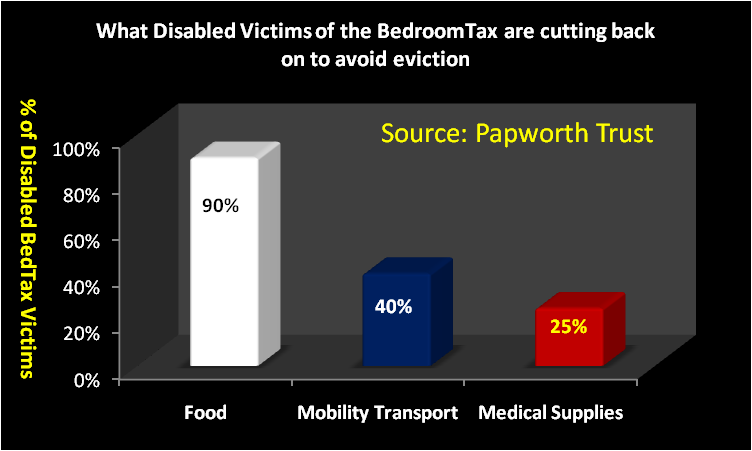
Nine in 10 disabled people are being forced to cut back on food or paying household bills after being refused emergency housing payments to help them pay the “bedroom tax“, research has found.

The report by the disability charity Papworth Trust shows that almost one in three disabled applicants are being rejected for discretionary housing payments (DHPs) from the government fund intended to provide assistance to housing benefit claimants who are unable to pay a shortfall in their rent.

Almost two-thirds of people affected by the loss of housing benefit on rooms deemed to be “spare” are disabled. DHPs were widely promoted by the government as protecting people with disabilities from the worst effects of its under-occupation charge, which was introduced in April. Yet disabled people are no more likely to be given an emergency housing payment than non-disabled people, the research found, even if they live in adapted properties.

David Martin, strategy director at the Papworth Trust, says: “The government asked councils to prioritise people with disabilities and long-term health conditions when deciding who should get emergency payments. This simply isn’t happening.”

Short-term help

Paul and Sue Rutherford had hoped to be awarded a DHP at least for short-term help in making up the £13.50 a week they are losing for having a third bedroom. Though disabled themselves – Paul has a lung condition while Sue has chronic depression – they are full-time carers to their grandson. Warren, 13, has a rare chromosome disorder. He is unable to walk or talk, cannot feed himself, and is doubly incontinent. Their house in west Wales is purpose-built for his needs, with ceiling hoists, wide doorways, a wet room and a third bedroom that allows a carer to stay at weekends when Paul and Sue need respite. Last month, however, the family were rejected for a DHP because the county council judged they had excess income of £99 a week.

“I wish [that were true],” says Paul. “Pembrokeshire county council has included at least the majority of Warren’s [disability living allowance, DLA] care component [in that calculation].”

Martin explains: “When calculating people’s income, councils are including DLA to help them sift the sheer volume of deserving applications for these emergency payments.” However, he says this goes against the advice of the work and pensions minister, Steve Webb, who has told councils to “disregard income from disability-related benefits, as they are intended to be used to help pay for the extra costs of disability“.

Richard Hawkes, chief executive of the disability charity Scope, says the majority of people affected by the bedroom tax are disabled. “The government has repeatedly referred to a discretionary fund to support those hit by this cut. But we know that this money is not getting to disabled people,” he says.

The consequences of this failure need to be considered in light of wider financial pressures on disabled people, says Hawkes. “The fact is that, in 2013, disabled people are struggling to make ends meet. Life costs more if you’re disabled, but living costs are spiralling, income is flatlining [and disabled people] are also facing huge cuts to support that they need.”

The Department for Work and Pensions says reform of housing benefit in the social sector is essential, and that it is monitoring the changes closely. “We are giving local authorities £150m discretionary housing payment funding this year to support vulnerable people, including £25m to help people who live in accommodation that has been adapted for their disabilities,” a DWP spokesman says. “Disability benefits are disregarded when calculating housing benefit entitlement, and where that income is clearly earmarked for care and mobility costs local authorities should disregard it in DHP applications.”

David Orr, chief executive of the National Housing Federation, describes the bedroom tax as “an unfair, unworkable policy that should be repealed”. He says: “How can we ask vulnerable and disabled people to eat or drink less, heat their home less or cut back on medical expenses? The government says discretionary housing payments will protect them, but the Papworth Trust findings make it clear that this temporary measure isn’t even a short-term solution.”

Pembrokeshire county council says it has received “a significant number of applications” for DHPs and that every one is considered on its merits. A council spokeswoman says: “In cases where the customer or a member of their household is confined to a wheelchair and resides in a property that is purpose-built or specifically adapted to meet the needs of their disability … the council will only reject an application for a DHP when it appears that the customer has an excess of income over expenditure and is therefore able to meet the rent shortfall. At the customer’s request we will review, with them, their income and expenditure to ensure the figures submitted to us are accurate.”

Access To Work Widens

July 16, 2013

It looks from this like Access To Work may be widening. The announcement doesn’t make it clear whether it now applies to unpaid work, although it does say work experience. But this looks like progress.

China’s Disabled Pupils Face Exclusion

July 16, 2013

I’m linking to this because inclusive education is a subject (!) very close to my heart.

Vodafone Look To Recruit People With Autism In Germany

July 15, 2013

Vodafone has been recruiting people with autism to its offices in Germany, hoping to reap the benefits of their high skills with numbers and patterns.

Its managers are now trained in how to work with people with autism as part of their team.

Steve Evans went along to Vodafone’s offices in Dusseldorf and met autistic employee Fabian Hoff and Vodafone manager Marc Ruckebier.

Stop The Execution Of #WarrenHill

July 15, 2013

He is what the UK knows as learning disabled. As a result of his disability, his execution would not be allowed under American constitution. Yet it is scheduled to take place in a matter of hours. Please do what you can.

Ukrainian Students Design Gloves That Translate Sign Language Into Speech

July 15, 2013

Don’t Wake Me: The Ballad Of Nihal Armstrong At The Edinburgh Fringe

July 15, 2013

The last stop so far for this beautiful play on a tour of the UK will be at the Edinburgh Fringe Festival from 5-25 August.

Full details below:

A6 e-flier Edinburgh

This is a must watch for anyone who can get to the Fringe and is interested in disability and/or inclusion. Or if you’ll be there, have an hour to spare and just want to watch a beautiful piece of theatre- you won’t regret making it this one.

Daniel Smith Graduates With 7% Vision

July 15, 2013

A University of Bristol student who was on the verge of quitting after losing his sight to a rare genetic condition is due to graduate later.

Daniel Smith, 22, had been preparing for his exams in 2011 when his near perfect eyesight deteriorated rapidly.

His twin brother Michael also lost his sight due to Leber’s hereditary optic neuropathy, for which there is no known cure, and both now have 7% sight left.

Mr Smith is set to graduate with a 2:1 in aeronautical engineering.

His brother earned a first class honours in geography from King’s College in London.

‘Worst nightmare’

Mr Smith said he considered quitting his degree but decided ultimately to continue part-time.

“Our parents went from wanting us to be hugely successful to simply wanting us to be happy,” Mr Smith said.

“Having both sons lose their sight must be every parent’s worst nightmare so to turn it around and for us both to graduate and get jobs has filled them with confidence.

“The prospect of my personal goals and ambitions falling away from me due to not being able to see that well was a psychological blow.

“Graduating and finding a job are the first steps on a rehabilitation that will continue far into the future.”

Leber’s hereditary optic neuropathy is the loss of vision as a result of the death of cells in the optic nerve, causing it to stop relaying information from the eyes to the brain.

The condition has no known cause or cure, and is only known to affect 150 people in the UK.

RaceRunning- The Disability Sport That Hasn’t Hit The Bright Lights Yet

July 15, 2013

Hannah Dines, 19, the writer of this, has Cerebral Palsy. As you know, so do I. I have just smiled and laughed my way through her article at Disability Horizons, because she shares so many of my feelings on PE lessons, sports days and just mainstream sport in general.

But she loves RaceRunning, a disability sport that no one’s heard of-yet.

Frank Bruno Has Bipolar Disorder

July 15, 2013

His daughter, Rachel Bruno, tells the BBC how this affected their relationship.

Around one in every 100 adults is diagnosed with bipolar disorder or manic depression. Former boxer Frank Bruno has battled the illness and his daughter Rachel explains the effect this had on her and her family over the years.


I knew who Frank Bruno was, but I didn’t really know who my dad was. I’d lost him for a lot of years because of his illness.


When he’s poorly, he can’t be a dad and it took a big chunk of our relationship away.


He was crowned heavyweight champion of the world in 1995 and became a television personality and national treasure, but then his world was turned upside down. He was defeated by Mike Tyson in a fight the following year that was to end his career.


His eye had been badly injured and he was told by doctors that if he continued to fight, he risked going blind, so retired from the sport.


Although he had been struggling before, retirement hit him hard, and a marriage breakdown and lack of routine and fights to prepare for meant everything started to spiral out of control.


His behaviour became more and more unpredictable. He had a massive boxing ring in the garden that he sometimes slept in, started hearing voices and thought he was other people at times.


His behaviour got so erratic that he was sectioned under the Mental Health Act in 2003, aged 41, and admitted to a mental health unit in Essex. I was only 16 years old at the time and my elder sister Nicola, who was 20, had to sign the papers to have him sectioned. She still feels guilty about this but says she doesn’t know where he would be now if he hadn’t received help.


It took nine hours to get him into the ambulance and it was so sad because he was begging us not to do it. I think it was the first time a celebrity had ever been sectioned and we were hounded by the press who camped outside our house.


People think celebrities are totally different to everyone else, but my dad is just the same as any other man out there. He was sectioned in exactly the same way as anyone else would be.


The next time I saw him in the hospital, he was heavily sedated and like a zombie. He was diagnosed with bipolar disorder and prescribed medication.


My dad’s illness affected us all differently. The saddest thing was my dad always wanted a son and my brother Franklin was conceived via IVF, but the year he was born was the year my dad became really unwell. I wish that Franklin had got a chance to see my dad the way my sister and I did.


When my dad was manic, he never needed to sleep or eat, he was really restless and lost a lot of weight, because all he knows is to go to the gym, but going to the gym once or twice is not enough, he has to go three or four times.


He has this look of mania in his eyes when he’s really poorly and I think he had psychosis at times as well, but other people are different with bipolar and they can be very low.


I wanted to find out more about the illness so that I could understand it better and spoke to psychiatrist Dr Mark Salter who told me that the condition affects a person’s moods, which can swing from one extreme to another.


“The chemical side of treating manic depression seems to be about stabilising or preventing major mood swings or emotional storms from welling up from the [part of the brain that affects your mood].


“That emotion you see at the bottom of the brain pushes ideas out of you when you’re manic. It gives you so much energy. It’s almost as though when you’re high there is a disinhibition of all your raw desires and instincts.”


I asked my dad how he used to feel during a manic episode and he described it to me.


“Sometimes when you get high… you’re rushing and you’re tripping over yourself, you know what I mean. Your brain is speedy, more than you should be speedy and you may lose control.”


Stressful or life-changing events can sometimes trigger the symptoms of bipolar disorder and it is likely that my dad’s retina injury and retirement could have been a trigger. My dad was sectioned again twice last year, but after leaving hospital this time knows he needs to take his medication. I think it took a long time for him to realise he was actually poorly.


Mark Salter says that having bipolar disorder doesn’t mean your condition can’t improve.


“We say in this business nothing predicts the future like the past. If a person has had illness and come out of it, they will come out of it again. It might sound silly but each one of [his] relapses is a chance to learn how to do it better next time. You can bounce back.”


I think unless you’ve been through it yourself, or your family has been through it, people don’t really understand what bipolar disorder is, how difficult it is to manage and how it can break up a family.


My sister and I found out about a support group where we could meet other people with bipolar and their families who were going through the same emotions as us.


I did worry that bipolar disorder is thought to be linked to genetics and that family members have an increased risk of developing the condition. I have always been hyperactive, but I know the signs, and it’s never got to a point where I’m too hyper or too low. I know that I don’t have it and Dr Salter has reassured me that genetics only plays a small part.


“You’ll hear an awful lot of things talked [about] especially on the internet where you get some quite sensationalist people that say it’s 10 times greater risk, but that’s not 10 times greater chance of getting the illness, because genetics is only one small part of the story. It’s the life you live, it’s the things you do, it’s the stuff that happens to you.”


When I go on to have kids, it does worry me that they might have the condition, but it’s something I will have to deal with at the time.


Finding out more about bipolar disorder has meant we have grown closer as a family and we have started to be more honest with each other. This is the first time since my dad’s diagnosis that he’s actually following a plan and he’s stuck to it.


He’s on medication, and I know it’s not the dosage that he wants to be on, but he’s still following the programme and that’s a real positive. There is such a lot of love for my dad and I’m always going to be there to support him.

The Artist Who Paints With Her Mind

July 15, 2013

J. Cole And Drake- Jodeci Freestyle- Remove ‘Autistic Retarded’ Lyrics

July 14, 2013

Kevin Healey has started a petition to J. Cole and Drake to have the line ‘autistic retarded removed from this song:

Which is, in my opinion, full of horrible lyrics anyway.

Very NSFW.

Father Fears For Autistic Son’s Life If Family Are Deported To Nigeria

July 13, 2013

This is just terrible. I really wish there was something that could be done to help them. I’ll be sharing with relevant organisations.

Daniel Kish- The Man Who Taught Himself To See

July 13, 2013

Has written for  the Guardian today. I’ve heard of him before, because he has used his method, echolocation, to help others ‘see.’

I had to have both eyes removed by the age of one to save my life – I was born with an aggressive form of eye cancer called retinoblastoma. Ever since, I have made clicking noises with my tongue to understand my environment. I wasn’t aware I was doing it, just as sighted people don’t consciously teach themselves to see. It was only when I was 11 that a very bright friend realised that what I was doing was echolocation, the same technique that a bat flying in the dark relies on: I was navigating my surroundings by listening to the echoes as my clicks bounced off surfaces.

Every surface has its own acoustic signature – I can recognise a tree, for example, because the trunk produces a different echo from the leaves. The hard wood reflects the sound, whereas the leaves reflect and refract, too, scattering the sound waves. Everything around me becomes identifiable with a click. It provides me with a 3D image in my mind with depth, character and richness; it brings light into darkness. I can often find my way out of an auditorium quicker than a sighted person because I can identify the exit. If I’m in a noisy place such as a concert, I don’t feel anxious – I just increase the volume and my click cuts through the noise. I’m very familiar with its sound and don’t feel at all self-conscious if other people hear me.

I don’t have superhuman hearing, even though I’m sometimes called Batman; I have just trained my ears to understand the echoes. Anyone could do it, sighted or blind – it’s not rocket science. If you hold up a book in front of you and click, then take it away and click, you can hear a difference, just as you know you’re in an empty room because it’s echoey. When I was in college I wrote my thesis on echolocation, and during my research I had to consciously deconstruct how I was doing it to understand the process. I know there’s a wall in front of me, I’d think, but what’s tipping me off? I would set myself tasks and try to get quicker and quicker at navigating obstacle courses.

Although clicking is inordinately helpful, blind children aren’t encouraged to use it, maybe because it’s seen as socially inappropriate. The worry is that the sound makes you look odd. Instead, there is an unfortunate slant towards dependency, rather than encouraging freedom.

Even now, although I have travelled around the world successfully, when I’m in an airport I feel that officials yearn to get me in a wheelchair, take away my documents and leave me feeling powerless. One friend wasn’t allowed to leave the plane until “assistance” arrived, even though he held the world record for blind cycling; he was too nice to make a fuss but I would have insisted.

I have made it my life’s work to teach blind children how to empower themselves using echolocation, which I call flashsonar. As you become more adept, you also click more subtly and naturally, like blinking, so often people around you aren’t aware you’re doing it and you aren’t stigmatised for it.

Luckily, when I was growing up my parents supported my clicking and encouraged me to have a “normal” childhood. My friends all rode bikes and I wanted to, too, so I taught myself by riding next to a wall and clicking to stay in a straight line. Gradually I was able to ride to school and to friends’ houses on my own, using echolocation.

I didn’t realise I was exceptionally independent or behaving unconventionally for a blind person. I went to a mainstream school with extra support and was never bullied. In fact, my ability to navigate by clicks brought me kudos.

Now I can ride along a busy street or go on a trail in the woods. I have never hit a pedestrian – touch wood – because I don’t ride on the pavement. Cars are excellent echo targets, so I can easily avoid them. I won’t say I’ve never had an accident, but every activity holds an element of risk.

Negotiating rush hour traffic isn’t my dream; I am just glad I can if I want to. It’s ironic – I spend all my time encouraging blind people to be active participants in society when, really, I’d love to step out of it. When my work is done, you’ll find me in the mountains like an old hermit, with just my clicks for company.

Tourette’s Bus Passenger In Hammer Attack

July 13, 2013

This is just terrible.

A man with Tourette’s syndrome was hit repeatedly around the head with a hammer in a “cowardly” attack police believe may be linked to his condition.


Jonathan Mars, 27, suffered a fractured skull and nose and severe bruising after he was set upon as he got off a bus in Lowedges Road, Sheffield.


South Yorkshire Police said it was investigating links between the assault and Mr Mars’ Tourette’s.


Mr Mars said he was left feeling “terrified” after last month’s attack.


Police said Mr Mars was assaulted by a man at around 22.20 BST on 4 June, but have only just released details of the incident.


Supt Colin McFarlane said: “Jonathan is a vulnerable person. He has suffered a nasty attack and one of the things we are pursuing is that it was a result of his Tourette’s.


“[His attacker is] a violent person who has picked on someone with a disproportionate amount of force that could not be justified.


“I think they are a coward in what they have done and I’m determined that my officers will do all they can to ensure he gets arrested.”

‘No reason’

Describing the attack, Mr Mars, a fund-raiser for Tourettes Action, said he was “instantly knocked out” by a hammer blow after getting off the bus.


When he regained consciousness he said he had dragged himself to his flat to phone the police and ambulance service.


He said he also believes the attack may be linked to his condition.


“There was a woman on [the bus] that took offence to my Tourette’s Syndrome,” he said.


“I told her I had Tourette’s and that’s it; she got off the bus, but it is still no reason for anybody to attack me.


“It has left me terrified. I was actually scared of buses.”


Police said Mr Mars’ assailant got out of a silver car behind the bus before the attack and left in same vehicle.


Witnesses have been asked to contact South Yorkshire Police or Crimestoppers.

Head Teachers Being Urged To Ban Packed Lunches

July 12, 2013

Head teachers are today being urged to ban packed lunches and lower the price of school meals to promote healthy eating.

I have young children in my family who already tell me that if they take a packed lunch to school, they are not allowed to take junk food- sweets, chocolates, crisps, or fizzy drinks.

I think that is strict enough, although I can understand why it is being done.

However,  personally, I can see several problems with the idea of banning packed lunches altogether.

Most importantly, if every child ate school dinners, these would need to be provided for free to every child. However, there are several other points to consider.

Firstly, if every child ate school dinners, would the meat served be Halal or Kosher? Would there be other Kosher food and drink available for those who needed it?

Would every child be expected to eat vegetarian food? If so, in my personal opinion, this in itself would not be a balanced or a healthy diet.

Then, of course, there are severely disabled children to consider. Firstly, at mainstream schools. If schools were to ban packed lunches, lunch staff would have to be prepared to spend extra time mashing or blending food for any severely disabled pupils to eat. If they were not prepared to make this reasonable adjustment, the school would have to be prepared to make exceptions to allow severely disabled children to bring packed lunches containing appropriately prepared food.

I wonder if this rule would apply to special schools for children with severe physical disabilities? For the reason given above, I personally don’t think it should.

Now, here is my fear. We are being told that this plan would be a way of promoting healthy eating. If it was also a reason to reduce inclusion in mainstream education- not only of severely physically disabled children but also of children from religious minorities- would this be considered an added bonus?

healthy lunch

Thousands of families raising disabled children are in desperate need of support and advice on managing sleep deprivation says Family Fund

July 12, 2013

A press release from The Family Fund:


Parents and carers raising disabled or seriously ill children have spoken out about the impact of lack of sleep in a new report launched today by the Family Fund, the UK’s largest grant making charity to low income families raising disabled or seriously ill children.

The report, ‘Tired all the Time’ launches today at the Senedd, Cardiff Bay as part of Family Fund’s 40th year activities in raising awareness of its work and the barriers that families continue to face.  The report reveals the impact of sleep difficulties on households, capturing first hand experiences of over 2,000 parent and carers raising disabled children across the UK in their own words.  Key findings show:

  • Over 93% are up in the night with their children
  • 49% have health issues due to the lack of sleep
  • 22% have had relationship problems as a result
  • 11% experience tiredness at work
  • 15% are concerned about siblings and the wider family’s health
  • Almost 1/3 had not sought professional support.

One parent, Andrea from Merthyr Tydfil spoke to Family Fund about her experience:

“I said goodbye to sleep when my son Jayden was born at 24 weeks. Stress and upset of Jayden’s diagnosis, constantly being told by professionals he’s significantly behind, worrying about his schooling, fighting to get help from social services and the constant lack of sleep has led to severe anxiety, no sleep at all and medication. The sad thing is we’re not the only family who go through these issues daily surviving on little sleep and lots of coffee.”

Parents, carers and the wider family members, including siblings are experiencing significant financial, social and emotional challenges as a direct result of not having enough sleep.

Families from across England, Northern Ireland, Scotland and Wales shared with the Family Fund how widespread the issue of sleep deprivation is.  Through working with families for 40 years, Family Fund knows that sleep continues to be a key issue, this report is in response to the demand to raise the issue on families’ behalf, giving them a voice.  The report intends to draw attention to this key health issue that can affect the whole family’s health and well-being with long-term consequences such as limiting opportunities in education and employment.

Families’ responses identified three key needs to be shared with policy and decision makers across the UK and other charitable organisations.

  • To be listened to, believed and heard when they talk about sleep difficulties
  • Their concerns are acted upon at an early stage
  • Timely and regular support, not just one consultation, as sleep deprivation is often not a short term problem.

Cheryl Ward, Chief Executive at the Family Fund said:

“This report shows the daily mental, physical and emotional challenges that families with disabled or seriously ill children or young people face when sleep eludes them night after night.  For many families, sleepless nights continue on relentlessly, year after year, sometimes well into adulthood with often varying levels of support or advice available. At the Family Fund we will, as we have for 40 years, continue to provide grants to support families across many areas of their lives including helping them to sleep better.  There is far more to be done, the intense desire from parents for wider recognition of the impact of sleep deprivation cannot be ignored and we are keen to work with other organisations providing support across the UK.  We want to help bridge that gap and give families a better night’s sleep.”

To gain a copy of the research report in full or to discuss partnership working, email Family Fund: comms@familyfund.org.uk.

Alison Jessop, Group Communications Manager
Family Fund, 4 Alpha Court, Monks Cross Drive, Huntington, York, YO32 9WN

Tel: 01904 571094 Mobile: 07825 699192 email: comms@familyfund.org.uk

Gene Therapy Trial Offers Hope For Rare Conditions

July 12, 2013

A disease which robs children of the ability to walk and talk has been cured by pioneering gene therapy to correct errors in their DNA, say doctors.


The study, in the journal Science, showed the three patients were now going to school.


A second study published at the same time has shown a similar therapy reversing a severe genetic disease affecting the immune system.


Gene therapy researchers said it was a “really exciting” development.


Both diseases are caused by errors in the patient’s genetic code – the manual for building and running their bodies.

Decline

Babies born with metachromatic leukodystrophy appear healthy, but their development starts to reverse between the ages of one and two as part of their brain is destroyed.


Wiskott-Aldrich syndrome leads to a defective immune system. It makes patients more susceptible to infections, cancers and the immune system can also attack other parts of the body.


The technique, developed by a team of researchers at the San Raffaele Scientific Institute in Milan, Italy, used a genetically modified virus to correct the damaging mutations in a patient’s genes.


Bone marrow stem cells are taken from the patient then the virus is used to ‘infect’ the cells with tiny snippets of DNA which contain the correct instructions. These are then put back into the patient.


Three children were picked for treatment from families with a history of metachromatic leukodystrophy, but before their brain function started to decline.


Dr Alessandra Biffi told the BBC: “The outcome has been very positive, they’re all in very good condition, with a normal life and going to kindergarten at an age when their siblings were unable to talk.


“It is something which is very pleasing to us.”

‘New era’

She said that all treatments had side effects and these patients needed to be followed for longer, but the evidence so far suggested the treatment was safe.


Gene therapy is a field that has promised far more than it has delivered and has been hampered by serious concerns about safety.


Dr Biffi said lessons had been learnt from previous failings: “Experience showed that gene therapy could be improved and we could be at the starting point for a new era to achieve more than we did in the past.”


In the other study, published simultaneously in the journal Science, symptoms such as repeat infections and eczema had lessened in the three patients treated.


Prof Bobby Gaspar, from Great Ormond Street Hospital in London is working on a Medical Research Council trial using gene therapy as a treatment for adenosine deaminase deficiency – which also leads to immune problems.


He told the BBC News website: “This is really exciting. Metachromatic leukodystrophy is a very significant neural degeneration which cannot be cured in any other way and now the study shows they can live relatively normal lives.


“It raises the prospect that other diseases can be treated in the same way.”


Prof Luigi Naldini, who leads the San Raffaele Telethon Institute for Gene Therapy, said: “Three years after the start of the clinical trial the results obtained from the first six patients are very encouraging.


“The therapy is not only safe, but also effective and able to change the clinical history of these severe diseases.


“After 15 years of effort and our successes in the laboratory, but frustration as well, it’s really exciting to be able to give a concrete solution to the first patients.”

Horizon: Hilary Lister’s Round Britain Dream

July 11, 2013

I followed Hilary Lister’s dream closely, so I’ll definitely be watching this on BBC2 on Sunday at 6.30pm.

It’s a big enough challenge to sail solo around the coast of Britain. But to do it when the only part of your body you can move is your head, and all the time you are suffering intense and continuous pain, takes a very special kind of sailor. This film follows the extraordinary story of quadriplegic Hilary Lister as she undertakes a 3,000 mile voyage around Britain.

Hilary controls the sails and steering of her yacht by three tubes through which she sucks or blows. It is the only movement left to her as, stricken by a degenerative disease, her body is shutting down. Six times Hilary collapses and is rushed to hospital. Six times she sails on. Over the three month voyage, the film embraces the relationships in her life, her daily fight to live and breathe, her past life as a talented musician and sportswoman, and her attitude to the disease that has struck her down.

A Very Scary Bar Chart On The Bedroom Tax

July 11, 2013

I am so scared by this that I just had to share it with you, readers. Thanks to the Papworth Trust for asking the question, and to Dr Eoin Clarke for sharing the graphic.

btgraph

That just says it all, doesn’t it, readers?

Sue Marsh’s Open Letter To Paul Maynard MP

July 11, 2013

I just had to share this.

Read it. Please.

Authors Who Know Disability From The Inside

July 11, 2013

As a  writer with personal experience of disability who writes about disability, I just love this article.

Perrie Edwards Of Little Mix Was Born Without Sense Of Smell

July 11, 2013

It hasn’t been long since I heard of anosmia, the lack of smell, and I said here in my post about it that more awareness should be raised of the condition. So I’m very glad to see that a current celebrity has spoken out about having the condition.

Little Mix singer Perrie Edwards has said she has had no sense of smell since birth.

As the star celebrates her 20th birthday, she said she had never been able to smell a roast, fried bacon or her own perfume.

“I have never smelt anything, but I think I smelt coffee once,” she told Newsbeat.

The star is set to join the rest of Little Mix at the Wireless festival in London this weekend.

“When people go, ah she’s cooking a Sunday roast, I’m like, how do you know that. I’m like, this is amazing, it’s like magic. I think I smelt coffee once.”

It’s thought Perrie Edwards, who’s the girlfriend of One Direction singer Zayn Malik, has a rare medical condition called congenital anosmia which doesn’t have a cure.

“People are always like, ‘Oh, isn’t that really horrible?’ and I’m like, ‘No’, because I’ve never known what it’s like to smell. If I’d had it and then it disappeared I’d be like, ‘Argh’.

“I wear the same perfume all the time, because everyone says, ‘Oh you smell nice’ and then I’m like, ‘Ah, OK’.”

Congenital anosmia is usually caused by a nasal condition or brain injury.

It’s estimated 6,000 people in the UK are born without a sense of smell. The condition can be very depressing and isolating.

Smell also plays an important role in how you taste things.

Many people with anosmia lose interest in food, because most of the flavour comes from smell.

According to the NHS choices website, if you suddenly lose your sense of smell and don’t know why, see your GP for a diagnosis of the underlying cause. They may be able to treat this and restore your sense of smell.

Little Mix won the X Factor in 2011 and performed at Radio 1’s Big Weekend in Londonderry this year.

Scope Face To Face Befrienders Scheme

July 10, 2013

Scope have just sent me information about their Face To Face Befrienders Scheme. Basically, it is what it says in the title. A scheme for new parents of disabled children where an experienced parent of a disabled child befriends them and provides much-needed support.

I was going to publish Scope’s full case study interview, which is printed in their information pack on the scheme. But I decided instead to share my own experiences.

As regular readers know, I have had Cerebral Palsy since birth. In the 1980s, when my parents were new to the world of disability, there were no schemes like this one available to them. They learnt the hard way and learnt as they went along. And they learnt very well, and taught me very well.

A lot of that was thanks to other parents of children with CP, who they met through treatment centres and my school.

Not only did these parents become good and lifelong friends of my parents, but because we were of the same age group, their children became lifelong friends of mine.

And as I tell anyone who will listen at every chance I get, the connection between two people who share a disability is unbreakable. And the connection between two parents whose children are both disabled is also unbreakable. Personally, I believe it is even stronger when the children have the same disability. However, I am open to any parent telling me that’s not necessarily true.

My own experiences with my friends with CP are the reason I think schemes like this are so extremely important and valuable. For every new parent and for every disabled child.

There is nothing like knowing you are not alone. There is nothing like knowing there are others just like you. And in my life, there is nothing stronger than the feelings I have for those who are just like me.

My friends with CP are my real friends. Non-disabled friends have come and gone, but my friends with CP have always been in my life. I hope that they, and their families, always will be in my life.

That’s why I would love to support the Face To Face Befrienders Scheme. I would love to see it grow and help as many new parents as possible. And I hope that in the process, it will help some disabled children to make lifelong friends just like mine.

If this campaign interests you, you can find more information about it here.

Carers Facing Debt And Eviction Because Of Bedroom Tax Finds Study

July 10, 2013

Families caring for loved ones with cancer, or looking after a severely disabled child, are facing debt and eviction as a result of the bedroom tax, says a study.

Although ministers promised financial support to help vulnerable carers and disabled social housing tenants affected, the cash aid available is inadequate to meet demand and being heavily rationed, according to the charity Carers UK.

As few as one in 10 carers are qualifying for ongoing support from the £25m discretionary payments fund set up by the government to help disabled tenants affected by the bedroom tax.

One in six of the carers interviewed by Carers UK over the first 100 days of the bedroom tax reported that they face eviction after falling behind on the rent.

Three quarters of carers having to pay the tax – called the “spare room supplement” by ministers – said meeting the tax meant they had cut back on spending on food, electricity and heating.

The study, which covered 100 carers affected by the changes, found local authorities were drawing up tight rationing criteria to eke out local discretionary support funds.

One family reported that council officials had rejected their claim for support on the basis that the family were allegedly spending £100 a week on food, whereas officials deemed £75 was enough to get by. The family said £75 a week was equivalent in their case to a food budget of £3.60 per person per day.

Councils have been asking applicants to fill in long forms detailing household expenditure.

Although some carers were receiving help for up to 12 months many were getting assistance for just a few weeks, after which they would be asked to re-apply for help.

Under the bedroom tax, introduced for social housing tenants in April, households deemed to be “under-occupying” their homes face spare room penalties of up to £700 a year.

Households who cannot afford to make up the shortfall face having to move, although in many areas no suitable smaller homes are available, forcing tenants to take the financial hit.

The government’s own impact assessment estimates 420,000 disabled tenants are affected by the bedroom tax.

Helena Herklotz, chief executive of Carers UK, said the policy was having a “shocking” impact on families already struggling to care for disabled relatives.

Paul Chaimberlain- Planning For A Good Death

July 10, 2013

Paul Chamberlain is articulate, impossibly cheerful in the face of adversity and heroic – a Briton of the sort you might have thought would be seen no more after Lawrence Oates strode into the Antarctic snowstorm in an effort to save Scott and his other companions.

The comparison is not inappropriate. Chamberlain, who has travelled the world, cycled around Cuba and loves sport, was diagnosed three years ago with the progressive and terminal muscle-wasting motor neurone disease and now uses a wheelchair. He too is looking death in the face. And he wants to meet it with dignity.

Motor neurone disease does not offer an easy passing. “It is a lingering and very unpleasant death,” he says matter of factly. “Your muscles waste away, you can’t do anything, you end up possibly being fed through a tube, you have a machine to help you breathe, and you can be mentally competent – your brain is fully active – but you can’t do anything. And that’s not a very nice way to die.”

Chamberlain, 66, a former chartered accountant who lives in the Surrey suburb of Walton-on-Thames, does not want to linger that long. Since the law forbids anybody to help him kill himself, he has made the necessary preparations to take his own life. He has obtained the drugs he needs from overseas, he says. He has to hope they are what he thinks they are.

He does not yet know when he will use them. MND progressively weakens the muscles until the sufferer cannot do anything by himself. Breathing has become difficult and Chamberlain is on a respirator 10-12 hours a day.

In the autumn, a parliamentary bill from Lord Falconer that would allow doctors in this country to help people with a terminal illness to die is expected to be debated, but even if it passes in the Lords, it still faces the greater hurdle of the Commons and any change in the law will be too late for Chamberlain.

He is giving his first interview about his intention to kill himself to the Guardian partly because he thinks the present law is wrong and partly to protect Sally, his wife. He wants to make his intentions quite clear so that no suspicion can fall on her after his death.

“Knowing what happens to people with motor neurone disease, an early thought was I’d rather not go the full term. I don’t see any point in having the last six months laying there, being unable to communicate, being unable to move, hoisted on to the toilet or wearing diapers. I don’t really see a lot of fun in that. I understand some people live their whole lives like that and I admire them for doing so, but I don’t think it’s for me,” he says.

“I have obtained something which I believe will do the job. I’m not ready to take it yet, but I will be at some stage – I’m not quite sure when. In my mind, I thought if I cannot get myself to the toilet, that will be enough, because it’s only going to go downhill from there. It’s only going to get worse … There is no cure. I know what’s going to happen, the neurologist knows what’s going to happen and I’d just rather avoid for myself and for the family seeing myself in a fairly pitiful state.”

Chamberlain has joined the organisation Dignity in Dying and supports the Falconer bill. He says that in the Netherlands, Belgium and the state of Oregon in the US, where there are assisted dying laws, there has been no evidence of abuse. “I know the argument that you persuade Auntie Doris to take her life because then you inherit the money, but you’ve got to have two doctors to certify that you are mentally competent and you are making a rational, well-informed decision on your own, without persuasion,” he says.

“I understand there is some opposition to Lord Falconer’s bill and some lords may strongly oppose it, but I have a question for them and for anyone else who opposes the bill. I’d like to know if they could look me in the eye and tell me that they are determined to ensure that I have a lingering and very unpleasant death. Because no matter how good the palliative care, it is a lingering and unpleasant death.”

As it is, with no doctor to help he will have to take his chances with the drugs he has, which may not work or may have unexpected effects. “I know that would be horrible, but no more horrible than what I’m facing anyway,” he says.

The first Chamberlain knew that anything was wrong was when he had a couple of falls on the tennis court. He blamed it on an arthritic ankle. He went to the club physiotherapist for exercises to strengthen it and was told “you have foot-drop” and advised to see his GP immediately. The GP sent him to a neurosurgeon, who sent him to a neurologist.

His official diagnosis came on 5 August 2010, although he thought he knew a month earlier. But he and Sally told nobody for some weeks in order to avoid spoiling their son’s wedding.

“It was quite difficult at first because we’ve got quite an active social life and we were going to parties and events and I had this sort of dreadful secret. We were supposed to be having a nice time – and we did have nice times – but it was very difficult at first. And there were some emotional ups and downs in the early days and on one very brief occasion there were some tears. But it wasn’t really about me – it was not being there to help my sons in the future. That was the sad thought.”

They have two sons and a grandson aged two and another grandchild due in November, whom he thinks he may never see. His family members are all very supportive and respect his decision, he says.

Chamberlain himself remains extraordinarily upbeat. “I’ve never dwelled on what I can’t do. I think about what I can do,” he says. “And we still go out. I’m having a sandwich lunch and playing bridge this afternoon at the tennis club, we’re meeting friends for supper at the pub tonight, we’re going to a bridge supper on Thursday night, we’re having our 42nd anniversary lunch with some friends on Sunday. We do a lot. It takes a lot of effort to get ready but we still go out and about. And there’s no point in being miserable. I think you’ve just got to accept what’s happening really.”

He has had, he says, a good life. “We’ve travelled a lot. We’ve had a long and happy marriage. We’ve got two lovely boys and a grandson and one on the way. I had a reasonable career. I’ve had lots of friends,” he says.

And now, all he asks is to be sure that he can have a good death.

Samaritans are available around the clock, every day of the year, for anyone struggling to cope. To find your nearest branch, call 08457 909090, visit samaritans.org or email jo@samaritans.org

Steve Bate Becomes First Blind Person To Scale California El Captain Rock

July 10, 2013

WCA To Be Reformed, Liam Byrne Says

July 10, 2013

In the words of my online friends- WIN!

Sick and disabled people should take control of their own personal “wellbeing” budget, which will roll up their care, disability and employment payments into a single cash lump sum, Labour will announce on Wednesday.

In a major speech at the thinktank Demos, the shadow work and pensions secretary, Liam Byrne, will call for radical reform of social security for disabled people, which will free them from the debilitating rounds of testing that currently bedevil the benefits regime.

Instead Bryne will promote a “tell us once” policy and propose a single assessment for disabled people for all their social care and health needs, their disability payments and employment and support allowance. Currently each system has its own testing regime – which has fuelled anger among people with disabilities.

The Labour shadow cabinet member will argue that the coalition is “comprehensively” failing disabled people. Since 2010, poverty levels among disabled people have been rising – with 30% now living in penury.

Byrne will also point out that the government’s flagship welfare-to-work scheme – the Work Programme – was supposed to get one in six sick and disabled people into a job for a least three months. In fact, the actual performance, two years since the start of the scheme, is more like one in 20.

With the autumn statement expected to bring forward more tough benefit measures, Labour will argue that there should be a report into how the government’s actions so far have affected the disabled before ministers continue with their policy agenda .

Most important for campaigners is that Byrne says that the work capability assessment (WCA), the test used to see whether people claiming disability benefits are fit to work, will be reformed. He points out that disabled people taking the WCA are eight times more likely to end up in a tribunal than in a job.

Bryne told the Guardian that a key part of the test used to decide whether a person needed support to get a job, rather than simply saying people are ready to find employment would be reinstated by a future Labour administration.

The new system is modelled on the Australian National Disability Insurance Scheme – which integrates back-to-work support, social care, and disability benefits in a single personal budget. Signed into law this year it is regarded as the most important change in social services in Australia since the introduction of universal health insurance.

Bryne will point out that “today, someone in our country is registered as disabled every three minutes. Disability can affect any of us and therefore it affects all of us. I think it’s time Britain should explore lessons from Australia … to help give disabled people the support they need to get on, and lead to a more fulfilling life.”

Sue Marsh On Tomorrow’s Opposition Debate In Parliament

July 9, 2013

Sharing here by request…

Congo Paralympians Grateful For UK Asylum Status

July 9, 2013

The joy of Dedeline Mibamba Kimbata is simply expressed: “By giving us refugee status, the British government has given us life.”

Kimbata was one of five Congolese athletes and coaches who competed in the 2012 Paralympics and claimed asylum during the Games. During the competition they spoke publicly about human rights abuses in their country and the lack of equipment provided for them by their government, statements which they say led to threats of violent retribution.

Speaking to the press for the first time since being granted asylum, Kimbata, a 31-year-old wheelchair racer, told the Observer that the British government’s decision to allow them to remain had not only potentially saved their lives but transformed them as well.

She was initially given accommodation in Sheffield but has now moved to London, a city which, having “fewer mountains” than Sheffield, is easier for her to walk around with the aid of her crutch.

“I am still under a lot of stress, but when I have sorted myself out I would like to start training again,” she said. “I need a coach and a racing chair. My legs were blown off when I stepped on a landmine at the age of 18.

“But even before the accident happened I dreamed of being a top basketball player. Facilities for disabled athletes in Congo are extremely poor, but here at last I have opportunities.”

Levy Kitambala Kinzito, 35, a wheelchair basketball player, contracted polio at the age of three, leaving his left leg shorter than his right. He has joined the Sheffield Steelers wheelchair basketball club, the biggest of its kind in the UK. He trains there several times a week and, according to club officials, is making good progress.

“He’s making use of the training opportunities we offer,” said Manja Wolfram, a coach at the club. “He started off in the third division and now he’s playing in the second. He could progress to the first if he continues with his training.”

Both athletes dream of taking part in the 2016 Paralympic Games in Rio de Janeiro. Kinzito said he would love to represent Great Britain but Kimbata still wants to represent the Democratic Republic of Congo. “I’m lucky to be protected in the UK, but I am still Congolese and would love to race for my country,” she said.

Both are seeking sponsorship to help them pursue their careers here and are also keen to highlight the plight of disabled athletes in Congo who have almost no resources to help them progress.

Life in Congo, said Kimbata, was a different story: “I had to use an ordinary orthopaedic wheelchair designed to be pushed by someone else and between five and 10 wheelchair racers would have to share one chair.”

Before the London Games, she and Kinzito had been told that funds had been provided to Congo to give them the equipment they would need to compete in their events. But when they arrived in London, they found that no equipment had been provided.

British Paralympic wheelchair racer Anne Wafula Strike gave Kimbata one of her racing chairs and a Senegalese competitor offered equipment to Kinzito.

But the athletes’ problems really began when they spoke out on the African station Ben TV about their government’s failure to provide equipment. They also condemned human rights abuses in Congo, especially during elections that took place shortly before the London Games started.

“There was a polling station just in front of my house and I saw the military shooting at people who were going to vote,” said Kimbata. “My two year-old-daughter became sick because she was so traumatised by the continual sound of gunshots.”

Discussing the Games, she said: “We were told by Congolese officials that when we reached the Olympic Village our equipment would be waiting for us but when we arrived there was nothing. Once we started to speak out about this and the problems in our country things got worse and worse for us.”

“I was told that I had damaged my country’s reputation and that when I returned to N’djili airport in Kinshasa, I would be arrested and killed. Pressure was put on me to speak on a Congolese radio station and retract what I had said, but I refused and ran away when they tried to get me to say these things.

“I was very scared, but was determined to tell the truth, it was not only in my interest but in everyone’s interest. They wanted me to say that the wheelchair donated to me was from the Congolese government, but I refused to lie about this.

“When I did any interviews Congolese officials were behind me whispering in our Lingala language what they wanted me to say.”

Kinzito claimed that he had also received death threats: “We were at total risk after speaking out. I’m certain I would have been killed if I had been forced to return to Congo. I’m sure that we were being monitored by the Agence Nationale de Renseignements, Congo’s intelligence agency. There are no human rights in Congo, no freedom of expression and no democracy. Things are particularly bad for disabled people – and there are many of them in Congo.”

Kimbata and Kinzito both included the allegations that they had received death threats from Congolese officials while competing in London in their asylum claims, which were found to be credible by the Home Office.

Kimbata said she had no intention of claiming asylum when she left Congo to compete in the London Games. Indeed, in doing so she has left behind her young family with whom she desperately hopes to be reunited.

“I have three young children in Congo and I told them I would be home in two months,” she said. “Now I’m not sure if I’ll ever be able to go home.”

Her family are caring for the children, but she is missing them terribly: “I need to have my children with me.”

The athletes’ lawyer, Hani Zubeidi, of Migrant Law Partnership, a London-based firm, welcomed the Home Office’s decision to grant the five asylum.

“Their initial application was approved after interview, which is a rare occurrence,” he said. “But it does highlight inconsistent decision-making on the part of the Home Office with regard to enforced removals to Democratic Republic of Congo, which is one of the most dangerous places to be sent back to in terms of the political persecution returnees may face,” he said.

For Kimbata and Kinzito and their three teammates, at least, a new life can begin.

The Congolese embassy in London was unavailable for comment on the athletes’ allegations of death threats being made against them.

Nas Campanella- The Blind ABC Radio Journalist

July 9, 2013

The Big I.D.E.A. Is Coming

July 8, 2013

Publicity for Diversity Jobs website’s new project:

So just what is the big I.D.E.A?


The big I.D.E.A is a central hub for the diversity industry to communicate its services, news, awards, events, best practice, opinions, support, products and training and all things I.D.E.A. The site is interactive, encourages debate, conversation and communication to evolve and grow the industry. It’s fresh, relevant, will sometimes be provocative, but more than anything will be involving and engaging.  


With so much information out there on the web relating to Inclusivity, Diversity, Equality and Accessibility it’s become time consuming and hard to traverse the large number of fragmented sites offering information. Too many people have told us they found themselves in a mind field of offerings and have previously used services and products that have not been beneficial in having a positive impact.


So we’re pulling together the best of what the industry has to offer in one easy to use interactive site.


Experts

We have over 50 of the UK’s leading experts within the field of Diversity offering their views and sharing their opinions on the industry, where it’s been, where it is and where it’s going.


Industry

Our corporate and public sector clients will be offering their take on how they feel the industry needs to progress and what they need to reach their desired goals. You’ll hear about new initiatives being showcased and have insight on best practise being adopted.


Individuals

We also have valuable contribution from the people on the coal face, the job seekers and individuals who are at the heart of our changing demographic. You’ll hear their opinions on what is like to be them, their experiences and their take on how they feel the industry needs to evolve to accommodate their needs. 


Within a very short time frame DiversityJobs.co.uk has become the UK’s leading diversity focussed careers site and we’ll have millions of people pass through our site in the coming months as well as a large number of corporate and government sector clients wanting the industry to be clear in its intentions and initiatives.


To become a ‘Tier Two Contributor’ you must have relevant positioning within the industry, an opinion, ideas or offerings. If you would like the opportunity to reach a large valid audience of individuals, then get in touch and let’s discuss where you might fit in to the big I.D.E.A. – this is a free service for the industry, by the industry.


To express you interest or find out more contact Leanne on Leanne.McClean@DiversityJobs.co.uk

– See more at: http://www.diversityjobs.co.uk/cm/news/the_big_idea#sthash.qaWI2ugu.dpuf

So just what is the big I.D.E.A?


The big I.D.E.A is a central hub for the diversity industry to communicate its services, news, awards, events, best practice, opinions, support, products and training and all things I.D.E.A. The site is interactive, encourages debate, conversation and communication to evolve and grow the industry. It’s fresh, relevant, will sometimes be provocative, but more than anything will be involving and engaging.  

With so much information out there on the web relating to Inclusivity, Diversity, Equality and Accessibility it’s become time consuming and hard to traverse the large number of fragmented sites offering information. Too many people have told us they found themselves in a mind field of offerings and have previously used services and products that have not been beneficial in having a positive impact.

So we’re pulling together the best of what the industry has to offer in one easy to use interactive site.


Experts

We have over 50 of the UK’s leading experts within the field of Diversity offering their views and sharing their opinions on the industry, where it’s been, where it is and where it’s going.

Industry

Our corporate and public sector clients will be offering their take on how they feel the industry needs to progress and what they need to reach their desired goals. You’ll hear about new initiatives being showcased and have insight on best practise being adopted.

Individuals

We also have valuable contribution from the people on the coal face, the job seekers and individuals who are at the heart of our changing demographic. You’ll hear their opinions on what is like to be them, their experiences and their take on how they feel the industry needs to evolve to accommodate their needs.  

big idea screen shot

_______________________________________________________________________________________________

Within a very short time frame DiversityJobs.co.uk has become the UK’s leading diversity focussed careers site and we’ll have millions of people pass through our site in the coming months as well as a large number of corporate and government sector clients wanting the industry to be clear in its intentions and initiatives.


To become a ‘Tier Two Contributor’ you must have relevant positioning within the industry, an opinion, ideas or offerings. If you would like the opportunity to reach a large valid audience of individuals, then get in touch and let’s discuss where you might fit in to the big I.D.E.A. – this is a free service for the industry, by the industry.


To express you interest or find out more contact Leanne on Leanne.McClean@DiversityJobs.co.uk

– See more at: http://www.diversityjobs.co.uk/cm/news/the_big_idea#sthash.qaWI2ugu.dpuf

So just what is the big I.D.E.A?


The big I.D.E.A is a central hub for the diversity industry to communicate its services, news, awards, events, best practice, opinions, support, products and training and all things I.D.E.A. The site is interactive, encourages debate, conversation and communication to evolve and grow the industry. It’s fresh, relevant, will sometimes be provocative, but more than anything will be involving and engaging.  

With so much information out there on the web relating to Inclusivity, Diversity, Equality and Accessibility it’s become time consuming and hard to traverse the large number of fragmented sites offering information. Too many people have told us they found themselves in a mind field of offerings and have previously used services and products that have not been beneficial in having a positive impact.

So we’re pulling together the best of what the industry has to offer in one easy to use interactive site.


Experts

We have over 50 of the UK’s leading experts within the field of Diversity offering their views and sharing their opinions on the industry, where it’s been, where it is and where it’s going.

Industry

Our corporate and public sector clients will be offering their take on how they feel the industry needs to progress and what they need to reach their desired goals. You’ll hear about new initiatives being showcased and have insight on best practise being adopted.

Individuals

We also have valuable contribution from the people on the coal face, the job seekers and individuals who are at the heart of our changing demographic. You’ll hear their opinions on what is like to be them, their experiences and their take on how they feel the industry needs to evolve to accommodate their needs.  

big idea screen shot

_______________________________________________________________________________________________

Within a very short time frame DiversityJobs.co.uk has become the UK’s leading diversity focussed careers site and we’ll have millions of people pass through our site in the coming months as well as a large number of corporate and government sector clients wanting the industry to be clear in its intentions and initiatives.


To become a ‘Tier Two Contributor’ you must have relevant positioning within the industry, an opinion, ideas or offerings. If you would like the opportunity to reach a large valid audience of individuals, then get in touch and let’s discuss where you might fit in to the big I.D.E.A. – this is a free service for the industry, by the industry.


To express you interest or find out more contact Leanne on Leanne.McClean@DiversityJobs.co.uk

– See more at: http://www.diversityjobs.co.uk/cm/news/the_big_idea#sthash.qaWI2ugu.dpuf

So just what is the big I.D.E.A?


The big I.D.E.A is a central hub for the diversity industry to communicate its services, news, awards, events, best practice, opinions, support, products and training and all things I.D.E.A. The site is interactive, encourages debate, conversation and communication to evolve and grow the industry. It’s fresh, relevant, will sometimes be provocative, but more than anything will be involving and engaging.  

With so much information out there on the web relating to Inclusivity, Diversity, Equality and Accessibility it’s become time consuming and hard to traverse the large number of fragmented sites offering information. Too many people have told us they found themselves in a mind field of offerings and have previously used services and products that have not been beneficial in having a positive impact.

So we’re pulling together the best of what the industry has to offer in one easy to use interactive site.


Experts

We have over 50 of the UK’s leading experts within the field of Diversity offering their views and sharing their opinions on the industry, where it’s been, where it is and where it’s going.

Industry

Our corporate and public sector clients will be offering their take on how they feel the industry needs to progress and what they need to reach their desired goals. You’ll hear about new initiatives being showcased and have insight on best practise being adopted.

Individuals

We also have valuable contribution from the people on the coal face, the job seekers and individuals who are at the heart of our changing demographic. You’ll hear their opinions on what is like to be them, their experiences and their take on how they feel the industry needs to evolve to accommodate their needs.  

big idea screen shot

_______________________________________________________________________________________________

Within a very short time frame DiversityJobs.co.uk has become the UK’s leading diversity focussed careers site and we’ll have millions of people pass through our site in the coming months as well as a large number of corporate and government sector clients wanting the industry to be clear in its intentions and initiatives.


To become a ‘Tier Two Contributor’ you must have relevant positioning within the industry, an opinion, ideas or offerings. If you would like the opportunity to reach a large valid audience of individuals, then get in touch and let’s discuss where you might fit in to the big I.D.E.A. – this is a free service for the industry, by the industry.


To express you interest or find out more contact Leanne on Leanne.McClean@DiversityJobs.co.uk

– See more at: http://www.diversityjobs.co.uk/cm/news/the_big_idea#sthash.qaWI2ugu.dpuf

So just what is the big I.D.E.A?


The big I.D.E.A is a central hub for the diversity industry to communicate its services, news, awards, events, best practice, opinions, support, products and training and all things I.D.E.A. The site is interactive, encourages debate, conversation and communication to evolve and grow the industry. It’s fresh, relevant, will sometimes be provocative, but more than anything will be involving and engaging.  

With so much information out there on the web relating to Inclusivity, Diversity, Equality and Accessibility it’s become time consuming and hard to traverse the large number of fragmented sites offering information. Too many people have told us they found themselves in a mind field of offerings and have previously used services and products that have not been beneficial in having a positive impact.

So we’re pulling together the best of what the industry has to offer in one easy to use interactive site.


Experts

We have over 50 of the UK’s leading experts within the field of Diversity offering their views and sharing their opinions on the industry, where it’s been, where it is and where it’s going.

Industry

Our corporate and public sector clients will be offering their take on how they feel the industry needs to progress and what they need to reach their desired goals. You’ll hear about new initiatives being showcased and have insight on best practise being adopted.

Individuals

We also have valuable contribution from the people on the coal face, the job seekers and individuals who are at the heart of our changing demographic. You’ll hear their opinions on what is like to be them, their experiences and their take on how they feel the industry needs to evolve to accommodate their needs.  

big idea screen shot

_______________________________________________________________________________________________

Within a very short time frame DiversityJobs.co.uk has become the UK’s leading diversity focussed careers site and we’ll have millions of people pass through our site in the coming months as well as a large number of corporate and government sector clients wanting the industry to be clear in its intentions and initiatives.


To become a ‘Tier Two Contributor’ you must have relevant positioning within the industry, an opinion, ideas or offerings. If you would like the opportunity to reach a large valid audience of individuals, then get in touch and let’s discuss where you might fit in to the big I.D.E.A. – this is a free service for the industry, by the industry.


To express you interest or find out more contact Leanne on Leanne.McClean@DiversityJobs.co.uk

– See more at: http://www.diversityjobs.co.uk/cm/news/the_big_idea#sthash.qaWI2ugu.dpuf

Collin Brewer Finally Resigns!

July 8, 2013

I’ve just heard this great news and seen this press statement from Disability Cornwall on Facebook:

Press Statement – Finally, Collin Brewer will resign

Councillor Collin Brewer has indicated to the leader of Cornwall Council that he will resign following the release of the decision notice on the investigation into comments made to the Disability News Service.

Disability Cornwall absolutely applauds the outcome of Cornwall Council’s investigation and recommendations and actions taken by the Council’s Monitoring Officer. In our view the council has implemented the highest sanctions available to them at this time.
However, we believe this highlights a serious weakness of the localism act, which Disability Cornwall will be addressing with our parliamentary representatives.

The comments made by Councillor Brewer can only feed and encourage the recent rise in Disability Hate Crime.
Disabled people should not have to tolerate such attitudes, as you would not expect any other people with protected characteristics to accept discriminatory comments made about them.

We are pleased Councillor Brewer is to resign as given the sanctions he is not able to carry out his full role within the Council appropriately, and he cannot therefore represent value to the public purse

Many people I know are celebrating at this news, and I am celebrating with them!

Deaf Actor Vitalis Katakinas Dies

July 8, 2013

This tragic death of a deaf man happened in my hometown, after an attack outside a pub, yet it took a Deaf magazine to inform me. Am I wishing for too much asking for the local news websites to cover the incident that led to this tragic loss of life?


Of course, my thoughts are with all who knew him and are affected by his loss.

Novellist David Mitchell Says Having Autistic Child Is ‘Parenting On Steroids’

July 8, 2013

Katie Hopkins On Deaf People Sneezing

July 7, 2013

Katie Hopkins Tweeted about disability. I smiled, because I actually find this funny.

Dear mainstream world, this is a funny disability-related joke.

Katie Hopkins, more of these, please. Less insults, thank you.

Kyle Weaver Can Have SDR After Local Family’s £22000 Donation

July 6, 2013

Wow! This is so sad for Abigail Williams, but her parents’ generosity and strength are amazing. I hope Kyle Weaver benefits from the operation.

A £22,000 donation from one family to another has allowed a young boy with cerebral palsy to have life-changing surgery in America.

Before surgery Kyle Weaver, three, from Colwyn Bay was unable to walk unaided.

Treatment was made possible after Kevin and Christine Williams, from Conwy, donated money raised for their daughter, Abigail, who no longer benefits from continued treatment.

Kyle’s parents hope he will take his first unaided steps within the year.

Mr and Mrs Williams had collected the money to pay for pioneering stem cell treatment for their daughter Abigail, seven.

‘Mammoth thing’

When it was discovered that Abigail, who suffers from Batten disease which affects her mobility and senses, would not benefit from continued treatment they contacted Kyle’s family.

The families live just 10 miles (17km) from each other and although they did not know each other before they have now become firm friends.

Before his surgery Kyle was in constant pain in his legs and feet and the family was working hard to raise the £50,000 needed for his treatment at the St Louis hospital in Missouri.

Sam Weaver, Kyle’s mother, said raising the money to take Kyle for treatment had been difficult.

“It was a mammoth thing to do with both of us working full-time and trying to raise that amount of money and go through everything.

“It was quite a difficult decision to make but at the end of the day it was the best thing for Kyle.”

The family had been amazed at the generosity of Abigail’s parents, she added.

“We couldn’t believe it. We thought it was someone playing a joke on us to start with… it’s such a huge amount of money,” she said.

Kyle is now having regular physiotherapy and his parents hope to see him take his first unaided steps within the year.

Mobility scooters welcome on board as NCT signs up to voluntary code of good practice

July 6, 2013

 A press release from Nottingham City Transport


Nottingham City Transport has signed up to the Confederation of Passenger Transport’s (CPT) voluntary code, which means that, as of the beginning of next week NCT will be welcoming mobility scooters with permits on board all its buses.

“Although all of our buses have been accessible to wheelchair users for over a year – five years ahead of the legal deadline to be wheelchair accessible – mobility scooters have up until now been a bit of a grey area,” explains NCT Marketing Manager, Anthony Carver-Smith. “Technically, the regulations which require us to carry wheelchairs specifically excluded mobility scooters as they were deemed to too big and a form of transport in their own right.”

Anthony Carver-Smith continues, “However, the CPT recognised the technical development of mobility scooters over the last ten years, highlighting that they are now much smaller – often smaller in size to wheelchairs – so the regulations had become outdated and unfair to some disabled people.”

It’s for this reason that the CPT has been working as an intermediary between the industry and the government to develop this voluntary code which allows operators to carry ‘class 2’ mobility scooters on buses.  These are vehicles with an upper speed limit of 4mph and are designed to be used on pavements.

Mobility scooter users will need a permit to demonstrate the scooter meets the code and is a class 2 vehicle. The permits are issued by NCT after the customer is visited at home and then given training on how to get on and off the bus, and how to position the scooter in the bay. Once they receive this permit, they can be carried on any bus in the country – as long as the operator is a member of the scheme.

“Ensuring our buses are accessible to people with disabilities is vitally important to us, which is why we’re so far ahead of the wheelchair accessible legal deadline, we’ve added audio ‘next stop’ announcements to help blind or partially-sighted passengers, and our drivers receive disability awareness training as standard,” adds Anthony Carver-Smith. “This is an excellent, inclusive code of practice which clarifies the situation for both our drivers and our passengers, and we’re very proud to be part of the scheme.”

If you use a class 2 mobility scooter and need a permit, call the NCT Travel Centre on 0115 9 50 60 70 or email travelcentre@nctx.co.uk to arrange a home visit.

Three Special Parents On Legal Aid Changes

July 5, 2013

Three special parents and friends of Same Difference feature in this article on legal aid cuts. Mark Neary, father of Stephen, Anne Hall, mother of Daniel Roque Hall, and Linda Burnip of DPAC.

How Do Deaf People Sneeze And Laugh?

July 5, 2013

This is something I’ve never thought about until right now. BBC Ouch have though, and they’ve done it so well that it deserves a link.

Eddie Kidd’s Wife Admits Assault On Him

July 5, 2013

The estranged wife of former motorcycle stuntman Eddie Kidd has pleaded guilty to assaulting him.

Samantha Kidd, 44, of High Street, Seaford, had pleaded not guilty in January to six counts of assault between July and October 2012.

A two-day trial had been due to start on Tuesday at Brighton Magistrates’ Court.

At a pre-trial hearing Mrs Kidd admitted four counts of assault. She was released on bail until 1 August.

In January the court was told the assaults took place in Cumbria, Peacehaven in East Sussex, and Southampton.

She will be sentenced for the four charges of assault by beating on 1 August.

Great Wall jump

Mr Kidd suffered serious brain injuries in a crash at a motorcycle rally in 1996.

He first stunned spectators in December 1979 when he jumped 80ft (24m) across a derelict railway bridge in Essex on a 400cc Yamaha.

In 1993 he jumped the Great Wall of China but three years later he suffered spinal and neurological injuries in the crash in Warwickshire.

After walking the 2011 London Marathon in 50 days and raising more than £100,000 he was selected to carry the Olympic torch through Lewes.

He was made an OBE last year for services to charitable giving.

The Undateables To Return For Third Series

July 5, 2013

And they’re seeking participants!

Nine More Remploy Factories To Close

July 4, 2013

Meaning there will be none left in Scotland. What a shame.

The five remaining Remploy factories in Scotland are to close, the UK government has announced.


The businesses affected are the Marine and Frontline Textile factories at Leven, Cowdenbeath, Stirling, Dundee and Clydebank.


The government also said no viable bids had been made for packaging factories in Norwich, Portsmouth, Burnley and Sunderland.


More than 230 disabled people across the country face redundancy.


In December, the government announced plans to cut funding for Remploy following a review of disability employment support.


A total of 36 factories were sold or closed in the first phase of this process, with the remainder being put up for sale.


In a Commons statement, Work and Pensions Minister Esther McVey said three businesses across nine sites would close, which was likely to result in one third of Remploy’s workforce losing their jobs.


Ms McVey said some sites would remain commercially viable, but there were no substantial bids for a number of factories.

‘No viable bids’

She told the Commons that 234 disabled people now at risk of redundancy would take part in individual consultation with Remploy.


She said: “Despite having had considerable interest in the Marine and Frontline Textile businesses at Leven, Cowdenbeath, Stirling, Dundee and Clydebank, Remploy did not receive a best and final offer for these businesses as part of the commercial process.


“Additionally, there are no viable bids for the packaging business based at Norwich, Portsmouth, Burnley and Sunderland.


“These sites will now move to closure and all 284 employees at the Packaging, Frontline and Marine Textiles businesses, including 234 disabled employees will, in line with Remploy’s redundancy procedures, be invited to at least two individual consultation meetings over the next 30 days to discuss the options and the support that will be available to them.”


She added: “We will continue to do everything we can to support them in finding new jobs.”

‘Another blow’

The Scottish government said the news was “another blow” for the workers who had been living under the threat of redundancy for more than a year.


Enterprise Minister Fergus Ewing said: “Throughout the last year I have urged UK ministers to think again about the process they had undertaken and to consider the impact on the employees, many of whom have worked in Remploy all their adult lives.


“At the most recent meeting of the taskforce I set up last year to advise me on Remploy, members highlighted again the very high levels of stress staff were working under and hoped there would be an early resolution to this matter.”


Mr Ewing said there was a potential buyer for the Scottish businesses and the Scottish government would seek to work closely with the organisation to help preserve as many jobs as possible.


He added: “I spoke with Esther McVey this morning and urged that the potential asset sale be completed as quickly as possible to avoid the loss of any business for the new company that would put further jobs at risk.


“We also agreed that we must redouble our joint efforts to help those affected by this announcement and the earlier closures to find new jobs.”

‘Inflexible approach’

Last month, MPs accused the UK government of taking an “inflexible approach” over the future of Remploy factories.


A report by the Scottish Affairs Committee claimed the Department for Work and Pensions (DWP) had helped only to hamper the prospects, in particular, of Remploy Marine in Fife.


It called on the UK government to instruct Remploy to extend the timescale for bids for the business.


The DWP said at the time that its priority during the process was to safeguard as many jobs for disabled people as possible.

#BeddingOut Is Going To Edinburgh!

July 4, 2013

I’ve just read that there will be a performance of Liz Crow’s hit Bedding Out in Edinburgh on 9-10 August. Full details here if this interests you.

Doug Engelbart, Inventor Of Computer Mouse, Dies Aged 88

July 4, 2013

The inventor of the computer mouse, Doug Engelbart, has died aged 88.

Now, readers, you might be wondering why I’m writing about this. The computer mouse was a mainstream invention, widely used by mainstreamers, I hear you say. What does the computer mouse have to do with disability?

Well, for me, personally, in these days of laptops with inbuilt keypad mice, the old original outside-the-box computer mouse has quite a lot to do with disability.

Just today, I was asked if I have any accessibility requirements when using a laptop. I responded that I need a mouse, because I am not able to use the inbuilt mouse. This is a result of my disability.

Readers, I have no doubt that when Doug Engelbart first invented the computer mouse in the 1960s, making box-sized computers accessible to people with no co-ordination fifty years later was the last thing on his mind.

However, readers, today, his little invention- the mouse outside the main computer- means that I, who cannot use today’s keypad mice- which may, or may not, have been invented themselves without him- am still able to use a computer.

Readers, if I didn’t have an original computer mouse, I wouldn’t be able to type. I’ve had laptops throughout the lifetime of Same Difference, so, readers, without the original computer mouse, this website, this article, wouldn’t be here.

I don’t know if that bothers you, readers, but to me, the little old computer mouse is a pretty big deal.

So that’s my little tribute to Doug Engelbart. Thank you for the mouse, Sir.

Natasha Lambert- Teenager With CP- Sailed Solo Across Channel

July 4, 2013

She completed this challenge on Monday. I’ve only just found out about it, but sometimes, old is gold.

An Isle of Wight teenager with cerebral palsy has completed a solo journey across the channel.

Natasha Lambert, 16, was born with atheroid cerebral palsy which affects her limbs and speech.

Her 21ft-long (6.4m) boat, Miss Isle Too, has been adapted by her father, Gary, and allows her to steer by sucking and blowing into a tube.

Natasha began her voyage in Boulogne, France at 08:00 BST and arrived at Dover at about midday.

‘Immensely proud’

Last year Natasha, from Cowes, sailed solo round the Isle of Wight, raising more than £8,000 for charity.

Her mother Amanda said: “When she is sailing Natasha is able to experience freedom and excitement and most importantly make decisions which she is unable to do in her everyday life.”

Her father said he was “immensely proud” of his daughter.

Natasha is raising money for the RNLI, the Ellen MacArthur Cancer Trust and Wetwheels Solent.

First Transplanted Hand ‘Starting To Work’

July 3, 2013

The first person to have a hand transplant in the UK says he can now perform basic tasks with his new hand.

Mark Cahill from Greetland near Halifax, West Yorkshire, had the operation at Leeds General Infirmary in December.

The former pub landlord had been unable to use his right hand after it was affected by gout.

Mr Cahill said: “It’s a little bit clumsy but it’s starting to work.”

Petition To NHS Services Nationwide To Provide Complex Wheelchairs To Everyone Who Needs Them

July 3, 2013

Readers, you may or may not have seen this before. It started circulating last night- I first saw it on Facebook.

You may or may not already have signed it.

But, readers, this is important to me because of the number of stories I have heard through my charity work of the NHS only providing basic wheelchairs. Basic wheelchairs are not always suitable and even when they are, they don’t always allow independence for the disabled person.

In a basic wheelchair, disabled children can’t access some of the places their siblings and friends are accessing- the park or the woods.

In a basic wheelchair the parent or carer has the added stress of pushing the disabled person while out with other children who might also need or want attention.

And then, of course, there’s everything written in the petition letter.

So readers- if you haven’t signed it, please do. If you have, thank you very much, and please share it with your friends.


Today- The Lives Of Parents And Carers

July 3, 2013

A beautiful video I found yesterday that every parent or carer of a special child should see.

I know some professionals who follow this video every single working day but sadly, there just aren’t enough of them.

Little Or No Increased Risk Of Autism With IVF Finds Study

July 3, 2013

IVF treatments that require the direct injection of sperm into the egg are associated with a small increased risk of intellectual disability in the resulting children, according to a study.

Scientists also found that standard IVF treatment posed no increased risk of children developing intellectual disabilities or autism.

IVF is considered generally safe. About 4% of IVF children have physical or mental problems at birth, compared with 3% of those conceived naturally.

In the latest study, the largest so far into links between reproductive treatments and neurodevelopment, scientists examined how IVF might affect the incidence of autism and intellectual disability.

In particular they looked at the effects of a type of IVF that involves intracytoplasmic sperm injection (ICSI), used when the potential father has a very low sperm count or other fertility problems.

In this procedure, sperm is extracted surgically from the testicles and injected straight into the egg, in order to increase the chance of conception. Around half of modern IVF procedures involve ICSI.

The study by Avi Recheinberg, of the Kings College London Institute of Psychiatry, and colleagues from the Karolinska Institutet in Sweden looked at data on 2.5 million children born in Sweden from 1982 to 2007, of which 30,959 were born as a result of IVF.

The results, published in the Journal of the American Medical Association, showed that more children were born with an intellectual disability after IVF treatments involving ICSI compared with standard IVF. The absolute numbers were very small: an increase in cases from 62 to 93 cases per 100,000 children, representing a relative increase in risk of around 50%.

The scientists also found an increased risk of autism after ICSI, from 29 to 136 cases per 100,000, but this result disappeared when other factors that could play a part, such as multiple births, were taken into account.

Allan Pacey, a fertility expert at the University of Sheffield and chairman of the British Fertility Society, said the main message of the paper was a positive one, suggesting that any risk of these disorders was very low or absent in comparison to children conceived naturally.

However, it does highlight the importance of preferentially using standard IVF rather than ICSI, and also using ejaculated sperm rather than those recovered surgically from the testicle, in situations where it is possible to do so. He advised patients not to worry and to discuss any concerns they had about their treatment with doctors.

Dagan Wells, of the Institute of Reproductive Sciences at the University of Oxford, agreed that the results of the study should be reassuring for patients undergoing IVF treatment.

Assessing the long-term effects of treatments such as IVF is difficult. Technologies are constantly evolving and changing, presenting a moving target for doctors and scientists.

A limitation of this study is that some of the data comes from treatments carried out 30 years ago, when IVF was in its infancy. The methods used today differ significantly from techniques used decades ago. Whether they are more or less safe remains to be seen.

Full Text Of Lord Ashley Memorial Lecture, 1 July 2013

July 3, 2013

Delivered by Baroness Tanni Grey Thompson in the House of Lords. Posted here by permission of Baroness Tanni Grey Thompson.

Lord Ashley Memorial Lecture – July 1st 2013

Thank you, My Lords, Ladies, Gentleman and Colleagues – It is a very great pleasure to be here tonight.  I would like to thank Mr Speaker for his hospitality, and also the family of Lord Ashley for inviting me to speak tonight. It truly is an honour.

I didn’t know Jack well but he had a massive influence on my early life. He was the first ‘real’ disabled person I saw on the television. I saw his campaigning work and how he challenged people’s perceptions of impairment in a positive way.

Even as a child, I could see that some people tried to treat him differently, but although I obviously had a different impairment, I knew I shouldn’t be treated differently from the wider population.

Even now I smile when we say ‘treat disabled people differently‘ what we mean is discriminate but we shy away from that. The reality is, from the amount of mail I receive, is that disabled people are being discriminated against, they’re still being spat at in the street, or excluded from work. The best hope I have is that they are just ‘treated differently’ I am guilty as anyone of tempering what I say, to achieve the longer term aim of equality.

My parents were always open with me that I was going to have to deal with people who would consider that I was less capable because I was disabled, but they also told me that I should never let it stand in the way of what I wanted to achieve. What I admired about Jack was his persistence, his manner, his humour and his dignity.

I met Jack in the House of Lords, very early on in my time there. Those first few weeks are tough and challenging, and I remember having cups of tea with people that I had grown up admiring and despairing of in equal numbers. I remember thinking ‘oh wow, that’s him’. He approached me with a very simple ‘Hello Tanni, I’m Jack Ashley’ and I was very dignified and said “I know!” It is one of those times you look back and wish you had said something more intelligent!

We had some shared experiences. We were both on “This is Your Life” , although not together.  There is nothing like “This is Your Life” for digging out family members and friends who you barely remember, who think they are the ones who moulded you. If ever there was a person who richly deserved the title, the noble Lord, it was Jack.

When I say that Jack was the first ‘real’ disabled person I saw on TV, it was because all the other disabled’ people I saw were actually actors, playing a part. They got the nuances of impairment wrong; none of them were disabled, just non-disabled actors playing what they thought disabled people were like. OK I know that the idiosyncrasies of filling in benefit forms is not going to make thrilling story lines, but some of the things I have witnessed recently would be worthy of a soap opera. I would like to say, oh how times have changed in the media world, but we are still not quite there yet. I knew it was wrong, because their experience of having a disability wasn’t mine. They weren’t treated the way I was treated. These were my really my only role models of what life might be like. Jack was the closest thing to reality that I wanted to experience. I remember watching Crossroads and the character Sandy Richardson, who seemed to randomly be in a wheelchair or walking on crutches, depending on the inaccessibility of ‘hotel’. How wonderfully convenient, wouldn’t it be great if life were like that? It turns out that his character was meant to have been injured in a car crash and then go on to make a full recovery, until someone pointed out that wouldn’t happen in real life, and so the first disabled character was born.

I realised early on that bad people in films / history were quite often disabled. Richard III, Dr No, Darth Vader, Chris Tate (from Emmerdale) and of course the Daleks, although now they can fly in the most recent incarnations, and steps are no longer a barrier, I am quite envious of them. Then of course there was Ironside. The first good guy, who always caught the bad people, and he had the best van ever , with a tail lift. I don’t think he drove himself – that would be a step too far. I’d never thought about driving, but was just a little disappointed to realise that what people expected me to drive was one of those blue plastic cars. I remember telling my parents I would rather get on a bus… the naivety of not realising that public transport at that time was absolutely appalling if you were in a chair. Oh how times have changed, or maybe not?

It makes me think of the number of times people have asked me if I can walk. It’s as if my impairment will go away if I just tried a little bit harder. Just last year, someone asked me whether I had ‘really’ tried to walk! A few years ago when an airline lost my chair, one of the assistants asked whether if he held me under my arms I would like to try and walk. Uuum, no. If I had told him what I really thought then I would have had a chip on my shoulder.

For a long time I thought about my career being in different blocks or phases but the further I move away from the competitive side of it is easier to see that it is a continuous pathway. I’ve been presented with many opportunities in my life but journalists like to keep things in boxes. The three questions I am always asked are “You’re how old?” As an athlete you were considered old at 30, now in the Lords, I am back to being young again! “How hard do you train” or my favourite” When did you decide you wanted to go in the House of Lords?” As if this was part of the athlete retirement package! Well in sport you have to create your own pathway and it is just like that in the House of Lords. If you dig just a little beneath the surface, you can see that my life in sport and Disability Rights has been linked. The things that I was fighting for as an athlete are not that different from what I want now.

While I competed I sat on the National Disability Council (I was 25 and really had no idea what I was doing), various sports councils, did a politics degree (although I said I would never go in to politics as it was for losers, I take that back!), I realised very early on that if I won gold medals it gave me a different platform to speak on. I think I was also lucky that I was born in 1969. I had Spina Bifida. My Mum later told me that one of her doctor’s had told her that if I had been born a few years earlier I would have been taken away and not fed. It didn’t stop various doctors suggesting all sorts of experimental surgery on me which we declined because none of it was going to help. It didn’t matter because I couldn’t walk anyway. I have too many friends who were experimented on.

My parents already had one daughter, my sister Sian , who was born with a heart condition which needed to be operated on immediately. It was then discovered that she had also been born with dislocated hips, which meant 18 months in a frog plaster. My arrival on the scene came with no real drama I was just in an incubator for a day or so I wasn’t treated with much fanfare. I was definitely child number 2, thank goodness. My parents didn’t really know what Spina Bifida was, because it wasn’t discussed. Apparently my mother asked whether I would be able to have children. She later told me that she had no idea why she asked it, but felt that she had to ask something. The ability of women to have children is still such a major defining position on femininity. Years later when I was

pregnant, and rang up to tell her, she was shocked. I asked whether it related back to my birth, she told me that she just didn’t think I had the patience to be a mother! I was told by one enlightened person that people ‘like me’ shouldn’t have children. I presumed she meant as a wheelchair user as opposed to me being Welsh! I say you ‘have to laugh’, but in all honesty, you shouldn’t have to. You shouldn’t have to deal with patronising people.

My grandparents struggled with my condition. I think more than one person pointed out that with both Sian and myself ‘having problems’ my parents weren’t very good at having children. To my maternal Grandmother who was born in 1900, disability meant something entirely different to her. It was something to be embarrassed about. She didn’t want to tell anyone, because of how it reflected back on the family, as if she could have done something about it. Because I could walk a little when I started school, I got in to what we now call mainstream school. Although back then, things were simple, we just called it school. My parents didn’t know I was meant to go somewhere else, and the Head teacher didn’t tell them. My walking deteriorated and by the age of 7 I was paralysed. My spine had collapsed and severed my spinal cord. There wasn’t any pain. I didn’t miss any school. There was no trauma. There was no drama. I thought it was cool that my legs no longer hurt when I fell down and if I cut my legs crawling over rocks on holiday it didn’t matter. My parents were told that I would be better off walking with callipers as I would look more ‘normal’. I remember one doctor asking me if I knew what a pressure sore was, I didn’t, he showed me a picture, and told me if I got one I would die and it would be slow and painful. I have never had one. I feel proud that I haven’t, in this instance, cost the NHS hundreds of thousands of pounds.

There were early experiences that heavily influenced me. I only remember one child being slightly horrible to me at a youth club, and called me ‘limpy legs’. People who knew me were great, and didn’t discriminate against me but those who didn’t know me talked down to me. Even at 7 I recognised it, and fought against it. My parents didn’t believe that my life should be different and my father told me that ‘education gave me choices’ Dad was an architect. He didn’t want to make the house wheelchair accessible. He, like many, thought ramps generally weren’t aesthetically pleasing. he thought concrete was unpleasant and I still agree with him. The only thing I probably dislike more is tactile paving, and badly constructed dropped kerbs that are more dangerous than not having them. But of course, all impairment groups have the same problems, so wehave to be happy with them . Just because I am disabled it doesn’t mean I am willing to accept ugly things around me. Why should we have to ‘make do’ or somehow be grateful because we have something that makes our life a little easier?

I was going in to an inaccessible building to pick my daughter up from a school event last week and the organiser was putting a ramp down. Not very pretty but it meant I could get inside. One of the Mum’s said to me ‘having special treatment are we?’. She laughed. She thought she was being clever or funny. I just had the words ‘patronising cow’ screaming through my head. I wonder what the reaction would be if I said ‘aren’t you lucky because they let people like you in the building’. If I had a pound for everyone in the house of Lords who asked ‘Are you in a race’ I could probably solve the economic crisis! Now I’ve challenged Dame Anne Begg a couple of times, but she isn’t up for it! My wheelchair doesn’t define who I am, but it is important to me that it fits in with me. I am now in my stripped titanium and carbon fibre phase. I did away with my light up wheels when I came here.

The real reason that my parents didn’t adapt the house is that they didn’t want to make the family home only place I could live. Although years later Dad rephrased it and said that he didn’t want me to live at home forever! These days we would say that there was a different spin on it.

Sitting in a Doctor’s surgery in the early 80’s I noticed a poster on the wall. It was advertising the International Year of Disabled Persons. And it listed, in an aspirational way, all the rights that I might one day get. They were

– to take part fully in the life and development of their societies,

– enjoy living conditions equal to those of other citizens,

– and have an equal share in improved conditions resulting from socio-economic development.

What really shocked me was I thought I had those rights, they were not aspirations and here was a poster telling me I could aspire to them. My Mum told me to ignore it as I could have whatever rights I wanted.

Politics influenced my life long before sport. When I was due to go to high school we all thought that I would follow my sister. Suddenly the head teacher of Sian’s school wrote to my parents and told them that they ‘didn’t take’ people like me. My parents read the right newspapers, and knew that there was something coming out called the Warnock Report. It was 1981.My father got hold of a copy of it, and ultimately threatened to sue the Secretary of State for Wales over my right to be educated in mainstream school. Dad wrote lots of letters. He made himself a real pain in the neck. I loved his letters. With a few caveats I was allowed an education. There is a certain irony that I am here tonight talking about this, when tomorrow in the House of Lords we have the second reading debate on the Children and Families Bill which will lead some families to be fighting for the same thing that my family did 30 years ago.

I think it is really tough on parents of disabled children these days. They have to be experts in every area that effects their child’s life. They are told that they have ‘choice’. I find that an interesting use of words. I am not convinced that it means that they have more,  they just told that they have. Jack has been quoted as saying that you should not accept ‘the brush off if you know you are right’. My dad knew he was right, and the best place for me was not special education.

In another twist, which would be perfect in a movie, Mary Warnock tabled a debate on the Special Education, which was to mark the 30 years since her report, and I was able to sit in the Chamber and say that thanks to her, I ultimately ended up in the House of Lords.

I have lots of views on the changes that are coming through the recent legislation. We can spend as much time as we want debating what poverty really means, and then trying to work out which side various groups are on, but that feels a bit too much like spin. If you believe some by about 2020 just about everyone on the country will be on DLA. Even in mainstream school and doing well academically, I was sent off to have my IQ measured every year. I had to see a specialist careers adviser who told me not to be so ambitious in wanting to go to University, that I should just go to secretarial college and I could be taught how to answer a phone. I replied that I already knew that and he give me a detention! Actually my first job was answering a phone, but we ignore that!

Sport gave me some resilience to deal with these people. Winning and losing in a public environment, and everything that comes with it although not pleasant, toughens you up. Even the most aggressive email I have had over my stance on Welfare Reform or Assisted Suicide is not as bad as I have been told to my face in sport. In the early 1990’s I had this light bulb moment. I heard about the medical and social model of disability. The world made sense. It made me realise that it wasn’t my fault. I blamed architects, including dad…. They were barriers not hurdles. I really don’t mind if people don’t like me because of me, but I hate it if it is because of my wheelchair.

Discrimination was there. The one that still gets me is when people count my money back in to my hand and tell me not to lose it. My husband is always daring me to throw it on the floor. When I was pregnant I had medical professional ask me if I couldn’t cope would I either mistreat or put my baby or put it up for adoption. My response was that I would hire a nanny.

I still haven’t figured out a way to deal with it. I don’t want to shout back, because I know that people will think I have a chip on my shoulder . I do think it’s funny that when I do speak out, people think that my volume button is at full blast. I usually think it is about 2 out of 10. When I grow up I want to be that women in Jenny Joseph’s poem. I already wear purple. Just once I would like to tell people what I think, but I know that the floodgates will open I will scream and not stop and that this isn’t the right way. What I still want is change, not just to scream.

Going back to seeing real disabled people, the first time I saw a disabled athlete was in the 1980’s, a welsh wheelchair racer called Chris Hallam. He won the London marathon. He was edgy and bold and stuck two fingers up to the world. No one knew the word Paralympic because it wasn’t really used until 1988.. They were the advantages of having special schools. The sporting opportunities it creates were positive. There were more girls competing back then than there are now although we must accept that the pattern of disability and impairment is changing, and this may improve. I see big changes, and this is where the disability rights and sport come together . Leading up to the 2012 Games there were several assumptions made by people on the edge of sport. One is that you could just turn up and you were selected. The second is the assumption is that every disabled person wants to be a Paralympian. A really good friend of mine, who hates sport with a passion, has been constantly asked if she is going to try out for the team. Generally the public understands what it takes to be an Olympian. It’s talent and training, and it’s boring and hard, and at times amazing. Why assume that an untalented, disabled person who doesn’t want to train would be a Paralympian?

I am very protective of the word Paralympian. I know how much work it took me to get there. 25 years of training for about 20 minutes on a Paralympic Games track. I am not an Olympian although I competed 4 times in demonstration races. There is a tendency to use the word Paralympic to mean disability sport. We don’t call everyone who goes for a run on a Sunday an Olympian. It probably tells us where we are in terms of understanding of disabled people doing sport. Also the language around disability in sport is interesting.

So, through my career, certainly in the early years , it was pretty tough to convince some people that what we were doing was real sport. And then on the other side, I had disability rights campaigners telling me that I was selling out, by trying to hide my impairment and pretend that I wasn’t disabled. The term supercrip was coined. There have been many articles written on this and it is interesting because I felt I was stuck in the middle but didn’t know which way to turn.It wasn’t so much the athletes wanting to do that, but it was also how the media portrayed us. Certainly some of the media coverage was, and can still be, very patronising. They like to use words like adversity. What adversity did I face? None, I grew up in a middle class family in Cardiff, I was told that I was brave because I did a marathon. I tried to fend it off with a joke. There is nothing brave about doing 150 miles a week in training.

Last year the British Paralympic Association produced a document / guide on language. This was amazing. I have always believed that language is the dress of thought and if we can start to get this right we are moving in the right direction. Of course, impairment and how it is acquired can be an interesting part of the story, but it is not THE story. My husband broke his back in a cycling accident. That is a bit more dramatic than what happened to me, but it didn’t change his life. Sometimes I get the impression that people want it to be a devastating experience for him, because they can then look at him differently. But the idea of supercrip left me in limbo. Not always being treated as an athlete on one side, and then being seen to deny my impairment on the other. I wanted to be treated like an athlete who just happened to use a wheelchair. I lost count of the times I compared myself to a cyclist. Just last week someone stopped me and said that 2012 was amazing and they had had tickets for the real olympics and well as the Paralympics. I don’t think, or rather hoped that they didn’t realise what they were saying. It has been a long battle for inclusion and we have a long way to go

I will be honest. The big reason I wanted the Olympics in London was because it would bring the Paralympics. When we were in Singapore, bidding for the Games, Tessa Jowell asked me if I wanted her to say the 60 days of the Games – I said no. I would have loved to have been in a position where I could say yes. We were bidding to the IOC for the Olympics – the Paralympics would come with that. Understanding the field of play, is as important in sport as it is in politics. 2012 was amazing. So much came together, and people are still talking about the Paralympics. The issue we have to deal with now is Legacy. It is slightly strange that at the same time disability hate crime figures are the worst they have ever been. It means so many different things to different people. It can be the main stadium, sports participation, the Gamesmakers, actually it can be whatever you want it to be. For me it was the chance to change part of the conversation.

The organising committee did some amazing work on diversity and inclusion. As employers they brought lots of disabled people in to the building. About 2 and a half per cent of the staff are disabled, but with an upward trend. It is about constantly pushing those barriers. I had a letter about a month afterwards from a little boy who wrote and told me how amazed he was by everything and he had watched the amputee races, and it had changed his life. He told me that he wanted to run in the Paralympics, but his Mum had told him that he couldn’t have a prosthetic leg for Christmas because they were too expensive. I was about to start ringing my friends to help club together, when I realised that the reason his mum said he couldn’t have a leg was because he wasn’t a leg amputee! The Games was never going to change the world, but we have a limited time left to use the fairy dust moments for positive influence.

Sport has changed, but there is still some tokenistic inclusion. I am frustrated by the sports who are happy to stick a picture of a disabled athlete on a poster, but beneath the surface do little to truly make a difference. As I have mentioned, athletes find it hard to challenge either that or how they are treated because of their contracts. It is more than the squad, it is about how works, and who manages the sport. I am tired of people wanting to be patted on the back for letting some of us through the back entrance, of which again we have to be grateful. Lottery funding was slow to kick in for disabled athletes, but is working well now.  Some sports were told that they would only get money if they took on Paralympic side of the sport. Mind you I am not convinced that really changed much. There is a measurement tool in sport called the Equality standards. I want them to be more than a tick box exercise. And I want more than disabled people just being on the poster.

A friend who was a wheelchair user who applied for a job in sport was told that he didn’t get it because he couldn’t carry bags. I have never seen this in any job description for a coaching position. Also what does it say about some of our athletes? That they are too big to carry their own bags? How many will think they can’t do it because they are disabled.  The movement has changed. It used to be run by and for disabled people. A fellow athlete who competed in the same time period I did, towards the end of my career looked at me and said that he felt we were in a situation where it was two legs good, four wheels bad.  And of course in sport there is always a hierarchy of what is cool to watch. In disability sport, at the moment I think leg amputees are perceived as the coolest because they look more like everyone else. In The Mirror last week Tony Parson’s wrote how disabled people were going from Heroes to Scroungers in the space of a year. We are almost a year on from the Games, about the right time for the challenging stories to appear, that won’t blight our memory of an amazing Games.

I started talking about it last year when we were debating the change in disability living allowance, because I wanted to make the story real. The people, who were going to be affected, were not all benefits scroungers, watching day time telly on their plasma screens, it was real disabled people. Making it about Paralympians brought it home. We don’t know how many will be effected, but I am sure that with 600,000 not making the transition, there are likely to be one or two Paralympians in there.

I have to deal with very personal questions. I am asked how I go to the toilet, whether I had sex or IVF to have my child. I have received many letters from people who have told me that people they don’t know have stopped them in the street and asked them if they are on DLA. We are still in a situation where we have to be grateful. If you are a Football supporter then it can be almost impossible to buy a season ticket for some grounds. You can be given your tickets, which means you have no way of complaining. I think this is appalling and is another thing on my list that I am looking at.

I sit on the Board of Transport for London, if there is one thing I would change it is the way of making sure we could turn up and go. Surely with modern technology we could do more. I am tired of being tutted at because I don’t always know what I am doing 48 hours in advance. I have offered in the Chamber, and been taken up by one minister to go on a journey by public transport together. I am tired of having to plan what I drink 3 hours before boarding a train in case there is no accessible toilet. Or not being able to buy a drink because I should have a carer with me (I have to say my local train service is brilliant).

About three years ago we were at a tourist attraction in London, and I went to pay, which was challenging because the entrance was inaccessible, and I was told that there were already ‘3 of you lot in there’ so they couldn’t let any more in right now. My husband joked about Welsh people thinking we had rights. When we could go in, I queried the amount I was paying because it was too low and was told that my carer (ie husband) got in for free.  Why? Because being my husband is so harrowing that he needs to be taken out for a day in London.

I was told by one airline that I couldn’t fly with my daughter because I wasn’t a responsible adult. But where we are is most disturbing because while these comments resonate with many people in the room, they tell a deeper story of where we are in British society. There were always people who will cheat the system. We see enough of that in sport. With people who cheat their classification system to try and get in to a more advantageous category. In sport means medals, money and publicity. There can be benefit in showing everything that you cannot do. I am unbelievably frustrated listening to talk that the new welfare system is going to be more simplistic, well perhaps if you have a PhD in it, or that we are going to save money. There is absolutely no sign of that. In a recent interview I was asked ”how much medication was I on when I was competing?” The answer is none. I was then asked “how much medication I was currently on?”. The answer is still none. When I also answered none to how much pain I was in I knew that we were going nowhere. That article was never published. There is too much confusion with being disabled and being sick.

I am sure there are some officials who think that I am being deliberately obtuse when I am filling out the new PIP forms in a briefing meeting. One of the questions was ‘list the medical professional who can best describe your impairment’. The answer was none, because the last time I saw my doctor for an illness was back in 1996 when I had tonsillitis. I don’t think my daughter standing on my foot and pulling my big toe nail out and a nurse saying I was being dramatic as I arrived in a wheelchair counts! You see it will never work having a philosophical argument about the effect of impairment. I find it interesting and challenging but if it doesn’t fit neatly in to a box, an application form or assessment process we will never talk about it. I wonder when are we going to let disabled people out of the box?

The plan was that with the Welfare Reform Bill I was going to sit back and watch and learn, and get involved in a few people’s amendments, but I have found that I am not that good at sitting back and shutting up. I have been accused of scaremongering recently, but I believe that people need to be aware of what these changes means, and think that they will be in the group of people with ‘most needs’. We are in danger of entering the battle of the press release.

With the help of Citizens Advice, The Children’s Society and Disability Rights UK last year, we launched a report called Holes in the Safety Net. In one day I did 26 interviews. The only time I have done near that number was when Glenn Hoddle said that disabled people had been evil in former lives, and Tiger Woods said he’d played the Augusta National in 2006 like a Spaz. I know that so much of politics is a sound-bite and doesn’t make me proud, but I know how that part works.

Another frustration for me is that the promise that technology is going to save us all. 3 million disabled people do not have access to the internet, so how is moving everything online really going to help them?

I know we are in tough economic times, and I am tired of one side blaming the other. It has got better in recent months, but this ‘banter’ is not going to solve the problems we face. It would have been wonderful if we could have covered benefit appeals in the Welfare Reform Bill, not in the Legal Aid Bill, if we could cut the waste of mal administration in the system. It would be great if we could have a proper conversation about saving money not pushing it in to another budget line to worry about later. I only did one year of Economics at University, but that doesn’t seem to make sense to me. The political rhetoric is tiring. I would like to see genuine political engagement with disabled people.

I wonder if it is time to have a debate on language and terminology. It is time to have a debate about the title Minister for disabled people?

I wonder what Jack would say if he were here now? I have been privileged in the House of Lords to learn from amazing people and I hope I will continue to learn from all their experience.

I hope some of the things I have learned in last few years have made me realise what is important. A few things made me realise that my work in Disability Rights is not worth trading any job in sport for. On a social media website this morning someone called Nicky Clark, a campaigner for Disability Rights, tweeted and said: Imagine if everyone who challenges stigma and bigotry, of all the things which you can’t help, stood together. That would be pretty amazing, wouldn’t it? Yes it would, and that is what we need to work for in the years ahead.

Thank you.
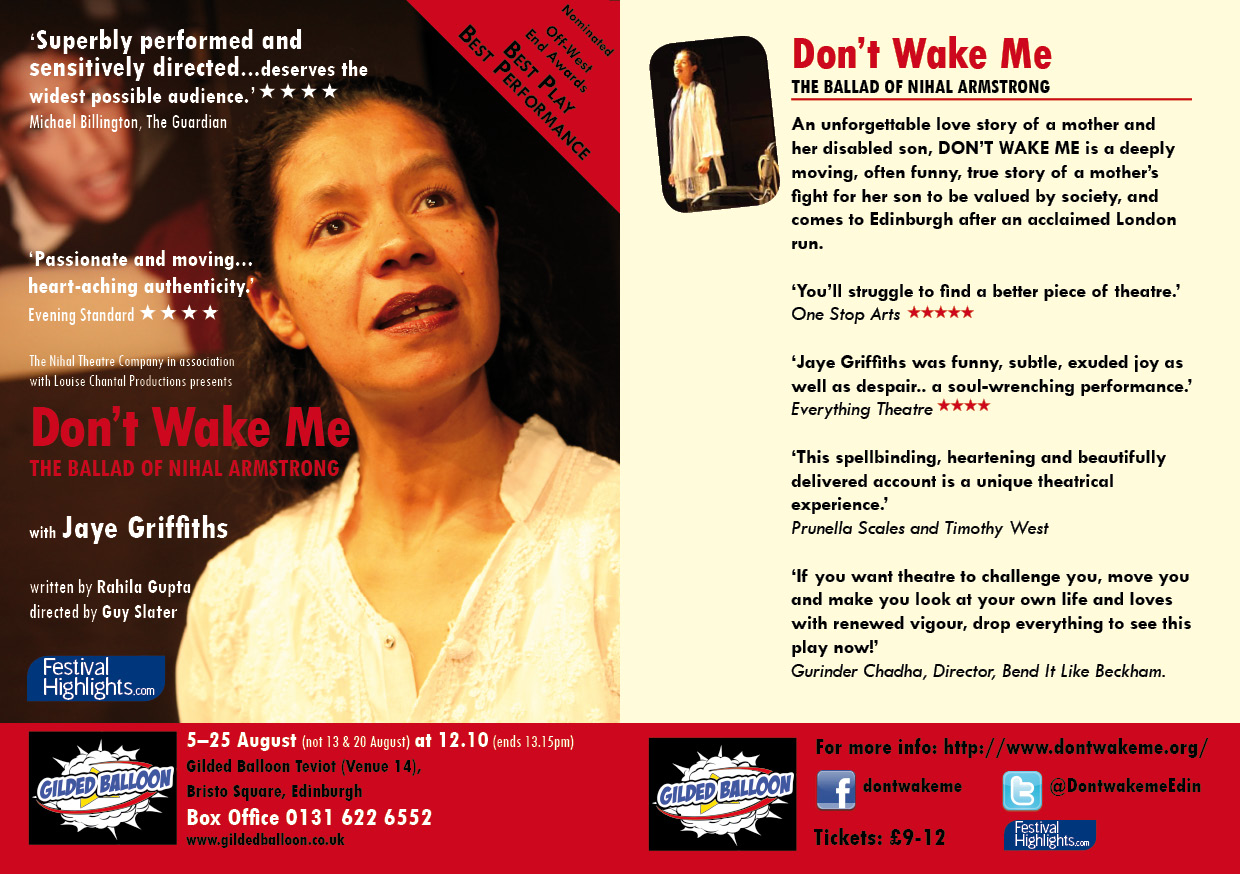
Spencer Davies-Monk: The 8 Year Old With Tourettes

July 2, 2013

Tourette’s Syndrome is often characterised as outbursts of bad language.

But when eight-year-old Spencer Davies-Monk was diagnosed, his parents Richard and Hayley from Upper Heyford, near Bicester in Oxfordshire learned the condition is far more complex.

They also found little help and support as BBC South’s Peter Cooke reports.

You can hear more of Spencer’s story all this week on BBC Radio Oxford’s Kat Orman Show between 13:00 and 16:00 BST.

Contact Lenses Give Telescopic Vision For Age-Related Blindness

July 2, 2013

Researchers have created contact lenses which, when paired with special spectacles, bestow telescopic vision on their wearers.

The contact-lens-and-spectacles combination magnifies scene details by 2.8 times.


Polarising filters in the spectacles allow wearers to switch between normal and telescopic vision.


The telescopic sight system has been developed to help people suffering age-related blindness.


Age-related macular degeneration is one of the most common forms of blindness and damages the part of the eye, the macula, that handles fine detail. As this area degenerates, sufferers lose the ability to recognise faces and perform tasks, such as driving and reading, that rely on picking up details.

Precise control

The contact lens created by the researchers has a central region that lets light through for normal vision. The telescopic element sits in a ring around this central region. Tiny aluminium mirrors scored with a specific pattern act as a magnifier as they bounce the light around four times within the ring before directing it towards the retina.


In ordinary use, the magnified image is not seen as it is blocked by polarising filters set in a companion pair of spectacles. Wearers can switch it on by changing the filters on the spectacles so the only light falling on their retina comes from the magnified stream.


For their filtering system, the researchers, led by Joseph Ford at UC San Diego and Eric Tremblay at Switzerland’s EPFL, adapted a pair of glasses that Samsung produces for some of its 3D TV sets. In normal use, these spectacles create a 3D effect by alternately blocking the right or left lens.


The prototype contact lens produced by the team is 8mm in diameter, 1mm thick at its centre and 1.17mm thick in its magnifying ring.


“The most difficult part of the project was making the lens breathable,” Dr Tremblay told the BBC. “If you want to wear the lens for more than 30 minutes you need to make it breathable.”


Gases have to be able to penetrate the lens to keep the parts of the eye covered by the contact, especially the cornea, supplied with oxygen, he said.


The team has solved this problem by producing lenses riddled with tiny channels that let oxygen flow through.


However, said Dr Tremblay, this made manufacturing the lenses much more difficult.


“The fabrication tolerances are quite challenging because everything has to be so precise,” he said.


Despite this, gas-permeable versions of the telescopic lens are being prepared that will be used in clinical trials in November, he said. Eventually it should be possible for those with age-related sight problems to wear the telescopic lenses all day.


The lenses are an improvement on other ways these sight problems have been tackled which has included surgery to implant a telescopic lens or wearing bulky spectacles that have telescopic lenses forming part of the main lens.


The lenses may one day find their way into other areas as the research was being funded by Darpa, the research arm of the US military.


“They are not so concerned about macular degeneration,” he said. “They are concerned with super vision which is a much harder problem.


“That’s because the standard is much higher if you are trying to improve vision rather than helping someone whose eyesight has deteriorated,” he said.

York Disabled Woman May Be Forced To Move House By Bedroom Tax

July 2, 2013

DisabilityCare In Australia: Guardian Readers Respond

July 2, 2013

Following on from yesterday’s launch of Australia’s new disability care insurance scheme, Guardian readers explain how this will affect their lives.

Do Welfare Reforms Violate Human Rights?

July 2, 2013

Snooker Player Ali Carter Has Testicular Cancer

July 1, 2013

I love snooker and I think he’s a great player. I’ve just found this out and am writing this post with some sadness.

He also has Crohn’s, which makes him a spoonie. And a truly DisAbled one at that- my favourite kind of person.

I wish him well.

Australia Launches New DisabilityCare National Insurance Scheme

July 1, 2013

As Australia launches a new national insurance scheme, DisabilityCare, today, the Guardian wants to know how this will change the daily lives of disabled people in Australia.

Aisha Chaudhary: Singing In The Life Boat #INKtalks

July 1, 2013

This is so interesting and inspirational. At 15, she has more strength than most adults.

Miss Iowa 2013, Nicole Kelly, Is DisAbled

June 30, 2013

I’m very pleased to have just heard of her. I do hope she becomes Miss America. Or maybe even Miss World. Wouldn’t that be a special piece of progress?

Readers, are there any other DisAbled women competing for Miss America 2013 that I can keep my eye on? Or for Miss Anywhere Else?

By the way, to the feminists who disagree with beauty pageants, I say, I’m a feminist, too. But if non-disabled girls are participating in beauty pageants, then why shouldn’t disabled girls be allowed to participate as well?

Fifth Sense- The UK’s First Support Group For People With No Sense Of Smell

June 30, 2013

Readers, this article has got me wondering about something. We know so much about people who lose, or are born without, the senses of sight and hearing. These differences are recognised, considered disabilities by many. So why am I only just finding out the seriousness of losing your sense of smell? Why have I only just learnt that it is possible to be born without a sense of smell?

I’m glad there’s a support group for this as it sounds like a very serious condition. I think much more awareness needs to be raised about the seriousness of it.

Double Olympic gold medallist James Cracknell says he is unable to smell or taste very much due to a brain injury he suffered. What is life like without these senses?


Duncan Boak lost his sense of smell in 2005 after a fall resulted in a serious brain injury. With smell said to be responsible for 80% of the flavours we taste, the impact of losing it has been huge.


“It’s so hard to explain but losing your sense of smell leaves you feeling like a spectator in your own life, as if you’re watching from behind a pane of glass,” he says.


“It makes you feel not fully immersed in the world around you and sucks away a lot of the colour of life. It’s isolating and lonely.”


Like Boak, double Olympic gold medallist James Cracknell suffered a serious brain injury. He was hit by a petrol tanker while riding a bike in the US in 2010. In an interview with the Radio Times this week he said he was now unable to smell or taste very much.


Eating is just something he has to do to survive, like putting petrol in a car.


The loss of taste, known as ageusia, is rare and has much less of an impact on daily life, say experts. Most people who think they have lost their sense of taste have actually lost their sense of smell. It’s known as anosmia and the physical and psychological impact can be devastating and far reaching.


“Studies have shown that people who lose their sense of smell end up more severely depressed and for longer periods of time than people who go blind,” says Prof Barry C Smith, co-director and founder of the Centre for the Study of the Senses.


“Smell is such an underrated sense. Losing it doesn’t just take the enjoyment out of eating, no place or person smells familiar anymore. It is also closely linked to memory. Losing that emotional quality to your life is incredibly hard to deal with.”


Sue Mounfield lost her sense of smell three years ago after having the flu. She says the smells she misses the most are not to do with food.


“It’s things like smelling my children, my home and my garden. When they’re gone you realised just how comforting and precious these smells are. They make you feel settled and grounded. Without them I feel as if I’m looking in on my life but not fully taking part.”


Losing your sense of smell also makes the world a much more dangerous place. Even in the womb smell and taste are “gatekeepers” for allowing things into our bodies and rejecting harmful toxins, says Smith.


It nearly had extremely serious consequences for Alan Curr, who lost his sense of smell after knocking himself out in a gym lesson when he was eight.


“When I was at university someone left the gas on by accident. I was home all day but never noticed. At about 3pm my flatmates returned and I was in a bit of a daze but had no idea why. They smelt gas as soon as they walked in the door.”


Boak says he only really started to understand why he was feeling depressed six years after his accident. He started to read about the sense of smell and had a “road to Damascus” realisation that it was the reason he was feeling such emotions. He has now set up the UK’s first anosmia support group, Fifth Sense.


There are no official figures for how many people in the UK suffer from the loss of smell or taste, but estimates for the US and Europe put the number at 5% of the population.


Losing smell happens for several reasons. Some people are born without a sense of smell, it can be the result of a frontal head injury or something as mundane as an infection. Old age is also a factor, with smell and taste deteriorating rapidly after the age of 75.


Unexplained disturbances in smell and taste can indicate the onset of brain illnesses such as multiple sclerosis, Parkinson’s and Alzheimer’s, often years before other more recognisable symptoms emerge.


“An unexplained loss of smell or taste acts like a canary in cage, it is a warning that something is wrong,” says Smith. “People need to get it checked out quickly but they don’t.”


Often the problem is dismissed as trivial by the medical profession, adds Smith. Sufferers agree they are regularly turned away doctors who dismiss the loss of smell as trivial and say there is no treatment.


“Because you’re not in pain many doctors basically just tell you to live with it,” says Mounfield.


Outside the medical profession people often find it amusing and something of an oddity.


The physical consequences can also be extreme. People often lose weight because they no longer get any pleasure from food. Boak says he has been contacted by people who have been hospitalised because they find eating so difficult.


Whether or not anosmia can be cured depends on the underlying cause. Smell can improve for some people but never return for others. It can come back but odours might have been re-coded by the brain so things don’t taste the same. Chocolate can smell like beef.


But unlike sight and hearing, you can improve your smell by training it, say experts. Studies have also shown this applies to anosmia sufferers.


Research by Professor Thomas Hummel, who runs the Smell and Taste Clinic at the University of Dresden in Germany, found that smelling certain strong odours – including rose oil, lemon and cloves – repeatedly over a 12-week period resulted in some improvement in olfactory function.


But for Boak it is a case of working with what he has left. With his taste buds still working he can bring out things like the sweetness and saltiness of food. Textures have also become important.


“I can even detect the different texture of different types tomatoes,” he says. “Not something I thought I would ever have mastered before losing my sense of smell.”

Postman To Tour All 2012 Golden Postboxes To Fundraise For MND Association

June 29, 2013

What an interesting, original idea. And personally, I think the gold postboxes are beautiful.

A postman from Oxford is visiting all of the gold postboxes on the UK mainland that celebrate Britain’s Olympic and Paralympic champions.


Gary White, 29, began his 3,200-mile tour of 104 boxes at Kirkby-in-Ashfield in Nottinghamshire.


He aims to complete his journey on 25 July at the Olympic Park, east London.


At each location, the nomadic postman said he would photograph the postbox and send a postcard to himself to document his journey.

Andy Murray

He plans to use the corresponding commemorative Olympic stamps produced by Royal Mail during the 2012 Games.


At Dunblane, the stamp will feature Andy Murray, recognised for his gold in the men’s singles tennis.


The postman’s tour is raising money for the Motor Neurone Disease (MND) Association in memory of his stamp-collecting aunt, Christine Goodall, who lived in the US.


Mr White said: “I have chosen the MND Association as my charity because my aunt sadly died last year, after battling with this disease for five years – she was only 56 years old.


“I had bought all of the special gold medal stamps with the intention of using them to send her a postcard… sadly, time passed too quickly for me to do this.


“I thought that this event would be a good way to raise money and awareness for this disease, to continue the helpful, happy and charitable mood that was present during London 2012, and to use up some of those stamps for a good cause.”


He believes he is the first postman to undertake such a tour.

Babies With Three Parents: Is This A Green Light For The End Of Disability?

June 28, 2013

There’s something very scary on the front page of today’s Guardian. They report that the UK government has backed a new IVF technique that uses DNA from three people.

This means that babies could have three biological parents- one father and two mothers. It sounds like the stuff of science fiction.

The technique, known as mitochondrial transfer, would allow doctors to prevent major childhood diseases- and genetic physical disabilities such as muscular dystrophy. These are passed on through the genes of a mother.

It was pioneered in Britain at Newcastle University, and targets conditions known as mitochondrial disorders. These affect parts of the body that need the most energy, including the brain and muscles.

The move was announced in London yesterday by Dame Sally Davies, the chief medical officer for England. She called the procedure a ‘life saving treatment.’

A consultation by the Human Fertilisation and Embryology Authority published in March suggested the public was generally supportive of the technology. Draft regulations are expected to be ready this autumn.

If MPs approve regulations due to be debated in parliament next year, Britain would be the first country to offer the radical treatment. Doctors would be able to apply for permission to offer the procedure on the NHS before the end of 2014.

The procedure makes genetic modifications to an embryo that will pass down to all future generations. So there could be unforeseen complications much later for any babies born in this way. Also, although the technique has been shown to work in animals, it has never been tested in humans so far.

These are serious concerns which must be carefully considered before this idea goes any further. However, neither of these are the main reason why the idea worries me.

This idea raises many serious ethical issues. As a person disabled since birth, the ethical issues that most concern me relate to disability, disabled people and the value of our lives.

My personal belief has always been that every life is equally valuable. However, what does the idea of eliminating genetic disabilities suggest about the value of the lives of people who already have these conditions? What does it suggest about the value of the lives of people who are born disabled whose conditions are not genetic? About the value of the lives of those who become disabled later in life due to an accident?

Are our lives worth so little that potential parents should be encouraged to consider doing something so drastic, so unnatural, to eliminate the possibility of having a child like us?

Parenthood takes much more than biology, but there’s no doubt that biology is very important. Don’t women with faulty mitochondria deserve the joy of having their own, biological children? Or is there a suggestion that they can somehow help having this fault in their DNA? Surely they can’t- any more than disabled people can help being disabled.

The idea of the procedure being available on the NHS- to anyone, for free, is something that I find particularly worrying.

By giving a green light to the possibility of this procedure, has the Government also given a green light to the start of a world without people born with disabilities? Are we, today, one step closer to such a world?

What does that say about how people like me, who are born disabled, are seen by the mainstream world we live in today, where this procedure is not yet available?

A final, even more worrying thought. In a world where no one is born with a disability, how will those who become disabled later in life be treated?

The idea of babies having three parents will sound, to most, like it has come from another planet. It has certainly given me thoughts that have left me shivering with fear.

If You Want Dead Partner To Attend Appointments, Get In Touch With Psychic, Man Tells DWP

June 27, 2013

I just love his response. In spite of their unbelievable insensitivity, he has shown great strength and humour.

Disabled Muslims Network

June 27, 2013

I’ve just heard about the Disabled Muslims Network. It’s a charity supporting disabled Muslims, their families and carers. It seems to be based in London.

If this interests you, you can follow them on Twitter and Facebook.

islam


Costa Del Sol Family Deaths: Daughter Had A Disability

June 27, 2013

There were reports yesterday that it was Downs Syndrome, but this hasn’t yet been confirmed.

A family has been found dead following a suspected murder-suicide in Spain.

The mother and daughter were found in the bedroom of an apartment in Mijas, on the Costa Del Sol, and the husband’s body was in another room, police said.

The women both held Irish passports; the Department of Foreign Affairs in Dublin told the BBC. Reports suggest the father was British.

The couple, in their 50s, and their adult daughter – who was understood to have had a disability – lived in Spain.

Earlier reports from the Press Association news agency (PA) quoted police as saying all three were British, but the Spanish authorities had been unable to confirm this to the BBC.

The Irish department of Foreign Affairs said it was liaising with Spanish police and was also trying to contact the dead women’s relatives.

The UK Foreign Office said it was also aware of the deaths, was liaising closely with the local police and was “ready to provide consular assistance”.

Spain’s Guardia Civil said the flat was rented and the landlord had raised the alarm.

“The latest information we have is that the owner of the house had not heard from the family for a few days and had not been paid,” a police spokeswoman said.

‘Popular resort’

“He went to the house [on Wednesday] and when there was no reply at the door, he went inside. Inside he saw the man dead on the sofa and immediately called the Guardia Civil.

“When officers inspected the house, they found the wife and the daughter dead in a bedroom.”

An official with Spain’s Interior Ministry said the family had lived for a long time in Mijas, which is a popular resort, inland from the Andalusian coast.

Reports quoting neighbours suggest the man was British and that they had heard three shots in the area several days ago.

The bodies have been removed and the building is cordoned off.

The identities of the dead will be released after post-mortem examinations have been carried out.

Updated 1.30pm: They’ve now been named as Phillip, Sheila and Sophie Wood. ITV reports that a note found in the house suggests the ‘murder suicides’ were linked to daughter Sophie’s disability.

American Police Taser 11 Year Old Girl With Autism

June 27, 2013

Many thanks to Carly Fleischmann, who shared this on Facebook.

Blind Football Legend David Clarke To Be Inducted Into National Football Museum Hall Of Fame

June 26, 2013

I’ve just read this great news at Disability Now. What a big piece of progress for disability sport! May David Clarke be the first of many DisAbled footballers to be given this honour and status.

Bruno Mars: Treasure- Feat Stephen Hawking?

June 26, 2013

Readers, I have a confession to make. I quite like Bruno Mars. His songs have good lyrics and his voice isn’t bad, either.

Now, I think I might have yet another reason to like him. Yesterday, I was listening to his track Treasure when, well, readers, I’m sure I heard Stephen Hawking saying its first line!

I’m sharing the video here because I’d really like someone to confirm that for me. If it is Stephen Hawking, then Bruno Mars must be thanked for making a reference to disability in this video by including him.

Arm Amputee Soldier Hopes For Golf Success

June 26, 2013

Staff Sergeant Paul Swain who lost his arm in a bomb blast in Helmand province in Afghanistan is now hoping to represent Great Britain when he takes on the US in golf competition.

He hopes to be selected for the team in a competition for injured soldiers.

ATOS Assessor Repeatedly Asks ‘What Length Of Time Can You Walk?’

June 26, 2013

Shambolic booking and isolated seating ruins live music for disabled fans

June 26, 2013

A press release from Trailblazers:


Young disabled music fans are being forced to wait hours on hold on premium rate telephone lines to buy accessible tickets to see their favourite artists, are isolated from friends and family at venues owing to a cap on companion seats, and are even missing out on concerts all together when venues delay accepting ‘proof of disability’, a report has found.

The study by the Muscular Dystrophy Campaign Trailblazers, a 500-strong group of disabled 16 to 30-year-olds, was sparked after young people told of experiencing difficulties enjoying a trip to a gig, concert or festival. Trailblazers’ members described being asked to vacate venues before the performer had finished to ‘avoid disruption’ for other customers and finding it impossible to access refreshments and toilets owing to poorly located seating. The young campaigning group, which campaigns on social issues affecting disabled people, also criticised major ticketing websites for failing to offer the option to book accessible tickets online.

The Trailblazers’ Access All Areas study, which surveyed 500 young disabled people*, reveals:

  • seventy-seven percent of young disabled people believe that booking tickets for a live music event puts them at a substantial disadvantage compared to non-disabled friends
  • one in two young disabled people has either missed out on tickets or had a stressful experience booking them
  • half of young disabled people say that facilities provided at venues, like toilets, bars and food stalls, are not suitable to their needs
  • ninety-four percent of young disabled people say that last minute ticketing websites do not cater for disabled people.

With the festival season already underway and Glastonbury just around the corner, Trailblazers is calling on the live music industry to level the playing field for disabled music fans to make sure they can enjoy the same experience as their non-disabled peers, and will today meet with MPs and representatives from the live music industry to discuss ways to resolve the issues facing young disabled music-lovers.

Wheelchair user Catherine Alexander (22) from Wirral has been forced to sit away from her friends, owing to a lack of seating choice available at her local arena. She said:

“The seating arrangements at the local arena are set up so that the wheelchair spaces are positioned behind the companion seats. When I went to go and see Kelly Clarkson it was hardly a sociable experience, we had to resort to texting each other. I felt really isolated, as if I had gone to the gig on my own. I don’t go to this arena anymore because of this issue, but thankfully I’m lucky to live near to another arena which has much better provision for wheelchair seating.”

James Lee (25) from East London has found the process of booking tickets to be one of the biggest obstacles in accessing live music. Most recently, he missed out on tickets to go and see Radiohead. He said:  

“With events that are highly in demand, the submission of proof of disability – whether that’s a copy of your Disability Living Allowance certificate or a medical note – has often meant that I’ve missed out on tickets to live music events all together. Although there is usually an allocation of accessible tickets, the numbers are usually very small. It is so rare to be able to book tickets online and there is often only one telephone booking line for disabled fans, which is oversubscribed, expensive and time-consuming. Being able to book online, like my non-disabled peers, would be much more convenient and take out the unnecessary stress that goes hand-in-hand with buying tickets.”

Wheelchair user Zoe Hallam (22) from Bristol has found that poor venue design has prevented her from being able to move freely around the venue. She said:

“Recently I went to go and see one of my favourite bands, Sigur Rós perform. Shortly after finding my seat at the venue, I realised I would be stuck there until the concert was over. Crowds and poor access routes to bars and toilets mean it is impossible for me to move around the venue once the gig has started. Venues which have separate seating areas for disabled patrons should have a disabled toilet located near or within that area. Having to fight through a crowd in darkness just so I can get to the toilet is not fun, and potentially not very safe. Some venues advertise themselves as being accessible, but really all this means is ‘flat’. When gigs are standing room only it’s impossible for a wheelchair user to see anything going on unless they are right at the front.”

The limited availability of accessible seating was also found to be problematic, with many missing the opportunity to see their favourite artist perform live.

Trailblazers want promoters, venues and ticketing companies to give disabled people the option to buy tickets online and to strive towards achieving the highest standards of accessibility and inclusivity.

Bobby Ancil, Project Manager of the Muscular Dystrophy Campaign Trailblazers, said:

“For many, going to concerts, gigs and festivals is a fundamental part of being young. The live music scene in the UK is burgeoning, however if you are disabled, accessing live music can be far from straightforward. We have heard from many young disabled people who describe their experience of getting tickets to see their favourite band or artist perform live as ‘an absolute nightmare’ because of drawn-out, costly booking processes. They also continue to be frustrated by inflexible company policies that separate disabled music lovers from their friends and family at a show.

“There is no doubt that many venues have made significant headway in improving their facilities for disabled customers. However, we want to see the creation of an online booking option for all disabled music fans at live venues and more inclusive venue designs to ensure that disabled people can sit with more than one friend or assistant without compromising the view of the stage or their ability to enjoy a performance.”

Same Difference: Six Years, Four Days And Counting

June 25, 2013

Readers, I’ve just remembered that my blog, my baby, my virtual best friend turned six on June 21st. In that time, Same Difference has grown beyond my wildest dreams. That’s probably why the exact day of its birthday slipped my mind this year- I was too busy, well, blogging!

So, today’s the day I write you, the people who continue to make it all possible, my annual post of thanks.

I still appreciate every single hit. Although I no longer have time to respond the way I used to, I still read every single comment. So, keep ’em coming!

Here’s to the next six years- to DisAbility and beyond!

Very best wishes,

Samedifference1


Did The Voice Make Too Much Of Andrea’s Disability?

June 25, 2013

Margo Milne makes good points here that I hadn’t considered. Because I was too busy listening to Andrea’s voice to see her as anything but a great singer. Who happened to be DisAbled.

https://twitter.com/MargoJMilne/status/349472058859720704

More on this topic from Frances Ryan at the Guardian blogs.

Autism Summer School To Open At University Of Bath

June 25, 2013

A summer school is due to open at the University of Bath to attract autistic students into higher education.

Issues which may put off prospective students will be covered such as stress and anxiety and how to build social skills while living away from home.

Dr Mark Brosnan said: “It can be very anxiety-inducing this transition of being at home in a structured environment to going to university.”

Thirty places will be available at the summer school which opens in September.

“We are particularly targeting those who are thinking of going to university so we are talking about the higher-functioning end of the spectrum,” said Dr Brosnan, who is running the course.

“There are some very specific needs there – they can be extremely academically gifted and would do extraordinarily well on the academic side but may need additional support on the social side,” he added.

The two-day course will be free to those who have been diagnosed with an Autistic Spectrum Disorder (ASD).

Dr Brosnan hopes to expand the summer school and hold it every year, if funding can be secured.

Scotland Doctors Warn Of Diabetes Amputation Risks

June 25, 2013

Scotland is in the grip of an obesity epidemic. The consequence of this is type-2 diabetes, a weight-related and life-threatening condition.


Almost a quarter of a million people in Scotland have it.


Dr Gerald Spence has worked as a GP at Shettleston medical practice in Glasgow for more than 30 years.


He says: “We’ve had an almost 50% increase in diabetics in the past five or six years in the practice.


“We’ve gone from about 250 to about 350 in the practice.


“Now we are seeing it in younger and younger people. People in their 20s are coming in with symptoms and you think ‘oh goodness me, that sounds like diabetes’.”


The potential consequences of a diabetes diagnosis are stark – blindness, organ failure, heart disease and amputation.


Ten years ago Ricky Callan, from Edinburgh, was a successful actor and comedian, often using his large size as material for his jokes.


He was diagnosed with type-2 diabetes and an infected foot led to doctors having to operate.


Ricky says that when the doctors told him they might have to amputate below the knee “it was like they were saying it in slow motion”.


“I could not take it in,” he says.


“I have lost half a leg. I have got three toes amputated on the other foot and I have had both eyes operated on.


“I have recently had kidney failure and it just eats away at you. You feel like you are dying a slow death and that you are being pulled apart like an Action Man.


“It is tortuous and painful and feels never ending – and it’s my fault, my responsibility.”


Ricky is 52 and was diagnosed in his 30s.


But doctors are now diagnosing patients as young as 13.


That early diagnosis often means that more serious complications will also hit the patient sooner, with years of progressive vascular injury meaning lower limb amputation in their 40s.


Dr Matthew Young, who works at one of Scotland’s largest diabetes clinics at Edinburgh Royal Infirmary, says some studies claim that three-quarters of patients could die within five years of an amputation.


He says: “In 80% or more cases, you will have a heart attack within five years of your amputation.”


According to Diabetes UK up to 19,000 people are diagnosed every year but they believe up to 50,000 are walking around not knowing they have it.


Diabetes UK’s Scottish director Jane-Claire Judson wants the condition to be made a clinical national priority.


“People sometimes talk about the diabetes time-bomb and the way I see that now is that it is almost like the bomb has gone off and there is that beat or two before you hear the blast.


“So we have got a moment right now where we can tackle diabetes care and if we don’t grab that then the consequences for people in Scotland could be severe.”

Protecting Older Disabled People From Living In Poverty

June 25, 2013

Guardian Professional has this article on new research that has been done on Attendance Allowance. I thought it might be useful for some readers.

Dame Tanni Grey Thompson Wants PE To Be Made A Core Subject To Tackle Obesity

June 24, 2013

Readers, I never thought I would be writing that headline. I have written here and here about what PE being a core subject would mean for disabled children in mainstream schools.

All that’s left to say is that if PE ever became a core subject, full provision would need to be made to ensure that any disabled students in mainstream schools could participate safely and to the best of their physical ability.

I know Dame Tanni is a Paralympian, so her interest in sport is natural.  I am one of her many admirers. However, I do find it surprising that she, as a disabled person, has given her support to this idea. Maybe she didn’t feel different and out of place in mainstream PE lessons, as I did. Surely she has thought about how disabled children would cope in mainstream PE lessons? I’m surprised to find this point hasn’t been covered here.


Autistic Boy Cameron, 10, Missing

June 24, 2013

Have you seen him? Please do share, readers.

Models Of Diversity- Documentary Trailer

June 24, 2013

The Limbless Knight

June 23, 2013

Graeae Theatre Company’s latest production.

Andrea Begley WINS The Voice!

June 22, 2013

Readers, I hoped this day would come ever since I saw her first performance. But I never thought it would actually happen!

Andrea Begley has won The Voice 2013. And she has won the competition for one reason and one reason only- because her voice is beautiful.

All three of the finallists are wonderful singers. They all deserve to go far. But I, for one, couldn’t be happier with the result!

So, here are Andrea’s solo performances from tonight. Move over, Stevie Wonder!


BBC Ouch Covers The Spoon Theory!

June 21, 2013

BBC Ouch have run a piece on the Spoon Theory, which I know will interest many of my readers.

Why Is Daniel Radcliffe Playing A Disabled Character?

June 20, 2013

This piece in the Guardian asks why ‘able-bodied’ Daniel Radcliffe is playing a disabled character in the West End. I got all excited when I read it and wanted to write a post about how much I agree with the journalist about disabled characters needing to be in disabled roles. Because readers, I really do feel strongly about that.

But then, readers, I remembered something that I learnt, to great surprise at the time, in 2008. Readers, Daniel Radcliffe does have a disability, and a physical one too. He has dyspraxia.

So readers, that’s why he’s playing The Cripple Of Irishmaan. And that’s why I’m happy that he is playing the role.

Three Year Old Boy Hears For The First Time

June 20, 2013

Parkinson’s Charity Criticises Kanye West ‘On Sight’ Lyrics

June 20, 2013

Kanye West has been criticised by a UK charity over lyrics which make reference to Parkinson’s Disease.

During On Sight he raps: “Soon as I pull up and park the Benz / We get this ***** shaking like Parkinson’s.”

Steve Ford, chief executive of Parkinson’s UK said: “Kanye West has shown an inexcusable level of stupidity and cruelty towards people living with an incurable condition.”

A symptom of the condition is involuntarily shaking.

‘Callous comment’

Ford added: “Life with Parkinson’s is difficult enough without becoming fodder for insensitive celebrities, who should know better, looking for their next big hit.

“People with Parkinson’s have to cope with intolerable social discrimination on a daily basis – often to the point where they are afraid to go out in public.

“This sort of thoughtless, callous comment can only serve to make things even worse for them.”

So far there’s been no response from the rapper.

Parkinson’s is a neurological condition that attacks the part of the brain that controls movement.

Speech, language and facial expressions can also be affected.

One person in 500 people is affected by the condition in Britain.

Most people who get it are aged 50 or over but younger people can have it too and 1 in 20 sufferers are under the age of 40.

Currently, there is no cure for Parkinson’s and the cause remains much of a mystery. Whilst it doesn’t lead directly to death, the symptoms do get worse over time.

Follow @BBCNewsbeat on Twitter

Johnny Depp Has ‘Never Had Proper Vision’

June 20, 2013

Stop press! Johnny Depp is disabled. Johnny Depp. Who next, readers? The Queen?

He’s famous for always wearing tinted glasses.

But now Johnny Depp has revealed the real reason for the accessory, admitting he is ‘basically blind as a bat’ in his left eye. 

The 50-year-old actor toldRolling Stonemagazine that he has been suffering from eyesight issues from birth, and is forced to rely heavily on his prescription glasses.

‘I’m blind as a bat in my left eye’: Johnny Depp has opened up about the real reason he wears tinted glasses

In addition, Johnny said that he is near-sighted in his right eye, and neither condition can be treated.

He explained: ‘Everything is just very, very blurry. I’ve never had proper vision.’

And while the actor is able to rely in his glasses in his personal life, when it comes to his film roles it’s more difficult.


In his most famous guises such as Jack Sparrow, Edward Scissorhands and the most recent Tonto in The Lone Ranger, Johnny is forced to go without his glasses while filming – meaning he can only see a few inches in front of him at any one time.

Johnny also opened up about his split from Vanessa Paradis, his former partner of 14 years with whom he has two children, admitting the break-up last June ‘wasn’t easy’ on anyone.


He said: ‘The last couple years have been a bit bumpy. At times, certainly unpleasant, but that’s the nature of breakups, I guess, especially when there are kiddies involved.

‘Relationships are very difficult. Especially in the racket that I’m in because you’re constantly away or they’re away and so it’s hard. It wasn’t easy on her. It wasn’t easy on me. It wasn’t easy on the kids. So, yeah. The trajectory of that relationship – you play it out until it goes, one thing leads to another.

‘So for whatever reason that ­ceases, it doesn’t stop the fact that you care for that person, and they’re the mother of your kids, and you’ll always know each other, and you’re always gonna be in each other’s lives because of those kids. You might as well make the best of it.’

But Johnny, who was famed for his tumultuous making and breaking up with British model Kate Moss, says he handled his relationship meltdown with more maturity this time round.

He said: ‘In terms of the breakup, I definitely wasn’t going to rely on the drink to ease things or cushion the blow or cushion the situation.

‘Cause that could have been fatal. I felt it was my duty to be real clear throughout that. I had something pretty serious to focus on, really, which was making sure that my kids were gonna be cool.’

And he added that his children are doing well.

‘They’ve been incredibly understanding, incredibly strong throughout the whole ordeal. And it’s hard on every side. You know, Vanessa’s side, certainly not easy. My side, not easy. The kids are the most complicated,’ he explained.

‘The thing is, kiddies come first. You can’t shield them, because then you’d be lying. So you can at least be honest with your kids, and you say the absolute truth to your child – that was very important to not pussyfoot around.’

Work Programme Not Doing Enough For ESA Claimants

June 20, 2013

Providers of the government’s flagship Work Programme have told ministers the costs of helping sick and disabled jobseekers into employment cannot be met under the scheme.


Of those who have been on the scheme for at least a year, a third have begun a job, figures seen by the BBC show.


But in the most challenging group – who claim Employment and Support Allowance (ESA) – only 10% have found work.


Work Programme providers say the needs of these jobseekers are too great.


The Employment Related Services Association (ERSA), representing the providers, says those receiving ESA have complex health and skills requirements and the Work Programme can not “fix all these problems alone”.


“The costs of helping jobseekers on ESA back into work are significant and cannot all be met by the Work Programme,” says the Association’s chief executive, Kirsty McHugh.


“In order for there to be a significant step change in performance in helping these jobseekers into employment, we need greater use of skills and health budgets.”


The call for spending from other parts of the public sector to be channelled in to support the Work Programme is an embarrassment for this flagship government scheme.


The Department for Work and Pensions says the payment-by-results contracts agreed with Work Programme providers already give them “a clear financial incentive to support the hardest to help into work”.


ERSA figures suggest around a quarter of ESA jobseekers have been unemployed for at least 11 years. The DWP says it recognises the “particular barriers facing many of the hardest to help”.


The Labour Party has seized on the request for extra resources as evidence that “there is something seriously wrong with the Work Programme”.


Shadow Work and Pensions Secretary Liam Byrne said: “It’s now crystal clear the system is failing – and the government isn’t fixing it.


“Three quarters of unemployed on the scheme haven’t even started a job, and half of young people still haven’t found their way into a single day’s employment.”

Total wreck

One Work Programme provider, Bromford Group, tries to help some of the most challenging people referred to the scheme in the West Midlands.


Julia Page, 58, suffers from clinical depression and anxiety and has not had a job in over 30 years.


Getting her even to the point where she can attend an interview has already taken over 12 months.


“I was a total wreck. I would cry all day everyday, literally” Julia says.


“It takes a heck of a lot of time to get through it but unless the government is willing to help, people like me and others aren’t going to have that support and I will end up back on the dole.”


Bromford Group is a not-for-profit housing association often working with people facing multiple challenges.


Its enterprise and employment manager James Walsh says the organisation cannot make the numbers add up when trying to help ESA claimants into work.


“We need more money to make it stick, to make it sustainable,” he argues.


“I think everyone would probably say that the forecasts that they made have not proven to be accurate and the issues have proved somewhat more engrained.


“It is a tough job. You don’t cure long-term unemployment in two years.”


There are success stories.


Annie Hunter-Wem has been on ESA for a number of years but, after intensive help from Bromford Group, has now got a job working in a supermarket warehouse.


“I just couldn’t believe I’d done it!” she says. “I broke down when I got in. I just sat at home after I had calmed down and I thought I could have done this a long time ago.”

Bakery Offers Jobs To People With Learning Disability

June 20, 2013

Saba Salman reports from social care charity Camphill’s Lantern Bakery, where her sister, Raana, works. Photographs by Nicola Bensley

Dyslexic Author’s Book About Dyslexic Boy Wins Carnegie Medal

June 19, 2013

Sally Gardner, a dyslexic author once branded “unteachable” at school, has won the prestigious Carnegie Medal for her book Maggot Moon.


Gardner’s novel tells the story of a dyslexic boy living in an alternative 1950s Britain, whose rulers are intent on winning the space race.


“I’m still wondering if I’m going to wake and find that winning the Carnegie Medal is a dream,” Gardner said.


“If it is true, then it has the quality of a dream come true.”


Accepting her award at Wednesday’s ceremony at the Natural History Museum in London, Gardner – who campaigns on behalf of those with dyslexia – criticised education secretary Michael Gove’s new curriculum.


“Without books I would not be a writer and without the zeal of librarians I would not have won this award,” she said. “I believe teachers and librarians should be free to instil a life-long love of learning, without being policed by an outdated curriculum.


“I firmly believe Gove’s new curriculum excludes rather than embraces those like me, and millions of others, with a different way of seeing and thinking.”


Alongside Maggot Moon, the seven Carnegie shortlisted titles were A Greyhound of a Girl by former Booker prize-winner Roddy Doyle, Wonder by RJ Palacio; The Weight of Water by Sarah Crossan; A Boy and a Bear in a Boat by Dave Shelton; In Darkness by Nick Lake; Midwinterblood by Marcus Sedgwick; and Code Name Verity by Elizabeth Wein.


Illustrator Levi Pinfold won the Kate Greenaway Medal, which recognises excellence in illustration, for his picture book, Black Dog.


Both the Carnegie and Kate Greenaway Medals are awarded annually to a book for young people by Cilip: the Chartered Institute of Library and Information Professionals. Gardner and Pinfold each receive £500 worth of books to donate to their local library.


In Gardner’s Maggot Moon, the dyslexic hero Standish Treadwell stands up to a brutal dictatorship. Pinfold’s Black Dog sees a girl called Small Hope facing her fears when she confronts a giant black dog.


“The heroes in both Gardner and Pinfold’s exquisitely realized and highly original books are the antithesis to the heroes we come to expect from Hollywood; both are small and without obvious talent,” said Karen Robinson, chair of the judging panel.


“But in the face of terror their pluck, courage and hope shines brightly through. I’m confident that both books are true modern classics and will be read and enjoyed by generations to come.”


Speaking to the BBC, Gardner admitted that Maggot Moon was a “Marmite book” that had divided readers.


“They either love it or hate it,” she said. “Some little kids get very upset about the language and don’t like the violence – others think it’s wonderful.


“I’ve used very simple language which is deceptive and used very complicated ideas. I can see why they find that confusing.”


Gardner’s dystopian tale also won this year’s Costa Children’s Book Award. Her first novel I, Coriander won the Nestle Children’s Book Prize Gold Award in 2005.

‘Miserable marriage’

In her acceptance speech on Wednesday, the author described her own education as a dyslexic child as “a comedy of errors”.


“If I had been lucky enough to be educated in this enlightened age with Michael Gove and his standardized tests calling the shots, I would currently be considered… thick, uneducable and other words that wouldn’t be considered PC to use today,” she said.


Gardner said she wanted to see “an annulment in the miserable marriage between state education and politics”.


“Wouldn’t it be good if we could let teachers do what they do best – teach. Not judge each child on a series of standardized exams. Let schools embrace, not exclude, those like me with a different way of thinking.


“Stop praising literacy with one hand and closing libraries with the other. Let librarians be free to do what they do best: encourage a lifelong love of reading in every child, even the ones without a hope of ever getting an A star.”


Last year, Patrick Ness’s novel A Monster Calls, illustrated by Jim Kay, won both the Carnegie and Kate Greenway Medals for the first time in the awards’ history.


The Carnegie prize was founded in 1937 in memory of Scottish-born philanthropist Andrew Carnegie and was first awarded to Swallows And Amazons author Arthur Ransome for Pigeon Post.


Other previous winners include Philip Pullman, Anne Fine, Terry Pratchett and CS Lewis.

Daniel Radcliffe Stars In Cripple Of Irishmaan

June 19, 2013

The BBC have collected reviews of Daniel Radcliffe’s latest play, Cripple Of Irishmaan.

Work and Play on the Go, Trabasack Max Briefcase showcased at the Mobility Roadshow

June 19, 2013

A press release from Trabasack:

Leicestershire-based retail and product creation team Trabasack will be attending their 5th year at the up-coming 2013 Mobility Roadshow. Trabasack are enthused to not only meet and catch up with fellow traders, old customers, inventors and visitors to the roadshow, but also showcase the newest addition to their range of lap tray bags.

The Trabasack Max http://www.trabasack.com/max-p-34.html  was introduced for sale in early June 2013, after months of product development and finalising design details, the new bag has received acclaim from both the innovations industry and consumers alike.Each of the Trabasack Max bags includes a lightweight yet sturdy tray surface built into one side, which sits snug and comfortable upon the lap via the cushioned bean bag inserts, allowing the user to work, play or even eat lunch whilst on the go. However, what differentiates the Trabasack Max from its sibling lap tray bags is the upgrade in size and aesthetics. The new Trabasack Max lap tray bag sees an upgrade in internal capacity, now capable of carrying even more of your daily essentials, the Trabasack Max can hold laptops, wallets, magazines and even clothing – making it ideal for everyday use or even short breaks away.

The hand-luggage sizing makes the Trabasack Max ultimately portable, the smart briefcase style and lap tray make it ideal for business or leisure usage, and the option of trims and straps provide the perfect bag for travelling for pleasure.

The internal compartment is lined with a deep, red satin and a choice of trims are available when purchasing the Trabasack Max – stylish and contemporary black or luxury Harris Tweed designs are on offer, with the genuine Harris Tweed being handcrafted by authentic crofters in the Outer Hebrides.

The unique lap tray bag also features a number of additional internal organisational pockets and zip compartments, making accessing and utilising the items stored within even easier.

Although the Trabasack Max has an increased internal capacity, it still remains lightweight and continues to carry the accessible features seen on previous models, proving itself to be the most stylish, inclusive and luxurious wheelchair tray alternative on the market.

Trabasack will also be selling a number of other accessible and inclusive products at the Mobility Roadshow 2013, and they hope to connect with their customer base to inform and inspire future developments in terms of the Trabasack lap tray bag and their overall product range.

The roadshow will also coincide with the recent launch of Trabasack’s boutique-style inclusive design store – Equipped 4 Life – http://www.Equ4L.com – an online shop brimming with the latest inclusive and innovative gadgets and everyday aids. Aimed at everyone but particularly useful for disabled people, including adults and children with mobility or personal care issues.

The Mobility Roadshow 2013 will be even more of a unique gathering this year, as the exhibit sees its 30th anniversary as the most comprehensive and inspiring mobility and lifestyle consumer event of its kind.

This year will see a huge number of activities and exhibitions for visitors to peruse, including exclusive product launches, hands-on product testing and even access to support groups.

The Mobility Roadshow will be held at the Telford International Centre, between the 27th and 29th of June 2013. Doors are open 10am – 5pm Thursday and Friday, and 10am – 4pm Saturday. Admissions, parking and activities are entirely free of charge, and for more information please visit http://www.mobilityroadshow.co.uk/exhibiting/company/146

Trabasack will be on a large stand as part of Kandu Group, the trade association for disabled entrepreneurs. Also at the stand will be co-founders Spokz, DisabledGear, Active Hands and Mountain Trike at Stand B58 and B59. Please come and say hello, we can always be reached by email or if you are a twitter user @trabasack.

An Autistic Boy And God

June 19, 2013

Given my recent post about special needs children, religion and faith schools, this seemed like a good post to link to. Comments welcome below.

George Rolph: New Information, Decide For Yourselves

June 18, 2013

From Welfare News Service on Facebook:

George Rolph, Hunger Striker: Sexist, Homophobic and Hate Speech Supporter?

In a previous update we reported that we have been handed information about George Rolph which MAY show the man in a different light to what many may expect.

Mr Rolph went on hunger strike after having his benefits stopped and despite later having his benefits reinstated he continued to hunger strike in defence of others who have lost benefits as a result or government reforms, he claims.

It is difficult to ascertain the full motives behind his hunger strike and it is not our intention to discredit Mr Rolph. However, we also have an obligation to inform our readers and supporters about the man behind the hunger strike, and any issues which could have a bearing on his actions; so that they themselves can form their own opinions and conclusions.

A few people have accused Mr Rolph of a political stunt due to his alleged connections with the campaign group Fathers For Justice. However he continues to claim that his hunger strike is in defence of those hit by welfare reforms. There is currently no solid evidence to believe otherwise.

The links below allegedly lead to blogs and comments written by George over the period of a number of years. Content in those blogs potentially expose George as a man that some would find difficulty in supporting. Whilst we fully accept that is is possible for everyone to change their views over a period of time it is also just as possible that he has not.

Lack of definitive proof prevent us from categorically stating that the author of these blogs and comments is indeed Mr George Rolph, hunger striker. For this reason I urge you to approach them with extreme caution. It may also be possible that you could broadly agree with the views expressed in these blogs but for some it is highly likely that they could paint Mr Rolph in a different light – particularly for women readers.

Some of the opinions expressed in these blogs could be upsetting and cause anger among some people – follow at your own risk.

Those affected by rape are advised NOT to follow these links.

http://groups.yahoo.com/group/rationshed/message/4869?var=1

http://www.familieslink.co.uk/pages/family_groups_fathers_menonly.htm

http://blog.fathersforlife.org/2010/08/10/false-rape-claims/

http://www.the-spearhead.com/2010/01/26/british-feminists-desperately-trying-to-defend-themselves/
(See comment left by George in comments section)

DISCLAIMER: The Welfare News Service accepts no liability for the content of the information provided here and is not making any form of judgement on Mr George Rolph. The information contained here should NOT be regarded as definitive evidence of the character of Mr Rolph or his reasons for entering hunger strike. We do not warrant that the information contained here or via the links provided is true, accurate or written by Mr Rolph himself.

Disclaimer from Same Difference: Same Difference is not making any form of judgement on Mr George Rolph. The information contained here should NOT be regarded as definitive evidence of the character of Mr Rolph or his reasons for entering hunger strike. Same Difference  does not warrant that the information contained here or via the links provided is true, accurate or written by Mr Rolph himself. Same Difference still offers full support to George Rolph in his fight against benefit cuts. It is simply hoped that readers will decide for themselves how they feel about him after this information has come to light.


NATIONAL THEATRE ASSISTED PERFORMANCES JULY 2013 – JANUARY 2014

June 18, 2013

A press release from the National Theatre:


Olivier Theatre

OTHELLO

by William Shakespeare


Adrian Lester takes the title role and Rory Kinnear plays Iago in Nicholas Hytner’s production of Shakespeare’s play.

CAPTIONED
Sunday 14 July at 2pm
Tuesday 23 July at 7.15pm

Monday 9 Sept at 7.15pm

AUDIO DESCRIBED
Friday 5 July at 7.15pm
Saturday 6 July at 1.30pm
Saturday 3 Aug at 1.30pm
Saturday 7 Sept at 1.30pm

TOUCH TOUR
Saturday 6 July at 12pm

Saturday 3 August at 12pm

Saturday 7 September at 12pm

THE AMEN CORNER

by James Baldwin


Beautifully expressed through the rousing beat of the gospel choir, James Baldwin’s The Amen Corner (1965) will be given full voice in the National’s production.

CAPTIONED
Sunday 28 July at 3pm
Thursday 8 Aug at 7.30pm

AUDIO DESCRIBED
Friday 19 July at 7.30pm
Saturday 20 July at 2pm

TOUCH TOUR
Saturday 20 July at 12.30pm

EDWARD II
by Christopher Marlowe

A behind-the-scenes exploration of power, sexual obsession, and a king who treats the realm as his playground. The National offers a contemporary take on Christopher Marlowe’s magnificent, erotic and violent play.

CAPTIONED
Sunday 29 September at 2.30pm
Monday 14 October at 7.30pm

AUDIO DESCRIBED
Friday 18 October at 7.30pm
Saturday 19 October at 2pm

TOUCH TOUR
Saturday 19 October at 12.30pm

THE LIGHT PRINCESS
a new musical
music and lyrics by Tori Amos
book and lyrics by Samuel Adamson

The Light Princess brings together iconic singer-songwriter Tori Amos with playwright Samuel Adamson and director Marianne Elliott (Curious Incident) in this spectacular coming-of-age story. A dark fairytale about grief, rebellion and the power of love.

Suitable for 13 years +

AUDIO DESCRIBED
Saturday 9 November at 2.15pm


TOUCH TOUR
Saturday 9 November at 12.45pm

EMIL AND THE DETECTIVES
by Erich Kästner
adapted by Carl Miller


Growing up is the most exciting adventure of all. Join young Emil as he says goodbye to his mother, leaves his small town and sets off on a journey that will change his life.

CAPTIONED
Monday 30 December at 7 pm

AUDIO DESCRIBED
Friday 3 January 2014 at 7 pm
Saturday 4 January 2014 at 2pm

TOUCH TOUR
Saturday 4 January 2014 at 12.45pm

Lyttleton Theatre

STRANGE INTERLUDE

by Eugene O’Neill


Eugene O’Neill’s audacious epic is one of the great masterpieces of American theatre. Anne-Marie Duff returns to the NT to play Nina.

CAPTIONED
Tuesday 2 July at 7pm
Sunday 11 Aug at 1.30pm

AUDIO DESCRIBED
Saturday 10 Aug at 1pm
Monday 12 Aug at 7pm

TOUCH TOUR
Saturday 10 August at 11.30am

LIOLÁ
by Luigi Pirandello
in a new version by Tanya Ronder

This high-spirited drama by Pirandello defiesexpectations. It is not the intellectual whirlwind ofhis Six Characters in Search of an Author but takesus instead to the heart of a rural community whereproperty and kinship provoke fierce passions.Liolà, a young man untroubled by tradition, takesthe part of nature all the way.


CAPTIONED
Sunday 27 October at 2.30pm
Tuesday 5 November at 7.30pm

AUDIO DESCRIBED
Friday 25 October at 7.30pm
Saturday 26 October at 2.15pm  

TOUCH TOUR
Saturday 26 October at 12.45pm


The Shed


ROMEO AND JULIET
by William Shakespeare
in a version for young audiences by Ben Power

Join us for this swift, contemporary celebration of Shakespeare’s muchloved drama as we bring Romeo and Juliet to life for a new generation.

Suitable for families with children aged 8 years and over.

RELAXED PERFORMANCE
Tuesday 30 July at 2.30pm

Tickets for the Relaxed Performance of Romeo and Juliet are £8, to book call 020 7452 3961

HOME
created by Nadia Fall

Documentary theatre meets beatboxing and R&B as director Nadia Fall and a team of musicians and actors tell the stories of Londoners who don’t get heard.

CAPTIONED
Wednesday 4 September at 8pm

AUDIO DESCRIBED
Saturday 31 August at 3pm

TOUCH TOUR
Saturday 31 August at 1.45pm

THE WORLD OF EXTREME HAPPINESS
by Frances Ya-Chu Cowhig

Sunny leaves her family and her home in the Chinese countryside to head to the city and the promise of a job in a factory and a new life. But letting go of the past and embracing a bright new future proves harder than she could have imagined.

CAPTIONED
Tuesday 22 October at 8pm

AUDIO DESCRIBED
Saturday 12 October at 3pm

TOUCH TOUR
Saturday 12 October at 1.45pm


New London Theatre, Drury Lane


WAR HORSE

based on a novel by Michael Morpurgo
adapted by Nick Stafford


The National Theatre’s award-winning production continues its record-breaking run at the New London Theatre.

CAPTIONED
Saturday 20 July at 2.30pm
Saturday 14 Dec at 2.30pm

AUDIO DESCRIBED
Saturday 27 July at 2.30pm
Sat 23 Nov 2.30pm

TOUCH TOUR
Saturday 27 July at 12.45pm
Saturday 23 November at 12.45pm

Theatre Royal, Haymarket


ONE MAN, TWO GUVNORS

by Richard Bean
based on The Servant of Two Masters by Carlo Goldoni

with songs by Grant Olding


*****

‘Comic perfection. What are you waiting for? Book now!’

Daily Telegraph


SIGN LANGUAGE INTERPRETED PERFORMANCE
Saturday 13 July at 2.30pm  


CAPTIONED
Saturday 11 January 2014 at 2.30pm

AUDIO DESCRIBED
Saturday 30 November at 2.30pm

TOUCH TOUR
Saturday 30 November at 12.45pm

Apollo Theatre

THE CURIOUS INCIDENT OF THE DOG IN THE NIGHT-TIME

based on the best-selling novel by Mark Haddon
adapted by Simon Stephens

Based on the award-winning novel by Mark Haddon, adapted by Simon Stephens and directed by Marianne Elliott, The Curious Incident of the Dog in the Night-Time is a thrilling new stage play, hailed by The Times as ‘a phenomenal combination of storytelling and spectacle’.

CAPTIONED
Saturday 5 October at 2.30pm
Saturday 7 December at 2.30pm

AUDIO DESCRIBED
Saturday 2 November at 2.30pm

TOUCH TOUR
Saturday 2 November at 12.45pm

RELAXED PERFORMANCE
Saturday 22 June at 2.30pm
To book for the Relaxed Performance call 020 7452 3961

UK Tour

PEOPLE
by Alan Bennett

Tour cast includes Siân Phillips as Dorothy, Brigit Forsyth as Iris, Selina Cadell as June, and Michael Thomas as Lumsden.

There are assisted performances at most venues on the tour which runs from 3 September – Saturday 17 November. Please call the tour venues for details of accessible performances.

PEOPLEvisits: Birmingham Repertory Theatre (3 – 21 September), Leicester Curve (24 – 28 September), Theatre Royal, Norwich (1 – 5 October),  The Lowry, Salford (15 – 19 October), Marlowe Theatre, Canterbury (22 – 26 October), Milton Keynes Theatre (29 October – 2 November), Grand Theatre, Leeds (5 – 9 November) and Theatre Royal Plymouth (12 – 16 November).


Girl, 12, With Downs Syndrome Beaten Up In Park

June 17, 2013

A 12-year-old with Down’s syndrome has been hospitalised by a vicious girl gang who beat her up in a park.

The youngster was playing in a local park in Bolton, Greater Manchester, when she was assaulted by a group of older girls.

The girl was taken to Manchester Children’s Hospital with a serious head injury.

At first she said she had fallen off a swing after the incident on Wednesday.

But her family later reported to police on Friday that she had been attacked.

The nasty assault happened in Bobby Heywood Park, Great Lever, at 7.30pm on Wednesday, June 12.

Police are now appealing for anyone who may have been in the park at the time, or has any information about what happened, to contact them.

Detectives are yet to interview the girl as she is still “unwell in hospital”, police said.

Insp Andy Sidebotham, said: “This incident has quite rightly caused a lot of concern both in the community and on social media networks and I want to reassure everyone that we are taking this extremely seriously.

“Due to the girl’s obvious vulnerability, this case is clearly very emotive, but I want to stress to everyone that we have launched a painstaking investigation to get to the bottom of what happened.

“It is important that officers are allowed to do our jobs and get on with catching those responsible.

“With that in mind we have been speaking to the victim, her family and witnesses, but we still want to hear from anyone who may have been in the playground last Wednesday afternoon.

“The victim initially stated she had fallen off a swing, but her family contacted us several days afterwards to state she had actually been assaulted.

“So, did you maybe see the victim in the park at the time and notice a group of girls hanging round?

“You may not have thought much of it at the time, but clearly this could be relevant to our investigation.

“If you have any information than please get in touch.”

OfCom Censures BBC Radio 4 Over Lynda La Plante ‘Retard’ Use

June 17, 2013

My thanks to OfCom for making the right decision.

BBC Radio 4’s Today programme has been censured by Ofcom over an interview with writer Lynda La Plante, during which she used the word “retard”.

The Prime Suspect author was discussing her induction to the Forensic Science Society when she made the remark.

She used the word a further two times during the show, which aired in March.

Ofcom said although the first use was editorially justified, the second and third “had the potential to cause considerable and gratuitous offence”.

During the interview, La Plante said she was frustrated at being misquoted in the press and pointed to an article published that day in which she was reported to have used the word to describe BBC commissioning editors.

Host Sarah Montague questioned the author further on her use of the language which reportedly “drew gasps” from those who heard it.

La Plante replied: “It was a Q&A, somebody said, ‘How do and where do I send a script to?’, and I said ‘You do not send a script, full script, anywhere, you learn how to do a treatment, because you don’t know if there’s a retard at the end of that envelope reading it’.

“Suddenly I’ve called everybody at the BBC a ‘retard’.”

Changing the subject, Montague said: “…moving on from that use of language, do you feel that the BBC is not listening to you and not wanting to use your work…”

Four listeners complained to Ofcom over the use of the word.

Editorial justification

In its response, the BBC said when La Plante raised the issue of the reported quote, and claimed not to have said it, Montague had assumed she was denying using an offensive term.

The broadcaster considered there was editorial justification for the first use of the word up to that point because the interviewer believed that she was about to offer a clarification – and possibly a denial – about something for which she had been widely criticised, and this merited journalistic exploration.

When it became apparent the clarification was “considerably less significant” than La Plante seemed to have suggested it might be, it was decided to move on in order to avoid further offence, as challenging the language further may potentially increase the offence caused.

Ofcom considered the complaints against guidelines which ensure the broadcast of potentially offensive material is justified by the context.

The regulator noted it was La Plante who first used the word in the programme and also the BBC’s reasoning it was editorially justified to question her about it.

However when the author used it again, it was to confirm she had used it to make a derogatory remark and appeared to not recognise the potential for causing offence.

Ofcom considered the broadcast of the word on the second and third occasions “had the potential to cause considerable and gratuitous offence, and was not justified by the context”.

It added although Montague changed the subject, “it would have been preferable” if the host had directly recognised the potential for offence and apologise to listeners.