Skip to content

Primary Ciliary Dyskinesia

August 11, 2013

Kylie is a happy and affectionate three-and-a-half-year-old who loves looking after her friends at nursery when they get upset.


Her mother, Nhu, believes this caring aspect of her daughter’s character is down to the amount of time she spent in hospital as a baby and toddler.


Kylie has primary ciliary dyskinesia (PCD), a serious and lifelong illness which often leads to permanent lung damage, but she was two years old before she was diagnosed.


Her parents, Nhu and Kevin, noticed soon after her birth that she often had trouble breathing and was producing a lot of phlegm.


After her six-week check-up with the GP, she was referred to a paediatrician the same afternoon but told there was nothing to worry about and sent home.


Over the next 18 months there were repeated trips to A&E with Kylie as she suffered from breathing problems, high temperatures, ear infections and even a bout of pneumonia which saw her kept in isolation for a week.


“We saw so many doctors who assured us that everything was fine… to the point that I was embarrassed to go to A&E,” Nhu says.

‘Frustrated’

It was a stressful and worrying time for the family. Nhu was working full-time, which made the many hospital visits very disruptive.


“I remember one time taking Kylie to the hospital one evening. We finally left after 3am and I was back to work at 8am, with my mother caring for her at home.”


Finally in January 2012, around her second birthday, a CT scan showed that Kylie has a collapsed middle right lung and a build-up of excess mucus in her lower left lung, called bronchiectasis.


But it took another six months before they had a conclusive diagnosis from the specialist lung centre at the Royal Brompton Hospital in London.


Nhu recalls: “Part of me is relieved that we know what it is – but also frustrated by the delay. I look back and kick myself sometimes. If only I had done more.


“I really blamed myself in her first year. Being a first-time mum I thought I had contributed to her condition.”


After the diagnosis, Kylie spent two weeks in hospital on very strong intravenous antibiotics. She also received physiotherapy to clear the dangerous mucus from her airways and has been receiving regular daily physio and massage ever since.


The aim is to dislodge as much of the mucus as possible and prevent it collecting in her lungs where bacteria can colonise.

Permanent damage


Scientists at University College London Institute of Child Health are researching the illness in more detail, funded by Action Medical Research, hunting for genetic changes that cause PCD.


It is estimated that one in every 15,000 to 30,000 babies are affected by PCD in the UK – but in some communities it is more prevalent.


In a community of British Asians living in the Bradford area, for example, one in every 2,265 children has the illness.


The symptoms of PCD can start soon after birth and become very serious if not treated quickly.


Dr Hannah Mitchison, senior lecturer in molecular genetics at the Institute of Child Health, says children can face a lifetime of recurrent chest and ear infections.


“They often develop hearing loss and need hearing aids. Some find their lungs become permanently damaged, meaning they eventually need surgery to remove part of their lung. Some even need a lung transplant.”


Treating children earlier would ease their symptoms, she says.


“Many have advanced lung damage before anyone realises what’s wrong. Better diagnosis and care are needed urgently.”


Kylie loves ballet, she goes to nursery most days and takes part in lots of normal children’s activities – but she does get quite tired. She is also very patient when it comes to all the physio treatment, her mum says.


“She knows she has some yuck in her chest. She understands that she needs to get it out, that we need to clean her chest.


“Her condition is there for life – and she will have to learn to manage it herself as she gets older.”

ATOS Assessors Asked Man If He Needed Ambulance- Then Found Him Fit For Work

August 11, 2013

Madness. Just more proof that assessors have ‘targets’ to meet in finding people fit to work.

Also, he’s 64. Isn’t he past working age anyway? Can someone please clarify? Surely making him work until his 65th birthday would be pointless?

A man who became so unwell during an assessment by benefit inspectors that he was asked if he ‘needed an ambulance’ – was still declared fit to work.

John Flanagan, 64, has a degenerating spine, is unable to stand or walk far, heart disease and problems with his nervous system but was told by benefits test firm Atos that he could do a job.

Six weeks after the assessment Mr Flanagan collapsed due to problems with his nervous system and was rushed to hospital.

He said: “I wasn’t feeling well at all when I went for the assessment, due to stress. They just made me feel worthless. These people don’t have a heart they have a cash machine.”

Mr Flanagan, of Talbot Steet, Hasland worked at Chesterfield Tube Works for 25 years until problems with his back meant he needed a less manual job. He then worked in security for ten years, but seven years ago two cardiac arrests and severe problems with his nervous system saw him give up work.

The dad-of-two is now appealing Atos’s decision but has had his benefits cut and told he must seek work.

Wife Joyce, 63, added: “My husband was getting so unwell and stressed during the assessment they asked if he needed an ambulance. I can’t believe they think he’s fit for work. He has worked all his life but now must go through more stress with the appeals process.”

MP says case ‘crosses the line of basic decency’

Mr Flanagan’s case has been taken up by Colin Hampton of Derbyshire unemployed workers centre in Chesterfield and MP Toby Perkins. Mr Hampton said: “The government is effectively killing its own citizens and labelling everyone on benefits as scroungers. How many more people have to suffer or how many more deaths will there be before this is changed.” Mr Perkins added: “This situation crosses the line of basic British decency.

“Mr Flanagan is an extremely unwell man, who has worked for most of his life and is being made more unwell by this unfair and inconsistent process.”

The Derbyshire Times approached Atos for a comment, but had not received a response as it went to press.

More On Forced Marriages Of Learning Disabled People

August 10, 2013

The government dealt with 114 cases of forced marriage last year that involved mentally disabled people – a number government experts admit is only the tip of the iceberg of a horrendous hidden problem.

The Foreign Office, which runs the government’s forced marriage unit with the Ministry of Justice, released the figure after a high court judge was criticised by campaigners for refusing to annul the marriage of a mentally incapacitated Sikh man from the West Midlands whose parents had imported a wife from India for him.

Mr Justice Holman ruled that the 38-year-old Briton, named only as RG, was unable to consent to marriage because of his learning difficulties. He requires full-time residential care provided by Sandwell borough council. But the judge decided not to recommend a petition of nullity be issued on RG’s behalf after deciding that RG “gained pleasure” from his Indian-born wife, SK, who told the court she did not know about her husband’s significant disabilities until their wedding day.

The judgment drew strong criticism from campaigners against forced marriage, who claim parents in certain communities in Britain often marry off their disabled children in the hope that their (often unwitting) spouses will act as carers.

“The ruling has sent the wrong message,” said Jasvinder Sanghera from the charity Karma Nirvana, which runs a helpline for victims. “One of the definitions of forced marriage is a marriage in which one or both spouses do not or cannot consent and in this case the judge clearly ruled that RG was not capable of consenting to his marriage.”

Commending Sandwell council for raising the alarm, Tom Watson, the Labour MP for West Bromwich East, described forced marriage as “wrong, wrong, wrong”.

In his ruling Holman said: “Although he has such little understanding of marriage that he lacked capacity to marry, he, nevertheless, frequently uses the words ‘wife’, and ‘marriage’, or ‘marry’, in relation to Mrs SK. She visits him regularly, several times a week. Although the visits are quite short, he reacts to them with pleasure and appears to gain pleasure from the visits and from the relationship.”

He added: “Unquestionably, RG cannot gain the support, pleasures and benefits of a marriage, as normally understood. He cannot gain many other of the pleasures of life that are available to persons of normal capacity. But still he gains some pleasure and some benefits from this marriage and relationship.”

The judge also took into account submissions from RG’s wife, who begged for the marriage to stand lest she be ostracised from the Sikh community.

Sanghera said Karma Nirvana had dealt with 32 cases between January and 1 July this year involving disabled people at risk of forced marriage. But she said no one had any idea of the real scale of the problem. “What we hear about is just the tip of the iceberg. By its nature, forced marriage is a very hidden problem.

“The victims are always very vulnerable and isolated – add to that the vulnerability of those with disabilities who are dependent on multiple family members who are usually the perpetrators in these cases and you can see how difficult it can be to identify these victims. Plus very often the community views [disabled people] as being ‘not normal’ and they are stigmatised and hidden away. It’s horrendous.”

She said many care professionals were “too worried about being culturally insensitive and accused of racism” to raise the alarm about forced marriage.

A spokesman for the government’s forced marriage unit acknowledged the 1,500 calls his unit received last year – 114 involving mentally disabled victims – did not reflect the true size of the problem. “We know that this 114 cases does not reflect the full scale of the abuse, and many more cases are not reported.

“Forced marriage does not discriminate between certain ethnic groups or nationalities – we received reports of cases from over 60 countries last year.”

He said the main way in which the government was made aware of disabled people being forced into marriage came via tipoffs from British embassies abroad. They alert the unit when they receive an application for a spousal visa from a British citizen with disabilities. They then ask the relevant local authority to carry out a capacity assessment to assess the potential victim’s ability to consent to marriage and then advise the visa be turned down if necessary.

He said that while 82% of forced marriage victims dealt with by his unit overall were women, the gender split was more like 50-50 for victims with learning difficulties.

Sabbiyah Pervez, operations manager of Inspire, a counter-extremism and human rights organisation that seeks to address inequalities facing British Muslim women, said: “There are cases in my community where disabled men and women are married off to more able suitors. I believe and know that this is arranged to lift or ease the burden of responsibility felt by the mother. It is both tragic and unjust. In the cases I know of the women who enter these marriages come from very poor families in Pakistan where a marriage of this sort is seen as a ticket out.”

But Jagtar Singh, spokesman for the Sikh Federation (UK), said he had lived in the UK for all of his 50 years and had never heard of a case involving a mentally incapacitated Sikh being forced to marry. “The Sikh Federation (UK) totally condemns all form of forced marriages, which represent a form of human rights abuse and is illegal in the UK under the Forced Marriage (Civil Protection) Act 2007.”

He added: “If one of the parties is very mentally disabled the parents should refrain from arranging a marriage and should seek other ways to help their child (that will become a grown adult, but may mentally be of a much younger age) when they are no longer able to assist or are worried what will happen if they pass away.

“Where physical disability is the only issue we believe parents of all backgrounds should help young adults meet a suitable match – the other person may or may not be physically disabled and the couple can decide if they wish to get married.”

Sandwell council, which provides residential care for RG, had asked the judge in the high court case to recommend the official solicitor issue a petition of nullity on RG’s behalf.

Councillor Yvonne Davies, Sandwell’s cabinet member for adult social care, said: “We take our safeguarding responsibilities very seriously and we are committed to protecting vulnerable people.

“In this case, we were concerned a forced marriage may have taken place because we felt the gentleman was not legally able to consent to be married. Therefore, we considered it was our duty to take the matter before the court.”

Watson, whose constituency covers Sandwell, said: “Forced marriages are wrong, full stop. Though I don’t know of many cases of this kind, if it involves people without the mental capacity to make up their own mind, the abuse is compounded. It’s wrong, wrong, wrong. I applaud Sandwell council for their action.”

Autism Campaigner Kevin Healey Doesn’t Feel Safe On Twitter

August 9, 2013

In a statement, he says:

Statement: I’m so sorry at this present time I feel I’m unable to use twitter in a safe environment I have been constantly trolled over the last week and have sent a few twitter abuse report forms to twitter and I personally feel the twitter abuse button is useless, ive reported several incidents and nothng has been done with the TROLLS  twitter offered me extra level support but even failed at that, I have no protection for myself or people like myself who get daily abuse however my campaign will still be running via the official campaign twitter @autismcampaign media press enquires please contact @BoxedOutPR however I will come back on once twitter rectify the situation
#twitter #trolls #cyberbullying #victim #autism twitter abuse thank you to all my supporters im afraid i wont be replying to any messages any urgent messages please contact my Hayley Smith @BoxedOutPR via twitter

autism-campaign.co.uk

Ángela Covadonga Bachiller- Spain’s First Councillor With Down Syndrome

August 9, 2013
A small piece of international progress…


Valladolid – Hoping to make a difference with all the corruption scandals in the Spanish government right now, 30-year-old Ángela Covadonga Bachiller makes history by becoming Spain’s first Down Syndrome Councillor in Valladolid.

“I want to be an honest politician” said Bachiller as she began her job on Monday, as a representative of Spain’s ruling Partido Popular in the city of Valladolid in north-western Spain. The previous holder of her post was forced to resign over corruption charges.

Bachiller told Spain’s La Vanguardia newspaper, “I don’t like dishonest politicians and those who don’t work for the people.”

Bachiller has known for some time that she would be taking up a new political role, but her family kept her out of the spotlight up until recently, when she was officially named a Councillor in the city’s town hall.

“I’m very excited, a bit nervous and surprised that there has been so much media attention,” Bachiller told the media. “It was a special moment in my life.”

Bachiller has been working for the last two and a half years as an administrative assistant in the Department of Social Welfare in Valladolid. She narrowly missed out on a spot as Town Councillor in 2011, but along the way made many friends.

Because of those friends and the fact that she was so close to winning in those elections, Valladolid’s city mayor Francisco Javier León de la Riva described her as “an example of strength and of someone overcoming obstacles.”

Her father describes her as “a very responsible and stubborn kid” and her mother says that she is “prepared, qualified and discrete.”

Her father told El País newspaper, “if she had to get up a six o’clock instead of seven to study because she was finding it (the schoolwork) harder, she would.”

According to her boss in the social welfare department, Rosa Hernández: “The most important thing is that her family didn’t overprotect her.”

“She’s tenacious and capable of carrying out her work at all times,” Hernández added.

Bachiller’s new position as a Councillor will mean that she will be taking part in municipal plenary sessions and other meetings. She is a strong believer that people with disabilities should be allowed to vote.

Bachiller told La Vanguardia, “I’ve always voted since I was 18 years old, but other people (in my situation) have never been able to.”

In Spain, people with intellectual disabilities are theoretically entitled to vote. However, should a Spanish judge declare a person with a disability “incapacitated”, they automatically lose the right to vote.

“We (people with disabilities) want the laws relating to the right to vote changed,” Bachiller told La Vanguardia.

When Bachiller was asked whether she thought it should be a normal thing for people with disabilities to work as politicians she said, “Yes, but I have to admit that not everybody dares to include us on their electoral list.”

While she recognizes that the road ahead of her will be tough, Bachiller hopes that she isn’t the only one with Down Syndrome to become a politician.

And not only has she worked hard to attain her current position as Councillor. According to her father, she also studies English and plays the piano, “very well.”

Never a dull moment ahead too, as her first activity on Monday was participating in a full council covering topics as varied as the accession of Valladolid to the Accessibility Network, the plans of supplier payment and also for the promotion of electric vehicles in the city.

PCC Steps In After Hate Crime On Mobility Scooter Woman

August 9, 2013

POLICE and Crime Commissioner Olly Martins is urging people to become good samaritans in the fight against hate crime after a disabled woman was harassed by a group of teenagers in Brickhill.

The lady was subjected to a stream of abuse by a group of teenagers as she travelled home on her disability scooter, before they ran off taking her handbag with them. After visiting the woman, Commissioner Martins said he was concerned that no-one had come forward with information.

He said: “We need good samaritans who are not prepared to look the other way. I’m asking anyone who is either a witness to this type of behaviour, or indeed a victim, to tell the police, so that they can take action.”

The Commissioner heard that during the victim’s 40 minute ordeal the group shouted abusive comments such as ‘spastic on a scooter’ before stealing her handbag and running off.

Her route, which started at 5.10pm on July 3, covered De Parys Avenue, Park Avenue, and Bedford Park, Larkway, Avon Drive and the footpath past St Marks Church on to Jackmans Walk, Tyne Crescent and Carron Road before taking Skerne Passage to Browney Path.

Commissioner Martins said: “Someone must have seen or heard something during a 40 minute period in broad daylight and I really hope that they are prepared to come forward. This could be the key to identifying those responsible before they strike again.

“Hate crime is insidious. It’s totally unacceptable and should not be tolerated. I believe that the majority of the public agrees with me and I hope that they will see the importance of reporting any instances that they see.”

The Commissioner’s visit was made following his pledge, as victims’ champion, to listen to the experiences of those people who have suffered from a variety of different crimes to enable him to improve the services provided by the police and other agencies.

Anyone with any information can contact PC Julie Jennings by the 24hr non-emergency number 101, or text the control room direct on 07786 200011 or call independent charity Crimestoppers on 0800 555111. You do not have to give your name but could still receive a cash reward for your information.

Autism Affects Genders Differently Finds Study

August 9, 2013

Autism affects male and female brains differently, a study has suggested.


UK experts studied brain scans of 120 men and women, with half of those studied having autism.


The differences found in the research, published in journal Brain, show more work is needed to understand how autism affects girls, the scientists say.


Experts said girls with the condition could be more stigmatised than boys – and it could be harder for them to be diagnosed at all.


Autism affects 1% of the population and is more prevalent in boys, so most research has focused on them.


In this study, scientists from the Autism Research Centre at the University of Cambridge used magnetic resonance imaging (MRI) to examine how autism affects the brain of males and females.


Male and female brains differ anyway – tissue volume is greater in males.

‘Look-alikes’

The study looked at the difference between the brains of typical males and those with autism – and then females with and without autism.


They found the brains of females with autism “look” more like – but still not the same as – healthy males, when compared with healthy females.


But the same kind of difference was not seen in males with autism – so their brains did not show “extreme” male characteristics.


Dr Meng-Chuan Lai, who worked on the study said: “What we have known about autism to date is mainly male-biased.


“This research shows that it is possible that the effect of autism manifests differently according to one’s gender.


“Therefore we should not blindly assume that everything found for males or from male-predominant mixed samples will apply to females.”


He said future research may need to look at males and females equally to discover both similarities and differences.


Dr Lai added: “Lastly, there really needs to be more research and clinical attention toward females ‘on the spectrum’.”

‘Masking’


Carol Povey, Director of The National Autistic Society’s Centre for Autism, said: “Historically, research on autism has been largely informed by the experiences of men and boys with the condition.


“This important study will therefore help our understanding of how the condition differs between genders.”


She added: “Girls can be more adaptive than boys and can develop strategies that often mask what we traditionally think of as the signs of autism.


“This “masking” can lead to a great deal of stress, and many girls go on to develop secondary problems such as anxiety, eating disorders or depression.


“It’s important that we build on this study and more research is conducted into the way autism manifests in girls and women, so that we can ensure that gender does not remain a barrier to diagnosis and getting the right support.”

Disabled Man Sleeping Outside After Eviction, Says Carer

August 9, 2013

A carer says she fears for the wellbeing of a disabled man who has spent two nights sleeping outside after being evicted for allegedly abusing his neighbours.

Wheelchair user Vincent Tumulty was forcibly removed from his home in Clarendon Park, Leicester, on Monday after the landlord obtained a court order to eject him.

The 51-year-old, who has multiple sclerosis, sat in the street outside his former home, saying he had nowhere else to go.

Yesterday, his carer Iwona Nawrocka said Mr Tumulty had spent Monday and Tuesday nights in a small, open wooden shelter close to his former house.

She said: “He has multiple sclerosis and usually needs two carers when he’s at home.

“How can he cope outside with no toilet, no food, nothing?

“No one is stepping forward to help him – it’s disgusting.”

The Mercury was unable to contact Mr Tumulty yesterday to ask him where he was planning to stay last night.

He told the Mercury on Monday social services had offered him temporary accommodation but had said he had to get rid of his dogs, which he was not willing to do.

Police were called to assist with the eviction on Monday after Mr Tumulty barricaded the front door of the house from the inside with his electric wheelchair.

Officers managed to break down the door and force their way past him.

He was led, half-dressed, into the street where police explained he could no longer live at the address.

The doors and windows of the property were then boarded up to prevent Mr Tumulty from going back inside, as he looked on from the street.

However, before the building was closed off, Ms Nawrocka managed to rescue a box of Jack Russell puppies which had been born that morning.

The rest of Mr Tumulty’s belongings remained inside.

Landlord Vipen Gohil said Mr Tumulty was being evicted because he had been abusive to neighbours – something Mr Tumulty denies.

Ms Nawrocka said: “I think it’s rubbish. He gets on really well with his neighbours.

“He lets the son of the lady next door come round and use his internet and gives him money for walking his dogs.”

His neighbour, who did not want to be named, said: “I’ve only lived here for a few months, but he’s always fine with me.

“He has never been abusive.”

Leicester City Council said Mr Tumulty had visited its housing options office yesterday and put in a bid for a property.

It is not clear how long the process will take or where Mr Tumulty will stay in the meantime.

Leicester South MP Jon Ashworth’s constituency director, Gavin George, said: “I know Jon will happily look into the matter for Mr Tumulty and assist him to find appropriate, suitable accommodation.”

Plaque To Mark First Performance Of Beethoven’s 9th Symphony

August 9, 2013

The site of the first UK performance of Beethoven’s Ninth Symphony is to be marked with a plaque.


Westminster Council will install one of its green plaques at 252 Regent Street, the former home of the New Argyll Rooms, which is now a bank.


Commonly called Ode To Joy, the Symphony was commissioned by the Royal Philharmonic Society in 1822 and first performed in the UK on 21 March, 1825.


The plaque will be unveiled by the Society’s chairman on 11 August.


Beethoven was paid £50 to write the symphony, and was completely deaf by the time of its completion in 1824.


The choral finale incorporates and adapts Friedrich Schiller’s poem Ode To Joy – an idea Beethoven had first contemplated as early as 1793, but one which was still relatively new and controversial.


Following the first performance at the Argyll Rooms by conductor Sir George Smart, the work was criticised for its length and “diffuseness”, with one critic branding it “an unequal work, abounding more in noise, eccentricity, and confusion of design”.


Twelve years passed before the Society attempted to perform it again, but it has since become one of the most beloved works in the symphonic repertoire – and is the most-requested piece of classical music on Desert Island Discs.

Applause

Although it received its English premiere in 1825, the official debut, with Beethoven in attendance, took place in Vienna a year earlier.


According to the composer’s biographer, George Grove, Beethoven was unable to hear the music, but stood next to the conductor during the performance to guide him as to the tempo.


Grove wrote that, as the symphony drew to a close, Beethoven “was not even sensible of the applause” and “continued standing with his back to the audience” until one of the soloists turned him around to face the crowd.


“A volcanic explosion of sympathy and admiration followed, which was repeated again and again, and seemed as if it would never end.”


Ahead of the plaque being unveiled, Chairman of the Royal Philharmonic Society John Gilhooly thanked Westminster City Council for marking the “significant moment in London’s musical heritage”.


“Buildings come and go, but the essential nature of the human spirit, which Beethoven so perfectly encapsulates in his famous symphony, remains constant,” he added.


Councillor Robert Davis, Westminster Council’s deputy leader, said: “We are delighted to be working with the Royal Philharmonic Society to honour an important moment in Britain’s musical history.


“Beethoven’s Ninth Symphony is considered by many to be the greatest piece of music ever written – even the original score has been added to the United Nations World Heritage List.”


The unveiling ceremony will feature a performance of Joie de Vivre, a new fanfare commissioned by the Society from 18 year old composer Bertie Baigent, performed by brass players from the National Youth Orchestra.

If Spasms Could Speak

August 9, 2013

This is inspired by the title of Robert Softley’s latest work, but is based on my personal experiences. Next time you see a nonverbal person having a spasm, please try and consider what the spasm might be saying.

If Spasms Could Speak

Somebody asked me the other day

If spasms could speak, what would they say?

I started to think and remembered the time

I met you in the treatment room.

I went up to you and started to say

Hello and ask how was your day?

You took my hand and held it so tight,

That you pulled me halfway across the room.

When I asked them what you were trying to say

They told me it was a spasm.

I like to think that spasm was saying

You were happy to see me.

Somebody asked me the other day

If spasms could speak, what would they say?

I started to think and remembered the time

I was getting on a flight, later on that night.

We met and I talked about how I was scared to fly

Your foot stopped moving. They told me it was a spasm.

I like to think that spasm was saying

You were worried about me being worried.

Somebody asked me the other day

If spasms could speak, what would they say?

I started to think and remembered the time

We met when your mum wasn’t well.

I asked why she wasn’t with you

They told me she was ill

The beautiful smile faded from your face- they told me it was a spasm.

I told you she would be fine, because I like to think that spasm was saying

You were worried about your mother.

Somebody asked me the other day

If spasms could speak, what would they say?

I started to think and remembered the time

We were alone in the empty treatment room.

You heard your mother’s footsteps

And I thought you would fall out of your chair

I was terrified- they told me it was a spasm.

I like to think that spasm was saying

You were pleased to see your mother.

Somebody asked me the other day

If spasms could speak, what would they say?

Thinking hard about this question, I think I have an answer.

I like to think that if spasms could speak, they would express love.

RELAXED PERFORMANCE OF UP DOWN BOY Saturday 21 September at 3pm in The Shed, National Theatre

August 8, 2013

A press release from the National Theatre:


A ‘Relaxed Performance’ of UP DOWN BOY by Myrtle Theatre Company in association with Salisbury Playhouse, will take place on Saturday 21 September at 3pm in The Shed, the National Theatre’s temporary venue.

Specifically designed to welcome people with a learning disability, Down’s Syndrome, Autism Spectrum Condition or sensory and communication disorders into the theatre, Relaxed Performances give those who otherwise might feel excluded from the chance to experience live performance. 

UP DOWN BOY is written by Sue Shields – the mother of a child with Down’s syndrome – with creative support from Catherine Johnson (writer of Mamma Mia!). The central character, Matty, is played by the writer’s own son.

Matty is off to college in an hour – and he’s left it to Mum to pack his case. She won’t miss the slamming doors, the queue for the bathroom and the phone bills. But Matty is no ordinary teenager and will his mother cope without him? This honest and uplifting play was inspired by the extraordinary life story of a boy with Down’s syndrome and his mother’s humorous perspective on bringing him up.


Relaxed Performances have a less formal, more supportive atmosphere in order to reduce anxiety levels. There is a relaxed attitude to audience noise and movement and some small changes made to the light and sound effects. Parts of The Shed foyer will be available as a quiet space for those who need to leave and re-enter the auditorium during the show. After the performance, the audience will have the opportunity to stay to meet the actors who will be in costume but out of character. ‘Visual stories’, which give information about the theatre and the show, will be provided to all bookers to help support their visit.


Myrtle Theatre Company’s other productions include Hot Air which will play at Bristol’s Tobacco Factory Theatre in July and August.


The Shed Partner is Neptune Investment Management.


You can follow The Shed on Twitter @ntSHED using #ntSHED or visit www.theshedtheatre.co.ukfor more information about the venue and what’s on.


For further information please contact: Susie Newbery on 020 7452 3061; snewbery@nationaltheatre.org.uk

Traditional Britain Group- The New BNP?

August 8, 2013

Thanks to Sunny Hundal at Liberal Conspiracy for bringing this new far-right group to my attention. This is the new BNP.

Their views and policies are scary for many reasons, but the two that will be most relevant to Same Difference and its readers are:

  • We believe in the obligation of labour and the rolling back of the welfare state.

And:

  • We are opposed to Political Correctness and support the repeal of all cultural-Marxist legislation.

In English, I read that as ‘everyone has a responsibility to work and benefit claimants can p*** off’ and ‘We hate the Equality Act.’

Maybe Collin Brewer and Claire Khaw would like to join them?


The Edinburgh Fringe Needs To Be More Accessible

August 8, 2013

To disabled audiences, says this article.

The World Dwarf Games

August 8, 2013

The sixth World Dwarf Games is taking place in the US state of Michigan. Simon Minty – who has restricted growth – has travelled 4,000 miles to attend.

If you spend most of your life surrounded by people who are two feet taller than you, then a week in the company of people who are the same height can be both exhilarating and daunting.

This is my first time at the World Dwarf Games and I wasn’t at all sure what I’d think of it.

With nearly 400 athletes from 17 nations competing, it’s the largest sporting event in history exclusively for athletes with dwarfism.

I have restricted growth (or dwarfism) and stand at just under four feet (117cm) tall.

People of restricted growth are not all of the same size or physical ability and so, as in the Paralympics, athletes here are classified in terms of ability. There are three classifications and I’m somewhere in the mid-range – it’s a rare and peculiar sensation to know that here I’m officially average.

Dwarfism is pretty loosely defined. Roughly speaking, if you are equal to, or under four feet 10 inches (147cm) and have a physical condition to accompany your smaller size, then you’re probably in.

There are about 200 different types of dwarfism, and some are unique to the individual.

And it’s not as if we’re all the same height. People with dystrophic dwarfism, for instance, can be a foot taller (30 cm) than another. Even as someone with dwarfism, it’s visibly arresting to see one athlete competing against another who is twice their height.

Here at the Games you can see, or compete in, more than 20 events. One of my favourites is the physically demanding basketball. It’s played at a furious pace and the hoop remains – challengingly – at the standard height.

There’s swimming, track and field, through to the more sedentary yet strategic boccia – a cross between lawn bowls and boules that you may have glimpsed at London 2012.

I confess I’m not competing, I’m here just as a supporter although I have been politely told by some that I have no excuse, because there is a big choice of events for differing abilities. Something for me to consider for the next games in 2017 then.

The first competitive games for athletes with dwarfism started right here at the Michigan State University campus back in 1985. Back then it was as part of a wider disability games for those with cerebral palsy and those known as “les autres” (French for “the others”) – a non-specific category you sometimes see in disability sport. It suggests we don’t quite fit in anywhere else.

Things have moved on since then. The International Dwarf Athletic Federation was created in 1993 and dwarf athletes are part of the Paralympics. This has helped create stars like Great Britain’s gold medal-winning swimmer Ellie Simmonds.

What is fantastic is seeing so many babies and youngsters with dwarfism here. At the opening ceremony it was remarked that the next generation of people with dwarfism will take it for granted that they can play sport and find a place to compete.

The primary purpose of the games is about sporting competition on a level playing field. But there’s no doubt there are powerful secondary benefits. Apart from keeping people fit, when the tracksuit comes off there’s a chance to meet and just “be”.

It’s great to speak with others at the same eye level. People whom you can naturally pat on the back in sympathy or throw your arms around in celebration. Not having to explain anything, nor have strangers gawp at you, is like having a week off from real life.

Common types of dwarfism

There are 200 conditions which can cause restricted growth. Among the most common are:

  • Achondroplasia – those affected have an average sized trunk and short arms and legs due to abnormal cartilage formation; occurs in approximately 1 in 26,000 births.
  • Hypochondroplasia – a milder form of achondroplasia, caused by disturbances in bone growth. Occurs in between one in 10- 40,000 births
  • Pseudochondroplasia occurs in one in 30.000 births; a faulty gene stops cartilage from developing correctly and turning to bone
  • Diastrophic Dysplasia – features of the condition include short arms and legs, a small chest, clubbed feet and a cleft palate (33%); occurs in one in 110,000 births

It’s not all fluffy warm stuff though. There is serious competition. There are dedicated athletes who train very hard, make sacrifices, have to find sponsorship money, and travel great distances to get the chance to compete amongst peers. Many compete in multiple events.

Men’s football, or soccer as it’s called here, is perhaps the most keenly contested and talked about event at the games. Team GB are the current champs – they won gold at the last Games in Belfast 2009.

Team USA, not to mention Team Australia and Team Europe, want that to change. Different height, yes, but it’s the same rivalries.

In one football match earlier this week, I saw two players collide when going for the ball. One of them was knocked off his feet. Before he hit the ground the opposing player stretched out his arm and caught him.

It was unusual behaviour in competitive sport and it felt like it really was the taking part that was most important.

But while watching later football heats I changed my mind. Team USA scored against Team GB and I felt an immediate ache in my stomach.

Feeling sick that my country’s team had conceded a goal, I realised I’m hooked, and that for many reasons, these games really do matter.

Munchkin Margaret Pelligrini Dies Aged 89

August 8, 2013

Margaret Pelligrini, one of the last surviving Munchkins from classic film The Wizard of Oz, has died aged 89.

Pelligrini, who played the flowerpot Munchkin and one of the sleepy head kids in the 1939 fantasy, died at her Phoenix, Arizona home on 7 August after suffering a stroke earlier in the week.

Born Margaret Williams in 1923, she appeared in the film at the age of 16.

Her death means there are now only two Munchkin actors still alive – Jerry Maren, 93, and Ruth Duccini, 95.

Pelligrini was one of seven original Munchkins to attend an unveiling of a star in their honour on the Hollywood Walk of Fame in 2007.

A wreath bearing her name has been placed on the star, located at 6915 Hollywood Boulevard, by the Hollywood Historic Trust.

In an interview she gave in 2010, Pelligrini attributed her involvement in The Wizard of Oz to being “in the right place at the right time”.

“I have to pinch myself to see if it’s true that I really am famous,” she told the Northbrook Star.

Understanding And Remembrance Day For Severe ME

August 8, 2013

me rememberance

This is a new awareness day, to raise understanding for those living with Severe ME and in tribute to those who have been lost to the condition.

Please read the press release for full details.

Stephen Fry’s Letter To David Cameron On Sochi 2014

August 7, 2013

Pink News have reproduced it and it is a must read so please share.

Stephen Fry, as well as being both Jewish and Gay, is also disabled. So I have to assume that what he says about the 2014 Winter Olympics also applies to the 2014 Winter Paralympics.

Same Difference therefore offers its full support to the campaign to get the 2014 Games moved from Sochi. Not only are many disabled people also LGBT, but I personally also strongly believe that such strong discrimination against any minority group or difference would go strongly against the Paralympic spirit of allowing all athletes who are different to participate and compete in sport in safety and comfort, and tarnish the Agitos as well as the Five Rings.

IPC_logo_(2004).svg

Parental concerns and lack of accessible facilities still preventing disabled children from playing inclusively

August 7, 2013

A press release from Kids:

Playday – Wednesday 7th August 2013


Only 47% of survey responders said that local services and playspaces were accessible to disabled children and young people.


KIDS is the charity that works with disabled children, young people and their families.


To celebrate Playday 2013, KIDS wanted to examine how inclusive play for disabled children has progressed over the past two years.


A survey of over 900 people working across play and leisure provision and disability services in England, found that although attitudes towards including disabled children and young people in mainstream activities has improved, most providers still do not have the resources or support needed to deliver good quality inclusion.


As a result, parents are not confident to leave their children in mainstream services and are preferring to place their children with specialist providers.


This lack of choice is further excluding disabled children and young people from their communities at a period when all children are experiencing a restriction in their ability to play out in their local area.


Parents of disabled children who responded to the survey expressed concerns that disabled children are more likely to be victims of bullying and face further isolation.


The report, released today, highlights the main concerns preventing disabled children from accessing local play and leisure provision, and some ideas on how to address these.


Disabled children and young people have a right to play out with their non-disabled peers too and would benefit from a larger range of options when choosing how to spend their play and leisure time.


KIDS works across England. The charity has also pioneered a range of approaches for working with disabled children including Portage (home learning), Direct Short Breaks and England’s first inclusive adventure playground.


http://www.kids.org.uk/information/108381/kids_playday_survey_report_2013/

Meet Rinkoo Barpaga, A British Asian Deaf Stand Up Comedian

August 7, 2013

Thanks to Limping Chicken who have interviewed him today. Are there other people doing stand-up without hearing?

Busker With CP Tried To Take Own Life After Abuse Tirade Went Viral

August 7, 2013

Alexandria Adamson has told the Bournemouth Echo how she tried to take her own life after this happened to her while busking in Bath:

This was an absolutely awful incident and like all disability hate crimes, should be covered and reported far and wide. The viral footage may be embarrassing for Alexandria, but I, for one, hope it leads to this horrible man being found, named, shamed, and punished. There is no excuse.


Sikh Wife Could Be Jailed For Sex After Arranged Marriage With Learning Disabled Husband

August 7, 2013

This is an awful case. Sadly it is not the only one of its kind within the South Asian community.

I find it absolutely terrible that the husband was forced into the marriage when he ‘has never understood what marriage means’ and does not have the capacity to understand marriage.

While the man’s parents probably wanted to get him “married off” to someone who could care for him after their lifetimes, it has not been revealed why the wife’s parents wanted/agreed to get her married to a man with such serious learning disabilities.

Sadly although people within the South Asian community appear to be willing to accept the forced marriage of learning disabled people, they are far less willing to accept the idea of physically disabled people marrying their children- or any siblings a physically disabled child may have.

It seems to me that the woman did not consent to the marriage for the right reasons either. She clearly wants to stay married to her husband, but only to keep up appearances within the community.

What has also not been revealed is whether the man has any understanding of sex. If he has even a basic understanding, could sex not be explained to him at his level of understanding before it is banned from his life? Since he has a female partner, he would also need to have it explained that sex can sometimes lead to pregnancy.

If there is no possibility of this- and since the wife’s father has now sadly passed away- is there no one who could support her in coming out of the marriage and rebuilding her life, so that she can later meet a husband of her own choice and possibly have some children?

My heart goes out to both of them. It is one of those cases where I really, really wish I could help in some way, but I know that nothing can be done.

Beat The Bedroom Tax!

August 7, 2013

The brilliant Citizen Smart is trying to get musicians together to beat the Bedroom Tax through music. He and three of his friends have just launched this new campaign website. It also includes details of mass sleepouts that they are planning.

Police Called To Help With Eviction Of Disabled Man

August 6, 2013

A disabled man was left partially dressed in the street in his wheelchair after being evicted from his home.

Police had to break down the front door of Vincent Tumulty’s house in Leicester yesterday after he had barricaded himself and his carer inside because he did not want to leave.

The 51-year-old had backed his wheelchair up against the door to stop his landlord and officers entering the property.

However, police were able to force their way past and Mr Tumulty, who has multiple sclerosis, was evicted at about 3pm.

By about 4pm, the windows of the property, in Avenue Road Extension, Clarendon Park, were being boarded up, while Mr Tumulty, who was not wearing trousers, sat outside.

His carer was granted access to the house to collect a small selection of his belongings, including a new litter of Jack Russell puppies which had been born that morning, and which Mr Tumulty clutched in a box outside his former home.

Landlord Vipen Gohil had been granted a court order “as a last resort” to evict Mr Tumulty, whom he described as an “abusive” neighbour.

Mr Tumulty said: “Social services offered me somewhere temporary, but said I had to get rid of my dogs.

“They also said I’d never see them again if I did, so I’m not doing that. That means I’ve got nowhere to go.”

A city council spokesman said it had offered Mr Tumulty a place in a nearby nursing home, which he had declined.

The spokesman said: “That offer still stands. We have also advised him that he can go to the Dawn Centre, and have given him contact details for the Dogs Trust and RSPCA.”

The Dawn Centre, in the city, provides temporary accommodation for the homeless.

Mr Gohil, 42, said he had tried to evict Mr Tumulty in June, but the tenant had resisted.

Yesterday, Mr Gohil, the police and a team of bailiffs were at the scene to remove him.

Mr Gohil said Mr Tumulty was asked to move out after neighbours had complained about his abusive behaviour.

He said: “He was asked to leave about two months ago but refused, so we had to get a court order.

“Neighbours had said he was intimidating them, swearing and throwing glasses. This is a last resort – we haven’t been left with any other choice.”

Mr Tumulty denied he had abused his neighbours.

“That’s absolute rubbish,” he said.

His carer, Iwona Nawrocka, who had been in the house with him when the police broke through the front door, said: “He doesn’t want to leave, he’s been here for three years. He lives by himself, and has MS and he needs care.

“This eviction was humiliating for him, everyone could see him in his wheelchair outside his house, he wasn’t even given a chance to put on trousers.”

A spokeswoman for the police said: “Police were called to assist a landlord in possession of a court order to evict an occupant of a property in Avenue Road Extension.

“Officers assisted in negotiating with the man to voluntarily leave the property where arrangements have been made for him at an alternative accommodation.”

Mr Tumulty said yesterday that he did not know where he was going to spend the night.

Inside The Ethics Committee- Assisted Conception And Disability

August 6, 2013

Radio 4, Thusday, 9am with Joan Bakewell, Prof Deborah Bowman and friend of Same Difference Kaliya Franklin:

Rosemary has battled with severe health problems for many years. She has Ehlers-Danlos Syndrome and, following complications of spinal surgery, she is now a full time wheelchair user and her breathing is impaired. She receives her nutrition via a tube fed directly into her blood stream and she empties her bowels into a bag attached to the small intestine.

She has always wanted a child and now, aged 36 and in the early stages of a relationship, she asks for assisted conception.

The fertility doctor refers Rosemary on to various specialists at the hospital, who enumerate the risks. If Rosemary is to have IVF, she’ll need a general anaesthetic which would be extremely risky for her. Furthermore, any pregnancy could be life threatening to Rosemary and a potential fetus, and the team are concerned about the welfare of a future child. Also, if Rosemary becomes pregnant, her child could inherit Ehlers-Danlos Syndrome as the condition is genetic.

While hospitals look after women with complex problems who are already pregnant, enabling a woman like Rosemary to become pregnant is an ethical challenge of a different order. But Rosemary herself is adamant she wants to take the risk, whatever the potential consequences.

Should the fertility team help Rosemary get pregnant?

Joan Bakewell and a panel of guests discuss this ethical issue.

I’ll be listening with interest.

My personal opinion on this is that Rosemary should have a child if she has a good support network to help her with the child’s physical care, and if she has love to give. The issue of her disability being genetic is of course more complex. However, if her first child inherits the disability by chance, my personal opinion is that she should not have another child, to avoid her disability being inherited again.

Your comments, as always, are very welcome below.

Following The Disabled Parking Space Asda Tragedy

August 6, 2013

This is a great piece that sums up thoughts and feelings that any Blue Badge holder can relate to. If supermarkets can’t enforce the rules on Blue Badge spaces, could they instead consider creating a few more Blue Badge spaces?

I speak as a Blue Badge holder. When I told my mother about the tragic incident at the Asda store, she asked if both men had Blue Badges. Because we have seen far too many people parked in these spaces when they don’t have Blue Badges.

I will never forget one time in a supermarket when someone who didn’t have a Blue Badge asked to see ours when we asked to see theirs! When we showed it to them they drove off muttering something along the lines of “the only disability she has is in the head!” To be fair they hadn’t actually seen me walking…

RNIB Launch Legal Action Against DWP After Blind Woman’s Overdose

August 6, 2013

Readers, some very good news from the Welfare News Service:

UPDATE: I have just been informed that the RNIB has launched a class act against the DWP following a story we published which told how a blind lady took an overdose after being messed about by the department. The lady concerned has informed us that she will keep us updated and could send us a follow up guest post to be published on our website. The Welfare News Service would like to wish her and the RNIB the very best of luck in this legal matter.

Same Difference would also like to wish the lady and the RNIB the very best of luck with the legal action. It is to be hoped that this will lead to significant change in the way blind people are treated by the DWP in future.

A JobCentre Noticeboard With A Difference…

August 5, 2013

Spotted this on Twitter and laughed out loud!

jobcentrespoof

Amputee Knocked Out Of Wheelchair In Poole Hit And Run

August 5, 2013

A POOLE man whose wheelchair was struck from behind by a car, claims he was “left for dead” in the road.


Peter Launder, was on the pavement near his home in Alder Road around 7.20pm last Saturday when a car mounted the pavement ploughing into him and knocking his wheelchair into the road.


“There’s quite a high kerb and the chair tipped over with me in it,” said Peter, 48, who is an amputee.


“I was laid in the road. The car went around me and stopped at the bottom of the hill.”


He said he lay there behind his wheelchair thinking the driver was going to go back and help him.


“I was right in the middle of the road with cars coming up and down,” he said. “I was huddled behind the wheelchair, really, really scared.”


But as other people rushed to help him the car drove off. He had taken the force of the fall on the stump of his right leg and he is now worried about the injury as he is currently being fitted for his first prosthetic leg.


Peter was full of praise for the women who helped him back into his damaged wheelchair and got him home. The police and a paramedic were called and he was taken to Poole Hospital for treatment.


However, he was left shaken and tearful after his experience and is now reluctant to go out.


“They need to put themselves in my position,” he said of the car’s occupants.


“I was so vulnerable. They left me for dead.”


A diabetic, with a broken arm after a fall, a hip problem and suffering a couple of heart attacks last year, the former boxer lost his leg last year after an accident seven year ago when a piece of wood from a fencing panel penetrated it. Twenty-four operations failed to save it.


Dorset Police are hunting a gold Honda 4×4 in relation to the hit and run and are appealing for witnesses.


Anyone who can help should contact them on 101 or free and anonymous Crimestoppers on 0800 555111.

Autistic Achievers Launches Today!

August 5, 2013

I’ve been asked to let you know, readers, that Autistic Achievers, an employment agency for adults with autism run by Phil Evans, has launched today. I fully support this project and wish it and its founder every success.

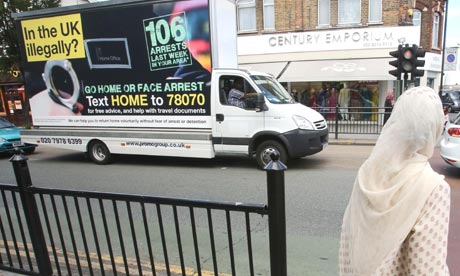
Another Disability-Related #racistvan Parody #disablistvan #atosvan

August 5, 2013

This one thanks to Michael Parry:

disabilityvan


Have you seen one similar? Have you created one or can you think of one to create? Please send them in. If we get enough, I’ll create a page of them for a laugh.

Sadly I don’t have the Photoshop skills to do it myself, but I wish I did!

The Benefit Scroungers Van

August 5, 2013

Readers, I’m not happy about #racistvan in the slightest. But as a good online friend once told me, the best way to deal with discrimination is to laugh at it. So, there have been quite a few #racistvan parodies cropping up on the Net over the last few days. This was the most relevant one I could find to be blogged. Please smile and share so others can share your smiles!

racistvangeorgeosborne

Graphic Designer, 19, With Ehlers Danlos Syndrome Commits Suicide After Saying Pain Unbearable

August 5, 2013

This is heartbreaking.

George Philpott, 19, is believed to have killed himself after saying the pain from his incurable condition was unbearable.

The graphic designer had Ehlers-Danlos Syndrome, like Cherylee Houston, 38, who plays Corrie’s wheelchair-bound Izzy.George’s body was found in a river near his home in Cardiff.

Pal Bethan Williams said: “He’d used all kind of painkillers and none seemed to work.”

DWP Phone Call Leads To Overdose For Blind Heart Attack Woman

August 4, 2013

Readers, this, from the Welfare News Service, is why Sue Marsh is right to think this.

Tuesday 30th July 2013 I took a phone-call from the DWP. Wednesday 31st July 2013 I took an overdose.

9am my phone rings: As normal I answer and a strange unrecognisable man is on the other end. He is explaining he is from the DWP and later TODAY between 10.30 and 4.30pm I will be receiving a phone-call from ATOS regarding a questionnaire. Failure to answer the phone-call or complete the questionnaire, could result in my disability benefit being stopped. He also explained he has written to me 7 days previously, but I explained I was fully blind, so unless I was able to scan the letter I would not be able to know what it said; this apparently was my fault for not having anyone read my mail.

My mind racing at this sudden change of events today meant I had to let the charity I volunteer for down. I run groups of support for them so not only did I let a charity down at the last-minute, but also the people who were relying on me to run that group. I also had an urgent doctors appointment later that afternoon to find out why I am losing feeling and sensation in my feet. The receptionist was annoyed at the last-minute cancellation and made a new appointment for 2 weeks time.

And so I waited for the phone to ring………

An hour later jumping out of my skin the phone rang. The lady on the other end explained I needed to fill out a questionnaire they will be sending me regarding my ability to work. It was explained coldly: because I pose a risk to their staff they will not be doing a home assessment. I cough up blood because of the poor state of my lungs but I also do this discreetly into tissues and not spray it over people, as was insinuated. I was made to feel like I was a walking infection but that was the least of my worries.

The forms are only available in standard print format, which is great if you can see. When I explained I was fully blind her first reaction was, “how do you have your bills then?” I calmly replied to her rude tone that I receive all my bills and correspondence in either Braille or audio format. “Oh…” was the reply. “What about family? They could fill it out for you?” Again I calmly and politely explained I do not have any family and I am isolated due to my disabilities so since being moved to a new area I have not had the chance to make friends because it isn’t easy popping out when you a) cannot walk b) cannot see. “Well in that case I will have to give you another number to ring and see if they can help you as we do not supply our forms in braille or audio”.

I rang that number and they said they did not having the facilities to help fill out questionnaires over the phone, so if I could call another department; I rang that department and was met with the same reply. The disability advisor has already explained on a previous phone-call she does not speak to people over the phone but you have to travel to see her in person. So I tried the fourth number I was given. I spoke to a lady at length who seemed helpful and understanding but unable to provide any answers into how I was meant to fill out a form I was not unable to see. The service previously offered to fill out forms over the phone had ceased due to government cutbacks, so she gave me another number to try, which was closed as they shut from 1pm so I would have to try them tomorrow. In the meantime it was also reminded to me that failure to fill out the form will mean my disability benefit would be delayed until this has been completed, but the silver lining was the number I have to ring tomorrow was not a premium number – unlike the ones I have been calling all day notching up quite hefty phone charges along the way.

That night worried sick I could not sleep. I woke at 4am crying because I felt after trying so hard to get back to work setting up my shop, I was now being targeted. Maybe I was being over sensitive, but that was how it felt and I was scared. In the end I wrote a desperate tweet to Baroness Tanni Grey Thompson for help, as I have found my MP in the past is very anti disabled & unwilling to help me – http://www.twitlonger.com/show/n_1rllkd8:

“@Tanni_GT HELP : I’m scared of what is happening. This morning (9.00am Tues 30th) I had a phone call from DWP informing me that the same day (Tues 30th) I would have a disability assessment over the phone by ATOS anytime between 10.30 and 4.30, and to make sure I am available. He then explained failure to do so would affect my disability benefits and might delay payment if I do not complete it so I had to cancel an urgent doctors appointment because I am losing sensation in my feet later that day at 2.30pm, so I would not miss it. An hour later a woman called me saying because I pose a risk to their staff (I cough up blood because of my lungs) I would have to fill out a questionnaire in the next few days and send it back to them. I explained I am fully blind and the service provided previously that helped me fill out forms has been cut due to government cutbacks. They are aware I am unable to walk so unable to go to one of their offices already. They also do not provide questionnaires in braille or audio format – just standard printed format. I do not have any family & I have become isolated due to my disabilities so no friends close by since I was moved here to be near my rehab centre. I do not have any visitors. Last social visit by friends was back in December. She said they did not have the resources to deal with my disability problems, just mild disabilities and asked me to ring another department for advice and help. I rang them. They said I had to ring another department for advice and help. I rang them – yes they gave me another number. I have now been asked to organise myself an appointment with an ATOS/DWP approved centre and to do this over the phone tomorrow. They said if that centre is not able to help me tomorrow to fill out the forms & questionnaire for my disability assessment to ring them back and they “will have a think on what to do”

Surely if a government department is doing disability assessments they should have the resources to deal with disabilities, and also not put the onus on me to chase around different government departments finding out who does? If I fail my assessment due to being unable to complete it does that mean I am left with nothing? I was made to feel subhuman today being told coldly I pose a risk like I am some disgusting infection because my lungs do not work properly who does not fit into their resources of disabilities. I have to go through the whole process again tomorrow. It is currently 4am and I am crying my eyes out from stress/scared and wondering why I am having to justify why I am working so hard at staying alive to them because they made me feel it was an inconvenience.”


The next morning I was told the assessment centre would be open between 8am and 1pm, and was ATOS approved. I rang nearly every 10 minutes and no-one answered at all during those 5 hours. It just rang and rang. The same time I received amazing support from Tanni & others via twitter. The phone-calls from @bendygirl led me to support from her contacts and my doctor, who had heard about my tweets, telephoned me telling me she would help fill out my forms for me. I rang the DWP lady back informing her my doctor would help with the forms to which she replied, “well it sorted itself out then” – but not before it made me ill!

By now I was experiencing chest pain and having had my second heart attack not long ago this worried me. I took my GTN spray but also my pain meds as my lungs were now in bad shape and my body in general. I was also not paying attention and an hour later I took another set of pain meds. I am not on normal paracetamol, but serious heavy-duty pain meds that allow me to function to some degree throughout the day. It allows me to do some work for my shop while I am on a scheme called “permitted to work” – which I only just started as I was unaware it existed – and allows me a lifeline to build up enough customers and income to come completely off benefits. I am not creating enough orders at the moment to do so.

That night I had to have my stomach pumped and drink a thick charcoal “milkshake”. I also was admitted due to my ECG showing worrying signs from the chest pains that were triggered off by stress.

I am home now, recovering but staying offline for a couple of days until I am stronger. My computer is fixed and I am being targeted by trolls online – throwing abuse my way for being a ‘benefit scrounger’. Yet if that is true why am I working so hard to getting my shop off the ground despite all my disabilities?

This episode has also raised a number of other more serious questions. Not everyone is lucky enough to have a great relationship with their doctors or housing officer like I do – or able to use the internet – so I worry about other blind people who will find themselves in the same situation as I found myself. A lot of blind people become isolated through sight loss especially now with so many resources having been cut back. What would happen to them? DWP & ATOS rely solely on assuming a disabled person has family to do the work for them. When, like in my case, there is no family it feels you’re dealing with a system that has no adaptability to help, or any willingness. A lot of blind people do not have the skill to use a computer or the internet but instead lead solitary lives. Would they just have their benefits cut because they cannot see to fill out a printed form that does not come in other formats? I guess because they do not use the internet we would never hear about it?

The past 2 days I felt humiliated and ashamed of being disabled. I was made to feel I was an inconvenience because I needed help to fill out a benefits form. I cough up blood from my lungs but I do not spray people with it as insinuated by one of their staff saying I was a risk. There was no compassion in their voices, just annoyance.

Thank you to @Tanni_GT and @bendygirl. I don’t think this is the end of my problem as I know more forms will be coming their way over the course of time, but I now have people who are willing to help me in the future. I just hope next time I do not end up in hospital because of it. Despite everything I am doing to try and come off benefits and despite what Iain Duncan Smith says, not all of us on benefits are scroungers. We just need a chance and to be treated as a human being.


@welshwallace (twitter)

Tuesday 30th July 2013 I took a phone-call from the DWP. Wednesday 31st July 2013 I took an overdose.

9am my phone rings: As normal I answer and a strange unrecognisable man is on the other end. He is explaining he is from the DWP and later TODAY between 10.30 and 4.30pm I will be receiving a phone-call from ATOS regarding a questionnaire. Failure to answer the phone-call or complete the questionnaire, could result in my disability benefit being stopped. He also explained he has written to me 7 days previously, but I explained I was fully blind, so unless I was able to scan the letter I would not be able to know what it said; this apparently was my fault for not having anyone read my mail.

My mind racing at this sudden change of events today meant I had to let the charity I volunteer for down. I run groups of support for them so not only did I let a charity down at the last-minute, but also the people who were relying on me to run that group. I also had an urgent doctors appointment later that afternoon to find out why I am losing feeling and sensation in my feet. The receptionist was annoyed at the last-minute cancellation and made a new appointment for 2 weeks time.

And so I waited for the phone to ring………

An hour later jumping out of my skin the phone rang. The lady on the other end explained I needed to fill out a questionnaire they will be sending me regarding my ability to work. It was explained coldly: because I pose a risk to their staff they will not be doing a home assessment. I cough up blood because of the poor state of my lungs but I also do this discreetly into tissues and not spray it over people, as was insinuated. I was made to feel like I was a walking infection but that was the least of my worries.

The forms are only available in standard print format, which is great if you can see. When I explained I was fully blind her first reaction was, “how do you have your bills then?” I calmly replied to her rude tone that I receive all my bills and correspondence in either Braille or audio format. “Oh…” was the reply. “What about family? They could fill it out for you?” Again I calmly and politely explained I do not have any family and I am isolated due to my disabilities so since being moved to a new area I have not had the chance to make friends because it isn’t easy popping out when you a) cannot walk b) cannot see. “Well in that case I will have to give you another number to ring and see if they can help you as we do not supply our forms in braille or audio”.

I rang that number and they said they did not having the facilities to help fill out questionnaires over the phone, so if I could call another department; I rang that department and was met with the same reply. The disability advisor has already explained on a previous phone-call she does not speak to people over the phone but you have to travel to see her in person. So I tried the fourth number I was given. I spoke to a lady at length who seemed helpful and understanding but unable to provide any answers into how I was meant to fill out a form I was not unable to see. The service previously offered to fill out forms over the phone had ceased due to government cutbacks, so she gave me another number to try, which was closed as they shut from 1pm so I would have to try them tomorrow. In the meantime it was also reminded to me that failure to fill out the form will mean my disability benefit would be delayed until this has been completed, but the silver lining was the number I have to ring tomorrow was not a premium number – unlike the ones I have been calling all day notching up quite hefty phone charges along the way.

That night worried sick I could not sleep. I woke at 4am crying because I felt after trying so hard to get back to work setting up my shop, I was now being targeted. Maybe I was being over sensitive, but that was how it felt and I was scared. In the end I wrote a desperate tweet to Baroness Tanni Grey Thompson for help, as I have found my MP in the past is very anti disabled & unwilling to help me – http://www.twitlonger.com/show/n_1rllkd8:

“@Tanni_GT HELP : I’m scared of what is happening. This morning (9.00am Tues 30th) I had a phone call from DWP informing me that the same day (Tues 30th) I would have a disability assessment over the phone by ATOS anytime between 10.30 and 4.30, and to make sure I am available. He then explained failure to do so would affect my disability benefits and might delay payment if I do not complete it so I had to cancel an urgent doctors appointment because I am losing sensation in my feet later that day at 2.30pm, so I would not miss it. An hour later a woman called me saying because I pose a risk to their staff (I cough up blood because of my lungs) I would have to fill out a questionnaire in the next few days and send it back to them. I explained I am fully blind and the service provided previously that helped me fill out forms has been cut due to government cutbacks. They are aware I am unable to walk so unable to go to one of their offices already. They also do not provide questionnaires in braille or audio format – just standard printed format. I do not have any family & I have become isolated due to my disabilities so no friends close by since I was moved here to be near my rehab centre. I do not have any visitors. Last social visit by friends was back in December. She said they did not have the resources to deal with my disability problems, just mild disabilities and asked me to ring another department for advice and help. I rang them. They said I had to ring another department for advice and help. I rang them – yes they gave me another number. I have now been asked to organise myself an appointment with an ATOS/DWP approved centre and to do this over the phone tomorrow. They said if that centre is not able to help me tomorrow to fill out the forms & questionnaire for my disability assessment to ring them back and they “will have a think on what to do”

Surely if a government department is doing disability assessments they should have the resources to deal with disabilities, and also not put the onus on me to chase around different government departments finding out who does? If I fail my assessment due to being unable to complete it does that mean I am left with nothing? I was made to feel subhuman today being told coldly I pose a risk like I am some disgusting infection because my lungs do not work properly who does not fit into their resources of disabilities. I have to go through the whole process again tomorrow. It is currently 4am and I am crying my eyes out from stress/scared and wondering why I am having to justify why I am working so hard at staying alive to them because they made me feel it was an inconvenience.”

The next morning I was told the assessment centre would be open between 8am and 1pm, and was ATOS approved. I rang nearly every 10 minutes and no-one answered at all during those 5 hours. It just rang and rang. The same time I received amazing support from Tanni & others via twitter. The phone-calls from @bendygirl led me to support from her contacts and my doctor, who had heard about my tweets, telephoned me telling me she would help fill out my forms for me. I rang the DWP lady back informing her my doctor would help with the forms to which she replied, “well it sorted itself out then” – but not before it made me ill!

By now I was experiencing chest pain and having had my second heart attack not long ago this worried me. I took my GTN spray but also my pain meds as my lungs were now in bad shape and my body in general. I was also not paying attention and an hour later I took another set of pain meds. I am not on normal paracetamol, but serious heavy-duty pain meds that allow me to function to some degree throughout the day. It allows me to do some work for my shop while I am on a scheme called “permitted to work” – which I only just started as I was unaware it existed – and allows me a lifeline to build up enough customers and income to come completely off benefits. I am not creating enough orders at the moment to do so.

That night I had to have my stomach pumped and drink a thick charcoal “milkshake”. I also was admitted due to my ECG showing worrying signs from the chest pains that were triggered off by stress.

I am home now, recovering but staying offline for a couple of days until I am stronger. My computer is fixed and I am being targeted by trolls online – throwing abuse my way for being a ‘benefit scrounger’. Yet if that is true why am I working so hard to getting my shop off the ground despite all my disabilities?

This episode has also raised a number of other more serious questions. Not everyone is lucky enough to have a great relationship with their doctors or housing officer like I do – or able to use the internet – so I worry about other blind people who will find themselves in the same situation as I found myself. A lot of blind people become isolated through sight loss especially now with so many resources having been cut back. What would happen to them? DWP & ATOS rely solely on assuming a disabled person has family to do the work for them. When, like in my case, there is no family it feels you’re dealing with a system that has no adaptability to help, or any willingness. A lot of blind people do not have the skill to use a computer or the internet but instead lead solitary lives. Would they just have their benefits cut because they cannot see to fill out a printed form that does not come in other formats? I guess because they do not use the internet we would never hear about it?

The past 2 days I felt humiliated and ashamed of being disabled. I was made to feel I was an inconvenience because I needed help to fill out a benefits form. I cough up blood from my lungs but I do not spray people with it as insinuated by one of their staff saying I was a risk. There was no compassion in their voices, just annoyance.

Thank you to @Tanni_GT and @bendygirl. I don’t think this is the end of my problem as I know more forms will be coming their way over the course of time, but I now have people who are willing to help me in the future. I just hope next time I do not end up in hospital because of it. Despite everything I am doing to try and come off benefits and despite what Iain Duncan Smith says, not all of us on benefits are scroungers. We just need a chance and to be treated as a human being.

@welshwallace (twitter)

– See more at: http://welfarenewsservice.com/exclusive-dwp-benefits-farce-leads-to-overdose-for-blind-heart-attack-victim/#.Uf5tsW3Rx-x

Tuesday 30th July 2013 I took a phone-call from the DWP. Wednesday 31st July 2013 I took an overdose.

9am my phone rings: As normal I answer and a strange unrecognisable man is on the other end. He is explaining he is from the DWP and later TODAY between 10.30 and 4.30pm I will be receiving a phone-call from ATOS regarding a questionnaire. Failure to answer the phone-call or complete the questionnaire, could result in my disability benefit being stopped. He also explained he has written to me 7 days previously, but I explained I was fully blind, so unless I was able to scan the letter I would not be able to know what it said; this apparently was my fault for not having anyone read my mail.

My mind racing at this sudden change of events today meant I had to let the charity I volunteer for down. I run groups of support for them so not only did I let a charity down at the last-minute, but also the people who were relying on me to run that group. I also had an urgent doctors appointment later that afternoon to find out why I am losing feeling and sensation in my feet. The receptionist was annoyed at the last-minute cancellation and made a new appointment for 2 weeks time.

And so I waited for the phone to ring………

An hour later jumping out of my skin the phone rang. The lady on the other end explained I needed to fill out a questionnaire they will be sending me regarding my ability to work. It was explained coldly: because I pose a risk to their staff they will not be doing a home assessment. I cough up blood because of the poor state of my lungs but I also do this discreetly into tissues and not spray it over people, as was insinuated. I was made to feel like I was a walking infection but that was the least of my worries.

The forms are only available in standard print format, which is great if you can see. When I explained I was fully blind her first reaction was, “how do you have your bills then?” I calmly replied to her rude tone that I receive all my bills and correspondence in either Braille or audio format. “Oh…” was the reply. “What about family? They could fill it out for you?” Again I calmly and politely explained I do not have any family and I am isolated due to my disabilities so since being moved to a new area I have not had the chance to make friends because it isn’t easy popping out when you a) cannot walk b) cannot see. “Well in that case I will have to give you another number to ring and see if they can help you as we do not supply our forms in braille or audio”.

I rang that number and they said they did not having the facilities to help fill out questionnaires over the phone, so if I could call another department; I rang that department and was met with the same reply. The disability advisor has already explained on a previous phone-call she does not speak to people over the phone but you have to travel to see her in person. So I tried the fourth number I was given. I spoke to a lady at length who seemed helpful and understanding but unable to provide any answers into how I was meant to fill out a form I was not unable to see. The service previously offered to fill out forms over the phone had ceased due to government cutbacks, so she gave me another number to try, which was closed as they shut from 1pm so I would have to try them tomorrow. In the meantime it was also reminded to me that failure to fill out the form will mean my disability benefit would be delayed until this has been completed, but the silver lining was the number I have to ring tomorrow was not a premium number – unlike the ones I have been calling all day notching up quite hefty phone charges along the way.

That night worried sick I could not sleep. I woke at 4am crying because I felt after trying so hard to get back to work setting up my shop, I was now being targeted. Maybe I was being over sensitive, but that was how it felt and I was scared. In the end I wrote a desperate tweet to Baroness Tanni Grey Thompson for help, as I have found my MP in the past is very anti disabled & unwilling to help me – http://www.twitlonger.com/show/n_1rllkd8:

“@Tanni_GT HELP : I’m scared of what is happening. This morning (9.00am Tues 30th) I had a phone call from DWP informing me that the same day (Tues 30th) I would have a disability assessment over the phone by ATOS anytime between 10.30 and 4.30, and to make sure I am available. He then explained failure to do so would affect my disability benefits and might delay payment if I do not complete it so I had to cancel an urgent doctors appointment because I am losing sensation in my feet later that day at 2.30pm, so I would not miss it. An hour later a woman called me saying because I pose a risk to their staff (I cough up blood because of my lungs) I would have to fill out a questionnaire in the next few days and send it back to them. I explained I am fully blind and the service provided previously that helped me fill out forms has been cut due to government cutbacks. They are aware I am unable to walk so unable to go to one of their offices already. They also do not provide questionnaires in braille or audio format – just standard printed format. I do not have any family & I have become isolated due to my disabilities so no friends close by since I was moved here to be near my rehab centre. I do not have any visitors. Last social visit by friends was back in December. She said they did not have the resources to deal with my disability problems, just mild disabilities and asked me to ring another department for advice and help. I rang them. They said I had to ring another department for advice and help. I rang them – yes they gave me another number. I have now been asked to organise myself an appointment with an ATOS/DWP approved centre and to do this over the phone tomorrow. They said if that centre is not able to help me tomorrow to fill out the forms & questionnaire for my disability assessment to ring them back and they “will have a think on what to do”

Surely if a government department is doing disability assessments they should have the resources to deal with disabilities, and also not put the onus on me to chase around different government departments finding out who does? If I fail my assessment due to being unable to complete it does that mean I am left with nothing? I was made to feel subhuman today being told coldly I pose a risk like I am some disgusting infection because my lungs do not work properly who does not fit into their resources of disabilities. I have to go through the whole process again tomorrow. It is currently 4am and I am crying my eyes out from stress/scared and wondering why I am having to justify why I am working so hard at staying alive to them because they made me feel it was an inconvenience.”

The next morning I was told the assessment centre would be open between 8am and 1pm, and was ATOS approved. I rang nearly every 10 minutes and no-one answered at all during those 5 hours. It just rang and rang. The same time I received amazing support from Tanni & others via twitter. The phone-calls from @bendygirl led me to support from her contacts and my doctor, who had heard about my tweets, telephoned me telling me she would help fill out my forms for me. I rang the DWP lady back informing her my doctor would help with the forms to which she replied, “well it sorted itself out then” – but not before it made me ill!

By now I was experiencing chest pain and having had my second heart attack not long ago this worried me. I took my GTN spray but also my pain meds as my lungs were now in bad shape and my body in general. I was also not paying attention and an hour later I took another set of pain meds. I am not on normal paracetamol, but serious heavy-duty pain meds that allow me to function to some degree throughout the day. It allows me to do some work for my shop while I am on a scheme called “permitted to work” – which I only just started as I was unaware it existed – and allows me a lifeline to build up enough customers and income to come completely off benefits. I am not creating enough orders at the moment to do so.

That night I had to have my stomach pumped and drink a thick charcoal “milkshake”. I also was admitted due to my ECG showing worrying signs from the chest pains that were triggered off by stress.

I am home now, recovering but staying offline for a couple of days until I am stronger. My computer is fixed and I am being targeted by trolls online – throwing abuse my way for being a ‘benefit scrounger’. Yet if that is true why am I working so hard to getting my shop off the ground despite all my disabilities?

This episode has also raised a number of other more serious questions. Not everyone is lucky enough to have a great relationship with their doctors or housing officer like I do – or able to use the internet – so I worry about other blind people who will find themselves in the same situation as I found myself. A lot of blind people become isolated through sight loss especially now with so many resources having been cut back. What would happen to them? DWP & ATOS rely solely on assuming a disabled person has family to do the work for them. When, like in my case, there is no family it feels you’re dealing with a system that has no adaptability to help, or any willingness. A lot of blind people do not have the skill to use a computer or the internet but instead lead solitary lives. Would they just have their benefits cut because they cannot see to fill out a printed form that does not come in other formats? I guess because they do not use the internet we would never hear about it?

The past 2 days I felt humiliated and ashamed of being disabled. I was made to feel I was an inconvenience because I needed help to fill out a benefits form. I cough up blood from my lungs but I do not spray people with it as insinuated by one of their staff saying I was a risk. There was no compassion in their voices, just annoyance.

Thank you to @Tanni_GT and @bendygirl. I don’t think this is the end of my problem as I know more forms will be coming their way over the course of time, but I now have people who are willing to help me in the future. I just hope next time I do not end up in hospital because of it. Despite everything I am doing to try and come off benefits and despite what Iain Duncan Smith says, not all of us on benefits are scroungers. We just need a chance and to be treated as a human being.

@welshwallace (twitter)

– See more at: http://welfarenewsservice.com/exclusive-dwp-benefits-farce-leads-to-overdose-for-blind-heart-attack-victim/#.Uf5tsW3Rx-x
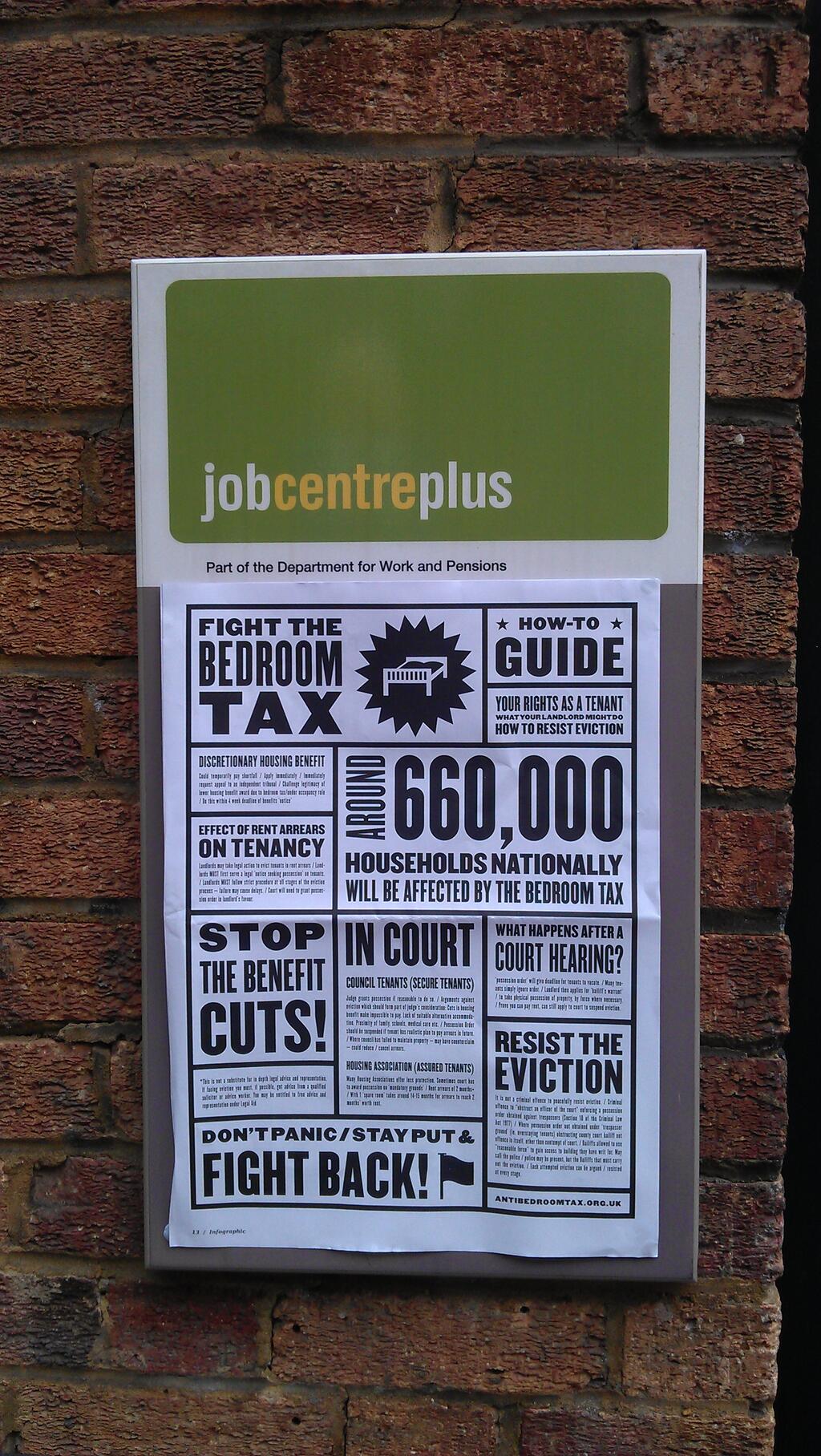
Tuesday 30th July 2013 I took a phone-call from the DWP. Wednesday 31st July 2013 I took an overdose.

9am my phone rings: As normal I answer and a strange unrecognisable man is on the other end. He is explaining he is from the DWP and later TODAY between 10.30 and 4.30pm I will be receiving a phone-call from ATOS regarding a questionnaire. Failure to answer the phone-call or complete the questionnaire, could result in my disability benefit being stopped. He also explained he has written to me 7 days previously, but I explained I was fully blind, so unless I was able to scan the letter I would not be able to know what it said; this apparently was my fault for not having anyone read my mail.

My mind racing at this sudden change of events today meant I had to let the charity I volunteer for down. I run groups of support for them so not only did I let a charity down at the last-minute, but also the people who were relying on me to run that group. I also had an urgent doctors appointment later that afternoon to find out why I am losing feeling and sensation in my feet. The receptionist was annoyed at the last-minute cancellation and made a new appointment for 2 weeks time.

And so I waited for the phone to ring………

An hour later jumping out of my skin the phone rang. The lady on the other end explained I needed to fill out a questionnaire they will be sending me regarding my ability to work. It was explained coldly: because I pose a risk to their staff they will not be doing a home assessment. I cough up blood because of the poor state of my lungs but I also do this discreetly into tissues and not spray it over people, as was insinuated. I was made to feel like I was a walking infection but that was the least of my worries.

The forms are only available in standard print format, which is great if you can see. When I explained I was fully blind her first reaction was, “how do you have your bills then?” I calmly replied to her rude tone that I receive all my bills and correspondence in either Braille or audio format. “Oh…” was the reply. “What about family? They could fill it out for you?” Again I calmly and politely explained I do not have any family and I am isolated due to my disabilities so since being moved to a new area I have not had the chance to make friends because it isn’t easy popping out when you a) cannot walk b) cannot see. “Well in that case I will have to give you another number to ring and see if they can help you as we do not supply our forms in braille or audio”.

I rang that number and they said they did not having the facilities to help fill out questionnaires over the phone, so if I could call another department; I rang that department and was met with the same reply. The disability advisor has already explained on a previous phone-call she does not speak to people over the phone but you have to travel to see her in person. So I tried the fourth number I was given. I spoke to a lady at length who seemed helpful and understanding but unable to provide any answers into how I was meant to fill out a form I was not unable to see. The service previously offered to fill out forms over the phone had ceased due to government cutbacks, so she gave me another number to try, which was closed as they shut from 1pm so I would have to try them tomorrow. In the meantime it was also reminded to me that failure to fill out the form will mean my disability benefit would be delayed until this has been completed, but the silver lining was the number I have to ring tomorrow was not a premium number – unlike the ones I have been calling all day notching up quite hefty phone charges along the way.

That night worried sick I could not sleep. I woke at 4am crying because I felt after trying so hard to get back to work setting up my shop, I was now being targeted. Maybe I was being over sensitive, but that was how it felt and I was scared. In the end I wrote a desperate tweet to Baroness Tanni Grey Thompson for help, as I have found my MP in the past is very anti disabled & unwilling to help me – http://www.twitlonger.com/show/n_1rllkd8:

“@Tanni_GT HELP : I’m scared of what is happening. This morning (9.00am Tues 30th) I had a phone call from DWP informing me that the same day (Tues 30th) I would have a disability assessment over the phone by ATOS anytime between 10.30 and 4.30, and to make sure I am available. He then explained failure to do so would affect my disability benefits and might delay payment if I do not complete it so I had to cancel an urgent doctors appointment because I am losing sensation in my feet later that day at 2.30pm, so I would not miss it. An hour later a woman called me saying because I pose a risk to their staff (I cough up blood because of my lungs) I would have to fill out a questionnaire in the next few days and send it back to them. I explained I am fully blind and the service provided previously that helped me fill out forms has been cut due to government cutbacks. They are aware I am unable to walk so unable to go to one of their offices already. They also do not provide questionnaires in braille or audio format – just standard printed format. I do not have any family & I have become isolated due to my disabilities so no friends close by since I was moved here to be near my rehab centre. I do not have any visitors. Last social visit by friends was back in December. She said they did not have the resources to deal with my disability problems, just mild disabilities and asked me to ring another department for advice and help. I rang them. They said I had to ring another department for advice and help. I rang them – yes they gave me another number. I have now been asked to organise myself an appointment with an ATOS/DWP approved centre and to do this over the phone tomorrow. They said if that centre is not able to help me tomorrow to fill out the forms & questionnaire for my disability assessment to ring them back and they “will have a think on what to do”

Surely if a government department is doing disability assessments they should have the resources to deal with disabilities, and also not put the onus on me to chase around different government departments finding out who does? If I fail my assessment due to being unable to complete it does that mean I am left with nothing? I was made to feel subhuman today being told coldly I pose a risk like I am some disgusting infection because my lungs do not work properly who does not fit into their resources of disabilities. I have to go through the whole process again tomorrow. It is currently 4am and I am crying my eyes out from stress/scared and wondering why I am having to justify why I am working so hard at staying alive to them because they made me feel it was an inconvenience.”

The next morning I was told the assessment centre would be open between 8am and 1pm, and was ATOS approved. I rang nearly every 10 minutes and no-one answered at all during those 5 hours. It just rang and rang. The same time I received amazing support from Tanni & others via twitter. The phone-calls from @bendygirl led me to support from her contacts and my doctor, who had heard about my tweets, telephoned me telling me she would help fill out my forms for me. I rang the DWP lady back informing her my doctor would help with the forms to which she replied, “well it sorted itself out then” – but not before it made me ill!

By now I was experiencing chest pain and having had my second heart attack not long ago this worried me. I took my GTN spray but also my pain meds as my lungs were now in bad shape and my body in general. I was also not paying attention and an hour later I took another set of pain meds. I am not on normal paracetamol, but serious heavy-duty pain meds that allow me to function to some degree throughout the day. It allows me to do some work for my shop while I am on a scheme called “permitted to work” – which I only just started as I was unaware it existed – and allows me a lifeline to build up enough customers and income to come completely off benefits. I am not creating enough orders at the moment to do so.

That night I had to have my stomach pumped and drink a thick charcoal “milkshake”. I also was admitted due to my ECG showing worrying signs from the chest pains that were triggered off by stress.

I am home now, recovering but staying offline for a couple of days until I am stronger. My computer is fixed and I am being targeted by trolls online – throwing abuse my way for being a ‘benefit scrounger’. Yet if that is true why am I working so hard to getting my shop off the ground despite all my disabilities?

This episode has also raised a number of other more serious questions. Not everyone is lucky enough to have a great relationship with their doctors or housing officer like I do – or able to use the internet – so I worry about other blind people who will find themselves in the same situation as I found myself. A lot of blind people become isolated through sight loss especially now with so many resources having been cut back. What would happen to them? DWP & ATOS rely solely on assuming a disabled person has family to do the work for them. When, like in my case, there is no family it feels you’re dealing with a system that has no adaptability to help, or any willingness. A lot of blind people do not have the skill to use a computer or the internet but instead lead solitary lives. Would they just have their benefits cut because they cannot see to fill out a printed form that does not come in other formats? I guess because they do not use the internet we would never hear about it?

The past 2 days I felt humiliated and ashamed of being disabled. I was made to feel I was an inconvenience because I needed help to fill out a benefits form. I cough up blood from my lungs but I do not spray people with it as insinuated by one of their staff saying I was a risk. There was no compassion in their voices, just annoyance.

Thank you to @Tanni_GT and @bendygirl. I don’t think this is the end of my problem as I know more forms will be coming their way over the course of time, but I now have people who are willing to help me in the future. I just hope next time I do not end up in hospital because of it. Despite everything I am doing to try and come off benefits and despite what Iain Duncan Smith says, not all of us on benefits are scroungers. We just need a chance and to be treated as a human being.

@welshwallace (twitter)

– See more at: http://welfarenewsservice.com/exclusive-dwp-benefits-farce-leads-to-overdose-for-blind-heart-attack-victim/#.Uf5tsW3Rx-x
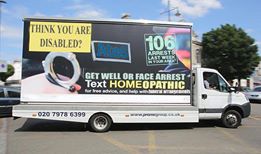
Tuesday 30th July 2013 I took a phone-call from the DWP. Wednesday 31st July 2013 I took an overdose.

9am my phone rings: As normal I answer and a strange unrecognisable man is on the other end. He is explaining he is from the DWP and later TODAY between 10.30 and 4.30pm I will be receiving a phone-call from ATOS regarding a questionnaire. Failure to answer the phone-call or complete the questionnaire, could result in my disability benefit being stopped. He also explained he has written to me 7 days previously, but I explained I was fully blind, so unless I was able to scan the letter I would not be able to know what it said; this apparently was my fault for not having anyone read my mail.

My mind racing at this sudden change of events today meant I had to let the charity I volunteer for down. I run groups of support for them so not only did I let a charity down at the last-minute, but also the people who were relying on me to run that group. I also had an urgent doctors appointment later that afternoon to find out why I am losing feeling and sensation in my feet. The receptionist was annoyed at the last-minute cancellation and made a new appointment for 2 weeks time.

And so I waited for the phone to ring………

An hour later jumping out of my skin the phone rang. The lady on the other end explained I needed to fill out a questionnaire they will be sending me regarding my ability to work. It was explained coldly: because I pose a risk to their staff they will not be doing a home assessment. I cough up blood because of the poor state of my lungs but I also do this discreetly into tissues and not spray it over people, as was insinuated. I was made to feel like I was a walking infection but that was the least of my worries.

The forms are only available in standard print format, which is great if you can see. When I explained I was fully blind her first reaction was, “how do you have your bills then?” I calmly replied to her rude tone that I receive all my bills and correspondence in either Braille or audio format. “Oh…” was the reply. “What about family? They could fill it out for you?” Again I calmly and politely explained I do not have any family and I am isolated due to my disabilities so since being moved to a new area I have not had the chance to make friends because it isn’t easy popping out when you a) cannot walk b) cannot see. “Well in that case I will have to give you another number to ring and see if they can help you as we do not supply our forms in braille or audio”.

I rang that number and they said they did not having the facilities to help fill out questionnaires over the phone, so if I could call another department; I rang that department and was met with the same reply. The disability advisor has already explained on a previous phone-call she does not speak to people over the phone but you have to travel to see her in person. So I tried the fourth number I was given. I spoke to a lady at length who seemed helpful and understanding but unable to provide any answers into how I was meant to fill out a form I was not unable to see. The service previously offered to fill out forms over the phone had ceased due to government cutbacks, so she gave me another number to try, which was closed as they shut from 1pm so I would have to try them tomorrow. In the meantime it was also reminded to me that failure to fill out the form will mean my disability benefit would be delayed until this has been completed, but the silver lining was the number I have to ring tomorrow was not a premium number – unlike the ones I have been calling all day notching up quite hefty phone charges along the way.

That night worried sick I could not sleep. I woke at 4am crying because I felt after trying so hard to get back to work setting up my shop, I was now being targeted. Maybe I was being over sensitive, but that was how it felt and I was scared. In the end I wrote a desperate tweet to Baroness Tanni Grey Thompson for help, as I have found my MP in the past is very anti disabled & unwilling to help me – http://www.twitlonger.com/show/n_1rllkd8:

“@Tanni_GT HELP : I’m scared of what is happening. This morning (9.00am Tues 30th) I had a phone call from DWP informing me that the same day (Tues 30th) I would have a disability assessment over the phone by ATOS anytime between 10.30 and 4.30, and to make sure I am available. He then explained failure to do so would affect my disability benefits and might delay payment if I do not complete it so I had to cancel an urgent doctors appointment because I am losing sensation in my feet later that day at 2.30pm, so I would not miss it. An hour later a woman called me saying because I pose a risk to their staff (I cough up blood because of my lungs) I would have to fill out a questionnaire in the next few days and send it back to them. I explained I am fully blind and the service provided previously that helped me fill out forms has been cut due to government cutbacks. They are aware I am unable to walk so unable to go to one of their offices already. They also do not provide questionnaires in braille or audio format – just standard printed format. I do not have any family & I have become isolated due to my disabilities so no friends close by since I was moved here to be near my rehab centre. I do not have any visitors. Last social visit by friends was back in December. She said they did not have the resources to deal with my disability problems, just mild disabilities and asked me to ring another department for advice and help. I rang them. They said I had to ring another department for advice and help. I rang them – yes they gave me another number. I have now been asked to organise myself an appointment with an ATOS/DWP approved centre and to do this over the phone tomorrow. They said if that centre is not able to help me tomorrow to fill out the forms & questionnaire for my disability assessment to ring them back and they “will have a think on what to do”

Surely if a government department is doing disability assessments they should have the resources to deal with disabilities, and also not put the onus on me to chase around different government departments finding out who does? If I fail my assessment due to being unable to complete it does that mean I am left with nothing? I was made to feel subhuman today being told coldly I pose a risk like I am some disgusting infection because my lungs do not work properly who does not fit into their resources of disabilities. I have to go through the whole process again tomorrow. It is currently 4am and I am crying my eyes out from stress/scared and wondering why I am having to justify why I am working so hard at staying alive to them because they made me feel it was an inconvenience.”

The next morning I was told the assessment centre would be open between 8am and 1pm, and was ATOS approved. I rang nearly every 10 minutes and no-one answered at all during those 5 hours. It just rang and rang. The same time I received amazing support from Tanni & others via twitter. The phone-calls from @bendygirl led me to support from her contacts and my doctor, who had heard about my tweets, telephoned me telling me she would help fill out my forms for me. I rang the DWP lady back informing her my doctor would help with the forms to which she replied, “well it sorted itself out then” – but not before it made me ill!

By now I was experiencing chest pain and having had my second heart attack not long ago this worried me. I took my GTN spray but also my pain meds as my lungs were now in bad shape and my body in general. I was also not paying attention and an hour later I took another set of pain meds. I am not on normal paracetamol, but serious heavy-duty pain meds that allow me to function to some degree throughout the day. It allows me to do some work for my shop while I am on a scheme called “permitted to work” – which I only just started as I was unaware it existed – and allows me a lifeline to build up enough customers and income to come completely off benefits. I am not creating enough orders at the moment to do so.

That night I had to have my stomach pumped and drink a thick charcoal “milkshake”. I also was admitted due to my ECG showing worrying signs from the chest pains that were triggered off by stress.

I am home now, recovering but staying offline for a couple of days until I am stronger. My computer is fixed and I am being targeted by trolls online – throwing abuse my way for being a ‘benefit scrounger’. Yet if that is true why am I working so hard to getting my shop off the ground despite all my disabilities?

This episode has also raised a number of other more serious questions. Not everyone is lucky enough to have a great relationship with their doctors or housing officer like I do – or able to use the internet – so I worry about other blind people who will find themselves in the same situation as I found myself. A lot of blind people become isolated through sight loss especially now with so many resources having been cut back. What would happen to them? DWP & ATOS rely solely on assuming a disabled person has family to do the work for them. When, like in my case, there is no family it feels you’re dealing with a system that has no adaptability to help, or any willingness. A lot of blind people do not have the skill to use a computer or the internet but instead lead solitary lives. Would they just have their benefits cut because they cannot see to fill out a printed form that does not come in other formats? I guess because they do not use the internet we would never hear about it?

The past 2 days I felt humiliated and ashamed of being disabled. I was made to feel I was an inconvenience because I needed help to fill out a benefits form. I cough up blood from my lungs but I do not spray people with it as insinuated by one of their staff saying I was a risk. There was no compassion in their voices, just annoyance.

Thank you to @Tanni_GT and @bendygirl. I don’t think this is the end of my problem as I know more forms will be coming their way over the course of time, but I now have people who are willing to help me in the future. I just hope next time I do not end up in hospital because of it. Despite everything I am doing to try and come off benefits and despite what Iain Duncan Smith says, not all of us on benefits are scroungers. We just need a chance and to be treated as a human being.

@welshwallace (twitter)

– See more at: http://welfarenewsservice.com/exclusive-dwp-benefits-farce-leads-to-overdose-for-blind-heart-attack-victim/#.Uf5tsW3Rx-x
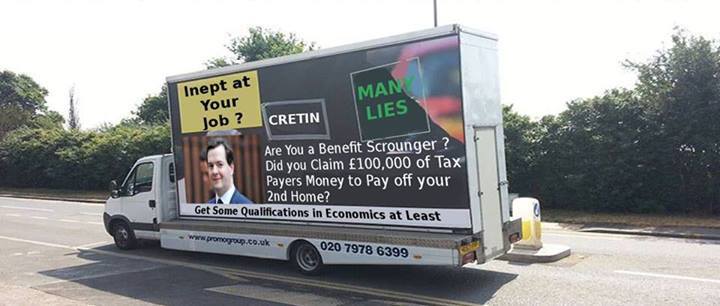
Why Are Men With CP Better Lovers?

August 4, 2013

A weekend one liner for you this morning readers:

I heard this yesterday, and it made me literally laugh out loud:

“Why are men with Cerebral Palsy better lovers?”

“Because they’re always stiff!”

I’m off to pass this on to all the comedians with CP I know who are old enough to tell it in a set. Meanwhile, mainstream comedians, make note. These kinds of disability related jokes will make everyone laugh!


The Experience Of A Mother Whose Son Went To A Disability Employment Training ‘Camp’

August 4, 2013

A follow on from this which I think you’ll find useful, readers.

This post mentions abuse by staff- something I didn’t mention in my post on this because I would hope against hope that if any new such places open if the scheme is extended, the Government- and any staff- would have learnt enough from Winterbourne View to ensure that this would be much less of a problem than it has been in the past, if it happens at all.

The Disability Link In The Immigration Debate #racistvan #gohome #foreignborn

August 3, 2013

Today, readers, I got yet more proof that disability is everywhere.

Immigration has been back in the UK news this week, with a new campaign involving these ‘racist’ vans:

 billboard migrant which has been responded to with humour and ‘spot checks’ of people from ethnic minorities which have been responded to with strength.

I am South Asian and have personally found the news a painful thing to watch this week as a result of all of this. However, it has, until now, not been relevant to Same Difference as there has not, until now, been a disability link in the story.

Today, however, I’ve found one. Chris Bryant MP, an immigration minister, has said in an article in today’s Telegraph that public sector workers must speak English well. He gave the particular example of carers for elderly or disabled people.

Now, personally I love the English language and can speak it well. I’ve grown up here, completed my education here and I now earn here and pay tax.

I personally do agree that all immigrants should be able to speak English- at least enough to understand the basics of life in England and, in most cases, to find a job, understand the work they are asked to do and make themselves understood.

However, personally I wonder if speaking English ‘well’ is as important for immigrant carers as it is for immigrants in other professions. In my personal experience this is particularly true of carers for elderly people.

Of course, if immigrants find work in residential care homes, where there is no guarantee that their clients will share their ethnicity and therefore be able to speak their language, then a good level of spoken English would be extremely useful to them, and for everyone involved.

However, I have heard of residential care homes for elderly people which are specifically for the South Asian community in particular. Such places are more likely to employ South Asian people and, since clients are unlikely to be able to speak English ‘well’ themselves, they actually prefer carers who are fluent in their native language.

Also, if immigrants* find work as carers for councils, carrying out home visits, families of elderly or disabled people from ethnic minorities are likely to request carers who share their ethnicity, and therefore are fluent in their native language, where possible.  This could be for the comfort of either the elderly client or the parents or older family members of a younger disabled client.

If immigrants find work as live-in carers for elderly or disabled people, then again families from ethnic minorities are more likely to employ a person who shares their ethnicity and is fluent in their native language. This would be for all the reasons given above, as well as reasons such as the carer being more comfortable sharing the food cooked in the family home and as a result, saving themselves the time and money that would be spent buying food for themselves in such employment.

So yes, Home Office. Encourage the speaking of English. But please remember that as you’ve allowed immigration for so many years without encouraging the speaking of English ‘well,’ you are now faced with a situation in which you can’t teach an old immigrant a new language.  So you’re ‘stuck with’ some of ‘us lot’ who might actually need people who can’t speak English ‘well’ to live in this country.

*The references to ‘immigrants’ in this post have been made for ease and speed of typing. No racism to any ethnic group or rudeness is intended with the use of this word.

Megan And Barton Cutter- A Love Story

August 3, 2013

Barton has Cerebral Palsy. His wife, Megan, is non-disabled. If you can spare an hour, please watch this. There’s hope for us all!

Warwick Davis To Make West End Debut In Spamalot

August 3, 2013

Les Dennis and Star Wars actor Warwick Davis are to star in the hit stage show Spamalot, in London’s West End.

Dennis is joining the cast as King Arthur on 3 August, while Davis will make his West End debut when he takes on the role of Patsy on 23 September.

Dennis, who appeared with Davis in the BBC comedy Life’s Too Short, said he was “really looking forward to always looking on the bright side of life”.

He is scheduled to appear in the musical until 2 November.

“As a kid I was always a massive fan of Monty Python so when Spamalot came to town I thought, ‘I’d really love to be in that’,” he said

“And now I’m excited that I’m actually not just in it, but playing the lead role.”

Davis said he “jumped” at the opportunity to star in the show.

“I’ve been in hit TV shows and blockbuster Hollywood movies, but you are never really taken seriously as an actor until you’ve done a play,” he said.

Role of God

Spamalot currently stars Bonnie Langford as Lady of the Lake.

The current run will also feature a video recording of different celebrities, including Barbara Windsor, Christopher Biggins and Larry Lamb, playing the role of God for one week.

Spamalot, written by Monty Python star Eric Idle and John Du Prez, and directed by Christopher Luscombe, is showing at the Playhouse Theatre.

Like Monty Python And The Holy Grail, the film upon which it is based, the stage comedy is about a group of medieval knights searching for the mythical Holy Grail but the plot broadens out to spoof Broadway, and various musicals, including those of Andrew Lloyd Webber.

The stage show premiered on Broadway in 2005 and went on to win three Tony Awards.

Last month a film producer won a High Court case against the surviving members of Monty Python over royalty rights to Spamalot.

Mark Forstater, who co-produced the 1975 film, claimed he was underpaid royalties since the musical’s launch in 2005.

Cerrie Burnell Tells Her Own Story On Stage

August 3, 2013

Children’s TV presenter Cerrie Burnell has written and is starring in a play for young audiences about a girl with one hand, inspired by her own childhood.


Burnell, known simply as Cerrie in the cosy world of Cbeebies, has been entertaining small children on the small screen for four years.


The fact that one of her arms ends at the elbow has never been remarked upon on air. It is just, well, one of those things.


Now she is on stage at the Edinburgh Fringe with a show that makes it central to the story.


In The Magical Playroom, Burnell portrays a young girl called Liberty Rose who loves playing with her prosthetic arm – the only problem is, she hates actually wearing it.


“I think it’s really important to champion inclusion and that’s something I try to do in all my work,” Burnell says.


“We’re fabulous in this country at celebrating diversity. We flag up our differences and embrace them. But actually inclusion for me is when those difference lose all of their relevance, and actually what we have in common is what shines through.”


The play may be about a girl with one hand, but Burnell says the child is really no different to any other girl.


“The play engages with a much broader topic, which is challenging parental authority, which all children know how to do,” she says.


“There isn’t a five-year-old in the world who hasn’t fought to get their own way. Here’s a little girl in an unusual situation, but look how similar she is to every other five-year-old.”


Burnell herself was born with part of her right arm missing and says she was “made” to wear a prosthetic arm by doctors until she was nine.


“It was part of my school uniform really, I only wore it to school and I’d take it off when I got home,” she recalls.


Why did she dislike it? “For all the reasons that Libby gives in the show. It’s just really cumbersome and really heavy. It’s as simple as that. There isn’t any big psychological thing. It just gets in the way.”


In the show, a doctor tells Libby she must wear her false arm because “nobody wants to look at your stump”, her ballerina mother tells her to wear it so the girl can follow in her footsteps on stage, and her grandmother asks the girl to flash her arm to a theatre ticket collector so the awkward usher will wave them in for free.


Was that theatre scene based on experience? “That particular thing hasn’t happened to me in such extreme terms,” Burnell replies. “But yeah, there were little instances that were similar to that throughout my life.”


In real life, Burnell trained and travelled as a stage actress before joining the Cbeebies team.


She did not have a television at home until she was nine, she says, so claims to be unaware of the lack of disabled role models on children’s TV in her youth – or of the fact that she is a trailblazer herself.


“I’m highly ambitious, and when you are very driven and ambitious, you’re not interested in whether someone else has gone before you,” she says.


“You’re quite happy to be the person who cuts a path. Also what you have to remember is I don’t just see myself as a disabled performer.


“I’ve got one hand, but it’s not the most interesting thing about me. I’m a woman with lots of other things going on.


“I’ve got a daughter who was three months old [when I started] so my biggest concern was, am I going to express milk or not?


“I had other things going on. I wasn’t thinking, oh, no-one else has ever done this before. And even if that had occurred to me, I wouldn’t have cared.”


The Magical Playroom is at the Pleasance Courtyard in Edinburgh until 18 August.

Stanbridge Earls School To Close On 1 December

August 3, 2013

Plans to take over a Hampshire school, criticised for its handling of a pupil’s rape claim, have been abandoned, it has been revealed.

Stanbridge Earls School, near Romsey, is to close on 1 December amid concerns about its finances and safeguarding.

A new school had been planned at the site – a sister establishment to More House School in Surrey.

Now the school, in Farnham, has said it will no longer be taking over because of falling pupil numbers.

More House head teacher Barry Huggett said: “We’ve reached a point where it could go no further.

“There’s a limit to how much finance we can put into it.

“The number of children there is reducing and we are not able to give them what they need.”

Schools watchdog Ofsted admitted failings in its inspections at Stanbridge Earls.

A tribunal in January raised “grave concerns” about safeguarding at the independent school.

Last year Ofsted said the school was “outstanding”, but a review of the inspections has found they failed to get “underneath concerns”.

The tribunal found the school, which caters for pupils aged 10 to 19 with special educational needs and charges up to £40,000 a year, had failed to protect the “vulnerable” pupil.

Her parents started legal action on discrimination grounds after she was excluded following her claim she had been raped twice by other students.

The tribunal heard the school believed she had consented and excluded her for breaking rules by having sex on school grounds.

Three Ofsted inspections since the tribunal’s damning findings revealed serious concerns about safeguarding.

Hampshire Constabulary said it thoroughly investigated the rape allegation but the Crown Prosecution Service decided not to prosecute.

The force has since started a “comprehensive review” into its handling of the case and is investigating sexual abuse claims by another girl.

Some Details Of Male Sterilisation CoP Case Revealed

August 3, 2013

As I thought, if the sterilisation is decided upon, it will be the first of its kind in England and Wales.

It is not, however, the first case I have heard of a learning disabled man being banned from sex.  This time, however, I feel slightly differently about the ban. Why? Because, in this case, DE’s partner is female, and he does not want another child.

Sex before a vasectomy could lead to a pregnancy and, since that pregnacy would be unwanted, the safest way to avoid it would be a ban on sex.

A High Court judge is being asked to make legal history and sanction the first sterilisation of a man in this country because it is ‘in his best interests’.

Referred to as ‘DE’, the 36-year-old, from the Midlands, has learning difficulties and already has a son with his girlfriend, born in 2010.

The court heard that DE does not want to become a father again, and another child could cause him ‘psychological harm’.

Experts have assessed that DE is capable of consenting to sexual relationships.

But he does not have capacity when it comes to making decisions about contraception and cannot be relied upon to use condoms or other birth control methods effectively to prevent pregnancy.

While the case has been going on he has been effectively prevented from having sex with his partner and can see her only under supervision.

The case has come before the court because of undisputed evidence that DE also does not have the capacity to decide whether or not to consent to sterilisation, and a judge must make the life-altering decision.

The application to Mrs Justice Eleanor King, sitting in the Court of Protection, to allow a vasectomy was made by DE’s local NHS Trust with support from his parents, his GP and the local authority involved in his care. None of them must be identified by court order.

The judge said she hopes to give her ruling ‘within weeks’.

She was told that a routine is currently in place which prevents DE meeting his girlfriend – they have been together for some 10 years – without supervision to ‘keep them safe’.

The judge said at a hearing in London that she was ‘extremely concerned’ about DE’s loss of independence and the effect it is having on him.


She was told that a vasectomy would restore autonomy in sexual matters to DE ‘and give him back his independence’.

Angus Moon QC, representing the Official Solicitor, who was in court to protect DE’s interests, told the judge that the evidence that DE wants a vasectomy is ‘compelling’ and nothing to do with eugenics.

He stressed: ‘This case is not about eugenics. This case is not about a youngish man being given a vasectomy against his will.

The application to Mrs Justice Eleanor King, sitting in the Court of Protection, was made by DE’s local NHS Trust with support from his parents, his GP and the local authority involved in his care

‘The evidence, in the Official Solicitors’ submission, is compelling that DE does want to have a vasectomy and therefore his case is not covered by the shadow of eugenics.’

Mr Moon added: ‘This is an exceptional case and should not be seen as a green light for other applications for vasectomies in respect of other people with learning difficulties.’

Mr Moon told the judge that, if she makes the ordering allowing surgery to take place, ‘it would be the first judgment in this jurisdiction (England and Wales) in which permission has been given to carry out a vasectomy’.

It is believed to be only the second application for the sterilisation of a man to have come before the court. The first, in 1999, was refused.

In court today, the judge paid tribute to the way DE’s parents, especially his mother, had coped with the ordeal they had faced over the past three years, during which DE’s case has moved from his GP’s surgery to the courts.

The judge told the mother: ‘When I heard your evidence, all I could think was how lucky he is to have you for his mum.’


Jessica Madden- The Severely Disabled Girl Who’s Been Told She Must Prove Her Lifelong Disability

August 2, 2013

Dear God. Readers, there are more Liam Barkers.

The parents of a teenager who has been severely disabled since birth have told the BBC their daughter has been asked to prove that she is not fit for work.


Jessica Madden, 19, finished her education at Glenveagh Special School in south Belfast last month.


Her parents said the authorities have written to her, saying that she has to serve a probationary period before she can get full adult disability benefits.


They family said they were “insulted” and “offended” by the letters.


Jessica’s parents, Martine and Brian Madden, said their daughter has a severe brain disorder that means she has never and will never be able to work.


As a child, she received full disability living allowance (DLA), but now, as she leaves full time education, she must reapply for the adult form of the benefit.


Her parents said they have been told that Jessica must be assessed like everyone else, and must wait 13 weeks before she can get access to the full disability benefit.


“Jessica has been severely disabled from birth and has received full DLA from birth, what more does she have to prove?” Mrs Madden said.


“Thirteen weeks to qualify she is disabled – that’s an insult. Come and live with her for a day and they’ll see she’s disabled. You don’t need 13 weeks, we’ve lived with it all her life.”


The teenager’s mother said she has been frustrated by official responses when she raised the issue with the authorities.


“When I’ve asked questions such as; ‘This is nonsense, why does she have to fill these forms in? It’s only a matter of a quick phone call to a GP’, I’ve been told that’s the way it is and its bureaucracy, the same for her as for everybody else.


“They also appointed an assessor to come out and have an interview with her to encourage her back to work. Well, I’d like to be a fly on the wall at the interview,” Mrs Madden said.


The family said Jessica will receive standard sickness benefit during the probationary period but added that the bureaucracy is putting them and other families in their position under “incredible stress”.


Mr Madden said some of the letters that had come to their house were addressed to Jessica but had “referred to her on four occasions as a he, a male”.


“I just feel, when I read some of the letters, offended by them, if that makes sense? Because as my wife has said, we don’t need anyone to tell us that Jessica will never work,” he said.


“That’s a hard truth for us to say – we know she won’t work. For someone to come out and assess her to work, to tell us that we have to prove over a 13-week period that Jessica is suitable to receive this special sick pay, to us is absolutely insulting and it’s hard to take in.”


The Maddens are on the board of governors of Glenveagh Special School and said they are aware of other parents of disabled teenagers who are in the same position.


Karen Hall from Disability Action said this time of year was particularly difficult for disabled young people and their families with the transition from school to further education or into day activities.


“Employment and Support Allowance (ESA) replaced incapacity benefit in 2008. Under that, everybody has to go through this 13-week assessment,” she said.


“We know it is really stressful but when people get advice and support from organisations like ourselves and other agencies, then it helps.


“What will happen is that you fill in a form and you may be called for a face-to-face meeting. In the case of Jessica, we would hope that would not happen.


“I would say that when you fill in the form, make sure you get in as much medical evidence as possible.


“Come to organisations like ourselves or any of the independent advice agencies to get that level of support. It is quite a lot to find your way through and the form filling can be difficult.”


The Department of Social Development has been contacted for a response.

Deaf Man Charged In Vitalis Katakinas Murder Case

August 2, 2013

Limping Chicken are reporting that a Deaf man, Matthew Powe, 30, has been charged with the murder of Deaf actor Vitalis Katakinas.

I don’t know why I’m surprised to read that Matthew Powe is deaf. Maybe I’m just very sad to think that two members of one community turned on each other, with such a tragic result.


We Shall Overcome- The Disability Version By Citizen Smart

August 2, 2013

Does this guy have an album on Itunes? I’d buy it!

Residential ‘Camps’ For Disabled People To Train For Jobs

August 1, 2013

I’ve just heard about this Government panel report, published in July. It looks at the possibility of Residential training provision for disabled people who are unemployed and looking for work.

Apparently the Government plans to set up these ‘camps’ from September 2014 if the review is successful.

Now, the idea of sending several of ‘us lot’ off to one place to learn how to get ourselves a job when there is no need to segregate us in this way sounds more than a little like something the Nazis would have loved.

Readers, special schools are a choice every parent and disabled child should have. Remploy factories were a choice for segregated paid employment- they should still be here, but, surprise, surprise, they’re too expensive.

Residential care homes are a choice that should be available to severely disabled people when their parent carers are no longer physically able to care for them. Day care centres provide opportunities for disabled people to do suitable activities while socialising with other disabled people- a choice that they and their parents should have open to them.

But readers, residential employment training is one step too far for me.

The report says that being away from a home setting while learning skills to find employment would be a good thing as home circumstances may be stressful or parents may be over-protective.

However, disabled people who live at home need a very high level of support with personal care. Personally, I would not be comfortable with anyone but my parents providing this personal care for as long as my parents live and are physically able to do so. I’m sure most of my friends, and many other disabled people, would agree.

Don’t non-disabled young people have stressful home environments too? Don’t they have over-protective parents? Yet where do they do their job skills training? Down the Job Centre for a few hours a week.

There are many reasons why disabled people don’t work. But these reasons have nothing to do with the fact that we haven’t previously had access to residential training. They have more to do with the difficulty of finding employers willing to make reasonable adjustments for us so that we can have our disability-related needs met in the workplace.

Or, surprise, surprise, the fact that we are simply too affected by our illness or disability to consider working.

Personally, I hope that when we come out of these ‘camps’ we’re going to have suitable skills to work in a mainstream workplace, should any non-disabled employer be so kind as to want to give one of ‘us lot’ a job.

So why do we need to be segregated to be trained? We can understand the tips given at the Job Centre, you know. And if we do need those explained to us in simpler language, if we need them signed to us or written in Braille, why can’t the Job Centre provide these services? Are we really that much of a disruption to others who are able to work at a ‘normal’ pace?

Too expensive, I hear you say? Well, are these ‘camps’ going to be any cheaper?

Put aside our discomfort at having strangers providing personal care for just a minute. Has the Government panel considered the cost of providing overnight carers? Many parent carers, husbands/wives or partners willingly provide care to disabled adults for free. Why not keep Remploy factories, and the choice to work at them, open using the money that would be spent on overnight carers at these ‘camps?’

The report recognises the importance of the “peer support” that can come from being with other disabled people. So we wouldn’t stand out at these ‘camps.’ Not standing out is truly very important. Not standing out can truly help a person’s self-confidence and self-esteem. Disabled people who use any such camps might make friends for life. And friends with whom you share something so important in common are truly valuable. I am the  first to recognise this important fact.

However, as well as not standing out, we would all feel unwanted by mainstream society at these ‘camps.’ We would, I can well imagine, share the emotions of orphans living in orphanages or of adults living in refugee camps, or of all those millions, most of whom so tragically lost their lives, in concentration camps.

Generations of disabled people already felt unwanted by their parents and mainstream society when they were sent to institutions. Later generations already felt unwanted by teachers when they were sent to special schools, before the choice to go to mainstream schools was opened to us and our parents.

We already know that non-disabled people don’t want to employ us in their workplaces because we look too different/are always ill/need too much help/are too expensive.

Now they tell us we have to be locked away from our families and from mainstream society at yet another stage in our lives because they don’t want to train us to work either? It’s the straw that broke the wheelchair’s seat.

And as for this sentence: “In the vast majority of cases, the type and severity of a person’s impairment/health condition has little bearing on their ability to secure and sustain employment,” which translates as “Most people can work and hold down a job quite well no matter what their disability is or how severely it affects them,” all I can say is: ‘Are they having a laugh?’

Congratulations Lord Chris Holmes MBE!

August 1, 2013

He became a Conservative Life Peer today. The only disabled person on the list as far as I could tell.

  • Christopher (Chris) Holmes MBE – former Paralympic swimmer; Director of Paralympic Integration at London 2012; Non-Executive Director of the Equality and Human Rights Commission; and a former Non-Executive Director of the Disability Rights Commission

Help Sue Marsh Beat The Daily Mail

August 1, 2013

She wants to make sure this is seen online more times than the Daily Mail front page. I share her hate for them, so I’m more than happy to help.

A Review Of Alex Brooker: My Perfect Body

August 1, 2013

Tonight, readers, something amazing happened on Channel 4. Disabled presenter of the London 2012 Paralympics and hilarious news programme The Last Leg presented a programme on his own for the first time since I have heard of him. And it wasn’t just any programme either- it was a documentary that charted his personal weight loss challenge before a boys’ holiday with his friends.

It also covered more general issues related to male body image, mens’ magazines, metrosexuality, and, very interestingly for this female, male eating disorders. I hadn’t realised before just how common male eating disorders are, but as with every important issue, I was very pleased to see awareness being raised of this.

Alex also went to meet a male porn star and his producer to find out whether being a porn star means a person is more satisfied with their body and their looks than others. So, readers, the programme contains a couple of mild porn scenes.

Alex Brooker has a very obvious disability, so of course, he could not completely ignore this in the programme. At one point, he spoke movingly about a time in his life when his weight meant he needed to use a wheelchair. Since disabled people are more likely to be obese, it was very good to see the very important issue of disability and obesity covered through Alex Brooker who is disabled and, before the programme, was obese. However, the best part about the programme was that at no point did it focus on Alex’s disability. At no point were we given the impression that Alex had put on the extra weight because he was disabled.

The only negative thing I have to say about the programme was that there was a short scene in which Alex was being pulled along by what looked a bit like a lead. This seemed unnecessary and reminded me a little bit of a sketch from the second episode of I’m Spazticus. However, this was a very short clip which was not mentioned again.

Readers, when the Paralympics ended and with them, the new disabled presenters Channel 4 had brought in left our screens, I personally hoped that we would get to see those presenters back. I hoped that Channel 4, and other channels, might allow them to present programmes that were not necessarily disability related. Channel 4 must be thanked for making this wish of mine come true again tonight, by screening this documentary, and by using it to show viewers that Alex Brooker is just a bloke who had a bit of weight to lose because he likes beer and Nandos, and that he has a busy life no matter what his arms look like or how many legs he has.

If you missed the programme, you can catch up on it here.

Models With A Disability In The Fashion And Beauty Industry

July 31, 2013

A documentary by Models of Diversity.

NHS Trust Wants To Sterilise Disabled Man

July 31, 2013

Same Difference has a debate page on the sterilisation of disabled women, which is sadly quite common. However, this is the first time I have heard of anyone wanting to sterilise a disabled man.

The feminist in me is quite glad that this is an issue that disabled men also have to face. The disabled person in me strongly disagrees with the sterilisation of any disabled person unless that disabled person makes the decision for themselves. For this reason I personally hope this court case is not a success.

A judge has been asked to decide whether it is in the man’s best interests to undergo surgical sterilisation by means of a vasectomy.

No details about the man’s identity or the trust in question can be published due to legal restrictions covering the case being heard in the Court of Protection.

Both the man’s family and his GP support the application, and it is claimed he lacks the capacity to decide for himself.

The case follows other instances in which judges have been asked to rule on whether a person with learning difficulties should be sterilised without their consent.

In 2011 an NHS trust and a council applied to sterilise a woman with learning difficulties at the same time as she gave birth to her child by caesarean section.


Last year a hospital applied for permission to sterilise a man who was in a sexual relationship with a woman who also had learning difficulties without his parents or mental health supervisors knowing about it.

Campaigners have claimed that sterilising without consent is wrong and could have a devastating impact on the human rights of the disabled.

Local authorities can apply to have a person with learning difficulties sterilised without the consent of their families. However, there have been instances in which parents have personally applied for the right for the procedure to be carried out.

It is rare for judges to grant permission. In 2000 Mr Justice Wall gave the go ahead for a hysterectomy to be performed on a woman with learning difficulties, but his ruling was overturned by the family division of the High Court.

Ofsted Admits Inspection Failings At Stanbridge Earls School

July 31, 2013

Schools watchdog Ofsted has admitted failings in its inspections at a Hampshire school criticised for its handling of a pupil’s rape claim.


A tribunal in January raised “grave concerns” about safeguarding at Stanbridge Earls.


Last year, Ofsted said the school was “outstanding”. The inspections failed to get “underneath concerns”, a review into what went wrong has concluded.


The chief inspector of schools, Sir Michael Wilshaw, has apologised.


Disciplinary action has been taken against a small number of staff, including dismissal.


The tribunal found the school, which caters for pupils aged 10 to 19 with special educational needs, had failed to protect the “vulnerable” pupil.


Her parents started legal action on discrimination grounds after she was excluded following her claim she had been raped twice by other students.


The tribunal heard the school believed she had consented and excluded her for breaking rules by having sex on school grounds.

‘Acknowledge mistakes’

Three Ofsted inspections since the tribunal’s damning findings revealed serious concerns about safeguarding at the school.


The school is set to close, with a Surrey-based charity taking it over and running a new school on the Romsey site.


Addressing why the initial Ofsted assessment was so wrong, Sir Michael said: “Inspection is part of the safety net designed to protect children from harm and it is clear from our review… that our inspections should have got underneath what was happening sooner.


“We offer our sincerest apologies to the parents and children who have been affected by historic events at Stanbridge Earls.


“We cannot turn back the clock on what has happened… but our actions show that when we get it wrong, we acknowledge our mistakes, take decisive action, and ensure that we use the learning to improve.”


The inquiry did not find “widespread failings” but did reveal “weaknesses” in Ofsted’s monitoring of residential special schools.


The watchdog said from 1 January all inspection work would be managed in eight regions overseen by regional directors.


It has also improved existing technology to ensure inspectors have better access to the full history of concerns at a school.


The head teacher at Stanbridge Earls at the time of the allegation, Peter Trythall, stepped down in April after initially resisting calls to quit.


The tribunal said his conduct “borders on contempt for statutory duties”.


Hampshire Constabulary said it thoroughly investigated the rape allegation before passing a file to Crown Prosecution Service (CPS), which decided not to prosecute.


The force has since started a “comprehensive review” into its own handling of the case and is also trying to progress a separate investigation into sexual abuse claims by another girl.

Jane Nicklinson, Paul Lamb Lose Right To Die Cases, ‘Martin’ Wins

July 31, 2013

As regular readers may know, I will never agree with assisted suicide. So I am pleased with the results of today’s cases. ‘Martin’ simply wants clarification that a professional who travelled with him would not face jail. This is something he should be given before he makes a decision.

Personally I see the two losses as some sign that the courts value the lives of disabled people equally. After yesterday’s ruling on bedroom tax, this comes as a relief to me.

The family of late locked-in syndrome sufferer Tony Nicklinson and paralysed road accident victim Paul Lamb have lost their right-to-die challenges.

The Court of Appeal upheld a High Court judgement in the case of the late Mr Nicklinson, ruling he did not have the right to ask a doctor to end his life.

His widow, Jane, said she planned to appeal to the Supreme Court.

Mr Lamb has said he wanted the law changed so he could kill himself with a doctor’s help.

However, a third paralysed man, known only as Martin, won his challenge for clearer guidance from the Director of Public Prosecutions (DPP) for carers or health professionals assisting those wishing to end their life.

He wants it to be lawful for a doctor or nurse to help him travel abroad to die with the help of a suicide organisation in Switzerland.

His wife and other family did not want to be involved in his suicide, his lawyer Richard Stein said.

‘Step forward’

Jane Nicklinson told the BBC she was “very, very disappointed” by the ruling, but “not totally surprised”.

“They are not going to get rid of us that easily,” she said, as she explained she would be seeking permission to appeal to the Supreme Court.

She added that it was a very complicated legal matter.

“Although we lost, the legal team are quite pleased with the outcome – the appeal judges actually upheld a couple of points which the High Court rejected, which is a step forward.”

Mr Nicklinson died naturally at his home in Wiltshire last year.

The decision centred on whether the High Court was right in originally ruling that Parliament, not judges should decide whether the law on assisted dying should change.

Dr Andrew Fergusson, of the Care not Killing campaign group, welcomed the ruling, saying: “All three judges were very clear on legal, and I think ethical, grounds as well, that the law, if it’s to be changed, must be changed by parliament alone. The courts cannot do it.”

Geoffrey Robertson QC said: “The judges feel very sympathetic to people who are dying and want to speed their end – as everyone would.

“Judges, much as they would like to, can’t make the law conform with humanity if the law is clear and parliament hasn’t acted.”

Paul Lamb Awaits Right-To-Die Ruling

July 31, 2013

The Court of Appeal is to rule on Wednesday on the case of a paralysed man who wants to be helped to die.

Paul Lamb wants the law changed so he can kill himself with a doctor’s help.

Mr Lamb, from Leeds, has been almost completely paralysed from the neck down since a car accident 23 years ago and says he is in constant pain.

Unable to end his own life, he wants a court ruling that any doctor who helped him die would have a defence against the charge of murder.

The defence – known as “necessity” – would be that it had been necessary for the doctor to act to stop intolerable suffering.

This is the same argument put forward by another paralysed man, Tony Nicklinson, who died shortly after his case was rejected by the High Court last year.

Mr Nicklinson’s widow is challenging that ruling, which stated that it was for Parliament, not judges to decide whether the law on assisted dying should change.

The Appeal Court will also rule on the case of another paralysed man, known only as Martin, who wants the Director of Public Prosecutions to change his policy on suicide. Martin wants it to be lawful for a doctor or nurse to help him travel abroad to die with the help of a suicide organisation in Switzerland.

At the beginning of the appeal, the lord chief justice said that despite the desperate situation of those involved, the case had to be decided on the basis of principles of law rather than as a matter of sympathy.

Mr Lamb has no function in any of his limbs apart from a little movement in his right hand. He says he has been in pain for 23 years, needs 24-hour care and his life consists of “being fed and watered”.

In a statement to the courts, he said: “I am in pain every single hour of every single day. I have lived with these conditions for a lot of years and have given it my best shot.

“Now I feel worn out and I am genuinely fed up with my life. I feel I cannot and do not want to keep living. I feel trapped by the situation and have no way out.

“I am fed up of going through the motions of life rather than living it. I feel enough is enough.”

Mr Lamb, a divorced father of two, said he was not depressed and just wanted to end his life in a dignified way, with his loved ones around him.

Mandy Masters On Aging With Thalidomide Defects

July 31, 2013

When Mandy Masters was born, doctors whispered to her mother that she didn’t have to keep her.


Given a life expectancy of 19 years, Mandy was one of more than 10,000 babies worldwide born with a disability caused by the drug thalidomide.


Thalidomide was prescribed during pregnancy to ease morning sickness before it was withdrawn in 1961 because it was causing birth defects.


Speaking 40 years since a compensation deal for thalidomide survivors was agreed, Mrs Masters – now a grandmother of six – says the sums paid might still not be enough.


Thalidomide affected babies in various ways, including shortened arms and legs, blindness, deafness, heart problems and brain damage.


Mrs Masters, of Grays in Essex, was born without arms and uses her feet as hands.


Now 51, she is increasingly feeling the effects of using her feet as hands.


She spends much of her time in pain and is beginning to experience other medical issues, such as problems with the roof of her mouth and her hearing.


Ageing, she says, was one of the issues which passed under the radar when the compensation payout was agreed four decades ago.


Under the agreement, the Distillers Company, which marketed Thalidomide in the UK, paid £6m in direct claims and set up a £14m trust fund to look after the children’s future.


But in the early 1970s, nobody knew how long thalidomide survivors would live for, how they would age, of if further symptoms of the drug would materialise in later life.

‘Absolute agony’

“I’m struggling with my joints,” said Mrs Masters.


“My legs are doing two jobs, not only for walking but are also used as arms.


“It is very tiring now. I walk for five minutes now and I’m in absolute agony. I am struggling.”


Mandy, who used to work as a beautician and now works as a medium, uses her feet to feed herself, brush her hair and her teeth.


Arthritis is a major fear.


“I once worried about getting to 60, but I’m finding it is now that I’m struggling.


“In a few years’ time, I will be in a wheelchair.”


She said an expanded compensation pot would help meet the future costs – such as changes to people’s homes to accommodate wheelchairs.


Fellow thalidomide survivor Geoff Adams-Spink, the BBC’s former age and disability correspondent, said: “Our bodies are wearing out.

‘Wearing out fast’

“These (thalidomide survivors) are people who might be inside bodies which are 50 years old but in fact in terms of our actual age, the age of our muscular-skeletal systems, we’re probably 20 years ahead of that.


“In our bodies we are really in our late 60s or 70s. And we are wearing out fast.”


Although the £20m fund for thalidomide survivors might sound “reasonably large”, Mr Adams-Spink, of London, said: “In terms of accident compensation they are fairly minimal.”


“That’s why we have had to keep going back, and thank goodness Diageo act as a very responsible corporation and recognise the legacy of Distillers and recognise that they have a responsibility to this group of people.


“I hope that we can use some of the funds that have been given to us to enable a soft landing into old age.


“This could help make sure we have the infrastructure and care and support around us that we need.


“And maybe even move to sunnier climes, so that our bones don’t ache so much and so we can enjoy our autumn years without being racked in pain or confined to the house.”


Last year, the creator of Thalidomide, German-based Gruenenthal issued its first apology in 50 years for the impact the drug had on babies.

#Bedroomtax Ruling- One Claimant Reacts

July 30, 2013

Disabled families have lost a court challenge to housing benefit cuts for people with spare bedrooms in England, Wales and Scotland.

The government has said cutting housing benefits for those who live in social housing that is too big for them will save over half a billion pounds a year.

One claimant, Charlotte Carmichael, from Southport, has spina bifida and needs a special bed which she cannot share with her husband – who is also her carer. Mrs Carmichael spoke to the BBC’s Jenny Hill.

Bedroom Tax High Court Challenge Fails: Twitter Reacts

July 30, 2013

https://twitter.com/FUNMUSICUK/status/362144185500966912

https://twitter.com/dzyrl/status/362144774796484610


High Court To Rule In #BedroomTax Cases Today

July 30, 2013

The High Court is to rule on whether cuts to housing benefit for social housing residents with spare bedrooms discriminates against the disabled.

Lawyers for 10 families brought a judicial review over the lower payments for people in homes deemed too large.

They say the change – called a bedroom tax by critics – breaches their clients’ human rights because they need the extra space for health reasons.

Ministers say it helps control welfare costs and frees up social housing.

About 660,000 working-age social housing households judged to have too many bedrooms have lost an average of £14 per week since their benefit was cut at the beginning of April.

The families, all disabled or the parents of disabled children, challenged the changes during a three-day hearing in May.

The claimants are represented by three law firms and are from various places including London, Stoke-on-Trent, Manchester and Birmingham.

Their lawyers argued the benefit cut violated the Human Rights Act and Equality Act.

Who are the claimants?

There are 10 claimants represented by three law firms. They are from various places including London, Stoke-on-Trent, Manchester and Birmingham. Here are the arguments of four of them:

Case one

Lawyers for one London family say they live in a damp, one-bedroom flat infested with mice. One son has autism, the other has Down’s Syndrome.

The child with autism sleeps in the bedroom while his mother, father and brother sleep on the floor in the living room.

Due to the changes, they say they cannot afford to move to the larger property authorities say they need.

Case two

Jacqueline Carmichael has spina bifida and sleeps in a hospital bed which, she argues, her husband and full-time carer cannot share.

He sleeps in their spare room as there is not enough space in hers for a second bed.

Case three

In 2011, six-year-old Isaac was assaulted by the then partner of his mother, leaving him traumatised. He and his mother were made homeless and assessed as needing three bedrooms because, solicitors say, of Isaac’s behavioural and mental issues.

His mother lost £15.52 a week on 1 April when the council judged they were under-occupying.

Case four

A wheelchair user living in a three-bedroom bungalow shared with his stepdaughter who has a rare form of muscular dystrophy says he needs a third bedroom to store equipment including a hoist for lifting him.

He contends there are no suitable two bedroom homes in the social sector.

Ugo Hayter from Leigh Day, which is representing two of the claimants said the legislation was “unfair” and had “disproportionate negative consequences on disabled people and is therefore discriminatory”.

The lawyers also said the £25m the government has made available to councils to make discretionary payments to help disabled people affected by the benefit cuts is insufficient.

There has been fierce political argument about the new housing benefit rules, which supporters of the change say withdraws a “spare room subsidy”.

The government says the benefit changes were intended to reduce a £21bn annual housing benefit bill and encourage greater mobility in the social rented sector.

The Department of Work and Pensions said it was confident the measures were lawful and do not discriminate against disabled claimants or those with shared care of children.

At the time of the High Court case, a DWP spokesman said it was “only right” to bring back fairness to the system and pointed out there were “two million households on the social housing waiting list and over a quarter of a million tenants… living in overcrowded homes”.

The DWP added that an extra £150m in total has been made available to councils’ funding for vulnerable claimants.

However, the National Housing Federation said earlier this month that the consequences of the change were worse than feared,

Rent arrears have soared in some areas while larger houses are lying empty as people refuse to move into them, it claimed.

Who said the poor can’t budget? Read this IDS and hang your head in shame.

July 29, 2013

Reblogged from here.

srbt1 I discovered an interesting website dedicated to collecting stories of people struggling with the bedroom tax. Sadly http://www.bedroomtax.org.uk/ so far has only one story, the story of Sue and Steve from Norfolk. But what a story it is. Its the story of a man, disabled by an accident, who has to count every penny in order to survive. I’ve reproduced his story below and urge anyone who has their own story to tell to contact this website and so help them build a database of hard evidence of what is actually happening to ordinary decent folk. Here’s Sue and Steve of Norfolk’s story. I challenge anyone to read it without shedding a tear…

Sue and Steve – Norfolk

SUNDAY, APRIL 14, 2013

Our story so far

 First some old history. In November 2000, I was in a car accident in which a car hit me from behind while I was parked off the road. The driver’s side (off side) of the other car hit the passenger’s side (near side) of my car.

 As a result, I have been using a wheelchair and not only have back, and neck injuries, but I have suffered a ‘Cardiac Incident,’ (a minor heart attack), due to rapidly increasing weight.  I had been a runner, running marathons and used a lot of energy; this meant I had a big appetite and it took a long time to change that and reduce my weight which at its worst was 28 stone, plus.

 I suffer from fibromyalgia, depression, sever pain in the lower back and neck and constantly have to have pain relief.  My left leg is useless as a leg, and will if I don’t watch it get caught under my own wheelchair wheels as I’m not always aware of where it is.  My right leg is better but standing upright, for even a few seconds’ causes a massive increase in pain then, I collapse and have even passed out.

 I have an adapted bungalow with a ramp access and a mobility adapted car.  I do not work as to spend more than four hours out of bed reduces me to tears because of the increase in pain. I could work from home, and under permitted work rules I teach a computer beginners class once a week in my village for two hours.  I spend a lot of time in bed and have, thanks to the ‘Royal British Legion,’ a top range bed which is motorised to allow me to sit more comfortably and use my computer.

 I have had three assessments by the Occupational Therapist in recent years and all recommend I have my own separate bedroom because of my medical conditions.  So, when the ‘Bedroom Tax’ came to light I was not overly worried for myself or other disabled people in a similar position as me as, we had an extra bedroom for my medical needs.

 At first, it was unclear how things were going to ‘pan out’ with the new regulations but one thing became clear, very quickly, the poorest people would once again be hit hardest by the new rules.  While this was happening the richest people would be paying less tax with a reduction of the higher rate income tax.

 First we had the letter telling us that our Housing Benefit was to be reduced by 14% as we have a two bedroom bungalow and as a married couple we only need one bedroom. I pointed out that we were only allowed the two bedroom bungalow because of my medical condition. ‘We know that,’ said my local housing benefits office, ‘but the Government has said that having an extra room for medical reasons is not to be taken into account.’  We could, however, apply for a payment from a discretionary fund to make up the shortfall.

 We applied for this in February and eight weeks later they have still not even looked at our application because there is still some confusion as to what our situation is, due to the Government not giving correct, or timely information. The council informed us that it is not clear if we should have our benefits reduced, and it is not clear that if we should, if they are allowed to help disabled people with a medical need for an extra bedroom from the Discretionary Fund.

 My first thoughts have been along the lines of what a ?$%& up. The second being, if it is a Discretionary Fund surely, that means the people controlling the funds can use their discretion on how it is used and who benefits from it.

 While this is going on we have also been told we will have to pay some of our council tax as well, which means that overall our housing benefit and council tax benefit will be reduce by 22.5%. This means we will have to find an extra £14.50p, in round figures, a week out of our benefits to pay these two items which is close to 10% of our weekly income support.

 So, where is this money coming from? Well, after a review of our budget (and we have run a budget for years to keep control of spending) we found that the only area we had so far not cut down on was food.  We already do not have any heating on in the house except Sue has a ‘Calor Gas’ heater for which she makes two bottles of gas last her the whole autumn winter and spring. I have not had heating in my bedroom for five years. I just pile on extra covers on my bed to keep warm and wear mittens (fingerless gloves) to keep my hands warm when using the computer.

 So, as I am the member of our small family who is benefiting from having the extra bedroom I am going to take a cut in my food. I have devised a plan to bring my weekly food bill down to just £12.71, Which includes all my food, hot drinks and a bottle of flavoured water a day.

 I will have porridge for breakfast every day, costing just £ 0.17p a day, with that I will have a herbal tea cost £0.04p then at lunch time I will have a frozen meal which costs just £1.00p a meal No extras like vegetables or potatoes just the meal, Sheppard’s pie, cottage pie, beef lasagne, beef stew, corn beef hash, mince hot pot, Yorkshire pudding with either sausages, or beef and vegetables, in gravy.

 For my evening meal I will have a tin of rice pudding, £ 0.15p every day and before Sue goes to bed I will have a cup of drinking chocolate, cost just £ 0.07p. Add to that a bottle of flavoured water at £ 0.38p and that will be all my food budget for a week.

 Not a lot of variety accept the lunch meal!  You may ask about extra salt and condiments but I will do without them and stick to my budget.  You can see my basic working out of food costs below I have even included the calorie values. You will see that nearly half of my calories a day will come from the £ 0.15p can of rice pudding.

Of course, if they decide to cut any more of my benefits then cutting down on my food will be well, a little difficult!  I have effectively, reduced my food budget by half to pay to keep a roof over Sue and my heads.

 Now, I wonder if any of our MPs would like follow me on my diet and donate the saving in food to a children’s charity?  I doubt if they would take up the challenge to do it for one week, I will have to do it for a whole year, to make up for the loss in benefits and pay our rent.  Of course I am better off than many in this world who will die because of a lack of food, in a world which grows enough to feed every one!

 This is how I have worked out the cost of my meals.

Meal

Ingredient

Amount

Cost

Cost of Meal

Cost per day

Cost per week

Breakfast

Porridge Oats

0.050

£0.05

Milk

0.350

£0.11

Sugar

0.013

£0.01

£0.17

£0.17

£1.22

Lunch

Box Meal

1.000

£1.00

£1.00

£1.00

£7.00

Tea

Tin of Rice

1

£0.15

£0.15

£0.15

£1.05

Water

Per day

1

£0.38

£0.38

£0.38

£2.63

Hot Chocolate

Cup

0.035

£0.07

Sugar

0.004

£0.0

£0.07

£0.07

£0.51

Herbal Tea

Cup

1

0.04

Sugar

0.004

£0.0

£0.04

£0.04

£0.30

£1.82

£12.71

 This is the calories in my meals

Meal

Ingredient

Cal

Cal per Meal

Cal per day

Cal per week

Breakfast

Porridge Oats

157.500

Milk

171.500

Sugar

50.125

379.125

379.125

2653.875

Lunch

Box Meal

371.000

371.000

371.000

2597.000

Tea

Tin of Rice

700.000

700.000

4900.000

Water

Per day

6.200

6.200

6.200

43.400

Hot Chocolate

Cup

129.850

Sugar

16.040

145.890

145.890

1021.230

Herbal Tea

Cup

0

Sugar

16.04

16.04

16.04

112.28

1618.255

11327.785

 This is the cost of the basic Items which make up my meals

Item

Size

Cost

Size Type

Cal

Porridge Oats

1.500

£1.60

KG

4725

Milk

6.000

£1.89

L

2940

Sugar

1.000

£0.89

KG

4010

Box Meal

1.000

£1.00

Unit

371

Tin of Rice

1.000

£0.15

Unit

700

Water

4

£1.50

Units

24.8

Hot Chocolate

0.5

£0.99

KG

1855

Herbal Tea

20.000

£0.80

Bags

0

Ironside Remake To Star Blair Underwood

July 29, 2013

LA Law actor Blair Underwood is to star in the remake of Ironside, based on the US television detective series, starring Raymond Burr.


As in the original programme, Underwood’s character, Robert Ironside, will use a wheelchair after being paralysed from the waist down.


He will also end each episode drinking a glass of bourbon whiskey.


The popular series, set in San Francisco, ran on NBC from 1967-75 and was shown in the UK on BBC One.


NBC has ordered 13 episodes of the new series which will start in the US on 2 October.


Ironside is now based in New York City, although it will be filmed in Los Angeles.


Underwood, 48, said that, apart from the central character, the new series would be very different to the original.


His co-stars include Spencer Grammer, the eldest daughter of Cheers and Frasier actor Kelsey Grammer.

Broadway stint

“All new characters, a new city, new texture, new storytelling, new audience,” Underwood told the Television Critics Association in Los Angeles on Saturday.


“It’s a crime drama wrapped in a character study.”


Underwood said he got used to the wheelchair by using one at home while learning his lines.


He worked with technical adviser David Bryant, who became a paraplegic after a skiing accident at 19.


“It’s something I had to delve into and continue to delve into as often as possible,” Underwood said.


“Our job is to make you believe it and be authentic in that.'”


As well as a long-running role in LA Law, Underwood has also appeared TV series’ Sex And The City and In Treatment.


Underwood played the lead role of Stanley in the Broadway revival of A Streetcar Named Desire last year.

A Review Of The Reason I Jump

July 29, 2013

From yesterday’s Observer:

A European minister’s comments in 2009 about the “autistic” nature of British foreign policy were not merely politically naive (or perhaps merely dishonest), they reflected a common misconception. The autistic person, in this view, is someone so self-involved that he (it’s usually a he) is blind to the needs and feelings of others. Equally prevalent is the idea of autistics as a species of uber-nerd, the control-freakery of the stereotypical male mind developed to a morbid degree.

Such a view will not survive a reading of this slight, modest yet highly provocative book, in which it is made clear that all these tendencies – as the novelist David Mitchell notes in his introduction – are “not symptoms of autism but consequences of autism”.

What’s the difference? Those diagnosed with autism, Mitchell is saying, have an excess of the very qualities they are thought to lack. They are not insensitive but hypersensitive, and the classic autistic traits (lining things up, for example) are ways of keeping a relentless perceptual onslaught at bay.

What sets this book apart from the reams of professional theorising on autism is the fact that it is written by an autistic, and a child to boot. Its short, question-headed chapters aim to disclose the 13-year-old author’s “inner self”, to make people “understand what we really are, and what we’re going through”.

For example, the section titled Why Do You Like Being in the Water? explains that “we are a different kind of human, born with primeval senses”. He states that “when we look at nature, we receive a sort of permission to be alive in this world, and our entire bodies get recharged”.

Might the autism epidemic, I began to wonder, be a kind of alarm, given off at a time when our species-wide disconnection from the planet has become pathological? And then, towards the end of the book, Higashida voices exactly that thought: “I think that people with autism are born outside the regime of civilisation… [in which] a deep sense of crisis exists… Autism has somehow arisen out of this… if, by our being here, we could help the people of the world remember what truly matters for the Earth, that would give us a quiet pleasure.”

BBC Recognises That Twitter Abuse Doesn’t Only Affect Feminists After Caroline Criado-Perez Case

July 29, 2013

Of course online abuse of anyone is awful. Caroline Criado Perez has my full support and I told her so on Twitter yesterday.

I’m particularly pleased to have read this extract from this article at the BBC, which shows that they recognise that cyberbullies can target anyone for any reason.

But many other groups in society believe they too are targets for “trolls” – people who post malicious comments and threats online, often anonymously.


Kevin Healey, who has autism, launched a campaign against cyberbullying in April this year after suffering long-term abuse.


“Because of my autism I can’t do social things like go to the pub or go to nightclubs,” he told the BBC.


“Ninety per cent of my life is spent online. The entire social aspect of my life is online. But every time I go online I get abuse.”


Mr Healey, who has more than 200,000 followers on Twitter, was inspired to launch the campaign after receiving a death threat followed by extensive trolling over a period of two years.


He said that after receiving the threat, which was emailed by someone he knew only online, he was afraid to leave the house for three months.


“With autism, everything is magnified – so feelings of anxiety and worry are more intense. Everything is aggravated 1,000 times.”


Mr Healey said he was advised by Twitter to fill in a report form every time he received a malicious tweet.


“Have you seen the form? It’s about four pages long. I get hundreds [of offensive tweets] every day, I’d be there all day and all night just filling in the forms,” he said.


He would like to see the introduction of a button which records the IP address of a tweet when activated, and notifies the police.


“Current laws against cyberbullying just don’t work at all,” he said. “They haven’t worked for me.”

‘Rescue Plan’ Put On Standby Ahead Of Landmark Bedroom Tax Ruling Tomorrow

July 29, 2013

From The Times:

Ministers are preparing to rescue measures targeting council tenants with spare bedrooms if they lose a landmark case at the High Court tomorrow.

Ten families with disabled parents or children are awaiting the outcome of a judicial review on whether the Government has discriminated against them.

Under the policy, which came into force in April, 660,000 families in social housing have had their housing benefit cut because they have one or more spare bedrooms. The regulations are being challenged by the families on the ground that they need the extra room to cope with the disabilities.

The policy, which has already provoked strong criticism from disability and housing organisations, aims to save £1 billion over two years. A judgment in favour of the families will have big implications for the 400,000 disabled people affected by the changes and could halve the savings.

The Chancellor sneaked the plan in as part of his welfare cutbacks two years ago, arguing that the taxpayer should not subsidise under-occupied social homes. Those with one spare bedroom have had housing benefit cut by 14 per cent; those with two or more empty bedrooms have had a reduction of 25 per cent. Claimants can choose to make up the rent but many have to move out rather than pay. The average extra payment required for households with one spare bedroom is £738 a year.

Whitehall sources said ministers were hoping that the judgment would go in their favour. They admitted that the ruling could lead to concessions exempting further groups of claimants. Ministers have already tweaked the policy to exempt sisters sharing if one is disabled, and foster carers who have a spare room between placements will also no longer be penalised.

David Orr, chief executive of the National Housing Federation, said: “Many disabled people have been forced to cut back on food or bills in order to pay … even though their homes are, in many cases, specially adapted.” Annaliese White, 49, was born with spina bifida hydrocephalus. She used to work part-time but has been bedridden for the past seven months. She and her partner, Kevin Garly, have had their housing benefit cut by £130 per month to pay for the “spare bedroom” in their specially adapted flat.

“We’ve already had to cut back on basic food and transport and are now just eating what’s left in the freezer,” she said. “I can’t walk at all and had to take taxis before I was bedridden, which we now can’t afford. My partner, who also has spina bifida, can walk on one leg but he is unable to afford transport.” The couple applied for a discretionary payment but were told that they had sufficient income to cover their costs.

Lord Freud, the Welfare Minister, will mount a robust defence of the policy this week, claiming that it puts social housing tenants on the same footing as private housing tenants, where benefit is also paid per room.

Labour has been campaigning against what it calls “the bedroom tax”. Lord Freud is expected to point out that several Labour councils have tried to get round the rules by redesignating two-bed houses as one bed-homes.

Ministers will consider lodging an appeal against the ruling if it goes against them, in their determination not to scrap the policy.

The Last Leg Returns On Wednesday!

July 29, 2013

This is the best news I’ve heard all week! I’m off to series link it!


Doctor Who Fan With Dyscalculia Creates Tardis In Front Room

July 29, 2013

Around the world, a select band of Doctor Who fans are at work in their spare time building their own personal Tardis.

It is a secretive community, though members do share their tips and experiences on a website, Tardis Builders.

The BBC’s LJ Rich caught up with Tardis-builder Yoz, to find out why she wanted to build a time machine in her living room – and how she did it.

Stephen Hawking Says Doctors Offered To Turn Off His Life Support

July 29, 2013

What a great loss to the world that would have been!

Prof Stephen Hawking has said he became so ill while writing A Brief History Of Time that doctors offered to turn off his life support machine, it has been reported.

In a new film, the renowned physicist tells of how in 1985 he thought that contracting pneumonia would stop him from completing the book which went on to sell 10m copies, the Sunday Times reported.

But his first wife, Jane Hawking, refused to end her husband’s life and demanded doctors in Switzerland return him to Cambridge.

Although the life-saving treatment left him unable to speak, the motor neurone disease sufferer went on to publish the book which brought him worldwide fame, the newspaper added.

“The doctors thought I was so far gone that they offered Jane [the option] to turn off the machine,” Hawking, 71, says in the documentary. “The weeks of intensive care that followed were the darkest of my life.

“But slowly the drugs worked, though a small incision in my throat robbed me of my ability to talk. I was then put on a ventilator and hopes of finishing my book seemed over.”

Hawking speaks openly about his two failed marriages, his second to the nurse Elaine Mason, and his constantly precarious health in the documentary which coincides with the release of his biography, the newspaper reports.

He reveals that he has rekindled a friendship with his first wife, who also appears in the documentary and shares her heartbreak at the breakdown of their marriage.

The former Lucasian professor of mathematics at Cambridge University hopes to travel to space with Sir Richard Branson’s space tourism business, Virgin Galactic.

The documentary film, Hawking, is due to be released later this year.

Results From The Anniversary Games Paralympic Event

July 29, 2013

Brazil’s Alan Oliveira enhanced his reputation as the world’s fastest double amputee athlete as he smashed the T43 100m world record at the Paralympic Anniversary Games in London.


The 20-year-old ran 10.57 seconds to destroy his previous record of 10.77.


American Richard Browne also improved his T44 100m record to 10.75 while Britain’s Jonnie Peacock set a new British record of 10.84 seconds.


British wheelchair racers David Weir and Hannah Cockroft both also won.


Elsewhere, there were victories for Paralympic champions Richard Whitehead (T42 200m) and Aled Davies (F42 shot), while Dan Greaves took victory in the F44 discus and both Graeme Ballard (T36) and Libby Clegg (T12) won over 100m.


But the combined T43/44 race was the most eagerly anticipated event after the leading trio all put in strong performances at this week’s IPC World Championships  in Lyon and it did not disappoint the 60,000-strong crowd.


Oliveira, who broke the 100m record he set in Berlin in June, had impressed in France with three gold medals.


Sunday’s record was his second of the week after he broke Oscar Pistorius’s 200m world best on his way to winning that event in Lyon.


Speaking through an interpreter, he said: “I’m very happy to get the time and very happy to come back and experience this atmosphere.”


However, Oliveira again played down the idea he would try to compete at both the Rio Olympics and the Paralympics in 2016.


“I want to compete in the Brazilian national championships against able-bodied competitors but I’m not thinking about international competition,” he insisted.


Browne, whose time of 10.75 seconds beat the 10.83 record for single amputees he set in winning his semi-final in Lyon, told BBC Sport he believes that he and his rivals can go even faster, and in time challenge able-bodied times.


“10.57 from Alan is an amazing time,” he said. “I’ve run a 10.75 world record and Jonnie has run a lifetime best with a shaky start and he could have gone way faster. He’s not done yet. He will come out better next year.


“You are going to see sub-10.5 times – maybe even 10.2. If anyone can do it, it is us. I want to run in able-bodied competition.


“Oscar [Pistorius] broke down so many barriers for us and we owe him a lot of gratitude because he showed the world it isn’t crippled people trying to run, it is the best athletes in the world.


“I think there will be more than one amputee in the Olympics by 2016. I think the IAAF [athletics’ world governing body] have to be ready for it and get their rules ready.”


Pistorius was only cleared to run in able-bodied competition in 2008 after first being banned by the IAAF and then successfully appealing to the Court of Arbitration for Sport, who laid down strict criteria on the length of his blades.


And it is likely that any other amputee sprinter who wants to compete against able-bodied runners would have to go down the same route.


Peacock told BBC Sport he was disappointed not to have made more of the favourable conditions in front of his home crowd.


“The conditions were perfect for me to run a great time and I didn’t make use of them and execute the race I should have done,” said the 20-year-old.


“Alan and Richard did and they had great times because of it. I wish we had had those sort of conditions at the Worlds.


“I just panicked at the start and lost it. I don’t think my drive phase was very good either.


“I am capable of those times and I really want more races against Richard. He got me today, I got him in Lyon. He is running good races and if I make a mistake it won’t be my day.”


Elsewhere, Cockroft was dominant in her T33/34 100m race, setting a new stadium record of 17.80 seconds in blustery conditions.


“It was louder than I remember and being back where you made your name was incredible,” she told BBC Sport.


Four-time London gold medallist Weir, who opted to miss the World Championships, was a class above the rest of the field in the rarely-run T54 one mile event, posting a new world record time of 3.16.40.


Whitehead passed Australian Scott Reardon with a trademark late surge to win the T42 200m, while Davies set a new stadium record in the F42 shot put, although his mark of 14.31m was just short of his world record of 14.71.


Greaves gained some revenge on American rival Jeremy Campbell, who took his world title in Lyon, with his winning throw of 57.42m well clear of the Paralympic champion’s 49.40m.

Ten Year Old Boy Refused Hospital Wheelchair Because He Lives Outside Borough

July 28, 2013

I’ve heard of a ‘postcode lottery,’ readers, but I’ve never heard anything like this.

AN angry mum says her son was sent home from hospital in a double-leg cast without a wheelchair — because they do not live in Bolton.

Ten-year-old Maddison Warwick was unable to walk or play football after being diagnosed with Perthes’ disease — a condition where the top of the thigh bone softens and breaks down.

He had an operation at Royal Bolton Hospital on Tuesday, July 9 and was sent home two days later.

Both of his legs are covered in plaster and there is a bar between them, meaning the Radcliffe Primary School pupil cannot walk.

But his mother, Jill Warwick, claims she was told Maddison could not have a wheelchair as he did not live in Bolton.

Miss Warwick, aged 31, of Ainsworth Road, Radcliffe, said: “I asked if I lived in the Bolton borough, would I get a wheelchair, and they said yes.

“That’s the only reason that they wouldn’t give me a wheelchair.

“We are being discriminated against because we don’t live in Bolton. I feel really upset and let down.

“The hospital knew he would be having the operation there and a care plan should have been put in place.

“I had no choice but to go to Bolton because there is no children’s unit at Fairfield.”

Maddison will have to spend six weeks in the double-leg cast and Miss Warwick says it is very difficult to take him out.

Miss Warwick, who has two other children, said: “I have to lift him to move him and he’s sleeping on the sofa. It’s a real struggle.

“He’s fed up because he can’t get out. He’s frustrated and upset.”

Sue Ainsworth, the hospital’s professional lead for children’s services, said: “It is standard practice that we are only able to provide wheelchairs to Bolton residents.

“Arrangements have been made for one to be provided for Maddison through the paediatric community nursing team in Bury.”

But Miss Warwick said the nursing team has not done so and she has resorted to paying more than £100 to hire one.

Boris Johnson Announces National Paralympic Day To Be Held On 7 Sept

July 28, 2013

Disabled athletes and performers will return to Queen Elizabeth Olympic Park to take part in an event to mark the anniversary of London 2012.


London Mayor Boris Johnson announced National Paralympic Day to be held in the north area of the park which has been redesigned to be fully accessible.


Visitors will get a chance to see paralympic medallists, artists and performers on 7 September.


There will also be a special appearance from The Voice winner Andrea Begley.


The free event will feature street theatre, outdoor dance, mass choreography, visual arts, live music, film and food.


The Mayor of London Boris Johnson said: “This event will be a fitting finale to another outstanding summer of sport, culture and entertainment in this magnificent new park.


“London’s Paralympic Games were astonishingly successful, with superb medal-winning performances by our brilliant athletes. But they also transformed the way we think about disability.


“This will be a fantastic opportunity to see some of those world-beating athletes in action once again.”


Dennis Hone, chief executive of the London Legacy Development Corporation said: “We need a Paralympic legacy that is strong and long lasting which is why we’ve been promoting disability sport in the community with our Motivate East programme.”


The event has been organised by the Mayor of London, The London Legacy Development Corporation (LLDC) and the British Paralympic Association.


Jenny Sealey, artistic director, said: “I am proud to be showcasing some of our wonderful cast from the Paralympic Opening Ceremony in The Limbless Knight.


“This year, more than ever before, our visibility is crucial to remind people of the ongoing battle we have to hold onto our rights, independence and dignity.”

Audio: Former ATOS Nurse Tells Her Story To A London Radio Station

July 28, 2013

A caller who claims to be a former nurse at ATOS – the company tasked with assessing people for Disability Living Allowance by the government – gives an uncomfortable insight into how assessments are made.

Theresa May MP Reveals She Has Type 1 Diabetes

July 28, 2013

This is just yet more proof that disability and/or chronic illness can happen to anyone at any time. Not sure about calling her ‘courageous’ for not stepping down from politics. Personally I don’t see why she should step down if her health allows her to continue working.

Petition To Goodwill To Pay Disabled Workers A Fair Wage

July 27, 2013

Readers, I’ve just received the shocking email below from Change.org. I’ve signed the petition, because I can’t believe this is happening in America. I’m asking you to do the same, please, and share this post wherever possible.

My husband and I are both blind. We’ve struggled for years to find consistent employment, even though we both have college degrees. We finally took jobs hanging clothes at Goodwill for only $3.50 an hour: barely enough to live on, less than minimum wage, and less than our non-disabled co-workers got paid.

After I had knee surgery last summer I returned to my job to find out my wage had been lowered to $2.75 an hour. Working for this little money barely covered my cost of getting to work. I wasn’t making enough money and eventually was forced to quit.

I was shocked to find out that Goodwill exploits a 75-year-old legal loophole to pay disabled workers like me far less than the minimum wage — some make as little as .22 cents an hour. I want to be paid a living wage for meaningful work, and other workers like me deserve the same. 

My friends at the Autistic Self Advocacy Network started a petition on Change.org asking Goodwill to pay disabled workers like me a living wage. Click here to sign the petition.

Goodwill determines how much they pay disabled workers using “time studies” where an employee uses a stopwatch to time how long it takes to complete a certain task and compares it to a non-disabled worker. Time studies were the most stressful part of my job because I never knew what the task would be and how they would turn out. My husband even had his wages lowered because of a time study, and they could cut it again. 

My husband and I feel trapped by Goodwill. They know they can pay disabled workers like us less and less because we have fewer places to go. Goodwill recently came under scrutiny for this practice of paying disabled people pennies for their labor, and defended it. I know they are vulnerable right now and could be pressured to change this practice if enough people join me in speaking out.

Click here now to sign a petition demanding that Goodwill stop exploiting disabled workers and pay a fair wage.

Thank you for your support. 

Sheila Leighland
Great Falls, Montana

Hey Mr Cameron- Bedroom Tax Song By Citizen Smart

July 27, 2013

Twins Born Conjoined Celebrate First Birthday

July 27, 2013

When Rosie and Ruby Formosa were born they were given just a 20% chance of survival. The twins were conjoined, connected at the abdomen and sharing part of their intestine.

They needed an emergency operation to separate them, but a year on, they have defied the odds and are celebrating their first birthday.

Tim Muffett reports.

Tesco Store Refuses Entry To Disabled Boy Using Walking Frame

July 26, 2013

Readers, I’m boycotting Tesco starting today, Why? Because I’ve just seen this photo on Facebook of a lovely child who was, according to his mother’s description of the photo, refused entry to his local Tesco store because he was using a walking frame.

I’m shocked beyond belief at the behaviour of the Tesco staff.

boycott tescos

Can NOT believe my little boy got refused entrance today at Tesco, Oysterly store, as he was using his walking frame!!!!
I am so disgusted with how I was treated, needless to say I will never shop in that store again, seriously considering never to shop with them again.

To those wondering if this story is true- it has been covered in the Evening Standard.

Homeless Learning Disabled Woman Forced To Live In Tent

July 25, 2013

A HOMELESS woman with learning difficulties has been forced to live in a tent for the last three weeks after being denied council accommodation.


Joelle Fletcher, 25, who also suffers from Asperger syndrome and severe depression, has been after suitable accommodation from Redditch Council for a number of years.


She has been offered hostels in Worcester, which she accepted and stayed in for four months, but because of her condition and the fact her support network is in Redditch, she was unable to remain in.


Speaking from her makeshift home in a friend’s garden in Church Hill, Ms Fletcher said: “What good is a hostel in Worcester for someone in my circumstances.


“I need a flat and must be near my support network, and support workers which are here in Redditch.”


She added: “The situation is getting ridiculous and is not helping my disorder. I find myself getting really upset.”


Ms Fletcher admitted that the ordeal has had an adverse affect on her depression and that she has recently started to self harm.


AdChoices


She said: “It would be hard enough for anyone to live in a tent but with my conditions it is even more of a problem.


“It is starting to get me down, it’s very stressful and just not very nice – especially when there is torrential rain and thunderstorms.


“I know there are flats available in Redditch and given how long I’ve been waiting and my circumstances I don’t think it’s that big an ask. Anywhere in the town will do, as long as I have my support network near me.”


A spokesman from Redditch Council said: “Ms Fletcher recently approached the council as homeless and we are currently investigating what, if any, duty she is owed and what support we are able to offer.


“We expect to be able to advise her soon.”


He added that the council works with healthcare professionals and social services to ensure it offers appropriate accommodation and that the goal is to provide sustainable support that helps a person manage and deal with the factors that caused their homelessness in the first place.

Doctor Admits ‘Mix Up’ After Down Syndrome Boy, 6, Died In Hospital

July 25, 2013

A doctor has admitted “mixing up” a six-year-old boy with another patient and said she failed to recognise his “grossly abnormal” blood results.

Jack Adcock, from Glen Parva, who had Down’s syndrome, died after being admitted to Leicester Royal Infirmary on 18 February 2011.

Dr Hadiza Bawa-Garba told an inquest she had stopped staff who were treating Jack because she mistakenly believed he had a “do not resuscitate” order.

He later died of pneumonia.

’12 hours with no break’

Giving evidence at the inquest at Leicester Town Hall, Dr Bawa-Garba told the coroner, Catherine Mason, she should have checked Jack’s identity before stopping resuscitation.

She said: “I should have checked the face before stopping. But I had been working for 12 hours with no break.”

She added as soon as she realised her mistake she returned to Jack and tried to continue treating him.

The inquest, which began on Monday, also heard Dr Bawa-Garba had recently returned to work after 13 months of maternity leave.

She told the coroner that during that time she had become “deskilled in the management and treatment of shock” and had failed to recognise Jack was in shock.

She said she also failed to recognise his “grossly abnormal” blood results.

Previously, Jack’s mother Nicky had told the hearing “there was no urgency” when Jack was admitted with breathing difficulties.

She had said there was never a “do not resuscitate order” given to Jack, whom she described as a “tough little cookie”.

The inquest continues.

Why Maysoon Zayid Gave Up Fasting For Ramadan

July 25, 2013

As you may know, readers, I too am a Muslim with Cerebral Palsy. I had no idea disabled people were exempt from fasting until I read this article. I used to fast regularly when Ramadan fell in winter, and now, thanks to a brilliant piece of writing at my favourite website, I find out I didn’t need to!

The American comedian and actor with cerebral palsy has always chosen to fast during Ramadan, even though the Koran excuses her due to her disability. This year, however, she has had to admit defeat.

On 10 July, my days of fasting for Ramadan came to an end. One of my cerebral palsy symptoms is that I shake all the time, just like Shakira’s hips. It was the first day of the holy month 2013 and, frustratingly, that shaking was finally getting the better of me.

By noon, I no longer had the coordination to tweet and by the time I prematurely broke my fast at 20:00 I could barely breathe. I knew I had fasted my last.

Even though I didn’t need to, I’d been fasting during Ramadan for three decades.

I was born and raised in the United States. I spent my school days in New Jersey and my summers in the West Bank.

The first Ramadan on which I fasted was no joke. I was eight and on summer vacation in my parent’s village. The Middle East is a sauna at this time of year, making it particularly difficult to observe the Ramadan fast which involves abstaining from food, beverages, smoking and sex.

Despite the challenge, I have never had an issue with fasting – I’m one of those crazy Muslims who really loves Ramadan. Having cerebral palsy means that, technically, I am exempt from fasting even though it is one of the five pillars of Islam and extremely important to the faith.

The Koran states clearly in Surah 2, Ayah 185 that those who have medical conditions are pardoned. So when I chose to fast, I was treated like a champ – my family was over the moon.

I refused to show any weakness because I knew that by fasting against the odds I had been born with, I’d totally get into heaven and more importantly, would get amazing gifts for Eid, the three days of celebration which mark the end of 30 days of Ramadan fasting.

Regardless of the heat, it’s fun to abstain when you’re in a country where the majority of folks around you are also fasting. It’s not as much fun in the US when you are in the minority.

In my school days, American teachers weren’t as culturally savvy as they are now. Some genuinely feared for my life and were convinced that I was being forced to fast by my horrible parents. They would try to slip me a butterscotch candy at lunchtime. I would shove it away and tell them I could eat whatever I wanted at sunset, thank you very much.

Every Ramadan, without fail, my mother has told me I don’t need to fast if I can’t. Those who cannot do it make a donation that will feed a hungry person for the duration of the holy month. and if you can’t afford to, you should perform any acts of charity within your capability instead.

My mother has donated on my behalf every year, even though I’ve fasted, just in case it ever got to be too much and I had to give up. How is that for faith?

My most challenging Ramadan came in the form of a 10-day road trip in 2011, in America’s deep south on a comedy tour called The Muslims Are Coming. Ramadan – which moves back 10 days each year – had landed in August. I was performing nightly as well as filming on the streets during the heat of the day.

For the first time in my history of Ramadan, I complained. I was hot, thirsty and tired. Some nights I wasn’t breaking my fast until 22:30, but I survived.

The first time I ever had to abandon my daylight fasting was on another tour.

We were at Elvis’s house in Tupelo, Mississippi. The statue of The King started to speak to me. I was getting delirious and I realised that if I didn’t drink water soon, I’d be as dead as The King himself. And I did not want to die where Elvis was born.

It’s OK to miss a day or five, if you are sick, or travelling, or are on your “ladies’ holiday”. You then have a whole year to make it up. Some Muslims are slick about it and balance up their fast deficit in the dark month of December when the sun sets at 16:00 – this means they only have to fast for six or seven hours. Presently Ramadan is hovering around the months with the longest days in the northern hemisphere.

And so back to this Ramadan. The day after bringing my Ramadan fasts to an end, during daylight hours I reluctantly drank some water.

It felt a bit like drinking poison. It didn’t seem right that I was quenching my thirst. I associate Ramadan with some of the happiest days of my life and it felt like a tradition had been lost.

I’m not ashamed that I cannot fast, but I know many people with disabilities or illnesses who do feel the shame.

My newest mission is to remind those who can’t fast that there is no reason to put themselves at risk. Muslims fast so they can suffer a little. It is important not to die in the process. If you channel your devotion into charity, this will not only help you stay healthy, it will also help someone who is genuinely suffering.

Dear Cancer…

July 24, 2013

A letter to cancer by Dr Kate Granger to mark her upcoming two year Cancerversary.

Dear Cancer,

It has been an extremely interesting 2 years getting to know you. You gave me quite a shock in America all those months ago. To be honest your appearance in my life at that time was unwanted and frightening. My career was flourishing and we were planning to start a family. You took away all those aspirations in one fail swoop and left me in a mutilated and depressed state. I’m not sure I can ever properly forgive you for that although I immediately accepted that this was how my life was going to be, and that you were to be a constant companion that I was going to have to learn to get along with.

The months of treatment to suppress you and bring you under control took their toll on me both physically and mentally until I decided to stop the treatment and let you do your worst. I was determined to keep smiling and live my life to the full including a return to work before you got the better of me. In some ways it is because of you that I have been able to live the most wonderful lifestyle for the past year. I never would have been able to meet the Queen if it wasn’t for you so in a strange kind of way I am grateful. I think you have made me into a much more tolerant, optimistic and happy person and I thank you for that.

Well, you’ve been asleep now for 19 months. I wonder every day how to keep you settled and peaceful in your slumber. I also wonder every day when you are going to awaken and how you plan to take my life. Are you going to obstruct my bowels? Are you going to cause a pulmonary embolism? Are you just going to overwhelm my body? I guess you haven’t decided this yet yourself, but please be kind and let it be quick whichever way you finally settle on.

Kind regards,

Kate x

Adult Social Care Jargon

July 24, 2013

A guest blog post at BBC Ouch by an old friend of Same Difference, Mark Neary, father of Steven.


Martyn Sibley’s Craziest Challenge Yet For Britain’s Personal Best

July 24, 2013

Martyn Sibley has done some crazy things in his time. (That’s why he is one of my favourite DisAled people, but don’t tell him that, he just thinks I think he’s crazy).

Still, now he’s about to take on his craziest challenge yet. He’s doing John ‘O’ Groats to Land’s End.

Loads of people have done that, I hear you say. Except Martyn Sibley’s doing it by wheelchair. Correct me if I’m wrong, readers, but I’m pretty sure he’ll be the first.

Martyn explains the method in his madness here at The Big Lottery Fund site. Huffington Post deserve a special mention and thanks for also giving him well-deserved coverage.


Collin Brewer Will Not Face Charges Over Comments

July 24, 2013

Personally, a part of me wishes he had been charged and punished by the law. But he has resigned, meaning that he is no longer in public power. That’s what we were campaigning for, so I guess that will have to be enough. I wish he could now disappear from public attention, but somehow, and sadly, I doubt that will happen for a while yet.

A former councillor who resigned after saying disabled children “should be put down” will face no criminal charges, police have said.

Collin Brewer, an independent, stood down from Cornwall Council in February, was re-elected in May but left the authority a second time this month.

Devon and Cornwall Police said there was “insufficient evidence” for criminal charges.

Mr Brewer, who represented Wadebridge East, has been unavailable for comment.

‘Understandably upsetting’

In 2011, Mr Brewer told a charity worker “disabled children cost the council too much money and should be put down”.

He apologised when the comments were raised again this February and resigned, saying his remarks had been intended to stir up debate.

He was returned to the council in May’s local elections.

A formal investigation was then started after he told the Disability News Service he believed there was a good argument for killing some disabled babies with high support needs because of the cost of providing them with services.

Afterwards, he said he believed in the “sanctity of all life”.

He resigned again earlier in July.

Police said no charges were to be brought against him after a “full and thorough investigation” into complaints made against him in relation to his comments.

Supt Jim Pearce, of Devon and Cornwall Police, said: “Allegations of this nature are understandably upsetting.

“Devon and Cornwall Police robustly investigate such allegations and whenever there is sufficient evidence we will do everything possible to bring an offender to justice.”

A by-election to replace Mr Brewer is due to be held on 5 September.

Victory For Autism Campaigners! J Cole And Drake Issue Public Apology For Hurtful Lyrics And Agree To Remove Them

July 23, 2013

An email from one of the many who have campaigned for this, from Change.org.

NEVER underestimate the power of ONE voice and ONE vote! In a matter of days, nearly 4,000 people signed this petition, and thousands of other people who signed petitions just like it all over the Internet (THANK you, Bella of New York, Anna Kennedy online, the Anti- Bullying Alliance, Holly Robinson Peete, and so many others). J.Cole has issued a public apology! See one of the many articles about it here:
http://m.usatoday.com/article/news/2574459
Though this does not erase the sting of the hurtful, hateful words, at least it sets a precedent that it is NOT appropriate to spread hate speech. My friends far and wide, we have WON!!!

Thank you from the bottom of my heart for your support. I couldn’t have done this without you. I am so appreciative that so many people care about this; it gives me so much hope that my children will grow up in a society that is becoming increasingly more tolerant of those who are “different.” Because truly, who among us isn’t different in some way?

This is for you, Legacy. And Lukas. And Daniel. And role models like Temple and Carly. And for those anonymous adults and children with intellectual and/or developmental disabilities as well as the families, friends, and communities they are a part of…and everyone who is standing up for a caring, tolerant society.

And this is for you. Much love!!! Thank you, thank you, thank you!

Blessings,
Morénike

UPDATE: THANKS FOR YOUR SUPPORT! Thanks to nearly 4,000 of you, as of July 22, 2013, both Drake and J.Cole have issued public apologies and have also stated that the offensive lyrics will be removed! Thank you, Drake and J. Cole, for standing up and doing the right thing! To do so does not erase what has been done, but it takes a tremendous amount of courage and sends a positive message about the impact that words can have and how one must be responsible and respectful of people regardless of their “differences.”
The apologies are available for viewing at the links below:

http://www.dreamvillain.net/autismspeaks/

http://octobersveryown.blogspot.com/2013/07/j.html

I’m thrilled, too. This is for you, Kevin Healey!

A Clip From Rachel Bruno: My Dad And Me

July 23, 2013

This is on tonight on BBC Three at 9pm. I’ll be watching it.

Around one in every 100 adults is diagnosed with bipolar disorder or manic depression, which can cause severe mood swings.

Former boxer Frank Bruno has battled with the illness. He talks to his daughter Rachel about the condition and how he used to feel during a manic episode.


Disability Groups Protest At The Lone Ranger Villian’s Cleft Lip

July 22, 2013

This makes sense to me. It’s not a new issue, but I do agree it is something that should stop being an issue.


The Johnny Depp western The Lone Ranger has attracted ire from disability campaigners over its addition of a prosthetic cleft lip to actor William Fichtner’s face, to enhance the “evil” qualities of his outlaw killer character Butch Cavendish. The official character synopsis reads: “Meet Butch Cavendish. A ruthless outlaw whose terribly scarred face is a perfect reflection of the bottomless pit that passes for his soul.”

Esteban Lasso, executive director of Canadian-based “cleft care” charity Transforming Faces, said in a statement: “It’s disheartening that a major motion picture would perpetuate this negative perception and we hope that in future, birth defects and facial differences will not be used to portray ‘evil’ characters.”

Link to video: The Lone Ranger: watch a clip featuring Johnny Depp Meanwhile, the UK’s Cleft Lip and Palate Association (Clapa) called for a boycott of the film, saying: “Not only is this incredibly lazy storytelling, it’s also sending a deeply harmful message that will impact the 90,000 people that were born with a cleft in the UK as well as others worldwide … A congenital abnormality is not something to be made fun of, a cleft lip does not add to the ‘look’ of a villain, a character like this will not help the public’s perception or understanding of cleft.”

The Lone Ranger is released in UK cinemas on 9 August.

UK’S LARGEST PUBLIC SERVICE UNION ASKS THE NATION: WHAT KEEPS YOU AWAKE AT NIGHT?

July 22, 2013

A press release from UNISON:


With the current economic climate troubling us all, the UK’s largest trade union UNISON has launched a nationwide survey that asks: What keeps you awake at night?


Modern life is difficult, especially in the public sector, and given that nearly half of all UK households have more than one public sector worker, UNISON wants to give the nation a voice.  What worries are keeping you awake at night?  Share your story, and more importantly, find out what steps you can take with UNISON to help you sleep better.


To have your say, take the survey here: http://www.whatkeepsyouawake.org


Complete the survey and you can win one of the 5 KOBO Mini e-Readers up for grabs in a free prize draw.

VICTORY! ATOS Reports Found UNACCEPTABLY POOR!

July 22, 2013

They’re actually, finally, listening. And talking sense. Can you believe it, readers? We might actually get rid of ATOS.

The Department for Work and Pensions is to bring in additional providers alongside Atos Healthcare to administer the work capability assessment (WCA) for disabled benefits claimants, after a government review admitted that reports by Atos assessors were of unacceptably poor quality.

The announcement by the employment minister, Mark Hoban, follows months of criticisms of Atos which the government had so far either rejected or sought to address through fresh reviews of the scheme.

The announcement is likely to lead to new firms being brought in on a regional basis from summer 2014. Hoban said the extra firms will also help provide extra capacity to help tackle waiting times.

There have been long-term concerns that the system was unfairly weighted against people with health conditions that fluctuate, as the test assesses whether they could work on “the majority of days”. There has also been criticism of the time it takes for appeals against decisions to be either upheld or rejected.

During interview, Atos assessors award claimants points reflecting the apparent severity of their condition and a computer program then calculates the score. Claimants who score 15 points are likely to be found eligible for support, while those with a lower score are not entitled to employment support allowance (ESA).

About 30% of those refused ESA support go to appeal and are subsequently granted the benefit. There have been more than 600,000 appeals since the WCA started, costing about £60m a year.

Hoban said he had already directed Atos Healthcare to put in place a quality improvement plan following a DWP audit which identified an unacceptable reduction in the quality of written reports produced following assessments.

Apparently drastic measures include retraining and re-evaluating all Atos Healthcare professionals, with those not meeting the required standard continuing to have all of their work audited until they do, or having their approval to carry out assessments withdrawn by the department.

The quality of the reports produced by Atos following an assessment are graded A-C, and the audit showed that the number of C-grade reports was around 41% between October 2012 and March 2013. A C-grade report does not mean the assessment was wrong, and the recommendation given in a C-grade report may well be correct but, for example, the reasoning behind that recommendation may lack the level of detail demanded by the DWP.

The DWP insisted that this did not mean previous claims processed by Atos were wrong or subject to additional legal challenge. The reports provided by Atos form only a part of the WCA process, which has a number of checks and balances built in to the system, the department said, including an annual independent reviews of the WCA, from which over 50 recommendations have been, or are being, implemented. The fourth independent review of the WCA is currently being undertaken by Dr Paul Litchfield. The DWP also said that a claimant whose report has not met its quality standard has been no more likely to be found fit for work, or to appeal against their decision, than other claimants.

Hoban said: “I am committed to ensuring the work capability assessment process is as fair and accurate as possible, with the right checks and balances to ensure the right decision is reached. Where our audits identify any drop in quality, we act decisively to ensure providers meet our exacting quality standards.

“Since 2010 we have made considerable improvements to the system we inherited from the previous government. However, it’s vital we continue to improve the service to claimants, which is why we are introducing new providers to increase capacity.”

The DWP has also engaged PricewaterhouseCoopers to provide independent advice in relation to strengthening quality assurance processes across all its health and disability assessments. Atos Healthcare has also brought in a third party to assess the quality of its audit and make recommendations for improvements.

Atos Healthcare said in a statement: “We continue to provide Work Capability Assessments on behalf of the Department for Work and Pensions and continue to support the need to increase the number of health professionals on the ground to minimise waiting times and improve the system for those going through it.

“Our priority is the quality of our work and, following the recent audit, we quickly put in place a plan to improve the quality of written reports produced following an assessment.

“The professional and compassionate service we provide to claimants and the wellbeing of our people remain our primary consideration.

“We are sorry when we do not meet our own high standards but can reassure that a C-grade report does not mean the assessment was wrong and there are checks and balances throughout the system so that the correct decision on benefit is made by the department.”

The Things People Write On T-Shirts…

July 22, 2013

I spotted this image here.

I hope the author of the original blog post doesn’t mind me sharing it with you, but it made me laugh and I hope, readers, that it will make you laugh too.

It’s a lot ruder than anything I usually put on Same Difference, but please forgive me and share in my laughter, just this once.

FCancer

Richard Whitehead Runs Britain

July 22, 2013

A famous person using fame for good reasons. My favourite kind of celebrity!

British double leg amputee and Paralympic Gold medallist, Richard Whitehead, is running a marathon a day this summer from John O’Groats to Land’s End, championed by Virgin Media, in order to raise money for Sarcoma UK and Scope.

The run starts on August 13th and finishes around September 23rd – by which time Richard will have covered a staggering 977 miles (1572km)

Here’s his website for the event.

Blind Jobseeker Wears Shirt Saying ‘I Need A Job’ To Remploy For Meeting

July 21, 2013

This is hilarious! I hope it goes viral! I’ve put the photo before the article because I can’t stop laughing at it!

  1. ​Andrew Slater in the T-shirt, which he was asked to turn inside-out.

i need a job

A BLIND jobseeker was ordered to turn inside-out a homemade T-shirt emblazoned with a plea for work at a job session.

Andrew Slater wore the T-shirt, which said “I need a job, yes me”, to a meeting at Remploy in Friar Gate, Derby.

However, staff at the employment agency, which deals specifically with disabled jobseekers, said that the shirt was inappropriate and told him to change.

The 20-year-old, of Teesdale Road, Long Eaton, who is registered fully blind and suffers from a speech impediment, said that he was asked to change the shirt because there were managers from the agency’s head-office and an employer on site. He said: “The lady who I usually see there came to the door and said: ‘Andrew, can I please have a word?’

“She said: ‘Good idea with the T-shirt but please can you turn it inside-out?’

“Towards the end of the session, one of the ladies on the front desk said: ‘Excuse me, but your T-shirt is inside out.’ She asked if it was something offensive. My adviser said: ‘No but he knows the reason for it’.”

Andrew has been job hunting since September 2012 and he started wearing the T-shirt to attract potential employers while out and about.

His dad, Glenn, 40, said that he was shocked when he got a text from Andrew telling him what happened.

He said: “If I had been the employer who was around and saw that T-shirt, I would have thought: ‘That is someone who is using their initiative.’

“How can an organisation that is set up to promote employment for people with disabilities start pushing him around?

“I am just surprised that this is how they act.”

Glenn went back to the company to speak to the manager, who repeated what she had said to Andrew.

Glenn said: “The reason they gave about the T-shirt doesn’t seem very good at all.”

Since the incident, Andrew and Glenn have been invited back to the office for a face-to-face talk with Remploy staff.

Remploy spokesman Chris Randall said the staff did not mean to cause any distress but the agency stood by its policy. He said: “We are very sorry if Andrew was distressed or embarrassed by being asked to turn his T-shirt inside-out.

“The request was made with the best intentions. We ask all candidates to dress smartly as they may be asked to attend an interview at very short notice. We remain committed to doing everything we can to help Andrew with his job searching.”

Ashton Kutcher’s Twin, Michael, Has CP

July 20, 2013

Readers, I’ve only just found this out. Did you know?

Here’s an interview with Michael Kutcher from last year.

Wheelchair Blast Protest At Beijing Airport

July 20, 2013

A man in a wheelchair with an apparent grievance has detonated a small device at Beijing International Airport.


The man, named by state media as Ji Zhongxing, 34, from central Shandong province, was injured and taken to hospital.


No-one else was hurt in the blast, which filled part of the Terminal 3 arrivals hall with smoke.


An online microblog attributed to the man says the explosion was to protest at his ill-treatment by Chinese police.


The blog suggests his lower body was paralyzed after he was alleged to have been heavily beaten by security agents in southern China in 2005.


Mr Ji, who is alleged to have been operating an unlicensed motorbike taxi service, was also apparently dissatisfied with the way his complaints against the authorities had been dealt with.


State news agency Xinhua said he detonated the device – a package of gunpowder taken from fireworks – after being prevented from distributing leaflets.


Photos posted on China’s Weibo microblogging site showed a dark-haired man waving a white package in the air before the explosion.


Later images from the airport showed the wheelchair on its side with officials treating him on the floor.


Smoke drifted through the terminal after the blast, which occurred shortly before 18:30 (10:30 GMT) near one of the arrival gates.


Xinhua showed several medical workers providing emergency treatment, with police officers also at the scene.


Officials say order has been restored at the airport and there is no disruption to flights.

Challenge Involuntary Sterilisation, Says Disabled Woman

July 20, 2013

Australian disabled woman Stella Young is thankful that her parents didn’t follow doctors’ advice to have her sterilised as a child. But she knows that others haven’t been so lucky.

Equality 2025 To Be Scrapped In September

July 19, 2013

Readers, I’m very disappointed to have just found this out. Equality 2025 is/was a very important organisation. I wish it wasn’t being scrapped.

A Case Of Ehler’s Danlos Syndrome Being Mistaken For Child Abuse

July 19, 2013

Sadly, readers, I have heard a few other cases of physical disabilities, particularly rickets, being mistaken for child abuse and disabled children being taken into care.

Now, here is a feature from Take a Break, a UK women’s weekly, on a couple whose children were taken into care after they suffered unexplained injuries. They eventually demonstrated that the mother and children had EDS and the children were returned to them.

I wish it was possible to train social workers in recognising the difference between physical disabilities and child abuse. Sadly those who physically abuse their children tell all sorts of lies to cover their tracks, so suspicious social workers do have to carry out careful checks for the protection of children.

Sadly the mother was not diagnosed with EDS until all this had happened. I, for one, really hope people are being diagnosed with this condition earlier these days. What can be done to ensure this happens to prevent another case like this one?

Thanks to Matthew Smith for the scan below.

eds page 1 eds page 2


A Thank You To Home And Away For Bringing Sally Home, And For Her Storyline

July 19, 2013

Lets face facts, Home and Away fans. Summer Bay just hasn’t been the same without Sally Fletcher, has it?

I am thrilled that she has returned, after five long years, this week in Australia (coming soon to the UK).

As soaps do, Home And Away promoted the reason for her return heavily- by keeping it a mystery.

It turns out Sally has returned because her daughter, Pippa, is sick. She has mitochondrial disease. 

So far, it looks like Sally has brought Pippa home to die.

Now, as a disabled viewer, I have always thought that Home and Away haven’t covered disability enough so far. They did a great job with Brendan Austin’s autism, and, well, that’s about it in my memory- apart from Dexter Walker’s brain injury, which he now seems to have recovered from. And believe me, readers, I’ve watched Home And Away for a long time.

So I’m very glad they’re finally covering disability again. I’m even more glad that they are doing so through a character as popular as Sally Fletcher’s daughter, Pippa.

I don’t know how the storyline will play out yet, but there is a twist. Leah is Pippa’s surrogate mother, so her son, VJ, may also be affected. Readers, I’m not sharing this just for gossip. The point is that Leah and VJ are also long-term, much-loved characters. If VJ is affected, maybe, just maybe, Summer Bay will finally have a long term disabled character.

I, for one, hope this happens, so that disabled viewers can finally feel represented and included in Summer Bay again.

One more thing- the storyline has been very well researched, with an article about the research on the Home And Away website which will hopefully raise even more awareness of the condition.

Genetic Advance Offers Hope For Downs Syndrome

July 18, 2013

US scientists say they have moved a step closer to being able to treat disorders caused by an extra chromosome.


They have “switched off” the chromosome that causes the symptoms of Down’s syndrome in human cells in the lab.


The research, published in Nature, could one day lead to new medical treatments for the condition.


Future work may be of real benefit to people with Down’s syndrome, said the UK Down’s Syndrome Association.


Humans are born with 23 pairs of chromosomes, including two sex chromosomes, making a total of 46 in each cell.


People with Down’s syndrome have three – rather than two – copies of chromosome 21.


This causes symptoms such as learning disabilities and early-onset Alzheimer’s disease, as well as a greater risk of blood disorders and heart defects.


Gene therapy, which uses genes to treat illnesses, has been attempted for problems caused by a single defective gene. But until now, the idea of being able to silence the effects of a whole chromosome had appeared beyond the realms of possibility, even in the lab.


Now scientists at the University of Massachusetts Medical School have shown that, in theory, this might be possible but would take decades of research.


A team led by Dr Jeanne Lawrence inserted a gene called XIST into the stem cells of a person with Down’s syndrome grown in the lab.

‘Exciting research’

The gene plays a role in normal cell development by switching off one of the two X chromosomes present in female embryos, ensuring daughters avoid a double dose of X chromosome genes.


The experiments showed that the gene was able to silence the extra copy of chromosome 21, helping correct unusual patterns of growth in the cells.


Dr Lawrence told BBC News: “The research means that we have a new way – right away – to study the cellular basis for Down’s syndrome, that could help identify drugs for Down’s syndrome.


“At the same time we have made it conceivable – not necessarily possible or effective, that still needs to be proven – but conceivable that you could use just a single gene to correct the over-expression of the whole chromosome. So it makes genetic therapy for Down’s syndrome more conceivable where it really wasn’t before.”


Commenting on the study, Carol Boys, chief executive of the Down’s Syndrome Association, said it was exciting new research from a very well-respected team.


“The findings could have serious implications for future work that may be of real benefit to people with Down’s syndrome,” she said.


“We are a very long way from understanding how these findings might translate into clinical applications but it could be that they will be of great assistance in the search for conventional treatments for some of the health conditions that affect people with Down’s syndrome.”


Dr Lucy Raymond, from the department of medical genetics at the University of Cambridge, said the group had demonstrated an important proof of concept.


“This is an exciting breakthrough, but this process is still at a very early [cellular] stage and we are nowhere near seeing this procedure being used in the treatment of Down’s syndrome in people.”

Body Integrity Identity Disorder

July 17, 2013

Readers, it was very difficult for me, as a lifelong physically disabled person, to read this.

Chloe Jennings is 58, physically healthy, intelligent, educated from one of the best universities in the world, and has a good career. Yet she’s desperate to be a wheelchair user.

Readers, I am not a permanent wheelchair user. However, I can tell you that when I do use my wheelchair, I very often feel that I am invisible to everyone but the people with me. That is not a pleasant feeling.

I know and love many permanent wheelchair users and I am pretty sure that all of them would give absolutely anything to be able to get up and walk normally at will.

I don’t want anyone to get me wrong- I have learnt to be very happy with my life as a physically disabled person. I do not wish for a miraculous cure for myself. However, nor do I wish for my situation to get any worse.

Reaching the point I have reached today, the point at which I am happy and proud to be who I am, disability and all, has taken me a very long time. There are still things I wish I could do. There are still things I wish I didn’t have to do. There are things I have seen and been through that I wish every day had not happened. But I have no choice. There are times when knowing that hurts like Hell, but I know it now and I have learnt to live with it.

So why anyone lucky enough not to be physically disabled and reliant on a wheelchair for movement would want to pretend to need one is something I will never understand.

Chloe Jennings and anyone else who thinks this way clearly has a mental disorder. But based purely on my own life experiences, it is very hard for me to feel sympathetic towards anyone who thinks in this way.

You may, or may not, feel differently. Your comments, as always, are very welcome below.

Stevie Wonder Boycotts Florida Until ‘Stand Your Ground’ Law Stands

July 17, 2013

I love Stevie Wonder. He sings great songs, and what he lacks in eyesight he more than makes up for in talent, and by using his universal fame for all the right reasons. That’s true DisAbility.

Stevie Wonder has said he will not perform in Florida and other states with a “stand your ground” law following the controversial verdict in the George Zimmerman trial.

In a video posted on YouTube, the 63-year-old singer said at a concert in Quebec City in Canada: “Until the stand your ground law is abolished in Florida, I will never perform there again.

“Wherever I find that law exists, I will not perform in that state or in that part of the world”.

The stand your ground law allows people to use deadly force if they believe their life is in danger.

Cruel Summer- The Disability Version (London Heatwave 2013)

July 17, 2013

Readers, you may have heard the original song. I’ve rewritten the lyrics slightly to make them relevant to today and this site.

Cruel Summer- The Disability Version (London Heatwave 2013)

Hot summer streets and the pavements are burning
I sit around, in boiling London town,
Trying to smile but the air is so heavy and dry
strange voices are saying (ah what did they say)
Things I can’t understand
It’s too close for comfort this heat has got right out of hand
it’s a cruel, cruel summer
There’s so many, so many home on their own
it’s a cruel, cruel summer
Especially for those
Who have to stay home on their own
it’s a cruel, cruel summer
There’s so many, so many home on their own,
it’s a cruel, cruel summer
Especially for those

Who have to stay home on their own
The city is crowded, our friends are away, we’re all on our own
it’s too hot to handle, but we can’t just get up and go,
it’s a cruel, cruel summer
Please come in, come in and look out for those of us home on our own,
it’s a cruel, cruel summer
Especially for those,

Who have to stay home on their own
it’s a cruel, cruel summer
Please come in, come in and look out for those of us home on our own,
it’s a cruel, cruel summer
Especially for those,

Who have to stay home on their own
cruel summer
it’s a cruel summer
cruel summer
It’s a cruel summer
it’s a cruel, cruel summer
Please come in, come in and look out for those of us home on our own
it’s a cruel, cruel summer
Especially for those,

Who have to stay home on their own
it’s a cruel, cruel summer
Please come in, come in and look out for those of us home on our own
it’s a cruel, cruel summer
Especially for those,

Who have to stay home on their own
cruel summer
it’s a cruel summer
cruel summer
it’s a cruel summer

MS SMART Trial Offers Off-Shelf Drug Hope

July 17, 2013

Existing drugs for motor neurone disease, asthma and heart disease are being tested as possible treatments for advanced multiple sclerosis (MS).


About 500 people with late-stage MS are to enrol in clinical trials in England and Scotland to see if three common drugs can slow disease progression.


Research suggests the medicines may protect the brain from further damage.


There is currently no treatment for secondary progressive MS, a form of the disease marked by increased disability.


About 100,000 people are living with MS in the UK. Symptoms include problems with walking, balance, speech, vision and extreme fatigue.


Treatments are available to help with relapses and symptoms of MS during the early stages of the disease. However, despite clinical trials, scientists have so far failed to find a medicine that works in the late stages of MS.


Now, after reviewing published data on drug treatments that might help protect nerves in the brain, UK researchers are focusing on three drugs that are licensed for other conditions.


The three drugs are amiloride – currently licensed to treat heart disease and high blood pressure; ibudilast – an asthma drug used in Japan – ; and riluzole, the sole treatment for motor neurone disease.


All have shown some promise as a treatment for MS in small-scale trials.


Participants in the larger trials in London, Edinburgh and 13 other sites in the UK will be monitored for signs of progression of MS with scans and other clinical tests.


Dr Jeremy Chataway is consultant neurologist at University College London, which will carry out the London study.


He said the drugs selected are the most promising candidates for testing to see if they have an effect in slowing the progression of MS.


He told BBC News: “There is no treatment for secondary progressive MS. This is a really appropriate and scientific way of getting a pipeline of drugs so that we can one day get a treatment that works.”


Patients entering the trial will be given brain scans at the beginning and end of the two-year study to see whether the drugs have an effect on slowing down brain tissue loss.


“We hope at least one of these drugs will show that it significantly reduces the rate of brain loss – we’re hoping for 30% or 40% reduction,” he added.

Step forward

The MS-SMART trial, as it is known, will test the three drugs against a dummy treatment (placebo) in 440 people with secondary progressive MS.


Dr Susan Kohlhaas, head of biomedical research at the MS society, said: “People with MS have lived for years in hope that one day we will find an effective treatment for secondary progressive MS; this trial, although still early stage, takes us one step closer to make that hope a reality.”


Commenting on the approach to the research, Prof Jayne Lawrence, chief science adviser for the Royal Pharmaceutical Society, said finding new medical uses for existing drugs offered hope to patients.


Aspirin, for example, had found many therapeutic uses – as a painkiller and in preventing strokes and heart disease, she said.


“It’s becoming much more popular now because it costs so much to develop a [new] drug. At least you’ve got an idea of what the toxicity is so you can reduce the time it takes to develop the drug.”


The research is funded by the Medical Research Council and the Multiple Sclerosis Society.


More information on the study can be found at MS-SMART Trial – Home