Skip to content

Daughter With CP Inspires Parents To Create Accessible Farm

April 13, 2011

A husband and wife say they are turning their daughter’s disability “into something positive” by setting up an accessible childrens’ activity farm.

Nick and Nicola Laister left their Wantage home with their children to move to a neglected piece of farmland to develop the £750,000 project.

They hope it will be a unique visitors’ attraction for children like daughter Olivia, 13, who has cerebral palsy.

“The problem we had as parents was that much of the open countryside was out of bounds,” Mr Laister said.

“Most commercial attractions do their best but they’re not entirely accessible for the disabled.”

‘Inspire others’

West Oxfordshire District Council granted the Laisters planning permission to build on Southcombe Farm near Chipping Norton in October 2009.

The family say it will be the setting for an all-inclusive attraction where both disabled and non-disabled children can enjoy a day out together.

A sensory trail, fairytale-themed adventure playground and a selection of farm animals are planned for the site.

“What really brings children with certain disabilities alive is to be able to hold the animals and stroke them,” Mr Laister said.

“So we’re going to have guinea pigs, rabbits, chickens, generally smaller animals, but we will have a few larger ones including alpacas, goats and possibly the odd emu.”

He said the farm was expected to open to visitors within a year.

“There’s this massive gaping hole in the market and if I can create this, make it work and prove that it’s viable I absolutely believe that it will inspire others around the country to do the same thing.

“It’s brought the whole family together and this project has been a way of having something to go for,” Mr Laister said.

Government Slashes Benefits For Disabled Children

April 13, 2011

Benefits for disabled youngsters have been sneakily slashed by 50% under the Tory-led coalition.

Chancellor George Osborne buried the “appalling” change in the small print of last month’s budget.

The move will see the disability element of the child tax credit cut from a maximum £52 a week to just £25.95.

Around 100,000 families could lose up to £1,366 a year – or more than £20,000 by the time their child reaches 16.

The drastic cut, which hits the poor hardest, has outraged disability groups.

Helen Dent, chief executive of the charity Family Action, slammed the move.

She said: “The universal credit is failing before it’s even begun with some of the poorest and disadvantaged children set to lose out over their lifetimes. Iain Duncan Smith’s have-a-go hero stance on welfare is set to damage the chances of disabled children and their families.

“This callous cut is a hallmark of a Government bent on cut-price welfare reform with little thought for who is really going to be hurt by these changes.”

Currently families on less than £41,300 a year are entitled to child tax credit depending on how many children they have.

Families with disabled children can get a top-up benefit, known as the disability element of the child tax credit, worth £52.21. If a child is severely disabled families get an extra £26.06 – taking the total benefit to £73.27 a week.

The Government plans to keep the amount paid to families with severely disabled children – but halve the cash given to parents on the basic disability element of the child tax credit.

The change is part of Iain Duncan Smith’s plan to roll all benefits into one “Universal Credit”. Labour’s Margaret Curran, who sits on the Commons’ Work and Pen-sions Select Committee, said it was disgrace-ful for the Government to aim its cuts at disabled children. She said: “It’s appalling and raises grave concerns about the support offered to families with disabled children.”

A spokeswoman for the Department for Work and Pensions said the Government had put aside enough money to maintain benefits at the same level during the switch to the universal benefit.

She added: “We have agreed a package that will ensure that there are no cash losers. We have also increased the number of children eligible for the higher rate of disability support and the introduction of Universal Credit will lift a million people, including 350,000 children out of poverty.

“This change will greatly improve opportunities for disabled people and families with a far more flexible system.”

But campaigners point out that families with a disabled child will get far less than they would have under Labour.

Welsh Councillor Falsely Claimed Incapacity Benefit

April 12, 2011

An Anglesey councillor has been fined £750 and told to pay £115 costs after admitting falsely claiming incapacity benefit at Holyhead magistrates court.

The charge was downgraded after it was accepted Hefin Wyn Thomas had made the false claims by mistake rather than through dishonesty.

Thomas, a farmer of Pentraeth, failed to declare his full allowance as a councillor on two claims.

He has repaid £7,726 falsely claimed for his back problems.

A spokesperson for Anglesey council said: “We are aware of the court case and its outcome. We will now be giving the matter further consideration.”

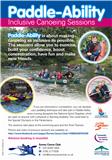
PaddleAbility- Inclusive Canoeing At Surrey Canoe Club

April 12, 2011

I have just recieved the following information by email from the Surrey Canoe Club:


The Paddle-Ability Sessions are “Free of Charge” for both youth (min age 6 years old) , adults and their personal assistants.


Sunbury Leisure Centre, Nursery Road, Sunbury-on-Thames, TW16 6LG

http://www.everyoneactive.com/tabid/620/default.aspx


Saturday 6.30pm-7.30pm
16th April
28th May
25th June
2nd July
16th July
23rd July


Spelthorne Leisure Centre , Knowle Green, Staines, TW18 1AJ

http://www.everyoneactive.com/tabid/656/default.aspx


Saturday 7.30pm-8.30pm
14th May
11th June
9th July
13th August
10th September
8th October


3 River Sessions in August TBC


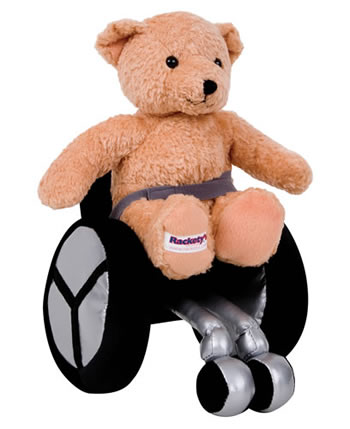
Teddy Jon- A Teddy Bear In A Wheelchair

April 12, 2011

I’ve just read about a toy in a wheelchair that I hadn’t heard of before. Teddy Jon is a soft toy, suitable for very young children. The toy is available to buy from here.

Rackety’s very exclusive collectable Teddy bear with his own very sporty wheelchair. As well as making a great gift Teddy Jon is perfect inclusive educational toy for nursery schools, playgroups schools or childminders.

Comes complete with his own safety strap so you can take him out and put him back again.


What a great idea. Many thanks to the lovely people at Pick Me Up Magazine for the info.


Disabled People In Politics: Have Your Say

April 12, 2011

http://twitter.com/#!/ukhomeoffice/status/57375130023755776

An Actor? In A Wheelchair?

April 12, 2011

It’s early 2008, and the National Theatre of Scotland has asked Belgian theatre director Pol Heyvaert to work with Scottish actor and playwright Robert Softley. Heyvaert likes the ideas for a new play that Softley has sent him, and is looking forward to exploring them in the rehearsal room.

But when they come face to face, Heyvaert realises he’s been making a big assumption about the kind of actor Softley is. The 30-year-old graduate of the University of Glasgow is a wheelchair user with cerebral palsy. “When Robert introduced himself as an actor,” he says, “I thought, ‘No, how can a wheelchair user be an actor?'” For Softley, this surprise was familiar. “People’s expectations are that you’re a bit slow,” he grins. “My whole life is about smashing apart those expectations.”

Three years later, the pair are taking time out of rehearsals to talk about Girl X, their first NTS production together. It is inspired by the case of Ashley X, a girl from Seattle who has a brain disorder known as static encephalopathy. In 2004, when Ashley was six, her parents initiated a three-year medical course to halt her growth, including a hyster- ectomy and the surgical removal of her breast buds. From their point of view, it was an act of compassion; they were sparing their daughter the discomfort of puberty. But when the story broke in October 2006, critics talked of Franken-stein, eugenics and human engineering.

To get to a point where they felt comfortable tackling such a fraught debate, Heyvaert and Softley had to go through a rite of passage of their own. In their first workshop, with students from Glasgow’s Royal Scottish Academy of Music and Drama, Heyvaert made the controversial decision to focus on the actor’s disability. He asked the students to use Softley as a case study: to imitate every involuntary movement, every tilt of his head, every facial contortion. Heyvaert wanted to question the very idea of what an actor is. “Rather than him being the one wheelchair user, I thought, ‘Why not make all the actors wheelchair users and then see what is different between Robert and the other actors?'” The student actors reacted with embarrassment; some burst into tears.

It was a high-risk strategy, and one not untypical for a director whose work includes Aalst, the true-life story of two child killers, and Fuck My Life, about teenage suicide. But despite the initial trauma, it was exactly the approach Softley was looking for. As a disability-rights activist, whose mother died giving birth to him, he knew he would need an unsentimental collaborator. “That’s why it worked so well,” he says. “When I first came to the NTS with the idea, I had no real sense of how to put it on stage. My biggest worry was that it would make it very sentimental, very emotional. The fact that Pol didn’t care was perfect.”

When he began working with Softley, Heyvaert had little sympathy with the disability agenda; making the show has, he says, not so much radicalised him as softened his once-strident opinions. “For me, it was shocking to say there is somebody better placed than parents to decide about their children,” he says. “The issue has become much more complex to me. I still have the same value for the parents’ opinion, but now there is the other, disability-rights opinion next to it as well.”

Girl X is not a polemic in favour of the right of disabled people to choose their own lives, although that is where Softley’s sympathies lie. Neither is it a tirade in support of parental choice. Rather, it is an attempt by the two men to capture a prism of opinions. The Ashley X story and similar cases have generated considerable debate (a blog set up by Ashley’s parents, now taken down, claims to have received 2.75m hits since 2007), and it was this material Heyvaert drew on to construct the script. “I started editing the arguments into a kind of map of all the ideas I’d found on the internet,” he says. On stage, he surrounds Softley with a Greek-style chorus, who voice the many points of view generated by such an emotive issue. “For me,” says Softley, “it’s about engaging people in the issue. It’d be very tempting to go, ‘Look, you should all believe what I believe,’ but the world doesn’t work like that.”

Despite saying he is no social activist in his private life, Heyvaert considers it his duty to put such a sensitive, real-life subject on the stage. “I think we have not only the right to have an opinion on this subject, I think it is obligatory,” he says. “We are the people who decide on subjects like euthanasia and birth control. People must understand that they’re part of those choices.”

Alfie Clamp

April 12, 2011

A two-year-old boy has become the only person in the world to be diagnosed with an extra strand in his DNA.

Brave Alfie Clamp was born blind and with severe disabilities, which led doctors to carry out various tests.

They revealed his seventh chromosome had an ‘extra arm’ which has never been documented anywhere in the world before.

Doctors are baffled at his condition, which is so rare it does not have a name.

Medics also have no idea whether his condition will improve or reduce his life expectancy.

Alfie, from Nuneaton, Warks., can now see and he will have an operation this month to fix an intestinal problem caused by his condition.

His parents Gemma and Richard Clamp only discovered something was wrong with their son after they first took him home.

Within days, he was rushed back to hospital after he stopped breathing and his lips turned blue.

Then when he was six weeks old, doctors discovered he had a rare abnormality in his DNA.

Mrs Clamp said: ‘When the doctors told us I was absolutely devastated. As a pregnant mum you spend nine months thinking about what it will be like when your baby takes their first step or claps their hands.

‘Having a boy like Alfie makes you appreciate the little things. He didn’t roll over until he was 18 months old, but we were so excited when he did.’

His condition left Alfie unable to see until he was three months old and his muscles were so weak he could not roll over on his own.

He still suffers serious digestive problems and needs a cocktail of drugs every day to help his body absorb vital nutrients.

He also suffers fits which sparked by high temperatures and metabolic problems stop him from eating or drinking.

Since he was born, Alfie has been rushed to hospital six times – including twice just last month – when he stopped breathing.

His parents even believed he was dying twice and were stunned when Alfie made a full recovery after spending time in hospital.

Mr and Mrs Clamp, who also have 10-year-old daughter Georgia who is perfectly healthy, had their DNA tested but were not carriers of the faulty gene.

Mr Clamp said: ‘The doctors told us there is nothing we could have done to prevent it. I don’t think we’ll ever know why it happened.

‘I was holding him in my arms and I could see his eyes start to focus on me. It was a massive milestone for us because we didn’t know if that would ever happen.

‘We even took a photograph of the two of us sat there, looking at each other. Having Alfie has changed our lives – everything revolves around him. But he is such a happy boy and he has brought a lot of joy to our lives.

‘Whenever we go to hospital, all the doctors and nurses say what a pleasure it is to see Alfie.’


Callum Davies

April 11, 2011

An eight-year-old boy has won a High Court multi-million pound settlement for being starved of oxygen at birth, which left him severely brain damaged.

Callum Davies was left with cerebral palsy due to a 15-minute delay at Nevill Hall Hospital, Abergavenny, Monmouthshire.

The ex-Gwent Healthcare NHS Trust is to pay a £2.275m lump sum plus annual payments for his care.

Health officials apologised and said there were “lessons to learn”.

The health board which succeeded Gwent Healthcare NHS Trust admitted a breach of dury and said Callum’s case had led to “lots of soul-searching”.

The court heard Callum was starved of oxygen due to the delay in his delivery in November 2002, resulting in him being left with dyskinetic cerebral palsy and brain damage.

He will need extensive care for the rest of his life, the court heard.

His barrister, David Westcott QC, said the money will cover the cost of adaptations to the family home and an education programme which would allow Callum to “reach his full potential”.

Alexander Hutton, for the NHS, said: “It led to lots of soul-searching at the trust, which has attempted to improve services since then.

“An apology may be scant consolation, but it is sincere.”

Judge Mrs Justice Nicola Davies approved the compensation package and paid tribute to Callum’s family.

Addressing his father, Paul, at the back of court, she said: “It is clear that the care which you and your wife have given is of the highest order.

“I know that Callum’s injuries have impacted on you and your whole family as a unit and that is something which at times is very, very difficult for families.

“I am well aware that the settlement approved by the court is not the complete answer, but what I do hope for the family is that these monies will make life easier.

“Not just the increased level of care, improvements to the home and education, but also down to holidays, so you and your family can spend some time together.”

Gwent Healthcare NHS Trust was replaced in October 2009 by Anuerin Bevan Health Board.

A spokesperson for the board said: “This is an extremely sad case, and our thoughts today are with Callum and his family.

“We would like to repeat the apology that the health service has previously given in this case – we are very sorry.

“There were lessons to learn from this difficult case. We have worked in collaboration with the Royal College of Obstetrics and Gynaecology to improve training across the NHS for all those involved in monitoring babies during childbirth.

“Maintaining a high quality for maternity services is a priority for the health board and we will be doing all that we can to reduce the risks to mothers and babies.”

Disability Horizons- A New Online Disability Magazine

April 11, 2011

I’ve just heard about Disability Horizons, a new online disability issues magazine that’s been started by blogger and campaigner Martyn Sibley and his friend Srin. They’re currently working on their first edition. I wish them all the best. Move over Disability Now!

Cursors Controlled Just By Thoughts

April 11, 2011

A cursor on a computer screen can be controlled using thoughts about a range of vowel sounds, research has found.

Brain signals have been translated into motion or even pictures before, but the current research showcases a nascent technique called electrocorticography.

The approach uses sensors placed directly on the surface of the brain.

The authors of the Journal of Neural Engineering paper say the technique will lead to better “brain-computer interfaces” for the disabled.

A great many studies and demonstrations have in recent years made use of the electroencephalograph, or EEG, typically worn as a “cap” studded with electrodes that pick up the electric fields produced by firing neurons.

The technique has been shown to guide electric wheelchairs or even toys, based only on the wearer’s intention.

Sound idea

However, EEGs lose a great deal of the precious information that is available closer to the brain itself, what lead author of the study Eric Leuthardt, of Washington University in St Louis, in the US, calls the “gold standard” brain signal.

“You cannot get the spatial or the signal resolution,” he told BBC News.

“One of the key features in signal resolution is seeing the higher frequencies of brain activity – those higher frequencies have a substantial capability of giving us better insights into cognitive intentions, and part of the reason EEG suffers for this is it acts as a filter of all of these high frequency signals.”

That is, the EEG picks up signals outside the skull, which acts to absorb and muddle the signals.

Electrocorticography, by contrast, is so named because it taps directly into the brain’s cortex – the outermost layer of the brain.

In a surgical procedure, a plastic pad containing a number of electrodes is implanted under the skull.

Its power has already been shown off in allowing video game play by thought alone – but in the new study, the researchers have tapped into the speech network of the brain.

Prior studies have made use of the motor control signals in the brain: the thought or will to move in a particular direction.

But Dr Leuthardt said that the units of speech known as phonemes allow signals of a particular “discrete” nature, rather than signals that range in intensity, as with thoughts of motion.

“(It’s) for the same reason that you don’t type a paper with a mouse – you have a keyboard with a number of discrete commands,” he explained.

“We would want to facilitate somebody’s abilty to communicate by having different phonemes – or essentially key presses – that could allow them to have discrete type of control.”

Four patients who were already undergoing the electrocorticograph implantation – to establish the source of incurable epileptic seizures – participated in the latest study.

They were asked to think of four different phonemes – “oo”, “ah”, “ee” and “eh” – and their brain signals were recorded. Those higher-frequency signals were shown to reliably move a cursor on a computer screen.

“Do we need that gold standard to get this simple level of control? I think the likely answer is yes,” Dr Leuthardt explained.

“For a brain-computer interface, especially for someone who is severly impaired, they need something that is absolutely, completely reliable. If you think of EEG (systems), they move, they’re susceptible to noise, and the likelihood for reliablity is much lower.”

Just a few discrete but reliable signals – tantamount to being able to move a cursor in two dimensions and effect a “click” – could lead to a vast number of applications, he continued.

“What is one of the most prolific ‘2D-plus-click’ devices we have today? It’s an Iphone. Once you have 2D plus click… there’s innumerable different types of functionality you can create on an application base – but what you first need is the control.”

The study also showed that the large-area arrays utilised for the epilepsy research would not be necessary for future electrocorticography implants; an area just 4mm by 4mm can provide the same level of information.

Katie Price Calls For Sacking Of Channel 4 Boss In Frankie Boyle Row

April 11, 2011

I agree with her about Channel 4 broadcasting the Paralympics. I’ve been saying for ages that with these attitudes to disability, I don’t think they should.

Katie Price has written to culture secretary Jeremy Hunt to demand that Channel 4’s chief executive is sacked for his part in her dispute with Frankie Boyle.

The glamour model turned reality TV star is furious that station boss David Abraham chose to defend the Scottish comedian after he made sick jokes about Jordan’s disabled son, Harvey, during his Tramadol Nights show.

In one part of his routine Boyle said: ‘I have a theory that Katie Price married a cage fighter because she needed someone strong enough to stop Harvey from f****** her.’

Ofcom upheld the 500 complaints it received from viewers about Boyle’s comments, but Channel 4 still refused to apologise for what it termed ‘manifestly satirical’ jokes.

Katie was in no mood to let the matter lie and has now called on Mr Hunt to act.

Extracts from her letter published in the Mail on Sunday show that she asked why people with disabilities were not given more protection in such circumstances.

Katie added: ‘How can Channel 4 be our Paralympic broadcaster when it discriminates against the disabled? Is Mr Abraham’s position not completely untenable?’

News of her contact with the culture secretary came as Mr Abraham published an open letter to Katie, in which he insisted Boyle’s jokes were not intended to be offensive towards Harvey.

He added that Channel 4 executives ‘were satisfied that you and not your son, were the object of the satire’.

Wheels In The Woods

April 11, 2011

For wheelchair users who enjoy visiting woods and forests, here are two links you might find interesting, from yesterday’s Observer:

Happy wheeling!


Peter Norfolk Wins Sixth Florida Open

April 11, 2011

Two-time Paralympic wheelchair tennis champion Peter Norfolk powered to his sixth Florida Open quad singles title on Sunday.

The world number two beat unseeded Israeli player Noam Gershony 6-2 6-3.

Outsider Gershony had a shock win over world number one David Wagner earlier in the tournament.

It brings Norfolk’s tally of major singles titles at either Grand Slam or Super Series events to 19.

After a solid opening set Norfolk made the first breakthrough in the second set, holding serve to move 4-2 ahead.

He then won the last two games of the match to seal his sixth title in Boca Raton since 2004, though it was his first since 2009.

“It was a surprising week, playing players with some new and different styles,” said Norfolk. “I played a solid tactical final against Noam, who was in his first Super Series final. My backhand returns were very penetrating and I’m very happy to have regained the title.”

But Norfolk’s hopes of a third Florida Open doubles title ended when he and fellow Briton John Parfitt were beaten 6-4 6-1 by American top seeds Wagner and Nick Taylor.

The Autism Directory Wales

April 11, 2011

A disability rights campaigner has set herself the target of making Cardiff the UK’s first autism-friendly city.

Nadine Honeybone has set up The Autism Directory Wales to support parents and educate the public.

She claims she has been refused service, and verbally abused by other shoppers, who assumed her six-year-old autistic son was being “just naughty”.

Now Ms Honeybone, from Penarth, Vale of Glamorgan, has set up The Autism Directory Wales.

It aims to support parents and educate the public, by demonstrating to business that there is a profit to be made from autistic customers.

And to coincide with Autism Awareness Month in April, she has set herself the target of making Cardiff Britain’s first Autism-friendly city.

“You can’t tell by looking at a child that they have autism, yet that doesn’t stop people presuming that my son is just naughty; tutting at him and sneering at me for being a bad parent.”

“A woman in British Home Stores told me to control my child and think of the poor cleaners when I was trying to feed him in the cafeteria.”

“Good for her if her children have perfect table manners, but my Tommy doesn’t get it; and I don’t think that he or I ought to be judged as a result.”

“Many parents of autistic children can’t cope with being victimised everywhere they go, and simply stay at home and become more and more isolated and depressed.”

“While they’re at home, they’re not spending money!”

“But very often, what people presume to be bad behaviour is in fact a very frightened and confused autistic child, experiencing sensory overload, or venting his frustrations at the mass of contradictions which the rest of us accept as everyday life.”

Continue reading the main story

AUTISIM FACTFILE

• Autistic Spectrum disorders are conditions where the neural synapses fail to develop and interact properly.

• Typically symptoms will appear around two years old, and many children will seem to be developing normally before that point.

• While only one in 10,000 boys and one in 40,000 girls are classically autistic, it’s thought that as many as 2% of the population have some form of Autistic Spectrum Disorder.

• The conditions are characterised by the Triad: a reluctance to socially interact, (especially to make eye contact), impaired speech, language and cognitive skills, and obsessive and repetitive behaviour, including an over-reliance on familiar routines.

• Often it is a breakdown of these routines, or apparent errors and contradictions within them, which can cause autistic people distress.

• Autistic people also have difficulty filtering sensory information which most of us can block out.

Ms Honeybone said: “When you put on trousers in the morning, you might notice the sensation against your skin for the first five seconds, then your brain accepts it as a constant and chooses to ignore the sensation.”

“Autistic people can’t do that. Everything they sense is constantly present in their conscious mind, and it’s impossible for them to overlook it.”

“The same goes for noises and lights and smells; all the things which are present in crowds of shoppers.”

“That’s why autistic children will often want to strip off, and it’s compounded by the fact that they can’t grasp social constructs like decency.”

“They don’t know that people are looking at them and judging them, but the parents do; and it’s this which causes so much upset, anger and frustration.”

The Autism Directory’s ‘Cardiff Autism Challenge’ invites businesses and service-providers to take-up the groups free autism awareness training.

They will learn about how to spot someone with an ASD condition, how to interact with them, and how to organise their staff and premises to make them as sympathetic to the condition as possible.

Continue reading the main story

“Start Quote

All I want them to do is have an open mind ”

End Quote Nadine Honeybone

In return businesses will be provided with an ‘Autism Friendly’ poster to display in their window, and Ms Honeybone will promote them as companies who welcome autistic customers, via the Autism Directory’s website.

Ms Honeybone is keen to press home the message that being autism-friendly makes business as well as moral sense.

In Cardiff and the Vale of Glamorgan alone, she estimate that the trade from the 7,000 autistic people and their families could be worth as much as £210m a year.

‘Not properly understood’

“I knew nothing about autism before I had Tommy, so I don’t expect anyone else to either; all I want them to do is have an open mind and let me show them how to make more money.”

“I came from a business consultancy background, so I know that every penny counts, and tiny changes can make a big difference.”

“Simple things like allowing Tommy to play his favourite DVD while he has his hair cut transform a potential nightmare into a manageable situation.”

“Having quiet areas to wait, reducing echo-ey acoustics and avoiding unnecessary changes in lay-out can all help as well.”

Suzi Browne, spokesperson for The National Autistic Society, said autism was a serious, lifelong disability, which can make understanding and communicating with other people particularly difficult.

“A lack of understanding from the general public is one of the biggest problems which people with autism and their families face,” she said.

“People can be quick to judge a child having a tantrum in the supermarket as being ‘a naughty child’ or ‘in need of a good slap’; and people can ignore adults in the street who they think are acting ‘strange’ or ‘weird'”.

“All too often autism is not properly understood and the needs of people affected by autism are not recognised.

“This can lead people with autism to become isolated from their local community, choosing not to go out for fear of the reactions they might face.

“It is vital that we help raise awareness of autism to ensure that people affected by the condition are provided with the appropriate support and understanding in order to help them overcome the social barriers that often prevent them from accessing everyday services that most people take for granted.”

Away For Weekend- Recommended Reading

April 8, 2011

Dear Readers

I’m going away this weekend. Same Difference returns on Monday morning.

While I’m away, I recommend you read The Broken Of Britain’s latest Twitter hashtags– #fitforwork and #DWP45 (a play on the P45 form that you get when you leave a job.) The first one’s serious, the second one’s fun.

See you soon!

Samedifference1


JustGiving Page Of The Week: Angela Batman

April 8, 2011

Angela Batman’s sister has MS, so she’ll be running this year’s London Marathon to raise money for the Multiple Sclerosis Resource Centre. Hers is this week’s JustGiving Page Of The Week. Good luck Angela!

Welsh Autistic Assistance Placed Under The Microscope

April 7, 2011

This is a guest post by Phil Evans. It was originally posted here earlier today. Thanks to Phil.

Becoming the first country within the United Kingdom to launch a government strategy in relation to the Autistic spectrum, Wales’ national assembly has created an action plan which outlines how those in power will aim to not only meet the needs of those affected by disability but also their families.

Initially published in April 2008, their ten-year ASD Strategic Action Plan discussed how needs of those affected would be met by authorities throughout the country with an implementation phase putting any beneficial changes into place over a three year period.

Using this time-frame to identify gaps in care for those with Autism, develop assistance in localized areas and provide funding for schemes which would help Welsh people that required it most, initial ideas were developed and implemented though research taken last year has shown how those affected would like to see improvement made.

Are the National Autistic Society Cymru’s findings something to worry about? 

By initially holding a series of nine focus groups across the country during summer 2010, representatives from different areas of life such as people with Autistic tendencies, family members linked with the complex range of conditions, carers and staff from the National Autistic Society Cymru, the branch of Britain’s main Autism charity local to the nation, discussed how services could be further developed for greater ease.

Produced from any points raised, surveys were then sent out to all families and individuals affected so that a larger scale of response could be obtained before any further plans could be produced.

‘The Life We Choose’, a report created by the NAS, shows results gathered from the intensive study whilst revealing how any findings will be put into realistic practice throughout the remainder of 2011.

Working alongside the initial action plan which gave Autism an individual voice from the government’s Cardiff base, strategies and statistics expressed throughout this view of national assistance shows how members of the general public feel about help that is currently offered in largely negative ways.

Proving difficult to find any positivity as there appears to be a great amount of unhappiness surrounding current levels of support offered, figures generated show that the majority of those who took part in the survey feel there isn’t enough assistance provided through several areas of everyday living which could act as a benefit to all.

Looking at the subject of diagnosis and post-diagnostic support, 58% of those contacted believe that consultants and specialists take too long in determining that a person has Autism while a further 10% have failed to receive an inconclusive result after a 10-year search for an answer to any traits shown which could be linked with the spectrum. (The National Autistic Society, 2011).

Coupled with this apparent lack of assistance in attempting to get medical help for those who need it most, 59% of all parents surveyed believe that greater levels of support are required during later stages of development as valuable assistance had been lost during earlier years due to a lack of disability confirmation from those who are trained to provide an answer. (The National Autistic Society, 2011).

Summing these commonly shared feelings up in only a few words, one comment shown the amount of animosity felt towards the government despite their recently implemented changes: ’We have had to fight for every service [my son] has used ever since we moved to Wales.

‘Without us as his articulate, persistent parents I do not know what would have happened to him. He has everything he has now because we have fought enormous and stressful battles on his behalf throughout his life. Others have not been as fortunate.’ (The National Autistic Society, 2011).

Showing strongly through stats displayed on the NAS website, this view of negativity isn’t one that is felt on a personal level but a feeling which can be echoed throughout Wales as a growing independent nation which seemingly struggles to help it’s Autistic citizens.

Are these thoughts a little strong? Feel free to leave a comment if you wish as all views are constantly encouraged on a subject which could be similarly felt by many around the world.

Phil Evans

Paige Silcock

April 7, 2011

The mother of a seven-year-old girl who spent a year in hospital after suffering severe burns has said she is “an inspiration to everyone”.

Paige Silcock was close to her home in Hartshead, Skelmersdale, on Mother’s Day last year when she started playing with a discarded cigarette lighter.

She managed to set hair alight before the flames engulfed her body, leaving her with extensive burns.

After treatment in Alder Hey children’s hospital, she returned home last week.

Her mother, Allison Francis, said: “I remember screaming and running up the stairs, I had to put the flames out in her hair. It was horrific.”

She said her daughter, who now uses a wheelchair, was working hard to learn how to walk again.

“She is determined, she wants to get up and do it, which is a good thing because she wants to do what other children are doing so she is more enthusiastic,” said Mrs Francis.

She said she has to apply cream to her skin three times a day, but Paige does not complain.

She added: “She is an inspiration to everyone. It’s like losing one child and gaining another.”

Huw Thatcher Trust Set Up In Memory Of Cardiff City Fan Who Died Playing Football

April 7, 2011

The family of a teenager who collapsed and died while playing football are setting up a trust in his memory.

Cardiff City fan Huw Thatcher, 15, died last month from a brain aneurysm after collapsing while playing for his under-15s team in West Yorkshire.

His father Nick, who is from Cardiff, was one of the coaches and attended to Huw before he was taken to hospital.

The family has now formed a trust in his name to help those left disabled from brain injuries.

Mr Thatcher said his son’s condition was undetectable.

“It a condition where there’s no symptoms at all, you just function normally,” he said.

“It’s just a weaker area of a blood vessel. Sometimes in a person’s life that weak area gives way and you have a haemorrhage. For some people it never gives way.

“It happened while he was playing – he collapsed on the pitch when he was kicking the ball. It didn’t happen as a result of any contact.

“It could’ve happened while he was asleep or in school.”

Mr Thatcher, Huw’s mother Jenny and his sister Carys, 13, came up with the idea of setting up a trust in his memory.

“Basically, it’s to remember Huw in a positive way and to help brain-injured people,” said Mr Thatcher.

Continue reading the main story

“Start Quote

We haven’t got a target and we don’t know how far it will go but I’m sure we will raise tens of thousands”

End Quote Nick Thatcher Huw’s father

He said his son, who lived in Holmfirth in West Yorkshire, could easily have been left severely disabled from his condition so it seemed an appropriate cause.

The Huw Thatcher Trust will support the Disabilities Trust charity, in particular its Brain Injury Rehabilitation Trust division.

It will also support two Leeds-based facilities – Daniel Yorath House, a residential rehabilitation service for people with acquired brain injury, and Terry Yorath House, which provides residential care for people with physical disabilities.

Daniel Yorath, the son of the former Wales football manager Terry Yorath, died from a heart condition at the age of 15 while playing football with his father.

Mr Thatcher added: “Huw was an outgoing lad who knew loads of people, and loads of people have been in touch with us about it [the trust].

“We haven’t got a target and we don’t know how far it will go but I’m sure we will raise tens of thousands.”

Huw’s friends and family attended Cardiff City’s Championship game against Derby on Saturday as guests of the club.

Funeral of Huw Thatcher Mourners wore casual clothes or football shirts as a mark of respect
The Bluebirds donated 100 copies of the match programme for his friends to sell to raise cash for the trust.

The club also gave Huw’s Hepworth United team-mates Cardiff City kits to play in for the rest of the season in tribute.

Many mourners at Huw’s funeral last month wore casual clothes or football shirts as a mark of respect.

The teenager was carried into the church in a blue coffin – his favourite colour and the colours of Cardiff City, with three football scarves placed on top.

The following Sunday, matches in the Huddersfield Junior League observed a minute’s silence before their games.

Exoskeleton That Lets Paraplegics Walk Goes On Sale In UK

April 7, 2011

This seems like progress to me.

A revolutionary exoskeleton that allows paraplegics to stand and walk up stairs has gone on show in the UK.

The pioneering bionic device, called ReWalk, is the brainchild of engineer Amit Goffer, founder of Argo Medical Technologies, a small Israeli high-tech company.

He said the RoboCop-style suit would be an ideal device for injured British soldiers.

The system, which requires crutches to help with balance, consists of motorized leg supports, body sensors and a back pack containing a computerized control box and rechargeable batteries.

The user picks a setting with a remote control wrist band – stand, sit, walk, descend or climb – and then leans forward, activating the body sensors and setting the robotic legs in motion.

The technology has already been put into use in a specialist spinal injuries unit in Italy, following extensive testing. A consumer version should be on the way later in the year, allowing people to use the system in their own homes.

The suit is on display at the NEC in Birmingham.

Cyclone Technologies is to introduce the system to the UK. It’s managing director, Dave Hawkins said: ‘For a paraplegic like myself it means everything.

‘It means I can look my kids in the eye stood up, of means I can give my girlfriend a cuddle. It means you can do normal things like going to a gig and standing up to watch.

‘We are marketing it towards the military. It would be fantastic for people returning injured from Afghanistan to find they’re not stuck as a paraplegic.

‘Towards the end of this year we shall have a personal model that will be tailored to match an individual’s physical capability, following medical assessment and training in a rehabilitation centre.’

The system will be available for £50,000 to personal users by the start of 2012.

According to Mr Hawkins, he has already potential users expressing interest, including the British Armed Forces.

Radi Kaiof is an Israeli who is trained to use the device. He lost the use of his legs while serving in the Israeli army.

‘For me it is amazing, the freedom, to be told I can walk after I thought I could never walk again is brilliant,’ he said.

‘I have been using it for two years now, it has changed my life, I can live normally again.’

It only took five two-hour sessions for Radi to be completely trained on the system.

Rather than forcing the user into motion the system gives them complete control of the device. From a wrist watch Radi selects what he wants to do, stand, sit, walk, ascend, and then uses his body movement to control.

After choosing to walk all he needs to do is lean forward and off he goes. Stopping is a simple matter of stopping leaning forward.

There are several medical benefits to using the device.

‘Being sat down all the time creates loads of problems,’ said Mr Hawking.

‘It crushes your internal organs, being able to stand means life is much more comfortable.

‘Being sat down when you want to stand causes horrible mental anguish as well. It causes depression and suicides have become far too common.

‘Just the feeling if standing helps you live immeasurably.’


Scientists Make Retina From Stem Cells

April 6, 2011

A part of the eye that is essential for vision has been created in the laboratory from animal stem cells, offering hope to the blind and partially sighted.

One day it might be possible to make an eye in a dish, Nature journal reports.

The Japanese team used mouse stem cells – immature cells that have the ability to turn into many types of body tissue.

With the right mix of nutrients, the cells changed and began to grow to make a synthetic retina.

Ultimately, scientists hope they can use this approach to make endless supplies of retinal cells or indeed whole retinas that can be transplanted into patients with visual impairment.

Eventually, it may even be possible to create a whole eye.

A US biotech company has already been granted a license to begin human trials of a stem cell treatment for blindness.

‘Landmark discovery’

The retina is the name given to a diverse group of cells that line the inside of the back of eye.

Rays of light enter the eye and are focused onto the retina which produces a picture that is then is sent along the optic nerve for the brain to interpret.

Continue reading the main story

“Start Quote

Generation of a synthetic retina from embryonic stem cells is a landmark discovery that will help enormously our understanding of blinding eye disease”

End Quote Professor James Bainbridge of Moorfields Eye Hospital NHS Foundation Trust

The eye and the brain together produce the images that we see.

Retinal diseases can cause severe vision loss or blindness if left untreated.

Retinitis pigmentosa and age-related macular degeneration (AMD) are the most common causes of blindness in old age, and involve the gradual and normally irreversible destruction of retinal cells.

In the Japanese study, the cultured stem cells spontaneously organised themselves into a complex structure that resembled the developing embryonic eye.

The three-dimensional, layered structure was reminiscent of the optic cup, a two-walled pouch-like structure, which ultimately develops into the inner and outer layers of the retina.

The scientists said they were surprised at how well the cells organised themselves with little intervention from them.

They said: “Self-formation of fully stratified 3D neural retina tissues heralds the next generation of generative medicine in retinal degeneration therapeutics, and opens up new avenues for the transplantation of artificial retinal tissue sheets, rather than simple cell grafting.”

Professor James Bainbridge of Moorfields Eye Hospital NHS Foundation Trust said: “Generation of a synthetic retina from embryonic stem cells is a landmark discovery that will help enormously our understanding of blinding eye disease.

“It is particularly exciting that this could also provide a source of cells for transplantation.”

Barbara McLaughlan of the RNIB charity said: “This piece of research contributes to the ongoing efforts to harness stem cell research to benefit patients with a number of eye diseases.

“We welcome these efforts particularly where they move from early laboratory research in mice to trials in humans that are an essential part of developing safe and effective treatments.”

BendyGirl’s Day In London

April 6, 2011

Kaliya Franklin, better known here as my online friend and fellow blogger BendyGirl, recently spent a day in London for a meeting at the Houses of Parliament. Here, she writes about the day on the Joe Public Blog. I’m pleased and proud to read the post, as it seems she had pleasant experiences in my lovely home city!

London Ambulance Service Admits Responsibility For Woman’s Brain Damage

April 6, 2011

London Ambulance Service has admitted a catalogue of errors after a delayed 999 response left a woman brain damaged.

Caren Paterson, 33, collapsed and suffered brain injuries after waiting more than 90 minutes for an ambulance crew waiting about 100 metres away.

Paramedics were ordered not to enter her flat in Islington without a police escort as it was graded high risk.

The ambulance service admitted 11 breaches of duty that contributed to Ms Paterson’s injuries in 2007.

Ms Paterson is claiming compensation against London Ambulance Service (LAS).

‘Radical overhaul’

The 11 breaches included failing to comply with hospital trust policies, failing to recognise there was no danger at the flat, and failing to assess the life threatening nature of Ms Paterson’s injuries.

Ms Paterson’s boyfriend dialled 999 on the afternoon of 27 October and reported she was unconscious, breathing abnormally and her lips were blue.

As police had previously been called to the Hargrave Road address, and it was flagged as being on the High Risk Address Register, paramedics were told to wait for a police escort.

Ms Paterson, who had worked as a researcher at King’s College Hospital, suffered a cardiac arrest at about 3.15pm, five minutes before police and an ambulance team arrived.

The delay caused her brain to be starved of oxygen, leaving her in need of specialist care in hospital for the rest of her life.

‘Admission of liability’

Her lawyer, John Davis, said it was not known why her property was on the high-risk register but that following the case it had been acknowledged it needed to be “radically overhauled”.

He said: “We endorse any review and improvement to this system which was clearly at the heart of the failings in this case.”

Ms Paterson’s mother, Eleanor Paterson, of Warkworth, Northumberland, welcomed the “admission of liability”.

She said it was a “significant step towards ensuring Caren will continue to receive the care, treatment and specialist attention she will need for the rest of her life, but nothing will return our daughter to the way we knew her”.

A statement from LAS said: “We carried out a detailed investigation into the circumstances of the incident and we have accepted liability for the shortcomings in the care that was provided on October 27, 2007.

“Dr Paterson is bringing a claim for compensation against the service and we hope that the legal representatives can now work together to find a resolution.”

British Airways Recruitment Process Potentially Breaks Disability And Sex Discrimination Laws

April 6, 2011

Employment lawyers have told the BBC that British Airways could be in breach of both disability and sex discrimination laws.

The BBC has learned that as part of their recruitment process BA send out a reference request which asks very detailed questions about whether a prospective employee has children, and how much time has been taken off to look after them.

BA said the information gathered has “absolutely no influence on the recruitment process.”

Graham Satchell reports.

In Touch: Disability And Social Networking

April 6, 2011

BBC Ouch blog has details of yesterday’s In Touch programme on Radio 4, which is available on iPlayer whenever you like to listen to it. The programme asked four disabled people how and why they use social networking sites. Being disabled and a very big fan of these myself, the topic interests me quite a bit. Do you have any thoughts on this, readers?

Genetic Screening For Children Before They Become Sexually Active To Test For Hidden Conditions

April 6, 2011

According to this article from yesterday’s Telegraph, a government advisory group is due to suggest this week that children should be encouraged to have genetic tests before they become sexually active. Such tests would look for any hidden abnormalities that could be passed on to their potential offspring.

The Human Genetic Condition will recommend that ‘preconception tests,’ which allow specialists to find out whether potential parents are carriers of hidden genetic conditions, should be made much more widely available. Currently, potential parents who carry out these tests and are found to be at risk of passing on a disease or disability are given the options to have IVF treatment, adopt or use donor eggs or sperm rather than consider a natural pregnancy.

I’ll be honest. I’ve never heard of these tests, and when I first read about the idea of children having such procedures, I thought the article was an April fool! On a more serious note, the suggestion that children should have these tests only adds to the controversy which already surrounds them. The tests raise many ethical questions. To what extent should doctors- or potential parents- intervene in nature? Is there an automatic suggestion that any natural pregnancy of a parent who carries a genetic abnormality should be aborted? There’s the question of whether children need to know about things they are far too young to understand, although the procedures, and any results, could be explained to them simply, in a way that would be appropriate for their level of understanding. Still, surely these discussions, discoveries and decisions can and should wait until people are actually old enough to be considering having children and carrying out a natural pregnancy?

Then, there is the ethical question which concerns me, as a disabled person, most of all. I believe that every life is equally valuable. However, what do these tests suggest about the value of the lives of disabled people? Are our lives worth so little that potential parents should be encouraged to take action as drastic as IVF or donor pregnancies rather than have a disabled child naturally? Parenthood takes much more than biology, but there’s no doubt that biology is very important. Don’t carriers of hidden genetic conditions deserve the joy of having their own, biological children? Or is there a suggestion that they can somehow help being carriers? Surely they can’t- any more than disabled people can help being disabled.

A report by the Commission, which was asked to review the ethical and legal questions surrounding preconception testing in 2009, will be presented to the Department of Health this week. It has concluded that preconception testing should be available to anyone who needs it, because parents should have the maximum choice in these matters.

The report will suggest that children should be taught about the transmission of genetic conditions as part of sex education. Personally, I agree with this idea. As a disabled person, I do wish that disability and its causes had a larger slot in the National Curriculum when I was at school. However, I would like any educational coverage of this issue to promote understanding and acceptance of disability and disabled people, not make children consider ways to reduce rates of disability at birth.

The report argues that there is no ethical difference between preconception testing and antenatal screening.

Health ministers will respond to the report in the next few weeks. They will be concerned about the cost of these proposals. Currently, the test kits cost about £400 each and can look for about 100 conditions.

The report suggests that the adult population could be educated about preconception tests through GPs’ surgeries, chemists and family planning centres. In the future, it suggests, such organisations could carry out the tests.

The article suggests that ministers could decide to make preconception testing available on the NHS, but only to people with a family history of genetic conditions. History or not, however, the idea of these tests being free worries me even more than the idea of making them cheaper. Are we one step closer to a world without people born with disabilities? What does that say about how people born with disabilities are seen by the world today? And, a final, even scarier thought. In a world where no one is born with a disability, what will happen to people who become disabled later in life?

This idea is the stuff of science fiction, and it has given me thoughts that have left me shivering with fear.

Woman With Locked In Syndrome Makes Medical History

April 5, 2011

On the way to meet Marini McNeilly, who has made medical history by composing music through the power of thought alone, one question preoccupied me: how would I greet her?

The 57-year-old former language teacher is paralysed after a massive stroke two years ago, so I could not shake her hand. She is unable to speak so I could not expect any verbal response. What would it mean to interview someone with locked-in syndrome – where the brain is functioning and the person is conscious, but unable to communicate?

In the end, talking to her was simple – and humbling. A few hours with someone like Marini shows you the true value of language, music and laughter. When words are hard to find, economy – of thought and expression – are key.

Her contribution to medical progress has come through a prototype computer system which enabled her to conduct an orchestra by moving her eyes.

Four months after her stroke in December 2008, she was admitted to London’s Royal Hospital for Neurodisability (RHN) and helped researchers in experiments with musical composition. She was the first patient with locked-in syndrome to trial a brain-computer music system, designed to allow patients to open up another avenue of communication with the world.

At her care home in Sussex, I asked if she would tell me a joke. Jokes are a crucial element in the rehabilitation of people who have suffered a catastrophic loss of communication – providing a linguistic exercise and also lightening the tone. Alan, her husband since 1972, who visits her every day, grabbed the perspex colour-coded letter board she uses to communicate, and by following her eye movements wrote her response: “How does a dog go when you set fire to it? Woof.”

He said: “In the early days she didn’t laugh or cry – she was either in pain or there was nothing… Now sometimes she lifts the whole dining room here with her shrieks – but she laughs at the most inappropriate things.”

From the earliest days Marini had music therapy – exploring sound to convey feelings and evoke memories. She loved the sound of wind chimes but wanted more. It came in the form of the computer system developed by scientists at Essex and Plymouth universities. Marini was already using a system called Eyegaze, where an infra-red camera set in the computer screen follows her eye movements, allowing her to operate an onscreen keyboard spelling out messages which are then spoken by a disembodied voice.

For the music making, she wore a cap lined with electrodes sensitive enough to detect patterns in her brain waves, which altered according to what she saw on screen. By focusing on different icons she could select strings or bass and by varying the intensity of her gaze she could cause the music to swell or diminish. Within two hours she was the “paralysed woman able to conduct an orchestra”, as one headline put it.

The computer programme was tricky to operate by eye movement alone but Marini, the first locked-in patient to try it, triumphed. Wendy Magee, music therapist and researcher at RHN, said: “We had all struggled with it, but because Marini had experience with Eyegaze she was far more adept. She very quickly got used to it.”

The system is still under development, but Dr Magee has no doubt about its potential. I asked Marini what she had got from the experience. “Freedom and control,” she said.

Did she ever feel life was not worth living? She spelt out her reply: “You don’t want to d-i-s-appoint people. They give you h-o-p-e.”

Did she ever feel, as is sometimes said of people with locked-in syndrome, that she was buried alive?

“Communication is key,” she replied, before adding: “We have a saying in Spain: God squeezes but he doesn’t choke.”

Woman Who Said ‘Bang, Bang’ To PC Rathband Charged

April 5, 2011

A woman who allegedly said “bang, bang” to the policeman blinded by killer gunman Raoul Moat has been charged with disorderly conduct.

Kelsey Donkin, 22, allegedly made the comment when Pc David Rathband arrived at Newcastle Crown Court for the trial of two men convicted of helping Moat.

Pc Rathband attended court most days with his wife Katherine.

Ms Donkin, of Clinton Place, Sunderland, is due to appear before Newcastle magistrates on 21 April.

Council Fined for Downs Man’s Dishwasher Fluid Death

April 5, 2011

A county council has been fined £50,000 following the death of a man with Down’s syndrome after he drank dishwasher fluid on an outing.

Colin Woods, 60, drank the liquid he thought was orange squash on a visit to Plumpton College from the St Nicholas Centre in Lewes in 2004.

His digestive organs were eroded by the fluid and he died in April 2006.

East Sussex County Council said it apologised and acknowledged that there had been a very serious failure.

Lewes Crown Court heard that Mr Woods was one of six people who drank the liquid during a weekly sports outing from the council-owned and run day centre.

The other five, who all have Down’s syndrome, still have oesophageal problems.

The court heard that users of the day centre were encouraged to make their own drinks to have later at the agricultural college.

Coughing blood

All those who drank the sodium hydroxide dishwasher fluid had to be taken to hospital for treatment after they started vomiting, fitting and coughing up blood.

A member of staff at the centre found an open container of the fluid in a different room from where it was normally kept.

The bottle was almost the same as the bottles of orange squash. The person who mixed the drink, who has not been named, did not mean to cause any harm, the court heard.

Judge Michael Lawson said it was a case of human failure rather than the result of cost-cutting, adding that the council had failed to abide by the most basic health and safety requirements.

“Given that the centre was regularly and almost exclusively used by vulnerable people, it’s difficult to understand how such a powerful detergent would have been left out for anyone to access,” he said.

At Brighton Magistrates’ Court in January, the council pleaded guilty to failing to store a hazardous substance in such a way as to prevent serious risk.

The court heard that the relevant staff at the centre had been disciplined and revised risk assessments put in place since the incident.

The council also replaced the dishwasher with a domestic appliance which uses tablets instead of fluid.

David Travers QC offered apologies to the members and their families who suffered.

“The council is desperately, desperately sorry for what happened,” he said.

“It had, as you can imagine, consequences within the council and has been deeply felt, though that is nothing to those who have suffered and are suffering as loved ones.”

The council said in a statement: “We are responsible for the health and safety of the vulnerable people that use our services and we have taken all possible steps to deal with the issues that led to this incident.”

Alan Shearer Launches Charity Centre Offering Free Respite Care

April 5, 2011

Former footballer Alan Shearer has launched a scheme offering free respite care to struggling families.

The ex-Newcastle United striker and his wife Lainya were guests of honour at the launch at the St Cuthberts Care Alan Shearer Short Break Centre.

The charity is offering free, overnight stays to children and adults with disabilities, in response to planned cuts to respite care allowances.

At the launch on Monday, Mr Shearer said the unit’s work was “invaluable”.

The centre boasts a hydrotherapy pool, sensory rooms and new music and craft rooms.

‘Constant attention’

Mr Shearer said: “As a father of three, I can’t begin to imagine how difficult it must be to care for a child with a disability.

“But I know if I was in that position, regular respite care would be invaluable.”

For more than 60 years, the organisation has worked to improve the lives of disabled and disadvantaged people across the North East.

It was first established in 1946 and was originally set up to help children made orphans during World War II.

Austin Donohoe, chief executive of the charity, said: “Respite care for most families is the only chance to have a break from the constant attention demanded of them when caring for someone with a disability.”

Autistic Brains Work Differently, Says New Study

April 5, 2011

People with autism use their brains differently from other people, which may explain why some have extraordinary abilities to remember and draw objects in detail, according to new research.

University of Montreal scientists say in autistic people, the brain areas that deal with visual information are highly developed.

Other brain areas are less active.

The National Autistic Society says the findings significantly increase understanding of the condition.

The research, published in the journal Human Brain Mapping, pulls together 15 years of data on the way the autistic brain works.

Better at visual tasks

It suggests that the brains of autistic people are organised differently from those of other people; the area at the back of the brain, which processes visual information, is more highly developed.

That leaves less brain capacity in areas which deal with decision-making and planning.

That may be why people with autism can be better than others at carrying out some types of visual tasks.

For example, some are able to draw highly accurate and detailed images from memory.

However, they can find it difficult to interpret things like facial expressions.

The condition varies in severity, with some people functioning well, but others completely unable to take part in normal society.

The researchers believe their findings may lead towards new ways of helping people to live with the condition.

“For example, this may show a means to help people to literacy in a much more natural way than the usual methods of helping autistic people,” said Dr Laurent Mottron from the University of Montreal.

“The natural tendency is to think that autism is a form of disorganisation. Here, what we see is that it is a reorganisation of the brain,” he said.

Understanding autism

Autism experts regard the research findings as significant.

“This review highlights that autism should not only be seen as a condition with behavioural difficulties, but should also be associated with particular skill,” said Dr Christine Ecker from the Institute of Psychiatry at Kings College, London.

“It offers us unique insights into the way people with autism perceive their environment and helps us to understand some of their behaviour.”

She said it added to the understanding of autism. “Knowing the strengths and difficulties of someone with autism may help to better understand their needs and help them maximize their potential.”

Carol Povey of the National Autistic Society said: “This study is interesting as it begins to demonstrate why people with autism often show a strong single channel for focus and attention.

“Some adults with autism develop their own ways of coping with this experience, some seek out calm and quiet places, whilst others find creative outlets, like art, can help them both process the information as well as give others an insight into how they see the world.

“The more insight we have into the way autism affects sensory processing, the more people with autism, their families and professionals can develop strategies to make daily life easier.”

OfCom Censures Channel 4 and Frankie Boyle Over Boyle’s Harvey Price Comments

April 4, 2011

Good news.

Media regulator Ofcom has censured comedian Frankie Boyle and Channel 4 for broadcasting “offensive” jokes about Katie Price and her son Harvey.

Ofcom upheld 500 complaints about Boyle’s routine, broadcast in December.

Ofcom said it appeared to “target and mock the mental and physical disabilities” of the eight year-old.

Channel 4 said it was “wholly justified in the context”. Chief executive David Abraham personally sanctioned the jokes before they were broadcast.

Katie Price was among those who complained to Ofcom about the comments in Boyle’s comedy series Tramadol Nights, saying they were discriminatory, offensive, demeaning and humiliating.

In response, Channel 4 said: “Nothing he says is intended as a slur on any particular community – everyone is fair game in Frankie’s eyes.”

One remark about Harvey was not “a joke about Harvey Price’s disability, or about rape or incest – it is simply absurdist satire”, Channel 4 said.

“We do not believe that any viewer would have taken this particular joke literally,” it added.

‘Erroneous decision’

The broadcaster also said Boyle’s remarks on his Tramadol Nights show were meant to satirise Price’s alleged “exploitation of her children for publicity purposes… her behaviour as a mother and her cavalier attitude towards relationships”.

The show was preceded by adequate warnings for the audience, the broadcaster argued, and said it had a job to “champion pioneering and distinctive voices in British comedy and bring them to a wider audience”.

But the regulator ruled that allowing the jokes to be screened was “an erroneous decision on a matter of editorial judgement on the broadcaster’s part”.

Ofcom said Price and ex-husbands Alex Reid and Peter Andre had “consciously exposed their and their children’s lives to the media” and must expect to be the targets of humour and criticism.

But it continued: “The fact that a public figure chooses to expose some aspects of his or her child’s life in the media does not provide broadcasters with unlimited licence to broadcast comedy that targets humour at such a child’s expense.

“This position applies even more firmly in a case in which the child is as young as eight years old, and has a number of disabilities which are specifically focussed on as the target of that intended humour.”

The ruling also said: “Ofcom was of the view that the material in question appeared to directly target and mock the mental and physical disabilities of a known eight year-old child who had not himself chosen to be in the public eye.

“As such, Ofcom found that the comments had considerable potential to be highly offensive to the audience.”

The ruling relates to the second episode of Boyle’s comedy series, aired on Channel 4 on 7 December.

Soldier First To Get Bionic Arm

April 4, 2011

Corporal Andrew Garthwaite demonstrates the special prosthetic arm he’s had fitted after being injured by a rocket propelled grenade in Afghanistan.

Andrew is the first soldier injured in battle to benefit from the special limb.

He controls it by flexing his pectoral and back muscles together to perform different movements.

He says it’s helped him get back to doing things he loves, like riding his motorbike and he’s also hoping to rejoin the Army and get back to Afghanistan.

Baby RB’s Mother Speaks Out For First Time On Victoria Derbyshire Show

April 4, 2011

A mother who fought to have her severely ill baby’s life support machine turned off is now able to tell her story for the first time.

Seventeen months ago, the parents of a child known only as “Baby RB” were locked in a legal battle. A court order, which stopped the parties involved from being named, has been partially lifted.

The mother was Kelly Bickell.

“We thought we was going to have a healthy baby, but when Ronnie came out he wasn’t crying, he wasn’t moving… he was blue.”

Ronnie was moved onto a ventilator.

He had a rare genetic condition called congenital myasthenic syndrome (CMS), which made it hard for him to breathe on his own. He was in hospital since birth.

“As Ronnie got older, we realised he couldn’t sit up, he couldn’t hold his own head up. He couldn’t do anything apart from move his little wrists.

“His brain was absolutely fine, he could see, he could hear.”

‘Why would I let my son suffer?’

The doctors recommended that the life support machine was switched off. Initially both parents disagreed, but then Kelly changed her mind.

She remembers telling her partner: “I’m so sorry I don’t want this. I don’t want to put my son through this anymore, I don’t think it’s fair. You know I wouldn’t want a life like it so I thought why would I let my son suffer? Then obviously after that me and Nick [not his real name] broke up and things started to get very difficult.”

The case went to the High Court.

Kelly’s former partner eventually changed his mind, and four days later, Ronnie’s life support was switched off.

“I don’t know if there’s a heaven, but I’m hoping there is. And I’m just thinking now, you know, that he’s in a better place and he’s probably having so much more fun than when he was laying in a hospital bed.”

Kelly has just given birth to her second child Reggie.

“He’s fine. Absolutely fine. Obviously it was really scary being pregnant again and I had so many scans and obviously it was always in the back of my mind. Is Reggie gonna come out like Ronnie did? So that was really, really hard.

“But when he come out I knew it was gonna be totally different because he screamed and he cried. He was fine and I was so, so happy.”

The full interview was broadcast on BBC Radio 5 live’s Victoria Derbyshire programme at 10am on Monday April 4th.

Channel 4 Will Refuse To Apologise For Frankie Boyle’s Comments About Harvey Price

April 4, 2011

Do we really want a channel that thinks like this about disability broadcasting the Paralympics?

Broadcasting regulator Ofcom is expected to rule this week that the remarks, aired during an episode of Boyle’s Tramadol Nights last year, were not fit to be broadcast.

But sources have told The Times newspaper that Channel 4 bosses are to stand by their decision to allow the joke to go out.

Miss Price, also known as Jordan, complained to Ofcom in December after a joke in which Boyle mocked her son Harvey’s disabilities.

The eight-year-old, who is visually impaired, suffers from septo-optic dysplasia, a rare condition that includes hormonal deficiencies.

Boyle drew widespread criticism when he claimed the former topless model had married a cage fighter in order to protect her from her son’s sexual advances.

Earlier this year David Abraham, Channel 4’s chief executive disclosed that he had given prior approval for the joke to be broadcast, insisting that near-the-knuckle comedy was part of their role.

In a speech to programme makers in January he said: “That particular joke was discussed in compliance all the way up the line. The context of that joke was clearly and manifestly satirical.”

It is understood Channel 4 will defy Ofcom’s ruling and will not apologise for allowing the comments to go out.

Following the broadcast, Miss Price, who has featured her children in several television programmes about her life, said the comments about her son were despicable.

She said: “To bully this unbelievably brave child is despicable. To broadcast it on television is to show a complete lack of judgement.”

Boyle was criticised by Ofcom in 2009 after making offensive comments about the double Olympic swimming champion Rebecca Adlington during an episode of BBC2’s Mock the Week.

Incapacity Benefit Reassessments: Disability Charity Scope Reacts

April 4, 2011

Tens of thousands of people on incapacity benefit could find themselves declared fit for work, under strict new tests which begin this month.

About 1.5m people currently get incapacity benefit, will be called for the new tests and ministers say as many as one in three could be told to look for a job.

Disability charities are concerned that many assessments are not being carried out fairly.

Maureen Murphy was turned down for incapacity benefit following a brain haemorrhage. She spoke to BBC Breakfast along with Richard Hawkes from the charity Scope.

Incapacity Benefit Reassessment Begins

April 4, 2011

The coalition’s crackdown on sickness benefits is getting under way in earnest with ministers suggesting half a million claimants could be ready to start work immediately.

The first letters are being sent out asking some of the 1.6 million incapacity benefit claimants to submit to reassessments.

By the end of the week 7,000 people will have been contacted, rising to 10,000 a week by the end of April, with the first assessments happening in June.

The move follows the publication of final results from trial assessments in Burnley and Aberdeen, which ministers said confirmed almost a third of claimants were fit for work while a further 38% had the potential to work with the right support.

Of the 1,626 people assessed in the two trial areas, a third had been found fit for work straight away and transferred to Jobseeker’s Allowance (JSA), 38% were assessed as able to work with the right support, while 30% have been placed in the support group for Employment and Support Allowance (ESA) – which means they will receive unconditional support and not be expected to look for work.

Writing in The Sunday Telegraph, employment minister Chris Grayling said: “The trial results show that, if replicated nationally, we could expect around half a million people to be found fit for work over the next three years as the reassessment exercise is completed.”

Another 600,000 of the 1.6 million people who will be tested are likely to be able to find work “with the right support”, he added.

Private companies will be used to help people off benefits and back into work, and rewarded with fees of up to £14,000 for each individual case. Anybody ruled fit for work who is currently on an invalidity benefit (IB) will be placed on the less generous JSA.

The coalition’s plan was first put forward by Mr Grayling when the Tories were in opposition more than three years ago. The then work and pensions secretary James Purnell came forward with similar proposals, but they are believed to have been blocked by Gordon Brown.

Mr Grayling warned that claimants who refused to take part in the schemes would lose their benefits. But the Government has insisted people genuinely too sick to work will continue to receive unconditional support from the state, and will not be expected to look for work. They will also receive a higher rate of benefit than they currently receive.

Assisted Suicide For Right-To-Die Campaigner With Arthritis

April 4, 2011

Personally, I believe in the right to live. So when I start agreeing with a spokesperson for the group Dignity In Dying, I get scared. Very scared.

In my opinion, cases like this one are exactly why the law on assisted dying should not be changed in the UK.

A pensioner who championed the elderly’s right to choose when they die has travelled to Switzerland for an assisted suicide.

Nan Maitland, 84, a founder of the Society for Old Age Rational Suicide (Soars), did not suffer from a terminal illness but had arthritis.

The mother of three, who was separated, said her life involved “more pain than pleasure” and travelled abroad with two colleagues for the doctor-assisted death.

Friends At The End (Fate), a Glasgow-based right-to-die group, released the goodbye message she wrote to family and friends.

It said: “By the time you read this, with the help of Fate and the good Swiss, I will have gone to sleep, never to wake. For some time, my life has consisted of more pain than pleasure and over the next months and years the pain will be more and the pleasure less.

“I have a great feeling of relief that I will have no further need to struggle through each day in dread of what further horrors may lie in wait. For many years, I have feared the long period of decline, sometimes called ‘prolonged dwindling’, that so many people unfortunately experience before they die.

“Please be happy for me that I have been able to escape from this, for me, unbearable future. I have had a wonderful life, and the great good fortune to die at a time of my own choosing, and in the good company of two Fate colleagues.

“With my death, on March 1, I feel I am fully accepting the concept of ‘old age rational suicide’ which I have been very pleased to promote, especially in the past 15 months. Being active in the right-to-die movement, both in the UK and globally, has been an enormously important part of my life in the last few years.”

Mrs Maitland, a former occupational therapist, who lived in Chelsea, London, travelled the world as part of the controversial movement.

A spokesman for Dignity in Dying said it opposed Mrs Maitland’s stance. “Dignity in Dying does not support a change in the law to allow non-terminally ill people the legal option to ask for help to end their life – we campaign for a change in the law to allow the choice of assisted dying for terminally ill, mentally competent adults only. No one should have to suffer against their wishes in the final days and weeks of their lives, and the law should seek to address this, as well as seeking to protect vulnerable people against abuse.”

Michael Farrelly: Homeopathy In Autism Treatment- Talks In Cork On Saturday, 21 May

April 3, 2011

I’ve just recieved the two flyers pasted below by email from Michael Farrelly.

Homeopathy

in the Treatment of Autism

and Developmental Disorders

A talk for Homeopaths and Students


with Michael Farrelly


Saturday May 21st 2011

10am – 5pm

Brú Columbanas,

Cardinal Way, Wilton,  Cork

Cost €50


for booking please contact:   Karen Connolly

087 275 2844     KConnolly.BeWell@gmail.com


Michael Farrelly is a trained classical homeopath. He is also the father of a boy diagnosed on the autism spectrum. Michael treats a lot of children with developmental and behavioural difficulties, especially autism, at his practice in Dublin and has achieved a lot of success with these children.


Topics to be covered on the day will include:

  • Michael’s experience as a father of an Autistic child and as a Homeopath
  • What is Autism, ADD, ADHD and other labels
  • Understanding the Autistic child
  • Treatment options – Constitutional Therapeutics, Isopathy etc.
  • Isopathy for detoxing vaccines, medicines and other blocks
  • Case taking – how to approach it
  • Homeopathy – stand alone and complementary treatment
  • Other therapies – diet, bio-medical
  • Dealing with aggravations
  • Illustrative cases
  • Remedies, including some “new” ones.
  • Useful rubrics
  • Prognosis and duration of treatment
  • Questions/answers/discussion


If attendees have particular areas they would like covered on the day, please forward suggestions to Michael at farrellym@hotmail.com and if possible these will be included

Homeopathy

in the Treatment of Autism

and Developmental Disorders

A talk for Parents, Professionals and interested parties


with Michael Farrelly


Saturday May 21st 2011

6pm

Brú Columbanas, Cardinal Way, Wilton,  Cork

Cost €5


To reserve a place, more information, or directions please contact

Karen Connolly 087 275 2844, KConnolly.BeWell@gmail.com


Michael Farrelly is a trained Homeopath. He is also the father of a boy diagnosed on the Autism Spectrum. Michael treats a lot of children with developmental and behavioural difficulties, especially Autism, at his practice in Dublin. He has achieved a lot of success with these children and believes he has gained some valuable insights into these conditions. Michael is committed to informing people about the wonderful healing art of homeopathy and its application in treating children with Autism and other developmental challenges.

Michael can be contacted at (086) 1596119 or farrellym@hotmail.com.

Plan M- Mum

April 3, 2011

This Mother’s Day, I’d like to link to a very special article. BBC Ouch regular Liz Carr recently wrote about the time she was without a Personal Assistant for a week. She had to call on her last resort- her mum.

I can totally relate to the embarrassment Liz felt in this situation, as I still live at home and need a lot of help from my own mum, who also often has to drop everything to drive me around. But in the end, Liz Carr- and I- realised that there really is no one quite like your mum, and that the only people who have a problem with our mothers following us around are- us.

So happy Mother’s Day to all those very special mothers who just happen to also be carers for their very special children. We really don’t know what we’d do without you!

Happy World Autism Awareness Day!

April 2, 2011

Today is the 4th annual World Autism Awareness Day.

Lewis Hamilton’s Brother Nicolas Has CP

April 1, 2011

Nicolas Hamilton, younger brother of 2008 Formula 1 world champion Lewis, talks to BBC Sport’s Amanda Davies about battling cerebral palsy and launching his own competitive racing career this weekend.

Disabled Dancers Get Grant Boost Despite Cuts

April 1, 2011

As hundreds of arts groups see their applications for Arts Council England grants turned down due to cuts in government funding, the Candoco Dance Company has seen their grant increase by 15%.

Stine Nilsen, co-artistic director of the group for disabled and non-disabled dancers said she feels for other bodies losing out but thinks their long-term community work had helped their application.

More than 200 organisations that previously received regular funding have missed out on grants from Arts Council England, which had its budget cut by £100m in October’s spending review.

Woman Jailed For Seven Years For Killing Autistic Son By Making Him Drink Bleach

April 1, 2011

Good.

A mother has been jailed for killing her 12-year-old autistic son by making him drink bleach.

Ajit Singh-Mahal was found dead at the family home in Barking, east London, in February.

Satpal Kaur-Singh, 44, pleaded guilty to manslaughter by reason of diminished responsibility. She had denied the boy’s murder.

Kaur-Singh, who also drank bleach on the day of the killing, was jailed for seven years at the Old Bailey.

Richard Whittam QC, prosecuting, said: “This is a case of great tragedy.”

Ajit “was dependant on his mother for all his needs”, could not speak so had trouble communicating, and had difficulty getting around outdoors.

Serious case review

The child was killed with Domestos just hours after Kaur-Singh refused to co-operate with council staff at a meeting over his care.

Social workers at Barking and Dagenham Council had concerns about Manchester-born Singh in the months before she killed her son, the court heard.

A council spokeswoman said: “Barking and Dagenham Council’s thoughts, first and foremost, continue to be with the Singh family.

“The council contributed to an independent serious case review to look into all details of this case and to address lessons arising.

“Barking and Dagenham safeguarding children board will publish the findings of that independent review in due course.”

Hollyoaks’ Mitzeee, Actress Rachel Shenton, Speaks Sign Language

April 1, 2011

Actress Rachel Shenton plays wannabe glamour model Mitzeee Minniver in the Channel Four teen soap Hollyoaks.

Before joining the programme last year she worked as a volunteer receptionist for a deaf charity in between acting roles.

Rachel learnt British Sign Language aged 16, after her father became profoundly deaf as a result of his treatment for throat cancer.

BBC online’s health strand, Cause Celeb, caught up with Rachel at a National Deaf Children’s Society weekend, where she expressed her frustration at people’s ignorance about deafness.

And she explained how witnessing the impact of her father’s sudden hearing loss made her realise just how much we take our senses for granted.

This video is subtitled.

JustGiving Page Of The Week: Nicola Boyd

April 1, 2011

In 11 days time, Nicola Boyd will be taking on what she describes as ‘the toughest footrace on Earth’ to raise money for Get Kids Going. Hers is this week’s JustGiving Page Of The Week. Good luck Nicola!

News Headlines: Friday, 1st April 2011

April 1, 2011

Flying Wheelchair Wins ‘Best New Accessible Invention’ Award- Disability Now

A disabled Science student at Brunel University has won this year’s ‘Best New Accessible Invention’ Award at the NAIDEX disability exhibition. Degree student Harry Potter, 19, has invented a manual wheelchair with wings attached to its sides. It reportedly flies up staircases and through traffic jams. An excited Harry told Disability Now that the invention was inspired by the chair in Enid Blyton’s Wishing Chair series, a childhood favourite of his.

‘Chocolate Eyeball’ Biscuits Restore Sight- Insight Radio

New chocolate biscuits in the shape of eyeballs are reportedly a miraculous cure for sight loss. Eating one packet of the sweet treats a day is said to permanently restore you to 20:20 vision in five minutes flat.

Oxford Dictionary Accepts New Words- Able Magazine

The 2012 edition of the Oxford Dictionary will reportedly feature two new words- DisAbility, meaning ‘the ability not to do something that others take for granted’ and DisAbled, meaning simply ‘to have a DisAbility.’ This inclusive language has been added to the world-famous dictionary in time for, and in celebration of, the London 2012 Paralympic Games.

Coffee Cures Cerebral Palsy- Bobath News

Patients at The Bobath Centre will be pleased to learn that from next week, their regular physiotherapy sessions will be replaced by group coffee mornings. The decision comes after one of our student physiotherapists discovered during an experiment as part of our course that drinking  coffee in the company of true friends every day for a year irreversibly cures Cerebral Palsy. Babies will be given bottles of coffee- we expect and hope that they will be able to lead normal lives after a year with us.

Disabled Journalist Wins Lottery, Closes Blog- Same Difference

The UK’s number 1 disability blog, Same Difference, is to close at midnight tonight. Editor Samedifference1 reports with great excitement that she has won £1 Million on the Lottery and can’t be bothered to write one more word. She adds that she wishes all her readers and other disability bloggers well and knows that her professional world will be left in very safe hands.


That Paralympic Show Is Back!

March 31, 2011

I’ve just found out that the brilliant Channel 4 series That Paralympic Show returns for series 2 on Saturday at 1.25pm. You can also now ‘Like’ it on Facebook for more information. I can’t wait to watch it!

A Loving Mother’s Dilemma: Should We Put Disabled Daughter Into Care?

March 31, 2011

Loving mother and Disability Rights campaigner Nicky Clark returns to Comment Is Free with this very well written article asking a very difficult question about her daughter’s future.

TUC March: One Protester’s Experiences

March 31, 2011

This is a personal account of the events of Sarurday, March 26th, at the TUC March For The Alternative in Central London. Participant, blogger, and DisAbled person Lisybabe tells the story of her day, and of how, in the middle of the madness, she performed stand-up comedy- sitting down.

Babysitter ‘Admonished’ For Leaving Deafblind Child Outside Overnight

March 31, 2011

A woman who left a disabled six-year-old girl outside overnight in freezing temperatures has been admonished.

Kate Harper, 26, admitted leaving the child, who is blind and deaf, strapped in her pram in Kingspark, Glasgow, on Guy Fawkes night in 2009.

Glasgow Sheriff Court heard the girl suffered hypothermia and almost died.

Sentence was deferred last year to allow Harper to show good behaviour. She was admonished after receiving a positive social work report.

At an earlier hearing, the court was told that Harper attended a party on 5 November 2009 which turned into a late-night drinking session.

When she took the youngster back to her house she realised she had forgotten her keys and abandoned the girl outside.

Lips were blue

She headed back to collect the keys but instead of returning with them went to sleep in her sister’s house.

The court heard that the girl, who cannot be named for legal reasons, was discovered just before 0830 GMT on 6 November.

A bus driver and classroom assistant arrived to take her to school, where she receives supported learning.

They saw the pram, which had tipped over, and noticed that the child was in it with her face pressed against the stone stairs outside the house. She was shivering and her lips were blue.

As paramedics later treated the girl, Harper was spotted walking down the street from her sister’s house.

Police officers spoke to her, and she told them she had very little recollection of what had happened the night before.

‘Reprehensible’ conduct

She was taken to Aikenhead Road police office and later admitted to abandoning the girl.

The youngster was taken to Yorkhill Hospital where doctors treated her for hypothermia and bruising from the straps of the pram.

Harper admitted culpable and reckless conduct by abandoning the girl outside her home.

Sheriff Kenneth Mitchell told Harper that her conduct was “wholly unacceptable and reprehensible” but deferred sentence to allow her to show good behaviour.

Admonishing her on Wednesday following a positive social work report, the sheriff said that his sentencing options were limited because of Harper’s circumstances.

London 2012: Advice For Disabled People

March 30, 2011

Tickets and practical help for disabled people applying to go to London 2012 have been announced by organisers.

The London Organising Committee of the Olympic and Paralympic Games said accessible tickets would be available for every venue, sports session and price category.

They include wheelchair and companion spaces, seats nearer exits, or close to the action or information screens.

Disability groups welcomed the move but said ticket prices remained a problem.

Disabled people will apply for tickets online or using the paper application forms as with all other applications.

They will be able to ask for accessibility requirements, such as:

  • a seat down fewest steps for those who find stairs difficult,
  • one on the end of a row if they need extra room,
  • with a direct view of information screens if they are deaf or hearing-impaired,
  • a seat near the front if they are visually impaired.

Those needing a wheelchair or mobility-scooter space, including a companion space, will be able to request one online. If they use their application form to apply for tickets for accompanying family and friends, they will be seated as close by as possible.

Locog has also released details of its Ticketcare scheme, available only to disabled people who do not need a wheelchair space, but require a carer or assistant to be with them.

If their ticket application is successful, they will then be able to apply for a free additional carer ticket through Locog’s ticketing customer services team.

Continue reading the main story

London view
  • Sport, news and more 2012 information

Rebecca Rennison, senior policy officer at Leonard Cheshire Disability, said she was pleased to see Locog’s “commitment” to ensuring disabled people could go to the Games and its provision for different access requirements.

She said: “It is also great news that Locog will be providing free carer or personal assistant tickets, so that people who cannot go to the games without extra support are able to attend.

“But we are disappointed to see that while young and older people can access concessionary tickets, these will not be available to disabled people, students or the unemployed, who may struggle to afford full price tickets.

Watching the Games, she said, was “a once in a lifetime opportunity, and we are concerned that many people will simply be priced out”.

According to Government figures, more than 10m people in the UK have a disability including about one in 20 children, one in seven adults of working age and almost one in two people over state-pension age.

Locog will also provide other services including blue badge parking spaces at all venues, some accessible shuttle buses, manual wheelchair loan, facilities for assistance dogs, audio description, induction loops and toilets with hoists.

Locog chairman Seb Coe said: “Our aim has always been to provide a wide range of services and ticket products for disabled people tailored to their needs, rather than a ‘one size fits all’ approach.

“We want to ensure that disabled spectators have as great a Games experience as anyone else and we are committed to providing services and facilities that meet all accessibility requirements.”

The ticket application process opened on 15 March and closes on 26 April.

People can apply online from Locog’s website, or using a paper form from Lloyds TSB in England and Wales, or Bank of Scotland in Scotland and at libraries in Northern Ireland.

Braille or large print copies of the ticketing guide are available from Locog.

Scrap Cars For Charity

March 30, 2011

This is a guest post by Daniel Frank. Thanks to Daniel.

There are a huge number of charities offering support and care for people with disabilities, these range from small local charities such as East Anglia Children’s Hospice (EACH) to large national and international bodies such as Sightsavers. These charities offer a huge range of services that are unfortunately needed more than ever. At Giveacar we are proud to support several of these charities offering services from training guide dogs, to medical aid and sports clubs.

All charities need donations and we offer a new way to give to charity. The basic idea behind Giveacar is to offer a scrap car collection service. However instead of giving the money from scrapping a car to the donor, we instead give it to their chosen charity. Established for just over a year we can get better price for cars from scrap yards than the general public due to the volume we deal with thanks to generous donors from all around the country.

In fact some of the cars we get are so good we can put them up for auction, giving us the chance to raise even more for the donor’s charity. We use two different types of auction depending upon which we think will raise the most money, either an online car salvage auction or a physical market auction to ensure the best value.

As a social enterprise we take no funding from government, instead taking a 25% administration fee from each car we collect. So a car donated to Aspire which sells for £100 will raise £75 for the charity.

EMA Replacement Payments To Be Given To People With Severe Disabilities

March 30, 2011

Readers, any thoughts on the announcement that people with severe disabilities are to be one of the groups who will recieve the full amount under the replacement of the Educational Maintenance Allowance?

My first thought was that there should be more people with severe disabilities in mainstream education before such schemes are introduced. Then I started wondering whether EMA is given to disabled young people at special colleges, or those who attend mainstream colleges to do specialist courses like Skills For Life or Skills For Living. Can anybody answer this question for me please?

Kevin Weller

March 29, 2011

I had a massive stroke when I was 32, which came without warning. I had always been healthy, so there was no way of knowing what was about to unfold. One evening I was having dinner at my mum’s and couldn’t swallow my food. While driving home, I started getting pins and needles in my left arm and by the time I reached my house the sensation had spread to my tongue, so my wife, Janet, took me to A&E. It was a bank holiday and the hospital was choc-a-bloc.

At first the nurse thought it was an ear infection and as we had our six-year-old daughter with us, we didn’t want to cause a drama. But as my speech started to slur and my face dropped, my wife knew it was serious. The doctors refused to accept it was a stroke, saying I was too young. But by midnight I was in a coma. Soon afterwards my wife was told that my body was shutting down and that I was probably going to die. They said a tracheotomy to help me breathe probably wasn’t worth it, but Janet insisted.

Two weeks later I woke from the sedation drugs with no recollection of the trauma, and thought I must have been in a fight. When it slowly dawned on me that I couldn’t move, and couldn’t speak, I felt such fear. I was paralysed below the neck, unable to speak, move or feel anything – I was trapped in my own body and petrified that no one would realise I could understand.

When I flashed my eyes the doctors thought I was fitting and gave me more sedatives. Back then they didn’t know much about locked-in syndrome and they assumed I was braindead. It was my wife who eventually spotted the recognition in my eyes and persevered – showing me flashcards with simple words. She realised that, though I couldn’t speak or move, I was fully conscious and aware of everything. With time, I learnt to communicate through the use of an alphabet board, blinking my eyes to spell out words.

As the weeks and months went on I felt an unimaginable grief for the person I’d lost – the old me. The man who did the milk round, who played squash every week. The family man with three daughters.

I was in hospital for 18 months before I was offered a place in a residential home, but Janet knew I wanted to go home – something unheard of then. She gave up her job at BT and became my nurse and my daughters became young carers. It was hard, but we made sure the kids didn’t miss out – they always went dancing and met their friends.

As someone who is stubborn, difficult and awkward, being cared for in every way imaginable has been hard to accept. To be cuddled, rather than give a cuddle, to be kissed rather than give a kiss, to be fed, to be changed, have all been hurdles.

I miss eating, as I am fed through a tube in my stomach. I miss being able to shout at the football. People have to guess what I’m saying with my eyes, and my spelling sometimes isn’t at its best. Before the stroke, I was always active and on the move. Now I watch others move. I watch my daughters living their life, the life I gave them. I watch my seven grandchildren grow and play. They sit with me on my bed and we watch DVDs or the football. In June, I’m going to one of their holy communions. I go out in my wheelchair for special occasions like this, but it’s a big deal as we need to hire a full team of carers and an ambulance and I take a portable ventilator. On the whole I’m at home.

There’s always plenty of conversation, and my wife reads to me. We row like any married couple – I can scream at her with my eyes – but I don’t know what I’d do without her. It’s a love story. We got married as teenagers, 35 years ago, and last year we had our wedding blessed. Janet shares my dark sense of humour. I’ve lost friends, I’ve gained friends. But she’s always there.

One of the worst times was when I caught the superbug C difficile. The sickness and chronic diarrhoea plagued me for almost a year. I was in and out of hospital, and almost lost faith in ever feeling better.

But though I’ve had my teary moments, I’ve always believed that if there’s life, there’s hope. With no exception. I know that some people who have been locked-in have asked not to be resuscitated if their heart stops, or have elected for euthanasia. But if that had been me, look at how much I would have missed.

I have a sense of humour, and although I cannot laugh or move any other muscles in my face, I can smile – which is rare for someone with locked-in syndrome. I do feel happy, and I will not give up. I have never once considered suicide or needed antidepressants. I wish to remain here as long as possible. No doubt there. There’s so much going on, so much to look forward to. I think you can either cry your way through life or laugh, and in the end, I guess you do what you believe is right.

Kevin Weller told his story to Jill Clark with the help of his wife Janet, using an alphabet board.

Prince Harry Joins Walking With Wounded North Pole Trek

March 29, 2011

Prince Harry has arrived in the Arctic to join four disabled servicemen facing a challenging 200-mile (320km) trek across the polar ice cap.

The prince, patron of the charity Walking With The Wounded, will join the men on the first five days of what is expected to be a four-week mission.

They hope to enter the record books as the first disabled team to walk unassisted to the North Pole.

The charity aims to raise £2m from the trek to help injured servicemen.

Prince Harry said: “This extraordinary expedition will raise awareness of the debt that this country owes to those it sends off to fight, only for them to return wounded and scarred, physically and emotionally.”

The team are spending this week on the Norwegian Arctic archipelago of Svalbard, Europe’s most northerly piece of dry land before the polar ice cap, says Frank Gardner, who will be reporting on the trek for the BBC.

They are having to acclimatise to temperatures below -20C and landscapes of unremitting snow and ice.

Polar sledges

They are breaking down their supplies and packing them into “pulks” – polar sledges weighing up to 100kg (220lbs) which they will have to drag behind them, our correspondent adds.

On Friday, after completing an intensive course of training, the prince will fly with the team to the Borneo ice airfield for the first five days of their challenge.

The soldiers taking part were all injured in Afghanistan and include Sgt Stephen Young, who broke his back in August 2009 when his vehicle was hit by a bomb.

Asked about being part of the team, he said: “It feels phenomenal. When it happened in 2009 I went to Camp Bastion field hospital where they informed me that I may never walk again.

“So to go from that stage to getting the nod to walk to the North Pole is unbelievable. It feels great.”

He will be joined by Capt Martin Hewitt, who was left with a paralysed right arm after being shot, and Capt Guy Disney who had his right leg amputated below the knee after he was hit by a rocket-propelled grenade.

Pte Jaco Van Gass had his left arm amputated and was left with significant tissue loss to his left leg when he too was hit by an RPG.

The men will be joined by two charity founders Simon Dalglish and Ed Parker and polar guide Inge Solheim.

Thomas And Rachel Hartley

March 29, 2011

A boy left needing a wheelchair after complications with his and his twin sister’s birth has won a £2m compensation payout.

Thomas and Rachel Hartley, now 11, of Hemel Hempstead were born in 1999.

After alleged negligence by staff at Hemel Hempstead Hospital, they suffered brain damage and both now have learning difficulties and need wheelchairs.

On Monday a High Court judge approved the settlement from West Hertfordshire Hospitals NHS Trust for Thomas.

The twins’ mother Joanna Hartley, who has an older son, Matthew, was admitted to the hospital in October 1999, but doctors did not recognise that she was giving birth prematurely.

Learning difficulties

Instead they prescribed her with drugs to strengthen the babies’ lungs, which preserved the pregnancy.

Lawyers for the Hartleys claimed the action caused the babies to suffer brain damage, which could have been avoided.

Both youngsters now suffer spastic quadriplegic cerebral palsy.

They currently need wheelchairs when outdoors and are likely to be fully wheelchair-dependent by the time they are in their 20s. They also have difficulties with some hand movements.

The hospital denied that Thomas’ condition resulted from any negligence on its part, but agreed to pay £2m in compensation, which will go into a trust to cover the costs of the lifetime care and support he will need.

The NHS Trust has also agreed that Rachel should be compensated on the basis of 70% liability.

‘Anxious time’

The amount of compensation she is due is expected to be agreed later this year.

Approving both settlements, Judge Peter Ralls QC praised the care Mrs Hartley and her husband have provided for their children.

He said: “I express my sympathy to Mr and Mrs Hartley who have been through what must have been a very anxious time… I wish you well for the future, and for your delightful children.”

A spokesman for the trust said: “The trust wishes to extend its sympathy to Rachel and Thomas and their family and is pleased that the court has approved the terms of settlement agreed by the parties.”

Cuts Mean Special School Faces Closure

March 29, 2011

A north Devon special school is facing closure after the county council withdrew funding.

Devon County Council has been funding Heddon College in Barnstaple as a pilot project at a cost of £390,000 a year.

Heddon’s students have conditions like Down’s Syndrome, autism and speech difficulties.

But the council said it could no longer afford to fund the 30-pupil 6th form college, saying there was adequate provision at nearby Petroc college.

Heddon was created two years ago as part of Lampard Special School in Barnstaple which has pupils aged seven to 16.

Lampard head teacher Karen Rogers said: “The council has been really supportive and we knew it was a pilot, but it has been so successful.

“None of the students have dropped out. Attendance is very good. They are all online for achieving qualifications.”

Petroc was “absolutely appropriate” for some students but others with more special needs might not be able to cope, she said.

‘Experimental basis’

Louise Richards, whose daughter Jade has Down’s Syndrome, said: “I really don’t know how she would cope without Heddon.

“For me it would be a case of giving up work to care for her.”

The Conservative-controlled County Council said it had agreed to help the college “on an experimental basis to see if such provision was viable”.

But it had to cut £54.6m in the 2011-12 financial year and there was no money to continue.

It said: “The school was asked to stress to parents all along that there was no guarantee this would become a permanent provision.”

An application for funding from the Young People’s Learning Agency (YPLA) has also been rejected.

The YPLA said the application did not meet the criteria, “in particular, insufficient and incomplete financial information was provided”.

Sania Zaidi

March 28, 2011

During matches at the sparkling Pallekele Stadium in Sri Lanka, Sania Zaidi sits at the front of the big, glass-fronted press box.

At a press conference with Sri Lanka’s vice-captain, Mahela Jayawardena, she raises her hand to ask if the team will be using three spin bowlers in its attack.

She is just the same as any other journalist – only Ms Zaidi, flanked by her husband, has been blind since childhood.

She is now 28 and a university lecturer in her home town of Multan in Pakistan, teaching mass communications. But she is also a keen cricket reporter, describing journalism as a hobby.

‘Not accepted’

Ms Zaidi is one of the hundreds of journalists who have been covering the current Cricket World Cup in the subcontinent – and one with a particularly fascinating story to tell.

Her cricket reporting started in 2004 when she interviewed the star Sri Lankan player Sanath Jayasuriya – then playing a series in Lahore – as part of a university assignment.

“He is a thorough gentleman,” she told the BBC.

“He gave me five minutes and I did the recording. That was very remarkable in my life.”

She says she likes Sri Lanka and the national team’s attitude which encouraged her to take a deeper interest in the game.

But her passion for sport began at high school, when she opted to study physical education.

“No one accepted a blind girl as doing such type of subject,” she says.

“But I took it as a challenge and doing all the practicals like javelin throwing, discus throwing and everything.”

‘Punishment from God’

Now she provides interviews to three daily papers, sometimes for radio and TV – and for this World Cup – a monthly magazine, Pakistan Special.

Her interviewees range from India’s cricketing legend Sachin Tendulkar to the Pakistani squash giant Jahangir Khan.

Ms Zaidi lost her sight in early childhood and says it is a blessing of God that she does not remember being sighted.

Her mother used to record textbooks into a cassette recorder but school exams were difficult as she herself had to dictate answers.

Her parents, brother and sister have been highly supportive in helping her appreciate the game and the players.

“They made a plastic World Cup or a paper World Cup to show me how it looked like. They made me touch and feel how it is. And also if I talk about [Sanath] Jayasuriya – my brother told me about his face, about everything, so I feel like I can see.”

Ms Zaidi follows matches through radio, television and online commentaries, and has audio software to help her as a blind person with computing. The rise of IT has helped her in immeasurable ways.

But asked what it is like to be blind in Multan, she replies emphatically “very very bad”.

“Sometimes people even say that being blind must be a punishment from God. There are no braille facilities in the city or CDs in the public library.”

Her husband of one year, Khawaja Muhammad, travelled to Sri Lanka with her. But despite sitting through the matches with his wife he jokes that he has no interest in cricket.

“I am a librarian by profession so I am interested in study and also in library books,” he says, smiling broadly.

Ms Zaidi jokes that she has so far failed to interest him in the sport, although she is working on it.

Before heading back to Pakistan they were spending their first wedding anniversary in Thailand – but she would rather cover the rest of the World Cup, she admits mischievously.

Out on the turf during a practice session, she gets the fast bowler Lasith Malinga’s autograph for her brother.

He is as big a cricket fan as she is, Sania says.

Debbie Purdy Asks MPs For Better Access To MS Drugs

March 28, 2011

An increasing number of people with multiple sclerosis will consider killing themselves unless they are given easier access to new drugs, a campaigner for the right to die has said.

Debbie Purdy, who has MS, is supporting pleas to MPs to help end the “postcode lottery” in supplying the drugs. The MS Society says the lack of updated national guidance on treating the condition is a factor.

“I strongly believe the suicide rates for people with MS are far too high. People struggle to get access to the drugs or the services they need and which can help improve their lives. Despite what people may think, MS is not an insurmountable condition – with the right help and support you can live with it for many years. A lack of options encourages people to make poor choices, and that’s wrong.”

Purdy, who won a historic 2009 judgment in the House of Lords that she had a right to know whether her husband would face prosecution if he assisted her suicide, said: “I am known as someone with MS who wants the right to end my life if it becomes unbearable … so help me make it bearable.”

Sativex, a cannabis-based medicine administered via mouth spray, is licensed for use only when patients have not responded adequately to other medication. Purdy said the treatment she was on at the moment was not working for her and she hoped to make an individual funding request for Sativex to her local health trust.

Purdy and the MS Society are due to meet the all-party parliamentary group on the condition on Monday. The society says people with the condition struggle to get other treatments including Tysabri, which was approved for use throughout the NHS in 2007. Access to functional electronic stimulation (FES) for dropped foot, the inability to lift feet and toes, is also patchy.

Part of the problem is thought to be the failure of the National Institute for Health and Clinical Excellence (Nice) to update the 2003 clinical guideline for the treatment of MS. Campaigners point to last year’s report for the government on international variations in drug usage, which suggested the UK ranked 13 out of 14 developed countries for the use of MS drugs.

Jayne Spink, the MS Society’s director of policy and research, said: “People with MS should have access to proven treatments, no matter where they live in the UK. Withholding the right treatment is totally unethical and can have an absolutely devastating effect on people’s lives. People with MS have the right to a full life and it’s high time that the people holding the purse strings recognised this.”

Born To Lead: A Documentary About Guide Dogs

March 28, 2011

For the last few months blind BBC Scotland TV and radio reporter Ian Hamilton has been working with his new guide dog Renton.

His last faithful companion, Moss, was forced to retire due to ill health. Ian, who is from South Lanarkshire, has now made a documentary, Born to Lead, which charts him trying to find a worthy replacement for Moss.

One hundred and eighty thousand blind people of all ages in the UK never go out on their own.

This is incredible and shocking I know. That’s two in five visually impaired people trapped indoors, reliant on others for their mobility.

This is what I discovered in the making of my documentary “Born to lead” being shown on BBC1 Scotland on Monday.

Last year when I began the process of applying for a new guide dog, I never anticipated being without a dog for nearly six months and I never expected to have felt so reliant upon others for my mobility.

Last April the vet advised me that due to my 10-year-old guide dog Moss’s poor health, arthritis in his hips and the beginnings of cataracts in his eyes, he should retire as soon as possible.

Now Moss has been a really good guide dog, utterly reliable. We both started in the BBC together and got to know our way round the new building.

Devastating news

The actuality of not having such a great guide with me was devastating news, and the reality that I would have to rely on my white cane again, while the hunt started for his replacement, was going to be really difficult to take.

Going out on the street by myself for the first time in years, I realised what a dangerous place our high streets have become for blind people.

Wheelie bins, benches, bollards of all shapes and sizes and crossing lights in the oddest places, all add to the already daunting process of just stepping outside the door.

Remember there are just under half a million blind people in the UK.

I hate using a white stick and always try to avoid using one. For me, the guide dog has always been my chosen form of mobility.

I can move quickly through my environment avoiding all the usual obstacles including pedestrians, who for some reason just love dancing in and around my stick.

A dog will just glide past people easily.

Mobility skills

Surprisingly, only 5% of blind people in the UK use a guide dog, and this something I discuss in my documentary.

Not every blind person wants to put their life into a dogs paws.

I am so used to travelling on my own, but, without a dog, I thought twice before heading out the door.

“Do I really need to go out? If I do, what will I face when I’m out there and what utility company have been digging up the roads and pavements this week? Where have the new holes in the road sprung up?”

I guess I have become so dependent on my dog that I have let other parts of my mobility skill fall away. And yes, for someone who is blind, and I am completely blind, mobility is a skill.

To be fair to the Guide Dogs for the Blind Association, they always recommend keeping up other mobility skills in case the dog cannot work for some reason. This was something I never really did as I just loved using my dogs to get about.

As part of the documentary I explore other alternatives to navigation as I wait for my new dog to become available. I also talk to some well-known blind people who have strong views for and against using a dog to get about.

Born to lead is being shown on BBC1 Scotland at 1930 BST on Monday. You can also keep up-to-date with Ian and his new dog Renton through his blog or by following him on Twitter @IHamiltonbbc

Bureaucracy, Not Daughter’s Disability, Is The Problem, Says Stacie Lewis

March 28, 2011

I’m sad to say this article doesn’t surprise me at all. My parents and my friends’ parents went through very similar situations when they were looking for schools for us. That being a few too many years ago, however, I had hoped that these things were no longer happening. But if anything, ‘the cuts’ seem to have made these situations worse.

Parents Protest Closure Of Respite Centre

March 28, 2011

Parents and children have protested over proposals to close two of Lancashire’s eight respite centres.

The group, which wants to save the centres used by families of children with disabilities, were outside Accrington Town Hall on Saturday.

The closures may be made as Lancashire County Council is set to make £179m of savings over the next three years.

The council said it was reshaping its respite services, but no decisions have yet been made.

It said it was consulting with parents and carers on the issue.

Parents of those who use the centres maintain they are a vital service.

Family crisis

Pamela McCullagh, whose son has used the Hargreaves House centre in Oswaldtwistle for 10 years, said if it closed it would be devastating for her family.

“As a carer it is really difficult, our children need help with all aspects of their personal care, and they need 24 hour care, you need a break from that,” she said.

“It is very hard, it’s very tiring, it is quite debilitating for some parents.

“We just need a short break, that is all we’re asking for, we need a short break and then we’ll carry on caring for our children, but we just need some help.

“We need to have some respite – if you can’t have that then it will cause family breakdown and crisis.”

She added: “We are hoping that Lancashire will realise that it’s a short-sighted budget cut and that they should think again.”

Another protester, Stuart Howard, said if it was not for respite care he and his wife would be unable to care for their 13-year-old granddaughter.

“Myself and my wife, we have our granddaughter, she has autistic with severe learning problems.

“We need the respite. We’re 60 years old and she’s 13 and we need the break.

“We haven’t the energy now, we need the respite so that we can recharge our batteries so we can keep going.”

Charlotte White On Youtube

March 28, 2011

I managed to find a Youtube video of DisAbled musician Charlotte White. See how she does it below.

Jessica Thom

March 27, 2011

Public transport can be extremely difficult for Jessica Thom, particularly if she is on her own.

She was filmed recently by a stranger on the train as she let out a string of expletives. On another occasion, the 30-year-old youth worker was left helpless and tearful after staff refused to let her through the ticket barriers when her pass would not work. Again she was swearing.

But Jessica cannot help it. She is one of more than 300,000 people in the UK with Tourette’s Syndrome.

She was diagnosed in 2006 and is one of the 10% of people with the condition who involuntarily use offensive language.

Her outburts – or tics as they are called – also commonly include the word “biscuit”, but they can also take the form of complex phrases or sounds.

Since the age of six, Jessica has had tics. They started as little noises, before getting more serious in her 20s.

She remembers her behaviour at school being obsessive and impulsive. Yet the school did not understand that she needed additional support.

Now Tourette’s dominates her life through a mixture of involuntary movements, words and noises but she is determined it should not stop her doing anything she would otherwise want to do.

There are practical ways Jessica can limit the impact of the tics on her life.

She explains: “I don’t use knives, I avoid carrying delicate objects and I try to go to the same sort of places where people know me.”

She wears gloves to stop her biting herself and uses cups with lids to stop drinks being spilled when her movements become uncontrollable.

When she does go to the cinema or the theatre, she tries to sit near the back so that she can get out quickly if she starts squealing or swearing.

Despite her tics, Jessica is determined not to be stigmatised by the condition.

“My best friend describes it as a crazy word-generating machine,” Jessica says.

“I have said so many funny, strange things and I want to celebrate them. There’s much more to Tourette’s than swearing.”

To try to raise awareness of the condition Jessica has started writing a blog and created Touretteshero, a superhero character, who speaks her mind in an inspiring and witty way.

“Writing and thinking about Tourette’s is good way of giving me the language to explain it to other people,” she says.

“I can be more fluent when writing and it also helps me reflect on the positive and negative experiences.”

What she enjoys more than anything is helping other people understand her behaviour and sharing the funny and creative elements of the condition.

Jessica finds that any heightened emotion, like stress or happiness or anxiety, can make her tics worse.

To help control her feelings she has tried using relaxation techniques, which can be helpful. Cognitive behavioural therapy is also seen as one way of reducing the impact of the tics.

But she has decided not to use medication, although experts say it can be used to keep symptoms under control.

Jessica’s preferred brand of medicine, it seems, is humour.

TUC March: Virtual Support

March 26, 2011

Do you want to support the people marching against the cuts today? Are you too sick or disabled to participate? No worries! I’ve received some links to ways you can show your support virtually:

  • And finally, there’s a site I found called Virtual Protest. It’s an online gallery where you can submit media versions of slogans or banners that you would like to take to physical protests if possible.

To those disabled people who are well enough and taking the time to attend the march today- I’m thinking of you all. Stay safe and shout loud enough for all those who can’t!

Blade Runner One Step Closer To Olympic Participation

March 25, 2011

Oscar Pistorius’ dream of running in the able-bodied Olympic Games at London 2012 has moved a step closer after the South African set a new personal best.

Double amputee Pistorius clocked 45.61 seconds on Wednesday in the 400m at the Provincial Championships in Pretoria.

That time is just 0.06 seconds short of the ‘A’ standard needed for automatic Olympic qualification, should South Africa then grant him a 2012 place.

“I need to put my head down and push for it [now],” said Pistorius.

In 2008, the Court of Arbitration for Sport ruled in favour of the four-time Paralympic champion after a lengthy legal battle with the International Association of Athletics Federations over his carbon fibre prosthetic running blades.

Pistorius was bidding to compete in the Beijing Olympics, but narrowly missed the qualifying time after clocking a best of 46.25 seconds.

The 24-year-old, who will compete at the Paralympic World Cup in Manchester in May, was thrilled with his new best time.

“I am delighted that my new personal best of 45.61 is within the Olympic B qualification and it takes me that step closer to competing in the Olympics as well as the Paralympics in 2012,” he said.

“It feels fantastic to have achieved a time that I knew I had in me and have been working towards for some time.

“My main goal in 2011 is to qualify for the able-bodied World Athletics Championships in Daegu, and the Paralympic World Cup is a very important event in my preparation process.”

The ‘B’ standard that Pistorius has achieved is the back-up Olympic qualifying time, whereby competitors are sometimes called up to make an event competitive when there are not enough participants around the world who have qualified through the ‘A’ standard.

Pistorius suffered a surprise defeat in the 100m final at the IPC Paralympic Athletics World Championships in New Zealand in January, his first international loss in seven years over that distance.

Swimmer Natalie du Toit took part in the 10-kilometre open water event at the able-bodied 2008 Olympics before winning five Paralympic titles, while arm amputee table tennis ace Natalia Partyka played in both the Olympic and Paralympic competitions in 2008.

Ben Baddeley

March 25, 2011

A young boy who was told last year that he would never walk again has joined his local football team.

Six-year-old Ben Baddeley suffers from Spastic Diplegia Cerebral Palsy but thanks to a trike bought for him through funds raised by his local pub, the muscles in his legs have strengthened so much that he no longer needs a wheelchair.

On Saturday he’ll be a special guest at Macclesfield FC and his parents Amy and Gary told BBC Radio 5 live’s Gabby Logan about his progress.

Learning Disability Centre Faces 33% Cut

March 25, 2011

For 14 years, four days a week, Andrew Pickthall (below), who has Down’s syndrome, has gone to the Aldingbourne country centre to help out on a range of projects from wood recycling to organic vegetable farming. But now he faces the withdrawal of the funding that creates this lifeline for him.

The 32-year-old fears he will be judged to have only “moderate” needs for care and support under a review ordered by West Sussex county council to begin on 1 April. If so, he will lose the £21-a-day funding to enable him to attend the centre near Fontwell.

Following a decision by West Sussex’s the lead councillor for adult services, Peter Catchpole, the Conservative-run authority plans to save £2.2m in 2011-2, and £4.3m the year after, by joining other councils that limit provision to people with “substantial” or “critical” needs. The council says it will reinvest £750,000 in voluntary groups that provide alternative services.

Over the coming six months, about 9,000 people will have their needs reassessed by West Sussex to determine if they remain eligible. A campaign group that is taking the decision to judicial review in the names of Pickthall and four others. Don’t Cut Us Out – West Sussex claims that consultation was flawed, alternatives were not considered and that Catchpole over-ruled his own adult services committee.

Barry Pickthall, Andrew’s father, said: “For consultation, read, ‘This is what we are going to do’. The whole thing was done on the premise that there was no other solution.”

West Sussex is making some of the deepest cuts to adult social care services in the UK. Representatives say the council needs to save £79m over three years, of which £31m is to be taken from adult services. The move to stop funding people with moderate needs “brings it in line” with eight in 10 English authorities.

In a statement when he announced his decision Catchpole said: “I have been reassured by officers that other services will be in place for those directly affected by this decision.”

Barry Pickthall said his son, who lives independently in Bognor Regis, would likely be considered to have only moderate needs because he can wash, dress and feed himself. He had a fulfilling life, but going to Aldingbourne was “the glue that held it all together”.

By contrast with West Sussex, Pickthall said, nearby Kent county council had rejected raising its eligibility criteria because, he believed, there was a realisation that stopping support for people with moderate needs would increase costs when those needs became more serious. Sue Livett, managing director of the Aldingbourne trust which runs the country centre, said up to 100 of the 300 people with a learning disability it helped stood to lose funding .Only recently the county had been known for progressive social-care policies, as a pioneer of personal budgets, Livett said.

“I would go to conferences and people would look at me enviously. Now it just feels as though everything has gone into reverse.

“I have never felt so political as I do now. It has really got to me, all this.”

Schools Need Help With Increasing Numbers Of Disabled Children, Says Report

March 25, 2011

Schools in England need new teaching methods to deal with an influx of children with increasingly complex special needs, a report warns.

The study says more disabled children are surviving to school age, and new conditions, such as foetal alcohol syndrome, bring a range of needs.

The report by the Specialist Schools and Academies Trust says schools need new training in special needs.

One in five pupils in England is said to have some form of special needs.

This equates to around 1.7 million children.

‘Never seen before’

The Complex Learning Difficulties and Disabilities Research Project, funded by the Department for Education, says urgent action is needed to help schools serve a new generation of children with special needs and disabilities “never seen before in the education system”.

These include foetal alcohol spectrum disorder, attachment disorder, rare chromosomal disorders, some mental health problems, attention deficit hyperactivity disorder, sensory impairment, autism, fragile X syndrome, the long-term effects of drug use during pregnancy and the long-term effects of premature birth.

The researchers have also developed a set of briefing and guidance notes, with advice for teachers in handling pupils with complex special needs.

The study says there have been rapid increases in the number of children with the most complex special needs.

It says research shows the number of children with disabilities in Britain has risen from 700,000 in 2004 to 950,000 in 2009.

Department for Education figures show that over the same period the number of children with profound multiple learning difficulties increased by nearly 30%.

New challenges

Chief author of the report and SSAT associate director Professor Barry Carpenter said: “Rare disabilities and other conditions are on the increase.

“There are also more and more children coming into the system with mental health problems.

“This is not just an issue for special schools – teachers in mainstream schools need to be aware of these trends because they are increasingly likely to encounter children with problems they have not seen before.

“We need urgent action to alert teachers across the system to this fast-growing trend and prepare them for it. Without proper training teachers will struggle to cope with these new challenges and children will not get the support they need.”

Children’s Minister Sarah Teather said the findings of the research had fed into the recent Green Paper on special educational needs.

The research offered “valuable insight into the new generation of children with complex learning difficulties and disabilities”, she said, urging schools to download the guidance offered.

Johnny Depp To Star In Warwick Davis Sitcom, Life’s Too Short

March 25, 2011

Hollywood star Johnny Depp is to guest star in Ricky Gervais’s new sitcom, Life’s Too Short, the British comedian has announced.

British Star Wars and Harry Potter actor Warwick Davis – who has dwarfism – plays the ego-maniac head of a talent agency for other little people.

The show has been described as a cross between US comedy Curb Your Enthusiasm and Gervais’s previous show, Extras.

The series begins filming in May and will be shown on BBC Two.

Gervais has reportedly written six half-hour episodes so far for the series with writing partner Stephen Merchant.

Depp’s casting may come as a surprise to some after Gervais poked fun at the Alice in Wonderland star for his most recent film, The Tourist, at the Golden Globes.

While hosting the ceremony, the comic said: “It was a big year for 3D movies. Toy Story, Despicable Me, Tron… seems like everything was three-dimensional except the characters in The Tourist.

After the ceremony Gervais defended his jokes, saying he believed the people he made fun of had a sense of humour and so would not be offended.

JustGiving Page Of The Week: Andreas H-T

March 25, 2011

This week’s JustGiving Page Of The Week goes to Andreas H-T (his last name’s long and un-spell-able) who will run this year’s London Marathon for Whizz-Kids. Good luck Andreas!

Mark Zuckerberg Is DisAbled!

March 24, 2011

I’ve always found BBC Ouch’s monthly feature, Disability Is Everywhere, a hilariously wonderful idea. I wait with interest and excitement each month for it to be published, so I can see which current mainstream news stories its writer, Simon Minty, has found hidden disability links in.

Well, I’ve just read the latest edition, in which Simon Minty says that Mark Zuckerberg, founder of Facebook, is disabled- specifically, red-green colour blind. Apparently that’s why the Facebook logo’s blue. I’m even more surprised than I was when I learnt that Bill Gates has Asperger’s Syndrome. It just proves to me, yet again, that anything’s possible in spite of anything.

When I saw the hit Hollywood movie, The Social Network, I came out wondering whether Mark Zuckerberg may also have Asperger’s. I haven’t found any proof to support this idea so far, but one thing’s for certain. Whatever his impairment, Mark Zuckerberg is truly DisAbled, and I, as a user and fan of Facebook, definitely have a lot to thank him for.

Lib Dem Voice Blog Covers Disability Issues

March 24, 2011


http://twitter.com/#!/RhydianFonJames/status/50870645994696704

Thank you Lib Dem Voice! I love it when mainstream media organisations support  disability issues. And well done Rhydian for writing the piece!

Pc David Rathband Suing Northumbria Police Over Raoul Moat Incident

March 24, 2011

The Pc shot by Raoul Moat is suing Northumbria Police over claims they failed to tell him about the gunman’s threat to target police officers.

Pc David Rathband was blinded by Moat in July last year, minutes after the gunman called police warning he intended to target police officers.

Moat earlier shot the boyfriend of his former partner at a Gateshead house.

Pc Rathband told BBC Radio 5 Live “terrible mistakes” on the night he was shot left him as a “sitting duck”.

Moat, 37, died after a six-hour stand-off with police in Rothbury, Northumberland, on 10 July.

Pc Rathband said: “There are individuals within my organisation that made terrible mistakes.”

Minutes before he was shot in the face, Moat had called Northumbria Police admitting to shooting karate instructor Chris Brown, who he mistakenly thought was a police officer. Moat then said he intended to target other police officers.

‘Drastically wrong’

Pc Rathband said: “People knew what was happening that night. I didn’t know until two weeks after.

“It went drastically wrong. It could have been one of my other colleagues.

“If you know there’s a direct threat you either remove the threat or remove the person that’s being threatened.

“I didn’t know someone with a gun was intent on killing police officers. If I had I wouldn’t have been shot. I was a sitting duck.

“My legal team have put together a case and it’s up to them now.

“You could give me millions, but it’s not about the money, it’s about the principle that they let me down. It could have been a member of the public.”

Pc Rathband said he intended to return to work at some point in the future.

A Northumbria Police spokesman said: “We look forward to welcoming David back to the force as soon as he is able.

“We can confirm that we have received correspondence from his lawyers and are considering the contents.”

Pc Rathband also said that following the conviction of two men who helped Moat, he had banished nightly visions of his attacker.

He said until Karl Ness, 26, and Qhuram Awan, 23, were found guilty earlier this month, a vision of Moat would appear in his mind every night.

But Pc Rathband said after the trial he was able to sleep without seeing the face of his attacker.

At Newcastle Crown Court, Ness was given a 40-year minimum term, while Awan must serve at least 20 years for aiding the gunman.

Budget 2011: Disabled People Listed As ‘Biggest Losers’

March 24, 2011

I couldn’t watch the Budget 2011 announcement live, as I was out while it was on. When I got back to my desk, the first thing I did was search for a summary of how the new Budget will affect disabled people. After Budget 2010 last June, the announced changes to DLA were all anyone affected by disability issues could talk or think about for quite some time. So can you blame me for expecting that there would be several big announcements today that would directly affect disabled people?

To my disappointment, however, I could hardly find a mention of disabled people or our issues in the Budget announcement. The only reaction I could find that even mentioned us was this short post at  Where’s The Benefit. That’s hardly surprising, though, since they are a disability blog, dealing specifically with anything affecting disability benefits.

As for the mainstream press, the only mention I could find of us anywhere in it was this little revelation from the Guardian about who the ‘biggest losers’ will be in this Budget:

People without jobs, who remain in line to bear the brunt of the £18bn raid on the annual benefit bill that remains in the pipeline. Disabled people and renters of costly housing will be among the biggest losers, with some claimants in line for losses of £80 a week or more.

I have a favour to ask of George Osborne MP- please tell me something I don’t already know, sir!

BBC News School Report: The Life Of A Young Carer

March 24, 2011

There are lots of young people across the UK who are carers for their parents.

It can be very difficult and many of these families are worried about possible cuts in benefits when the Budget is announced.

Pupils from Reddish Vale Technology College went to see what life is like for one carer who attends their school.

Please click here to watch the video report.

Scents And Sensibility

March 23, 2011

I have just recieved the press release below from Jess Sweetman at the RNIB.

A pop-up art exhibition showcasing the work of six blind and partially sighted artists will take place at the Vaad Gallery in London on 11 and 12 April. Scents and Sensibility is a collection of artists’ interpretations of Bergamot Noir, Berkeley Square Cosmetics latest fragrance.

Scents & Sensibility is a poignant and imaginative approach to what is commonly referred to as ‘blind art.’ Leading sight loss charity RNIB and fragrance manufacturer Berkeley Square Cosmetics utilise the strength of blind and partially sighted artists, to provide a unique insight into the individual responses to fragrance. As they enter, visitors will experience the aroma of Bergamot Noir before seeing how the artists, all with different sight conditions, have encapsulated the fragrance. The pieces will be exhibited at a two day exhibition at the Vaad Gallery on South Molton Lane in Mayfair before being auctioned at a gala event on Tuesday 12 April to raise funds to help RNIB support blind and partially sighted people.

Richard Cann, Marketing Director at Berkeley Square Cosmetics, said: Fragrance is something that is essentially invisible, that conjures abstract feelings, sentiments, memory triggers and pictures in the mind. It’s really interesting to see how artists working in different mediums (painting, sculpture, installation art and photography) interpret the Bergamot Noir fragrance. We are delighted to have worked with RNIB, bringing the work of blind and partially sighted artists and the world of luxury perfumery.

Visit the Scents and Sensibility Exhibition at The Vaad Gallery, South Molton Lane, London W1 on 11 and 12 April 2011. Work will be auctioned on 12 April from 6pm raising funds for RNIB.

CP Girl Given Multi Million Pound Compensation

March 23, 2011

An eight-year-old girl who suffered permanent brain damage after being starved of oxygen at birth has received multi-million pound compensation.

Elke Wisbey, who was born by emergency Caesarian at Maidstone Hospital in Kent, has quadriplegic cerebral palsy and will always need care.

Maidstone and Tunbridge Wells NHS Trust agreed to pay £900,000, with annual index-linked payments of £100,000.

The trust said the payout acknowledged her family’s needs and difficulties.

The High Court in London was told on Monday Elke’s annual payments would go up to £155,000 a year when she is 19.

“The reason for bringing the court case was that we needed the security that something was going to be there for Elke once me and my husband are not here any longer,” said her mother Glynnis, from Bearsted.

“They have settled on the basis of giving us enough money to improve the care that Elke is going to have for the rest of her life.”

Mrs Wisbey said she did not dwell on what had happened to Elke.

“If you allow it to eat you up that can destroy you and your family,” she said.

“I have concentrated on what Elke has given me.

“Her smiles and her giggles and her cuddles are absolutely wonderful.”

The family’s lawyer’s argued the hospital did not recognise quickly enough the risks of Elke’s breach position in the womb and that if she had been born 15 minutes earlier she would have made a full recovery.

In a statement, the trust said its legal advisors and medical experts had identified a number of complex issues in the case.

“No admission of liability was made but a compromise reached which acknowledged the risks of both parties and an understanding of the needs and difficulties of the family.

“The trust offers its very best wishes to Elke and her family for the future.”

Amelia Gentleman Interviews The Broken Of Britain Founders

March 23, 2011

This article by Amelia Gentleman, in today’s Guardian, includes an interview with Kaliya Franklin and Rhydian Fon James, the founders of The Broken Of Britain. They’re talking about alternative forms of protest for DisAbled people who can’t go out on the streets. I’m linking to it because I’m proud to see my friends in the papers!

Funding Boost For Worcestershire Disability Sport

March 23, 2011

Up to £400,000 has been allocated for improving sporting access for disabled children and their families in Worcestershire.

Funds were secured by local councils and health trusts after an assessment revealed few sporting opportunities for disabled children in the county.

Some of the money will help to buy adapted rowing boats and specialist horse riding and gymnastics equipment.

It will also help set up a disability scuba-diving club in Evesham.

The money was secured by the Sports Partnership for Herefordshire and Worcestershire alliance of eight local authorities and two primary health care trusts.

‘Thoroughly heartening’

Projects earmarked for investment include a trailer to transport wheelchairs for the Worcester Wheelchair Basketball club, specialist equipment for Evesham Sub Aqua Club, bespoke driving carriages for Stourport Riding Centre and adapted rowing boats for Evesham Rowing Club.

Funding will also be given to Kingsley College in Redditch to buy sports equipment for students.

Sanders Park in Bromsgrove will receive money for adapted bicycles for hire, and funding will support holiday programmes and two disability sports development officers.

The partnership’s director, Steve Brewster, said: “We are absolutely thrilled to be able to announce funding for such a worthwhile cause.

“Improving opportunities for disabled children and their families has always been a key driver for us but due to lack of funding we have often had to curtail our plans.

“Securing such a sizeable grant is thoroughly heartening and we look forward to delivering a whole host of worthwhile projects across Worcestershire in the next couple of months.”

Katie Price Talks To Radio 5 Live About Frankie Boyle’s Disablist Comments

March 22, 2011

Katie Price condemns the Scottish comedian Frankie Boyle, who regularly tells jokes about her and her disabled son Harvey.

The glamour model and television personality told BBC Radio 5 live: “If he wants to take the mickey about someone’s disability… to me that’s sick, that’s not even funny.”

Please click the link above to hear Katie Price speaking about Harvey and Frankie Boyle.

Charlotte White’s Musical Fight

March 22, 2011

After a devastating accident, young Charlotte White struggled with severe disability and lack of motivation until she found the right type of music therapy.

A teenage girl sits in a dimly-lit room wearing sunglasses playing the prelude to Bach’s cello suite. A clip of this performance is posted up on the internet.

There is nothing remarkable about this until you learn that she is playing every crotchet and quaver using only the slightest movements of her head and thumbs.

At the age of 11, Charlotte White suffered a blow to the head which caused her to lose all movement in her body.

She spent five years in and out of hospital and eventually went into a period of rehabilitation, regaining movement in her head and then gradually her fingers.

‘Patronising’ therapies

But she became very withdrawn: “All I was expected to do was get physically stronger which wasn’t happening so that was quite depressing. I only saw people who were meant to make my life better but it never seemed to happen.”

At 16, Charlotte began attending St Rose’s School in Stroud and initially did not respond well to some of the activities on offer.

She says, “Music therapy is somebody sitting in front of you banging a drum or playing a guitar and you’re meant to tell them all your worries about life. It’s incredibly patronising and very boring.”

Then she was introduced to the Drake Music project, an organisation that uses technology to help people with disabilities participate in music.

There she starting working with Doug Bott and learned how to use very small head movements to break a magnetic beam, which triggers the notes.

Using thumb switches, she can control the configuration of notes available, much like a guitarist changes chord shapes.

Recognition

Charlotte’s interest in classical music was unusual, and her performances of Grieg and Bach quickly attracted attention.

This also raised questions about how musical talent and achievement are assessed. Questions that have yet to be answered.

“I really wanted to pursue grades but establishments who grade musicians wouldn’t recognise it and therefore I couldn’t progress.”

However Charlotte’s achievements were recognised when she received a Bronze Arts Award from Trinity College London.

The music examining boards are consistent in their approach in as far as they don’t accredit music performed electronically, but they are working with Drake Music to find ways of developing this area and for Doug Bott, it is early days:

“We’re discussing ways of accrediting the quality of the music performance in a way that it’s not linked to the particular instrument a person is playing.”

David Ashworth is a freelance educational consultant who specialises in music and technology and saw the potential in Charlotte’s performance:

“She was playing a mainstream piece of music which you normally associate being accessed by a mainstream musician. She’s been the catalyst to get this debate going and I’m sure she’ll feel rightly proud of that achievement.”

Enjoying life

Charlotte’s performance gained international recognition when she was asked to compose music for the Northern Lights Festival in Tromso, Norway. The music was recorded by the Tromso Symphony Orchestra and performed in the town square.

Charlotte White chose to pursue her academic studies and gained a place at university, studying social policy and criminology.

This is an incredible feat of will and determination for someone who had been largely written off by mainstream society, and music was key to Charlotte’s rehabilitation:

“Music inspired me in the belief that I could achieve anything. I became more enthusiastic and had much more of a drive, and break the barriers rather than just being bracketed as a disabled person.

“I started to enjoy life and experience things that the average teenager does.”

Charlotte White’s Musical Fight will be broadcast on Sunday 27 March at 1330 BST on BBC Radio 4 and will also be available on the BBC iPlayer.

Gary McKinnon Case In House Of Lords Tomorrow

March 22, 2011

If anyone’s interested in this:

http://twitter.com/#!/JanisSharp/status/50165133049200640

Paralympian Peter Norfolk Feels London 2012 Pressure

March 22, 2011

Paralympic champion Peter Norfolk admits his previous success puts him under pressure to win a quad singles gold medal at London 2012.

The world number two, who has won 19 major titles, won gold medals at both Athens 2004 and Beijing 2008.

Norfolk, 50, told BBC Radio Solent: “There’s more pressure on me as because I’m the defending champion.

“This year is about the Paralympics and everyone is expecting me to win, so it will be my year to see where I’m at.”

Norfolk, who is from Alton in Hampshire, will compete at Pensacola Open and Florida Open later this month and he says the standards of competition at these events will be tougher than ever.

“Pensacola is a big tournament and it’s prior to the Florida open, which is a super series event where all the top players go to,” he said.

“Florida has the biggest amount of points and is a prestigious tournament to win, I’m defending semi-final points this year so I’m in a good position to accrue some points and get my number one slot back.

“This is a qualifying Paralympic year so all the top 20 players in the world will be going into these tournaments so they can get as many points as possible to consolidate their qualification place for their country.”

Norfolk’s last tournament was the Australian Open where he lost out the singles quad title to world number one David Wagner.

But Norfolk won the doubles event with partner Andrew Lapthorne, and the duo hope to team up for London 2012.

“I won the grand slam doubles with Andy and we’re going to team up most of this year and hopefully we will be the dedicated team for the Paralympics,” he said.

“That’s quite exciting because we have two chances to win a medal and doubles didn’t go too well last time in Beijing, we only got bronze so if we can improve on that, that will be good.”

Sisters Left Disabled By Strokes Get £3M Compensation

March 21, 2011

Two sisters disabled by strokes caused by sickle cell disease have been awarded more than £3m damages at the High Court in London.

Olayinka Obafemi, 22, was awarded an agreed damages award worth £1.9m after Whipps Cross University Hospital NHS Trust admitted limited liability.

Counsel alleged Wuraola, 17, who was also treated at the hospital should have been referred to a special centre.

She was awarded £1.4m, despite the hospital denying liability.

Counsel Chris Johnston told the High Court that in 1991 the hospital had found that Olayinka, who was diagnosed with sickle cell disease early in life, had suffered a stroke, leaving her with left-sided weakness.

Learning disability

Following her discharge, blood transfusions were initiated but these were only intermittent and Olayinka was re-admitted having suffered a second stroke, her lawyer said.

Continue reading the main story

“Start Quote

“They are very impressive siblings – both in terms of handling their disabilities and the care they show each other ”

End Quote Chris Johnston Lawyer for the sisters

She then had a third stroke which affected her walking and caused her to fall frequently.

Regular transfusions started but, after they stopped, she had a fourth stroke in December 1993.

Mr Johnston said Olayinka now had continuing left-sided weakness, co-ordination problems and substantial loss of cognitive function, which meant she had a moderate learning disability and could no longer look after herself.

The agreed damages award in Olayinka’s case reflected her need for care and support throughout her life.

When Wuraola was taken to casualty in August 1996 after becoming floppy and unresponsive, she was discharged, despite her mother telling doctors she was concerned about a stroke.

She was seen again with problems with her speech and arm and it emerged she had suffered a mild right-sided stroke.

Appalling problems

In September 1996, she suffered a far more serious stroke which led to permanent weakness, cognitive deficit and seizures.

Mr Johnston said their mother Bolajoko Oredein, of east London, had demonstrated “incredible resilience and stoicism” while providing constant care for her daughters.

“They are very impressive siblings – both in terms of handling their disabilities and the care they show each other – they are devoted,” he said.

Margaret Bowron QC, for the trust, said the cases would have been difficult to try and she was pleased they had been resolved.

She said life had thrown some appalling problems at the sisters, who were very brave.

“They are determined young ladies and their mother has been a complete rock. We wish them all well for the future,” she said.

BendyGirl Gives The Details Of The Personal Independence Payment

March 21, 2011

This very well written Joe Public Blog post by the brilliant BendyGirl has the very scary details of DLA’s replacement, the Personal Independence Payment. It’s worth a read, but be prepared- if you claim DLA and may need to claim PIP, you’ll come away scared.

Happy World Down Syndrome Day!

March 21, 2011

In celebration of World Down Syndrome  Day today, I’ve been asked to publicise the video below by Sharon Smith:


Mark Ormrod

March 21, 2011

A former Royal Marine from Plymouth has been recognised for his determination to overcome the severe injuries he received while serving in Afghanistan.

Triple amputee Mark Ormrod was presented with the Against All Odds award by BLESMA (the British Limbless Ex Service Men’s Association).

Mr Ormrod, 27, recently took part in a 3,500-mile race in the United States to raise money for injured servicemen and women.

He said the award was a “huge honour”.

Mr Ormrod lost an arm and both legs below the knee when he was injured serving with 40 Commando in Helmand Province on Christmas Eve in 2007.

He was originally told by doctors he would never walk again.

He was presented with the award at a ceremony in London on Sunday night.

Mr Ormrod, who works as the welfare officer for the Royal Marines Association, told the BBC: “It’s overwhelming, it’s a huge honour to be recognised for the things that I and all the other injured guys are going through.

“You see a lot on the TV and in the news but you don’t see what goes on behind the scenes where it gets quite emotional, and real hard work, and you’re pushing yourself and you want to give up.”

Police Criticised Over David Askew Case

March 21, 2011

Police have been criticised for their handling of the case of a man with learning difficulties who died after being harassed in Greater Manchester.

David Askew, 64, of Hattersley, collapsed and died last March. He had been repeatedly harassed by local youths over a 10-year period.

An Independent Police Complaints Commission (IPCC) report found there were “systemic failures” in policing.

It said Greater Manchester Police (GMP) viewed Mr Askew as part of the problem.

The IPCC report found the abuse aimed at Mr Askew and his mother Rose, with whom he lived on Melandra Crescent, had escalated rapidly in the three years before he collapsed with heart failure on 10 March 2010.

Tests revealed he died of natural causes.

Kial Cottingham, 19, admitted harassing Mr Askew and was detained for 16 weeks. He was later found guilty of robbery over a separate matter and detained for five years.

Between January 2004 and March 2010 the IPCC said there were 88 reported incidents involving the Askew family.

The report criticised GMP and its partners for taking “the easier route of regarding Mr Askew as part of the problem and trying to focus on changing his behaviour, rather than robustly and consistently tackling the behaviour of the perpetrators”.

It found that GMP treated emergency calls from the Askews over 10 years as separate incidents and failed to develop a co-ordinated strategy.

Another failing identified in the report was GMP’s failure to log the incidents as hate crimes.

The report also pointed out that CCTV cameras installed by officers at the Askews’ property were not of a high enough quality to provide images which could be used as evidence in court.

The investigation recognised that local Neighbourhood Policing Teams had “shown real concern for the family and worked diligently to assist them” since 2007.

But IPCC Commissioner Naseem Malik said: “Their hands were tied by organisational shortcomings and the failure to recognise that the matter needed a higher level strategic approach.

“The Askew family had experienced years of torment at the hands of local youths who targeted David in particular.”

GMP Assistant Chief Constable Garry Shewan said: “We acknowledge we did not identify what happened to David as a disability hate crime, and that more should have been done at strategic and inter-agency level.”

He added that the force had improved the way it deals with anti-social behaviour.

Dental Hearing Aid Approved In Europe

March 21, 2011

A new hearing aid that transmits sound through a person’s teeth has been approved for use in Europe.

The device, called SoundBite, directs sound through the jawbone and into the inner ear.

It is placed onto the upper left or right molars and is custom-made for each patient.

The Royal National Institute for Deaf People (RNID) warned that it may not be suitable for everyone with hearing problems.

Bone conduction

While conventional hearing aids use air conduction to increase the volume of sound travelling through the air, SoundBite uses a different approach – bone conduction.

First, a network of mini microphones placed behind the impaired ear pick up the sound in the environment and cancel out the noise.

The sound is transmitted wirelessly to the prosthetic in the mouth.

The device sends the vibrations through the teeth and bones directly to the cochlea – the auditory part of the inner ear – bypassing the middle and outer ear.

This way it can help those who are deaf in one ear to hear in stereo.

The company that makes the system, Sonitus Medical, said that the mechanism is the first ever non-surgical device to use bone conduction.

UK reception

There are around nine million deaf or partially deaf people in the UK alone.

According to the RNID, only six million of them require a hearing aid – and out of those six million, only about two million actually wear one.

Many do not like the look of it, and there are those who find it difficult to convince their GP to prescribe one, said Angela King, RNID senior audiology adviser.

And there are no guarantees that the new device will enjoy a warm reception in the UK, she added.

“Just by looking at it, you can’t imagine it being very comfortable.

“Also, if they do not like conventional hearing aids, they are not going to like this either because it involves wearing something behind the ear as well,” said Ms King.

Teenage Carer Has Family With Dwarfism

March 21, 2011

Fourteen-year-old Ethan has a tough time helping care for his younger brother and his mother who have a form of dwarfism called skeletal dysplasia.

“The best thing about being smaller than everyone else is that you can fit down the back of the sofa, and it’s handy for when you’re playing hide and seek and things, because you can hide where everyone else can’t,” said 10-year-old Aidan.

Ethan’s little brother Aidan has a genetic condition which means his bones did not develop properly, affecting his height and movement. He inherited it from his mother, Michelle, and it means Aidan often has to use a wheelchair.

Michelle said: “It affects all our joints and it’s a curvature of the spine, which Aidan has had corrected, and also all the long bones are curved as well.”

Aidan and Ethan, who are from Cambridge, have a unique relationship.

While their father Lee, who is a support worker for adults with disabilities, is at work, Ethan helps get Aidan dressed and takes him to school, as well as help his mother cook dinner and with housework.

Ethan said: “Sometimes I get annoyed, but that’s life and you just have to get on with it.”

But sometimes helping his brother can cause friction between the pair.

Aidan said: “It can be a bit frustrating when I want to do something myself and Ethan comes in and helps.

“(But) Sometimes it can be good because you don’t have to do everything when you can’t sort of do it yourself.”

Ethan has found that the toughest thing to cope with was bullying, which has been so bad he has been forced to move schools.

“People at my old school used to take the Mick – like calling my mum a midget and oompa loompa,” he said.

“I’ve found not to tell anyone at school. Over the years I’ve had quite a bit of bullying.

“In my old school, how it started was they’d ask why my mum was small and I’d tell them that she was born with a bone condition and they just thought it was funny.”

At the height of the bullying, Ethan was walking home from a party with his mother when he was attacked in the street by a stranger.

“A boy just walked up to us and started shouting he then pushed me off my bike, and I hurt my knee and my hand, and he started hitting me and kicking me, asking me who I was.

“I didn’t reply and he retaliated more. I managed to get away on my bike and he threw a glass bottle at me and it hit me in the back.”

He reported the assault to the police, and his attacker was sentenced to 80 hours of community service.

He said: “The advice I’d give someone who’s getting bullied is to tell someone and not suffer in silence.”

Living with limited movement also means Aidan has to face daily challenges.

He was desperate to regain his independence and walk up stairs by himself, and after an operation to straighten his legs, he underwent intensive therapy to build up his strength.

The 10-year-old needed hydrotherapy treatment, but feared water, as earlier in life he had had a breathing tube.

But after some initial fears, he embraced the pool.

“When I got in the pool for the first time, I was very wobbly. But then afterwards I didn’t want to get out again,” Aidan said.

But he already has set himself a new challenge: “I’d like to play football next.”

Ethan has also set himself a challenge, to become a DJ. After studying the craft in music lessons with his friends, he played in front of his school friends at a school disco for the first time.

He wanted Aidan to share the experience, and got him on stage with him. And that brotherly support meant he had the confidence to perform.

“It’s quite scary but once Aidan came on I really enjoyed it. It really helped when I was helping him.”

My Life: Big Brother is broadcast on Saturday at 1115 GMT on BBC Two. Or catch up again on BBC iPlayer.

Meet The Rough Riderz And Their New Extreme Sport, Four Cross

March 21, 2011

The wheelchair-bound riders are addicted to ‘four-cross’, relying on their finely honed reflexes to hurtle down trails in Scotland and Cumbria at up to 30mph on modified four-wheelers.

Phil Hall, who was paralysed in a motorcycle accident in Tenerife seven years ago, said the group can give mountain bikers a run for their money.

He said: ‘We play a game of cat and mouse with the able-bodied guys that come along. Where the trail bends they have to slow down to avoid smashing into the corner. But we’re hurtling into the bend and drifting the bike round on all four wheels.’

The 38-year-old from Preston said he was determined to try four-cross after seeing a US poster of a similar bike.

He couldn’t find anything in Britain, so he set up Rough Riderz.

Mr Hall said: ‘Once I started I was instantly addicted – it’s all I wanted to do.’

The price of the machines – £7,000 – can be prohibitive but the Riderz have a club bike which means they can run £125-a-day taster sessions in Whinlatter, near Keswick.

They plan to expand four cross across Britain.

Mr Hall added: ‘Getting airborne is tough but that’s what we do for pleasure – testing ourselves and pushing it to that limit’.

Anthony Robles- The Wrestler With One Leg

March 20, 2011

The NCAA may be better associated with madness in March, but it was all inspiration last night as Anthony Robles, an Arizona State University wrestler born without a right leg, snagged an NCAA title in what he says is the final match of his life. The 125-pounder took a 7-1 decision from Iowa’s Matt McDonough, reports AZCentral, and rose to a standing ovation. “I had a lot of butterflies going out there,” but after his first takedown, he says it was “back to business.”

Robles has a bigger torso than most in his weight class, and because he can’t wrestle standing, he forces opponents to stay low. He says that though he wrestles for love of the sport, it still “inspires me when I get kids, even adults, who write me on Facebook or send me letters in the mail just saying that I’ve inspired them, and they look up to me, and they’re motivated to do things that other people wouldn’t have thought possible.”

Brain Cell Protein Linked To Autism

March 20, 2011

Scientists have shown how a single protein may trigger autistic spectrum disorders by stopping effective communication between brain cells.

The team from Duke University in North Carolina created autistic mice by mutating the gene which controls production of the protein, Shank3.

The animals exhibited social problems, and repetitive behaviour – both classic signs of autism and related conditions.

The Nature study raises hopes of the first effective drug treatments.

Autism is a disorder which, to varying degrees, affects the ability of children and adults to communicate and interact socially.

While hundreds of genes linked to the condition have been found, the precise combination of genetics, biochemistry and other environmental factors which produce autism is still unclear.

Each patient has only one or a handful of those mutations, making it difficult to develop drugs to treat the disorder.

Shank3 is found in the synapses – the junctions between brain cells (neurons) that allow them to communicate with each other.

The researchers created mice which had a mutated form of Shank3, and found that these animals avoided social interactions with other mice.

Continue reading the main story

“Start Quote

These findings and the mouse model now allow us to figure out the precise neural circuit defects responsible for these abnormal behaviours”

End Quote Dr Guoping Feng Now of Massachusetts Institute of Technology

They also engaged in repetitious and self-injurious grooming behaviour.

Brain circuits

When the MIT team analysed the animals’ brains they found defects in the circuits that connect two different areas of the brain, the cortex and the striatum.

Healthy connections between these areas are thought to be key to effective regulation of social behaviours and social interaction.

The researchers say their work underscores just what an important role Shank3 plays in the establishment of circuits in the brain which underlie all our behaviours.

Lead researcher Dr Guoping Feng said: “Our study demonstrated that Shank3 mutation in mice lead to defects in neuron-neuron communications.

“These findings and the mouse model now allow us to figure out the precise neural circuit defects responsible for these abnormal behaviours, which could lead to novel strategies and targets for developing treatment.”

It is thought that only a small percentage of people with autism have mutations in Shank3, but Dr Feng believes many other cases may be linked to disruptions to other proteins that control synaptic function.

If true he believes it should be possible to develop treatments that restore synaptic function, regardless of which protein is defective in a specific individual.

Carol Povey, director of the National Autistic Society’s Centre for Autism, said: “Animal research can help advance our understanding or the role of genetics and their influence on behaviour, however it is only a small part of the picture when it comes to understanding autism.

“Human brains are far more complex than those of other mammals, and it is believed that a variety of factors are responsible for the development of the condition.”

JustGiving Page Of The Week Special: Shelterbox Japan Appeal

March 18, 2011

This is not a specific disability cause or charity, but readers, I hope you agree that it would seem somehow wrong if this week’s JustGiving Page Of The Week did not go to Shelterbox, who are fundraising for survivors of last week’s natural disasters in  Japan.

Robert Softley’s Girl X

March 17, 2011

BBC Ouch have interviewed Robert Softley, an actor and playwright with CP, about his latest production, Girl X. The play is based on the case of Ashley X, the American girl who was sterilised as a result of her severe physical disabilities.

Staff Benda Bilili

March 17, 2011

It’s the sound of Congolese rumba, tribal rhythms, James Brown funk, Cuban mambo and a bit of Jimi Hendrix thrown in for good measure.

But if the sound of Benda Bilili is unique, so is their look. They’re a group of paraplegics who live in the slums of Kinshasa, in the Democratic Republic of Congo.

However, the power of their music has now taken them all over the world – and to the top of the World Music Charts, where Benda Bilili’s album, Tres Tres Fort is currently number one.

To add to it, they’re the subject of a documentary, out this week, made by two Parisian film-makers, Renaud Barret and Florent De La Tullaye, who “discovered” them on the streets five years ago.

“We didn’t decide to make a movie about them, we met them by chance,” explains Renaud Barret.

“We were in Kinshasa in 2005, making another film, and we just heard this noise in the street.

“It was like crazy blues coming from nowhere, and as we approached, we found the band. There were a bunch of street kids dancing around them and the music was brilliant.

“We stayed till the early hours, drinking the local liquor with them, listening to their music. What struck us was they were not a covers band, and when people started translating their lyrics for us, from their native Lingala language, we were moved and touched. By the time we left, we had a crush.”

The crush quickly turned into love, with the directors returning with cameras to start filming the very next day.

“In a way, it was an emergency,” adds De La Tullaye. “We understood that life on those streets is really tough, and we had to work quickly.”

However, after a lifetime on the streets, the band members of Staff Benda Bilili, to give them their full name, were not about to disappear anywhere.

The leader of the band is Ricky, who apart from a prolific love life (he has two regular “spouses”) keeps himself alive by selling cigarettes from his customised tricycle, and keeps the group alive by sheer force of personality.

“It was Ricky who realised the potential of being filmed and gave us full access to the band,” says Barret.

“He joked to us that he was going to be the most famous disabled man in Africa, and now he’s on stage around the world and he has made that dream come true.

“They were all so far-sighted about the project, and they kept us going, kept us believing in it. It’s just as well they did, because we thought making the film would take six months and it’s taken five years instead.”

It’s definitely not a conventional band biography; from guitar player Coco, the father of seven children who take it in turns to go to school each day; to choreographer Junana, who dances on his hands as his legs were rendered useless by polio.

Roger, the youngest, was found aged 13 on the streets and protected by Ricky.

It turns out Ricky does a lot of protecting, with De La Tullaye calling him “The King of the Street”.

“He is so powerful and so respected, it is paradoxical when you think of his condition. The whole band are like fathers of the streets of Kinshasa, they look after all these street kids, because they themselves have done some crazy things in order to survive. And they protected us and our work, from pickpockets and from gangs.”

Kinshasa, with a population of more than 10m people, is the capital of one of the most wounded countries in the world.

The Democratic Republic of Congo has been ripped apart by civil war, and daily life in the slums – or shegues – of Kinshasa is one of endemic poverty. According to Barret, that is not a side of life which the film Benda Bilili dwells on.

“They themselves are so humorous. The band make fun of themselves and laugh at their condition, and living in the streets with no money.

“They liked us as we told them right away we weren’t trying to make a typical film showing the misery of living there. And at the same time we warned them that we didn’t have a magic wand to make things happen for them.”

Perhaps no easy magic – but there’s still been an enchanted ending for this extraordinary band. Around the same time as the film found a buyer, they managed to release their first album, Tres Tres Fort.

Appearances at Womad and Glastonbury followed, and now with the album at the top of the World Music Charts, they are touring all across Europe. Because of the album’s success, they will now all have a home in Kinshasa.

“Our music allows us to travel,” says Ricky, “and to discover all sorts of things – especially cold weather.

“You know that Staff Benda Bilili, in Lingala, means ‘beyond appearances’. It’s a message of hope. We want the whole world to understand that anything is possible if you want it bad enough and are willing to work for it.”

Benda Bilili opens in the UK on 18 March.

Protect MS Nurses!

March 17, 2011

I agree with everything said in this article on the Guardian’s Joe Public Blog. Simon Gillespie, thw chief executive of the MS Society, calls for the valuable roles of specialist MS nurses to be protected.