A kick in the gut” is how Actor Jack Binstead describes his initial response to news that daughter Daisy has osteogenesis imperfecta (brittle bones) like him. But now he thinks differently.
Pippa Bolton and husband describe themselves as having learning disabilities – Pippa joins us to talk about the six month fight to be allowed to bring her daughter Rain home from hospital. They now have two children and no involvement from social services.
When Eliza Hull realised she wasn’t being represented in any parenting books, she interviewed disabled mums and dads from all over Australia for her ABC podcast series We’ve Got This.
In a disabled parent special (if it’s OK to say special?) Jack, Pippa and Eliza tell their own stories and ponder what passers-by think and whether they feel they can ask for help. They also share their disabled parenting hacks.
“We have decided your patient is capable of work from and including January 10, 2016.
“This means you do not have to give your patient more medical certificates for employment and support allowance purposes unless they appeal against this decision.”
The patient, James Harrison, had been declared “fit for work” and the letter stated that he should not get further medical certificates.
However, 10 months after the Department for Work and Pensions (DWP) contacted his doctor without telling him, he died, aged 55. James clearly wasn’t fit for work.
#FirstDoNoHarm Jobcentre tells GP to stop issuing sick notes to patient assessed as…
I’m a manager at Marks & Spencer and I suffer from Crohn’s and have had a stoma for 18 years. I had the pleasure of fitting these signs to our public toilets. In a funny way it’s an emotional time. Proud of my company for joining in on the movement to make our lives along with thousands of others better, and show that not every disability is visible.
M&S have also confirmed that they have issued training for all their staff to learn about the Can’t Wait Card, held by Crohn’s & Colitis UK’s 40,000+ members. Staff have been informed of other types of toilet cards and asked to ensure they assist anyone who produces one, including showing them to a staff toilet if there is no customer toilet in store.
We are extremely grateful to M&S for installing the Not Every Disability is Visible signage on all their accessible toilets and supporting the fight to tackle the stigma and abuse felt by our community. By raising awareness of Crohn’s and Colitis to all staff and increasing acceptance of our Can’t Wait Card, M&S are going a long way in joining the growing movement, making the invisible, visible.
The completion of the signage rollout along with training packs for staff came in conjunction with Purple Tuesday, the UK’s accessible shopping day, when high street shops are encouraged to consider how they can improve the experience for customers with disabilities.
Crohn’s & Colitis UK first began the Not Every Disability is Visible campaign back in 2016. Since then, all major supermarkets, as well as many travel hubs and retail stores have installed the signage and increased training around the Can’t Wait Card. The campaign continues, with the next stage of the campaign launching in March.
The Government has today published its proposals to introduce mandatory autism and learning disability training to all health and care staff in England. This is a very welcome move that could mean that all NHS staff have the training they need to support autistic people, finally living up to duties in the Autism Act.
The Government has launched an eight-week consultation on their plans and is seeking the views of autistic people, their families, charities and professionals, including health and care staff.
The proposals honour a commitment made by the Minister for Care, Caroline Dinenage MP, back in November 2018, during a debate in Parliament. The debate was organised in response to a petition started by Paula McGowan, following the tragic death of her son Oliver in November 2016. Thousands of autistic people and their families backed this petition, along with organisations like our charity.
Autistic people continue to face unacceptable health inequalities. Despite requirements in the Autism Act statutory guidance that all health and care staff have appropriate autism training, this training does not happen enough in practice – with serious consequences.
But to have the impact that we all want, the legal requirements that the Government has published must be enforced and monitored.
According to a 2016 Public Health England survey, just 17% of areas report having an autism training plan for all health and care staff, and 10% have no plan at all. We believe that the training programme that Paula and the 50,000 people who signed her petition have been calling for could end this unacceptable situation.
We will be responding to this important consultation and we hope that as many autistic people and their families as possible have their say as well. The consultation is open until 12 April.
Commentary
Jane Harris, Director of External Affairs at the National Autistic Society, said: “This new mandatory autism training for all health and care staff in England could improve the health or even save the lives of hundreds of thousands of autistic people. “Too often doctors, nurses and other professionals don’t understand how autistic people communicate or how bright lights or noisy places can stop people getting the care they need. As a result people sometimes don’t get health treatments they desperately need or get the wrong treatments or support. “This public consultation is an important step towards ending the health inequalities autistic people face, finally living up to the duties in the Autism Act. It is the result of tireless efforts by campaigners like Paula McGowan, whose autistic son tragically died in hospitals in 2016. We pay tribute to her campaign for mandatory training. “The training will only work if it’s shaped by the experiences of autistic people and their families, so we’re pleased that the Government is consulting. We encourage as many autistic people and families to respond as possible.”
Minister for Care Caroline Dinenage, said: “It’s simply unacceptable that the lives of autistic people or those with a learning disability are being cut short in part because of barriers in accessing healthcare that most of us take for granted.
“Our plans to introduce mandatory training for all relevant health and care staff will help them to ensure more people receive the safe, compassionate and informed care that they are entitled to.”
Dame Cheryl Gillan, MP, said: “As chair of All-Party Parliamentary Group on Autism, I welcome this initiative as it is an ambition that all public facing staff will understand and be able to help people with a learning disability or, in particular, autism. I would encourage people to contribute to this excellent consultation.”
Only 30.6% achieve a GCSE strong pass – Grade 5 or above – in both English and maths, compared with 48.3% of children with no special educational needs.
And 57% fail to reach expected levels in reading, writing and maths in Sats tests at the end of primary, compared with 26% of children with no SEN.
The NCDS urges more government funding.
Its analysis of government data suggests the average Attainment 8 score (how well pupils do across eight core subjects) for deaf children was 39.2 – but for those with no SEN, the average was 49.8.
‘A crying shame’
Ann Jillings, from Lowestoft, in Suffolk, says the only reason her 12-year-old deaf son, Daniel, is not falling behind at school is because the family has fought hard for additional support.
“Sometimes I’ve been quite dogged in making sure that Daniel’s [education, health and care] plan reflected what he needed – it takes a certain amount of stubbornness and perseverance to navigate the system,” she says.
“I can see my child is very able – he wants to go to university – and I’ve vowed there’s no way I’m going to let him be let down by the system.
“But I do fear for about what happens to the children whose parents aren’t as well informed or who don’t have the ability to fight so hard for their children.”
Ann says making sure Daniel doesn’t slip behind his classmates at his mainstream school is a constant worry.
“We can never take our eye off the ball,” she says.
“Even though something’s in the education plan, we always have to make sure it’s being delivered.
“Why should there be a ceiling on their potential just because they’re deaf?
“Deaf children have the same potential as their peers and it’s a crying shame if they don’t achieve that – it’s their long-term employment, it’s not just now, it’s their whole lifetime.”
Chief executive of the NDCS, Susan Daniels, said: “These figures show the true depth of the crisis engulfing deaf education in this country.
“Meanwhile, the government is starving local councils of funding, meaning their support is cut back and their specialist teachers are being laid off.
“The government needs to address the gap in results urgently and begin to adequately fund the support deaf children need.
“It promised every child in this country a world class education, but until deaf and hearing children progress and achieve at the same level, it is failing to deliver and that is utterly unacceptable.”
A spokeswoman for the Department for Education said: “Our ambition for children with special educational needs and disabilities, including those who are deaf, is exactly the same for every other child – to achieve well in education, and go on to live happy and fulfilled lives.
“We recognise that local authorities are facing cost pressures on high needs and that there is more to do which is why in December 2018 we announced an additional £250m in funding for high needs over this and next year.”
“This is a copy of an email which has been sent to registered Nurses , Physiotherapists and Ambulance staff . The DWP are trying to recruit them as PiP assessors for UC. They are offering £ 43,000 basic plus loads of add ons including free company car , guaranteed 9-5 , 5 days a week with PRIVATE health care and bonuses. They offer 15 weeks training on full pay ( during which time they turn hard up Nurses into killing machines for the Tory DWP. ) Every Nurse on LinkedIn is being sent this email. These monstrous Torys are taking much needed and poorly paid staff from our NHS to do their killing with the DWP. Please read this and share it widely .”
A heartbroken doctor has told James O’Brien that some of his patients are so poor, they can’t even afford the bus fare to get to the food bank.
Work and Pensions Secretary Amber Rudd said yesterday that the increased use of food banks is partly down to problems in rolling out universal credit.
James O’Brien was discussing how universal credit has affected poor people in the UK and that’s when he got a call from James in Manchester.
He told LBC: “I’m a hospital doctor and I get patients coming in all the time who are asking me for help. They can’t work because of their medical condition – they have come to me for that.
“They can’t afford they money to get themselves to a food bank. They can’t afford the transport fare, be it the bus or whatever.
“They also can’t get the money to get the transport to come to their medical appointments to see us for us to try to help them.
“I will be sat there for 45 minutes in a 10-minute appointment trying to help them. We don’t know what to do.
“If they can’t afford to come to our appointments, we discharge them from our clinic and then that delays they getting back to work.”
James was shocked by what he heard, responding: “You’re talking about a person who can’t scrape together a tram fare to get to a food bank.
It would be easy to dismiss this row as another example of our online offence culture, but it goes to the heart of the dehumanisation that disabled people face – quite literally by representing us as other than human. It is particularly damaging here because of stereotypes of autism, which characterise neurodiverse individuals as unfeeling and with no autonomy.
A spokesman for the play said it was “untenable” to get autistic performers to play the part, and that there are clearly difficulties with casting children – and getting “informed consent from a nonverbal autistic actor aged 11 to play the role”. But theatre should use art to push boundaries. Casting some of the non-disabled characters as puppets would have been more thought-provoking. Sesame Street recently introduced an autistic character, Julia, played by a brightly coloured puppet, surrounded by fellow puppets. It is a punch to the stomach to watch all the non-disabled parts in All in a Row played by actors, while the one disabled character is an inanimate figure pulled by strings.
This is a real missed opportunity when the playwright has talked of wanting to challenge ideas about disability. At a time when the casting of non-disabled actors in disabled roles is criticised, it seems a grotesquely backwards step. Getting a human to play a disabled person is not too much to ask.
The family of a man who spent the last 18 months of his life fighting a decision that he was fit to work has won his case – seven months after he died.
Jeff Hayward, from Clitheroe, Lancashire, was 52 when he died of a heart attack in June last year, two weeks before he was due to go to a disability benefit appeal tribunal.
The father-of-two and grandfather had cellulitis – a painful bacterial skin infection – on his legs and his GP deemed him unfit to work. Nevertheless, in November 2016, after losing his job of more than 25 years, he was refused employment support allowance (ESA) after a health assessor awarded him no disability points.
He went through five stages of applications and appeals, according to Ribble Valley Citizens Advice, which assisted him. But it was only last month that his daughter Holly, who took up his case after his death, was told he was entitled to the highest rate of ESA.
His family will have been paid his backdated benefits but remains angry about the stress Hayward was put through and that the decision was overturned on the basis of the same medical evidence he had previously submitted.
Holly Hayward said: “For someone who was genuinely ill, worked all their life, never asked for a penny [previously], it made him feel worthless. He was stressed and depressed, it made him feel worse than he already did.
“He had two letters the GP had written to them and obviously that still wasn’t good enough – until I went [to the upper tribunal], when it was good enough.”
Ribble Valley Citizens Advice said Hayward was anxious ahead of his disability benefit appeal tribunal due to take place on 4 July last year. His daughter is clear that the stress did not kill him but equally adamant that “it didn’t help”.
She said her father, who worked as a warehouse man, had never previously claimed benefits but when he lost his job had painful ulcers and large patches of skin through which you could his veins were visible. Overturning the original decision, the upper tribunal found that Hayward could not walk more than 50 metres.
His daughter said: “If you had a problem, everyone went to my Dad. He’d help everyone out, everyone loved my Dad, he was amazing. It was hard [fighting his case] but I just wanted to get it for my dad because of all the stress they had put him through.”
Work capability assessments, used to ascertain eligibility for ESA, have been dogged by complaints that they are inaccurate, bureaucratic and have a negative impact on claimants. Statistics published in 2015 showed that almost 90 people a month were dying after being declared fit for work.
Katy Marshall, the Ribble Valley Citizens Advice manager, said: “This is far from being an isolated case as sadly we see many very incapacitated people who struggle to appeal against the decision that they are fit for work. We often hear: ‘But my doctor says I can’t work. How can they say that I can?’ They can and they do – it is a cruel and unfair system for a great many people.”
A Department for Work and Pensions spokesperson said: “Our thoughts are with the family at this sad time. However, the correct process was followed with Mr Hayward’s ESA claim.
“Decisions are made following consideration of all the information provided by the claimant, including supporting evidence from their GP or medical specialist.
“Often when decisions are overturned people have provided further evidence in support of their claim.”
Same Difference welcomes this warmly. We’ve explained why here and here.
Now six decades old, Barbie is a lot different than she used to be. That is, there’s no one way Barbie looks now. A far cry from the disproportionate blonde, white woman she started off as, Barbie today is much more representative of the young people who play with her. She’s still white and blonde, yes, but thanks to Mattel’s latest addition to its Barbie Fashionista line, she’s also black, brunette, skinny, curvy — and, now, in a wheelchair.
Mattel announced new additions to the Fashionista line on February 11, adding Barbies with braided hair textures, new body types, and disabilities. Barbie will now have a wheelchair, and another doll will have a removable prosthetic leg. While the line has added more than 100 new looks over the past few years to make its stock increasingly diverse — like the young people who play with Barbies — the latest additions are a direct response to what Barbie fans want.
“We’re going to be introducing a doll in a wheelchair and a doll representing physical disabilities. She has a prosthetic limb,” Kim Culmone, Mattel’s vice president of Barbie Design, told Teen Vogue. “[There will be] additional body sizes — a Barbie with a smaller bust and less-defined waist. A wheelchair or doll in a wheelchair was one of the most requested items through our consumer … hotline. It’s important to us to listen to our consumers.”
In order to properly represent disabled people, Mattel worked with them to create Barbie’s wheelchair — which any of the Barbies in the “Made to Move” collection will fit in — and the Barbie with a prosthetic limb. In addition to working with a team at UCLA to create the wheelchair, Mattel worked with 12-year-old Jordan Reeves, who has a prosthetic arm. According to Culmone, Jordan helped the design team with details about prosthetic limbs, like asking that the prosthetic be removable to be more realistic.
“That was one of our first big ahas,” Culmone said of Jordan’s request that the prosthetic be removable. “That’s not necessarily something we would have realized how important it would be to someone living with this experience.”
For people with certain types of disabilities, seeing Barbies who look like them can be a huge deal. Many studies have shown that how a doll looks can influence the young person playing with it (studies on how dolls with disabilities impact disabled young people is limited, however, because there isn’t an abundance of disability representation in toys). And the doll lines like American Girl that do have disabled dolls are cherished by consumers. As it is for anyone, it’s affirming and validating to see yourself represented in the media, something journalist Rebecca Atkinson, who started the #ToyLikeMe campaign to make toys more disability-inclusive, previously explained.
“When I was growing up, I never saw a doll like me. What does that say to deaf and disabled children?” she said to The Limping Chicken. “That they aren’t worth it? That they’re invisible in the toys they play with? That they’re invisible in society?”
Barbie, of course, wasn’t always as inclusive as she is now. It wasn’t until 2016 that Mattel, Barbie’s parent company, launched its “curvy” dolls (which, it should be noted, still feature a doll with some slim features, and a more robust torso and hip area). It also took the brand until 1969 to launch its first black Barbie. And even with the recent additions of more diverse body types and a wider range of skin colors, the brand has faced backlash regarding hair texture, availability of the more diverse dolls in stores, and, of course, that for years the dolls may have contributed to unrealistic body standards for young girls.
According to Culmone, Mattel heard the criticism and, starting in about 2015, responded.
“The feedback we got about the doll and the brand was not in line with what our intentions were. We took that really seriously,” Culmone said. “Out of it came increased ethnicity, body type — all things we had explored on the brand previously over the past 20 years I’d been here. So we then decided there would be a cadence of revisions done to the brand.”
Culmone told Teen Vogue that Mattel intends to keep listening to what its consumers want to see for Barbie in the future.
“It is a continuation of our mission to really show all girls they have limitless potential, that it’s not the end,” Culmone said of the new line. “This is just a continuing commitment thats about the present and the future.”
The new line of dolls will be available for purchase in Fall 2019.
Amber Rudd, the work and pensions secretary, has conceded that the rollout of universal credit has contributed to an increase in food bank use, going back on previous ministerial claims that this was not the case.
Answering a ministerial question in the Commons about food insecurity and universal credit, the controversial all-in-one working age benefits system that replaces a series of individual payments, Rudd said the system had been improved.
“We are committed to a strong safety net where people need it,” Rudd said in response to a question from Labour’s Sharon Hodgson. “It is absolutely clear that there were challenges with the initial rollout of universal credit, and the main issue that led to an increase in food bank use could have been the fact that people had difficulty accessing their money early enough.”
Rudd added: “We have made changes to accessing universal credit so that people can have advances, so that there is a legacy run-on after two weeks of housing benefit, and we believe that that will help with food and security.”
Following up her question, Hodgson said she had interviewed people for an ongoing inquiry into food insecurity, and that the overall reasons were complex. She added: “But they are telling me that universal credit is making their situation worse, not better.”
Rudd, the former home secretary who has pledged a more humane approach to the benefits system since taking the work and pensions job in November, said: “I believe and hope that the changes we have made in terms of accessing early funds will have reduced insecurity, but of course I will take an early interest in the report that she is producing.”
Universal credit has faced persistent criticism that its complexity and, in particular, delays to initial payments, have caused many people making new claims or moving from other benefits to go into debt, with some needing to use food banks.
When he was a junior work and pensions minister, Damian Hinds, now the education secretary, said he did not expect the further rollout of universal credit to mean more people having to use food banks.
In October, another junior minister in the department, Alok Sharma, rejected the findings of a report that said the shift to universal credit had caused many more people to use food banks, saying there were “very many reasons” why people used them.
Ministers have sought to address the hardship caused by delays to initial payments by changing time limits and making it easier for claimants to receive an immediate sum as a loan.
Since taking over at the department, Rudd has paused the planned mass “migration” of existing benefit claimants to universal credit pending another trial and introduced changes such as making payments directly to women if they are the household’s main carer.
The government is still refusing to change the way sanctions are imposed on sick and disabled claimants or examine the impact of sanctions on their wellbeing, according to the commons work and pensions committee. The committee chair accused the DWP of pushing disabled people into ”grinding poverty and hardship”.
Last October, the committee made a number of recommendations to the government about changes to the sanctions regime and warned that:
“We have heard stories of terrible and unnecessary hardship from people who’ve been sanctioned. They were left bewildered and driven to despair at becoming, often with their children, the victims of a sanctions regime that is at times so counter-productive it just seems pointlessly cruel”.
In a response published today, however, the government have rejected the recommendation by the committee that claimants already found to have limited capability for work should be exempt from sanctions.
It has also rejected the recommendation that claimants who are waiting for a Work Capability Assessment should be exempt from sanctions if they had a “Fit Note” from a doctor saying they were unable to work.
The most that the government is prepared to consider, is to “explore the possibility of a Proof of Concept (PoC) that conditionality would not be imposed on claimants before their WCA and those assessed as having Limited Capability for Work”.
But even if this was introduced, the final decision would still be in the hands of work coaches as to whether to apply the policy to each claimant they dealt with. In other words, work coaches would still be free to recommend sanctions for any claimant and the DWP would still be willing to impose them.
As far as evaluations are concerned, the government is only prepared to look at how effective universal credit sanctions are at helping people into work. No research will be carried out on how sanctions affect the health of disabled claimants or the degree to which they push them into poverty.
Committee chair Frank Field said:
“Our report laid bare the inhumanity of the Government’s sanctions regime, which it has pursued for years without ever stopping to check whether it works or what it is doing to the people it is meant to “support”.
In response, the Government has failed utterly to grasp the seriousness of the matter. It talks about reviews and “proof of concept”: it might want to take a look at the concept of not pushing disabled people and single parents—not to mention their children—into grinding poverty and hardship.”
Benefits and Work has heard from a number of members in recent weeks who have been subject to a second PIP assessment before a decision is made on their claim because there was a problem with the first report.
One member had a two hour assessment on Christmas Eve. Then, in January they were contacted by Capita and told that the assessment was incomplete and that they would be sending someone else round to finish it.
Capita refused to say what information was missing and would not provide a copy of the report until it was complete.
Our member told us:
“This has left me feeling very anxious. All they would say is that they needed further information as the last assessment was incomplete. I’m confused. I feel that they want to trip me up even though I was completely truthful about my conditions in the last assessment.”
In another case our member had almost completed their assessment when it was suddenly stopped and our member was told they would have to return for a complete new assessment. The only reason they were given was that the assessment should have been done by a physiotherapist instead of a nurse.
One member took their son for a PIP assessment which lasted 2 hours and 15 minutes. However, our member was then told that the assessor had not filed the report so they would have to return for a new assessment.
The new assessor took 1 hour and 30 minutes. The assessor claimed that she had the original report on screen and would take information from that, but she did not actually do so. As a result our member did not give some of the information that had been covered in the first report.
Our member said:
“I was too worried at the time to complain but I did contact my MP.”
Another member was contacted after their assessment in December and told that she would have to attend a second assessment in February before a decision on her claim could be made. When our member asked why:
“I was told it was to do a more robust assessment and that if I didn’t attend they would refuse my claim.”
Our member is very anxious about the repeat assessment:
“I am in total meltdown mode and if the first one is anything to go by I’m dreading the next one. I was so stressed and anxious I could barely control myself but did manage to answer all the questions they asked.”
One member’s 16 year old child is about to be moved from DLA to PIP. They had an assessment in December but have now been asked to attend a second one before a decision is made.
Our member commented:
“So I guess we just go to the 2nd assessment and do it all again then? Just what a overly anxious child wants eh!!”
One of our members had their PIP assessment in December as part of the process of moving from an indefinite DLA award. However, in January they were contacted by Capita who said that the DWP had requested further information and they would have to have a further assessment. Capita have not said what further information is needed or why it can’t be collected by phone.
Our member says:
“I am sick with worry I was already suffering with even more anxiety than usual due to going through this process.”
The PIP assessment process is enormously stressful for many claimants. To have to go through it twice with no adequate explanation as to why seems unfair and unreasonable. At the very least, claimants should receive a letter of apology and an explanation of why a telephone conversation would not be sufficient to put matters right.
Please consider complaining to your MP if this happens to you.
Same Difference was not aware of this terrible policy until now. We see this as more unnecessary stress for claimants and carers. Have you had a similar experience? As always, your comments and experiences are very welcome below.
When selecting candidates for the local elections on May 2nd, our branch of the Labour Party aimed to include at least one person who knows what it is like to live with a permanent disability or a chronic illness.
Of course, there are many people in this situation who do not have sufficient spare energy, however much they would like to become councillors, but we had not taken into account one of the biggest obstacles of all: the Department of Work & Pensions. During the past decade the DWP has become overwhelmingly concerned with the economic productivity of disabled and sick people.
Work Capability Assessments (which are farmed out and run for profit) inform those in severe daily pain that if they can cross a small room they can work.
Back in 2011, when the DWP was still keeping this type of record, 10,600 sick and disabled people who were denied benefits died within six weeks of their assessment, and the introduction of Universal Credit is only making things worse.
You may deplore these tragic effects while telling yourself that most people are treated fairly, but the system dominates the lives of all claimants and defines them entirely in terms of their disability. If you are assessed as able to work, perhaps for a reduced time of 16 or 24 hours per week, you are liable to be penalised for any additional activities that come to the notice of the DWP.
This is not about working surreptitiously for undeclared extra income, but taking part in leisure activities outside the home and being involved in the community in which you live.
In this climate, a disabled person in receipt of benefits cannot volunteer, or be active in local societies (often possible in ways appropriate to their state of health) without being told that they could therefore work more hours or undertake more work-related activity.
This includes all forms of protest in support of your beliefs (weekend anti-fracking activists in wheelchairs were recently reported by Lancashire police to the DWP), and – it seems – serving as an unpaid councillor on your town council.
The official advice on entering local government – Make a Difference. Be A Councillor. A Guide for Disabled People – states: “Being a councillor is not a full-time job and may not affect any benefits you receive, but individual cases will vary, so do check this with your benefits office.”
The obvious vagueness of this statement is not reassuring and, whatever the official line on councillors in receipt of disability benefits, the fact remains that people in this situation are afraid to risk it.
As someone said to me when explaining why they dared not be a candidate: “There’s no such thing as doing stuff in your spare time any more. If you can breathe you can work.”
As things are, younger people with disabilities (that is, those below pension age), people with disabilities who cannot work a 40-hour week, and anyone not supported financially by their family are effectively prevented from representing their community.
If any of our members with disabilities are not in these situations and therefore feel free to become candidates, we greatly welcome their applications, but the fact remains that democracy is not being served.
Christine Platford.
Seaford, Newhaven, Alfriston & Polegate Branch, Lewes Constituency Labour Party
The news that TV personality Katie Price is considering moving her disabled son Harvey into residential care because she is finding it increasingly difficult to cope with him, has struck a chord with many people.
The BBC’s Victoria Derbyshire programme heard from three other families with disabled children who face similar dilemmas.
‘We don’t regret it’
“It was a really difficult decision,” Ros Aspinall says, about the choice to move her daughter into residential care.
Stacy was born with a part of her brain missing.
She is 31 this year but has the mental age of a six-month-old baby – she cannot walk or talk.
“She needs 24/7 assistance. There is the continual care – change of clothes, change of nappies,” she explains.
“And when you’ve got other children, trying to balance the care your child with special needs has with them – no matter how hard you try – your other children do lose out.”
Stacy stayed in the family home until early adulthood – but as time went on, caring for her became physically more difficult.
Due to a lack of facilities, she needed to be carried upstairs and hoisted into the bath.
“That’s why we quickly came to a decision as a family that we needed help,” she says, admitting she was scared at first by the thought of residential care.
But she does not regret her decision.
“We know when she’s [around staff], she smiles, she’s happy. So we know she is well cared for.”
Stacy’s sister Abi, 25, also says the staff provide care that goes beyond what the family were able to give.
“She goes to Disneyland, abseiling, swimming lessons – always got something on the go.
“That’s not something we could provide for her.”
‘Thought of residential care frightening’
Lyndon and his wife have both given up work to take care of their son.
Matthew, 14, has a rare disorder called Phelan-McDermid Syndrome and needs “two-to-one” care to manage his challenging behaviour – which means two carers at all times.
Lyndon says he can “absolutely relate” to Katie Price, as, like Harvey, Matthew has broken countless iPads and TVs.
Originally Lyndon tried respite services – which allow parents a break from caring for their child, often for a day or two at a time.
“But you get a mix of children who don’t always get on,” he explains. “They use agency staff too – so you don’t always know who’ll they’ll get, and that will cause anxiety for children.”
Instead he has organised personal carers, who look after Matthew and take him to activities.
He says this could be another option for Katie Price.
Lyndon does not want Matthew to go into residential care, describing it as “frightening” as he would miss his son and worry about him.
He says it may be a possibility one day, but fears it would mean his son would have to live many miles away, as there are few residential care homes in Devon and Cornwall.
But he says whatever he decides, he will encounter negative comments.
Some parents have told him his son should be in residential care so he and his wife can have a life.
Others have told him they “don’t care about [Matthew], because we put him into respite”.
He says no one should judge “until you’ve been there and done it”.
How can residential care help?
Emma Horne, a national director at Action for Children, said children as young as seven were placed in their residential homes, which operate throughout the UK.
She told the Victoria Derbyshire programme the charity always looked to ensure families were included from the start, and that children were allocated key workers who were with them throughout their stay, where possible.
For children such as Katie Price’s son Harvey, who can show episodes of violence, Ms Horne explained that the job of carers was to help them understand and manage the triggers.
“With some children, three members of staff are working with them,” she added.
The children can stay in residential care until 19, when it becomes “really critical” to help them transition into life back with the family, or in adult services placement.
But for others the best solution may be a respite service – where they stay three or four nights a week, before returning to their family, she said.
‘He has absolutely thrived’
Debbie Andrioli’s son Matthew was diagnosed with Asperger’s syndrome when he was four.
“As he got older he got severe anxiety about going to school,” she explains, due to the class sizes, noise and unpredictability of lessons.
“He was refusing to go to school in the mornings, which impacted on his brother. My husband had to change his work hours.”
Now Matthew boards at a residential school, which she says is “absolutely fantastic”.
“His quality of life has improved tremendously.
“When he was at home he had no social life, he didn’t want to go out anywhere, he was too anxious. Since he’s been at the residential school he’s absolutely thrived.
“He’s done the Duke of Edinburgh Award, he’s learned life-saving, he’s been on trips to Brussels and Edinburgh.”
And, she explains, the support the school is able to give him will greatly benefit his development.
“He gets support in social and communication skills; speech and language support,” she adds. “It’s available for him as and when he needs it.”
The campaigning group Big Brother Watch (BBW) is investigating the use of commercial software to decide whether you are a fraud risk when you make a claim for universal credit (UC).
According to BBW, many local authorities across the UK are now using “Risk Based Verification” (RBV) – an algorithm assigning a risk score to each new UC application to determine the level of verification needed for processing that claim.
Software is used to decide whether you are low, medium or high risk in relation to making a fraudulent claim.
Low risk cases only have to provide a minimum of proof of identity.
Medium risk cases are likely to be asked for further evidence, such as proof of income, rent, or capital.
People in the high risk category may have to provide original documents rather than copies, as well as other checks ranging from credit checks to telephone interviews or house visits.
One concern of BBW is that local authorities often obtain their Risk Based Verification software from commercial companies without any understanding of how it works or who it might be targeting.
BBW have produced more information and a template letter to allow you to make a subject access request to find out if you were subject to risk based verification and, if so, what information the decision was based on and who the assessment of risk will be shared with.
That is what Hofmiller thinks when Edith reaches for him in Beware of Pity, a show by powerhouse theatre companies Complicité and the Schaubühne Berlin Ensemble.
Edith’s adoration of him is not surprising. After asking her to dance, Hofmiller was embarrassed to realise that she was “lame”, so he sent her so many roses it cost him a month of wages and began visiting her daily.
Watching Beware of Pity, which headlined this year’s Sydney festival, I didn’t fault Hofmiller for not loving Edith. She was a pathetic character. Listless, prone to anger and manipulation, she did little with her day but moan, have physical therapy and plot to kill herself – when she wasn’t pushing herself onto a man who did not love her, that is.
That’s because Edith was upholding the cardinal rule for characters with disability in drama: they must be wretched, sometimes pathetic, at best inspirational, and rarely objects of desire. Their presence is only to serve a protagonist’s journey – and either recover, or die.
I found Beware of Pity crushing. I don’t think I’ve ever been so hurt by a piece of art.
I’m an award-winning theatre director, I’ve travelled the globe seeing and making theatre. I’ve followed Complicité for years and have visited the Schaubühne twice. I was thrilled to see a work made by two of my favourite companies headlining this year’s Sydney festival. A show I directed was also in this year’s festival, my second under Wesley Enoch’s (usually salient and progressive) artistic directorship. These are some of the people I would most like to work with.
But as I watched one character, a doctor, describe his wife as “plain and blind” and explain that at least he had done one good thing in his life by marrying her, I wondered what on earth these theatremakers were thinking.
I live with a disability. I’ve had chronic rheumatoid arthritis since I was two years old. Many with disability fear they are unlovable, only worthy of pity: this fear was toyed with to tell the story of another character, a character without disability.
“Nothing about us, without us”: it’s a phrase that has been used by the disability community for decades. This work has been touring internationally and receiving four- and five-star reviews, with almost no commentary on its representation of disability (an excellent exception is Caroline Wake’s review in The Conversation). Would this form of representation be acceptable at the Sydney festival with any other minority group?
Theatre often uses historical texts in performance. In the best cases, the makers don’t accept the morals of the text without critique. Beware of Pity is based on a novel written in 1939, but I couldn’t find this critique in a show staged in 2019. McBurney is an excellent director of postmodern theatre. There are so many tools at his command that he could have used, should he have wanted, to allow Edith to slip from the frame that Hofmiller, both the protagonist and narrator of this work, set her in. Instead, the production only reinforced Hofmiller’s timeworn view.
Imagine if Edith had been played by a woman with a visible, physical disability, pathetic in Hofmiller’s view, judged for her actual physical limitations by him, while the actor is shown to be clearly capable for the benefit of the audience? It would result in a more complete picture of disability.
This is not just a matter of a few hurt feelings and bruised egos; the way disability is understood by the broader public affects me every day of my life.
Modern thinking around disability looks to a social model: people are disabled by society’s structures, the stairs they can’t climb and the doors a wheelchair can’t fit though are simple examples. It’s the job we can’t get, because having a disability is viewed as an inherent weakness rather than living with it being a demonstration of strength. Narratives like those in Beware of Pity foster the assumption that people with disability are only ever passive participants in other people’s stories, and that our disabilities rule our lives.
Many days, the most difficult part of the disease I have is not the pain or stiffness, surgeries, side-effects of medication, or extreme cost; it’s the administration and time it takes to look after myself in a medical system that assumes I don’t have the same kinds of responsibilities to work or family as anyone else. There is no part of the system that allows for patients to be overseas working, to have deadlines or performances or responsibilities to anything but management of their disability. The assumption is that, like Edith, people with disabilities exist only in relation to our disabilities; small lives waiting to recover.
Representation matters. In 2017, I travelled the country looking for a young trans man to play a key role in Hir at Belvoir. It took time and money, and it was a risk putting an inexperienced actor on such a well-loved stage. But we couldn’t have made the work without Kurt Pimblett, what he brought to the rehearsal room, and his honest and heartfelt performance.
Directors have a responsibility to the people they represent on stage, particularly when representing people from a minority group. This is not a limitation; it makes the work better. Beware of Pity would have been a far more compelling work had people with visible, physical disabilities been on stage. It is heartening to see Sydney festival have recently announced a new disability programming initiative. Because many of us are not only alive, we are thriving. If this was more visible then there would be structures in place to support not only our recovering or our dying, but also our living.
• Anthea Williams is an Australian theatre director and dramaturg
A taxi driver who refused to pick up a blind couple and their guide dog has lost his licence.
Mark Whittle and his wife were waiting to be collected by Mohammed Saghir, 59, in Nottingham, in December.
After a member of the public saw the driver pull up, look over and leave, Mr Whittle said the taxi firm told him it was because of his dog, Archer.
Mr Saghir, who was previously fined at court, has now lost his licence after a council review.
The company sent another car to pick up Mr Whittle, who is totally blind, and his wife, who is visually impaired, and told him to report the driver the next day, he said.
Mr Whittle said he didn’t want it to happen to anyone else.
“I reported it to taxi licensing because it is not fair. It is discrimination,” he said.
Mr Whittle, 57, added: “I feel for him as he has lost his licence, but he knew what he was doing.
“If we phone a taxi, we have to rely on them picking us up. People like me are very vulnerable.”
“The majority of taxi drivers are very polite. It is just the odd one.”
Nottingham City Council said Mr Saghir, of Sneinton Boulevard, will need to reapply for a licence in future and “be able to demonstrate that he is fit and proper to return to taxi driving”.
Councillor Toby Neal said it was “totally unacceptable” for them to be left at the side of the road.
He said: “Under the Equality Act, guide dog and other assistance dog owners have the right to enter the majority of services, premises and vehicles with their dog.”
The DWP has banned local job centre staff from referring people to foodbanks for emergency food supplies.
Benefit claimants can often be left destitute because their money is not due to be paid for another month, or because their claim has not yet been decided or for other reasons, so a referral can often be vital if people are to keep body and soul together.
Now they will not be referred. Instead they will be told to go to the Citizens Advice Bureau or similar agencies that may be able to refer them. This means further delay and some difficult journeys for people in outlying parts of the district.
A SECRET CHANGE OF POLICY
No one has told the foodbanks. Lewes foodbanks only found out this week when one bank asked users to get new referral letters to check that they still qualified. When the Lewes Eye phoned the SCD(2) which runs the Newhaven food bank today they had not heard about the new policy.
Nor does anyone appear to have told the Citizen’s Advice bureaux, , or any of the other bodies that will have to take up the slack
However the DWP did email Lewes District Council’s tenant participation team to confirm what they were doing at the end of January. The email is reproduced below.
DWP ENCOURAGES FRAUD
Food banks in Lewes town do not normally give out food to people without a referral to stop fraud.
Referrals to from the job centre have been important to foodbanks because they know that the DWP knows all about the financial situation of claimants and will not make referrals for people who do not need the service. Other bodies don’t have access to that information so it is hard for them to know whether to make a referral or not.
It is no good jobcentres just telling people about a food bank, as the DWP suggests it can do, because this does not provide any evidence that they are in need.
Hungry people will have to try to get referrals from an advice centre, a social worker, a teacher, a housing worker or similar and need to work out who they will ask before they are in an emergency
WHY IS THE DWP DOING THIS?
The DWP is doing this because the government is frightened that campaigners will be able to show that benefit cuts and the new Universal Credit are driving people into destitution. Last August the DWP told job centre staff not to record the referrals they made. Now they are going even further to stop the obvious link being made
Never mind that it will be harder for people to get emergency food and for food banks to ensure that the food gets to those who need it most, the DWP is off the hook.
OTHER AREAS
The Eye has asked other foodbanks what their experience is. Already Eastbourne foodbank has said that referrals have stopped. See below. The Eye will post further confirmations when they arrive.
Same Difference wishes we had words to add, but there are none.
Ten dedicated teaching units for deaf children in schools are being closed every year, according to a new report.
The latest study by the Consortium for Research into Deaf Education (CRIDE) and the National Deaf Children’s Society found that the number of facilities for deaf children in schools had fallen from 260 to 240 in the past two years, a drop of 8%.
The research found that the number of specialist teachers working in such units had fallen by 10% in the past two years and 21% since 2014. Remaining teachers have also seen their caseloads soar by more than a third (36%) to 60 children.
The National Deaf Children’s Society said that deaf pupils who lose their unit or specialist teacher miss out on crucial one-to-one support at school, while teachers and teaching assistants were left without advice and training on teaching deaf children.
They argued that specialist units gave deaf pupils the opportunity to be educated alongside pupils who could hear, while also providing them with a peer group of deaf friends.
The charity warned that the cuts could lead deaf pupils to fall even further behind at school and reduce parental choice as to how their children were educated.
They raised concerns that, in many areas, schools and local authorities were failing to inform parents of the existence of specialist units, which then allowed them to close them due to low pupil numbers.
Susan Daniels, chief executive of the National Deaf Children’s Society, said the figures showed the pressures on the education of deaf children. “Their support is being reduced, their specialist teachers are being cut and, unsurprisingly, their grades at school have started to get worse,” she said.
“This government has reformed special needs education and promised greater choice for parents and a world-class education for every child, yet deaf children are still falling a grade behind at GCSE.
“There are many simple, cost-effective solutions available that would have an incredible impact on deaf children’s lives. It is time for the government to step up, get a grip of the situation and make the investment that is so desperately needed.”
Last Friday, Transport for London took a mini cab driver to court for refusing to take my guide dog, and I was due to be the witness. The driver pleaded not guilty but, five minutes before the trial was due to start, he changed his plea to guilty. I won, I’m very pleased.
Over the years, I became fed up – as driver after driver refused to carry me and my dog. I took to getting my iPhone out sometimes to film as I attempted to make journeys. And then, one morning in May last year, I captured one such refusal on video.
When you watch the footage back, I am quite happy leaving the house – talking to my guide dog, telling the camera he’s sweet. He’s a small Labrador retriever cross, he’s three years old and his name is DeeBee.
As I walk towards where I imagine the taxi has parked, it plays out like a textbook case of discrimination – the kind that assistance dog owners are more than familiar with.
The driver greets me in a friendly manner and then he spots the dog.
“Oh I’m sorry sir, I am allergic to dogs,” he says.
I’ve learned that taxi drivers can’t just say they’re allergic and drive away. They need proof of their allergy because many would rather not carry a dog, perhaps not understanding that assistance dogs are highly trained and won’t jump all over the seats like an excitable puppy.
The Equality Act 2010 states that taxi and minicab drivers must carry assistance dogs unless they have genuine health reasons not to do so. Local authorities will provide a driver with an exemption certificate if they give proof from an appropriately qualified medic. The certificates should then be available to show to an assistance dog owner on demand.
The ability to read the certificates is, of course, a bit of an issue for many guide dog owners – but my plan was to capture his paperwork on film and show it to a colleague later.
So, I asked for his exemption certificate. The video shows him hunting through papers in his car and finding nothing – but he assures me he has an allergy and urges: “You can check with my GP.”
“I’m getting sneezy because I’m staying near the dog,” he says. “This is going to put me in danger of my health, and surely you don’t really want that do you?”
And indeed, I really wouldn’t want him to be harmed if he did genuinely have an allergy. But was he being harmed? Or was I being wronged?
“If it’s such a big health issue for you, you would have got an exemption certificate,” you hear me say on the video.
While being questioned in court, the driver maintained he had an allergy but, nine months on from the incident, was still unable to provide proof.
The driver worked for Uber but does not any more. If you open the Uber app, go to the menu, click on Help then Accessibility, you’ll see that Uber provides a specific space for assistance dog owners to report any issues arising when using the Uber partners taxi: “I want to report a service animal issue”.
This is how I have reported five refusal incidents in the past 18 months and have been called by friendly Irish-accented staff asking if I’m OK and then taking down details.
A survey of more than 1,000 assistance dog owners, conducted by Guide Dogs in spring 2015, found that 75% had been refused access to a restaurant, shop or taxi because they had an assistance dog with them.
My video footage helped me to get justice in this case.
TFL’s lawyer told the court the driver had claimed initially that I had been aggressive and had “chased” him – not easy to do if you are blind. She went on to say that the driver had conceded this was not the case, after having viewed the video in which I was very calm and measured.
The driver in the video I took has been blurred out – at my request. That’s not because he’s innocent – he’s not – but because he’s received a fine plus court fees which amount to almost £1,500 – and I think that’s punishment enough.
The reason I’m sharing the video is because disability discrimination is an odd beast and, to the untrained eye, may not look like discrimination at all. But what happens in this video is a criminal offence – when you become a cab driver, you sign up to this contract. If you don’t want to take dogs, don’t be a cab driver.
Minicab or private hire vehicle drivers (unless they have a medical exemption):
• Must carry the assistance dog and allow it to remain with their owner
• Cannot refuse a booking, or refuse to carry out a booking, due to someone having an assistance dog with them
• Cannot charge extra for carrying an assistance dog
If you watch the video and think “he seems nice to me”, that’s not the point. He probably is a really nice fella, but didn’t understand the implications of what he was doing – how it excludes people. That’s why the laws exist. When the next taxi turns up, and the driver lets the dog jump in, that doesn’t fix what just happened. It does not stop what happened spinning round in your mind for days.
I have initiated two more cases against minicab drivers since this one, both of whom just drove away without saying a word. Now, each time I leave my front door I get my camera ready because I fear I’ll be refused again – like I have been dozens of times before. That goes for restaurants and the occasional shop too.
An old online disability magazine, Ragged Edge, once named this type of thing “little acts of degradation”.
These days we might think of it as the kind of drip, drip, drip effect which causes trauma – chipping away at that part of your brain which stores all your disability insecurities, the job rejections, the name-calling across the street, the mandatory online training at work that turns out to be inaccessible… and taxi drivers, who in this case abandoned me on the pavement from where it took me several minutes to find my front door again even though it was just feet away.
The big irony is that I ordered a mini cab to pick me up from outside the magistrates’ court after the hearing. Can you guess what happened? The taxi driver called me when he arrived, asked me where I was, told me he could see me, then cancelled the job and drove away.
Admittedly, it’s not too easy to park directly outside the court where I was – but he chose to leave a blind person on the kerb, in the rain and sleet, without attempting to find another location and without any explanation.
It’s up to me to guess what happened. I think I can. And if I’m wrong… I’m afraid I’m still thinking it.
Almost 8,000 people have died within six months of being rejected for a key disability benefit, Tory ministers admit.
New figures reveal 7,990 people had an application for Personal Independence Payment (PIP) turned down – only to die within six months – since 2013.
3,680 of them were turned down less than three months before their death.
People who had PIP turned down make up more than 10% of the 73,800 people, in total, who died within six months of registering a PIP claim.
DWP chiefs today insisted there was “no evidence” to suggest people died for the same reason they were trying to claim PIP. And those hit were only a small fraction of the millions of PIP claims since 2013.
But campaigners argue the assessment system is broken – with 72% of PIP claimants who’ve been refused and appeal to a tribunal winning their case.
And Labour MP Madeleine Moon, who obtained the figures, said she had uncovered cases of terminally ill people having PIP wrongly denied.
She said those hit have “tragically fallen through the cracks” when they needed help the most.
They cover a five-year period to April 2018 in which 3.6million PIP applications were made, including many people forced to switch from old benefit DLA.
PIP is worth up to £145 a week to manage everyday costs of being disabled. 3.8million people have been assessed for PIP since it launched in 2013, and 2million receive it.
But hundreds of thousands of former DLA claimants have been left with either less cash or none at all after the switch – 44% of those moved up to October 2016.
Ms Newton insisted claims for terminally ill people are fast-tracked and dealt with within six working days – down from 11 when PIP was introduced.
She added some of the 7,990 people will have later won back benefits on appeal before their death.
But MP Ms Moon said: “These shameful figures reveal how potentially gravely ill people who should be eligible for benefits, have tragically fallen through the cracks of a system that should be there to support them as they approach the end of life.
“We have uncovered many cases where terminally ill people have had their PIP applications rejected when applying under Normal Rules and have died within a year.
“It is disgraceful that some people who are dying have had their claims rejected.”
It comes after Ms Moon revealed 17,070 people had also died waiting for a decision on their PIP claim over five years.
DWP officials said people claim PIP for various reasons, the majority of which are non-life-threatening.
A DWP spokeswoman said: “DWP decision makers take into consideration all the evidence provided and under PIP 31% of people get the highest possible support, compared with 15% under DLA.
“We fast-track the claim process for people who have been diagnosed with a terminal illness and we’re stopping unnecessary reassessments for people with the most severe and life-long conditions.”
The introduction of dozens of new accessibility-themed emojis has been welcomed by disability rights campaigners.
The new characters include hearing aids, wheelchairs, prosthetic limbs, white “probing” canes and guide dogs.
They follow a complaint by Apple that few existing emojis spoke to the experiences of those with disabilities.
Their inclusion in 2019’s official list means many smartphones should gain them in the second half of the year.
“Social media is hugely influential and it’s great to see these new disability-inclusive emojis,” said Phil Talbot, from the disability charity Scope.
“Up to now, disability has been greatly underrepresented.
“We’d also like to see greater representation of disabled people and disability across all parts of the media and social media.”
Approved art
A total of 230 new emojis feature in what is the sixth major update to the official list.
It is maintained by a California-based group made up of representatives of computing companies, software developers and others, who ensure that users of different devices and apps can send emojis to each other.
The various platform owners – including Apple, Google, Microsoft, Samsung, Facebook and Twitter – can tweak Unicode’s designs to their own liking but are supposed to ensure that each character remains recognisable from one product to another.
The latest approved art includes men and women of different ethnicities using disability aids as well spotlighting individual products.
In addition, men and women are pictured waving a finger by one of their ears, which is meant to represent that they are deaf.
They build on the 13 drawings submitted by Apple in March 2018 after it had consulted the American Council of the Blind and the National Association of the Deaf, among other organisations.
It had noted that one in seven people around the world had some form of disability.
Today, my favourite TV journalist Victoria Derbyshire devoted the first half of her programme to interviewing the wonderful Katie Price and her wonderful son Harvey. They spoke about Harvey’s Law- the law Katie is campaigning for to make online abuse of disabled people a hate crime- and many other important and interesting things.
It’s well worth a watch, so I am linking to it here.
The DWP’s latest Claimant Service and Experience Survey, released last week, shows a fall in claimant satisfaction. At the same time, and perhaps not unconnectedly, the DWP is talking to the commercial sector about how it can introduce ‘robotic solutions’ including virtual assistants and chatbots.
The survey shows that there has been a fall of 2% in the level of claimant satisfaction with the DWP, though it still stands at the extraordinarily improbable level of 84% of claimants being satisfied with the service they receive.
A mere 7% were very dissatisfied, up one per cent on last year.
The level of dissatisfaction varies according to the benefit being claimed.
Just 6% of attendance allowance claimants were dissatisfied, compared with 16% for ESA, 17% for PIP and 19% for universal credit.
Satisfaction amongst claimants with a disability has decreased for each of the last three years and now stands at 80%, compared to an 89% satisfaction rate for claimants who do not have a disability.
Meanwhile, almost as astonishing as the huge proportion of happy DWP users, is the revelation that the DWP has an Intelligent Automation Garage (IAG) unit.
The IAG is apparently the department’s “in-house robotics centre”. Its aim is to use automation to cut costs.
It is now asking for contact with companies that “are currently offering their services in developing robotic solutions utilising robotic processing automation, virtual assistants, chatbots, [and] machine learning”.
Whether talking to a chatbot will be better than the current service is something that only time and experience will tell.
Though actually getting to talk to anyone – or anything – rather than spending hours on hold might be a vast improvement in itself.
A man with multiple debilitating illnesses and whose weight plummeted to six stone was denied benefits and deemed fit for work, despite the fact that he could barely walk.
Stephen Smith, 64, from Liverpool, has chronic obstructive pulmonary disease, osteoarthritis, an enlarged prostate and uses a colostomy bag to go to the toilet.
Nevertheless, he failed a Department for Work and Pensions (DWP) work capability assessment (WCA) in 2017, which meant that his employment support allowance (ESA) payments were stopped. Instead, he was told to sign on to receive a £67 a week jobseeker’s allowance, visit the jobcentre once a week and prove he was looking for work.
Smith, who was living alone, told the Liverpool Echo: “I could only make it to the kitchen to make food once a day. I had no muscles in the back of my leg, which meant I couldn’t stand up at all and had to lean or sit down all the time, but they were telling me I was fit for work.”
With nowhere else to turn, he contacted the Casa community centre and his case was taken up by Terry Craven, a benefit claims adviser. Opinions were sought from two doctors, who confirmed that Smith experienced significant difficulty and pain when completing simple movements and daily activities.
A note written by one of them stated: “It is my opinion that Mr Smith could not walk 20 metres without pain or exhaustion.”
The opinions were submitted as evidence to bolster Smith’s case but in January last year his appeal was rejected by the DWP. It informed him that he had not scored the requisite number of points for him to be deemed as having limited capability for work.
With Craven’s assistance, he continued to fight his case and won the chance to challenge it at a tribunal just over 12 months after his appeal was rejected.
In the interim, Smith’s health deteriorated further. He contracted pneumonia and was taken to hospital. Photographs of him during his stay in hospital, obtained by the Echo, showed him looking emaciated.
Craven said: “Around December time me and my wife went to check in on him and my wife said ‘if we don’t do something now, he’s not long for this world’.”
Despite his poor health, Smith was forced to get a pass to allow him to leave hospital and go to the tribunal to fight his case. Fortunately, having seen Smith’s condition for himself, the judge stated that his mobility and health problems meant that he satisfied the requirement for ESA.
Smith said that without the help of Craven and others at Casa, he “probably wouldn’t be here today. I had nowhere to turn. They have saved my life.”
After the Echo published Smith’s story, the DWP apologised and said he would receive ESA backpay.
A spokesperson said: “We are sorry for the experience Mr Smith has had and we are committed to ensuring that people with health conditions get the support they’re entitled to.
“Following the independent tribunal’s ruling, he is now receiving full ESA support. While Mr Smith continued to receive benefits and support during his appeal, we can confirm he will shortly receive all back payments for ESA due.”
Hollyoaks may be known for crazy storylines and unmissable stunt sequences, but the show shines brightest when it’s tackling big issues, reflecting the real world and making us think.
The long-running drama ticked all three of those boxes on Monday night (February 4) with a special episode celebrating diversity, as Mandy Richardson faced a difficult decision over her unborn child.
Mandy has learned that her baby has spina bifida, but has been considering an operation which could minimise the symptoms – much to the disapproval of her partner Darren Osborne, who thinks the surgery is too risky.
Mandy has also been open about how she’s unsure she’d be able to cope with raising a child who has a disability, wrongly believing that she’s not strong enough.
With the dilemma continuing to play on her mind in the show’s latest episode, Mandy was given food for thought as a disability awareness day at the local coffee shop made her see the situation in a whole new light.
Hollyoaks currently has the most diverse cast in its history, setting the stage for moving and beautiful scenes as Mandy interacted with various members of the village who have disabilities or additional needs.
Mandy’s eventful day included a candid chat with Maxine Minniver, whose daughter Minnie has Down’s syndrome. Proud mum Maxine spoke honestly about how other people praise her as “brave” for how well she’s doing with Minnie – a label she rejects, as she’s just a parent doing the best she can.
In equally touching scenes, Mandy was also on hand to comfort Brooke Hathaway, who broke down in tears outside The Dog after her bullying schoolmate Juliet Quinn cruelly described her autism as a “curse”.
With help from Mandy as they had a heart-to-heart, a newly-empowered Brooke accepted that her autism is what makes her who she is – and she wouldn’t have it any other way.
Nancy and Darren’s son Oscar, who has a hearing impairment, also took centre stage in the episode as he prepared to perform as part of a children’s choir at the disability event.
Oscar suffered from stage fright at the last minute and considered pulling out. Fortunately, after an inspiring pep talk that fittingly came from Brooke, he went ahead and played his part in the show-stopping performance, which lifted the spirits of everyone in the audience.
Hollyoaks‘ carefully-crafted scenes acknowledged the challenges that naturally do occur when living with a disability or additional needs – from Brooke’s bullying ordeal, to Maxine reflecting on the difficult times she occasionally faces with Minnie.
But what’s most important was the key messages behind the episode – “celebrate difference” and “see the person, not the condition”. Brooke, Oscar and Minnie light up the lives of their loved ones and the Hollyoaks audience were left in no doubt that all three should never be underestimated.
Sarah Jayne Dunn, who plays Mandy, recently explained: “I think it just really opens Mandy’s eyes that people with disabilities are living all around her, and she’s never even noticed that before.
“I think the fear Mandy has is whether she will be able to cope with a child that has disabilities. Parents do find it tough sometimes, but I think you find it tough full stop being a parent and she knows this herself, as she’s got children already. It’s a really eye-opening episode, and it was a real privilege to be a part of.”
As the best soap for multi-platform content, a special shout-out should also go to Hollyoaks‘ digital team for producing a 15-minute documentary which further explores the issues raised in the episode.
The film sees Hollyoaks‘ executive producer Bryan Kirkwood explain how he wants diverse households across the country to tune into the show and feel that they’re represented, while casting director Peter Hunt talks about the soap’s efforts to improve diversity within the cast.
As always, there’s more work to be done with representation, but talented stars like Amy Conachan (Courtney), Talia Vanessa Grant (Brooke), Eva Lorente (Minnie) and Noah Holdsworth (Oscar) have been perfectly integrated into the drama, playing characters who the audience knows, loves and looks forward to watching each week. Long may this success continue.
It is the worst kind of choice: does Patricia Goossens lose her Belgian husband and their family’s only guaranteed source of income, or does she abandon her home in Scotland and leave her autistic adult daughter behind?
Her husband, Frans, is disabled and receives invalidity benefit payments from the Belgian government after contracting peritonitis in 2006, a debilitating abdominal infection that left him in a coma. That whole income of about £200 a week will stop, the Belgian authorities have told them, if Britain leaves the EU without a deal on 30 March.
In theory, the couple could claim benefits in the UK – Patricia might be entitled to a carer’s allowance and Frans could potentially claim for a personal independence payment.
Yet Frans cannot apply for settled status until after Britain leaves the EU, on the day the Belgian government would stop paying his disability benefit. And there is no guarantee that the Department for Work and Pensions (DWP) would assess him as disabled.
The uncertainty means that they will have to make a decision before Brexit day. If they leave, Patricia’s 34-year-old daughter Alice, who has Asperger’s, will stay behind because of the costs involved in arranging for a passport for her, Goossens said.
“I could stay put and lose my husband, who is disabled and needs me, and I love him and don’t want to be parted from him,” Patricia told the Observer. “But when I go with him, I lose my daughter, whom I also love and who also needs me.”
The couple met in 2007 when Patricia, who is a proud daughter of a Highlander – “a famous poacher”, she said – was still making a living as an animal hide tanner. They married in Ullapool in 2012, and Patricia gave up work to look after Frans and Alice at the family’s cottage in Balchrick, a tiny township on the tip of northwest Scotland, where salt winds from the Minch strait batter the coastline.
The idea that there might be any problem with Frans’s benefits only occurred to Patricia last year, and she contacted RIZIV, the Belgian government’s health and disability insurer that pays Frans his income.
An official from the Belgian federal public service for social security replied in November that when the UK became a third country “invalidity benefits can no longer be exported”.
“Your husband will therefore no longer receive any disability benefits from the Belgian social security system, based on current legislation,” the official wrote. “To continue to benefit from them, he would have to settle in Belgium or another member state of the European Union.”
Patricia contacted her local MSP and the Scottish government to ask for help, but since benefits payments are a national matter, they could only point her towards the DWP.
“Neither I nor my husband cost the UK government a penny,” Patricia said, adding that his medical needs are covered by European insurance from his Belgian disability benefit. “We have always been reluctant to apply to the DWP for Frans, purely because his disability is ‘on the inside’, if that makes sense.” A DWP spokesman said anyone in difficulty should call the helpline or visit their local Job Centre.
If Frans were to apply for benefits, he would need to prove that he was settled in the UK and could apply for settled status. To do that now, he would need to buy an Android phone or travel to Edinburgh, 250 miles away. After 30 March, the process will become easier and he could send his documents to the Home Office. But by that time, his Belgian income would have been cut off.
“We have no financial buffer,” Patricia said. “People in our situation cannot afford to wait it out. Optimism alone won’t pay our rent or feed or keep us warm, should the worst happen.”
Even if Frans did get settled status, there is no guarantee he would receive any UK disability benefit.
The couple are now drawing up plans to move to Belgium and stay with Frans’s relatives until they find something permanent, but taking Alice with them is not an option. She has no passport and an application may mean travelling more than 100 miles to Inverness for an interview and an overnight stay – something that is beyond their means.
Patricia said her landlord had been “fantastically kind” and had agreed to let Alice stay. They are trying to arrange housing benefit for her. “But she will be very isolated here. And though she is actually reclusive and needs a lot of solitude, she also needs her mum and stepdad, and I don’t know how she’ll cope for long without us. That’s one of our major worries. But I’ll fight to keep my family together and us in our home till the very last day.”
One in 10 claimants told the Department for Work and Pensions (DWP) they were “very dissatisfied” with their experience of universal credit, and they reported significant levels of discontent with the quality and effectiveness of the service they received.
Campaigners said the survey confirmed there were still “fundamental problems” with universal credit and called for it to be closed to new claims while the issues are fixed.
The chief executive of the charity Child Poverty Action Group, Alison Garnham, said: “The work and pensions secretary has said she is listening to concerns about how universal credit plays out on the ground. Will she listen to the many people who responded to this survey to report ongoing problems?
“The ministerial refrain is that universal credit is a force for good but the DWP’s own survey shows in reality there are still fundamental problems. Overall, satisfaction rates among universal credit claimants are worse than for any other DWP benefit. That is not where universal credit should be.”
A DWP spokesperson said: “Overall satisfaction among claimants has remained consistently high over the last three years. Four out of five claimants are satisfied with the support they have received when claiming universal credit and this survey plays a vital role in helping us improve this number even more.”
At the time of the survey there were about 600,000 universal credit claimants. The results equate to approximately 114,000 “dissatisfied” claimants, of whom 60,000 were “very dissatisfied”.
There are now about 1.6 million claimants, and it is expected that by 2023 there will be approximately 7 million.
Increased claimant satisfaction is a key success measure for the benefit as set out in the DWP’s business case to the Treasury.
Other findings include:
Nearly one in five universal credit claimants said they had reported difficulties in their dealings with DWP. Asked subsequently whether their dealings had been resolved, more than half (55%) said they had not.
Almost a fifth of claimants reported they were given incorrect information when they called universal credit staff, while a similar proportion felt staff “did not understand their circumstances”.
At 80%, the level of overall satisfaction with universal credit in 2017-18 was lower than the previous year (83%), although the DWP insists comparisons cannot be made because of differences in the claimant sample.
One in six respondents said they did not have internet access at home, suggesting they relied on computers in libraries, cafes or jobcentres to apply for, or update their claim for, the primarily online benefit.
The survey appears to contradict claims by the work and pensions secretary, Amber Rudd, last month that persistent media reports of problems with universal credit were based on “one or two people where the advice hasn’t worked for them”.
She said the new benefit was an improvement on the previous “broken” system. However, the 2017-18 survey shows it lags behind satisfaction rates for employment and support allowance, income support, and jobseekers’ allowance, all of which are being merged into universal credit.
On Thursday, Colvin’s death in 2012 was deemed an “extrajudicial killing” by US District Judge Amy Berman Jackson, who ordered President Bashar al-Assad’s government to pay $302.5m (£231m) in damages.
Colvin died in the besieged Syrian city of Homs alongside French photographer Remi Ochlik when the building they were in was shelled.
It was an “unconscionable crime”, according to the judge. And it features in A Private War, in which British actress Rosamund Pike plays the formidable Sunday Times correspondent.
Pike was in London promoting the film when the results of the civil legal case, filed by Colvin’s family in 2016, were made public.
The Gone Girl actress said the “astonishing” verdict was “a resounding declaration” that the Assad regime was “guilty on all counts”.
She told ITV News: “What Marie was saying was powerful enough that the leaders of a powerful regime felt the need to kill her for it.”
Colvin’s family is likely to face a lengthy battle to recover any damages from the Syrian government, which was not involved in defending the case.
Colvin’s fate inevitably features in A Private War, which also depicts her previous reporting in Iraq, Sri Lanka, Libya and Afghanistan.
In the film, Pike wears the black eye patch that became Colvin’s trademark for the last 11 years of her life.
The correspondent began wearing it after losing the sight in her left eye when she was struck by shrapnel from an RPG (rocket-propelled grenade) while reporting on the humanitarian crisis in Sri Lanka in 2001.
Pike, whose other films include A United Kingdom and Die Another Day, says she was drawn to play Colvin because she “doesn’t fit any stereotype of a woman on screen”.
She tells the BBC: “I thought, if the right film-maker gets this subject, the world is going to be excited to meet this fierce, complicated, extraordinary woman.”
The film-maker in question is Matthew Heineman, director of such acclaimed documentaries as Cartel Land (2015) and City of Ghosts (2017).
Pike admits some trepidation about playing the lead, not least because she is 16 years younger than Colvin was at the time of her death.
“I definitely met with anxiety from people who knew her, many of whom did not want a film made,” says the actress, who turned 40 last weekend.
“But I stressed from the start that my only interest in doing this was to put an embodiment of Marie on screen her friends and family could recognise.
“I just wanted to disappear really – to shed my own skin and be her. That was my sole aim.”
Pike’s disappearing act involved altering her posture, gesturing differently and emulating Colvin’s penchant for smoking up to 50 cigarettes a day.
“I had to embrace that with a passion,” she explains. “I had to go with the attitude that everything would be better with a cigarette.”
And then there was the aforementioned eye patch, the donning of which made Pike admire Colvin’s fortitude under fire even more.
“You’ve lost a significant amount of your peripheral vision and your ability to perceive depth,” she marvels. “It was a huge disadvantage to her.”
Shooting A Private War in Jordan saw Pike pretend to run through sniper and mortar fire, scenes that left her “doubly in awe of what she did”.
“You never feel in danger, but you can imagine how it might feel if it was real and how absolutely terrifying it would be,” she elaborates.
Colvin’s fateful final assignment has already inspired a film documentary, Under the Wire, which will be shown on BBC Four on 11 February.
A biography, written by her colleague Lindsey Hilsum, was published last year, while the article on which A Private War was based can be found on the Vanity Fair website.
For all that, Pike believes drama can still have a role in bringing Colvin’s story and the plights of the people she wrote about to a wider audience.
“To a younger audience who are not familiar with her at all, I think she can be a heroine or role model,” the actress says.
“She’s somebody truly admirable to get behind and then go and discover.”
A Private War can be seen in UK cinemas on 4 February in a one night only event screening followed by a cast Q&A. It will go on general release on 15 February.
Ahead of an E4 first-look episode premiering on Monday (February 4), the soap will release the 15-minute film Hollyoaks – See the Person at 12.30pm on its social channels earlier on that same day.
The documentary celebrates the importance of diversity on television through interviews with Hollyoaks crew and cast members like Amy Conachan, who is a wheelchair user, and Talia Grant, who has autism.
“Shakespeare didn’t say that Juliet wasn’t in a wheelchair, so I could definitely play… Juliet,” Amy points out in the documentary.
Producer Bryan Kirkwood says of See the Person: “At Hollyoaks we really like to celebrate diversity, I grew up in a house that wasn’t very well represented on TV at the time and I really like the idea that there are generations of people, from all walks of life, who can grow up watching themselves be represented on Hollyoaks.”
The documentary will premiere a few hours before E4’s first-look at a diversity-themed episode where Mandy (Sarah Jayne Dunn) and Darren (Ashley Taylor Dawson) face a life-changing decision about their unborn child.
Also in this special, Nancy (Jessica Fox) hosts a disability awareness event at The Bean for the local community, while Oscar (Noah Holdsworth) battles with stage fright on the day of the choir’s big performance.
Sky News has obtained a “deflection script” which confirms Universal Credit call agents were officially told to refer claimants online instead of addressing their concerns on the phone.
The claims had been dismissed by the Department for Work and Pensions (DWP) as “completely false” after our initial report in October, when a former Universal Credit case manager, Bayard Tarpley, came forward to lift the lid on the controversial practice.
The documents reveal that the “deflection scripts” were introduced in November 2016 to “support staff during telephone calls”.
The guidance was designed to cut down on the thousands of claimants contacting call centres by getting callers to log on to access their benefit.
According to the document, five call centres took place in a two-week pilot last year – including in Blackpool, Canterbury, Middlesbrough, Belfast and Bristol.
A call centre hub in Grimsby, where Mr Tarpley worked as a case manager, used the deflection scripts for a longer period of time.”
Managers listened in on calls between handlers and claimants to see if the scripts were effective in “encouraging claimants to use their online account”.
The document adds: “Encourage staff to ask what the claimant is calling for at the beginning of the call rather than moving straight to security questions this may open up the opportunity to deflect the caller online.”
Danielle Rowley, the Labour MP for Midlothian, obtained the Department for Work and Pensions briefing – and described the practice as “outrageous”.
She told Sky News: “When I heard about the deflection scripts that were used in the Sky News report, I was really disappointed but not completely surprised.
“People that come into my office … we hear from them about how they often get rushed off the phone and how they’re always encouraged to use their online accounts.
“I thought it was really important that, if these scripts are being used, they are in the public domain.
“For someone who has had to phone the Universal Credit helpline, who has been really needing some help – needing someone to listen to them – and they’ve just been passed around and told to use their online account which they might not be able to do, seeing this is really frustrating and they feel like their experience has almost been covered up.”
Leanne Bailey’s father Brian was put on Universal Credit at the beginning of 2018. In July, he took his own life. He was 59.
She said: “He couldn’t understand the system from the very start. He was told to go online and access his journal but he didn’t have a clue about the internet. He was constantly ringing up and asking for advice but was told to go online. It really got him down.”
Universal Credit was introduced in 2013 in an attempt to simplify the welfare system by “rolling” six means-tested benefits and tax credits into a single monthly payment – but has been increasingly criticised in recent years.
A National Audit Office report concluded that Universal Credit has been too slow in its introduction, causes unnecessary hardship and is not providing value for money.
It has also been claimed that funding cuts have meant there was not enough support for those trying to access their claim.
The criticism follows warnings from several non-governmental organisations. Last year, the UK’s biggest food bank network, the Trussell Trust, reported that demand for food parcels in areas where Universal Credit has been rolled out increased by an average of 30%.
Mark Serwotka, general secretary at the Public and Commercial Services (PSC) Union, said: “It is breathtaking that ministers have been caught lying to the public about the existence of a so-called ‘deflection script’ for Universal Credit claimants.
“Our members would prefer to be given the resources and time to give a first class service to help claimants. However they are instructed to use this deflection script as a means to get people off the phones.
“It is another example of a government who has failed to invest in staff and support claimants. This is why Universal Credit must be scrapped and replaced with a system that supports those in need.”
A DWP spokesperson said: “There has never been a policy to hurry callers off the phone and accusations that this is the case are completely false. Call handlers are encouraged to spend as much time as necessary on the phone and remind claimants that they are able to complete certain activities online where appropriate.”
Amber Rudd, the work and pensions secretary, has promised to make changes to Universal Credit admitting it lacks compassion towards those accessing it.
Dear readers, it’s Thursday again, the weeks seem to fly by don’t they. It’s easy to forget that in the midst of the Brexit confusion that people are still suffering due to universal credit, ESA and PIP failed medicals and austerity measures in general. It’s extremely cold as well which isn’t helping anyone that I’ve spoken to either. A cold home is awful, it makes you feel like giving up altogether doesn’t it. Please check on friends and neighbours to see if they’re ok.
A bit of self promotion here, but I’ve recently had a few television appearances, those being The Victoria Derbyshire programme on Tuesday, RT News the week before and Sky News tomorrow morning. Some might criticise me for doing these interviews, but it’s important to get the news out there. People need to know exactly how bad it is don’t they. By the way I don’t get…
As senior leaders in epilepsy concerned with safeguarding patients, we do not have confidence in the current arrangements to ensure the continuity of life-saving medications for people with epilepsy. Epilepsy affects 600,000 people in the UK. There are 21 epilepsy-related deaths each week, many in the young, many avoidable, and deaths have been rising. Many people with epilepsy are also on other medications, and any changes require careful management because of interactions between medicines.
Recently, there was public concern after reports from the Royal Pharmaceutical Association about the scale of current medicine shortages. The government has included serious shortage protocols as part of planning for a potential no-deal Brexit on 29 March. On 14 January, the secretary of state and Department of Health in Northern Ireland made the Human Medicines (Amendment) Regulations 2019. This provides a new permanent power for ministers to manage serious shortages of medicines in any part of the UK. From 9 February it will allow medicines to be issued by pharmacists, without prescription. This sidesteps existing legislation that safeguards patients and has happened without the normal processes of formal public consultation and scrutiny by parliamentarians.
A letter was sent to the secretary of state for health and social care for England in December, about our urgent concerns, but no response was received.
We are concerned that these government plans could increase the risk of avoidable deaths of people with epilepsy. We urgently call on the government to intervene to stop any risk to patients’ health and to make explicit safeguards for the continuing supply of medications for people with epilepsy. Time is of the essence, as we near the 29 March Brexit deadline.
Ivan Lewis MP Norman Lamb MP Jane Hanna Chief executive, Sudep Action John Hirst Chair, Sudep Action Sarah Vibert Chief executive, Neurological Alliance Professor Adrian Williams Chair, National Neurology Advisory Group (NNAG) Professor Matthew Walker President, International League Against Epilepsy Maxine Smeaton Chief executive, Epilepsy Research UK Mark Devlin Chief executive, Young Epilepsy Phil Tittensor Chair, Epilepsy Specialist Nurses Association Phil Lee Chief executive, Epilepsy Action Phil Tittensor Chair of Epilepsy Specialist Nurses Association Leslie Young Epilepsy Scotland Jane Hanna Chief executive, Sudep Action Professor Matthew Walker UCL, London Professor Tony Marson Professor of neurology, University of Liverpool Dr Arjune Sen Consultant neurologist and hon fellow, Corpus Christi College, Oxford Professor Helen Cross Institute of Child Health, UCL Professor John Paul Leach University of Glasgow Professor Phil Smith Immediate past president, Association of British Neurologists Professor Hannah Cock Consultant neurologist, St George’s, University of London Professor Leone Ridsdale Institute of Psychiatry & Neuroscience, King’s College, London Dr Rhys Thomas Honorary consultant and clinical fellow, Newcastle University Professor Mike Kerr University of Cardiff Kim Morley Advanced clinical practitioner, independent nurse/midwife prescriber, registered nurse (adult) and registered midwife Dr Melissa Maguire Consultant neurologist and honorary clinical associate professor, Leeds Neurosciences and University of Leeds Professor Stephen Brown Cornwall
I rarely use the London Underground, as my disability makes it impossible for me to use public transport alone. However, those of you who are able to use public transport in any big city are free to share your experiences of doing so with a disability, or a disabled child, below.
It’s not unusual for Dutch patients with dementia to request euthanasia, but in the later stages of the disease they may be incapable of reconfirming their consent – one doctor is currently facing prosecution in such a case. But fear of being refused is pushing some to ask to die earlier than they would have liked.
Annie Zwijnenberg was never in any doubt.
“The neurologist said: ‘I’m sorry, but there’s no way we can mistake this – its Alzheimer’s,” says Anneke Soute-Zwijnenberg, describing the moment her mother was first diagnosed.
“And she said: ‘OK, then I know what I want.'”
Anneke’s brother Frank chips in: “Maybe she hesitated for five seconds, and said: ‘Now I know what to do.'”
They both knew she was referring to euthanasia.
You could say Annie’s story is a textbook case of how euthanasia is supposed to happen in the Netherlands – with very consistent and clear consent. But there are other cases where the patient’s consent is less consistent, and at the final moment, less clear.
Annie’s story was featured in a film called Before It’s Too Late by the Dutch director, Gerald van Bronkhorst. In the documentary viewers follow her journey through Alzheimer’s, ending in her death by euthanasia at the age of 81.
They see a proud woman who brought up three children alone, who enjoyed mountain climbing and had a strong religious belief, laid low by dementia.
“I used to go climbing or skiing or whatever,” says Annie in the film. “In the village they said, ‘That Annie, she’s always on the go.’ I’d put my rucksack on in the morning and start hiking. I’d walk all day. Now I can’t do anything. I get confused all the time.”
Euthanasia and the law
Euthanasia is the act of ending a person’s life to relieve suffering – as distinct from assisted suicide (also known as assisted dying), which is assisting a person to kill themselves
Euthanasia is legal in Belgium, Canada, Colombia, Luxembourg and the Netherlands, while assisted suicide is permitted in Switzerland and a handful of US states
In England and Wales it is possible to make an advance decision (an advance directive in Scotland) to refuse a specific type of treatment in the future if you lose capacity to make the decision for yourself
The NHS says withdrawing life-sustaining treatment because it’s in the person’s best interests is not euthanasia and can be part of good palliative care
Annie wanted people to understand her decision, so she allowed the camera to film on the day she died.
She is shown sitting on the sofa, looking relaxed and positive. Her three children are with her, joking with the two doctors who’ve arrived to carry out the euthanasia about a special meal they had the previous night.
“We went to a three/four-star restaurant,” Frank tells me later.
“I asked her, ‘What do you want to do before you die?’ We had a beautiful meal, laughed and cried. There was no tomorrow that evening. It was so special.
“But then you go home. It was very hard to get any sleep the night before.”
Anneke describes finding a letter that her mother wrote that night.
“She wrote a letter to God, asking him to take care of her children. She knew that if there was a God it would be a really warm forgiving God.”
Frank adds: “She said, ‘It’s a pity I can’t send an email back to my children to tell them what it’s like.'”
The film shows the doctor taking great care to make sure that Annie is fully aware that she is choosing to die by euthanasia. He asks her several times if she is sure she knows what she is doing.
“You’re sure you want to drink the mixture I’ll give you?” the doctor asks. “You know it will put you to sleep and you won’t wake up again?”
Annie says: “I thought it through once again last night, from start to finish and back, and in the end this is what I want. Purely for myself. This is what’s best for me.”
She does not hesitate when she is handed a glass of clear liquid, containing a lethal dose of sedative. She drinks it, complaining only about the bitter taste.
Her family is shown hugging her as she goes to sleep for the last time.
“She drank the cup,” remembers Frank later. “But it took a while.”
“The sleep was getting deeper and deeper,” adds Anneke. “It was very gentle.”
But a couple of hours went by and Annie was still sleeping. This led to a surreal scene, described to me by Gerald van Bronkhorst, who was filming.
“She was asleep on the couch, and then she started snoring. And the family started to say: ‘I’m hungry, shall we have a sandwich?’ So we’re all chewing around this lady, who’s sleeping on the couch, and dying. But this shows how normal life takes over, even in a situation like this.”
Worried that Annie might actually wake up, the doctors eventually gave her a lethal injection.
“It was 20 seconds, and then she was gone,” says Frank.
Frank and Anneke say they always supported their mother in her decision, despite any reservations they felt about it.
“It’s hard to see your mother die from euthanasia, but it was not our decision – it was her decision,” says Anneke.
“There is no right or wrong decision. It’s hard to decide you want to die but it’s as hard to decide, I think, that you want to live. She hated it when someone said: ‘It’s so brave that you made this decision.’ She said choosing to live with dementia is just as brave.”
Frank adds: “A good friend of mine said, ‘You have to stop your mother – as a son you have to stop her.’ I said, ‘No I’m not going to, I support her.’ His mother said [to me], ‘You’re killing your mother, you’re murdering your mother if you go on with this…’ It’s hard to hear.”
Arguments like this are common among families and friends and reflect the wider debate which began in the Netherlands in the 1970s, when doctors first started carrying out so-called “mercy killing” fairly openly. The arguments continued in the run-up to the legalisation of euthanasia in 2002, and have never really stopped.
The number of those opting for euthanasia has grown steadily, particularly in the past 10 years. In 2002, the Dutch authorities were notified of 1,882 cases; 15 years later the figure was 6,585.
In order to satisfy the law on euthanasia, patients must convince a doctor that their decision is completely voluntary, that their life has become, or will become, one of “unbearable suffering without prospect of improvement”, and that there is “no reasonable alternative”. An independent assessment must then be made by another doctor.
The first recorded case of a patient with dementia being given euthanasia came about in 2004, two years after the law changed.
But euthanasia cases involving dementia patients almost always take place in the earlier stages of the disease, because it’s hard to convince a doctor that the patient has the capacity to understand their decision to die in the later stages.
In 2017, 166 early-stage dementia patients died by euthanasia, and only three with late-stage dementia.
Despite this, medical ethicist Berna van Baarsen believes that a shift is under way and that in future there will be more.
She used to sit on a committee that reviewed every case of euthanasia in one region of the Netherlands but resigned, saying that troubling cases were being approved too easily.
“I have seen the shift,” she says. “The problem is that the shift is very difficult to catch. But it is happening. It’s happening under your nose, and in the end you realise there has been a shift.”
She thinks there is an over-reliance on written declarations, or living wills, which patients who might want euthanasia often give to their doctor in the early stages of a disease.
“You can write down what your fears are. What you don’t want to experience. But it is a wish. It is an expression of fear, and as we know, people change.
“In the beginning they say: ‘Oh no, I don’t want to live in an old people’s home.’ Or, ‘I don’t want to be put in a wheelchair,’ and it happens. People always find ways to cope. That’s a beautiful thing about being human.”
So she argues that before helping someone to die, doctors must always check that this is still the patient’s wish. And with late-stage dementia patients, this is not always possible.
“If you can’t talk to a patient, you don’t know what the patient wants,” she says.
But if Berna van Baarsen is right that the pendulum has been swinging in favour of euthanasia for patients with late-stage dementia, the prosecution of a doctor involved in one such case may push it back in the opposite direction.
The case involved a 74-year-old woman who had signed a written declaration saying she wanted euthanasia, but only when she said she was ready. And she had also said, at other times, that she did not want to die by euthanasia.
The doctor, who worked in a nursing home, put a sedative into the woman’s coffee without telling her. Then the woman woke up while the doctor attempted to give her a lethal injection.
She had to be restrained by relatives while the euthanasia was completed, although the level of restraint used is disputed.
Jacob Kohnstamm, co-ordinating chairman of the Dutch review committees, which examine every euthanasia case, says it is clear the doctor overstepped the mark.
“The commission said the written declaration wasn’t good enough, and the doctor should have stopped the procedure the moment the patient got up,” he says.
The committee ruled that the doctor had not acted with due care, and referred the case to prosecutors.
The case will be watched closely when it comes to trial because it may help to clarify the circumstances when dementia patients can die by euthanasia.
But while for many doctors this will be welcome, it is an unnerving prospect for those who are prepared to carry out euthanasia even on people with advanced dementia – such as Annie Zwijnenberg’s doctor, Constance de Vries.
She is content to end the lives of patients who may find it difficult to express their wishes, as long as they were always very clear about their wishes when they could express them.
It’s important to have a long-term relationship with the patients and their families, she says, to enable her to talk to them about their written declaration, and observe over a long period of time an unwavering desire for euthanasia.
She tells me about one such case.
“The lady was very unhappy; she was crying, and yelling, and not eating, and not sleeping, and aggressive to other people. When you saw her, you saw how unhappy she was. And she always had it in the statement: ‘When I don’t recognise my grandchildren any more, then I want to die.'”
As the moment when she could no longer recognise her grandchildren had arrived, Constance de Vries proceeded with euthanasia, with the support of the woman’s family.
“When I gave her a glass of fruit juice, I said, ‘When you take it, you will sleep forever.’ She looked at her daughter, and the daughter said, ‘It’s OK mum.’ And she took it. I don’t know if she did understand fully, but I know what we did was OK, so unhappy was she.”
I ask her if the first prosecution of a doctor for ending a patient’s life by euthanasia makes her worried about being involved in such cases?
“This is making me worried, yes,” she says. “I’m a little bit afraid of the judgement afterwards. So I try to be very, very, very sure about what I’m doing.”
But does she have any intention of stopping?
“No,” she says, adamantly.
She does concede, though, that the case may make it harder for patients with late-stage dementia to get euthanasia in future. And if this happens, it could also have a knock-on effect for those with early-stage dementia who want euthanasia at some point in the future.
Many of them already worry that if they wait too long they’ll be denied it.
The fear has become so commonplace that a shorthand phrase has been adopted for the perfect time to have euthanasia – “five to midnight”. Just like Cinderella, everyone wants to wait until the last possible moment before they leave the party – until five to midnight – but many feel that it’s too risky to leave it that long.
It’s the one regret Anneke and Frank express about the death of their mother, Annie.
“She was very afraid that even when she had the law on her side, or she had the doctors on her side that there would be a point that somebody would say: ‘OK, but sorry you’re too far gone now, you can’t make this decision any more, so sorry you’re too late,'” Anneke says.
Annie herself talks about it in Gerald van Bronkhorst’s film, which alludes to her fear in its title, Before It’s Too Late.
“Yesterday I spoke to a former neighbour on the phone,” Annie says. “She said, ‘But I don’t understand. You can still do everything can’t you?’ I said, ‘Well the point is, first of all I can’t. And second, if I wait until the moment has come to stop it’ll be too late. I won’t be allowed to do euthanasia any more.'”
Tuesday’s episode of the Aussie soap (January 29) saw Sonya left devastated as she was diagnosed with ovarian cancer, which is now at stage four after spreading to other parts of her body.
Over the coming weeks, we’ll see Sonya remain determined to fight her illness with the support of her beloved husband Toadie (Ryan Moloney).
Speaking to Digital Spy about the storyline, Eve explained: “Neighbours walks this fine line between ‘high soap’ storylines but then also being very normal and domestic.
“Myself and Ryan both wanted this storyline to be as truthful as we could make it, within the confines of the soap genre. It’s a huge topic. It’s very relevant to a lot of people, so we wanted to find ways to bring the truth to it and get those details in, so that we’re doing it justice.
“Prior to this, there’s been so much high drama going on. It’s so preposterous, with Toadie’s dead wife, the doppelgänger, and Andrea’s mum Alice coming in as the nanny. But now Sonya is told: ‘You’ve got cancer.’
“I think everyone knows someone who has cancer or has been affected by it, so it’s a storyline that means different things to different people. I think that it’s an important story.
“It’s also important that there’s characters like Toadie and Sonya going through it, because we’ve watched them together for nine years – having a family, having young kids, going through all this stuff, and they’re not immune from it either.”
Revealing how Sonya copes with her diagnosis, Eve continued: “I think there’s a level of being in shock. Given everything that’s happened in her life so far, she thinks: ‘Is this really happening?’
“Sonya also wants to protect everyone around her. She wonders what it’s going to do to Jarrod, her daughter and her son. There’s an element of trying to be strong for all of them.
“There’s the shock and then there’s this sense of pragmatism, because she thinks: ‘If I’m practical, then I’m gaining some control over the situation that I actually have absolutely no control over.’ So I think that’s where her mind is at.”
Neighbours fans are bracing themselves for hugely emotional scenes over the next few weeks, with the storyline ultimately leading to Sonya’s exit from the show.
Eve added: “If you’re someone who invests in Toadie and Sonya, I think you’ll be pretty upset by it. But there has been such beauty that’s come out of this storyline, both off-screen and on-screen.
“I certainly felt that the whole cast, outside of their characters, were incredibly supportive of this storyline. It was everyone in the building – every crew member, every cast member – they really did everything they could to honour it.
“You’ll see the characters on screen stop and think and appreciate. You’ll also see the connection and the intensity between Toadie and Sonya. I think that’s part of what’s been their longevity together on the show. That is amplified now, even more so. So it’s awful, but I think it’s also quite good to watch.”
A clip tweeted by work and pensions secretary Amber Rudd features Charlie Watson, who gives a glowing endorsement of the much-criticised benefit that he says helped him launch a career as a personal trainer.
Mr Watson filmed a Vodafone advert alongside Liverpool footballer Mohamed Salah last May and is due appear in the Sky Atlantic drama Curfew later this year.
He also appeared on Channel 4 reality programme First Dates in 2017 and was involved in a CBeebies production the previous year, according to posts on his Instagram account.
Mr Watson’s acting work prompted claims on social media that had been paid to appear in the government’s Universal Credit video.
However, the DWP insisted he had been a genuine benefit claimant and vehemently denied the clip was scripted or that he had been paid for the appearance.
A spokesman said: “Everything portrayed in the video is true, and the people speaking are not paid to do so. Charlie is a real Universal Credit claimant who has now moved into work and his work coach, shown in the video, still works at the jobcentre.
“Charlie was asked to speak about his Universal Credit experience and his responses were not scripted.”
He declined to give further details about Mr Watson’s benefit claim without his permission.
Ms Rudd accused Alex Tiffin, a Universal Credit blogger who first drew attention to Mr Watson’s acting work, of promoting “conspiracy theories”.
“More than 1.6 million people claim UC, and they have a wide range of life experiences,” she tweeted. “No matter what work you’ve done, you can apply for UC. Cynically exploiting people’s pasts doesn’t help.”
In response, Mr Tiffin, a Universal Credit claimant, accused the work and pensions secretary of “trying to gaslight me”.
“He’s an actor and has been since 2013. He’s documented his lavish world travel and work online,” the 30-year-old added.
Mr Watson, who now works as a personal trainer in Salford, Greater Manchester, did not respond to The Independent’s request for comment. His Instragram profile shows he has travelled across the world over the past four years, while his Twitter profile describes him as an actor.
In the video, he says Universal Credit helped him out of unemployment. He admits being “sceptical” about the benefit because “it has a reputation” but says jobcentre support “led to me somehow getting a job”.
A DWP spokesman said the video was filmed “three to four months ago”.
Tweeting the clip, Ms Rudd wrote: “Because of the personal support #UniversalCredit provides, Charlie started a personal training career. Universal Credit is helping people into work and I am going to share these good stories with you.”
The tweet has received more than 1,000 replies, with many users saying the video did not portray a typical experience of Universal Credit.
Asked if the DWP had been aware Mr Watson worked as an actor, a spokesman told The Independent: “I think we may have been aware that at one point he was an aspiring actor.
“I don’t know if he was working as an actor at that time.”
He added: “His previous career has no impetus on whether or not he is eligible for universal credit and it has no effect on the support and guidance he would receive whilst on universal credit. Actors are allowed to apply for universal credit if they are on low wages or out of work.”
A photo of a woman using a cane while looking at a mobile phone has been widely shared online with many social media users suggesting the woman is faking her visual impairment.
The image, which the BBC has chosen to blur, was posted on Facebook earlier this month with the caption, “If you can see what’s wrong say I see it”, and has since been shared more than 33,000 times.
It has led to a number of people explaining that mobiles and other technology can be used by visually impaired people, and, in some cases, can be a lifeline.
Three people with visual impairments have spoken to the BBC about when they have been targeted for using technology.
Dr Amy Kavanagh is a visually impaired activist. The 29-year-old said the Facebook post left her feeling “disappointed and angry”.
“I was deeply hurt that a visually impaired person like me had been photographed without their consent and mocked for just going about their business,” she said.
Dr Kavanagh explained that “not all blind people are totally blind” and mobile phone technology is extremely accessible.
“My phone is my lifeline. I use a range of accessible functions and apps to magnify and zoom on my phone. I can order taxis with it, use GPS to plan a route and call my partner when I’m lost or stuck.”
The London-based activist said she often experienced people tutting and pointing – and has even been accused of faking her blindness while using her phone.
“It’s infuriating that people use Siri or Alexa every day but can’t understand how a blind person uses their phone.”
Veronica Lewis, 22, is a student living in Fairfax, Virginia, who has low vision and uses a cane full-time.
Ms Lewis said she thought the Facebook post was a “gross invasion of privacy” but added she would not be surprised if someone had taken a picture of her in a similar manner.
The college student was diagnosed with an eye condition when she was three and her sight deteriorated. She also has a brain condition which causes low vision.
“My phone helps me to adapt,” Ms Lewis said.
“I use a smart glasses service which uses the camera on my phone to see through. I also use a volunteer-based app which connects me with a sighted person for help and assistance.
“I’ll often use my phone while I’m on the bus to make sure I’m going the right way and people will question how I’m using a cane and looking at my phone.”
Ellen Fraser-Barbour, from Adelaide, Australia, is visually impaired and also hard of hearing.
Ms Barbour said she has experienced people accusing her of faking or exaggerating her disability “for extra privileges”.
“I get people making comments like, ‘Are you really legally blind if you can read your phone?'” she said.
The PhD student said the use of technology has changed her life.
“Before smart phones I was constantly dislocated and lost as I can’t see landmarks, and being deaf, I find it really hard to ask for directions.
“With a smart phone I can track every movement by following myself on my map app. It tells me exactly where I’m going. It’s given me such incredible independence.”
‘Blind people use phones’
The Royal National Institute of Blind People (RNIB) said it often hears of people facing prejudice and discrimination for just going about their daily life.
Director of services at the UK-based charity, David Clarke, said: “The reality is that blind people use phones, read Kindles and watch TV in a variety of different ways.
“These include through the use of any residual vision they might have, synthetic voice, digital Braille technology and audio description amongst others.
“We need to educate social media users and wider society as a whole as to the harm that posts like this can cause – ill-informed stories and ignorant reactions to them can really dent the self-confidence of blind and partially sighted people.
“At RNIB, we urge everyone to see the person, not the sight loss.”
The Tribunals Service was busy announcing the ways in which social security appeals are to go online, including video hearings and live streaming of appeals, at the same time as the Ministry of Justice’s antiquated IT system was out of action for days. Documents have now emerged warning of the danger of a major data breach.
Thousands of court cases across England had to be postponed after the Ministry of Justice’s computer systems crashed for days last week.
Courts could not send emails, evidence could not be accessed and jurors could not be called as IT systems run by Atos and Microsoft crashed.
Documents obtained by the Guardian show that the Ministry of Justice has known for some time how outdated and unreliable its systems are.
The confidential review of employment tribunal IT systems warns:
“Historical under-investment in ageing IT systems has built our technical debt to unacceptable levels and we are carrying significant risk that will result in a large-scale data breach if the vulnerabilities are exploited.”
“We have a Technology 2022 strategy, but it is not funded to help us address the long-term issues with current systems and allow us to make best use of new technologies to improve service delivery.”
Yet, at the same time as their current systems are at risk of being breached, the Tribunals Service has announced its plans to move as much as possible of the appeals system online, with video hearings and even live-streaming hearings.
According to a report just released by the Senior President of Tribunals, Tribunals Judicial Ways of Working, tribunals will switch to a system of ‘continuous online resolution’ which will see all the case papers uploaded to servers where all the parties involved can access them without the need for hard copies.
‘Digitally excluded’ claimants will be given support through a service known as ‘assisted digital’ which is currently being piloted.
All hearings will be recorded as the main ‘record of proceedings’ and the Tribunals Service is trying to “identify a recording solution for video hearings and continuous online resolution and to identify which hearings are to remain face to face and open and which are to be digitally open.”
The report goes on to say that:
New video technology will be robust and reliable. Judges will not be expected to conduct hearings with unsuitable technology.
Anyone appearing before a court or Tribunal must be clearly seen and heard throughout the hearing, as would be the case if they were physically in a hearing room. The video technology should ideally capture the entire person, rather than a head-and-shoulders-only caption.
Broadband speed, Wi-Fi, and equipment used by those taking part in the hearing must be of a sufficient quality to enable their appearance without screen freezing or the signal dropping out.
HMCTS will set out its practical proposal/s for securing open justice in fully video hearings. It is expected that this will be achieved by a live link from the video hearing to viewing areas in court and Tribunal buildings in which the cases are listed. Access to the proceedings will only be by this means. Members of the public will be supervised in the viewing areas by HMCTS staff.
Continuous online resolution may lead to the DWP admitting defeat earlier in some cases.
And video appeals may make tribunals more accessible for some claimants.
But since 2010 the Ministry of Justice has faced the deepest cuts of any government department and it is clear that its IT systems are in need of massive reinvestment. Until that happens, claimants may well be concerned at just how secure their data will be when it is all moved online.
When Sheila Nesbitt was asked what change you would get from £1 if you spent 75p, she didn’t know the answer.
It was one of the questions the 58-year-old was asked during a reassessment for benefit claim.
But, the assessor thought that she was able to work out a complex budget and the Department for Work and Pensions deemed her fit for work.
Sheila, of Gateshead, had her benefits moved from Employment Support Allowance to Universal Credit – despite the fact she has learning disabilities and can’t read, write, use a computer or do basic maths.
After being moved to Universal Credit, Sheila lost £100 per week and has struggled to balance her budget. She is now behind on paying her rent.
She said: “The assessor asked if I could do sums and I thought ‘Nah, not really’ I thought what is that.
After ending up in rent arrears and struggling financially, Sheila was forced to rely on Gateshead Foodbank.
“I was really, really struggling,” she said. “It was good that the food bank was there to help me though it.”
Shelia felt extremely low when she couldn’t buy any Christmas presents for her family.
“I felt really guilty on Christmas Day,” she said. “I felt really awful.”
Sheila said the system does not support people with learning disabilities who aren’t able to read letters or use email.
“I think it is wrong personally,” she said. “I mean people should realise what it is like having a learning disability. The Government don’t care what is happening.”
Sheila’s plight is exposed as new figures from the Department for Work and Pensions reveal 10,346 people were claiming Universal Credit in Gateshead by mid-December last year.
Charity Your Voice Counts has been helping Sheila, who lost weight and self-esteem, get her confidence back and is working with her to explore the possibility of moving into sheltered housing.
The charity helps people with learning disabilities and mental health issues who are claiming Universal Credit through its Help Through Crisis project which is funded by the Big Lottery Fund.
Based in Gateshead, the project holds a weekly-drop in session for adults with learning disabilities who are experiencing social and financial disadvantage, with the most common and significant issue being welfare reform.
Gary Fawsett, who is a help through crisis worker at the charity, said: “Universal Credit in particular discriminates against people with learning disabilities because in order to make a claim you need to be able to use a computer, you need to be able to read and write, and you need to be able to tell your own story and talk about your situation in a really accurate way.
“The more of a disability you have, the more unlikely you are to do that, so people go to those assessments on their own sometimes and they don’t understand they are misleading the assessor to believe that everything is fine when it absolutely is not.”
But the DWP said staff conducting assessments have at least two years post-registration clinical experience and training on a range of health conditions and disabilities.
This includes simulated assessments covering claimants with learning disabilities.
It also said there is a variety of different formats to communicate with such as Braille, audio, large print, or by arranging to speak to a member of staff.
A DWP spokesperson said: “Universal Credit staff give tailored support to people with learning disabilities and all our assessors have significant clinical experience.
“People needing extra support can call our Freephone helpline, and Citizens Advice will deliver Universal Support from April to help vulnerable people make their claim.”
Same Difference welcomes the UK’s first troupe of drag queens with Downs. We were pleasantly surprised to note that the troupe includes Otto Baxter. We’ve covered him since our early days and never forgotten him.
A British drag show called Drag Syndrome is highlighting drag queens and kings who have Down’s Syndrome, a genetic condition which can cause physical growth delays, intellectual disabilities and characteristic facial features.
Drag Syndrome held its opening show last year in an East London LGBTQ venue. It featured six performers with Down’s and quickly sold out. Four more performers have since joined the troupe. They’ve performed in Norway and are currently planning a world tour.
The troupe includes 31-year-old queen Otto Baxter who performs as Horrora Shebang and 20-year-old drag king Justin Bond who performs as Ruby Codiroli.
The show’s lead organizer choreographer Daniel Vais created the show to “encourage arts organizations and performance troupes to ‘open up’ to [including] people with ‘learning disabilities,’” reports Broadly.
Here’s a video of a recent news feature about Drag Syndrome:
Vais says it takes some extra planning and resources to work with performers who have Down’s Syndrome. His performers sometimes get quickly exhausted or need trained assistants who can help care for them.
“[Vais is] adamant that Drag Syndrome isn’t a charitable project: This is drag it its purest form,” Broadly writes.
“The starting point is the art,” Vais told Broadly. “People see that actually, disability can be rock’n’roll and avant-garde and then they’re accepting it.”
Drag Syndrome is particularly groundbreaking because performers with disabilities don’t often get public exposure.
During its 10-year run, RuPaul’s Drag Race has only ever featured two queens with visible physical disabilities: narcoleptic season 5 winner Jinkx Monsoon and temporarily injured season 9 competitor Euerka O’Hara. O’Hara was dismissed soon after her knee injury.
Here’s a video of Justin Bond performing at a November 2018 Drag Syndrome show:
Call The Midwife has been praised by viewers affected by cleft lip and cleft palate after the BBC drama showed a baby boy born with the condition.
Mum Betty Marwick (Lisa Ellis) is overwhelmed when baby Kirk is born and the midwives are unsure how to react.
Viewers and charities posted on social media after the show, currently set in the 1960s, aired on Sunday.
A cleft is a gap or split in the upper lip and/or roof of the mouth (palate) that is present from birth.
“The Cleft Lip and Palate Association (CLAPA) were delighted to see BBC’s Call the Midwife feature a baby with a cleft in Sunday’s episode,” a spokeswoman for CLAPA told the BBC.
“For many affected by cleft, this episode was deeply cathartic.”
“For parents, seeing these early moments reflected on screen was an affirmation of what they themselves had gone through – the shock, the concern, the coping with cruel comments and the feelings of guilt.
“The ongoing treatment and support available to families affected by cleft today is incredible compared to what baby Kirk and mum Betty will have received in the early 60s, but sadly there is still a dire need for greater awareness of cleft lip and palate so no-one is ever made to feel ostracised and isolated for something which can happen in any pregnancy.”
She added: “We cannot thank them [Call the Midwife] enough for shining a light on a condition that affects 1,200 new families every year.”
Charity Cleft posted a video about advising the BBC One programme on their storyline.
Brian Sommerland, plastic surgeon and chair of the charity, said there have been many improvements in treatment over the years, “however we still a long way to go”.
In Sunday’s episode, Nurse Valerie Dyer (Jennifer Kirby) has to borrow medical textbooks to read about the condition.
She became a great support to Betty, but Betty was still anxious about the numerous operations that Kirk would face.
But the episode concluded with Kirk’s first reconstructive surgery being a success as his father returned to help care for him.
The NHS states that the gap associated with a cleft lip and/or palate is there because parts of the baby’s face didn’t join together properly during development in the womb.
A cleft lip and palate is the most common facial birth defect in the UK, affecting around one in every 700 babies.
Call the Midwife has become well-known for tackling difficult and sensitive subjects and has featured storylines about Down’s syndrome, sickle cell anaemia and FGM.
Malaysia has been stripped of hosting the 2019 World Para Swimming Championships for refusing to let Israelis compete, says the International Paralympic Committee.
Malaysia, which is a majority Muslim country, banned the athletes because of what Kuala Lumpur sees as Israel’s poor treatment of Palestinians.
The Israeli foreign ministry condemned the decision and accused Malaysia of anti-Semitism.
The event was due to begin on 29 July.
“When a host country excludes athletes from a particular nation, for political reasons, then we have absolutely no alternative but to look for a new championships host,” said International Paralympic Committee (IPC) president Andrew Parsons.
“All World Championships must be open to all eligible athletes and nations to compete safely and free from discrimination.”
The IPC said it had been given assurances by the Paralympic Council of Malaysia in 2017 that all eligible athletes would be allowed to compete safely in Kuching.
Parsons added: “Since then, there has been a change of political leadership and the new Malaysian government has different ideas.
“Politics and sport are never a good mix and we are disappointed that Israeli athletes would not have been allowed to compete in Malaysia.”
Syed Saddiq, Malaysia’s minister of youth and sports, has defended his country’s decision.
He told the BBC last week that Malaysia would have “lost our moral conscience and moral compass” if hosting an international sporting event was “more important than safeguarding the interest of our Palestinian brothers and sisters who are being mutilated time after time again”.
The 2019 championships, which are due to run from 29 July to 4 August, act as a qualifier for the Tokyo 2020 Paralympic Games.
Alternative host cities must express interest to the IPC by 11 February.
Parsons told BBC Sport that the IPC is already “working with some possible hosts” and is “confident” the championships will go ahead on roughly the same dates.
The Royal Shakespeare Company has unveiled plans to “level the playing field” for disabled actors by casting them in new productions in what one said marked “another massive crack in the glass ceiling”.
Gregory Doran, the RSC’s artistic director, has picked Karina Jones, who is visually impaired, Charlotte Arrowsmith, who is deaf, and Amy Trigg, who is a wheelchair user, among 27 actors for forthcoming productions of As You Like It, The Taming of the Shrew and Measure for Measure.
Doran told the Observer: “I wanted to really reflect the nation… from the point of view of Hamlet holding the mirror up to nature.” He added: “It’s also about working with the rest of society – not just, as it were, a white middle-class elite.”
Trigg, who was born with spina bifida, said: “Many theatre companies have been championing diverse work, including that of brilliant deaf and disabled artists, for years. But having a high-profile theatre company like the RSC welcome deaf and disabled artists feels like another massive crack in the glass ceiling. This will hopefully encourage other theatre companies, as well as the TV and film industry, to take more steps towards being truly diverse.”
Trigg will play Biondella (a feminised Biondello) in The Taming of the Shrew and Juliet in Measure for Measure. “Biondella is a servant and Juliet is pregnant, so I’m pretty thrilled that you’ll see a working disabled woman on stage in one play and a pregnant disabled woman in another,” she said.
The question of non-disabled actors playing disabled roles resurfaced earlier this month when Breaking Bad star Bryan Cranston defended playing a quadriplegic in the new comedy-drama, The Upside. It continued when the British actress Jameela Jamil revealed she had turned down a role as a deaf woman because she did not want to “be too greedy” and deprive a disabled actor of work.
The stories have emerged amid wider discussions over minority representation in acting, with the film industry criticised for casting straight actors in LGBT roles. But Doran said that the craft was ultimately about acting: “I don’t want to get to the point where we only cast Scottish murderers as Macbeth, Danish princes as Hamlet and morbidly obese alcoholics as Falstaff…
“You can say, ‘well, Richard III, there’s a disabled part’, but… how far do you go? Are you only [going] to cast actors with idiopathic scoliosis, which is what Richard III apparently had? It’s important that there are opportunities across the board.”
He added: “That’s the real challenge. I think actors should be able to play anything. Work needs to be done, so it’s a level playing field.”
Jones said: “Finally theatre is becoming representative of society – 20% [of] people are disabled in the UK. There are people of different classes and ethnicities who should all be represented on stage if it is to be truly reflective of society.”
Jones became disabled aged 13 through a degenerative sight condition. But she went on to study acting at university, got an MA in Voice Studies from the Central School, and underwent intensive training for circus and aerial work at Circus Centre London. With the RSC, her parts will include the vicar – Madame Olivia Martext, feminised from the original Sir Oliver Martext – in As You Like It.
Doran was inspired by Arrowsmith’s acting when she auditioned last year to play the prophet Cassandra in Troilus and Cressida. He sensed her potential to play a character “who’s been blessed with the gift of prophecy by the gods, but cursed in that nobody will believe her”. He added: “What Charlotte brought was a sense of a lifetime of frustration of someone who has tried to make herself understood. That made me just think about casting her again because she’s a terrific actress. She is cast in parts in which her deafness isn’t particular to the character [Audrey in As You Like It and Curtis in The Taming of the Shrew].”
Arrowsmith will sign her lines while another performer may interpret them. They are now rehearsing the plays, “working out the different ways in which it might work”. That includes whether to draw attention to Trigg’s wheelchair. “It’s a learning curve,” Doran said.
Kyungho Jeon is a virtuoso percussionist from South Korea.
He dreams of playing with an orchestra, but his visual impairment means he can’t follow a conductor.
A father and son team of inventors have created the ‘Haptic Baton’ which converts the conductor’s movements into vibrations, and could revolutionise the way all musicians play together.
The character will start to show symptoms of the disease before being diagnosed in the coming weeks. The illness is also the reason her son Sean – played by Rob Kazinsky – is returning to Walford.
Show bosses are working closely with Macmillan Cancer Support to ensure the storyline is handled correctly.
Gillian Wright, who plays Jean, commented: “It’s an honour and a huge responsibility to be taking on such an enormous issue, affecting so many women and their families. I’m aware of the impact such stories can have.
“It’s important we treat the issue of cancer diagnosis and treatment with huge sensitivity, dignity and respect. I hope the storyline helps awareness of the disease and is supportive to those that are affected.”
EastEnders producer Kate Oates added: “Jean’s diagnosis will impact every aspect of her life, including her family, her friendship groups and her mental health, and I know an actor of Gillian’s calibre will approach the story with great truth and depth.
“The Slaters are an amazing ensemble family, full of complex and well-drawn characters, and this story is a completely fresh subject for them to tackle. I know they’ll do it justice and in turn raise awareness of such an important issue that affects so many people.”
Georgina Wiley, treatment and recovery advisor at Macmillan Cancer Support, explained: “Being diagnosed with cancer can turn someone’s whole world upside down and stories like Jean’s can genuinely save and improve lives. It’s been a privilege to work with EastEnders to ensure the plot and the language used in the scripts are a true reflection of the impact that cancer can have.
“We want all the ‘real-life Jeans’ watching to know that we are here to help. Our free support line is open seven days a week, 8am-8pm on 0808 808 00 00.”
The hashtag #ThingsDisabledPeopleKnow has gone viral in the last few days.
Started in America by blogger Imani Barbarin a week ago, it’s got tweeters from all corners of the disability community and globe sharing those annoyances disabled people experience, but which might never occur to anyone else.
We hear from Imani about why she started it, why guide dog owner Damon thinks people break wind in his presence and whether this could be a #MeToo moment for the disability community.
Please don’t feel sorry for me. I’m not struggling, I haven’t had a hard life especially not for the past few years.I’m happy. Having a disability doesn’t mean we’re unhappy, or we need sympathy.I’m independent, strong and confident and anyone who knows me knows this. Love ya❤️
When BBC presenter Rajan Datar learned that his father had dementia, it led him to discover that a combination of stigma, language barriers and cultural differences were stopping many in the UK’s South Asian community from seeking help. This is his experience.
My father Sudhakar is a friendly, genial man with a mischievous glint in his eye and always keen to share a joke.
He turns 85 in February and says he has enjoyed a fulfilled life. He was one of the first wave of immigrants from India and Pakistan who came to the UK in the 1950s.
But in the last year or so, he and my mother Hema have noticed certain changes in his behaviour.
He went through a phase of feeling very apathetic and unsociable, which was unusual for him as he has always been a very active and gregarious person.
There have been times when he has not known where he was in his own home.
And there was also a disturbing episode where he got off the bus to go to the Post Office he has used for the last 20 years, completely forgot what he was doing and began walking in the opposite direction.
“I didn’t know where I was. This was the first time [it had happened],” he explains, as we film for the BBC’s Victoria Derbyshire programme.
He has now been diagnosed as being in the early stages of mixed dementia – a combination of vascular dementia, caused by reduced blood flow to the brain, and Alzheimer’s.
Sharing this openly is not the easiest thing to do, and I certainly wouldn’t have done it without his full blessing and co-operation.
To be honest, in spite of the diagnosis, it took a while for many of us to accept that he really had the condition.
But the fact is both his elder sisters died in their 80s with advanced dementia, and British Asians are less likely to be diagnosed – and therefore be given the support they need – when they have the condition.
Very few studies have been done in this area, but one – from 2014 – suggested that by 2051 there would be a sevenfold increase in the number of people from black, Asian and minority ethnic (BAME) backgrounds who would be reported to have dementia.
This compares with an estimated twofold rise across the UK in the same period.
It is partly explained by the fact that many of those who migrated to the UK at the same time as my father are now reaching older age.
South Asians are also more prone to diabetes, high blood pressure and hypertension, which means they are more likely to develop vascular dementia.
But there has also been a stigma surrounding dementia within the community that has stopped people seeking diagnosis and help.
Significantly, there is no word for dementia in most Indian languages – instead it translates as a “mad” person.
My own dad said he didn’t go to the doctor initially because he “didn’t want to waste their time, they’re busy enough as it is”.
When he did, he was asked to name 10 animals as part of a memory test – and was able to recall only two.
According to one study, a third of elderly South Asians do not speak English and many prefer the sanctuary of temples or mosques to approaching care and health services.
That is the case with Charan Kaur Heer, whose husband died with dementia eight years ago, and who is now in quite an advanced state of the condition.
“She does get very depressed,” explains her daughter Manjeet Heer, a police constable in Ealing, west London.
“She has said to me that she’s just waiting to be taken, and how much she misses [her husband].”
Charan’s grandson, Ryan Sangar, is now her principal carer.
But because he does not speak Punjabi, his aunt must be used as a translator – via phone call – each time a member of the care services visits.
Manjeet says the NHS must do more to take into account language barriers and cultural differences – suggesting the need for literature, assessments and a helpline in languages such as Punjabi.
Dr Naaheed Mukadam, a senior research fellow at University College of London, says: “If more is not done to get people help sooner, this will lead to more crises and more hospitalisation.
“This is not only associated with increased distress for everyone, but also raises costs”.
Sit-down yoga
My parents have come to terms with my dad’s condition, and are meeting it with their enduring stoicism.
“You have to put up with it,” my dad tells me.
“Once you accept it, you can deal with it,” my mum adds.
But there are ways to help delay and alleviate its effects.
Drop-in centres run by the Ethnic Minority Advisory Group can now be found in a few areas of the UK, providing advice, social activities and exercise classes for local people.
They aim to prevent loneliness and depression, and keep the mind and body active.
What became clear to me is that these centres are invaluable lifelines for people who can be in horribly vulnerable positions.
Surinder Kaur, from the Whitton Day Centre in Middlesex, explained that “people come in full of tears, miserable – within weeks they are transformed”.
So I cannot tell you how chuffed I was when my dad agreed to go down to the centre to meet some other folk of similar age and background, and even take part in a sit-down yoga and dance class.
Mind you, afterwards he told me that it is not really his thing and he wants to try out tai chi instead.
Heidi Allen and Frank Field make an odd partnership at first glance. Allen, 44, the Conservative MP for one of Britain’s richest constituencies, and Field, 76, a Labour MP for 39 years until he resigned over antisemitism in the party, have bonded across the Commons over a shared outrage at poverty. Now they have embarked on a nationwide tour in search of the “other England” shaped by the austerity policies pioneered by Allen’s party. It is proving emotional.
Visits to the poorest corners of Newcastle, Glasgow, Morecambe and Cornwall beckon, but they have started in London and Leicester, where on Thursday they heard stories of an illiterate man sanctioned so often under universal credit that he lives on £5 a week; a man so poor he sold all but the clothes he was wearing; and someone being told to walk 44 miles to attend a job interview, despite having had a stroke, to save the state the cost of a £15 bus ticket.
Time and again Allen, the MP for South Cambridgeshire, with its biotech start ups and affluent villages, was on the brink of tears as they visited two of the 15 food banks now helping sustain people in the east Midlands city and listened to people from charities, playgroups and community organisations. Away from Westminster’s attempt to solve the “mad riddle” of Brexit, Allen admitted that her patience with her party’s acquiescence over the welfare cuts, which started under George Osborne and the universal credit system, now being rolled out by Theresa May, had reached breaking point.
“I have absolutely had enough,” Allen said, eyes reddening, in front of a group who spelled out how the reforms were turning the screw on some of the country’s poorest people. “So I asked Frank if he would join me on a tour of the UK to show the government this exists. Unless we blow the lid off it, my lot are not going to listen.”
Robert Kennedy did something similar in the US in 1968 and gave a famous speech describing “another America” where he found children in Mississippi “crippled from hunger”, people in the “black ghetto” warding off rats, and native Americans living with 80% unemployment. In a similar vein, Allen and Field want to know “how the soft underbelly of our society – – ‘the other England’ – can be strengthened so that none of our fellow citizens are pushed into destitution”, Field said.
“This denotes a new offensive and shows that parliament is aware there is something not wholesome out there in the nation and the nation sees it,” said Field. It follows the tour by the United Nation’s rapporteur on extreme poverty, Philip Alston, who last autumn concluded that the government had inflicted “great misery” on its people with “punitive, mean-spirited, and often callous” austerity policies.
It was at E2, a community centre and food bank in the deprived Beaumont Leys estate in the north-west of Leicester, where Allen’s tears first welled. Council workers explained they had seen a surge in referrals to food banks since the introduction of universal credit. In June, when universal credit was first rolled out in Leicester, just 5% of people referred to food banks in the estate were on the benefit, but that has since risen to 29%.
The problems poured forth from people waiting to pick up free food. Kate, 68, revealed how her son, who had suffered a stroke, had been sanctioned 15 times.
“The system needs more caring people,” she said. “They are like little Hitlers.”
The woman beside her, who didn’t want to be named, said the bailiffs were set to take back her two-bed council house because she was in arrears, including on bedroom tax. She uses the second bedroom for her granddaughter five nights a week, so her son can work, but that doesn’t count because it is not her child. Without much heating she wraps up in a dressing gown, coat and bobble hat.
The bureaucratic struggle simply to claim benefits is a big problem. Sixty-five percent of the most vulnerable people who come to the council for help don’t have access to a computer, smart phone or an email address, which are needed to fill out forms.
“You must just feel like the world is spiralling around you,” said Allen. “It’s two steps forward and one and a half back.”
After housing costs, 41% of children in Leicester – more than 34,000 – are living in poverty. The Leicester South parliamentary constituency was in the poorest 2% of constituencies in the UK in 2018, which represented a slide down the rankings since 2015.
Over the last two summer holidays, in the most deprived parts of the city, over 15,000 meals were served to almost 1,650 children, using government funds, according to Feeding Britain, a charity set up by Field and which now includes Allen among its trustees.
“If the demand keeps increasing, food banks aren’t going to be sustainable,” Tim Adkin, crisis food manager for Action Homeless, told the MPs at a food bank in a retail unit in the city centre market dressed up to look like a shop, in part to reduce users’ sense of shame. “We can’t keep up with the demand.”
It has seen a 20% increase in year-on-year demand. More and more families with children – now 25% of users – and single women are coming in.
Adkin is among those giving up on central government to change things.
“We are almost in a parallel universe,” Adkin told the MPs. “We are creating our own supply chain for energy and food.”
“If you go into the job centre, there’s a barrier,” he said. “If you come in here, we are not the enemy.”
But at the “Dining in the Dark” experience at Davos, we have no choice. We have to hold on to our waiter, Darren, so that he can guide us into the room. If we weren’t physically touching something, it would be easy to trip over.
This event is the hot ticket in Davos this year, with just 50 spaces each night for a conference with 3,000 attendees.
Gina Badenoch, the founder of social enterprise Capaxia, and the organiser of this event, hopes the experience will encourage guests to broaden the type of people they employ. She says it is not about blindness as such, but about making us aware of how often we judge people solely on their appearance.
At a similar event in Mexico 12 years ago, Ms Badenoch experienced walking down a street in the dark. She was so moved by how it made her feel she decided she would focus her career on changing perceptions of visually impaired people. She is a photographer, and she decided she would teach photography to people who couldn’t see. She knows it sounds “crazy” but it is possible, she says, using sound to locate a subject before taking a picture.
Finger food
This evening she wants to give us that same experience: doing without the visual cues we usually rely on, to make us better listeners. “It’s about creating awareness of people’s potential,” she says.
It’s a good lesson in the context of the frenzied networking event that is the World Economic Forum gathering at Davos. Name badges may ostensibly be about security, but they’re also used to judge at a glance whether the person in front of you is worth talking to.
Stripped of our mobile phones and even our watches, we’re led down a slope into the pitch black. There’s no chink of light whatsoever. It’s uncomfortable and disorientating.
Our table of six is totally reliant on Darren, who guides our hands to our plates and tells us where to find cutlery, glasses and bread.
In the dark, it’s initially hard to make sense of what people are saying. But then it becomes oddly relaxing. Several of us end up closing our eyes to avoid straining to see. I am struggling to use my knife and fork, so I resort to using my fingers for the salad starter, and even the couscous and chicken main dish. After all, no-one will know.
Beforehand, conversation had remained politely reserved, but in the dark my fellow diners and I opened up, about our relationships, love affairs and break-ups. One guest went so far as to share his conviction that you knew you were with the right woman when you were comfortable farting in front of each other.
Ashamed
Eventually, after two hours, the lights go up and we see our waiters for the first time – who it transpires are all themselves visually impaired. It’s an emotional moment.
Our waiter Darren who had seemed so powerful in the dark as he ably guided us, is holding a stick.
If any of our table had met him beforehand, we agree we would have assumed he wasn’t anywhere near as capable and would have judged him accordingly. We all feel ashamed.
That moment is what Ms Badenoch hopes we will remember. She has organised similar dinners where the waiters are young and unemployed, and ones with people in wheelchairs. This year, she plans to run some with refugees and immigrants.
“See them for what they can do, not what they can’t do,” is her mantra.
Furious
Unconscious prejudice, particularly against disabled people, is a big theme at this year’s Davos conference.
In the UK, almost a fifth of the working age population is disabled, according to the latest officially statistics. Globally around 470 million disabled people are of working age, yet they are far less likely than their able-bodied peers to be working.
These figures make Irish entrepreneur Caroline Casey furious.
The founder of business inclusion firm Binc, she is at Davos to launch the next step of her “Valuable” campaign, aimed at getting 500 firms globally to put tackling disability on their board agenda within the next year.
Ms Casey, the adventurous type, launched the campaign in 2017 with a 1,000-km horse ride across Colombia.
She is driven in part because she too has a disability. Born with ocular albinism, a genetic condition that primarily affects the eyes, she hid it until she was 28. She had assumed that everyone’s sight was as bad as hers until at 17 she told she wasn’t allowed to drive. Later her sight became so bad she couldn’t hide it any longer and “came out”. Now, at 47 she doesn’t want anyone to feel like she did.
“I don’t understand why we can’t accept the full human experience, we’re all unique,” she says.
Awkwardness
Jeff Dodds, managing director at Virgin Media, says it’s not necessarily prejudice, but awkwardness holding firms back from being more inclusive.
He says managers often worry about saying or doing the wrong thing.
The telecoms firm is partnering with Binc on the “Valuable” campaign, and has committed to helping one million disabled people to find and stay in work by the end of next year.
He says firms, particularly customer-facing ones like Virgin Media, can’t afford to ignore such a large part of the population.
“The more inclusive we are, and the more different people we have in the organisation, the better our services will be,” he says.
He says injuring his back two years ago taught him how hard it was for people with additional workplace needs to have that conversation with their managers, but how failing to speak up meant you might not get the support you needed.
Two hours eating dinner in the dark may not give you quite the same level of insight into how physical impairment can feel. But it may go some way, Ms Badenoch hopes, in helping us understand that vulnerability.
The Work and Pensions Committee is today launching a new inquiry into what the Government calls “natural migration”: the process by which people claiming existing benefits move onto Universal Credit if they have a change in their circumstances.
Universal Credit has now been rolled out to every Jobcentre in the country. This means that if people who are already claiming benefits under the old system have a change in their circumstances (for example, if they form part of a new couple, or separate from an existing partner), they can’t make a new claim for the old benefits. Instead, they have to make a whole new claim for Universal Credit.
The Government calls this “natural migration” to Universal Credit. However, people who transfer onto Universal Credit in this way aren’t eligible for any transitional protection payments and so may see a change in their income from benefits. For many people, this…
Same Difference has only just heard of him, but we are excited to read that he shares our editor’s disability. We wish him all the very best for a successful acting career.
Emmerdalestar James Moore made an emphatic entrance to the stage as he picked up the prize for Best Newcomer at tonight’s (January 22) National Television Awards.
The actor stole the heart of soap fans last year and it looks like things are only getting better for him, but he might wake up tomorrow regretting the beginning of his award acceptance.
Steamrolling up to the stage, James and his helper made it up the stairs before toppling over slightly as they span around.
Luckily, James coolly shook it off and managed to provide a truly heartwarming acceptance speech.
The actor, who like his character has cerebral palsy, said: “Thank you so much, this means the world to me, oh my god. A year ago, I never thought I’d be here, you know what I mean? And for Emmerdale to take on someone with a disability shows the progression that we need in this day and age.”
Previously, James shared his thoughts on the award nomination, saying: “If I won in January, I wouldn’t have even been in Emmerdale for a year. That just blows my mind right there – I haven’t even been on the soap for a year and I’ve already been nominated, let alone winning an NTA.
“But it would mean a lot for people with disabilities. It would be a big step in terms of how far the culture has come in accepting disability in media.”
A Somerset man says he wants a change in attitudes to wheelchair users after being refused entry to buses.
Donald Hadfield commutes to work each day, using the First Bus service from Ilminster to Taunton.
On three occasions in November and December he said he was told he could not board because other passengers were occupying the designated wheelchair space he would use.
First Bus has said “more work needs to be done” to train its staff.
All First buses have a clearly marked designated space for wheelchairs.
Despite this, Mr Hadfield said drivers had stopped the bus but told him that he could not embark, from his stop in Ilminster, because either a child’s buggy or passenger with bags was occupying the spot.
“It causes me a great amount of stress, waiting for that bus and the thought of not being able to get on – sometimes I feel that I don’t want to go out,” he said.
Each time Mr Hadfield was forced to wait a further 90 minutes for another bus, making him late for work.
Clearer signage saying wheelchair users have priority and powers for drivers to move people from a wheelchair space are among the measures being considered.
Alex Carter, of First Bus, said: “This is to my knowledge is the only incident that has come to the fore, so that does imply for the many journeys that we do operate it hasn’t been an issue.
“But the fact it happened more than once to Mr Hadfield, we deeply apologise.”
Disney’s Frozen remains one of the greatest box-office successes in history. But in terms of impact and influence, it is perhaps most loved and best remembered for one of its breakout songs.
No matter which version you know best — the Oscar-winning film version sung by Idina Menzel, the pop version by Demi Lovato or the one currently performed on Broadway by Caissie Levy, star of Frozen‘s stage adaptation — “Let It Go” announces itself as an anthem right away.
Since its arrival in 2013, many groups have found significance in the song on a personal level. Stories abound of gay, lesbian and transgender people, people in prison, people with eating disorders and chemical addictions and plenty of others on the margins, all identifying with the tale of a queen in hiding, who learns to shed her shame and accepts the things that make her different.
YouTube
But there is one group for whom “Let It Go” has proven particularly resonant: People with disabilities. To understand why, it helps to remember some specifics of the story.
In Frozen, Queen Elsa sings “Let It Go” just moments after her dark secret has been discovered, forcing her into isolation. For years, she’s tried to hide that she possesses the magic ability to create snow and ice, which flies out from her fingertips. She even cuts herself off from her little sister, Princess Anna, whom she loves. Elsa can’t control her power, and on the day of her coronation, by accident, she turns her entire kingdom to ice.
“She’s this little girl — nobody has ever been born like her,” Kristen Anderson-Lopez says. She and husband Robert Lopez are the writing team behind Frozen‘s original songs. Anderson-Lopez says when they began writing “Let It Go,” she knew they were dealing with a character who was feeling ashamed and afraid.
“I pitched the idea of ‘let it go,’ as the hook, being about letting go of her past, letting go of the expectations, and how it could be about letting her power go,” she says. “And then Bobby started playing this vamp that was full of all that fear and shame and secret isolated pain.”
The songwriters say they weren’t trying to write a disability anthem (though Anderson-Lopez has a brother who is on the autism spectrum), but rather one about the pressure to be perfect. Anderson-Lopez thought about the societal pressure on women to be perfect; for Lopez, it was memories of being a student and needing to get the best grades. For Elsa, “Let It Go” is the moment she begins to stop holding herself to someone else’s idea of perfect.
“For this to be a good musical,” Lopez says, “that’s one of the best parts — when a character transforms.” As it turned out, many of those watching and listening found a lot to relate to in that moment of transformation.
One of them was Michelle Black. “She used words like, ‘a kingdom of isolation and it looks like I’m the queen,’ and that was exactly what I was going through,” Black says. “She gave me words to describe this bipolar that I had that nobody had given me before.”
A choreographer and mother of three young children, Black says her diagnosis of bipolar II disorder was still pretty new — and confusing to her and her family — when the film came out. She says she’d sometimes get bursts of energy and creativity, which she liked — but when the depression came, she’d spend hours in her room and could be mean to people. The day she watched Frozen in a theater in Utah, she was sitting next to her 7-year-old son.
“And I started bawling watching this, especially this song, because someone finally understood me,” she says. ” ‘The wind is howling like this swirling storm inside’ — that’s exactly what it felt like to me, this swirling storm of emotions and thoughts and feelings going on inside of me that no one else understood. But Elsa seemed to get it.”
And it wasn’t just people with mental health conditions who felt seen by “Let It Go”: Autistics and people with physical disabilities also identified with the feeling of being misunderstood, isolated or excluded, and wanting to reject the stigma.
“You tell someone you have a disability, they go, ‘Oh, I’m so sorry.’ No, there’s nothing to be sorry about. This is who I am,” says Cara Liebowitz, development director for the National Council on Independent Living, a disability policy group.
Liebowitz is 26, born two years after the Americans with Disabilities Act banning discrimination against the disabled became law. She has cerebral palsy and uses a wheelchair. But she also has hidden disabilities — obsessive compulsive disorder and anxiety disorder. So Elsa, the queen whose hidden condition is dramatically revealed, feels like an ally.
“Elsa says, ‘I don’t care what they’re going to say,’ and I love that line,” Liebowitz says. “For once she’s confident in herself, and she’s not letting other people’s opinions drag her down.”
The Census Bureau estimates that about one in four Americans has a disability. On college campuses, the number of students seeking mental health services keeps going up: According to a research survey by the American College Health Association, the number of students who say they’ve ever been diagnosed with depression has grown since 2000 from one in 10 to about one in four today.
This is Elsa’s generation — one that’s quicker to recognize and accept having a disability. “She’s actively using her ice powers and they’re part of who she is,” Liebowitz says. “Just like disability is part of who we are.”
For 16-year-old Jagger Lavely, Frozen has been more than a passion: It has given him new ways to communicate. Jagger is austistic, and speaks in short, sometimes one-word sentences. But he loves the movie, has memorized “Let It Go” and can repeat the lyrics line by line.
When he was 13, Jagger said he wanted to perform in his middle school’s talent show. He dressed up in the costume of one of his favorite Frozen characters, Olaf the snowman. But, on stage, he stumbled over the words of “Let It Go.” It was a terrifying moment for his mother, Stacey Levine-Lavely, who was in the audience. She says she’d seen the frequent stares her son got in public, and had avoided movie theaters and similar spaces for years, in part, because of it. “My chest tightened,” she recalls, as she worried that the other kids would boo Jagger or mock him for forgetting the words.
Instead, they started singing “Let It Go” along with him. “It was one of those moments where he finally fit in,” Levine-Lavely says. The video of that performance went viral — and Levine-Lavely, as a result, started a foundation to promote acceptance of people with autism.
YouTube
In November, mother and son drove from their home in Massachusetts to New York to see the Broadway version of Frozen. It was part of a series of “autism-friendly” plays and musicals facilitated by the arts nonprofit TDF (formerly the Theatre Development Fund), which buys out theaters for shows where audience members like Jagger are free to sing along. Afterwards, outside the St. James Theatre, Jagger gave the show his review: “Awesome.”
His mother was more emotional. She says “Let It Go” speaks to her, too, as the parent of a child with autism — especially the lyrics about being “the good girl you always have to be,” which reminds her of the expectation to conceal her worries from others.
“I’d always been the good girl. I’d always been the girl everyone thought was so happy. My life seemed so charmed,” she says. When she became the parent of a disabled child, people didn’t understand her new reality or why she led a more isolated life. “This song allowed me to kind of thumb my nose at that, because here he is. And he’s made a difference in so many people’s lives.”
And that’s the power of “Let It Go”: It’s an anthem for people taking pride in who they are, the way they are. Kristen Anderson-Lopez says she still hears from people who identify with the song’s message.
“I think anyone who’s carrying a secret shame,” she says, “that gets so heavy that they really can’t carry it anymore, is identifying with this idea of just shedding that and starting anew. Letting it out, letting it all explode and trying to find your way forward.”
32% of claimants with mental health conditions end up with no award at all when they are moved from disability living allowance (DLA) to personal independence payment (PIP), a study by academics at the University of York has revealed today. The figure is much higher than for physical health conditions.
Mental versus physical According to the report, DLA claimants with a mental health condition are 2.4 times more likely than claimants with a physical health condition to be awarded nothing at all when they are assessed for PIP.
The academics looked at DWP statistics relating to a range of physical and mental health conditions, where a DLA claimant had been through the assessment process for PIP between April 2013 and October 2016.
They chose a broad range of mental health conditions and compared these with a range of physical health conditions.
The physical conditions included ‘visible and non-visible, chronic and potentially relapsing health problems’ in order to make the two groups as comparable as possible.
The refusal numbers and percentages are shown below.
All psychiatric conditions 47,741 (32.1%)
Psychosis 22,661 (31.0%) Personality Disorder 1,953 (31.0%) Psychoneurosis (anxiety and mood disorders) 17,391 (33.0%) Behavioural disorders 1,120 (32.0%) Alcohol and drug use 1,456 (28.0%) Hyperkinetic syndrome (ADHD) 3,160 (40.0%)
The lowest refusal rate for mental health relates to substance misuse, where 28% of claimants get no award. At the top end is ADHD, where a huge 40% receive nothing. Other conditions all range between 31% and 33% refusal rates.
On the physical health side, diabetes has a 31% refusal rate whilst conditions such as multiple sclerosis and epilepsy are at 29.6%.
But much more common, and perhaps more easily understood, conditions such as arthritis and back pain have a much lower refusal rate of 13.6%.
Discrimination The figures show then that in the 3.5 years that the study covered, almost 50,000 people who were receiving some help from the state in connection with their mental health had that help abruptly withdrawn. In many cases the stress of the assessment process, and the subsequent refusal, is likely to have made their condition significantly worse.
The financial help was taken away not because their condition had improved, but simply because the goalposts had been moved in an attempt to save cash.
And also possibly, as the report’s authors note, because as of November 2017, a meagre 16.6% of Atos PIP assessors had a mental health background.
As one of the authors of the paper, Professor Kate Pickett, argues:
“Our study provides robust evidence that the benefits system discriminates against those with mental illness. The government needs to take notice and take action to ensure that those with mental illness are treated fairly.”
One surprising suggestion came from Professor Wendy Burn, President of the Royal College of Psychiatrists, who said:
“We can provide the best treatment in the world for our patients but if they can’t afford accommodation, heating or food this will be ineffective.
“It is essential that clinicians know how to support their patients in applying for the benefits they are entitled to.”
There are probably many claimants who would hugely benefit from, but struggle to obtain, a detailed and relevant letter of support for their PIP claim from their psychiatrist
Shambolic lottery This study only looked at the percentage of claimants who received no award. We have no information about which claimants got a PIP award that was significantly lower or higher than their DLA award.
There must be some health conditions for which a higher proportion of claimants are getting awards, or getting higher awards, in order to more than offset the mental health claimants who are losing out.
But it’s unlikely that this was a matter of policy intent. In fact, it’s highly unlikely that the DWP could even tell you who the winners and losers are.
They have simply turned disability benefits into another shambolic lottery for no other reason than a failed desire to cut costs.
And claimants with mental health conditions appear to be the people paying the price.
You can read more about the report Discrediting experiences: Outcomes of eligibility assessments for claimants with psychiatric compared to non-psychiatric conditions transferring to Personal Independence Payments in England on the University of York website.
Kaiden Williams has a skin condition called vitiligo, but that has not stopped him landing a modelling contract with Primark.
The 13-year-old from Wolverhampton recently featured in a campaign for the clothes store and has been inundated with messages from others with the condition, who say they have been inspired by him.
When Kaiden was younger, he used to cover up his patches.
People with disabilities have shared accounts of the online abuse they face, after MPs backed a petition by model Katie Price calling for new laws.
More than 220,000 people signed reality TV star Ms Price’s petition to make online abuse a criminal offence.
Actress Samantha Renke, who has brittle bone disease, said she received social media messages calling her “vile” and saying “real humans walk on two legs”.
“It’s most certainly affected my mental health,” she told the BBC.
Ms Price – who used to be known as Jordan – created the petition after raising awareness of the trolling that her son Harvey, who has disabilities, received.
Now MPs on the Petitions Committee want to give disabled people protection under hate crime laws.
The politicians said self-regulation of social media “has failed disabled people” and internet giants must also “accept responsibility” over abuse.
“Harvey’s experience is not unique,” said Labour MP Helen Jones, who chairs the committee.
“Social media is rife with horrendous, degrading and dehumanising comments about people with disabilities.
“The law on online abuse is not fit for purpose and it is truly shameful that disabled people have been forced off social media while their abusers face no consequences.”
‘They called me vile’
Ms Renke, who is also a disability campaigner, told BBC Radio 4’s Today programme: “When I did a well-known commercial I had this influx of abuse online mostly on platforms such as Twitter.
“It came as a real shock to me as I never experienced that in real life. And all of a sudden I was being targeted not because people didn’t like my personality but specifically because of my disability.
“They are saying ‘oh my goodness what is that. She is vile. She makes me feel sick. Real humans walk on two legs’. They’re the kind of more milder ones.
“I do honestly believe this comes from a fear of not knowing what disability means. In the UK we still feel very awkward around disability.”
She added: “For those who say just ignore it, sticks and stones, words don’t hurt you. Actually words can affect your mental health, it’s most certainly affected my mental health.
‘They cloned my Twitter account’
Kevin Healey, who has autism, received disability abuse on social media and quit Twitter for a while to avoid it.
“They [abusers] were cloning my Twitter account and pretending to be me and impersonating me,” he told the BBC’s Victoria Derbyshire show.
“I did quit Twitter a few years back but I’m now back on Twitter because it’s my voice, it’s part of me communicating to the outside world.”
Amy Clarke, a digital assistant at the learning disability charity Mencap, said she joined a group on Facebook and was called the R-word.
Ms Price, a mother-of-five, told the MPs in evidence that “the most horrific things” had been said about 16-year-old Harvey, who is partially blind, autistic and has the genetic disorder Prader-Willi syndrome.
“They know he hasn’t got a voice back and they mock him more… they find him an easy target,” she said in February last year.
On Tuesday, she tweeted that she was pleased MPs had backed her campaign.
Unlike race and religion, there are no specific disability-related criminal offences. Instead, if the offence was motivated by disability, the sentence for the crime can be increased.
The committee of an MPs launched an inquiry in response to the petition, which was closed early due to the 2017 general election.
After hearing from disabled people how online abuse could destroy careers, social lives and cause lasting damage to people’s health, the MPs made a string of recommendations in a report published on Tuesday.
They included giving disabled people the same protections under hate crime laws as those who suffered abuse due to race or religion and a review of the law on “mate crime” – exploitation within friendships or relationships.
The MPs said a similar check to that used for child sex offenders should also make it possible to see whether someone had been convicted of a hate crime on the grounds of disability before employing them.
Other recommendations included:
the government and social media companies directly consult disabled people on digital strategy and hate crime law
a review of the experience of disabled people in reporting crimes and giving evidence, because “too many disabled people have not been treated seriously because front-line officers and staff do not understand disability”
social media companies accept their responsibility for allowing toxic environments to exist unchallenged
to require proportionate representation of disabled people in government advertising
Ms Price’s petition had called on the government to “make online abuse a specific criminal offence and create a register of offenders”, noting that it affected people “from every walk of life” and included “racism, homophobia, body shaming and a whole range of other hate speech”.
However, the committee focused on comments aimed at people with disabilities, to avoid duplicating the work of MPs elsewhere.
Last year, the then Digital, Culture, Media and Sport Secretary Matt Hancock said he did not have enough power to police social media companies, after admitting only four of 14 invited to talks had showed up.
He told the BBC it had given him “a big impetus” to introduce new laws to tackle what he has called the internet’s “Wild West” culture.
Seven benefit assessors in London have been convicted of a housing benefit fraud worth over £1m.
The assessors identified properties, collected details for false claims and created appointments for the fraudsters at the council.
They also approved false claims and used their systems to ensure council letters weren’t sent to the properties to reveal their fraud.
In total, the seven benefit assessors, who worked in the local authorities of Lambeth, Kingston and Barking and Dagenham, defrauded the three councils of £1,025,912.
One defendant processed claims amounting to over £240,000.
Money was also sent into accounts controlled by money launderers who left the country before they could be charged.
‘These defendants were trusted with public money — but abused the systems to satisfy their own greed,’ said Ben Reid from the Crown Prosecution Service.
‘Their criminal network was large and complex. The CPS played an integral role in the successful prosecution of this case.
‘We were engaged with the investigators from an early stage and we are thankful that the hard work by all involved has paid off and justice has now been done.’
The defendants will be sentenced on 18 March 2019 at Southwark Crown Court.
The Public Services Ombudsman has proposed launching an investigation into the handling of Personal Independence Payments.
PIP replaced Disability Living Allowance, or DLA, in 2016 and involved an official review of claimants switching benefits.
Marie Anderson is considering launching her first probe under her own initiative following suspicions of “systemic maladministration”.
The ombudsman’s independent inquiry would focus on how Stormont’s Department for Communities administers PIP.
It has noted the “high” number of successful appeals of departmental decisions.
Ms Anderson said: “The investigation would be the first under the Ombudsman’s ‘own initiative’ power, which allows for an investigation to take place where there is a suspicion of systemic maladministration.”
PIP is aimed at those with long-term ill-health or disability and since June 2016, 160,000 decisions have been made on PIP claims.
The department said the benefit is administered in accordance with the legal framework set down under part five of the Welfare Reform (Northern Ireland) Order 2015 and the PIP Regulations (Northern Ireland) 2016 and PIP (Transitional Provisions) Regulations (Northern Ireland) 2016.
It added: “It is administered no differently from the rest of the United Kingdom, with the exception that in Northern Ireland welfare supplementary payments are available for those who are adversely impacted by welfare changes.
“The department is operating within the appropriate statutory mechanisms including the independent appeals process.”
Ico-run an online advice and support group for people going through Personal Independence Payment (PIP) and Employment and Support Allowance (ESA) claims, assessments, mandatory reviews and appeals. Recently there has been a spike in people being reassessed for their awards of both kinds of support much earlier than expected. Furthermore, many are seeing their longstanding awards being taken from them by the Department for Work and Pensions following the reassessment, when this is clearly unjustifiable.
Failing a work capability assessment usually triggers migration onto Universal Credit.
For example, a significant proportion of this group have chronic or degenerative illnesses that are not going to improve. If someone with such a condition is deemed unfit for work, or in need of extra support to meet their needs and maintain independence, given that it’s highly improbable that their condition will improve, it’s more than unreasonably cruel that following review, these people…
“I think it’s horrible and inhuman to have a person who is sick like me dumped on to the street without food or shelter or medication,” says Esayas Welday. He is as confused as he is angry that it was an NHS trust, not a rogue landlord or uncaring staff of a benefits office, that forced him back into being homeless, and did so even though he was suffering from cancer.
The Eritrean asylum seeker was relieved when in May last year he began the first of five courses of chemotherapy for acute lymphoblastic leukaemia, a form of blood cancer he had just been diagnosed with at the unusually early age of 29. But then one day several weeks later, without warning, staff at Northwick Park hospital in west London told him he had to leave and that he would not receive any more treatment.
“They said they couldn’t continue to treat me because I couldn’t afford to pay the £33,000 bill for treatment they had given me. They decided that they didn’t care about my life, or my health and my illness, so they sent me back to the street. I thought they were killing me,” Welday recalls.
He was sent away with a jumble of medications for his cancer in a plastic bag. His protestations that he had no fridge to keep them in, because he was about to become homeless again, fell on deaf ears.
“I asked them where I was going to go. They said they didn’t know. I told them that meant I was going to go back to the street and that I was going to die and that I was now without hope.”
Northwick Park’s justification of its action illustrates the widespread ignorance and confusion among NHS trusts about how to apply regulations which the government forced them to adopt in October 2017 as part of its hostile environment approach to immigration. The rules compel trusts in England to charge refugees and asylum seekers upfront for many forms of hospital-based medical care, even though such patients are usually penniless and often destitute, like Welday. That regime – which many NHS staff say is unethical and dangerous – has led to hundreds of people missing out on care for sometimes life-threatening conditions such as cancer, arrhythmia and chest pains.
The trust claimed: “Mr Welday is not eligible for NHS treatment … he is homeless with refugee status.” That was untrue. He had not by that time acquired refugee status. Despite that, he still should have received NHS care because his treatment was “urgent or immediately necessary”. And if he had had refugee status, as the trust believed, then that too should have made him eligible for treatment. Either way, he should have completed his chemotherapy, not been discharged.
Ellen Fotheringham, Welday’s caseworker at the Joint Council for the Welfare of Immigrants (JCWI), says such lack of understanding by trusts is widespread and leads to patients wrongly being denied care. Welday was seriously traumatised by Northwick Park telling him to leave, she says.
“It’s a woeful reflection of the NHS charging regulations and the hostile environment as a whole that a human life was completely disregarded by the NHS, simply because he did not have the right papers, and worse, the decision to disregard his life did not even comply with the law,” Fotheringham says. The JCWI is one of six charities helping people affected by the hostile environment that will benefit from the Guardian and Observer’s Christmas appeal.
Welday was lucky, though. When the father of two became very ill again soon after his experience there, he ended up in the A&E unit at the Whittington hospital in north London. Staff there did know the rules and arranged for him to go back to Northwick Park and have the rest of the chemotherapy. He has had that and is now waiting to have a stem cell transplant next week, with a cousin acting as his donor, which he hopes will cure his leukaemia.
His situation has improved. The British Red Cross has found him temporary accommodation and the JCWI has helped him get leave to remain for two and a half years from the Home Office. But he remains bitter about starting potentially life-saving treatment only to have it then taken away.
“I’ve seen both the caring side of the NHS, like the staff at the Whittington, but also the uncaring staff, like the managers at Northwick Park who decided to dump me. I just want the rules to be applied properly so that other people don’t suffer the way I did,” he says.
The commons work and pensions committee has condemned the DWP for trying to persuade universal credit (UC) claimants to get further into debt by taking out a ‘budgeting advance’, whilst wrongly insisting that the advance is not a loan.
In a recent report on support for childcare costs under UC ,the committee expressed ‘deep alarm’ that the DWP had suggested that parents trying to find up-front payments for childcare so that they could get back into work should take out a budgeting advance.
The DWP even claimed in its advice that the advances ‘are not a loan’ even though its own website says that they are.
Budgeting advances have to be repaid, usually over a period of 12 months by deductions from your UC. If you stop claiming UC and fail to repay your advance, the debt will be aggressively pursued by the DWP’s Debt Management centre.
The committee had already raised concerns about claimant debt in its report on Universal Support.
The Committee said that:
‘. . . persistent debt can prevent claimants from finding and staying in work, and the extra costs and pressures of debt can quickly spiral out of control.
‘DWP’s aggressive approach to collecting debts can compound matters further, leaving claimants “swimming against a tide of unmanageable repayments” which “pile debt upon debt, trapping people in a downward spiral of debt and hardship”.
‘Yet , as the report noted, debt advice is not routinely offered as part of the “Universal Support” service intended to help claimants navigate the transition to Universal Credit.’
Chair of the Committee Frank Field said:
“It is simply irresponsible of Government to suggest that the way around this policy’s inherent problems is for struggling, striving parents to take on more debt – still more so to claim, untruthfully, that it is not a debt at all. It clearly is.”
A disabled woman was discriminated against when she was unfairly sacked by the Department for Work and Pensions, which behaved in a “perverse” and “blinkered” manner, a judge has found.
Isabella Valentine was employed by the DWP on a programme designed to get vulnerable, long-term unemployed people back into work by nurturing and training apprentices over a 12-month period, bringing them to a point where they could apply for jobs in the usual way. Instead, “inexplicable and strange” disciplinary measures were taken by the DWP after just four days’ sickness that led to Valentine’s dismissal.
“I suffer regular migraines that are so severe and unpredictable that I am officially classed as disabled. Because of that and a lack of qualifications, I haven’t been able to find decent employment,” said Valentine.
“When I was handpicked for this programme, I was so happy. I hoped that I had finally found employers who would let me do a good job while being understanding of the time off I sometimes have to take because of my migraines.
“Instead, I was made to feel small and so stressed that my migraines got even worse. Not only were no reasonable adjustments made for my disability as legally required but I was subject to the same strict and unbending rules that permanent employees had to work by.”
She added: “My manager started harassing me on the first day I took off sick because of a migraine. By the fourth day, the department had started disciplinary proceedings and decided to dismiss me. Which it then did.”
In his judgment, the employment judge, Robin Postle, said: “[Valentine’s treatment] does beg the question, why, given the nature of why the claimant was put on the course, to try and get her back into the workplace, the [DWP] did not make reasonable adjustments [under the Equality Act 2010], in disregarding migraine absences, or indeed, simply taking no further action. The claimant has suffered unfavourable treatment and she had a disability.”
The DWP has been taken to the employment tribunal by staff almost 60 times over claims of disability discrimination in a 20-month period. The DWP, which has about 75,000 staff, has the worst record on disability discrimination of any large government department with 57 cases, compared with 20 cases against the Home Office (which has about 30,000 staff), 32 against the Ministry of Justice (about 70,000 staff) and 29 against HM Revenue and Customs (about 60,000 staff).
The number of allegations made by disabled staff is surprising because the DWP is responsible for the much-criticised Disability Confident scheme, which aims to help employers recruit and retain disabled employees. DWP claims to be a Disability Confident “leader”, the highest of the scheme’s three levels.
Valentine’s manager was told she would require extra support and leeway to enable her to complete the course. The Suffolk Law Centre solicitor Carol Ward fought the case as part of the National Lottery Reaching Communities-funded project Tackling Discrimination in the East, said: “The behaviour of the DWP was particularly inexplicable and strange because the whole point of the course was to help the apprentices who struggled to cope in the workplace.
“The claimant had been personally chosen by a DWP work coach. The scheme specifically said apprentices would need nurturing and support, and that they weren’t expected to contribute to the business in the same way as those recruited in the usual way. But as soon as she hit the four-day absence trigger, disciplinary procedures were started.”
The behaviour of Valentine’s managers was, the judge found, “frankly perverse”. Meetings with Valentine were frequently misrepresented in “clearly incorrect” letters sent by her direct manager.
Instead of exercising the discretion available to her, the same manager “slavishly followed the policy in a blinkered manner”, while a second manager “had a closed mind”. A third manager who conducted Valentine’s appeal failed to do basic checks on the considerable leeway that had been granted to many other apprentices on the same course.
The consequence was a “predetermined decision” to dismiss Valentine before she had even returned from her second period of sick leave.
“This was particularly surprising given the fact that [one of the managers said] it became clear very quickly that this was a group of people who needed a lot of support as they were not used to the working environment and needed support to help them cope,” said the judge.
The DWP said: “We accept this decision. Our general approach is a supportive one – we provide employees with free access to counselling, health advice, physiotherapy and workplace adjustments to manage absences, and we do not dismiss staff without proper consideration and taking professional advice.”
Same Difference has been asked to publicise this book:
Dear All,
A couple of years ago, Jamie who is one of our adult clients took an epic trip from London to Hong Kong by train through Belgium, Germany, Poland, Russia, spending eight days on the Trans Siberian railway and finally two weeks travelling around China. He recorded his journey, it originally started out life as a blog; however he has now edited and expanded the text, into a full length book called ‘Wheeling East’ available from Amazon for £18.00.
If you are interested please follow the link below:
Jamie is keen for anyone who decides to buy the book to post a honest review. He would be grate full if we tell everybody we know so that the book reaches the widest possible audience, able bodied and disabled alike.
Jamie’s want to inspire others he says that if one person reads the book and thinks ‘I could undertake a journey like that’ ‘There is a trip I have always wanted to take’, perhaps even ‘I want to read a good book, gaining an insight into places that I never even thought about along the way’, he will have achieved his goal.
He said that during his recovery and ADHD diagnosis: “I was so thoroughly examined and diagnosed, I found stuff out about me I hadn’t addressed for years.
“There’s a lot of characteristics that held me in good stead working in live television. Richard [Bacon] said the same.
“In my job, having what they call ‘popcorn thinking’ is good because it means you can jump from one thing to another. Professionally, it’s brilliant. Personally, I’m all over the place.”
Bacon, a former presenter on BBC Radio 5 Live, was diagnosed with ADHD at the age of 42 and acknowledged Ant’s comments about him on Twitter.
ADHD organisations and people with the condition also tweeted their support for Ant.
In The Sun’s interview, Ant, 43, addressed the strain the last year has put on his relationship with Dec, who was forced to present some Britain’s Got Talent and Saturday Night Takeaway episodes alone last year after Ant stepped back.
Ant said: “I saw Dec the day after the crash and we didn’t even speak about work.
“It wasn’t about that. It was about, ‘How are you?’ I said: ‘I’m not right.’ You know, mentally I wasn’t in a good place.”
Ant returned to work for the first time on Friday to take part in the recording of Britain’s Got Talent auditions, saying he now feels ready to work again.
He said: “I am absolutely gagging to get going. I’m a bit anxious, a bit nervous, but ultimately a feeling of excitement and happiness.
“It’s been a long time. I want to be back doing what we do. I’m lucky that I love my job. I just want to get back to that.”
My mother was gleeful. We had identified a pair of designer trainers coveted by her grandson and she had resolved to buy them for his Christmas present. She braved the Saturday scrum in Footasylum, queued on painful legs for the till and wrestled the shoebox into her shopping bag. It was then she was told that her custom was not allowed.
Like many people with disabilities, my mother uses a “chip and signature” debit card because she is unable to manage a pin. The cards, issued by Visa and Mastercard, operate in the same way as chip and pin, except that when they are inserted into a card reader, a message informs the trader that a signature is required.
Banks issue them to customers who can’t memorise or can’t key in a personal security number. However, Footasylum staff informed her that it could not complete the transaction because the company did not accept signatures as a valid verification and the bill was more than the £30 contactless payment limit.
My mother was run over and seriously injured on her way home from work five years ago. Once a daily visitor to the high street, she can now only leave the house when there’s someone to take her and her rare shopping trips have become her chief pleasure.
Because brain damage from the accident means she can’t memorise a pin, she’s unable to use cash machines and therefore relies on her Visa card to pay for goods. And every so often she endures humiliation when store staff refuse to accept it.
At Topshop her attempt to treat her granddaughter to a jacket was thwarted when her card was declared invalid, and on a one-off trip to Asda she had to abandon her shopping, after it had been packed into bags, because the cashier and the store manager insisted that they could not accept a signature. Both stores declared it was company policy.
Head office in each case confirmed that it was not so, and that new guidance would be issued to staff. Footasylum, however, stood firm. Its refusal of chip and signature cards was a business decision for security reasons, customer services told me.
It is, in fact, illegal for traders who accept card payments to discriminate against these cards, according to the financial trade association UK Finance. “The 2010 Equality Act has reinforced the legal responsibility for all businesses to cater for customers with protected characteristics – and this includes accepting a chip and signature card,” it says.
“Every pin terminal is designed to accept them – simply put the card in and the retailer will be automatically prompted to ask for a signature. A card should never be rejected simply because it is chip and signature.”
Except it often is. The bestselling author Joanne Harris relies on one of these cards and says that she is turned away by checkout staff every few weeks.
“I suffer from dyscalculia, the inability to process and remember numbers,” she says. “I’ve been told by JD Sports staff, and by its customer service, that it’s company policy to refuse the cards for security reasons, except in the case of international customers. My local Tesco has refused it on several occasions, despite a letter from head office telling them otherwise, and House of Fraser apologised fulsomely after it did the same before repeating the error. This behaviour, either as a result of poor training or because of an illegal policy, denies access to a disabled minority. It humiliates me in public and makes me feel like a criminal. But my main concern is for elderly people, who may be reluctant to state their rights, and may be more likely to believe the ‘store security policy’ myth.”
JD Sports, Tesco and House of Fraser all confirmed to the Observer that, contrary to what store staff claimed, they did accept chip and signature cards and would remind their staff of the fact.
The problem seems to be ignorance, rather than intolerance. Although the cards are widely used by those with disabilities, even national bodies we contacted appear to be unfamiliar with them. UK Finance, despite a page on its website about the legal requirement to accept them, initially referred me to the British Retail Consortium (BRC), which referred me back to UK Finance. The BRC admitted that it was not an issue it had come across before and said its payments policy adviser would investigate and it might issue guidance to its members in the future.
Footasylum, which is not a member of the BRC, tells me that it was unaware of a legal requirement to accept the cards. “We acknowledge your concerns and we are going to raise it to the highest level we can from a retail standpoint,” was the initial response from customer service. “We do not want to be in breach of any laws and we will do our best to correct any mistake or process currently in place.”
After the issue was highlighted by the Observer the company added: “We are grateful to have had this incident brought to our attention because, while we have the technology in our stores to allow chip and signature payment, it is clear that this is not widely understood among our colleagues. This is in part because requests to pay by chip and signature are infrequent.
“However, we are now rolling out a training programme across all of our stores and customer experience teams to help ensure that colleagues are fully aware of this method of payment and can comply with any future requests of this kind.”
Although it’s an invisible problem to the majority of shops and shoppers, the impact on those affected is huge. The accident which deprived my mother of her career and her mobility means that she can no longer care for her disabled husband, cook a meal or babysit for her grandchildren.
Treating those who now care for her to small gifts is the one way she feels she can contribute, and is therefore essential to her sense of self-worth. Each time her card is refused, it’s a reminder of the independence she has lost and the powerlessness of disability.
“Disabled people must be treated like everyone else and not like second-class citizens,” says Rebecca Hilsenrath, chief executive at the Equality and Human Rights Commission. “Under the Equality Act businesses must make reasonable adjustments so that disabled people aren’t unfairly disadvantaged, and sensible, modern businesses should value their custom.”
Excluded from the high street
People with disabilities are likely to be disproportionately affected by financial exclusion, despite a legal requirement for companies to make “reasonable adjustment” to accommodate them, and pin codes and security questions are a particular problem, according to a parliamentary select committee report published in 2017.
Customers with visual impairment struggle to acquire pin codes in braille and the report found cases where banks insisted on telephoning deaf customers and were unable to offer another form of contact.
Bank and ATM closures are causing further isolation, since only 64% have access to the internet compared with 89% of the population as a whole, meaning that online banking services are beyond the reach of more than a third.
The charity Mencap has called for banks to offer essential information such as charges and terms and conditions in more accessible formats to cater for a variety of needs.
The Financial Conduct Authority agrees that vulnerable customers are being “let down” and is this year consulting on guidance for firms. “We have challenged the industry on its treatment of vulnerable consumers and sought to stimulate debate on wider access issues,” it says.
“We continue to encourage firms to consider the challenges faced by consumers in a changing world, particularly those in vulnerable circumstances, and take steps to mitigate potential risks or harm.”
Ministers should consider abolishing the Department for Work and Pensions after its failure to help ill and disabled people out of poverty, a leading thinktank has said.
Most of the work of Amber Rudd’s department could be carried out more effectively by other Whitehall ministries, according to a report by Demos.
Tom Pollard, the report’s author, spent 18 months at the DWP on secondment from mental health charity Mind. By the end of his time there he concluded that the “DWP is institutionally and culturally incapable of making the reforms needed to achieve such a shift in outcomes for ill and disabled people, or for ‘harder-to-help’ groups more widely”.
The DWP has come under fire from campaigners and charities for problems with universal credit, the new benefits system, and for its work capability assessments of those claiming they are unfit to work. Rudd is attempting to repair its reputation by overhauling the roll-out of universal credit and battling the Treasury to end the freeze on working-age benefits.
The report concludes that while the DWP has been able to help people with minor difficulties into employment, the outcomes are “much poorer when it comes to supporting people with more complex needs”, such as the ill, disabled, older people, those with drug and alcohol problems, ex-prisoners and the homeless.
It calls for the DWP to be stripped of responsibility for these hard-to-help groups, with the health department and NHS helping the ill find work, local government taking over Jobcentre Plus, and benefits and pensions delivered by HMRC. The charitable sector could also be given a bigger role.
“If the removal of these functions from the DWP proves to be a success, a more comprehensive approach could see the department abolished altogether,” the report concludes. “If the department as it stands remains at the heart of employment support for ‘harder-to-help’ groups, we will face further years of well-intentioned reforms and programmes yielding disappointing outcomes, because of how they will be formulated and how they will be received.”
It accuses the department of seeing claimants through a “benefits lens”, in which conditions were placed on their payments as a way of forcing them into work. He warns that the department’s reputation among many groups is now so bad that it may prove impossible and expensive to improve. “A bad reputation is far harder to lose than a good one,” he writes.
A DWP spokesperson said: “This report is completely misguided and we have no plans to reduce functionality at a time when unemployment is at its lowest, welfare reforms are rolling out across the country and millions are saving for a private pension for the first time. Jobcentres are a local presence yet benefit from a national framework. DWP supports around 20 million people to get into work and save for their retirement, as well as giving stability to those who cannot work, and will continue to do so as one responsible organisation.”
When 12-year-old Batya Sperling-Milner stood before her community at her bat mitzvah, a key coming-of-age ritual for Jews, she read from the Torah, just like any other Jewish kid. At the same time, the Saturday service at Ohev Sholom synagogue on a snowy D.C. Sabbath morning was absolutely unique to the little girl with the brown bob and the elaborate henna on her left hand.
The third of four children in a devout Modern Orthodox family, the daughter of a mother who is a Jewish educator and a father who is a lay cantor, Sperling-Milner never considered she’d not have a bat mitzvah, the ceremony marking the time when a Jew becomes responsible for keeping Jewish law. For kids in her crew, it’s also a key party, when you get literally showered with candy and gifts and receive a turn at the pulpit.
For Sperling-Milner, who is blind, and her family, it was just a question of how it would all happen.
It turned out that reading Torah in a service — and reading from the holy book for your community is a central ritual of a bat mitzvah — presents challenges for a blind person. The NW Washington family thought innovations might be needed, so they went on a journey to find them. By the end, Sperling-Milner’s mother, Aliza Sperling, wound up writing a 40-page paper that made the case for blind Torah readers and lectured from it in synagogue, launching a new conversation in the D.C. area’s Modern Orthodox community. And a software engineer created encoding and a computer program that may wind up transforming the Torah-reading experience for visually impaired people.
It all began last year, when Sperling-Milner, then 11, began to study the prayers and Torah section connected with the date of her bat mitzvah. She is already accustomed to often needing to get special school materials created — — on topics from Judaics to math, because they aren’t always available for the visually impaired. And to learn the nearly one hour of services she’d be leading in Hebrew, an organization called the Jewish Braille Institute was creating for her big fat, wide books of Braille Hebrew scripture.
But her family hadn’t known that there was no Braille system for the “trop,” the symbols that are above and below the Hebrew letters of the text that instruct the reader to sing the specific ritual chants, or sounds, to make at each word.
There are about 20 trops and each has several notes and sounds like a short tune.
Once Sperling-Milner started to practice last spring, she and her family realized they had a problem.
“How far did we get, Bat?” Joshua Milner, 45, a National Institutes of Health researcher of pediatric allergies and immunology, asked earlier this month of his second daughter during a practice session at Ohev Sholom.
“Not very far,” she laughed. Memorizing nearly an hour of the trops without being able to read them in practice (“read” in Braille) while learning the long Torah section seemed daunting. Forging ahead was the only option, they recalled.
“I didn’t think about it. I just knew I was going to do it,” she said.
The number of people in this situation is tiny. According to the National Federation of the Blind, there are about 62,000 blind children in the United States. Jews make up a little less than 2 percent of the U.S. population, according to Pew Research. But Sperling-Milner comes from a segment of the Jewish population that is even smaller — the segment that works to live very deliberately in decisions small and large by Jewish law.
It’s not that there aren’t Jewish kids — sighted or blind — who never really learn the trop markings. Some may listen to a cantor singing on a tape and try to memorize them. Sperling-Milner happened to get assigned a day with a longer-than-usual segment of scripture — called a “Torah portion” by Jews — and wanted to read the full thing herself, along with additional prayers that less devout children sometimes don’t learn.
That led a family friend in Israel, Danny Sadinoff, who is a software engineer, to passionately take up the question of how to quickly create a system she could use to study. Over time Sadinoff created two things. He made a Braille character to stick in the middle of a Hebrew Braille word that signals: “A trop is coming,” and then new Braille characters for all the trops. Then he wrote a computer program that translates the trop and combines it with existing Braille Bibles so that a reader can select any Bible verse and have the text with trop. Then a printer can spit out the corresponding Braille on paper.
The key challenge for the family is that they are Modern Orthodox — a group within Orthodoxy wishing to live completely according to the rules of the Torah, while also living and adapting to the modern world. For such Jews, messing up a single letter of the Torah or a single note of the chants would render her service problematic. For liberal Jews — which is the vast majority of American Jews — meeting every detail of the law wouldn’t matter as much.
But there were bigger issues for the family, that went well beyond Sperling-Milner’s access to materials and the difficulty of the task for her. The family also wanted the girl and her community to fully accept her reading. And in Orthodox Judaism, faith means religious practice, and there are rules and debates that go back millennia about who qualifies to carry out practices.
In preparing Sperling-Milner for her bat mitzvah, the family confronted the reality that there has long been a rabbinical debate about whether blind people — along with illiterate people — under Jewish law qualify to “read” the Torah before the community as public leaders. The debate began centuries ago, before publishing, and when many were illiterate. The rabbis banned public readers who memorized rather than read the Torah. God’s mandate was so important that nothing could be left to error.
“The rabbis felt there was a deep importance in seeing and reading the scroll. After all, [reading publicly] is reenacting God giving [Jews] the Torah at Mount Sinai. Every time we read, we are liturgically reenacting Matan Torah,” Lauren Tuchman, a blind Conservative rabbi from D.C., said of the Hebrew term for the biblical story of the Jews receiving scripture. “We want to honor the Torah, giving honor as we read it.”
This issue set Sperling, the girl’s mother, on a quest that resulted on Jan. 1 in a 2 ½-hour weekday lecture at the synagogue on the topic. She argued that blind Jews should be allowed to read from a Braille Torah. As a respected Jewish educator in the synagogue, Sperling’s case convinced some in the congregation that a blind person can count as a reader. For others, it simply opened up a topic they’d never considered.
Her paper argues that, in part, some of the older arguments against blind people reading have been rendered null by the creation of Hebrew Braille in the 1940s. She also argues for the pain felt by Jews who are kept from full access to the Torah.
Tuchman, who is part of the more liberal Conservative Movement and works with young Jews, said she can relate.
“When we say: ‘You can’t because of who you are,’ we are sending a very alienating message. And there is no question people are told they are spiritual outsiders,” she said. “If we are going to be in the highest degree of spiritual leadership, we have to know every Jew is part of the Jewish community.” Traditional Jews who care about following the law closely, she said, are balancing how to honor tradition along with being pragmatic.
Sperling-Milner, who grew up being read Torah stories at bedtime by her mom, said it was important to her to do what her friends could do, but also to do it by the book.
Holding close the thick text of white Braille papers created for her to practice, Sperling-Milner said during one weekday rehearsal that “when I stand up here, I think about people who read before me and I want to do what they did,” she said. “I want to do what you’re supposed to according to Jewish law. If this could become my Torah it would mean a lot.”
On her special day, friends painted her left hand — she uses both hands to read Braille but is a lefty — with henna to look like a ‘yad,’ or pointer device sighted people use to read from an actual Torah without touching the sacred page.
She gave an analysis in English about her segment, which included God plunging the Egyptians into darkness as one of the plagues set upon them as the Jews fled.
Of all the sections in the Torah on which her day could have been, Saturday was about darkness, she said with a sense of humor in her voice. It must be a sign from God!
Her reading impressed the congregation.
“Every single person in the synagogue showed up to hear her read, and we all felt we were in the presence of greatness,” said Rabbi Shmuel Herzfeld, the rabbi at Ohev Sholom.
That night at her party, Sperling-Milner’s parents played a special slide show of photos from her life. It’s a popular choice for such parties, and it’s what the girl wanted, even if she couldn’t see it herself.
Even so, she wanted to show her community the different parts of her life — just like any other bat mitzvah girl would. And Saturday, she did.
These have just been launched and are due to go on sale in February. Nike says it’s going to roll the technology out to other shoes in its range.
Michael Sawh, editor of Wareable,wondered yesterday to the BBC whether “a shoe that removes the need for laces is necessary.”
Our editor answers that with a very big, very loud OF COURSE!!! A shoe that removes the need for laces is very necessary, and the idea of one is very exciting, for disabled people who can’t do up their own shoe laces.
When Nike finally rolls out this technology to its everyday trainers, and when the technology becomes a little more affordable than the current price of $350, disabled people who can’t do up their own shoe laces will be able to wear trendy trainers again. Gone will be the days of big, bulky velcro trainers and having to buy the same design of shoe ten times over.
These self lacing shoes will take disabled people one ‘step’ closer to independence- pun very much intended- and for that, our editor sincerely thanks their inventor.
We at Same Difference are already excitedly waiting for the rollout Nike has promised!
A report released today by the Office For Budget Responsibility (OBR) reveals that far from cutting the cost of disability benefits by 20 per cent as the DWP intended, personal independence payment (PIP) has resulted in an increase in costs of 15 to 20 per cent.
When PIP was introduced, the DWP openly admitted that the aim was to cut the cost of disability benefits by 20%, by supposedly targeting payments on the most severely disabled.
PIP was introduced in April 2013. The full rollout was intended to be completed by 2015-16, with the savings in place by then.
In reality, by 2017-18 the rollout was only two thirds completed and the cost had increased by 15-20 per cent compared to what disability living allowance for working age claimants was projected to have cost.
The OBR has listed some of the reasons for the unexpected cost of PIP as:
Volumes of new claims to PIP being higher than for DLA. DLA claims had been falling prior to PIP introduction, so we did not expect an increase in claims. But they have continued to increase over the past five years.
Success rates for new claims being higher than expected. Success rates for ‘normal rules’ claims were initially between 50 and 60 per cent, but as administrative processes stabilised they fell less than expected, to around 45 per cent. That was substantially higher than the 35 per cent assumed in the December 2012 forecast on the basis of the results from the 900-person sample of DLA claimants.
Reassessment volumes being lower than expected, initially from fewer natural migrations, but later from the successive delays to managed migration. Since PIP was originally expected to cost less than DLA, this increased forecast spending.
Success rates at reassessments being higher than expected. Natural migration success rates averaged 78 per cent in 2015-16, after reconsiderations and appeals. They have since fallen to just below the 74 per cent assumed in December 2012 for all reassessments. For managed reassessments, they have settled at around 82 per cent.
Outflows initially being lower than expected, despite PIP having a higher proportion of short-term awards than DLA. Greater use of fixed-term awards may have discouraged claimants from reporting changes of condition, instead awaiting their next renewal date. Outflows caught up once award review outcomes started to come through.
Average awards being significantly higher than expected, for both new claims (by
around £10 a week) and reassessments (by around £14 a week).
The OBR also notes that legal challenges have led to an increase in the cost of PIP, with just one case leading to an increase in awards of around £400 million a year, in addition to backdating.
This was a reference to the attempts by the DWP to make it much harder for claimants who have difficulty going out because of overwhelming psychological distress to successfully claim the PIP mobility component.
Once again a cost cutting reform has proved to simply be an expensive exercise in creating avoidable misery.
It happened with employment and support allowance, it has now happened with personal independence payment and it will happen with universal credit too.
If you see a person in a wheelchair (especially a woman) being pushed by someone and she’s screaming Stop! No! Help! For the love of humanity help her! A guy grabbed my wheelchair today and just started pushing me, not a single passerby helped even though I was screaming for help
Having lost a close family member to heart cancer a few years ago, I couldn’t be happier to read this.
A woman who carries an artificial heart in a rucksack after her own organ was removed because of cancer has been added to the transplant list.
Becca Henderson, 24, has been given the green light to receive a donor heart after scans showed she has been clear of cancer for a year.
Now she is on the list, the Oxford University post-graduate student could get a new heart in weeks.
“At no point did it ever occur to me to give up,” she told the BBC.
“No matter how hard it is for me, even if it is hard for me, it will then be easier for the next person.
“I had my sister’s wedding and I had to get to that, I have other friends’ weddings, I’ve got my mum, my dad, and I’m not going to be outlived by the dog.”
In October she returned to study at Oxford – along with her parents, who are on standby in case the 7kg machine stops and the batteries need changing.
Ms Henderson said: “If anything goes wrong with the machine, they are the ones who can do the changeover in four minutes and save my life.”
Ms Henderson is one of two people in the UK with an artificial heart.
Heart surgeon Stephen Westaby said Ms Henderson “must be the most courageous young woman”.
He congratulated her on the news there had been no sign the cancer had spread.
“Miniscule numbers of people” ever had cancer in the heart, he said, and it was the “most fearful condition”.
The Department for Work and Pensions (DWP) has disclosed that over 21,000 ill and disabled people died waiting for their Personal Independence Payment (PIP) assessment to be completed, between April 2013 and 30 April 2018. PIP is claimed by people with a range of health conditions and disabilities, many of which are chronic, degenerative or life limiting.
Sarah Newton, the Minister of State for Disabled People, published the figures on 11 January following a question raised in parliament by Labour MP Madeleine Moon in December: “How many people have died while waiting for their personal independence payment assessment to be completed; and what were the conditions those people died from?”
Newton responded: “All benefit claims can be made under the special rules for people who are terminally ill which will mean that they are fast tracked. These are currently being cleared within 6 working days for new claimants to PIP. The…
An artist whose vision deteriorated after lens replacement surgery is one of dozens of people considering legal action against manufacturer, Oculentis.
Denise Di Battista claims she has “blind patches” in her right eye.
The BBC has been told that there have been 800 cases of patients in the UK experiencing “opacification” of a particular implanted Oculentis lens.
Opacification is a known risk of this surgery, can occur with any intraocular lens and can have multiple causes.
Denise Di Battista is a landscape painter and her sight is both her life and her livelihood.
Like many people who have cataracts, or simply want to improve their vision, Denise had a routine eye operation in 2010 to replace both of her natural lenses.
However, a few years later, the vision in her right eye unexpectedly started to deteriorate.
“If I was looking through my right eye, I would think I was almost blind…. It affects my painting and that depresses me terribly,” she told the BBC.
Denise does not have a problem with black-and-white contrast but she does with colours, tones and low light.
She says the picture of the shoes below represents what she can see in low light with her “good” left eye.
The second image represents the level of vision in her affected right eye.
Denise says she was devastated when she learned the problem was possibly caused by an issue with the lens.
“I was very, very shocked. When I came out of the consulting room, my daughter was waiting for me and she said I looked white.”
The lenses Denise received were made by European manufacturer Oculentis.
Reports began to emerge that a small number of patients who had received a particular lens were experiencing what is known as opacification, a cloudiness in their vision, caused by calcium deposits.
Oculentis investigated and identified the problem as possibly being the result of an interaction between phosphate crystals used in the hydration process and silicone residues on the lens.
The company says there is evidence some people may be predisposed to this problem or that certain medication can be a factor.
Oculentis decided to advise providers to return affected batches of the type of lens Denise had been given. There is no suggestion that any Oculentis lenses currently available are affected.
Leading eye surgeon Sheraz Daya, who has tried to help patients like Denise, told the BBC: “A percentage of lenses have deposits of calcium on the surface that only become evident five to seven years later, when they accumulate enough to obscure their vision.
“It is understandably devastating for patients who thought they were done and dusted for life and didn’t anticipate an issue with the lens.”
Oculentis says the only way to correct the problem is to replace the lenses and has paid for surgeons like Sheraz Daya to do this. Thus far about half of those affected have had their lenses replaced.
Around half a million people have cataract surgery each year, making it the most commonly performed operation in the UK.
There are an estimated 800 cases from the affected batches of Oculentis lenses which have led to problems with opacification, a very small proportion of the total.
In a statement, Oculentis told the BBC: “We regret if any patients have experienced complications following the implant of one of our lenses.
“Opacification, or clouding of the lens, is a known risk of lens eye surgery and can be caused by a number of factors interacting, which are not necessarily attributable to the lens itself.
“The incidence rate is extremely low. It can be effectively remedied through lens exchange surgery, which is a safe and well-established procedure.
“Anyone experiencing any vision impairment should consult their surgeon or clinic who will be able to diagnose the cause and recommend an appropriate course of action, otherwise there is no need for any concern.”
Denise Di Battista’s lawyer, Peter Todd, a partner at Hodge, Jones & Allen, said: “Mrs Di Battista has been left devastated by the deterioration in her sight since she had the Oculentis lens implanted.
“She is one of dozens of people who we are representing in upcoming legal action. All claim to have suffered similar experiences after having the lens implanted. We will be launching legal proceedings shortly.”
The BBC has learnt that another law firm Devonshires also has dozens of similar cases.
Denise De Battista is nervous about having her lens replaced as the procedure is not routine and not all eye surgeons are prepared to do it.
So, for the time being, the land and seascapes that she loves and paints remain clouded and obscured.
A woman awarded £500,000 after being left with severe physical and mental disabilities is homeless after her mother was barred from buying them a home with the money.
Courtney Boden was attacked by her father as a baby and given compensation in 2007 to support her.
But the government’s official solicitor has said her mother, Beverley Neal, who cares for her, cannot benefit from it.
The Ministry of Justice said it had “every sympathy” for Ms Boden.
‘It’s just wrong’
Ms Neal, from Burnley, told the BBC’s Victoria Derbyshire programme she was “devastated”.
“I have been caring for Courtney from the start,” she said.
“We just want a house with three bedrooms so I can carry on looking after Courtney for the rest of our lives and there’s room for a respite carer to stay sometimes.
“It’s just wrong. Courtney shouldn’t have to live like this.”
Ms Boden, now aged 20, is paralysed down her right-hand side, severely brain damaged and needs someone to look after her every day.
She was awarded the compensation by the Criminal Injuries Compensation Authority to safeguard her welfare.
But a judge ruled Ms Neal had failed to protect her – because at first she had not believed her ex-partner had been responsible for her daughter’s injuries and had tried to hide the fact she had still been in touch with him.
Now, the government’s official solicitor – who is in charge of deciding what Ms Boden can spend her trust fund on – has said the money cannot be used to buy a home for the mother and daughter to live in together.
Ms Neal admits she was initially reluctant to believe her ex-partner had been responsible for her daughter’s injuries – which included broken bones in her arms and legs, broken ribs and a fracture of the skull at four months old.
But she said she had “cleared my name since then and they should be recognising it”.
She added that action needed to be taken to change the restrictions surrounding the compensation.
“Courtney’s already suffered, and now we’re being punished again.
“Surely they can see what a life she’s already had, and what Courtney wants.”
‘An awful case’
The official solicitor and the Criminal Injuries Compensation Authority said they would not comment in detail on an individual case.
The Ministry of Justice said on their behalf: “This was an awful case and we have every sympathy for what Courtney has been through.
“The official solicitor can act as a trustee of funds for vulnerable victims – typically where there is no-one suitable to take on responsibility themselves.
“A trustee will allow a carer access to a fund to ensure daily expenses related to the welfare of a victim can be met.
“It is their duty to administer trusts in a lawful manner and in accordance with the terms of the compensation settlement.”
Regarding the family’s housing situation, Pendle Borough Council said it had “been trying to find the right accommodation for [them] but it has been very difficult”.
“We will continue to provide support as she [Ms Neal] tries to find suitable rehousing,” it said.
“We are happy to look at the option of adapting a property to meet her needs through Pendle Council’s disabled facilities grant.”
The DWP is carrying out yet another review of personal independence payment (PIP) claimants to identify individuals who are eligible for a back -payment because of a failure by the department to interpret the law correctly. In this case around 4,600 claimants are expected to get an award.
The OM judgement related to claimants who failed to attend a face-to-face assessment for reassessment from DLA to PIP or who failed to provide information that had been requested and had their DLA award stopped as a result.
The upper tribunal found that where good cause had been shown, the claimants should have had their DLA reinstated until a decision was made about their eligibility for PIP.
The DWP are now reviewing the cases of all claimants since the date of the decision , 23 November 2017, who failed to attend an assessment or failed to provide evidence but were subsequently found to have good cause.
They estimate that around 4,600 claimants will receive a back-payment as a result.
The DWP has begun deciding which existing PIP claimants will be moved to having only have a ‘light touch’ review every 10 years, instead of a more frequent full review.
Back in June we highlighted a statement by Sarah Newton Minister of State for Disabled People in which she announced the end of ‘unnecessary’ PIP reviews, saying:
“We’ve listened to feedback from organisations and the public, and this common-sense change will ensure that the right protections are in place while minimising any unnecessary stress or bureaucracy.”
In a written statement released just before the Christmas break, Newton explained that new guidance had been issued to decision makers in August 2018 “to ensure those who are awarded the highest level of support whose needs are unlikely to improve or will deteriorate receive an ongoing award with a light touch review at the 10 year point.”
Newton added that work had now begun to identify existing claimants who should be covered by the ‘on-going award’ procedure:
“This is still in the early stages and being dealt with in date order, prioritising claimants whose awards are coming up for an award review, but commencing this activity is a really important step to reducing the number of individuals having to undergo an unnecessary award review where their needs are only likely to deteriorate.”
The light touch reviews will be aimed primarily at claimants who have been awarded the enhanced rates of both components of PIP and whose condition is unlikely to improve.
According to the guidance issued to decision makers:
On-going awards for claimants can be reached in one of two ways:
following advice from the AP that no review is required and the claimant’s restrictions on Daily Living/ and or Mobility are stable and unlikely to change significantly or they have very high levels of needs which will only deteriorate.
and where the claimant is awarded enhanced/enhanced and their needs are not going to improve or would only deteriorate.
Note: You may also consider an enhanced daily living award alone where the claimant is State Pension Age or over and has either not been awarded the mobility component or has been awarded the mobility component at the standard rate and their mobility needs are not going to improve.
The DWP has had to reduce the number of claimants being forced to move from DLA to PIP in the coming year because staff have been diverted to correcting previous PIP errors. Many claimants will now have a reprieve until later in 2020 or even 2021.
The news was released in a written statement just before the Christmas break, by Sarah Newton Minister of State for Disabled People.
Newton revealed that over 250 staff have been taken on by the DWP to review previous PIP decisions where errors may have been made in relation to cases known as MH and RJ.
The MH decision dealt with overwhelming psychological distress whilst RJ related to safety and supervision.
So far, 140,000 cases have been looked at and 1,000 have been paid arrears of, on average, £4,500.
But, because the 250 staff are not enough to get through all the reviews by the end of 2020, staff are being diverted from DLA to PIP transfers to review the previous errors instead.
The minister did not reveal how many claimants will have their DLA to PIP transfer postponed, but the fact that it was announced in parliament suggest that it will be a significant number. Claimants who have their transfer postponed will now be reassessed for PIP in 2020/21.
The most recent PIP statistics show that there has already been a dramatic slowdown in the transfer rate, with the reduction beginning in August 2018.
These photographs and this status was posted on Facebook by a law adviser on Christmas Eve:
Please spare a thought for this 64 year old severely disabled client of mine? Please share this post to see if we can garner a response from the Tories although, I doubt we will. My client was thrown off ESA by ATOS 18 months ago. Since then, he has been expected to sign on. Obviously, he’s been sanctioned and forced to go hungry. so much so he weighs 6 stone. On Friday, not surprisingly he was at death’s door with pneumonia. Fortunately, I was able to get him into hospital.Evidently, his left lung was full of fluid with his right not much better, he’s now on the mend. He has been unable to heat or look after his home properly because his health has deteriorated which I suggest is obvious from the photographs…
Amanda Koller is getting her second master’s degree. She has applied for more than 1,100 jobs in the past year. She hasn’t gotten any full-time, permanent job offers.
She is also profoundly deaf.
The unemployment rate among the deaf is staggering. Fewer than 40 percent of those with a hearing disability work full time, according to the Yang-Tan Institute at Cornell University’s analysis of 2016 American Community Survey data. Despite improvements in technology and accommodations that are making it easier for deaf people to work and communicate, deaf job hunters say employers still don’t believe they can do the work.
“I apply to grocery stores and I can’t even get a job there,” said Koller, who lives outside Washington, D.C. “If you can’t hear or speak right, you’re not going to get a job. I don’t think it matters what the company is, or what your background and work experience is.”
On paper, Koller’s background is impressive. She has a master’s degree in public administration from Western Michigan University and a bachelor’s in health sciences from Temple University. She’s currently working toward a second master’s in health care quality management from George Washington University.
Many companies have been interested in interviewing Koller for entry-level positions, she said. That’s where the trouble always started.
When Koller told hiring managers she was deaf and preferred to interview in person so that she could lip-read, she says she was often ghosted or told that a phone screening was mandatory.
Koller has tried to do interviews over a special phone that allows her to speak for herself and read a transcript of what the other person is saying, but the text often lags and the process is time-consuming.
“People get so angry and say, ‘I don’t have time for this,’ and they hang up on me,” Koller said.
Koller thinks she’s hitting a wall because of her disability, but she has no way to prove it. Employers often said they went with a candidate who was a “better fit,” without mentioning her deafness.
Each rejection made Koller more determined to get a job. She woke up most days at 5 a.m. to look for jobs and obsessively submitted applications until 9 p.m. She kept an Excel sheet of every job she applied to. She did some consulting work to pay the bills. It wasn’t enough.
Her bank account was negative, her credit cards were overdrawn, her student loans were unpaid. She cried every day and even contemplated suicide.
“I couldn’t see a tomorrow; I couldn’t see a future,” she said. “I was angry about having a hearing loss.”
In October 2017, her significant other coaxed her to go to counseling. That cost more money. Now, the size of Koller’s debt is over $200,000.
Higher education isn’t a guarantee
The same month she started counseling, Koller discovered she was not alone. She was added to a Deaf/HH Job Seeker Network Facebook group, which has 4,700 members. Group members and other deaf individuals NPR spoke with have struggles that echoed Koller’s — they have good educations and many qualifications, yet couldn’t get entry-level jobs.
The co-founder of the Facebook group, Ernest Willman, saw this trend firsthand after he graduated in 2016 from Gallaudet University, a historically deaf college in Washington, D.C.
“My class mostly went to go to get master’s,” he said. “Sometimes because we can’t get jobs, we have to get higher education to prove that we can do the job.”
Willman says deaf people still face the stigma that they are stupid or incapable — often referred to as “deaf and dumb.”
Maryam Ameena, also a member of the group, graduated in 2016 from historically deaf college RIT/NTID — Rochester Institute of Technology’s National Technical Institute for the Deaf — after double majoring in graphic design and visual media. In the two years since, she says she has applied to more than 3,000 jobs.
Now living in Chicago, her dream is to work in a gallery. But these days, she says any job would be good.
She thinks she hasn’t been hired because she has two disabilities.
“Hiring managers were shocked to realize that I was deaf and in a wheelchair. I could see on their faces that they wouldn’t want to hire me,” she said.
Every day she and her deaf friends ask each other, “Have you found a job yet?” Mostly, the answer is no.
So Ameena returned to school. She is working toward her master’s degree in mental health counseling with art therapy at Prescott College. It was a financial risk that involved taking out over $15,000 in loans. She’s waiting to see if the gamble pays off.
RIT/NTID’s career center director, John Macko, said students need to advocate for themselves in every step of the job application.
Finding the right interpreter is a crucial first step for many that Macko said can make a big difference. When a deaf person makes a call on video phone, a sign language interpreter is free — and randomly assigned.
That means the interpreter might not understand the field a student is interviewing in.
One biology student hung up on nine different interpreters before finding one who knew enough about biology to interpret for her, Macko said. That student received a job offer.
“I’m convinced that if she didn’t hang up the first time, she wouldn’t have gotten the job,” he said.
The challenge of proving discrimination
Proving discrimination as a deaf person can be extremely difficult, according to Howard Rosenblum, CEO of the National Association of the Deaf. Companies might interview a deaf candidate and provide interview accommodations, but won’t actually consider hiring the deaf candidate, he said.
Rosenblum has been a disability discrimination lawyer for more than 26 years. He says he rarely decided to take employment discrimination cases because, he says, instead of admitting discrimination, companies will make up other reasons to explain their hiring decisions.
“They’ll look like they’re following the law,” Rosenblum said. “The law right now is not very effective. The law says you can’t discriminate and must provide reasonable accommodation, but how do you prove discrimination?”
The current law that is supposed to prevent discrimination is the Americans with Disabilities Act (ADA), which went into effect in 1992.
In the 26 years since, Rosenblum said it’s unclear whether the ADA has had a significant impact on deaf employment rates.
Technology improvements have made it easier for deaf people to bring attention to their employment struggles and file discrimination lawsuits, though litigating such cases can take years.
Maria Morocco, a supervisory trial attorney at the Equal Employment Opportunity Commission, says that increasingly available accommodations give companies fewer excuses not to hire someone because of a disability.
Currently, the EEOC is working on a nationwide case against FedEx on behalf of roughly 300 deaf workers who charge that they were not provided reasonable accommodations to perform well at their jobs.
A FedEx spokesperson wrote in an email to NPR that the claims are “misleading and not founded in law.”
In 2015, the EEOC filed about 20 lawsuits on behalf of deaf plaintiffs. The total number of discrimination cases the EEOC received that year relating to hearing impairments was 827.
Incentivizing employers
In order for anti-discrimination laws such as the ADA to be effective, Rosenblum proposes two additional measures.
The first is a quota for private employers, similar to the ones that currently exist for the federal government and federal contract employees.
Private companies with federal contracts must hire people with disabilities for 7 percent of their workforce.
Federal agencies have a higher quota of 12 percent, 2 percent of which must have a targeted disability such as deafness, blindness or significant mobility impairments.
Rosenblum would also like to see businesses set up a centralized reasonable accommodation fund (CRAF) to help pay for any accommodations a new employee might need.
“It removes the economic disincentive for hiring workers with disabilities,” he explained. “Different departments may not have the budget for disability accommodations or may try to hire the cheapest people.”
A cause for hope
More than 40 different private companies and government agency employers set up booths and chatted with prospective applicants at Careers & the Disabled magazine’s career expo last November.
At one table, Ryan Walters, a representative from the professional services company Deloitte, sat in his wheelchair and asked an attendee, “Are you familiar with Deloitte?”
Walters has a cochlear implant. So did the attendee.
Though Walters used spoken word, the attendee did not. Luckily, there was an interpreter, provided by Careers & the Disabled magazine.
In every area of the expo, attendees signed to interpreters at various booths, conducting small interviews and introductions.
For Shakeitha Stone, one of dozens of deaf attendees, it was a chance to interview with ease. She cracked a few jokes while discussing a job with the Environmental Protection Agency. Then she stepped away from the EPA booth with a smile.
“I just had my first interview in four years,” she said. “I’m praying, hoping I get a job.”
A bridal shop has been praised for displaying one of its wedding dresses on a mannequin seated in a wheelchair.
A photo of the shop window display at The White Collection in Portishead, near Bristol went viral after being tweeted by artist Beth Wilson.
The 36-year-old has used a wheelchair for the past five years and said the display had made her feel represented.
Laura Allen owns the bridal shop with her sister Sarah Parker and said she was saddened it was that rare a sight.
Mrs Allen said they “didn’t think much about it” when they first installed the window display.
“It’s been great having such a positive response, but in a way it’s quite sad people have done a double take, it shows how rare it is to see a wheelchair in a shop window,” said Mrs Allen.
“It would be nice one day for people to double take just because they like the dress.”
The 29-year-old said she did not believe they were the first to represent disability in this way, but hoped other shops would follow their example.
“It’s an industry that’s well known for not being inclusive, a lot of bridal shops you go past you see the standard skinny mannequin,” said Mrs Allen.
“But everyone gets married, it doesn’t matter what you look like or how you are, your day is going to be special.”
“So often disabled people feel invisible because we don’t see ourselves in the media… especially not modelling beautiful clothes,” Mrs Wilson said.
“I don’t need a wedding dress, but if I did, I’d definitely be far happier about going to a shop where I knew that I’d be accepted, wheelchair and all.”
She said: “It’s great they decorated the chair rather than hiding it away.
“Mobility aids are often portrayed as negative things people want to hide, when actually mobility aids like wheelchairs give us freedom,” the artist continued.
A dad has toldBBC Radio 5 Live that finding out his three children weren’t biologically his was “like being hit by a sledgehammer”.
Richard Mason, one of the founders of moneysupermarket.com, was diagnosed with cystic fibrosis two years ago, meaning he had been infertile since birth.
Mr Mason’s ex-wife has been ordered to pay him £250,000 for paternity fraud, but the legal case has allowed her to keep the identity of the real father a secret.
5 Live have tried to contact Mr Mason’s ex-wife, but haven’t had a response.
This clip is originally from The Emma Barnett Show on 10 January 2019.
Ms Rudd will say: “As it stands, from February 2019 the two child-limit will be applied to families applying for universal credit who had their children before the cap was even announced. That is not right.
“These parents made decisions about the size of the family when the previous system was the only system in place.
“So I can today announce that I am going to scrap the extension of the two-child limit on universal credit for children born before April 2017.
“All children born before that date will continue to be supported by universal credit.”
What is universal credit?
Universal credit is a benefit for working-age people, replacing six benefits and merging them into one payment:
income support
income-based jobseeker’s allowance
income-related employment and support allowance
housing benefit
child tax credit
working tax credit
It was designed to make claiming benefits simpler, and is being introduced in stages across the UK.
She will also defend the introduction of the benefit itself, saying: “Universal credit is working for the vast majority of people…
“As a nation, I believe we all want a decent safety net: if you’re facing a difficult moment in life, the state should be there to help you.
“But it is vital that people are supported by this safety net, not trapped beneath it.”
Additionally, Ms Rudd will announce a slowdown in the “managed migration” to universal credit of claimants whose circumstances have not changed.
But, she will add, there will be no “overall delay” to the universal credit migration, which “will be completed, as planned, by 2023”.
Labour MP Frank Field, who chairs the Work and Pensions Committee, said: “I strongly welcome the secretary of state’s decision not to press ahead with what could have been the cruellest benefit cut in history.
“At the eleventh hour, she has prevented thousands of children from being plunged into poverty by an unjustifiable retrospective policy.”
Damien Lawler, who had a generous nature and a heart of gold. (Image: Karen Lawler)
Last year on 19 July, Karen Lawler found her son Damien, aged 34, dead at his flat in Newtown Court, Hull.
Damien killed himself after struggling to find work and his social security support – Employment and Support Allowance (ESA) was due to be stopped. Known as ‘Damo’ to his family, he was found dead in his flat, east Hull, flat with a suicide note in his hand.
In the note, he wrote that he felt like a “hindrance” and “couldn’t carry on anymore” after having no success for the numerous job applications he had made. He also wrote that his ESA was due to be cancelled, and he was so terrified about being put on Jobseeker’s Allowance he was experiencing “stupid” panic attacks.
He wrote: “I’m sorry for all the pain and heartache I’m leaving…
A lesson for all rural dwellers unlucky enough to lose a jobm
“Twenty-four miles there and back is one hell of a hike to your local jobcentre. But when Ray Taylor, 56, had his benefits cut for 13 weeks after illness meant he missed an appointment to sign on, he had no option but to get out his walking shoes. He doesn’t have friends with cars to give him a lift, and with no money coming in, he couldn’t pay the £7 bus fare from the small Cambridgeshire town of Ramsey to Huntingdon, where he is registered for benefits. And if he missed signing on again, he would be sanctioned again.
Taylor, a former electrician – he couldn’t afford to update his qualifications after being made redundant and going freelance – is remarkably stoical about what could be a weekly trek. “If you’ve got a 9 o’clock appointment, you have…
But there’s a more serious side effect to this meme than basic injuries. Disability researcher Arielle Silverman and her colleagues have shown that conducting “simulations” like blindfolding among the abled can actually lead them to greater negative bias towards blindness itself. After being blindfolded for a short stint, people feel it as a more debilitating condition than it really is; they underestimate the adaptive capability of blind people and end the experiment more likely to agree with statements such as: “If I were blind, I would do anything to get my sight back.”
This is because those participants focus on the beginning stages of the disability, the shock of it, rather than the adaptation process that comes with lived experience.
For those who take the Bird Box Challenge, it’s the same story.
As someone who grew up almost totally blind, the meme offers a strange, almost laughable version of what my life is really like. Most blind people don’t make like Jake Paul and immediately walk blindly into a busy Los Angeles street; instead, we spend time acquiring skills and tools that enable us to live in a world without sight.
Take body protection, for starters. If you can’t see what’s in front of you, you do the next best thing: protect yourself from collision. This means shielding yourself with your arms or twisting your body away from the object you’re trying not to run into.
Every time I get into a local train, I raise my arm to a shoulder height. The reason is because I know there are poles in this area of the train. If I run into one, it hurts a lot less if I’m cushioned by my arm.
But gestures and postures won’t guarantee a collision-free life. You need to use your other senses to interact with your environment.
There’s a scene in Bird Box where two characters, Boy and Girl, are in the back garden. They’re blindfolded, and their mother Malory knocks two objects together and says, “Listen to the clicks. Listen to the sounds, if they’re softer or louder … If they’re louder, you’re in an open space. Do you hear that? But if they’re softer, something is very close.”
This is supposed to be a lesson in echolocation: a way to make sense of the world through sounds.
The technique was made famous by the American Daniel Kish, for his ability to navigate by clicking with his mouth and listening to the way the sound bounces off the surfaces around him. In the real world, it’s not as simplistic as the film made it seem: most hard materials such as walls amplify echoes, for instance, while soft ones like a hedge absorb them. The blindfold itself can interfere, too; the type you’re wearing can change the sound that gets into the ears.
Kish is one of very few people who can move about without additional mobility aids – viral videos even show him cycling on busy roads. Most people who are blind or have low vision are able to use echolocation to a lesser degree, to find corners or count driveways – but they would rarely walk the streets without some kind of mobility aid. We get specialised training with an orientation and mobility instructor to get around the environment safely, either with a long cane or a dog guide. They might help to map the safest route, point out landmarks and accompany clients to and from the destination until they gain enough confidence to do it alone.
Most people don’t need to break down preparing dinner into sizeable goals such as food preparation, operating the stove and checking whether the food is done. But for someone who has grown up blind – especially someone who hasn’t watched their parents do it – these tasks might not come naturally. Professionals such as occupational therapists can show how to complete basic tasks like cooking, cleaning and doing the laundry, which can make a huge difference to surviving independently and safely.
Living without vision is a lot more involved than it seems when you pop on a blindfold and hope for the best; it takes skills, creativity and appropriate aids and training. It’s not as hazardous as the meme makes it seem – but it’s not something that can be learned in 24 hours, either.
In The Upside, the US actor plays a wheelchair-using billionaire who hires a former criminal, played by comedian Kevin Hart, to be his live-in carer.
“As actors we’re asked to play other people,” said the Breaking Bad star.
Cranston said the subject was “worthy for debate” and there should be “more opportunities” for disabled actors.
Yet he maintained he was entitled to play characters whose attributes and abilities differed from his own.
“If I, as a straight, older person, and I’m wealthy, I’m very fortunate, does that mean I can’t play a person who is not wealthy, does that mean I can’t play a homosexual?” he mused.
“I don’t know, where does the restriction apply, where is the line for that?” he told the Press Association.
Jake Gyllenhaal and Dwayne Johnson are among others who have faced criticism for playing disabled characters.
Gyllenhaal’s 2017 film Stronger, about a man who lost both legs in the Boston Marathon bombings, was criticised for not casting a disabled actor in the role.
Last year, meanwhile, Johnson was censured for calling for more disabled actors on screen while also playing a man with a prosthetic leg in action film Skyscraper.
Cranston’s comments come in the wake of ongoing debate over whether it is appropriate for straight actors to play gay or transgender roles or for white actors to play characters associated with ethnic minorities.
Last month Darren Criss said he would no longer accept LGBT scripts because he did not want to be “another straight boy taking a gay man’s role”.
The Glee actor played a gay serial killer in American Crime Story: The Assassination of Gianni Versace – a performance that won him an Emmy in December and a Golden Globe on Sunday.
Hart, meanwhile, believes there are always positives to discussions about diversity and inclusion.
“I think having a conversation started is always a good thing,” he said.
“In this particular case, bringing awareness to the fact that hey, we would love to see more disabled people given the opportunities to participate in the entertainment world, and potentially grow.”
The comedian turned actor faced renewed criticism himself recently for comments he made in 2010 about his fears that his son might grow up gay.
Criticism of his remarks led to him stepping down as host of next month’s Oscars ceremony and apologising to the LGBTQ community for his “insensitive words”.
Hart apologised again this week on his SiriusXM radio show, saying he was “now aware” of how his words had make members of the LGBTQ community feel.
“I think that in the times that we’re living in, we have to be understanding and accepting of people and change,” he told his listeners.
Britain’s Ben Whishaw expressed similar sentiments to Cranston’s on Sunday after winning a Golden Globe for playing a gay man in A Very English Scandal.
“I really believe that actors can embody and portray anything and we shouldn’t be defined only by what we are,” said the openly gay actor.
“On the other hand, I think there needs to be greater equality,” he continued. “I would like to see more gay actors playing straight roles.
“It should be an even playing field for everybody. That would be my ideal.”
The Upside, which also stars Nicole Kidman and Julianna Margulies, opens in the UK on 11 January.
The film is the second remake of 2011 French film Intouchables, which was previously remade in Argentina as 2016’s Inseparables.
RSS Error: A feed could not be found at `https://tools.prnewswire.com/en-us/live/25821/rss`; the status code is `404` and content-type is `text/html; charset=utf-8`

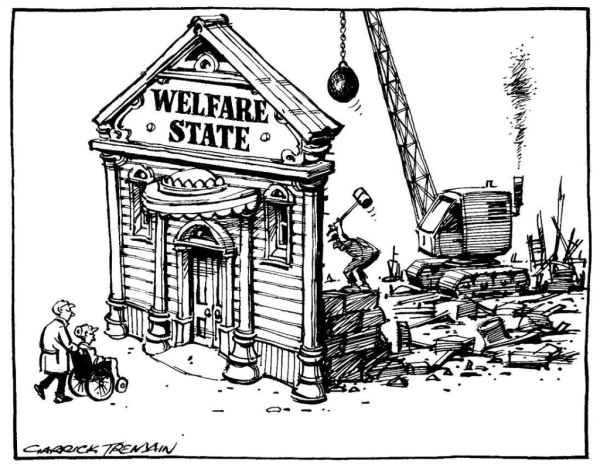

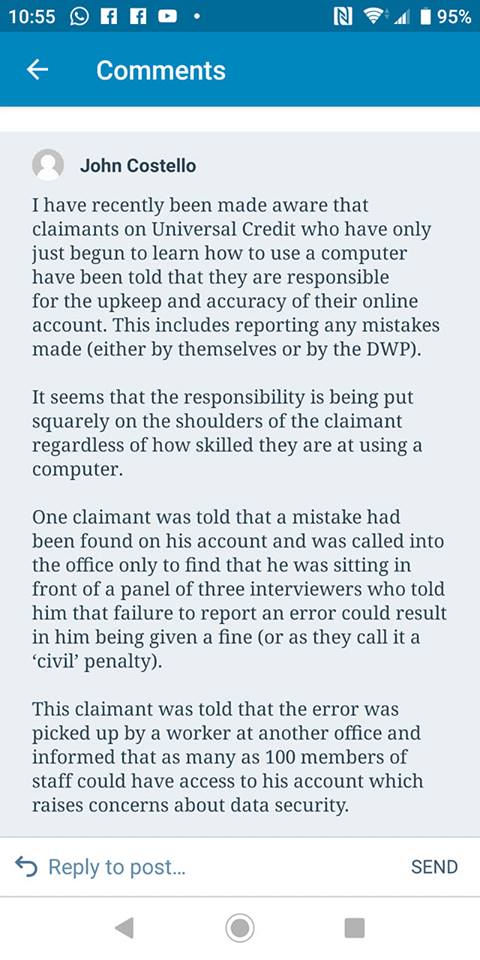

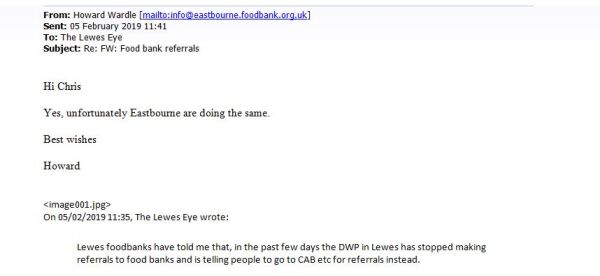
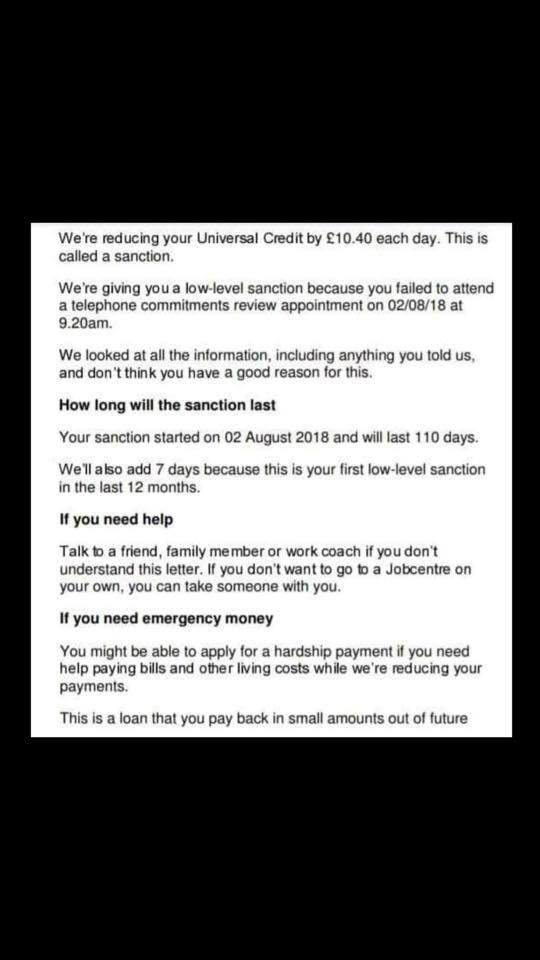




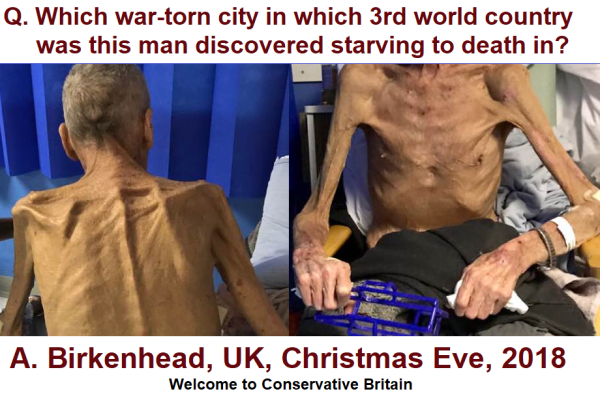


 Same Difference