Nearly nine out of ten adverts on job portals fail to adhere to minimum Advertising Standards Agency (ASA) requirements, according to the Citizens Advice Bureau (CAB).
The advice charity warns that 88% of these adverts are wasting the time of thousands of job seekers struggling to find employment.
Vague job adverts are omitting vital information about wages and hours, says the CAB.
This leaves job seekers unable to determine whether a job will pay well enough to put food on the table and settle household bills.
Poor information could increase the likelihood of unsuitable applicants and risk putting people off from applying.
Citizens Advice analysis of 800 job adverts found:
2 in 5 adverts are unclear about whether the job is full or part-time.
1 in 5 adverts don’t tell applicants how much they will be paid.
2 in 5 adverts are not clear if the role is temporary or permanent.
1 in 10 jobs adverts do not specify either an employer or an agency, so applicants don’t know who they’re sending their details to.
The charity also discovered that self-employed jobs are not always advertised as such, with 12% of self-employment opportunities failing to identify the nature of employment.
Citizens Advice is calling on job portals to ensure that ads abide by ASA guidelines. Adding that websites should have clear methods in place for identifying job adverts that don’t meet these standards.
Gillian Guy, Chief Executive of Citizens Advice, said: “Vague job ads risk wasting people’s time and business’ money.
“People seeking employment face a real challenge if job adverts don’t even tell them if they’ll earn enough to keep a roof over their head. Applying for jobs where hours and pay are unclear consuming valuable hours of job hunting time.
“Employers can also have their time wasted as they receive high numbers of unsuitable applications. This can be an inefficient recruitment process, meaning they’re less likely to get the best person for the job.
“Requiring recruiters posting job adverts to include a minimum standard of information would help people decide whether to apply for a role.
“Employers would also benefit from a better matched pool of applicants.”
Luckily my DLA has arrived safely. I’m not with the RBS Group and today, I’m feeling very glad about that!
What I would like to know, readers, is: Has your (or your child’s) DLA been affected by these technical problems? Have your tax credits been affected? What will this mean for you?
Updated 1pm: Many thanks to reader ‘metro’ who informs us in the comments below that PIP is also affected.
Updated 5.30pm: Many thanks to reader Nessie King who shares this on Facebook:
From a forum – you can but try
The natwest / rbs error…
Natwest customers who have been affected by the technical glitch in clearing funds should immediately email the ceo of their bank and inform the bank they will be charging 100% interest per day on uncleared funds, charges, salaries and benefits. Plus £150 per day expenses.
ross.mcewan@rbs.com
You are within your rights to do this
A British woman has been able to ride a bike for the first time after being fitted with what has been described as the world’s most lifelike bionic hand.
Nicky Ashwell, 29, from London, can now carry out tasks with both hands for the first time, but said it is the little things she can now do that surprise her the most.
Ashwell, who was born without a right hand, had previously used a cosmetic prosthetic that she was not able to move.
Now she has been fitted with an anatomically accurate new hand developed by prosthetic experts Steeper, described by the company as a bionic breakthrough that uses Formula One technology to deliver “unrivalled level of precision and natural movements”.
The hand, which weighs about the same as a bar of chocolate, has small proportions that have been specifically designed with women and teenagers in mind and is built around an accurate skeletal structure with miniaturised components designed to provide the most true-to-life movements. Advertisement
Ashwell is now getting used to being able to carry out everyday activities, such as using cutlery and opening her purse, that most people take for granted.
The product manager at an online fashion forecasting and trend service said: “When I first tried the bebionic small hand it was an exciting and strange feeling – it immediately opened up so many more possibilities for me.
“I realised that I had been making life challenging for myself when I didn’t need to.
“The movements now come easily and look natural – I keep finding myself being surprised by the little things, like being able to carry my purse while holding my boyfriend’s hand.
“I’ve also been able to do things never before possible like riding a bike and lifting weights.”
She was fitted with the hand at the private London Prosthetics Centre.
Ted Varley, technical director at Steeper, said: “Looking to the future, there’s a trend of technology getting more intricate. Steeper has embraced this and created a smaller hand with advanced technology that is suitable for women and teenagers.
“An accurate skeletal structure was firstly developed, with the complex technology then specifically developed to fit within this in order to maintain anatomical accuracy. In other myoelectric hands the technology is developed first, at the expense of the life-likeness.”
Today I was waiting for the bus home with my daughter when I bumped into an old school friend. I hadn’t seen her for a long while so we had a lot of catching up. She has learning difficulties and she struggled through school not passing any exams as there wasn’t the support in schools then as there is now.
When she left school the social security department as it was called then were very sympathetic. They encouraged her to be on the sick as they called it because her options for work were limited. They also encouraged her to take up voluntary work to improve her social skills and to give her a focus. As a result she was volunteering for a local organisation off her own back and did so for 24 years. She loved it and thought she would never have to leave. Then the Tories got…
The trial, which started last month, is being conducted by a number of social landlords including Golden Gates Housing Trust and the Department for Work and Pensions (DWP).
Under Iain Duncan Smith’s universal credit, which combines six benefits into one, tenants are paid their benefit for housing costs directly instead of to their landlord. Landlords have expressed concern that some tenants will be unable to manage their money and will fail to pay their rent.
If a tenant is in two months of arrears, their landlord can apply to have the rent payment switched back to them under an ‘alternative payment arrangement’ (APA).
However, until now, landlords have only been able to do this by sending a letter through the postal system. Housing associations have complained that this system is cumbersome and slow.
Under the pilot, landlords are able to send their APA requests through a secure email system. They still receive notice of rental payment from the DWP through the post.
Carmel Morris, senior financial inclusion officer at Golden Gates Housing Trust, said the initial results of the pilot were promising but that the DWP still had ‘a way to go’ on improving the administration of universal credit.
Since he was a teenager, Dara O Briain has been fascinated with Professor Stephen Hawking, the world’s most celebrated scientist. In this special film, Dara spends time with his boyhood hero as he attends the world premiere of The Theory of Everything, the movie made about his life, and then at Professor Hawking’s home and place of work in Cambridge.
In 1963, Stephen was diagnosed with ALS, a form of motor neurone disease, and given two years to live. Over 50 years later, he is still working on new scientific theories and has become an unlikely pop culture icon. Dara meets the people who keep him healthy and working – his carers and support team, his academic colleagues and friends – and Eddie Redmayne, who won an Academy Award for his portrayal of Hawking on film.
After attending the premiere of The Theory of Everything, Dara travels to Cambridge where Stephen has spent most of his adult life. He meets Stephen’s children Lucy and Tim, his former assistant Judith Croasdell, his technical assistant Jonathan Wood, fellow theoretical physicist Professor Kip Thorne, academic colleague Professor Thomas Hertog and actors Eddie Redmayne and Felicity Jones. Dara also questions Professor Hawking about living his life with ALS, why science still excites him, and his hopes for the future.
Readers, Dame Tanni Grey Thompson has said something I find very surprising, coming from a disabled person, recently.
A campaign group called ukactive are calling for primary school children to be tested for fitness in the same way that they are tested for Maths and English.
Lady Grey-Thompson, ukactive’s chairwoman and paralympian, said: “The current national ambition focused solely around PE lessons is simply not bold enough. We should aim higher and demand more.”
Readers, what I said to Dame Tanni Grey Thompson when she called for PE to be made a core subject two years ago still stands. I admire her a great deal and agree with many of her opinions, but this is not one of them!
‘Demanding more’ physical activity from children than PE lessons, particularly something like what is done at the Montpelier school in Ealing, where
For example, in English lessons, children use “Kung Fu-style hand movements” to explain to the teacher where an exclamation or full stop should go, rather than putting up their hands or shouting out,
would be a very bad idea, in my personal opinion. It would almost certainly make inclusive education more of a challenge than it has to be for physically disabled children.
I fear it would discourage mainstream schools to take physically disabled pupils- pupils who are very intelligent in other areas of the National Curriculum.
As I have said too many times before, I think that would be a great shame.
I spotted this stamp from Slovenia, featuring a group of wheelchair users, on Facebook yesterday.
Is this a first? When, if ever, will we see physically disabled people featured on a stamp in the UK? I’m not counting Paralympic specials, though I think there were some in 2012.
I signed this yesterday. If you agree with the campaign, please add your signature.
Hello Lego!
Please be the first to take disability out of toy hospital sets and into the skate park! Think outside the brick box! Mix it up a bit! Add some brawn, stamina, a few sweat bands, couple of half pipes and some lightning fast wheelchairs.
Oh Lego, where are your basket balling wheelsters? Baseball playing Duplo folk with hearing aids? White cane using Lego Friends off to the gym? In fact, where is your positive disability representation at all?
There are 150 million children with disabilities worldwide. Yet these kids are arriving into a world where, even before they’ve left their mums’ laps, they’re excluded or misrepresented by the very industry that exists to create their entertainment, the objects that fuel their development, the starting blocks of life: Toys!
What are you saying to these children with disabilities and their peers by excluding them? Your little plastic bricks and mini figures are loved the world over, we love them too. We know you have a Lego Ideas platform where fans like us can submit designs and vote on ideas we would like to see turned into reality, but shouldn’t the inclusion of positive representations of disability be part of your core brand values and responsibilities, not left to the public vote? You include ethnically diverse mini figures but you leave out those with disabilities.
Just imagine how much better your PR would look if you positively represented disability in your toys, especially after the Mixel ‘window licking’ debacle. Hey. we all make mistakes, we’re all only human. But you could easily put it right by incorporating positive disability into your much-loved toys and all will be forgiven.
Please, Lego, put some wheelchair vroom vroom into the toy box and help generations of kids, (both with and without disabilities), grow up with a more positive attitude to human difference!
We’ve made this skate park wheelchair free-styling set to give you some ideas and as an offering of friendship. We would love to see you make it for real! You’d make a lot of people very happy, you’d make a lot of kids feel very included and if you say YES we pinky promise to organise a giant conga up and down the aisles of Toys ‘R Us just to show you how much we love you!
It is hard to imagine anything more vile than finding people in poverty and bribing them say they don’t want a job just so you can smear them as a scounger in the media. But that’s exactly what some freelance journalists are up to. Do not fucking talk to them. And do not talk to Alley Epstein. The money will run out and it will fuck up your claim.
The latest employment and support allowance statistics (ESA) released last week show that one third of claimants have still not had a decision on their claim after 8-11 months. Another 40% have recovered or died before they even had an assessment.
The DWP’s quarterly bulletin for the work capability assessment states that for claims made between July and September 2014:
29% of claimants have had a decision.
39% closed their claims before a face-to-face assessment had taken place.
32% of claims were still undergoing assessment.
The figures all relate to claims originally made when Atos was still carrying out WCAs. In March of this year the contract was taken over by Maximus and ministers will be hoping that statistics like these will soon be a thing of the past.
However, they may also be hoping that the increasingly high success rate for ESA claims will also be a thing of the past.
The latest figures show that of those assessed, 77% got an award of ESA, with just 14% being placed in the work-related activity group and 64% being placed in the support group.
After ESA was first introduced in 2008, the proportion of new claimants being placed in the support group remained at around 10-12%. It was only after the Coalition took office in 2010 that the percentage being placed in the support group began its steady climb to its current height.
Deaf people are very visual, we use sign language and lip-reading as a way to communicate and socialise, so the prospect of losing our sight can be very daunting. A medical study found deaf people may even have enhanced peripheral vision, compensating for a lack of hearing.
There is one group of deaf people who live with the near certainty that their sight will fade. Those with Usher syndrome are born deaf and later, through an associated condition called Retinitis Pigmentosa, also lose their sight. Peripheral vision becomes restricted, night vision worsens and sudden changes from dark to light (and vice versa) take a much longer time to adjust to.
But more isolating and upsetting can be the end of a lifetime of communicating easily. Lip-reading becomes more difficult and understanding sign language becomes trickier. It can be very tiring to concentrate on small movements if you have limited vision.
There are ways that deaf people can communicate with deafblind people easily, says Rebecca Atkinson, a journalist from Norwich who has Usher syndrome, including using British Sign Language but allowing the deafblind person to put their hands on top of the signer’s in order to feel the shape of the signs.
But she says the worst thing about Usher syndrome for her is the lack of motivation by deaf people to communicate with those who also have sight loss.
“Deaf people have plenty of experience of being patronised by hearing people, being called brave or special for ‘coping’ with their deafness,” she says. “But that exact same treatment is meted out by deaf people to deaf people who are also partially sighted – and it’s a cruel irony.”
She says the hardest part of losing her vision is feeling rejected by the deaf community she has been a part of. She has gone, over the last ten years, from communicating and socialising with deaf people to losing the ability to easily do so.
Des Masterson’s vision is diminishing too, and like Atkinson he has noticed he’s losing social connections with people. He says Usher syndrome doesn’t cause this it’s about how deaf people treat him, and no longer engage in conversation with him.
Loss of friendships and acquaintances is a common theme for deaf people who lose their sight but student Molly Watt, from Maidenhead, says she also experienced resentment from those around her.
When she was a teenager she attended a boarding school for deaf children. Her vision was already severely reduced, meaning she needed to sit at the front of the classroom to be able to see the teacher and whiteboard. But she says her deaf classmates didn’t believe she needed special arrangements and so treated her with suspicion. “It was constantly like they were questioning me for it, and I was questioning myself,” she says.
Every person with Usher syndrome is different. Though often referred to as deafblind, some are born with only mild hearing loss, others are profoundly deaf. Some will find their vision deteriorating very quickly to the point of total blindness in their teenage years, others will have usable vision for most of their life.
Many with Usher syndrome say that it’s not all doom and gloom, and that life can be rich and happy with friendships maintained, but it could be made a lot easier if the communication barriers weren’t so big.
There are lots of simple ways in which both deaf and hearing people could make conversations easier for deafblind people, Atkinson says, and that it is only fair they are included as much as possible.
Finding a well-lit space or moving from a darkened area of a pub to one with better lighting is helpful, for example, as is standing in a position which is close enough for a deafblind person to see both the face for lip-reading, and hands for signing.
Those are just some more simple things that can be done – but more than anything it takes time, patience and understanding. It is, of course, easier to do nothing, but that doesn’t help.
As Watt puts it: “Everybody wants to be spoken to, no one really wants to feel left out.”
Perhaps the biggest obstacle to deaf people is fear. Seeing a deaf person with a guide dog or a white stick with red bands around it is the physical manifestation of that which most deaf people fear losing – their sight.
See Hear’s programme on deafblind people is on iPlayer here.
This story is a couple of weeks old now, but I felt it was an important one to share and discuss.
Pensioner Roger Bailey was diagnosed with stage 6 prostate cancer in 2011. He recently tried to crowd-fund his own trip to Dignitas, intending to end his own life.
However, website Crowdfunder removed the page, fearing they and anyone who donated could face charges for assisting a suicide. Their decision was based on legal advice.
I have made my personal views on assisted suicide and Dignitas very clear here several times. I am strongly against the idea.
I am deeply worried to see that someone tried to use crowdfunding to go to Dignitas. Even more worrying is this, the last sentence of the Metro article:
His cancer has gone but he remains in constant pain from nerve damage and is doubly incontinent with no treatment available.
It seems Roger Bailey is one of those people I very strongly dislike- one of those people who think that permanent disability is a fate worse than death.
Readers, personally, I strongly hope that crowdfunding websites continue to remove any bids to pay for Dignitas in the future.
I love the Internet and I love crowdfunding. However, if there was ever proof of the disadvantages of the Internet, readers, to me, this story is that proof.
Today in daily updates from whatdotheyknow, another DWP response caught my eye, a FOI request enquiring about a statement from #Cameron re the Hardship Fund for claimant facing financial difficulties. The request asks several questions including what the Hardship fund is, the criteria for application and the number of applicants, both successful and rejected. The DWP’s response did explain what and how but… regarding the numbers, the response intrigued me:
A brilliant article from today’s Guardian. I couldn’t have put it better myself.
I’m a wheelchair user. I’m not wheelchair-bound, or confined to my wheelchair. My disability has not made me courageous or admirable, or deserving of a pat on the head just because you can reach it. I hate having my head patted.
I have total feeling in all limbs, so when you said, “You probably didn’t feel that”, rather than apologising for kicking me, you were wrong. I don’t have strong shoulders from pushing a wheelchair: my shoulders are prematurely weakening for that very reason.
Waiting at bus stops, I’m a captive audience for those who incorrectly assume my experience with the healthcare system created an interest in your last doctor’s appointment, or your cousin’s bowel movements, or what happened to the lady who lives down your street.
If given the opportunity, I’m really good at putting people at their ease. My integration into this able-bodied world depends on it. I can’t get by without the assistance of others, but it works best for everyone if I can guide when and how it is offered. If you’re not sure whether to offer to help, just ask, and don’t be offended if the answer’s no.
If I make you feel uncomfortable, realise that you would cope living as I do. It beats the alternative. Please do not pass on your discomfort to children by punishing them for staring, or wanting to touch and explore my wheelchair.
I’m sorry if I don’t remember your name or the occasion we met – there are more ambulant adults in my life than wheelchair users in yours. And the answers to the questions are: I wipe my own arse; and yes I can, and do, as often as opportunity allows.
Sometimes I’m taken by surprise. Mostly I’m not. But this is a new tactic. A new target driven tactic employed by the DWP.
For anyone claiming JSA, ESA Income Support or universal credit you might be familiar with a local service compliance interview. They send these letters out usually on a random basis or sometimes on the say so of a suspected fraud taking place. Now these interviews are compulsory and if you don’t attend then your money will get stopped.
Whilst attending one of these interviews you are normally treated like a criminal, guilty before being proven innocent, most likely innocent of any wrongdoing as you have been randomly picked in the first place. You are taken to a room which looks just like a police interview room. They record everything like the police do, only in this case you are most likely innocent. You are asked to bring…
Spoiler Alert! If you haven’t seen today’s Eastenders yet, look away now!
Right at the end of the latest episode of Eastenders, it was revealed that Shabnam Masood and Dean Wicks’ daughter, Jade, has Cystic Fibrosis- the same illness that her uncle Jim had.
In storyline terms, longtime fans of Eastenders will know what a big deal this is. Shirley abandoned Jim because she couldn’t cope with his disability.
In terms of disability representation, I am always pleased to see another disabled character in any soap I watch and these days, I watch Eastenders.
But, knowing a little about the history of the storyline, I have to wonder whether Jade will now become a regular character. Personally, I hope she does. I hope Shirley and Dean accept her and that they, and the Masood family, are shown trying to cope with her condition. I strongly dislike people who abandon their children for being disabled and would hate a national institution like Eastenders to send out the message that it is still acceptable to do so.
I have heard reports of a very upsetting storyline involving the Masood family. I wonder if this will be it. I wonder if Jade will die as a result of the condition.
Whatever happens, I’ll be following the storyline with great interest.
“Does Iain Duncan Smith need breakfast money??” Less than 55 days after my son takes his own life, because he was let down by a system already under funded, which this government intend to make when further cuts to, they have the audacity to send me this?? I love the “I love the ” we hope you will appreciate that when public funds are incorrectly paid we are obliged to ask for them to be refunded” When are the MP’s paying back ask the “false claims” they received?? You want your £41.36 Mr I Needham, fight me for it. I Needham those pounds more than you!! And whilst we’re at it, how about a counter claim for the death of my child?? A man clearly let down by a government that is now trying to claim money back on his death.
A new House of Lords Committee has been created to consider and report on the impact on people with disabilities of the Equality Act 2010.
The House of Lords Committee on the Equality Act 2010 and Disability will be chaired by Baroness Deech, and it will issue a call for evidence in the next few weeks.
The full list of peers on the Committee is as follows:
A self-styled “reverend” who claims autism can be “purged” by swallowing bleach has been exposed by a BBC London undercover investigation.
Leon Edwards sold sodium chlorite and hydrochloric acid to a reporter posing as the relation of an autistic child. Combined, the chemicals form bleach.
The BBC has also learned the secret location of a conference to begin in Surrey on Friday to promote the ‘cure’.
When confronted with the evidence, Mr Edwards made no comment.
‘Miracle solution’
Mr Edwards has been linked to the Genesis II Church, an American organisation which describes itself as a “non-religious church of health and healing”.
This is purportedly achieved through the used of so-called “Miracle Mineral Solution” (MMS), a bleach which is produced by mixing the two chemicals.
Experts said it is untrue any such mixture could cure autism and warned its use could lead to serious harm or death.
Some of the leading figures in the ‘church’ have travelled from the US to attend the conference, due to take place in a manor house in Farnham.
Emails obtained by the BBC show delegates have been told to meet at a certain location before being driven to the venue, where they will be instructed in preparing doses of MMS to be consumed orally and taken via enemas.
Through his website, Mr Edwards, who says he is not attending the conference, sold the researcher the one bottle of liquid labelled as 22.4% sodium chlorite and a second labelled as 4% hydrochloric acid.
When the BBC sent the chemicals to Kent Scientific Services, an independent laboratory, they were found to be 57% and 45% stronger than the advertised concentration respectively.
The researcher then met Mr Edwards at King’s Cross Station for a paid-for demonstration as to how they should be mixed and imbibed.
Mr Edwards told him: “It’s helping people get well from all sorts of diseases – cancer, HIV, malaria. It’s cleaning the body out. And nearly all the illnesses are getting removed with this.
Baby’s bottle
“I’m not gonna say cure… because I can get in trouble. I’d say purge. It can purge autism. Alzheimer’s too.
“170 children have had their diagnosis removed of autism in four years.”
Mr Edwards advised 27 drops of MMS per day for a baby – administered with a baby’s bottle.
Of his own use, he said: “I put it in my eyes, my nose, my ears, bathe in it, drunk it, breathed it in my lungs. I got injected in my butt with it.
“They’re never gonna shut me down. All they can do is put me in a prison cell.”
Last month a jury in the US state of Washington convicted Genesis II member Louis Daniel Smith for selling MMS as a “miracle cure”. He faces a maximum of 34 years in prison.
Carol Povey, of the National Autistic Society, said: “No evidence of any kind exists to support the preposterous claims made for MMS as an intervention for autism.
“It is shocking that dubious companies continue to promote potentially very harmful products like these.
“Autism is a complex neurological condition, without a cure.”
‘Great harm’
Dr Sarah Jarvis, a GP, said ingesting bleach could cause scarring to the oesophagus, damage to the stomach and even death.
She explained: “A very small amount of concentrated bleach has the possibility of doing great harm.
“This is particularly true of a child’s gut lining, which is thinner than an adults.
“It is an extra danger that people are self-administering this as the dose could easily be got wrong.”
Prof Richard Goldberg, expert in pharmaceutical law at Durham Law School, warned selling sodium chloride for consumption breached the Food Supplements England Regulations.
“This is a potential criminal offence,” he said. “The Food Standards Agency has to inform the relevant local authority and the authority has to take action.
“There is a very strong argument that he is selling an unauthorised food supplement. There is a potential argument for him selling an unauthorised medicine.”
‘Child abuse’
An organiser of the Genesis II Church conference described MMS as a “sacrament” that was “no different than the bread and wine given during a church service”.
The spokeswoman continued: “The so-called side effects are far less than [in] drugs sold by pharmaceutical companies.
“We are not selling any products during the church services. We simply conduct our services and share our news and protocols.
“Table salt is dangerous if taken too much [sic].”
Surrey County Council says it will try to disrupt the conference and warned the public against trying MMS.
Fiona O’Leary, a mother of two autistic children, is a leading campaigner against MMS. She warned: “This has been offered as a cure for autism in 60 countries.
“What worries me is people normalising this treatment – it does not even warrant the word treatment, autism is not a ‘disease’ that you can ‘cure’ with bleach.
“We need legislation so that people offering it are always prosecuted, but we don’t see the authorities addressing this issue.”
She added: “The suffering children are going through is shocking – it’s child abuse.”
At a breakfast meeting in the City of London, a group of venture capitalists are making a presentation about a fund with a difference. It’s called Kaleidoscope and it’s aimed at giving financial backing to disabled entrepreneurs.
Kaleidoscope’s founder, Hardeep Rai, is a veteran venture capitalist who says he wants disabled people to realise that starting your own business is a real possibility. “There are tons of great ideas out there just waiting to be tapped into,” he says. Rai’s fund will assist in the development of the businesses he invests in and ensure they make a decent return for everyone. It sounds a bit like Dragon’s Den for disabled people.
Hardeep also has a personal reason for starting the fund. His son Eshan was born with severe brain damage, a fact which has made him think more about the potential of disabled business people.
“Over time, as I watched my son develop, I realised the magnitude of his disability and therefore the limitations and barriers he faced to communicating,” he says. It made him think that there must be many other people in a similar situation, with the potential – but not the opportunity or backing – to start up their own business.
He set up Kaleidoscope after meeting disabled businessman Shane Bratby in late 2014. Shane runs Disabled Entrepreneurs, a website for those who want to start their own business. He believes self-employment can be a great way to earn a living but is aware that coming up with the initial capital can seem for many an insurmountable obstacle.
“I think many bank managers are afraid to lend money to disabled people,” Shane says. He believes the problem is investors fear they’ll never get the money back.
Hardeep Rai was inspired by his disabled son
The latest figures from the Office for National Statistics (ONS) show that out of a potential workforce of nearly 30 million people in the UK, 12% are disabled. But employment levels for people with disabilities are low. Figures from 2012 show 46% of disabled people in employment, compared to 76% of non-disabled.
More ONS figures from the first quarter of this year show that just over four million people in the workforce are self-employed. Out of this group, 14.1% have a disability.
Becoming your own boss with your own self-generated income is a tantalising thought for some, but many fear losing the security of regular income from benefits if they try and fail.
Brendan (who doesn’t want to give his surname for fear of being identified by the Department for Work and Pensions) says he’s concerned about being stuck in the so-called “benefits trap”.
“I’m really frightened that my buffer zone, my safety net, will be gone if I try and go it alone,” he says.
He wants to start a creative arts business, but has concerns. When he previously started part-time work as a self-employed actor, he says his benefits were stopped.
Brendan says the government should be doing more to encourage entrepreneurship among disabled people. He wants to be able to get his business off the ground, but at the moment is too nervous.
“What if it doesn’t make enough money for me to live on? I need to know that I have enough money to feed myself. It would be great if the DWP realised how big a decision it is for disabled people to start their own business. If they were willing to help more rather than try and take benefits away at every opportunity then more people might do it.”
The DWP argues that it does offer support through their New Enterprise Allowance scheme, which gives mentoring to would-be disabled entrepreneurs, while allowing them to claim existing benefits such as Jobseeker’s Allowance or Employment Support Allowance. It adds that participants may still be eligible for support such as Universal Credit or tax credit once they start claiming the NEA weekly allowance.
Brendan is not alone in his worries. In a recent review of literature on disabled entrepreneurs by John Kitching of Kingston University for the OECD, fear of losing the security of regular benefit income was highlighted as a problem.
But there’s no lack of interest if Kaleidoscope’s breakfast presentation is anything to go by. The event is so over-subscribed that another is scheduled for 24 July.
“We’ve had a lot of interest from so many different people,” Rai says. “I’m hoping that by believing and investing in disabled entrepreneurs we’ll be able to make a real difference.”
Brad Francis would like to develop his business idea further
Brad Francis is one of those hoping to tap into the investment fund for his new business idea.
Brad had a stroke when he was 29, which left him severely disabled and a permanent wheelchair user. He’s had a long career in publishing, which is the inspiration for his business proposal. He tells me that Kaleidoscope will be investing in his business idea but that he has “been sworn to secrecy” about the product. Though reluctant to divulge too much he tells me it will be “media-related in a cheeky, cool way with the emphasis on culture, lifestyle and fun – disabled style.”
One of the potential investors at the Kaleidoscope presentation is John Stapleton, founder of the New Covent Garden Soup Company and the children’s food range Little Dish. Like Rai, he believes there is a wealth of untapped potential amongst people with disabilities. He is keen to help but emphasises that this isn’t charitable giving. “I’m not planning to give my money away. I’m still on the lookout for a decent return. If the business is right then I’ll be willing to invest.”
An article in the latest edition of the British Medical Journal condemns the ‘coercive and punitive’ use of psychological tests and training on benefits claimants, as the DWP moves closer to treating unemployment as a mental health issue. Claimants are even being forced to attend highly questionable Neuro Linguistic Programming (NLP) workshops.
Power of positive thinking The authors of the report look at the misuse of psychology and the role of psychology professionals in helping to force claimants on the work programme into mandatory training and unpaid work.
In particular, claimants are encouraged to believe that they are unemployed because of their own shortcomings, especially a failure to think positively and strive to be better.
Those who do not engage with psychological programmes can find their JSA or ESA sanctioned for ‘lack of motivation’.
As a result of this approach, claimants are bombarded with positive thinking messages not only on training courses but also by daily texts and emails, such as:
Nobody ever drowned in sweat
Go hard, or go home
It’s always too soon to quit
The sin isn’t falling down but staying down
Success is the only option
Smile at life
This can be the greatest, most fulfilling day you’ve ever known. For that to happen, you have to allow it
Some claimants, however, far from feeling uplifted by these ‘motivational quotes’ have described feeling anger, humiliation and depression. For claimants with serious health conditions, exhortations such as “Nobody ever drowned in sweat” could even be life-threatening.
Psychological testing and training are used as a way of controlling people. As one claimant explained
“I’ve been claiming Jobseeker’s Allowance for about 8 weeks. I haven’t sworn or shouted at anyone. I have had 3 advisor interviews already; yesterday my adviser asked me to see their psychologist. I did not consent. I’ve been told that I shouldn’t look into things too deeply…& that I am asking too many questions.”
This particular claimant was given a choice between seeing a psychologist or being put straight into a mandatory work placement.
Another claimant explains:
“My ‘advisor’ said I needed to see a psychologist because I was tearful and anxious after having my JSA cut for 4 weeks despite having a young child to look after by myself. When I said I did not trust anyone who finds it acceptable to starve others as a punishment, he told me that I was paranoid and again, needed to see a psychologist.”
Mandatory NLP training Some claimants are forced to attend psychology based workshops:
“I duly attended the offices of A4e and (along with 6 other “customers”) was treated to INSPIRE. This turned out to be a session on Neuro Linguistic Programming (NLP) run by an outside company claiming to be “Master Practitioners in NLP”. I was “mandated” to attend under threat of loss of benefits and was effectively unable to leave the session because of the same ever present threat.”
Neuro Linguistic Programming (NLP) was dreamed up in California in the 70’s and is based on allegedly copying the way that highly successful people behave. It has no scientific legitimacy whatsoever – many people would regard it as sheer quackery. There are many companies advertising online who will provide an NLP Practitioner Certificate – allowing you to teach NLP – on completion of just 7 days’ training.
The article in the BMJ comes in the same week that the British Psychological Society (BPS) has demanded a complete overhaul of the work capability assessment. Whilst such a call is welcome, a complete overhaul of the BPS so that it actually prevents its members forcing their views and techniques down claimants throats would be equally well received.
Readers, anyone who heard this on Jeremy Vine’s Carer’s Week coverage:
“After Adam died we got literally hundreds of cards and letters from professionals who had known Adam. One thing that did strike me is the number of them who wrote about how much they admired the care we gave Adam. What also struck me was how none of them ever said that in the time when Adam was alive.”
Zoe from Yorkshire cared for her 15 year old son Adam, who had cerebral palsy and complex health problems. Sadly, Adam died in March this year.
I am very sad to tell you it was about the mother of Adam Bojelian, a very intelligent boy with Cerebral Palsy who Same Differencefollowedand coveredfor several years.
I took a personal interest in Adam, and was inspired by him, for personal reasons.
I’m deeply saddened, personally, as a person with CP, to learn that another one of us has gone. I send deep and sincere condolences to Zoe and all who knew Adam online and off.
I’m hearing reports today that Marge and Homer Simpson are going to separate in the new season of the programme. I’m not happy. Not because I’m a Simpsons fan but because of the reason for the separation.
The Simpsons is a very popular programme worldwide. As a disabled person, I am disappointed to see such a popular programme, an institution, almost, showing a married couple separating because one of them has been diagnosed with a disability later in life.
What message will this plot send to fans of The Simpsons who have become disabled later in life, who may have been married or in a serious relationship before their diagnosis?
What message will this send to fans of The Simpsons who have always been disabled? People who may be married or in a serious relationship, or who may have these experiences in future?
What message will this send to fans of The Simpsons, married or otherwise, who will become disabled in the future?
A strong message about what will happen to their marriage or romantic relationship should they become disabled. A strong message about whether they should bother to enter a romantic relationship after a diagnosis of disability.
A strong message- but one that I, personally, thought was outdated and old-fashioned.
Yes, readers, sadly people do still leave partners who become disabled. Sadly, nondisabled people do still shy away from entering romantic relationships with disabled people.
But, readers, I, personally, would have liked The Simpsons to show Marge and Homer’s relationship getting stronger after Homer’s narcolepsy disagnosis.
I, personally, don’t see why a global institution like The Simpsons coudn’t consider trying to change attitudes around disability and marriage positively, rather than reinforcing negative ideas about this very important issue.
They have a global power to use Homer’s diagnosis storyline positively. I, for one, am disappointed to see them doing the exact opposite.
A mother has hit out after her six-year-old son was told to remove his hearing aid for an official school photograph.
Alfie Durant’s mother, Kerri, says he was left ’embarrassed and upset’ after being taken to the school office at Middlesbrough’s Pallister Park Primary to have his hearing aid taken off.
The school has now apologised over the move, which has left the schoolboy ashamed to wear the hearing aid around his classmates.
Alfie’s mother, a restaurant supervisor, said she became suspicious that something had happened when her son refused to put his hearing aid on the morning after the school photo shoot.
‘He said he was embarrassed to wear it in front of his classmates,’ she said.
A few days later, when her son returned from school with the photo proofs, she was angry to see he was not wearing his hearing aid.
She said: ‘He told me the school told him to take it off for the photo so he would look smart.
‘I phoned the school and spoke to the special educational needs officer who said they made a decision that I would want his aid off for the photograph.
‘I feel my son has been discriminated against because of his disability and would like people to know how he is treated.
‘Alfie suffers a lot with his condition but he is such a brave lad. He should be accepted as he is.’
Chris Wain, headteacher at Pallister Park Primary School, said: ‘Alfie is a beautiful little boy and takes a gorgeous picture whatever he is wearing.
‘Indeed, we have lovely photos of him on our website with his hearing aid on. The school photograph sessions saw our visiting photographer take 600 pictures over two days and we do our very best to ensure that parents are pleased with the photos they receive.
‘There was obviously no intent to cause any offence by either any member of our staff or the photographer, and we have already apologised to Alfie’s mum for any upset caused.
‘Perhaps we could have taken one picture with and one without, but hindsight is a wonderful thing and we will be sure to keep Alfie’s hearing aid in place when next year’s pictures are taken and we can only apologise again.’
The dad of a 4-year-old autistic boy who died, has launched a campaign to highlight the need for hospital staff to have a better understanding of the requirements for children with special needs.
Harry Procko, who was born with a hole in his heart, was referred to Nottingham Children’s Hospital in June after getting a severe stomach bug.
His family’s lawyers say he was sent home the following day after doctors decided he didn’t need blood tests. He died two days later on June 23.
A blood test taken immediately before his death found that his blood pH level was so skewed he had no chance of survival.
Harry’s parents, Richard Clements and Maria Procko, from Nottingham, are demanding answers into their son’s death.
Their lawyers, Irwin Mitchell, said a report ordered by hospital bosses was critical of Harry’s treatment and stated there was a ‘missed opportunity to perform a blood test on Friday June 20’.
The family claim that Harry Procko was misdiagnosed and consequently died only days after being discharged.Harry’s parents, Richard Clements and Maria Procko, from Nottingham, are demanding answers into their son’s death and are calling for urgent changes in hospital procedures.
A second investigation into the circumstances of Harry’s death is also underway and an inquest is expected to start in July.
Bev Irving, 42, has been left “heartbroken” by the death of Lee who was found by a shocked resident on a grass verge on Saturday morning.
Police launched a murder investigation following the results of a post-mortem exam and six people have been arrested.
Lee, 24, suffered from learning difficulties and officers confirmed they believe his killing in Fawdon, Newcastle, may have been a disability hate crime.
Alan Robson and the Night Owls on Metro Radio and TFM are hoping to raise enough money to pay for a big send off for the local lad who was taken before his time. Anything you can spare will be great and hopefully we can all pull together to help out his family at the very sad time.
The National Autistic Society’s speech expert said the game could help autistic children improve their communication, concentration and ability to solve problems.
Liverpool mum Lisa Taft said her 14-year-old son Donny “struggled with interaction” but enjoyed Minecraft because the game was “never-ending” and relied on “imagination”.
Donny said: “My confidence has now improved… and I’ve made a lot of friends around the world.”
This clip is originally from 5 live Breakfast on Wednesday 10th June 2015.
Are you a critic of the government? Were you found fit for work after criticising the WCA? FB account hacked after slamming government policy? Interviewed by DWP officials over alleged fraud without actual evidence? We’re hearing from people who believe the government is actively attempting to silence them. Conspiracy theory? Perhaps. But for those affected it is very real and very frightening. Share your story with Welfare Weekly and we CAN guarantee your anonymity: letters@welfareweekly.com
Lego has come under fire after they advertised a new toy character as a “window licker” on their webiste.
The new Lego figurine, named Turg – was part of the toy company’s Mixels range and released at the beginning of this month.
But it is described with an insulting term for the learning disabled on the famous brand’s official website.
Children around the world were able to see the online blurb alongside a picture of the creature at the click of a button.
The official description alongside of a picture of the yellow one-eyed character read: “Turg looks like an experiment that’s gone very, very wrong!
“Part frog, part chicken, part back-of-the-bus window-licker, this Mixel has the longest tongue of them all.”
The term window licker was widely used as a distasteful jibe but disability charities have campaigned to stamp out the term and other similar offensive language.
It is listed in the urban dictionary as a euphemism for a person of mentally challenged status alongside a warning which reads: “It is offensive and wrong to name a person people who is mentally challenged a ‘window licker’ or a ‘retard’.”
In 2003, the term was voted third most offensive that could be used relating to disability in a poll run for the BBC’s Ouch! disability talk show.
Leading charity SCOPE which campaigns for disabled people to have the same opportunities as the able bodied in the UK said it was shocked by its use.
Daniel Mazliah, head of campaigns and communications at the disability charity said: “It’s pretty shocking that Lego has used this outdated and offensive word to market one of its toys.
“There is no doubt that many customers with disabled children will be appalled.
“Lego is a huge brand, loved by millions of young people who might think that this word is acceptable to use.
“We would ask Lego to remove this word from all marketing.”
One parent told the Mirror she was appalled to read the term when browsing the Lego website with her child.
The mum said: “I went online with my fiver-year-old to look at the new characters and couldn’t believe what it said.”
It’s surprising as Lego are normally a brilliant company.”
The Lego Mixels buildable figurines have proved popular with children worldwide since their release in March 2014.
They retail for around £3 a piece making them a hit with parents too and so far five sets of tribes which each contain around nine characters have bee released.
Lego vice president Fiona Wright for the UK and Ireland said: “We value consumer feedback immensely and will take this on board.
“Feedback helps us ensure that we continue to provide the best possible play solution for children around the world.”
The web page appears to have been taken down after Lego were contacted by the Mirror to alert them to the language.
Justin Tomlinson, minister for disabled people, today appeared to rule out any delay in rolling-out personal independence payment (PIP) to all other working age disability living allowance (DLA) claimants from October of this year.
The PIP roll-out is due to be extended to all claimants with an indefinite or lifetime award of DLA from October of this year.
However, there have been massive delays in making PIP decisions for new claimants and for claimants with time-limited awards of DLA who are being assessed for PIP.
The delays have been so acute that last week two claimants won their case at the High Court after being kept waiting 13 months and 10 months for a decision. The high court judge ruled that the claimants were amongst the most vulnerable in society and that the delay by the DWP had been “unlawful” and “unacceptable”.
However, the court did not accept the argument that the delays were a breach of the claimant’s human rights.
Nonetheless, following the decision, the DWP has come under pressure to delay the planned roll-out of PIP to cover all working age DLA claimants.
The DWP, however, is reluctant to do so as their research suggests that around 26% of DLA claimants will lose their award when they are assessed under PIP rules, leading to a considerable cut in the cost of disability benefits.
“The government was keen to launch PIP because it offers so much more than Disability Living Allowance (DLA) which it replaces. It targets support to those who need it most and considers needs arising from all impairments equally and consistently.”
He claimed that PIP delays were a thing of the past, arguing:
“Today, the assessment providers employ almost 4 times more health professionals than they did in early 2014. Meanwhile, new assessment centres have been opened to reduce claim processing times and reduce the distance many claimants need to travel.
“The average new PIP claimant now waits only 7 weeks for an assessment and the number of claims in the system at any one time is sustainable. We are in a good position to build on the improvements made and work closely with providers to deliver a better, joined-up service. It is absolutely essential, having seen these delays in 2013 and early 2014, that we learn from the past.”
Whilst not specifically addressing the October deadline for full roll-out, Tomlinson went on to say:
“We simply cannot afford to put this progress in jeopardy. I remain absolutely committed to the further rollout of Personal Independence Payment – but in a way which ensures we learn from our past experiences.
“I am clear that the next and final stage of PIP roll-out which will reassess those on lifetime DLA awards must be carried out in a safe and controlled manner.
“At the same time, we will continue to push for improvements in the level of service experienced by claimants. In particular, we are committed to ensuring that our communications are as clear and accessible as possible.
“Having recognised there was a problem, made a public commitment to solve it, and then delivered on that, now is the time to build on the progress.
“We should not let the difficulties of the past prevent us from delivering a better future.”
Tomlinson may not be willing to come out and say it directly, but the message seems clear – no delay in forcing DLA claimants onto PIP or off disability benefits altogether.
But while being bombarded with vicious tweets was bad enough for the couple, they were left devastated when the trolls started targeting daughter Isabella, who has cerebral palsy.
The pair were told by doctors the youngster would never walk, but she defied the odds and now gets around with splints.
Julie said: “We had someone tweet saying they were selling T-shirts captioned, ‘Phil Neville’s daughter is a spastic, a cyclops and has eight toes,’ asking us if we wanted to buy them.
“Death threats and rape threats are bad enough, but when people start abusing our daughter, that is something else.
“I was sat in bed watching TV when the tweets came through. I felt physically sick to the pit of my stomach and it kept me awake all night. I simply replied, ‘Shame on you’.
“But Philip retweeted it and they ended up receiving threats from other fans.
“It is beyond belief. The only mercy is that Isabella isn’t old enough to read Twitter. Ignorance and abuse like that could damage someone for life.
“Isabella is a bright, brave, beautiful little girl and we tell her that she can do anything that she wants to do. What right have these people to abuse her just because her dad is in the public eye?
“If she was to read the messages how would she feel? Luckily she is a strong person. I saw an actor from Breaking Bad talking on TV about his disability.
“He spoke so eloquently about how these bullies and outsiders don’t realise his disability is his greatest strength.
“People like Isabella overcome such adversity on a daily basis that mean words are the least of their worries. But to a child like Isabella, and us as her parents they still hurt.”
Online abuse is sadly a big problem for many disabled people. I am pleased, once again, to see two sensitive high profile people using their fame to speak out about such an important issue.
Don’t laugh, but this summer England could win a football World Cup. The Cerebral Palsy World Cup begins on 16 June and is being held at St George’s Park – the central hub for English Football.
CP football is played by people with cerebral palsy – although the degrees of the condition vary, writes Channel 4 News Sports Reporter Jordan Jarrett-Bryan. The classification system ensures that teams are all equal in terms of the players’ disabilities. This ranges from a 5 to 8 – 8s being those with the least impairments, 5s those with the more severe disabilities.
England have top 10 ranking and ready to improve on a disappointing Paralympics performance back in London three years ago.
Paralympics
Cerebral palsy football, which is referred to as seven-a-side football at the Paralympics, made its debut at the New York 1984 Paralympic Games. But it was Edinburgh who hosted the first international tournament in 1978 before it was introduced at the Paralympics.
The World Cup is obviously a huge competition but, like most disabled sports, it isn’t the pinnacle for the athletes. Being world champion is something this team craves. But a gold at next year’s Paralympic Games, at the home of Football, is the pinnacle for these boys.
Top two teams in the World: Iran and Russia. Current Paralympic champions: Russia.
CP is something is a condition that affects muscle control movement. It is usually caused by an injury to the brain before, during or after birth. But it is possible to get CP in later life.
England CP captain Jack Rutter was the victim of an unprovoked attack outside a nightclub – he hit his head on the floor, developed brain damage and became deaf in one ear.
It was devastating for a man who was just days from signing a professional football contract. But CP football offered Rutter another chance to play the beautiful game and he plans to grab it with both hands.
New Messi
The coach, Keith Webb, is excited about the prospect of guiding this team to World Cup glory. But he also thinks on a wider scale that the depth of players in this country is good but could be better.
“I think there’s a reluctance from some people to be labelled disabled, because I do think some try to hide it. We’ve found a few players who have come through, we look at and are like ‘Wow, where have you come from?’
“But I think there’s a lot of positive work going on to remove the stigma. We (the FA) feel there a huge amount of players out there eligible for England who, given the chance to see the standard we’re playing at, would love to come and have the chance of playing international football.”
He’s also excited about one of the younger members of his squad, giving him the ultimate compliment: “Ollie Nugent is very young but, in my opinion, he is the Lionel Messi of CP football – and that’s not a statement I say that lightly. Any team in the world would love to have him in it – on his day he can cause bedlam.”
One of Oxford University’s oldest colleges is embroiled in a row with a dyslexic student who claims she was forced out after being denied extra time to prepare for exams.
Sophie Spector, 22, who won a place to study politics, philosophy and economics at Balliol College, alleges that college staff “pressurised” her to go on medical leave due to her disabilities which included dyslexia, ADHD, and OCD.
A series of internal college correspondence about Ms Spector’s disabilities, obtained by her under a subject access request, was described by a specialist in equalities and human rights law as “shocking”.
Oxford University insisted that it takes a “proactive approach to students with disabilities” and Balliol College said it has a thorough and caring approach which is not reflected in the selected correspondence.
In one email sent in February 2013 from Douglas Dupree, the college’s then chaplain and dean, to an Oxford University doctor, Ms Spector’s learning difficulties are discussed.
Mr Dupree, who was in charge of students’ welfare at the college, writes that she would need “the absolute maximum limit of whatever concessions are allowed” before asking: “Yes, why did we admit her?”
He goes on to request for Ms Spector to be seen by a doctor “who can be straight and firm with histrionics and panic”.
Ms Spector, who went on medical leave the following month, said: “College staff knew I was having OCD symptoms and suffering from anxiety and depression.”
After joining Balliol College in 2012 she said that the college “denied” her the learning provisions which she had requested.
“The key thing I wanted was extended deadlines because I am a really slow reader,” she said. “But they just dismissed it and I started to struggle and fall behind.”
She claimed that the college set her extra exams with a higher pass mark than her peers before she went on medical leave in March 2013 and also on her return a year later.
Ms Spector, who now runs a social media company in London and is applying for law school, said she felt that the college’s attitude towards her disabilities and mental health condition had been “callous” and she decided not to return following medical leave.
Chris Fay, a specialist in equalities and human right law and managing partner at Unity Law, said the case was “shocking” and “one of the more extreme example of discrimination I have seen”.
He said: “This is a straight forward case of discrimination, treating someone less favourably because of their disability.
“But you could go further and say that action was deliberately taken to make life more difficult for Sophie: she was required to do more exams than everyone else with higher pass marks. This amounts to harassment on grounds of disability.
“The tone of the correspondence – the phrase ‘why did we admit her?’ – indicates a prejudice which can be construed as victimisation on grounds of disability.”
He said that Unity Law has been instructed to send a letter of claim to the University of Oxford so set out the basis of a challenge for disability discrimination, for breach of the Equalities Act and for failure to make reasonable adjustments on grounds of disability.
Kath Sutherland, owner and founder of START Ability Services, an organisation which supports disabled people and people with long term health conditions, said that Mr Dupree’s comments were “of grave concern”.
“To refer to somebody who is experiencing severe mental distress as ‘histrionic’ is disgraceful,” she said.
“It both trivialises and dismisses the impact of having a mental health difficulty and fails to recognise impairments in an appropriate manner.”
Balliol College said they are investigating a formal complaint, adding: “We cannot comment on that or on individual cases, but the College has a thorough and caring approach which is not fairly represented by selectively quoting from email correspondence.”
Oxford University said it takes a “proactive approach to students with disabilities” and “works in partnership with the student and the College to make sure necessary support arrangements are in place”.
A spokesman said: “The decision to take medical leave is never entered into lightly. It is used as one option within a strong and caring support system, often with the student’s agreement, which in many cases helps them to recover and resume their studies successfully.”
Scientists in Austria have created an artificial leg which allows the amputee to feel lifelike sensations from their foot.
The recipient, Wolfang Rangger, who lost his right leg in 2007, said: “It feels like I have a foot again. It’s like a second lease of life.”
Prof Hubert Egger of the University of Linz, said sensors fitted to the sole of the artificial foot, stimulated nerves at the base of the stump.
He added it was the first time that a leg amputee had been fitted with a sensory-enhanced prosthesis.
How it works
Surgeons first rewired nerve endings in the patient’s stump to place them close to the skin surface.
Six sensors were fitted to the base of the foot, to measure the pressure of heel, toe and foot movement.
These signals were relayed to a micro-controller which relayed them to stimulators inside the shaft where it touched the base of the stump.
These vibrated, stimulating the nerve endings under the skin, which relayed the signals to the brain.
Prof Egger said: “The sensors tell the brain there is a foot and the wearer has the impression that it rolls off the ground when he walks.”
Wolfgang Ranger, a former teacher, who lost his leg after a blood clot caused by a stroke, has been testing the device for six months, both in the lab and at home.
Phantom limb pain
He said: “I no longer slip on ice and I can tell whether I walk on gravel, concrete, grass or sand. I can even feel small stones.”
The 54-year-old also runs, cycles and goes climbing.
Another major benefit was a reduction in excruciating “phantom limb” pain felt by Mr Rangger for years following the amputation.
Prof Egger said the brain now received real data rather than searching for information from the missing limb.
The Austrian research team unveiled their results at a press conference in Vienna.
But they have yet to publish details in a medical journal.
Last year an international team created a bionic hand which allows the amputee to feel sensations from their fingers.
Dr Alastair Ritchie, lecturer in Biomaterials and Bioengineering, University of Nottingham, said the Austrian announcement was exciting but not as groundbreaking as the work already done for the arm and hand.
A 17-year-old girl injured in a rollercoaster crash at Alton Towers has had her leg amputated, it has emerged.
Leah Washington was on the front row of the Smiler ride, which crashed into an empty carriage in front of it.
Three others who were also in the front row sustained serious leg injuries, while a fifth person is being treated for internal injuries.
The theme park reopened earlier, six days after the crash, but the ride remains closed.
Ms Washington’s father, David Washington, from Barnsley, said: “Leah has suffered a life-changing injury and now has many months of rehabilitation ahead of her.
“We have done this to put people’s minds at rest and we would also ask everyone to respect Leah’s privacy as she undergoes this rehabilitation.”
Her leg was amputated above the left knee and she also suffered a fractured left hand.
Alton Towers said it was “deeply saddened” by the news, adding that it will “provide full support to all of those involved now, and throughout their recovery and rehabilitation”.
Ms Washington’s boyfriend, 18-year-old Joe Pugh from Barnsley, also remains at Royal Stoke Hospital where he is being treated for two broken knees and “extensive” hand injuries, a hospital spokesperson said.
Vicky Balch, from Leyland in Lancashire, who turned 20 while in Royal Stoke Hospital has undergone surgery and is in a “serious but stable” condition, according to her family.
Daniel Thorpe, 27, from Buxton, Derbyshire, was treated at University Hospital Coventry for a collapsed lung and a fractured leg. His condition is described as “serious but stable”.
Chanda Singh, 49, from Wednesbury in the Black Country, who was sitting in the second row of the Smiler, was admitted to Walsall Manor Hospital with internal injuries.
She had surgery to her stomach, and has a damaged liver and blood clots, her daughter said.
Owners Merlin Entertainments said it had carried out “a thorough review” of safety procedures.
Health and Safety Executive (HSE) inspectors have also been on site.
There’s seems to be some confusion, I get the impression that people think Sparticus or the Spartacus network was run by Sue Marsh, that wasn’t and isn’t true, Sue was one of many individuals that worked towards several goals, her main job was media and PR… It was her job to get the work and ideas out there… Which she did very well… The Spartacus network was started by Jane Young as was the Spartacus forum Sue was not involved with the net work other than helping with getting info out such as tweeting and emailing out the Reversing from Recovery Report, or Past Caring etc the Spartacus Network was a collection of individuals that sometimes worked together, it was never an organisation. The network…
A murder victim may have been targeted because he was disabled, police have said.
The body of Lee Irving was found on grass near Hazeldene Avenue in Fawdon, Newcastle, on Saturday morning.
Northumbria Police said the 24-year-old, from Camperdown, East Denton, had learning difficulties and his death may have been a hate crime. They said they thought those involved knew each other.
Four men and a woman are being held on suspicion of murder.
A post-mortem examination has been carried out but a cause of death has not been revealed.
Supt Bruce Storey said: “It’s thought those involved in this incident know each other. Lee had learning difficulties and was vulnerable, one of our key lines of enquiry is to establish whether this is a factor in his death and a motivation in this crime.”
Officers said flyer distributors were in the area at the time and are keen to speak to them.
A disabled hip hop artist is suing American Airlines for $2.5 million for failing to provide a ramp for her to board an aeroplane, which meant she had to crawl to her seat.
Theresa Purcell says she had to crawl in front of more than fifty people to hear seat while boarding the commuter flight to San Diego.
“I was humiliated. It was embarrassing to have 50-something people watch you crawl into a plane,” she said. “Is today another time where I have to climb onto an airplane again, where all these people have to watch me embarrass myself again, and I gotta be there, hoping please, I hope I never see these people again?”
American Airlines has apologised to Ms Purcell, who says she told American Airlines in advance of her wheelchair requirements and claims the company has refused to issue any compensation.
The company has said in a statement: “Thank you for your letter of demand on behalf of Theresa Purcell. American Airlines will not be issuing any compensation for your client’s injuries claim.”
A previous statement from the company had apologised to Ms Purcell.
“On behalf of US Airways and American Airlines, please accept our apologies for the difficulties Ms. Purcell experienced with her request for level entry boarding,” said Christy Garden, Department of Travel Liaison, Customer Relations, American Airlines/US Airways Corporate Office said.
“We regret that a ramp was not requested so Ms Purcell would be able to board the aircraft without going up the stairs, assistance should have been provided shortly thereafter. Based on what you have shared, it appears our employees didn’t provide the attentive, courteous and professional service we expect as a company.”
Ms Purcell is suing the company under the Air Carrier Access Act, which protects people with disabilities and American Airlines themselves admitted they had breached.
I find the suggestion that disabled people would use walking aids as weapons extremely offensive.
Manchester United have defended the conduct of their stewards after they removed walking aids from a number of disabled Arsenal fans.
One complaint sent to the charity Level Playing Field alleged that a man in his eighties had his crutches taken off him before the 17 May fixture.
United say fans using walking aids need to contact the club in advance to be risk-assessed.
“We’ve experienced such devices being used as weapons,” a club official said.
“Where supporters arrive without having pre-notified us of the need for such devices, our stewarding team performs a dynamic risk assessment which usually involves finding a solution to accompany the supporter to their seat and storing the walking device during the game.
“At the game in question a significant number of visiting supporters who had not notified the club arrived with walking devices.”
Confiscated items were returned after the final whistle.
Premier League clubs have been threatened with legal action over claims they are discriminating against disabled fans.
The Equality and Human Rights Commission (ECHR) said it has received a number of complaints about clubs, including Manchester United removing walking aids from away fans.
Last year a BBC investigation found that 17 Premier League clubs failed to provide enough wheelchair spaces.
The ECHR wants “urgent assurances”.
Joyce Cook, chair of charity Level Playing Field, said: “There can be no more excuses. Disabled fans have waited long enough. It is quite simply time.”
One complaint sent to Level Playing Field via the Football Supporters Federation, and seen by BBC Sport, alleges that a number of disabled Arsenal fans, including a man in his 80s, had their walking sticks and crutches taken off them by Manchester United stewards at Old Trafford before their fixture on 17 May.
Manchester United said it is “actively working” with its own disabled supporters association and the Premier League to “assess areas for potential improvement”.
Other examples received by the ECHR include disabled fans being prevented from obtaining season tickets and problems for families with young disabled children being unable to sit together at matches.
Guidelines on how football clubs in the UK should cater for disabled spectators have been in place since 2004. The number of wheelchair spaces a stadium should provide is based on its capacity.
It is illegal for service providers, including football clubs, to treat disabled people less favourably than other customers.
Rebecca Hilsenrath, chief legal officer at ECHR, said Premier League clubs must ensure they “do not discriminate” against disabled fans.
“We are writing to both the Premier League and to Manchester United today to seek urgent assurances that disabled fans will be treated fairly and equally as the law requires.
“We are also seeking urgent meetings with them to clear up the issues which have been identified and agree commitments to early progress.
“While our preference is always to work with organisations to avoid costly legal proceedings,” said Hilsenrath, “all options remain on the table because disabled fans deserve better.”
Paralympian Baroness Tanni Grey Thompson blog
“For me this is a moral issue about how sport treats its fans who are disabled people. You might argue that many fans don’t get a decent deal, but to not have the right number of wheelchair spaces is unacceptable. I believe the clubs have a moral duty to at least meet the guidelines. It will only change when more people take this matter seriously and also demand change.”
Earlier this month, the Manchester Evening News reported that Manchester United fan Martin Emery was told he would have to sit separately to his disabled son as a result of seating restrictions at Old Trafford.
Following the findings of last March’s BBC study, which also revealed that only eight of the 20 Premier League offer even half the number of wheelchair spaces they should under national guidelines, the Premier League insisted it was working hard to accommodate disabled supporters.
Cook added: “For Premier League football clubs, funding is certainly not an issue.”
The Premier League said clubs “expedited” the issue at Thursday’s annual general meeting and “remain committed” to improving disabled access.
Last year the EHRC approached the Premier League about a joint project to improve disabled facilities, but then postponed talks ahead of the General Election, a Premier League spokesman said.
A Manchester United spokesman said Old Trafford offers “some of the best facilities for disabled supporters in Europe”.
“At each stage of the stadium’s development, it has expanded in line with the guidelines in place at the time and with the full involvement of our own disabled supporters’ association. The club is committed to making fans’ experiences of attending Old Trafford enjoyable ones.”
Oxford film producer Sam Cooper has used home video footage of Connor shot by his mum and interviews with his family to paint a portrait of a “happy-go-lucky” teenager with a sharp sense of humour.
The Tale of Laughing Boy will be the first time the world has seen any of the footage of the 18-year-old since his death made national headlines in 2013.
Connor suffered from autism and drowned in a bath at Slade House in Headington after suffering an epileptic fit.
His mother Sara Ryan said she hoped the film would help her campaign to change the law around accommodating people with disabilities.
Southern Health NHS Foundation Trust, which ran the in-patient assessment centre for people with learning disabilities and epilepsy, confirmed it would not be re-open last year.
An independent investigation on behalf of the trust concluded that his death could have been prevented.
Connor’s family criticised the unit heavily and launched a campaign to get Justice for Laughing Boy – the family nickname for Connor – which gained national media attention.
But it was Oxford disability advocacy charity My Life My Choice that asked Miss Cooper if she could create a film showing the real Connor when he was alive.
Miss Cooper, a producer at Oxford Digital Media, said: “In the media all the time we hear about the disabled boy who died, but we wanted to ask, who is Connor Sparrowhawk? What did he mean to the people around him?
“Everyone we interviewed just said he had an absolutely fantastic sense of humour, sometimes intentionally, sometimes just through sarcasm.
“He seemed quite happy to punt along and take all the simplicities out of life in a great way.
“He wasn’t challenging. He seemed happy-go-lucky.”
Miss Cooper, 28, of Steventon, made the film with the help of cameraman and editor Guy Loftus and James Tomalin, who acted as sound mixer and executive producer.
From about five hours of raw footage, she whittled the film down to 15 minutes.
My Life My Choice is planning to release the film online on various websites on July 4 – the anniversary of Connor’s death.
Connor’s mother, Dr Ryan, said the film-makers had done “an amazing job”.
She said: “I want to raise awareness of the at-worst catastrophic and at-best inadequate care people with learning disabilities get too often.
“They are not seen as fully human, so I think for people to see Connor playing with his brothers and sisters is very important.”
The campaign is trying to get a private members’ bill through parliament which would change the law to make it harder for authorities to put people with learning disabilities in accommodation they don’t want to be in.
Dr Ryan added: “The film is a moment of reflection that Connor was a human being and an absolute delight. It will remind the Care Quality Commission and Southern Health he was a member of a family and he was loved to pieces, which comes across completely in the film.”
About 750 babies are born with Down’s syndrome in the UK each year.
All pregnant women are offered testing for genetic disorders.
Initially an ultrasound scan and chemicals in the mother’s blood are used to assess the likelihood of the baby having Down’s.
Anyone calculated to have up to a one-in-150 chance of a baby with Down’s syndrome is offered an amniocentesis – in which a needle is used to extract a sample of amniotic fluid, which surrounds the foetus.
But those women, of whom most would probably not have a baby with Down’s, need to decide whether to have the risky test.
Safer blood
Fragments of the developing foetus’s DNA naturally end up in the mother’s bloodstream.
“Non-invasive prenatal testing” – or NIPT – uses this DNA to test for major genetic abnormalities.
It is already used in nearly 100 countries, but Great Ormond Street Hospital has assessed how it could be used on the NHS.
Prof Lyn Chitty, who led the trial, told the BBC: “It’s a much more accurate test, it’s 99% accurate for Down’s syndrome so it reduces the number of [invasive] tests significantly.
“In our study it reduced the number of invasive tests by more than 80%, whilst actually picking up more cases of Down’s syndrome.”
However, it does not completely eliminate the need for an amniocentesis.
Anyone who has a positive NIPT test result would still need final confirmation with an amniocentesis.
Dr Lucy Jenkins, head of laboratory services at Great Ormond Street, called the test an important breakthrough.
“We know that there’s a small amount of the baby’s DNA actually circulating in the mother’s bloodstream, so by taking just the blood sample from the mother we can detect the baby’s DNA.
“What we’re actually looking for is a slightly increased amount of chromosome 21, and it’s an extra chromosome 21 that causes Down’s syndrome.”
One anonymous mother who took part in the trial said: “We probably wouldn’t have done [invasive testing] because there’s a risk of miscarriage.
“I think that we were very lucky, it’s enabled us to make an informed choice about what happens for the rest of our lives.”
Shelley Thoupos, whose nine-year-old son Sam has Down’s syndrome, said she was concerned women were not well informed about it and often had a very negative view of it.
Speaking to the BBC she welcomed the new test, saying: “I think anything that isn’t invasive and anything that isn’t going to have a risk of a miscarriage is good – I think it’s good for parents to be prepared and everyone has a right to choose what they are going to do with their own life.
“I think the problem comes from a lack of education because unfortunately most people do not continue with their pregnancies. I don’t think we can blame the test for the fact that this happens, I think we have to look at us as a whole and the fact we are not educated about Down’s syndrome, and we’re not educated about how well our children can go on and live their lives.”
She said that during her pregnancy – after having an amniocentesis test – she had had signs of early labour at 23 weeks, which meant Sam’s life was in danger.
The possibility of losing Sam was “devastating”, she said.
“To have gone through everything we had gone through, to realising we were having this child, to having decided together ‘that’s it, we’re doing this’, and to then think we could lose him over having done this [amniocentesis] test, was devastating.”
Cost saving
Prof Chitty, who will present data from the trial involving 2,500 mothers at the European Society of Human Genetics conference.
She said that while the blood test is costly, it could help the NHS save money by reducing the number of expensive amniocenteses.
Prof Chitty said the trial showed many women who would have refused an amniocentesis chose to have the safer test to help them prepare.
She also rejected the idea the extra testing would lead to more abortions.
The UK’s National Screening Committee will begin assessing the idea this month.
Dr Anne Mackie, its director of programmes, said: “Before NIPT can be safely introduced we must be sure it is accurate when used on large numbers of women and that there are quality-assessed pathways in place providing the care, support and information women need.”
England, Scotland, Wales and Northern Ireland would each make their own decision on whether to make any recommendations.
The amazing people at Toy Like Me seem to be making progress weekly. Same Difference is pleased to offer them our full support and to read this on their Facebook page:
Of course, we must also send our thanks to Makies, for supporting Toy Like Me and for acting so fast!
Vincent Lambert, 39, has been in a coma for seven years after a motorcycle accident left him tetraplegic.
His family have been split over whether he should be kept alive.
The case was taken to the European court last year after France’s highest court had ruled in favour of ending his life support.
It sparked fierce debate in France where euthanasia is illegal, although doctors can withdraw care under a 2005 passive euthanasia law.
The court in Strasbourg ruled on Friday that the decision to stop intravenously feeding Mr Lambert did not violate European rights laws.
‘No relief, no joy’
Mr Lambert has been kept alive with the use of intravenous food and water at a hospital in Reims in north-eastern France.
His wife Rachel and some of his brothers and sisters had agreed with doctors’ recommendation that his life should be ended as there was no hope of recovery.
The doctors said Mr Lambert had shown signs last year of resisting treatment, and Rachel Lambert said her husband would “never have wanted to be kept in this state”.
“There’s no relief, no joy to express. We’d just like his will to be done,” she said after the ruling.
But Mr Lambert’s parents – who are said to be devout Roman Catholics – and other siblings say he has shown signs of progress and believe he just needs better care.
“They are trying to make us say we don’t want him to go, but it is not at all the case, we don’t want him to be snuffed out,” his mother Viviane said earlier this year.
They took the case to Strasbourg after France’s highest court ruled last year in favour of ending Mr Lambert’s life support.
And their lawyer hinted before the ruling that they would fight on if it went against them.
Jean Paillot said the decision to stop life support “was taken by a doctor and can only be carried out by this doctor”, who is no longer in charge of Vincent Lambert’s care. He said they would seek a new medical decision through the French courts.
Of these, at least 3,200 people have waited more than a year to have their claims processed, and 22,800 have waited more than 20 weeks.
Minister for Disabled People Justin Tomlinson said “decisive action” had now been taken to speed up payments.
The court heard that the two claimants, Ms C and Mr W, had asked Mrs Justice Patterson to declare that Work and Pensions Secretary Iain Duncan Smith breached his common law and human rights duties to make payments within a reasonable time.
This breach was caused, they said, because of the magnitude of the delay.
The judge ruled that in both cases, the delay was “not only unacceptable, as conceded by the defendant, but was unlawful”. However, the judge did not find that their human rights had been breached.
They are available to employed and unemployed people, and claimants can receive £21.80 to £139.75 a week, depending on how their condition affects them.
This is determined by an assessment, and claimants are regularly reassessed, but government figures show more than 3,000 have been waiting for more than a year for their claims to be processed.
From April 2013, PIPs began replacing Disability Living Allowance.
This process is ongoing and the government says everyone who needs to switch to PIPs should have been contacted by late 2017.
‘Most vulnerable’
The claimants said delays meant they struggled to pay for food and fuel, and this caused their health to decline.
Their lawyers said they had a right to the benefits and should have received them within a “reasonable time”.
The DWP argued the delays were unacceptable but not unlawful, and said more than 800 extra staff were assigned to work on PIPs after problems emerged.
Justice Patterson said in Ms C’s case the delay was some 13 months, from 9 September 2013, until the determination of her benefit on 24 October 2014.
In Mr W’s case the delay was from 3 February 2014 until December 2014.
The judge said both cases suffered significant disabilities and therefore called for “expeditious consideration”.
She added: “They were each to be regarded as the most vulnerable people in society.”
‘Rethink’ rollout
Anne-Marie Irwin, the public lawyer leading the cases, said it was a “significant legal judgement”.
She added: “Today’s decision sends a clear message that the unacceptable delays faced by many people, may also be unlawful.
“While the decision is undoubtedly welcome and emphasises the clear failings seen with this scheme, attention must now turn to rethinking the planned wider rollout in October until reassurances can be provided that the delays seen in the past are not repeated in the future.
“In addition, while this case related to two specific clients, it is vital that the other thousands of people who have experienced delays are not forgotten.”
Mr Tomlinson said he was pleased the court has recognised the “huge progress” made by the DWP.
He added: “The average new Pip claimant now waits only seven weeks for an assessment.
“The court has rightly dismissed the claimants’ absurd suggestion that their human rights had been breached. As a result, they are not entitled to damages.”
Streatham Jobcentre is to become the home of Iain Duncan Smith’s first Re-Education Centre where teams of gormless Jobcentre workers, psychiatrists, social workers and voluntary sector busy-bodies will team up to bully people with a mental health condition into low paid shit jobs as part of their ‘recovery’.
The South London Jobcentre already contains a Living Well Community Hub* where “specialist mental health services operating alongside Jobcentre Plus staff are working together towards a common goal of improving health and well-being and helping people to get back to, or stay in, work.” This is to be joined by a new Increased Access to Psychological Therapy (IAPT) team who, along with Jobcentre staff, will attempt to fix unemployed people with Cognitive Behavior Therapy and when that doesn’t work probably just stop their benefits.
With forced psychological treatment already threatened for those claiming social security, and moves to increase information…
The Pleasance in Edinburgh is proud to present three ground-breaking, relevant and entertaining theatre works this August from Cian Binchy and Access All Areas, Touretteshero and Graeae Theatre Company.
Each company in their individual way puts Deaf and disabled artist centre stage and invites audiences to explore and learn about their unique worlds. It is a fantastic opportunity for theatre audiences to engage with different voices and be challenged and inspired.
Cian has autism. He likes to spin tin-openers. But he’s not an idiot. The Misfit Analysis by Cian Binchy and Access All Areas is a journey through the mischievous mind of an autistic man. Challenging preconceptions and pioneering captivating explorations, the show tells a playfully satirical story of wheelchairs, blow-up dolls and being an outsider. Working as an autism consultant on The Curious Incident of the Dog in the Night-time, Cian Binchy has developed a unique perspective on how people tell stories about autism. An incredibly strong and singular voice in British theatre, Cian is probably the only autistic solo-artist to create, perform and often direct his own work in the UK.
Access All Areas in collaboration with the Wellcome Trust – the global charitable foundation dedicated to improving health and supporting bright minds – is overseeing a mentoring programme which accommodates learning disabled artists’ needs and enables them to work creatively. Cian was one of the first graduates of the Royal Central School of Speech and Drama’s Performance Making diploma designed specifically for adults with learning disabilities. This award-winning performance was described by Lyn Gardner as having “a strong and distinct disabled aesthetic that may itself be an agent for change” (The Guardian).
Graeae Theatre Company is a force for change in world-class theatre. In collaboration with Theatre Royal Plymouth, Graeae brings to the Fringe the world premiere of a Jack Thorne (credits include Glue, Skins, Shameless, This is England and the stage adaptation of Let The Right One In) play The Solid Life of Sugar Water which tells an unsettling story of a couple trying to cope with the aftermath of a stillbirth. In the trademark trail-blazing Graeae style, this piece breaks down barriers and boldly places Deaf and disabled artists centre stage. All performances will include audio description and creative captioning making them accessible for everyone.
The characters of Phil and Alice are portrayed by Arthur Hughes, recipient of the Carleton Hobbs Award for BBC Radio Drama Company in 2013 and Genevieve Barr, star of BBC One’s The Silence, for which she has won BAFTA and been Emmy nominated. Genevieve also appeared Channel 4’s Shameless, written by Jack Thorne.
Graeae’s critically-acclaimed last visit to the Fringe was 12 years ago, hailed by The Scotsman as ground-breaking.
Following on from their Total Theatre Award-winning premiere last year, Touretteshero is back with Backstage in the Biscuit Land. The story revolves around Jess Thom who has Tourette’s syndrome, a neurological condition that makes her say “biscuit” 16,000 times a day and therefore be physically incapable of staying on script. This funny and life-affirming play uses storytelling, comedy and puppetry to present Jess’s unique take on the world, and her own experiences as an audience member – from humiliation to inspiration.
The trailblazing impact of last year’s run saw some of the biggest theatre and comedy names holding their first relaxed performances, including Daniel Kitson (Tree at Old Vic), Nina Conti (Soho Theatre) and London’s Old Red Lion Theatre. Relaxed performances break down the barrier between the artist and the audience, aiming to include those who might find it difficult to follow the usual conventions of theatre etiquette.
All Backstage in the Biscuit Land performances are relaxed and audio-described, with BSL signed shows available.
Jess said: “Tourette’s is pretty much the only superpower I’ll ever need” or as The Guardian put it: “‘Extraordinarily entertaining… could teach a lot of other theatre a lesson or two” – Backstage in the Biscuit Land is not to be missed.
Pleasance’s Director, Anthony Alderson said: “The festival has always been a vibrant platform for a great many social issues and our Pleasance programme has always contained work from artists with or from those discussing disabilities, it is vital that we continue to lower the barriers and raise awareness and understanding within our community. There is absolutely a growing strength and recognition of the fantastic work being created by companies such as Graeae Theatre Company, Access All Areas and Touretteshero and I am delighted we are presenting some provocative, ground-breaking and entertaining work by them at this year’s Fringe.
“In the past few years, the numbers of artists and visitors with a variety of disabilities has grown substantially. The Pleasance has for many years been investing in better facilities and improved universal access for audiences and performers. This is an area of our business that we will continue to grow. We also recognise that there is so much more to achieve and that not everything is perfect yet. Following further investment in 2016 from our hosts The University of Edinburgh, I am delighted to say that all of the spaces at the Pleasance during the festival will become accessible for performers and audiences.”
This is an excerpt from a post by someone who recently did work experience at JobCentres, undercover. They have written an e-book about their experiences.
During my time in the Jobcentre I saw numerous examples of staff insensitivity towards ESA claimants and customers who were ill. An ESA claimant came in asking why he hadn’t been paid. It turned out that his benefits had been stopped because he hadn’t got a ‘sick line’ (note of unfitness for work) from his GP to prove he was still unfit for work. In response to my question about why he was on ESA, Pammy said he might be depressed. She said this is a “lazy attitude” but that now his benefit is stopped then he’ll go because he wants benefits. She kept repeating this point, convinced that benefits were the only thing that motivated depressed people (or Jobcentre customers generally).
Another morning, a JSA claimant told me she was now sanctioned and applying for hardship funds. She’d been ill and missed a Jobcentre appointment. She had phoned the doctor and went to get sick note the next day but her GP wouldn’t give her one because they didn’t see her the day she was ill, so she was sanctioned.
A man who was claiming JSA came into the Jobcentre to explain that he didn’t sign-on on Friday because he went to a funeral. Pammy said he would “probably” be referred to a decision-maker and maybe he’d get sanctioned. She also criticised him for waiting until 1pm the next working day (Monday) to inform the Jobcentre instead of telling them on Friday, the day of the funeral.
G4S security guard (‘Customer Care Officer’) Bob pointed out a customer to me and claimed he was a lost cause. He said some claimants would “like you to think [they’re looking for work]” but they aren’t, and he “will never get a job, who would hire him, would you give him a job?” Bob then suggested “They should just be wiped out, we shouldn’t have to deal with them”.
South Coast Stickers, based in Bournemouth, Dorset, is selling a car sticker with the disabled sign alongside the slogan: “Not really, just lazy.”
The sticker is selling for £2.50 on eBay with 11 already bought so far by customers.
People took to Twitter to express their outrage, with user @LeonC1963 reporting it to eBay “as an item promoting hate crime”
Ian Allen said: “That is disgusting and possibly illegal! It is hard enough being disabled without this.”
Disability Rights UK called for the sticker to be banned.
Policy and development manager Philip Connolly told the Mirror Online: “This is totally awful. It’s disgusting. There is already enough criticism in society from people saying the disabled are not genuine.
“This is just going to help bring this discrimination to the surface. It is going to encourage more hate crimes against the disabled. eBay should refuse to sell it.
“People might think it’s just cheeky without realising that actually it is legitimising discrimination against disabled people.
A spokesman for disability charity Scope said: “It’s time to get this offensive sticker off the road.
“Disabled people still face negative attitudes. We hear from disabled people who are accused of ‘faking their impairment’ by strangers. It can leave them fearful and reluctant to go out.
“We should be looking at ways to improve attitudes and urgently need to send this sticker to the scrap heap where it belongs.”
South Coast Stickers, who also sell a number of other irreverent car stickers including “two beers and I am gay” and “four doors for more whores”, said they will remove the item following the backlash.
A spokesman said the company is “very sad” that the sticker caused offense.
A statement from the company said: “It is never our intention to offend anybody with any of our products.
“When purchasing this particular design from our designer we felt the joke was more about able-bodied people were using disabled parking bays rather than it being read that disabled people are lazy.
“Family members and friends of our company are disabled and have often found disabled parking bays occupied by able-bodied people.
“We are currently in discussions with an disabled racing team to be an official sponsor of their team and we hope this goes to show how much we are committed to raising awareness about all disabilities and not just wheelchair users.
“We sincerely apologise if this has caused offence to anyone. We have now stopped selling this product and we are currently reviewing our entire product range to ensure that no more of our products can cause offence.”
When asked if the company thought any of the other stickers in their range could cause offense, a spokesman said: “We wouldn’t go out of our way to offend anyone. It’s not within our marketing strategy.”
The company describes itself as a “family-run sticker company based in sunny Bournemouth in the south of England”.
On the website it says: “We hand-manufacture every sticker on site in our workshop ensuring every sticker we produce meets our high manufacturing standards.
“Over the past year South Coast Stickers has rapidly expanded due to our continued success and we now ship to every country world wide.
“We take pride in everything we make which can be seen in the quality of our product.”
I fully agree that disability representation needs to be improved across the TV industry. However, I would like to see this done on merit of a disabled person’s qualifications. Not, as the BBC reportedly suggested last week, simply because a person is disabled.
So, in order to do this on merit of qualification, I believe we would need to encourage disabled people to study relevant subjects at school, college and university, and achieve relevant qualifications in these subjects. So it would be important to make all relevant subjects fully accessible to children and young people with all disabilities at all levels of education.
Creative industry bodies are calling for the TV industry to “urgently look into” improving the representation of disabled people in response to figures showing fewer than half as many disabled people work in TV compared to the wider workforce.
The Creative Diversity Network, whose members include the BBC, Channel 4, Sky and ITV, and industry body Creative Skillset said recently published data from the latter’s workforce survey showing only 5% of people working in the TV industry consider themselves disabled, compared to a rate of 11% across the workforce as a whole.
The study also found that while 6% of independent production staff described themselves as disabled, the figure fell to 4% for those working in terrestrial TV and just 3% for those working in satellite or cable.
The chairman of Creative Skillset’s TV skills council Andrew Chowns said: “The TV industry has much work to do to create a truly diverse and representative workforce. The progress that has been made in recent years to encourage more BAME and women professionals must be extended to people with disabilities.”
The survey also found variation between genres, with news employing a far higher proportion of disabled people (7.6%) than daytime and factual, which both had under 4% of working staff describing themselves as disabled.
Creative Diversity Network chair and CEO of independent producers’ trade body Pact John McVay said: “TV can’t afford to miss out on the talent and skills of disabled people. Although we still have work to do to get more BAME people into TV, I’m determined that CDN will also be at the forefront of the drive to attract more disabled people.”
I do hate quotas, and ‘tick box’ decisions. But the idea behind them must be seen as a little bit of progress.
National Theatre boss Rufus Norris has said he hopes to stage more work that will focus on the issue of disability.
Norris spoke on Tuesday of plans for a show in the NT’s temporary theatre that was “very focused on disabled issues”.
He added he was also in talks with “senior writers” about a play on the main Olivier stage addressing similar themes.
Norris was speaking at a public debate on diversity in UK theatre at the NT in London.
‘Reflect this country’
Act for Change, which organised the event, revealed statistics that showed over the Easter weekend only one actor with a “visible disability” had been noted across all theatre sectors, (the West End, regional and subsidised). That had been at the National Theatre.
Interviewed on the Olivier stage, Norris said he was considering whether to introduce quotas to improve diversity within the organisation.
“There is a big argument about whether there should be quotas. Across this year we will be testing that to see how desirable it is,” he said.
“Our policy is quite simply to reflect this city and this country. That means in terms of gender, BAME [black, Asian and minority ethnic] and disabled. That’s not a difficult policy.”
Norris said that in 2014/15 the National’s BAME on-stage figure was an unusually high 33% – driven in part by shows such as Behind the Beautiful Forevers and Here Lies Love. He said his aim was for 20% in any given year.
He admitted that it was “much harder” to achieve the same figures in permanent backstage staff.
Pressed on the issue of quotas, he said: “The last thing I’m saying is no. What I want is for this community to represent the country accurately and if that’s the best way of doing it then, yes – why not?”
The Act for Change debate was chaired by Shami Chakrabarti, head of civil rights group Liberty.
Panellists included actors Adrian Lester and Cush Jumbo, director Phyllida Lloyd, critic Mark Lawson, shadow culture secretary Chris Bryant and Jenny Sealey, co‐director of the 2012 Paralympics Opening Ceremony. The audience included culture minister Ed Vaizey.
The DWP has issued new guidance to decision makers in relation to the vital substantial risk safety net for employment and support allowance (ESA) this week. However, the guidance tells decision makers to only tell judges about some of the work-related activities that claimants may have to do and then argue that “it is not practical to produce the whole list due to size constraints”. In addition, the guidance may actually put claimants in more danger of substantial risk or sanctions.
Substantial risk regulations The substantial risk regulations apply where a claimant has not qualified for the support group, but where it is then decided that there would be a substantial risk to the claimant or to someone else unless they are found to be incapable of work-related activity.
Substantial risk might apply, for example, to claimants who due to a mental health condition would experience severe distress if they had to travel on public transport or talk to strangers. A recent three judge panel of the upper tribunal ruled that, where substantial risk is likely to be an issue at an appeal the DWP must provide the tribunal with details of what work-related activities a claimant might be asked to carry out in any given part of the country. They must then say which activities the claimant is likely to be asked to undertake, so the cort can decide if they might pose a substantial risk..
The court ruled that:
“But what the Secretary of State can and should provide is evidence of the types of work-related activity available in each area and by reference thereto what the particular claimant may be required to undertake and those which he considers it would be reasonable for the provider to require the claimant to undertake. The First-tier Tribunal would then be in a position to assess the relevant risks.
“We understand that the types of work-related activity available may vary from provider to provider, but it should not be beyond the wit of the Department and providers to produce and maintain a list, perhaps for each of the regions into which the First-tier Tribunal is organised, of what is available in each area within the region. The relevant information could then be included in submissions in individual cases. The First-tier Tribunal would be able to assess the evidential force of such a submission.”
DWP guidance New guidance issued to decision makers explains that lists of work-related activities for Jobcentre Plus and for work programme providers exist and that “the types of WRA on either list have not changed significantly since the requirement for ESA claimants to undertake WRA was introduced on 1.6.11.”
This would suggest that it would be very easy and straightforward for decision makers to provide full lists to all tribunal venues, which could be stored for use by judges whenever needed. However, the guidance goes on to tell decision makers not to include the full list:
“The DM should provide the FtT with examples of the most and least demanding WRA which it is considered the claimant could undertake (see paragraph 37), rather than the whole list. The response to the FtT should explain that it is not practical to produce the whole list due to size constraints.
“The DM should then consider what types of WRA that the claimant could undertake without risk, and which may be appropriate to help them become work-ready,”
As well as the failure to provide full lists, there are other concerns about this approach.
For example, if decision makers are left to decide which are the easiest and hardest activities without extremely good medical knowledge there is a real possibility they will not include the activities that the claimant would, in reality, find most challenging.
Moreover, even when they include the correct activities they may fail to understand the ways in which they may pose a substantial risk to the claimant.
DWP’s dangerous interpretation Benefits and Work has already heard from a concerned member on this subject in relation to the example below, taken from the guidance:
“Tahla has diabetic neuropathy and also suffers from anxiety. His consultant neurologist provides a report stating that he has been advised to avoid walking long distances and spending more than a few minutes outside when it is cold because of the risk of damage to the feet. Damage can take the form of ulceration of the skin, arthritis and deformity of the joints. The damage is painless because of the nerve damage to the feet so tends to be noticed at a late stage when it is severe. Poor healing is also a feature of this condition. The risk is severe damage to the foot resulting in amputation and loss of mobility. Tahla is very anxious about going out and using public transport because of the risk of damage, and is always taken everywhere by his wife. He is found to have LCW scoring 6 points for mobilising and 9 points for getting about.
“The DM determines that, although there is a potential for substantial risk to Tahla’s health, it can be prevented by not requiring him to undertake WRA outside the home on cold days, and ensuring anywhere he has to attend has disabled parking near the entrance. The most demanding types of WRA in Tahla’s area includes weekly health and well-being workshops designed to help people learn how to manage their health condition in the workplace, as well as sessions about building confidence and motivation, and the DM considers that Tahla could undertake these without risk to his health.”
Amongst the concerns raised by our member were the following:
Neuropathy is not painless. The ‘damage’ may be but the neuropathy itself is not and nor is the fatigue associated with the pain. How will allowance be made for days when the pain or fatigue makes it impossible to attend workshops?
How can anyone guarantee that a disabled bay will be available at the time it is needed and who will define what ‘near’ means for Tahla?
Tahla suffers from what is clearly severe anxiety. How will he cope with attending workshops, even if his wife is available to take him, which cannot be guaranteed?
Risk and sanction danger The whole purpose of the ruling by the upper tribunal was to ensure that there is not a substantial risk to the claimant or someone else because of the effect of being obliged to undertake work-related activities.
However, the likelihood of Tahla not only facing substantial risk to his physical and mental health but also being sanctioned for failure to attend a workshop seems extremely high, if the decision maker follows this guidance.
Benefits and Work has made a Freedom of Information request for the lists of work-related activities held by the DWP.
We will also be updating our ESA guides as soon as possible to take account of the new guidance.
Soap stars and disabled campaigners explain why the Independent Living Fund (ILF) is such a vital source of support and why it should not close. #SaveILF
New information has come to light about the DWP’s secret peer reviews into the deaths of 49 benefit claimants.
A freedom of information request has revealed that almost half of the people who died were in receipt of Employment and Support Allowance (ESA) meaning they had an illness or disability.
In response to my request to know which benefit the 49 people were getting at the time of death, the DWP said:
“At the time of death, eight people were claiming Job Seekers Allowance, 22 were claiming Employment and Support Allowance, one was claiming Pension Credit and five were not claiming benefit.
“In the remaining cases, from the information held in the Peer Reviews it is not clear which benefit was being claimed at the time of death.”
The woman, from Fife, was sanctioned by heartless Jobcentre officials and left without money for four weeks.
She needed handouts from food banks to feed her kids and couldn’t afford to pay her heating bills.
Children’s charity Barnardo’s revealed the mum’s plight but have kept her personal details private.
Her story will be told today to MSPs on Holyrood’s welfare committee.
Barnardo’s Mark Ballard said: “She was without money for four weeks and was unable to purchase fuel cards for her gas and electricity meters or feed her children.
“A number of other household bills went unpaid and she had to borrow money from friends and relatives to survive. This put her further into debt and damaged relationships with people who were previously supportive.”
The committee are investigating the impact of Tory welfare reforms on women. MSPs will hear from 12 charities and groups including Barnardo’s, the Scottish Refugee Council, Women’s Aid and the STUC.
About 20 per cent of women’s income comes from the benefits and tax credit system – compared with 10 per cent for men – according to a study by the Fawcett Society.
Since 2010, £26billion of cuts have been made to benefits, tax credits, pay and pensions. About 85 per cent of those cuts were taken from women’s incomes.
Pregnant women are also being penalised by the sanctions regime, according to charity One Parent Families Scotland.
Clare Adamson, an SNP member of the welfare committee, said: “There needs to be an immediate review of the UK Government’s conditionality and sanctions regime.
“The Department for Work and Pensions should not be allowed to impose any more unfair sanctions on vulnerable people. We need the power to put a stop to this relentless assault on vulnerable people and to design a new and better system.”
The UK Government have repeatedly denied claims that welfare advisers are encouraged to hit sanctions targets. The DWP said Jobseeker’s Allowance sanctions have fallen from 84,200 in 2013 to 55,864 last year.
A spokesman added: “Sanctions are only used as a last resort for the tiny minority who refuse to take up the support which is on offer.”
Scottish Tory welfare spokesman Alex Johnstone said: “Our welfare reform measures have worked in reducing poverty by getting people off benefits and back to work.”
One of Scotland’s most promising athletes, 16 year old Kayleigh Haggo may have to give up her Paralympic and university ambitions because of a change in rules of the motability car scheme.
Despite being largely wheelchair bound, Kayleigh no longer qualifies for the scheme, and now faces multiple bus and train trips every day, to and from, her home in Maybole, Ayrshire, to attend training and lectures in Glasgow and beyond.
This is a direct result of changes to Disability Living Allowance (DLA) Personal Independence Payments (PIP), which has also affected many others.
The new assessment is pushing those who strive for independence to become housebound and socially excluded.
We the undersigned call for the government to reform the PIP guidelines as follows:
Review definition of mobility. Dictionary definition is the ability to move physically yet PIP only assesses cognitive ability under the heading of “following a route”. It is not possible to follow a route without physical movement.
One question to assess mobility is not appropriate i.e. ability to walk more than 20m. No two people have exactly the same disabilities nor live with the same physical impairments.
Decisions should be made only by those with medical knowledge of conditions e.g. medical / physiotherapists.
Decisions should not be made without face-to-face consultations (person centred approach).
Work programme providers have been putting lives at risk by failing to carry out costly home visits before referring vulnerable employment and support allowance (ESA) claimants for sanctions. The situation has got so bad that the DWP have written an entire new chapter on the subject in the guidance to providers and warned them they will not be paid if they do not follow it.
Vulnerable claimants Under the rules, no claimant who has been identified as vulnerable should ever be referred for a sanction unless they have had a face-to-face meeting with work programme staff. The meeting is to ensure that they understood what it was they were obliged to do and also understood that failure could lead to their benefit being sanctioned.
This particularly applies to claimants with mental health conditions or learning difficulties, but vulnerable claimants may also include people who have conditions which affect their communication or cognition. So, for example, a claimant with severe fatigue might have difficulty taking in information and remembering it afterwards.
Where there has been no face-to-face interview the provider should never refer the claimant to the DWP for a decision on whether they should be sanctioned.
However, a face-to-face meeting may involve the provider making a time consuming and costly visit to the claimant’s home, if the claimant fails to attend appointments at their office. It could mean a member of staff, or possibly even two if there are health and safety concerns, being out of the office and not earning fees for the company for half a day or more.
Unfair sanctions It is now clear that sanctions have been routinely imposed on vulnerable claimants without this meeting happening. However, the DWP claim that rather than cost considerations, this is because guidance was unclear, leading to “an inconsistent approach to the safeguarding these participants”.
New guidance now sets out exactly what steps providers must take to ascertain whether a claimant is vulnerable and how to attempt a face-to-face meeting prior to referring them for a sanction.
Sadly, more than half of all ESA sanctions have already been imposed on claimants with mental health conditions, many of whom will not have been subject to proper ‘safeguarding’ checks. We know that for some claimants, unfair sanctions have caused a dramatic deterioration in their health and sometimes even resulted in their death. We also know that in many cases claimants had no idea they were going to be sanctioned until their payments were cut.
For them, it is now much too late to begin applying the rules correctly.
New research has revealed misunderstanding amongst the general public as to why compensation awarded to children and young people with cerebral palsy caused by medical errors is so high. The findings are from a survey commissioned by law firm JMW Solicitors about people’s attitudes to compensation and their thoughts about cerebral palsy claims in particular.
The poll revealed just 40 per cent of respondents think the family of a child born with cerebral palsy because of medical negligence should be awarded more than £1 million, while more than half (53 per cent) believe £5m seems too high an amount. Eddie Jones, head of medical negligence and specialist cerebral palsy solicitor at JMW Solicitors, said the findings suggest a lack of understanding among the general public as to why high compensation amounts are necessary.
Mr Jones explained such claims will often run into millions of pounds because they are intended to cover the cost of various essentials across a child’s lifetime. He added cerebral palsy devastates lives, leaving children very seriously disabled and requiring specialist 24-hour care for the rest of their lives.
Mr Jones said: “We believe there is a general misconception about high compensation amounts, with some people under the impression this money represents some kind of windfall for the child and their families. The survey results appear to support our theory, as many respondents stated they do not think claimants deserve compensation that runs into millions of pounds. However, these amounts are carefully calculated to cover the specific needs of the child in question.
“A child with cerebral palsy will need a range of specialist and round-the-clock care, equipment and accommodation to have the best possible quality of life despite their often severe physical and mental disabilities. In addition, they also require help towards education, deputyship and holiday costs, as well as compensation for loss of earnings and pain and suffering caused. This all adds up across a lifetime and leaves little or no money for anything other than essentials.”
The survey also revealed seven per cent of respondents do not think compensation should cover any of these necessities, while 23 per cent said they do not think compensation should stretch to include holiday costs. It was shown that just 23 per cent believe the amounts are justifiable when compensation runs into the millions. Despite this, more than half (59 per cent) said they fully understand what compensation is for and what it is intended to cover.
To explain why the compensation amounts for children born with cerebral palsy are high, JMW has produced an infographic that breaks down the various costs involved and shows how the money is divided to cover all of the essentials. The sums are based on a recent JMW case.
The three-time Oscar nominee has brought the play to the West End after winning critical acclaim for the role on Broadway in New York.
Cooper plays the deformed Merrick by contorting his body rather than using prosthetics.
The Daily Mail’s Quentin Letts said Cooper’s physical transformation was a “singularly theatrical experience”.
“There is no mask, no plastic fakery, no false hunchback,” he said in his five-star review.
“Simply by dint of his art, good-looking Mr Cooper persuades us that he is this pitiable, and soon engagingly likeable grotesque.”
Billy Crudup and singer David Bowie are among others to have played Merrick in Bernard Pomerance’s play, which was first staged in London in 1977.
Merrick’s true-life story also inspired David Lynch’s Bafta-winning 1980 film, which starred John Hurt.
The Independent’s Paul Taylor was also impressed by Cooper’s ability to change “from Hollywood hunk to misshapen outcast”.
“Cooper effects this metamorphosis with terrific tact,” he said.
“This is a wonderfully humane yet wholly unsanctimonious performance where each aspect, such as the painstakingly correct speech that issues in laboured breaths and gulps, is designed to draw attention not to the actor’s technical skill (which is considerable) but to Merrick’s unembittered openness to life, his gentleness, questioning humour, and romantic spirit.”
But while Cooper showed theatrical prowess, he was let down by a sluggish production, observed Ben Lawrence in The Telegraph.
“Dialogues are often stretched to a point where the dramatic pace is killed stone dead.
“Essentially, Pomerance’s play is a chamber piece, and with more taut direction this should have been 90 minutes straight through. Instead, we get two 50-minute acts that are peppered with uncomfortable pauses.”
In The Guardian, Michael Billington described Cooper as “very good indeed” but also had issues with the play – directed by Scott Ellis – which he found “thin and tendentious”.
Even less impressed was The Stage’s Natasha Tripney who said in her two-star review that this was an “underpowered account” of the life of Merrick.
“While there is one powerful moment of tenderness and emotional exposure between Cooper and [Patricia] Clarkson, which they both handle with delicacy, the rest of Ellis’ production is fitful and underpowered,” she wrote.
“Much of this is down to the play itself, which is bitty in structure and quite dry in tone. It might work better as a chamber piece but feels rather marooned on the West End stage.”
The Elephant Man is at the Theatre Royal Haymarket until 8 August.
MPs hoping to be the Labour party’s next leader or deputy leader are lining up to kick claimants as they seek to blame anyone but themselves for the disastrous election result. In one case the attack on claimants was made from the offices of accountants who narrowly escaped prosecution for involvement in tax dodging.
Leadership front-runner Andy Burnham supports the Conservative’s plans to lower the level of the household benefits cap, plunging more families into poverty, According to the Independent Burnham argued that people see Labour as being “soft on people who want something for nothing”.
In a speech to Ernst and Young, the accountancy firm which paid out £82 million in 2013 to avoid criminal charges in the US for aiding tax dodgers, Burnham argued:
“I was talking about an impression on the doorstep and there is that feeling, some people say, that Labour want to be soft on people who want something for nothing. We’ve got to be honest about that. That is a feeling that’s out there, that was still being replayed at this election.”
Another leadership contender, Liz Kendall, told the Guardian she supported the cap on household benefits because “voters in my constituency do not feel people who are not working should get more than those in work”.
According to the Guardian Kendall also claimed that the public do not trust Labour on benefits and that “too often people are being left without the tools they need to get themselves back into work”.
Meanwhile the Sun claims that Caroline Flint, hoping to become Labour’s deputy leader told them that the Labour needs to start attacking benefits scroungers as much as bankers and should give people choosing to live off benefits a “kick up the backside”.
The only – partial – exception to the attack on claimants has been leadership candidate Yvette Cooper, who told the BBC that:
“What I won’t do is fall in to what I think is a Tory trap of using language which stigmatises those who are not working. I don’t think that is about Labour values.
“I think the important thing is to talk about responsibility – responsibility to work, responsibility to contribute – but not to stigmatise those who are unable to work, perhaps because they are too sick or too disabled to do so.”
However, Cooper still supports the proposal to lower the benefits cap.
There was good reason for claimants to vote Labour in the recent election in the hope of preventing the Conservatives returning to power and imposing £12 billion in benefits cuts. However, by 2020 it is likely that the Tories will have done their worst.
If Labour continue to use the language of prejudice and division when it comes to benefits, it seems likely that claimants at the next election will take their votes elsewhere.
The 16-year-old Paralympic hero is a perfect example of the type of people the welfare safety net could and should be helping.
Although she is still at school, Kayleigh keeps up a strict training regime that is only possible because she has a Motability car – driven by her mum – as part of her Disability Living Allowance.
It has allowed her to become one of the country’s most promising young disabled athletes.
The all-rounder holds 13 world records and four national age group records in swimming, racerunning and club throw sports.
But now heartless officials at the Department for Work and Pensions want to take her car away – meaning she will no longer be able to do the necessary training.
She will lose the vehicle under the controversial change to Personal Independence Payments, which has removed the help from anyone who can walk more than 20 metres.
Kayleigh can only meet that test because of the intensive training her car gives her access to.
This is not just bitterly ironic, it is also an emblem of Britain’s broken and ridiculously bureaucratic benefits system.
This is the same system that has brutal sanctions that can leave some people without food.
Dr David Webster, of Glasgow University, will today brand these policies part of a class war by out-of-touch Tories, who continue with their false belief that the unemployed are “skiving”.
His analysis is completely on the money.
The quicker the Scottish Parliament get the new welfare powers scheduled as part of The Vow , the better.
The Theory Of Everything author expressed the concerns at an event to celebrate his 50th year as a fellow at the University of Cambridge’s Gonville and Caius College.
He praised the college for supporting him throughout the progression of his motor neuron disease, allowing him to focus on his ground-breaking work.
But speaking before an invited audience at the college he added:
I wonder whether a young ambitious academic, with my kind of severe condition now, would find the same generosity and support in much of higher education. Even with the best goodwill, would the money still be there? I fear not.
Although Professor Hawking did not elaborate on his comments, he has previously raised concerns about cuts to Government funding for research budgets.
Seven years ago he warned £80 million of grant cuts threatened Britain’s international standing in the scientific community, calling the grants “the lifeblood of our research effort”.
Referring to an incident which will be familiar to fans of last year’s hit film about the physicist’s life, he told how the college chartered a plane to fly him back to the UK after he became ill in Switzerland in the 1980s.
Doctors asked his wife, Jane, whether life support should be terminated.
“I was then in Addenbrookes Hospital for quite a time, unable to speak or hold anything,” he said.
“During that time my students participated in a rota to keep my mind occupied by reading to me, I was even able to laugh at the funny bits.”
Professor Hawking also explained how part of the college’s West Road site had been adapted to house him and his family – this was where he went on to write his first book, A Brief History of Time.
“Caius gave me a home, literally and figuratively, and is a constant thread running through my life,” he said.
Demi Lovato says she’s “relieved” to have been diagnosed with bipolar disorder.
The singer and former X Factor USA judge says she often felt depressed and didn’t know why.
It took an intervention by her family for her to get treatment but she says she now has to share her story.
“I remember smiling and thinking, ‘Great. OK, so there’s not anything wrong with me as a person’,” the 22-year-old said.
“It’s actually just a condition that I have and I can do something to fix it. I don’t have to be like this forever.
“It’s not something that anyone should be ashamed of, the more people talk about it, the more people can come out and get the help they need.”
After getting help, the singer says she thinks her improved mental state is being reflected in her work.
“I’d say my music is a lot happier now.
“I didn’t understand why I was going through what I was when I was dealing with all of this, and I realized I could share my story and help others.
“If that’s my purpose for being on earth, than that’s what I want to do. There’s so much more to life than just singing.”
Demi Lovato is sharing her story and encouraging others to do the same through Be Vocal: Speak Up For Mental Health, an initiative launched in the US on Thursday.
Other famous bipolar disorder sufferers include Stephen Fry and Catherine Zeta Jones.
It’s a condition which seriously affects mood and can lead to suicidal thoughts and attempts to take your own life.
Lovato says she’s recording a new album, which she plans to release on Safehouse Records.
It’s the new label that she and partners Nick Jonas and her manager, Phil McIntyre, announced earlier this week.
Same Difference warmly welcomes this piece of success for the Toy Like Me campaign, as spotted on the PlayMobil Facebook page.
You may have seen or heard about Toy Like Me in the news and on social media….
We always take on board a lot of feedback from children and fans across the world and design our toys to reflect this. The Toy Like Me campaign has been inspiring for us – we’ve listened to our audience and are delighted to offer our full support.
We are in the planning stages to release a PLAYMOBIL set which will include characters with disabilities, with part of the profits to be donated to a charity hand-selected by Toy Like Me. And moving forward, we will be looking into including more characters with disabilities in our ranges.
We receive a lot of positive comments from guardians of deaf and disabled children on how well our toys stimulate their learning and creativity, so we are thrilled to be able to champion their representation in the toy box.
I do think this is progress. Not the ‘tick box’ part of it but the effort to improve on screen diversity. Shame they think they have to do that in a ‘tick box’ way!
The BBC is seeking a potential new weather presenter who does not need to have any qualifications – but does need to be disabled.
An advert on the BBC’s careers website begins by saying: “Do you want to share your passion for the weather by presenting weather bulletins? Do you have a disability?”
It goes on: “The BBC does not currently have any weather presenters who are disabled and we are actively seeking to improve on screen diversity.”
The advert has been derided on Twitter as “PC gone mad”, while others have likened the decision to the BBC’s own spoof comedy W1A, in which Muslim Sadiq Iqbal is hired because they wanted a bearded man to keep Ofcom happy.
Traditionally, weather presenters have been trained meteorologists employed by the Met Office.
Michael Fish, who famously dismissed an oncoming hurricane in 1987, worked at the Met Office before joining the BBC.
John Kettley, whose cult status was immortalised in the song “John Kettley is a weatherman”, had spent four years researching meteorology before becoming a presenter.
Current weather presenters including Sarah Keith-Lucas and Carol Kirkwood were trained at the Met Office, while Philip Avery previously worked as a forecaster for the Royal Navy.
However, the current advert says: “You don’t need to be an expert or to have a qualification in meteorology”.
A BBC spokesperson denied that they are looking for a disabled weather presenter, saying that it is a “training opportunity” which is “open to men and women with disabilities who have a passion for weather and the environment and who have the potential to become weather presenters in the future”.
He added: “There are no jobs guaranteed at the end of the training. There is nothing ‘PC’ about offering training to people with disabilities.”
The recent earthquakes in Nepal have left an estimated 400 people with serious spinal cord injuries. Many of them are presently being treated at the country’s only spinal injury rehabilitation centre. Stephen Muldoon of the British charity Livability describes the situation on the ground.
On 25 April the first devastating earthquake struck Nepal causing 8,500 deaths, 16,000 injuries and 300,000 homes were destroyed. Nearly three weeks later I witnessed a second quake which caused another 141 fatalities and 3,000 injuries. Another significant statistic is that there have already been more than 173 spinal injuries resulting from the earthquakes. This number is predicted to rise to 400.
Infrastructure and remoteness are just two reasons for these numbers, along with the sheer power of the earthquake – the first quake registered at 7.8 on the Richter scale (in comparison, the 2010 Haiti quake measured 7.0). Many buildings in Nepal are not built to withstand powerful tremors and will collapse more readily, leaving people beneath. Spinal cord injuries need immediate care, and problems mount when people are stuck in inaccessible or remote areas.
Even without earthquakes, those with spinal cord injuries in Nepal can have a difficult time adjusting. Situated on the cusp of one of the greatest mountain ranges in the world, the country’s terrain is not particularly forgiving for those with mobility issues – let alone wheelchair users. Culturally, the belief prevails that disability is somehow a punishment, making it difficult for newly-disabled people to fully reintegrate into society.
I work for Livability, a UK disability charity partnered with the Spinal Injury Rehabilitation Centre (SIRC), the only centre of its kind in Nepal. Based in Sanga near the capital Kathmandu, it is currently under more pressure than ever before.
I’ve seen first-hand what they have to face. When the second earthquake struck I witnessed the noise and screams of the centre’s patients. I felt the building shake and saw terrified people, already injured, being moved outside and sheltered under tarpaulin by the courageous staff.
The building withstood the quakes, but some patients were still, quite understandably, too afraid to return inside. The staff then faced a second problem – how to hydrate and keep cool a ward’s worth of patients in the hot Nepal sun.
The centre’s normal maximum capacity is 50 beds – it’s currently more than double that figure, at 110 beds. The patients are in corridors and every other piece of available space.
They have been divided into three groups depending on the level of care they require. Each patient has a family member that stays with them and who receives training from nursing staff so they can give effective help. The centre also employs peer counsellors – people who already have spinal cord injuries – and support workers who provide rehab support.
It has been an exhausting time for staff in the oversubscribed centre yet each day they come in to work calmly and with a smile. They recently adopted a new slogan: “If we don’t do it who will? If we don’t do it now – when? If we do it, we will do it right.”
Kaami Lama, from the north east of Kathmandu, is one of the patients. On the day of the earthquake his house collapsed onto his back. Having sustained spinal fractures, Kaami was stuck beneath the rubble, unable to move or cry for help. Amazingly, he was rescued and airlifted to hospital in Kathmandu, and was then transferred to SIRC to stabilise the fracture and start his rehabilitation.
Kaami can transfer from bed to wheelchair and has begun to practice standing and walking. He can now move independently using a walking frame.
With a newly acquired life-changing disability it is perhaps hard to think of Kaami is one of the lucky ones but, as so many were killed, that’s what he considers himself to be. In his own words, he feels he has been gifted a “second life”.
When Kaami is discharged, he desperately wants to return to his village but is aware that many are now living in tents and makeshift shelters which are not ideal for a disabled person. Meanwhile, the June monsoon rains are lurking around the corner, set to wreak havoc to the insubstantial shelters and temporary shanties. The work is very much only begun.
For people like Kaami, beyond all these immediate challenges to recovery lies an even longer road to the regaining of independence and ability to live freely. Nepal has a long way to go in fully accommodating disabled people into its society, but organisations such as SIRC fill me with a bright ray of hope.
Stephen Muldoon is Livability’s Assistant Director of International and Complex Care Development. For information about their Nepal Urgent Rehabilitation Appeal click here
Yesterday, I was invited to speak on Channel 5 News about the brilliant Toy Like Me campaign and toys with disabilities.
Here is the first half of Channel 5’s report on the campaign:
And here is their interview with me:
I wasn’t able to finish- if I had been I would have said that children without disabilities can also learn from toys with disabilities. They can learn to be sensitive and understanding to real people with disabilities- and children who are taught about difference from an early age grow into sensitive, understanding adults.
The boss of Britain’s largest welfare to work provider believes that claimants are better off in low paid, insecure temporary work “rather than sat at home watching Jeremy Kyle” according to the Telegraph newspaper. He also argues that the government have to get the “people who are technically unfit to work, back to work” and believes that the appointment of Maximus to carry out medical assessments will lead to a surge in work for his company.
Andy Hogarth runs Staffline ,which bought out A4E last month in order to become Britain’s largest provider of welfare to work services. He believes that if the government is to succeed in its aim of cutting £12 billion from the benefits budget it will have to get people off employment and support allowance and back into work.
“For a government looking to save £12bn from welfare one of the things they have to do is get the people who are technically unfit to work, back to work, which sounds a bit brutal on the face of it, and that is exactly what a lot of welfare groups are saying, but in reality they can work.”
According to the Telegraph, Hogarth believes that his company will get an extra 2.5 million people referred to his company over the coming years as a result of Maximus taking over the work capability assessment from Atos.
Hogarth appears to believe he is particularly suited to working with the sick and disabled claimants because of his own life experiences. When he was in his thirties, Hogarth sold a successful business for an undisclosed sum of money and then spent a year at home with “deep depression”, finding it difficult to leave the house and splitting up with his girlfriend.
He overcame his depression by going back to studying and retraining in his mid thirties.
According to the Telegraph Staffline has grown rapidly, with turnover increasing from £100 million ten years ago, to £503 million last year and aiming to hit £1bn within two years.
Much of its income comes from placing “up to 35,000 workers each week in temporary jobs, such as food processing, factory assembly lines, and picking items in warehouses.”
Hogarth believes that jobcentres only work “if you are a well motivated guy”. And while some local authorities don’t approve of his company putting people in minimum wage temporary jobs, Hogarth thinks they are mistaken, explaining:
“I personally think they are totally wrong, I think a temporary job, even if it is just for a week, is better because it then gives you a step to better pay, rather than sat at home watching Jeremy Kyle.”
Hogarth expects to have to deal with “kicking and screaming” from claimants and from pressure groups and admits that “It is hard to justify to welfare groups the profits we make . . .” . But he claims that only 20p in every pound they make is paid as dividends to shareholders.
Rather than simply being there to make money, Hogarth assures Telegraph readers his staff “are genuinely here to help people”. And, in a gesture that would delight Norman Tebbit, they generously “buy a lot of bikes so that people can get to work”.
In separate news ERSA, the umbrella body for welfare to work providers, says that the “backdrop of continued austerity and welfare reform” looks like offering their members a great opportunity. The leases on many Jobcentre plus offices come up for renewal in this parliament and ERSA hope that the government will take the opportunity to privatise the whole jobcentre network and its services.
Which would, of course, mean many more Andy Hogarth’s having the opportunity to drag claimants “kicking and screaming” into a better life.
Being the only disabled pupil in a mainstream school can be a lonely experience, especially when classmates are too shy to chat or ask questions.
Fourteen-year-old Tegan Vincent-Cooke from Bristol has cerebral palsy and was in this situation but found a new and engaging way to help others understand her.
Following a presentation to her class, everything changed.
“Straight away people asked more and did more,” says Tegan’s mum Sylvia Vincent. “She was treated totally different.”
And from there Tegan decided to put her story into an animated form to help other people understand her condition.
“You’d rather watch a cartoon than the news, so we thought it would get more people’s attention.” Tegan told BBC Ouch.
The Mirror and the Mail have both featured his story on today’s front pages:
Regular readers know that Same Difference is strongly against assissted suicide. However, we do recognise that it is a very sensitive issue. There are very strong, and often deeply personal, views on both sides. So we do our best to give fair coverage to both sides of the issue.
Police in Kensington and Chelsea are appealing for information and help from the public in their search for missing Taffazul Hoque.
Mr Hoque is autistic and suffering from epilepsy. He has now missed five doses of his medication and is at serious risk of a seizure, police said. At 38, he has the mental age of a young child and may not realise the harm he could be in.
He has been missing since Friday afternoon, and there have been several reported signings on buses around Hammersmith, Brent Cross Shopping Centre and Hendon. Police are asking anyone who sees Taffazul to contact them immediately so that he can get the medical treatment he needs and be reunited with his family.
We, and Taffazul’s family, are exceedingly concerned for his health. The longer he is missing the greater the chance of him having a seizure that could seriously hurt him, and we fear his vulnerability is hindering him seeking any help or assistance. We are appealing for anyone who sees Taffazul to contact us as immediately. Or, if anyone has seen him, or thinks they have seen him, to also contact us.
From the sightings we’ve had so far, we know that he is capable of using public transport so could be anywhere in the capital. He has previously been known to travel as far as Heathrow and Reading.
We also know that Taffazul likes to collect leaflets, catalogues and lottery tickets and are urging businesses in London to be on the look out for him if you have such items in your shops and stores. He also likes to frequent markets and other busy places, but can become emotional and upset when approached by strangers.
– etective Superintendent Peter Laverick, for Kensington and Chelsea Borough
Taffazul, known as Taff or Bia, is an Asian man with short cropped hair, and was lat seen wearing a beige jacket, blue jeans and white trainers. He has scarring above his nose and had a plaster on his forehead.
Sickness benefit claimants with a mental health condition who have been forced to attend the Work Programme should not have their benefits sanctioned without a face to face meeting first the DWP have finally admitted.
This important clarification, which could mean many people have been wrongly sanctioned, was finally published in an amendment to the Work Programme Provider Guidance. This is the rule book that companies running the Work Programme must follow and last week a new chapter was added detailing the procedures for safeguarding so-called vulnerable claimants.
According to the guidance, claimants of the main sickness and disability benefit Employment Support Allowance only, who have “mental health conditions or learning disabilities or conditions affecting communication/cognition” must not be referred for a sanction without safeguarding activity being carried out. This means a home visit if necessary to establish a face to face conversation to ensure that the participant understands…
Prominent figures from the disability sector have responded angrily to a campaign launched by the ideas festival TEDxSydney, which is being promoted using the name of renowned disability activist and journalist, Stella Young, who died last year.
The Stella’s Challenge campaign was launched on Thursday at Sydney Opera House under Young’s name. She once told a TEDxSydney audience: “Disability doesn’t make you exceptional, but questioning what you think you know about it does.”
Young had called-out those who used people with disability as what she described as “inspiration porn”, and detested quaint phrases such as “the only disability in life is a bad attitude”. Stella’s Challenge disability awareness campaign announced at TEDxSydney Read more
“No amount of smiling at a flight of stairs has ever made it turn into a ramp,” she was known for saying.
But critics say the campaign’s imploring of members of the public to ask people with a disability probing questions about their lives as being the kind of condescending approach Young would have deplored.
A petition launched in protest to Stella’s Challenge says by asking people to speak to, or on behalf of, those with a disability, the campaign ignored the fact people with a disability could speak for themselves.
“The first question recommended by TEDxSydney to ask someone with a disability is; ‘Would you mind if we talked about your disability first, so that I can understand how best to refer to it, and would you mind if we explored how it has impacted your life’,” the petition says.
“Thus defining that person by their disability, as opposed to … their career or their interests or their intelligence or … however they would want to be defined.”
People also took to social media using the #StellasChallenge hashtag to voice their concern.
The president of People with Disability Australia, Craig Wallace, who worked closely with Young on the now de-funded ABC website Ramp Up, said it appeared to him no-one from the disability sector, including himself, had been consulted about the campaign.
“We’re really quite concerned about it, suggesting people go up and randomly ask people about their disability was not the thing Stella would have wanted, in fact she had a lot to say about probing questions,” Wallace said.
“She didn’t want them to be seen as an inspiration to other people, rather, disability should be seen as another part of human diversity, just like being Indigenous or gay or lesbian is a valid identity within our community.”
— Craig Wallace (@CraigWtweets) May 21, 2015
Stella would NOT have supported encouraging randoms to go up to people in the street and ask them patronising questions #StellasChallenge
While work was needed on community attitudes, it must be done in a way that was co-designed with people with disabilities, Wallace said.
“I think Stella would have wanted to challenge the community to to step up and start being more inclusive towards people with a disability and in a way that doesn’t see having a disability as being a deficit or an impact,” he said.
— Gaele (@gaelesobott) May 22, 2015
Bring back #RampUP if you want to fund a conversation on disability. Nothing about us, without us. #StellasChallenge
Young’s unexpected death in December prompted a moving ceremony to be held in her honour in her home state of Victoria, at Melbourne’s Town Hall, with hundreds of people attending to celebrate her.
A spokeswoman for TEDxSydney said Young’s family had been consulted when ideas for how the campaign should work was being researched.
Young’s thoughts about disability had been considered, she said. “We took Stella’s 2014 TEDxSydney talk as the starting point for this campaign,” she said. “In her talk she focusses on social attitudes, inclusion and accessibility, so we followed that lead.”
TEDxSydney had contacted Wallace since the backlash and hoped to work with him and his organisation on the campaign, she said, adding that more than 40 organisations in the disability sector and individuals with a lived experience of disability had been consulted in the lead-up to the Stella’s Challenge launch.
“Stella’s Challenge has been misunderstood by some – of course we never were suggesting people go out and start random conversations with people with disabilities,” she said.
“We are suggesting that conversations be self-organised by people across the community, people both with and without disabilities, to encourage communication and the sharing of ideas around social inclusion and accessibility. “These conversations will become the foundation for our campaign, which, while being launched yesterday, is still being developed in ongoing collaboration and consultation with an ever-growing number of people and organisations in the disability sector.”
Disabled people are less likely to have used the internet than non-disabled people in every age group, according to ‘Internet Users, 2015’ published today by ONS.
The information, taken from the Labour Force Survey, shows that the gap in the percentages who have used the internet widens in older age groups, with 10.9% of disabled 45-54 year olds having never been online, compared with only 2.8% of non-disabled adults in the same age group.
Looking at the overall figures, the South East was the region with the lowest proportion of adults who had never been online (8.6%), with Northern Ireland remaining the highest (18.8%). At a local level, the area with the highest proportion who had last used the internet more than three months ago, or who had never used it, was the Isle of Anglesey (40.9%), with the lowest being Thurrock (4.6%).
The share of UK adults who have never used the internet decreased from 12.6% (6.4m) in Q1 2014 to 11.4% (£5.9m) in Q1 2015.
Recent internet usage was highest among 16-24s (98.8%) and lowest among over 75s (33%). Internet usage by women continues to be lower than men, particularly in older age groups, with only 27.3% of women over 75 having been online.
Gavin Harding has been appointed as mayor for Selby, North Yorkshire, making him the UK’s first mayor with learning disabilities.
Harding, who was previously deputy mayor, is starting his second term as a Labour town councillor for Selby Northward, having increased his number of votes from 590 to 1,039. He was nominated as mayor by a fellow member of council, and then approved by the council as a whole. It is thought he is also the first UK councillor with learning disabilities.
He told the Guardian of his appointment: “I had to keep pinching myself, saying is this real … it’s a great honour being mayor of Selby, my home town. It’s a big town in North Yorkshire with a great community and great people in it.”
Harding said that when he went into mainstream school in 1986 – one of only six people with learning disabilities to do so – it would have been “totally impossible” for someone with a learning disability to become mayor. He credited Valuing People, Labour’s 2001 strategy for people with learning disabilities, for turning things around.
Selby has a population of 14,350, and Harding will work on behalf of the residents, chair meetings of the town council and attend local functions. He said he wants to “make sure as chair of town council meetings that we act in the best interests of the public as much as we can and serve the community”. He says his priorities for the coming year are better policing, stopping police cuts and the relocation of the police station to council offices, attracting a different range of shops into Selby and having more facilities for young people.
Harding is also a prominent expert by experience in the social care sector, having worked with the Care Quality Commission and co-chaired the Winterbourne View transforming care board with former care minister Norman Lamb. In June 2014, he was made an MBE for his work representing people with learning disabilities.
When asked if he thought his achievements would inspire more people with learning disabilities to become councillors and mayors, Harding said “There is nothing stopping people with learning disabilities”. He said that experience of self-advocacy gives useful experience in representing people “but you’re not just representing people with learning disabilities, you’re representing everyone in [the] community”.
Stephen Shaw-Wright, who will serve as deputy mayor under Harding, said: “Gavin is a shining example of what can be achieved with the right support and encouragement. I hope more people can see that playing an active part in society should not be dictated to by what you are told you can do but by what you can achieve.”
One of Harding’s first engagements as mayor will be opening the Selby beer festival on 25 July. He hopes to achieve his lifelong dream of pulling a pint of beer, “something [I’ve] always fancied doing”.
Jack and Rebecca Latham, six-year-old twins with Cerebral Palsy, can continue playing at bath time with their younger brother now an Abacus Scorpio bath has been installed in their home.
The challenges to be resolved
Father, Kevin Latham, is the primary carer for Jack and Rebecca who live with a neurological condition that affects their walking and co-ordination. As they grew older, access to the family bath was becoming increasingly difficult, particularly as the twins require mobility assistance to move around the home. Kevin’s back was under increasing strain from lifting his three children in and out of the bath on a daily basis, therefore a long-term solution was required.
From assessment to approval
Kevin approached Bonnie Bannon, his Occupational Therapist (OT), and Hertfordshire Community NHS trust to try and resolve this developing issue. Adaptations to improve accessibility within the family home had already been completed so Kevin was hopeful of achieving an additional bathroom solution. Following a structured assessment and specification process, Kevin’s grant to install an Aquanova Scorpio bath with powered transfer chair and integrated shower was approved.
First impressions last
Kevin first discovered Abacus Healthcare at the Kidz-in-the-Middle exhibition in 2014. He was impressed with the Aquanova Scorpio on display as it included a transfer seat for powered lifting, rotating and lowering of bathers. Kevin explains: “The Abacus product specialists were very helpful when I discussed our own bathing needs at Kidz. The fact that the Scorpio’s transfer seat could be moved out of the bath when not in use meant my children would still have plenty of room to splash around. Bob Gibbs, Abacus Regional Sales Manager, arranged to carry out a product demonstration at home so we could assess whether it would be suitable for the twins’ needs. Following Bob’s visit, we then discussed the possibility of a Scorpio been fitted with Bonnie our OT.”
Bonnie and the local NHS Trust had originally recommended that the family bathroom should be converted into an accessible wet room. However, as Kevin’s children found bathing more enjoyable, he was keen to retain a bath. Bonnie considered the Lathams’ preferences and following a period working alongside Abacus, the Scorpio was deemed appropriate.
Bespoke support
The comprehensive Abacus assessment confirmed the Scorpio’s suitability and the proposed bathroom design identified the need to slightly reconfigure the existing layout. This would allow better access for wheelchairs through an adequate turning circle. Once all plans were confirmed, the Lathams selected an appropriate builder to adapt the bathroom and Abacus specialist fitters were commissioned to install the bath. Bob Gibbs oversaw the installation to ensure the process was as smooth as possible and successfully met the Latham’s expectations.
Bathing made easy
Kevin concluded: “It’s great my children can now continue to enjoy bath time and I am confident they will have long-term comfort when bathing. Our Scorpio is spacious and deep, plus they can have fun without the transfer seat getting in the way. The specialist bath will become even more beneficial as they grow up as my back pain is already easing now I do not have to manually lift the twins. We use a safety belt when they are sitting in the transfer seat and as the two-button controls are so simple, Jack and Rebecca can operate it themselves while I supervise. The Scorpio looks like a non-medical standard bath and is compact so we haven’t lost any bathroom space. I do hope the difference our Abacus bath has made to us can be shared with other families in a similar situation.”
Please change the way kids view disability by including it in the toy box in a fun, inclusive way! Be the first to take disability out of toy hospital sets and into the fancy dress box. Shake it up a bit! Add some sparkle, a sprinkling of magic! Where are your wheelchair wizards, blind fairies, genies with hearing aids and princesses with walking frames?
There are 770,000 UK children with disabilities in the UK and more than 150 million worldwide. Yet these kids are arriving into a world where, even before they have left their mothers’ laps, they are excluded or misrepresented by the very industry that exists to create their entertainment, the objects that fuel their development, the starting blocks of life: Toys!
Playmobil your toys are loved the world over, we love them too, but your current answer to disability is a boy with a broken leg and an elderly man being pushed in a wheelchair by a young blonde woman. What does this say to children? That only old people need wheels? That childhood disability amounts to a few weeks with your leg in plaster and then goes away?
Put some fun and sparkle into disability toy box representation and help generations of kids, (both with and without disabilities), grow up with a more positive attitude to human difference!
Toy Like Me is an online campaign calling on the global toy industry to include disability in the toy box. We are Mums of children with disabilities and Mums who have disabilities themselves.
Playmobil, we’ve made these toys to give you some ideas! We would love to see you make them for real! You’d make lot of people happy. You’d make a lot of kids feel included. And most importantly, you’d make a lot of guide dog tails wag!
A new national campaign designed to change social attitudes towards people living with disabilities was announced on Thursday at TEDxSydney.
Stella’s Challenge is inspired by writer, comedian and disability advocate Stella Young, who died in December.
Young’s talk “I’m not your inspiration, thank you very much” at TEDxSydney’s 2014 event quickly became one of their most popular videos, attracting more than 1.7m views. In it, Young said she was more disabled by the society she lived in than by any physical limitations.
The announcement, made at Sydney Opera House, preceded a talk by Paralympic gold medallist Dylan Alcott. Alcott was born with a large tumour wrapped around his spinal cord, leaving him a paraplegic. In 2008 he became the youngest ever winner of a wheelchair basketball gold medal when he represented Australia at the Beijing Paralympics.
Alcott described seeing Victorian road safety billboards in which the image of “a really depressing guy in a wheelchair” was used as a deterrent for speeding.
“In society we have this idea ending up in a wheelchair is the worst thing that could ever happen to you,” Alcott said. “I beg to differ. There are a lot of things worse than that which could happen to you – like wearing Crocs, or supporting the English cricket team.” Stella Young memorial: ‘Stella made this place better … she made Australia better’ Read more
Alcott said society was “full of stereotypes about life with disability” and shared anecdotes from his family life, sporting career and travels to music festivals around the world where he quickly gained a reputation as “the dude that crowdsurfs in a wheelchair”. Advertisement
He called people living with a disability “the largest but least visible minority in the world”. There were four million Australians living with some kind of physical or intellectual disability, Alcott said, adding that many “struggle with confidence and a lack of social inclusion.”
Alcott said changing the stigma around disability required increased visibility and bringing disability “into the mainstream”. He said he hoped that next time he saw a billboard starring a man in a wheelchair, “he won’t be depressed and he definitely won’t be devastated.”
“He’ll be a movie star. Or he might be a sporting hero. Who knows, he might be the prime minister. And this guy, he’ll be happy, he’ll be smiling. He’ll be achieving. But let’s just hope he’s not wearing Crocs.”
Alcott may see that wish come true sooner than he expected, with oOh Media! pledging $250,000 in airport advertising to Stella’s Challenge. Google pledged $10,000 per month in free Google ad grants and free Google Apps to the campaign.
Audience members were asked to contribute both money donations and creative talent to a campaign that may take the form of online, radio, outdoor advertising, television or possibly a documentary.
TEDxSydney Impact co-founder Felicity Fellows said the organisation had seen a strong commitment by the community to put ideas shared at the event into action. “Our community want to be actively involved in creating positive change,” she said.
Stella’s Challenge will be launched on 3 December 2015, the United Nations international day of people with disability.
At a meeting of the European arm of the World Council for the Welfare of the Blind in Hurdal, Norway, in 1984, something quite extraordinary happened: it was agreed that the organisation should dissolve itself. The International Federation of the Blind said it would do the same, and unanimity was reached to set up one European body, the EBU, the European Blind Union, to be the sole (and therefore more powerful) representative of blind people in Europe.
Sir Duncan Watson, who has died aged 88, was then chair of the RNIB (the Royal National Institute of Blind People), and one of a handful of people who had led us to this watershed moment. He was the only one who had the strength to argue that we should do the same at the world level. But later that year, Duncan’s dream came true and the World Blind Union was formed, bringing together organisations from around the globe to represent blind and partially sighted people in 190 countries.
Duncan, a blind solicitor and senior civil servant, probably did more than anyone else to emancipate blind people, helping them participate fully in the life of Britain, and removing the barriers and constraints they face, both publicly and privately. He was one of the foremost leaders of blind people on the international stage during the 1980s and 90s.
Born in Sunderland, son of Sibyl (nee Amos) and Duncan Watson, Duncan came from a mining family in Boldon Colliery. His uncle, Sam Watson, was a leading trade unionist and one-time chair of the Labour party. Blind from an early age, Duncan went to a primary school for blind children in Newcastle. His abilities were soon recognised and he was sent to Worcester College for the Blind, a boarding school for boys of grammar-school ability.
He went to St Edmund Hall, Oxford, to read law, subsequently becoming a solicitor. After some years in private practice, he joined the civil service, where the regard in which he was held helped to establish a foothold for those blind people who came after him. He progressed through the ranks, rising to principal assistant Treasury Solicitor for his last eight years of service, from 1978 until 1986. He was appointed CBE in 1986.
But his greatest contribution lay in the part he played in opening up the charities serving blind people, particularly the RNIB, to the influence and involvement of blind people themselves. He was one of the early leaders of the National Federation of the Blind (NFB) and its president from 1965 until 1968. At the same time he managed to win the confidence of the leaders of the then rather staid and established RNIB. It was then dominated by sighted people and many members of the NFB thought it out of touch with their real needs. For example, no one was allowed to keep a guide dog in any RNIB residential establishment. But Duncan was a man who could build bridges.
He became vice-chairman of the RNIB in 1968 and chairman in 1975, a position he held for 15 years until 1990. At this time, the NFB was pressing hard for blind people to have a greater role within the RNIB. In 1971, the NFB passed a resolution calling for organisations serving blind people to have at least half of their board made up of blind people. While the NFB campaigned from the outside, Duncan’s role inside the RNIB as vice-chair was critical in bringing about the massive increase in the number of representatives of organisations of blind people on the RNIB council. This change took place in 1975 and gave blind people unprecedented influence in its governance.
Duncan played a major part in shifting the RNIB’s balance from simply providing services towards acting as an advocate on behalf of blind people with the government and all those others – local authorities, utility companies and commercial concerns – who also provide services that blind people need but often find difficult to access.
During his term as president of the World Blind Union (1988-92), he worked hard to establish links with international organisations representing other people with disabilities; and in 1992, he was invited to address the General Assembly of the United Nations at the conclusion of the UN Decade of Disabled Persons. The following year he was knighted.
Duncan was a large personality, highly sociable, gregarious and full of bonhomie, with a wide range of interests. He had a love of classical music, particularly opera.
His first wife, Mercia Casey, whom he married in 1954, died in 2002. He is survived by his second wife, Anthea Nicholson-Cole, whom he married in 2007 and who brought him great happiness in his final years.
•Duncan Amos Watson, solicitor, civil servant and disability activist, born 10 May 1926; died 21 April 2015
For the first time, the Eurovision Song Contest is being presented for deaf people in International Sign Language.
A team of six deaf artists and two hearing interpreters are performing at the semi-finals and the Grand Final.
Austrian broadcaster ORF said it was inspired by the victory of Conchita Wurst last year to make the contest even more inclusive.
“Eurovision is European – so let’s make it for the deaf community too,” said ORF’s Eva-Maria Hinterwirth.
“It is always said music is a language that is understood by everyone, so we thought, let’s make it reality and bring music closer to deaf people.”
The project is all about storytelling, she told the BBC. “The interpreters don’t translate the lyrics, they tell stories and convey the emotions behind the songs.”
Delil Yilmaz, a sign language interpreter who can hear, explained his team’s approach to the UK’s entry, Still in Love with You, by Electro Velvet.
“It’s a very energetic song about a man and a woman who are in love. In these three minutes they are proving their love.”
“The first twenty seconds of the UK song is only instrumental music, so you can’t sign piano or violin.
“This is information that is not really necessary for someone who has never heard a tone in their life. You just have to put the emotions behind those instruments into a story,” he said.
“When I turn to the right, I act like a man, very macho with a beard and when I turn to the left side, I am the woman with make-up and perfume. “
Kathrin Zechner, the managing director of ORF TV, said the deaf performers were not there to steal the show.
“They are supporting and interpreting for the artist and the viewers. They are stars but they are not ego-centric; they’re spreading the emotion.”
Alice Hu, one of the deaf performers, said one of the hardest things was learning how to move in time to the beat.
“You can imagine, I can’t hear and I have to feel the rhythm. Delil, the only hearing one, really helped me and told me to move a bit more or less. We worked a lot and had so much fun.”
Nine countries, Austria, Denmark, Germany, Finland, Latvia, Norway, Sweden, Switzerland and Slovenia are broadcasting the International Sign Language performances, which will also be live-streamed on eurovision.tv and ORF.
You can see a preview of the interpretations on the contest’s YouTube channel.
The Criminal Justice Inspectorate said police, prosecutors, and probation services had failed to bring about much-needed change over the past two years.
Its follow-up review comes after a critical report in March 2013.
The CPS, police and probation service said they were committed to working together to improve their approach.
‘Clear’ definition
The report two years ago highlighted several tragic cases, including the deaths of Fiona Pilkington and her disabled daughter, who had suffered years of abuse.
The review said that, of the estimated 62,000 people who believed they had been a victim of disability hate crime, fewer than 2,000 were recorded as such by police.
It said this could be because the criminal justice system had not reached its original target of getting to grips with the concept of disability hate crime within three months.
The original report urged police, prosecutors and probation trusts to adopt and publish a “single, clear and uncomplicated” definition of the crime.
The intention was to ensure it was treated in the same way as other hate crimes, such as race, religion and sexual orientation.
The latest report was carried out by HM Inspectorate of Constabulary (HMIC), HM Crown Prosecution Service Inspectorate (HMCPSI) and HM Inspectorate of Probation (HMIP).
‘Disappointing performance’
Kevin McGinty, chief inspector of HMCPSI, said: “The report’s conclusions show that although the three criminal justice agencies have undertaken some initiatives to improve the way they deal with disability hate crime, the overall performance, acknowledged by all agencies, is still disappointing.
“The police, the Crown Prosecution Service and the probation service recognise that further work needs to be carried out to ensure disability hate crime victims are recognised and given the appropriate level of support and service by the criminal justice system.”
The first report called on criminal justice organisations to consider how their front-line staff participated in disability hate crime training, and said the police should ensure every opportunity was taken to identify victims.
BBC disability affairs correspondent Nikki Fox says the review shows just how little has changed for victims of disability hate crime.
The CPS, College of Policing and National Police Chiefs’ Council said in a joint statement: “It’s disappointing that the measures put in place to build confidence among those who experience disability hate crime have not led to a significant increase in reporting.
“Whilst reporting rates in England and Wales are higher than in other countries, we recognise that there is a need to make further progress.
“We are committed to working together and alongside local organisations in order to press forward and ensure all members of our society are treated as equals.”
Finnish Punk band PKN, the first Eurovision act to all have learning difficulties, have been knocked out of the contest in the first semi-final.
They are one of six entries going home, along with Danish boyband Anti Social Media – the first time Denmark has failed to get to the final since 2007.
Ten acts – Russia, Serbia, Armenia, Belgium, Greece, Estonia, Hungary, Albania, Romania and Georgia – are all through to Saturday’s final in Vienna.
Netherlands also made a surprise exit.
Last year their act, The Common Linnets, came second in the contest.
Fans of PKN (Pertti Kurikan Nimipaivat) reacted angrily to news they had not been voted through to the final, after they ranked among early favourites with bookmakers.
George Parry tweeted: “Finland didn’t make it through to the #Eurovision final. Tantrum time. #sodisappointed.”
Nitin Sood wrote: “PKN made me proud of Finland. Thanks for being amazing, talented and gifted guys. I wish I had your strength and courage.”
Another Eurovision viewer, Matt, tweeted: “Fuming that the Finland entry for #Eurovision didn’t get through. 4 guys with learning difficulties giving it their all to rock.”
Moldova, Macedonia and Belarus were also knocked out, with another 17 acts set to compete in the second semi-final on Thursday.
The UK’s Electro Velvet are one of the “Big Five” acts to automatically qualify for a place in Saturday’s final at Vienna’s Wiener Stadthalle – along with Italy, Spain, France and Germany.
This year, long-time Eurovision fans Australia will also go straight through as a wildcard entry, competing for the first time with their act Guy Sebastian to celebrate the song contest’s 60th anniversary.
Electro Velvet are this year’s UK entry
Last year’s winner Conchita Wurst – who earned host country Austria an automatic place after storming to victory in Copenhagen – opened the semi-final with a performance of Rise Like A Phoenix, before switching to her other role hosting this year’s green room.
The songwriter behind Wurst’s winning track has written Serbia’s entry this year – Beauty Never Lies, performed by Bojana Stamenov.
After Russia’s act was widely booed in Denmark last year, this year’s entry Polina Gagarina – who is singing a song about unity, fairness and equality – received a warm reception.
Votes from viewers in all 16 countries appearing in last night’s semi-final made up 50% of the acts’ total scores, with the other half supplied by professional juries.
A note for anyone who is on ESA or JSA and taking part, forcibly or otherwise, in the Work Programme, in the Yorkshire and Humber region, whose provider is Maximus. On 02 February 2015, Maximus took over this area, however, due to an oversight, they were not given the lawful authority to mandate people to attend appointments or participate in their activities. Consequently, should you have been sanctioned due to a WORK PROGRAMME failure, in this area, by Maxiumus, and the failure occurred between 02 February and 06 May this year, The DWP MUST overturn this decision, as it has no standing in law. If this applies to you, phone your Jobcentre and enquire with them.
Whilst this page generally deals with ESA claimants, I would ask that people share this with other benefit related pages of which they may be members, even though this is a JSA related point.
Maximus in the Yorkshire and Humber region have NOT been awarded EMPLYOMENT OFFICER status, consequently they cannot force you to apply for a job, but more importantly, they cannot raise a case against you for REFUSING EMPLOYMENT.
The DWP has instructed its staff to cancel any of the above sanction referrals, or revise any decisions which are incorrect as a result of the above oversights. Doubtless, some cases will fall through the cracks, so please check.
This is rather embarrassing for the DWP, and they don’t want it broadcasting widely, hence one of their ‘LINES TO TAKE’ (I always feel this phrase should have the ‘N’ omitted):
“There are no communications planned to inform claimants of this issue. LMDMs may receive enquiries from claimants (or Jobcentres on behalf of claimants) asking why a sanction has been (unexpectedly) overturned. The claimant should not be informed that there was no legal framework to mandate but advised that the Department has the authority to reconsider a sanction decision at any point in time.”
Consequently I would, in the interest of open government, ask you to share far and wide.
Bethany is a nine year old and one of the bravest people I know. Although I would say that – I am her father! Bethany has a rare genetic condition. She has tumours on her brain, liver and right kidney. She suffers epileptic fits up to 50 times a day, suffers insomnia and has learning difficulties.
It’s heartbreaking and the drugs she is on are not working. Her doctors say the anti-cancer drug Everolimus will work and clinical trials prove this. But NHS red-tape means Bethany has been denied funding for the drug.
Everolimus is already used on cancer patients and our doctor says it is the best drug available for Bethany’s condition – it could shrink her tumours and stop her fits. But because Bethany’s tumour is non-cancerous she cannot have funding for Everolimus.
The doctors treating Bethany have been fantastic and supportive. This makes it even more frustrating that red tape and bureaucracy is making our daughter suffer.
There is a small group of people in the UK who have applied to use this drug – I know of 17 in my area. It used to be 19 but two sadly passed away due to not receiving Everolimus in time.
If Bethany was the only person needing the drug they might make an exception and grant it, but because there is a small group of people asking for this drug, a policy must be decided and that could take a year or more. We might not have that long.
This is a desperate situation for any parent. I am even considering selling my house so we can pay for the treatment – but that won’t help the others in Bethany’s situation.
Doctors tell us there is no doubt this drug works – it is just bureaucracy standing in our way. I’m asking Jeremy Hunt to cut through the red tape and let us use this drug.
It will save lives. It will save my daughter’s life.
I’d like to ask all you readers who don’t have IBD a question. Before you read my blog, did you know anything about Crohns Disease and Ulcerative Colitis? And a second question, since you shared my links or spoke about this site, how many people you know have admitted they suffer with Inflamatory Bowel Disease?
People tell me that my site and other IBD blogs have made them realise that they have friends, family member and colleagues who have Crohns or Colitis and that is why I keep writing! The more open we become about these types of illness, the better we can support those with IBD. One of the toughest things to deal with is the isolation and embarrassment, and that is why my aim for this blot has always been to #stoppoobeingtaboo.
Every 30 minutes, someone in the UK is diagnosed with Crohns Disease or Ulcerative Colitis and…
Todays result …..child of 4 years old ! (mine ) who has Di George Syndrome , Cerebral palsy in all limbs with spactsity of movement, High Tone in all limbs , and Hypermobilty Syndrome in all limbs, wears leg splints , cant walk on her own , legs give way , cant even do steps yet so HAS to be carried …(low immune system , unsafe swollow , possible v.p.i lack of speech , dismortility of the whole digestive system , needs meds just so she can poo etc … had Open Heart Surgery at 14 days old as she couldnt live any longer without it …ETC ETC) …legs already seen by surgeons , nothing they can do possible for her ever , but she can have a wheelchair ……..has been STRIPPED of all her mobilty payments as from TODAY and put down to lower rate care ……So tell me whos DISCUSTED as i am right now ….now wheres the press ??? they are needed ! xxxx
RSS Error: A feed could not be found at `https://tools.prnewswire.com/en-us/live/25821/rss`; the status code is `404` and content-type is `text/html; charset=utf-8`


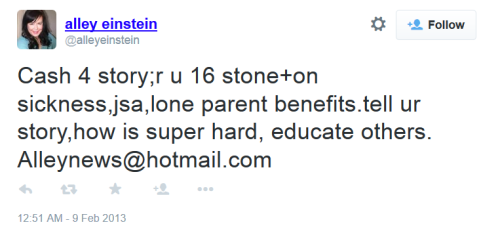


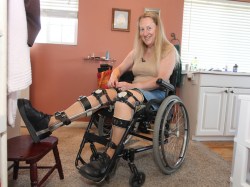


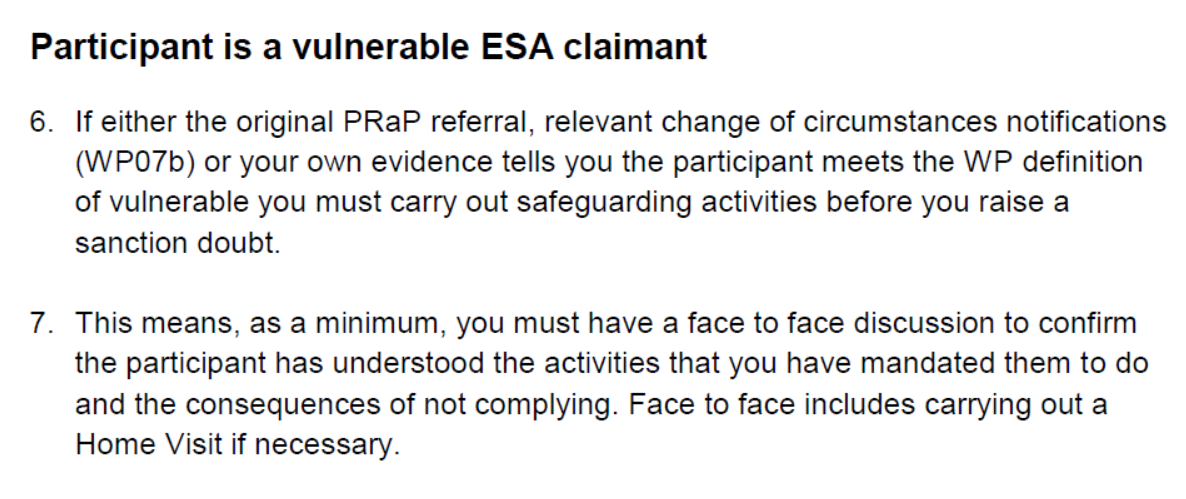





 Same Difference