The new minister for disabled people, Justin Tomlinson, has an almost unblemished record for voting for the most harmful choices for disabled people, even where it involves taking money from terminally ill claimants.
Tomlinson replaced Sarah Newton as minister for disabled people, health and work last week following the latter’s Brexit-related resignation almost a month ago.
However, as a choice for champion of disabled people, it would be hard to do worse.
Whenever faced with an option which would make life harder for disabled people, Tomlinson can be relied upon to opt for it – even where it involves taking money from terminally ill cancer patients.
In the past, Tomlinson has:
voted to remove the “work-related activity component” from the Employment and Support Allowance.
voted to remove the “limited capability for work” element of Universal Credit.
voted not to increase the time people can receive contribution based ESA from one year to at least 730 days.
voted not to make an exception for those with a cancer diagnosis or undergoing cancer treatment from the 365 day limit on receiving contribution based Employment and Support Allowance.
Tomlinson has already served as parliamentary under-secretary of state for disabled people under David Cameron.
He becomes the fifth minister of state for disabled people in the past five years.
Previous incumbents have included:
Mike Penning
Mark Harper
Penny Mordaunt
Looking on the bright side, with the current turmoil in parliament it is highly unlikely Tomlinson will last any longer than his predecessors in this post.
DWP provides further information about ‘Proof of Concept’ on starting from point of no conditionality for universal credit claimants awaiting WCA Minister confirms that small scale test will be evaluated in Autumn 2019 ‘after which we will determine next steps’
The DWP has provided further information about the ‘Proof of Concept’ on starting from a point of no conditionality for universal credit claimants who are awaiting a work capability assessment (WCA) that was confirmed by Work and Pensions Secretary Amber Rudd on 5 March 2019.
Responding yesterday to a written question in parliament, DWP Minister Alok Sharma said –
‘The Department is still finalising the design of the Proof of Concept and seeking input from key representatives from the sector. It is a small scale test which will be run in two-four jobcentres during summer 2019. We will use the Proof of Concept to test whether we can increase engagement with claimants with disabilities or health conditions. Work Coaches will start with no mandatory requirements and then tailor conditionality up, based on an individual’s circumstances.
We intend to apply it to those claimants pre-WCA; and, that, for those post WCA found to have a limited capability for work. We will apply it to all claimants presenting with medical evidence of a health condition, or disability, excluding only those who are terminally ill or who have conditions defined in schedule 8 or schedule 9 of the Universal Credit Regulations [2013]. Universal Credit does not use the ICD10 classification system for claimants recognising that each claimant is unique. Further detailed design on inclusion/exclusion criteria have yet to be defined.
The evaluation of the Proof of Concept will take place in Autumn 2019 after which we will determine next steps.’
This is a little old, but we like this idea, so we thought it was worth sharing.
Benefit claimants with autism will soon be able to use an app to take a “virtual reality Jobcentre walkthrough”.
Under plans being developed by the Department for Work and Pensions, claimants with autism or heightened sensory awareness will be able to experience the Jobcentre environment in 3D.
DWP bosses are trialling the move in Glasgow with an app based on technology used for gaming. If successful, the scheme is likely to be rolled out across Scotland.
The DWP also revealed that a pilot scheme to supply claimants with monthly or weekly bus tickets to attend job interviews or work placements has now been fully rolled out across Aberdeen.
Gordon Tory MP Colin Clark said: “It is hugely welcome news for people in Aberdeen that they benefit from better bus travel, so they can get back into work or training.
“The best way to improve your life chances is by being in work and to have the security every month of a pay packet.
“Every week, I see the huge commitment of the UK Government to Scotland and this is another example of that.”
Work and Pensions Secretary Amber Rudd, speaking to the Press and Journal, added: “Testing out these measures in Scotland shows the deep commitment of the UK Government to making sure people north of the border benefit from the best that the DWP has to offer.
“The UK Government is determined to make sure we remove as many barriers as possible to people re-entering the work place and, by giving people in Aberdeen better access to local transport, we are doing just that.
“There is no better place to test these measures than Glasgow and Aberdeen and I am looking forward to visiting the areas in the coming months to see for myself how they are working for local people.”
She added: “I’m committed to ensuring that all disabled people in Scotland who want to work can do so, and innovations like this are helping us to ensure that no one is held back because of a disability or health condition.
“I know that being in employment has a hugely positive impact on mental health, wellbeing and life chances.”
A robotic arm which can pick up food and feed a person autonomously has been developed by the University of Washington.
The Assistive Dexterous Arm (ADA) uses sensors and algorithms to identify food on a plate and works out the best way to pick it up and also feed it to the person.
Researchers hope it will assist caregivers in feeding fruit and might one day be able to feed “realistic” meals with further development.
Little is currently known about how physiotherapy services are received by adults with CP, therefore a collaboration of researchers from Brunel University London and The Royal College of Surgeons in Ireland have launched this survey. Any adult with Cerebral Palsy from the UK and Ireland is eligible to take part.
The main aims of the survey are to understand the reasons why people try to access services, what services are actually provided, and in turn what is valued and or could be improved. The findings could lead to guidance on what areas require further research and how to model and improve services.
This survey provides an opportunity for adults with CP to have their opinions heard, and to be a part of what is promising to be an exciting time for research in this area. In the last year alone the NICE guidelines on adults with CP have been released http://www.nice.org.uk/guidance/ng119
And the Adult CP Hub charity who are providing a much needed call for action for adults with Cerebral Palsy, has been launched https://en-gb.facebook.com/adultcphub/
To complete the survey, and for further information, please follow this link:
Just back from my daughter's DWP health assessment. The nurse's first question to Sarah was 'How long have you had Down's syndrome?' Not sure if it was a trick question but just in case I stepped in , 'She caught it on the bus last week…' @DSAInfo
The DWP claims it costs too much to confirm how many Universal Credit (UC), attendance allowance, and employment support allowance claimants have died within six months of seeing applications rejected.
Labour’s Madeleine Moon asked in a written Commons question to get the figure.
She was told by DWP minister Justin Tomlinson the information requested could only be provided “at disproportionate cost”.
Though DWP holds data across a number of data sets, Tomlinson said this would require analysis and quality assurance and would be a “substantial piece of work to bring together”.
The same answer was given to Moon’s follow-up question, asking how many claimants of attendance allowance, employment support allowance, and UC have died after registering those claims – but prior to DWP making a decision on those claims – and how many of those claimants applied for those social security benefits under either normal or special rules.
Again, said Tomlinson, this could only be answered at “disproportionate cost”.
Moon had a third go asking how many employment support allowance claimants who have had their application rejected under normal rules have subsequently reapplied for that social security benefit under the special rules for terminal illness process; and what medical conditions those claimants had.
This information was “not readily available and to provide it would incur disproportionate cost”.
Tomlinson was more forthcoming in answering Moon on how many UC claimants who have had their application rejected under normal rules have subsequently reapplied for that social security benefit under the special rules for terminal illness process; and what medical conditions those claimants had.
On this, he said, the DWP is “currently looking into what analytical information it can publish”.
Special Attendance Allowance rules applying to the terminally ill were first introduced in 1990 following a recommendation from the Social Security Advisory Committee.
The rules are common to a range of benefits and are also used elsewhere – for example, the Early Access to Financial Assistance Scheme, administered by the Pension Protection Fund.
Tomlinson said the design of UC for terminally ill claimants is based on this “well-tested” process.
This, he said, is not a separate entitlement but part of the UC process, and, as such, the information requested is not collated centrally and could only be provided at – disproportionate cost.
Moon pressed on to ask how many attendance allowance claimants who have had their application rejected under normal rules have subsequently reapplied for that social security benefit under the special rules for terminal illness process; and what medical conditions those claimants had.
Tomlinson said this information not available.
“When a decision is made not to award Attendance Allowance, the claim is closed. Any further application would be treated as a new claim and will be considered on the merits of the information provided,” he said.
Moon got over the line asking how many personal independence payments claimants died within six months of their claim being disallowed at initial decision under normal rules.
Tomlinson said there was is no evidence in available data to suggest someone’s reason for claiming PIP was the cause of their death.
“It would be misleading to suggest otherwise. People claim PIP for various reasons, the majority of which are non-life threatening,” he said.
Over 3.8 million applications to Personal Independence Payment (PIP) were made between April and July last year.
Of these, 10,380 PIP claimants died within six months of their claim being disallowed at initial decision under normal rules.
Finally, Moon asked what the average length of time was between a claimant receiving an award under special rules for terminal illness and initially registering that claim under normal rules.
Tomlinson said the median time between registration and clearance for PIP claims, initially registered under Normal Rules but awarded under Special Rules for Terminal Illness, is 34 working days.
That stood for all claims cleared between April 2013 to the end of January 2019.
The clearance time from the point a claim changes from Normal Rules to Special Rules for Terminal Illness to clearance under Special Rules for Terminal Illness is three working days.
But it wasn’t just Moon.
Labour’s Martin Whitfield asked how many times a request for a Statement of Reasons pertaining to the allocation of universal credit (limited capability to work) has not been delivered within the statutory time limit of 14 days in each of the last three years for which data is available.
“The information requested is not readily available and could only be obtained at disproportionate cost,” said Tomlinson.
The remark was made by Mr Justice Hayden, who had been asked to consider imposing a court order preventing a man from having sex with his wife of 20 years because she may no longer be able to give her consent.
The case had been brought to the court of protection, which considers cases where people lack the mental capacity to make their own decisions, by lawyers for a council’s social services after the condition of the woman, who has learning difficulties, began to deteriorate.
Social service officials believe there is evidence that she no longer has the capacity to make decisions about whether she wants to have sex and therefore cannot freely give her consent. Lawyers have suggested that a judge might have to bar the husband from continuing to have sex with his wife in order to ensure that the woman is not raped.
Hayden considered the issue at a preliminary court of protection hearing in London on Monday, in which he was told that the man had offered to give an undertaking not to have sex with his wife.
However, the judge said he wanted to examine the evidence in detail – and hear arguments from lawyers representing the woman, the man, and the council involved – before making any decisions.
The judge said the man might be put in a situation where he could face prison if he breached an order, or an undertaking, not to have sex with his wife. He also suggested that such an order would be difficult to police.
“I cannot think of any more obviously fundamental human right than the right of a man to have sex with his wife – and the right of the state to monitor that,” he said. “I think he is entitled to have it properly argued.”
Part of that comment was seized on by the the Labour MP for Bristol West, Thangam Debbonaire, who tweeted: “This legitimises misogyny and woman-hatred. A judge stating ‘I cannot think of any more obviously fundamental human right than the right of a man to have sex with his wife’. No man in the UK has such a legal right to insist on sex. No consent = rape.”
Hayden has ordered that the couple involved cannot be identified. A full hearing is expected in the coming months.
A woman whose daughter tried to kill herself while in an isolation booth at an academy school is to take legal action against the government.
The child, who cannot be named, has autistic spectrum disorder and mental health problems, but was put in an isolation booth by her school in Kent for more than a month.
Prior to the intervention of lawyers in mid-March, she had spent every day since mid-January in isolation, meaning she had to remain silent throughout the day and had no directed teaching.
Lawyers from the firm Simpson Millar are now taking action against the Department for Education (DfE) on behalf of the girl and a boy at another academy in Nottinghamshire for failing to review its guidance to schools about the use of isolation. The schools cannot be named for fear of identifying the children.
In a pre-action letter seen by the Guardian, lawyers said extended time in isolation had had a significant impact on the girl. “It has caused her depression. It also led to her taking an overdose while in the isolation room itself,” they said. “Following pre-action correspondence from us, [the school] has removed her from isolation.”
The unregulated use of isolation booths – spaces in which children sit in silence for hours as punishment for breaking school rules – has been criticised in recent months.
In December, Simpson Millar launched proceedings against Outwood Grange Academies Trust (OGAT) on behalf of a boy who spent up to 35 days in isolation in one academic year. The case was dropped when the trust said it was reviewing its behaviour policy.
The boy involved in the latest action has ADHD. “Given his condition, sitting silently in a booth for the whole school day was difficult,” wrote the lawyers.
“However, the sanction for ‘failing’ the isolation room was another day in the isolation room. He thus ended up in a cycle of regular confinement in the booths.”
The letter says that he went from being “a cheerful and bubbly boy” to developing anxiety and depression.
Government guidance states that isolation rooms should only be used for “a limited period” and that “[a]ny use of isolation that prevents a child from leaving a room of their own free will should only be considered in exceptional circumstances”.
Lawyers criticised the lack of any upper limit for the amount of time a child could be kept in isolation. “Unlike if pupils receive fixed-term exclusions, there is no automatic mechanism for reporting the level of isolations to the governing body, nor do the cutoffs (15 days in a term, 45 days in a year) apply.”
They said that many schools appeared to have a system where pupils were required to repeat a day in isolation if they failed to adhere to the organisation’s behaviour policy the first time around.
Dan Rosenberg, an education solicitor at Simpson Millar, said: “Guidance on behaviour and discipline in schools needs to be much clearer; especially with regards the use of isolation booths which, evidence suggests, are being used as a ‘dumping ground’ for children, particularly those with special educational needs.
“What was originally a method for dealing with an immediate crisis in a classroom is now being used as a low-cost solution for the long-term management of pupils, to the detriment of their mental health and education. The current guidance is not fit for purpose, and as a result children are suffering.”
Rosenberg urged the government to urgently review its guidance on the use of isolation, paying particular attention to the impact of the use of isolation on children with disabilities. If the DfE does not respond positively to the lawyers’ letter then they will start judicial review proceedings.
The beloved long-running children’s program “Sesame Street” is rolling out new characters and resources for families in honor of Autism Awareness Month, introducing viewers to Julia’s whole family and in the words of Elmo, demonstrating how “it’s really cool that everybody’s a little bit different but same, too.”
Autism Awareness Month, the program is expanding Julia’s role and introducing her family to fans. Autism currently affects one in 59 children in the U.S. and their families.
“We’re thrilled to expand Julia’s world with her parents, big brother, and her adorable dog, Rose, in our new resources,” Sherrie Westin, president of global impact and philanthropy at Sesame Workshop, said in a statement. “Children with autism often face unique challenges, as do their parents and siblings. But every family faces challenges of some sort, which is why we are focusing on what all families have in common. In a family, everyone has different roles, challenges, and strengths, and everyone can learn from one another.”
The family of Julia, the first muppet with autism on the show, is being introduced with new resources for families in honor of Autism Awareness Month.
ABC News’ Paula Faris stopped by the set of “Sesame Street” and met Julia and some of the other beloved characters.
When asked what he has learned from Julia, Elmo told “GMA” he has learned that everybody “is a little bit different.”
“Julia has autism,” Elmo said. “And that makes Julia different … But it’s really cool that everybody’s a little bit different but same, too. And Elmo and Julia have a lot in common, and we have a lot of fun together.”
Julia’s family, the newest additions to the “Sesame Street” cast, include her art teacher mother, saxophone playing dad, protective older brother and pet dog.
Julia’s brother, Sam, told “GMA” if there is one thing he wants people to know about his sister it’s that “it may take a few tries to get to know Julia.”
“But just because she doesn’t respond — doesn’t mean she doesn’t want to be friends,” he added.
Jeanette Betancourt, the senior vice president for U.S. Social Impact at Sesame Workshop, the nonprofit organization associated with “Sesame Street,” said she hopes that meeting Julia’s family can help other families with autism.
“We know families that have children on the spectrum, they face unique challenges. But more importantly, there’s so much they share,” Betancourt told “GMA.”
Along with introducing Julia’s family to audiences, Sesame Workshop also released new videos and materials to help families of children with autism, on their website.
The resources especially focus on how to deal with bullying, which can disproportionately affect children with autism, according to the organization.
Sesame Workshop has also partnered with the Autism Speaks and the Ad Council to put Julia front and center in their public awareness campaign to raise awareness of early signs of autism and the need for early intervention.
Last week, as the Westminster world was absorbed by Brexit, the DWP minister for family support, housing and child maintenance Justin Tomlinson told MPs “disability benefits were exempt from the benefit freeze”.
The Work & Pensions Select Committee had been asking about the benefits freeze, and Tomlinson was responding to a question from Labour MP Ruth George about why “a lot of the freeze has fallen on Local Housing Allowance [housing benefit for private renters], which affects people who aren’t in work, people with disabilities who aren’t able to get into work, and pensioners as well”.
But Tomlinson’s assertion that disability benefits don’t fall under the benefits freeze – the policy introduced by the former chancellor George Osborne which stopped benefits rising in line with inflation from 2016 until 2020 – is wrong.
Here’s why the comment is misleading. Yes, Personal Independence Payments, disability premiums, Employment and Support Allowance (ESA) support group and other disability benefits are exempt from the benefits freeze.
However, the ESA support group top-up payments only cover those with the severest work-limiting conditions. The main element of ESA (the personal allowance), and claimants in its work-related activity group (WRAG), are subject to the benefits freeze.
This is not to mention how other frozen benefits – such as the housing benefit mentioned at the Work & Pensions Select Committee hearing last week – affect people with disabilities or long-term illnesses.
So Tomlinson is wrong. Non-support group ESA is for people with disabilities and illnesses that are affecting their ability to work. It is subject to the freeze. Therefore not all “disability benefits were exempt from the benefit freeze”.
This repeats a comment from the former disability minister Sarah Newton last June, when she told MPs in a Westminster Hall debate that “there has been no freeze in the benefits that disabled people receive, and those benefits are not subject to the benefit cap”.
It may seem like a small omission for those unacquainted with the benefit system or the way disability or sickness can affect household finances and one’s ability to work. But it overlooks the 2.2 million people claiming ESA (1.6 million of whom receive the support group top-up, the one unfrozen part of ESA) who are already marginalised by virtue of having to claim this benefit in the first place.
The DWP pointed me towards corrections made by Tomlinson in a written statement to parliament today, following four errors he made about uprating benefits in the House of Commons last month
This statement does not extend to his comment about disability benefits and the freeze – in fact, during the debate in question, he confirmed that only the “support component” of ESA would be uprated.
This was despite the shadow work & pensions secretary Margaret Greenwood and Independent Group leader Heidi Allen (formerly of the Tories) pointing out that the rest of ESA would be frozen. Allen called it a “glaring omission” to leave out “standard allowances in ESA… [for] those too ill to work”.
Tomlinson doubled down: “A number of speakers said that we were not supporting those too sick to work. Let me be absolutely clear that the Employment and Support Allowance support group rate will be increased from £37.65 to £38.55.”
So how do you explain these ministers’ misleading statements? Well, within the DWP, ESA is not actually considered a disability benefit. It’s classed as an “income replacement benefit” for people who “have a health condition or disability”. This is why it is subject to the benefit freeze, which only applies to working-age benefits.
Much harder to explain is why people with health conditions or disabilities are having their benefits frozen – whatever the jargon.
The length of time claimants have to wait for a personal independence payment mandatory reconsideration has increased by 86% in the space of a year, according to figures released by the government.
Justin Tomlinson, Parliamentary Under-Secretary, revealed the slow down in answer to a written question from Labour MP Stephanie Peacock.
In February 2018, the average waiting time for a PIP mandatory reconsideration was 29 days.
However, by January 2019, the latest date figures are available for, this had increased to 54 days.
What is equally concerning is that the length of the waiting time seems to be increasing ever more rapidly, month by month, as Tomlinson’s figures demonstrate:.
August 18 32
September 18 34
October 18 36
November 18 40
December 18 45
January 19 54
According to Tomlinson:
“There has been an increase in outstanding PIP MR clearance times in recent months (it rose to 54 days in January 2019). Measures to reduce the number of outstanding MRs include:
“Age profiles of outstanding work are managed at a national level to ensure that cases which have been outstanding for longest are actioned first.
“Resource levels dedicated to the clearance of MRs have been regularly reviewed with significant recruitment, training and redeployment undertaken to support reduced clearance times.
“MR is a key element of the decision making process for both the Department and claimants, and whilst ensuring they make quality decisions, decision makers work hard to clear applications without delay. Gathering the right evidence is critical at the MR stage if decisions are not to go to appeal; and we are reviewing our processes to not only obtain this, but to do so whilst continuing to make decisions timeously.”
The reality, of course is that the quality of decision making at mandatory reconsideration stage is abysmally low.
The success rate for PIP mandatory reconsiderations is just 19%.
The success rate for those claimants who go on to appeal, on the other hand, is 73%.
NICE said operations must be performed by specialist surgeons at specialist centres before their reintroduction.
All instances – and outcomes – of vaginal mesh operations should also be recorded on a national database “to help with future decision-making”, it said.
The NHS is not compelled to act on the guidelines – which are for England only – but services are expected to take NICE recommendations into account when planning and delivering care.
‘Disregarding women’
Under the new guidelines, each patient would receive a “decision aid” – detailing all the latest evidence on available treatments – and mesh implants would be used only after non-surgical options, such as lifestyle changes and pelvic floor training, had failed.
NICE said the “limited evidence” meant “the true prevalence of long-term complications following surgery with mesh is unknown”.
But Labour MP Owen Smith, who chairs a cross-party group of MPs on surgical mesh implants, told the BBC’s Victoria Derbyshire programme he was “deeply disappointed”.
“The updated guidelines appear to disregard mesh-injured women’s experiences by stating that there is no long-term evidence of adverse effects,” he said.
“Thousands of women have faced life-changing injuries following mesh surgery and they must not be ignored.”
He called for the continued suspension of vaginal mesh until an independent review – led by Baroness Julia Cumberlege – published its findings later this year.
Baroness Cumberlege told the Victoria Derbyshire programme now was not the time for the pause on vaginal mesh to end.
“We set five conditions that would need to be met before the pause could be lifted and the use of mesh could be contemplated,” she said.
“Those conditions have not yet been met and it is clear to us that it will be some considerable time before they are.
“This means that, now and for the foreseeable future, mesh should not be used to treat stress urinary incontinence, either in the NHS or the independent sector.
“The scale and intensity of this tragedy is truly shocking – lives have been ruined.”
Studies suggest as many as one in 10 patients can experience complications including chronic pain and difficulties walking.
‘I tried to kill myself’
Jackie Cheetham says she has tried to kill herself on several occasions because of the complications caused by her mesh implant.
“I have constant pain in my groin and down my leg,” she says.
“I don’t sleep at night. I can’t walk far. We’ve lost our house, as I couldn’t work anymore.
“It almost cost me my marriage.
“I have tried to overdose several times. I felt like an unfit mother. I couldn’t work and I thought, ‘What’s the point?'”
Ms Cheetham says when she had the implant – to treat incontinence – she was given a leaflet by her surgeon “but it definitely didn’t say I would be left in lifelong pain”.
And despite surgery to remove it, some mesh still remains inside her.
Campaign group Sling the Mesh founder Kath Sansom said the NICE guidelines were effectively “no different from what was published in 2003”.
“They are so weak – they clear the way for the next generation of women to be harmed,” she said.
Image caption Kath Sansom said adversely-affected women had been “ignored”
“We told our stories and NICE ignored us.
“Our Sling The Mesh survey shows one in 20 women have attempted suicide and more than half have regular suicidal thoughts because of chronic pain, loss of sex life, constant infections and autoimmune disease.”
An official at England’s Department of Health and Social Care said: “NICE’s new guidelines and patient decision aids on managing urinary incontinence and pelvic organ prolapse will help women make more informed choices about their treatment.
“The use of vaginal mesh was paused to ensure that patients receive a high-quality and consistent service.
“Mesh will still be a treatment for some women who understand the risks and following discussions with their consultant.”
The Royal College of Obstetricians and Gynaecologists (RCOG) and the British Society of Urogynaecology (BSUG) said they welcomed NICE’s recommendation “that the full range of non-surgical options should be offered to women before any surgical procedures” and “fully endorse” NICE’s patient decision aids.
But they added it was “important to note” that a period of “high-vigilance” remained regarding the implants’ use.
Autism awareness has grown worldwide in recent years. For the United Nations, the rights of persons with disabilities, including persons with autism, as enshrined in the Convention on the Rights of Persons with Disabilities (CRPD), are an integral part of its mandate.
When world leaders adopted the 2030 Agenda for Sustainable Development in 2015, the international community reaffirmed its strong commitment to inclusive, accessible and sustainable development, and pledged that no one would be left behind. In this context, the participation of persons with autism as both agents and beneficiaries is essential for the realization of the Sustainable Development Goals (SDGs).
For many people on the autism spectrum, access to affordable assistive technologies is a prerequisite to being able to exercise their basic human rights and participate fully in the life of their communities, and thereby contribute to the realization of the SDGs. Assistive technology can reduce or eliminate the barriers to their participation on an equal basis with others.
The Convention on the Rights of Persons with Disabilities acknowledges the instrumental role of assistive technologies in enabling persons with disabilities to exercise their rights and freedoms. It obliges States that are party to the Convention to promote availability and use of such technologies at an affordable cost, to facilitate access to them, and to undertake or promote research and development into new such technologies.
While technological advances are continuous, there are still major barriers to the use of assistive technologies, including high costs, lack of availability, lack of awareness of their potential, and a lack of training in their use. Available data indicates that, in several developing countries, more than 50% of the persons with disabilities who need assistive devices are not able to receive them.
In September 2018, the UN Secretary-General launched a new Strategy on New Technologies, which aims to define how the United Nations system will support the use of these technologies to accelerate the achievement of the 2030 Sustainable Development Agenda. The Strategy is also intended to facilitate the alignment of these technologies with the values enshrined in the UN Charter and the Universal Declaration of Human Rights, and the norms and standards of International Law, including the CRPD and other human rights conventions. These values include equality and equity, inclusion and transparency. Design and use of new technologies, according to the Strategy, should be guided by a rights-based and ethical perspective.
In the context of the Secretary-General’s Strategy, the 2019 World Autism Awareness Day observance at UN Headquarters in New York will focus on leveraging the use of assistive technologies for persons with autism as a tool in removing the barriers to their full social, economic and political participation in society, and in promoting equality, equity and inclusion. Topics to be addressed through discussions with self-advocates and experts include:
The Internet and digital communities: Leveling the playing field
Independent living: Smart home technology and more
Education and employment: Communication and executive functioning
Telemedicine: Opening the doors to healthcare
The right to be heard: Political participation and advocacy
In 2008, The United Nations General Assembly unanimously declared 2 April as World Autism Awareness Day.
The 2019 observance of the Day at UN Headquarters is organized by the UN Department of Global Communications and Department of Economic and Social Affairs, in close cooperation with persons with autism and their representative organizations.
Lupita Nyong’o has apologised after she was criticised for mentioning Robert F Kennedy Jr and the larynx disorder spasmodic dysphonia as inspirations for her role in horror film Us.
Speaking on the View, Nyong’o said: “It’s a very marginal group of people who suffer from this … The thought that I would, in a way, offend them was not my intention. In my mind, I wasn’t interested in vilifying or demonising the condition.”
She added: “I crafted Red with love and care. As much as it [was] in a genre-specific world, I really wanted to ground her in something that felt real. For all that, I say sorry to anyone that I may have offended.”
Red is the name of one of the characters Nyong’o plays in Us, a doppelganger of the film’s lead character Adelaide. Nyong’o explained that the voice she created for the role was “a composite of influences” for which she researched “laryngeal fractures, vocal cord haemorrhages and [my] own experiences with vocal injury.”
In an interview with the New York Times, Nyong’o had cited spasmodic dysphonia – a neurological disorder of which Robert F Kennedy Jr is one of the best known people affected – as a model. The National Spasmodic Dysphonia Association (NSDA) criticised her, saying: “Spasmodic dysphonia is not a creepy voice; it’s not a scary voice. It’s a disability that people are living with and [they] shouldn’t be judged on.” Jennifer Laszlo Mizrahi, president of non-profit activist group RespectAbility had also protested, saying: “Connecting disabilities to characters who are evil further marginalises people with disabilities, who also have significant abilities and want to contribute to their communities just like anyone else.”
However, in the wake of Nyong’o’s apology, RespectAbility released a statement saying: “We hope Nyong’o will use this experience to continue lifting up all marginalized groups including the 1-in-5 people who live with disabilities. In general, the Hollywood practice of using disability primarily to villainise people or to show them as objects of pity needs to end.”
Ryan O’Connell never set out to be a television star. It just happened that way. With less than a month left until the Netflix premiere of Special–a show that will bring the first gay and disabled male character to the silver screen–O’Connell is feeling the pressure.
“I never wanted to star in Special but—and this make shock you— the world is not exactly swimming with gay 20-something actors who have mild cerebral palsy,” says O’Connell, who is gay and disabled in real life.
“I was considering waiting outside physical therapy places all across LA with a net and forcing people to audition, but my producers told me kidnapping was not the look, so I guess it had to be me!”
Based on O’Connell’s 2015 memoir, Special, which was officially greenlit in March 2018, tells the story of Ryan, a gay man with Cerebral Palsy who is hit by a car and realizes he can now pass as an accident victim.
Anybody who has read the memoir is sure to find parallels between O’Connell’s own life and the character on the show, but the similarities aren’t meant to be all encompassing, O’Connell says.
“The journey Ryan goes on in Special is different than the journey I went on,” he notes. “I mean, the emotions and themes are autobiographical. It’s all about how hard it is to run from who you really are, especially if you have a limp. But the actual things I’m portraying didn’t always happen to me.”
Of course, the voyage O’Connell has had to endure to get his show on the air hasn’t been easy.
“There were so many times I thought [the show was not going to happen], oh my god,” he says. “I always say that this show was limping its way to the finish line… we first went out with it and cable networks were like, ‘Gay? Cerebral Palsy? Love, but no.’”
Not to mention, his budding schedule: Prior to writing Special, O’Connell was staffed on a TV show, wrote a movie for DreamWorks, and finished work on a little show called Will & Grace, the latter of which he says was absolutely surreal.
“Co-creator Max Mutchnick has this brilliant ‘SNAP CRACKLE POP’ brain,” praises O’Connell. “Everything he says is LOL and being around him, you just hope his wit and smarts rubs off on you somehow. I’m so grateful to have been a part of it.”
Following Will & Grace, O’Connell was able to write all the scripts for Special, before it landed at Netflix months later. Looking back, O’Connell could not be more proud of the show’s trek, and what it could mean for others to see themselves represented.
“Growing up, if I had seen a [disabled] gay guy on TV or in movies who reminded me of myself, it would have probably altered the course of my life forever,” he says. “I know that sounds dramatic, but when you’re young and you feel like a freak for being who you are, not seeing yourself being reflected back at you basically confirms that. It tells you, implicitly, that you don’t matter.”
Though, O’Connell is quick to note that this isn’t a show just for people who are gay and disabled.
“I think the fear many have is that a show about a gay disabled person will only be relatable to people who are gay and disabled but that’s bullshit,” he explains. “The personal is universal. You find shared experiences through specificity. I want people [both disabled and not] to watch Special and see themselves in it.”
Whatever the show represents to others remains to be seen, but O’Connell says the entire process has helped him examine his own thoughts and beliefs on disability (O’Connell has cerebral palsy in real life).
“I don’t think I even said the words ‘cerebral palsy’ out loud until my book came out. Now it’s my most used phrase next to ‘penis’ and ‘$80 candle,” he jokes.
“But my relationship with my disability is always evolving. I still struggle with internalized ableism a little bit and this feeling of not belonging to the disabled world or able-bodied world. It’s hard, honey… it’s a balancing act of doing the self-work while also not letting your disability consume you. But considering I didn’t even tell people I had cerebral palsy until I was 28 and, now, three years later, I’m doing a show about it, I’d say I have come a long way.”
As for what he is most excited for viewers to see? His character losing his virginity, duh. Not because he “wants the whole world to see [him] naked,” he says, but because the lack of gay sex representation in TV and film has always bothered him.
“I’m still traumatized by that panaway to the moon [during the sex scene] in Call Me By Your Name,” O’Connell jokes. “We didn’t film the sexiest gay sex scene in Special, but I’d like to think we were accurate.”
Sexy or no, we’re sure O’Connell is more than capable when it comes to the success of Special.
Jane Haines is talking about her daughter, Ayla, who has been in secure units for people with learning difficulties for seven years.
A government programme to move people out of these units after an abuse scandal is a failure, campaigners say.
The government said in 2015 it was committed to reducing inpatient numbers in England by at least 35%, although it has only relocated 20% so far.
That means 2,000 patients remain in them and the government has extended the original March 2019 deadline to 2020.
‘Brain damage’
Jane’s daughter was admitted to an Assessment and Treatment Unit (ATU) at 19, after struggling with anorexia and other mental health issues.
These secure units treat vulnerable young people who are deemed to be a danger to themselves.
Patients are supposed to be admitted for nine to 18 months, but the average stay is more than five years.
Ayla has spent the past seven years as an inpatient and is currently living in Northamptonshire, more than 200 miles away from her home in Carmarthen.
Jane tells the BBC’s Victoria Derbyshire programme it has led to desperate behaviour, including swallowing a toothbrush, which is still in her body 10 months later.
“She’s got a huge bald patch on her head where her hair will never grow back, from all the head banging she’s done,” she says. “One of the doctors said possibly she’s caused more brain damage.
“We are powerless and have to sit back and watch her suffer,” says Ayla’s grandmother Judy Haines. “It’s torture for her and for us.”
Jane says she is not critical of the place where Ayla is being treated, rather the system.
The ATU where she is staying said it was unable to provide comment on an individual case. But it said it, “works with every individual to design a package of care around them, to keep them safe and help them progress back to the community”.
The government promised to end their use for those capable of living in the community with proper support through a programme called Transforming Care – which cost £10m.
Dan Scorer, head of policy at Mencap, said: “People are spending many, many years in there, they shouldn’t be. Awful things are happening to people in there and they shouldn’t be.
“And in the same way asylums were closed, these places need to be closed and people need to be supported in the community.”
NHS figures show an increase in staff resorting to medication, seclusion and even restraint when dealing with patients. Of the 2,500 incidents reported in December last year alone, 800 were against children under the age of 18.
Linda and Chris Hutchings’ 27-year-old daughter lives in a secure unit in the East Midlands. She was sectioned, aged 14, after battling with an eating disorder and depression.
Her mum, Linda, says: “I wake up in the middle of the night and I am crying because I am so sad.
“In one of the hospitals [not the one she is currently in] she was locked in one room for nine weeks, and it was so awful for her because there was nothing apart from a telly on a high bracket on the wall.”
Chris says: “Can you even envisage another situation where a human being is locked up on the presumption of guilt? On what they might do to themselves or others? You lose that basic right to be free.”
Birmingham City Council, which is responsible for their daughter’s care, also said it could not comment on individual cases, adding, “there are always safeguarding measures in place when somebody’s liberty is limited due to illness or disability”.
‘Bedlam institutions’
Experts say the average placement cost of keeping one person in an ATU is more than £3,000 per week.
Labour’s shadow care minister, Barbara Keeley, said the government was allowing private companies to make millions, because the ATUs cost five times the amount of a community placement.
“They are like the Bedlam institutions in Victorian times,” she said. “This is a hidden horror. There have been 40 deaths in these units in 2015, nine of those were people under 35.”
She said the government should make a new pledge to close them down.
A Department of Health spokesman said: “We are determined to reduce the number of people on the autism spectrum with learning disabilities in mental health hospitals, and significant investment in community support has already led to a 20% reduction.
“The NHS is committed to reducing inpatient numbers by 35% by 2020.”
But with the right support, some parents say that the government’s transformation care programme can work.
Fauzia Hussain, who has Tourette’s and autism, spent 22 months in a secure unit. Her family says that she was prescribed high doses of medication, including anti-psychotic drugs and kept mostly in segregation.
Since she has left, her life has since been transformed.
“It was a hopeless place. I’m a child psychiatrist and I couldn’t access the right support,” her aunt Shahana says.
“I’m aware of so many families who haven’t been quite so lucky. I live in fear that Fauzia might end up back in a place like that.”
The mother of a severely disabled man who cannot walk or talk and is partially sighted says she was told he must complete a full medical exam to prove his disability.
Anya Sparks, who cares full time for her 20-year-old son Scott Harrison, says she is also effectively having to live off less than £40 a week in benefits.
Anya, from Linton, is now no longer entitled to child benefit since Scott turned 20. Previously he was eligible as he was in full-time education.
Yet, as he is still a student at Sense College in Cambridge (for blind and deaf students), he is classed as a student and ineligible for any benefits, other than personal independence payments (PIP).
Scott was required to visit the job centre earlier this month having been ruled unsuitable for benefits, and will have to undergo a full medical examination within the next few weeks.
Anya has been told that a decision on whether they will be eligible for Universal Credit will be reached within the next three weeks, but if approved, she has claimed they will still have to wait a few more weeks until they receive the first payment.
The family are currently living off Anya’s Carer’s Support, meaning that they get £64 a week, £50 of which has to go to Papworth Hospital, which operates the accommodation the family lives in.
Scott’s PIP payments go almost entirely on his medical costs, and the only other source of income is a £41 income support top up every fortnight.
The family have no additional income, and are falling behind on bills. Anya said British Gas is threatening to cut them off, on top of a £900 water bill that needs to be paid imminently.
‘It’s been a nightmare’
Anya said: “It’s been a nightmare trying to get [Scott] signed up for Universal Credit – they weren’t acknowledging my emails asking for help, and when I called, they kept asking to speak to Scott, despite me repeatedly pointing out that he was non-verbal.
“When we were at the job centre, the staff were confused why he was being sent there.
“It’s terrible having to take him into public spaces for this reason; transport and noisy places upset him, and cause him to self harm. He has to have a restraint in place at all times.
“Our bills run high at home as my 22-year-old son has a colostomy bag and needs the heating on more due to feeling cold, while our water bill is needed due to Scott frequently soiling himself, and we need to wash him and his
“The housing association have been seeking a possession order, and I barely have enough money to feed myself on top of my sons. What’s going to happen to them if something happens to me?
“I don’t want to get in more debt, I just need the help to cover these costs. I don’t want to have any more sleepless nights worrying about whether we’ll still have a roof over our heads in a few weeks.”
Anya claimed she has only heard from the Department of Work of Pensions since the Cambridgeshire Live contacted it, in order to arrange a date and time for Scott’s medical.
She said: “I feel discriminated against. I’ve spent the past 20 years just fighting to get the basic stuff, and it never ends. I have to apply for loans just to afford food.”
Scott’s medical exam is due to take place today (Friday).
What the DWP says
A spokesman for the Department of Work and Pensions said: “The only reason Scott was invited in to a job interview was because his application form had a box ticked saying that he was available to work, despite his health condition, something which we have clarified he doesn’t need to do.
“There have been no delays to his PIP payments.
“Anya has also started completing a form to apply for Universal Credit, but hasn’t completed it fully.
“She already receives income support, so needs to make the decision as to whether she wants to make the switch to Universal Credit.”
In reply, mum Anya has said that she was on the phone to the Department of Work and Pensions while filling it in, and that the worker on the phone was telling her which boxes to tick.
Two organisations in the US have attacked Jordan Peele’s acclaimed follow-up to Get Out, Us, for furthering negative attitudes towards disability.
The National Spasmodic Dysphonia Association (NSDA) and the nonprofit group RespectAbility have taken issue with lead actor Lupita Nyong’o’s recent revelation that she used the symptoms of spasmodic dysphonia as the inspiration for the strained voice of her murderous doppelganger character in the film.
Speaking to the New York Times, Nyong’o said her breakthrough with the character come after attending a fashion event at which Robert F Kennedy Jr, who has spasmodic dysphonia, was speaking.
Described as a “neurological disorder that causes involuntary spasms of the larynx”, this was the model for the voice which Nyong’o gave her character.
RespectAbility president Jennifer Laszlo Mizrahi said: “Connecting disabilities to characters who are evil further marginalises people with disabilities, who also have significant abilities and want to contribute to their communities just like anyone else.”
The NDSA said: “One of the toughest parts of having a disability is that people make assumptions based on the way you walk, talk or act, sometimes with little understanding of what is causing it.
“We understand that hearing the unique sound caused by symptoms of spasmodic dysphonia was the spark of inspiration for the voice of this character. What is difficult for us, and for the thousands of people living with spasmodic dysphonia, is this association to their voice with what might be considered haunting.”
Nyong’o told Variety that spasmodic dysphonia was the inspiration for the character because she, too, was working through trauma.
The NDSA also queried her logic, saying, “For so long, people were told that it’s psychological – and it’s not. It’s neurological.
“Spasmodic dysphonia is not a creepy voice; it’s not a scary voice. It’s a disability that people are living with and [they] shouldn’t be judged on.”
Nyong’o has not yet responded to the criticism.
Us, which opened last week to positive reviews, landed America’s highest grossing first weekend for an original horror, with $70m (£53.54m). That figure has only been broken this year by the opening weekend for superhero blockbuster Captain Marvel, which took £153m.
With Good Friday less than three weeks away, we start this month with some news that we hope you will find exciting. Chocolate cures Cerebral Palsy.
One of our young female patients, a beautiful six-year-old we’ll call Barbie, discovered this quite by accident. She bought a packet of chocolate wheelchairs from an independent sweet shop near Platform Nine And Three Quarters at King’s Cross Train Station.
She was so excited to find these disability-related sweets available that she wanted to eat them all at once. Surprisingly, instead of making her sick, this decision significantly improved her symptoms of Cerebral Palsy.
After some research involving many types of chocolate, and many excited children with Cerebral Palsy, we have discovered that eating 500g of chocolate daily can, in fact, cure Cerebral Palsy completely within a year. Much to the excitement of Barbie’s best friend, Ken, we have recently confirmed that chocolate cake does have the same effect as ordinary chocolate!
We invite you to our closing down lunch, to be held at the Centre at Midday on Monday, April 1st. It will be made up entirely of chocolate drinks, chocolate cakes and every variety of chocolate we can find. Younger siblings are welcome to attend.
Straight after the lunch, the Centre will close down and all our staff will start new jobs at Cadbury World the next day.
At 36 years old, she has already sold all of her possessions twice to afford the insulin her body needs every day.
Insulin is not like other drugs. It’s a natural hormone that controls our blood sugar levels – too high causes vision loss, confusion, nausea, and eventually, organ failure; too low leads to heart irregularities, mood swings, seizures, loss of consciousness.
For most of us, our bodies produce insulin naturally. But for Type 1 (T1) diabetics like Ms Marston, insulin comes in clear glass vials, handed over the pharmacy counter each month – if they can afford it.
One vial of the insulin Ms Marston uses now costs $275 (£210) without health insurance.
In 1923, the discoverers of insulin sold its patent for $1, hoping the low price would keep the essential treatment available to everyone who needed it.
Now, retail prices in the US are around the $300 range for all insulins from the three major brands that control the market.
Even accounting for inflation, that’s a price increase of over 1,000%.
Stories of Americans rationing insulin – and dying for it – have been making national headlines.
The most famous case, perhaps, was 26-year-old Alec Smith, who died in 2017 less than a month after he aged out of his mother’s health insurance plan. Despite working full-time making more than minimum wage, he could not afford to buy new insurance or pay the $1,000 a month for insulin without it.
Ms Marston knows the feeling – like most of the diabetics I spoke to, she has experienced frightening lapses in coverage through no fault of her own.
A few years ago, when the small law firm Ms Marston worked for abruptly closed, she found herself without an income and suddenly uninsured.
“I was spending $2,880 a month just to keep myself alive – that was more than I was making even working 50 hours a week,” says Ms Marston.
She was forced to leave her home in Richmond, Virginia, to find a new job in Washington DC to ensure she could pay for insulin.
“I sold everything, including my car, and had to give up my dog – he was eight and I had to give him away – and move to DC.”
There are any number of reasons why someone might still be uninsured in America – if they don’t qualify for employer-sponsored insurance or lose their job like Ms Marston had, for example, or if they cannot afford to pay for a plan on their own.
Ms Marston was diagnosed with T1 diabetes when she was 14. She laughs when recalling how the price of insulin in 1996 – $25 for one vial – was a shock to her.
Two decades later, Ms Marston still uses the same formula of insulin – Eli Lilly’s Humalog. Even the packaging is the same.
“Nothing about it has changed, except the price has gone up from $21 a vial to $275 a vial.”
It’s the same story for Sanofi’s Apidra and Novo Nordisk’s Novolog.
So who’s to blame?
Most patients point the finger at the pharmaceutical companies, who in turn bring up problems with government regulations and insurance providers.
At the heart of the issue is the complex mystery around who pays what for insulin in the US.
There are five terms essential to this discussion – list price, net price, rebates, co-payments and deductibles.
List price is set by a pharmaceutical company, and in many cases is what uninsured diabetics pay
Net price is the actual profit the company receives for a drug
Rebates are discounts on drugs negotiated for insurance companies
Co-payments are what an insured person pays for a prescription, out-of-pocket
Deductibles, which can be as high as $10,000, are what insurance policies say must be paid before the insurer picks up the rest
Insurance companies enlist third-party negotiators, called pharmacy benefit managers, to fix discounts with drug manufacturers that in turn result in smaller co-payment prices for their users. Experts say part of the system’s problem is a lack of transparency around how these rebates are negotiated and how much actually makes its way to patients.
This system also means that insurers end up with different rates for each drug company, so a brand of insulin that has a minimal co-pay under one insurance could cost the full list price under another.
Ms Marston has been tracking insulin list prices for years. By her calculations, for insulin alone, she’ll need close to $7m to live until she’s 70 if she pays out of pocket.
“It’s led to a situation where I decided I couldn’t have kids because I don’t feel financially stable enough,” Ms Marston says.
But drug manufacturers argue that very few people ever face paying list price.
Eli Lilly said in a statement to the BBC that 95% of people using Humalog in the US pay under $100 a month for their prescription, and that of the 600,000 using Humalog, “about 1,600 people without insurance have not utilised the [assistance] benefits we offer”.
Novo Nordisk and Sanofi detailed similar patient assistance programmes in their statements. And several diabetics I spoke to did say that these programmes helped them- if they qualified.
But another advocate, Kristen Daniels, says she was faced with a $2,400 price tag for one month of insulin and because she was technically insured, she couldn’t get assistance.
“I called my insurance, I called the manufacturer, and no one could help me because I hadn’t reached my deductible,” Ms Daniels says.
Pharmaceutical companies have also emphasised that rising list prices did not result in commensurate profits. Eli Lilly’s spokesman says their net price has actually gone down in the last five years; Sanofi’s said their insulin profits are 25% lower in 2019 than 2012.
According to a report by the American Diabetes Association (ADA) and the University of Southern California Center for Health Policy and Economics, between 2007 and 2016, major brand insulin list prices have increased by 252%, while net prices saw less growth at 57%.
And there are cheaper options in the US for some: WalMart insulin, for example, is a re-branded version of a Novo Nordisk formula which retails for around $25 per vial in most states. But the formula is older, less effective, and some, like Ms Marston, are allergic to it.
This is another key issue in the debate around skyrocketing insulin prices. Each formula works differently for each individual. It takes many T1 patients years to feel comfortable managing their dosing with a particular brand.
Several diabetics I spoke to say they have been forced to switch insulins by their insurance plans – even against the recommendation of their physicians – if they wanted to avoid paying the list price for their preferred brand.
The ADA says this “non-medical switching” is more than an inconvenience – it’s potentially dangerous, requiring constant monitoring on the patient’s part and consultations with a physician.
Serious or permanent complications like blindness or kidney disease can arise if a diabetic is put through too many extreme sugar highs and lows.
In America, where insurance coverage goes hand-in-hand with employment and options are limited, many T1 diabetics make sacrifices in other parts of their lives to keep affording insulin – whether that’s staying with a stressful job or switching insulin formulas at the behest of an insurer.
The expression that comes up again and again in the US T1 community is: “We’re hostages”.
How does the UK compare?
T1International is a non-profit advocating for affordable, accessible diabetes care worldwide. Founder Elizabeth Rowley is an American who now lives in the UK.
As a T1 diabetic herself, Ms Rowley has first-hand experience navigating both health systems. She describes the US system as “convoluted”, with profits happening at all levels in between.
“People spend most of their life in fear of losing their insurance, of running out of insulin and the cost going up, or of having to stay in terrible jobs or relationships to ensure they keep their health insurance coverage,” Ms Rowley tells me. “That’s the best case scenario.
“Worst case, folks are rationing insulin which has led to many reported deaths and excruciating complications. People are buying and sharing insulin from people online they have never met, having to choose between buying food, paying rent, or taking their medicine.”
Diabetics in the US pay on average over $210 each month for insulin, according to a T1International 2016 survey, compared to less than $50 in India or nothing at all in some European countries.
“In the UK, I walked into the pharmacy, and with my medical exemption card, picked up my essential medicines. While the NHS is still overpaying for insulin, the cost it pays is miniscule compared to what people in the US must pay.”
Ms Rowley acknowledges these other systems aren’t perfect – but to her, they are still far better for patients.
The medical tourists
Lauren Hyre, 30, an Arizona-based advocate for T1International, knows first hand the fears of accessing insulin in the US system. She’s struggled with it for two-thirds of her life.
Living in Indiana, a state without expanded health assistance programmes, she also didn’t qualify for any government help.
For years, Ms Hyre depended upon expired vials of insulin from her doctor’s office and making trips to Canada to buy it at an affordable cost.
The first time she bought insulin at a Canadian pharmacy, her mother broke down in tears.
There are dozens of similar stories across the southern border too.
When 27-year-old Emily Mackey heard about a group of diabetics travelling to Tijuana, Mexico, to purchase cheaper insulin, she reached out on Instagram and joined in.
Ms Mackey was already in California for work, and so her tram ride from San Diego to Tijuana, Mexico, cost $5, round-trip.
A six-month supply of insulin set her back $100, a lot lower than the $1,300 cost if purchased through her insurance.
But her relief soon turned to aggravation. Even if she had flown from her home in Philadelphia, buying insulin across the border would have saved her money.
“I was angry that I had to go to Mexico in the first place to get a drug that keeps me alive. I live right next to a [US pharmacy], yet had to travel 3,000 miles to another country to get affordable insulin.”
What are the solutions?
According to the American Diabetes Association (ADA), there are more than seven million diabetics in this country, and around 27% say that affording insulin has impacted their daily life.
Dr William Cefalu, the ADA’s chief scientific, medical and mission officer, says a lack of transparency is at the root of the issue.
“The system is dysfunctional. There are issues at each level, at each stakeholder in the insulin supply chain,” he says. “We can’t point the finger at one particular entity.”
Fixing issues with high deductibles and ensuring any discounts negotiated with insurance companies actually filter down to patients is key, he says.
Competition would be the best way to bring prices down, so why hasn’t that happened yet?
Unlike chemical drugs, which can be simply replicated, insulin is a biological material – made up of proteins synthesised through a cell line that’s unique to each formula.
Novo Nordisk, Eli Lilly and Sanofi’s insulins are all slightly different in this way, and no “generic” or un-branded copy could be made without accessing these companies’ patented materials and processes.
But despite these fundamental differences, insulin has long been classified and regulated like a chemical drug.
In December, the FDA announced that the agency would reclassify insulin as a “biological product” by 2020, in what the FDA commissioner called a “watershed moment for insulin”.
These so-called biologics will then have an easier pathway to approval than before, promoting the development of “products that are biosimilar to, or interchangeable with” existing insulin.
Insulin isn’t the only drug affected by the tangled web of regulations and closed-door industry dynamics, but it is one of the few with life-or-death consequences attached to its price tag.
For Ms Marston, it’s hard to see why insulin was ever treated like other medications.
“It’s a natural hormone that everybody else’s bodies make that ours don’t,” she says. “There should be price caps on it just like everything else that’s required for life: your water bill, your electric bill. Arguably those things are even less required than Humalog.”
As an increasingly vocal Congress continues to hold hearings on drug pricing, pharmaceutical companies are beginning to feel the pressure.
Eli Lilly has announced it would be offering a new “generic” version of Humalog for half the cost. But the $137 price tag for this new generic is still steep – and significantly above what other countries pay for the same insulin.
It’s a move that may reduce what some pay at the pharmacy, but one that fails to address the systemic issues around insulin pricing.
Senator Elizabeth Warren, a 2020 presidential hopeful, and Representative Jan Schakowsky, both Democrats, proposed a different solution in December.
The Affordable Drug Manufacturing Act would order the Department of Health and Human Services to create a new office focusing on manufacturing generic drugs “in cases where the market has failed” in order to “jump-start” competition.
The bill is unlikely to pass but it signals a serious interest from some lawmakers to change the existing system.
Another avenue is the Medicare for All proposal pushed by Senator Bernie Sanders and other 2020 candidates, which would provide free healthcare for all, funded by higher taxes.
As the debate continues on Capitol Hill and in industry board rooms, Ms Marston says she wants to continue her own advocacy on behalf of those who have fallen through the insurance gaps.
“In an instant, they were faced with having to pay list prices and could not do that, and that is why they died.
“If even one person has to pay list price, that’s not fair,” Ms Marston says.
“It’s really someone having a gun to your head and saying: Your money or your life.”
The 33-year-old British Jamaican, who has performed at Glastonbury and also works as a teacher, has received the £5,000 prize for his debut The Perseverance. Described as “compelling” in the Guardian, the collection touches on family life, particularly the death of Antrobus’s father, his diagnosis with deafness as a small child, and his biracial heritage. It has also been longlisted for this year’s Folio prize.
The poems often explore the nature of deafness, such as Dear Hearing World, which describes the discrimination Antrobus has encountered in the education system: “I was a broken speaker, you were never a broken interpreter.” He also details his protracted diagnosis, which he finally received aged six, recalling in the poem Echo how he could not hear the final syllable of his surname and pronounced it as “Antrob”: “And no one knew what I was missing / until a doctor gave me a handful of Lego / and said to put a brick on the table / every time I heard a sound.
He once told the BBCof this period: “I couldn’t read, I couldn’t write, I was slow to start walking. No one knew why this was happening until a phone started ringing in my mum’s house and my mum said I was completely oblivious to this phone. She just looked at me and she looked at the phone ringing and she heard it really loudly and I was completely unmoved, I didn’t react.”
The Perseverance also includes an entirely redacted poem, Deaf School, by Hughes, in which he described the children as: “Their faces were alert and simple / like little animals, small night lemurs caught in the flashlight.” In a process he has described as “cathartic”, Antrobus erased Hughes’s poem with thick black lines, then responded with a poem of his own: “Ted is alert and simple. / Ted lacked a subtle wavering aura of sound / and responses to Sound.”
The judges of the prize praised Antrobus. The poet Clare Shaw called his book “universally relevant”, while fellow poet Linton Kwesi Johnson described it as “the most engaging collection of poems we have read in a long time”. And the Rev Canon Mark Oakley said Antrobus was “passionate but speaking from his scars not his wounds – this is a poet you sense very deeply that you can trust”.
Antrobus saw off competition from the Indian poet Tishani Doshi for Girls Are Coming Out of the Woods, Birmingham’s Roy McFarlane for The Healing Next Time, Susan Richardson’s Words the Turtle Taught Me, and Hannah Sullivan, who won the TS Eliot prize last year for Three Poems.
Antrobus was presented with his award at a ceremony on Wednesday evening, alongside the poet Wayne Holloway-Smith, who was chosen from 14,000 entries to win the £5,000 national poetry competition for his poem The Posh Mums are Boxing in the Square.
It had been raining all morning and the halls in the science lab at the University of Bristol were wet and slippery.
Bethany Hickton had been in the building for hours working on her PhD – a mixture of biology and physics in the form of aerospace engineering with cellular and molecular medicine
As planned, she met her new boyfriend Rob and they started towards the university canteen for their lunch date via a staircase. They were looking forward to breaking the news of their burgeoning romance to a good friend. It was then that it happened.
“I slipped and fell,” Bethany says. “I missed a few steps and landed on the bottom of a flight of marble steps on my coccyx.
“As soon as I hit the floor I knew something was wrong.”
Pain shot up her spine, people rushed towards her and someone called an ambulance. Rob “came hurtling down the stairs looking as white as the staircase”, bringing any secrecy around their relationship to an abrupt end.
Fearing she may have sustained a serious back injury, Bethany knew to lie still. She remained on the floor, able to see Bristol Royal Infirmary through a rain-splattered window, and awaited the paramedics.
They put her in a spinal brace and took her to hospital where she was assessed. Bethany recalls that she “wasn’t kicking off” so the staff must have thought she had a light injury. She was taken in a wheelchair for a precautionary X-ray and was asked to wriggle out of her jeans.
“The doctor was pretty alarmed when she got my X-ray back,” says Bethany.
It revealed very significant damage – the fall had compressed her spine and broken three vertebrae.
“The fractures were five millimetres from severing my spinal cord,” she says. “It was pretty scary.”
Fortunately, although she had moved her body, there had been no deterioration of the injury.
Bethany’s initial care was swift and ordered. Within days she was discharged with strong medication and a spinal brace, a metal and plastic contraption that she says quickly became the bane of her life as she had to wear it whenever she wasn’t lying down.
For the first 10 days she slept 22 hours out of every 24, only waking to use the bathroom and eat. Then, being a scientist, she started to match the rigorously planned care from the NHS with her own logic as she took control of the situation.
“I was all about strategic plans – how we were going to modify my flat so that I could get around. They said I wasn’t allowed to shower for 16 weeks, which just wasn’t happening – I’d only just got in a relationship. So, we figured out ways that I could shower without moving.”
The “hodge podge” method involved Bethany sitting on a perfectly placed stool and carefully removing the brace without moving. She would then retrieve shower gel from a caddy placed on the floor and let the water wash over her.
After months of solving those immediate problems and being emotionally strong, Bethany came off the medication. Pain returned and she could no longer sleep.
“That’s when it all sort of caught up with me,” she says. “Sixteen weeks is a long time to not cry about something.”
The next stage of her recovery would become the greatest challenge. She found she wasn’t able to go anywhere and, although academically inclined, could not read books. All her focus had gone.
“Everything stopped, and that was really what shocked me,” she says.
Added to this, thoughts of what could have happened, plus a fall behind in her PhD, all contributed to a decline in her mental health.
Bethany discovered later that these feelings and symptoms were typical for people experiencing post traumatic stress disorder (PTSD).
Professor Neil Greenberg, of the Royal College of Psychiatrists, a specialist in PTSD, says a delayed emotional reaction of between one and six months is very common following a traumatic experience.
“People often go into a phase of what they have to do to get better and it’s not until you reflect on how near a miss it was that it may start to lead to mental health problems.”
Symptoms of PTSD can include re-living the event, intrusive thoughts, difficulties with concentration and negative mood.
Professor Greenberg says: “Most of us won’t think twice about going down the stairs but Bethany might become cautious or think other people are being unreasonable by going fast. It changes your view of the world.”
It can, he says, also alter the way you experience pleasure and satisfaction.
Bethany found it increasingly hard to motivate herself and began to experience panic attacks.
She remembers the first attack: “I was sat in my bed, not really being able to breathe, and I just sort of suddenly felt very cold and very numb. I went and stood in the shower and just blasted myself with water until I felt better again.
“I think the cause was actual fear of how close it came to being a lot worse. I could have been paralysed from the waist down.”
She expected and hoped things would improve when she got back into her routine, but that too became a trigger-point.
“I started having anxiety attacks about going to work. I found myself walking a different way to work. The shoes I wore the day I fell, I didn’t wear again.”
She made it through to Christmas and toasted the New Year. It was 2017 – a fresh start.
But on the night of 1 January, she couldn’t sleep.
“I kept having intrusive thoughts and my mood was just horrific. It just dawned on me that, actually, I’m not the person I normally am and I haven’t been for a while.
“That was when it really hit me that maybe I should go and talk to someone about it.”
Bethany went to see a counsellor and spoke of the ways she had adapted her life to avoid anxiety. She was prescribed anti-depressants and offered a talking therapy to deal with the trauma.
She agreed to try CBT or cognitive behavioural therapy which focuses on the “logical versus the negative”. In this case, she had used staircases thousands of times without incident, but only fallen once – she needed to re-route her brain onto that reality.
When it comes to PTSD “you need to avoid avoidance”, Professor Greenberg says. “People don’t want to think about the event, so they tend to avoid it, but what really helps is to bring the image into your mind and confront it.”
Typically 70%-80% of CBT patients recover and Bethany says she found it improved her anxiety.
She also turned to exercise through the University of Bristol’s Healthy Minds programme, which encourages students with mental health difficulties to improve the way they feel through sport.
It was there that Bethany, unexpectedly, found a love of weightlifting.
She kept her medical team informed about what she was doing and found it “joyous” to find her back was strong enough.
“That was a breakthrough point for me”, she says, for both her mental health and physical health. “When you’ve had an injury you become so precious about it, that actually pushing it was really nice.”
Bethany thinks it could be another three years before her back recovers fully – the bones have healed but it will take longer for the muscles and tissue.
“It’s still something that’s sore and painful, but it’s manageable and hopefully improving.”
She has returned to her PhD with hopes of becoming a chief scientific officer – someone who looks at complex scientific issues for the government – and her romance with Rob has become long-term.
While she feels her mental health has improved, she still has to confront her fears everyday.
“Whenever I do go down the stairs in that building I have to hold onto the handrail – and if I’m wearing high-heels I will pick ways of walking that don’t involve stairs.
“I try not to let it become a thing. I obviously still happily go to work but I do still have a little issue with those stairs … me and them are not friends.”
It has been a weird week. On Saturday night, I went out in London and it did not end well. Why? Because I went on this night out in my wheelchair. I was refused entry to a nightclub because bouncers said the music would be “too rowdy” for me, and then was roundly mocked by members of the public for waiting for my friends outside a chicken shop, which obviously was not accessible. People pointed and laughed, a drunk man offered to spin me round in my chair, which was quite sweet. All I wanted was some fried chicken.
On Monday morning, I came into work and told some of my colleagues at BBC Newsnight about my disastrous night out. They were horrified. For me, though, these experiences are relatively common – being a wheelchair-user makes you a magnet for leery drunk people, and access problems often scupper the best-laid plans. But I began to realise that those around me were completely unaware of these issues.
Experiences that are semi-regular for me caused outrage when I described them on Twitter. One of the saddest things, though, has been the response of other disabled people, many of whom have called the story “all too familiar”.
Things are so bad on the nightlife scene because of what I like to call the tyranny of low expectations. Society, consciously or otherwise, does not expect disabled people to socialise after dark. My friends and I like to joke that I am seen as some sort of reverse vampire: I can only be seen in the light. My appearance in a club, therefore, seems out of place and, inhibitions lowered, people feel free to express surprise – they usually mean well, but it reminds me that in their eyes I do not belong.
In a world desperate to show itself as inclusive, disabled people live with a backdrop of discrimination. I have become so used to shrugging off comments and being unable to go to the toilet, get on the Tube, or access a shop that it often takes my able-bodied friends to make a fuss before I really notice. I know my disabled friends feel the same.
The club I went to has apologised and pledged to retrain its staff, although it placed the blame firmly on third-party contractors. It has invited me back for some freebies, but I shan’t be returning.
Nevertheless, I am looking forward to my next night out. I have great friends and I love to dance. I will not succumb to society’s grim assumptions. I will live the way I want to. And I will see you on the dancefloor.
Same Difference finds the Dr Phil disability controversy very very upsetting.
Why?
Because OF COURSE disabled people can fall in love and have meaningful relationships. And OF COURSE those relationships can be with non-disabled partners that we find and choose for ourselves. And OF COURSE interabled relationships can work well.
OF COURSE interabled relationships can be difficult. But what relationship isn’t difficult?
Dr Phil’s advice was awful, and his statistic was very untrue.
Same Difference believes that the media and celebrities have great power over their audiences. The power to influence, shape and change opinions.
Hearing that an American TV institution, Dr Phil, is representing such a serious and real issue so negatively is deeply upsetting to our physically disabled, hopelessly romantic editor.
Same Difference would like to assure readers that romantic relationships are a personal choice and any two people who choose to be in a romantic relationship, whether one or both of them are disabled, can and should be encouraged to do anything that works for them in their personal life.
The Department for Work and Pensions should be stripped of its responsibility for providing social security benefits and job support to ill and disabled people, a thinktank has urged.
A scathing report by Demos says public trust in the DWP has been shattered by a series of botched reforms to disability benefits, and the imposition of a brutal sanctions regime that has left many vulnerable claimants stressed and in poverty.
The department is risk averse, defensive and seen as hostile to claimants, it says. “With its current configuration, culture and reputation, it is impossible for the DWP to engage meaningfully with ill and disabled people,” it concludes.
Benefits such as the employment and support allowance (ESA) and personal independence payment (PIP) should be instead handled by devolved governments, while job support could be run by councils, the NHS and charities, it says.
“After years of failings, ill and disabled people have lost all faith in the DWP. This demands a radical rethink of the department’s responsibilities,” said the report’s author, the Demos researcher Ben Glover.
The call comes amid concern over what critics say is the DWP’s punitive and insensitive benefits policy and contemptuous treatment of some claimants. Last year the chair of the charity Scope, the former top civil servant Andrew McDonald, who receives PIP because he has Parkinson’s and terminal cancer, called the disability benefits system a “hostile environment”.
The Demos report includes a poll of 2,000 people that found just 13% of the public believed the DWP was doing a good job in helping sick and disabled people find work, falling to 10% among disabled people and among those who have experienced a mental illness.
Almost two-thirds of disabled people and 63% of those who have experienced mental illness indicated they believed the DWP does not understand the concerns of ill and disabled people.
There was strong poll support for the view that the DWP should prioritise the health and wellbeing of ill and disabled claimants, and providing them with employment skills rather than focusing on getting them into work.
The report welcomed the apparent willingness of the work and pensions secretary, Amber Rudd, to involve claimants in reforming the system. “However, we believe we need reforms at both a greater pace and greater significance … [and] we do not have faith in the department to deliver these.”
The DWP rejected the report, saying it had increased the numbers of disabled people in employment in recent years, and its own claimants survey indicated that the majority of its frontline staff were considered knowledgeable, helpful, polite and understanding.
A DWP spokesperson said: “This survey of random members of the public, many of whom may never have claimed benefits or interacted with DWP, compares poorly with our most recent survey of actual claimants which found that 80% of disabled people were satisfied with DWP’s services.”
A short paper by Tom Pollard, a former policy officer at the charity Mind, describing his frustrating experiences during an 18-month secondment at the DWP was published by Demos in January. It criticised the department’s obstructiveness to new ideas, and “narrow and fixed ideas of how things should be done”.
I’m sharing this poster here today simply because I love it. If every non-disabled person, everywhere, understood exactly how true the words on this poster are and had the ability to act on this advice sincerely, while still being sensitive to the limits Cerebral Palsy brings with it, the world would be a far nicer place.
Five of them face prosecution for advertising a treatment called Cease therapy, which has no scientific basis and is potentially harmful.
The National Autistic Society says autism is part of who people are and it is wrong to claim that it can be cured.
The Society of Homeopaths said the therapy may now be renamed.
Cease stands for the Complete Elimination of Autism Spectrum Expression. It is a form of homeopathy, based on the idea that toxins in the environment and vaccines may cause autism.
Therapists claim they can cure autism by removing these ‘harmful’ substances with homeopathic remedies and dietary supplements.
But there is no scientific evidence for any link between vaccines and autism, and experts say Cease therapy is potentially harmful.
‘Really harmful’
Prof Nicola Martin, from London South Bank University, advised the Westminster Commission on autism and said Cease therapy was “based on no scientific foundation whatsoever”.
“It talks about curing autism; autism is not a disease and not something which needs to be cured.
“Psychologically it’s really harmful to give parents the idea that the way to love and nurture their autistic child is to try and cure their autism.”
Cease therapists recommend giving autistic children four to five times more zinc than is recommended by the Department of Health and 200 times more vitamin C, even though large quantities of vitamin C can cause diarrhoea and vomiting.
Emma Dalmayne, campaigner against harmful interventions for autism, has been campaigning for five years for legislation against fake cures for autism.
“As an autistic adult, it disgusts me that these charlatans are taking advantage of parents,” she said.
“There needs to be legislation to stop these snake oil salesmen.”
The ASA’s investigation found that 150 Cease therapists breached advertising guidelines that adverts must not falsely claim a product is able to cure an illness or dysfunction.
The ASA wrote to them all of them ordering them to stop making claims they can cure autism.
Further sanctions
The ASA’s chief executive, Guy Parker, told Radio 4’s You and Yours that they were concerned about misleading and potentially harmful claims on therapists’ websites.
“We sent out enforcement notices to 150 Cease therapists operating in the UK. We have set out very clearly that they must not make either direct or implied claims in their ads including on their own websites that their therapy can either treat or cure autism.
“Those failing to get their houses in order will be targeted with further sanctions.”
The National Autistic Society said it was pleased that the ASA is taking action against what it called “the bogus claims by people pedalling Cease therapy”.
Carol Povey, director of the National Autistic Society’s Centre for Autism, said: “Autism is lifelong. It’s not a disease or an illness. And many autistic people feel that their autism is a core part of their identity.
“It is deeply offensive for anyone to claim that unproven and even harmful therapies and products can ‘cure’ autism – and particularly appalling where people target vulnerable families.”
The Society of Homeopaths said that some of the terminology surrounding Cease has been misleading and it would take steps to avoid unsubstantiated claims being made.
The Labour party has urged the government to scrap “misleading” letters sent by welfare officials to GPs that have had devastating consequences for ill and disabled people left unable to claim benefits for several months.
The Guardian revealed this week that claimants appealing against “fit for work” decisions had been left without benefits and reliant on food banks because their GPs refused to provide them with “fit notes” after being wrongly advised in the letters that they were no longer required to do so.
Marsha de Cordova, the shadow minister for disability, said: “It is outrageous that the Department for Work and Pensions (DWP) continues to send this misleading letter to GPs. This is despite evidence that they are depriving disabled people of social security and pushing them into destitution. The government must immediately scrap these reworded letters to prevent any further harm.”
A Scrap the Letters petition launched this week by the charity Z2K, which first highlighted the issue, has garnered more than 66,500 signatures. Its chief executive, Raji Hunjan, said: “The letter is actively misleading and results in denying the claimant their right to gain the benefits they are not only fully entitled to, but need to survive.”
Claimants who challenge work capability assessment (WCA) decisions can receive employment and support allowance (ESA) worth £73.10 a week while they await their appeal. However, to get it they must obtain fit notes from their GPs to prove they are too ill to work. The typical wait for an appeal is three to six months.
It emerged that ministers approved changes to the letter made in August 2017 that removed a key sentence informing GPs they must continue to provide fit notes if their patient appeals against their WCA. The minister for disability at the time was Penny Mordaunt, who is now the international development secretary.
GP leaders have criticised the changes, saying they undermined trust between patients and GPs. The DWP claims the changes were approved at a regular stakeholder meeting at which the Royal College of GPs and the British Medical Association were present.
The WCA is controversial not least because of concerns over its accuracy and reliability. Nationally, 72% of claimants who appeal against their WCA are successful. Z2K said nine out of every 10 WCA cases it took to appeal were successful.
The letter, called an ESA65B, is sent automatically to the GPs of all claimants who fail a WCA and are declared fit enough to work. The previous version advised GPs that if their patient appealed against the WCA decision they must continue to provide fit notes.
As a result of the change, the letter now states that GPs “do not need to provide any more fit notes for ESA purposes”. It does not mention the possibility that the patient may appeal, or that a fit note is needed for the patient to obtain ESA payments until the appeal is heard.
The DWP has said the aim of the change was to make the letter “simpler and clearer”, and that GPs could find the advice about fit notes by following a link printed at the foot of the letter.
However, that link goes to a 28-page document entitled “Getting the most out of the fit note”. It contains no advice for GPs regarding fit notes for patients who are appealing against a WCA, nor any clue that a link on page 14 goes to a separate 20-page document, where the relevant advice is found on page nine.
Hunjam said: “This Alice in Wonderland maze makes it impossible for anyone to uncover the DWP’s advice, not least an incredibly busy and overstretched GP.”
How can they just let us walk away?
Just let us leave without a deal?
When we stand here taking
Every breath with EU
EU’re the only ones
Who ever really knew us at all
How can we just walk away from them
Will they really just watch us leave?
Cause we’ve shared the borders and the trade
And the Disability Rights
EU’re the only ones
Who ever really knew us at all
So take a look at us now
Oh there’s arguments and fights
There’ll be nothing left here to remind us
Just the memory of Disability Rights
Take a look at us now
EU’ll have an empty space
Us going back to them is against all odds
That’s what Remainers have to face
I wish we could just make them turn around
And see Disabled people cry
There’s so much we need to say to EU
So many reasons why
EU’re the only ones
Who ever really knew us at all
So take a look at us now
Oh there’s arguments and fights
There’ll be nothing left here to remind us
Just the memory of Disability Rights
Take a look at us now
EU’ll have an empty space
Us going back to them is against all odds
That’s what Remainers have to face
Take a look at us now
Cause EU’ll have an empty space
But it looks like Leaving is
All we can do
That’s what Remainers have to face
Take a good look at us now
Cause we’ll still be sitting here
But us going back to them is against all odds
That’s the chance we’ve got to take
A welfare rights worker has posted an extract from a DWP submission to a PIP tribunal in which the decision maker refers to the claimant as a ‘lying bitch’.
The two pages from an appeal submission have been posted by a professional welfare rights worker on the Rightsnet website, where they are a regular contributor.
The extract states that the claimant is able to drive her two children to school and therefore, in the opinion of the decision maker, does not require guidance or supervision.
The submission then goes on to argue that if the claimant’s function was as poor as she claims then “she would not be fit to drive as she would be a severe danger on the road and there is no evidence to suggest that DVLA have been informed of such”.
The decision maker looks at other benefits received by the claimant, arguing that ESA is assessed on different criteria and so not relevant, before turning to carers allowance and stating:
“Although Miss [redacted] has identified a high level of personal restriction, she is entitled to Carer’s. To be entitled to Carer’s Allowance a person must provide at least 35 hours of care to another disabled person each week. In this lying bitches case she is receiving the middle rate carers allowance component for providing day-time supervision to another disabled person. The tribunal may wish to explore this further.”
Quite apart from the vicious expletive, which is utterly unpardonable whatever the explanation, the submission raises other concerns.
Not least the fact that there is no such thing as ‘middle rate carers allowance component’ and you would hope that a decision maker would have at least a beginner’s level of benefits knowledge.
The submission is badly constructed, suggests a large amount of copy and pasting has taken place from standard DWP appeal templates, is grammatically poor and contains basic spelling errors, such as using a foot pedal for “breaking” a car.
It is no surprise that the DWP is currently losing 73% of its PIP appeals if the hate-filled prejudice and ignorance on display here is a reflection of the professionalism of the staff it now employs.
Today, Same Difference is joining the world to mark World Down Syndrome Day 2019.
This website has full details of conferences and fundraising events and fun events today taking place to raise awareness of Down Syndrome and support the Down Syndrome community.
The Work and Pensions committee has begun an enquiry into universal credit (UC) and survival sex.
The committee says it has received reports from charities that claimants, mainly women, have been selling sex in order to survive. The problem has been brought about by changes in welfare policy and particularly the rollout of UC.
The committee believes that three main drivers of survival sex may be:
The wait for a first payment, which is a minimum of five weeks but can be a lot longer;
The accumulation of debt: for example, as a result of third-party deductions to benefits or taking out an Advance Payment at the start of a claim;
Sanctions, which are applied at a higher rate under Universal Credit than under the system it replaces.
The committee say:
“We’d like to hear from you if you’ve had to exchange sex for basic living essentials, like food or somewhere to live.
“This will help us to understand what is happening and to make the right recommendations to the Government.
“We understand that telling your story might be difficult. You can ask for your evidence to be anonymous (we’ll publish your story, but not your name or any personal details about you) or confidential (we’ll read your story but we won’t publish it).
“The Committee is inviting anyone with experience of or affected by this issue, in any capacity, to send us a written submissions on any or all of the following questions:
“What features of Universal Credit might drive people into “survival sex”? How does Universal Credit compare to the previous benefits system in this respect?
How widespread is this problem? To what extent are any increases in prevalence directly attributable to Universal Credit?
Are some claimants at particular risk of turning to “survival sex”? If so, who are they and what are the risk factors?
What changes to Universal Credit could help tackle this problem and better protect claimants?
What role should Jobcentre Plus play in supporting claimants who are involved in “survival sex” or sex work more widely?
The latest DWP statistics for employment and support allowance (ESA) show a marked rise in the proportion of new claimants being placed in the support group.
In the latest quarter to September 2018, for ESA initial assessments:
47% were placed in the support group, up 5% on the last quarter.
21% were placed in the work-related activity group, up 1%.
32% were found fit for work, down 6%.
For repeat ESA assessments, the figures are:
72% support group.
16% work-related activity group.
12% fit for work.
Between October 2013 and June 2018, mandatory reconsideration success rates for ESA stand at just 14%.
Of those claimants who do not succeed at mandatory reconsideration stage, just 21% go on to appeal the decision.
Yet an average of 63% of those who go on to appeal won over this period, with current appeal success rates at 73%.
Claimants are winning PIP and ESA appeals at the highest rate ever recorded, according to the latest Tribunals Service statistics, released last week.
Overall, an extraordinary 70% of social security appeals are successful, with the claimant getting a better award than they originally received from the DWP.
The success rates for benefits include:
ESA 74%
PIP 73%
DLA 66%
UC 58%
The success rate for PIP is up 4% on a year ago, whilst the success rate for ESA has risen 5%
The number of appeals is down, however.
ESA appeals are down by 42% compared to a year ago, although much of this is due to the introduction of universal credit.
PIP appeals are also down, this time by 14% compared to a year ago. This may, in part, be due to a slow down in the transfer of claimants from DLA to pip.
Overall, social security and child support appeals are down 19% on a year ago.
The time it takes for appeals to be dealt with is rising, however, is spite of a diminishing caseload.
The mean length of time for a case to be dealt with has risen to 30 weeks, up from 24 weeks a year ago.
A showdown between parents of children with special needs and the government is coming. Three families from different parts of England have won the right to a judicial review of the funding allocated to local authorities to fulfil their obligation to educate the 253,680 young people in England with an Education, Health and Care plan (EHC) – or “statement” – and the 1,022,535 other children also entitled to some form of SEN support. Such budgets have been stretched beyond breaking point, while the number of children assessed as having special needs has increased for two years in a row until these groups now form 14.6% of the school population – with autistic spectrum disorders the most common type of need for pupils with a statement.
In December the Local Government Association predicted a funding shortfall of £1.6bn by 2020/21. Paul Whiteman of the National Association of Headteachers believes the code governing special needs education has been reduced to an “empty promise”. Yet so far the response from ministers has served to underline the problem rather than solve it. This is because, while additional resources are urgently needed, there is another aspect to the special needs crisis in England. Namely, that decades of progress towards an inclusive model in which, as far as possible, all children are educated together, are being rolled back.
In many ways, life for children with special needs and disabilities has improved immeasurably since Baroness Warnock’s seminal 1978 report. Gone is the discriminatory, prejudicial language of the past, while advances in child psychology and teacher training mean that children struggling with emotional or learning difficulties are less likely to be written off in primary school as simply naughty. But recent evidence shows that a decade of cuts has led to segregation once again increasing, with the percentage of EHC pupils attending state secondary schools falling 8% between 2010 and 2018, the bill for councils funding private special school places rising, and exclusions and unofficial “off-rolling” of hard-to-teach pupils both on the up.
It is not clear to what extent these shifts are the unintended consequence of policy changes and funding reductions that have increased pressures across the system, and to what extent they were ministers’ aim. But last week’s announcement that the government plans to open 37 new special free schools appears to confirm that the direction of travel has changed – in defiance of the UN, whose disability convention asserts the right of disabled people to learn with everyone else.
Clearly, mainstream schools are not for everyone and high-quality alternative settings are required for children who do not thrive in them. But moves to divide children according to their needs more frequently rather than less should be vigorously opposed. Inclusive education is not a liberal piety. Properly resourced, it benefits not only the children being included, but everyone else. That there is an unignorable socioeconomic dimension, with pupils with SEN more than twice as likely to be eligible for free school meals than those without, only serves to reinforce how undesirable segregation is.
As well as building special schools, ministers should focus on boosting inclusion. This is a fragmented system in which vulnerable children are falling through the cracks, and councils are loaded up with duties they lack the resources to fulfil. That families are taking ministers to court shows it has reached breaking point.
There remains a heavy taboo around sex and disability in our culture. Research by the charity Scope found that only 7% of non-disabled people have dated a disabled person, while disabled young people are let down when it comes to sex education, often receiving none at all, or nothing appropriate to their needs.
The writer and activist Penny Pepper, who writes extensively about disability and sex, including in her erotica collection Desires Reborn, told me: “If disabled people aren’t having sex, they would like to. And the reasons they’re not are overwhelmingly to do with the barriers in society. I’ve known quite a few disabled people who [because of this] have resigned themselves to never having sex.”
This isn’t just wrong because of the obvious: sex is fun, enables procreation and for many people is vital for wellbeing. It’s also wrong because it’s part of a process of denying disabled people full humanity, which makes it easier to marginalise us in other ways.
I’m invisibly disabled, so I don’t experience the stigma around sex that many visibly disabled people do. But I’ve still noticed that when you’re dealing with disability or chronic illness, there’s a sense that sex isn’t something you should be worrying about. You seem to be expected to exist in a shadow world of sadness and struggle, certainly not entitled to enjoy life (especially if you’re claiming benefits, when an appearance of wellness might get you investigated for fraud).
Some disabled people may be fetishised, a complex topic explored by Emily Yates in her documentary Meet the Devotees, but that’s not the same as the wide choice of sexual roles available to non-disabled people. Yates said: “We end up being one of two things – infantilised or hypersexualised – neither of which help with the normalisation of the disability and sex arena. I don’t want to be treated like a child or a ‘bucket list’ item, just the wheelchair-using woman that I am.”
But attitudes are starting to change a little. Mainstream media coverage of disabled people dating and having sex has become more common in recent years, from Channel 4’s The Undateables to a wave of articles exploring topics such as accessible sex toys. And disabled models are being seen on the catwalk and in major ad campaigns.
I don’t give the media much credit for this change, however. I think disabled people themselves have brought it about. Using social media and blogging over the past decade, we’ve built online communities that have enabled us to start taking control of the narratives around our lives. Sex bloggers with disabilities are talking frankly about the challenges – and joys – of sex in their particular bodies: Leandra Vane, who was wrongly told as a young woman that she’d never have sex because of spinal cord issues, writes about myriad ways of enjoying sex with widespread nerve damage, from “thinking herself off” to kink, and says “visibility is key to bringing about mainstream change”.
Charities are making good use of the internet, with the disability-led charity Enhance the UK’s Love Lounge offering online advice on sex and dating. In February, Andrew Gurza, a Canadian disability campaigner and writer, created the hashtag #DisabledPeopleAreHot and saw it go viral. Popular influencers such as the model Mama Cax and the retro fashion YouTuber Jessica Kellgren-Fozard celebrate disabled style (including customised mobility aids), while critiquing non-disabled beauty standards. And Imogen Fox offers frank posts and images about the realities of dealing with illness and bodily difference. Varied representations of disabled life, identity and subjectivity were never so accessible before. On taboo topics, the mainstream media generally operates on the basis of “oh, nobody wants to hear about that”. But in many areas, since the rise of social media, people are making it clear that actually, they do want to hear about it, because, hello, it’s part of their lives.
Meanwhile, in the sex toy industry, a few companies are selling products with disability or health conditions in mind, including Hot Octopuss (which I work for), Ruby Glow, the retailer Jo Divine, and Spokz, a disability-led site selling sex toys alongside mobility aids. But most sex toy companies make products aimed at young, non-disabled people and market them with the usual “media ideal” models and tropes. It perpetuates the idea that sex should be effortless, and done in the “right” way, and that those who can’t do it right should just disappear. If you can’t be penetrated, perhaps due to vaginismus (which affects young people too), can’t get an erection (ditto), need help with positioning etc, it’s just not sexy.
But the truth (that most won’t admit until they have to) is that illness and impairment are normal, everyday human experiences. One in five people are disabled. Add people with health conditions that affect sex life (for example, erectile dysfunction), people who are adapting sex to their naturally ageing bodies and … suddenly you’re talking about a lot of people who don’t fit the mould. We can continue to be limited by a fantasy view of what bodies are like and what sex is, one that marginalises most of us at some point, or we can grow up and start to accept each other and ourselves. As Pepper told me: “If a non-disabled person says, ‘Oh no, a disabled person can’t have sex’, well that really says more about that person’s lack of imagination [than anything else]. Sex isn’t just being penetrated with a dick.”
So what would a more accepting approach look like? Maybe all sex-related products and content would be made with the awareness that one-fifth of their audience may have a health issue that affects their sex life – whether reduced mobility, SSRI-induced anorgasmia, erectile dysfunction, vaginismus, sexual trauma or the natural changes of ageing; these are all factors that change sex, but do not automatically end it. Maybe we’d scrap “sex tips” that guarantee orgasms, or assume all bodies are alike and that penetration is the focus. Maybe more non-disabled people would explore the idea of dating disabled people. And maybe it would enable more of us to accept our own imperfect, ever-changing bodies as they are, throughout our lives, and explore more sexual possibilities without shame – and a bit more imagination.
Chronically ill and disabled people are being left for months without benefits because officials are sending “misleading” letters to their GPs saying they no longer need to supply medical evidence on behalf of patients who are declared fit for work.
Campaigners and MPs have called for the Department for Work and Pensions (DWP) form letter to be scrapped after it emerged claimants appealing against a fit-for-work decision were left near-destitute after their GPs refused to provide “fit notes” because they were advised they did not need to.
Claimants who challenge work capability assessment (WCA) decisions are entitled to continue to receive employment and support allowance (ESA) worth £73.10 a week while they await their appeal hearing, but to do so they must obtain fit notes from their GPs to prove they are too ill to work.
It has emerged that ministers ordered changes to the standard-issue letter to remove references that made it clear to GPs they may have to issue a medical statement if their patient wished to appeal against a WCA decision. The DWP claims this was not intended to dissuade GPs from issuing fit notes.
Raji Hunjan, the chief executive of the advice charity Z2K, said the effect of the revised letter could be devastating. “We have seen how our clients, who are seriously ill, suddenly have zero income, become reliant on food bank vouchers and loans, and face a very real threat of homelessness.”
Z2K said one of its clients, called “Louis”, was refused a fit note by his GP while appealing against a WCA decision. He ran up rent arrears and became reliant on food banks before he was eventually able to switch GPs and get the medical statement he needed to claim benefits. After an eight-month wait, he won his appeal.
Prof Helen Stokes-Lampard, the chair of the Royal College of GPs (RCGP), said the lack of clarity over when GPs should issue fit notes could put patients’ finances and health at risk. “No GP wants that, and it only serves to threaten the long-standing trust that patients have in their family doctor.”
The WCA is hugely controversial because of widespread concern over its accuracy and reliability. Nationally, 72% of claimants who appeal against their WCA decision are successful. Z2K said nine out of every 10 WCA cases it takes to appeal are successful.
Last month, there was national outrage over the case of Stephen Smith, 64, who was deemed fit for work despite suffering from multiple debilitating illnesses, having his weight plummet to 38kg (6 stone) and being barely able to walk. Smith won his appeal after waiting 12 months for a hearing.
The standard letter, called an ESA65B, is sent automatically to the GPs of all claimants who fail a WCA and are declared fit enough to work. Until 2017 the letter advised GPs that if their patient appealed against the WCA decision they must continue to provide fit notes.
However, on ministers’ orders, the letter now states that GPs “do not need to provide any more fit notes for ESA purposes”. It does not mention the possibility that the patient may appeal, or that a fit note is needed for the patient to obtain ESA payments until the appeal is heard.
Frank Field, the chair of the work and pensions select committee, raised the issue with the then disability minister Sarah Newton in January. Newton replied that the wording was amended “to make the letter simpler and clearer”, adding that DWP communications were intended to be “clear, understandable and fit for purpose”.
Field replied scathingly that the wording was “not having the desired effect”, and urged her to revise it to make clear ESA claimants on appeal were entitled to fit notes. “This simple step could greatly ease the stress and worry that people who are awaiting an appeal experience.”
A DWP spokesperson said: “These letters simply inform GPs when a claimant has been found fit for work and are not intended to dissuade them from issuing fit notes for ESA appeal purposes, to claim otherwise is inaccurate.”
However, they hinted the letter may be changed: “We are committed to ensuring our communication is clear, which is why the wording of this letter was cleared by both the British Medical Association and the RCGP. However, we will of course consider feedback when revising the letter.”
It is unclear on what basis the RCGP agreed to the new wording as the change was agreed at a DWP stakeholder meeting for which, according to the Field-Newton correspondence, there appear to be no formal minutes.
Mick McAteer, who now runs the Financial Inclusion Centre, says the regulator has failed to protect the people who can least afford it from being charged excessive amounts for unarranged overdrafts.
The FCA says those living in the most deprived areas are 70% more likely to have to use an unarranged overdraft than those living in the least deprived areas, and when they do so are paying up to twice as much in charges and fees.
The regulator also highlights that they tend to be from BAME (black and minority ethnic) communities and more likely to be financially vulnerable due to poor health and disability.
He said: “The impact [of a cap] on payday lending has been such a success and we can’t see why the FCA can’t do the same for overdraft lending. Banks have been allowed to overcharge people from BAME communities, people with disabilities, single parents – I think this is a real dereliction of duty.
“It’s a fact of life that if you’re from a particular minority, you [are more likely to] have suffered discrimination in the workplace, in the housing market through no fault of your own and the regulator allows banks to discriminate against you in another area of your life.”
The payday loan cap restricts lenders to charging 0.8% a day in interest, including fees, and restricts the total cost of the loan to 100% so that borrowers never pay more than double the amount they borrowed.
By contrast the proposed overdraft rules require banks to charge the same interest rate for authorised and unauthorised overdrafts but stipulate no maximum level. Campaigners fear lenders will increase the rate on authorised overdrafts for vulnerable customers, rather than bringing down rates on unauthorised overdrafts.
The FCA estimates that in 2017, current account providers made over £2.4bn from overdrafts alone, with about 30% from unarranged overdrafts of which more than 50% came from just 1.5% of current account customers. That equates to these particular vulnerable customers paying about £533 a year on average in unarranged overdraft charges, says McAteer.
He argues the operation of unadulterated market forces and risk-based pricing (charging different people different prices according to their circumstances) is unfair because: “Banking is a utility, almost as important as having access to electricity, gas – and different rules have to apply.”
McAteer believes the FCA should be asking banks to look at historical loans where they have imposed very high overdraft charges, in the same way compensation has been provided for those mis-sold PPI. “It’s not beyond the wit of the banks and the FCA to start a redress programme,” he said.
An FCA spokesman said the regulator was consulting on proposals “to undertake the biggest intervention in the overdraft market in a generation, and we welcome any view on the changes we’ve suggested.
“We believe that these changes will provide greater protection for the millions of people that use overdrafts, particularly the most vulnerable.”
A spokesperson for UK Finance, which represents banks, said: “UK Finance members have been working with the regulator to explore new ways to better identify and support customers with repeat overdraft use and we will continue to liaise with the FCA in the coming months.”
The BBC Three show follows a “heightened” version of Renkow, who has cerebral palsy. TV Tim is “too lazy” to sort out his own visa, so instead he plays on and uses his disability to mess with people and take advantage of every situation.
Tim reveals to BBC Ouch how much truth was behind the sitcom, how he got The Soprano’s actress Lorraine Bracco to play his mother and what it was like to have a fist-fight with fellow comedian and Britain’s Got Talent winner, Lost Voice Guy, who also has cerebral palsy.
Bashir Aziz, who has vitiligo, and Rachel Reynolds who has thousands of tumours on her body, talk about living with visible differences and what it was like to live together for 10 days in new Channel Five show, The House of Extraordinary People.
Alfa, Beaty and Coral are three deaf and disabled performers taking part in the chorus of a grandly titled four-hour postmodern epic, The Trojan Women: Then and Now. We watch while they sit and wait for their cues, talking, gossiping and exchanging confidences. Paused in the shadows while the “real actors continue with the real play”, they are defined and limited by the actions and designs of men, who are always offstage, elsewhere.
Elise Davison’s revival of Kaite O’Reilly’s play, originally staged in 2002, is fiercely clever and uncompromising. It packs in far more rhetorical audacity, theatrical richness and complexity of ideas than its 90-minute length would suggest. Often scathingly funny, Peeling is an accessible production that provocatively questions what is being made accessible, for whom and how. Who benefits from including a deaf and disabled ensemble, if the dressing rooms are inaccessible?
Initially appearing in Angharad Gamble’s vulva-embroidered ball gowns, Bea Webster, Ruth Curtis and Steph Lacey as Alfa, Beaty, and Coral respectively – all excellent – remain onstage throughout, shadowed by Erin Hutching as the stage manager who translates the trio’s spoken dialogue into British Sign Language. The dresses in turn are removed, but the peeling of the title also alludes to other forms of disrobing: of character, theatrical conventions, of the personal and societal expectations of disabled women. Towards its conclusion, one senses that history itself is also unravelling. We are brought to our current historical moment, laden with horrors. The grandiose “then and now” appears to be depressingly apt.
Produced by Taking Flight Theatre, who have been staging accessible productions in Wales for 10 years, Peeling is a show that insists it be viewed on its own terms. The peeling is not for your titillation. It sticks a middle finger up at paternalistic and woolly tick-box exercises in representation and inclusivity. Accessible theatre? Do it properly, it demands. Do it like this.
Nicolas Hamilton, brother of Formula One racing driver Lewis Hamilton, says that competitive racing is a difficult industry to get into. Even harder if you have a disability.
Team BRIT is on a mission to change that, with a goal to put a team into the ultimate endurance race – 24 hours of Le Mans.
After two decades, London-born actress Minnie Driver is finally returning to the UK – albeit only for her latest TV series, Speechless, an acerbic American comedy which follows the family of a teenager with non-verbal cerebral palsy. The series, which will air on E4, has won plaudits in the US for its honest, and funny, depiction of disability. And Driver thinks British viewers will lap it up.
“The UK has embraced disability,” she says, noting the success of new BBC series Jerk, another sitcom which depicts cerebral palsy, in which the main character uses his disability to behave as badly as possible. “I feel like people are just going to laugh with the show.”
Other TV series or films about disability, says Driver, treat it as a negative.
“You’re always looking at people who are trying to get away from their disability – whether that’s looking for a way to die or their life being miserable and some able-bodied saviour comes along to make them feel better,” she says. “As opposed to disabilities just being a different way of living a life.”
Sure, Speechless’s main character, JJ – superbly played by Micah Fowler, who has cerebral palsy himself – is disabled, but he is also a “really annoying teenager”. It was time for a series like this, adds Driver – “something that wasn’t putting disability on a pedestal”. ‘
Crip-face’
That Fowler has cerebral palsy is one of the reasons why Driver was so proud to work on the show. “Crip-face” – a term coined by disability rights activists to describe able-bodied actors taking on disabled parts – has “categorically got to stop”, she says.
“In the same way that we do not have people who are not of colour playing characters of colour now, the overarching argument is always: ‘Do I want the best person for the role?’ Well, you can find the best person for the role who also has the experience of being disabled, if that is what the part calls for.”
Driver plays Fowler’s mother, Maya, a lioness of a woman who is determined to fight for her children no matter what. In one episode, she thumbs her nose at the city’s speed limits, jumping red lights and screeching around corners, just so she can make it to a diner in time to redeem a free breakfast coupon.
“She’s what I would call a self-aware narcissist, in that she knows she is the biggest nightmare in the room but she’ll hold her hand up and go: ‘Well, there’s absolutely nothing I can do about it.’”
She is brilliant fun to play, says the actress, who credits the show’s writers with recognising what their cast members are good at – in her case “absurdist, farcical, weird shit” – and leaning into it.
The show has proved resonant with families in similar situations in the US.
“On social media I probably get between 50 and 100 tweets or Instagram posts a day from people going, ‘Oh my God, you are my mother!’ or ‘Maya is me’,” says Driver. “There is clearly a recognition of the fight and the behaviour.”
And, although they differ, there is one element of Maya that Driver can relate to. “She loves her children more than anything else in the world,” says the 49-year-old, who has a 10-year-old son. “I give [Maya] a lot of leeway, even though I’m constantly laughing at how awful she is.”
Political intrigue
Driver moved to the US 20 years ago. She misses the UK (“I miss walking out of my house, going down to get a pint of milk for tea and running into four people and then being three hours late with the milk”) but is grateful for the opportunities that the US has afforded her. She became an American citizen in 2017 for “practical” reasons.
“This country, from where I’m standing, has a dumpster fire going on in the White House,” she says, bluntly. “I wanted to be political and not just from my armchair. I care passionately about politics. I wanted to be able to vote. I wanted to be able to get involved in political campaigns.”
But there were other, more sinister, reasons behind her decision. Driver had started to feel her place in the US was in jeopardy.
She describes being audited from Washington DC as “a little bit threatening when you hold a Green Card that can be rescinded at any time” and, after Donald Trump was elected, she felt her legitimacy in the country was being looked at and, possibly, threatened because of how outspoken she was on social media.
In fact, there was nothing romantic, idealistic, or even especially momentous about Driver’s decision to become an American citizen – despite living in the country for years. She did it, almost, as a battle cry, as though Trump’s election was a call to arms.
“It suddenly became very important to me.”
Why not sooner? Before Mr Trump was elected?
“I was in the bubble,” she concedes.
“I’m as guilty as the next person by feeling that I’d done my bit. I realised my bit really wasn’t good enough.”
Driver is looking forward to exercising her right to vote in the 2020 election, which, she says, is going to be “insane”. So who will get her cross in their box? She thinks for a moment.
“I want the person with a sword that is going to slay the orange dragon.”
When Murray Goulder applied for disability benefit last year, he thought he’d have no trouble being awarded it. Having suffered from epilepsy for many years, his condition meant he was unable to go anywhere alone in case he had a seizure.
Murray couldn’t even travel to and from work or cook a meal for himself because it was too dangerous. Plus, the 38-year-old from West Sussex was already on Disability Living Allowance (DLA), so he assumed transferring over to Personal Independence Payment (PIP) wouldn’t be an issue. He was wrong.
After undergoing an assessment that he says was “discriminatory against hidden disabilities”, Murray was turned down for PIP and forced to embark on a year-long battle to get his financial aid reinstated.
‘It’s been very stressful’
“It has been very stressful but I’m glad I finally got it resolved,” he told i. “I felt like the outcome had already been decided before I even had my assessment for PIP but thankfully, the judge agreed that I was entitled to it.”
Murray’s ordeal began in November 2017 when he received a letter notifying him that his DLA was due to come to an end.
He’d applied for it in 2012, after he began struggling with his condition.
“I was diagnosed with epilepsy at the age of 16,” he explained. “I was having a driving lesson when, all of a sudden, I woke up about a mile away from where I’d started with no recollection of how I’d got there. I’d had some sort of black out so my instructor told me to go and see my doctor.”
Tests revealed Murray had a form of epilepsy which gave him petit mal seizures – where the person becomes unconscious for a short time and is unaware of what is happening around them. It meant he would never be able to drive and would need to be on medication for the rest of his life.
“I think it was due to bruising on the brain caused by a traumatic forceps delivery when I was born,” Murray said. “I’d had one seizure as a baby but nothing since. I don’t know what triggered the epilepsy again but this time, it was there to stay.”
Trying to get by Murray tried to live as normal a life as possible, finishing his A levels then going off to university to study architecture. But he dropped out in his third year after his father passed away and the severity of his seizures increased.
“Stress definitely made them worse and I just couldn’t focus on my studies any more,” he said. “I never knew when a seizure was coming on, like some epileptics do. It was like I was just suddenly not there any more. I could be talking one minute then completely shut down, drooling and fidgeting.
“Sometimes I’d be walking down the street then come round on the floor somewhere, not having a clue how I’d got there.” Deciding to work for the post office instead of returning to his studies, Murray did his best to manage his condition with medication but suffered from side effects.
“I became forgetful and put on a lot of weight,” he said. “At work, I’d have to put reminders everywhere so I wouldn’t forget things.”
Journeys also became difficult.
“My workplace was in the middle of nowhere so not easy to get to,” he explained. “I had to take trains there and back daily but, one time, I had a seizure on the platform and almost walked onto the tracks. If it hadn’t been for someone spotting me and pulling me back I’d have been killed by the incoming train.”
On another occasion Murray stepped out into oncoming traffic while out walking and was almost hit by a car.
“There were so many near misses that I realised it just wasn’t safe for me to use public transport any more,” he said.
Adapting for safety
When he married his wife, Karen, in 2008, things got a little easier as she could drive. But, working shifts in a job of her own, she couldn’t always be there.
In 2012, after being hospitalised following a cluster of 90 seizures in one weekend alone, Murray decided he couldn’t take any more risks and began using taxis to get around. He also adapted his shower so he wouldn’t slip after falling unconscious while washing.
“That had happened a few times, once when I’d run a bath and was standing next to it waiting to get in,” he recalled. “I could have drowned if Karen hadn’t been home. She often had to stay near me as it wasn’t safe for me to wash alone.”
Struggling to meet the £260 monthly cost of travel, he did some research on the internet and discovered he could apply for DLA.
“All I had to do was have an interview on the phone, provide medical evidence of my condition, and that was that,” he said.
“It was a huge help and a massive relief not having to worry about getting to and from work any more.”
But then in November 2017, he received a letter saying he would no longer be entitled to DLA from February 2018 and would have to apply for PIP instead.
“I had to attend an assessment in December that year which was a joke,” he said. “I was asked things whether I could cook myself a meal or walk to the shops and back. I explained that I could do most things but couldn’t do them alone because of the risks that I might have a seizure.
“Then they checked things like whether or not I could maintain eye contact. The assessment was ludicrous. It was designed for someone with a disability that prevented them from doing physical tasks, not someone with epilepsy or any other neurological condition.”
Assessment results
When Murray received the results of his assessment he was shocked.
“I needed eight points or more to qualify for the daily living component of PIP and had scored zero,” he recalled. “Among the reasons given on the report was that I was well dressed, didn’t seem tired, and had a ‘good gait’. The assessor hadn’t even seen me walk so how would they know that? And how can you judge someone’s disability based on how they dress or whether they are tired?
“I feel tired all of the time because I have to take painkillers for headaches but how would they know by just looking at me?”
Furious, Murray asked the DWP to reconsider his eligibility. When they refused, he took the matter to an appeal tribunal on 26 February this year.
“It took just 45 minutes for the judge to overturn their decision,” he said. “I was awarded 21 points out of 24 in total and was given £438 a month for daily living and mobility.
“I was shocked as I didn’t go into court thinking I was necessarily going to win but was so pleased when I did.”
Murray has not yet received his first payment but says it will make a huge difference to his standard of living.
“It means I will be able to make adaptations to our home, pay for supplements and regular painkillers I need and carry on working,” he explained. “It might seem strange needing disability benefit when you are employed but there are so many additional costs other people don’t have.
“The medication helps control my seizures but it doesn’t prevent them. I use things like CBD oil to help with the side effects too, which costs £35 a jar and isn’t available on the NHS.
“People with disabilities shouldn’t have to fight for what they need and the current assessment system discriminates against those with hidden disabilities like mine. More people need to appeal but they aren’t brave enough.”
Epilepsy assessment issues
A survey by the charity Epilepsy Action revealed that almost nine out of 10 people with the condition felt the person carrying out their benefits assessment did not have an understanding or knowledge about epilepsy.
Philip Lee, chief executive at Epilepsy Action, said: “The benefits system is failing people with epilepsy. Time and again, the assessment process for Personal Independence Payment fails to recognise that epilepsy can affect a person’s life far beyond the seizures themselves.”
A spokesperson for the Department for Work and Pensions said:
“PIP looks at the way an individual’s health condition or disability impacts them on a daily basis and decisions are made using all the available evidence. Under PIP, 27% of those with epilepsy get the highest possible level of support compared to 6% under DLA.
“In November 2017 we updated our guidance which will increase entitlement for a number of claimants, particularly those with conditions such as epilepsy. We have now begun an administrative exercise to identify existing claimants who may be affected and may be entitled to more support under PIP.”
A Conservative council in Torbay has refused to support a young person with serious mental health problems, saying that they should be able to cope with being homeless and living on the streets like any “ordinary person” would.
In a letter, the council say that they had decided the young person would be no more vulnerable or at risk of harm than an ‘ordinary person’.
The appallingly callous letter, which also implies that people who have mental health problems are not ‘ordinary’ people, was posted online yesterday by the homeless charity, Humanity Torbay.
Two of the conditions the young person has – depression and emotionally unstable personality disorder – each carry with them a significant risk of suicide. People with the latter condition experience a pattern of sometimes rapid fluctuation from periods of confidence to despair, with fear of abandonment and rejection. There is a particularly strong tendency towards…
Harrogate is the unlucky town selected by the DWP to host the pilot of managed migration, the movement of claimants off income-related ESA and other legacy benefits and onto universal credit, probably starting in July.
The DWP says that Harrogate was chosen because of a range of factors, including the local jobcentre’s significant experience of Universal Credit.
Secretary of State for Work and Pensions, Amber Rudd said:
“Moving people from the old and outdated benefits system to Universal Credit is a positive and important moment.
“But the switch needs to be done carefully which is why we are taking a step-by-step approach to this, starting in Harrogate.
“I want to be sure that the switch to Universal Credit is a hassle free process for claimants and everyone receives the personalised service they deserve.”
According to the DWP, ‘additional support will be put in place at Harrogate Jobcentre Plus, including bespoke support that will also be on hand for vulnerable claimants, including home visits.’
Indeed, the probability is that claimants in the pilot areas will receive a level of support that will be far above what claimants in other areas can expect, when the full rollout takes place.
Because the main purpose of the pilot is to persuade increasingly sceptical Tory MPs that the rollout can be managed without it causing a huge loss of votes.
So claimants in Harrogate may get the best experience of managed migration, but they will still have the misfortune to be the first to be forced to move.
If you are blind or visually impaired the chance to take the controls of a plane might seem like an impossible dream, yet a scheme run by air cadets in Scotland is giving young people the chance to do just that.
The idea of “Flying Aces” is to persuade a range of young people to consider that if they can “fly” a plane, maybe they can do anything.
Fourteen-year-old Taylor, who has been blind since birth, is taking to the skies in a small four-seater plane.
He is about to do something he never thought he could.
With Dundee and the sweep of the Tay visible below, the pilot asks: “Are you ready to take control?”
Taylor nods.
Afterwards he says: “It’s been quite cool how I have control of the plane.
“It’s been interesting because I’ve got to know how to move it left and right, up and down.”
Taylor thinks his friends might be “impressed and “a bit jealous”.
He has surprised himself and it has got him talking about the future a bit.
“I want to help blind people with technology,” he says.
“Just because you’re blind doesn’t mean you can’t do different stuff, because I just went in and took control of a plane.”
This is the type of dual-controlled plane in which anyone could learn to fly and instructors judge on the individual how the flight goes.
The idea is for the young person to take as much control as possible, but an experienced pilot is always alongside them.
“It’s a thrill but also I think it gives people self-belief and confidence,” says Gp Capt Jim Leggat, regional commandant for the Air Training Corps Scotland and Northern Ireland Region.
“If they can experience flying what else can they do in life?
“I think it gives them that boost.”
Another of the young people who has taken the controls of a plane is 17-year-old Kyle, who is partially sighted.
“It was really good fun, it was amazing, it was awesome,” he says of something he also thought he would not be able to do.
“It gives me more confidence to go and do other things.”
This has been one of a number of different days and flights which have benefited a range of youngsters.
“Going up in an aeroplane, taking the controls, who gets a chance to do that?” says Jacqui Winning of the Forth Valley Sensory Centre.
“You certainly wouldn’t think a blind person could do that but we’ve proven today that they can and that’s an amazing thing.”
Amy May Shead, 31, suffered anaphylactic shock from a single bite of a chicken meal on a trip with friends to Budapest in 2014.
She will now receive 24-hour care in a specially-adapted annex of her parents’ home in Westcliff-on-Sea, Essex.
Her mother Sue said it was “lovely to have her home”.
Miss Shead was left brain damaged, partially paralysed, and unable to see or speak properly after she suffered a severe allergic reaction during the meal at a restaurant in Budapest.
The former ITV producer had managed her nut allergy throughout school and university, and always carried medication she needed to counteract a reaction, her mother said.
She had produced an allergy card to staff at the restaurant in Hungary three times and was assured the meal did not contain nuts.
Her reaction was “immediate” and resulted in a cardiac arrest, during which Miss Shead’s heart stopped for six minutes causing brain damage, her mother added.
She spent a year at both St Thomas’ Hospital and the Putney Neurological unit and has lived at the Marillac Care centre in Brentwood for the last three years.
Miss Shead uses a wheelchair, and a 24-hour care package is now in place allowing her to live with her parents in a purpose-built annex.
“Amy was the most vivacious, outgoing, bubbly young lady you could ever wish to meet,” her mother said.
“We are still devastated. Every day is hard to get through. But we’d do anything for her.”
A trust, established in her name by her aunt Julie Martin and cousin Tom, raises money for the intensive physiotherapy and speech and language therapy she receives four times a week.
“This layer of tragedy should never have happened, because Amy took every precaution with her allergy,” Mrs Martin said.
“Her parents’ lives have been swept away as well.
“They are devoted, and have committed their lives to their daughter. But as you can imagine, they’re also heartbroken.”
She revealed she has the condition last year after someone compiled a video of her tics on YouTube last year.
In a new interview with The Fader, Billie said: “The internet hasn’t really seen the bad ones, because I’m really good at suppressing them.
“The thing is, the longer you suppress them, the worse they get afterwards. I’m sure one day everyone will see the tic attacks that happen when I’m stressed and haven’t slept.
“But it could be a lot worse, and it’s not, and I’m grateful for that.”
Authors have been urged to feature characters with disabilities in their stories. Marking World Book Day on Thursday, the Oscar winner Rachel Shenton and Julia Donaldson, author of The Gruffalo, called for more diversity in children’s books.
Shenton, who won an Oscar last year for her film about a deaf child, said: “When I wrote The Silent Child, I created a film about an issue I’m incredibly passionate about, and have experience of in my own life.
“I’ve learnt just how important it is for … children to see themselves in the programmes and movies they watch and in the books they read. Never seeing themselves can … make their experiences seem invisible.”
Donaldson said: “I’ve seen first-hand how powerful it is for a child to have their lives and their experiences reflected in what they read – to be able to say ‘There’s someone like me!”’
Meanwhile, the astronaut Tim Peake will send a message urging children to read, saying that sharing a book for “10 minutes a day can help to create a love of reading for life”.
The authors Lauren Child, Jeff Kinney and Cressida Cowell, plus the Duchess of Cornwall, the singer Gary Barlow and Anton du Beke of Strictly Come Dancing are also among those publicising World Book Day, when children go to school dressed up as their favourite book character.
Peake is encouraging children to visit their local bookshop with their £1 World Book Day token, the duchess will visit a London primary school, while other events include an online bedtime story from the cast of Matilda: The Musical.
Recent research has found a decline in the number of children and young people who say they enjoy reading.
Kirsten Grant, the director of World Book Day, said: “A love of reading can transform a child’s future, helping them to do well at school, get a good job and live a happy and successful life.
“We are calling on parents and carers everywhere to put reading together at the heart of their World Book Day activities. Whether your children are dressed up today or not, sit down with them for 10 minutes on World Book Day, and every day, and share a story.”
“Our ambition is to restore reading for pleasure as a celebrated national pastime for all.”
For most of her life, she did not know she had the condition – also known as prosopagnosia – and blamed herself for the “social awkwardness” caused when she failed to recognise people.
Scientists have now launched a study they hope could help train people like Boo to recognise people better.
A Co Fermanagh woman has been named the Northern Ireland ‘Midwife of the Year’ after she was nominated for the award by a disabled mum who said she was “went out of her way” to research potential complications as a result of the disability.
Brenda McCabe, from Roslea, was nominated for the ‘Emm’as Diary Mum’s Midwife of the Year 2019’ award by Sarah Griffiths, from Lisnaskea.
As a mother with cerebral palsy who is a wheelchair user, Sarah frequently came up against a lack of knowledge and a resistance among health care professionals. Pregnancy with a physical disability is, as Sarah herself proclaims, “not the norm”.
Thinking there was no alternative, Sarah had an elected C-section with her first pregnancy but after meeting Brenda, when pregnant with her second baby, any feelings of stress and anxiety quickly vanished. Brenda’s attitude and approach were a breath of fresh air and Sarah was lucky enough to receive her care both in hospital and at the Vaginal Birth After Caesarean (VBAC) clinic that she ran.
Brenda fully supported Sarah’s desire for a VBAC and took time to give her all the information she needed, backed up by the latest evidence and best practice. Brenda empowered Sarah to see herself as any other pregnant mum and in the end, Sarah made the informed choice to have an elected C-section and her beautiful daughter, Daisy, was born.
Brenda is a huge advocate of the importance of supporting good mental health in families as well as offering breastfeeding support, which for Sarah was vital in bonding with her baby – especially as her disability meant she needed assistance with other areas of her baby’s care. Brenda has set up support groups locally and is currently looking into setting up a postnatal debriefing service to help parents through any trauma, protecting mental health further and in turn increase mother and baby bonds.
Sarah Griffiths who nominated Brenda for the award, explains: “Not only was Brenda completely unphased by any potential complications as a result of my disability but she went out of her way to research this with me and then assured me there was no reason whatsoever that my baby’s birth could not be an amazing, magical experience. Thanks to Brenda my second pregnancy and delivery was an exciting and completely relaxed, joyous experience. I had a plan to cover every eventuality and I knew no matter what, she was there for me.
She continued: “Brenda delivers patient centred care at all times. Not only does she have mother and baby at the heart of her care but she is also meticulous in ensuring fathers are very much included and recognises their vital role in the whole process. Breastfeeding is one thing that only I can do for my baby and when suffering with the baby blues at one of Brenda’s postnatal visits, feeling disappointed over my baby’s weight, Brenda reminded me that I was a competent breast feeder and was able to help me reframe my thinking and focus. Brenda’s support and encouragement has meant that my breastfeeding journey has flourished, and I am now a peer support mum for the local breastfeeding group.”
On winning the award Brenda McCabe, Community Midwife Team Lead for the Western Health and Social Care Trust adds: “I feel privileged that a mum felt it fitting to nominate me for this award. It is a great honour and something I will cherish throughout my career. I would like to thank Sarah for her very thoughtful nomination as it took time and effort to do this at a point when Sarah would have been very busy looking after Miss Daisy and her brother Dexter with Sarah’s husband’s, Danny’s support. Sarah is an amazing and inspirational person who never sees anything as a problem, she only sees solutions. I honestly believe that fate brought Sarah and I together.
“However, I have no doubt had any other midwife in my team had the privilege of meeting Sarah, they too would have provided the same care and attention that Sarah felt I had given. I am very lucky to have been a ‘home grown’ Western Trust midwife, starting my midwifery training within the Altnagelvin Hospital’s Maternity Unit in Derry/Londonderry and completing it in the Erne Hospital in Enniskillen. I have met many inspirational managers, mentors and colleagues who have made me what I am today. I can only accept this award as part of a team as its team work that enables effective midwifery care. I hope that this award will portray that the Western Trust is an amazing place to work with many opportunities to be rewarded both professionally and personally.”
The UK, and the world, needs more midwives with Brenda’s understanding and total acceptance of disability.
The DVLA apologised and amended its advice after the Guardian reported on its surprise change in policy on Sunday. But despite the change, many people with autism said they were still confused and angered.
“In our attempt to clarify the advice for drivers with autism spectrum disorders we’ve clearly muddied the waters and we’re very sorry for that,” said a DVLA spokesperson. “We have amended the advice on GOV.UK for both drivers and medical professionals which make it clear that a driver who has an autism spectrum disorder only need tell us if their condition could affect their driving.”
Tim Nicholls, head of policy at NAS, said that while it welcomed the DVLA’s clarification, there were still many outstanding questions.
“Autism is a lifelong disability and, if someone has passed their driving test, we can’t see how a subsequent autism diagnosis would change their ability to drive. In particular, we want to know exactly what autistic people need to do next – especially if they have already contacted the DVLA and been told to return a form or face a fine. We are calling on the DVLA to ensure no autistic driver could be fined due to the organisation’s mistake.”
“Unsurprisingly, many autistic people are getting in touch with us, as they remain deeply concerned about what will happen now, as they were told last week they could be fined for not disclosing their diagnosis,” he added. “The DVLA need to urgently issue clear guidance outlining the whole process to autistic people.”
Members of the autistic community said the DVLA’s actions had led to some turning down long-awaited appointments for a diagnosis.
“Some of us, driving safely for 30 years or more, had to fight to get on a waiting list for an autism diagnosis,” said one autistic woman. “We’ve been on that list for a year or more. Thanks to the DVLA, we’ve felt threatened into deleting our names and refusing a diagnosis and support.”
Others questioned what would happen to the information they have already sent in to the DVLA. Laura James, a writer with autism, said: “While I’m hugely grateful to the DVLA for responding so quickly and positively, I’m confused by the statement as it says the initial change of wording was a clarification of advice, but it was way more than that: it completely contradicted the initial advice by saying that all those with ASD and ADHD must inform the DVLA.
“If it were merely a ‘muddying of the waters’, why am I in the situation of having to return documents within 14 days or risk my licence being revoked?” she added.
Amber Rudd, the work and pensions secretary has today announced plans to involve more private sector firms in benefits assessments. A single assessment service is to be set up and work carried out to create a single face-to-face assessment covering both PIP and the work capability assessment for ESA and UC.
The DWP will develop their own digital platform for the assessments and, as a result, hope that they can involve a wider range of assessment providers.
Rudd stated:
“We will also be transforming the delivery of assessment services. I have established the Health Transformation Programme to undertake the significant task of transitioning the currently separate Work Capability Assessment (WCA) for Employment and Support Allowance and Universal Credit (UC), and the PIP assessment services into one unified, integrated service from 2021. To support this, we are developing a single digital platform. An integrated approach will allow for a more joined-up claimant experience across these benefits, which takes account of the multiple interactions an individual may have with DWP. We hope that developing our own digital platform will also enable a greater range of assessment providers to compete to help us deliver this important service in the future.
Rudd’s announcement is short on detail. But what it appears to mean is that, in the future, one company may get the contract to carry out both PIP assessments and WCAs in a particular geographical area.
If the DWP owns the software used to create the reports, then it can allow as many providers as it chooses to win contracts for the work.
This could see smaller companies making bids to carry out assessments in any given region and the increased competition would allow the DWP to pay less to providers.
Rudd also held out the possibility of claimants having a single appointment for assessments for PIP and for ESA/UC.
“This strategic transformation will also open up new opportunities to improve our functional assessments in the future. For example, we will test whether it is beneficial to claimants requiring face-to-face assessments to offer a single assessment for UC and PIP to capture all the information required for both claims in one appointment, reducing the need for claimants of both benefits to attend multiple appointments.”
It may be that rather than a single test for both benefits, what the DWP have in mind is a system that automatically copies and pastes information from a PIP assessment into a WCA assessment, or vice versa
In that way, once a PIP assessment was completed, much relevant information about the claimant and their abilities would already be in the ESA/UC report, allowing the health professional just to fill in any additional information where the two tests are significantly different.
Whether this ends up being good news or bad news for claimants, it’s probably too soon to say.
Amber Rudd’s announcement that claimants of state pension age will no longer have regular reviews has turned out to be both not entirely true and old news, Benefits and Work can reveal.
If Rudd had said that claimants of pensionable age would be reviewed less often and not usually have to have a face-to-face assessment, that would have been broadly accurate. If she had added that this change had already been largely in place since last summer, she would have been even closer to the truth.
“We will improve and simplify the customer experience by no longer undertaking regular reviews of Personal Independence Payment (PIP) awards for claimants at or above State Pension age unless they tell us their needs have changed.”
However, a DWP press release on the .Gov website tells a slightly different story:
“Around 270,000 people receiving Personal Independence Payment (PIP) who have reached State Pension age will no longer have their awards regularly reviewed, instead moving to a light touch review every 10 years.”
Every ten years may not be frequent, but it does appear to be regular.
What is more, the 10 year “light touch” review process was announced by Minister for Disabled People, Sarah Newton as long ago as last June, before Rudd became work and pensions secretary.
And back in January of this year we published guidance for decision makers which has been in place since last August. The guidance makes it clear that most claimants of pensionable age should be subject to the 10 year light touch review:
“On-going awards for claimants can be reached in one of two ways:
“following advice from the AP that no review is required and the claimant’s restrictions on Daily Living/ and or Mobility are stable and unlikely to change significantly or they have very high levels of needs which will only deteriorate.
“and where the claimant is awarded enhanced/enhanced and their needs are not going to improve or would only deteriorate.
“Note: You may also consider an enhanced daily living award alone where the claimant is State Pension Age or over and has either not been awarded the mobility component or has been awarded the mobility component at the standard rate and their mobility needs are not going to improve.”
In other words, most pensioners who get an enhanced award of the daily living component or whose needs are stable were already covered by the light touch review system.
So, it’s a little surprising that Rudd claimed all the credit today when she announced:
“I want to change the landscape for disabled people in Britain.
“Progress has been made, but we need to do more to close the gap between our intentions and disabled people’s experiences.
“The changes I am setting out today, including stopping unnecessary reassessments for disabled pensioners, are a step forward in improving quality of life for the UK’s 14 million disabled people.”
Most PIP and ESA claimants who appeal a decision will not have an oral hearing, according to plans unveiled by the tribunals service last month. Instead, completing a set of individualised text boxes will be mandatory for most people, with an oral hearing only being available if the claimant is unhappy with the resulting text box tribunal’s decision. Trials of the new system are set to get underway this year, leading to fears that success rates for claimants will plummet.
Continuous Online Resolution The new system, Continuous Online Resolution (COR), was unveiled in a set of powerpoint charts released by the Tribunals Service following a meeting in Exeter in February.
Under COR, most PIP and ESA claimants who appeal a decision will have their appeal looked at by an online tribunal panel, unless for some reason the case is not considered suitable.
This panel will be made up of the same people who would be present at an oral hearing: usually a judge and a medical member for an ESA appeal with the addition of disability specialist for a PIP appeal.
In order to use this system, the claimant has to create an online account with the Tribunals Service.
The panel will review all the documents relating to the appeal and will then ask the appellant any further questions they think may be relevant.
In the example given, the panel ask:
“Tell us more about your work in a factory”
“What help do you need with cooking?”
“What pain do you have when walking?”
The claimant is given a deadline to respond to these questions. They do this by typing directly into text boxes in their account dashboard.
There is an opportunity to save responses as drafts before finally uploading them.
Appeal text box
There is also the option to upload supporting documents and images or, if this proves problematic, supporting evidence can be posted instead.
The responses are shared with the DWP.
Preliminary view Once the text box tribunal has all the information it thinks it needs, it gives the claimant and the DWP a ‘preliminary view’.
This is, in reality, a decision, telling the claimant what award of PIP, for example, the panel thinks they should get and the reasons for reaching the decision.
The claimant is given a deadline to respond and say whether they agree with the decision.
If the claimant agrees, and the DWP do not object, then this becomes the final decision.
If the claimant does not agree they have the right to have the case heard at an oral hearing in the normal way. A different panel will hear the oral appeal.
The COR system introduces a new level of complexity into what was previously a simple process, as the Tribunals Service chart below demonstrates.
Appeal process flow chart
Paper hearings In theory, the new system will simply give claimants an extra chance to get the right decision.
In reality, it will act as a huge further barrier to getting to an oral hearing. And this may mean a big drop in the PIP and ESA appeal success rate.
We know that the success rate for paper hearings, where the claimant does not ask for an oral hearing but agrees to the decision being made just on the documents, is dramatically lower than for oral hearings.
One of the reasons for this is that the panel at a paper hearing do not have the chance to ask the claimant any supplementary questions. So they have to make a decision based on less information.
The COR system does allow the panel to ask the claimant questions. But not to anything like the extent of an oral hearing, where the panel may, for example, take the claimant in great detail through their daily life, asking supplementary questions about things that were never mentioned in the papers.
By contrast, the powerpoint document about OCR warns:
“Appellant has a low tolerance for repeatedly coming online and answering questions.
“Each question should extract as much information as possible (using a broad subject and sub-questions).”
Another reason for the higher success rate at oral hearings is undoubtedly that the panel gets to meet the claimant and form an opinion about how reliable they are as a witness. And, overwhelmingly, appeal panels find claimants they see in person to be credible and honest. Indeed, they often find that they have understated the difficulties they face.
The COR system, on the other hand, will penalise claimants who are not as comfortable expressing themselves in writing and who are not as adept at using computers.
Another hurdle Equally worryingly, the number of people who will be willing to refuse to accept the decision of the COR panel and ask for an oral hearing is likely to be very small. This will especially be the case if the claimant gets an award, but it is lower than they believe is correct. The claimant will be warned that, at the oral hearing they may get a lower award, or even no award at all, as well as a higher award being possible.
When the DWP introduced the mandatory reconsideration system they did so with the deliberate intention of discouraging as many people as possible from going on to appeal. They knew that by introducing an extra stage to the process they would greatly increase the drop-out rate, because many claimants find the whole process so distressing and exhausting.
The DWP also knew it would increase the feeling that there was no point in continuing because the system seems so heavily stacked against you.
It has worked extremely well as a way of reducing access to justice, with the number of social security appeals plummeting once mandatory reconsiderations were introduced.
But in the future, claimants will have to go through the initial claim process, the mandatory reconsideration process and the OCR process before they can get to an oral hearing and give their evidence in person.
Disaster When the Tribunals Service first wrote about the roll-out of a digital service, the emphasis was very much on hearings being carried out online, using some sort of video conferencing software. The main difference would be that claimants would not have to travel to distant and often inappropriate venues.
Instead, however, the digital revolution turns out to just be the introduction of another hoop to jump through before an oral hearing.
There is no doubt that many people will find giving evidence by typing responses into a box on a screen much less alarming than having to having to answer very detailed questions at a face-to-face hearing.
But whether they will be able to give the panel anything like as clear a picture of their daily life is another matter entirely.
If COR panels give the same level of awards to the same percentage of claimants as oral panels, then the new system will potentially be an improvement.
But if, as seems extremely likely, they are less willing to make awards at the same level because they have less information to go on, then COR will be yet another cost-cutting disaster for claimants.
Hundreds of thousands of pensioners will no longer have to undergo reviews to carry on getting their disability benefits, Amber Rudd, the work and pensions secretary, will say on Tuesday.
Rudd is to announce the overhaul of personal independence payments (Pip) for older people, after years of complaints about the system, which requires many claimants to repeatedly prove their entitlement to benefits.
The decision means around 270,000 pensioners who are in receipt of personal independence payments will carry on getting them without having to be reassessed in future.
Rudd will make the announcement in her first speech on disability benefits since being appointed.
Rudd, who is considered a potential Tory leadership contender, will use the speech to reflect on her own family’s experience of disabilities.
“My father became blind in 1981. For thirty-six years his blindness was a normal part of my family’s life. Of my life,” she will say.
“I reflected on my father’s lack of sight, and how it affected his life and the lives of those who loved him, as I considered my role in supporting disabled people in Britain.
“Disabled pensioners have paid into our system for their whole lives and deserve the full support of the state when they need it most.
“This government therefore intends to change the landscape for disabled people in Britain: to level the terrain and smooth their path.
“The changes I am setting out today, including stopping unnecessary reassessments for disabled pensioners, are a step forward in improving quality of life for the UK’s 14 million disabled people.”
The personal independence payment is a benefit that helps disabled people with the extra costs associated with their health condition, with recipients getting up to £145.35 a week.
The system has been heavily criticised for forcing claimants to undergo repeated reviews, which can be ordered at any time by the DWP but usually occur a year before a time-limited award is due to end.
Mark Hodgkinson, the chief executive at disability equality charity Scope, which is hosting the speech, called on Rudd to extend the reforms.
“We welcome today’s announcements on Pip but a more radical overhaul of the Pip and ESA [Employment and Support Allowance] tests is needed and we would urge the secretary of state to commit to this further reform,” he said.
“It’s particularly important to improve our benefits system because life costs more if you are disabled. From heating to equipment costs, Scope research shows that disabled people face extra costs adding up to on average £583 per month.
“Disabled people also want to see action taken to scrap counterproductive benefit sanctions. They make it harder for disabled people to get into work.”
A report by the Money and Mental Health Policy Institute (MMHPI), The Benefits Assault Course, has found that the benefits system exacerbates claimants’ mental health issues.
MMHPI was set up by Martin Lewis, of Money Saving expert website fame.
The Institute interviewed over 450 people with mental health conditions who claim benefits. They found that ‘overly complicated and bureaucratic processes in the benefits system’ are ‘causing significant psychological distress for people already struggling with their mental health.’
In a survey by the charity of over 450 people with mental health problems who receive benefits, over 94% reported symptoms of anxiety as result of engaging with the benefits system, and nearly half (45%) displayed signs of severe or extreme anxiety.
The Institute found problems at every stage of the benefits system:
Complex application processes: Four in five (82%) survey participants said they struggled to gather the right information and medical evidence when applying for benefits.
Stressful assessments: Nine in ten participants (93%) said their mental health deteriorated in anticipation of attending a benefits medical assessment.
Lack of mental health awareness in the system: Less than one in five participants (19%) felt their benefits assessor understood the impact of their mental health problems.
Difficulties challenging benefits decisions: Four in five people (81%) said they were unhappy with the final decision made by the Department for Work and Pensions (DWP) about their benefits entitlement, but many did not feel able to challenge the system because of their mental health.
The report recommends a number of changes to make the benefits system more accessible for people with mental health problems:
Introduce a range of reasonable adjustments to ensure anyone experiencing mental health problems can navigate the benefits system. These could include offering a wider range of communication channels through which people can engage with the benefits system, or giving people with mental health problems advance sight of the questions they will encounter in benefits interviews.
Put in place specific support for people with severe mental health problems who are accessing benefits. For example, people who are receiving out-of-work benefits through Universal Credit are required to look for jobs and attend ongoing assessments. But this can be an impossible task for someone experiencing a mental health crisis. The government should exempt people in this position from these rules, to protect them from benefits sanctions – just as similar protections exist for victims of domestic abuse, and people receiving treatment for drug or alcohol dependency.
It’s hard to watch Jerk, Tim Renkow’s new sitcom, without feeling nervous about meeting him. Renkow has cerebral palsy, and in Jerk we see his character – based on himself – use his disability in all manner of devilish ways: he jumps queues, takes advantage of charity workers and acts as though he has a green light to behave as appallingly as possible at work (“I think I’m on some kind of quota scheme,” he says at one point, pondering why he hasn’t managed to get fired yet. “Probably means they don’t need to hire a transexual.”)
The first episode opens with him noticing an able-bodied customer sneakily using the disabled toilets in a cafe. Renkow gets up, pours a glass of water over his crotch and hovers outside on his walking frame until the customer emerges. You sense he enjoys making people feel awkward for the sheer thrill of it. So am I about to get mercilessly mocked by Renkow, too? Or, to put it more bluntly – is he really as much of an asshole as he appears in his show?
“Oh, no, not me,” he says, flashing a butter-wouldn’t-melt expression when we meet in a pub near his home in south London. He is, of course, lying. “OK, I do use [cerebral palsy] to get away with a lot. Mainly just being lazy. Not so much now, but at school I’d be like, ‘Oh, no, I’m too disabled to do that.’ But I liked it when teachers called me on it and said, ‘No you’re not!’ They’re the ones I’d do well for.”
In the show, Renkow has his mum – played brashly and brilliantly by Lorraine Bracco – to call him out on things. She yells at him to get out of bed and berates him over his lack of employment. The Sopranos star ended up getting advice from Renkow’s real-life mum while they were shooting. “There’s a scene where Lorraine uses my walker to hang her bag on,” says Renkow. “She went up to my mum and said, ‘I can’t believe what kind of person would hang their bag on someone’s walker.’ And my mum said, ‘Oh, I do that all the time.’”
Despite sometimes being used as bag storage, Renkow says he had a happy childhood. He was born in Mexico City but grew up in Chapel Hill, a rare liberal enclave of North Carolina. He went to art school in Memphis, but couldn’t face dealing with potential customers: “I just couldn’t do it without making fun of them,” he says. Luckily, there was a nightclub right next to his dorm, and one night he entered a standup competition there on a whim.
His comedy career has had its ups and downs. In the early days, he knew he was getting what he calls pity laughs. “It’s just a different sound,” he says. “There’s an ‘ah’ sound at the end of the laugh. Hahaha-ah … you can just tell.”
To overcome this, he moved to New York and started making his material darker: “A lot of murder, talking about Vietnam, anti-church stuff … setting fire to babies, urinating on babies. It got too dark so I had to dial some of it back in the end.”
Not too much, though. Jerk is clearly influenced by both The Office and Curb Your Enthusiasm, and often you find yourself spluttering with laughter when you least expect it. When Renkow goes on a series of Tinder dates, he tells one woman he’s not interested as soon as she sits down. “But you liked my picture?” she says, taken aback. “Do I look like I have any control over whether I swipe left or right?” he replies.
Renkow admits he has more freedom to offend than most comics, and he revels in this. In April, he’s performing a show called Tim Renkow Tries to Punch Down. “The rule in comedy is you can’t make fun of anyone worse off than you,” he says. “Well, I’m disabled, Jewish and Mexican. So I’ve been allowed to make fun of everyone. This show is me trying to find a group of people that I’m not allowed to make fun of.”
Jerk might be about Renkow’s cerebral palsy, but it’s also about immigration. In the show, he is forced to get a job in order to get a visa to remain in the UK, another aspect that mirrors his own struggles living here. “Everyone talks about immigration, but no one talks about the mind-numbing bureaucracy of it. It’s a pain in the ass, and they make it a pain in the ass on purpose. You have to get one form, then go to another place and get another form. Whenever people talk about immigration they talk as if people just moved here and that’s all they did. No, they did so much work to get here.”
Renkow says you can’t avoid getting involved in the politics of disability if you have cerebral palsy – but he feels the most important political statement he can make is simply to get out there and show that he’s no different from anyone else. “That includes flaws,” he says, “because disabled people are kind of seen as holier.”
And the last thing he wants is to be put on a pedestal.
“If someone like me is your hero,” he says, “then you’ve really made mistakes.”
The number of computers available for use in Jobcentres in England has been cut by more than 350 – just as a new benefits system that requires claimants to use the internet is being rolled out.
This year, 6,409 terminals are in place for job-hunters – down from 6,761 last year, government figures show.
Claimants need to log on to a computer to apply for Universal Credit, the new state benefit that replaces a raft of benefits including income support and jobseeker’s allowance.
Concerns have been raised that many of those who need financial support do not have a laptop or internet access at home, but defenders of the new system say those claiming can use computer terminals in Jobcentres.
Critics said there should be more terminals, not fewer.
A reply to a written question in Parliament this month revealed that 6,761 devices were in place in Jobcentres between 2015 and 2018.
But this year the number has dropped to 6,409 – 352 fewer.
Alok Sharma, a minister at the Department for Work and Pensions (DWP), said the fall was “due to the rationalisation of the DWP estate”.
His reply stated: “These figures include 44 new up-to-date customer devices which have been installed and are currently being trialled in three offices in England from 2019.
“This should result in all devices in England being replaced during 2019 with new bespoke machines designed to support the Universal Credit customer journey.”
Labour MP Kevin Brennan, who asked the parliamentary question on computer numbers, said: “Those claiming Universal Credit need more access to computer terminals not less.
“This shows the Tories are out of touch with the reality of life for individuals and families struggling to make ends meet in austerity Britain.”
Manny Hothi, head of policy at Trust for London, an anti-poverty charity, said: “From our research we know that some people are struggling to get online in order to manage their Universal Credit claims.
“We would expect there to be more computers, not less, alongside assistance from Jobcentre staff, to help those who struggle to get online.”
Christians Against Poverty has previously said more than a fifth of people it helped did not have internet access at home.
A regional breakdown showed the number of computers for use in Jobcentres had fallen in all areas. There were 75 fewer in the northeast; 71 fewer in London and the home counties; 58 fewer in the northwest, and 57 fewer in the south.
Same Difference is sad to learn that Professor Mike Oliver, whose work centred around the social model of disability, has passed away.
Our editor came to know of him late in his academic career, when he was a regular contributor to Disability Now magazine. His column was always interesting and often educational.
Our thoughts are with all those who are personally affected by his sad death.
RIP Mike Oliver. Thank you for all you did for disability rights.
The National Autistic Society (NAS) is challenging a decision by the Driver and Vehicle Licensing Agency (DVLA) to force autistic people to inform them of their diagnosis even if it does not affect their driving.
The surprise change in policy – which was not communicated to any autistic people, charities or medical professionals – emerged after a person with autism contacted the NAS and told them the DVLA website said drivers must disclose if they have an autistic spectrum disorder.
Until recently, the website has simply said that drivers must tell the DVLA if they have an autistic spectrum disorder “and it affects your driving”. This is standard for many conditions. The final clause has been removed and is now in a separate paragraph warning of the risk of a £1,000 fine or possible prosecution if these drivers are involved in an accident.
The Labour MP Jess Phillips joined in with criticism of the decision and said she would take the matter further, tweeting: “Believe me when I say I will be asking the Equality and Human Rights Commission (EHRC) to look into this.”
Sophie Walker, the former leader of the Women’s Equality party – whose daughter is autistic – also called for the EHRC to investigate. “This is discrimination,” she said. “I’m furious. I am going to follow this up next week.”
An EHRC spokesperson said the body would expect any change in policy affecting people with an impairment to be clearly consulted on and communicated. “Failure to do so may be a breach of the public sector equality duty,” they said.
Jane Harris, the director of external affairs and social change at the NAS, said: “We are very concerned by the suggestion that people should inform the DVLA after being diagnosed as autistic.
“Autism is a lifelong disability and if someone has passed their driving test we can’t see how an autism diagnosis would change their ability to drive.
“We have contacted DVLA who have told us that the gov.uk online guidance was wrong previously and that autistic people should notify them of their diagnosis,” she said. “We are questioning the justification for this directly with them, as many of our supporters are very concerned as they were not previously aware that they needed to do this.
“We don’t believe that the DVLA guidance reflects the autism spectrum properly and are calling for the DVLA to make sure that no one is fined until this matter has been resolved.”
The DVLA said: “There have been no changes to autism spectrum disorder being a notifiable condition – this has been the case for a number of years. We have recently aligned the advice on our A–Z guide for the public with the advice for medical professionals.
“Notifying DVLA of a medical condition doesn’t mean a driver will automatically lose their licence. In fact more often than not they can continue to drive.
“We always keep our advice under review and work with our independent medical panels to do so.”
Despite that reassurance the change in policy has caused a great deal of anxiety in the autistic community.
Laura James, ambassador for the NAS, said: “We’re upset on a number of levels, but the lack of communication is horrifying as we’ve all potentially been driving illegally since they changed the rules.
“Also, we were all autistic when we passed our tests, which are obviously designed to test people’s skills and ensure they are safe to drive, so this change seems nonsensical.”
Informing the DVLA is not a simple process. The form asks questions that relate to substance abuse and psychiatric treatment but nothing about autism itself.
Drivers have to give information on their GP and specialist and, said James, “as most GPs have a very vague understanding of autism and most autistic adults don’t have a specialist, it is hugely worrying as many of us could lose our driving licences for essentially being different”.
The MS Society, Parkinson’s UK, Age UK and Mencap are urging the government to take action amid growing evidence that disabled and elderly people are rationing their social care because they cannot afford it, or taking the care and accruing thousands of pounds of debt.
Genevieve Edwards of the MS Society said: “We know care is becoming increasingly unaffordable for people with MS, potentially costing more than £110,000 in a lifetime. Faced with catastrophic care costs, some are forced to choose between care and other essentials, such as food and heating.”
Local authorities have always been legally entitled to charge for social care, but in the past many asked individuals for little or no contribution towards its provision. But under mounting financial pressures, a growing number of local authorities are adopting or raising social care charges. Two-thirds of local authorities in England have introduced or increased charges for care in the past three years, according to freedom of information requests by the MS Society.
There are wide variations between councils in both the amount they charge for social care and who has to pay. Disabled people are already more likely to be living in poverty than those without a disability, and critics say social care charges amount to a tax on disability and old age.
Kari Gerstheimer of Mencap said some people with learning disabilities were being unlawfully charged for care because local authorities were failing to account for the extra costs that come with a person’s disability, or insisting that disability benefits intended to pay for other essentials go on care fees.
“It is shocking that people with a learning disability who are already on very low incomes – even those relying on benefits – are having their support packages cut and are being charged unaffordable rates for their own care. Government needs to solve the problems with social care rather than forcing people already struggling to make ends meet to pay more.”
Keith Bright, 58, who has MS, said he had had to make his team of carers redundant after the council increased the contributions he had to make for his social care from £125 a week to £179. Unable to afford that and keep up with mortgage payments on their bungalow, Bright and his wife, Glenys, had no choice but to let the carers go. Now 29 hours’ care a week has been replaced by one hour a day. “That’s not even enough to help me get showered,” he said. “But it’s all we can afford.”
On top of the new costs, the council reassessed Bright’s case in the light of a change in his disability benefit and backdated his contributions, requiring the couple to find another £2,000. They have already spent more than £28,000 in five years on social care and had to take out a loan.
Glenys Bright said they had been threatened with bailiffs for the debt. “We both feel we’ve been treated like criminals yet we haven’t committed a crime,” she added.
Analysis by the union GMB last year found that more than 160,000 people had become trapped in debt for social care, with more than 1,000 taken to court by their local authorities over the last two years over non-payment for their own care, or that of loved ones.
A Department of Health and Social Care spokesperson said: “We are committed to ensuring everyone has access to the care and support they need and have provided local authorities with access to up to £3.6bn more dedicated funding for adult social care this year and up to £3.9bn for next year.
“We will shortly set out our plans to reform the social care system for adults of all ages to ensure it is sustainable.”
I don’t often cry when I go to the theatre. I certainly don’t often have to dig my fingernails into my palm in order to keep my feelings under control, but that is what happened during a performance of Christina Murdock’s one woman play Dangerous Giant Animals – next on at The Vaults in London between 6 and 10 March. Described as “a darkly comedic show about finding your voice amid your sister’s screams”, it tells the story of Christina’s San Francisco childhood with her younger sister, who has atypical Rett syndrome, speech apraxia and severe epilepsy. “She loves the spotlight, and movies like Jurassic Park and Jaws, hence the title of the show,” Murdock tells me.
The play resonated with me because, as many Guardian readers will know from my writing, my own brother has severe autism. I encountered Murdock’s work for the first time last year at a meeting for the charity Sibs (for brothers and sisters of disabled siblings and adults), where I was making a speech. The day was an intensely moving experience, because it was the first time that I had ever sat in a room with people whose experiences were very much like mine, who understood profoundly the emotions that I was describing as the sibling of a vulnerable person; lurching between protectiveness and fury, sadness and hilarity, heartbreak and love.
As a child and teenager, I had resisted any contact with charities, partly because I had a notion that I would feel like a charity case, and partly because life was, to me, a kind of normal, but this did mean that there were moments of loneliness. “I wrote Dangerous Giant Animals because I hadn’t heard my story on stage. I just thought that there must be others in that world. Such a huge part of the disability world is isolation,” Murdock tells me. Carers can very easily become cut off, especially when behaviour becomes challenging, as it has been in the case of Murdock’s sister and my own brother.
The love and tension between the character of Claire (played by Murdock) and her sister, Kayla, (who, as this is a one-woman show) we have to imagine, forms the core of the play, asking audience members to consider the nuances of their relationship – is it reasonable for the neurotypical sister to desire her parents’ attention? How comfortable are we with the anger she sometimes feels towards her disabled sibling? It is a sophisticated portrayal of disability; we see neither a martyr in the caring sibling or an angel in the vulnerable one. “I’m not painting myself as this character to sympathise with,” says Murdock. “I try to take the audience on this journey of, whose side are we on? And I try by the end [to convey] that actually, it doesn’t matter. Some days you’re the bad guy, and sometimes she’s the bad guy.”
When you have a singular, life-defining experience, it can feel difficult to connect with others and communicate it to them, not only because of the isolation, but also because many other people have no reference points with regards to what you’ve been through. You have to break through a kind of barrier in order to tell the story. In the past, I have felt that people sometimes avoid art or writing that deals with the subject of disability because they have no personal experience of it, or because they think it will be too sad or depressing. Though many of us will age and need carers ourselves, we prefer not to think about it.
While these stories are often sad, there is also humour. The humour of people with disabilities, their loved ones, of care workers and medical professionals and friends is so often hidden, because people with no experience of the issue struggle to cope with it. Is it OK to laugh? This is sad stuff, isn’t solemnity required? And yet this is life (and death): people soil themselves, their false teeth fall out on their deathbeds, someone asks for a light at the crematorium. It’s not gallows humour, exactly, just the understanding that life can be absurd.
The key to making good art about illness and disability is capturing that absurdity, and Dangerous Giant Animals does that. We are seeing increasingly nuanced portrayals both by people with disabilities and their loved ones. It’s about time. We’ve seen Henry Normal’s A Normal Family and the BBC4 comedy drama There She Goes. My own mother has written a book about my brother, Your Life As I Knew it. But we still need more, especially from disabled people themselves, though I’m not sure how much fingernail digging my palm can take. Murdock tells me that after seeing Dangerous Giant Animals, her mother sobbed. “She said, ‘That was the most beautiful tribute to your sister,” and then I just started bawling. I was like: “And to you. This is also for you, Mom.’”
A woman who carried an artificial heart in a rucksack after her own was removed has died from transplant complications.
Rebecca Henderson, 24, from Bicester, was given the green light to receive a donor organ after scans showed she had been free of cancer for a year.
But her relatives said she died on Wednesday in Harefield Hospital “surrounded by family and friends”.
She was one of only two people in the UK with an artificial heart.
Her family said: “Becca was a beautiful, brilliant shining light in our lives.
“It was a privilege to have her as a daughter and a friend. Heaven has gained the brightest new star. We will love her forever.”
The Oxford University post-graduate student had her heart removed due to cancer in 2017.
Surgeon Stephen Westaby said “minuscule numbers of people” ever had cancer in the heart and Ms Henderson was “the most courageous young woman”.
In October, she returned to study at Oxford and brought the 7kg artificial heart with her.
“At no point did it ever occur to me to give up,” she told the BBC at the time.
“No matter how hard it is for me, even if it is hard for me, it will then be easier for the next person.
“I had my sister’s wedding and I had to get to that, I have other friends’ weddings, I’ve got my mum [and] my dad.”
St Anne’s College, where she was studying, paid tribute to Ms Henderson’s “unwavering determination” and “contagious enthusiasm for college life”.
“She had so many hopes and plans for the future and it is hard for us to realise that she will not have the chance to fulfil them,” it said in a statement.
“We will always be proud that Becca, as an undergraduate and graduate student, was someone who was part of and loved St Anne’s.”
Her tutors added: “Becca was a person of extraordinary courage, humour and intellectual achievement as well as potential.
“She had the admiration and affection of all who taught her and learned with her, students and tutors alike.”
Dr Janina Ramerez, an Oxford academic who was friends with Ms Henderson, said on Instagram she was “the strongest, bravest person I’ve ever met”.
A claimant who was getting the higher rates of DLA has been refused any award of PIP, in spite of being partially paralysed after contracting swine flu eight years ago.
Anna Yellop, 48, has scarring of the brain, takes up to 200mg of morphine a day and is almost completely unable to stand or walk. Her husband is her full-time carer.
She has an adapted Motability vehicle which her husband has to use to drive her to accident and emergency whenever she has a neurological attack, which happens frequently.
Yellop was on the higher rates of DLA care and mobility, but was assessed as not being eligible for any award of PIP.
Not only will Yellop have to return her Motability car if her appeal is unsuccessful, but her husband will also lose his carers allowance.
Yellop had thought the move from DLA to PIP would be straightforward and had not expected to lose out:
“When I read the letter, I burst into tears straight away. I felt completely as if my head had been bashed in.”
“I felt as if someone had just come and totally robbed me of everything – it isn’t just your money, it’s your life.
“It’s your life. It’s everything I’ve gone and lost.
“The assessor came into my home and robbed me of my life.”
Yellop has now requested a mandatory reconsideration.
You can read the full story in the Cumberland News and Star
Universal Credit workers have been visiting sick patients in hospital to check they are actually unwell, a damning new review into the roll-out of the welfare system has revealed.
Department for Work and Pensions chiefs were found to be interviewing people awaiting NHS treatment to ensure they were on the right money and not abusing the system.
The practice has been condemned as ‘grotesque’ by a council scrutiny panel in London, where it has emerged hospitalised Universal Credit claimants have received shock visits from the welfare state police.
In one instance, DWP officers visited a person in hospital awaiting an operation because they had missed an appointment.
The behaviour was uncovered as part of a review by Islington’s Policy and Performance Scrutiny Committee, which has been tracking the full rollout of Universal Credit in Islington since June, reports the Islington Gazette.
Outraged members have called for an immediate clampdown.
“When people are in hospital they are not there to be chased and it’s not for the DWP to guess or validate if they are well or unwell,” Councillor Troy Gallagher said.
“I think it’s callous.
“It’s an issue they need to amend quickly because it’s highly stressful and deeply upsetting.”
The visits – which the DWP say are carried out routinely to confirm people’s details – were labelled ‘grotesque’ and ‘unbelievable’.
“If someone says they’re unwell, whatever the reason is, you should always accept that,” Cllr Gallagher said.
A DWP spokesperson said: “Jobcentre staff occasionally conduct hospital visits to confirm people’s bank account or rent details. This ensures we can pay their full benefits on time.”
They added that visits to claimants homes will be made “if necessary”.
The 25-year-old has diabulimia – when someone with type 1 diabetes deliberately doesn’t take their insulin to control their weight.
“I look really awful, emaciated,” she tells Radio 1 Newsbeat, while swiping through holiday photos from last year.
The condition isn’t medically recognised, but now NHS England is putting just under £1m into two pilot projects to help people like Zohra.
Type 1 diabetes is an irreversible autoimmune disease which requires constant care – people who have it need their insulin to stay alive.
Zohra was diagnosed with type 1 when she was 19: “I was in my flat near uni and I just collapsed.”
“So my flatmates took me to the nearest hospital and that’s when they told me I had type 1.
“I practically screamed the hospital down.”
The leading type 1 diabetes charity JDRF estimates 60,000 15 to 30-year-olds are living with T1 in the UK.
Diabetes and mental health experts believe up to 40% of those will at some point restrict their insulin over a “fear of fatness”.
“That first year I was coping well,” Zohra remembers. “Eating, injecting, going to uni – but when I realised I was putting on weight because of the insulin that’s when it kind of slipped.”
Eventually she was taking hardly any insulin.
She remembers her holiday in Romania in October 2018 being more like a “nightmare”, “I couldn’t control my bladder, I could barely walk and keep up with my friends.”
“I just look extremely ill.”
Just before that trip she said: “It came to a point they wanted to admit me – they said I was going to die.”
Soon after her trip she was admitted into an eating disorder unit where she spent eight weeks being treated for diabulimia.
They work closely with South London and Maudsley (SLaM) hospital next door which has an inpatient eating disorder unit. That’s where Zohra was admitted.
Professor Janet Treasure is a consultant at SLaM: “We’re seeing more and more of it over time but because there hasn’t been enough of a group power between diabetic and eating disorder clinics we have reached optimal levels of what to do about the illness.”
The people running these pilots are hoping to change that.
Thanks to the treatment she received, Zohra did start taking her insulin.
“Once you’re eating and injecting you don’t feel hungry – I hadn’t felt full in a long time.
“I was sleeping, I hadn’t slept for four years.”
In Zohra’s case, you could see obvious weight loss, but experts believe it’s hidden for thousands of sufferers.
She left a six-page suicide note. Her mum Lesley says: “She felt there was no hope for her, that there was nothing in place to help people with her condition.”
Professor Jonathan Valabhji is National Clinical Director for Obesity and Diabetes at NHS England: “There’s a spectrum for the disease here – a much higher proportion will be suffering in a less obvious degree.”
The second pilot in Bournemouth will look at more moderate cases. Those, like Megan, who are of normal body size but are still not taking their insulin.
These projects come almost 18 months after the Newsbeat and BBC Three documentary Diabulimia: The World’s Most Dangerous Eating Disorder.
Back then Tim Kendall, NHS England’s national clinical director for mental health, told Newsbeat that people were “waking up to” diabulimia.
For Zohra, life is on the up. She has a new job and she’s looking forward to her future: “It’s not about weight for me anymore, it’s about living life.
“Weight is always going to be an issue but I need to weigh up what’s more important and it always comes out as life – rather than trying to get that potential ideal body which isn’t even right.”
US actress Selma Blair has spoken about her life with multiple sclerosis, four months after she was diagnosed.
“I really feel like people with disabilities are invisible to a lot of people,” she told Vanity Fair magazine.
But the star, who appeared with a cane at an Oscars party on Sunday, added: “There’s no tragedy for me. I’m happy.
“I don’t know if I believed in myself or had the ambition before my diagnosis. And oddly now I do, and I don’t know if it’s too late.”
MS is an incurable condition affecting the brain or spinal cord, causing vision, balance and muscle problems.
The actress is known for films including Cruel Intentions and Legally Blonde, and will star in Netflix’s forthcoming sci-fi drama Another Life.
She said: “If I can help anyone be more comfortable in their skin, it’s more than I’ve ever done before.”
Blair revealed she had MS on Instagram last October. “It wasn’t about announcing a dramatic diagnosis,” she told Vanity Fair.
“I had no idea, for some reason, that news outlets would pick it up or anything. When they did, I was kind of uncomfortable.
“Then I was worried, thinking, ‘Will anyone hire me?’ I reconnected with so many people who thought I might drop dead soon!”
Those who got in touch included Amy Schumer, whose father has MS.
Blair’s health has continued to deteriorate. “I also never thought I’d get this bad, to tell you the truth,” she said.
She struggles with movement, memory, dressing and is struggling with her vision after a bad reaction to a high-dose glucocorticoid treatment.
‘Fatigued joy’
She says she now looks and sounds so different that it has changed her relationship with her seven-year-old son Arthur.
“He wants to be closer to my body more, and I can tell he wants to make sure I’m still here inside. I used to be so athletic with him. Now I fall in front of him.
“There’s a humility and a joy I have now, albeit a fatigued joy.”
She added: “I’m pretty much a nobody in Hollywood.
“But when I read comments on Instagram from people who were suffering, whether it was from MS, or anything, I thought, there’s a need for honesty about being disabled from someone recognisable.”
She is also keen to team up with a fashion designer because she says there’s a lack of stylish clothing for disabled people.
“I would like to partner with someone like Christian Siriano on a line for everyone – not just people who necessarily need adaptive clothing, but for those who want comfort, too.
“It can still be chic. You shouldn’t have to sacrifice style. Like, let’s get elastic waistbands to look a little bit better.”
Blair appeared on the red carpet for the Vanity Fair Oscars party on Sunday, using a black cane for support.
“A cane, I think, can be a great fashion accessory,” she said.
A single mum claims Universal Credit staff told her to leave her eight-year-old daughter at home alone so she could go to work after she couldn’t afford to pay childcare fees upfront.
Alana Tait, 32, says she was forced to accept a job as a nursing assistant despite being unable to pay for crippling childcare costs for daughter Abby.
The 32-year-old had been moved onto Universal Credit in September but was aware she wouldn’t receive her first payment for five weeks.
Luckily she was offered the nursing job working 30 hours a week but it involved shift work, often starting at 7am or ending at 8pm, meaning she wouldn’t be able to pick up Abby from school.
Abby’s childcare fees were £450 a month which Alana did not have at the time.
The 32-year-old said she was initially told by a debt advisor at Falkirk Council to give her daughter a key to the house so she wouldn’t have to pay for childcare.
Alana told The Sun : “I was livid. I said ‘I’m not giving my eight-year-old a key, I don’t care how many eight-year-olds have one, this is my child and I’m not doing it.
“I just said ‘that is something that is never going to happen.’ I understand she’s getting older now, she’s not a toddler, but I don’t want her near the cooker and having to look after herself.”
The furious mum then rang up a Universal Credit adviser at Grangemouth Jobcentre to complain but was allegedly told by them “maybe it wasn’t a bad idea.”
She said: “I just never even replied to her, what do you say to that? There was absolutely no compassion.”
Alana was forced to take the job as she faced the risk of being sanctioned if she turned it down.
To pay for childcare, she had to take out a £320 advance from the DWP which she is now paying back out of her Universal Credit payments.
She was also forced to use the Me to You foodbank in Falkirk three times during that period so that she could afford the childcare costs.
Falkirk Council and the Department for Work and Pensions have since denied Alana’s claims.
Alana said: “Universal Credits are meant to be encouraging people to work, there are so many people trying to better themselves, but it does the complete opposite. There’s no stability whatsoever.”
On Universal Credit, workers lose 63p in the pound on all earnings over their work allowance.
For Alana, who says her £1,200 a month wages are not enough to survive, this means £504 a month loss
She said: “I know £1,200 sounds like a lot of money in wages, but that is for everything. My rent, childcare, bills, food, clothes. I don’t have a second persons wage coming in so that has got to cover it all.”
A spokesman for Falkirk Council said: “No adviser would ever give out that kind of advice as a young child could be at serious risk if they were left alone.
“Our advisers are well trained and offer the best advice to any client that they speak with.
“If Ms Tait still has concerns we are more than happy to discuss these directly.”
A spokesman for the DWP said: “Jobcentre staff would not advise claimants to leave a minor at home alone to seek work.
“Universal Credit provides parents with tailored support and those in work can claim back up to 85 per cent of eligible childcare costs.”
A “presenting officer” represented the Department of Work and Pensions at just 1,790 out of 9,010 “first-tier tribunal” hearings against decisions over on employment support allowance and personal independence payments in September – some 19.8%.
That was a drop from a third in January 2018, according to stats revealed to MPs.
Figures from other months show a continuing plunge in the number of appeals where the Government is represented in person throughout last year.
Shadow Health Minister Justin Madders said: “It is a disgrace that in the majority of cases the DWP cannot even be bothered to turn up to the hearing to defend the original decision.
“They would sanction a person for not attending a job centre appointment but apparently do not believe the same standards apply to them.
“People are waiting far too long in an incredibly stressful situation to have their appeal heard and if the DWP aren’t going to turn up to these appeals they are not only causing unnecessary anguish to these people they are also wasting the court’s time and taxpayers’ money.
“The system needs a radical overhaul.”
In January last year presenting officers turned up at 4,020 hearings out of a possible 12,040 – 33%.
But that dropped to 3,120 out of 10,190 in March – some 31% – and fell to 29% the following month.
By July it was 24% and it hit 20% in August and September.
The Department for Work and Pensions said the Secretary of State is the respondent in first-tier tribunals and “responds to notices of appeal in writing”.
A written Commons answer from Welfare Minister Sarah Newton went on “Where the (Secretary of State) is additionally represented, in person, it is usually by a presenting officer.
“Presenting officers represent the department at tribunal hearings and provide valuable feedback to both decision makers and health care professionals.”
Ms Newton blamed “significant training and upskilling of presenting officers” for the plunge in attendance, and “normal attrition rates leading to a reduction in the number of presenting officers in post”.
In a written Commons answer, she added: “We expect that (first-tier tribunal) hearings attended by presenting officers will increase once training and current recruitment activity has been completed and will be monitoring this regularly.”
The DWP said some cases had more than one hearing, meaning a presenting officer may attend one hearing for a case but miss others.
A spokeswoman said: “In all cases we supply written evidence for appeals and continue to look at how we can improve the process for claims.”
Labour MP Neil Coyle raised the figures in the Commons, urging the DWP to “overhaul the whole process”.
DWP minister Sarah Newton told the Commons today: “We never ever intended to send a presenting officer to every tribunal. We send them to a sample so that we can learn.”
Doctors have warned that benefit claimants could be deterred from accessing healthcare after it emerged that the government is to start accessing medical records as part of the welfare assessment process.
The Department for Work and Pensions (DWP) is in the process of creating a system to more quickly access people’s health data to help them to determine how much welfare support they are entitled to, including automating “routine” requests for medical information.
A job advert posted by the DWP shows that a team in Leeds is building a system to “capture information from citizens and present this to DWP agents”. The work is proceeding on the assumption that the consent of patients would make the system lawful, although this has not been confirmed.
In response, Professor Helen Stokes-Lampard, chair of the Royal College of GPs, expressed concern that the process would damage the doctor-patient relationship, and “deter vulnerable people from seeking medical assistance when they need it”.
“We do not hold our patients’ confidential data to help other organisations check their eligibility for welfare, their immigration status, or any other function not related to their health and wellbeing,” she said.
“If the reports are true, the DWP, like the Home Office before them, must not consider GP patient data as an open resource to support them to carry out their duties. We are doctors, whose first interest is the care of our patient: we are not border guards, and we are not benefits assessors.”
Head of policy and profile at Law Centres Network, Nimrod Ben-Cnaan, said the sharing of people’s medical records would breach patient confidentiality and put GPs and other medical staff in the “invidious” position of benefits assessors.
“Less than a year ago, the government decided that even its hostile environment policies did not justify sharing migrants’ personal data between NHS and the Home Office, except in very specific circumstances,” he added.
“Now, however, the government plans to share NHS patient data of people who claim health-related benefits with DWP, and to do so automatically. What has changed?
“It is legally and ethically questionable […] We call on Parliament to take an urgent look at this programme and other planned sharing of NHS patient data with other public bodies.”
Genevieve Edwards, director of external affairs at the MS Society, said that while it was encouraging that the DWP was looking at ways to change the evidence gathering process, the proposals were being considered with an “apparent lack of engagement and transparency”.
“Rather than the DWP or assessors being able to automatically access records, we’d want to see a system which would allow GPs to send data on request, with the patient’s informed consent at every step in the process,” she said.
“Any changes to the data collecting mechanisms must be fully consulted on with disabled people, healthcare professionals and charities.”
A DWP spokesperson said: “No information will be accessed without explicit and informed consent, and to suggest otherwise would misleading. Some patients are happy to share information which is why we are able to use their information to help them claim health related benefits most quickly.
“Anything to make this an easier and quicker experience for claimants would help them, which is why we are simply exploring potential options to improve the current system.”
The NHS must change the way it assesses eating disorders to take account of a link with autism, a research charity has said.
Autistica said findings suggested one in five women presenting to UK clinics with anorexia may also have autism and tailored therapy was vital.
One woman said her autism had made her “obsessed” with counting calories, even though she did not want to lose weight.
Health watchdog NICE said more research was required.
Sophie McInnes, 24, told the BBC’s Victoria Derbyshire programme her anorexia had developed not from issues surrounding body image or weight but because she had developed a set of rules for herself about how many calories she could eat.
She said she had wanted to put on weight but her autism – at that stage undiagnosed – had meant she would not let herself.
“It was all about the calories, all about the numbers,” she said, having begun to write down what she was eating aged 19.
“I actually admitted myself into the eating disorder unit because I had started exercising a lot and I wasn’t eating anything.
“They put me in a wheelchair and said my weight was so low that if I didn’t eat, I would need to be sectioned.”
Eventually, Sophie left the unit but she continued to struggle to gain weight.
It was only several years later, in 2018, that she was diagnosed with autism.
Had the link been spotted sooner, she said, it would have helped her recovery.
“It’s just taken away a big chunk of my life so far, and I want to move on,” she said.
More research needed
Autistica’s director of science, Dr James Cusack, said is calling for new guidelines from the National Institute for Health and Clinical Excellence (NICE) to reflect this.
Currently, the guidelines do not contain any mention of autism.
“We also need more NHS services involved in research,” Dr Cusack said, “both informing studies and carrying out trials in eating-disorder care settings.”
His proposal has the backing of former Health Minister Norman Lamb.
The Lib Dem MP told the Victoria Derbyshire programme it was “vital” that practice caught up with research.
“We may well be applying inappropriate care to women with both conditions,” he added.
NICE said in a statement that it recognised factors such as autism needed to be taken into account with regards to eating disorders, but there was currently “very little” evidence on whether the intervention of health professionals needed to be modified in such cases.
NHS England has been approached for comment.
Will Mandy, a leading autism researcher, from University College London, said part of the issue was that women and girls were much less likely than men to be recognised as having autism in the first place.
And he believes that the “high levels of stress and anxiety” caused by the condition going undiagnosed in childhood and adolescence can contribute to people experiencing severe mental health conditions, such as eating disorders.
Recognition among health professionals of the autism-anxiety link was key, he said.
“If you don’t know somebody is autistic, it becomes quite hard to help them and to adapt treatment to being autistic,” Mr Mandy said.
A tailored approach can include simple changes, such as making communication easier and the environment friendlier.
Caroline Norton, from South London and Maudsley NHS Trust’s Eating Disorder Service, said its autistic patients might have one-to-one sessions – to remove the noise of others in the same space – where they learned to make food with a dietician.
Healthcare professionals can also try to make patients more comfortable.
One of the service’s former patients, Ms Norton said, would hardly communicate with the therapist face-to-face but would instead send a long response via email shortly after the session – so they learned from this.
“It’s about meeting the individual at the level that they need,” she added.
A teacher who was raped believes the trauma of the attack triggered her Tourette’s syndrome.
Natalie Pearson, then aged 20, said she kept making “hiccup noises” during an interview with police after the attack, which took place while she was at university.
Ms Pearson, from Birmingham, is understood to be the only teacher in the world with the form of the condition which causes involuntary swearing, known as coprolalia.
She has been trying out a pioneering wearable brain scanner, developed by the University of Nottingham, to help scientists understand Tourette’s better.
“I never know what I’m going to shout. That’s a bit scary,” she added.
I am very sad to have just found out that the Disability Rights Campaigner and Artist Katherine Araniello passed away yesterday. Katherine and I have been Facebook friends for several years.
We never officially met in person, but I remember watching a film she made about Disability And War during a UK Disability History Month event in 2014. Katherine spoke at the same event about what she learnt in the process of making that film.
Katherine was a talented performance artist whose work has been performed at many recognised arts venues including London’s Southbank Centre. She has worked with many recognised Disability Arts organisations including Unlimited.
Katherine also ran this Youtube channel where she posted her music and some videos of her art.
The worlds of disability arts and disability campaigning have lost a bright star.
RIP Katherine. Thank you for your creations, your campaigns and your Facebook friendship.
People from around the world have been rocking their best looks and posting them proudly on social media for everyone to see.
Originator of the hashtag, Andrew Gurza, gives us the lowdown on his hope for the movement, the ‘merch’ he’s going to get made for it and how it’s a lot more than just a flash in the pan trend.
Presented by Emma Tracey with Niamh Hughes. A transcript is available here.
Aimee Morrow, 19, who has round-the-clock care and a mental age of two, was accused of wrongly claiming a free check-up. She was also warned that she would face a £50 surcharge if the fine was not paid.
The case is one of more than 1.4m penalty charge notices sent out by the NHS each year to patients it believes have claimed free dental care or prescriptions to which they are not entitled.
The practice faces investigation by the National Audit Office (NAO) over claims that hundreds of thousands of vulnerable patients are being wrongly targeted.
John Morrow, 62, Aimee’s father, said: “The whole thing was an absolute farce. I told them I was not going to pay it and they could take us to court. I am just appalled by the levels of incompetence.”
Morrow, from Gateshead, Tyne and Wear, said he tried to explain to officials that his daughter was entitled to free dental care because she is severely disabled and was attending a special school.
The correspondence warned that any debt, including the £20.60 cost of the check-up, could be transferred to the Akinika Debt Recovery firm. Morrow said he was unwilling to prove he had power of attorney — which was one option proposed by officials — because he was concerned about the legal costs of producing the documents. Officials eventually agreed to withdraw the fine after Morrow appealed to his daughter’s special school for help.
The NHS has powers under the National Health Service (Penalty Charge) Regulations 1999 to impose penalty charges on patients it considers to have claimed free dental care or prescriptions to which they are not entitled.
New figures published in a parliamentary answer last week reveal that the NHS Business Services Authority (NHSBSA) generated record revenues of £37.7m last year from penalty charge notices issued to patients — £13.8m relating to dental treatment and £23.8m for prescriptions. Over the past five years the fines have generated £128m.
Frank Field, the independent MP who obtained the new figures, said that in some cases penalty charges were being sent out because patients had filled in forms incorrectly. He said: “It’s appalling that people are getting into trouble by ticking the wrong box.”
In March last year NHSBSA sent a letter to Penelope Oliver informing her of a £100 penalty for a free dental check-up after she had her benefits withdrawn. It also issued a £43 penalty charge for a claim for free prescriptions.
One of the letters warned that unless she paid “we may start debt recovery proceedings through the county court”. Oliver, 54, from Whitstable, Kent, took her own life last June. It was reported that she had only a few pounds left in her bank account and was surrounded by payment demands.
The Labour Party is calling for the penalties to be scrapped, branding them a “disgrace”. The British Dental Association has warned that poorer families may stop going to the dentist because of concerns about the penalties, which it says are quashed in about nine out of 10 appeals.
One of the reasons for the many penalty notices sent in error is that until recently there was no tick box on the forms for patients on universal credit to claim free prescriptions or dental care.
The NAO announced an investigation this spring into the NHS penalty charge notices. The Department of Health and Social Care said it would continue to work “to ensure the current system is as fair and proportionate as possible”.
Tim Renkow is my new hero. He doesn’t get out of bed until his mum shouts him into action over Skype. He turns up to work barefoot and in pyjamas. He foments staff dissent by opening payslips and blabbing about who gets paid what. He sets off the fire alarm, causing mass panic. Best of all, when he goes to an ideas meeting, he is asked to suggest how working practices could be improved. How about, he offers, all of you get some self-respect?
To be fair, those to whom Tim is appalling deserve it. He has been hired by a greeting card manufacturer called Anarchy Hamster. The boss, Sean, who intolerably styles himself “chief lunatic”, has created a work environment of teeth-clenching, compulsory fun. Anarchy Hamster is a company devoted to flooding the world with fatuousness. So, when Tim discloses he may or may not defecate in his boss’s desk drawer, we may well think Sean has it coming. (If Tim has, which he hasn’t.)
The conceit of Jerk (BBC Three) is that Renkow’s cerebral palsy means he can get away with saying what others dare not. He is Larry David with a twist – nobody risks confronting him because he is disabled. He is cerebral palsy’s James Bond: he has licence, if not to kill, then to wound by being awful to all-comers. He is to political correctness what Boris Johnson is to statesmanship. He is a sociopathic American who parlays his palsy into guilt-tripping PC Britons – which, as you know, is as easy as shooting fish in a barrel.
There’s another reason I like Renkow. His on-screen mother is Lorraine Bracco, who has moved from one toxic relationship as Tony Soprano’s shrink to another as mother to the most unpleasant American living in Britain (a hotly contested title). We see Bracco only on Renkow’s laptop, exhorting her son to get on with his life in the hoarsely captivating voice that still reduces me to jelly even when she is speaking such unsexy words as: “I can tell you as the world’s leading authority on cerebral palsy, that being a pussy is not a symptom.” And yet, despite this sensible advice, Tim remains a pussy and a jerk: he is never going to get a worthwhile job, a date or a visa with those twin attributes.
Part of the pleasure of the opening episode is watching Renkow do everything he can to get fired, knowing that his bosses will do all they can to keep him on the payroll. “I think I’m on some sort of quota scheme, so they don’t have to hire a transsexual,” he muses sourly.
In this, Renkow is akin to George Costanza in the Seinfeld episode in which he feigned disability to get preferential treatment (including the keys to the executive washroom), knowingly exploiting bosses’ awkwardness about disability. But, while Costanza was a phoney asshole working a guilt-ridden system to his advantage, Renkow is no phoney, but all asshole. When Sean asks Tim if he has any special needs, he demands a chair made of salmon leather, new shoes and a bigger desk. Bigger than hers, he says, pointing at Anne who sits opposite.
Of course, it is wrong of him to mutate into Nigel Farage with nice but invertebrate Anne. When she breastfeeds her baby in the office, he sarcastically complains: “I didn’t think you could eat lunch at your desk.” Less wrong of him to suggest a new line for her greeting card. “Hello baby! Bye-bye wallet,” she suggests. “Bye-bye perineum,” he counters.
How can disability be funny? Jerk suggests one way, not by making us laughing at disability (that, as you know, is wrong), but by exploiting the comic potential of a situation in which a jerk uses their disability to yank someone’s chain. Renkow gets his kicks from making others feel bad about his disability. Typical is the opening gag in which a man comes out of a cafe’s disabled toilet to be confronted by Renkow, who has thrown a glass of water over his crotch and gives his adversary a how-could-you? stare.
The first episode is mostly a delight, although Renkow could have made more of the scene in which he struggles to get his walking frame into the office through the only entrance, a set of rotating doors. Also delightful are the two sidekicks Renkow and his co-writers Shaun Pye and Stu Richards have created. Idris is a geek who tries and largely fails to be Tim’s employment consultant (there is literally nobody on British TV less like Idris Elba than him), and my other new hero is Ruth, Tom’s epically careless care-worker. Ruth is a bigger jerk than the eponymous jerk himself, getting one client (Renkow) to make her sandwiches while she chillaxes, deferring her visit to another, incontinent, client. “You’re so emotionally retarded,” he tells Ruth. “Tim,” she replies tartly. “You know we don’t use that word.” “Sorry. You’re not emotional.” “Thank you,” she replies. Just possibly, the jerk has met his match.
A woman whose disabled daughter killed herself after her benefit payments were stopped has called for officials to be prosecuted over their failings.
Jodey Whiting, 42, of Stockton, Teesside, took her life in 2017 when her payments were halted because she missed a capability assessment.
An independent inquiry has found the Department for Work (DWP) breached its own rules and it has been ordered to apologise and pay £10,000 compensation.
The DWP said it accepted the findings.
Ms Whiting, a mother of nine, suffered multiple physical and mental health issues including curvature of the spine and a brain cyst, and took 23 tablets each day.
She was suffering from pneumonia when she missed her assessment but was then ruled fit to work and had her Employment and Support Allowance halted.
‘Pushed’ to her death
Her mother, Joy Dove, of Norton, said she was “shocked” by the extent of the failings outlined in a letter from the Independent Case Examiner.
She said: “It was awful. There was no need. They pushed her to it.
“How can you cut someone’s money off without seeing them?”
The examiner found the DWP did not follow procedures which should have seen it telephone and visit Ms Whiting after she missed the appointment.
Ms Dove is seeking legal advice over whether any further action is possible.
“No-one should go through this,” she said.
Alex Cunningham, Labour MP for Stockton North, said the DWP had “systematic problems”.
He added: “They had opportunities to help this family and each time they failed.”
The DWP said it apologised to Ms Whiting’s family for “failings in how we handled her case”.
A spokeswoman added: “Our thoughts are with them at this difficult time and we are providing compensation.
She said the DWP was reviewing its procedures to “ensure this doesn’t happen again”.
In April 2015, Lee Ridley wrote an email to his parents and sister. “Hi family, I’m just emailing you all to let you know that I plan to hand my notice in at the council in the next week or so,” he began. That’s Sunderland council, where Ridley worked.
It hadn’t been an easy decision, and he knew his family would worry about him: Ridley was giving up a good job with a salary, security and pension for a career with none of those things. But he’d been struggling to do both, hadn’t been doing either well, and it hadn’t been good for his health.
Mostly, though, he felt he had reached a crossroads. If he didn’t follow his dream, he would regret it for the rest of his life. “I hope you all at least understand my reasoning,” he wrote. “I owe everything I have achieved so far to all of you. When it comes down to it, I just want to do the best that I can and make you proud of me. Love you lots, Lee xxx.”
Ridley was quitting the council for comedy – writing and performing, which he does under the stage name Lost Voice Guy. Ridley has cerebral palsy and can’t speak. He uses the automated voice on his iPad – think self-service checkout, cashier No 4 please, Stephen Hawking … it plays a big part in his act.
Three years after that email, Ridley was on stage at the Hammersmith Apollo, playing to a packed house and a TV audience of millions. And the winner of Britain’s Got Talent 2018 (not to mention £250,000) is … Lost Voice Guy.
Next stop, last December, was the London Palladium for the Royal Variety Show, another packed house. The Duke and Duchess of Sussex, and millions watching at home. The decision to quit the council wasn’t looking like such a bad one.
What has he done with the money, I ask him. I’m interviewing him in the upstairs bar area of the Stand comedy club in central Newcastle, where he has performed many times. He arrived in a taxi from the north of the city, where he lives on his own. A carer comes in a couple of times a day to help out with stuff.
“I’ve still got most of it, but I treated my family and friends to a few things, and I’ve bought a few things myself,” he says. “My biggest purchase has been my MacBook, and I’m taking my family on holiday this year.”
They’re going to Yorkshire. Yorkshire? That’s only down the road. “Because my niece is still young. We haven’t had a family holiday since I was about 17.” Ridley is now 38.
So he didn’t buy a new voice, less robotic, with more realistic intonation and the stress on the right words? There must be better ones now. “I’m still trying to blag that one but it’s pretty expensive, trying to play the disability card and get it cheap.” But, he says, this one makes his material funnier. “I’m so used to this voice now, it’s almost part of me.”
I quickly get used to it. And to the pauses, which can be quite long, but it’s a nice way of conversing, measured and thoughtful. I find I use the gaps to think about what he has just said, about what I’m going to ask next. We start off opposite each other across a table, but I move round so I can see what he’s writing. He types using just the index finger of his left hand, ignoring the suggestions that pop up when the iPad knows – or thinks it knows – what Ridley is saying. It distracts him, he says. His right side is “pretty useless”, and the cerebral palsy also affects his walk, which is unsteady. “I’m shit in Edinburgh, with its hills,” he says. Edinburgh is not a good place for a standup comedian to be shit.
People assume Ridley is a geordie: he is actually from Consett in County Durham, but he’s bored of explaining where Consett is. He came to school in Newcastle, the Percy Hedley school for children with additional needs. “I think it helped being around other disabled children and realising I wasn’t alone,” he says.
Was he always funny? “I liked to be the joker, definitely. I was always being told off for not being serious. And my laugh is really loud, so I couldn’t get away with much.”
He has a loud laugh? I didn’t know. But he doesn’t do it to order; he has to be made to laugh for it to work. I emailed a few questions over beforehand to speed up the process. But, sitting down with Ridley, they seem like boring, obvious questions, and I want to ask him other stuff. Yup, my fears aren’t unfounded. Everyone asks what Simon Cowell is like, even Prince Harry did. Answer: a pussycat, once you get to know him.
Do people assume he knows a lot about black holes, and is it OK to ask that? Everyone does, taxi drivers especially, “because they think it’s hilarious. But I don’t know about the black holes and I’m not as clever as Stephen Hawking because I wouldn’t talk shit for a living if I was,” he says.
Actually Hawking was – indirectly – a tiny bit responsible for Ridley’s journey to standup. Ridley went to a Ross Noble gig where the comedian did a Stephen Hawking impression. Later, at the stage door, Ridley challenged Noble to a Hawking-off – who could do the best impression. It got him thinking about things: jokes, comedy, those kinds of things.
Ridley is a fan of Noble, for his quick wit and randomness. And of The League of Gentlemen for their darkness. Did Britain’s Got Talent viewers see a light version of Ridley’s comedy? “A very light version,” he says. “I’m usually a lot darker and I enjoy that more. But I think it’s important to have material suitable for all kinds of people.”
He tells me about a game he played in his last show called Play Your Crips Right that might not have made it on to primetime TV. “The audience had to guess which disabled person had the highest Personal Independence Payment Score” — in other words, who might get the most in benefits.
A lot of Ridley’s material centres on disability, and on the voice. “That’s what I have most experience of; I’ve got 38 years’ worth of material about my disability, so I’d be silly not to use it,” he says. “I think humour definitely helped me cope with everything when I was growing up, and it still helps today. If I didn’t laugh about my situation, I’d most definitely cry.”
Winning Britain’s Got Talent has massively changed Ridley’s life. He’s busier than ever, and has just set off on a 10-week tour. “One of the best things to happen since I won is that people are engaging with me a lot more than they would have in the past. For the first time, they seem comfortable talking to a disabled person.”
And what does he think his victory will have meant for other disabled performers? “Obviously I can’t speak for every disabled person,” he says. “In fact it would be quite ironic if I was the voice of the disabled. But from the feedback I’ve had from other disabled performers and people, I do think my success has given them the confidence to follow their dreams a bit.”
He is not comfortable with the I word, though: “I don’t feel like, or see myself as an inspiration, no,” he says. “I’m just a guy getting up on stage and dicking around for an hour. I never started to do standup comedy to change people’s attitudes or anything, it was just because I enjoyed it.”
Ridley’s last Edinburgh show was about that. “It was called Inspirational Porn because that’s what it is. It’s the rest of society getting off on seeing disabled people achieve something and making themselves feel good. We seem to be putting disabled people into two groups, the super crips and the feeble crips. And that’s a dangerous game to play, because it suggests to the rest of society that some disabled people aren’t as worthy of attention and support as others.”
He is very much including the government in this. “Our government has a very weird relationship with disabled people. We are either seen as superhuman or as some sort of burden. We are encouraged to go out and do our best to succeed, on the one hand, while the other hand takes away the ability for us to live independently at all.”
I should say that we didn’t cover all this ground in 90 minutes or so in the Stand Club. Some of it he has already written, for my pre-cooked questions, then just pressed the button. And we had a couple of email exchanges afterwards. Our time together was over ridiculously quickly.
We did manage to talk about football (he supports the Magpies, in spite of being from the wrong side of the Tyne). And relationships: he’s not in one at the moment. “I always seem to fuck them up. I have a habit of overthinking and worry about things for no reason, for example I always worry what people think about my disability and I worry if I’m good enough for them.”
Haven’t there been loads of offers now that he is rich and famous? “Not from anyone sane.”
The iPad is interesting. A page of labelled squares, “Intros”, “saw me on BGT” … and they all lead to other pages and other squares: “Jay-Z”, “disabled card”, “government hunger games”. Ridley can steer his show, navigating through about five hours of material.
Isn’t it frustrating, not being able to be more spontaneous? “It’s really annoying at times when I think of something onstage but can’t really do anything about it, but the worst is when I’m out with my mates and think of something funny, but the moment has passed before I have a chance to type it.” He is working on ways to be more interactive in his shows.
Does he ever hit the wrong button? “I did say fuck in front of the mayor of Sunderland once.”
It’s funny hearing “fuck” in a posh, robotic voice (because I’m basically a child). But Ridley goes along with my puerilism. We type in the C-word … OK, I do: I’ve stolen his voice. “Now I sound like you,” I type. Was that a laugh? Not loud, more like a little chuckle. I’m taking it, though, putting it on a T-shirt: I Made Lost Voice Guy Laugh.
A woman left incontinent by a violent sexual assault who was stripped of her disability benefit says she has been “let down” by the government.
The woman, who lives in Kent and cannot be named, said the condition “controls my life on a daily basis”.
Her disability benefit was removed following a Personal Independence Payment (PIP) assessment.
The Department for Work and Pensions (DWP) claimed it is “committed” to giving disabled people “full support”.
The woman, who was left doubly incontinent by a sexual assault 25 years ago, said: “I have to live my life being near a toilet. It makes me very socially isolated. It causes anxiety and certainly depression.
“I feel very let down by the benefit system.”
She told BBC South East: “I have to go out with a change of clothes, spare pads, bin liners to cover the seat of the car. This is no way to live.
“Until incontinence is recognised by PIP, hundreds and thousands of people are going to be in the same situation as me,” she said.
“Maybe we should all take the streets and defecate. It might be recognised then.”
Some 3.7 million PIP decisions have been made since it began to replace disability living allowance in 2013.
Speaking at Prime Minister’s Questions on Wednesday, Canterbury Labour MP Rosie Duffield urged Theresa May to intervene in the “failure to recognise the impact of this very serious condition”.
The DWP said: “Decisions are made following consideration of all the information provided by the claimant, including supporting evidence from their GP or medical specialist.
“People who are unhappy with the decision about their PIP claim can appeal to an independent tribunal.”
Because of his limited mobility and speech he previously used an array of switches connected to a computer – or would dictate to a scribe – but says he started using his nose to type on the keyboard of an iPad so that he could be more creative.
Josh, who is from East Cowes on the Isle of Wight, works as a freelance journalist and runs an entertainment website where he has interviewed celebrities including Sir Ian Botham and Jeremy Kyle.
He says he wants to “raise awareness of other people in my situation who despite being different, can achieve their dreams and aspirations”.
The DWP has widened the scope of its project to check whether more claimants who were moved from incapacity benefit to ESA were given the wrong award and are due back payments.
Originally, the DWP were planning to check the awards of 570,000 claimants who were moved from incapacity benefit to ESA between 2011 and 2014.
However, they have now decided to also check 30,000 claimants who were moved to ESA from 2015 onwards. It had been thought that new guidance issued to decision makers in 2015 meant that the problem had been solved from that date.
However, further checks by the DWP have revealed that errors continued to be made even after the guidance was issued.
So far, 207,000 cases have been checked out of a total of 600,000.
Of these, 149,000 got no backdated award and 58,000 have received a payment.
The average arrears payment is £6,000 and a total of £328 million has been paid out so far.
People with mental health issues can face discrimination when trying to rent privately, the Chartered Institute of Housing Cymru (CIH) has warned.
It wants better mental health information for landlords and for compulsory awareness training courses.
The Residential Landlords Association said that it did not see discrimination on a regular basis but landlords were looking for the lowest risk approach.
The Welsh Government said it welcomed the research.
Catherine May, from CIH Cymru, said they had heard stories of people who had lost their homes as a result of tenants and landlords feeling they were not able to maintain a tenancy due to the tenant’s worsening mental health.
She added that nearly half of the landlords they spoke to felt there was not enough advice and information to support tenants.
“There should be easily accessible information for landlords and tenants with mental health problems and there should be an online training module as part of the accreditation with Rent Smart Wales,” she said.
“We think this is really urgent, we’re concerned that landlords are ending tenancies, evicting tenants, because they’re struggling to cope with their mental health problems and we don’t know what’s happening to those people but we are concerned that they’re finding themselves in vulnerable positions.”
The number of people living in privately rented accommodation has increased over the last ten years. In March 2017, around 14% of all homes in Wales were privately rented.
Hasminder Aulakh, 24, a post graduate law student from Cardiff, started suffering from anxiety in her first year at university away from home.
She said a bad experience in the private rented sector over utility bills made the situation worse.
“I would cry a lot and be in floods of tears for no apparent reason,” she said.
“I’d sleep too much or too little. I had counselling and got through my degree and was lucky that I didn’t need medication. I manage my symptoms and know I can see my doctor or counsellor.”
Hasminder agreed that landlords should complete an online course and have more information.
“Even though it’s extra work, I think it would help the landlords too. A lot of mental health problems are treatable and people are still people. If landlords had better training it would make them feel a lot more comfortable and it could help them in the long run.”
Douglas Haig, vice chairman of the Residential Landlords Association in Wales, welcomed the report but he is opposed to compulsory training courses and said it was about landlords knowing where to point people for the right help.
“Is it a landlord’s responsibility to be a support worker, a counsellor or a social worker for their tenant? No, I don’t think it is but if they’re aware of an issue, then if they can help sign-post the tenant or family onto the right support services then that is something we should look at being able to do,” he said.
“But to provide support services themselves, landlords are not in a position to do that, they’re not trained or capable either.”
He said he would struggle to see discrimination on a regular basis but landlords were looking for a lowest risk approach.
“Saying that, it’s about knowledge, understanding and having access to support services when we need them.
“At the moment, private landlords are expected to pick up the consequences and support individuals when they’re going through particularly difficult times and they don’t have the capability or the training to do so. If we can change that, that will reduce what the landlords see as risk for those who do suffer with mental health issues.”
The Welsh Government said: “Improving access to the private rented sector and putting in place appropriate support to sustain tenancies are both important in helping vulnerable people secure a good quality home. We welcome the contribution this research makes and will be considering its recommendation’s with interest.”
The family of a woman who died after being refused PIP following a Capita assessment have received £10,000 in compensation for maladministration, the BBC reported today.
Victoria Smith died last July, weeks after having her PIP award stopped. The decision was made when Ms Smith was reassessed for PIP having previously received it.
A mandatory reconsideration request was unsuccessful and shortly after getting the news Ms Smith was admitted to hospital, where she died.
Ms Smith’s mother said that the decision ‘destroyed’ her:
“When they took away her ability to look after herself, to have a way of life, she gave up.”
The week after she died, a tribunal found that she was eligible for PIP.
Ms Smith’s family sued Capita for maladministration on the grounds that the assessment report contained inaccurate statements.
The court found in favour of the family and awarded £10,000 in compensation.
Capita, however, maintain that their report was correct, based on the information they were given at the time.
They claim that due to a procedural issue their full response to the claim was not considered by the court and they say they have now asked the court to investigate the issue.
A visually impaired woman said she had to sell her belongings to get by as she waited 17 months to appeal a decision to refuse her disability benefits.
Helpline support worker Denise Edwards, 53, was left £480 a month out of pocket after she was refused the higher rate of Personal Independence Payment (PIP).
Figures show one in 10 disabled people who challenged a PIP decision had to wait more than 10 months for money.
The UK government said it was “continuously improving the process”.
The average delay to successfully appeal a PIP decision has more than doubled since 2014-15, a Freedom of Information request by BBC Wales has found.
PIP has been gradually replacing Disability Living Allowance (DLA) as the main benefit for disabled or ill people since the rollout started in 2013. It is worth up to £145.35 a week.
It is designed to help towards the additional costs of a disability or long-term illness, such as help getting dressed, cooking meals or getting around.
PIP claimants often have to face controversial assessments, conducted by private companies on behalf of the Department for Work and Pensions (DWP).
The average wait for a successful appeal was 83 days in 2014-15, compared with 190 days in the first quarter of 2018-19. The DWP has so far only released first quarter figures for the current financial year.
Average delays were shorter in Wales but one in 10 people waited more than a year to win back money they were initially denied, according to the figures obtained under the Freedom of Information Act.
Ms Edwards, from Wrexham, is visually impaired and used a guide dog until recently.
She said she lost about £480 per month after a decision to refuse her PIP in February 2017. Ms Edwards struggled for 17 months before her appeal was heard and she won.
“It was actually stated I had corrected vision in both eyes, when in fact I’ve only got one eye and very limited vision in the other eye,” she said.
“I had to sell stuff to try to live, like jewellery and stuff… luckily I had stuff to sell.”
Ms Edwards claimed she had proven “categorically” that she had a disability which was not getting any better. She said she felt she was being persecuted by the DWP.
“I’m extremely angry, because people with disabilities find life difficult enough as as it is,” she said.
“People on PIP don’t want to be on it – they want to be like everybody else.”
Meanwhile, Cardiff woman Holly Greader, 21, suffers with chronic pain, chronic fatigue syndrome and hypermobility, which causes her joints to dislocate and leads to severe pain.
Ms Greader said she had been made to feel like a liar and “a fake”, adding that it brought back memories of being bullied at school.
“It can stop the months and months of pain, fatigue, anger and anxieties if they just got it right to start with,” she said.
“This process was changed to make it better, but it’s just gotten worse.”
‘Appalling’
Miranda Evans, of the Disability Wales charity, hit out at the UK government for the “appalling” but “unsurprising” delays.
“It’s unacceptable that people are having to wait more than 12 months to successfully appeal against their decision for PIP,” she said.
“Surely that has to happen sooner rather than put people through a traumatic period of time where they don’t have access to that support to lead an independent life.”
But the DWP said it was “committed” to ensuring disabled people get the support they need.
“Assessments work well for the majority of people, but one person’s poor experience is one too many, and we’re committed to continuously improving the process for people so that they get the support they need,” a spokesperson said.
“Under PIP in Wales, 40% of people are getting a higher rate of support than they were previously getting under DLA. 3.7m PIP decisions have been made, and of these 10% have been appealed and 5% have been overturned.
“Decisions are overturned because people have submitted more oral or written evidence.”
Tech website The Register is reporting that the DWP are advertising for a company to develop software “that allows it to automate slurps of medical data on claimants”.
Ten companies are bidding for the work, which has already involved a trial using a ‘medical records broker’ and 10 GP surgeries. The DWP has failed to give assurances that the data, stored using Health Amazon Web Services, will not be shared elsewhere and fears have already been voiced that the new system may harm patients.
The DWP say they want to automate “routine requests for medical information (i.e. GP details, conditions diagnosed, hospital stays etc) and providing a digital route for ad-hoc requests (how the health condition affects the patient on a day-to day basis).”
The DWP’s advert explains that by working with a ‘medical records broker’ they have learnt that claimants and GPs lack understanding of what information is required, or don’t have access to it:
“ Citizens don’t always have / understand the information needed to process their applications – we have to verify their responses with medical professionals – easier if we could access directly (with appropriate consent)”
“GPs don’t always have / understand information about citizens’ ‘functional capability’, therefore route needed to more relevant medical professionals, such as secondary and community care providers.”
It would also be much cheaper and quicker to access patient records directly, the DWP argues:
“The current process is largely clerical / paper-based, which is slow and expensive – easier if automated routine requests and digitise ad-hoc requests.”
The trial using a medical records broker ran for 8 weeks last summer in 10 GP surgeries. It is not clear if patients gave explicit permission for their records to be accessed in this way.
The DWP say the result of the trials was that:
“94% of reports were returned. 29% of these were rejected due to claimants not being matched against surgery records, patients not being registered or where there were incorrect patient details. Of the 71% reports received, 47.5% were called for an examination, 5% were put in the claimant support group and 47.5% were unable to make decisions due to insufficient evidence.”
The advert specifies that the successful developer will have to show that their proposed solution ‘can be easily ported’ into the Health Amazon Web Services Platform.
Alarmingly, the DWP do not rule out sharing the data outside the DWP.
Instead, in response to a question posted by a developer asking whether data ‘could be shared across Government, councils, for example?’ the DWP reply only that:
“This is out of scope of this piece of work. The primary use for the data is for Health/disability assessments, medical information etc.”
The Register raises concerns about the proposed system causing harm to patients if it makes them reluctant to disclose information to their GP, in case it is used against them by the DWP.
They spoke to Med Confidential coordinator Phil Booth, who told them:
“Patients must know that what they tell their doctor will never be used against them, and GPs must never become de facto DWP assessors due to ‘data sharing’. The information patients give to their doctor must be untainted by external pressures, or people will come to harm.”
Booth pointed out that doctors already come under pressure from the DWP not to issue fit notes and went on to say:
“Automating bad processes doesn’t improve them – it makes them worse. And if it [DWP and its assessors] won’t trust the information it already gets from NHS professionals, why should DWP have even more?”
A hairdresser has told how his five-year-old nephew, who was born with cerebral palsy, inspired him to create a salon in Essex for people with different disabilities.
Oscar, from Wickford, suffered brain damage at birth and needs full-time support and care.
His uncle Ian Marshall, from Brentwood, Essex, decided to start Spargoland, a salon for people with autism, learning and physical disabilities, which has since won an award.
Oscar’s mum, Caroline Inches, said it is a “nice and relaxed” environment.
You can see more on Inside Out, on BBC One in the east of England at 19:30.
Elected as the Member of Parliament for South Cambridgeshire in 2015 and again in 2017, Heidi Allen came to politics from business, having worked for 18 years in a variety of industries. Prior to running her own manufacturing business, she worked in the private sector for organisations such as ExxonMobil and the public sector with the Royal Mail.
This combination of broad business knowledge, plus a degree in Astrophysics and also in law, means Heidi has been able to represent the diverse interests of her constituency and promote the growth of its small and medium sized enterprises and high-tech industries too. Having grown up in rural Yorkshire, she also understands the rural way of life and the inherent challenges often faced.
Since her election, Heidi has gained a reputation for being an independently minded backbencher, unafraid to speak out in the House of Commons. A member of the Work and Pensions Select Committee, she has influenced the national debate on the funding and delivery of the welfare state, regularly speaking up for families on low incomes and for the disabled. Heidi was the lead campaigner on the Conservative benches and was at the heart of all the funding and structural improvements made to Universal Credit prior to joining the Independent Group.
She was awarded the “Conservative Newcomer MP of the Year” in 2016 for her work in representing the vulnerable and marginalised. She was also instrumental in the Government agreeing to take in more child refugees displaced by the war in Syria and was recognised again for her work on this issue winning “Conservative MP of the Year” in 2017.
Representing a strong remain constituency, she is determined to play her part in ensuring Brexit does not damage the economy, security and people’s lives. As such, she was one of the Conservative MPs who backed the Grieve amendment in 2017, which ensured Parliament has a vote on the final deal. This has proved to be absolutely fundamental as the Brexit debacle has unfolded.
Heidi is married to Phil who runs the family manufacturing business. They live in South Cambridgeshire with two cats!
You are free to use this to discuss The Independent Group in general.
Virgin Atlantic has launched a Hidden Disabilities scheme across its networks.
The initiative aims to make flying easier and less stressful for those who may face additional challenges when travelling.
Virgin staff have undertaken specialist training to ensure they are fully informed about and able to assist passengers with hidden disabilities, such as autism or Asperger’s.
A specially designed symbol, which can be discretely tucked away in a passport or worn as a pin badge, signals to Virgin Atlantic crew that additional assistance may be required.
The scheme, which is available at no extra cost, can also extend to staff working with passengers before and after a flight in an effort to minimise the impact of what can be a stressful experience.
Staff can accompany passengers through the airport, arrange priority boarding and reserve seating where necessary.
Onboard, staff can also arrange in-flight entertainment for blind passengers, while some crew members have had sign language training to assist deaf travellers (although this must be pre-arranged).
Geraldine Lundy, passenger accessibility manager at Virgin Atlantic, says: “We are committed to giving all customers easier access to travel. The Hidden Disabilities scheme is one of a series of initiatives that Virgin Atlantic is planning on introducing over the coming years, to help those with disabilities overcome any key challenges they may face.”
Tom Morgan, sports ambassador for the National Autistic Society and star of the Channel 4 show The Undateables, travelled under the scheme.
“Geraldine and her team go above and beyond to ensure that your flight experience is tailored to your specific needs,” he said.
“For instance, I asked if I could be sat at the back of the plane so that if I was to experience ticks on the flight, I wouldn’t disturb the passenger behind me. Virgin Atlantic easily accommodated my request, which made me much less nervous about the flying process.”
While not instantly recognisable, hidden disabilities can significantly affect a person’s life. Some 22 per cent of the UK population have a disability, with over half of those stating that their disability is a hidden one.
Nathalie Allport-Grantham, 23, was flying to Nice with Ryanair when a member of staff refused her the assistance she had confirmed ahead of her flight.
She told The Independent: “I told the lady on duty that I had booked special assistance and needed help with my bags and to get onto the aircraft.
“She looked at me and said, ‘If you want someone to carry your bags, you have to pay £50.’”
This Commons Library briefing looks at how Universal Credit will affect benefit claimants who are, or were, getting the Severe Disability Premium. It covers measures which came into force in January 2019 to prevent people getting SDP from moving onto UC until they can receive transitional protection, and proposed “transitional payments” for those who have already moved to UC and lost SDP.
The Severe Disability Premium (SDP) is an addition payable with means-tested social security benefits. Universal Credit does not include an element equivalent to SDP – or indeed any of the disability premiums currently available. Disabled people may therefore find that their entitlement to UC is significantly lower than their previous “legacy” benefits. Transitional protection will be available to those moving onto UC at the final “managed migration” stage so that they are not worse off in cash terms at the point of transfer, but there is no such protection for those who move onto UC by “natural migration” – i.e. following a change of circumstances.
In June 2018 the High Court ruled in June that the Secretary of State unlawfully discriminated against two men who had to claim Universal Credit when they moved to another area, and as a result experienced a sudden drop in income due to there being no equivalent to SDP (and the Enhanced Disability Premium) within UC. The DWP compensated the two individuals for the losses experienced, but the Court left it to the Government to devise a wider solution to the problem of unlawful discrimination.
On 16 January 2019, regulations came into force preventing people in receipt of benefits including a Severe Disability Premium from moving onto Universal Credit until the final managed migration stage, when they can receive transitional protection. People who have already moved to UC and lost their SDP are to receive additional payments – both backdated and on an ongoing basis – although these may not fully compensate individuals for the amounts lost. Draft regulations providing for these “SDP transitional payments” are currently before Parliament.
This Commons Library briefing gives further background to the abolition of the Severe Disability Premium and covers developments following the High Court judgment.
Deal or no deal, that’s the question on everyone’s lips right now. But for me and the 140,000 other European carers and stay-at-home parents living in the UK, it makes no odds. Either way we are being faced with separation from the people we love. Either way I am being told that I am unworthy of citizenship, unworthy of my family. All because I chose to do what any mother would do in my circumstances and give my son the specialised care he needed.
I was 31 when I had my son, who was diagnosed with autism and learning difficulties. I loved my career as a journalist, but it soon became clear I could not work outside the home as well as give him the care he needed. In the absence of specialist schools or services near to where we live in Salisbury, my husband and I made the decision that I would care for him full time.
For this sin, I have been deemed “economically inactive”. I have been warned I am therefore unlikely to qualify for British citizenship. The 3 million campaign, the movement of European citizens living in the UK, estimates that 320,000 people are at risk of not qualifying for settled status, either because they are apparently economically inactive, or because an understaffed Home Office is struggling to keep up with applications and demanding additional paperwork.
I have had 13 years of early mornings, late nights, of difficult situations beyond most people’s imagination. No one pays me to do this work – and work it is, despite what Theresa May might tell me. To be told that this work is not work, just because it isn’t paid is an insult. To be threatened with deportation on top of that is unspeakable. And yet this is where we are.
Last month, May thankfully scrapped the £65 charge for EU citizens living in the UK to apply for settled status after the 29 March 2019. Initially, we rejoiced: was it the glimmer of hope we needed? But since this fleeting victory, the farcical cruelty of the application process has been revealed. To apply for settled status you have to prove your identity – but this can only be done on a latest model Android device. Those of us with older phones – or iPhones – have to go into one of only 13 centres around the UK to prove we are who we say we are. The only centre in Scotland is in Edinburgh. There isn’t one in Cornwall – the closest centre is in Bath, in Somerset.
The Home Office seems impervious to the fact that lives are complicated and that people may have gaps in employment because they were made redundant or the company they worked for went bust. Many of my friends have spent hours trawling their emails to check dates for every single holiday or work-related trip abroad they have taken in the last five years, to provide evidence that they have not breached rules regarding how long residents are allowed to leave the country each year. The most upsetting aspect of settled status is that it has been designed without taking into account personal relationships: marriages, civil partnerships or children. All that matters is whether EU citizens can prove that they have been, to use home office secretary, Sajid Javid’s revealing term, “assets” to the British economy. And because I stopped working so I could care for my child, I am not an asset. I am a burden. And so I face deportation.
The Home Office seems to have learnt nothing from the Windrush scandal. My British friends are aghast when I tell them that my 14-year marriage to my British husband, and being a mother of a 13-year-old British son, are irrelevant. “Surely,” they ask, incredulous, “you can stay if you are married and have children?” Even if they voted leave, they did not vote for families to be ripped apart.
The truth is, I’ve not yet dared to apply. I can’t face it. The idea that a computer will say no and I will be separated from my son doesn’t bear thinking about. If I am rejected, where does the government imagine I would go? England is my home, not Poland, the country I left 15 years ago, where I have no property and no job prospects. Am I to live with my elderly mother in her one-bedroom flat, while my husband becomes a single parent to our disabled son, and juggles a full-time job and full-time care?
Behind talk of backstops and borders, there are real people whose families are being torn apart while parliament plays politics with our lives. My only hope now is for a people’s vote. Brexit is ushering in more than a hostile environment towards migrants. It is changing the face of the country I have called home for most of my adult life. I have worked here. I have loved here. I have a son and husband here. My life is here. I don’t deserve to be told by an automated message on a mobile phone application that I no longer belong.
Actor Sarah Gordy MBE stands on a pedestal, half-turned to face the camera. Her dress – red, sequinned, elaborate – spills and pools around her feet. Gordy’s expression, captured by fashion photographer Zuzia Zawada, is serene. The image is taken from forthcoming photography book Radical Beauty Project. Shot by leading fashion and art photographers, it’s a unique proposition: all of the models, Gordy included, have Down’s syndrome. But this isn’t some uplifting charity coffee-table tome: creative director Daniel Vais wants to make high art. Which means the images are provocative, unsettling and, at times, difficult. “I didn’t necessarily want crowd-pleasing images,” Vais explains. “Some people find that disturbing. They don’t want to empower people with Down’s syndrome. They don’t see them as powerful people. So they resist it.”
Vais, an Israeli-born choreographer, didn’t mean for his collaborations with the Down’s syndrome community to become his life’s work: it just happened that way. In addition to Radical Beauty Project, Vais’s company of Down’s syndrome dancers, Culture Device, will be taking up a residency at the Royal Opera House next month, and Drag Syndrome, a spin-off featuring drag kings and queens, has plans for a world tour. The idea for Radical Beauty Project came to Vais as he was walking down the street one day. “I started to see images of people with Down’s syndrome modelling extraordinary clothes with extraordinary photographers. I saw the title of the book, and I went home and wrote it down.”
It’s been a labour of love. Without a publishing deal, Vais has entirely self-funded the project. All the photographers worked for free. But with independence, comes freedom. “This is hardcore art,” he says. “It’s not charitable or cute. We don’t want to play that card. This is avante-garde art and fashion.” And Vais hopes to represent models from all over the world, including countries like Iran, where “the situation for people with Down’s syndrome is dire”. (He’s arranging for someone else to oversee the Iran shoot. Given his nationality, Vais can’t travel there safely.)
Vais’s work may have a more enduring purpose: to document a community of people who could one day no longer exist: 90% of British people choose to terminate pregnancies when they find out the child has Down’s syndrome. And the methods by which we screen for Down’s syndrome have become more sophisticated. Since 2018, non-invasive blood tests have been offered on the NHS.
As safer tests are introduced, the logic is inevitable: fewer children with Down’s syndrome will be born. Countries like Iceland have almost eradicated Down’s syndrome from its population, with only one or two children born with the condition each year. Vais fears for the future. “They’re endangered people,” he says. “We talk about them as if they shouldn’t exist in this world. It’s not right.”
But it’s not all negative. “The new generation of people with Down’s syndrome has a lot going for it,” Vais says. He’s right: flick through the pages of Radical Beauty Project, and you’ll see writers and dancers, business owners and performers. It’s an uplifting testament to the energy and drive of people with Down’s syndrome and their determination to lead productive lives as full members of society.
Stephen Smith – the six-stone man who was wrongly denied benefits for years by the government – is to get a substantial amount of cash back after the Department of Work and Pensions admitted it got his case wrong.
Images of Mr Smith wasting away in hospital shocked the nation – and people were even more horrified that he had been denied vital Employment and Support Allowance (ESA), and had actually been forced to leave hospital to fight and win a tribunal battle with the Department of Work and Pensions (DWP).
He won that appeal after a tribunal judge saw what should have been glaringly obvious to the DWP – that Stephen can barely walk down the street, let alone hold down a job.
We can now reveal that Mr Smith has been paid back around £4,000 for the ESA payments he should have received over several years.
And thanks to his benefit adviser Terry Craven, Stephen will be receiving even more vital cash to help him rebuild his life and cope with his various illnesses.
Terry, who works out of the CASA advice centre in Liverpool City Centre, realised that Stephen’s condition was so bad that he should also have been in receipt of what is called a Severe Disability Premium for several years – but was also denied this because of the government’s errors.
The DWP has confirmed this extra payment has now been actioned and the ECHO understands Stephen will receive around an additional £3-4,000 on top of what he has already received.
While this is of course welcome news – this is money Stephen was owed and needed – and as Terry explains, the withholding of it could have led to dire consequences.
With an update on his friend’s health situation, he said: “As far as Steve’s health is concerned, he is improving.
“It is going to be a slow progress. He awaits prostatic surgery.
“This will be done shortly under local anaesthetic. Steve is very grateful for the care he received in the Royal Hospital.
“He realises the hospital saved his life. However, pneumonia is a very dangerous condition to get when a person is in his sixties like Steve. It is important he continues to recover without the stress of the events of the last two months. I just thank God he is not dead.”
Terry said Steven has now moved into a nursing home and while he still needs ongoing care, this is not as intensive as when he was in hospital over Christmas. He has been granted a tenancy in sheltered accommodation but will need to buy new furniture and white goods – so the money is vital.
A kick in the gut” is how Actor Jack Binstead describes his initial response to news that daughter Daisy has osteogenesis imperfecta (brittle bones) like him. But now he thinks differently.
Pippa Bolton and husband describe themselves as having learning disabilities – Pippa joins us to talk about the six month fight to be allowed to bring her daughter Rain home from hospital. They now have two children and no involvement from social services.
When Eliza Hull realised she wasn’t being represented in any parenting books, she interviewed disabled mums and dads from all over Australia for her ABC podcast series We’ve Got This.
In a disabled parent special (if it’s OK to say special?) Jack, Pippa and Eliza tell their own stories and ponder what passers-by think and whether they feel they can ask for help. They also share their disabled parenting hacks.
RSS Error: A feed could not be found at `https://tools.prnewswire.com/en-us/live/25821/rss`; the status code is `404` and content-type is `text/html; charset=utf-8`




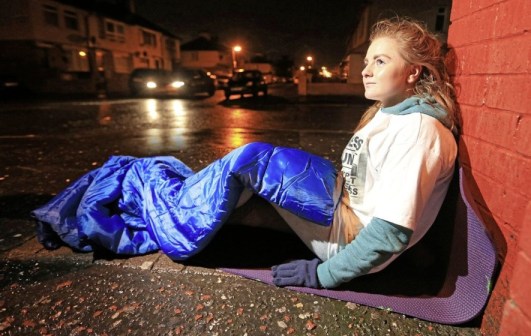


 Same Difference