Skip to content

Written Proof That Labour Will Not Save The ILF

February 3, 2015

Same Difference has seen an email sent by Kate Green which appears to prove that Labour will not save the Independent Living Fund.

Dear

Thank you for our further email, and apologies for not getting back to you before now on the English, Welsh and Scottish material you sent me, which in fact I have been considering very carefully – particularly, as you suggest, the options being considered by the Welsh Assembly Government.

I do need to start by being clear that it’s not Labour’s position to retain the ILF. That’s because I believe that there is now a real opportunity, and indeed a pressing need, to develop a sustainable model of provision for the most severely disabled people within the integrated health and social care landscape that Andy Burnham and Liz Kendall have been articulating, rather than continuing with a standalone fund. I say this not least because an incoming government will immediately embark on a full review to set three year spending plans, and I think it’s vital that the spending review process has the concept of independent living at its heart. I’m therefore working closely with colleagues in the shadow health and CLG teams to establish the principles that will govern our approach.

We of course want to ensure recipients continue to be supported once the ILF has closed, which our proposed guidance to local authorities is intended to address, but our wider purpose is to ensure a sustainable model of provision that protects people’s ability to live independently in the way that they choose. I am really keen to stay in touch with you as we develop our thinking, and perhaps we could have a further conversation about this over the next few weeks.

Best wishes

Kate

The Summerbug Trike

February 3, 2015

Design Council today announces its 70 ‘Ones to Watch’ list.

It will feature the most exciting up-and-coming designers in the UK, who together represent the future of British design. 

It comes as part of the the Design Councils 70th anniversary celebrations.

The designers have each been chosen for an individual product or project of outstanding design ingenuity and vision. The 70 hailed as the future of British design have been selected from hundreds of entrants and submissions.

The list is full of variety from furniture design, architecture and jewellery design, to material experimentation and app development. 

John Mathers, Design Council Chief Executive, said: “‘Ones to Watch’ offers an exciting vision of our future, with fresh ideas from emerging designers that address important contemporary living challenges from sustainability to health, education to city living and simple but effective ways to improve everyday life. The variety of the designs illustrates the diverse nature of ideas coming out of the UK, and we hope to see these designers producing more exciting work over the coming years.’

The judging panel includes Harriet Vine of jewellery micro-manufacturer Tatty Divine, digital and lifestyle entrepreneur Martha Lane Fox, Chloe Macintosh, co-founder of online makers marketplace Made.com; and experts from the Royal Institute of British Architects.

The line up can has been divided into six categories; Everyday living, Design for health and wellbeing, Materiality, Design for social impact, Future of city living and Rethinking reality. 

Emily Tulloh has been shortlisted in the health and well-being category, she joined Headline London to talk through her design.

Emily Summerbug Trike provides back support for disabled children, allowing them the mobility and freedom of riding a bike that will adjust as they grow. 

The ‘Body Groove’ DJ Taking Tinnitus Fight To The London Club Scene

February 3, 2015

Tre Lowe is a DJ from Notting Hill,  is an award winning producer, songwriter and DJ, but he suffers from condition that makes his work harder, Tinnitus.

Tre first noticed ringing in his ears at the age of 15, which has been constant ever since.The noise in his ears affects him on a daily basis, making it difficult to sleep often causing him to feel anxious about his hearing and at worst leaving him feel depressed. 

He’s keen to raise awareness of the dangers of loud music, especially in the DJ scene so young people can protect their hearing before it’s too late as of yet, there is no cure for tinnitus.
 
Tinnitus is a condition that is caused by damage to a persons hearing, usually by constant loud noise. The condition causes permanent damage.

One in 10 people in the UK are affected by everyday tinnitus, it ranges from a light buzzing to a constant roar in the ears and head.

It is estimated that 600,000 are seriously affected by the condition, which can have a detrimental effect on quality of life from bouts of anxiety to difficulties socialising or concentrating at work and problems sleeping.
 
According to a new report from charity Action on Hearing Loss, only 41 per cent of NHS audiology departments give tinnitus sufferers access to four key services needed to help manage their condition.
 
Freedom of Information requests, issued by the charity to every NHS adult audiology provider across the UK, reveals a postcode lottery of care for tinnitus patients with six audiology units not providing any tinnitus services at all and a further nine units having had to reduce services over the past two years.
 
Paul Breckell, Chief Executive of Action on Hearing Loss, said:

‘Tinnitus can be a torturous condition, so it’s deeply concerning that millions of patients do not have access to effective support services. NHS audiology and tinnitus provision must be protected, as short-term savings will only lead to higher NHS and social care costs in the long run. We need governments and commissioners to develop a forward-thinking plan that will enable frontline staff to deliver every patient the advice and support that they have the right to expect from our NHS.’
 
Tre Lowe is one half of the highly respected band ‘Architechs’ known for their underground music, including ‘Body Groove’ a club anthem that went on to shift 750,000 copies.

Conversation With The Nondisabled (A Poem On Assisted Dying)

February 3, 2015

All views expressed in this post are personal


Conversation With the Nondisabled

I
See my life as my life
My life is not perfect
No one said it was
But my life is my life.

It’s been like this for ever
The only life I’ve ever
Had.
Would I change it?
Some things, sometimes.

Wouldn’t you

Sometimes change yours too?

Would I end it before I have to?
Never.

I
Wonder why
You
See my life as a fate worse than death.
You
See little value in my breath.

You
Give me the same value as your pet.
Is that all I get?
I
Am not your pet.

Death
Is a fate worse than my life.
Death is a thief.
It steals sons and daughters, husbands and wives.
It steals dreams, it causes haunting screams.

Your
Death is a tragedy.
Your
Murder a terrible crime.
I know that.

But I
Wonder why
You
Don’t see the thought of my death as a tragedy.
You
Want to write my murder into our laws.
As if I was your pet.

I
Fought so many for my rights to life.
I
Left my friends to study at your schools.
I
Fought for the chance to swim in your pools.
I
Fought to watch a movie on my hero.

So I
Wonder why
You
Value my life at zero.

You
Tell me it’s about choice.
I
Choose to live.

I
Am not your pet.
I
Am my pet’s owner.
You
Don’t forget.

Would you
Like your murder to be legal
If you stayed as you are today?

Well I
Am just like you.
I
Am a person too.

IMPORTANT Fares To The JobCentre

February 3, 2015

Many thanks must go out to reader Jan Sinclair who shared this very useful information in a comment on Facebook.

Please share with your groups, contacts, clients.

For those that dont already know, you can get a form from JCP for half price fares, and you should be able to claim your fares back if you keep the tickets/oyster receipts.

Forgive me if you do already know, readers, but this is the first I’ve heard of it.

Let Them Freeze- A Political Version Of Frozen’s ‘Let It Go’

February 3, 2015

Some snowy, wintry but political fun that I spotted on Facebook:

Jobseekers Could Be Forced Into Weekly Signons

February 3, 2015

With many thanks to Welfare Weekly.

Jobseekers could be forced to “sign on” every week to continue receiving benefit payments, under new plans being considered by the Government.

Currently, only benefit claimants who are deemed not to be doing enough to find a job are required to visit a Jobcentre every week.

Trials in East London and parts of the West of Scotland, where claimants signed on every week instead of every fortnight after the 13th week of their claim, found that unemployed people spent “at least an average of 2.6 fewer days on benefits than fortnightly signers”.

Other approaches to the analysis suggest that jobseeker’s spent an average of six fewer days on benefits, but the DWP said they have “less confidence in the higher figure”.

However, the DWP is said to be taking the findings “very seriously” and could eventually force all of the UK’s 1.91 million Jobseeker’s Allowance (JSA) claimants to sign on every week.

Researchers also tested “speed signing” in other parts of the UK, where claimants had shorter fortnightly jobsearch reviews. “Flexible signing” was also trialled, giving Jobcentre Plus Work Coaches the flexibility to change how often JSA claimants were asked to sign on. Speed signing had “no effect”, while flexible signing resulted in one day more on benefits. A figure which the DWP says isn’t “statistically significant”.

Pilots lasted for 52 weeks following random assignment. Participation ended sooner where individuals were referred to the Work Programme or where they ended their claim for Jobseeker’s Allowance.

Unions have condemned the idea, with the PCS union – who include Jobcentre staff among its members – accusing the Government of “punishing the jobless”.

The plan would also require “massive investment in Jobcentres and staff”, said PCS.

A PCS spokesperson said weekly signing “doesn’t appear to be designed to help claimants, it’s just another way for the Government to turn the screw.”

The Undateables: Two Weddings And A Baby

February 3, 2015

I was thrilled to watch The Undateables: Two Weddings And A Baby on Channel 4 last night.

The programme caught up with some success stories. I was thrilled to see that these included Brent, a very good looking guy who has Tourettes, and Chalice, now his wife. Their story stayed with me- they make a lovely couple and are obviously very close.

I was equally thrilled to see Carolyne revisited. She’s beautiful, blonde, now has a baby and uses a wheelchair. Her story also stayed with me after she was originally featured, and you may have seen her somewhere before.

You can watch the programme here, for a month, if you missed it.

I wish everyone featured all the very best with love, marriage, parenthood and life.

Inside A JobCentre JSA Group Meeting

February 2, 2015

Full story at Kate Belgrave’s brilliant blog. Extract below:

It is late on recent Thursday morning at one of the north west London jobcentres and I’m sitting in a new JSA claimants’ group meeting, watching the jobcentre adviser in charge of the session totally lose it with one of the new claimants (there are about 12 new claimants and an adviser crammed into a very small and rather dark side room). The jobcentre adviser and the new claimant bloke are having a full-on shrieking-match, which they’ve been working towards since the session started. I’m guessing that the louder parts of it are now reverberating around the jobcentre.

The new claimant guy – let’s call him Mark – obviously can’t take being patronised, or tolerate bullshit in any form, and has decided to come out swinging (metaphorically on this occasion). And fair enough, too. I know for a fact that if I was siging on, there’s absolutely no way in this world I could put up with the high-handed, JSA-claimants-are-on-the-make-and-must-be-kept-in-line presentation that we’re stuck in front of today. If I had just lost my job, this thinly-masked institutional hauteur would be needling me to the brink. It is anyway. The adviser’s address is full of You Lot Better Pull Finger directives such as: “If you have no commitments… we’d expect a lot more effort from you. And to be honest, you should expect a lot more effort from yourself.” The adviser chucks in plenty of poorly-disguised sanctions threats, too (even though nobody’s actually signed on yet): “The less effort we feel that you’re putting in [to find work], the more chance there is of your jobseekers’ allowance being affected,” and “the more vague your information, the more chance that your jobseekers’ allowance may be affected,” etc, etc. This pitch starts to work on your brain like nails down a chalkboard: “Your Jobseekers’ Allowance May Be Affected.” On and on it goes and my word, it grates. Without a doubt, the assumption from the get-go is that people sign on to sponge.

Anyway. The argument. Mark describes the jobcentre adviser as “sanctimonious” (which he is. To be fair, I suspect that anyone who must channel Iain Duncan Smith for a living inevitably struggles to come across as anything else).

Mark prods the adviser right the way through the session. He coughs very loudly when the adviser talks (the adviser can’t be heard over the hacking and hawking), asks if the adviser is part of a government agenda (“you work for an agenda!”) and intones meaningfully about people who toe party lines. “There is no party line!” the adviser says. “Is there not?” Mark asks. “There’s no agenda?”. Mark has chosen an interesting topic here, with its insinuation of government string-pulling, closed doors and DWP targets. It may be that it strikes some sort of nerve. The adviser finally spits the dummy and yells. He accuses Mark of petulance. “You are not only delaying this induction – you are delaying everybody else here!” he shouts at Mark. “Normally, I don’t need to raise my voice in this room, but I’m going to make an exception… If you have nothing of use to say, don’t saying anything at all!”

Cartoonopolis- Life With An Autistic Brother

February 2, 2015

Actor and writer Lewis Bray has written a one man show about his autistic brother Jack.

Cartoonopolis is an imaginary world that Jack created, where cartoon characters with American accents live.

Lewis Bray spoke to BBC Breakfast about how his family learnt to live with autism, and the importance of the show.

Scoliosis Teen’s Efforts To Raise Awareness

February 2, 2015

Scoilosis is a disease that can start at the young age of 10-years-old. It is not uncommon and can be treated, but only if it is spotted early.

Scoilosis occurs in the spine, it begins to curve, and is most aggressive when a child goes through a growth spurt, in some instances the the spine can cure up to 10 degrees every three months.

To raise awareness of scoliosis amongst families, Lucy who suffers with the disease and her mother Jo joined Headline London to talk about how to spot the signs.
 
If scoliosis is diagnosed at a young age the more successful the treatment will be. 

More work is being done to encourage surgeons to review the new methods of surgery, which have been in affect in America – where Lucy had treatment.

‘Handroid’ For Paralysed Soldier Dominic Lovett

February 2, 2015

A paralysed former Royal Marine has lifted an object with his hand for the first time in seven years thanks to technology developed in Plymouth.

Dominic Lovett, 27, who was partially paralysed in an accident, has been testing a mechanical hand that uses neck muscles to move the fingers.

The so-called “handroid” was developed by Plymouth firm Advanced Control Research (ACR).

ACR is now working on a powered elbow to help him with lifting objects.

Mr Lovett, who has been unable to grip objects since the accident, said the hand had “surpassed my expectations”.

Mr Lovett, who was based in Stonehouse in Plymouth, became partially paralysed after jumping headfirst into a snowdrift while celebrating with marine colleagues during training in Norway in 2008.

But the snow was only 1m (3ft) deep and he broke his spinal cord.Dominic Lovett has been unable to use any of his limbs since the accident in 2008

He has been working with Prof Roland Burns of ACR on developing the skeleton-type system that fits over over his left hand.

line

How does the “handroid” work?When a muscle in the human body contracts, it generates a small electrical signal.

The signal can be detected by surface sensors and is used to control the hand.

line

Mr Lovett said: “It’s hard to put into words the empowerment of being able to do it yourself rather than relying on someone else.

“They have come up trumps, so I am very thankful to Professor Burns.”

Prof Burns said: “We’re delighted the system is working.

“We’ve scoured the world and as far as we’re aware there is no-one else working in this area.”

No conventional treatment for Mr Lovett was available on the NHS so much of the £79,000 cost of developing the hand has come from friends and charities including the Royal Marines Charitable Trust Fund.

Mr Lovett is now living in Birmingham where he is training to be a counsellor for other injured service people.

Inside Out South West is broadcast on BBC One on Monday, 2 February at 19:30 GMT and nationwide on the iPlayer for 30 days thereafter.

The New Brand Of Vloggers- With Disabilities

February 2, 2015

“Vloggers” – or video bloggers – cemented their status last year as the future of marketing, advertising and fame. Now a new brand is emerging, one that teaches you what it’s like to be a young person living with a disability.

The format is the same – someone talking into a camera about whatever is on their mind – but at the heart of the videos is an important message: I’m a young disabled person and this is what my life is like.

BBC Ouch spoke to three disabled vloggers to find out why they do what they do.

Robyn Lambird is an 18-year-old Australian with cerebral palsy who goes by the YouTube name T-Rex because of the way she walks. She started vlogging after people commented on her Tumblr photos asking about her disability. “I did it to let people with disabilities know they aren’t alone,” she says.

Her videos are about life with cerebral palsy, along with general updates and fashion vlogs. It’s important, she says, that viewers get the full picture when it comes to disability, and she wants to challenge any negative perceptions of her.

“You’d be surprised at how many people come up to me on the streets and, with a shocked look on their faces, tell me I look cool,” she says. “It shouldn’t be a surprise to people that a person with a disability might be interested in fashion.”

Rikki Poynter, who is hard of hearing, agrees with Lambird. Her early videos were also about fashion, as well as make-up – a popular topic for vloggers.

She started making YouTube videos in 2010 after finishing college, to combat feelings she was having of boredom, loneliness and depression.

Poynter became tired of talking about make-up and, changing tack, now creates videos that focus more on her disability – how to socialise in a loud environment with a hearing impairment, for example.

Right now she has a new aim, campaigning for all vloggers to add closed captions (CC) to their videos making them accessible for deaf and hard of hearing people. She recently encouraged vlogging star Tyler Oakley to include them.

She now spends a lot of her time emailing and hand writing letters to popular YouTube stars, encouraging them to think more about deaf viewers and, in time, hopes to increase people’s knowledge of disability.

Pointer says it’s difficult to get people who genuinely want to learn, and receives a lot of unwanted messages below her videos, including dismissive remarks like: “deaf people are so sensitive”.

She says there’s not much of an appetite for those YouTube videos made by deaf people using sign language so gaining an audience is a little easier for her as she can speak. Pointer adds that people leave mean comments about her voice which she says is a response deaf people often get.

The disabled vloggers we spoke to believe they are giving honest coverage of what it really means to be disabled, and creating important online communities for people to discuss the minutiae of their daily lives.

Jack Binstead vlogs about his life with Osteogenesis Imperfecta (brittle bone disease), and using a wheelchair.

One of his videos, Wheelchair Tricks, shows Binstead performing creative manoeuvres in his chair. He does wheelchair BMX in his spare time and in this video teaches others some of the more simple elements involved in chair control.

He starred as Leslie “Rem Dogg” Remmington in BBC Three’s Bad Education, but now wants to make a career out of vlogging and motivational speaking.

“There was nobody in a wheelchair in my area when I was growing up,” he says. “I just want to show them that they can do whatever they want with their lives. I would have loved to watch vlogs from other wheelchair users when I was a kid.”

Other disabled vloggers

You can find help on how to closed caption videos from Google.

Alan Barnes Met Katie Cutler For First Time Yesterday

February 2, 2015

Touched by the kindness of the stranger who offered to help in his hour of need, mugging victim Alan Barnes has vowed they will be ‘friends for life’.

The disabled 67-year-old met Katie Cutler, who launched an appeal to raise money after reading about his ordeal in the Chronicle, for the first time today.

And after thanking the 21-year-old beautician for raising almost quarter of a million pound for him Alan told a tearful Katie they would be friends forever.

He said: “Because of what happened to me I have just met Katie who is someone new. Once someone becomes my friend they stay friends and we will be friends for life.”

“I always knew there was a lot of good people in the world, but what has amazed me is I have heard of plenty people getting mugged much worse than me and this has never happened for them, and I have only broken my collar bone. ‘Thank you’ really doesn’t seem enough but it’s the only thing I can think of to say.”

And Katie added: “I was really upset when I read Alan’s story. I knew he was a special man as soon as I saw his picture in the Chronicle and read about him, and he is exactly how I imagined. It is just lovely to meet him and we will keep in touch.”

The Chronicle revealed on Wednesday how Alan, who was born with sight and growth problems after his mum contracted German measles during pregnancy, was attacked by a stranger outside his Gateshead home, last Sunday evening.

The committed Christian told how the attack had left him too scared to return to his house, in Low Fell.

And when Katie read our story about Alan’s plight she was so moved she decided to set-up an online donation page to raise money to help the victim get settled into a new place.

But the mum-of-one, from Greenside in Gateshead, never imagined she would smash her £500 fund-raising target hundreds of times over.

By this evening more than 17,000 had logged on and donated more than £224,000 in total, with money coming in from as far afield as Saudi Arabia.

And Katie plans to leave the fund open, for as long as people want to keep giving.

“It’s all like one big dream, it doesn’t feel real at all,” she said. “I will keep the fund going as long as people want to donate. It’s not for me to say how long it is open.

Alan added: “It’s just hard to take in. I was in the Chronicle and I thought that was it. I didn’t expect any of this. The money just keeps going up and up. It’s just magical.

Katie and Alan clutched on to one another’s hands as they chatted during their emotional first meeting, at the home of Alan’s sister Carol Hill in Benton, North Tyneside.

While Alan showed off his amazing mental arithmetic skills by telling Katie she had been alive for 7,923 days.

Alan, who broke his collar bone when he was attacked, says he is going to take his time deciding what to do with the money, and may take up an offer from a local solicitors who has said they will help set-up a trust fund in his name.

Meanwhile businesses from across Tyneside and beyond have pledged to help with offers for everything from a new kitchen to a conservatory for Alan’s next home coming in.

Alan’s brother-in-law, Paul Yore, said the whole family wanted to thank Katie for what she had done.

“We are just very very grateful,” the 46-year-old from Alnwick said. “Words can describe how much, It’s not just the money, it’s all the comments.

“When people look at Alan and see the size of him I think they are just disgusted that someone could do something like that to someone so vulnerable.

Police are still hunting the attacker, who struck at Hillside Place in Low Fell at around 6.30pm last Sunday. But Alan is now putting it behind him.

“I don’t think about the attack too much,” said Alan. “But what’s happened since will stay with me forever”

You can donate to the fund for Alan here.

Anyone with information should call Northumbria Police on 101, ext 69191, quoting 1180 25/01/15 or Crimestoppers anonymously on 0800 555 111

A Call Out For Experiences With Maximus

February 1, 2015

A message from campaigner Jayne Linney, please share.

Hi all, am interested to know who has been through a maximus experience on the work programme. Maximus have been involved in the work programme for several years and first got involved via labour flexible new deal.
we are collating personal testimonies of people’s experinces of maximus and the work programme, if you have experinced maximus and can share your story, please pm me your experinces of maximus, or alternatively e mail dpac with your story here mail@dpac.uk.net
thanks.

Alan Barnes ‘Will Buy New Home’ With Donations

February 1, 2015

Disabled attack victim Alan Barnes has revealed he plans to buy a new home as people donate more than £140,000 – which is rising by the minute.

Kind-hearted people donated in their thousands when the vulnerable 67-year-old was attacked by a cowardly thug outside his Gateshead home.

And in less than 48 hours more than 7,700 people dug deep to help towards the cost of relocating him in order for him to feel safe and carry on with his life.

Now Alan has told Chroniclelive he is planning to buy a new home with the cash.

He said: ““I was absolutely amazed at that, I didn’t expect anything like that.

“I haven’t really thought about what to spend it on because I didn’t expect anything.

“I won’t be wasting it and I’ll use on somewhere else to live.”

Alan, who stands at just 4ft 6in and weighs less than six stone, was knocked over and suffered a broken collar bone as he brought his wheelie bin in from outside his home on Hillside Place.

The thug searched his pockets, but when he realised there was no cash, he fled.

Following the attack 21-year-old beautician Katie Cutler, from Greenside, Gateshead, decided to set-up ‘Alan Barnes Fund’ page on the Go Fund Me website.

Alan said: “I’m really grateful and a thank you doesn’t seem to be enough for how I feel.

“I’ve heard of people getting get well cards but not this.”

Alan says he first found out about the site when his sister Carol noticed it on Facebook.

He said: “I found out about the site two days ago. I came downstairs and my sister asked me if I knew Katie. It just seemed to take off I couldn’t believe it.

“Katie only expected to raise £500. I didn’t think they would raise anything like they have.

“I just want to thank her in person. It’s hard to take in.

“I know people in the Sheriff Hill and Gateshead but not in other parts of the country. People as far as New Zealand have donated.”

Alan, who is an active member of the congregation at Wrekenton Methodist Church, is now being cared for by his sister Carol Hill at her home in Benton, North Tyneside as he is too frightened to return to his old home.

And as he recovers from his ordeal he said: “I’m feeling OK in myself it’s just an inconvenience that I have fractured my collar bone. I can’t do the things I would normally be doing.

“I’m not going back where I was.”

You can donate to the fund for Alan here.

Anyone with information should call police on 101, ext 69191, quoting 1180 25/01/15 or Crimestoppers anonymously on 0800 555 111

Warwick Davis’s Big Night

January 31, 2015

I’m off to set this for recording! 9pm Thursday BBC2.

Actor Warwick Davis is planning a revolution: he wants to establish Britain’s first ever theatre company for reduced height actors.

Normally, these actors are stuck with pantomime or ‘creature work’ in films and TV. But now in a fun, insightful and touching film directed by award winning filmmaker Ursula MacFarlane, Warwick invests his own money and time to form a company that takes on the classics in mainstream theatres up and down the land. Will the specially sized set work? And how will the audience respond to a classic farce played entirely by reduced height actors? In a film that also explores the challenges little people face in an average-height world, including a serious operation Warwick supports his wife Sam through, cameras follow this make or break time for Warwick, the cast and his family.

A Message From Michelle At Fightback About ATOS And PIP

January 31, 2015

A very worrying thing happened on Thursday whilst I was attending a PIP medical at the new Manchester Atos Centre. The assessor openly admitted she had access to and had read my clients ESA assessment from 2 years previous. She openly discussed things that were noted in it including fact that some illnesses were not listed then that were on her PIP form that I completed with her.

The problem with this is that we had challenged the decision in 2013 in tribunal and that ESA medical and the DWP decision was overturned in 2014. Now the main problem was that is that there were inconsistencies, omissions and downright untruths in the physiotherapists report of 2013. More importantly was the fact that case law for ESA states that you should be assessed by a doctor or mental health trained nurse if you have mental health problems or musco skeletal, she had both! She was not so the decision was adverse.

So WHY are Atos now using their own adverse decisions for pip?

I did challenge this and the HCP was very open, saying they can use any info available and this was on their system. It was of course pointed out that the decision was overturned and the report could not be relied on,, however she still kept referring to it.

Of course we will be asking ATOS further about this as in our eyes it breaches the rules of natural justice and we believe may even be an area where judicial review may apply.
Please share to alert other groups etc.
Your thoughts?
Michelle

A Message From The Scottish Unemployed Workers Network

January 31, 2015

Sharing for anyone who may be able to support them in any way.

**PLEASE SHARE**PLEASE SHARE**PLEASE SHARE**PLEASE SHARE**

SUWN ACTIVIST ARRESTED IN ARBROATH JC WHILST REPRESENTING BENEFIT CLAIMANT

SUWN DEFENCE CAMPAIGN MEETING, WEDNESDAY 4TH FEBRUARY, THE CLUBBIE, RAGLAN STREET, FROM 7PM

PROTEST DEMO, ARBROATH JC, THURSDAY 5TH FEBRUARY, FROM 1PM

Tony Cox, an experienced activist with SUWN in Dundee was arrested in Arbroath yesterday whilst representing a highly vulnerable female benefit claimant, suffering from severe dyslexia and literacy problems. The claimant, D, had been signed up to the Universal Job Match (UJM), the computerised job search system, and was also being forced to complete five job searches per day, the pressure of which had led to her having several panic attacks. On Monday, after we were approached by D, we accompanied her into a meeting with her JC advisor, where we asked for a meeting to re-negotiate her claimant commitment. This was agreed to, and a meeting was set for Thursday at 10.40am. Tony had travelled through to Arbroath confident that the meeting would go smoothly, as it was pretty much an open and shut case. However, a few minutes into the meeting, and it became apparent that the advisor did not want to address the two major issues of concern to D, UJM and here onerous claimant commitment. Tony intervened at this point to underline what had already been addressed in a written statement that was handed over at the beginning of the meeting, that D wished to withdraw from UJM and to decrease substantially the number of job search activities she was required to undertake. The response of the advisor was that it was a requirement of all claimants to sign up to UJM, which is not true, and that it was therefore not open for discussion. Tony then asked the advisor to produce the DWP regulation where signing up to UJM was a requirement. The advisor replied that she could not produce the regulation, and when Tony continued to ask that the issue of UJM be discussed, the advisor suggested that he take the issue up with the manageress of the JC, whilst she continued with the meeting with D. Tony reminded the advisor that D had asked him to represent her, and he advised D to accompany him to meet with the manageress.

This meeting was even more frustrating with the manageress again insisting that UJM was not up for negotiation, and Tony, again, asked her to provide confirmation within the DWP regulations that this was the case. The manageress took grave exception to Tony’s repeated attempts to discuss the two major issues that D wanted addressed, and also suggested to D that she should arrange another meeting without Tony or any other witness or rep being present. Despite the pressure D was being put under by the manageress, she replied to the manageress by saying that she would not attend another meeting without Tony being present. At this point the attitude of the manageress turned even frostier and she finally demanded that Tony leave the building or the police would be called. Tony refused to leave, but the meeting was brought to an end when it was agreed that a further meeting be arranged to discuss the issue further.

Tony was arrested after he left the JC. He has been charged with threatening behavior, refusing to give his name and address and resisting arrest. His bail conditions forbid him with having any contact with D, who is a witness, and he is also forbidden from going into or making contact with Arbroath JC until the case comes to trial, which has been set for 25th February at Forfar Sheriff Court. This is a serious case for Tony personally, but it also has massive repercussions for welfare rights activists and groups throughout the country. The fundamental right of benefit claimants to representation is being challenged along with the right of welfare groups to conduct their work. This case should be taken up by the wider progressive movement, and we urge all readers to show their support. The SUWN will be organising a defence campaign meeting this Wednesday and protest demo outside Arbroath JC this coming Thursday. We urge you to show your solidarity and to fight back against this clear attempt to intimidate anti-sanctions campaigners and groups.

Dean, 25, Is Homeless, Living On The Streets Of London. He Has CP

January 31, 2015

Readers, I’ve just spotted this on Facebook. As someone who shares Dean’s disability, his is a case close to my heart.

I am writing something extremely close to my own heart today as well as personal. It is so important, an incredibly sad story, yet a ‘coincidence’ filled (and you know I don’t believe in coincidence) run of events that is equally as happy. Please take the time to read and to watch the video at the end, both to see how drastically wrong things have gone, but also how we can each play a part in turning things around for the better – permanently.

The week before Christmas, my Mum, myself and twin 10 year old nephew and niece, took Christmas presents to give to the homeless. These were just made of small things, each present included a hat, gloves and a bar of chocolate, just something for as many as possible to be able to open on Christmas Day itself, or there and then if they wanted to.

It was while doing this that we came across a young homeless man, and while no one should be homeless in this day and age, as the kids gave him his present it became clear that something was very, very wrong. He could barely speak, the thin red top he was wearing was covered in stains, he was sat all by himself with a sleeping bag that someone must have given him at some point.

He wasn’t interested in the present at all, just kept hand signalling that he was hungry and my Mum went straight to buy him some extra food and drinks from the little kiosk that was close by while the kids helped him to open the parcel so that he could at least start with the chocolate bar inside. He had trouble opening it, as well as the drink so we loosened the cap for him and put all his things together in a bag and stayed trying to talk to him, trying to find out if he was lost but the only answers he was giving to anything was ‘no…’

It was getting late, we’d been out all day, the kids were cold and I was starting to feel anxious about my Mum, too, so we went to hand out the remaining and then came back to try and find this young man again. The bag we’d given him with all his food and new belongings was sitting on the floor where he’d been, and we spotted him walking away with his sleeping bag. Whether he’d been moved on or not we had no idea but the kids ran after him with his bag, explaining that they were ‘his’ things and that he should keep them because he would need them. He took them, said thank you and carried on walking.

I don’t think I’ve ever felt so helpless or heartbroken in my entire life. This was so very, very wrong. This guy should not ever have been on the streets and we were truly worried that he wasn’t going to survive.

By this time, we had no choice but to make our way home, and the moment I got back I began calling all the organisations I could think of, including Street Link. They said they could only help if we had a fixed location of the guy, he could have been anywhere by then but I was practically begging for someone to at least go and have a look, with a very clear description of him that you just couldn’t miss.

I wrote to friends, too, anyone who I thought might either be in the area or who might know someone else in the area, to see if they could look for him and call the number advised with the location so that someone might be able to get him off the street and into the care he so desperately needs. The following few days were very difficult, in tears a lot, waiting for the phone to ring or an email from someone, anyone, to say they’d found him but no such call came. The kids were also mentioning him every day, he’d clearly made an impact on them and they, too, were worried about him.

My Mum went back again after Christmas but couldn’t find him, and I had a wander around on a later date and had no luck either. Then last week, my Mum went back with my niece, this time to donate hot chocolate and blankets to the Street Kitchen that had set up there at the time and was stunned that they bumped right into him!

“I know you!” she said in surprise, “Do you remember me?” His thin red top had been replaced with a coat he’d been given.

“Yes,” he said, and then said to Lacey, “I hope you’re being nice to your brother!” she was thrilled that he remembered her, too. For a 10 year old who really wants to help, it meant the world to her that he did.

Someone had found him and taken him to the Street Kitchen, so at least now he was getting some sort of help and people were starting to watch out for him. My Mum spoke to one of the girls there who said she’d even since taken ‘Dean’ herself, to various homeless charities to try and plead his case with him for help because he really shouldn’t be on the streets, has Cerebral Palsy and needed caring for, but were turned away by all of them, but for us it was a great relief to know that he wasn’t completely alone now, and that there were others who were there with him, watching out for him at the very least.

Another week passed, and yesterday my Mum was on the Indiegogo site looking for something in particular and was stunned to suddenly see a photo of Dean on one of the links! The chances of finding this were even less than finding Dean himself!  On the 18th January, the young lady who as far as I’m concerned is an earth angel, Vanessa Threadgold, has set up not only a fund raiser to try and help to keep Dean off the streets, but has updated to say that a legal aid solicitor is now taking on Dean’s case to get him the help he should have had all along! This is still going to take likely months to sort. He has been homeless for five years!!!

Please watch this video and you will see for yourself why I am so incredibly angered by our not failing, but FAILED system, and if anyone can help to contribute to help Dean in anyway possible, be it a donation so that Vanessa can help him even more, or by simply keeping him in your thoughts and absolutely willing the happiest possible outcome for Dean, and/or by sharing this link and being a part of this miracle in the making, you will not only be helping Dean himself, but also to highlight how this treatment of the most vulnerable just simply cannot be allowed to continue any longer! It is the most appalling sign of the times!

A massive thank you to anyone who can do anything to help at all, even if it is just willing for the very best and sharing the link with others so that they, too, might be able to help in some way.

Much love and thanks again,
Tracie  

https://www.indiegogo.com/projects/homeless-dean-london

Update from Vanessa 28th January:  “Had a mini set back today.. The council are trying to say they shouldn’t be responsible for Dean and he should be passed to Westminster as he ‘resides’ in London more.. If they class sleeping on the street as any kind of residence God only know how they must live just delaying tactics to try to make him give up.. In their eyes he’s still on the street and it’s not easy to fight from that position.. The setbacks and rejection cut ten times worse but thankfully he is on it.. We are ready to play hard ball!”

Unacceptable!


.

Looming Staffing Crisis In The NHS As Atos And Maximus Try To Steal All The Nurses

January 30, 2015

johnny void's avatarthe void

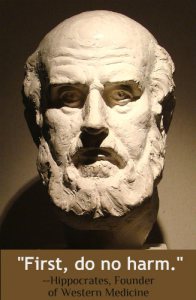
Hippocrates1Iain Duncan Smith’s brutal and bungled welfare reforms could be set to the plunge the NHS into chaos as nurses and doctors are paid huge sums to carry out benefit-slashing assessments instead of working in our chronically understaffed hospitals.

Last year the Royal College of Nusring warned that a lack of senior nurses in the NHS is putting patient care at risk.  This followed a report a year earlier from the Department of Health funded  Centre for Workplace Intelligence which found that the NHS will face a shortfall of 47,545 nurses by 2016.  It is not just Tory cost cutting set to cause this crisis in the NHS, but a lack of suitably qualified homegrown nurses.  Last year The Guardian reported that the shortage is already so acute that one in five nurses employed between 2013/14 had to be recruited from overseas.

US firm Maximus are the company brought…

View original post 481 more words

Donations Flood In To Help Gateshead Disabled Man Alan Barnes After Attack

January 30, 2015

Donations are flooding in to help disabled attack victim Alan Barnes get over his ordeal after a generous Chronicle reader launched an appeal.

We revealed on Wednesday how the 67-year-old was the victim of a callous mugging outside his Gateshead home, which left him with a broken collar-bone.

Standing at just 4ft 6ins tall and weighing less than six stone, Alan was an easy target for his assailant, who knocked him over and then searched his pockets for money.

The cowardly attack, on Sunday evening, has left Chronicle readers sickened, and Alan too afraid to return to his Low Fell home.

And now one horrified mum was so touched by our story she has set-up an online funding page to raise money to help Alan get back on his feet.

Katie Cutler, 21, who works as a beautician, said: “I read the story and I was just so moved by it so I thought I would set something up to help. I got a response straight away.”

The ‘Alan Barnes Fund’ page on the Go Fund Me website has since been flooded with donations.

More than £400 came in during the first three hours and now, less than 24 hours since it was launched the total stands at more than £1,400.

Katie, from Greenside, Gateshead, plans to give all the money raised to Alan to spend how he wishes, and to help with the cost of moving house.

Alan was born with a number of defects including sight and growth problems after his mother contracted German measles during pregnancy.

The mugger struck at around 6.30pm on Sunday as Alan, of Hillside Place, brought his wheelie bin in.

The thug pounced on Alan, knocking him to the ground before searching his pockets. But when the would-be robber realised there was no cash for him he fled.

Alan said: “Someone just jumped on me. It all happened in a very short time. I would just like to see him caught because he might do it again.”

Alan is now being cared for by his sister Carol Hill at her home in Benton, North Tyneside.

The 55-year-old added: “The police seem to think it was a random opportunist attack. But they must have seen Alan as an easy target. I was furious. Whoever has done this has no morals at all to attack someone so vulnerable.”

Alan is well known around the Low Fell and an active member of the congregation at Wrekenton Methodist Church. He fills his days taking long walks around the area.

The skilled mathematician has impressed a number of local youths with his mental abilities, as he can work out exactly how many days a person has been alive after finding out when they were born.

Alan is now too frightened to return to his old home, and Carol is helping her brother look for new accommodation.

Det Cons Chris Neil, of Gateshead CID, is investigating the attack.

He said: “This was a cowardly assault on a vulnerable man who wasn’t able to defend himself. His disability means he is partially sighted and quite short and it’s disgraceful that someone would target him.

“The victim is quite a well known man in the area and this has left him extremely distressed.

“We’re doing everything we can to trace the suspect and I would urge anyone who saw this attempted robbery or who has information about the person responsible to get in touch.”

You can donate to the fund for Alan at http://www.gofundme.com/l0dt9o

Anyone with any information should contact Northumbria Police on 101, extension 69191, quoting log number 1180 25/01/15 or the independent charity Crimestoppers on 0800 555 111.

‘Every Time I Visit The JobCentre, Staff Treat Me Like A Subhuman’

January 30, 2015

The New Statesman carries this, a freelance journalist’s account of her experiences at her local jobcentre. An extract is below:

On each visit to the job centre, there were more members of the security team in the building than claimants. Three uniformed G4S employees manned the door. There were more security guards than in a club or in front of a particularly troublesome pub when there’s a football match on. I was instructed to sit down on a bench and wait, with a member of the G4S security team hovering behind me, as though I required some kind of supervision. I wondered if they’d been told that smiling was not permitted, and if the advisors had been briefed to speak to claimants in comically slow voices. It was as if they’d decided that anyone claiming benefits must be either monumentally stupid or a criminal, or some unfortunate mixture of the two.

I saw advisors taking personal phone calls at their desks on more than one occasion when people were waiting to see them and the job centre was unusually busy. My advisor cancelled my claim by accident because she “didn’t really use computers”. I also heard a member of staff telling someone who had called the job centre, clearly distressed, that nothing could be done and they should try a food bank.  I was aggressively reprimanded for “wandering around” by an intimidating member of the security team after being told to go through into the next room by an advisor. 

Tommi Miller, 7, Battling Leukaemia, Fed By Foodbanks After DWP Stop His DLA

January 30, 2015

It just doesn’t get much worse than this, readers.

The family of a seven-year-old boy battling leukaemia have been forced to use foodbanks after their benefits were axed.

Tommi Miller’s parents received £700 a month to help look after him until he was given the all-clear last April.

But when the cancer returned in a more virulent form, Ruth, 39 and Kevin, 42, stopped work to care for their son.

They hoped the Department for Work and Pensions would restart the payments. But officials said No.

With no income for six months, the family have relied on foodbanks to eat.

They have struggled to pay gas bills, been threatened with eviction and could only celebrate Christmas after friends raised £1,200.

One of Tommi’s consultants at Addenbrooke’s Hospital, Cambridge, also gave them £600 in supermarket vouchers so they could survive winter.

Mum-of-four Ruth said: “Everything we have is spent on the kids – me and Kevin are happy to go hungry.

“They should have a heart and realise our priorities are not rent and council tax.

“Every single thought is focused on our child.”

Kevin added: “What they are doing to us is inhuman – this is a young boy who is suffering.”

Tommi was diagnosed with leukaemia at three and had countless courses of chemotherapy.

His parents were able to care for him with the help of a disability living allowance, carers allowance and mobility allowance.

Last April the family were told he was in remission. The benefits were immediately stopped despite the fact he still had severe health problems and needed regular hospital appointments.

Ruth and Kevin’s claim for the payments to continue was rejected and in May they appealed for it to be reconsidered. 

Then, in September, Tommi’s cancer returned, attacking his spinal cord, bone marrow and brainstem. It meant two more years of chemotherapy and a possible marrow transplant.

Barmaid Ruth and maintenance engineer Kevin quit their jobs to care for Tommi.

Because they had received no word from the DWP they submitted a fresh claim for benefits to resume.

After a wait of almost nine months the couple’s first claim was rejected last week because it was sent while Tommi was in remission. And the DWP claim the second application never arrived.

 Tommi Miller's benefit refusal letter
Hammer blow: The letter refusing more benefits for Tommi

The couple’s only income for the last six months has been £50-a-week child tax credit.

Ruth, also a grandmother of three, said at the family’s Cambridge home: “Tommi doesn’t have a winter coat because we can’t afford one so we just wrap him up in blankets.

“We are living on foodbank vouchers and Salvation Army handouts.

“Neighbours have also cooked dinners and brought them around. Without them we would be starving.”

A spokesman for the DWP said a decision on benefits was expected as early as next month.

He added: “We have followed the correct procedures.”

Don’t Put Up With It! A Video On Domestic Violence For Women With LD

January 29, 2015

Domestic violence is an issue I have a personal interest in. It is something that, sadly, disabled women are more likely to experience.

This video has been made by and for women with learning disabilities, to explain what domestic violence is and how they can get help.

It may be useful to you or anyone you know with LD.

Continued use of Assessment and Treatment Centres for people with learning disabilities “outrageous and caused primarily by lack of joined-up funding”

January 29, 2015

A press release:

The continued use of Assessment and Treatment Units (A&T Units) for people with learning disabilities highlighted in today’s Learning Disability Census Report 2014 is “outrageous and caused primarily by lack of joined-up funding” according to leading charity Brandon Trust.

The Learning Disability Census 2014, released today (29th January) by the Health & Social Care Information Centre, reveals that the number of people with learning disabilities in A&T Units in 2014, average length of stay and distance from home is practically unchanged, despite the recommendations of the Winterbourne View report nearly four years ago.

The Census reveals there were:

·         3,250 inpatients in 2014 compared to 3,250 in 2013*

·         The median average length of stay was around 18 months (547 days in 2014 versus 542 in 2013)

·         The median average distance from home in 2014 was 34.4 km compared to 34.5 km in 2013, with around a fifth based 100 km or more away from their home

·         Two thirds of patients (67%) were identified as needing to remain in inpatient care and only 28% were working towards discharge; 5% (155 people) are ready to leave but have no arrangement in place for their support

Lucy Hurst-Brown, chief executive of national learning disability charity Brandon Trust says:

“It’s outrageous that despite the tragedy of Winterbourne nearly four years ago and the repeated Government commitments to move away from the use of Assessment and Treatment Units, this practice continues. For the past 20 years, Brandon Trust has been working with people with very complex and often ‘challenging needs’ and our experience is that anyone with learning disabilities, no matter how severe, can live successfully in the community within the right setting and with the right support.  Indeed the sector has recognised this as best practice since the 1980’s some 30 years ago.”

“On-going dramatic cuts to Local Authority social services budgets are preventing required investment in appropriate local community support options, resulting in crises developing and individuals being referred to NHS funded Assessment and Treatment Units. The primary cause is therefore the disconnect between social care and NHS funding. Decisions about care are being made according to where the money is available, rather than best practice, yet if this funding was diverted to social care in the first place, people with learning disabilities could be supported in their communities, where we know they thrive best.”

“The reason this is happening is part of the same structural funding problem that has been causing the crisis with Accident & Emergency Units and acute beds in our hospitals; the different funding streams for social and health care.

“These Units are effectively containment centres, which are completely unsuitable and place huge restrictions on the personal freedom and choice of the people living in them. And by isolating people with learning disabilities from their friends and family, they can cause long-term damage to some of the most vulnerable people in our society.”

Brandon Trust recently issued its Finding Freedom report, which demonstrates how community connections can transform the lives of people with learning disabilities and outlines practical recommendations for the sector and policy makers to deliver greater integration.

Recommendations outlined in the report include the need for the social care sector and support providers to become less risk averse, relinquishing control of their traditional role as care givers and acting instead as community connectors.

You can view the full report here.

You can view the full Census report here

A Tribute Post For Lucy Glennon

January 29, 2015

Readers, I am very sad to have just found out that Lucy Glennon died this morning.

Lucy lived with the skin condition epidermolysis bullosa (EB).

She was a journalist who often wrote on disability issues. I followed her articles in the Guardian, in particular, for many years.

Although we never met in person, Lucy and I have been Facebook friends and have had connections on Twitter for some time. We shared some Facebook and Twitter connections from the disability community.

As I keep saying, readers, the disability community is a special one. It includes people with all disabilities. The loss of one of our own is something that becomes normal to us at too young an age- but it is something that always hits us all hard.

The greatest tribute I can give to Lucy is the link above, to her Guardian page. For although we did not share a disability, we shared the profession of journalism. Through this link, and others, I hope that Lucy’s words- so many of them written to support our shared community- will live on for a long time to come. And I know that that is all a writer- any writer- would want professionally.

My thoughts are with Lucy’s family, her offline friends and anyone who knew her better than I did.

I am also thinking today of all the friends Lucy and I share. Our lists are that little bit shorter, our hearts are aching- we have been reminded yet again of something we all know, but hate to remember. Sometimes, readers, disability kills.

But we fight, through words, blog posts, newspaper articles and in countless other ways, so that we can pick ourselves up, dust off our aching hearts and go fight the rest of the battle, so that life can be that little bit better for those left behind- and for those yet to join our community.

RIP Lucy Glennon.

Updated 11.30pm

I have just read this post by campaigner and our mutual friend Lisa Egan, who knew Lucy offline. It’s so beautiful that I just had to link to it.

Updated 2/2 11am

I have just read this beautiful tribute to Lucy, by campaigner and our mutual friend Kaliya Franklin, who also knew Lucy offline. It moved me to tears.


IMPORTANT INFORMATION For PIP Claimants- You Can Ask For An Extention For Filling In Your Form

January 29, 2015

Some very useful information from DPAC. Please share widely.

DWP today published a ‘Statistical Ad-hoc’ document for PIP plus the first Review of PIP following its implementation.


Notable in the statistics release is the discrepancy between the number of new claims referred to the assessment provider (523,000) and the total number of new claims registered (625,000). DWP gives the the 3 following reasons to explain this discrepancy:

  • some claims have either been received recently and are still with the claimant for completion and return of Part 2 information and evidence;
  • or the claimant may have chosen to withdraw their claim;
  • or the department has disallowed the claim before it was referred to the assessment providers (due to failure of basic eligibility criteria or non return of the Part 2 information within the time limit).

The third reason is important.  From the PIP review, many claimants have experienced difficulties in understanding the questions or filling in the form.  The PIP reviewer notes that although the claimant has one calendar month to return this form to DWP, they can ask for an extension if reasonably required.  It seems that when requested, DWP is only prepared to give a 2 week extension, but this extension can make the difference between a claim being accepted or disallowed. He also notes that: ‘At discussion groups, many claimants were unaware of the flexibility to request an extension where there is good reason’.


It is vitally important that PIP claimants are aware that they have the opportunity to ask for an extension if they cannot manage to fill in the form within the time limit, if they have good reasons to do so.


https://www.gov.uk/government/uploads/system/uploads/attachment_data/file/398595/pip-ad-hoc-statistics-new-claims.pdf

https://www.gov.uk/government/uploads/system/uploads/attachment_data/file/387981/pip-assessment-first-independent-review.pdf


Subtitles Can Make Live TV ‘Unwatchable’ Says OfCom

January 29, 2015

TV viewers who are deaf or hard of hearing are being left baffled by subtitles, broadcasting watchdog Ofcom has said.

A report on subtitling services found the Star Wars character Princess Leia being called “Present Cesc lay ya” and lemon transcribed as “lepl on”.

Ofcom said those who needed the service often had an “inferior” experience.

User feedback said live subtitles made viewing “frustrating, and, on occasion, unwatchable,” it added.

The report highlighted “serious recognition errors” in subtitling software, which led to mistakes such as the phrase “be given to our toddlers” translated as “be given to ayatollahs”.

Other mix-ups included “sources” becoming “sauces” and “they need a mum” mis-reported as “they need a man”.

line break

By William Mager, series producer, See Hear

Broadly speaking, there are two types of subtitling – pre-recorded and live. Pre-recorded subtitles are usually created by people with stenography skills who can type quickly and accurately using either a standard or specialist keyboard. These subtitles can be tweaked and edited for timing and positioning, and are accurate, impeccably timed and give deaf and hard of hearing viewers complete access to a programme.

However, live subtitling, as seen mostly on the news, sporting events and other programmes which are going out live, requires an entirely different skillset – a person with good ears, a clear speaking voice and specially ‘trained’ voice recognition software.

These live subtitlers sit in a soundproofed room, watching the TV feed and ‘re-speak’ the words from the programme clearly and deliberately into a microphone. The computer, which over time has come to accurately recognise the live subtitler’s voice, then translates their spoken words into text on screen.

Problems usually arise with complex jargon, or unusual names of people and places – Manchester United footballer Adnan Januzaj famously became Janet Jazz Jazz Jam for example.

The BBC is working on new automated subtitling technology – but for now, re-speaking, while not infallible, is still the best method available.

line break

The report said 155 BBC shows needed live subtitles, with 53 on ITV, including popular programmes such as The Jeremy Kyle Show, The Graham Norton Show and Top Gear.

The issue was previously taken up by former home secretary David Blunkett, who criticised subtitling standards and quoted an example from football commentary where Manchester United’s Patrice Evra’s challenge on an opponent was rendered as “the Arsenal player has been fouled by a zebra”.

Ofcom’s report said: “Live subtitling entails unavoidable delays which mean that speech and subtitling cannot be completely synchronised. Errors and omissions are also not uncommon.”

Rob Burley, of Action on Hearing Loss, said: “With one in six people in the UK having some form of hearing loss, it’s really important that the standard of subtitling improves.”

“Our research shows that people with hearing loss find delays and inaccuracies are the biggest problems when using live subtitles, with simple mistakes changing the entire meaning of a news item or interview.”

A spokesman for the watchdog said: “Improving the quality of subtitles for deaf and hard-of-hearing viewers is an important focus for Ofcom.

“We now require broadcasters to measure the quality of live TV subtitles, which is helping us to identify how their speed and accuracy can be improved.”

Katie Price: Official Statement On Harvey And Transport Costs

January 29, 2015

Readers, many of you will know by now that the two Katies- Price and Hopkins- have been discussing the costs of Harvey Price’s care this week in the Celebrity Big Brother house.

Here at Same Difference, we greatly admire Katie Price for her strength in standing up for Harvey at every turn of his life. We also strongly disagree with Katie Hopkins on just about everything, but particularly her opinions on disabled people and benefit claimants.

That said, when we heard of the heated discussions about the cost of Harvey’s care, during which Hopkins basically said that Price should be paying for it all herself, eyes were rolled, but nothing was written.

Now, however, Price’s people have released an official statement on Harvey’s schooling and his transport costs to school.

They hope that the statement will help other parents of disabled children. Same Difference shares their hope and with that in mind, please find the statement below:

We hope the below helps other parents in similar situations:

Harvey’s school placement was assessed and agreed by the Local authority. When this was done transport costs were included in the calculation.

This was done because Harvey has a Statement of Special Educational Needs because of his disabilities. Within this Statement it includes the name of the school Harvey must attend.

Where any child that is placed in school out of the immediate home area it is the Local Authorities DUTY to provide transport that meets the child’s needs. This is common practice for all disabled children as there are not enough suitable schools available to them.

The cost of the school placement together with transport is not means tested as it is provided for the child. Local Authoirties do not have special needs schools locally as these have been closed during the last 15 years as it was deemed a cheeper option to transport children out of borough. If Harvey’s school was on his doorstep as with schools for healthy children then this would not apply but it was the Governments choice to close the special needs schools.

The education law states that the local authority must provide transport to and from the school that is named in the statement.  This must be appropriate to the child’s needs and include the provision of an escort (in Harvey’s case a nurse) who is trained to cope with the child’s medical needs.

The escort (nurse) is because Harvey’s condition is life threatening and has to have someone capable of giving emergency injections to save his life.

Kate’s calculation of £1000 per day is based on hiring her private driver and a private nurse, to drive to and from her home to Harvey’s school twice a day (which is 1.5 hrs drive each way).  This is not the sum that local authority pays.

Campaigners Fear Domestic Abuse Law Will Exclude Women With Disabilities

January 29, 2015

A new law on domestic violence that criminalises “coercive control” could exclude women with disabilities, who are particularly vulnerable to such abuse, say campaigners.

The new legislation, part of the Serious Crime Bill, will make it illegal for someone to exercise psychological, emotional or financial control over their partner. The law has been welcomed by women’s groups, who have long called for coercive control, which they say is often a prelude to violence, to be a crime.

However, a fresh amendment introduced by the government earlier this month will allow a defence for carers who say they believe they are acting in their partners’ “best interests”. A court would then decide if such behaviour was reasonable.

Women’s Aid fear the changes could exclude women with disabilities, who they say are particularly vulnerable to crimes of domestic abuse.

The defence is unnecessary and too subjective, they say and are calling for safeguards to ensure perpetrators who are carers do not escape justice.

Polly Neate, the chief executive of Women’s Aid, said she wants the language “tightened up” ahead of the bill’s report stage to ensure a more objective test.

“We’re not totally happy with the defence,” said Neate. “It’s already been built into the legislation. A doctor or a mental health professional would have to say: ‘This behaviour is legitimate for the following reasons.’
Polly Neate, chief executive of Women’s Aid, said: ‘It can’t be up to a man who is accused of coercive control to determine what is in a woman’s best interest.’ Polly Neate, chief executive of Women’s Aid, said: ‘It can’t be up to a man who is accused of coercive control to determine what is in a woman’s best interest.’ Photograph: Sam Friedrich

“We are not saying there should be no defence. But it can’t be up to a man who is accused of coercive control to determine what is in a woman’s best interest.

Neate added: “We know disabled women are more vulnerable to domestic violence than non-disabled people. Very often people see a caring relationship when a man is looking after a woman. But women with disabilities are vulnerable people and there are those who will use that disability to further their control.”

A study funded by Woman’s Aid in 2008 found that disabled women are more likely to experience domestic abuse than their able-bodied peers.

Critics of the new offence, including Refuge, the domestic violence charity, say that controlling behaviour can be subtle and disguised to look like concern and that providing evidence to prove coercive control is likely to be difficult.

Refuge say the way to tackle domestic abuse is to implement existing laws, citing reports such as that by Her Majesty’s Inspectorate of Constabulary last year, which condemned police in England and Wales for treating domestic abuse as a “poor relation” to other police activity.

The new amendment further highlights the complexities of investigation and prosecution involved.
Advertisement

However, Neate said because coercive control is a “complex area” it is important to get it right.

“Agencies have to understand domestic violence and the power play that happens,” she said. “It’s not just an argument, or a woman saying ‘he’s controlling me’. It needs investigation: getting text messages, phone recordings, evidence from friends and family, testimony from doctors.”

When similar laws were introduced in the US, they led to a 50% rise in the number of women coming forward to report domestic abuse.

The amendment, introduced this month, adds a defence for carers of partners accused of the new crime of coercive control, subject to two tests; A, if they believe they were acting in their partner’s “best interest” and B, if their behaviour was “in all the circumstances reasonable”. A second amendment reduces the maximum sentence for the crime from 14 to five years.

Elfyn Llwyd, the Plaid Cymru MP who spearheaded a bill to criminalise coercive control, said he too was concerned by the changes, but hoped that early training of the police, the Crown Prosecution Service and the courts would ensure the law was robust.

Llwyd said: “I’m still concerned about it but the Solicitor General has said it would not come in until the police and CPS are fully trained and that would happen within one or two years.

“I have discussed it, but I didn’t want to vote my amendment [to the Serious Crime Bill] down, just because that was included.”

He said it was important, where such a defence is used, that the courts recognised their duty to investigate whether it was reasonable in all circumstances.

During government consultation over the bill, 85% of respondents felt that the current law does not provide adequate protection to victims of abuse.

Non-violent coercive and controlling behaviour is also captured by stalking laws, but they do not apply to such behaviour in intimate relationships.

Crime statistics and research show that domestic violence is most commonly experienced by woman and perpetrated by men.

More than 1.2 million British women are estimated to have suffered domestic violence every year and two women a week are killed by their partners.

US Newscaster Larry Stogner Reveals ALS Diagnosis Live On Air

January 29, 2015

Veteran US news presenter Larry Stogner has revealed he has an incurable neurological disease live on air.

He told viewers: “We have to stop meeting this way. I am sure that in recent months you’ve noticed a change in my voice… as it turns out, I have ALS, Lou Gehrig’s disease… there is no cure. My career in broadcast journalism is coming to an end.”

He took part in the ice bucket challenge last year, helping to raise more than $100m for sufferers of the disease.

Average life expectancy in ALS patients is between two and five years.

Footage courtesy of ABC affiliate WTVD

Are Smartphones Killing Off Deaf Social Clubs?

January 28, 2015

Smartphones have created a more accessible world for deaf people but are they killing off their much-loved deaf social clubs?

Last Christmas, I destroyed my phone. I connected it to my laptop and executed a command which wiped its entire memory and operating system, leaving nothing but a flashing exclamation mark on its screen.

As a deaf person, the only thing I don’t use my phone for is making calls – everything else about it gives me incredible access to the world around me.

In the past, when travelling by train, I would miss announcements of a last minute change of platform or delay. Now I can use an app which not only tells me the train time and platform it’s departing from but does so before it appears on the station monitors. Now I’m first on the train and in a seat before the stampede starts.

Instead of having to ask a stranger to call me a taxi after the last bus has gone, I can order one for myself with a few swipes of the screen.

Video chat apps let me talk to family and friends face to face so I can lip-read them or sign with them. On mobile, Facebook allows me to do this now too.

And when I first joined Twitter in 2009, it felt like being in a huge pub conversation which I could follow easily, and participate in on an equal footing without misunderstandings to make me look stupid. By contrast, a real life pub is a place where conversations are hard to hold, with lots of music, background noise and not enough light to lip-read.

My phone has become increasingly important with a proliferation of clever new services available, and lately… perhaps a little too important.

Rather than try to arrange to meet a friend for a chat, I’ve noticed I’m now more likely to have a brief online interaction with them. And instead of sharing my innermost feelings face-to-face with someone who matters, I’ll post them up on an anonymous messageboard and crowdsource opinion – an annoying keyboard hero who wouldn’t have those kinds of conversations offline.

I’m becoming too reliant on my phone, at the expense of everything else.

Being phoneless for two weeks over Christmas led to me making more eye contact with people, having longer conversations without nagging vibrations in my pocket, and I found I could hold onto a thought for longer than a few seconds. I felt a better person – and it made me think about the downside for deaf people who were unusually sociable animals before this apparent golden age of access.

Before technology made things easier, sign language users would drop in to deaf clubs so they could have conversations with those who spoke the same language as them. Always there, they are sociable, family-oriented places, a bit like a pub with extra benefits. These days, people are vexed because they are closing down rapidly They’re not surviving because it’s now easy to organise their own smaller get-togethers. Without text or video chat, in the past you would have to send a letter to arrange a meet-up with a deaf friend and just hope they turned up at the right place on the date and time you suggest. It sounds ridiculously basic but nowadays technology allows deaf people to organise get-togethers easily – and it doesn’t have to be in a special club any more.

I’m also starting to wonder whether Twitter and Facebook are holding the deaf community back and, in reality, not giving them the voice they think they now have. Deaf people have to engage in a lot of political lobbying, but is liking a Facebook campaign or signing an online petition as effective as we hope?

Also, deaf people post BSL videos on Facebook and can make their points very effectively in their first language. These videos are shared with other sign language users, but are their thoughts understood by the wider online community? There are few BSL users around and so without a transcript in written English – probably not.

Technology is changing everyone’s lives – faster than anyone really understands. It’s probably too late to go back to the old ways of a central deaf club where everyone could meet to exchange stories, and find out the latest news. Maybe deaf clubs of the future exist mostly online, and everyone will get their news from status updates and newsfeeds.

As for me? I’m walking to work every day now, instead of staring at my phone on public transport. At lunchtimes I leave my phone on my desk and try to talk to other people face to face. I feel better as a result. But I’m still a slave to my phone – and it’s time I did something about it.

William Mager is the series producer for See Hear, the long-running programme for the deaf community. Watch it on BBC Two Wednesday mornings at 10:30.

Daily Fail Caught Using Fake Story To Stir Up Hate Against Benefit Claimants

January 28, 2015

Vox Political carries this report of the Fail’s latest, well, failure. And in the words of today’s teenagers, readers, this really is an epic fail!

The Daily Mail has been accused of using an actor to fabricate a story stirring up hatred against benefit claimants.

Its article I’m TOO FIT to work! Gym enthusiast who spends four hours a day working out claims benefits because ‘boring 9 to 5 jobs interfere with his fitness regime’ purports to be telling the story of Kamran Kam, and states: “He openly admits that he is making no effort to get a job, believing that fit people should not have to pay taxes that go towards treating overweight people on the NHS.”

However, Justice4Jobseekers has exposed this as a lie – because the Mail article is itself a job for Mr Kam, who is in fact an actor. His profile can be viewed here.

For somebody who’s making no effort to get work, his CV shows remarkable success at finding it, with roles in nine movies during 2014.

Perhaps somebody at the Mail should explain this piece of fiction, masquerading as news.

Readers, you can complain to the Independent Press Standards Organisation (replacement of the Press Complaints Commission) here.

You can complain directly to the Fail here.

At this moment, readers, I don’t even feel like calling that pile of paper and ink a newspaper.

Benefits And Work Survey: Claimants Vow To Topple Coalition

January 28, 2015

With many thanks to Benefits And Work.

“I am so disheartened, ill and worn down by them, but I will vote if it is with my last breath to get this Coalition out!”
Survey respondent

You can download this article as a .pdf file

Claimants are angry – not cowed – and they are planning to turn out in huge numbers to vote in May.

That’s the message from almost 6,000 readers who responded to the Benefits and Work General Election Survey, conducted over the last fortnight.

A staggering 84% of respondents said their lives had been made worse or much worse by the Coalition. 14% had seen no difference whilst fewer than 2% said it had been made better or much better.

You can read in detail what they had to say about life under the Coalition in “I’m scared” – what the Coalition have done to 84% of sick and disabled claimants.

But it’s what our readers had to say about their voting intentions that should have politicians breathing frantically into brown paper bags.

elec 2010

No fewer than 85% voted at the 2010 election.

And an extraordinary 93% of respondents plan on voting at the next election, an increase of 8%.

elec 2015

Although we didn’t ask, many told us who they intend to vote for as well. Below are a selection of the many thousands of responses we received.

I’ll never vote Tory/Lib Dem again
Perhaps politicians and the tabloids sometimes forget that it’s not only Labour voters who get sick, become disabled or lose their jobs. When it happens to a Conservative supporter it can come as a bit of a shock.

“For the first time in my life I do not know who to vote for. After what Ian Duncan Smith put me through I cannot ever vote Tory again, but it is hard making a new choice.”

“Vote this coalition out. I voted conservative for all my life. Never again. I don’t trust a word that comes out of their mouths, especially the DWP and Employment ministers.”

“I would prefer the Downing Street cat to get elected rather than the Conservatives, and, I like many voted for them in the last election.”

“Our family would never vote for a tory government ever again!”

“I am in a Tory marginal. They’ve lost three votes in this household. I am not convinced that Labour – the only likely alternative – are likely to do anything better. The Bedroom Tax does not apply to me but as a result of its impact on disabled people I will not be voting Tory again. Neither will I vote for the Lib Dems who did not have the backbone to stop it. I will be voting tactically in the hope that this Government will fall and take IDS with them.”

And then there are all those people who voted Lib Dem in the expectation that they would pursue left of centre policies . . .

“I feel that my vote last time was not how I wanted it to be. I voted Liberal Democrats to keep conservative from ruining the country, I certainly didn’t expect my vote to be added to the conservatives.”

“Lib Dems stole my vote.”

Finally, there are Tory and Lib Dem supporters who initially thought that a coalition might be rather a good idea.

“I had high hopes for the Coalition (I have always voted for one of the Parties in question); however, I won’t be voting for either of them in the next election. Massively disappointed.”

“The only good thing to come out of the coalition is that I am now aware of how spineless and what liars both parties are. I will never vote for either of them again.”

I’m voting Labour, reluctantly
We weren’t surprised by the number of respondents who volunteered the information that they would be voting Labour. But what came across very strongly indeed was the almost universal lack of enthusiasm for doing so. Most sick and disabled people expect Labour to be bad, just not as bad as the Conservatives.

“Vote tactically; even if that does mean the Labour Party, whom I do not particularly wish to endorse.”

“Vote Labour. They can be no worse than the coalition.”

“This coalition has been the most heartless and uncaring in living memory. Whether things will massively improve under Ed Miliband is debateable, but at least some of the Labour MPs do care.”

“Have to get these out, Labour might not be much better but sure can’t be worse.”

“We have to get the Tories out and at least with Labour it won’t be quite as bad.”

“Russell Brand speaks the truth about the corrupt political system which needs destroying and recreating in another form. Not sure it’s a good Idea not to vote though …we could end up with the nightmare scenario of permanent Tory rule…with a heavy heart I will vote Labour.”

“Life under this Gov has been very hard to the poorest section of our people, but be under no illusion, life under Labour won’t be a great deal better, but anything better is good.”

“Labour slightly more likely to look after claimants.”

“Vote strategically. Anything which gets the Conservatives out of sole or coalition power. Don’t vote Lib Dem they sold out. Labour are far from perfect. But only alternative viable party who stand any chance of beating Tories. Working class and the vulnerable stand a chance if Labour regain power.”

“I’m no fan of Labour’s timid approach but since only Labour can beat the Tories and since they are more likely to listen, vote Labour where it will secure a Labour victory and vote for any other progressive party where it will keep the Tory out even if Labour can’t win the seat.”

“Because at least Labour have promised to abolish the sickening bedroom tax, whether or not they adhere to this promise is yet to be seen, as we know the politicians don’t stick to what they promise.”

“For the past 5 years my wife and I have been at the mercy of a government that has none. So Labour are the only credible party, they are for the common people but still they need to have more working class people as MPs not public school boys.“

“It’s got to be better under Labour they are fairer and have more compassion and will abolish the illegal bedroom tax.”

“Voting is the only way to bring about a much needed change. Hundreds if not thousands will not survive another 5 years of the Tories. Many people I know will be voting UKIP but my strong views are that a UKIP vote is a vote for the Tories. We must vote Labour.”

I’m voting Green with hope
By contrast to Labour voters, those who say they are voting green tend to be much more positive about their choice – even if it runs the risk of splitting the anti-conservative vote and putting the Tories in power.

“I have been a Labour supporter all my life but no longer. If we have a Green candidate in our constituency I will vote Green. If not I suppose it will have to be Labour.”

“Vote green, even if they don’t get a majority, they do at least support what labour used to stand for.

“I am voting Green Party if there is a candidate as they are the only party that shows any compassion for a fairer society.

“I will probably feel upset whatever the outcome, but I’d feel more miserable if I didn’t even have a say. I think we should all give the Greens a try now.”

“I’m proud to say I’m voting Green, again. Their policies, when people take the time to read them, are very, very good. And they support the little fish in the big ocean – us.”

“Vote for the Greens, if you really don’t know who else to vote for… we’ve tried everyone else. Even Labour now are too right-wing and don’t represent the low-paid working class person.”

“At least make a protest vote to give hope for others. Vote green!”

“It matters to vote to make other parties, e.g. Green Party stronger. I will not vote Tory or Labour, both behave disgusting towards disabled people, but will vote for alternative.”

I’m voting SNP/Plaid because they are for claimants
In Scotland, there seems to be a real feeling that the SNP can be trusted to oppose some of the worst attacks on claimants in a way that people no longer trust Labour. The same appears to be true of Plaid.

“I shall vote SNP as I live in Scotland and they do not want the DLA to change to PIP

Labour admit that they will still implement welfare cutbacks so they are useless but preferable to Tories. I will be voting SNP.”

“I intend to vote SNP as they have tried to help by subsidising the bedroom tax and are against austerity cuts. Labour are no longer a socialist party, MPs voted with the Tories for further cuts.”

“Tories are out to crucify you if you have a disability. I’m voting SNP, as a Scot I can testify been stabbed in back for voting to stay in union but gain fictional extra devolution.”

“It matters for me in Scotland to vote SNP as they genuinely oppose the cuts and may hold the balance of power. Voters in the rest of the country may benefit from voting tactically to

get rid of the Tories .”

“I live in wales which biases my choice of which party to vote for. So if i was talking to someone who also lived in wales i would tell them that Plaid Cymru have the most disability friendly policies of all political parties in the UK. I realise that Plaid if they came to power in Wales would not have the capacity to control benefits however they may be able to in future as devolutionary powers increase.”

“I will vote for Plaid Cymru in Wales. I am not concerned with England. I don’t think it is worth voting there.”

I’m voting UKIP in spite of the press
In spite of continued negative publicity and the strong indication that some UKIP candidates despise claimants, there is no shortage of sick and disabled claimants willing to give UKIP a try.

“Vote for UKIP- this will blow out the old tired parties that just want to save money by bullying the disabled. UKIP is largely an unknown at the moment, but they will probably leave the disabled alone- at least for a few years.”

“I detest this government and would like to see UKIP have a chance.”

“I will be voting UKIP as I don’t believe in David Cameron and I don’t feel that being in the EU is helping this country.”

“The only hope is UKIP so we need to vote to get their influence into government, or at least to have a big influence as part of a coalition.”

“Vote ukip. Hoping they will be better than others.”

“To my dismay I have always voted Conservative. In the next election and future elections UKIP will have my vote.”

“Vote UKIP who are the only ones that understand the people’s needs , do not vote for the self-serving 3 main parties or this will just continue to make the rich richer and the poor poorer.”

“I feel that the last Labour government with its Stealth Taxes and general lies have completely lost my support for ever. The Conservative’s did not do what they promised – so how can I trust them. It’s time for a new party, may be UKIP could do a better job.”

I’m voting for anyone who can keep the Coalition parties out
For many respondents it really is a question of voting for anyone at all, so long as the result is that the Coalition parties are forced from power.

“I am so disheartened, ill and worn down by them, but I will vote if it is with my last breath to get this Coalition out!

“I’m 47 and never voted before having had the feeling my vote didn’t matter but with the way the sick and disabled have been treated by this coalition i will certainly be voting to try and make sure they don’t stay in power

“I don’t care who gets in at the next election as long as the conservatives no longer have any power over the running of this country. Nobody could do as bad a job as them, and over the years the considerable damage they have done to this country is horrendous.”

“It matters very much that you make a point of voting. Any fellow claimants must vote to try and keep the Conservatives and Lib Dems out. Things will only get worse if they get in power again. Please take time out to vote!!!”

“I fear for my life and for this country if the Tories are elected again.

“We don’t have the power to work miracles, but we do have the power to get the Tories out. It’s not that I think any other party will be a magic solution, but we know that things can only get worse with them in power.”

“Life under the coalition ? You haven’t got one! Upcoming election? Never before, have I been so interested/petrified of a certain party getting another 5 years and destroying our country even more!”

“We must vote in our thousands, our tens of thousands. It’s the only chance we have of getting rid of this cruel and vindictive Coalition.”

It’s my duty to vote
On the subject of whether to vote or not, many respondents stressed their view that if you don’t vote you have no right to complain and that you are letting down all those who fought so hard for the right to vote.

There was also a strong view that if claimants are seen to be active voters then politicians will start to take notice of them.

“I don’t know whether voting will do any good. But if I don’t use my vote how can I complain about the people who are in power?”

“Generations that came before us fought hard for the right to vote, they were our ancestors, and like them we need to stand up for ourselves, and make our voices heard, or the powerful will find it easier to trample all over us.”

“We have to vote no matter what to show the government how we feel about their behaviour toward pensioners like myself who are disabled and ill. We are not scroungers most of us have worked since aged 15.”

“Benefit claimants should organise politically instead of not voting. Statistically we are among the groups less likely to vote. We have to fight to achieve our aims whether they are fairer benefits or just removing the stigma.”

“Politicians reward the sections of the electorate who vote, that is why older people get more generous giveaways. The young who don’t vote are ignored by the government.”

“People have to vote. It is totally ridiculous to say “your vote does not count”. Five more years of this shit and how many more people will die for the sake of Ian Duncan Smith and the rich of this country. People have to vote.”

“You can’t make a difference if you don’t vote. The government already think we are nobodies, don’t agree with them, make your voice heard.”

“There are people in the world who would give anything to vote and are prevented from doing so by their own leaders. You should vote even if it’s for a smaller party that you don’t think can win.”

“‘They’ are not all the same. Different political parties or groups will impact differently on our lives.”

“It is worth voting for two reasons, the first and more obvious and immediate is that if we get the Tories in again things will get very much worse for us – and that’s a lot worse than state it will be. Secondly, once politicians see we are able to represent a large and united block of voters they will be much less inclined to undertake the vicious attacks that has been current Con-Dem policies. We could even become somewhat akin to the retired block of voters; untouchable, for the electoral fear of its consequences.”

“I normally vote, but last election i did not because I was so disillusioned. This year I will return to voting Why? Because it is a way to protest against the main parties, to show that I am not happy with their politics.”

“If this coalition has made a negative effect on your life or the life of someone close, you should vote and have your say otherwise stop complaining, its your fault they got in last time. Come on let’s show them we will not be pushed around, have your say, use your vote.”

“Because we are a marginal and every vote not cast is a vote for the Conservatives, and we cannot afford for them to win again.”

I’m not voting because . . .
Not everyone who responded said they would vote – a small minority will not do so. For some, it is the perception – in spite of the massive difference in spending plans – that there is no discernible difference between the parties.

Others simply have no belief in party politics as a force for change

Perhaps more worryingly, some respondents either didn’t realise they could have a postal vote, can’t get to a post box even if they had one or have tried to get a postal vote and failed. The need for online voting has never been more urgent.

“Cause l cannot get there. I’m nearly 61 and struggling.

“As I’m disabled can’t get to a post box as they closed it. Can’t vote on the internet.”

“Do not leave house.”

“Too ill to get to polling station and i have applied for a postal vote 7 times but never received one.

“Not registered, disabled and housebound.”

“It’s too hard to get there and I can’t make a decision as to who would help me get disability best.

“Mobility problems and disillusioned with politics.”

“I do not trust any of the political parties, none of them represent my interests or that of the class of which I am a part.”

“There will be no change to the disabled.”

“Makes no changes to my life. All parties are going to make life hell on earth for disabled claimants.”

“No party can be described as ‘pro-disabled’.

“Because they are all the same nothing changes.”

“Makes no difference who we vote for nothing will change their ways towards disabled people and benefits.”

“I don’t think either Labour or Conservative are for Disabled people.”

“You can’t put a cigarette paper between the mainstream political parties.”

“When it comes to welfare policy you can’t get a fag paper between either labour or the tories.”

“Because for the first time in my life as a Labour voter, I don’t know exactly what they stand for anymore and doubt they will change the welfare bill or represent the working class anymore. Ed Milliband and Clegg and Cameron are all millionaire public school Oxbridge white men so I have lost heart.”

“They are all the same.”

“They are all as bad as each other.”

“The Tory and Labour Parties are as bad as each other, I won’t vote UKIP as a protest vote because I’d be afraid that they would win and not be capable of running the country. This will be the very 1st time I haven’t voted in 41 years .”

“I live in a safe tory seat, so I don’t see the point in voting.”

Lessons
This was a self-selecting group of people. It represents those who feel most strongly about the issue of voting. It may not be a representative sample of the views of all claimants.

But there are lessons that politicians should, nonetheless, take from this poll.

One is that any assumption that claimants have been beaten into weary despair and will not turn out on May 7th is almost certainly wrong – many feel that their lives depend on voting.

So, if the pollsters have not factored in enough working age claimants views, then there may be some surprises in store.

Another lesson is primarily for Labour.

It is evident that many claimants intend to vote for Labour because they believe that is the only way of preventing the Tories being the largest party. But it is just as clear that most are doing so with enormous reluctance, on the grounds that Labour are marginally the lesser of two evils.

And some just cannot bring themselves to vote for a party that still treats them with such palpable disdain.

If Labour continues to take claimants votes for granted in the mistaken belief that they have nowhere else to go, it could very easily cost them the keys to No 10.

The bizarre reality is that all three major parties choose to ignore the voting potential of millions of working age claimants.

Yet, as we demonstrate once again, this time in graphic detail with dozens of bar charts, claimants’ votes can make a massive difference to the outcome of the general election.

And if our survey is anything to go by, they are going to do just that.

Claimant Count Vs Conservative Majority

January 28, 2015

The brilliant Benefits And Work have created some beautiful bar charts showing the difference that would be made if every benefit claimant voted in some of the most important constituencies.

Why Disability Rights UK Are Training Maximus

January 28, 2015

Readers, just like Sue Marsh, I hope they are doing this to help us, and that they won’t go wrong.

What do you do when government policies don’t work at all? The work capability assessment (WCA) is an obvious example. It is part of a system that is meant to help disabled people into work when possible, and support those who can’t work because of illness and disability. Instead, it is a fit-to-work test that doesn’t function properly, because it is badly designed and poorly carried out. Many disabled people find the WCA punitive, humiliating and distressing.

These problems are well documented, including the failures of Atos to conduct WCAs. From March, a new company, Maximus, will be taking over that contract.

Whether people will have a significant change in their assessment experience remains to be seen. Whatever happens at the next general election, all the main political parties are signed up to some kind of fitness for work test.

One element of Maximus’ approach to WCAs is to provide disability equality and awareness training to healthcare professionals and others involved in carrying out the test. It invited bids to carry out this training. As a charity led by disabled people, which provides similar training to a number of companies, Disability Rights UK had a dilemma. Should we bid for the work?

We understand why some disabled people would have reservations about us working with an organisation involved in delivering WCAs. However, after considerable debate, the board and senior staff decided that we should put in a bid.

It was successful and we have been awarded a contract by Maximus to provide training to 1,500 staff over a year. While there is no scope to influence the content of the assessment, the contract gives us a chance to work directly with the healthcare professionals who deliver it, improving their understanding of the practicalities of living with an impairment or a long-term condition and the barriers disabled people face.

At the same time, we will be generating some income that will be used to provide independent information and support for disabled people. Last year saw more than a million downloads from our website on a range of issues. And there is a “no gagging” clause in our contract with Maximus, which means we can continue to tell it like it is when it comes to government policy on disability, ill health, employment and assessments. There is also a break clause that ensures we can end the contract if we feel we need to.

Disability Rights UK will continue to campaign vigorously to fix a broken policy, and be a strong voice for disabled people. We hope we will also make people’s experience of the WCA a little easier.

DWP Announces 18 New PIP Areas

January 28, 2015

With many thanks to Benefits And Work.

The DWP have announced that 18 new postcode areas will be subject to personal independence payment (PIP) for renewals as well as new claims from 23 February 2015.

The PIP reassessment areas extend to postcodes beginning: AB, BB, BD, DD, DN, EX, HX, KA, KY, LS, PH, PL, PO, PR, S, SO, TS and WF.

If your fixed term DLA award is due to end on or after 13 July 2015 you will receive a PIP claim form rather than a DLA renewal claim form.

Any DLA claimant reporting a change in circumstances which might affect their award will be assessed for PIP rather than DLA from 23 February 2015 in these postcode districts, any existing DLA claimant who turns 16 years old may also be assessed for PIP.

Esther McVey Called A ‘Coward’For Blaming JobCentre Staff For Sanctions

January 27, 2015

A little old, but gold, I hope you agree!

NEWCASTLE MP Chi Onwurah branded Employment Minister Esther McVey a coward yesterday for blaming front-line staff for gut-wrenching examples of the government’s cruel war on the unemployed.

Labour MPs from across north-east England besieged the Tory with horror stories from a region where unemployment stands at over 9 per cent — the worst in Britain.

Ms Onwurah demanded straight answers from Ms McVey over a string of incidents where constituents had benefits stripped.

In one case a man hanged himself after being found fit to work despite repeated warnings from social workers.

In another, a son faced sanctions for failing to apply for jobs in the week his father had died.

“Is there anyone in this country who does not believe that a son should be given the opportunity to grieve for and bury his father?” said Ms Onwurah in the Westminster Hall debate.

Middlesbrough MP Andy McDonald declared that people were no longer being judged by their needs but by a “punitive regime” that saw benefits suspended to meet “arbitrary targets.”

But shameless Ms McVey failed to come clean on reports that jobcentre staff had been ordered to meet goals for sanctions — preferring to blame a few bad apples for some of the cases raised by MPs.

Furious Ms Onwurah accused the minister of mounting a “cowardly defence” by attacking front-line workers instead of taking responsibilty for “the culture that she has created.”

But McVey again ducked the issue, declaring glibly: “Satisfaction by claimants has actually gone up.

The Real Impact Of Benefit Sanctions- Five Claimants Speak Out

January 27, 2015

In today’s Guardian.

Glenn Mcdougall

I have been sanctioned on three occasions. On the first, I cancelled a jobcentre appointment to go to a job interview. It was short notice, but I phoned the jobcentre to inform them and was assured on the phone that it was OK.

I was sanctioned two weeks JSA [jobseeker’s allowance]. I appealed and was found to be in the right and the money was paid, which was great, but in the interim I had to go two weeks without a penny to my name. I missed other job interviews because I had no money for transport and went without food, electric and heating for some of that time. It was a cruel punishment, issued arbitrarily, that had a negative impact on my jobseeking and diminished my respect for the benefit system massively.

The third occasion I was sanctioned was because I missed an appointment I had not been informed of. I lost four weeks’ money. This sanction came when I was preparing to enter self-employment. I had planned to use the money to purchase tools and safety equipment for work. It actually delayed my return to work by two months and made life very difficult in the interim.

Simon Moriarty

My benefits were sanctioned for three months. That is an awfully long time to live without money. I had failed to apply for one specific (and, I felt, inappropriate) job handed to me by my adviser at the jobcentre. The fact that I had been for a job interview that week, had another lined up and had applied for at least 10 others was ignored. It was decided that I was not doing enough to find work and three months was deemed to be a suitable sentence. Three months for a first time offence.

My mental health (which was already vulnerable after months of unemployed stagnation) deteriorated rapidly and challenging the decision was incredibly difficult. With some help, I did manage to apply for hardship payments and submit an appeal against the sanctioning.

I am fortunate in that I had some emotional support from my family and partner. Many others do not, and I dread to think how terrifying they must find such a situation, considering how hard it was for me.

The hardship payments were not enough to live on, or pay rent and I was thoroughly destitute by the end of my benefit sanction.

When my appeal was eventually heard, some seven to eight months later, I succeeded in putting across my case and the judge found in my favour – that the period of the sanction was hugely unjust and out of proportion with my offence, a one-off offence at that. The judge decided a fairer length of time would have been two weeks. This means I was given a punishment lasting about six-and-a-half times longer than was fair.

Theresa Curtis

My brother is now 57 years old. He has not had an easy life. He lost his second child to cot death. He was later divorced. He fought for and was granted sole custody of his infant daughter. He made an outstanding job of bringing her up. My brother remarried and was sadly widowed. His great friend committed suicide. However throughout all these difficulties my brother continued to work and pay his taxes and National Insurance. He also helped to organise a Woodcraft group, the local Gingerbread group, a charitable furniture scheme and the local credit union. One might say a life enhancer and a contributor to the “big society”. Unfortunately he began to find it difficult to cope financially and was declared bankrupt for a minor debt of £2,000 which escalated out of control before any of the family found out what was happening.  When he was threatened with losing his home, he finally cracked and in September 2012 he was signed off sick with depression.

His employer was supportive at first but finally sacked him in January 2013. He continues to be certified as clinically depressed by his GP and a local psychiatrist. He finds it impossible to cope with normal life including opening mail or making phone calls.

In the summer of 2013, as his house was still under threat, and he had no financial support, my 90 year old mother cashed in her life saving to lift the bankruptcy order. In August 2013, my brother finally had an appointment to be assessed for work capability. Unfortunately he did not have any money to pay the four bus fares to a neighbouring town and back. So he did not keep the appointment, just phoned and explained his situation. His benefits were stopped immediately and he has received nothing at all since (16 months), even though his GP and the local psychiatrist still assess him as too ill to work.

He no longer has internet access at home, as he cannot pay the bill, nor money for bus fares to the local library, thus he has found it impossible to complete online claim forms especially as he also has diagnosed dyslexia. He has had some help from the local citizens advice bureau and his daughter to try to negotiate the red tape and get his benefits reinstated but with no success to date. He has survived only by my 90-year-old mother sharing her pension with him and by my husband and I sending food parcels over the internet paid for by our pensions. There have also been contributions from his daughter and other family members. My brother is not and never has been a benefit scrounger, just someone who is too mentally ill to cope at present, and who needs a helping hand to get back on his feet and back into work.

Gill Thompson

My brother David was found dead in his flat on 20th July 2013, he died alone, penniless and starving he was just 59. The coroner’s report stated there was no food in his stomach. His money had been stopped a month before he died for failing to attend an appointment and by 8 July he had just £3.44 in his bank (you need at least £5 to draw money out). His electric key had run out and could not chill his insulin and there was no food in the flat.

There used to be a time if you missed your jobcentre meeting and had a long-term illness like diabetes or were vulnerable there would be concern and outreach by jobcentre staff. Now they cut off your benefits. The Department for Work and Pensions (DWP) were aware of David’s diabetes, yet as a result of their sanctions he could not chill his insulin or eat and as a result died of “fatal diabetic ketoacidosis”.

Even if he had been aware of claiming hardship his severe condition meant he would not have lived long enough to receive the money. As the Oakley Report states, the most vulnerable claimants struggle to understand which means that the people potentially most in need of the hardship system were the least likely to be able to access it.

Sanctions must be fair, timely and proportionate and not create excessive hardship. David was a vulnerable adult who struggled with correspondence (the jobseekers allowance sanction letters were found unopened in his flat). He should have been helped by the agencies that were there for the wellbeing of people like him, but they totally failed him.

Bernice June Gaze

My 20-year-old son Sean was sanctioned after signing on only two weeks and having just left college, the reasons being he was not “doing enough” and was “long-term unemployed!” My older son’s situation was very upsetting for me as things are so hard for young people when they leave college these days. I helped him do a CV, put it on websites. Showed him everything you need to do to appease the jobcentre and helped him look and apply for work. I knew he was doing everything he could. One adviser he saw did not understand why he had been sanctioned and commented he would not have done so as he had applied for plenty of jobs. They then expected him to sign on every day even though it is an hour’s bus ride to Norwich and an hour back at a cost of £5.80. Luckily his friend helped him get some call centre work.

My partner, Damian, wanted to attend a college course in computer maintenance (he is brilliant with computers) to help get a good job, and was given the go ahead by his personal advisor at the jobcentre. After attending the course he was sanctioned (money stopped completely with no information of how long for) for being a student even though his personal advisor at Norwich Jobcentre had said he could do the course and still sign on! My son and partner were both refused hardship payments. We had no money for six weeks, we had to borrow money from family to get electric and food. I used the food bank.

Our family are as intelligent, talented and ambitious as anyone else and just want to get back on our feet. We have been left to rot by the DWP and treated worse than dirt. Six weeks with no income and a four-year-old which I thought was illegal.

Read more from claimants, former jobcentre officials and charities at http://bit.ly/1uvfWr5

“As A Benefit Claimant, You Are Presumed Guilty Of Fraud”

January 27, 2015

A case study from today’s Guardian on the effects of the PIP delays.

Penny Tyas, 57, a former accountant from Lymington, Hampshire, was diagnosed with multiple sclerosis in the summer of 2013 and applied for PIP immediately. She filled in the form for the benefit in June, but did not receive her first payment until January 2014. In the intervening period she had been rejected for the benefit by Atos assessors, and the long delay contributed to a serious decline in her financial situation; she got into debt, was evicted and declared herself bankrupt.

At her lowest point, she and her 14-year-old son were surviving on food bank parcels and she was left with just 22p. She has kept those remaining coins and plans to turn them into jewellery to remind her of that “dire” time. “2013 was not a good year,” she says. She found the process of applying for the benefit exceptionally stressful, which caused a decline in her health. “You have to describe in detail the effect of your incurable, degenerative disease, and you know how much rests on the decision,” she says. She was asked if she could walk 50m. “I have been known to walk 100m, but I can’t walk that distance quickly, safely or as often as necessary,” she says. After the assessment, she was puzzled to discover that she had been judged capable of walking 200m, although no one had asked her to walk at all. She was refused the benefit. “In the UK you are meant to be innocent until proven guilty, but as a benefit claimant, you are presumed to be guilty of benefit fraud until you have proven over and over again that you really are a genuine case”, she says.

“Personal independence payment is not meant to be used to live on but to retain some independence,” she says – helping to pay for taxis, for shopping deliveries, for help at home. Without it, she was ineligible for other related benefits – discount railcards, free road tax, shopmobility services. Although it isn’t meant to be for living expenses, at the time her basic benefits were swallowed repaying debt she had got into when her condition was diagnosed, so the absence of the money was felt acutely.

While she waited her situation worsened. She wasn’t paying rent, got an eviction notice, and faced homelessness until she and her son were rehoused by the council. When she (repeatedly) rang Atos to ask when she was going to be assessed, she was told they couldn’t say.

She is angry that the diagnosis by neurologists of her incurable condition was not considered sufficient evidence for Atos to grant her the payments, until she launched tribunal proceedings. When they were finally granted, her payments were backdated, but she points out that retrospective payments aren’t very helpful if you don’t have anything to live on in the meantime. Her award was meant to continue until September 2016, but in August she was told she must reapply and was forced to go through the bureaucratic process again in order to secure her payments.


Remembering the Holocaust – and the disabled victims who died in the T4 programme

January 27, 2015

Katharine Quarmby's avatarKatharine Quarmby

In this extract from my book, Scapegoat: why we are failing disabled people (Portobello, 2011), on Holocaust Memorial Day, I am sharing my analysis of how the T4 Nazi killing machine was inspired by eugenics enthusiasts in the UK and the US. It’s a grim read, I’m afraid, but important to remember why so many people died. Never again.

Extract from: Scapegoat: why we are failing disabled people (Portobello, 2011)

by Katharine Quarmby

The legitimisation of eugenic views through Europe and American ended in a logical, if horrifying outcome: the systematic murder of thousands of disabled people in Germany, after the Nazis came to power in 1933. The National Socialist Party wanted to create a pure Aryan nation, and eradicate the taint of the Jewish people (as well as homosexuals and gypsies) But a lesser known part of their moral thought was that “degenerate”, impaired Aryans should also be eliminated…

View original post 2,333 more words

Senior Political Figures ‘Bully’ Charities For Speaking Out On Harm Caused By The Cuts

January 27, 2015

Voluntary organisations claim they have endured “bullying… from senior political figures” for publicly speaking out against government policies and describe the opposition they’ve faced as “subtle and menacing”.

The situation is particularly difficult for charities which take government contracts to provide public services, something which has become more common under the current coalition government.

Gagging clauses included in these contracts have allegedly been used to stop organisations “speaking out or writing letters to magazines”.

A new report, produced by the National Coalition for Independent Action (NCIA), explains that voluntary organisations:

“Can be obliged to keep information or observations private even when their insights might help improve the service or conditions for local communities and individuals.”

Women’s organisations, community action groups and others say they have also received “direct threats” letting them know that if they “continue to campaign, funds would go elsewhere”.

But gagging clauses and threats to cancel contracts aren’t the only way charities say they have been intimidated into silence by people involved in politics.

Speaking anonymously, one group which does not seek government contracts claims it has experienced “bullying… on more than one occasion” from people it describes “significant political figures”:

“In private, one-to-one, [political figures] say: “be careful”. They have power… access to media organisations… they have money and connections. There were attempts to undermine people in our organisation.”

In March 2013, Chris Mould, chair of food bank charity the Trussell Trust, claims he was told in a face-to-face conversation with “someone in power” that he must think carefully about the organisation’s criticism of the UK benefits system, otherwise “the government might try to shut you down”.

Mould says he has seen multiple examples of “people in power [doing] pretty inappropriate things at times to try and curb and curtail the independence of a voluntary organisation when it proves to be inconvenient to them”.

In 2011, he alleges he received a phone call from someone from the Secretary of State for Work and Pensions’ office in response to the publication of the Trussell Trust’s concerns about welfare benefits:

“Basically, to tell me that the boss was very angry with us because we were publishing the concerns we have over the rising number of people who were struggling as a consequence of delays and inefficiencies in the benefits system.”

Mould also spoke of “ongoing attempts to belittle the organisation” by the government, but says that a decision taken in 2005 to avoid seeking government funding means that the Trussell Trust is more able to resist government pressure than other organisations.

The charity revealed its ‘A Perfect Storm’ campaign, which was based on its ‘Below the Breadline’ report and pointed to particular government policies as contributing to poverty in the UK.

It tweeted an image in the style of a movie poster, which read: “A Perfect Storm, starring: zero hour contracts, high prices, benefits cuts, unemployment childcare costs”.

Conor Burns MP argued that this was “overly political”.

The Charity Commission found that the tweet could be misconstrued as ‘party political’ but accepted that Oxfam hadn’t intended to act in this way.

Oxfam, which receives a significant proportion of its income from government contracts, contended that:

“When increasing numbers of British people are surviving on food hand outs, we have a responsibility to draw attention to their plight.”

An anonymous campaign group claims that certain voluntary organisations used to be more involved in its campaign against privatisation of social welfare services, even publicly so, “two or three years” ago.

It argues that involvement in tendering for government contracts has made it “very difficult” for some groups to “support a campaigning organisation” or to “oppose austerity locally”.

A representative of the group explained:

“In our campaign [against outsourcing] – voluntary organisations were very nervous about saying anything which might compromise their ability to get funding… It has started to shift in the last few years.”

The campaigning organisation also argues that the current climate suppresses the ability of charities to get involved in policy debate even if they are not seeking government funding:

“If it’s political – it is seen as disturbing and not right – politics has replaced sex as the thing that can’t be named.”

The government’s Charity Commission has declined to comment on the report, stating that the issue’s raised are outside of the department’s remit. The Mirror has also contacted the office of Secretary of State for Work and Pensions Iain Duncan Smith but has not yet received a response.

Full Details Of DWP Plans To Share UC Claimants Data With Other Organisations

January 27, 2015

The government has changed the law to allow the Department for Work and Pensions (DWP) to share universal credit claimants’ personal data with social landlords, councils and charities.

On Friday, ministers laid down a controversial new statutory instrument to enable councils, housing associations, Citizens Advice bureaux, credit unions and charities to access information on universal credit claimants, so they can offer financial advice and support.

The information that can be shared includes details of debts, benefits, medical records and level of computer literacy.

When the government was consulting on the changes earlier this month, national tenant body the Tenants’ and Residents’ Organisations of England (TAROE) condemned the proposals, saying they went ‘too far’ and were ‘very, very dangerous’.

In its response to the consultation, also published on Friday, the government said it would be pressing ahead its plans, which will come into force on 13 February.

The move is an attempt to allow organisations to provide support to claimants to stop them falling into arrears or struggling with debt.

However, a summary of responses to the consultation from 113 housing associations, advice charities and representative bodies showed 96% of organisations were positive about the government’s proposals.

The consultation paper revealed that the National Housing Federation (NHF) had warned against ‘assuming that social landlords have sole or lead responsibility for supporting tenants’.

‘They think DWP through the agency of Jobcentre Plus has a key role in ensuring that vulnerable tenants have access to personal budgeting support.’

Meanwhile, the government also revealed the areas in the UK next in line to accept claims for universal credit. The flagship benefit payment, which combines a number of benefits into one payment direct to households, has been rolled out in the north west of England. The benefit will be rolled out nationally in four tranches until spring 2016, starting with 150 jobcentres between February and April.

Housing associations and councils have called for more data-sharing with the DWP so that they will know when tenants are claiming universal credit and they can be offered support.

Holocaust Memorial Day- 70th Anniversary Vigil

January 27, 2015

From John McArdle

For Immediate Release: 70th anniversary Holocaust Memorial Day Vigil to Remember the 1,300 ‪#‎disabled‬ people who died after being sent back to work by the Government’s austerity regime.

Holocaust survivors, descendants of Holocaust survivors and people from across the UK challenging the deaths by austerity from the disabled community will march arm in arm down to 10 Dowing Street, the Department for Work and pensions, Maximus HQ (1) and the British Parliament. The protest – vigil is organised by by Never Again Ever!(2), Disabled People Against Cuts (3) & The Black Triangle Campaign(4)

The large banners state ‘Arbeit Macht Frei – Work Will Set You Free – Attitude is Alive and Well’ (5) and ‘ATOS Kills – never forget the Holocaust Black Traingle – we say ‘Never Again Ever!’’. The vigil exists to challenge the austerity cuts and the 1,300 people who have died unjustly after being sent back to work. Those who are too sick work, and disabled people, have been particularly targeted by ‘welfare reforms’, and sent back to work by government contractors against the advice of doctors leading to the deaths of 1,300 people (6)

When the Nazis decorated the gates of their concentration camps with this slogan it meant: ‘If you can’t work you have no value and you don’t deserve to live.’ The Nazi’s promoted the following ideology – If you are from a community we condemn and we have dehumanised – Jews, Communists, Gay and Lesbian, Transexual, Roma and Sinti, disabled people and more, then we will work you to death. Killing those who couldn’t work and working others to death was the logical conclusion of Hitler’s belief that: ‘In the Volk community, he who doesn’t work for the Volk community does not have the right to live’.

John McArdle from Black Triangle Campaign says -“Today we are protesting against government policies and propaganda that tell us that if we cannot work we too are worthless. Though there are insufficient jobs to go round, though many of the jobs offer insufficient hours and insufficient pay to keep people out of poverty, though many people are working for nothing through unpaid internships, workfare and other schemes that exploit high unemployment, we are still told that only those who can support themselves without reliance on welfare are ‘strivers’ not scroungers.”

The protest-vigil is to remember all those have died in genocides around the world and as the result of so-called ethnic cleansing; and organise for human rights for everyone today. The vigil is to highlight the ideologies and policies that create the preconditions for genocide: discrimination and othering of minorities, the devaluing of human lives, the belief that the needs of the individual should be subjugated to the priorities of the state. The vigil demands a A Legal right to Independent Living and Self- Determination: The creation of specific independent living law: a legal right that fully enacts and enforces, as domestic law, the UNCRPD incorporating the 12 pillars of independent living as its key goals and principles (7).

Andy Greene from Disabled People Against the Cuts steering group member said “Despite what we are told, many of the mind-sets and conditions that led to the Holocaust still exist. The narrative and legislation today are almost in lock-step with much of 1930’s Europe. The scapegoating and marginalisation of groups of ‘others’, laws to prevent dissent and collective action; these are with us today, and if left unchallenged will only encourage those who benefit to go further. We can see clearly how the increase in the ‘scrounger, work-shy’ rhetoric used to demonise disabled people has directly lead to a spike in Disability Hate Crime. This isn’t scaremongering; its a straight up acknowledgement that these events don’t just happen – they are the result of creating the right environment for these ideas and conditions to flourish. And it usually starts with demonization of the few, and silence of the many.”

Dan Glass from ‘Never Again Ever!’ says – “Under the Nazis, my grandparents were hunted and bludgeoned by those who decided that Jews, along with other minority groups, had no right to live on this planet. I was shaped by their stories of what they experienced. Holocaust Memorial Day often leads to a problematic culture of silence and prayer, at the expense of genuinely understanding how fascism still exists and what ordinary people can do about it. That’s why we stand here with disabled movements against the cuts to confront structures in society that are still vulnerable to fascist mobilisation. Like those working to targets, handing out penalties in dole offices these contractors are only doing their jobs, just taking orders – just like the Nazi’s said”


Meeting Point – 27th January 2015
11am outside Westminster Tube

From The Frontline Of #DWP #JobCentre #Sanctions

January 27, 2015

I wasn’t involved in any new year celebrations. I didn’t have the money — and neither could I justify celebrating while people around me were suffering benefits sanctions.

I was walking past Ashton under Lyne jobcentre on New Year’s Eve and two people stopped me, both with the same story: “They stopped my money at Christmas and I had nothing. I’ve tried to get an explanation from them but they won’t tell me why I’m being sanctioned.”

This isn’t unusual — nearly every day someone tells me about their sanctioning stories. And when reasons for sanctioning are given, the most common one is that the claimant didn’t attend an appointment. Why? Because they never received the letter informing them of the appointment in the first place.

Imagine this. You have a full-time job. You lose you job because they no longer need you — not because you did anything wrong.

You go to the jobcentre to sign on and are told that you are being forced onto universal credit. That’s bad enough. But, even worse, you have to be looking for work on the universal job match website for 35 hours a week — a website that is failing and has been proven to fail. This prevents you looking for real jobs and real work.

Then by no fault of your own you become homeless. You are placed in temporary accommodation. You inform the jobcentre of your new address. They ignore this and continue sending out letters to the old address. You miss an appointment that you never even knew about. The result is a six-month sanction, and you only survive on hardship payments.

Far too many letters are going missing from jobcentres up and down the country. I suspect that many simply aren’t sent out at all. Insisting that a claimant didn’t respond to a letter is a simple way to achieve your sanction target. It’s too easy and it’s happening too often.

I hope that we find all these missing letters. I’ve never known so many letters to go missing from one government organisation. It’s all a bit strange, isn’t it?

I didn’t make new year’s resolutions, but in light of all this sanctioning and suffering, I feel that this government should make some:

  • The abolition of the cruel sanctioning system, which aims to demoralise and punish the poor for being poor. Too many people are suffering and dying as a result.
  • The abolition of the cruel and heartless bedroom tax for everyone.
  • The abolition of the council tax supplement, which prescribes a life of poverty and deprivation for anyone now shouldering these extra costs. No wonder people just cannot afford to pay their council tax.
  • The abolition of the so-called fitness tests that are conducted for the DWP by unscrupulous privateers such as Atos. No-one should be persecuted for being ill.
  • An immediate end to the privatisation of the NHS.
  • The abolition of any plans to frack our gorgeous countryside.

The list could go on forever. We need to bring back caring for each other, helping each other and knowing that we have the ability to stand up to this government and any future government.

Ed Miliband Promises Labour Will #SaveILF

January 26, 2015

Campaigners to save the ILF are requesting that we share this widely, in the hope that it might make Labour keep this promise.

“I’m Scared” Benefits And Work Survey Reveals How Sick And Disabled People Feel About Coalition

January 26, 2015

With many thanks to Benefits And Work.

Benefits and Work had almost 6,000 responses to our survey, launched in the last newsletter, asking readers about how life had changed under the coalition and whether you intend to vote at the next election.

We’ll be publishing the full results of the survey on Wednesday.  But in the meantime, we can reveal that in response to the question:

“Overall, has the Coalition government made your life: Much better; Better; No different; Worse; Much worse.

an overwhelming 84% feel that the coalition has made their life worse or much worse, whilst 14% feel they have made no difference.

Fewer than 2% consider that the Coalition has made their life ‘better’ or ‘much better’.

life better

The precise figures were:

  • 0.33% feel that the Coalition has made their life ‘much better’.
  • 1.24% feel that the Coalition has made their life ‘better’.
  • 14.42% feel that the Coalition has made ‘no difference’ to their life.
  • 38.86 % feel that the Coalition has made their life ‘worse’.
  • 45.13 feel that the Coalition has made their life ‘much worse’.

We asked respondents to tell us “In what ways, if any, have the Coalition made life better for you?”. Unfortunately, apart from “Raising the individual tax threshold” which was often more than offset by losses in other areas, few people could offer any examples.

When it came to telling us in your own words “In what ways, if any, have the Coalition made life worse for you?” we received thousands of responses, only a few of which we have reproduced here, though we hope to publish more in the future.

The absolutely overwhelming message is that financial insecurity combined with continual attacks in the media, have left sick and disabled claimants feeling frightened, persecuted and, in some cases, suicidal.

It should be an ugly and shaming legacy for the Coalition, but we suspect it is one they are secretly rather proud of – because it undoubtedly discourages people from making or continuing a claim.

“I’m scared.”

“I do not have enough money to live on and constantly feel persecuted”

“Suffering abuse in the media and personally in the street because illness makes me unable to work.”

Never felt so hated and despised as a person in need of financial support. Driven to despair and left feeling is life is not worth living under this current regime. It just gets worse.”

“I live with a permanent feeling of threat, from a bullying, harassing system that seems almost designed to shorten the lives of disabled folk. I am very frightened of what the future holds in terms of my financial security.”

“I don’t let people know I’m on benefits as the atmosphere is so vindictive and at times hateful. It has become more scary under the Coalition being disabled!”

“They have driven me to the point of suicide with their harsh rules, bedroom tax, benefit sanctions, medicals and appeals.”

The propaganda they promote about the people who receive benefits being dishonest, lazy, skivers, cheats and a burden to ‘honest tax payers’ affects your self-esteem and makes you very wary discussing anything personal with strangers. It makes you feel like a burden It does not offer anything constructive in the way of real help to get back into the workplace.”

“The stigma attached to claiming benefits. The climate of living under the fear of sanctions for spurious reasons. The hatred & scapegoating of claimants engendered by the government & the media.”

“Treating me like dirt, making me feel like a second class citizen and forcing me into poverty and feeling suicidal”

“Overwhelming panic worry and anxiety and made too feel worthless and huge guilt and shame for having a mental illness”

“Demonised. Degraded. Stigmatised. Ostracised. Paranoid. Afraid of postal deliveries. Now living under a feudal system.”

“Have created fear in addition to the other worries I already have.”

“The benefits system is a complete mess, having to go weeks without Gas, and sometimes many days with only bread and beans.”

“I’ve been made to feel like worthless scum thanks to the way the benefit system has changed. i worry a lot about money and having enough to make sure my children don’t feel that we are struggling financially.”

“I dare not tell people that I am on benefits. the way the gov have portrayed sick people and those on other benefits is horrible.(I worked for 43 years)they do not seem to have any compassion for the sick in our country.”

“Cutting everything for my daughter with disabilities. On top, they play people against each other all the time, unfortunately many people don’t realize. It’s been appalling, I just hope it’s coming to an end. Making people feel they are a burden. Awfully inhumane.”

“Made me feel like a burden and worthless!”

“All the hassle involved getting justice is unbelievable. I am ex Police and felt like a criminal clearing my name at tribunal, did so and won but ESA gone (12 month thing) Will never again vote for these two parties or Labour for setting it off with Atos. I am left bitter with my experiences and never ever thought such underhand tactics would be encouraged by the powers that be.”

I have had an ongoing mental health problem (depression, anxiety & possible PTSD) for quite a number of years since leaving the Army. The condition has worsened due to the Coalitions continuous attack on the sick, disabled and unemployed.”

“Bedroom tax, worry over ESA, worry over PIP, worry of other people looking down on disabled people thinking they are all scroungers.”

“All my daughters benefits that she had had all her life were stopped over a year ago. This has had a profound effect on her health resulting in her wanting to take her life! We applied again for benefits with the help of an advocate. We have just been granted ESA. Having waited a year we finally have been given an appointment for a PIP interview. Had she not had us her parents she would be homeless and destitute.”

“Worked for 37 years then made redundant. when I sign on they made me feel like a criminal. It did not matter that I had always worked. they treat people like dirt”

“So much financial uncertainty. Terror, actually. I’ve seldom in my life been so chronically stressed as in the run-up to my WCA. I was very fortunate to continue receiving benefits, but now I’m worried about what’ll happen when they convert DLA to PIP. Also, the extent of stigma and prejudice against people like me has magnified in a way that makes me very fearful.”

“Feel so insecure. Almost paranoid that people see me and think scrounger.”

“Made worse with the bedroom tax me and my husband are disabled and have a lift going into our second bedroom from our back living room so it’s a through fare but we were still charged.”

“Constant worry about bills ,food or lack of food and worry about cuts to benefits and never ending feeling ESA is going to be pulled ,

“Benefits cuts, sanctions and the mandatory reconsideration process has made things really difficult for me causing a great deal of stress and worry. I have found that since the coalition have been in power disabled people are treated with contempt and made to look like scroungers by the government and a lot of the public because of how we are portrayed.”

“I feel frightened, scared to mention on benefit, frightened terrified about my future and that I may be left penniless ..all the advocacy, small amount of support all gone locally. I am praying I am well enough to cope when next brown envelope comes through letterbox. but frankly feel living on borrowed time and suicide may be only option”

“Yes my health has deteriorated so much under this Coalition the my DLA has now increased from the lower rate to the middle rate on the care component and I now also get the lower rate on the mobility component. I probably would never have asked for my DLA to be revised if it had not been for the bedroom tax and constant ESA medicals which have made me very anxious and much worse. Now I am £100 pw better off but I would rather of had my health.”

“I have been harassed berated and made to feel like a criminal for being disabled. I have been verbally and physically attacked for being disabled. Told I have to give back to the community for my benefits, even though anxiety and bipolar mean I have difficulty with people but if I don’t do community work I will be sanctioned!”

“I am a full time carer for my wife, who requires a high level of care. I am sick of being demonised by the broad assumption that claimants are scroungers, especially as I save the ‘hardworking taxpayer’ money. The problem with the rhetoric is that it’s everywhere, and it has a very negative effect on my confidence, my sense of my own worth and my ability to be the most effective carer I can be.”

How Accessible Are The UK’s Music Venues?

January 26, 2015

Going to see a favourite band is something many people look forward to, but for those in wheelchairs, access can be tricky.

BBC Breakfast contacted 10 of the largest music arenas in the UK to get a snapshot of how accessible the main venues are.

Seven responded and said that out of 91,000 seats between them, 554 were available for wheelchair users. That is fewer than 1%.

Nikki Fox reports.

Mencap Registers As Social Landlord

January 26, 2015

Inside Housing reports.

Mencap, which provides community housing for people with learning difficulties, has registered its housing arm as a housing association.

Golden Lane Housing (GLH), which was set up by the charity in 1998, has registered to be a social landlord with the Homes and Communities Agency.

The organisation, which owns 400 homes across England, will now be subject to HCA regulation and access grant and financial benefits for housing associations.

It aims to help people with learning difficulties live in the community, rather than in ‘large, often remote institutions’.

Graham Alastair, director of GLH, said: ‘Becoming a registered provider will provide more security for our existing tenants at a time when there is increasing uncertainty as a result of welfare reforms.

‘We will also be able to offer more flexibility, and provide different types of housing for greater numbers of vulnerable tenants, which would otherwise have been unviable.’

The charity recently issued a retail bond which is expected to raise £11m to build new homes.

Shubham Banerjee- The Teenage Entrepreneur Using Lego To Print Braille

January 26, 2015

When not disrupting an industry, growing his company or pitching prospective clients, Shubham Banerjee can be found meeting his board, brainstorming with engineers or knocking on the doors of venture capitalists. Such is the life of a Silicon Valley entrepreneur.

He is 13 years old.

“Yes, I started young,” he said this week, as his father drove him from school, still in his navy blue uniform, to meet a potential investor. “But you see, I’ve been playing with Lego since I was two years old.”

Others may consider Lego a toy but Shubham, precocious even by Silicon Valley’s standards, considers it a tool for technological innovation.

The eighth-grader used Lego to create a low-cost Braille printer that he designed over long evenings at his family’s kitchen table in Santa Clara, an hour south of San Francisco. The idea is to print Braille reading materials from a personal computer or electronic device on to paper using raised dots instead of ink.

His startup, Braigo Labs, has received undisclosed seed capital from backers who think it could shake up the market for the visually impaired.

Shubham wants to develop a desktop printer that costs around $350, rather than the usual $2,000, and weighs just a few pounds rather than 20. He also hopes – though this remains science fiction for now – to develop refreshable digital Braille, so the blind can read tablets and laptops.

The founder and public face of Braigo Labs is too young to sign documents or write cheques so his mother is the official chief executive. His father, Niloy, originally from India, serves as the board.

Shubham devised the idea as a school science fair project last year, after he asked his parents how blind people read. “Google it,” they replied.
Advertisement

He said he was shocked to discover that a market of 200 million people, most in developing countries, relied on clunky, expensive equipment. “I decided to hack it,” he said.

He used a Lego Mindstorms EV3 kit robotics kit to build a prototype which won a county fair contest and generated local buzz. His father, himself an engineer and serial entrepreneur who works at Intel, invested $35,000 to get Braigo Labs off the ground last summer.

Shubham built a more sophisticated 2.0 version using an off-the-shelf desktop printer and Intel computer chip which can translate electronic text into Braille before printing.

Intel executives then invested an undisclosed sum for a share in the company, making the schoolboy one of the youngest entrepreneurs to receive venture capital. (Mark Zuckerberg was a relatively crusty 19-year-old when he launched an embyronic version of Facebook.)

“He’s solving a real problem, and he wants to go off and disrupt an existing industry. And that’s really what it’s all about,” Edward Ross, director of Inventor Platforms at Intel, told the Associated Press.

The Banerjees are using the money invested to pay about five outside engineers to work on the product.

Shubham hopes to launch the third version this summer, starting by sending about 25 models to blind institutions for feedback before scaling up production. Representatives from the Royal National Institute of Blind People are due to fly out from Britain to review the technology.

“Every other day after school we’re meeting investors,” Shubham said.

His father brimmed with optimism. “It’s a great product,” he said. “We’re focused on bringing this to market so real people can benefit.”

Shubham’s favourite subjects at school are maths and science. Classmates were “pretty chilled” about his entrepreneurial sideline, though some sensed opportunity, he said. “A few have asked if they can be part of my company.”

Shubham also debates, plays guitar and American football – he’s a quarterback. He said his heroes were his parents and business icons Steve Jobs and Bill Gates.

But becoming a billionaire is not necessarily on the agenda. “I think I’d like to be an engineer or a surgeon,” he said.

Is this How Jobcentres Operate? Beyond Belief Barely Covers it…..

January 26, 2015

John Longden’s submission to MPs- the full text.

Andrew Coates's avatarIpswich Unemployed Action.

From written Parliamentary Evidence just out (Hat tip  NB).

John Longden –Personal Adviser

A Statement on events witnessed by me at Salford Jobcentre Plus and Rochdale Jobcentre Plus between 2011 and 2013

Summary

1.0              Managers at both district level and in the local office created a culture which encouraged staff to view the customer (benefit claimant) as an obstacle to performance. The Jobcentre operations became wholly performance led. Sanctions of customers were encouraged by managers daily, with staff being told to look at every engagement with the customer as an opportunity to take sanction action. I was personally told by a manager to “agitate” and “Inconvenience” customers in order to get them to leave the register. The staff performance management system was used inappropriately in order to increase submissions to the Decision Maker and therefore to increase sanctions on customers. Senior HR managers condoned this behaviour by refusing to issue…

View original post 2,195 more words

Christie Newport

January 26, 2015

A WOMAN whose face and body swell up and balloon because of a rare illness hopes new stem cell treatment available in the US could rid her of the condition.

Christie Newport, 33, is virtually housebound after bullies taunted her with the nickname “rubber dingy lips”, leaving her contemplating suicide.

She now hopes to raise £12,000 to pay for new specialist treatment in Califirnia.

Christie’s lips, stomach, arms and legs have gradually bloated due to Melkersson Rosenthal syndrome.  But a range of procedures and medicines in the UK, including plastic surgery on her lips, all failed.

The US treatment costs a minimum of £12,000, but its arrival has left Christie determined to beat the condition.
She said: “I have one of the worst cases there is and I just don’t feel like I have a life any more.

“It’s like it has been stolen by my illness. I’m prepared to do anything to get the treatment because I can’t live like this.  If I could avoid living like this I would do it tomorrow.”

Christie, from Ashton-on-Ribble, Lancs, was diagnosed with the condition at the age of 18, despite dealing with symptoms since childhood.

Her health has worsened to the point her airways swell and she has problems with her lungs and extreme pain and now has type two steroid induced diabetes and a paralysed right diaphragm. She is also infertile.

She said: “It’s spread through my body now and I am lucky if I can get a couple of hours out of bed in the day. It has made me realise how limited my life has become.”

The treatment could reduce inflammation and combat her over-active immune system.

Wife Amy, 25, gave up her job in a call centre to care for Christie.

Amy added: “It is very hard. When we first got together we were always out. Now our excitement is going to her mum’s for a brew.
“She will be in bed for most of the day. To people thinking about donating I would say ‘do it, it would be amazing’.”

Visit:  www.gofundme.com/Christiestemcell

Family Write To Prime Minister After Man, 60, Who Can’t Write Told To Sign On

January 25, 2015

A GRANDAD was passed fit to work a month after a stroke left him unable to hold a pen.

David Waite, 60, suffers from a string of health problems including brain damage and depression.

He was referred to a stroke clinic after taking ill in November, just weeks before he was assessed by Atos.

But he was left shocked when examiners told him his benefits were being axed because he was fit for work.

His family say David suffers tremors and shakes and is having more tests to establish his underlying condition. He also suffers from neck pain and diabetes.

Despite his poor health, he was told his Employment and Support Allowance was being stopped and he’d need to get a job or sign on for Jobseeker’s Allowance.

The decision prompted his wife Norah to write to Prime Minister David Cameron.

Norah, 56, said: “David won’t be signing on – he can’t sign anything.

“We wrote to the Prime Minister as we felt it was so unjust. Someone wrote back saying they’d pass the matter on to the DWP.”

David, a former steel erector, and Norah have two children and nine grandchildren. The couple, who fostered 20 youngsters over a 28-year period, used to run a hardware shop in their home town of Dalry, Ayrshire.

Problems with David’s health first surfaced in early 2013 when he went to A&E for a sore ear and headaches and ended up being kept in for 10 days.

Norah added: “His condition has steadily deteriorated. We’re not sure what’s wrong.

“He can’t even get in or out of the bath by himself. He has developed a bad tremor and his hand does not stop shaking. I have to write his name for him.

“He has difficulty swallowing so he struggles to take his pills – 20 each day.

The stress of the assessment process has just made things worse. We feel they’re targeting the ill. We’re just exhausted.”

The Department for Work and Pensions said: “If Mr Waite’s health has deteriorated, we would ask him to provide medical evidence and we’ll look at his claim again.”

Atos said: “A person can have significant health issues and still be deemed fit to work as the assessment looks at what you can do rather than what you can’t.”

DPAC’s Urgent Call For Witnesses And Images From Westminster Abbey Action

January 25, 2015

Sharing this  in order to spread the word. Please contact DPAC if you can help at the email below. Please share.

There is an urgent need to speak to people who were at the Westminster Abbey action on 28th June last year, and did any of the following:

  • Took notes on the day (particularly if they cover both before police came, and afterwards);
  • Were asked to give any kind of formal statement (this could include any stop and search, or being required to give details such as name and address) by police;
  • Have still or video images of the event (again, particularly if these cover both before and after police came);
  • If you were refused passage through the police cordon (particularly what reasons were given for this by police).

If any of these apply to you, please get in touch by emailing – mail@dpac.uk.net.
Thanks in advance for your support.

Calderstones LD Hospital To Close

January 25, 2015

THE only NHS hospital in Britain that specialises in learning disabilities is to be shut down after inspectors found “serious deficiencies” in the quality of care.

In a move intended to help to transform the way people with autism and learning disabilities are cared for, the Department of Health is preparing to close Calderstones hospital in Lancashire. The 200 autistic and mentally disabled residents who live on its hospital wards will be moved into community care or smaller local institutions.

A senior Whitehall figure said: “We know what we have to do, and that is close Calderstones. Its staff can be retrained to care for people in the community.”

The closure of Calderstones and other in-patient facilities run by Calderstones Partnership NHS Foundation Trust will be signalled this week in a report by the NHS on learning disabilities. The report, Transforming Care — Next Steps, will state: “Too many people with learning disabilities are admitted to hospital . . . too many remain in hospital too long and instances of poor care remain too common.”

Calderstones, a former asylum, was criticised in an official report by the Care Quality Commission (CQC) last month. Inspectors found dirty wards and seclusion rooms, and discovered patients were often pinned face-down on the floor, a form of restraint that the NHS has said is unsafe and should not to be used.

Norman Lamb, the care and support minister, said he was “horrified” by the findings and wanted to send a “clear signal” to the trust that it must improve its treatment of patients.

Among those who have called for Calderstones to be closed is Lynne McCarrick, the mother of Chris McCarrick, 23, who was among the patients repeatedly restrained. His brother witnessed him being pinned down by seven members of staff, and a report found that he had suffered abuse at the institution.

Calderstones says it used restraint only as a last resort and for “the shortest time possible”. It pointed out that the CQC report found that “the great majority of people” at Calderstones were treated “kindly and respectfully”.

Talks about closing Calderstones have been going on at the health department for several weeks. They follow an NHS-commissioned report by Sir Stephen Bubb, chief executive of the Association of Chief Executives of Voluntary Organisations, which called for a closures of institutions with patients suffering from learning disabilities.

In its response to the Bubb report, leaked to The Sunday Times, the NHS says Calderstones will be the first step in such a process. It says the north of England will be “a vanguard region”, where the way people with learning disabilities are cared for will be transformed “at pace”.

Whitehall sources said a disproportionate number of people with learning disabilities were being admitted to hospitals.

Unemployed Being Punished With Hunger For Claiming Benefits, Say Churches

January 25, 2015

Two churches have launched a blistering attack on the Government for using hunger as a punishment for people claiming unemployment benefit, warning that using benefit sanctions to reprimand claimants who miss meetings or fail to look for jobs amounts to a policy of “deliberate destitution”.

In a joint written submission to MPs, the Methodist and Unitarian churches say the Government is presiding over a benefits system that places a harsher punishment on people who have the misfortune to be unemployed than those found guilty of committing a crime. The maximum penalty possible – removal of living expenses excluding housing benefit for three years – represents a loss of £11,000, while the largest fine imposed by the criminal justice system is £5,000.

In evidence to the work and pensions select committee published this week, they state: “The use of hunger as a penalty is simply unacceptable. It is extraordinary that the state would choose to punish lateness to appointments or sub-optimal job searching in such a way. The criminal justice system, when [it] fines or imprisons, ensures a person’s basic needs are met – there can be no argument, moral or utilitarian, that justifies a policy of deliberate destitution.”
The churches claim sanctions have left some people unable to buy food for more than a week, and have led to shoplifting, isolation and physical and mental health conditions. “The human cost of the sanctions system is extremely high,” the submission says. “One group we spoke with contained people who had received long (six-month plus) sanctions and who had considered taking their own lives.”

Sanctions can also have a devastating impact on claimants’ ability to look for work, as “the horizons of people who have received a sanction dramatically shrink to focus on the immediate problems of finding the next meal”.

The Department for Work and Pensions (DWP) said yesterday that only a very small percentage of benefit claimants were sanctioned. But churches warn that large numbers of those who are sanctioned go on to face long-term stoppage of their benefits. The churches say original government estimates were that fewer than 1,000 people a year would be sanctioned for a month, yet last year more than 800,000 claimants were sanctioned for a month or longer.

Benefits are often withheld for spurious reasons. In December the food bank charity the Trussell Trust told MPs on the committee it had supported people who had had their benefits docked for failing to attend a course they had actually turned up to. Others said they were sanctioned for attending the funeral of a close friend rather than going to a routine Jobcentre meeting.

MPs have also been shown evidence that young men are more likely to face the punishment than other job seekers. Statistics from the New Policy Institute (NPI) think-tank show that more than one in three claims made by men are sanctioned, but less than one in four of those made by women. Half of claims made by those aged under 25 and referred to the sanctions system result in a sanction being imposed.

Tom MacInnes, of the NPI, said if young people or their friends were sanctioned before they had ever had a job it could prevent them reaching out for support, leaving them unemployed for longer.

“Your essential first experiences with the Jobcentre are likely to be negative … and more adversarial. What you’re going to have is a generation of people who are going through this system and are having a completely different experience than others and [they] might go elsewhere for support and advice.”

Kirsty McHugh, of the Employment Related Services Association, which represents welfare-to-work providers, agreed. “You’re far more likely to get somebody into work if you have got a good relationship with them,” she said. “Once somebody gets to the point of self-belief that they can work, that they want to work, it’s almost job done. You really have to build up the confidence and determination. The threat of a sanction is really going to stop that happening. It can be counterproductive.”

She said employment advisers should be given more discretion to decide when to suspend payments.

“There are some people who are sanctioned again and again, and there doesn’t seem to be a process where they examine what’s going on. Is that person working, and therefore they don’t really care enough? Is there a mental health condition or are they living a chaotic life? If they’re sanctioned repeatedly and it’s not having an effect that needs to be investigated,” she said.

A DWP spokesman said: “These [sanction] decisions aren’t taken lightly, and anyone who disagrees with the decision has the right to appeal… We have a well-established hardship payment fund for people who need it.”

Mother Bugged Son’s Clothes Fearing School Staff Were Abusing Him- This Is What She Found

January 25, 2015

A tech-savvy mum bugged her disabled son’s clothing to catch out teachers she thought were using ‘abusive’ language towards him.

Christine Anne Mayor suspected staff at Ysgol Hen Felin school in Ystrad, Rhondda, were verbally attacking her severely autistic son, Kyle Thomas, when he starting slapping his relatives at home.

So single mum Christine, who has twice recovered from cervical cancer, decided to take matters into her own hands and plant a recording device in her 16-year-old son’s shorts.

Following an investigation by South Wales Police and Rhondda Cynon Taf council, who listened back to several recordings, staff were reminded to use ‘appropriate methods of communication and interaction’ with pupils at the school.

But there is no indication that any members of staff were disciplined after the incident.

She told Wales Online: “Kyle cannot tell me how his day has gone. The only thing he can do is repeat words he’s heard.

“He was showing signs that he wasn’t himself. He began slapping me constantly and he wouldn’t get out of bed to go to school.

“I could see by his body language that he was distressed, and he kept on shouting ‘smack you’ repeatedly.

“I knew he was getting it from somewhere, and I would never smack my children, so just before the summer break last year I put a recording device in his shorts to see what I could find.”

Christine, who lives in the Cynon Valley, said she was ‘disgusted’ when she allegedly heard a member of staff at the Welsh school shout to Kyle: “You knew full well then I was going to smack you back then. That’s why you moved.”

Christine added: “I was appalled by it. These are meant to be professional people who are meant to protect disabled children.

“I now struggle to trust people who look after him.”

Teenager Kyle was taken out of the school following the ordeal and is now studying at a different school in Ynysybwl.

It was not the first time the mother was concerned about her son’s treatment.

In 2013, four staff at the Nantgwyn centre were disciplined for using inappropriate language in front of the vulnerable teen when Christine stuffed a small recording device in Kyle’s Waybuloo cuddly toy.

In a letter sent by Rhondda Cynon Taf council to the concerned mum following the investigation, it stated: “A report was sent to the chair of governors in order for them to determine whether any formal action was necessary under the school disciplinary procedure.

“I can confirm that there were conduct issues that were dealt with and this process has now been concluded.

“I can also confirm that the headteacher has arranged to remind all staff of appropriate methods of communication and interaction with pupils at the school.”

A spokeswoman for Rhondda Cynon Taf council said: “RCT Council can confirm a thorough investigation has taken place in relation to allegations made in this case.

“The investigation was undertaken on behalf of the governing body in line with the strict policies and procedures of the school and the local education authority.

“The council is not in a position to give any further details about this case, but can confirm that the parent has been informed that the case is now concluded.”

Christine said the council’s response was ‘vague’ and did not give any indication that staff members had been disciplined.

Now Elderly JSA Claimants Have To Grovel To Use Jobcentre Toilets

January 24, 2015

The brilliant Kate Belgrave has the full story. Extract below:

I attended a first JSA signing-on session last week with Tony, who is aged 60. These inaugural signon sessions at this jobcentre are not held as private, one-to-one meetings. People must attend these sessions as part of a group.

This is a big problem in itself, because people don’t always want to reveal their private information in front of ten or 12 strangers. People must fill in their claimant commitment forms as part of this session. They have to write about their histories and work experience, and not everyone wants to ask the questions they have about these things in front of people they don’t know. People might be ex-offenders, or have long gaps in a work history because they have serious drug and alcohol problems. They may have problems with their reading and writing. On this occasion, one person asked me if I could spell out several words for their form.

Anyway. The toilets. Someone in the group asked if there was a public toilet in the building. The adviser who was running the session said No. There was a public toilet at the jobcentre once, but apparently needles were found in it from time to time and the jobcentre closed it. So – that was the end of that. It was simply a case of Too Bad. No alternative was offered. There’s actually a public toilet at the library just round the corner (I am getting on years and so am kind of familiar with the location of pretty much every public latrine in the parts of London I frequent), but nothing was said about that.

This is the sort of thing really gets on my wick. It seems small, but it isn’t. There’s a real vengefulness here. In any other setting, an effort would be made to solve the problem and offer people an alternative. But the normal courtesies aren’t extended to people who claim JSA. Quite the reverse. People who claim JSA are expected to put up with discomfort. They can wet themselves for all anybody cares. The fact that nobody had any choice but to attend the session and stay at it was neither here nor there. And there is no choice. People have to attend these signon sessions if they’re going to get unemployment money. If they don’t attend and stay, they can’t get JSA. The sessions are long – this one went on for more than an hour and people had to wait a while for it to start, so it probably lasted an hour-and-a-half all up. Add on another half-hour for the walk or bus ride there and you’re getting past a couple of hours.

Reinstate Antony’s Pass, Legoland!

January 24, 2015

Blindness And Body Clocks

January 24, 2015

Our eyes are the window through which we make sense of the colours, people and objects around us.

But scientists at Oxford University say they have another important role – setting our internal body clocks.

When bright light enters the eye in the morning, it kick-starts the brain into generating a regular pattern of sleeping and waking.

So what does that mean for people who can’t see anything at all?

Smitha Mundasad reports from Oxford.

Universal Credit: DWP Confirms It Is To Share Claimants’ Data With Social Landlords

January 24, 2015

Remember this, readers? Well, it seems it’s going to happen.

The Department for Work and Pensions is to share tenant data with social landlords to simplify the administration of universal credit, it has been confirmed.

The DWP said the new regulations would come into force on 13 February after 99% of social landlords responding to its consultation backed the proposals.

Previously, social landlords were reliant on being informed by their tenants of any switch to the new benefits system, a situation that made it difficult to plan ahead and provide help for the new claimant.

The new regulations will only apply to social landlords, including housing associations operating as charities, but not with private landlords – because they do not currently provide welfare support to tenants.

The DWP has also published a summary of responses to the consultation questions:

Q. We envisage social landlords would provide a range of support to their vulnerable tenants. What types of support would you as a social landlord provide your tenants?

Response summary:
Social landlords provide a range of support including:

  • budgeting advice
  • signposting to debt advice eg Citizens Advice Bureau
  • maximising income/benefit take up
  • signposting to other support services eg drug and alcohol services

However, the National Housing Federation (NHF) has cautioned against assuming that social landlords have sole or lead responsibility for supporting tenants. They think DWP through the agency of Jobcentre Plus has a key role in ensuring that vulnerable tenants have access to personal budgeting support. There was also a view (from one respondent) that the Support Services Framework, as yet, had not outlined any financial assistance to be provided to social landlords or other local delivery partners.

Q. Our intention is to enable DWP to provide minimum information about the claimant aimed at identifying tenants claiming Universal Credit or being Universal Credit recipients. Would that information be sufficient for you to provide support to your tenant?

Response summary:
Both social and private landlords are generally happy with the idea of DWP sharing minimum information. Specific information which the social sector landlords wanted was for the
claimant’s:

  • name
  • address
  • payment date
  • how much will be paid via the housing elementUniversal Credit data sharing – consultation response

Social sector landlords have also identified a number of other areas where data sharing is needed. A particular area for data sharing often mentioned by social landlords is in the area of Alternative Payment Arrangements (APA); they would like DWP to notify landlords when the person is on APA. Other areas where social landlords have wanted information to be shared is when HB ends. An area of data sharing, which NHF listed, is regarding information from DWP to support their court action against tenants.

Q. What do you think would be the implications of not having the information which DWP is proposing to supply under these regulations?

Response summary:
A large majority of responses have mentioned that vulnerable tenants would lose out on the support which landlords can provide if DWP cannot share relevant data with them.

Associations working live with Universal Credit in the first year found it very frustrating that they were unable to support tenants until significant arrears had built up which alerted them to a problem. It was impossible for social sector landlords and housing association to offer any early intervention to support tenants with the new system unless tenants came and asked for help.

Q. What concerns do you think your tenant may have about their information being shared with you as a social landlord?

Response summary:
Most landlord groups did not think their tenants would have any concerns about their data being shared in order for them to benefit from the support. A number of social landlord groups had actually spoken to their tenants before responding. The majority view was that tenants would not object to their data being shared.

HM Revenue & Customs Is Awarded For Leading Best Practice On ICT Accessibility

January 24, 2015

A press release:

HM Revenue & Customs (HMRC) was recently awarded a Disability-smart Award for leading best practice on Information and Communications Technology (ICT) accessibility across the public sector and beyond. Organised by Business Disability Forum (BDF), the Disability-smart Awards are given to companies that demonstrate an outstanding commitment to employing, working with and doing business with disabled people.

HMRC won the category of ICT, with Sean Smith OBE winning the separate category of Disability Champion.

The ICT award is given to companies that ensure their ICT is accessible to disabled people and has good usability. The Accessibility Team at HMRC were commended by the judging panel for having readily available guidance and support for staff around ICT-related adjustments and centralised, efficient procedures for putting these adjustments in place.

Sean Smith is HMRC’s lead on all aspects of ICT Accessibility, and works closely with individual members of staff with complex needs to improve the way the organisation supports disabled staff and customers. Sean was heavily involved in the formation of an IT Accessibility committee and a Visually Impaired User Group. The impact of his work secured him the award for Disability Champion.

Paul Day, Chief of Staff at Business Disability Forum, said:

“HM Revenue and Customs has considered the accessibility needs of disabled people in all aspects of ICT, from procurement of products, services and suppliers through to making reasonable adjustments. Organisations in both the private and public sectors could learn a lot from HMRC’s successful integration of accessibility considerations into standardised processes.”

Mark Dearnley, Chief Digital and Information Officer at HM Revenue & Customs said:

“HMRC has done a huge amount to identify the main issues facing disabled colleagues in HMRC and we’ve made some significant improvements, particularly in the area of assistive technology. But we’re still on a journey and there’s much more we still need to be doing to improve things. I’m looking forward to addressing these challenges in 2015, so we can continue working towards a more inclusive and accessible workplace.”

The 2015 awards scheme is now open for entries. For more information or to enter, visit www.disabilitystandard.com.

Sanction and suicide.

January 23, 2015

Charlotte Hughes's avatarThe poor side of life

We don’t easily get shocked on our weekly demos, we hear so many terrible stories but yesterday was a day that I won’t forget for a while.
We were stood in our usual spot and I got called over by a member of our group. “Hiya this man would like to speak to you. He wants to be heard” I walked over and spoke to this lovely man. He was sat in his mobility scooter and shook my hand. He went on to say “my friend committed suicide just before Christmas. He hung himself at the top of his stairs. He had been sanctioned but he had mental health problems. He was that scared that he was going to loose his house he killed himself. He couldn’t see any other way out. I miss him everyday life without him isn’t the same. Since when was this government allowed to hurt…

View original post 445 more words

Met Policeman Cleared Of ABH After Kicking Mother Who Was Caring For CP Child, 7, In Hospital

January 23, 2015

Readers, I’ve just been alerted to a story that has upset me very deeply.

A police officer who kicked and hit a mother as she sat by the hospital bed of her sick child, leaving her with more than 40 injuries, has been cleared of actual bodily harm.

Warren Luke, 38, a Metropolitan police officer, was accused of repeatedly kicking and punching the 41-year-old woman, who, hospital staff had said to him, was refusing to leave. But a jury at Wood Green crown court on Thursday cleared Luke of committing any crime.

The mother, who cannot be named for legal reasons, was caring for her seven-year-old daughter, who suffers from cerebral palsy, when the incident happened at a London hospital in December 2013.

The court heard how an argument ensued when the mother refused to leave the hospital room at the request of staff and Luke was one of four police officers called to the hospital to resolve the incident.

In a video interview played to the jury, the mother said Luke had told her: “‘You’ve got to leave, you’ve got to leave’. I kept playing with my daughter and then I saw him moving towards me. He was kicking me and kicking me. He had one hand on my head. When I fell on the bed he grabbed my hair and banged my head. I was screaming. I couldn’t defend myself. My ex-husband ran in and shouted, ‘why are you kicking my wife?’”

Luke, who has been a police officer for six years, told the court that the mother’s behaviour had been “escalating” and he felt the child was at risk of injury. He said he had contemplated using a baton or CS gas but decided that that was not an option.

Instead, he told the court, he struck the mother repeatedly on her left bicep and then decided to try a different approach which he described as a “distraction strike” on the left side of the mother’s face, using his booted foot.

Luke told the court: “I did kick out at the left side of her face as trained to do. My footwear was a boot but it’s light.”

When asked how he had caused so many different injuries to the mother he said: “I can’t say exactly where and how her injuries were sustained, I can only say what I did.”

The woman told the Guardian she needed plastic surgery following the incident and has been off work for more than a year recovering from her injuries.

Luke accused the mother of grabbing his groin during the attack, which she denied. He said he had acted to protect the child and was concerned that the mother had grabbed her arm and that the child was in danger of falling off the bed and becoming disconnected from the hospital machines.

When asked in court if he had used full force on a mother refusing to leave the hospital, he said: “I wouldn’t say that I used full force but I do remember hitting harder because it had no effect. I used police tactics with good reason that were absolutely necessary. I didn’t go too far. Whenever a police officer uses force you need to be accountable for it.”

Security staff at the hospital who witnessed the incident told the court they were appalled by it. Two police constables who also attended the incident gave evidence for the prosecution. Laura Riley, one of the officers, wept as she described the scene, and the officer Mary Clark described the incident as “just horrific”.

The mother told the Guardian that her daughter had been sick since she was a newborn and she had fought hard ever since to keep her alive; at one point the baby had been on a life-support machine; she had pleaded with doctors not to switch it off.

A Metropolitan police service spokesman confirmed that Luke had been cleared of actual bodily harm and said that a misconduct review would take place.

I have a few things to say about this story, readers.

Firstly, if the Met Police are being ‘trained’ as Luke claims above, to kick anyone in hospitals, then police trainers need to seriously reconsider their methods.

If the Met Police are being ‘trained’ to cause serious injury to loving mothers, in front of sick 7 year old children, then police trainers need to seriously reconsider their methods.

Personally, I think the hospital staff were very wrong to call the police in the first place. I don’t believe for a second that the child was in any danger from her mother’s behaviour at the time.

You may be wondering why I am speaking with such certainty, readers. Well, because I was once a ‘child’ with Cerebral Palsy myself. I’ve personally spent quite a bit of time as an inpatient in hospitals in my childhood. And, readers, whenever I’ve been in hospital, I have wanted my mother there with me, in the room, all the time. Especially as a very young child.

The level of this girl’s disability has not been revealed. However, if she is severely affected, it is quite possible that the mother felt that hospital staff would not be able to meet her care needs if left alone with her. Even if the child is not severely affected and/or would have been able to communicate verbally with hospital staff- readers, what parent worth having would want to leave their sick 7-year old’s hospital bedside? Staff should simply have allowed the mother to stay in the room, at least until the child fell asleep.

All that said, readers, there is absolutely no doubt in my mind that the court verdict is shocking and wrong. Warren Luke did commit a crime- a shocking and terrible crime. This mother was not a criminal and I do not believe anyone else was in danger of being harmed by her, so there was no need for Warren Luke to use any force on her at all.

It seems to me that Warren Luke is in the wrong profession and that he should be sacked from his role as a police officer at the earliest opportunity.

Autistic Teen Hanged Himself After Falling For Email Scam

January 23, 2015

I think this is something that all autistic people and their parents should be aware of. All peope with LD need to have it explained to them so that they can be careful of these scams.

Please spread the word.

An autistic schoolboy hanged himself after receiving a bogus “police” email claiming he had been looking at illegal websites and must pay a £100 fine.

Joseph Edwards was more susceptible to believing the scam was genuine because of his disability, a coroner heard today.

The 17-year-old A-level student was found hanged at his home by his mum, who has since launched a campaign to make children more aware of the dangers from internet scams.

Joseph received the online spam message, claiming to be from Cheshire Police, which said he had been visiting illegal websites with indecent images on his computer and would have to pay a large sum of money to avoid officers taking action.

However, the youngster took the bogus message to be for real because of his autism, leading him to hang himself at his family home in Windsor, Berks., the inquest heard.

He was found by his mother Jacqueline in August last year.

She told the hearing at Windsor Guildhall: “He was generally happy and had just started new friendship circles and was enjoying himself.

“He didn’t seem to have any worries known to me. I don’t think he really understood.

“He did suffer from autism. I’m not sure he would have really understood the implications of what he was doing.

“He wouldn’t have done anything to upset myself or his sister, not deliberately.”

Police who attended the scene, seized the teenager’s laptop.

“It seems that from examining the computer that there appeared to be some sort of scam on it,” coroner Michael Burgess said.

“He had inadvertently clicked onto this and it seemed to be, according to the police, ‘a poor attempt at blackmail’.

“It (his autism) may have meant he took it very seriously.”

Detective Sergeant Peter Wall, investigating the “elaborate” scam, said it was very difficult to trace those responsible but police believed it originated abroad.

The scam wrongly claimed indecent images had been found in Joseph’s possession and he would have to pay up to prevent the “police” taking things further.

Recording an open verdict, Berkshire coroner Michael Burgess said: “This scam may have caused him great distress and difficulty.

“I’m not satisfied that he necessarily understood the implications that he would die from it.

“Although he undertook that action himself, his intention is not clear from the evidence.”

Joseph’s mum said in a statement: “The internet is an amazing thing, but it can also be dangerous and I want parents to make sure their children are aware of this sort of scam, especially autistic children, because they will not understand.”

For confidential support on any issue call the Samaritans on 08457 90 90 90, visit a local Samaritans branch or visit www.samaritans.org

SENDirect

January 23, 2015

Parents of disabled children say finding fun things for them to do is a full-time job. Could a new TripAdvisor-style site solve this?

“We went as a family to a water park which has a warning hooter which goes off to let you know the wave machine is about to start,” says Alexa Wilson. It wouldn’t cause problems for most families but her children, Ellie 13 and Toby ten, both have Fragile X syndrome – a form of autism which comes with learning disabilities.

Ellie doesn’t like unexpected loud noises and, when the klaxon sounded she got up and ran out and refused to return. “This is just one more place we now can’t visit,” says Wilson. “Had we known about the klaxon, we could have warned her.”

It’s this sort of extra detail that SENDirect hopes to provide. It’s a new review website aimed at families with children who have Special Educational Needs or Disabilities (SEND).

Stan Palmer is 12 and has Down’s syndrome. His dad, Steve, says most activities don’t advertise that they’re inclusive, even if they are, which creates uncertainty. He says more effort needs to go into making it obvious so that parents can make the right choices.

“If we just turned up at a mainstream rugby class with Stan, it just wouldn’t work because he needs extra attention,” he says. “Or if he was typically developing he might say ‘I’m going to paint a picture now’, but we have to help and guide him into play.”

Palmer currently finds out about inclusive leisure activities for his son in a “very ad hoc” manner via other parents of SEND children, or on social media.

According to the consortium of nine charities behind the new website, Palmer is not alone. Useful information about inclusive family activities and many other important services is scarce.

In a recent survey by the consortium, three-quarters of families said they have difficulty finding information about what services are available to them.

“We developed SENDirect in response to families telling us that finding vital local services for any child with additional needs is over-complicated, confusing and choice is severely limited,” says Jolanta Lasota, chair of the consortium.

The new website allows visitors to search by postcode, price range and age suitability, for everything from health services, to specialist equipment, to childcare. Family activities come under the category “fun stuff”.

For Wilson it is important that her children get to as many leisure activities as possible.

“Life skills and social skills are more important for Ellie and Toby than straight-forward education,” she says, “because building up friendships and social skills is what is going to help them survive when we’re not around to look after them.”

Functional services have traditionally been prioritised for disabled people but Lasota says that being able to find and use leisure resources might reduce a need to use other expensive specialist services – such as mental illness facilities.

“We know that isolation leads to mental health difficulties and therefore those people would need more access to mental health services,” she says. “What we’re trying to do is break down that isolation, so that families are included in their communities and don’t feel so alone.”

Hundreds of parents were involved in the development of SENDirect. They helped decide what sort of information they would find useful when researching services. Users can rate each service based on their experience, which will then be visible for all to read. This is something Wilson welcomes so she can do her homework and avoid failure.

“It’s taken trial and error to find out which cinemas and theatres are right for Ellie.” She says lots of “fun things” have an accessibility statement but usually this just means access for wheelchair-users. “They don’t really think about people with learning disabilities,” she says.

Wilson says that if she heard about a cinema that has a more tolerant attitude to a little noise then she would go there. She observes that if parents are less anxious then in turn their children will be more relaxed too. “We have had bad experiences in theatres where staff were unhelpful to the point of rudeness,” she says.

Sixteen-year-old Shane Goncalves has cerebral palsy, is blind and has a severe learning disability. His mum, Sam Bergin-Goncalves, wants nothing more than for her son to reach his full potential, be independent and live a life with rich and varied experiences – as any parent would want.

She has an interesting thought on how sharing information like this can lead to even more positive collaborations. She says she’s hoping that SENDirect will give her family the ability to link up with others to pool money from their personal budgets – funding given to them by social services – and widen the opportunities available. “It would be good to approach providers with ideas for activities that my son and his friends would like to do,” she says.

Is Eastenders Heading For An Assisted Suicide Storyline For Stan Carter?

January 23, 2015

Danny Dyer, who plays Mick Carter, reportedly recently revealed the possibility.

I watch Eastenders, and I think the beginning of the storyline aired  last night. Stan, who has terminal cancer, asked Mick and his daughter, Tina, to help him die when the time  comes.

It remains to be seen how Eastenders will handle their coverage of the issue.

I have never agreed with assisted suicide personally, as regular readers will know.

Readers, I will say again what I said when Coronation Street explored this issue through Hayley Cropper this time last year.

I know the popularity of Eastenders. I like Timothy West, who plays Stan Carter, very much as an actor. I can only hope that Timothy West, and Eastenders, will cover the issue with the sensitivity it deserves. I would be very disappointed if such a popular programme, watched and loved by so many, was to cover such an important issue in a way that suggested that assisted suicide is the best, or only, option for severely disabled or terminally ill people.

Maximus Make First WCA Blunder- Before Even Starting Contract

January 22, 2015

Readers, here at Same Difference, we hate spelling mistakes. But this one must be smiled at!

With many thanks to Benefits And Work.

Maximus have managed their first work capability assessment blunder before even starting the contract in March.

Maximus are not keen on having their name associated with claimant deaths in the way that Atos’ now is in so many people’s minds.

So, appointment letters for work capability assessments won’t come from Maximus. Instead, they will come from a fig leaf company called The Centre for Health and Disability Assessments Limited.

The new company was set up back in June 2014, long before Maximus were officially awarded the contract. Unfortunately, Leslie Wolfe – division president of Maximus- and her fellow director William Smith aren’t so hot on UK spelling, hailing as they do from the US.

So the company they created to hide behind was actually called The Center for Health and Disability Assessments Limited.

Thus, five weeks after incorporating the company, their first act was to change the name so that at least it looks like it is a UK run organisation.

With this level of accuracy and attention to detail, what could possibly go wrong as they take over the assessment of millions of sick and disabled claimants?

Eileen Cronin’s memoir ‘Mermaid’ brings to light one of the great medical tragedies of the 20th century

January 22, 2015

A press release:

At the age of three, Eileen Cronin first realised that only she did not have legs. Her boisterous Catholic family accepted her situation as “God’s will”, treating her no differently than her ten siblings. But starting school changed everything, when at the age of eleven, her school teacher Sister Luke announced to the class that the reason Eileen had no legs was because her mother had taken the pill thalidomide when pregnant, causing Eileen’s legs to shrivel up in the womb. Humiliated and alienated Eileen demanded to know the truth from her mother: was she a thalidomide baby? But it was to no avail, her mother denied the accusations: God had chosen Eileen “to carry the cross.”

With a winning combination of candour, grace and humour, Eileen Cronin’s eye-opening memoir Mermaid tells the story of a girl determined to find out the truth surrounding her disability. Recounting the bullying, snide comments, parties, boyfriends, and later, her struggle with alcoholism, Cronin describes how she transformed from a naïve legless girl to a clinical psychologist who only came to terms with her disability after finally uncovering her family’s secret.

Police Seeking Swansea Thugs Who Punched Teenage Autistic Fan After Chelsea Game

January 22, 2015

Can anyone help? Please share.

POLICE are hunting for “cowardly” yobs who attacked a young disabled football supporter following a match at the Liberty Stadium.

The 16-year-old, who has autism, was verbally abused and punched in the face as he and his brother made their way back to the city centre after the Premier League clash.

The dad of the young victim said his son had wanted to visit Swansea to see the Swans play for years — and has been left traumatised by the unprovoked street attack.

The incident happened on Llangyfelach Road following Chelsea’s visit to the Liberty on Saturday, and left the teenager needing hospital treatment for facial and eye injuries.

Police are urging anyone with information about the assault to come forward.

The dad of the young London football fan — who asked for his name not to be made public — said he had been unable to get to the match on Saturday due to work but because the youngster had been so keen to visit Swansea, his older brother had travelled all the way from university in Scotland to accompany him to Wales.

He said: “My son has had Swansea on his to-do list for a couple of years, and was really looking forward to the trip.

“I had some texts from the boys during the day saying how much they were enjoying the visit — then this happened.

“How could somebody do this to a young boy? It is a disgusting and cowardly thing to do.

“One of the effects of my son’s condition is that he can’t see the bad in people — he just doesn’t understand why somebody would want to do this bad thing to him.

“His one passion is football, and I always take him to all home matches, as well as two or three away matches each season, as it’s his one release.

“The physical scars will heal in time, however mentally and emotionally — especially given his disability — this will be a big step backwards for him.”

The attack happened near the Commercial Inn pub at around 5.30pm on Saturday as the visiting fans were walking into town.

The pair were approach by a group of four men in their 20s who started abusing them for being Chelsea fans – the younger sibling was wearing a club scarf – before punching the teenager in the face and running off.

The visitors then flagged down a passing police car, and officers arranged for them to get to Morriston Hospital for treatment, then waited to give them a lift to the train station.

The dad said: “The police were brilliant, very supportive, and I just hope somebody will come forward with information to help them.

“Somebody must know the lads who are responsible for this, and I hope it pricks their conscience to know what they did.”

Police investigating the assault have carried out door-to-door inquiries in the area, and are searching CCTV footage for clues.

A spokesman for South Wales Police said: “Police investigating an assault on Llangyfelach Road on Saturday, January 17, are urging any witnesses — or anybody with information about what happened — to come forward.”

Can you help? Call South Wales Police in Swansea on 101 or Crimestoppers anonymously quoting reference 15000019331

NDCS Member Taking Legal Action Against DSA Changes

January 22, 2015

Limping Chicken reports on how Deaf student Zanna is taking legal action against proposed changes to the vital Disabled Students Allowance.

Benefit Sanctions Will Cause A Deterioration In Health And That’s OK Says DWP Rule Book

January 21, 2015

johnny void's avatarthe void

dmg-sanctionsPhysical punishment is now built into the benefit system with sanctions both known and intended to cause a deterioration in health says the DWP rule book..

The shocking fact was revealed by Alison Garnham, Chief Executive of the Child Poverty Action Group who was giving evidence to Work and Pensions Committee’s sanction enquiry this morning.  Graham ended her evidence by pointing out a chilling extract from the DWP Decision Maker’s guidelines referring to whether a claimant who has had their benefit stopped should be entitled to a meagre Hardship Payment for the first two weeks of their sanction.

According to the rules, it would be “usual for a normal healthy adult to suffer some deterioration in their health” if they are left with no money to buy food or pay for essential items for two weeks.  A Hardship Payment can therefore only be awarded for this period if Jobcentre staff…

View original post 94 more words

UKIP Candidate’s Flyer Suggests Benefit Claimants Should Not Drive

January 21, 2015

I’ve just seen this on Facebook:


This UKIP flier came through my door, it seems to be suggesting that benefit claimants should not be allowed to drive, thereby solving all our transport problems!

ATOS Miracles are asking if this is a UKIP ‘policy’ or just one candidate’s opinion. Do you know, readers?

Either way, this candidate clearly has never considered the fact that many benefit claimants don’t drive, because they physically can’t, but that they do need to be passengers in cars beause they physically really can’t catch a bus!


Kilburn JobCentre To Claimants: Ask Group That Campaigns Against Us For Help

January 21, 2015

Kate Belgrave tells the full story. Here’s an extract:

The Kilburn jobcentre now tells ESA and JSA claimants who need help with their claims to seek advice from the local campaigning group that battles jobcentres. I shit you not. The Kilburn jobcentre is now so utterly unable to solve people’s problems that it tells claimants that a good bet is to get support from the group that regularly protests outside the jobcentre about the jobcentre.

So – we have a scenario where sometimes, the jobcentre staff call the police on the campaigning group when its members leaflet out the front of the jobcentre. Other times, jobcentre staff refer people to the campaigning group for the help that the jobcentre isn’t giving – ie the sort of jobcentre failure that often leads to the protests. What a world. It’s as though some staff at this jobcentre have decided that people will get the best advice in their battles against the DWP and jobcentres if they ask people who actively campaign against the DWP and jobcentres. And you know – although it’s weird, maybe it does make a certain kind of sense. The people at the unemployed workers’ group do have a great deal of expertise and give excellent advice and support to people who have problems with their claims.

They certainly give people more help and support than they get anywhere else. Here’s an example: yesterday, I spent a long time talking with a guy called Tony (there’s a transcript from our discussion below). He hadn’t been able to find assistance at all until the jobcentre sent him to the campaigning group. He definitely needed help, too – he’s 60, unwell (he looked cold and very pale) and he is totally without income. He used to work as a mechanic and restoring cars, but then his health deteriorated and – yeah. This is how it happens. This is how it happens if you age and get sick and forget to get very rich first. Tony was thrown off ESA recently, when Atos found him fit for work. He appealed that decision and has been languishing in the no-man’s land that is mandatory reconsideration ever since (people who challenge a fit-to-work decision can’t go straight to appeal now. They must now wait for the DWP reexamine the original decision at its leisure – that’s mandatory reconsideration). Like most people, Tony has no idea how long he must wait to find out if the fit-to-work decision will be overturned.

In the meantime, Tony has absolutely no money coming in at all. To survive, he’s living with his mother and borrowing money from his brother (his brother, who is retired, turned up at the jobcentre yesterday morning when we were talking to loan Tony some change for phone credit). Tony was trying to find out the best way to hurry up the ESA mandatory reconsideration decision and/or to sign on for JSA. He’d traipsed all over north London (he’s 60, as I say, and has epilepsy and a heart problem) trying and failing to get help at a CAB. He went back to the jobcentre, which was when an adviser told him about the unemployed workers’ group.

You couldn’t make it up, readers. You know an organisation’s going crazy when it sends you to its rival!

It Seems JobCentre Staff Can’t Make Too Many Sanction Referrals

January 21, 2015

I’m listening to the second session of oral evidence of the Benefit Sanctions inquiry as I type. You can listen to it here, if you wish.

I wasn’t planning to post about it but then a point came out of it that I haven’t yet seen covered anywhere else.

Many JobCentre staff have revealed being disciplined/told off/threatened if they didn’t make enough referrals for sanctions. Many have revealed that targets exist.

We know that jobcentre staff are rewarded for meeting targets, but, the main point to come out of the evidence session is this: no one says or does anything if jobcentre staff make too many sanction referrals.

Now, readers, I don’t know what that tells you, but it tells me something very clearly. While there are minimum targets in jobcentres, of which staff are extremely frightened, there is no maximum target.

Readers, it is clear to me today that jobcentre staff can’t sanction ‘too many’ claimants, because there is no such thing as sanctioning ‘too many’ claimants.

Readers, this means that clearly the top jobcentre bosses don’t care how many claimants get sanctioned.

Scary stuff, readers. I’m shivering with fear.


Former Jobcentre Official “Jobcentres Bully Claimants Off The Register”

January 21, 2015

From yesterday’s Guardian:

Jobcentre bosses set up “hit squads” to target benefit claimants for sanctions and put pressure on them to sign off the dole, according to evidence presented to an inquiry by MPs.

The written statement, by a former jobcentre official, John Longden, says frontline staff were ordered to “agitate and inconvenience” customers so they fell foul of the rules, enabling staff to stop their benefits payments.

Staff who failed to meet sanctions targets each month were threatened with disciplinary action, he claims.

Longden says he was told by a manager that the message with regard to customers was: “Let’s set them up from day one.”

He adds: “Customers were being deliberately treated inappropriately in order to achieve [staff] performance [targets] without regard for natural justice and their welfare.”

Longden’s evidence covers events he says he witnessed at Salford and Rochdale jobcentres between 2011 and 2013. It has been lodged with the Commons work and pensions select committee, which is investigating benefit sanctions policy.

A sanction involves the stopping of claimants’ benefit payments for at least four weeks – equivalent to almost £300 – as a penalty for breach of benefit rules and conditions, typically failure to look for work or attend jobcentre appointments.

Ministers introduced tighter rules for claiming benefits in October 2012, saying sanctions were a “last resort” that would encourage claimants to “engage” with jobcentres. However, critics say jobcentres are increasingly neglecting to help claimants find jobs and are instead focusing on finding ways to impose financial penalties on them.

In further written evidence to the committee, another former Department for Work and Pensions (DWP) official accuses jobcentres of “bullying people off the [unemployment] register”.

Ian Wright, a former personal adviser at a Leicester jobcentre, says he was ordered by managers to send more claimants for sanction, and was threatened with disciplinary action when he questioned the policy.

Unscrupulous staff would target weak and vulnerable claimants for sanctions, he states. In one case a customer who could neither read nor write was formally directed to put their CV on a job match website. “Unsurprisingly they did not manage this task and were sanctioned.”

The PCS union, which represents jobcentre staff, said the evidence chimed with its own straw poll of members, which found almost two-thirds had experienced pressure to refer claimants for a sanction inappropriately, while more than a third had been placed on a formal performance improvement plan for not making enough referrals.

PCS is one of a number of witnesses giving evidence to the committee on Wednesday morning.

Longden claims that staff used several tricks to set up claimants. On several occasions jobcentre advisers purposefully booked job appointments without informing the claimant, ensuring they could be sanctioned when they failed to attend.

Claimants would be set unreasonable job search targets, referred for jobs for which they were clearly unsuited, or ordered to sign on every day in the hope they would fail in a task, miss an appointment or be late.

“The aim was to find an opportunity to make a referral to the decision maker [an official who decides whether to sanction a claimant] with the possibility of getting the customer sanctioned.

“It was distressing to see so many customers treated in such a way,” states Longden.

“One customer was made to attend daily for two months and eventually broke down and wept in the office.”

He adds: “Staff were threatened by the cluster manager that their jobs would be taken by other people if they didn’t do what they were told.”

Longden says he raised objections with his line manager more than once after witnessing staff take inappropriate action, but no action was taken.

He says staff “were being asked to behave in a manner that was against the [DWP’s] values of integrity and honesty”. The confrontational approach caused arguments with customers and sometimes police would have to be called to restore order.

Longden, who says he spent 23 years as a jobcentre adviser, states: “Sanctions of customers were encouraged by managers daily, with staff being told to look at every engagement with the customer as an opportunity to take sanction action.

“I was personally told by a manager to ‘agitate’ and ‘inconvenience’ customers in order to get them to leave the register.”

A DWP spokesman said: “Mr Longden’s allegations were thoroughly investigated and no evidence was found to substantiate them. Furthermore, the people named in the allegations strongly refute them.

“The reality is, sanctions are a necessary part of the benefits system but they are used as a last resort in a tiny minority of cases where people don’t play by the rules. Jobcentre Plus advisers work hard every day to help people into work. There are no targets for sanctions.”


Hugh Grant Works With Baked Bean Theatre Company

January 21, 2015

What’s it like to perform on stage alongside a Hollywood actor?

Kate Powell, an actor with Down’s syndrome, got the opportunity to work with Hugh Grant at Sadler’s Wells Theatre in London.

In a rare stage appearance, Grant plays the friend of an actor with a learning disability. The play is a version of Romeo and Juliet, inspired by a book written by Grant and his friend Nigel Hollins, who himself has a learning disability.

“I am very nervous” said Grant before the show. “I haven’t been on the stage for fifteen years, and I’ve already messed up my lines once today. I wish I had the confidence of the people I’m acting alongside.”

Hollins and Powell are part of the Baked Bean Theatre Company that meet twice weekly in Wandsworth. The project gives opportunities for people with learning disabilities to develop acting skills.

BBC News caught up with Powell, Grant and the rest of the cast.

For a version with subtitles click here

Video Journalist: Kate Monaghan

Whistleblower Tells Radio 4: Jobcentre Manager Altered Appointment Dates To Meet Sanction Targets

January 21, 2015

That’s not the only thing he said, or the only thing that needs to be heard in this.

The link above will take you to last night’s File On 4, on benefit sanctions.

Many thanks to Dan McIntyre for downloading the audio for me. Readers, I do hope you can all access the file. Please take half an hour, listen and share everywhere possible.

One Hundred ESA Claimants With MH Issues Sanctioned Daily- FOI Request

January 21, 2015

With many thanks to Welfare Weekly.

Benefits claimant judged as unfit to work due to mental health problems are more likely to have their benefits stopped by sanctions than those suffering from other conditions, according to new data released today.

Policy advisers for the Methodist Church obtained the data using Freedom of Information Requests to the Department of Work and Pensions (DWP).

It shows that people who receive the sickness and disability benefit Employment and Support Allowance (ESA), because of a long-term mental health problem, are being sanctioned at a rate of more than 100 per day.

In March 2014 – the last month for which data is available – approximately 4,500 people with mental health problems who in receipt of ESA because of mental health problems were sanctioned.

Paul Morrison, Public Issues Policy Adviser for the Methodist Church, warned that the true number could be “a great deal higher than the 100 a day”.

“Not included in these figures are people who receive ESA due to a physical illness, but who have a higher risk of mental health difficulties”, said Mr Morrison.

Homeless charity Crisis warned in 2014 of a “shocking increase” in the number of ESA sanctions. In the first three months of 2014 alone, 15,995 disabled people had their benefits docked, compared with 3,574 during the same period the previous year.

Whilst it isn’t possible to say how many of these ESA claimants also suffered from mental health problems, disability is often accompanied by mental health issues – such as anxiety and depression.

According to the DWP data, the most common reason for being sanctioned is that a person has been late or not turned up for a Work Programme appointment.

“Sanctioning someone with a mental health problem for being late for a meeting is like sanctioning someone with a broken leg for limping”, said Mr Morrison.

He added: “The fact that this system punishes people for the symptoms of their illness is a clear and worrying sign that it is fundamentally flawed,” said Mr Morrison, who is also the author of an upcoming report on the sanctions regime.

“Churches have increasingly seen people in desperate need because they have been sanctioned. The suffering and injustice we have seen caused by the sanctions system deserves serious scrutiny.”

Paul Farmer, CEO of mental health charity Mind, said:

“We’re very concerned about the number of people having their benefits stopped. This causes not just financial problems but added emotional distress.

“It’s unjustifiable that people with mental health problems are being sanctioned disproportionately compared to those who have another health problem.

“Stopping benefits does not help people with mental health problems back into work. In fact, it often results in people becoming more anxious and unwell and this makes a return to work less likely.

“Sanctions are based on a false assumption that individuals lack motivation and willingness to work, but it’s the impact of their illness and the environment in which they are expected to work which actually present the toughest challenges. That’s why they should only be used as a last resort, when someone simply refuses to engage.”

These figures – and other new data on the sanctions regime – will feature in a report that is due to be launched in the spring by a coalition of major Churches, including the Methodist Church, the Church of Scotland and the Church in Wales.

The Revd Sally Foster-Fulton, Convener of the Church and Society Council of the Church of Scotland, said:

“With others in the Scottish Leaders’ Group on Welfare, we are, sadly, well aware of the negative impact of sanctions on vulnerable people, often left with no income and no security and no way out of the deeper hole they have fallen through.

“We welcome the publication of the upcoming report. It is important that we highlight these facts and begin to counter this troubling trend.

“We will use the new data in our 28 February conference looking ‘Beyond Food Banks’, for which sanctions are a key trigger.”


Amputee Refused ATOS Assessment- For Being In A Wheelchair

January 20, 2015

A man who had part of his leg amputated was turned away from an interview for disability benefit because he was in a wheelchair.

Michael Sparks, from Beaulieu, Hampshire, arrived at the Bournemouth assessment centre but was told he could not use the lift to the first floor.

The Department for Work and Pensions (DWP) said clients needed to inform staff in advance of access issues.

Mr Sparks has now been given an appointment for a home assessment.

He said he had waited 40 weeks for the appointment after applying for Personal Independence Payment (PIP) – the benefit replacing Disability Living Allowance – despite being told there was a 26-week wait.

After several calls to Atos, which carries out assessments for the DWP, he was given an appointment at Tamarisk House in Bournemouth but when he arrived, he was told he could not use the lift in case there was a fire.

There is a lift to the first floor assessment centre in Tamarisk House

He said: “The woman said, ‘I have to ask you this, but, can you walk up and down stairs?’

“I think it was pretty obvious – in the wheelchair and having only one foot at the moment – I just said, well, no.

“Why have their offices in a building on the first floor if it’s for disability assessment?”

Mr Sparks, whose foot was amputated in October after he contracted a bone infection, said he was not warned about the access issues.

He had been living on savings until his application for employment and support allowance was approved in November.

A DWP spokesman said: “People who are invited to attend the assessment centre in Bournemouth are advised in advance that it is located on the first floor and invited to contact us if they think this may present a difficulty for them.

“We are sorry that Mr Sparks had a wasted journey and a home consultation has now been booked with him.”

The DWP said between January and October 2014, the number of PIP claims processed increased four-fold to 66,000 a month.

Tories Trying To Prevent The Poor From ‘Breeding’, Says Labour MP

January 20, 2015

thelovelywibblywobblyoldlady's avatarThe lovely wibbly wobbly old lady

Reposted from Welfare Weekly

photo credit: NEFATRON via photopincc

Veteran Labour MP Michael Meacher has accused the Conservatives of introducing welfare reforms designed to prevent the poor from ‘breeding’.

Writing on his blog, Mr Meacher says:

“Occasionally the mask slips and the truth becomes clear. We had already been told that the Tories planned to limit child benefit to the first two children because it would save money. Then IDS (Iain Duncan Smith) let the cat out of the bag: he said it would promote “behavioural change”. This element in the Tory DNA – that the poor are over-dependent on benefits and should have their breeding excesses curtailed – has quite a history.

“Keith Joseph made a pitch for the Tory leadership in 1974 with this appeal: “A high and rising proportion of children are being born to mothers least fitted to bring children into the world…Some are…

View original post 384 more words

File On 4 On Benefit Sanctions

January 20, 2015

Tonight, 8pm, BBC radio 4.

Benefit sanctions are supposed to be part of a system helping people back to work. But critics say they penalise the vulnerable and are among the reasons for the growing use of food banks. So how fair is the Government’s system of withholding state payments for those who don’t comply with welfare rules? Allan Urry hears from whistleblowers who allege some JobCentrePlus staff are setting claimants up to fail in order to meet internal performance targets. Why did a recovering amputee lose his benefits because he didn’t answer the phone?

Citizen’s Advice Scotland Calls For ‘Halt’ To PIP Rollout In Scotland

January 20, 2015

With many thanks to Welfare Weekly.

Citizens Advice Scotland (CAS) has written to the Secretary of State for Scotland and Work and Pensions Secretary Iain Duncan Smith, demanding an immediate halt to the roll-out of Personal Independence Payments (PIP) in Scotland.

PIP is replacing Disability Living Allowance (DLA) for sick and disabled people, but the roll-out is not expected to be completed until at least October 2017.

The Scottish Government will be devising their own variation on PIP, as part of greater devolution of welfare powers in the wake of the fiercely contended independence referendum.

CAS Chief Executive Margaret Lynch warns that Scottish DLA claimants may have to go through two stressful disability benefit assessments in only a short space of time – one for Westminster’s version of PIP and another for the Scottish Government’s variation. Margaret Lynch says this “will be of major detriment to claimants and is unnecessary and possibly very distressing”.

She argues that expecting sick and disabled people to go through two different systems, before finally learning what kind of the support they will receive, will be a “waste of resources to pay for the assessments of tens of thousands of disabled people”.

Margaret Lynch said:

“PIP is the replacement benefit for Disability Living Allowance (DLA) and is an area that will be devolved to the Scottish Government following the Smith Commission recommendations. However it will take to October 2017 to be fully rolled out to all DLA claimants – and that is if there are no further delays to its introduction.

“As we know that the Scottish Government will be developing and introducing its own PIP equivalent, we don’t want to see disabled claimants having to go through changes in their payments, how they are paid, and how much they are paid, twice in a short period of time. I think this will be of major detriment to claimants and is unnecessary and possibly very distressing. In addition it seems a waste of resources to pay for the assessments of tens of thousands of disabled people to transfer them onto a system that they will not be staying on.

“Therefore I’m calling on the DWP to halt the migration of all existing DLA claimants to PIP and I hope this will be backed by the Scotland Office and the Scottish Government.

“CAS has already detailed the massive delays that new claimants are seeing in getting a PIP assessment and then having a decision made. Whilst these delays continue, sick and disabled clients are facing severe hardship, unable to meet the costs of living, and getting into debt.

“The DWP should concentrate on getting the process right for these new claimants and let current DLA claimants stay on their current award until such times as new Scottish system is in place.

“I had very much hoped that issues like these, and the halt to Universal Credit that has also been called for, could be raised and discussed with relevant stakeholders before draft legislation is published but it has been a disappointing process. The very short time scales we have been hampered by has led to a short sightedness of being able to look at all the complex and inter-related issues that need discussed and debated.

“This is not the first time I’ve pointed to process and timescales hampering the need for full and frank discussion and debate. This has to be taken seriously. All parties and stakeholders must have time and forums to bring out issues such as these and look for a way forward. The migration of DLA claimants to PIP is just one example of an area we would like to influence on behalf of the 330,000 clients we deal with every year.

“Whilst I recognise that the Scotland Office has tried to bring people together, it’s clear that we need to have all UK government departments playing their part in the processes that are required following the Smith Commission.”

Work Programme A Waste Of Time For ESA Claimants, Stats Show

January 20, 2015

With many thanks to Welfare Weekly.

The Government’s controversial Work Programme is almost completely useless at helping long-term sickness benefit claimants into work, official figures suggest.

Official data from the Department for Work and Pensions (DWP), released in response to a Freedom of Information Request (FOI), show that Iain Duncan Smith’s flagship back-to-work programme is dramatically failing long-term sick and disabled people.

DWP figures show that of the 107,150 people referred to the Work Programme from the Work Related Activity Group (WRAG) of Employment and Support Allowance (ESA) between June 2011 to September 2014, with a future employment (or health improvement) prognosis of 12 months or more, only 5,120 achieved a job outcome lasting at least 6 months – equal to just 4.7%.

The WRAG is for ESA claimants who Jobcentre Plus believe may be capable of moving off benefits and into work in the future, with the right support.

Chances of finding work through the scheme is almost as bad for ESA claimants with a back-to-work prognosis of 3-6 months. DWP figures show that of the 112,700 referred to the programme, only 12,850 found a job (11.4%).

The FOI also reveals how the Work Programme is next to useless for Ex Incapacity Benefit (IB) claimants who have been moved to ESA as part of its abolition. Of the 28,980 EX-IB claimants placed within the ESA WRAG group between June 2011 and September 2014 with a prognosis of 12 months or more, only 520 (1.8%) found work lasting a minimum of 6 months.

Source: DWP
Source: DWP

Disabled Man Attacked By Intruders In His Edinburgh Home

January 20, 2015

A disabled man has been left with serious injuries after being attacked in his own home in Edinburgh.

Two armed men wearing masks broke into the 44-year-old victim’s house in Meadowbank Terrace at about 00:50.

During the assault the men knocked the victim to the ground and hit him repeatedly with a blunt object before fleeing the property.

Police Scotland have appealed for witnesses.

The first attacker was white with a pale complexion, in his early 20s, 5ft 10ins tall and had dark hair growth on his face, brown eyes and dark unkempt hair.

He was of skinny build and was wearing a light grey cotton zip-up tracksuit with the hood up, grey gloves, white Reebok classics-style trainers with air holes and a grey scarf.

‘Vicious attack’

The second attacker is in his early to mid 20s, between 5ft 6ins and 5ft 8ins tall and of skinny build.

He spoke with a local accent. He was wearing an old, black, waist-length outdoor jacket with a dark scarf covering his face and his hood up. He was wearing dark gloves.

Det Insp Alan O’ Brien, of Police Scotland, said “This is a particularly vicious attack on a disabled man in his own home and we would ask anyone who saw or heard anything suspicious in the Meadowbank Terrace area in the early hours of Monday morning is asked to contact police immediately.

“In addition, anyone with any information that can help us with our inquiries and assist in tracing the men responsible should also get in touch.”

Harrogate Odeon Apologises After CP Boy, 12, Could Not Access The Theory Of Everything

January 20, 2015

Odeon strike again, readers.

A cinema has apologised after a 12-year-old wheelchair user was unable to watch the Stephen Hawking biopic The Theory of Everything.

Joseph France, who has cerebral palsy, wanted to see the film at the Odeon, Harrogate, but it was on a screen that did not have disabled access.

He said: “Why would they show a film about disability and put it in a screen that is not disabled accessible?”

Odeon said the building was listed and could not be modified.

His mother, Kelly Jones, wanted to take her son to see the film at the North Yorkshire cinema on Saturday.

The film charts the relationship between the physicist – known for his contribution to our understanding of black holes – and his wife. It stars Oscar-nominated Eddie Redmayne as Professor Hawking.

Ms Jones said: “It is really upsetting people can’t look out the box and find a solution to a problem because we have to do that every day.”

The film is to be shown in a ground-floor theatre next weekend.

Jason Stanton, of Odeon Cinemas, said: “We regularly rotate the films we offer in all our screens.

“We regret the way this matter was handled… and have sincerely apologised to the guests.”

Mr Stanton said “a handful of screens” did not have disabled access but Joseph and his mother have been invited back to see the film as guests of the cinema.

Maximus To Get Paid More Than Twice As Much As ATOS For WCA

January 20, 2015

With many thanks to Benefts And Work.

Maximus, the company taking over work capability assessments (WCA) will be paid more than twice as much as Atos but plans to reduce the proportion of doctors carrying out medicals in favour of cheaper occupational therapists, the Guardian reports.

Atos was paid around £80 million a year for its WCA contract, but Maximus will receive between £590 million and £650 million over three years, depending on performance. 40% of Atos assessors are doctors, 40% are nurses and 20% are physiotherapists. Maximus plans to take on 1,000 extra staff, but reduce the proportion of doctors and take on more occupational therapists instead

According to the Guardian, Maximus believe things will improve from the very start of the contract in March:

“if we can reach out and make people understand the process they are going through … if we can reduce some of the anxiety … if we can schedule more intelligently … if we can speak to people rather than just sending letters. Those are some of the differences … We believe if we do it right, we should be able to do this in a good way.”

However, given that the same staff will be using the same software to assess claimants using the same legal criteria, it is questionable how much difference a better bedside manner is likely to make to make.

See the Guardian for the full story.

Channel 4 Making Dispatches Documentary On Sanctions

January 19, 2015

From campaigner Gail Ward:

Jessica Bell is making a Channel 4 Dispatches about benefit sanctions.

Dispatches: The Truth About Benefit Sanctions will explore whether sanctions are being fairly, transparently and proportionately used to make sure claimants are doing all the things they can reasonably do each week to find work or improve their chances of getting work.

Jessica is looking for case studies of people who are willing to tell their story about their experience of sanctions. She is particularly keen to hear from Jobseekers and/ or disabled people who feel they have been unfairly sanctioned and from people who feel that their mental health has been severely impacted by a sanction.

All information will treated in the strictest confidentiality and with the greatest sensitivity.

Telephone 0161 832 2007

Disability And Sex In The Theory Of Everything

January 19, 2015

As a disabled young adult with very ‘normal’ romantic feelings, I realise that disabled people can, and do, and should, have sex too.

I didn’t have the space to focus on the scene Max Pemberton refers to in my own review of The Theory of Everything. However I very sincerely thank Max Pemberton for writing this article. It is one of the few I’ve seen so far that has focused on the wider issues the film raises for all disabled people.

Victory For Mike!!!

January 19, 2015

Readers, you may remember the case of Mike, who wanted a place at a care home near his family in Cumbria.

Well, Change.org have just sent the following message from his sister:

 FANTASTIC NEWS!! We had the meeting this morning and we got the yes we’ve been fighting for! Mike can now stay in the best home for him, in his local community and a street away from my mum! This has been a hard fight so thank you so very very much, without you we couldn’t have done it!! My brother deserves the best which is what we have got. Thankyou so much! xxxx

Proof, readers, that we can win!

Tyler Oakley Backs #HearMeOut Campaign

January 19, 2015

Tyler Oakley has closed captioned all his YouTube videos – meaning his posts have the option to be subtitled.

In his latest post the vlogger said: “I want to make my little community here on YouTube more inclusive.”

His decision was inspired by YouTuber Rikki Poynter, who is hard of hearing and campaigns for producers to make their work more accessible.

“I don’t want this to feel like a place where only certain people can come,” said Tyler.

“The fact that now millions, and millions and millions more people can enjoy my content is a cool thing.”

In his post called Hear Me Out, Tyler, who has more than six million subscribers to his channel, went on to explain how other vloggers can closed caption their videos.

“I just want everyone to enjoy YouTube the way I enjoy YouTube,” he said.

As #HearMeOut trended worldwide Tyler tweeted: “Thank you for being a part of this, I hope it completely changes YouTube’s community.”

In Rikki Poynter’s original video asking for help to raise awareness for closed captioning on YouTube she pointed out that it wasn’t just useful for viewers who are deaf or hard of hearing.

She said: “[This is] Not only for the deaf or hard of hearing, but for people who are learning English, those with auditory processing disorder and simply just people who prefer to read instead of listen.”

You can find help on how to closed caption your videos from Google.


Taking The WCA Back To The Bad Old Days, Why Sick and Disabled Claimants Should Fear A Labour Government

January 19, 2015

johnny void's avatarthe void

ESA-statsShadow Minister for Disabled People Kate Green has pledged to return the despised Work Capability Assessment (WCA) back to its “original purpose” raising fears that gains made by capaigners over the last few years could be lost as Labour attempt to rehabilitate the despised tests for sickness or disability benefits.

Her comments were made at a union meeting late last year and were filmed by  Kate Belgrave who has made the video available to Disabled People Against Cuts (DPAC).  According to Green, Labour will: “make sure that the work capability assessment is returned to its original purpose of being the first step in the process to diagnose and identify what sort of support somebody who could work at some point would need to have in order to enable them work, and so we will give every single person who goes through the work capability assessment, at the end…

View original post 914 more words

Stephen Lynam

January 19, 2015

A terrible story of DWP madness, seen on Facebook.

Information About Sanctions

January 16, 2015

A lot of useful information here about sanctions and how to avoid them. From Edinburgh Coalition Against Poverty.

RESIST SANCTIONS!

  • The number of sanctions being imposed on claimants has soared.  People are having their benefits stopped totally unfairly.  This article gives practical ideas for fighting sanctions.  First some main points, then more detail…..
  • If they make a sanction referral against you, act immediately
  • Submit a written statement about why you should not be sanctioned
  • Insist on a meeting with the manager of the Jobcentre (or the workfare provider) to argue the sanction referral be withdrawn
  • If the sanction referral is clearly unjustified, make an official complaint.
  • Claim Hardship Payments from the Jobcentre
  • Inform Housing Benefit and Council Tax Benefit so these benefits continue 
  • If your sanction is confirmed ask for a written statement of reasons
  • Write to ask for a mandatory reconsideration of the decision by the DWP
  • If this fails, appeal against the decision to an independent tribunal
  • Seek solidarity from us and others – consider a demo at the Jobcentre or workfare provider if they are not listening to you

LET’S ACT TOGETHER AND MAKE SANCTIONS UNWORKABLE!

Below more info on fighting back against sanctions…..


AVOID SANCTIONS

  1. When signing on always give the Jobcentre as much info as possible about your jobsearch.
  2. If you have health issues ask to be seen regularly by a Disability Employment Adviser.  Your health should be taken into account when decisions are being made about what your jobsearch.
  3. Ask for everything in writing, where possible.  If the Jobcentre or the Workfare Provider (A4e, Ingeus, etc) say something is mandatory, ask them to write which law/ regulation states this.
  4. If something is agreed by phone, or verbally, write or e mail to ask them to confirm it.
  5. Ensure your Job Seekers Agreement is realistic.  If the Jobcentre proposes changes you do not agree to, then you can ask for the issue to be referred to a decisionmaker, and meanwhile the original agreement stands.  If your current agreement is unreasonable, you can ask for it to be reviewed.
  6. Be accompanied to any tricky appointments by a friend or advisor.  This is your right.


SANCTIONS – WHAT HAPPENS

The process for imposing sanctions is

1) The Jobcentre or a workfare provider (eg A4e ) makes a SANCTION REFERRAL.

2) Then a DWP decision-maker, generally in a different decisionmakers section, in a different location, makes the decision about whether or not a sanction is to be imposed.

Sometimes, especially if the sanction referral is made by the Jobcentre for allegedly not doing enough to actively seek work, your benefit is suspended immediately.

The decisionmaker should write to you to give you the chance to put your case before he/ she makes their decision.  When they do make their decision, they should send you a decision letter.  It seems that often they do not do this.  If they don’t send both these letters, this is something you can use in your appeal and in an official complaint.


SANCTIONED/ BENEFIT SUSPENDED/ SANCTION REFERRAL? 

WHAT YOU CAN DO

It’s vital to contest the sanction – over half of appeals succeed.


WRITE TO ARGUE AGAINST A SANCTION

  • You should submit full information, in writing, as soon as possible to the decisionmaker, to argue against a sanction.   Act right away.  Whether it is a sanction referral, or an actual sanction, whether your benefit is suspended or not, put forward your case in writing as soon as you can.
  • If the sanction referral is for allegedly not doing enough to look for work then write to the Decisionmaker with as much info as possible about your jobsearch, including ALL the steps you have taken.  This can include phone calls and emails to employers, looking in newspapers, at websites, asking friends and family etc, as well as actual job applications.  Where possible provide evidence.
  • Do not rely on the Jobcentre forwarding all the information they hold about your jobseeking to the decisionmaker.  We have supported claimants in cases where the Jobcentre has withheld information about jobseeking activity from the Decisionmaker and from the Tribunal, thus making it appear the Jobseeker had done much less job search activity than they actually had.
  • If your sanction is for missing or being late for an appointment you need to show you had “good cause” or “good reason” for this.  A domestic emergency, illness, a funeral and other reasons could constitute good cause.  More info on this below.


INSIST ON A MEETING WITH A MANAGER

As soon as you know a sanction referral has been made, then insist on a meeting with a Jobcentre manager to explain why the sanction referral should be withdrawn (if the referral is done by a workfare provider like A4e then seek an appointment with a manager at the provider).  We have succeeded in stopping several sanctions this way.

The Jobcentre in particular is likely to resist a meeting but this is your right.  If you and a rep go to the Jobcentre, insist on a date for an appointment with a manager, and won’t leave until you get a time and date for a meeting, then it won’t be easy for them to refuse. If many claimants insist on a meeting with a manager when sanctioned, it will help make the mass imposition of sanctions unworkable.  If refused an appointment, make an official complaint, copying it to your MP and seeking their support.


MAKE AN OFFICIAL COMPLAINT

If the sanction referral is clearly unjustified, make an official complaint to the Jobcentre manager. Copy the complaint to your MP and insist he/ she supports you.  If you do not get the proper response, you can escalate the complaint to the DWP District Office and then to the DWP Chief Executive’s Office in London.


ADVISER PROBLEMS? GET A NEW ONE

If your adviser has treated you badly, then as well as making a complaint, you can request a different adviser.  This is your right, whether at the Jobcentre or at a Workfare provider like A4e or Ingeus  We have supported many claimants to successfully do this.


HARDSHIP PAYMENTS

As soon your benefits have been stopped/ suspended, or as soon as your sanction is confirmed, claim Hardship Payments from the Jobcentre.  Do not delay as it will be difficult to get them backdated.  More info from Refuted here.


KEEP YOUR HOUSING BENEFIT AND COUNCIL TAX BENEFIT

Tell Housing Benefit and Council Tax Benefit (CTB) to make sure that both these benefits continue as normal while you are sanctioned (In Edinburgh, contact City of Edinburgh Council Revenues and Benefits).  While sanctioned you are entitled to the same Housing Benefit and CTB as before, but you MUST tell the Council of your changed circumstances or these benefits will automatically stop.


WRITTEN STATEMENT OF REASONS

If the sanction is confirmed, write to ask for a written statement of reasons for the decision.  This will help in focusing your arguments against the sanction when you request a Mandatory Reconsideration.


MANDATORY RECONSIDERATION

The government has changed the rules about appeals, to make things worse for claimants.  Now you cannot just make an appeal, you have first to apply to the DWP for Mandatory Reconsideration of the decision.  You should send a letter with a detailed written argument why the sanction is not justified.  As before, if the issue is allegedly not doing enough to seek work, write with details of EVERY SINGLE STEP you took in the relevant period to look for work.  Best to get advice, we can help.

There is no set time for the DWP to take for this, but if you have not heard after three weeks then chase them up.  They may phone you up about the Mandatory Reconsideration, but it is important to put your full case in writing.

Here is the link to the official government site which explains the process of Mandatory Reconsideration for benefits such as Job Seekers Allowance and Employment and Support Allowance (the rules are different for some other benefits).


AUTHORITIES STILL NOT LISTENING? CONSIDER A SOLIDARITY DEMO

If the Jobcentre or provider are still not listening to you about the sanction, then you could consider a protest at the Jobcentre or provider’s premises.  Edinburgh Coalition Against Poverty have a solidarity network of people like yourself we can call on to give backing to people who need support against the authorities.  If you would like to consider this, we can discuss it with you, and it will be up to you to decide the form of the protest, so it is something you are happy with.

We have held solidarity demos in support of individuals, over various issues over the years, and the vast majority have been successful.


CARRY ON CLAIMING

Do not be intimidated into giving up your claim, this is what they want.  Continue signing on, even if your benefit is suspended – if you win you will get the money back, but if you stop signing on, you won’t be able to get backdated money.


APPEAL TO AN INDEPENDENT TRIBUNAL

If the mandatory reconsideration does not restore your benefit, then appeal to an independent social security tribunal.  Best to seek advice and support.


SANCTIONS FOR CLAIMANTS ON SICKNESS BENEFITS

Disgustingly, even claimants too ill or disabled to work can be sanctioned if they are in the Work Related Activity Group of the Employment and Support Alllowance.

If you are in this situation and forced onto the Work Programme, then protect yourself by submitting medical evidence to the Workfare Provider (eg Ingeus) that shows you are too ill to attend office appointments.  We have supported claimants at Ingeus on the Work Programme to gain the right to have contact by phone calls rather than appointments.

If you are sanctioned, or a sanction referral is made, then the advice in this leaflet applies, plus do get medical evidence to back up your case, eg to say you were too ill to make an appointment.

Remember to take someone with you to any appointments.

If they refuse to take your illness into account you can sue the DWP and workfare provider for disability discrimination.


SURVIVAL

As well as claiming Hardship Payments you may be able to get a grant from the Scottish Welfare Fund, run by local councils, in Edinburgh contact 0131 529 5299.  And click here for more info.

Investigate Food banks, you usually need a referral.  Ask us for more info on sources of free food.


TOP TIP

When submitting any info to the DWP it is vital to either post it SIGNED FOR or hand-deliver and get a receipt.


WHY IS THIS HAPPENING?

The unprecedented wave of sanctions is part of the government’s war on the poor.  The rich are trying to get us to pay for the crisis caused by their greed and the chaos of the global profit system.  We need to fight back.  We need to resist all benefit cuts, and link up with all struggles resisting austerity.


It’s no good relying on politicians or political parties, they are part of the problem.  We need to organise at the grass-roots and take direct action.  Ultimately we need to challenge capitalism – this system is based on the legalised robbery of the majority by the ruling class.  Why shouldn’t the world’s resources belong to the world’s people and be used to meet human need?

We are keen to organise more action against sanctions, like our demonstration at Leith Job Centre.  Opposition to sanctions is growing, as we write in summer 2014 demonstrations are being organised against sanctions in Clydebank, Dundee and Glasgow.  Get in touch if you would like to join with us to fight back against sanctions.

Published Aug 2014


MORE INFO

Ex-DWP staff offer free advice on JSA sanctions

INFO FROM THE EXCELLENT REFUTED SITE

http://refuted.org.uk/sanctions/

See especially this article from Refuted

For info on your rights concerning Universal Job Match, click here

See this link for good information from Benefits and Work on combatting sanctions  (please note the link to civil legal aid info in the Benefits and Work article is for England and Wales only, here is the link for Scotland. )

See also our LINKS section – scroll down to SANCTIONS.


==

 MORE DETAILED INFO ON ARGUING AGAINST SANCTIONS

Info below adapted from Welfare Benefits and Tax Credits Handbook, which is published by the Child Poverty Action Group.

This is an invaluable resource.


Deciding whether you should be sanctioned

A decision maker decides whether you should be sanctioned, often some time after the incident that led to the sanction (the ‘sanctionable action’) took place. Do not presume that because you have not yet been informed of any sanction that your previous action has been excused.

If there is a possibility that you will be sanctioned, make sure you give full details of your side of the story. If you:

  • left or were dismissed from a job and it appears there may have been misconduct or you may have left voluntarily without a good reason, your former employer is asked for a statement. You should be given an adequate chance to comment on what s/he says. Your remarks may be passed to her/him for further comments. Make sure you explain why you disagree with the allegation of misconduct or why you had a good reason for leaving. If you are going to an employment tribunal (eg, to claim unfair dismissal), you should say so. Discuss your reply with whoever is advising you on this, as you may be asked questions at the employment tribunal hearing by your former employer about what you have said;
  • refused to apply for or accept a job, what the potential employer says might be taken into account. Make sure you explain what enquiries you made about the nature of the job, and your reasons for not applying for or accepting it.

For training scheme and employment programme-related sanctions (including sanctions for failing to participate in specified schemes for assisting people to obtain employment), your scheme or programme provider refers your case to a decision maker. Before a sanction is imposed, you should be given an adequate chance to comment on any statements made against you.


Good reason

In a number of situations, a sanction cannot be imposed if you have a good reason for your actions. ‘Good reason’ is not defined in the rules, but what may count is set out in guidance.

The factors that may mean you have a good reason depend on the sanction. It is up to you to show you have a good reason, but the decision maker should take all the circumstances into account. You must show that you acted reasonably. You should be given sufficent time to explain your reasons and to provide relevant evidence. The DWP says you should be given at least five days, but you may be given less time than this if you can be contacted by telephone or electronic means.

  • For ideas about what might count as a good reason, see below.

Circumstances that should be taken into account

The decision maker should take all of your circumstances into account when deciding whether you have a ‘good reason’. Argue that this should include the following.

  • Any restrictions or limitations you have been allowed to place on your availability for work, having regard to any discrepancy between these and the requirements of the job, although minor differences might not count. Although you do not necessarily have a good reason for refusing to apply for a job covered by your restrictions or limitations, it is a very significant factor to take into account.
  • Any condition of yours or personal circumstances that suggest that a particular job, or scheme or programme, or carrying out a jobseeker’s direction, would be likely to cause you unreasonable physical or mental stress or significant harm to your health.
  • A disease or physical/mental disability that meant you were unable to attend a scheme or programme, or your health (or that of others) would have been at risk if you had done so.
  • You misunderstood what you had to do because of language, learning or literacy difficulties, or because you were misled by the DWP.
  • You (or someone for whom you care) were attending a medical, dental or other important appointment which would have been unreasonable to rearrange.
  • You are the victim of domestic violence or of bullying or harassment.
  • A sincerely held religious or conscientious objection.
  • Caring responsibilities that make it unreasonable for you to do the job, attend an interview, participate in the scheme or programme or carry out a jobseeker’s direction. This should include whether suitable childcare would have been (or was) reasonably available;
  • You are homeless.
  • Any transport difficulties.
  • Excessive travelling time involved between your home and the place of work or the scheme or programme or a place mentioned in a jobseeker’s direction
  • Unreasonably high expenses (eg, for childcare or travel) that were (or would be) unavoidable if you had taken the job or carried out the jobseeker’s direction.

Account should also be taken of any other factor that appears relevant. In particular when the terms of a job on offer break the laws on minimum working conditions.


Refusing a job

You may be able to show you have a good reason for refusing a job, for example, if:

  • the travelling time to or from the job was more than one hour and 30 minutes;
  • you are within your ‘permitted period’ and have restricted the type of work for which you are available to your usual occupation or to at least your usual rate of pay, and you refuse a job that does not meet these conditions;
  • you have been laid off or are on short-time working, have been accepted as available only for casual employment , and you refuse to take some other type of work;
  • you come under the rules that exempt you from having to be able to start work immediately, and you refuse to take a job which you would have to start immediately

Note: you cannot be given a sanction if you refuse a job because it is vacant because of a trade dispute.


The effect of minimum working conditions

Employers are required to provide certain minimum working conditions and pay a minimum wage.  Try to argue that you have a good reason for not applying for any job where the terms do not comply with the legal requirements. Make sure that this is the case, particularly where the Working Time Regulations are concerned, as there are many exceptions and opt-outs that might apply. If the terms offered break the rules about the hour limit on the average working week, it is possible that the DWP might suggest that you agree to an ‘individual opt-out’. Argue that this would be unreasonable, as the working time rules are intended to protect the health and safety of workers.

Argue that you have a good reason for refusing a job if you do so because it does not pay at least the national minimum wage that applies to you. The DWP has accepted this in the past and should continue to do so.


Leaving a job, training scheme or employment programme

If the conditions of a job or of a training scheme or employment programme are poor, if possible you should try to sort out any problems (eg, by raising them with your employer or the scheme or programme provider, or using any grievance procedure) rather than leaving immediately, and to look for another job seriously before giving one up. You may have difficulty showing you have a good reason if you do not do so.

Note: in some cases, you cannot be given a sanction if you leave a job in specified circumstances – eg, because you are laid off or are on short time working.

The decision maker should take into account:

  • any caring responsibilities you have which made it unreasonable for you to stay in your job and whether suitable childcare was (or could have been) available; and
  • any childcare expenses you had to pay as a result of being in the job, if they amounted to an unreasonably high proportion of the income you received.

You may be able to show you have a good reason for leaving a job in the following situations.

  • Your chances of getting other employment, including self-employment, were good and, in addition, there were strong reasons for leaving your job and you acted reasonably in doing so.
  • You genuinely did not know or were mistaken about the conditions of the job (eg, it was beyond your physical or mental capacity, or was harmful to your health), you gave it a fair trial before leaving and it was reasonable for you to leave when you did.
  • You left your job for personal or domestic reasons – eg, you gave up work to look after a sick relative.  Explain why you left your job before looking for alternative employment. It could be helpful to show that you tried to negotiate an arrangement with your employer to resolve the problem – eg, for a reduction in your hours or time off work.
  • You left your job to move with your partner who has taken a job elsewhere. Relevant factors may include how important it was to your partner’s career to make the move and how good your chances are of finding work in the new area.
  • Your employer made a change in the terms and conditions of your employment that does not amount to your contract of employment ending. You are expected to use any grievance procedure first.

If you leave your job because your employer cuts your wages unilaterally, you might not be able to show you have a good reason. However, a cut in pay can mean your existing contract of employment has ended and, therefore, you have been dismissed rather than having left your job.

  • You left your job because of a firm offer of alternative employment, but claimed benefit because the offer fell through. However, the DWP may say you do not have a good reason if the offer was cancelled before you left your previous employment or you changed your mind and did not take the new job and you could have stayed in the existing employment, or did not ask your employer if you could stay.

You may be able to show you have a good reason for leaving a training scheme or employment programme in the following situations.

  • You gave up a place and your continued participation would have put your health and safety at risk.
  • The travelling time to or from the scheme or programme was excessive.
  • You had caring responsibilities, no one else was available to provide the care, and it was not practical to make other arrangements.
  • You were attending court as a party to the proceedings, a witness or a juror.
  • You were arranging or attending the funeral of a close relative or a close friend.
  • You had to deal with a domestic emergency.
  • You were engaged in activities of benefit to the community – eg, crewing or launching a lifeboat, working as a part-time firefighter or doing work as part of an organised group for the benefit of others in an emergency.

Note: these reasons may also enable you to show you have a good reason for failing to participate in the scheme or programme.


The effect of minimum working conditions

Employers are required to provide certain minimum working conditions and pay the minimum wage.

Is your employer not complying with the legal requirements?

  1. Do everything possible to resolve problems before giving up your job.
  2. If all else fails or if you think that the hours you are expected to work or the amount of pay you receive is intolerable, you might decide to give up work. The laws about minimum working conditions could help to show that you have a good reason for doing so. Point out that the intention of the Working Time Regulations is to protect the health and safety of workers, so conditions that do not comply with them should be regarded as unacceptable.
  3. You are likely to have difficulty showing you have a good reason for leaving a job just because the pay is low. However, in the past, the  DWP has said that this does not apply if you left your job because you tried to get your employer to pay the national minimum wage and your employer was not doing so.


Other scheme and programme-related sanctions

For the purpose of training scheme and employment programme sanctions, you may be able to show you have a ‘good reason’, for example, if:

  • you had a disease or physical/mental disability that meant you were unable to attend, or your health (or that of others) would have been at risk if you had done so;
  • you gave up a place and your continued participation would have put your health and safety at risk;
  • your failure to participate resulted from a sincerely held religious or conscientious objection;
  • your travelling time to or from the scheme or programme was excessive;
  • you had caring responsibilities, no one else was available to provide the care, and it was not practical to make other arrangements;
  • you were attending court as a party to the proceedings, a witness or a juror;
  • you were arranging or attending the funeral of a close relative or a close friend;
  • you had to deal with a domestic emergency;
  • you were engaged in activities of benefit to the community – eg, crewing or launching a lifeboat, working as a part-time firefighter or doing work as part of an organised group for the benefit of others in an emergency.


Volunteers Wanted For A Study Into Disability And Sexuality

January 16, 2015

Thanks to Robert Softley Gale for sharing this online.

The Secret 999 Policy Not To Send Ambulances To The Terminally Ill

January 15, 2015

I’m absolutely shocked. Why isn’t this front page news?

To someone who campaigns based on the belief that every life is equally valuable, this is just simply heartbreaking.

More than 50 patients have died after an NHS trust introduced a secret policy to downgrade 999 calls and not to send ambulances to terminally ill patients.

Managers at East of England ambulance trust were accused of “the most cruel form of rationing imaginable” after admitting that 8,000 patients had been affected by the changes.

An internal NHS report discloses that 57 patients died after their calls were downgraded following a decision not to send ambulances to the terminally ill and to those who had given instructions not to resuscitate.

It meant that, instead of receiving a response from paramedics in eight minutes, people reporting life-threatening illnesses were given a call back up to 20 minutes later, or had to wait up to an hour for an ambulance.

The policy was in place for two months before staff raised concerns that patients suffering cardiac arrests were being left to die.

The alarm was raised with senior managers last February and the policy was immediately suspended. However, details of the practice have only now emerged in an internal NHS document.

It discloses that 21 types of call were downgraded. The ambulance trust said the changes were made by call centre managers without the approval of senior management, and were reversed when concerns were raised.

In the Commons, Andy Burnham, the shadow health secretary said the failings were evidence of a “staggering” crisis in ambulance services.

“While focus has been on A&E it is becoming clear that the knock-on crisis in the ambulance service is more serious than people realised,” he told the Commons.

“Evidence is emerging of services unilaterally abandoning national standards and putting patients at risk.”

Calling on Jeremy Hunt, the Health Secretary, to order a full independent investigation into the actions of the East of England trust, he said: “Withholding ambulances from terminally ill people is the most cruel form of rationing imaginable.”

Mr Hunt said that, nationally, the ambulance service was performing well despite great pressures.

The service was dealing with a 25 per cent increase in the most serious calls in a year, with a 22 per cent increase in ambulances despatched within eight minutes, he pointed out.

Accusing Mr Burnham of “trying to weaponise the NHS”, he said: “That is a record of an ambulance service doing very well under a lot of pressure and I just say to you, you should be getting behind the paramedics and the ambulance services and not trying to politicise the issue.”

The trust said the changes meant 28 types of call had their level of response changed, with seven given a higher priority response, while 21 were downgraded.

A spokesman said: “An investigation, led by an external expert, was immediately launched and the changes reversed once chief executive Anthony Marsh was alerted to the issue.”

He added that an investigation had examined half of the 999 calls affected by the unauthorised action, and not identified any harm to patients.

Eye Play The Piano

January 15, 2015

What is virtual reality for? Games, according to the original mission of Oculus VR, whose Oculus Rift is the most high-profile VR headset currently in development.

Much wider applications from remote doctor consultations to taking a virtual seat court-side at big basketball matches according to Facebook CEO Mark Zuckerberg, whose company bought Oculus for $2bn in 2014.

It is still very early days for VR, though, and every week new applications for the technology are popping up from developers around the world. The latest might be one of the most worthwhile yet: helping children with physical disabilities to play the piano.

Eye Play the Piano is the work of Japanese VR headset manufacturer Fove, working with the University of Tsukuba. The project is pitched as a “universal piano” which children can play using eye movements while wearing the headset.

Through the use of Fove’s eye-tracking technology, the headmount recognises the user’s eye movement. The user blinks on one of the many panels within the interface to trigger the preferred note, which is then conveyed to the piano,” explains the Eye Play the Piano website.
Advertisement

The device was initially shown off in December 2014, when it was used for a Christmas concert at the University of Tsukuba’s Special Needs Education School for the Physically Challenged, played by a student who’d practised for four months while providing feedback to the developers.

Fove is now trying to raise ¥1.5m (just over £8,450) to distribute the hardware to 135 schools for physically disabled children around Japan, via charity fundraising site JustGiving.

“The idea of expression coming only from the actions of the human eyes does not only apply to playing the piano but we also believe that this technology can open up many new possibilities to all humans,” wrote Fove’s chief executive Yuka Kojima on the JustGiving page.

Disabled Comedian Seeks Personal Assistant For Travel Support

January 14, 2015

I’m a disabled stand up comedian who needs help with traveling to my gigs across the country.

I have no speech and use a communication aid to speak with – google Lost Voice Guy to see my stuff.

I am currently looking for a few people who would be available to help me on a casual basis to get to my gigs that are outside of Newcastle. I tend to travel to about three or four gigs a month on average, most of which can be made in a day, although some trips require an overnight stay.

I love a good list, so you will be required to:

Be available some evenings and some weekends (mainly Thursday, Friday, Saturday)

Preferably have a driving licence (and preferably own a car), although this is not essential.

Help with packing my bag and drive/help me get to my gigs by car

Help me set up my iPad at the gig (basically make sure there’s a table and that the iPad is plugged in)

Help me with making food/drinks, getting changed if staying overnight

Laugh at ALL of my jokes

Of course, all expenses would be paid and you would get paid as well. Rates can be discussed.

This would probably suit someone who didn’t have too many commitments, lives in the north east and who could give up a few evenings a month to travel with me to places (most of my gigs are on Thursday, Friday or Saturday). It would probably also help if you liked me!

Anyway, if you are interested in helping me out and want to earn a bit of money, please get in touch and we can discuss it in more detail.

Make sure you include the following when replying:

NAME

AGE

LOCATION

EMAIL ADDRESS

DO YOU HAVE A DRIVERS LICENCE

DO YOU HAVE A CAR

WHEN ARE YOU GENERALLY AVAILABLE

ANYTHING ELSE THAT YOU THINK IS RELEVANT

Ad ID: 1096558001

Disabled British Woman Pledges Hunger Strike Outside Parliament Against Refusal Of US Husband’s Immigration Rights

January 14, 2015

A dying disabled woman whose parents served in the Royal Navy is being forced apart from her husband of nearly 20 years because UK immigration laws insist she gets a job.

Sally Piasecki, of Harcurt Avenue in Wallington, made the gut-wrenching decision to leave her children and flee the UK in 1996 because she was in an abusive relationship and her life was in danger.

She would later marry Walter Piasecki, a master carpenter, in Davie, Florida.

When her former partner died she returned to the UK to see her children, Nicola, 42, lives in Wallington and Joann, 40, lives in Banstead. She had been diagnosed with thyroid cancer and wanted to spend her remaining years with her family.

The couple sold their Florida home and moved back to Britain, only to be told her husband had been refused permission to stay in the country following a change in immigration rules in 2012 that state returning British citizens must have a job that pays more than £18,600. Her disability has so far proven a barrier to her getting work. Her husband is her carer.

Mrs Piasecka, who was born in Chelsea in 1951 said: “My parents were both in the navy, I’m a true blue Brit.

“But I am disabled, I am losing the use of my left arm with Thoracic outlet syndrome, my left side is wasting away.

“I don’t have thyroids after I developed cancer.

“I will be visiting the Royal Marsden for the rest of my life.

“We came here, gave up everything we owned in America, so I could spend my final years with my family.

“My husband looks after me, I can’t even get in the shower on my own.

“I’ve only got a few years left and they’re doing this to me.”

The pair can not even take hope in the European ruling passed in December 14, 2014, that said EU citizens whose spouses are from non-EU states enjoy freedom of movement rights, as the United States is not covered by this.

In December 2014 they were told he was being denied the right to remain.

She said: “I have lived away from my children for so long and now we are reunited they want to take my husband away.

“I am going to go on hunger strike outside Parliament.

“My life will be over anyway so I might as well starve myself outside Parliament.

“It’s not right.

“If they take my husband away I will never see him again.”

She has been told that if she wants to stay with her husband she should return to the US, but with her conditions it is unlikely she will find employment, and so, given the lack of a National Health Service in the United States, be ineligible for medical insurance.

Her fight has been taken on by Wallington and Carshalton MP Tom Brake who has appealed to the Home Office to show compassion.

He said: “Every now and again there are immigration cases where there is a need for the Home Office to show flexibility and compassion and this is one of those cases.

“This is a couple who have been married for many years and who want to live with their family in the UK and can not return to America for medical reasons.

“I hope it might still be possible to allow them to remain in the UK.

“I will continue to see what other options might be open in terms of right of appeal.”