Skip to content

Chris Breakwell

January 28, 2014

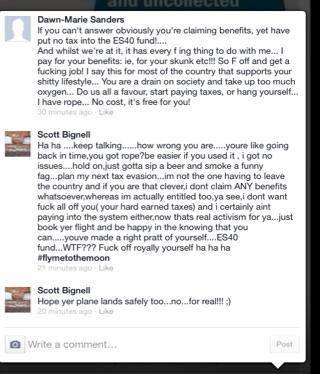
A CHARITY worker has been slammed after apparently posting comments on Facebook criticising the people he is supposed to be helping – and telling them to get a job.

Expletive-filled status updates appeared on Chris Breakwell’s Facebook page deriding people who claim benefits and have mental health issues.

Mr Breakwell is currently assistant manager of Crawley Furni-Aid, based in Linchmere Place, Ifield.

The charity helps “people in need, lone adults, lone parents and families in receipt of state benefit” by providing low-cost second-hand furniture and household goods.

One of the posts left on Mr Breakwell’s Facebook page read: “15 days into the new year and my charity bar has hit ‘F*** OFF YOU PONSING [sic] W******!’ between people crying in the office because THEY have no proof of benefits, and c**** lying on the phone.

“GET A F****** JOB AND STOP EXPECTING S*** TO BE GIVEN TO YOU BECAUSE YOU PLAY THE VICTIM CARD!!! MY F****** HARD EARNED TAX PAYS YOUR LIFESTYLE.”

A second post was also put up which read: “Why do people with problems, usually mental health issues, feel the need to tell you?”

Keshena Pritchard, who has suffered from mental health issues, was a Crawley Furni-Aid customer – but says she won’t be any more.

She saw the comments on Facebook last Wednesday (January 15).

She and Mr Breakwell were Facebook friends because they know each other through Crawley’s music scene.

“I think the comments were absolutely appalling,” the 26-year-old said.

“I knew Chris worked for them because he delivered a bed to my flat. I saw what was written and was shocked.

“I thought ‘he can’t be talking about where he works’ but it seems like he is.”

Miss Pritchard added that there is no way she would use the charity again.

She said: “Why would I want to go somewhere, the only place I can afford furniture, to get help when I know someone [who works there] thinks I am a c*** and a f****** scrounger?”

General manager Bill Harris said that Crawley Furni-Aid would hold an internal inquiry into the comments.

He added: “I have spoken to Chris and I am going to speak to the directors.”

Mr Harris added that the comments did not reflect the views of the charity.

“If there’s anything that needs to be sorted out we will do it internally,” he said.

If anyone is offended by the comments, they can complain to the charity, Mr Harris added.

Mr Harris added that he had never seen anyone crying in the charity’s office.

He said: “We have helped a lot of people and have made a lot of people happy. We have made a lot of people’s lives a lot more comfortable.”

The Crawley News asked to speak to Mr Breakwell when we spoke to his manager but he had not called us back by the time we went to press.

Ukip’s Godfrey Bloom Asks Disabled Student ‘Are You Richard III?’

January 27, 2014

A video of the MEP and Ukip member Godfrey Bloom interrupting a disabled student’s speech at Oxford Union to jeeringly ask if he was Richard III has been released.

Mr Bloom supported the motion that “Post-war Britain has seen too much immigration” during a debate at the university on Thursday.

As student David Browne began a speech against the motion, Mr Bloom got to his feet and mocked the student, saying: “ Point of order, are you Richard III or not?”

Mr Browne responds by quoting Thatcher to enthusiastic applause from the audience.

He told the debating hall: “I always cheer up immensely if someone attacks one personally, as it means they have run out of arguments.”

Political commentator Michael Crick was at the debate and has previously been the sharp end of Mr Bloom’s temper, having been rapped on the head with a Ukip brochure while at the party’s conference.

Mr Bloom told Crick that he had a drink with Mr Browne afterwards and they had a laugh together. This was confirmed by the second year student, who is studying law at Merton College. However he told university newspaper the Oxford Student that although they got on well he “didn’t think it was a very nice thing to say” and he “wasn’t happy with the remark.”

Douglas Murray, writing for the Spectator said of the insult “ why anybody, let alone an elected politician, would taunt him for his disability is beyond me. It was a gruesome moment – ghastly, disgraceful and deeply telling of Mr Bloom.”

Godfrey Bloom has hit headlines in the past after insulting vast swathes of the UK’s population. Most famously he referred to places that receive foreign aid as “bongo bongo land” and a group of women at the Ukip conference as “sluts.” After this comment he had his whip removed. In November he said that public sector workers and the unemployed should be stripped of the vote and has also previously remarked that the only men who like feminists are “chaps who get sand kicked in their face on the beach.”

ROMA, LGBT, ANTI-RACIST, DISABILITY AND JEWISH ORGANISATIONS STAND TOGETHER ON INTERNATIONAL HOLOCAUST REMEMBRANCE DAY

January 27, 2014

A press release I thought should be shared to mark International Holocaust Remembrance Day.

On International Holocaust Remembrance Day, the European population recalls the genocide perpetrated by the Nazi regime and its allies of millions of Jews and Roma, and the massacre of tens of thousands that did not fit the Nazi ideology, including persons with disabilities, Jehovah’s witnesses, homosexuals, and political opponents.


On this occasion, the European Roma and Travellers Forum (ERTF), the European Disability Forum (EDF), the European Grassroots Antiracist Movement (EGAM), the European Roma Rights Centre (ERRC), the European Union of Jewish Students (EUJS), the International Lesbian, Gay, Bisexual, Transgender, Queer Youth and Student Organisation (IGLYO), René Cassin and the Roma Virtual Network (RVN) wish to express their deep concern over the rise of anti-Semitism and other xenophobic, extremist and racist movements in European countries today.


Governments and general society seem unaware of the dangers that this development could pose in the future, and are oblivious to the fact that the Holocaust was the logical, tragic outcome of decades of tolerated latent anti-Semitism, Anti-Gypsyism, racism and hatred of the Other. The Holocaust happened because of year-long acquiescence to such growing roots of hate, and because too many people forfeited their sense of responsibility.


We therefore call on national governments as well as inter-governmental organisations, civil society organisation and individuals to act while there still is time and room to do so.


This Remembrance Day should not only commemorate the dead and celebrate those who upheld humanity in those dark times; it should serve as a most urgent appeal to all states to protect the Human Rights of minorities, and ensure the security of all citizens, regardless of their ethnicity, religion or belief, disability, sexual orientation or gender identity. Strong policies for educating citizens on the unity, equality and dignity of all human beings need to be adopted immediately, and laws must be vigorously applied and enforced to stem the tide of racist ideologies.


If we do not act today, we may very well face an unthinkable situation tomorrow.


Big Brother Josie Gibson’s Brother Beaten Up For Being Deaf

January 27, 2014


https://twitter.com/Josiestweet/status/427274945497165825


Hungry Patients Begging GPs For Food Bank Vouchers

January 27, 2014

Hungry families are pleading with doctors to give them the nod to use food banks.

GP surgeries are said to be at breaking point with queues of desperate patients booking appointments to claim vouchers.

Doctors – along with social workers, health visitors and social organisations – are allowed to refer people who need rations .

Experts warned yesterday that the scramble is the latest sign of a “public health emergency” as hard-up families struggle to put food on the table.

And they say the rising number of those seeking food handouts is stretching resources to the limit.

Dr Peter Swinyard, chair of the Family Doctors Association and a GP in Swindon, Wilts, said: “How are we supposed to know whether someone is, what in Dickensian terms you might call the ‘deserving poor’, and who is basically a scrounger just trying to a get a free meal out of the system? It is putting GPs in an impossible position.”

Lancashire GP Dr Claire Rushton, vice chair of the association, added: “We’re so busy already I don’t know how we are going to find the time to see all these other patients.”

She revealed: “I had one who asked for a food bank referral because she was on low income. l don’t know how much money she had, but how could I have said no? So I signed it.”

Another GP told medical magazine Pulse how he simply wrote on one referral note: “My patient tells me he is hungry, and I have no reason to  disbelieve him.” Many GPs are unaware food banks are referring people until they walk through the surgery doors. The Trussell Trust provides vouchers for emergency food supplies to last three days.

A record 350,000 families received help from the charity last year and demand is expected to soar over the next 12 months.

Trust director Adrian Curtis said: “If GPs feel uncomfortable about referring clients they can refer them to another organisation.”

More than 500,000 people had been referred to food banks in the UK by December 2013.

Inside The Work Programme And Why It Doesn’t Work

January 27, 2014

This article titled Exclusive: Inside The Work Programme And Why It Doesn’t Work was first published by the Welfare News Service on 25.1.14  and has been reproduced here with permission.

My report, although remaining anonymous, will I hope shed some light on the true goal and cost of the government’s Work Programme scheme.

I took on a full-time job as a student in the summer holidays. The interview was fairly standard and the company advertised the role as a customer management assistant that helped people get back into work.

However, as I started my new job, I began to notice that it wasn’t the caring compassionate company that it had advertised itself as. My position involved taking calls from “clients”, these were both Job Centre advisors from over London and the South West as well as Job Centre customers who called us directly.

The calls were to make appointments to put the customers onto their first meeting with their work program advisors. Other calls from direct customers were either for this same reason, as they had been instructed to, or to cancel an upcoming appointment.

What I discovered however, as my time there ticked along, was that our company was paid directly from the government for every individual they successfully “engaged” onto the Work Programme (WP) – a rough estimate of £1000. For every six weeks that person was in employment the company would be paid another £300 to £400; in fact the centre had a completely separate section called In Work Support, solely to make sure that the customers employment was maintained.

At the end of twenty-six weeks in paid employment the company would then be paid another lump sum of at least £1000. This meant that for every individual successfully engaged into employment through the WP the company would be paid approximately £3000 to £4000.

Now, let’s just deal with that for a second.

This is one company of many. With roughly 100 staff over all departments. The question that I pondered constantly was how is it cheaper to fund these centres and its staff with its financial incentives, how is that effective and where could that money be dispersed for the greater good?

A second but more important point is the effect that the pressure of this had on people. I was called on one occasion by a man who had his JSA stopped. This man was homeless and currently living in a shelter, yet he had been contacted on his mobile by his job centre that were insistent that he make an appointment to see an employment consultant, before his money would be reinstated. Money that he picked up from the post office. I spent a relatively long time just speaking to him, getting to know his situation and trying to help him as best I could. A lot of the available appointments that we had on our books clashed with meetings at his job centre. He took what he was being made to do in his stride but I found it a pointless exercise. He was homeless yet this wasn’t a priority. Without a fixed abode he would not be able to start a bank account and without a bank account he would not be able to find legitimate employment.

Another gentleman called me, enquiring about his Employment and Support Allowance (ESA) claim. He had been sent a letter stating that he needed to attend this particular appointment or his money would be stopped, however he very calmly and politely told me that he couldn’t get to this specific date and time as he had to undergo dialysis three times a week. Dialysis! Yet he was being forced onto the WP with threats to stop his money [if he failed to do so].

I worked mainly with Jobseeker’s Allowance (JSA) customers, however on other occasions I did also deal with ESA claims. I had people call [me] in tears, telling me they didn’t know what to do or where to turn. These people were being blackmailed into the WP so that our company could receive it’s pound of flesh, it’s profit, it’s blood money.

We received weekly emails from the CEO who visited the centre on two occasions, encouraging us to engage the customers, giving us statistics on our success rate and constantly telling us “engage, engage, engage”, even with promises of bonuses. It was also discussed in these emails the bad press and statistics of those who had been forced on the WP and had committed suicide, it does happen and it is being ignored. Now, I wish I had saved some of those emails.

Eventually, when I saw it for what it really was, I decided I could no longer stay there. A few weeks previous to my leaving, I was taken into the manager’s office as she pointed out all the things I had done wrong; joking with the customers, not engaging them. I knew what I was doing. Soon after I handed in my notice, the job was to save up for my wedding but morally I couldn’t stay there.

I’ve never before seen such a vulgar display of capitalism exploiting the poor, the disabled and the sick.

The money that is poured into these centres I have no doubt could be put to better use. Training centres, volunteering, computer access. Why do these places still exist and yet the government are cutting welfare that will affect EVERYONE?

People are genuinely being pushed into stress, depression and in some cases suicide. This is real, this is happening! The WP needs to be either seriously reassessed or shut down.

I feel it is my civil duty to share my experience and to make you all aware that the work program doesn’t work!

Daily Mirror Front Page: 26 January 2014

January 26, 2014

Full article here.

Jobcentre Worker: ‘We Are Not There To Help Or Advise’

January 26, 2014

I think this should go viral.

Kirsty Mum
Please check out this comment posted to this article in The Guardian … it says it all

ID8923117
19 January 2014 9:42am

Recommended
86
As a Jobcentre worker who took early retirement last year to get away from the pressures & stress I can confirm what many contributors are saying. Since the change of government in 2010 there was a total shift in emphasis in what we are there for. It is now to “police” the benefit system, “protect the public purse” & deter people from claiming anything. We are NOT there to help or advise people anymore.
We had a mystery shopper process where we would be rung up & visited several times a year & mystery shoppers would ask questions about claiming, ask for leaflets etc. This was fed back to offices & used to improve the service. The new government scrapped it. Staff now know that they can say any old rubbish to customers, forget to mention things that can be claimed for & no one is going to challenge them. We were even told by management that “x” was available but that we were not to tell claimants & only discuss if asked by them.
The job is now to discourage as many people as possible & harass them into signing off, not try to get them a job or what they are entitled to. Claimants are referred to pointless courses in the hope that they won’t go….so then we can stop their money. It does not matter if anything we do is of use to claimants. If staff don’t do this they are threatened with disciplinary action & possible dismissal. Staff are left with a” them or us” attitude. Many of my ex colleagues have mortgages & kids & are trapped. As jobcentre workers they know how hard it is to get a job & no one wants ex Jobcentre staff!

Benefits Street Residents Charged After Raids

January 25, 2014

Seven people have been charged with drug dealing offences after raids on James Turner Street in Birmingham.

Six of those charged live in the road – the subject of the Channel 4 documentary series Benefits Street – and one lives in Handsworth.

Officers said they recovered class A and B drugs during the raids in June. The raids came after concerns were raised locally, police said.

The defendants are due to appear before Birmingham magistrates on 6 February.

Of the defendants living in the Winson Green street; Samora Roberts, 32, Marvin Scott, 37, Monique Walker, 28, Ian Wright 38, Charlene Wilson, 29, were all charged with conspiracy to supply cocaine.

Ms Roberts was also charged with conspiracy to supply cannabis, possession of diamorphine and possession of ammunition for a firearm without a certificate.

Ms Wilson was also charged with conspiracy to supply cannabis and possession of diamorphine.

Mr Wright was also charged with conspiracy to supply cannabis.

Tina Thomas, 46, was charged with conspiracy to supply cannabis and possession of ammunition without a certificate.

The seventh defendant, Omari George, 20, of Dora Road, Handsworth, was charged with conspiracy to supply cocaine and conspiracy to supply cannabis.

Victims tell how they were unfairly knocked off sickness benefits

January 25, 2014

Mike Sivier's avatarMike Sivier's blog

130628esaappeals

‘Have 230,000 sick and disabled people been wrongly knocked off-benefit and forgotten?’ That was the question posed on this blog just two days ago, based on an analysis of statistics from the ONS and CESI. Without more input from the Department for Work and Pensions it is impossible to answer the question – but two former claimants have come forward with stories that support the allegation.

“I’m one of them!” wrote Steven Dix on Twitter. “My wife and I are now £400 a month worse off, with IDS’ ‘help’!”

He explained: “When I was on Incapacity Benefit it was indefinitely – then came ESA.”

Mr Dix was put on contribution-based ESA totalling £97 per week – but this only lasts for a year. After that, “I was told that my wife, who is on minimum wage at Asda, earns too much for me to get income-related ESA.

“We were told…

View original post 465 more words

Margot Martini #SwabforMargot

January 25, 2014

There IS a legal definition of bedroom for bedroom tax purposes

January 25, 2014

Jillian Mercado: Disabled Fashion Blogger And Model

January 24, 2014

Jillian Mercado, American fashion blogger, is now modelling for Diesel, in her wheelchair. What progress!

image


Benefits Street: Channel 4 Moves Residents To Safe Houses Following Death Threats

January 24, 2014

This article titled Benefits Street: Channel 4 Moves Residents To Safe Houses Following Death Threats   and written by Steven Preece was first published by the Welfare News Service on 24 January 2014 and has been reproduced here with permission.

Some of the residents of James Turner Street in Birmingham, who starred in Channel 4′s highly controversial ‘Benefits Street’ documentary, have been placed in safe houses following a string of death threats, it has been revealed.

The highly emotive documentary has rarely been out of the news since the first episode was aired by Channel 4, and has been met with increasing criticism for how it portrayed benefit claimants, with one petition demanding that the show be scrapped securing close to 60,000 signatures, at the time of publishing this article.

It is claimed by residents on the street that they have received threats of violence against them and even death threats, with one of the residents, Kate Dudek, 27, telling the Daily Mirror:

“Since it was on TV, there have been so many people coming up and down. I have a seven-year-old daughter who I don’t let out any more because I feel it isn’t safe.”

benefits-streetSome of the threats posted on the social network Twitter include setting fire to the street and another which said that they would like to “walk down #benefitstreet with a baseball bat and brain these scum bags”, among others.

Police are currently investigating the threats made against the residents but have not yet said whether any charges would be made against the perpetrators.

An insider has told the Daily Mirror that since airing ‘Benefits Street’ a number of the residents have had to be rehomed.

The insider said: “After we named the street in the show, some of the participants in Benefits Street have had to be rehomed. They are vulnerable and we have a duty of care towards them.”

The Secretary of State for Work and Pensions, Iain Duncan Smith MP, has been accused of using the divisive documentary, created by TV company Love Productions, to justify draconian cuts in welfare spending.

Despite the death threats made against the residents on the street and the backlash the programme has received, Love Productions Creative Developer, Richard McKerrow, continues to stand by the documentary saying: “It’s a very honest and true portrayal of life in Britain and people are frightened of it.”

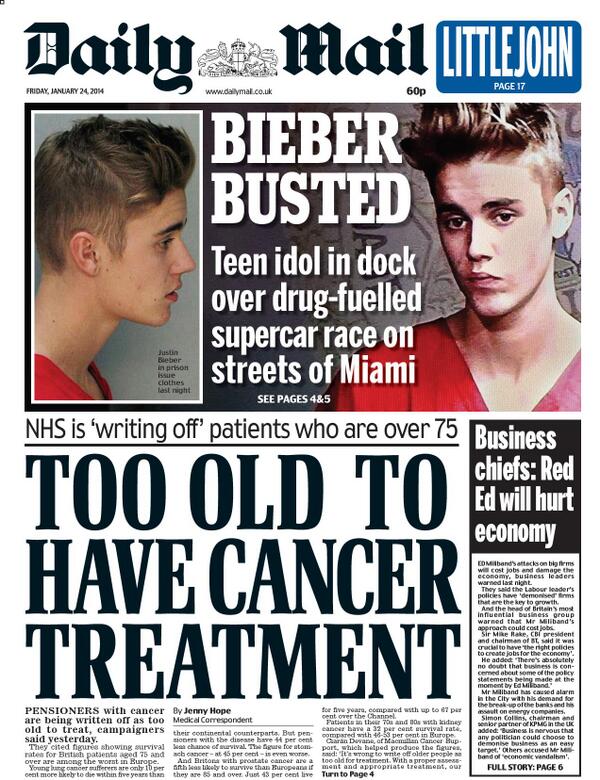
Too Old To Have Cancer Treatment

January 24, 2014

Readers, the question is open to you. Personally, I think doctors have a duty to do everything possible to save lives, whatever the age of the patient. But your thoughts, as always, are very welcome.

Embedded image permalink

Educating Yorkshire’s Musharraf Collects NTA Award

January 23, 2014

The Channel 4 programme Educating Yorkshire has been awarded Best Documentary Series at the National Television Awards (NTA).

Pupil Musharaf “Mushy” Asghar, who was helped by his English teacher to overcome his acute stutter, collected the award onstage.

Speaking with BBC Radio 5 live’s Colin Paterson afterwards, “Mushy” said he was pleased to show that people with speech problems were “human” too.

His teacher Matthew Burton, added: “I’m so chuffed for Musharaf. A lot of kids would have wilted and not bothered and he never did.”

Have 230,000 sick and disabled people been wrongly knocked off-benefit and forgotten?

January 23, 2014

Mike Sivier's avatarMike Sivier's blog

After all the government’s efforts to kick people off long-term sickness benefits, the number of claimants has risen – but statistics seem unable to account for nearly a quarter of a million people.

Even though Atos and now other private assessors are working hard to meet increased reassessment targets for Incapacity Benefit and Employment and Support Allowance, the government is paying out more money on these benefits – to around two million claimants.

This is a surprise for an administration that has been merrily throwing people off-benefit since it came into office, but it raises an important question: What has happened to those people?

In its January labour market report, the Centre for Economic and Social Inclusion said; “The number of the economically inactive who were long-term sick or disabled rose by 40,000… as did the benefit figure. The rise in the benefit figures shows ‘early estimates’ of benefit…

View original post 342 more words

Work Programme: Latest Stats By Disability Indicator

January 23, 2014

With thanks to the Welfare News Service Facebook page.

Nurse Sacked After Dragging Autistic Girl, 7. By Ankles

January 23, 2014

A senior nurse was sacked after dragging a seven-year-old autistic girl by the ankles at a Coventry respite centre, a professional hearing has been told.

Carol Anne O’Reilly, a learning disabilities nurse with a career spanning 30 years, shouted at the youngster before grabbing her by the ankles and pulling her down the corridor at Bradbury House, a disciplinary hearing heard.

The facility is a respite centre in Binley for children with learning disabilities and behavioural problems.

The girl was unharmed but the matter was investigated by her employer, Coventry & Warwickshire Partnership NHS Trust, which later dismissed Ms O’Reilly after a disciplinary hearing. Evidence relating to the incident, in May 2012, has now been brought before the Nursing & Midwifery Council.

A panel heard how the girl – referred to only as Client A – was prone to temper tantrums and aggressive behaviour.

On the morning in question, the child had gone into the staff room and tried to take a sip from a mug of tea.

In her defence, Ms O’Reilly said she shouted at the girl because she was concerned the tea was hot and might burn her.

Ms O’Reilly added that she “snaked” the girl back to her bedroom as this was a “monster game” she had played with the girl before.

But in an email to the NMC, Ms O’Reilly admitted the charges and said she did not wish to return to nursing.

During a hearing held in her absence this month, the panel ruled it had been an overreaction for Ms O’Reilly to shout at the girl and inappropriate for a registered nurse to play with a vulnerable child with the potential for harm to be caused.

It was also decided that her behaviour brought the nursing profession into disrepute and placed a patient at “unwarranted risk of harm” – actions they found amounted to misconduct and impaired her fitness to practise.

The panel served her with a three-year caution.

Chair of the panel, John Matharu, said: “Ms O’Reilly was a specialist learning disabilities nurse, of considerable experience, who should have been acting as a role model to junior members of staff.”

Tracey Wrench, director of nursing and quality at Coventry and Warwickshire Partnership NHS Trust, said: “The wellbeing of every patient in our care is of paramount importance. Our staff work hard to maintain high standards at all times, often in difficult circumstances.

“Unfortunately in this case, this member of staff’s previously unblemished 30 year record was spoiled by action that falls below that expected of a registered nurse, and our own internal investigation resulted in her being dismissed.”

NEW RESEARCH REVEALS IMPACT OF RISING ENERGY COSTS ON WELLBEING OF PEOPLE WITH DISABILITIES

January 22, 2014


A press release:

A new survey commissioned by the national charity Turn2us has found that, in the face of rising energy costs, a staggering 82% of people with disabilities* are worried about paying their energy bills this winter.

The impact this is having on their lives is severe, with nearly three-quarters (73%) of those who struggled with their energy bills last winter experiencing stress as a result, and nearly half (47%) forced to cut back on food or skip meals. Furthermore, almost two-fifths (39%) have suffered ill health or pain from cold housing conditions.

The survey, released to coincide with the launch of Turn2us’ fuel poverty campaign, has also found that a fifth (20%) of disabled people have ended up in debt trying to cover their energy bills, and over a third (36%) has relied on the financial support of family and friends. Worryingly, one in ten (10%) has resorted to taking out a short-term or ‘payday’ loan.

The results also suggest a lack of awareness of potential help available. Despite the grants and schemes offered by many energy companies, half (50%) of people with disabilities are not aware that this help exists. In addition, almost three-quarters (71%) would not consider checking their welfare benefits entitlement if struggling with their energy costs, while over four-fifths (81%) would not contemplate checking for support in the form of charitable grants.

In response to these ongoing problems, Turn2us’ third annual fuel poverty campaign is focusing on the growing gap between household incomes and the cost of energy bills, and highlighting the support available to those struggling with their energy bills. The campaign, ‘Mind the Gap’, features six steps, using Turn2us’ free tools and information to help people increase their household income and manage their energy costs. These include checking welfare benefits entitlement, searching for grants and schemes to help with bills, getting help to improve energy efficiency and checking energy tariffs.   A dedicated ‘Mind the Gap’ section of the Turn2us website has been created at www.turn2us.org.uk/fuelpoverty.  

Alison Taylor, Director of Turn2us said: “Today Turn2us launches its winter fuel poverty campaign with the news that more people are worried about finding the money to pay for their energy bills. With the cost of living steadily increasing, people feel like they have no option but to borrow money and cut back on essentials to cover costs. Our research shows that more needs to be done to help raise awareness of the financial support and help available to manage energy bills.   

“With our ‘Mind the Gap’ campaign we have brought together a number of free Turn2us tools and information all in one place to help people in financial need maximise their income and manage their energy costs.”  

Turn2us is working in partnership with charities and organisations across the UK for its ‘Mind the Gap’ fuel poverty campaign to increase awareness of the support available to those struggling in fuel poverty. 

For more information about the campaign, please visit www.turn2us.org.uk/fuelpoverty.

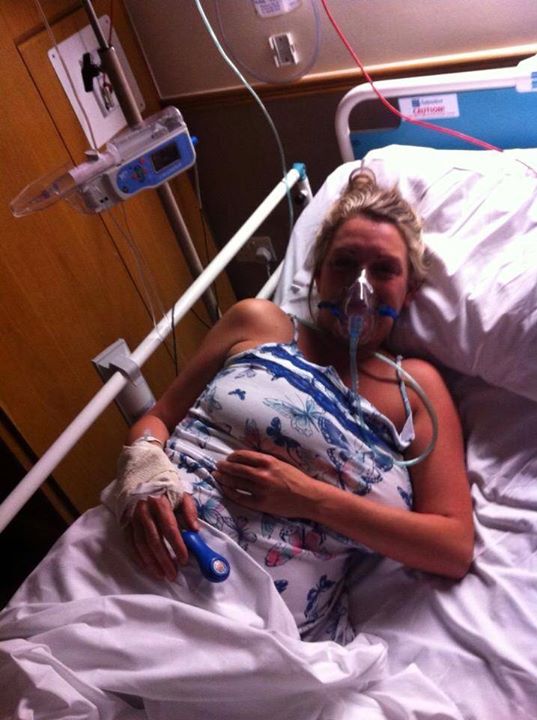
ATOS Found This Person Fit For Work

January 22, 2014

This is being shared into viralness on Facebook. I spotted it here.

A: My benefits were stopped by ATOS as they found me fit for work whilst I was in hospital after a spine fusion and decompression revision, I am going to court next week to fight for my rights as a unwell single mother who’s life they have ruined.

atos

I dare you to look at that photo and tell me she can work.

Disabled Brothers Evicted From Council House Days After Mum, 90, Goes Into Care

January 22, 2014


Two disabled brothers face being kicked out of their home of 34 years in a move branded “inhumane” by their family.

Richard and Frank Smith are set to be turfed out of their three-bedroom house in Putney Walk, Chelmsley Wood, in a tenancy dispute.

Solihull Council confirmed they would have to go, despite the property having been adapted to help wheelchair-bound Richard.

The authority is now looking for a two-bedroom home it said would be “more suitable for their needs”.

Richard, 54, has cerebral palsy and 56-year-old Frank, his full-time carer, suffers from acute anxiety.

But their frail mum Catherine, 90, is the registered tenant and she has just moved into a care home, leaving the brothers with no legal right to stay.

Richard said: “I have lived here for 34 years with my mother and late father.

“Eight days after she moved out, two officers told us we would have to go.

“We have lodger’s rights but, if that is all we are, why have they adapted the house for my wheelchair?

“We have a ramp outside, hand rails and a walk-in shower. They would need to do that to a new house.”

Richard said the brothers had been told they were under-occupying the property – but insisted they were happy to pay the ‘bedroom tax’ to cover the unused third room.

Their brother Steve said: “They have just had to deal with mum moving out and now this. This decision is unreasonable and inhumane.”


Coun David Jamieson (Lab, Kingshurst and Fordbridge), a Solihull cabinet member, is fighting their case.

He said: “It is a sad and difficult case because both the brothers have special needs and have lived there a long time.

“There is so little flexibility and so few houses available for families.”

Coun Jamieson stressed the brothers were not being evicted and would not be moved until a suitable alternative two-bedroom property was found.

He said he had requested an independent medical assessment, which may conclude a move would be detrimental to their health.

A Solihull Council spokeswoman said: “We are awaiting confirmation that Mrs Smith has gone into residential care permanently.

“Her sons have no legal rights to the tenancy as it is in their mum’s name. We are looking for alternative two bedroom accommodation more suitable for their needs.

“An independent medical officer will also review their situation.”

Leanda Probert: Black Disabled Woman Sent NHS Password ‘Charcoal Shade’

January 22, 2014

You couldn’t make it up!

A black woman is demanding an apology from NHS chiefs after she was sent a letter saying her password was set as ‘charcoal shade’ for a hospital website.

Leanda Probert, 31, from Weston-super-Mare, Somerset, was horrified when she discovered the ‘highly offensive’ password in a letter asking her to book an online appointment with a pain management clinic.

The mother-of-one, who suffers from crippling condition fibromyalgia, said she thought NHS North Somerset was ‘having a laugh’ and ‘taking the mick’ when she opened the letter


Ms Probert was sent the 'highly offensive' password 'charcoal shade' in a letter requesting she make an appointment with a pain management clinic via an NHS website


She said: ‘I was very taken aback and highly offended.

‘I understand these passwords are computer generated, but I just think certain words should not be included because they could be offensive to some people.


‘I am a black woman and I think those two words “charcoal shade” coupled together is just too much and I found it very very offensive.

‘The letter must have been put in an envelope by someone – why did they not proof read it and realise it could be offensive?’

Ms Probert, who lives with her partner Damien Field, 29, and daughter Gabriella, two, said the NHS needs to address its procedures.


She said: ‘I don’t think it was intentional racial abuse and I really do not think that this has been done maliciously.

‘But I do think they need to change their policies and procedures to make sure some words simply do not appear in passwords.

WHAT IS FIBROMYALGIA?

Fibromyalgia is a long-term condition which causes pain all over the body and extreme tiredness.

People with fibromyalgia may also have:

  •     Difficulty sleeping
  •     Headaches
  •     Irritable bowel syndrome (IBS)
  •     Muscle stiffness

It is estimated that fibromyalgia affects nearly 1 in 20 people worldwide.

Anyone can develop fibromyalgia, although it affects more women than men.


‘This password they gave me was thoughtless and offensive and despite complaining I am yet to receive an apology.’


Ms Probert was diagnosed with fibromyalgia two years ago after more than a decade of suffering with the condition which causes widespread pain and extreme tiredness – but has no known cause or cure.

She said: ‘I have trouble getting up and down on the sofa, insomnia, nausea, IBS and forgetfulness.

‘Sometimes my partner has to give me a list of things to do because my memory is awful.’

A spokesman for NHS North Somerset apologised for the blunder.

He said: ‘North Somerset CCG would like to apologise for any offence that the password contained within the letter may have caused.

‘The password was generated automatically by the central choose and book system with the words themselves randomly selected by an electronic database.’

Remembering Avonte Oquendo

January 22, 2014

I read about this case in October. Tonight it has come to a tragic end.

You are welcome to leave your thoughts below.


Have 60,000 families had the bedroom tax wrongly imposed?

January 22, 2014

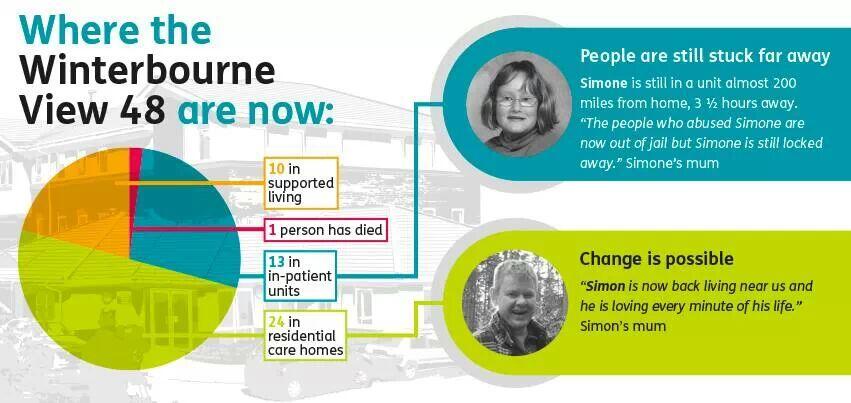
Where Are The Residents Of Winterbourne View Now?

January 22, 2014

I thought this, spotted on Twitte earlier, may interest some of you.

‘I Feel Right To Die Pressure’

January 21, 2014

Legalising assisted dying is “selfish” and would pressure ill people to consider taking their own lives, a motor neurone disease (MND) sufferer claims.

Michael, who called BBC Radio 5 live’s Breakfast from Downpatrick in Northern Ireland, said he would not end his own life if his illness worsened, but was constantly being asked by people if he would consider it.

He said: “It makes one feel like I should be contemplating it for sake of the health service or my family watching what I’m going through.”

It comes after the storyline for Coronation Street character Hayley Cropper made headlines as she took own life to escape terminal cancer.

Will you support the day of action against Atos?

January 21, 2014

Mike Sivier's avatarMike Sivier's blog

disabilitysuicides

Ordinary people around the UK will gather outside centres where Atos administers its work capability assessments on benefit claimants next month – to demand an end to the system that is continuing to cause the deaths of thousands of innocent people across the country.

They will gather at 144 of the locations used by Atos to carry out the discredited assessments, under a contract written by the Department for Work and Pensions, on February 19.

It is known that 10,600 ESA/Incapacity Benefit claimants died within six weeks of their claim ending after Atos assessments between January and November 2011, although the DWP seems unwilling to divulge the percentage of those claims that ended because claimants were found fit for work by ATOS. Currently roughly one in four ‘fit for work’ decisions by ATOS is overturned at tribunal.

In July 2013, ATOS whistleblower Greg Wood lifted the lid on the toxic…

View original post 403 more words

The Man Facing Hayley’s Choice

January 21, 2014

Coronation Street character Hayley Cropper made an emotional exit from the soap on Monday, taking her own life to escape terminal cancer.

Watching the programme with BBC Radio 5 live’s Lesley Ashmall were a couple who face “the same choice” as Hayley and on-screen husband Roy – Paul and Sally Chamberlain.

Paul, who suffers from motor neurone disease, wants to take his own life once his illness becomes unbearable.

He said, “I know its going to get worse… I’d rather say goodbye to the family now while they remember me as a lively individual.”

Autism Care Standards Need Improvement Says NICE

January 21, 2014

The quality of care for people with autism is poor and varied across England, health leaders have warned.

There is a real variation in the type and quality of care that people receive and many patients often have other conditions that go undiagnosed, according to the National Institute for Health and Care Excellence (Nice) in a report on autism, the developmental condition which affects the way the brain processes information. It can lead to life-long problems and difficulties with social interaction, impaired language and communication skills.

Nice has called for clearer standards to ensure consistent treatment across the country. As part of a new set of proposed guidelines, Nice states that people who are referred to autism specialists should receive a diagnostic assessment within three months.

Jonathan Green, professor of child and adolescent psychiatry at the University of Manchester, who helped to develop the new set of standards, claimed that poor, inconsistent care for autism patients could have “lasting effects on both the person and their families or carers”. There were many “key areas needing improvement”, he said.

Prof Gillian Leng, director of health and social care at Nice, said new guidelines would allow doctors to deliver “the very best care and support” for patients.

“People with autism can find everyday life challenging and confusing, and often have symptoms or aspects of other conditions that go undiagnosed,” she said. “This quality standard outlines how to deliver the very best care and support for adults and children with the condition.”

Mark Lever, the chief executive of the National Autistic Society, claimed that speeding up the diagnosis process would allow sufferers to receive the right support. He said: “People with autism have campaigned long and hard for their needs to be addressed when professionals are designing support and services; measuring progress against this standard will help to ensure that this happens.”

About one in 100 people in England suffer from an autistic spectrum disorder, according to the NHS Choices website.

Because autism is a spectrum condition, it can affect sufferers in many different ways. While some are able to live independently, others may suffer from severe learning disabilities and need specialist support throughout their lives.

Although there is evidence to suggest that genetic factors as well as physical factors are responsible for some forms of autism, scientists have been unable to establish the causes of the condition.

How Food Banks Support Those Too Poor To Heat Dinner

January 21, 2014


Food banks have started to issue specially prepared “kettle boxes” to clients who cannot afford to switch on their cooker to boil pasta or rice, in the latest sign of the cost of living crisis facing Britain’s poorest.

The kettle boxes developed by volunteers from the Trussell Trust charity contain products that can be prepared by adding boiling water, such as instant soup, Pot Noodles, instant mash and just-add-water porridge, as well as staples such as crackers, cereal and tinned food.

For even more destitute clients, a “cold box” food parcel has been created, containing three days’ worth of mainly tinned groceries that can be prepared without the need for heating or hot water.

The boxes, which the trust accepts do not meet the nutritional standards of its regular food parcels, were developed in response to clients who had refused to take basic items such as rice, pasta, tinned tomatoes and baked beans because they had too little credit in the electricity meter to cook them, or had been cut off by their gas supplier.

“We were absolutely astonished when this started to happen, and we were also really upset, ” said Annette Smith, volunteer project co-ordinator of Morecambe Bay food bank in Lancashire. “Why is it happening? It’s the old cliche: do I heat or eat?”

A cold box typically contains: long-life milk, breakfast cereal, tinned sweetcorn, tinned potatoes, tinned corned beef, tinned rice pudding, fruit juice, cream crackers, biscuits, jam and peanut butter.

Morecambe Bay food bank is currently giving out on average two kettle boxes and two cold boxes a week, Smith said. The packages were not ideal, she admitted – it felt strange that a “cold box” client would not even be provided with tea bags or coffee (they get extra fresh juice instead).

Although the boxes do not quite meet the trust’s nutritional guidelines for food parcels, “at least their [client’s] bellies are full”, Smith said. “You sleep better if you’ve had something to eat.”

The food bank also helps clients deal with underlying causes of their problems, by referring them to advice agencies.

Smith said the food bank had provided a cold box as part of a package of help for one family whose electricity had been switched off for non-payment of a “stupid amount of money” totalling less than £100. Food bank volunteers subsequently arranged with the energy supplier to reconnect the supply and to have the outstanding sum repaid.

Chris Mould, executive chairman of the trust, said kettle boxes were “another example of how bad things have got” for low-income families. Nutrition was clearly an issue, he accepted, but added: “If you can’t afford to turn the electricity on, then some food is better than no food.”

Julie-Anne Wanless, manager of the St Andrew’s community network in north Liverpool, which runs a Trussell Trust-affiliated food bank, said that initially kettle boxes were few and far between but the network had given out “quite a lot” in recent months.

Clients took kettle boxes and cold boxes for a variety of reasons: some had delayed or stopped benefits, while others were homeless and had just moved into bed and breakfast accommodation. Some clients simply could not afford the few pounds needed to charge up the meter.

Standard Trussell Trust food parcel contents are designed by nutritionists to contain three days’ nonperishable food.

The trust’s quarterly figures show 355,000 people received food parcels last year between April and the end of September – more than the total fed throughout 2012-13.

More than half its clients were referred as a result of benefit delays, sanctions or because of welfare cuts such as the bedroom tax, although ministers have insisted there is no causal link between welfare reform and charity food-aid growth.

The “heat or eat” dilemma – people having to choose whether to spend their meagre resources on food or heating their home – has emerged as a key poverty issue this winter.

According to the Real Life Reform housing association survey published last month, low-income social housing tenants in the north-west of England affected by welfare reform had reduced food spending to an average of £2.10 per person a day, partly to cope with the rising costs of gas and electricity.

Morecambe Bay food bank said it now provided “start-up” boxes containing tin openers, a tea towel and plates and cutlery for young people leaving care or young homeless families who had been moved into temporary accommodation.

The Welfare Budget In Numbers

January 21, 2014

Spotted on Twitter.

Embedded image permalink

The Purple Pound

January 21, 2014

I would have said the colour of disability was blue, if anything, the blue of Badge fame. But it seems I have been wrong. Our colour of choice is purple, apparently, the colour of royalty.

I’m off to find the site a new purple theme!

1300 people on sickness benefit DEAD after being told to begin work related activities immediately admits IDS’s Dept

January 20, 2014

thelovelywibblywobblyoldlady's avatarThe lovely wibbly wobbly old lady

Reposted from Dr Éoin Clarke (PhD) – TheGreenBenches@Hotmail.com


According to Iain Duncan Smith’s team, every year, more than 40,000 people on Sickness Benefits (eg. ESA) die. Over a three year period more than 125,000 people had died while on sickness benefit. During the lifetime of this parliament, 200,000+ will die on sickness benefit.

In order to be placed on sickness benefit, claimants must undergo an assessment. Some of those claimants are assessed and told that they will be fit for work in the future, and as such they are expected to carry out work related activity (such as training) immediately. According to Iain Duncan-Smith’s Department, 1,300 of those told they’d be fit to work in the future and expected to carry out work related activity died during one 11 month period from January 2011 to November 2011. 

Of those receiving ESA who had died from January 2011…

View original post 207 more words

Disabled Tenants #BedroomTax Fight Goes To Court Of Appeal

January 20, 2014


Five severely disabled people have brought a fresh legal challenge against the government’s bedroom tax on the grounds that it is unjustified discrimination against the weak and vulnerable.

The court of appeal hearing is scheduled to last three days and expected to highlight the predicament of those facing benefit cuts who cannot move home, require a spare bedroom for medical purposes or are unable to sublet to lodgers.

Under new “size criteria” regulations introduced by the Department for Work and Pensions (DWP), tenants with one spare bedroom have lost 14% of their housing benefit payments, while those deemed to have two or more spare bedrooms have suffered a 25% reduction.

In July the high court upheld the legality of the regulations, ruling that the government had justified its decision to impose the rules on disabled tenants.

The benefit changes, introduced last April, have led to reductions in payments to those assessed to be under-occupying subsidised accommodation. The appeal judges are being asked to rule that disabled people should be entitled to full housing benefit “for the accommodation they actually need”.

Human rights lawyers, charities, social landlords and advice agencies have all spoken out about the plight of people with disabilities who have been affected by the measure.

“Each of the appellants has a need, because of their disability or that of a member of their family or household, to occupy accommodation larger than that which would be allowed under the size criteria,”

Martin Westgate QC, who represents four of the families, told the court. “In some cases, the need is for a specific number of bedrooms.”

In other cases the appellants need to occupy their current accommodation and they cannot move, he said:

“Disabled adults who are not in fact under-occupying – because they cannot share a room because of disability or otherwise need an extra room because of disability – are particularly adversely affected by the regulation. Those who cannot reasonably move for reasons related to disability are also particularly adversely affected.”

One of the applicants is a mother who cannot work because she looks after her daughter, who is a blind wheelchair user. “It would be unrealistic to expect her to share her home with a lodger,” Westgate said. “They cannot move.”

Another applicant, Richard Rourke, has a three-bedroom bungalow but is wheelchair-bound and looks after his daughter, who is also disabled, when she returns home from university during the holidays. He uses the third bedroom, a box room measuring 2.4 x 2.7 metres (8 x 9ft), to store equipment including a hoist for lifting him, his power chair and his shower seat.

A third applicant, Mervyn Drage, lives alone in a three-bedroom flat in a high-rise tower block. The flat was let to him because the local housing authority considered it unsuitable for families. He has lived there for 19 years. He suffers from mental health problems, including depression, anxiety and obsessive compulsive disorder and physical problems. Some of the rooms are filled with his paperwork. “He couldn’t take in a lodger,” the court was told. “He couldn’t tolerate anyone else because of the state of his health.”

The DWP has rejected the “bedroom tax” tag and says the reality is that “a spare-room subsidy” has been removed from social sector tenants.

Local councils, the DWP says, have been given discretionary housing payment funding so they can help vulnerable residents, including disabled people affected by the removal of the subsidy.

The department says reduction of housing benefit expenditure is a legitimate and integral aspect of the government’s deficit reduction programme, and the change in regulations is expected to produce savings of £500m a year.

A DWP spokeswoman said: “We remain confident that we have fulfilled our equality duties to disabled people with the policy. Reform of housing benefit in the social sector is essential, so the taxpayer does not pay for people’s extra bedrooms. But we have given councils £190m of extra funding this year to help those who need it.”

Ugo Hayter, a lawyer for the Leigh Day company, said: “We are very confident that the court of appeal will see that the decision to implement this legislation by the government was clearly discriminatory and will overturn last year’s ruling by the high court.

“It is a cruel and deeply disturbing benefit cut which hits the most vulnerable in society.”

The case continues.

Coronation Street: Hayley’s Assisted Suicide Episodes Air Tonight

January 20, 2014

I’ve never seen Coronation Street. However, I have always known how popular the programme is. As a person disabled since birth, I have always strongly disagreed with assisted suicide.

So I can only hope that Coronation Street will cover the storyline with sensitivity, tonight, and in the coming weeks. I would be very disappointed if such a popular programme, watched and loved by so many, was to cover such an important issue in a way that suggested that assisted suicide is the best, or only, option for severely disabled or terminally ill people.

One of the most talked about storylines in Coronation Street history comes to a moving conclusion on Monday 20 January, when Hayley decides it is time to end her life.

With her devoted husband Roy at her side, Hayley prepares to bring her suffering to an end before the treatment for cancer renders her incapable of doing so.

Roy and Hayley - Coronation Street - ITV
Determined not to implicate Roy in her suicide, Hayley has planned everything and even his last minute pleas for her to change her mind do not soften her resolve.Ever since Hayley told Roy of her plans to take her death into her own hands the nation has been divided by her decision and the storyline has also reignited the Right to Die debate. And in coming weeks the two sides of the debate will be shown on the soap as Roy struggles to deal with the fact that Hayley took her own life against his wishes. Fiz will also voice her dismay at the decision when she discovers the truth.

Roy Cropper - David Neilson - Coronation Street - ITV

Coronation Street Producer Stuart Blackburn explained the decision to explore this difficult and controversial issue.

He said: “Hayley has been through such a lot in her life and is very concerned about losing control as the disease progresses.

“The palliative care Hayley receives is superb but she is scared and fears that pain relief could cause confusion and a loss of clarity. She feels taking control is the right thing for her to do.

“This is a very sensitive issue and we will be exploring the effects of her decision on husband Roy who has a huge emotional and moral dilemma over her choice to die this way.

“Not everyone will feel Hayley’s decision is the right one and we fully respect this, for that reason we will be exploring both sides of the debate on screen.”

Hayley’s final episodes will transmit on ITV at 7.30pm and 8.30pm on Monday January 20th.

Deaf Couple Criticise Hospital Over Lack Of Interpretation During Birth Of Son

January 20, 2014

A deaf couple have criticised a hospital for failing to provide them with a sign language interpreter during the traumatic birth of their son, which they say left them uninformed and added to the ordeal.

Hulusi Bati, 32, and Nadia Hassan, 28, claim the lack of communication, both during the birth and Hassan’s 10-day stay at University College hospital, London, post-birth, amounted to discrimination, as they were not given the information that a hearing patient would have received. The British Deaf Association (BDA) said the case reflects the experience of many deaf people within the NHS, two out of three of whom have asked for an interpreter at a hospital appointment and not got one, according to a 2012 survey.

The couple from Camden, north London, first went to hospital on 7 December when Hassan was experiencing stomach pains. There was no interpreter available, forcing them to rely on Bati’s 12-year-old daughter to interpret sensitive conversations.

When they returned the next day, a British Sign Language interpreter had been booked but left before 8pm and Hassan went into labour shortly before 9.30pm. There were complications and their son was eventually helped out with forceps.

“There was a lot of panic and they brought in my wife’s sister-in-law to interpret but she’s not an interpreter at all,” said Bati. “She only knows the basics so there was no accurate medical information. I felt completely at a loss. I wasn’t part of it. After the birth they took the baby away straight away and started putting injections in his foot. I wanted to hold my baby but the doctor said no. When I followed him and asked if the baby was OK he just gave me the thumbs-up sign.” He said that the details of injections given to his wife and son were not communicated.

Hassan remained in hospital until 16 December. For the vast majority of the time, including doctor’s rounds and breastfeeding instruction, no interpreter was provided, Bati said. “During breastfeeding, the midwife was trying to move my wife’s head around,” he said. “The midwife was basically manhandling my wife. I kept asking where’s the interpreter and they said they kept saying ‘he’s coming’ but he never came.”

Bati said staff lacked awareness, making little effort to speak slowly to facilitate lip reading and sometimes poking them to get their attention in a manner he deemed rude. He said the midwives’ manager had apologised for the couple’s experience but it was not enough.

“I’d like them to provide a 24-hour service for access to interpreters,” he said. “For example, if there was an emergency how would they communicate with them? People must be able to access the health services on a par with hearing people.” He said he is taking legal advice. The Equality Act 2010 says that if someone is at a substantial disadvantage of accessing services because of a disability, reasonable adjustments must be made to allow access.

A spokesman for UCLH foundation trust said it aimed to provide the most comprehensive support possible to patients who need BSL interpreting services and works with a service provider to supply face-to-face interpreters but that this is not always possible in emergency or obstetric cases that arise at short notice.

He added: “Despite every effort, our partner had limited availability and was unable to meet all of our requests for an interpreter on this occasion. However, they were able to provide some interpreting services regularly during the couple’s stay.”

He said that the couple’s complaint was being investigated as part of a formal complaints service but the hospital had already taken steps to complement its existing face-to-face interpreting service with a 24-hour electronic interpreting service.

Last year, a number of organisations launched the Our Health in Your Hands campaign, which asserts that deaf people have a right under equalities legislation to an interpreter in healthcare settings.

Paul Redfern, business development manager at the BDA and its representative on the campaign, said: “It’s very worrying that, in this day and age when so many of us take access for granted, there is still a minority community in this country that’s struggling to get the full information about their own health.

“Lack of proper access provision leads to misdiagnosis, delays in appointments and wrongly prescribed medication, and all of this is an extra burden on the NHS in terms of real costs so it would make a lot more sense if we had good access provision.”

Call The Midwife Series 3: Episode 1

January 20, 2014

I really enjoy Call The Midwife. I was very pleased to watch its return last night. I was even more pleased that they covered disability for the second time in my memory- this time, the history of Cystic Fibrosis.

If you missed the episode, or just want to watch it again, it will be available here until next Sunday.

Last Surviving Female Munchkin Dies, 95

January 18, 2014

Ruth Duccini, the last of the original female Munchkins from The Wizard of Oz, has died aged 95.


The actress died of natural causes at a hospice in Las Vegas, according to her son.


At four feet (1.22m) tall, Duccini played one of 124 Munchkin townspeople who starred opposite Judy Garland in the 1939 film.


Her death leaves only one surviving Munchkin actor – Jerry Maren, who is 93.


Born in Rush City, Minnesota, on 23 July 1918, Duccini said she felt isolated growing up.


“I didn’t know there were other small people,” she told Newsweek in a 2009 interview.


When she was 20 she travelled to California with a troupe of little people, where she was cast in the MGM fantasy movie.


The actress met her husband, Fred, while working for the film studio, and the two had a son and daughter.


During World War Two she worked at Douglas Aircraft in Santa Monica as a riveter, using her short stature to squeeze into hard-to-reach parts of planes.


“I’m very proud of my work during the war – maybe more proud of that than being in the movie,” she told The Munchkins of Oz author Stephen Cox.


Although she appeared at several Wizard of Oz events over the years, most of Duccini’s life was spent outside of the film business – although she appeared in the 1981 Chevy Chase spoof film Under the Rainbow.


She returned to Hollywood in 2007 when the Munchkins received a star on the Hollywood Walk of Fame.


She is survived by her children Fred and Margaret.

Joey Barton: #BenefitStreet Residents Should Have ‘Breeding License’

January 17, 2014

Controversial footballer Joey Barton has sparked a Twitter storm after saying the stars of Channel 4’s Benefits Street should be banned from having children.

Barton, who plays for QPR, sent a string of shocking tweets saying residents should only have kids if they get a licence.

In a tirade of tweets on the social network site, he wrote: “Strong evidence to support the breeding licence theory. What chance do these kids have?

“World is f****d sometimes. Surely you should have to pass a test or at least show you are capable of looking after kids. Surely?

“They don’t even keep their own homes clean. I didn’t grow up in the best place but people cared about their homes and the way they looked.

“These people don’t give two f***s. Pile rubbish up in the street. Houses are manky.

“They expect the council to sort everything for them. Clean the street up.

“Don’t sit on walls all day drinking white lightening or sit on the couch moaning. Get to work on your house. That’s a start.”

He also hit out at Romanians who appeared on the show and blasted: “Romanians. If you don’t like it here. You know what to do. Imagine me going to Romania trying this sh*t on? Interesting they all have cars, gold chains, mobile phones, a roof over their heads and are fat. Can’t be that bad now can it.”

And yesterday morning, Barton sent another tweet refusing to backtrack on his comments.

He tweeted: “Really interesting how #benefitstreet polarises opinion. Slept on it. Still as sickened as before.”

A number of Twitter users hit back at the footballer.

A woman called Cia tweeted: “Joey Barton kicks a ball for tens of thousands a week and is outraged that some people get £50 a week off the government #legit”

Local councillor Chaman Lal was appalled by Barton’s comments

He added: “These are sickening comments and absolutely disgusting.

“To say people on benefits shouldn’t have children is outrageous. People fall into benefits for many different reasons but it is everyone’s human right to have kids. This Joey Barton is just a joke.”

Liverpool Council To Report Cameron To UN

January 17, 2014

Liverpool Council is reporting David Cameron to the United Nations, claiming that his government could be breaking international rules on keeping people out of poverty.

Authority bosses believe the coalition – through its controversial policies such as the hated bedroom tax and welfare reform – could be in breach of the UN economic and social rights convention that sets out minimum standards for access to food, clothing and housing.

Labour members from all parts of the city have spoken of the evidence they have gathered of people who were being forced into degrading poverty because they were being denied access to benefits they desperately needed.

Many are ending up having to resort to what they said was effectively “begging” for food at food banks, the Liverpool Echo reports.

At a meeting this week, councillors heard stories of people stripped of their dole money for up to 16 weeks because they had been late for interviews or had failed to meet the criteria of the government’s Welfare to Work programme.

And they heard claims that in some job centres in the city, suspensions of benefits and other sanctions had risen by up to 500% since 2012.

But the government has hailed the removal of benefits from people who “aren’t pulling their weight” as evidence that the “something for nothing” culture was being tackled.

Cabinet member for children’s services in Liverpool Cllr Jane Corbett, who brought forward a motion along with Croxteth Cllr Barry Kushner, said: “We were elected to represent the people of Liverpool and speak up for them, fight for justice for them to make sure their voices are heard.”

In a rare moment of cross-party unity, Lib Dem Cllr Pat Moloney said: “It is the moral purpose of government to protect its citizens … and to keep them out of hunger and worse.”

Parents’ Pain As DWP Writes To Dead Son

January 17, 2014


The family of a man who died almost 12 months ago have slammed benefits bosses for repeatedly trying to contact their dead son to ask why he hasn’t been to see them.

Dad Terry Whiteside said he is ‘angry’ that the Department for Work and Pensions (DWP) had continued to send letters to his son Marc after he died in March last year.

The letters demanded to know why Marc, who claimed Employment and Support Allowance (ESA), hadn’t kept scheduled appointments arranged to help him find work, despite being told the 31-year-old had died.

More letters chasing Marc, who lived in Derwent Close, Langley, Middleton, for £268 he owed the DWP for a crisis loan he took out before he died have also been sent.

The DWP have apologised to the family for a ‘regrettable error’ and say they have taken action to stop any more letters being sent to Marc.

His dad Terry, 66, who works at Springvale Household Waste Recycling Centre, said it was ‘unbelievable’ the letters were still arriving 10 months after his son died.

He said: “Every time I ring them up they apologise and say the letters will stop, but they keep on arriving. It’s almost a year since he died and the letters are still coming, it’s just unbelievable.

“If I did something that caused as much distress as this at my work I would be sacked, instantly, yet no one at the DWP seems to be accountable.”

An inquest into Marc’s death is yet to take place, but the family say they believe his death was related to a prescription drug addiction which also prevented him working and led to him claim ESA.

His dad Terry said he didn’t want another family to have to wake up to find letters addressed to their dead relative sent to them by the DWP.

He said: “Every time we get one of these letters I get very angry while my ex-wife gets really upset.

“I’ve written a letter to the DWP telling them exactly what I think of them but I dare not send it to them. I won’t accept them saying it’s a computer error as a computer does what someone has told it do to.

“When the latest letter arrived last week we felt we had no option but to go to the paper to try and get the DWP to do something.

“This year has been difficult enough for us all and we want to make sure another family doesn’t have to have the same battle with the DWP we’ve had.”

A spokesperson for the DWP said the letters sent to Marc had been generated automatically, but said no more would be sent.

They said: “We apologise to Mr Whiteside’s family for this regrettable error.”

Work Programme Triggered Heart Attack In Bipolar Woman Sheila Holt

January 16, 2014

A dad says the government’s back to work schemes have put his vulnerable daughter in hospital.

Sheila Holt from Rochdale has a psychiatric condition.

Her family say the Department of Work and Pensions said it shouldn’t stop her working.

Daniel Hewitt reports.

Benefits Street: Residents To Get Right Of Reply In Live Debate

January 16, 2014

Residents of a Birmingham street furious at their portrayal in Channel 4‘s controversial documentary series Benefits Street will be given a right of reply in a live one-hour TV debate.

Benefits Street, thought to be the broadcaster’s biggest rating programme since the Paralympics in 2012, has prompted a storm of protest from critics who labelled it “poverty porn”, and complaints from people on James Turner Street who claimed they were tricked into taking part.

The debate will air on Channel 4 immediately after the fifth and final episode of Benefits Street on 10 February and will be chaired by Richard Bacon.

Channel 4 head of factual Ralph Lee said: “This is a series which reflects the reality of day-to-day life for some of the residents of a single street who, for the most part, rely on benefits to survive.

“It does not and never has set out to reflect the experiences of every person who receives benefits yet it has triggered a national debate about state welfare at a time in which further welfare reforms are being proposed. We feel it is timely to provide a forum in which these issues can be raised and discussed.”

The programme will not be produced by the makers of the show, Love Productions, but by the producers of BBC1’s Question Time, Mentorn Media.

It remains to be seen which – and how many – residents will take part, but Channel 4 said the panellists would represent “the views across the political spectrum – and crucially those who claim benefits”.

At a public meeting of around 100 people from James Turner Street and the surrounding area in Birmingham on Wednesday night, activist and founder of the Oasis Trust for homeless people Steve Chalke said: “It will give residents the opportunity to have their say. I believe it is a great opportunity and I think you should go for it.”

Chalke, who organised the meeting, said it would be a “live Question Time-style debate”.

But residents, some of whom have claimed that they were conned into taking part in the show under the pretence that it was a programme about community spirit, were unsure whether to take part.

Birmingham city councillor Chaman Lal said: “I know people are very angry with Channel 4 and I don’t think they want to have any dealings with them again.

“The general consensus appears to be that they would like a live public debate to air their views but with the BBC and not Channel 4.”

Chalke said that “one good thing that has come out of this is the fact it has highlighted the problems on the street. Now we need to look to address these problems.”

The second episode of the series on Monday, which focused on immigration, was watched by 5.1 million viewers, nearly a million up on last week’s first instalment.

Benefits Street has polarised opinion between those who believed it victimised people on benefits, and those who claimed it highlighted the flaws in the welfare state.

Enable Holidays’ Biggest Ever Brochure is Here!

January 16, 2014

A press release:

To celebrate its 10th anniversary the UK’s leading disabled holidays specialist Enable Holidays has launched its biggest brochure ever featuring 10 new destinations, including India’s Golden Triangle, and 50 new properties!

This means Enable Holidays’ customers now have in excess of 250 different options to choose from and to celebrate, everyone who books with Enable by 28th February 2014 will receive £50 off the price of an overseas holiday for two or more people!

Specialising in travel for slow walkers, wheelchair users and people with limited mobility, Enable Holidays is the only disabled travel specialist which personally visits and audits every single property it recommends against a stringent 150-point checklist.

“No other tour operator can match our expertise, knowledge and passion,” explained Managing Director Lynne Kirby. “We have all the information you need to help you plan your holiday including details on adapted rooms, the facilities in the resort, the airport and adapted transfers to and from your hotel.

“We’re also the only tour operator to 100% guarantee an adapted room upon confirmation of booking.”

As well as expanding its range of hotels in existing destinations, including the much-loved European beach resorts of Costa Blanca in Spain and Paphos in Cyprus, Enable has added even more countries to its range including France, Madeira, Gibraltar, mainland Greece, the UK and India.

 Lynne explained: “More and more people want to go on exciting and adventurous holidays which is why we’ve launched our biggest brochure to date and included a wide and varied range of options. And for the first time ever we’re also including a selection of UK holiday parks and hotels for those who are looking for a break closer to home.”

Despite expanding its offering, however, Enable Holidays’ customers can still expect the same high standard of accommodation and service. Each and every property has been personally inspected by one of Enable’s experienced auditors and graded according to its unique E-Grading System.

What is more, all Enable holidays are tailor-made to suit individual requirements and their experienced staff can even pre-book specialist equipment and arrange for professional carers to look after you during your stay.

The Enable Holidays 2014 brochure is available to view online at www.enableholidays.com. To request a free copy please call 0871 222 4939, email info@enableholidays.com or complete the form on the website.

A Constituent’s Letter To Jacob Rees-Mogg

January 16, 2014

Cross posted from here in the interests of helping her share it widely.

Dear Mr Rees –Mogg,
I was very disappointed to find that you and one other MP voted against an inquiry into the effects of the government’s Welfare Reform policies.
As a disabled person, long time disability rights activist, and one of your constituents , I find your actions heartless and short- sighted to say the least.
While a hundred and twenty five of your fellow MP’s (finally) voted for an inquiry into these damaging, divisive, and compassionless policies, you wanted to ignore them.
You wanted to ignore the plight of disabled people, 10,700 of which (at last official count)  have died after being wrongly found ‘fit for work’ by ATOS, many through suicide.
You wanted to ignore the devastating impact of Bedroom Tax, which has contributed to a rise in homelessness and hardship across the country.
You wanted to ignore the many families who can no longer afford to put food on the table as a result of the brutal benefit sanctions your government has imposed on some of the most vulnerable in society.
You were elected to represent all the people of Bath and North East Somerset, both the successful and the disaffected, and as a disabled person, you have failed me, and others like me.
May I take this opportunity to remind you that many of the benefit claimants you have chosen to dismiss, are in fact ‘in work,’ but they need the benefits to top up disgustingly low wages.
Contrary to what your government may have the rest of society believe, being on benefits is not a ‘lifestyle choice’. It is a heartbreaking necessity for most.
I have had Cerebral Palsy since birth, and as you know when I spoke to you on the phone (virtually in tears), I would give anything to live a ‘normal’ life. I’d love to be able to be a mother and manage a full-time job, but because of my disability and related health conditions I simply don’t have those options.
It breaks my heart to know that the government is systematically punishing, victimising and destroying the lives of people like me. 
It is something that damages my faith in democracy. It is depressing to know that my MP lacks the empathy and understanding (despite the ‘Christian’ virtues he always espouses) to at least support an inquiry into where the policies are hurting people in the name of a conservative ideology of dismantling the state.
Disabled people and those at the lower end of society are being ignored, lied about and blatantly bullied by the government. But it is no surprise that those like yourself who are staunchly very much on the right wing would not want those things exposed in any inquiry.
Yours sincerely
Helen Sims
Disability Rights Campaigner
Full Transcript of debate (from Hansard), including vote results.
This letter was sent to the local press on 14th January 2014,
Please help me by sharing it widely.

Gene Therapy Could Treat Blindness Suggests Small Study

January 16, 2014

Surgeons in Oxford have used a gene therapy technique to improve the vision of six patients who would otherwise have gone blind.


The operation involved inserting a gene into the eye cells, a treatment that revived light-detecting cells.


The doctors involved believe that the treatment could in time be used to treat common forms of blindness.


Prof Robert MacLaren, the surgeon who led the research, said he was “absolutely delighted” at the outcome.


“We really couldn’t have asked for a better result,” he said.


BBC News exclusively reported on the start of the trial two years ago. The first patient was Jonathan Wyatt, who was 63 at the time.


Mr Wyatt has a genetic condition known as choroideremia, which results in the light-detecting cells at the back of the eye gradually dying.

Improved vision

Mr Wyatt was still just about able to see when he had the operation. His hope was that the procedure would stop further deterioration and save what little sight he had left.


He, like another patient in Professor MacLaren’s trial, found that not only did the operation stabilise his vision – it improved it. The other subjects, who were at earlier stages in their vision, experienced improvements in their ability to see at night.


Mr Wyatt is now able to read three lines further down in an optician’s sight chart.


“I felt that I had come to the edge of an abyss,” he told BBC News.


“I looked down at total blackness. Professor MacLaren tapped me on the shoulder and said ‘come this way, it’s possible to see again’.”


Mr Wyatt’s wife, Diane, confirmed that the prospect of total blindness had made him feel very depressed.


“Now he is very optimistic,” she explained.


“He is more independent, he can find things he couldn’t before, he can go to the shops on his own and he’s less of a nuisance!”


Another of the patients who underwent the treatment, Wayne Thompson, said he had noticed an immediate effect after the operation.

Seeing stars

“My colour vision improved. Trees and flowers seemed much more vivid and I was able to see stars for the first time since I was 17 when my vision began to deteriorate,” he told BBC News.


Mr Thomson said he had spent his life resigned to the fact that he would go blind.


“I’ve lived the last 25 years with the certainty that I am going to go blind and now (after the operation) there is the possibility that I will hang on to my sight,” he said.


When Mr Thompson was first diagnosed, he was told that he would not be able to see his daughter, who is now nine, grow up.


“Now I hope I’ll see my grandchildren grow up,” he told BBC News.


If the improvements seen in the patients continue, the aim will be to offer the treatment to younger choroideremia patients to prevent them from losing their sight.


The condition is relatively rare: it is thought to affect a thousand people in the UK.


But Professor MacLaren believes that success with choroideremia demonstrates the principle that gene therapy could be used to cure other forms of genetic blindness including age-related macular degeneration.


This condition causes blindness in 300,000 people in Britain and causes a deterioration in the vision of one in four people over the age of 75.


“The mechanisms of choroideremia and what we are trying to do with the treatment would broadly be applicable to more common causes of blindness,” the professor explained.


“Choroideremia shows some similarities with macular degeneration in that we are targeting the same cells. We don’t yet know which genes to target for macular degeneration but we do know now how to do it and how to put the genes back in.”


Clara Aglen of the Royal National Institute of Blind People is also cautiously optimistic.


She told BBC News: “It is at an early stage at the moment, but it does offer hope for other conditions that have a genetic basis such as macular degeneration and glaucoma.


“As this process advances there is hope that it could be transferred across and provide a cure for these common causes of blindness.”

Zara Hartshorn- Help! I’m 16 But Look 60

January 15, 2014

When she was a young girl, Tracey was diagnosed with lipodystrophy, a condition that makes her look much older than she really is. It can also have potentially serious side effects, including diabetes and blocked arteries – increasing the risk of heart attacks, strokes and cirrhosis of the liver. Her daughter Zara inherited the same condition.

Tracey, Zara and her 17-year-old sister Chloe (who does not have the condition) all travel to Texas. Zara wants cosmetic surgery advice from internationally acclaimed surgeon Dr Robert Ersek in Austin, and Tracey hopes to get a diagnosis from specialist Dr Abhimanyu Garg at the University of Texas Southwestern Medical Center in Dallas.

Zara’s dream of having cosmetic surgery comes true when Dr Ersek agrees to perform a facelift on his youngest ever patient. However, the news about their medical condition is far from clear-cut. Dr Garg informs them that they do not in fact have lipodystrophy, but an even rarer genetic condition called cutis laxa.

This means that Tracey and Zara will not suffer the serious side effects of lipodystrophy, but cutis laxa is incurable and has serious medical implications of its own…

Disability Groups Complain About The Wolf Of Wall Street

January 15, 2014

The drunk/CP thing is common- in fact it happened to me just recently. Drugs is a new one, to me at least, but there is no excuse for mocking it- very few people with CP find it funny when people think we are drunk and was anyone ever to think I was on drugs, I would find it even less funny.

Martin Scorsese‘s financial-era-excess movie The Wolf of Wall Street has come in for yet more criticism – this time from disability-advocate organisations who have protested at its use of the “R” word and its suggestion of drug-induced “cerebral palsy” type behaviour.

Peter Berns, CEO of disability group the Arc and Stephen Bennett, president and CEO of United Cerebral Palsy, issued a joint statement saying: “The Wolf of Wall Street is getting a lot of attention for how it offends audiences on many levels, but one aspect that hasn’t been discussed is its use of the R-word and its unacceptable mockery of people with cerebral palsy. Hollywood just doesn’t seem to get it.”

Berns and Bennett are referring to two uses of the word “retard” in The Wolf of Wall Street, as well as a third scene where Leonardo DiCaprio‘s Jordan Belfort is describing his drug experience as reaching the “cerebral palsy phase”.

The statement continues: “Among moviegoers who have paid to see The Wolf of Wall Street in recent weeks are people with disabilities, their parents, siblings and friends. It’s time for Hollywood to wake up and see that their customers deserve better.”

The film-makers have not yet specifically addressed this complaint, but have previously defended The Wolf of Wall Street as “a cautionary tale”, with Leonardo DiCaprio saying: “I hope people understand we’re not condoning this behaviour, that we’re indicting it … if you sit through the end of the film, you’ll realise what we’re saying about these people and this world.”

This followed a stream of complaints against the film, accusing it of glamorising a criminal lifestyle, resulting in Scorsese being heckled at a special screening for Academy award voters.

Dawn Marie Sanders Suspended, Claims Account Was Hacked

January 15, 2014

A Jobcentre official has been suspended after a dad-of-three was told to “get a f****** job or hang yourself” during a Facebook rant.

Comments posted from Dawn-Marie Sanders’ account targeted Scott Bignell, 44, in a discussion set up by a mutual friend following the broadcast of Channel 4’s Benefits Street.

One post said: “You are a drain on society… start paying taxes or hang ­yourself. I have rope…”

Department for Work and Pensions officer Mrs Sanders, of Farnborough, Hants, claimed she was hacked or the messages were posted by her 14-year-old son.

Former handyman Scott, of Plymouth, Devon, has been told he is not eligible for benefits. He said: “There are people in genuine need.”

A DWP spokesman said: “We are investigating.”

Can You Help Jonny Benjamin #FindMike?

January 15, 2014

Claire Dyer Belongs With Her Family

January 15, 2014

Full details of the Claire Dyer case covered here at the weekend. Cross posted from here with permission of Matthew Smith.

Claire Dyer is a 19-year-old who lives in Swansea, south Wales, a keen supporter of Swansea FC who loves going to watch them play and has met some of their players, who has a severe form of autism as well as a learning disability. She is currently living in an assessment and treatment unit (ATU, the same class of institution which Winterbourne View and the Oxford STATT unit were, although there is no suggestion that this unit is anything like either of those places), under Section 3 of the Mental Health Act, but is allowed out or home with her family most days of the week and for one night a week. She has challenging behaviour (i.e. she can be violent, although as with most such cases in autism, this is chiefly when she is bored or stressed), and has had to leave autism-specific units because they could not cope with her behaviour or she was bored, or both, or the places proved unsuitable for other reasons. Despite having spent a fairly successful five weeks at home last year, which had to end only because of lack of support, she is currently being threatened with a transfer to St Andrew’s Hospital in Northampton, which by the shortest reasonable route is 185 miles from home, something which is causing her considerable distress.

There is currently a petition being run by her family, which you can sign here. There are also a number of background articles in which her mother, Cath Dyer, gave interviews about the difficulties in looking after and finding suitable care for Claire: [1], [2], [3], [4]. Claire’s autism is unusual in that, although with hindsight there were some signs of it when she was in primary school, it only really manifested itself when she was 12, following a fall on the trampoline. In the years following, she was variously diagnosed with early-onset dementia, vascular dementia, psychosis, “a badly behaved and spoilt child that needed to be placed on the naughty step in order to learn the error of her ways”, and finally autism in 2010. She has lost the ability to read and write anything except the simplest of words, but can still speak both English and Welsh and passed grade 5 in piano (although she has given this up, but only recently). She has variously been in mental health units and specialist autistic units, and has either seen or experienced inappropriate things in most of them, including people setting fire to a toaster, slashing their wrists and having to be resuscitated mouth-to-mouth, and in a more recent placement a male carer “fell asleep in her bed”.

She has thus suffered quite a lot of trauma in a few years in which she has been less able to understand and process what is happening to her. What is disturbing is that the place in Northampton that she has been offered also houses people who are there for offending behaviour. St Andrew’s has a 105-bed unit for women and a 100-bed unit for young people (Claire is likely to be in the women’s unit as the maximum age for the young people’s unit is 18).

National Secure Service for Women – 105 beds Provides care for and treatment to mentally disordered women and specialist services for those who have a learning disability and personality disorder. The service also provides assessment and treatment for women who commit serious offences and present as a danger to themselves and others.

National Secure Service for Young People – 100 beds Provides assessment, treatment and rehabilitation for young people with psychiatric disorders including those with developmental disabilities and challenging and associated offending or high risk behaviours.

A further examination of their website reveals that they have the following learning disability units for women:

Women’s secure learning disability – 7 beds

Medium secure Learning Disability – 13 beds

Secure borderline personality disorder unit, including ASD – 23 beds

The men’s facilities include a medium, low and an “ultra-low” secure unit — why are women not provided with low-secure facilities?

Someone on the Facebook group on which I have been discussing this matter (along with Cath Dyer and Mark Neary) have said that she knows a psychiatric nurse there, and “they seem quite forward thinking in our conversations and are driven to rehabilitate in the community where feasible”. However, Claire’s community is not Northampton, and so rehabilitation in the community is not going to be ‘feasible’ when her family and friends are all 180 miles away (the round trip, even if they have a fairly efficient modern car, will cost about £30 per round trip; some may be subsidised, but not all). She will be reliant on the staff to take her out when they have the time (and short staffing is a problem noted in two CQC reports), or when they have suitable activities, or when her family can make it all that way, which will be much less frequently than she can go out or home with them now. Nights home will, I expect, be much less frequent, if there are any (a previous placement broke down because she could not cope with the twice-daily hour-long commute). The family previously refused a placement in North Devon as it would split up this close family; they want her living at home with appropriate support until suitable residential care can be found, and her meltdowns and ‘challenging’ behaviours occur much less frequently when with her family (which means, of course, that they happen when the professionals are there to see them). However, it is particularly disturbing, to me at least, that this institution houses people who display offending as well as merely challenging behaviour: it could easily lead to her being badly influenced, or assaulted. Even if they are housed on separate, locked units, is there a danger of her coming into contact with them?

Claire is currently held under section 3 of the Mental Health Act, and Mark Neary has noted that when the family has talked in terms of the Mental Capacity Act, which is the usual legislation concerning the interests of those with learning disabilities, they have been informed that the MHA ‘trumps’ the MCA. It is quite an unusual situation, because section 3 is normally applied to people with mental illnesses who are a danger to themselves or others and require long-term care. I was recently in contact with a woman with paranoid schizophrenia who was sectioned last September after a relapse which was triggered by surgery. She was initially not allowed out of the unit at all, then under supervision for two hours at a time, then unescorted, and gradually her hours were increased in the weeks before her discharge in December (which sadly happened before she had suitable accommodation, and she was re-admitted last week). Claire’s section was imposed after she tried (unsuccessfully) to escape from the unit, which simply gave the nurses greater powers to hold her under lock and key (which is unnecessary in the case of people with learning disabilities or dementia who are liable to abscond and possibly harm themselves, as courts have upheld numerous times). It is highly unusual to hold someone under Section 3 and then allow them out for a family meal that evening, and then most days over the entire life of the section. It goes to show that the law is somewhat confused (a law meant to ensure the care and safety of people with disturbed minds and possible dangerous behaviour should not be used in response to the normal behaviour of a stressed person with a learning disability), and is somewhat convenient for professionals who want to override the wishes of the people they care for, and their families.

Besides, the age in which disabled people, especially those with challenging behaviour, were expected to be shunted off to institutions for years, if not for life, was thought to be over. The age where children with such impairments were routintely removed from their homes, regardless of the quality of their family bonds, to boarding schools (as happened to me at age 12) was also presumed to be over, although for some it may still be unavoidable. It is simply cruel and thoughtless to send someone hundreds of miles from their home, to a place where they know nobody, not the professionals, not the other residents and not their family or friends. St Andrew’s could be the best place in the world (the last CQC report passed the women’s unit in all but two areas, short staffing being the most common problem which persisted across two reports, and the adolescent section failed all eight areas in an inspection last year), but would not be suitable because of its distance from her home: it is that simple. It is simply criminal to separate a person with autism from their family when they have good relations with them — these could be damaged irreparably, with devastating, far-reaching consequences. There is no excuse for this to be happening in this day and age, and no excuse for there not to be a suitable unit in such a highly-populated area as south Wales.


Bedroom Tax ‘Loophole’ To Close In March, Says Freud

January 14, 2014

The Department for Work and Pensions will close the bedroom tax loophole in March, Lord David Freud has announced.

The minister for welfare reform, responding to an urgent question in the House of Lords today, said: ‘The housing benefit regulations will be amended in March 2014 to ensure that all working-age social sector tenants who underoccupy their homes are subject to a reduction in their eligible rent, regardless of the length of their tenancy, unless they fall within one of the limited exceptions.’

The DWP admitted last week that an error in existing regulations means the bedroom tax should not have been charged to tenants who have lived in their properties since before 1 January 1996 who have been continuously claiming housing benefit. The DWP issued a circular last week saying councils should consider whether they are ‘reasonably able to identify potentially affected claimants’ and that exempted tenants should be refunded all the money deducted under the policy since 1 April.

Labour peer Lord William McKenzie, said: ‘I would like to ask the minister how the government are going to rectify matters for individuals who are denied their full benefit entitlement to date, whose rent arrears may have affected their credit rating, who have moved house in response to the tax and given up their security of tenure, or who have fallen into the clutches of private sector landlords who are now intent on evicting tenants claiming housing benefit? Is not this mess a further reason to scrap this wretched tax?’

In response, Lord Freud said:  ‘The numbers involved in this anomaly are small and the amounts are modest.’

The amended regulations would be unlikely to prevent tenants retrospectively claiming money deducted for the period while the loophole was open.

A DWP spokesperson said the precise date of the amendment to legislation would depend on the parliamentary timetable.

High Streets Difficult For Disabled Shoppers Finds Survey

January 14, 2014

Disabled people are being forced to shop online because of poor access in and around UK town centres and difficulties using basic but essential facilities such as changing rooms or toilets, a report has claimed.

Many disabled customers are struggling to access shops, cafes and restaurants, with some shoppers even saying they felt “invisible” after being ignored by rude and insensitive staff who addressed their companions or carers instead of them directly.

The report, Short-changed, compiled by the muscular dystrophy campaign group Trailblazers, was based on the experiences of a 100-strong group of disabled 16-30-year-olds.

They gave examples of retailers misusing changing areas, toilets and lifts – intended for use by the disabled – as storage space, breaching health and safety regulations by piling them high with boxes.

Three-quarters of those who responded said they felt forced or limited to shop online owing to a lack of physical access in and around their town centre, while two-thirds said physical access always or regularly affects where they decide to go.

Nearly half say staff attitudes discourage them from revisiting local shops, while 70% said retailers failed to give adequate information about access on their websites.

The group has compiled a list of top tips for high street businesses on how they could provide better practical support to disabled customers.

Simple adjustments such as making sure retail and restaurant staff know how to locate and safely set up access ramps, or offer to carry items to the checkout and insert and remove cards from card readers, could encourage more young disabled people to make use of their local high street, it said.

Among the survey participants was 17-year-old Laura Bizzey from Snape, in Suffolk, who has minicore myopathy and is studying for her GCSEs. She said: “As much as I love shopping, sometimes it can feel like a military operation. No matter how much planning I do, there are always problems.

“Even if I can get into the store, the shop floor can feel like an obstacle course. I can barely move between the packed clothes rails and steps between levels – meaning some areas of the shop are completely out of bounds.”

In 2012, the government chose 27 English towns to take part in pilot projects aimed at transforming the high street. However, the Portas Review, led by retail expert Mary Portas, failed to consider accessibility for disabled customers, and only briefly mentioned older people.

Tanvi Vyas, project manager of Trailblazers, said: “Although disabled people contribute up to £80bn to the UK economy per year, many businesses are still undervaluing and alienating this market.”

Jonny Benjamin’s Search For The Stranger Who Saved His Life

January 14, 2014

A video-blogger who was stopped by a stranger from jumping into a river six years ago has launched a campaign to find the man who saved his life.

Jonny Benjamin, 26, was on a ledge of Waterloo Bridge in January 2008 after being diagnosed with schizoaffective disorder, when the man intervened.

Now as an ambassador of Rethink Mental Illness charity he has helped many.

“The empathy, belief and determination that passerby showed me, gave me hope,” Mr Benjamin said launching the appeal.

He will return to the bridge later to hand out flyers to people in search of the man who saved him.

‘Act of kindness’

Mr Benjamin said he was feeling distressed and hopeless after the diagnosis and was on the verge of jumping off the bridge when a stranger, ‘Mike’, approached him and offered to buy him coffee and talk.

He said: “I can’t remember much about how he looked but he seemed to be a few years older than me and was on his way to work.

“He looked like someone who was leading a normal life, which was something I really wanted at that point. He told me he’d felt the same way as me in the past, but had got better.

“His act of kindness changed my outlook on life and I have thought about him ever since. If it wasn’t for him, I probably wouldn’t be here today.”

The video blogger, who has presented a BBC Three documentary on mental illnesses, is also making a documentary film about his search for the Good Samaritan.

Schizoaffective disorder affects about 1 in 200 people and those suffering have very high or very low moods, and might lose touch with reality, the charity said.

Gotcha! Bureaucrats’ bid to stifle freedom of information is uncovered

January 14, 2014

Mike Sivier's avatarMike Sivier's blog

140113FoI

It seems DWP responses to Freedom of Information requests are now known before the questions have even been considered.

Disability researcher Samuel Miller received an email from a senior case officer at the Information Commissioner’s Office today (Monday), referring to his long-standing request for information on Employment and Support Allowance/Incapacity Benefit claimant mortality – the number of people who died in 2012 while claiming these benefits.

It stated: “I have reviewed all the information available to me and note that the Commissioner has dealt with a similar complaint.

“You may be aware of the decision notice issued in [the case of my own FoI request, which is well-documented on this site]. That case has now been appealed to the Information Tribunal by the complainant.

“Under the circumstances I would strongly recommend that we do not proceed any further with your case until the Tribunal has reached a decision.

“I understand…

View original post 844 more words

Taxi Firm Refuses To Carry Disabled Passengers

January 13, 2014

Disability rights campaigners have called a taxi firm’s decision to stop carrying people in wheelchairs “outrageous”.


The owner of Middlesbrough’s Boro Taxis, the largest firm in the North East of England, conceded the move was “morally wrong” but said he had had no choice but to act after the local authority warned operators could lose their licences by charging disabled passengers extra.

Middlesbrough Council said it believed the move could be discriminatory. It followed a report for the authority which suggested that wheelchair users were being charged up to twice the price of their able-bodied counterparts.

Owner Mohammed Bashir said it was uneconomic to send “specialist” eight-seater minibuses to pick up disabled customers if it was required to charge the same price as it did for a smaller four-door vehicle.

“Morally it is totally wrong and I sympathise with disabled people. My mother was in a wheelchair and I understand exactly the situation.  We have been put in a situation that if we do supply your taxi we will be in front of the licensing committee and we will lose our operators’ licence and that is what it is about,” he told BBC Tees:

“The simple fact is if you order a car and four people jump in you are charged for a taxi. If you order an eight-seater minibus and eight people jump in you are charged for a minibus. If you order a minibus and there’s only one person you will still be charged for a minibus because that’s what you ordered. But because we are charging for a minibus we are breaking the law,” he added. Mr Bashir was unavailable for comment yesterday.

Sue Bott, director of policy and development for campaign group Disability Rights UK said she believed the move could be contrary to the 2010 Equality Act. She said:  “I am absolutely outraged. For goodness sake what is all this about? We are in a society and everybody should be able to take their place on an equal basis. Could you imagine if a taxi driver refused to take someone in their cab because they were black? There would be complete outrage.

“The question you have to ask yourself is why do they think they could get away with it? In our society what we are seeing is that disabled people are being made the scapegoats – the ones who must pay the price for our present economic difficulties,” she added.

Sarah Clifford of The Disabilities Trust said people with mobility and other issues already faced considerable problems accessing suitable transport. There is insufficient capacity on buses whilst wheelchair users were required to book ahead on train journeys to arrange for a ramp and assistance. “It does seem like an extraordinary decision and I hope the council will look into it,” she said.

Middlesbrough Council’s licensing committee published a report last week into claims of overcharging following complaints by members of the public. It concluded such actions potentially constituted a breach of equality legislation and has written to firms warning them that licences could be reviewed if the practice continues.  Deputy mayor Dave Budd said companies had a “moral obligation to treat everybody the same”.

Last year a taxi firm in Hull scrapped a £10 charge it imposed on wheelchair users following complaints by a customer.

In 2011 a long –running row between Boro Taxis and the council over dropping off and picking up rights in the town was resolved. It followed the release of tape recordings made by Mr Bashir of private conversations he had with former close associate Middlesbrough mayor Ray Mallon.

A subsequent Standards Board for England inquiry found Mr Mallon had breached its code of conduct after investigating complaints over how the former senior police officer mayor had handled the dispute. The same year, Boro Taxis’ parent group, Middlesbrough Borough Cars, reported pre-tax profits of £223,072 in 2011 on a turnover of £2.46m.

Grants on hold for hundreds of disabled children in Northern Ireland

January 13, 2014

A press release:

Over 1,000 families raising children with a disability or serious illness in Northern Ireland face the next few months without help from the Family Fund due to the funding provided by the Northern Ireland Assembly running out.

Demand for grants from the charity for essential items such as kitchen appliances, bedding and clothing has increased over the past few years, the result of the difficult economic climate faced by families raising disabled or seriously ill children. With increased need and no additional funding from the Department of Health, Social Services and Public Safety (DHSSPS) since its funding was cut by £200,000 in 2011/12, the Family Fund has simply run out of money and is not able to help any more families in Northern Ireland.

The Family Fund is the UK’s largest provider of grants to low income families raising disabled or seriously ill children and is funded by the four UK Governments.  Last year, the Fund helped over 64,000 families across the UK from £33 million of funding, 2,956 of these families were from Northern Ireland. For every pound in funding received by the Fund more than 93p goes to support families in grants and services.

Each year, through efficiencies and negotiations with suppliers, the Family Fund has increased the level of funding it receives to help more families to nearly 3,000.  Despite this effort, the Family Fund estimates there will still be approximately 1,100 eligible families in Northern Ireland without essential grant support in this financial year (2013/14), an increase of around 800 from the same time last year and 400 the year before.

The Family Fund helped Shirley from Newtownards, she said:

“The Family Fund grant arrived just at the right time for me. My washing machine had packed in and we were using my father-in-law’s machine to launder clothes. This wasn’t really practical given that my daughter, Mia was prone to vomiting a lot in her early days. With the grant, I was able to get a large capacity washing machine that could wash all her laundry in one go.  This was so important as it not only saved time but took the daily stress out of the extra workload I was facing on top of looking
after a new baby. Without the grant, I would not have been able to afford a new machine.”

Cheryl Ward, Chief Executive at the Family Fund said:

“We are working tremendously hard to ensure as many families as possible receive support, more than 93 pence in every £1 of all funding we receive is given to families in the form of grants and services.  We are extremely concerned that yet again, even after all our efforts, we will be unable to help families until we receive further funding from the Northern Ireland Assembly.  We will do our utmost to work with the DHSSPS to look to minimise the impact of a lack of funding on families raising disabled and seriously ill children in Northern Ireland, but in reality, the level need increases every day, the funding remains static, so the challenge is an even greater one.”

ABERTAWE BRO MORGANNWG HEALTH BOARD: KEEP CLAIRE, WHO HAS AUTISM, IN WALES AND NOT SEND HER TO NORTHAMPTON AGAINST HER WISHES.

January 12, 2014

From Change.org:


Claire is our beautiful daughter,19, who is autistic with challenging behaviour.

She is currently in an assessment and treatment unit, in Swansea, where professionals feel that she needs to go to a medium secure hospital based placement, 4 hours away, which could be for a minimum of 2 years. (we live in Wales)

This would mean she would lose contact with her family, and friends, and the community and city she loves, and be completely isolated.

All she wants, as she was promised in Feb 2012, is a care home not far from us with all the activities she enjoys, and to be able to come home to us when she requests it.

In 4 months, she has been home and in the community with us 88 times. Surely this explains how close we all are as a family.

We don’t want our family to be ripped apart, and our beloved daughter does NOT want to be that far away from us, especially after distressing incidents in all previous placements. She has a voice and tells everybody that she does NOT want to go that far, and we certainly don’t want her going so far away.

All we want as parents, is for her to have a lovely placement close by where she can settle and feel happy, knowing that we are still around to help her.

Surely her wishes should be taken into account. She is asking for her future and her life to be taken into consideration. She deserves this respect. She is a human being with feelings

Dawn-Marie Sanders

January 11, 2014

Spotted here yesterday.

Weare Legion
If you have not already seen this, it is absolutely disgusting.

Dawn-Marie Sanders works for the DWP in Farnborough and says people on benefits should go and hang themselves and that she will provide the rope for free.

I think this needs to be shared as widely as possible and then everyone contact the DWP in Farnborough as she needs sacking. Let’s see how she likes a life on benefits!

Here’s her FB page.

https://www.facebook.com/dawnmarie.sanders.9…

dawn sinclair

DWP blames cancer patient for her illness

January 10, 2014

Tom Pride's avatarPride's Purge

(not satire – it’s the UK today!)

This letter from the Department for Work and Pensions was posted by Chris Nelson on Facebook (click to enlarge):

ewing's sarcoma

According to this letter, the DWP is clearly placing the ‘blame’ for having cancer on the patient herself.

Has the demonisation of welfare claimants in the UK got to the point where we’re blaming cancer patients for their own illnesses now?

.

Related articles by Tom Pride:

Mother’s plea for son who lost benefits after missing signing on because of cancer operationp

The government has finally done something so outrageous even I can’t be bothered to satirise it

Throat cancer victim – “this is not the England they fought and died for!”

Let’s be clear – Tory and Lib Dem MPs have decided terminally ill patients should work or starve

Don’t turn your back. Because you’re going to be disabled too one day.

ATOS assessor found blind woman fit…

View original post 49 more words

Mother’s plea for son who lost benefits after missing signing on because of cancer op

January 10, 2014

Oh. My. God.

Tom Pride's avatarPride's Purge

(not satire – it’s the UK today!)

A letter from a desperate mother:

Trish Lewis Walton

My son was diagnosed with testicular cancer on 28th nov so he couldn’t go for an jobseekers appointment on 4th dec. He rang them and explained why he couldn’t go and they still sanctioned him. He had his op on 12th dec to have cancer removed and a further ct scan on 17th dec revealed the cancer has now spread to his lymph nodes in chest and stomach and both of his lungs so he was immediately admitted to hosp to start intensive chemo. A social worker from click sargeant rang them and explained he would not be signing on because of this and they are still refusing to give him any money. He’s had nothing since around 23rd nov. Apart from a horrible xmas, he has now filled in forms for esa which…

View original post 221 more words

Protest Against Benefits Street And Media Coverage Of Benefit Claimants

January 10, 2014

Readers, please join this to show your support and share it so others can do the same.

Benefits Street was just the most recent of the disgusting media exploitation of people who are relying on welfare benefits. The media are in bed with the Tory government, profiting from unemployed and disabled people and single parents vulnerability, and attacking us so they can cut welfare benefits. It has to stop! Join us and show these media luvvies that wont get away with portraying welfare recipients as undeserving ‘scum’.

Families To Face Bedroom Tax Three Months After Bereavement Under Universal Credit

January 9, 2014

Bereavement charities are warning about something today that I can hardly believe.

Under universal credit, grieving families will be hit by the bedroom tax if a room remains unoccupied for just three months after the death of a family member, the National Bereavement Alliance group of charities has said.

Yes, readers, you read that right. Three months. Twelve weeks. Ninety days. After a family bereavement. A death. Of a family member of the people paying bedroom tax.

This will be reduced from the current period of grace of 52 weeks.

Readers, this has made me so angry. Have the Government got hearts of stone? Have they never experienced bereavements within their households?

Of course, we all know they have. We all know the depth of pain they have felt in the immediate time after the very sad event of family bereavement.

We all know that the experience of  losing your own parent, your own sibling or your own child leaves anyone, anywhere in the world, in unimaginable pain.

The NBA say, quite rightly, that having to worry about ‘practicalities’ so soon after a bereavement would add to the ‘distress’ of grieving families.

So, readers, do the Government not realise this? Do they no longer remember that benefit claimants, people who pay bedroom tax, are, just as they are, human beings with human emotions?

I have my doubts about this policy being legal. I am fast running out of the energy required to fight a Government who keep revealing policies such as this one- policies that give the impression that they no longer consider benefit claimants human beings.

Yet I have known parents who have lost their own children as a result of severe disability. I have known people who have lost their siblings. I have known children who have lost their parents.

I have seen their pain- it is a pain that lasts a lot longer than three months.I shiver just thinking about what they would have felt like if they had been faced with the bedroom tax in the immediate months afterwards.

A year long period of grace goes some way towards being reasonable.

Please, readers, if you agree with me that benefit claimants need a year long period of grace after a family bereavement before having to consider paying the bedroom tax, please, I ask you to share this article and do everything you possibly can to fight against the extremely cruel policy of a reduced, three month period of grace.

Belgium: A Child’s Right To Die

January 9, 2014

Belgium legalised the right to euthanasia for adults in 2002. Now the Senate has voted to extend the law to children who are terminally ill, and suffering unbearable physical pain. Supporters believe this would be a logical move. Opponents say it is insanity.


An incurably sick child, a request to die, a lethal injection. For many people this is an unimaginable, nightmare scenario.


Most of us will not experience the cruel reality of seeing a child’s health deteriorate as a result of a terminal illness. But some Belgian paediatricians who have say children should be allowed to ask to end their lives, if they cannot be relieved of their physical symptoms.


“Rarely – but it happens – there are children we try to treat but there is nothing we can do to make them better. Those children must have the right to decide about their own end of life,” says Dr Gerlant van Berlaer, a paediatrician at Ziekenhuis University.


He and 16 other Belgian paediatricians signed an open letter in November petitioning senators to vote for the child euthanasia bill.

Under the draft bill, passed in the Senate last month by 50 votes to 17, children must understand what euthanasia is, and their parents and medical teams have to approve the child’s request to die.


In the Netherlands, Belgium’s northern neighbour, euthanasia is legal for children over the age of 12, if they have the consent of their parents. But if the Belgian bill is passed in the lower house of parliament, Belgium will be the first nation in the world to lift all age restrictions.


Philippe Mahoux, leader of the Socialist group in the Senate and sponsor of the bill, has described it as “the ultimate gesture of humanity”.


“The scandal is that children will die from disease,” he says. “The scandal is not to try and avoid the pain of the children in that situation.”


A senator who voted against the bill, Christian Democrat Els Van Hoof, thinks it is based on a misplaced idea of self-determination – that everyone has the right to make decisions not only about how they live, but also about how they die. She disagrees, and fought successfully, with a group of other senators, to restrict the scope of the bill to children with terminal illness suffering unbearable physical pain.


“In the beginning they presented a law that included mentally ill children,” she says. “During the debate, supporters of euthanasia talked about children with anorexia, children who are tired of life – so how far does it go?”


In the case of adult euthanasia, she fears a “slippery slope” is already in evidence. The 2002 law governing euthanasia allows adults to choose to end their lives, if they:


  • are competent and conscious
  • repeatedly make the request
  • are suffering unbearably – physically or mentally – as a result of a serious and incurable disorder


But two cases of euthanasia that hit the headlines in Belgium and internationally in 2013 left Van Hoof deeply troubled.


In January, the press reported on the deaths of identical twins of 45 who were deaf. Marc and Eddy Verbessem asked for euthanasia after finding out that they would go blind as a result of a genetic disorder – they feared they would no longer be able to live independently.


The death of Nathan Verhelst, a female-to-male transsexual, came nine months later. He asked to die after a series of failed sex-change operations.


Els Van Hoof has been advised by a lawyer that the twins probably did meet the criteria, as they had a serious illness. But the case of Nathan Verhelst still worries her.


It was Dr Wim Distelmans, an oncologist and palliative care specialist and professor at Brussels university VUB, who sanctioned the euthanasia of all three, on the grounds of psychological suffering. He is also the co-chair of the Euthanasia Commission, a panel of doctors, lawyers and interested parties that oversees the law – which, critics note, has not asked prosecutors to examine any of the 6,945 registered deaths by euthanasia in Belgium between 2002 and 2012. All cases are deemed to have been carried out within the law.


On 20 April 2012, Tom Mortier, a chemistry lecturer, got a message to call a Brussels hospital. His mother was dead. Godelieva De Troyer was 64 and had been suffering from depression. She had sent her son an email three months before she died telling him she had asked for euthanasia, but he did not think doctors would allow it.


He is enraged. He does not accept the argument that his mother had a “right to die”.


“From my perspective this is not a law for patients, it’s a law for doctors so they won’t be prosecuted,” Mortier says. “Performing euthanasia is unethical. It’s killing your patients, and now they’re promoting it as the ultimate form of love. What have we become here in Belgium? I don’t understand it…”


And his reaction to the Senate vote on children and euthanasia?


“It’s insanity.”


Dr Marleen Renard, an oncologist responsible for paediatric palliative care at the University Hospital of Leuven, believes there is no need to legislate for child euthanasia, as there are already ways to end the suffering of a dying child.


“If we can’t treat the pain, then we can sedate children. And if we see that the situation is really inhumane, we can go to our Ethics Committee and ask for permission to end life. But we have to have the consensus of a lot of people to do that.”


For Renard, the critical point is that in her experience, children do not ask to die.


“I’ve seen a lot of young adolescents with very severe pain and symptoms. They always had some hope for the next day. I’ve never had one who told me, ‘I can’t do it any more, please stop it.’ They don’t want to die. They want to live.”


But Dr Gerlant van Berlaer thinks that perhaps children do not ask to die because it is not legal.


“Whenever a child dies in hospital, the other children will talk among themselves,” he says. “Often a child will not talk to you directly, but the other children will say, ‘We have been discussing it and some of us think we should end our lives another way, different to the way we’ve seen our friends die.’ Once the law changes, they will be able to ask us directly.”


Are children really mature enough to make an end-of-life decision? Van Berlaer believes the experience of terminally ill children who spend most of their time with adults often makes them old beyond their years.


Feike van den Oever, a volunteer on the children’s oncology ward at the University Hospital of Leuven, agrees children gain maturity when seriously ill. His son Laurens was eight when he died of cancer.


“From the conversations we had with him, you could see how a child starts thinking in a way that is not proper for his age,” he says. “Children try to understand what is going on. Does that mean they gain competence to decide or request that kind of solution [euthanasia]? No. Not in my view.”


No-one can tell how many children might ask to die if Belgium’s euthanasia bill for children becomes law. For adults, the number of requests has increased year on year since 2002. About 80% of those who choose euthanasia have cancer.


“Those cancer patients who die of euthanasia, statistically as a group, live longer than those who die naturally,” says Dr Jan Bernheim one of Belgium’s early advocates for euthanasia, a pioneer of palliative care, and an oncologist. “Why? Because when it’s been agreed that he or she will be able to ask for euthanasia, that reassures people. They know they are going to die well.” Spared this anxiety, he says, their illness tends to proceed less quickly.


Bernheim supports the move to extend the right to die to children, and has administered lethal injections to adult patients who asked for euthanasia.


“Suffering trumps all other considerations,” he says. “And the way these people die is very ceremonial, and often has some emotional beauty. Whereas, the patient who dies after two or three days of rattling, twitching and grunting, that’s terrible…”


The death of a child is a tragedy. But should Belgian children have the right to ask to end their lives? Parliament is expected to decide early this year.


Linda Pressly’s report on the right-to-die debate can be heard on BBC Radio 4 at 20:00 on Thursday, or afterwards on the iPlayer

See Hear: Deaf People And Alcohol Problems

January 9, 2014

A late night in front of the TV led me unexpectedly to the latest episode of See Hear. I was very glad it did, because the subject being covered wasn’t one I’ve ever thought about before- deaf people and alcohol problems. I found the report very interesting and educational.

The Deaf/deaf community, according to the report, have very little support available to them to deal with alcohol problems.

The report explained how a deaf counsellor who was an alcoholic herself, Jacqui Seymour, has set up Alcoholics Anonymous for the D/deaf.

If this issue affects or interests you, you can watch the full report here for a week.

Official – DWP announce pre-1996 position is true and thousands have had bedroom tax imposed in error!

January 9, 2014

Panorama: I Want My Baby Back

January 8, 2014

I’ll be watching this on BBC1 next Monday at 9pm.

John Sweeney investigates the secretive world of the family courts and asks whether some parents may have unfairly lost their children forever.

The crucial evidence against them came from doctors, who said that tiny fractures on their babies’ x-rays were evidence of abuse. But some experts now believe that lack of vitamin D or rickets might point to another cause for the fractures.

One young mother has taken desperate measures after losing her daughter – she has gone on the run from the UK to have her second child abroad. But even this drastic step may not keep her out of the reach of social services.

Facing Court- For Protesting Against ATOS

January 8, 2014

Many thanks to the Welfare News Service.

This article titled ‘Fit For Work’ Test Protester Faces Court Fine For Using A Megaphone and written by Steven Preece was first published by the Welfare News Service on 7 January 2014 and has been reproduced here with permission.

Dominic O’Hara faces a £50 fine for using a megaphone during a protest against Atos Healthcare, who carry out ‘Fit for Work’ tests on sick and disabled people on behalf of the Department for Work and Pensions (DWP).

Calls of “defend the right to protest” were heard from supporters of Mr O’Hara gathered outside the courthouse, as the hearing began in Glasgow today.

Mr O’Hara, who is said to be a member of the Revolutionary Communist Group, faced a previous charge of ‘assault with intent to resist arrest’, but this was dropped in October 2013 due to a lack of evidence, just minutes before the case was due to be heard.

Mr O’Hara told the Morning Star that he believed his arrest was part of a police clampdown and a policy of intimidation against anyone who protests against government policies.

He also claims that bail conditions which prevent him from visiting the City Centre are designed to stop him from taking part in future protests.

Speaking to the Morning Star, Mr O’Hara said:

“If it was happening in Cuba or China or somewhere it’d be all over the BBC – a noise complaint on one of the busiest streets in Glasgow.”

“Just because it’s not on paper doesn’t mean protest-free zones aren’t a threat. We’re standing here outside a courtroom because I used a megaphone to speak about people’s human rights.

“This is what class war looks like in reality – people being hauled through the courts and people dying, whether it’s on the streets or in their own homes.”

Police Investigating Twitter Threats Made Against #BenefitStreet Residents

January 7, 2014

Police are investigating threats and comments made online against the stars of the controversial Birmingham-based TV show Benefits Street.

The documentary, which focused on residents in James Turner Street, Winson Green, had its first episode screened on Channel 4 on Monday night.

It portrayed many of its contributors as lazy and benefit scroungers and a number of serious threats and abusive messages were then posted online by angry viewers during and after the show.

One user threatened: “I want to walk down #BenefitsStreet with a baseball bat and brain a few of these scumbags.”

Another wrote: “Set fire to #Benefits Street.”

West Midlands Police said the force would be investigating threats made online.

A WMP spokesman also said officers had watched the show and would investigate any criminality which may have been committed in front of the camera.

The force was expected to release a full statement on Tuesday.


Meanwhile, Channel 4 has defended the programme as “sympathetic” towards its contributors and benefits claimants as a whole.

But a number of people took to Twitter to defend the residents and attack Channel 4 for stereotyping people on benefits.

Dawn Willis wrote: “Sickening to read death threats and vitriol from viewers of #benefitsstreet propaganda and the idiot masses.

“Hey when’s #TaxDodgersStreet airing?”

The show is reported to have attracted an audience in excess of four million people.

James Turner Street residents told the Birmingham Mail on Monday that they were tricked into appearing on the show by the film-makers, Love Productions.

They claim they took part after being assured the series would be about neighbourly togetherness and community spirit.

It has since been revealed that Dee Roberts, one of the central characters, is on police bail after a drugs raid on her address. She was arrested on suspicion of possessing Class B drugs with intent to supply , but insisted to the Mail that she was innocent.

Mail TV critic Graham Young, in his verdict of the programme, took issue with the amount of swearing broadcast and how litter-strewn James Turner Street and the homes were.

The Undateables Series 3 Starts On Thursday

January 7, 2014

I’ll be watching, will you? And I think I recognise Ruth from two previous programmes about Tourettes and singing.


Threats of death and violence after Channel 4 programme Benefits Street

January 7, 2014

Speechless.

Tom Pride's avatarPride's Purge

(not satire!)

Channel 4 executives should be proud of themselves. 

Their attempt to stereotype and demonise all of Britain’s 2.49 million unemployed by focussing on just 6 carefully chosen people and showing them in the worst possible light in their programme Benefits Street last night was so successful that Twitter exploded with threats of violence and even death against the participants:

violence benefits street blanked

The producers of the programme meanwhile defended it is a ‘sympathetic, humane and objective portrayal’ of those struggling to cope with austerity.

Not much sympathy, humanity or objectivity on display on Twitter however.

Isn’t there a law against this kind of incitement to violence in the UK?

If so, if any police officer would like to take this further, I’ve kept the names and IDs of the people responsible for the above (and more below) threatening tweets and I would be more than happy to help you with your…

View original post 168 more words

Benefits Street: Complain To OfCom

January 7, 2014

From Welfare News Service:


Are you as angry as we are about Channel 4’s ‘Benefit Street’ for inciting hatred and even death threats against benefits claimants?

We’re calling on our readers to lodge their complaints with Ofcom and demand that future episodes be scrapped.

https://stakeholders.ofcom.org.uk/tell-us/specific-programme-epg

Please support us and share this request.

Thank you.

Liz Jones Is In The CBB House!

January 6, 2014

Since I’ve heard of Liz Jones, I have never liked her much. But I have covered her here before, when she revealed her deafness.

Yesterday, that article, now two years old, was popular, and I wondered why. Well, I’ve just found out. This very interesting article tells me that Jones is in the Celebrity Big Brother house.

I don’t watch CBB, and I don’t plan to change that this year. However, I would like to thank the CBB team for including a disabled celebrity this year.

I doubt Jones will win, but I hope that if I am right, this will be based on her personality, not her disability. And as the article says, I hope that while she is in the House, she is allowed to join in the conversation.

Benefit Sanctions Will Apply For Bad Weather Finds FOI

January 6, 2014

Many thanks to the Welfare News Service.

This article titled Unemployed Face Benefit Sanctions If Bad Weather Prevents Them From Getting To Jobcentres and written by Steven Preece was first published by the Welfare News Service on 5 January 2014 and has been reproduced here with permission.

A Freedom of Information Request (FOI) by Plaid Cymru has discovered that jobseeker’s could face benefit sanctions if bad weather (including snow) prevents them from attending a Jobcentre appointment.

Plaid Cymru asked the Department for Work and Pensions (DWP) whether exemptions would apply to the policy of applying benefit sanctions against unemployed people who fail to attend Jobcentre appointments due to poor weather conditions (such as snow), or other unforeseen circumstances.

In reply, the DWP confirmed that poor weather was not taken into account when deciding whether a benefit claimant should be sanctioned, but that the final decision is always left to the discretion of individual Jobcentre managers.

Unemployed people will undoubtedly feel a sense of fear and unease at the prospect of having their benefits stopped, just because snow may have prevented public transport from operating efficiently and on-time, causing them to be late for a Jobcentre appointment or signing-on day.

The revelation comes after a report in the Guardian newspaper in December of last year, (2013) where a Jobcentre whistleblower alleged that the entire staff at one Jobcentre were threatened with disciplinary measures if they failed to get enough unemployed people off benefits, or referred sufficient numbers of them for benefit sanctions.

Bethan Jenkins, who represents Plaid Cymru in South Wales, said:

“Plaid Cymru’s inquiries suggest that job centre managers are under no obligation to consider the impact or hardship a sanction may cause, nor the circumstances that may have led to a claimant missing an appointment such as very bad weather.

“A person who is sanctioned might lose benefits for several months, often for what might be considered a trivial reason. Indeed, there have been cases where people have been sanctioned for attending job interviews instead of their signing on days.

“People who have been sanctioned often have dependant children. Denying them benefits will inevitably effect the health of their children.

“It is unacceptable that decisions to sanction take no account of the effects on the individual, or their children. The impact of UK government policies can be seen by the demand for foodbanks trippling over the past year.”

RIP Shaun Pilkington #atos #esa

January 6, 2014

A grandad who had just found out his benefits were being stopped shot himself dead – after telling friends he was “unable to cope”.

Shaun Pilkington, 58, was sent a letter saying he was to lose his ­Employment and Support ­Allowance, which he got after a long-term illness.

He was told he would have to be reassessed and needed to prove he was eligible. But as the hearing approached, friends said Shaun, a licensed gamekeeper, became discouraged.

Days later he called police and said he was about to kill himself. They found him dead at his flat.

A neighbour said: “There were armed police everywhere. Sadly he’d gone through with his threat.

“It is a tragedy. He was upset because he got a letter saying his ESA was being stopped.

“He was pretty down about it and said he was finding it hard to cope with the decision. He was a lovely man. It is not fair what the Government is doing.”

Well-wishers left floral tributes and cans of Stella outside Shaun’s home in Beighton, Sheffield.

The neighbour added: “It all got on top of him – having no money for Christmas and being warned he’d lose his benefits.

“It’s wrong what they’re doing, targeting people on benefits. We haven’t got a lot of money but the Government seems intent on cutting it.”

Registered gun-keeper Shaun was divorced and had two grown-up children and a two-month-old grandson.

Another neighbour, Shani Hird, said yesterday: “We have lost a dear neighbour who shot himself due to his money being stopped. His appeal was due next week but he felt he could not carry on.

“This is so sad. This isn’t the first time this has happened and it won’t be the last. I think it is terrible the Government’s benefit cuts are causing vulnerable people so much pain and misery.”

Police yesterday confirmed there were no suspicious circumstances.

Shaun’s estranged family was too upset to talk. He joins a growing list of people who have taken their lives since the Tory-led Coalition employed private firm Atos to reassess thousands of people on long-term benefits.

Blind Tim Salter, 53, of Kinver, Staffordshire, died after being deemed fit to work. A coroner ruled the move to axe his benefit had contributed to his suicide.

Edward Jacques, 47, of Sneinton, Nottingham, took a fatal overdose after his benefit payments were stopped.

Jobless Richard ­Sanderson, 44, of ­Southfields, south-west London, stabbed himself in the heart. Unemployed electrician Lee Robinson, 39, of Crawley, Sussex, also took his own life.

For confidential support call the Samaritans in the UK on 08457 90 90 90, visit a local Samaritans branch or click here for details.

New DWP Advertising Campaign Launches Today

January 3, 2014


A new benefit fraud and error advertising campaign will be launched today (3 January 2014).


Six pilot areas across the country will be targeted with posters, newspaper adverts, Facebook adverts and letters to claimants – urging people to report suspected benefit fraud or changes to their circumstances.


The aim is to encourage claimants to tell authorities about changes that might affect their benefits – like getting a job or moving in with a partner – before a long-term fraud and overpayments can take place, and to change people’s attitudes towards benefit fraud.


The adverts and posters – featuring satellite images of the areas with local landmarks – state:

dwp2

dwp

Letters to claimants will highlight the importance of:

  • notifying the DWP of a change in circumstances
  • how it is everyone’s own responsibility to inform authorities of a change
  • the risk of a financial penalty of up to £2,000 or criminal prosecution for failing to do so

Minister for Welfare Reform Lord Freud said:

It is only a small minority who commit fraud – but it costs the country over £1bn a year.

We are keen to make sure that claimants know that even small overpayments can really add up over time, so they must get in contact with us and let us know about changes in circumstances straightaway.

The new pilot campaign will help us stop fraud and overpayments before they even happen.

The 6 pilot locations are:

  • Southwark
  • Blackburn
  • Hounslow
  • Blackpool
  • Epping Forest
  • Cardiff

The campaign will last 4 to 6 weeks with each area being targeted with a different mix of advertisements and direct mail.

Members of the public can anonymously report benefit fraud to the National Benefit Fraud hotline on 0800 854 440 or at gov.uk/report-benefit-fraud.

2014 Charity Calendar Exposes Naked Truth of Disability and Sex

January 2, 2014

This is a guest post by Emily Buchanan.

 In a bid to discuss disability and sexuality in the same sentence, a UK disability awareness charity has released a 2014 calendar featuring disabled models. Undressing Disability features a variety of body-confident disabled people and delivers a simple but important message: disabled people have sex too.

In mainstream media, disability isn’t considered a sexy quality. Take a look at any heteronormative romance material and you’ll find two able-bodied people engaged in the act – never someone with a disability. It’s a highly taboo subject and one that many people would rather overlook than address. However, just like everyone else, disabled people have sexual needs and it’s this, Jennie Williams told the Huffington Post, that encouraged her to start the campaign.

“I started the ‘Undressing Disability campaign’ because all too often disabled people get ignored and desexualised, even ‘babied’. They are frequently seen as people who just need looking after and not wanting or capable of having an active healthy sex life and loving relationship.” This, of course, isn’t true, and Jennie is hoping to promote a healthy, celebratory conversation around the subject of disabled sex in a bid to challenge the stigma.

However, the calendar’s message goes deeper still. Whilst society’s sexual revolution liberated generations of people, both hetero and homosexual, disabled people are still not granted the same sexual freedoms or resources as everyone else. This means that for the most part, people with disabilities do not have sufficient access to tailored sexual health advice.

As the Enhance the UK website states, “Through a lack of understanding and education, and a general lack of services, disabled people frequently cannot access the support that would make it possible for them to make the sorts of choices about their lifestyles that most of us take for granted.”

As such, although the calendar is free, Jennie is confident that people will donate to their JustGiving page and help Enhance the UK raise funds for disabled sex education “The donations received from the calendar will go towards the inclusive sex education and relationships education (SRE) project we are running in collaboration with the leading youth sexual health educators, Brook.”

The models used in the calendar are trainers from Enhance the UK and include Moulin Rouge actress Kiruna Stamell and GB water skier, Andy Trollope.

Order your copy here, before they sell out!

Merseyside: Mother To Pay #BedroomTax For Severely Disabled Daughter’s Sensory Room

January 2, 2014

A Merseyside woman must pay the bedroom tax on a room which has been converted into a sensory area for her severely disabled daughter.


Dawn Lennon faces finding more than £570 a year because the government has deemed the room to be spare.


But she said the room was vital for the care of Kelly Marie, 28, who is blind and unable to walk and talk.


It contains a ball pool and is also used to store Kelly Marie’s wheelchairs.


Mrs Lennon said she was now facing having to cut back on food in order to remain in her Liverpool Housing Trust bungalow.


Although she has been awarded a discretionary housing payment that should cover the shortfall for the start of the year, the future is uncertain. 

She said: “It’s going to be a real struggle. The room is not being used as a bedroom, it’s a light room for Kelly Marie, with a ball pool in it.


“I also keep the wheelchairs and other things in there that I use to push her around the house because she can’t walk and I can’t lift her.”


Mrs Lennon, 52, is one of up to 30,000 people across the region who have been hit with the bedroom tax.


Between them they face paying up to £16m a year to make up the shortfall in benefits that the government has withdrawn, or face losing their homes. Mrs Lennon, of Castlefields, Runcorn, added: “I’m having to cut back on everything, absolutely everything.


“I have to cut back on food and just get the basics in and look for the cheapest things all the time.


“And it’s not even a bedroom at all. It makes me so angry when I think about it.”


Studies by Merseyside housing associations leading the charge against the bedroom tax have found a significant proportion of people eligible to pay it are either disabled or carers for disabled people.


The Real Life Reform group suggests up to two thirds of people affected by the bedroom tax could have some form of disability.


Through monitoring 87 homes that have agreed to take part in the study, the group has found that a third of households now spends less than £20 a week on food.


And half of them now have no money at all left each week once the bills are paid, up from 39% in July.


The bedroom tax was introduced on April 1. 


The government claims the end of what it terms the ‘spare room subsidy’ makes the housing situation fairer and will free up larger homes for families who need them.


A DWP spokesman said: “Reform of housing benefit is essential.


“However, we are giving local authorities £150m Discretionary Housing Payment funding this year support vulnerable people, including £25m to help people who live in accommodation that has been adapted for their disabilities.”

RIP Michael McNicholas #atos #dwp

January 2, 2014

THE grieving family of a 34-year-old man found dead claim Government pressure to get a job may have led him to kill himself.

The body of Michael McNicholas was found by a passer-by at Goldenhill Golf Course at the weekend following a 14-year battle against booze.

But Michael’s family say he had been sober for three months and was attempting to turn his life around.

They say he felt pressurised after being told he needed to undergo a medical assessment to see if he was fit enough for work.

Mum Sue McNicholas, aged 56, of Maureen Avenue, Sandyford, said: “We had a lovely Christmas together and were completely in shock when we found out what had happened. He had even bought lottery tickets for that evening.”

Dad Mick, aged 60, said: “Michael was trying to turn his life around. He just wanted to be normal. It doesn’t add up – he was doing so well.”

It is understood that father-of-one Michael, of Sandy Road, Sandyford, first received a letter from the Department of Work and Pensions (DWP) three months ago asking him to attend a medical assessment to see if he was fit for work.

He then received another medical assessment form on Friday.

Sue added: “Michael asked me for help with his forms and with the support of the doctor and the support group Aquarius the assessment was put off.

“But on December 27, Michael received another 10-page medical form. This upset him so much and piled the pressure on when he was trying to sort himself out.

“I feel that the letter played a very big part in Michael’s suicide. He took his life the next morning. He said to his house-mate that he was going out for a walk and didn’t come back.

“He wasn’t well enough to be back in work. He had asked the Jobcentre if he could do a course in plastering but they said no as it would mean he wouldn’t be available to take work.

“But he would have been able to manage a course and it would have given him some focus and helped him recover. Then he would have been happy to go back to work. He wanted a job – he wanted to change his life.

“We love Michael so much and had no time to say goodbye.”

Staffordshire Police are not treating Michael’s death as suspicious. A post-mortem examination is still to be carried out to find out how he died.

Sister Dawn, aged 38, of Colclough Lane, Goldenhill, said: “Michael was really looking to the future and had everything to live for. He was a lovely guy, he wouldn’t hurt a fly.”

Sister Michelle, aged 37, of Newcastle, said: “This was the first Christmas when Michael had been sober in a long time and even when we were having a social drink he didn’t join in. He was doing really well so it’s really hard to believe that this has happened.”

Asked about the family’s claims, a DWP spokesman said: “Our condolences go to Mr McNicholas’s family.

“We are committed to helping thousands of people move from benefits and back into work if they are capable while giving unconditional support to those who need it.

“We spend more than £13 billion on sickness and incapacity benefits for almost 2.5 million people of working age and we need to make sure that support goes to those who need it most.”

IF YOU feel you may want to take your own life, or are concerned about someone else, talk to the Samaritans on 08457 909090, Staffordshire Mental Health Helpline on 0808 800 2234 or your GP.


Benefits Street

January 1, 2014

Happy New Year, readers. Nothing really changes, does it? This starts on Monday at 9pm on Channel 4.

According to some politicians and media coverage, benefits are an easy route to a life of luxury, foreign holidays and lavish homes furnished with wide screen TVs – all at the expense of hard-working taxpayers.

But as austerity continues to bite, jobs remain hard to come by and benefits are squeezed, this observational documentary series reveals the reality of life on benefits, as the residents of one of Britain’s most benefit-dependent streets invite cameras into their tight-knit community.

The series follows residents of ‘Benefits Street’ as they navigate their way through life on the bottom rung of Britain’s economic ladder.

It’s a place where residents face challenges such as bringing up children in poverty, illiteracy, low levels of education and training, drug and alcohol dependency, and crime. But it also has a strong sense of community, where people look out for each other and where small acts of kindness can go a long way.

I wonder how many of the participants are disabled, or have disabled children? A very important fact that, naturally, isn’t being revealed.

Julie Ann Baker

January 1, 2014

People from across the country have offered support to a blind woman from Crawley after she appeared on television about cuts to social care.


Julie Ann Baker from Broadfield had congenital rubella when she was born causing total blindness and deafness.

She relies on others to do simple tasks such as checking food for expiry dates or mould, reading post and cleaning.

In West Sussex County Council’s first round of cuts to care for disabled people, she lost all her support and with no family only has her partner Paul to help her. He lives on the other side of Crawley, an hour-and-a-half on the bus journey away.

Before Christmas the council agreed to make further cuts of £146m over the next four years. To raise awareness of how this might affect people Miss Baker, 52, appeared on national television news.

Her story moved people so much, the Don’t Cut Us Out Campaign, which has supported her case received calls from across the country offering money to help her. One donation was £500.

Miss Baker said: “I was overwhelmed. I was almost crying. I didn’t do it for the money. I did it to make a point. I couldn’t believe it. I nearly dropped the phone. I will use it for home care. It’s not cheap.”

Before the first round of cuts, carers helped her with daily tasks.

She said: “When you are blind you need to know how much bread you have got, you need to know the expiry dates for milk, eggs, anything with an expiry date. I just go for pot luck and hope it’s not gone off.

“The lady who went shopping with me used to describe things saying, ‘Do you want this size?’ Because of a back problem they use to come in and vacuum, clean the kitchen floor and change the bedding.

“The (guide) dog needs to go out at least twice a week. It’s all basic stuff.”

She said the council officers and councillors should put themselves in her shoes.

“I just wish you could blindfold them and make them realise how hard it is. People who aren’t blind can get in a car and go somewhere. We can’t.

“They should stop targeting the wrong people and help people who really need it.”

2013: The Disability Year In Review

December 31, 2013

2013: The Disability Year In Review

In January The Last Leg came back to the screen,

All new and much better than it had ever been.

In February we first met Collin Brewer,

A Cornwall councillor I’ll remember for many a year.

In March we met the Churchill brothers,

Two little angels with a bond like few others.

In April we first met Jack Carroll,

On Britain’s Got Talent, on a stage, at his own peril.

In May we met Ms Jack Monroe,

A campaigner whose fame continues to grow.

In June Andrea Begley won The Voice,

A talent show audience made a good choice!

In July we held National Paralympic Day

Remembering 2012 in a special way.

In August I rewrote a speech on a dream,

But nobody read it, I wanted to scream!

September brought with it IOS7

An update to Apple, not everyone’s heaven.

 In October Veronica Kenning sadly died,

But not before causing campaigners great pride.

In November Same Difference hit new heights,

December brought more hits, comments and delights.

Britain Isn’t Shirking

December 30, 2013

IDS was said to be raging about the original. But I think he’ll rage even more about this.

Photo: Mark Williams

The Woman Who Turns Prosthetics Into Art

December 29, 2013

Sophie de Oliveira Barata’s studio is located in an undistinguished building near Harlesden in north London, but inside it looks like a workshop from the futuristic classic Blade Runner, only with good lighting. Spread around its artistically white space is a plethora of extraordinary artificial limbs.

Some of them are uncannily lifelike, such near perfect simulacra of the human leg that you wonder how they came to be separated from their owners. Others, however, are outlandishly robotic, a metallic riot of hardware decorated with everything from rhinestones to laser lights.

In the corner is what looks like a pasta-making machine. As if rolling out ultra-thin layers of lasagna, De Oliveira Barata tears about foot-square translucent strips of silicon and applies them to a cast. “These are the beginning stages,” she explains. “I’m just piecing together the different skin tones. Then I will vacuum to take out the air bubbles and then start sculpting. When I’m finished, I’ll put it in the oven and peel it off.”

This is the conventional means of making bespoke artificial limbs, a careful, time-consuming process that takes around three weeks. De Oliveira Barata has been making realistic prosthetics for the past decade but two years ago she started the Alternative Limb Project, which caters for clients who are looking for less realism and a good deal more fantasy.

She had the idea after one of her regular clients, a young girl called Pollyanna, began requesting a few frills. “I’d been making her leg every year because she was growing,” De Oliveira Barata recalls, “and every year she wanted something different. It started off with little Peppa Pigs at the top of her leg, and they were all eating ice-cream. And the next year she wanted a whole Christmas scene at the top of her leg. She was getting bored coming in every year; it was a chore for her but when she had something to look forward to, it completely changed her experience. And her friends and family were asking her what she was going to have. And it became quite an exciting event for her, so I could see the rehabilitation effect in that way.”

Because De Oliveira Barata had an artistic background – she studied special-effects prosthetics for film at the University of the Arts London – she found herself wondering what sort of limb she would want. She thought of the cartoon character Inspector Gadget and decided to look for amputees “who might want something different”.

She Googled “amputee model” and found Viktoria Modesta, who ended up wearing one of De Oliveira Barata’s legs at the London 2012 Paralympic closing ceremony. It’s a striking piece, at once powerful and delicate, full of rhinestones, shards of mirrored plastic and studded with Swarovski diamonds – sort of country and western goes sci-fi at a society ball.

There have been two big influences on the profile and self-image of amputees in recent years. One is the Paralympics, which De Oliveira Barata agrees has transformed the public perception of people who’ve lost their limbs and given the amputees themselves much greater confidence about expressing their condition in positive ways – as something that is not defined by absence but, rather, transformation.

The other big change has been wrought by the number of military amputees produced by the wars in Iraq and Afghanistan. “They’re quite proud of their limbs,” says De Oliveira Barata. “They tend to have a different mode of thinking in general, perhaps because they’ve been prepped up about what might happen. They’re quite impressive. They have this attitude as if it’s almost a badge of honour and I think that has a knock-on effect. The metal work and the componentry is becoming more and more slick and robotic, and they love all that.”

One leg she did for the soldier Ryan Seary is a stunning mixture of the realistic and the robotic. He wanted his toes back, says De Oliveira Barata, so she created a lifelike foot, complete with micro toe hairs from the back of Seary’s neck. But emerging from the centre of the foot is a part-metallic, part-bone cyborg structure that its owner describes as “awesome”.

The limbs cost between £3,000 and £8,000 a piece, depending on how much work is involved. Some take up to three months to complete. There are companies in the US that offer basic limb shells that can be customised, but Sophie prefers to keep her business to a small scale – a tailor of artificial limbs, instead of a producer of off-the-peg legs. “I’m more interested in pushing your imagination to the limits,” she says.

Yet she still likes making realistic limbs, and feels that many amputees would prefer to be able to swap between different types of limbs, depending on the occasion. “The truth is people say they want a realistic leg but as soon as you give them a few chances to make improvements, they ask you to ease down on the veins and take the bunion off.”

But with the mechanics of intelligent artificial limbs costing up to £50,000 a piece, it’s perhaps not surprising that amputees have started to think about exactly how they want to display and encase the hardware. Some of De Oliveira Barata’s clients put an enormous amount of thought into every detail. Which she appreciates.

Warm and creative, she seems to combine an artistic sensibility with innate people skills. And one of the aspects she most enjoys about her job is meeting her clients.

“You get to form a relationship,” she says. “I met this one guy recently and I thought he was joking. He said: ‘I know exactly what I want. I want a leg shell that’s the shape of my leg with cut-outs so that you can see through and you can see the componentry inside but it would be covered by what looks like a bone. Then there would be an alien around it and a predator and they would be having a war inside my leg.’ And I was like, Really?”

She’s now busy making it.

Channel 4’s Alternative Voices #bornrisky

December 28, 2013

This is progress! Has anyone seen them in action on screen?

Jeune Syndrome

December 28, 2013

It was at the 12-week scan that problems with Amanda’s pregnancy were first noticed.


At the next scan, Amanda and her husband Mark were told that their unborn son would not survive the pregnancy – but they could not bring themselves to go through with a termination.


Joshua Adair was born in June 2011 with a rare and incurable condition called Jeune Syndrome, which means he has short arms and legs and an unusually narrow ribcage.


It was a difficult start to life for their second child, who spent his first month in an incubator at Manchester Children’s Hospital receiving help to breathe. As his breathing problems worsened, he needed more and more oxygen and was eventually put on a ventilator.


At one point, his parents were told he had only weeks to live.


“His ribs were not growing so it was becoming more difficult for him to breathe on his own, so we had a rushed christening after three weeks,” says his mum.


“At that point we said we would do anything to help save his life – and that’s when we got in touch with Great Ormond Street Hospital.”

‘Hard road’

The answer for Joshua was chest expansion surgery which involved breaking all his ribs and resetting them using metal plates, to leave room for the chest cavity to grow.


But the operation almost didn’t happen when he had a cardiac arrest after picking up a serious infection.


In the end, the surgery took place and was a success. Joshua returned to Manchester five days afterwards to continue his recovery.


Joshua is now two and a half years old – and it’s only in the last four months that he has finally been able to live at home with his family.


Amanda says it’s been a very hard road.


“He spent his first birthday in a high dependency unit and then after we moved house last October he came home for Christmas for one day, but he got a chest infection and ended up back in ICU for two weeks.”


Every little cold and infection is a major health issue for Joshua, who may be on a ventilator permanently.


Yet, despite his many physical problems, Joshua has surprised his family and his doctors. He can now sit up on his own, roll onto his tummy and make lots of noise, although he cannot talk because of a tracheotomy.


“He’s a lot more aware now, and more affectionate. He can smile and shake his head too.”


Joshua needs 24-hour care so Amanda has given up work to look after him, but she is also assisted by other carers who can take him to nursery or out in his specially adapted pram to accompany his seven-year-old brother Ethan to school.

Gene link

Jeune Syndrome is thought to affect around 600 people in the UK and although it is inherited, parents are usually unaware they are carrying a gene for the condition.


Research suggests that those with the disease have hair-like structures on cells that help bone growth – called cilia – that do not work properly.


Dr Miriam Schmidts, clinical research fellow at the Institute of Child Health at University College London, has been funded by Action Medical Research to look at the genes behind the condition.


Her research has found three genes related to Jeune Syndrome and this means scientists can now explain 70% of cases. They can also offer prenatal diagnosis much earlier in pregnancy.


Dr Schmidts says the impact of new gene sequencing methods on her research has been revolutionary.


“Lots of different genes can have mutations. Before we had to screen a lot of genes, but now we can see all the genes in the human body at the same time.


“If each genome is a library and each chromosome a book shelf, then each mutation would be a spelling mistake.


“So finding the mutation was a really slow process. We can’t cure genetic defects but families do feel better if they know what’s wrong with their child.”


The gene discovery also means scientists will be able to understand more about what causes the condition, which could help them explore avenues for treatment in the future.


Joshua had more chest surgery in April this year, this time using artificial bones to remodel his ribcage instead of titanium plates. Again, the operation was a success, giving more room for Joshua to grow and his chest to expand.


Not bad for a boy who wasn’t given a chance.

RIP Tim Salter #atos #bedroomtax

December 27, 2013

A DISABLED Kinver man killed himself after his state benefits were stopped, leaving him “almost destitute” – a coroner has ruled.

Tim Salter, aged 53, who was partially sighted and suffered from mental health problems, was found hanged at his home just days before he was due to be evicted over rent arrears.

His heartbroken family say he fell behind with payments after the Government axed his state benefits – having declared him fit for work under a new regime geared at getting the long-term unemployed off the dole.

Mr Salter’s devastated sister Linda Cooksey said: “It just sent him over the edge.

“He must have felt so worthless and that life wasn’t worth living.”

Mr Salter, of Meddins Lane, had been registered partially blind since 1994 after an overdose in 1989 damaged his vision.

Previously he’d worked as an assistant sales manager at Owen Owen in Stourbridge in the 80s but he failed to find further employment after leaving. Depression and the suicide attempt followed, after which he never worked again.

Mrs Cooksey, aged 60, said her brother, who was agoraphobic, “never asked for help” and she never imagined changes to the country’s benefits system would affect him.

Relatives only pieced together his dire predicament after discovering a repossession order from South Staffordshire Housing Association in the bin. Dated September 17 – it had given Mr Salter ten days to leave the home he had lived in all his life.

He committed suicide on September 25, two days before the eviction date.

As his financial situation became apparent relatives presented paperwork to Staffordshire coroner Andrew Haigh and at an inquest on December 3 he concluded: “A major factor in his death was that his state benefits had been greatly reduced leaving him almost destitute and with threatened repossession of his home.”

Mr Salter’s family has since written to the Prime Minister and South Staffordshire MP Gavin Williamson over his death.

David Cameron’s reply expressed “sincere condolences” and said concerns about benefit changes had been passed to the Department for Work and Pensions while Mr Williamson promised to raise the matter with Government Ministers and that “lessons will be learnt”.

He added: “This is a truly awful situation. The Government takes cases like this very seriously indeed.

“We are doing our best to ensure that when people enter the workplace they are given the support they need and not left in limbo.

“However it is equally important to ensure people are not mistakenly identified as being fit for work when they are not.”

A spokesman for South Staffordshire Housing Association said: “We were very sad to hear of the death of Timothy Salter and have met members of his family to extend our sympathy and offer them support.

“Cuts to benefits are causing distress very widely, including to many of our customers.

“We work very hard to avoid getting to the stage of seeking possession of any of our properties by calling, visiting and writing to customers who we believe are struggling with their finances to offer them advice and support.

“Offers were made to Mr Salter on a number of occasions between July and September. We always try our best to talk to customers in difficulties to offer help and advice but if they do not respond it is difficult for us to provide the practical support that could help them.”

However Mrs Cooksey, who discovered her brother’s body hanging in the hallway, said “he couldn’t ask for help”, adding: “He didn’t want to be a burden on anyone.

“I think he’d just got that depressed and down he was just ignoring everything after being told he was fit for work.”

Mr Salter’s benefits stopped on December 22 2012 after an assessment of his health and abilities – and relatives believe he lived off savings until the money ran out.

Mrs Cooksey said: “He was never extravagant, didn’t go on holiday and never had a car. I totally believe he’d still be alive now if they hadn’t stopped his money.”

The Department for Work and Pensions said a decision on whether someone is well enough to work is taken only after a “thorough assessment” and consideration of medical evidence provided by the claimant and everyone has the right to appeal.

A spokesman expressed “condolences to Mr Salter’s family” and added: “Whenever people’s benefits change we do our best to ensure the right support is available to help them through the transition as we know this can be a difficult time.”

Cockayne Syndrome

December 26, 2013

Amy Garton-Hughes is 22, but the size of an eight-year-old.

She has Cockayne Syndrome – a rare genetic disorder which degenerates the body and shortens young lives.

This cruel illness has taken away Amy’s balance, her speech is deteriorating and she has signs of dementia.

But she still enjoys a busy life – listing swimming, bowling and seeing friends as her hobbies.

Jayne Hughes, from Merseyside, spent years trying to identify her daughter’s illness. Doctors were mystified and library books gave no answers.

But online searches eventually did – yielding pictures of other children with the same distinctive sunken eyes and pixie-like faces.

Jayne said: “When I found Cockayne Syndrome on the internet, there were a couple of photos of different children that all looked like her.

“So I printed them off and when my dad came round, I said ‘have a look at this’. He asked when I’d taken that picture of Amy. I said ‘actually it’s not Amy’.

“It was at that point when I thought – this is it, that’s definitely what she’s got.”

Jayne Hughes jokes that she only recently learnt to cut and paste. But she has found the internet invaluable.

Her family’s website, Amy and Friends, supports 1,500 other young people around the world who are affected by Cockayne Syndrome.

Jayne added: “If it wasn’t for the internet, I’d still be searching. Trying to find out what was wrong with Amy was like an obsession.

“I couldn’t settle or sleep and I couldn’t look after my other children properly. Without the internet I’d be lost.”

‘Cyberchondria’

But for others, the world of web forums and online symptom checkers can be a minefield.

At a mental health centre, run by Imperial College Healthcare in London, community psychiatrists treat people who have “cyberchondria” – health anxiety fuelled by the internet.

Professor Peter Tyrer said: “Cyberchondria is just being recognised as an extremely important part of this. We find that approximately four out of five of our patients with health anxiety spend literally hours on the internet.”

He says cyberchondria, which gives sufferers a deep fear of diseases, is on the rise. His research on this has been published in The Lancet.

There is good news – it can be treated effectively with simple therapy.

Prof Tyrer said: “One of the first things we do in treatment is we tell them to stop browsing the internet.

“And we ask them to keep diaries, which demonstrate very clearly that when they look at the internet, their anxiety increases.

“The trouble is the internet contains all the knowledge you need to know – but it doesn’t have any judgement associated with it.”

Backlash from doctors

Technology does of course present new opportunities for solving old problems.

Dr Christian Jessen – a GP, TV presenter and voracious user of Twitter – estimates about two-thirds of his 30,000 tweets have been answers to people’s health questions.

One recent example was someone who was struggling to get an appointment to have their ears syringed.

Dr Jessen said: “I advised them to use olive oil as drops. Olive oil is anti-bacterial, antiseptic and softening – they may not need their ears syringing after using that.”

He has some ground rules: he always retweets the original question, and he refuses to offer medical opinion on photos that people send him.

He sees this as a modern and succinct way of helping people.

Dr Jessen added: “When I started doing this, there was a backlash. Doctors hated me doing it. They said I shouldn’t interact with people I’d never seen before and answer medical questions.

“But it’s no different to being at a party, when you announce you’re a doctor. The first thing people do is launch into a long medical story and ask for advice. It’s exactly the same thing.”

He recommends patient.co.uk and NHS Choices as balanced sources of information – but warns nothing can replace a doctor for actual diagnosis.

‘Horrified’ cancer patient

Another respected website, HealthTalkOnline, focuses on patients’ stories. It is carefully researched and curated by academics.

In its seventieth collection of stories, people talk frankly about being on anti-depressants.

Stuart Jessup, an engineer turned teacher, was recruited by Twitter to take part in the work.

He has walked the British coastline to raise awareness about depression. At the launch, he jokes about how online forums for depressed people are best avoided.

He said: “Depression is a cycle of negative thinking. So put lots of people who are stuck in negative thinking together and moderate it – it’s dangerous!”

Professor Sue Ziebland, from Oxford University, has spent 15 years examining how patients use the internet – including people with cancer.

She said: “One of the men we interviewed went to his local library to go online and look for information about local support groups.

“Almost the first thing he found, on one of the voluntary society websites for that particular cancer, was the very distressing five-year survival rate.

“He was horrified. He shut down the computer and ran out of the library.

“The information he found was entirely accurate – but perhaps it shouldn’t be on the front page. It’s about signposting. “

After sometimes seeing the internet as a threat in its early days, Prof Ziebland says doctors now routinely discuss it as a resource with patients during consultations.

It has become an everyday part of medical conversation.

Grimsby Mosque Joins Charity To Donate Tonnes Of Tins

December 25, 2013

samedifference1's avatarSamosas And Chips

A GRIMSBY mosque has teamed up with a local charity to donate tins of food to some of the most needy people in North East Lincolnshire.


On Monday, members from the mosque met with Sarah Taylor from the Christian Action Resource Enterprise (Care), who launched the Ten Tonnes Of Tins appeal.


The Muslim community has collected more than 1,000 tins of food which will go to help a number of people in the area.


Sarah Taylor, general manager at Care, said: “It is a fantastic effort to get the 1,000 tins, and it is very much needed.


“We’ve seen a 250 per cent increase on what we were getting last year.


“When you consider the current climate and the amount people are spending on their utility bills, we really appreciate the support.”


In the past six months, essential food has been given out to…

View original post 234 more words

A word of caution on the ‘Bedroom Tax exemption’ victory

December 24, 2013

Mike Sivier's avatarMike Sivier's blog

bedroomtax

Campaigners in the UK have been celebrating after they found a little-known regulation that exempts many social housing tenants from the Bedroom Tax.

The Housing Benefit and Council Tax Benefit (Consequential Provisions) Regulations 2006 state (in not so many words) that, if you have been in receipt of Housing Benefit since before January 1, 1996, then you are exempt from the Bedroom Tax.

The relevant part is on pages 32 and 33 of the PDF file, and schedule 3 (4) (3) (b) (ii) states that a break of up to 4 weeks in the continuous period is allowed.

Many people have seen this as a considerable victory, as it may affect a large proportion of the 660,000 households hit by the spiteful tax. Everyone who has lost money because of it has been urged to check whether they can appeal on these grounds.

Some have noted, with sadness, that people…

View original post 322 more words

Why circa 100,000 men women and children are exempt from the Bedroom Tax..and the consequences!!

December 24, 2013

Is Bedroom Tax On Brink Of Collapse?

December 23, 2013

The Poster That IDS Is Raging About

December 23, 2013

Haha more genius from Chris Lawton!

if you are desperate like I was, please dont give up, Just hold on.

December 23, 2013

argotina1's avatarBenefit tales

From the Facebook page ‘Atos Miracles’


“A single Dad, with Ankylosin Spondylitis and PTSD goes to an ATOS medical in early October. After being spoken to rudely for having no I.D, he is informed that his appointment has been cancelled anyway, so he will just have to wait. After struggling to walk down the longest corridor ‘ever’ seen to the assessment room, he has a flashback/anxiety attack and pushes over the ATOS assessor while trying to get out.

Do ATOS-A) apply some common sense or reg 29 or 35 and put him in the support group?

B)Put him in the Work Related Activity Group because life long illnesses go away in 12 months, dont they?

C)Declare him fit for work as the assessment wasnt completed, getting his money stopped a week before xmas. And try to have him prosecuted for assault?

Yes, you guessed it, its C. Apparently if…

View original post 88 more words

EVERY BEDROOM TAX HB DECISION UNLAWFUL? YES THE PROOF IS HERE!

December 21, 2013

A Story That Should Scare Us All

December 20, 2013

From ATOS Miracles comes a story that has confirmed my worst fears for sick and disabled people as a result of energy price rises and welfare cuts.

Joan Wheatland

I just got this information from a nurse freind of mine last night…….a man who has diabetics type 2 and severe copd was brought in to hospital last night…..aged 61 his esa was stopped 8 weeks ago after being found fit 2 work….. it turns out he has been eating dried corn flakes for the last 5 weeks and has no electric on for 5 weeks….. he has had no heating or even able to boil a kettle for a hot drink…..he was not even able to use his nebulizer without electric…..the cold has got to his lungs and his blood sugars have gone dangerously low as type 2 diabetics must eat 3 times a day 2 keep blood sugars level……the nurses have chipped in to get him a bottle of squash and some fruit ….apparently this gentleman is very unwell at the moment and if the tories and lib dems find peoples hunger something to laugh at will they also find this funny? The sick and vonerable will end up in hospitail beds if they cant eat and stay warm……this mans situation is just a taste of what the future holds for thousands…….peoples health will suffer and any savings made on welfare will have 2 be spent on the NHS as people get sick……

Innovations In Technology Mean Innovations In Dignity

December 20, 2013

It often happens in the care of elderly or disabled people, especially those who are bed-bound, that effective care can come at the price of dignity. Coming to terms with disability is never easy, and having to rely on other people for the most basic of needs is an adjustment no one is ever ready to make, but thanks to modern innovations in moving and handling products bedridden people can reclaim some of their dignity and independence.

Equipment that negates the need for patients to be woken up and turned every hour, equipment that allows people to be washed without having to be painfully moved, and equipment that allows people to be moved without risk of injury are changing lives across the UK for hospital, hospice and care home patients, as well as individuals being cared for by their families. Specialist providers like Genie Carehave a wide range of manual handling products that revolutionise patient care.

Age Old Problems With Pressure Care

These handling products address issues that have always been prevalent in immobility care, such as pressure sores and ulcers. Individuals who suffer from prolonged periods of immobility are susceptible to loss of tissue viability through painful pressure ulcers which cause unnecessary suffering. The traditional way care workers combat this is through the frequent turning of patients, usually every couple of hours throughout the day and night.

The constant turning by a nurse, care worker or family member can be degrading for the patient involved. The process can be rough and uncomfortable and leave the patient feeling vulnerable. The ToTo bed removes the need for nursing staff to constantly move the patient, which can cut patient handling incidents and injuries by as much as 75% and help patients retain a higher quality of life.

Addressing The Benefits Of Proper Rest

One of the major problems associated with manual turning is the need for patients to be woken every couple of hours through both the day and night. This means patient rest is constantly fragmented and individuals can never achieve a full night of sleep.

Sleep is an essential component for a healthy lifestyle; it is restorative for the brain which is beneficial to moods, memory and stress reduction, and studies suggest it can increase heart health. Patient turning equipment that can be placed underneath a mattress on an individual’s bed is significantly less disruptive to patients, so they can be moved throughout the day and night without having to be woken up.  

Eliminating Risks For Both Parties

Moving patients by hand can be damaging to the carer’s health, and in some cases can be simply impossible. The physical strain for carers when handling patients can be immense, especially as turning and handling is such a frequent job. When an individual lives at home instead of in a medical facility the burden to their relatives can be too much to handle, with the only options being to receive ineffective care or be moved to a care home.

With modern handling equipment the burden is taken off of the carer’s shoulders and placed on the device so the carer can dedicate more time to other duties and support.

A Simple Change With A Huge Impact

Innovations in patient care continue to change lives every single day. Focusing on dignity and comfort for bed bound or immobile patients is essential for ensuring their quality of life remains high, and the latest products on the market reflect this. Quality of care is only likely to improve, so research your options for the highest quality manual handling products for your loved one.

This post was written by Emma Smith on behalf of Genie Care, a leading organisation who are dedicated to providing you with innovative mobility, handling and pressure care solutions that can improve the life of your loved one.

Schoolgirls’ Plea To IDS After Foodbank Debate

December 20, 2013

Sisters Jade and Jasmine Clarke have written an open letter asking the smirking Work and Pensions Secretary to take poverty and hunger in Britain seriously

Iain Duncan Smith sparked outrage this week when he sneaked out of a vital Commons debate on the growing need for foodbanks to feed hungry families.

The Tory welfare chief left it to his junior minister Esther McVey to speak before both missed out on a series of impassioned and highly charged responses from MPs.

Labour’s Luciana Berger warned: “Figures this week show an increase in diseases such as scurvy and rickets.”

Her colleague Julie Hilling added: “It’s an absolute disgrace we have to have foodbanks in the sixth richest country in the world.”

Jade Clarke, 14, and sister Jasmine, 12, of Salisbury, Wilts, this month urged readers to back our Give Our Kids a Christmas appeal. Here, they write to IDS and call on him to act on food poverty…

Dear Mr Duncan Smith,

On Wednesday our family went to the House of Commons to listen to the debate on foodbanks.

We were disappointed you left early, because you missed MPs telling some really sad stories about people going hungry across the country.

We know what it’s like to not have enough food at Christmas – we’ve been there.

Even though Dad was working really hard, him and Mum weren’t eating dinner so there would be enough for us. Mum said we weren’t going to get any presents last Christmas Day – and that we’d have beans on toast for Christmas dinner.

All our friends at school were looking forward to Christmas but for us it would just be a normal day with hardly anything to eat. It was really upsetting. We felt like outsiders.

We were so lucky on Christmas Eve – a food box from The Trussell Trust turned up at our house. It saved our Christmas and meant that we could have a proper meal

Now things are getting a bit better. But we heard that 20,000 kids like us will need feeding this Christmas by The Trussell Trust – which has already given food to 500,000 people since April.

This year we’ve been volunteering at foodbanks, because we want to help people have a normal Christmas, too.

The past couple of weeks have been amazing. More than 140,000 people signed a petition in under a week. And the Mirror and Unite Christmas Appeal has raised over £75,000.

It’s nice to know ordinary people care. I’m sure you must care, too – and you must have heard about ­foodbanks in your area. Last Christ­­­mas was a really hard time for our family – and we don’t want to see other kids in the same place next year.

So we’re asking if you’ll make it one of your New Year’s resolutions to meet the Trussell Trust and its clients, to talk to them about food poverty and what can be done about it.

Happy Christmas, Jade and Jasmine

Daily Mirror Front Page: The Rat Runs

December 19, 2013

Dear Daily Mirror, I love you.