The DWP has hired market research firm Ipsos MORI to carry out a survey of PIP and universal credit claimants who have challenged a decision about their benefits. The DWP say the purpose of the survey is to help improve the service, but many will suspect it is an attempt to try to improve the reputation of a process that is regarded as deeply unfair.
A Benefits and Work member has received a letter from the DWP and Ipsos MORI headed:
DWP Claimant Service and Experience Survey – Mandatory Reconsideration 2020
The letter says that the DWP has asked Ipsos MORI ‘to help them understand the experience of people who have disagreed with a decision that has been made regarding their benefit claim and to help the Department improve the services they offer’
Claimants are being selected from a database held by the DWP containing all those who have disagreed with a decision that has been made regarding their PIP or UC claim since April 2019.
Rather than this being an opt-in survey, claimants who are contacted but who do not wish to take part in the survey have to opt out, by phoning or emailing Ipsos MORI or they will be contacted anyway.
Claimants are told they can have someone with them and they can stop the interview at any time if they wish to.
If any claimant decides to record their interview or takes notes, Benefits and Work would be fascinated to hear what questions are being asked.
A novel featuring a heroine who has Down’s syndrome has been praised for the way it portrays those living with the condition.
Joseph Elliott from Bristol wrote The Good Hawk after a football injury left him unable to work as Cook in the CBeebies programme Swashbuckle.
He said Agatha was influenced by young people he worked with as a teaching assistant at a special needs school.
Mr Elliott said he was “blown away” by the responses to the story.
Maya, 16, who has Down’s syndrome, read the book in two weeks and said it was “gripping”.
“I really liked Agatha and I think she is a good representation of someone who has Down’s syndrome, because she is brave and fierce,” she said.
“Other people may think she’s slow, but I know that Agatha won’t let people think too little of her.”
In the mythical world of the story there is no word for Agatha’s condition.
‘Mind-blowing’
“She doesn’t see herself as being ‘different’ to others – she is who she is, brave and bold, kind and impulsive, and she’s confident in her own abilities,” said Mr Elliott.
The Down’s Syndrome Association welcomed “the fact that although one of the main characters has Down’s syndrome, the novel is not ‘about’ Down’s syndrome”.
A spokesperson for the association said it allowed the reader “to enjoy the character for the funny, kind, strong 15-year-old girl that she is”.
“I’ve had parents of children with Down’s syndrome telling me how grateful they are to have this heroine,” said Mr Elliott.
“They’ve never read a book with a heroine with a disability and really, what are we teaching our kids if they can’t see themselves represented?
“It’s mind-blowing to have that support – that’s really the best thing, it’s wonderful.”
The Good Hawk is the first in the Shadow Skye trilogy.
Special arrangements will be in place for people in receipt of benefits who cannot attend reassessments or jobcentre appointments because they are required to stay at home or are infected by coronavirus.
• Claimants who cannot attend a reassessment for Personal Independence Payment (PIP), Employment and Support Allowance (ESA) or Universal Credit will continue to receive their payments while their assessment is rearranged.
• People who need to claim ESA or Universal Credit because of coronavirus will not be required to produce a Fit Note.
• When claimants tell us in good time that they are staying at home or that they have been diagnosed with coronavirus, they will not be sanctioned. We will review their conditionality requirements in their claimant commitment, to ensure they are reasonable.
• Claimants who are staying at home as a result of coronavirus will have their mandatory work search and work availability requirements removed to account for a period of sickness.
For people who need to make a new claim for financial support
We understand people who are required to stay at home or are infected by coronavirus may need financial support.
• Those affected by coronavirus will be able to apply for Universal Credit and can receive an advance without physically attending a jobcentre.
• The seven waiting days for Employment and Support Allowance for new claimants suffering from coronavirus or required to stay at home will not apply, so it will be payable from day one.
Employees and self-employed people
To make sure people in work can take the necessary time off to stay at home if they are suffering from coronavirus or to prevent its spread, changes have been made to Statutory Sick Pay and how Universal Credit supports self-employed claimants.
• People who cannot work due to coronavirus and are eligible for Statutory Sick Pay will get it from day one, rather than from the fourth day of their illness. We intend this measure to apply retrospectively from 13 March.
• Statutory Sick Pay will be payable to people who are staying at home on Government advice, not just those who are infected, this measure will apply from 13 March. Employers are urged to use their discretion about what evidence, if any, they ask for.
• If employees need to provide evidence to their employer that they need to stay at home due to coronavirus, they will be able to get it from NHS 111 Online instead of having to get a Fit Note from their doctor. This is currently under development and will be made available soon.
• Self-employed claimants on Universal Credit who are required to stay at home or are ill as a result of coronavirus will not have a Minimum Income Floor (an assumed level of income) applied for a period of time while affected.
Within the autism community we will face some unique challenges from the coronavirus outbreak. Some advise for parents below.
1. State the facts Only state clear objective facts about the virus. Don’t engage or let them hear speculation. They will struggle to separate ‘what ifs’ from what is really happening. Try to answer their questions without giving unnecessary details that may alarm them.
2. Food stocking Do I think we need to be stockpiling food? No. I honestly don’t. However! If you have an autistic child that will only eat specific things I do not think it will hurt to ensure you have a buffer of those foods. Don’t assume you can go and get specifically what your child will eat, at short notice.
3. Routine Schools around the world are starting to close, as well as parents working from home. I would be preparing to change to a school holiday routine at short notice. Explaining it as a bonus school holiday may take it away from being a grey area of no school but it’s not a holiday. If you live somewhere this is likely I would consider pre-empting a bonus holiday may be coming (this greatly depends on the child and how they deal with change).
4. Distance As an adult it is very hard to put distance between what is happening and myself. It’s everywhere online. But children can be protected from that a lot more. Try to put some distance in their mind to stop them thinking it is right outside their door. Keep them away from the news if possible.
5. Let them cope As autistics we are pretty good at finding our own ways to cope. Little man piled pillows outside his door to ‘stop the virus’. Will it in anyway help? No. Does it make him feel safe? Yes. Within reason let them cope how they need to.
This is stressful for us all and likely a lot of us are worried. Please remember the fact it is governments deciding, or our own stress, doesn’t change that the child is autistic. There is a lot of change. A lot of disruption. They are going to struggle. It being a global virus outbreak doesn’t stop their autistic needs.
I hope this has helped even a little bit. Any specific questions send me a message and I will gladly help.
Advice about how the coronavirus could affect pupils with complex needs has not been good enough, a Stormont committee has heard.
Principals said they were “very worried” about the impact but had received insufficient guidance.
An Education Authority (EA) official said they had raised the issue with the Public Health Agency (PHA).
Three special school heads were giving evidence to MLAs on Stormont’s education committee on Wednesday.
In response to a question from SDLP MLA Justin McNulty, Kim Scott, from the EA, said that the authority was “doing everything we can at the moment”.
“So up to this point the guidance that’s been issued to headmasters and principals has been look at the PHA website?” Mr McNulty replied.
“That has been what the PHA has advised the Department of Education to do,” Ms Scott said.
However, the principal of Sperrinview Special School in Dungannon, Paula Jordan, said guidance on coronavirus had been insufficient.
“Not with the complex medical needs of our children, as some of our children are life-limiting,” she continued.
“All of our principals are very worried about what’s going to happen.”
Ms Jordan claimed, for example, that one school had received conflicting advice about whether a staff member who had been in contact with someone with the virus should come to work.
“It should not be a principal’s call, this is a medical issue,” she said.
Classes in sheds
Sharon Tennant, principal of Sandelford Special School, expressed similar concerns.
“We have very complex children with very complex health needs, children with oxygen, children with heart and lung problems, life-limited children,” she said.
“We need really clear guidance on what to do.”
The principals also said that some special schools were holding classes in sheds and staffrooms due to increasing numbers of pupils.
The number of children in Northern Ireland’s 40 special schools has increased by almost 40% over the past decade.
There are currently 40 special schools in Northern Ireland with 6,174 pupils, an increase from 4,443 pupils in 2009-10.
Ms Jordan said some of her pupils were currently being taught in a former medical room.
“We have a class in our PE hall, which means I no longer have a PE hall so we can’t provide statutory PE at this time of year,” she said.
“We have a class in our staff room. which means that our staff are now having their tea in a corridor outside a toilet.
“We have a class in a medical room, other schools have classes in potting sheds.”
More schools needed?
In response, SDLP MLA Daniel McCrossan said children with special educational needs (SEN) had been “absolutely failed”.
“The children of today have been treated, or have ended up, as the collateral damage for the systemic failure of EA and the department in relation to their complex needs,” he said.
Sinn Féin MLA Karen Mullan said it was “scandalous” that some pupils were being left without PE facilities.
Alliance MLA Chris Lyttle said there was a “major problem”.
“Is the education authority or education system enrolling more pupils than our special schools can effectively accommodate?” he asked.
In response, Ms Jordan said more special schools were “probably” needed.
If you, or people you know, teach or treat, have a learning disability and are worried about the Coronavirus, the Downs Syndrome Assiciation and Mencap have published easy-read sections on their websites about it. They include a video for the Hand Washing Rap:
There is no evidence that disabled people who are otherwise healthy – and who don’t, for instance, have respiratory problems – are at greater risk of dying from, or with, coronavirus.
The Department for Work and Pensions has lost more employment tribunals for disability discrimination than any other employer in Britain since 2016.
BBC Panorama found the DWP lost 17 of 134 claims of discrimination against its own disabled workers from 2016-19.
And it paid out at least £950,000 in both tribunal payments and out-of-court settlements in that time.
The DWP said it was “shocked” by the data but was reviewing its processes to ensure all staff were treated fairly.
It is the government department that is responsible for supporting people with disabilities into employment.
Of its 80,000 members of staff, 11,000 identify as disabled.
Panorama analysed the publicly available data on the online Employment Tribunal decisions database up until December 2019.
It reveals that the DWP had more cases in total and more cases which it lost than any other employer.
A comparison with the five employers who had the largest number of disability discrimination cases also showed that the DWP had more cases and more tribunal defeats in proportion to its total number of employees.
Karen Jackson, a leading disability discrimination lawyer, said: “There is a horrible irony that the organisation that is designed to look after the more vulnerable members of our society is constantly falling foul of the Equality Act around disability.
“To me, that can only suggest that there is something quite fundamentally, systemically wrong within the culture of the organisation.”
‘Wholly inexcusable’
Barrie Caulcutt, 57, was awarded £26,000 after he took the DWP to an employment tribunal and a judge ruled he had been discriminated against because of his disability.
He worked in the finance department at the DWP for 30 years and suffers from a serious panic and anxiety disorder that can trigger life-threatening asthma attacks.
But he was not able to manage his condition after being moved into a different job role.
“I basically told them I couldn’t do the job I was doing, because of my disabilities. I provided evidence from my GP,” Mr Caulcutt said.
“Their own occupational health service told them that unless they moved me from the environment I was working in, it would be of detriment to my health.”
As part of his new role, Mr Caulcutt was told to attend a training session in a small room. He said said he could not attend because he suffered from panic attacks but was told he would be disciplined if he failed to show up.
Mr Caulcutt said that during the course he had an “overwhelming feeling” that he had to leave the room.
“I just collapsed to the floor. I realised then that it was an asthma attack. I’m not a religious person, but I was praying. I was praying. Please, God, don’t make me die. Don’t make me die now,” he said.
“And the next thing I was in the back of an ambulance and they were rushing me to hospital.”
Despite knowing Mr Caulcutt had been admitted to hospital, the next day his managers called him to ask where he was.
During the tribunal, the judge described his treatment as “wholly inexcusable”.
‘Dismissive’ and ‘nasty’
The DWP has lost 12.5% percent of its employment tribunal cases for disability between 2016 and 2019.
On average over this period 3% of disability discrimination claims were lost by employers.
One the biggest payouts made by the DWP for disability discrimination was awarded to former benefits worker, Charlotte.
Charlotte suffers from serious health problems, including depression, and was sacked by the DWP for taking too much sick leave.
She said her colleagues were often “dismissive” and “quite nasty” when discussing state benefits claimants and she felt they had the same attitude towards her.
“I think that me being disabled, I kind of felt like if I had time off, people thought I was lying or faking it or I wasn’t really ill, and that was kind of a culture,” she said.
At Charlotte’s employment tribunal, the judge found she had been unfairly dismissed and discriminated against by the DWP.
From 2016 to 2019 the DWP paid out at least £953,315 to DWP employees with disabilities as a result of losing employment tribunals, or because they settled out of court.
Freedom of Information requests reveal that between April 2017 and June 2019 the department settled 45 claims out of court, at a cost of £713,000. The remaining £240,000 was awarded to people who had won their employment tribunals.
‘More we can do’
A spokesperson for the Department for Work and Pensions said: “We are shocked that, when presented in this way, the data shows us in this light.”
The department said it ensured staff had formal and informal routes to raise any concerns and that cases brought against it came from fewer than 2% of staff with disabilities – although it acknowledged the figure was “still too high”.
“Fair and respectful treatment is a right and we do not tolerate discrimination in any form,” the spokesperson said.
The DWP said it had improved how it managed absence and resolved complaints, as well as introducting 1,600 mental health first aiders, adding: “We know there is always more we can do.
“We have instigated a review of our processes and actions following tribunal cases, to ensure all our employees are treated fairly and with respect.”
Speaking to ITV’s Loose Women, the singer and former X Factor judge said she sustained nerve damage after a horse riding accident.
“I do suffer from Bell’s palsy… it can cause facial paralysis, it can cause swelling,” she explained.
“I think the first attack I had was after a serious horse-riding accident.
“I fractured my skull and it caused a lot of nerve damage.”
It is the first time the N-Dubz star, whose full name is Tulisa Contostavlos, has revealed the diagnosis.
“At any time, I have emergency steroids on me, and now luckily I know how to manage it, so the attacks don’t last as long,” she explained.
“There have actually been times when people have criticised me for the way I look and my face, not knowing I’m actually going through a Bell’s palsy attack.”
She added: “If you have steroids within a 72 hour period, it can last days instead of seven months, which happened to me the first time. I was hiding in the house.”
What is Bell’s palsy?
The most common facial palsy, it causes temporary weakness or paralysis of the muscles on one side of the face, with the symptoms varying from person to person.
The weakness on one side of the face can be described as either a partial palsy, a mild muscle weakness, or a complete palsy, which is no movement at all.
Bell’s palsy can also affect the eyelid and mouth, making them difficult to close and open.
It is not known exactly what causes Bell’s palsy but links have been made to viruses.
Symptoms can include a facial droop, pain in the inner ear, chronic pain, difficulty with eating and speaking, and the inability to close one eye.
Lucio Delgado, 23, was born blind and uses a cane to get around. He moved to the US from Mexico six years ago.
Mr Delgado said he was offered a large-print sentence to read, which he could not, being totally blind.
Mr Delgado, who is legally blind under Illinois state law, was told to get a doctor’s note to prove his condition.
“Over here I was going to get the education I couldn’t get in Mexico,” he told CBS News from his home on a farm in Pembroke Township, Illinois – about 70 miles (110km) south of Chicago.
After taking the test in May, he recently received a letter from US Citizenship and Immigration Services (USCIS) informing him that he had been rejected.
“Unfortunately, you were unable to read a sentence in the English language,” the letter said. “Regrettably, you were unable to achieve a passing score on the reading portion of the naturalisation test.”
“I really wasn’t expecting not to be provided that very basic accommodation,” he told the Washington Post newspaper. “It was quite a shocker, honestly.”
“I was going to be someone. I was going to make my family here and there proud,” he told CBS.
He was told during the test to go and get a doctor’s note to prove that he was blind, but he could not afford to do so because he does not have health insurance.
A spokesman for the USCIS told the Post that they began offering Braille tests in November, months after Mr Delgado sat for his exam.
A lawyer for Mr Delgado said the USCIS had contacted him since his story was first reported last week to offer him another appointment later this month.
The DWP are trying to intimidate an increasing number of PIP appeal claimants into accepting a lower award than the claimant thinks is correct, the Guardian has revealed.
It has been known for some time that a small number of claimants who have lodged a PIP appeal are being telephoned by a decision maker with a better award than the one they are appealing against.
However, it appears that in an increasing number of cases claimants are being told that they must either accept the offer straight away over the phone, or within an hour when they will receive a call-back, or the offer will lapse.
This is almost certainly unlawful and unquestionably bad practice. If a decision maker believes a higher award is appropriate they should simply revise their decision, regardless of whether the claimant agrees or not.
What the claimant is not told in the course of these phone calls is that, even if they accept the offer , they are free to then lodge an appeal against it and they do not need to go through the mandatory reconsideration process again.
Instead, often vulnerable claimants without access to any sort of independent advice are pressured into accepting an award that is lower than the one they would have received if they had gone to a tribunal. They believe that by accepting the offer they have forfeited the right to appeal and so lose out, while the DWP saves money and avoids losing at yet another tribunal.
We’ll be updating our PIP appeals guide to warn readers of these underhand tactics. Meanwhile, we would be interested to hear from readers who have been victim of this sort of dishonest treatment.
The age limit for disability living allowance (DLA) is to be raised to 18 for existing claimants from September, the Scottish government has announced.
The Scottish government takes over disability benefits in April of this year. They say that they want to spare families the stress of changing from DLA to PIP at the same time as young people may be going through a number of other changes in their life.
According to the Scottish government:
young people in Scotland who are getting DLA Child from the Department for Work and Pensions who are due to turn 16 from September will no longer be invited to apply for PIP.
from 2nd March 2020 Department of Work and Pensions (DWP) will start writing to parents or carers of children in receipt of DLA Child informing them of the change.
clients who have already had a letter from DWP asking them to apply for PIP, will need to do this if they require continued support.
clients who receive this letter must reply to DWP. They must say whether their child will need an appointee to manage their benefit once they turn 16.
clients who wish to are still able to move from DLA Child to PIP by making an application to the DWP. People should seek independent advice on what would be best for their circumstances.
16 to 18 years old will continue to have the choice to apply to the DWP for PIP up until the Scottish Government launches it replacement for PIP early 2021.
Child Disability Payment is the new Social Security Scotland benefit which will replace Disability Living Allowance for children living in Scotland.
Some of the poorest pensioners are set to get a payout worth a total of £70million, the Department for Work and Pensions (DWP) has announced today. All Universal Credit claimants who no longer get the benefit when they reach state pension age will receive an average one-off payment of £350.
This is an estimated 200,000 people, who will automatically qualify for a run-on.
The measure is expected to cost around £70million over the next five years, the DWP said.
Previously, people moving between the benefits could face a wait of several weeks, leaving them low on cash.
Secretary of State, Thérèse Coffey said: “This top-up will ensure pensioners aren’t left in limbo when they’re waiting to get their state pension, with an average boost of £350.
“Since 2010 around 100,000 pensioners have moved out of poverty, thanks to policies such as the triple lock.”
Today, Ministers announced that the DWP will amend regulations to “smooth the transition from Universal Credit to pensioner benefits and remove any potential gap in support”.
Ministers said: “All those who reach state pension age while claiming Universal Credit will receive a run-on, meaning that they can receive a payment for the entire Assessment Period in which they reach state pension age.
“Entitlement to pensioner benefits and state pension is unaffected and continues as usual.
“This ensures there is no gap in benefit provision as people approach state pension age. This will benefit approximately 200,000 pensioners who will benefit by an average of £350 from this run-on at a cost of around £70 million over the next five years.
“This process is already in operation on an extra statutory basis, ensuring that nobody loses out upon reaching state pension age, and legislation will be amended accordingly later this year.”
Caroline Abrahams, Charity Director at Age UK said: “It’s really good news that the Government is making this change so people will no longer be left in a position where they can wait several weeks without money when moving from Universal Credit to state pension.”
David Samson, Welfare Benefits Specialist at Turn2us, commented: “We welcome any government measure that helps people on low incomes, especially those who are most vulnerable.
“With this top-up payment, the DWP have just demonstrated the willingness and ability to address the sudden financial shortfall people reaching pension age would experience, during the period they are moved between benefits.
“As well as for pensioners, Turn2us hopes the department extends this practice of financial relief to also ensure that the millions of people – with little to no income – aren’t left dangling over the five week wait for their first Universal Credit payment.
“The current Universal Credit advances, all too readily offered to claimants to bridge that five week wait, are ill-considered and lumber many people already experiencing financial hardship with unmanageable debt.”
Universal Credit is replacing six types of benefits, which are known as legacy benefits.
These are:
Child Tax Credit
Housing Benefit
Income Support
Income-based Jobseeker’s Allowance (JSA)
Income-related Employment and Support Allowance (ESA)
Working Tax Credit
Currently, Universal Credit is open to new claimants, and exisiting benefits claimants who have had a change in circumstances.
A pilot scheme is currently underway in Harrogate, North Yorkshire, for the process of moving legacy benefits claimants who have not had a change in circumstances onto Universal Credit.
The Gov.uk website states that if a person currently gets any of the aforementioned legacy benefits, they do not need to do anything, unless:
They have a change of circumstances you need to report
The Department for Work and Pensions (DWP) contacts them about moving to Universal Credit.
In the past, the state pension age was 60 for women and 65 for men, however it is currently rising.
The age reached 65 for both men and women in November 2018, and it is currently increasing further – reaching 66 in October 2020 ahead of further rises to 67 and then 68 under current government plans.
It’s possible to check one’s state pension age online, using the ‘Check your State Pension age’ tool on the government website.
In addiiton to finding out a person’s state pension age, this service also allows a person to check their Pension Credit qualifying age, and when they’ll be eligible for free bus travel.
The students from Northern Ireland happened to leave the blood sugar monitors, which are fixed to their arms and help them manage their type one diabetes, in shot and the world wanted to know more. Now the two women from Belfast create TikTok videos – often just a few seconds long – as the Diabetic Duo to show what life with type one diabetes is really like, but in a lighthearted and sometime frivolous way – like the weirdest places they’ve injected insulin into themselves (think a cheerleading human pyramid) and what to do if your blood sugar levels drop at exactly the same time.
The Diabetic Duo reveal what its like to become social media stars overnight and how unusual it is that two best friends would both, coincidentally, be diagnosed as type one diabetics, a predisposed condition not affected by lifestyle, which only affects 8% of all diabetics.
If you have diabetes, please consult a health care professional before drinking alcohol.
Both Labour and the SNP have called on the Prime Minister to provide emergency legislation to protect workers’ rights and ensure people receiving Universal Credit do not face sanctions if they are unable to make an appointment due to the coronavirus outbreak.
In Prime Minister’s Questions, Ian Blackford MP asked that while the Governor of the Bank of England suggested a ‘financial bridge’ may be available to assist markets through any economic volatility, would there will also be a ‘financial bridge’ for ordinary workers and those on social security.
He said statutory pay must be in line with the Living Wage, and Universal Credit claimants must not face sanctions.
Labour leader Jeremy Corbyn also urged the Prime Minister to ensure that workers and benefit claimants are protected from hardship, should they need to self-isolate and are unable to work or attend Jobcentre appointments.
The Prime Minister announced during PMQ’s that rules on statutory sickpay will be changed to allow Coronavirus patients to claim from the first day of their sickness.
But with many workers such as freelancers and the self-employed ineligible for sick-pay, opposition parties warned that those affected may be forced to choose between their health and financial security.
Commenting, SNP Westminster Leader Ian Blackford MP said: “All of us must provide clear, calm and practical leadership in the days ahead.
“In the past few days Scotland’s First Minister, the Scottish Government and the Westminster government have been working closely to put plans in place to protect all of our people.
“Of course, people are worried about their health, but there are also millions of workers who are worried about the consequences for their incomes, their job security and their families.
“What they require from this Prime Minister is specific guarantees.
“While the Prime Minister confirmed that statutory sick pay will be available from day 1, millions of workers are not eligible because they do not meet the earnings threshold and it is not available for the self employed or those on zero-hours contracts.
“The payments must also be in line with the Living Wage. Small businesses must also be supported”.
Meanwhile, Labour’s John McDonnell accused the Chancellor Rishi Sunak of failing to act over the threat the Coronavirus poses to the economy.
“There is no sense of urgency from the Chancellor in his response to the potential economic impacts of coronavirus,” said Labour’s Shadow Chancellor.
“We cannot wait another week until the budget to have a plan published. People, businesses and the markets need clarity now that the government has a comprehensive economic plan in place.”
“We awaited a detailed economic plan but the sum total of economic thinking in the Government’s coronavirus action plan is a restatement of existing HMRC policy.”
“The Chancellor has failed to outline how he will respond to potential consequences for production, consumption, and GDP, or provide support for vulnerable workers.”
He continued: “The public will be disappointed that the Chancellor does not seem to appreciate the seriousness of the situation facing the economy, and he must urgently issue a plan from a Treasury perspective of the kind that Labour published on Monday.”
Dear readers I cant believe it we’ve got sunshine even though its freezing cold. My thoughts go out to everyone that is street homeless or can’t afford to heat their homes. I’ve been there, I know exactly what it feels like.
This week was busy and we had lots of conversations with people coming in and out of the Jobcentre. No one wants to be there in the first place and so many people struggle to make their appointments for various reasons. Just because someone looks ok doesn’t mean that they are and I hate the fact that so many people forget or brush aside hidden disabilities.
As usual our food parcels went almost straight away and we signposted everyone that we spoke to. Some just wanted a chat, we are often the only friendly face that they see from week to week.
The trial of a Paralympian accused of sexually assaulting a masseuse at a five-star hotel has collapsed after the prosecutor became unwell.
Lord Holmes of Richmond, who is blind, is alleged to have grabbed the massage therapist’s buttocks during a treatment last March.
The 48-year-old denies the allegations.
Jurors at Southwark Crown Court were dismissed only a day after the trial began as prosecutor Linda Strudwick was unable to continue.
High Court judge Mr Justice Nicol told jurors: “I am afraid I have been told Ms Strudwick is unwell; she was unable to continue this case.
“As a result of this, there is not somebody who can stand in at such short notice and I am afraid I have no option but to discharge you from dealing with this matter.”
The case will be referred tEo the Director of Public Prosecutions to decide if the peer will face a second trial.
Champion swimmer Lord Holmes won nine gold medals and broke 35 world records during his sporting career.
He later worked as a director of Paralympic integration for the London 2012 Games and took his seat as a Conservative peer in the House of Lords in 2013.
He is currently non-affiliated and does not belong to any parliamentary group.
The mother of a student who was found asphyxiated in a university campus room has called for greater communication with the families of undergraduates.
University of East Anglia (UEA) student Theo Brennan-Hulme, 21, from Stoke-on-Trent, died in March 2019.
A Norwich inquest heard he had Asperger’s syndrome – a form of autism – and anxiety attacks.
His mother Esther Brennan said she hoped in future parents would be told if their children at UEA needed help.
In a statement she said: “I hope changes can be made for all the sons and daughters at university.”
Ms Brennan said her son was the “sweetest, happiest, [most] selfless gentleman you could know… and honest, kind and thoughtful”.
“The family is broken without him,” she said.
Mr Brennan-Hulme was a first year student studying English literature and creative writing when he died.
The inquest heard statements from student friends who said that partly due to mental health issues he had turned to alcohol, cocaine and MDMA.
His friend and flatmate Dan Willis said in a statement friends were concerned at his self-harm and recalled one occasion when Mr Brennan had cut his arms with a kitchen knife.
After Mr Brennan-Hulme’s death, the fourth student death in a year, the UEA announced an extra £250,000 – 55% increase – in student support services.
‘I Am At Tate Exchange Festival’ will form part of the 2020 Tate Exchange programme at Tate Modern
From 24-28 March, Tate Exchange will play host to over 300 D/deaf, disabled and neurodiverse young people. Over five days, they will lead a variety of creative workshops, performances, and activities – showcasing their talents, opinions and ideas.
Now in its fourth year, I Am At Tate Exchange Festival is a partnership between creative learning specialists A New Direction and over 30 special education settings from across London. The festival works to advocate for richer cultural opportunities for D/deaf, disabled and neurodiverse children and young people, while making disability more visible in London’s cultural venues, and demonstrating that children of all abilities can play an active role in London’s culture.
This year, the festival will explore the theme of ‘Power’ and will feature more student-led activity than ever before. Press are invited to join us for the opening day of the festival on 24 March, which will include:
A ‘power of kindness’ parade through Tate’s Turbine Hall, where students will hand out handmade gifts to gallery visitors
A musical performance exploring the multiplicity of self
Dramatic monologues in collaboration with Graeae Theatre
Clay making inspired by Anthony Gormley
Student-led cape making workshops, inspired by the patterns of Ian Wright and Yayoi Kusama
Non-verbal 10-minute talks, delivered by students in the Tate gallery
Students have also been working with a number of disabled and non-disabled artists in the lead up to the festival to create work which will be exhibited in the space. This year we will also be joined by a cohort of nine Festival Assistants, all of whom are on a work placement through my AFK – a national charity supporting disabled young people into work. The Festival Assistants will be supporting students throughout the week and engaging with the public.
Our work at I Am At Tate Exchange is underpinned by the following themes:
Access and inclusion in the cultural sector: A New Direction hopes the festival can provide a model for other cultural organisations to address issues around accessibility, representation and inclusion
Representation and rights of disabled young people: we believe that all disabled young people have the right to access the same opportunities and experiences as their non-disabled peers
Support for SEND educators and settings: it is well documented that SEND education is currently in a state of crisis, with funding stretched to breaking point. In this climate, it is more important than ever for other sectors to step in and help support some of the most vulnerable young people in society
For more information, see notes to editors below.
The festival is part of this year’s Tate Exchange programme – an ambitious ‘open experiment’ which allows other organisations and members of the public to participate in Tate’s creative process, running events and projects on site and using art as a way of addressing wider issues in the world around us.
Steve Moffitt, A New Direction CEO, said:
‘When we started I Am At Tate Exchange Festival four years ago, we were working with six schools. This year we will welcome over 30 schools into the space, and for the first time have been unable to accommodate everyone due to exceptional demand. This illustrates how important this work is and the appetite for what we’re doing. I’m hopeful that we will soon be seeing ‘I Am’ events popping up in more outstanding cultural venues across London.’
Frances Morris, Director, Tate Modern said:
‘Spending time at A New Direction’s I Am Festival impressed on me what a truly wonderful initiative it is. Seeing so many young people – many of whom had not been to Tate before – having the time of their lives has been such an amazing and humbling experience. In a time where increasing numbers of students with SEND are being forgotten, projects like the I Am Festival are only becoming more vital, and we at Tate are immensely proud to play our part in it.’
Shafiqur Rehman, 44, was diagnosed with polio at the age of six months due to the unavailability of vaccination in his region and became paralysed by the infectious disease that affected both his legs.
No efforts of parents or doctors could have helped him after he became differently-abled. However, at a certain point in his life, Shafiq realised that he would not be able to spend his life normally.
He promised himself that he would neither let his disability become a hindrance nor use it as an excuse to refrain from working. Eventually, he started working on a monthly wage of Rs125 and his efforts led him to establishing a factory for the differently-abled.
Speaking to The Express Tribune, Shafiq said he does not want other differently-abled people to face hurdles and problems as he had to face throughout his life due to polio.
As a result of this, Shafiq decided to provide work opportunities for differently-abled people and proved with his hard work that they should not lose hope and end up believing that they are incapable of doing something for themselves. “Some differently-abled persons negate themselves because of negative thinking instead of having a positive approach. This discourages others around them too.”
Shafiq further said that he has his private factory where wheelchairs are repaired and manufactured. “All the employees working in the factory are differently-abled individuals and they are also making other people skilled,” he said.
“Our business activities are usually designed for persons with disabilities who are striving for an honest earning,” he added. “All these people hired at the factory are no less than professional workers.”
The Association for Hearing Loss in Hokkaido, whose headquarters are in Obihiro City, has requested that fax number be added to contact information for people looking guidance about the coronavirus . “The deaf cannot contact without a fax number,” said Akiko Sasaki.
On February 17, the Ministry of Health, Labor and Welfare requested prefectures and core cities to display fax numbers and e-mail addresses of consultation desks in consideration of the hearing impaired. By the end of February, fax numbers were added to the homepage (HP) that aggregates information related to road infectious diseases, but various announcements, such as municipal publicity magazines, often show only telephone numbers.
The website of Obihiro Health Center was also used as a consultation desk with only the telephone numbers of the health center, the Ministry of Health and Welfare, and the Ministry of Health, Labor and Welfare.
The association has about 50 members. Faxing is the “lifeline” in an emergency. Sasaki said, “I want to be a society where fax numbers are always posted where phone numbers are posted.”
The government announced today that it will begin piloting a small scale, in-house, integrated PIP and WCA assessment service, but not until Autumn 2021. However, it also began inviting bids from the private sector for new PIP and WCA assessment contracts to run from August next year.
Justin Tomlinson, Minister of State for Disabled People, said that today’s move followed on from the undertaking given by the government in March 2019 that they would work towards an integrated assessment service for PIP and the WCA.
However, the new integrated assessment service will not even begin to be piloted until Autumn 2021, two and a half years after the original announcement.
Even then it will be “on a small scale in a defined part of the country, a Transformation Area”.
The new service will be run by the DWP and will look at:
trialling better ways of carrying out face-to-face assessments;
how to triage more effectively so that only those people who need a face-to-face assessment will have to undergo one;
how to make it easier for claimants to understand the evidence they need to provide and why;
how to remove the need for claimants to give the same information twice;
how to ensure that claimants are aware of the whole range of support available to them both from DWP and more widely.
Meanwhile, however, the minister also announced today that the government is issuing “Prior Information Notices” to tell private sector companies that they will be inviting bids to run the PIP and WCA assessment services from 1 August 2021, when the current contracts expire.
The reality then, is that the same or similar multinationals will get to carry on profiting from carrying out the same old sub-standard assessments whilst the DWP pretends to be working on improving the system.
So, five more years of plenty for Atos, Capita and Maximus or their rivals and five more years of assessments and appeals for sick and disabled claimants.
The call came out of the blue. Jennifer Ellis* had been rejected for personal independence payments (Pip) in October 2018 having scored zero points, despite struggling daily with bipolar type 2.
Ellis threw herself into the standard appeals process and waited for a tribunal date. But in February 2019, she got a call from the Department for Work and Pensions (DWP): it had “re-evaluated her situation” and wanted to offer her 11 points.
Ellis describes it as “a poker game”: if she took the offer, she could bank the standard care rate but feared she would miss out on the higher award she needed. If she turned it down, she was told, she would go back down to zero points and have to risk it at a tribunal.
She was given five days to make a decision, and was not told she had a right to ask for legal advice. “They were dangling a carrot. They said I might have to wait another six months for an appeal date, with no money. But [if I took it], I’d get the money now, with back pay.”
Ellis turned down the offer but said she was made to feel “really uncomfortable” doing so. “It was like: ‘Well, if you want to take your chances’.”
The stress of it triggered her condition, and she began to fixate on the calls, anxiously questioning her decision. Her mental health means she struggles in social situations and she began to panic about going to court. “In my head, going to tribunal was the process – I could have coped. But when you get a call, you think: ‘Am I being stupid?’ It threw me totally.”
After a week, Ellis relented: she called the DWP and took the offer. “I just wanted it to stop,” she said. “I thought: ‘I can’t take this any more.’”
In one letter seen by the Guardian, Ellis’s assessor notes a number of concerns about her mental health – including her “chaotic thought process” and “difficulty making decisions” – but she was nonetheless contacted with the cold call without any support.
“I’ve attempted suicide many times,” she said. “Why would they put someone in a position that’ll obviously distress them?”
Ellis said she worries about other people getting these calls who are vulnerable to accepting a deal. “This sort of stress can push people to their limits … There’s no advice on whether this is normal, or what to do. You feel almost obliged to take it.”
Months later, Ellis said she regretted accepting the offer. “I wish they hadn’t called me. Now I’m stuck with the decision for two years.”
Vulnerable and disabled people are being pressured to accept unrecorded telephone “deals” paying thousands of pounds less in benefits than they may be legally entitled to, charities and lawyers have said.
The Department for Work and Pensions has been accused of making “decide right now” offers to people who have appealed against a decision to deny them benefits. In some cases the people say they were told the offer would be withdrawn if they did not accept it within minutes.
It is claimed that by making the lower offers over the phone, the DWP is trying to settle cases that could lead to payments of significantly more each year if they go to a tribunal. Around 70% of such appeals go in favour of the people who bring them.
Several charities and law firms said they were aware of more than 100 phone deal cases between them. They accused the DWP of targeting those deemed to have a strong chance of success at a tribunal over personal independence payments (Pip) and employment and support allowance (ESA). Claimants may be susceptible to accepting a lower offer because of long tribunal waits and having no income in the meantime.
The Law for Life charity reported that it had heard from 57 claimants and 58 welfare rights advisers of cases where disabled people were telephoned and offered awards below what they could expect at appeal. The Law Centres Network, the Public Law Project, the Royal National Institute of Blind People (RNIB) and Scope also reported having clients who had received the same calls. In many of the reported cases there was no official record of the offers.
The DWP said that if someone accepted an offer they could continue to pursue their appeal, and would have any award at a higher rate backdated to ensure they did not miss out. But lawyers and charity workers told the Guardian they were aware of many cases where claimants were not told of their right to continue with their appeal, and others where they were told of their right, but were either too vulnerable to understand or felt so worn down by the process that they simply accepted.
Claimants, some with significant cognitive disabilities, receive unannounced phone calls in which they are given an offer and told they will be called back in an hour or less and asked for a decision. This occurred even in cases where a vulnerable appellant would need support or may be unaware of their legal right to take advice before making a decision. Some were given a number of days, but only when they argued they needed more time to decide.
In many cases offers appeared to have only been put in writing after the claimant agreed to the deal; a breach of typical DWP practice. There were also claims that the DWP called vulnerable claimants directly, rather than their carers or appointees.
One woman, who looks after her husband who has young person’s Alzheimer’s, said the DWP tried to call him despite express instructions to talk to her. In another case, a man with a learning disability who doctors assessed as having a mental age of six was forced to look for work after his family (who took the call on his behalf) accepted a “deal”.
The DWP changed its appeals process last year to allow for additional evidence to be gathered and taken into account so that an appeal can end if a satisfactory conclusion is reached. A spokesperson said: “We keep cases under ongoing review to make sure the claimant gets the right outcome. We know appeals take time to be heard and if a claimant provides more evidence with their appeal, then quite rightly the decision should be looked at again.”
However, claimants who spoke to the Guardian said they felt pressured to make an on-the-spot decision on a lower offer and were not told they could continue with their appeal.
One claimant said of a DWP worker who made an offer over the phone: “She was saying I have to decide right now and if I go to the tribunal I might not get anything at all, so it’s probably best to take this offer.” Another said: “I very definitely was being offered a ‘bribe’.”
RNIB said that in many cases “claimants have simply wanted to accept the offer and not continue with appeals despite being advised that the award is lower than their statutory entitlement. The reasons cited for this is usually the length of time they have waited and the stress of going through the assessment and dispute process. Some of our clients also reported feeling put under pressure by the DWP to accept the offer to settle.”
A Law Centres Network spokesman said clients were often left with the impression they had no choice, even if the reality was different. “In many cases the claimant’s condition makes such conversations inappropriate: even if DWP tell a vulnerable claimant that they can continue their appeal after they accept the offer, the impression left is of something like a ‘final offer’.”
One man, Andy, who was supported by RNIB, was offered £58.70 less a week over the phone than his statutory entitlement, which would have left him £3,000 worse off a year. While he rejected the offer and won his case at appeal, RNIB legal rights solicitor Claire Connolly said a growing number of customers were being contacted in a similar way and said: “Our evidence suggests that in most cases the offer has been lower than our customer’s statutory entitlement.”
The Public Law Project said it was working with a number of “distressed” people receiving the offers, and was considering taking legal action.
The Bristol Law Centre, which provides free legal advice to people dealing with social welfare cases, said it had seen several clients who had been contacted directly by the DWP rather than through their caseworkers, as would be considered best practice. One caseworker, Jack Mowll, said: “I think they don’t advise disabled people of their right to seek further advice before agreeing because they know that they would feel under pressure to accept an award – to ‘bank it’ – rather than face another event [the appeal hearing] where, as far as they know, they might be disbelieved again.”
Evidence is soon to be published of a link between the introduction of universal credit into an area and a rise in crime, according to leading professor of policing.
Ben Bradford, professor of global city policing, University College London, told Civil Service World:
“Violent crime clusters very heavily in deprived neighbourhoods… this is not rocket science. Violent crime is more likely to occur in poorer neighbourhoods because they are poor, and being poor has an effect.”
Bradford is part of a team at UCL that has been researching the impact of Universal Credit on crime.
The findings are being reviewed and are yet to be published. But Bradford says there appears to be “quite a strong” link. We found quite a strong effect. The introduction of Universal Credit into an area looked like it had the effect of increasing recorded crime in that area.”
The Iranian powerlifter won gold medals at both London 2012 and in Rio in 2016.
In Rio, he became the first ever Paralympian to lift more 300kg and his bench press record of 310kg still stands in the over-107kg category.
“The whole Paralympic movement is deeply saddened to learn of the passing of Siamand Rahman,” said IPC president Andrew Parsons.
“Siamand was a pioneer for his sport, an inspiration for many in his home country, Iran, and around the world, and a fantastic ambassador for the Paralympic movement.
“He was also a wonderful human being, a gentle giant and one of the friendliest people you could ever meet.”
Rahman set new world records nine times between 2014 and 2016, as well as winning the world title in Dubai in 2014.
He won two more world titles in 2017 and 2019, while his performance at the Rio Paralympics, when he lifted 75kg more than his nearest rival, saw him named best male at the Paralympic Sports Awards that year.
Rahman had been targeting a third Paralympic gold in Tokyo and had promised to try to break his current record in the process.
Double amputee Blake Leeper has launched an appeal to run at the Tokyo Olympics after he was banned from competing by World Athletics.
Leeper runs with prosthetic blades and qualified for the 2019 World Championships but was not allowed to compete while his case was reviewed.
He has now appealed to the Court of Arbitration for Sport (Cas) to aim to qualify for Tokyo.
Paralympian Oscar Pistorius won a similar appeal in 2008.
American Leeper 30, has run the 400m in 44.3 seconds – a time fast enough to qualify for the US Olympic trials in June. Leeper has asked for an expedited hearing so that a ruling can be reached in time.
“I trust in Cas to recognise that I do not have any advantage over able-bodied athletes,” said Leeper. “I just want a fair chance to compete.”
Leeper, who was born without both legs below the knee, is using the same legal team that in 2008 fought successfully for Pistorius, who went on to compete at the 2012 London Olympics.
However, there has been a significant shift in the way World Athletics, formerly the IAAF, reviews such cases since 2015. The burden of proof is now on the athlete to show they are competing on equal terms and hold no advantage.
Leeper’s lawyer, Jeffrey Kessler, said that placing the onus on Leeper to prove he does not have a competitive edge is flawed and contravenes his human rights.
“Today’s appeal is the latest step in Mr Leeper’s fight for equality on behalf of all disabled athletes who have been unjustifiably prevented from competing in sporting events because of their reliance on necessary prostheses,” said Kessler.
Leeper won silver in the T43 400m and bronze in the 200m at the 2012 London Paralympic Games, trailing Pistorius both times. He missed the 2016 Rio Paralympic Games because of drugs ban, after testing positive for cocaine.
He currently has no classification to compete in Paralympic events.
Two thirds of deaf young people would hide their deafness on a job application, new report shows.
Careers advice for deaf young people across the country is not up to standard, leaving them unprepared for the world of work.
Nearly half are not supported by schools and colleges to make decisions about their futures.
The National Deaf Children’s Society says urgent change is needed to stop deaf young people “battling the odds just to get a job.”
“Basically I feel like I am the problem, but I know that isn’t true,” said one deaf young person.
Two in three deaf young people would hide their deafness on a job application because they fear it would harm their chances, according to a new report from the National Deaf Children’s Society.
Deaf Works Everywhere, based on in-depth research with over 100 deaf young people, also says that deaf youngsters are being left to fend for themselves because career advice is badly tailored, outdated and unfit for purpose.
The report, written for the charity by deaf young activists who visited schools and colleges across the UK, reveals that 63% of deaf young people interviewed would hide their deafness on job applications because they fear they’d be overlooked for the position otherwise.
It also shows that almost half (45%) feel they aren’t being supported by their school or college when thinking about choices for the future. In addition, nine in 10 (90%) aren’t aware of Access To Work, the UK Government-funded grant for disabled people to spend on support at work like accessible equipment, technology or interpreters.
The report also includes some shocking excerpts from interviews with deaf young people, with some angry at other people’s low aspirations for them. One said: “I went to a careers fair and someone was there from the police. They said, ‘You are deaf, you cannot work for us’. But my dad is deaf and he works for the police.”
Another said: “I really want to be a watchmaker. My teacher told me that people would not understand me so I couldn’t do that job.”
They also spoke of struggling on work experience placements due to a lack of deaf awareness. One said: “I was too nervous to say that I couldn’t understand them. I never told them I was hard of hearing and just kept missing conversations.”
Another added: “Basically I feel like I am the problem, but I know that isn’t true. It is the situation that is the problem, but I’m deaf and in the centre.”
The report says that although deaf young people have the same rights to good quality careers advice and support as hearing people, they often have negative experiences and don’t receive the same opportunities to move into work.
In response, the National Deaf Children’s Society is calling on local authorities, schools, colleges and Governments across the UK to work together to ensure that deaf young people receive specialist careers advice.
The charity says that advice must be tailored to include information about deaf-specific support and technology, and be more accessible, taking into account the range of communication needs deaf young people have.
The report is part of the National Deaf Children’s Society’s new campaign, Deaf Works Everywhere, to get more deaf young people into work – and into jobs that inspire them.
Martin McLean, Policy Advisor at the National Deaf Children’s Society, said:
“This report should come as a huge wake-up call to everyone who has an influence on deaf young people’s lives.
“Deaf young people have an incredible amount to offer and they’re perfectly capable of doing the same jobs as their hearing friends, but they’re being left to fend for themselves because careers advice is either non-existent or totally inaccessible.
“Schools, colleges and local authorities need to urgently improve the quality of support they’re offering because many of them just aren’t delivering for deaf young people.
“Until this advice is up to scratch, deaf young people will continue to battle the odds to get a job without any idea of the additional support they could get, missing out on their dream careers and hiding their deafness along the way.”
Jovita Bodamer-MacGregor, 15, from London, is one of the report’s authors. She said:
“This is extremely important to me because careers advice is one of the things that we don’t get support with. The report and the campaign are going to raise awareness and give deaf young adults a much better idea of their rights in the working world. I strongly believe this needs supporting.
“My message to all deaf young people is be confident and be strong, you can be whoever you want to be.”
Bucharest is the most wheelchair-friendly city in Europe – London and Copenhagen are some of the worst equipped
Many of us want to travel the world and explore new cities and cultures, but for those with accessibility needs, there are often additional things to consider when planning a getaway. Finding a suitable place to stay is often a top consideration.
HomeToGo, the world’s largest accommodation search engine, has conducted a report into the most wheelchair-friendly cities in Europe. As this Sunday marks ‘International Wheelchair Day’ this study reveals which destinations have the best suited accommodations for people with who need wheelchair access, and which cities are lagging behind.
For the study, HomeToGo used their database of over 17 million properties, which encompasses all major holiday rental providers (including AirBNB and Booking.com). Only cities with 500,000 inhabitants or more were included in the report. The study reveals a list of the 20 major European cities that have the highest proportion of wheelchair-friendly accommodation options.
Bucharest achieved the highest score overall with a total of 11.4% of properties in the city listed as ‘wheelchair accessible’. Following closely behind were Balkan capitals Sofia (10.41%) and Sarajevo (10.20%).
The three top ranking cities are all from South-Eastern Europe, an area that has seen a large influx in tourism in recent years (with an increase in annual arrivals of around 15 million since 2010). These up-and-coming destinations are a great choice for those with accessibility needs and are perfect if you want to experience something slightly off the beaten track.
The top 5 most accessible cities:
Rank
City
Country
% Wheelchair Accessible Properties
1
Bucharest
Romania
11.40%
2
Sofia
Bulgaria
10.41%
3
Sarajevo
Bosnia and Herzegovina
10.20%
4
Barcelona
Spain
9.80%
5
Naples
Italy
9.66%
On the other hand, Copenhagen is the least wheelchair-friendly city in our ranking, with only 3.25% of properties offering wheelchair access. This may be in part due to the many multi-story apartment buildings that are popular there. Bristol (4.79%) and London (4.82) also lacked good provisions for those with accessibility needs, with many historic buildings that can lack the infrastructure for wheelchairs.
The five least wheelchair-friendly cities:
Rank
City
Country
% Wheelchair Accessible Properties
1
Copenhagen
Denmark
3.25%
2
Bristol
UK
4.79%
3
London
UK
4.82%
4
Riga
Latvia
5.72%
5
Helsinki
Finland
5.89%
Please refer here for more information and the full study:
A Queensland mother is demanding answers after police tasered her teenage daughter, who has cerebral palsy, at her Townsville school.
The mother says she cannot fathom why police acted the way they did, when her daughter has significant physical limitations and suffers seizures.
Police say the girl began damaging property and lunged at an officer after they went to her Mundingburra school to speak to her about a separate matter on Thursday.
“She’s got cerebral palsy, she has seizures, and she’s only got the use of one hand and she’s not very good on her legs, so why taser her,” the unnamed mother has told the ABC.
The woman said she learned what had happened when a child safety officer called to advise that her daughter was in hospital.
She said she assumed the teen had suffered a seizure at school but was told she’d been tasered.
“She said that they tasered her twice, they had her handcuffed to the bed,” the mother said.
“They said that she had a cricket bat and she was smashing things with it.”
The woman has said she will lodge a complaint with police.
Police have issued a statement confirming the incident, saying the girl had been damaging property and also lunged at an officer.
“A 16-year-old girl has sustained minor injuries after being subject to a taser deployment at an educational facility in Mundingburra,” police said.
“The girl was speaking with officers in relation to a separate matter when she allegedly became aggressive and started damaging property. As police and staff attempted to calm the girl she lunged at an officer who subsequently deployed their taser.”
The girl was taken to hospital but was not seriously injured, police said.
Her mother says she suffered bruises to her stomach.
A study has linked a spike in mental-health problems among the unemployed with the rollout of universal credit and other government welfare changes.
The number of unemployed people with psychological distress rose 6.6% between 2013 and 2018, it suggests.
And this represents an extra 63,674 people in England, Wales and Scotland – 21,760 of whom became clinically depressed over the period.
The government highlighted the study found no causal link.
‘Mounting evidence’
Prof Dame Margaret Whitehead, of the University of Liverpool, who co-authored the Lancet Public Health Journal study, said it had found “observational associations” rather than “cause and effect”.
The spike in mental-health cases could also have been influenced by the broader range of welfare changes, she said.
But the study added to the “mounting evidence of substantial mental-health harms related to universal credit”.
And it was crucial the government conducted robust health-impact assessments of all welfare changes, including universal credit.
Long delays
The researchers found no links to any impact on physical health, however, or any evidence universal credit had led to an increase in the number of claimants finding jobs.
Launched in 2013, universal credit, which combines six benefits into one, was an attempt to simplify the welfare system and get more people into work.
But its implementation has been criticised for introducing long delays and a tougher use of sanctions.
Numerous concerns have been raised by MPs, charities and select committees and there have been several cases of vulnerable individuals killing themselves after having problems with the new system.
The researchers followed more than 52,000 working-age people between 2009 and 2018, who were taking part in Understanding Society, the UK Household Longitudinal Study.
A Department for Work and Pensions spokesman said: “People coming into the job centre are often doing so at a difficult time in their lives and there is a range of support available for those with mental-health conditions.”
The family of an Australian boy who gained global fame in a viral video after he was bullied have turned down a crowdfunded trip to Disneyland and vow to give the money to charity instead.
Yarraka Bayles posted a clip of her son, Quaden, crying after he was targeted at school for his dwarfism.
More than $308,000 (£240,000) has since been given to an online campaign.
His family told local media that they were touched by the gesture, but wanted to focus on “the real issue”.
“This little fellow has been bullied. How many suicides, black or white, in our society have happened due to bullying?,” his aunt, Mundanara Bayles, told NITV.
“We want the money to go to community organisations that really need it,” she added. “As much as we want to go to Disneyland, I think our community would far off benefit from that.”
The family said they would like to give the money to two charities: Dwarfism Awareness Australia, and the Balunu Healing Foundation.
They said they are also in discussions with Brad Williams, a US comedian who started the campaign on GoFundMe, and who has the same dwarfism condition of Achondroplasia.
Mr Williams stated on the campaign website that “any excess money” from the Disneyland trip would be donated to anti-bullying and anti-abuse charities.
Under GoFundMe’s terms, all donated funds must be used “solely for the purpose you have stated on and in connection with your campaign”.
Celebrities like actor Hugh Jackman and basketball player Enes Kanter have also shared their support online, while parents in other countries have posted video messages from their own children.
If you or someone you know needs support for issues around this story, in Australia you can contact Lifeline on 13 11 14 or Beyond Blue on 1300 224 636. In the UK these organisations may be able to help.
Entering director Amy Leach’s rehearsal room at Leeds Playhouse, one of the first things you notice is the big screen at one end. As Leach explains, it’s there to display the script, freeing the performers’ hands to sign. It’s a reminder that integrating access into the theatre-making process involves rethinking habits and assumptions at every level. “It can be small; it can be massive,” says Leach.
Leach is currently rehearsing a new, fully accessible production of Oliver Twist. It’s the latest show staged as part of Ramps on the Moon, a programme that aims to put accessibility at the heart of theatre institutions. Placing deaf and disabled artists and audiences at the centre from day one, the production adopts what Jenny Sealey, artistic director of Graeae and dramaturg on this project, calls “an aesthetics of access”.
Dickens’s literature, with its rich description and bustling urban landscapes, generates countless creative possibilities for accessible storytelling. “When I was thinking about what would be a story that you could use all the senses to tell, Dickens felt like a great fit for that,” recalls Leach. “He’s so visual, but also you feel like you get all the sounds of London.”
She adds that Oliver Twist still has a bitter relevance today, particularly for disabled performers and audiences. “We’re not that far away from a Victorian society, actually, in so many aspects of government culture and benefits and all the rest of it,” she suggests. Sealey agrees “we are still living in a Dickensian world where desperate people do desperate things”.
Staging well-known classics like Oliver Twist is a key part of Ramps on the Moon’s strategy. “It’s about opening up audiences to maybe things that they wouldn’t normally be exposed to,” explains Leach. It’s also important, she notes, to give deaf and disabled actors the opportunity to play these much-loved roles, thereby shifting mindsets around casting. Sealey adds: “It’s about being valued, being given opportunities as artists, and not being pigeonholed.”
This Oliver Twist will be both familiar and unfamiliar. “Audiences come with a set of expectations when you do a Dickens story, so you don’t want to go too far away from those expectations,” says Leach. “In one sense, what you want to do is deliver a really vivid, Dickensian, Victorian world that’s got all those brilliantly bold characters that you know, and this adaptation absolutely hits all the plot points you would expect of an Oliver Twist. But on the flip side, we’ve really pushed the visual and aural storytelling across the piece.”
The language of Dickens – which, as Leach says, can be “dense” and “impenetrable” – has been stripped back to a spare, lean script designed to work on three levels: as spoken English, as British Sign Language, and as integrated audio description. “For a visually impaired audience, there has to be an element of storytelling,” explains adapter Bryony Lavery. Her script incorporates a composite character called “Us”: a chorus of storytellers responsible for making the narrative accessible for everyone in the audience.
Lavery, Leach and the rest of the team have also thought carefully about how placing deaf and disabled performers into this story might change and enrich the narrative. Lavery notes that “there are so many different versions of Oliver Twist, but this is very particular to who we are in this group of performers”. At the centre of this telling is a deaf Oliver, starved of communication as well as neglected and underfed.
This adaptation is steeped in research of 19th-century attitudes towards deafness. The thinking of the time is exemplified by the 1880 Milan Conference, which banned the use of sign language in schools – a decision that continues to have negative repercussions for the deaf community. In Leach and Lavery’s version, then, Fagin’s gang communicate covertly in BSL, adding an extra sense of the clandestine to their activities.
As Leach says, this approach is “the opposite of gender-blind or colourblind or disability-blind casting: when you embrace people’s actual identity, it just brings so much richness to things”. It suggests a cultural shift that appeals as much to imagination as it does to inclusion. “When it’s a creative thing then the possibilities are endless, aren’t they?” she says. “That’s the whole point of theatre.”
Oliver Twist is at Leeds Playhouse, 28 February-21 March. Then touring until 6 June.
A press release from the Department For Transport.
124 stations across Great Britain to benefit from a share of £20m for accessibility improvements
Latest in a series of improvements by the Transport Secretary to accelerate the pace of change for a more accessible transport network
Follows launch of new campaign to improve journeys for disabled people when using public transport
Disabled passengers across Great Britain are set to benefit from accessibility improvements at 124 stations thanks to a £20m government fund.
The enhancements announced by the Transport Secretary Grant Shapps today (February 26) are funded through the Access for All programme and will include new lifts, accessible toilets and customer information screens.
It comes as a new Government campaign launched this week to improve the journeys of disabled passengers on public transport.
Transport Secretary Grant Shapps said:
“The ability to travel easily from A to B is an essential factor for our day to day lives – but is not the reality for everyone.
“I recognise that we have much more to do, which is why we’re making 124 train stations across the country more accessible – a key part of levelling-up access for disabled people to transport and opening up opportunities for all.
“This is just the start of a much more ambitious agenda. My goal is to go much further in the years ahead to help ensure that our country’s transport system becomes one of the most accessible in the world.”
These improvements are being made through the Access for All programme which, since 2006, has already made more than 200 stations step free, as well as delivered smaller scale accessibility improvements at more than 1,500 others to improve passenger experience.
Today’s £20million is part of a £300million package announced last year which is already providing accessible, step free routes at 73 stations across Great Britain, making it easier for disabled people to travel on the UK’s rail network.
Minister for Disabled People Justin Tomlinson said:
“Everyone using our rail network deserves platforms and toilets they can use and this £20million investment to improve 124 railway stations across the country will make a huge difference to disabled people.
“This Government is committed to levelling up the playing field and later this year we’ll launch a national strategy which will ensure disabled people have equal access to all spheres of life.”
This follows the launch of the ‘it’s everyone’s journey’ advertising campaign to highlight how we can all play a part in making public transport inclusive. The campaign is being supported by more than 100 partners, including First Group, WHSmith Travel and the Alzheimer’s Society.
Department for Transport research has shown that behaviours that make public transport a daunting place for disabled people are often unconscious, such as not looking out for a fellow passenger who might need a seat or be in distress.
‘it’s everyone’s journey’ will raise awareness about the needs of disabled people when using public transport, particularly people with non-visible impairments, and will also prompt members of the public to think and consider how their behaviour might impact others.
Alongside this, the Department has also launched its Inclusive Transport Leaders scheme, an accreditation scheme which will encourage, celebrate and promote best practice in inclusive transport.
Operators, such as bus and train companies, are encouraged to sign up to the Inclusive Transport Leaders Scheme, where they will work towards one of three accreditation levels by demonstrating the steps they have taken to improve the travelling experiences of disabled passengers, older people, and those with reduced mobility.
These improvements form part of the wider Inclusive Transport Strategy and supports the Government’s ambition of achieving equal access for all on public transport.
Rights as a blue badge holder – what are you entitled to?
If you have a Blue Badge, you will open up a range of opportunities. The badge may be issued automatically if you receive a mobility allowance. One example of this is that it allows you to park closer to a destination, whether you’re a passenger or the driver, and is usually issued by your local council for a period of three years and costs £10.
However, if you have an allowance which ends before the three-year period ends, your Blue Badge will coincide with this. Alongside Blue Badges, mobility allowance can also be a good way to find yourself the perfect motability vehicle.
If you are the owner of a Blue Badge, you have many rights and responsibilities you should be aware of. Here, alongside used car dealers Lookers, we take a look at the necessary information to ensure you’re in the know.
How can you apply for a Blue Badge?
You must have your National Insurance number readily available if you are applying for your own badge, or a child reference number if the application is for a minor. If you already have a driving licence, you’ll be required to provide your details alongside the number, local council and expiry date on your current Blue Badge — if you own one.
Also required is proof of identification, a photo which is up to date, proof of address and, if you’re automatically eligible, your original decision letter from the Department of Work and Pensions (DWP) will need to be provided. You’ll be required to fill in an additional section on the form if you’re not automatically eligible. You should hear back from your council within six to eight weeks and you may be asked to do a mobility assessment or to send extra information before you are granted with the badge. If for whatever reason you are refused, you can ask for the decision to be reconsidered. To apply when you’re automatically eligible is straightforward and you can fill in the form online, or by contacting your local council.
Which requirements must you meet to qualify for a Blue Badge?
The applicant must be over two years old to qualify. There are five reasons you will automatically qualify:
You get a Personal Independence Payment which shows an eligible descriptor of the ‘moving around’ activity of the mobility component
You receive a War Pensioner’s Mobility supplement
You receive a higher rate of the mobility component of Disability Living Allowance (DLA)
You are registered blind
You have been given a sum by the Armed Forces and Reserve Forces Compensation Scheme and have been registered with a substantial and permanent disability
However other reasons you may be entitled to own a Blue Badge include if you:
Have a substantial or permanent disability that means you can’t, or it’s very difficult to walk
Have a terminal illness which interferes with your ability to walk and has led to you being issued with a DS1500
Regularly drive a vehicle and have severe disabilities with your arms
Can you use your blue badge abroad?
Your Blue Badge is also recognised throughout the European Union (EU). However, it must be noted that the concessions provided may not be the same as those in the UK. This highlights that currently, there are no arrangements in place that would allow you to use your badge outside the EU in countries such as Australia, New Zealand, USA and Canada.
Is there particularly areas which it can’t be used?
You must always display your blue parking clock in sight for wardens to see your arrival time. Unlike other drivers, holding a Blue Badge allows you to park on single or double yellow lines for up to three hours as long as you’re not blocking any loading or unloading areas.
Make sure you know what any off-street car park establishments’ status is. You should never assume you can just park for free or you may receive a nasty surprise.
You must also remember that just because you own a Blue Badge, you don’t have free reign on where you can park. Also, if you’re not the driver, you must make sure whoever is behind the wheel also knows this. It is only intended for on-street parking, with off-street car parks such as supermarkets spaces being governed by separate rules. You must make sure you do not park anywhere which could cause an obstruction or be a danger to other road users. Doing so may result in a Penalty Charge Notice being handed out, or worse yet your vehicle may be removed.
If you’re not in England, but still in the UK, check what that country’s concessions are with the relevant authority. The same goes for travelling in London — check with Transport for London for further information. This is due to the fact the scheme doesn’t fully apply in the City of London, the Royal Borough of Kensington and Chelsea and part of the London Borough of Camden.
If you’re parking in a zone which is covered by parking meters and pay-and-display machines, you are able to park free of charge for as long as is required if you display your badge. This also goes for disabled parking bays, unless it states otherwise.
Can someone use a blue badge on your behalf?
If you’re a passenger or the driver, then your badge is okay to use. However, misuse is illegal. If the badge is used without you in attendance, the user could be fined up to £1,000 and the badge may be confiscated. If you are a passenger, it’s your responsibility to make sure that the driver is aware of any rules laid out.
Don’t ever allow your family or friends to use the badge to gain free parking – even if they are using it to visit you. Also, although it’s not illegal to do so, you shouldn’t sit in the car while someone else takes advantage of the badge’s benefits.
Is there a correct way to display your blue badge?
Don’t have your photograph on show, but do make sure your details remain legible. The best way to do this is by placing it on the dashboard or facia panel so that it can be read through your front windscreen. It’s your responsibility to make sure the badge is visible to any traffic warden that may pass your vehicle.
So, it’s clear that the Blue Badge is a top tool to help those who need it continue your everyday life. However, be sure to take note of where you can and can’t use it to make sure you aren’t stung be any unwanted fines!
Labour MP Debbie Abrahams accused the minister for disabled people, Justin Tomlinson, of having ‘a bit of a smirk’ and finding something ‘amusing’ about a debate yesterday into the deaths of claimants. Tomlinson denied the accusation, which came almost immediately after Abrahams had read out a list of 20 claimants who had taken their own lives.
Yesterday’s brief debate took place in an almost empty house of commons.
Abrahams spoke knowledgeably about claimant deaths and the need for a full, independent inquiry.
She pointed out the role of PIP assessments and work capability assessments in harming claimants and quoted a report which found the WCA associated with an additional 590 suicides in three years:
“Peer-reviewed research published in the Journal of Epidemiology and Community Health estimated that, between 2010 and 2013, work capability assessments were independently associated with an additional 590 suicides, 280,000 cases of self-reported mental health problems, and 725,000 antidepressant scripts.”
Abrahams read out a list of more than 20 claimants, briefly describing the circumstances in which each had taken their own lives or died of an illness made worse by benefits problems. At times she was closing to breaking down and fellow MPs intervened to give Abrahams time to compose herself.
She talked about the inquest into the death of Errol Graham who died of starvation after his benefits were stopped and how shocked his family were by the behaviour of the QC acting for the DWP who:
“ . . . tried to intimidate not just the family but others, shouting at the police officer who found Errol’s body about what else he had seen. In particular, they were deeply offended that the police officer was asked whether he had found any takeaway menus or cartons. It was clear at that inquest that the Government were far from being in listening mode or trying to learn from this. Rather, they were seeking to blame, which is absolutely unforgivable.”
Immediately after reading out the list, Abrahams pointed out that the work and pensions committee had called for a body modelled on the police Independent Complaints Commission to investigate the deaths of claimants.
She then turned to Tomlinson and said: “Would the Minister like to intervene? I believe there is something he finds amusing about this.”
Tomlinson responded: “No, there is not.”
Abrahams: “Okay. I just saw a bit of a smirk.”
Tomlinson: “It was not.”
Abrahams: “I hope it was not.”
Throughout the debate Abrahams relied heavily on the investigative work of the campaigning journalist John Pring of Disability News Service, who brought to light the death of Errol Graham and many others.
The sanctions regime for employment and support allowance (ESA) has been almost completely abandoned by the DWP, but sanctions for universal credit remain high the latest government figures reveal.
For ESA, sanction rates were at their highest in April 2014 when 5,565 claimants were sanctioned, representing 1.04% of ESA claimants.
Since then numbers have steadily dropped.
In the latest month for which figures are available, June 2019, there were just 122 sanctions, representing 0.04% of ESA claimants.
For JSA, sanctions were at their highest in October 2013 with 21,442 sanctions representing 1.78% of claimants.
In June 2019 there were only 95 sanctions, representing 0.05% of JSA claimants.
UC sanctions have also fallen over time.
In March 2017 33,217 claimants had a sanction representing a staggering 9.3% of claimants.
That percentage has fallen considerably since then.
In November 2019 the percentage of UC claimants with a sanction had fallen to 2.38%,. But the number of sanctions is now higher at 38,181 due to the much higher take-up of UC.
The figures suggest that the years of pressure over sanctions have had an effect on the DWP’s behaviour.
But rather than honestly admit that they were always a dreadful, counterproductive concept the DWP have just gradually and surreptitiously reduced their use.
The fact that they remain so high in relation to UC, even if lower than at their height, suggests that it is too soon to stop campaigning against sanctions. This is particularly the case as ESA claimants will, over the coming years, face forced migration to UC and its more aggressive sanctions regime.
They have written to Health Secretary Matt Hancock saying all non-fatal disabilities should be subject to the standard 24-week abortion limit.
Heidi Crowter, who has the condition, said the law was “deeply offensive”.
The government said any decision to terminate “must rest on the judgement of the woman and her doctors”.
‘Unloved and unwanted’
The Down’s Syndrome Association estimates about 40,000 people in the UK live with the condition – which is caused by the presence of an extra chromosome in a baby’s cells.
Ms Crowter told the BBC’s Victoria Derbyshire programme the current law, contained within the 1967 Abortion Act, made her feel “unloved and unwanted”.
She said her life was as valuable as someone who does not have Down’s syndrome.
Her mother, Liz Crowter, called for the law to be updated to recognise “all babies in the womb are treated the same”.
Cheryl Bilsborrow, whose two-year-old son Hector has Down’s syndrome, described the present law as “downright discrimination”.
She said, as an older mother, she had felt pushed into taking a test to detect if her baby would likely have the condition.
Then, she added, she felt “pressured to terminate”, saying she was offered an abortion at full term, three days before giving birth to Hector.
Ms Bilsborrow said she was told by a medical professional: “You do know we still terminate babies with Down’s syndrome at 38 weeks?”.
She told the programme: “I was completely blown away, shocked and disgusted.”
She described Hector as a child who was “gorgeous” and loved.
“All babies – and children – should be treated equal,” she added.
The Department of Health and Social Care told the BBC “any decision to terminate must rest on the judgement of the woman and her doctors.
“Only when two doctors both agree there is a risk a child will be born with a serious abnormality can an abortion take place outside the 24-week limit,” it added.
What is the abortion law in England, Scotland and Wales?
Abortions can take place in the first 24 weeks of pregnancy in England, Scotland and Wales.
However, they have to be approved by two doctors. They must agree having the baby would pose a greater risk to the physical or mental health of the woman than a termination.
Abortions were illegal before the introduction of the 1967 Abortion Act, which initially allowed them to take place up to 28 weeks. This was reduced to 24 weeks in 1990.
Abortions after 24 weeks are allowed only if:
The woman’s life is in danger
There is a severe foetal abnormality
The woman is at risk of grave physical and mental injury
Since 2018, women in England have been allowed to take the second of two early abortion pills at home, rather than in a clinic. This brings the rules in line with Scotland and Wales.
As part of the campaign, Ms Bilsborrow and Ms Crowther are also calling for the 24-week abortion limit to be extended to all non-fatal disabilities, as well as Down’s syndrome.
But the charity British Pregnancy Advisory Service said it opposed “any attempt to stop women from making their own decisions about whether or not to continue a pregnancy”.
“We have long believed that abortion should not be governed by the criminal law, but by medical law – which would enable women and their doctors to come to a decision about their pregnancy without having to meet specific legal criteria”.
It said individual women were “only trying to make the best decision for their families”.
“There is no contradiction between doing all we can to ensure the rights of people with disabilities while protecting women’s ability to make their own decisions in pregnancy,” it added.
In some severe cases, issues such as those affecting foetal brain development may not be diagnosed until the third trimester.
Ms Crowther told the BBC she “understands” a 24-week limit would prohibit the choices of some women, but that “most disabilities would be found before 24 weeks”.
The average life expectancy for a person with Down’s syndrome is between 50 and 60 – with a small number of people living into their seventies.
Heidi, 24, urged those expecting a child with the condition to “meet someone with Down’s syndrome, and really get to know them.
“Don’t be scared,” she added. “See that there’s a person behind [the extra] chromosome.”
Women in Scotland who have experienced complications following vaginal mesh surgery are to be offered an independent review of their case notes.
Mesh implants have been used to treat conditions some women suffer after childbirth, such as incontinence and prolapse.
However, many women experienced painful, debilitating side effects.
The practice was suspended in Scotland, in all but exceptional circumstances in 2014.
Some of the women who have suffered complications met First Minister Nicola Sturgeon last November.
She was told a number of them had understood the mesh would be completely removed but that had not happened, leaving some of the synthetic substance still attached.
After hearing about their experiences, Ms Sturgeon has now written to the women she saw, confirming that in the spring they will be given the chance to sit down with an independent clinician for a review of their case notes.
That will be followed up by a report and possible referral to specialist care.
The case note review will initially only be offered to those who attended the first minister’s meetings however, it may be offered more widely at a later date.
A fund of £1m is also expected to be made available to support those affected by mesh complications.
Marian Kenny, 60, from Glasgow, said that despite having had her mesh implant partially removed, its effects had “invaded” every part of her life.
She had to give up work as a community psychiatric nurse, is now on benefits and suffers “crippling, chronic pain” day-to-day as well as asthma.
After attending the meeting in November, Marian received a letter from the first minister saying that their concerns had been heard and that dates had been proposed to an expert US surgeon to meet with certain patients.
But she believes more needs to be done – from a total end to mesh implant treatments to training surgeons in Scotland in more advanced removal methods.
She said: “The first minister is saying she doesn’t want to recall anyone – if we were cars, we would be recalled.
“I hope to god no one else has to go through this, but that’s not what I’m seeing. What I’m seeing is there are still women getting injured by mesh for prolapse, problems with their bowels and hernia.
“It’s like a conveyer belt, they stop using it for one thing then they increase it because it’s quick, it’s cheap. As a nurse I can understand the reasons why surgeons have been reluctant to let it go, but as a person who has been injured by it, I can’t see it.”
The grandmother, who currently cannot lift her newborn grandchild, says she is “determined” to continue campaigning, both to help women affected by mesh and for future generations.
Marian added: “I’ve got to have hope, my life is in tatters. I’ve got a granddaughter and daughters-in-law – I don’t want them ever to be offered this for a simple issue that can be fixed in other ways.”
Health Secretary Jeane Freeman said: “The first minister and I are absolutely determined to do everything possible to ensure that all women affected by transvaginal mesh problems get the treatment and the care that they need.
“When we met with women affected last year they were able to share with us their painful and continuing experience. We are very grateful to them for that.
“The case note review will hopefully give these women the answers they require about their situation.”
The obstetrician-gynaecologist, from St Louis, has developed techniques for the full removal of vaginal mesh implants.
He had offered to operate on women and train surgeons in Scotland “in good faith”.
However, in October he withdrew his offer of help, saying that after months of “interminable discussions” he did not believe officials were serious about him visiting Scotland.
Rose Ayling-Ellis will make her debut as Frankie as Albert Square residents reel from the tragic boat crash, which claimed the life of young Dennis Watts.
Quaden Bayles, the Australian boy who was bullied at school for dwarfism and received an outpouring of global support after a video of him sobbing went viral, has led out an Indigenous rugby league team.
The nine-year-old Murri boy, who dreams of becoming a professional rugby player, strode on to the pitch with the players for an exhibition match in Queensland between Australia’s Indigenous All Stars, made up of Aboriginal and Torres Strait Islander players, and the New Zealand Māori, just days after his mother posted a clip of him crying after school.
Fullback Latrell Mitchell, of the South Sydney Rabbitohs, had invited him to lead out the side in a video. “We’ve got your back and just want to make sure that you are doing all right … we want you around, we want you to lead us out on the weekend,” he said.
Bayles held the hand of team captain Joel Thompson as he walked on to the pitch, after receiving support from actor Hugh Jackman, comedian Brad Williams and basketball player Enes Kanter in recent days.
In the video posted by his mother Yarraka Bayles, she said: “This is what bullying does,” while her son sobbed.
“I’ve just picked my son up from school, witnessed a bullying episode, rang the principal, and I want people to know, parents, educators, teachers, this is the effect that bullying has,” she said.
“Every single … day, something happens. Another episode, another bullying, another taunt, another name-calling. Can you please educate your children, your families, your friends?”
The clip has since been viewed millions of times and led to an outpouring of public sympathy. Jackman told Bayles: “You are stronger than you know,” and urged everyone to be kind.
On Friday, Yarraka Bayles said that Quaden was “going from the worst day of his life to the best day of his life” after he captured the hearts of people around the world.
Maysoon Zayid is an American actress and comedian of Palestinian heritage. Dr.Liisa Kauppinen is a prominent Finnish campaigner with an international career advocating the rights of women with disabilities. What links them is that they both live their lives with a disability; Maysoon with cerebral palsy, Liisa with deafness – and both are determined not to let their disability stop them in any way. They’re both guest speakers at an international conference on people with disabilities due to be held today in Vienna. They agreed to speak to BBC Newsday, ahead of the event. The conversation began with Maysoon explaining the importance of gaining leadership as someone living with disability.
Gene editing technologies such as Crispr-Cas9 have the capability to rewrite our DNA and change life as we know it. In this new series, we spoke to people around the UK who could be touched by the new technology.
In this first episode, we look at how DNA and identity interact. Does DNA make us who we are? What if we were to change that? And what does it mean to be different in a world that strives for perfection?
Rita Ebel, 62, has come up with a novel way of helping wheelchair users like herself enjoy their shopping experiences in the western German town of Hanau.
Rita, who has been using a wheelchair since a serious car accident 25 years ago, has been building ramps from Lego and distributing them around town.
Jacqueline du Pre’s career as one of the most gifted and celebrated cellists of the twentieth century was cut short by multiple sclerosis. She was just 42 when she died.
More than three decades later, her life has now inspired a new work by the Royal Ballet. The world premiere has just been held at the Royal Opera House in London.
Claimants who were underpaid employment and support allowance (ESA) when they were transferred from ESA may be owed money by their local council as well as by the DWP.
The underpayments came about because the DWP failed to award income-related ESA to many thousands of claimants who were transferred from incapacity benefit to contribution-based ESA from 2011 onwards.
The DWP has been working its way through 600,000 cases to decide which claimants are owed money.
So far, with the process almost completed, 112,000 claimants have been given arrears payments averaging £5,000 each.
However, the Guardian has reported that many claimants may also have had to pay too much to their local council towards their personal care.
This is likely to happen when councils take into account whether a claimant is receiving premiums, such as the enhanced disability premium, when calculating a claimant’s minimum income guarantee. Claimants with premiums have their minimum income guarantee set at a higher level and thus have to contribute less of their benefits towards their personal care.
Enfield Council has sent letters to around 200 residents who it believes may have been overcharged for care as a result of the DWP’s error.
However, many other councils are either unaware of the issue or are reluctant to take any action to put money back in claimants’ pockets.
The Royal National Institute for the Blind (RNIB) said patients risked missing out on treatments because of the problem.
It warned that relying on others to read documents for them was a breach of medical confidentiality.
The Scottish government said it expected health boards to provide accessible information.
Report author Laura Jones said there was danger blind or partially-sighted people could miss appointments or fail to fully understand their treatment.
“This can put patients at risk of missing treatment as well as being confused or misinformed about their healthcare needs,” she said.
“The NHS itself puts great emphasis on the cost, in money and time, of missed appointments to over-burdened clinics. So giving patients accessible information makes sense.”
Ken Reid, who has been blind for more than 30 years, said he often found the system frustrating.
“I had to go in for an operation. All the materials about the operation were in print. I didn’t know what was going to happen, didn’t know how long it was going to take. I didn’t know anything about it,” he said.
“But what was most critical was that afterwards, when I was sent home, I was given a paper document that told me what I was supposed to do to look after myself.
“I got an infection I and am pretty sure that was because I had no idea how to care for my wound. I was doing what I thought was right but it didn’t seem to be good enough.
“I couldn’t read the information that was provided to me.”
Mr Reid found a lack of consistency between different medical departments. One understood he preferred to receive communication by email, but another – ironically ophthalmology – would still send letters.
“I got sent letters and had to get someone to read it aloud to me. So they knew immediately what is happening to me in my health. That is totally unacceptable and makes me angry,” he said.
Other patients have reported being sent letters requesting confirmation of appointments which meant they could be sent to the bottom of waiting lists for not replying.
The report is published almost 10 years since the passing of patient rights legislation which stated: “You have the right to be given information about your care and treatment in a format or language that meets your needs.”
It found that some patients were still not informed they could request information in alternative formats, while others were bluntly told they could cope without one. Some lacked confidence to request accessible formats.
Increasingly, healthcare information is being communicated online, the report notes.
But the report author said levels of digital uptake can be significantly lower for people with disabilities.
“Visual barriers such as inconsistent font-sizes prevent blind and partially sighted people from accessing information with ease. And while there have been advances in screen-reading software, such supportive technology can be expensive,” she said.
A Scottish government spokesperson said: “We are clear that blind and partially sighted people should absolutely get healthcare information in accessible formats.
“NHS boards are responsible for delivering this information and we expect all boards to follow the Charter of Patient Rights, which stipulates that everyone should have access to information and services in a way appropriate to their needs.
“The charter was revised and strengthened last summer and we wrote to all boards to remind them of their responsibilities under it.”
Many of the two million people due to be moved from ESA onto universal credit (UC) will struggle to claim the new benefit, the Salvation Army has warned in a report published last week.
Researchers for the Salvation Army found that 85% of their users struggled to complete a UC claim.
42% said that mental health issues were the main reason they had problems claiming UC.
The Salvation Army is warning that there is now overwhelming evidence that unless the Government provide more support for people to apply, vulnerable people will struggle to access their benefits. Millions could be left unable to buy food, pay their rent, and take care of their children.
Rebecca Keating, Director of Employment Services at The Salvation Army said: “Rolling out Universal Credit in its current form will steamroll vulnerable people into poverty but the Government has time to turn this around by accepting our recommendations and making it easier to apply.
“Millions of people need extra support accessing a computer or understanding how to fill in complicated online forms. It is these vulnerable people who also claim Employment Support Allowance (ESA), a benefit for those who need extra help to get back into work. Over two million people are currently claiming ESA and are due to be moved onto Universal Credit. Our research shows that many of them are going to struggle to access a system that is complicated, bureaucratic and digital by default.”
One claimant interviewed by the Salvation Army was a 36 year old father who told them:
“I suffer from anxiety and depression and have been coming to The Salvation Army’s foodbank since I was put on Universal Credit two years ago. It’s really tough and I’ve been sanctioned for missing appointments when I was ill. I’ve also been sanctioned for not looking online for work, but I don’t have access to the internet now because I had to pawn my laptop and my phone to get money to look after my kids.”
The Salvation Army’s recommendations include:
Better identification of vulnerable people and those with mental health issues so they have tailored support to move onto Universal Credit.
Investment to ensure smaller caseloads for Jobcentre Work Coaches so they have more time to properly identify and support clients who need extra help.
More partnership working between Jobcentres and organisations like The Salvation Army, which has expertise in helping vulnerable people into work, including digital and budgeting support.
Interviewing an artist who can’t speak is an unusual, almost meditative experience. I am in a small town outside Toulouse in south-western France to meet Pone, a beatmaker who helped shape the sound of French hip-hop in the 1990s. As part of Marseille’s seminal group Fonky Family, he produced hits such as Art De Rue, Sans Rémission and the hair-raising Mystère et Suspense, as well as 113’s hypnotic single Hold Up. But we are here to discuss Kate & Me, an instrumental beat album created as an ode to Kate Bush, and the first album in history to be entirely produced through an eye-tracking device.
The silence in Pone’s bedroom is punctuated by the amplified sound of a breathing machine, his torso slowly moving up and down under a blanket, and the playful mewing of his daughters downstairs. Every so often, his wife, Wahiba, stands up from the couch at the sound of her husband’s computerised voice. “Eyes, please,” is a request to soothe his eyes with sterilised pads.
Pone, whose real name is Guilhem Gallart, is living with motor neurone disease, also known as amyotrophic lateral sclerosis (ALS), the devastating and incurable illness that disrupts the control of all the body’s muscles. Pone is irreversibly paralysed, confined to bed and unable to move anything but his eyes, his link to others only made possible through technology. But his mind, trapped inside his unresponsive body, functions as it always used to: bursting with ideas. His situation evokes that of Jean Dominique-Bauby, the fashion editor who lived with locked-in syndrome following a major stroke and wrote the memoir The Diving Bell and the Butterfly using technology controlled by the movements of his eyes.
Pone’s survivor spirit doesn’t do self-pity. Besides Kate & Me, he recently created ALS for Dummies, a self-published book that collects his articles about this unjustly under-represented condition, aimed at sharing vital information with other people who have motor neurone disease. (The ice-bucket challenge of 2014 was intended to raise awareness of the condition.)
The book is written with urgency and humour. Pone ironically refers to 2016 as the year he “won the Mannequin Challenge”; the following year, before a gastrostomy operation – which introduced a hole in his abdomen to enabled him eat – Pone told his doctor: “I’m Muslim, so no pork in the tube feeding, right?” In a recent Facebook post, he thanked his illness for his recent period of creativity. “I would never have done all this if I didn’t get sick,” he wrote. “Thank you ALS, you woke me up!”
To refer to his pre-motor neurone life as sleepy is characteristic of Pone’s humility; his career was far from slumbering. Fonky Family rose to fame in 1994 when they featured on the song Bad Boys de Marseille, by Akhenaton of the group IAM. With its glorious Eddie Kendricks bassline, the voluble MCs’ distinctive Mediterranean accents and the video’s nod to the French Connection drug trade, the song became a summer hit and catapulted the group into the limelight.
Three albums and sold-out tours later, the Fonky Family called it quits. Pone and Wahiba married and moved out of Marseille with their two daughters. In 2014, Pone began to experience trouble walking, and soon found out he had motor neurone disease. The news dropped like a bomb in his family life: nothing could prepare them for the rapidity with which he would become tetraplegic. The worst part was becoming mute. For a while, he could only communicate through a spelling card. Wahiba would patiently run her fingers over the letters, stopping when Pone would blink. Together, they would slowly form sentences. “It was horrible,” Pone remembers.
After watching a documentary on Stephen Hawking, who also had motor neurone disease, Pone’s family were inspired to research speech-generating devices. They tracked down the software Hawking himself had created, and soon Pone had a screen permanently placed in front of him, under which a small device mapped his gaze precisely. This eye-tracking technology, Wahiba says, is “open to anyone; some geeks use it just for the hell of it”. Thanks to this tool, Pone could start to write sentences that his computer would read out loud. His melodious southern French accent was lost in the process, but it was enough to translate his thoughts to the outer world.
The relief Pone felt was huge, but it was bittersweet. French state healthcare doesn’t make information about eye-tracking technology readily available, nor does it cover the costs, a fact that he and Wahiba vehemently criticise. State-funded centres for motor neurone disease, he says, “are totally out of the loop”, forcing many concerned families to find makeshift solutions. My own family experienced this reality first-hand; my mother was locked-in due to multiple sclerosis. A website such as ALS for Dummies, written by patients for patients, could have changed her life.
By early 2019, Pone had acclimatised to his new life and felt the urge to make music again. With Ableton Live installed on his computer, he began to use his eyes to operate like a mouse: he could do everything he used to, just at a slower pace. He was so energised by this new possibility that he decided to work with material by Kate Bush, an artist he first heard on samples in the late 90s and had long worshipped for her “singular originality and own sampling work with Peter Gabriel”, he says. “And her voice, of course.”
Pone embarked on creating Kate & Me from his bed. Patiently working with his cat on his lap, he distorted and extended Bush’s vocal in Wuthering Heights for his opening track. He recorded the sound of his own breathing machine and interlaced it with the melody and powerfully symbolic lyrics of her song Breathing. He weaved piano samples from Bush’s back catalogue with echo-drenched rap vocals, putting her in eerie conversations with artists such as Jay-Z, Styles P and Biggie Smalls.
The result is an emotional, spacious record with a sci-fi quality. With trademark optimism, Pone says he “wasn’t limited” while producing it. “Rather the opposite. I was able to try new techniques. Before, it was way more immediate; now the process is really slow, but I use this time to properly think about the music.” I am intrigued by the final song, the 30-minute Loin de Tout ça: an icy, cavernous and seemingly endless vocal taken from Under the Ivy, the B-side to Bush’s 1985 single Running Up That Hill: “When we work, us beatmakers, we often hear the same loop for hours,” says Pone. “It really transforms our perception of sound, it immerses you in a different world. This is why I extended the track so much. This is the experience I wanted to share.”
In August last year, Pone finished Kate & Me and released it online for free (a physical version is now available in France). When he’s not imparting his encyclopaedic knowledge of soul, US and French rap in carefully written blogposts, he is actively promoting Kate & Me on social media – to an awestruck response.
If the real success of Kate & Me is how it represents the possibilities for people living with motor neurone disease, the recognition also has fuelled Pone’s ambition to work with MCs again. When I ask him if he has any projects on the go, his smiling eyes confirm my guess. “I have a passion project with another old fart like me,” he says. He dreams of collaborating with Drake or A$AP Rocky. What about Bush herself? He hopes she isn’t too upset that he took liberties with her work, but he doubts whether she has listened to the album. “It seems like she’s untraceable. She’s probably making marmalade in the depths of the Scottish Highlands.” Pone, meanwhile, is making lemonade from life’s lemons.
Disabled and chronically ill benefit claimants who were left thousands of pounds out of pocket by a government error may have also been overcharged by their local authorities for social care, it has emerged.
At least 110,000 benefit claimants were underpaid an average of £5,000 following a botched overhaul of incapacity benefits which began in 2011, according to the latest figures.
The error occurred when Department for Work and Pensions (DWP) officials transferred people from older benefits on to the wrong kind of employment support allowance (ESA), meaning they missed out on premium payments they were eligible for.
The Guardian understands that, as a knock-on effect, the error will have skewed financial assessments many councils undertake to determine how much these claimants should have contributed towards their social care costs.
Pat Sawh, 65, has received a refund of more than £2,000 from Enfield council, in north London, which is believed to be the first to begin addressing this issue. Her sons Stephen, 31, and Kris, 29, both have autism, while Stephen also has epilepsy and multiple allergies.
“Both my sons still live at home and my husband and I are pensioners,” she said. “This extra money is helping them a lot – without it they could not do as much.”
Wendy Berry, 75, helps run a group for carers of learning disabled adults in Enfield and helped Sawh bring her case to the attention of the council.
“The problem with this issue is that councils probably do not even realise that the DWP error had an impact on social care charging. It is very complicated. We suspect that very few councils have really thought about it,” she said.
“Charging for social care is always a difficult area because it takes money from the disability benefits paid to the most vulnerable people, who need support to live in their own homes. To ensure people are paying what they are supposed to be paying is critical.”
Enfield council has since sent letters to other residents it suspects have been affected by this issue, which could number as many as 200 people, according documents seen by the Guardian.
In 2014, local authorities gained the power to introduce charges to recoup costs they incur from contracting care and support services. These charges are typically deducted from the benefits of people receiving social care.
Councils who charge must conduct financial assessments to ensure that they do not cause a person’s income to drop below the statutory minimum set by the Department of Health (pdf), although they also have discretion to have more generous charging rules.
Many, though not all, councils now charge for adult social care. Among the factors considered when calculating a person’s minimum income guarantee is whether they are receiving a premium, such as the enhanced disability premium.
Those who, like the Sawhs, missed out on premiums because the DWP transferred them on to the wrong type of ESA, may have had a reduced minimum income guarantee. As a result, they may have been overcharged for care by their local authority.
While the DWP has compensated those who missed out on premiums – to the tune of £5,000 on average – there appears to have been no government effort to address this knock-on effect.
Marsha de Cordova, the Labour MP and disability rights campaigner, said: “This is a scandal. It is a responsibility of the DWP to ensure that all local authorities are compensating or refunding any ill or disabled persons affected.
“I would worry for the ill and disabled people that have fallen into debt, destitution or poverty because of this error by the DWP.”
Kamran Mallick, Disability Rights UK’s chief executive, said: “Now that the DWP have finally recognised the thousands of disabled people who have been underpaid ESA, we urge local authorities to refund the overpaid charges for social care that have been paid by many of these same disabled people.
“It’s monstrous that many of the poorest people in our society have faced a double whammy of not receiving their full entitlement and being hit by social care overcharging.”
A DWP spokesperson said: “We have worked hard to ensure that all those entitled to ESA receive the benefits they are entitled to.
“We urge anyone who believes their social care payments may have been affected by this issue to contact their local council.”
Figures released last month revealed that 5,000 people died before they could be reimbursed for the DWP’s ESA error.
Actor George Robinson reveals what it’s like to play Isaac, the first disabled character in Netflix’s Sex Education.
George became tetraplegic just a few years ago when he broke his neck in a school rugby tackle gone-wrong.
The question is, did he watch the show – full of teenage sex, angst and mishaps – with his parents?
Professional magician Fergus Flanagan first got into tricks when he was 10-years-old – about the same time he realised he was different to everyone else.
He’d started to experience intrusive thoughts relating to hitting or kicking disabled people – something he never acted on and which has since gone away.
But it would be another 10 years before hetold anyone about it and it was given a name – Obsessive Compulsive Disorder – something he’s now created a magic show around.
The DWP has gone back on an undertaking it gave to review a total of 1.6 million PIP claims after it lost two court cases in 2016 and 2017, a report released by the department today reveals. Many claims will not be reviewed, the number of back payments is likely to be less than a twentieth of the original estimate and the cost a tiny fraction of what was expected.
The cases in question were known as RF, which related to carrying out activities safely, and MH which related to the mobility component of PIP and overwhelming psychological distress.
“We will be going through all cases in receipt of PIP and all decisions made since the judgment in MH to identify anyone who may be entitled to more as a result of the judgment . . . This will be a complex exercise and of considerable scale, as we will be reconsidering approximately 1.6 million claims. Whilst we will be working at pace to complete this exercise it is important that we get it right.”
However, the DWP have now revealed that since 4 November 2019 “the department has been focusing reviews on those cases most likely to benefit. All other cases in scope of this exercise will be contacted by the department in writing, giving them the opportunity to request a review.”
In other words, rather than reconsidering each case as they said they would, the DWP are now leaving it up to hundreds of thousands of claimants to decide whether they believe that complex changes to eligibility criteria affected them or not.
If they think they have been affected it will then be up to them to ask the DWP to look at their award again.
Given the fear that many people have of the DWP taking away their benefits, it is likely that many people will have absolutely no desire to have their award reviewed, even if they are assured that they will not have it cut as a result.
However, the latest figures show that with over half of all PIP claims having been considered, fewer than 6,000 claimants have received a payment as a result and back payments have totalled just £28 million.
The full figures are:
around 720,000 cases have been checked against the MH decision
around 820,000 cases have been cleared against the RJ decision
Most of these cases have been checked against both decisions.
Around 5,900 payments have been made:
3,400 for MH cases, totalling £17 million, so an average of around £5,000 per claimant
2,500 for RJ cases, totalling £11 million, so an average of around £4,400 per claimant
Fewer than 100 claimants have received payments for both
With more than half of all claims having been checked and many of the rest destined never to be checked, the number of awards looks likely to be less than a twentieth of the 220,000 that the DWP originally estimated. Whilst some of that number would be people who had yet to make a claim in 2018, future claimants are unlikely to have been such a high proportion of the total by 2023.
And the cost of back payments so far is less than 1% of the original estimated cost of the process.
In the absence of any explanation for the huge differences in the outcome of the review so far, it would be hard not to suspect that something underhand has taken place.
When a spinal cord injury meant Vickie Simmonds had to start using a wheelchair, she rediscovered her love for dancing.
With the help of her best friend Amanda, who is able-bodied, she spent a year in the dance studio choreographing routines that could be danced in a wheelchair.
The pair then decided to establish their own inclusive dance company in Winchester, Hampshire, that enables people of all ages and abilities to dance together.
They now want to buy additional wheelchairs that would allow more people to take part in the classes, even if they aren’t wheelchair users.
The University of Hull has launched an investigation after a disabled student shared a photo on Twitter showing how its lecture theatres are inaccessible for wheelchair users.
The photo shows Sarah-Marie Da Silva, a zoology student, sitting in the doorway of a lecture theatre which has no accessible ramp allowing her proper access to the room. She added in another Tweet: “As a wheelchair user, I don’t have any option … most days I don’t even have a desk.”
Da Silva told the Tab that the university has repeatedly failed to accommodate her disability.
The incident occurred last Friday, when she ended up stuck in the corner of the stairwell after realising there was no means for her to get down into the room.
“I turned and saw the stairs and panicked, I stopped,” she told the Tab. “The next 10 minutes was people arriving, them looking at me and then sometimes asking what was going on. I just told them I can’t get down and to just go past me.”
The first-year student said the problems started with her first lecture in September, in a lecture theatre where access to the room was at floor level.
“Everyone walked up the stairs to take their seats and I was left with nowhere to go – no desk, no seats next to me for other students and I’m right next to the lecturer. I was made to feel like an ‘other’,” she said.
Da Silva told the Tab she had raised the issue “countless times”. But the student added that, while the university had made room changes for some of her lectures, she still repeatedly found they were held in inaccessible spaces.
“A lot of the time there are no desks for me. If there are, they’re moveable desks, but the wheels are always locked and I can’t bend down that far to unlock them, so everyone in the theatre looks on at me whilst I struggle to get a desk,” she told the Tab.
Dr Anji Gardner, Hull’s Director of Student Services, said: “We’re very sorry that this has happened, clearly it is not acceptable. We take these matters very seriously and are looking into what has happened.
“We are committed to working with our students to put in place any additional support or adjustments where needed. Unfortunately, it is clear this hasn’t happened in this case. We will immediately look into this and ensure that we take necessary steps to make sure this does not happen again.”
Piers Wilkinson, disabled students’ officer, for the National Union of Students, said: “Universities across the sector are still consistently failing to provide basic access for disabled students. Disabled students deserve inclusive access to the entire university experience, and that starts with being able to get into our lectures.”
Victoria Bell is at the start of an overnight “sleep-in” shift, caring for two people with learning disabilities in a house in Doncaster.
A long-running battle over care-workers’ pay will reach the Supreme Court on Wednesday.
Victoria, 23, is very clear the work she does should be better valued and better paid.
She gets the minimum wage for the nights she sleeps in – but many workers on similar shifts are paid a much lower flat rate.
“People say, ‘Oh, you actually sleep at work?’
“You do sleep sometimes but you’re always at work. It’s not like you can get up and leave to go anywhere else.”
She shows the staff bedroom – small, with plain walls, a single bed and filing cabinets.
“We’ve got a phone there in case there is an emergency and the service users bedrooms are just next door.”
There are alarms in their rooms and once one goes off “you’re awake for them”, she says.
Back pay
Unions argue all care staff should receive the minimum wage for night shifts even if they are asleep.
One of the two cases being considered by the Supreme Court is against Mencap, the learning disability charity.
Thousands of workers will be affected and organisations providing care fear if they lose, they could be liable for millions of pounds in back pay, which they say they cannot afford.
Philip Bartey who runs Autism Plus, Victoria’s employer, says its bill alone could be £2.5m
“The funds are not there,” he says.
Mr Bartey says the squeeze is due to councils and the NHS not paying care companies the minimum wage for providing sleep-in care at the homes of older or disabled people who might need help.
Unison brought the legal action on behalf of a Mencap care worker paid less than £30 for working a shift from 22:00 to 07:00.
She was expected to keep a “listening ear” out in case the people she was there to support needed help, otherwise she could sleep.
Over 16 months, she was called on six times at night, receiving no extra money for the first hour she was disturbed, although after that she was paid at the full day-time rate.
The High Court ruled even when she was asleep she was entitled to the minimum wage for the shift.
That was overturned in the Court of Appeal and now the Supreme Court will be expected to settle the matter once and for all.
‘Chronically underfunded’
Mencap says it now ensures staff are paid the minimum wage for sleep-in shifts.
“We would dearly like to pay our hard-working colleagues more,” the charity says.
But it is defending the case, it says, as, if the Court of Appeal ruling is overturned, tax officials will expect it and other care providers to pay care workers past and present six years of back pay, which “would run into hundreds of millions”.
Mencap says such a bill could make the care they provide unviable and wants the government to step in,” the charity says.
“Social care is chronically underfunded and many providers are warning that this could tip them into insolvency.
“If back pay is owed, we believe the government should pay it.”
TUC head of employment rights Kate Bell says: “Governments for a long time have been talking about sorting the social-care crisis.
“This is the point where they really have to step in and help out.
“We just can’t have the situation where we’re saying either low paid workers don’t get paid or people don’t get the vital care they need. That’s not tenable.”
A spokeswoman said the government would pay “close attention” to the outcome of the case.
She added: “Workers in the sector should be fairly rewarded for what they do and we encourage employers to pay more than the minimum wage where possible; we hope more care-sector employers will consider doing so.”
“The Deaf Community needs inspiration and aspiration from within and without to make meaningful and long-lasting change”, according to Abdi Gas, founder ofDeaf Unity, a leading Deaf charity.
Deaf pupils in England arestruggling ‘at every stage of their education‘ according to the National Deaf Children’s Society (NDCS). Furthermore,government reportingin 2017 found that only ‘65% of working age deaf people are in employment, compared to 79% of the general population’. The true impact of these statistics on Deaf people’s wellbeing is clear; with mental health concerns affecting ‘up to 50%, compared to 35% for the general population.’ Something needs to be done.
This is where the Deaf Future Conference 2020 comes in.
To find out more about and to register, please click on the link below.
Coronation Street has confirmed that Chesney Brown and Gemma Winter’s next big storyline will begin next week, as they learn that their baby son Aled has profound hearing loss.
Chesney (Sam Aston) and Gemma (Dolly-Rose Campbell) are told the news after heading to an important appointment at the hospital with Aled.
Aled is given a hearing test, while Chesney and Gemma wait for news. The audiologist later confirms that Aled has profound permanent hearing loss in both of his ears.
Gemma feels upset over the news, especially when she’s told that Aled has been deaf since birth and has never heard her say that she loves him.
Chesney tries his best to comfort Gemma, promising that he’ll always be by her side and they’ll face any challenges with Aled together.
Chesney pulls Gemma in for a hug, but it’s clear that she feels far from reassured.
Coronation Street bosses have been working with Great Ormond Street Hospital and the Trafford Deaf Children’s Society while developing Aled’s storyline.
The show will explore how Gemma and Chesney cope with the diagnosis and the help which is available for Aled and the family, including hearing assistance equipment
Although Gemma initially finds the news upsetting, there are many positive messages in the storyline in the weeks and months to follow.
A Coronation Street spokesperson recently said: “This is a very important story to tell and will resonate with many parents who have gone through their children being diagnosed with hearing problems and the challenges that this throws up for the child, the parents and the whole family.”
An eight-year-old girl has been home tutored for 20 months because of a lack of disabled toilets in schools.
Imogen Ashwell-Lewis has cerebral palsy and has not been able to find a school with suitable facilities since leaving Rogiet Primary in June 2018.
Monmouthshire council said it was following Welsh Government guidance.
A disability charity said many parents of disabled children felt their youngsters were “a bit of an afterthought”.
Imogen’s mum Catherine Ashwell-Rice, from Caldicot in Monmouthshire, said her daughter left Rogiet Primary after she raised a series of concerns.
These resulted in her bringing a disability discriminatory appeal at a special educational needs tribunal for Wales.
The council said it had worked “with all agencies and Mrs Ashwell-Rice to resolve the situation in 2018”.
But Mrs Ashwell-Rice said she had learnt Rogiet is the only Monmouthshire school with a child accessible disabled toilet – and she has had a 20-month battle to get Imogen into another school.
“Some of the schools were unsuitable because of the physical make up of them,” Mrs Ashwell-Rice said.
“And then we kept going further and further afield until we found schools that were suitable.”
Despite promises adaptations would be made to a number of schools, the situation remained unresolved.
Monmouthshire council is paying for home tuition for Imogen for three hours, four days a week.
Mrs Ashwell-Rice said the last few months been “an emotional rollercoaster” for herself and Imogen.
“Every time we think we’ve got a school and that things are going to move forward, we discover that the adaptations can’t be made, or that we’re promised they’ll be done and they haven’t.
“It’s obviously been really disruptive for Imogen’s education.”
Disability Wales Chief Executive Rhian Davies said it was a familiar tale.
“And despite 25 years of equality legislation, we’re still not getting it right in Wales,” she said.
“We’re still a long way off a fully inclusive education system.”
A Monmouthshire council spokesman said toilets were provided according to Welsh Government design guidance.
“Pupils’ needs are assessed on an individual basis and further adaptations to toilets in disabled facilities are made if necessary,” he said.
The spokesman said an independent mediator was used to try and resolve the situation which led to Mrs Ashwell-Rice withdrawing her complaint to the Disability Discrimination Tribunal.
He said the authority was working closely with Mrs Ashwell-Rice “and other agencies to ensure that Imogen’s needs are fully met in a school setting”.
Pressalit changing shower table. Electrically operated with remote control to adjust height. Never used.
Approx. dimensions:
New one costs: £4K-£6k depending on model.
Asking price – £500
To be collected from North West London. Will need a builder to install it.
For more information please contact Rahila Gupta on rahilagupta@gmail.com.
Callie Lewis, 24, was diagnosed with Asperger’s syndrome at a young age and struggled with chronic depression and suicidal thoughts.
In 2018, she travelled to Cumbria after having gone missing and killed herself.
In a post published on the social networking site, Tumblr, Callie wrote about how she longed ‘for a world’ where autistic people could ‘exist happily’ but wasn’t sure this could ever happen.
After reading Callie’s final post on the site, her grandfather wrote a letter in response.
Watch BBC Panorama’s ‘Failed by the NHS: Callie’s Story’ on Monday 10 February at 20:30 GMT.
Welcome to a brand new series on ‘Life of an Ambitious Turtle’ where we’re going to be unlocking doors, challenging stigmas and leaving no stone unturned on an alternative and incredibly rewarding route to parenthood – Fostering!
Wait a minute… Can people with disabilities/medical conditions even apply to be a foster carer in the UK? Every disabled person I have asked assumed you had to be fit as a fiddle or face being denied at the first mention of the D-bomb! It was this mindset I held too, that stopped our family 8 years ago from applying to adopt, despite my parents had encouraged me to go down the adoption path from a very young age rather than have my own children due to the complexity pregnancy would hold with Muscular Dystrophy. My fiance and I simply assumed like so many others, we wouldn’t stand a chance and went…
Families and campaigners have demanded a public inquiry after a government watchdog found that at least 69 suicides could have been linked to problems with benefit claims over the last six years.
Amid anger from the loved ones of some of those who took their lives in circumstances where difficulties with the Department of Work and Pensions played a role, the National Audit Office (NAO) report said that the true number of deaths linked to claims could be far higher.
And it said that until recently the DWP had failed to actively seek information from coroners and families, or investigate all of the cases that were reported to it.
The government watchdog warned that although the DWP said it regarded the internal investigations as a way of improving the safety and quality of its services, it had admitted that it has no idea whether lessons from the reviews were ever learned or their recommendations ever implemented.
Joy Love, the mother of Jodey Whiting, a disabled parent with a history of mental illness who took her life three years ago after her benefits were stopped, told the Guardian that without a full public inquiry into benefit-related deaths there was a danger that “nothing will change and these tragedies would keep happening”.
The NAO undertook the investigation last year after the former MP Frank Field – at the time the chair of the work and pensions select committee – wrote to it to complain that the DWP had blocked his requests for data on suicide-related deaths on the grounds that to gather the information would be too expensive.
Field, no longer a serving member of parliament since December’s general election, said: “This report presents a catastrophic situation for vulnerable claimants and their families. What we need now is a full investigation into the DWP’s processes, and for the necessary changes to be made, so that nobody is ever put into this situation again.”
Labour’s shadow disability minister, Marsha De Cordova, also called for an independent inquiry and accused the DWP of a lack of respect for parliamentary scrutiny. She said: “This is heartbreaking, and families who have been affected deserve answers and all the support we can give them.”
A DWP spokesperson acknowledged the NAO’s findings and said that it took them “extremely seriously”. “Suicide is a devastating and complex issue,” the spokesperson said. “We are urgently working to drive forward improvements and learn the lessons from these tragic cases. We will now carefully consider the NAO’s findings as part of our ongoing work.”
The DWP has promised a review aimed at improving its responses to benefit-related deaths, and has plans to set up a Serious Case Panel to investigate the most complex cases. However, this has already run into criticism for failing to involve the families of claimants.
Concern over deaths of vulnerable benefit claimants, often after benefits were withdrawn, leaving them stressed and penniless, has been growing in recent months. Of nine such cases in recent years known to the Guardian, suicide was identified as the formal cause of death.
Last week the Guardian reported the death by starvation in 2018 of Errol Graham, a 57-year-old grandfather with a history of mental illness. Graham died months after his benefits were cut off after he failed to attend a fit-for-work test. A candlelit vigil and protest over Graham’s death was held in Nottingham on Friday night.
Alison Turner, Graham’s daughter-in-law, added her voice to calls for a public inquiry saying she had little confidence in the DWP’s ability to change its ways. “They are going to have to work hard to earn our trust, and they have to start by being open and honest with people.”
The NAO’s report published on Friday reveals that 69 internal process reviews (IPRs) into claimant suicides where “alleged department activity” may have contributed to the claimant’s death have been completed by the DWP since 2014-15. The figure does not include benefit-related deaths which were not a result of suicide.
Of the 69, almost a third were carried out in a seven-month period between April and November last year, reflecting a more proactive approach from the department under former work and pensions secretary Amber Rudd. “This is partly a result of investigating more cases where information received from the media was the trigger [for the investigation],” the NAO said.
However, because there was no clear route for such cases to be communicated to the department, and because there was confusion internally as to whether a reported case should be investigated, it is likely incidents that should have been investigated will have slipped under the radar, the NAO says.
“It is highly unlikely that the 69 cases the department has investigated represents the number of cases it could have investigated in the past six years,” it concludes.
The IPRs do not come to a judgment as to whether benefits-related issues were the cause of the suicide, but instead scrutinise departmental processes and “identify recommendations for change to the customer journey”, which are then in theory passed on to frontline teams.
However, the NAO notes there was no systematic tracking or monitoring of the lessons that emerge from the IPRs. “As a result, the department does not know whether the suggested improvements are implemented.”
The DWP does not seek to identify wider trends that emerge from across the IPR reports, the NAO notes, and the reports themselves are restricted internally. This means “systemic issues which might be brought to light through these reviews could be missed”.
Michael Paul from Disability Rights UK said: “We hear repeatedly about improvements to processes. But the stark reality appears very different. It’s yet more evidence that the welfare benefits system is unfit for purpose. The system should be supporting disabled people who need it, not putting them at risk.”
Kenya as a country pretend to have policies of addressing disability, but they are functional. We have International rights for the disabilities, But people concern (Disabled) have no information. The community that lives with people living with disabilities don’t have the information. 1) Severe disabilities who are still locked in houses. 2) We still have discrimination employment with people with disability. 3) Disability education is very expensive in Kenya. 4) Supportive assistive, equipment are very expensive in fact we depend on donation from outside. 5) Life: generally people living with disability in Kenya, nationally don’t have houses. – Those married are really mistreated whether men or women. So their children have problems being moved here and there. So our needs are: i) To create awareness and empowerment on rights and policies of the disabilities. ii) We need to source for school fees for disabled persons. iii) We need to acquire supportive equipments iv) We need to create economic empowerment for people with disabilities so that they can create small project so that they can help themselves. To address all these we need strong support and network and collaborate with individual, national, regional and international donor funding. UHAI COMMUNITY EMPOWERMENT FORUM (UHAI CEF) MOSES OMUKUNDA MAKACHIA PHONE: +254795512492 EMAIL: cefuhai@yahoo.com
The International Paralympic Committee says it is “encouraged and confident” about preparations for the Tokyo Paralympics, despite the threat of the coronavirus outbreak in China.
The IPC discussed coronavirus at a meeting in Tokyo and said the disease had not caused any problems yet.
Bosses of the Tokyo Olympics have said they are “seriously concerned” about the impact coronavirus may have.
The Paralympics will take place from 25 August to 6 September.
“The outbreak of coronavirus so far has had minimal impact on Games preparations,” said an IPC spokesman.
The IPC says it will follow the lead of the World Health Organisation and monitor the situation carefully over the next few months.
According to the latest figures, the outbreak has killed 565 people and infected 28,018. All but one of the deaths were in China.
“We are encouraged that Tokyo 2020 has established an internal taskforce on what measures may need to be taken should this virus continue into the summer,” added the spokesman.
“We are also fully reassured that the relevant Japanese authorities, as well as the WHO, will take all necessary measures to address the ongoing situation.
“What is important now is that we put this outbreak into perspective in terms of cases and try to calm people’s fears.
“Fear spreads much faster than any virus and currently, according to the WHO, there are less than 200 reported cases outside of China.”
More than 4,000 athletes will come to the Japanese capital to compete in 22 sports at the 16th edition of the Games.
I am a lawyer and represent those who have suffered a brain injury. Through my charity work, I attend monthly meetings with brain injury survivors. Something I hear most often is their complaints of fatigue. ‘It is so much more than just being tired’ is the general consensus, and I can see their frustration at how their symptoms are so often downplayed as just being ‘tiredness’.
The brain is the powerhouse of our body, responsible for all our actions. So when it is damaged, it can cause a multitude of changes, both obvious and subtle. It can affect everything from your ability to perform daily tasks to changing your personality. Every case is different, and with advances in medicine and neuro-rehabilitation, significant recovery can be achieved. However fatigue is one of the most common symptoms of brain injury. So what is it, and what can be done to help those who are suffering?
‘Normal’ fatigue and pathological fatigue – the difference
‘Normal’ fatigue is exhaustion which can be quickly remedied with rest. It can affect anyone, is usually time specific and is caused by a particularly strenuous physical or mental activity.
Pathological fatigue refers to persistent, prolonged or chronic exhaustion which can limit the sufferer for hours or days. It’s debilitating, and can affect a person’s mental ability, not just physical capability.
Why does it occur after a brain injury?
There’s no definitive answer on what causes fatigue after a brain injury.
Certainly, damage to parts of the brain which control our ability to think, be alert and move is thought to play a big causative role. The degree of injury to the ascending reticular activating system (ARAS), thalamus, hypothalamus and cerebral cortex can all dictate the extent of fatigue suffered by survivors.
However, fatigue can also be caused, or worsened, by other secondary factors brought on by a brain injury. This can range from the neuropsychiatric effects of anxiety and depression, to fractured sleeping to cognitive impairments, which can affect processing speeds and memory. All of these can make it much more difficult, and more of an effort, to complete any daily tasks – leading to an onset of fatigue.
Becoming overly emotional, anxious, irritable or impatient.
Effects of Fatigue
Fatigue is an all-consuming condition which can affect every aspect of your daily life. Often, it can come on suddenly or with little warning. The effects can be unpredictable, sometimes being short-lived and other times lasting days. Coping techniques also differ from person to person, unfortunately there is no one ‘fix’.
Some people find it difficult to commit to, or fulfil, plans. Others simply know that they can only do so much in a day, before they’re likely to suffer an episode.
This can cause not only difficulties in a person being able to do daily tasks, like shopping and cleaning, but can also lead to complications with relationships, social life and the ability for the person to work. Sadly, those who suffer fatigue can suffer from loss of self-confidence, a loss of independence and social isolation because they are simply unable to fulfil everything they want to, despite their best intentions.
Help from a Legal Claim
My job is to obtain compensation for adults who have suffered a brain injury, either through a medical mistake, or because of an accident or assault that was not their fault.
With a legal claim, clients have access to a team of medical and non-medical experts, all of whom are working to identify the client’s needs and how they can be met. This includes access to specialists who make recommendations regarding therapy, medical treatment, assistive equipment and aids and professional care to help those suffering from fatigue. The cost of this expertise and the recommendations will be recovered from the claim, so our client can focus on getting their life back together without having to worry about the cost of doing so.
A Dutch court has outlawed the use of artificial intelligence to identify possible benefits fraudsters because it violates the human rights of poor and vulnerable claimants. The case will alarm the DWP which is investing heavily in robot technology.
The bots include artificial intelligence systems which are designed to judge whether claims for benefits are truthful.
Hiding beneath a cloak of commercial confidentiality, the DWP are refusing to reveal details of how the bots make their decisions, including what information they hold about claimants.
However, faced with similar technology and a similar lack of transparency, a Dutch court has held that the system may be discriminating on the basis of socioeconomic or migrant status and is therefore a breach of human rights.
Silent Witness star Liz Carr says she has left the programme on a high after her “best series ever” – and is set to appear in her first Hollywood film.
The actress, who has played forensic examiner Clarissa Mullery since 2012, bowed out this week at the end of the 23rd season of the hit BBC crime drama.
She revealed on the BBC Ouch podcast that she will be seen in her first major movie – the sci-fi drama Infinite – later this year, alongside Mark Wahlberg.
Carr who uses a wheelchair, says she is proud of how Silent Witness improved the representation of disabled people on screen, although it had not always been easy.
She says the BBC seemed “terrified” about what to do with a disabled actor in primetime drama when she first started, but she made sure her voice was heard.
“I think over the eight years I’ve kind of policed the show quite a lot and worked to make sure it was better and refused to say certain lines that I thought were problematic.
“I was asked recently if I was proud of what we achieved in terms of representation in Silent Witness – Oh, my goodness, of course I am.”
Prior to Silent Witness, Carr was probably best known as a comedian, disabled rights activist and presenter of the BBC Ouch podcast.
But her continuing role as Clarissa has made her one of the most high-profile disabled actors in Britain.
Carr says she first indicated she wanted to leave Silent Witness back in October 2018.
“It must seem like a ridiculous decision”, she says. “But I was just doing the same thing [in terms of storyline] and, as an actor, that just wasn’t that interesting.”
She says the “irony” was that having made the decision to leave, a new producer was brought in who promised her “the most challenging series that you’ve ever had” and “he’s delivered,” she said.
In the latest series, Carr was at the centre of a storyline in which her character, Clarissa, had to make heart-breaking decisions about the care of her mother who had dementia and terminal cancer.
Carr praised writer Lena Rae, whose two-parter called Hope was her Silent Witness debut.
“There’s a lot of stuff there that we’ve not seen before. I think about that relationship of an aging parent with a disabled child. But equally, seeing a disabled woman as the carer,” Carr says.
“It was everything about disability and it was nothing about disability. And it connected us in a way that said: ‘We all experience this’. We’re all going to lose parents or somebody that we love.”
Carr says she was especially touched by the audience reaction to her portrayal of the storyline with many saying they could “relate” to Clarissa’s predicament.
The actress’ own father died last year, shortly before she filmed her final episodes, and her performance in Hope drew heavily on that experience.
“I’m not sure that I was acting,” she says. “I think I was almost re-enacting and reliving being at my dad’s bedside when he died. He died in hospital. He had Parkinson’s and vascular dementia.”
Like her onscreen character, who has just resigned as a forensic examiner, so Carr felt the need for a change in her own life – “I just want to go out there and take a leap of faith”.
That leap has landed her in Hollywood blockbuster, Infinite, alongside A-listers Wahlberg and Chiwetel Ejiofor.
The summer release has been directed by Antoine Fuqua whose other films include Training Day and the Equalizer movies.
“It’s a great role. I’m ecstatic,” Carr says after admitting she was surprised to get the part.
“I thought, I bet they’re just going to audition wheelchair-users and then they’re going to give the role to Tom Cruise.”
However, heady dreams that she would have to relocate to Hollywood were somewhat thwarted when she discovered filming would take place in west London.
But she is certain playing a major character in a successful BBC drama convinced the casting team she had the requisite experience for the, currently secret, role.
“I’ve gone and had the most incredible opportunity to develop and get better and learn and learn and learn. And there are very few disabled actors internationally who have that experience.”
She says she hopes her success will encourage TV and film makers to give other disabled actors “a break”.
“Unless you can show how good you are, people aren’t going to see what amazing talent is out there.”
In December, the BBC announced a string of new shows with the aim of producing a more “authentic and distinctive” representation of disabled people on screen.
Carr herself will perform one of a series of “challenging” monologues, curated by fellow, former BBC Ouch presenter Mat Fraser as part of that.
She’s also set to return to our screens in an upcoming episode of Who Do You Think You Are? the BBC One show which delves into family history.
Carr says this really took her out of her comfort zone.
“I don’t really like surprises,” she says. “So it’s a difficult show to do. But actually there are things that happened that stunned me. And I loved it.”
Waltham Forest residents with learning disabilities are dying decades earlier than average, often from preventable and treatable conditions.
Data from the Learning Disabilities Mortality Review Programme shows learning disabled residents in the borough have an average life expectancy of 57 for men and 55 for women.
This means, on average, learning disabled men are dying 22 years earlier and learning disabled women are dying 29 years earlier than their non-disabled counterparts.
A report presented to the adult social care scrutiny committee on January 23 stated: “These deaths are not always due to complex co-morbidities but frequently to do with preventable and treatable conditions.”
Almost a third of deaths in people with a learning disability were due to respiratory conditions, while almost a fifth were caused by circulatory system diseases.
The NHS Long Term Plan aims to reduce these preventable deaths by improving the uptake of annual health checks for learning disabled residents.
There are approximately 5,000 adults in Waltham Forest with a learning disability. They are statistically more likely to live in Leyton and Leytonstone than Chingford.
Waltham Forest Council chose not to comment on life expectancy among learning disabled residents, stating the meeting was intended to examine their life chances.
A Russian para-athlete who started working as a food delivery courier has unwittingly put state support for athletes with disabilities under the spotlight amid speculation that he is trying to raise money to participate in sporting events.
Videos on social media showing Mikhail Astashov, who’s been missing parts of his upper and lower limbs since birth, wearing a delivery service uniform, prompted a flurry of support and praise for the athlete, as well as criticism for state authorities.
The food service, based in the city of Yekaterinburg said Mr Astashov was “very motivated to work“.
Many social media users were convinced his motivation was powered by his desire to fulfil his dream and raise funds to travel to the 2020 Tokyo Paralympic Games.
‘Bewildered by the interest’
Some pointed out that Astashov told fellow athlete Anton Shipulin recently that he needed 350,000 roubles (over 5,500 dollars) to attend the Paralympic qualifiers in Australia and the UAE. Mr Shipulin in turn said that Mr Astashov needs to write a “very sorrowful” letter to get money from potential patrons.
Mr Astashov’s coach Anatoly Reshetov told the Ura.ru website that the athlete wanted to buy equipment for his performance at the Paralympic Games, including bicycle parts and sports shoes.
“The problem is”, Mr Reshetov added, that the man who won the 2019 Paratriathlon World Cup “doesn’t have a technical sponsor but he has to buy something constantly”.
Mr Astashov posted a video on Instagram, addressing supporters and the media. In it, he explained that he’s been overwhelmed and bewildered by the unexpected interest, before going on to tell his story.
“Training is what matters the most to me and I would like to eventually make it to the Paralympics,” he said, adding that he receives funding from a local businessman.
He explained that he applied for the delivery job “not for the hype or money”, but to gain new experience and boost his self-confidence.
Smiling throughout, he spoke of his surprise and gratitude for getting the job, given that he had been rejected in the past. “And now”, he ended, “I don’t know what to do with the popularity”.
‘Example to follow’
People on social media say they’ve been moved by his “strong will”, with some calling him “an example to follow” and others offering him money to fund his endeavour.
Sports journalist Yevgeny Slyusarenko, wrote in a Facebook post that “If the lad decided to earn money for better preparation, then we should cheer for him, understanding the reality in which he lives, and that he is doing something, instead of moaning.”
Mr Slyusarenko also stated that no para-athletes in countries participating in the Paralympic Games are fully funded by their state.
Meanwhile, two Russian regions which Mr Astashov represents in national championships – Sverdlovsk Region and the Republic of Buryatia – have tried to downplay his need for cash, saying they both allocated 240,000 roubles for him each.
At the height of his illness, doctors told Dynamo, whose real name is Steven Frayne, that he may never be able to use his hands to perform magic again.
“I was like, I’m Dynamo, I’ve got to figure out a way to do it,” he told The Travel Diaries podcast.
“I do the impossible. I’m not going to go out like this.”
He decided to put the magic in the audience’s hands, and “try and empower them”, he told podcast host Holly Rubenstein.
“But over time I started to get the use of my hands back. I had all these new skills that I’d developed in my hospital bed – and the old skills coming back too. So although I’m not 100% healthy yet, I am technically 150% better at magic.”
Dynamo’s health forced him to step back from the limelight at the height of his success, having played arena tours and starred in TV shows including Dynamo: Magician Impossible.
In 2018, he addressed a dramatic change in his appearance, explaining that his medication regime caused him to “put on quite a lot of body weight” and develop a rash.
He told The Travel Diaries he used two months in hospital to conceive his forthcoming Sky One series, Beyond Belief.
“I was on a lot of heavy medication, which made me go a little bit crazy. But some of the ideas that came into my head were out of this world. I wrote them down in my little black book and this series brings those ideas to life.”
The three-part special shines a light on Dynamo’s journey towards recovery, as well as taking viewers across the globe as he performs “heart-stopping magic”.
As far as his own travels are concerned, Dynamo recently shared photos from his time gorilla-trekking in Rwanda.
“I almost died a year and a half ago. I [didn’t] want to wait too long to tick off the number one thing on my bucket list.”
Jane Mathieson is conducting research for her dissertation, which aims at reflecting on current experiences of those of us with invisible disabilities claiming disability benefits. She is exploring how Universal Basic Income (UBI) may improve our quality of life, potentially addressing social and political prejudice, removing barriers from disabled peoples’ socioeconomic inclusion and participation.
Universal Basic Income is a regular payment made to every individual, which is not means tested, non-withdrawable and is paid without work conditions.
It would:
Guarantee everyone a secure base
Replace the draconian, complex benefits system with a scheme fit for the 21st century
Provide us all, including people who need extra income related to illness, disability and housing, with the freedom to develop our potential, to be included in society, to contribute our talents and to have the dignity we all deserve.
UBI would greatly reduce the ghastly punitive bureaucracy of the welfare system and…
Ministers have accused opposition MPs of scaremongering over universal credit after being forced to delay the full roll-out of their flagship benefit system for a further nine months at a cost of £500m.
The Department for Work and Pensions admitted that the delay until 2024 – which means universal credit will be at least seven years behind its original completion date – was caused in part by claimants being too scared to sign up to the new benefit.
Universal credit has been linked to increased rent arrears, debt, stress, and food bank use among its low-income claimants, who are forced to wait five weeks for a first payment after moving on to the benefit, and in many cases find themselves worse off and facing volatile monthly payments.
Formally announcing the latest delay in parliament on Tuesday – the previous delay came in October 2018 – work and pensions minister Will Quince said that fewer claimants than expected were moving on to universal credit, which he credited to more people being in work.
But in a BBC documentary to be broadcast on Tuesday evening, parts of which have been previewed by BBC news, the director general of universal credit, Neil Couling, tells fellow senior officials in the summer of 2019 that claimants were positively reluctant to move on to the new system.
He says: “We’ve got a lot of anecdotal evidence of people being scared to come to universal credit. It’s a potentially serious issue for us, in terms of completing the project by December 2023, but I’m urging people not to panic.”
A few weeks later in September 2019 Couling decides to delay full roll-out, saying it would be safer for claimants to do so, even if it might prove controversial. “Three, six or nine months, it doesn’t matter – the headline will be: ‘Delay, disaster’,” he says, adding: “I’ll take the beating [for the delay decision].’”
Asked why the decision had been kept under wraps for so long, Quince told the Commons on Tuesday that senior officials discussed issuing advice on the delay to ministers in late 2019 with final discussions with ministers taking place earlier this year.
Scottish Nationalist party MP Neil Gray, who lodged an urgent question on the issue, said: “Ministers say that this delay is caused in part because people are scared to go on to universal credit. They say it like they are surprised.”
He added: “The great irony in all of this is if this Tory government would listen and do what expert charities and those in receipt of universal credit say, then these delays would not be needed.”
Margaret Greenwood, the shadow work and pensions secretary, told MPs the delay was “hugely embarrassing” for ministers: “The government has been forced to delay universal credit yet again because people do not have confidence in the system.”
Responding, Quince said the problems facing universal credit would be lessened “if the party opposite desisted with their scaremongering”.
About 2 million people are in receipt of universal credit, which bundles six working-age benefits into a single monthly payment. More than 6 million will be on the benefit by the time it is fully rolled out by the new completion date of September 2024.
Although ministers have promised income protection for claimants who find themselves worse off after moving to universal credit, this only applies to those who move under the managed transfer scheme starting later this year. The thousands who switch to universal credit from legacy benefits because of a change of personal circumstances – moving house, for example – do not qualify for protection.
Concerns about plunging public confidence in universal credit led the DWP to launch a £225,000 newspaper advertising campaign to “detoxify” universal credit last May. However, it was subsequently banned by the Advertising Standards Authority for being misleading.
A recent study of the impact of universal credit by the Resolution Foundation thinktank found that nationally, 46% of claimants would be worse off on universal credit and 39% better off, though this varied, with families in the most deprived areas more likely to lose out financially after moving on to the benefit.
Da da-da-da da da-da … Vivaldi’s Four Seasons is no longer the soundtrack to millions of people’s frustrated interactions with welfare bureaucracy, after the Department of Work and Pensions decided to drop it as the hold music on its telephone helplines.
A 30-second loop of the “Spring” section of the Italian composer’s classic concerto has for more than a decade kept callers company – and often driven them to distraction – while waiting to speak to a DWP adviser about a benefits problem.
Officials finally decided to ditch the track after discovering some callers found its repetitiveness disturbing. Millions of claimants put on hold while trying to speak to social security staff have been subjected to millions of hours of Vivaldi since the track was introduced in 2006.
“We had some feedback that the Vivaldi clip caused anxiety for claimants and in particular had an impact on autistic callers,” said a DWP spokesperson.
The official average helpline on-hold time is eight minutes but waiting times can be anything up to an hour, meaning callers could hear the snippet dozens of times. It is not uncommon for callers unable to hang on that long – possibly “Vivaldi’d out” – to abandon calls altogether.
Vivaldi is being replaced by a 20-minute mix of eight unnamed musical tracks that according to the DWP aims to reduce anxiety and ensure the experience of waiting is as far as possible relaxing by evoking “a steady neutral pace and reducing the issue of repetition”.
“We tested it with claimants in jobcentres and they overwhelmingly preferred it,” a DWP spokesperson explained. “It was seen as more calming and peaceful and light. One person said ‘I loved the Four Seasons, it’s a lovely piece of music’, but most preferred the new music.”
In classic DWP fashion, the choice of the Vivaldi track was, as a freedom of information request revealed eight years ago, driven by the “desire to obtain a cost-effective solution”. It had obtained a groupwide licence to play the music for free and any alternatives would, it concluded, have cost the taxpayer money.
There appeared to be little consideration as to whether the work’s intended pastoral evocation of murmuring streams, softly caressing breezes, and flower-strewn meadows would have a positive psychological effect on stressed benefit claimants hovering on the edge of destitution in 20th-century Britain.
The Vivaldi loop quickly became a talking point among callers – and not always positively. Although some found it pleasantly soporific, others found it a jarring reminder that their own critical problem – non-payment of universal credit, perhaps – was not being regarded with quite the same urgency by the DWP.
Five years after its introduction, a welfare rights advisers’ talkboard discussion suggested a key skill for anyone wishing to join their profession should include “the ability, while on the phone, to refrain from turning to your colleagues and saying ‘If I hear Vivaldi’s Four Seasons one more effin’ time …”
An unsuccessful online parliamentary petition was lodged in 2014 demanding that the DWP scrap the Four Seasons. “Anyone who rings the DWP with a query has to listen to Vivaldi’s Spring on repeat for 45 minutes. If being unemployed or disabled was a choice, people would get jobs just so that they don’t have to listen to it,” it said.
Callers’ experience was captured in a 2019 Channel4 documentary called Skint, which recorded the despair of blind universal credit claimant David, who had been left with £5 to last him a month after his benefits were sanctioned. He was filmed distraught in Middlesbrough phone box, sobbing to the strains of Spring after officials put him on hold.
The RightsNet talkboard would occasionally discuss possible alternatives to Vivaldi. Suggestions included You Keep Me Hangin’ On by the Supremes, Cliff Richard’s We Don’t Talk Anymore, Blondie’s Hanging on the Telephone, and the Smiths’ Still Ill.
Two officials in China have been removed from their posts after a teenager with cerebral palsy died when his father – and sole carer – was quarantined for suspected coronavirus.
Yan Cheng, 16, was found dead on Wednesday, a week after his father and brother were placed in quarantine.
The boy was fed only twice during this time, according to reports.
Both the local Communist Party secretary and mayor in Huajiahe town have been dismissed over the case.
Yan Cheng’s story has been trending on social media websites.
The family lived in China’s central Hubei province, the epicentre of the coronavirus outbreak.
According to local media, the teenager’s father had posted on Chinese social media platform Weibo appealing for help and explaining that his son had been left alone without food or water.
Cerebral palsy is the name for a group of conditions that appear in early childhood, and affect movement and co-ordination. Symptoms vary, and can include tremors, stiff or weak muscles, problems swallowing, and trouble with vision, speech and hearing. Those affected may be severely disabled.
Officials had previously announced that an investigation would be carried out into the boy’s death.
In China, 361 people have died of coronavirus and more than 17,000 cases of the virus have been confirmed. There have also been more than 150 confirmed cases of the virus outside China, including one death in the Philippines.
The World Health Organisation (WHO) has warned the number of cases is likely to rise further, and Chinese authorities have introduced a number of measures to try to halt the virus’s spread.
Figures released by the DWP show that Atos yet again failed to meet its target for acceptable PIP assessment reports in 2019. Only 64% of reports were fully acceptable without any qualification.
The figures show that 4% of all reports that were audited were deemed unacceptable. The target for Atos is for less than 3% of all reports to be unacceptable.
A further 16% were acceptable only with amendments.
Another 16% were acceptable, but it was considered that the health professional required feedback to improve the quality of their reports.
This means that just 64% of all PIP reports by Atos were deemed acceptable without any qualification.
It should be noted that the Work and Pensions Committee has said of the standards:
“The Department’s quality standards for PIP and ESA set a low bar for what are considered acceptable reports. The definition of “acceptable” leaves ample room for reports to be riddled with obvious errors and omissions.”
So, even the figure of 64% acceptable is likely to be a long way from what most people would regard as the truth.
Just 13 people have been moved during the first six months of the pilot for the managed migration of claimants of legacy benefit such as employment and support allowance (ESA) onto universal credit (UC), it was revealed this week. The timetable for the full roll-out of managed migration now looks under threat
The shock figures were revealed by Will Quince, parliamentary under-secretary for Work and Pensions, answering a commons question on the managed migration pilot.
The pilot was pushed through by the last government and began on 24 July 2019.
It is taking place in Harrogate and is intended to cover 10,000 households.
However, Quince admitted that hardly any claimants have so far been piloted:
“The numbers are relatively small at the moment: just under 80, with around 13 having moved on to universal credit. [Interruption.] I can see that she is shocked, but it has been rather deliberate. My clear instruction to officials was to take this slow and steady, and to go at the pace the claimant requires. I want us to ensure that we have the information necessary to roll out universal credit without leaving anybody behind. We have to get it right.”
Last year the government were planning for the full roll-out of managed migration to take place between November 2020 and late 2023.
However, with such an extraordinarily slow start for the pilot, it now seems possible that managed migration will be considerably delayed.
Whilst this may be a relief to many ESA claimants, the concern is that thousands more will lose out on transitional protection because they will be forced by changes of circumstances to naturally migrate to UC before managed migration affects them.
A woman in a wheelchair was stripped of her disability benefits on the basis that she was able to walk four steps during an assessment.
Michelle Wyatt, 45, who had been diagnosed with chronic fatigue syndrome (ME) 23 years ago, was forced to survive on £1 ready meals and without heating after her Personal Independence Payment (PIP) was stopped.
The York resident said the withdrawal of her disability benefit – which amounted to £75 a week and which she had been receiving since 1998 – had left her feeling suicidal.
The decision to stop her support came after a benefit assessor visited her home in December and concluded that she was no longer eligible for PIP – a disability benefit that replaced Disability Living Allowance (DLA) in 2013 – because she was able to walk “four steps” from her wheelchair to her sofa.
The assessment report stated that Ms Wyatt was “able to rise unaided from the electric chair and transfer unaided to the sofa” and went on to conclude that it was “therefore reasonable to suggest she is able to rise and walk more than 200 metres unaided”.
Ms Wyatt, who on top of her disability had a battle with breast cancer last year, said her life would be “over” and she would lose her independence without her electric wheelchair, which she could not afford without the benefit payments.
“When there is zero money coming into your bank, the first thing you think is switch off your heating, you don’t use the hot water. Even for cooking food you’re thinking this is using gas and electric,” Ms Wyatt told The Independent.
“I’ve been eating low-quality ready meals. I was put in a position where I’m going to experience intense physical de-conditioning through lack of physical movement.”
The 45-year-old continued: “Without my electric chair life would be over. With it, I go out every day into my local city. I meet friends, go to cafes, art galleries, all sorts. I can get on a bus in the chair and go to the seaside and sit by the sea in a deckchair. I can even get on a train and go to London,” she said.
“Without it, my world would become very tiny. I would never leave my flat unless someone were to push me in a manual wheelchair.”
Days after Ms Wyatt was informed that her PIP was stopping, she said she received notice that her Employment Support Allowance (ESA) and housing benefit had subsequently been suspended. They were reinstated 10 days later, but during that time she said she felt suicidal.
“I was hysterical all weekend. Believing I was going to lose my home. I got my friend to come round and got them to put all my stuff in boxes and take it to the charity shop,” she said.
“I was feeling suicidal, and I thought if I take my life my parents will be deeply upset and I didn’t want them to have to deal with all my stuff. I was clearing my flat so that if I died it wouldn’t be too strenuous for them.”
After being contacted by The Independent on Friday, the Department for Work and Pensions (DWP) said they had reviewed Ms Wyatt’s case and reinstated her PIP.
She said: “I still feel I cannot work with PIP and have an open straightforward conversation about how to move forward within the confines of my illness. I have received no communication that shows they have any interest in being anything other than a ‘lie detector machine’.
“I wish to work with PIP to maximise my quality of life and independence, but I am not getting any positive communication in favour of this from the DWP. It feels like at the moment people with illnesses that are complicated cannot physically move without being punished.”
Campaigners said the case highlighted that the current assessment process for PIP was “unfit for purpose”, with “hundreds of thousands” of disabled people having lost out since the system was introduced.
The latest government figures show nearly three in four (73 per cent) people who appeal refusals for PIP are successful, which campaigners warn does not include many rejected claimants who do not challenge the benefit decision because the process is too stressful.
It emerged in May last year that the number of complaints to the government about the PIP assessment process had surged by more than 6,000 per cent in three years, with 9,320 complaints received in the year to February 2019.
Varun Kanish, campaigns manager at Turn2us, said the PIP assessment model was “unfit for purpose” and that vulnerable people were subsequently being failed by government, with many suffering further physical and mental health complications as a result.
“[PIP assessments] are relentless, cruel and all too frequently inaccurate. We know this from the fact that two-thirds of decisions are overturned at tribunals. We urge the DWP to oversee a radical overhaul of benefit tests, with a focus on compassion and medical understanding,” he said.
A spokesperson from Disability Rights UK, meanwhile, said: “Hundreds of thousands of disabled people have lost out since the introduction of PIP; this at a time when austerity and other cuts have made day-to-day life more difficult for disabled people.
“We strongly urge people to get advice when they are claiming benefits, and use the independent appeals process if they are turned down for benefits they think they are entitled to.”
A DWP spokesperson said: “We are committed to ensuring that disabled people get all the support they are entitled to. We have reviewed this case and, with further information from Ms Wyatt, have reinstated her entitlement to PIP, with a light-touch 10-year review.”
The family of a “cheeky” three-year-old from Harrow, diagnosed with a rare genetic disorder, are appealing for more people of Asian descent to sign up as stem cell donors. Working with blood cancer charities Anthony Nolan and DKMS, the family want to diversify the stem cell register and give their little boy a fighting chance of finding the best possible donor.
Veer Gudhka is one of only a few hundred people in the UK to have inherited a life changing illness called Fanconi Anaemia which results in a decreased production of all types of blood cells.
He was diagnosed in August “by chance”, after a period of being very lethargic in December 2018, which led to the discovery that he had low blood platelets. Veer’s energy levels returned to normal in the new year. However, investigations continued, and in August he was diagnosed with the serious genetic disorder. Veer is currently able to carry on as ‘normal’, while remaining ‘under-observation’ by Great Ormond Street Hospital.
“The news came to us as a big shock. We were distraught” recalled Veer’s father, Nirav. “We didn’t expect anything of that nature when we were called back in August. All of a sudden, our otherwise perfect little world was turned upside down.”
Veer’s doctors have predicted that he’s extremely likely to need a stem cell transplant quite soon. Veer’s mother Kirpa, father Nirav and five-year-old sister Suhani were all tested but unfortunately none of his family are a match for him. So the family are now campaigning hard to find the matching unrelated donor that Veer needs to survive
“Veer is a cheeky boy, for sure! He creates strong bonds with everyone he interacts with, young and old. He’ll chat to anybody! He is an adventurous and energetic three year old, and will try his hand at anything,” explained Nirav. This is evident in the short HelpVeerNow campaign video that the family have produced to share Veer’s story and appeal for people to join the donor register.
“He’s been a real soldier through his numerous blood tests and other procedures. He definitely lives up to the meaning of his name (Veer means brave).”
Speaking of the impact Veer’s illness has had on his family, Nirav said: “Veer’s a little brother. His big sister Suhani is five and knows that Veer has got Fanconi Anaemia, and so needs ‘new blood’. She’s too young to understand the full extent of Veer’s condition but has comprehended that he needs a generous donor to help him.
“As much as we don’t want it to take over our lives, it has. We know that finding a donor is like finding a needle in a haystack, so we are campaigning hard.”
Only 2% of the UK population is currently on the stem cell register. Currently, only 69% of patients can find the best possible match from a stranger, and this drops dramatically to 20% if you’re a patient from a black, Asian or ethnic minority background. Veer’s Asian heritage means it’s more difficult for him to find a matching stem cell donor. His chances of finding a match improve every time someone joins the donor register, especially if they are of Asian origin.
A stem cell match could be found from anywhere in the world, so the family are campaigning globally. In December 2019, a weekend-long swab drive was held in Veer’s ancestral town in India. Once a potential donor signs up in their respective country, they join a worldwide register. However, only 0.4% of the world population are registered as potential blood stem cell donors.
“It’s shocking that the stats are so low, given how straight forward both registering and donating are. There couldn’t be an easier way to save someone’s life, so why aren’t there more donors? There’s clearly a lack of awareness, particularly within Asian communities, so we are trying our best to increase awareness, to help not only Veer, but countless other people from all backgrounds. That’s why we’re sharing our story – it’s not just for Veer.” said Nirav.
“All I’m asking is that people look into it.” [joining the register] “From there there’s no reason why you wouldn’t.” As Kirpa appeals in the campaign video, “You have the rare opportunity to save the life of someone like Veer, so why not take it? There really couldn’t be an easier way to save a life.”
There is an urgent need to diversify the donor registers so the #HelpVeerNow campaign is raising awareness among different communities through social media, encouraging people to join the register, and organising swab drive events across the UK and beyond.
There have been several high profile cases in recent years of British Asians seeking stem cell donor matches. “We were delighted to hear the news that at the end of 2019, young Jayden Dhillon found a match”, said Nirav. “It proves that campaigns like these do work, and gives us hope that through our efforts we can find a match for Veer, or others like him.”
Every person who joins the register has the potential to give hope to someone like Veer in need of a lifesaving stem cell transplant.
Anthony Nolan recruits people aged 16-30 to the stem cell register as research has shown younger people are more likely to be chosen to donate and offer better survival rates for patients.
They also carry out ground-breaking research to save more lives and provide information and support to patients after a stem cell transplant, through its clinical nurse specialists and psychologists, who help guide patients through their recovery. Every day Anthony Nolan gives three people a second chance at life.
It costs £40 to recruit each potential donor to the register, so Anthony Nolan relies on financial support.
For more information, please call the Anthony Nolan Press Team on 0207 424 1300 or email press@anthonynolan.org. For urgent out of hours media enquiries, call 07881 265 285.
DKMS recruits people in the UK aged 17-55 and in general good health.
DKMS is an international non-profit organisation that has registered more than 8 million people as potential donors. The vision of DKMS is to ‘delete blood cancer’ and other blood disorders.
It costs £40 to recruit each potential donor to the register, so DKMS relies on financial support.
The government has suffered a humiliating court defeat after it was found to have unlawfully discriminated against thousands of severely disabled people who were left financially worse off after moving on to universal credit.
The court of appeal dismissed a challenge by the Department for Work and Pensions to two previous high court decisions that protected claimants in receipt of severe disability premium against a drop in income under the new benefit.
The cases were brought by two disabled individuals, known as TP and AR, who had sought justice after their benefit income was reduced by £180 a month when they were required to claim universal credit after moving house into a different local authority area.
Responding to Wednesday’s decision, AR said: “We hope that the court of appeal ruling will finally bring an end to our fight for severely disabled people not to be disadvantaged by universal credit. It is still so shocking to us that we have had to fight so long and so hard just to get the government to see that their policy is unfair.”
Tessa Gregory from the law firm Leigh Day, which represented AR and TP, said the ruling was a “wake-up call” for the DWP.
“We hope that the government will waste no more time or resources fighting this legal case and will instead get on with what it should have been doing in the first place: protecting this acutely vulnerable cohort of claimants and overhauling universal credit to make it fit for purpose.”
The DWP has seven days to decide whether to continue its attempt to overturn the two judgments by applying to the supreme court. A DWP spokesperson said: “We will continue to make transitional payments to those previously receiving the severe disability premium where eligible, and have already paid £51.5m to more than 15,000 people. We are carefully considering this judgment.”
The court ruled in the first case in June 2018 that the cut was unlawful because claimants who had moved to a different local authority area where universal credit was in operation had been treated differently to those who had moved within their home borough where the new benefit had not yet arrived. TP and AR were awarded compensation plus continuing £180-a-month payments to meet their benefit shortfall.
The government subsequently proposed new regulations to prevent other severely disabled people moving on to universal credit and to compensate those who already had done so. But it decided those who had moved on to the new system before 19 January 2019 would get just £80 a month in compensation.
TP and AR launched another legal challenge to this decision and in May 2019 the high court ruled this was unlawful, as the estimated 10,000 people who moved before 19 January would receive significantly less in compensation than those who moved afterwards, despite their needs being the same.
While appealing against both judgments in July, the government increased the proposed top-up payments to £120 a month, and a third legal challenge to this is pending, depending on whether the DWP decides to appeal the case further.
Michael Bates from Central England Law Centre, which represented a third claimant in the second case, said: “There is no justification for the way these vulnerable claimants have been discriminated against and they [the government] should think very carefully about how to properly protect people in the transition to universal credit.”
Severe disability premium and the enhanced disability premium are benefit supplements specifically aimed at meeting the additional care needs and costs of severely disabled people living alone with no carer. They were scrapped under universal credit.
An investigation by Disability Horizons into Adult Social Care choice policies has uncovered that a number of councils may be breaching disabled people’s human rights by arbitrarily restricting opportunities to live independently.
Disabled journalist Fleur Perry made a Freedom of Information request to more than 200 councils. Her findings are concerning and, in some instances, potentially unlawful.
Last June (2019), a Freedom of Information request was made to councils who provide social care, asking: “Please could you send all current policy documents relating to Adult Social Care and choice over in which setting care is to be provided to a person.” 172 replied. Of these:
· 137 didn’t give a clear answer or said they followed current guidance
· 14 seemed to promote choice or Independent Living
· 21 seemed to restrict choice or oppose Independent Living.
All notes can be found in the Adult Social Care choice policies responses database attached.
An example of a most transparently concerning policy came from Bedford Borough council: “The maximum weekly cost to Bedford Borough council will be no more than the net weekly cost to Bedford Borough council of a care home placement that could be commissioned to meet the individual’s assessed eligible needs.”
This seems a lot like a cost cap, although Bedford Borough Council claims it isn’t. If it follows this policy, people could be automatically placed in care homes, even against someone’s choice to stay in their own home. We don’t think that’s OK.
There were also issues around hospital discharges, the way that Personal Budgets are set, and the eligibility criteria for Adult Social Care.
Read the full Who Chooses Where You Live? report attached, which contains analysis and recommendations for councils and Government.
This isn’t the first time we’ve seen a decision-making body moving away from Independent Living.
In 2017, the Disability Horizons team investigated Clinical Commissioning Groups (CCGs) – NHS bodies that fund care – and spoke out about possible Human Rights breaches caused by cost-caps.
The Equality and Human Rights Commission took up the issue and wrote to 44 CCGs asking them to explain themselves, make certain their policies were lawful, or face legal action. Policies changed.
We’re going to be writing to the councils concerned, and reporting back, as well as writing to the Department for Health and Social Care to ask some legal questions.
We cannot help but wonder: would the policymakers themselves be satisfied in a situation where they were subject to their own policy? Is this the best we can do?
A legal right to Independent Living would prevent so many of these arguments, and would strengthen protection of disabled people’s right to choose where and with who they live.
These are choices that non-disabled people make at key points throughout their lives without asking permission or defending their human rights – it’s automatic.
Disabled people deserve to be able to make those key choices without undue pressure or restriction, and instead of being able to focus on the important stuff – friends, family, and real-life lived in your own way.
Motability is a helpful scheme created to help people with a variety of disabilities go out and about their daily lives with ease by providing them with cars that meet their particular needs — in 2018, 625,000 people participated in the Motability scheme in the UK.
Many of us may be aware of what Motability is, but not many of us could distinguish whether or not we would be entitled to it, or what the scheme actually entitles you to. This article sets out to quash any myths around Motability to make sure you’re informed about your rights.
Figures are likely higher today. Can I Get a Car Even if I Don’t Drive? Yes, if you consider yourself to have the disability but you don’t have a driver’s licence nor the ability to drive, you’re still entitled to get a car on the scheme — many people who participate in the scheme don’t drive themselves.
The scheme allows three named drivers to be on the leases’ insurance, which allows your family, carer, or friend drive the vehicle, accommodating your needs and requirements to travel comfortably.
1. What If I’m a Learner Driver?
If you’re a learner driver with a provisional licence, you can lease a Motability car and be named as a permitted driver on the leases’ insurance. However, when learning to drive your Mobility car, you must be in the presence of a driver who is over the age of 21 and has had a licence for a minimum of three years.
This nominated person must also be named on the leases’ insurance in case of the event that they must take the car in their own control. You don’t want to be learning to drive without an experienced driver to make sure you and others on the road are safe.
2. Am I Eligible?
You’re eligible for the Motability scheme and could choose from many car brands and models including Ford disability cars if you receive any one of these allowances:
War Pensioners’ Mobility Supplement (WPMS)
Enhanced Rate of the Mobility of Personal Independence Payment (PIP)
The Higher Rate Mobility of the Disability Living Allowance (DLA)
Armed Forces Independent Payment (AFIP)
3. Do I Get a Blue Badge Too?
No, if you participate in the Motability scheme, you’ll need to apply for the Blue Badge scheme separately to get parking benefits — head to the government website to apply in your local area. You can apply only online if you live in England and Wales. If you have a Blue Badge and it is due to expire soon, apply for a new one as soon as possible as it can take a few weeks to arrive.
After August 30th 2019, changes were made to Blue Badge eligibility, which became more inclusive of people with non-visible disabilities. Read here to find out if you can qualify for a Blue Badge.
4. Can I Trade in My Car for the Mobility Scheme?
Yes, you can take your privately owned vehicle to most Motability Scheme dealerships. Trading in your old car can help fund your advance payment or extras for your lease. This can be useful if your mobility allowance doesn’t cover the cost for larger or more expensive cars.
5. Can I Make Adaptions to My Lease?
Yes, you can make adaptations to your lease to improve your driving experience, which includes a range of devices connected to your car. The Motability scheme provides 500 different options for adaptations to suit different disabilities at no extra cost.
Adaptations typically fit under three categories:
Stowage adaptations to stow wheelchairs, scooters, or other equipment to help
Driving adaptations to make it easier to drive
Access adaptations to assist getting in and out of the car
6. What If I Can’t Afford Breakdown Cover?
Don’t worry, your lease includes full breakdown assistance for the entirety of your lease provided by RAC Motability Assist on 0800 73 111 73. This includes recovery of your vehicle which may either be fixed roadside or taken to a nearby repairer, onward travel of up to eight people to a single destination you were headed, and a replacement vehicle until yours is fit to drive.
If you’re eligible for Motability, visit a dealership participating in the scheme to arrange a test drive and begin the process or ordering you your car. If you know what sort of car you want, you can search on online dealerships.
A man with cystic fibrosis is concerned about the availability of respirator masks due to the coronavirus outbreak.
Byron Wright, 37, who has had a lung transplant and has a suppressed immune system, uses the masks to try to protect against viruses in public.
His wife, Glesni, from Gwynedd, said a virus increases the risk of his body rejecting the new organ.
She said it was harder and more expensive to buy the masks online since the outbreak in China.
Public Health Wales said there was “insufficient evidence” to suggest there was any benefit to people from wearing a face mask, unless they had been directed to do so by a doctor.
On Sunday, Mrs Wright, 36, who is her husband’s full time carer, went online to order respirator masks, but she was refunded her money as the company could not fulfil the order.
Following more searching online, she was able to buy some masks, but she said prices had increased due to demand.
Surgical masks were first introduced into hospitals in the late 18th Century but they did not make the transition into public use until the Spanish flu outbreak in 1919.
Using them to prevent infection is popular in many countries around the world but virologists are sceptical about their effectiveness against airborne viruses, although there is some evidence to suggest they can help prevent hand-to-mouth transmissions.
A pharmacy in Cardiff told BBC Wales that, while it does not stock face masks, it had received up to 30 queries in recent days.
Coronavirus has caused more than 130 deaths, spreading across China and to at least 16 other countries.
It has prompted people in the affected areas to wear the masks when in public in the hope it helps stop the spread of the virus.
But the increase in demand has caused problems for the Wrights, who live in Manod, Blaenau Ffestiniog.
“Since the coronavirus started we are taking more precautions and wanted to make sure we had enough masks,” said Mrs Wright.
“I started to look on other websites and saw that many are out of stock and the ones available had significantly increased in price.
“You could get 10 masks for £10 but now they are around £6 to £10 each. This is a worrying time for people like us who depend on these types of masks.
“Some people don’t care if they get a cold or a virus, they go to work as usual, but it can change our lives forever.”
But a Public Health Wales (PHW) spokesman said: “There is insufficient evidence to suggest that there is any benefit to members of the general public from wearing a face mask.
“The risk to the general public from the N-CoV infection remains low.
“Public Health Wales would not encourage people to buy or start wearing face masks unless they have been directed to do so by a clinician.”
A Boots spokesman added: “The best way to help prevent catching a virus is by making sure you regularly wash your hands with soap, and avoid touching your eyes, nose or mouth to prevent transmission from surfaces, especially after blowing your nose, sneezing and coughing.
“Antiviral hand foams and gel can also be useful when you are out and about.”
A woman with a rare heart condition, which can cause her to collapse unpredictably at any moment, has spoken about her battle with the Department for Work and Pensions (DWP) to get the support she desperately needs.
Gail Ward was told that she did not qualify for Personal Independence Payment (PIP), despite living with the potentially life-threatening heart condition called Prinzmetal’s angina, a rare form of angina where attacks can occur even when she is resting. Remarkably, Gail was told by the DWP that she doesn’t qualify for PIP.
Prinzmetal’s angina can cause arteries in the heart to spasm during times of stress or cold weather, which severely limits a person’s independence and can also be life-threatening. It causes cardiac arrhythmias and can lead to heart attack if the blood flow to the heart deprives the organ of oxygen. The condition may sometimes arise when…
The family of Errol Graham, the vulnerable 57-year old grandfather who died of starvation months after having his welfare benefits stopped, has demanded the government act urgently to minimise the chances of such tragedies happening again.
The case of Graham, who had a long history of mental illness and weighed just four and a half stone (28.8kg) when he was found dead at his home in Nottingham, has focused attention on how the social security system cares for vulnerable claimants.
A coroner subsequently concluded that the removal of his benefits for failing to attend a fit-for-work test was a “devastating stressor” that had significantly affected his mental health and may have contributed to his death.
After finding that Department of Work and Pensions (DWP) and NHS staff had missed opportunities to save Graham in the months leading up to his death, the coroner Dr Elizabeth Didcock concluded: “The safety net that should surround vulnerable people like Errol in our society had holes within it.”
Alison Turner, 31, Graham’s daughter-in-law, demanded the DWP overhaul its safeguarding system which she said was inadequate, outdated and could not guarantee the safety of the most vulnerable claimants.
Turner, who represented Graham’s family and was a formal witness under oath at the inquest into his death, revealed that the DWP had not apologised or been in contact with her to discuss the case since then, despite it having promised at the inquest to learn from families and their representatives.
“I’m not letting Errol die without answers and without the system changing. He was failed left, right and centre,” she told the Guardian.
Labour’s shadow work and pensions secretary Margaret Greenwood last night called for a fully independent inquiry into benefit-related deaths. “This is a tragic case. The government must now ensure that Errol Graham’s family receive answers about exactly what happened.”
She added: “This does not appear to be an isolated case and we now need a fully independent inquiry into deaths that may be linked to a social security decision. The government must do all in its power to prevent any further tragedies of this kind.”
Graham’s death, which came to light earlier this week, is the latest in a series of tragedies involving the deaths of highly vulnerable people who had their benefits stopped for failing to comply with DWP requests, often because they were ill at the time.
Turner said she wanted to understand why DWP officials had not done more to establish her father-in-law’s health and state of mind before cutting off his unemployment and housing benefits in October 2017, leaving him without income.
While the DWP carried out two visits to Graham’s home to establish why he had not responded to a DWP letter requesting him to come for an appointment, it seemed incomprehensible that it made no further checks given what they knew of his mental state, she said. “Warning signs should have been ringing off like alarm bells in their heads.”
She said it should be compulsory for social security officials to inform a vulnerable claimant’s next of kin or GP, or a police officer, when they were considering a drastic curse of action like stopping benefits. “They should not be able to stop the money until they have made that welfare check,” she said.
Ministers should consider banning all use of financial sanctions on individuals in receipt of incapacity benefits, and look at whether claimants with long-term conditions that are highly unlikely to improve should be exempted from being put through stressful and often unnecessary fit-for-work tests, Turner added.
The DWP’s chief psychologist David Carew told Graham’s inquest in June 2019 that the DWP were “currently undertaking a safeguarding review” and committed the department to “listen to clients and those representing them … to ensure that the DWP were focused on support and safety for vulnerable people.”
In her inquest report, Didcock insisted Carew’s commitment be turned into robust policy for DWP staff. “There must be guidance that ensures that all evidence that can reasonably be gathered is put together about a client before a benefit is ceased.”
The DWP last night refused to comment on whether it accepted the coroner’s recommendation, or whether or when the review mentioned by Carew might be published. It has set up a case review panel, comprised of DWP officials, to investigate the Graham case and others like it.
Turner said she had not been notified by the DWP of the existence of the Serious Case Panel, nor invited to contribute to its safeguarding review. “Errol’s family ought to be given the opportunity to speak and highlight where things went wrong. That I wasn’t even told about the panel tells you all to need to know about the DWP.”
The BBC has suspended the closure of its Red Button text service after protests, a day before it was due to have started being phased out.
The news comes days after a petition, organised by the National Federation of the Blind of the UK (NFBUK), was handed in to the BBC and Downing Street.
The service was due to have been closed over the next few weeks.
BBC director general Tony Hall said he would examine the concerns and make “a fresh decision” in the spring.
The NFBUK called the news “fantastic” and said it was looking forward to working with Mr Collins, the BBC and the British Deaf Association “for a better resolution”.
Its petition expressed concerns that the removal of the service would “leave many people, who are already vulnerable, further isolated and marginalised from society”.
‘To be explored in more depth’
In a letter to Damian Collins MP, Lord Hall said the BBC had heard from organisations, MPs and members of the public about its decision to phase out the service.
“People have expressed their concern that the closure of Red Button text service could negatively affect elderly people and people with disabilities,” the letter read.
“These are issues which I feels [sic] deserve to be explored in more depth… so we have decided to suspend its closure pending further work in that area.”
Lord Hall said the service would continue “as close as possible to its current state for the time being”.
His pledge was echoed by Matthew Postgate, the BBC’s chief technology and product officer, who said the corporation would “listen carefully and with an open mind to the views which have been expressed”.
He wrote on the BBC blog: “We will look at all this, along with other evidence, and make a fresh decision in the spring.”
Red Button text – which enables headlines, football scores, weather and travel news to be read on TV sets – launched in 1999, taking over as Ceefax was phased out.
Last year a BBC spokesperson said the decision to close the service had not been taken lightly and that the resources that maintained it would go towards “even better internet-based services”.
A profoundly deaf primary school teacher in north London has been awarded for her outstanding contribution to teaching.
Alysha Allen teaches pupils at Brimsdown Primary School in Enfield using sign language and lip reading, and many of the students are now fluent in signing as a result.
She was presented with the Special Contribution Award by the Ivy Learning Trust, which is a collection of schools in north London and Hertfordshire.
MPs and campaigners have called for an independent inquiry after it emerged a disabled man with a long history of mental illness starved to death just months after welfare officials stopped his out-of-work and housing benefits.
Errol Graham, a 57-year-old grandfather, and in his younger days a keen amateur footballer, weighed just four and a half stone (28.5kg) when his emaciated body was discovered by bailiffs who had broken down his front door to evict him for non-payment of rent.
A coroner’s report into the tragedy found that Graham, who suffered from severe social anxiety and had cut himself off from family and friends, had died of starvation. When he was found, his Nottingham flat had no gas or electricity supply. There was no food in the property apart from two tins of fish that were four years out of date.
Graham’s family this week blamed the Department for Work and Pensions for his death in June 2018, saying it should not have cut off the financial lifeline of a man it knew to be highly vulnerable. “He would still be alive. He’d be ill but he’d still be alive,” said his daughter-in-law Alison Turner.
The findings of an inquest into Graham’s death in June 2019 were brought to light by Turner via the independent website Disability News Service. The inquest found that DWP and NHS staff had missed opportunities to save Graham. “The safety net that should surround vulnerable people like Errol in our society had holes within it,” said the coroner, Elizabeth Didcock.
Campaigners say the tragedy – the latest in a series of cases where vulnerable claimants have died after having their benefits cut off – showed serious shortcomings in the DWP’s treatment of highly vulnerable claimants. They called for an overhaul of its safeguarding systems and a halt to benefit sanctions against disabled claimants.
The Labour MP Debbie Abrahams, who raised the case in Parliament on Monday, said: “Particularly worrying are the deaths of vulnerable claimants like Errol, following the DWP stopping their payments. This is in spite of departmental procedures which are meant to protect vulnerable people. This has to be looked at as a matter of urgency.”
The DWP said it took Graham’s death seriously and had referred the case to a newly created serious case panel process to learn lessons. The panel’s terms of reference had not been formalised, but its members would be DWP civil servants. A DWP spokesperson said: “This is a tragic, complex case and our sympathies are with Mr Graham’s family.”
Graham’s case follows that of Jodey Whiting, a vulnerable 42-year-old woman from Stockton who took her own life in 2017 after the DWP stopped some of her benefits for failing to attend a fit-for-work test. It turned out that at the time of the appointment she had been in hospital with pneumonia.
A DWP investigation last year into the case of Stephen Smith, 64, from Liverpool, who was denied benefits in 2017 despite multiple debilitating illnesses and weighing just six stone, found officials had missed “crucial safeguarding opportunities” although policy had been followed. Smith died in April last year.
Graham’s benefits were cut off in October 2017, just weeks after he had failed to attend an appointment for a DWP fit-for-work test. Turner called it a “cruel and dysfunctional” response. “They took the money off someone who was highly vulnerable and they knew he was highly vulnerable.”
Graham had been on incapacity benefits since 2003 after his father died, and had a spell in a psychiatric hospital in 2015. He had been reassessed as unfit for work in 2013 and had been on employment and support allowance (ESA) when the DWP called him for a retest in 2017 “as the claimed level of disability was unclear”.
The inquest heard it was standard DWP procedure to stop the benefits of a claimant marked on the system as vulnerable after two failed safeguarding visits. It made two visits on 16 and 17 October. Graham’s ESA payment due on the 17th was stopped on the same day.
There was no formal requirement for DWP staff to seek more information about Graham’s health or how he was functioning before ceasing his benefits, and it had not done so, the inquest heard. It concluded that at the time of the visits “it is likely that [Graham’s] mental health was poor”.
Didcock described this as “a hugely important decision to make, especially with the knowledge that [Graham] had longterm illness that was unlikely to have improved significantly – also that he was reliant on this benefit as his sole income”.
She could not demonstrate that the loss of benefits had led directly to Graham’s death, but she concluded: “The sudden loss of all income, and the threat of eviction that followed from it, will have caused huge distress and worry, and significant financial hardship.”
Graham had no other money to pay for food or utilities, she noted. He was “vulnerable to life stressors” and she concluded that it was “likely that this loss of income, and housing, were the final and devastating stressors, that had a significant effect on his mental health”.
She added: “He needed the DWP to obtain more evidence at the time his ESA was stopped to make a more informed decision about him, particularly following the failed safeguarding visits. If anyone had known he was struggling, help could have been provided.”
Ken Butler, a welfare rights and policy adviser at Disability Rights UK said: “The tragic and unnecessary death of Errol Graham again shows that the DWP is failing in its safeguarding responsibilities towards vulnerable disabled people.”
More stories are being told on stage by artists with disabilities. But the biggest problem is the architecture of theatres. Even if you have the talent to perform in some of these venues, just getting in the building is impossible. Actors and writers are told they can earn their stripes at the fringe level. How do you do that when accessible rehearsal rooms are the most expensive and every pub theatre is up a flight of stairs? I ended up opening my own rehearsal space, run by my production company, Aegis Productions.
A huge step forward would be to establish quotas in West End ensembles. Ensembles, by definition, are meant to be everyone, so they should be inclusive. There is no reason why an ensemble for a musical can’t include a performer with a disability. These shows have the money and they should have the imagination. We need mainstream theatre organisations and producers to rise to the challenge of equal representation for disability.
My show at the Finborough, Scrounger, was inspired by a case of discrimination I experienced when I was about to fly from London to Glasgow but ended up being removed from the flight, directly because of my disability. When the airline returned my wheelchair, it was damaged. The fallout from that incident made me very aware of the everyday injustices that are perpetrated by ordinary people. People who mean well often stand in the way of progress, because they are afraid of conflict. You see a lot of micro-aggressions and silencing, people saying things like: “Oh, it will be fine, don’t make a fuss.”
And actually it won’t be fine, trying to get along and avoid conflict is how every political horror starts. This is a culture that prides itself on being progressive but also on avoiding conflict. I’m sorry, but you can’t have both. Progress and equality always mean confronting the status quo and that will always create conflict. I don’t like it, but I have to let go of the egotistical desire to be liked by everyone in order to not be complicit in the world’s injustice.
Venues need to employ deaf and disabled people – that is the best way to improve access. It’s about getting the experts in. Deaf people are really good at shouting and changing things because we have to be. We can’t be passive.
I’m a writer and actor, and since 2013 I’ve self-described as a deaf cyborg. After I got my cochlear implant, I felt proud and decided to own my new identity.
I didn’t train at drama college but started performing in nightclubs, pubs and galleries. I was going deaf when I made my early theatre work and I used interpreters in rehearsals, but I could not follow BSL-interpreted theatre. I preferred subtitles. I was conscious that I couldn’t enjoy the same cutting-edge productions that my peers could because of the lack of subtitled performances.
At this time – around 15 years ago – there weren’t many shows that integrated subtitles into the stage design. I didn’t want anyone to feel the same sense of exclusion so I modelled best practice and made sure my work was creatively captioned.
Even with my implant, I often need captions to properly engage with the performance. In big old theatre buildings such as the Old Vic, I can’t follow without captions; in mid-size theatres such as the New Wolsey in Ipswich, I can follow everything. It all depends on the acoustic.
In Augmented, my latest show, we have a really amazing lighting and projection designer, Joshua Pharo. He has the unique skillset of being able to do both lighting and video projection – that ensured our captioning was part of the show’s overall design. It’s exciting that more theatre-makers are playing with access as a theatrical form, like Midnight Movie did at the Royal Court. The Court now offers more than one captioned show per run, too. It just shows that we can change things. Access can be liberating and uplifting for everyone.
Theatre is powerful and has a way of changing people’s perceptions. There is a social and civic responsibility here. As a director – and deputy artistic director of Birmingham Repertory theatre – I am passionate about representation, particularly those voices who have been marginalised historically.
Things are changing – slowly. There is deaf and disabled representation on primetime TV, whether for one-off series or recurring characters. Is it enough? Absolutely not, but 10 years ago you didn’t see such breadth of characters. It’s the same on our stages. But we need to do more than just talk about how well we are doing. Recently, the Stage released a report on leadership of the top 50 theatres – with people of colour at 8%, which is shocking. How many of the top 50 are being led by a deaf and disabled person? Or the top 100? Or top 150? There’s a phrase that disabled people often use, which is: “Nothing about us without us” and it is paramount we now put this into practice, starting with leadership.
The Rep is part of a consortium of six venues (including Nottingham Playhouse, Stratford East, Sheffield Theatres, New Wolsey in Ipswich and Leeds Playhouse) which, with the company Graeae, have collaborated on the Ramps on the Moon programme. This is a commitment to having one mainstage show each year which is predominantly cast with deaf and disabled performers, as part of their season. That kind of commitment makes a real impact – off and on stage. If you were to remove a Ramps production, you would see the gap in work being presented at that scale. When Ramps finishes, what then? It needs to be a catalyst for all our theatres to make a genuine commitment to deaf and disabled artists, and audiences, in our big spaces.
The next generation of deaf and disabled artists need to feel like there are opportunities for them to act, write, direct, design and produce just like their non-disabled counterparts. There’s much work to do. We can’t let them down.
Jenny Sealey: ‘Everyone can make shows accessible’
As the artistic director of Graeae I surround myself with tales from deaf and disabled artists who bring with them diverse communication and access requirements. Together, we weave this into a theatrical narrative so it becomes an aesthetic artform.
Graeae, along with other deaf and disabled-led companies, have been pushing the agenda for years. Since Reasons to be Cheerful (our Ian Dury-inspired musical by Paul Sirett) hit middle-scale stages, other directors have seen the richness of our aesthetic and the skill and talent within our community. This led to the Ramps on the Moon consortium. Things are moving on. Derby theatre, the Royal Shakespeare Company, the Globe and the National Theatre and are also casting more disabled actors and starting to work with disabled writers and directors.
It comes down to attitude and a concern that employing deaf and disabled actors, writers and directors is going to cost more. It does cost more, but that is when Access to Work comes in. This government scheme supports the cost of audio describers, access workers, creative enablers (a term coined by Graeae where the conversation between enabler and artist is a creative collaborative process) and sign-language interpreters – although there is a cap on how much is paid out, which is very limiting. I work with interpreters almost constantly, so I have to have a “dry period” when my allowance has run out.
To improve accessibility and representation throughout our industry, the answer is very simple – employ deaf and disabled people across the organisation (front of house, bar, marketing, senior management, board, etc) as well as on stage and backstage. Work with all creative teams to embed captioning, signing and audio description into the heart and design of all productions so that deaf and disabled audience members can enjoy any show they like rather than just on the “access night”. Graeae has been making every show accessible for more than 20 years and we are a small company. If we can do it, everyone can. Access is a human right – not a tag-on.
Devised from 40 hours of interviews with members of the deaf community, Ad Infinitum’s Extraordinary Wall [of Silence] tells the contemporary narratives of Helen, Alan and Graham, setting their coming-of-age stories against a history of violence and oppression suffered by those who are deaf. Directed with precision and care by George Mann, it is part history lesson and part lecture on deafhood, but also a subtle interrogation of theatre itself.
The show is performed by an ensemble of three deaf actors (David Ellington, Matthew Gurney and Moira Anne McAuslan) and one hearing actor (Deborah Pugh). Pugh speaks aloud much of the text as the actors articulate three stories through different forms of expression: sign language, speech and physical movement. But this is more than translation. It questions how meaning is made and who gets to make it. Hands cannot sign when they are tied behind one’s back.
The show creates its own visual vocabulary. The actors use physical gestures for different objects: for trees, they stand, head down, arms outstretched, bent at the elbow; for desks, a slight squat with a forearm straight out in front. Though this performance style could become reliant on cliche and exaggeration, there is a neat tension between the obviousness of some gestures and the nuance of others: the holding of a small powder compact is mimed with absolute precision, leading to a lovely moment of self-actualisation.
Often, this feels subtly profound. While the characters’ stories are told in British Sign Language and spoken English, they are also expressed through light and music, facial expressions and touch, and a series of props that represent quite different objects (a spanner is used as microphone in a speech therapy session). The work reminds us that theatre allows, and perhaps demands, that worlds can be conjured anew each time: we can find new symbols and signs to tell stories, and both terror and beauty can be realised through shared codes and gestures.
Benefits and Work has heard several accounts lately of awards of the mobility component of PIP being refused based on allegedly bogus observations of claimants walking in assessment centres. We have now been contacted by a disability group to ask if such cases are on the rise?
One claimant posting a comment on the Benefits and Work website recently about an assessment centre warned:
“It is a few feet along a corridor, maybe 2 metres or less, then a small waiting area. The office I went into was no more than 4-5 metres from my seat. The office was quite small. Somehow I was “observed walking 15 metres in 10 seconds”. which is ludicrous because there is not a 15 metre length to walk in there, so take note of the distance. Disabled spaces right at the door, not sure about the car parks.”
A disability organisation has also been in contact with us in relation to a claimant who was allegedly observed walking 50 metres at an assessment centre. They are certain there was no corridor of anything like that length in the centre.
Another poster, in relation to a different centre warned that :
“There are markings on the floor to measure how far you can walk either aided or unaided.”
There is nothing legally wrong with health professionals observing how far a claimant walks and using that as evidence. From that point of view, having markings on the floor could aid accuracy.
However, even if the distance and time are correctly measured, there are many other issues that need to be taken into account.
For example, can the claimant cover the distance reliably and repeatedly? Do they suffer pain or severe discomfort? Could they walk a similar distance on pavements outdoors where there are uneven surfaces or kerbs?
If the assessor bases their entire opinion on mobility on a snapshot of the claimant on the day, walking indoors in the assessment centre and without asking any questions about issues such as whether they are experiencing pain or discomfort, then their evidence is of little value.
A tribunal is likely to take all of this into account. There is nothing new about questionable or incomplete observations by health professionals.
But is such evidence being increasingly relied upon?
If the DWP are refusing many more claims on the basis of unreliable observations, we know that a very large percentage of claimants will not go on to appeal, even though there is a very strong probability they would win.
Up to 192,000 claimants may have had their PIP claim unlawfully stopped because letters sent out did not make it clear that failure to attend an assessment without good reason would definitely result in their claim ending.
An upper tribunal judge ruled last week that PIP appointment letters sent out by Atos were flawed and that a claimant who failed to attend without good cause could not lawfully have their PIP claim closed for non-attendance.
Judge Wikeley was ruling in relation to a claim made in February 2017.
The claimant had a number of medical conditions including severe epilepsy, severe depression and anxiety as well as daily faecal incontinence and used a colostomy bag.
The claimant was being moved from DLA to PIP.
They cancelled their first assessment appointment three days before it was due to take place.
They were given a second appointment which they failed to turn up for.
The claimant said they had missed the second appointment because of an epileptic fit which had resulted in an overnight hospital stay.
They said they would provide medical evidence of the hospital stay but did not do so.
A decision maker found that they had failed to attend their PIP assessment without good cause and stopped their claim.
The claimant appealed but the tribunal upheld the DWP’s decision.
The claimant then appealed to the upper tribunal.
Judge Wikeley held firstly that the original tribunal’s decision was wrong because they had not seen the appointment letter the claimant was sent. This in itself was an error of law.
But Judge Wikeley did have a copy of the letter and went on to consider whether it was legally enforceable.
The letter from Atos said:
“It is important that you attend this appointment. If you fail to attend without good reason the decision maker at the Department for Work and Pensions is likely to disallow your claim. If you can’t attend please contact our Customer Service Centre straightaway on [phone number to be inserted].”
The judge found that it was not sufficiently clear that the Atos letter involved the imposition of a legal requirement on a claimant to attend the assessment.
This is because it only said it was ‘likely’ that the decision maker would disallow the claim if there was not a good reason for not attending. This suggested that there were some circumstances where failure to attend, even without a good reason, would still not result in a claim being stopped.
The judge held that the letter ought to have said something like: “You must attend this appointment. If you fail to attend without good reason the decision maker at the Department for Work and Pensions will disallow your claim.”
The DWP, rather outrageously tried to claim that it was out of concern for claimants that they had been ambiguous:
“The letters are addressed to persons with a disability, many of whom will be vulnerable. It is necessary to strike a balance between clear communication which stresses the need to attend the assessment, and the likely consequences of failure to attend, but without frightening claimants into being so fearful of punitive action that they will attempt to attend an appointment even if the nature of their health condition or disability makes this difficult or impossible.”
Many claimants who have been threatened with sanctions will know only too well how little the DWP cares about “frightening claimants into being so fearful of punitive action”.
The judge dismissed the DWP’s argument, pointing out that the letter could have explained how to change an appointment and also that it was wrong to argue that “politeness” should take precedence over clarity.
The judge overturned the decision of the first-tier tribunal and awarded the claimant the enhanced rates of both components of PIP.
Up to October 2019, 192,000 claimants had been refused PIP due to failure to attend an assessment. It now seems that many of those refusals were unlawful.
We should stress that this absolutely does not mean that you can simply fail to attend an assessment without fear of consequences.
But it does mean that if you are refused PIP because of failure to attend an assessment without good cause then, depending on the precise wording of the letter, you should seek advice because you may be able to get the decision overturned.
The Paralympic Games will remain on free-to-air television after the government added it to the ‘crown jewels’ list of protected events.
Both the summer and winter Games will be added in the first change to the list – which includes the Olympics and football World Cup – in 20 years.
In 2016, 31.6 million watched at least 15 consecutive minutes of Rio coverage.
“I am delighted the Paralympic Games has been added,” said Paralympic champion Baroness Tanni Grey-Thompson.
“When you look at the other events it will now sit alongside, it means so much to athletes, current and retired, to know the level that the Paralympic Games has reached in the public consciousness and how much it means to everyone.”
The Department for Digital, Culture, Media and Sport is also expected to announce a decision on whether the women’s equivalents of men’s events already on the list will be added.
“The Paralympic Games is one of the highlights of the sporting calendar, as the country comes together to support our world-class Paralympic athletes,” added sports minister Nigel Adams.
“So it is only right the event is available on free-to-air television for all to enjoy. Adding the Games to the crown jewels list of major sporting events guarantees it the platform it deserves every four years that will help inspire the sporting stars of the future.”
Officially known as the Ofcom Code on Sports and Other Listed and Designated Events, the so-called ‘crown jewels’ list was first created in 1991.
It was then revised in 1999 and split into two categories, A and B, with events on the A list being those which must offer live rights to free-to-air broadcasters at a “fair and reasonable” cost. Events on the B list must offer highlights packages.
The revised list of free-to-air listed events is as follows:
Group A (full live coverage protected)
The Olympic Games
The Paralympic Games
The Fifa World Cup finals
The European Football Championship finals
The FA Cup final
The Scottish FA Cup final (in Scotland)
The Grand National
The Wimbledon Tennis finals
The Rugby World Cup final
The Derby
The Rugby League Challenge Cup final
Group B (secondary coverage protected)
Cricket Test matches played in England
Non-finals play at Wimbledon
All other matches at the Rugby World Cup
Six Nations Rugby matches involving England, Scotland, Wales and Ireland
The Commonwealth Games
The World Athletics Championship
The Cricket World Cup – the final, semi-finals and matches involving England, Scotland, Wales and Northern Ireland
RSS Error: A feed could not be found at `https://tools.prnewswire.com/en-us/live/25821/rss`; the status code is `404` and content-type is `text/html; charset=utf-8`

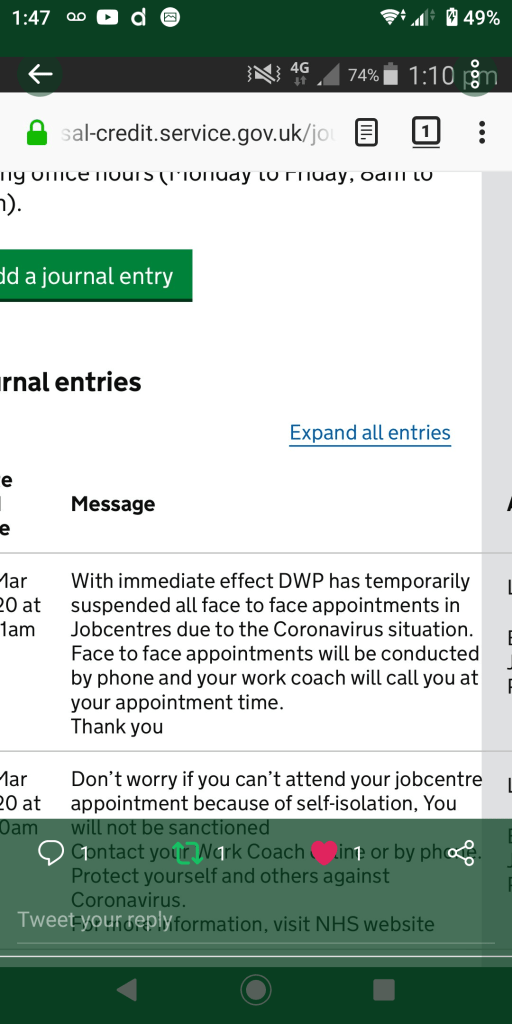







 Same Difference