Art In.. is delighted to announce that their artist Richard Butchins will present the documentary the Disordered Eye on BBC4 on 4 November 2020 at 9pm.
This investigative, entertaining and provocatively polemic one-hour film, reveals the enormous impact made on art by impairment and disability and in so doing, reveals that seeing is far more nuanced than we imagine. From blind sculptors, painters, to neuroscientists, Richard uncovers some fascinating ways contemporary visually impaired artists deal with vision loss.
Richard Butchins is not only an award-winning filmmaker but an artist himself. His own disability informs Richard’s work as an artist and he currently is undertaking a PhD by Practice at the University of Kent’s School of Arts. Richard says: “I use my own experience as a multiple disabled person to make work which examines disability through both mainstream television documentary in arts and current affairs, and my personal art practice.”
At present Richard is reinventing Vanitas through fine art photography, this project is called Floracide. He places flowers and meaningful objects in dramatic lighting, using techniques that reflect his background in film making. This can be translated into private commissions that incorporate items that are personal to the individual or client. Richard says:” The purpose of Vanitas paintings was ‘Memento Mori’ outwardly an expression of luxury and wealth, it was actually about the transient and fleeting nature of life and the possessions therein. It was considered the lowest form of the painted arts. The portrayal of the ‘perfection’ of the human form was the epitome of artistic expression. How apt then, to use Vanitas as a metaphor for the disabled body. While it could be said beauty is in the eye of the beholder I’m interested in the way beauty obscures cruelty and brutality. Cut flowers. Dismembered and broken bodies. These are pictures of the process of death.”
On his disability, Richard says: “All my work is informed by disability in some way or the other. I am not an activist or a campaigner but disability is the reason I take photographs and not painting.” Richard says:” In my PHD, I’m researching how disability has been completely ignored and side-lined by the art world. Cezanne is famous for painting apples. No one asks why he painted apples and not bananas or pineapples for example. It wasn’t for their shape or their colour, what made them so unique for him is it’s the fruit you use when you have diabetes to stop your blood sugar from crashing. Cezanne had diabetes and he would have to eat apples and bread to stop him from having crashes. Cezanne’s biographers by ignore this fact. His work was completely informed by his disability. My point is that there are many more significant artists out there whose work was intimately linked to their disability, although I am no art historian and should not claim this, I suppose it’s why I am doing a PHD.”
This is not the preamble to some bad taste joke: it is Harris’s genuine view and one that he is well qualified to explain. Like an estimated 1% of the population, Harris, 47, who has been doing standup since his early 30s, has Tourette’s syndrome.
“My shows are hour-long therapy sessions, but I am over the vast majority of my shit,” Harris said. “I’m doing it because I’ve got to work and I like making other people laugh.”
Harris who has OCD, ADHD and experienced childhood trauma, describes Tourette’s as “by far the most shameful affliction that I have”. Advertisementhttps://tpc.googlesyndication.com/safeframe/1-0-37/html/container.html
“It impacts on your life physically and psychologically in every way,” he explained.
Making the decision to be a comedian took a leap of courage. “It’s bloody hard to do comedy, but even harder when you are used to hiding your own damn self in public. The last thing you want to do is draw attention to yourself more.”
Now, along with other comedians around the world who have Tourette’s, Harris is taking part in a groundbreaking project to destigmatise a syndrome that remains the butt of jokes even today.
At last year’s Edinburgh fringe, controversy surrounded the “funniest joke” award presented to comedian Olaf Falafel.
His joke – “I keep randomly shouting out ‘broccoli’ and ‘cauliflower’. I think I might have florets” – drew criticism from many within the Tourette’s community for the stereotypes it helped to perpetuate about a hereditary, neurological condition characterised by “tics” – sudden, uncontrollable movements or sounds that can be painful and very debilitating. Contrary to popular belief, very few people who have Tourette’s swear involuntarily, but comedy has helped perpetuate this view.
“Coprolalia is the most extreme example,” Harris said. “I say it’s the only bit of Tourette’s I don’t have. I just swear a lot because I’m British.”
The collaboration between Harris and his fellow comedians with researchers from the universities of Bath and Oxford will help inform a forthcoming book, Tourette Syndrome, Stigma and Society, which will include chapters examining the relationship between the syndrome and humour.
It builds on earlier qualitative work by the research teams, which examined the stigma and social exclusion many with the syndrome have experienced when growing up.
“I was hidden in the cupboards and the rooms,” one person with the syndrome told the researchers. “I was never taken out in public. I was even kept away from my own family, except from my grandparents.”
“Many of our participants with Tourette’s reported that they rely on their partners or family members for support as they would be too ashamed or embarrassed to ask for help for a ‘swearing disease’,” explained lead researcher, Dr Melina Malli from the University of Oxford. “Many talked about the loneliness linked to having a condition that renders them a joke, while others highlighted the lack of reasonable adjustment their employers were willing to make for them. These are all aspects of Tourette’s that have not been talked about, as the condition has been trivialised through humour and jokes.”
Professor Rachel Forrester-Jones, director of the Centre for the Analysis of Social Policy at the University of Bath, explained: “Over the years jokes about Tourette’s have resonated and have shaped what people think about the condition, yet in a very narrow and specific way. This matters and has tangible impact on people’s lives because, partly as a consequence, we’ve too often downplayed the severity of Tourette’s and the support people need.”
Forrester-Jones has herself done standup, performing at venues in Margate and Canterbury. She said: “This new work is a recognition that comedy is a powerful tool. But by turning this issue on its head and by interviewing comedians who themselves have Tourette’s, we want to give them ownership of the issue, empowering them to shape the debates and discourse which influence attitudes towards Tourette’s.”
The researchers are keen to interview as many comedians with the syndrome as they can find. Participants have already been found in the Netherlands and Iceland.
“Studies suggest that people with Tourette’s are generally very creative and engage in different artforms, for example, comedy, music and theatre,” Malli said. “It is though interesting to understand why so many have focused on standup comedy. Some of the comedians I talked to said they liked the fact they could use comedy to make people laugh with them, rather than at them.”
So what did Harris think when he heard a Tourette’s joke had won the award at the Edinburgh fringe?
There is ‘Dave’. Who was my friend. Who was quite grumpy. The man who had a taste for champagne and chips. Dave who had to climb out of his wheelchair to get through my kitchen door, which meant that by the time he sat down at the lunch table my old dog Billy had already snogged his face off.It was this Dave who tweeted the day before he performed in the Paralympic Opening Ceremony whilst sat in his hotel room drinking the mini bar’s Moet: “To think in 24 hours all this will be over,” That was Dave. Human sized, Leeds through and through.A grumpy bastard. And when he wasn’t in the mood to be otherwise, impossible.
Then there was ‘Dave Toole’. It was this Dave who flew in the Paralympic Opening Ceremony: mighty, beautiful and with a…
Mrs Coster said before she contracted coronavirus she was “walking miles every day”.
“Please wear a mask, please keep your distance, please take Covid-19 seriously,” she said
“It’s an awful illness.. it could have broken me but it didn’t.”
Mrs Coster paid tribute to her GP and the staff at the hospitals where she was treated and added she planned “to have a full life”.
“Losing my hands and feet hasn’t made me any different,” she said.
She will continue to raise funds for a Kenyan charity and wants to register her dog as a therapy dog so she can take him back to her former school to give the pupils “a different perspective on differences”.
People who can’t physically get to walk-in or drive-through coronavirus testing centres should be given free taxis by TfL, said Caroline Russell today. Caroline questioned the Mayor on whether he would do this for older or disabled Londoners who are excluded from at-home testing because they can’t pass the credit reference checks, don’t have a car and can’t physically get to a walk-in testing centre. The Mayor said he was ‘happy’ to pass on this idea to his team of negotiators who are currently wrangling with Government to secure a new financial deal to keep TfL afloat during the current crisis. [1] Caroline previously found that up to a million Londoners may be ‘unbanked’ i.e. not have a bank account to help verify their identity through the TransUnion credit reference agency needed to order an at-home test. [2]
Caroline Russell says: “Up to a million Londoners could be barred from ordering at home tests through no fault of their own. You shouldn’t be blocked from accessing a vital coronavirus test because you don’t have a bank account, a car, or because you are unable to walk far.The current way of getting tests risks leaving some Londoners completely out in the cold, untested and unsure about their health. I’m glad the Mayor is taking this seriously and will add my idea of providing safe, Covid-secure taxis for these Londoners to get tested.” Caroline Russell, when chair of the London Assembly Economy Committee, published a report, Short-changed: the financial health of Londoners. The report found:
Identification requirements still bar some [from accessing bank accounts]. Migrants, gypsies and travellers, homeless people, people leaving abusive partners, young people leaving local authority care, and people with learning difficulties and poor mental health, can all struggle to get access to a bank account if they are unable to provide standard forms of identification to meet money laundering regulations. And despite policy changes to relax the restrictions, some people, such as those living in temporary accommodation, may still be denied access despite having the required documentation.
While the number of people with access to a bank account has increased, there is evidence many are choosing not to use them. Estimates suggest around eight million people in the UK have access to a bank account but do not actively use it. In London, this could be as many as a million people.
The Mayor highlighted a series of problems facing Londoners, including those excluded from credit checks, in his letter to the Prime Minister, published today. [3]
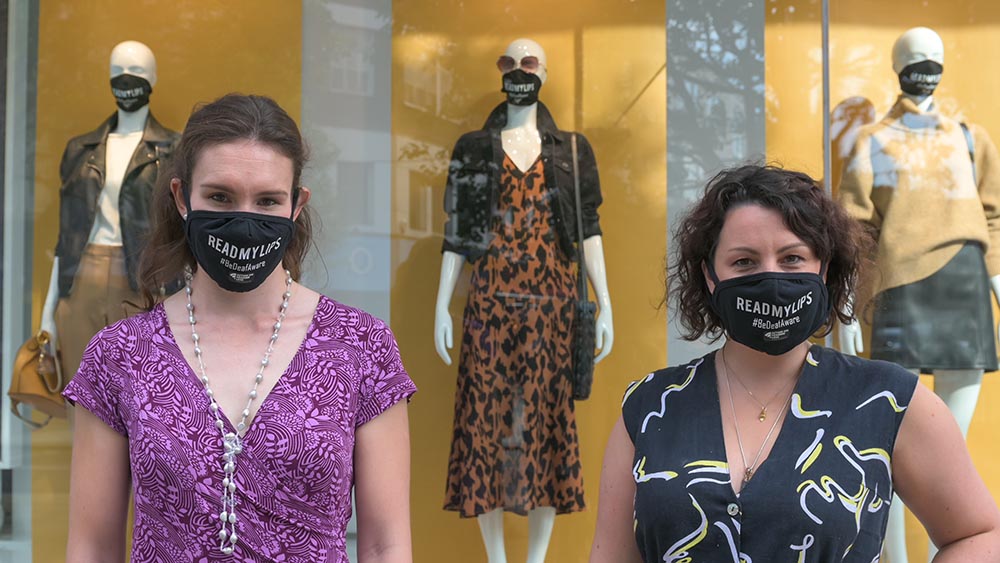
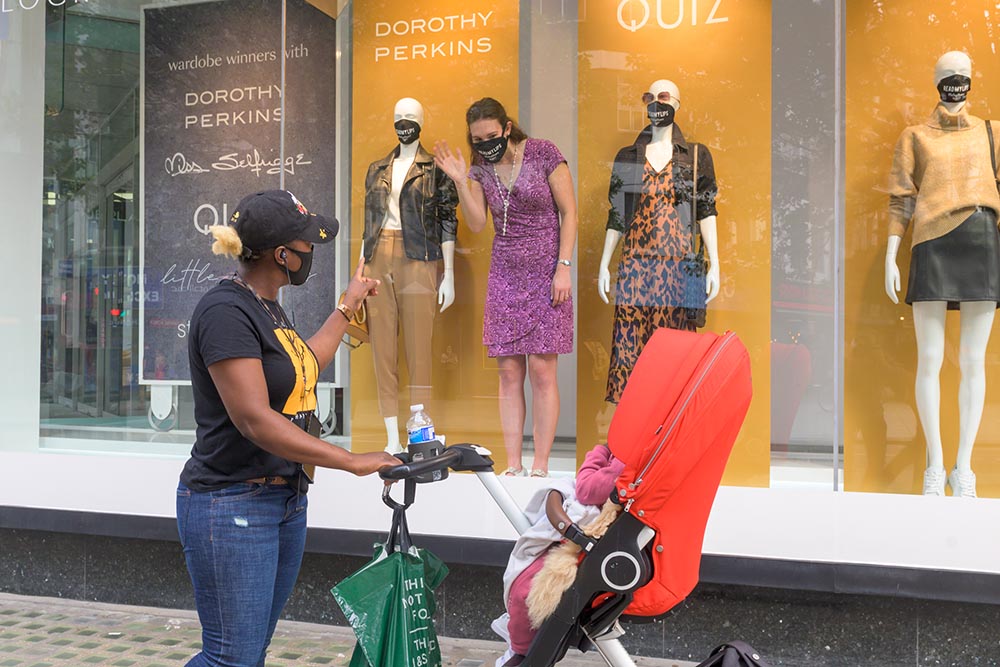
• 27% of deaf children are being taught by teachers wearing face masks or coverings in class, survey reveals.
• Figures rise to 49% in sixth form or college and 34% in secondary school.
• Governments across the UK do not recommend them in class and the National Deaf Children’s Society says many deaf children won’t understand their teacher.
• Charity calls for schools and Governments to act fast to stop the gap between deaf and hearing children’s results widening.
One in four deaf children across the UK could struggle at school because their teachers are wearing face masks or coverings in class, new research shows.
According to the National Deaf Children’s Society’s research with more than 500 parents, 27% said that some or all of their deaf child’s teachers were wearing a face mask or covering during lessons.
All four Governments across the UK say face masks and coverings are not currently necessary or recommended in classrooms and the charity says unless schools act quickly, deaf children will struggle even more academically because they won’t be able to understand their teacher.
The survey also shows that face masks and coverings become much more common as the age of pupils increases. In colleges and sixth forms, almost half of respondents (49%) said that at least some of their child’s teachers were wearing them during lessons. One in ten (9%) said all teachers were wearing them.
One in three (34%) said that some or all teachers were wearing them in secondary schools and one in six (16%) said the same for primary schools.
Deaf children in England already achieve less than their hearing classmates at every stage of school, including an entire grade lower at GCSE on average, and there are serious gaps between the results of deaf and hearing children in Scotland, Wales and Northern Ireland.
With face masks and coverings becoming widespread in classrooms, the National Deaf Children’s Society says that the gap will now get wider unless urgent action is taken because almost all deaf children rely on lip reading to understand what others are saying.
As a result, the charity is calling on schools to consult specialist staff, parents and deaf children every step of the way to make sure lessons remain accessible, particularly as the survey revealed just a third (30%) of parents were included in discussions about face coverings in class.
It also wants schools to introduce every reasonable adjustment possible to make sure deaf children aren’t disadvantaged, such as providing transformational technology like radio aids, organising more communication support and increasing deaf awareness among pupils and staff.
In addition, the charity says that all UK Governments must make sure its guidance clearly explains the impact of face coverings on deaf children, whilst also giving schools and teachers the information and funding they need to make reasonable adjustments for every deaf pupil.
Susan Daniels, Chief Executive of the National Deaf Children’s Society, said:
“Teachers across the country are battling to educate the next generation and keep everyone safe in extremely challenging circumstances.
“However, the UK’s 50,000 deaf children are part of that next generation and if face masks or coverings are used in class, it must not be at the expense of their education, life chances and mental wellbeing.
“Major changes like this must be discussed with specialist staff, parents and deaf children themselves every step of the way to make sure that lessons are still accessible, particularly when they go directly against Government advice.
“Governments across the UK also need to make sure that the impact of face coverings on deaf children and the need for reasonable adjustments is crystal clear for schools.”
“Education is a right, not a privilege, and this doesn’t change because you’re deaf.”
Assessors allegedly working for Capita have given a string of 1 star reviews for the company on the Indeed website, slamming long hours and unpredictable audits. Some warned of a lack of care or compassion for claimants, but one former assessor calls claimants “aggressive liars” and “supposed invalids” whilst another claimed that they had been “physical and verbally abused” and had a claimant “stork” them.
The reviews all appear on the Indeed website and we have no way of knowing whether they are all from genuine current or former employees of Capita. But they go all the way from the present back to 2014 and it would be very surprising if Capita had not taken action long ago if they believed they were bogus.
Dissatisfaction with Capita clearly goes back years and it seems that a switch to telephone interviews since the pandemic began has done nothing to improve matters.
“They are desperate! Can’t keep staff. Micromanaged! Daily time sheets breaking down what you did every half hour of your working day to justify every minute. . . If not meeting their targets in 6 months…sacked. I stuck it a year . . . Treated like school kids not health professionals.”
A current assessor from Leicester also gave 1 star out of 5 in July 2020 and said:
“Be prepared for 16 hour days, training is good but after support could improve a lot. You are thrown in after.”
Yet another 1 star review came from a former assessor from West Midlands in May 2020 who said:
“14 hour days but only paid for 7.5.
None clinical managers who have no idea what the job entails .
Do not leave your current nursing job .”
There was the occasional positive review, such as this 5 star one in March from a current employee in Birmingham:
“Competitive pay and great philosophy they take car [sic]of their staff and listen to our needs and concerns
Their values are well known throughout the business and regular training is provided”
But also in March, another former employee warned in a 1 star review:
“Please do not leave a NHS post to join Capita as a Disability Assessor – it’s a job that will completely take over your life. All cases are audited and virtually impossible to pass. There’s a very silly rule about getting five grade A reports in a row to get approved. This is a very difficult thing to achieve as audit will tell you amend cases for things such as not typing a word correctly.”
Another former employee from Derry, said in a 1 star review in February:
“The pay is inviting and even the training..although tough is doable. However the job is horrendous. All your work is put through a rigorous audit..and each auditor has different opinions on your work..so you do something one way one time and it’s right.. next time you do it you’re told you’re wrong.”
A current assessor in Wales gave a more generous two stars, but was as damning as their colleagues:
“Most DAs work in excess of 50 hours per week in the first six months. All work is audited and this can be frustrating when assessments are returned and amendments that you don’t agree with are made in your name. Very high staff turnover and nothing like the interview promises. Pressured and fast pace with 12hours work for every 8 hour shift.”
A lack of compassion and empathy for claimants was raised by some reviewers.
For example, a former employee from Cardiff gave Capita 2 stars in October 2019 and claimed:
“This is a great job for a single person with no life! The working hours are unreasonably long, the management are not supportive in the least and as for the care and compassion you have as a nurse – forget it! The whole job is productivity led with little thought or respect for claimants or those assessing.”
In a 1 star review from August 2019 a former assessor from the East Midlands wrote:
“Had to work extra hour’s on day’s off to keep up with the amount of work they gave you. They had no empathy for people who had a disability, they push more and more onto you. Very very stressful”
And In January 2019, a former assessor from Wales gave 1 star and warned:
“I cannot stress enough to anyone even contemplating this role DONT DO IT!!!! It is the most soul destroying, repetitive, depressing and miserable existence. . . There is so much pressure to get a report done, you and it are just a number and any care for yourself or the claimant will be overlooked as your forced to send off reports you disagree with but your name will be on it!”
Most of those posting reviews reserved their criticism for the company, but there were those who attacked claimants as well. A former assessor from Wrexham gave 1 star and said in October 2019:
“If you don’t mind being physically & verbally abused or have the claimants stork [sic] you, then apply.
No work life balance. Contracted 3 days a week but work 60+ hours with no extra pay. Management have no managerial skills. They couldn’t careless about your safety as long as they hit their targets.”
A (thankfully) former assessor from Ballymena gave Capita 3 stars in May 2019 but clearly hated claimants with a passion:
“. . . nearly everyone lies though their teeth to you and is clearly obvious . . . 90% will be blatant, ill-informed liars who attempt to emotionally blackmail you – as a AHP, this is so, so obvious – not least when you meet these supposed ‘invalids’ playing tennis at a local club or out for a days’ shopping . . . you have to tolerate an hour of a person’s lying and aggression . . . Clients are >90% verifiable, clinically and medically inconsistent, aggressive liars who will ensure you are complained against for telling the truth, so they get an extra £10 a week.”
There are very few reviews by Atos assessors on Indeed and whilst the role is called “Awful”, “Dull” and a “chain gang”, the level of pay is stressed by the majority of posters:
“Excellent pay”, “Wages good”, “Money is really good & that’s often the only reason people stay”, “This is very well paid job for what it is.” are the kind of comments that appear in the reviews.
Which perhaps explains why so few Atos assessors complain about their job, at least on Indeed.
Documents released by the DWP under the Freedom of Information Act explain the circumstances under which you can get a family member, carer, friend or support worker to replace you at your PIP telephone assessment.
According to the document, health professionals “can carry out the assessment with the claimant’s representative (family member or other third party) where prior consent is given”.
It is important to note that this is not about claimants who have an official appointee who is already legally entitled to make representations on their behalf. This is about a one-off arrangement which is put in place solely for the purpose of completing a single PIP assessment.
The main reasons set out for letting someone else do the assessment on your behalf are:
because you don’t have access to a phone;
because you have persistent phone connection issues which make completing a telephone assessment impossible;
for reasons connected with your health condition/disability.
The document gives no explanation as to what reasons connected with a health condition or disability would be sufficient to allow a third party to do the telephone assessment instead.
But clearly issues such as severe anxiety, depression or an autism spectrum disorder which makes communication by telephone extremely limited would all be possibilities. There are likely to be many others.
Consent for the arrangement has to be obtained both from the claimant and from the person who is to be their representative. This can be done over the phone, it doesn’t have to be in writing and it can take place at any time before or during a telephone assessment.
The conversation between the health professional and the representative can be part of a three way call between all the parties or just between the health professional and the representative.
The person chosen by the claimant as their representative has to know the claimant well and know how their health condition or disability affects their mobility and their ability to carry out daily living activities.
This might be your partner, a close relative, a carer, a friend or an advice worker or someone similar who has been given detailed evidence about how your condition affects you.
Even if the representative can’t answer every question asked by the health professional, their input may be sufficient to allow a decision to be made.
If this is something that you think would allow a more informed decision to be made in your case, it would be a good idea to inform the DWP as soon as you get a date for a telephone assessment.
It is entirely possible that there will be considerable resistance to the idea and there is no legal right to have such an arrangement made.
But the fact that it is DWP policy means that a request cannot legitimately be refused without giving any reason or on grounds that are unfair or discriminatory.
If you are not happy with the response you get from the assessment provider, consider making a formal complaint and involving you local MP’s office from the outset.
You can download the document named ‘Guidance limited evidence decisions’ from the What do They Know website.
Continuous Online Resolution (COR), a revolutionary new way of deciding PIP, and eventually all other, appeals online has been scrapped following an unsuccessful pilot, HM Courts & Tribunals Service (HMCTS) has announced.
COR was not the same as simply lodging your appeal online.
Instead, COR was a system whereby an appeal panel considered your appeal online and gave a ‘preliminary view’ of what award of PIP, if any, you should get after reviewing the documents and asking you written questions online.
If you and the DWP agreed with this decision then the appeal was completed. If you didn’t agree then the appeal went to a normal appeal hearing.
COR was originally set to be trialled with 1,000 appellants in the Midlands, Sutton and North-West Tribunal Panel area.
In the event, only 254 claimants accepted the invitation to join the pilot and of these only 145 cases were considered suitable and went ahead.
69 cases were resolved by an online panel and all but one of these increased the DWP’s award.
Claimants involved in the pilot had mixed feelings about it.
Those who got a decision they were happy with from the online panel were positive about the experience. Those who had to go through the online process and then on to a normal appeal were frustrated and disappointed.
Some appellants said they accepted a preliminary decision that they were not happy with simply because “they felt they had waited long enough already and did not want a further delay caused by waiting for a face-to-face hearing.”
HMCTS has now announced that the system will no longer be rolled-out, primarily because it costs too much to select suitable cases and carry out all the admin tasks that were not automated within the software.
According to HMCTS
“Evaluation of the wider context of COR and the administrative resource required to deliver it, revealed that a substantial admin resource was required to support COR in selecting, sifting and onboarding cases, as well as carrying out time-consuming tasks which were not automated by the COR system. This therefore had resource implications for any scaling up of the pilot on a national basis, particularly given the low levels of suitable cases.”
HMCTS say they will continue to look for ways in which appellants can interact with a tribunal online.
The first is that the film happened at all. Its director Nathan Grossman had never made a documentary feature before.
The former film student was curious when he heard, in 2018, that 15-year-old Swedish girl Greta Thunberg had decided to bunk off school to sit alone outside the country’s parliament in Stockholm as part of what she was calling a “climate strike”.
He started filming a few days later. At first he shot in a low-quality mode on his camera to save space on memory cards, thinking he would be lucky if her story made a short feature for the local news.
But, within weeks, children around the world had started their own climate strikes. Arnold Schwarzenegger was retweeting Thunberg’s posts and Grossman had switched to full high definition.
He continued to film Thunberg and her father at every twist and turn of the adventure that unfolded over the next year.
And what an adventure. Thunberg herself said it could be a movie but it would be a very surreal one “because the plot would be so unlikely”.
Just being along for the ride is exciting enough, but I Am Greta does much more than that.
What Grossman has made is a coming of age movie wrapped up in a super-hero flick. This is the story of how a troubled and lonely child discovers her hidden powers and uses them to change the course of the world.
The secret of Thunberg’s charisma
The whole thing is just so unlikely. It turns out that this small, rather dour girl with pigtails has a preternatural charisma.
As we unravel the paradox of why that is, we begin to understand what is so special about Thunberg.
Most people don’t realise how unforgiving documentaries are on their subjects: If you pretend to be something you are not, you will be found out.
The only way to be “good” at films like this is simply to be yourself.
Watching the film, you realise Thunberg is so fascinating because she is utterly authentic. She isn’t doing this for appearances, she isn’t doing it because she wants fame or attention, she is doing it because she has no choice.
She feels compelled to do something – anything – to try to get the world to take climate change seriously.
Why she can’t look away
Early on in the film, she tries to explain why. “Once the climate crisis has got your attention you can’t look away,” she says.
“Once you understand the magnitude of the problem, you can’t erase it.”
She doesn’t realise that this is the diametric opposite of how most other people feel: We know it’s happening but do everything we can to look away.
Every time Thunberg addresses a conference, we see world leaders tapping away at their smartphones in the audience, or trying to get a selfie with her, but otherwise apparently oblivious to her words.
That tension – between her desire for change and the lack of urgency the politicians feel – is what makes the story so electric.
When Thunberg urges the European Commission to take action on climate change in Brussels, Jean Claude Juncker – then the commission’s president – responds with a speech about harmonising Europe’s toilet flushes.
The compulsion to campaign
Thunberg gives us her take on events in diary excerpts. We learn she has no doubt that Asperger’s Syndrome is a central part of what gives her such “laser-focus”.
“I have it, I wouldn’t say I suffer from it,” she corrects a reporter at one point. And the film shows how campaigning has helped lift Thunberg out of profound depression.
As her influence begins to grow, there is a wonderful sequence on a train where she is filmed writing her diary.
“It feels almost indescribable that something is finally happening,” she writes and breaks into a contented smile. “There are so many who are interested in the same things as I am.”
She talks about how lonely she was at school and the eating disorders she battles. At one point her father mentions how her “selective mutism” and “compulsions” have vanished.
There’s a touching scene where her mother chokes back tears as she describes the progress Thunberg has made. Yet you can’t help thinking her relentless compulsion to campaign can be a curse.
Towards the end of the film, we see her crouched in the cabin of the racing yacht taking her to New York. Huge waves crash past the windows behind her. Thunberg is in tears as she records her diary on a phone. She is missing her dogs, her home and her “routines”.
‘How dare you’
The climax comes with Thunberg’s “how dare you” speech, where she scolds world leaders for their lack of action.
“The eyes of all future generations are upon you,” she warns at the UN Climate Action summit in New York, “and if you fail us, I say we will never forgive you.”
She later joins tens of thousands of protestors on the streets of New York – and millions more join climate strikes around the world.
It is a triumph for Thunberg and her campaigning, and a landmark in progress for action on climate change.
But you can’t help but feel anxious for her future. We have seen the meaning and purpose she has found in campaigning and wonder how she will fare now she is back at school.
The final scenes of the film show Thunberg with her beloved pony.
“I sometimes think it might be good if everyone had a little bit of Asperger’s,” she says as she grooms him, “…at least when it comes to the climate.”
I Am Greta is released in the UK and Ireland on 16 October 2020. Special screenings followed by a Q&A will take place on Sunday, 18 October.
A mother of a young boy with Down’s syndrome is helping to teach people about appropriate language, after being hurt by words people often used.
Becca, from Cornwall, uses flashcards to make sure people are aware to say things like saying someone “has Down’s syndrome”, rather than “suffers with Down’s syndrome”.
The campaign is being rolled out in hospitals for midwives and other healthcare workers to use, with many in the profession talking about it on social media.
A children’s clothing company has offered to run it, with her son Arthur as the model, and she has been asked to translate it into other languages.
UK doctors say it is the first such case they have seen linked to the pandemic coronavirus.
Although rare, sudden hearing loss can follow other viral infections, such as flu.
The ear-nose-and-throat experts told BMJ Case Reports journal steroid drugs could help avoid this damage if given early enough.
Blood transfusion
The patient, who has asthma, had been admitted to a London hospital with Covid-19 symptoms and transferred to intensive care after struggling to breathe.
Tests confirmed he had coronavirus and he was put on a ventilator machine.
He also needed various drugs and a blood transfusion before beginning to recover and coming off the ventilator 30 days later.
But a week after the breathing tube was removed and he left intensive care, he noticed tinnitus (a ringing or buzzing noise) followed by sudden hearing loss in his left ear.
A hearing test suggested the loss was linked to damage to the hearing nerve, the middle ear, or both, rather than inflammation or a blockage to the ear canal.
Doctors could find no explanations for his hearing problem, other than his recent Covid-19 illness.
They gave him steroid tablets as well as injections into the ear, which helped a little, but he has some irreversible hearing loss.
“Given the widespread presence of the virus in the population and the significant morbidity of hearing loss, it is important to investigate this further,” the team, from University College London and the Royal National Throat, Nose and Ear Hospital, said
The virus is thought to enter and infect a particular type of cell found in the lungs, by zoning in on a surface receptor they possess.
The researchers say this same receptor is found on the cells that line the middle ear.
And they are recommending medics look out for hearing complications in Covid-19 patients and refer any with sudden hearing loss to an expert for urgent care.
On New Year’s Eve, 2017, Abokobong Amanam picked up what he thought was a firecracker. But it was actually a firework which exploded blowing off two of his fingers. When his family tried to get him a prosthesis, they could only find white-skinned or wooden ones.
So his elder brother, John, a sculptor who’d previously worked in special effects in movies, decided to step in, changing both their lives.
The Care Quality Commission (CQC) will investigate concerns that some care homes still have blanket orders in place covering groups of residents.
It became clear that blanket use was in place in some care homes in the early weeks of the pandemic.
But it was widely condemned by the CQC and medical bodies.
The decision about whether or not to attempt resuscitation if a very sick person falls dangerously ill is supposed to be discussed with the individual, or family members if they are too sick.
Doctors can make a decision on the spot without consultation in exceptional circumstances.
However, the decisions are always supposed to be made on an individual case-by-case basis.
The health minister Lord Bethell has asked the CQC to investigate the latest claims. He told the House of Lords that blanket use of DNARs was “unacceptable”.
Extraordinary pressures
Dr Rosie Benneyworth, CQC chief inspector of primary medical services and integrated care, said: “Health and social care providers have faced extraordinary pressures this year. Both staff, and people using services and their loved ones, have at times raised concerns with us about care.
“It is vital that we take this opportunity to learn from what has happened – challenging poor care and sharing the ways that providers have put people’s needs at the heart of their care so that others can learn from them.”
Dr Benneyworth said it was unacceptable for DNARs to be applied to groups of people of any description.
“These decisions must continue to be made on an individual basis according to need. Through this review we will look to identify and share best practice in this complex area, as well as identifying where decisions may not have been patient-centred, and ensuring mistakes are not repeated.”
NHS England said it had already made clear that orders should only ever be made on an individual basis.
The charity Pohwer said it had found blanket DNARs put in place across Norfolk, West Midlands, London, Oxfordshire, Sussex, Surrey and Buckinghamshire, potentially affecting more than 700 people.
In a statement, the charity said: “There are probably many more cases where the homes did not necessarily admit to the blanket DNAR order, or where they did not feel comfortable speaking with an external organisation. So 704 is the minimum number of individuals that would have otherwise been affected.”
Last week Amnesty International said sending thousands of older untested patients into care homes in England at the start of the coronavirus lockdown was a violation of their human rights.
More than 18,000 people living in care homes died with Covid-19, and Amnesty says the public inquiry promised by the government must begin immediately, including a thorough review of the use of DNAR forms.
When Lina Pane is swimming she glides weightlessly. She describes herself as a mermaid – her swimming pausing the searing pain that regularly afflicts her body.
“I am free. I feel no pain that one hour that I am in the water,” she says.
But when she is on dry land Pane speaks about her body very differently.
“I live with a terrorist. That’s the only way I can describe it. I just never know when it’s going to go off,” she says.
“If a [muscle] spasm happens then I could be down for a week or two weeks, and I’ll be wasting more muscle and it will take me longer to get back up … It’s like spiders and snakes just biting you so badly that you can’t move.”
Pane was born with arthrogryposis multiplex congenita (APC), a rare disorder that affects muscle and joint development. The most effective form of exercise – and relief from intense pain – is swimming in a wheelchair-accessible, heated pool.
But Melbourne’s months-long lockdown due to the coronavirus has forbidden Pane from accessing this escape. And with the state’s roadmap requiring 14 days of zero cases in metropolitan Melbourne before indoor pools can reopen, relief is likely still months away.
“I just thought the pool would be closed for a few weeks, but it just kept on dragging on. And then the pain was increasing, the spasms were increasing,” Pane recounts.
“I’ve gone from being a few hours in my bed to the majority of the day, because my spasms are so bad.”
Pane uses a wheelchair when she goes out, but prior to the pandemic she was able to walk fairly easily around her home. However, months without access to hydrotherapy has caused her to rapidly deteriorate.
“As each week goes past it’s getting worse … I’m worried I’m not going to be able to walk anymore,” she says, tears cracking her voice.
Pane used to use a scale of one to 10 to describe her pain levels, but now that no longer suffices. Each day is now closer to a 12.
“I’m petrified that I’m going to live in my bed.”
Outdoor pools opened on 27 September but Pane says this won’t work as the water’s frigid temperature could do more harm than good.
Victoria’s Department of Health and Human Services (DHHS) told Guardian Australia people could access private hydrotherapy pools for medical reasons, such as those in hospitals and rehabilitation centres, but Pane says this isn’t possible as the vast majority of these facilities are not allowing outpatients inside.
Her support coordinator, Nicky Thursfield, says she has been trying for weeks to get Pane and dozens of other clients with disabilities into a pool.
“I’ve been regularly on the phone to most of the pools, MSAC, GSAC, private pools. I’ve even tried getting clients into hospital pools but it’s just not happening. Even the hospitals are taking a very conservative approach, which I know they have to,” Thursfield says.
“But a lot of the pools in the hospitals are separate from the rest of the hospital. So why can’t we open them up to get people back into them on a monitored and step-by-step process?”
It’s a problem that should have an easy fix, Thursfield believes.
“It’s ridiculous … Break it down so you don’t have 20 people coming at once, but step it out as you would normally do any other medical appointment,” she says.
“I work with a lot of people that require hydro to be able to function. People that have had strokes … Parkinson’s.” Advertisementhttps://a0906900def27047e34f58097da18c93.safeframe.googlesyndication.com/safeframe/1-0-37/html/container.html
One of the only open outdoor hydrotherapy pools in Melbourne is at the luxury Peninsula Hot Springs, more than a three-hour round trip for Pane. That trip alone would take her days to recover from.
“I was thinking maybe I need to voluntarily admit myself into a hospital or rehab unit to get somebody to notice me,” she says.
Leah van Poppel, chief executive of Women with Disabilities Victoria, says while the state government had made efforts to accommodate people with disabilities, more needs to be done.
“There will be lots of people with physical disabilities who will be experiencing that and it seems it would make common sense for councils to be talking about opening up pools and other facilities to groups of people with disabilities in their local community,” Van Poppel says.
Despite calls for flexibility for people with disabilities, a spokeswoman for DHHS insists public indoor pools must remain closed due to Covid-19 concerns.
“We understand everyone is making huge sacrifices and the closure of indoor pools has been difficult, but this strategy to battle this highly infectious virus is working,” she says.
A strategy that is working for the collective, but not for Pane and those with similar conditions.
The department said their “aim is to do everything [they] can to keep Victorians safe, particularly those who are more vulnerable in our community such as those with a disability or complex health needs”.
But after multiple letters to MPs went unanswered, Pane says she doesn’t feel heard.
“It actually makes me feel really angry because it’s like I feel like I’m invisible, I’m not seen … I know it’s not just me, there are so many other people like me, that are getting worse,” she says.
“After the lockdown is over I will still be left with the aftermath of what it has done to me.”
The mother of Quaden Bayles has told the disability royal commission her family is still receiving death threats and abuse months after their anti-bullying video went viral.
Indigenous woman Yarraka Bayles, whose son Quaden has dwarfism, said on Monday she wanted to use her new platform to change the way the education system dealt with the bullying of children with disabilities.
Bayles explained the lead-up to the video on the first day of a new round of hearings focused on the education system on Monday.
The commission was told how Bayles arrived at Quaden’s school and spotted a group of students patting him on the head and making fun of his height.
She asked Quaden if he was OK, but he shooed her away, the commission heard.
“But then, when he got to the car, he let it out,” the counsel assisting, Kerri Mellifont QC, said.
Quaden had been “hysterically crying and screaming about wanting to kill himself”, the commission heard.
A frustrated Bayles posted the video after she called the school to raise the situation but was told staff would look into it the next day.
The clip – in which the Murri boy urges his mother to “give me a knife, I’m going to kill myself” – made global headlines and prompted an outpouring of support for the family. Advertisementhttps://1fabf6cb7cf76e4f9f6790dc9eab88a6.safeframe.googlesyndication.com/safeframe/1-0-37/html/container.html
Quaden, a keen Rabbitohs fan, was given the opportunity to walk on to the pitch for an exhibition match in Queensland between Australia’s Indigenous All Stars, made up of Aboriginal and Torres Strait Islander players, and the New Zealand Māori.
But the Queensland family has also faced abuse and threats, the commission heard.
“After that video went viral, you actually received online trolling and abuse from people you don’t even know,” Mellifont said.
“Yes, still to this day, every day,” Bayles replied. “People who think it’s their business to make comment.”
Bayles said the family received “lots of death threats … against my children, my granddaughter”.
Bayles told the commission Quaden’s school had attempted to improve the situation after her video went viral, but she feared he would be forced to return to permanent home schooling.
However, Quaden is now back at school, in part thanks to his year 4 teacher, Bayles said.
In a pre-recorded video, Quaden was asked by Mellifont what he’d like to see change at his school.
“Probably … one more support worker. A Murri one,” he said. “So when [the support worker] is away, I can have that one and he’s gonna be there.”
Asked about his message to new students who might not know about his disability, he said: “Just don’t be rude to kids who have disabilities and just be kind and be nice.”
Bayles said she would like to see less focus on “anti-bullying”. She said a disability organisation had offered to give a presentation on dwarfism to the whole student cohort, but the school was yet to set a time.
She raised the prospect of an anonymous reporting system that could monitor whether students were being bullied.
“I would rather not call these kids bullies,” she said. “I don’t believe they want to hurt kids. They don’t understand the consequence of their actions. I don’t want to get kids expelled or suspended because that doesn’t help.
“I don’t blame them or the school, in some respects. There’s just not enough education around kids with disabilities, let alone Murri kids with disabilities, in school.”
The hearing continues.
In Australia, the crisis support service Lifeline is 13 11 14. In the US, the National Suicide Prevention Lifeline is 1-800-273-8255. In the UK, Samaritans can be contacted on 116 123.Other international suicide helplines can be found at befrienders.org
DiMarco is stunningly handsome, with piercing eyes and a penchant for acting. He’s also deaf — a fact that, in the eyes of television producers, seemed to override everything else.
“I always felt that the image that was kind of made of me onscreen was very one-dimensional,” he says. “I was always asked specifically about my deafness, about my identities, but never about the things that I liked or disliked or, really, anything that would have offered more to who I was.”
DiMarco would become the first deaf contestant to win the competition, before going on to Dancing With The Stars and winning that, too.
Now, it’s DiMarco’s turn as a series creator. His new Netflix reality show, Deaf U, follows a group of friends at Gallaudet University in Washington, D.C., the world’s only liberal arts college for the deaf.
It’s a show about college: hookups, activism, awkward dates and late nights in clubs. It’s also a show about friends forging identities and navigating a world not always designed for them.
A Gallaudet graduate himself, DiMarco wanted to show the panoply of experiences on campus — from the “Deaf Elite” descendants of well-known deaf families on campus, to those teetering between a hearing world and a deaf one. Article continues after sponsor message
Some students rely on hearing aids or cochlear implants. Others shun the idea of talking in anything but American Sign Language.
DiMarco spoke with NPR’s All Things Considered about the new show, which debuted Friday on Netflix. “There is no one right way to be deaf,” he told host Michel Martin, through an ASL translator.
Instead, he says Deaf U presents a chance to reframe the world’s understanding of what it means to be deaf. It offers “an entrance into our world, which is so rich in culture and so layered and diverse,” DiMarco says.
“This was a perfect opportunity, and a great entrance point, to bring the hearing world in.”
Interview Highlights
On the divide at Gallaudet between the capital-D “Deaf Elite” and the lowercase-d “deaf”
So often we would refer to people as “elites” who had come from these deaf families, and we’re often forgetting about those other students who had a different perspective. You know, myself, as somebody who views elites as a group, I see it can be a positive thing in preserving sign language, our culture. It’s about passing down those legacies and those traditions that make our culture so rich.
There certainly are “lowercase-d” people who might see elites as someone who’s had an unfair advantage, whether it’s their educational background, their confidence, their identity, their language fluency. Coming into Gallaudet for them, they often face a challenge that they have to not only focus on getting a degree, but also focus on learning a new language and a new culture.
There are so many layers, I believe, to that divide between elites and, perhaps, “lowercase-d” deaf. It’s something that’s really key for our community. It’s very complicated, but it’s a discussion we’re starting to have.
On hiring a largely deaf crew to make the show
As someone who is deaf, I know that if you really want an authentic story, it has to happen behind the camera.
Deaf eyes really capture the culture best, and we actually made it a requirement that we had to hire deaf people. We wanted to ensure that, at minimum, we had 30% of a deaf crew behind the scenes working. We ended up with 50%, which was incredible. And it’s the first time it’s been done in history.
Never in Hollywood history have deaf people had an opportunity to be able to get into these rooms and build power within the community in order to tell our stories in an authentic way. We’re working so later we have a little Hollywood empire, where we’re able to develop our own TV shows and our movies and our content that really reflects deaf culture and an authentic experience. This, essentially, was the start.
On where he hopes to take the series
Obviously, my first hope is for season two. But I really would love to take a deeper dive into some of the layers that make our community so rich. I don’t want to get too serious with the topic, but we’re seeing peoples’ real lives outside of the deaf world, and I would love to highlight that.
I do have a few other projects outside of this. I have another project with Netflix as well, called Audible, which follows a deaf boy at my alma mater high school in Maryland. It’s a really interesting opportunity to see what it’s like for a deaf kid to go to a deaf school and play football with all of his buddies, then go home and not have access to language. His parents don’t sign. And that truly is the authentic story of the deaf community in America.
A blind marathon runner who has raised millions of pounds for charity has been appointed an OBE.
Dave Heeley, known as “Blind Dave”, from West Bromwich, has been honoured for services to charitable fundraising.
His endurance feats have included running marathons on seven continents in seven days and plunging into the sea at Alcatraz three months after learning to swim.
The 62-year-old said he was “totally floored” by the honour.
“I do all these crazy things because I enjoy them, not for the recognition,” he said.
“After an event when a charity comes up and says ‘thanks’ that’s all you want.
“But when they told me about this award you could have floored me with a feather.”
Mr Heeley gradually lost his sight throughout adulthood, but it spurred him on to more extreme fundraising efforts.
“It’s not about the money,” he said, “it’s about raising awareness”.
He dedicated his award to his team, saying: “Blind Dave OBE has a fabulous ring to it, but it’s all down to the team around me.”
There were defeats, however, for Britons Andy Lapthorne and Jordanne Whiley in the men’s quad singles final and women’s wheelchair doubles final respectively.
Lapthorne was beaten 6-2 6-2 by Dylan Alcott of Australia, while Whiley and partner Yui Kamiji lost on a match tie-break 7-6 (7-2) 3-6 10-8 to Diede de Groot and Aniek van Koot.
Action on Hearing Loss, the UK national charity, has announced that it is returning to its original name of RNID.
The return to the household name, which dates back to 1911, is part of the charity’s ambitious plans to reach more of the 1 in 5 people in the UK who are deaf or have hearing loss.
The focus on the daily issues deaf people have faced during the COVID-19 pandemic, such as the barriers to communication caused by face coverings, has highlighted the need to be a strong brand, the charity has said.
Extensive research with 6,000 people led to the charity’s new strategy and brand purpose, which is that “Together, we will make life fully inclusive for deaf people and those with hearing loss or tinnitus.”
The research found that RNID was still more popular and more trusted despite the name not being used since 2011. People surveyed said they felt that the current brand did not reflect the charity’s history or communicate the amazing work it did.
Mark Atkinson, Chief Executive, said:
“Returning to RNID and redefining our purpose is a critically important step in our journey to make life more inclusive for deaf people and those with hearing loss and tinnitus. RNID continues to be a well-known and much-loved charity and I am proud that we have the confidence to make bold and radical changes which are crucial to our ambition to grow our audience reach and impact.
“RNID will be a stronger voice for deaf awareness and invest in campaigning for change. We will connect people to the information and advice they need. And we will continue to fund new treatments for hearing loss and tinnitus.
“Our new purpose, name and identity is about making it clearer who we are for and why we exist. Because now, more than ever, it’s vital that people across society understand the challenges deaf people and those with hearing loss and tinnitus face.”
There was an 84% increase in the number of online disability hate crimes reported to police in Wales last year, figures show.
Research by two disability charities shows complaints to the three Welsh police forces that responded jumped from 19 in 2018/19 to 35 in 2019/20.
There are calls for the Welsh Government to introduce tougher legislation to combat the problem.
The Welsh Government said hate crime legislation was a UK government matter.
But a spokeswoman said it would “use every lever available” to combat hate crime, including by providing funding for advocacy and support for victims.
Dyfed-Powys Police has seen reports of online hate crime against disabled people treble between 2019 and 2020, while Gwent Police saw a 50% rise and North Wales Police saw no change, according to figures obtained by the Leonard Cheshire and United Response charities.
South Wales Police did not respond to repeated requests for the information, the charities said.
The figures, obtained under the Freedom of Information Act by the two charities, also reveal just four people were charged by the three police forces that responded last year.
The three forces – Dyfed-Powys, Gwent and North Wales – received 268 complaints alleging hate crimes towards disabled people.
But CPS figures show there were 42 prosecutions for disability hate crime in Wales in 2019/20, with 36 of those (86%) leading to successful prosecutions.
Welsh police forces say they take all forms of hate crime very seriously.
My autistic son was called ‘frightening’
Alice Legg and a number of her children have autism. She said they had been subjected to “horrible” abuse.
“People call us offensive names like ‘retard’ and ‘spastic’ and make us feel like we shouldn’t be part of the community,” said Ms Legg, from Monmouth.
In one incident, she said her eldest son Adam, who is severely autistic, was left feeling “isolated from the community” after a man told her he was “frightening” his daughter.
“Being told that your son is frightening to other people because of his condition is pretty awful,” she said.
Ms Legg said she had reported another incident she considered to be a hate crime to police, but she did not feel it had been taken seriously.
“I was made to feel like I was just being a nuisance,” she said.
Gwent Police said in that instance no offences were committed but added: “The victim was spoken to by our hate crime officer and has been referred to the Connect Gwent Victims’ Hub for support.”
Mr Biddle, who now lives in Abergavenny, lost both legs, an eye, his spleen and is deaf in one ear after Mohammad Sidique Khan detonated a bomb on the Edgware Road tube train.
He told BBC Wales about two incidents where he was the victim of abuse because of his disability.
One one occasion, Mr Biddle said he was called a “lazy bastard” at the local rubbish tip while his wife was emptying the car of waste.
Despite his wife’s best efforts to explain her husband was disabled, the abuse continued.
Mr Biddle reported it to the police but said “nothing came of it” because witnesses would not provide evidence.
In a separate incident, he said two schoolgirls “threatened to tip me out of my wheelchair and stab me”.
He reported the matter to police and it was dealt with through restorative justice.
Mr Biddle said hate crime against disabled people was often due to resentment borne out of a lack of understanding.
He said it was not given equivalence in law with other forms of hate crime, and called for victims to make sure it was recorded as a hate crime.
What do the charities say?
“As a charity that advocates for digital inclusion, we want to ensure that the internet is a safe place for disabled people,” said Glyn Meredith, director of Leonard Cheshire Cymru.
“Given the recent Covid-19 pandemic, many disabled people have been confined to their homes, with only digital technology to keep them connected to the outside world.”
Mr Meredith said the Welsh Government “needs to demonstrate its commitment to online safety for disabled people” by introducing legislation similar to Scotland’s Hate Crime and Public Order Bill.
A Welsh Government spokeswoman added: “No person in Wales should have to tolerate prejudice or hate crime. We are committed to making sure all victims of hate crime are supported and perpetrators are held to account.”
What do Wales’ police forces say?
North Wales Police said it took disability hate crime “extremely seriously” and had two officers dedicated to encouraging the reporting of such crimes. The force urged victims to come forward.
Gwent Police said it had a team of hate crime support officers who received additional training to support victims, offer advice and signpost victims to other organisations that may be able to offer further support.
It said it knew the numbers of reported hate crimes “still do not reflect the lived experiences of people in Gwent” and urged victims to get in touch.
South Wales Police called on people to report all hate crimes and “hate incidents” to help the force “build up a picture” and allow officers to “offer support and advice to those affected”. It added that “not all hate incidents will amount to criminal offences”.
Dyfed-Powys Police says it is aware that disability hate crime, as with all hate crime, is under reported.
The force said: “Reporting crimes enables the police to investigate and bring offenders to justice, whether that is through the courts or by using other means, such as out of court disposals.
“Some victims prefer not to support an investigation but by coming forward we can help them to get any support they need. We know that the impact of hate crime can be deeply disturbing for those targeted and we are working with our partners to reach them and tackle offenders.”
Staff at a care home in Kettering have paid tribute to Robin Smith, the UK’s oldest man with Down’s Syndrome, who has died at the age of 78, with one care worker saying ”no one that met him could resist adoring him”.
Mr Smith had lived at Northleigh care home since 1986 and died on 27 September, weeks before his 79th birthday. At the care home he took part in yoga and aerobics and could often be found watching the horse racing or singing and dancing to his favourite Cliff Richard and Elvis songs.
Born in 1941, Mr Smith was given a life expectancy of 12 years, due to having Down’s Syndrome.
Billy Fulcher, support worker at Northleigh residential home said: “Robin was the legend of Northleigh. I was so happy to work with such a caring and special individual.
“Robin was more than a resident to me, he became part of my family. He touched everyone’s heart in that way. I take great pleasure in knowing I was part of his life.
“He had such a beautiful soul and he had a laugh I will never forget. He lit up a room with his twinkly eyes and cheeky smile and no one that met him could resist adoring him!”
Elizabeth Munns, a resident at Northleigh residential home, added: “Robin was my friend and he was a very nice man. I’m going to miss him.”
Mr Smith’s brother, Ian Smith, revealed that the time his brother spent at Northleigh was “where he was happiest, with the amazing staff and residents”.
“To all the staff I would like to say a massive thank you for their kindness and amazing care and Robin clearly adored them all.”
The care home will throw a ‘night to remember’ party on 9 October, on what would have been Robin Smith’s 79th birthday, to celebrate his life.
Benefits and Work has begun working through hundreds of pages of guidance and training relating to PIP and WCA telephone assessments that have been published on the What Do they Know website.
The guidance includes previously unseen information that could make the difference between winning and losing an appeal about failing to be present for a telephone assessment.
Benefits and Work has heard from numerous people with experiences like this:
“Capita did not call. My appointment was at 11.45, I waited and no call was received. I phoned them at 1215hrs and was told that I had failed to attend for my assessment and that they had called 3 times! I was sat with my phone waiting for the call.”
However, information in the Capita PIP guidance would make it much easier to prove whether the assessors claims were true.
The guidance states that Capita PIP assessors are required to phone a claimant three times within a prescribed period to carry out a telephone assessment. On the third call they must leave a message on the claimant’s voicemail asking them to rebook.
But we know that some claimants are simply handed back to the DWP rather than given a chance to rebook.
However, If they do not get a response Capita assessors are told they must immediately take a screenshot of their call history and send it to their line manager.
If you have your PIP stopped for not answering the phone when you know that you were never called, you can require Capita to provide you with a copy of the screenshot of the call history.
Different arrangements are in place for IAS. There’s more details in the guide
One of the issues that assessors face as a result of the move to telephone assessments is that they can no longer carry out physical examinations or use visual observations of such issues as lack of eye-contact or trembling to gather evidence about a claimant’s mental health.
For this reason IAS have also published guidance which instructs assessors to ask detailed questions about ‘Fertile areas’, such as childcare and hobbies, in which PIP assessors should look for evidence.
For each fertile area IAS have produced a graphic listing different activities and the PIP related issues that it might provide evidence on.
So, for example, assessors are told childcare is a fertile area and that ‘playtime’ is a potential activity that will allow the assessor to collect information about:
motivation,
safety,
cognition,
communication,
sensory [issues]
All of which may be true. But if the assessor simply makes the assumption that because you are able to play with your children then you don’t have any issues in these areas then it will not be an accurate assessment.
So, it’s vital that if you are asked about any of these activities you explain in detail any difficulties you have, even if you are not asked to do so.
We’ve provided more information on this in the PIP guide.
We’ll be working our way through the documents over the coming weeks and adding anything else of importance that we find to the guides.
If any readers download the documents and finds anything helpful, we’d be happy to hear from you.
They had tried to ride rollercoaster The Smiler and got near boarding without any staff intervention until a worker shouted in earshot of crowds “she can’t walk”, and turned them away.
The sisters were upset further at another ride, Rita, where Becky Cheetham said staff watched as she carried her sister to the attraction – only to be told once strapped in they were not allowed on due to health and safety reasons.
An apologetic Alton Towers says it has “listened” to the Cheethams and wants to do better, particularly in staff training.
A spokesperson said: “We have invited Hannah and Becky back to discuss the changes we can make, and we look forward to showing them how committed we are to making sure that their experience is not repeated.”
Becky Cheetham said: “We feel excited about the prospect of changing attractions for the better
“We hope to help public facing roles improve their disability training and give disabled people a better experience.”
That was the heartbreaking question Osime Brown asked his mum:
‘Can I get the bus from Jamaica to Dudley to come & see you?’- what 21 y/o Osime Brown asked his mum when told he was to be deported after being released from jail this wk for robbery, attempted robbery & perverting course of justice over theft of a mobile fone. Osime is autistic pic.twitter.com/49B1ujqkY0
All around the world, people and communities have had to adapt to big changes caused by COVID-19.
People with cerebral palsy have mastered dealing with change, breaking down barriers, and coming up with creative solutions their whole lives.
Make Your Mark this World Cerebral Palsy Day. Show everyone how you adapt and innovate every day.
This year on October 6, we invite you to visit Facebook, Instagram and Twitter and share:
Your achievements
Solutions you’ve discovered
Changes you’re advocating for
Remember to tag us @worldcpday and use the hashtags #WorldCPDay and #CPMakeYourMark
Just in case the organisers of World CP Day pick this tiny little post up, I want to use it to let them know that this, right here, is how I make my mark. Here at Same Difference, I campaign for disability rights through words every single day.
IAS (Atos) have begun recording telephone assessments for personal independence payment (PIP) Therese Coffey, secretary of state for work and pensions, told the Work and Pensions Committee on Wednesday 30 September.
Coffey told the committee that IAS had begun recording the assessments on 21 September
“But that has not yet started with Capita. That is under, I can assure you, active management to get Capita going quickly on this”
This means that claimants can now ask for a copy of the audio recording of their assessment if they wish to challenge the decision or if they simply want to have a copy for their own records.
We’ll be updating the PIP guide later this week and the latest version will include a simple Subject Access Request you can send to request a copy of the audio recording.
We don’t know when Capita will begin audio recording and whether any announcement will be made. But, as it could begin very soon, there is nothing to stop claimants making a request for a copy and, at worst, being told that no recording was made.
We would still strongly recommend that claimants consider making a covert recording of their assessment, just in case the DWP’s copy goes astray when you challenge a decision.
There’s more about recording your assessment in our PIP guide.
The DWP have begun trialling video assessments for personal independence payment (PIP) Therese Coffey, secretary of state for work and pensions, told the Work and Pensions Committee on Wednesday 30 September.
Coffey was able to provide very few details, except that
“We did try to get some extra capital on video assessments. We weren’t successful in getting additional money, so we have reprioritised some of our capital budget to get that underway.”
John Paul Marks, a senior civil servant at the DWP was able to provide the committee with a little more information.
“For video, CHDA has started trialling how to do fit for work decisions by video, so we’re starting that now.
“For PIP we’re trying to also test doing video assessments for about 500 customers.
“So we can understand, does that improve the health care professionals capacity to ensure a positive experience for the customer and be able to get more evidence to support a recommendation on a functional assessment.”
Many claimants will be deeply unhappy with the idea of video assessments. Some will find the experience of talking on camera provokes considerable anxiety. Some will have concerns about data protection, given that a copy of the video is likely to be saved on a server by the DWP.
At the moment it is not clear whether claimants will have the option to refuse to have a video assessment and insist on either a telephone or, when they become available and safe, face to face assessment instead.
We’ll keep readers informed as more information about video assessments becomes available. And if any of our readers is subject to a video assessment we’d love to hear from you.
Campaigner Lynn Stewart-Taylor said the devolved administrations in Wales, Scotland and Northern Ireland all provided the service.
She said the issue was “life or death” for the deaf community.
The government said sign language editions of briefings were available on Freeview channels.
However, Ms Stewart-Taylor said many people were unaware these existed or were unable to access them and said it should not be up to individual broadcasters to provide the service.
She began the walk on Saturday to highlight the lack of British Sign Language (BSL) interpreters as part of the ‘Where’s The Interpreter?’ campaign.
“This is a life and death situation. It’s making me very anxious,” she said.
“We’re getting information at such a late stage compared to the hearing community.”
Ms Stewart-Taylor, who is walking with fellow campaigner Mark Hodgson, wants to raise money for possible legal action against the government, which she says has breached the 2010 Equality Act.
“We are in a national emergency. There are 87,000 BSL-using deaf people in this country,” she said.
“Deaf people have been telling me that the government’s refusal sends a message to them to say, ‘we don’t care if you deaf people live or die’.
“This is really impacting their mental health and wellbeing.”
A spokesman for the Cabinet Office said: “We are committed to supporting disabled people through every stage of this pandemic and have established BSL interpretation at the No 10 press conference via the BBC News channel and iPlayer, available on all TV packages as part of Freeview.
“The BBC has also made their video feed for the BSL interpreter available to all other broadcasters and for use on No 10 social channels.
“We continue to work across government to ensure that information and guidance is fully accessible.”
A man who uses a wheelchair said he pulled himself up three flights of stairs to take his driving theory test as the centre had no disabled access.
Sam Law, 21, from Cardigan, Ceredigion, said the experience left him feeling angry and “completely left out”.
His mother took photos of what happened at the centre in Haverfordwest, Pembrokeshire on Thursday.
The Driver and Vehicle Standards Agency (DVSA) said it was “extremely sorry for the unacceptable distress”.
A spokesman said it was investigating as a matter of urgency, adding: “We want everyone who is able, to take any driving test and will always make reasonable adjustments for people who are disabled and want to pass their theory or practical exam.”
Service providers have to make reasonable adjustments for people who have a disability so they are not put at a substantial disadvantage compared to those who are not disabled when accessing services.
Mr Law said he specified he used a wheelchair when he booked his test online and requested to have it in Aberystwyth as he knew the centre there had wheelchair access.
He said he tried calling the Haverfordwest centre on the morning of the test to check access but no-one picked up.
“I was very disappointed and angry,” he said.
“I felt left out, completely left out.”
He said staff at the centre advised he return home and book another test, but he did not want to delay the test so decided to climb the steps with his brother’s assistance.
“It was very, very hard work – lifting yourself. Because I sit down all the time, I break bones easily,” he said.
Mr Law, who has used a wheelchair since having a spinal stroke when he was 16, said he was shocked a building used by a government department did not have disabled access.
“It shouldn’t be a case of ‘you need to go to another centre’,” he said.
Michael Beynon was warned by doctors he may need a wheelchair for the rest of his life.
But this weekend, the 25-year-old becomes the first person with Down’s Syndrome from Wales to run the London Marathon – held virtually this year.
He also has a visual impairment and muscle condition, hypertonia – but wasn’t going to let that stop him.
“I’ve had a dream of running a marathon,” Michael tells Radio 1 Newsbeat.
He ran in aid of learning disability charity Mencap, to help change attitudes.
“I’d like to give something back so they can continue supporting people like me. People with a learning disability”.
As you can imagine, running a marathon takes a lot of preparation. And lockdown gave Michael the chance to do that.
“I’ve been doing lots of virtual challenges during lockdown to stay fit and motivated.”
He’s been doing practice races which at times “has been good, sometimes hard”.
In this year’s virtual marathon, runners have 23 hours 59 minutes and 59 seconds to complete the 26.2 miles – either by running, walking or jogging.
And it’s not the first time Michael’s attempted something sporty – in fact, he’s got a stellar track record.
He’s represented Wales and Great Britain in the Special Olympics which has seen him win over 60 medals across different events, including shot-put, long jump and track events such as 100m and 200m.
Michael says he’s inspired by his family – and running giant Mo Farah.
And that support has meant he’s not let his learning disability hold him back.
“If you have a dream, aim high,” he says.
Erica Walker, Michael’s mum says he’s “he’s always been very inspirational and a determined young man”.
Nothing ever seems to faze him and he “puts 150% into everything he does”.
“He’s stubborn, determined and always has a lot of reserve in him to try and be committed at whatever he does.”
‘Determined to live’
Erica says from the day he came out of an incubator at six months, that was “the turning point”.
“He was determined to live.”
A testament to his determination is his performance at the Special Olympics skiing competition this year.
“With his vision impairment, we didn’t even think he’d come down the slope. But he’s blown me away and running a marathon will do that even more.”
Erika will be running as Michael’s support runner – and she’s excited even if it’s “been a while” since she’s last run a marathon.
“But it’s nice doing it alongside him and letting him achieve what he wants to.”
“Adrenaline junkie” Hannah and her sister Becky Cheetham visited the resort on Monday to celebrate a birthday.
In a Facebook post addressed to the park, the sisters wrote they had an unforgettable day “for all the wrong reasons.”
Alton Towers said it was “deeply sorry” for the incident.
Ms Cheetham, who is in a wheelchair, has visited the park every year and has previously gone on every ride she wanted.
When the sisters, from Greater Manchester, went to go on the Smiler ride, a park worker shouted “she can’t walk” to another co-worker, “embarrassing” them by shouting “insecurities across the ride for a crowd of people to hear”.
They arrived at another ride, Rita, where workers watched as Ms Cheetham carried her sister to the ride.
Once strapped in, they were then told they were not allowed on the ride due to health and safety.
Ms Cheetham said she was in tears after the workers “embarrassed” her by “publicly” removing her sister from the ride, leaving her “angry and fed up due to the ignorance of your staff”.
The sisters went to a further ride, Duel, as it has disability access, but were later told by a member of staff the disabled access is not there anymore.
Ms Cheetham said at that point they left the park, having spent £40 each on tickets to go on two rides.
A petition started by the pair online calling for disability awareness training for public-facing staff members, has more than 27,000 signatures.
Ms Cheetham said the attitude of staff was “disgraceful” and not one person had spoken directly or apologised to her sister.
Kate McBirnie, from Alton Towers, said the experiences fell “well below the high expectations we have for our employees”.
She added: “At Alton Towers Resort, we pride ourselves on being an inclusive resort and we really value the feedback that Hannah and Becky have sent to us.
“We have certainly listened and we want to do better – particularly in the area of staff training and the way we communicate ride restrictions to guests with disabilities.”
Same Difference warmly welcomes the disability/medical exemption. We thank all involved in making sure that was allowed and clarified to the public. The bolding of the relevant paragraph below is ours.
A ban on single-use plastic straws, stirrers and cotton buds has come into force in England.
The measure, originally due to start in April, makes it illegal for businesses to sell or supply the items.
People in England use an estimated 4.7 billion plastic straws, 316 million plastic stirrers and 1.8 billion plastic-stemmed cotton buds each year.
Environmental campaigners welcomed the ban but called for a crackdown on further single-use items.
An exemption will allow hospitals, bars and restaurants to provide plastic straws to people with disabilities or medical conditions that require them.
Environment Secretary George Eustice said the government was “firmly committed” to tackling environmental “devastation” caused by single-use plastics.
Campaigners welcomed the move but said the items formed only a “fraction” of the plastic waste littering the environment.
Sion Elis Williams, of Friends of the Earth, said ministers “must also do more to challenge our throwaway culture by forcing a shift away from all single-use materials in favour of reusable alternatives”.
Tatiana Lujan, of environmental law charity ClientEarth said straws, cotton buds and stirrers were “some of the most pointless plastics out there” and the ban on them was “a no-brainer”.
But they remained “a tiny fraction” of single-use plastics, she said, adding that countries such as Ireland and France had “shown far more ambition” with targets on reusable packaging and deposit return schemes.
Mr Eustice said the government was “building plans” for a deposit return scheme to encourage recycling of single-use drinks containers.
As India approaches its ninth month of the coronavirus pandemic, many disabled people continue to struggle to buy food and obtain basic medical care and many are losing their livelihoods, as Arundhati Nath reports.
Twenty-five-year-old Swaminathan used to be the breadwinner for his family-of-five.
“I worked as a steward at Talking Hands Restaurant in Hyderabad until the lockdown was announced,” says
Swaminathan, who is deaf and lives in Thanjavur, South India.
When the restaurant where all staff are deaf closed in March, he lost his livelihood.
“Without a job, money was a problem and we had trouble getting provisions for food and refilling gas cylinders,” he says.
While organisations like the Deaf Enabled Foundation support him and other deaf people financially, Swaminathan and his family remain affected by health issues, but are fearful of visiting a hospital because of the scale of the crisis.
“My mother and brother are ill. Earlier, they used to undergo regular treatment at the government hospital and they received free medicines. But due to the spread of the virus, we had to restrict our visits to the hospital to once every two months lest we get infected.”
With a population of 1.3bn, India’s healthcare system is under tremendous pressure as Covid cases continue to rise. More than 6m Indians have tested positive for the virus so far and there have been more than 92,000 reported deaths.
Sanjay Kumar Bakshi and his wife, Sanju, from New Delhi, are visually impaired.
He says: “I was forced to leave my job at a private company as my employment contract wasn’t renewed.”
He had been earning $203.50 (£160) each month and although he is now selling incense sticks, he makes less than half his previous wage.
“I’m still on the lookout for a job, but I wonder why no one wants to give me a job although I’m educated and have work experience.”
A study of 1,067 disabled people by the National Centre for Promotion of Employment for Disabled People (NCPEDP) found that 73% of respondents had faced severe hardship and challenges during the pandemic.
It found 57% of those faced financial crisis, 13% faced challenges in accessing basic food and 9% faced obstacles in access to healthcare.
The NCPEDP says some disabled people – such as those who sold goods at railway stations or were factory workers- reported losing their livelihoods. It has also noted an increase in domestic violence against disabled women and children.
In India, disabled people are sometimes seen as objects of sympathy and unsuited to professional employment. This value judgement has been compounded during the pandemic by a reduction in transport services and an increase in the use of online education, which is often inaccessible.
Ramya Miryala, director of Deaf Enabled Foundation, says some deaf people she has worked with have been bankrupted due to not being able to travel to work when public transport ceased and the cost of private cabs was prohibitive.
“Some hearing-impaired people were unable to pay rent and their landlords were troubling them to pay up,” she says. “Many companies that these people worked for couldn’t pay salaries on time, owing to loss of business due to the lockdown.”
It can be challenging for some deaf people, in lower economic groups, to pursue certain jobs because of a lack of accessible technology and interpreter support all of which impacts on employment prospects.
Hyderabad-based G. Sunitha, 37, used to work as a housekeeper, but had to resign when public transport stopped during lockdown.
“My husband is disabled as well and doesn’t have work now, my father too passed away recently. We’ve had difficulties getting food and we had to leave our house because we couldn’t pay rent,” she says.
“I’m currently staying with my sister.”
Although Sunitha receives some subsidised food, she is yet to receive the monthly disability pension of $19 (£15). She had to re-apply for the provision in March but there have been administrative delays due to lockdown. While she waits, she struggles to pay for the basics and her daughter’s education.
It is not just a lack of financial support which has impacted the disabled community. Acts of human kindness and offers of help – such as guiding someone through a train station – have also decreased temporarily, due to fears of the virus and social distancing.
George Abraham, Founder and CEO of SCORE Foundation which works for the empowerment of visually impaired people, says: “People are now likely to be apprehensive and hesitant to come forward to lead and guide a person with disability like they did earlier.”
But he believes these changes will be temporary and things will improve in time.
“I believe technology can provide solutions as far as education and accessibility is concerned. There will be a lot of changes in the future.”
Other people in the charity sector, however, remain more sceptical.
The NCPEDP says it wants pensions to be provided swiftly and that the food, healthcare and Covid-testing needs of disabled people and their families should be prioritised. It says caregivers should also be issued with passes to enable them to travel to their clients’ homes.
But it also fears these calls may not be heard.
Its executive director, Arman Ali, says, “In spite of creating so much noise and engaging with the government at all levels across the country, I’m not sure if disabled people would be prioritised in any future disasters.
“Since disability in India continues to be looked at as charity work only, there isn’t much political will and unfortunately, disability issues do not find a place in the mainstream agenda and policies.”
Although approached, the Indian government’s Disability Affairs department declined to comment on this article.
The Australian TV personality is the highest-profile player to lace up his boots for a game of PDRL. He introduced himself to the sport by throwing an intercepted pass that resulted in the first try being scored in the English game before eventually going on to conquer the world with Warrington Wolves.
Now with all competition on hold because of the coronavirus pandemic, and the financial fallout hitting rugby league hard in the United Kingdom, he has donated money to all five PDRL clubs with a sense of parental pride.
“I feel very responsible for it, almost like a parent as I was there as it came into the world,” he told BBC Sport.
“I just want to give it the best start it can possibly have. I believe in the sport of PDRL so much. I’ve loved it.
“It has been completely life-changing for me and I know it has been for my team-mates and all the other people who play it.”
The 50-year-old has given profits from his documentary, Take His Legs – which charts the game’s inception in the northern hemisphere and Warrington Wolves’ journey to claiming the World Club Challenge trophy in Australia – to the charitable arm of the Cheshire club as well as Leeds Rhinos, Wakefield Trinity, Castleford Tigers and Wigan Warriors.
As a project that Hills initially self-funded, he was keen to put money back into the sport after its success on Channel 4 and its export to Australia.
“I just felt bad taking all the money. I got so much out of it,” he said.
“I ended up playing rugby league again. We played at Anfield, at the Halliwell Jones, at ANZ and did all this amazing stuff, and for me that is what I got out of it. So I wanted to make sure that some of the profits went to the foundations.
“I gave some money to the Wolves Foundation, ended up sponsoring the training kit with some of the profits, and had some left over so wanted to make sure that all foundations benefit from this.
“Warrington started up the first PDRL team in the UK, but if it wasn’t for Leeds, Wigan, Castleford and Wakefield we wouldn’t have had anyone to play against. If not for them we wouldn’t have a competition.
“I felt that as much as we are enemies on the field, we all have a drink afterwards and we are all bonded by this common experience of having disabilities and being able to play rugby league. We are all a bit of a family.”
Leeds Rhinos Foundation welcomed the money as an “amazing gesture” during the trying financial times of the health crisis.
“It is very welcomed in these times of uncertainty,” said Gareth Cook, head of community and engagement at Leeds.
“Any donation, big or small, is always well received.
“We got an email out of the blue from Adam saying we would get a donation from the profits from this documentary that we all watched. It is very generous and he didn’t have to do it.
“For us, it will go towards buying new kit for the team next year. It really shows the togetherness of rugby league.”
Hills said he always intended to share takings from the show, adding that it was the “best time” for the money to be made available.
While competition has been put on hold this year, there are plans to relaunch in the coming months, with hopes also high that the sport will be included in the 2021 Rugby League World Cup.
“Some have never had a chance to play rugby league, while some of us did and had it taken away, so it feels like we have just rediscovered it again,” he said.
“The thing I’ve learned through all this is that sport goes hand in hand with mental health, especially disability sport.
“It is not just about playing rugby league, it’s about turning up to train every week and having a whole bunch of guys that you can call your mates that you can bond with and who understand disability but don’t necessarily have to talk abut it.
“It’s so good for everyone’s mental health and something we are all missing that at the moment.
“Charities are all being hit, and yes I was always going to distribute money to the foundations, but now with lockdown and Covid it is even more important.”
Ofsted had suspended services at Bradbury View Children’s Home in Newcastle amid “serious and widespread concern” after visiting in September.
Issues included staff not knowing the “complex” health needs of children causing one child “actual harm”.
Home owners the Percy Hedley Foundation said the coronavirus pandemic caused “a number of very concerning issues”.
The inspectors report said children at the home in Forest Hall were at “serious risk of harm” and “of loss of life” because of the way the home was run.
“Children and young people are not safe in this home,” the inspectors said.
Incidents the inspectors noted included:
One child suffering “actual harm” after staff failed to supervise them as required by a risk assessment
A fire caused by a build up of dirt in an oven
Staff failing to respond to reports a child was being hurt by another young person, leading to that child being hurt again
Not all staff trained to deliver emergency medication, for example when a child has an epileptic episode, which could cause “loss of life”
High staff turnover means staff are “unfamiliar” with children’s individual needs
Lack of management and oversight at the short-staffed home
The home, which has space for up to 20 children aged between six and 18, was rated good by Ofsted at its last inspection in October 2018.
Percy Hedley said it reported concerns to Ofsted prompting the inspection and, while disputing some of the report’s factual accuracies, accepted the “thrust of its main conclusions”.
The charity said: “Rather than continue the uncertainty by trying to put actions in place to enable the home to re-open whilst managing the impact of Covid-19 across all of our services, the board made the decision that this residential home should not re-open in the near future.”
Eleven residents have been affected by the closure, some of whom have already been moved to new homes.
The site plays musical notes to create sonic graphs of Covid-19 cases that allow the visually impaired to keep track of infection rates and fatalities, using the latest official data for health boards and local councils.
It borrows a technique used in high-energy astronomy where astronomers use audible tones to augment charts of complex information from parts of the electromagnetic spectrum invisible to the human eye.
Its developers were drawn from a group of 1,000 volunteers called the Scottish Tech Army (STA), set up to help charities and public bodies use technology during the pandemic. They believe it is the first time this technique has been used in a public health project.
Alistair Forbes, a tech entrepreneur who co-founded the STA, said the system, known as sonification, could be easily taken up across the UK and overseas.
Developed with a charity for the blind called Seescape, it allows visually impaired people to make fully informed decisions about visiting or working in other areas, and following the news about the pandemic.
“It’s a generic technique,” he said. “It is taking any time-series dataset and applying this technique to it.”
Eirini Komninou, a Glasgow-based computer scientist who lost her sight in 2016 and helped develop the prototype for the sonic graphs, said people with impaired vision were frequently unable to follow the evidence about the scale and significance of local outbreaks.
“We want to be inclusive and make data as accessible as possible for those people who don’t have functional eyesight,” she said.
The audio capability has been added to a data dashboard developed by the STA that allows users to track coronavirus outbreaks using heat maps, graphs and data bars that display infection rates across the country.
Komninou said those charts would be easily read by fully sighted people, but the audio descriptors and screen readers used on computers and smartphones by the visually impaired were unable to cope with graphs and charts.
The new system uses eight tones, or pitches, to create an audio map of charts that contain each day’s infections or fatalities, either across Scotland or at health board or local council level, since 28 February.
Adding this sonification technology has made the charts much more accessible to visually impaired people. The team’s next task was to ensure blind users could select much shorter time periods from the graphs, choosing just to hear the last week or month of results.
Tina Snow, from the Isle of Wight, was unable to see the warrant card produced by an officer at her home, and he had no other way of identifying himself.
Hampshire, West Yorkshire and Thames Valley police have now launched the Visual Impairment Protocol scheme.
It is hoped it will be rolled out across all forces in England and Wales.
Ms Snow, of Newport, said: “Last year I had a police officer call at my door…unfortunately he did not have any braille ID on him.
“I let him in and I shouldn’t have because I was taking a huge risk, as he could have been anybody.”
She then approached Hampshire Constabulary and called for the system to be reviewed.
The force has developed the new scheme, which can be used by anyone with a visual impairment or their carers, with West Yorkshire Police.
It has also been adopted by Thames Valley Police.
When a visually-impaired person calls 101 or 999 and informs the call handler they have an impairment, a password of their choice is agreed.
If an officer then visits that address, they are expected to state the password before gaining entry.
‘No good moaning’
Ms Snow said: “Hopefully the new scheme will safeguard people in the future, though it is worrying that it has taken this long.
“It doesn’t need to cost money to solve these issues.
“If you have a disability it’s no good moaning when something’s wrong. You’ve got to work with that organisation to find a solution.”
Assistant Chief Constable Craig Dibdin, of Hampshire police, said the force was working with local sight charities to improve the scheme.
He added it was hoped all 43 police forces across England and Wales would adopt the scheme in the future.
Lockdown was easy for me, it has become my daily state more frequently throughout my life. I have a debilitating connective tissue disorder that keeps me indoors most days. It was a relief I no longer had to go out and pretend to be normal when wracked with ill-health and hidden pain. Like thousands of others with rare conditions, I’m already in a minority within a minority, marginalised by our NHS, battling increasing disability day by day. So, while many fear a second lockdown over the winter months, I haven’t gone out more often since the first one was lifted because I risk a double jeopardy – catching Covid, then being a low priority for medical care.
Back in March, without consultation and days before the first lockdown, the Clinical Frailty Scale (CFS), a worldwide tool used to swiftly identify frailty in older patients to improve acute care, was adapted by the National Institute for Health and Care Excellence (Nice). It asked NHS staff in England to score the frailty of Covid patients. Rather than aiming to improve care, it seems the CFS – a fitness-to-frailty sheet using scores from one to nine – was used to work out which patients should be denied acute care. Nice’s new guidelines advised NHS trusts to “sensitively discuss a possible ‘do not attempt cardiopulmonary resuscitation’ decision with all adults with capacity and an assessment suggestive of increased frailty”.
Checking the scale, I found I would score five, the “mildly frail” category, and therefore should I get Covid I could be steered towards end-of-life care. Bluntly, if I catch the virus, the NHS may help me to die, not live.
By early April, there was a proliferation of illegal“do not resuscitate”(DNR) notices in care homes for people with learning disabilities, and for older people in care homes and in hospitals. Many acutely ill patients stayed at home with Covid symptoms in the belief that they risked being denied care in hospital. Following warnings by the healthcare regulator, the Care Quality Commission, and other medical bodies, that the blanket application of the notices must stop, and legal challenges by charities, exclusions were made to the Nice guidelines.
These included “younger people, people with stable long-term disabilities, learning disabilities or autism”. Yet the guidelines remain in place, in spite of the fact that they appear to contravene the Human Rights Act (including the right to life, article 2, and the right to non-discrimination, article 14). I feel no ease, for myself or countless others.
England’s initial Covid strategy of herd immunity cost time and preparedness: patient numbers quickly outstripped resources, and medical staff were left to deal with harsh choices. Along with so many missing diagnoses and treatments for cancer and other serious conditions, by May the UK was found to have the most excess deaths of any country in Europe. In June, the Office for National Statistics released Covid-19 statistics that revealed that disabled girls and women (aged nine to 64) were 11.3 times more likely to die of Covid than non-disabled girls and women of the same age, and the majority of people who had died from Covid in the UK had been disabled.
A spokeswoman for Nice says it is “very aware of the concerns of some patient groups about access to critical care, and we understand how difficult this feels. Our Covid-19 rapid guideline on critical care was developed to support critical care teams in their management of patients during a very difficult period of intense pressure.
“The guideline says that on admission to hospital, all adults should be assessed for frailty, and that other co-morbidities and underlying health conditions are also taken into account. The frailty scoring system is not perfect, therefore Nice has always made clear that clinicians should take any decisions about care in conjunction with patients and their carers where possible, and that a holistic assessment is the best course of action.”
“Difficult” is a hollow word for the feeling of being selected to die. It’s difficult not to conclude that those with long-term conditions and disabilities, like myself, have become viewed as a sacrificial herd. There are many other high-risk categories of people. Men, overweight people and BAME communities, for example, have all been shown to have a higher risk of dying from Covid, and it would be deplorable if they were denied care on this basis. Why, then, is this acceptable for frailty? The human race has progressed to an era where diversity and inclusion enriches us all, but a deplorable Nice Covid-19 policy has instead regressed 100 years to the darkest era of social Darwinism, where medical care could be denied to those of us who are less fit and healthy.
Thirty years after the passage of the Americans with Disabilities Act, universities still have a long way to go toward making their campus recreation programs accessible and inclusive to people with disabilities, a new Oregon State University study found.
The study, published Thursday in the Journal of Kinesiology and Wellness, analyzed the language and official statements relating to disability access on university recreation program websites along with the photos used to promote those programs online.
Across the 24 large universities chosen for the study, researchers found a surprising dearth of imagery and language indicating that people with disabilities were welcome in campus recreation programs and that accommodations and access were readily available to them.
“If you have representation, or if there’s a perception of representation, then that in and of itself can capture interest and serve as an invitation. But if you don’t see yourself in something, you just don’t look at it,” said co-author Brad Cardinal, a kinesiology professor in OSU’s College of Public Health and Human Sciences.
If a college has no pictures of people with disabilities using its gym facilities, or its website still uses outdated terms like “handicapped,” Cardinal said that sends an implicit message to people with disabilities: “This program doesn’t really care about me.”
The study combed through recreation program websites for 24 colleges throughout Alaska, Arizona, Hawaii, Idaho, Montana, Nevada, California, Oregon, Utah and Washington. Oregon State University, Portland State University and the University of Oregon were all on the list.
Researchers reviewed the sites for usage of terms relating to disability, such as “access,” “adapt,” “accommodation,” “wheelchair” and “inclusive.” They also looked for whether these websites included any images of people with disabilities or equipment that was specifically adapted for use by people with disabilities.
Finally, they looked to see if the websites offered any disability statements, whether those were recreation center-specific statements, or links to the university’s overall disability or non-discrimination statements.
Results showed disability-related words appeared 618 times across all the recreation program websites, but just two out of the 24 universities accounted for nearly 40% of occurrences.
Photographs relating to disability appeared 49 times, but only 10 universities had a disability-related photo, and even then, only five universities had photos that showed actual people with disabilities using accessible exercise equipment rather than standalone pictures of the equipment.
As for disability statements, 18 of the universities simply linked to the generic university non-discrimination statement.
“It’s kind of disheartening to me, the idea that equipment and things like a parking space or a ramp get a photo, but then there’s an absence of people with disabilities,” Cardinal said. “That is very uninviting.”
As addressing the language and images used on a website is a fairly low-cost endeavor, Cardinal speculated that the reason university recreation programs are so lacking in inclusive statements is due to a lack of representation among the employees crafting these promotional messages.
“It’s an after-thought, sometimes, for people,” he said. “I think somebody from the disability community could really help inform on this. Their contribution to a committee would be invaluable.”
The researchers recommended that universities create specific “Inclusive Recreation” or “Accessibility” web pages devoted to highlighting accessibility features, people with disabilities and adaptive equipment within their recreation centers.
Universities could also push for more basic-level disability service staff training, as well as one-on-one facility, equipment and program orientations so people with disabilities can become more familiar and comfortable in recreational spaces.
In his years of research, Cardinal said he’s learned that barriers to access can be humiliating and exhausting to people with disabilities.
“They say, ‘We just want to go and work out. We don’t want to have to go and advocate for ourselves in yet another setting,’” he said. “It wears them out.”
James Chilvers, 22, from Gorleston, Norfolk, featured in a BBC Three documentary called Step Into The Ring, which follows a group of young wrestlers.
He said: “The last thing that I saw were bright headlights and then there was this intense ringing in my ears. Instantly, everything that I did before, I could no longer do because my dad was drink-driving.”
His trainer Zak Knight said: “The guy’s just got so much positive energy and so much determination that every session is a test for me.
“It’s like, what am I going to do with this guy next week?”
Smart devices have been helping make homes more accessible for people with disabilities, care needs and older people for awhile.
But now the National Robotarium at Heriot-Watt University is collaborating with care providers and users of assisted living services to create technology and solutions together.
BBC Click’s Paul Carter visits the Ambient Assisted Living Lab to find out more.
A new wheelchair accessible boat has been launched in memory of “legendary” angler Bob Church at the reservoir where he used to fish.
The vessel allows disabled anglers to fish independently at Pitsford Reservoir in Northamptonshire.
The boat, provided by the Wheelyboat Trust, has been named “Bob Church MBE”.
Andy Beadsley, director of the trust, said it was “important for disabled anglers to have hassle-free access”.
Mr Church was one of the best known anglers in the UK and won gold at the World Fly Fishing Championships in 1987 and 1988.
He wrote more than 20 books on fishing, and also served as a director and later president of Northampton Town Football Club.
The Angling Trust, which represents anglers in England and Wales, described him as “legendary” and he was awarded an MBE for services to fishing in 2015.
Mr Church had Parkinson’s disease and used an accessible boat at Pitsford Reservoir to continue fishing. He died in 2019, aged 83.
Mr Beadsley, a wheelchair user himself, said he thought Mr Church “would have very much approved” of the new boat at Pitsford.
Jake Williams from Anglian Water, which runs the reservoir, said Mr Church was “a huge part of the angling family at the reservoir and was well respected by everyone”.
He said: “We hope many more people with limited mobility will be able to use the boat to gain access to the water as a lasting legacy to Bob’s passion and love for the sport.”
A terminally ill man who is paralysed from the neck down has set a world speed record in a custom-made electric wheelchair.
Jason Liversidge, who has motor neurone disease, reached nearly 67mph (108km/h) at Elvington Airfield, near York.
The father of two, from Rise in East Yorkshire, had been aiming for the record for about three years.
The world speed record for an electric all-terrain mobility vehicle was previously 62mph.
Mr Liversidge – who once hit the headlines for trialling a synthetic voice with a Yorkshire accent – was presented with his official Guinness World Records certificate at the airfield after setting the new mark earlier on Sunday.
His wife Liz said: “I think it is safe to say he feels amazing. We just want to thank everyone who has been involved – it’s been a long road, but here’s finally got there.
“Everybody has done a fantastic job.”
Mr Liversidge, who was diagnosed with motor neurone disease in 2013 when he was 37, previously said he wanted “to leave a legacy for his little girls” and raise money for the Motor Neurone Disease Association.
Mrs Liversidge said: “Jason has always been a bit of an adrenaline junkie. He loved fast motorbikes when he was well. He’s skied all his life.
“He can’t ride motorbikes now and he can’t drive a car, so for him it seems a practical solution.”
Revitalise chairman urges Government to act now on Social Care Sector COVID-19 Support Taskforce Report to restore vital respite care services
Failure could result in permanent damage to physical and mental health
The chairman of Revitalise Respite Holidays, George Blunden, today warned Government that its failure to allow home carers and their loved ones to take desperately needed respite care breaks during this autumn and winter could cause serious long-term damage to the physical and mental well-being of tens of thousands of ordinary people.
He urged Government to respond urgently to the recommendations of the recent Social Care Sector-COVID19 Support Taskforce Report* by changing the rules and opening-up vital short-term care breaks at places like Revitalise, without delay. Restoring hope to the army of forgotten unpaid carers, whose invisible sacrifice goes on behind closed doors in every street, village, town and city across the UK would provide a much-needed boost.
Revitalise chairman George Blunden said:
“The prospect of another six months of isolation and anxiety for unpaid home carers, already at their wits end, will be the final straw for many.
“Their only escape – a respite care lifeline – was snatched away, just when it was within their post-lockdown grasp and now, they have been condemned by a seemingly uncaring Government, to get on with it!
“The Government must act now on the recent Social Care Sector COVID-19 Taskforce report which recommends that vital respite care services like Revitalise should open without delay.
“We cannot allow the long-term physical and mental well-being of home carers and those they care for to be put at risk”.
The voice of carers
“I am just drained physically. It’s a terrible feeling waking up and being tired. I’d like to see the Government live in my shoes for a week”.
Tracey, carer for son Conor
“Carers are ignored. I woke up and thought how long am I going to live with this anxiety? But there is no-one there to listen to us”.
Fatima, carer for daughter Sindhi
“It’s really been like Groundhog Day for most of the year. Carers do their best to hold up psychologically and don’t show their feelings for fear of showing weakness, especially men. But it has played on our mental state”.
John, carer for wife Alison
“I try to keep myself calm and tell myself I know I’m not the only one struggling like this, but I just can’t physically do it. It’s a desperate thing, we both urgently need a break”.
Hilary, carer for son Shaun
“It’s hard to stay positive all the time. I would love to be able to take a break – I am stressed out to the world’s end. The coronavirus is a nightmare, I’m so scared that I am going to bring it home”.
Kevin, carer for wife Annette
These are the unheard voices of home carers, as they struggle to keep going 24 hours a day, 7 days a week. Many face their caring challenge alone as the Coronavirus Act, shortly to be renewed by Parliament, will continue to deprive them of all community support.
Revitalise chairman, George Blunden concluded:
“Covid-19 is a deadly disease but, in an emergency, patients have the best of NHS treatment awaiting them in hospital.
“Is it too much to ask that selfless home carers and their loved ones are able to call on emergency short-term respite care, when they reach crisis point?
“We must protect home carers and we must protect our NHS from the fall-out of a willful failure to make urgently needed respite care available”.
Growing Space said some people would “starve themselves” rather than leave home to go to the shops.
Aneurin Bevan health board said clinicians were expecting a surge in mental health referrals this winter.
The health board is already seeing rising levels of anxiety in those with existing mental health problems.
Rhiannon Currie, 36, has seen her anxiety increase throughout the pandemic, which has meant she has sometimes gone without food.
“I feel a lot better when I’m home because I know no-one is going to get me and nothing is going to get me,” she said.
When Ms Currie is hungry, she prefers to order a supermarket delivery to her home and wait for that, which can sometimes take days, rather than leave her home.
“If I decide to go to the shop and I really need to get something I’ll psych myself up to go out, or I’ll think I don’t feel like going out today, I’ll go out tomorrow and I keep putting it off,” she said.
Growing Space, which helps people with mental health conditions access food and medication, said it was expecting a wave of people needing help.
The charity operates horticultural therapies across the Aneurin Bevan health board area and is expanding its services to the Cardiff and Vale area because of the level of demand.
Chief executive Bill Upham said: “We know people who would starve themselves because they have been so scared to go to the shops.”
“Some have been so terrified to collect their medicines that they have been having suicidal thoughts. We have been delivering food and medicines.”
Amy Mitchell, divisional head of occupational therapy for mental health and learning disabilities at Aneurin Bevan health board, said there had been an increase in “crisis referrals” in the past month and rising levels of anxiety.
But she said the increase in referrals could be for a variety of reasons.
“We’ve noticed quite a big increase in crisis referrals, people who are socially isolated and feeling quite depressed as a result of that.
“We’re seeing more referrals at the primary care level for things like anxiety management,” she said.
“We are anticipating a surge in referrals, particularly over the winter.”
She added it was likely anxiety about the pandemic had meant people have struggled to access food and medication, but said a “welfare initiative” was in place to help people who were suffering.
Ahead of the winter she said: “We are trying to put measures in place so that people feel supported and they know how to access services directly.”
Former Formula 1 driver Alex Zanardi has shown “signs of interaction” as the Paralympic champion remains in semi-intensive care after a road accident, doctors said on Thursday.
In a statement, the San Raffaele hospital in Milan said he “responds with transient and initial signs of interaction with the environment” to visual and acoustic stimuli.
Despite Zanardi’s significant progress, doctors say it is still too early to make a prognosis because of the “complex overall clinical situation”.
The statement added that the 53-year-old Italian had recently undergone craniofacial reconstruction after suffering serious head injuries when he lost control of his handbike during a road race in Tuscany and crashed into an oncoming truck on 19 June.
“A first intervention has already been successfully performed a few days ago, and a second is already planned for the next few weeks,” it said.
Zanardi had both his legs amputated after a motor racing accident in 2001 at the Lausitzring track in Germany, and has since become one of the best-known figures in Paralympic sports.
He raced for Jordan, Minardi and Lotus in F1 in the early 1990s before switching to the CART championship in the United States where he was series champion in 1997 and 1998.
He returned to F1 with Williams in 1999 before heading back to CART.
Zanardi won two gold medals at the 2012 London Paralympic Games and four years later won two more in Rio de Janeiro.
Hospital patients in one area of Wales have been “absolutely loving” clear face masks which allow greater visibility of the face, according to a doctor.
Staff at Betsi Cadwaladr health board in north Wales have been taking part in a trial of the plastic face masks.
The equipment is made of a clear plastic sitting across the face, with foam pads across the nose and chin.
Dr Sarah Bent, principal clinical scientist at the health board, said they had been very popular with patients.
Audiologists say they allow patients with hearing difficulties to once again rely on lip reading to communicate.
Reader Hazel Simmons posted this lovely tribute on Facebook:
RIP Sir Harry Evans,every Thalidomider in the UK owes you a great debt, I doubt very much we would have got anywhere with our fight for justice without you, you stuck your neck on the line for us. You also got to know a few of us personally. Thank you for all you did. You will be very much missed when we celebrate the Thalidomide Society’s 60th Birthday xx For those that don’t know what this great man did for us:
More than two million students are starting a new term at university, all under new ways of learning – with socially distanced socialising and living with people they weren’t sharing with during lockdown. As part of Radio 1 Newsbeat’s university coverage, Aberystwyth student Lacey Small writes about her worries for those with attention deficit hyperactivity disorder (ADHD).
University is going to be very different this year.
At the moment everyone seems to be talking about how sorry they feel for freshers, but no one is talking about how current students are going to struggle too.
One thing that has been on my mind for the past few months is online learning because I know I’m going to struggle.
In 2018 I started my undergraduate degree studying film. My first year I excelled in all of my practical modules but never did quite as well with my theory ones.
“What’s wrong with me….stupid idiot….why can’t you just sit still and concentrate?” These thoughts ran through my mind on a daily basis.
It was in my second year that I had finally had enough.
Me and my friends were on a night out, we arrived outside one of the local clubs and suddenly I lost all the energy I had, I did not want to go in. After half an hour of being inside I was ready to go home but everyone wanted to stay. I couldn’t hear myself think, it was too loud, people were everywhere bashing into each other. I just started to cry.
The following morning, I decided to google everything I had been struggling with.
ADHD. Four big bold letters across my screen.
My doctor agrees I have it but I’m still on a waiting list for a special test.
Finally having a name for what I have been struggling with all my life was the biggest relief I have ever felt. Since discovering I have ADHD, it has allowed me to figure out easier ways for me to study and learn while finishing my degree.
Face-to-face learning is where I feel the most comfortable. I can ask as many questions as I need, I can also ask for help when I’m struggling to understand something and I’m surrounded by my other peers. I am petrified to start university again because face-to-face learning is mostly gone and I have to adjust to a new way of learning.
My best friend Willow also thinks they have ADHD. Over quarantine they confided in me the fears they have for this upcoming year. “Am I going to fail my degree because of online learning?”
We laughed together when they said this but deep down we were both petrified.
Like me, Willow struggles focusing on a task and part of that is time management.
Another friend of mine, Marcella, has autism. She is terrified of these new changes to the way we learn. She’s feeling overwhelmed and says big changes to her routine are a lot to process. It’s very daunting for her as this is something none of us could prepare for.
One of her main concerns is having to adjust to this new style of learning quickly enough so her assignments don’t get affected.
Most students with neurological conditions up and down the country are probably panicking right now.
Panicking about the thought of online learning and if they will get extra help when needed. It is a very scary time for us, all we want is to finish our degrees and not fail because of new changes.
I was so excited to go into my final year at university, I was looking forward to seeing my uni friends for the last time before we all split off into the real world, but now I don’t know what I’m looking forward to.
My final year is now filled with so much uncertainty and that’s terrifying.
Same Difference has been asked to publicise the following event:
Is TV somewhere you can work if you have a disability?
What is this panel session about?
The RTS Midlands Careers Fair will feature an incredible 24 hours of workshops, seminars and Q&As. From October 12 to October 15 the brightest and best talents from the TV world will give you all the best tips and tricks on how to get into the industry.
This session is entitled ‘Is TV somewhere you can work if you have a disability?’ and spoiler alert: the answer is yes! In this revealing discussion, five talented individuals from in front and behind the camera talk about the challenges they have faced and their journey to success. From the commissioning editor who oversees popular series such as Escape to the Country and Great British Menu to the man who deployed a Natural History Unit wheelchair user on a foreign shoot for the first time, this Q&A is all about saying ‘yes you can’.
When and where is it?
The Q&A panel takes place on Monday 12 October, 1.45pm, via Zoom. The session will be 45 minutes long. You can book onto it here.
Who is on the panel?
Martin Dougan – Newsround Presenter
The former captain of Glasgow’s wheelchair basketball team, Martin began his career as a presenter in 2012 after he was chosen to be a commentator for Channel 4’s Paralympics coverage. He joined BBC Newsround the following year, where he has become a firm favourite. Martin loves sport and travelling. He recently travelled to Fiji to report on climate change for a Newsround special and this will be airing later this month. He will host the panel Q&A.
Julie Shaw – BBC Commissioning Editor
Julie Shaw became part of the BBC Daytime and Early Peak commissioning team in March 2017, developing many new and established brands and overseeing their move into Peak. She has been the commissioning editor of long-running series like Great British Menu, Escape to the Country, The Sheriffs Are Coming and Fake Britain. Before joining the BBC, Julie worked as a series producer/showrunner in current affairs and daytime programming, covering both studio, outside broadcasts and pre-recorded programmes. She works to champion on and off-screen representation of under-represented groups.
Jay Francis – Freelance Online Editor
Jay started in television in Birmingham in 2001. Over the past16 years he worked his way up from an assistant, working for various production companies in the city, including Maverick Television, North One Television and the BBC. He became an Online Editor in 2014 and went freelance in 2016. Since then he has worked on popular shows like Snackmasters, Great British Menu and Michael Portillo’s Great Railway Journeys. He is currently working on Escape to the Country at Boundless West in High Wycombe.
Corie Brown – Channel 4 Continuity Announcer
Corie began her broadcasting career in local radio, moving to the BBC as a Continuity Announcer in 1998. She joined Channel 4 in 2001 and over time has become an ardent champion for change around Inclusion and Diversity. Corie is a founding member and co-Chair of 4Purple, Channel 4’s disability ERG and is named on the Powerlist 100 2019 as one of the most influential disabled people in the UK.
Doug Mackay-Hope, NHU Executive Producer
In his role at BBC Studios Natural History Unit, Doug looks after shows as diverse as Looking for a Unicorn, Endangered with Ellen DeGeneres (Discovery Network), Secrets of Skin (BBC 4) and the 10 part series Animal Impossible. He is the former head of the NHU’s development department, creating numerous high-profile series including the BAFTA winning Big Blue Live, Attenborough and the Giant Dinosaur and helping develop the multi award-winning Blue Planet II and Seven Worlds, One Planet. He recently deployed the NHU’s
How can I find out more about the RTS Midlands TV Careers Fair?
To find out more about the RTS Midlands Careers Fair click here.
To find out more about this panel session contact Jack Pitts on jack.pitts@bbc.co.uk or 07834 845545.
Those of you who knew James Partridge, the disability campaigner for people with facial disfigurements, may be interested in this letter from his friend John Morrison, which was sent to the Guardian in tribute to him.
On setting up the London-based charity Acid Survivors Trust International (ASTI), which supports organisations in countries where there are acid attacks, I turned to James Partridge for advice. I needed guidance with developing support systems for women and children who had been attacked with acid, and so had severe facial injuries.
James gave generously of his time on the kind of help they needed, and subsequently became our treasurer. There are hundreds of women and children around the world who now lead improved lives thanks to his work.
A former army paramedic – who was paralysed from the chest down after being hit by a car – will attempt a solo swim across the English Channel.
Nerys Pearce, 38, says she ended up “18 stone and bedbound” after the accident in 2008. But after rediscovering a love of sport, she went on to compete in multiple events at the Invictus Games in 2016 and Commonwealth Games in 2018.
If weather conditions allow, she will attempt the 21-mile crossing from Dover to Calais using only her arms, starting in the early hours of Tuesday, 22 September.
Disability Wales and Leonard Cheshire Cymru called on employers and the Welsh Government to help disabled people work from home in future.
More flexible working could open up thousands of new jobs for disabled people, they believe.
Home working was widely adopted during lockdown.
Because of problems commuting or accessing public transport, the charities believe it would help many people into work.
Currently, 48.6% of disabled people are employed in Wales, with the unemployment rate for disabled people (8.9%) twice that of able-bodied people (3.4%), according to figures from the charities.
“It shouldn’t have taken a pandemic to show some of the positive opportunities for employers to allow and enable remote and flexible working,” said Rhian Stangroom-Teel from disability charity Leonard Cheshire Cymru.
“We need to make sure that doesn’t go backwards.”
Joshua Reeves from Cardiff, who has cerebral palsy, was forced to adapt his way of working when lockdown was introduced.
His job as a campaign support officer involves arranging focus groups for disabled people and, before March, he would travel 40 miles to Swansea on public transport to run these.
Now most of the groups have moved online, which participants have found easier to access.
“It’s been an eye-opening experience,” he said.
“We’ve seen a lot of disabled people who couldn’t access focus groups or events in the past because they didn’t have carers to take them to those places.
“So, letting them have an option on Zoom or Microsoft Teams has been very helpful.”
The Equality Act 2010 requires employers to make reasonable adjustment to ensure disabled employees are not disadvantaged in the workplace.
But a survey by Wales Trade Union Congress in 2018 found 28% of disabled people in the country thought their boss found their disability a problem, and 57% felt disabled people were not treated equally in the workplace.
Many disabled people also believe they have been turned down for jobs because companies fear the costs of accommodating their disability, it found.
Campaigners are now pressing for more government support to help more disabled people work from home.
“Disabled people as well as older people are still disadvantaged when it comes to communicating online,” said Miranda Evans from Disability Wales.
“What we need now is a focused, concerted effort to up-skill disabled people and support them to purchase equipment.”
Employment champions
The Welsh Government said more than 10,000 disabled people have received employability mentoring support, and it has funded a £3m scheme in lockdown to make 600 laptops available through local authorities.
It is also planning to employ a network of disabled people employment champions to work with businesses to improve access and opportunities.
Wales Equalities Minster Jane Hutt said: “It’s a pan-Wales scheme and they are going to help people into work and also respond to the additional barriers that have arisen as a result of the Covid-19 pandemic.”
Details of the scheme are due to be released on the Welsh Government’s Skills Gateway website soon.
Many people who had just had a stroke found it harder to obtain clot-busting drugs or undergo surgery to remove a blood clot from their brain, both of which need to happen quickly.
Rehabilitation services, which are vital to help reduce the impact of a stroke, also stopped working normally as the NHS focused on Covid, the Stroke Association said. It is concerned “many could lose out on the opportunity to make their best possible recovery”.
Juliet Bouverie, the charity’s chief executive, said: “Strokes didn’t stop because of the pandemic. Despite the tireless efforts of frontline clinicians who have gone to herculean efforts to maintain services under extremely difficult conditions, some treatments still became unavailable and most stroke aftercare ground to a halt. This means more stroke survivors are now living with avoidable, unnecessary disability.”
Fear of Covid also played a key role. Three in 10 (29%) of those who had suffered a stroke did not seek emergency help, for example by dialling 999. Similarly, while half of stroke survivors had sessions of therapy cancelled, 56% did not feel safe to attend a scheduled appointment.
“We were worried [during the pandemic] about the reduction in the number of people presenting to hospital with mini stroke and stroke. Covid-19 also affected the treatment and rehabilitation available and the speed with which they could be delivered,” said Prof Rustam Al-Shahi Salman, the president of the British Association of Stroke Physicians.
Four in five specialists said stroke care had been affected by the widespread NHS suspension of many forms of care while hospitals coped with the first wave of Covid patients.
Lack of rehabilitation, especially physiotherapy, could increase demand for care for years, as well as the risk of patients suffering another stroke, further disability or death, Bouverie added.
Stroke doctors are worried the number of people admitted to hospital after a stroke fell by 13% in April, the first full month of the lockdown, and that 52% more people than usual died of a stroke at home during the pandemic.
An NHS spokesperson said care had been available in the spring and anyone who needed help after a stroke should seek immediate help.
“Hospitals have been open for all major conditions, including stroke, throughout the pandemic and the NHS has been working with the Stroke Association to adopt new ways of working so that everyone who has had a stroke can get the support they need, including a new service for follow-up care, which has already helped hundreds of people.”
The open letter, addressed to Prime Minister Boris Johnson, points to “a looming recession and disabled people at the sharp end of poverty,” and asks the government to “take urgent action.”
With its survey showing 59% of disabled people felt forgotten by the government during the pandemic, the charity says the effect “is taking its toll.”
It says disabled people and their families have “disproportionately faced loneliness and worsening mental health.”
“Shielding may be pausing, but for millions of disabled people there is no pause button on their anxieties,” the letter says.
Difficulties social distancing
Steven Morris, who is blind and has a hearing impairment, is concerned about how he will return to work as a charity policy and campaigns officer.
He needs “a lot of support when outside my home” so is particularly worried commuting.
He explains: “I need guiding to be able to get on and off trains.
“While I know that staff are supposed to assist with this, with appropriate precautions in place, I have heard a number of accounts of staff not being aware of this and refusing to assist due to the requirements of social distancing,” he says.
He is worried about other passengers too, pointing to “attitudes I may encounter from other members of the public if I were to inadvertently enter their space.”
Because he cannot see, he relies on other people to keep their distance, and worries that if this does not happen he will risk his health as well as his colleagues’.
He says he is unlikely to go back to the office until social distancing rules are relaxed.
“I don’t feel that the government is taking my concerns as a disabled person into account at all,” Steven says.
“I’m concerned that the push to get people back into their workplace could have a negative impact on disabled people.”
National Disability Strategy
The letter calls for disabled people to be included in “every plan and change in regulations around the easing of lockdown from the start,” and for the government to “prioritise the vital National Disability Strategy,” ensuring “it provides a clear plan to mitigate existing inequalities the pandemic has further magnified.”
In the last Queen’s Speech, the government committed to publishing the strategy – which aims to improve disabled people’s access to opportunities.
Scope’s letter highlight’s the prime minister commitment at the beginning of 2020 for government departments to act on the inequalities faced by disabled people.
“It is vital now that government delivers on this ambition,” it says.
“Economic recovery is key, and disabled people must be included in this,” it says, including measures to help them back into work.
“The commitment to tackle the disability employment gap set out in the Conservative manifesto must be upheld” it says.
It stresses that not everyone who was previously employed will be able to work in the circumstances of the pandemic and urges the government to “guarantee a safety net which supports rather than punishes” disabled people who are unemployed.
“Before coronavirus, life for disabled people and their families was tough. The government’s recovery plan has forgotten about disabled people, and risks making their lives even tougher.
“An equal society shouldn’t treat millions of disabled people as an afterthought,” the letter says.
A Work and Pensions department spokesman said the government was committed to supporting disabled people on safely returning to work and ensuring they “have a say in determining our forthcoming national strategy”.
“Huge efforts have been undertaken by employers to make workplaces COVID-secure and we want to see employers and employees discussing their working arrangement to ensure individual needs are taken into account,” he said.
“We are publishing advice and guidance for disabled people, making £3.7 billion available to local authorities to help address pressures on local services including adult social care, and pledging £750 million to ensure charities can continue their vital work.”
Fears of another DWP mess are growing as Benefits and Work members tell us that they have not received a PIP review form or a further extension of their PIP award.
The claimants are all within six months of the end of their PIP award and would normally expect to have received an AR1 review form.
One member, posting on the forum, told us that their PIP was due to end in January but they had not received a review form.
On the moderator’s advice they contacted the DWP and were told that if they had not done so their PIP would have stopped in January, as there was nothing on the system to say a review form should be sent out.
Another member in the same position also rang the DWP. Within a week they had received a review form which needed to be returned within a month.
One member whose claim is due to stop at the end of January phoned to ask when they could expect a review form.
The advisor told them it was a good job they had called because they seemed to have been overlooked. They said that a form would be sent out in the next few days.
Yet another member in the same position was asked to wait a few more weeks to see if the form was sent out, but when they objected that this would give them less time to return it and have a decision made, the DWP agreed to send the review form out.
In some cases, even when our member has called and been told that form will now be sent out, they are still waiting for it to arrive.
It may be that the DWP will make further extensions of PIP awards in the coming weeks and months. But there is concern that there is a growing element of chaos in the department.
Anyone who is within six months of their award ending and who wishes to be sent a review form should consider contacting the DWP to ask for one to be sent out and keep a record of the time and date of the call.
We would be interested to her from anyone else who has not received an expected PIP form.
The DWP has mistakenly been sending out letters to PIP claimants telling them their PIP has been stopped because they failed to return a review form, the Disability News Service (DNS) is reporting.
Back in March, when the pandemic first began, many PIP claimants were told that they did not need to return their PIP review form and that their claims would be automatically extended.
However, it appears that last month an official at the DWP did a check for late return of forms and sent out letters to an unknown number of claimants telling them that their PIP had been stopped and, in some cases, that they had to return their Motability vehicles and might have to repay some of the money they had received.
One claimant who received a letter told DNS that she had originally been told by the DWP that she did not need to return her renewal form and that her PIP would renew until September and then again until March 2021.
“I felt sick, I felt absolutely sick.
“Losing that extra money – I wouldn’t have coped. It would have sent me into a major depressive episode and potentially my self-harming and self-injuring behaviour would have peaked.
“I would lose my car, I would lose my independence.
“They cannot be trusted with anything. They really and truly cannot.”
The DWP is refusing to answer questions about how many claimants have wrongly been told that they failed to return a review form.
The British Fashion Council (BFC) today announces its Diversity & Inclusion Steering Committee, an essential part of its long-term plan to fight prejudice and discrimination and galvanise the industry into action. The Committee is made up of industry and BFC representatives and its role will be to address key challenges facing minority communities in gaining fair representation within the fashion industry.
The Committee’s priorities will include stamping out racism and addressing the specific challenges each minority community faces within the fashion industry. The Committee will work as part of the Institute of Positive Fashion (IPF) to set the bar for accountability and best practice for all fashion businesses, and alongside the wider BFC team to address existing programmes.
Today, the Committee issues its Mission Statement ahead of London Fashion Week September2020:
“The Diversity & Inclusion Steering Committee aspires for the fashion industry to be open for all and reflect the diverse, global communities it inspires and serves.
The Committee aims to reach this ambition by bringing together leaders in business, culture and education to create a framework which will build better, broader engagement and access for all under-represented groups; creating more opportunities and driving greater diversity throughout the industry.
Its ambition is to create true equity, increase diversity and inclusion and provide a platform to role models who will inspire future generations.
In year one, the Diversity & Inclusion Steering Group commits to:
Create a D&I framework fashion businesses of all sizes can implement to reach global leading standards: The BFC will support businesses through providing practical advice and toolkits to ensure organisations can create change and measure their successes.
Ensure development programmes are fair and equitable for all: The BFC will review all its current programmes, from scholarships to Fashion Weeks. In addition, the Council will look at Talent ID programmes and networks to ensure that diverse perspectives and voices are heard during selection processes.
Create inclusive cultures: The need for inclusive representation has never been higher. The BFC will challenge and address racism, prejudice and biases and will promote allyship by providing toolkits that will support both businesses and individuals. The BFC will also address barriers to entry and career progression for underrepresented groups and, specifically, support the development of resources to recognise the influence of black culture on the fashion industry.”
From June 2020, the BFC has taken a series of actions to fight prejudice and discriminations that include:
The appointment of three new Non-Executive Directors to its Executive Board: Jamie Gill, Chief Executive Roksanda; June Sarpong OBE, Director of Creative Diversity BBC; Scott Morrison, Founder The Boom!
The diversity monitoring of initiatives and business support programmes
Hosting fortnightly calls with the Black, Asian and Minority Ethnic fashion community while developing its Diversity & Inclusion Steering Committee. The calls allowed participants to address challenges and start working on solutions and next steps for the industry. More than 200 industry professionals were invited to join the calls.
The creation of a Diversity & Inclusion Internal Working Group whose role is to make sure it moves the D&I agenda forward internally with a yearlong strategy.
A group of head teachers have said they have no confidence in Birmingham’s school transport service for children with special needs.
They wrote to the city council after some pupils were not picked up from home and others dropped off at the wrong school.
A petition has been signed by more than 280 people demanding answers.
Kate Booth, cabinet member for children’s wellbeing, “wholeheartedly and unreservedly” apologised.
Denise Fountain, chair of the Birmingham Special Schools Head Teacher Association, told the Local Democracy Reporting Service transport for many children had been “complete chaos” at the start of this academic year.
She said some schools had themselves picked up children who had been missed and head teachers simply had “no confidence” in those organisations managing the system.
Parent Mary Riddell, from Great Barr, said the bus did not turn up on her 11-year-old daughter’s first day of term and she received “zero communication” about it.
Mother-of-twins Charlotte Bull, from Rednal, who set up the petition, said she was “absolutely sick” of the “sub-standard provision”.
The city council said at the start of term a “very small number of pupils were transported to the wrong school by home-to-school transport providers” and an investigation would take place.
‘Exceptional let down’
A spokesman for the council said home-to-school transport had run “smoothly” for the vast majority, but was aware there had been “some issues”.
Councillor Kath Scott, chair of the overview and scrutiny committee that oversees Special Educational Needs and Disability transport, said it was an “exceptional let down”.
“Children cannot get to school and are missing their legal right to an education,” she said.
“We need to take this way more seriously, and take action more swiftly.”
Ms Booth said: “I really do not underestimate the emotional turmoil this failure in service has created, and can only apologise on behalf of the service, and say we are acting as quickly as possible to resolve the issues.”
Germany has announced plans to take more than 1,500 migrants following the fire at a detention centre on the Greek Island of Lesbos which left thousands without refuge.
The tragedy was a reminder of the scale of a crisis which has seen vast movements of people fleeing war and poverty.
Five years ago at the height of the migrant crisis the BBC’s Fergal Keane reported the extraordinary story of Nujeen Mustafa, a Syrian refugee, who crossed Europe in a wheelchair.
Five years on, Fergal has met up with Nujeen to hear how her life has changed.
Action on Hearing Loss, the UK’s leading charity for those affected by deafness or hearing loss, has teamed up with Debenhams during National Lip Reading Week (14th-21st September) to highlight the need for retailers and the general public to be more deaf aware.
The charity has placed facemasks on mannequins in Debenhams’ flagship store windows on Oxford Street alongside ‘live’ mannequins. The facemasks carry the slogan “Read my lips…#bedeafaware” tohighlight the communication barriers of face coverings for anyone who relies on lipreading. The mask aims to encourage the public to be aware of face covering exemptions and to raise awareness of how to communicate with people who have hearing loss or deafness.
With face coverings now mandatory in all shops, they are having a huge impact on the deaf, hearing loss and tinnitus communities who rely on lip reading. Action on Hearing Loss is concerned that face covers are a communication barrier for 12 million people in the UK who are deaf or have hearing loss, resulting in many feeling even more isolated and scared at an already difficult time. To help tackle this new issue, the charity has designed some communication tips¹ to help communicate better with those that need it and have teamed up with high street retailer Debenhams to help promote these.
Many people who are deaf or have hearing loss rely heavily on visual cues for effective communication including facial expressions and lip-reading. Being able to see lip patterns and facial expressions is also vital for those who communicate through British Sign Language. Words, which sound similar but have different meanings become very difficult to distinguish. This can lead to a breakdown in communication.
Mark Atkinson, Chief Executive at Action on Hearing Loss said;
“Too often people living with deafness and hearing loss find that society isn’t deaf aware. For people with hearing loss to be able to go about their daily lives it is now even more important that everyone, especially those providing frontline services to the public, considers how they communicate with each other to be as inclusive as possible. Where facemasks are worn and lip-reading isn’t possible then people can still follow a number of simple communication tips: speaking clearly and slowly whilst using plain language, using assistive devices such as hearing loops and microphones and reducing the amount of background noise such as piped music. If this still proves difficult then people should be prepared to write information down for those with hearing loss.”
Jacqui Press, a Trustee for Action on Hearing Loss who has hearing loss herself, and is and one of the UK’s leading experts in lip reading added:
“With the use of face coverings, many people are realising how much they rely on lip-reading and are becoming aware of problems with their hearing for the first time. The general public need to be more understanding of those in society that will be struggling with masks. There are exemptions for not wearing a face covering include travelling with, or providing assistance to someone who relies on lip-reading to communicate. Today we are trying to help the public understand this and give them tips on how to make the situation better for everyone.”
A spokesperson from Debenhams said;
“The safety and comfort of all our customers and colleagues is of paramount importance. We are closely following government guidelines and encouraging all of our customers to follow them, whilst recognising there are exceptions to the requirements on face coverings. We have provided our colleagues with a face visor or mask to help keep each other safe, and we will be encouraging them to use these communication tips, to help communicate as clearly as possible and make sure we can support our customers with hearing loss.”
Samantha Baines, an award-winning comedian, actor, hearing aid wearer and Action on Hearing Loss Ambassador who took part in the event as one of the ‘live’ mannequins added;
“This isn’t just about masks, this is about changing behaviours. It’s so important that everyone understands how isolating it can be to leave your house and not be able to understand anyone. Even buying a loaf of bread becomes a huge trial. There are very simple ways to be deaf aware that can make a huge impact.”
If you are concerned about your hearing or want more information please contact us by calling 0808 808 0123 or emailing information@hearingloss.org.uk.”
When I was 18, a long period of depression led me to jump from a height in a suicide attempt. In doing so, I sustained life-changing spinal cord injuries that to this day mean I have little mobility or sensation below my waist and my bowel and bladder do not work.
Yet only a few years after that first attempt, I tried to take my life again. One of the main reasons was due to the lack of practical and psychological help I was receiving to cope with my new disability.
The mental health services assessed me using a narrow psychiatric lens noting non-compliance with psychiatric medication as the only risk. This continual failure to register my physical disability by the mental health team was matched by an inadequate response from the physical disabilities team who refused to look after me, citing the suicide attempts and my depression.
Now, aged 49, the only change in my care has been that my bipolar has been recognised as the secondary problem and my spinal cord injuries as my primary issue. Yet, for some unknown reason, I am still a patient with the mental health team rather than physical disabilities. My needs straddle both health teams but as they don’t work together, they are not getting met.
There are an estimated 50,000 people who live with a spinal cord injury in the UK, and 2,500 people sustaining an injury every year. I wanted to find out how those with a more recent injury and also a mental health condition were being treated.
Eleanor, 41, told me she too suffered severe spinal cord injuries after a suicide attempt six years ago. When she had recovered enough physically, she was moved on to a psychiatric ward for treatment for her mood disorder.
She says: “I had to be placed on a different ward on the ground floor, separate to everyone else but even then, there weren’t any disabled toilets or hoists and the staff were unwilling to help. As well as my three unstable fractures both my legs were in casts, so I had to put bin bags on them to cover them when I was trying to wash myself. Soon my legs started to smell. The staff tried to tell me I was having olfactory hallucinations, but I knew it was my feet rotting as water had leaked into the casts.”
Since coming out of hospital one of her main physical problems has been pain, but she says, because she had taken an overdose in the past, there was a flat refusal by both her GP and pain clinic to give her suitable medication: “All I was offered was mindfulness – by phone.” She says to get the pain relief she needed, she had to go privately, with the help of her parents.
Eleanor believes she has continued to face judgmental attitudes: “I had a real set-to recently with a GP about giving me medication for breakthrough pain. I’m in my 40s but my mother had to intervene and say she would take responsibility, which I find just ridiculous. They see my mental health problems but not my physical disabilities.”
Tammy, 52, who also has spinal cord injuries, feels there is not a good enough understanding by mental health services of the impact of such an injury. Following her injury in 2009, she was diagnosed with fibromyalgia. The pain connected to the spinal cord injuries has increased considerably with this diagnosis and, along with the trauma she experienced, has contributed to two serious suicide attempts.
“I don’t think they understand how debilitating it can be – especially when you have more than one condition. You might have a good day with one disability but find the other is playing up. You have so much more to contend with, just to get up and take a shower. They just don’t get it, or the emotional pain that can hit you like a bereavement.”
Tammy was offered some limited help from a psychotherapist, but what she felt she really needed was support from the pain clinic.
“My life consists of me sitting in bed, all day. I have a fear of going out that used to be due to worries about my bowel and bladder or problems with pain and fatigue, but now it’s worse than ever because I feel mentally done in.”
Like Tammy, I too became scared of going out. My spinal cord injuries isolated me at home. This then impacted on my already fragile mood, which in turn made the situation worse. The mental health team suggested an increase in my antidepressants, failing to address the complex nature of my problems.
Of course, it isn’t just those with a spinal cord injury who might have such difficulties. In England, 46% of adults with a mental illness have some form of long-term physical disability.
When so many people are affected and the links between mental health and physical disability have long been known, why have my experiences of joined-up care, and those of many others, been so patchy or completely absent?
The answer might seem clear-cut, in that care for those with physical disabilities and mental illness has been historically and, to this day, organisationally distinct. But the failure to think holistically and work in partnership with other professionals is something rarely appreciated unless you, or someone you care for, is on the receiving end, passed from service to service, in a bewildering and time-demanding process.
Liaison psychiatry teams, now present in A&E and general hospital wards in England, are supposed to provide longer-term interventions to bridge the divide between physical and mental health care. These teams could be invaluable in coordinating the various medical disciplines involved as well as those outside the hospital, such as wheelchair services and supported living initiatives.
However, Dr Allan House, the emeritus professor in liaison psychiatry at Leeds University’s School of Medicine, told me these teams are “under-resourced for the scale of the challenges they face”.
Recent investment from NHS England has led to an increase in liaison psychiatry staff. “But this is targeted at improving 24/7 acute care, rather than the management of complex long-term conditions,” House explains.
The Spinal Injuries Association (SIA) has recognised the impact of gaps in mental health services and has developed a telephone counselling service and a peer support network.
For Michael from Lancashire, who was involved in a catastrophic accident on his bicycle last year, aged 67, the peer support from Gary was invaluable.
“The fact that Gary was in a wheelchair with a very similar level of injury got all our attention from the start. His knowledge about rehab, essential skills that I would need to develop, and the challenges that we faced were everything that we needed to hear. He didn’t sugarcoat it or say it was without its challenges, but for the first time since the accident this meeting with Gary provided us with a route map to a life, a different life for sure, but a life nonetheless.”
The development of the charity’s telephone counselling service was, in part, to fill the gap in ongoing NHS psychological support for people with spinal cord injuries: “We see it as essential that everyone affected by spinal cord injuries has access to lifelong, expert counselling support when required, and it’s very concerning that wider NHS mental health services in general are under such pressure at the moment,” says a SIA spokeswoman.
She says it is also committed to raising awareness of these issues at the highest levels of government and NHS England to secure the long-term investment in ongoing psychological services that is so desperately needed.
Alex Thomson, a consultant liaison psychiatrist at Northwick Park hospital, echoes the call for improvements in long-term services but believes it shouldn’t just be left up to members of a liaison psychiatry team to bridge the gap between mental and physical illness: “All staff in acute or community settings need to have a baseline level of skill and awareness to respond supportively to those with both spinalinjuries and mental health needs, so that all health services can meet the needs of people with multiple conditions,” he says.
I believe it will be only then, when the NHS is on the path to providing high-quality services and partnerships, that those with complex disabilities will be viewed holistically, lessening the chance of someone being left behind or failed, like I was all those years ago.
Parents of children with special educational needs have told the BBC that their children are not being offered the same access to education as their peers because of the restrictions around coronavirus.
The BBC’s Nikki Fox spoke to Dawn Ashton who said she wanted a full-time education for her son Lewis who has been offered two days at Astley Park School.
Headteacher Kieran Welsh said a phased return would allow children to adapt to the new school routine.
“The positive impact of the phased return on children’s learning and well-being has been incredible and a joy to witness.”
A woman with Down’s syndrome was left “offended and upset” when she saw T-shirts sold on Amazon with the slogan “Let’s Make Down Syndrome Extinct”.
Heidi Carter, from Coventry, said when she had first found the items online she was “nearly crying my eyes out”.
Her mother Liz Crowter accused Amazon of promoting hate speech.
The company has since removed the product, which was being sold by a third party, after complaints and a petition signed by more than 25,000.
Speaking to Victoria Derbyshire on BBC News, Ms Crowter said: “I’m just disgusted anyone would want to make them or wear them.”
image copyright Change.org
She said it was “not acceptable” for such words to be used, adding: “It is hate speech against people with Down’s syndrome.”
Down’s syndrome is a genetic condition which typically affects someone’s learning and physical features.
The T-shirts – which bear a similar slogan to ones referring to coronavirus or cancer – were sold in March and then removed but have now appeared again, Ms Crowter said.
“If you look at the Amazon policy on hate speech, they talk about racial, sexual, religious intolerance and they will not promote organisations with such views, [and] they will also remove listings that graphically portray violence, all victims of violence, but there is nothing in the policy about hate speech for disability,” she said.
“So, that will continue hate speech for disability until they change their policies.”
In a statement, Amazon said: “All sellers must follow our selling guidelines and those who do not will be subject to action including potential removal of their account.”
Ex-Royal Marine, Simon Mahoney, 73, from Ashbourne, Derbyshire, has said he hopes the book – based on his culinary learning curve – entitled “First Catch Your Rabbit”, will help blind and partially-sighted people to start cooking.
The book is due to be published later this year as an e-book.
It has attracted interest from several charitable groups including the Royal National Institute of Blind People and Blind Veterans UK.
The 28-year-old also revealed that her fourth Paralympics in Toyko next summer would be her last.
“There is a big gap in the earnings of Grand Slam players and those on the ITF tour,” Whiley told BBC Radio 4.
Asked if wheelchair tennis players could earn enough money for a career, Whiley said: “Absolutely, if you are competing at the Grand Slams consistently.
“There are 20 people who are full time and making a decent living and that is where I think it needs to change so more people can do that.”
However, the Birmingham-born player said the tournament organisers at the US Open “did a really great job”.
“We have each had our own private suite with food and drink on demand,” she added. “Everything has been spotless and everyone is abiding by the rules. I cannot fault it.”
The 12-time Grand Slam winner also confirmed next summer’s Tokyo Paralympics would be her final event because of her desire “to expand our family”.
“I have done this for 20-odd years of my life and I think it’s time for a new chapter,” she said.
Today on her excellent programme, Victoria Derbyshire devoted a lot of time to coverage of the importance of visits for people living with dementia in care homes.
She spoke to Line of Duty stars Vicky McClure and Adrian Dunbar, who both count dementia as a cause close to their hearts.
The link to the programme on iPlayer will sadly only work until tomorrow, but it is well worth a watch.
In the second hour of the programme, Victoria spoke to the Morrison family. John Morrison, 37, has CP and has had great difficulty with care agencies, having the care he is entitled to stopped twice.
This part of the programme is not available to link to, but one viewer said of the story:
On #victoriaderbyshire now the shocking case of a severely disabled man who has had his funding for continuous care stopped. Twice. Between assessors, agencies and various admin pushers and a health package approved no care has been given. The mum was told to put her son
Same Difference sincerely thanks Victoria Derbyshire for her excellent coverage of both these very important issues. We particularly hope this coverage will lead to the Morrison family getting the care John deserves.
The coronavirus is spreading through care homes again, according to leaked documents that show the government is failing to protect the most vulnerable from the spiralling number of cases.
A Department of Health report marked “official sensitive” and circulated on Friday stated that the rate of the coronavirus recorded through satellite tests — almost all of which take place in care homes — had quadrupled since the start of the month. It now stands at an estimated 1,100 new cases every day.
Matt Hancock, the health secretary, took an emergency update on Wednesday saying that outbreaks had been detected in 43 care homes after months of calm.
On Friday night he wrote to care home leaders to confirm that the virus had reappeared: “The infections are mainly affecting the workforce but clearly there is a risk the virus will spread to residents or to other parts of the care sector.
“Unfortunately, in some care homes, with recent outbreaks, this does appear to have occurred, with residents also becoming infected.”
A memo sent to the health secretary’s team lists care homes in Bristol, Nottinghamshire, Wiltshire and Wolverhampton as among the worst hit.
At the start of the pandemic the decision to move hospital patients into care homes, often without testing, contributed to 20,000 Covid-related deaths.
To prevent another outbreak, the government promised weekly testing for staff and monthly tests for care home residents in July. It reached the target only last week.
The majority (52%) of Covid-19 tests carried out by care homes take more than 72 hours to be processed.
In his message to care homes, Hancock ended with a warning about the potential dangers as winter approaches: “This winter will place unique pressures on the health and care system. Covid-19 will be circulating with seasonal flu and other viruses and transmission may increase.”
On the same day, scientists at Imperial College London warned that the R infection rate had reached 1.7 — meaning that cases were doubling each week.
Last week care homes in Newcastle, Gateshead and Sunderland shut their doors to visitors because of early signs that the virus was returning.
Jon Ashworth, the shadow health secretary, said: “Failures over tracing and isolation now mean infections are rising. Failure to protect care homes early on meant many lost their lives. It would be unforgivable if the same mistakes were made again.”
A health department source said: “We have been doing everything we can to ensure care home residents and staff are protected, including testing all residents and staff; provided 200 million items of protective equipment, ring-fenced £600m to prevent infections in care homes and made a further £3.7bn available to councils to address pandemic pressures.”
Government guidance is making emergency respite care impossible
Pressures on unpaid home carers, nursing and caring for a seriously ill or disabled loved one, 24 hours a day, have become intolerable.
This is the consequence of the emergency Coronavirus Act which has allowed Local Authorities to axe their duty of care responsibilities towards the disabled and the elderly. As a result, desperate families have been stripped of valuable home and community support at a time when they need it most.
For 57 years, Revitalise has provided respite care breaks to a huge range of people. These are a vital lifeline to so many unpaid home carers and their disabled family members.
At the start of the pandemic, the Government abandoned care homes completely. Now, in trying to rectify this, they have imposed blanket 14-day isolation guidelines for anybody entering any care setting. These are indiscriminate and prohibit access to emergency respite care for people who are already desperate. In short, this guidance is flawed and failing those who need it most.
This is completely contrary to what is happening in the NHS, where inevitably, emergency treatment cannot require any isolation period whatsoever.
Revitalise CEO Jan Tregelles said:
“I have been told by countless carers that they are desperate and have nowhere to turn for help. They need emergency respite now. I am appalled that the Government guidance has continued to leave them forgotten, alone and stranded.
“You only have to listen to the outcry from holidaymakers faced with the prospect of quarantining for fourteen days on return. People will drive through the night or pay thousands for flights to avoid these restrictions, yet those who have already been isolated for six months and urgently need respite, are expected to comply. This is not two weeks of inconvenience; this is a matter of life or death.”
James Taylor, Executive Director of Strategy, Impact and Social Change at disability equality charity Scope, said:
“Disabled people and their families have been amongst the hardest hit throughout the Coronavirus pandemic and this is yet another example of how their needs have been forgotten. Respite care breaks can play an important role and help relieve some of the pressures families face.
“We know from the increase in demand that we have seen to Scope’s own family support services and helpline, that Coronavirus has had unbearable consequences on the mental health and wellbeing of disabled people and carers. The Government needs to prioritise the needs of disabled people and their families who have endured so much throughout the pandemic.”
John Turner, CEO of the Respite Association, added:
“The need for respite has never been so vital. The COVID 19 situation has been devastating for carers, adding genuine fear to the isolation that so many already felt. The Respite Association and Revitalise have been inundated with carers in some truly desperate situations, who just need a chance to catch their breath, but have no way to do that.
“Organisations like Revitalise that normally provide these services are hampered by the care home guidelines, which are wholly inappropriate for respite breaks. Thousands of desperate carers need our help now before they burn out; The Respite Association and Revitalise give them hope, which is not much to ask for given the sacrifices they make day in and day out.”
None of us know what the next 12 months will bring, but unless the current crisis faced by home carers is addressed, the future looks bleak for thousands of families.
Jan Tregelles concluded:
“Levelling-up must include everyone. With Covid-19 infections increasing across the country and the imposition of more restrictions and isolation, there needs to be a change. Don’t let the absence of respite care become a death sentence for home carers already at breaking point.
“We urge Government to shine a light on the hidden impact of COVID-19 and to look again at their public health restrictions which make essential short-term respite care breaks impossible. Exhausted home carers need our help and they need it now.”
Community captions – when users upload subtitles to other people’s videos – are being removed from the platform.
The British Deaf Association and Action on Hearing Loss say YouTube should engage with the deaf community on the decision.
YouTube says the feature is hardly used and is open to abuse or spam.
The hashtag #DontRemoveYoutubeCCs trended online this week.
How does subtitling work on YouTube?
There are three main ways YouTube videos are subtitled, or captioned.
YouTubers can subtitle their own videos with manual captions, although many don’t do this.
Automatic captions are generated by speech recognition software and can sometimes be inaccurate.
Community captions are when fans of a channel write and upload their own subtitles to a video – either in the original language of the video or in another language.
YouTube says only a tiny percentage of videos have community captions uploaded to them, which means it’s not worth continuing with the tool.
‘It wasn’t well-promoted’
Liam O’Dell, 23, is a mildly deaf journalist and campaigner who thinks community captions should stay.
He says many creators don’t even know about them.
“When you consider how well the feature was promoted, it wasn’t easy to find at all,” he tells Newsbeat.
“When I searched online on YouTube and Team YouTube’s Twitter account, they’ve never once said, ‘Hey, here’s how you can add community contributions to your platform.'”
Another reason YouTube says it’s getting rid of the feature is that it’s open to abuse or inaccuracies – as anyone can write anything.
“That’s always problematic because captions’ primary objective is to provide accessibility,” says Liam.
“It’s not there to be a humorous, tongue-in-cheek joke. That’s not what captions are for.”
But he points out that YouTube changed the rules last year so that creators can now approve the community captions that people upload to their videos.
What do the charities say?
Action on Hearing Loss says it’s seen through its social media channels that many people are concerned about the removal of community captions.
“We urge YouTube to engage directly with the deaf community to understand the benefits that community captions provided and to consider the barriers people with hearing loss face on YouTube and the best ways for them to make their platform accessible,” says Robert Geaney, head of campaigns and public affairs at Action on Hearing Loss.
The British Deaf Association says community captions are “a feature that brings together communities, to increase accessibility and awareness.
“This decision puts up further barriers for deaf people’s access to enjoy non-signed videos, since the standard of auto-generated captions are poor and should not be considered as a viable substitute.”
‘It’s not just deaf people’
“It’s been quite interesting seeing the wide range of people who have expressed concerns with this,” says Liam.
“Not just deaf people, but those learning a foreign language, those with auditory processing disorder, autism – it can benefit everyone.”
Plus, he says, automatic captions aren’t always that accurate – especially for communities that have “nuanced or specific terms to do with a subject”.
Members of the K-pop and VTube communities are also speaking out against the removal of community captions.
Bilingual K-pop fans can upload community captions so that non-Korean speakers can understand lyrics or interviews.
And many VTube (virtual Youtube) videos are in Japanese, which means community captions can be useful for their international fans.
“It feels a bit weird from a messaging point of view that getting rid of something that is a positive force in the community like this,” Liam adds.
“YouTube has always stressed the community… so when they introduced a feature called community captions, that can really be a nice way of viewers giving something back to that channel.”
Should YouTubers be better at subtitling?
YouTube is offering a free six-month subscription to a piece of captioning software after community captions disappears on 28 September.
In a video released in April, the company said it was working on new captions software which will make it easier for creators to add subtitles and to improve automatic subtitles.
Action on Hearing Loss says: “The main responsibility for accessibility should rest with the creators of the content who need to ensure that they provide accurate captions which are appropriately positioned within the screen”.
The charity makes the point that it’s not just the one in six people with hearing loss in the UK who benefit from subtitles, but increasingly many other people prefer to watch videos with subtitles too.
It adds: “There are numerous free platforms on which subtitles can be added to videos and therefore there is no reason for content creators not to make their YouTube videos accessible.”
How good are other platforms with subtitling?
“If you’re talking about the big players like Facebook, Twitter, Instagram and TikTok, I’d say they’re still pretty dire,” says Liam.
“I’ve tried to caption a video on Facebook… it is a nightmare.
“On Instagram, there’s hardly any tools available yet that the allow people to do caption their stories other than just typing in text.
“The same goes for TikTok… I know a lot of creators have talked about the frustration that has come with painstakingly adding in captions into their video.
“Across the board, a lot of the main platforms still have a long way to go in terms of accessibility.”
Dara McAnulty, a 16-year-old secondary-school student from Northern Ireland, has seen off competition from established writers to win the Wainwright prize for nature writing, for his debut Diary of a Young Naturalist.
McAnulty started his wildlife blog, Young Fermanagh Naturalist, when he was 12. He started writing Diary of a Young Naturalist at 14, documenting the year from spring equinox to spring equinox, from his 14th to 15th birthday. In it, he recounts his life as his family moves across Northern Ireland, transporting him away from his beloved local forest, changing schools and dealing with bullying. McAnulty, who is autistic along with his two siblings and his mother, seeks sanctuary in nature as he juggles school, friendships and environmental campaigning.
“I have the heart of a naturalist, the head of a would-be scientist, and bones of someone who is already wearied by the apathy and destruction wielded against the natural world. The outpourings on these pages express my connection to wildlife, try to explain the way I see the world, and describe how we weather the storms as a family,” he writes.
Ahead of his win on Thursday evening, McAnulty said he was very surprised by the news. “I just feel disbelief because there were so many amazing books on the shortlist. It was really quite humbling because this is my first book I have ever written. Knowing my voice can be heard, as a young, autistic person, has delighted me,” he said.
Chair of judges Julia Bradbury said the panel was unanimous in selecting Diary of a Young Naturalist, and called for it to be added to the national curriculum, “such is the book’s power to move and the urgency of the situation we face”.
“This book would be good if it was written by anyone of any age,” she said. “Dara’s writing is beautiful. He’s remarkably astute and candid. We felt it was a very important book to win because it will reach young people and that is vital. So we gave it to him both because of and regardless of his age – it is beautifully written, and by the way, he’s 16. He’s obviously going to be extraordinary whatever he decides to do.”
Due to McAnulty’s age and autism, the judges were concerned that the win “might turn the spotlight on him too much”, Bradbury said, so the prize organisers approached the McAnulty family and offered him the opportunity to decline the win if he felt daunted by the pressure.
“We wanted to make sure we could take care of him, especially in this day and age with social media. You could mention Dara in the same breath as Greta Thunberg, and look at the stick she’s received. We did wonder if we were doing the right thing,” said Bradbury. “But his family are involved, his publishers care about him deeply. He’s not going to be lost to the media wolves. He’s a smart young man.”
Adrian and Gracie Cooper, the husband and wife team behind McAnulty’s publisher Little Toller, a small independent based in Dorset, called him “an inspiration for us all”.
“We’re elated for Dara, for his family, and for ourselves. This is the first award Little Toller have won since we started publishing 12 years ago, and we’re grown used to not getting prizes or reviews. So I hope this prize will urge other small presses to keep doing what they do, overcoming adversity to nurture writers, challenge stereotypes, stretch boundaries and keep finding inventive and passionate ways to connect writers with readers,” they said.
McAnulty, who is currently writing a children’s book, said he wanted to donate the £2,500 prize money to his school’s environmental group, Roots and Shoots at Shimna Integrated College.
“While I was writing, it held me together for a long period of time, giving me human contact. So I want to give something back to them, because they have shaped parts of who I am. I could write the book because of them,” he said.
Named after nature writer Alfred Wainwright, the prize is traditionally worth £5,000 to the winner and has been won by the likes of Robert Macfarlane and Amy Liptrot. However, this year McAnulty will split the prize with Benedict Macdonald, who has won the inaugural prize for books on global conservation and climate change, for his “visionary” book Rebirding, a manifesto for restoring Britain’s wildlife.
He’s made a speech too:
I’m an autistic teenager. I’m not polished. I don’t rehearse (sometimes I wish I did!). I’m raw and real and very very imperfect. But look what can happen, to an ordinary boy who had a story to tell, in all its rage and love. I forgot to say here – but THANK YOU TO MY FAMILY 🙌🙌 pic.twitter.com/IGCS1TCnAl
Holly Girven, from Gainsborough in Lincolnshire, applied to be a paralegal for BT in Sheffield but claimed the interview was pulled when she asked about wheelchair access.
Ms Girven, 23, said she was glad to have been given the same chances as other people.
BT has said it was “conducting a full investigation”.
Ms Girven has been in a wheelchair all her life and applied for the paralegal job through a specialist legal recruitment agency as a first step towards a career as a barrister.
She said she “just wanted a level playing field” adding it was the first time in her life she had come up against
something like that from such a big company.
“I don’t apply for certain jobs like waitressing because I know I couldn’t do it,” Ms Girven said.
When Ms Girven initially applied online she said there was no option to state she needed a wheelchair.
‘Unacceptable’
But at the next stage of application she said the interview was suddenly cancelled “because I was told there was no wheelchair access at that office”.
She has since been interviewed and is due to start the job soon, but has not yet signed a contract because BT is considering options for her to work from home or from an office with better access.
Ms Girven said she was “so pleased”.
“Hopefully it’ll stop other employers from doing that same thing,” she said. “It’s unacceptable.”
He was experiencing a crisis because it was her first day back at work in almost a year and “he has bad separation anxiety”, she said.
“I said, he’s unarmed, he doesn’t have anything, he just gets mad and he starts yelling and screaming,” Ms Barton said. “He’s a kid, he’s trying to get attention, he doesn’t know how to regulate.”
At a press conference, Sgt Horrocks said officers were called to a “violent psych issue” and reports that a boy – who they did not name – had made “threats to some folks with a weapon”. He added that there was no indication when they attended that the boy was armed.
An officer shot the boy when he tried to flee on foot, Sgt Horrocks said.
According to an online fundraiser set up to raise money for medical bills, Linden Cameron has suffered “injuries to his shoulder, both ankles, intestines and bladder”.
“The long-term effects of his injuries are still unknown, but it is likely that his recovery will be long and require multiple kinds of treatment,” the page, set up by a friend of the family, says.
According to data compiled and regularly updated by the Washington Post, 1,254 people with a mental illness have been shot dead by US police since the beginning of 2015. This represents 22% of all people shot and killed by police across the country over that period.
Grammar schools in England will have to ensure their 11-plus entrance exams are accessible to disabled pupils, after a legal ruling found a visually impaired child suffered discrimination when he was refused the opportunity to take the exam.
The boy had applied for entry to Reading School, an academy with grammar school status in Berkshire. But he was unable to sit the 11-plus because adjustments needed for him to take the exam, including the use of larger type on the exam questions, were not carried out.
The boy’s case was backed by the Royal National Institute of Blind People (RNIB), which said it had been concerned about the accessibility of selective school exams “for a number of years”.
After a referral from the RNIB, the Equalities and Human Rights Commission (EHRC) supported a legal challenge at the government’s tribunal on special educational needs and disabilities. The tribunal ruled that Reading School was responsible for ensuring access to the exam by disabled applicants.
The boy – who cannot be named – subsequently received a place at another grammar school that waived the requirement for him to sit the 11-plus.
“It is completely unacceptable that, at a crucial and formative time in a child’s educational life, they should experience discrimination in a way that could damage their confidence and be denied the opportunity of a better future,” Rebecca Hilsenrath, the EHRC’s chief executive, said.
“Every child has the right to achieve their full potential. Grammar school education needs to be available to all children and that means grammar schools making reasonable adjustments for entry exams in accordance with the law.
“The Disability Discrimination Act is 25 years old and the Equality Act over a decade. It is the law that disabled children are entitled to equal access to education, and in 2020 we shouldn’t have to be reminding schools of their responsibility to make exams inclusive.”
The boy’s mother said: “As someone who grew up with a severe vision impairment myself, I benefited from a supportive learning environment, and that’s all I want for my children.
“When my son heard he was unable to sit the exam he was upset and in tears, particularly as he had worked hard to prepare for them.”
The EHRC said it is writing to all grammar schools and other selective schools to outline their legal duty not to discriminate against disabled children.
Caireen Sutherland, the RNIB’s principal education officer, said: “We have been concerned about the accessibility of 11-plus tests for children with vision impairment for a number of years. Every year we receive inquiries from parents and professionals regarding the process of testing for grammar schools and how to ensure the tests are accessible.”
Sutherland said the RNIB would work with schools and 11-plus providers to ensure adapted exams were available for children with sight issues, and that parents could contact the RNIB if they had concerns.
The boy’s mother said: “We’re grateful for the support we’ve received, but challenging a process that is both arduous and unequal for children with special educational needs is inherently unfair and the whole experience has left us fatigued and disappointed.
“Fortunately, my son started at grammar school last week and is settling in brilliantly. It’s now our hope that other grammar schools ensure their entry exams are accessible to all children and that other parents of disabled children don’t experience the frustration and barriers that we did.”
Reading School and the National Grammar Schools Association were contacted for comment.
“Often disability/impairment or disorders are not regularly discussed within all family units,” says Hannah Ward, “and I think sometimes this is just simply because it is not directly present or affecting that family. Families may not know how to discuss topics around disability/impairment or disorder. But this is where I want to start encouraging and opening up regular and informative conversations within families and I believe my books can help make the unknown, known.”
In Clicket Cricket Joins a Band, there isn’t anything Clicket Cricket wants more than to share his love of music. But he is too shy to do anything about it because he has a stammer that makes him very nervous to speak in front of people – let alone sing! But with his friends’ help, his dream could finally be in reach – if only he has the courage to get up on stage!
In Perm Worm and A Different Day, we meet Perm Worm who struggles with everyday life. You see, Perm Worm has autism which is something that just makes it a little harder for him to cope when anything changes in his day to day life. One day, Perm Worm has a very hard day and he struggles to find a way to show it. Luckily, with the support of his family, there may be a way forward. It just takes a big amount of courage from a small worm.
“My inspiration behind writing these books are both the children I have worked and working with as a paediatric occupational therapist but also my own wonderful children,” Hannah explains. “I absolutely love working with the amazing, inspirational children and families in my care and I am in constant awe of them.”
As a disabled writer, it has been a little strange to watch publishers rush to put on online events during the pandemic. Authors have been understandably worried about the impact of Covid-19 on sales and their relationship with their readers – book signings are pretty tricky over Zoom – but this sort of adaptation isn’t novel for all of us. When I released my book, Crippled, last year, my chronic illness meant I couldn’t do a traditional in-person book tour. Instead, I did several online events with book groups with audiences from Belfast to London, all from my living room. Everyone I worked with was kind and problem-solving, but I was very aware I was doing something rare. At times, I felt like the only disabled author out there.
Diversity in publishing has thank goodness been on the agenda of late, but there’s been very little mention of disability. Disabled people are the biggest minority in the world – one in five will have a disability, mental health condition or chronic illness in their lifetime – but the publishing industry is still disappointingly unrepresentative of us. A 2019 Publishers Association survey found only 6.6% of the workforce identified as having a disability, and there aren’t any available statistics on disabled authors. Another 2019 study found that only 3.4% of children’s books published last year had a disabled main character.
Disability, particularly in fiction, is often written about by non-disabled authors, a fact that sometimes sees damaging tropes perpetuated. Think of classics such as Treasure Island, where disability is a sign of evil; or modern bestsellers such as Jojo Moyes’ Me Before You, in which death is a positive alternative to life in a wheelchair. Disabled authors, meanwhile, find themselves trapped in a kind of catch-22: like many minorities, we are often expected to only write about our identity, then dismissed as niche if we do. When I wrote Crippled, I actively tried to include disabled voices – the book covers austerity and in the new edition, coronavirus, partly through the experiences of a dozen disabled people – because it is so rare for them to be listened to. It has been well-received, but I’ve still found myself having to argue that disability is a mainstream political issue, and that my book belongs alongside commercial political books, those typically written by non-disabled authors.
This isn’t to say that there aren’t incredible authors with physical and mental health problems making strides in the industry: Alice Wong’s Disability Visibility, Bryony Gordon’s Glorious Rock Bottom, Rebekah Taussig’s Sitting Pretty and Sinéad Burke’s forthcoming Break the Mould. But we should think about why disabled authors are still largely in the margins, and what we can do to address that.
In recent weeks, authors took to Twitter to share how much they were paid to write their books with the hashtag #publishingpaidme, and in doing so exposed the racial disparities in advances paid to black authors by big publishers. This sort of transparency would also be useful for disabled authors, especially black disabled writers, who are dealing with two inequalities compared to their white peers. On top of money, we must also inspect the subject matter disabled people are being permitted to cover. Books on disability need to be given more mainstream credit, but progress also comes when disabled authors are welcomed to write about relationships, politics or crime, just like any other author.
And if we want more disabled writers out there, we need to look at the rest of the industry. Publishing professionals – agents, editors, critics – shape how readers view disability, as well as whether disabled talent is either elevated or ignored. Helping get more disabled people in these positions of power will take a cultural shift, but there are also simple practical measures that will help – from ensuring internships at publishers are paid, offering remote or flexible working, to putting out job ads that explicitly ask for disabled applicants.
Disabled authors not only need the publishing industry to improve, but the industries around them – including the media, which decides how these books will be presented to their audiences. In one television interview about my book, I’ve been asked by a producer if I would be filmed “doing things around my house in my wheelchair” – something I doubt a non-disabled author would be asked. (I said no.) The more frequently disabled writers are given a platform, the less likely it is their disability will be fetishised.
All of this is the right thing to do, but it is not charity or compassion – it’s simply good business. Disabled authors will have different experiences to their non-disabled colleagues, and their inclusion will create richer storytelling. And there is so much disabled talent that is untapped, and waiting.
When Derek Burt’s mother was diagnosed with a terminal illness six weeks ago, she asked for one more trip – a holiday with her family.
“MND is such an evil and unpredictable disease,” Mr Burt says.
“We have no idea if she will be able to go on a family holiday with us when all the Covid craziness is over, so had to make the tough decision and deliver on one of her wishes now.”
With trips to Florida and Croatia already cancelled, they settled on Portugal when quarantine restrictions were lifted two weeks ago.
But now the family from Dunfermline in Fife is having to race to get home from the Algarve to beat the new restrictions that come into force at 04:00 on Saturday in Scotland.
Their original flight is due to land seven hours later.
Mr Burt says the family researched different holidays and tried to follow the guidance available, but “nobody has a clue what the governments are thinking”.
“We cancelled Florida as her condition deteriorated as she wouldn’t be able to get around,” he says.
“We then decided on Croatia. One week after booking, time to cancel Croatia one week before we were due to fly as it was withdrawn from the travel corridor.”
Although the virus rates seemed on the high-side in Portugal, he “assumed the government knew what they were doing” and would not return the country to the quarantine list. So the family travelled to the Algarve.
“How stupid was I to show any faith in our countries’ decision-makers?” he says.
Scotland’s new quarantine rules come into force at 04:00 on Saturday and include French Polynesia as well as Portugal. Quarantine has already been reintroduced for arrivals from Greece.
In Wales, those travelling from Portugal and six Greek islands have to self-isolate.
Portugal, Greece and French Polynesia are still on England and Northern Ireland’s lists of travel corridors.
Mr Burt says he is “incredibly frustrated” by the decision of the Scottish and Welsh governments to impose quarantine rules, describing it as a “complete shambles”.
But he says they have had an amazing week, and his mother was able to fulfil her wish to watch her grandchildren playing in the pool of their villa.
Benefits and Work is asking people who have successfully claimed PIP for arthritis to share their experience with others and perhaps changes many lives for the better.
We suspect that this may in part be because the advice workers, housing workers and social workers, who would often be the first to alert people that they may be eligible for PIP, are now more difficult to access.
The result is that thousands of people every month are missing out on a life-changing benefit that they are entitled to.
We would like to try to reach some of those people by providing free webinars and downloadable information to encourage people to make a claim.
We’re starting with arthritis because it is a very common condition that gives rise to an award of PIP.
But we really want to include experiences and encouragement from people who have successfully made a claim for PIP because of the effects of arthritis.
We know that hearing from someone who has the same condition and who has managed to get an award of PIP is a powerful incentive for people to make a claim themselves. Knowing that a claim is not hopeless and that an award has made a real difference to someone in a similar position can really help
So, if you have 5 minutes to spare, please complete our questionnaire – a maximum of 9 questions in total, depending on your circumstances – and you may help to change someone’s life for the better. Your replies may be included in our materials, but they will be completely anonymous.
Once we’ve covered arthritis, we intend to add resources on other physical and mental health conditions.
If you know someone else who might be able to help, or you post on a forum that supports people with arthritis, please share this article with them.
It will be possible to claim PIP online by the end of the year, a government minister has revealed.
Justin Tomlinson, minister for disabled people, gave a written answer on 3 September in response to a question asking whether the DWP would “permit personal independence payments assessment forms to be completed online during the covid-19 outbreak.”
Tomlinson stated:
“We are focused on transforming the PIP claimant journey overall to provide a more streamlined and user-friendly approach. We are committed to providing a digital channel – “PIP Apply” – to widen claimants’ choices on how to make a new claim for PIP. Using the digital channel is optional and we will ensure we provide effective alternatives for those who are unable or prefer not to use our online services. We are aiming to provide this service by the end of the year.”
The DWP conducted a trial of an online PIP2 form earlier this year, but made it available only by invitation to selected claimants.
Action needed to prepare for deaf pupils’ return to school and college.
On average, deaf children already achieve less than hearing children throughout their education and the gap risks getting wider.
The key support staff deaf children rely on must return as soon as it’s safe to do so and technology needs to be available quickly.
“Education is a right, not a privilege, and that doesn’t change because you’re deaf.”
The gulf between deaf and hearing children’s grades could get even wider unless schools and colleges act quickly before they return, three organisations have said.
In an open letter to schools and colleges across England, the National Deaf Children’s Society, the British Association of Teachers of the Deaf and the National Sensory Impairment Partnership say that deaf children must be supported as they try to catch up after months without access to education.
Deaf pupils already face a range of challenges and many underachieve compared to their peers, even though deafness isn’t a learning disability.
The organisations say the gap in achievement could get even wider after the coronavirus pandemic made it impossible for many deaf children to access vital technology or get support from the specialist staff they rely on.
The letter also raises concerns that despite the best efforts of schools, many resources offered for learning at home were simply not accessible to those deaf pupils that need subtitles or translation into British Sign Language.
As a result, all three organisations are calling on schools and colleges across England to make sure all the necessary steps are taken now to meet the challenges deaf pupils will face when they return.
A key recommendation is making sure that the necessary precautions are put in place to give deaf children safe access to the support staff and technology they rely on. The organisations warn against one-size-fits-all policies that do not take into account the needs of individual deaf children.
The letter also asks schools and colleges to hold detailed discussions with specialist staff, including Teachers of the Deaf, parents and deaf children themselves to work out the best ways to meet their needs and enable them to catch up on what they’ve missed.
It also raises some of the issues associated with the resources that children were given to learn from at home and offers advice on how to make sure they’re accessible for deaf pupils moving forward in the event of local lockdowns or moves to a mix of online and face-to-face learning.
Ian Noon, Chief Policy Advisor for the National Deaf Children’s Society, said:
“Every pupil in England has been excluded from education this year, but this is nothing new to deaf children, many of whom have already seen their support slashed in recent years.
“As education returns, we cannot allow deaf pupils to go without the support and technology they desperately rely on. They’re facing the challenge of their educational lifetime to catch-up and they must not be left to do it alone.
“Schools and colleges need to make sure the necessary technology and key support staff that deaf children rely on is in place as soon as they can. They also need to consult with specialist staff, parents and deaf pupils themselves to make sure they can catch up quickly.
“With support from the Government, which has an important role to play, education providers can give every deaf pupil the chance they deserve to reach their potential, even in these challenging times.
“Education is a right, not a privilege, and that doesn’t change because you’re deaf.”
Steph Halder, President of the British Association of Teachers of the Deaf, said:
“It is crucial that the needs of deaf pupils are borne in mind in all the discussions about returning to school. This includes issues such as the implications of wearing face coverings, remote learning, the vital role of specialist external support and the importance of deaf pupils being fully involved in any catch-up activities which must be tailored to their needs to be effective.
“The involvement of Qualified Teachers of the Deaf is therefore essential.”
This is a guest post by Monaco Solicitors. Published with thanks.
The Equality Act 2010 protects you, if you are disabled, from disability discrimination at work. Below, we summarise some of the key issues and practical steps that you can take if you are disabled or have been discriminated against in the workplace because of your disability.
What is disability discrimination?
Disability discrimination in the workplace occurs when you are treated worse than employees who do not have a disability or are put at a disadvantage in some way because of your disability.
Discrimination could be ongoing, in the form of a workplace policy or obstruction that prevents you from accessing things that you need to do your job, or it could only occur once.
What is disability?
The Equality Act classes a disability as ‘a physical or mental impairment that has a substantial and long-term negative effect on your ability to do normal daily activities’.
The law recognises that there are different types of disability discrimination, as with other forms of discrimination. Those for disability include;
Direct discrimination
Indirect discrimination
Discrimination arising from disability
Harassment
Victimisation
Failure to make reasonable adjustments
Looking at each of these in turn:
1. Direct discrimination
Direct discrimination occurs where you are being treated less favourably than other colleagues who do not have a disability, because of your disability. Common examples that we see of this include: not employing you, denying you promotions or training, giving you less favourable terms and conditions or even dismissing you – just because you are disabled.
Indirect discrimination
Indirect discrimination is where you are adversely affected compared to other colleagues who are not disabled, by a policy or practice adopted. This differs from direct discrimination as the policy or practises adopted are permissible if the employer can show that it can be ‘objectively justified’.
An example of his form of discrimination, taken from the Equality and Human Rights article on, is: ‘Disability Discrimination’:
‘A job advert states that all applicants must have a driving licence. This puts some disabled people at a disadvantage: they may not have a licence because, for example, they have epilepsy.
If the advert is for a bus driver job, the requirement will be justified. If it is for a teacher to work across two schools, it will be more difficult to justify.’
3. Discrimination arising from disability
This form of discrimination will occur because of certain needs that you may have arising from your disability, rather than from the disability itself.
An example of this would be that you may need an assistance dog, regular absences form work for appointments or more frequent toilet breaks. Discrimination arising from your disability would then occur if your employer makes life difficult because of these needs.
However, your employer can only be liable for this type of discrimination if they knew or should have known about your disability.
This type of discrimination may be lawful if your employer can show that this treatment is proportionate. (In plain English, this justification means that the goal achieved by the discrimination must outweigh the disadvantage incurred by the discrimination)
4. Harassment related to disability
This type of discrimination is when you are treated in a way which makes you feel offended, humiliated, intimidated or belittled, because of your disability, or creates an environment which makes you feel any of those feelings.
An example of this type of discrimination is if you have an evident physical disability, you may be taunted because you may not be able to do things as quickly as your able-bodied colleagues or being called unpleasant names referring to your disability.
This form of harassment is of growing concern (see our article on bullying and harassment). However, claims of harassment relating to your disability only succeed where your employer has failed to do everything possible to prevent the perpetrator(s) from harassing you.
5. Victimisation
Victimisation is where you are single out for bad treatment (for example, being refused promotion or threatened with dismissal) because you have made a complaint about disability discrimination in your workplace, or because you are thought to be assisting with someone in their disability claim.
6. Failure by employers to make reasonable adjustments
The law requires employers to accommodate employees with a disability through making reasonable adjustments, to prevent disability discrimination.
The three types of adjustments are:
To property and premises e.g. installing a lift, ramp or handrails in the office
To provide auxiliary aids e.g. provision of alternative equipment like a large computer screen or an ergonomic chair
To practices and policies e.g. changing the employee’s job description to vary duties
The first two types of adjustments will depend on the circumstances of each case and what is reasonable in terms of the nature of the adjustment, the size and resources available to the employer, the costs involved etc. What is reasonable for one employer in one set of circumstances will not necessarily be the same for other employers.
It has also long been established that employers are obliged to make reasonable adjustments to job roles and descriptions, within reason.
For example, if there are aspects of your job that you are unable to perform due to your disability, then your employer is obliged to consider adjustments to the job description, removing duties that you can’t perform or to consider offering another, more suitable, role within the organisation.
Reasonable adjustments to job roles and pay protection: new case law
The law surrounding whether ‘pay protection’ is a reasonable adjustment has been less clear until recently. This includes whether an employer who moves an employee to a new post due to the employee’s disability will be required to pay the employee the same salary as the old post, regardless of the lower salary in the new role.
The Employment Appeal Tribunal recently ruled that, in these circumstances, the employer should continue to offer pay protection to that employee. Implementing a wage cut where an employee is moved to a lower-paid role due to their disability, is, therefore, disability discrimination. The Tribunal held that there was no reason in principle that pay protection could not be considered a reasonable adjustment, however, there was no indication of whether pay protection should carry on permanently.
This case was ruled according to the circumstances of the case, so a change in circumstances could mean that the adjustment is no longer a reasonable obligation on the employer.
Advice for disabled employees needing reasonable adjustments
Firstly, you should ensure that your employer is made aware of your disability. Where they are not aware of your disability, they cannot reasonably be held responsible for failure to make reasonable adjustments. Not every condition constitutes a disability for the purposes of this article.
Next, you should assess the difficulties that you are facing in your role or workplace due to your disability, considering the adjustments or options for what would alleviate those difficulties. For example, you could have a condition that makes it difficult for you to comfortably use office equipment, and that you need ergonomic equipment.
Other examples include that you need adjustments to your employer’s attendance policies or targets as your condition means that you may require more absences than your non-disabled colleagues, and so you are not subject to the same process as your other colleagues for absences.
Once you have informed your employer of your disability and have proposed any solutions, it will be for them to make a decision. Good employers would then refer your propositions to an occupational health assessor for a medical opinion on your condition and to advise what steps would constitute a reasonable adjustment.
Where your employer does not seek medical assessment, or if you disagree with the outcome of the assessment, then you could seek a medical opinion of your own accord to support your propositions, for example, from your GP. Where there is a conflicting opinion between the two medical assessments, your employer will have some leeway to choose which opinion they follow.
Organisations such as Disability Rights UK and the Equalities and Human Rights Commission can provide useful information and signposting if you require support and guidance. Under the Access to Work, employees can also secure funding, subject to assessment, to assists their employer in making reasonable adjustments.
If you are having problems at work due to your disability…
In the first instance, you should raise a grievance to formally set out your complaints if your employer fails to acknowledge or address your situation. Most employers have a written grievance and equalities policy that will set out the complaints process that you should follow.
If despite being made aware of your disability, your employer fails to make reasonable adjustments, you also have the option to pursue legal action through the employment tribunal for disability discrimination. A claim like this must be made within 3 months less one day from the date of the discrimination. In the case of your employer’s failure to make reasonable adjustments, the deadline will be 3 months less one day from the date that the employer decided not to offer you the reasonable adjustments.
Raising a grievance about the circumstances will not suspend this deadline, so you must not delay legal action even when you have started an internal complaint.
Our editor has been interviewed by Vuelio as part of their Blogger Spotlight series, after making their Top Ten Healthcare Blogs for three years running.
The majority of children with special educational needs and disabilities (SEND) felt less stress and anxiety away from school and at home during lockdown, according to a survey of parent carers carried out by the University of Sussex.
Three out of five parent carers felt their child with SEND were less stressed as lockdown allowed greater time spent with families, increased one-to-one time and greater flexibility to pursue own interests at home while removing the social pressures of school, requirement to wear uniform and experiences with bullies, the nationwide survey reveals.
But the study, carried out by the University of Sussex School of Education and Social Work, also details how four in ten parent carers of children with SEND felt they received no support from education or other agencies during lockdown.
Parent carers told the University of Sussex researchers they felt children with SEND had been overlooked and forgotten about. Some felt their children with EHC plans should have been allowed to continue attending school and receiving one-to-one support.
Schools and government ministers are now being urged to take steps to ensure that the return to classrooms for children with SEND is a gradual, phased and slow-paced process in order to support the wellbeing of children.
Education experts at the University of Sussex are recommending teachers and schools focus on mental health, wellbeing, routines and relationships across the first term back rather than prioritising the catch-up on academic progress. They are also advising that schools incorporate the positive aspects of lockdown homeschooling and bring them into the classroom environment.
Dr Jacqui Shepherd, Lecturer in Education at the University of Sussex, said: “Our survey has shown that the experience of lockdown has been very different for different families but the message for a return to school is near unanimous; it must be phased and gradual with priority given to routines, wellbeing and social aspects of education ahead of academic pressures. Teachers, teaching assistants and SENCOs should take time listen to parent carers and children with SEND as they have had unique experiences that can be used to revitalize and improve education.”
Dr Christina Hancock, Lecturer in Primary Education at the University of Sussex, said: “Schools, teachers and SENCOs should ensure personalized discussions with children and parents to fully understand their unique experiences through the Covid-19 pandemic. Using this knowledge will help to ensure the support is appropriate to the needs of the child. Some children might prefer highly structured activities across the first few days whilst others need time and space to speak with their friends.”
Parent carers surveyed this summer were divided over their perceptions on returning to school with an equal number indicating their child was eager to go back as there were respondents who felt their child was not looking forward to the prospect.
Four out of five parent carers reported concerns about their children returning to school after many had been happy and more relaxed at home. They expressed a range of anxieties including: social pressures, being bullied, being behind in their work, Covid risks, being in a new class or school with new children and adults, keeping up with homework and adapting to new routines.
For other parent carers, the return to school was seen as helpful because of the increasingly challenging verbal and physical behaviours shown at home while some children were also keen to be with friends and back in a familiar routine. Nearly 90% of survey respondents identified personal stresses and problems at home related to the care and responsibility of supporting their child with SEND during lockdown.
Dr Shepherd said: “In our survey, it was clear that parent carers of children with SEND had a number of concerns about returning to school including social interactions, social distancing, noise, all day learning and transport arrangements. Parent carers also reported a preference for ensuring the current needs of children are assessed given that some children might be at a very different level socially, emotionally and academically than they were before lockdown.”
Building on parent carers’ concerns about returning to school, the experts at the University of Sussex have made a number of recommendations for schools and teachers designed to help ease the transition in a newly published report.
The recommendations include schools being prepared to incorporate technology, phased returns, one-to-one support, small group work, social stories, checklist and visual supports to support children to transition back to full-time education as well as incorporating home learning preferences established over lockdown to allow them to be continued in the classroom.
Parent carers in the study have suggested schools use technology to further engage families into the school day or to conduct virtual tours walking pupils through all the changes related to the learning environment. Parents also told researchers that the use of a checklist or social stories would help ease anxieties for returning children by providing clarity around changes such as social distancing rules.
Dr Hancock said: “We believe the significant changes brought about by the Covid-19 pandemic have created an opportunity to revitalize education for children with SEND if schools, government and policymakers consider retaining or adapting the aspects that worked well across the home learning experience.
“Although parents encountered many challenges in homeschooling during lockdown, our survey shows they clearly had some positive experiences that enhanced learning and reduced anxieties such as more time with their families, greater flexibility, the ability to pursue personal interests and limited social pressures. Parents found that small aspects such as their children deciding their own routines or taking a break when needed were all beneficial and these could be continued in the classroom.
“Embedding these positive aspects of homeschooling into schools offers the potential for real and lasting impact for children with SEND and would significantly enhance their classroom learning experience.”
John’s Campaign says many care homes in England are still refusing regular face-to-face visits, often essential for people with severe dementia.
Dr Angela McIntyre, a retired doctor backing the campaign, has not seen her 92-year-old mother since March.
A Department of Health spokesman said: “We know limiting visits in care homes has been difficult for many families.”
He added: “Our first priority is to prevent infections in care homes, and this means that visiting policy should still be restricted with alternatives sought wherever possible.
“Visiting policies should be tailored by the individual care home and take into account local risks in their area.”
But John’s Campaign believes the guidance does not take into account how important visits from family members are for dementia patients and believes it could be in breach of the law.
It cites the case of Dr McIntyre’s mother, Joan, who is bed-bound and isolated in her top-floor room.
The charity said: “Her daughter’s visits [were] previously her only comfort. It’s now six months since Angela has been allowed to visit Joan despite advising that she would take all infection-control precautions and only enter her room via the fire exit stairs.
“Instead she has been told that she will only be permitted when her mother is dying.”
John’s Campaign co-founder Julia Jones, whose mother June spent the last two-and-a-half years of her life in a care home, said: “We know we’re speaking for thousands who are experiencing extraordinary bewilderment and anguish.
“We can only hope that the government will waste no more of these people’s precious time and will give clear direction and the necessary support for their needs and wishes to be respected.”
‘Grateful to hold mum’s hand’
When Rosie was finally allowed to visit her mother in her care home in June, after months of lockdown, she was shocked to see her dementia had worsened.
During the August heatwave, and after a spell of not eating, Rosie’s mother had begun refusing liquids – a grim sign which led carers to allow Rosie to spend more time with her mother, as long as she wore PPE.
Being able to hold her mother’s hand in her final days “felt really important” and Rosie was “really grateful I could be there”.
“But at the same time, 30 minutes and a carer would come and say ‘you need to leave now’,” she told BBC Radio 4’s Sanchia Berg.
While Rosie was grateful to the carers who allowed her longer visits in the last days before her mother’s death, Rosie said she felt like the months of lockdown where no visits were allowed had led to her mother’s decline.
In comparison with paid carers on varied shifts, Rosie says her family “were the constant in understanding my mum’s needs” – and that family members should therefore be “considered equal to paid care staff” when it comes to access to care homes.
John’s Campaign has instructed two legal firms who, it says, are “in the process of preparing a pre-action letter, the first stage of a legal challenge” against the government’s advice.
In July, other leading charities, including Dementia UK and the Alzheimer’s Society, wrote to the health secretary demanding relatives of care home residents with dementia should be treated as key workers.
The letter also noted the “inconsistency” of the visiting guidance across the UK nations.
In Scotland, care homes that are virus-free for 28 days were able to accept visitors from 3 July
In Northern Ireland, care homes that are free from the virus can allow one person to visit at a time, with a second person accommodated “where possible”
In Wales, visits have been allowed to care homes and their residents since 1 June, provided they take place outside and two-metre social distancing rules are followed
Ebenezer Azamati was “accosted” by a security guard when he tried to return to a seat he had reserved at a debate on 17 October 2019.
The postgraduate student was accused of being dishonest and violent before the union later accepted the allegations were “wholly unfounded and untrue”.
It also agreed the allegations caused “serious harm to his reputation”.
The Oxford Union, which is independent from the university, has a tradition of hosting debates and speakers stretching back to 1823.
Ahead of a debate in the union’s chamber in Frewin Court last year, Mr Azamati, who is a member of the society, was “forcibly and violently prevented” from taking his reserved seat.
The St John’s College international relations student had been initially turned away from the debate before he was allowed in and then removed.
Video footage showed an argument between security and Mr Azamati in the chamber before staff appeared to manhandle him.
Mr Azamati, from Ghana, sought legal advice after the incident which he said made him feel “unwelcome in the union, Oxford and even the country”.
In a statement released on Twitter, the union said: “What happened to Mr Azamati was fundamentally wrong.
“We apologise to him unreservedly and have made a compensatory payment to him in recognition of this.”
The amount of compensation has not been disclosed.
What is the Oxford Union?
The Oxford Union is one of the most prestigious societies in the world and its debating chamber intentionally resembles the House of Commons.
Former prime minister Harold Macmillan once said the union is “the last bastion of free speech in the Western world”.
The union invites world leaders, politicians, celebrities and controversial speakers to give speeches to its members, who are mostly current or former Oxford students.
Past presidents include Prime Minister Boris Johnson, the former prime minister of Pakistan Benazir Bhutto and former Liberal Partyy leader Jeremy Thorpe.
The student previously said he was “treated as not being human enough to deserve justice and fair treatment”.
The union said it accepted calls for “root and branch changes” to be made at the society.
It said following discussions with Mr Azamati’s legal team, the society had agreed to commission a review by two lawyers to “closely examine our rules, policies, procedures, practices, staff roles and responsibilities”.
The review will produce a report with recommendations and be published publicly, the union said.
“We must ensure that we become an institution in which such an incident can never recur. We are committed to that change,” it added.
Biggie made being a big guy cool,” says George Doman. “I want to make being disabled cool. I don’t see why we can’t. Honestly? On this new song, we sound like superheroes. It’s like we deserve our own Marvel movie.”
California resident Doman, 37, has been rapping under the name Georgetragic since the dawn of the century, and in 2007 had a track on an album released with the PlayStation game God of War II. But the new song he refers to represents his best chance yet of reaching a mass audience. He takes the first verse in a collaboration with two other disabled rappers on the title track for the documentary Rising Phoenix, a film by directors Ian Bonhôte and Peter Ettedgui, who made McQueen, the acclaimed 2018 biography of fashion designer Alexander McQueen.
Rising Phoenix tells the story of the Paralympics and some of the games’ competitors. The track of the same name was the idea of soundtrack composer and producer Daniel Pemberton, who chose to work exclusively with disabled musicians on the film’s score and provided the rappers with a huge soundscape, driven by a string-laden pulsebeat. Against images of the film’s Paralympic athletes rendered as classical marble sculptures – a direct visual nod to the end credits of Avengers: Age of Ultron – the superhero notion is writ large. But so is a simmering sense of anger from a community all too used to being ignored.
“I used to tell my friends my disability is my superpower,” says Doman, who has cerebral palsy. “What are the chances that now, during the coronavirus, we’re doing this song, in a movie about the Paralympics, and the film ultimately is about disabilities being a superpower, and I’m one of the spokespeople for the song? It’s just sad that it’s taken so long.”
The decision to make the theme song a rap track was influenced by Channel 4’s use of Public Enemy’s Harder Than You Think as the theme for the station’s coverage of the 2012 London Paralympics. Having decided to go down the rap route, Pemberton set out to find disabled emcees to collaborate with. He made contact with Leroy Moore, a rapper, poet, journalist and disability-rights activist who, in 2007, co-founded the collective Krip-Hop Nation in Oakland, California, and asked whether any of the organisation’s artists might be interested in taking part. The invitation was enthusiastically received.
“In the London Paralympics it was all about Public Enemy – it wasn’t really about people with disabilities,” says Moore. “A famous non-disabled person can do a track for a disabled event? It doesn’t make any sense. Daniel’s really ripping that notion up, and I give mad thanks to him, because usually we get passed by.”
Krip-Hop Nation is both a campaigning organisation and a platform for its musician members to collaborate and help each other reach wider audiences. But its members use the term “krip-hop” to signify more than just the collective: almost like P-Funk or Wu-Tang, the name also stands as a signifier of a shared sound, style or approach.
Moore introduced Pemberton to Doman, Boston-based Krip-Hop Nation co-founder Keith Jones, and Toni Hickman, who lives in Texas. Each wrote their parts at home to a demo of Pemberton’s track, and the composer put the finished song together in London. The verses take the athletes’ stories as a starting point and interweave each artist’s experiences into lines that amplify the film’s overarching themes. The tone is one of strength, pride and defiance.
“It’s an anthem for the human spirit,” says Jones, who, like Doman, has cerebral palsy. “But it’s definitively Krip-Hop, because it’s just funky! The track is nuts, everybody on it bangs. You’re not going to go, ‘One person wrote it with his foot, one person’s in a wheelchair, one person had a stroke’ – that’s not what jumps to the forefront. It’s just a dope song.”
Hickman says: “The song is an extension of the documentary. This may be the biggest thing I’ve ever done in my music career – not because it’s going to be on Netflix, but because of the message that’s about to go into the world.”
Unlike Doman, Moore or Jones, Hickman was not born with a disability. She was signed as a rapper to the Suave House label in the 1990s and appeared on several high-profile records, including Eightball & MJG’s gold-selling In Our Lifetime album. But in 2004 she suffered the first of two brain aneurysms: during surgery for the second, a stroke left her partially paralysed.
“I’m on this line of understanding disability and understanding the ignorance of some people with ablism,” she says. “I understand how a person can think one way. But this documentary is opening the box; the film and the song is putting it dead in your face. You’re going to see how amazing people with disabilities are.”
Discrimination against the disabled takes many forms, including hiding behind a patronising cloak of apparent concern. Ultimately it derives from fear, Doman believes. “What we have is so special – it shines so, so bright – that I think they’re scared of the light,” he says. “I think that’s why it’s so hard for us. I think they’re scared of our potential. I think they fear it.”
Responses to the work of Krip-Hop Nation in organising concerts, mixtapes and advocacy have been mixed, even within a world as steeped in social-justice protest as rap. “When we first started we got a lot of hate emails from hip-hop journalists,” Moore says. “For our first event, we got disabled and queer hip-hop artists together, and we got a lot of flak for that. I was there in New York in the late-70s, and saw women hip-hop artists, people on crutches. But when hip-hop went from the streets to the suites, we got the negative pushback.”
It may only be one song, at the end of one film, but all those involved believe that Rising Phoenix has the potential to catalyse real change. Certainly, the opportunity to confront preconceptions is one that the format of a bullish rap track is well suited to provide.
“Music is the bridge,” says Jones. “You can always bridge a difficult conversation with a song. ‘Able-bodied’, or ‘non-disabled’, people find it conceptually hard to see a person with a different human condition but who has the same kind of drive that a ‘non-disabled’ person has. That, for me, is what I hope we can shatter. As much as [the film] is centred around sport, it’s really centred around life. It’s: ‘Yes, thank you for loving me as an athlete – but would you date me?’ It’s: ‘Thank you for loving my song, but would you marry me?’ If my disability weirds you out, then I don’t know if you’re aware enough of your own humanity to even appreciate mine.”
The entertainment industry has a particular power in reshaping preconceptions, the artists argue. As important as a more diverse workforce in record, TV and film companies would be in helping establish better understanding and representation, having disabled people in front of the microphone and the camera is vital.
“Drake played a handicapped high-school kid on the show Degrassi: The Next Generation,” Doman says, pointing out that the casting of an actor with a disability to play a disabled character on TV – such as RJ Mitte in Breaking Bad – remains the exception rather than the rule. “Thank God Daniel was around to realise that this needs to be authentic.”
“My hope,” says Jones, “is that this doesn’t get played in the media as, ‘Oh, the negroes and the disabled people have overcome, and isn’t this a touching emotional song?’ This song is talking about strength, and what resilience you need in order to wake up, still wanna be an athlete, still wanna rap, still wanna be a human, knowing that society collectively has deemed your human condition less than adequate. That kind of power is what’s underneath the song, and that’s what comes through when I listen to it.”
“There are so many artists that have disabilities, and that’s important because most of us don’t have regular jobs,” says Hickman. “We have to get creative. I live off what I write and create because I can’t do certain jobs. And that goes for a lot of people with disabilities. So I would ask people to support their disabled community, but support their talents as well – because this is literally what they have to give.”
“These are real superheroes – real people: that’s what I want people to get,” says Doman. “You might think of disability as weakness, but it’s not. Because we’re still here, and we’re still rising.”
If Doreen Chappell’s first marriage was a disaster, her second one was a great success. She was born Doreen Brenda Ward in the East End of London, in 1936; her mother was a seamstress, her father, who had seen action at Gallipoli, later became a telecoms engineer.
It was a working-class household: Doreen left school at 15 to look for a job. Like many young women of the era, she became a typist and secretary, even having elocution classes to improve her chances of getting work.
Doreen married young, at 23. Her family didn’t approve – none of them attended the wedding – and when the marriage began to fall apart, they didn’t step in to help. “They thought that she’d made her bed, so now she should lie in it,” says her son, Simon. Doreen’s husband would disappear for weeks at a time, leaving her with the children. Eventually, when Simon was five and her daughter Melanie was a baby, he absconded for good, moving abroad to avoid paying child support. The children have had no contact with him since; they don’t even know if he’s alive.
What followed next was a period of penury that was almost Victorian in its severity. The family moved into a high-rise building where the lift stank of urine. Doreen worked as a cleaner, bringing the children to work with her. She couldn’t afford to heat the flat, so she would take Simon and Melanie for long walks to keep warm. Simon remembers these walks, and the balaclava his mum knitted for him to wear on them. Doreen wasn’t a great knitter, so it had no eye holes. She made him wear it anyway.
There wasn’t enough money for food, so Doreen fed the children and went hungry herself. Her weight dropped to six stone. Lying in bed at night, Simon used to pray for roast chicken. Eventually social services got involved, and threatened to take the children away. But then, in 1968, at a barbecue, she met John Chappell, and he saved her. He was 26, a farmer, five years younger than her.
John is taciturn and Doreen was loquacious – her best friend, Dawn, used to joke that she could talk to a lamp-post – and she talked and talked, and he stood there with a beer and listened. Then he put Doreen, Melanie and Simon in his car, and drove them back to his farm, and they never went hungry or felt cold again. “When he came along,” remembers Simon, “I really thought that God had sent him.”
Doreen and John were engaged within six weeks, and married in 1969. They stayed together for half a century, and they loved each other until the end. “It worked between us,” says John, now 78. “We stayed together for over 50 years. We were soulmates – from the time we got together, we were a pair.”
The trauma of those early years faded, but never really went away. Doreen was left with an enduring terror of abandonment: when she had to be separated from John for any reason, she would become emotional. If a family member was late coming home, she would panic. “It left her quite scarred mentally,” recalls Simon, now 57 and the owner of a marketing business in Warwickshire. “Because my blood father would not come home all night and left her alone. So my father would never leave her. For 50 years, he was by her side. They worked together. He never went to the pub without her. He was always on time coming home.”
Which is why the manner of Doreen’s death was so cruel. When Doreen Chappell died of Covid-19 on 13 April, at the age of 83, John wasn’t there; none of her family were. There was a nurse to hold her hand at the end, but for most of her last week on Earth Doreen was totally alone. “The pain is indescribable,” says Simon. “The thought of Mum not being able to breathe, and suffocating. But the layer that sits on top of all of this is that Mum would have been scared. That’s the way she was. And we weren’t there.
Because her children’s early years were full of privation, when Doreen escaped from poverty, she focused all her energy on creating a safe, loving home for them. There was always a cake in the oven and food in the fridge. Even when Melanie was grown up, visiting with her husband and daughters, Doreen would lay out a dressing gown for her, put flowers in the room, tuck a hot-water bottle at the end of the bed. “You’d feel like a child again,” says Melanie, 54, who runs a business supplying central heating equipment in Northampton. “It was such a lovely, safe, comforting feeling.”
Doreen and John had a child together, Alison, and the family moved from Sussex to a farm in Cornwall in 1973. It was a hard life – the farm was never really big enough to be profitable – and John and Doreen used to let cottages to tourists to make ends meet. If you had visited the house in those days, you would have found Doreen in the kitchen, reading Daphne du Maurier novels, or ghost stories – she was a voracious reader – or preparing something ugly-looking but delicious. “We’d always say her cooking looked blooming awful,” says John, “but it tasted good.”
The house in Cornwall was a ramshackle affair that had been listed in the Domesday Book. “She swore the farmhouse was haunted,” Simon says. “She could hear the stairs creaking in the night.” In adulthood, Simon confessed to his mother: the creaking was him, slipping out to see his girlfriend. But she was unmoving. “She would say: ‘But the clairvoyant came and she could sense there were ghosts in the wall!’” Simon laughs.
When she spoke, which was often, Doreen waved her hands around as if she was conducting an imaginary orchestra. She would chat to strangers on park benches, in shops, on buses. When Melanie remembers her mum, it’s like this: standing outside the holiday cottages, her arms full of laundry and cleaning supplies. It’s changeover day, and Doreen is meant to be cleaning out the cottages. Only she keeps stopping to chat with everyone who walks past. “Everything used to take so long,” Melanie laughs, “because she’d stop to talk to everybody.”
Doreen was a klutz. John wouldn’t let her near the tractor, for her own good. Once she left her Hillman Imp in gear outside the supermarket. When she turned the engine on, the car crashed through the supermarket window. “We were literally sitting in the aisle of this supermarket,” says Simon, “in the car. Mum sat there for a bit, and then started laughing. The shopkeeper came over and started shouting, and Mum said: ‘I’m so sorry! I didn’t want to use a trolley, so I thought I’d use the car.’” John saw the funny side. “They asked me what she was doing at the time on the insurance form,” John notes drily. “I wrote: ‘Window shopping.’”
Because Doreen was so clumsy, her family took some time to realise her motor skills were deteriorating. There was that time in 1983 when they were picking raspberries and Doreen fell over. “She went, bang,” Simon remembers. “We said: ‘What happened there?’ She said: ‘I don’t really know.’ You think: ‘Ah well. Maybe she tripped.’” In 2000, John and Doreen retired to Cumbria, where they spent their weekends walking or touring historic sites – both were history buffs, and they had chosen Cumbria to be near Hadrian’s Wall. There were other falls on country walks, some of them nasty, and Doreen was diagnosed with cerebellar ataxia, a neurological condition that affects the area of the brain responsible for controlling gait and muscle coordination, that same year.
For someone who had always been so physically active – Doreen would go jive-dancing in her 20s – losing her mobility was a hammer blow. By 2009, she was using a wheelchair. “She hated the wheelchair,” says John, “but she accepted it.” He would try to keep her spirits up, but she was often morose. “She felt that there was a stigma around being disabled,” Simon says. “People assumed she didn’t have a brain.” When visiting historic buildings, Doreen would often find that they weren’t wheelchair-accessible. “Things like that made her feel embarrassed,” says Simon. “They made her feel like she was a nuisance.”
On a family holiday in Rome in 2010, Doreen hauled herself through the catacombs after being told the tourist attraction wasn’t wheelchair-accessible. “To this day, I don’t know how she did it,” Simon marvels. “We had to move one leg forward for her, and then another, and she was hanging on to the rails on the side. It was incredible.” This is how Simon likes to remember her: being wheeled around the historic landmarks of Rome; drinking aperitivos in the sun. Doreen was happy. “She’d been worried about whether the wheelchair would get in the way of visiting the monument, but when we got there, she loved it.”
In her 60s and 70s, Doreen was as she ever was: the voluble centre of gravity in the family home. Melanie used to visit her parents around Easter. “My husband and Dad would go for a beer,” she remembers. “Mum and I would prepare the vegetables with a glass of wine. I loved those times. Just that simple hour of being with Mum and catching up.” She sobs. “I will miss that.”
In 2017, John and Doreen moved into Tithe Lodge, an assisted living facility managed by the Orbit housing association in Southam, Warwickshire. Also on site were carers from Unique Senior Care, which provided services to residents on an as-needed basis. By now, John was Doreen’s full-time carer: without him, she couldn’t get out of bed in the morning, use the bathroom or dress herself. “She lost her mojo a bit,” Simon remembers of her move into Tithe Lodge. “She wasn’t as sociable – but they made the best of it. They made friends. They still did everything together.”
When the coronavirus pandemic hit, John and Doreen did what they were supposed to do: they shielded at home, and had their food shopping delivered to their door. Both were high-risk: Doreen because of her disability, and John because he had been diagnosed with bowel cancer in 2012. They were riding out the pandemic in their flat, together, until John woke up on 29 March to find he was haemorrhaging, and was admitted to Warwick hospital for tests.
While John was in the hospital, carers from Unique Senior Care came into the flat to assist Doreen. They visited three times a day, to wash and dress her, give her lunch and put her to bed. She told her family they did not wear PPE. “She rang me one night in tears,” Simon remembers, “saying: ‘They came to put me to bed, and they weren’t wearing masks. I saw on television that they should be wearing masks and a gown and a shield, and they’re not.’” John says he also saw carers doing rounds of the facility, without PPE.
A spokesperson for Unique Senior Care told me: “Throughout the Covid pandemic, we have followed all Public Health England guidelines with regards to procedures and PPE as we have received them. I can also advise that we have had a constant and uninterrupted supply of PPE for all of our care team, which has allowed us to remain compliant with the aforementioned guidelines.”
Tony Clark, the director of independent living at Orbit, which operates Tithe Lodge, said that Orbit was “deeply saddened by the death of Mrs Chappell … We work closely with local authority partners and the agencies that provide care for our residents, to ensure that the most up-to-date guidance from Public Health England has and continues to be followed. We have not been made aware of any instances where this guidance has not been adhered to.”
Government advice from this period – when all existing PPE stock was being frantically directed towards the NHS – was confused and contradictory. Guidance published on 13 March advised that care home operators did not need to provide their staff with PPE. “If neither the care worker nor the individual receiving care and support is symptomatic,” reads the guidance, “then no personal protective equipment is required above and beyond normal good hygiene practices.” (This guidance was withdrawn on 13 May.)
Guidance issued on 2 April by Public Health England, however, required care workers making visits to clinically extremely vulnerable people to wear PPE. (Although Doreen and John were both vulnerable, they never received letters from the government advising them to shield, and the family is unsure if they were on the official shielding register for the clinically extremely vulnerable.) The contradictions between these two sets of guidance was not cleared up by the government for six weeks. A report from the Healthcare Safety Investigation Branch in August criticised this failure. “There was no straightforward way of navigating the gov.uk website,” the report found. “The guidance was not visible.”
This failure to consistently mandate the provision of PPE in the care sector, despite scientists knowing at the time that Covid-19 could be transmitted asymptomatically, has been condemned by MPs. “Too often the basis for decisions or changes, such as on PPE, was seemingly based upon what the system could cope with, rather than clinic advice and ‘what was right’,” the public accounts committee concluded in July.
John was discharged from hospital on 31 March, after testing negative for Covid-19. (This is not conclusive proof that he did not have Covid, since research in May showed that as many as 29% of tests could deliver a false negative result, but he did not develop any of the classic symptoms.) On 6 April, Doreen started to cough. On 8 April, she had blood in her stools, so an ambulance took her to hospital. She was discharged the following day, but was still passing blood, so John called the ambulance again on 9 April. He kissed his wife of 51 years goodbye, expecting to see her in a few days. “Within 24 hours,” says John, “we were told she had Covid, and that was the end of it. I’m sure it must have been the carers who gave it to her. I think we deserved better.”
At this time, Warwick hospital was not accepting visitors, even for end-of-life patients. Doreen’s family know that she would have been terrified, and that is hard for them to endure. “That was the first time in 50 years that she was left alone, anywhere,” says Simon. “She was in that hospital on her own for four days. She would have been a very frightened woman.” Melanie’s husband had to physically restrain her from going to the hospital.
Doctors told the family that Doreen was not a candidate for intensive care. “You trust the doctors and nurses are doing their best,” says Simon. “But when someone tells you that they won’t take your mum into intensive care because she isn’t ‘suitable’, it’s devastating. The only way that I can describe it is that it feels like they’ve given up on her.” He pauses. “I am reluctant to place blame on doctors,” he says. “But the truth of the matter is, if you’re disabled, in a wheelchair, it feels like a different ballgame.”
Doreen died on the evening of 13 April. “It haunts you,” says Melanie. “I have sleepless nights over it. The fact that I couldn’t get in there to see her, to hold her hand, to be with her that one last time … It tortures me to imagine her there. With none of us with her. She will have been so confused about why we weren’t there. And that will stay with me for a long time.”
Doreen Chappell’s family believe that she would be alive today had she not been disabled. “This woman had a will of iron,” Simon insists. “She had more fight in her than most people. The disability was the difference between life and death.” Doreen is one of 22,447 disabled people who died of Covid-19 in England and Wales between 2 March and 15 May – nearly 60% of the total death toll.
Covid has ripped through the disabled population mercilessly, rampantly. In England and Wales between March and May, disabled women and girls aged between nine and 64 who were “limited a lot” in daily activities were 11.3 times more likely to die than non-disabled people, and disabled men in this age and disability bracket were 6.5 times more likely to die. Disabled women aged 65 and over were 3.2 times more likely to die than non-disabled people; it was 2.4 times for men. These are calamitous numbers, and yet the public seems largely unaffected by the scale of this devastation. “These are just numbers to most people,” says Simon. “People think, ‘Oh, they had an underlying health condition, so it’s OK they died. I’m safe, because I don’t have an underlying condition.’ How rubbish is that?”
The government’s handling of its obligations towards disabled people, particularly during the early days of the pandemic, left much to be desired. “Disabled people felt abandoned,” says Fazilet Hadi of Disability Rights UK. On 18 March, the government issued a list of about 1.5 million high-risk individuals who should shield at home and be given preferential slots for supermarket deliveries. “Millions of disabled people found themselves not on the shielded list,” says Hadi. “Suddenly, disabled people who’d always done their food shopping online were told: ‘Sorry, those slots aren’t available any more.’” According to one survey of disabled people living in Manchester, 80% of respondents were not in the official shielded group. The government eventually added another 700,000 people to the register, but not until panic and alarm had rippled through the disabled community. “Charities were getting inundated with calls from disabled people who couldn’t get food,” says Fadi.
The publication, by the National Institute for Health and Care Excellence (Nice), of the clinical frailty scale on 20 March was a low point in the relationship between disabled people and the government. The scale assigned a numerical value to individuals, based on whether they had existing conditions. Those rated five and above – meaning that they needed help with housework and shopping – were considered less suitable candidates for beds in an intensive therapy unit (ITU). “As a rule of thumb,” an intensive care doctor working at a hospital in Essex, who prefers to remain anonymous, tells me, “under five, you’d always be considered for ITU. Five and above doesn’t mean you wouldn’t be considered for ITU. But you’d need to have a good reason.”
He insists that the scale does not discriminate against disabled people. “The frailty isn’t the only scoring system,” he says. “It’s a tool to help decision-making; just because someone has a disability doesn’t rule them out of intensive care.” But he acknowledges that at the peak of the pandemic – when intensive care doctors and nurses worked overtime in sweat-filled protective suits – a disabled person might have been considered a less suitable candidate for intensive care, if a non-disabled person also needed the bed. “I never saw a case of refusing someone a bed because another person was more suitable,” he says. “But subconsciously, it’s always a factor. Medicine is a finite resource. You think: ‘If I take this patient, I don’t have any more beds left if someone else needs it.’”
After an outcry from disability rights groups, Nice updated its guidance on 25 March to state that the tool should not be used for those with learning disabilities, or stable long-term disabilities such as cerebral palsy. But among the disabled community, uncertainty prevails. “Are we going to be treated equally when we get to critical care?” says Hadi. “It [the guidance] left a feeling that we wouldn’t be.”
While disability rights campaigners were challenging the Nice guidance, and mobilising support networks to help disabled people access food supplies, a new insult was added to injury: the government passed the Coronavirus Act on 25 March, giving local authorities the ability to reduce their provisions for social care support – a move that disproportionately affected disabled people. “It signalled to disabled people that, actually, we weren’t that important,” says Hadi. “Because if councils were under pressure, they could stop supporting us.”
As ministers ruthlessly prioritised reducing NHS admissions at any cost, some GP practices began updating the records of disabled people with “do not resuscitate” orders without consulting patients and families. (These orders advise paramedics and hospital staff not to attempt resuscitation, in the event of a cardiac arrest.) “I was shocked when I got the phone call,” says Darren Hunt, the manager of Rix House in Bradford, a 15-bed home for adults with physical or learning disabilities.
It was mid-April, and the Rix House staffer on the other end of the line informed Hunt that one of the GP practices that look after Rix House’s residents had issued DNRs for six residents. But when Hunt investigated further, it appeared that the practice had not properly consulted the residents and their families before issuing the orders. In two out of the six cases, the individuals had capacity, meaning they had the legal right to make decisions about their own care. “That was disappointing,” says Hunt. “The forms the GP filled out stated that they didn’t have capacity. But the only way you can understand that is if you complete an assessment with them. How could you do that without coming to see that person?
“They didn’t want people to go into hospital, I can appreciate that,” he continues. “Hospitals were overwhelmed.” But it seemed to him that the GP was putting these DNRs in place because individuals had a learning disability. He could think of no other reason.
Hunt challenged the DNRs and they were subsequently rescinded. But the overall experience left a bitter taste in his mouth. “For a lot of the people we support, we’re their only voices – they may not have family members,” he says. “Without us fighting for them, they haven’t got anybody. At the end of the day, what right do we have to take away a person’s life because they have a disability?”
Through the worst of the pandemic, disabled people sometimes felt as if their lives were judged as less deserving of the best treatment and care by the government and healthcare authorities. “There was this sense that if someone was healthy, their life was more valuable than yours,” says Hadi. Daily death tolls demarcated those with underlying health conditions and those without, as if it was only really important for the public to know how many healthy people were dying. “People say to me,” says Simon, “‘Well, most of these people would have died in the next six or 12 months anyway.’ But every extra day I could have had with my mother would have been pure gold. We lost her too early.”
In the months since Doreen’s death, her family’s grief has become coloured with rage. “At the time my mum got Covid, the whole country was two-metres distancing,” says Simon. “It doesn’t take a rocket scientist to work out that if the government said we should be two metres apart, and you’re going to put a carer within six inches of my mother’s face with no PPE, that’s going to increase the risk of her getting Covid. You can point at the government guidance all you want – but care companies also have a responsibility.”
Simon is a member of the Covid-19 Bereaved Families for Justice group, which is campaigning for an immediate public inquiry into the government’s handling of the pandemic. But anger has a corrosive effect, and the family are also trying to get on with the business of living. “When there’s something on television,” John says, “you start talking and then turn around to find an empty chair.” He has started gardening, for something to do. With the other residents at Tithe Lodge, he is growing tomatoes, courgettes and runner beans. They planted a bed of freesias to remember Doreen by – they were her favourite.
Melanie feels guilt that she wasn’t there with her mother at the end, even though intellectually she knows it wasn’t her fault. Sometimes she wakes up in the middle of the night and talks to her mother, and says sorry for not being there when she died. Before she falls asleep, Melanie says: “I try to remember her. I imagine the touch of her hand.” She sleeps with her mother’s makeup bag on her bedside table. “It smells of her,” Melanie explains. “It comforts me. I’m dreading that smell fading.”
So much death, and so much of it alone. Doreen Chappell was loved; she had family; she was taken before her time. She must have been scared. It was no way to go.
Born in an Indian village with cerebral palsy, Kuli Kohli was lucky to survive. Neighbours told her parents they should throw her in the river, instead they brought her to the UK. As she grew up here, writing became her means of escape – and transformed her life in ways she never expected.
Waiting to be called on stage in her home town of Wolverhampton, Kuli Kohli felt sick with anxiety. She was petrified her words wouldn’t come out and worried she would fall flat on her face. Her heart soared and her nerves clattered. Self-doubt raced through her mind. “Why am I putting myself through all of this?” she asked herself.
The host welcomed Kuli to the empty chair that was waiting for her. It was dark, a spotlight illuminated the stage, and a small wave of applause rippled around the room.
Emerging from the side of the stage, Kuli nervously approached the mic. She took a breath and a few seconds of silence passed before she shared one of her poems with an audience for the very first time.
Mine
I have a dream; please don’t influence it,
It belongs to me.
I have a delicate heart; please don’t break it,
It belongs to me.
I have peace of mind; please don’t disturb it,
It belongs to me.
I have to follow a path; please don’t obstruct it,
It belongs to me.
I have an amazing life; please let me live it,
It belongs to me.
I have a choice; please don’t choose for me,
It belongs to me.
I have freedom; please don’t capture me,
It belongs to me.
I have incredible feelings; please don’t hurt me,
They belong to me.
I have a lot of love; please don’t hate me,
Love is mine to share.
I’m on my material journey; don’t follow me
It won’t be fair.
So… I have a dream; it’s my dream to be free.
Kuli had more reason than most to experience stage fright. She was born with cerebral palsy, a neurological condition that affects her speech, her movement, posture, coordination and balance.
Getting up on stage and pouring out her poetry was her victory against those who told her that her life wasn’t worth living because of her disability – that she would never amount to anything or achieve her goals. She was embracing and owning a part of her identity, something she had been made to feel ashamed of all her life.
In 1970, when Kuli was born in a remote village in Uttar Pradesh, northern India, it soon became apparent that she was unlike the other children.
Kuli’s mother was about 15 years old when she gave birth to her. She was the first-born and many within the community were disappointed that she was not a boy – first-born daughters were often looked upon negatively. But her gender wasn’t the only thing the villagers noticed.
“People thought I was a strange girl, because I was different. Pretty much as soon as I was born, people would tell my mother to get rid of me because nobody would marry a girl like this,” she says.
“No-one knew what the matter with me was. Disabilities were not understood in my village at the time, and nobody knew what cerebral palsy was. People in the village would tell my family that I was a punishment from a previous life,” she says.
“I was too young to remember but my auntie who lived with us told me that my body was like a rag doll.”
A few villagers argued that she should be thrown into the river and left to drown.
“But I was literally saved by my father. He physically had to intervene to stop my body from being taken from our home and discarded like an object,” says Kuli. “He saved my life and stood up for me.”
It wasn’t long before her family decided her future didn’t lie in this village.
The 1970s saw an influx of South Asian migrants to the UK and Kuli’s family joined them. She was two-and-a-half when they arrived in Wolverhampton in 1973, her father finding work as a bus driver.
But Kuli faced prejudice in the UK too. The idea that her condition was a punishment was still held by many of those around her.
“Even here, some parts of the Asian community regard disability with abhorrence. This results in people with disabilities being ignored, used and abused,” she says.
“They struggle to carry out activities able-bodied people do without hesitation – for example, going out, driving and using public transport, going to university, having relationships, finding a life partner and getting married, owning a home, cooking and carrying out daily chores, having children, having hobbies and interests, getting a job.”
The UK-based charity, Asian People’s Disability Alliance, says some of those who believe disability is a punishment for a sin in another life also fear they will be punished for associating with a disabled person. So disabled people may find themselves genuinely ostracised.
Kuli went to a school for children with disabilities and outside its walls she felt singled out.
“Other kids would call me ‘handicapped’ – a word I despise. I’d be stared at and pointed at. Going to the Gurdwara (Sikh temple) was an ordeal. I hated it because people just used to stare at me, making me feel unimportant, alienated and invalid.
She recalls children asking her: “Why do you walk like that and talk like that?”
As she got older, it became harder for Kuli to communicate.
But what she could not express through her speech, she began to express in writing. It was at Penn Hall Special School that Kuli first found poetry.
“The teachers used to read us poetry and I enjoyed listening to it,” she says.
“Then I started to write poetry as a form of relief and a kind of therapy. I enjoyed making words rhyme and writing about my emotions and feelings.”
At 13, she enrolled into a mainstream secondary school. Things started to improve as she mingled with her new classmates. And she continued writing.
“I wrote for pleasure as well as relief,” she says. “I may not have been able-bodied, but I was of able mind. I felt, thought and saw like everybody else. It made me feel powerful.”
School was a safe haven for Kuli, but she feels she underachieved. She failed most of her GCSEs and left school at 16. She was disappointed that she wouldn’t be able to go to university, though her parents had always doubted she would be able to manage alone there anyway.
Now that she had completed school, Kuli’s family attempted to arrange a marriage for her.
“I remember when families would come over to our house to check if I would be suitable for their son,” she says.
“I’d dress up in traditional clothes and sit in our small living room. When the families who came over saw my condition, they would say to my family, ‘You expect our son to marry this?’ And then leave.”
All her life she’d heard people say that no man would want her, and now those hurtful words echoed through her mind.
No-one knew that she poured her feelings on to paper.
She wrote about what life had been like for her, with the idea that maybe one day someone would read it. She wanted people to know what it was like for an Asian woman with cerebral palsy – not seeking sympathy, but empathy.
And then she met the man who would eventually become her husband.
This time, the young man and his family were keen on the marriage. But Kuli wasn’t.
“I didn’t like him at first, I wasn’t very into him,” she says.
“But after time went by and I got to know him, I fell in love with him and he loved me too.”
His acceptance astonished her.
“He is able-bodied and he didn’t have any issues with my disability,” Kuli says. “It wasn’t important to him.”
Determined to find work, Kuli enrolled into a youth training scheme, which led her to a placement at Wolverhampton City Council – a job she has kept for the last 30 years.
A few years ago, now in her 40s, Kuli was a happily married woman, a mother to three children, and working full-time.
She had proved everyone wrong. But life was far from perfect.
Kuli struggled to live up to the expectations placed on an Asian woman.
“I am expected to provide as a mother, a wife, a daughter-in-law and a full-time worker who should give to her family and job her best on a daily basis,” she says. “It is an ordeal as I am not like able-bodied mothers and I cannot do many things that are expected of me like making chapatis, cooking full meals, shopping and carrying out daily chores.
“I cannot plait or tie up my children’s hair. There are many tasks I wish I could accomplish; this lack of independence causes frustration and anger.”
She had always continued writing though, and one day at the city council she met Simon Fletcher, the literature development officer at Wolverhampton libraries.
Kuli revealed to him that she wrote and decided to show him a few bits of poetry and a novel. She thought that as Simon was a writer himself, he would be able to give her valuable advice. After all, he was manager of a small press called Offa’s Press.
Simon was floored by what he read – the emotion, the honesty and pain.
He became Kuli’s mentor, encouraging her to write a collection of work that Offa’s Press could publish. He felt more people needed to hear her story because there would be many other women like her, who were voiceless. He believed she could help them with her poetry and stories.
Kuli agrees that many Punjabi women of her age and generation find it very hard to express how they feel and it has become her goal to empower these women, through writing.
“I know some second-generation Punjabi women living in the UK, like myself, who have desires and dreams, and some women’s dreams have been suppressed through the sacrifice of being dutiful wives, mothers, grandmothers, daughters and daughters-in-law,” she says.
“Writing and Punjabi women is not a very good match. Punjabi women who express a desire in writing and art are thought of as ‘time-wasters’.
“Punjabis often think that we should be doing something more productive with our precious time, like looking after the family and learning to sew and cook, and things like that. I’m a lucky fish, who has escaped the fishing net.”
Kuli set up a Punjabi Women’s Writers Group in Wolverhampton. Meeting once a month in the city’s Central Library, it gives a handful of Punjabi women a safe place to express themselves freely.
Kuli is very protective of who can attend these sessions. She maintains that the women need to feel free of any judgement from family members, something they have dealt with their whole lives.
She tells me that the women write about how they feel and what they see in their community. For example, alcoholic husbands or fathers and domestic abuse – but also the beautiful and funny side of life.
Kuli was gaining a lot of confidence and she felt the time had come to clear one more hurdle.
Getting up on stage to perform her poetry was an idea that would make her stomach churn. But she felt like she had to overcome this, to finally embrace who she is and display herself with confidence.
So in 2017, she gave the first ever live performance of her work, beginning with the words, “I have a dream.”
“I read out loud with a microphone a 15-minute set of poetry in front of an appreciative audience of about 40 people,” says Kuli.
“I spoke as clearly as I could but slipped up a few times. I knew I could have done better. But the audience was very patient and supportive and they welcomed my work with great enthusiasm.
“I understand that for many people it must be alarming to watch a person like me on stage struggling to perform and articulate my words. I know I am not physically normal but my heart, soul and mind are. I know that I will never be a ‘perfect’ performer but with practice and guidance, I know I will grow to be better.”
As Kuli’s confidence grew, so did the group of Punjabi women she guides. The Punjabi Writers Group performed their poetry as a collective in 2019 at The Festival of Imagination in Ironbridge.
At 49, Kuli has come a long way.
“My conclusion is that disability is the problem of the whole of society,” she says. “Our community doesn’t encourage disabled people enough – their personal issues and problems are not taken seriously and are kept hidden. We all have disabilities to an extent. Ignorance of disability is in our roots and this will take many generations to grow out.”
Kuli has summed up her life in her poem, Survivor.
For Sophie Washington, who’s been shielding in rural Wales since March, you might have thought the coronavirus pandemic has been overwhelmingly frustrating.
But Sophie, 24, a wheelchair-user, says lockdown has actually allowed her to “contribute more” to her role at a London-based charity.
A Unison survey of more than 4,000 disabled people across the UK found many felt working from home during the coronavirus pandemic improved their wellbeing and more than half felt they’d benefit from doing so in the future.
The union has now called for disabled people to be given the right to work from home after the Covid-19 crisis, with penalties for employers who refuse.
The Department for Work and Pensions said disabled workers could benefit from financial support to work from home due to an extension to its Access to Work scheme.
While Sophie’s health prevents her from working in a full-time job, and mobility makes it difficult for her to get out and about, she values her position at Rays of Sunshine – a charity for seriously ill children.
‘Travelling can be painful’
She is an ambassador and is involved in voluntary work, making journeys to the charity’s London office when necessary for meetings.
“Before lockdown I would try and travel down to the meetings, which is not ideal when travelling can be very painful for me and it’s a very long way to go,” she said.
“People say that places are disabled-friendly but until you are actually there in the wheelchair, it’s a completely different story.”
But, Sophie believes “one of the positives” to come out of lockdown is the attitude towards working from home has changed.
“Since lockdown we have had several meetings online and it’s been really great to be involved. I’ve been more well in myself as I haven’t had to make that long journey, and I’ve been able to contribute more, which is a great thing.”
While shielding has been tough, with contact with friends restricted and considerable anxiety around Covid-19, Sophie thinks the possibility of lasting change has helped her see the upside of the pandemic.
“Hopefully, going forward – for myself and a lot of others with mobility issues that can’t reach a traditional work environment as easily – we’ll get some benefits and work from home more now.”
Having the ability to work flexibly, to take short breaks to manage health issues, and having easier access to toilets were among the reasons highlighted for enhancing productivity and wellbeing in the Unison survey.
‘No excuse to turn home working down’
The responses suggested people were less likely to be exhausted and in pain from long commutes.
Half of those who completed the survey had worked from home during the pandemic and almost three-quarters felt they were more productive or as productive working from home compared to their pre-lockdown place of work.
And 54% felt they would benefit from working from home in the future.
Unison assistant general secretary Christina McAnea said: “The pandemic’s demonstrated that there’s no longer any excuse for employers to turn disabled workers down if they request to work from home.”
Disability equality charity Scope said the pandemic had “forced businesses to adapt to flexible home working” and urged employers to embrace change once the pandemic was over.
James Taylor from the charity said: “For many disabled people, flexible home working is something they have been requesting for years with varying degrees of success depending on the employer.
“In the UK there are one million disabled people who want to work but are being denied the opportunity. Done right, inclusive policies such as flexible and remote working can be hugely beneficial for many employees, by allowing them to work in the most effective way for them.”
The UK government said disabled people could now benefit from financial support to work from home due to an extension to its Access to Work scheme.
Those working from home or in the workplace would benefit from extra help including support for special equipment, travel costs and mental health.
Minister for Disabled People, Health and Work, Justin Tomlinson said: “This extension of funding and support will help to protect thousands of jobs, which provide vital independence allowing disabled people to reach their full potential.”
RSS Error: A feed could not be found at `https://tools.prnewswire.com/en-us/live/25821/rss`; the status code is `404` and content-type is `text/html; charset=utf-8`