Skip to content

The Stand: Anger Over Actor Cast In Deaf Role For Stephen King TV Series

December 21, 2020

Members of Hollywood’s deaf community are boycotting CBS’s new mini-series The Stand, based on Stephen King’s novel, after a hearing actor was selected to play a deaf character.

More than 70 people signed a letter saying it was “not acceptable” that the CBS All Access series cast Henry Zaga as deaf character Nick Andros.

“We will not endorse, watch or support your mini-series… We will share our displeasure,” they said.

The BBC has asked CBS for comment.

The show is about a flu epidemic that wipes out 99% of the population, with the remaining few immune to the disease.

In June, CBS signed a commitment to audition actors with disabilities, according to Deadline, which said it was the first entertainment company to sign the Ruderman Family Foundation’s pledge for this cause.

But the protest letter said “not one deaf professional actor was called in to audition for the role”, and “the decision was made without respect to and for deaf professionals”.

It added: “There was no acknowledgement given to the psyche of a deaf character, being deaf is more than just not hearing.”

The Hollywood Reporter said CBS is meeting people from the deaf artists’ community to discuss the issue.

The first episode of The Stand, which also stars Whoopi Goldberg and Amber Heard, was released on Thursday. Last August, deaf actor Nyle DiMarco tweeted in protest at the casting.

The letter’s signatories include Antoinette Abbamonte, whose work include Curb Your Enthusiasm; and Dickie Hearts, who has appeared in Tales of the City and Grace and Frankie.

It adds: “We will share our displeasure of the casting decision and airing of the mini-series on CBS All Access with our deaf community, signing community, friends, and family of deaf individuals; together we make up 466 million worldwide.”

There are about 466 million people worldwide with disabling hearing loss, according to the World Health Organization.

In 2018, Rachel Shenton and Chris Overton, two former stars of British soap Hollyoaks won an Oscar for The Silent Child, their short film which tells the story of a profoundly deaf girl who struggles to communicate. It starred Maisie Sly, who they found after advertising on the websites of deaf organisations and then auditioning 100 children.

Last January, The Good Place star Jameela Jamil, who was born partially deaf but regained her hearing after surgery, said she had turned down an opportunity to play a deaf woman because she felt the role should go to a deaf actress.

“I said it wouldn’t be appropriate for me to take that role and they should find a brilliant deaf woman to play that role,” she told the Press Association.

“I think you have to make those choices and not be too greedy and make space rather than take space,” she added. “I don’t want to be part of erasure.”

Terminally Ill Woman Calls For Christmas Bubble Allowance

December 21, 2020

The story below is one of the saddest I’ve heard this year. And readers, we’ve all heard some terrible things this year. I fully agree with Lesley Nelson- there should be an exception made for terminally ill people to be able to have a Christmas bubble, wherever they are- just like the exception that allowed terminally ill people to get married while other weddings were banned during the full national lockdown.

Rules are rules and I have kept all the rules all through. I would never encourage rules made for public health and safety to be broken. However, I am also all for reasonable exemptions, and as someone who has lost a terminally ill family member in the past, I believe that terminal illness is a very reasonable exemption.

I would be very happy to see the Government consider this very important point and publicly make this exemption as soon as possible.


The last-minute change to Covid rules for Christmas has affected millions.

Large parts of south-east England will not have the rules relaxed at all, and the rest of England, Scotland and Wales will see them relaxed for just Christmas Day.

For some people, this news is an inconvenience. For others, it is a disaster.

For Lesley Nelson, who has terminal cancer, it is simply “not fair”.

“I am terminally ill,” she said. “This is likely to be my last Christmas.”

“I’ve spent the last two Christmases in hospital. I have a small family. We had planned a quiet Christmas as normal – just me, my two sons, my mum and my sister.

“They are all taking care not to mix for the week before. I only see my sister two or three times a year, so this Christmas is important.”

While she will still be able to see her mum and two sons, Lesley says this may have been her last chance to spend Christmas with her sister.

“I cannot say ‘never mind, there’s always next year’ because there may not be for me.

“I have no idea when I will see my sister again. She was in my Christmas bubble.

“She lives in a tier four area and is on her own. She’s been isolating for a week, so there’s no risk at all.

“I understand what the government is doing to stop the virus, but sure they must be able to make exceptions?”

Property Site Listings Exclude Renters On Benefits

December 18, 2020

Leading UK property websites are hosting rental listings that may unlawfully discriminate against people who claim benefits, a BBC investigation has found.

The majority of adverts on SpareRoom and OpenRent say people on benefits will not be considered as tenants.

“It’s very demoralising,” said Emma, a single mother from London. “Everyone deserves housing.”

The rental platforms said they were working to address the issues.

In July, a judge ruled that blanket bans on renting properties to benefits claimants are unlawful and discriminatory, breaking the 2010 Equality Act on grounds of sex and disability.

But the practice is still widespread on SpareRoom and OpenRent. More than 80% of 59,000 listings we analysed on these websites were not open to benefits claimants.

Both platforms currently offer landlords a tick-box option to exclude people on benefits, although SpareRoom plans to remove the option.

‘Painful problem’

Other websites have policies to remove discriminatory wording from adverts. This includes language such as “professionals only”, “no housing benefit” or “no DSS”, a reference to the old Department of Social Security.

Fewer than 1% of 335,000 listings we analysed on Zoopla and Rightmove contained such phrases.

However, the BBC found thousands of listings on these websites that seemed open to benefits claimants, where the same property advertised on OpenRent did exclude them.

OpenRent founder Adam Hyslop said: “We know that access to suitable properties for benefit claimants is a real and painful problem, and we want to solve the root causes of these issues.

“We’ve raised these issues in Parliament and with industry lobby groups and are working hard to address the root causes – as well as trying to combat prejudice by educating OpenRent users.

“OpenRent does not ban any group of tenants, and in the past year we have let over 25,000 properties where applications from benefit claimants were explicitly welcomed by the landlord.”

SpareRoom director Matt Hutchinson said: “After the July ruling we changed the way SpareRoom works, so landlords can only list rooms as unavailable to benefit claimants if their mortgage or insurance specifically forbid it. However, we’ve seen far more rooms still being listed as unavailable than the small number we expected.

“The reality is that there are almost no buy to let mortgages left with those clauses in them, so we’re currently in the process of removing the option to list as unavailable to benefit claimants completely.”

‘It’s very traumatising’

Emma lives in a privately rented one-bedroom flat with her son. “I pay my rent on time every month,” she said, “I have references to prove that as well as a guarantor.”

Despite this, she has been unable to find a larger flat for two years. “I’m in receipt of benefits, so landlords won’t take [me].” she explained. “They’ll gaslight you, ignore you.”

Her housing situation has taken a toll on her mental health and stress levels. “It’s made me quite angry,” she said. “It’s very traumatising.”

Emma said landlords should not assume that benefit claimants will be unreliable tenants. “In this economy, my benefits are more stable than your job,” she added.

Since the start of the coronavirus pandemic, the number of households in Great Britain in receipt of the Housing Entitlement of Universal Credit grew 62% to 1.2 million, according to the Department for Work and Pensions. A further 746,314 private renters claim Housing Benefit.

‘Constant hurdle’

Recent housing statistics gathered from official sources by Shelter show women and disabled people are disproportionally affected by policies that ban benefits claimants.

Disabled households are almost three times as likely to use Housing Benefit as non-disabled households.

Women in the private rented sector are more than 1.5 times more likely to receive Housing Benefit than men.

One man, who asked to remain anonymous, said: “DSS discrimination has been a constant hurdle in me even being able to secure a viewing.”

The 49-year-old, who has learning disabilities and mental health problems, is in receipt of Housing Benefit, Employment and Support Allowance and Disability Living Allowance.

“As soon as I tell the letting agents that I’m not able to work as I’m disabled, either I don’t hear back from them at all or I phone them up and they tell me the person I need to speak to isn’t available,” he said.

Polly Neate, chief executive of housing charity Shelter, said: “Property portals should be reminding landlords and letting agents of their duty not to discriminate – they should not be contributing to the problem.”

Otherwise, she said, landlords and agents risk serious legal action.

She said insurance policies covering landlords who rented to housing benefit tenants were easily available and that all major lenders had removed their “no DSS” clauses, including from historic contracts.

A survey conducted by YouGov on behalf of Shelter suggests that landlords’ main reasons for not letting to benefits claimants include “I do not want to let to this type of person or household” and “my letting agent advised against it”.

Bar chart showing the different reasons landlords do not rent to benefits claimants. The most common reason is 'I do not want to let to this type of person'

Zoopla said: “While we are happy that the BBC’s research showed over 99% of our listings are compliant we recognise even one listing with discriminatory wording is too much. We are constantly updating our systems to ensure any attempts by agents to circumvent our rules are caught and, while we have made strong progress on this, the process is ongoing.

“Any agent we do find attempting to breach our rules on this can face a variety of sanctions including the removal of their ability to list properties on our site.”

A Rightmove spokesperson said “We believe that all prospective tenants should have equal access to the widest possible selection of properties possible irrespective of how their rent is paid.”

Methods

We analysed over 300,000 rental listings across Great Britain that were advertised between the 1st and 15th of December.

On OpenRent and SpareRoom, discriminatory listings were identified by a tick box option that excludes people on benefits from renting a property.

On Zoopla and Rightmove, we searched for language such as “no housing benefits” and “No DSS”, using a list obtained from Shelter.

UK Designer’s Wheelchair Innovation Wins $1m Toyota Prize

December 18, 2020

A British designer has won $1m (£753,000) to fund the manufacture of his innovative smart-wheelchair.

Andrew Slorance, who uses a wheelchair himself, won the Toyota-run global Mobility Unlimited Challenge.

Inventors were invited to submit smart technologies to improve the lives of people with lower-limb paralysis.

The Phoenix I uses smart sensors to detect if the user is leaning forward or backwards and adjusts its centre of gravity to prevent tipping or falling.

Phoenix Instinct chief executive Mr Slorance said winning was “out of this world… incredible”.

And he was “thrilled to be leading the smart-wheelchair revolution”.

Mr Slorance started using a wheelchair 37 years ago after injuring his spinal chord falling from a “gigantic” tree as a 14-year-old.

“I remember having an extraordinary feeling of disbelief that this was actually happening,” he said.

“Then I remember branches breaking across my face as I fell towards the ground.”

Having to use a wheelchair he describes as “25kg [four stone] of steel”, he felt “devastated” and “judged as disabled” when he had to use it.

“Since then, nothing has really happened in wheelchairs,” he said.

“They’ve made them smaller or more compact.

“But the technology hasn’t changed for nearly four decades.”

The team of five at Phoenix Instinct used a “mammoth” amount of 3D printing to perfect the winning design, an ultra-lightweight manual wheelchair made from carbon fibre.

“You 3D print it, hold it and look at it,” Mr Slorance said.

“You can sit in it and if it doesn’t feel right, you print another one.

“Then, you make mould tools. We can fine-tune and tweak it.”

‘Good buy’

The company, based in Forres, Moray, will produce the Phoenix I in-house to keep it cost-effective.

The aim is for it to cost £4,000-£5,000 and be on the market within two years.

“It’s still a lot of money for a wheelchair,” Mr Slorance said.

“But for what it can do compared to the other brands that are still using 1980s technology, I think it’s a good buy.”

More than 80 teams from 28 countries entered the competition, launched in 2017.

The winner was set to be announced at the Tokyo Paralympics this summer.

But the Games have been postponed to 2021 because of the coronavirus pandemic.

Rugby And Brain Injuries: World Cup Winner Kat Merchant Has Lower Cognitive Capacity

December 17, 2020

World Cup winner Kat Merchant wants better care for retired players, saying she has “lower cognitive capacity” following numerous concussions.

Brain injury charity Headway is calling for more research into whether women are more prone to concussion than men.

Merchant retired on medical advice aged 28 in 2014 after 11 confirmed concussions in 14 seasons and still suffers with symptoms.

“I have a lower cognitive capacity,” she told BBC Radio 5 Live.

“I can’t do a hundred things at once without getting a headache or getting flustered or without forgetting my words.”

Fellow England World Cup winner Steve Thompson and seven other players are preparing a negligence claim against the game’s authorities.

Merchant is not currently considering legal action, but wants more support for players once they are finished with the professional game.

“For retired players it’s a bit like, ‘Thanks for your time, thanks for putting your body on the line for however many years, goodbye,'” Merchant, now 35, continued.

“I really suffered because I retired on medical grounds at 28, before my time. I really struggled with a loss of identity so I would have appreciated more help mentally as well.”

‘I sat in a dark room crying’

A year after retirement Merchant was still struggling with strong symptoms and anxiety and was unable to get an MRI scan through her insurance company.

She turned to the Rugby Players’ Association, which quickly sorted a scan and consultation with a neurologist.

“It took me a year to reach out to the RPA, and it was because I was sat in a room in the dark and burst out crying and I was just like, I can’t do this any more,” Merchant explained.

Merchant was a professional rugby player on a full-time England contract in the build-up to the 2014 World Cup and was offered a sevens contract to work towards the 2016 Rio Olympics. But she decided to retire after one doctor told her: “We don’t know what the next knock will do to you.” A friend also asked her: “Will it all be worth it, if you can’t remember it?”

Merchant continued: “My main concern is, am I going to get early onset dementia? If I do, how am I going to earn money, how am I going to get support, who’s going to put me in care?”

Are women more susceptible to concussion than men?

Whether women suffer from concussion more easily than men is yet to be proved, but some research indicates this could be the case.

Headway is calling for more studies, with deputy chief executive Luke Griggs saying there is “emerging evidence”.

“There is potentially a link there that women may be more susceptible to suffering from concussions and the effects of them,” he said. “What is less clear is the reason why.

“Different studies have indicated that a physiological difference in women’s necks along with links to women’s biology and the menstrual cycle could all play a role in making them susceptible to concussion.”

But Headway says the link could be because women may be better at reporting symptoms and episodes of concussion than men.

“If it is the case that women are better at reporting this, are more honest, less prone to taking chances on their health, then it’s up to males to step up and actually learn from this and improve their behaviours so they are taking fewer chances,” Griggs said.

The Rugby Football Union told the BBC: “The RFU takes player welfare incredibly seriously. As a result of our focus in welfare and specifically concussion, we have been able to develop our approach to concussion surveillance, concussion education, concussion management and concussion prevention across the whole game.

“The introduction of the Premier 15s three years ago and the 28 full-time England contracts has allowed us to improve concussion surveillance, education and management specifically within the women’s game.

“We will continue to work with World Rugby and external academic institutions and other sports to develop targeted research programmes across all areas of the game.”

Dr Elisabeth Williams is a senior lecturer in forensic biomechanics and a research scientist at Swansea University.

She is involved in research into injuries in women’s rugby and told BBC Radio Wales: “I think there needs to be a lot more attention given to the women’s game, a lot more resources dedicated to coaching.

“The women’s game needs to be taken more seriously. It needs to be actually focused on as its own sport. It’s a great sport for women and women need to be trained to play it in a way that’s going to be safe for them, which might not be the same for them as it is for men.

“It needs a lot more focus from medics, a lot more resourcing, a lot more thought given to training equipment.”

The Archers Tackles The ‘Hidden’ Connection Between Disability And Modern Slavery

December 17, 2020

In the latest episode of The Archers it was revealed that three men, kept as slaves on the outskirts of Ambridge, have a learning or mental health disability. It is a side to modern slavery that experts have described as “hidden”, as Mike Lambert explores.

Like other listeners to Radio 4’s The Archers, I’ve been gripped by the latest twists in its modern slavery storyline.

Since March, we’ve known about three British-born men – Blake, Jordan and Kenzie – who have been enslaved by builders and kept at a secret location near Ambridge.

Last night, we heard the men talk amongst themselves for the first time and it was revealed they all have a learning or mental health disability.

According to the Global Slavery Index it is thought there are up to 136,000 victims of modern slavery in the UK.

This is the appalling reality that The Archers’ editor, Jeremy Howe, has chosen to confront and he also wants to challenge some of the stereotypes about this trade in human misery.

“It’s not simply a problem involving immigrant labour,” explains Howe. “It can be a British problem involving British slaves and British gang-masters.”

In so doing, he has posed the question of what mind-forg’d manacles keep three, British-born, young men enslaved to a pair of unscrupulous builders.

My interest in the connection between disability and modern slavery began in 2017, after a chance meeting with a former victim.

At that time, there had been a crop of news stories about the Rooney gang – a Lincolnshire-based family convicted of trafficking 18 men into hard labour for their driveway resurfacing company.

I had read how these victims were regularly beaten, subjected to mental cruelty and “institutionalised” into slavery – one of them for 26 years.

Then, one Sunday, on a train from Doncaster to London, I met a 23-year-old man called Chris (not his real name).

At first, as Chris described his difficult life and recent trip to visit his abusive, alcoholic mother, I was struck by his chatty and trusting nature. But, as he continued detailing some of the calamities that had befallen him, the penny dropped. Having spent over 25 years supporting disabled students, I was sure Chris had a mild learning disability.

Sitting on that train, I listened aghast as Chris told me how he had once worked for a “bad man” called John Rooney who had kept him in a dilapidated caravan and only fed him when he worked. Chris eventually “escaped”.

In 2019, the number of potential victims of modern slavery rescued and referred to the Home Office reached 10,627.

It would be good to know what percentage of this total had learning or mental health disabilities. But, surprisingly, nobody knows. Although most agencies that fight modern slavery keep data on gender and country of origin, no-one is counting victims with a disability.

The one exception I found is Nottingham City Council, which reports almost 60% of its clients had a disability and/or mental health/cognitive impairment in 2019 and 2020.

‘Statistically hidden form of abuse’

Other agencies acknowledge a significant overlap between modern slavery and disability.

The Anti-Slavery Coordinator at The Passage, a London-based homelessness organisation, told me: “At least 13 of the 73 potential victims we’ve identified in the last two years show clear signs of a learning or mental health disability – and the actual number may be even higher.”

The coordinator added: “Disabilities may sometimes be hard to spot, as these clients present with complex traumas related to both their exploitation and homelessness.”

At the Ann Craft Trust, a national charity combating the abuse of disabled children and adults, Deputy CEO, Lisa Curtis, believes “the modern slavery of people with learning disabilities is a statistically hidden form of abuse”.

She says: “Data-capture needs to include learning disability to highlight the scale of the problem. More research, training and work are required to ensure that people with learning disabilities are protected from modern slavery and supported in their recovery from its traumatic effects.”

Mencap defines a learning disability as “a reduced intellectual ability and difficulty with everyday activities,” such as household tasks, managing money or socialising, “which affects someone for their whole life”.

Thus, victims may already have been struggling to take adequate physical and emotional care of themselves, before being lured into exploitation by promises of food, shelter and emotional support.

Some may already have been abused as children, making them susceptible to trauma-bonding – a process in which victims are alternately praised and made to feel worthless. Others may have reduced communication skills, making it impossible for them to describe their situation to the police.

The Passage, told me how “on cold, wet nights, vans cruise well-known gathering points for London’s homeless” and “well-dressed men emerge, offering kind words, bottles of wine, food and promises of accommodation and work for cash-in-hand”.

Traffickers are often psychologically astute in how they groom victims and Curtis describes how, “grooming often mimics a genuine relationship”.

She says: “Early in the process, the groomer may appear friendly, whilst sizing-up the psychological vulnerabilities that’ll get a victim on board. For example, by saying they’ll treat him like a son, they may play on a victim’s emotional needs and create a sense of dependency and loyalty.

“Later – even if the victim realises they’re being mistreated – they don’t leave because they’re emotionally dependent, fearful of repercussions or feel embarrassed that this has happened to them.”

For years, Archers’ slave-master Philip Moss has successfully deceived everyone in Ambridge, including his new wife.

He is a respected member of the community and when Philip’s conscience bothers him, he deceives himself with the idea that he’s “doing those lads a favour by taking them off the streets”.

But, like other traffickers, Philip specifically targeted people who were rendered homeless by their disabilities and a failure of support services. And, in March, due to a lack of supervision, one of the men broke his back in a workplace accident.

‘Odd hours’

It is a situation The Passage is familiar with. Its Anti-Slavery Coordinator told me about the case of a 55-year-old man with schizophrenia who had been homeless since he was 18.

“A family approached him when he was sleeping rough in London, offering him food, shelter and work in construction and farming. He was exploited for decades by this family, who mentally and physically abused him and moved him around the country to avoid detection.

“One day, he suffered a serious workplace injury, which led to the family abandoning him in a parking lot because he could no longer work.”

Experts agree that increased public awareness is crucial in combating such practices.

Curtis advises looking out for “groups of people accommodated at unusual locations and being picked up and dropped off at odd hours”.

And, when having building work done, she asks householders to watch out for labourers who “appear neglected and malnourished, have untreated injuries and who are either uncommunicative or not allowed to speak for themselves”.

The Archers’ modern slavery story has more surprises in store for 2021. But, for now, it’s created a space to think about an extremely hidden group of individuals who are failed by society before being further devalued and traumatised by criminals.

People With Learning Disabilities Should Be Prioritised For A Covid Vaccine

December 16, 2020

When Margaret Keenan became the first person in the UK to receive the coronavirus vaccine last week, the nation breathed a sigh of relief. But it is crucial we do not forget those who have constantly been at the back of the queue: people with learning disabilities and autism.

Throughout the pandemic, people with learning disabilities and autism have consistently been let down. A lack of clear, easy-to-understand guidance, unequal access to care and illegal “do not resuscitate” instructions have exacerbated the inequalities many people have long faced.

The impact cannot be ignored: our research shows that 76% of people with learning disabilities feel they do not matter to the government, compared with the general public, during the pandemic. And data shows the danger of contracting Covid-19 for people with learning disabilities and autism is much higher than for the wider population.

Public Health England has said the registered Covid-19 death rate for people with learning disabilities in England is more than four times times higher than the general population.But experts estimate the true rateis likely to be even higher, since not all deaths of people with learning disabilities are registered in the databases used to collate the findings.Covid-19 deaths must prompt better healthcare for people with learning disabilitiesRead more

Even more alarming, people with a learning disability are dying from Covid-19 at a much younger age than the general population. Learning disabled 18- to 34-year-olds are 30 times more likely to die from coronavirus than their non-learning disabled counterparts. And while in the UK population as a whole, the age group at greatest risk of dying is the over-75s, for those with learning disabilities, the largest number of deaths is among 55- to 64-year-olds.Advertisement

The reasons the pandemic has impacted people with learning disabilities so disproportionately are systemic, and a result of inequalities in healthcare services experienced for generations. Yes, some individuals are more clinically vulnerable, on account of the co-morbidities and complications associated with their learning disability. For many people, however, poorer outcomes after contracting the virus are due to non-clinical issues and inequalities in accessing healthcare services. This is inexcusable.

The government must prioritise vaccinations for the1.5 million people with learning disabilities and 700,000 with autism. Puttingthis long-overlooked group at the top of the vaccine queue would help address the systemic health inequalities learning disabled people face.

Records kept by GPs and social care providers of learning disabled people would enable an effective and accelerated vaccine rollout.

But the government does not include all people with learning disabilities on its priority list for the vaccine. So unless they qualify on the grounds of age or an underlying health condition, learning-disabled people will be inoculated alongside the rest of the working-age population.

One of the key issues exacerbating health inequalities throughout the Covid-19 crisis has been the inadequate provision of accessible information for people with learning disabilities. Our research revealed that 97% of people with learning disabilities and autism felt the government needed to do more during the pandemic to address their specific needs.

Information about the vaccination programme must be accessible to those with learning disabilities, to ensure they understand the need to be inoculated and what to expect. This must include easy-read materials and specific resources to support decision-making for people who may lack capacity to make a decision about a vaccine, and who may struggle to tolerate an injection due to their learning disability.

This year, many people supported in care homes and supported living settings have had only limited contact with loved ones. With 93% of people with learning disabilities and autism saying they feel more isolated from society because of the pandemic, the detrimental impact of prolonged isolation among those who may not understand the reasons for it cannot be underestimated. We anticipate a long-term impact on some people’s health.

Putting people with learning disabilities near the top of the list for a Covid vaccine would allow them not only to see, but spend quality time with loved ones. For those in care settings, it would allow restrictions on visits and activities to be relaxed or lifted altogether. After all, this is a cohort of people who have already experienced limitations and injustices far greater than the general population. The pandemic should be a catalyst for change in how we as a society treat people with learning disabilities – we have an opportunity to start today.

• Steve Scown is chief executive of Dimensions, a not-for-profit support provider for people with learning disabilities and autism.

New business aims to help those with autism

December 16, 2020

A press release:


A new business aims to boost employment prospects in the creative industries for those with autism.

Karl Mulgrew, who has just completed a masters in Project Management in the Business School at the University of Salford, realised there was an employment gap for autistic people in the music and performance industry. To help solve the problem he created Autistic Musicians and Performers Society (AMPS). And he has even assisted his own brother on his first steps to a career in the arts.

The aim of AMPS is to provide those with autism an equal opportunity in the music and performance industry. This is done through a tailored approach, depending on an individual’s place on the autism spectrum and their choice of job role.

Karl said “It’s such a hard and fast industry, there’s not a lot of time for worrying about things like this, and I don’t think that’s fair. People with autism get little or no support in these industries.”

As a person with autism having a bachelor’s degree in Music Business and experience as a music manager, Karl has the knowledge needed to envision what support those with autism in the music and performance industry would need.

“No two clients will be the same, so we help people on their terms, at their speed and with their responsive techniques,” Karl said. “In some cases where talent needs developing, we will provide a mentor in that instrument field and they can work together to improve instrumental or vocal abilities to an industry level standard.

“The first person I wanted to help was my brother. He’s autistic and he’s always been outwardly creative, but he didn’t understand how he could do it. I was in education at the time and I said ‘look, the best route for you is education’.

“With about six to eight weeks on a custom design programme I put him through, he’s now studying his Bachelors of Honours at Lincoln which is very strange from my perspective. I never would have thought he’d be able to do it, but he’s moved away from home, he’s outside his comfort zone and he’s doing really well.

“Autistic people don’t need a lot of money spent on them to be employed,” he continued. “We don’t need special equipment, we don’t need expensive equipment, we just need understanding, a bit of patience and a change of attitude, that’s it.”

Karl is part of the University of Salford business incubator, Launch @Salforduni. Launch was set up in 2018 with the idea of aiding students and alumni in developing their own business. As part of a six-month support programme, users get access to a plethora of support from the team, including training, guidance, office space and financial aid.

Justyna Turner, who runs the Launch @Salforduni incubator said: “Karl is very passionate about his business plan and will be making a huge difference by providing those with autism equal opportunities. I believe his business will be a great success and I’m looking forward to seeing how his ideas progress throughout his time with Launch.”   

Karl, who wants to do a PhD in Health and Social care, wants to develop AMPS to reach out to potential employers, agencies and his target demographic – people with autism. With hopes of gaining funding from Launch, Karl wants to spend the money on buying music recording equipment so AMPS can generate income that will be reinvested into the business. 

Applications are open to join Cohort 6 of the Launch Business Incubator.

Medical appointments and COVID-19: Research reveals difficulties in arranging medical/doctor appointments during the Coronavirus crisis

December 16, 2020

A press release:


New research (1) from Zegami, an Oxford based medical image analysis platform, reveals that 15% of people say they have a known medical condition that requires treatment or proper diagnosis, but they have not been able to go to hospital to get this because of the Coronavirus crisis.


In terms of the conditions these people have, 9% say they have a heart problem, and 3% say they have cancer.


The findings reveal that overall since the Coronavirus crisis started, 43% of people say they have tried to make an appointment to see their GP or doctor, 40% said they got one quickly, but 26% said they couldn’t get one.   Some 19% said they had to wait a few days for one, and 16% said they waited over a week to see a doctor.


Zegami, which has recently developed a system to analyse large numbers of mammograms and identify abnormalities, which is the first stage of breast cancer screening, says its research reveals that  5% of the adult population say they or a member of their family have had treatment for cancer delayed or cancelled during the Coronavirus crisis, with 53% saying this made them feel more anxious.  One in three (33%) said it made it more difficult to carry on with everyday life, and 31% said it made them depressed.


Roger Noble, CEO and founder of Zegami said: “The NHS has done a brilliant job during the crisis under very difficult circumstances.  However, if you have a medical condition you need to liaise closely with your doctor regarding your treatment, and if you suspect you may have developed something, you should seek medical advice.”


Zegami’s newly developed system for analysing large numbers of mammograms and identify abnormalities uses the recently announced Medical Imaging Server for DICOM from Microsoft.  The system also allows scientists to develop Machine Learning models to automate this analysis, making it faster and more accurate.


Initial mammogram data for the system has been sourced from The Cancer Imaging Archive (TCIA)  and consists of 3486 DICOM (Digital Imaging and Communications in Medicine) images, which while anonymised, includes pathology data, allowing this to be factored into the analysis.  One example of the analysis is a map of the “Calcification” breast cancer abnormalities – the system highlights regions distinctly containing examples with little light areas, which are typically the benign (without a callback) instances.

Interview With Dr Stephen Duckworth OBE, Trustee, Leonard Cheshire Disability

December 15, 2020

Following our recent coverage of Leonard Cheshire Disability’s new TV advertising campaign, Possibility With Disability, our editor was honoured to be asked to interview their Trustee, Dr Stephen Duckworth OBE.

Dr Duckworth very kindly spoke to Same Difference about how the campaign came to be what it is today, as well as the general work of Leonard Cheshire Disability, in the UK and internationally.

First of all, we asked Dr Duckworth about the inspiration behind the Possibility With Disability campaign.

Leonard Cheshire Disability have been working with disabled people for 70 years. This year, the organisation felt that they needed a refresh. Dr Duckworth explained how the organisation’s disabled Trustees wanted to “achieve more outcomes for more people.” They carried out some research with disabled people, to find out the key messages they wanted to put across. They came up with Live, Learn, Earn which has become the main slogan for the campaign.

The advert has three disabled people in it. One is shown living, one learning and one earning.

We also asked Dr Duckworth about his own life. A wheelchair user since 1981, he is about to enter his 40th year as a disabled person. He believes that disabled people are fighting against a “howling gale” of low expectations which “limits opportunity and makes us dependent.” He humorously told us how, when he started needing to use a wheelchair, “I was the first disabled person I met.”

We hope that few disabled people today, at least in Western countries, will be able to make such a statement in 40 years’ time, precisely because of the great improvements over the last 40 years for disabled people in education, employment and life in general.

Dr Duckworth briefly explained Leonard Cheshire Disability’s other three main campaigns.

‘Can Do’ provides activities for disabled people in schools which allow them to focus on what they can do, rather than what they can’t.

‘Digital Inclusion’ empowers disabled people through technology.

‘Change 100’ matches talented disabled people with employers and paid jobs for a year, and funds employment support so that those disabled people can keep paid jobs.

Of course, no interview in 2020 would be complete without discussing Covid-19. Dr Duckworth said that as a result of the pandemic, “severely able bodied people” are getting a taste of negative attitudes and low expectations that disabled people have experienced for years.

Leonard Cheshire Disability runs what Dr Duckworth described as “traditional” care homes, providing accomodation for 2500 disabled people. Their care homes, he said, have had 15 deaths. Human tragedies, of course, but a lower toll than many other care homes in the UK.

Like most care homes, they have faced a large extra cost this year- £5 million on personal protective equipment. Sadly, like all charities, they have also lost fundraising revenue because of cancelled events.

Dr Duckworth said Leonard Cheshire Disability recognises the need to provide all service users with their own front door, and the need to open that front door to opportunity. He believes there is nothing disabled people can’t achieve if we are determined.

Dr Duckworth also spoke about Leonard Cheshire Disability’s international work, particularly in Africa and Asia. The organisation has been supporting disabled people internationally through Covid-19. However, internationally, education for disabled people is very limited. Internationally, things have to be done as cheaply as possible. Leonard Cheshire Disability are learning from this for their work in the UK too.

Finally, Dr Duckworth made clear that any international work carried out by Leonard Cheshire Disability was being done “not as imperial masters” but to support and empower local disabled people.

Clearly, both Leonard Cheshire Disability and Dr Duckworth have done great work for the Disability Rights Movement. Same Difference wishes them continued success.

The New Podcast ‘Smashing The Box’ Of Disabled Feminism

December 15, 2020

It sounds like the beginning of a vaguely inappropriate joke: what do the silent film actress, the suffragette and the most famous deaf-blind woman in history have in common?

But it’s no joke. And in this case, fact is probably stranger than fiction because these three women – Charlie Chaplin’s mentor, a brick-throwing activist and a revolutionary – were all disabled feminist pioneers of the early twentieth century.

Now, the inner lives of Mabel Normand, Rosa May Billinghurst and Helen Keller have been laid bare with a new “unsanitised” and fictionalised retelling of true events for a podcast.

Writer Louise Page, 27, from Northumberland, who has complex mental health conditions including bipolar disorder and post-traumatic stress disorder, said she wanted to learn more about disabled early feminists after discovering how radically left-wing Helen Keller was.

Keller remains one of the most famous deaf-blind people in history, known for her activism, lecturing, writing and for being the first deaf-blind person to earn a bachelor of arts degree – but her radical political beliefs are often left out of the narrative.

Page says: “I already knew about the widely told, sanitised, version of Helen Keller’s life – which tends to focus on her progress after meeting her teacher Anne Sullivan, and then cuts out before her radical left-wing phase.

“But she was actually part of the Industrial Workers of the World [an international labour union], who were thoroughly socialist and had connections to anarchism.”

Page says she was inspired to write about the three women after she spotted connections between them and wanted to give an “honest” account of their lives – including “what some people would see as their faults”.

She says: “I think we, as disabled people, are often viewed through a sanitised lens. Society doesn’t want to see disabled people, as messy, full beings. The focus is on putting disability, and disabled people, into neat boxes.

“I think that’s why people disregard Helen Keller’s history of being a radical – because it doesn’t fit in the sanitised ‘disability’ box. That was one of the big motivations when I was writing this piece. Smash the box! No-one belongs in a box.”

She pitched her idea to Disability Arts Online as part of their Covid Commissions call-out and it was made into the fictionalised podcast series, New Women.

For Keller’s story, Page directly addressed the myth of her “salvation” by her teacher.

In the podcast, she has Keller say: “I hope to never tell that old and worn childhood story of Anne Sullivan teaching me to communicate ever again. I still love Anne, she continues to be a great friend and assistant – but she isn’t the miracle worker which some claim she is. She helped to put me on a certain path – but only I could mould myself into the person I am. We are all what we make of ourselves not what others say we are. I am a revolutionary!”

Page says she used factual events as the basis for each of the women’s fictionalised sections.

While Keller might be the best known of the three women, thanks to numerous biopics, books and television shows, actor Mabel Normand was hugely famous at the time and remains a pioneer for women in the film industry.

She was a movie star, director and producer and even mentored and worked alongside a then little-known actor called Charlie Chaplin. She protested against the censorship of women’s stories in film, and experienced mental health conditions and drug addiction throughout her life.

She was also the first “damsel in distress” to be tied to train tracks in the now iconic film trope, and one of the first actors to have her name in the title of her films – including Hello, Mabel, Wished on Mabel and Mabel Lost and Won.

Throughout the podcast series, Page has Normand talk candidly about issues with men, sex and her film career before expressing her happiness at finally starting her own production company.

“No more bathing beauties. No more pretending to be stupid. I will make the films I want to make, I will make them my way. About lady adventurers, tomboys with no regard for decorum, and I will tell stories about all the women who don’t fit into a box.”

Normand starred in 167 film shorts and 23 full-length features (including 12 with Chaplin and 17 with Roscoe “Fatty” Arbuckle) and was one of the first silent film stars to also work as her own director, although her short-lived production company, the Mabel Normand Feature Film Company, only made one film.

Although she is thought to have directed at least 26 films, she was hugely underpaid compared to her male colleagues and her successful film career was later eclipsed by her drug addiction and links to several high-profile Hollywood scandals, including two murders. She died of tuberculosis aged 37 in 1930.

While Normand was leading the way for women in Hollywood, suffragette and wheelchair-user Rosa May Billinghurst used her adapted hand-tricycle to ram her way through police lines in London.

A staunch social campaigner, Billinghurst had contracted polio as a child, leaving her partially paralysed.

Her use of a wheelchair soon gained her the nickname “the cripple suffragette” in the national press, particularly after her arrest and imprisonment at Holloway Prison.

“An account, from a fellow suffragette, of her hiding bricks to smash windows with, in her wheelchair, was what made me know I absolutely had to write about her,” says Page.

In one episode Billinghurst speaks to the audience while vomiting and bleeding in hospital after a hunger strike in prison, which actually happened to her in 1913. In another, she describes the police officers attempting to surround the protesting suffragettes: “In these situations I am invaluable. Being in a wheelchair is highly useful… the hard metal of this clumsy thing is no match against policemens’ shins.”

To create the series, Page says she undertook “a lot” of research – mostly book-based, and where possible from primary sources, and she also used documentaries and some silent film footage from the period.

But it was personal experience that led Page to make the connection between the women, their disabilities and their feminism.

“I often feel that my views and work on those two areas, feminism and disability, are often not welcome in the same forum,” Page says. “For example, I am often commissioned to write about feminism, or about disability, but rarely about them both together – unless it’s a project I’ve pitched myself.

“I think that these experiences echo something that is a wider issue within feminism – that intersectionality in general is rarely considered top of the to-do list for feminism.”

The term “intersectionality” was coined by American academic Kimberlé Crenshaw in the late 1980s and examines how race, class, gender, disability and other personal characteristics “intersect” with one another and overlap.

“So much of feminism is still inaccessible to disabled people,” Page says. “So I wanted to show three women who experienced disability, and held feminist views, right at the beginning of the movement – to show that it is something that has always existed and that there needs to be room made for disabled feminists today.”

You can listen to the New Women podcast series at Disability Arts Online.

Tully Kearney: Seven-Time World Champion “Shocked” By Wait For Vaccine Go-Ahead

December 15, 2020

Great Britain’s seven-time world Para-swimming champion Tully Kearney fears she may have to choose between protecting herself from Covid-19 and competing at Tokyo 2020.

Kearney, who won three gold medals at the 2019 World Para-swimming Championships, said she is “shocked” athletes have not yet been told whether vaccines could breach doping rules.

UK Anti-Doping (Ukad) says the World Anti-Doping Agency is yet to confirm if vaccines contain banned constituents or could cause detection “complications”.

“I’m actually shocked being in the ‘clinically extremely vulnerable’ group and likely to be called for vaccination soon that this has not been dealt with sooner!” Kearney tweeted.

“So do I risk potential serious illness/death from Covid or a doping ban and miss out on going to Tokyo?!”

The NHS has begun a mass vaccination campaign with a Pfizer-BioNTech jab that protects against Covid-19.

It has been found to be safe and effective by the UK medicines regulator and has been approved for mass use in over-16s, with the most vulnerable groups receiving it first.

In a statement on Thursday Ukad said it was “too early to make a definitive statement on any particular vaccine”.

However, it added Wada had confirmed it is “extremely unlikely” the vaccines would violate anti-doping regulations, with the risk posed to clean sport considered “small”.

Ukad added: “We await further updates from Wada on the matter before being able to advise athletes on the anti-doping status of any specific vaccine.”

POSSIBILITY WITH DISABILITY – LEONARD CHESHIRE LAUNCH BOLD NEW AD

December 14, 2020

A press release:

  • Possibility with Disability: supporting disabled people to live, learn and earn
  • 14.1m people in the UK are disabled, and 1 in 5 of us will become disabled in our lifetime
  • Leonard Cheshire’s bold new campaign aims to fight for the rights of disabled people and showcase their potential to live, learn and earn.

London, Monday 14th December, 2020 – Disabled people represent the fastest-growing minority group in the UK, yet face some of the most significant challenges regarding education, employment and wellbeing. Paving the way for a new age of disability awareness and acceptance, the UK’s leading disability charity, Leonard Cheshire, has this week launched a brave, new approach to fight for the rights of disabled people and showcase their potential.

With 14.1 million disabled people currently living in the UK1; with one in five of us set to become disabled in our lifetime2 and disabled people being one of the groups hardest hit by the pandemic, there has never been a more pressing time to educate the nation. Leonard Cheshire’s Possibility with Disability campaign aims to shine a light on the potential of disabled people, and in turn, draw attention to the limiting effects of societal attitudes toward people with disabilities.  It is not an individual’s disability that can hold disabled people back, but rather outdated societal barriers and attitudes.

The daring TV ad launches this week alongside digital, social and DRTV.  It features three disabled actors on their journey to live, learn and earn, demonstrating the real possibility with disability at the heart of the campaign. A voiceover explains that while pain, confusion and struggle can be experienced, it’s actually the way in which the world sees disabled people that represents the ‘real problem’. By contrast, the characters are then shown thriving in these environments, with Leonard Cheshire supporting them to ‘live’, ‘learn’ and ‘earn’ to their full potential. The ad closes with the actors asking viewers directly, “Can you see the possibility beyond my disability?”. 

Viewers are invited to support Leonard Cheshire by texting ‘YES’ to 70773 to donate £5 or alternatively they can visit www.leonardcheshire.org/possibility

Stephen Duckworth OBE, Trustee, Leonard Cheshire, said: “Leonard Cheshire’s ‘Possibility with Disability’ campaign comes at a pivotal time for disabled people, given the challenges 2020 has presented and the 25 year anniversary of the Disability Discrimination Act.  By working with disabled people in the development of the campaign, it is all too apparent that while there has been progress in some areas, there is still a lack of recognition of the power and potential that disabled people possess, something that this campaign aims to change.

“Leonard Cheshire has worked to support disabled people to live, learn and earn for over 70 years, so we’re proud that this will be our biggest ever integrated communications campaign to date.  The benefit of having a more inclusive society is immeasurable.”

To help disabled people livelife to their fullest, funds raised can go towards Leonard Cheshire’s ‘Can Do’ youth activities, which involve disabled community members in fun, confidence-building activities. Donations can also contribute to helping disabled people learn, through Leonard Cheshire’s Digital Inclusion Programmes, where internet access, and the provision of training and support together with the latest in accessible tech are the sole focus. Funds raised can also go towards helping disabled people earn, through Leonard Cheshire’s Change 100 initiative, working with employers to make them more accessible, and Employment Support programmes in regions around the UK, helping disabled people earn a living on their independence journey.

For more information, visit: https://www.leonardcheshire.org

Barbara Windsor: How She Inspired Dementia Sufferers

December 14, 2020

After her diagnosis with Alzheimer’s six years ago, actress Dame Barbara Windsor became a campaigner for those living with dementia. Following the star’s death at the age of 83, charities have praised her for helping bring the disease out into the open. So, how did she help others in the UK?

Helen Marshall, from Halifax, says Dame Barbara’s campaigning made it easier to speak to her mum, Audrey, about her dementia, after she was diagnosed in 2015.

Helen, 50, says she “vividly” remembers how they watched Dame Barbara visiting the prime minister at No 10, where she delivered a letter signed by 100,000 people pleading for better care for sufferers.

“She was such an icon, in their generation as well as ours. For somebody so famous to come out and talk about it – it was a shift for my mum,” she says, explaining that until that point Audrey, 88, never discussed her diagnosis.

“I don’t know if she forgot or was in denial, with dementia you don’t know.”

But after seeing the footage, Audrey acknowledged her condition.

“It was quite visible, the effect [Alzheimer’s] had had on [Dame Barbara]. I think that was what resonated with mum.”

Helen also believes attitudes towards those with dementia have changed since Dame Barbara shared “candid” details of the effects of dementia on “every aspect of life”.

“I’ve noticed mum’s peers are more able to talk about it,” she says.

“There’s still a lot more to do though.

“It can be a long time before people are diagnosed so the more awareness people have and the less stigma there is, it might mean diagnoses come quicker.”

‘I raised £10,000’

Katie Thomas, 48, from Goddington, Oxfordshire, says campaigning by Dame Barbara and her husband Scott Mitchell, was “so important” in the effort to raise awareness and encourage funding to find a cure for dementia.

“They were instrumental in trying to get awareness and out, and in their openness about the disease,” she says.

Katie ran two marathons this year, including the virtual London Marathon, in memory of her father, Ceri Peach – an Oxford University professor who was diagnosed with Alzheimer’s in 2015 and died aged 78 in October 2018.

She raised £10,000 for dementia research through the two events – the first completed in her village during the spring lockdown, and the second in Oxford, where her dad lectured in geography at St Catherine’s College, this autumn.

Katie says she was inspired to take on the fundraising challenges after cheering on runners taking part in the 2019 London Marathon – in a team called Barbara’s Revolutionaries.

“I joined their Facebook page, which [Dame Barbara’s husband] Scott was a massive part of, and got to know a lot of people, and started running.”

The training has since helped with her grief.

“Just getting out. Especially when the lockdown happened, it’s just being able to get out in the fresh air and run,” she says.

“It’s my own time, and time to think things through and think about dad. It’s really helped in that way.

“I feel very close to him when I run.”

Dementia campaign

Dame Barbara Windsor and her husband, Scott, went public with her condition in 2018, four years after her diagnosis.

The same year, she appeared on a video in aid of a campaign to raise funds and change attitudes towards the condition.

“I’m asking you to make a stand against dementia,” she said.

Her husband and former EastEnders co-stars raised more than £150,000 by running the London Marathon in aid of a dementia campaign.

Dame Barbara was credited by her friend and former Albert Square co-star Ross Kemp, who made an ITV documentary on dementia, for helping to change the way people thought about the condition.

Robert Beattie was diagnosed with Alzheimer’s three years ago, and says he takes living with the disease “day by day”.

He will often forget what room he is in, won’t know where the bedroom or bathroom is, and his wife Karen will have to guide him through the process of getting changed.

Karen says Dame Barbara going public about her diagnosis has been important “to get the government talking about it and hopefully do something about it”.

“Hopefully the momentum won’t stop,” she adds.

“And we’ll get more people like Rob and me that will go out and talk.

“People inside the houses that have shame, we need you to do the same thing and get this on the platform so that we can get the help that we need.”

Downing Street says the government has committed to “significantly increasing research funding, over a number of years to help improve detection and care for people living with dementia”.


Claimants To Be Told About PIP Extensions By Early 2021

December 14, 2020

With many thanks to Benefits And Work.


Claimants still waiting to hear if their PIP award has been extended because of the pandemic should be told by early 2021, the government has said.

According to Justin Tomlinson, minister for disabled people, the DWP plans to have decided who will get extensions and informed them of the decision by an unspecified date early next year. This includes claimants whose award was made by a tribunal rather than the DWP.

In answer to a written question on the subject, Tomlinson stated:

“The Department has been automatically applying extension of awards of Personal Independence Payment (PIP) for all decisions in scope of the Covid-19 easements including those decisions first instated at First Tier Tribunals. All customers receiving an extension will be notified of their new award end date early 2021, the planned completion date for all extension activity.”

Care Worker Kerry Claridge Sentenced For Stealing From 81-Year-Old

December 14, 2020

A care worker who was secretly filmed stealing from an 81-year-old woman has been handed a suspended sentence.

Kerry Claridge, 32, admitted taking money and cigarettes from widow Joyce Cooper who was recovering from a stroke at her home in Portsmouth.

She was caught on a hidden camera installed by Mrs Cooper’s grandson after he became suspicious.

Claridge was given a 12-month suspended sentence and ordered to pay £250 compensation.

She pleaded guilty to three counts of theft at an earlier hearing at Portsmouth Magistrates Court.

The video footage, secretly recorded by Mrs Cooper’s grandson Stuart Vaizey, showed Claridge, of St Paul’s Square, Southsea, riding on an electric wheelchair and appearing to take money from a purse.

Speaking after the sentencing, he said: “It was disgraceful, disgusting – you don’t expect someone to do that to an elderly person like that, especially with a medical condition.”

In a statement, Claridge’s employer Mayfair Homecare confirmed she had been dismissed from her job.

“This behaviour not only falls far below the standards we expect of our team members, but is especially upsetting given the position of trust this person was in at the time of the offence,” it said.

BREAKING: Dame Barbara Windsor Dies Aged 83

December 11, 2020

The news has just broken. Dame Barbara Windsor, legend of Carry On and Eastenders, died yesterday (Thursday) evening.

She had dementia but long before that, she was an amazing actress, known to millions as Peggy Mitchell.

That is how she was best known to me. I wasn’t an Eastenders fan when Peggy was a regular character but even then, the character was an institution that everyone had heard of.

This post is my little tribute to Dame Barbara Windsor, who was Mrs Mitchell both as Peggy and in real life.

You are more than welcome to leave your tributes in the comments below.

Disabled teen who got tens of thousands of people learning British Sign Language, returns for one-off Christmas special

December 11, 2020

A press release:


A disabled teen, who has been celebrated for getting tens of thousands of people learning British Sign Language (BSL), has returned for what he says will be his final outing, offering one final lesson, in time for the festive season.

15-year-old Tyrese Dibba, from Birmingham, made headlines earlier in the year, when he launched a series of free, online BSL lessons, during Spring’s national lockdown. The videos were produced as part of the ‘Sense Sign School’ campaign, developed by the disability charity Sense, in partnership with the GOOD agency, and aimed to get more people to learn BSL.

Led by the charismatic teen, the lessons, which attracted over fifty thousand people to sign up, covered a variety of Tyrese’s favourite subjects, from family to holidays.

Tyrese, who has CHARGE syndrome and is Deaf and partially sighted, has been supported by Sense since he was 6 months old. He uses BSL to communicate and is keen for more people to learn the method, because he feels it will help tackle social isolation amongst disabled people.

Now, Tyrese has returned to offer one final lesson, teaching his students how to talk about the Christmas holidays in BSL, so that it can be a more inclusive period.

Tyrese Dibba, said: “I absolutely love Christmas! I love getting presents and eating pigs in blankets. But there are things I don’t like about it, such as being given socks – they’re so boring! Hopefully, this lesson will help others to feel more confident talking to Deaf people like me, so we can all feel more included.”

Sense Chief Executive, Richard Kramer, said: “It’s been such a challenging year for us all, and we hope this Christmas gift from Tyrese will raise some much-needed cheer. If more people can go into the New Year knowing how to use BSL – it will mean less people will be left out.”

GOOD Executive Creative Director, Reuben Turner, said: “Christmas isn’t Christmas until everyone’s included. So we hope to get thousands of families around the UK swapping charades for signs this year. Whether they’re having Christmas remotely or in-person, it’s time for Tyrese to bring people together again.”

Loneliness is disproportionately high amongst disabled people, with one in two experiencing it every day, rising to three quarters for young disabled people.  In a recent study by Sense, one in four Brits admitted to avoiding conversations with disabled people because they didn’t feel confident about how to communicate.

It is estimated that over one hundred and fifty thousand people in the UK use BSL.

You can take part in Tyrese’s free Christmas BSL lesson here:

www.sense.org.uk/festivesignschool

How iPhone 12’s Lidar And AI Help Me Navigate The Street As A Blind Person

December 10, 2020

Technology that can describe the environment around it can be life-changing for blind people or those who have sight loss.

Apple’s iPhone 12, uses a Lidar (light detection and ranging) and artificial intelligence to enable users to identify objects and detect how close people are to other people around them.

In the age of the coronavirus pandemic where maintaining social distancing is important, such technology could prove particularly useful.

Blind reporter Lucy Edwards tries the technology on her local high street for BBC Click.

See more at Click’s website and @BBCClickPublished13 hours agoSectionBBC NewsSubsectionTechnology

Steve Thompson In Group Of Ex-Rugby Union Internationals To Sue For Brain Damage

December 10, 2020

Rugby World Cup winner Steve Thompson and seven other former players claim the sport has left them with permanent brain damage – and are in the process of starting a claim against the game’s authorities for negligence.

Every member of the group has recently been diagnosed with the early signs of dementia, and they say repeated blows to the head are to blame.

Thompson, 42, played in every England match when they won the 2003 World Cup, but says: “I can’t remember any of those games. It’s frightening.”

It is understood a letter of claim, amounting to millions of pounds in damages, will be sent next week to the governing bodies for English and Welsh rugby and World Rugby – and a group class action could follow.

It is the first legal move of its kind in world rugby and, if successful, could force change to the way the game is played.

Lawyers for the group suggest another 80 former players between the ages of 25 and 55 are showing symptoms and have serious concerns.

Global governing body World Rugby told BBC Sport: “While not commenting on speculation, World Rugby takes player safety very seriously and implements injury-prevention strategies based on the latest available knowledge, research and evidence.”

The Rugby Football Union (RFU), which runs the sport in England, said: “The RFU has had no legal approach on this matter. The Union takes player safety very seriously and implements injury prevention and injury treatment strategies based on the latest research and evidence.

“The Union has played an instrumental role in establishing injury surveillance, concussion education and assessment, collaborating on research as well as supporting law changes and law application to ensure proactive management of player welfare.”

The Welsh Rugby Union (WRU) said it “supported and endorsed the World Rugby comment on the subject”.

World Cup memories have just gone – Thompson

Former hooker Thompson played 195 times for Northampton Saints before moving to France to play for Brive. He won 73 England caps, and three for the British and Irish Lions, in a nine-year international career.

He first retired in 2007 because of a serious neck injury but was given the all-clear to return, before being forced to retire again in December 2011 with the same problem.

Thompson, former England team-mate Michael Lipman, ex-Wales international Alix Popham and five other retired players are the first group to agree to – and have – testing.

Thompson says his condition is so progressed he cannot remember anything that happened in those 2003 World Cup games.

“It’s like I’m watching the game with England playing and I can see me there – but I wasn’t there, because it’s not me,” he said.

“It’s just bizarre. People talk about stories, and since the World Cup I’ve talked to the lads that were there, and you pick up stories, and then you can talk about it, but it’s not me being there, it’s not me doing it, because it’s just gone.”

Thompson is convinced constant head knocks during matches and training are to blame.

“When we first started going full-time in the mid-1990s, training sessions could quickly turn into full contact,” he said.

“There was one session when the scrummaging hadn’t gone quite right and they made us do a hundred live scrums. When it comes to it, we were like a bit of meat, really.

“The whole point of us doing this is to look after the young players coming through. I don’t want rugby to stop. It’s been able to give us so much, but we just want to make it safer. It can finish so quickly, and suddenly you’ve got your whole life in front of you.”

Thompson, who has four children, is frank about his fears for the future and open about some dark thoughts.

“When you are there alone, the number of times you just think to yourself it’s probably easier if you go, if I’m not here,” he said.

“You start to think, it’s not right to put them through that. That’s the difficult side to it.”https://emp.bbc.co.uk/emp/SMPj/2.36.6/iframe.htmlI don’t want to be a burden on my family – Popham

What is CTE & how can it be diagnosed?

All eight players to have come forward so far have been diagnosed by neurologists at King’s College, London, with early onset dementia and probable Chronic Traumatic Encephalopathy (CTE).

CTE is the disease discovered by Dr Bennet Omalu in American football player Mike Webster, and the subject of the film Concussion starring Will Smith. In 2011, a group of former American football players started a class action against the NFL and won a settlement worth about $1bn (£700m).

CTE can develop when the brain is subjected to numerous small blows or rapid movements – sometimes known as sub-concussions – and is associated with symptoms such as memory loss, depression and progressive dementia.

The disease can only be diagnosed in a brain after death, but some experts believe if history of exposure is evaluated, it is reasonable to conclude that the risk increases. The embryonic nature of the science around the issue could play a key part in the success or failure of the overall case.

It has been found in the brains of dozens of former NFL players, as well as a handful of deceased footballers, including former West Bromwich Albion and England player Jeff Astle. A re-examination of his brain in 2014 found he had died from CTE.

Sub-concussions cannot be detected on the pitch or in any post-match examination.

Dr Ann McKee, from Boston University, is the leading neurologist in CTE and was instrumental in bringing about change in the NFL.

She and others have faced scepticism within sport, from those who believe more research is needed before further changes are introduced.

“There’s clearly a problem,” she told the BBC.

“We don’t know the magnitude of the problem, but as long as we insist that there is no problem, we’ll never get to the bottom of it.

“We’re just denying it and prolonging it and making sure that as many rugby players as possible get CTE.”

So how could the claim be proved?

If the case progresses to court, the group must prove the governing bodies have been guilty of negligence.

Richard Boardman, from law firm Rylands, is leading the action.

“We are now in a position where we believe the governing bodies across the rugby world are liable for failing to adequately protect their players on this particular issue,” he said.

“Depending on how many people come forward, the case could be worth tens of millions, maybe even hundreds of millions.

“Right now we’re representing over 100 former players but we expect many more to get in contact.”

Dr Willie Stewart, who with his team at Glasgow University has been leading research around dementia in football, is confident there is an issue in rugby union.

“There is no question if you look at the data across all the sports in all the regions whether they be football, rugby, American football, I’ve looked at brains from people from all these different sports.

“The difficulty we have is gathering enough experience from former rugby players to be able to say with certainty, but I think you would be foolish to ignore it. “

The issue of concussion in sport has been debated extensively over the past few years. The links between heading a football and degenerative brain disease have even forced rule changes at youth level.

In England, Scotland and Northern Ireland, children aged 11 and under are no longer allowed to head the ball in training. There are also limits to heading frequency at higher age group levels.

At senior level, former professionals have called for more research and better player welfare after the recent death of England World Cup winner Nobby Stiles, and following the news that Stiles’ 1966 team-mate and Manchester United legend Sir Bobby Charlton is suffering from the disease.

First news and entertainment hub for visually impaired people launches on smart speakers

December 10, 2020

A press release:

Launching today, the new RealSAM Smart Speaker solution is the first dedicated hub for blind and visually impaired people offering its subscribers access to thousands of books, newspapers, podcasts, radio stations and information from a range of UK sight loss charities.

The RealSAM Smart Speaker is a fully voice-controlled media player tool that once subscribed to, is available to use on your existing Google Home or Alexa product. Utilising the latest in AI technology, the new RealSAM Smart Speaker is designed to improve the independence of those living with visual impairments and sight loss.

Hosting content from leading UK sight loss charities such as Henshaws, Galloways and Torch Trust, the platform is the world’s first smart speaker information hub for people with sight loss. Advanced sign-up is available now for £9.95 for an annual subscription for existing RealSAM customers, and an annual launch offer deal of £19.90 for new customers*. Users can search for information by category, title or keyword, then further search for articles, chapters, or specific episodes of their favourite podcast.  

To access the Real SAM Smart Speaker content, a customer simply signs up to the subscription service to access either an Action that that is added to your Google Home or a Skill that is added to your Amazon Alexa.

Louise Humphreys, UK Country Manager RealSAM said:

“We are committed to working with those with sight loss to build solutions that make a real difference to their day-to-day lives. The development of our new smart speaker solution was a direct result of customers telling us of their frustrations of needing multiple devices or applications to meet their needs. Utilising our clever technology and working with our charity partners we are now the world’s first news entertainment and advice platform for anyone with sight loss seeking accessible audio content on smart speakers.”

In addition to targeting customers with visual impairments, the team at RealSAM is encouraging UK disability charities to get in touch to discuss how their content could also be made available to a wider audience and placed within the home speaker skill or action. Any charities who are publishing, podcasts, web-based newsletters (then text to speech), upcoming events or general information and advice are encouraged to get in touch to discuss how their content can be added to the RealSAM Speaker subscription to reach the visually impaired community.

Humphreys added “we recognise that sight loss charities have limited resources and have had to adapt how they deliver support in 2020 and beyond, increasingly using digital means. Charities who are eager to access their supporters and beneficiaries through audio content can partner with us.

RealSAM AI technology goes beyond the voice controls normally used on smart speakers through its ability to be multi command controlled. This allows a user to ask a series of building questions – not just a single question and answer, a tool that is particularly useful for anyone needing to operate technology fully by voice.

The RealSAM Smart Speaker is the latest product to launch from RealSAM. The global leader in developing artificial intelligence powered solutions for the Blind and visually impaired community and the business behind the established accessible smartphone “RealSAM In Your Pocket” launched with the RNIB and O2 in 2017.

The RealSAM Smart Speaker subscription is available with advanced sign-up now for £9.95 for an annual subscription for existing RealSAM customers, and an annual launch offer deal of £19.90 for new customers. Currently available on Google Home, and on Alexa devices from Feb 2021. Ask your Google device to ‘Talk to RealSAM’.

Charities looking to find out more about the content partner programme should visit www.inyourpocket.net/meet-pocket/become-a-content-partner

Chippenham Man Training To Be The World’s Strongest Disabled Man

December 9, 2020

Dave Walsh from Chippenham used to take part in able-bodied strongman competitions until he was diagnosed with Multiple Sclerosis.

Now he competes in his wheelchair and is vying to be the World’s Strongest Disabled Man.

The Disabled Activist Who Led A Historic 24-Day Sit-In

December 9, 2020

The UK is marking 25 years of the Disability Discrimination Act, while this year is also the 30th anniversary of the Americans with Disabilities Act. But the US law owes much to a group of disabled people who staged a sit-in more than a decade earlier – led by a determined young activist, Judy Heumann.

Judy Heumann was being pushed in her wheelchair to the sweet shop by a friend, when a boy approached and asked if Judy was sick.

She was about eight at the time, and had been a wheelchair user for as long as she could remember, after contracting polio when she was 18 months old.

“I think that was really the first time I ever realised that people saw me as different,” she says.

“I felt very upset and I didn’t really know how to handle my emotions. I didn’t yell at him, but I did say, No, I wasn’t sick. I remember it very vividly.”

As a child she played with her friends in the street, went to Brownies, and had piano lessons, but the boy’s flippant remark caused her to realise something important: “The world thought I was sick.”

But, if she was seen as sick, she writes in a book about her life, then she would be expected to stay at home, not go to school, and not be “part of the world”.

“All the things that were happening – from the most basic of having to get pulled up steps all the time, to not being able to go to school. All these things began to make me realise that, although my parents had expectations that I would be like my brothers, the system itself did not.”

Everything began to fall into place says Judy.

Her mother and father, Ilse and Werner Heumann, had been among 1,400 Jewish children and teenagers sent by their parents from Germany to the US to escape the horrors of the Holocaust. Neither of them ever saw their parents again.

The couple had met in America, got married and were united in their belief that you should always speak up if you see any wrongdoing and treat everyone in the world equally. Mealtimes at their home in Brooklyn were daunting for some visitors.

“If we invited people over, my friends would always say afterwards, ‘How come you didn’t tell me what your table was like?'” she says.

“Because I guess people were very used to sitting down and having a meal and having little chitty chatty discussions. That never happened in our house. The table at our house was always heavily engaged in discussions, what was going on politically, analysing things.

“When my cousin got engaged, he told his fiancée, ‘When you come to the house of my uncle, don’t ask questions, because if you ask a question and you don’t know the answer he will send you to the encyclopaedia and have you write a report.'”

In the 1950s, educational opportunities for disabled children were limited.

Judy had not been allowed to attend pre-school, because her wheelchair was considered a “fire-hazard”.

And when her mother attempted to get her into a Jewish day school at the age of five, the principal refused on the grounds that Judy didn’t know enough Hebrew.

Fiercely determined, Judy’s mother responded by arranging private lessons.

“Every day she took me to someone’s house who tutored me in Hebrew, and then she called the principal at the end of the summer and said I could pass whatever test they wanted,” says Judy.

“Of course she never realised that he had no intention of letting me in the school.”

Judy was taught at home for four years. Then, when she was nine, her tenacious mother finally managed to get her into a school. The classes for disabled children were taught in the basement, though, and she only got to mix with the non-disabled children once a week at assembly.

“At that age you don’t use the term ‘second-class citizens’, but it was quite clear that we were not being treated the same,” she says.

Judy had aspirations to be a teacher, but had been cautioned that she might not get the funding to study education because, at the time, teaching for a disabled person was not considered a “realistic” career.

Instead she got a place at Long Island University in New York to study speech therapy. But one incident in her student dormitory brought back painful reminders of the past.

“It was a Friday evening and someone knocked on the door and said there were three guys and two women, and they were looking for another woman to join the group [for a triple date] and did I know anybody,” says Judy. “I remember just looking at this guy and again, the same thing, ‘Are you sick?’ came back into my mind. I didn’t cry. I didn’t yell. I just said, ‘No.’

“But then when I closed the door, it was this whole thing again of clearly not being seen as someone who could be sexual or that a guy could be interested in.”

Judy, who is now 72, says the prejudice she encountered is still really painful to think about even now.

Just like her mother, Judy wanted to stand up against discrimination and not let it go unchallenged. At university, she began to become more politicised and won a place on the student council, but her biggest fight came later.

Due to rising demand for teachers in the 1960s, after the post-war baby boom, Judy discovered that she could after all be considered for a teaching post, even though her degree had not been in education. Up to that point, however, the New York City Board of Education had never employed any teacher who used a wheelchair.

Judy soon passed all the tests required to gain her teaching credentials. The final medical examination should have been routine, but the doctor’s tests and questions quickly changed from the routine to the impertinent.

“She asked me a question, like, ‘Could I show her how I went to the bathroom?'” says Judy. “Honestly, at the age of 22, I was completely speechless, and I was thinking, ‘Who is ever going to believe me that this is a question that someone asked me?'”

Angry and flustered, Judy completed the medical examination, but three months later received a letter in the post – she had not been awarded a teaching licence. The reason given was: “paralysis of both lower extremities”.

“I didn’t automatically think I’m going to sue, because I was really worried,” says Judy.

“What if I got the teaching licence, and I didn’t do a good job, was that going to be a bad mark for disabled individuals?

“Because while non-disabled people fail at things all the time, and nobody thinks, ‘I’m not going to hire another non-disabled person,’ in the area of disability, when it comes to employment – you’ll hear this all around the world – if they hire someone with a disability and they don’t do a good job, frequently they’ll think, ‘I can’t hire any more of them.'”

By chance, a friend of Judy’s had been working with the New York Times who alerted the paper to her story. An article about Judy’s experience was published and she was contacted by a civil rights lawyer who took up her case.

Her father ran a butcher’s shop and one of his customers also asked if he could represent Judy.

“I had a team of lawyers that were going to provide services for free,” she says. “Then I was invited on a major national television programme, and for about a year there were stories in all the major newspapers in New York, and other parts of the country.”

The New York City Board of Education settled out of court and Judy subsequently became the first wheelchair user to teach in the city.

With her new-found fame, Judy began to be approached with other stories of discrimination and in 1970, set up an organisation called Disabled in Action which aimed to protect the civil rights of disabled people.

Around that time, the group took particular interest in a piece of legislation called the Rehabilitation Act, which was going through Congress. A clause in the act, called Section 504, had the power to change the lives of disabled people.

“It was a very important provision, because it would mean, for example, that you could not discriminate against someone with a disability in pre-school, in elementary school, in high school, at universities, in hospitals, in government,” says Judy. “Any entity that got one penny of federal money would not be able to discriminate, and if in fact discrimination occurred, you would have a remedy. You could go to court. You could file a complaint.”

The Act was vetoed by President Richard Nixon, but Judy and her colleagues knew Nixon was attempting to get re-elected, and with four days to go until the election in November 1972, travelled to his campaign headquarters in Madison Avenue, New York, to protest.

The New York Police Department did not remove the protesters and even helped them find the exact location of Nixon’s offices.

“The police that day were really very friendly,” says Judy. “Obviously, we were completely disrupting the city. But it turned out that there had been a number of shootings of police officers and some of the police officers who were with us were involved with helping their friends get physical therapy, or they really understood things that we were talking about.

“So they were actually in their own quiet way, supportive of what we were doing, and that was also very telling, to realise that disability really does impact everybody.”

Although the Act was finally signed in 1973, Section 504 was still not enforced. In practice, federal buildings could be inaccessible to disabled people, and they still could not go to court to prevent this, or other forms of discrimination.

By the time Jimmy Carter was elected president in 1976, Judy was living in Berkeley, on the West Coast; she had given up teaching and activism was taking up more of her time.

During his presidential campaign, Carter had vowed to enforce Section 504, but two months into his term of office, the secretary of health, education and welfare, Joseph Califano, announced he needed additional time to review it.

“We were very, very concerned that they were going to make drastic changes to the rules,” says Judy.

“We had been fighting very hard for many years to get the rules [to] where they were. So we said, if the regulations were not signed by a certain day there would be demonstrations around the country in nine or 10 cities.”

The deadline given by the American Coalition of Citizens with Disabilities (ACCD), which Judy had helped to found, was 5 April 1977.

But the date came, and nothing had happened. So the protests began. “Blind people, deaf people, wheelchair users, disabled veterans, people with developmental and psychiatric disabilities and many others, all came together,” as Judy has described it.

Judy was among 150 who staged a sit-in at the Health, Education and Welfare building in San Francisco, refusing to leave until Califano signed the regulations. There were no showers and no means of communication, as the phone lines had been cut.

People began to get creative. Messages were relayed to people outside the building using sign language. Judy remembers a fridge being fashioned from an air conditioning unit and duct-tape. Hoses were attached to sinks in the bathrooms so people could wash their hair. Food was donated by restaurants and groups sympathetic to the cause; members of the Black Panthers, a black power organisation, also delivered hot meals every night.

As there were no beds, the protesters slept on mattresses provided by supporters.

The sit-in was long and arduous and for various reasons the protests in other cities, from Atlanta to Seattle, came to an end. The longest of them, in Los Angeles, lasted four days.

But the protesters in San-Francisco kept going. They kept their spirits up with singing, games, wheelchair races in the hallways and even an Easter egg hunt on Easter day, and by helping each other, says Judy.

“At the very minimum, we were really forming a closer-knit group of people,” says Judy. “People were getting tired, we didn’t know what would happen, but I personally felt like what we were doing was going to achieve something.”

Eleven days had passed when a representative from Califano’s office arrived to meet the protesters. As Judy spoke to him, she became tearful with emotion.

“We will no longer allow the government to oppress disabled individuals,” she said in a speech recorded on camera. “We want the law enforced. We want no more segregation. We will accept no more discussion of segregation, and I would appreciate it if you would stop shaking your head in agreement when I don’t think you understand what we are talking about.”

Judy remembers that it was the visitor’s silence that made her most upset.

“I felt that he was just nodding his head because he didn’t know what else to do, and I was very emotional about it, because I think it [is] a real glaring point that when people don’t know what to do, frequently, or don’t understand, they don’t necessarily ask a question.”

Two weeks into the protest, Judy and a delegation of some of the activists from the sit-in travelled to Washington DC to put even more pressure on Califano. They held candlelit vigils outside his home and even rammed their wheelchairs into the doors of his office building after being refused entry.

But it had no effect, and after more than a week in Washington things looked really bleak, as Judy sat in a bar on Capitol Hill.

“I had stopped smoking and I started smoking again,” she says, describing her state of agitation.

But then a report was broadcast on the television in the bar with the news Judy had been waiting so long for. Califano had finally signed the legislation.

It was 28 April 1977, and victory had been achieved after 24 days, making this the longest sit-in of a federal building in American history, a record that holds even today.

Although they could now return home, people were hesitant to leave.

“When you live together you really get to know people in a different way, and one of the issues with leaving was it wasn’t going to be the same, and these relationships were going to change” says Judy. “This group of what one could have defined as a ragtag group of people really made an amazing difference.”

Section 504 paved the way for the Americans with Disabilities Act (ADA) in 1990, which borrowed some of the same wording, but extended the anti-discrimination rules to private sector workplaces, and resulted in significant changes to accessibility.

Judy’s fight for equal rights for disabled people did not stop there. She went on to serve in the Clinton administration from 1993 to 2001 as an assistant secretary in the Office of Special Education and Rehabilitation Services in the Department of Education, and was appointed special adviser on International Disability Rights by Barack Obama.

That eight-year-old girl who stared in disbelief as a boy asked if she was “sick”, has not stopped challenging misconceptions associated with disability.

“I do a lot of public speaking and when I talk to parents, I tell people how important it was for me that my parents, my mother in particular, really fought for me,” says Judy. “She would have these spurts, kind of like I do, where something would happen and she would go for it.”

She urges all parents to do the same.

Judy’s book about her life is entitled Being Heumann: An Unrepentant Memoir of a Disability Rights Activist.
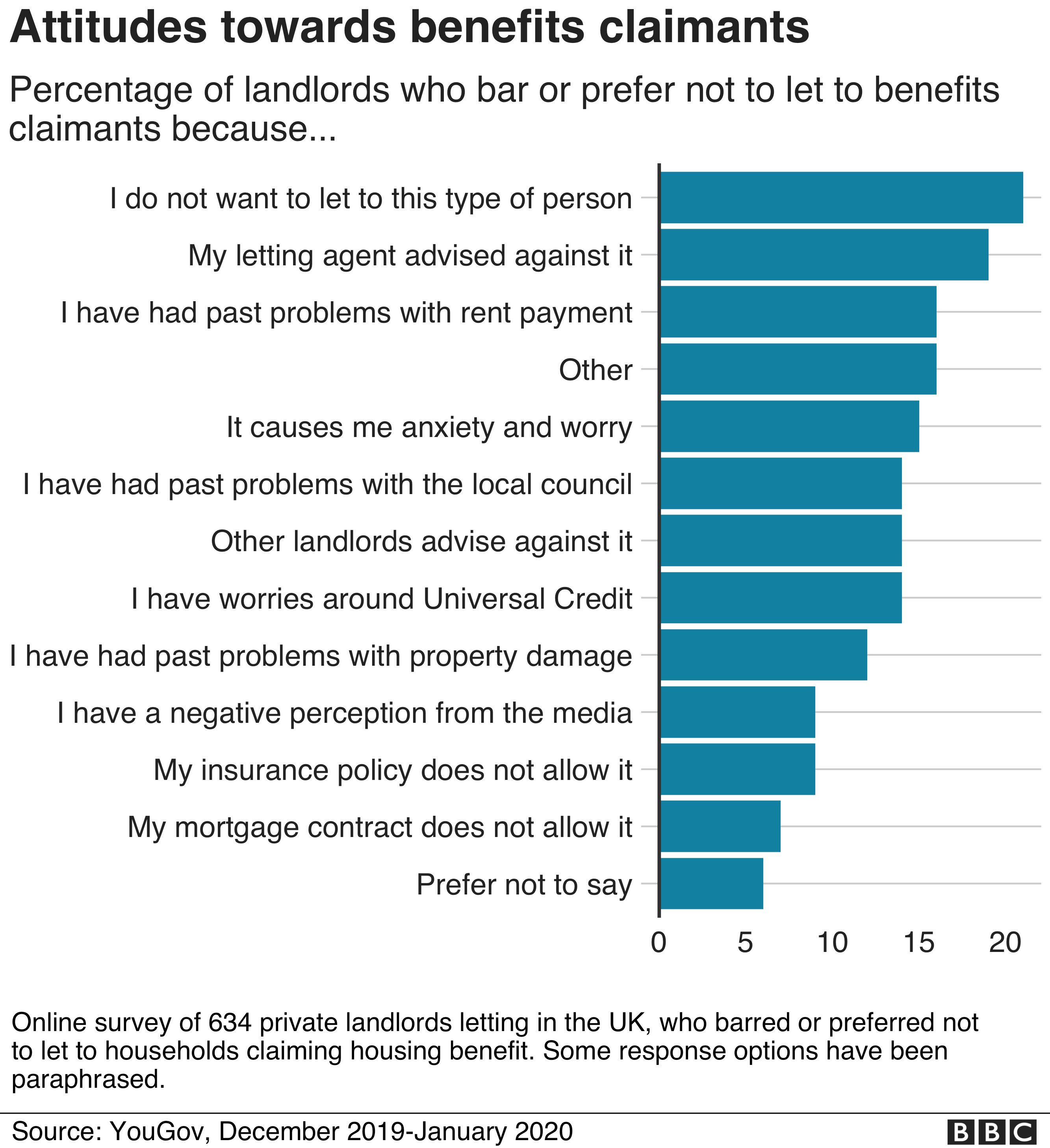

Outstanding effort recognised in Boccia England annual award

December 8, 2020

A press release:

On Saturday 5th December, six boccia players and officials as well as a local boccia Club were announced winners of the 2020 Boccia England annual competition.  During the Facebook Live ceremony which was watched by over 70 active on social media, the commitment and determination to play boccia throughout the pandemic was a central theme of the evening.

Boccia is an international target ball game played from a seated position and is ideal for wheelchair users. It tests muscle control and accuracy as players propel balls to land close to a white marker ball. Over 54,000 people in England played the game in 2020, and for over half the regular players it is the only sporting option open to them.

Saturday’s award ceremony was held virtually on Zoom and hosted by Boccia England’s CEO Chris Ratcliffe and Competition Manager Sarah Wooding. Boccia England’s Chair, Mike Walker, opened the event before introducing a video showing highlight’s of the year. This illustrated the many creative ways people had found to stay engaged in the sport throughout 2020, despite being a very difficult year for many in the boccia sporting community.

The awards and special commendations were given to:

Club of the Year winner: Greenbank Giants Boccia Club (Liverpool).

Coach of the Year winner: Barry Bowden (Hampshire) with a special mention for Mark Dolan.

Players’ Performance Athlete of the Year winner: Rafael Young (Manchester).

The Rainbow Cup Award winner: Gareth Stafford (Conwy, Wales) with a special thank-you to Richard and Natalie Mann.

Official of the Year winner: Steve Furber (West Yorkshire).

Boccia Lockdown Champion winner: James Pink and the volunteers at Henbury Boccia Club (Bristol) with a special thank-you to Bob and Vivienne Lathbury.

Unsung Hero of Boccia Award winner: Shelia Appleton (Kent)

After the ceremony, CEO of Boccia England, Chris Ratcliffe, reflected on the event: “It has been a privilege to celebrate our outstanding players and volunteers through these Awards.  We have heard about the innovative ways people have found to play boccia at home, and about how important boccia has been for them, particularly in this most unusual year. Boccia truly is a sport that changes lives!”

According to the findings of the Boccia England ‘Big Boccia Survey 2020’, the game contributes significantly to the improvement of players’ mental and physical health. 81% of those who took part in the survey say playing boccia is having a positive impact on their daily lives, and for 76%, participating in the game has improved their confidence. Many speak of the social element of boccia in overcoming loneliness and inactivity.

Santa and his elves to be more deaf aware this Christmas!

December 8, 2020

A press release:


RNID is working with Great Grottos to help support customers with hearing loss

RNID, the national charity making life fully inclusive for deaf people and those with hearing loss or tinnitus has teamed up with leading grotto management company, Great Grottos, to help train their Santas and elves to be more deaf aware in the run up to Christmas.

The company, which operates Christmas grottos in over 200 shopping and garden centres across the country, is offering deaf awareness training to over 400 Santas and elves using RNID’s communication tips, which includes advice on how to communicate effectively with face coverings and about face mask exemptions.

Face coverings have a huge impact on the 1 in 5 adults in the UK who are deaf or have hearing loss, the 1 in 8 who have tinnitus, and the 50,000 children who are deaf in the UK, many who rely on lip reading or visual cues for communication. Being able to see lip patterns and facial expressions is also vital for those who communicate through British Sign Language. In accordance with guidelines, Great Grotto Santas will not be required to wear a face covering as long as they operate in a Covid-secure way. However all elves and all customers will be required to wear a face covering in the grottos.

Mark Atkinson, Chief Executive, RNID said: “Face coverings are everywhere now and impacting heavily on everyone’s lives. However they can have an even bigger impact on those who are deaf or have hearing loss. So we are delighted to have teamed up with Great Grottos this Christmas to help make this festive activity magical – and accessible for everybody.”

Matthew Wise, Managing Director at Great Grottos said: “Visiting Father Christmas should be a fantastic experience for everyone – young or old and the safety and comfort of all our customers and colleagues is of paramount importance to us. So we are delighted to be working with RNID to make sure we can communicate effectively and safely and offer the best experience to our customers with hearing loss. We are closely following government guidelines at all our grottos to make sure that we are operating in a Covid-secure way, and strongly encourage all of our customers to wear a face covering where required, while recognising too that there may be some exemptions.”

If you are concerned about your hearing or want more information please contact RNID by calling 0808 808 0123 or emailing information@rnid.org.uk. 

Kevin Sinfield Raises Over £1m For Motor Neurone Disease In Marathon Challenge

December 7, 2020

Kevin Sinfield has completed seven marathons in seven days and raised over £1m for the Motor Neurone Disease Association.

The tally had passed £1.1m when the Leeds Rhinos director of rugby Sinfield completed his seventh and final marathon on Monday morning in a time of three hours and 41 minutes.

Sinfield is raising money in support of his former Rhinos colleague Rob Burrow, who is fighting the disease. His original target was £77,777.

The pair played together played alongside at Leeds in Super League for 15 seasons before Burrow, 38, was diagnosed with the disease 12 months ago.

The number seven features prominently due to it being the one most associated with Burrow throughout his playing career.ARTICLE CONTINUES BELOW THIS ADVERT

Speaking before he set off on the first of his seven marathons last week, Sinfield said: “You miss challenges when you finish playing and I’ve been fortunate enough to run a few marathons for charity, but this is obviously very close to all of us.

“This means we get keep Rob in the forefront of everyone’s minds, especially with it being in the run-up to Christmas. We hope to raise lots of money and raise plenty of awareness.

“Any way we can make sure he’s at the forefront of people’s minds, we will. We’ve all got the No. 7 on our backs and he is so overwhelmed by the support he’s had.”

Sky Sports rugby league pundit Terry O’Connor on his admiration for what Kevin Sinfield is doing to raise money and awareness for Rob Burrow and the Motor Neurone Disease Association:

“I think Kevin Sinfield has always been a leader – a clean-living lad on and off the field. He’s a person who inspires everybody around him. For me, he’s Leeds Rhinos’ greatest ever captain – a champion in every sense of the word.

“I remember talking to him a few months ago when he decided to take on this challenge and I was flabbergasted with what he was intending to do. I even questioned whether it would be too much.

“Kevin’s response? “A challenge isn’t a challenge, unless it’s challenging”. I’ll never forget that response, which is a mark of the man.

“The strapline for this challenge should be ‘One in a Million’. After all, how many other people would be able to complete this challenge? If anyone spoke to Sir Mo Farah or any long-distance runners, I’ll bet the house that their training would not enable them to do seven marathons in seven days.”

We’re very impressed! The JustGiving page for this challenge is here, in case anyone wants to follow it.

Care Home Manager’s Petition Calls For #VaccinePriority For People With LD

December 7, 2020

You might have heard the big news – a new vaccine has been more than 90% effective in preventing COVID-19 in its trial. Once the vaccine is approved, the Government has said that the NHS stands ready to begin a vaccination programme for those most at risk.

This could be the light at the end of the tunnel of the coronavirus  pandemic – but it’s crucial that we get it right. The current list of who will get the vaccine first does not prioritise people with learning disabilities, even though they are six times more likely to die of coronavirus according to Public Health England. 

I’ve started a petition for people with learning disabilities to be included in the vaccine priority list. Please will you sign my petition?

As the manager of a care home for people with learning disabilities, I have seen first hand how hard people have  been hit by this pandemic. This group has suffered not only from the virus itself but the isolation and loneliness too. It’s just not right that people with learning disabilities are at such a higher risk dying of coronavirus but aren’t going to be prioritised for the vaccine. 

I agree that older people and care home workers should be vaccinated first, but adults under 65 who are at high risk from the virus are only sixth on the list of priorities – surely this can’t be right? Please join me in urging the Government to re-think this strategy.

Over and over the Government has failed to protect one of society’s most vulnerable. Now they must take this opportunity to make it right. This vaccine could be ground breaking, but we must ensure it’s distributed fairly and protect those who need it the most.

Please sign my petition so that people with learning disabilities are not forgotten in this pandemic and please remember to use #VaccinePriority on all social media


Mark

275,000 DLA Claimants Still Waiting To Be Forced To Claim PIP

December 7, 2020

With many thanks to Benefits And Work.


Over 7 years after personal independence payment (PIP) was first introduced, there are still 275,000 disability living allowance (DLA) claimants waiting for the letter to drop onto their door mat telling them it is their turn to be forced to apply.

Justin Tomlinson revealed the figure yesterday in answer to a parliamentary question. He also made it clear that only slow progress is being made in assessing remaining DLA claimants:

“In July 2020, we started to resume some activity on reviews and reassessments where it was possible to do so safely and without compromising the delivery of new claims and change of circumstance cases, which remain our priority.”

You can read the full written answer on the parliament website.

AA Renewals Restart

December 7, 2020

With many thanks to Benefits And Work.


The DWP have announced that attendance allowance (AA) renewals are to be restarted.

Claimants whose AA award ends on or after 8 March 2021 will receive renewal packs in the coming weeks and will need to return the completed claim pack within 20 weeks, prior to their award ending.

AA awards that were due to expire before 8 March 2021 will be automatically extended and will continue to be paid until a new review is set up in the future.

Andy Lapthorne: British Wheelchair Tennis Player Criticises Sport For ‘Ableism’

December 4, 2020

British wheelchair tennis player Andy Lapthorne says events are being organised by people “who don’t have a clue about disability and don’t ask us questions”.

He was one of a number of players who forced US Open organisers into a U-turn over the inclusion of wheelchair events at this year’s tournament after they were initially omitted.

He told the BBC’s Stumps, Wheels and Wobblies podcast that ableism – where there is discrimination in favour of non-disabled people – is an issue.

Lapthorne, the winner of 11 Grand Slam titles and the current world number two in the quad division, added: “The reason given to us at the start was that it wasn’t thought that people with disabilities would travel in a pandemic, but we as players weren’t consulted.

“The top eight men, women and quad players are full-time professional wheelchair tennis players, but we were put in the same bracket with juniors, who don’t get prize money, and with legends, who are retired and playing exhibition tennis, and even getting compared to beach tennis.

“It felt like a massive step backwards, but we had great support from the likes of Andy Murray and Novak Djokovic, and at the end of the day we went out there and proved we are part of the tennis community.”

Lapthorne also told the podcast, in an interview to mark International Day of People with Disabilities, that the increased profile of wheelchair tennis had had a negative impact on his mental health.

After finishing runner-up in the quad singles at October’s French Open, he took a break from the game but hopes to return to competition in the new year.

“Earlier this year, I got to world number one, which was my end goal – but sometimes the worst thing you can do is achieve your dream,” he explained.

“After that I was a bit lost and didn’t know what to do or where to go next, and then lockdown happened.

“When we came out of lockdown, I went to the US Open and then went to Roland Garros and it got a bit too much for me, if I’m honest.

“We are integrated into the Grand Slams and there is more media presence, big prize money, more people watching on TV and a massive social media presence.

“When I lost to Dylan Alcott in the Australian Open final in January, I got a lot of messages on social media from people who had probably gambled on me and lost money.

“As a sport, we have had such a fast rise and I’ve had to deal with things that I didn’t have to do when I started.

“I realised I needed a bit of a break and time away to try to reflect and see where I am at.

“Social media is tough at times when you have a disability. I’m quite strong on trying to act as normal as possible and try to be positive but sometimes when you are getting those messages it can be tough to deal with.”

Meanwhile, fellow GB player Jordanne Whiley says she will skip the Australian Open which is due to take place in January.

Whiley gave birth to son Jackson in January 2018 and returned to action early the following year. Although she played in Melbourne at the start of this year, winning the women’s doubles with Japanese partner Yui Kamiji, she says she will not defend her title.

“It was a really difficult decision to miss out because I love the tournament, but I can’t justify being away from Jackson for three weeks with the quarantine restrictions,” she explained.

“I’d have missed his birthday, which is something which you can’t get back. There will be other Grand Slams so I will take the hit on this one.”

Neighbours Makes Aussie TV History As Hard Of Hearing Actor Nathan Borg Joins Soap

December 3, 2020

Neighbours has made history as hard of hearing actor Nathan Borg joins the soap, becoming the first actor on Australian TV with a cochlear implant.

Nathan plays Curtis Perkins in a recurring guest role. Curtis is a teacher at Erinsborough High who’s described as “an easy-going guy” and “far tougher than he lets on”.

He’s passionate about teaching and will be under the watchful eye of Susan Kennedy (Jackie Woodburne) and Jane Harris (Annie Jones).

Nathan was born six weeks premature and became profoundly deaf after he contracted meningitis at three months old. He got a cochlear implant in his right ear at two which allowed him to hear for the first time.

The big casting news was announced today (December 2) to coincide with International Day of People with Disabilities on Thursday (December 3). The actor began working on the soap in November.

“Growing up I never saw anyone like me on television, so I knew it was time to have a hard of hearing actor on our Australian screens. I think it’s important in this industry that people with all disabilities of all ages get to tell their stories,” Nathan said.
Advertisement – Continue Reading Below https://753d5cb022bd3eeec9b803f1b31e70a0.safeframe.googlesyndication.com/safeframe/1-0-37/html/container.html

“Each time I film scenes with Jackie and Annie I am constantly growing as an actor. It is such a privilege to work with such inspiring icons. Jackie has taught me to take direction and Annie has taught me to let loose on set which has been a great balance.”

Executive Producer Jason Herbison added: “Nathan’s passion for acting was clearly evident when I met him nearly a year ago and I’m delighted he is joining the cast in a recurring guest role as a young teacher fresh out of university who isn’t defined by his hard of hearing status.

“He is independent and working in the community, and like everyone on Ramsay Street, we soon discover a link with one of our residents which is going to be a lot fun.”

Nathan’s episodes will air in the UK from early 2021.

States should deliver on their commitments to persons with disabilities – Commissioner Mijatović

December 3, 2020

A press release:


Ahead of International Day of Persons with Disabilities, Council of Europe Commissioner for Human Rights, Dunja Mijatović, issued the following statement:

“This year, we mark the International Day of Persons with Disabilities as the COVID19 pandemic is still raging in Europe. The pandemic has disproportionately affected persons with disabilities and exposed all the pre-existing failings in Council of Europe member states. Among many others, these failings include the absence of disability-inclusive emergency preparedness; lack of accessibility; discrimination in accessing health care; a failure to implement the right to live independently and being included in the community; insufficient access to information; and lack of participation and involvement of persons with disabilities in decision-making processes.

While these issues were magnified by the pandemic, none of them is new. In fact, they are all subject to obligations enshrined in international human rights standards, in particular the United Nations Convention on the Rights of Persons with Disabilities, which Council of Europe member states are already bound by. The COVID19 pandemic should be a lesson to all of us that these standards are not just aspirational ideals: failure to implement them leads to suffering and loss of life which could and should have been avoided or mitigated.

While we all wish to go back to a sense of normalcy, let us not lose sight of the fact that, as far as persons with disabilities are concerned, the post-COVID19 world must look very different from the pre-pandemic reality, with a renewed commitment to finally deliver on what we have signed up to.” 

Covid: Adults With LD ‘Miss Out’

December 2, 2020

People with learning disabilities have been “at the back of the queue” during the coronavirus pandemic, a panel of MPs has been told.

Those living in supported accommodation were left waiting weeks for guidance on testing and visits.

MPs were also told long-term social factors were likely to be more important than biology when it came to ethnic divides in the virus’s impact.

The panel focused on what lessons could be learned.

Giving evidence

James O’Rourke’s brother Tony lives alone in a one-bedroom flat in a block of supported-living accommodation.

He said the family had been unable to visit him, even though people living alone in the wider community are allowed to form a support bubble with another household.

Mr O’Rourke said this was because guidance had been tailored towards large residential care homes and failed to account for people in his brother’s situation.

He was giving evidence to a joint hearing of the Health and Social Care Committee and Science and Technology Committee.

Supportive-living services

This sentiment was echoed by Steve Scown, who runs Dimensions UK, a major provider of supported accommodation for adults with learning disabilities and autism.

“Consistently, the government guidance for registered care homes has been issued weeks in advance of guidance for supportive-living services,” he said.

“There’s been a focus on large registered care homes for older people.”

While the government’s focus on older people was “understandable”, these delays meant his service was still waiting for guidance on testing residents.

And in other cases, constantly changing guidance had left staff and residents confused.

‘Better instructions’

Ann McCallum, who has a learning disability and advocates for others who do, said she had struggled to understand certain guidelines.

“It’s not been in easy language for people to understand,” she said.

“Politicians need to really not use jargon and give better instructions on all the rules that they want us to follow”.

Language around “tiers”, for example, was confusing, Ms McCallum added.https://emp.bbc.co.uk/emp/SMPj/2.36.6/iframe.htmlmedia captionWhy people with learning disabilities are struggling to adjust to life after lockdown

Mr Scown said life-expectancy figures – between 14 and 18 years lower for people with learning disabilities – were evidence they were not valued “as equal members of the community”.

And he cited “frankly, disgraceful” instances during the pandemic of medics placing do-not-attempt-resuscitation (DNAR) orders on patients with learning disabilities’ files without consulting their families .


When RNID met Nyle Dimarco…

December 2, 2020

A press release:


The deaf activist and executive producer chats to RNID about landmark Netflix show Deaf U in an exclusive Facebook event

RNID, the leading charity working to make life fully inclusive for deaf people and those with hearing loss and tinnitus, has teamed up with American model and deaf activist Nyle DiMarco to discuss the landmark Netflix show Deaf U, which he helped produce. 

In an exclusive Facebook event, Nyle was interviewed by the charity’s ambassador, Samantha Baines, and tackled matters such as the show’s impact on hearing audiences and how it’s been received by the deaf community. 

Nyle DiMarco shot to fame as the first deaf contestant to win America’s Next Top Model and Dancing with the Stars. DiMarco, who is from a multi-generational deaf family, was an executive producer of the series “Deaf U,” which premiered on Netflix on October 9, 2020. The coming of age docu-series follows a tight-knit group of deaf students at Gallaudet University, a renowned private college for the deaf and those with hearing loss, giving an unfiltered and unexpected look inside the deaf community. The recent launch ofthe show sparked conversations around the lack of representation of deaf and those with hearing loss on screen.

In a Facebook event, which aired on Friday 27 November, Nyle was interviewed by RNID’s ambassador, actress and comedian, Samantha Baines, who also has hearing loss. The interview included BSL translation and ASL interpretation. The interview will remain on Facebook and can also be viewed on You Tube here. 

When asked about the representation of the deaf community, Nyle said: “Obviously, we’re a hyper-marginalised community, so my aim was to make a really interesting show that would explore deaf people’s lives and the connections they have with one another. And also to show that we’re just like hearing people. Deaf U was really an opportunity to demonstrate that through our students, to really break the mould and the formula of what people are used to seeing.”

“One of the biggest misconceptions that hearing people have, is that deaf people don’t have a community or a sense of a community. And I wanted to show that it exists. And that it exists on a vibrant campus,” he added. 

Responding to some critics who argued the show misrepresented the deaf community, he said:  

“It’s impossible to see each individual person represented on screen exactly as they are because no one deaf person is the same. Even so, the wider audience is still learning from the representation that we’ve had an opportunity to offer. In over a hundred years since the inception of Hollywood, we haven’t really had our own positioning.  So I do hope that Deaf U can be used and emulated by the entertainment industry and will open many, many doors for the deaf community.”

Netflix has confirmed that members of the deaf community played integral roles in the creation of Deaf U, both in front of and behind the camera, and were vital in developing the series from its inception. The deaf community made up 30% of the crew, 60% of the story producers and 30% of the edit team. Deaf-owned businesses were contracted throughout production, such as the transcription house, ASL Captions, and Convo Communications, which provided aerial footage of Gallaudet’s campus.  Netflix has English language captioning for every title on the service, and titles may also be captioned/subtitled in over 20 languages. For blind members there is over 10,000 hours of audio description on Netflix globally, and original language audio description for most Netflix originals, in up to 36 languages. Deaf U has been made available with SDH and FN features.

Nyle said: “A large percentage of our production crew were deaf or had some sort of hearing loss. This was the first time in history that this has ever been done. We had deaf vloggers on set, we had deaf producers in the field. We hope that this creates a framework for future work to come. I hope at some point, we’ll have 100% deaf people, behind and in front of the camera.”

Head of Campaigns and Public Affairs, RNID, Rob Geaney said: “It was great talking directly to Nyle about Deaf U, and it has been encouraging to see more representation of the deaf community on mainstream settings. We were pleased to hear that Netflix hired a range of talent for all aspects of this show – however work still needs to be done to make sure representation like this is seen across the whole film and television industry.” 

Issues Faced By Students With An Acquired Brain Injury

December 2, 2020

This is a guest post.


It has been a difficult period for higher education providers and their students. For most universities, looking after their students health and wellbeing, as well as their access to lectures, seminars and other learning tools have been a priority during the pandemic. However, the move to online learning and campus lockdowns have not been without controversy. Student leaders in early November warned that this is having a detrimental impact on all students’ mental health and universities need to step up to provide extra services.

Of particular concern is the support available for students with disabilities. Disabled Students UK –  in a response to a recent report by the independent Higher Education Commission which  found that students were having severe difficulties accessing extra support from their universities – called for institutions to adhere to firmer rules regarding access and to lose their licences if they fail to do so. In October, Disability Rights UK said that they answered hundreds of calls from students reporting that sometimes resources weren’t made available ahead of teaching, as well as problems navigating online conferencing, which can be difficult for those who struggle to multitask because of their disability.

For students with a brain injury, these issues could exacerbate the big challenges they already face when returning to higher education. Higher education providers can certainly do more to look after their students with brain injuries, during and beyond the pandemic. As a solicitor who represents adults with brain injuries, I want to raise awareness of the issues students with acquired brain injuries face (ABIs) and to highlight areas where they may need support.

Sadly many of my brain injured clients are not able to return to further education due to the severity of their injuries. However, there are many who have been able to overcome and work around the symptoms of their injury, and I wonder how many more could have if they had the right support in place.

Firstly it’s important for further / higher education providers to understand how ABIs can impact individuals, so they are able to provide the right level of support and accessibility to help students study their courses.

ABIs and their impact on learning

ABIs can be caused by trauma, such as a head injury from a road traffic accident or an assault. They can also be caused by an illness or medical condition such as a stroke, brain tumour, meningitis or encephalitis.

Brain injuries can be classified by severity into categories of mild, moderate or severe. Even someone who has a mild brain injury, such as a concussion, can still suffer with debilitating symptoms known as post-concussion syndrome. This can include symptoms such as reduced concentration, dizziness, headaches, irritability, depression, fatigue and memory problems. These symptoms often resolve after a few weeks, but can continue for months or even years.

More severe head injuries are likely to result in more permanent and complicated issues that last beyond the rehabilitation period.

It is well known that the human brain continues to develop well into a person’s mid-twenties. It is therefore difficult to predict the long term impact of a brain injury on a young adult because of their ongoing development. If it’s possible in the circumstances, continuing with education can often be a hugely beneficial to a young adult’s rehabilitation and recovery from their injury.

All brain injuries differ in nature, however, there are some common symptoms, which can all have an impact on how an individual learns:

  • Cognitive difficulties – such as, diminished concentration and attention, impaired memory, language issues.
  • Disorders of executive function – having detrimental effects on the ability to control impulses as well as planning, motivation, and judgement.
  • Physical changes – such as mobility and co-ordination problems, weakness, sensory impairment fatigue and pain.
  • Behavioural and emotional – such as mood swings, personality changes, depression, anxiety and loss of inhibition.

People with ABIs also tend to suffer with fatigue, preventing them from having an active social life and doing activities they enjoyed before their injury. It’s not uncommon too for people with an ABI to find their relationships change after their injury which can exacerbate social isolation. This is a result of the behavioural and emotional impact, which can adversely affect relationships. ABIs are also associated with mental health problems such as depression and anxiety.

Symptoms like headaches, irritability and difficulty with concentration can also be caused or exacerbated by other factors like stress and tiredness.

So what higher education institutions do to help?

Under the Equality Act 2010 higher education institutions have a duty to make reasonable adjustments for disabled students. This could involve adapting the physical environment or by supplying aids and equipment or technology that helps the disabled student to access their education and the facilities as if they didn’t have a disability. 

ABIs are often referred to as a hidden disability because you cannot always see the injury. Other physical disabilities can be easier to identify and make adjustments for. ABIs require the injured person to explain their needs to universities.

If institutions  are providing support for disabled students, they might have to be more proactive with brain injured students in trying to find out what support needs to be put in place. An assessment from a specialist occupational therapist would be helpful to understand the student’s needs. The student might have a medical report they are willing to disclose if they underwent medical treatment or rehabilitation following their injury.

The key is to create a supportive environment in which the brain injured student feels able to disclose their difficulties and discuss what their needs are. With the appropriate level of support from education institutions more talented individuals may be able to revisit their education post brain injury.

Sally Simpson is an Associate solicitor in the Adult Brain Injury Department at Bolt Burdon Kemp, a team of specialist lawyers seeking compensation to help their clients rebuild their lives after they have suffered a brain injury.

The Bullying Doctor

December 1, 2020

Autistic psychologist Emily Lovegrove says that when her children left home, she “needed something else to obsess about”. So she studied bullying to PHD level and now arms young people with strategies to cope if they are being targeted.

Ignoring it, telling someone and fighting back are, she says, logical strategies for an emotional subject. Instead, Lovegrove suggests working on your self-esteem, learning grounding exercises, practising meditation and keeping a bunch of written down self-care options to hand.

It’s a tough subject but this is a joyful episode full of Robyn and Jamie’s trademark humour and fascinating insight.

Presented by Robyn Steward and Henry, Jamie Knight and Lion. Produced by Emma Tracey.

Listen via your smart speaker by saying “Ask the BBC for 1800 Seconds on Autism” and subscribe on BBC Sounds. email stim@bbc.co.uk

The Crown’s Learning Disability Storyline Highlights Painful Lack Of Progress

December 1, 2020

There are 1.5 million learning disabled people in the UK, but they are rarely seen or heard from. Little is spoken of this demographic of people, who in many cases completely rely on others in order to live.

Unless you’re a family carer or professionally involved, you may not know or have regular contact with any learning disabled people.

However, in episode 7 of the latest season of The Crown, viewers learn more about the royal family and learning disabled people. Peter Morgan, creator of the series, writes about two learning disabled women, Nerissa and Katherine Bowes-Lyon.

In Morgan’s fictional depiction, Princess Margaret and the Queen discover that Katherine and Nerissa, their cousins on their mother’s side, are still alive, despite being listed as dead in Burke’s Peerage, and have spent their adult lives in an “institution for mental defectives”.

Despite being born into wealth and privilege, Nerissa and Katherine found that their background didn’t protect them from a harsh truth that still perpetuates today: learning disabled people are, in the main, forgotten.

I would like to be comforting, to ameliorate and to say the Bowes-Lyon sisters were born in another time; an age that lacked enlightenment, far removed from our own. But these institutions are still with us, now called assessment and treatment units, and a recent report showed that within NHS hospitals like these and some specialist schools, learning disabled/autistic people are subjected to prone restraint every 15 minutes.

The world knows how dangerous prone restraint is, because we watched in horror as a version of the technique was used on George Floyd this summer.Covid-19 deaths must prompt better healthcare for people with learning disabilitiesRead more

I’d like to be able to look back to another time and place when I reflect on the fate of the Queen’s cousins. I want to say that things have moved on significantly in all areas of life for disabled people. But this month, the BBC is commemorating the 25th anniversary of the Disability Discrimination Act and seemingly only physically disabled people are being featured in the broadcaster’s celebrations.Advertisementhttps://87316bce20a4d1b80964cf8b4337766a.safeframe.googlesyndication.com/safeframe/1-0-37/html/container.html

Learning disabled people are still denied work opportunities; in England, only six in 100 people with a learning disability are in employment, compared with 52.5% of the wider disabled community in Great Britain.

And in the context of the pandemic, learning disabled people in the UK are six times more likely to die of Covid-19 and learning disabled people in the UK aged between 18 and 34 are 30 times more likely to die from Covid-19. Learning disabled people have not as yet been included on the extremely vulnerable shielding list, even though respiratory conditions were the leading cause of death of learning disabled people in 2018 and 2019.

In the episode The Hereditary Principle, Morgan chooses not to forget. He wanted to tell the world that these two women – the Queen’s cousins – existed. I loved the episode, and loved too that the production team chose learning disabled performers to tell Nerissa and Katherine’s story.

It’s key that the representation of learning disabled people onscreen is authentically rendered, which is definitely the case with the writing and direction. There is no sentimentality, no “inspiration porn” on view.

In 2009, I launched a campaign called Don’t Play Me, Pay Me after our then 14-year-old child was the first autistic person in the UK to play an autistic character, in the BBC’s Dustbin Baby. At the time, it was a radical notion.

The campaign drew attention to the lack of disabled people in creative industries to highlight that disabled people’s ambitions aren’t diminished by a lack of talent, only by a lack of opportunity. I met broadcasters including the BBC and the campaign prompted widespread news coverage. I was diagnosed as autistic in 2014 and went back into the acting career I’d trained for, but if TV and film representation of disabled people is rare for young disabled actors, it’s even rarer for those, like me, in middle age.

In The Crown, Morgan puts the reason for the forgotten story of Nerissa and Katherine Bowes-Lyon’s secret lives and unmarked deaths as being down to the Queen Mother’s desire to protect the monarchy from her own personal, perceived family shame.

My question is that in keeping contemporary learning disabled people’s lives away from the public gaze, isn’t 21st century society guilty of denying and betraying our shared humanity in a world that would much rather forget that learning disabled people exist?

  • Nicola Clark is a writer, campaigner and performer

PIP And ESA To Increase By Just Half A Percent Next Year

November 30, 2020

With many thanks to Benefits And Work.


PIP, ESA and most other benefits will increase by just 0.5% in next year’s annual uprating, Therese Coffey, secretary of state for work and pensions told MPs today.

Coffey announced that “working-age benefits, benefits to help with additional needs arising from disability, carers’ benefits, pensioner premiums in income-related benefits, Statutory Payments, and Additional State Pension” will increase in line with CPI. This has increased by only 0.5% in the relevant period.

By our calculations, even a claimant on the maximum award of PIP will receive just 76p a week extra.

An ESA support group claimant will get an additional 57p a week, those in the work-related activity group will see their income rise by 37p.

There was also bad news for universal credit claimants. Coffey revealed that no decision has been made as to whether the £20 uplift to universal credit and working tax credit will continue once it has been in place for a year in March 2021. A further announcement is likely in the new year.

There was no indication whatsoever that the DWP is considering an uplift of £20 in legacy benefits to match universal credit, in spite of the continuing campaign for such a measure

Coffey has, however, used her discretionary powers to increase the state pension by 2.5%, stating that:

“The full rate of the new State Pension will now be worth £179.60 per week. The Standard Minimum Guarantee in Pension Credit will also increase by the same cash amount as the basic State Pension, rising by 1.9%.”

The new rates come into effect on 12 April 2021.  

With a potential increase in the cost of household goods looming when Brexit arrives, such tiny increases mean a tough year ahead for many claimants

You can read Coffey’s statement in full on the parliament website.

MPs Raise Concerns About PIP And ESA Decisions During Pandemic

November 30, 2020

With many thanks to Benefits And Work.


A report by the SSAC published last week has found that some PIP and ESA claimants are missing out because of the suspension of face-to-face assessments and raises concerns about the accuracy of decision making based on telephone assessments.

The report found that there were some claims where neither a paper assessment not a telephone assessment was appropriate. As a result of the pandemic, a backlog of these cases has developed.

The report found that:

“Delays in getting these assessments has meant delays in entitlement decisions, leading to ESA claimants remaining on the assessment rate, and UC claimants remaining on the standard rate, and potentially missing out on additional income that they may be entitled to.

“For PIP claimants, no financial support is available pending assessment as there is no assessment rate for PIP. While additional income claimants may be entitled to can be backdated, the delay in accessing income as it is needed is problematic.”

SSAC has called on the DWP to establish a maximum time period for which claimants can be kept waiting for an assessment and decision.

SSAC also found that there were concerns from advice agencies that the accuracy of decision making has been affected by the pandemic:

“. . . advisers tell us they have observed increased variation with some awards being much higher than they would have expected, and occasionally unexpectedly lower. This observation is supported by DWP’s statistical summary which identifies that the PIP statistics for April to July show ‘distortions’ to trends in awards, clearances and decisions.”

SSAC has called on the DWP to research and publish data on what difference the type of assessment makes to awards, looking at telephone, paper-based and face-to-face assessments.

SSAC say that “This is vital, given that face to face assessments are not likely to be resumed for all claimants in the immediate future.”

SSAC also want an assessment of recent decision making “to ensure consistency and accuracy are maintained”.

Many claimants will be surprised by the idea that accuracy was a feature of DWP decision making prior to the pandemic, but unsurprised to learn that standards may have now fallen even further.

You can read a copy of A review of the COVID-19 temporary measures: occasional paper 24 on the .gov website.

Emmerdale Star Chris Bisson Reveals Personal Connection To Laurel And Jai’s Emotional Story

November 27, 2020

Emmerdale star Chris Bisson has opened up about his personal connection to Jai Sharma’s upcoming storyline.

Jai will face a big decision with his partner Laurel in upcoming episodes after discovering that they’re expecting a baby together.

When the couple learn that their child will be born with Down’s syndrome, they ultimately make the decision that Laurel will have a termination – after some very difficult and intense conversations.

Speaking on Digital Spy’s Soap Scoop podcast, Chris – who plays Jai – explained: “It’s a difficult story for me, I’ll be quite straight about that.

“I have a cousin who has Down’s syndrome, and he has been the centre of our family. I’ve had to have difficult conversations with both charities and with family as well.

“I had to speak to my auntie because my cousin is a massive Emmerdale fan, and I wanted her to know that this story was coming.

“I also wanted to work out if he [his cousin] would be watching it and whether he would process the information or interpret the information in the way we play it, whether he would be able to make sense of that, whether it would be upsetting for him.”

Discussing the extensive preparation he did for the storyline, Chris added: “I did a lot of research for this part, and we had some case studies as well.

“The conversations with the case studies were some of the most heartbreaking conversations that I’ve ever had to have when researching a storyline. It was very important to me to play those truthfully, honestly.”

Fans can hit ‘play’ on the podcast embed in this article to hear our full interview with Chris, where he also discussed the show’s Christmas plans, and the future for Laurel and Jai.

Ed Davey’s Stand Up For Carers Campaign

November 27, 2020

Same Difference has been sent the following petition:

Carers – paid and unpaid, young and old – do a remarkable and important job.

They deserve our support but are far too often forgotten and ignored. Liberal Democrats will stand up for carers and lead the way to a more caring society as we emerge from this pandemic.

This starts by raising Carer’s Allowance for unpaid carers by £1,000 a year.

As it happens, Same Difference has been campaigning for a similar rise in Carer’s Allowance for several years.

Like Ed Davey, who is a parent carer himself, we have seen firsthand the value of parent and family carers. They play a priceless role in the lives of so many and have had a particularly difficult time in 2020.

Same Difference is thrilled to see this extremely important issue recognised by an organisation as large and powerful as the Liberal Democrats. Our full support is not worth half as much to them as theirs is to us, but we offer it anyway.

Caroline Pidgeon’s Work On Accessible Transport In London

November 27, 2020

Same Difference has received the following email regarding Caroline Pidgeon’s work on disability issues, particularly accessible transport, in London:


The one issue Caroline has most recently been involved in is the issue of TfL restoring physical access for disabled people, such as TfL staff guiding blind and visually impaired people or pushing a wheelchair up a ramp to a train on a London Overground and London Underground station.  Guiding by TfL staff can also include providing assistance to people with dementia.


The issue was covered on BBC Radio 4’s In Touch programme a week ago last Tuesday, where Caroline was interviewed:


https://www.bbc.co.uk/programmes/m000pfh1


The good news is that physical assistance by TfL staff was finally restored, returning on Monday this week.


I hope these links are useful:


https://www.citymatters.london/physical-assistance-for-blind-travellers-reinstated-on-tfl/


https://twitter.com/TfL/status/1330526455659368461


Caroline has been raising this issue for quite some time.   There have been some horrific cases facing blind people during the Covid pandemic, such as the experience of Kesley Trevett at Harrow-on-the-Hill tube station.


https://www.mylondon.news/news/north-london-news/blind-teenager-left-stumbling-around-19019680


We were first contacted about this issue on the 30th June and immediately took up it with TfL through the casework system.   Caroline has been pushing for chance in the policy since then


What has been really frustrating that the policy adopted by TfL has not even been the same as rail companies operating across the country.  As you can see from the enclosed guidance produced by the Rail Delivery Group, which covers the train operating companies, physical guidance being offered has been recommended, subject to basic safety steps being taken.


On a totally separate issue Caroline should also be appearing on next Tuesday’s Radio 4 In Touch programme on the issue of tactile paving at stations.  We have discovered that across the UK there are 35% of railway facilities which do not have this facility.

Letter to Editor: This Carers Rights Day, Thursday 26 November, Revitalise are here to support unpaid carers

November 26, 2020

Our Editor received the following letter, which we are publishing with pleasure. If you would like to send us a letter for publication, please email samedifferenceone@hotmail.co.uk


As a charity we’re supporting Carers Rights Day, and this year the focus on home carers has never been more important.

It is estimated that since the start of the pandemic, a shocking 4.5 million people have become carers – taking the total number of carers in the UK to 13.6 million.

The pressures on these unpaid home carers, who are nursing and caring for seriously ill or disabled loved ones 24 hours a day, have become intolerable this year. Largely because the Emergency Coronavirus Act allowed Local Authorities to axe their duty of care responsibilities towards the disabled and the elderly.

Revitalise has provided respite care breaks – a vital lifeline to so many unpaid home carers and their disabled family members – for over 57 years. We have around the clock, nurse led care at our centres and are in a perfect position to accept guests in need of a break. Sadly, the Government have imposed blanket 14-day isolation guidelines for anybody entering any care setting, meaning anyone wishing to stay with us would need to stay in their rooms for a fortnight.

As a result, desperate families have been stripped of any hope of respite care support at a time when they need it most. So many of the families we usually support are now at breaking point.

One carer, Hilary said: “I try to keep myself calm, and tell myself I know I’m not the only one struggling like this, but I just can’t physically do it. It’s a desperate thing, we both just urgently need a break.”

This is why we have launched our campaign, Care For Carers and the fundraiser Raise a Million, aiming to raise £1 million to support carers and their loved ones to access respite care breaks following lockdown. In the short time it’s been going it has already reached an audience of over 4 million and received celebrity support from the likes of Revitalise Vice President Dame Judi Dench, Rory Kinnear and Alexei Sayle.

I am so proud to work for Revitalise as we amplify the voice of carers, and will continue to do so until carers stories are heard. Please support our campaign if you can, and help us spread the word about the struggles carers are facing right now.

To find out more about Revitalise, our breaks, or the ways that we may be able to support guests, please visit: www.revitalise.org.ukor call: 0303 303 0145.

Devon Prosser, Revitalise
www.revitalise.org.uk

Girl’s Backflip Challenge For Down’s Syndrome Charity

November 26, 2020

A nine-year-old girl is aiming to complete more than 1,000 backflips in November to raise money for charity.

Imani, from Knaresborough, is aiming to perform 1,021 flips by the end of November this year.

She is raising money for Sunshine 21, which provides support for families who have children with Down’s syndrome, including her sister Felicity.

Face coverings in Wales’ secondary schools could have serious consequences for deaf children

November 25, 2020

A press release:

The National Deaf Children’s Society has responded to face coverings becoming compulsory in communal areas in all Wales’ secondary schools.

Debbie Thomas, Head of Policy at the National Deaf Children’s Society Cymru, said:
 
“Face masks and coverings in communal areas could have serious consequences for Wales’ 2,500 deaf children, almost all of whom rely on lip reading and facial expressions to communicate.
 
“Socialising in corridors, break time chats and playground games are all rites of passage, but deaf young people now risk missing out because they can’t understand what others are saying. They’re also more likely to experience loneliness, isolation and bullying.
 
“Public health is the priority, but schools and colleges must move quickly to introduce reasonable adjustments to help deaf young people during this difficult time.” 

Boccia England survey confirms the sport’s positive impact on physical and mental wellbeing

November 25, 2020

A press release:

Boccia England, the national governing body for the disability sport, has released the findings of its 2020 survey which show that, despite the impact of Covid-19, the game is making a significant difference for players with limited mobility. 81% say playing boccia is having a positive impact on their daily lives, and for 76%, participating in the game has improved their confidence.


Asked about playing boccia outside of the Covid-19 restrictions, 66% replied that they play once a week or more, and 39% say it has encouraged them to get involved in other activities where possible.


Boccia is an international target ball game played from a seated position and is ideal for wheelchair users. It tests muscle control and accuracy as players propel balls to land close to a white marker ball. Over 54,000 people in England played the game in 2020, and for over half the regular players it is the only sporting option open to them.


The survey asked about the impact of Covid-19 on players’ levels of activity and on their mental health. 51% of respondents are less active now as a direct result of the need to stay safe, and for 47% there has been a significant impact on mental wellbeing.


Nineteen-year-old Azhad Fauzi plays boccia through his club in Durham. During the first pandemic lockdown, Azhad took part in The Rainbow Cup, an online competition organised by Boccia England.


He says: “The Rainbow Cup was an amazing way to stay connected and to share my progress with friends and family. It has given them a small insight to what Boccia was and how important it is to me. It sparked a spirit that I thought had been lost during isolation and made me more motivated and competitive with every challenge. It allowed me to be creative and use the limited space and resources around me that I never knew could be helpful for training.” 

CEO of Boccia England Chris Ratcliffe said: “The results of our annual survey cover the period affected by the pandemic when we launched Boccia at Home. I’m delighted to see how the game is being played for fun, or competitively in kitchens, dining rooms and gardens and then streamed online. It’s all about giving people a way to build back physical and mental resilience, as well as maintaining a sense of social and community involvement.

“In time we will be able to get back to our local clubs and the face-to-face competitions all of us enjoy.  Despite the limitations we face, it’s clear from the survey that this game makes a massive difference in the lives of people who would otherwise miss out on the benefits a sport can bring”. 

DWP Staff Don’t Understand PTSD Says Royal British Legion

November 25, 2020

Disabled ex-armed forces personnel are being let down by the welfare system, with many experiencing stress and anxiety brought on by the struggle to access social security benefits, according to the Royal British Legion.

The charity said frontline Department for Work and Pensions (DWP) staff were insufficiently aware of their obligations under the armed forces covenant, which requires public services to give special consideration to injured ex-service personnel.

Among the difficulties reported by veterans to a Royal British Legion survey was the failure of benefits officials to understand post-traumatic stress disorder (PTSD) when carrying out and scoring health assessments for disability benefits.Advertisementhttps://cc84282e08ce3bdb28bd71394d580ab1.safeframe.googlesyndication.com/safeframe/1-0-37/html/container.html

“I have PTSD, borderline personality disorder, anxiety and depression and the assessor said I had no psychological symptoms,” one respondent said. “I supplied a consultant psychiatrist letter stating all my mental health conditions. I scored zero on mental health. This is laughable.”

Benefit eligibility assessors often failed to understand the condition and lacked insight into PTSD and how it affected daily life, the report said. “For many veterans who struggled to access military compensation for their mental health conditions, undergoing another assessment for welfare support was an upsetting experience.”

Veterans also felt they were punished at face-to-face assessments because they were smartly dressed, which they believed led officials to believe they could not possibly be ill. “There was little understanding of the military mindset, where military personnel are expected to be well presented and turned out at all times.”

The legion report, carried out with the charity Poppyscotland, said veterans who had received permanent military compensation awards for injuries sustained in the service were left stressed and anxious by the continuous cycle of re-assessments for DWP disability benefits.

“The whole process makes me feel harassed and it is almost as if I’m a suspected fraudster,” said a veteran with PTSD in the report. “It is simply criminal to put people through this repeatedly.”

The legion survey found nearly two-thirds of veterans struggled to complete the application form for employment and support allowance, while three quarters had difficulty with personal independence payment paperwork. According to the legion, 39% of army recruits have a reading age of 11 or lower.

“At the Legion we support injured veterans who can sometimes struggle to access benefits to which they are entitled, simply because the system doesn’t always acknowledge their unique needs or injuries sustained whilst serving in the military,” said Matthew Seward, assistant director, public affairs and public policy, Royal British Legion.

Mark Collins, the chief executive of Poppyscotland, said: “Injured veterans often struggle to access benefits because the system doesn’t understand their needs or time in service. Too many face challenges accessing the essential financial support that they need and deserve.”

The DWP said it would give the report careful consideration. “The department recognises the sacrifices made by the brave men and women who serve in our armed forces, and is a proud supporter of the armed forces covenant,” said a spokesperson.

“As part of our commitment to supporting the armed forces community, our networks of DWP work coaches and Armed Forces Champions are in place to ensure that the support, guidance and advice offered reflects their needs, and all work coaches receive training on armed forces issues.”

There are an estimated 90,000 veterans of working age receiving military compensation. The Iraq and Afghanistan conflicts between 2001 and 2014 alone saw 22,000 servicemen and women medically discharged from the armed forces for physical or mental health reasons.

A study by a Salford University academic published last year found many armed forces veterans with complex needs reported overwhelmingly negative experiences of universal credit, disability benefits assessments and benefit sanctions.

A Fifth Of Disabled People Have Work Requests Refused

November 24, 2020

One in five disabled employees had their request to work from home, be furloughed or redeployed during the pandemic rejected, research has shown.

Scope found 22% of disabled staff were put in an “impossible position” of having to choose between keeping their job or staying safe.

It wants the government to give people on the clinically extremely vulnerable list the automatic right to furlough.

The government said it was the employer’s responsibility.

In a statement, the Treasury said: “Employers must ensure the safety of those with disabilities when considering working arrangements, including whether work can be completed remotely, and it is for employers to decide whether to make use of the furlough scheme.”

Katie Cheval, 30, from Kent, has mobility issues, a learning disability, chronic asthma and mental health problems.

She was initially put on furlough from her retail job, but when she returned to work she did not feel safe and decided to resign. She is now looking for a new job.

“In a shop with no window you’re right in the thick of it,” she said. “We were given gloves which were too small and an apron, but I can’t wear a mask due to my asthma and anxiety.”

Ms Cheval said her employer held a meeting about safety precautions such as only one person using the till per shift.

“That went out of the window pretty quickly,” she said. “I didn’t feel safe.”

‘Lives on the line’

The survey of 1,004 disabled adults by the charity, found 18% had their request to work from home denied while 11% were refused a request to be furloughed. A further 11% were told they could not be redeployed within their company.

More than half (55%) said they felt disabled people had been “forgotten” in the government’s economic recovery plan.

Alexis Hutchinson, 25, from Worcestershire, is a lay clerk – a professional choral singer. She has autoimmune hepatitis and fibromyalgia, and is in the extremely vulnerable category.

She was on flexi-furlough, which allows employers to bring furloughed staff back to work on a part-time basis, but has now been told she can return to furlough full-time until the government’s current guidance is reviewed on 2 December.

Ms Hutchinson said: “What I really want from the government is to make sure people who don’t feel safe going to work have the option to be furloughed, protecting the jobs and careers we have worked so hard for, without forcing us to put our lives on the line.”

James Taylor, the executive director of strategy at Scope, said the fact it was “down to employer discretion” meant there was currently “no guarantee” disabled people would have their jobs and health protected.

“Furlough is a vital safety net for disabled people who don’t feel safe in the workplace, but whose jobs cannot be done from home,” he said.

Tablet For Visually Impaired Helps Through Lockdown

November 24, 2020

A specially designed tablet has been given to people who are partially sighted to help them stay connected with family and friends through lockdown.

The Halifax Society for the Blind loans the tablets to people who use the service in the area.

Margaret, 86, is one of the first recipients and said: “It will open up new worlds, I’m only at the very beginning of it now.”

The tablet has audio instructions and special large text to help those who have sight problems use it.

The charity is run by volunteers and is funded by donations and a lottery grant. The cost of the tablet is subsidised by the charity’s donations.

Patrick Quinn: Ice Bucket Challenge Activist Dies Aged 37

November 23, 2020

Patrick Quinn, one of the men who helped drive the wildly popular Ice Bucket Challenge fundraising campaign, has died aged 37.

Quinn, a New Yorker, was diagnosed with the incurable neurological disease amyotrophic lateral sclerosis in 2013.

He died on Sunday morning, his supporters wrote on his official Facebook page. “He was a blessing to us all in so many ways,” they said.

The viral campaign has raised $220m (£163m) for ALS research.

The Ice Bucket Challenge did not begin with Quinn, but he and his family and friends helped it become a global social media phenomenon in the summer of 2014.https://emp.bbc.co.uk/emp/SMPj/2.36.3/iframe.htmlmedia captionFormer US President George W Bush was among those to take the challenge

To complete the challenge, people would dump a bucket of ice water over their heads and post the video to social media, challenging others to do the same or make a donation to ALS research. Often, people did both.

The challenge drew high-profile participants like former President George W Bush, Oprah Winfrey, Lady Gaga and President Donald Trump.

Last year, Pete Frates – the former college baseball star who was another key figure in the campaign – died aged 34.

2px presentational grey line

Amyotrophic Lateral Sclerosis (ALS)

  • Rare condition where parts of the nervous system become damaged, causing progressive weakness, usually with muscle wasting
  • Known as motor neurone disease (MND) in the UK
  • In the US it is often called Lou Gehrig’s disease, after the famous baseball player who was thought to have died from the disease
  • Occurs when specialist nerve cells in the brain and spinal cord called motor neurones stop working properly; as the condition progresses, sufferers find basic activities such as walking, speaking, swallowing and breathing increasingly difficult to do
  • Life expectancy for about half of those with ALS is three to four years from start of diagnosis, but some can live 10 years or longer – Prof Stephen Hawking had ALS for 55 years
  • Source: NHS Choices

Sia Fires Back At Disabled Community Over Feature Directorial Debut ‘Music’

November 23, 2020

Pop singer/songwriter Sia is facing criticism on social media following the release of the trailer for her directorial debut, titled “Music,” on Thursday. In the inspirational musical drama, Sia casts her longtime collaborator Maddie Ziegler as an autistic teenager, and Twitter users were quick to knock Sia for not placing an actually autistic person in the role, accusing the Grammy-nominated singer of ableism.

“Several autistic actors, myself included, responded to these tweets. We all said we could have acted in it on short notice. These excuses are just that- excuses,” tweeted one user. “The fact of the matter is zero effort was made to include anyone who is actually autistic. #NothingAboutUsWithoutUs”

“Maybe you’re just a bad actor,” Sia wrote in response.

Directed by Sia, “Music” is co-written by the pop icon with Dallas Clayton, with Sia writing and performing all of the songs. It’s set for a theatrical release in IMAX in February. Star Ziegler is best known for her dance work in the majority of Sia’s music videos, from “Chandelier” to “Elastic Heart.”

“It’s a mighty shame that someone with such a colossal platform is using it to exclude disabled and neuro diverse actors from their own narratives,” tweeted another user. “I’ve been a long time fan of your work, so this is really disappointing.”

Sia continued to defend herself, writing on Twitter, “Fucking bullshit. You have no fucking idea because you weren’t there and haven’t seen the movie.” She also pointed out that for the film, co-starring Kate Hudson and Leslie Odom, Jr., she cast “thirteen neurotypical people, three trans folk, and not as fucking prostitutes or drug addicts but s [sic] as doctors, nurses and singers. Fucking sad nobody’s even seen the dang movie. My heart has always been in the right place.”

At another point, Sia tweeted, “Grrrrrrrrrr. Fuckity fuck why don’t you watch my film before you judge it? FURY.”

Also on Thursday, Sia released the first single from the movie, titled “Hey Boy,” which is one track off the soundtrack album that will accompany the film.

The plot of “Music” centers on Hudson as a newly sober drug dealer named Zu who winds up as the sole guardian of her autistic half-sister Music (Ziegler). Together, they overcome myriad obstacles in a film that explores community and togetherness.

Sia said that she didn’t cast a disabled actor because “casting someone at her level of functioning was cruel, not kind, so I made the executive decision that we would do our best to lovingly represent the community.”

Sia also added that she spent “three years” researching the film, which is also courting controversy due to Autism Speaks, whose reputation within the community is debated. Sia said the group came on board after the film was finished.


Representatives for “Sia” did not immediately respond to IndieWire’s request for comment.


‘DOCUMENT LOVE, NOT DISABILITY’, HUMANITARIAN PHOTOGRAPHER TELLS QF’S EDUCATION CITY SPEAKER SERIES

November 20, 2020

Our editor was invited to listen in to this event. It was enjoyable as well as educational. The press release below is published with pleasure.

Online talk in collaboration with WISH sees Afghan blast victim Giles Duley speak about the challenges of perception that people with disabilities still face

Doha, Qatar, November 18, 2020: An award-winning photographer, humanitarian, and activist who lost three of his limbs in an Afghanistan blast has spoken of the “constant challenge” people with disabilities face to make others realize what they are capable of, in the latest edition of Qatar Foundation’s Education City Speaker Series.

The event, in collaboration with the World Innovation Summit for Health (WISH) – the global healthcare initiative of Qatar Foundation (QF) – saw Giles Duley, renowned for his work covering the human impact of war, speak about his own journey to cope not just with the physical injuries he suffered in 2011, but the mental toll they took.

In a talk titled Reframing Our View Of Disability, held during the WISH 2020 virtual summit, Duley told his story through his own black-and-white photographs – and those taken of him in the moments, weeks, and months after he lost both legs and an arm when he stepped on an improvised electronic device while on patrol with a US regiment in Afghanistan. 

And he told the online audience who tuned in to QF’s global dialogue platform: “Too often, people with disabilities are shown as victims, but I rarely find that – what I find instead is resilience, strength, fortitude and, more often than not, humor.

“I’m not a war photographer. My job is to document love. For people with disabilities, our injuries are often the only focus of the story, but the things that should instead be focused on are our love stories.

“I realized my greatest disability is in the eyes of others, and when people see me missing my limbs, they make assumptions about what I can and can’t do. And it is hard, and there are days when it is overwhelming, because we live in a society that makes it harder for us. But, equally, I do believe that people with disabilities can live a full life – and that, most importantly, we can love and be loved.”

Duley explained that one of the greatest obstacles people with disabilities face is “the perceptions of others”, saying: “You’d be amazed how many times people ask me if I can be in a relationship – it can be as if people think we’re not able to lead normal lives.

“Everyone fights this in their own way but, for me, it’s about showing what I can do. There are very few photographers with injuries like mine – we are often the subject, not the storyteller. I tell people I’m just an angry man with a camera, who wants to make sure that someone sees a photograph I take and that something positive happens from it. I couldn’t go home and feel I was leaving the people I photograph behind without anything changing.

Speaking about the need for progress in the way people with disabilities are perceived, Duley said: “There is still a long way to go – look at the representation of people with disabilities on television.

“They make up a very small percentage of people on screen and they tend to be portrayed as villains – every James Bond villain, for example, seems to have a facial disfigurement or be missing a limb. It’s actually quite hurtful and we have to stop representing people with disabilities in this way.”

Duley also revealed that his battle to overcome depression after his injuries was “a greater battle than dealing with losing three limbs”, saying: “When people trivialize mental health and say ‘pull yourself together’, I can tell you that regaining my mental health was harder than the physical injuries, but what got me through it was finding purpose, and through dealing with depression I built the resilience that gave me strength.

“People around the world have gone through incredibly difficult things, but still see more joy than anyone. Resilience is life’s gift for dealing with suffering.”

Wrexham FC: Rob McElhenney Pays £6,000 To Adapt Fan’s Home

November 19, 2020

A lifelong Wrexham FC fan said he “feels amazing” after the club’s new Hollywood star owner donated £6,000 to adapt his home.

Aiden Stott, who has cerebral palsy, had been trying to raise the cash to get a bathroom so his family could wash him.

On Wednesday, he woke up to find the entire sum had been donated by actor Rob McElhenney, who is set to take over the club, alongside Ryan Reynolds.

Mr Stott said he “couldn’t believe it”.

The football fan, who has been a season ticket holder for several years and is a member of the club’s Disabled Supporters’ Association, said he was blown away by the generosity of everyone who had donated.

“It means the world to me, it really does,” said Mr Stott.

After cuts to his care, the 37-year-old’s parents sold their family home to buy a flat for him to live closer to them in Manchester.

But after finding out adapting the bathroom to make it safe for Aiden, his family and carers, would cost £6,000, the family decided to set up a fundraising campaign.

“I had been deliberating whether to do it or not, because there are so many people in worse positions than us, it’s not like Aiden is starving, he’s got a roof over his head,” his sister Cheryl said.https://emp.bbc.co.uk/emp/SMPj/2.36.3/iframe.htmlmedia caption‘Wrexham has the potential for growth’

On Monday, Wrexham Supporters Trust (WST) members voted overwhelmingly to back the takeover by It’s Always Sunny in Philadelphia star McElhenney and Reynolds.

While a number of people had already donated to the fundraising campaign, Cheryl said she was woken up on Wednesday by a friend telling her to look at the page.

“It was there, his name, no message, obviously I wrote a message to him and told him he made my mum cry, but we haven’t heard anything from him,” she said.

“That a Hollywood movie star looked at a picture of my brother and read his little story and what he’s going through, it’s just incredible.

“It’s amazing that he bought the club in the first place, which we are all really excited about, but to do that as well, it just shows his true character and meaning.”

Ms Stott, a firefighter, said since the donation, more companies had come forward saying they would adapt the bathroom for a lower price.

“This means we can get him carers quicker as well… it’s not just the bath it’s being able to employ people to look after him and not to rely on his dad,” she said.

Steve Gilbert, chairman of the club’s Disabled Supporters’ Association, said everyone was overwhelmed by the star’s generosity.

Mr Gilbert said he tweeted McElhenney the link to Aiden’s campaign on Tuesday in the hope he could generate some interest.

“I am still choked up about it, I still can’t really put into words what it means,” he said.

“Rob contacted us on Twitter five or six weeks ago, he told us he had spoken to Ryan, and he had said accessibility and inclusion was very important to them.

“A day into their ownership and they have already done this, we are just chuffed.”

Mr Stott said he would love to meet the club’s new owners and thank McElhenney for his lovely gift.

“That would make my day,” he said.

Dementia In Football: PFA To Create Taskforce To Examine Issue Of Brain Injury Diseases

November 19, 2020

The Professional Footballers’ Association is setting up a new taskforce to further examine the issue of brain injury diseases in football.

The PFA has been criticised for a lack of support by families of ex-players who have died of, or have dementia.

It is understood it plans to speak to ex-Blackburn forward Chris Sutton, whose father, Mike, has dementia.

The union will also engage with Dawn Astle, the daughter of former West Brom and England striker Jeff Astle.

Neuropathologist Dr Willie Stewart said Astle died of a brain condition normally linked to boxers, and that it was caused by heading footballs.

Stewart’s research into the issue, which was commissioned by the PFA and the Football Association, found that former footballers were between two and five times more likely to die from degenerative brain diseases.

The PFA said on Tuesday that it would continue to fund Stewart’s research at Glasgow University.

On Wednesday, it said members of its new Neurodegenerative Disease Working Group (NDWG) “will be invited personally and are not yet confirmed” and added that the taskforce would “ensure a more holistic support system is available for former footballers and their families”.

“By establishing this advisory group, we hope to give the people most affected a strong voice in how the PFA supports former players and seeks to protect current players,” the union said.

The introduction of a taskforce comes amid criticism from the family of 1966 World Cup winner Nobby Stiles, who said football needs to “address the scandal” of dementia in football.

The ex-Manchester United and England midfielder died in October, aged 78, after suffering from dementia and prostate cancer.

Stiles is the fifth member of England’s World Cup-winning squad to have been diagnosed with a brain injury disease.

Speaking to BBC Radio 5 Live, Sutton, whose father played for Norwich, Chester and Carlisle, said: “Not enough is being done and the players of Nobby Stiles’ generation aren’t getting looked after well enough. It’s as simple as that.

“It’s not just the dementia sufferer, it’s actually the effect that has on the families.

“I know only too well the effect it has had on my mother.”

Could former players take legal action?

Lawyers are asking to hear from former players who want to take legal action against football and other sports regulators “with respect to brain injuries caused by contact sports including football”.

The move would be similar to the class action taken by NFL players in the United States, where they sued the sport for £700m because of the brain damage they suffered from concussions.

The legal team bringing the action features personal injury specialists John Foy QC and James Byrne, plus sports lawyer Nick de Marco QC, who said: “The litigation is still in its early stages and we still want to hear from professional sports players.

“Nonetheless, the stories emerging tell us of a pattern of silent suffering caused by life changing and sadly often fatal brain injury conditions, that underlines that this is a serious endemic issue.

“The science proving the link between repeated blows to the head and brain injury has been around for many years, a key question the courts will be interested in is whether football, and other contact sport regulators, have taken timely and proper steps to prevent the injuries we are seeing.

“By bringing this case we hope, not only to provide our clients with adequate compensation to pay for the future medical treatment and care they will inevitably need, but also to bring about much needed reform to protect all players in sport, whether amateur or professional, adult or child.”

Heading in training ‘more detrimental’

On Wednesday, World Cup winner Sir Geoff Hurst told BBC Breakfast he thought heading a football in training is “probably more detrimental” to players than in matches.

Hurst, who wants to donate his brain to dementia research, believes links between heading and dementia are “more than a coincidence”.

But the medical chief of the world players’ union said more “robust” evidence of a link between heading and dementia is required before football can introduce training restrictions at the professional level.

“You could look at some of the games I played in where I hardly headed the ball, but it’s the practice,” Hurst said.

“I look at my club West Ham, we had a ball hanging from the ceiling in the gym, you’d spend half an hour, 45 minutes practising heading a ball swinging from the ceiling.

“We’d play head tennis in the gym and then you get on to the field and you’d practise what we were well-known for at West Ham, which was the near-post crosses and the near-post headers. That could be 20 minutes, half an hour.

“So the enormous amount of practice of heading the ball is probably more detrimental to players than in a match.”

Dr Vincent Gouttebarge, the chief medical officer at world players’ union Fifpro, said: “We need to have more robust evidence in order to make a decision.

“I know in the UK you have referred to the very good study from Professor Willie Stewart, but I looked at the study again this morning and I didn’t see the words ‘heading’ or ‘concussion’ mentioned one time in this study.

“Based on that study a lot of media in the UK made the conclusion that heading the ball or concussion lead to dementia, and I don’t think this is a very thorough conclusion.

“I don’t think we have the scientific evidence with this study that there is a causal relationship between heading the ball, concussion and dementia.”

UK Parliament launches new educational resources to mark Disability History Month

November 19, 2020

A press release:


UK Parliament is launching a new pack of educational resources to celebrate Disability History Month which runs from 18th November to 20th December.

Illustrated by Ananya Rao-Middleton, the downloadable book includes six stories exploring the lives of people who have influenced disability laws and rights in the UK. The resource is suitable for teachers, home educators and parents to share with children aged seven to 11.

Among those featured are Dame Anne Begg, one of the first wheelchair users in the House of Commons and Ben Purse, whose activism led to the first law in the world to support the working rights of people with a disability.

Other people included are the artist and diversity champion Deborah Williams, disabled suffragette Rosa May Billinghurst, Lord Alf Morris and Baroness Jane Campbell. Their stories are complimented by activities which encourage children to think about how to make the games they play more inclusive.

This is the latest in a series of educational resources provided by Parliament. In October, as part of Black History Month Parliament launched a resource containing stories of influential black Britons who have impacted UK laws and equal rights. Similar resources are also being developed on LGBT and Women’s history.

Sir Lindsay Hoyle, Speaker of the House of Commons said:

“I am so pleased that Parliament is marking Disability History Month this year. These innovative resources are a brilliant way for young people to learn about and celebrate the valuable contributions of people who have impacted disability rights and laws in the UK.

It is so important that we not only recognise these achievements, but also strive to make Parliament a more inclusive and accessible space for those with disabilities.” 

The Lord Speaker, Lord Fowler said:

“Marking Disability History Month at Parliament helps us remember how far we’ve come and how far we’ve still got to go with equal rights for disabled people. I’m proud that Baroness (Jane) Campbell of Surbiton, who serves in the House of Lords today, is featured in this brilliant new pack. I hope these stories will be an inspiration to young people who want to fight for change”

UK Parliament has worked alongside the Shaw Trust to produce the pack and some of the stories also feature people who are part of the Shaw Trust Foundation Power 100 list.

Chris Luck, CEO and Clare Gray, Organisational Lead for Disability Advocacy from the Shaw Trust said:

“Shaw Trust has welcomed the opportunity to be involved in the creation of this educational resource. The Power 100 list produced by Shaw Trust highlights the ongoing work of people from the disabled community who continue to impact the current and future legislation for disability rights. All young people benefit from having role models to inspire and to develop their future leadership potential to influence changes for the benefit of everyone”

Illustrator Ananya Rao-Middleton said:

“As an illustrator and chronic illness activist, working with Parliament on the Your Story, Our History book has enabled me to delve into the exciting, varied and powerful lives of UK figures who have stood out in making a difference in the lives of disabled people.

“As someone living with chronic conditions myself, working on this book has fortified my belief that change is possible and that as disabled people we are powerful and capable of being change-makers. Whilst we still have a lot of work to do to make our society disability-friendly in all areas, I feel determined that by inspiring young people with books like Your Story, Our History we can create the changes needed to reach this vision”

Nobby Stiles: Family Says Football ‘Must Address Scandal Of Dementia’ Affecting Former Players

November 18, 2020

The family of 1966 World Cup winner Nobby Stiles says football needs to “address the scandal” of dementia in the game.

And they criticised the Professional Footballers’ Association, saying there had been a lack of support for players.

The ex-Manchester United and England midfielder died in October, aged 78. He had dementia and prostate cancer.

Stiles is the fifth member of England’s World Cup-winning squad to have been diagnosed with dementia.

Previous research has shown that ex-footballers are three and a half times more likely to die of dementia than the general population.

In a statement paying tribute to their pride of “what he achieved but more importantly, the man he was”, the family said: “There is a need for urgent action.

“These older players have largely been forgotten and many are in ill health, like dad.

“How can it be that these players are left needing help when their own union has tens of millions of pounds available today?

“How can it be that these players struggling when the Premier League receives £3bn a year? The modern player will never need the help required by the older lads. How can it be right that some of the heroes of 1966 had to sell their medals to provide for the families?

“These older players are dying like my dad. Many don’t have medals to sell. It is right, of course to seek to identify the cause of dementia in older players but in truth the cause is irrelevant to the older players. Whatever the cause they need help now. I hope dad’s death is the catalyst for this scandal to be addressed.”

Stiles made 397 appearances for Manchester United between 1960 and 1971, later going on to play for Middlesbrough and Preston North End.

He won 28 caps for England and is the seventh member of the England team that started the 1966 World Cup final against West Germany to die, after captain Bobby Moore, Alan Ball, Ray Wilson, Gordon Banks, Martin Peters and Jack Charlton.

He had a minor stroke in 2010, and was then diagnosed with Alzheimer’s disease and prostate cancer.

In a BBC documentary screened in 2017, Stiles’ son John told former England captain Alan Shearer he was “utterly convinced” heading a football was responsible for his father’s dementia.

BBC Sport has contacted the PFA for comment.

In a statement, the Football Association said: “We continue to work closely with the Alzheimer’s Society and, alongside other sport governing bodies, we are pleased to be a part of their Sport United Against Dementia campaign to help raise awareness and gain support for their valuable work.

“Collaboration across football’s governing bodies is key in order to better understand this important issue collectively, and we firmly believe that all areas of football should come together for this meaningful cause.”

RNID design Christmas game to help tackle ‘Dinner Table Syndrome’ which can often make many deaf people feel socially isolated

November 17, 2020

A press release:

RNID, the leading charity working to make life fully inclusive for deaf people and those with hearing loss and tinnitus, has designed a Christmas dinner party game for families, friends or colleagues that’s inclusive of people with hearing loss as well as being lots of fun. The game was designed to help tackle ‘Dinner Table Syndrome’ a phenomenon in which deaf people or people with hearing loss are perpetually left out of conversations.

One in five people in the UK has hearing loss, so it’s likely that someone at your dinner table this Christmas could find it difficult to follow the conversation, especially if it’s loud and several people are talking at once. It’s impossible to lipread more than one person at a time and trying to keep up can be really draining. The game draws attention to these challenges, encouraging everyone at the dinner table to be mindful of how they communicate with others – all while having some festive fun.

Evie Cryer, who became deaf in her twenties, explains her experiences of dinner table syndrome as a child and the feelings of isolation and loneliness that she felt as a result:

“I was born hearing. I grew up the centre of attention, or at least battling my sister to be centre of attention. I am a very sociable person and love to be around friends and family, chatting, talking and generally putting the world to rights.

I started to lose my hearing as an adult. I had surgery on my ears as a child and I first noticed a drop in my hearing at around age 23. I was eventually told this was due to scar tissue on my eardrums. I was fitted with two behind-the-ear (BTE) hearing aids but all they did was make everything louder. I invested in private hearing aids which mimicked natural ears and at least attempted to filter sounds.

As my hearing loss developed, I found myself favouring 1-1 or small group interactions. I did so to avoid that drowning sensation of failing to follow a multitude of voices and sinking into isolation as you become further and further behind.

When out for tea one night with my better half, I realised I hadn’t ‘heard’ a word she’d said over the din of other diners, waiters, pots, glasses clinking and feet stomping.

Rather, I had lipread everything almost word-for-word. Suddenly, the excitement at the idea of being able to survive, even in crowded places, thrilled me. Little did I realise how draining or isolating it could still be.

Back then, I didn’t know that it’s a situation and feeling well known by the deaf community. It even has a name: ‘Dinner Table Syndrome’.”

Evie adds how she explains ‘Dinner Table Syndrome’ to hearing people:

“Imagine you are sitting around the table with 10 people, all chatting about what they watched on TV the previous night. But instead of speech coming out of each mouth, each sentence is a separate text message bubble being released into the air.

As a lip-reader, in order to follow the conversation, not only do you have to read each bubble as it is released, but you have to work out which order to read them in, and read the facial expressions of each person to know the context of what they have said.

You’re always slightly behind, and it’s incredibly draining.

I’m lucky in that that my hearing aids give me a level of hearing that means I can follow in small groups, and especially in quiet surroundings – for instance, at my own dinner table. But I know there are deaf people for whom this is not the case, and for whom the festive period brings anxiety and social isolation.

My Christmas wish is for hearing people to ask their deaf friends and family two things, how best to make their dinner table deaf-friendly and how to reduce social isolation for deaf people.”

Paul Hayward, Head of Public Fundraising at RNID said;

“Our Christmas dinner party game is a great alternative to the quizzes so many of us have taken part in as we have spent time at home throughout 2020. As well as enjoying the fun activities, we hope people will think about how they communicate with others and be deaf aware. By ordering one of our Christmas dinner party games, people will be supporting our work to make life fully inclusive for deaf people and those with hearing loss or tinnitus”.

To order your game pack by Sunday 6th December 2020, please complete the online form and make a donation at: https://rnid.org.uk/get-involved/donate/christmas-dinner-game/  

Your donation will help the RNID to make life fully inclusive for deaf people and those with hearing loss or tinnitus.

Thousands Of PIP Claimants NI Numbers Published Online For Years

November 16, 2020

With many thanks to Benefits And Work.


The Daily Mirror is reporting that the DWP published more than 6,000 PIP claimants national insurance numbers (NINOs) online for more than two years before they were spotted and removed this week.

The numbers were included in a list of payments to Capita published online by the DWP in 2018.

Individual payments for assessments were listed along with the NINO number of 6,000 claimants.

The spreadsheet was removed by the DWP on Monday night, after they were alerted to the breach.

A second spreadsheet was due to be removed last night after the Mirror alerted the DWP to it.

It is unlikely that any claimant could be identified solely by their NINO, nor is it likely that this information alone would allow identity fraud to be committed.

But the failure to keep claimants data safe by an organisation that collects such huge amounts of information is clearly troubling

A DWP spokesman told the Mirror:

“Information issued in error as part of our regular transparency releases has been removed and will be replaced with revised data as soon as possible.

“While no one can be identified from the additional information published, we apologise for the mistake.

“We take our responsibility to protect data very seriously and have reported the incident to the Information Commissioner’s Office.”

The DWP did not say whether they would contact affected claimants to inform them of the breach or offer an apology or compensation.

You can read the full story in the Mirror.

Claimant Dies After Being Refused Home PIP Assessment

November 16, 2020

With many thanks to Benefits And Work.


The family of a claimant who died after Capita refused a home PIP assessment last year have blamed the DWP for her death because of a failure to safeguard her.

Philippa Day, 27 and mother of a young child, died last October as a result of an insulin overdose.

A letter was found beside her body refusing to allow her to have a PIP medical at home and instead obliging her to attend a face-to-face assessment at an assessment centre. Her family believe she took her own life as a result. An inquest began on Friday.

Philippa was diabetic and had been diagnosed with emotionally unstable personality disorder which resulted in her being afraid to leave home following an abusive relationship..

Philippa’s PIP had been stopped because, according to the Guardian of ‘missing paperwork’. She became increasingly despairing and had repeated stays in psychiatric hospitals following episodes of self-harm and drug misuse.

Philippa’s community psychiatric nurse requested that she have her PIP assessment at home because of her acute distress. But despite several such requests, Capita insisted that she must have a face-to-face assessment at an assessment centre.

Philippa’s sister Imogen told the Guardian:

“What needs highlighting in this case is that my sister was a young, pretty, middle-class white woman and they [the DWP] still ruined her life. Because of our family’s privilege it is our moral responsibility to speak out. There are so many people who don’t have this voice,” she said.

“My sister bore her trauma well. She was able to connect with people and help them in her worst moments. She had ambitions to become a mental health support worker. All she wanted to do was help other people. She took that pain and made something quite wondrous with it.”

You can read the full story in the Guardian

Covid Deaths For People With Learning Disability In England Six Times Average

November 13, 2020

People with learning disabilities are dying of coronavirus at more than six times the rate of the general population, according to “deeply troubling” figures that have prompted a government review.

A report from Public Health England (PHE) found that 451 per 100,000 people registered as having learning disabilities died after contracting Covid-19 in the first wave of the pandemic, when the figures were adjusted for age and sex.

Because not all Covid deaths among people with learning disabilities are registered as such, the true figure is likely to be 692 per 100,000, or 6.3 times the UK average, the report estimated.

Campaigners said the figures showed the government had failed to protect the most vulnerable.

The report found that Covid deaths among those with learning disabilities were also more widely spread across age groups, with far greater mortality rates among younger adults.

Those aged 18-34 were 30 times more likely to die with the virus than their counterparts in the general population.

The higher death rate is likely to reflect the greater prevalence of health problems such as diabetes and obesity among those with learning disabilities, the report said. It also noted that some learning disabilities, such as Down’s syndrome, can make people more vulnerable to respiratory infections.

People with learning disabilities are also likely to have difficulty recognising symptoms and following advice on testing, social distancing and infection prevention, the report said. It may also be harder for those caring for them to recognise symptoms if these cannot be communicated, it added.

The care minister, Helen Whately, said she had asked the Scientific Advisory Group for Emergencies (Sage) to review the findings and advise on further action. Advertisement

Dan Scorer, the head of policy at the learning disability charity Mencap, said the review “must look closely at why so many people with a learning disability died from Covid-19 and what should have been done differently”.

He said: “The government has failed to protect some of our most vulnerable citizens. Decades of underinvestment in social care has left most people with a learning disability with no support to understand ever-changing guidance on staying safe and accessing testing.

“This, combined with the closure of the NHS for all but the most urgent care, has clearly had a devastating impact on people with a learning disability, and exacerbated already shocking levels of premature death and health inequalities.”

Prof John Newton, PHE’s director of health improvement, said: “It is deeply troubling that one of the most vulnerable groups in our society suffered so much during the first wave of the pandemic. We must do everything possible to prevent this happening again.”

The shadow care minister, Barbara Keeley, called for immediate action to address the problem. In a letter to the health secretary, Matt Hancock, she said: “People with learning disabilities deserve better than this, they deserve action to protect them from increased risk this reports shows they have of catching Covid-19 and dying from it.”

The study examined data from the English Learning Disabilities Mortality Review (LeDeR) and NHS England’s Covid-19 Patient Notification System (CNPS), which records deaths in hospital settings.

LeDeR received 623 reports of deaths among people with learning disabilities that were definitely or possibly related to Covid-19 between the beginning of February and 5 June. This suggests a national total of 956 deaths after accounting for under-reporting.

The virus accounted for 54% of deaths of adults with learning disabilities in residential care in the review period, and 53% of the deaths of those receiving community care.

The number of deaths among white people with learning disabilities from all causes in 2020 was 1.9 times the number in the two previous years, the report said. For Asian or British Asian groups it was 4.5 times and for black or black British groups 4.4 times.

Whately said: “A third of those with learning disabilities who sadly died were living in residential care. There is now regular testing of staff and residents in care homes, and testing has also been rolled out to supported living settings in high risk areas.

“We’re also offering free PPE and the joint committee on vaccines and immunisation has proposed those living and working in care homes should be top of the list for vaccination.”

Newton said: “It is essential to practise rigorous infection control if you are in contact with someone with a learning disability, whether or not they live in a care home.”

Royal Mail Driver Wins £14,000 Payout Over Disability Harassment

November 13, 2020

A disabled man has won a £14,000 compensation payout from Royal Mail for disability harassment in what he described as a “toxic work culture”.

The case is the latest of a series of discrimination cases Royal Mail has lost. At a hearing at London Central employment tribunal earlier this month, Nabil Mehdinejad, a delivery driver based at Royal Mail’s Mount Pleasant sorting office in central London who has ADHD, dyslexia and dyspraxia, won his case for disability harassment. A senior manager described him as a “good worker, very good”.

He alleged that a manager, Muhammed Hafeez, approached him and then insulted and intimidated him by making repeated references to him being “dodgy”. As a result, and due to other concerns previously raised, Mehdinejad went on protracted sick leave. Advertisement

Although two witnesses supported Mehdinejad’s account, Hafeez denied making the comments. An independent caseworker upheld Mehdinejad’s complaint and said the comments were “wholly inappropriate … in any situation”.

Despite the findings of the independent caseworker, Royal Mail opposed the claim for disability harassment and said it was not aware of Mehdinejad’s disability.

The tribunal upheld the claim for disability harassment and found that Royal Mail had been aware of Mehdinejad’s disability , which was discussed directly with some line managers and adjustments made, since his application to join them and throughout his employment. It found that Hafeez was relying upon rumours for his accusations of Mehdinejad being “dodgy” and that he had a negative perception of Mehdinejad due to his disability.

The tribunal accepted Mehdinejad’s account of events and rejected the speculation by Royal Mail that the comments were intended as a joke, noting that no one had been laughing. It concluded that the line manager in question had “deliberately concocted a false account” and had used Mehdinejad’s disability to try to excuse his behaviour.

Mukhtiar Singh, of Garden Court Chambers, who represented Mehdinejad, said: “Mr Mehdinejad was particularly frustrated by Royal Mail’s denials which, at one stage, extended to denying that he was disabled and then denying knowledge of disability despite his line managers making reasonable adjustments.

“This case shows that an individual can take on a large organisation successfully, but also demonstrates the steps some large organisations will take to defend a discrimination claim. It is also a reminder that even in a single event case, damages can be substantial when discriminatory conduct has such an adverse effect on the worker.”

Mehdinejad said: “Twenty five years after the introduction of the Disability Discrimination Act, employers of this size are still getting it badly wrong. Disabled people do not have to tolerate loss of dignity and unfair harassment at work. The comments made me feel loss of dignity whilst humiliating me in front of my co-workers.

“This was not the first incident. Working at the Mount Pleasant mail centre, the hub as it were, I believed that this behaviour and toxic work culture was tolerated: this is really worrying. I hope that being awarded aggravated damages demonstrates the harassment and bullying is not tolerated by the employment tribunal, even if the company is as large as Royal Mail.”

Royal Mail has been approached for comment.

GPs to help deaf patients navigate remote appointments

November 12, 2020

A press release:

New toolkit will help doctors communicate more effectively with people who are deaf or have hearing loss

A new toolkit to support GPs to deliver care for patients with hearing loss and aiming to encourage deaf patients to access primary care, has been launched today. 

The educational kit, developed by Royal College of GPs (RCGP) in collaboration with the UK’s largest hearing loss charity, RNID and NHS England and Improvement aims to support GPs to consult effectively with deaf patients by offering tips on how to communicate during face to face and remote appointments.

It also offers guidelines on how to recognise early symptoms of hearing loss and how to refer patients for a hearing assessment. The project aims to support GPs implement the latest NICE Guidelines, the NHS Accessible Information Standard and Guidance across the UK.

GPs are currently following official guidance and delivering a large proportion of care remotely to manage infection control and keep patients and practice staff safe during the Covid-19 pandemic. However, when face to face appointments are necessary, they are being facilitated.

In a recent survey of people who are deaf or have hearing loss by RNID, more than 70 per cent of respondents said they ‘did not feel confident that their communication needs would be met during a remote appointment’ and over half admitted they had ‘put off’ seeking advice from their GP because of remote care, meaning they were at risk of missing out on vital medical care. 

Martin Marshall, Chair at Royal College of GPs said: “GPs and our teams have worked hard during the pandemic to swiftly transform the way we deliver services to ensure continued access to safe care.

“Remote care will of course not be suitable for all patients – and in these circumstances, face to face appointments are being facilitated in as safe a way as possible.  We do not want patients to be deterred from seeking care because they are unable or uncomfortable accessing our services remotely – something that as this survey shows, is the case for a significant number of deaf patients.

Dr Devina Maru, RCGP National Clinical Champion for Deafness and Hearing Loss said

“We are pleased to be working with the RNID to create resources to help support GPs communicate with deaf patients during both remote and face to face consultations, to ensure GPs feel equipped to deliver the best possible care and patients feel most comfortable when accessing our services.”

Ayla Ozmen, Head of Research and Policy at RNID, said:

“Under the Accessible Information Standard, all health and social care providers must identify, record and meet people’s specific communication needs. Even in these exceptional times, accessible standards must still be upheld and there are simple options that will improve the accessibility of services for people who are deaf or have hearing loss.

“We are thrilled to be working with the Royal College of GPs to help highlight the needs of people who are deaf or have hearing loss. There are 1 in 5 adults with hearing loss in the UK, and this is expected to increase to 15.6 million people by 2035. Unmanaged hearing loss can have a major impact on daily functioning and quality of life. It can affect communication, social interactions and work, increasing the chances of experiencing loneliness, emotional distress and depression.”

More information about the project and the toolkit can be found here.

Mo Farah & Hollie Arnold Trusted To Make Right Decisions, Says British Athletics

November 11, 2020

British Athletics “trusts” Mo Farah and Hollie Arnold will make the “right decisions” regarding their Tokyo 2020 plans during their stint on I’m A Celebrity… Get Me Out Of Here!

The duo are part of the line-up for the ITV show, which starts on Sunday.

Last year, Farah, 37, revealed his plan to return to the track and bid for a third successive Olympic 10,000m title at the delayed Tokyo Games.

Arnold, 26, is looking to defend her Paralympic F46 javelin title in 2021.

A representative of Farah has confirmed to BBC Sport that provisions are in place for anti-doping testing to continue as normal during his time on the TV show.

Because of coronavirus restrictions, this year’s I’m a Celebrity is taking place at Gwrych Castle in north Wales, rather than the usual Australian jungle location, and will last for three weeks.

“I hope by going on the programme, it inspires people,” said Arnold in a statement.

“Yes I have a missing arm and I am in the Paralympics, but I want to show people nothing stops me and it shouldn’t stop anyone else either.”

British Athletics confirmed that in line with its policy, it will suspend the APA (athlete personal award) funding for athletes involved in the programme and will reinstate it once they return to full-time training.

BBC Sport understands this will only impact Arnold as APAs are means-tested and Farah’s commercial income makes him ineligible.

“We trust in them and their support networks to make the right decisions around their preparations before the Tokyo Olympics and Paralympics,” said a British Athletics spokesperson.

Olympic champions Sam Quek (hockey) and Rebecca Adlington (swimming) have both taken part in the series in recent years, albeit after announcing their retirements from their respective sports.

Both the Olympics and Paralympics, scheduled for last summer, were postponed in March because of the coronavirus pandemic.

The Olympics, which will still be called Tokyo 2020, will be staged from 23 July to 8 August 2021 and the Paralympics will take place from 24 August to 5 September 2021.

Chris Nikic Becomes First Person With Down’s Syndrome To Finish An Ironman Triathlon

November 11, 2020

A 21-year-old triathlete from Florida has become the first person with Down’s syndrome to finish an Ironman event – swimming 2.4 miles, cycling 112 miles and running a 26.2-mile marathon.

Chris Nikic crossed the line in 16 hours 46 minutes nine seconds – less than 14 minutes under the official cut-off time at the Visit Panama City Beach Ironman in Florida – to earn official recognition from Guinness World Records.

“You have shattered barriers while proving without a doubt that anything is possible,” the official Ironman account tweeted.

In Ironman’s 42-year history, no athlete with Down’s syndrome – a genetic condition that can cause varying degrees of learning disability and slower physical development – has even attempted an event, let alone finished one.

On Saturday, footage circulated on social media of Nikic’s father helping put running shoes on his son’s feet while – his voice breaking with pride – telling him “you are almost an Ironman buddy. You’re two thirds of an Ironman”

.

Sporting cuts on his knees from a minor bike crash earlier in the day, Nikic duly did the rest, completing the marathon leg in darkness in six hours 18 minutes.

His journey to the finish line had started three years earlier when, after noticing his son was becoming increasingly sedentary, Nik Nikic encouraged him to become 1% fitter each day. Training began with a single push-up.

“To Chris, this race was more than just a finish line and celebration of victory,” said his father.

“Ironman has served as his platform to become one step closer to his goal of living a life of inclusion, normalcy, and leadership. It’s about being an example to other kids and families that face similar barriers, proving no dream or goal is too high.

“If Chris can do an Ironman, he can do anything.”

An Instagram ‘superstar’

Guinness World Records called Nikic’s achievement “awe inspiring” and registered him as officially the first person with Down’s syndrome to complete the gruelling challenge.

He has 33,000 new followers on Instagram, where he has received messages calling him a “superstar” and thanking him for inspiring the parents of children with Down’s syndrome.

“Goal set and achieved,” posted the man of the hour, a keen public speaker. “Time to set a new and bigger goal for 2021.”

He now has his eyes set on a being part of the 2022 Special Olympics, which will take place in Orlando, Florida.

“No limits. No boundaries,” tweeted tennis legend Billie Jean King. “Keep dreaming big and going for it, Chris!”

NOT ACCESSIBLE, NOT ACCEPTABLE!

November 10, 2020

A press release:

Leading charities unite to call on the government for better accessibility of public health information for disabled people about coronavirus during the second lockdown.

A group of leading disability charities¹, including RNID, Sense and the Royal National Institute of Blind People (RNIB), have teamed up to challenge Downing Street directly about significant concerns over the accessibility of public health information in relation to coronavirus, and the risk this poses to disabled people and the nation as a whole.

In the latest blunder by the government, Shielding letters have been distributed to thousands of people that are not in accessible formats and lack signposting to where alternative formats, such as large print or braille, can be found. As well as this, government updates on coronavirus still don’t include the provision of a BSL interpreter at all its live press conferences; deaf people are unable to access the latest and most critical public health information in real time.

There is a population of more than 4.5 million people who are missing out on vital public health information at this critical time, including those with moderate to profound hearing loss, and those with moderate and severe sight loss. As well as an estimated 1.5 million people with learning disabilities in the UK. Significantly, these groups are also likely to be over-represented in the part of the population at risk of becoming severely ill as a result of coronavirus.

More than 70% of people aged over 70 years old have hearing loss, while one in five people aged 75 and over has sight loss. Many people in these groups have comorbidities.

While this issue brings significant risk to disabled people themselves, it also impacts their communities and the NHS and has potential to undermine national efforts to delay the spread of the virus.

Mark Atkinson, chief executive at RNID said:

“Not accessible is not acceptable. It feels like déjà vu. We raised our concerns about the inaccessibility of Government communications ahead of the first lockdown but the same mistakes have been made again. Letters have been issued that are entirely inaccessible and we still don’t have a BSL interpreter for all public health broadcasts, despite other countries around the world being able to manage this. Deaf people should not be expected to wait until after lockdown has begun or to search far and wide to get the information they need to keep themselves and their families safe. It’s simply not good enough.”

Sense Chief Executive, Richard Kramer, said:

“The Government has a responsibility to produce guidance that is accessible, and we should be under no doubts that their failure to do so is putting disabled people’s lives in danger.

Throughout this pandemic, disabled people will make important decisions regarding isolating safely, purchasing food and accessing health and community services. If vital guidance from the government isn’t in an accessible format, is confusing or unclear, then these decisions become challenging.

Either nothing has been learnt by the Government over the last nine months, or they are indifferent to meeting the needs of disabled people.”

Sarah Lambert, RNIB Head of Social Change, added: “Time and again, making sure that crucial health information is in a format that blind and partially sighted people can access – whether that’s large print, braille or audio – has been treated as an afterthought at best. For example, just this/last week, letters, with guidance on what to do if you had been shielding, went out to millions of people. For those in this group who are blind or partially sighted, these letters contain vital information but are inaccessible. Alternative formats are now being produced, but it is not clear how people will know where to find these alternatives. Nor is it right that blind and partially sighted people who have been shielding should only be able to access this information after the new lockdown has started. It is important that accessibility is built into all government communications from the beginning.”

Inside Out: Rosie Jones To Headline No Direction Home Online Comedy Special

November 10, 2020

A press release:

Refugee and migrant comedy collective No Direction Home return to the Southbank Centre with a special online event as part of the Inside Out series, headlined by Rosie Jones on Sunday 22 November, 8pm. 

The stand-up comedy group mentored by award-winning comedian Tom Parry, return following their hugely popular summer Zoom gig for Refugee Week headlined by Nish Kumar, and hosted in partnership with the Southbank Centre.

Rosie Jones has appeared as a guest in TV shows including Live at the Apollo, The Jonathan Ross Show, 8 out of 10 Cats and Mock the Week. Jones completed two sell-out runs at the Edinburgh Festival Fringe with her show Fifteen Minutes, and as a writer, she has worked on Netflix series Sex Education and has acted in TV programmes including Silent Witness.

Created by Counterpoints Arts and Camden People’s Theatre, No Direction Home is an ongoing project of workshops, mentoring and performance for new comics. Since the group’s creation in 2018, they have brought hilarious and uplifting comedy to gigs around the country with guest headliners including Romesh Ranganathan, Nish Kumar, Sindhu Vee, Joel Dommett and Suzi Ruffell. The Southbank Centre is a long-term partner of Counterpoints Arts.

The event is live-streamed exclusively for the Southbank Centre.

Emmerdale Criticised By Down’s Syndrome Rights Campaigners For Laurel And Jai’s Emotional New Story

November 9, 2020

Emmerdale has been criticised by Down’s syndrome rights campaigners after announcing a devastating new storyline for Laurel Thomas and Jai Sharma.

The ITV soap confirmed last week that the couple will discover this winter that they are expecting a baby and after a scan prompts them to have a CVS (chorionic villus sampling), they will find out that their child will be born with Down’s syndrome.

The couple will have some incredibly difficult conversations about whether to go ahead with the pregnancy and they eventually decide to have a termination, with the soap set to explore the sense of loss the couple feel afterwards.

Emmerdale has worked with Antenatal Results and Choices (ARC) on the storyline, with Laurel actress Charlotte Bellamy saying that “the scripts have been so well written” and adding that she feels “the story is told fairly”.

Series producer Laura Shaw explained that the story has been “arguably the most challenging and difficult writing our writing team had ever been tasked with”.

Since the story was announced, the soap has received criticism from Down’s syndrome rights campaigners, with a petition on Change.org calling for producers to drop the storyline attracting more than 15,000 signatures to date.

The petition starter writes that they are “shaken” that “a popular TV show watched by millions has sought to perpetuate the antiquated stereotyping, embedded and, often unconscious, prejudice combined with misleading information about Down’s Syndrome that is endemic in our society”. Advertisement – Continue Reading Below

Model Kate Grant, who has Down’s syndrome, has also criticised the story, telling The Belfast Telegraph: “I love life and life loves me and this is my right, a right that I have because my parents made the decision that I was enough, that I mattered and I do.

“All people with Down’s syndrome matter and have a right to life. Please don’t show the world any different. I am Kate Grant and I am a model – Down’s syndrome doesn’t define me.”

Responding to the criticism of Laurel and Jai’s storyline, Emmerdale told Digital Spy in a statement that “the full context” of the issue will be explored.

“Viewers who watch Emmerdale will know Rhona and Marlon have a much loved son, Leo. Leo has Down’s syndrome and for the last nine years he’s been on screen portraying a happy, fun-loving boy who is very much wanted and cared for by his parents and family,” the statement says.

“After much consideration and extensive research, Emmerdale decided to tell the story of Laurel and Jai and their choice to terminate their pregnancy.

“The full context of Laurel and Jai’s story will be portrayed in detail in forthcoming episodes, because understandably the couple only reach this heart-breaking decision after much soul-searching. Emmerdale felt the story of thousands of couples who make this choice every year, feeling unable to talk about it, needed to be told.”

Emmerdale previously explored having a child with Down’s syndrome when Marlon Dingle (Mark Charnock) and Rhona Goskirk’s (Zoe Henry) son Leo (Harvey Rogerson), who is still in the soap, was born in 2011.

Covid: Lack Of Ventilator Supplies ‘Hit’ Disabled People

November 9, 2020

Some disabled people in the UK have been struggling to obtain essentials such as medication and breathing equipment during the Covid pandemic, research for the BBC suggests.

Some 60% of those who rely on social care told a YouGov survey they were finding it hard to obtain at least one of their necessities.

Charity WellChild said people felt more “forgotten than they ever have been”.

But ministers say the needs of disabled people were being considered.

The Department of Health and Social Care says it has sufficient stocks and patients should contact their local care provider.

Like one in 20 of those survey respondents who receive social care, Fi Anderson, a mother of two with muscular dystrophy from Bolton in Greater Manchester, said she has faced problems obtaining breathing apparatus.

Her local hospital told her to re-use the filter for her portable ventilator, recommending she boil it, because supplies were so short.

She ended up using a dirty filter for six months when it should be changed every day.

“I appreciate the government is in a difficult position and is trying to increase the supply, but it’s not happening fast enough. It’s putting us at increased risk of hospitalisation,” she said.

“I’m scared I will end up with pneumonia from using dirty filters too long and the girls will end up without a mum.”

Disabled people who rely on social care – which funds equipment and other support to allow them to live independent lives – also said they had struggled to obtain personal protective equipment (PPE) such as face masks.

Many of them receive funding directly to employ carers in their home, so they also need to provide them with PPE during the coronavirus crisis.

The survey, which the BBC commissioned to mark the 25th anniversary of the Disability Discrimination Act, asked more than 1,000 people about life in the UK with a disability and how it has changed in the shadow of a pandemic.

More than 65% felt their rights had regressed, and 71% said disabled people’s needs had been overlooked.

The Coronavirus Act, which granted the government emergency powers, gave local councils the ability to reduce care, education and mental health provision for disabled people if it became necessary during the pandemic.

According to the latest figures from the Office for National Statistics, nearly six out of 10 deaths from Covid-19 were of disabled people.

‘Lack of contingency planning’

Tara Parker, director of programmes at WellChild, criticised the government for failing to recognise the needs of disabled people.

She said: “It’s a complete lack of contingency planning and thought about disabled people and their families.

“They’ve struggled with the right PPE, access to their usual therapies, respite, across the board, there has been a lack of clarity for disabled people what their path should be through this pandemic.”

Many of the nurses at Wellchild working with disabled children and young people who use ventilators report that they are experiencing problems with the supply of vital equipment, Ms Parker said.

She said this has happened despite reassurances from the government that there would not be problems in the event of a second wave.

Justin Tomlinson, minister for disabled people, defended the government’s record and said it had sought to create “good awareness” of disability issues to ensure “our support is inclusive”.

He said the government is developing a national strategy for disabled people, which is setting challenges for each department to “remove barriers in society and help create a more inclusive society”.

Was 1995 The Year That Changed Everything For Disabled People?

November 9, 2020

It’s 25 years since mass protests helped pressure the government into making it illegal to discriminate against someone because of their disability.

The rights of disabled people have changed significantly since then, but many say there are still significant gaps.

What were the protests about?

In the late 1980s, ITV had started holding a bi-annual telethon to raise money for disability charities.

But many disabled people found these fundraisers patronising and demeaning. They felt they were portrayed as objects of pity rather than functional members of society.

By the time of the 1992 telethon, hundreds had gathered outside ITV studios before the event, blocking the entrance, putting up a PA system, singing, dancing, and chanting.

‘What telethon and programmes like it should be doing is encouraging able-bodied people to make disabled people members of their pubs and clubs, to employ them, let them into their schools, give them reasonable access to public places,” campaigner Rachel Hurst told the Independent at the time.

What happened next?

Protest groups including the Direct Action Network continued to campaign for the civil rights of disabled people and to end discrimination.

Overall, more than 100,000 people took part in the protests in some way, whether handcuffing themselves to buses or joining demonstrations outside Parliament.

There were 14 attempts to push civil rights legislation for disabled people through Parliament between the early 1980s and mid-1990s.

In 1995, the Disability Discrimination Act (DDA) was finally passed. It made it illegal for employers and service providers such as shops and restaurants to discriminate against someone because they were disabled.

This was as big a step forward for disability rights as the 1965 Race Relations Act and the 1975 Sex Discrimination act were in their fields, a government inquiry later reflected.

Did the Disability Discrimination Act work?

Critics pointed out the new law had a number of shortfalls, including that it was only rolled out in stages.

Employers had to make ”reasonable adjustments” to workplaces from 1996, the first time this concept was introduced.

But until 2004 it only applied to firms employing more than 15 people.

Service providers such as libraries, banks, shops and restaurants didn’t have to adjust their policies, for example by offering documents in accessible formats, until 1999.

They weren’t required to make reasonable adjustments to physical barriers to access, such as widening doorways, until 2004.

Laws preventing discrimination on transport and ensuring reasonable adjustments to housing didn’t come into law until 2005. This was also the first year that conditions such as HIV, cancer and multiple sclerosis were covered from point of diagnosis.

Another issue was that the DDA could only be enforced in a civil court, meaning disabled people could seek damages but companies or authorities couldn’t be punished. It also meant they often had to fund the action themselves, and that could be very expensive.

What replaced it?

In 2010, the law was expanded again. For the first time, it covered harassment because of a disability.

People no longer had to demonstrate that their disability affects a particular capacity, such as mobility or speech, to be protected from discrimination.

The road to equal rights

  • 25years since it became illegal for employers to discriminate against someone due to disability
  • 14attempts had already been made to push the legislation through Parliament since 1982
  • 1999service providers like shops and libraries had to adjust their policies and procedures
  • 2004they had to take reasonable steps to reduce physical barriers
  • 2010the Equality Act replaced and extended existing disability discrimination law
  • 53%of disabled people in the UK were employed in 2013-19, compared with 82% of non-disabled people

The law now said people should not be discriminated against because of a past disability, because they associate with a disabled person, or are mistakenly thought to have a disability.

These extended rights come under the Equality Act, which rolled together more than 100 of pieces of discrimination legislation including laws around disability, sex, race and sexual orientation.

It replaces the DDA in England, Wales, and for a large part Scotland. But an amended version of the DDA is still in effect in Northern Ireland.

What do people still want to change?

The idea of the Equality Act was to simplify and strengthen anti-discrimination law and remove inconsistencies.

But many disabled people told a government inquiry that they had found life easier under the DDA.

Some suggested disabled people lose out under the Equality Act because, unlike other protected groups, they may need different, or more favourable treatment in order to have equal opportunities.

The TUC trade union body suggested many employers do not understand that they can, and should, treat disabled people more favourably than others when making adjustments as part of the Equality Act.

Transport also remains a key issue. Accessible taxis didn’t have to accept and assist wheelchair users until 2017, while many private hire vehicles remain inaccessible. One in three disabled people felt public transport difficulties had reduced their independence, a 2019 report found.

Many point out that while changes have been made, disabled people still do not experience a level playing field.

Today, about half of disabled people in the UK are in employment, compared with about 80% of non-disabled people, according to the Office for National Statistics.

Disabled people are about half as likely to have a degree and four times as likely to report often feeling lonely. They are also less likely to own their own home and more likely to experience a crime.

Down’s Man And His Mother And Brother Die Withing Days Of Each Other

November 9, 2020

A man’s wife and two sons have died in the space of five days after testing positive for Covid-19.

David Lewis, 81, from Pentre, Rhondda Cynon Taf, lost his wife Gladys, 74, on Thursday last week, and sons Dean, 44, the next day and Darren, 42, on Monday.

All of them lived in the same block of flats in Treorchy. Other family members are now isolating.

Dean’s widow, Claire Lewis, said the family were struggling to come to terms with what had happened.

The family, she said, had been careful to avoid catching Covid-19 because Gladys had chronic obstructive pulmonary disease (COPD), Darren, who had Down’s syndrome, had been on life support with pneumonia earlier in the year and her husband David “was not well himself”.

Mrs Lewis said she did not understand how they had caught the virus.

The 44-year-old, from Treorchy, said: “We are totally devastated, all of us. My father-in-law is broken, he has lost his wife and his two children.

“He keeps on saying to us, ‘It should have been me, it should have been me’.

“It’s so difficult to try and help him, and hold me and my children together, because my children are absolutely devastated, and my sister-in-law is.

“She just she does not know what to do with herself, she is the baby of the family and she has lost her big brothers.”

She said her mother-in-law Gladys would do “anything for anyone”.

“To think she is not going to be there anymore is almost heartbreaking,” she said.

Mrs Lewis, who has three children, warned people thought Covid-19 was “a big joke”.

“People need to wise up,” she said.

She added being in isolation made coping “so difficult”.

Mrs Lewis and her youngest son, 12, have tested positive for the virus and she is waiting on results for her eldest children, 14 and 19.

“People don’t think this is going to happen to them, but look at our family,” Mrs Lewis said.

A GoFundMe page has raised more than £5,000 for the family since being started four days ago.

Anne Hathaway Apologises Over Disability Portrayal In The Witches

November 9, 2020

The Witches star Anne Hathaway has promised to “do better” following the criticism the film has received for its portrayal of limb difference.

The actress acknowledged that many people “are in pain” over the way her Grand High Witch character is depicted.

“I owe you all an apology,” she wrote on Instagram.

In the new adaptation of Roald Dahl’s 1983 book, the witches are revealed to have three elongated fingers on each hand and toe-less feet.

Comedian Alex Brooker and others with hand and arm impairments have accused the film of being insensitive towards disabled people.

“To me It sends out a message that we should be scared of people with missing fingers,” Brooker told the BBC earlier this week.

But he added he does not blame Hathaway for this situation, and feels that more awareness and education is needed.

Hathaway said she “did not connect limb difference with the GHW [Grand High Witch] when the look of the character was brought” to her.

“If I had, I assure you this never would have happened,” continued the star, who won an Oscar for her role in Les Miserables.

“I particularly want to say I’m sorry to kids with limb differences,” she went on. “Now that I know better I promise I’ll do better.

“And I owe a special apology to everyone who loves you as fiercely as I love my own kids: I’m sorry I let your family down.

The actress described herself as “someone who really believes in inclusivity and really, really detests cruelty”.

She also shared a video from the Lucky Fin Project, an organisation supporting those with limb differences.

‘Deeply saddened’

Hathaway’s message followed the apology Warner Bros issued earlier this week over the portrayal of the witches in the film, which varies from the one in Dahl’s original.

The studio said it was “deeply saddened” to learn Robert Zemeckis’s film “could upset people with disabilities”.

“In adapting the original story, we worked with designers and artists to come up with a new interpretation of the cat-like claws that are described in the book,” its statement continued.

“It was never the intention for viewers to feel that the fantastical, non-human creatures were meant to represent them.”

The Witches had originally been set for a cinema release but was instead distributed on digital platforms last month following the Covid-19 pandemic.

Shortly afterwards, the hashtag #NotAWitch began trending on social media.

Face masks in communal areas have serious consequences for deaf children

November 6, 2020

A press release:

The National Deaf Children’s Society has responded to updated Government guidance requiring all secondary school pupils and staff to wear face masks in communal areas from Monday.


Jo Campion, Deputy Director at the National Deaf Children’s Society, said: 


“Mandatory face masks in communal areas will have serious consequences for England’s 45,000 deaf children.  


“Socialising in corridors, playground gossip and taking part in games at break time are all rites of passage at school, but many deaf children now face a very real danger of missing out because they can’t understand what others are saying. 

“Public health must always be the priority, but schools and colleges must step up and make every reasonable adjustment possible so that no deaf child has to face loneliness, isolation or damage to their mental health. Deaf children have the same right to a childhood as everyone else and this cannot be put at risk.”

Covid: Care Homes Advised To Allow Visitors In England During Lockdown

November 5, 2020

Care homes must provide a Covid-secure environment – such as floor-to-ceiling screens or visiting pods – to allow families to visit loved ones during the new lockdown, the government says.

The updated guidance for care homes in England comes into effect on Thursday.

It says all residents should be able “to receive visits from their family and friends in a Covid-secure way”.

However, charities have criticised the guidance for suggesting measures that won’t be practical for some residents.

All face-to-face visits were banned during the first national lockdown at the height of the pandemic in the spring.

Guidance in England over recent months has allowed visits on a “limited basis” where alternative arrangements were not possible, but visits have been severely curtailed or prohibited entirely in those areas subject to enhanced restrictions, which have applied to large parts of England.

Under the updated government guidance, care homes – especially those who haven’t allowed visits since March – “will be encouraged and supported to provide safe visiting opportunities”.

It says visits should be “tailored to residents and facilities and should prioritise residents and staff’s safety” to limit the spread of coronavirus, with measures such as social distancing and personal protective equipment (PPE).

The guidance also suggests:

  • Visitors and residents enter through different entrances, meet in Covid-secure areas/pods separated by floor-to-ceiling screens, and visitors should not enter or pass through the care home
  • Window visits where visitors don’t need to come inside the care home or they remain in their car, and the resident is socially distanced
  • Outdoor visits – with one other person – in areas which can be accessed without anyone going through a shared building
  • Virtual visits, with care homes encouraging the use of video calls

Health Secretary Matt Hancock said care homes “should feel empowered by this new guidance to look at safe options to allow visits to care homes that suit their residents and facilities”.

“We’ve seen some really innovative solutions used to help families see each other safely, face-to-face, which has been life-changing for some.

He said he knew “how heart-breaking and incredibly frustrating it has been for families and friends who haven’t been able to see their loved ones” during the pandemic, adding that “we must allow families to reunite in the safest way possible”.

‘Prison-style screens’

However, Kate Lee, chief executive at Alzheimer’s Society, said: “We’re devastated by today’s new care home visitor guidance – it completely misses the point: this attempt to protect people will kill them.”

She said the pandemic had left people with dementia isolated and thousands had died. The guidelines “completely ignore the vital role of family carers in providing the care for their loved ones with dementia that no one else can”, she added.

She said the “prison-style screens” proposed by the government with people speaking through phones were “frankly ridiculous when you consider someone with advanced dementia can often be bed-bound and struggling to speak”.

That view was echoed by Caroline Abrahams, charity director at Age UK, who said she was “acutely aware” that the methods being sanctioned were “unlikely to be useable by many older people with dementia, or indeed sensory loss”.

She added: “Overall we think this new guidance is too restrictive. In practice we fear it will result in many care homes halting meaningful visiting altogether, because they will be unable to comply with the requirements laid down.”

The government has outlined plans to carry out testing on visitors to care homes, with trials to begin later this month.

It also said a new national programme for weekly testing of professionals who regularly visit care homes would be “rolled out in the coming weeks” following a pilot in Cambridgeshire, Peterborough and Northamptonshire.

Cancer Patients And Adults With Down’s Are Extremely Clinically Vulnerable

November 5, 2020

Clinically extremely vulnerable people in England are being strongly advised not to go to work outside their homes during lockdown from Thursday.

Under updated government guidance, they should only go out for exercise and to attend health appointments.

People with stage-five chronic kidney disease, those undergoing dialysis and adults with Down’s syndrome are now also advised to follow the advice.

This group is at higher risk from Covid-19 than the general population.

The government will give local councils in England more than £32m to fund support and access to local services for more than 2.24 million clinically extremely vulnerable people.

They include people undergoing treatment for serious medical conditions, such as certain cancers, or those with rare diseases.

This number could rise by 80,000 over the next few weeks, as NHS England sends letters to those affected.

New national restrictions will apply to everyone in England from 00:01 on Thursday, 5 November, until Wednesday 2 December.

The updated guidance for clinically extremely vulnerable people strongly advises:

  • Stay at home as much as possible, although people can exercise outside in their support bubble
  • Avoid all non-essential travel, except to GP and hospital appointments unless told otherwise
  • Don’t go to any shops or pharmacies
  • Don’t go to work if you cannot work from home – you may be eligible for statutory sick pay or other allowances – but people in the same household can still attend work
  • Most children who were shielding no longer need to be and can go to school – but parents should check with their GP if they are unsure
  • Children who live with someone who is clinically extremely vulnerable should still go to school

‘Late in the day’

An online support service has been set up to help people in this group access supermarket deliveries and other local support.

Asthma UK and the British Lung Foundation said the guidance was “a step forward” but had given people less than 24 hours to prepare for the changes to their lives.

“While it’s good news that furlough is still an option for some, it is very late in the day for people to be having this discussion with their employers and there is no guarantee that everyone who needs it will be able to access it,” said Sarah MacFadyen, head of policy.

She said it was vital that no one was left without essentials and delivery systems were easy to access.

The clinically extremely vulnerable group includes:

  • solid organ transplant recipients
  • people with specific cancers
  • people having active chemotherapy for cancer
  • people having radical radiotherapy for lung cancer
  • people having any treatment for cancers of the blood or bone marrow, such as leukaemia, lymphoma or myeloma
  • people having immunotherapy or other continuing antibody treatments for cancer
  • people having other targeted cancer treatments that can affect the immune system, such as protein kinase inhibitors or PARP inhibitors
  • people who have had bone marrow or stem-cell transplants in the past six months or are still taking immunosuppression drugs
  • people with severe respiratory conditions, including all cystic fibrosis, severe asthma and severe chronic obstructive pulmonary disease (COPD)
  • people with rare diseases that significantly increase the risk of infections, such as severe combined immunodeficiency (SCID) or homozygous sickle cell
  • people on immunosuppression therapies sufficient to significantly increase risk of infection
  • adults with Down’s syndrome
  • adults on dialysis or with chronic kidney disease (stage five)
  • pregnant women with significant congenital or acquired heart disease
  • others classed as clinically extremely vulnerable based on clinical judgement and an assessment of their needs – GPs and hospital clinicians have been provided with guidance to support these decisions

The over 70s, pregnant women and people who are very obese are not included in this group – they are classified as clinically vulnerable. They may still be more at risk of Covid-19 and are advised to stay at home as much as possible and minimise contact with others.

Mum Of Disabled Boy Says He Was Refused Entry To A Covid-19 Testing Site For Not Wearing A Mask

November 4, 2020

A mum said she was fuming after her disabled son was turned away from a coronavirus testing centre for not wearing a mask.

The 38-year-old said her son is exempt from wearing a face covering as he is autistic and has special educational needs.

She booked in a test at the Belle Vue walk-in site on Saturday, October 24.

Her son, who she asked to remain anonymous, had a temperature – one of the symptoms of Covid-19.

He visited the site with her husband, but when they arrived, she claims the pair were turned away as her son wasn’t wearing a face covering.

“(My husband) said ‘he is autistic, he has special needs, he is exempt from wearing one'”, she said.

“(The member of staff) said ‘it is a testing centre, no one comes in without a mask'”, she added.

“My husband was frustrated. My son started running round the car park grunting. He is verbal but with autism and additional needs he is nervous about tests, he doesn’t like things in his face. He was really worried that if he was positive he would be off school.

“He had been off school before. He was frustrated that he couldn’t go in,” she explained.

The Gorton mum said she was ‘really angry’ when her husband phoned her about the incident.

“In the small print it says children over three should wear a mask. But I saw that and thought ‘that’s fine, he is exempt'”, she said.

“I didn’t think (him not wearing a mask) was going to be an issue.

“I was fuming, he is only 10-years-old. It’s a shame he was treated like that. It’s upsetting enough for him”.

She told her husband to go back to the testing site and show evidence of a disability living allowance award.

“(Staff at the testing centre) said he is not coming in, it doesn’t apply”, she said.

The family were told to book another test at a drive through centre, which they were able to book at the Etihad.

“What if, like many Gorton residents – and other families with disabled children – we didn’t have a car?”, she said.

“Thankfully his test returned negative, but what kind of government can justify turning a disabled child away from a Covid test centre?”

The experience has left the mum feeling angry, she said the guidance is not clear that children exempt from wearing masks cannot be tested at walk-in sites.

“It’s just not clear guidance. It seems a shame that disabled children can’t use a walk-in site. He was OK (after the incident), but I did explain as best as I could that what happened to him wasn’t OK.

“I don’t want him to grow up thinking he is less than anyone else, his rights should be the same as everyone else’s.

“I felt like he had been discriminated against”, she said.

“I was so upset initially. I took a bit of time to calm down so I didn’t do anything I would regret,” she said.

The mum contacted her local MP Afzal Khan about the incident.

In a statement to the Manchester Evening News , the Gorton MP said he found it ‘unbelievable’ that a child with symptoms could be refused a test.

Mask Exemptions Must Be Clearer, Rape Campaigner Says

November 4, 2020

A rape campaigner is calling for government to “educate” the public about face-covering exemptions, as England moves into a second lockdown.

Having her mouth covered still prompts traumatic flashbacks for Georgina Fallows, who was attacked and raped some years ago.

And now, she feels re-traumatised by being verbally abused in public when she doesn’t wear a mask.

She has written to ministers with seven mental-health and disability charities.

‘Public understanding’

They are asking the government to promote a “recognised badge [or] identifier to signify the wearer as exempt”.

But, the letter states, a badge “is no substitute for greater public understanding” of why people might not be able to wear face coverings and that this reason may be invisible.

“My attacker literally pulled me off the street and raped me,” Ms Fallows says.

“Having something in front of my mouth feels like his hand.”

Severe distress

She has severe post-traumatic stress disorder and flashbacks, sometimes so extreme she has been sedated by paramedics.

And she has waived her right to anonymity in order to campaign for greater awareness.

Face coverings are mandatory in most indoor public spaces in England, including shops and public transport.

But there are exemptions for people for whom “putting on, wearing or removing a face covering” will cause “severe distress”.

‘Screamed at’

People who cannot wear a mask because of a physical or mental illness or disability are also exempt.

There is a note that can be downloaded from the government website.

But Ms Fallows is concerned it is not viewed as “official”.

And when she has shown her exemption pass after being challenged, people will often not accept it.

The 30-year-old solicitor has been “screamed at” for not wearing a mask.

And one woman accused “people like me of killing her father”.

There are also fears the notes could be misused by people who do not have a valid reason not to wear a face covering.

Ms Fallows wants government to consider backing the Hidden Disabilities charity’s sunflower lanyard, which is already being used for this purpose and is widely recognised.

‘Medical emergency’

For now, though, she avoids shops and transport wherever possible for fear of being verbally abused.

“People think it’s just a bit uncomfortable,” wearing a mask.

But for Ms Fallows, it can be a “medical emergency”, resulting in three- or four-hour flashbacks that end with her being restrained and unconscious.

And it is a problem shared by people with a range of other mental-health conditions, disabilities, autism, and Alzheimer’s disease.

Hate crimes

The letter, sent to Public Health Minister Jo Churchill, Disability Minister Justin Tomlinson and former Disability Minister Penny Mordaunt, was co-signed by charities including Mind, Sense, Alzheimer’s UK and Disability Rights UK.

A Disability Rights UK survey of 350 people uncovered reports of people fearing hate crimes and feeling like prisoners in their own homes.

Difficulties wearing face coverings particularly affect people with mental-health conditions, sensory disorders and hidden disabilities such as autism, its research suggests.

Widespread misinformation online has suggested face coverings can impair breathing.

Heightened breathlessness

The British Lung Foundation says: “Wearing a mask does not reduce a person’s oxygen supply or cause a build-up of carbon dioxide.

“You may have read stories that say that it can – but this isn’t true.”

But wearing a face covering can give people a psychological perception of heightened breathlessness.

And Ms Fallows says those who do not wear one “through choice… do a genuine disservice to those who ‘cannot’ wear one and are exempt”.

“They make it easier for those who are sceptical of the exemptions to case aspersions on those who qualify”.

DWP Slammed By Judge For Trying To Rely On Evidence Of Disgraced Capita Assessor Alan Barham

November 3, 2020

With many thanks to Benefits And Work.


An upper tribunal judge prevented attempts by the DWP to rely on evidence of a disgraced Capita assessor who said on one occasion that he had completed an assessment on a claimant before they had even walked through the door and boasted of earning £20,000 a month.

Alan Barham was discredited by the Channel 4 “Dispatches” programme, following undercover reporting in 2016.

Barham told the undercover reporter:

“The money? It was ridiculous. I was getting around 20 grand a month, most months.

They’d pay around £80 an assessment for the first 8 assessments, then they paid £160 an assessment for 8-14, then they paid £300 per assessment for 14-21. . . we was flying through them, because of that money. That’s 20 grand a month.”

In relation to a claimant who had had a leg amputated, Barham said:

“I’d literally finished his assessment before I’d even walked through the door. I’d done it on Saturday. Cos the informal observations with only one leg…”

And in connection with another claimant, he said:

“Disability known as being fat. She asks for help to wipe her arse because she’s too f**king fat to do it herself”

Yet even though Capita dismissed Barham and he was found guilty of misconduct by a professional standards tribunal in 2017, the DWP still went to an upper tribunal hearing and argued that his evidence should be relied upon.

In the case in question, the claimant went from the higher rate of both components of DLA to no award of PIP, based on an assessment by Barham. On appeal to the first tier the claimant was awarded standard rate daily living only.

The claimant appealed to the upper tribunal. The DWP then produced a new assessment report dated 2017, which was paper-based but still based in part on the original report produced by Barham.

The DWP argued it would be up to a new tribunal, if the upper tribunal sent the case back, to decide what weight to attach to the report.

The judge was having none of it, saying that “was not good enough, because the criticisms of Mr Barham meant that his purported observations and purported examination could not be relied upon.”

The judge told the DWP they must either agree to award the claimant the maximum of each component, making a new report unnecessary, or they must say whether they were “going to

send the claimant for a fresh examination and if not, why not.”

In the end, the judge told the DWP that there was “a wealth of evidence” already in the papers from other health professionals and if that wasn’t enough for the DWP they could order a new assessment.

The judge went on to make it clear that there was no reason for the case to go back to a new tribunal and that either the DWP should come to an agreement with the claimant or the judge would decide on an award.

In the end, the claimant and the DWP did reach an agreement. The claimant was awarded 11 points for the daily living component, giving them the standard rate, and 12 points for the mobility component, giving them the enhanced rate.

The award runs for 10 years from the date of the original decision.

The fact that the claimant had to fight for four years to get a fair decision, that did not rely on the evidence of a totally discredited assessor, says a great deal about how unfair and unfit for purpose the entire disability benefits system has become.

PM To Look At Idea Of Raising CA By £20 A Week

November 3, 2020

Norwich North Tory MP Chloe Smith Diagnosed With Breast Cancer

November 3, 2020

Conservative MP Chloe Smith has revealed she has been diagnosed with breast cancer.

The mother-of-two, who is the Minister for Constitution and Devolution, said she aimed to “carry on as normally, positively and openly as possible” during her treatment.

She also urged the public to check for lumps and to continue to use the NHS throughout the lockdown.

Ms Smith, 38, has held the Norwich North seat since 2009.

She said she wanted to let people know she had breast cancer and would be starting treatment soon.

“Please, check for lumps and see your GP without delay if you find one.” she added.

Ms Smith said even though England was about to enter a four-week lockdown due to coronavirus, it was “very clear that the restrictions will help non-Covid healthcare to keep going”.

“You should continue to use the NHS, get your scans, turn up for your appointments and pick up your treatments.

“There are some fantastic sources of information and help out there, like Breast Cancer Now, and locally Norfolk’s own Big C and Keeping Abreast,” she said.

When Ms Smith won the Norwich North by-election in 2009 at the age of 27, she was the youngest MP at that time.

She then became the youngest minister in government at the age of 29.

CripTales

November 2, 2020

Sir Bobby Charlton Diagnosed With Dementia

November 2, 2020

England World Cup winner and Manchester United legend Sir Bobby Charlton has been diagnosed with dementia.

The news follows the deaths of his older brother Jack in July and fellow World Cup-winner Nobby Stiles on Friday, both of whom had also been diagnosed with dementia.

Sir Bobby, 83, won three league titles, a European Cup and an FA Cup with United during 17 years at Old Trafford.

“Stay strong, we love you,” said United striker Marcus Rashford.

His wife, Lady Norma Charlton, expressed the hope that the knowledge of his diagnosis – first reported by the Telegraph – could help others.

Manchester United said in a statement: “Everyone at Manchester United is saddened that this terrible disease has afflicted Sir Bobby Charlton and we continue to offer our love and support to Sir Bobby and his family.”

Rashford, 23, said on Instagram: “Sir Bobby, you are my hero and I am devastated that you are having to go through this.

“I filmed alongside this man as a child and was in awe. I still am when I see you. This man, from day one, was everything I wanted to be. Kind, professional, caring, talented.”https://platform.twitter.com/embed/index.html?dnt=false&embedId=twitter-widget-0&frame=false&hideCard=false&hideThread=false&id=1322894875768008707&lang=en-gb&origin=https%3A%2F%2Fwww.bbc.co.uk%2Fsport%2Ffootball%2F54770216&theme=light&widgetsVersion=ed20a2b%3A1601588405575&width=550pxReport

Air crash survivor and Ballon d’Or winner

Joining United in 1953, he scored 249 goals in 758 games for the club, long-standing records which were eventually broken by Wayne Rooney in 2017 and Ryan Giggs in 2008 respectively.

Born in Ashington, Northumberland, he remained England’s record goal scorer until Rooney surpassed him against Switzerland in September 2015.

At the age of 20, Sir Bobby was a survivor of the Munich air crash of 1958 in which 23 people died, including eight of his Manchester United team-mates.

He inspired United to a first European Cup win in 1968, scoring twice in the final, and was awarded the Ballon d’Or in 1966 after playing every minute of England’s World Cup victory.

Sir Bobby came second in the BBC Sports Personality of the Year Award in 1958 and 1959. In 2008, he received the lifetime achievement award.

United renamed Old Trafford’s South Stand in honour of Sir Bobby in 2016.

Dementia in football

Sir Bobby is the fifth member of England’s 1966 World Cup-winning side to be diagnosed with dementia.

In addition to his brother, Jack, and Stiles, both Martin Peters and Ray Wilson – who died in 2019 and 2018 respectively – also had the condition.

Stiles, Peters and Wilson were diagnosed with it while still in their sixties. In a BBC documentary screened in 2017, Stiles’ son John told former England captain Alan Shearer he was “utterly convinced” heading a football was responsible for his father’s dementia.

A study by Glasgow University in 2019 found former professional footballers are three and a half times more likely to die of dementia than people of the same age range in the general population.

The study began after claims that former West Brom striker Jeff Astle died at the age of 59 because of repeated head trauma and compared deaths of 7,676 ex-players to 23,000 from the general population.

The inquest into Astle’s death found heading heavy leather footballs repeatedly had contributed to trauma to his brain, but research by the Football Association and the Professional Footballers’ Association was later dropped because of what were said to be technical flaws.

Astle’s daughter, Dawn, said “players who have suffered dementia must not be a statistic” after she was left “staggered” by the study’s findings.

In response, the FA launched new coaching guidelines to restrict the amount of heading by under-18 players in training.

DISABILITY PAY GAP RISKS BECOMING CHASM

November 2, 2020

A press release:


GMB union has called for drastic action from the UK government as TUC figures reaveal widening pay gap for disabled workers 

GMB, Britain’s General union have called figures released by the TUC showing a widening pay gap a “wake up call”. 

The analysis by the TUC, shows that pay gap has widened by £800 over the last year to £3,800 and that is expected to grow as Covid-19 economic crisis hits. 

The figures also revealed that disabled women are paid on average around £6,700 less than non-disabled men and disabled workers worked around 60 days a year for free.    

Nell Andrew, GMB National equality and inclusion officer said: 

“The pay gap is widening and in real risk of becoming a chasm. 

“Today’s figures must be a wakeup call to the government. Their support for disabled workers throughout this crisis has been a nothing short of negligent. 

“As the economy falls off a cliff, disabled workers face a double whammy of being more like to impacted by covid19 in the workplace, from a lack of reasonable adjustments, jobs cuts or sickness, to no real support or disability furlough package if they need to shield.  

“The Government must work with Trade Unions to build a better package of support to bridge this gap or risk a two-tier workforce in the near future.” 

Covid-19: Carers ‘Worn Out’ By Virus And Need Services Back

November 2, 2020

Unpaid carers in Wales are “worn out” and need support services lost during the coronavirus pandemic to return, a charity has said.

It comes as research suggests some are reporting 10 times the rate of mental health problems of other parents.

One mother told BBC Wales she sometimes felt like “heading for the hills”.

The legal right for carers’ needs to be assessed was suspended as part of Covid rules – and the Welsh Government is consulting on whether it should resume.

“The pandemic has placed enormous pressure on carers in Wales, who are caring round the clock for loved ones with little or no outside support,” said Claire Morgan, director of Carers Wales.

“Carers are desperately worried about how they will manage over the winter and in the face of further lockdowns and tightening of restrictions.”

The charity has spoken to nearly 600 carers in Wales and more than a third said they are providing more care because needs have increased since March.

A similar number said their local services had been significantly reduced or closed because of Covid-19.

“The Welsh Government must ensure that services for carers and those they care for are reinstated as soon as possible,” Ms Morgan said.

“The charity wants to see the vital role of unpaid carers in supporting the health and social care system clearly recognised in the rebuilding, and delivery, of health and social care going forward.”

2px presentational grey line

‘Caring during the pandemic has been hard on us’

Sixty-year-old Jean knows the social services system well – she was a social worker herself for 40 years before retiring to look after her daughter Branwen in the Swansea Valley.

Branwen is now 25 and has global developmental delay.

This means she has a moderate intellectual disability and has needed life-long care and support.

“It’s been extremely difficult, for Branwen in particular,” said her mother.

“She’s very frightened, because she sits and listens to the news with me, and even this week she has been crying at the reports of the deaths from Covid.”

Jean said her daughter was “a very active young lady” before the first lockdown in March and spent most of the week at activity centres and on a job placement.

“Of course they all stopped,” she said. “From the perspective of a young person with a learning disability, it is very, very frightening.

“It is very socially isolating. Most of the people Branwen socialises with are other young people with learning disabilities.”

But it is not just Branwen’s life that has felt the impact of the pandemic – the ripples have reached Jean and her husband, as they pick up more and more of the caring duties.

“Sometimes, I have to tell you, I feel like heading for the hills,” said Jean.

“It has been hard on us – it has been very difficult at times.

“It certainly has had an impact on our own mental health as well, really – there’s no doubt about that.”

(The names of Jean and Branwen have been changed at their request)

2px presentational grey line

The calls from the charity are backed by new research which examined the plight of carers looking after individuals with intellectual disabilities.

Psychologists found reported rates of mental health problems under lockdown were up to 10 times higher than parents without those caring responsibilities.

The team was led by Swansea University’s Prof Paul Willner, working with researchers from Warwick, Kent and Birmingham universities and the Challenging Behaviour Foundation.

They also found the carers they spoke to were five times more likely to report severe anxiety, and also to be four to 10 times more likely to experience depression.

The teams analysed the results of 244 surveys with carers undertaken during the strict first Covid-19 lockdown.

It also found nine out of 10 of those taking part were women.

Prof Willner said the study suggested carers of children and adults with intellectual disabilities were “adversely affected” by the pandemic.

“This effect is over and above any pre-existing mental health problems,” he added.

“They are also affected to a greater extent than parents of people without disabilities but are less well supported.

“Our findings are one illustration of how the pandemic has amplified existing inequalities.”

It all comes as a consultation is being held by the Welsh Government on rules brought in under Covid-19 legislation.

Before the pandemic anyone requiring care, and carers themselves, had the legal right to have their needs assessed by local authorities.

Those rights were suspended when the first lockdown was imposed in Wales.

The consultation asks whether that measure continues, or is suspended. It closes on Monday.

Welsh Government ministers had said at the time they still expected councils to carry out assessments.

However, the Wales Carers Alliance wrote to officials over the summer stating those assessments “ceased” over the lockdown.

“Many carers are anxious that support will not be reinstated following coronavirus restrictions being lifted,” warned the alliance, which represents 16 disability, health and care bodies in Wales.

The Welsh Government said it has awarded £2.6m to care organisations in Wales over the next three years in projects to help carers know their rights and improve services.

They also said £50,000 was given to Carers Wales to extend their mental health support.

A new £1m hardship fund for carers was also announced on Tuesday.

A Welsh Government official added: “We recognise the remarkable work that carers have been carrying out in very difficult circumstances during this pandemic.

“We have provided more than £2.5m funding to support carers and an extra £8.5m for mental health services during the pandemic.”

Sense Connect

October 30, 2020

Tokyo 2020 Paralympics To Feature Six-Strong Refugee Team

October 29, 2020

The International Paralympic Committee (IPC) will send up to six athletes to Tokyo 2020 as part of a Refugee Paralympic Team (RPT).

London 2012 Paralympian Ileana Rodriguez – herself a former refugee – will be the team’s chef de mission and will select the team with the IPC.

A two-person Independent Paralympic Athletes Team – a refugee and an asylee – competed at Rio 2016.

There will also be a refugee team competing at the Tokyo Olympics.

Ten athletes competed in the 2016 Olympics in Rio but the team for the postponed Tokyo Games is set to be larger.

The IPC said it wanted to “create awareness of the plight faced by refugee athletes” and “send a message of hope to the almost 80 million forcibly displaced worldwide”.

It will support prospective RPT athletes by providing funding to allow them to attend qualification events and helping them prepare for competitions by providing coaching support.

Those selected will receive further support during the Games and will be given the opportunity to compete at other competitions through to the end of 2021.

The Tokyo Paralympics, postponed because of the coronavirus pandemic, will take place from 24 August to 5 September 2021.

The Snooker Champion Who Plays Without Arms

October 28, 2020

Watch as Mohammad Ikram, a snooker player in Pakistan, showcases his talent for the game despite being born without arms.

He hopes to play abroad and gain the backing of Prime Minister Imran Khan, the former cricket all-rounder who led the Pakistan team to victory in the 1992 World Cup.

Why Is Basic Decency Towards Learning Disabled People Remarkable?

October 28, 2020

In late July 2019, I tweeted asking families with autistic or learning disabled children to share their experience of “sparkling” actions by health and social care professionals. I was writing a book about how professionals could make a difference in the lives of children and their families, and the manuscript was woefully negative.

The tweets started appearing and the thread grew across the next few weeks. They included extraordinary examples of what I came to call “pockets of brilliance”. An administrator who included pug memes in the appointment letters for a dog-loving young patient. Professionals who were prepared to sit on the stairs so a child could stay in their bedroom during a visit. The GP who told one mother: “I don’t know very much about autism, but I promise you that I will do all I can to learn.” Another GP who rang a mother in the evening after he’d been kicked during a distressing appointment, gently asking what he could do to help. These behaviours could be badged as “reasonable adjustments”, but to give them any type of label is part of the problem. The shoehorning of human actions based on kindness, thought and sense into jargon dehumanises what should be everyday, normal conduct. Advertisementhttps://0aa004fcaf4f2b971ceb9bcf2e00c411.safeframe.googlesyndication.com/safeframe/1-0-37/html/container.html

These tweets generated a visceral feeling in me, in part because of the simplicity of the actions captured. Why would you not ring someone after a particularly difficult appointment to check on them? Isn’t remembering what children like and engaging with their interests an obvious way to generate good relationships? Telling a parent their child has been a pleasure to support is commonplace, surely? And then I return, as I often do, to the way in which our beautiful son, Connor, was left to drown in an NHS hospital bath while nearby staff finished an online Tesco order. Certain people, children and adults, in our society are consistently and routinely positioned outside of “being human”, leading to an erasure of love, care and thought by social and healthcare professionals. They become disposable.

Some people kicked back on the tweet thread asking, “Why should basic decency be applauded?” These encounters are not examples of brilliance; they are examples of good practice, and shouldn’t be held up as something special. I agree. The problem is, they remain so rare that they are extraordinary. Some stories dated back years, and part of their power and significance is in how much they stand out in people’s memories.

These pockets of brilliance provided a hook of relief to write around. But there were further knocks. I contacted one mother to ask if she was happy for me to include her tweet as a “finale” to the book as it was so moving, particularly given what had happened to Connor: “A support worker on daughter’s unit has asked if she can switch her shift so she can be in the car to bring my daughter home for good on Thursday,” she had tweeted.

The mother replied that I could use it, but it wasn’t to be the high point I had hoped to finish on. She added that despite the support worker’s request, she didn’t actually turn up with her daughter. She still has no idea why.

In addition to the tweets, key, largely unknown figures emerged through my research; people who called out appalling practices, sometimes repeatedly. In the 1960s, Michael Pantelides, from Cyprus, was working as a nursing assistant at Ely hospital in Cardiff, and raised concerns about abuse. His concerns were ignored, and he eventually wrote to the News of the World, leading to the first NHS public inquiryand the setting up of the Hospital Advisory Service, a precursor of the Care Quality Commission (CQC). Wales’s first minister, Mark Drakeford, chillingly says it took “fresh eyes” to recognise the abuse.

Four decades on, Terry Bryan, a nurse at Winterbourne View, approached the BBC after witnessing horrific abuse by staff on residents at the assessment and treatment unit for people with learning disabilities and autism. He had made complaints to his employer, Castlebeck, and the regulator, the CQC, which were all ignored. In May 2011, Panorama exposed the abuse with shocking footage captured by a reporter in a few weeks of working undercover at the unit, near Bristol.

What has also become clear to me is how much the treatment of people and their families remains on a failing loop, despite extensive research, legislative and policy changeto make their lives better, and potentially transformative moments like the exposure of the Winterbourne View scandal. At the heart of this loop are loving families and a diverse range of allies, surrounded by a large cast of bystanders who, instead of fresh eyes, have vision clouded by ignorance and sometimes prejudice.

To rehumanise society, we need more people with guts and integrity who are prepared to step up and call out poor practice, and to look afresh at how we could do things so much better with a focus on love and brilliance.

Coronavirus: ‘Bosses Should Be More Open-Minded About Hiring Disabled People’

October 28, 2020

Emma Dobson, 23, says it is “soul destroying” that she hasn’t got beyond a first interview yet.

She has cerebral palsy and has been job-hunting since completing her Masters degree at Aston University this summer. But despite making about 40 applications since July, she has had little success.

“Because I live by myself and like lots of people, I haven’t done much socialising recently… I’m desperate to find something,” Emma tells the BBC.

She and many other disabled people are facing a “jobs crisis” amid the coronavirus pandemic, according to the Leonard Cheshire disability charity.

It says about 7 in 10 disabled people have seen a hit to their income, been furloughed or feared redundancy due to Covid-19.

The charity also said some employers were discouraged from hiring disabled people, fearing they would not be able to provide the right support during the crisis.

‘I’m desperate’

Emma, who has been applying for jobs in everything from academia to retail, urges employers to do whatever they can to support disabled candidates – in the application process and at work.

“Covid has shown us that a lot of the things that disabled employees have been asking for, such as flexible hours, remote working, hosting meetings online – are all very doable,” she says.

“Lots of bosses managed to bring in these new measures at the drop of a hat – so there’s no excuse for not fixing any roadblocks to hiring a disabled person, or maintaining those new ways of working, as we’ve been asking for them for years.”

The Leonard Cheshire charity surveyed 1,170 working age disabled people and 500 employers. It found two in five hiring managers saw “being able to support” disabled people properly during the coronavirus pandemic as a barrier.

Meanwhile, a fifth of employers said they were less likely to hire a disabled candidate overall.

Of the 7.7 million disabled people of working age in the UK, 53.6% are currently in work, in comparison with 81.7% of those who are not disabled, according to the Office for National Statistics.

More than half (57%) of disabled 18-24 year olds surveyed by the charity said they felt that the pandemic had affected their ability to work. The majority also felt that it had hit their future earnings potential.

Leonard Cheshire described its findings as “stark”.

“But we should see them not as gloomy forecasts for policymakers but as motivators for immediate, wide-ranging action,” said its head of policy, Gemma Hope.

The charity is calling on the government to extend the furlough scheme for working people who are shielding, and to make statutory sick pay available from the first day of employment.

‘At the sharp end’

In September, charity Scope also said that disabled people had been “hardest-hit” by the pandemic.

In an open letter, addressed to Prime Minister Boris Johnson, it pointed to “a looming recession and disabled people at the sharp end of poverty”.

Scope called for the government to prioritise the publication of the National Disability Strategy, ensuring “it provides a clear plan to mitigate existing inequalities the pandemic has further magnified”.

The government committed to publishing the strategy – which aims to improve disabled people’s access to opportunities – in the last Queen’s Speech.

“We understand this has been a very challenging time for many disabled people and we remain committed to supporting their safe return to work,” a government spokesperson said.

“We are working to support and protect disabled people with one of the most comprehensive economic responses in the world.

“In addition, we have boosted welfare support by £9.3bn to help those who need it most.”

Sister Of Jamie Foxx, Deondra Dixon, Dies At 36

October 27, 2020

Disabled Juror Forced To Quit Case At Maidstone Crown Court Because All Lifts Were Broken

October 27, 2020

A disabled juror was forced to quit her duty because all five lifts in a Kent court were broken.

The woman was discharged from a robbery trial after spending a fortnight listening to the case because she could not get back in.

It left just 10 out of 12 jurors because another was discharged earlier.

The case finished the next day with unanimous guilty verdicts against two men at Maidstone Crown Court, the MirrorOnline reports.

Alison Kerry, of disability equality charity Scope, said: “Disabled people shouldn’t be barred from doing their civic duty because our courtrooms aren’t accessible.

“One in five of us is disabled and juries should reflect that.

“It’s unacceptable five lifts could be out of order at once.

“This could also prevent disabled clerks and solicitors from being able to work.

“Courts and the government should do much more to make sure our justice system is accessible.”

Negligence solicitors Bolt, Burdon and Kemp found just two per cent of courtrooms in England are fully accessible.

Its research in August found wheelchair access and availability of working lifts were the main issues.

Just 15 per cent of courthouses in England are fully accessible for wheelchair users.

Of British 444 courts tested, only eight met all 11 of their accessibility criteria.

These include disable parking, accessible toilets, hearing loops and welcome assistance dogs.https://d622e86eed7c27fce4b524f91efbee4a.safeframe.googlesyndication.com/safeframe/1-0-37/html/container.html138208672551

The law firm concluded: “We see first-hand the difficulties our clients go through before attending court, whether they’ve recently suffered major trauma, or have come to terms with historic issues for which they’ve had to summon a lot of courage to seek redress.

“Being made uncomfortable in court because the buildings aren’t equipped to handle their disability or other issues adds an extra sense of discomfort, making an already distressing time even more difficult.”

A courts spokesman said: “Two of the lifts were repaired within a matter of hours and work is under way to fix the remaining three.”

Covid-19: Essex Boy’s Lockdown Art Project Ends Up In Gallery

October 27, 2020

Artwork created by a boy who wanted to pass the time during lockdown has gone on display in a gallery.

More than 250 artists from across the world came forward to help 12-year-old Noah, who lives in Dedham, Essex.

His father posted on Instagram in April, asking artists to finish the pictures he had started while he could not go to school.

Nathan Jones said he could never have imagined the paintings would end up in a gallery.

Mr Jones said he was “incredibly proud” and described the exhibition at Firstsite in Colchester as “a real visual treat”.

“Finally seeing all the collaborations in an exhibition has been rather overwhelming,” he said.

“They look absolutely stunning and Firstsite has done an incredible job. It spectacularly shows off just how huge this project became.

“It is totally amazing what beauty can be achieved when so many wonderful people come together for a great cause.

Noah, who has hydrocephalus, epilepsy and cerebral palsy, was painting on pieces of cardboard when his father had the idea.

He offered to post out the backgrounds that Noah had created to artists, who would finish them off.

Artists from the UK, Colombia, Italy, Spain, France, Sweden, Germany, the US and Australia have all taken part in the project.

The family has created a book, called Background Bob, to raise money for the Colchester and Ipswich Hospitals Charity and also plans to auction off the individual paintings next year for the same cause.

Mr Jones said it was their way of saying thank you to the doctors who have played “a huge part” in Noah’s life.

He said anyone interested in the project could follow Noah on his Instagram account background_bob.

Down’s Syndrome: ‘In All Honesty We Were Offered 15 Terminations’

October 26, 2020

Ninety per cent of women whose unborn babies are diagnosed with Down’s syndrome choose to have an abortion, which is legal right up until birth. But campaigners say expectant parents are routinely given outdated advice and encouraged to have a termination. We hear from three mothers who want the system to change.

Short presentational grey line

‘The support was only there if I chose an abortion’

Jaxon Buckmaster is, in many ways, a typical six-year-old boy. He loves swimming, cars, dinosaurs, Mickey Mouse and performing on stage with his musical theatre group.

The youngest of five children, he is described as “a little comedian” with a “really cheeky” sense of humour.

Jaxon also has Down’s syndrome, meaning he has an extra chromosome and a learning disability.

“It takes him longer to reach milestones, but we celebrate them so much more because they are such an achievement for him,” his mother Lorraine says.

Jaxon excels at his mainstream school, where he has lots of friends, and has no other health conditions.

So Lorraine, who lives in Milton Keynes, cannot understand why midwives were so negative about the condition when she was pregnant.

She found out Jaxon might have Down’s syndrome after being persuaded to have an extra screening and a blood test due to her age.

“I was 45 at the time and knew there would be a higher chance, but it didn’t matter to me,” she says. “The midwife said we would get longer to see Jaxon on the screen so we went along with it.”

The sonographer explained that if the baby showed markers of the condition, the next step would be an amniocentesis, a test which carries a small chance of a miscarriage.

“I said no, we wouldn’t be interested, partly because we had lost a baby the previous year. She was very aggressive and said ‘women like you make me sick. Why bother having a screening at all if you’re not going to do anything about it?'”

A midwife later phoned, saying she was “ever so sorry” but had “really bad news”, confirming the baby had a one-in-five chance of having Down’s syndrome.

Lorraine and her husband Mark declined all further testing. They wanted to keep their baby, no matter what.

“The support was only there if I chose to have an abortion, and that was what they presumed, but they weren’t interested when I said I wanted to keep Jaxon,” Lorraine adds.

Jaxon was diagnosed at birth and Lorraine says the family has never looked back. She says her other children adore him and will fight over who gets to look after him when they are older.

“I want him to get married and work and have a normal future,” she says. “We know he will always need support but we really believe he will lead a full life. He’s a showman, a real entertainer and we think he will end up on the stage.”

Short presentational grey line

‘At 38 weeks, I was told I could still terminate’

Emma Mellor felt under pressure to abort her daughter Jaimie throughout her pregnancy. Aged 24 at the time, she already had a young son with her husband Steve.

“In all honesty we were offered 15 terminations, even though we made it really clear that it wasn’t an option for us, but they really seemed to push and really seemed to want us to terminate,” she says.

At her 20-week scan, Emma was told her daughter had some fluid on her brain. Doctors said she was likely to be disabled.

“From that moment on, they recommended we should terminate and told us to think about the effect on our son and his quality of life.”

Their son Logan was on the waiting list for surgery at the time, having been born with a hole in his heart.

Emma says they could not imagine ending their daughter’s life with an injection in the heart to stop it beating – the recommended termination method after 22 weeks – while they were waiting to fix their son’s.

“It inspired us to make the right choice. We decided to carry on and hope for the best.”

At 32 weeks, a test showed she had Down’s syndrome and doctors reminded Emma several times that she could be legally aborted until birth.

“At 38 weeks, the doctors made it really, really, really clear that if I changed my mind on the morning of the induction to let them know, because it wasn’t too late.

“I was told that until my baby had started travelling down the birth canal, I could still terminate.”

When Jaimie was born, Emma was told she had Down’s syndrome but was otherwise healthy.

Five years on, Jaimie is “the best of friends” with her brother and attends a mainstream school in Lincolnshire, where she is ahead of some of her peers for reading.

“She loves dancing and trampolining. She has a few difficulties but she is just like any other child her age. She lights up the room and people just gravitate towards her.

“When we got the diagnosis, I did worry about her future. She will undoubtedly face some challenges as she gets older but she is continuously proving that she shouldn’t be underestimated.

“Jaimie can do anything that she sets her mind to.”

Short presentational grey line

‘I started to ask myself what is so wrong with him having Down’s syndrome?’

Sixteen years ago, Nicola Enoch was certain she did not want a baby with Down’s syndrome. Pregnant at 39, she found out there was a higher chance of this happening after a screening and booked in for an amniocentesis.

However, she cancelled at the last minute. Having already suffered four miscarriages, she was concerned it might cause her to lose the baby.

line

Down’s syndrome

  • For between 700 and 1,000 babies born, one will have Down’s syndrome, meaning they have an extra chromosome and a learning disability
  • About 40,000 people in the UK have the condition
  • Around half have heart defects but only 10-15% require medical intervention
  • 80% of children with the condition are born to women younger than 35
  • In the 1960s, life expectancy was 15 – it is now between 50 and 60

Source: NHS/Positive About Down Syndrome

line

When Tom was born, Nicola was euphoric. But the following day, a paediatrician asked her if she thought he looked normal.

Tom was diagnosed with Down’s syndrome and Nicola’s world fell apart.

“I was offered absolutely no support to rebuild it,” she says. “I felt complete and utter despair and devastation. Gone was this gorgeous baby and instead he was replaced with this unknown entity.”

He would never be able to go on a trampoline, doctors said, while a community midwife burst into tears.

Nicola grew increasingly distant from her baby and considered having him adopted.

“I was grieving for the baby I had hoped for and expected, terrified of the future, and I actually wondered if it would be better for us all if Tom didn’t survive,” she says.

Nicola’s maternal bond had been “severed” and it took her more than a year to fall back in love with her son.

“I started to ask myself, ‘what is so wrong with him having Down’s syndrome?'”

Tom, now 16, is a pupil in mainstream education. Nicola describes him as “charming, witty and charismatic”. A West Bromwich Albion fan, he also enjoys golf, snorkelling and kayaking and hopes to get a job and get married.

Nicola says cancelling the amniocentesis was the best decision she ever made.

“I am terrified I would have terminated Tom’s life. I was led to believe he would have a negative impact on our lives but he has enriched them and we are without doubt better people for having him in them.”

Nicola runs a charity called The Ups and Downs, which supports more than 70 families, and has set up a website called Positive About Down Syndrome.

She has also published several books, distributed literature to maternity units across England, provided training sessions for the NHS and successfully campaigned for the advice on its website to be changed.

Nicola says she worries “every single day” that parents are making life or death decisions based on outdated information.

She also believes the existence of Down’s syndrome is under threat by a new blood test called non-invasive prenatal testing, which Public Health England (PHE) expects to roll out across England next year.

It will be offered to women whose initial screenings show a higher chance of Down’s syndrome. PHE said it wanted to enable parents to make “personal informed choices” and the optional screening “should be offered sensitively, in a non-directive way”.

Clare Murphy, deputy chief executive of the British Pregnancy Advisory Service, said the test had simply given women a more accurate and less invasive screening option.

“It is a hugely important step forward in women’s healthcare,” she said. “To restrict it would be to restrict women’s access to the most effective and low-risk way of obtaining information about their own pregnancies – and that would not be ethical at all.”

Short presentational grey line

What is the advice given to parents?

The NHS website says it can be a very difficult decision whether to continue a pregnancy with Down’s syndrome.

It advises women to speak to medics, family, friends and various charities and to people who have been in the same position.

It says women should take their time and that whatever they decide, they will have support.

Helpless And Bereaved: How Covid Separated Blind Couple After 47 Years

October 26, 2020

For their 47 years of marriage, Peter and Linda Wilkins were inseparable. Both born without sight, they met as teenagers at Henshaws school for the blind in Greater Manchester, where they became some of the best braille readers their teachers had produced.

Linda went on to become a professional braille proofreader and Peter a typist, the pair living together in the middle of Stockport. They loved listening to music and delighted in finding mistakes in braille manuscripts. “We’ve always been braille perfectionists. Whenever we read a book and found a mistake we’d tell each other: ‘They’ve not put the quote marks right here,’” said Peter.

But when Linda lost the use of her legs and had to go into hospital and then a care home earlier this year, suddenly the couple were split up. Covid restrictions meant Peter was unable to visit his wife in hospital or in the care home, where the “window visits” on offer were of little use to two blind people, nor the offer of video calling.

Linda died suddenly in her care home on Wednesday and now Peter is speaking out in the hope that “nobody else will be in the same situation as me”.

He wants the government to change the restrictions in England to allow weekly care home visits – and not just at the end of life, as currently permitted.

He also wants relatives to be allowed to make hospital visits, wondering if he would have been able to “advocate” for Linda had he been allowed to see her when she was in hospital, confused and alone.

Linda was born with a spinal condition and three years ago developed rheumatoid arthritis which made it difficult to stand. By March this year she could not walk at all and in July was admitted to Stockport’s Stepping Hill hospital just as the Covid crisis hit the NHS, with all visits banned.

“When she started to not be able to move her legs and I couldn’t help her, and she couldn’t do anything for herself, I had no option but to send her to hospital. I didn’t want to, and she didn’t want to go, but I persuaded her it was the only possibility, with the hope that eventually we would get her back home,” said Peter.

He felt helpless back at the house, unable to grab a doctor on the ward to explain what was going on. He was never able to get to the bottom of whether or not she had internal bleeding, nor the “lumps” found behind her eyes when she had a brain scan.

“When she was in hospital last year I visited her every day and was able to assess her situation. If she had any difficulties or problems I could speak on her behalf,” he said. “If I had visited I wouldn’t have left the hospital without collaring a doctor and finding out what was going on. You can’t do it as easily from home. I could have advocated for her, which I always did through her life anyway.”

In August, she was discharged from hospital into Fernlea, a care home in Hazel Grove, Stockport. Peter has nothing but praise for the care she received there, but he was frustrated at not being able to visit.

An exception was made on 25 August, for the couple’s 47th wedding anniversary. That was the last time he was with Linda. After that, he was offered the chance to stand beneath her window for a visit. “But I wrote to the home and I said I didn’t think that would work on the first floor anyway but blind people [really] wouldn’t be able to cope with it,” he said.

He thinks all care home residents should be allowed one “designated partner” who can visit once or twice a week, in personal protective equipment.

On Thursday he made the case to Andy Burnham on the Greater Manchester mayor’s monthly Radio Manchester phone-in show. The call temporarily silenced Burnham, who said: “If there’s any way we can help you, we will … Health is about more than controlling the virus. We’re in danger of getting into the position where the virus is everything. And it isn’t everything; it is a major concern but it needs to be balanced alongside people’s emotional and mental health, people’s relationships.”

Peter was pleased with Burnham’s response but remains sad at how Linda died without him, aged 69.

“It would have been nice to visit her. I can’t fault the home. They were doing what they had to do,” he said. “But I am talking out because I would like something to be put in place so that nobody else will be in the same situation as me over the last three months, when I couldn’t be with Linda in her time of need.”

Makeup And Disability

October 26, 2020

A fun question, readers:

Textbook Makes Autistic People ‘Sound Like Toddlers’

October 23, 2020

A publisher has said it will conduct an “immediate review” into an A Level textbook accused of being “deeply offensive to autistic people”.

Pearson’s A Level Psychology Revision Guide says children who have “tantrums” due to routine changes may be autistic.

The National Autistic Society called it “misleading” and has urged the publisher to correct the book.

It said: “A meltdown is not a tantrum. It is an intense response to an overwhelming situation.”

The revision guide, aimed at but not approved by the AQA exam board, says some autistic children “like to stick to the same routine, and little changes may trigger tantrums”.

But George, who is autistic and studying A level psychology says: “It makes us sound like toddlers.”

He says: “If that’s how they describe meltdowns what other inaccuracies are there going to be? Calling it ‘tantrum’ feels condescending.”

His concerns are echoed by Tom Purser, Head of Campaigns at the National Autistic Society.

He said: “It’s really disappointing to see this misleading phrase in an A-level textbook.”

Mr Purser says a meltdown happens when “someone becomes completely overwhelmed” by a situation and they temporarily lose control of their behaviour – “they may shout, scream or lash out”.

He says: “To call it a ‘tantrum’ suggests that this reaction is naughty, over the top or even intentional, which is simply not true and deeply offensive to autistic people and their families.”

In a statement, Pearson said it was investigating the matter “urgently”.

“We are committed to ensuring our products are held to the highest standards and will be consulting with an independent expert to help us conduct an immediate review.”

FA Review After ‘Concerns’ Raised By England Para-Football Players

October 23, 2020

The FA is conducting an internal review of the culture in its England Para-football squads after “concerns” were anonymously raised by players.

The governing body said it was taking the issues “very seriously” and would “offer support to anyone who needs it”.

Funding agency UK Sport have been asked to help interpret the results of the review and make recommendations.

The FA supports international elite blind, partially-sighted, cerebral palsy, deaf and powerchair squads.

Les Reed, the FA’s technical director, has written to the players informing them that a survey would be conducted “as a consequence of some recent feedback”.

In his email, seen by the BBC, Reed explained it was being done “in case anything needs to change”.

Players were told that John Donnelly, UK Sport’s head of integrity, would be helping to assess the results and conducting focus groups after the review was over.

Among the questions players have been asked was: “Are you aware of times when there has been poor behaviour towards you or others in your team? Eg negative or abusive comments, bullying or discrimination?”

Players were also asked if they and their team were treated fairly, whether they were treated with respect and dignity, and if the Para-teams were well led.

When approached, an FA spokesman said: “The FA is currently undertaking a cultural review across our Para-football teams in collaboration with UK Sport.

“This review follows some recent anonymised concerns that were raised to us about the culture within Para-football.

“Although these concerns have not been raised as formal complaints, we still take them very seriously and have quickly begun a confidential process to better understand the full nature of these matters and to offer support to anyone who needs it.

“Throughout this process, we have been working alongside UK Sport who have been able to provide an independent perspective as we look to address any issues as diligently as possible, whilst respecting anyone who wishes to remain anonymous.

“The wellbeing of our employees, coaches and athletes is something we really care about, and we will continue to do everything we can to offer a safe way for people to speak up.

“Since 2017, we have partnered with UK Sport across a number of initiatives including upskilling our coaches on how to handle complaints and grievances in a high-performance environment. We have introduced robust processes to manage any concerns that we are made aware of so that we can take the appropriate course of action.”

CQC Report: Care Of People With Learning Disabilities ‘Inhumane’

October 22, 2020

Too many hospitals for people with learning disabilities or autism are providing poor care which is, at times, undignified and inhumane, the care regulator for England has said.

The Care Quality Commission (CQC) found physical restraint part of the culture in some places, and cases of patients secluded or segregated for 13 years.

It said national change was needed to stop people “falling through the gaps”.

Care Minister Helen Whately said the findings were “deeply concerning”.

“Nobody should be receiving such poor care,” she said.

“We are already taking action, including investment in community services, independent case reviews of people in long term segregation, and the ongoing work overseen by Baroness Hollins.

“I am determined that this level of care should no longer have any place in our health system, and will carefully consider the recommendations in this report.”

The NHS said it was reducing the number of people in specialist hospitals.

A spokesman added that, since 2015, the number admitted had been cut by nearly a third and the NHS was committed to reducing that further while it invests more in community support and improves the quality of inpatient care.

The CQC’s review comes after a 2019 BBC Panorama programme exposed the mistreatment of residents at Whorlton Hall Hospital.

The specialist hospital in County Durham was closed after undercover filming showed staff intimidating, mocking and restraining patients with learning disabilities or autism.

In 2018, the regulator was commissioned by Health and Social Care Secretary Matt Hancock to review the use of restraint, seclusion and segregation of autistic people.

It visited 43 hospital wards for people with a learning disability or autism, and specialist child and adolescent mental health wards, and other facilities.

Inspectors found most of the mental health wards were not therapeutic environments and could be “noisy, chaotic and unpredictable”.

People were seen “as a condition or a collection of negative behaviours”, the report found, with the result often being restraint, seclusion or segregation.

Patients were “often” subject to restrictive practices because they did not receive care early on, it found.

The regulator also said it was concerned that some people were being prosecuted for injuring staff, when a failure to treat their needs may have contributed to their aggression.

The review also found:

  • Most (81%) of 313 wards for children and young people had used physical restraint in the previous month
  • The length of time people spent in long-term segregation ranged from three days to 13 years
  • A lack of suitable care in the community was preventing the discharge of 60% of people it saw during its review
  • Some people in seclusion were not allowed to wear their own clothes, while others lacked a clean environment and crockery, cutlery and toilet paper

In one case, ward staff stopped the mother of a 24-year-old in long-term segregation from visiting for five months, prevented the patient from using the toilet on occasion, and left her in pain for months with an injured arm.

2px presentational grey line

Will this report lead to change?

Analysis box by Alison Holt, social affairs correspondent

Part of the tragedy that lies behind today’s report is that the failings of long-term hospital care for people with learning disabilities and autism are well documented – in abuse scandals, in report after report calling for change and in missed government deadlines for their closure.

But the problems start long before people reach hospital.

I’ve spoken to family after family who say if there had been enough specialist help when their child’s behaviour first became challenging, usually during puberty, then they might not have reached a crisis.

They struggled to get the community support needed to keep their child out of hospital, but local help centred on the individual is likely to cost less than the huge sums paid for inpatient care.

This report underlines the predictability of many of the problems and sets out clear solutions.

The question now is will it lead to change this time.

2px presentational grey line

The CQC found the ward environment, a lack of specialised training and support for staff meant patients’ care did not always meet their needs, with people in community-based services experiencing a better quality of life.

The report Out Of Sight – Who Cares? has called for better capacity in the community and across education and health and care to provide earlier care and prevent people being admitted to hospital.

Dr Kevin Cleary, the CQC’s deputy chief inspector of hospitals and lead for mental health, said seclusion and restraint should only be used in extreme cases.

“We saw too many examples where people were subject to unnecessary restrictions and examples of people’s human rights at risk of being breached.”

He added people often ended up in hospital because they “did not have the right support early on” and said that once in hospital people often did not receive specialist treatment and had no support to leave.

“There is no excuse for this,” he said.

Edel Harris, chief executive of the learning disability charity Mencap, said the findings were “shocking but sadly not surprising”, adding “people deserve to live in homes, not hospitals”.

A NHS spokesman said the NHS has funded a restrictive practice programme led by the Royal College of Psychiatrists that had “already resulted in the reduction of physical restraint and seclusion” and said it would be backed by “intensive support for the 20 young people’s inpatient services where the use of restraint is most prevalent”.

The Disability Power 100

October 22, 2020

The Disability Power 100 is what it says it is. A list of the 100 most powerful people with talents, brains, dreams, and DisAbilities in the UK.

Sadly, yet again, I am not on the list, but I highly respect many of those who are, and have the pleasure of calling some of them my Facebook friends.

I sincerely congratulate them all.

Shielders Need The Support Of A Mayor

October 22, 2020

As coronavirus cases rise, headlines are dominated by northern leaders being forced by central government to accept inadequate financial aid packages. This is a shameful dereliction of duty by the Tories and is rightly attracting ire, both from regional mayors and the press. And yet it is striking that a similar thing is being done to another group – shielders – but with even less attention. New guidance for shielding for people at high risk because of underlying health conditions was released by the government last week, but without even a small offer of financial support. The new guidance advises “vulnerable people” in high alert areas to stay at home as much as possible, but offers no support to help them cope with paying the bills or accessing food and medicine. Even in the highest alert areas, if shielders are unable to do their jobs at home, the guidance only says they “may” be eligible for some benefits. Advertisementhttps://tpc.googlesyndication.com/safeframe/1-0-37/html/container.html

What’s happening to people with underlying health conditions and communities in the Midlands and north are not two separate issues but clearly overlap. Boris Johnson’s second-wave strategy is consistent: restrict people’s livelihoods but offer little or no government funds to survive that. With state support schemes closed, shielders in locked-down Leicester are surviving on food brought by volunteers. Class status is also linked to disability: disabled people are more likely to be in poverty, poor housing and insecure jobs.

Many high-risk employees are terrified of being at work: teachers with low immunity back in packed classrooms and temp workers with asthma forced to get on a busy bus because they have no car. Others have been stuck in their homes for eight months with next to no recognition of what this is doing to their mental health or day to day lives. It is striking that when the psychological impact of lockdown is discussed, there is little mention of the mental health of shielders – the group that is more isolated than any other and in some cases, shut away all year.

None of this is about calling for the blanket reintroduction of lockdown, but recognising that inadequate support is putting people at risk. Giving clinically vulnerable people guidance to stay at home is little help if it doesn’t come with the practical, psychological and financial support to help them do so. It is not difficult to understand that if a virus means some people need to stay indoors indefinitely, practical questions will need answering. Can I access food? Will I lose my job? How can I safely have human contact?

Similarly, it was not hard for ministers to predict that existing inequalities experienced by disabled people would lead them to be more vulnerable to the pandemic’s fallout. That a quarter of disabled workers fear they’ll lose their job during the crisis is all the worse considering how much harder it is for disabled people to be hired. Meanwhile, disabled women are twice as likely to suffer domestic violence than women without disabilities but they haven’t even been mentioned as abuse rocketed during lockdown.

I can’t help but long for a mayor of high-risk people to fight our corner. The steps ministers should take are clear enough: extend the furlough scheme for people who are high risk and unable to work from home; ensure that workplace health and safety measures are enforced stringently; help people get deliveries of essential items, such as food and medicines; work to ensure the health and care services disabled people rely on don’t shut down as cases rise; provide better and more accessible communication of information, including for those without the internet, an easy read format for learning disabled people, and signers for deaf viewers.

Johnson’s failure to piece any of this together is a reflection of the limitations of Tory small state ideology in dealing with a pandemic, but also a sign of their ease at abandoning ignored communities. Just as the long-forgotten Midlands and the hnorth are being left to fend for themselves as the virus spreads, people dealing with chronic illness and disability are an easy sacrifice to make. There is not only a sense of the government leaving parts of the public to fend for themselves, but of reneging on a deal: people sacrificed seeing their family and risked their jobs, yet ministers have still not provided a functioning test-and-trace system or financial packages. High-risk communities are more than doing our part. It’s time the government did the same.

Equality Gains In The UK Risk Being Reversed By Coronavirus, Says EHRC

October 21, 2020

Hard-won gains in equality and human rights in the UK are at risk of being reversed by the coronavirus pandemic, and society, the economy and living standards are facing long-lasting damage, the UK human rights watchdog has said.

A report by the Equality and Human Rights Commission says young people, ethnic minorities, older people and disabled people have been disproportionately hit by the pandemic, which has highlighted and widened existing inequalities.

“While everyone has been affected by either the virus or the restrictions imposed in response to it, our report shows that the negative impact has been more severe for some groups than others,” said Caroline Waters, the commission’s interim chair.

“Sadly, this isn’t surprising. We’ve reported for many years now of the persistent and structural disadvantages facing certain groups in our society. It is deeply concerning to see how quickly large numbers of people have become at risk of living in poverty.”

She added: “Without a clear strategy to address this, the small gains we have made in equality and human rights over the past few years are set to reverse with clear and long-lasting damage to our society and our economy.”

Areas of concern highlighted by the commission’s report, titled How Coronavirus has Affected Equality and Human Rights, include:

  • The potentially severe and long-lasting impact on young people, who risk becoming a “lost generation”. School closures, exam chaos and lack of access to remote learning technology mean recent gains in academic attainment could go into reverse.
  • The disproportionately negative effect of the pandemic on ethnic minorities, some of whom are more likely to die from the virus and more likely to experience financial hardship and unemployment as a result of the pandemic.
  • The isolation of care home residents from their family and friends, with significant consequences for their mental health. The report says ministers must balance protecting the lives of older people against their other rights, especially to a private and family life.

While poverty and deprivation are likely to dramatically increase as a result of the pandemic, the commission says it has concerns that universal credit – the principal method of helping those hit by job and income losses – was not built to help those in most need of its support. Advertisementhttps://tpc.googlesyndication.com/safeframe/1-0-37/html/container.html

The report says: “The UK government’s social security system will not be a sufficient safety net to secure an adequate standard of living for everyone, and, given our previous concerns that social security reforms have impacted some groups disproportionately, nor will it protect everyone equally who is at risk from entering or falling deeper into poverty and material deprivation.”

The commission urged the government to intervene to help mitigate the impact of school closures and educational disruption, rising unemployment and plunging living standards on communities already most at risk.

It also highlighted areas where it believes Covid may have had an impact on human rights but where as yet there was insufficient evidence to formally respond. These include concerns that LGBT people have been unable to access healthcare or medication during the pandemic.

The commission is also concerned that older and disabled people are disproportionately affected by the transfer of a wide range of public services online as a result of the pandemic, potentially excluding them from accessing key services.

A government spokesperson said: “Throughout this pandemic the measures introduced have been designed to protect and support everyone, including our most vulnerable.

“The vital steps we have taken include ensuring that NHS frontline staff from ethnic minority backgrounds are best protected, and spending £4.3m on ground-breaking research to understand the links between the virus and ethnicity.

“Our £1bn Covid catch up package will help tackle the effect of the pandemic on young people by reducing the impact of lost teaching time through a £650m catch up premium to help schools support all pupils and £350m National Tutoring Programme for disadvantaged students.”




