Skip to content

Locked In Patients Can Communicate Finds Study

February 1, 2017

Patients with absolutely no control over their body have finally been able to communicate, say scientists.

A brain-computer interface was used to read the thoughts of patients to answer basic yes-or-no questions.

One man was able to repeatedly refuse permission for his daughter to get married.

The study on four patients in Germany- published in PLOS Biology – also showed they were happy despite the effects of being “locked-in”.

The patients all had advanced forms of amyotrophic lateral sclerosis, in which the brain loses the ability to control muscles.

It eventually traps people in their own body – they are able to think, but incapable of moving or talking.

When they become “locked in”, it can still be possible to develop ways of communication using eye movements.

But all the patients in the study were “completely locked in” and could not even move their eyes.

Trapped inside your own body: A doctor’s account

Brain signals

The activity of brain cells can change oxygen levels in the blood, which in turn changes the colour of the blood.

And scientists were able to peer inside the brain using light to detect the blood’s colour, through a technique called near-infrared spectroscopy.

They then asked the patients yes-or-no questions such as: “Your husband’s name is Joachim?” to train a computer to interpret the brain signals.

The system achieved an accuracy of about 75%.

It means questions need to be asked repeatedly in order to be certain of a patient’s answer.

Prof Ujwal Chaudhary, from the Wyss Center in Switzerland where the work was pioneered, told BBC News: “It makes a great difference to their quality of life.

“Imagine if you had no means of communicating and then you could say yes or no – it makes a huge impact.”

Insight

Patients who have recovered from locked-in syndrome say being able to communicate makes a huge difference.

Kate Allatt, became locked in for five months when she had a stroke at the age of 39.

Unlike the patients in this study, she became able to communicate when her friends asked her to blink once for yes or twice for no.

She told the BBC: “It was phenomenal, that moment if you could wrap every single Christmas, every single birthday, every single child you’ve ever held in your arms for the first time – that was how exciting it was.”

In one case a daughter wanted the blessing of her completely locked-in father before marrying her boyfriend.

But eight times out of 10 the answer came back no.

“We don’t know why he said no,” said Prof Chaudhary.

“But they got married… nothing can come between love.”

The form of communication is being used for more practical day-to-day means such as finding out if patients are in pain or want a family visit.

Prof John Donoghue, the director of the Wyss Center, told the BBC: “If a person who is totally locked-in is able to communicate, you’re freeing the mind to interact with the world around them.

“That is remarkable.”

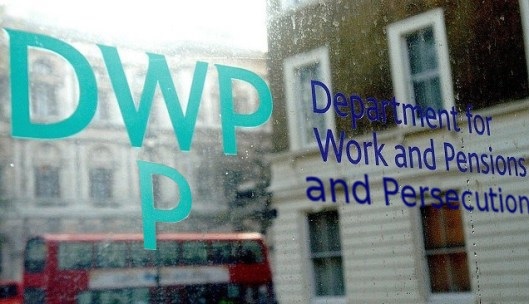
DWP Apologise And Cancel Assessment Of “Three Year Old” Georgina

February 1, 2017

Rail Firms Ordered To Improve Provision Of Disabled Toilets After Paralympian Went Public

February 1, 2017

Provision of accessible toilets on trains will be improved, the government has announced, weeks after a Paralympian revealed she had wet herself on a long train journey because the facilities were out of order.

The Department for Transport said changes were under way as a result of Anne Wafula Strike going public in the Guardian about her experience on a CrossCountry train journey from Nuneaton to Harlow last December.

The rail minister Paul Maynard said: “We are committed to ensuring no passenger has to go through this again. I am dismayed at the terrible experience that Wafula Strike had while travelling from Nuneaton to Harlow. She is right to bring this matter to the department’s attention and I applaud her bravery for speaking openly about her experience.”

Wafula Strike said she felt robbed of her dignity after finding the train’s accessible toilet out of order. A crew member advised her to get off at the next stop, but she said she was unable to hold on until they reached a station with staff that could help her disembark.

CrossCountry apologised to the athlete, who has an MBE for services to disability sport and charity.

Maynard met rail bosses and told them improvements had to be made to make trains more accessible for disabled travellers.

Wafula Strike welcomed the announcement but said it was important that both the government and transport companies used “joined-up thinking” to ensure all aspects of travelling were accessible for disabled people.

“It was very difficult for me to go public about what happened to me and I’m pleased that less than a month after doing so the government is taking action to improve matters,” she said. “I’m also happy that since I spoke out so many more disabled people have gone public about their experiences too. It has broken a taboo.

“I have been reading about a disabled passenger on Southern trains who has been left stranded on a platform several times in the last few weeks because there was no member of staff available to help her get on and off the train. It’s no good getting the toilets working if disabled people aren’t able to get on a train to use them.”

Wafula Strike has been invited to meet Maynard on Thursday to go through the detail of the new plans, which include making available clearer information about the availability of accessible toilets in advance of journeys.

The Department for Transport (DfT) says it will work with train companies to see how staff training can be improved. Maintenance teams will ensure accessible toilets are more reliable and will fix them more quickly when problems arise, ensuring fewer toilets are out of service.

Maynard said: “I take the issue of accessibility on our railways extremely seriously and these commitments from industry are just one step forward to improve things. It is vital that all people, including disabled passengers, are able use public transport and I will continue to push train companies on this matter.”

Paul Plummer, chief executive of the Rail Delivery Group (RDG), which represents train operators and Network Rail, said: “The rail industry wants to modernise what is often Victorian infrastructure to make it more accessible and to provide far better information to enable people with disabilities to travel with confidence.

“When things go wrong, rail companies want to put them right, and we are keen to hear directly from people with disabilities to understand their experiences, which is why the industry is already engaging more with disability groups to understand how we can improve.”

It has been a requirement since 1999 that all new trains with toilets are built with accessible toilets as standard – all trains built before then must comply by 2020. More than 150 stations have been upgraded under the Access for All programme to remove barriers to independent travel, including by installing signs, ramps and lifts. A further 68 are under construction or in development.

The DfT will publish its accessibility action plan later this year, which will address accessibility across all modes of public transport. The aviation minister Lord Ahmad is to look into access to air travel for disabled passengers.

Important Point About PIP

January 31, 2017

Even DWP Workers Don’t Know What To Do About PIP Report Lies

January 30, 2017

Disabled People Tell UN That UK Is Failing On CRPD

January 30, 2017

Successive British governments and other public bodies are failing to fulfil pledges they signed up to under a major international disability rights convention, campaigners have told a United Nations (UN) committee.

The committee is reviewing the United Kingdom’s (UK) progress in implementing the UN Convention on the Rights of Persons with Disabilities – which the UK signed in 2009.   

A range of disability rights groups have submitted a “shadow report” to the UN Committee on the Rights of Persons with Disabilities after extensive consultation with disabled people.

It argues that there is “little evidence that the UK government is consistently taking account” of the convention in developing policy and making decisions – and that ministers explicitly rejected it in developing key legislation such as the Care Act 2014.

Liz Sayce, chief executive of Disability Rights UK, said:

“When the UK ratified the convention in 2009 millions of disabled people hoped for a new era of equality, fair treatment and the opportunity to take full part in society, like all other citizens. Sadly, successive Governments have often failed to take account of disabled people’s rights when making policy; and have introduced some policies that actually make things much worse.

Examples are the 2008 expansion of compulsory mental health treatment to the community – which research shows has had no beneficial effects but has infringed human rights; and, more recently, cuts to social care, which have made it harder for many disabled people to live independently and take part in their communities.

 “Governments have introduced stand-alone measures that are helpful – for instance, recently making apprenticeships more flexible so more disabled people can get started on their careers; or introducing peer support to give more tailored employment help – but overall we are not seeing the ‘progressive realisation of rights’ that the Convention expects.

Liz Sayce added:

“Every day we hear about practices that fly in the face of the convention’s principles and that affect the chances of disabled people enjoying their basic human rights and being part of our society as equal citizens.”

With many health, social care and public transport services now devolved to local, regional or national organisations, the Government should do more to ensure public bodies and providers adhere to the convention, the report argues.

It says that access problems in buildings, on the street and public transport frustrate many disabled people and prevent them playing a full part in the community and earning a living.

Other concerns highlighted in the report include:

  • More children in ‘special schools’ rather than mainstream education – aggravated by the failure to provide clear guidance on education and the public sector equality duty
  • Rapidly growing use of compulsory detention and forced treatment powers contained in mental health legislation that are incompatible with the UN convention
  • A massive shortfall in housing that meets the needs of disabled people; and, for many, no security of tenure
  • The loss of investment in health and social care services which support disabled people to live independently
  • Inadequate or no investigations into unexpected deaths of disabled people in the care of the state – particularly those with learning disabilities or mental health problems
  • Delays in implementing requirements for reasonable adjustments that allow disabled people to work and use services
  • Huge concerns about the level of hate speech and hate crime – aggravated by public figures and journalists using language that leads some to see disabled people as scroungers
  • A tendency by public bodies to focus on processes rather than meaningful outcomes when fulfilling their legal duty to eliminate discrimination and promote equality.

Sue Bott, deputy chief executive of DRUK, who led on the report added:

“We have drawn on the experiences of disabled people across the UK to present a full picture of our daily lives and the impediments that prevent so many fulfilling their potential and living full, independent lives. Whether you look at the shockingly low average life expectancy of people with learning disabilities or the sheer poverty of disabled people, it is clear that progress towards real equality continues to be patchy and torturous.

“We urge the UK Government and the devolved administrations to work constructively with this welcome inquiry by a team of international experts. More importantly, they must then work with disabled people and act on the UN team’s conclusions and recommendations.”

The report – which combines two separate documents focusing on England and Wales and Scotland – was produced with support from the Equality and Human Rights Commission and the Scottish Human Rights Commission. Disability Rights UK, Disability Wales and Inclusion Scotland led the work.

Wheelchair User Refused Bus Space Days After Court Ruling

January 30, 2017

A wheelchair user was refused space on a bus because a pushchair was on board, days after the Supreme Court ruled on the issue.

Kirsty Shepherd, from Wakefield, West Yorkshire, said the Arriva driver told her she could not get on, even though there was enough room.

It came five days after the Supreme Court said bus drivers must be more accommodating to wheelchair users.

Arriva Buses said it was investigating “as a matter of urgency”.

Ms Shepherd said the woman with the pushchair on the Rothwell to Wakefield bus was happy to move, but the driver still would not let her on.

In the case that went to the Supreme Court, wheelchair user Doug Paulley took action against First Bus after he was refused entry to a bus in 2012 when a mother with a pushchair would not move.

The bus had a sign saying: “Please give up this space if needed for a wheelchair user.”

The court found the company should do more to persuade non-wheelchair users to move from wheelchair spaces, but did not have the legal power to remove them.

‘Just not fair’

Ms Shepherd said the Arriva driver told the passengers to get off, saying it was her fault the journey could not go on.

“He leant forward and said ‘I can’t let you on love, I’ve got a pushchair on’,” she said.

“I said ‘well please ask her to move’. He said ‘I can’t do that’.

“The people on the bus started shouting saying ‘just get the next bus, we’ve got homes to get to’.”

She said she spoke to the bus driver’s manager, but he was still not willing to let her on board.

“He let the passengers get off and have a go at me… it was just not fair.”

Arriva said: “Our customer service team have had extensive conversations with Ms Shepherd about the incident and we are investigating this as a matter of urgency.

“We are in the process of downloading the CCTV footage and speaking to those involved.

“We have promised to conclude this investigation swiftly.”

Commenting on the case, Mr Paulley said he could not see why Ms Shepherd had been denied a bus journey.

He said: “On her bus there was a buggy space, so there were two separate spaces. When that lady [with the pushchair] moved into the buggy space that space was free and available, so I don’t know why the driver didn’t let her on.”

He said he thought the Supreme Court ruling had gone far enough to help wheelchair users.

“I think some people would have liked it if it was more concrete,” he said. “But there are always exceptional circumstances, so there has got to be some flexibility.

“I think also the Supreme Court justices went quite a long way to reach the decision that they did, and it has really raised awareness.”

Review- Kaabil

January 30, 2017

Kaabil  (Capable) is the story of two young blind people. Rohan (Hrithik Roshan) and Supriya (Yami Gautam) meet on a ‘blind’ date. They’ve been set up by a matchmaker who wants to get them married. They find true love.

What follows is Bollywood trying, very successfully, to show a mass audience that two disabled people can, and do, fall in love with each other and get married to each other, too. As a lifelong fan of Bollywood movies who has also been disabled since birth, I was very impressed by this strand of the storyline. In the past, Bollywood movies have mostly shown one disabled protagonist falling in love with a non-disabled person. The only exception I can think of to that is MargaritaWith A Straw. (2014).

I always thought that the story of two disabled people falling in love with, and marrying, each other would be a very difficult one for Bollywood movie audiences to accept and enjoy. I always thought that the general public in South Asia, where Bollywood movies have their mass audience, would not accept the idea of disabled people having relationships and getting married, much less with each other.

I was pleasantly surprised to see that Kaabil had this covered, too. The second strand of the storyline sees a group of villains wondering how blind people can get married and have sex! They try to find out in the worst possible way, bringing great tragedy into the lives of Supriya and Rohan.

The entire second half of the movie shows Rohan’s successful quest for revenge against the villains for their actions against his beloved wife. So, yes, Kaabil does have more fighting than most Bollywood movies have shown in a long time. I have never been a fan of Bollywood’s fighting scenes, but this time, they were there for a very good reason, which was made clear to the audience.

The last time I saw a disabled character portrayed as a villain in a Bollywood movie was Krrish 3’s evil superhero Kaal. That character left me worried that non-disabled children would come away from that movie with a fear that all wheelchair users are evil.

However, I was pleased to see that it’s been made very clear that Kaabil‘s Rohan is not evil at all. He’s simply a man who felt a very deep, true love. He simply sets out to show the world that he is capable of proving his feelings for Supriya, and that he is worthy of her love for him.

As with most Bollywood movies, Kaabil has a beautiful soundtrack of slow love songs. They are worth watching on the big screen, even if nothing else about the movie interests you.

It is very difficult for me to say anything negative about Kaabil. I recommend it very highly to anyone who has an interest in Bollywood movies. However, the movie did raise one interesting question for me. It left me wondering how people write Braille! If anyone is able to answer that question, please do!

What Three Year Old Would Be Able To Go To Work?

January 30, 2017

PIP INVESTIGATION: Politicians call for action over ‘widespread dishonesty by assessors’ : DNS.

January 27, 2017

I Talk With My Eyes

January 27, 2017

A beautiful piece from today’s Guardian.

At last I am able to tell my story in my own words. When I was born in 2006 my parents were told I had cerebral palsy and renal failure; the MRI scan of my brain was one of the worst the technician had seen. My early years were a blur of hospital stays, sickness and prayer combined with my family’s love, which carried me through those long days of pain and uncertainty.

Growing up in Lechlade, a small town in Gloucestershire, enabled me to be part of the community, and I joined my peers at the local preschool, despite being in a wheelchair and having no speech. There were never any questions raised about my ability to participate in activities, and I have fond, fun memories of those days. Like most children, I started school aged four, although I attended a special school.

At first I enjoyed my time, making new friends and having fun with my lovely teacher – who made lessons engaging, varied and entertaining. Once a week I attended my local primary school, where I joined in with my able-bodied peers for the afternoon. That first academic year laid the foundations of friendship for me with children in both schools, boosting my self-esteem.

Can you imagine being constantly stuck in a reception class? I turned five, then six, then seven; my learning was squeezed into one afternoon at my primary school, while the rest of the time my brain was slowly shutting down at special school, where the syllabus never progressed. On top of this, the sensory curriculum I was subjected to became increasingly degrading: nursery rhymes, baby toys, and teachers talking to us like we were deaf toddlers. On and on this “education” continued, shutting off my ability to reason and forcing me to retreat in on myself. Outwardly, I looked vacantly stupid (giving credence to the idea that academically there was very little going on); inwardly, I was amusing myself, lost in my own thoughts. But I had no way to communicate.

When my peers were seven and starting year three, my mother took me out of special school for an hour a day to be taught to read, write and do basic maths. The previous summer I had done some work on phonics at home using an eye gaze computer. It was frustrating because the computer couldn’t read my eyes very well, but my mother and carers could – and so I found a way to learn. Looking at letters, words or numbers Blu-Tacked on to a Perspex board, I sat opposite my communication partner, who watched my eyes and pointed to the square I was looking at. Initially, progress was slow and during the third week of term I was getting bored and beginning to switch off. Thankfully, my mother was given advice to make the lessons more challenging; for example, increasing the written vocabulary I worked with and quickening the pace.

I haven’t looked back since. We moved through the early curriculum, and ended in the summer doing year-one work. September brought a renewed pace – with home education filling every morning and visits to mainstream school increasing to two afternoons a week. By February I was using a spelling board for all my communication. By year five, two years after I started literacy and numeracy lessons, I had caught up with my peers and joined my local primary school full-time.

Being able to communicate has transformed my life. I can now hold conversations with family and friends. Reading and being read to bring me great pleasure, and it was my immense privilege to meet my literary hero, Michael Morpurgo, who has kindly written the foreword to the book I’m writing. I have a blog, Eye Can Talk, and have entered literary competitions. And I can now share my faith, which is the most important part of my life.

I am keen to make a difference for children like me. I have started a campaign for non-verbal children to be taught literacy, and have met the minister in charge of special education, Edward Timpson. Never judge a book by its cover; never look at a child like me and assume we are not worth teaching.

PIP INVESTIGATION: Regulator receives ‘more than 1,600 complaints about assessors’ : DNS.

January 27, 2017

Undateables Star Announces Photography Exhibition

January 27, 2017

A press release from Sense:

Ian Treherne, a deafblind photographer who starred in hit TV show ‘The Undateables’ earlier in the year, has announced a new solo exhibition in London.

Ian, 38 from Rochford, Essex, was born partially deaf and with limited vision, due to a condition called Usher Syndrome, which causes progressive eyesight deterioration. Ian’s appearance on Channel 4 show: ‘The Undateables’, highlighted his work as a photographer, and the effects his sensory impairments have on his artwork and creative process.

Ian’s latest exhibition, ‘Release’, showcased at the Fiumano Projects in Central London from the 15th February until the 10th March, references the photographer’s own personal journey as a partially sighted artist, alongside a selection of his intimate and candid portraits, film and woodwork.

Ian Treherne, from Rochford, Essex, said:


“I’ve always been fascinated by photography and have found it an incredible tool to capture the beauty of the world around me in spite of my sensory impairments, combining my creativity and disability. However, I recently took a two year break from photography due to eyesight deterioration, which I found very difficult to cope with.

My creative mission is to find my place in society in spite of my limited vision but I’ve never felt I fitted in as a person, let alone an artist, and have struggled to participate in the world around me. After years of hiding away my disability, this exhibition will be a celebration of opening up, vocalising and showcasing my visions through photography. Despite losing my eyesight slowly, I still want to show society the beauty I see and the conundrum I live with.

I hope ‘Release’ helps give the public a better understanding of what it’s like to have Usher Syndrome or sensory impairments.”

Sense Deputy Chief Executive, Richard Kramer, whose national disability charity has provided support to Ian, said:

“This exhibition is about celebrating Ian’s work as an incredibly talented photographer. We also know that the challenges facing people with dual sensory loss mean that people can feel withdrawn, depressed and isolated. Ian has shown bravery in how honest and open he has been about his struggle, and we hope this will give others in his position strength.

I hope as many people as possible can make it down to the exhibition.”


For more information on the exhibition please visit – www.sense.org.uk

For more information on Usher Syndrome, deafblindness or sensory impairments, please visit – www.sense.org.uk

DWP Plans To Close One In Ten JobCentres

January 27, 2017

The government is planning to close more than one in 10 jobcentres around the UK, with the loss of up to 750 jobs.

The Department for Work and Pensions would not say how many of the 714 offices would close, but unions said it was more than one in 10 locations in England, Wales and Scotland.

Damian Hinds, the minister for employment, said the closures would better reflect today’s welfare state as people increasingly claim benefits online.

“The way the world works has changed rapidly in the last 20 years and the welfare state needs to keep pace,” he said. “As more people access their benefits through the internet many of our buildings are underused. We are concentrating our resources on what we know best helps people into work.”

The DWP said 78 small Jobcentre Plus offices would be merged with larger ones nearby, with a further 50 to be “co-located” with local authorities or other community services.

It will also close 27 back-office buildings around the country and develop larger processing sites, including five new large service centres from 2018.

The Public and Commercial Services union said it would oppose the plans. Mark Serwotka, general secretary said: “Jobcentres provide a lifeline for unemployed people, and forcing them to travel further is not only unfair it undermines support to get them back to work.

“We are opposed to these closures and will vigorously fight any attempt to force DWP workers out of their jobs.”

The DWP said up to 750 jobs would go although the vast majority of staff would have the option to relocate or take on other roles.

Frank Field, chair of the Commons work and pensions select committee and Labour MP for Birkenhead, said he was shocked by the closures.

“The DWP is cutting off its nose to spite its face, it seems to me,” he said. “It’s true that unemployment has been falling, but jobcentres have been given new tasks under universal Credit to help people find work.

“The centres are supposed to have worker coaches who can find people a job and advisers to help them get higher pay. It means that staff will need to understand the jobs market over a wider area, jeopardising their ability to achieve their targets.”

The Future Of JobCentre Plus

January 26, 2017

Assessors Give Widely Different Judgements On The Same Benefit Claimant

January 26, 2017

Work, Health And Disability Consultation

January 25, 2017

I was sent the link to this consultation. I have just filled out the ‘questions for individuals’ section. Can I request you all to do the same before February 17th.

The complete set of documents for the UNCRPD Inquiry : DPAC.

January 25, 2017

Manchester United To Create 300 Seats For Disabled Fans By 2020

January 25, 2017

Manchester United are moving 2,600 fans in order to create 300 positions for disabled supporters at Old Trafford.

Following consultation with the Equality and Human Rights Commission and Manchester United Disabled Supporters’ Association, the club on Tuesday announced changes in line with the Accessible Stadia guide.

The structural alterations will be complete in August 2017 for the 2017-18 Premier League season and affect 2,600 season-ticket holders, with the relocation of those affected phased over three years.

United have devised a goodwill package for those supporters being moved, while the changes will lead to the overall capacity of Old Trafford being reduced to around 73,300.

United’s group managing director, Richard Arnold, said: “Old Trafford is a home for all United fans and these changes will help many more of our loyal disabled supporters to attend games to watch their heroes.

“Manchester United prides itself on its work in this area for more than 25 years, and will continue to ensure that it remains at the forefront of our thinking.

“We know that many of the affected season-ticket holders have held their seats for decades and it will be a sacrifice to give them up. But we also know that the vast majority will understand and support this expansion.”

The new positions for disabled supporters will see the current East Stand accessible platform extended across and into the Sir Alex Ferguson and Sir Bobby Charlton Stands. As the changes are being phased in, the design will incorporate reversible platforms to be used for Premier League and some cup matches.

Chas Banks, secretary of the Manchester United Disabled Supporters’ Association, said: “I’m filled with pride that the club I’ve supported since first coming to Old Trafford as a little boy in 1957 is leading the way in increasing accessible seating to meet the standards set out in the Accessible Stadia guide. It’s a dream come true for me and many other disabled United fans.”

The developments to Old Trafford have been welcomed by Penny Mordaunt, minister of state for disabled people, health and work. “Bravo @ManUtd for new plans to make Old Trafford accessible to 300 more disabled fans – sport is for everyone,” she posted on Twitter.

Think Tank Challenges Banks On Mental Health

January 24, 2017

Banks must offer basic account options, as given to other vulnerable people, to assist those struggling with mental health conditions, a think tank says.

Mental health problems affected everyday activities such as budgeting and paying bills, the Money and Mental Health Policy Institute (MMHPI) said.

Setting spending limits on cards and allowing people to set how banks contacted them would help, it said.

The trade body for High Street banks has vowed to improve inclusion.

In its mission statement covering 2016-18, the British Bankers’ Association said that the “crucial part of the industry commitment to raising standards” should include working with mental health initiatives.

Impulses

The MMHPI said one in four people could suffer from mental health issues in any one year. It has published research suggesting that periods of poor mental health put people at risk of financial trouble.

For example it found that people with depression or post-traumatic stress disorder were likely to struggle with short-term memory, making Pin numbers harder to remember.

Those experiencing bipolar disorder or ADHD often struggled to resist impulses, potentially leading to dramatic spending sprees, it said.

People with borderline personality disorder or psychosis could find it very difficult to compare financial options and found it more difficult to plan ahead.

Extreme anxiety could also stop people opening letters or taking calls from banks.


‘I’m still playing catch-up’

Dan, aged in his 40s, says his finances are affected by his bipolar condition and anxiety. This led to a phobia of opening letters and answering the telephone, fearing his “safe space was being invaded”.

As a result, bills went unpaid and bank charges built up, leading to debts which he is still repaying after 15 years. “I’m still playing catch-up,” he says.

Although conditions are very individual, he says he would have been helped by correspondence through e-mail which would have allowed him to compartmentalise his financial matters and “take away the emotion” by dealing with it in work mode.

“Senior managers want to put measures in place, but this does not always filter down to branches and call centres,” he says.

He would like to see better training in place. Clearer literature from banks, on what assistance is available for customers with mental health problems, would also allow people to make an informed decision on revealing their condition to bank staff.


The MMHPI is challenging banks to adapt some systems already available to help those with mental health problems. For example

  • The ability to delegate limited permissions to someone else to manage an aspect of your finances, as is available to wealthy individuals
  • Setting spending limits on cards or blocking access to some merchant codes, as is possible on many corporate cards
  • The ability to set communication preferences on an account, which is generally offered to people with visual or hearing impairments.

Polly Mackenzie, the Institute’s director, said: “For too long, it has been assumed that when people with mental health problems get behind on bills, or struggle to stick to their budget, it is because they are lazy or incompetent. Our research proves beyond doubt that’s just not true.

“Mental health problems can severely affect consumers’ ability to stay on top of their finances, shop around, or manage a budget.

“It is time for the financial services industry to adapt its services to help support people when they are unwell – just as they do to help people with physical disabilities who struggle to access a branch or engage on the phone.”

From Mental Health Professional To Inpatient

January 24, 2017

“Perhaps not the most flattering photo of me, but I’m sharing this awful picture and my story to help increase understanding of the impact of mental illness and to celebrate my recovery.”

“As I have worked in mental health services for 29 years, one would think I would be immune to mental illness.”

In a LinkedIn post that has been shared more than 5,000 times, Mandy Stevens shared a photo of herself, red-eyed with matted hair, in the midst of a depressive episode that resulted in her being hospitalised. She wrote the post on the day she was discharged from a 12 week stay on the inpatient ward at the City and Hackney Centre for Mental Health in London.

One thing that struck many people who read Stevens’ post on the online professional network was her unique vantage point – she has been both an employee and patient of the UK’s National Health Service mental health programme.

Stevens began her career in the NHS as a mental health nurse. After 15 years she became a hospital manager, and then a director.

Although she has suffered episodes of “mild to moderate” depression, she managed it through counselling and very few of her family and friends knew about it.

“There is a huge amount of stigma around mental illness,” Stevens told BBC Trending, “and for the past 29 years I have worked in Mental Health Services and seen the negative effect this stigma has on people who use our services. From personal embarrassment, family embarrassment, not accepting diagnoses or treatment, not wanting to attend mental health community services in case they are recognised. There is also stigma amongst family, friends and colleagues, including whispered rumours and avoidance.”

Then in November, things changed, and her depression became serious enough to warrant hospitalisation.

“When I was very, very depressed, anxious and suicidal I was so ill I was almost monosyllabic, I could hardy walk properly, I couldn’t shower or dress properly. Eating and all the things that we take for granted were a huge struggle. I spent most of every day in bed, crying and wanting to be dead. I was absolutely terrible. So frightening and awful.”

“The absolutely wonderful nurses on Gardner ward at City & Hackney Centre for Mental Health were amazing,” Stevens says.

“They would come and see me very regularly throughout the day, spend time with me, encourage and support me, listen to me crying and talking and throwing up a huge amount of emotion. The staff nurses and the healthcare assistants were wonderful, accessible and compassionate 24/7. I am so proud of my profession.”

Whilst in hospital and after she was over the worst Stevens says she felt a bit like an “undercover cop” as she observed how the ward was run.

“Without exception the staff treated all of the patients with dignity and respect.”

When asked what she thinks of the state of the NHS right now, Stevens says, “Very difficult for me to answer this question now… I can only talk about my particular experience as a patient in an ‘Outstanding Trust’ – which has been a great experience.”

“I am, of course, aware that not everyone is as lucky as me to receive this type of care. Unfortunately, mental health services are always seen as the ‘Cinderella services’ with lower levels of funding and cuts.”

Analysis by the King’s Fund think tank says 40% of the 58 mental health trusts in the UK saw budgets cut in 2015-16. It found six of them had seen budgets cut three years in a row. An NHS spokeswoman told the BBC that mental health services were “wider” than trusts, and care was funded in other ways.

Stevens adds that help is there.

“There is a huge range of accessible services across the country. Your GP is usually the best place to start as they can signpost you to local services and, if necessary, they can refer you to formal mental health services, but there are also a wide variety of other services around run by volunteers,” she says.

“My first message is to reach out to people. Speak to your close family and friends about your mental health, and start opening conversations about it. Don’t say ‘I’m okay’ when you’re not okay”

Lion: A Review

January 23, 2017

Garth Davis’ Lion is based on the incredible true story of Australian businessman Saroo Brierley. It is an amazing film. At its heart, it is the story of a lost child’s search for his home and family. Set mostly in India and partly in Australia, it has striking similarities to the fictional Bollywood movie Bajrangi Bhaijaan (2015).

Sunny Pawar is brilliant as the young Saroo. He stars in the funniest moment of the whole film as, when asked what his mother’s name is, he responds “mother!”

British actor Dev Patel, who plays the adult Saroo, has, much like his character, come a long way since his first role on Channel 4’s teen drama Skins. These days, long time fans would hardly recognise him- but his abilities as an actor are as clear as ever.

Sue Brierley (Nicole Kidman) and her husband John (David Wenham) adopt the young Saroo from an orphanage in Calcutta. He grows up in Tasmania, Australia, with them and his brother, Mantosh, also adopted from India.

Twenty years later, as an adult, Saroo suddenly remembers the true story of his life. What follows is a search for his home and birth family that, eventually, takes over his present life. He carries out this search using Google Earth. I saw this as proof of something I have always believed- that the Internet, used in the right way, is an extremely positive tool.

Saroo’s search for his birth mother is eventually successful. She is, naturally, thrilled to see him, but for me, that was not the most moving moment of the movie. The most moving moment of the movie, for me, was when Saroo phones the Brierleys from India and says “She understands that you are my family. Even though I’ve found her, that doesn’t change who you are.” I think this moment can provide hope to anyone who has an adopted child, or anyone who may be considering adopting a child, about how that child may see them as an adult.

In parts, Lion moved me to tears. I could not recommend it highly enough. However, there was one aspect of the film that disappointed me, personally, as a disabled person. That was that I realised almost immediately that Saroo Brierley’s adopted brother, Mantosh Brierley, has autism. However, his disability is never revealed clearly in the film.  Viewers see him having two meltdowns, one in his early childhood, soon after he arrives in Australia, and another during a family dinner when the brothers are young adults. I was disappointed that Mantosh’s autism is never revealed clearly, meaning that viewers who do not know, as I do, how to recognise an autistic meltdown, will never pick up on this significant detail.

What is revealed is that Mantosh, as an adult, stays away from the family and from family events. At one point Saroo asks him not to make Sue “any more unhappy than you already do.” He responds “Why do you think I stay away?”  To me, this seems like an unrealistic portrayal of autism, as I did not know that people with autism are able to understand when they are making other people unhappy. However, if Mantosh’s level of disability had been made a little bit clearer in the film, I may have been able to understand this scene more clearly.

I can’t help wondering if Mantosh’s disability is explored more in Saroo’s book  A Long Way Home, on which Lion is based. I look forward to reading the book to find out more about the whole Brierley family. Disability representation aside, if this particular book is even half as good as the movie it was made into, I won’t regret reading it.

ATOS Assessment Surveys- Please Share

January 23, 2017

We spotted the following two posts in the Disabled People Against Cuts Facebook Group:

It appears that atos have started conducting surveys about assessments quite soon after the appointment. They ring and ask about the assessors conduct and if they felt that they were listened to etc. It would be wise to ask them to call back after the report has been received and the decision made as we are all too painfully aware of how badly people are being dealt with. If DWP and the contractors have been forced to do this because of the UN report an/or an internal issue about the number of complaints then, the only way they will get good feedback would be to make contact BEFORE people find out they were refused social security

Following on from my concerns about the telephone surveys atos have started doing after assessments, it has raised further issues. If people are being contacted before they have a copy of the report and a decision about their application, they will worry that, if they give negative feedback, they might receive a bad report and therefore not get the award. I have emailed my MP about this and would ask that others do the same asking that the only appropriate time for such a survey would be after the whole process is complete.

Man Collapses On Way Home From JobCentre And Dies Of Heart Attack

January 20, 2017

 A MAN collapsed and died in the street after being ruled “fit to work” and forced to sign on. 

Lawrence Bond, 56, suffered a fatal heart attack shortly after leaving Kentish Town Jobcentre on Thursday. His sister, Iris Green, said that he was in obvious “physical distress” when he arrived at the offices in Kentish Town Road, adding that staff are faced with an “awful dilemma”. 

“I do feel really sorry for the people who dealt with him,” said Ms Green. “They face an awful dilemma of being the people responsible for ­collecting signatures for people signing on as fit for work, even when they can see people are very sick.”

Mr Bond suffered from prolonged health problems, including difficulty with mobility and breathing, associated with being heavily overweight. But his incapacity benefit, now known as Employment and Support Allowance, was cut following a second “work capability assessment”, which was carried out by American private firm Maximus in July.

A subsequent appeal was turned down and Mr Bond was awaiting the outcome of a second appeal at the time of his death, his sister said. 

Ms Green, said: “I realise that the reception staff have no clinical knowledge or responsibility for doing it, but the rules need to be changed so that they have the right and discretion when they see a human being turning up in physical distress to flag the situation up and ask for urgent re-assessment.”

Mr Bond, who lived in Gillies Street, went to visit a friend in Highgate after leaving the Jobcentre and was boarding the 214 bus in Highgate Road when he collapsed. Paramedics battled to revive him in the street, but he was pronounced dead at the scene. 

His sister said: “I think he suffered from anxiety all his life, but held down regular jobs and was never out of work from the age of 16 when he trained as a car mechanic, then did computer studies and went to companies fixing computers, photocopiers, cash tills – so he had his van which he felt safe in – but, of course, his diet was shocking so he put on weight.

“He lost his last long-term job two years ago and by then his weight and unfitness made him unemployable.”

Ms Green said his health deteriorated while he was unemployed, adding: “His anxiety was getting worse as he could not pay bills and was afraid to leave home to go to the shops. Two referrals his GP had made for mental health services had been lost and he said he felt annoyed about that.”

“He functioned very well when he had a job, and money, and a van and functioned as a productive tax-paying member of society, but he was frustrated that, although he was an intelligent person, he could not seem to get his needs met.

“The main thing is that they have the means to make sure this doesn’t happen again. We have such a tick-box society. If we can change that, then people can flag things up and really help someone.”

A spokeswoman for the London Ambulance Service said: “We were called at 4.57pm on Thursday, 12 January, to reports of an incident at Highgate Road.

“We sent an ambulance crew, three single responders in cars and an advanced paramedic to the scene. The first of our medics arrived at the scene in under seven minutes.

“Sadly, despite the best efforts of our crews, a patient died at the scene.”

A spokesman for the Department for Work and Pensions said: “The local Jobcentre had been supporting Mr Bond and our sympathies are with his family at this difficult time.

“ESA decisions are made following a thorough assessment and after considering all of the evidence, including that provided by a claimant’s doctor or other medical professionals. Anyone who disagrees with a decision can ask for it to be reconsidered, and if they still disagree they can appeal.”

EasyJet Fined By French Court For Refusing To Let Disabled Passenger Board

January 20, 2017

A French court on Thursday fined British low-cost airline easyJet €60,000 (£52,000) for having refused to allow a disabled passenger to board for “security” reasons.

The criminal court in Bayonne, southern France, heard that staff at the budget carrier refused to allow Joseph Etcheveste, 55, to board an Easyjet flight in Biarritz in July 2010 because he was “unaccompanied”.

“EasyJet refused to let my client board because it deemed there were security problems. They still have not been able to explain what they were,” said his lawyer Anne-Marie Mendiboure.

It was not the first time easyJet has fallen foul of French discrimination laws.

In December 2015 the company was fined €70,000 for refusing access to three people with disabilities for the same reasons.

There were also similar rulings in the two previous years.

The airline said it had merely imposed “internal rules”.

Etcheveste was an associate of former Basque separatist leader Philippe Bidart and was partially paralysed when he was shot in the spine as he was being arrested by French police in 1987.

EasyJet lawyer Maud Marian told AFP she was not surprised at the court judgement while stressing that the airline “never intended to discriminate against the plaintiff” and was unlikely to appeal the decision.

Assisted Suicide: The Musical- A Review

January 19, 2017

Assisted Suicide: The Musical has a very rare, and very special, quality. It is deadly serious and hilarious, all at the same time. It brings as much humour as it is possible to bring to the least funny subject in the world- death.


Its creator, writer and absolutely hilarious star, Liz Carr, better known to viewers of the BBC’s Silent Witness as Clarissa Mullery, describes the show herself as “a TED talk with show tunes.” What clever, hilarious show tunes they are, too! From I’m Choosing Choice to Suicide Tourist, they each explore a different issue relating to the assisted suicide debate by literally making a song and dance about it!

The songs come at regular intervals, and I thought they were placed at just the right moments in the script. Just when the audience is about to tune out of the more serious ‘TED talk’ given by Liz Carr herself, along comes a tune to make us sit up, listen, laugh and take points in.

My personal favourite song was Put Me Down, a love song played out between a couple in the early stage of their relationship, who are discussing what would happen “if I was paralysed and couldn’t use my ****!” I loved the fact that that song is based on a scene from 2016 film Me Before You– complete with the girl wearing character Lou Clark’s beautiful long red dress!

The ‘TED Talk’ side of the show is full of very interesting facts, figures, stats and stories about assisted suicide and Liz Carr’s personal experiences as an activist who is strongly against an assisted suicide law. One such story that will stick with me was about a woman who was told she was terminally ill and given six months to live. She considered assisted suicide, but decided to go on a drug trial first and is still alive 16 years later.

Given her personal point of view on the issue, I thought Liz Carr did a very good job of presenting both sides of the debate around assisted suicide. The main way she did this was through ‘documentary Liz’ who appears on a TV screen to act as the ‘inner voice’ of ‘real Liz.’

I was slightly worried, before seeing the show, that it might be set in a fictional version of Dignitas. I had nothing to worry about. I only wish that the soundtrack was available to buy, so that I could relive the experience whenever I felt like doing so!

I saw the show last night, at London’s Southbank Centre, where it played for one night only. The next time it comes to a theatre near you, I recommend it very highly. Whichever side of the debate you are personally on, you will leave Assisted Suicide: The Musical with a smile on your face.

Partial Victory For Doug Paulley In ‘Wheelchair V Buggy’ Case

January 18, 2017

A disabled man has won a Supreme Court case after a dispute with a woman with a buggy over wheelchair space on a bus.

It means bus drivers may have to do more to accommodate wheelchair users.

Wheelchair user Doug Paulley brought his case after he was told he could not get on a bus to Leeds in 2012, when a mother with a pushchair refused to move.

He had argued operator FirstGroup’s “requesting, not requiring” policy was discriminatory.

The court allowed the appeal, but to a limited extent.

It ruled that FirstGroup’s policy of requiring a driver to simply request a non-wheelchair user to vacate the space without taking any further steps was unjustified.

The company should consider some further steps to pressurise the non-wheelchair user to vacate the space, depending on the circumstances, it said.

BBC legal affairs correspondent Clive Coleman said the judgement falls short of making it a legal requirement for bus companies to compel non-wheelchair passengers to move from the space.

‘A matter of judgement’

Reacting to the judgement, Mr Paulley told the BBC: “Who would have thought that five years on I would still being discussing the day I had that problem going across to see my parents for lunch?”

“It’s been amazing the amount of support I’ve had – disabled people, organisations, lawyers, family, allies.

“This is hopefully going to make a major difference to disabled people’s travel.”

Asked whether the verdict went far enough, Mr Paulley said the issue would always involve “a matter of judgement” from drivers.

He added: “There’s always got to be some judgement and there will always be some exceptional circumstances where somebody can’t be expected to move out of the space.

“But what this judgement means is the driver has to make their own decision as to whether the person is being unreasonable in refusing to move, and if they are, he or she has to tell them that they are required to move, and if necessary refuse to move the bus until they shift.

“So that’s very clear I think.”

But Mr Paulley’s solicitor, Chris Fry, said the ruling had fallen short.

“The judgement should have gone further – there’s no right as things currently stand to force someone off a bus. So it goes as far as that, but not that far yet.”

Speaking on BBC Two’s Victoria Derbyshire Programme, wheelchair users reacted to the judgement.

Zoe Williams said: “I think the whole point of the case was to try to get more clarity about how far bus drivers are meant to go in terms of requiring people to move out of the space. I’m not sure this ruling has provided this clarity.”

Will Pike told the programme: “We were seeking some sort of clarity.

“Doug has done an incredible job of bringing this issue to light and to the mainstream media’s attention, and at the end of it there’s no news.

“It’s kind of back to square one.”

Penny Mordaunt, the Minister for Disabled People, Work and Health said it was an “important and welcome” ruling.

She said she would be talking to the Department for Transport about “clarity, good practice and the powers of transport providers to ensure this ruling becomes a reality”.

Following The DWP’s Instructions Could Lead To The Complete Loss Of Your PIP

January 18, 2017

With many thanks to Benefits And Work.

Feedback from Benefits and Work members about the shortened personal independence payment (PIP) renewal form suggests that following the DWP’s instructions could lead to the complete loss of your PIP.

Below, we outline the risks and how to reduce them.

PIP renewal process
From June 2016 the DWP began sending out a PIP renewal form (AR1) which is much shorter than the PIP2 ‘How your disability affects you’ form.

The AR1 form that asks you whether each activity has got:

Easier

Harder

No change

If you tick the ‘No change’ box for any activity, the form tells you do not need to provide any further details about the difficulties you have with that activity.

The AR1 form goes to a DWP case manager initially, rather than a health professional.

DWP guidance says the case manager “will compare the new information against the evidence from the previous assessment”. The case manager can also contact the claimant or carer for more information, but cannot send for more medical evidence.

If the case manager cannot make a decision, then all the information is forwarded to Atos or Capita for assessment by a health professional. According to the DWP the health professional will have access to the AR1, any additional evidence obtained by the case manager and “all relevant medical evidence”. What is not clear is whether the most recent PIP 2 ‘How your disability affects you’ form must be consulted by the HP.

The health professional will initially attempt to make their assessment solely on the papers.

Only if that isn’t possible will the claimant be required to attend a face-to-face assessment.

A decision will then be made by a case manager, purportedly based on all the evidence, but more usually based entirely on the health professional’s report.

Here at Benefits and Work we’ve had considerable doubts about whether just ticking a box is always sufficient to ensure that a PIP award continues. We have also been concerned about what evidence the health professional sees, in reality, if there is a face-to-face assessment as a result of completing an AR1 form.

We asked for feedback from our members who had been through the process and below are some of the things you told us.

‘No change’ can lead to face-to-face
One thing that rapidly became clear is that simply ticking the ‘No change’ boxes does not guarantee that you will avoid a face-to-face assessment.

One member told us that they were still required “to have a face to face appointment even though I had ticked no change.”

Another member commented that they “completed the AR1 form stating things had not changed” but still had a face-to-face assessment. In addition:

The assessor didn’t have my AR1 form, said he wasn’t familiar with the form and preferred to work from the original application form.”

The result was that even though our reader had arrived on a mobility scooter they had both components reduced from enhanced to standard rate.

In spite of the lack of evidence used by the health professional, things ended better for another member who also ticked ‘No change’:

“Assessor did not have AR1 form or hard copy of original claim.”

Nonetheless, both their enhanced awards were extended.

Deterioration may leads to face-to-face
It also appears that stating that your condition has deteriorated means that there is a real possibility that you will be required to attend a face-to-face assessment.

One member had completed the review form with their partner:

“The form says if there has been no change they do not need any further details as they had already got all the information they need, so we did as they said. We made it clear on the review form that his health had not got better in any way, but had in fact got worse and told them how. He was then sent for a medical assessment.”

Our member says they do not know what information the assessor had, though they did have some. But the result was that the award was reduced from enhanced rate for both components to standard rate.

Another member’s relative, who has a very serious condition, received the AR1 form:

“she filled in the form saying things were either the same or worse than before. She had an assessment at home and it was appalling . . . she went from the enhanced rate for the daily living section and standard rate for moving around to nothing at all.”

Another member had a similar experience:

“I indicated on the form that there had been no change in my ability to carry out activities, or I had worsened. However, I was then required to attend a face-to-face assessment at which the health professional in my opinion did not accurately report my conditions, resulting in my PIP being stopped.”

Things also went badly, though not quite so badly, for this member:

Completed pip review form. On majority of activities ticked harder, gave explanation, ticked some no change, no easier.”

They were then required to attend a face-to-face assessment and had their mobility component reduced from higher to standard.

No face-to-face but award reduced
One member told us they had been obliged to appeal to get into the support group for ESA before undergoing a PIP renewal. They completed an AR1 form:

“I had stated in the form that everything has got worse, mobility is much worse! . . . PIP have gone by assessment that esa did but I don’t believe that they looked at further information I supplied.”

Their award of the enhanced rate of the care component of PIP was reduced to standard care

What is particularly alarming is that our member says that the decision was made without inviting them to attend a face-to-face assessment. Instead, the unreliable evidence from their overturned ESA assessment was used.

Increased award with minimal new information
One member’s partner managed to keep their award at the same level in spite of providing minimal information.

“Most of his renewal was answered with ‘No change’ but I did need to inform them of a change in his medication, 2 added ones and increased dosage for two of them. I also had to tell them that he was now suffering breathing problems which affected his walking.”

Our member received a telephone call from the DWP case manager asking further questions about their partner’s mobility. They were then informed that the claim would be renewed at the same rate without the need for a face-to-face assessment.

No change and additional information leads to same award
One member ticked ‘No change’ for each activity but also copied their written answers from their last PIP claim form onto the AR1. In addition they:

“provided an up to date note from my GP. I also provided up to date letters from friends/family stating there had been no change since they wrote in 2014, along with their original letters.”

The result was the same award again for another three years, although likely to be reviewed again in two years.

Conclusions
We can’t draw many firm conclusions from our limited anecdotal evidence.

However, it does seem clear that just ticking ‘No change’ does not in any way guarantee that you will have your award continue or be spared a face-to-face assessment.

It is also clear that explaining that your condition has got worse does not ensure that your award won’t be reduced or stopped altogether.

There also seems to be no consistency in what evidence health professionals use when making a decision. They may, or may not, look at your AR1 form or your previous PIP2 form.

The safest course
Your job when completing the AR1 is initially to try to convince, not a health professional, but a DWP case manager that your evidence is sufficiently accurate and detailed for a decision to be made. The purpose of the AR1 is to speed up the renewal process and cut costs by nor involving Atos or Capita. So there is pressure on the case manager to make a decision themselves where there is strong evidence to allow them to do so.

This is likely to apply whether you are arguing that your condition remains the same or that it has deteriorated. So, making your case as persuasive as possible, rather than simply ticking boxes, makes good sense.

The reality is that we have no way of knowing what percentage of claimants who tick the ‘No change’ boxes are referred to a health professional, but clearly some are. If this happens to you and you have not given any details of your current difficulties on your form or provided any supporting evidence, then you are clearly at a huge disadvantage.

Even if the health professional ignores your detailed evidence, that doesn’t mean it was a waste of time. A tribunal will almost certainly read it and they will give particular weight to evidence that has been clear and consistent from the very start of the renewal process.

So, we would argue that the safest course of action is to give as much evidence as possible, both your own and supporting evidence, including medical evidence, regardless of what the DWP advise.

No Legs? Can Climb Two Stairs Says PIP Assessor

January 17, 2017

Yvette Cooper MP On Motability Vehicles And PIP Reassessment

January 17, 2017

Blind Woman Tells Court How Rolf Harris ‘Pounced’ On Her

January 17, 2017

A blind, disabled woman felt “utterly trapped” by Rolf Harris as he groped her, a court has heard.

The woman alleges the former TV star and artist assaulted her at Moorfields Eye Hospital in London in 1977.

The woman told the trial “it was like a hawk pouncing on his prey” as Mr Harris spread his hands over her body.

Mr Harris, appearing at Southwark Crown Court via video link from Stafford Jail, denies seven charges of indecent assault and one of sexual assault.

‘Get off’

The woman, who has been disabled since birth, was totally blind and had to walk with a stick when the indecent assault allegedly took place.

She was 27 at the time and a jury was told how the incident left her feeling “absolutely invaded”.

In a pre-recorded interview from July 2014, the court heard her recall hearing a door to the hospital room she was in opening and recognising the voice of the TV star, whom she had been expecting to meet.

She said she remembered feeling hot air from Mr Harris’s nostrils and his beard tickling the back of her neck after he approached “from absolutely nowhere”, and could tell he was getting excited as his breathing got heavier, the court heard.

“I have never met anyone who could spread their hands across my body so quickly,” she said.

“They covered all my back really really fast and he got his hands going up both sides of my body and he was saying, ‘Well don’t you like this then?’ and I said ‘No I don’t like it. Nobody has ever touched me like this, get off’.”

He then allegedly replied: “Well you can’t see me.”

An ‘octopus’

The complainant, who has two full-time carers, went on: “What annoyed me was that I just could not escape, and being blind I couldn’t always tell where he was.

“I was completely and utterly trapped.”

The woman said: “One (complainant) later described him as an octopus. I thought ‘that’s exactly what it felt like with his arms and fingers spread as far as he could spread them’.”

The woman said the way he had allegedly taken “advantage” of her was “as degrading as it gets”.

She went on: “No-one has ever behaved like that to me in my life and I want to say even my husband, at his most passionate times, never covered my body in a way that he has done.”

The alleged victim said she repeatedly asked Harris to stop touching her and at one point he replied: “Don’t be like that, I’m only being friendly.”

She then said she grabbed his fingers and bent them back in a bid to stop the entertainer squeezing her breasts.

She said he allegedly responded: “‘I can’t get to you now’.”

The court heard how after the alleged assault, she spent a while with Mr Harris in the room during which he spent a few moments teaching her how to play the didgeridoo he had brought.

Wearing a black suit and black-and-white tie Mr Harris appeared via video link from Stafford Prison where he is serving a sentence for a series of offences of indecent assault carried out on four female victims.

He maintains his innocence, prosecutor Jonathan Rees said, and has pleaded not guilty to a further eight charges.

Stephen Vullo, defending, asked the witness why she had not come forward until the publicity surrounding the first trial emerged.

She said: “I was just so amazed because Rolf Harris was somebody I had grown up with and we loved it. He was part of our culture and I used to love listening to him on the television.”

She said she did not report the incident or call the police that day because she did not think anybody would believe her allegations against “an extremely popular man”.

The defence lawyer asked if she had fabricated her story in the hope of making money.

She replied: “Certainly not sir” and added, “I wouldn’t choose to be here”.

The trial continues.

Uber Driver In Yorkshire Refuses Wheelchair User

January 17, 2017

Delta 7, a band whose members have learning disabilities, release their debut single today

January 16, 2017

A press release:

Delta 7 are a seven-piece rock band from Eastbourne, East Sussex, who write and perform all their own material. Band members Mikey, Fraser, Elliot, Harry, David, Craig and Speedy have different personalities, talents and disabilities. But their shared love of performing, positive energy and mutual support allows them to create music that is infectious and inspiring, making Delta 7 an uplifting and powerful voice for everyone who feels a little outside ‘the mainstream’ of society. 

Earlier this year, the band inspired Brixton-based young filmmaker Rosie Baldwin to write a documentary script about them, called ‘We Rise’. The script beat stiff competition to win the Picturehouse Members Film Competition. And, as part of the prize, a two-and-a-half-minute short film was professionally shot and produced by London-based advertising agency McCann London and production company Craft London. 

Following a positive reception of the film and interest generated in the band including BBC TV news coverage, McCann London has now produced a song recorded with the band during filming. The official track and pop video for the band’s debut single ‘The Jungle’ is released today to raise money for Culture Shift, the charity organisation that brought the band together and which continues to support the band and others with disabilities in the south of England. 

Mikey Reynolds who plays keyboards in Delta 7 said: “Delta 7 is very important to us. We have a great time together, we look out for each other, we understand each other. It is great to be part of the band.”

‘We Rise’ premiered at Picturehouse Central on 27th September and has been shown before every full-length feature at all Picturehouse cinemas across the country. It tells the uplifting story of how the seven individuals facing diverse problems in their everyday lives have come together to express themselves and challenge stereotypes through music.

The track and music video can be purchased via all major digital music channels. All profits from every sale will go towards Culture Shift in order to support the ambitions of the band to continue making music and perform more widely. So they can inspire others and speak for everyone in society who understands what it is to feel ‘different’.

Julia Roberts, director of Culture Shift, said: “In a climate of increasing cutbacks, Delta 7 thrives with community support, both in terms of donations from individuals and in-kind offers. The band seems to be answering a need for positivity, inspiration and visibility for marginalised people. Delta 7 embodies community resilience and optimism.” 

Mike Oughton, creative director of McCann London added: ““Delta 7 create a brilliantly atmospheric sound that reminds me of post-punk band, The Fall. Their message reminds us all of the value of music as a tool of empowerment. We’re humbled and honoured to be able to help the band and the charity grow further with the release of ‘The Jungle’.”

Watch the music video here:  https://youtu.be/-m-EaYeDMqw

Watch the We Rise film here:  https://youtu.be/XplawKyv9mc

Premier League Football Clubs May Face Legal Action Over Lack Of Disabled Access Says Report

January 16, 2017

Premier League clubs are prioritising finance over improving access and should face legal action if they fail to meet the needs of disabled fans, according to a new report.

Several clubs including Liverpool, Chelsea and Watford are likely to miss a deadline on meeting basic standards.

The Culture, Media and Sport select committee says it is unconvinced the league would punish clubs itself.

However, the Premier League says it is “working extremely hard” on access.

In 2015, the league promised to improve stadium facilities for disabled fans, stating that clubs would comply with official guidance by August 2017.

That followed a BBC investigation in 2014 which found that 17 of the 20 clubs in the top flight at that time had failed to provide enough wheelchair spaces.

At the end of January, the Premier League will publish an interim report detailing each club’s progress towards the August accessibility deadline.

The select committee’s report on “Accessibility of Sports Stadia” quotes Premier League executive director Bill Bush as saying top-flight clubs who fail to comply could be punished.

He said the Premier League board can impose fines of up to £25,000, while cases of serious breaches would be referred to an independent panel – which could impose heavier fines or even deduct points.

But the report added that it was “not convinced” of the Premier League’s willingness to sanction its clubs after “20 years of comparative inactivity”.

What does the committee say?

Committee chairman Damian Collins MP said: “It is especially disappointing that some of the rich clubs are not doing more.

“Sports fans with disabilities are not asking for a large number of expensive changes, only to have their needs taken into account in the way sports stadia are designed and operated.

“The Equality and Human Rights Commission (EHRC) has told us that it is minded to start legal proceedings against clubs that continue to flout the law. We support them in this.”

Meanwhile, the report says that Championship club Derby County and non-league sides Tranmere Rovers, Wrexham and Egham Town were “exemplars of best practice”.

What does the Premier League say?

A statement read: “The scale and scope of the commitment made by clubs in this area is unprecedented for a single sport or sector, and the timescale is ambitious.

“At some grounds, particularly older ones, there are challenging built environment issues and, given that stadiums are in use throughout the football season, there is a limited period in which significant structural work can be done.

“For the clubs which are working through those challenges, cost is not the determining factor.”

What do the clubs say?

Watford have already indicated they will fail to fulfil the pledge on wheelchair spaces, indicating in a club statement that “all known demand from disabled supporters has been met”.

The Hornets statement explained that if the extra 61 wheelchair spaces required under the league’s guidelines are provided at Vicarage Road, “700 able-bodied supporters would be displaced from cherished seats that they may have occupied for many years. If these supporters subsequently see that these positions are not appropriately occupied due to lack of demand, they will be at best disgruntled and at worst antagonistic.”

Liverpool and Chelsea have not made any official comment.

Liverpool are understood to be exploring options as part of redevelopment work at Anfield to meet requirements for disabled access, while Chelsea have plans to demolish their Stamford Bridge home and rebuild.

PIP claimant set to take DWP to court over refusal to allow him to use email : DNS.

January 16, 2017

If It Costs The DWP More Than £600, You Get Nowhere

January 13, 2017

Third Of Disabled People Cut Back On Gas And Electricity Use Fearing Bills Finds Scope Survey

January 13, 2017

A third of disabled people have cut back on their energy consumption over the last year to afford their bills, a charity said.

A survey of working-age disabled people found 32% reduced how much energy they use and 29% have struggled to pay their bills in the last 12 months, disability charity Scope said.

In order to keep up with energy payments, 24% have turned off their heating even though the house was cold, 18% have worn a coat indoors and 15% have borrowed money.

The charity’s analysis has found 554,000 disabled households spend more than £3,000 a year on energy, compared with the £1,354 spent by the average UK household.

It has called on energy companies to improve at identifying disabled people when they become customers, and work with them to manage their energy spending throughout the duration of the contract.

Scope chief executive Mark Atkinson said: “It’s appalling that in 21st century Britain disabled people have been forced to cut back on heating, wear a coat indoors, skip meals or borrow money as they struggle to cope with their energy bills.

“Disabled people frequently have to use more energy because they can be less mobile, need to regulate their body temperature or have to charge specialist equipment.

“Life costs more if you are disabled. Scope research shows that these costs add up to on average £550 a month, and higher energy bills play a significant part.”

Adam Lake, from the poverty charity Turn2us, said: “Our research has found that those living with a disability are more likely to cut back on heating their home because of the cost of their energy bills.

“Living in a cold home is terrible for your health, and is likely to exacerbate the health problems of someone with a disability.

“What often makes matters worse is that many of the most vulnerable are not on the lowest tariff on offer from their energy providers, and there is very low awareness of the other support available to those struggling.

“This is why it is so important that those finding it hard to cover the cost of heating their home are made aware of the support that is out there.”


Severe CP And Epilepsy. Fit For The WRAG Says ESA

January 12, 2017

Our editor knows and loves people in similar situations. She can confirm without doubt that they are NOT fit for work!

What’s Wrong With Spending Your Benefits On Prosecco?

January 11, 2017

Same Difference missed this last week, but you know what they say about old being gold…

The first benefits “fauxtrage” of 2017 is upon us, barely a week in. Harrumpher-in-chief Phillip Schofield decided that the best use of his time was to shake his head patronisingly at a woman who had the gall to buy two bottles of prosecco on her “Christmas bonus” – a pittance added to her benefits payments. This leaves the tabloids free to engage in their ceremonial monstering of someone who bought a tenner’s worth of fizzy wine while not being currently retained by an employer.

Moaning about the fecklessness of the poor is a national sport that predates the introduction of the chip shop – the patronage of which (“with my tax money!”) is likewise cause for public tut-tutting. “Would it not be better,” asked George Orwell in 1937, “if they spent more money on wholesome things like oranges and wholemeal bread or if they even … saved on fuel and ate their carrots raw? Yes, it would, but the point is that no ordinary human being is ever going to do such a thing.”

“Unemployment,” he continues, “is an endless misery that has got to be constantly palliated.” The disagreement on this issue is not on the misery of poverty and unemployment, but on the idea that alleviating that misery is a good thing. If the unemployed do not earn their money through hard labour, then they should be expected to earn through suffering.

Anything can be used as an example of the unemployed worker’s fecklessness. Fridges and microwaves can be used to suggest the poor aren’t “really” poor. The screed against the “massive flatscreen TV” is positively ubiquitous, which is one of those things that really demonstrates the kind of alienation from the realities of the consumer electronics market you only get among the middle class. I don’t even know where to go to buy a cathode ray tube TV these days, but I do know you can get a 43” flatscreen for under £250 at Tesco.


Back in 1844, Marx pointed out that “every luxury of the worker seems to be reprehensible, and everything that goes beyond the most abstract need seems a luxury”. We pretend to ourselves that our indignation at the poor buying tobacco or alcohol is rooted in our compassion, the same as Orwell’s contemporaries who insisted that they would be better off eating brown bread and raw carrots. But in reality it is a vicious reaction against the poor’s presumptuous insistence on experiencing life as if they were as fully human as the rest of us.

Some would say here that I have missed the most important thing. The woman Schofield excoriated on daytime TV was using “taxpayer’s money” for her luxuries. The poor, one might argue, should be as frugal as possible because, as Margaret Thatcher once said: “Sooner or later you run out of other people’s money.”

Such analysis is as ubiquitous as it is wholly incorrect. We are not still living in the time of Joseph and his seven fat and seven lean years, where taxes were gathered in the form of bushels of grain and bolts of linen. That is simply not how an economy like ours in the 21st century works. When government restricts the flow of money through the economy this causes us material harm by stifling economic consumption and thus robbing us all of income.

Punitive benefits systems designed to force people to endlessly hunt for work that does not exist give the whip hand to employers. It pits those in work against the competition of those doing the rounds, photocopied CVs in hand, between every employer in town. The sub-inflation pay rises, wage theft and abusive conditions that plague many of the low-waged precariat – many of whom need to access the benefits system themselves to afford heat and shelter – must be endured without complaint or resistance because to do so would mark you out as a troublemaker who should be replaced from the swollen pool of reserve labour.

Workfare can see job vacancies that would otherwise have paid at least minimum wage being occupied by someone on benefits. The moral hazard in such situations is not that unemployed people may become accustomed to the luxury of being able to buy two bottles of prosecco a year, but that employers can use the constant threat of a miserable life on unemployment to keep wages and conditions nailed down to the floor.

It is hard not to suspect that this is intentional. The Tories have never been a party particularly in favour of paying wages to people. The danger to them of a benefits system that enables people to live with some semblance of humanity is that it provides a lower bound to how much they can extract from their workforce. A worker who can choose the dole is a worker with the power to say “no” to his boss, and such a sin cannot be tolerated.

Such miserliness creates a race to the bottom, a country where the standards of what constitutes a decent, human life are subject to constant erosion. Orwell, again, pointed out that it is the very performance of poverty that we expect from our underclass. “Our unemployment allowances, miserable though they are, are framed to suit a population with very high standards and not much notion of economy. If the unemployed learned to be better managers they would be visibly better off, and I fancy it would not be long before the dole was docked correspondingly.”

In other words, even if they hung old sacks at their window in lieu of curtains and ate cold beans by the light of recycled candles, if by this process they managed to save any money for a birthday present or a trip to the theatre this in itself would be considered frivolous waste. Such frugality would remain virtuous only if it demonstrated how much less they could get in benefits, how much more debasement a human body could tolerate before it gave up the ghost completely.

We are robbed as a society not by someone spending “taxpayer’s money” on fizzy wine at Christmas, but by the spirit of Ebeneezer Scrooge, begrudging every ha’penny that might reduce the immiseration of the poor and, in so doing, sucking sales out of our economy and bargaining down our wages. Our posturing about the feckless poor may well make us feel virtuous, but that is all it is good for.

Save

Welfare Minister Won’t Rule Out Making Benefits Assessors Wear Body Cameras

January 10, 2017

A Tory minister says she is “very happy to look at” an MP’s idea of making benefit assessors wear cameras to prove their tests are fair.

Labour’s Christina Rees claimed body-worn cameras would make “disputed” tests carried out by private fit-for-work firms more accurate.

Last month we revealed how taxpayers have handed Atos and Capita£500m assessing people for disability benefit Personal Independence Payment (PIP) since it launched in 2013.

Yet figures show 61% of 90,000 claimants who appealed against a PIP decision at a tribunal since 2013 won their case.

And 428,000 asked the DWP for a ‘mandatory reconsideration’ – the step before a tribunal – with 17% winning a change to their award.

Labour MP Ms Rees posed the idea of body-worn cameras during an exchange with Tory disabilities minister Penny Mordaunt.

She asked: “Would the minister consider introducing and funding mandatory use of body-worn cameras by all contracted out assessment providers?

“[This] will improve the accuracy and efficiency of the much disputed health assessment reports as well as safeguarding claimants and assessors.”

Ms Mordaunt replied: “There are detailed improvement plans for both PIP and ESA (disability benefit Employment and Support Allowance).

“But one of the things that is being looked at is how assessments are recorded.

“And if [Ms Rees] would like to write to me with any specific suggestions she’s had, I’d be very happy to look at them.”

Body-worn cameras to solve disputes are on the rise as the technology becomes cheaper.

Scotland Yard issued cameras to 22,000 frontline police officers in London last year saying they “speed up justice”.

People who feature in videos can request to view them under data protection laws up to 31 days after they have been recorded.

Ms Rees told the House of Commons such cameras have “proved to be very successful when used by emergency services across the UK.”

The DWP Can Cancel Appointments, But Claimants Can’t Rearrange More Than Once

January 10, 2017

Harrow Council: Continue To Fund Welfare Benefits Team For Disabled People

January 10, 2017

I’ve just signed this from Change.org:

The Harrow Association of Disabled People welfare benefits team have decades of experience and success helping people with disabilities.

Each year they assist over 1,000 people with disabilities in Harrow to claim more than £1,000,000 in benefits from the government; so that they can then live their lives with independence and dignity.

This service will cease if Harrow Council continues with its proposed cuts to voluntary sector funding.

We the undersigned demand that the council continue the £25,000 pa required to directly fund the HAD Welfare Benefits team.

Ability- Lost Voice Guy’s Radio Sitcom

January 9, 2017

Our editor has just found out about this. She loves Lost Voice Guy, so she will definitely be listening.

Lost Voice Guy (real name Lee Ridley) won the BBC Radio Stand-Up Comedy Award in 2014. He is a funny guy. He also has cerebral palsy and can only speak via a computer. Ability uses Lee’s experiences of coping with this disability and weaves them into a sitcom. It is based around Matt, who is leaving home for the first time to move in with Jess, his best friend from school. Matt’s parents are worried, particularly his dad – they have always done everything for him. But Matt is determined even though his new carer, Bob, is not all he should be. Bob is new to the role, and although willing, he somehow manages to spend more time dealing weed and flogging knocked off TVs than cooking Matt’s tea. But he treats Matt like an equal, and not all his previous carers have done that, and so the two form a bond. A bond that could lead Matt into an awful lot of trouble. Especially as Matt has never been above exploiting his circumstances if the situation arises – he’s always known he could get away with murder (although he’s never actually tried that of course.) But who would suspect the disabled guy? Could Matt and Bob become the new Del boy and Rodney? And if so, which is which?

Allan Mustafa plays Bob, Matt’s carer. Best know for People Just Do Nothing, which he also co-created, Allan has never actually acted in anyone else’s work. But he read this script and immediately got it. He loved the dark comedy and is indeed, the perfect Bob.

The sitcom is co-written by Sony nominated Katherine Jakeways and produced and directed by Jane Berthoud. Jane Berthoud says: “Katherine has brought her great expertise as a writer to this project, and always been careful to make sure Lee’s voice in it was clear. Together they make a great team and have turned out an excellent script – funny, fast moving and even a touch poignant at times. Allan Mustafa is the perfect Bob, the rest of the cast were also brilliant and I can see a great future for these characters.”

Lee says:”I’m really pleased with how Ability has turned out. I’ve had the idea behind this sitcom in my head for a few years now, so to finally get the chance to make it is an amazing feeling. Ever since winning the BBC New Comedy Award, the BBC have been very supportive and I’m lucky to have had the opportunity to work with some great people while writing this. It has been wonderful to hear my ideas come alive. Allan Mustafa is exactly how I imagined Bob to be.”.

Meryl Streep On Donald Trump At The Golden Globes

January 9, 2017

Former Pupils Tell Of Headmistress Abuse At Liverpool Royal School For The Blind

January 9, 2017

A group of blind and vulnerable people have said they were physically and emotionally abused as children by their special primary school’s headmistress.

Six former pupils of The Royal School for the Blind in Liverpool have told the BBC about abuse dating back to the 1950s when some of them were just five.

The headmistress at the time, Margaret McLenan, has since died.

The school said it was “saddened” to hear the allegations and said such behaviour would not be tolerated today.

The six former pupils have never before spoken publicly about their experiences at the boarding school in Wavertree, which accommodated pupils from across the north-west of England and the Isle of Man.

The alleged abuse has also never been reported to, or investigated by, police.

There is no suggestion any of it was of a sexual nature.

Victims described how being beaten and shamed deprived them of their childhood and led to problems in later life.

Rachael Alcock, from Bury, told BBC Radio Manchester: “That woman should have been brought to justice, she should have been horsewhipped. She was evil right from top to bottom.”

Mrs Alcock, who was called Catherine Smith at the time, added: “I am angry because my childhood was taken away from me by that horrible woman.”

Another ex-pupil, Stephen Kingsberry, 66, from Manchester, said he had suffered a breakdown and spent six months in hospital as a result of being abused by Miss McLenan.

He said the attacks were made more traumatic because of the fact the children were blind.

“It was so horrific we couldn’t see where it was coming from or when it was going to happen,” he said.

‘Absolutely terrifying’

A third former pupil, 64-year-old Stephen Binns, described how children were assaulted.

“I was six years old,” he said. “She would line every child up, walking from one end of the dormitory to the other, smacking or beating every one of us.”

Mr Binns is a community historian and honorary fellow of Liverpool John Moores University who was made MBE in 2004 in recognition of his contribution to heritage.

He said: “She would also humiliate them as if their crying was a serious offence.”

Susan Todd, 65, also from Manchester, added: “It was absolutely terrifying… she would hit you on the head so your head would go back.

“It’s a wonder we didn’t suffer brain damage.”

And David McWilliams, 71, from the Isle of Man, recalled another incident.

“Two boys were play fighting when she banged their heads together – you wouldn’t get away with it now.”

A sixth former pupil who spoke to the BBC and corroborated the accounts of abuse did not want to be identified.

Susan George, president of the Royal School for the Blind, told the BBC the charity was “saddened to hear of former pupils having such memories of their time at the school”.

She added: “Such behaviour [as the former pupils allege] would not be tolerated in any school today.”

Singer-Songwriter Peter Sarstedt Dies Aged 75

January 9, 2017

Singer-songwriter Peter Sarstedt, best known for the song Where Do You Go To (My Lovely), has died at the age of 75, his family has said.

The song topped the UK singles charts in February 1969 and remained number one for four weeks.

It was also number one in many other countries and won the Ivor Novello award for best song composition.

He died peacefully after a six-year battle with Progressive Supranuclear Palsy, a family statement said.

The statement said his closest family were “with him to the last” and that many people would miss his songs and his music.

Where Do You Go To (My Lovely), a song about a girl born in poverty who becomes a member of the European jet-set, was replaced as number one by Marvin Gaye’s I Heard it Through the Grapevine.

It was included in the compilation programme One-Hit Wonders at the BBC, which was broadcast on BBC Four last year, although Sarstedt also reached number 10 in the charts with Frozen Orange Juice in June 1969.

He wrote more than a dozen albums in a career that spanned more than 50 years, releasing his last, Restless Heart, in 2013

Born into a musical family in India, Sarstedt was one of three brothers who all enjoyed success in the UK singles chart.

His older sibling, Richard Sarstedt, who performed under the stage name Eden Kane, also topped the charts with Well I ask You in 1961, while younger brother Clive, performing under the name Robin Sarstedt, reached number three in 1976 with My Resistance is Low.

Sarstedt’s music reached new audiences when Where Do You Go To (My Lovely) was included in the Wes Anderson films Hotel Chevalier and The Darjeeling Limited, which were both released in 2007.

According to his website, he retired in 2010 because of his illness – a rare, progressive neurological condition.

Music-loving hearing aid users urged to take part in research survey

January 9, 2017

A press release from University of Leeds:


A major research project led by the University of Leeds is seeking help from hearing aid users around the country.

Hearing Aids for Music is investigating the musical experiences of hearing aid users of all ages.

As part of this, the project – which is run in conjunction with Sheffield Teaching Hospitals NHS Foundation Trust – is coordinating a large scale online survey and is keen to recruit as many participants as possible.

Those taking part need to have a confirmed hearing loss (whether mild, moderate, severe or profound), wear hearing aid(s) for at least an hour a day (but not a cochlear implant) and be from 18 to 90 years old. A British Sign Language (BSL) version of the information and survey are available.

The survey asks about participants’ musical experiences and preferences, their hearing and their hearing aids.

Project leader Dr Alinka Greasley, from the University’s School of Music, said there were an estimated 11 million people in the UK with a hearing loss – roughly one in six ­– and this figure is predicted to rise to 15.6 million by 2035.

She said: “The UK population listens to a lot of music. There were more than 25 billion audio streams and 122 million album purchases in 2015 alone. Music is used for enjoyment, to change moods, to bring back memories and as a key part of social occasions. Research has shown consistently that it plays a key role in people’s health and well-being.

“Given the growing prevalence of hearing loss, and the ubiquity of music, the project is currently exploring how hearing loss and the use of hearing aids affect music listening.

“Our findings to date suggest that some hearing aid users experience problems when listening to music, such as a reduction in tone quality, difficulties hearing words in songs, and challenges in live performance contexts. However, others experience no issues at all. We would like to hear from anyone who wears hearing aids and listens to music so that we can compare the experiences of people with different levels of hearing loss and types of hearing aids, and map differences across various genres of music and musical contexts.

Dr Greasley also asked family and friends of hearing aid users to spread the word.

“Our research findings will be used to develop advice channels for both hearing aid users and audiology practitioners to improve access to, and enjoyment of, music.” Dr Greasley said, adding: “so the more hearing aid users who complete the survey, the more tailored and useful this advice will be.”

The survey, which runs until the end of April, takes about 30 minutes to complete and participants will remain anonymous. Those who leave their contact details will be entered into a draw to win one of three £75 cash prizes.

Disabled MPs Pledge No Repeat Of Paralympian’s Train Toilet Experience

January 9, 2017

A government minister has pledged that no other disabled traveller should go through what wheelchair user Anne Wafula Strike experienced when she was forced to wet herself on a train because there was no working accessible toilet.

The rail minister, Paul Maynard, told Wafula Strike through her MP, Robert Halfon, that government officials are meeting with CrossCountry, the rail company involved. They want to ensure that measures are in place to prevent anyone else having a similar experience to the Paralympian’s.

“We are committed to ensuring no passenger has to go through this again,” Maynard said. “I am dismayed at the terrible experience that Wafula Strike had while travelling from Nuneaton to Harlow in December.

“She is right to bring this matter to the Department [for Transport’s] attention and I applaud her bravery for speaking openly about her experience.

“I have asked officials to meet with the franchise operator, CrossCountry trains, and discuss the remedial procedures they intend to put in place to ensure that no other disabled passenger experiences such humiliating circumstances while travelling with them. This will include reviewing their arrangements for the maintenance of the onboard accessible toilet.

“I will also arrange for the lessons learned from this event to be shared with Rail Delivery Group, to inform how the existing passenger assist service may be improved to deal with such circumstances, and the Office of Rail and Road, which monitors train operating companies’ disabled people’s protection policies.”

Wafula Strike said the response from the government, transport and disability organisations, and members of the public had been overwhelming since the Guardian revealed her distressing experience earlier this week.

“I really do believe that a change is going to come on the issue of disabled access,” she said.

She said she had been asked if she was going to call for a boycott of CrossCountry and other transport services that fail over the facilities they are obliged by law to provide for disabled people.

“I do not want to call for a boycott, quite the opposite,” she said. “I want to encourage more disabled people to get out and about, to use transport and other services, and to hold companies and businesses to account. If we hide away, change will not come.”

But Wafula Strike said CrossCountry had not contacted her directly.

“They are speaking to me through the media, but they should have picked up the phone to me to apologise,” she said.

There was very little policing of the Equality Act 2010 in terms of ensuring that the legal rights afforded to disabled people were adhered to, she said. “As disabled people, it is left to us to police this legislation.

“I am encouraged by the fact that this week, so many disabled people have spoken up, whereas before they said they feared doing so. As people with disabilities, we don’t want sympathy, we just want to be given equal opportunities,” she said.

“When the system is slacking, we need to remind people what is happening. It should not just be a person in a high position deciding when to repair the broken disabled toilet on the train. We need to monitor things, and ensure that adaptations are in place and working so that we can contribute to society.”

I, Susan Bate

January 6, 2017

This is one of the saddest stories I’ve ever read. Please share widely.

Why Throw Sympathy Out Of Windows When Disabled People Act ‘Normal?’

January 5, 2017

Earlier this week, I was outraged to hear about the recent experience of Anne Wafula Strike MBE. This talented, respected, retired Paralympian and disability rights campaigner very bravely  went public to describe the time she was forced to wet herself during a three hour journey on a train which lacked an accessible toilet.

As a follow-up to Ms Wafula Strike’s story, the Guardian carried a piece by respected disability rights campaigner Penny Pepper, in which she described her own experiences with train toilets.

The most recent collection of Guardian letters includes a short response, from a reader, to Penny Pepper’s piece. It is this response that has outraged me now. The response was, and I quote:

 Reading Penny Pepper’s article on being able to get access to disabled toilets (Opinion, 4 January) left me sympathetic and moved until I got to the part where she admitted that she had used them for a shag. Really? Sympathy out the window.


As a disabled woman myself, I couldn’t help smiling when I read the two short sentences in which Penny Pepper made that admission. I couldn’t help smiling for several reasons. I smiled because I thanked Penny Pepper for trying, in what I thought was a humorous way, to show the mainstream that disabled people do have sex too. I smiled because, with those two short sentences, Penny Pepper tried to show the mainstream that disabled people can see the funny side of the very serious issue that is the misuse of disabled toilets. Sometimes, in certain situations, we know we can’t beat them, so we join them in their ‘fun.’

However, I am more than a little upset to find that, for one reader at least, the important messages that I got out of those two short, funny sentences didn’t seem to sink in. I wonder why that reader felt the need to publicly pick up their sympathy for disabled people being unable to carry out the world’s most basic human right and throw it out of the nearest window, just because a disabled woman wrote two short, funny sentences about situations in which she has acted ‘normal?’

I wonder what that reader found surprising about those two short, funny sentences. Was it that Penny Pepper, as a person, has misused disabled toilets? Was it that Penny Pepper, as a disabled person herself, has misused disabled toilets? Or- and this would be worse, in my opinion- was it that Penny Pepper, as a disabled person, has ever had ‘a shag’ at all?

Before you accuse me of overreacting, or jumping to conclusions, readers, please consider a worrying statistic from an Observer survey. As recently as 2008, an Observer survey found that only 4% of adults asked had had sex with a person with a physical disability. A worryingly high 70% of adults asked said that they would not consider having sex with someone with a physical disability.

That survey turns 10 years old next year. It should be too old to be relevant. However, sadly, some people are still ready to throw sympathy for our serious and real struggles out of windows when disabled people even mention having sex. So maybe that survey, with all its worryingly high statistics, is still relevant after all.

There is a serious point which must be made here, of course. Yes, disabled people do have sex, too. Sometimes in disabled toilets. However, that is only because we are human, too. Us having sex does not, in any way, mean that Anne Wafula Strike and Penny Pepper do not deserve full sympathy for their outrageous experiences with toilets on trains.

Us having sex does not, in any way, mean that we should be denied access to a fully accessible toilet, anywhere, ever. Toilet use is the world’s most basic human right. Disabled people need accessible toilets for exactly the same reason that disabled people have sex- because we are human, too.

Also at Huffington Post.

Why Does Kika The Guide Dog Wear A Spy Cam?

January 5, 2017

Unable to see the world around him, Amit Patel fitted his guide dog with a camera and set about recording evidence of the discrimination he faced but could not see.

“The city is a scary place. It’s like someone put you in the middle of Trafalgar Square, turned you in a circle and said ‘find your way home’.”

That is Amit Patel’s new reality after he lost his sight unexpectedly in 2012, six months after he got married.

He now relies on guide dog Kika to get him around the once familiar streets of London.

But the footage captured by his canine guide hasn’t always shown a city willing to help him.

“The video came out of necessity,” Patel says. “Kika was getting hit by peoples’ bags and she was getting a lot of abuse. A woman stopped me one day and had a go at me for holding everyone up and said I should apologise, which was a real shock.”

The former doctor found a solution – attach a GoPro to Kika’s harness and film every journey. Patel’s wife, Seema, can then review the footage if it is felt there was something amiss about that day.

And when alterations were made to a London train station the camera came into its own.

“I asked for help and no one came,” Patel recounts. “The video shows lots of staff standing around me and this one guy looking over many times.

“Eventually when the staff member actually came to me the first thing he said was ‘sorry I didn’t see you’ and that really bugged me. He wouldn’t say that to someone who wasn’t visually impaired.

“It really makes me angry. It’s the fact that someone is fobbing me off.”

The footage was sent to Network Rail giving Patel the “valuable evidence” needed to lodge a formal complaint about an incident he couldn’t see.

“It made me feel vulnerable but having the footage was a godsend,” he says.

“Having the camera, having the voice, having the actual scenario played out in real time it actually gives me something to go back to the company and say ‘this is what happened to me and it needs to be sorted’.”

The video had an impact and Network Rail investigated before giving further training to its staff.

“While in this instance the event and associated disruption was not organised by or held at the station itself, we do recognise that the station can be a complicated place to navigate,” a spokesman says.

“That is why we have hired many extra staff to look after passengers.”

For newly blind Patel, standing alone for several minutes can feel like hours.

“One of the things I noticed with losing my sight is how lonely it is. If I’m travelling by public transport I will be the scared little boy sat in the corner. You can’t listen to music because you’re listening out for dangers or to station announcements.”

Patel says it is only since he lost his sight that he has become aware of the discrimination visually impaired people can face.

A sudden loss

Patel learned he had keratoconus – a condition which changes the shape of the cornea – in the final year of medical school.

Lenses to push the corneas back into shape stopped working and six cornea transplants were rejected by his body until he was told “no more”.

It was a series of burst blood vessels which caused the unexpected loss of sight within 48 hours.

Patel says: “I woke up every morning thinking I’d get my sight back. For about six months I was quite shut off, depressed and I would go to the bathroom and have a cry.

“The one thing that stayed in my mind was that I would never see my loved ones. It was holding on to the last memories I had.”

“There are taxi drivers who will see you and won’t stop. You phone the company and they say they didn’t see you, but you look at the footage and see them having looked at you and driving right past.”

Other incidents he says highlight a lack of thought – especially on London’s Underground.

“People assume, because I have a guide dog, I can walk around them but they make us walk near the tracks or I can say to Kika ‘find me a seat’ and I’ll put my hand down on one and someone will sit on it and refuse to get up.”

The loss of his sight led Patel to change his life dramatically. The former University College Hospital doctor moved to New Eltham in south London so his wife didn’t have to travel so far for work and wouldn’t spend so much time away from him.

Patel says he had assumed, as a doctor, he would know where to get support, but he found that wasn’t the case and he became frustrated at the simple mistakes he made – miscalculations led to stair falls and fingers were burnt from trying to find out how full his coffee cup was.

Beyond the major life changes there were more subtle experiences too.

“Your balance goes awry. I felt like I walked on a cloud sometimes, and if I find a pair of shoes I’ll buy three pairs because a change in grip makes a real difference.

“My hearing’s increased and my sense of smell, and the way I touch things.”

There have also been more unexpected side effects.

“I have small pixels of light coming into my eyes and my brain interprets that as images. It’ll put four pixels together and build a photo – so you may be sitting on the couch while thinking a car’s coming towards you.”

Patel now supports people who have lost their sight unexpectedly and gives talks to community organisations using the GoPro footage to demonstrate what Kika sees.

Despite all the challenges he has faced, including coming to terms with never seeing his baby son, Patel has accepted his new world.

“My life at the moment is so much more vivid, it’s more colourful than it was when I had sight.

“It still fills me with dread leaving the house, because I have no control and am completely reliant on Kika, but we’re out all of the time – any excuse.”

Kadeena Cox MBE Has UK Sport Funding Suspended While She Participates In The Jump

January 4, 2017

Paralympic champion Kadeena Cox has had her UK Sport funding suspended while she takes part in Channel 4 winter sports programme The Jump.

Cox, 25, will join Olympic taekwondo champion Jade Jones and Rio silver medal-winning gymnast Louis Smith on the show.

She won cycling and athletics golds at the Rio Paralympics.

British Athletics made the decision to withdraw Cox’s funding with the support of British Cycling.

UK Sport told BBC Sport the participation of funded athletes in the show was a matter for the individual sports concerned.

Cox, who has multiple sclerosis after a stroke in May 2014, does not have a major cycling event this year, with no Para-cycling Track World Championships officially confirmed, but she would be expected to take part in the Para Athletics World Championships in London in July.

“Due to the nature of the activities on the show, the athlete cannot continue to be supported by the WCPP (World Class Performance Programme) during this time,” said a statement from British Athletics.

“Her UK Sport funding will be suspended until she returns to training and proves her fitness.”

The medical teams from both sporting organisations are believed to have advised Cox against participating in the show but have allowed her to make her own decision.

“Kadeena enjoyed a fantastic 2016, making history by winning Paralympic gold in both athletics and cycling, and we respect her decision to take some time away from the sport to pursue the opportunities that her success has afforded her,” added British Cycling.

Both organisations wished Cox well and said they look forward to her return after the show.

On Tuesday, GB Taekwondo said they “had reservations” but “understood” Jones’ decision to take part and had held “extensive” talks with the 23-year-old about the risks involved.

Jones will still receive her full UK Sport funding during her time on the programme.

The show, which sees celebrities competing at winter sports, including ski-jumping, bobsleigh and speed skating, has seen a number of serious injuries.

Last year, Olympic gymnast Beth Tweddle needed surgery to have fractured vertebrae fused together after she was injured in training, while double gold medal-winning swimmer Rebecca Adlington suffered a shoulder injury.

Former Holby City actress Tina Hobley sustained knee, shoulder and arm injuries and has only recently stopped using crutches and Made In Chelsea star Mark-Francis Vandelli broke his ankle.

In addition, athlete Linford Christie pulled a hamstring, ex-EastEnders actor Joe Swash chipped a bone in his shoulder, Girls Aloud star Sarah Harding injured a ligament and model Heather Mills hurt her knee and thumb.

Channel 4 says there has been a “thorough review of safety procedures” before this year’s series.

Anne Wafula Strike And Ade Adepitan Pressure Train Companies To Improve Disability Access

January 4, 2017

Pressure is mounting on transport providers and other companies to improve access for people with disabilities after the Paralympian Anne Wafula Strike revealed in the Guardian that she had been forced to wet herself on a train because the accessible toilet was out of order.

Wafula Strike, a British wheelchair racer and a board member of UK Athletics, has called for companies to be fined if they don’t provide the facilities for disabled people that legislation requires.

Fellow Paralympic athletes, including the TV presenter and wheelchair basketball player Ade Adepitan, backed her call for change.

Adepitan told the Guardian that he too had been forced to urinate in a train carriage when the disabled toilet was not working. He acknowledged that it was slightly easier for men to improvise than women.

“I have had to pee into a bottle in the past when the accessible toilet wasn’t working,” he said. “I would carefully arrange a coat over my knees under the train table and pee into a bottle held underneath my coat.”

He said that he endured one particularly agonising train journey after returning from filming in India in 1999 suffering from a stomach upset only to discover there was no working disabled toilet. “Having to hold on until I got off the train was just terrible,” he said. “Not having accessible toilets available has happened to me more times than is tolerable.

“A lot of these companies are just paying lip service. Really they are just taking the mickey. It’s a standing joke with me and my friends who are also wheelchair users when we go to a restaurant or bar and see that the disabled toilet isn’t usable because it is being used as a storeroom. There was one place we used to go to in Chiswick where they used to store bicycles in the disabled toilet.”

He supported Wafula Strike’s call for fines to be imposed on organisations failing to provide suitable accessible facilities.


“If there is no punishment and no fines nothing will change. The biggest problem is the people who are enforcing the rules who don’t do enough to enforce them, and the able-bodied public who use disabled toilets and park in disabled parking bays. Companies need to be attacked in their pockets and by naming and shaming them if they don’t provide the right facilities.”

Adepitan said that the whole issue of travelling with a disability was a minefield.

“When I was about 15 there were no accessible buses for me and my mates who also used wheelchairs to travel on,” he said. “So we went to High Street North in East Ham and blockaded the road with our wheelchairs for several hours, demanding accessible buses. It worked and a few months later the 101 bus was introduced which was an accessible bus.

“I think what Anne has done should be like a beacon and a message to other disabled people not to be afraid to speak out. She’s right that we don’t speak out enough. We are entitled to everything that everyone else is entitled to.”

The Paralympic athlete and wheelchair user Dzaier Neil also supported Wafula Strike’s call for sanctions for companies and organisations that fail to provide equality of access to people with disabilities.

“I think things are just getting worse,” she said. “Getting round at all as a disabled person is a challenge. Getting on a bus is very difficult and some London boroughs have their own disabled badge systems so that the universal blue badges can’t be used in those areas if you’re not a resident in the borough.”

Wafula Strike said she had been overwhelmed by tweets of support since going public.

“The sad thing is the number of people who have contacted me since I went public and said that what happened to me on the train also happened to them,” she said. “One woman whose job is a psychologist said that she gets dehydrated when she travels by train because she is scared to drink anything at all in case there is no toilet available on the train.

“I’ve learnt that if you speak up, the world does listen. As disabled people our voices can be weak, but I’m optimistic that now our voices are being heard and we will see change.”

Her MP, Robert Halfon, described her treatment as a “totally unacceptable set of events for the 21st century”.


Sarah Evans, and employment lawyer at Slater and Gordon, said: “It would be interesting to see if the fines that Anne has proposed would encourage compliance among organisations.

“Disability discrimination is not just against people with physical disabilities but also those who suffer from mental illness. As practitioners we are aware that disability legislation doesn’t always work.

“The onus in legislation is on the disabled person getting their rights enforced rather than the employer. In the workplace it is more difficult for employees to bring disability discrimination cases now than it used to be because of the fees regime introduced into the employment tribunal. This makes it less likely that individuals will pursue their rights.”

She said that while things were better for people with disabilities than they were 20 years ago there was still a way to go before equality was achieved.

“The obligations on employers are quite low – all they have to do is make reasonable adjustments for people with disabilities.”

Faryal Velmi, director Transport for All, an organisation that provides advice for disabled travellers in London, said: “The humiliation that Anne went through is unfortunately a regular occurrence for disabled and older people travelling on our railways.

“Transport for All has heard of many scandalous stories similar to hers and we know of people who have stopped travelling by train altogether after losing their confidence.

“Anne’s case is another example of how we are treated as second-class citizens when travelling. Train companies that make handsome profits for their shareholders need to invest resources in ensuring that accessible toilets – and indeed all toilets facilities – are kept open and maintained for all customers.”

Help needed with important research into MH and sanctions : DPAC.

January 3, 2017

MS sufferer who struggles to walk had mobility allowance axed ‘because she could squeeze person’s thumb’ : Daily Record.

January 3, 2017

Paralympian Anne Wafula Strike Forced To Wet Herself On Train Without Accessible Toilet

January 3, 2017

An award-winning Paralympic athlete and disabilities campaigner says she was “completely robbed of her dignity” after a train company failed to provide an accessible toilet on a three-hour journey.

Anne Wafula Strike, 42, a British wheelchair racer who has no use of her legs, is a board member of UK Athletics, has an MBE for services to disability sport and serves as a patron of several charities supporting the rights of people with disabilities.

The Kenyan-born athlete said she was left profoundly humiliated after being left to urinate on herself on a CrossCountry train, covering her face with her hoodie after the incident in case anyone recognised her.

“I was completely robbed of my dignity by the train company,” she said. “I would like to ask the train company when will they give me my dignity back? As a disabled person I have worked so hard over the years to build up my confidence and self-belief.

“Having access to a toilet, especially in a developed nation like the UK, is one of the most basic rights. I tried to conceal the smell of urine by spraying perfume over myself. When I finally got home after my nightmare journey, I scrubbed myself clean in the shower then flung myself on my bed and sobbed for hours.”

She added: “After thinking about it for a while I decided to go public despite the personal humiliation of doing so in the hope that it will bring about change for other people with disabilities who want to contribute to society but are prevented from doing so. Too many people with disabilities suffer in silence when this kind of thing happens because they feel too embarrassed to talk about it.

“The whole incident made me feel as if I can’t play an active role in society and should just hide behind closed doors. Being forced to sit in my own urine destroyed my self-esteem and my confidence.

“People with disabilities don’t want perfection, we just want the basics and to have our independence. But lack of access and inclusive facilities make us feel as if we are an afterthought.”


The incident happened when Wafula Strike was returning from a UK Athletics board meeting in Coventry on 8 December. She took a taxi from Coventry to Nuneaton station and from there boarded the 17.22pm CrossCountry train to Stansted airport, where she could catch a connecting train to her home town of Harlow. On the journey, which is usually scheduled to last two hours and 48 minutes, she needed to use the toilet but found that the accessible one was out of order.

“If the able-bodied toilet had been closer I could have tried to crawl to it but it was too far away and my wheelchair could not fit in the aisles to get to it,” she said.

A member of the train crew suggested she could get off the train when it stopped at a station, use the disabled toilet there and wait for the next train. This would have delayed her journey home but in the event there were no staff at the station to help her so she was unable to get off the train.

She tweeted the train company’s customer service team to complain and in a series of exchanges Wafula Strike became increasingly distressed.


Wafula Strike said she felt she had to speak out to expose some of the injustice faced by people living with disabilities.

“I’ll probably be remembered as that woman who wet herself on the train. I could have kept quiet but I hope that by speaking out other wheelchair users who use public transport won’t be subjected to the same experience I had.

“I may have an impairment but the barriers society puts in my path are the real handicap. The UK Athletics meeting I had just attended was so positive – all about success and medals and athletics superstars and then this happened. UK Athletics has always gone out of its way to ensure that the board meetings are held in accessible venues but other organisations need to do the same so people like me can play our part in society.”

Sue Bott, deputy chief executive of Disability Rights UK, expressed concern about the incident.

“The courts are starting to take cases like this very seriously,” she said. “Not only the lack of access but also the injury to feeling that occurs. If Anne decides to take legal action we would be right behind her. No one should have to go through an experience like that. Access and inclusion need to be taken seriously. These things should not just be tick box exercises.”

A CrossCountry spokesman said: “We are extremely sorry for the circumstances of Mrs Strike’s recent journey with us, and our managing director has passed on our apologies to her along with an explanation of why it appears all our systems failed her on that day. We hope she will take up our offer and contact us in the new year so we can offer her a more pleasant experience of travelling with us.”


DWP Told GP Not To Give Sick Notes To Patient Who Was Found Fit For Work

January 3, 2017

A manager at the Department for Work and Pensions wrote to a seriously ill man’s GP and told him not to give him sick notes.

The letter said James Harrison had been declared “fit for work” and shouldn’t get medical certificates.

But 10 months after the DWP contacted his doctor without telling him, James was dead at 55.

His grieving daughter Abbie, 23, said: “It’s a disgrace that managers at the Jobcentre, who know nothing about medicine, should interfere in any way in the relationship between a doctor and a patient.

“They have no place at all telling a doctor what they should or shouldn’t give a patient. It has nothing to do with them.

“When the Jobcentre starts to get involved in telling doctors about the health of their patients, that’s a really slippery slope.”

Abbie said James had worked since leaving school at a community centre near his home. But his already poor health went downhill after the centre was shut down by austerity cuts.

He had a serious lung condition and a hernia before the centre closed, and developed depression and anxiety afterwards.

Abbie said: “He’d worked all his life. He wasn’t the kind of guy who knew anything about benefits.

“But as his health deteriorated, there wasn’t any chance he could do a job. He applied for employment and support allowance.”

James got ESA but only at the low rate of £70 a week, the same as jobseekers’ allowance. He was then sent for one of the DWP’s hated “Work Capability Assessments” – and declared fit for work.

Despite that decision, Abbie said James remained in constant need of medical help and had to go to his doctor regularly.

But the GP repeatedly refused to give him a sick note, and James began to suspect the Jobcentre were to blame.

Abbie said: “He really needed a note. He was too ill to go to the constant appointments at the Jobcentre and he didn’t want to be sanctioned.

“He became convinced the DWP had been talking to his doctor behind his back.”

Abbie didn’t believe James’s theory at the time and thought he was just confused.

But when she asked to see her dad’s medical records, she found a letter in his file from Julia Savage, a manager at Birkenhead Benefit Centre in James’s home city of Liverpool.

The letter was addressed to James’s GP. It said: “We have decided your patient is capable of work from and including January 10, 2016.

“This means you do not have to give your patient more medical certificates for employment and support allowance purposes unless they appeal against this decision.

“You may need to again if their condition worsens significantly, or they have a new medical condition.”

PhD student Abbie is furious that James had to waste time at his short doctor’s appointments pleading for a sick line he wasn’t going to get.

And she is sickened by the way the system treated her father at every turn.

She said: “I’d love to interrogate these DWP people the way they interrogated dad – ask them to explain the things they put him through.

“Dad wasn’t well. Who knows, maybe he could have improved if he’d been given some support, rather than subjected to suspicion and scepticism at every turn.”

Asked about the letter, a DWP spokeswoman said: “The GP would have been notified so they know the outcome of the assessment.

“And as the letter says, there’s no longer any requirement to provide a fit note unless the claimant appeals the decision, or their medical condition worsens or they have a new medical condition.”

First Minister Nicola Sturgeon has vowed to use new devolved powers to end the misery of benefits tests in Scotland. She says she will create a system based on dignity and respect.

The Fight Will Go On

ABBIE told James’s story to campaign group Stop-Pip.org, set up to expose the Tories’ cruel fit-for-work tests.

The group were set by a Scots film director who records victims’ testimony and puts it online. He does not want to be named.

The director welcomed Sturgeon’s pledge to do away with the “fit for work” tests.

But he said: “We won’t be giving up.
I’ll continue filming people’s stories until things change across the country. I also want to see action from the Scottish Government, not just words.”

The Record endorses Stop-Pip’s work.

Forty Per Cent Of England Councils Don’t Punish Drivers For Blue Badge Fraud

January 3, 2017

Drivers who misuse blue badges for the disabled are left unpunished by 40% of councils in England, according to the Department for Transport.

Blue badges entitle drivers to free parking in pay and display bays and allow them to park in disabled zones.

Analysis by the Press Association showed that 61 out of 152 local authorities do not have a penalty policy for the dishonest use of badges.

The disability charity Scope said it was a “staggering” number.

The penalty for misuse of the badges is stiff, according to the RAC Foundation, with fines of up to £1,000.

“But that is no deterrent if councils have no policies for prosecutions,” the foundation’s direction of motoring research Steve Gooding said.

He added: “Abuse of the system creates huge levels of ill feeling and risks bringing into disrepute the whole scheme, which is invaluable for those who really need it.”

Stolen badges

In 2015, there were 2.39 million blue badge holders in England, official figures show.

Councils in England took legal action against 896 people for abuse of blue badges in the year to the end of March 2016, according to the Department for Transport (DfT).

Almost all of the cases involved drivers using another person’s blue badge.

James Taylor, Scope’s head of policy, said councils have a duty to disabled people and to taxpayers to tackle the issue.

He said: “Many disabled people rely heavily on their blue badges to live independently and we need to crack down on misuse of the system wherever possible.

“It appears that some councils take their work to weed out those who are not disabled more seriously than others.”

Earlier this year, the Local Government Association (LGA) revealed that the number of blue badges stolen in England had trebled in three years.

The LGA said there were 2,056 cases of theft recorded in 2015 compared with 1,756 in 2014 and 656 in 2013.

However, the LGA disputed the accuracy of the DfT’s report on councils’ lack of policies, saying that some councils listed as not having a policy for prosecuting abuse of the scheme do have reporting mechanisms for such incidents.

A spokesman for the LGA said: “Councils take blue badge fraud seriously and are working hard to combat it.

“Gathering evidence and mounting a prosecution can be time-consuming and expensive, but councils know their areas and are best placed to decide the most effective way to tackle it.”

People With Learning Disabilities Bullied At Gigs

January 3, 2017

Many people with learning disabilities who go to music gigs have been bullied, a charity has said.

Mencap says that 29.2% of people who responded to a survey had suffered abuse from members of the public.

The charity is calling for music venues and fans to tackle bullying and ensure people with learning disabilities are made to feel welcome.

The founder of a small music venue association has called the findings of the research “worrying”.

The survey questioned 300 people with learning disabilities between the ages of 18 and 35.

It also found that 12.5% of people had been refused entry owing to their disability, and nearly half of respondents felt worried about asking music venue staff for help.

One of the people surveyed, 24-year-old Kelsey Ramsey, said she was abused by a man when she was volunteering at a major music festival.

The Romford resident said: “I’ve been called the ‘R-word’ before, and I know that people make comments about me and how I look.

“It makes it hard to carry on doing the things I love.

“I want to be able to go out and do the same things as other people my age but most of the time it feels impossible.”

The head of campaigns at Mencap, Rossanna Trudigan, said: “The reality is if you are young and have a learning disability you’re likely to be blocked out of something as universal as music due to fear of staff or public attitudes.”

The charity has asked for more people to join its Sidekick scheme, where members of the public volunteer to spend time with people with learning disabilities at events like music concerts.

Mark Davyd, founder of the Music Venue Trust which works with small and medium-sized sites, said: “It’s very worrying if they’ve come back with 29%, it’s quite outrageous.

“It’s less of a problem [in small venues] than in bigger venues… small independents are community-driven.”

Mr Davyd, who also runs a music charity that works with young people living with disabilities, said: “I’m acutely aware of the kind of steps you need to take in this area.

“It’s something we’d be very keen on exploring with Mencap.”

A Tribute Post For Denise Bellamy

January 1, 2017

Same Difference was expecting to have a posting break until Tuesday, January 3rd. However I post this today with deep sadness.

I have just learnt of the death of well known disability campaigner Denise Bellamy. We have been friends on Facebook for some years. We share over a hundred mutual Facebook friends and we shared membership of some Facebook groups, including the Disabled People Against Cuts group.

Denise was a regular reader and supporter of Same Difference and she often shared our posts online. I will always thank her for that.

It is never easy to learn of the death of a friend. Very sadly, in the disability world, we become used to this experience at too young an age. However, it is still especially hard to get such news at this time of year, when our minds should be on hope and celebration.

My thoughts are with everyone who has been affected today by this very sad news.

RIP Denise Bellamy, thank you for your friendship and support on Facebook.

2016: The Same Difference Year In Review

December 30, 2016

2016: The Same Difference Year In Review

January brought with it cuts to the WRAG,

The Lords were on our side but still the Government had the cuts in the bag!

February brought with it two tales of mainstream madness,

From an airline and a restaurant, much to my sadness!

March brought with it a new DWP boss,

Stephen Crabb MP. IDS was no loss!

April brought with it a play called Wendy Hoose,

About a house sized for a doll, not a moose!

May brought with it Me Before You,

A love story with a difference that left me feeling blue!

June brought with it a vote for the UK to Leave,

The EU, as disabled people started to grieve!

July brought with it mainstream madness in Japan,

People stabbed for being disabled, by an unhappy man!

August brought with it Paralympic bans,

For all athletes from Russia, which didn’t bother the fans!

September brought with it the Paralympic Games,

And sad tributes to a cyclist who died for his fame.

October brought with it I, Daniel Blake,

A movie on a man whose life was no piece of cake!

November brought with it the sad death of Debbie Jolly,

A campaigner whose first name was thankfully not Molly!

December brought with it less posts as our editor slowed down,

And waited, cause Santa Claus was coming to town!


“Fighting The DWP When You’re Dying Is Just What You Need”

December 29, 2016

Spotted on Facebook. Please share widely.

Copied from WSJC: Even if your dying the DWP will harass your consultant into saying you aren’t

Debi R

We support Jeremy Corbyn

So the latest in this governments de-humanisation.
I work as a benefit advisor at a hospice.
If you are terminally ill you can apply for benefits under special rules with a form called a DS1500.which will fast track your application with no assessment.
Well they have now decided to challenge these forms.signed by either consultants.gps or specialist nurses .Calling them up
Bullying and challenging decisions.tjen trying to get another professional to disagree with the original decision
Because fighting the DWP when your dying is just what you need.
#shameonyou

Thursdays demonstration. Claimant turned away from the Jobcentre because he was two minutes early.

December 28, 2016

Charlotte Hughes's avatarThe poor side of life

Thursday was our regular demo day and it was freezing. Despite the weather we had a good turn out and we handed six food parcels out as well as packs of toiletries that had been kindly donated. These are essential because when you have no money they aren’t a priority, food and keeping warm is. So these are always warmly welcome.

We spoke to many people and offered solidarity, advice and signposted everyone that needed to be signposted.

Like I have mentioned before, Christmas is not a joyful time for many so seeing a friendly face really makes a big difference.

We spoke to a man, whom we had noticed had been walking in and out of the building. A member of the team asked him what was wrong? Why all the visits? He stated that they had turned him away because he was two minutes early. Yes two minutes.

View original post 396 more words

NHS To Pay For ‘Bionic Eyes’ For 10 Blind People

December 23, 2016

The NHS will pay for 10 blind patients to have “bionic eyes” to help treat an inherited form of blindness.

The bionic eye is a retinal implant which interprets images captured by a miniature video camera worn on a pair of glasses.

Five patients will be treated at Manchester Royal Eye Hospital and five at Moorfields Eye Hospital in 2017.

They will be monitored for a year afterwards to see how they get on in everyday life.

“I’m delighted,” said Prof Paulo Stanga from the Manchester hospital.

He has been involved in earlier trials of the Argus II Bionic Eye, made by the company Second Sight, in retinitis pigmentosa.

He added: “It surpassed all of our expectations when we realised that one of the retinitis pigmentosa patients using the bionic eye could identify large letters for the first time in his adult life.”

This disease, which is often passed down through families, destroys the light-sensing cells in the retina. It leads to vision loss and eventually blindness.

Twinkling lights

Keith Hayman, who is 68 and from Lancashire, was fitted with the bionic eye in Manchester.

The former butcher was forced to retire early because of the disease and had been blind for more than two decades.

He said: “Having spent half my life in darkness, I can now tell when my grandchildren run towards me and make out lights twinkling on Christmas trees.

“I would be talking to a friend, who might have walked off and I couldn’t tell and kept talking to myself, this doesn’t happen any more, because I can tell when they have gone.

“These little things make all the difference to me.”

How it works

The bionic eye implant receives its visual information from a miniature camera mounted on glasses worn by the patient.

The images are converted into electrical pulses and transmitted wirelessly to an array of electrodes attached to the retina.

The electrodes stimulate the remaining retina’s remaining cells which send the information to the brain.

Gregoire Cosendai, from Second Sight, says: “This is the first time in history that any treatment for this type of blindness has existed and now it is to be offered free of charge to blind patients.

“This is a major victory for blind people in the UK who have supported us in our six-year mission to fund Argus II in England.”

Dr Jonathan Fielden, from NHS England, said: “This highly innovative NHS-funded procedure shows real promise and could change lives.

“The NHS has given the world medical innovations ranging from modern cataract surgery, new vaccines and hip replacements, now once again the NHS is at the forefront of harnessing ground-breaking science for the benefit of patients in this country.”

UK Shops ‘Dumb’ For Ignoring Disabled Customers

December 22, 2016

Shops across the UK are missing out on a slice of £249bn because many are inaccessible to disabled customers.

The huge figure represents the combined spending power of the disabled community in the UK.

The government’s described retailers as “dumb” for not recognising the importance of easy access on the high street.

A new scheme will recruit industry “champions” to lead by good example and best practice.

Wheelchair users have described their experiences as “a nightmare”, especially in the run-up to Christmas.

Why space matters

Extra stock and display stands can take up what little extra room some stores have for them.

Penny Mordaunt, minister for disabled people, said: “We need to let businesses know how dumb they’re being and we need inspirational people to help us do that”.

She wants volunteers from the retail, hospitality, sport and manufacturing industries to come forward and lead by example.

“We want to give consumers, and their friends and families, more information about the stores that are doing things well.

“People will ultimately vote with their wallets.”

Edward Stammers, a visual merchandising lecturer at the London College of Fashion, says accessibility is hugely important:

“It’s essential to the success of any store that the consumer has a positive experience.

“I think you need the space to observe the product, touch it, discuss it with friends.

“It can be the clincher in terms of whether or not you buy the product.”

Building regulations state passageways must be at least 120cm wide but those rules do not apply to free-standing clothes rails and display stands.

Training matters

Anna Nelson, executive director of DisabledGo, which provides access information, thinks better guidance needs to go hand in hand with better understanding and awareness from staff.

Speaking to Newsbeat about the clutter that is sometimes found blocking the accessible counter she said: “When we’re doing our surveys we might say do you realise this lowered counter is actually there to enable a wheelchair user to get served without having to stretch up to the higher counter.

“When you explain it to them [staff] they’re quite mortified and will clear that counter but that needs to be addressed at a higher level across an organisation.”

Michaela’s story

When Michaela was eight months old she was diagnosed with spinal muscular atrophy (SMA).

She says Christmas is “a brilliant time of year” and she loves decorating her powerchair with tinsel.

But additional displays and stock in December, as well as the shoppers, cause her problems.

“There are many shops where I have a one way system that I can go and if I go any other way I will get stuck,” she tells Newsbeat.

“It’s horrendous – I don’t have the loudest of voices so if I’m stuck where there’s lots of noise, and there’s music on, I can’t call whoever is with me for help.

“It’s incredibly frightening.

“I’ve got stuck between aisles of clothes and my arms been pulled right off the remote control by the clothes. I could be injured by that.”

She also says it’s not just wheelchair users having a hard time.

Anyone with a pram or buggy can also get easily stuck, she says.

“We all need a rolling path through, instead of a walking path.”

Our journey down the UK high street

Wheelchair users, including Michaela, sent Newsbeat photos of their experiences on their local high street.

Fiona-Jane Kelly from Hounslow told us she was “quite impressed” by her local WH Smith.

But she said Clintons Cards and Ryman stationers were “abysmal” because she couldn’t fit down most of their narrow aisles.

Fiona said she couldn’t even face shopping at her local Wallis because the rails were too closely packed in.

“We are sorry on this occasion that [full accessibility] has not been possible,” Clintons Cards said in a statement.

They said they would “make adjustments” to improve access.

Ryman said it was their “priority” to meet the responsibilities as set out by the Disability Discrimination Act 1995 (DDA).

The DDA was actually replaced by the Equalities Act six years ago, we explain.

The firm said it aims to “provide all of our customers with a good shopping experience”.

Fiona said she had a “big surprise” in Poundland, despite the store being famous for piling it high.

“Each aisle was more than wide enough and at one point I even passed a double-width buggy,” she said.

Charlotte Thornton White in High Wycombe wasn’t as complimentary about her local Poundland.

“There were loads of empty boxes left from where stock had been put out… which blocked the way,” she said.

“Poundland takes its responsibilities under the Equality Act 2010 very seriously and has in place controls to ensure all stores are easily accessible by wheelchair users,” the firm says.

It was clothing rails that caused problems for Lousie Blanch at Primark in Taunton, Somerset.

While the main aisles were wide enough, some of the rails were so tightly packed together they didn’t allow for “standing people to pass, let alone a wheelchair.”

The shop says it “works hard to ensure that both customers and colleagues have easy access and movement”.

Catherine Szymanskyj had a similar experience when she visited Marks & Spencer in Rochdale.

“We design our stores to be inclusive so that all our customers can shop with us in comfort,” M&S says.

In Belfast Michaela visited two Next stores with mixed results.

“We would first like to apologise,” Next tells Newsbeat.

“We will be reviewing these stores and will be looking at removing some of the centre equipment to allow more access for wheelchairs.”

Benefits And Work Want Your PIP Renewal Feedback

December 21, 2016

With many thanks to Benefits And Work.


We’d like to hear from people who have been through the new PIP renewal process involving the shorter PIP Award Review (AR1) form. This is the form that asks you whether each activity has got:

  • Easier
  • Harder
  • No change

We’re getting reports from members who indicated on the form that there had been no change in their ability to carry out activities. However, they were then required to attend a face-to-face assessment at which the health professional did not have a copy of their most recent PIP 2 ‘How your disability affects you’ form.

This means that the health professional is making an assessment with no written evidence from the claimant to refer to at all. The whole process rests solely on the questions that the HP chooses to ask.

So we’d really like to hear about your experiences, if you’ve completed the PIP Award Review form.

Did you say there had been any changes?

Did you have to attend a face-to-face assessment?

What was the outcome of your renewal?

You can respond by posting a comment below or emailing us office@benefitsandwork.co.uk

Stop PIP ESA Special- Daughter’s Christmas Without Dad After DWP Madness

December 20, 2016

Benefits staff in Glasgow face dealing with triple number of claimants if Tory closure plans go ahead : Daily Record.

December 19, 2016

The Most Common Recorded Condition For Successful PIP Awards Is Psychiatric Disorder

December 19, 2016

In over 80% of mandatory reconsiderations the Personal Independence Payment (PIP) award remains unchanged.

 View statistics

This is in stark contrast to the high level of success of those PIP claimants who then go on to independently appeal these decisions (65% as of September 2016).

48% of disability living allowance (DLA) reassessments for PIP have led to benefit being disallowed or reduced.

  • 40% resulted in an increased benefit award.
  • The most common recorded disabling condition for those awarded PIP is “psychiatric disorder” (35%).
  • The next most common condition is recorded as “musculoskeletal disorder” (20%).

Ken Butler DR UK’s Welfare Rights Adviser said:

“When compared to the success rate of PIP appeals the figures for rejected PIP mandatory reconsiderations are a disgrace.

PIP has now been in operation for over three years – surely enough time for the DWP to have put in place an assessment process that gets most decisions right first time.

Instead, many disabled people are having their right to a disability benefit withheld due to poor face to face assessments and further evidence then supplied effectively ignored in favour of Atos and Capita medical reports.

We would hope that the second independent review of PIP will report early in the new year and recommend root and branch changes to the assessment process.

In the meantime, we would urge all disabled people who are rejected at the mandatory reconsideration stage to seek advice about making an appeal to an independent tribunal.”

Zsa Zsa Gabor Dies Aged 99

December 19, 2016

She was very famous. She was disabled. So this is an open thread for tributes to her.

The actress Zsa Zsa Gabor has died, aged 99, according her publicist quoted in US media reports.

Born in Hungary, she emigrated to the United States during World War Two and made her Hollywood debut in 1952.

She appeared in more than 70 films, but was more famous for her celebrity lifestyle.

She was married nine times – taking her first husband at the age of 20 and wedding for the last time when she was nearly 70.

Choking back sobs, her husband Frederic von Anhalt told the AFP news agency that Gabor had passed away at home, surrounded by her friends and family.

“Everybody was there. She didn’t die alone,” he said.

Obituary: Zsa Zsa Gabor

Born Sari Gabor in Budapest on 6 February 1917, the future starlet was immediately nicknamed Zsa Zsa by her family.

Though she had initially wanted to be a vet, her mother had other ideas – and her beauty soon saw show business beckon.

Gabor was crowned Miss Hungary in 1936, but was later disqualified for lying about her age to enter the pageant.

Her resume includes a long list of film roles in such hit films as Moulin Rouge, Lili and Arriverderci Baby.

Her only child was Constance Francesca Hilton, her daughter with hotel magnate Conrad Hilton, who was born in 1947.

Gabor was plagued by ill-health in her later years, and was left wheelchair-bound after a 2002 car accident in Sunset Boulevard in Los Angeles.

In 2011, she suffered an infection that saw her right leg was amputated above the knee to save her life.

Deaf researcher improving the lives of Deaf people living with dementia

December 16, 2016

A press release:

The first Deaf sign language user in the world to interview Deaf people living with dementia about their care and support experiences and needs has graduated with a PhD from The University of Manchester.

Dr. Emma Ferguson-Coleman has been working on the ‘Deaf with Dementia’ project, funded by the Alzheimer’s Society, since 2010.

Her PhD involved interviewing Deaf people with dementia – and their primary carers – in British Sign Language, and produced first-hand testimony of their lives and experiences. This information is instrumental in influencing future care and support practices for this cultural and linguistic minority community.

Emma is now working to develop a revolutionary ‘life story’ app, which uses photos and videos to support Deaf people living with dementia to share their historical and cultural reference points, reinforce their proud Deaf identities and to improve connections with their primary carers within community and residential unit environments. The app utilises archived video and photographic materials from the British Deaf Association dating from the 1930’s onwards.

This is part of the ESRC NIHR-funded ‘Neighbourhoods and Dementia’ study, for which a team of experts are exploring, investigating and evaluating the role of neighbourhoods in the everyday lives of people with dementia and their families. The Manchester-led project is the first large-scale research programme to work alongside people with dementia and their families in a variety of roles from advisers to co-researchers.

“I have thoroughly relished the opportunity to study for a PhD at the University of Manchester, particularly with the unstinting support of my two supervisors, Professor Young and Professor Keady. This environment has enabled me to achieve a qualification which has surpassed all my expectations, especially as a Deaf BSL user.”

“I am delighted to remain as a member of the excellent Social Research with Deaf People (SORD) team. All of the members of the team and I look forward to encouraging more potential PhD students who are also Deaf BSL users to join our research team to achieve more success.”

Social care support for LGBTQI disabled people

December 15, 2016

A press release:

We wanted to share with you a survey that the University of Bristol are running – with support from Regard, Stonewall and the Social Care Institute for Excellence (SCIE) –  which looks at the use of social care support by LGBTQI disabled people.

It is directed at people who are lesbian, bi, gay, trans, queer or intersex, disabled, living in England and who are organising some or all of their own social care.

Next-to-nothing is known about the use of social care support by LGBTQI disabled people. They will use the results of the survey to help raise awareness of the social care needs of LGBTQI disabled people and to highlight examples of things that do and don’t work very well.

The online survey takes 20 minutes to complete and is available at https://timmus.onlinesurveys.ac.uk/lgbtqi-survey. They are particularly welcoming of responses from members of the Black, Asian and Minority Ethnic communities, and the over 55s.

If you have any questions or would like a paper version of this survey, please contact Dr Heather Ottaway (heather.ottaway@bristol.ac.uk).

Please do share this with your networks and with anyone you think may be interested in responding.

The survey is open until 31st December 2016.

Marieke Vervoort: Paralympian Who Has Signed Euthanasia Papers

December 15, 2016

Doors open for you in Diest when you’re with Marieke Vervoort.

Go to a restaurant in this pretty Belgian town, and all the diners know her. They come over to congratulate her on winning two medals at the 2016 Rio Paralympics; she raises a glass to a family celebrating a birthday.

For a few hours, she’s the life and soul of the party.

But, at 37, the Belgian wheelchair racer suffers such pain she wakes her neighbours by screaming in the night. As she watches her precious, fiercely defended independence dwindling, she has planned her own death.

Euthanasia is legal in Belgium, and eight years ago Vervoort signed the papers which will, eventually, allow a doctor to end her life. It’s not that she wants to die. She wants to live. But she wants to live on her terms.

‘My mind says yes, but my body cries’

It is three months since she won silver and bronze at her second Paralympics and Vervoort is still the toast of Diest, where a large billboard bearing an image of her face declares the town is “so proud” of her.

We’re greeted at the door of her specially adapted flat by Zenn, Vervoort’s assistance labrador. Nurses come in four times a day to tend to Vervoort’s medical needs, but Zenn gives her mistress an extra degree of independence, fetching items and helping her dress. She is, most of all, a mood-enhancer.

“When I’m happy, she’s happy,” says Vervoort. “When I’m mad, she’s scared, and she goes to sit in another part of the house so she’s not bothering me. When I’m crying, she’ll come to lie down with me, lick my face, hug me.

“When I’m going to have an epileptic attack, she pushes her head between my knees. She is saying to me, ‘Marieke, you have to lay down. Go to a safe spot because something is going to happen to you.'”

The walls of her flat are crammed with framed photos and paintings of her winning moments, while medals, trophies, and bottles of champagne jostle for space on cupboards and counter tops.

Her achievements have been hard won. A progressive, incurable spinal condition, diagnosed when she was 21, ravages her body and no two days are the same.

“I know how I feel now, but I don’t know how I’ll feel after half an hour,” she says. “It can be that I feel very, very bad, I get an epileptic attack, I cry, I scream because of pain. I need a lot of painkillers, valium, morphine.

“A lot of people ask me how is it possible that you can have such good results and still be smiling with all the pain and medication that eats your muscles. For me, sports, and racing with a wheelchair – it’s a kind of medication.”

Just getting to the start line in Rio was an achievement. In 2013, a racing accident left her shoulder so badly damaged a doctor told her she would never reach the top again. To that, as to so many setbacks in life, her response was a defiant hand gesture.

“I turned my bed into a gym – physio, elastic belts,” she says.

“I was doing my own physio, my own exercises. After the rehabilitation, I broke three world records.”

She went back to her doctor and thanked her for telling her she would not reach the top again.

“You gave me the power to fight back like an animal,” she told her doctor. “You make my mind only stronger.”

The silver medal in the T52 400m in Rio came after 30 hours of violent sickness and a day on a rehydrating drip in the Paralympic village. The bronze in the 100m came after a bladder infection sent her temperature soaring.

She said they were medals with two sides – happy and sad.

“I can’t imagine a better way to end your career, but also there’s a side of sadness, to say goodbye to the sports that I love,” she explains.

“Other people stop with their sports because they say they don’t want to do it any more. I have to stop because my mind says yes, go further, you still can do it. But my body cries, says help, stop training, you break me.”

Marieke’s major medals
2012 Paralympics: Gold (T52 100m) and silver (T52 200m)
2015 World Championships: Gold (T52 100m, 200m and 400m)
2016 Paralympics: Silver (T51/52 400m) and bronze (T51/52 100m)

‘A living hell is not the life that she wants’

To get a fuller picture of the athlete known as ‘The Beast from Diest’, we travel to see her close friend Lieve Bullens, the woman Vervoort calls her ‘Godmother’.

Ask Vervoort’s friends and family to describe her and they will use a variety of adjectives. Determined, independent, joyful, stubborn. I would add funny, thoughtful and a terrible back-seat driver.

The constant threat of an epileptic episode and her deteriorating sight mean she is no longer allowed to drive her car, emblazoned with her picture, fist punching the air after another race win. I take the wheel. It’s clear my caution is damaging her image as Belgium’s fastest woman on three wheels.

“You are driving like an old woman! Ha ha ha!”

Bullens welcomes us into a house which is part home, part Buddhist retreat. Large windows overlook the winter garden, drums and dreamcatchers are suspended from the ceiling. The open cooking range has been converted into a candle-laden altar. It’s the perfect place to recuperate from the stress of the car journey.

Vervoort met Bullens, a mental coach and therapist, when competing at the 2007 Hawaii Ironman triathlon for para-athletes.

Triathlon had become her passion when the onset of her disease made her reliant on a wheelchair. She was para-triathlon world champion twice, but in 2008 her condition deteriorated to such an extent she had to give up the sport.

It was the lowest point in her life. The pain was agonising, the loss of independence insupportable. She told her friend she wanted to kill herself.

“She said ‘there’s no point in living, no point in going on because it’s too hard, it’s too bad’,” Bullens says.

But Vervoort’s psychologist recommended she speak to Dr Wim Distelmans, a leading palliative care expert. He suggested an alternative option: euthanasia.

Euthanasia – in which a doctor intervenes to end a life – has been legal in Belgium since 2002. It is available only if a patient has an incurable condition, is in unbearable pain, and is able to make a rational decision to request it, and even then two doctors have to agree it is the correct course of action.

In 2015, MPs in the UK rejected the Assisted Dying Bill, which would have allowed some terminally ill adults to end their lives with medical supervision.

Bullens was the first person Vervoort told about her decision. She is also the person she wants with her when she dies.

“I immediately supported her,” Bullens says. “She is stubborn. She knows what she wants. But she also knows what she doesn’t want. A living hell is not the life that she wants.

“I immediately had the feeling it was something that she could control, and if she had control of her life, she would live longer. The pain is always there. She doesn’t have to wait for the pain to have an end for her life. She says to the pain – I decide when to go. Not you.”

In the hall of Bullens’ house is a wall upon which friends and guests have written inspirational messages. But, until now, not Vervoort. She puts that right. It’s a painful process, as her hands are beginning to fail her. Bullens knows it’s a precious moment.

“The woman who’s writing it is forever in my heart,” she says. “She’s not forever physically. It’s a peaceful thought that she will go in a beautiful way, and not a hard way. In a strong way.”

What is the law in Belgium?
Belgium, like the Netherlands and Luxembourg, permits euthanasia
A patient’s suffering must be constant, unbearable and the illness must be serious and incurable
Since 2014, a terminally ill child in Belgium may also request euthanasia with parental consent but extra assessment is required
An adult does not have to be terminally ill but must be mentally competent
A child seeking euthanasia must be terminally ill and mentally competent

‘I’m a real rich girl, even with this miserable, ugly disease’

Jos and Odette Vervoort are no different to many proud sporting parents, travelling extensively to support their daughter. They get out a photo album of memorable moments on Copacabana Beach, Sugarloaf Mountain, and – the highlight – Vervoort being presented with her silver medal and getting a hug from Princess Astrid of Belgium.

They’ve watched their sporty child grow into a world-beating adult. Like all parents, they know they need to let their child go. But for them, letting go means having to support her decision to end her life with euthanasia.

“She’s always been independent,” Jos says. “When she came in a wheelchair, she was frightened she would live all her life as a disabled person with mum and dad under the same roof.

“You can see her situation, you are realistic, and you say yes, if she feels better with [the decision to choose euthanasia], I can live with it.

“In the beginning we knew it was a decision for the future. Now we know the future is coming near.

“It may be a question of months, a question of years. But we see as she becomes more dependent, it becomes more difficult.”

Her parents don’t know, and she doesn’t know, when the moment will come. What is clear is she is not ready for it yet.

She has given up wheelchair racing and taken up indoor sky diving – the vertical wind tunnel allows her battered body a sense of precious freedom – with the aim of doing an unassisted dive from a plane.

She wants to fly in a stunt plane, and bungee jump from a bridge. She loathes not being able to drive her car, but her friends, family and Zenn give her much to live for.

“I’m the richest girl in the world,” she says.

“I’m a real rich girl, a really lucky person, even with this miserable, ugly disease which I hate.”

Is she afraid of dying?

“No, if you asked me 10 years ago, do you want to do a bungee jump – are you crazy? I’m not afraid any more. I risk everything, and I love it, to do all these things, because I’m not afraid to die any more,” she says.

“To me, death is peaceful, something that gives me a good feeling.”

‘I was thinking about how I was going to kill myself’

Vervoort’s fridge is well stocked. Not with food on the day we’re there, but with sparkling wine. She opens a bottle before dinner. It’s part of her pain relief.

We go to eat with her at a restaurant in Diest, where she is the guest of honour. She recommends the sizzling beef and the shrimp tagliatelle, both delicious. It’s a great night.

The next day we arrive to do one last interview but find Vervoort curled up on the couch, exhausted and barely conscious after a pain-racked night.

She called the nurses in the early hours to administer morphine. Zenn keeps close to her mistress’ side.

It’s hard to believe this is the irrepressible woman we spent the previous day with, and a stark reminder of how unpredictable her illness is.

But 40 minutes later, she wants to talk again. We talk about the reason she chose euthanasia over suicide.

“If I didn’t have those papers, I wouldn’t have been able to go into the Paralympics. I was a very depressed person – I was thinking about how I was going to kill myself,” she explains.

“In England, I hope, and every country, they will look at euthanasia in another way – it’s not murder. I’m the best example. It’s thanks to those papers that I’m still living.

“All those people who get those papers here in Belgium – they have a good feeling. They don’t have to die in pain. They can choose a moment, and be with the people they want to be with. With euthanasia you’re sure that you will have a soft, beautiful death.”

The conversation finishes in gales of laughter when Zenn, sensing the mood, decides to lighten it by passing wind.

Seconds later, Vervoort’s eyes roll backwards. She’s having an epileptic fit. We hit the red button and medical staff are there within a minute. It’s become part of her life.

A couple of hours later she is in Brussels, giving a motivational speech and saying yes to selfies and autographs for anyone who wants them.

She is determined not to waste a second of the life she has remaining. She has planned her funeral, and it involves a lot of sparkling wine. She also knows what she wants her eulogy to say.

“I prepared everything. I wrote to every person who’s in my heart. I wrote to every person a letter when I could still do it with my hands,” she says.

“I wrote texts that they have to read. I want that everybody takes a glass of Cava, [and toasts me] because she had a really good life. She had a really bad disease, but thanks to that disease, she was able to do things that people can only dream about, because I was mentally so strong.

“I want people to remember that Marieke was somebody living day by day and enjoying every little moment.”

Paralympian Ellie Robinson Wins BBC Young Sports Personality 2016

December 15, 2016

Same Difference sincerely congratulates her!

Swimmer Ellie Robinson has won the 2016 BBC Young Sports Personality of the Year award after claiming gold at the Rio Paralympics aged 15.

She triumphed in the S6 50m butterfly final with a Games record.

The teenager from Northampton was named Young Personality from a shortlist of three which also included rugby union’s Keelan Giles and gymnast Amy Tinkler.

Robinson follows in the footsteps of past winners, such as Wayne Rooney, Andy Murray and Ellie Downie.

She was presented with her award by gymnast, and former winner, Claudia Fragapane on BBC One’s The One Show.

“It’s just been such an amazing year. It’s the icing on the cake,” said Robinson.

“I only really started swimming properly three years ago and it’s kind of snowballed.”

The final three contenders were picked from an original list of 10, which included Downie (gymnastics), Sophie Ecclestone (cricket), Tom Hamer (Para-swimming), Lauren Rowles (Para-rowing), Georgia Stanway (football), Jess Stretton (Para-archery) and Rebekah Tiler (weightlifting).

Robinson also won bronze in Rio, breaking a British record in the 100m freestyle final, and has been described as a “great role model to both able-bodied and Para-athletes”.

Earlier in the year, at the IPC European Championships, she brought back one silver (50m butterfly) and three bronze medals (50m, 100m and 400m freestyle).

Robinson, who has a form of dwarfism that left her on crutches aged 11, was inspired by watching her now-Great Britain team-mate Ellie Simmonds at London 2012.

Rare signed Harry Potter Braille book goes on sale for sight loss charity

December 14, 2016

A press release:


Harry Potter fans and rare book collectors are being offered the chance to get their hands on a signed Braille edition of the first book in the famous series.

Author J.K. Rowling signed all five volumes of the special edition of Harry Potter and the Philosopher’s Stone, which has been produced by the Scottish Braille Press in Edinburgh.

It is believed to be the only signed Braille edition in the UK.

Now the book has gone on sale for £3,500 through retailer Blackwell UK to raise money for sight loss charity, Royal Blind.

A spokesperson for Blackwell UK said: “Blackwell’s Rare Books are delighted to be helping Royal Blind with the sale of what is a very special copy of this book, signed 5 times by the author – we are not aware of any other signed Braille editions of the Harry Potter books having been on the market in the UK before, and this represents a unique opportunity for collectors of the series.”

Royal Blind is based in Edinburgh, where J.K. Rowling famously wrote the Harry Potter books.

She previously supported the charity by unveiling a new library at the Royal Blind School in 2000 and by visiting the Scottish Braille Press, which is also run by the charity, in 1997.

Davina Shiell, Royal Blind Marketing and Fundraising Manager, said sale of the book would be a fantastic boost for the charity.

She said: “We’re extremely grateful to J.K. Rowling for signing this very special Braille edition of Harry Potter and the Philosopher’s Stone, and to Blackwell’s for their support.

“This is a fantastic collector’s item that is truly one-of-a-kind and all the money raised will contribute to the work Royal Blind does supporting visually impaired children and adults across Scotland and the rest of the UK.”

Royal Blind is Scotland’s largest visual impairment organisation, running several services including the Royal Blind School in Morningside, Edinburgh.

Find out more about the Braille edition of Harry Potter and the Philosopher’s Stone here: https://www.blackwell.co.uk/rarebooks/book.php?id=58790

Benefit sanction overturned thanks to SKWAWKBOX article – could this help you?

December 14, 2016

SKWAWKBOX's avatarSKWAWKBOX

Important, please share this widely. Hundreds of thousands of people are unfairly sanctioned each year and this could help a significant number of them. Thank you.

dwpp.jpg

Some time ago, a reader of this blog wrote to me to inform me that a SKWAWKBOX article he’d read had resulted in an unjust benefit sanction against him being overturned. I’ll let him tell it in his own words:

Hi, just a quick note about your blog post regarding Jobseeker’s Agreements.

I recently got a 28 day sanction for allegedly not spending enough time on my jobsearch.

I supplied information of 26 job applications and the lovely decision makers decided that this was not reasonable!

Through research, I found your blog and it was a massive help to the Mandatory Consideration that I supplied.

The Sanction was overturned and so I’d just like to thank you for writing such a helpful guide to…

View original post 133 more words

Stuart Chester Now Faces PIP ‘Nightmare’

December 14, 2016

A SEVERELY disabled young man who is unable to talk, read or write and needs round-the-clock care has been targeted yet again by the Department of Work and Pensions because of Tory government changes to disability benefits.

Last year The National revealed how Stuart Chester, who has Down’s syndrome, epilepsy and autism and is unable to feed or wash himself, was sent a 20-page work capability assessment form to fill in to assess his fitness for work and whether he deserves his Disability Living Allowance (DLA) and Employment and Support Allowance (ESA) benefits.

His mother Debbie McKenzie, 51, said receiving the form had caused her “undue stress” and after filling in the form last August she was told he would have DLA for life because his condition was never going to change.

Now the DWP has dropped another bombshell and sent Stuart a 42-page form to fill in to prove he is severely disabled and entitled to the the new PIP (Personal Independence Payment) that is replacing the DLA.

Debbie, from Glasgow, said: “I couldn’t believe it when Stuart got yet another form from the DWP, which was 42 pages long this time, asking for medical evidence to prove Stuart was entitled to the PIP which is replacing the DLA.

“It is an absolute nightmare after all we went through last year with the DWP work capability forms. We were eventually told last year that Stuart would have the DLA for life and then they go and change the DLA to PIP.

“I presumed all the information I put on his form last year with all the medical evidence of his condition on it that they could just use that and he would be transferred across to PIP, but I’ve been told I have to go through this whole rigmarole again.”

Debbie filled the form out, giving all the details of social workers and doctors to contact for the medical details and ticked the box allowing the DWP to use all the information she put on his 20-page form last year, but she receive a letter days later saying that was not enough and she would have to gather the proof of his condition herself through his medical records and evidence from the medical profession.

Debbie added: “I called the DWP to complain, but they said it wasn’t their job to get Stuart’s medical information, so I had to go to the doctors and get all the medical information again and send it to them. The man on the phone said they had been getting lots of similar complaints. I feel I am back to square one. If one is replacing the other, the information I gave for the DLA, which is still the same, should be moved across.

“It is an absolute nightmare, it’s so stressful. People have contacted me on Facebook worried about filling out yet another form and that they might lost their money. I have also heard of people who are genuinely ill and are entitled to their PIP not getting their money and having to appeal against the decision.

“I sent a private email to Nicola Sturgeon and Mhairi Black letting them know about this. It is all over the internet that people are having to go through another nightmare with forms and appeals because of the changeover.

“Maybe the DWP are hoping it is so difficult for people to fill in the forms they just won’t bother. I wouldn’t like to think people are going to lose out on benefits simply because they found filling in the forms too stressful.”

A DWP said that because PIP was tailored to suit each individual needs it was important to get all the information to ensure people get the right support.A spokesperson said: “PIP is tailored to suit each individual’s needs, so it’s really important that we get all the information to ensure people get the right support. The evidence provided by the claimant, their carers, healthcare professionals, and information from a previous DLA claim can also help us decide if a face-to-face assessment is needed. There is support available for claimants who need help filling out the form.”

DWP Confirms It Has Data On Number Of Claimants Found Fit For Work Despite Danger Of Death

December 13, 2016

In this FOI request.

However they also refuse to provide the exact data- because to do so would be too expensive!

We at Same Difference are scared, readers, we’re very scared.

Black Triangle Outraged As New DWP Guidelines Encourage Assessors To Find Claimants At Risk Of Suicide Fit For Work

December 12, 2016

Very scary stuff. Bolding mine.

THE BLACK TRIANGLE CAMPAIGN has expressed its indignation at the new guidelines for assessors of benefit claimants who are at risk of self harm or suicide.

Concerned that the new guidelines could result in assessors forcing vulnerable people into work, the group has called on the Scottish Government to prevent their roll out in Scotland.

Additionally it has also referred the UK Government to a United Nations (UN) committee which carries out investigations into “grave and systematic violations” of the fundamental human rights of the disabled.

Speaking to CommonSpace, John McArdle, spokesperson for the Black Triangle Campaign in Edinburgh, said: “It should be blatantly obvious to anyone that this is playing Russian roulette with sick and/or disabled people’s lives. 

“We firmly believe this guidance permits of administrative acts that are in breach of UK domestic and international human rights law and treaty obligations. 

“It will lead to an epidemic of self-harm and suicide leading to a full-blown public health crisis in communities throughout Scotland and rUK.”

“I will be giving evidence in person to the Social Security Committee round table official session on October 6 and this extremely serious and grave issue will form a part of my formal submission on behalf of the Black Triangle Campaign.”

The new guidance suggests assessors may consider denying benefits to applicants at risk of suicide or self-harm as a way of benefiting them over the long term.

This is in contrast to the previous guidelines, where it was stated that someone who is at suicide risk should be placed in the designated Support Group. 

On page 252 of the new department of work and pensions (DWP) handbook it states: “If you conclude that finding a claimant fit for work would trigger risk of suicide or self-harm then you need to consider whether there are factors that would mitigate the risk if the claimant were found fit for work.

“Have you considered the benefits of employment weighed against any potential risks? Remember that there is good evidence that people in work have better health outcomes and are at lower risk of suicide.”


Campaigners say that the idea of “mitigation” does not take in to consideration the medical facts of an applicant’s situation, but rather focuses on getting them to work as quickly as possible without proper support.

Before the changes the Support Group would be used as a way to provide extra aid to those with disabilities or mental health problems, and as a group received a higher rate of benefit.

From December 2015 to March of this year there was a drop in the percent of benefit claimants accepted in the Support Group, going from 56 per cent of applicants to 33 per cent.

However, between December 2015 and March 2016 the number of applicants accepted into the Work Related Activity Group, which pays lower benefits and requires claimants to undertake work related activity regardless of health status, climbed to 19 per cent from 8.

McArdle added: “It is incumbent upon us to urge the Scottish Government to recognise that this development presents us with a public health emergency and therefore to urgently take any and all steps at its disposal to arrest the roll out of this advice in Scotland. 

“We ask that representations and protest be made to the British Government and ministers at the earliest possible time. 

“We cannot stand idly by while the lives of Scotland’s chronically ill and/or disabled people are wilfully and recklessly placed in mortal danger.”

Capita to replace staff with robots to save money : Guardian.

December 9, 2016

I, Daniel Blake sweeps Evening Standard film awards : Guardian.

December 9, 2016

Eight job centres to shut in Glasgow as Tories use Scotland as ‘guinea pig’ for callous cuts : Daily Record.

December 8, 2016

In-work sanctions are incompatible with ‘halving the disability employment gap’ : Welfare Weekly.

December 8, 2016

Mandatory Treatment Proposal Dropped But Dame Carol Black’s Report Does Target Obese People For Action

December 7, 2016

With many thanks to Benefits And Work.

In relation to obesity, the report reveals that just 1,600 ESA claimants have obesity as their main disabling condition – a tiny proportion. It also points out that employment rates for people who are obese is as high as for the general population. Only severely obese people have significantly lower levels of employment.

However, this does not prevent Black from wanting to target obese claimants on the grounds that

“Obese and severely obese people are over-represented amongst the sick and disabled” and that “there are as many as approximately 800,000 recipients with a main disabling condition for which obesity could have been a contributory factor.”

Black recommends that “the Government commissions research to investigate the impact of obesity on the working population and the extent to which obesity plays a role in health-related benefit claims, in particular long-term ones.”

The research, Black says, will help the government to understand the “the true labour market costs of the obesity epidemic and help build a case (if justified) for further societal, employer and government action.”

Claimants know only too well the kind of societal and government action they can expect: hate campaigns whipped up by the DWP press office and the media against obese claimants to justify whatever mandatory work or training programmes the DWP believes will cut claimant numbers.

You can download the full report from this page.

Obese on benefits who refuse to diet will NOT have cash cut, say Tories as they U-turn on party manifesto : Daily Mail.

December 6, 2016

Lose weight to get work! Government report says firms are shunning obese people and Jobcentre staff should be able to send them to slimming clinics : Daily Mail.

December 6, 2016

Taxi Driver Suspended For Refusing Passenger With MS

December 6, 2016

A Carmarthenshire taxi driver has had his licence suspended for seven days for refusing to take a woman with multiple sclerosis on a short journey.

Barbara Stensland, 43, from Cardiff, travelled to Carmarthen on 5 August for a meeting of the MS Society.

When she tried to get a taxi from the railway station to the venue less than one mile (1.6km) away, she said driver David Maynard refused to take her.

Mr Maynard said the allegations were a “total fabrication”.

He said Ms Stensland told him she would walk “as it was a nice day”.


Carmarthenshire council made the decision to suspend Mr Maynard’s licence at Thursday’s licensing committee.

It found he had refused the fare despite being made aware of Ms Stensland’s condition.

The council had considered suspending his licence for longer, but decided against it after Ms Stensland said she did not want Mr Maynard to suffer hardship, especially before Christmas.

Speaking after the meeting, Ms Stensland said: “I’m not a vindictive person.

“All I wanted was an apology. I still haven’t received an apology, but I wouldn’t go back on saying I wanted as low a sanction as possible.”

She said she was pleased her case had raised awareness not only of MS, but of other disabilities.

Power 100: Britain’s Most Influential Disabled People

December 5, 2016

Here is the list of Britain’s most influential disabled people 2016. Sadly our editor is not on it, but many disabled people she likes and highly respects are.

DWP To Have Access To Claimants’ Internet History

December 5, 2016

With many thanks to Benefits And Work.

The Investigatory Powers Bill, which is about to become law with virtually no opposition from MPs, gives a huge range of agencies, including the DWP, the right to see an individual’s entire internet browsing history.

Senior Executive Officers in Fraud and Error Services at the DWP will be able to see a list of every website claimants have visited in the past year, although the details will not include the individual pages that claimants have visited on a particular website.

Considering the large amount of benefit claimants who regularly visit Same Difference, we find this idea a very scary one. Considering the amount of articles we publish which say unpleasant things about the DWP and its policies, we are more than a little bit relieved to see that individual pages will not be revealed to them!

Minister Claims Major PIP Mobility Improvements On The Way

December 5, 2016

With many thanks to Benefits And Work.

The Motability scheme may be opened up to claimants who do not get the enhanced rate of the mobility component, Penny Mordaunt, minister for disabled people, told MPs last week. The change is one of three major improvements that Mordaunt claims she is planning to make.

In the course of a debate on ESA and PIP on 30 November Mordaunt told MPS that she was discussing a number of changes to PIP with the DWP.

One change would enable PIP claimants to keep their Motability vehicle whilst they are appealing a decision that they are no longer entitled to the enhanced rate of the mobility component of PIP. This should include claimants who lose their Motability entitlement when they move from DLA to PIP.

Mordaunt also wants to change the rules that mean that claimants who are out of the country for more than 13 weeks, other than for medical treatment, generally lose their entitlement to the PIP mobility component.

Most surprisingly, Mordaunt claims that she is “exploring options to allow those who are not in receipt of the higher Motability component to have access to the Motability scheme.” It is not clear how this would work, given that the standard rate of the PIP mobility component would not come close to covering the cost of a Motability vehicle.

The relevant passage from Mordaunt’s comments is:

“We have been discussing with relevant Departments ways to enable PIP claimants to keep their vehicle pending appeal, and we are exploring options to allow those who are not in receipt of the higher Motability component to have access to the Motability scheme. I am also exploring how claimants who are out of the country for extended periods can be better supported. We have a plan and the Treasury’s blessing. This week I have written to Motability to ask for its help in delivering that plan. I anticipate that the plan will require some changes to its processes, but I know that it will do all it can to help us in this matter, as it has in the past. We have a remarkable and unique partnership with Motability, and I hope in my tenure to maximise that.”

The EHRC Are Sacking Disabled Staff

December 5, 2016

American Airlines Kicks Disabled Boy, 12, Off Flight Because His Service Dog Was Too Big

December 2, 2016

https://twitter.com/beckywheeler74/status/803945412264660992

#CupForBen Search Successful As Tommee Tippee Makes Lifetime Supply Of Ben’s Cup

December 1, 2016

A dad’s desperate search to replace his autistic son’s beloved “little blue cup” has ended – after the manufacturer stepped in to make a lifetime’s supply.

Marc Carter’s plea to find a replacement sippy cup for son Ben was retweeted more than 12,000 times.

The 14-year-old has only drunk from the double-handled vessels, which are no longer produced, since the age of two.

Tommee Tippee said it will produce 500 cups after it searched factories worldwide and found the original mould.

‘Huge surprise’

The firm’s attention was drawn to the family’s plight when Mr Carter launched the Twitter appeal to find a replacement.

His original plea prompted offers of help from as far away as Australia.

Mr Carter, 42, said the response from well-wishers had been “incredible” and it was a “huge surprise” to be contacted by the manufacturer.

Mr Carter said: “For me it’s massive. Some people think I’m exaggerating but without it he doesn’t drink so personally I’m very relieved.”

Tommee Tippee will send the cups on demand for free to the Carter family.

Mr Carter said: “I would not be happier if I won the lottery. We’ve moved down to the middle of nowhere and don’t want much.

“Just knowing he has got these cups gives us peace of mind.”

Northumberland-based Tommee Tippee does not normally keep the moulds but had been searching factories around the world in the hope of finding the original plans.

A spokesman said: “We are delighted to confirm that we are able to start production on a run of the original cup.

“This will ensure that Ben has a lifetime supply and that his family won’t ever have to worry about finding another cup for Ben.”

Mr Carter, from Devon, told the BBC his son has had his current blue cup for three years, but it is now falling apart and may only last a few more weeks.

He said: “This tiny blue cup dictates our life.”


A Dance Class For People With Parkinsons

November 30, 2016

Eastenders Just Got A Call From 1985. It Wants Ian Beale Back.

November 30, 2016

I’ve been watching Eastenders with interest and enjoyment for about four years now. During that time, it has done a very good job of representing disability positively. It has several disabled characters. Donna Yates is my favourite, and one, Janet Mitchell, even has her roots in Walford royalty. Even Jane Beale is currently in a wheelchair, and you couldn’t get a much more popular Eastenders character than her.

Some of Eastenders‘ recent positive disability related storylines have even brought humour to the very serious points they have been making.

However, Tuesday night’s episode ruined all that progress. Tuesday night’s episode ruined all my pride in Eastenders for its disability representation. Tuesday night’s episode took Eastenders’ disability representation back thirty years.

How? In the worst possible way, using two popular, beloved Walford legends. Ian and Jane Beale.

Jane revealed her fears to Stacey Slater that Ian no longer finds her attractive since the accident that has left her in a wheelchair. When Mick Carter asked Ian how his relationship with Jane is going, Ian responded “She’s in a wheelchair!” He added that Jane doesn’t need him bothering her, but for me the damage was already done. In those two minutes, Eastenders represented a very old fashioned, outdated attitude towards disabled people having romantic and sexual relationships. Much to my sadness, the attitude that Eastenders represented on Tuesday night was the very opposite of the attitude they represented last year, when Donna Yates had a one night stand with Fatboy Chubb.

I know that there is one very big difference between Jane Beale and Donna Yates. That is that Donna Yates has been disabled since birth, while Jane Beale has been disabled for about a year and became disabled in middle age. However, to me, that difference makes the way this very important issue has been covered through Jane even worse.

Through Ian Beale, Eastenders sent out a very negative message to disabled viewers, in particular to wheelchair users and viewers who have become disabled later in life. Through Ian Beale, Eastenders sent out the message that non disabled people will be unlikely to want a sexual relationship with wheelchair users, particularly those who have become disabled later in life. Worst of all, through Ian Beale, Eastenders sent out the message that becoming disabled changes a person’s life in very negative ways, and that it could even lead to the end of their marriage or long-term relationship.

The opinion that Ian Beale revealed in Tuesday night’s episode of Eastenders is exactly the sort of opinion  that led the parents of many disabled people I know to worry that their children would never find love or get married. However, that was when I was growing up, in the 20th century. This is the end of 2016, not the beginning of 1985, when Ian Beale first stepped onto BBC1 in Eastenders‘ very first episode.

I have long ago realised that disabled people do fall in love and get married and have children, too, even if they haven’t been disabled since birth. I have long ago started to think that the opinion that Ian Beale revealed in Tuesday night’s episode of Eastenders is an old-fashioned, outdated one.

Eastenders is one of the UK’s national institutions. It has a massive audience, and as a result, a great power to influence the attitudes of that massive audience towards the issues it covers. It has the power to change the minds of that massive audience about the issues it covers.

In fact, Ian Beale himself is a national institution. I knew about him before I had ever properly watched Eastenders. So he himself has the power to influence Eastenders’ audience through his words and actions.

I have been physically disabled since birth. Now, as a disabled adult and a disability rights campaigner, I make every effort every day to show the world that life with a disability doesn’t have to be negative. Most of all, I make every possible effort to show the world that becoming disabled doesn’t have to mean the end of the life someone had before.

I am deeply disappointed that Eastenders, a national institution with such a great record in positive disability representation, and so much power over its audience, has covered such an important disability issue so negatively. In two minutes of storyline, it has done the exact opposite of everything I work hard to do every day.

As a disabled viewer, I would ask Eastenders to remember its power over its audience at all times. I would be very pleased to see it return to positive representation of disabled people and our issues at the earliest opportunity.

Also at Huffington Post.

Wheelchair Dancer Sues Jive Addiction Over ‘Floor Damage’ Dancing Ban

November 29, 2016

A disabled dancer is taking legal action after he was banned from an event over claims his wheelchair damaged the dance floor.

Fred Walden, 54, says he was humiliated when staff at a Jive Addiction event last October told him to stop dancing.

He is suing the company for discrimination under the Equality Act.

The company claims its policy, which bans anyone using an object that damages the floor, is not discriminatory.

Mr Walden, who lives in Oxford, has been a paraplegic since an accident in 1984. Before that, he had been a keen disco and Northern Soul dancer.

He started dancing in his wheelchair 15 years ago and travels the country going to jive, blues and swing dance events and competitions. It has become a really important part of his life.

“I think if I hadn’t found jive dancing I would probably be dead,” he said.

“It’s very easy if you are paralysed to put on a lot of weight, especially in the winter when I used to suffer chronic chest and kidney infections. With dancing, as well as getting the exercise, I get out and meet lots of really, really lovely people.”

Last October, Mr Walden was at a dance event and competition organised by Jive Addiction Limited in a west London hotel when he was told to stop dancing by a member of the company’s staff because his wheelchair was damaging the floor.

Mr Walden, who dances with able-bodied partners, said he had never been stopped before and initially thought it was a joke.

“I was taken to an area of the dance floor I hadn’t been on and shown a black scuff mark which rubbed off easily,” he said.

“I explained that my wheelchair has been specially constructed for dancing with able-bodied partners and was fitted with wheelchair sports tyres that are specially made not to leave marks.”

An evening out dancing with friends had gone very wrong.

“I felt anger and embarrassment because I am there with people I want to dance with,” he said.

Not only was he being prevented from enjoying himself, it felt as though he was being accused of vandalism as well, he said.

Mr Walden is suing Jive Addiction for discrimination under the Equality Act 2010.

He is seeking a declaration that the company acted in breach of its obligations under the act, an order that it should comply with its obligations, and damages for injury to his feelings.

The company declined to comment, but in its defence, seen by the BBC, it says its policy stops anyone damaging the dance floor with any object, and denies that it is discriminatory.

Mr Walden’s solicitor, Chris Fry from Unity Law, disputes that.

He said: “It’s a fundamental misunderstanding about the Equality Act that having a policy which treats everybody the same is compliant. It isn’t.

“The act encourages companies to think about the outcome of that policy.

“If you have a policy which says wheelchair users are not allowed on a dance floor, then essentially you are preventing disabled people from participating in this activity.

“It’s a breach of the Equality Act because it’s discriminatory.”

Mr Walden believes dancing with able-bodied partners says something powerful about integration.

“When you see things like the Paralympics you get a great feeling, but it is totally segregated activity.

“When you try to integrate with everybody else on the same level, you know you will still possibly come up against real problems.”

Mr Walden has received letters of support from nine companies that put on dance events in the UK. He is determined to see his legal battle for integration on the dance floor through to a conclusion.

The case is expected to come to trial next year. In the meantime, Mr Walden says he will keep dancing.

Three Paralympians On #SPOTY16 Shortlist

November 29, 2016

There was a time when the idea of one Paralympian on the BBC’s Sports Personality of the Year shortlist was a cause for celebration here at Same Difference.

Thankfully, that’s no longer true. These days, we just list them. This year, there are three:

Sophie Christiansen – Equestrian, Kadeena Cox – Athletics/Cycling, Dame Sarah Storey – Cycling.

Same Difference sincerely congratulates them all. Dame Sarah Storey is on the list for the second time in our memory.

We also send sincere congratulations to Paralympians Tom Hamer, Ellie Robinson, Lauren Rowles and Jess Stretton who have all made it on to the Young SPOTY shortlist.

Young SPOTY results will be announced on Blue Peter on Thursday 8 December. SPOTY results will be announced in a live show on BBC One on 18 December.

The DWP Are Seeking ‘Community Partners’

November 28, 2016

The Department for Work and Pensions is launching an opportunity to work in collaboration with Jobcentre Plus to shape the support for disabled people and those with a health condition in partnership with the third sector. This was announced in Improving Lives: The Work, Health and Disability Green Paper, which was published for consultation on 31 October.

The new Community Partner role will build on expertise within Jobcentre Plus and strengthen the understanding of the needs of disabled people and those with health conditions to ensure that support can be tailored according to customer requirements.

As a Community Partner you will have experience and/or expert knowledge of disability, and enhance services to meet the needs and aspirations of disabled people and those with a health condition. You will bring specialist knowledge to enhance disability understanding, support the development of a national network and build local relationships with specialist organisations.

Applications for Lead Community Partner roles will remain open until Friday 16 December. Roles will be appointed on either a secondment or fixed-term appointment basis for one year, with a possible extension for a further 11 months.

For more information and to request an application form, please email Community.Partners@dwp.gsi.gov.uk or call 0207 867 3186/07747472709. Applicants should also contact for applications in an alternative format.

Children Living With Facial Disfigurements

November 28, 2016

“I’d kill myself if I had a face like yours.” The words used against Marcus, aged 10 at the time, by a fellow pupil.

Marcus was born with a cleft lip and palate and so has a gap between his lip and the roof of his mouth. It led to him being bullied at school.

“When I came home, I just burst into tears and lay on my bed,” he tells the BBC’s Victoria Derbyshire programme, now aged 12.

His mother, Samantha, reported the incident to the school, but says “nothing happened”.

“Something had to be done,” she explains, recalling her decision to get in touch with Changing Faces – the UK’s leading charity on facial disfiguration – which sent one of its representatives into the school to talk to the children.

Now the charity’s latest campaign, called Face Equality, is working on the same principle – rolling out a programme in classrooms to try and prevent incidences of bullying and promote acceptance.

Its founder James Partridge was only 18 years old when he was severely burned in a car fire and left with a facial disfigurement.

“Every single social interaction is problematic,” explains Mr Partridge.

He says the comments faced by those with facial disfigurements can be just as “painful” as those who are bullied because of their race or sexuality – but the problem is not as widely recognised.

According to a study commissioned by the charity in 2008, around 86,000 children under 16 in the UK have a psychologically and/or socially significant facial disfigurement – from birthmarks, cleft lips and palates, to scarring from accidents and burns.

Caitlin’s bullying developed gradually and began when she was seven years old.

“As I grew up and [my classmates] grew up, they all started to realise I was a bit different,” she says.

“[They said] I wasn’t pretty enough to be in their group and they didn’t want to be friends with me because I was weird, or I looked different and didn’t match them. They all just left me and isolated me because of my face.”

Caitlin was only a baby when she developed a benign tumour on the side of her face.

Her mother Kim explains that during an operation, medical staff “took the whole tumour out and while doing that they caught the smiling nerve. As a result of that she [developed] facial palsy – so the whole side of her face dropped”.

Although Caitlin’s bullying started when she was seven, her mother has been confronting the challenges of her daughter’s facial palsy from much earlier.

‘I took her to her pre-school to have her photo taken and the photographer went, ‘what is she doing with her face, that silly face she’s pulling?’

“That was the first time I broke down. I cried my eyes out, I had to leave the room and that was the point I realised that nothing was going to be the same again.”

Caitlin says she has developed more confidence over the last year, but still faces bullying online.

“On my Instagram, sometimes I get [comments like] ‘oh, you’re ugly’ or ‘you shouldn’t be taking pictures like that’ – so I started taking pictures of half of my face.”

As part of the Face Equality programme, Marcus and Caitlin have been invited to Tetherdown Primary School in north London, to talk about the bullying they received with a group of Year five students, aged nine and 10.

“On the first day of school, how did you feel?” one girl asks them.

“When I first went in, there were a lot of people staring… [but] you shouldn’t really care – it’s not you with the problem, it’s the people that bully you,” Marcus responds.

Prior to the day’s teaching, the pupils had all taken a test that showed, on average, they were 11% slower to match a positive word to someone with a facial disfigurement than to someone without a disfigurement. On average, adults are 27% slower, the charity’s research suggests.

But after meeting Marcus and Caitlin – and some additional teaching – the pupils retake the test and are only 1.5% slower.

The school’s deputy head teacher, Annie Ashraf, is “gobsmacked”.

“Meeting those children really made a difference, and made them see actually we’re all the same,” she says.

It gives hope that, through education, children with facial disfigurement can become more accepted by their peers.

Marcus just hopes that he can be judged “by my personality and what I do, not by my face”.

Families With Disabled Children Lose Tax Credits After DWP Error

November 28, 2016

Thousands of families with disabled children have lost out on up to £4,400 a year in tax credits after an administrative blunder by the authorities.

The error in processing their claims meant an estimated 28,000 families whose children qualified for disability living allowance (DLA) during 2011-14 missed out on an additional tax credit premium of between £60 and £84 a week.

The government revealed in the autumn statement this week that it had set aside £360m over six years to ensure these families receive child disability tax credits in future. However, the payments will be backdated only to April, meaning individual families may have lost out on entitlements totalling up to £20,000 over the past five years.

The non-payment of the tax credit premiums appears to have been a result of the Department for Work and Pensions (DWP) failing to inform HMRC about families’ eligibility for the award over a three-year period.

The charity Contact a Family called for a compensation fund to be set up to help the families, saying it was not their fault that they lost out on what collectively amounted to tens of millions of pounds in entitlements.

“One thing is certain: this isn’t the fault of families. When you tick a box on a government form indicating you are in receipt of tax credits you reasonably expect it’s there for a reason – and there’s a process in place that allows government departments to share this information,” said the charity’s head of policy and public affairs, Una Summerson.

Families who are responsible for a disabled child or young person are eligible for a higher rate of child tax credit if the child is in receipt of a disability benefit such as disability living allowance (DLA) or personal independence payment (Pip).

Although it is technically the responsibility of the claimant to inform HMRC directly that they receive DLA or Pip for their child, in practice the tax authorities have endeavoured to update the claim automatically using information supplied by the DWP.

When a family applies to the DWP for a disability benefit on behalf of their child, the form asks whether they are in receipt of tax credits. If they state that they are, and the application is approved, the DWP would normally pass the information directly to HMRC.

HMRC regards the data-share as an “extra safeguard” to ensure that the extra child disability amounts are paid even when claimants have not directly notified them they were in receipt of the benefit.

However, between 2011-2014 a processing error described officially as “a gap in the data feed between DWP and HMRC” meant awards were not automatically updated.

Despite the large sums of money involved, the tax credits correction was referred to without explanation in the main Treasury autumn statement report, with only sketchy details of the error buried in a supporting document on policy costings.

Robin Williamson, technical director of the pressure group Low Incomes Tax Reform Group, said: “The amounts payable for disabled and severely disabled children within child tax credit are significant and it is concerning that such a large number of people have missed out on claiming these payments potentially for a number of years.

“It is important that HMRC work closely with DWP to ensure that the data feed works in future so this situation does not happen again.

“Although the claimant has a legal obligation to report changes to their circumstances, we often encounter claimants who quite reasonably assume that this kind of information is shared within and between government departments. This is certainly happening more frequently and means there is a confusing landscape for claimants and a mismatch between the legal framework and the operational practice,” he said.

Summerson said: “We are pleased with the announcement that, for these families, their awards will be amended and the extra amount paid from April 2016. This is something we’ve been campaigning on.”

The error occurred during a period of intense upheaval at the DWP when the then work and pensions secretary, Iain Duncan Smith, was pushing through over 30 separate reforms including universal credit while at the same time cutting the department’s administrative budget by 18% and reducing staffing by nearly a quarter.

A National Audit Office report, published in 2015, was critical of some aspects of the DWP’s handling of what the department described as the “most fundamental change to the social security system in 60 years”. The report noted that: “Recent reforms have stretched the department’s ability to manage programmes”.