In November 2016, I’d moved 500 miles from my hometown of Inverness in Scotland to Islington, in London. I was 25, working long hours as a bar manager and had the promise of an exciting future ahead of me. It was then I was diagnosed with a brain tumour.
It’s true that there’s no good time to be diagnosed with cancer, but when you’re in your 20s, living far away from home with hardly any savings, there’s so much more than just your health to worry about. I had to give up my job and my treatment was so intense that the only option was to go back home, so that my mum and dad could look after me.
It was a huge blow and the only thing that got me through was regularly reminding myself I still had my whole future to come. I was desperate to get my life back on track after my recovery and pick up where I’d left things in London; I looked forward to surrounding myself with friends and living the life of a normal twentysomething. Refusing to cut ties, and realising I needed to make plans to move forward with my life and find my new normal, I decided to carry on renting my room in Islington in order to make this happen. I endured months of gruelling surgery and radiotherapy. This zapped me of my energy, while my small savings were also poured into keeping my room. I couldn’t bear to let cancer strip me of my independence and everything I’d worked for.
But I knew I couldn’t keep going without any income and just a couple of weeks after my brain surgery, still struggling with fatigue and other side effects, I went to the jobcentre to apply for universal credit. I desperately needed some help, after everything I’d been through. But instead of a saving grace, I was faced with another ordeal as I had to sit in front of a computer for an exhausting six hours to fill in the painstakingly long application form. I couldn’t believe this was the process for people, like me, who had been forced to leave jobs they loved because of ill health and were just trying to get by. Worse still, because I registered at the jobcentre in Scotland, when I did eventually move back to London, I couldn’t change my home and benefits to there.
A further insult was that, because I was under 26, I wasn’t termed an adult, so I was entitled to even less. This was despite the fact that I left home at 19 and have been independent since then. The whole thing was humiliating.
People on the universal credit helpline weren’t any better. They dismissed my problems and told me I should go back home to Scotland. I felt real pressure to do this, but there’s nothing really left for me there. I don’t know many people there any more, it would just be me, mum and dad – and I’m no longer allowed to drive, which is a real disadvantage in a rural place like Inverness. I love being independent but cancer stole that and universal credit made it even worse. I feel like I’ve been penalised for having cancer and I just want to get my life back. Universal credit was the worst part. I could deal with the cancer and the treatment, but not universal credit.
The group met the Department for Communities at Stormont to discuss the changes to the benefits system.
The Personal Independence Payment (PIP) is replacing Disability Living Allowance (DLA) as part of a UK-wide reform of the welfare system.
The department said 56% of people with learning difficulties whose claims were reassessed “saw their award increased”.
However, the same statistics show that 30% of claimants with learning difficulties saw their payments either stopped or reduced.
Parents of autistic claimants have highlighted problems with the application forms, and politicians have criticised the system’s “black and white” approach to a complex issue.
‘Felt bullied’
Eilish Stocks has a son called Patrick who is 35 and has severe learning difficulties.
She described the whole benefits assessment process as a “nightmare” right from the beginning.
“I just felt more and more I was getting sucked in to some sort of investigation. It was very personal.
“I don’t suppose people thought they were bullying me but I felt bullied,” she said.
“At one point I came off the phone and I sat down and cried because I wasn’t sure what would happen next.
“The benefits system is weighed towards the more articulate, the more informed and that is inherently unfair.”
‘Very stressful’
Tommy Doherty represents a group of parents with autistic children in Mid Ulster.
“The system in itself is very stressful for the autistic child,” he said.
“It’s quite a long process, we’re happy that the gentleman from the department listened very carefully to the points that we made and he’s going to back and see where the system can be improved and that down the line they can change it.
“How that’s done, and whether it can be done without a functioning executive or not, he’s not sure and we’re not sure.”
Monday’s meeting was arranged by SDLP MLAs Patsy McGlone and Nichola Mallon.
Mr McGlone said: “The process of assessment is black and white, checking boxes, and people with autism don’t fit into those boxes.”
“If we had a committee system here at Stormont that could scrutinise this on an almost weekly basis; if we had an assembly chamber that was functional; if we had a minister that was in place; these issues could be raised directly,” he added.
‘Struggling’
Ms Mallon said: “We heard from parents today, their son was asked if he can use a microwave.
“He literally answered yes because he can switch it on, but from that they infer that he can cook for himself and be self-sufficient when that is absolutely not the case.
“Sadly that’s just one of many examples of how the questions are not being properly interpreted and they’re not being fair.”
A spokesperson for the Department for Communities said Monday’s meeting “was a helpful opportunity to hear from representatives about Autism and the PIP assessment process, and we will reflect on the points raised”.
Those statistics showed that, between June 2016 and May 2018, there were 5,960 reassessments of DLA claims in which the claimants’ main disabling condition was listed as a learning disability.
Of those cases, almost a quarter (24%) saw their benefit claim disallowed or withdrawn.
About 835 claimants (14%) saw no change to their income as a result of the reassessment, while a further 6% experienced a cut in their benefits.
So, with Emma Tracey back at Ouch HQ, what better time to discuss how she is getting on?
Emma is joined by disability activist Kaliya Franklin.
Kaliya has Ehlers Danlos Syndrome (EDS) and has a two-and-a-half-year-old son.
From pregnancy to the first days of motherhood and the dreaded poppers on babygrows, Emma and Kaliya describe what it’s like to navigate motherhood from a different perspective.
Tory ministers should be forced to pay compensation to 180,000 victims of a disability benefits scandal, Labour demands tonight.
The party has called on Tory welfare chief Esther McVey to fork out for thousands who were paid less Employment and Support Allowance (ESA) than they were owed.
The Work and Pensions Secretary is already handing over £970m in back payments, dating back to 2011, as 400 staff work to fix the blunder.
But in a letter to Ms McVey, seen by the Mirror, Labour now argues the government’s own guidance shows she should add compensation payments on top.
The guidance, issued by the Treasury, says public bodies that “have caused injustice or hardship” through “service failure” should consider “remedies”.
These can include financial payments, the guidance adds, and should restore victims to the state they would be in “had things been done correctly”.
Shadow Work and Pensions Secretary Margaret Greenwood and Shadow Disabilities Minister Marsha De Cordova warned the error could have caused “serious losses”.
In their joint letter, they said many people “may have been forced to live at below subsistence levels” with “severe restrictions on their lives”.
The MPs also questioned whether victims would be repaid for other, connected benefits, such as free NHS prescriptions and free school meals.
The pair wrote: “Some ill and disabled people will be waiting almost a decade to be repaid their entitlement to social security.
“And some will have tragically died without receiving the arrears owed.
“We urge the government to act immediately and provide compensation for the hardship experienced by those who have been affected”.
The blunder emerged last year when officials found errors when thousands of people were converted from the old incapacity benefit to ESA.
Earlier this month it emerged the number of potential victims had risen from 70,000 to 180,000 and the back payments bill had soared from £340m to £970m. It will take until December 2019 to pay everyone back.
DWP sources brushed off any suggestion they will pay compensation – and said the guidance had already been taken into account.
A spokesman said: “Whilst we transferred people to Employment Support Allowance (ESA), we transitionally protected their amount paid on Incapacity Benefit where appropriate so they saw no reduction in benefit.
“Where the error occurred, as we have made clear, was in ensuring that claimants received further funds to which they were entitled under ESA.
“We are committed to paying back all arrears owed, and are in the process of doing this – paying back around £120 million so far.”
The government has been accused of presiding over a “culture of indifference” about the hardship caused by universal credit.
A committee of MPs said “denial and defensiveness” by the Department for Work and Pensions was a significant risk to the flagship welfare reform.
Universal credit is leading to increased debt, rent arrears and food bank use, the MPs said.
The DWP said it would consider the report and had already made changes.
The Commons Public Accounts Committee report comes after it was revealed the rollout of universal credit would be delayed again, and with the government under growing pressure to put more money into the system.
The committee said the programme was now unlikely to be complete before 2023.
Committee chairwoman Meg Hiller told BBC Radio 5 Live the government had “turned a deaf ear” to concerns.
“It’s been so defensive about it, it’s ridiculous,” she added.
Currently being phased in across the UK, universal credit is aimed at making the benefits system simpler and more flexible – so people who are able to work are rewarded for doing so.
It has been criticised for running over budget and causing delays to people’s payments.
Amid claims that 3.2 million households could lose £48 a week, Work and Pensions Secretary Esther McVey has admitted it could leave some worse off but said the most vulnerable would be protected, and people could take on more work to increase their income.
However, the committee said the Department for Work and Pensions had “persistently dismissed evidence that universal credit is causing hardship for claimants and additional burdens for local organisations and refuses to measure what it does not want to see”.
“Instead of listening to organisations on the frontline supporting claimants, the department has continued with its fortress mentality and as a result is failing claimants who struggle to adapt to the way universal credit works.”
It added: “The department’s systemic culture of denial and defensiveness in the face of any adverse evidence presented by others is a significant risk to the programme.”
The report said the package of support available to help people shift to universal credit was “not fit for purpose”, with claimants often struggling to make claims online and sometimes not being offered help at all.
And it said the government was unable to back up its claim that the reform had put more people into work.
The committee urged the government to work with third-party organisations to shape the system “in light of the real life experiences of recipients”.
The government had intended to begin moving almost four million people onto universal credit from January 2019, initially in small batches, with larger scale movements due to start in July.
But initial testing has been pushed back to next summer, and large-scale movement will not begin until November 2020 at the earliest.
The committee said the department must take on its recommendations as “part of this new approach”.
It said it was taking too long to pay people the money they needed to live on, with claimants facing an initial five week wait for their first payment.
While about 60% of claimants got an advance from the DWP to tide them over, this then contributed to their debt, the report said.
Housing providers reported claimants falling into arrears with their rent – Newcastle City Council reported that arrears doubled from £1m to £2m in the year to 2018 – and the Trussell Trust reported a rapid increase in the use of food banks, in areas where universal credit had been rolled out.
The report said: “It is astonishing that, despite this wealth of evidence, the department refuses to accept that universal credit has caused hardship amongst claimants.
“The department could not explain how it measures hardship as a result of universal credit, or provide evidence for its assertion that it does not exist.”
The report expressed serious concerns about the DWP’s ability to transfer about four million people from existing welfare benefits to universal credit – and warned that it must get that right rather than “unthinkingly” sticking to its timetable.
The DWP said it would “carefully consider the findings in the report” and some were already being addressed.
“For example, we have recently begun a new partnership with Citizens Advice to deliver better support to the most vulnerable, and are working with stakeholders to ensure the ‘managed migration’ process for people moving onto universal credit works smoothly.
“So far this year we have already announced several improvements to universal credit, such as plans to reinstate housing benefit for vulnerable 18-21 year olds, making direct payments to landlords, offering 100% advances and providing an additional 2 weeks of housing benefit for claimants.”
The Public and Commercial Services Union (PCS) has revealed that the DWP is considering making claimants wait even longer for an answer to their calls for help with universal credit (UC) because of a serious lack of staff and “massive use of overtime”.
In a bulletin giving details of a “Potential dispute in Universal Credit, October 2018” the PCSU paints a picture of a system already at breaking point due to lack of resources.
UC case managers who should be dealing with 45 calls a week are actually handling 75 or more each week
PCS claims that, as a result of the overwhelming volume of work, the DWP is relying on “massive use of overtime” by case managers to keep UC from grinding to a halt.
However, they say that the current attempts to deal with the workload are self-defeating:
“If a case manager doesn’t have enough time to clear journal entry tasks, then this makes it more likely that claimants will ring us. High volumes of telephone calls then further reduce the amount of time that case managers have to clear tasks. This cycle puts massive pressure on staff, who are dealing with unhappy claimants, and who know that vulnerable people are being poorly served by DWP.”
PCS says that the DWP have refused to go back to ministers and discuss delaying the rollout of UC to the final 100 Jobcentres.
Instead, the DWP are “considering increasing the average speed to answer time, i.e. increasing the amount of time claimants wait before having their call answered. This, they believe, would reduce the pressure on staff taking calls. Managers are also considering how they can provoke a “channel shift”, i.e. to stop claimants calling in by encouraging them to rely on digital communication.”
Making it even more difficult to get through to the DWP on the phone will undoubtedly reduce the pressure on staff taking the calls. The increase in the suffering and distress of vulnerable claimants whose UC claims are at risk of failing that bthis will cause is clearly not something the DWP is concerned about.
The operations – which are the first ever of their kind in the UK – were carried out by a team of 30 doctors at University College Hospital in London.
The babies had spina bifida, a condition when the spinal cord fails to develop properly and has a gap in it.
It is usually treated after birth, but the earlier it is repaired the better for long-term health and mobility.
During the 90-minute surgery carried out this summer, doctors cut an opening in the womb and then stitched together the baby’s gap in the spine.
The procedure is risky and can cause premature labour, but researchers are exploring less invasive keyhole methods.
“We put the mum on some drugs that help relax them, but there is still a risk,” said UCL Professor Anne David, who has worked on bringing the surgery to the UK for three years.
Mothers previously had to go abroad to the US, Belgium or Switzerland for the operation.
“It’s fantastic,” said Prof David. “Women now don’t have to travel out of the UK. They can have their family with them. There are less expenses. So all good things.”
What is spina bifida?
According to the charity Shine, more than 200 children are born with spina bifida every year.
The NHS says the condition happens when the baby’s neural tube – an early form of the baby’s brain and spinal cord – does not form properly and leads to gaps or defects in the spinal cord and bones of the spine.
Surgery can be used to close the gap in the spine in most cases, but often the nervous system will already have been damaged leading to problems including paralysis of the legs and incontinence. Some people with the condition have learning difficulties.
It is not known what causes the condition, which develops during pregnancy, but a lack of folic acid can increase the risk.
The surgery, which follows a trial in the US, will be available for patients through the new Centre for Prenatal Therapy at Great Ormond Street Hospital and UCL hospital.
“There were some children who had grown up following foetal surgery who were walking and you wouldn’t expect them to be walking if they hadn’t had it,” said Prof David, of the recent US study.
Sky News are running a poll asking who should appear on the new plastic £50 note. Our editor has just voted for Stephen Hawking.
We’d like to know your suggestions for British disabled people who deserve this honour. To be considered by the Bank of England, they have to be dead. However, for some midweek fun, you can suggest living people, too.
A court allowed a care home to let strangers have sex with a 23 year old vulnerable woman with severe learning difficulties, it has emerged.
The woman who has an Autistic Spectrum Disorder and an IQ of 52 was allowed to have visits from strangers to her care home as well as be exploited by multiple men who would take out and have sex with her in public.
The most shocking aspect of this case is that a court gave permission to the care home staff to let the woman with a history of being exploited have sex with multiple strangers so that she “learn from her mistakes”.
The two-month court-approved experiment in which the woman with autism was allowed to be sexually exploited came to an end last month.
A psychiatric report then submitted to the court warned that continuing the experiment could lead to “sexual abuse, violence, injury or death”.
There are reporting restrictions on such cases and the woman cannot be named, but these revelations came out today in a report in The Times newspaper which was give disclosure of the case by the court.
According to the newspaper, her outraged family have accused those who should have been caring for their daughter of the “pimping out of a highly vulnerable young woman”.
The Times reports that according to Manchester City Council which paid a company for the care of the vulnerable woman, she had been reported missing several times as a child amid concerns that she had been sexually abused by adult men, “particularly Asian men”.
Aged 18, when responsibility for her care transferred to the courts, she exhibited risky obsessions with men.
The council had contracted a private company Engage Support to provide care for her, a carer in a care home and two when she went outside.
But when she started flirting sexually with strangers, the company hired a psychologist who insisted that she should be able to have “unsupervised contact with men.”
Though Manchester Council opposed the plan, saying this put her at risk of sex trafficking, The Times reports that Judge Jonathan Butler decided that Engage Support could leave her alone at home “to have sexual relations with others during daytime hours,” and that if she wanted to have sex in public, carers were “not expected to intervene physically.”
Engage Support allowed this to continue until August by which time there had been complaints about the risks to the woman and their staff.
Soon after the company terminated their contract and she is now being cared for in another part of the country.
Blair is set to appear in the Netflix programme Another Life, and said the “profound” help she received from costume designer Allisa Swanson had inspired her to come forward with the story.
In her post she said she was “in the thick of it” but hoped to give hope to others by talking about the condition.
Despite the news, the actress said she was relieved to finally receive the diagnosis.
“My memory is foggy. And my left side is asking for directions from a broken GPS. But we are doing it,” she wrote.
“I want to play with my son again. I want to walk down the street and ride my horse. I have MS and I am ok.”
Blair also starred in Legally Blonde and the Hellboy series.
There is no cure for MS, but treatment can help manage symptoms. This may include painkillers or drugs to reduce nerve inflammation, physical therapy to ease muscle stiffness, or medication to slow the condition’s progression.
On social media, many living with the condition sent support to Blair – among them journalist Victoria Brownworth, who thanked her for helping to demystify it.
“I was dxd [diagnosed] with MS at 30,” she wrote. “I can so relate to how #SelmaBlair feels.”
Actress turned activist Rose McGowan also tweeted her best wishes, writing: “You are a stellar being, Selma Blair. Your truth and honesty will help so many. Blessings on your journey.”
How are readers coping with the condition?
A selection of your messages on the subject of MS:
Tash Castle, Lincolnshire
Tash says she was diagnosed with MS in February 2018, at the age of 46.
She says that while initially she was upset by the diagnosis, she “very soon realised that it is not the end of the world,” and avoids the attitude of “being too woe is me”.
Tash looked online for support: “I’ve visited a lot of forums and found them to be helpful.”
Krystyna Armer
Krystyna says that she “resonates so deeply with Selma Blair’s Instagram post”.
“I’m a mum for the first time and becoming a parent is challenging when you already cope with issues such as fatigue,” she says.
However, Krystyna urges those with MS not to despair: “If people are understanding, you can get through it however tough.”
Karen Vogelsang, York
“I had an MS flare up at 23 in 1988,” Karen says. “I lost the feeling from the waste down for 8 weeks, which was very scary.”
Karen says that the diagnosis “hit hard at first”.
She has “found cycling is good therapy” for managing her symptoms.
Sarah Iveson, Nottingham
Coming to terms with having MS has been a “journey full of crying and fear,” says Sarah.
However, hearing other people speaking about having the illness has helped her feel more comfortable about her diagnosis.
Sarah says that reading Selma Blair’s story “really helps” and made her “want to stand up and talk” about what she goes through with the condition.
Urgent action is needed to tackle discrimination against benefit claimants by mortgage providers, according to the Residential Landlords Association (RLA), which has found lenders representing 90% of the buy-to-let market refuse a loan where a tenant is on housing benefit.
On Saturday, the Guardian revealed how NatWest told one landlord that she would either have to evict her tenant of two years, or take her mortgage business elsewhere, after a blanket ban by the bank on benefit claimants.
The bank’s stance came to light after Helena McAleer, who lets out a home in Northern Ireland, approached NatWest to remortgage her loan.
She refused to evict her tenant, a vulnerable older woman who always paid the £400-a-month rent on time for more than two years, and instead moved her loan to another provider. She has since launched a petition calling for an end to such discrimination.
Research carried out by the RLA’s mortgage consultants found that two-thirds of lenders representing 90% of the buy-to-let market did not allow properties to be rented out to those in receipt of housing benefit. About 4.2 million people in the UK claim housing benefit.
The RLA has called on the government to use the influence it has in banks in which it has shares to end these discriminatory practices. It said they could breach the Financial Conduct Authority’s “treating customers fairly” agenda and may contravene equalities law.
David Smith, the policy director for the RLA, said: “With growing numbers of benefit claimants now relying on the private rented sector, it is shameful that many lenders are preventing landlords renting property to some of the most vulnerable in society with little or no justification. The banks have had long enough to get their house in order. It is now time to take firm action to stop such unjust practices.”
A UK Finance spokesman claimed most lenders did not place restrictions on landlords letting to benefit claimants. “Any landlord wanting to let to tenants in receipt of benefits should be able to find a lender that will allow this,” he said.
Same Difference links to this list in admiration for every member. We send our sincere congratulations, particularly, to the many friends of the site who are included.
Sadly our editor has not yet made this list, although she would welcome being included next year!!
Almost 70,000 people who receive disability support have had their assessments “audited” by the Department for Work and Pensions since 2015.
But critics have raised concerns such audits are being carried out by officials who were not present during the initial assessment.
It comes after SNP MP Marion Fellows, who represents Motherwell and Wishaw, highlighted the case of one constituent who suffers from multiple sclerosis.
The 50-year-old had his payments stopped after an “auditor” altered sections of a nurse’s report.
The original said the man, from Motherwell, required “specialist input”, while the audited copy said he did not.
Likewise, an assessment that he “needs prompting” to prepare a meal was changed to say he could prepare a simple meal himself.
Official figures show there were 11,705 audits of Personal Independence Payments between January and August this year.
Ms Fellows has demanded urgent answers from Work and Pensions Secretary Esther McVey.
She said: “These figures show that there are potentially hundreds if not thousands of vulnerable people who may have had their health assessment reports tampered with by someone who wasn’t even in the room.
“These audits must be halted and Esther McVey must answer to parliament with a statement this week.
“The case of my constituent shows that for many, the system is rigged entirely against them and that decisions are a foregone conclusion.
“The Tories aren’t just making the system difficult for people; they are now cheating people out of essential support.”
She added: “Thousands could have been forced into working by these ‘auditors’ who haven’t even met these people.
“The Tories’ welfare regime is targeting the most vulnerable people in society – all in the name of saving money while the wealthy receive tax cuts. It’s time they stopped attacking people and started supporting them.”
The DWP previously told the MP: “If a health professional’s advice is of poor quality which could result in an incorrect decision, the case will fail the audit activity.”
For the first segment of today’s programme, the Victoria Derbyshire show covered a protest by the MS Society which took place today. Campaigners with MS took ‘Pipville,’ a 20 metre village, to Downing Street to protest the PIP 20 metre walking test.
In an action which I think shows extreme sensitivity and compassion from a non-disabled person, Victoria Derbyshire herself walked 20 metres to demonstrate the test, live on air.
The segment ran from 9.15-9.30. You can watch it here.
The scandal was first exposed last year, but today it emerged the number of victims – and the bill to taxpayers – have both soared.
The fault was first thought to have shortchanged 70,000 Employment and Support Allowance (ESA) claimants over seven years.
But Tory ministers now admit the total number of people who could be owed money has more than doubled to 180,000. And the estimated back payments bill has risen from £340million to £970million.
Labour MP Neil Coyle said: “This has revealed even more chaos at DWP with thousands more disabled people denied vital help”.
Rob Holland, co-chair of the Disability Benefits Consortium which represents 80 charities and campaign groups, said: “It’s welcome that the Government has been able to identify the thousands of sick and disabled people who have missed out.
“Close to half of those living in poverty are disabled or live with a disabled family member and have little in the way of a financial safety net.
“Given this, in addition to making sure disabled people are paid the money owed from this error, the Government must look to the forthcoming Budget to reverse the cuts built into the new Universal Credit as well.
“To not do so risks pushing many disabled people further into poverty.”
Today’s latest estimates, released by the DWP, show £810million in arrears will be paid to 105,000 people between now and April 2019.
Another £160million in arrears will then be paid to an estimated 75,000 people in the 2019/20 financial year.
On top of this, the DWP will also have to continue funding people’s higher benefit claims as time goes on. This will cost £60million in 2018/19 and £130million in 2019/20, the figures show.
These costs will then gradually reduce as ESA claimants are moved on to Universal Credit.
The blunder emerged when officials discovered some people transferring to ESA from an older system were put on the “contributory”, not the “income-based” system.
This meant they had been missing out on payments such as the severe disability premium, which is worth £62.45 per week.
Around 18,000 claimants have already been handed £120million in back payments – averaging about £7,000 each.
A DWP spokeswoman said the 400-strong team of staff is now being expanded further to deal with extra cases.
“Anyone affected by this historic error will receive all of the money they are entitled to,” she said.
“We have worked with charities and other disability organisations to make sure that we are providing the right support to all affected claimants and are hiring and allocating more staff to do that.”
The BBC’s Victoria Derbyshire programme reports as we speak that the national rollout of Universal Credit is to be delayed again- until the end of 2023.
Leaked documents reveal that ministers have given in to pressure on this issue. The UC rollout will be at least six years late.
There are also proposals to spend hundreds of millions to prevent hardships for claimants during the rollout.
The next step will now start in November 2020- more than a year later than planned.
Reportedly ministers want to use the delay to make significant changes to UC. They have evidence that the introduction of UC in an area leads to increased food bank use.
The DWP hope to pay some existing benefits to claimants for an extra 2 weeks and reduce maximum deductions from UC payments. They also hope to make it easier for self employed people to claim UC.
This still needs to be approved by the Treasury.
Same Difference welcomes and celebrates this news.
Please treat this as an open thread for your reactions.
The new regulations apply to England, Wales, Scotland and Northern Ireland.
Mr Javid decided to relax the rules on when cannabis products could be given to patients after a review into medicinal cannabis earlier this year.
This followed an outcry over Alfie Dingley and Billy Caldwell being denied access to cannabis oil.
The parents of the two young epilepsy sufferers said the product helped to control their seizures.
Alfie’s mother, Hannah Deacon, welcomed the move, saying: “We urge the medical world to get behind these reforms so they can help the tens of thousands of people who are in urgent need of help.
“I have personally seen how my son’s life has changed due to the medical cannabis he is now prescribed.”
Professor Mike Barnes, the medical cannabis expert who secured the first long-term licence for its use for Alfie, encouraged doctors to embrace the changes to the laws on prescribing medicinal cannabis.
An initial review by chief medical officer Dame Sally Davies concluded there was evidence medicinal cannabis has therapeutic benefits.
The Advisory Council on the Misuse of Drugs (ACMD), which carried out the second part of the review, then said doctors should be able to prescribe medicinal cannabis provided products met safety standards.
It recommended cannabis-derived medicinal products should be placed in schedule two of the Misuse of Drugs Regulations 2001.
Cannabis has previously been classed as a schedule one drug, meaning it is thought to have no therapeutic value but can be used for the purposes of research with a Home Office licence.
Nike surprised the unsuspecting American student at the end of his first ever half marathon in Oregon, USA, which he completed in an impressive time of two hours, three minutes, and 49 seconds.
Cameras were there not only to capture his race, but the historic moment – as Nike handed Gallegos a three-year contract.
Writing on Instagram, Justin says: “I’m still at loss for words! Thanks to everyone for the love and the support not only the past couple days but the last seven years of my life!”
There are approximately 2.5 million people globally who suffer from Multiple Sclerosis, or MS, an auto-immune disorder in which the body seemingly attacks itself. Researchers believe that MS causes the body’s immune system to attack myelin, an insulating coating around the nerve cells.
MS is more common in northern, cooler countries but now there are 120,000 registered sufferers in Egypt, who face a number of particular challenges. The condition can often be wrongly diagnosed and they’re often unable to afford proper treatment or obtain the necessary medical, social, emotional or psychological support.
Living with MS in Egypt follows a number of MS sufferers as they face up to these challenges in a society where their neurological condition is often poorly understood and inadequately treated.
Expressing her frustration at the lack of knowledge about her disease is Shaimaa Al Sahhar, who was a university assistant professor in political science before she developed MS. She says: “When Hepatitis A broke out people made a big fuss about it – but we die every day… we’ve tried all the medication in the world. They’re supposed to be for MS but really, MS is incurable.”
Abd Almaseeh Farouk, an interior designer, talks about the lack of MS awareness, government support and effective medication. When he first went to hospital, “They couldn’t figure out what was going on with me. They thought it was psychological stress,” he says. “I took psychiatric drugs for a year despite not showing any signs of stress.”
Rancy Hossam says students like her sometimes deliberately fail their university exams in order to continue to benefit from free university healthcare. “We need guaranteed treatment so we can graduate and continue our lives,” she says. “I’ve been in university for 10 years. It’s too much.”
Dr Mona Sharaby is both a therapist and an MS patient and says getting an early diagnosis is vital. “Many are misdiagnosed for years and that’s why they become disabled,” she says. MS symptoms can include vision problems, anxiety and depression, tingling and numbness, bladder and bowel dysfunction, balance problems and dizziness, fatigue and physical weakness and sexual dysfunction.
On top of the physical symptoms are social consequences: Sherihan Ibrahim’s partner left her and their young son when she was diagnosed with MS. “In the beginning, my husband was understanding, realising I wouldn’t leave if he had MS,” says Sherihan. “But he was impatient and the problems got worse. So he got rid of me.” Al Sahhar’s husband also left her when she was diagnosed with MS.
It’s important for sufferers to remain positive. “I prayed for four years that I might die. My wife said it wasn’t right to pray for such a thing,” says Abd Al Maseeh. But he’s now joined the MS society where he volunteers to help less well-off patients.
Software engineer Ahmed Hafez has had great results using yoga, nutrition and working out in the gym to face his condition. Having moved to Germany, he finds that treatment, awareness and support there far superior to his native Egypt.
MS is the most widespread disabling neurological condition among young adults around the world and, according to the New York-based National Multiple Sclerosis Society, women are twice as likely to develop it than men. It affects the brain and spinal cord, disrupting the flow of information within the brain, as well as between the brain and the body.
There are four categories of multiple sclerosis, of which Relapsing-Remitting MS (RRMS) is the most common. Most sufferers first experience the relapsing-remitting stage with which they can often learn to live for years. About 85 percent of people with MS are initially diagnosed with RRMS and have temporary periods called relapses or flare-ups.
It is characterised by clearly defined relapses of increased disease activity and worsening symptoms. Secondary-Progressive MS (SPMS) follows an initial RRMS diagnosis. Symptoms worsen more steadily over time, with or without evidence of relapse or changes in an MRI scan. Occasional relapses may occur, as will periods of stability.
Primary-Progressive MS (PPMS) is not very common, occurring in about 15 percent of sufferers. It is characterised by slowly worsening symptoms from the beginning, with no relapses or remissions. Progressive-Relapsing MS is a rare form of MS affecting five percent of MS sufferers and is characterised by a steadily worsening disease state from the beginning, with acute relapses but no remissions, with or without recovery.
Since the making of this film, there have been some improvements in the care of MS sufferers in Egypt, with some treatments more readily available, with many of the costs now covered by the government. But these improvements came too late for Shaimaa Al Sahhar who died in April 2016.
Theresa May faces a House of Commons revolt over universal credit after the minister responsible for the system contradicted the government line and admitted it will leave some families “worse off”.
The Department for Work and Pensions (DWP) needs to pass regulations in order to implement the next phase of the “managed migration” to the controversial new benefits system, but a growing number of Conservative MPs have publicly expressed their concerns. The changes are meant to affect another 3.95 million people from July.
The government’s task was complicated on Thursday when the work and pensions secretary, Esther McVey, broke with the Downing Street line and conceded some families would lose out under UC, contradicting the prime minister’s remarks earlier this week.
“I’ve said we made tough decisions. Some people will be worse off,” she told the BBC. “Under the old system, 700,000 people didn’t get £285 a month, so they didn’t get the money they were owed. Under the old system the most vulnerable in society weren’t getting as much money as we are now going to give them.”
Labour is urging the government to allow a full debate before the regulations are passed, amid growing dissent about UC, which is significantly less generous than the benefits it is replacing, after deep cuts imposed by George Osborne.
The process will be further complicated by the Democratic Unionist party, whose 10 MPs usually vote to support the government but are in a standoff with May over Brexit, and a handful of Tory rebels, who could be enough to put her majority at risk.
Several Tory MPs, including Plymouth’s Johnny Mercer, the education committee chair, Robert Halfon, and a persistent critic, Heidi Allen, have called for cuts to the system to be reversed.
The former prime minister Sir John Major said on Thursday that the welfare overhaul could be as damaging to the Conservatives as the poll tax was in the 1980s.
One well-connected Tory backbencher said there was a concern the policy could end up being “the final straw” for May’s fortunes, with a number of MPs worried about the rollout of the programme.
“This is especially so in marginal seats – it’s like the poll tax,” the MP said. “It’s a good principle, but the implementation must be generous. If not, there’s a huge risk of a backlash. No one is focusing on it properly because of Brexit.”
A DWP source said the regulations would go before parliament in the autumn.
Downing Street distanced itself from McVey’s comments, insisting she was referring to new claimants who may not be paid as much as they would have been in previous years.
May’s spokeswoman said: “The PM made it really clear that when people move across on to UC as part of managed migration there is not going to be a reduction in their benefits; that’s because we’ve put £3m of transitional protections in.
“At the same time, there are people who are making a new claim or who have had a change in their circumstances and their payment will reflect their new circumstances as you would expect.”
Labour hopes to expose Conservative disquiet about the system in an opposition debate in parliament on UC planned next week.
In a debate last year, Labour inflicted a symbolic defeat on the government hours after the then DWP secretary, David Gauke, was forced to end a 55p-a-minute helpline for welfare claimants because of a Tory backlash.
Mercer tweeted: “Universal credit was designed so that no one would be worse off. “Stop the tax-free allowance rise and reinvest into UC, or I can’t support it. Not politically deliverable in Plymouth I’m afraid.”
Fellow Tory MP Nigel Mills, a member of the work and pensions select committee, said the government should slow down the rollout while there were “widespread concerns about the approach the government is taking”.
While Major said he supported the logic behind the welfare changes, he questioned whether they were workable in practice.
“In order to introduce something like universal credit, you need to look at those people who in the short term are going to lose, and protect them, or you will run into the sort of problems the Conservative party ran into in the late 1980s,” he said.
The former prime minister, who entered Downing Street in November 1990, nine months after rioting broke out in London over Margaret Thatcher’s doomed poll tax reforms, denied he was predicting civil unrest.
“If you have people who face that degree of loss, that is not something the majority of the British population would think of as fair, and if people think you have removed yourself from fairness then you are in deep political trouble.”
The former Labour prime minister Gordon Brown has urged the government to abandon the full national rollout, suggesting Britain was otherwise on course for a summer of discontent.
Speaking in Bristol on Thursday, the Labour leader, Jeremy Corbyn, whose party advocates scrapping the entire policy, said the “experience of universal credit has been that the majority of people are considerably worse off”.
Universal credit’s architect, Iain Duncan Smith, claimed it was working well and that thousands of people would find themselves better off in work, but he admitted there was an issue with the policy as a result of £2bn being taken out by the government in 2016, a move which prompted his resignation from the cabinet.
“We should direct the money back into universal credit exactly as it was originally planned to be rolled out,” he said.
As part of World Mental Health Day, Digital Spy staff are sharing their stories of when TV shows and movies spoke to them about their own experiences with mental health problems.
I have watched EastEnders my whole life – and I have had mental-health issues my whole life. These two things for me go hand-in-hand.
Watching the soap for 20-odd years has meant that to some degree, it has guided me through life and shaped me as a person. Sure, real life has been better in many ways – and occasionally worse – but what happens in Albert Square, Walford, E20, London has often reflected my own circumstances. That’s what soaps do, after all.
One plot that stood out to me a few years ago involved Lee Carter (Danny-Boy Hatchard). You instantly liked Lee – in some ways, he was quite stereotypical, being what a male “should” be like. He often thought with his fists rather than his head, he was a cheeky chappy and had variable success with the ladies.
Lee’s story resonated because it made me address the idea of what it meant to be male.
Here was a guy, an Everyman, who for all intents and purposes seems quite content, like nothing fazes him. But wasn’t how Lee felt similar to how I did, too? Mental illness can affect absolutely anyone – and men can and should be vulnerable and share their thoughts and feelings.
Also, Lee’s depression was very much a slow burn – and that was relatable. It can be something that doesn’t just hit one day, but rather lurks and spreads over a long period of time. It can take a while to realise that it’s robbed you of your confidence, your self-esteem, and everything that makes you feel good to be human and alive.
For me, the photograph at the very top speaks volumes. There’s Lee, curled up, hiding himself, keeping everything bottled in and close to his chest. Meanwhile, a loved one – Whitney – is on the periphery with concern etched upon her face. She’s desperate to help, but doesn’t know how – if only Lee would let her in. That’s the effect mental health problems can have on anyone.
Identifying that Lee’s battle was like my own wasn’t so much a light-bulb moment, though certainly things became a bit clearer when I understood that traits I’d considered my personality were actually symptoms. It felt a relief that I wasn’t a ‘weirdo’ and furthermore, my anxiety didn’t define who I am. Other people go through this, too.
Mental illness can make you feel isolated and unable to speak up, so certainly the story shone a light on how talking can move things forward. We saw Lee struggle to come to terms with what was happening – but when he eventually confided in his nearest and dearest, things started to improve.
It revealed that there are people who will listen – a friend, a charity worker, a GP. They care about you and want you to succeed and live better. You are a good person who deserves guidance and encouragement if needed. That’s comforting.
Obviously EastEnders is a soap, there to entertain, so Lee just recovering couldn’t be the end – and that’s important, because that resembles real life. You don’t necessarily get over it – it can be a long journey, with rises and falls. It’s just a case of learning how to cope better when the tide turns.
Lee’s storyline wasn’t perfect. There were times towards the character’s exit where it felt the message being communicated wasn’t what it should have been. But ultimately, things turned around for Lee when he stopped pretending and denying, lying to himself and blaming himself; he faced things with bravery and integrity and saw he wasn’t a disappointment for feeling down or distressed. We’re only human – a lesson to us all.
There’s still work to be done, though. There is still prejudice about the mentally ill, so soaps like EastEnders can help to dispel the stigma and apply pressure on those in a position of power to improve mental-health services – talking is just the beginning. I’ve found that there is still a lack of care available, and so perhaps soaps could do better to reflect this. Not to scare people, but inform them and get things shifting.
By finally opening up to Shona, David admitted that he did want to live and not be alone and be stopped by the traumatic incident. He wasn’t to blame, so he wasn’t to suffer or torture himself any longer.
I’m not mended. I still yearn to be ordinary, but the positive that can be drawn from Lee Carter’s journey is that it’s helped to reflect the plight of people like myself. It has made me open up more, and understand that it’s not my fault, that one can get help, that things can get better, there are people there who will be supportive and that I’m not less of a man or human for admitting my differences.
EastEnders has made me feel a bit less alone, a little less scared. If Lee can experience this, muddle through and get out the other side, then so can I.
Special performance to be held on Sunday 02 June 2019 at London’s Lyceum Theatre
Disney’s hit West End musical THE LION KING has today announced that it will hold a dedicated Relaxed Performance on Sunday 2nd June 2019 at 1:30pm. Tickets are now on sale.
Disney’s THE LION KING is committed to creating a friendly and inclusive audience experience at the Lyceum Theatre, London. Having hosted its fifth Autism-Friendly Performance in London in June 2018, the landmark musical is delighted to be presenting a Relaxed Performance for 2019. Relaxed performances are specially adapted to be accessible to a wide range of audiences such as those with autism, those with a learning disability or anyone with a sensory predisposition, with extra trained staff on hand and dedicated quiet areas inside the theatre should anyone need to leave their seat. All patrons who feel this performance might suit their specific needs are warmly encouraged to attend.
Audience members can find out more information and purchase tickets at https://thelionking.co.uk/relaxedperformances/. Tickets are sold at a specially reduced rate and can be selected on a virtual map of the auditorium.
Disney’s award-winning musical THE LION KING is now in its 19th triumphant year at London’s Lyceum Theatre. Since the UK premiere in London on Tuesday 19th October 1999, THE LION KING has entertained over 15 million theatregoers and remains the West End’s best-selling stage production. It is currently the sixth longest-running West End musical of all time.
The Guardian is reporting that the DWP has launched a campaign against carer’s allowance overpayments that will see more than a thousand carers prosecuted and 10,000 fined by the DWP.
As well as fines, carers will be obliged to repay any overpayment in benefits, which could be over £10,000 in some cases.
Many of the overpayments have arisen because claimants were not aware that there was an earnings limit for people receiving carer’s allowance.
In the past, the DWP checked carer’s allowance claimants’ earnings via HMRC and clawed back any overpayments the following year. But according to the Guardian, a new system was introduced to pick up overpayments more quickly. Instead, it has made matters worse.
Anyone who is investigated for an overpayment should seek help from an advice agency or law centre as a matter of urgency. There are a range of expenses that should be taken into account when deciding whether you have gone over the earnings limit and the DWP often make errors when deciding on the amount of overpayment or the period in which it has to be repaid.
He explains the many factors that can make it so stressful, on the week where thousands of UK shops are taking part in a new initiative called Autism Hour.
19-year-old Ryan (Tosin Cole) is revealed to have the condition – also known as Developmental Co-ordination Disorder or DCD – in ‘The Woman Who Fell to Earth‘ and is seen struggling with his co-ordination.
But what exactly is dyspraxia? Digital Spy spoke to two experts – from the British Dyslexia Association, which also provides support for those with dyspraxia, and the Dyspraxia Foundation, which advised on this series of Doctor Who.
“It’s important for people with dyspraxia, especially young people, to have positive role models that show dyspraxia need not hold you back,” said Amanda Kirby, an advisor on dyspraxia to the British Dyslexia Association and Professor of Developmental Disorders at the University of South Wales.
“We hope [the introduction of Ryan] will also break down some of the misconceptions out there about dyspraxia, as these can have a negative impact on people’s experience of dyspraxia and make it harder for them to feel confident and achieve everything they can.”
So what are those misconceptions? “Often people think it just affects children and they will grow out of it eventually,” says Kirby, who is also a parent to an adult with the condition. “Dyspraxia is a life-long disorder and affects children and adults equally.
“Many consider that it doesn’t affect people that much. It is a spectrum so for some people the symptoms can be fairly minor but it can go through to having an impact on all aspects of life.
“Some people can dismiss dyspraxia as not being that much of a problem and not realising for some people how it can impact on their lives. Life is often much more tiring for someone who has dyspraxia than others as everything takes much more effort.
“It is [also] crucial for people to understand that dyspraxia doesn’t affect intelligence in any way at all. Sometimes, people see the symptoms of dyspraxia and associate clumsy with ‘stupid’ and make unfounded leaps about people and their abilities. Dyspraxia has nothing to do with someone’s intellectual ability.”
Here are the facts: “Dyspraxia/DCD is a lifelong condition affecting gross and fine motor coordination in adults and children,” explains Gill Dixon, ambassador for the Dyspraxia Foundation and also mother to two (adult) sons with the condition.
“In addition, many may experience difficulties with organisational skills, memory, processing speed, perception and, in some cases speech.”
Dyspraxia is also more commonplace than you might expect – famous figures with the disorder include Daniel Radcliffe, Florence Welch and Cara Delevingne.
“Statistics vary but it is safe to say 6% are effected in a way that affects their living and learning,” says Dixon. “Certainly one child in every classroom. One adult in every medium sized office/work place.”
In children, the disorder may present as difficulties with self-care, writing and typing as well as other educational and recreational activities – such as riding a bike, a task Ryan is seen to struggle with in Doctor Who. In adulthood, many of these difficulties can continue, as well as learning new skills at home, in education and work, such as driving a car and DIY.
But getting a formal diagnosis is, Dixon insists, “the biggest hurdle” to overcome in terms of learning to live with dyspraxia. “Families can and do really battle to get a diagnosis and support,” she says.
“To get a formal diagnosis, you need a specially-trained professional such as an occupational therapist or physiotherapist, who will do a series of rigorous tests to determine if a person specifically has Developmental Co-ordination Disorder,” Kirby suggests.
“Children and adults also need to have ruled out other causes of motor difficulties as well. If you are concerned, speak to your GP for further referral.”
When you are diagnosed with dyspraxia you will be entitled to support. If you are at school, the SENCO (Special Educational Needs Co-ordinator) will be responsible for getting you support under the school’s SEN policy.
If you are an adult, your workplace is required by law to make “reasonable adjustments” for you, and provide support for disabled employees. (Dyspraxia is legally classified as a disability in the UK.)
Treatment varies depending on individual need, from simple lifestyle tweaks to occupational therapy, speech and language intervention and physiotherapy. But with effective care in place, dyspraxia “doesn’t stop people leading an active life.”
“Keeping physically active is perfectly possible and important to managing the symptoms of dyspraxia, and dyspraxia doesn’t affect someone’s intellect, so people with dyspraxia can go onto to do amazing jobs,” says Kirby.
“Even in the sporting arena, Steve Ficca, a world renowned martial artist and Brazilian jiu-jitsu practitioner, for example, has dyspraxia,” echoes Dixon.
“However, much of this success is determined by acknowledgement and support and by the dogged tenacity of those with dyspraxia. I know many individuals with the condition and they are exceptional people with a huge number of strengths and positive qualities to offer.”
A former top civil servant has criticised the disability benefits assessment system as a “hostile environment” after being told he was ineligible for support despite having Parkinson’s and terminal prostate cancer.
Andrew McDonald, 56, who ran the parliamentary body overseeing MPs expenses before retiring on health grounds, had his benefits stopped after assessors decided he was no longer ill enough to qualify for personal independence payment (PIP).
McDonald described the assessment process undergone by hundreds of thousands of chronically ill and disabled people each year as crude, unprofessional and Kafka-esque in its complexity.
“I was shocked by the way this was being administered against the interests of some of the most disadvantaged people in the country,” he said. “PIP is beset by profound administrative failures which work to the disadvantage of disabled people.
“My personal interactions with the [PIP] process were perfectly pleasant; but the system as a whole does create the impression of it being a hostile environment and one where two of the foes are complexity and the sense that it is not a level playing field [for claimants]”.
McDonald, who chairs the disability charity Scope, said: “I thought this was a system to give people a hand up; in practice they encounter a sleight of hand that is completely out of kilter with the best traditions of British public service in which I was not only raised but worked for most of my career.”
He called on the government to look afresh at the entire PIP process, which has been dogged by controversy since it was introduced in 2014 as a way of cutting the disability benefits bill. The controversial assessments are carried out by private contractors Atos and Capita.
Earlier this year, a cross-party committee of MPs concluded that the PIP process was error-strewn and insensitive, after hearing evidence of poor practice from more than 4,000 claimants. The government responded that it was working to improve the system.
McDonald, who has challenged the decision to stop his benefits, said it was shocking that the latest official figures show 71% of PIP decisions were overturned when appealed against at tribunal. “The government should set aside any notion that PIP has been fixed,” he said.
PIP is intended to help with the additional costs of living with disability, estimated at £570 a month. It is not means tested or related to employment status and is typically used to meet special transport needs or health-related heating or food bills.
McDonald was diagnosed with Parkinson’s, a degenerative disorder of the central nervous system, in 2007. Three years later, he discovered he had prostate cancer and was subsequently told by doctors it was incurable. He is shortly to undergo brain surgery in attempts to mitigate some of the worst effects.
He retired in 2014 as the chief executive of the Independent Parliamentary Standards Authority and qualified for PIP the following year, a decision which was reaffirmed at review in 2017. Each time, assessors awarded him 11 points, comfortably over the eight point threshold for lower-level PIP support, which amounted in his case to about £3,000 a year.
At his third review assessment in March, however, he was awarded two points – a decision which suggested his health was improving. “I was flabbergasted: I had two progressively degenerative conditions and my Parkinson’s had become worse since the turn of the year,” said McDonald. “It’s now described by my neurologist as ‘very severe’.”
The assessor – an occupational therapist – had little understanding of Parkinson’s, he said. “She did a common test of twisting the forearm at the elbow. She concluded from this I have full power in my upper limbs. It’s nonsense. Daily, it is a nuisance to me that I am weak as a kitten in my upper body. ”
The system failed to account for the way Parkinson’s fluctuates dramatically, through the day and over time, he said. “I got dressed today without too much trouble, though my cufflinks eluded me. Two days ago, it took me 90 minutes because of the tremor in my hands, my lack of strength. Putting on jackets is a nightmare.
“That sort of variation from day to day could be captured in the system but, in practice, the people in the system I was working with were not capturing it.”
He asked the Department of Work and Pensions (DWP) to review the decision but it upheld it on the grounds that, although it was “surprising”, the assessment showed his condition had improved and it was up to him to supply evidence to prove that it had not. The DWP was effectively suggesting the loss of his benefit was his own fault, he said.
A DWP spokesperson said it monitored the quality of the PIP process to ensure it worked well for everyone. “We constantly seek to improve the quality of PIP assessments. We have undertaken two independent reviews of PIP and most recently announced that we will pilot video recording of assessments, to help increase people’s trust in the assessment process.
McDonald’s benefits were stopped in April and he lodged a tribunal appeal against the decision within weeks. Four months on, he is still awaiting a date for a hearing.
Although the government has promised that people with long-term degenerative diseases should no longer be given annual PIP assessments, this does not apply to claimants, such as McDonald, who received lower-level awards.
He had been able to manage financially without PIP, he said, but he was aware not everyone could. “If you are on a low income the sudden decision to stop PIP is a really serious blow – and it’s a blow from a bewildering system.”
Corine Remande, 49, was injured when American Brooks Koepka’s drive on the par-four sixth hole veered off course at Le Golf National and struck her.
The Frenchwoman has told BBC Sport she would have been even more seriously injured if the ball had missed her right eye and hit the side of her head.
“For me, it’s finished. I could not speak with you,” she said.
Mrs Remande had travelled with husband Raphael from their home in Egypt to watch the Ryder Cup on the outskirts of Paris.
She is planning legal action against the organisers after being hit by the stray ball on Friday, saying course officials did not give adequate warnings.
“It’s so nice to be on the golf course, to see the players. I hope that this terrible accident will improve safety for the public,” said Mrs Remande, who has been treated at a hospital in Lyon where she used to work as a secretary.
“The doctor said immediately to my husband that it was a very big explosion in my eye and it was impossible for me now to see again with this eye.”
Mrs Remande said she did not blame Koepka but was worried about her future.
“I don’t know how to live with only one eye. I like walking, sport, going to the gym and playing golf,” she said.
Mrs Remande said she was “very angry” about a number of issues:
She believes the marshals should have warned that a ball was coming as spectators would not have heard shouts of ‘fore’ from the tee.
She says the marshals did not communicate that players were attempting to drive for the green instead of laying up on the fairway.
She claims officials did not check on her or visit her after she was taken to hospital.
She alleges there was a lack of safety warnings on the ticket and signage around the venue.
What do the organisers say?
The European Tour says ‘fore’ was shouted several times, and that marshals are not aware of a player’s strategy in advance of any shot, especially in matchplay like the Ryder Cup.
It says there was contact with the family from the moment the incident happened – initially on site, then through the French Golf Federation, and subsequently by Ryder Cup Europe.
The organisation said Ryder Cup tickets contained ground regulations which clearly stated that spectators acknowledge the general risks associated with golf, including risks with errant shots.
Keith Pelley, chief executive of the European Tour, said: “Our deepest sympathies continue to be with Mme Remande and her family. Brooks Koepka, who has said he is heartbroken by the incident, has also contacted the family.
“We take our responsibility for fan safety extremely seriously and we have been in regular contact with the family since the accident to offer our support and we will continue to do so.
“Millions of spectators attend and enjoy golf events each year. Incidents of this severity are extremely rare. The safety of our spectators is our paramount concern, and this will continue to be the case.”
What does golfer Koepka say?
Koepka has said his “stomach sank” when he heard the spectator had lost the sight in her right eye.
At a news conference before the Alfred Dunhill Links Championship at St Andrews, the world number three said he heard the news about Mrs Remande after arriving at the course on Tuesday.
“Yesterday was probably one of the worst days of my life,” said the 28-year-old.
“I haven’t had too many tragedies in my personal family where there’s been a loss or any kind of tragic accident, so I’ve been lucky in that sense.
“I’m not the biggest person on social media so when I got here and had about seven missed calls and 25 text messages I was like: ‘What’s going on?’
“Then I was told the news and obviously I am really heartbroken. My stomach sank. It’s sad and I’m really torn up about it.”
He had earlier posted on social media to offer his “sincere and heartfelt sympathy” to the injured spectator.
This afternoon, at the Rotary London Headquarters, Rotarian, author, businessman and polio survivor Mark Esho launched his autobiography, I Can. I Will.
In a very moving interview with Blue Peter’s Konnie Huq, he shared his life story- being ‘privately fostered’ to the UK as a baby, contracting polio aged 5, leaving the UK when his Nigerian parents decided it wasn’t culturally acceptable for him to attend a special school, growing up in Nigeria where he was once taken to a witch doctor in the middle of the night to be ‘cured,’ returning to the UK, starting online businesses, meeting his soulmate and, finally, writing the book.
The event was held ahead of World Polio Day on 24th October. Rotary has two polio-related campaigns, End Polio Now and Purple4Polio- so named because fingers are painted purple during the polio vaccination.
Same Difference was very proud to be invited to cover the event. Our editor looks forward to reading the book. Meanwhile, here are some photos she took.
Manchester University’s students’ union has become the latest student body to vote to replace applause with “jazz hands” in an attempt to make events more accessible for people with disabilities.
At its first meeting of the academic year, the union voted to use British sign language clapping, which involves waving your hands in the air, instead of audible clapping, at events.
“This union notes that since 2015, the National Union of Students (NUS) has been using British sign language (BSL) clapping (or ‘jazz hands’), as loud noises, including whooping and traditional applause, can pose an issue for students with disabilities such as anxiety or sensory issues,” the motion read.
The union resolved “to swap audible clapping out for BSL clapping at SU events in order to make them more accessible” and “to encourage student groups and societies to do the same, and to include BSL clapping as part of inclusion training”.
In a statement, the union said that the vote did not constitute a ban on clapping and that BSL applause would be used at democratic events and not gigs, theatre productions or sport.
They said: “Inclusivity is one of the students’ union’s founding principles. We recognise that minority groups are underrepresented in political environments and we are working to address that. This policy is one way of doing so inside our union.
“We have already received many positive responses from disabled students (some of whom are deaf or autistic), who are pleased to feel more included in our democratic process. Some of them plan to attend upcoming democratic events at the SU for the first time, thanks to this policy.”
The NUS voted to start using BSL clapping in 2015. Speaking at the time, Nona Buckley-Irvine, the then general secretary of the London School of Economics students’ union, told the BBC: “Jazz hands are used throughout NUS in place of clapping as a way to show appreciation of someone’s point without interrupting or causing disturbance, as it can create anxiety.
“I’m relatively new to this and it did feel odd at first, but once you’ve used jazz hands a couple of times, it becomes a genuinely nice way to show solidarity with a point and it does add to creating a more inclusive atmosphere.”
A spokesperson for the British Deaf Association said it welcomed any steps to make events more accessible for deaf and disabled people.
“Sign languages are languages within their own right, with their own grammar, syntax and idioms,” the association said.
“For many people, they are also languages of necessity and of access. The uptake of the ‘wave’ applause used by many sign language users shows us that access measures can have positive knock-on effects for an even wider group.”
Atos and Capita will lose their contracts for carrying out PIP and DLA assessments in Scotland when Social Security Scotland (SSS) takes over the administration of these benefits.
Shirley-Anne Somerville, Cabinet Secretary for Social Security and Older People in the Scottish government, announced that there will be no private sector involvement in disability benefits assessments.
Instead, all assessments will be carried out in-house by SSS. In addition, Somerville announced that:
“People will be invited at a time that suits them and to a location that suits them.
“For those with difficulty travelling, the assessor will come to them.
“In addition we will introduce audio recordings of assessments as standard to ensure accuracy and transparency.
“And we will also allow the social security appeals tribunal to access the audio recording to help inform their decision.”
The Times is reporting that the Centre for Health and Disability Assessments, better known as Maximus, has doubled its profits from carrying out ESA assessments.
According to the Times, Maximus made a profit of £26 million in the year to September 2017, double the profits it made in the preceding year and representing a rise from 8.4 to 16.1 in its profit margin.
Maximus says the cash has been earned because it has been hitting volume performance targets.
However, as we revealed back in December 2017, Maximus have never met their targets for the proportion of reports that are deemed unacceptable. In October 2017, 7.9% of reports were judged to be unacceptable, well above the target of 5%.
Frank Field, chair of the commons work and pensions committee, told the Times that the committee had heard “appalling evidence about the shoddy work carried out by contractors, including Maximus, that caused real suffering to some of the most vulnerable people”.
He added: “With contractors raking in jaw-dropping profits for sub-standard work, the government will surely want to look at whether assessments would be better delivered in-house.”
From April 2019 Citizens Advice (CA) and Citizens Advice Scotland (CAS) will receive a total of £51 million to help claimants with universal credit claims, the DWP has announced today.
The DWP says that CA and CAS will be able to support claimants through every step of making a UC claim and managing their money when it arrives. The main focus will be on budgeting advice and digital support.
The help will be provided via the Universal Support scheme which is currently administered by individual local authorities with grants provided by the DWP.
£12 million is being provided to CA and CAS to set up the service by April 2019, with a further £39 million being paid from April onwards.
The funding may raise concerns about the ability of CA and CAS to campaign in relation to the failings of UC.
Back in April Disability News Service revealed that charities that sign up to help deliver the government’s new Work and Health Programme have to agree to “pay the utmost regard to the standing and reputation” of DWP and must do nothing that brings the DWP into disrepute or which “damages the reputation of the Contracting Body or harms the confidence of the public in the Contracting Body”.
The contract defines the “Contracting Body” as the work and pensions secretary, a position currently occupied by the much-criticised Esther McVey.
The DWP says it has been inserting this clause in its contracts since 2015.
It is not known if the Universal Support contract includes such a clause.
Secretary of State for Work and Pensions Esther McVey said:
“This brand new partnership with Citizens Advice will ensure everyone, and in particular the most vulnerable claimants, get the best possible support with their claim that is consistently administered throughout the country.
“Citizens Advice are an independent and trusted organisation, who will support people as we continue the successful rollout of Universal Credit.”
Gillian Guy, Chief Executive of Citizens Advice, said:
“We offer independent and confidential advice to millions of people every year, and have already helped nearly 150,000 people with Universal Credit. We’ve seen first-hand what can happen when people struggle to make a claim and their payments are delayed.
“We welcome the opportunity to provide even more people with the help they need with Universal Credit, and deliver a consistent service through the Citizens Advice network across England and Wales.
“Delivering this service will give us even greater insight into the Universal Credit system. We’ll continue to share our evidence with the government to help make sure Universal Credit works for everyone.”
Has needing the toilet ever endangered your life? Michaela Hollywood, who uses a wheelchair due to spinal muscular atrophy, posted as much recently on Facebook from her hospital bed. Hollywood, 28, can use only a “Changing Places” toilet – which, unlike standard accessible toilets, has a hoist to get on to the loo. Because there are so few of them nationwide, she routinely has to go up to 12 hours without weeing. Regular bladder infections are the end result and her current one is so severe it risked kidney problems and sepsis. “This is life threatening,” she wrote. “If I die from a urine infection, I want everyone to know that it was, in all likelihood, preventable by Changing Places toilets.”
Last month, I reported that a number of disabled women are being forced to have unnecessary surgery simply due to Britain’s lack of fully accessible toilet provision. (Hollywood tells me she would have the surgery but it is too risky for her health.)
However, access to safe toilets is only one part of a bigger picture of disabled women’s health inequalities.
In the forthcoming book Can We All Be Feminists?, a collection of essays edited by June Eric-Udorie, I look at how disabled women in the UK and US are routinely excluded from basic healthcare. For example, Cancer Research UK last year found that disabled women are a third less likely to participate in screenings for breast cancer than non-disabled women, due to many reasons including lack of accessible transport and the fact that wheelchairs can’t reach the traditional mammogram machines.
We miss out on smear tests for similar reasons – and it can be hard even to get contraception from your GP if you are disabled. This is partly because cultural prejudice means some medical staff still assume disabled women do not have sex or relationships. This month it emerged that thousands of autistic women in the UK are missing out on diagnosis due to gender bias, taking a stark toll on their mental health.
Austerity measures are making access to healthcare even harder, particularly cuts to social care. I have spoken to a number of women with disabilities in recent years whose local councils have suggested they take medication to stop their period or wear adult nappies rather than providing a personal assistant to help them regularly wash and get to the toilet.
This is inhumane but it is rarely talked about. Whether it is British awkwardness or a wish for privacy, many of us are typically uncomfortable discussing personal healthcare – something that is only increased by sexism that wants to hush away period blood and ableism that too often ignores disabled lives. Anything from more access awareness in town planning for toilets to NHS disability-centred smear campaigns could help address these problems. The first step is simply to start including disabled women’s needs in the conversation.
Many people receiving the cancer treatment experience a loss or change in their taste buds
Ryan Riley, whose mother Krista died of cancer, set up Life Kitchen, a project to give free cooking classes to people undergoing chemotherapy to get their love of food back.
A class was recently held at Catton Hall in Derbyshire.
Some people have asked me to post links as they have trouble seeing Facebook embeds. I will do this from now on. Here is the link for those who can’t see the embed above.
That the bond they are gently making will be severed by some act of God or force of circumstance.
But for Betty (not her real name) that threat was not just a bad dream, it was real – because of her disability.
And it hung over her first few months with her baby girl like a dark shadow.
Betty has a chronic condition that limits her mobility and strength.
‘Not uncommon’
Before the birth of her daughter, Sally, she had carers coming in from social services daily to help her live an independent life.
“Care from social services enabled me to have a relationship and a job,” she says.
“But when I was pregnant I didn’t tell social services because I was terrified of the threat of what children’s services might do.”
She says she did not even need to tell her carers, with whom she got on very well, to be discreet with their bosses. They already understood.
And it seems Betty’s experience, though shocking perhaps, is not uncommon.
Recent research, funded by Disability Research on Independent Living and Learning (Drill), found adult social services too often ignored the needs of disabled people who became parents.
The research, by the Tilda Goldberg centre for social work and social care, found children’s social services too often saw the parent’s impairment as a potential risk to their children.
And they often prioritised “monitoring” over meaningful support that would keep families together and avoid interventions in a crisis.
To be on the end of this mismatch could be terrifying for parents, the research found.
Betty was no exception.
She says: “The fear you carry with you, which other [non-disabled] parents don’t experience, cannot be understated.
“If you are non-disabled, for the vast majority of people, the thought of social services involvement does not even feature.
“But every disabled person I spoke to, when I was pregnant, had a concern.
“There is always some implication because you have an impairment, that you may not be a fantastically good parent.”
‘Competent mother?’
However, due to her mobility problems, it was inevitable that at some point she would need some extra help.
“For the first 10 to 12 months while Sally wasn’t mobile, my existing day-care package and support was enough,” Betty says.
“Once she moved on from milk and was mobile, it wasn’t.”
One of the things Betty needed help with was making her baby’s food.
“It seems like such a little thing to make your child something to eat,” she says.
“But if you can’t stand for long, and your hands don’t work very well, it can be one of the most distressing things.
“It was as if because I couldn’t provide that, I wasn’t competent as a mother.”
Eventually, she and her husband, Don, reached the agonising point where they had to do the very thing they had been fearing – contact social services.
“You are in this position that you have explored all the other options and you have no other choice but to ask for help,” Betty says.
“But if you do so, if you call social services, it means you’re opening yourself up to the potential that social services will look at everything and that your child might be taken away.
“I didn’t want to tell social services any earlier because I thought if they saw a thriving baby, they wouldn’t be able to do anything to me.
“But my baby didn’t thrive, at the beginning.
“My biggest worry was moving her about – I couldn’t carry her and I couldn’t bathe her.”
So Betty prepared a back-up plan to hand her child to relatives, if social services did seek to intervene.
When they eventually made the call, to adult social services, they told her exactly what she feared – that the manager wanted to refer the matter to children’s services, who are responsible for child protection.
“When that contact came back, I remember ringing my health visitor and just sobbing hysterically. It was devastating.”
“I don’t think that any parent sees being transferred to children’s services as a positive thing.”
‘Happy and loved’
Fortunately, Betty says, the social worker she was allocated agreed Betty’s need was because of her disability, not her competency as a mother, and therefore promised to stand firm against her manager’s intention to shift the case towards children’ services.
With budgets being tight, the social worker thought her manager may have been keen to transfer some of the costs of Betty’s care to another department.
But, Betty says, she knew the law and was prepared to fight to keep the family together.
“As far as she was concerned [my] baby was thriving and I was a good mother,” Betty says.
And the social worker successfully argued that her needs as a mother should be met by adult social services.
Sue Bott, from Drill, says: “We know that resources are tight and health and social care professionals face complex demands.
“But this isn’t complicated. If they work with disabled parents, they can help support families to stay together, which is the best outcome for everyone.”
And this was the outcome in the case of Betty, Don and Sally – who is now two.
“She’s the greatest joy of my life – she’s wonderful, happy and loved,” Betty says.
“And having social care support in her life means she is loved by lots of adults.
“The care staff are like our extended family.”
But Betty adds sadly that as Sally grows, her needs will change and “the threat won’t fully go away until she is substantially older”.
The Victoria Derbyshire programme covered this very important issue for it’s first hour today. If this affects you or anyone you know please watch from 9.15 to 10.15.
The Victoria Derbyshire Programme exclusively reveals that 170,000 people in England could be experiencing serious complications following hernia mesh repairs. Some patients tell Victoria the pain is so severe they considered suicide after the procedure.
One of the recipients says her life has been transformed by the technology.
Kelly Thomas, 23, from Florida, is one of two patients at the University of Louisville who has been helped by the development, which has been combined with months of intense rehabilitation therapy.
She said: “Being a participant in this study truly changed my life, as it has provided me with a hope that I didn’t think was possible after my car accident.
“The first day I took steps on my own was an emotional milestone in my recovery that I’ll never forget, as one minute I was walking with the trainer’s assistance and while they stopped, I continued walking on my own. It’s amazing what the human body can accomplish with help from research and technology.”
Jeff Marquis, who was injured in a mountain-biking accident, has also benefited.
The 35-year-old is now able to walk for himself with support either from a frame or from people on either side of him holding his hands.
A third patient, 29-year-old Jered Chinnock, was treated at the Mayo Clinic in collaboration with the University of California, Los Angeles.
He injured his spine in 2013 in a snowmobile accident. Since having the patch fitted he has been able to walk more than 100m with the support of a frame.
The patch does not repair the damage but circumvents it by stimulating nerves lower down in the spinal cord.
This appears to allow signals from the brain to reach the target muscles so the person can voluntarily control their own movements again.
When the stimulation was switched off again the conscious movement didn’t happen.
Neurosurgeon Dr Kendall Lee, who co-led the team from the Mayo Clinic in Rochester, Minnesota, said: “It’s very exciting, but still very early in the research stage.”
Although there are many unanswered questions, including precisely how it works and who it might help, Dr Lee said: “It gives hope to people faced with paralysis.”
Novartis and Bayer were trying to stop NHS doctors from prescribing a cheaper treatment for a serious eye condition.
Health bosses said the judgement in the High Court may reduce the power of companies to set prices.
Drug company Novartis said they were “disappointed” because patients were being asked to accept an unlicensed treatment to save the NHS money.
The case centred on the treatment of patients with the common eye condition, wet age-related macular degeneration (AMD).
Twelve NHS bodies in the north east of England were offering these patients Avastin, a cheaper alternative to the licensed drug, Lucentis.
David Hambleton, chief executive officer of NHS South Tyneside clinical commissioning group (CCG), one of the NHS groups involved in the case, welcomed the judgment, saying it was a good day for patients and the NHS.
“We’ve always said we think that it’s important that patients should have the choice of a very effective treatment for wet AMD, and it’s actually a fraction of the cost of the other alternatives.
“So I think what we do now is offer patients that choice. We believe that they will support very strongly having a cost-effective, safe treatment and saving the NHS generally a lot of money. It is a victory for common sense over commercial interests.”
The case was brought by pharmaceutical giants Bayer and Novartis against twelve NHS CCGs in the north of England.
The NHS groups were offering patients a choice between Lucentis and Eylea – drugs licensed for eye treatment – and the far cheaper drug Avastin, which is recommended by the World Health Organisation (WHO) for treating eyes, but only licensed for cancer treatment in the UK.
Novartis and Bayer manufacture the two more expensive licensed drugs – Lucentis which costs £561 and Eylea which costs £800.
By comparison, Avastin costs about £28 per injection.
Avastin is widely used around the world, particularly in the US.
In January, the National Institute for Health and Care Excellence (NICE) concluded that Avastin was as safe and effective as the two licensed drugs, Lucentis and Eylea.
What was the reaction?
Mike Burden, President of the Royal College of Ophthalmologists said: “Licensing laws are designed to protect patients from poorly regulated unproven drugs, but it is the drug companies’ responsibility to apply for a licence.
“We are treating 40,000 new diagnoses of wet AMD annually – the saving could amount to £500m a year. This amounts to one district hospital being built annually.”
What is AMD?
Age-related macular degeneration (AMD) is an eye condition that affects more than 600,000 people, 40,000 of those suffer from wet AMD
It causes people to lose central vision, usually in both eyes
It is more common with age and there are two main types – wet AMD and dry AMD
Reading becomes more difficult, colours appear less vibrant and faces can be hard to recognise
Wet AMD develops when abnormal blood vessels form and damage the cells at the back of the eye
Wet AMD can be treated if caught early. Drugs are injected into the eye to stop the growth of the abnormal blood vessels
David Hambleton, of NHS South Tyneside CCG, said the ruling would result in a rethink for NICE and the MHRA, the UK’s drug regulatory body.
“I think at least we’ve got some real legal clarity now, so both of the bodies – NICE and the MHRA – will need need to look at what their guidance says.
“Now they have the option of allowing the use of so-called ‘off-label’ drugs.”
Responding to the ruling, a spokesperson from pharmaceutical company Novartis said: “Novartis is deeply disappointed in this decision and remains of the opinion that the policy undermines the well-established legal and regulatory framework that is there to protect both patients’ safety and to ensure health care professionals can prescribe with confidence.”
Dr Sheuli Porkess, Deputy Chief Scientific Advisor to The Association of the British Pharmaceutical Industry (ABPI) said:
“This extraordinary judgement potentially undermines the regulation of all medicines and by doing that, neither patients nor doctors have clarity on what information to trust.”
Contrary to the belief of the Work and Pensions Committee, it appears that preparations are being made for the introduction of video recording of PIP assessments, though with no clear evidence that this is what claimants want.
Earlier this week we reported on the Work and Pensions Committee’s concern that no progress at all had been made on the issues of video recording PIP medicals or improving PIP or ESA claim packs.
However, we have now heard from a welfare rights worker who tells us that, behind the scenes, work on video recording is indeed taking place.
The worker, who has asked to remain anonymous, told us:
“Just to let you know that DWP have been working on this issue over the summer – they have been consulting with a very wide range of charities and volorgs [voluntary organisations] to get their views, and the views of service users, about the issues.
“These were both technical and policy (when would videoing start for each claimant; how many camera’s would be used as one camera would not capture two facial expressions; how would home visits be recorded; could it be turned off and restarted e.g. if client had some issues they didn’t want recorded; who would see the video; would claimant get a copy; would Tribunals want to sit through a 45 minute assessment; how long would they be kept; would they be passed over to ESA; how optional would it be; how would this fit with on-line bundles and on-line Appeals; are there alternatives and much more besides).
“It may be slow progress but it’s not no progress and I’d rather that DWP consulted and listened than just went ahead with what they think is best. They are certainly not ignoring the issue. Until these issues are resolved, actual implementation can’t be timetabled.”
Whilst it may be good news that consultation is taking place, there are clearly concerns with this approach.
Firstly, why is the consultation essentially a ‘covert’ one, with not even Work and Pensions committee being informed?
And why isn’t it a much wider consultation?
The Work and Pensions committee received an unprecedented level of responses when they asked claimants to share their experiences of PIP and ESA assessments.
So, why don’t the DWP simply ask publicly for claimants to give their views about whether they want to have their assessments recorded and, if so, whether they would prefer video or audio?
And then why not publish the responses, but with anonymity preserved?
That way everyone would know what claimants really think.
In the past, we have seen the DWP justify drastic changes to the system by claiming that they consulted widely with the voluntary sector and service users before making them. But the vast majority of claimants never get a chance to have a say and the organisations consulted with very often argue that the decisions do not reflect the feedback that they gave.
Our, admittedly tiny, sample of responses suggests that there is very little enthusiasm – and a good deal of deep concern – in relation to video recording, but a strong desire for assessments to be audio recorded.
The idea of video recording assessments seems to have been introduced out of the blue by a government minister, rather than as a result of claimant demand.
It would be infinitely preferable if claimants were openly asked for their opinion before the project becomes unstoppable.
Dehydration is a serious problem for people with dementia as they often forget or don’t want to drink, and Lewis hopes his invention, which is 90% water, can help.
Lewis has won several awards for his creation, including the Helen Hamlyn Design Award, the Snowdon Award for Disability and the DESIRE Award for Social Impact.
The BBC, ITV and Sky are among those to support the initiative to increase the percentage of disabled people working on screen and behind the scenes.
The scheme comes from the Creative Diversity Network (CDN).
According to the CDN, 6.8% of people appearing on screen and 4.5% of the workforce off screen are disabled.
The figures relate to programmes broadcast between August 2016 and July 2017. They are contained in a CDN report, which says 18% of the overall UK population are disabled.
The CDN monitors inclusivity in UK broadcasting, and its Doubling Disability plan has the backing of the Department for Work and Pensions.
Behind the scenes, the numbers of people with disabilities varies by genre.
The highest proportions were in current affairs (12.1%) and children’s programmes (9.3%). Lower representation was found in comedy (2.2%) and drama (1.9%), with the figures in arts and music too low to report.
Sarah Newton, minister for disabled people, said: “Doubling Disability will play an important role in ensuring that the UK’s 14 million disabled people feel represented in the media, with the potential to change public perceptions of disability for the better.”
BBC director general Lord Hall said: “Diversity is vital to the BBC’s commitment to serve the whole of the UK. As an industry we must do more to increase the number of disabled people working in broadcasting.
“We’re fully committed to the CDN’s Doubling Disability plan and want to do all we can to improve representation amongst our own staff and freelancers working across the industry.”
An open letter to Netflix was published on Tuesday criticising its recent docu-series, Afflicted, which chronicles the lives of seven people with chronic illnesses. The letter highlighted what it called the show’s “stigmatising portrayal of disability” and was signed by a Nobel laureate as well as film-makers, writers and activists including Monica Lewinsky and Lena Dunham.
Billed as portraying “baffling symptoms and controversial diagnoses”, the show follows patients as they search for treatments and some relief. But it was alleged in an article in the LA Times that producers used “unethical practices”, editing footage to suggest participants’ medical conditions were psychosomatic disorders, using few expert doctors and focusing on sceptical medics who cast doubt on whether the individuals were ill at all (that science doesn’t understand many health conditions doesn’t make their symptoms less real).
The article points out that Dan Partland, the executive producer of the series, said the aim “was to give the world a compassionate window into the difficulties of patients and families struggling with elusive and misunderstood illnesses”. Yet the participants themselves are at the forefront of the criticism. Last month, several of those included in the series wrote a joint post on Medium titled The Truth Behind Netflix’s Afflicted. Participants in the show have been harassed online and have written that they have even been physically threatened or received death threats.
These are people who trusted the programme-makers to help spread understanding of their conditions to the public, and say they were rewarded by having their lives mocked to peddle prejudice. As Jill Maxi Edelstein, who has multiple chemical sensitivity, wrote in her essay criticising the show: “I trusted you with my heart and my story, and now you are using it against me and my people.”
But this isn’t simply about hurt feelings. As the letter says, Netflix reaches 300 million viewers worldwide and its programmes have the power to “reinforce barriers to appropriate medical care or disability benefits, dampen the support of vital research, and add to the stigma and social isolation of an already profoundly marginalised group of people”. There is a long history of disability being used as entertainment, from TV following rare medical conditions to dwarf wrestling – modern-day Victorian freak shows.
When groups are stereotyped on TV, it does not just reflect the prejudices of the time but can be key in perpetuating them. Distorted depictions can be particularly damaging for people with chronic illnesses – who are typically disbelieved and told: “‘It’s all in your head,” but this goes for many minorities whose lives are used as entertainment fodder for the majority.
The residents on Benefits Street, the Channel 4 documentary centred on a deprived Birmingham community, became synonymous with the “scrounger” rhetoric in the early years of cuts to the welfare budget. White Dee, one of the central figures in the show, later said the way she and her neighbours were portrayed “ripped us apart”, although a senior Channel 4 executive insisted that it was important to tell the stories of “distressed parts of our society”.
Shows that purport to do good can fall into this trap. My Week As a Muslim, in which a white woman went “undercover” to understand Islamophobia, was criticised for using “brown-face” and centring the story on white people. If you want to understand racism, perhaps just listen to its victims.
Controversy sells and programme-makers can create hate figures or a “freak” for added revenue. This gets more worrying in the age of social media. When television comes with hashtags, producers may whip up a crowd and then let them loose on their target.
Ultimately, it is not simply bad publicity caused by an open letter that is going to talk companies such as Netflix into being responsible – it is viewers who can send the loudest message by switching off. Besides, who wants to watch ill people’s lives being exploited?
The fashion industry will be brought face-to-face with its narrow standards of beauty this London Fashion Week, through a unique collaboration between world-renowned photographer Rankin, designer Steven Tai and the charity Changing Faces.
The Portrait Positive project, conceived by Stephen Bell, will challenge perceptions of beauty through a series of striking images of 16 different women with visible facial and bodily differences.
Shot by Rankin and dressed in designs by Steven Tai, three of the women from the portrait series will take to the catwalk in Steven Tai’s presentation at London Fashion Week on 16th September.
The Portrait Positive images have been collated into a book of the same name – proceeds from the sales of which will go to support Changing Faces’ work across the country. The Portrait Positive book will launch on Tuesday 25th September and will be available to purchase on the Portrait Positive website as well as select stores, boutique and art spaces across the UK.
Changing Faces is the leading charity for 1.3 million children, young people and adults in the UK who have a medical condition, mark or scar that makes them look different. Approximately one in 111 people in the UK have a significant visible facial difference, despite being largely absent from representations in fashion and the media.
Rankin said: “Living with a visible difference you are literally judged by your appearance and compared to what I think is a fake idea of what it is to be beautiful or even ‘normal’. The only way to shift this perception is to talk about it and face it head on. Our amazing subjects are dealing with these issues with grace, dignity and strength. It was an absolute honour to work with them and try to create a discussion around what it is to be beautiful. To me they are all unique.”
Becky Hewitt, CEO Changing Faces said: “As a charity that supports people with visible differences, we are delighted to be part of a movement that challenges the way the fashion industry represents difference. We want to break down barriers and change the narrow view of beauty that exists in society, especially in the fashion industry. These amazing images by Rankin will help to address the stigma around ‘looking different’ and show that true beauty is about being proud to be yourself. We want to see brands, publications and designers work with real people of all appearances so that fashion is accessible to all.”
Three of the 16 women that took part in the shoot with Rankin shared their thoughts on being part of the Portrait Positive project;
‘The ethos of the Portrait Positive project is something I believe in. We need to challenge the fashion and beauty industry to be more inclusive of people who look visibly different. Confidence is when you accept who you are. The photoshoot with Rankin was fun and very exciting. Everyone looked great and there was such a positive buzz in the studio.’
‘It was my confidence rather than my scars per se that was weighing me down. I feel like this project is about giving permission to people to just be, and to look at ourselves in a positive light.’
Tulsi, Speaker and Pilates Specialist, Burns Survivor, London
‘Over the years I have learnt that being unique is something that should be embraced, not challenged, and being a part of Portrait Positive to bring that into a format that is accessible to everyone was an incredible experience. Society constructs concepts and rules about what makes a person ‘beautiful’, but that’s all it is—a construction, not a reality.’
Brenda, Children’s Entertainer and Business Owner, who has Alopecia, London
‘To be a part of a project involving visibly different models alongside fashion, photography and the arts is so refreshing. Hopefully it will open the eyes of people in many industries that diversity is important, especially for young people, to see it in the media. My personal goal is to try and inspire others to embrace their appearance, no matter what you look like. Fall in love with yourself using clothes and beauty to express yourself rather than hide away’
Catrin, Student, Motivational Speaker and Burns Survivor from North Wales
The House of Commons Work and Pensions Committee has slammed the government for failing to make any progress on video recording PIP assessments or improving PIP and ESA claim forms, arguing that the DWP “still refuses to engage with the huge problems” connected with claiming the benefits.
Back in June of this year we highlighted a statement by Sarah Newton, Minister of State for Disabled People, who claimed that the DWP were about to pilot the videoing of PIP assessments. The intention was to make “. . . video recording of the PIP assessment a standard part of the process . . . We will be piloting videoing the assessment with a view to then rolling this out across Great Britain.”
Though this decision appeared to have been made without any form of consultation with claimants and, judging from the comments we have received, many would prefer audio recordings only.
The government gave assurances that they would carry out this work following a highly critical report on PIP and ESA by the Commons committee, which was based in part on an unprecedented number of responses from claimants to a call for evidence.
However, three months on and there is no sign of the pilot even having begun.
Nor is there any evidence of work being done on make the claim forms for PIP or ESA any more user-friendly, another undertaking given by the minister.
Whilst welcoming the latest response from the government, which they have published on their website, the Work and Pensions Committee is now asking for a detailed progress report on these issues.
Frank Field MP, Chair of the Committee, said:
“There is a welcome change of tone in this response which seems to finally begin to acknowledge the deep distress and difficulty PIP& ESA claimants have experienced.
“But that counts for little when it still refuses to engage with the huge problems in quality control—the reports riddled with errors and omissions, the huge numbers of overturned decisions, the outsourced contractors that rarely or never hit their targets—and when the pace of the change it is making is painfully slow.
“Claiming a benefit to which you are legitimately entitled should never be a humiliating, distressing experience. Government must move now, faster, to make this right.”
Benefits And Work ask how long you’ve spent on hold. Same Difference shares their shock at the figures and would be very interested in your answers to the question, readers.
Waiting times for employment and support allowance (ESA) enquiries have rocketed over the last five years, and may actually be much worse than the DWP admits. We would like to hear from Benefits and Work readers about their experiences of trying to get through to the DWP on the phone.
In a written parliamentary answer this week, the government revealed that waiting times for an answer to an ESA enquiry had risen from an average of 1 minute 25 seconds in 2013-2014 to an average of 13 minutes and one second in 2017-2018.
However, the time does not include time spent having to listen to messages before being placed in a queue or the waiting times of callers who eventually gave up. The first of these would clearly increase the waiting times and the second may well have done.
No details were given of the percentage of callers who abandoned their attempts after a lengthy wait or how long that wait was.
In relation to PIP, the wait times over the same period have increased from 2 minutes and 5 seconds to 4 minutes and 11 seconds.
The figures didn’t cover the universal credit helpline.
We’d like to hear from readers about their experience of trying to get through to the DWP on the phone. Not just how long you had to wait but also whether you actually got an answer to your query when you finally got through or whether you were simply placed on hold or even cut off, as some people have reported.
This is a difficult one- because it is easy to see it from both sides. The RGA may have a point, comparing this event to a ‘freak show.’ However, there are World Dwarf Games held every four years. Like the Paralympics do for athletes with all disabilities, these allow people with dwarfism to participate in sport safely and fairly.
Last I checked, wrestling is a sport, too. So, if people with dwarfism wish to wrestle, why shouldn’t they be allowed to do so safely and fairly, in an environment where their needs are fully met?
After all, it wouldn’t be fair to expect them to compete with people of full height. Yet I strongly believe that any person with any disability or difference has every right to participate in any sport they find interesting.
As long as all participants fully understand and consent to everything that happens, personally, I don’t have a problem with events like this one.
You may disagree. As usual, your comments are very welcome.
And after achieving three As and an A* in her A-levels, the 18-year-old, who has spinal muscular atrophy, has won a four-year scholarship to Stanford University.
Tilly, from Staffordshire, will also have 24-hour care funded by the NHS while she is in the US – the first time it has done so.
Like many people, Rachael Wallach gets frustrated and annoyed when she encounters restricting attitudes. But unlike most of us, she tends to channel that dissatisfaction into finding a solution. Half her lifetime ago, when she was 18, she broke her spine and lost the use of her legs. It meant that a lot of things that she had assumed she was going to do – like take a gap year to go travelling – were instantly rendered impossible.
But she adapted to her situation, studied philosophy at Cambridge University, and went on to work in various positions in the public sector to do with improving the plight of people with disabilities. In her 30s, however, she decided that she wanted to go backpacking, in the way that she had missed out on when she was a teenager.
So she flew to Thailand and travelled around that country, and others in the far east. These were places that guide books told her didn’t cater for the disabled, but she didn’t let that deter her. Sometimes she found herself climbing out of her wheelchair and hauling herself up stairs by her arms – something she wouldn’t dare do, for example, at a posh restaurant in London that didn’t have a wheelchair ramp. And often she found a willingness among people to allow her to do things that, back home, they’d too often refuse on the grounds of health and safety constraints or insurance concerns.
The experience got her thinking about adaptability, and in particular how society ignores the individual needs of wheelchair users. The one-size-fits-all mentality is exemplified by the wheelchair design itself: basically useful but rather unvaried in form and function.
It’s like the early days of NHS glasses frames, she says. “When you can only wear one kind of frame, then glasses become stigmatising. That’s true of other medical devices as well.”
Her answer was to offer alternatives – customised wheelchairs, with different size and design of seats made to suit the occupant, and different set-ups so that they can travel on sand or snow or other difficult terrain. In 2016 she set up a company, Disrupt Disability, which makes adaptable wheelchairs with bicycle technology and seats made by 3D printing.
The business is in its infancy, and the prototypes are not yet as inexpensive as she expects them to be. But she is avowedly commercial in her outlook. Currently completing an MA in business studies in California, she is looking for global reach. Referring to Britain, she says: “The NHS focuses on how it can meet the most need. It doesn’t have the capacity, and it probably isn’t right for the NHS to shape the commercial side of the market.”
She wants to empower wheelchair users by responding to them as consumers. In the same way that there is now a wealth of spectacle frames available, Wallach wants to see wheelchair users benefit from the same liberating choice.
Annie believes a higher representation of people with disabilities in the public spotlight will help to significantly reduce these levels of discrimination.
On YouTube, Annie is known for discussing issues ranging from sexuality, body image and mental health.
A grandad of 62 was assaulted by a muscle-bound security guard after he took his disabled wife for a benefits assessment.
Keith Langham was left with blood pouring from a head wound after helping wife Karen, 61, with the interview for her Personal Independence Payments.
She was told that people like her ‘needed to learn to help themselves’ amid ugly scenes at her first appointment.
It was carried out on behalf of Independent Assessment Services, formally known as ATOS, in Carlisle, Cumbria.
At the second interview, Keith, who is 5ft 5in tall and 10-and-a-half stone, had to be taken to hospital after he was grabbed by powerfully-built six footer Chris Bryan, then aged 30.
He pushed him into a door then held Keith in a headlock so that he struggled to breath. The incident was recorded on Keith’s phone before police were called to the centre in Newcastle Business Park.
Grandfather-of-two Keith had seven stitches in a head wound. He and his wife then faced the ordeal of giving evidence against Bryan, a ‘Boxercise’ personal trainer who was found guilty of assault by beating in May this year.
Semi-retired Keith, a services manager said: “He was a very large guy, I would say he was about 6ft 4in tall and 16st, heavily built, shaven headed. He said he was security and we had to leave the building. But he was not wearing any ID.
“I asked who he worked for and he told me he did not have to tell me and we had to leave. We were heading towards the reception when one of the nurses said ‘get them out through the fire doors’.”
He added: “I felt his breath on the back of my neck, he put one hand between my shoulder blades, the other in the small of my back and launched into me, pushing me into the door frame.
“He then had me in a choke hold and you could hear me on audio saying ‘I am calm can you let me go’. It was unnecessary, cowardly, and disproportionate.”
Karen, who suffered a series of strokes in 2002 and walks with a stick, “went into meltdown”. “I was screaming at him to let him go,” she said. “He had him in a chokehold for about two minutes.”
The couple, of Haltwhistle, Northumberland, now realise the second appointment had been ‘flagged’ by the assessors due to problems with their staff at the first interview, and the security guard was brought in as a result.
“The whole process is insensitive to put it mildly, these checks are incredibly cruel.” added Karen. “But this was disgraceful.”
Northumbria Police were called to the incident on Aug 18, 2017. Keith was taken to the Royal Victoria Infirmary, Newcastle, where he received seven stitches in the head wound.
Bryan, of Birtley, Co Durham, was found guilty of assault at North Tyneside Magistrates court after a trial. He was given a 12-month community order, with 150 hours of unpaid work. He was also ordered to pay £620 in court costs, a £85 victim surcharge, and £150 compensation to Keith.
He has appealed against conviction, and that is due to be heard before Newcastle crown court on Sept 28. He declined to comment. “My concern is the crown court case,” he said.
Independent Assessment Services stressed their delivery partner managing the site had immediately removed him from duty and a ‘thorough investigation was conducted’.
“Full co-operation was provided to the police in their own investigation,” said a spokesman. “The individual then left the contracted security company with whom he was employed shortly after the incident and before any further disciplinary action could be taken.”
The DWP ‘work closely with providers to ensure PIP assessments work well for everyone’. “We’re committed to continually improving the process, and we’re piloting the video recording of PIP assessments with a view to rolling this out widely,” added a spokesperson.
The DWP paid Independent Assessment Services and Capita nearly £255m last year for PIP assessments.
*A cancer-stricken father died days before he was set to appeal against his benefits being withdrawn. Joseph MacMillan, of Glasgow, was deemed fit to work while also suffering from diabetes, pancreatitis, heart problems, and depression.
Mr MacMillan, who had to have his nose amputated due to the cancer, had £8 in his bank account when he died aged 56 on August 9, just 15 days before he planned to appeal against his PIP being cancelled.
The shocking figure emerged hours after Justin Welby, the archbishop of Canterbury, called for the introduction of the benefit to be stopped.
A presentation given to the full cabinet on Tuesday by Esther McVey, the work and pensions secretary, on the progress of the universal credit rollout came with slides showing that 84% of claimants were paid on time – meaning 16% were not.
No 10 said the purpose of the cabinet meeting was to discuss “the progress that has been made by universal credit” and ministers then had held “a political discussion on the differences between the current government’s approach to welfare and that of its pre-2010 predecessor”.
Responding to the figures, Margaret Greenwood, the shadow work and pensions secretary, called for the rollout of universal credit to be paused: “Esther McVey selling as a success the fact that tens of thousands of people are still not being paid on time tells you everything you need to know about universal credit.”
Problems with the rollout of universal credit, which merges six existing benefits into one, have dogged the system since work on it started in 2010, and Welby is the latest of a string of critics to say that it should be abandoned.
He was given a standing ovation that the annual Trades Union Congress conference in Manchester on Wednesday following a strident speech in which he levelled criticism at politicians, the government and corporate bosses.
He reserved particular opprobrium for the gig economy and zero-hours contracts, saying they were nothing new, and adding: “It is the reincarnation of an ancient evil.”
When asked about universal credit following the speech, Welby said: “It was supposed to make it simpler and more efficient. It has not done that. It has left too many people worse off, putting them at risk of hunger, debt, rent arrears and food banks.
“When universal credit comes into a local area the number of people going to food banks goes up. What is clear is if they cannot get it right they need to stop rolling it out.”
Corbyn told the Commons that universal credit was “flawed and failing” and cited the government’s own survey, which found many families were in rent arrears. “Most of us are well aware of the pain universal credit is causing when people come into our advice bureaux,” he said. “Universal credit is not making work pay, it is taking money away from families and putting more families into poverty.”
May responded that unemployment was at record lows because more people were getting into work.
Sources at the Department of Work and Pensions said that when new claims were not paid on time, about two-thirds of those claimants had had an outstanding verification issue such as providing bank statements, evidence of childcare costs or proof of rent. Other delays were caused when claimants had not signed up to job-seeking commitments required by the DWP.
The actor Adam Pearson has a similar condition to Joseph Merrick, whose story was told in The Elephant Man. When the BBC was remaking the biopic, he did not even get an audition. This is why he calls cripping up the 2018 version of blacking up.
He was born with acrodysostosis – a generic disorder which affects growth development.
In a statement to E! Online, Sam’s family said: “Sam has been suffering from complications due to Crohn’s disease, which is exasperated by Sam’s skeletal dysplasia and size.
“He is currently under the care of some of the best doctors in the world at Cedars Sinai and is undergoing high-risk corrective surgery. His family and friends are with him and they ask for privacy while Sam is treated and recovers.
“They welcome everyone’s prayers and support at this time.”
Crohn’s disease is a lifelong condition in which parts of the digestive system become inflamed.
Before he underwent the surgery, Sam paid a sweet birthday tribute to his Greatest Showman co-star Zendaya on Instagram.
“To a really amazing beautiful gal,” he captioned a throwback photo of the pair. “She’s super talented and a huge super star; what an incredible experience and honor to work alongside such a talented talented young artist!!HAPPY BIRTHDAY ZENDAYA.”
“I am officially begging you please help me!” Post-it notes reveal anguish of 49-year-old gardener and disabled man Mark Barber, who killed himself after learning his disability benefit would be cut by £20 a week https://t.co/kQDTy7TH6Tpic.twitter.com/IaxG0slX8E
Imagine meeting your space hero and then becoming the inspiration for an astronaut doll.
Hayden Geraghty, an eight-year-old autistic boy from Limavady, County Londonderry, had limited speech until the day Tim Peake was launched into space in 2015.
Hayden began to count down to the rocket’s take-off. His speech has been improving ever since.
Lottie Dolls, a company in Donegal, makes figures inspired by children.
Hayden, who is the youngest member of the Astronomy Ireland club, was the spark for a new addition to the Lottie Doll range called Loyal Companion Finn
Finn is dressed in a space suit just like Hayden’s and can be bought by people all around the world.
“Astronauts help me learn more about our planet,” said Hayden.
“They help me learn how beautiful it is from space, how important it is to take care of it.
“One day my dream is to go to space, to the Moon or to Mars.”
Lottie Dolls told BBC News NI their latest figure was created to emphasize that “childhood should be an inclusive place, where every child belongs regardless of gender, ethnicity or ability”.
The doll also comes with an assistance puppy with a blue bandana to signal that the dog has been trained to support a child with autism.
Hayden’s mother, Caroline, told BBC News NI: “I was an incredible moment to hear him speak for the first time.
“His love for space has changed his life and everything about him.
“Tim Peake actually took a stargazing doll to space himself. Through our hard work and campaigning we were introduced to Lottie Dolls. They were totally inspired by Hayden.
“The doll is there now for children across the world who might have autism. It also gets the message out there to children who don’t.
“Finn the doll looks like Hayden and has the same suit and headphones which is really weird. It’s just been an incredible experience and he is delighted.”
Jim Wright was being assessed at his Falkirk home for Personal Independence Payment (PIP) disability benefit when he claims the assessor made the request – which was later passed off as a “joke”.
The 60-year-old self-employed courier and wife Katrina said they were stunned by the gaffe and have complained to the Department for Work and Pensions and Independent Assessment Services.
Jim is considering legal action over how his case was handled – and is still awaiting a decision on whether he will receive the benefit.
He said: “A female PIP assessor came out to see me in my home as a result of my diagnosis.
“I was nervous about it. She said, ‘I’m going to ask you to do some exercises now. So could you do a headstand against the wall please?’ I found this totally deplorable.
She said she was only joking but I said, ‘I don’t find that in the least bit funny’. I got on the phone that afternoon to report it.
“For a so-called medical professional to ask someone with a brain tumour to stand on their head is unbelievable – joke or no joke.
“She was taken aback by how upset I was. If I hadn’t thought it would impact my assessment, I would have shown her the door. I’m going to be taking it to litigation.”
For the last year, Jim has had double vision, sickness and migraines.
The grandad of two says he applied for PIP as his symptoms were making him disorientated and bang into walls at home. He was also having to dramatically cut his workload.
An MRI scan revealed in July that Jim was suffering from a meningioma – a brain tumour behind his eye that develops in the layers of tissue that surround and protect the brain and spinal cord. He contacted the DWP for an assessment based on the diagnosis.
Jim, who needs surgery on his tumour, said: “I was already worrying about my illness and having to endure a PIP assessment was another stress. They say they will treat you with empathy, respect and care during these assessments. Where is the respect? Nobody should have to go through this.”
Independent Assessment Services dispute Jim’s version of events, saying: “We don’t recognise the words claimed to have been used, which according to our records were, “do not worry you won’t be asked to do a headstand”.
“On this occasion the health professional believed a good rapport had been established and attempted to lighten the mood. However, an apology was given straightaway once it was realised the remark was inappropriate.”
“We are absolutely committed to providing every claimant at each stage with a professional and compassionate service.”
The DWP said: “Assessments are carried out by qualified health professionals, who receive thorough training and regular checks on the quality of their work. Anyone falling below the required standards faces having their contract terminated.”
Emmerdale star James Moore has implored people to show respect on public transport by being mindful of disabled spaces.
The actor, who plays Charity’s long-lost son Ryan Stocks and has cerebral palsy like his character, saw a tweet from another user which included a photo of numerous suitcases piled on top of each other at a clearly-marked reserved wheelchair space.
Moore retweeted that post and added his own thoughts, raising awareness and asking those travelling to show “a bit of courtesy and understanding”.
“Please help accommodate disabled people on public transport,” he wrote. “I’m fairly mobile but for others it can be much more difficult.
“Wheelchair spaces are for wheelchairs! All it takes is a bit of courtesy and understanding.”
“I wanted to be an actor for a very long time, since I was 13, 14,” he said last month. “I did local theatre stuff in Cheltenham. I kind of went off it because I didn’t think I’d get anywhere in it.
“In order to have roles, there needed to be disabled roles developed, so I was like, that could hold me back a little bit.”
Stansted airport has apologised to the Paralympian and disability rights campaigner Anne Wafula Strike after she was left stranded on a Ryanair flight on her return from the World Para Athletics European championships in Berlin on Friday.
Airport staff failed to meet her flight to take her off the aircraft and she was left waiting for 45 minutes with plane’s crew. She said that being abandoned on the plane had left her “profoundly distressed”.
When Wafula Strike was finally taken off the plane she was forced to wait more than an hour in the luggage hall before she could retrieve her luggage – longer than the duration of the Berlin-to-Stansted flight.
Stansted airport has now issued an apology to Wafula Strike and said that the level of service she had received at the airport was “unacceptable”.
Wafula Strike welcomed the apology but said that more needed to be done to prevent repeats of this kind of incident.
A London Stansted airport spokesperson said: “We were disappointed to hear about Ms Wafula Strike’s experience at London Stansted on Friday evening and we apologise for the unacceptable level of service received on this occasion. We will be contacting Ms Wafula Strike directly to offer our apologies and discuss the situation further. We immediately began an investigation to fully understand what took place, and to ensure measures are taken to avoid delays like this in the future.
“The additional wait for baggage was due to severe weather across Europe resulting in significant delays to some aircraft landing at Stansted, which impacted baggage handling delivery times for a number of our passengers. We are working with our airlines to ensure processes are in place to improve the service passengers receive at Stansted airport following disruption.”
Initially, both Ryanair and Stansted airport suggested that responsibility for the incident may lie with OmniServ, a company that provides assistance for disabled passengers at the airport. However, when the airport began its investigation into what had happened to Wafula Strike they found that OmniServ had done nothing wrong.
An OmniServ spokesperson said: “We highly empathise with Anne Wafula Strike and are focused on ensuring positive experiences for all passengers with a disability and reduced mobility.”
Wafula Strike said: “I accept the apology from Stansted airport. But the next step is how do we fix this problem. I know I’m not the first person who this has happened to, but it would be good if I’m the last.”
Wafula Strike received media coverage last year when she went public about an accessible toilet on a train being out of order, forcing her to wet herself because she was on a long journey.
A comedian has told how she was made to wait two hours to get her mobility scooter from a plane, only to find it was missing a vital custom-made attachment.
Tanyalee Davis, from Norwich, said she felt like she had been “treated like baggage” after her plane landed at Stansted Airport from Treviso, Italy, on Friday.
Gordon Ramsay deserves sincere thanks for showing such sensitivity. Louis Makepeace has the very best wishes of Same Difference.
A teenager with dwarfism who was allegedly told he was a “safety risk” for a catering course has been offered a job by Gordon Ramsay.
Louis Makepeace, 18, claims bosses at the Heart of Worcestershire College discriminated against him after being ruled out of the field due to his size.
The 3ft 10in (1.16m) aspiring chef said he was “appalled” by their actions.
The college told the BBC “at no point has Louis been told he could not attend his course”, which begins next month.
However, it confirmed “adjustments Louis requires will need to be agreed before an unconditional offer can be given”.
Ramsay blasted the college for a “disgusting attitude” and said he would “offer him an apprenticeship any day”.
A spokesperson for Ramsay confirmed the tweet by him was a formal offer of work.
“Gordon’s tweet was a genuine offer of help for Louis Makepeace, should he wish to pursue his cooking career within the Gordon Ramsay Restaurants chef apprentice programme,” the spokesperson said.
She said the star of the Kitchen Nightmares and F Word TV shows had “supported and mentored hundreds of young chefs throughout his career, and strongly believes no one should be discriminated against in the workplace due to a disability.”
Louis, from Worcester, said he was initially offered a conditional place for the hospitality and catering course earlier this month, but claims the college backtracked because he was deemed too small for the kitchen.
His mother Pauline, 56, claimed the course leader told her Louis should not do the course as he would not be allowed to work in a restaurant kitchen.
Louis said: “I wanted to learn the skill, but I’m appalled by the way this has been handled by the college.
“I’m not sure I would want to study at the college now, as they’ve messed me about and dragged it out for too long.
“I still want to cook and one day open my own cafe or restaurant.”
He added: “I’m excited by Gordon Ramsey’s offer on Twitter. Let’s see what happens.”
The Heart of Worcestershire College said in a statement: “The college has undertaken a review process to ensure all the appropriate adjustments to the kitchens that Louis needs to allow him to safely and successfully commence his course, and to ensure his needs are met throughout his time at college are in place.
“Due to the timing of Louis’ application, this process is still ongoing and after further discussions, we hope to have a final outcome by the end of this week.
“We would like to state that at no point has Louis been told he could not attend his course but both Louis and Mrs Makepeace have been informed that the adjustments Louis requires will need to be agreed before an unconditional offer can be given.”
Soap stars Lisa Hammond and Melissa Johns have criticised the decision to cast Stranger Things‘ Charlie Heaton in The Elephant Man in BBC One’s upcoming adaptation.
The two-part biopic will see Heaton play Joseph Merrick, who drew the attention of ‘freak show’ audiences and the world of medicine with his significant and mostly unexplained face and body deformities in the 19th century.
Hammond, who played Lisa Yates in EastEnders, and Johns, who played Imogen Pascoe (a love interest for Kate Connor) on Coronation Street, voiced their criticism of the casting on their social media accounts.
“Ah the familiar story of a non disabled actor getting 2 tell story of a real disabled man,” wrote Hammond. “We cant get a foot in the door 4 so called non disabled roles & we also aren’t allowed to tell our own stories.”
In subsequent posts, Hammond discussed how disabled actors don’t get the same opportunities as non-disabled actors.
I’m sorry is there an actor with his disabilities that auditioned for this role? Highly unlikely. We’re not talking about someone being in a wheel chair (ie. more common) and the job should go to whoever will do the best at it, disabled or not.
Meanwhile, Johns wrote: “So it strikes again. All too often.
“Many of us fight tirelessly to stop this happening. Nondisabled actor playing the role of someone with a visible disability. Disability is not a costume. If you’re a decision maker in this industry, please help stop this.”
So it strikes again. All too often. Many of us fight tirelessly to stop this happening. Nondisabled actor playing the role of someone with a visible disability. Disability is not a costume. If you're a decision maker in this industry, please help stop this https://t.co/mSVZnI8Fkr
At the time of the announcement, Heaton said: “I’m extremely excited and honoured to be given the opportunity to take on the portrayal of Joseph Merrick in the BBC’s adaption of The Elephant Man.
“This is such a special role and a challenge for any actor. Joseph has such an incredible story and I can’t wait to go on this journey and bring him to life.”
SCOTLAND’S new welfare agency wants to use anti-terror powers to spy on benefits cheats.
Social Security Scotland has applied for the power to use the controversial Regulation of Investigatory Powers (Scotland) Act (RIPSA) in a bid to combat welfare fraud.
The laws were introduced to combat serious crime and terrorism but have been used by a string of public bodies to mount surveillance operations on anything from dog fouling to fly tipping.
The Scottish Government last night said there were more checks and balances in the approach it is proposing compared to what currently happens with the Department for Work and Pensions (DWP).
But critics said there was still cause for concern.
Griff Ferris, legal and policy officer for the civil liberty campaign group Big Brother Watch, said: “The use of covert surveillance legislation to target people on welfare is disproportionate and extremely intrusive.”
RIPSA allows public authorities to install hidden cameras to bug or photograph someone in a public place, use undercover agents and secretly follow people who are suspected of breaking the law.
Holyrood is to take control of 11 benefits as part of the post-independence referendum deal on new powers. This accounts for about 15% of current social, security spend, roughly £3 billion in total.
Social Security Scotland has asked Holyrood for the right use the spying powers but the Scottish Government said the set-up will be different to what currently happens with DWP fraud probes.
Under the Scottish system, decisions relating to the prosecution of offences will be taken by the Crown Office and unlike the DWP there will be no fines issued in lieu of prosecution.
The Scottish approach will also see the owner or occupier need to give permission for investigators to enter a property when trying to secure evidence of an alleged fraud.
Lib Dem MSP Alex Cole-Hamilton said: “Public authorities must be able to assure people that the use of investigative powers is proportionate and warranted.
“Authorities shouldn’t be resorting to covert surveillance unless absolute necessary, and they certainly shouldn’t be involved in mass snooping.”
A Scottish Government spokesman said:“Our current consultation sets out how we propose to use our powers while ensuring people are treated with fairness, dignity and respect during any investigation.”
She said that being abandoned on the plane left her “profoundly distressed”.
“As a wheelchair user, it’s very frustrating and caused me great inconvenience to be forgotten and stuck on a plane,” she stated.
“It also meant that other passengers were held up too. Not good at all. As a disability rights campaigner, I feel that this is an area that needs serious attention. It is happening to far too many disabled travellers.”
Wafula Strike was left on board Ryanair flight 146 from Berlin to Stansted after her journey home to Harlow following the championships in Berlin.
Her flight’s departure from Berlin had been delayed due to storms in the south of Italy, from where the aircraft eventually arrived. It left Berlin late and landed at Stansted just before 9pm on Friday evening, almost two hours after it was scheduled to arrive.
There was a delay of 20 minutes before the doors opened at Stansted but once all the passengers had got off the plane, Wafula Strike was left on the aircraft with Ryanair cabin crew despite having booked assistance at the airport several weeks before she travelled.
Wafula Strike, who had to wait for about 45 minutes for ground staff to arrive to help her off, said: “Being left alone on the plane after all the hassles of flight delays and depriving myself of fluids to avoid needing to go to the toilet, I felt neglected and desperate as well as profoundly distressed.
“My other worry was whether or not my wheelchair was OK. Was this incident just a mistake or was it negligence and sheer lack of care for disabled passengers?
Wafula Strike received media coverage last year when she went public about an accessible toilet on a train being out of order, forcing her to wet herself because she was on a long journey.
That incident happened in December 2016 and involved a three-hour train journey from Nuneaton, also to Stansted Airport.
Following the incident, for which she received compensation from the train company, she was asked by then transport minister Paul Maynard to advise on how to make transport more accessible for people with disabilities.
Wafula Strike was awarded an MBE for her services to disability sport and is a board member of UK Athletics as well as the patron of several disability charities. She said the train incident completely robbed her of her dignity.
When Wafula Strike was finally taken off the plane she was forced to wait more than an hour in the luggage hall before she could retrieve her luggage – longer than the duration of the Berlin to Stansted flight.
“I had to cancel two taxis that had been pre-booked, then was forced to pay for another taxi,” she said.
The BBC’s Frank Gardner has been stranded on flights at Heathrow airport twice in the last six months because of failures of airport ground staff to help him off the plane.
Dr Philippa Whitford, the SNP MP and surgeon, tweeted: “This is shocking. Travel is about expanding our world. Do Ryanair and Stansted airport think that should not be available to those with mobility issues?”
Wafula Strike lodged a complaint with Ryanair on Saturday and received an automated acknowledgment from the airline.
A spokesperson for the airport said: “We are disappointed to hear about Anne’s experience at Stansted on Friday evening. We are in the process of investigating how such a situation arose and have asked Omniserv, the company responsible for looking after passengers with reduced mobility, for a full explanation of why Anne had to wait for such a long time on the aircraft.
“On Friday evening, bad weather across Europe unfortunately resulted in significant delays to some aircraft landing at Stansted and had a knock-on impact on the baggage handling delivery times for a number of our passengers.”
A Ryanair spokesman said: “Wheelchair services at London Stansted are operated by Omniserv – at great expense to the airlines.”
Shruti Kalra can never watch a film at the cinema without having to nudge the person next to her. “Every time there’s a silent scene, I need to ask them what’s going on,” says Kalra, a Delhi-based professor, who is blind. She only dares going to see a film with someone she knows won’t mind the disturbances.
But when she watched the wildly popular Bollywood biopic Sanju things were different. As the film began, she opened an app on her smartphone and plugged in her earphones. A few taps later she was listening to an audio description of the movie, for the first time in her life. “I felt so independent just to be able to follow and understand the entire film on my own,” she remembers.
Kalra is one of the first users of XL Cinema, an app developed in India that can synchronise an audio description of a movie with its cinema audio track. The app, launched in July by the software firm Brajma Intelligent Systems, uses audio descriptions provided by Saksham, an NGO working to empower people in India who are blind or visually impaired. Saksham produced the description in the office and studio of the film’s director, Rajkumar Hirani, a major figure in Indian cinema.
In its first two weeks it was used almost 2,500 times at screenings of Sanju, despite being introduced three weeks after the film’s initial release. The app is free but some data is collected, including the name and location of the cinema theatre where it’s been used.
The app is the first of its kind. India’s 8.8 million blind and 47.7 million visually impaired citizens have previously been excluded from the national obsession of Bollywood. “I often don’t understand why people around me are laughing during a movie,” says Krishan Kumar Murugan, who has limited vision.
While badly needed new legislation that was introduced last year has boosted the rights of disabled Indians, it stopped short of forcing private firms to use tools such as audio description, sign language and captioning when producing media, including movies. Bollywood studios have made positive noises about greater accessibility, though some ultimately argued there was little point in producing audio descriptions if cinemagoers had no way to listen to them.
“Film-makers didn’t take us seriously,” says Dipendra Manocha, Saksham’s co-founder, who is also blind. He’s hopeful that the new technology will now help ramp up the pressure on Bollywood studios to deliver.
“There has been a big shift in attitude from production houses after seeing the app work so seamlessly with Sanju,” Manocha says. Leading film production firms including Sony Pictures, Yash Raj Films, Phantom Films and Fox Star Studios have shown interest. “We are exploring this idea for some of our upcoming movies,” says Vivek Krishnani, the managing director of Sony Pictures Entertainment Films India.
“Next time, we’ll plan much further in advance to ensure that audio description can be part of our films right from day one,” says Hirani, one of India’s most feted film-makers.
Before the app’s arrival, the only way to watch a movie with audio description was to wait months after the film’s release to order a DVD from Saksham, if the NGO had created one for that film (it has made 28 so far). A handful of audio-described screenings are also organised a few times a year at film festivals and in auditoriums around the country by interested organisations.
The XL Cinema app was originally created to allow cinemagoers to listen to translations of movies in multiple languages, according to Kunaal Prasad of Brajma Intelligent Systems. “Meeting Kunaal seemed like divine intervention. We were so relieved to have found a solution,” says Manocha. Within three weeks, Prasad had carried out trial runs of the app while Saksham’s team gained permission to debut the app at screenings of Sanju.
Manocha and Prasad are hopeful of a wider response once word spreads. “The app is a great example of universal design,” says Manocha. “I hope that the power of Bollywood will be able to draw attention to inclusion.”
I am very sad to have woken up to the news that campaigner Juliet Marlow sadly passed away recently. We never met offline but we shared membership of the Not Dead Yet UK Facebook group and we shared many opinions, particularly on Assisted Suicide.
In 2015 I contributed to a podcast for The Economist in Juliet’s place when she couldn’t participate. She was a point of contact for me when I felt like doing media appearances organised by NDYUK. She was always friendly, kind and helpful.
As well as campaigning against Assisted Suicide, Juliet campaigned for justice for those affected by the tainted blood scandal, having lost her first husband as a result of tainted blood. I would think of her whenever the subject was covered in the media.
Juliet was a special part of my Facebook list and I will remember her and miss her always.
RIP Juliet. Thank you for your Facebook friendship, help, support and kindness.
Same Difference was excited when Strictly announced it’s first disabled contestant this year, Katie Piper. We didn’t dare hope that there may be two in the same series. But we are even more excited now!
Joining Lee Ryan from Blue will be Paralympian Lauren Steadman, who will swap trainers for dancing shoes after being announced as part of the line-up.
Steadman was revealed as the 13th celebrity contestant of this year’s series on BBC One’s The One Show.
The 25-year-old is a double world champion paratriathlete and a silver medallist from the Rio de Janeiro Paralympic Games. She is also six times European champion.
She was born missing her lower right arm and has been competing internationally since she was 13.
Steadman said it hadn’t yet “properly sunk in” that she would be appearing on Strictly.
She said she probably wouldn’t wear a prosthetic because “maybe with a spin it would fly off somewhere”.
The athlete said she was “up for a challenge,” but added: “I’m more nervous about being on stage, performing live and in front of the judges than I am about the elite paratriathlon grand final next month!”
In the early days of our site, we covered her sailingachievements with interest and admiration. We never forgot her and we never will.
RIP Hilary Lister. Thank you for showing the world that disability doesn’t have to end dreams.
The first disabled woman to sail solo around Britain has died at the age of 46.
Hilary Lister, who was paralysed from the neck down, became famous after she used the “sip-and-puff” system for steering and controlling a yacht’s sails by blowing and sucking through plastic straws.
She became the first quadriplegic person to sail across the Channel in 2005 and then the first quadriplegic woman to sail around the Isle of Wight in 2007. Two years later she sailed solo around Britain.
The International Sailing Federation (now known as World Sailing) judged that the feat put her in the top four sailors in the world.
Announcing her death, a post on her charity website said: “It is with deep regret that Hilary’s Dream Trust announces the passing of its founder – Hilary Lister – an inspiration to many, a recipient of many accolades and a record holder of many sailing achievements.”
Alex Lister paid tribute to his stepmother, telling the BBC: “She turned the suffering she was experiencing into an opportunity.”
Lister, from Dunkirk, near Canterbury, Kent, was born able-bodied but had the degenerative condition reflex sympathetic dystrophy, which meant she used a wheelchair from the age of 15.
She went on to study biochemistry at Jesus College, Oxford, but during her studies her condition worsened and she became paralysed from the neck down at the age of 27.
Lister started sailing with Westbere Sailing Opportunities in Canterbury in 2003, and said: “Within 30 seconds of being in a boat I was in love.”
She won the Sunday Times Helen Rollason award for inspiration in 2007 and was awarded other accolades, including a Cosmopolitan superhero award and the Royal Cruising Club’s seamanship award in 2005.
Hilary’s Dream Trust supports disabled and disadvantaged people in taking up sailing.
This airs tonight, 9pm, BBC1. I will be watching with interest.
Paralympic gold medal winner Jonnie Peacock was named for his maternal grandad, who died the year before he was born. Like Jonnie, his grandad was a sportsman – an excellent amateur footballer scouted by a professional team, only to be thwarted by parental pressure to take a ‘proper job’ as a painter/decorator. Pushing back down the generations, Jonnie uncovers the legacy of poverty and unexpected disease that led the family to value job security over the beautiful game.
On his father’s side, Jonnie is captivated by his four-times-great-grandmother, branded a ‘bad character’ in 1841 by a local village policeman. But Jonnie’s further research reveals a strong woman prepared to stand up in court and testify against the men who had wronged her.
RSS Error: A feed could not be found at `https://tools.prnewswire.com/en-us/live/25821/rss`; the status code is `404` and content-type is `text/html; charset=utf-8`
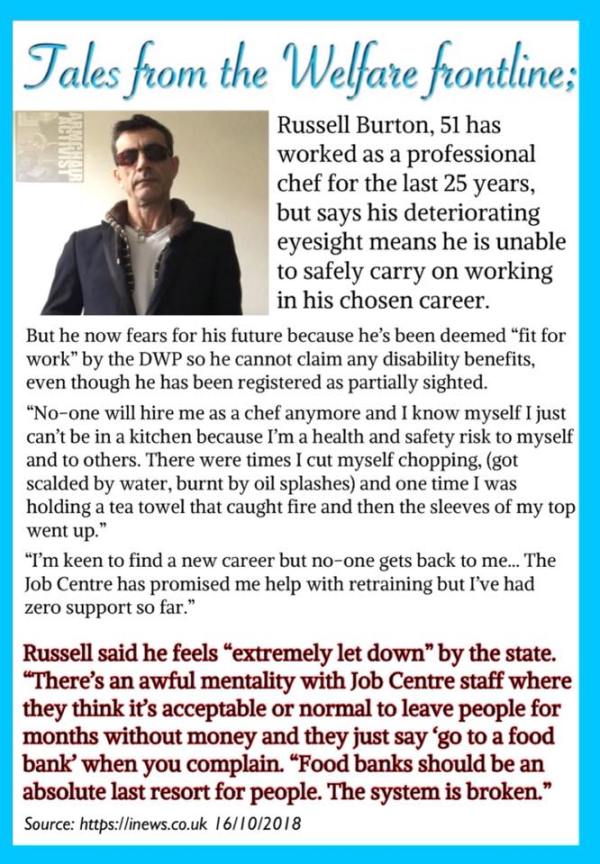



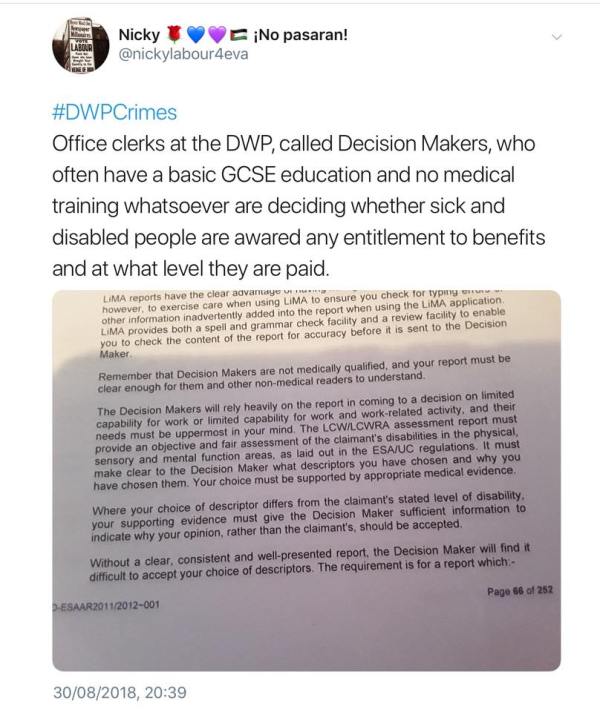


 Same Difference