Skip to content

ESA Claimant Takes On Maximus And Wins

May 18, 2015

With many thanks to Benefits And Work.

A member of benefits and Work has successfully challenged a claim by Maximus staff that she could not submit an updated ESA50 questionnaire prior to attending a face-to-face assessment.

Over recent months Benefits and Work has repeatedly contacted Maximus to gain assurances that claimants have the right to be assessed using up-to-date ESA50s, rather than forms that are two years old – or even entirely non-existent.

The ESA50 form gives claimants an opportunity to explain in detail how their condition affects their everyday activities and is a vital part of the evidence considered at each stage of a claim. Because of the huge backlog in ESA assessments, many people have been called to an assessment years after they completed their ESA50.

Maximus have been clear in their replies to us that anyone who is concerned that the information in their ESA50 is no longer up-to-date is free to download a new form and send it to Maximus or bring it in on the day of their assessment.

However,this was not the experience of our member. She told us:

“I have recently been sent an appointment to attend for an assessment and on ringing the appointment line I informed the operator that I had not had an ESA50. She informed me that the assessment was being held using the one I sent in January 2014!

“I requested a new one as my condition has changed and I now have other health issues but was told I would not get one.”

Our member rang another Maximus office and asked again to be sent an ESA50 form. When she was told she could not have one she replied that she was going to download one from the internet and bring it to her assessment.

The response was clear:

“I was told that it would not be considered! I quoted Maximus reply to Benefit and Works query about this and was told it will not be accepted.“

Our member then told them that she would be contacting Benefits and Work and the DWP to get our responses.

She did so and before the day was out she had received an email from Maximus customer services inviting her to email or post her completed ESA50 and even giving a named person to address it to. They requested that the form be sent as soon as possible so that they could review it in advance of her face-to-face medical.

Our member told us:

“It’s amazing what mentioning Benefits and Work and a phone call to the DWP informing them will do! By the way for once the DWP were very helpful and advised me to send in a ESA50 both to them and Maximus and they told me to document any problems I have with Maximus!”

Here at Benefits and Work we are reasonably confident that, as a matter of policy, Maximus are willing to accept updated evidence from claimants, even though it may mean extra work for them. But it seems that this has yet to be effectively communicated to front line staff, the majority of whom were previously employed by Atos, whose customer service was seldom highly praised by claimants.

Maximus took over the work capability assessment from Atos with more than double the money and a clear commitment to dramatically improving claimants’ experience of being assessed. It seems they may still have some way to go.

Victoria Derbyshire’s Features On Grooming And Abuse Of People With Disabilties

May 18, 2015

The excellent Victoria Derbyshire Show this morning gave a lot of time to the very important issue of the grooming and sexual abuse of people with disabilities.


Same Difference warmly welcomes this coverage and requests anyone who would like to help raise awareness of this issue to share this post as widely as possible- with friends, contacts and women’s charities.

Five Thousand Disabled Adults Sexually Abused In Last 2 Years Says NSPCC

May 18, 2015

Almost 5,000 disabled adults have been sexually abused in England in the past two years, figures have shown.

The NSPCC said information from 106 councils showing 4,748 reports of sex abuse against disabled adults was the “visible peak” of what could be a bigger problem.

People with learning difficulties were the victims of almost two-thirds of reported incidents, the BBC found through freedom of information requests.

Jon Brown, the lead figure on tackling sexual abuse for the National Society for the Prevention of Cruelty to Children, said that while the figures focused on adults, disabled young people could also be victims.

“We know with sexual abuse that many victims find it difficult to speak out,” he told the BBC.

“We know from research that disabled children and young people are three or four times more likely to be abused and neglected than children and young people who are not disabled.

“Abusers are often very adept at identifying vulnerabilities. And, importantly, we know that it’s less likely for children and young people to be believed as well.”

The BBC’s Victoria Derbyshire programme submitted requests for information to 152 councils with adult social services responsibilities.

The Local Government Association told the BBC “keeping people safe, including people with learning disabilities, is one of the most important things councils do”.

It said “councils work hard to ensure support is available when cases of abuse are referred”.

DWP Forced To Apologise After Terminally Ill Claimant Tried To End Own Life

May 18, 2015

An extract from Welfare Weekly:

In October 2013 I was placed on the long list of people to have the dreaded WORK CAPABILITY ASSESSMENT, whilst at the same time waiting for a decision on my daughters [disability benefit] P.I.P – she had been in receipt of disability benefit from the age of 5.

I finally had my assessment on 23rd December 2014, but had to travel around 14 miles each way. To this day I still haven’t received any official confirmation as to the outcome, so let me explain:

After not hearing for around 14 to 15 weeks I contacted the DWP, only to be told over the phone that I had been placed in the support group for 2 years. Great I hear you cry, well not really as firstly I am terminally ill with emphysema and with only 23% lung function. Secondly I’m in constant pain due to osteoporosis and osteoarthritis.

A few short hours later I received a call from a lady at the IB (Incapacity Benefit) reassessment centre in Wolverhampton, only to be told I should never have been placed on such a journey as my claim is only for my stamp, and saying that my partner claims for me.

It has caused me so much stress that I even attempted suicide in October 2014. I was told by the lady that I may even receive compensation for all of this, but I doubt it.

Full story here.

A Mother’s Open Letter To Katie Hopkins

May 17, 2015

An open letter to Katie Hopkins, from the mum of a child with autism

Dear Katie Hopkins,

You don’t know me, but boy do I know who you are.

See, I feel I need to explain a few things to you. I’m a mum of an autistic child called Sam, he’s almost seven years old and he’s amazing!

I’m also a parent support worker and help run an autism support group.

One of the things that breaks my heart is meeting parents with newly-diagnosed children and their stories of pure ignorance they have to go through daily.

You know the sort of thing – kid kicking off in Sainsbury’s, people tutting or even stating how ‘a smack would sort them out’.

They don’t know the absolute sensory pain our children are going through with the loud supermarket lights – yes, that’s right, the lights!

Or they are, like my son, petrified of automatic doors and standing screaming outside the shop.

I’ve grown a very tough skin but comments you made about a child being a t*** over Twitter have upset me.

See, comments like that set our community back by 20 years, which is a real shame as we’ve come so far.

It’s bad enough getting judged on a daily basis without someone in the public eye making comments about a child, or stating the Labour Party’s Ed Miliband is on the spectrum – like it’s something horrific.

You should come along to our support group and meet our amazing parents and children.

That’s an open invite. I’m all for educating the ignorant.

I’m not going to ask you to apologise – what would be the point? But I will say one thing: autism, or any disability, can happen to anyone. You should know this, having epilepsy yourself.

Kind Regards,

Nicky Seers

Nicky is a mum to seven-year-old Sam, who has autism. She is also co-founder of Friends of EarlyBird in Hillingdon and a Parent Support Worker at Hedgewood School in Middlesex.

Minister for Disabled People’s Cosy Relationship With Mayor Sacked In Disgrace For Disability Hate Comments

May 16, 2015

johnny void's avatarthe void

tomlinson-martinNew Minister for Murdering Disabled People Justin Tomlinson refused to condemn his long-standing colleague Mayor of Swindon Nick Martin who was forced to resign after making vile comments about disabled people.

Martin was forced put of his position in 2014 after he was heard asking “”Are we still letting mongols have sex with each other?” at a council meeting.  Despite initially denying making the comments he eventually resigned after he was found guilty by the Council’s Standards Committee of making abusive and insulting references to disabled people.

Throughout the affair, Justin Tomlinson, MP for North Swindon, refused to condemn his long-standing colleague for the remarks.  This prompted local Labour Party parliamentary candidates to issue a public letter to Tomlinson asking whether they supported Nick Martin remaining a councillor and member of the Conservative Party.  Tomlinson apears to have simply ignored this letter.

The truth is that Tomlinson and Nick Martin go…

View original post 165 more words

Dolls with disabilities range launched after #ToyLikeMe Facebook campaign goes viral

May 16, 2015

This is something Same Difference fully supports!

I too once wanted to play with toys like me. I want my nieces, my future daugters and all their friends to play with toys with disabilities. Inclusion begins in the toyshop and ends in society.

The National Autistic Society Responds To Katie Hopkins’ Tweets On Honey From Born Naughty

May 15, 2015

Here is The NAS’s response to Katie Hpkins’ Tweets from yesterday on Honey from Born Naughty:

Yesterday, we told you about the new Channel 4 programme Born Naughty? The first episode raised some important issues about autism, including Pathological Demand Avoidance, but most of the coverage since has been about Katie Hopkins incredibly offensive tweets. The NAS has issued this response, which has already been widely picked up by the media.

Jane Harris, Director of External Affairs and Social Change at The National Autistic Society, said: “It’s unacceptable to talk about children in this aggressive way, regardless of whether they have a diagnosed condition like autism or not.

“We recognise that writing to shock and offend is what Katie does, and nothing we can say will change that, but this is a new low. As well as being offensive, her comments took people’s attention away from the important issues raised in ‘Born Naughty?’. Most concerning for us was how she made light of the importance of a diagnosis and getting the right support for the 1 in 100 people who are diagnosed with autism. In many areas of the country, parents have to wait for years for an assessment and diagnosis, not knowing how best to support their child. We should be focusing on what we can do to bring waiting times for assessments down and improve the support people get after diagnosis.

“Despite the judgemental and damaging nature of her tweets, we were encouraged to see people responding by showing they understand the very real challenges faced by the estimated 2.8 million individuals and families affected by autism in the UK. If Katie wants to really understand autism, we would like to invite her to come to meet some members of The National Autistic Society and hear about the challenges they face every day.”

To find out more out Pathological Demand Avoidance click here: http://bit.ly/1JMFMPv

For information about the Channel 4 programme Born Naughty click here: http://bit.ly/1G6caOf

Cancer Patient Wishes He Was Dead Because Benefit System Stress Left Him Depressed

May 15, 2015

A cancer sufferer struggling to live off just £50 a week sickness benefit says he wishes he was dead.

Kane Orchard was told he had weeks to live when he was diagnosed with an aggressive form of blood cancer.

The 27-year-old is now awaiting a bone marrow transplant which will give him a 50/50 chance of survival.

Kane has always worked and never had money troubles until he lost his job due to his illness, reports the Coventry Telegraph.

But the former Whitley Abbey pupil, from Cheylesmore, says the daily struggle to receive the support he needs has made his life unbearable.

He said the hoops he has had to jump through to receive various types of financial support has made his life “hell”, and he has since been diagnosed with depression.

He said: “Sometimes I look back to when I was told I had weeks to live if I didn’t have treatment and I think ‘I wish I had died’, then I wouldn’t have to deal with all this.

“If it hadn’t been for the support of my friends and family, I don’t think I would have made it this far.

“I would like to see more help for cancer patients – since I have had cancer I have had no help.”

Kane said a lack of knowledge and understanding from everyone including his local MP and the council to cancer nurses and the job centre had added to his health problems.

He said: “I have written to my MP, Jim Cunningham, and he hasn’t replied, I have approached the Citizens Advice Bureau and the council, but they haven’t been able to help.

“The staff at the job centre expect you to be doing things all the time to claim benefits, but they don’t realise how hard it is for someone like me.

“It’s just putting more stress on me at a time when I’m meant to be relaxing.”

Kane, who was forced to leave his job as a van driver after being struck down by the illness, said: “The system is completely wrong.

“I was watching Benefits Street on TV the other day and I saw a lad who had short term memory problems dealing cannabis, but he was getting £300 a week.

“How can people like that be given money when someone with cancer can’t claim a dime and is struggling to scrape enough together to pay bills and rent?”

He added: “I never had money problems while I was working, but now I need to find somewhere else to live as the house I’m living in at the moment is being sold and I’m sharing with a lot of people, but I really need something more private while I’m undergoing treatment.

“I have had a meeting with the Whitefriars housing association and they have found me a place to live but they think the £50 a week I will have to live on after rent and bills will be enough.

“But it’s nowhere near enough. I have to run the car and pay for fuel to get to the hospital for my treatment.”

Kane said he wanted to raise awareness of his struggles in the hope it might encourage a greater understanding of the problems faced by cancer sufferers.

He added: “They tar every benefits claimant with the same brush, they have to go off the same rules for everyone – but not everyone’s situation is the same.

“I want to raise awareness of the issues.

“If I’m going through this, other people are going through this and something needs to change.”

Katie Hopkins Calls Autistic 9 Year Old Honey From Born Naughty A T*** And A Pig

May 15, 2015

https://twitter.com/KTHopkins/status/598934014062366720


https://twitter.com/KTHopkins/status/598934192332906497


Is there any end to the **** that comes out of her brain?

Victoria Derbyshire’s Feature On PIP Delays

May 14, 2015

The High Court has been told that some disabled people had to rely on food banks and suffered health setbacks, while they waited for benefits to be processed.

A group of disabled people is taking legal action against the government over delays in their Personal Independence Payments, a new benefit being rolled out across Britain

Victoria Derbyshire spoke to Disability Correspondent Nikki Fox, Penny Tyas, who had to wait seven months for her disability payments to be approved after she was diagnosed with MS and Nigel Mills, the Conservative MP for Amber Valley, who sat on the House of Commons’ Work and Pensions Committee during the last parliament.

Severely Disabled Grandfather From Scotland Brings Right To Die Case To Court

May 14, 2015

A severely disabled grandfather is to have his case for the right to die heard by the Court of Session.

Gordon Ross, 66, said he hoped the hearing would clarify the legal position regarding assisted suicide.

He has called on the Lord Advocate to issue guidance that makes clear whether any person who helps him end his life would be charged with an offence.

The Director of Public Prosecutions has issued guidelines for England but these do not apply to Scotland.

Campaigners opposed to assisted suicide argue that changing the law would be a “catastrophe” in terms of how society confronts illness and disability, as well as “devaluing” suicide prevention efforts.

But Mr Ross said he believes that the present legal situation “encourages suicide” and discriminated against people with a disability.

‘Significant flaws’

While he will not attend the hearing in person due to poor health, supporters of the pensioner’s case are planning to stage a demonstration outside the court in Edinburgh’s Parliament Square.

Campaigners have previously urged MSPs to pass the Assisted Suicide Bill which was introduced to Holyrood by the late MSP Margo Macdonald, and which is currently being taken forward by Scottish Green MSP Patrick Harvie.

A Holyrood committee recently concluded that the bill contained “significant flaws” and opposed its general principles, but said the full parliament should decide whether or not to throw out the proposed legislation.

Mr Ross suffers from several serious medical conditions including Parkinson’s disease and loss of sensation in his arms and legs.

He is unable to walk and uses a wheelchair, and cannot feed or dress himself or attend to his personal needs.

The former TV producer currently lives in a care home in Glasgow.

Explaining his decision to bring the case, Mr Ross said he fears that, should a time come when he has “had enough”, he will not be capable of ending his life without help – unlike an able-bodied person.

He said: “I believe that, as a disabled person, I am currently being discriminated against. Anyone else, in any circumstances, can choose to end their own lives at any time. Because of my disability that is something I am unable to do.

“I do not wish to end my life, I want it to go on as long as I can. However, if my condition deteriorates to the point that I do want to take that action, I want to know what action the law might take were someone to assist me.”

Mr Ross also argued that the current legal position encourages suicide.

‘Issue guidance’

He said: “Amongst those with conditions such as mine, people might choose to take their own life before they would otherwise want to because they know they won’t be able to in future.

“Ending life early in such circumstances is tragic and the law should not be putting up barriers to prevent people from living longer.

“I hope the court will consider this and compel the Lord Advocate to issue guidance, as exists in England, as to what support can or cannot be given to people in situations such as mine.”

The judicial review at the Court of Session is expected to last two days.

Dr Gordon Macdonald of Care Not Killing, the umbrella group spearheading opposition to the proposed assisted suicide legislation, said Scots law was currently “crystal clear”, with the Lord Advocate having previously stated that it would be “difficult to conceive a situation” where it would not be in the public interest to prosecute under homicide laws.

Dr Macdonald added: “In today’s individualistic society the pressures on sick, disabled and elderly people to avoid placing ‘unfair burdens’ on others are very great.

“Maintaining the law’s protection of this silent and vulnerable majority is more important than giving choices to a minority of strong-minded and highly resolute people.”

Mr Macdonald also said that proposed safeguards in the right to die bill which is currently before the Scottish Parliament assumes that those who will request assisted suicide will know their own minds beyond doubt, which he said was a “false assumption”.

Lung Transplant Graduate To Climb Mountain

May 14, 2015

A press release.

A University of Brighton graduate who underwent a double lung transplant is climbing a
19,000ft mountain to say thank-you to donors.

Amanda Chalmers was born with cystic fibrosis (CF) and needed oxygen 24/7 while studying for
her Higher National Diploma in Material Practice.

Two years after her transplant, Amanda ran the Brighton Marathon in aid of the CF Trust and she is now in training for an even greater challenge.

The 27-year-old, who lives in Brighton and runs her own jewellery business, is joining 12 other lung and heart transplant patients and two transplant surgeons in climbing the world’s highest active volcano, Mount Cotopaxi in Ecuador.

The aim of ‘Climbing For My Donor’ from 26 June to 12 July is to raise awareness about the life-giving result of
donating organs and to raise funds for organ care equipment, used to transport and preserve donated organs and which will increase the number of organs available for those in desperate need.

Amanda said: “No other lung transplantee has ever reached this height and so this will be a world record. We are all very excited about the challenge – it will be our way of thanking all the donors who have helped save our lives,
and our way of raising funds and encouraging people to carry donor cards.”

André Simon, consultant cardiac surgeon and Director of heart and lung transportation with the Royal Brompton and Harefield NHS Trust, is leading the expedition. He said: “It has been a dream of mine to take a group of our transplant patients, and show the world what can be achieved after a life-saving transplant. In doing so, we will raise
the bar of expectation and generate significant awareness of organ donation.

“One in five people who need replacement lungs or a heart die whilst waiting for an organ in the UK and there is a huge shortage of available donor organs mainly because people simply aren’t aware of the issue of organ donation or just have not got round to discussing their feelings about organ donation with their families.”

Amanda has amazed her family and friends. She said: “Going from hardly being able to walk up my stairs to being able to run a marathon and climb mountains is something I’m so glad to have the chance to do. “But I am only
here due to the incredible generosity of my donor and their family, and am proof that organ donation truly changes lives. I also want to thank my amazing family and friends for all the support they have given me over the years, and to those who are sponsoring my new challenge.”

To sponsor Amanda, go to https://www.justgiving.com/Challenge12uk-climbingformydonor and for more information on the challenge, go to https://www.justgiving.com/Challenge12uk-climbingformydonor

A Powerful Message From A Disabled Woman On The Election Results

May 13, 2015

Rosa Davies wrote the below as a Facebook status on the afternoon of May 8th. I think it’s very powerful, so I’m sharing it with her permission.

I don’t think abled people understand the fear and threat and legitimate worry that the results of this election mean for a lot of disabled people. It’s not that we’re disappointed that our team didn’t win. Disability groups I am a member of are literally posting numbers to the Samaritans and other helplines for members to phone.

People care even less than I thought they did. A Tory majority is far worse than expected. They’re going to tax disability benefit (the same as reducing it) and they’re going to tighten the definition as to who deserves to get it. It’s not just money to us, or a pair of new jeans or whatever. It’s the difference between leaving your house and not. It’s a way to be less disabled by our impairments, a way to try to live our lives as best we can. Making disabled people poorer makes us more disabled. Money is access. It makes the circle labeled Things I Can Do bigger and Things I Can’t Do smaller. And that second circle is so big to begin with.

Even if you agree with the idea that making the rich richer helps the poor, what is happening to disabled people in this country helps no one. Marginalising the disabled doesn’t somehow improve things for anyone else. It makes it worse for the able-bodied too. Even if you are not caring for, a family member of, or friends with a disabled person, in the words of Richard Herring, “If you’re not disabled now, then one day you might be. When that happens you’ll want to go to the pub or get on public transport. You’ll want to be seen as a person, not as a disability. Purely out of selfishness you should be fighting for disabled rights. If you don’t, you are prejudiced against your future self. And your future self hates you and thinks you’re a dick.”

How can we push back? It is important to fight back, to get active. We need to win allies. We need to set up an activist group so that I can get on Channel4 News and swear at a politician live on TV. I don’t know what to do but I don’t want to be passive.

ESA Sanctions Up By 25% In One Month

May 13, 2015
With many thanks to Benefits And Work.

The number of employment and support allowance claimants being hit by sanctions has increased by 25% in a single month, DWP figures released today reveal. The vast majority of sanctions are for failure to take part in work-related activities, often because claimants are too ill to do so.

The latest statistics, which run up to the end of December 2014, show that ESA sanctions have increased from 2,626 in November 2014 to 3,274 in December. This is the highest number of sanctions since May 2014.

Just 16% of sanctions were for failure to attend an interview. The other 84% were for failure to participate in work-related activity.

Previously released statistics show that a disproportionate number of ESA claimants who are sanctioned have a mental health condition or learning disability

Very often the failure to participate stems from the fact that the claimant was not able to undertake the activity, for example because their health condition meant they could not travel or they could not cope with attending a group activity at an unfamiliar venue.

The reality is that the work programme has primarily become a means to stop ESA claimants’ benefits rather than a method of helping people move closer to employment. Benefits and Work expects to see the sanctions numbers continue to rise over the coming months and years.

You can download the latest sanctions statistics from this link.

The Guide Dogs Who Work Two Jobs

May 13, 2015

There are guide dogs, and there are assistance dogs but, to help people who are blind as well as physically disabled, some dogs are trained to be both.

Tony Brown-Griffin from Kent uses her guide dog Hetty to help her get her children to and from school, to attend community events and do other day-to-day tasks. As well as being registered blind she has epilepsy and has, on average, one major seizure every week.

Hetty’s second job is as a seizure alert dog and she is able to predict episodes exactly 42 minutes before they happen, letting her owner know by persistently resting her head on her knee. If she doesn’t respond the dog will begin to paw her left leg. The aim is to give her enough time to find a safe place before the onset of a seizure.

Hetty’s training was a partnership between Guide Dogs for the Blind Association and Support Dogs UK who provide dogs for various medical conditions. She learnt both roles simultaneously – having guide dog training early morning and late afternoon, and seizure alert training in the middle of the day.

While dog and owner were getting to know one another during training, Brown-Griffin was having up to 30 major seizures a day – a baptism of fire for young Hetty.

Seizure Alert dogs are trained to pick up minute physiological changes. It’s not clear whether the dogs pick up scent or visual clues but it’s likely to vary between owner. It takes two years to train them, including at least 12 months with their handler.

Brown-Griffin has two daughters aged eight and 15 who both have autism. She is grateful to Hetty for saving them from the trauma of seeing their mother have a seizure. “I can be cuddling one of my girls, when Hetty will let me know that I am going to have a seizure, and I can make sure my girls are safe,” she says.

She feels very lucky to have Hetty and since getting her has even taken up her favourite pastime of horse riding again. She rides in half-hour bursts, checking in with Hetty to make sure her next 30 minutes will remain seizure free.

Having two important jobs feels like a lot of work for a dog but Tony says she knows that if Hetty didn’t like it, she simply wouldn’t do it.

In Devon, visually impaired Steph Read, who is also a wheelchair user, puts her money in a purse just the right size for her dog Vegas to get her mouth around.

The dog, a black Labrador retriever, takes the purse, puts her front paws up on the counter, and hands it to the cashier. When Read gets the purse back, the dog receives a treat.

Read then picks up the guiding handle that the dog wears on her back, and is carefully led out of the store.

When back at home, Vegas does not need to guide, she is an assistance dog only. She takes clothes out of the washing machine or tumble-dryer, and assists Read by grabbing and pulling clothing to help her undress. She also picks up objects and opens doors.

Vegas is one of only 27 dogs trained by the Guide Dogs association, in partnership with other canine-training organisations, to do two jobs.

“Life wasn’t worth living before I got Vegas,” says Read who had been housebound for 18 months before the dog came to live with her. At that time she didn’t have enough carers coming in to take her out and says she didn’t see anybody or go anywhere. Though she was doing a degree in psychology through distance learning, she felt very isolated.

Before she was given to Read, Vegas had 19 weeks of training with the Canine Partners organisation where she learnt how to provide physical assistance. The pair worked together for two years before Vegas went away to add to her skill set by doing a further 28 weeks to become a qualified guide dog too.

Standard guide dogs are trained to walk around obstacles, find doorways and steps, refuse to cross roads if there is oncoming traffic, and make sure owner, and dog, will fit through narrow gaps.

But as a dog with dual purpose, Vegas’ training goes further. For instance, when out on a walk, she has to judge whether there’s a big enough gap between a kerb and an obstacle for a wheelchair to get through. If she thinks there isn’t, then she must refuse to go forward. A poor decision by the dog can mean disaster for Read as a wheel could slip into the road and tip her out of the wheelchair. If this happened she wouldn’t be able to get back up again.

Out of the 27 dual-trained guide dogs, 21 are trained as hearing dogs which let their hearing-impaired owners know about sounds like a ringing telephone or a crying baby, and one seizure alert dog.

Research carried out by Guide Dogs into the stress levels of dual purpose dogs showed none of the usual signs of stress like skin disease. Tim Stafford from the organisation says many of the tasks performed by dual dogs play to their natural instincts and behaviours and the dogs find them intrinsically rewarding. He says the training is all about maximising their natural response.

Read recently recognised that 11-year-old Vegas wasn’t responding as enthusiastically to her guiding duties, but was still enjoying her assistance work, so Steph has taken the decision to semi-retire her. She is now looking forward to meeting her second dual role dog Rusty in June and to Vegas becoming a much-loved pet.

Springwell Special Academy

May 13, 2015

Springwell Special Academy teaches the pupils other schools have deemed too difficult. Its 80 students have all been excluded from mainstream education, and require an unconventional approach to learning. Dan Johnson reports.

Victoria Derbyshire Discusses The Human Rights Act

May 13, 2015

The Conservative Party has pledged to abolish the Human Rights Act and replace it with a new British Bill of Rights.

Supporters of the existing act claim it provides an essential check on the power of the UK Government. Opponents argue that it is wrong for Europe to overrule decisions made here.

Barrister and human rights blogger Adam Wagner and Conservative MP Peter Bone joined Victoria to discuss the plan.

PIP Delay Crisis Over, Claims DWP

May 12, 2015

With many thanks to Benefits And Work.

The DWP claim that the crisis over personal independence payment (PIP) assessment delays is now over, with average wait times down to just 15 weeks from a high of over 40 weeks.

The DWP have released PIP clearance time statistics ahead of a court case taking place later this week.

The statistics allegedly show that the average clearance time for PIP claims is now:

15 weeks from the point of registration for new claims, and

11 weeks from the point of registration for DLA to PIP transfers.

According to the statistics, waiting times reached a peak of over 40 weeks in July 2014 and have been falling ever since.

However, the figures also show that 29% of claimants had been waiting over 20 weeks for a PIP medical assessment in March of this year, down from 37% in January.

16% had been waiting over 30 weeks, 9% over 40 weeks and 4% – over 3,000 people – had been waiting over a year for a PIP assessment.

You can download the full statistics from this link.

Meet Justin Tomlinson MP- New Minister For Disabled People

May 12, 2015

Benefits And Work report:

The prime minister has announced that the new minister for disabled people is Justin Tomlinson, Conservative MP for North Swindon. Tomlinson has a strong anti-benefits and anti-human rights background.

Tomlinson has replaced Mark Harper, who is now the Conservative chief whip.

Tomlinson is a former national chairman of Conservative Future, the youth wing of the Conservative party and has been an MP since 2010.

He is a party loyalist, with a strong record of voting against the interests of sick and disabled claimants.

According to They work For You, Tomlinson:

  • Voted strongly for of the bedroom tax
  • Voted very strongly against raising welfare benefits at least in line with prices
  • Voted very strongly against paying higher benefits over longer periods for those unable to work due to illness or disability
  • Voted very strongly for making local councils responsible for helping those in financial need afford their council tax and reducing the amount spent on such support
  • Voted very strongly for a reduction in spending on welfare benefits
  • Voted very strongly against spending public money to create guaranteed jobs for young people who have spent a long time unemployed.

Tomlinson also voted in favour of repealing the Human Rights Act.

His responsibilities a minister for disabled people include:

  • cross-government disability issues and strategy
  • Employment and Support Allowance, Work Capability Assessment and Incapacity Benefit Reassessment Programme
  • disability benefits (Disability Living Allowance, Personal Independence Payment and Attendance Allowance)
  • carers
  • appeals reform
  • fraud and error (including debt management)

Tomlinson has some interest in health issues, but does not seem to have shown any great interest in disability issues during his time as an MP.

Campaigner Mik Scarlet Talks About The Election Result On Victoria Derbyshire Programme

May 12, 2015

Interview With Family Of Harvey Rogerson- New Leo Dingle Actor

May 12, 2015

We thought this might interest viewers of Emmerdale. We covered the tragic death of former actor, Harry, last year.

Family With Autistic Daughter Forced Off United Airlines Flight

May 11, 2015

The mother of an autistic girl has told how they were forced to get off a flight that made an emergency landing because the airline said her daughter was “disruptive”.

Dr Donna Beegle said they were flying to Portland, Oregan, from a holiday at Disney World in Orlando, Florida, with United Airlines when 15-year-old Juliette began to get hungry.

She said Juliette refused snacks they had brought with them and needed hot food quickly to avoid her having a “meltdown”.

She told KPTV: “I asked the flight attendant if they had anything hot, because Juliette is very particular about her food.

Juliette Beegle, 15, became unsettled because she was hungry

“If it’s warm she won’t eat it, if it’s cold she won’t eat it, it has to have steam rolling off of it.”

The family were told hot meals could only be served to first-class passengers.


Dr Beegle, from Tigard, Oregon, said: “The flight attendant said, ‘There’s not anything we can get you’, so I said, ‘Well how about we wait for her to have a meltdown, and start crying and she tries to scratch, and then you’ll want to help her’.”

A flight attendant then brought a hot meal from first class, and Dr Beegle said Juliette calmed down.

The aircraft then made an emergency landing in Salt Lake City, Utah, where police boarded the plane and asked the family to leave.

Dr Beegle said: “We were shocked to hear them say we’re going to make an emergency landing in Salt Lake City. We have a passenger in the back of the plane who has behaviour issues.

“I asked them why and they said ‘the captain doesn’t feel comfortable flying to Portland with your daughter on the flight’.”

Writing on her Facebook page, Dr Beegle said: “Juliette ate and was watching Pocahontas when we heard the flight attendant say ‘we will be making an unexpected landing in Salt Lake due to a passenger in the back having issues’.

“As [a] mom I could not stand the way Juliette was being treated.

“This was a sheer case of ignorance. Prejudice, ignorance and mistreatment are all too common toward people facing poverty.”

Footage of the moment the family were removed from the flight has been posted online. In it, passengers can be heard calling for the family to be allowed to remain on board.

United Airlines said in a statement: “After working to accommodate Dr Beegle and her daughter during the flight, the crew made the best decision for the safety and comfort of all of our customers and elected to divert to Salt Lake City after the situation became disruptive.

“We rebooked the customers on a different carrier and the flight continued to Portland.”

The family has complained to the Federal Aviation Administration and plans to sue the airline.

Business Disability Forum calls on Government to reject suggestions to axe Access to Work programme

May 11, 2015

A press release:


 Business Disability Forum (BDF) calls on the Government to immediately and publicly reject a document released by Department for Work and Pensions (DWP) hours after last week’s election result, which suggested that the Access to Work (AtW) programme – the only programme with a 100% success rate in enabling disabled people to work – may be axed.

More than 110,000 disabled people have been assisted to get and stay in jobs since 2007 through the ATW programme, with more than 35,500 people assisted in the last 12 months. ATW is an innovative, practical and successful partnership between Government and employers (business and public sector) where Government meets the extraordinary costs that would otherwise prevent an employer hiring a person with particular disabilities. These include costs of support workers and transport.

Only in March 2015, Minister for Disabled People Mark Harper MP informed the House that ‘AtW plays a key part in building a Disability Confident Britain’ and the average award per individual is about £3,000, with half of all awards being less than £1,000. This is not even one third of the cost of keeping a disabled person on benefits and that is without taking into account the extra tax revenues collected by Government when an individual is a tax paying citizen and not a benefits recipient.

The bipartisan Work and Pensions Committee Inquiry in December 2014 were highly critical of DWP’s administration of this programme.  The Committee recommended DWP make substantial improvements in transparency of process and decision making, customer service, consistency in the way guidance was applied and to undertake substantially more robust analysis to evidence the costs and benefits of the programme.

BDF Director of Policy, Services and Communications George Selvanera said:

“The Government should immediately restate its commitment to Access to Work, reject DWP’s document and ensure continued partnership with business to deliver real jobs for disabled people. While it is right that the Government makes savings, saving pennies to lose pounds is obviously enough not the way to do it.”

“DWP seems to misunderstand the purpose of this programme and isn’t publishing any analysis to demonstrate the gains to the taxpayer. Access to Work is not a benefit but a successful partnership with employers that has a 100% success rate in helping disabled people work and stay in work.”

Robert Halfon MP Made Deputy Chairman Of The Conservative Party

May 11, 2015

Same Difference sends sincere congratulations to Robert Halfon MP, who has today been made Deputy Chairman of the Conservative Party and Minister Without Portfolio.

I don’t share Mr Halfon’s political views, but I do share his disability, Cerebral Palsy. So on a personal level, I am proud that someone who shares my disability is a member of the Cabinet. The natural pride that disabled people feel for each other’s achievements is a difficult thing to put into words, but it is a strong feeling.

I’m also pleased that, for the disability community as a whole, we can no longer call this ‘breaking down a barrier-‘ as before Mr Halfon we’ve had David Blunkett and even Gordon Brown in the Cabinet and, of course, in the post of Prime Minister. However, as far as I know, Mr Halfon has broken down a barrier for people with Cerebral Palsy, as he is, to the best of my knowledge, the first one of Us to be in the Cabinet. As hard as we try, readers, not to favour any one disability over others on Same Difference, sometimes it is just impossible to avoid doing so. Please forgive me- my natural pride is flowing fast and strong right now!

Personal similarities aside, I have to wonder what this really means for disabled people. The question must be asked: Is it David Cameron’s little silent nod to Ivan, who also had CP?

Is it his way of reassuring the disability community as a whole that he is listening to us? If so, many disabled people and carers will call it a very classic case of ‘too little, too late.’

But here’s the thing, readers. Mr Halfon hasn’t publicised his disability as widely as Paul Maynard, the other MP with CP, did. While Paul Maynard said strongly and clearly from the beginning that he was representing his constituents, not disabled people, and then proceeded to prove his point several times, making many disabled people strongly dislike him, we do not know very much about Mr Halfon’s work in Parliament so far on disability issues.

We will, however, be tracking his record on disability issues much more closely over the coming Parliament. For now, readers, I live in hope that, as a Cabinet Member, Mr Halfon will do his best for disabled people as well as for his constituents. So my natural pride in another person with Cerebral Palsy has won, for now- until Mr Halfon gives me reason to think otherwise.


Disabled Woman Sleeping In Her Car Because Of #BedroomTax

May 11, 2015

A disabled woman says she is sleeping in her car on country lanes after losing her six-month protest against the so-called bedroom tax.

Angela Wilmott, 44, who has arthritis, heart disease, diabetes and epilepsy, is being chased by a debt collector over the £430 she owes former landlord Acis.

Mrs Wilmott, who uses a wheelchair, said she moved from a two-bedroom house in Lincoln to a two-bedroom bungalow in Harvey Kent Gardens, Bardney, because it would suit her needs better.

But after refusing to pay the £12-per-week spare room subsidy, she says she was evicted in December.

 And ever since then, she says she and her husband Paul, 24, who is her carer, have been sleeping on friends’ and family’s sofas, and in their Vauxhall Zafira in remote streets.

Mrs Wilmott, who receives disability living allowance and employment and support allowance, said: “I refused to pay the bedroom tax because I said I wanted a second bedroom. With my health as it is, I can’t always get to sleep but Paul needs his sleep because he’s my full-time carer so we sometime need to be in separate rooms.

“I admit I have caused the problem we’re in by refusing to pay the extra money – but I did so out of principle.

“The bedroom tax is unfair and does not take into account why you might need a second bedroom.

“We can only spend so much time at relatives’ homes because it can affect their benefits and so we’ve been parking up at night in country lanes.

“None of this is doing us any good – we just want somewhere to live.”

Acis told the Echo that payment cards were sent to Mrs Wilmott’s address on at least four occasions and she was also given advice on direct debit and other payment options.

Paul Wisher, new business and development manager at Acis, said: “We feel we responded appropriately to the concerns and had a number of telephone calls with her and visited the property on a number of occasions.

“We did as much as we reasonably could to work with this lady on her rent payment.”

A Letter From A Parent Carer

May 10, 2015

We were sent this on Twitter and asked to share it:

Email from a worried parent ‪#‎annasoubry‬ ‪#‎disability‬ ‪#‎autism‬

Subject: My questions why? A greater Britain?

Dear Anna,

First of all let me congratulate you on your reelection this week. Even though your campaign seemed to not reach my area in person? I openly admit that my vote did not go to yourself but I hope over the next 5 years that you are able to prove me wrong. I will explain a little why as I feel greatly concerned about our region and nation right now!

I am not sure if I will get a response as 5 years ago my wife contacted you and was totally ignored. I have never before felt so compelled to put my feelings in writing.

I feel over the past 5 years that I have worked hard, achieved 2 promotions, cared for my son with special needs yet live in society that no longer cares! I give more now than ever before to this country, especially financially, yet I get very little back! I feel, in fact I know, I am far worse off than 5 years ago. I often raise money and support charities and I would welcome to discuss my thoughts on why I do this with you but that is not why I write.

Whilst I take the time to do this, whilst I work hard, whilst I raise children to hopefully also support our great nation why do I see so many people able to avoid this? Why do I see so many people using food banks as they cannot afford to live? Why do I see services for the most vulnerable cut, the disabled and elderly? Why do I see taxes raised and benefits cut for the middle majority? Why do bankers get richer? Why do we live in a country where the media control what we see? Why do I see support services cut? Why do I see the NHS in crisis? Why do I live in a region where I have to battle for services for my son? Why do I feel that he is a burden to your government? Why do I not feel supported in caring and trying to create a better life for him? Why does his school struggle to support his needs? Why am I now discussing with my employer to leave our great nation for opportunities in a fairer society?

I understand that we have to cut the deficit but 12 billion undeclared welfare cuts concern me! How can we elect a government that is not transparent with this? I am a great believer that everyone must contribute and believe in some of your policies. I have however been hurt by many unfair decisions the government has made.

One area I feel passionate about is child benefit. I support the child benefit decision as I believe I can afford to raise my children without government support. What I don’t agree with is the criteria. This should be based on family income and not a single person. Earning over the threshold as individual I am at a total loss why 2 people earning more than me combined can receive a benefit! Please review this ludicrous decision and other unbalanced decisions.

The main area that concerns me is a fairer society towards disabled people, people with special needs and their carers. I know many people, including my wife, that fit in the category of a carer that at the moment feel afraid of what your government will decide to do. Please come and live for 24 hours in her shoes. Change my 8 year old sons nappy, feed him, constantly follow him around in fear of his safety, constantly support him so one day he may talk and hold a conversation with us, wake in the night when he is crying, worry as to what might happen to him as we grow old, and I could tell you more. I believe and I know that there are people that get similar benefits but don’t deserve this! Who don’t have extreme issues, who play the system for what they can, who could actually work and choose not to.

For many people this is not a choice that they have made but a gift of a child or dependant that they have received. With this gift comes great responsibility to ensure that they can make their mark on the world in the best possible way! With this gift comes the responsibility to ensure that we do our upmost to ensure that they might develop and contribute to our nation in the future. With this gift comes great love and affection to someone who needs and will probably always need you. Someone who will not have the life that you or I have. Someone who needs much more help in life to develop. Someone who needs a society that cares. Someone who needs the support of specialists that can hopefully give him a better life. Someone who has not made the choice to be born with special needs but may no longer have the choice of what help he will receive.

So I ask. Do you want to be part of a government that hurts the most vulnerable people? Do you want to be part of society that rejects anyone who does not have the best start in life? Do you want to stand up for people who really need you? Do you want to be part of a nation where the rich get richer? Do you want to cut services to those who need it the most? Do you want to give everyone in life a fair chance?

I welcome your thoughts.

Kind regards,
Scott Renshaw
‪#‎imofftothepub‬

Shock Election Result The Worst One For Claimants

May 8, 2015
With many thanks to Benefits And Work.

The news that, in defiance of all the polls and predictions, the Conservatives have won a majority is the worst possible news for claimants. It means that even the slender hope of the Lib Dems forcing the Tories to back down from their £12 billion in benefits cuts has now gone and the future is looking bleak.

Where the cuts will be made, we don’t yet know. And, if Iain Duncan Smith is to be believed, neither does anyone else. We will have to wait for the results of a government spending review to find out who will be hit.

But the Conservative victory means that the roll-out of personal independence payment will continue, with the transfer of lifetime or indefinite claims due to begin in October of this year.

The bedroom tax will continue unabated.

Nor is there likely to be any slowdown in the rate of sanctions against jobseeker’s allowance and employment and support allowance claimants.

And the roll out of universal credit, with sanctions even for people in work will continue, even if at a snail’s pace.

Meanwhile, another series of Benefits Street is about to begin on Channel 4 on Monday as the media helps the government soften up public opinion for another round of cuts.

The voluntary sector has, with some honourable exceptions, been depressingly quiet over the election period, presumably cowed by the Lobbying Act.

But that excuse has now gone and many will now hope to see see a major campaign by disability and poverty charities to oppose further benefits cuts for sick and disabled claimants.


Esther McVey Loses Seat!

May 8, 2015

Some good news came out of last night for disabled people. We Sacked Esther McVey when she lost her seat by around 400 votes to Labour.

Sing along while watching the news readers…

Sack Esther.

Sack Esther,

Let’s all Sack Esther McVey!

Downs Syndrome And Work

May 7, 2015

People living with Down’s syndrome tell Victoria Derbyshire there are still too many barriers to finding a job.

The charity Mencap says eight out of 10 working age people with a learning disability could work but less than two in 10 are in employment.

James Hamilton told the programme he was disappointed to be told “thank you but goodbye” once he had completed some work experience.

How To Use Disability As A Strength When Applying For Jobs

May 7, 2015

From yesterday’s Guardian:

Dear Employer, I’m James, a mathematics graduate from the University of Bath, who’s not able to do things which most people can. My biggest weaknesses include …”

This is clearly not the best way to kick off a CV or job application, though it’s exactly what I thought I’d be doing when I disclosed my disability applying for a graduate job.

I am clearly not alone. Recent research conducted by greatwithdisability.com noted 77% of disabled applicants were fearful of disclosing their disability in case of discrimination.

I have cerebral palsy, a physical disability I’ve had since being born 11 weeks premature. Due to my disability, I walk with two walking sticks, can only walk short distances, and have trouble balancing unaided. My life has been a constant adaption to the norm. I went to a specialist primary school before being integrated into mainstream education. I went through my childhood not having the ability to ride a bike or play football; thus I spent my time at adapted youth clubs and playing disability sport. I drive a car with adapted hand controls instead of conventional pedals. These adaptions and adjustments have become common place in society, though the working world is often seen as being steps behind.
jobs
A guide to writing a CV

On average, recruiters spend just 8.8 seconds reading your CV. So what makes a successful job application?
Click here

My biggest fear when applying for graduate roles was that my disability would mean I’d be phased out or not considered to be up to standard. It’s an incredibly difficult position to be in. How do I accurately, yet positively, portray my disability? When, if at all, do I disclose my disability to my potential employer? And, how can I be sure my disability doesn’t affect my ability to do my job, especially once I’ve been hired and I’m in the working environment for real?

I work for EY, a professional services firm I’ve been with for four years, since joining as a graduate in 2011. Looking back, there were three pivotal steps to my success when securing my first job.
1. The application form

The first tip I was given by careers advisers, which should be ignored, is “do not disclose your disability”. This lack of openness appealed to my fears of discrimination and was the obvious, easy choice. Not disclosing, however, really restricted my options when application forms started to ask for examples, such as:

Examples of times when I’d worked in a team
Examples of times when I’ve overcome a challenge

I had limited myself: my wheelchair tennis or multilevel orthopaedic surgery were clearly great examples that I now couldn’t reference. I ended up hiding the true me.

Suffice to say, my application to EY was one of the few where I was completely open. This decision was made easier by being presented a text box in which I could write about my disability, rather than just a box to tick.
2. The interview
Advertisement

The second tip I ignored was the ignorant phrase that if the application form was where you “talk the talk”; the interview is where you “walk the walk”. That’s not quite the right advice to give a physically disabled candidate.

I recall part-time job interviews I failed in after hiding my disability on my CV or application form. I ended up feeling incredibly uncomfortable during the interviews since, as the panel had only just realised my disability, conversation inevitably turned to how it may impact my ability to perform the job. It quickly became apparent that the sooner I was open about my disability, the sooner the employer could consider reasonable adjustments and see past my potential disadvantages. I suppose I was better off not gaining that bartender job after all.

I used my interviews instead to show the true me, with shortcomings that I was aware of, and development points I knew I could strengthen. It seems that suffering from a disability can give you a tremendous level of self-awareness which shouldn’t be ignored.

Being open also allowed me to make sure all the necessary adjustments were in place for a fair interview, such as a suitable chair and accessible facilities.
3. The career

The final tip, the one I use every day, is this: make sure the role you’re applying for allows you to be the best you can be. This matches my experiences perfectly.

Being open throughout the recruitment process and now with my colleagues and co-workers, means I can continue to be at my best. I can continue to live an (adapted) working life, and I can be proud of each of my successes.

My disability has started to enable me to make a difference. Working for a multinational firm I’ve been able to promote disability awareness on a larger scale, and, through their support, I’ve been able to raise thousands of pounds for charity and advertise the abilities of disability.

There is still a long way to go. Disability is such a broad definition, and a disability can affect each person in such a variety of ways, but that, in my view, is even more reason to continue to broadcast the best things about disability.

While my four years of working life have not been plain sailing, they have shown me there are no barriers to success which can’t be overcome. I wish I could tell my newly-graduated self that I should have had confidence in my potential employers, and confidence in myself. Recruiters want to hire real people, with real experiences, and having a disability means you have a unique perspective, an inherent ability to overcome adversity.

Next time when someone asks me whether to disclose my disability, I will respond confidently:

Dear Employer. I have a disability. It doesn’t completely define me, it just enhances me in a way which differentiates and strengthens me. My disability should be viewed as an ability: to see the world in a different way.”

People With LD ‘Targeted By Groomers’

May 7, 2015

As police chiefs and disability groups warn people with learning disabilities are at risk of being targeted by groomers, “Sarah” tells her story.

It’s a gorgeous warm evening in the South West of England and Sarah – not her real name – has a date. She’s wearing a summery skirt and top. She’s strikingly pretty.

In her 20s Sarah, who has learning disabilities, left home to have her first taste of independence. She moved into a flat – the council call it supported living – where there was help on hand during the day. It was a big step for her.

When a man who lived in another flat and also has learning disabilities asked Sarah out, she was excited. She says she “wanted something happy to happen”.

“He took me out for meals sometimes. He even wanted to get married to me or I wanted to get married to him,” she explains, “he even proposed to me twice in one evening in two different clubs.”

But Sarah explains that while he was nice to her in public, when they were alone together in his flat he could be unkind, shouting at her and throwing things.

Sarah’s family became worried that her new boyfriend was controlling her and her mother noticed she had bruises.

One of the hardest things for Sarah was navigating their sexual relationship. She says sometimes she felt she had to be intimate with her boyfriend, even when she didn’t want to.

“We would be going to bed and having this and that and when I would say can you get off please or I don’t feel like it, he would say don’t you love me, and make me feel guilty,” she says. “And then when we were having our session sometimes my head would bang on the wall and my mum saw lots of bruises and when I was having a bath in his flat he would want to take pictures.”

She says she thought she was in love and feels he played on her emotions, even though he, too, had a learning disability.

Sarah didn’t want to tell her mother everything that was happening, because she was afraid she would get into trouble. Her boyfriend said her family didn’t want her to be happy and, feeling as though she was “in a trance”, she ignored her family’s warnings.

Sarah’s mother “Chrissy” asked social services and the police for help, but they said they couldn’t really do anything because Sarah was an adult.

“All the way through the supported living whenever we had reviews, I’d say, ‘she needs help with relationships,'” Chrissy explains. “But the reply was always that’s she’s an adult and that she’s got her own choices to make.”

Respond is a therapy and advocacy charity for people with learning disabilities who’ve experienced abuse or trauma. Chief executive Dr Noelle Blackman says the welcome move away from living in institutions or care homes, to independent living, carries risks.

“We want people to live normal, ordinary lives, but the way that we do that is actually by providing very little support. You find people with learning disabilities who have difficulty in keeping themselves safe, given two or three hours of support a week,” she says.

She says that people with learning disabilities are often living in blocks of flats in gang areas. “It’s like walking around with a label saying ‘I’m a vulnerable person’. We’re in danger of being neglectful and not making sure that we’re helping people to live safely.”

Chrissy had to wait for Sarah to cry for help, and one night she did. She asked her parents to take her home but the man she left wrote to her, and she started seeing him again, in secret.

She says she didn’t know what to do, and was very upset and confused. She even emailed strangers on the internet asking for advice.

Then one day she poured her heart out to a taxi driver. The police believe when he realised Sarah was vulnerable, the driver deliberately groomed her.

She says took her out for a drink and told her she was lovely, and so pretty he couldn’t understand why her boyfriend was treating her badly. He said he would drive Sarah home but he pulled over in a lay-by and sexually assaulted her.

The driver was arrested, questioned and then released. He said Sarah had consented to being touched. But Sarah’s mother says the police said they didn’t believe that. But, without DNA there wasn’t enough evidence to charge him.

Mencap says people with learning disabilities may be up to four times more likely to suffer sexual abuse. The Crown Prosecution Service doesn’t record how many people are prosecuted for sexual offences against people with learning disabilities. But a study by Mencap in 2001 revealed there were around 1,400 cases a year, but only 1% resulted in a conviction.

The Crown Prosecution Service says there are special measures available to help vulnerable people give evidence in court, for example speaking behind a screen, or recording it in advance on video. Intermediaries can help a witness who finds communication difficult.

Neither of the men who exploited Sarah have been charged. It took a long time for her to recover but now she helps run sessions for people with learning disabilities, spreading the message about the dangers of sexual exploitation, and how to form positive relationships.

And Sarah now has someone good in her life. She has a boyfriend who loves her and looks after her. Their date tonight is a special occasion. It’s the anniversary of their engagement.

CHARITY SHOW ‘GET GOING LIVE!’ RETURNS TO GET YOUNG DISABLED DRIVERS BEHIND THE WHEEL

May 7, 2015

A press release:


Get Going Live!, the test-driving event for young and novice drivers with disabilities, is back for 2015 and now incorporated into the well-known Mobility Roadshow (25-27th June, Donington Park, Derbyshire).

Get Going Live! is a free event focused on the needs of people age 15 and over that are keen to discover how to get behind the wheel of an accessible or adapted car. All young visitors are welcome to attend the show with their families to discover the latest advice, specialist driving tuition and vehicles available for individuals with a variety of conditions. Whether drivers use wheelchairs or not, attending Get Going Live! offers the unique opportunity to test drive vehicles around the historic and exciting Donington Park Motorsport circuit for free. This track is the location for the British Motorcycle Grand Prix and British Touring Car Championship so promises an amazing experience for all young attendees. Specialist professionals in dual-control vehicles will accompany every young driver, so they remain safe during every test drive. Leading motor manufacturers such as Ford, Vauxhall and Hyundai will have a range of specialist vehicles on display, both in the exhibition hall and on the test track.

Did you know if you have a disability, you can gain a driving license a year earlier at the age of 16? Visiting Get Going Live! will provide all the information required to achieve driving independence and visitors will even be able to try out the theory test.

This year Aaron Morgan, the only disabled racing driver to compete in the Production BMW Championships, will be at Get Going Live! as a show Ambassador.  Aaron said: “Get Going Live! promises to deliver an amazing and unique day out for all young visitors and their families. As I race at Donington Park, being able to test drive accessible cars around the motorsport circuit for free is an amazing experience not to be missed! Get Going Live! is a ‘must attend’ opportunity for young people who are looking for their first adapted car. I can highly recommend it as you can talk to experts and find out from other people about how they learnt to drive. I will be at the show and really look forward to helping other young people with disabilities get in the driving seat.” Show Ambassador Callum Hodgson will also be available to answer questions about driving with a disability as he first discovered adapted hand controls at a previous show.

Also, as Get Going Live! is part of this year’s Mobility Roadshow, visitors will be able to see the many independent living products and services from other exhibitors in the Donington Exhibition Hall. There will be a vast range of products on display including wheelchairs, car boot hoists, ramps and in-vehicle safety systems.

Get Going Live! is co-hosted by the charities Mobility Choice and DMUK, supported by NFE group. To pre-register for a test drive or for further information on Get Going Live!, visit:

www.mobilityroadshow.co.uk

Alternatively contact the NFE Group, on: +44(0)1332 810007.

* ENDS *

The Mobility Roadshow
The Mobility Roadshow is the UK’s premier consumer-focused mobility and lifestyle event, showcasing products and services to help maintain independent mobility. The show, which celebrated its 30th anniversary in 2013, is organised by registered charity Mobility Choice.

For 2015 the Mobility Roadshow returns to Donington Park where visitors will have the opportunity to test drive adapted and specialist vehicle conversions on the historic Donington Circuit, as well as try out the very latest innovations in the mobility market.

Mobility Choice
As a registered charity, Mobility Choice delivers the latest mobility advice, news and support to assist disabled individuals with enhanced independence. It was established in 1998 with the primary role of organising The Mobility Roadshow, originally set up by The Department of Transport. It has continued to pioneer inclusion for all through a series of additional programmes and events including the test-driving day for young and novice disabled drivers, Get Going Live!

For press enquiries, please contact:
Jon Nock, Director
iDIS Creative Marketing Partnership
6B (First Floor), The Courtyard
Meadow Bank, Furlong Road
Bourne End. Bucks. SL8 5AU
Mob: +44(0)7786 245896
Email: jon@idiscreativemarketing.co.uk
http://www.idiscreativemarketing.co.uk

Fibromyalgia Mum Horrified By Note On Windscreen After Parking In Tesco Disabled Bay

May 6, 2015

A mum who battles chronic pain and used a disabled parking space in Tesco found a note on her car saying ‘being fat and ugly doesn’t count as disabled – park elsewhere’.

PhD student Sarah Metcalfe, 35, suffers from fibromyalgia, a long-term condition that causes severe pain all over her body.

The York mum-of-one has now branded the perpetrator a ‘Katie Hopkins-wannabe’, who is happy to spread hate without thinking.

Sarah had parked in a disabled bay through fear of not being able to make it round the supermarket with her 13-year-old son Jack.

Upon discovering the note, Jack was reduced to tears – and was left trying to convince his mum that she was not ‘fat and ugly’.

Sarah has now called on the person who left the note to come forward so she can discuss ‘invisible disabilities’ with them.

Sarah said: “Both me and Jack were devastated to find the note. I think they must have seen me leaving my car with a smile on my face so assumed I wasn’t disabled or in pain.

“Yet I was just happy to be out with my son – but we were both left absolutely heartbroken to find the note, it left us both in tears. Then our hurt turned to anger.

“Now that I’ve calmed down I would still like to speak to the cowardly person behind the note to explain how not all disabilities are visible.”

Sarah suffered a serious head injury after a nasty fall five years ago and her fibromyalgia developed after this, along with chronic fatigue syndrome and dizziness.

The condition means she suffers muscle stiffness, tingling all over her arms and legs, chronic pain and dizziness and clumsiness.

However she has been so wrapped up in her studies at the University of York that she had only just got around to applying for her Blue Badge a few weeks ago and was still going through the process to prove she needs it.

Sarah said: “I don’t like to claim benefits, I like to just try and get on with it, but the pain was so bad on this occasion that I was forced to used a disabled bay to limit the walk.

“There were around 40 disabled parking bays and most were free.

“I wouldn’t have been able to go in if I hadn’t used it – my ankles had become so weak that I was worried I’d go over on them. But I was enjoying a day out with my son so was determined to make it in.

OVER 62% OF DISABLED AND THEIR CARERS SAY “NONE” OF THE POLITICAL PARTIES HAVE DEMONSTRATED COMMITMENT TO DISABILITY ISSUES

May 6, 2015

A press release:

More than 62% of disabled people and their carers surveyed by Blue Badge Mobility (BBM)– mobility equipment rescue, recovery and insurance – say that none of the major political parties’ has said or done anything to convince them they have any commitment to the needs of the country’s disabled community.


Disabled people and their carers were asked the question: “Which political parties do you think have shown the most commitment to disabled people in the run up to the election?”


62.34% said “none”; 9.09% said UKIP; 7.79% said the Conservatives; 7.79% said Labour; 5.19% said the SNP; 3.9% said Lib Dems, and 3.9% also said the Green Party.


Up to 12 million votes could be swayed in the General Election dependent upon politicians’ understanding of disability issues.


Mark Effenberg, Chief Executive of BBM – whose son is a wheelchair user – says politicians have had many opportunities to sway disabled voters by demonstrating an understanding of disability issues.


“However, while they’ve been donning hard hats and hi-vis jackets, and visiting building sites, and factories, or playing at being teacher with all ages of school children and students, we’re not aware of one single candidate that has taken to a wheelchair for a day to get an understanding of what challenges disabled people face,” he said.


Hampshire-based Blue Badge Mobility provides mobility equipment rescue and recovery, insurance covering use, protection and liability relating to scooter, wheelchair and home equipment, care-related insurance products, as well as advice on sourcing and use of mobility equipment.


http://www.BlueBadgeMobilityInsurance.co.uk/

Green Party Calls On IDS To Apologise For Misleading Public Over Claimant Deaths

May 6, 2015

The Green Party has requested that Iain Duncan Smith, Secretary of State for Work and Pensions, issue a formal apology for misleading the public after he denied knowledge of the number of benefit claimant deaths shown to be caused by suicide.

Contrary to Mr. Smith’s statement, issued whilst taking part in a BBC Daily Politics debate on Welfare, research by the Disability News Service (DNS) has found that the Department for Work and Pensions has withheld research showing that over 40 benefit claimant deaths since 2012 have been linked to suicide.

Commenting on the exposure by the DNS, Jonathan Bartley, Green Party Spokesperson for Work and Pensions, said:

“It is utterly shameful for Iain Duncan Smith to have misled the public and the families of those affected by these tragic deaths. It’s not enough that his Department appears to have sat on research revealing the immense damage his welfare policies are causing to families up and down the country. To deny all knowledge of the reports is heartless and blinkered – hardly the kind of approach we want the person in charge of national welfare to be taking.

“On behalf of the Green Party I’m requesting that Mr. Smith issue a formal apology for his misleading of the public and that the research discovered by the DNS be made publicly available on the website of the Department for Work and Pensions. Understanding the impact of government policies is essential in helping us improve and inform future government decisions so that we can ensure they are working in the best interests of the public. That is exactly why it needs to be shared publicly and in an open and democratic manner.”

PIP ‘Safety Net’ Clause For MH Claimants Pulled From Handbook

May 6, 2015

With many thanks to Benefits And Work.

An important safety net aimed at reducing distress for Personal Independence Payment (PIP) claimants at risk of suicide has been removed from the guidance given to Capita and Atos by the DWP.

The Personal Independence Payment Handbook, used by health professionals assessing claimants for PIP, advises that where a claimant has a history of suicide attempts or self-harm assessors should ‘strongly consider’ getting additional medical evidence. The aim is to try to carry out a paper-based assessment ‘to avoid distress to the claimant’.

The clause in full, reads:

2.3.9 Providers should strongly consider requesting further evidence before calling for a consultation a claimant who is noted to have an appointee or in a case where there is evidence of a previous suicide attempt, suicidal ideation or self harm – or in other cases where the claimant is vulnerable. By gathering further evidence the HP may have sufficient information to complete a paper-based review which may be preferable in these cases to avoid distress to the claimant.

At least, that’s what the PIP Handbook used to say.

This advice has been completely removed from the latest editions of the Handbook, with no explanation as to why vulnerable claimants no longer require protection.

We’ll be quizzing the DWP on the reasons for this change and updating our PIP guide to take account of it over the next few days.

We’ll keep readers posted.

‘Hitlist’ Of Planned Welfare Cuts Leaked To Guardian

May 6, 2015

A list of “very, highly or extremely controversial” potential cuts to benefits have been drawn up by civil servants in response to warnings that the next government would struggle to keep welfare spending below a legal cap of about £120bn a year.

The cuts proposed by officials at the Department for Work and Pensions include abolishing statutory maternity pay and barring under-25s from claiming incapacity benefit or housing benefit. Money could also be raised, civil servants suggested, by increasing the bedroom tax in certain cases.

In one of the DWP documents seen by the Guardian, two Whitehall officials say colleagues who were consulted in 2014 about the potential cuts described them as “very/highly/extremely controversial”, which highlighted that when it came to welfare spending that there was “not much low-hanging fruit left”.
UK living standards fell for all but the richest under coalition – analysis
Read more

The Conservatives have proposed cutting £12bn in welfare after the election, without specifying how. The DWP proposals were canvassed the year before, amid warnings that the failure of the coalition to get to grips with accelerating spending on key benefits would leave the next administration “vulnerable to a breach” of the welfare spending cap.

Other options laid out in the DWP documents include:

• Getting employers to contribute more to the cost of statutory maternity pay – or as an alternative abolishing it entirely.

• Freezing benefit payments at current levels across the board.

• Limiting welfare payments by family size.

• Forcing single parents on income support to seek work when their youngest child reaches the age of three (currently five).

• Making it harder for sick people to claim state aid when they are out of work by introducing “stricter” fit-for-work tests and/or tighter limits on eligibility.

• Increasing the bedroom tax on certain categories of renters.

• Barring under-25s from claiming incapacity benefit or housing benefit.

DWP sources said the same options would be presented to the Conservatives, who have pledged to reduce welfare spending by £12bn by 2017-18, regardless of whether the government was at risk of breaching the welfare spending limit or not.
Advertisement

The proposals were drafted by officials last spring after the chancellor, George Osborne, challenged Labour to back a parliamentary bill capping the welfare spend every year for four years.

The legislation, which places an absolute cash limit on almost all welfare spend, except the state pension and unemployment benefit, was supported in the Commons by 520 votes to 22. The limit starts at at £119.5bn in 2015-16, rising to £126.7bn by 2018-19.

Labour’s front bench supported the legislation to defend itself from Conservative accusations that it was the “party of welfare”. The bill was opposed by the SNP and a small group of Labour rebels.
Election 2015 interactive: who is ahead in the polls where you live?
Read more

If the cap is forecast to be breached, the government must propose measures to reduce welfare spending, seek Commons approval for the cap to be increased, and explain why the breach is justified.

Should this occur, there would no longer be scope for easy cuts, the DWP documents warn. Some of the options for welfare have been previously rejected by ministers, but officials argue they would have to be put back on the table.

The documents make clear that some of the welfare money-saving options will be necessary because demand for benefits over the next five years is highly likely to exceed the cap limit by billions of pounds.

A Conservative spokesperson played down the leak: “These were options produced by civil servants over a year ago and were never seen by the prime minister or the chancellor. If we wanted to implement policies like these, we would have, but we didn’t.”

However, the documents show that at least one Conservative minister, Mark Harper, was briefed about risk areas as regards the welfare cap soon after his appointment last year.

A document dated in late July said the disability minister discussed possible changes to incapacity benefits and gave a clear steer to civil servants on the importance of freezing or uprating benefit rates below inflation as a way of controlling costs.

The Conservatives have repeatedly refused to set out how the £12bn of savings would be achieved. Iain Duncan Smith, the work and pensions secretary, told the Daily Politics show on Tuesday that he could not release details before the election because “we would have to have done the work on it and we’d have had to reach agreement on exactly what those are”.

The minister added that as soon as the Conservatives had properly modelled their proposals, they would spell out their plans in public: “The key area is that everybody is very clear that if you get a Conservative government, we have already said we will save £12bn from working age benefits. The work that we will do on this will be announced in the spending review,” he said. “Without that saving, being able to put the extra money into things like the health service becomes very difficult. I don’t say this is easy. But we are making that commitment.”

The Labour work and pensions spokeswoman, Rachel Reeves, said: “The only way the Tories can fund their extreme plan to cut £12bn from social security is by cutting child benefit and tax credits, abolishing maternity pay and increasing the cruel bedroom tax.”

“Labour has a better plan to control the costs of social security. We’ll save £1bn by cutting housing benefit fraud and overpayments and control housing benefit spending by tackling rip-off rents, getting 200,000 homes a year built, increasing the minimum wage to £8 an hour and giving tax rebates to firms who pay a living wage.”

Recent Tory claims that they have a strong track record on cutting social security over the past five years are undermined by the documents, which point out that coalition changes failed to meet promises to limit spending on three of the costliest cap items: incapacity benefit, disability benefit and housing benefit.

The leaked proposals say the DWP is at high risk of continuing to overspend on sickness and disability benefits in future years because the high-profile programme of welfare reform introduced by Duncan Smith in 2010 “has not realised its goals” of saving money.

Katie Hopkins On Jonny Benjamin- Is This Her Worst Tweet Yet?

May 5, 2015

I’ve just seen what Katie Hopkins Tweeted about Jonny Benjamin’s documentary The Stranger On The Bridge, which aired yesterday.

https://twitter.com/KTHopkins/status/595296455553851392

This is quite possibly her worst Tweet yet. She should definitely be disciplined.


Woman Given £8M Compensation After Ectopic Pregnancy Operation Blunder Left Her Brain Damaged

May 5, 2015

A pregnant woman left brain damaged after her heart was accidentally punctured during an NHS operation has won an £8m compensation pay-out.

The woman was admitted to Salford Royal Hospital in Greater Manchester in 2010 following complications arising from an ectopic pregnancy.

During an operation, medics pierced one of the chambers of her heart, causing it to stop.

It led to “permanent and severe brain damage”, caused by oxygen starvation.

Mrs Justice Swift told London’s High Court how the woman, who was a 22-year-old hairdresser at the time of the blunder, had enjoyed “a full social life, a serious relationship and was pregnant”.

“Her life looked promising,” she added.

But the accident has left her using a wheelchair, unable to work and requiring 24-hour care.

‘Very sad events’

With the help of her mother, she sued Salford Royal NHS Foundation Trust, which manages the hospital, formerly known as Hope Hospital.

The trust admitted liability in July 2012, and a trial was due to start earlier to assess the size of the payout.

However, after negotiations, the woman’s legal team agreed a last minute deal with the trust, worth £8m.

The woman’s mother attended the court hearing to hear the result.

NHS barrister Sarah Vaughan Jones QC said: “I would like to offer an apology on behalf of the trust for the very sad events and express my admiration for the tremendous efforts by the family to make the claimant as happy as she could possibly be.”

Approving the settlement, Mrs Justice Swift also praised the care provided by the family, and said the woman, now 27, “remains generally cheerful and with a good sense of humour”.

She said: “I hope that this substantial settlement will at least ensure she has the best possible quality of life in the years to come and I wish her and the other members of her family the very best for the future”.

Jobseekers Resorting To Lying On Applications

May 5, 2015

The proportion of error-riddled job applications has risen to its highest level in four years amid a competitive employment market and the unpredictability of the closely contested upcoming general election.

Almost two thirds of job applications, or 63pc, contained incorrect information in the first quarter of 2015, a level not seen since 2011 and a notable uptick on the 56pc across the whole of 2014, according to the employment due diligence service HireRight.

Steve Girdler, HireRight’s managing director of EMEA, said, “With slower growth forecast in 2015 than last year and the uncertainty a general election can create in the market, it is unsurprising that we have seen an increase in errors or exaggerations.”

Four in 10 applications contain inaccurate statements about the candidate’s educational background, while 36pc lie about the jobseeker’s employment history and 30pc make false claims about professional qualifications, the analysis found.

A quarter of applications include incorrect information about previous directorships, an increase of 40pc on the same period last year, and yet the number of background checks in this area is falling. In 2014, almost a fifth of applications lied about directorships, up from 16pc the year before.

CIFAS, the fraud prevention service, prosecuted 324 people in 2013 for submitting fraudulent job applications – a crime punishable by up to 10 years in prison – in a 58pc increase on the previous year.

HireRight’s quarterly report conducted more than 100,000 checks of 26,000 job applications.

Chief executive who guaranteed a minimum $70,000 salary inundated with job applications
How to get a graduate job: why a 2:1 is no longer enough
Top ten spelling mistakes jobseekers make on their CVs

A study last year found that recruitment had returned to pre-recession levels, rising almost 12pc on the previous year, but popular employers such as PwC and Unilever receive 39 applications for every available graduate job.

TGI Fridays, the diner-style restaurant, said last month that it had received more than 2,000 applications for 80 jobs, many at minimum wage, at its new branch in Leicester.

Eighty Suicides Linked To Coalition Cuts, Say Disability Campaigners

May 5, 2015

A huge number of disabled, sick and vulnerable people took their lives due to savage Tory benefits cuts, campaigners have warned.

And they believe even more will suffer and die if David Cameron wins the election.

Research from the Black Triangle campaign group found more than 80 cases of suicide directly linked to billions of pounds in benefit cuts.

John McArdle, co-founder of Black Triangle, said: “The Dept of Work and Pensions refuses to reveal the findings of their own peer reviews of suicides linked to the sanctions so we will never know the truth in those cases.

“We are supposed to be living in a democratic society where Parliament hold the executive to account but even they cannot find out. It is scandalous.”

He said the Work Capability Assessment regime applied to all sick and disabled people, without adequate risk assessment ‘built into the system’.

He added: “If it was a medical trial, it would have been abandoned long ago. So many have died as a direct result of the withdrawal of benefits, as confirmed by numerous coroner’s inquests.

“There are so many which are not reported, and we believe that could run into many thousands.”

It remains British Medical Association policy that work capability should be scrapped.

Mr McArdle described the ConDem cuts as barbaric, and warned cuts to the Independent Living Fund in England this June would hit 14,000 of the ‘Highest Need’ disabled.

He said: “These are the very people the Coalition pledged to protect. Many will be forced back into institutions. It makes a mockery of the pretence – especially from the Lib Dems – that they cut the deficit fairly. It is truly despicable.”

The Dept of Work and Pensions (DWP) has reviewed 49 cases where employment benefit recipients were ‘sanctioned’ – having their payments stopped for a period of weeks or months after failing to comply with the rules – and subsequently died.

They included David Clapson, 59, a former soldier from Stevenage. He was a diabetic who was found dead in his home last July after his benefits were slashed and he did not apply for hardship payments.

He had no food in his stomach and no credit on the electricity card needed to keep going the fridge that stored his insulin. His bank balance was £3.44.

Mr McArdle warned the Tories want to cut another £12 billion on top of the £25 billion which has already been saved from the welfare budget. Most people believe 35 pence in every pound is claimed fraudulent according to a recent union poll. The real figure from the DWP is seven pence.

He added: “The problem is TV shows portray benefit claimants as scrounges, and that dominates the political narrative. Don’t be fooled by that.

“How many people have to die before we say enough is enough? It is a drip, drip, drip so that if they were killed in an accident or air crash there would be headline news and something would be done.

“They cut the benefits budget to pay for the banking crisis, and it can only get worse. It will be absolutely catastrophic for sick and disabled people if the Tories win again. It will be nothing short of a blood bath.

“It is a policy of democide in my view – where the state intentionally or knowingly has a reckless and depraved disregard for life.

“The work related assessments mean people get ill and fall into sanctions and rent arrears. It has led to some committing suicide – that is irrefutably the case. Every person in Britain has a moral duty to stop this by voting this coalition out.”

The Royal College of Nursing says research shows the link between suicide and poverty, with areas of high unemployment like the North and Scotland very hard hit.

Glenn Turp, their Northern Region director, said: “We are currently facing a significant public health challenge that has been exacerbated by the severe economic downturn, which has hit the North of England particularly hard.

“It is frankly obscene that you can expect to live almost a decade longer, if you are in a rich neighbourhood compared with a poor one.

“There is a huge north-south divide here. In Middlesbrough, average life expectancy is 77, and in Blackpool it is only 74. But if you live in Kensington and Chelsea, life expectancy is 83.

“In 2007, the suicide rate was 10.2 per 100,000 in the North east but by 2011, it had grown to 12.7 per 100,000. Over the same period, the NE unemployment rate had grew from 6.19% to 10.7%.”

The DWP denied benefits cuts could be linked to suicide.

A spokesman said: “Suicide is a sensitive and complex issue and linking it to welfare reform is inaccurate and misleading.

“We spend around £94bn a year on working age benefits to provide a safety net for some of the most vulnerable people in society.”

Epileptic man took his own life ‘over stress of returning to work’

A man with permanent brain damage and ‘uncontrolled’ epilepsy hanged himself after being ordered to take part in ‘work related activity’ or risk his benefits being cut.

Trevor Drakard was panic-stricken at the thought he would have to find a job when he could suffer a severe attack at any time.

The shy 50-year-old suffered from meningitis at five months old which left him brain damaged, causing severe epilepsy first seen when he was just six.

Yet ConDem reforms meant he received a letter saying his Incapacity Benefit was being replaced with £112.05-a-week ‘Employment and Support Allowance’ It stated he had to attend a ‘Work Related Activity Group’, or his benefits could be hit.

He told DWP chiefs in a heart-rending letter: “I have never been able to work due to my epilepsy. I lost my job because they could not longer cope with my attacks.”

Daily Mirror / Andy Commins Collect of Trevor Drakard, 50
Appeals: Trevor Drakard, 50, from Sunderland, told DWP chiefs he couldn’t cope with being ordered back into work

But a standard Benefits Agency letter informed him his appeal had been rejected.

Trevor’s brother Michael, of Leeds, added: “The system is not appropriate for someone like Trevor, who really needs help. It was never about the money.

“He did not drink, smoke, he had the most frugal existence – he probably had about ten shandies a year.

“He may have ended up on about the same in benefits. But he could not cope with the stress of thinking he had to make himself available for work.”

On July 19 last year, Trevor’s anxious parents Doreen, 80, and Tom, 86, went to his home in Sunderland, Tyne and Wear – and made the horrific discovery of his body, hanging in his bedroom.

They say there is ‘no doubt whatsoever’ the stress of the benefits changes caused his suicide.

Council chief threw himself from roof as he struggled with massive town hall cuts

Tragic Jo Stephenson, deputy leader of Cumbria County Council, threw himself from the roof of his home as he struggled with massive local authority cuts.

He lost his life as a result of medical complications caused by the injuries after he threw himself from a ledge at his home.

He died three weeks after the fall after guiding Cumbria County Council to £90 million in savings over three years.

He told a meeting shortly before he died last year: “No one enters politics to have the opportunity to make cuts, I certainly did not.”

His widow Hillary, herself a former councillor, told how he had been subjected to personal attacks on Facebook at his inquest last month, and was under extreme pressure to deliver savings.

Stress: Jo Stephenson’s wife Hilary told his inquest he became ‘pre-occupied’ with town hall finances before his death

As deputy leader of the council, dad-of-two Jo, 59, was responsible for finances.

At the time of his death in July 2014, the authority planned to bring in car parking charges for residents and visitors to Cumbria, including tourist towns like Windermere, the area which he represented.

Hilary told the inquest into his death : “He was not naive, in any shape or form and had he lived he would have been planning responses to with all the things that were going on. He was pre-occupied with finances and was having to deliver things with an increasingly tight budget.”

Cumbria council must make a total of £211 million cuts by 2018.

Tragic final letter of man who pleaded with council over 50 per cent housing benefit cut

Malcolm Burge told a friend he was leaving his London home for a few days to attend a funeral in the West Country in June 2014.

Four days later, he parked his car in a lay-by amid the timeless beauty of Somerset’s Cheddar Gorge and ignited a can of petrol.

He suffered 100 per cent second-degree burns to his body, was rushed to hospital by air ambulance but he could not survive his injuries. He died at 5am the following day.

On the day of his death, a letter arrived at his rented home confirming he was now the subject of court action from his local authority seeking recovery of an £800 debt he had repeatedly said he could not pay. His bank balance stood at £50.

A coroner ruled that Mr Burge, 66, committed suicide in June last year after a 50 per cent cut in his housing benefit left him begging for help from Newham Borough Council. He wrote to them saying: “I can’t remember the last time I had £800 in my possession.

In a final letter to them he added: “I am now more stressed, depressed and suicidal than any of my previous letters.”

His inquest earlier this year heard that he was unable to deal with new technology and could not get through to the council helplines when he kept on getting letters demanding payment.

If you are having suicidal thoughts, you can call Samaritans on 08457 90 90 90 or visit their website http://www.samaritans.org.

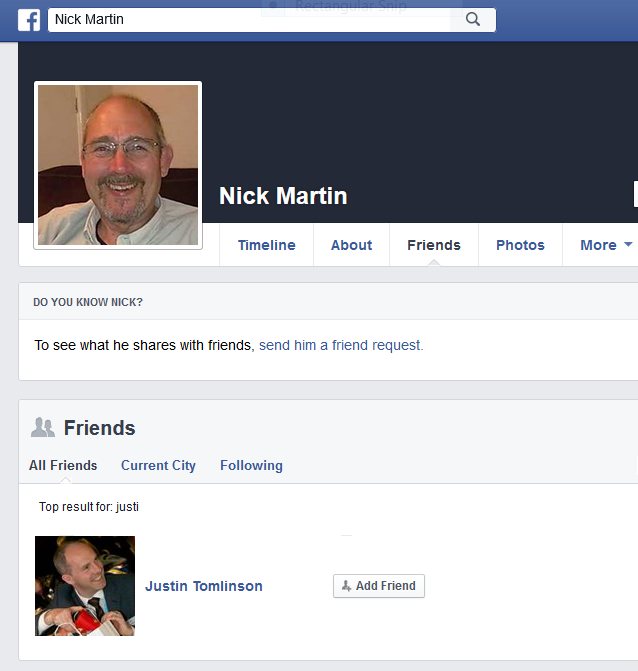
Shocking Cameron’s Britain: terminal cancer patients told to work or starve

May 5, 2015

Tom Pride's avatarPride's Purge

(not satire – it’s Cameron’s Britain!)

The Cameron government has not been clamping down on benefit fraud.

He and his ministers have been attacking genuinely sick and disabled people instead.

There are now numerous cases of terminally sick cancer patients being told by the DWP they are unable to receive sickness benefit and will have to work or starve because they are supposedly ‘fit for work’.

We also have parents of child cancer patients having to rely on food banks because the Cameron government decided being a carer means you will get no help from our increasingly non-existent welfare state:

Cameron’s Britain: 7-year old cancer patients on foodbank handouts

Another example of a victim of the coalition government’s slashing of help and support for the sick, disabled and dying was Chris Smith, a plumber from Leicester with terminal cancer who sadly died recently:

Fit for work?

The fact is, that under the Cameron government…

View original post 230 more words

Hi-tech glasses for the visually impaired tested by blind military veterans in West Lothian

May 5, 2015

A press release:

Visually impaired veterans at Scottish War Blinded’s Linburn Centre will today be amongst the first in Scotland to try experimental ‘smart specs’ prototypes which use advanced technology to enhance the vision of those registered blind or with very poor sight.

Scottish War Blinded has partnered with the University of Oxford Smart Specs research group and RNIB to test the hi-tech glasses, which scientists say could prove a major boost to the vision and independence of those with visual impairments.

The smart specs are the brainwave of developer Dr Stephen Hicks, from Oxford University, who hopes a finished model will be commercially available soon. He said; “We eventually want to have a product that will look like a regular pair of glasses and cost no more than a few hundred pounds – about the same as a smart phone.”

In 2013 the invention won the Google Impact Challenge, and veterans supported by Scottish War Blinded are now getting the chance to see if the new technology can make a difference to their sight.

The smart specs require no surgery and no special training to use and could transform the lives of people with partial sight. The smart glasses consist of a video camera mounted on the frame of the glasses; a computer processing unit that is small enough to fit in a pocket; and software that provides images of objects to the see-through displays in the eyepieces of the glasses.

The glasses’ tiny stereoscopic cameras project simplified images onto the lenses, which shine more brightly the closer the wearer gets to obstacles, and are designed to help those a small degree of residual vision by determining distances and identifying shapes up to three metres away.

Scottish War Blinded’s Rehabilitation Officer Sharon McAllister commented, “My hope is that by participating in the trial of the prototype glasses, military veterans with severe sight loss will be able to experience an aid which boosts their awareness of what’s around them, allowing greater independence and confidence in getting about- which will in turn result in an improved quality of life.”

Lisa Lynch’s Brother On ‘Legacy’ Of C-Word Drama

May 4, 2015

The brother of author Lisa Lynch, who wrote a candid book and blog about her battle with breast cancer, has said a TV drama on her life will be “a lasting legacy”.

The C-Word, a BBC adaptation which chronicled her plight, had a peak of 4.2 million viewers on Sunday.

Her brother Jamie McFarlane said her blog “resonated with so many people”.

Actress Sheridan Smith, who played Lisa, tweeted: “I know she’ll be watching with us.”

Lisa, who was from Littleover in Derbyshire, was diagnosed with breast cancer at 28 and died in 2013, aged 33.

Mr McFarlane said: “Hopefully this TV movie will help many people – if it gets one more person to check for a lump or talking to someone then it has done its job.

“We are so proud of her”.

He said his family have “a fantastic relationship” with actress Sheridan Smith, who has also starred in the sitcom Gavin And Stacey.

“The fact that she agreed to play Lisa was brilliant. I had to pinch myself that we had a Bafta winner playing my sister in a TV programme,” he added.

Smith said the chance to give a “no holds barred” account of the disease and how people deal with it inspired her to take on the role.

Speaking on Twitter, she said was was “overwhelmed” by the support she had received.

Mr McFarlane said: “When we read Lisa’s writing, we can hear her voice and that gives us a great level of comfort.”

He said his two young children will benefit from the book and TV drama.

“We have got something to show them … how good their auntie was and how amazing she was and how much she has done for other people,” he said.

Lynch’s book The C-Word went to number one in the Amazon sales chart following Sunday night’s TV drama.

Liar Liar- Election Remix: Captain SKA

May 4, 2015

A little political fun at the start of this very political week!

Lucy Hawking’s Open Letter To Katie Hopkins

May 4, 2015

I wasn’t able to post this on Thursday, when it was first published. But I feel it’s worth sharing today, since what is written in it will always be true.

Dear Katie Hopkins, I am writing to you – not respectfully, but politely – to ask you to stop.

I read your comments about Ed Miliband and his supposed resemblance to someone “on the spectrum” just as I got home from a trip to Australia. I was there as one of the presenters of a show which featured my father, Stephen Hawking (I’m going to assume you know who he is) as a live hologram beamed into Sydney Opera House.

In my introduction to him, I said that I hoped attitudes to disability had changed since I was a child in the 1970s when having a disabled father was a rarity. We were openly and intrusively commented on when we went out together. We had many difficult moments, such as the time a restaurant manager asked us to leave while we were in the middle of lunch because we were putting the other diners off their food. In fact, it was like growing up with a whole world of people like you, everywhere, all the time.

The point of my story at the talk in Sydney was that I hoped that now, no disabled person would encounter this kind of behaviour – and that they would be treated with respect and dignity. It’s on YouTube; you can watch it and see how the audience responds.

And then I read with great sadness your “jokes” (are they jokes? I don’t even know?) about Ed Milliband.

When someone with your public profile tells others it’s okay to mock people with disabilities, you cause great damage

I have an autistic son. He’s very sweet, polite, hard-working, kind and generally lovely. But yes, he does stare at people from time to time. When we are on the tube, occasionally I have to say to a member of the public that my son is autistic and that I’m sorry he is staring. The reaction is always kind and compassionate.

But if he were staring at you, I presume it wouldn’t be okay, that you would make a laughing stock out of him. You would use his disability against him – and you wouldn’t care how embarrassed, hurt or distressed he was. Because it wouldn’t matter to you. Don’t you think kids with autism have enough to deal with already? Don’t you think that they already face enough rejection and social isolation with you making it worse? Do you really think they need you to tell them they don’t fit into society?
Advertisement

And when someone with your public profile tells others that it’s okay to mock people with disabilities, you cause enormous damage. The little work I’ve done with child carers of disabled parents shows what a vulnerable group they are, already regularly bullied and taunted by their peers. It just takes a figure like you to validate the bullies’ point of view – and who knows how terrible the outcomes could be. There are lots of kids out there with disabled parents or siblings whose lives just got harder because of you.

I don’t know what you are paid to express such unreserved and trenchant views, but it surely cannot be enough. Soon, the media spotlight will move on and your planned obsolescence (planned by media companies, not by you) will kick in. At which point, you will be left with no viable career and a backwash of hatred of a staggering acidity and volume.

To be honest, I don’t really care what happens to you. But I do care what happens to people with disabilities and their families, and I care that you are making difficult lives even more challenging. Please stop.

The Stranger On The Bridge

May 4, 2015

Readers, do you remember the #FindMike campaign that Same Difference covered last year?

There has been a documentary made about it, which will air tonight on Channel 4 at 9pm.

I’ll be watching. Will you?


NEWSFLASH!!! MAXIMUS!!!

April 29, 2015

From ATOS Miracles on Facebook.

We have just learned the following in relation to the Work Program provider Maximus. If anyone has been, or is threatened with, sanctioned action for failing to attend a Work Program appointment, between 02 February and 28 April this year, with Maximus in ‘Contract Package Area 18’ (North East, Yorkshire & Humber). You MUST DISPUTE this.
The DWP failed to issue Maximus with a Secretary of State Power Letter which means Maximus did not have the legal authority to mandate a claimant to participate in the program between those dates.
DWP are still scratching their heads, get your appeals in ASAP if this applies to you!


IDS Flees From David Clapson’s Sister

April 29, 2015

With many thanks to Benefits And Work.


Iain Duncan Smith dropped out of a hustings in his own constituency at the last minute, frightened of facing the sister of David Clapson, the diabetic former soldier who died after his benefits were cut.

IDS should have appeared on a platform with candidates from six other parties in Chingford, north London on Monday night.

Gill Thompson, the sister of David Clapson, was there to talk about how having his benefits stopped for missing an appointment had led to her brother’s death and to call IDS to account.

But, with just hours to go, IDS was suddenly called to “to the north-west of the country” for unexplained reasons.

According to the Daily Mirror, Thompson moved some in the audience to tears as she explained the circumstances surrounding her brother’s death.

“My brother died because of Iain Duncan Smith’s policies,” she said. “He wasn’t a scrounger. He was a former soldier. He died with a pile of CVs next to his body. He was a diabetic. After he was sanctioned he couldn’t even keep his insulin cold in the fridge.”

Katie Hopkins Tweets Ed Miliband Is ‘On The Spectrum’

April 29, 2015

Autism campaigner Kevin Healey shared this on Facebook yesterday:


It appears to suggest that Katie Hopkins thinks Ed Miliband has some form of autism.

At worst, it’s offensive. At best, it’s unneccessary.


Young disabled campaigners go undercover and put public transport to the test

April 29, 2015

A press release:

Young disabled campaigners go undercover and put public transport to the test


A 600-strong group of young disabled campaigners will go undercover from today, as a major UK wide investigation is launched into public transport access for disabled people.


The Muscular Dystrophy UK Trailblazers, a network of disabled 16-30 year-olds, will put local station access, bus ramps, journey times, staff training and attitudes, and even the behaviour of fellow passengers, to the test, using surveys and undercover filming.


Their investigation will review the findings of a damning 2009 Trailblazers study, which found disabled people struggling with a lack of basic facilities at stations and on trains, waiting hours for buses with working ramps and paying inflated prices for accessible taxis.


The group hopes to uncover whether repeated promises by transport providers to improve services and investment in the wake of the Paralympics have made a difference to disabled travellers. They will compile experiences and collect footage, photographs and data during their three-month study of train, bus and taxi services across the UK, before publishing their findings later this summer.


Muscular Dystrophy UK Trailblazers member and wheelchair-user, Sulaiman Khan (29) from London, said:

“I experience problems on a regular basis, just trying to get from A to B on public transport. A lot of train stations just don’t have the facilities for disabled people and I often find myself having to make my way to another station in the opposite direction of my destination, just so I can physically board the train. This not only adds to journey time, it also increases the cost of my ticket.


“Accessibility isn’t the only issue– poor staff knowledge and public attitudes towards disabled people are still commonplace. In November last year we saw the high profile court case of Doug Paulley*, who was refused access to a disabled space on a First Group bus, after a mother refused to move her pushchair out of the designated disabled area.  This is just a snapshot of some of the common issues we will be addressing through our investigation.”


Muscular Dystrophy UK Trailblazers spokesman, James Lee, said:

 “Access to public transport is vital for many young disabled people, whether this is to get to work, to a place of study or to socialise. Yet sadly, we hear regularly from Trailblazers struggling to access their local trains, buses and taxis, or who are put off by problems with poor staff training or unfair delays. 


Trailblazers will be going undercover over the next three months to shine a light on some of these issues. We want to hear from young people across the UK on their experiences using public transport. We want to find out whether promises from transport providers and local authorities are truly making a difference on the ground.”

High Court Grants Assisted Suicide Review

April 28, 2015

Disability rights campaigners who say assisted suicide policy in England and Wales is too “liberal” have won permission to bring a legal challenge.

Director of public prosecutions Alison Saunders last year clarified assisted suicide guidelines, making prosecutions of health professionals less likely.

At London’s High Court, Nikki and Merv Kenward argued she had “changed” policy, making it more “liberal”.

Judges permitted a judicial review of Ms Saunders’ decision.

In England and Wales, the Suicide Act 1961 makes it an offence to encourage or assist a suicide or a suicide attempt. But the Director of public prosecutions (DPP) has discretion over any prosecution according to the published policy.

Mr and Mrs Kenward argued that the significance and legality of the clarifications should be properly assessed.

John McGuinness QC had argued on behalf of the DPP that there was no legal basis for the challenge.

But Lord Justice Bean, sitting with Mr Justice Hickinbottom, said permission was justified by the “importance” of the subject.

‘The norm’

Speaking outside court, Mrs Kenward, from Aston on Clun in Shropshire, welcomed the decision.

“I am delighted and shocked – I didn’t think it was going to happen,” she said.

Mrs Kenward, a former theatre manager who is confined by illness to a wheelchair, and her husband campaign against euthanasia and assisted suicide through the Distant Voices campaign group.

In 1990 at the age of 37, Mrs Kenward was stuck down by Guillain-Barre syndrome, a rare and serious condition of the peripheral nervous system.

She was initially fully paralysed for more than five months and has been in a wheelchair since.

Mr and Mrs Kenward want the references making prosecution of healthcare professionals in assisted suicide cases “less likely” removed from the DPP’s policy.

“If it is not removed, and this becomes the law it will change how we view death,” Mrs Kenward added.

“It will create a new mean whereby euthanasia is an accepted form of behaviour. It will start to become the norm and it will be considered a kindness for you not to be there.”

Maximus Deny Refusing To Allow Up-To-Date ESA Evidence

April 28, 2015
Maximus deny refusing to allow up-to-date evidence to be submitted, but members tell us it’s been happening.

Benefits and Work members continue to report problems with ESA50 forms, used as part of the work capability assessment (WCA) process.

Initially we were hearing from claimants who said they had never received an ESA50. The big issue now, members tell us, is Maximus using ESA50s that are over two years old and refusing to allow new ones to be submitted.

Two year old forms
Last month, Maximus told us that everyone being assessed or reassessed for ESA should receive an ESA50 and that it was not their policy to refuse anyone the opportunity to complete one.

Since then, however, we have heard from a number of members who have been asked to a face-to-face assessment even though they have not completed an ESA50 since 2013. When some members have asked to be sent a new ESA50 this has been refused. Instead, they have been told that they can tell the health professional at their assessment about any changes to their condition since the ESA50 was completed.

Last week Gardiner55 posted a comment saying:

“Assessment for my son notified by Maximus but no ESA50 had been completed recently. Rang Maximus and asked for a form to be issued but point blank refused saying they had a form completed in 2013!!!

“Rang DWP and they ‘advised’ to attend otherwise SANCTIONS asked for a form to be issued but again refused.”

Also last week, Izzy posted:

“Help!! I got called to another medical after 26 mths on esa. What a farce got zero points and used info from Esa50 form completed in January 2013 although my health and its effects on my everyday activities deteriorated.”

Clearly this is not satisfactory. The whole point of an ESA50 is to allow a claimant to provide detailed and up-to-date information about how their condition affects them.

Maximus denial
We approached Maximus about this and a spokesperson told us:

“We would never refuse a customer the opportunity to submit an up-to-date ESA50.

“Any customer who believes that the information on their ESA is out of date is welcome to complete another form and either send it to us, or bring it along to their assessment.”

We specifically asked Maximus: do you have a policy on when and whether to allow claimants to submit an additional ESA50 if the one being used is very dated?

Maximus told us:

“Yes, we encourage customers to provide an up-to-date representation of how their condition affects them and their ability to manage everyday tasks. If they submit another ESA50 we always accept this.”

We also asked Maximus: if claimants download and complete a new ESA50 and take it on the day of the assessment, does the assessor have a duty to read it, add it to their file and take the evidence into account?

Maximus responded:

“Yes, all evidence presented on the day is considered by the assessor including updated ESA50s.”

What you can do
So, according to Maximus management, everyone gets sent an ESA50 before they have an assessment. If you believe yours is out-of-date, or that you haven’t actually received one, you can download an ESA50, complete it and either post it to Maximus or take it with you on the day.

Under no circumstances should you be refused the opportunity to provide an up-to-date ESA50.

Maximus appear to be very keen to avoid criticism of the service they provide. Whilst they aren’t admitting that problems have occurred in the first place, it does seem likely they are working with staff – many of whom were previously employed by Atos – to try to prevent them happening in the future.

So, if you are told you can’t provide an up-to-date ESA50, we suggest you download one and send it in anyway, along with a copy of this article. Take a copy of your ESA50 and this article with you to your assessment, as well, in case it hasn’t been put on your file.

In addition, make a formal complaint to Maximus customer services and let us know too.

The WCA remains deeply unfair, but together, we can at least make sure Maximus always gives claimants the chance to provide detailed, accurate and up-to-date evidence.

Motivation Becomes Mandatory For Jobseekers In Cumbria And Lancashire

April 28, 2015

Disabled, Transgender Game Developer Rachel Byrk Ends Own Life After Online Abuse

April 28, 2015

Very sad. RIP.

Gaming communities are mourning the death of prominent transgender game developer Rachel Bryk, who committed suicide on April 23.  Bryk, 23, was plagued by chronic pain, which she told friends was a result of rheumatoid arthritis and fibromyalgia. She took her own life by jumping from the George Washington Bridge, which connects Manhattan to New Jersey, something she discussed on social media platform ask.fm in the days before her death.

Over the past two years, Bryk had become one of the most prominent game developers on a software project called Dolphin. She was well-known for her work on Gamecube and Wii emulators—her favorite being Pucca’s Kisses. Despite her beloved status in online gaming communities, Bryk commented on a popular 4chan forum that she was withdrawing from various sites because she suffered constant, trans-phobic harassment. After her death, word quickly spread throughout these communities, and forums were flooded with memorial posts in her honor, and tributes to her work and collaborative nature.

What prompted Bryk’s final decision to take her own life remains unclear. Friends have contacted Vocativ suggesting that her chronic pain may have been a factor, and despite the respect she earned in the gaming community, Bryk wrangled with depression. Just days before her death, the online harrassment she had been subjected to for months took a more direct form. Commenters mocked her suicidal comments, saying “jumping off a bridge isn’t rocket science.” The last note from a commenter, simply said “Good Riddance”, to which she replied: “Yeah pretty much.”

Gamers across the world were deeply saddened by the news, and many have used this tragedy to discuss the dangers of transphobia in online communities. One former colleague from Dolphin commented: “No matter what, she was always willing to help anyone. Of all the devs she was the most helpful on the forums, always pitching in. Dolphin is a smaller place without her.”

Insider: Job Centres Not Offering Jobs Until After Election

April 28, 2015

Spotted on JobSeekers UK Facebook page.


An insider tells me that all the jobs that in the job centre are not being offered to people at the moment because they are waiting for the outcome of the election , now correct me if I’m wrong but won’t they be sanctioning these poor buggers for not applying for jobs that they don’t even know about ?

Would they ever consider stopping sanctioning until after the election? Of course not!

Disabled Bedroom Tax Victim Has Toes Amputated After Spending Winter In Tent

April 27, 2015

The thousand words behind this picture are below:

A Skelmersdale man has had all of his toes amputated as he was forced to spend winter in a tent after falling victim to the bedroom tax.

Mitchell Keenan, 32, was diagnosed with frostbite six weeks ago after his family discovered his blackened toes and rushed him to hospital.

Mitchell was living in the tent with his father Keith, 62, following their eviction from their four-bedroomed home in Birch Green last year when they fell behind with their repayments.

Keith was also diagnosed with severe health problems including malnourishment, scabies and dementia.

Dawn Doyle, 54, is Keith’s sister, who tried to find them shelter, she said: “It’s absolutely outrageous what has happened to my brother and nephew.

“They lived in their home for thirty years and got into difficulty last year.

“They had their benefits sanctioned and things just spiralled out of control, they both have neurological conditions and disabilities and kept missing job interviews, so the problem got worse and worse.

“In July they lost their home and I tried everywhere to get them accommodation but nowhere would take them.”

Dawn was eventually forced to buy her brother and nephew a tent, which they pitched on the Beacon in Skelmersdale.

She also supplied them with food parcels from local food banks, while trying to provide for her own family.

Dawn said: “I felt awful that I couldn’t take them in, but I’m a single parent, with my own disabilities and I just knew I couldn’t cope.

“I tried my best for them and contacted so many different organisations, but just kept getting turned away.

“Social Services said they couldn’t come and assess them because they were in a tent – it was just farcical.

“When we saw Mitchell’s toes we were horrified, that this can happen to people in the 21st century is disgusting.”

Mitchell has now been given temporary accommodation by West Lancashire Borough Council and Keith has been taken in by Stonham housing.

Dawn said: “The bedroom tax is an awful thing, it’s affecting people’s lives all over the country and needs to be repealed.”

El Deafo

April 27, 2015

Children’s author Cece Bell wanted to show what it felt like to be the only deaf kid at her school. So she wrote a graphic novel/comic strip.

One Teenager’s Experience With Capita

April 27, 2015

Spotted on Facebook. Sharing in support of this mother and daughter.

 
My fight against CAPITA starts today. Following my 2nd attempt to re-schedule my daughter’s home assessment appointment to a more suitable day ( a day which she does not attend school) they have referred my daughter’s claim back to DWP and a letter was received today stating that : “Because you didn’t attend your consultation wer will disallow your claim to PIP unless you provide us with a good reason why you couldn’t attend”. Cheeky effers!!! CAPITA cancelled their own appointments on many occassions, my daughter had to miss school and we waited and waited but no one deigned to turn up. I wonder whether any money owed to CAPITA will be disallowed because of their failure to attend!!!! No way will that happen. I am disgusted with the way that these bodies are allowed to railroad the sick and disabled. I also cannot understand how DWP, having confirmed that my daughter has been awarded DLA until she’s 18 start the PIP claim process now. Copies of the letter received together with our response will be sent to our local MP. Getting DLA for my daughter has already been a tremendous fight and I will not allow some pen pushing Nazi deny her her PIP.


Woman On DLA Taken Off DWP System After Hoaxer Reports Her Death

April 27, 2015

Shocking, worrying stuff.

A woman was left penniless after a hoax caller rang the Department of Work and Pensions to report her death.

Instead of demanding a certificate to back up the claim, it appears a worker simply ‘deleted’ Janet Millward from the system.

Janet had no idea she was ‘deceased’ until her benefits were stopped.

And within days, letters offering bereavement advice started arriving addressed to the “Estate of Miss Janet Millward”.

Both her housing benefit and Disability Living Allowance were scrapped and the tax office wrote to her “personal representative” giving tips on how to settle her estate.

Now the DWP has apologised for the mistake, which it blamed on human error.

But Janet, 50, wants to know why the word of one person in a phone call was enough for her to no longer exist.

The mix-up happened after a man claiming to be her son ‘Alex Millward’ rang the DWP to report her death.

Unemployed Janet, who does not have children, says within moments a chain of events was put in place to erase her.

She said: “They know everything about me. Why didn’t they check? Why didn’t they pick up the phone? It just beggars belief.

“They just pressed a button and that was that. It effected everything.

“Why was a death certificate not asked for? When my brother died last year we had to provide a death certificate for everything.

“I want to know why such questions were not asked. It is unbelievable. Somebody, claiming to be my son, can just ring up and say I have died, and that is enough.”

Janet relies on the £240 benefits she receives once a fortnight to survive.

“I was extremely distressed. All my money was stopped.

“I was getting letters addressed to the representatives of Miss Janet Millward. But I was not dead.”

It took two weeks to correct the error and Janet, from Wythenshawe, Manchester, contacted her Labour MP Mike Kane, who took up her case.

He has since received a letter from the DWP apologising for the mistake.

The letter said: “Unfortunately, due to human error, a date of death was incorrectly input to Miss Millward’s records.”

HM Customs and Revenue also wrote to Janet, saying: “Our records did show you as deceased and thus the system generated a letter to your address re this.

“I can confirm that I have now updated your record to show you are not deceased and can only apologise again for any distress this may have caused you.”

Crossing The World By Wheelchair

April 27, 2015

James Ballardie is a wheelchair user who has been travelling the world without planning an accessible path through it. And it was all going pretty well until he reached China.

My girlfriend and I have been travelling across the world for 11 months. We’ve been through Brazil, Argentina, Chile, Bolivia, Peru, Ecuador, Colombia, the USA, Japan and South Korea, and so far it’s been remarkably straightforward.

We don’t research wheelchair access facilities before arriving in the next place on the list, we just enjoy the ride.

Whenever we hit a flight of stairs, I jump out of the wheelchair, scramble up on my hands and knees, and get back in. My girlfriend, meanwhile, is left to carry the chair behind me. It might sound like a lot of hassle, but to us it’s completely normal – a minor inconvenience.

I’ve navigated England in a wheelchair for 32 years and had figured that I’m well prepared for backpacking anywhere. Well, that’s what I used to think until I arrived in China.

The good news – discovered whilst looking out of the window on the overnight train to Beijing – is that the vast majority of Chinese cities are flat as a pancake. When carrying a year’s worth of backpacking supplies, I like to make a habit of avoiding steep hills wherever possible.

As soon as we stepped off the train, however, the good news stopped flowing. Carrying out even the most basic of tasks in a wheelchair in cities like Beijing, Shanghai, Xian and Shenzhen felt like I was competing in The Hunger Games.

Take crossing the road, for example. Even on back streets it could mean life or death.

These cities have the most aggressive driving culture I’ve ever seen. Drivers don’t use hand gestures or try to gain eye contact – they deliberately turn away. Traffic lights are basically meaningless. No one seems to use indicators either.

Most pedestrians cross roads in swarms, presumably on the basis that it’s safer in numbers. It’s difficult to see where wheelchairs can successfully fit into the scrum – I had to learn to watch out for elbows in the face and getting pushed into oncoming vehicles. If the elbow strayed too close to my wheels, though, they would have to look out for crushed toes and snapped ankles.

This aggressively Darwinist approach to road crossing seemed to be ingrained in all the places I visited. At train stations, ticket collectors sprint fastest to get first place in queues at the lifts. In markets, the richest strike the hardest bargains. On roads, it’s the biggest cars that drive most dangerously.

So why not wait and cross the road at a quieter section with less risk of collision? There’s a good reason. Most main roads in Chinese cities are lined with big iron fences that are impossible to climb over so pedestrians have no choice but to use the footbridges and subways which mostly have stairs. Those that have lifts tend either to be broken or only operable with a key which I was unable to find anywhere.

Crossing the road at a quieter section often resulted in a 45-minute detour so I found the best way to get from A to B was to just man up and face the hazards like everybody else.

When complaining about accessibility, most British disabled people bemoan a lack of facilities that are likely to be expensive to provide. I don’t complain, especially in developing countries, because it’s quite a tall order to expect businesses to fork out for equipment for which they are unlikely ever to see a financial return.

But even a pragmatist like me is left feeling like they want to punch a shih tzu after coming across “men kan” – the wooden beams spanning the bottom of doorways in about a third of Chinese buildings.

Legend has it that they keep out evil spirits but to get through a doorway I have to get out of the wheelchair, step over the men kan, lift the wheelchair over and then get back in. On an average day of sightseeing I had to do this three or four dozen times.

Men kan are not a lack of facilities – they are an obstacle created by people. It would cost less to not build men kan, with the only drawback being an excess of evil spirits in the house. To me, men kan summed up the Chinese attitude to accessibility I experienced – not a priority.

With that in mind, you’d be forgiven for thinking the attitude towards me throughout my stay in China was hostile. Far from it. There is an innocence to Chinese wheelchair curiosity, totally inoffensive but utterly exhausting.

I noticed it was entirely normal for people to take photos whenever they see a wheelchair. In particular, they like to take the shot when you’re straining to conquer a hill or climb a flight of stairs. To be fair, most people seem more interested in the wheelchair than me specifically. You can trace their eyeline to the exact point where the rear wheels meet the ground.

One guy in Shanghai thought I’d have no problem whatsoever with him pinching my knee between his thumb and index finger. His enthusiasm was endearing as much as it was bamboozling – but it left me feeling more like a C-list celebrity than an exhibit in a freak show. It’s like being in a strange parallel universe where everyone around you has lost their inhibitions.

There were some startling exceptions to the rule – like the abundance of ramps in Chengdu, the helpful policeman on the train to Xian, the couple in Shenzhen station who lent us correct change for a vending machine, and Yingchen, the biology student in Hangzhou station who helped us find a guard with a key for the lift.

It’s not so much that acts of kindness are a rarity, just that it’s impossible to predict where the next behavioural anomaly is coming from. That’s what makes China so fascinating, as well as gruelling.

Follow James Ballardie’s adventure across the world on his blog.

Stephen Hawking Responds To Question On Zayn Malik

April 27, 2015

Readers, here is proof that Stephen Hawking, one of the most intelligent disabled people in the world, also has a brilliant sense of humour.

While appearing on stage in Sydney as a 3D hologram from Cambridge, Stephen Hawking was asked many serious scientific questions.

Then, a questioner asked: “What do you think is the cosmological effect of Zayn leaving One Direction and consequently breaking the hearts of millions of teenage girls across the world?”

And Hawking’s response was PERFECT.

“Finally, a question about something important,” he said.“My advice to any heartbroken young girl is to pay close attention to the study of theoretical physics. Because one day there may well be proof of multiple universes.”“It would not be beyond the realms of possibility that somewhere outside of our own universe lies another different universe.”

“And in that universe, Zayn is still in One Direction.”

It got better still for the questioner. “This girl may like to know that in another possible universe, she and Zayn are happily married,” Hawking added.

All hail Stephen Hawking, the unlikely hero of Zayn fans everywhere.

Nepal Earthquake Appeals

April 27, 2015

I have spent the weekend watching news of Saturday’s earthquake in Nepal. Countless lives have been lost and countless others changed forever. I am thinking, in particular, of all those who have been left disabled by the disaster.

Several charities have set up fundraising appeals. The Independent published this list of links yesterday:

Here are some of the ways you can help with those affected by the devastation:

The easiest thing to do is donate £5 to Unicef by texting ‘DONATE’ to 70123 or visiting www.unicef.org.uk

If you are outside of the UK you can donate $10 to Unicef by texting ‘Nepal’ to 864233.

You can also follow the links below and donate to any of the following agencies:

Oxfam

Oxfam is an international organisation dedicated to fighting poverty. Donate to Oxfam’s relief efforts in Nepal, here.

Actionaid

Actionaid supports women and children in extreme poverty. To donate to their Nepal Earthquake Appeal click here.

The British Red Cross

The British Red Cross help people in crisis, whoever and wherever they are. To donate click here.

CARE

CARE is an organisation that works for the poor and vulnerable. To contribute to relief efforts click here.

Save the Children

This charity works in 120 countries to provide disaster relief. To donate click here.

World Vision

World Vision is an international children’s charity. To donate to their Disaster Relief Fund click here.

US Paralympian Josh George Denies David Weir 7th London Marathon Wheelchair Win

April 26, 2015

Text from the BBC and Dame Tanni Grey Thompson’s commentary:

David Weir, second last year, has to settle for second again this year. It looked like the six-time Paralympic champion was poised for a seventh title but he simply ran out of juice in the end. The 35-year-old is currently just staring into the middle distance, trying to come to terms with another near miss.

Baroness Tanni Grey-Thompson

11-time Paralympic gold medallist and BBC athletics expert

“I can’t believe it. David Weir was in an amazing position and I’ve never seen Josh George come up like that. It’s the best race of Josh George’s life.”

I’ve only just heard of Josh George, so I looked him up. Here’s more about him.

Updated 12.20pm

After Joshua George’s win in the men’s T53/54 wheelchair race, the peerless Tatyana McFadden has made it an American double in the women’s race.

McFadden has dominated women’s wheelchair racing in the last two years, winning back-to-back marathons in Boston, London, Chicago and New York and this win was her third in a row in London after her Boston success last Monday.

Her winning time of one minute 41.13 seconds smashes her own course record of 1:45.12 – a superb effort from the woman whose nickname is ‘The Beast’ and she finished over two minutes ahead of Switzerland’s Manuela Schaer.

This Happened To Two People Who Were Sanctioned- WARNING: Graphic Images

April 26, 2015

This happened to one family after benefit sanctioning. I spotted it on Facebook. The original poster asks for it to be shared widely.


New changes to Universal Credit roll out.

April 25, 2015

Charlotte Hughes's avatarThe poor side of life

Today I learnt of some new developments in the universal credit roll out. These changes are devastating and they left me lost for words. I’ll explain now but please share.

When universal credit first came out you could not apply for it if you were already claiming housing benefit. There was a glitch in the system and the computer said no. They’ve sorted this so here goes.

They are now transferring people onto universal credit from JSA. There’s no option to say no, they are simply changing their claim. Their existing claim will be shut down, as will their claim for housing benefit. The claimant will also have to go to the local council offices to sort out the council tax payments, if not they will be left with a massive bill.

Why am I so worried? If you are already in debt with your rent due to the bedroom…

View original post 298 more words

Disability Groups Letter To Herald Scotland In Support Of Disabled Journalist John Pring

April 25, 2015

By sharing this letter here, I offer my full support to John Pring in his wish to have a reasonable adjustment made by the DWP press office as a result of his disability.

Letters to The Herald

Saturday 25th April 2015

WE note that the Department for Work and Pensions (DWP) has carried out its threat to refuse to answer questions from, Disability News Service (DNS) editor John Pring (“inside Track: DWP and its dispute with a disability warrior“, The Herald, April 22). Mr Pring is an experienced journalist, who has been reporting on disability issues for nearly 20 years. He launched DNS in April 2009 to provide in-depth reporting in both the specialist and mainstream media on issues that affect the lives of disabled people.

Numerous disability groups rely on the Disability News Service to keep them informed. By refusing to communicate with Mr Pring the DWP is refusing to communicate with millions of disabled people. The actions of the DWP are counter to transparent government and freedom of the press, upon which a functioning democracy rely. We consider the actions of the DWP to be highly offensive and discriminatory.

We fully support Mr Pring and insist that DWP perform its public duty to talk to the press without bias or favour.

John McArdle, Black Triangle Campaign; Dr Stephen Carty, Black Triangle Campaign; Linda Burnip, Disabled People Against Cuts (DPAC) Steering Group; Debbie Jolly, Co-Founder DPAC; Bill Scott, Inclusion Scotland;

Norma Curran, Values into Action Scotland and Scottish Campaign for a Fair Society; Pat Onions, Pat’s Petition; Simon Barrow, Co-Director, Ekklesia; Rick Burgess #newapproach; Jane Bence #newapproach; Rosemary O’Neill, CarerWatch; Frances Kelly, CarerWatch; Ian Jones, WoW Campaign; John McDonnell MP; Karen Machin, St Helens, mental health carer; Peter Beresford, Co-Chair, Shaping Our Lives; Steve Preece, Welfare Weekly;

Charles Huddleston; Mo Stewart, Independent Researcher; Annie Bishop, Independent Advocate; Gail Ward, disability rights campaigner; Jo Walker, disability rights campaigner; Anne Ross, multiple sclerosis activist

Dr Rhetta Moran, RAPAR; Jonathan Bartley, Green Party Parliamentary candidate for Streatham; Steve Griffiths, researcher in social and health policy; Steve Donnison, Benefits and Work; Neal Lawson, Compass; Rosemary Trustam , Publisher, Community Living magazine; Ellen Clifford, DPAC; Andy Green, DPAC; Paula Peters, DPAC; Anita Bellows, DPAC ; Roger Lewis, DPAC steering group ; Bob Ellard, DPAC Steering Group; Catherine Hale, disability activist; Michelle Maher, WoW Campaign; Josh Petzoldt, member of UCL Staff Disability Forum and National Association of Disabled Staff Networks; Dr Simon Duffy, Centre for Welfare Reform; Alan Wheatley;

Sam Barnett-Cormack; Pam Pinder, CarersforumUK; Judy Hamilton; Caroline Richardson, Spartacus Network; Paul Bepey, BBC Ability Chair, Access Technology Manager/Assistive technology lead; Melanie Sharpe and Dr Hamied Haroon, Co-Chairs of the Disabled Network at the University of Manchester; Steve McIndoe, University of Manchester, Adam Lotun, disability risk management consultant, Workplace Disability Adjustments; Carole Ford, WowCampaign; Susan Inness, Disabled Library assistant, University of Nottingham; Lesley Beebe, Bradford University; Karen Reissman, Union NEC (PC); Susan Stubbs, University of Manchester; Angela Thompson;

Jenny Hambidge,

c/o Black Triangle Campaign, 17 W. Montgomery Place, Edinburgh.

Herald Scotland

Back Story: ‘DWP should be cautious about blocking critic of benefits policies’ ~ By Stephen Naysmith, Herald Scotland Posted on

DWP carries out threat to ban questions from Disability News Service Posted on

Dylan Myers

April 24, 2015

Dylan is nearly five but Syndrome Without A Name (SWAN) means he has the mind and body of a baby.

His mother Danielle Myers, tells Victoria Derbyshire what life is like for her son, who is in constant pain and the frustration of not knowing what is medically wrong with him.

What are YOU looking at?

April 24, 2015

Christopher John Ball's avatarChristopher John Ball

boots_2015_MINI_3“Asylums with doors open wide,
Where people had paid to see inside,
For entertainment they watch his body twist,
Behind his eyes he says, ‘I still exist.’” – Atrocity Exhibition – Joy Division

It is sad to say that many of us who have a disability or impairment will be able to recall experiences of having been bullied, picked on, singled out and abused, both verbally and physically, as we go about our lives. Would it be fair to say that we often take this abuse as being a ‘normal’ part of our daily routine, experiences that we have perhaps come to expect and, in the eyes of many as I will explain, something we should ‘put up’ with?

The ‘incident’ that inspired this article occurred on Saturday 14th March 2015. My partner and I were waiting to catch a train to Euston from Watford High Street Overground Station…

View original post 3,335 more words

Disabled Boy’s Ipad Stolen In Burglary

April 24, 2015

Please share widely in case anyone can help.

Police are searching for burglars who took a badly-needed iPad from the home of a 10-year old disabled boy in Etchingham

Between 7pm on Thursday 16 April and 10am on Tuesday 21 April, a house in Burgh Hill, Etchingham, was broken into, and two large tvs, an Xbox360, a pair of wireless headphones and an iPad were stolen.

The iPad is used by the family’s ten-year old son, who has a condition known as global development delay together with autism, and cannot speak. His only form of ready communication with his family is via his use of a communication tool known as Proloquo, on the iPad which is contained in a bulky black casing.

The boy’s mother Vicky Stuart said; “It is especially distressing as there are over three years of home videos and personal photo symbols built up on my son’s iPad which are not easily replaced, and without which his world is much more confusing. He is now more isolated than ever”.

Detective Constable Darren Jones of the East Sussex Priority Crime Team said: “If anyone has any information about this burglary, and in particular if you know about any of the stolen items being offered for sale, please contact us via 101@sussex.pnn.police.uk or call 101, quoting serial 394 of 21/4. You can also call the independent charity Crimestoppers anonymously on 0800 555 111 FREE.”

New Music- Jingo- A.D.D.

April 24, 2015

Jingo are an up and coming band based in London. One member is a friend of Same Difference.

We are pleased to see that their upcoming single is about mental health issues.

You can hear it on SoundCloud here.

The up-and-coming British outfit Jingo tackles the overmedicalization of mental disorders in their powerful new tune “A.D.D.”.
 

The East London group Jingo may be relatively new entries into their local music scene, but they’re already making a considerable splash. Both Amazing Radio and BBC London have given them the tip of the cap. When added to live showings including a successful night at the London DIY open mic night Cable Street Electric and a gig opening for Graham Coxon (Blur), these young rockers have already started paving a solid path for their musical career.


“A.D.D.”, a tune from Jingo’s forthcoming EP, captures the energy they bring to their music. With musical elements that bring to mind mid-‘90s Radiohead, the band tackles an issue that is of no small matter, delivering angst-driven lyrics such as “Your love / is my suicide.”
  
The band tells PopMatters about the lyrics to the tune, “This is the first song taken from our upcoming EP… [it’s] our interpretation of how we believe certain places in the world disguise their misunderstandings of mental ‘disorders’ by haphazardly medicating their children with mind-altering drugs. It can often cause psychosis at an early age and sometimes even lead to suicide later in life. This is a very serious issue that we wanted to address but its not always doom and gloom in the Jingo camp, we promise.”

Wearable Tech for the Vision Impaired Fierce Contender for Virgin’s Pitch to Rich Competition

April 23, 2015

A press release:


An innovative engineering group has created a global buzz with a radical wearable tech headband that’s taken Virgin Media’s Pitch to Rich competition by storm. Officially named Gravity 8, the smart headband device syncs with a GPS based mobile app to offer vision impaired wearers personal, hands free navigation assistance.

Unlike other wearable tech products which are designed to enhance the lives of everyday people, Gravity 8 has been developed with vision impaired wearers in mind. Powered by Bluetooth, Gravity 8 connects to a GPS-based app and Mobile Maps system to plot a route.  Directions are then relayed to the wearer through vibrations in either the left or right side of the headband. As a revolutionary new product Gravity 8 has been entered into the Pitch to Rich ‘New Things’ category. Designed to launch “big ideas with the capacity to disrupt,” Gravity 8 ticks all the boxes. Up for grabs is a £50,000 cash investment for the winner, as well as two runner up prizes of £10,000.

Erick Bulatowicz, Founder said, “We have a strong passion in our innovation and believe that Gravity 8 represents a new wave of technology for the wearable tech sphere. By blending several 21st century technological advancements and concepts we’ve created a product that makes life markedly easier for people with vision impairments.”

As well as its primary goal of helping vision impaired wearers get from A to B, Gravity 8 can also be used as an alternative to mobile navigation. Rather than continually look down at a smartphone screen and attempt to follow visual directions, Gravity 8 offers wearers hands-free routing assistance. It’s simple, easy and much safer than having to continually take the eyes off the road, footpath or cycle track.

By taking out the Virgin Media Pitch to Rich crown, Gravity 8 hopes to finish its prototype and launch the concept into the next stage of development. This will include creating global brand awareness, advancing to the next stage of product testing and attracting big name investors.

The project is backed by a trio of dynamic developers with a wealth of experience in the arenas of technology, project management and product design. Together, founder and CEO Erick B and fellow innovators Norbert K and Nicholas D plan to turn Gravity 8 into a must have tech accessory for vision impaired wearers and everyday navigators across the globe.

To help its product reach new heights Gravity 8 is calling on members of the public to support its Pitch to Rich campaign and cast a vote. Fans simply visit the Gravity 8 Virgin Media Pitch to Rich page and click the ‘Vote Now’ button. Already the product has received 134 votes, with more support expected to roll in as the concept gains nationwide attention.

The Gravity 8 mobile app is currently available to download from google Play of the Apple App Store.

To find out more about Gravity8 go to: http://gravity8.com/

Facebook: https://www.facebook.com/pages/Gravity-8/364554700370601

Twitter: https://twitter.com/gravity8uk

Papworth Trust Volunteers Design Physio Wheel For Arthritic Cat

April 23, 2015

Arthritic cat Denver has been helped by a charity with disabled human volunteers.

They provided him with a large indoor running wheel for cats unable to exercise outdoors.

Denver is too poorly to be allowed out, but has to exercise to keep his arthritis under control which is why his owner, Steve Westley, was delighted with the invention.

It is not just the cats who benefit, though – the people who make the wheel are employed by Papworth Trust Workwise in Cambridge who provide work-based training and specialist employment for people with mental ill health.

The aim is to help them back into employment at the end of their placement in the workshop.

Commit a crime and get treated far better than you do by the DWP.

April 23, 2015

Charlotte Hughes's avatarThe poor side of life

A while ago I wrote about the governments war against the poor. Indeed, I said that they treat you worse than a criminal. Well I was right. I know people that I have talked to outside the Jobcentre who have said that they’ve had to steal to eat. Getting caught was a bonus because they would get a bed for the night and some food. And sympathy from the police officers. Compare that with the distinct lack of sympathy and compassion from the DWP. The polic aren’t happy with this either. The crime levels have risen as a result but police staffing has been cut to the bare bones. I speak to the PCSOs that sometimes attend our demos, and they say the same thing. They say that their workload has got much harder and they are dealing with alot more suicides and attempted suicides than they have ever known…

View original post 98 more words

Wheelchair User Adam Lotun Suing London Council Over Inaccessible Polling Station

April 22, 2015

A London council is being sued for failing to ensure a polling station was accessible to people with disabilities.

In the first case of its kind in the UK, Adam Lotun, a wheelchair user, is claiming his human rights were breached because he could not vote last year.

Mr Lotun said he could get no further than the front door because of a ramp and a drop to the floor inside.

Kingston Council says work is under way to ensure its polling station is fully accessible on 7 May.

Mr Lotun had been attempting to vote at last year’s European and local elections when he discovered he could not get into the polling station at the Sunray Community Centre in Tolworth, south-west London, despite signs stating it had disabled access.

‘Excluded’

He claims he asked staff to bring the ballot box to a private place outside, but they refused and he ended up not voting.

“It made me feel worthless as an individual, excluded as a member of society,” he told the BBC. “I was just a second class citizen – my voice did not count at all.”

Angry at what he feels is a breach of his human rights, Mr Lotun is now suing the Royal Borough of Kingston upon Thames.

His solicitor Chris Fry said: “The duty on every local authority is to ensure that the buildings themselves are fully accessible so that every qualified voter can cast that vote.

“For there still to be issues arising like Adam’s, you wonder how many disabled voters are going to be left out in the cold come the general election day this year.”

Frustrating

A survey carried out by disability charity Scope after the 2010 general election suggested that 67% of all polling stations were not fully accessible.

Overall voter turnout was 65%, but figures suggest that among disabled people it was 33%.

Currently, the Electoral Commission issues guidance to councils and returning officers on what should be in place come polling day.

Andrew Scallan, the commission’s director of electoral administration, admitted that it can get frustrating when he hears stories about people not being able to vote.

“Local authority returning officers work day in and day out with their people – they know their area and they want to deliver a good service,” he said.

“But on 7 May this year, there will be 47,000 polling stations, well over 100,000 staff involved, so there is bound to be human error in all of that.”

Kingston Council said its polling stations will be fully accessible on polling day.

A spokeswoman said: “Work is taking place to rip out the existing ramp, install a new ramp and sort out the entrance way. This should ensure the place is fully accessible to anyone else with mobility problems.”

She added: “When we book polling stations we ask the caretaker/key holder to confirm that they have full wheelchair access, whether we need to provide a ramp to make the venue fully accessible and to inform us ASAP after completing the booking form if there are changes to the building that could affect the use of the building.”

But Mr Lotun, who lives 300 yards from the polling station in Kingston, is continuing with his case in the hope that one day all local authorities will have a legal duty to make sure everyone can vote no matter what their disability.

Labour Campaigner Matthew Percy Dies Aged 21 After Being Hit By Train

April 22, 2015

He was on the autistic spectrum, according to the article. But how great to see that this is barely mentioned and instead the focus is on the many great things he achieved in politics. RIP.

One of the most familiar faces on the political scene in the Ipswich area has died after being hit by a train near the town’s station.

Matthew Percy, 21, of Edmonton Close in Kesgrave was a member of the Youth Parliament and had served on Kesgrave Town Council.

A keen member of the Labour Party, he was a regular member of its campaign teams both in his own constituency of Central Suffolk and North Ipswich and in Ipswich itself where he was helping David Ellesmere’s general election campaign.

He was a former Kesgrave High School pupil and was currently studying at UCS.

In 2013 Mr Percy was one of the youngest Labour candidates in the country when he stood for one of the Kesgrave seats on Suffolk County Council at just 19 years old.

Mr Percy lived with his mother Holly and sister and was nominated for a county-wide Young People of the Year (YOPEY) when he was 16.

He took an active role in community events despite being diagnosed with an autistic spectrum disorder at the age of eight.

Mr Percy died late on Monday night and an inquest into his death is expected to be opened in the near future.


Do Tories Think Having A Stroke Is Funny?

April 22, 2015

This campaign poster suggests that they do.

With thanks to Chris Lawton who shared the image on Facebook.

Video Of Cystic Fibrosis Boy Taking Tablets Gets 1M Hits On Facebook And CF Trust Support

April 22, 2015

The BBC reported this story 2 days ago. At the time the video had 650,000 hits.

The story is simple. Jesse O’Brien, 6, has Cystic Fibrosis and dislikes taking his medication. So his mother, Heidi, ‘bribed’ him, saying that if he took his tablets, she would video it and put it on Facebook to see how many likes it would get.

She expected a few hundred likes and maybe some positive comments.

But the video took off. At the time of writing it has over 1 Million hits and tens of thousands of likes and shares.

It has gained the support of UK charity The Cystic Fibrosis Trust and has even led to a fundraising campaign. The details are from Heidi O’Brien’s Facebook page:

Update*
Let’s #beatCF so please text JESSE to 70300 to donate £3 to Cystic Fibrosis Trust and help children like my boy! Thank you so much for your kind words and support, it’s helped Jesse so much!

And that, dear readers, is proof of the power of a mother’s tough love, with a little help from modern technology!

DWP Tells Capita That PIP Assessors Must Reveal Qualifications

April 22, 2015

With many thanks to Benefits And Work.

Last month we revealed that we had heard from three members whose PIP report carried out by Capita doesn’t give the type of qualification held by the health professional. Instead, in the box for ‘Type of professional’ it simply states ‘Health professional’.

We contacted Capita about this, as it appeared to be unacceptable practice for a health professional to decline to disclose their qualification. It seems that Capita have now talked to the DWP and discovered that, for once, the DWP agrees with Benefits and Work.

A Capita spokesperson told us:

“All of Capita’s health professionals are qualified to carry out PIP assessments and undergo training according to the Department and Capita’s quality standard.

“DWP has provided guidance stating that PIP health professionals, who are made up of occupational therapists, nurses, physiotherapists, paramedics and doctors, are now required to share their specific professional background on the PIP report form.

“Capita has communicated this requirement to its employees and will continue to enforce it.”

So, if your assessor doesn’t reveal their qualification, please contact Capita and we’re sure they’ll be happy to put things right.

Thanks to those members who alerted us to this issue.  Please keep us posted about any other problems.

Fundraising Campaign For Young Woman With Mental Health Difficulties Trapped In Pakistan Prison

April 21, 2015

Sharing this at the request of a friend of Same Difference. Please give what you can- but even sharing this link would be a great help.

“Esha” a 24 year old woman has been cut off from the world in her prime and is languishing in a Pakistani prison for the last three years on false charges of blasphemy brought against her by her best friend after they had an argument. She stands accused of having torn pages from the Qur’an and having slept on them. Although there have been several hearings, her trial  is still pending  for a complex variety of reasons – one of them being that there have been five different judges, each fearing for his life.

She has no family to take an interest in her except for a dedicated young man, “Mo”, whom she met on a visit to court and who, on hearing her story and seeeing her isolation, has been trying to support her. Blasphemy is a  serious offence in a deeply religious country like Pakistan and punishable by death. Blasphemy laws have been used to persecute minorities like the Christians or to settle personal scores. Several prominent people have been killed  for supporting those accused of blasphemy. Only recently a Christian couple were burnt alive for allegedly desecrating the Qur’an. See links below.

“Mo” has gone into hiding after he  received death threats. He is unable to work now and therefore, unable to raise the kind of fees that are charged by lawyers. For this kind of case, the fees are extremely high because of the danger posed to anyone associated with it. This is why we cannot use their real names.

She is being sexually harassed by the superintendent of the prison. As she has rejected his advances, he has withdrawn all basic privileges such as medicines, visitors, even a  mattress to sleep on. She is locked up 24/7 in a cell that is not heated in the winter and not cooled in the summer when temperatures can reach a baking 45c! She has attempted suicide twice and her poor mental health is a cause of real worry. She has stomach ulcers, skin allergies and kidney problems as well.

“Esha” and “Mo” are completely trapped.  ‘Esha’ says ‘I have lost all faith in society. I have been cut off from life, from the world, from education. I have lost the will to live.’ 

Although it is vital to Esha’s mental health that she leaves  prison, if her bail hearing is successful, neither of them have any money even for rent or food. Mo’s own family feel he’s wasting his life and are threatening to cut him off.  He says, ‘I was 27 when I met Esha. I have spent all my life savings on her. My life is in danger from extremists and I have lost family, friends and peace of mind. Why am I doing this?’

This money will go towards Esha’s legal fees and associated expenses for a lawyer who is highly recommended. “Mo” is desperate to get the legal case on the road before “Esha’s” next attempt on her life. 

Please donate as generously as you can.  The money will be used to pay legal fees and welfare costs.

http://www.buzzfeed.com/tasneemnashrulla/christian-couple-accused-of-blasphemy-in-pakistan-were-burne#.hl0W8YzxN

http://www.independent.co.uk/incoming/pakistani-lawyer-rashid-rehman-murdered-after-taking-on-blasphemy-case-9341021.html

Labour’s ‘Mini Manifesto’ On Disability Issues Released Online Yesterday

April 21, 2015

Yesterday, the Labour Party released online this mini-manifesto specifically on disability issues.

Same Difference believes that this is the first document of its kind to be released by any political Party so far ahead of the 2015 General Election. We warmly welcome its release.

We also sincerely hope that the other political Parties will take the time to release similar documents in the coming three weeks.

Because by releasing this document, the Labour Party have shown disabled people that we and our issues matter to them.

Guardian Obituary For DAN Campaigner Andy Hardy

April 21, 2015

I didn’t know Andy Hardy personally, but we shared a disability. He was an activist, a member of DAN and more recently, as the Guardian’s obituary says, he was at DPAC’s protest at Westminster Abbey.

RIP Andy Hardy.

My friend Andy Hardy, who has died aged 50 of pneumonia, was a dancer, choreographer, music composer, film-maker and disabled rights activist.

Andy was born with cerebral palsy and was raised in west London by his mother, Rose, who would not allow attitudes to disability to prevent her son from enjoying a full and adventurous childhood. Andy did not have speech but was exceptionally close to his brother, Kevin, and could communicate with him using just a gesture or a glance.

On leaving school, Andy moved into a care home where he lived for the next 10 years. Andy found these years deeply frustrating, and felt he was being stifled by life in residential care. Never one to shy away from taking matters into his own hands, he ran away from the home with the help of the Direct Action Network, escaping in the back of a friend’s van. He did not return.

Andy got very involved with DAN actions and protests, and in the 1990s spent a night in the cells for chaining himself to a bus while campaigning for disabled access. As Andy himself was to write, “You cannot be anything but rebellious when you live the social model of disability.” This activism continued right up to his recent protest outside Westminster Abbey against cuts to benefits for disabled people.

Andy studied music and digital technologies, as well as theatre lighting. He worked with the Drake Music project on programmes to make music more accessible to musicians with impairments, and worked with Jools Holland and Eddie Parker at the O2 Arena. Andy was also a talented photographer and film-maker, and made two short experimental films, one of them about wheelchair football. He was himself the subject of a short documentary film, A Life Well Lived, by the Iranian film-maker Roya Keshavarz.

In 2009 Andy began composing for the Amici dance company. Through this, he developed a love of dance and performance. Shortly before his death, he had begun a dance degree at the University of Roehampton. He made an immediate impact there, with his spirited personality and desire to push the boundaries and image of the body in relation to dance. Andy produced some impressive pieces of work, often gaining firsts, and a bright future in dance seemed certain.

Andy will be remembered for his great sense of humour, his single-minded determination to challenge barriers to life and to art, and for his beaming smile.

Rose died in 2013. Andy is survived by his partner Bruce Ashby, whom he married in 2011, Kevin and by his stepfather, Gordon.

Disabled Man Films Confrontation With ‘Able Bodied’ Man Who Parks In Blue Badge Space

April 20, 2015

You can watch the video on the Mirror site.

This is the shocking moment a man confronts a seemingly ‘able-bodied’ motorist for parking in a disabled bay – and receives a vile, foul-mouthed rant in return.

The footage, filmed on a retail park somewhere in the UK, begins with the man focusing on a driver who is sat in a Land Rover, which is in a disabled bay.

The filmmaker – a disabled man – asks the man to explain why he is occupying a space set aside for people with special permits.

“What’s your excuse?” the irate man asks the driver through his window, repeatedly.

At first he appears to be on his phone and ignores his accuser but eventually loses his temper, exits the car and engages the man in a foul-mouthed argument.

The Land Rover driver points his finger angrily and repeatedly mentions his children in the back of the car claiming that he doesn’t want them being filmed.

He then appears to attempt to wrestle the phone from the man’s hand.

The video was uploaded to LiveLeak, where the filmmaker explained more background to the fracas.

He alleges that after the filming had stopped, the man even became physical and had to be held back by staff from a local store.

The disabled man also explains that he decided to film the man as he was sick of similar incidents of people occupying disabled parking spaces.

Katie Hopkins Blaming Her Epilepsy For The Things That Come Out Of Her Mouth

April 20, 2015

Same Difference has been aware for some time that Katie Hopkins has epilepsy.

But discovering her disability didn’t make us like her any more than we already didn’t!

Now, today,  we have been hearing reports that Katie Hopkins has been blaming her epilepsy for the things that come out of her mouth.

Things like this. And this. And this.

Same Difference would like to state very clearly that we do not believe for one second that Katie Hopkins’ epilepsy has anything at all to do with her personality or opinions.

Epilepsy is never any excuse for revealing outdated, extremely offensive, opinions in public places or spaces.

No disability is ever any excuse for being extremely offensive and hurtful to anyone. No disability can, or should, ever be used as an excuse for, in plain English, talking rubbish.

Here at Same Difference, we believe that Katie Hopkins’ writings and Tweets are deliberately controversial. She sets out to offend as many people as possible as deeply as possible.

This is simply a result of her extremely unpleasant personality.

The thought that she is blaming her disability for her thoughts and opinions and her decisions to reveal them in public  only makes us hate her even more than we already did.

This is quite possibly the most offensive thing she could ever say, or suggest, about anyone with any disability.

IMPORTANT: JSA Annual Verification From 27th April

April 20, 2015

With many thanks to JobSeekers UK.

From 27th April all recipients of income based JSA will be written to on the 12 month anniversary of their claim and asked to verify their circumstances, if they don’t reply they could be sanctioned

Why when you verify this every time you sign on is a mystery, or maybe not, it’s just another barrier to make life difficult

Please don’t ignore these letters and if you don’t receive one ask about it so they can’t say you haven’t replied


People With Parkinsons Face Public Rudeness Finds Large Study

April 20, 2015

Being mistaken for drunk is one I recognised instantly. It has happened to me and commonly happens to people with my disability, Cerebral Palsy, who can walk.

A survey of 2,000 people with Parkinson’s has found that more than half have experienced rudeness or hostility from the public.

The charity Parkinson’s UK said being stared at, laughed at or mistaken for drunk left some sufferers feeling “intimidated” and “invisible”.

It wants the public to show more patience and understanding.

Parkinson’s is a degenerative neurological condition which causes tremors, slow movements and rigidity.

There are around 127,000 people with the condition in the UK.

Professor David Burn, clinical director at Parkinson’s UK and consultant neurologist, said the impact of thoughtless reactions from the public could be devastating.

“Patients I see in the clinic are already battling a myriad of neurological symptoms including anxiety, depression and insomnia.

“The last thing they need is to feel like a zoo exhibit when they step out of their front door.”

Trapped at home

The survey, carried out by Parkinson’s UK, also revealed the unseen effects of negative public reactions on people with the condition.

Almost one in five who had experienced this kind of reaction said they would rather skip a meal than venture out to the shops.

One in six said they felt trapped inside their homes after being on the receiving end of public humiliation.

To try to improve this situation, Parkinson’s UK is urging people to show small acts of kindness and be more friendly towards others who may be living with the condition.

Steve Ford, chief executive at the charity, said: “We certainly don’t expect people to be experts in knowing whether or not the person taking a little longer at the till, or looking unsteady on their feet is living with Parkinson’s.

“But by signing up to our new campaign with a small pledge – to smile or be that bit more patient – you can have a real impact on the lives of people with Parkinson’s.”

James Hobley Wins Place At English Ballet School!

April 20, 2015

A very nice update on James Hobley, someone Same Difference has followed for years.

James Hobley, a fifteen year-old from Redcar, has been offered a place at the School. Congratulations, another Billy Elliott makes his way to London! Yes, but James’s story is quite special and while any young dancer managing to surpass the ENB School auditions is outstanding, young James’s achievement is exceptional.

James is autistic. His twin brother is autistic as is his elder brother. The twins were born in June 1999, appropriately under the sign of Gemini. Their mother is Sheila.

When the boys were younger, it was very difficult to cope. They all required a lot of attention and they didn’t always get the help they needed from the education system.


In fact, Sheila decided on home schooling for a period; there had also been problems with bullying at a normal state school.

I worked at home with them and tried to find ways to engage them in an activity. A leaflet came through my door advertising dance lessons for freestyle disco dancing and that is where James’s story started.

That was seven years ago when James was eight. At that time, just getting to the lesson wasn’t easy for him. He explains,

Autistic people find it hard to go out the house, especially to go out to the town and order fish and chips or pizza or anything… it’s very hard. The confidence to just go into a shop and ask for something.

In a video interview last year he said,

I was in my own little world I guess… I didn’t understand what was really going on out of that world. Interacting with people was very hard, because everybody else was making normal conversation. Making friends is that ‘warmth of normal’ that I get attracted to every time, but I’ve never really experienced it.


With his mother’s help – “I have always encouraged them to follow their dreams no matter how out of reach they seemed” – he managed overcome those first hurdles and started dance lessons. It didn’t just help him mentally but physically in a dramatic way.

Before I started dancing, I had orthopaedic boots and splints on the back of my legs because I used to walk on my tiptoes a lot.  I hated them. I couldn’t run or do anything whilst wearing them. Walking was painful and I spent a lot of time in a large pushchair on shopping trips because my legs ached so much when I walked. The only time I got to take the braces and boots off was during sports at school, which I always enjoyed. I loved running and swimming.

Soon after starting his disco class, things began to change dramatically. Within 6 months, he didn’t need the splints any more and he found that he was naturally flexible and after 3 months he was doing the splits. The most difficult thing for James was performing in front of people:

His autism meant he didn’t like to give eye contact. He became totally engrossed in his own world when he danced and his teacher had to remind him constantly to look at the judges at competitions and to smile!

James enjoyed disco dancing, and won many competitions, but when he was ten he discovered a whole new world of classical ballet. He went to see his first ballet as part of a BBC documentary filmed about his life, Autism, Disco and Me. It was the Moscow Ballet’s .

I will never forget the first time I saw a ballet on stage – says James – I was ten years old. It was something very new to me and I didn’t quite understand everything, but I was hooked! I loved the way the dancers moved and the musicality. I just had to find out more. I knew on that first night that I wanted to be a ballet dancer even though I wasn’t sure what it entailed and didn’t realize the years of hard work and dedication that was ahead of me.

I didn’t really know what dancing was. When I saw the other kids doing walkovers, splits, and high kicks I was in awe. They sometimes brought in the trophies they had won at competitions and I knew I wanted to win competitions too! I felt like I was a part of something… something exciting and big.

Dancing changed everything for me. It was like a light got switched on inside me, like a spiritual awakening. It seemed that until that moment when I discovered dance, I had been asleep… dormant. I had a purpose suddenly. A reason to be. My life became all about dancing and competitions and trophies. I actually started to speak to some of the other children at class too. Dance brought us together. It was something in common. Before that, I didn’t feel I had anything in common with other children.

Sheila adds,

I had faith that he could achieve this and started ringing ballet schools locally to find out what training was available. I remember the magical feeling of being at that first ballet performance but I never dreamed that it would be the start of such an exciting journey.

When he first started ballet, his teacher noticed that he was still tight in his tendons up the back of his legs, as he couldn’t plié very well, so he worked really hard to overcome this and has stretched constantly. He now has no problems at all.

A year later James won a scholarship to attend The Hammond School in Chester, where he now boards. The school is a specialist musical theatre and dance school, and says that it is “the leading provider of Performing Arts education in the North West”.

I love the feeling of freedom when I do a grand jeté and the total control when I land. It requires a lot of strength and I enjoy working on my muscle development. I just love to practise for hours on end after class to perfect a single movement. There is no such thing as perfection but I am constantly working on being the best I can be.

Britain’s Got Talent was an interesting and exciting interlude:

We always watched the programme on TV and talked about James auditioning but we were never serious. In 2010, when the show ended on TV, there was an advert for people to email the show to audition. James just announced that he wanted to try out for it. I thought he was joking, but he was serious. After the audition, we really didn’t think he would make the TV show auditions as there are tens of thousands at the first stage…but we got a call a month later to confirm they wanted him for the judges’ auditions on TV!

James got through to the 2011 final.

https://www.youtube.com/watch?v=2QgLoCCHkro

After four years at the Hammond, he has won an ENB School scholarship.

Now that James has been offered a place in such a prestigious ballet school in London, I find it exciting and scary at the same time. He will be 16 years old and living in a big city alone but I would never prevent him from going because it is his dream. This is a once in a lifetime opportunity for him to get the best training and lay the foundations for his future.


Sheila has been used to protecting her children more than most mothers need to… from the very beginning. James and his twin were born two months prematurely; James weighed just 2lb 15oz (1.3kg), little more than a bag of sugar.

After his extraordinary transformation over the first fifteen years of his life, James echoes his mother’s sentiments, but his excitement and determination are evident:

I have been living away from home during term time for the last 4 years to attend my current dance school but moving to London is a very exciting prospect. It will be scary at first as I will be living totally independently for the first time but I am ready for the challenge.

It is a step further to my ultimate dream of being a professional ballet dancer.


He’s come a long way. In the last few years he has performed at the 02 Arena and in Times Square, he’s opened the World Autism Conference in Spain and become an ambassador for the autism charity bibic and a patron of the Anna Kennedy Online charity for autism awareness. I asked him to explain what being autistic means.

My earliest memories are at around 4 years old. I was always quiet and hardly spoke. There was no need to speak, my twin brother did all the talking for the two of us. I followed in his shadow. I wasn’t really interested in the world outside my house. It scared me. I was happiest lying on the floor with my cat, staring into his eyes and examining his fur in minute detail.

I didn’t have any friends… to be honest I didn’t know what a friend was. I attended a special needs school where many of the other children had learning difficulties and autism. Not many of them interacted with one another so I didn’t have to deal with friendships. I just followed my twin brother George around as he attended the same special needs school. I remember not liking school and I really hated having to play any games or hold hands with any teachers or children. I liked to have my own space and not have to touch others. I hated them touching me or getting too close. Making friends can be difficult for someone with autism but I have had plenty of practise at my current school and I have even become a prefect!

I didn’t like looking at people’s faces much and detested giving eye contact. I used to look at the floor in front of me all the time when I danced.  My eye level was always low. I have had to work really hard, and still do, to raise my eye level and look at people and project my emotions out to an audience.

Learning choreography was a lot more difficult for me. My brain processes instructions differently and I have to work a lot harder to pick things up.

Autism for me is something I was born with and it is a part of me. I have learned to live with it and have learned coping mechanisms to get around social situations. I still don’t like parties and crowds of people but I can manage. I still enjoy my own company but I don’t mind being around other people now.

However, surprisingly, autism does have its advantages,

It has helped to make me more focused on my true goals in life and I am less likely to be distracted.


For a young man growing up in London distractions will be everywhere and many promising young dancers have fallen by the wayside when they lose focus. It is essential through the adolescent years to create a strong technique.

My sole pursuit in life is to be a successful classical ballet dancer and I will do whatever I need to do to achieve my goal. When I dance, I feel totally lost in my own world and the problems of real life can’t touch me in that moment.

Dancing is everything to me. It is my life.


To help with James’s fundraising, you can contact Sheila at sheilahobley@aol.com

Alex Hawley, 29, On Mission To Become First Judge With CP

April 20, 2015

Inspirational Alex Hawley is on a one-man mission to become the world’s first judge with cerebral palsy.

The 29-year-old, who has to have round-the-clock care from three carers, uses an electric wheelchair and cannot write.

But, determined to make his name in law, Alex is in the fifth year of a six-year part-time degree – and will be looking for jobs as a solicitor or barrister to make his dreams come true. Now, he has been selected for the Open University’s national Life-changing Learning campaign.

“I would like to become a lawyer. I want to be an inspiration to other people in my position,” said the Ravenshead man, who already volunteers at Nottingham Magistrates’ Court.

Did you know mis-sold PPI is still being reclaimed? Returning £500 million to 200,000 customers in the past decade, trust Gladstone Brookes with your case.

Alex, who has to painstakingly dictate every word of his studies to a scribe and cannot read due to having dyslexia, said: “With all my issues, just getting a job and keeping it will be difficult. But once I manage that, hopefully, I will become a QC and a judge. With more and more disabled people out there, my total ambition is to become the first disabled judge.”

Alex went to school at Colonel Frank Seely, in Calverton, and was one of only 40 students out of 200 to gain five Cs and above at GCSEs.

After doing A-levels at a special school in Coventry, he studied for a criminology degree in Lincoln but realised law was his true love.

Five years of study on, the degree is going well – and Alex even has experience of working in victim support and shadowing judges.

He said: “It’s been going OK – the last result I got was 81 per cent. It’s a challenge, it really is, but every year has been really good and results have been quite consistent.

“It’s amazing to think I would come out with a degree. I can’t imagine there will be many people with two degrees when they are looking for a job but I will be one of them. I definitely am proud.”

Alex added: “I want people to stop worrying about their problems. If the support is there, use it. I don’t see myself as disabled. You can do anything. I think I have shown you can achieve a lot.”

Despite showing huge effort and dedication, Alex says he has the Open University to thank – at least in part – for offering him a flexible way to work and experience on the job.

He said: “The OU’s flexibility has provided me with the opportunity to do other things while studying in order to gain even more hands-on experience within the legal system.

“It can be a hard job emotionally but I am glad to be able to make a difference while also gaining practical experience in these areas.

“If I have what it takes, anybody can do it.”

Peter Fox has been Alex’s carer for five years. He said: “I think he is an inspiration. It’s a case of ‘never let anything get in your way’. Too many people give up to early and they could push it more.”

An Open University spokeswoman said: “Alex is 29 years old and suffers from cerebral palsy but he isn’t letting that stop him from reaching his dreams to become a barrister, with the ultimate ambition to become the world’s first judge with cerebral palsy, inspiring others with similar challenges that it can be done.”

David Cameron Talks David Clapson On Andrew Marr

April 20, 2015

Reader Nick Fourbanks left me the following on my personal Facebook yesterday. It was originally posted here by kittysjones.

The following is from a very revealing transcript of David Cameron’s interview with Andrew Marr earlier today. In it, Cameron implied that dying is somehow an appropriate punishment for failing to attend an interview at the Jobcentre in order to save “the taxpayer” money. He showed a complete lack of remorse and basic compassion

THE ANDREW MARR SHOW, BBC 19.4.15 (Full transcript here.)
http://news.bbc.co.uk/1/shared/bsp/hi/pdfs/19041503.pdf
David Cameron before the news:

AM:. Well you also talked to Evan Davis about the twenty two
billion pounds of welfare cuts you’ve made so far as if that was easy.
Do you accept that has hurt a lot of poor and vulnerable people?
DC: Well it has involved difficult decisions. But of course as we’ve done
that we’ve been getting two million people into work, nine hundred
thousand people…
AM: Difficult decisionsfor you;a lot of real pain and suffering for people
out there.
DC: Well, we have protected for instance the pension, we’ve protected
benefits for the lowest paid, we’ve always made sure that we’ve increased spending on disability benefits rather than reduced it. But
crucially the nine hundred thousand people we’ve got off welfare and
into work that has actually saved money but it’s also been good for our
country and crucially good for them:a job is the best route out of
poverty that there is.
AM: What about the million people depending on food banks?
DC: Well obviously I want a country where people don’t depend on food banks, we did something.
AM: But why are more people depending on food banks?
DC: One of the things we did was that Labour,because they didn’t like the PR of this, they didn’t advertise or promote the existence of food banks through job centres. We changed that because we thought that
was, that was basically sort of selfish and shortminded…

AM: And according to the Trussell Trust who run these banks that accounts for just three percent of people using food banks at the moment so it’s not a significant thing. But can I take you to an individual case, James [he meant David] Clapson. Clapson who was a former soldier worked very hard for a long time then was on benefits, failed to turn up to two job centre interviews, [it was just one interview that David missed,] had his benefits removed for a month, he was diabetic, his insulin couldn’t be refrigerated and he died two weeks later.
Now that is the kind of case that is coming up again and again and again and shows that the welfare cuts have been agonisingly painful for real people out there.
DM: Well we have hardship funds and councils have hardship funds for exactly those sorts of tragic cases but if you’re asking me…

AM: It didn’t work.

DC: If you are asking me is it right that people who are asked to turn up for interviews or asked to fill in a CV or asked to apply for a job should have to do those things before getting benefits then yes it’s right that we do have that system in place but we always, as I put it on the steps of…

AM: But the system has been very very aggressive another case of a man who had learning difficulties and filled in his form by hand rather than by computer and was refused benefits, there is lots of these cases as you won’t have a review, you should have a review of the system surely?

DC: I look at all of those individual cases and all of those cases can be
addressed by the hardship funds and by the flexibilities that are there
in the system but we have sanctions for a reason, people watching this
programme…

AM: You don’t get the hardship fund for two weeks.

DC: Hold on a second…
AM: Alright.

DC: People watching this programme who pay their taxes, who work very hard, they don’t pay their taxes so people can sign on and show no effort at getting a job, as I put it on the steps of Downing Street those who can should; those who can’t we always help – that is the principle that should always underline a compassionate benefits system.

AM: Clapson who was a former soldier worked very hard for a long time then was on benefits, failed to turn up to two job centre interviews, had his benefits removed for a month, he was diabetic, his insulin couldn’t be refrigerated and he died two weeks later. Now that is the kind of case that is coming up again and again and again and shows that the welfare cuts have been agonisingly painful for real people out there.

Margarita, With A Straw Released In India On Friday!

April 19, 2015

As a disabled British Asian who loves Bollywood movies, I have been very pleased and proud in recent years to see an increasing number of Bollywood movies focusing on disabilities and disability issues, and having disabled main characters. Paa, Taare Zameen Par and My Name Is Khan to name just a few.

So far, they have all been hits in India, and among South Asian communities in the rest of the world.

Now, the latest such Bollywood movie, Margarita With A Straw, released nationwide in India on Friday.

Margarita With A Straw is the story of a young woman with Cerebral Palsy who explores her personal identity in every sense of the word.

If you are in India, please go and see this movie. If you have connections in India, please suggest that they go and see it.

And if you live outside India and want to follow the movie’s progress, this is the best place to do so on Facebook.

Kalki Koechlinin a still from 'Margarita, with a Straw' movie poster

War Veteran Gordon Lang Dies Of Terminal Cancer With No Apology From DWP Over ATOS Results

April 18, 2015
FRIENDS and family of a marine veteran who died from cancer while battling the state over benefits have told of their dismay he was never given an apology.

Gordon Lang, who lived in Gosport, was in the middle of a fight with the Department for Work & Pensions after being told to work while unwell.

To watch a video of Gordon explaining his situation to The News last year click here


The 62-year-old amputee’s story drew huge support when he told The News he had been told to find a job despite being terminally ill with lung cancer.


Mr Lang died from his illness on Monday and loved ones say the government should have said sorry to the war veteran for the way he was treated.

Close friend Richard Thomson said: ‘An amputee with severely restricted mobility, Gordon was put though a tick-box assessment to compel him to seek work after his disability benefit lifeline was cut.

‘He was compelled to turn up every few weeks to Jobcentre plus even if he wasn’t feeling well enough to attend and hounded with sanction threats if he didn’t comply.

‘He was treated monstrously by a system that didn’t recognise from the outset he was one of life’s strivers not skivers.

‘Even when it was finally recognised that he been unjustly treated and won his tribunal appeal, no apology was ever forthcoming.

‘This was no way to treat an old trouper who risked his life for his country in the Falklands conflict.’

Mr Thomson added: ‘Gordon faced certain death with characteristic stoicism and bravery.’

Gordon’s daughter Trudy Brown, 41, said: ‘As an individual he was treated unfairly.

‘He worked from the day he possibly could to the day he possibly couldn’t.

‘There should be some respect for people that have served.’

Gordon first appeared in The News after locking horns with the DWP when it told him to find work despite being an amputee.

The Shaw Trust then wrote to him saying it would help him find work when he was better – despite him informing them he had terminal lung cancer. The charity said it was never told.

Tenaciously, he took his case to tribunal and overturned the DWP’s assessment decision.

Gordon was born in Kilwinning, in North Ayrshire and joined the marines in 1969. He served tours of Northern Ireland and in the Falklands conflict.

All are welcome at his funeral at Portchester Crematorium on April 27 at 1pm.

The DWP Sent This To Someone Trying To Claim JSA

April 18, 2015

The DWP sent this to someone who applied for JSA. I spotted it on Facebook.

David Cameron Is In Trouble Over Not Attending Last Night’s Debate

April 17, 2015

Spotted on Facebook. Sharing in the spirit of Friday Fun.

A Message From The Mother Of Daniel Roque Hall

April 17, 2015

In 2012-13, Same Difference closely followed the case of Daniel Roque Hall, who was, at the time, being held in prison. However his needs related to his severe physical disability were not being met in prison and so his mother, Anne Hall, campaigned successfully for his release. Same Difference fully supported this campaign.

Today, we have received the following email from Anne Hall:

To all those who supported my son, Daniel Roque Hall during 2012 in his fight against imprisonment, from Anne Hall, his mother

Getting Daniel released from his prison sentence – which caused him to be hospitalised for five months – saved his life and we are both forever grateful for all the efforts made on his behalf.  When Daniel came home from hospital in February 2013 he was very frail, mentally and physically, and it took a year for him to make a recovery.  Unfortunately Daniel’s heart has been permanently damaged by what happened in prison and he cannot recover from that, which causes more health complications.  However his spirit has got stronger and although day-to-day life is always very difficult for Daniel, he has begun to write a book about his experiences which he hopes will contribute to understanding what it’s like living with a very severe and progressive disability and illness.  He is also taking speech lessons with an actor to maintain and optimise his speech, and now that the weather is warming up, he is able to go out more and exercise.

I am writing now to ask for your support again.  We are fundraising to enable Daniel to travel to China where he can have stem cell treatment, together with intensive traditional therapies including massage and acupuncture which can help maximise the impact of stem cell treatment.  There is no risk attached to this treatment (and no ethical issues as the stem cells are from umbilical cord blood) and although it is not a cure, it has been used successfully to alleviate some of the worst symptoms of Friedreich’s Ataxia.  This treatment is not available in the UK.

If you would like to support our fundraising efforts, please go here to make a donation, and for more information about the treatment.

Please send this email on to anyone you know who might help.

Thank you again,

Anne Hall

New tactics from the DWP workers. 

April 17, 2015

Charlotte Hughes's avatarThe poor side of life

Every week we hear new stories of how the DWP workers try to trick people into receiving a sanction. We aren’t easily shocked anymore but if you haven’t heard of these tactics in your area please watch out for them. Here’s a few read and note. These aren’t unusual but it’s good to highlight them every now and then.

Only apply for jobs that you know you will be successful in getting on the universal job match website. Now we know that most of these jobs are fake jobs but yes this was a nugget of advice given yesterday. If you apply for jobs that you won’t get then we will sanction you. It’s a no win situation for the client and he got illegally sanctioned. Don’t fall for this one folks unless you possess some kind of clairvoyant ability then how would you know if you are going to…

View original post 387 more words

Just 3% Drop In ESA Awards Over Years Of Suffering For Claimants

April 17, 2015

With many thanks to Benefits And Work.

Years of misery for claimants, and millions of pounds spent on rushed assessments, have reduced the number of claimants receiving employment and support allowance (ESA) or incapacity benefit (IB) by just 3%.

The latest DWP statistics, released today, show that the claimant count for ESA/IB has fallen by just 83,000 since the Coalition took control in May 2010, from 2,613,000 to 2,530,000, and is currently on the increase again.ESA statistics graph

In that time, millions of claimants have endured the anxiety of waiting in a massive backlog for their work capability assessment, to decide whether they were eligible to move from IB to ESA. The health of many claimants has deteriorated as a result of delayed and inaccurate medicals and the work capability assessment (WCA) has been linked to a number of claimant deaths.

Indeed, the standard of the assessments that took place as the Coalition tried to rush through the mass migration of claimants was so controversial that Atos were replaced by Maximus last month, for a fee that is now more than double, though the test remains the same.

The tiny fall in awards would almost certainly have happened without mass migration from IB to ESA, in any case, as IB/ESA awards had dropped from a high of 2.78 million in November 2003 to 2.61 million in February 2010.

It is only since the Coalition took control of the DWP that IB/ESA awards, having initially fallen, have begun a remorseless rise since the summer of 2013.

But these statistics will not be ones you will hear IDS, or any other coalition minister, talking about between now and 7 May.

You can download the April statistical summary from this link

Family’s £13M Compensation After Two Children Left With CP After Hospital Errors

April 16, 2015

A mother, Paula McKay, has been awarded £13m in compensation after both her son and daughter, born a year apart at the same hospital in Preston, were left severely injured as a result of serious errors.
She spoke to Victoria Derbyshire about how the money would enable her children to live life to the full.

Regular readers will know my views on compensation payments for disability. I’ve written about this issue here several times over the years.

But in this case the issue is not the compensation or its amount. For one child to be born with CP after hospital negligence is bad enough. Two in the same family? At the same hospital? I think this is the first such case I’ve heard of where the siblings are not twins.

My heart goes out to the McKay family, who have been put through so much by professionals’ mistakes at their local hospital.

I am pleased that the hospital has now closed down. This case is clear proof of the severity of errors that were being made there. That another family will not go through the McKays’ experiences can only be a good thing.

What will the Tories suggest next. “Compassionate” eugenics?

April 16, 2015

Kitty S Jones's avatarPolitics and Insights

68196_116423458427191_5364492_nThe Tory parliamentary candidate for Cambridge, Chamali Fernando sparked outrage and horror after saying mental health patients should wear wristbands to identify their conditions. Fernando was speaking at a hustings event hosted by the campaign group Keep Our NHS Public when she made the comment.

Andy Burnham, Labour’s Shadow Health Secretary, said: “There has been an enormous amount of work in Parliament to challenge the stigma surrounding mental health. But comments like this are so disappointing – they set us back and remind us how far we have to go. Jeremy Hunt must disown these comments, instruct his candidate to apologise and make it clear that they form no part of Conservative Party policy.”

“This proposal shows the candidate’s harmful views on mental health,” Disability and Mental Health Adviser at University of the Arts, London Annabel Crowley said.

Research carried out by the Institute of Psychiatry, Psychology & Neuroscience…

View original post 1,884 more words

Mother Appeals For Help To Find CP Son James’s Dropped Splints

April 16, 2015

A HAMPSHIRE mum is appealing for the return of two ankle splints used by her disabled son.

Hythe toddler James Mills suffers from cerebral palsy and is unable to take a single step without help.

Without his specially-made splints he is unsteady on his feet and thus unable to use his walking frame.

His mum Vicki said they fell out of his buggy as she walked through Southampton earlier today.

She retraced her steps as soon as she realised they were missing but was unable to find them.

Vicki, 29, of Hythe, believes they may have been handed in and is desperate to get them back.

She said: “My son needs them urgently. They keep his feet flat on the floor and also prevent his ankles from bending inwards or outwards.

“Without them he’s unable to use his standing frame or his walking frame.”

The splints – green with white straps – are decorated with pictures of footballs and football boots.

They slipped out of the buggy between Town Quay and the WestQuay shopping centre.

A Daily Echo-backed appeal has raised more than £20,000 towards a £50,000 operation that will enable two-year-old James to walk unaided.

Anyone who finds the splints should ring Vicki on 07583 753991.