Mr Joyce, 46, was diagnosed with motor neurone disease in 2008.
Mr Joyce has spent two years developing the device, alongside his “test pilot” Steve Evans from Thames Ditton in Surrey.
It links existing Eyegaze software, used to control computers using eye movements, to a joystick on the controls of powered wheelchairs – it is attached to the control pad using “non invasive” velcro, so can be used on loaned wheelchairs.
‘Gobsmacked’
Mr Joyce, who is terminally ill, can still control his wheelchair himself, but Mr Evans can only move his eyes.
As well as using the Eyedrivomatic to move around, Mr Evans has also successfully attached it to a Nerf gun to fire foam darts at his children.
Mr Joyce said: “I was gobsmacked that we won… The money comes at an opportune moment as our house is too small and we couldn’t afford to move. I wasn’t supposed to live as long as I have and we hadn’t planned on me still being alive when our kids were teenagers.”
He added: “I doubt Eyedrivomatic will be commercially developed. There are liability issues that would probably prevent it happening. But … I designed it to be easy to build at home.”
Lords Committee investigating the legislation to look at housing, shops and public spaces-
Next week, on Tuesday 24 November, the House of Lords Committee on the Equality Act 2010 and Disability will explore the issue of accessibility in the built environment.
The Committee will put questions to Government officials and senior figures from the world of housing law and disability support, as part of its wider inquiry into the Equality Act 2010 and how it impacts on disabled people.
The Committee will put questions, in its first session at 3.20pm, to:
· Bob Ledsome, Deputy Director, Building Regulations and Energy Performance, Department for Communities and Local Government
· Justin Bates, Vice-Chair, Housing Law Practitioners Association
· Rachel Smalley, expert in inclusive design and access for disabled people
The session will cover areas such as legislation in relation to ‘common parts’, reasonable adjustments to housing provision, accessibility in new builds, and accessibility in public spaces.
Then at approximately 4.30pm the Committee will put questions to:
· Martin Phelps, a Trustee and Treasurer of Lewisham Shopmobility Scheme.
The session will cover areas such as the impact of the Equality Act 2010 on disabled people, the role of local authorities in planning projects and handling funding, and issues thrown up by regeneration.
The evidence sessions will start at 3.20pm, on Tuesday 24 November, in Committee Room 4a of the House of Lords.
A woman in the end stage of multiple sclerosis has been granted the right to die, in a landmark legal ruling.
The woman’s daughter had told how her mother was “completely incapacitated” and had asked Mr Justice Hayden to allow doctors to stop providing “clinically assisted nutrition and hydration”.
Medical experts said the woman, who cannot be named for legal reasons, was in a “minimally conscious state”, however the judge concluded that it would be disrespectful to the woman to keep her alive in a manner she would “regard as grotesque”.
Granting the application on Thursday, he said the focus of the case was her right to live the last of her days in the way that she would have wished.
“[The woman] now 68 years old is profoundly impaired both physically and cognitively in consequence of the progressive degenerative impact of multiple sclerosis. It is now 23 years since [she] received her diagnosis.”
The woman, who is being cared for at a specialist unit in north-west England, is a former hairdresser. Her daughter told the court that her immaculate appearance was part of her belief system.
She told the judge: “I cannot emphasise enough how much the indignity of her current existence is the greatest contradiction to how she thrived on life and, had she been able to express this, then without a doubt she would.”
“My mum’s immaculate appearance, the importance she placed on maintaining her dignity and how she lived her life to its fullest is what formed her belief system; it’s what she lived for,” the daughter said. “All of that is gone now and very sadly my mum has suffered profound humiliation and indignity for so many years.
As well as hearing from the daughter, Hayden was presented with the views of other relatives, medics involved in her treatment, carers, independent medical experts and lawyers he had appointed to represent the woman earlier this month.
No one involved opposed the daughter’s application.
Four years ago, a brain-damaged, minimally conscious 52-year-old woman was denied the right to die by another judge.
Mr Justice Baker’s ruling at the time was hailed as a decision which clarified the law relating to the care of the severely disabled.
He had said there was dignity in the life of a disabled person who was well-cared for and kept comfortable and so concluded that life-supporting treatment should not be withdrawn.
He said the 52-year-old had some positive experiences which could be extended.
Responding to the decision made today, Davina Hehir, director of policy at campaign group Compassion in Dying, said: “This case represents a landmark for the courts taking into account a person’s previously expressed wishes when deciding what treatment they would or would not want.
“The experience of the family in this case must have been harrowing and our hearts go out to them. People can help to avoid these distressing cases by planning ahead for their own treatment.”
Hayden said during the hearing that he could not contemplate a more difficult decision and that his ruling was an evolution in case law.
Mathieu Culverhouse, a specialist court of protection lawyer based at law firm Irwin Mitchell, which represented the woman’s daughter, also said the decision was the first of its kind.
“This is the first time that the court of protection has agreed to withdraw treatment from someone receiving life sustaining treatment while considered by medical experts to be in a ‘minimally conscious state’,’ he said.
“The judge has decided that withdrawing the life sustaining treatment is in the woman’s best interests given her current quality of life,” he said.
“While this is clearly distressing for her daughter, she is relieved that the court has been able to review and examine the expert medical evidence available and hear detailed legal argument before making a decision which will now end her mother’s suffering and indignity.”
Campaigners who oppose assisted dying warned the ruling could put vulnerable sick or disabled people at risk. Peter Saunders, director of Care Not Killing said: “This case demonstrates judicial mission creep whereby judges, through subjective application of vague and ambiguous legal precedent, are able to shape and remake the law.
“In so doing they erode legal protection for vulnerable people and give an invitation to those who wish to rid themselves of a financial or emotional care burden to push the envelope even further.”
In the case, the woman’s interests were represented by the Office of the Official Solicitor, which provides legal help to mentally ill people.
Her lawyers initially said the judge should conclude that there was a “strong presumption in favour of the benefits of continuing life”.
But after hearing evidence, they altered their view and said they had decided to support the application.
Arrangements will now be made for treatment to be withdrawn in line with national clinical guidelines.
A blind schoolgirl has been asked to stop using her white cane in school due to health and safety concerns.
Seven-year-old Lily-Grace Hooper was told she could not use her cane at Hambrook Primary School in Winterbourne Down near Bristol.
Her mother Kristy Hooper said she was “devastated” when she was told of the decision last Thursday.
The school stressed the measure was a temporary one while the situation was discussed with the family.
Ms Hooper, who first spoke to the Bristol Post, said her daughter suffered from severe sight impairment after she suffered a stroke at four days old.
She had been using the lightweight cane in school since April without issue, her mother added.
“When I picked her up on Thursday her teacher said… Lily-Grace could no longer bring her cane into school. I was quite shocked,” Ms Hooper said.
‘Temporary measure’
“Lily-Grace is quite sad because she likes to use her cane because of the independence it gives her.”
Head teacher Jo Dent said: “The pupil has not been banned from bringing in their cane, we have simply asked them to not use it around school as a temporary measure until we have the chance to meet with the parent and discuss the situation.
“It was initially hoped we would have this resolved within a day or two.
“The school’s mobility officer raised health and safety issues around the new cane following a recent risk assessment.
“We have to consider all of our pupils, so it is important that we have an opportunity to discuss the situation before we make any decisions.
“We are very keen to resolve this issue as soon as possible and have been actively seeking to engage with the parent to bring this to an agreeable conclusion.”
Geoff Cox, from the Health and Safety Executive, said there was nothing in HSE regulations that would stop a child “from using a walking stick in school”.
He said it was up to those involved to work out “sensible” arrangements.
A survivor of the Bataclan shootings in Paris has told the BBC how he believes he survived because his prosthetic leg made it appear that he was dead.
Philonenko Gregoire, who had gone to the Eagles of Death Metal rock concert with his son, described how the gunmen were checking people on the ground for movement, and pushed his leg twice before moving on.
He said one of the attackers was firing at every third person in a line of people lying down.
After Lego ignore 18k strong Change.org petition calling for disability representation in Lego products, #ToyLikeMe renew the call on the world’s largest toy brand with a wheelchair Christmas grotto submission to the Lego Ideas platform, mixing up Santa beards with wands, white canes and wheelchairs.
The Lego Ideas platform allows fans to upload and vote for designs they would like to become reality. #ToyLikeMe are urging supporter in the run up to Christmas to vote on the design and make this the last Christmas 150 million disabled children are left out in the cold by the world’s largest toy brand.
“ For a child with an impairment it would be hugely affirming to be reflected by a brand like Lego,” says journalist and #ToyLikeMe cofounder Rebecca Atkinson. “It says that the brand is behind them, believes in them, and that they are part of the mainstream. For children without a disability, seeing a brand like Lego celebrate human difference helps to create a more positive attitud e when they meet someone with an impairment in real life.” Despite being emailed tweeted, tagged, petitioned and numerous TV and radio appearances by #ToyLIkeMe, Lego have sadly remained silent. “ Lego has huge cultural sway ,” says Atkinson, “A nd the po wer to really change perceptions . Children look up to global brands like Lego and learn through them. But if these brands don’t include positive disability representation, then what are they teaching children? That exclusion is OK in real life?”
# ToyLikeMe hope that Lego will join the ranks of Playmobil, Orchard Toys, Lottie and Makie dolls, who have already answered the campaign call for positive disability representation in the toy box to help create a more inclusive play landscape and change perceptions of disability for generations to come.
Will claimants soon be forced to claim personal independence payment online as part of the DWP’s cost cutting measures? A cheap to process online PIP2 ‘How your disability affects you’ form is now being tested by the DWP. At the same time the department has agreed to further major cuts to its running costs.
Cost cutting claims The DWP is understood to have come to an agreement with the treasury about how much it will reduce its already inadequate operating expenses in the latest round of cuts. While the exact amount is not known the average cuts to other departments are 21% by 2019-20.
One of the ways that the DWP is aiming to reduce costs is by making as much of the claims system as possible digital. Online claims are much quicker and easier to process and mean that costly storage and retrieval of paper forms is avoided.
The PIP digital claim team have announced on a DWP blog that a new online PIP claim form has now gone into ‘private beta’ testing. This means that volunteers are testing the form in the privacy of their own homes using their own equipment rather than going into DWP offices to try it out.
The same but different In total, the new PIP2 form consists of over 20 screens with 250 possible options for claimants to answer. The online form will also, it seems ask different questions to the paper claim form. According to the PIP digital claim team’s content designer, Joanne:
“We need to know about people’s quality of life – information that’s hard to draw out with closed questions that require a ‘yes’ or ‘no’ answer. Because of the range and complexity of health conditions, our users want to tell their own story. It’s been a big challenge to design questions in a way that allows users to do this and still give us the information we need to make a decision.”
The type of questions asked can make a real difference to the quality of the evidence provided, as Joanne herself admits:
“Some questions work better for certain conditions, some aren’t eliciting enough information and some risk misinterpretation.”
Business analysts Laura and Tracey make it clear that the questions on the online form are going to be markedly different:
“Our role is also to make sure that the new way that we’re asking questions allows us to make quality decisions about each PIP claim as well as tackle some of the policy challenges we face, such as how we capture the date when the claim is made and why we gather certain data.”
Different form, different outcomes
But if online claimants are asked different questions to paper claimants then there is the real possibility of a two tier service developing, with one group being more likely to get awards because they are asked for more targeted evidence.
In addition, it seems that the type of form you complete might make a difference to whether you have to have a face-to-face assessment.
PIP case manager Joe explains on the digital claim team’s blog that:
“It’s my job to assess whether the user has included enough information in their claim for us to make a decision. This makes the claim easier for the user as we don’t have to ask them for further information. It also helps that we are joined by colleagues from our Healthcare Providers (Atos and Capita) who can take a view on how well they could assess the information received as well as share their experience so we can make further improvements to the questions we ask.”
It sounds, then, as if one of the aims of the digital form may be to cut back on the number of people who are called in for an assessment with a heath professional.
Voluntary or compulsory Many claimants would welcome the opportunity to claim online rather than using a paper form. This is especially the case as the online form allows you to save your work and return to it at a later date. (Although some DLA claimants will remember the extremely unreliable online DLA claim form which routinely crashed and lost all the supposedly saved information).
But there are some big question marks.
For instance, will claimants be limited to how many characters they can enter into each box, meaning that they will be prevented from giving sufficiently detailed evidence?
And how easy will it be to send in additional evidence and be sure it is available to the case manager at the same time as they are looking at the digital form?
But perhaps the most important question of all is, will claimants be given a choice?
Because the digital system will save considerable amounts of money the DWP are going to be keen to get as many claimants as possible to use it. And it may lead to confusion if there are two different sets of questions being answered by different claimants. According to assisted digital lead Siju,:
“We need to make sure the service meets the needs of people who aren’t able to complete a digital claim without help.
“Now we’re asking real users to test the service, we’ve made sure support is there if they need it – and we’ve already had our first user complete a test claim using this support.”
But people who can’t make a digital claim without help might well prefer to use a paper form instead. Will they be given that option or will it only be in special, carefully defined circumstances, that claimants will be able to opt out of digital claims? Might claimants without access to computers even be expected to make their claim in a Jobcentre?
Tiffani Johnson, 22, has grown up longing to win a beauty contest. But having Down’s Syndrome meant she wasn’t able to compete on a level playing field until the Miss Amazing pageant began.
The event was set up in 2007 by Jordan Somer to celebrate women with disabilities. The first one was held in her hometown of Omaha, Nebraska. Today it is hosted in 30 states, and has seen more than 650 girls and women with disabilities competing for the Miss Amazing crown.
The contestants are judged on their levels of self-confidence, how they present themselves and how they interact with the judges and the audience rather than on how they look. Somer says this is what makes the event different.
Johnson, from Ohio, won her state title and went for the national crown – along with thirty other young women with learning disabilities. BBC News went along to the final in Los Angeles, California, to find out how she got on.
Tougher “fit for work” tests to assess eligibility for disability benefit may have taken a serious toll on mental health in England, according to a study that linked the tests to 590 extra suicides and hundreds of thousands of additional antidepressant prescriptions.
In what is believed to be the first research of its kind to examine the mental health impact of the work capability assessment (WCA) in England, experts said there could be “serious consequences” of the policy to move people off benefits, which they said had been introduced without any evidence of its potential impact.
Published online in the Journal of Epidemiology and Community Health, the analysis follows research published last week which found that debt, austerity and unemployment were significant factors in the rising number of British men who have killed themselves since the tests were introduced in 2008.
Disability rights campaigners and mental health charities have long called for an overhaul of the assessment scheme, following anecdotal evidence of adverse effects on mental health.
One million recipients of disability benefit had their eligibility reassessed under the WCA tests in England between 2010 and 2013, according to researchers from the University of Liverpool. ‘Fitness to work’ assessments are brutal, says daughter of man who killed himself Read more
The researchers calculated that these assessments were linked to an additional 590 suicides, 279,000 extra cases of self-reported mental health problems and the prescribing of an additional 725,000 antidepressants between 2010-13.
This is equivalent to a 5% rise in total suicides, 11% increase of self-referred mental health problems, and 0.5% more antidepressant prescriptions.
The researchers believe they have ruled out the impact of deprivation, economic trends and long-term trends in mental health, but the methodology can only identify correlations between WCA and the increase in mental health problems. It cannot say definitively that WCA is the cause.
Benjamin Barr, from the public health department at Liverpool University, who is the report’s principle author, said: “The pattern of increase in mental health problems closely matches the increase in assessment of the work capability assessment.” More deprived areas such as Liverpool showed the greatest increase in mental health problems Facebook Twitter Pinterest The study found that more deprived areas such as Liverpool showed the greatest increase in mental health problems. Photograph: Gary Calton for the Observer
He said they looked at other potential explanations, including unemployment, wages, levels of deprivation and cuts to services, and were able to discount them. The rise in mental health problems happened after the increase in numbers of people being assessed. “We’re left with the conclusion that this is quite a likely explanation,” Barr said.
He said that areas of England where the highest proportions of people – about 6% to 7% – went through the reassessment process, such as Knowsley, Liverpool and Blackpool, experienced a much larger increase in suicides, mental ill health and antidepressant prescriptions.
He compared the potential damage caused by the WCA programme with large-scale programmes in the NHS such as breast screening, which was subject to rigorous assessment to avoid potential for harm, and warned: “This policy may have had serious adverse consequences for mental health in England, which could outweigh any benefits that arise from moving people off disability benefit.
“This benefit assessment programme, which you are introducing to a very large number of people, should have the same level of rigour applied [as that of cancer screening in the NHS] to see whether we want it or not. You have to be sure you are not causing harm.”
The paper states: “Although the explicit aim of welfare reform in the UK is to reduce ‘dependency’ it is likely that targeting the people living in the most vulnerable conditions with policies that are harmful to health will further marginalise already excluded groups, reducing rather than increasing their independence.”
Doctors, mental health and disability rights groups, coroners and bereaved families of those who have taken their own lives have expressed concern following anecdotal evidence that the tests are adversely affecting the mental health of claimants, but this is the first study to look in detail at the issue.
The study, which examined 149 local authorities in England, found the greatest increases in mental health problems occurred in areas with higher rates of WCA reassessment, generally in more deprived areas.
Tom Pollard, the policy and campaigns manager at the mental health charity Mind, said: “This worrying study shines a light on the damaging impact the work capability assessments can have on people’s mental health. We’ve long been calling on the government to overhaul their current fit-to-work tests.
“We know that people with mental health problems often find these assessments hugely stressful and, since they don’t accurately assess the extent to which a mental health problem can affect someone’s ability to work, many individuals get the wrong outcome. This could mean they are required to look for work before they are ready, or have to go through a lengthy and stressful appeals process to challenge the decision, all of which can impact further on their mental health.
“This research provides further evidence that this process can be seriously harmful, yet thousands of unwell individuals still have to endure it every week.”
Anita Bellows, of campaign group Disabled People Against Cuts (DPAC), said: “It comes as no surprise for DPAC and confirms anecdotal evidence that we have been receiving on a daily basis of people being placed under intolerable stress, misery and hardship by the work capability assessment.
“With people hounded by the Department for Work and Pensions and subjected to endless reassessments, people consistently tell us that their conditions are worsened by this inhuman regime, especially people with mental health issues, while those with physical impairments also find their conditions worsen due to the intolerable stress.
“We have repeatedly called for the scrapping of the WCA, and the results of this survey make this even more urgent. Too many lives have already been damaged or lost.”
A DWP spokesman said: “This report is wholly misleading, and the authors themselves caution that no conclusions can be drawn about cause and effect.
“In addition, it is concerning that they provide no evidence that the people with mental health problems highlighted in the report even underwent a work capability assessment.”
A shocked employment and support allowance (ESA) claimant collapsed after receiving a letter telling him his benefits were to be sanctioned and died within an hour, Disability News Service has reported.
Previously homeless Alan McArdle had just come out of hospital after a fall and, as a result, was unable to keep an appointment with his welfare to work provider Maximus.
Even though the manager of charity Slough Homeless Our Concern contacted Maximus to explain why he was unable to attend, the process of sanctioning Alan McArdle’s benefits was put into action.
When Alan received the letter warning him that his ESA was under threat of sanction a friend who was with him claims “he went a deathly grey colour and complained about pains, and then he collapsed. Within an hour, he was dead.”
Any gun crime is a senseless act of madness. Any murder is a terrible crime which breaks up families, friendships and romantic partnerships without reason or reversal.
I say this having lost a close family member to a senseless act of gun crime several years ago in a non-Western country.
On Friday night, as I watched the midnight news, I was filled with shock and sadness. I was reminded of the pain I have personally experienced. I was reminded of just how senseless guns are and why I hate them so deeply. My heart ached for the family members lost to their families, just because they went out to have the most innocent fun on a Friday night.
To watch a friendly game of international football. To eat nice food outside their own homes. To watch a rock concert at a popular venue.
Instantly, Facebook filled with French flags, peace symbols and tributes.
I wanted to write something here about the events of Friday night. But I struggled through shock to find a disability link in these senseless acts of terror.
Until now, readers. Now, I have just read reports in the Telegraph that Helen Wilson, 49, a survivor of the Bataclan attack, told the publication that she:
witnessed the gunmen deliberately targeting concert-goers in wheelchairs. The gunmen hunted down disabled people who were sat in an area specially set aside for wheelchair users.
As I said, readers, any gun crime, any murder, is a senseless act of madness. But the deliberate targeting of wheelchair users, of disabled people, many who will have been unable to defend themselves, is unthinkable.
There has been much talk on Facebook all weekend about people not wishing to post French flags as profile pictures because similar flags are not available for Middle Eastern countries where gun attacks happen every day.
I posted two French flags on my Facebook. I did so in tribute to all human lives lost to murder, and in sympathy with all their families and friends.
Thankfully, readers, targeted gun attacks on small groups of disabled people do not happen every day. The Bataclan incident as a whole has quite rightly had a great deal of coverage this weekend across all TV channels and papers.
I wonder why only one such media organisation has included the “hunting down” of wheelchair users that took place?
I don’t expect coverage of this above all else to do with the attacks. I feel that would not be reasonable given that the most important thing here has to be the senseless loss of human lives.
However, is the Telegraph really the only publication so far to find this out? And if not, how long would it have taken other publications and outlets to write or say two sentences about this small, but significant, detail?
The social care system is in crisis and unable to meet Disabled people’s support needs.
One of the starkest examples of the inability of the mainstream social care system to adequately meet Disabled people’s needs is presented by the closure of the Independent Living fund, exposing the gap between meaningful independent living and reality.
Objectively the facts bore out the discrepancy between the outcomes delivered by the ILF and how LA administered social care support operates.
Nevertheless, the Chancellor gave a “special assurance” that the government would “demand” that money transferred to Local Authorities would be spent on former ILF recipients and that money would be allocated in future budgets.
We are now calling on the Chancellor and the Minister for Disabled people to honour their promises that support will not be removed and to ensure that further ILF Grant Determination funding is committed in November’s Autumn Statement.
This funding alone will not solve the much wider failings in the current social care system and it won’t help those Disabled people who missed out on the ILF. It is nevertheless right that we lobby to protect those we can. The continuation of ILF level support packages clearly evidences what independent living is and how Disabled people can be part of society. Once we lose that evidence it will be much harder to regain the independent living ground we will have lost.
Assurances were given that the closure of the ILF was a transfer not a cut by both the Minister for Disabled People and the Chancellor. Writing into this newspaper (http://www.theguardian.com/society/2015/jun/11/impact-of-changes-to-disability-benefits) Justin Tomlinson said “the claim that support made available to some disabled people under the independent living fund is to be removed” was “a travesty of the truth”. In an interview on BBC Look North before the election Osborne said that the ILF was “such an important fund… that we will be able to include it in the budgets going forwards”.
Reality is not living up to the rhetoric. Local Authorities facing massive social care budget shortfalls have already made devastating cuts to support packages since the end of June. In one area, for example, 53 out of 60 former ILF recipients are facing cuts to their packages, with more than a quarter facing dramatic cuts of over 50 per cent of their support.
We call on the Chancellor and the Minister for Disabled People to uphold their pledges to protect former ILF recipients and to ensure further funding is not only devolved to Local Authorities through the forthcoming Autumn Statement but also ring-fenced.”
“Behavioural theory is a powerful tool for the government communicator, but you don’t need to be an experienced social scientist to apply it successfully to your work.” Alex Aiken Executive Director of
Government Communications —
When it comes to technocratic fads like nudge, it’s worth bearing in mind that truth and ethics quite often have an inversely proportional relationship with the profit motive.
I’ve written more than one critical piece about the Government’s Behavioural Insights Team, particularly its insidiously malevolent influence on the psychocratic policies aimed at “behavioural changes” which are being imposed on the poorest citizens.
From the shrinking category of legitimate “disability” to forcing people to work for no pay on exploitative workfare schemes, “nudge” has been used to euphemistically frame punitive policies, “applying the principles of behavioural economics to the important issue of the transition from welfare to work.” (See:Employing BELIEF:Applying behavioural economics…
Accomable is a new app to find accessible holiday rental properties. Set up by friends Srin Madipalli and Martyn Sibley, it was inspired by a joint wanderlust and some colourful experiences of disabled travel.
I love travelling. I have had adventures all around Europe, the US, Southern Africa, Singapore and Indonesia. I have gone scuba diving in Bali, camped in the South African savannah and trekked through a snowy Yosemite National Park.
I have Spinal Muscular Atrophy (SMA) and use a wheelchair. I need 24/7 personal care to help with everything from getting out of bed and getting ready, to help with washing and feeding and most daily physical tasks as I can’t move my legs and have very little use of my arms. I always travel with a personal assistant.
My disability makes travel much harder, but over the years I’ve found ways around it.
Five years ago I was working as a corporate lawyer in the City. I was having a horrid time on many levels, and as is often the case with horrid periods, you can feel like you have nothing to lose and you become open to trying new things outside your comfort zone.
I decided to take six months off to go travelling. It was the first time I had really attempted it, and while it was an amazing experience, it also opened my eyes to how difficult it is to travel as a disabled person.
Prior to that I had never really travelled. I was terrified of things going wrong. I feared my wheelchair breaking down in a land far away. I feared accommodation being ill-suited on arrival. I feared transport not being sufficiently adapted and leaving me stranded. I feared problems arising with my personal assistants and being abandoned when I needed them the most. The list felt endless and I usually convinced myself to stay in my comfort zone and never try anything.
While I had an amazing time on that trip and every adventure afterwards, pretty much all those fears I had about travel have actually come to fruition. But I found solutions.
In Sydney, I arrived after a nine hour flight from Singapore to a smashed up wheelchair that apparently had been dropped while being unloaded. I was stranded in the middle of Sydney at night. Luckily, the airport staff were very supportive and found a workshop still open and a spare wheelchair to get me to a hotel. This mechanic also managed to patch up my wheelchair temporarily a couple of days later to allow me to get on with my trip.
In Los Angeles, Martyn and I turned up to our hotel in the early hours of the morning to realise that there was a step into the bathroom, even though the hotel listing said it was step-free. We ended up having to work with the hotel porter to create a makeshift ramp to somehow get us in there and at least provide a temporary solution until the morning.
In Bali, my wheelchair charger was broken and my wheelchair only had a few hours power remaining. I had to frantically phone around the manufacturer’s offices in Germany looking for local suppliers who could help. After being passed on by about 10 different people, I ended up getting a kind recommendation of a small shop in Bali that sold replica Chinese made medical equipment on the cheap, which included a charger that seemed to work.
I’ve had more extreme experiences too. Baboons have attack my van in South Africa (not much one can do apart from hit the accelerator), and in Las Vegas, while I was asleep, my personal assistant went for a drink and ended up getting into a drunken brawl and got arrested, leaving me stranded in my room. I was stuck in bed till late morning unable to reach my phone, forced to wait until he was released by hotel security and able to get me out.
As with most fears and difficulties, you realise when they actually happen that there’s usually a way to fix it, and I believe people are fundamentally decent and helpful when you are in need.
But the travel experiences Martyn and I have had led us to thinking that travel shouldn’t have to be a risk or a major leap into the unknown just because you have a disability or are elderly. We believe it is possible to create a platform to find and inspect accommodation before travelling, and to find providers of support and equipment around the world, so if things break down it never has to be a terrible nightmare. Moreover, if we can get more disabled people to travel, we believe airlines will become better at treating their equipment with care as it would become something very usual.
Accomable now has properties in 18 countries and we are constantly searching for more. We are under no illusions that we have a long way to go, but we’ll keep working hard to achieve our mission to make travel accessible to all. Because travelling is brilliant – angry baboons and all.
Same Difference can never forget TimSalter – a disabled man who took his life due to Bedroom Tax fears.
His sister, Linda Cooksey, recently told VoxPolitical:
“My brother Tim Salter committed suicide on 25th September 2013.
“The coroner’s report stated, ‘Mr Salter … had hanged himself. He had problems with his mental health and was partially sighted.
“‘A major factor in his death was that his state benefits had been greatly reduced leaving him almost destitute and with threatened repossession of his home’.
“Tim had just over £50 in money and no food in the house when I found him on that Wednesday lunchtime!”
Ms Cooksey is currently awaiting confirmation from the Parliamentary and Health Service Ombudsman that Mr Salter’s suicide was due to DWP benefit cuts.
If confirmed, this will be the fourth known case directly linked to the cuts.
Same Difference joins Vox Political in feeling that one such suicide was one too many.
With sadness, Same Difference wonders how many more such cases we, and our respected campaigning friends, will have to report in the coming months.
My neck has been refusing to turn properly for some time. Perhaps it’s hurting but I’m not sure – like many people with autism I can find it hard to recognise pain and even harder to voice it. I should probably have had it checked out months ago but in the absence of family, partners and friends to point this out, I haven’t.
Although my neck is affecting my driving, it takes a near car crash to make me go to a noisy, alien health centre. The doctor who sees me is kind enough but he moves into my space, touches my neck and stares when he asks questions. When he diagnoses the problem as “a bit of wear and tear” I grab my prescription and run.
Later, swallowing the prescribed anti-inflammatories, it occurs to me that “wear and tear” is probably medical speak for getting older. I’m in my early fifties and it’s getting harder to convince myself that my autistic self-reliance will hold out forever. Before long I may need some level of support – and that scares me.
Little is known about ageing and autism. The original cohort of children with autism described by Leo Kanner in 1943 is now entering old age but autism research has remained heavily focused on children. The charity Autistica says research into adults with autism amounts to just 60p per person per year and according to research director James Cusack “we don’t even have a basic understanding of how to support adults with autism as they age”.
Focus on childhood research means that many older adults with autism today may not have been diagnosed and risk having autistic symptoms mistaken for mental illness or dementia. And concurrent with a lack of research and knowledge is a lack of understanding and training in adult health and social care. This matters, as the isolation that many people on the spectrum experience due to social and communication difficulties is likely to worsen with age. When you have very limited support networks, you may become increasingly reliant on social care.
Many of us on the spectrum replace social relationships with intense areas of special interest. What, I wonder, will happen when the brain cells just can’t do quantum physics any more? Where will the model train collection acquired over 70 years fit in the constrained space of social housing or care homes? Will those of us who have lived a cocooned existence suddenly be expected to turn into social butterflies in a reminiscence group?
Homogenised solutions for care of older people are unlikely to work well for anyone. For people with autism, they can be damaging and distressing. Rigid routines and the ability to close the door on the world when it gets too much may be crucial to managing anxiety. With autism it is easy to be overwhelmed by sensory input from noise and people standing too close. Having a chirpy care worker turn up at unexpected hours to make small talk and suggest joining bingo at the day centre is unlikely to be of benefit, however well meant.
I hope by the time I need age-related support that health and social care professionals will appreciate the importance of consistency and routine in managing anxiety in autism. I’d like it if they understood why loud noises, unexpected touch and doors left open can be anathema. I’d prefer it if I’m not assumed to have mental health issues or the onset of dementia because my brain processes information differently.
Given the present lack of research, knowledge and training in ageing and autism, I’m not optimistic that any of this will have happened by then.
-How are schools and hospitals affected by the legislation, peers to ask- Next week, on Tuesday 17 November, the House of Lords Committee on the Equality Act 2010 and Disability will question senior figures from education, health and social care policy in the UK.
Ofsted, the Department for Education, Department of Health and the care regulator CQC are among the organisations to give evidence. The session will cover areas such as disability in schools, the Equality Act as reflected in education policy, discrimination in health and social care, and sanctions for breaching the Act.
In the first session at 3.20pm, on education, the witnesses giving evidence will be Ann Gross, Director responsible for policy on Special Needs, Children in Care, Adoption and children’s mental health, Department for Education; Kate Copley, Deputy Director in the Education Funding Agency’s Academy Operations team, Department for Education; Lesley Cox, Ofsted national lead for Special Educational Needs, Ofsted and Claire Jackson, Legal team member, Independent Parental Special Educational Advice (IPSEA).
Questions that the Committee members are likely to ask these first witnesses include:
· How confident are you that schools of all types are meeting their obligations under the Equality Act?
· What about academy chains, what are their obligations?
· Should the Equality Act prohibit the segregation of disabled children in schools?
· What sanctions are available to use against schools who are failing their students?
In the second session, on health and social care, at 4.20pm, the witnesses giving evidence will be Flora Goldhill, Director for Children, Families & Communities, Department of Health, Ruth Passman, Head of Equality and Health Inequalities, NHS England and Sally Warren, Deputy Chief Inspector of Adult Social Care, Care Quality Commission.
Questions that the Committee members are likely to ask these witnesses include:
· How well do health and social care organisations respond to evidence of inequality?
· Does healthcare and social care commissioning incorporate the Equality Act?
· What is your relationship with the Equality and Human Rights Commission?
The evidence sessions will start at 3.20pm, on Tuesday 17 November, in Committee Room 4a of the House of Lords.
The number of benefit sanctions imposed on people with mental health problems has increased by 600 per cent over the last four years, Department for Work and Pensions statistics show.
A joint analysis of the figures by the Independent and the mental health charity Mind found that 33,373 people with such conditions had their benefits stopped under sanction in 2014-15 compared to just 4,708 in 2011-12 – a 609 per cent rise.
Readers, please retweet, share and reshare this article as widely as you possibly can. The value of these devices is not financial. They are not computers, they are priceless tools for communication and expression. Their loss is a life-changing one.
A special computer to help children with serious disabilities communicate has been stolen from a school in Sunderland.
The Tobii Dynavox i12 tablet was taken from Sunningdale School sometime overnight on 8 November.
The tablet had been loaned to the school by the Regional Communication Aid Service to help young children.
Northumbria Police said the device was a “lifeline” to the children as it provides key communication.
Insp Lisa Laverick said: “It is really not much use to anyone as a stand-alone computer device, so it is most probably pretty worthless to whoever has stolen it.”
Sunningdale head teacher Celia Wright said: “The device that has been stolen is a vital part of enabling a child to communicate.
“Although the machine looks like a tablet, it is a specialist piece of equipment that allows the child to use their eyes to communicate by looking at a picture on a screen to let adults know that they need a drink, something to eat or are in pain.
“Without this device children will be unable to communicate their basic needs to adults around them, with adults he
Coronation Street star Cherylee Houston has spoken out to raise awareness of disability hate crime, after she was wrongly accused of faking her need for a wheelchair.
The actress was left shaken on Tuesday evening (November 10) after learning that a man had paid an angry visit to her home after spotting her walking a few steps.
Houston wasn’t home at the time of the incident, but her partner Toby was forced to deal with some outrageous threats as the man vowed to contact newspapers and report her as a “benefits cheat”.
Best known for her role as Izzy Armstrong on Corrie, Houston has used a wheelchair since being diagnosed with Ehlers-Danlos syndrome at the age of 23.
EDS is a rare connective tissue disorder which affects the joints and causes severe pain. While Houston is able to stand and walk a few steps, she requires her wheelchair to aid her mobility.
Writing on Twitter last night, she said: “Wow disability hate crime knocked on our front door today literally. Scary as shows how much our country’s instinct is to hate not think.”
After her friends and followers expressed concern, Houston continued: “Oh bless you all I’m alright. I’m a little shaken but I wasn’t even there! Thank you all for kind thoughts. It was Toby who got it all.
“Man knocked angry saying he’d seen me walk a few steps to my wheelchair, apparently taken a photo of me and is going to report me for benefits cheat!
“He was very rude to Toby and obviously disgusted that I wasn’t paralysed. Said it wasn’t right and he was going to papers. Vile. Ignorant.”
Houston assured fans that she is fine, but hopes her experience will help to shine a light on the hostility that can be faced by wheelchair users.
The actress has been playing the role of Izzy since 2010.
Emmerdale’sKerry Wyatt will get a huge wake-up call next week as she suddenly loses sight in one of her eyes.
The fun-loving character is left terrified as she finds herself struggling to see while riding a tandem bike through the village.
Kerry heads off for a ride with Bernice Blackstock (Samantha Giles) in a desperate bid to prove her partner Dan Spencer wrong after they argue bitterly over her lifestyle.
Viewers have recently seen Kerry vow to be much healthier for the sake of her diabetes, but there’s trouble in store next week when Dan (Liam Fox) discovers that she has secretly slipped back into her old habits.
Laura Norton, who plays Kerry, revealed: “She gets a bee in her bonnet and she wants to prove everybody wrong. Kerry gets in a bit of a huff and she decides that she needs to start exercising. She ropes Bernice into it, as she always does.
“Kerry and Bernice are both on the tandem going down Main Street, but half-way down Kerry’s vision in her right eye completely goes. Since they’re on a tandem, it’s not a good outcome!”
Kerry and Bernice go careering into the side of the local church, but it takes a while for shocked onlookers to realise just how serious the situation is.
Norton continued: “Kerry is like the boy who tried wolf, so everyone is more concerned about Bernice. Nobody is really listening to Kerry, until she screams at them and asks them to ring an ambulance because she’s lost her sight.
“It’d be a terrifying experience if you think about it – just to completely have darkness in one eye when there’s been no warning signs, so she’s very scared.”
At the hospital, Kerry is told that she has diabetic retinopathy and the blindness is down to her poor diet and lifestyle. She’s shocked to learn that she needs an operation, which could be the push she needs to look after herself more.
“Kerry is really scared because she doesn’t understand what it means,” Norton explained. “When she pushes the doctor, he warns that she will lose her sight if she doesn’t change her lifestyle dramatically, and it could happen to the other eye as well. It’s a terrifying prospect and the best wake-up call she could have had, really.
“Hopefully Kerry will realise that she’s not going to be able to drink, smoke or eat rubbish. That’s all she’s been used to for a number of years, so that’s going to have a big impact on her.
“It’s such a shame that it’s taken this to make Kerry realise what’s important to her. She’s just lived so hard and always wanted to party, being that young girl for such a long time. This makes her realise that she’s actually got a lot in her life that she needs to be careful for.”
Certain aspects of the storyline are close to home for many of the team on Emmerdale, as their late co-star Kitty McGeever – who played the role of Lizzie Lakely – also had diabetic retinopathy for many years.
The popular star, who was the first blind actress to have a main role on a UK soap, passed away in August. She had been awaiting a kidney transplant when she died.
Norton said: “Obviously there’s the sad story of Kitty, so I know a lot from members of the cast. I’ve spoken to them about it and I’ve done a bit of research on people with diabetes too.
“I’ve got a cousin with diabetes so I know what impact it can have on your lifestyle. You can’t be the same as other people, as you can’t indulge in things that are bad for you.”
Emmerdale airs Kerry’s dramatic tandem crash on Thursday, November 19 at 7pm and 8pm on ITV.
It is sometimes difficult to determine somebody’s gender by sight but what if you’re blind and only have their voice to go on? Mike Lambert, who is totally blind, describes a recent experience and how he resolved an awkward situation.
I have a day off work to attend a course on equality and diversity.
Not being familiar with the venue, I allow bags of time to get lost and arrive ridiculously early. The trainer gets me a coffee and seats me at a table with three other early-birds. The woman to my right is in the admin section at Cambridge, the man opposite is head of plumbing at a Welsh college, and the man to my left teaches media psychology somewhere in the Midlands.
I’ve never heard of media psychology and ask a few questions about it. The man’s halfway through telling me about his work, when the trainer interrupts. The course is about to begin. To get to know one another, we’re to interview the person sitting next to us, then introduce them to the whole group.
I’m put into a pair with the media psychologist and realise I don’t know his name. He can see my name-badge, but I can’t see his. I point out my difficulty – glad for an excuse to mention my disability – and he tells me his name is “Nina”.
Nina? I must have misheard. Maybe it’s short for some male name I don’t know?
I decide my confusion doesn’t matter and listen on. Nina’s describing the formation of an LGBT group at work, and this leads us into a discussion about gender identity.
So, maybe that’s it, maybe Nina’s transgender. Although, just because a person’s interested in LGBT issues, doesn’t mean they’re LGBT. Maybe, I’m just making a lazy assumption, to dispel my discomfort. Because, in truth, I’m starting to feel uncomfortable. As a blind person, I’m used to dealing with a lot of additional uncertainty, but this not knowing if I’m talking to a man or a woman is something new and disconcerting.
I listen hard to Nina’s voice. There’s something soft and tentative about it – but the pitch is unmistakeably male.
Interviews done, I sit back and listen as people on the far side of the room start introducing their partners. I mentally review what I’ve found out about Nina, feeling increasingly nervous as my turn approaches. I tell myself that any concerns I have about Nina’s gender are a thing of little consequence. The whole point of the day is equality and diversity, and I shouldn’t get so hung-up trying to slot people into neat pigeon-holes.
And then, I’m struck by a horrifying thought. How am I going to get through more than a couple of sentences without committing myself to he or she, his or hers? I can’t keep saying, “Nina does this”, “Nina does that”. It would soon sound ridiculous. It’s no good thinking I can just float along in glorious uncertainty – this matter of pronouns will be my undoing!
It’s almost my turn and I’m in a state of near panic!
Just before it’s my time to speak, I lean across the table and ask Nina, “which pronoun do you prefer?”
“She”, Nina replies very nonchalantly.
Later, over mid-morning coffee, Nina finds me. “I liked your question about pronouns”, she says. “I’ve sometimes had that happen on the phone. I mean, people not being sure. But, let me tell you – if you could see me, you’d be in absolutely no doubt.”
We both laugh and resume our conversation about our work and the course.
At the end of the afternoon, I ask if anyone’s walking back to the station and if I can take an arm. Nina offers and, as we exit the carpeted building onto the street, I immediately catch the click of her heels.
Neither of us expected this encounter, but, with a little honesty and humour, I think it’s turned out to be a valuable and thought-provoking experience for both of us.
Drosdty Teater in Stellenbosch is proud to debut Acceptance, which runs from 11 – 13 November 2015, with a final show on Sunday 15 November.
Acceptance is based on the events around the well-known multiple filicides (the deliberate act of a parent killing his/ her own child) by a South African-born mother of her three disabled children in England in April 2014.
The sixty-minute drama aims to give a voice to child-victims, whose voices are often buried with them.
Through staging this play, the writer hopes the audience will deliberate over rather than skirt around the issues of a tragedy such as this one.
The fast-paced action, using straight dramatic technique married with physical theatrical elements and the use of visual projection, provides a platform to raise more awareness of filicide, the disabled, and the right to terminate life.
Acceptance hopes to shake the opinions which are often defined by the media, society’s prejudices and the idea that some lives are less worthy than others.
The play is directed by Simona Mazza, an honours graduate from Rhodes University and co-directed by Eva Mazza who wrote the play. The cast includes Dinie Basson as Jemma (graduate from the University of Stellenbosch), Lyndon Stratford as Nic (graduate from the University of Stellenbosch), Natasha Williams (graduate from the University of Stellenbosch) and Ryan Napier (graduate from Rhodes University).
The set design is by Eva Mazza, with sound and lighting by Hano Smit and the stage manager and lighting designer is Anelle Gordon (a third-year Stellenbosch Drama student).
Synopsis
A well-known judge, who accepted a mother’s plea of manslaughter for killing her three disabled children, and who has been lauded for his fair judgement at the hearing, is woken up in the middle of the night by loud banging.
He opens the door to a young man, in his early twenties, who urgently needs to speak to him. The judge tries to convince him to wait until morning – but the young man (Nic) forces his way into his home. The judge, feeling threatened, tries unsuccessfully to contact the police. At the same time there is more knocking at the door and Nic is joined by his two siblings, Jemma and Sam.
The judge is forced to confront issues which he has never been required to do as a judge. He is asked to forget about the evidence that was presented before him – and to listen, instead, to the emotional and human story of the victims, whose voices, like many others, were lost in the media frenzy that built up to the trial which became a hearing.
The judge, through this make-shift hearing, is made to judge himself and to open up to emotional arguments, which up until now, he has been required to discard.
New research from Leonard Cheshire Disability reveals employers need to offer more support, even at the job hunting stage.
Research by ComRes found 59 per cent of adults with a disability or long-term health condition* reported feeling that disclosing their disability or health condition to a potential employer, whether in their CV or during an interview, would negatively affect their chance of securing a job.
In a survey of more than 400 disabled people and people with a long term health condition:
· 59 per cent said they were not confident disclosing their condition to a potential employer would not negatively affect their chances of securing a job
· 29 per cent said they disagreed they had the same opportunities at work as their non-disabled colleagues
· 25 per cent said they had suffered discrimination in the work place relating to their disability
CEO of Leonard Cheshire Disability, Clare Pelham said:
“We know now that when people are open about themselves, and the support they need at work – whether that’s childcare or large font on their emails – that they are happier, more creative and more productive. That is why these figures make frustrating reading. Disabled employees need to feel comfortable that their boss will see their talent first and foremost and not the support they need. And employers need to make that clearer.”
The research also found 25 per cent of those with a disability or long-term health condition said they had suffered discrimination in the work place relating to their disability or health condition
The office of national statistics (ONS) say more than 50 per cent of working age disabled people are either unemployed or outside the labour market.* New figures from the ONS are expected today.
The research comes as Leonard Cheshire Disability launches a new season of the successful Change100 student employment programme.
The Change100 programme, which has run since 2014, supports talented university students with a disability or a long-term health condition find paid placements over the summer. The program offers participants support during their time at work, workshops on time-management, practicalities of the first weeks, and how to disclose a disability to an employer.
Businesses currently enrolled on the scheme include: SABMiller, Lloyds, DFID, Tate, Taylor Wimpey, Thomson Reuters and production company, Wall to Wall.
Ollie Roberts, Director: HR at SABMiller plc said: “We have been delighted with the quality of candidates attracted and the value that they have brought to the organisation. We think that the programme is a great success and look forward to a long relationship with Change100.”
Helena Ely, Head of Production at Wall to Wall productions said:
“Being involved in Change100 has been a great experience and I would encourage other employers to join the scheme. The standard of candidates is very high and the support given both to the paid interns and employers throughout the process is excellent.”
Angharad Butler-Rees, 22, who was part of 2015’s Change100 intake, said, “I always wondered if my disability would prevent me carving out a career for myself. After my placement I am so much more confident because I realised my potential and I could use my skills in many different situation.”
She added: “You don’t have to disclose anything at all at work, but it can be helpful for your employer to know if you have a disability, so they can support you. You can even just ask for adjustments, rather than explain everything. It is in an employer’s best interests to give you a work environment which helps you thrive and do your best work.”
Since opening at the National Theatre in 2013, the stage production of Mark Haddon’s bestselling book The Curious Incident of the Dog in the Night-Time has gone on to win seven Olivier Awards, and the Broadway production recently took New York by storm. The story in both the book and the play is told by a 15-year-old boy who finds other people frightening and confusing, and it has helped transform our understanding of a neurological condition that affects one in a hundred children. Imagine meets those involved in the play, from early rehearsals and research to stage performances in both London and New York. This is interwoven with moving testimony from other children and families on the challenges they face as they live with autism.
There have been deep cuts to the numbers of full-time specialist disability employment advisors posted in Jobcentres, new figures show.
Between 2011 and 2015 the number of Jobcentres employing a full-time advisor to help disabled people navigate the support system and find employment fell by over 60 per cent from 226 to just 90, with reductions in every recorded year.
Charities say the specialist advisors are crucial for people with disabilities who have to navigate the support system and that their reduction will undermine the Government’s own goal of getting people in to work.
But the Government is intent on reducing the numbers of disability advisors and instead wants disabled people to be dealt with by general non-specialist “work coaches” as part of its Universal Credit programme.
The cut to specialist employment support for people with disabilities comes despite Iain Duncan Smith telling the group they should be working their way out of poverty.
Elliot Dunster, group head of policy, research and public affairs at disability charity Scope, told the Independent the fall in specialist assistance was concerning.
“Disability employment advisors make a huge difference in supporting disabled people into work – providing expert, personalised advice and guidance,” he said.
“We’re very concerned to see this drop in the number of job centres that have fulltime specialist advisors for disabled people. Disabled people are pushing hard to find work, but continue to face huge barriers, ranging from inaccessible workplaces to employer attitudes.
“Disability employment advisors help tackle these barriers. The Government has set out a welcome ambition to halve the disability employment gap. To do this disabled people must have access to specialist, tailored employment support.”
Dan Scorer, head of policy at learning disabilities charity Mencap, warned that the replacement generalist advisors would “simply not have the training” required.
“People with a learning disability find the demands placed upon them difficult while claiming Job Seekers Allowance or Employment and Support Allowance,” he told the Independent.
“Some find them impossible and we are worried that there is not the right support in Jobcentres to help them. Families tell us that a lack of learning disability training and cuts to DEAs is leading to many people with a learning disability being unfairly sanctioned and receiving insufficient support to appeal decisions, or the right support to find employment.
“Even if the reduction in DEAs in some part of the country is due to the rolling out of Universal Credit and part of a strategic move to generic advisors, we are concerned that these advisors will simply not have the training to fully support claimants with a learning disability.
“The problems with the administration of benefits and changes in the benefits system, combined with future cuts to benefits and social care, is causing fear and anxiety among the 1.4 million people with a learning disability and their families in the UK who are scared they could be isolated in their local communities.”
The warning comes after the mental health charity Mind warned that the transition away from specialist help under Universal Credit would make the benefits system more difficult for people with mental health issues.
“We’re pretty sceptical of the ability of those jobcentre advisors to be able to understand the barriers that people with mental health issues face,” Mind’s policy manager Tom Pollard told the Independent earlier this month.
In a speech to the Conservative party conference in Manchester, Iain Duncan Smith told disabled people they should be working their way out of poverty with support from the state.
“We don’t think of people not in work as victims to be sustained on government handouts. No, we want to help them live lives independent of the state,” he said.
“We won’t lift you out of poverty by simply transferring taxpayers’ money to you. With our help, you’ll work your way out of poverty.”
The Government is also pursuing a policy of cutting the level of payments from its disability Access To Work fund, which it plans to spread more thinly.
Other cuts include a sharp reduction in payments to ill people claiming Employment and Support Allowance who have been classified as possible being able to work in the future – the so-called “Work Related Activity Group”.
A Coalition of 60 disability charities warned last month that these cuts would make it more difficult for disabled people to find work.The Government has also scrapped the Independent Living Fund and given the responsibility for providing similar support to cash-strapped councils.
The latest figures on Jobcentre advisors were released by ministers in response to a Parliamentary question by Labour’s Emily Thornberry.
A spokesman for the Department for Work and Pension said the fall in advisor numbers was consistent with Government policy.
“With the introduction of Universal Credit disabled people looking for work now have access to Work Coaches who are trained to provide tailored support specific to their individual needs. As we continue to make our mainstream services more accessible to disabled jobseekers it is expected that the number of Disability Employment Advisors will continue to decline,” he said.
“The Government is committed to halving the disabled employment gap and the most recent disabled employment figures show that 226,000 more disabled people found work over the past year.”
The terminally ill fan was given the chance to watch an early screening of Star Wars: The Force Awakens shortly before he passed away, The Wrap reports.
Daniel’s wife Ashley previously wrote an emotional Facebook post earlier this month, breaking the news by saying: “To all our wonderful supporters, friends, family and awesome strangers: Daniels final dream was just granted!!!
“Today the wonderful Disney and Lucasfilms made his final dream come true, in the amazing typical Disney way, they really do make dreams come true!”
Daniel was suffering from a rare form of cancer called spindle cell sarcoma, and was told he had two months to live in July.
The United Nations has raised concerns Australia is breaching the human rights of women with disabilities by allowing their forced sterilisation.
Australia’s human rights record is being assessed by the UN human rights council before the universal periodic review and the sterilisation of women with disabilities was raised in its session in Geneva.
The treatment of asylum seekers and Indigenous people was also raised as well as discrimination in Australia of people with disabilities.
Carolyn Frohmader, CEO of Women with Disabilities Australia, said Australia does not have any laws in place to prohibit the forced sterilisation of women with disabilities, or children, and it falls under the UN definition of torture.
WWDA believes no child should be sterilised at all as they cannot give proper consent because of their status as minors.
“It is very difficult to get accurate data on because it depends on which state and territory it’s in, some have different requirements, some go through guardianship boards, last year there was a sterilisation performed on young girl with disability in South Australia but [the state] refused to give me any information,” she said.
“We still allow it to occur, we haven’t got any legislation that prohibits it, it can depend on a family court or guardianship tribunals but trying to get access to information is impossible. The other thing we are very concerned about, there’s certainly indications people are taking their children out of the country to have it done.”
WWDA is campaigning for sterilisation of women with disabilities to happen only when there is informed consent but Frohmader said even that is a grey area as there are reports of mothers taking their 18-year-old daughters to doctors and having them say they want to be sterilised.
She said most girls who are sterilised have an intellectual disability and cited the example of a 39-year-old woman who is part of WWDA who was sterilised when she was seven years old because she had a vision impairment. Advertisement
The woman is “desperate for a child” and has explored adoption and surrogacy.
“We’ve got a long way to go, at the end of the day is not about how it’s done, how it’s regulated, it’s about the fact it’s an egregious human rights violation and it is recognised as a form of torture, there is no excuse for torture so there is no argument [for the forced sterilisation of women with disabilities],” Frohmader said.
The Australian government made a commitment at the Geneva hearing to address the high incarceration rates of Indigenous people, an issue which affects a high number of people with disabilities.
First Peoples Disability Network (FPDN) CEO, Damian Griffis is in Geneva representing the Australian Cross Disability Alliance (ACDA).
“We welcome Australia’s commitment to address the indefinite detention of people with disability in the criminal justice system who are deemed unfit to plead,” he said.
“The over-incarceration of Aboriginal and Torres Strait Islander people is a national shame. More and more data is now to coming to light that confirms the anecdotal evidence we receive relating to the high rates of incarceration of Aboriginal people with disability. The indefinite detention of Indigenous people with disability, without conviction, is a clear example of this.”
The UN is due to hand down its report into the human rights review on Thursday.
Yet a new survey by the charity Mencap reveals that many employers remain uneasy about the role they are expected to play in closing the gap. Only 16% of UK employers felt confident that the disability employment gap would be halved.
The survey also reveals nervousness about how customers and staff might interact with people with learning disabilities, a group still facing considerable exclusion.
Almost a quarter (23%) of employers feel their colleagues would not be happy working with someone with a learning disability. And 45% fear it might be difficult for the public to deal with someone with a learning disability (the figure drops to 30% for employers who have experience hiring people with learning disabilities).
“It’s a lack of knowledge and awareness,” says Mark Capper, head of employment at Mencap. “People are often scared of the unknown. But once we actually support people with learning disabilities into work we find employers have a positive reaction and tell us about positive impacts.”
There are 1.4 million people in the UK with a learning disability, defined as a reduced intellectual ability. Although 65% of adults with learning disabilities want to work, just 7% have been able to find paid employment.
Businesses bucking the trend
Capper says there has been progress since Mencap’s learning disability work experience week was launched two years ago. Mencap and Inclusive Employers have arranged week-long placements for those who have never been given the chance before. Major employers including McDonald’s, Sainsbury’s, South West Trains and Enterprise Rent-a-Car have been involved in the scheme.
South West Trains hired eight people with learning disabilities in cleaning roles after last year’s placements. Now the company is trialling six more Mencap candidates as gateline assistants, checking tickets and making sure barriers are working at London stations.
“I felt we were missing talent opportunities,” explains Kelly Barlow, human resources director at South West Trains. “We were happy to put the initial work in with the trainees and give them the skills, and what we got in return were great people with great attitudes. We saw their positive attitude to work became infectious in the team around them.”
Nearly half of employers (46%) remain worried that recruiting people with learning disabilities will involve extra work. Mencap can provide a support worker for each new employee for up to six months, if needed. The charity also offers awareness training, pointing out the ways in which someone with a learning disability might take a bit longer to learn new tasks, or require easy-to-read documents.
A learning disability can be mild or more severe, but affects someone for their whole life. It’s not a mental illness or physical condition that will change over time, so employers need to allow for the extra time someone with a learning disability requires to learn a new task.
“It’s just about some initial adjustment,” says Capper. “But we always stress to companies that there are genuine benefits, too. If people are unhappy doing jobs that can be quite repetitive, then someone with a learning disability, someone who wants to feel part of something bigger, is often very happy to take on those jobs. Also, adjusting hiring practices to be more inclusive can often help businesses understand their disabled customer base better.”
Fear of public reaction
The idea that staff with learning disabilities will have to be kept away from the public is another misconception employers are learning to overcome.
Sharon Pike, 43, works four days a week at a care home in south London, serving meals and helping older people get washed and dressed. Although she has a learning difficulty, Pike gained a NVQ level 2 qualification in health and social care, allowing her to make the step up from back-room caretaker.
“I like being around older people,” Pike explains. “If they need comforting I comfort them. The best thing is making them laugh. My partner tells me jokes that I pass on to the residents and they really enjoy it. I had been unemployed, but I wanted to come off jobseeker’s [allowance] and be independent,” she adds. “I’ve now been working in the care home for over five years and I love it. It’s very rewarding.”
Charities fear government cuts to welfare support will actually make it harder for people like Pike to enter the workplace. A coalition of more than 60 national disability charities has called on the government to reverse cuts to employment and support allowance (ESA), which will see £30 a week taken from new claimants judged capable of working at some point in the future.
In a recent survey, seven in 10 disabled people said ESA cuts would reduce their independence, leaving them more isolated and less able to travel. Only 1% said it would motivate them to get a job sooner.
A woman with disabilities has told us how she is scared about the future because of cuts to care services. The charity Scope says the social care system is “crumbling under financial pressure” – leaving tens of thousands of people to face getting less help with basic tasks such as washing, dressing and eating. Scope wants the Chancellor to promise to spend more on social services in his Autumn Statement. The Department of Health says it has “invested an extra £3.2 billion to social care between 2011-2014”.
Coroner Tom Osbourne blamed the death of Stephen Carré on a decision by the Department for Work and Pensions that the bipolar Employment and Support Allowance claimant, who was clinically depressed, was fit for work following a work capability assessment.
He joins Michael O’Sullivan and Julia Kelly, both of whose suicides were blamed on the result of work capability assessments by their respective coroners, as the weight of evidence mounts up against the process.
An employment tribunal awarded more than £30,000 to a public-sector worker who was dismissed after disability absences meant she exceeded her trigger point under the employer’s absence management procedure by a few days. Stephen Simpson rounds up recent tribunal decisions.
£30,000 for employee dismissed for disability absences In Powell v Secretary of State for Work and Pensions, a worker with 34 years’ service who was dismissed because of disability absences was awarded more than £30,000 for discrimination arising from disability and unfair dismissal.
Ms Powell worked for the Department for Work and Pensions (DWP) from 1980 until her dismissal for ill-health absences in 2014.
The DWP’s sickness absence procedure states that formal action will be taken against employees once they have eight days’ absence, or four spells of absence, within a 12-month rolling period.
Health problems meant that Ms Powell was frequently off sick. As some of her absences were related to a disability, her trigger point was adjusted from the usual eight to 12 days.
However, Ms Powell later went over her allotted 12 days’ absence by a few days, and she was dismissed.
This was despite the DWP’s procedures stating that “dismissal decisions should not turn on a disabled person going a day or two over their trigger point”.
In upholding Ms Powell’s disability discrimination claim, the employment tribunal held that the DWP should have given her more time to improve her attendance.
Ms Powell also won her unfair dismissal claim because of flaws in the DWP’s appeal stage. Her total compensation was £30,388.
The Atlanta Chapter of the Autistic Self Advocacy Network mourns the loss of Dustin Hicks, an Autistic youth in Dawson County, GA. His mother murdered him before taking her own life. The narratives are already drifting to talk of a mercy killing. ASAN Atlanta takes this opportunity to remind everyone of the value of disabled lives. We urge the public and journalists to remember it is our deaths that are a tragedy, not our lives.
No matter the challenges Dustin Hicks might have faced, he was a person who deserves respect. No matter the challenges he might have faced, being disabled will never equal a mercy killing. “Quality of life,” and “health challenges” have been brought up. These attempt to compare a person’s life to that of a non-disabled person to “prove” that their life was worth less. These quality of life judgments influence all the ways a disabled person gets treated. They are wrong.
Dustin Hicks looked forward to meeting his father at the door. His mother made sure he never will again. People will allege it was the stress of parenting someone like him. We reject this narrative. He was a wanted person. The autistic community wanted him. We will never have the opportunity to see what he could have contributed or said to us in the future.
We urge responsible reporting as already news stations question whether it was a mercy killing. We urge media and people to avoid framing this as the inevitable result of the burden of disability. Instead, mourn his death like you would for a non-disabled person murdered by their parent(s).
We will add his name to an ever-growing list that we read aloud every year. We hold Days of Mourning: Remembering People with Disabilities Murdered by Caregivers each March. We will mourn him and think of what could have been, and vow to continue our fight for the living.
A teenager whose leg was amputated after a rollercoaster crash at Alton Towers has revealed that she has been targeted by Twitter trolls.
Leah Washington said she had been sent “upsetting” messages online, including by people saying they would be prepared to “lose a leg for £1m” compensation.
Ms Washington also fractured her hand in the crash at the Staffordshire park.
Speaking to Capital FM, she said: “I don’t think people understand how much my life has changed.
“People say ‘Oh, I’d lose a leg for millions of pounds’, but they wouldn’t because they don’t understand everything else that comes along with it – the pain, the physio, the learning to walk again.
“It is so much and so not worth the money.”
‘Upsetting’
Ms Washington, who was on the front row of a car when it crashed into an empty one in front, said she had also been sent messages by people saying they could not wait for the ride to re-open.
“It’s upsetting to think that people want to go on the ride after what’s happened to us, just because it is more of a thrill,” she said.
“It is quite upsetting when you are getting messages on Twitter saying ‘Oh I can’t wait for it to re-open’.
“If they think that, let them think that, but don’t message us. What we’ve been through is enough.”
Three other front-row riders sustained serious leg injuries, while a fifth person was treated for internal injuries.
The park’s owners, Merlin Entertainments, said up to 190 jobs could be lost following a drop in revenue as a result of the crash.
A Swansea grandmother who had motor neurone disease has ended her life with an assisted suicide at the Swiss clinic Dignitas.
59 year old Jackie Baker spoke out this summer about her desire to die saying she was trapped in her own body.
Last week daughters Tara O’ Reilly and Rose Baker helped her travel across Europe by train to Switzerland. She died last Wednesday November 4th.
ITV Wales Correspondent Rob Osborne was given exclusive access to Jackie in her final weeks and on her final journey for a special edition of Wales this Week.
The family say they want to show how hard it has been for them and argue that assisted dying for terminally ill people should be allowed in the UK.
Jackie’s daughters understand the police are likely to question them but say they would do it again.
Assisting a suicide is illegal in the UK with a possible jail sentence of up to 14 years.
However prosecutors say the motives of those involved should be examined with prosecutions unlikely if informed consent was given and it was done wholly out of compassion.
Tara and Rose say they are willing to face whatever consequences may come.
The news of Jackie Baker’s death comes as a poll for ITV Wales finds most Welsh people supposed a change to the assisted dying law
• 71% support a change in the law • 13% oppose a change in the law
The family say they will campaign for it but many disabled, religious and medical groups fear a change saying it could have unintended consequences.
Parliament rejected the idea in September.
Jackie’s story will be featured in a special episode of Wales This Week, tonight at 8pm on ITV Wales.
A man with Crohn’s Disease who was told he didn’t “look poorly enough” to use a disabled toilet is asking: “Why should disability have a face?”
Ste Walker, who’s 24 and from Halifax in west Yorkshire, is speaking after his Facebook post about the experience went viral.
It’s been shared tens of thousands of times around the world and Ste admits he didn’t expect it “to get so mental like it has.”
He said, “It’s human nature to be judgemental,” but, “you don’t know what that person’s been through.”
Ste added, “Why should you physically have to see something for it to be there?” He’s now hoping some good will come of what happened: “If I can just change just one person to stop and think and not go up to that person then I feel like I’ve achieved something.”
This clip is originally from the Adrian Goldberg programme on 6th November 2015.
A Team GB Paralympian has said she was forced to drag herself from a Qatar Airways flight after being left on board.
Athlete Claire Harvey had been returning from the IPC World Athletics Championships in Doha with a shoulder injury.
But she was forced to use chairs like “monkey bars” to reach the exit after landing, she said.
The airline told Radio 4’s You and Yours it was investigating.
Ms Harvey, who switched to track and field from sitting volleyball, had been competing in the discus and javelin at the games before the flight on 30 October.
She said the plan was to rest her shoulder and recover ahead of Rio 2016 qualifications.
‘Manhandled’ Ms Harvey said she was seated next to the aisle rather than the window – which meant other passengers had to clamber over her to move around the cabin.
After landing, she was left on the plane for 15 minutes after other travellers left, before a steward told her to get off.
Ms Harvey said she pointed out the lack of an aisle wheelchair, and asked “how do you expect me to do that?”
“He started to manhandle me and said I had to get to the front of the plane, bearing in mind I was 49 rows back,” she said.
“I was dragging myself to the front of the plane with him behind me pushing me to go faster.”
Once off the plane, Ms Harvey’s wheelchair was waiting for her, but the brakes were damaged and the frame bent.
She has since been in contact with the airline to pursue repairs.
‘Horrendous experience’
Before the flight, Ms Harvey said she heard staff talking about getting “the wheelchair” on board – a term she eventually realised referred to her. “I’m very independent and I’m used to travelling.
“If I was someone who was nervous or was travelling for the first time on my own as a disabled person it would have been a horrendous experience.”
The airline told Radio 4 it was proud to have been the official carrier for the 2015 championships, and had transported more than 1,000 athletes to and from the games, as well as running a campaign to promote the event.
It said cabin crew were properly trained to provide appropriate assistance to passengers with disabilities and would respond to Ms Harvey after its investigation.
In March this year, the Churches published a report showing that nearly 100,000 children had been affected by sanctions in 2014 alone and that people with mental health problems were being sanctioned at a rate of more than 100 per day. As a result of their campaign more than 2,000 people wrote to their MPs asking them to support a review of the system.
The report told stories like that of Martin*, aged 60, who missed an appointment with the job centre because his wife died suddenly. He was sanctioned for six weeks, leaving him with nothing to live on and in a state of confusion as his wife had previously handled most of their joint paperwork. He came to the local church for help and charity Acts435 helped him with his living expenses until he could come to terms with the new shape his life had taken.
I reported previously that the British Psychological Society (BPS) have called for the reform of the highly controversial Work Capability Assessment.
The BPS have cited a growing body of evidence that seriously ill people are being inappropriately subjected to the Work Capability Assessment (WCA). Psychologists also argue that the WCA does not effectively measure fitness for work and that its application is producing inappropriate outcomes for claimants.
The Society’s call for reform has gained momentum, with more than 20,000 people signing a petition to the Department for Work and Pensions (DWP) and representatives of the charities Mind, the National Autistic Society and Rethink Mental Illness delivered the petition on Thursday, 5 November.
The highly problematic WCA is used to determine whether someone applying for employment and support allowance is “fit for work.” The charities say flaws in the test are causing a great deal of stress and anxiety. In some…
Recorded hate crime against disabled people has increased a staggering 41 per cent in just one year but campaigners say the figures are just the tip of the iceberg.
According to data acquired by TheIndependent via Freedom of Information request, hate crimes recorded by police have risen to 2,765 incidents in 2014-15 compared to 1,955 incidents in 2013-14.
Stephen Brookes, who coordinates the Disability Hate Crime Network, said the figures uncovered by The Independent underestimated the true scale of the problem as many cases go unreported.
He said that there were 60,000 hate crimes against disabled people every year and “the majority were never reported.”
“What we have been able to achieve is some form of confidence in disabled people that they will be listened to.”
He explained that in the past, the “bar was set too high” and too many people assumed that disability hate crime was just “death and injury”.
“What we’ve been doing saying there are these serious interests but what we need to do is address the hostility towards disabled people,” he said.
For the 38 out of 45 police forces across the UK that responded to our request, this is a rise of 41 per cent rise compared to rise of just 5.9 per cent rise between 2012-13 and 2013-14.
The news comes on the 20th anniversary of the passing of the Disability Discrimination Act – which gave disabled people the same legal rights as everyone else.
It came after a series of direct actions inspired by the Civil Rights movement in America by protesters including demonstrations in Trafalgar Square and disabled people blocking the path of buses in their wheelchairs
Before the passing of the act a disabled person could be legally turned away from a restaurant, prevented from using public transport or even be fired when they told their employer they were ill.
But research published by disability rights charity Scope last week suggests that 62 per cent of disabled people say they are treated differently because of their disability and just 40 per cent say the UK is a good place to be a disabled person.
Agnes Fletcher, a Scope trustee who campaigned for a change to the law, said there had been a “hardening of attitudes” towards disabled people in the last five years.
She said: “[Changing the law was] not just about whether or not there is a case and whether you can prosecute it was about sending a message that this sort of behaviour is not acceptable.”
Beth Grossman, the head of policy and research at Scope, said the massive spike is due to more awareness among police and disabled people about what a hate crime actually is.
She said the Home Office had been working with police authorities over the past several years to make officers more aware about what does and does not constitute a hate crime.
She told The Independent: “If you think that the police are ordinary people who are just like you or me who may not know disabled people then they might not recognise that when people come in and report comments which could potentially be a hate crime.
“Or if a disabled person comes in and reports street harassment or physical assault, if that person themselves isn’t physically disabled or the person doesn’t directly report any disablist language the police might not record it as such. Not for any malicious reason they might just not know.”
But she still believes more needs to be done to tackle the pervasive “low-level” negativity towards disabled people.
She said: “In our research we found that 42 per cent of non disabled people don’t know a disabled person.
“You might not realise you harbour these negative perceptions because you haven’t had the day to day interactions.”
The figures show the speed at which the police’s handling of cases such as these have improved since the 2013 investigation into the death of Fiona Pilkington who killed herself and her disabled daughter after years of bullying and abuse that was ignored by Leicestershire Police.
But a report earlier this year by HM inspectorates of the Crown Prosecution Service (CPS) said police forces are still not doing enough to tackle this form of abuse which is a daily occurrence for many disabled people.
Simon Green, who runs the Disability Hate Crime Network’s Welsh branch, explains that nearly every other day he will suffer at least one form of abuse or discrimination for being a wheelchair user.
He said he has been a victim of physical and verbal abuse in the past but it was the odd “snide comment” that “hurt more”.
He said: “I’ll be honest I do panic a little bit whenever I get on or off a train, am I going to have to ask people to move out of the space , are they going to be nice, are they going to be tutting and sighing so your heart does move a little faster. 9 times out of 10 it is fine but it’s that one occasion when somebody make some remark.”
URGENT – YOUR VIEWS ON CUTS TO ESA IN THE WELFARE REFORM BILL NEEDED BY 15TH NOVEMBER
Spartacus produced a briefing when the Chancellor announced his plans this summer to cut £30 per week from the benefits of people in the ESA Work Related Activity Group in order to incentivise them to return to work.
We said that cutting social security for disabled people would place the UK government in breach of its international treaty obligations under the International Covenant on Economic, Social and Cultural Rights as well as the UN Convention on the Rights of Disabled People. What’s more, this plan is based on the false assumption that people in the WRAG have motivational problems, rather than health or labour market barriers.
Now we welcome a parliamentary review led by Lord Low of Dalston in December to give evidence on how these proposed cuts will affect disabled people and…
The government’s Nudge Unit team is currently working with the Department for Work and Pensions and the Department of Health to trial social experiments aimed at finding ways of: “preventing people from falling out of the jobs market and going onto Employment and Support Allowance (ESA).”
“These include GPs prescribing a work coach, and a health and work passport to collate employment and health information. These emerged from research with people on ESA, and are now being tested with local teams of Jobcentres, GPs and employers.”
This is a crass state intrusion on the private and confidential patient-doctor relationship, which ought to be about addressing medical health problems, and supporting people who are ill, not about creating yet another space for an overextension of the coercive arm of the state to “help”people into work.
Of course the government haven’t announced this latest “intervention” in the lives…
An MP has apologised for his “very offensive” and “damaging” comments on diabetes.
Conservative MP for St Ives, Derek Thomas, claimed diabetes is “completely avoidable through good diet and exercise” on his Facebook page.
Dozens of constituents in Cornwall complained that his comments were inaccurate and “insulting”.
He said he was “sincerely sorry” and would raise the issue with government to prevent confusion in future.
Mr Thomas’ post provoked more than one hundred comments, many of which pointed out that type 1 diabetes “is genetic”, and type 2 diabetes, which is often linked to obesity, is “not preventable for all”.
Orson Cornick commented: “Being an ignorant human being is avoidable, not type 1 diabetes!”
Marianna Baxter whose daughter has type 1 diabetes said she was “very angry and hurt” at the “very offensive” remarks.
Mr Thomas told the BBC he was told the information by “two medical professionals” and had simply been trying to raise awareness that many people can help themselves by improving their diet.
He said: “I certainly got it wrong and I apologise for that. I certainly wasn’t going out to intentionally upset a number of people that can do nothing about their ill health, so I do apologise for the way that was worded.”
He said he would raise the issue with the government ahead of its national diabetes strategy launch next year to make sure no discrimination took place.
Mr Thomas removed the post on Saturday and replaced it with another offering a “sincere apology“.
Many commended him like Charlotte Clews who commented: “I stand up and applaud you. So does my type one son. It really is very heart warming to see that you have corrected a mistake and educated yourself and now others.”
The charity Diabetes UK declined to comment but said information on any link with diet and lifestyle was available on its website.
This is a special post marking 20 years since the 1995 Disability Discrimination Act became law.
First, there are two links I would like to share with you.
BBC Ouch have devoted a large section of their latest talk show to the stories of people who campaigned at the time.
And the Guardian carries an article by Lucy Webster, a disabled woman about to turn 21, about the difference those campaigners, and the Act, have made to her life.
Personally, I am in a similar situation to Lucy Webster. I was a disabled child of 10 in 1995. My friends and I were among the first group of disabled children to leave special schools and be accepted into mainstream schools.
By 1995, after some rejections and many battles for appropriate support, I was at a very supportive mainstream primary school where teachers were doing their best to meet my needs.
It is very difficult for me to tell you whether the DDA made a difference to my life. I don’t think it immediately made a difference to inclusive education. In 1997 my mainstream secondary school, which did its best to meet my needs, had accepted me and a girl with Downs Syndrome who was a few years older than me (they were later to accept another who was in my year group and became a friend) but a couple of years later they did not accept another, younger friend of mine with Cerebral Palsy, even though they had accepted me and knew my strengths and my intelligence, just because she was in a wheelchair and would not have been able to access the upstairs classrooms. She went on to be accepted by another mainstream secondary school and achieved top GCSE grades.
Years later, when my age group were at college, a friend fought successfully to have a lift installed so that he could attend the college of his choice.
Today, the difference at mainstream schools, in both classrooms and playgrounds, is very pleasantly amazing to me.
I hear from teachers at my old secondary school that today, they have pupils in wheelchairs, lifts, and even disabled toilets. This makes me extremely happy.
However, today, as a blogger and journalist, I still hear stories of wheelchairs being called ‘fire hazards’ in public places. I still hear stories of guide dogs not being allowed into taxis, restaurants and supermarkets.
The 1995 DDA, the 2005 DDA and the 2010 Equality Act were, and still are, very useful legal tools to improve the lives of disabled people in all areas. No doubt, our lives would have been worse without these laws. The campaigners who helped bring in the original 1995 DDA do deserve sincere thanks from the disabled children of the 1990s.
Sadly, however, none of these laws have changed attitudes. So the laws alone are not enough. Before disabled people can fully ‘access all areas’ of the mainstream world, we must work to improve negative attitudes towards disability.
With laws in place to back us up, that is what the campaigners of today are able to focus on doing. However, I fear that we have a longer and more difficult battle on our hands than the campaigners of yesterday had to put the 1995 DDA in place.
It’s Autumn and not warm anymore, but we soilder on and as usual we were stood outside Ashton Under Lyne Jobcentre for our weekly Jobcentre demo. We give help, comfort and advice to anyone using the Jobcentre that needs it. I’m very proud of the team. We are all very dedicated and the weather doesn’t stop us. We know that to change the system you have to be persistent with your efforts. Shouting and screaming doesn’t always get you anywhere, but challenging the system from the bottom up is sometimes what’s essential. There’s more than one way of getting results. I’m sure I’m regarded by some as the bad smell that won’t go away. And no we aren’t going anywhere.
It started raining heavily amd whilst we were sheltering from the rain a young lady stopped and spoke to us. She is a parent who has tried through the help…
A former anorexic who nearly died when her weight plummeted to just five stone has started posting photos of her new size 14 body – and she says she’s proud of her tummy flab.
Megan Crabbe, 22, told BBC Radio 5 live that photos of stick-thin models led her to diet obsessively as a teenager, and aged 15 she was hospitalised and close to death.
But she’s now beaten the disease, and wants to encourage other women to realise that “your worth does not depend on your weight”. She’s collected 40,000 followers on Instagram by posting images of her new, healthier, fuller figure, complete with stomach rolls and cellulite.
Megan hopes that her @bodyposipanda account will help combat the “Fitspiration” craze on social media which, based on her own experience, she says promotes images of unnaturally thin bodies that are both unrealistic and dangerous.
When deaf children are abused, they can have extra difficulties in letting people know what has happened. One incidence of abuse from an east London school for deaf children has demonstrated the problem in a See Hear and Newsnight investigation which has named the perpetrator for the first time.
With limited vocabulary and lack of awareness, many children at Woodford School for Deaf Children tried to tell people they were being sexually abused by the husband of the headmistress, without success.
“There was a busy road with a playground and there’d be people walking past but we had no communication because we couldn’t speak, we couldn’t sign and they couldn’t understand our voices,” says James, not his real name, a pupil at the school in the early 1960s. “We’d try and write notes but our vocabulary was limited. The only word we knew was ‘rude’.”
It is difficult for a child to tell an adult that they have been touched inappropriately, sexually assaulted or raped. If that child is deaf and can’t speak well, or if they use sign language, then communicating even the simplest things can be a challenge.
“We’d make paper aeroplanes and throw them. People would pick them up, laugh and wave and go on their way and we would feel frustrated,” says James.
Until recently, most special education took place at residential schools, where deaf children would board on a weekly or termly basis.
In 1951, Eric and Beatrice Ingall set up the Woodford School, a private school for deaf children in east London. Beatrice was headmistress and Eric the bursar, driver and handyman. The couple lived in the same boarding house as the pupils.
The school taught by the “oral” method where they used speech in all lessons. It works by encouraging children to speak and lip-read English, rather than use sign language. It was common to teach deaf children with this method at the time, and is still used today.
If any pupils at Woodford were caught signing to each other they were punished, typically with a ruler on the hand, or by taping pupils hands behind their backs. Few deaf schools taught sign language then.
One former pupil recalls having to stand outside a classroom with the sign “I am a goldfish” around his neck after failing to talk properly. Many former pupils report they were made to feel ashamed for being deaf. They were forced to call the couple Daddy and Mummy, or face punishment. This shame and sexual abuse continued at the school across three decades.
Some pupils have remained silent about their ordeal for many years and the perpetrator of the abuse is named for the first time by BBC’s See Hear and Newsnight.
“It was something that took place every day, at any time, morning, afternoon, evening, round the clock. And I didn’t see my family from when I was 4 until 11,” says former pupil “Miriam” – not her real name. “I was a prisoner in that school.”
One victim, Sandra, says: “He smiledat me when he was doing it. I never smiled back. I just sat there terrified. What was I supposed to do? He abused me nearly every week for two years. When he left the bedroom I cried. I refused to cry in front of him because it would be more pleasurable for him. He enjoyed seeing me suffer and I didn’t want him to see me like that.”
Another pupil, David, says: “I didn’t know anything. I thought it was supposed to be fun and that it was acceptable. I didn’t realise so I didn’t try to stop him. I thought it was a part of normal life.”
In 1964 a case was taken against Ingall at the local magistrate’s court. He pleaded guilty to indecently assaulting two pupils and, even though he asked for seven other offences to be taken into consideration, was fined only £50 and prohibited from being in the school for two years. It’s thought that the couple’s influence and connections with the local establishment, some of whom gave good character references at the trial, led to him getting off lightly. A former mayor of Woodford had testified in his favour, suggesting that overwork might have caused the “lapse”.
Whilst Ingall was the main abuser, Mrs Ingall is accused of turning a blind eye to what was happening. Despite the convictions, she allowed her husband inside the school to look for his next victims.
“Ingall’s wife came and she saw,” says Miriam, “…she completely wasn’t bothered and left me there with him and went back to her bedroom.”
It takes, on average, seven-and-a-half years for a sexually abused child to finally disclose to anyone what has happened to them and, for many, disclosure does not take place until well into adulthood, according to recent research by the NSPCC.
David, abused from the age of three, says it wasn’t until he became an adult and attended a course on protecting children that he realised what had happened to him.
Some described their wish to escape and how they would plot to achieve it. Sandra told of how she felt envious of a fellow pupil who was being carried out of the school in an ambulance, being unconscious after a fall. Another pupil, James, recalled a time when he stole a ring, deliberately wearing it in public in the hope that the police would come to arrest him and take him away.
It is said by the victims that Ingall often visited the classrooms to take his pick of the children. When he came in, every child was terrified that it was going to be their turn that day.
He continued his abuse throughout the probation period, and into the next decade. Mrs Ingall retired as headmistress in 1984 and the school itself closed in 1991.
In 1992, nearly 30 years after the original conviction, another complaint was made but the police did not investigate it because Ingall was believed to be senile.
Despite this, seven years later a group of ex pupils rallied together to make fresh charges against Ingall and others. With Ann Stuart, a child abuse police investigator for the Metropolitan Police, they worked on this case for nearly five years and were disappointed when the case was discontinued in 2004 on its second day.
Judge Michael Burr cited the reasons that Ingall was too old, that other potential witnesses had died and that the survivors had left it too long. The remaining witnesses, however, did receive CICA compensation from the Home Office as victims of crime.
Beatrice Ingall died in 2007 and Eric Ingall died in 2012. Their deaths brought little comfort to those that were abused.
This investigation is a collaboration between Newsnight and See Hear, the BBC’s long-running programme for deaf people. Watch the report on Newsnight, BBC Two at 22:30 on 4 November 2015. Or catch up on BBC iPlayer afterwards.
Resources to teach deaf children about the dangers of child sexual abuse can be found on the NSPCC’s website.
Last week I saw that Channel 4 programme Kitchen Impossible, which trains people with all disabilities to be chefs, had mixed reviews from disability campaigners on Facebook. I watched the first episode and I have to admit I really liked it. It was far better than Five’s Special Needs Hotel.
I saw the point being made on Facebook that disabled people should not need a specialised programme. I see where that point is coming from. I would love to see a disabled person entering Bake Off, for example.
But there are questions about this. Would it be safe for a disabled person to enter Bake Off or a similar mainstream show? Could their needs be met while they were participating? Or would providing them, and no one else, with a support person in the kitchen place them at an unfair advantage? At the very least it would make them feel different. This is a feeling I remember well from mainstream school cooking lessons and it wasn’t one I liked! And- facing facts here- if a disabled person entered a mainstream training show, would they have a fair chance of getting a job at the end of it?
In Kitchen Impossible everyone is equal. Disability support is provided when it’s needed.
I wrote a similar, but longer, post when How To Look Good Naked: With A Difference aired in 2010.
The point I made there was that we need ‘a difference’ so that we have a fair chance to participate and succeed in safety. Because all disabled people have a right to participate in every area of life, but we must also realise that if we try to compete with the mainstream, few of us will win.
It is about facing facts, while finding our interests and strengths and showing the world that these are not impossible.
A man’s Facebook post aimed at raising awareness of living with an “invisible” illness has gone viral.
Ste Walker, 24, from Halifax in west Yorkshire, developed Crohn’s disease – a long-term condition that causes inflammation of the digestive system lining – in 2012.
But last month he wrote an honest post on the social networking site to explain how the disease affected him after feeling he was judged by people who could not see he had a “major illness”. It has since been shared more than 33,000 times.
Mr Walker wrote: “People are too quick to judge these days, just because I look normal and speak normal, that doesn’t mean I don’t have a major disability… to look at me I look like any normal guy my age, but that’s because I want you to view me like that… look [a bit] closer [though], or ask me questions, and you will soon realise that I have a major illness.”
He shared two photos of himself to stem misconceptions about what his illness looked like – one showed the many medical devices he used.
He said he needed a Hickman line to help feed him and a tube to help drain his stomach. He added that a scar running down his chest to the top of his pubic bone had “been opened up three times in the last two years for major life-saving surgeries”.
Crohn’s disease had also caused him to develop certain conditions such as osteoarthritis in his knees and chronic pain syndrome.
“It’s not just these physical conditions I have to deal with and fight every day, there is also a mental battle raging inside me all the time.” He said he had not been able to eat a meal in two years and had only stayed at home for four weeks in the last 18 months.
Mr Walker said people had no right to judge him for using a disabled toilet or disabled parking space just because they could not see he was suffering from Crohn’s disease.
“So stop and think before you speak, think about the struggle I’ve gone [through] just to get out of bed and dressed and tried to look ‘normal’.”
Mr Walker told Today.com: “Invisible illnesses need more awareness… everyone knows about cancer, but not [everyone] knows about Crohn’s.”
A GoFundMe page has also been launched by Megan Rodriguez to help raise money for his equipment and future hospital bills.
The Colostomy Association said: “Cases like Ste Walker’s are sadly very common. There needs to be improved public awareness that people living a stoma, crohn’s or other bowel conditions have the right to use accessible toilets without fear of harassment or embarrassment.”
By the Flemington Racecourse track on Tuesday – ecstatically celebrating her win – was Michelle’s brother, Steven.
He has worked as a strapper at the Darren Weir stables where Michelle trains for a decade, grooming, tacking and generally caring for the horses, and is regarded in racing circles as one of the best in the business.
Stephen Payne also has Down’s syndrome, but Mr Weir told ABC News ahead of the race that this was no hindrance to his role.
“He can follow the work sheet, he can saddle them up, he can swim them, hose them, and he’s got a great rapport with horses,” he said.
“He’s really enjoyable to have around, and I think it’s important for those sorts of kids to get a go at something, and if they get a go they reward you.”
Michelle Payne said her brother was a good role model for others with Down’s, “to see how capable they can be in normal life”.
“Stevie can pretty much do anything, and look after himself when he’s on his own.”
As for being the first woman to grasp the Melbourne Cup title – on only her second attempt – Michelle wasted no time making her point about the role of women in sport.
“It’s such a chauvinistic sport,” she said in a trackside interview, saying even some of Prince of Penzance’s owners had not wanted her to ride him in the race.
“I want to say to everyone else, ‘get stuffed’, because women can do anything and we can beat the world.”
On the winner’s podium, she thanks her family and horse trainer Darren Weir, but reserved special thanks for Steven.
“So excited that I could get the job done for him today. So thank you very much. It’s just unbelievable.”
Same Difference sends sincere congratulations and best wishes to Michelle Payne. We love anyone who can break down a barrier caused by attitudes and outdated traditions, and she has clearly done that for female jockeys.
Manchester Airport is launching a month long trial of new specialist technology designed to improve the service, safety and accessibility for passengers with reduced mobility.
Running from Thursday 5th November until Saturday 5th December 2015, Manchester Airport and its service partner, OCS (Outsourced Client Solutions), will be operating a trial of the ‘Eagle 2 Hoist’ device, created by Australian company, Haycomp.
The Eagle hoists were developed and proved successful in providing a safe and efficient way of transferring PRM’s (Passengers with Reduced Mobility) from a wheelchair to their aircraft seat.
The Eagle 2 Hoist is designed for use in main line commercial jets with 3-seats each side and wide body aircraft. It lifts passengers with reduced mobility (PRMs) into and out of their seats on a plane and has the ability to extend in length to accommodate longer seat pitch in business and first class. It can also lift passengers over fixed armrests.
For over 17 years the Adelaide-based company has designed and manufactured high quality patient lifting hoists for use in hospitals and other care institutions – it is recognised for its expertise in mechanical patient handling and has worked with leading Australian airline Qantas to design its technology.
Collette Roche, Director of Security and Customer Services for Manchester Airport, said:
“Everyone at Manchester Airport puts the customer at the centre of everything they do, which is why we have decided to introduce this trial period to assess how effective the hoists are and how many passengers they can help assist.
“As we grow and continue to play our role as Global Gateway from the North, so will our offering to passengers and this trial showcases our commitment in listening to the needs of all passengers.”
The Special Assistance Service is provided by OCS on behalf of Manchester Airport. They provide assistance for passengers that request it and have a range of services available.
Last month alone they assisted with 32,992 passenger movements and annually assist upwards of 280,000 passenger movements.
For the period of the trial, the hoist can be pre-booked (subject to availability) between 0400-2200 daily and should be pre-booked at least 48 hours before travel.
The DWP have made a mockery of the death of Michael O’Sullivan and made further claimant deaths more likely by not spending £5 on writing a life-saving memo, even after telling a coroner they would do so. Their failure is a clear indication of the way in which the DWP now believe they can never be held to account for the deaths of claimants.
Michael O’Sullivan Claimant Michael O’Sullivan committed suicide in September 2013. He had been suffering from anxiety and depression for a number of years.
Following the inquest into his death in January 2014, the coroner issued a Regulation 28 report which is designed to prevent future deaths occurring in similar circumstances.
In the report the coroner stated that:
“I found that the trigger for Mr O ’Sullivan’s suicide was his recent assessment by a DWP doctor as being fit for work .”
The Coroner went on to say that:
“During the course of the inquest , the evidence revealed matters giving rise to concern. In my opinion, there is a risk that future deaths will occur unless action is taken.“
In their response to the coroner, the DWP admitted that the health professional who assessed Mr O’Sullivan had failed to follow clear guidance on dealing with claimants with suicidal ideation.
The very last words in their response were that they would “issue a reminder to staff about the guidance related to suicidal ideation that has been described in this report.”
Benefits and Work made a Freedom of Information request asking for copies of the reminder issued. And details of when and to whom it was sent
A year too late The DWP’s reply was to direct us to a previous answer they gave last month, in which they stated:
“We regularly review and remind staff of current guidance as well as any changes. A copy of the latest guidance issued to healthcare professionals in February 2015 can be found here
The link is to the 210 page Work Capability Assessment Handbook issued to health professionals. The latest edition, which includes changes to information about suicidal ideation, was not published until a year after the coroners report.
But this updated Handbook can in no way be seen to meet the coroners’ urgent request that the DWP act to prevent future deaths.
In addition, there had been a previous edition of the same Handbook published in June 2014, five months after the coroner’s report was sent to the DWP. It contained no additional information or reminders about suicidal ideation whatsoever.
Not worth a fiver The reality is that the DWP could have sent a memo to Atos, asking them to remind all their health professionals about the vital importance of following guidance on suicidal ideation. Atos could then have circulated that to their assessors.
It would have taken a senior DWP manager no more than 10 minutes to send such a memo. Senior DWP staff earn around £50,000 – £60,000 a year.
So, sending the life-saving memo would have cost the DWP no more than about £5.
But they never did it.
And now they are doing their best to cover-up that fact up.
Manslaughter The DWP’s callousness makes a nonsense of the claim by ministers, and the prime minister himself, that the government takes such deaths very seriously.
It also makes a mockery of the coroner’s inquest procedure and of the anguish of Mr O’Sullivan’s family.
The truth is that the DWP’s utter lack of accountability makes it all too likely that similar tragedies will go on happening until the day someone at the DWP, or one of the companies it employs, faces a charge of manslaughter.
For many claimants, that day cannot come too soon.
Benefits and Work will not accept the DWP’s response to its Freedom of Information request. We believe that the correct answer to our request should have been ‘We cannot provide you with the documents you requested because no such documents exist.’
And we will take this matter to a tribunal if necessary, to get the DWP to admit the truth.
Yesterday, in an email to campaigner Rick B, the Trussell Trust said they knew nothing about IDS’s plan to put job centre advisors in food banks.
Today, Same Difference has discovered very recent written evidence, sent by the Trussell Trust to the Work And Pensions Committee.
Points 22 and 23 of this written evidence were of particular interest to Same Difference. These appear to suggest that the Trussell Trust itself recommended to a committee of MPs that jobcentre advisors should be sent into food banks.
See for yourselves, readers:
22. There are some positive recommendations from foodbanks on how working with JCPs could better help clients. 28 of the 51 foodbanks suggested the single biggest thing Job Centre Plus could do locally would be to station an advisor in foodbanks for a few hours a week. Themajority would welcome training for foodbank volunteers – and offered training to JCP advisers on how foodbanks operate.
23. Specific suggestions included:
“An advisor in foodbank would be helpful also training for our volunteers. If it was possible for Job centre to provide computers during session this would help greatly with individuals getting help to do their job search.” Debbie Shelley, Manager, South Sefton
Readers, we have to wonder why Rick B was ‘reassured’ yesterday by email that the Trussell Trust knew nothing about this. Clearly MPs know that the charity knows everything about it.
“There are many factors affecting an individual’s mental health,” she told MPs on Monday, adding: “To assess the effect of sanctions in isolation of all other factors would be misleading.
“There are a number of checks built into the system to support all claimants including those with mental health concerns.”
Despite being urged to launch a review by the SNP’s Callum McCaig, Patel claimed there was no evidence that sanctions notably affected people with mental health problems – an allegation that runs contrary to independent research.
Sanctions do have an effect on claimants’ mental health, previous research has said
In January, a consortium of churches published their own report which found more than 100 people per day with mental health problems were being subject to sanctions – a higher rate among those with physical ailments.
Some 83 per cent of Work Programme participants with mental health issues surveyed said the scheme’s “support” had only made their mental health problems worse.
The Methodist Church, Church of Scotland, Church in Wales and mental health charity Mind all then piled in to rebuke the Government, the former’s policy advisor commenting: “The fact that this system punishes people for the symptoms of their illness is a clear and worrying sign that it is fundamentally flawed.”
But Patel insisted jobcentre staff were properly trained to deal with welfare recipients’ mental health problems.
“Our staff are trained to support claimants with mental health conditions … claimants are only asked to meet reasonable requirements, taking into account their circumstances, their capability, and their mental health services,” she said today.
“There is no evidence to suggest that mental health claimants are being sanctioned more than anyone else.”
I’ve just signed this petition on the Government’s E-petition site.
We are 4 disabled women addressing exclusion of disability in Fashion.1 in 6 people are disabled = not represented. Government must enforce®ulate strict guidelines to the multiple areas of this industry.Current employment/discrimination legislation is not adhered to.Below = proposed solution
•Government must regulate employment of models with a disability to adhere to current employment/discrimination legislation failure = consequences. •LFW casting must be offered to Dis-Models. •Modeling agencies must represent 1 Dis-Model to every 5 Able-Models
RESPONSIBILITY OF ALL BELOW=
For every 5 Able Models employed 1 Dis-Model must be employed •LFW designers •Online brands •Highstreet & Supermarket brands – same ratio for mannequins. •TV Fashion Items •Fashion content in magazines
A young Leeds United fan was left in tears after a television crew blocked his view of their game against Blackburn Rovers.
Lewis Addy, who has quadriplegic cerebral palsy, is a season ticket holder at Elland Road.
A photo showing a Sky Sports cameraman sitting directly in Lewis’ eyeline was shared thousands of times.
It was taken by his dad, Robin, who said stewards branded the pair “troublemakers” after they complained.
“Every time there’s a fixture live on Sky the view from the disabled area is totally spoiled,” said Robin.
“The cameraman rang his boss but he said he couldn’t move.”
“Then, in the second half, a security official came round with a camera attached to his chest and sat filming us,” said Robin.
“I asked what was going on and one of the stewards said they’d been told we were troublemakers. That’s when Lewis started crying. He was very upset.”
The club has pledged an investigation, promising to “address a number of wider issues relating to the live broadcast of home fixtures”.
Sky Sports are in contact with the family and are arranging something special for Lewis at a future Leeds game.
He’s not alone
Newsbeat listener Anthony Joy is a wheelchair user and a big Arsenal fan.
“I’ve had pretty much that Leeds fan’s view,” he told us.
“I think the clubs are quick to take seats out to allow better camera positions. They’re quite happy to take the money and agree to the demands of the TV company.”
“At some away games you don’t even sit with the away fans.
“You don’t want to wear a colour. You don’t want to wear a scarf. You don’t want to wear a shirt. If you cheer, there’s always an idiot who starts.”
But Anthony admits “it doesn’t put him off” going to matches and he will continue to follow his beloved Arsenal.
How does the rest of the Premier League compare?
A recent survey suggested that many Premier League clubs are continuing to fail disabled fans.
Only Bournemouth, Swansea and Arsenal met Uefa guidelines on the number of wheelchair spaces at their grounds.
Tottenham were bottom of the list, with Watford and Aston Villa behind.
For each month from March 2012 to March 2015, please give the number of individuals who received an adverse, non -adverse and cancelled ESA sanction decisions broken down by the Summary International Classifications of Diseases (i.e. Other; Mental and Behavioural Disorders; Diseases of the Nervous System; Diseases of the Circulatory or Respiratory System; Diseases of the Musculoskeletal system and Connective Tissue; and Injury, Poisoning and certain other consequences of external causes). By “number of individuals” what we are requesting is the same data as can be found in the DWP StatXplore software under “ESA Sanction Decisions –decisions on individuals”.
DWP response
Please note that the intention of sanctions is to encourage people to engage with the support being offered by Jobcentres by making it clearer to claimants what they are expected to do in return for their benefits. Sanctions are a necessary part of the benefits system. The overwhelming majority of benefit claimants take up the jobs support we offer, with a small minority facing a sanction for not doing so.
In response to your query the information you require is shown in the attached document (FOI 2015-3392 Response.xls). This includes information on the monthly number of ESA claimants with an adverse, non-adverse or cancelled sanction referral decision by the Summary International Classifications of Diseases as requested. The data covers the period March 2012 to March 2015.
Please note with respect to the data in more recently published months, care must be taken in using and interpreting this as these are subject to a high degree of revision.
Please ensure you read the notes before using and interpreting this data.
The figures supplied are derived from unpublished information and have not been quality assured to National Statistics or Official Statistics publication standard. They should therefore be treated with caution.
The tables containing the figures can be found here.
Author Steve Silberman has won the £20,000 Samuel Johnson Prize for Non-Fiction for his book about autism.
The judges said Neurotribes: The Legacy of Autism and How to Think Smarter About People Who Think Differently was a “tour de force” of journalistic and scientific research.
It is the first popular science book to win the prize in its 17-year history.
Historian Anne Applebaum, chair of the judges, praised Silberman’s “compassionate journalism” and said he excelled at using stories and anecdotes to explain complex medical issues to a wide audience.
The American author, who is based in San Francisco, has been a science writer for Wired and other magazines such as the New Yorker, the MIT Technology Review, Nature and Salon for more than 20 years.
“We admired Silberman’s work because it is powered by a strongly argued set of beliefs: that we should stop drawing sharp lines between what we assume to be ‘normal’ and ‘abnormal’, and that we should remember how much the differently-wired human brain has, can and will contribute to our world,” Applebaum said.
“He has injected a hopeful note into a conversation that’s normally dominated by despair.”
Neurotribes, she added, was “a tour de force of archival, journalistic and scientific research, both deeply researched and widely accessible”.
In its review of Silberman’s book, The Guardian described Neurotribes as “a gripping narrative written with journalistic verve”.
The £20,000 Samuel Johnson Prize was won last year by Helen Macdonald’s H is for Hawk.
After campaigner Rick B started this petition yesterday, he received the following email from the Trussell Trust:
Dear Rick
We’ve seen your petition on Change.org and wanted to clarify a few things from The Trussell Trust’s perspective, which we hope will be useful.
The story that Iain Duncan Smith is going to put job advisers in foodbanks was inaccurately reported by media last week. The Trussell Trust, which runs a network of over 420 foodbanks, has had no conversations with the DWP or Iain Duncan Smith about this and has not agreed to roll out this idea. Neither has The Trussell Trust been involved in any pilots. No Trussell Trust foodbank would ever need to worry about being forced to have a DWP advisor in a foodbank, and no Trussell Trust foodbank would be encouraged to do anything that they felt might jeopardise the non-judgemental environment our foodbanks operate in. We have no plans to place DWP ‘job advisers’ in Trussell Trust foodbanks.
At a local level, The Trussell Trust has been discussing ideas to improve DWP processes in order to reduce the number of people left hungry due to problems with benefits delivery. One idea discussed privately with some foodbanks and a small number of backbench MPs (but not yet discussed with DWP) was to give foodbank clients ‘opt in’ access to specific welfare advisers tasked with ‘troubleshooting’ benefit related admin errors, delays or payments that had lead people to need foodbanks. The idea (which has not even been piloted) would be to right the wrongs of the current system which can leave people without an income for weeks or even months, and this person might be available on the phone rather than in a foodbank. This is very different to a ‘job adviser’. We have not spoken with any MPs about placing job advisers in foodbanks and we are keen to highlight that many people at foodbanks are in work. Furthermore, the DWP/JCP actively addressing the benefit delivery problems that it is responsible for could be positive, but this is very different to advising people at foodbanks on employment.
Ultimately we want to find ways to reduce the number of people needing foodbanks because of benefit problems. Given that 44% of referrals to foodbanks are a direct result of benefit related issues, we want to encourage the DWP to change practice in a way that helps resolve this problem, but it is fundamental that whatever solutions are suggested have the interests and wellbeing of foodbank clients at the fore.
Following DWP comments, and the media reports last week, we have asked to urgently meet the Department of Work and Pensions to give our thoughts on ways of working that would offer a better solution for foodbanks clients.
We hope this reassures you.
Best wishes
Molly
Molly Hodson Head of Media and External Affairs
Same Difference has published the email with permission of Rick B.
If, as the email suggests, the reports of benefits advisors being sent to foodbanks were inaccurate, Same Difference wishes to apologise to readers for any stress we caused by reporting the information. Several disability campaigners and bloggers have seen the distress these reports caused to their readers, so it is to be hoped that the reports will remain inaccurate.
It’s Halloween and disability related costumes are doing the rounds. Is it offensive to dress up as a mental patient, Oscar Pistorius, or a blind stereotype?
-Lords to probe claims that the Equality Act has been a ‘backward step’-
Tomorrow, Tuesday 3 November, the House of Lords Committee on the Equality Act 2010 and Disability will focus its investigation on issues around transport, and the impact that the legislation has had.
The Committee will hear from the Department for Transport, representatives from the train operators and the bus and coach industry, as well as transport campaigners.
Evidence will be taken from two panels of witnesses.
In the first, at 3.20pm, the Committee will hear from Graham Pendlebury, Director Local Transport, Department for Transport, Keith Richards, Chair, Disabled Persons Transport Advisory Committee, and Gwynneth Pedler, from campaign group Transport for All.
In the second panel, at 4.20pm, the witnesses giving evidence are David Sindall, Association of Train Operating Companies and Simon Posner, Confederation of Passenger Transport.
Questions to be asked in the first session will include:
· Why do you believe that the Act has been a ‘backward step’?
· What would improve the situation – better enforcement or revised legislation?
· What is the Government doing to incorporate taxi accessibility into the legislation?
· Are local authorities making adequate use of their powers to make sure existing and new transport infrastructure is accessible?
· What is the view of the disabled community on shared road space?
In the second session questions will include:
· What can be done to improve accessibility at stations?
· Do bus drivers and station staff receive adequate disability awareness training?
· Are regulations on provision of audio-visual information properly enforced?
The evidence session will start at 3.20pm, on Tuesday 3 November, in Committee Room 4a of the House of Lords.
Iain Duncan Smith has exploited a single pilot at a part time religious food bank in order to place Job Centre advisors in all food banks. As most people are starving because of these same job centre advisors this simply normalises abuse and starvation as part of the welfare system under IDS. It also makes foodbanks collaborators in the abuse the DWP subject people to through workfare, sanctions and fake medical assessments of disabled people.
Macmillan Cancer Support is highlighting the extra financial burden that many people with cancer face due to extra costs as a result of treatment and/or loss of income. We are also warning that potential changes to the benefits system could leave many without a financial lifeline.
Nationally, more people with cancer than ever (over 85,000) depended on Macmillan to understand and access the benefits and tax credits system, including getting help to fill in complex and often time-consuming forms, as well as tribunal representation from our local benefits advice services.
The growing number of people with cancer turning to us with money worries is a stark reminder of the financial impact of a cancer diagnosis when, on average, their income halves and outgoings rocket. The support that organisations like Macmillan provide are becoming even more urgent and important, but we cannot do it alone.
Every sector has a duty to protect people with cancer from further turmoil. Yet the government, through its Welfare Reform and Work Bill, is proposing to reduce the benefits of people with cancer who are unable to return to work because they’re not well enough by around £30 a week.
Macmillan is calling on the government to remove the proposed cut as we believe it will risk pushing the most vulnerable over the edge financially. People can find more at our ‘Put the Fair into Welfare’ campaign site at http://www.macmillan.org.uk/campaigns
Macmillan offers financial and benefits advice to anyone affected by cancer. To speak to a welfare or financial expert, call free on 0808 808 0000 FREE, Monday to Friday, 9am to 5pm, or visit http://www.macmillan.org.uk/benefits
Artist and TED Fellow Christine Sun Kim was born deaf, and she was taught to believe that sound wasn’t a part of her life, that it was a hearing person’s thing. Through her art, she discovered similarities between American Sign Language and music, and she realized that sound doesn’t have to be known solely through the ears — it can be felt, seen and experienced as an idea. In this endearing talk, she invites us to open our eyes and ears and participate in the rich treasure of visual language.
Rescue Dogs to Super Dogs will see abandoned dogs trained to become high functioning super-pets, able to enrich the lives of people in need.
Are You a Dog Lover? Do you have a challenging condition or disability? Could you give a rescue dog a permanent home? Have you ever considered that a dog could transform your life?
Rescue Dogs to Super Dogs will pair homeless dogs with people who have a physical, psychological or neurological disability or condition. With the help of expert dog trainers these dogs will not only find a home and a purpose but will change their new owner’s lives for the better.
Hundreds of dogs are abandoned in the UK every day, but with the right home and the right training they could change your life.
If you are interested in finding out more about this potentially life changing opportunity then please get in touch by calling: 0117 3072307 or email: casting3@plimsollproductions.com
Oisin Roberts was seven when he first talked about wanting a Halloween costume that incorporated his wheelchair. His favourite character at the time was Batman, so his step-dad Paddy Browne transformed his chair into the Batmobile. Halloween in the Roberts household is now a time when Oisin becomes whoever he wants.
Now nine years old, Oisin lives with his family in a remote village near Letterkenny in Ireland. “I am a Star Wars geek, so this year I’ve been getting Oisin into Star Wars,” says Browne, “and he decided that he wanted to dress up as Darth Vader, so this weekend I turned his chair into the Death Star.”
Oisin uses a wheelchair because of his cerebral palsy and Paddy says he gets a lot of stares from other children because of it. “But now they stare because of how cool his chair is,” Browne says, “and Oisin just loves it.”
I live in Tameside and this is my local area. It’s a very poor area with small pockets of the more wealthier individuals, and sometimes I view these vast differences much the same as Charles Dickens did when he wrote A tale of two cities. Those with the extra cash sometimes have no idea that so many are going without the very basics.
It’s not easy living in Tameside when you are poor, much the same as any other area in the country. Tameside is a name for an area which covers many small towns. Some of them quite rural, some of them urban.
There is a very high level of unemployment in Tameside combined with evil zero hour contracts, a very harsh DWP sanctioning regime and also universal credit which was piloted in Ashton Under Lyne.
We are hit from all angles. We have the bedroom tax to pay…
The largest learning disability hospital, Calderstones in Lancashire, will be closed as part of the measures.
However, campaigners questioned the amount of funding for the new system.
‘Culture of cruelty’
Four-and-a-half years ago the BBC’s Panorama programme exposed abuse of people with learning disabilities and autism at the now closed Winterbourne View Specialist hospital near Bristol.
Six care workers were jailed and five were given suspended sentences for a “culture of cruelty” that included slapping patients, pulling their hair and trapping them under chairs.
The NHS admits people with a learning disability or autism have been failed for decades and Jane Cummings, chief nursing officer for England, said: “Now is the time to put things right.”
Around 2,600 such patients are in hospital at the moment, with three-quarters of them having been there for more than a year.
Each bed costs £175,000 per year, is “often inappropriate” and used as a long-term option because of a lack of alternatives, the NHS said.
In a significant shift in the way care is provided, hospital units will be closed and £45m invested in community services.
‘Homes, not hospitals’
Announcing the plans Simon Stevens, the chief executive of NHS England, said: “As good and necessary as some inpatient care can be, people with learning disabilities are clear they want to live in homes, not hospitals.
“We’ve seen some progress over the last few years, but now is the moment to grasp the nettle and build the excellent community-based support that will allow people to move out of hospitals.”
NHS England expects the number of hospitalised patients to fall to between 1,300 and 1,700 in the next three years.
In areas that rely the most on inpatient care, NHS England predicts the number of beds will be culled by 70%.
The plan will require local councils and the NHS to work closely together to provide:
Housing which patients can own, but which will still provide access to on-site care
A “rapid and ambitious expansion” of personal health budgets so patients can plan their own care
Access to local care and support workers
In a joint statement, the charities Mencap and The Challenging Behaviour Foundation said the report had “strong ambitions” but left many questions unanswered.
It said: “We are concerned about whether sufficient resource and investment is being made available up front to develop the local support and services required.
“Families will be fearful of the fact that there is little new in the report about how local areas can be compelled to make the necessary changes to support services and guard against a postcode lottery of poor care.”
The Local Government Association said the plans needed “to happen urgently”.
But it also issued a warning over funding saying it was a time of “continued financial pressures” for councils and that government needed to ensure the money was there.
The A to Z of sex and disability is a raunchy and light-hearted look at the loves and lusts of disabled people in Britain today. Too often people assume that disabled people don’t have fulfilling sex lives and relationships. Nothing could be further from the truth! It’s time to End the Awkward and get it on.
Our A to Z of sex and disability contains frank information about sex. It’s meant for people over the age of 16, please only continue if you are 16 or older.
Kris Saunders-Stowe, a wheelchair user, founded Wheely Good Fitness when he became frustrated at the shortage of wheelchair accessible exercise centres available.
Today Disability Horizons have interviewed him. Same Difference fully supports the idea behind Wheely Good Fitness, so we link to the interview to let you, our readers, know that it is out there.
Iain Duncan Smith is three times more likely to hit mental health sufferers with benefit sanctions than he is to help them into work, a damning report reveals.
An analysis by the charity Mind found almost 20,000 people with mental health issues had their benefits docked last year.
Yet only 6,340 mental health sufferers were helped to find work during the same period.
The figures came as the United Nations Committee on Economic Social and Cultural Rights (CESCR) announced it will be investigating the Government’s benefit cuts.
The probe will look at whether the reforms have had a disproportional impact on single parents, children and the disabled and whether the tax credit cuts will leave people without an adequate standard of living.
The Committee will also investigate what steps are being done to cut the number using food banks and whether mental health services are adequate in the light of the cuts.
The research by Mind, obtained by Freedom of Information request, will pile pressure on Mr Duncan Smith to halt his cruel sanctions regime that sees those on benefits lose money if they are a few minutes late signing on or fail to look for work.
According to Mind there 250,000 people with mental health issues who receive the Employment and Support Allowance. Of these 19,259 were sanctioned last year.
Paul Farmer, the chief executive of Mind, said: “It is perverse that people with mental health problems are more likely to have their benefits stopped than they are to be supported into employment.
“We have long been warning the Government that a punitive approach towards people who are out of work because of their health or disability is not only ineffective but is causing a great deal of distress.”
DPAC and the Reclaiming Our Futures Alliance are gathering evidence on the impact of the closure of the Independent Living Fund (ILF) since it was shut permanently on 30 June 2015. This will be used for a report which we aim to bring out ahead of the Chancellor’s Autumn Statement due at the end of November.
The report will publish responses from a latest round of Freedom Of Information requests asking Local Authorities how many reassessments have been carried out and the overall results (percentage pf support packages increased, percentage decreased..etc).
We also want to base our findings on testimonies from individuals and organisations with direct experience of the impact of closure.
Testimonies could be from people who used to receive ILF, people who missed out on ILF when it shut to new applicants, Disabled People’s Organisations, care managers expected to carry out reassessments or Council’s now responsible for meeting the full adult social care needs of Disabled people.
Information it may be useful to include in your testimonies: – communication about the transfer process – experience and knowledge of Local Authority staff carrying out assessments – experiences and outcomes of reassessments
-how the transition process has impacted on you
Please indicate if you want:
– your testimony to be anonymous
– your testimony to be used only for the purposes of the informing the findings of the report or whether you are happy for your experiences to be used as an anonymous illustrative case study
– if you are happy to speak to the media about your experiences. If so please include contact details to reach you on and any communication access needs.
Send testimonies to mail@dpac.uk.net before mid-night 8th November 2015. Please keep testimonies as brief as possible and ideally no more than 4 pages/
A woman with multiple sclerosis (MS) says her symptoms improved so dramatically she was able to walk again after being prescribed HIV drugs.
Shana Pezaro, 36, from Hove, East Sussex, was given antiretroviral drugs after fearing she may have contracted HIV.
Within days, Miss Pezaro noticed an easing of her MS symptoms.
When a doctor saw her walking up stairs after years of using a wheelchair he set up a clinical trial.
Multiple sclerosis is an incurable condition that can lead to sight loss, pain, fatigue and disability. It affects around 100,000 people in the UK.
Miss Pezaro was a dancer and piano teacher before being diagnosed with MS at the age of 28. The condition affected her hands and feet and she used a wheelchair.
About a year ago, Miss Pezaro thought she may have been exposed to HIV and her doctor prescribed emergency antiretroviral drugs.
“Three days after I took the drugs I walked up a flight of stairs,” she said.
“That was an unbelievable, massive change.”
Prof Julian Gold from the Prince of Wales Hospital in Sydney, saw a video of Miss Pezaro climbing the stairs and a clinical trial was set up to look at the impact of single or combination antiretroviral drugs on MS patients.
They reported antiretroviral treatment may suppress other viruses such as those which may cause MS.
Dr Gold said: “The next stage of the investigation is to use a very similar combination [of HIV drugs] that Shana took. I think that might be quite optimistic.”
A spokeswoman for the MS Society said: “Our growing understanding tells us that viruses have a role to play in multiple sclerosis and it will be interesting to see the trial results – positive findings mean another step on the road to beating MS.”
Shana and Dr Gold would be very keen not to raise any false hope.
The study builds on a lot of work already done with HIV patients who simply don’t get multiple sclerosis.
This is really about finding a cause and increasingly people think the cause may be a virus.
When scientists use words like “amazing” and “intriguing” you have to stand up and listen.
Iain Duncan Smith, the Work and Pensions Secretary, told MPs that a pilot project in Manchester is to be rolled out across the country as it is proving successful.
The Conservative minister told the work and pensions select committee of MPs he had received “good feedback”.
He added: “If this works and other food banks are willing to encompass it, I would want to roll this out across the country.”
Robert Devereux, Permanent Secretary at the DWP, said the pilot scheme was initially focussed on helping people struggling to claim benefits they deserved, but advisors were “spending more time pointing people to vacancies”.
The move appears to embed food banks, run by charities, into the welfare state. Critics will also point out many using food banks are already in work, albeit poorly paid.
Mr Duncan Smith questioned Trussell Trust figures that showed a 398% increase in the number of people using their food banks between 2012-14 in Scotland.
While the figures were “genuinely put together” they were “not absolutely clear”, he told the committee.
Ministers have come under fire for the number of hard-pressed families relying on food parcels.
The excellent Victoria Derbyshire programme included very interesting coverage of Diabulimia today.
Diabulimia is defined as an eating disorder which may affect those with Type 1 Diabetes. Diabulimia is the reduction of insulin intake to lose weight. Diabulimia is considered a dual diagnosis disorder: where one has diabetes as well as an eating disorder. While diabulimia is generally associated with use of insulin, an individual with diabetes may also suffer from another eating disorder as well.
People who have Chronic Fatigue Syndrome or ME might have their conditions improved by exercise and Cognitive Behavioural Therapy (CBT), according to new research published in journal Lancet Psychiatry.
Report co-author Professor Michael Sharpe of Oxford University said that they found the benefits of carefully graded exercise and CBT persisted for two years after treatment.
“This, in terms of evidence based treatments, is the best show in town,” he told the Today programme.
But the treatment, he said, was not a cure, and he told presenter Justin Webb that people who suffer from the condition may struggle to get access to the treatment.
“The risk is that this kind of condition, these chronic conditions, will not be seen as a priority” by the NHS, he said.
So. Today the House of Commons are discussing the Welfare Reform and Work Bill. This is the Bill that will cut the Employment Support Allowance payments received by disabled people in the Work Related Activity Group (WRAG) by thirty pounds every week to the same level as non-disabled people receiving Job Seekers Allowance. And the justification the Government for this move? Apparently, cutting disabled people’s benefits will ’incentivise’ them to go out and get a job.
Great plan.
What is is about sickness and disability that this Government just isn’t getting?
According to the Government, and the Department of Work and Pensions, sick and disabled people can be put to one of two categories for welfare benefits purposes. There are those people who are so sick and disabled they will never be able to work and then there are those people who may be able to work one day if…
Same Difference is very sad to learn that Stephen Thomas, a keen photographer from Swindon who had Downs Syndrome, was among the 5 British people who lost their lives while whale watching in Canada at the weekend.
Stephen was a member of the Swindon Downs Syndrome group. A fellow member told the Telegraph that the group would release a statement later.
The Telegraph reports that in 2014, Stephen “won top prize in a photography competition run by the Down’s Syndrome Association with a photograph taken of Moraine Lake while on holiday in Canada. ”
Stephen’s father, David Thomas, 50, worked for Microsoft and also lost his life in the incident.
At the time, Mr Thomas expressed pride in Stephen’s achievement, saying: “It is fantastic that Stephen has been honoured. He’s so delighted and as a family we are all so incredibly proud of him.
“He loves doing photography so much and it is something he has worked very hard at. I think his winning image is really great.”
Stephen’s mother, Julie, 49, was also on the boat. She was rescued and is reportedly recovering from minor injuries in hospital.
Same Difference sends sincere condolences to Julie Thomas and her surviving son, Paul, 22, a student at the University of Nottingham.
Stephen’s winning image for the Downs Syndrome Association photography competition last year is available here. Same Difference links to it in tribute.
Rest in peace David and Stephen Thomas.
Updated 4pm: Same Difference has been sent the following statement and photograph by the Downs Syndrome Association. We publish these with their permission:
Statement from the Down’s Syndrome Association and Swindon Down’s Syndrome Group regarding the death of Stephen and David Thomas (27/10/15)
‘Everyone at The Down’s Syndrome Association and the Swindon Down’s Syndrome Group were deeply saddened to hear the news of the deaths of Stephen and David Thomas.
Stephen was a very talented young man and a gifted photographer. His love of photography started when he was 8 years old. We were all delighted when Stephen’s beautiful image ‘Moraine Lake’ won the national ‘My Perspective’ photographic competition last year.
Stephen’s father David was a huge supporter of the Down’s Syndrome Association and one of the driving forces behind the Swindon Down’s Syndrome Group where he was a Trustee.
All of our thoughts and condolences are with the Thomas family at this terrible time.’ Carol Boys, CEO, Down’s Syndrome Association
Jennifer Averall, 47, popped in to pay some bills, but says she was left “deeply upset” when a member of staff said she was no longer welcome.
A jobsworth worker allegedly told Jennifer her electric wheelchair was a safety hazard, and in future she would have to wait outside to be served.
Speaking from her home in Abbey Lane, Leicester, Jennifer, who also suffers from partial paralysis, said: “The person told me, in future, to wait outside and someone would come out to serve me.
“However, my business is personal and I do not want to have to hand over my bank card and pin number to anyone.
“I cannot walk and I felt that it was discrimination against me as I was not causing any problems to anyone.
“Indeed, this branch of the Post Office sells mobility scooters and there were some on display in the shop.
“My wheelchair is nowhere near as bulky as a scooter.
“I want an apology from the Post Office.”
Her carer, Myra Hill, said: “I could not believe what happened. Jennifer was very upset at the treatment she received.”
A spokeswoman for the Post Office said: “A number of incidents and near misses in the past indicated that the use of mobility scooters within our branches constituted a hazard to others and therefore required our attention.
“Our policy is very clear in that Class 1 (Compact) scooters will normally be allowed in premises where there is adequate space and a suitable layout for them to be used safely.
“Mobility scooters of a larger size, Class 2 (Pavement) and Class 3 (Road) scooters are not designed for use indoors and are not normally permitted in branches due to their size, manoeuvrability and the significant risk of injury that could be caused to other customers.
“We have spoken to the Postmaster regarding this matter and although he couldn’t remember this incident, I can confirm he is fully aware of the regulations regarding the different classes of scooter as he has a mobility scooter business in the branch.
“He did inform me they haven’t refused any customers service, but do advise customers on pavement scooters, if they can wait at the entrance to the shop the staff are more than happy to serve them.”
An Indian woman who was stranded in Pakistan for a decade has returned home, but says the family she had identified in photos is not hers.
India’s Foreign Minister Sushma Swaraj said the woman, named Geeta, is “refusing to recognise her family”.
Geeta arrived in Delhi on Monday morning, days after she identified her family in photos sent from India.
The government will now carry out a DNA test to ascertain if the family, who met her in Delhi, is really hers.
Geeta, who has speech and hearing impairments, was about 11 when she is believed to have strayed into Pakistan.
Her plight emerged following a Bollywood film Bajrangi Bhaijaan, which told the story of a Pakistani girl who cannot speak and is trapped in India.
Geeta was visibly jubilant as she left the Edhi shelter home in Karachi, where she had spent most of her time in Pakistan.
She was driven to the Karachi Airport in an Edhi Welfare van.
Accompanied by members of the Edhi family and her friends, Geeta’s bags were filled with new clothes as well as gifts for her family in India, including colourful saris, glass bangles, gold jewellery and dry fruit.
At the airport, Pakistani officials gave her more gifts as well as bouquets of flowers. Wearing a red and white scarf over her head, Geeta smiled, posed for photos and used hand gestures to thank her carers in Pakistan for their hospitality.
Her friends at Edhi shelter home said they were sad to see her go.
“She was the only friend I had here,” Razia Saher, one of her co-workers at the Edhi Home said. “I am happy that she will finally be reunited with her family but we will miss her.”
Apart from a family from the eastern state of Bihar that Geeta identified from photographs, and later met in Delhi, at least two other families claimed her as their own.
Ms Swaraj said that they would “counsel” Geeta to accept her family, if the DNA test proved that they were related.
If the tests are negative, she will be cared for at the shelter home until her family is traced, officials said.
Ms Swaraj said: “Whether or not her parents are found, Geeta is our daughter. I thank Pakistan from the core of my heart for looking after her for so long.”
More than 60 national charities have called on ministers to drop controversial plans to cut £30 a week from the benefits of claimants forced to give up work through illness or serious accident, arguing it will make it harder for them to get a job in the future.
The chancellor George Osborne announced the proposed reduction to employment and support allowance (ESA) in the July budget, saying the cut would provide an incentive for claimants to return to work.
But charities say the near 30% cut in a benefit claimed by hundreds of thousands of sick and disabled people, including those with mental illness, cancer and Parkinson’s disease, will cause widespread hardship.
The Labour party has tabled an amendment to remove the proposed cut entirely during the third reading of the welfare bill in the Commons on Tuesday.
A straw poll survey by the Disability Benefits Consortium indicated that two-thirds of existing ESA claimants believe that the cut would cause their health to suffer, while almost half said it would delay their recovery – and their return to the job market.
Jan Tregelles, chief executive of Mencap, which co-chairs the consortium, said: “The survey shows that by reducing this benefit by £30 a week, disabled people will be pushed further away from employment, contradicting the government’s desire to halve the disability employment gap and get more disabled people into work.”
Disabled and ill claimants assessed as unfit for work by official means tests are placed in one of two ESA categories: the support group, if they are not expected to work; or the work-related activity group (Wrag) if they are deemed able to take tentative steps back to work in the future.
Around 500,000 people are currently in the ESA Wrag group, where they are paid more than the current job seeker’s allowance (JSA) but expected to undergo some work-related interviews or training. Around 1.1 million people are in the support group.
From April 2017, payments to new ESA Wrag claimants, currently £102 a week, will reduce into line with standard JSA rates currently at £73, while support group ESA payments, currently £109 a week, will remain intact. Advertisement
The government hopes the cut, which will reduce new Wrag claimants’ annual unemployment benefit incomes from £5,000 to £3,500, will save an estimated £1.4bn over four years.
The government is convinced that the current system offers a perverse incentive for people to stay on benefits. It says that although around 61% in the ESA Wrag group say they want to return to work, relatively few manage to do so.
Charities argue that the vast majority of ESA Wrag claimants want to work, but face huge barriers because of their condition and the stigma they often face from employers.
The shadow employment minister Emily Thornberry said: “The government’s suggestion that the reason people with disabilities are not working is because they’re getting too much money is utterly ridiculous.
“The people who will be affected by this cut are not lying around on mink furs eating truffles – they are suffering from major health conditions, which mean they need extra support to find work.
“It is not the fault of people on ESA that the right jobs and the right support are so often not available to them. Cutting their benefits by £30 a week to give them an ‘incentive’ to work is just wrong.”
A Department of Work and Pensions spokesman said: “We are absolutely committed to supporting disabled people and that’s why we continue to spend around £50bn a year on disabled people and their services.
“Our reforms will ensure the right support and incentives are in place to help disabled people move closer to the labour market and, when they are ready, back into work.
“Those who are already claiming ESA will see no change in the level of benefit they receive. In addition, payments for people in the support group, who have the most severe work-limiting health conditions and disabilities, will be maintained at the current level.”
Revolving around the Hughes family, The A Word depicts their struggle to come to terms with life when the youngest son is diagnosed with autism.
Described as “a funny and thought-provoking series about parenthood and childhood”, it will tell the story of how the Hugheses learn to communicate properly with each other in order to communicate with their autistic family member.
Talking about the project, Eccleston said: “I’m very proud to be reunited with writer Peter Bowker on The A Word. This is a special job for us all. We hope the audience take us to their hearts.”
Rounding out the cast of The A Word is Our Zoo’s Lee Ingleby, Grantchester’s Morven Christie and Fresh Meat’s Greg McHugh.
The original series, Pilpelim Tsehubim, was broadcast in Israel in 2010. It was written and created by Keren Margalit, who will be an executive producer on the UK version.
In addition to writing duties, Bafta winner Bowker, who won for BB2 drama Marvellous, will also executive produce.
Twice Academy award-nominated Peter Cattaneo (The Full Monty, Rev) will direct.
Bowker said: “We have the opportunity here to make something funny, tough, realistic and inventive about contemporary family life and autism. In a society where imperfection increasingly comes with blame attached, it seems timely to look at how autism is regarded both within a family and the wider community – and to give some insight into how that experience might be for the child on the autism spectrum.”
He added: “It’s a drama full of ideas – about parenthood, about disability, about communication, about community – and will emphatically engage an audience whatever their experience of the subject.”
The A Word will be shot on location in The Lake District and also at Manchester’s Space Project.
So the total number of people on sickness or disability benefits with ‘job outcomes’ is just 37,770.
The figures include 7,090 claimants who voluntarily agree to attach themselves to the government’s work programme even though there is no requirement upon them to do so. Other claimant groups extend to 6,980 Jobseeker Allowance claimants who were at some stage in their past on longer term ‘incapacity benefits’, – a group which will include a large number who have simply ended their sickness claim as their condition improves enabling them to seek work.
The worst results are to be seen in the most vilified of all, those on longer term incapacity benefits who have been subjected to the newer employment & support allowance regime in the ‘work related activity group’. It was this group which was once reported to be faking their illnesses by as much as 75% in order to stay on the sick after testing a handful of claimants in a pilot exercise in October 2010. Yet, after 1.3 million people being tested it transpires the vast majority qualify for their benefits. Shamefully the lowest ‘job outcome’ figures of them all (2,460) are achieved in this group confirming that Duncan – Smith’s promises to get them in to work are little more than newspaper headlines.
The most recent work assessment results show that between May 2010 and December 2014 the total of 37,770 jobs follow a staggering 4.2 million work (4,228,500) tests ordered by IDS.
Disability Rights UK believes that disabled people who are in work could be disproportionately affected by the Government’s proposed tax credit reforms than non-disabled workers.
This is because disabled people who are in work are more likely to be in lower paid work than non-disabled people:
disabled people are more likely to be at the lower end of the earnings distribution. In 2012, the average hourly wage for disabled people was £12.15, compared to £13.25 for non-disabled people;
the pay gap between disabled people and non-disabled people has increased by 35% since 2010;
disabled men experience a pay gap of 11% compared to non-disabled men, while the gap between disabled women and non-disabled women is double this at 22%.
Another significant aspect of the proposed tax credits reforms is that child tax credit to be amended to remove the family element of child tax credit for any claims which do not include a child born before 6 April 2017, and also to limit the number of children that can be included in a claim to two unless there is a prescribed exception.
The changes ensure that any disabled or severely disabled child born or qualifying young person born on or after 6 April 2017 will qualify for the additional individual element.
However, the effect of this is wholly inadequate as the ‘standard child element’ (£2,780 for 2015/2016) will not be paid for any third of more disabled child.
Straightforwardly, the child disability additions within child tax credit are in place to recognise the additional costs of a disabled child.
RSS Error: A feed could not be found at `https://tools.prnewswire.com/en-us/live/25821/rss`; the status code is `404` and content-type is `text/html; charset=utf-8`


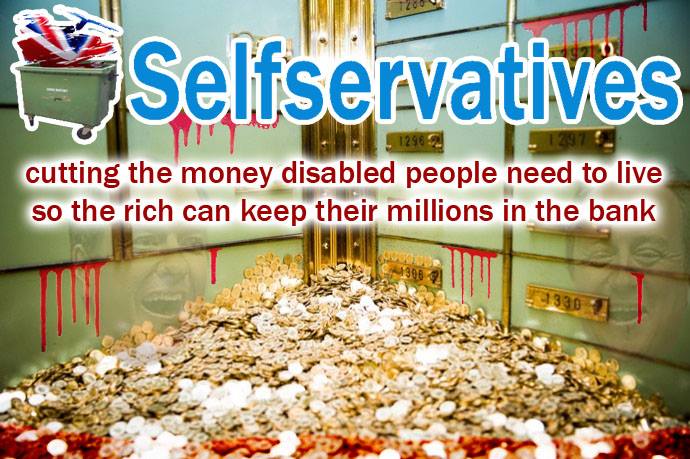







 Same Difference