Skip to content
Same Difference

News, Views and Information For People With Disabilities

  • Home
  • Blog
  • Poetry Ebook
  • Writing Portfolio
  • Donate

“Care Homes Not Designed For Teens”

June 26, 2020
by samedifference1

Sally’s 19-year-old daughter, Katie, has a life-limiting disease and had to move into a care home at the end of her first year of university, to shield from coronavirus.

Sally, who lives in Harrogate, told BBC Radio 5 Live Breakfast that she wants to see the rules around care homes changed so that she can hug her daughter again.

Guidance on shielding is being kept under review. People shielding in England and Northern Ireland can spend time outdoors, as long as they continue to follow social distancing rules.

Those shielding in Scotland and Wales can exercise outdoors, either on their own, with their family or with people from another household.

Share this:

  • Share on X (Opens in new window) X
  • Email a link to a friend (Opens in new window) Email
  • Print (Opens in new window) Print
  • Share on Facebook (Opens in new window) Facebook
Like Loading...
Leave a comment
from → coronavirus

PIP Extended? Check Other Awards

June 25, 2020
by samedifference1

With many thanks to Benefits And Work.

Claimants who have their PIP award extended risk losing other payments because of the last-minute nature of their process.

On 23 April the DWP announced that if your PIP is due to expire in the next 3 months, it will automatically be extended for 6 months.

However, a member has alerted us to a post on Rightsnet, the site for welfare rights workers, which warns that PIP review extension letters are only sent out the day before a PIP award is due to end.

As a result, payments of carers allowance and severe disability premiums may be at risk because other parts of the DWP may not have been told about the extension.

Readers who have their award extended may wish to check with the DWP that those payments have not been cancelled.

Share this:

  • Share on X (Opens in new window) X
  • Email a link to a friend (Opens in new window) Email
  • Print (Opens in new window) Print
  • Share on Facebook (Opens in new window) Facebook
Like Loading...
Leave a comment
from → disability political policies, politics

Man Paralysed After Being Shot By Police With Taser Weapon Vows To Get Justice

June 25, 2020
by samedifference1

A young black man from north London who has been left paralysed from the chest down after being shot by police with a Taser weapon as he jumped over a wall, has spoken out for the first time about his injuries and determination to hold officers to account.

Jordan Walker-Brown, who turned 24 on Monday, said he had his back to police and was running away when he was shot with a stun gun on 4 May. He said he was running because he was carrying a small amount of cannabis.

Walker-Brown, who before the incident enjoyed playing football and was in good health and active, is now paraplegic. He believes he would not have been stopped had he not been black.

He said: “I have been told that I will not be able to walk again because of what the police did to me. But I am determined to prove them wrong. Just as I am determined to prove the police are not above the law.”

He said he was stopped by Metropolitan police officers from the Territorial Support Group (TSG) on two consecutive days last month, 3 and 4 May. Both times he was carrying a small amount of cannabis for personal use. He knew officers had the right to stop him if they believed him to be in possession of drugs.

“However, I also know that I would not have been the subject of any police attention – on either day – if I had not been a young black man,” he said.

“I ran from police because I had a small amount of cannabis in my possession for personal use … and I had fresh in my mind the memory of a similar encounter with TSG officers only the previous day when I was arrested, mistreated and charged for possession of a similar amount of cannabis.

“I know from my own personal experience as a young black man that I always have to be very careful and very fearful of being alone with police officers in a police van.”

On 3 May, Walker-Brown had been put into a TSG van, where he says he was mistreated, then held in a police cell for several hours and charged with possession of cannabis, before being released.

He said the following day he was in Burgoyne Road, Harringay, close to Tottenham in north London, when TSG police again spotted and followed him. He said two officers got out of their van and he started to run away.

He was jumping over a wall, which was approximately 1.2 metres (4ft) high on one side but had a 1.8 metre (6ft) drop on the other, when it is thought two officers drew their Tasers and one discharged his. Walker-Brown fell over the wall. The cause of his injuries is being investigated. He was arrested for possession of cannabis with intent to supply and taken to hospital.

The incident is under investigation by the Independent Office for Police Conduct, and the officer who discharged his Taser is subject to a criminal investigation for the alleged offence of causing grievous bodily harm.

None of the nine officers present at the incident have been suspended; the officer who discharged his Taser has been placed on restricted duties.

The IOPC investigation is understood to be examining the officers’ use of force, their handling of Jordan-Brown after the stun gun was discharged, including consideration of a possible spinal injury, and whether his ethnicity influenced the decision to stop, pursue and fire the stun gun.

Walker-Brown’s sister Sharn Brown, 28, told the Guardian: “The police appear to be trigger-happy with Tasers when it comes to black people. My brother is in hospital paralysed. Jordan has a family and I can promise the police his family will do whatever is necessary to ensure that he receives justice.”

Walker Brown’s lawyer, Raju Bhatt of Bhatt Murphy Solicitors, said: “Jordan says he was slipping in and out of consciousness as he lay on the ground after his fall. He recalls that he felt a knee in his back, and his arms were then handcuffed behind his back before he was dragged to his feet, even though he was saying repeatedly that he couldn’t move his legs.”

According to Home Office figures police officers are almost eight times more likely to draw their Tasers against black people in England and Wales. Their general use rose by 39% last year.

Nearly 7,000 Met officers carry Taser stun guns. This is expected to rise to 10,000 by 2022, representing just under a third of the force.

Share this:

  • Share on X (Opens in new window) X
  • Email a link to a friend (Opens in new window) Email
  • Print (Opens in new window) Print
  • Share on Facebook (Opens in new window) Facebook
Like Loading...
1 Comment
from → mainstream madness

The New Way To Travel If You’re Disabled And Use Access

June 24, 2020
by samedifference1

Due to social distancing, the way we travel has changed and for many disabled people the access support they once relied on has changed too.

Here’s the lowdown on what to expect if you’re used to being guided between platforms, using wheelchair spaces on trains or if you’re a guide dog owner wondering whether that old dog will forget his tricks.

Guide dogs

If there’s one type of access worker that doesn’t always follow the rules, it’s guide dogs. So has pawsing their usual routine for three months meant they have lost vital skills?

Pete Osborne from the charity Guide Dogs says while his guide dog has enjoyed playing at home, he’s confident that older dogs won’t forget their training. Recently-qualified dogs, however, may forget some skills.

Owners should “keep things as normal as possible when exercising” to keep skill levels up, he says.

Some transport hubs are adapting their layouts to include one-way systems. So Pete says guide dog owners should ask about any such changes before trying the journey out, because “if your dog’s not familiar with it they can lose confidence”.

Human support is also a worry for some visually impaired people. A recent survey by Guide Dogs found that only 22% of the public would feel comfortable guiding someone – which can involve taking someone’s elbow.

Pete says: “It’s always helpful from a two-metre distance to say ‘Hello, is there anything you need?’ Even though it might be difficult to guide someone, you could watch the road and say when it is safe to cross.”

Even offering a description of the space could help, especially if things have changed.

“Dogs aren’t huge respecters of queues and I’ve heard about dogs treating each person as an obstacle in shops and weaving between them until they’ve reached the front of a queue.”

Between March and June, Guide Dogs paused its breeding programme. Normally about 200 puppies would be born during that time, but because of growing and training time, it will be another 18 months before the charity sees any impact.

Trains

When it comes to rail staff guiding someone with a visual impairment, a layer of material may now be used as a barrier between the guide and the customer, according to the Rail Delivery Group (RDG) whose members include all Britain’s railway companies.

Some staff may also choose to guide from behind or verbally to avoid face-to-face contact,

For those who rely on lip-reading, some staff will wear visors while those in masks will step back two metres to remove their mask and continue the conversation.

Although it’s not essential, passengers are encouraged to plans trips in advance to ensure access requirements can be met.

This may be most useful if you want a wheelchair space on a train, because, according to RDG, a few have been closed due to social distancing in a “very few incidences”.

Ramps, handrails and touch-points will be cleaned regularly. Cash can still be used if needed and crucially, toilets are open.

Transport for London

If you’re a Londoner, or your journey takes you that way, you’ll see all front-line staff wearing face coverings and taxi drivers too. Hand sanitiser is available at tube, rail and ferry stations and on the Emirates Air Line.

You can “turn up and go” without booking access, but if you’re visually impaired you might experience some disruption.

If you’re used to be being guided between platforms, staff will now do so verbally. If you need physical guiding or your route involves an escalator or lift, a taxi will be booked to take you to the next accessible point on your journey.

If you require any form of access, tell staff and and you’ll be able to queue jump, legitimately.

Townscapes

Town and cities may soon look different as councils try to become more cycle and pedestrian friendly.

In London, some streets will be switched to walking and cycling only while others may include buses although those with mobility issues will still have access to these areas, according to the Mayor’s office.

Manchester City Council has made the Deansgate shopping area a pedestrian and cycle haven.

Councillor Angeliki Stogia says disabled people were at the forefront of considerations when the scheme was being planned.

“One of our stipulations was that all disabled bays in the area must remain accessible, via the previous routes used,” she says.

Groups representing disabled people will be asked to feed back on the scheme in the hope it may become permanent.

Cycling

For those who like the wind in their hair, disabled cycling has seen an upsurge in interest, but there are a few things to consider before you don your lycra.

Wheels for Wellbeing which offers people the chance to try accessible bikes – trikes, four-wheels and handcycles – says inclusive infrastructure is not quite there yet

Accessible bikes are often longer and wider than standard two-wheelers, so using cycle lanes or parking can be difficult.

The organisation’s director Isabelle Clement, who uses a handcycle attached to her wheelchair, wants something akin to the Blue Badge Scheme so disabled cyclists have specific parking areas, and are allowed to cycle through pedestrian areas if they’re unable to dismount.

“I can’t leave my £4k hand cycle out on the road because there’s no parking solution and someone will nick it,” she says. “Bikes can be damn right bloody expensive – more expensive than a second-hand car.”

And that’s another problem. Wheels for Wellbeing wants accessible bikes to be available at cycle hire points, and included in personal health budgets – a benefit which enables people to manage healthcare such as booking physiotherapists.

“If you cycled every day you wouldn’t need the physio and you’d keep your heart and lungs in good shape,” Isabelle says.

About 75% of disabled cyclists find it easier than walking because it’s non-weight bearing – but even so Isabelle says a lot of people are surprised disabled people cycle at all.

“That should not be a mind-blowing revelation.”

Face masks

Lastly, the government has made a few exceptions to the mandatory wearing of face masks on public transport.

If you have a disability which means you can’t put on, wear or remove a face covering or wearing one would cause “severe distress” or you are travelling with, or providing assistance to, someone who relies on lip-reading, you do not need to wear one.

Share this:

  • Share on X (Opens in new window) X
  • Email a link to a friend (Opens in new window) Email
  • Print (Opens in new window) Print
  • Share on Facebook (Opens in new window) Facebook
Like Loading...
1 Comment
from → coronavirus

Obituary: Terry Dicks, Former Disabled MP

June 23, 2020
by samedifference1

Every generation of parliamentarians produces its range of eccentric individuals and the former Conservative MP Terry Dicks, who has died aged 83, was certainly in that bracket during his tenure at the House of Commons in the 1980s and 90s. Dicks made a speciality of daring to speak his mind, and the shudders of distaste that habitually resulted, particularly among the more pompous of his party colleagues, served only to reinforce his satisfaction that he had achieved precisely the reaction he had hoped to secure.

Dicks regarded it as his personal mission to speak with the voice of the man on the street in his west London constituency of Hayes and Harlington, and to articulate what he believed were that man’s prejudices. Among his multitude of targets was Home Office policy on immigration, football hooligans (whom he felt should be birched), anyone he deemed a terrorist – in which category he included Nelson Mandela – and anything with a whiff of establishment elitism such as opera or ballet.

He celebrated his family nickname “Phil”, derived as an abbreviation of the word philistine, while endorsing his personal enthusiasm for works of popular culture such as plays written by Alan Ayckbourn or songs by Neil Diamond.

During his years in parliament from 1983 to 1997 Dicks voted repeatedly in favour of restoring capital punishment, advocated corporal punishment in schools and consistently supported moves to limit the availability of abortion.

He was born with cerebral palsy, which left him with a limp throughout his life and relished being able to use abusive terms about his own disability. The former clerk of the House of Commons, Robert Rogers (now Lord Lisvane), elegantly suggested in his published parliamentary miscellany, Who Goes Home, that Dicks shared with the singer Tom Lehrer the circumstance of “having a muse unfettered by considerations of taste”.

Dicks was raised in Bristol by his mother, Winifred, who was a cleaner. His father, Frank Dicks, did not play a part in his childhood. Terry failed the 11-plus exam and left school at 15 to become a clerk in the Imperial Tobacco Company. At the age of 22 he joined the Ministry of Labour, where he worked until 1966.

He became interested in politics during this time, and joined the Oxford University Conservative Association in 1964 while studying for a diploma in economics. He secured a BSc in economics at the London School of Economics, and in 1970 was an officer in the LSE Conservative Association during the fomenting student unrest of the period. In 1971 he became an administrative officer with the Greater London council, where he remained until it was abolished in 1985.

Dicks was already an MP by then, having first stood unsuccessfully in Bristol South in 1979 before being elected to Hayes and Harlington in 1983. He was also elected as a councillor in Hillingdon, west London, in 1974, where he remained until 1986. He won early notoriety as chairman of housing there in 1978 by refusing to provide council accommodation for a family of homeless Kenyan Asians, instead calling them a minicab and instructing the driver to “dump them on the Foreign Office steps”.

As a councillor and then MP for the area near Heathrow airport, he was much involved with immigration and aviation issues throughout his career. He was a member of the select committee on transport from 1986 to 1992 and the Council of Europe from 1993 to 1997.

Dicks successfully outraged a wide spectrum of public opinion by attacking individuals in unpleasant terms. He called the former chancellor Norman Lamont “a shit”, described the Labour MP Bernie Grant wearing traditional dress as looking “like a Nigerian washerwoman” and the Archbishop of Canterbury’s envoy Terry Waite as an “interfering busybody”.

He also repeatedly attacked what he termed the “race relations industry”, suggesting, in 1983, that those who did not like the British way of life “could always leave and go elsewhere”. In 1989 he endorsed the death sentence given to a British man with learning disabilities who was convicted of drug smuggling in Malaysia, and the following year he spoke approvingly of the execution of the Observer journalist Farzad Bazoft in Iraq.

During the subsequent general election campaign in 1992, his Labour challenger, John McDonnell, accused Dicks, who had visited Iraq as a guest of that government, of being an apologist for Saddam Hussein. Dicks sued McDonnell for libel and won £15,000 in damages and £55,000 in costs. He also held on to the seat, by 53 votes, following three recounts.

Dicks did not seek selection as the Conservative candidate at Hayes and Harlington in 1997 and failed to win selection to stand at St Ives in Cornwall. He stood down as an MP and was elected to Surrey county council between 1999 and 2009. From 2011 to 2018 he was a councillor for Runnymede district council in Surrey.

After his first marriage ended in divorce, Dicks married Janet Cross. He had two daughters and a son with his first wife and a daughter with his second.

Share this:

  • Share on X (Opens in new window) X
  • Email a link to a friend (Opens in new window) Email
  • Print (Opens in new window) Print
  • Share on Facebook (Opens in new window) Facebook
Like Loading...
Leave a comment
from → tributes

Disability Campaigners Warn Of UK’s Progress Unravelling In The Arts

June 23, 2020
by samedifference1

Progress made in the representation and inclusion of disabled artists and audiences is in danger of unravelling because of the pandemic, campaigners have warned.

A new alliance of disabled people and groups working in the UK’s cultural industries, #WeShallNotBeRemoved, has been established to make sure disabled voices are heard as the nation’s devastated arts sector attempts to rebuild after the lockdown.

Jenny Sealey, the artistic director of Graeae theatre in east London, said the pandemic had exposed real inequalities in theatre “by the million and one Zooms set up within our industry and the noticeable lack of deaf and disabled voices and black, Asian and ethnically diverse people in the mix”.

She added: “As our community will be the last to come out of lockdown, the fear is by then we will be forgotten as artists and audience.”

Campaigners say the lockdown has magnified inequalities for disabled people in the creative industries, with many disabled artists facing long-term shielding, loss of income and invisibility in wider society.

The lockdown came when many were beginning to feel real change had finally arrived.

Andrew Miller, the government’s first disability champion for arts and culture, pointed to the casting of Amy Trigg, who uses a wheelchair, in RSC productions and the then imminent opening at the National Theatre of Francesca Martinez’s play All of Us, which explores being disabled during a time of austerity.

“There was a real sense of ‘hey, we’re going somewhere … we’re finally being included’. There was a real sense of progress. It wasn’t perfect. There was a a lot still to do. But there was a sense disabled people were becoming part of the fabric of arts and culture.”

Sealey said the progress had been “frustrating and unnecessarily slow … It has taken the best part of 40 years for deaf and disabled people to be seen as a force to be reckoned with.”

Then lockdown happened and prompted genuine concern that progress might unravel.

Sealey said the drive to reopen theatres was “extremely ableist and non-diverse” in its approach.

She added: “I am seriously concerned that we will be deemed too expensive, with companies no longer being able to cover the cost of access and that our work is too risqué and the theatre world wants post-pandemic nice, safe theatre.”

Campaigners on Wednesday staged a social media action day, flooding Twitter, Facebook and Instagram with disabled voices. It included artists sharing their work online.

The musician and campaigner John Kelly said: “We want to demonstrate solidarity and support for disabled people who are facing a very challenging future because of the pandemic by sharing the rich tapestry of our artworks to raise our voice, of our talent and our resilience.”

Miller hopes arts leaders will seize on the opportunities offered by having to rebuild an entire industry. “It is a real opportunity to reset the longstanding discriminatory access issues in arts and culture,” he said.

Share this:

  • Share on X (Opens in new window) X
  • Email a link to a friend (Opens in new window) Email
  • Print (Opens in new window) Print
  • Share on Facebook (Opens in new window) Facebook
Like Loading...
Leave a comment
from → Fun Stuff

I Am Not A Label- A Book By Cerrie Burnell

June 23, 2020
by samedifference1

Cerrie  Burnell has always been an inspiration to us. We have supported her from her early days- and ours. We publish this press release about her book with pleasure and wish her well.


Prepare to challenge your preconceptions of disability using this unique new resource

Written by beloved children’s presenter, author and disability campaigner, Cerrie Burnell

Gorgeous anthology of 34 disabled artists, thinkers, athletes and activists past and present

Meet 34 trailblazing disabled role models from around the world and throughout history, whose incredible lives and careers demonstrate that living with a disability or a chronic illness is not a definition, but just one part of what makes these amazing athletes, activists, thinkers and artists so unique. From Stephen Hawking to Lady Gaga — with sections covering ‘mental health’ and ‘hidden disabilities’ — this pioneering new biography anthology champions disabled role models for readers living both with and without disabilities.

Share this:

  • Share on X (Opens in new window) X
  • Email a link to a friend (Opens in new window) Email
  • Print (Opens in new window) Print
  • Share on Facebook (Opens in new window) Facebook
Like Loading...
Leave a comment
from → Famously DisAbled, publicity, updates

Shielding To Stop In England On 1 August

June 23, 2020
by samedifference1

The 2.2 million people who have been self-isolating in England during the pandemic will no longer need to shield from 1 August.

From 6 July, they will be able to meet up outdoors, in a group, with up to five others and form ‘support bubbles’ with other households.

The measures can be eased because infection rates are falling, the government says.

Support packages will remain until the end of July to help people transition.

What changes from 6 July?

Those who are shielding and live alone in England – including single parents who are shielding – will be able to create a support bubble with one other household of any size.

This follows the ‘social bubble’ rules which were introduced earlier this month for anyone living alone and single-parent households.

People shielding will also be able to meet in groups of up to six outdoors while maintaining social distancing rules.

What is changing from 1 August?

Extremely vulnerable people who are most at risk from becoming ill from coronavirus will no longer need to shield in England.

That means they can return to work, if they can’t work from home, as long as their workplace is COVID secure.

However, they should still follow social distancing guidelines when outside their homes and wash their hands regularly to reduce the risk of being infected.

The changes mean those shielding will no longer be eligible for statutory sick pay – unless they develop coronavirus symptoms, or someone they know develops symptoms, and they are told to self-isolate and cannot work from home.

Free essential food boxes will stop being delivered, but support from NHS volunteers and local councils is still possible.

They will still qualify for priority slots for online shopping and will be offered help with medicine deliveries and getting to medical appointments.

Why is the advice changing?

The UK government says the advice can be relaxed because the chances of encountering the virus in the community continue to fall – one in 1,700 people are estimated to have the virus now, down from 1 in 500 four weeks ago.

The government says it has worked with clinicians, GPs, charities, the voluntary sector and patient groups on the changes.

But some charities are criticising the relaxing of the advice, saying many of the people they support do not feel it is safe to stop shielding.

“We know how difficult this period has been and the impact shielding has had on many people’s mental health,” says Dr Jenny Harries, deputy chief medical officer.

“We believe it is the right time to relax some of the advice so people can start to regain a degree of normality once more in their daily lives.”

But she added the advice on shielding could change again “if there are any changes in the rates of infection that could impact on this group”.

What was the advice in England?

As the country went into lockdown, around two million people were sent letters by their GPs telling them not to leave home and to avoid contact with others.

This was to protect them from the virus because they were considered to be most at risk from Covid-19.

Among the list of people who should be shielding are solid organ transplant recipients, cancer patients undergoing chemotherapy, pregnant women with heart disease and people with severe respiratory conditions such as cystic fibrosis and severe asthma.

Over half of those shielding are under the age of 70; more than 90,000 are children.

Since the start of June, people shielding in England were told they could go out once a day – to meet one person from another household while adhering to social distancing.

From the beginning of August, that shielding advice is to be completely relaxed.

The NHS will keep the shielded list, in case more advice needs to given to this group in future.

Have things changed in Scotland, Northern Ireland and Wales?

Northern Ireland has already said people will no longer need to shield from 31 July.

But officials say this pausing of the advice will only happen if the rate of community transmission remains low.

People who are shielding and living alone in Northern Ireland will also be able to form a support bubble from 6 July with one other household.

Until then, people shielding across the UK are advised to stay at home as much as possible and to practise social distancing when they go outside.

In Scotland, the advice applies to around 180,000 people and is in place until at least 31 July.

Meanwhile in Wales, almost 130,000 people are shielding and the Chief Medical Officer for Wales says the current guidance runs until at least 16 August.

Share this:

  • Share on X (Opens in new window) X
  • Email a link to a friend (Opens in new window) Email
  • Print (Opens in new window) Print
  • Share on Facebook (Opens in new window) Facebook
Like Loading...
Leave a comment
from → coronavirus

Some Disabled People Don’t Have Bikes Or Cars As Nondisabled Told To Avoid Public Transport

June 22, 2020
by samedifference1

@samedifference1 https://t.co/iKwG2spYBB

— mandymoo F*CKTHETORIES 💙 (@mandym00oo) June 19, 2020

Share this:

  • Share on X (Opens in new window) X
  • Email a link to a friend (Opens in new window) Email
  • Print (Opens in new window) Print
  • Share on Facebook (Opens in new window) Facebook
Like Loading...
Leave a comment
from → disability political policies, politics

US Open Backtracks On Wheelchair Omission

June 22, 2020
by samedifference1

The United States Tennis Association is now offering to stage wheelchair events at this year’s US Open after a change of mind.

It admitted it should have worked with players when developing a plan for this year’s tournament.

Australia’s quad world number one Dylan Alcott had described an initial decision to scrap the wheelchair events as “disgusting discrimination”.

Details of the offer to players was revealed by France’s Stephane Houdet.

The 22-time Grand Slam champion said the players were presented with three options in a meeting on Friday, and are set to put them to a vote on Monday.

If they decide they do want to play in New York during the Championships, they will receive 95% of last year’s prize fund.

The alternatives are a delayed tournament in Orlando in October, or $150,000 in compensation to be shared between the players to make amends for their events not going ahead.

A plan to omit wheelchair competition from the US Open this year, as part of a reduced event, was initially announced by the USTA earlier in the week.

“The Association should have communicated directly, and worked in a collaborative manner with the wheelchair athletes when developing the plan for the 2020 US Open, as it had done with both the ATP and WTA,” the USTA said in a statement on Friday.

“The USTA also committed to working with the players and the ITF [International Tennis Federation] to explore a number of potential scenarios for the wheelchair competition to determine the best approach moving forward for the athletes and the competition.

“The USTA expects to gather player feedback on their perspective and work with the ITF to finalize an approach to the 2020 US Open Wheelchair Competition.”

Andy Lapthorne, who won the singles and doubles in the quad division at last year’s US Open, said the initial decision felt “like we’re going back years”.

But in response to the USTA’s statement, the 29 year old said “Thank you, let’s move forward together.”

The US Open will be played behind closed doors, with no singles qualifying and reduced doubles draws, from August 31st.

It will be the first Grand Slam to be played since the professional tours were halted due to the coronavirus pandemic on March 11th.

Share this:

  • Share on X (Opens in new window) X
  • Email a link to a friend (Opens in new window) Email
  • Print (Opens in new window) Print
  • Share on Facebook (Opens in new window) Facebook
Like Loading...
Leave a comment
from → DisAbility Sport, mainstream madness, progress, updates

Alex Zanardi: Ex-Formula 1 Driver Remains In Serious Condition After Handbike Crash

June 22, 2020
by samedifference1

Former Formula 1 driver Alex Zanardi remains in a serious but stable condition after an accident during a handbike relay in his native Italy.

The 53-year-old Paralympian suffered head injuries in a crash with a lorry in Pienza on Friday.

Zanardi had surgery at a hospital in Siena, where he remains on a ventilator in intensive care.

The hospital said his “neurological picture remains serious” and his organ functions are “adequate”.

Zanardi had both legs amputated after crashing in the American Memorial 500 Cart race at Lausitz, Germany, in 2001.

He has since become a four-time Paralympic handcycling gold medallist.

Speaking on Saturday, Zanardi’s surgeon said: “The operation went as it should have; it was the original situation that was not good.

“What the prognosis will be tomorrow, in a week, in 15 days, I don’t know.

“Serious means he’s in a situation where he could die, in these cases improvements can be very small over time and worsening can be sudden.”

Zanardi was taking part in an event called the Obiettivo Tricolore

, a journey where the participants ride across Italy on handbikes, cycles or wheelchairs.

Share this:

  • Share on X (Opens in new window) X
  • Email a link to a friend (Opens in new window) Email
  • Print (Opens in new window) Print
  • Share on Facebook (Opens in new window) Facebook
Like Loading...
Leave a comment
from → Famously DisAbled

Last of Us Part II: Is This The Most Accessible Game Ever?

June 22, 2020
by samedifference1

The first time Steve Saylor fired up the hotly-anticipated new game The Last of Us Part II, he burst into tears.

“Y’all don’t even know how much…” he says between sobs in his video of the moment, which has now had nearly half a million views.

“I’m sorry. I don’t even know what to say.”

Steve is legally blind, and was looking at the overwhelming accessibility options menu.

Courtney Craven, editor of accessibility-focused gaming site Can I Play That, is hard of hearing and has some motor-control issues, and had a similar reaction.

“The first thing I did upon launching [the game] for the first time was FaceTime a friend and cry,” she says.

The game has already been dubbed “the most accessible game ever”.

It has more than 60 different accessibility settings, allowing an unprecedented level of customisation and fine-tuning.

Every button can be changed, and one-handed control schemes are available by default.

Players like Courtney can turn on direction arrows on subtitles to indicate where the sound is coming from; players like Steve can outline characters and enemies in vivid colours.

‘The first time in my life’

Steve, who goes by the name “Blind Gamer” online, has nystagmus – an involuntary eye movement that blurs his vision. Ever since he was a child playing the original Nintendo Entertainment System, he has had to sit extremely close to the screen, and his reflexes haven’t always fitted into what modern games expect.

“For the first time in my entire life, I was able to sit back on the couch and play the game without any barriers getting in the way.” he says.

“I was able to sit comfortably and play a game just like if my friends were in the room playing with me. And that, to me, was extremely opening. It was emotional.”

In the interest of honesty, Steve is keen to let people know that he did consult with the game’s developer, Naughty Dog, when they were exploring accessibility issues – but he was never paid for it.

Courtney, meanwhile, suffers from being surprised by enemies that she is expected to hear, among other things.

“So many games have directional audio with characters saying things like, ‘over here!'” she explains.

“Hearing players can follow the direction of the voice but I’m often standing there like: ‘Uhhh, where is here?'”

A years-long battle

Game accessibility has come a long way in recent years, but gamers largely depend on individual developers to decide how much – or how few – accessibility options to include.

In recent years, a willingness by major developers such as Ubisoft to incorporate accessibility into the early stages of big-budget game design has helped push the subject forward.

In 2015, the Playstation 4 became the first major system to allow re-mapping of controller buttons at a system level, rather than relying on developers to include the option in their games. For many people with motor or dexterity impairments, that opened up the possibility of playing games that may previously have been unplayable.

A watershed moment came in 2018, with the release of Microsoft’s Xbox Adaptive Controller – a customisable unit which allowed disabled gamers to use a wide range of assistive devices such as switches and bite pedals. But it only solves problems for those who have trouble using a standard controller.

And big titles still come in for criticism from the community. Activision’s Spyro Reignited Trilogy was criticised when it was released without subtitles in its cut-scenes – while CD Projekt Red had to release a patch for blockbuster game The Witcher 3 to enable players to adjust the font size.

It is against that kind of backdrop that many are calling this latest success “the most accessible game ever”.

“We’re going to look back on this and [see] everything for accessibility before The Last of Us Part II, and after,” Steve says.

Courtney, who founded Can I Play That in November 2018 to focus on gaming accessibility, says the effort is unprecedented.

“A lot of games do some of these things. None of them have done all of them until now,” she says.

More players, more dollars

She hopes this game will be a blueprint for others to follow – and thinks there are rewards for developers who do.

“I think the monetary payoff will really be obvious,” she says. “So many people have told me that Can I Play That’s coverage of it was the deciding factor in them buying the game”.

But more importantly, she urged people to “make accessible games because you should. It’s the right thing to do.”

Steve puts it simply: “It just makes their game that much better.”

He points to friends without a diagnosed disability who told him their experience was made better by using some of the same options.

And he believes that this is the beginning of a new wave of advancement to come in the next decade.

“Obviously, the more accessible it can be the more that people can play, and that just means more dollars,” he says, pointing to a vast untapped audience.

“And as a developer, they want everyone to be able to play their game, so why not make it so that it’s accessible to those players?”

Share this:

  • Share on X (Opens in new window) X
  • Email a link to a friend (Opens in new window) Email
  • Print (Opens in new window) Print
  • Share on Facebook (Opens in new window) Facebook
Like Loading...
Leave a comment
from → Fun Stuff, progress, technology

Thirteen Links For Thirteen Years

June 22, 2020
by samedifference1

Yesterday, Same Difference turned 13. Usually, we mark our birthday with poetry or posts of thanks to our readers.

This birthday is special, so we thought we’d do something different to mark it. We went back through the years and chose our 13 most popular posts of all time to link today.

  1. DWP To Terminally Ill Claimant: If You Don’t Die Within Six Months, We’ll Prosecute You
  2. Finding A Job When Colour Blind
  3. New PIP Descriptors For ‘Planning And Following Journeys’ From 16 March Will Exclude MH Claimants
  4. Father Takes Son With Mental Age 5 To No 10 To Tell PM ‘If He Can Work, You Give Him A Job’
  5. Jono Lancaster Follow Up: So What If My Baby Is Born Like Me?
  6. Why People With Learning DisAbilities Shouldn’t Have Children
  7. YouGov Are Asking Whether Benefit Claimants Should Be Allowed To Vote
  8. DVLA Website Lets Visitors Check On Neighbours Benefits
  9. Flowers For The Fallen Of ATOS
  10. On Universal Credit? No Allowances For Holidays
  11. This Is What Protestors Found Outside ATOS Weston Super Mare Today
  12. A Review Of Alex Brooker: My Perfect Body
  13. Jobcentre Manager: “There Are Now Targets For Bullying Claimants Off ESA”

Readers, we sincerely thank each and every one of you for finding these posts, and so many other posts and pages at this site, so useful. We sincerely thank you for finding our site, visiting our site and continuing to support our site.

We wish you all the very best for the next 13 years and beyond.

Share this:

  • Share on X (Opens in new window) X
  • Email a link to a friend (Opens in new window) Email
  • Print (Opens in new window) Print
  • Share on Facebook (Opens in new window) Facebook
Like Loading...
2 Comments
from → general

Coronavirus: Socially Distanced Shopping Causes Anxiety For Blind People

June 19, 2020
by samedifference1

Blind and partially sighted people have reported struggling with new signs, one-way systems and barriers intended to help maintain social distancing.

Jen Bottom, from Reading in Berkshire, and her guide dog Stamp took the BBC out on her first post-lockdown shopping trip to explain the issues.

The RNIB has been working with retailers and council planners and is asking people to be mindful of blind and partially sighted shoppers.

Video journalist: Allen Sinclair

This story was filmed using safe social distancing techniques.

Share this:

  • Share on X (Opens in new window) X
  • Email a link to a friend (Opens in new window) Email
  • Print (Opens in new window) Print
  • Share on Facebook (Opens in new window) Facebook
Like Loading...
Leave a comment
from → coronavirus

England’s Reopened Charity Shops Embrace The New Normal

June 19, 2020
by samedifference1

There’s a new purple wheelie bin on Walthamstow High Street in north-east London, outside No 210, and it’s filling up fast. Michael Armstrong and Louise Craven have just put a bag of books in. “We’ve got several bags from lockdown tidying and we’re going to bring it in one bag at a time,” says Michael. He doesn’t sound like he’s from north-east London. Because he isn’t – he’s originally from California. He came here 40 years ago, “for the weather”, says Craven, his partner, drolly.

Her irony maybe backfires a little today. It’s a glorious day in Walthamstow – the high street is pretty much Sunset Boulevard minus the palms.

Among the books is what Armstrong describes as “some rather odd poetry journals”, a study of American architecture and The Glass Room by Simon Mawer, which they have both read and recommend.

They’re not getting thrown away but recycled, hopefully reread. Because No 210, set between a betting shop and a fish bar, is a charity shop belonging to Scope, the national disability charity. This week, like other non-essential retailers, charity shops in England were able to open for the first time in almost three months, to customers and for donations.

Another bag goes into the purple bin. This one contains a brown jacket from Ben Odamtten, who says it’s too small for him. There’s also a card holder and two pairs of shades in his bag. And I have donated a couple of bags, mostly of outgrown children’s clothes. I wanted to bring the popcorn machine, too, but my family wouldn’t let me. No one needs a popcorn machine.

Scope’s area manager, Lara Woolston, explains the new process. Donations go from the purple bin into heavy-duty bin bags, which are labelled with the date, tied up with giant rubber bands, taken to a room above the store and left for 72 hours to minimise any risk of infection. Safety of staff, volunteers and customers is Scope’s priority, I’m told, often.

The acting shop manager, Celia Mullins, is up here, busy clearing out bays that can be filled in date order. Quarantine for donated clothes, books, CDs, sunglasses etc is going to be stricter and better organised than it is for arrivals at UK airports. There’s already a lot of stuff up here, but if it fills up there is an overflow storage unit in Barking.

They have done a lot on the shop floor, too, putting in all the necessary safety measures. It has all been unmuddled and decluttered; the rummage boxes – with things, such as toys, that kids would play with – have been removed from the floor. “We’re trying to limit the number of times people need to touch things,” says Woolston.

Fitting room? Not any more – it’s taped off like a crime scene. Buy it; if it doesn’t fit, bring it back. And there’s a one-way system, with arrows on the floor, plus “sneeze screens” at the tills. Customers are offered hand sanitiser along with a mask and gloves on entering. “It’s been a long time since we’ve been able to welcome our wonderful community through our doors,” says Woolston. For the moment though, they are only allowing one person – or one family – in at a time.

Scope’s Walthamstow shop has lost roughly £33,000 during lockdown. In normal times all the charity’s 207 shops generate between £1.7m and £1.9m a month. In April, with none open, the charity’s income was 85% down on the same period last year. It has managed to make some money through online sales, and will do more of that in the future.

It’s the same story across the whole sector: the pandemic makes no allowances for good causes. The chancellor Rishi Sunak’s £750m bailout fund for charities didn’t come close to replacing lost income, not just because of shops being closed but also because of the cancellation of other means of fundraising – the London Marathon and the Great North Run to name two massive ones. Street-funding, too, as well as the possibility that people are more likely to give to NHS charities at the moment. A study published last week found that one in 10 charities faces bankruptcy by the end of the year as they struggle with a £10bn shortfall caused by a perfect storm of massive income reduction and rocketing demand for their services. “It’s been a devastating loss of income,” Scope’s head of retail, Debbie Boylen, tells me over the phone. “Because it’s been at a time when disabled people need us the most.”

I could have spent the morning at any charity shop and the picture would have been similar. I’ve come to Scope simply because it’s where we usually bring stuff to. That said, my local branch isn’t among the first wave of 16 shops around the country opening as lockdown eases, so I’ve travelled across London. Hence just the two bags: there’s plenty more to come at home, under the stairs, from our own Covid clearout. Boylen thinks it’s not just us. “Everybody I speak to is saying the same, that they’ve been clearing out cupboards and wardrobes over the past few months.”

Each bag is worth, on average, £20 to Scope; 81 bags would, for example, allow it to run its Parents Connect support programme, for parents and carers of young disabled people in Leeds, for a week.

The bin is soon full, the contents bagged up and taken up to Mullins to be placed in quarantine. This system for dropping stuff doesn’t allow gift aid to be claimed for donations, says Woolston, so they miss out on that, but it’s unavoidable with the only-one-in-the-shop policy. That may be relaxed, but for now gift aid donors can’t be expected to queue.

As well as the purple wheelie bin, that’s the other new thing outside No 210: a queue. Beautifully spaced, orderly, patient, not as long as the ones outside Asda and Lidl down the street but undeniably a queue. It seems the appetite not just to donate but to shop in charity shops is alive and well. “I’ve missed it,” says Shahnaz Khan, one of the first people in. “You can get so many nice things from here, and the people are very nice.” She comes out with a pink handbag.

Alan Donoghue, who used to work here and is queuing on a mobility scooter, says it’s a good way to pass the morning. “It does you good mentally, and also sometimes there might be stuff that you want.” He’s not after anything specific, though he’s always on the look out for tea towels, fridge magnets and commemorative plates.

Is anyone here for something specific, Woolston asks the queue. “Tennis racket,” says a man named Mike Anderson. He tells me he’s started playing a bit in order to start seeing people. He has been borrowing his friend’s girlfriend’s racket but now is the time to take responsibility. Two minutes later, Woolston is back out of the shop with a choice of two: Anderson opts for the more expensive, a Slazenger for a fiver. The deal is done on the street. “Probably illegally,” laughs Woolston.

Anderson is chuffed enough with his purchase. “Charity shop, so, you know, standards are slightly lower,” he says. “But it looks lovely, it’s got its own cover; if anybody saw me walking towards a tennis court they would think I was going to play tennis, which is half the battle won, isn’t it?”

Nina Bright doesn’t shop anywhere but charity shops, except for socks and underwear. So she hasn’t bought any clothes for three months. She’s just happy to be out looking and isn’t bothered about the queue. “It’s fine – I’ve got nothing else to do,” she says. Nor is she bothered that, once she does get inside the shop, she doesn’t find anything to buy. She dismisses it as “the lottery of thrifting”.

Maybe Odion Edgal will be more successful. She’s on the hunt for books; she ran out over lockdown. “I miss books a lot – I need something to read.” She finds something – not Armstrong and Craven’s odd poetry journals or American Architecture, but Camp David, David Walliams’s 2012 autobiography. For £2. “That’s why I come – I can’t afford to go to Waterstones.”

I leave before the Walthamstow shop closes at 4pm, but I get an update. It’s been good – takings are 3% down on a normal Monday, but that’s much higher than expected given the restrictions, including shorter hours. And, over the 16 stores that have opened, takings have actually been about £5,000 up.

There have been 56 bags of donations in Walthamstow. Not quite enough for a week of Parents Connect, unless there are some treasures in there – a Mulberry handbag perhaps – and Woolston and Mullins won’t know for another couple of days, when they can open up the bags. Maybe those poetry journals will turn out to be rare treasures and can be sold at auction for millions. Maybe.

It’s going to pick up further as more charity shops open and people realise this, and then get their acts together to get down there. I know of several bags destined for a purple bin in the near future; one of them might just have a kitchen gadget snuck in there. Maybe someone does need a popcorn maker – just not me.

Share this:

  • Share on X (Opens in new window) X
  • Email a link to a friend (Opens in new window) Email
  • Print (Opens in new window) Print
  • Share on Facebook (Opens in new window) Facebook
Like Loading...
Leave a comment
from → coronavirus

US Open: Andy Lapthorne Criticises Wheelchair Tennis Omission

June 19, 2020
by samedifference1

The US Open’s decision to omit wheelchair competitions this year is “discrimination” and a “kick in the teeth”, says reigning men’s singles and doubles champion Andy Lapthorne.

On Wednesday, organisers said the Grand Slam would take place in New York from 31 August to 13 September, featuring men’s and women’s singles and doubles.

But it will not include mixed doubles, junior or wheelchair events.

“It’s really tough to take,” Britain’s Lapthorne told BBC Sport.

The 29-year-old quad world number two said he had learned of the decision through social media and had had no direct communication from tournament organisers.

“We’ve had to battle for a lot over the years for what we’ve got right now,” he said. “It just feels like we’re going back years, and that’s what hurts the most.

“To me, it’s ableism. They’ve just used this as an excuse not to have the wheelchairs and they’ve not even consulted with the wheelchair guys to see whether they want to come and play. That’s tough.”

BBC Sport has contacted the US Open for comment.

The 2020 tournament, which will be held without fans, will be the first Grand Slam to take place since the coronavirus outbreak.

Lapthorne said he had spoken to former ATP world number one Andy Murray earlier on Wednesday, who had been a “great support” and had “restored his faith in tennis”.

“It’s just a bit of a kick in the teeth. I won there last year, I’ve earned the right to go and defend the title,” he said.

“At the end of the day, we’re earning a lot less money than the able-bodied guys, we rely on this money for us to be able to pay coaches, to be able to train and to be able to travel, to be able to live.

“They give this message that they want to be able to give players the opportunity to earn money and they’ve just neglected probably the most vulnerable group when it comes to prize money.”

He added: “If you’re going to open the doors to the top able-bodied players to play to then close the door on top wheelchair players because they have a disability, you’ve just assumed they won’t come and play because of the current climate.

“To me, that is backward thinking. They need to realise that this is my job, this is how I gain an income, this is how I support my family, this is how I do everything with my life.

“The only word you can use to describe it is discrimination.”

In a statement, the International Tennis Federation (ITF) said it “understands and shares the disappointment felt by many”.

“We fully appreciate the huge logistical challenges faced by organisers in what are unprecedented times. It is right that in the midst of a global pandemic, the safety of all competitors must be the first and only priority,” the federation added.

“We continue to discuss with the organisers potential approaches that could allow the wheelchair tennis competition to take place either on or off site.”

Earlier on Thursday, Australian quad world number one and Paralympic champion Dylan Alcott said the US Open’s decision was “disgusting discrimination” , while Britain’s Gordon Reid, the Paralympic wheelchair men’s singles champion, said  he was “massively disappointed”.

However, British women’s wheelchair singles player Jordanne Whiley said on Instagram she didn’t think it was a “intentional, direct act of discrimination”.

“Having said that, I don’t think their decision was a right one,” she added. “By doing what they’ve done, they’ve sent a message to the world that says ‘we don’t think you’re as important or as valued or as respected as the able-bodied players’ that we would like to play at our event.”

International Paralympic Committee (IPC) president Andrew Parsons has urged the US Open to reconsider its decision.

An IPC statement said: “The International Paralympic Committee is disappointed at the US Open’s decision not to include wheelchair tennis in this September’s event, a decision that has left a lot of the athlete community rightly upset and angered.

“We urge organisers to reconsider this decision which could potentially undo years of great work to promote and showcase the sport of wheelchair tennis.”

Share this:

  • Share on X (Opens in new window) X
  • Email a link to a friend (Opens in new window) Email
  • Print (Opens in new window) Print
  • Share on Facebook (Opens in new window) Facebook
Like Loading...
Leave a comment
from → DisAbility Sport, mainstream madness

BREAKING: Dame Vera Lynn Dies Aged 103

June 18, 2020
by samedifference1

Same Difference shares the national sadness of the UK, where this morning we have woken up to the news of death of Dame Vera Lynn at age 103.

Dame Vera Lynn was known to many as a talented singer of beautiful wartime songs.

However, something that we discovered, quite by accident, about her was that she was also heavily involved in charity work for children with Cerebral Palsy. This is something she had in common with our editor, who admires her a great deal for her contribution to this very important, special and personal cause.

The website of the Dame Vera Lynn Children’s Charity says:

In 1953 she helped form The Stars Organisation for Spastics, which raised money in support of the Spastics Society that went on to become national charity Scope, starting her link to children with cerebral palsy. Her support and commitment to them continued with the establishment of the Dame Vera Lynn Children’s Charity in 2001 which she heads as President.  She has devoted much of her time to the Charity, visiting to meet the parents and children, as well as attending Charity fundraising events, including the Celebration Dinner at the Imperial War Museum in October 2009, the Charity’s 10th Anniversary Ball at the London Lancaster in April 2010 and her own 95th Birthday Celebration Lunch at South Lodge Hotel in March 2012, along with numerous fundraising events throughout her time as President of the Charity.

She said: “My role as President is hugely important to me. For a family to be suddenly and unexpectedly faced with the news their child is affected by cerebral palsy is a life-altering experience. The special attention their child will need in his or her early years is woefully lacking in the public sector. The free service our charity provides is a lifeline to our families and helps to ensure their child achieves their maximum potential.”

Same Difference never found out why Dame Vera Lynn had such an interest in Cerebral Palsy, but we thank her for it very sincerely. Personal connections to good causes are personal, but a celebrity’s platform to use their fame and fortune to raise awareness of good causes does more good than we can say when it is made public. So perhaps any personal connection Dame Vera may have had to the cause doesn’t matter.

Dame Vera Lynn’s most recognisable hit, We’ll Meet Again, has become a bit of an anthem in the UK in the last three months, over our national lockdown. In tribute, we share it here, and ask you to tell the disabled person in your life today in any method of communication they can understand: Don’t worry, we’ll meet again.

Share this:

  • Share on X (Opens in new window) X
  • Email a link to a friend (Opens in new window) Email
  • Print (Opens in new window) Print
  • Share on Facebook (Opens in new window) Facebook
Like Loading...
Leave a comment
from → tributes

Jason Wilsher-Mills Finds New Ways To Work In Lockdown

June 18, 2020
by samedifference1

A disabled artist has found new ways to work while self-isolating during the coronavirus pandemic.

Jason Wilsher-Mills had been due to show his work at the Tate after winning the equivalent of the Turner Prize for disabled artists.

He said the pandemic left him feeling like a “sitting duck” and forced him to find new ways of making art.

The artist has now put up giant inflatable sculptures in the back garden of his home in Sleaford.

“Initially, I was frightened and depressed and worrying about money and what I could do,” Mr Wilsher-Mills said.

“What I could do was carry on working – art for me isn’t a job, it’s what I do, it’s as important as breathing.”

Mr Wilsher-Mills, who uses a wheelchair, uses iPads to create art reflecting his life as a disabled person.

He has exhibited his work across the UK and in Australia and this year he received the prestigious Adam Reynolds Award.

For the last 11 weeks, he has been shielding due to his health condition which he describes as “my immune system gone awry”.

He had to stop drawing during this time, because of pain in his hands caused by damaged tendons, and started to make films instead.

Mr Wilsher-Mills said that “fear went into my work matched with the joy of being alive”.

In the past, Mr Wilsher-Mills’s work has been turned into sculptures which are then brought to life using augmented reality technology.

He has recently been testing out his latest collaborative work in the garden of his home.

Mr Wilsher-Mills said: “God knows what the neighbours think, hopefully it made them smile and think ‘we live next door to a lunatic’.”

Share this:

  • Share on X (Opens in new window) X
  • Email a link to a friend (Opens in new window) Email
  • Print (Opens in new window) Print
  • Share on Facebook (Opens in new window) Facebook
Like Loading...
Leave a comment
from → Famously DisAbled

Lockdown Theatre For Autistic Audiences

June 18, 2020
by samedifference1

Kelly Hunter runs Flute Theatre, a company that creates game-based Shakespeare productions for autistic individuals and their families. Their work is made using Hunter’s self-developed “heartbeat method”, which uses the rhythm of Shakespeare’s language to create a soothing sense of calm. Iambic pentameter is “essentially the rhythm of the human heart”, she says. “Having autism can feel like an extended panic attack so we use the steady heartbeat of Shakespeare to alleviate the panic.”

When lockdown began in March, it led to a change in daily routine, which is “absolutely essential for those on the spectrum” says Hunter. “The levels of anxiety, self-harm and potential harm to others rose exponentially.”

In response to these challenges, her company has created a series of games for a new interactive online performance of Pericles. The actors have been Zooming families who work regularly with Flute Theatre, work-shopping scenes from Pericles and trying out new games. They also run daily “Heartbeat Hello” sessions on Instagram, when the actors repeat the autistic audience member’s name and softly beat their heart. Alongside this, Hunter and her actors have continued their long-standing work with children at Queensmill School in Shepherd’s Bush, west London, a special school that has remained open throughout lockdown.

It was at another special school in Kent that Hunter first began working with children on the spectrum. An established member of the Royal Shakespeare Company, Hunter had always gravitated towards Shakespeare but had never felt completely comfortable on stage: “I knew I wanted to work in a different way with Shakespeare, and I wanted to do it in a way that could have purpose in society.” In 2001, Hunter left the acting profession and, for three years, worked with children on the autistic spectrum, searching for ways to use Shakespeare to encourage communication and create a sense of safety and belonging.

There will be 12 games in Flute Theatre’s adaptation of Pericles, including a rocking game called Fishermen and an eye-contact game when Pericles falls in love. There will also be a game where Pericles’ wife, Thaisa, is brought to life by Cerimon the magician. Before lockdown, the actors would have rocked the children in their arms during this moment. With the new online format, the children will rub their hands together very tightly, “throw their fingertips at the screen and release magic”.

There have been a few challenges transferring such a sensitive experience online – particularly the lack of touch, which can be so critical in creating an atmosphere of trust. In order to create as safe and responsive an environment as possible, Flute Theatre will perform to one family at a time. The company will also talk to the families beforehand, learn about the particular needs of each participant, and adapt the show accordingly.

The online format also has its advantages. The company works regularly throughout Europe and has been able to widen their reach even further, performing to audiences in India, America and Japan. With the actors unable to physically facilitate the games, family members – including neurotypical siblings – have become much more actively involved in the process. Enabled to interact from the comfort of their home environment, lots of the participants are speaking with much more force, clarity and expression, says Hunter. “Somehow the safety of being at home has opened up something – language wise – inside.”

  • Pericles is online from 22 June–18 July

Share this:

  • Share on X (Opens in new window) X
  • Email a link to a friend (Opens in new window) Email
  • Print (Opens in new window) Print
  • Share on Facebook (Opens in new window) Facebook
Like Loading...
Leave a comment
from → coronavirus, Fun Stuff

Coronavirus: Toilet Fears Hamper High Street Return For Some

June 17, 2020
by samedifference1

High streets, retail parks and shopping centres are buzzing with life again as the coronavirus lockdown eases across England. But in many areas public toilets remain closed. So how are people meant to spend their hard-earned pounds, when they can’t even spend a penny?

Laura Reid needs to carefully plan her shopping trips – and won’t be visiting any in a hurry.

The 27-year-old has irritable bowel syndrome (IBS) so hasn’t been to any shops since they reopened because of a lack of toilet facilities.

“The big thing for me when I go out is ‘where is the nearest loo’ because you’ve always got that anxiety in your head,” said the journalist, who lives in Barnsley.

“I’ve avoided going to the shops or supermarket for that reason.”

All shops in England are now allowed to open, but with strict safety measures.

There were big queues outside the Nike store in central London on Monday, while people queued for an hour outside Primark stores in Manchester and Birmingham.

But some tweeted to say they would not be joining them at the shops over fears not all toilets would be open.

Jenny Williams, 80, who lives near Coalville in Leicestershire, was diagnosed with rectal cancer eight years ago and lives with an ileostomy bag.

She said she had previously been forced to rush out of a shop because of her double incontinence and so hadn’t been into Leicester since February.

“I did have a problem in a shop and I was caught short so I had to leave my shopping. I did not get home in time, so I had to change my clothes and shower,” she said.

“Even before lockdown public toilets often had long queues and when I have to go, I have to go.

“I don’t have anyone to do my shopping for me but the lack of toilets in shops is putting me off going out.”

The charity Crohn’s and Colitis UK has urged local councils and shopping centres to open public toilets “as soon as they can, if social distancing measures are safely put in place”.

Their campaigns manager, Sarah Hollobone, said: “This will not only dramatically improve the quality of life for people with Crohn’s or colitis, but also people with other conditions that require toilet access.

“People with Crohn’s and colitis already feel isolated because of their condition and locking up public toilets unnecessarily adds to this.”

Scientists in China have found that flushing the toilet with the lid up creates a cloud of spray that can be breathed in and may spread infection, such as coronavirus.

Droplets can travel up to 3ft (91cm) from ground level, according to the computer model used by the scientists from Yangzhou University.

England’s larger shopping centres all said their toilets were open but many warned customers to expect reduced capacity.

Westfield, which has two large shopping centres in London, said it was “implementing reduced entry to toilet blocks to ensure social distancing”.

Intu, which owns 16 centres in England including the Trafford Centre, said toilets and baby change areas were open but said “the number available may be reduced to support social distancing”.

McArthurGlen, which has six centres across the country including Cheshire Oaks, said its “toilets and changing facilities are regularly disinfected”.

The Bullring in Birmingham also said its toilets were open, while Liverpool One said its loos were “open at 50% capacity due to social distancing” and were cleaned every hour.

How many public toilets are there?

There is no official national database of public toilets, though the Great British Public Toilet Map lists about 11,000 which include those in shopping centres, rail stations and anywhere the public can access, as well as those that charge a fee.

Research by the BBC in 2018 found that councils had stopped maintaining hundreds of facilities across the UK since 2010.

According to the Valuation Office Agency, which keeps a database for business rates, there are just under 4,000 free-standing public conveniences in England and Wales.

BBC
Public toilets in numbers

  • 11,000Estimated publicly accessible toilets in the UK
  • 4,486maintained by councils are of 2018
  • 3,990“public convenience” buildings in England and Wales
  • 230of those are in Cornwall
  • 200are in Devon

Source: BBC research and Valuation Office Agency

So people visiting shopping centres can expect facilities – with a queue. But what about the town centres where an economic boost is so badly needed?

Local authorities are not legally required to provide toilets, meaning they are often closed as councils look to cut costs, while businesses that provide toilets for their customers have no legal duty to do so for non-customers.

Raymond Martin, managing director of the British Toilet Association (BTA), has called on the government to “put some serious thought” into regulation and funding of changes to public toilets, saying they are a “human right and a human need”.

“People are coming out of their houses and they have to use the toilet,” he said.

“The government wants people to come out and spend their money but this is about health and wellbeing.

The government said it was encouraging councils to open toilets “wherever possible”.

“We’ve published guidance to help operators ensure facilities are safe where they are open including increasing the cleaning of touch points,” a Department of Housing, Communities and Local Government spokeswoman said.

The Local Government Association said the reopening of public toilets was a local decision for councils who should follow government guidance.

“People should not assume toilets will be open and plan their journeys and outdoor activities accordingly,” a spokesman said.

People like Laura Reid are following that advice.

“If toilets remain shut for sometime, or the queues continue to be long because of the necessary social distancing measures, then it’s definitely going to put me off going for anything I need and I’d shop online instead,” she said.

“It’s a big barrier to me in terms of accessing the high street.”

Share this:

  • Share on X (Opens in new window) X
  • Email a link to a friend (Opens in new window) Email
  • Print (Opens in new window) Print
  • Share on Facebook (Opens in new window) Facebook
Like Loading...
Leave a comment
from → coronavirus

More Than 100000 Unpaid Carers Forced To Use Foodbanks During Lockdown

June 17, 2020
by samedifference1

Elderly spouses caring for each other and parents caring for disabled children are twice as likely as the general public to have used a food bank since lockdown, research has shown.

The report, which experts said should “shock the nation”, found that more than 100,000 people doing unpaid caring for older, disabled or seriously ill relatives had been forced to use food banks since start of the Covid-19 pandemic.

The figures paint a worrying picture of carers, especially those aged between 17 and 30, being under intolerable pressure. Almost 229,000 told researchers they have had someone in their household go hungry during lockdown.

Christie, who is in her 30s, cares for her 76-year-old mother who has epilepsy, physical needs and struggles with her mental health.

“Throughout the pandemic, I’ve been caring for mum on my own,” she said. “We’ve both been shielding but I’ve had to use food banks, otherwise we simply wouldn’t have had enough to eat.”

The research, carried out by the universities of Sheffield and Birmingham in partnership with the charity Carers UK, adds to an already worrying picture of carers facing intolerable pressures after coronavirus hit.

Research carried out by Carers UK in April showed 70% of people caring for more than 50 hours a week are providing even more care during the pandemic, and 55% told the charity they feel overwhelmed managing their responsibilities. Over 80% had to spend more money on necessities such as food and household bills.

Prof Sue Yeandle, head of the sustainable care programme at Sheffield University, said: “Our new study’s findings should worry us all. That in April 2020, people in so many carers’ households went hungry and needed to use a food bank to have enough to eat must surely shock the nation.

“Our findings call for urgent government action to help carers struggling to cope,” she added. “It cannot be right that carers are hidden from view, with declining mental wellbeing, or face hunger and food poverty as they care for those among us who need support.”

Helen Walker, chief executive of Carers UK, said: “This pandemic is pushing unpaid carers to breaking point physically and mentally. It is simply unacceptable that carers are having to go hungry because they do not have support.

“Surely, when the majority of carers are providing even more care for relatives during this pandemic, and spending more to do so, they deserve some help?” she added. “The government must acknowledge the impact the pandemic is having on carers’ finances and job prospects and raise carer’s allowance as a matter of urgency.”

Carers UK wants to see the carer’s allowance raised from its current £67.25 a week and a one-off coronavirus supplement of £20 a week paid to those entitled to the allowance – to match the rise it has made for those receiving universal credit to meet extra costs during the pandemic.

A government spokesperson said: “We recently announced an extra £63m to support people struggling to afford food and other essentials due to coronavirus.

“The rate of carer’s allowance was recently increased and we are working closely with carers organisations to further support carers during this outbreak, including funding to extend Carers UK’s helpline opening times so unpaid carers are able to access trusted information and advice.”

Share this:

  • Share on X (Opens in new window) X
  • Email a link to a friend (Opens in new window) Email
  • Print (Opens in new window) Print
  • Share on Facebook (Opens in new window) Facebook
Like Loading...
1 Comment
from → coronavirus, polls

An Open Letter From Emily Morrison To Trina Dastinot

June 17, 2020
by samedifference1

I’ve just read something shocking. I’m copying and pasting an open letter that DisAbled blogger Emily Morrison has written to someone who did something awful to her on social media. Emily wants her letter shared widely.

An open letter to Trina Dastinot

On the 1st June, you shared a meme on the internet. The meme consisted of a stolen, photoshopped image of me, designed to mock my disability.
On Sunday, I woke up to multiple messages from friends and work colleagues, asking me if I’d seen the picture of me that had gone viral. Sharing that meme will have taken you seconds, but in a matter of days, it was shared by over 46,000 people, commented on by thousands more and then made into a Tik Tok where even more people shared and commented. The original photo had been stolen from my Instagram, which I use to share and blog about disability, accessibility and equality.
I can’t describe the effect that your actions have had on me. In the past few years, I have lost the ability to walk and endured multiple surgeries… But nothing compares to being looked at and laughed at by thousands of strangers. On top of that, I was subjected to overwhelming levels of hatred found in the comments on your post and I had to read that people think I should just ‘wheel myself off a cliff’ or that someone should ‘take one for the team’ and murder me in my sleep. I have spent the last few days battling with really dark thoughts about myself and my life because of what these people have said about me.
The post has now been removed by Facebook, however Tik Tok are yet to respond to multiple requests to remove the post from their platform. The intention of this letter was never going to be to ask you to remove the post. In the grand scheme of things, it doesn’t matter – I’ve already been scorned at and mocked by thousands, what’s a few more?
I wanted to write this letter to raise awareness of the consequences of the actions of internet trolls and of sharing memes including personal pictures. Ultimately, there’s a human being on the receiving end of these posts. This time it was me. Actions have consequences, and it’s about time you, and others who share posts like these; realised this.

With love,
Emily

Share this:

  • Share on X (Opens in new window) X
  • Email a link to a friend (Opens in new window) Email
  • Print (Opens in new window) Print
  • Share on Facebook (Opens in new window) Facebook
Like Loading...
1 Comment
from → mainstream madness

The Heights’ Teen Character Sabine Has CP

June 17, 2020
by samedifference1

Australian drama The Heights started airing its first season in the UK on June 15th, 2020.

We at Same Difference have always been superfans of Neighbours and Home and Away. So we checked it out, and we’re very impressed.

Mostly because teenage character Sabine has our editor’s disability, Cerebral Palsy. We thank the creators of The Heights for giving her an ordinary high school life, and a boyfriend. We thank them even more for casting a DisAbled actress, Bridie McKim, in the role of a DisAbled character.

We’ll be following The Heights, and Sabine, with great enjoyment.


Share this:

  • Share on X (Opens in new window) X
  • Email a link to a friend (Opens in new window) Email
  • Print (Opens in new window) Print
  • Share on Facebook (Opens in new window) Facebook
Like Loading...
Leave a comment
from → Famously DisAbled, Fun Stuff, progress

Charities For Deaf People Call For More See-Through Face Masks

June 16, 2020
by samedifference1

See-through face masks should be made widely available, leading deaf charities have said, warning that the growing use of face coverings is causing communication difficulties among the 12 million people in the UK who are deaf or have some form of hearing loss.

Face coverings must be worn in England on public transport, and by hospital visitors and outpatients, while all hospital staff must wear surgical masks. Face coverings have also been recommended more widely, including in Scotland, in cases where social distancing is difficult.

“The main issue is that people who are deaf and have hearing loss rely heavily on visual clues for effective communication – that includes body language, gestures, facial expression and lip-reading,” said Ayla Ozmen, head of research and policy at Action on Hearing Loss. “British sign language (BSL) users also rely heavily on seeing lip patterns as well as facial expressions to understand BSL.”

While those who are travelling on public transport in England with someone who relies on lip-reading are exempt from wearing face coverings, something Action on Hearing Loss welcomed, Ozmen said little had been done to publicise this, raising concerns that those legitimately not wearing masks may face abuse.

And there are other problems, Ozmen said, noting the rules around masks and face coverings in hospitals come into conflict with the accessible information standard, which puts an obligation on health and social care providers to meet people’s communications needs.

“There has been no guidance from the government on how to handle that conflict in both health settings and social care settings,” she said, adding that with more than 70% of people over 70 having hearing loss, many people admitted to hospital with coronavirus may experience difficulties in communication.

“We absolutely understand the public health need for wearing PPE but there is also a really significant concern, a safety concern, if people aren’t able to communicate,” said Ozmen.

Holly Parker, an 18-year-old from Essex who is profoundly deaf and largely relies on lip reading, said she had encountered problems as a result of face coverings.

“My main method of communication is taken away. In shops I am no longer able to understand shopkeepers and this causes me a lot of anxiety,” she said, adding that she was deeply worried about the prospect of going to university if face masks had to be used during practical lessons.

Deaf charities, including Action on Hearing Loss, said they welcomed the development of transparent masks, something Parker and others said would make life easier if widely used.

Philip Gerrard, chief executive at Deaf Action, said the charity had been testing several prototypes of transparent face masks within the deaf community and hoped it would shortly roll these out to members of staff, clients and the wider community.

“We would also like to see the government support the development of deaf-friendly face masks that are PPE approved in hospitals and care settings throughout the UK,” he said.

Ian Noon, head of policy at the National Deaf Children’s Society, agreed, adding: “In the meantime, if people pick up some deaf awareness tips like being patient, writing things down or using gestures if a deaf person needs them to, this would also have a big impact.”

The deafness, cognition and language research centre at University College London also issued a statement calling for greater awareness of the challenges around hearing difficulties and face masks, but said transparent face shields were a better solution, because they let the whole face be seen.

But, it added, dialogue with deaf communities was crucial, noting: “Deaf and hard-of-hearing people are best placed to advise on design needs and ensure any products are fit for purpose.”

Share this:

  • Share on X (Opens in new window) X
  • Email a link to a friend (Opens in new window) Email
  • Print (Opens in new window) Print
  • Share on Facebook (Opens in new window) Facebook
Like Loading...
Leave a comment
from → coronavirus

Left In Lockdown- A Study By The Disabled Children’s Partnership

June 16, 2020
by samedifference1

A message from The Disabled Children’s Partnership,  a new coalition of charities.

In May, we reached out to over 4,000 families of disabled children to ask how they had been impacted by the lockdown. Overwhelmingly, they told us they felt locked out and abandoned by Government and by society, and are fearful for their own physical and mental health.

They told us that in 76% of cases, the vital care and support they relied on had stopped altogether, leaving parents and young siblings taking on all care responsibilities around the clock.

You can read the full report on our survey here.

We demand that Government recognises and respects disabled children’s increasingly vulnerable situation during the pandemic, and prioritises disabled children as the most in need.

As we put forward our demands to Government, we want to hear about your experiences of lockdown. Have you and your family been locked out and abandoned?

Please share your story on social media using the #LeftInLockdown hashtag, or by emailing us at disabledchildrens.partnership@mencap.org.uk

Share this:

  • Share on X (Opens in new window) X
  • Email a link to a friend (Opens in new window) Email
  • Print (Opens in new window) Print
  • Share on Facebook (Opens in new window) Facebook
Like Loading...
Leave a comment
from → coronavirus, polls

Disabled women under “immense pressure” during lockdown

June 16, 2020
by samedifference1

A press release:

A third of disabled women have nearly run out of money

New data analysis published today reveals that during lockdown a shocking six in ten disabled women are struggling to access necessities from the shops (63%), compared with 46% of non-disabled men 52% of non-disabled women. Six in ten disabled women also fear missing out on medicines, compared with 43% of non-disabled women and 37% of non-disabled men. They are also under significant financial pressure with a third (34%) of disabled women said that their household has nearly run out of money, compared with a fifth (24%) of non-disabled women and men (23%). Over a third (38%) of disabled mothers said they were struggling to feed their children.

The analysis from Women’s Budget Group, Fawcett Society, Queen Mary University London and London School of Economics shows that:

  • Social isolation has hit disabled women hardest. 56% reported that social isolation was difficult to cope with, compared with 42% of non-disabled women. A quarter (26%) of disabled women said that they had not left the home at all in the last week, compared with 17% of all respondents.
  • Disabled women have lost support and struggle with daily life during lockdown. A fifth of disabled women (20%) said they had lost support from the Government, and 43% said they had lost support from other people.


Disabled women also faced greater pressures at work. The research found that disabled women who are working from home were more likely to report that they were spending extra time on paid work (58% vs 28% for non-disabled women and 30% for non-disabled men), and also that the work was more stressful (65% vs 40% for non-disabled women and 41% for non-disabled men).

Bethany Young from disabled women’s collective Sisters of Frida said:

“Sisters of Frida recognises the significant barriers facing disabled women as a result of the response to the Coronavirus crisis. Intersectional experiences need to be seen and valued. Visibility and policy change is essential, without it we will struggle against even deeper social inequality long after the lockdown ends.”

Mary-Ann Stephenson, Director of the Women’s Budget Group said:

“The Covid-19 crisis comes on top of cuts to social security and public services that have disproportionately hit disabled women so it’s shocking but not surprising that a third of disabled women report that they have nearly run out of money. But disabled people have lost out from the Government’s support packages: while Universal Credit was increased, Employment and Support Allowance stayed at the same rate. At the same time, many disabled people have been left without access to care services and other support. As we move out of lockdown the Government must take urgent action to assess the specific needs of disabled women, and take action to meet them.”

Sam Smethers, Chief Executive of the Fawcett Society said:

“Disabled women’s experiences of this lockdown have been hidden from view until now.  Yet the levels of disadvantage and pressure they face are immense and amongst the highest we have seen.  It is not surprising that over half report high levels of anxiety.

“Government must reinstate the duty on local authorities to provide support which was removed under the emergency Covid legislation. Our data suggests disabled women are suffering as a result.”


Dr Clare Wenham, Assistant Professor of Global Health Policy, London School of Economics:

“COVID-19, like previous outbreaks, is once again exposing systemic inequalities in society, with the downstream effects of response measures disproportionately affected already marginalised groups, such as disabled people.


This research clearly demonstrates that disabled people, and disabled women in particular are more concerned about running out of money, being able to feed their children, whilst suffering from increased workloads and anxiety. The government must consider the knock-on effects of their policy to respond to COVID-19 and how to readdress the additional burden this brings to those most at risk”


Professor Sophie Harman, Professor of International Politics at Queen Mary University of London noted:

‘The survey results paint a very bleak picture for people with disabilities, but my fear is the worst is yet to come with the easing of restrictions. From specific issues such as face coverings (who can wear them, impossibility of lip reading) to wider isolation to sector cuts and restricted access to services. This suggests an urgent need to account for and include people with disability in all decisions over lockdown easing.’


The organisations are calling for action from Government to alleviate these pressures. They say Government should:

  • Increase Employment Support Allowance payments in line with the £20 rise in other benefits like Universal Credit. Up to 2m[1] disabled people have been left behind by this necessary increase, for no reason other than that they have the misfortune to be on legacy benefits.
  • The Coronavirus Act 2020 has lifted some requirements for councils to provide disabled people with support. Government should commit to publishing evidence on the impact of this policy, and say when they will restore rights.
  • Immediately increase child benefit to £50 per child per week to help get support to those who need it most.
  • Ensure supplies of PPE and testing to care home staff as well as domiciliary carers and personal assistants/carers.


Other key findings from the survey include:

Time use and unpaid work

  • A higher proportion of disabled people working from home, but particularly disabled women, reported spending more time working now compared to before the crisis. These disabled women were also more likely to report that they are finding it more difficult to focus at work and that they are finding work more stressful.
  • Women reported doing more of the housework and work to look after their children, and this was no different for disabled women. 68% of disabled women reported doing the majority of the housework, and 73% reported doing the majority of work to look after their children.

Parenting and childcare

  • 40% of disabled mothers reported that their children did not have access to the equipment they needed to study at home compared to 24% of non-disabled mothers.
  • 59% disabled mothers said they were struggling to go to the shops or do other tasks because their child/ren were at home, 60% said they were struggling to balance paid work and looking after their children, and 63% said they were struggling to cope with all the different demands on their time.


Access to support

  • 1 in 5 disabled women reported losing support from the government (20%), and 2 in 5 (43%) reported losing support from other people.
  • A third (32%) of disabled women said they were not sure where to turn to for help as a result of the coronavirus outbreak.


Mental health and wellbeing

  • Disabled women were slightly more likely to say that the current situation was causing a strain in their relationships; 42% said that social isolation was making relationships at home more difficult, compared to 37% non-disabled women.
  • Just 25% and 29% of disabled women reported having high life satisfaction and happiness respectively, compared to 39% and 40% of non-disabled women.
  • Anxiety was highest among women overall, but particularly disabled women. Over half of disabled women (53%) reported high anxiety.


[1] DWP (2020), ‘DWP benefits statistical summary, February 2020, accessed ad https://www.gov.uk/government/publications/dwp-benefits-statistics-february-2020/dwp-benefits-statistical-summary-february-2020

Share this:

  • Share on X (Opens in new window) X
  • Email a link to a friend (Opens in new window) Email
  • Print (Opens in new window) Print
  • Share on Facebook (Opens in new window) Facebook
Like Loading...
Leave a comment
from → coronavirus, polls, publicity

Dramatic Fall In New PIP Claims

June 16, 2020
by samedifference1

With many thanks to Benefits And Work.

The latest statistics from the DWP reveal that there has been a dramatic fall in the number of people applying for PIP since the COVID-19 pandemic began.

In April 2020, there were 25,000 registrations for new claims. This is less than three fifths – 58% – of the level a year earlier and the lowest number since December 2013.

In the same month, there were 3,700 changes of circumstances. This is just over three fifths – 61% – of the level a year earlier and the lowest number since December 2017.

Also in April, there were 19,000 mandatory reconsideration registrations, the lowest number since January 2016.

The success rate for new claims rose from just 31% in February 2020, to 56% in April.

However, the DWP say that:

“During the first few weeks of the COVID-19 emergency measures, efforts have been made to clear residual claims in the system from before emergency measures began, giving rise to an initial spike in clearance volumes. This may have affected March 20 and April 20 Award Rates.”

So, although the award rate had increased, there is no way of telling from these figures whether telephone assessments have led to a higher level of awards or not. Things may become clearer in three months’ time, when the next set of statistics is released, if the ban on face-to-face assessments continues.

You can read the full PIP statistics here.

Share this:

  • Share on X (Opens in new window) X
  • Email a link to a friend (Opens in new window) Email
  • Print (Opens in new window) Print
  • Share on Facebook (Opens in new window) Facebook
Like Loading...
Leave a comment
from → disability political policies, politics

Bollywood Actor Sushant Singh Rajput Death Sparks Mental Health Debate

June 15, 2020
by samedifference1

The death of Bollywood actor Sushant Singh Rajput on Sunday has sparked fresh discussions about mental health.

The 34-year-old actor was found dead in his Mumbai home, in what police said appeared to be a case of suicide.

The news was met with an outpouring of grief by fans and other Bollywood stars with the conversation soon turning to mental health and depression.

Actress Deepika Padukone, who has talked openly of battling depression, said it was important to reach out.

“Talk. Communicate. Express. Seek help,” she wrote on her Instagram account. “Remember, you are not alone. We are in this together. And most importantly, there is hope.”

Anushka Sharma, who co-starred with Singh in the film PK wrote, “I’m so sad and upset knowing that we lived in an environment that could not help you through any troubles you may have had.”

Many others talked about how difficult it was to talk about mental health issues in India, due to a lack of understanding about it and the taboos surrounding the topic.

“The conversation about mental health in India is miles from where it should be. Many people mourning Sushant’s death today snigger and gossip when someone known to them sees a shrink,” tweeted Rahul Sabharwal, city editor of The Indian Express newspaper.

Another social media user, Noreen Wozar said, “Mental health really needs to become more prioritised in Indian households rather than being taboo and the – if you’re depressed, “just get over it” mentality.”

However, Dr Soumitra Pathare, the director of Centre for Mental Health Law and Policy, told the BBC that while it was important to have conversations around depression and suicide, he warned against conflating the two, especially in a country like India.

“Research data says that in UK and Europe, depression accounts for about 80% of suicides. But data from places like India show that there are many other reasons that someone will take their own life,” he said, adding that the demography for suicide in the country was also very different.

“For instance, suicide is the number one cause of death in younger women. Many are impulsive and we have found that domestic violence is a major cause. Similarly, exam pressure among children under 18 is a leading cause, and of course there are economic causes like those that cause farmers to take their own lives in rural India,” he said.

Popular for his acting in both TV and film, Rajput is perhaps best known for MS Dhoni: The Untold Story, where he played the legendary cricketer.

His funeral will be held later on Monday.


Information and support

If you or someone you know needs support for issues about emotional distress, these organisations may be able to help.

Share this:

  • Share on X (Opens in new window) X
  • Email a link to a friend (Opens in new window) Email
  • Print (Opens in new window) Print
  • Share on Facebook (Opens in new window) Facebook
Like Loading...
1 Comment
from → discussion, tributes

Social Bubbles: First Sunday Lunch In Three Months For Disabled Man And Family

June 15, 2020
by samedifference1

The Ashby family, like thousands across the country, have been separated during lockdown but reunited over the weekend.

Helen Ashby lives with daughter Elizabeth, while 31-year-old son David Sheriff, who has Down’s Syndrome and autism, lives elsewhere in Stourbridge.

David, Ms Ashby said, found lockdown and being separated from his sister “very difficult”.

Share this:

  • Share on X (Opens in new window) X
  • Email a link to a friend (Opens in new window) Email
  • Print (Opens in new window) Print
  • Share on Facebook (Opens in new window) Facebook
Like Loading...
Leave a comment
from → coronavirus

Lack Of Black Sportspeople On Boards Criticised By Anne Wafula Strike

June 12, 2020
by samedifference1

The lack of black representatives on major UK sports’ boards is “shocking” and “appalling” – says British wheelchair racer Anne Wafula Strike.

Wafula Strike is the only black board member among major sports in the UK – representing UK Athletics.

“When you don’t see anybody who’s representing you or somebody of your version, you sort of start to ask yourselves ‘are we so irrelevant?’

“Black people are not irrelevant,” she told BBC Sport.

Research by UK Sport and Sport England last year found that black, Asian and minority ethnic (BAME) people accounted for just 5.2% of board members across the 130 sport organisations they fund.

“We need to lead by example. We need to have people who can be good mentors in our life, that the young black people when they are growing up can look up to and aspire to be like,” Wafula Strike added.

“I am still the only black person on these big boards. It just goes to show that the leadership isn’t doing what they are supposed to do. Or is the leadership biased?

“We need to start asking ourselves those questions. And if the leadership is biased, then what does that tell us about our community?”

On Thursday, the government said there will be a review of the Sports Governance Code and a commitment to “set new expectations”.

Wafula Strike says these reviews should not just set targets but should “bring black people on board and give them a voice”.

“Otherwise we will end up with so many black people sitting on boards but with silent voices and then it ends up being a tick-a-box exercise,” she added.

“I am fortunate because UK Athletics at the moment are doing the right thing. We are already having very serious conversations. We cannot shy away from this.”

But the 51-year-old says “many sporting families are failing” and “the sooner sporting bodies address this the better”.

“We have people who have worn the kit for Great Britain, they have won medals for us. Do we want to say that their medals are less important just because of the colour of their skin?

“Because if we are closing them out of these big boardrooms then it is a reflection of what we think about these people.”

Share this:

  • Share on X (Opens in new window) X
  • Email a link to a friend (Opens in new window) Email
  • Print (Opens in new window) Print
  • Share on Facebook (Opens in new window) Facebook
Like Loading...
Leave a comment
from → DisAbility Sport, Famously DisAbled

Criminal Justice System Failing Disabled Defendants, EHRC Warns

June 12, 2020
by samedifference1

The criminal justice system in England and Wales is failing defendants who are disabled or have mental health conditions and needs reform to ensure everyone receives a fair trial, the equalities watchdog has warned.

In a report, called Inclusive Justice, the Equalities and Human Rights Commission (EHRC) calls for better treatment for those with learning disabilities, autism and brain injuries who have to go to court.

The complexity of the criminal justice system and its specialist language presents a particular problem for disabled defendants and puts them at risk of not being able to participate effectively in the legal process, the report says.

There is significant overrepresentation of people with learning disabilities and mental health issues passing through the criminal system, according to the EHRC. Too few legal professionals have adequate training to appropriately assist those with with impairments.

Increased digitalisation of the courts system and remote hearings during the Covid-19 crisis threatens to make the situation worse, the report notes.

It quotes one woman defendant, for example, as saying: “I know I’ve done something wrong, but I’m really not quite sure what that was.”

A crown court judge told the EHCR: “It seems to me that language is the real key, that the way we speak in court has to change … We do have to speak in a way which is not so far removed from the way that ordinary people speak and that includes people with impairments.

David Isaac, the chair of the EHRC, said: “A non-discriminatory criminal justice system, that everyone can participate in, underpins our society. It stands for democracy, equality and the rule of law. It should give us all the chance of a fair trial, no matter who we are.

“But disabled people often face barriers to understanding their situation and making themselves properly understood to others. This can result in them feeling bewildered by the system and treated unfairly, which puts their right to a fair trial at risk.

“Clearly the system needs a redesign. The UK and Scottish governments need to make it a priority to understand the needs of disabled people in the system, giving serious consideration to our findings and recommendations, and commit to making our criminal justice systems fair for all.”

The report concludes that the justice system has not been designed around the needs and abilities of disabled people and that reforms in England and Wales risk further reducing participation.

Defendants’ impairments are not always recognised, the report says, adjustments are therefore not made and lawyers need more guidance and training. There should also be better monitoring of data on disabled defendants in the courts.

A spokesperson for HM courts and tribunal service said: “We work closely with disability groups to ensure we have reduced the barriers that disabled people may face throughout justice system.

“This includes identifying people who have mental health, learning disabilities, substance misuse or other vulnerabilities at the earliest opportunity, and providing intermediaries to help with remote hearings.

“We welcome the EHRC’s report and look forward to engaging with them to help improve our provisions further.”

Share this:

  • Share on X (Opens in new window) X
  • Email a link to a friend (Opens in new window) Email
  • Print (Opens in new window) Print
  • Share on Facebook (Opens in new window) Facebook
Like Loading...
Leave a comment
from → the law

275 Disabled Claimants Jointly Sue DWP Over Universal Credit

June 11, 2020
by samedifference1

With many thanks to Benefits And Work.


275 claimants who lost out after they were migrated onto universal credit (UC) from legacy benefits are jointly suing the DWP, solicitors Leigh Day have revealed.

The claimants were previously in receipt of the severe disability premium. They were migrated onto UC before January 2019, when the DWP introduced the Severe Disability Premium (SDP) Gateway system. This prevents claimants from being transferred to UC if they are entitled to SDP.

As a result of being moved, each of the 275 claimants has lost out on over £275 a month.

They are arguing that they have been discriminated against under Article 14 of the European Convention on Human Rights.

The claimants are asking for compensation equal to the amount of money they have lost following their transfer to UC, for their previous level of benefits to be restored and maintained until a lawful migration scheme is established, and for compensation for the stress they have been caused.

Leigh Day believe that up to 13,000 claimants may be entitled to compensation.

Share this:

  • Share on X (Opens in new window) X
  • Email a link to a friend (Opens in new window) Email
  • Print (Opens in new window) Print
  • Share on Facebook (Opens in new window) Facebook
Like Loading...
Leave a comment
from → disability political policies, politics

Possible Tourettes Treatment Made Charlie, 21, Want To Cry With Happiness

June 11, 2020
by samedifference1

A man living with Tourette’s syndrome said he “wanted to cry with happiness” after a possible treatment was found for the condition.

Charlie Barnett, 21, took part in a University of Nottingham study which looked at how uncontrollable tics could be managed using electrical pulses.

The study found the amount and severity of Charlie’s noises and twitches decreased as he was given rhythmic electrical pulses to his wrist.

“At the first session of the stimulation, I felt as if finally, a new treatment may have been found to free myself from my Tourette’s and wanted to cry with happiness,” Charlie, from Spalding in Lincolnshire, said.

Barbara Morera Maiquez, lead author on the study, added: “The results of this study were quite remarkable, especially in those people with the most severe tics and showed that this type of stimulation has real potential as a treatment aid for Tourette’s.”

Share this:

  • Share on X (Opens in new window) X
  • Email a link to a friend (Opens in new window) Email
  • Print (Opens in new window) Print
  • Share on Facebook (Opens in new window) Facebook
Like Loading...
Leave a comment
from → progress

PIP Mobility And Mental Health- Survey

June 10, 2020
by samedifference1

With many thanks to Benefits And Work.

Can you help other claimants by sharing your experience, in an anonymous survey, of claiming the PIP mobility component on mental health grounds?

After each free webinar we have run since lockdown, we have asked participants what other topics they would like webinars on.

Claiming PIP on mental health grounds has consistently come out as the favourite choice.

We’re not surprised about this. It’s a complex area of law and probably represents the biggest change between the qualifying criteria for DLA and PIP.

And we know that this is an area that assessors often don’t seem to understand or want to explore.

As respondents to our PIP telephone assessments survey told us:

“She asked if I could walk whatever distance. I can physically but due to my mental state (agoraphobia, anxiety, panic attacks etc) no I can’t most of the time but Didn’t get a chance to explain because she fired another question before I could think. That was the same for most of it if not all.”

“Mostly not relevant to me – most of the questions were about mobility aids, but as I was applying based on mental health, it wasn’t applicable. She didn’t ask if I could go on public transport or plan a journey or follow a map etc. only if I could get to the car without falling over.”

Work on the new webinar is well underway and we hope to be running the first one on this topic in less than a month.

In the meantime, however, it would be really helpful if we could hear from you if you have claimed, or attempted to claim PIP mobility on mental health or learning difficulties grounds.

The survey has just 12 multiple choice questions, with the option to add more details if you choose.

Most people will complete it in under 5 minutes – though we’re more than happy for you to take a lot longer if there’s lots you want to share.

Your experiences and insights will be used to help other claimants who are about to begin the claims process themselves.

You can start the survey by following this link:

https://www.surveymonkey.co.uk/r/PIP-mobility

Please feel free to share the link if you visit other sites or forums where it might be of interest.

Share this:

  • Share on X (Opens in new window) X
  • Email a link to a friend (Opens in new window) Email
  • Print (Opens in new window) Print
  • Share on Facebook (Opens in new window) Facebook
Like Loading...
Leave a comment
from → disability political policies, politics

VI People Facing Abuse For Not Social Distancing

June 10, 2020
by samedifference1

People with sight loss say they have been abused and abandoned during the coronavirus pandemic.

Many say they are struggling to access services during the lockdown.

Some have been verbally abused because they find it hard to follow social distancing rules.

The Fight for Sight charity is calling for health services and retailers to ensure that people who are visually impaired can get the help they need and “are not excluded”.

A survey it carried out of 325 people with sight loss found one in four find it difficult to follow social distancing.

More than half of respondents said their access to food and other services had become worse during the lockdown period.

‘I don’t know there’s a queue’

Angharad Paget Jones says her guide dog Tudor is her eyes on four paws – she’s only confident leaving her home in Port Talbot with him by her side.

But during lockdown, she has found people are far less tolerant of her disability, making a trip to the shops a scary experience.

“I’ve been yelled at in stores for being too close to people when they can see I’ve got the dog – I can’t see them,” she said.

“Tudor is trained to find the door of a supermarket – I don’t know there’s a queue because he’s shown me where the door is and I’ve been yelled at for not queuing.

“I’m lucky I’m quite thick-skinned, but if someone just told me they were there or told me ‘sorry actually, there’s a queue’, it doesn’t take two seconds to let me know.

“I have a lot of help – I have friends and family around me. But some people don’t have that help and they do have to go to these places alone and if their confidence is knocked, they won’t want to go outside.”

Sherine Krause, chief executive of Fight for Sight, said there needed to be more advice given to retailers on social distancing measures “to ensure the needs of people with poor vision are not excluded”.

Share this:

  • Share on X (Opens in new window) X
  • Email a link to a friend (Opens in new window) Email
  • Print (Opens in new window) Print
  • Share on Facebook (Opens in new window) Facebook
Like Loading...
Leave a comment
from → coronavirus

Amputee Schoolboy Tony Hudgell Raises £320,000 For NHS

June 10, 2020
by samedifference1

A five-year old schoolboy who had both of his legs amputated has raised more than £320,000 for the hospital that saved his life.

Tony Hudgell has new prosthetic legs and crutches and aims to walk every day in June to reach his 10km challenge.

He said he had hoped to raise £500 for charity, inspired by Captain Tom Moore.

Tony’s charity is Evelina London Children’s Hospital and thanks to supporters, including Chelsea’s Frank Lampard, he has exceeded his target.

Tony, from Kings Hill, in Kent, had to have both his legs amputated after suffering horrific injuries from his biological parents, when he was a baby.

He was treated at the Evelina Children’s Hospital in London when he was just a few weeks old and since having prosthetic legs fitted last year, his new family said he was thriving.

Tony’s adoptive mother, Paula Hudgell, said: “He saw Captain Tom walking with his frame in the garden, and he said ‘I could do that’.

“Then we decided to set this challenge and raise some money for the Evelina, that saved his life.”

Share this:

  • Share on X (Opens in new window) X
  • Email a link to a friend (Opens in new window) Email
  • Print (Opens in new window) Print
  • Share on Facebook (Opens in new window) Facebook
Like Loading...
Leave a comment
from → DisAbled Challengers

Sandra Bland, Eric Garner, Freddie Gray: The Toll Of Police Violence On Disabled Americans

June 9, 2020
by samedifference1

What do Sandra Bland, Eric Garner, Freddie Gray, Tanisha Anderson, Deborah Danner, Ezell Ford, Alfred Olango and Keith Lamont Scott all have in common? They were all Black Americans who died at the hands of the police or in police custody. And they were all also disabled.  

Sandra Bland, 28, had epilepsy and depression and was found hanged in a jail cell in Texas after being arrested for an alleged lane change violation. Eric Garner, 43, had asthma, diabetes and a heart condition and died after an NYPD officer put him in a chokehold while arresting him for allegedly selling cigarettes without tax stamps. Freddie Gray, 25, had a developmental disability due to being exposed to lead at an early age and died from a severe spinal injury after police officers reportedly gave him a “rough ride” in the back of a police van. Tanisha Anderson, 37, died while having a mental health crisis and being restrained by police officers with her face down in front of her Cleveland, Ohio, home.

Deborah Danner, 66, had schizophrenia and died after being shot by an NYPD officer, who was responding to her neighbor’s call that she had been behaving erratically. Four years earlier she had written an essay about mental health stigma that predicted, chillingly, the circumstances of her own death. “We are all aware,” she wrote, “of the all-too-frequent news stories about the mentally ill who come up against law enforcement instead of mental health professionals and end up dead.”

Ezell Ford, 25, who had bipolar disorder, depression and schizophrenia, was shot dead by LAPD officers during an alleged struggle. Alfred Olango, 38, was shot dead after his sister called the police for help while he was having a crisis related to his mental illness. Keith Lamont Scott, 43, had a traumatic brain injury from a prior accident and died after police shot him for not following orders to exit his car. Even George Floyd, whose killing by a Minneapolis police officer sparked the nationwide protests, had a heart condition, hypertension and sickle cell trait. 

These deaths are part of a disturbing pattern in police killings. While the numbers of disabled people killed by police are not systematically tracked in the United States, the Ruderman Foundation has estimated that between a third to half of all Americans killed by police have a disability. To put that into perspective, data from the Centers for Disease Control and Prevention shows that disabled American adults make up a quarter of the population, making them the largest minority group.

Many of the disabled people killed by police are also people of color, with Natives and Black people disproportionately affected. People of color in the US are more likely to be disabled, have a mental illness or have a chronic medical condition, due to a number of factors, including environmental racism and poor access to healthcare. Given the significant overlap between police brutality toward Black people and people with disabilities, any meaningful attempt at change must address both factors. 

Advocates have long proposed solutions that would address the needs of both Black and disabled people entangled in the criminal legal system. Campaign Zero, a campaign associated with Black Lives Matter activists, recommends police be provided crisis intervention training. The campaign also advocates redirecting funds from police budgets to non-law-enforcement solutions for crisis situations, such as unarmed mental health response teams, which research shows may reduce police use of force by 40%.

Other activists argue for more radical measures: Talila L Lewis, a Black lawyer at Helping Educate to Advance the Rights of Deaf Communities, and Leroy F Moore Jr, a Black man with cerebral palsy who co-founded the Krip Hop Nation movement and POOR Magazine, have long called for the abolition of the police and prison systems. Advocates for police abolition believe that police don’t protect communities, given the origins of American law enforcement in slavery, and are actually a public health threat; they say we should gradually divest from the police altogether with an eye toward complete reliance on community-based forms of support such as mental health service providers, social workers, religious leaders, neighbors, and friends. 

As the Rev Al Sharpton said in his eulogy at George Floyd’s memorial service on 4 June, we’re now in “a different time and a different season”. It’s a time to start listening to Black disabled activists.

  • Dominic Bradley is a Black disabled writer living and working in Brooklyn
  • Sarah Katz writes about disability. Her work has appeared in Business Insider, the New York Times, and Slate

Share this:

  • Share on X (Opens in new window) X
  • Email a link to a friend (Opens in new window) Email
  • Print (Opens in new window) Print
  • Share on Facebook (Opens in new window) Facebook
Like Loading...
1 Comment
from → international

Coronavirus: Life As A Young Carer Under Lockdown

June 9, 2020
by samedifference1

There are estimated to be 700,000 young carers in England.

Twelve-year-old Finlay cares for his mum, while 15-year-old Danielle helps her mum look after her siblings while her step-dad works long hours.

They describe how their lives have changed during the coronavirus pandemic.

The young carers are supported by a group in Salford run by the charities: Gaddum, The Lowry and the Who Cares Campaign.

Share this:

  • Share on X (Opens in new window) X
  • Email a link to a friend (Opens in new window) Email
  • Print (Opens in new window) Print
  • Share on Facebook (Opens in new window) Facebook
Like Loading...
Leave a comment
from → coronavirus, young carers

Obituary: Juliet Saunders, 25

June 9, 2020
by samedifference1

A very moving tribute by a loving mother.

My daughter, Juliet Saunders, who has died unexpectedly aged 25, had an enormous capacity for creating love and happiness, and for expressing her distinct personality without words, thus transcending the limitations of her condition.

She was born to me and my husband, Francis, in Goodmayes, Essex. I was teaching French at a girls’ comprehensive school and Francis was the purchasing manager for a paint manufacturer. Soon after her birth, Juliet was diagnosed with Cornelia de Lange Syndrome, whose features include short stature, hearing impairment, feeding and learning difficulties.

Prompt intervention by her GPs in Seven Kings, Ilford, and by Maria Smith, a community paediatric nurse, led to the life-transforming insertion of a gastrostomy tube at Great Ormond Street hospital when she was less than three months old. Thereafter, Juliet was able to develop until – with our determined support and that of her childminder – she could eat the pureed food on which she subsequently relied.

She attended Newbridge school until the age of 19 and then transferred to Eastway Romford for day care. Both offered a warm, nurturing environment, with numerous stimulating activities, making Juliet happy and safe; so many staff members exceeded their professional duties to offer affection.

Juliet had an immense capacity to connect with others: noisy football fans who made her laugh; boisterous Spanish boys who wrote a kind note in uncertain English; musicians in Avignon who played just for her; guides who greeted her on visits to Audley End House and Eastbury Manor; National Gallery personnel who presented her with a special badge; staff at the Ritz who unwisely let her play their piano – every outing offered an unexpected kindness.

Juliet was a full member of society, albeit with support. She enjoyed entering public spaces (including the People’s Vote march in 2019); she couldn’t speak, yet she had a voice. She was unaware of her disabilities and only wanted to be happy. And she was: she adored art and photographs, often seizing the ID cards of security guards, and loved toy shops, her Riding for the Disabled sessions, music and presents – becoming impatient with those who unwrapped too slowly.

She is survived by me and Francis, her grandmother Lilian, five aunts, four uncles, 10 cousins and her childminder, Dawn Smith, who took her into her heart and family for 25 years.

Share this:

  • Share on X (Opens in new window) X
  • Email a link to a friend (Opens in new window) Email
  • Print (Opens in new window) Print
  • Share on Facebook (Opens in new window) Facebook
Like Loading...
Leave a comment
from → tributes

Woman Who Falsely Claimed More Than £1m In Benefits Is Jailed

June 9, 2020
by samedifference1

A woman has been jailed after falsely claiming more than £1m in benefits in what has been described as one of the biggest social security frauds to be prosecuted by the Crown Prosecution Service (CPS).

Christina Pomfrey, 65, from Runcorn in Cheshire, claimed she was blind and needed a wheelchair, but surveillance by investigators showed her driving and going for a walk while reading a newspaper.

On Monday at Manchester Minshull Street crown court, she was sentenced to three years and eight months imprisonment for 34 counts including fraud, false accounting and making or supplying articles for use in frauds.

Using two names – Christina Pomfrey and Christina Brown – she fraudulently claimed £1,010,090.66 in welfare benefits over almost 15 years.

The CPS said at one point she had received more than £13,000 a month.

Over six years, Pomfrey laundered £88,994.21 through the bank account of her daughter Aimee Brown, 34, who was sentenced to a suspended 18-month prison sentence for money laundering.

Both pleaded guilty to the offences at an earlier hearing in March.

George Ward, senior crown prosecutor of CPS Mersey Cheshire, said: “Christina Pomfrey is a shameless, serial fraudster who has systematically defrauded a system that is meant to help the most vulnerable in our society.

“This is one of the biggest social security and local authority frauds ever to be prosecuted by the CPS and I would like to thank the Department of Work and Pensions and Halton and Oldham councils for their help in bringing this prosecution.”

The court heard that despite an admission of guilt and remorse to investigators in December 2017, Pomfrey continued to make dishonest benefit claims while on bail.

Sentencing, Judge Sophie McKone said: “You grossly exaggerated your disabilities in pretending you were completely blind and that your multiple sclerosis was of such severity that you required significant and costly care.

“This was money to which you were not entitled. Over 15 years, you stole £1m from your fellow citizens. Money which would have gone to people who justly deserved it, money that could have gone to schools and hospitals.

“This was a determined benefit fraud on a substantial scale. You claimed you spent money on others – whether or not that is true, you spent some money on holidays, beauty treatment, clothes, restaurant and hotels.”

The judge noted the defendant had a traumatic childhood and had suffered abuse into adulthood.

As a result, she had been diagnosed with post-traumatic stress disorder and dissociative disorder, meaning she adopted different personas to cope with past trauma.

Share this:

  • Share on X (Opens in new window) X
  • Email a link to a friend (Opens in new window) Email
  • Print (Opens in new window) Print
  • Share on Facebook (Opens in new window) Facebook
Like Loading...
Leave a comment
from → mainstream madness, the law

How Carer Caroline Saved Her Client Shannon During Lockdown #CarersWeek2020

June 8, 2020
by samedifference1

Throughout the various lockdowns around the world, extraordinary examples have emerged of people helping those most in need. This is the story of one of those – carer Caroline Sinfield.

Before lockdown, life for Shannon was busy, between volunteering at her local charity shop, keeping up with her arts and crafts hobbies and catching up with fami

But in just a few months, much of that changed.

In July last year, Shannon, who has Down’s Syndrome, lost her mother to cancer. The two were very close, and would meet up for coffee and shopping trips and would video-call each other two or three times a day.

Then in March, as the coronavirus pandemic began sweeping across Britain, Shannon broke her ankle.

This made it impossible for her to stay in her first-floor flat, where she had been living semi-independently, with regular visits by support staff, since she graduated from college in Yeovil two years ago.

Shannon, 24, had to start using a wheelchair to get around and had to move to an unfamiliar temporary home. On top of that, the government restrictions around the global pandemic, introduced on 23 March, meant her family and friends were unable to visit.

In just a few weeks, everything stable in Shannon’s life had shifted and it was too much to cope with, says Claire Lambert, a manager at the Aldingbourne Trust, whose staff support Shannon.

“She had to go into a temporary respite placement and when lockdown happened, she was very confused,” Claire says. “She didn’t understand why she couldn’t see people she knew.”

It was then that Shannon contracted Covid-19.

Although Shannon was not in the most high-risk category from Covid-19, NHS England has revealed, after pressure from campaign groups, that 515 people with a learning disability died with Covid-19 between 16 March and 22 May.

NHS England acknowledges this number is likely to be higher and is sharing data with Public Health England “to help us better understand the impact of Covid-19 on people with a learning disability”. It’s not clear when this analysis will be released.

As a naturally sociable person, Shannon found it difficult to distance herself from other people while unwell. Claire says Shannon became angry towards staff and conversations took place over whether a new secure placement might be the best option for her.

Shannon’s main carer Caroline Sinfield didn’t want this to happen. She had worked with Shannon for 18 months and was worried her behaviour might get worse if she was moved to another unfamiliar place with more people she didn’t know.

“Shannon understands everything that you say,” Caroline says, “but she isn’t able to explain to you how she is feeling so it’s reflected in her behaviour.”

Richard, Shannon’s father, was also very worried. “I was really against it, and the social worker was against it as well, but he was in a corner really, trying to comply with the [coronavirus] regulations and finding somewhere for Shannon to go where she’s safe and happy.”

No-one close to Shannon wanted her to move to a secure unit far away from her family. And so Caroline came up with a solution. She told her bosses that she would move in with Shannon while she recovered from coronavirus, if they could find them somewhere to stay.

The Aldingbourne Trust managed to find an empty holiday let for Shannon and Caroline, wrote up a tenancy agreement and furnished it so that Shannon could be looked after by someone she knew.

Shannon and Caroline have been living together now for more than two weeks, along with Mia, Caroline’s chihuahua-Jack Russell cross. I phone Shannon as she’s outside with Caroline in the garden and I ask her how she is. “Fine, I’m on holiday with Caroline and Mia and we are baking cakes,” she says.

Caroline doesn’t believe she’s done anything special for Shannon. “We’re in such a wonderful spot, in a wonderful house and a lovely garden and we’re just enjoying each other’s company and really enjoying the lovely weather.

“Shannon is much happier with people that she knows and trusts. It wasn’t a difficult decision, I volunteered, nobody expected me to do it and nobody asked me to do it, I just knew Shannon was in trouble and why wouldn’t I? I don’t have any family commitments, so I’m free as a bird.”

Shannon had a sore throat for about four or five days but her symptoms did not worsen. The Aldingbourne Trust provided Caroline with PPE to protect herself although she laughs “cooking dinner with a visor on isn’t exactly practical.”

Claire is in no doubt Caroline’s actions have made a huge difference to Shannon’s life.

“She’s sitting up and eating pizza. It’s amazing considering how she was coping in the previous environment where she didn’t know anybody and it was all very unfamiliar.

“It makes me very very proud to work for an organisation that has gone to huge lengths to get such a good outcome for somebody who possibly would have ended up in a service which would have made her so much worse.

“She may have got stuck in a mental health service where that very environment would have exacerbated her challenging behaviours and it would have been a circle where she would have got stuck there.”

According to the Challenging Behaviour Foundation, the average total length of stay in inpatient units is 5.7 years. The foundation says people in these units can be “subject to restrictive interventions (like physical, prone, mechanical and chemical restraint).”

Last week Shannon was able to see her father Richard for tea in the garden for the first time in two months. “You’re a good boy,” Shannon told her father as he laughed in the sunshine.

“She’s got through it all and she’s really happy with Caroline,” Richard says.

Shannon plans to return home in the coming days before moving into a new flat. Her new neighbour will move in at the same time: Caroline.

“I don’t mind moving, this whole thing has been so fortuitous,” Caroline says. “I’m actually living with a friend at the moment anyway.

“I’ll remember these two weeks for the rest of my life, all we’ve done is just laugh and laugh.”

Shannon sums it up best when I ask her how it’s been living with her carer: “I know I love Caroline.”

Share this:

  • Share on X (Opens in new window) X
  • Email a link to a friend (Opens in new window) Email
  • Print (Opens in new window) Print
  • Share on Facebook (Opens in new window) Facebook
Like Loading...
Leave a comment
from → coronavirus

Two Sisters, One Body

June 8, 2020
by samedifference1

This was very interesting, and is available for the next three weeks on All4.

The coming-of-age story of teenage conjoined twins Carmen and Lupita Andrade and the everyday challenges they face, set against the backdrop of their family’s struggle as Mexicans in Trump’s America.

Share this:

  • Share on X (Opens in new window) X
  • Email a link to a friend (Opens in new window) Email
  • Print (Opens in new window) Print
  • Share on Facebook (Opens in new window) Facebook
Like Loading...
Leave a comment
from → DisAbility on Screen

Young Girl With Cerebral Palsy Completes Challenge

June 8, 2020
by samedifference1

A five-year-old twin girl with cerebral palsy has left her mum “beaming with pride” after she completed her walking challenge.

Hollie Reid spent the first eight months of her life in hospital after being born 13 weeks premature.

But earlier this year, she defied expectations when she took her first steps, using the sofa for support.

Now she has raised more than £9,000 for her school in Warrington by walking 100 times along her sofa.

Share this:

  • Share on X (Opens in new window) X
  • Email a link to a friend (Opens in new window) Email
  • Print (Opens in new window) Print
  • Share on Facebook (Opens in new window) Facebook
Like Loading...
Leave a comment
from → DisAbled Challengers

Capt Tom Moore’s Tribute For ‘Captain Tobias’ Marathon

June 8, 2020
by samedifference1

A boy, with cerebral palsy, says he is “chuffed to bits” after receiving a message from Captain Tom Moore who inspired his own fundraising challenge.

Tobias Weller, nine, completed a 70-day 26.2 miles (42km) walk on the Sheffield street outside his home on Sunday.

Originally aiming to raise £500 the total passed the £100,000 mark on Thursday.

The funds raised will go to his school, Paces Sheffield, and Sheffield Children’s Hospital.

‘I salute you’

Capt Tom’s family offered their congratulations through his daughter Hannah Ingram-Moore, who said: “”Well good morning Captain Tobias. On behalf of Captain Sir Tom Moore and the entire family, wow – well done.

“What an achievement. We are so, so proud of you. Have a lovely day.”

https://twitter.com/CaptainTobias9/status/1268844186847129602

obias replied on his Twitter feed: “I got a message from Sir Captain Tom Moore!!! Boom!!!!! I salute you, Captain!”

His mum, Ruth Garbutt, posted a video on social media of her waking Tobias on Friday morning with the news about the £100,000 milestone.

The youngster, nicknamed Captain Tobias in honour of Capt Tom, said it was “magnificent” and that he was “chuffed to bits”.

Capt Tom raised more than £32m for NHS charities by walking 100 laps of his garden at his Bedfordshire home before his 100th birthday in April.

The charities benefitting from Tobias’ fundraising efforts have both expressed their delight at his achievement. Paces Sheffield is a specialist education centre for children and adults with neurological conditions.

David Vernon-Edwards, director of The Children’s Hospital Charity, said: “Captain Tobias’ remarkable determination and effort in completing his lockdown marathon has touched the hearts and inspired people not only in Sheffield, but across the country and around the world.

Julie Booth, head of fundraising for Paces Sheffield, said: “We are so incredibly proud of Captain Tobias.”


Share this:

  • Share on X (Opens in new window) X
  • Email a link to a friend (Opens in new window) Email
  • Print (Opens in new window) Print
  • Share on Facebook (Opens in new window) Facebook
Like Loading...
Leave a comment
from → DisAbled Challengers

NDCS Responds To Announcement Of Compulsory Face Coverings On Public Transport

June 5, 2020
by samedifference1

A short, but very important, press release:

The National Deaf Children’s Society has responded to the Government’s announcement that face coverings will be compulsory on public transport in England from June 15th.

Ian Noon, Head of Policy at the National Deaf Children’s Society, said:

“Nothing is more important than public health, but the use of face coverings on public transport will make life harder for the nine million deaf people across England.

“Almost all of them rely on lip-reading and visual cues to communicate and they could face months of misery and confusion as they travel.

“If people wore transparent face masks it would make a huge difference, but simple deaf awareness tips like being patient, writing things down or using gestures if a deaf person needs you to will also have a big impact.”

Share this:

  • Share on X (Opens in new window) X
  • Email a link to a friend (Opens in new window) Email
  • Print (Opens in new window) Print
  • Share on Facebook (Opens in new window) Facebook
Like Loading...
Leave a comment
from → coronavirus, politics

Special Schools Supporting Students And Families In Lockdown

June 5, 2020
by samedifference1

Twenty-nine-year-old Angela* had not had more than an hour’s sleep in two days when she heard a knock on her front door. Opening it, she was surprised to find a large parcel.

“I haven’t ordered anything,” she told the deliveryman, who stood at a distance with his mask and gloves on.

“It’s from your son’s school,” he responded.

Inside the parcel was an assortment of fresh and nonperishable food: pasta, lentils, chili con carne and long-life milk.

“I started crying,” she recounts over a video call. “I just felt so touched, because I had been worrying for the last week. We were running out of food … It made me feel for the first time in a while that I’m not invisible.”

‘They don’t understand’

Angela’s son, Shane*, is a pupil at Watergate, a primary school in the south London borough of Lewisham, for children between the ages of three and 11 who have severe learning difficulties.

Though he is rambunctious and good-humoured, six-year-old Shane needs constant support. Born prematurely, he has cerebral palsy and epilepsy, and is registered blind. He has also had a cerebral shunt inserted, which helps to prevent an excess buildup of pressure and fluid in his brain.

Shane does not adhere to normal sleep patterns and requires assistance with basic activities, from lifting his head to eating. Angela must be with him at all times in the absence of a carer or physiotherapist – an often relentless task that means she goes without sleep for nights on end.

A single mother, Angela gave up her job as a hairdresser to look after Shane. She receives no support from her family, and has almost depleted her savings on assistive technology and other essentials for Shane.

“I used to be able to see my friends, but we’ve fallen out of touch because they don’t understand Shane or our situation,” she explains.

Anxiety

During the nationwide lockdown that started on March 24, 1.28 million children with special needs have had to confront unprecedented challenges in their daily routines. Their families and schools are under immense pressure to create and adopt new practices to ensure they can continue learning from home.

Anna Somerset is a fundraiser for Watergate and Brent Knoll, another school in Lewisham with which Watergate has a partnership in the form of a grassroots, parent-led trust and charity.

“Even in the best of times, a lot of these children are extra sensitive and suffer from anxiety,” she explains.

Routine, she emphasises, is absolutely crucial to their psychological growth. When that is taken away, the ramifications can be damaging.

Furthermore, time at school often presents the only opportunity for special needs children to mingle with their peers in a safe environment.

‘Real love’

Watergate’s curriculum is tailored to the needs of each child. Prior to the pandemic, Shane’s hydrotherapy classes, as well as lessons designed to boost his sensory engagement, had helped to improve his condition. More importantly, Angela explains, “School gives him the structure that he needs.”

She is worried that when he is finally able to return, he will be disoriented and fearful of socialising again, regressing to behaviour that he exhibited when he was first enrolled.

Currently, the Department for Education has issued guidance that educational facilities should be kept open for vulnerable children, as well as those whose parents or carers are key workers. Watergate remains open for a limited number of students who are safer in school than at home. A similar arrangement is in place at Brent Knoll.

Following a discussion with the school, Angela decided that it was better for Shane to stay at home. Every two days, his teacher calls to check on them both.

Prior to the coronavirus crisis, Angela was able to go grocery shopping alone during Shane’s school hours. Now, she cannot leave his side, nor can she take him with her to the supermarket. Venturing outdoors could be lethal for Shane if he catches the virus, since he is immunocompromised and has a weak respiratory system.

“What makes them [Watergate] so amazing,” Angela says, “is that they don’t just care about Shane. There’s a real love for the families too. I don’t know how they knew we needed food – I never even asked.”

A formidable task

Lewisham, where the Brent Knoll and Watergate schools are located, is a culturally diverse borough with pockets of green spaces. But it is also afflicted by a variety of socioeconomic problems. Thirty-seven percent of children in the borough live in poverty, above the national average of 33.6 percent.

Income inequality cuts a jagged path through Lewisham: while there are affluent neighbourhoods clustered around the east of the borough, 63 of its communities are among the country’s most deprived.

Now, even more than before, special needs schools are having to step in to help their students’ families through difficult times.

Fiona Veitch, 57, has been head teacher at Watergate since last September. Exuding warmth, patience and humour, she says that as the pandemic rages on, “everything you know flies out of the window, and a new world unfolds in front of you.”

Watergate has approximately 100 staff members – teachers, therapists, nursery nurses. However, since the lockdown was imposed, only a core team of 25 is present at school at any time, in order to reduce the risk of transmission.

Her team, Veitch notes, “is often as frightened as the parents”, especially if they or their families have underlying medical conditions that put them in the high-risk category.

She believes her primary task is to understand and respond to the anxieties of both the children’s families and her staff, lift their spirits, and maintain remote learning where possible. That last task is formidable, since every child at Watergate learns differently, and resources may have to be adapted to each of the 130 pupils.

Lately, Veitch has begun staying in a budget hotel during the week, along with other key workers like healthcare staff, to reduce the amount of time she spends commuting and to ensure that she has more time for her staff and the children.

This entails being away from her family, but, she explains, “it’s important for me to be in school every day, because it is reassuring … and makes people feel more confident in an uncertain time like this”.

Public shaming

A typical workday for Veitch is now even busier than before. It starts with discussions with other special needs schools about how to acquire protective equipment for staff, organising deliveries to families that are experiencing food shortages, and carrying out individual risk assessments for every child to work out which ones are likely to be safer at school.

“For some of them, their families are so stressed and so vulnerable that it’s a relief to their parents if they are able to send their children in.”

Buying groceries and other necessities can be daunting for parents of special needs children, especially those who are already on the breadline or have lost their zero hours contracts, she explains.

“If you’re a single parent and all three [of your children] have high-level special needs, the pressure you’re facing is just so great at the moment.”

She adds that at last count, 44 percent of pupils at Watergate were from low-income families, and already eligible for free school meals from the state. But with the spike in unemployment, she estimates that this figure will have increased.

There is also significant emotional strain associated with bringing a special needs child to the supermarket while social distancing is being observed. 

“In the case of autistic children, they can’t understand what is happening, why they need to stand in line, or keep a safe distance from someone else. They really need sameness, and when they don’t get it, it’s very overwhelming … even intolerable for them,” she explains.

She cites examples of how parents have been shamed and admonished in public for not “disciplining” their children. The fear of judgment is enough to keep these parents at home.

When panic buying took place across the UK pre-lockdown, Veitch was inundated with fretful calls from parents who said they were unable to get nappies and other necessities for their children with severe physical needs. With waiting times of up to three weeks, online deliveries were not an option. The school stepped in, arranging for local supermarkets to “save some of these supplies at their customer service desks” so families could access them.

‘We try to act like a community’

Ruth Elliot, who is Chair of Governors at Watergate and helps to oversee management of the school’s activities, has been involved in special needs education since November 2003. Her late daughter was profoundly disabled and had been a pupil at the school.

“I was very, very grateful for the support I had received [from Watergate] before she died,” she recalls.

“When you’ve been immersed in that world for so long, you can’t just pretend it never existed. So I just stayed on … in different capacities over the years.”

Along with 10 volunteers, other parents and school staff, Elliot helped to source food from a Lewisham-based charity called FareShare. This was then packaged into 130 different parcels and sent to vulnerable families with children at Brent Knoll and Watergate, as part of a COVID-19 relief initiative. Angela and Shane were just two of the beneficiaries.

Before FareShare partnered with the school, Elliot says that Veitch and other teachers had even pooled their own money to buy food for families in need. When asked about this, Veitch only says, “Everybody’s going through a hard time now … we try to act like a community, and hope that it’s enough.”

‘Dignity and respect’

Aside from helping families cope with some of their basic needs during the lockdown, both schools have had to devise creative ways to sustain the children’s learning.

Seven-year-old Lily Deitz attends Brent Knoll. She is a happy child who, according to her mother Laura, “loves being outside, jumping on trampolines and swimming”.

Lily also has autism and dislikes being interactive with other people. She is tactile and prefers sensory-seeking activities, such as washing her hands.

The Deitzes chose Brent Knoll for their daughter as it was the only school they felt was entirely committed to “being excellent… and ensuring that every single child in their care can reach their best potential”.

As the Deitzes have chosen to keep Lily at home, Brent Knoll has been sending them both electronic and hard-copy learning resources so that Lily’s education is not disrupted. Being familiar with how Lily learns at school, her teachers have dispatched a visual schedule to Laura. This guides her through the different pedagogic exercises for Lily to work through, including resources for a picture exchange communication system (PECS), which teaches children with autism to communicate using images.

The day starts when Laura, Lily and her two younger siblings sit down for “morning circle time”. They watch a video of Lily’s teacher, which encourages her to sing along to a tune that she ordinarily listens to every morning at school.

Under Laura’s supervision, Lily then alternates between a range of learning activities made accessible by the school over the course of the day. They include multisensory maths training, and online videos that are aimed at improving her linguistic and cognitive skills.

“Over the last few weeks, I’ve had some of the most meaningful interactions with Lily that I have ever had in my life,” Laura reflects.

Lily’s teacher checks in on the Deitzes every few days. Laura places weight on the fact that this show of care is not unexpected, and remembers being particularly moved on Lily’s first day at Brent Knoll: “The teachers knew not just her name, but also mine.” The school goes out of its way to extend “love not just to Lily, but also our entire family … they’ve always treated us with dignity and respect.”

‘There are days … I just cry’

Brent Knoll’s head teacher, Andy Taylor, has been exploring ways to offer parents remote access to counselors who can provide them with regular advice on how to support their children’s learning. But many of the bespoke learning resources that Brent Knoll has created are uploaded online, and he is worried about families who are unable to access the internet at home.

“There are quite a few of them,” he says, “and we send them exercises for their children by post.”

Emily Ward, 32, is a learning support assistant for Lily’s class, and says she misses seeing her at school.

Ward helped to run a holiday club for the school over the fortnight-long Easter holidays, which was attended by an average of eight children each day. For these children, the club is not simply a fun break from lockdown – it comprises sensory play, guided artwork and an opportunity for children with learning difficulties to get enough social interaction and physical exercise in a fit-for-purpose space. This is critical because for children in wheelchairs and those who have to be tube fed, it can be hard to play in conventional settings. 

Ward confesses that being an educator for special needs children is frequently trying. “I love my job so much,” she says, “but the pay makes it really difficult to live in London and have … any sort of lifestyle.

“I feel a bit like a mental health nurse. I’ve had children who kick and punch me, and I have to deal with that in a calm and managed way. There are days when I come home covered in bruises and I just cry. But then I tell myself that I’m doing something that’s worthwhile, and that the next day will be different. And sometimes it isn’t, but when I do make a breakthrough, I feel so happy.”

A sense of solidarity

One of the most commonly expressed frustrations within the special needs community is that government support for schools is gravely lacking.

Last year, a report by the think-tank IPPR North revealed that funding for special needs pupils in England had been slashed by 15 percent since 2015.

In 2018, the National Association of Head Teachers (NAHT) carried out a survey of 637 schools accepting children with special needs. Eighty-three percent of its respondents stated that they had not received any funding from health and social care budgets to support pupils who had been issued an EHC plan – a legal document detailing a young person’s special educational, health and social care needs.

Though there was a boost to school funding in late 2019, the spectre of austerity cuts dating back to 2010 continues to loom over special needs schools, and is likely to persist after the coronavirus crisis.

Another mounting problem is that of the parents’ mental health: whereas school gave them a few hours of respite each day when their children were not at home, now they have to care for them round the clock.

“For some parents,” Veitch says, “they get zero sleep.”

What is clear is that COVID-19 has cemented a sense of solidarity between the schools and families of special needs children. “I’m on different WhatsApp groups with parents at Lily’s school,” says Laura. “Knowing that you are understood, without having to explain yourself … is a very comforting thing.”

Veitch shies away from taking any credit for her work, and feels it is the least she can do. “Many [of our families] face being ostracised … by society in general. The current situation only serves to magnify that sense of difference and isolation, which is why it is so important that we are there for them in any way we possibly can be,” she says, adding: “We are not doing anything better than many other schools, both mainstream and special … and like them we do it with a real sense of connection and commitment to our children and their families.”

Share this:

  • Share on X (Opens in new window) X
  • Email a link to a friend (Opens in new window) Email
  • Print (Opens in new window) Print
  • Share on Facebook (Opens in new window) Facebook
Like Loading...
Leave a comment
from → coronavirus

Jonathan Brough’s 100km Wheelchair Challenge For The NHS

June 4, 2020
by samedifference1

A man who is dependent on permanent life-support to breathe has begun a 100km challenge to raise money for NHS Charities Together.

Jonathan Brough contracted meningitis in 2007 which left him permanently paralysed from the neck down.

Mr Brough, 32, from Minchinhampton, Gloucestershire, is using his all-terrain wheelchair to take part in the Great Run Solo event.

He plans to cover the distance by 22nd June – an average of 3.5km a day.

“That’s definitely a challenge for me,” he said.

“But the fact that I can make up my own routes and do it – within the month – in my own time-frame really helps.

“Spinal injury can be limiting at times, which can be frustrating; but, at the same time, this gives me even more focus and determination to make the things that I can do count.”

Share this:

  • Share on X (Opens in new window) X
  • Email a link to a friend (Opens in new window) Email
  • Print (Opens in new window) Print
  • Share on Facebook (Opens in new window) Facebook
Like Loading...
Leave a comment
from → coronavirus, DisAbled Challengers

Disabled People Missing Social Side Of Sport

June 3, 2020
by samedifference1

For many, the easing of restrictions to permit “unlimited exercise” and allow some activities such as golf and tennis to resume came as a relief.

But close contact sports are still off-limits, as are swimming pools and leisure centres. For some, their swimming clubs, football teams or running groups were more than about keeping fit, they were a lifeline to them. How are they coping?

Video calls help fill the social gap

William Castle plays in goal for Northampton Town FC multi-disabled football club.

The 43-year-old was diagnosed with autism almost a decade ago and found playing football gave him an opportunity to meet people and make friends.

It was his main form of exercise too.

But with social distancing measures in place, there has been no Friday weekly training nor monthly trips to Oxford where they play matches.

He said: “Football is a lifeline to me, I get to see my mates and get to see everybody.”

Furthermore, he’s been furloughed from his job, is unable to carry out his usual voluntary work at the local library or watch Crystal Palace play.

William, who lives with his mum and step-dad, says he’s finding it “really strange” and wants “the whole thing to be over and done with”.

To help keep him in touch with his club mates, he’s been joining in with conversations and quizzes with other players via Zoom.

“That’s been really good actually, seeing all my mates and talking to them,” he said.

‘I miss running outside’

Visually impaired runner Kelly Barton had been training for the London Marathon before it was rescheduled due to the coronavirus pandemic.

The 43-year-old would normally run with her running club, the Southport Strollers near Liverpool, and a number of guides throughout the week.

And although she lives with her partner, Mike Leatherbarrow, and could go out for runs with him, she said she was “too scared”.

“We tried it once and I felt really worried as we’re two across the pavement.

“It’s not fair on other people either and we had to zig-zag and it was really disorientating.”

Instead she’s been sticking to running on a treadmill at home six times a week.

“It’s horrendous, but at least I’m keeping my fitness up.

“I miss running outside – the social aspect and the fresh air on your face, it’s more exhilarating outside, and I miss Parkrun.”

Ever since she started running in 2016, she said she has felt like “part of the community”.

But she said she felt like she had lost some independence during lockdown as she will not even go out for a walk on her own because “you don’t know how near or far you are from people”.

And although she’s part of her running club’s WhatsApp group, she says it is not the same as spending time with them.

“A lot of the things that they are chatting about are really visual things like seeing the rainbows and photos they are sharing but if you can’t see, you can’t be part of that.”

Nonetheless, Kelly says she’s “really lucky” as she lives with Mike and her 14-year-old son Olly, and is able to go outside for walks in their company or for a bike ride on a tandem.

‘Swimming was my only form of exercise’

Katie Mahers has been a member of Phoenix Swimming Club for Disabled People in Coventry for two years.

The 17-year-old started swimming with the club after she had major spinal surgery to correct scoliosis which left her partially paralysed in her left leg.

After undergoing an emergency operation, she was advised to do hydrotherapy for strength building.

She went along to the swimming club and within a handful of sessions had grasped how to swim.

The teenager said swimming “really helps” because she struggles with regular exercise due to heart problems, fainting, pain and joint problems.

“It helps me maintain some muscle without being too strenuous,” she said.

But with pools closed due to the coronavirus restrictions, she said not only has she lost her only form of exercise, but the social side too.

“The club helps because it’s nice to socialise with people who know what it’s like to not be capable of doing exercise ‘normally’, so it just normalises it for me and is very comforting.

“I’ve met a lot of amazing people through this group, and I’ve definitely achieved more than I could’ve ever expected thanks to the outstanding staff, who go above and beyond to help people adapt the way swimming can be done to adhere to disabilities ranging from physical to mental,” she said.

The Royal Air Force cadet said since the club had to close for safety reasons due to Covid-19, she had not really been exercising much besides her physiotherapy exercises.

“I definitely have lost most of my strength due to not swimming and outside of the club I don’t really speak to the members on social media, and a lot of them don’t have social media.

“So I miss the physical aspect but also the social aspect, it’s always pretty lively when I’m there and I really enjoy it.“

Share this:

  • Share on X (Opens in new window) X
  • Email a link to a friend (Opens in new window) Email
  • Print (Opens in new window) Print
  • Share on Facebook (Opens in new window) Facebook
Like Loading...
Leave a comment
from → coronavirus

Radio 1’s Clara Amfo Praised For George Floyd Mental Health Speech

June 2, 2020
by samedifference1

BBC Radio 1 host Clara Amfo has been praised for making a candid, emotional speech on air about George Floyd’s death and her own mental health.

Speaking on Tuesday, Amfo said she had been so affected by Mr Floyd’s death that she had missed her show on Monday.

“I didn’t have the mental strength to face you guys yesterday,” said the DJ, her voice breaking with emotion.

“I was sat on my sofa crying, angry, confused… stuck at the news of yet another brutalised black body.”

Mr Floyd, a 46-year-old African-American man, died last week after a white police officer knelt on his neck for almost nine minutes.

Minneapolis policeman Derek Chauvin has been sacked and charged with third-degree murder.

Amfo said Mr Floyd’s death reinforced a feeling among black people that “that people want our culture, but they do not want us”.

She added: “In other words, you want my talent, but you don’t want me.

“There is a false idea that racism – and in this case anti-blackness – is just name-calling and physical violence, when it is so much more insidious than that.

“One of my favourite thinkers is a woman called Amanda Seales, and she says this and I feel it deeply when she says, ‘You cannot enjoy the rhythm and ignore the blues’. And I say that with my chest.”

The presenter ended her speech by playing Kendrick Lamar’s Alright, which became associated with the Black Lives Matter movement after its release.

The song opens with the line: “All my life I had to fight,” and references police officers who “wanna kill us dead in the street, for sure”.

“I want to say to our black listeners, I hope you feel seen and heard today,” Amfo concluded.

“And to those of you that already let me know that you are doing the work, to be committed to doing better, I see you, so let’s do this. Let’s all be anti-racist.”

Amfo was speaking on “Blackout Tuesday”, a day of reflection prompted by Mr Floyd’s death.

The demonstration, organised by Atlantic Records marketing executives Brianna Agyemang and Jamila Thomas, has seen large swathes of the music industry observe a day of silence, with all normal business suspended.

Radio 1 and its sister station 1Xtra have been hosting discussions about the issues and feelings raised by Mr Floyd’s death, and playing songs that address black empowerment and identity.

MTV and VH1 will go quiet for eight minutes and 46 seconds at 21:00 BST, while London’s Riverside Radio has stopped broadcasting for 24 hours.

On social media, many users are posting a simple black square, alongside messages of solidarity and links to anti-racism resources.

‘Strength and bravery’

Amfo’s speech was widely praised by listeners and fellow broadcasters, with many saying they had been moved to tears.

Fellow Radio 1 DJ Arielle Free said: “Clara Amfo is an incredible human being who showed the world today a superhuman strength and bravery whilst broadcasting on the radio.

“The most powerful broadcast I have ever heard and I am in complete awe and adoration of her in every way shape and form. So much love.”

“Thank you, Clara Amfo, thank you,” said ITV news presenter Charlene White.

“So many people still confused as to why George Floyd’s death has hit so many of us hard. Clara sums it up so well. Hear her anger, hear her pain. I feel it too.”

“Clara Amfo is just one of our finest and smartest broadcasters,” wrote Pointless host Richard Osman. “She speaks to the Radio 1 audience, with great honesty, power and truth, about the murder of George Floyd.”

Share this:

  • Share on X (Opens in new window) X
  • Email a link to a friend (Opens in new window) Email
  • Print (Opens in new window) Print
  • Share on Facebook (Opens in new window) Facebook
Like Loading...
Leave a comment
from → discussion

Coronavirus: Spike In Deaths Of People With LD

June 2, 2020
by samedifference1

Deaths of people with learning disabilities in England have increased by 134% during the coronavirus pandemic, the Care Quality Commission (CQC) has said.

Between 10 April and 15 May there were 386 deaths, half of them confirmed or suspected Covid-19 cases.

The CQC said that during the same period in 2019, there were 165 deaths.

In a statement, the government said it was looking at how to “protect those most at risk”.

The “targeted” analysis by the CQC looked at deaths of those with a learning disability and/or autism that it was notified of via care providers, and also those where a learning disability was indicated on the death notification form.

Testing priorities

It found there had been an 134% increase in deaths, with 53% related to coronavirus.

Figures from the Office for National Statistics for the same time period show Covid-related deaths within the general population at 34%.

Kate Terroni of the CQC said: “We already know that people with a learning disability are at an increased risk of respiratory illnesses, meaning that access to testing could be key to reducing infection and saving lives.”

Tests are currently prioritised for homes that specialise in caring for older people and those living with dementia, but not those with learning disabilities or autism.

In a statement, the Department of Health said: “We are working to improve our understanding of how different groups may be affected by the virus, including those with learning disabilities or autism, to ensure we can provide the best support and protect those most at risk.”

The CQC said its figures did come with “limitations”, such as it not being mandatory for providers to inform them the deceased had a learning disability, and added that if both the NHS and care provider reported the same death, duplicates would arise.

Share this:

  • Share on X (Opens in new window) X
  • Email a link to a friend (Opens in new window) Email
  • Print (Opens in new window) Print
  • Share on Facebook (Opens in new window) Facebook
Like Loading...
Leave a comment
from → coronavirus

Silverlining Brain Injury Charity Survey On Lockdown Effects

June 2, 2020
by samedifference1

As someone living with Cerebral Palsy, which could be described as a brain injury, I was very interested to learn about a survey by the Silverlining Brain Injury Charity.

The charity surveyed 50 of its members about how they were coping with the current Coronavirus lockdown.

Positively, no one said that they were not coping at all with the lockdown.  Most (70%) said that they are coping OK with 26% coping well.  However, 4% said they are coping poorly.

The majority of Silverliners – 76%- were self-isolating with others and 94% did have at least 1-2 people to talk to every day, with some having even more.  Whereas 6% of those surveyed did not have anyone to talk to at all.

Worryingly for those who rely on support workers to meet personal care needs and for social activities,  when asked if COVID-19 had interfered with their ability to have support workers, 12% said it had severely interfered and 20% said it had somewhat interfered.  Only 6 % of those with support workers had not been affected at all. 54% of those surveyed didn’t have support workers before.

A worryingly high 49% of Silverliners surveyed answered that they experience depression, some moderately and some severely.

Regardless of the current situation, it is common for those who have sustained a brain injury to experience depression.  Headway research found that 50% of people with a brain injury will experience depression within the first year after their injury.

Another worrying finding of the survey is that 64% said their mood has been affected by COVID-19, with 54% identifying being moderately affected and 10% being severely affected.

A worryingly high 56% reported that their anxiety has increased moderately and a further 10% said theirs has increased severely.  Only 34% said that they did not have increased anxiety as a result of COVID-19.

One important outcome of this survey is that it shines a light on the experiences people with brain injuries are having during the COVID-19 lockdown.  It is important for people who live with or are friends with a brain injury survivor to be aware of the effects isolation can have, especially surrounding mood changes and increased anxiety.

The survey clearly shows that at a time where usual avenues of support for people might now be inaccessible, the Silverlining Brain Injury Charity and other groups like them are needed more than ever.

In response to the COVID-19 measures many charities are converting their services to be accessible online.  The Silverlining London group have swapped their monthly get-togethers for weekly Zoom meetings.  They are also making weekly telephone calls to members to keep in touch.

If you or someone you know could benefit from Silverlinings, please visit their website through the link in the first paragraph of this article.

Bolt Burdon Kemp Solicitors supported Silverlining in running the survey. The statistics quoted in this article came with many thanks to their team member Sally Simpson.

Share this:

  • Share on X (Opens in new window) X
  • Email a link to a friend (Opens in new window) Email
  • Print (Opens in new window) Print
  • Share on Facebook (Opens in new window) Facebook
Like Loading...
Leave a comment
from → coronavirus, polls

CP Boy Tobias Weller, 9, Completes Marathon Challenge

June 2, 2020
by samedifference1

There were cheers from physically distanced crowds as nine-year-old Tobias Weller, a boy with autism and cerebral palsy, completed his remarkable challenge to walk a marathon to raise money for charity.

Nicknamed Captain Tobias, he has been walking up and down the Sheffield road where he lives for 70 days. He initially hoped to raise £500. A flood of support led to him raising the target to £30,000. On Sunday evening the total stood at more than £60,000.

He was described as “an absolute superstar” and an inspiration by supporters who included the athlete Dame Jessica Ennis-Hill and the BBC presenter Dan Walker.

Tobias had been planning on a 1km sponsored walk in the local park but, after lockdown put paid to that, he took inspiration from Captain Tom Moore’s 100th birthday walk and suggested the street marathon.

His condition means he uses a crocodile walker to get around. At the start of the challenge he was managing a maximum of 50 metres a day. Soon it was 750 metres.

On Sunday, police closed off the road and neighbours hung out bunting and balloons as they whooped and cheered him on to complete his challenge. His mother, Ruth Garbutt, said Tobias wanted to keep walking and would now aim to reach 50km.

She said: “I’m so, so pleased that he’s completed his marathon. He’s done really well. He’s tried so hard all the way through. He’s really achieved a massive goal. I’m bursting with pride for my little boy. He’s just magnificent.”

Tobias said he was “chuffed to bits” that he had raised so much money. “I can’t believe I completed a marathon. It’s just awesome. I love it when my neighbours clap and cheer for me and getting stronger and stronger every day is such a good feeling.”

Tobias was raising money for Sheffield children’s hospital, where he has had several operations, and Paces school, where he is a pupil. In his launch video he conceded it was a “ginormous challenge” for him. “A marathon is 42,195 metres, but I’m determined to do it.”

The money for Paces will go towards a new home, which will be a national centre for conductive education. The headteacher, Ruth Liu, said Tobias’s achievement was “absolutely tremendous”.

She added: “Such an aspirational target he set himself and just very slowly and methodically he’s worked his way through it with sheer determination. It’s an absolutely fantastic achievement. We’re so proud of him.”

Another of the school’s pupil’s, Lennie, 8, who lives in Leeds and has cerebral palsy and hydrocephalus, is also raising money after challenging himself to play up to 100 songs on the piano.

Tobias’s challenge has seen him appear on several TV programmes, including ITV’s This Morning.

Patrons of the children’s hospital charity who sent video messages wishing him luck included Ennis-Hill, who said: “I have been following your story and I just want to say I think you are absolutely incredible. What a challenge you’ve taken on.”

Walker said in his message: “What an incredible young man you are. I hear you, like many others, have been inspired by Captain Tom and you’ve raised thousands of pounds for the children’s hospital charity. Thank you for that. All the best with the last push, you are an absolute superstar.”

Another supporter was Manchester City and England footballer Esme Morgan, who said: “You’ve done an absolutely incredible job so far to walk as far as you have and I know you’ve been building up and building up each and every day, which is amazing.

“Honestly, what you have done is an inspiration to so many people. You’ve inspired me to work harder and try and do more every single session I do outside with my running and stuff so thank you for that. Everyone at the hospital is so grateful for everything you’ve done, it’s absolutely amazing.”

Share this:

  • Share on X (Opens in new window) X
  • Email a link to a friend (Opens in new window) Email
  • Print (Opens in new window) Print
  • Share on Facebook (Opens in new window) Facebook
Like Loading...
Leave a comment
from → DisAbled Challengers

Coronavirus: ‘I’m High Risk But Made A Full Recovery’

June 2, 2020
by samedifference1

For those living with underlying health conditions, the thought of contracting coronavirus can be terrifying. But while the numbers may appear bleak, there are many people considered high risk who are making a full recovery, as I personally discovered.

Panic rose in my chest as I failed to catch my breath. All I had done was walk up the stairs. Was this Covid-19? Was it in my home, in my body, in my lungs?

I have Crohn’s Disease, an autoimmune disease which means my digestive system attacks itself. It’s classed as a “serious underlying health condition” at this time.

One of the main treatments is immunosuppressive therapies, drugs which reduce the strength of the body’s immune system making it more susceptible to infections.

When the first coronavirus symptoms arrived – fever, tiredness – I naively thought “this doesn’t feel that bad”.

When you live with a chronic illness, you live with perspective. I have gone through health crises I wouldn’t wish on my worst enemy – open abdominal operations, the removal of my large bowel and a few scrapes with death along the way.

So as my temperature spiked, my mind was full of questions and the horror stories I had read about. Would I end up in hospital? Would I need a ventilator? Am I going to die?

There was no opportunity to be tested, but a doctor suggested it was Covid-19. I was told to hold tight and go to A&E if my condition worsened.

After eight days, my symptoms eased. My suppressed immune system had done a good job.

I am not alone in my story. There are many people, like me, considered high risk who have made a full recovery.

“I tried to stay positive even though I was scared”

Khadija, 25 from Leeds, has lived with type 1 diabetes since she was a baby. Her pancreas no longer produces insulin, so an external pump, attached to her stomach, administers it for her.

“I was really apprehensive when I heard I was in the high-risk category,” she says. “I just thought, ‘I could get it and what would happen if I do?’ I was frightened.”

Khadija lives with her mum, a nurse who comes into contact with Covid-19 patients, and four weeks ago she started to experience some of the virus symptoms.

She had “achy bones” and was “really short of breath” with chest pains and a temperature.

“I was panicking at first when I got the symptoms. I knew my immune system wasn’t up to scratch.

“All over the news is the death rate, there wasn’t anything about people recovering and surviving. The way I saw it was as soon as you go into hospital with it, you’re not going to be coming out alive.”

Paramedics were sent to her house, but they decided Khadija didn’t need to go to hospital. They suggested she call 111 to arrange a test, but none were available.

“I tried to keep a positive outlook even though I was scared,” she says.

A few weeks on and Khadija has made a good recovery.

“I felt safer inside”

Feya, 37, from Manchester, lives with several chronic conditions including asthma, for which she takes steroids. Steroids are also a form of immunosuppressants and therefore make you vulnerable to the virus.

Before the lockdown, Feya felt anxious. News of the virus dominated the media and she experienced a panic attack while out shopping.

“It was the worst I’ve ever been,” she says. “I wasn’t bothered about the lockdown because I felt safer inside.”

Two weeks later, Feya felt unwell with fatigue and unsteady breathing. She visited her GP who told her to self-isolate.

But she rapidly deteriorated – “I was coughing so much and struggling to breathe” and her boyfriend had to call for an ambulance.

“They said if we could make our own way to A&E that’s what we should do because they were so busy.”

Feya stayed in hospital for five hours but wasn’t admitted so wasn’t offered a Covid-19 test. Her symptoms persisted for another two weeks, including a second ambulance call-out, and she felt completely drained of energy for weeks, but slowly she recovered.

“I went outside for the first time in two months the other day, which was nice!”

“You can catch this and only have mild symptoms”

Joe Dunster has Nephrotic Syndrome, a kidney condition which resulted in a kidney transplant in 2000. He too is on immunosuppressants.

“When it started to become apparent the transplant community were in the high-risk group, I needed to shield of course, so I got home and locked down,” he says.

But that didn’t stop him developing coronavirus symptoms. He believes he may have contracted it from his wife, a doctor, who also became unwell.

“We both suffered from tightness of the chest. At first, we wondered if it was anxiety, but into the weekend I didn’t feel quite right. I felt quite wheezy and went on to develop a cough.”

Joe also developed a temperature and at that point felt all the symptoms pointed towards coronavirus.

“The next few days I felt so unwell. The cough and the wheeze stuck around for 10 days.

He says there was “anxiety” about what it could turn into, “but I never felt poorly enough to get seriously worried”.

Slowly, he and his wife recovered.

“It’s good that people realise that you can catch this and only have mild symptoms and go on to make a good recovery.”

Share this:

  • Share on X (Opens in new window) X
  • Email a link to a friend (Opens in new window) Email
  • Print (Opens in new window) Print
  • Share on Facebook (Opens in new window) Facebook
Like Loading...
Leave a comment
from → coronavirus

A Message From Max Bowden About Tonight’s Ben Mitchell Focused Eastenders Episode

June 1, 2020
by samedifference1

The episode will focus on Ben’s job with Phil. It will be told as Ben hears it, with reduced audio and fractured subtitles.

It is intended to highlight the issues faced by those who experience hearing loss.

A message from @MaxBowden about tonight’s very special episode of #EastEnders. You really don’t want to miss it.
8.10pm on @BBCOne.

Vote for Max and everything #EastEnders in the TV Choice (https://t.co/UlqI2vnvfR) and Radio Times Awards (https://t.co/xMlOcfm0gH). pic.twitter.com/tKrkp6bshu

— BBC EastEnders (@bbceastenders) June 1, 2020

Same Difference welcomes this episode warmly as a big piece of progress for disability representation in soaps. We thank all at Eastenders for this idea and for making disabled viewers feel included and welcomed.

Share this:

  • Share on X (Opens in new window) X
  • Email a link to a friend (Opens in new window) Email
  • Print (Opens in new window) Print
  • Share on Facebook (Opens in new window) Facebook
Like Loading...
Leave a comment
from → Fun Stuff, progress

Meet The ‘Vulnerables’: Jamie Hale

June 1, 2020
by samedifference1

Jamie Hale is a trans and disabled performer who uses ‘they’ and ‘them’ pronouns. They have been on stage at the Barbican, worked with Netflix and are currently writing a play about lockdown.

In the second episode of Meet the Vulnerables, BBC journalist Octavia Woodward talks to them about the V-word (that’s ‘vulnerable’) and how widely it has been used during this pandemic.

Jamie also explains how they deal with stage fright, the challenges of navigating the creative industries as a disabled person and how they’re coping with isolation.

Octavia has spinal muscular atrophy (SMA) and both she and Jamie are facing months of shielding at home in accordance with government guidelines.

Share this:

  • Share on X (Opens in new window) X
  • Email a link to a friend (Opens in new window) Email
  • Print (Opens in new window) Print
  • Share on Facebook (Opens in new window) Facebook
Like Loading...
Leave a comment
from → coronavirus, discussion

Shielders In England And Wales Allowed Outdoors From Monday

June 1, 2020
by samedifference1

Vulnerable people in England and Wales advised to stay home since the coronavirus lockdown began will be able to go outdoors again from Monday.

The change means people will be able to go out with members of their household.

Those living alone can meet with someone from another household while maintaining social distancing.

Support for shielders, such as food and medicine deliveries, will continue. Shielding advice in Northern Ireland and Scotland has not yet changed.

In England, those shielding will be advised that they can go outside once a day, with their household or, if they live alone, to meet one other person at a two-metre distance.

In Wales, outdoor exercise for people shielding will be unlimited.

Those shielding should not go out to work, to shop or visit friends in their homes.

Around 2.5 million UK people were advised to stay at home as lockdown began, because they were identified as being at particularly high risk of needing hospital treatment for coronavirus symptoms.

Most were notified by their GP.

The list of people who should be shielding includes solid organ transplant recipients, cancer patients undergoing chemotherapy, pregnant women with heart disease and people with severe respiratory conditions such as cystic fibrosis and severe asthma.

Not all elderly people were asked to shield.

Some were later removed from the shielding list if they no longer met the requirements.

One of the scientists advising the government, Professor Peter Openshaw, told the BBC’s Andrew Marr Show that we are learning more about the virus: “I think we’re going to be able to fine-tune the advice now and actually reassure some people we feared might be susceptible, that in fact they’re not as vulnerable as we thought.”

Shielding has become ‘more challenging’

Lynne Loomes, a primary school teacher from Gloucestershire, is one of those who has had to stay inside having been diagnosed with an autoimmune disease last year.

She told BBC Breakfast that the easing of lockdown measures has made shielding more challenging – especially since she has had to tell her children they cannot go out for socially-distanced meet ups with friends.

“I’m having to say ‘no, you can’t, because that increases the risk for me’,” she said.

“In terms of day-to-day we’ve tried to get up as normal. We’ve tried to keep the routine as if we were going to work,” she added.

“But it has actually got harder as some of the rules have eased, because we know that it doesn’t really change for us as a family.”

Prime Minister Boris Johnson said that “thousands of lives” had been saved by those who had shielded themselves.

Some scientists have expressed concerns about England’s easing of lockdown rules while infection rates remain at around 8,000 per day according the Office for National Statistics.

“Many of us would prefer to see the incidence down to lower levels before we relax measures,” said Professor John Edmunds, from the London School of Tropical Hygiene and Medicine and one of the government’s top advisors.

“Covid-19 spreading too fast to lift lockdown in England,” tweeted Jeremy Farrar, director of the Wellcome Trust.

England’s Deputy Chief Medical Officer Prof Jonathan Van-Tam said the consensus among scientists was that the new measures were not expected to push the rate of infection above the key R value of 1.0.

However, he urged the public to be “sensible and proportionate with the freedom we have wanted to give people”, saying the UK is “at a dangerous moment” and the easing of lockdown “has to go slowly”.

Reacting to the change, Phil Anderson from the MS Society said thousands of the more than 130,000 people with MS in the UK had been feeling “forgotten” after months of shielding.

He said they were concerned the news had come “out of the blue” and extremely vulnerable people would want to hear “a lot more about the scientific evidence showing this will be safe for them”.

He also called for better mental health support for everyone who needs it.

Share this:

  • Share on X (Opens in new window) X
  • Email a link to a friend (Opens in new window) Email
  • Print (Opens in new window) Print
  • Share on Facebook (Opens in new window) Facebook
Like Loading...
Leave a comment
from → coronavirus

What PIP Telephone Assessments Are Really Like, Part Two

June 1, 2020
by samedifference1

With many thanks to Benefits And Work.

This is the second part of the Benefits and Work article on ‘What PIP telephone assessments are really like’. It’s based on the results of over 250 responses to our readers survey which is still open.

In brief
Almost one in five respondents recorded their assessment call, some others regretted not doing so.

Problems hearing the assessor clearly was the top technical issue.

The majority had no problems with the assessor’s manner, but a small minority felt bullied and harassed.

A minority of assessors will not have read your PIP2 form prior to the assessment. Some will try to read it as the assessment takes place and some won’t even pretend to be interested.

Around a quarter of respondents felt that they had not been asked enough questions about daily living and a similar proportion were not asked enough about mobility.

There were particular problems with some assessors not asking questions relating to mobility and mental health, where it was relevant to the claim.

In some cases, no adjustments were made for claimants who could not easily use the phone of who needed someone with them.

Recording the call
It is not unlawful to covertly record your assessment if it is for personal use. And you can offer the recording, or a transcript, as evidence at an appeal.

82% of claimants didn’t record the call. Some because they thought it was unlawful to do so.

“I was told it was illegal to record the appeal”

But 18%, almost one in five, did make a recording.

“Recorded the assessment, but I didn’t tell the assessor.”

“Mobile on speakerphone, recording using laptop.”

“My phone records all calls.”

Some made a recording even though they had been told they were not allowed to.

“We rang capita 1 week prior to assessment to see if we could record the new style telephone assessment, they said a categoric NO, there was nothing on gov and capita websites which mentioned anything to do with recording the telephone assessment only the face to face, there was also no mention of recording on the appointment letter or text message, i recorded it because it is not against the law.”

“I had double recording equipment as had permission to record f2f, which should have happened week before. Said to assessor that I was going to record and was told I wasn’t allowed to. I did however record it.”

One respondent informed the DWP, in the course of the mandatory reconsideration, that they had made a recording of the call.

“Lots of what I said was either missed out or written wrongly, I got flustered and broke down but she said I engaged well, she altered distances and tried to suggest I did things I couldn’t which I pulled her up for on the phone. Also the fact I can drive an automatic car means I cannot have PIP the decision letter says, which seems weird with motability and PIP. I have written an MR letter based on the decision letter and told them that my recording of the call is very different to the what is written. I will say in the past I had two Atos assessments for esa and neither assessor wrote a true account so I had to do MR’s and a tribunal where I won before this one.”

And some who did not record the call subsequently wished they had.

“I regret it deeply now. I told the consultant everything that I struggle with and I was awarded 0 point. The letter I’ve got says everything differently.”

“Unfortunately not, I wish I had. I felt pressured to answer questions at a certain speed, and felt the assessors manner was loud and intimidating, amongst other things.”

Technical problems
For most people the call was free from technical issues.

82% said there were no problems.

But almost a fifth of people did experience difficulties.

The main problem was with call volume, either difficulty hearing or being heard.

“I frequently couldn’t hear him and had to ask him to repeat himself again and again. He seemed to be mumbling and too far away from his phone. He became annoyed and rude just because I couldn’t hear or understand him.”

“I couldn’t always hear clearly what the assessor was saying because of the poor signal from his side.”

“Assessor struggled with head set. I had difficulty in hearing sometime.”

“The call was muffled so I had to keep asking for the questions to be repeated – this put me off my flow when answering – so the next day I rang DWP Pip Dept and made 4 clarifications of answers I had given the day before at the phone assessment.”

“The phone she was using had a poor signal so sometimes it was hard to understand each other.”

Calls getting cut off was another problem encountered by several claimants.

The call also cut out at 59 minutes, though she had warned us about it previously as it had been on other calls. We have suspicions it has been set to do this (not her fault).”

“Phone cut off during call. Assessor said it kept happening with her calls.”

A further issue was assessors not being able to access the company server or software.

“2nd attempt assessor could not get into computer system.”

“Technical issues relating to IT issues with slow systems not ‘booting up’.

The assessor’s manner
The vast majority of respondents did not have problems with their assessor’s manner.

“She was actually very nice in manner and seemed very understanding.”

“Very nice easy to talk to Friendly helpful and seemed surprised and concerned about my conditions.”

47% thought the assessor was encouraging, while 45% described them as neutral.

So, most people have nothing to fear in terms of an unpleasant assessor. But some of the 8% who described the assessor as unfriendly seem to have had a deeply unpleasant experience that should never be allowed to occur.

“Hostile, aggressive and bullying. I have attended six f2f assessments for disability benefits over last 12 years. I have never experienced such rudeness or nastiness. He came across as someone who doesn’t believe in Fibromyalgia or chronic fatigue and was openly dismissive of my symptoms. It bordered on mockery at times.”

“Loud, forceful, and I felt intimidating. I felt completely unnerved.”

Upset me greatly with her manner. Seemed to be eating also, the whole experience made me feel like nothing, and she told me she had another person after me to talk to.

“Shouting at me. Forcing me to hurry up.”

“Assessor was very harsh and rude to me. Shouting at me putting pressure on me to answer quickly. Interrupting me saying I didn’t ask that. She made me so scared and anxious I started crying. Very uncaring. Tricking me to say things that were not true. Kept going on and on. Forcing words into my mouth such as how far can you walk. I said I don’t know. She said a minute I said maybe she said 2 mins then. The whole experience was so bad I felt upset all day after that. Some questions were so irrelevant to my disabilities. Her focus was mainly on what my role is as a carer.”

“She was loud, insensitive, and totally fixated on getting to the end of the assessment as fast as possible (possibly because she was running late). Whenever I tried to explain my condition other than a yes or no answer, she’d go off on a long (time-wasting) rant about how many questions there were, what she had to do etc.. and how little time there was left (even when we’d just begun!). In the end, I gave up & just gave extremely short answers; effectively I learned more about her job & problems than she learned about how my illness affects me.”

Assessor’s preparation
In general, assessors seem to have taken the time to read the claimant’s PIP2 form in advance.

59% of people said that the assessor did seem to have read their form

She both reassured us that she had and also seemed to understand what has been written in the form.

Had clearly read and taken into account my very detailed form and evidence

However, a disappointing 14% said the assessor had not read their form. And a further 27% weren’t sure, which suggests little if any reference was made to the form in the course of the assessment.

In some cases there was no room for doubt that the form had not been read.

“He actually said ‘I haven’t read it, have I?’ when I referred to my claim from and supporting evidence as if he thought I was stupid to think he had.”

“Did not have form to hand. offered to send copy . Declined. said she had two other cases that day with no forms”

“Asked her if she had read any information that I had sent her, and she said no”

In other cases, even though the health professional did not admit it, the claimant was in little doubt that their form had not been read.

“Seemed to be reading my information as the assessment was taking place”

“She claimed to have read it but had slipped up making totally inappropriate remarks for someone who had read it so think she was hurriedly looking through it as we talked”

“Did not know my health condition kept naming condition not on the form.”

“I had to bring things up which she thanked me for saying it was ‘helpful’. I do not think she had read my form or seen the evidence.”

“She was talking about my medication and was obviously reading from an old assessment form even though this is supposed to be a new assessment. My meds had changed on the new form but she clearly didn’t know.”

Daily living questions

60% thought they had been asked a lot of questions on daily living, while 23% said there were not enough and 14% said there were very few.

“Yes, she asked questions, I told her what I use to help me but at the end I’ve scored 0 points. I don’t know how. One thing was strange, I said that my husband is doing all the finances, I don’t even log in to online banking. She seemed very happy, nearly shouted “so you do online banking”. I said, no, I just have the log in details somewhere.”

“Yes but then didn’t write down what I said she wrote about someone else I think because it wasn’t what I told her”

“But was also putting words into my mouth. Telling me l look at my on-line banking. Don’t have on-line banking.”

“Had hidden agenda. He bullied me over not being able to drive, insinuating that because I have not handed my driving licence back to DVLA I must still be able to drive. I passed my test in 1988. I have not been able to drive for over 3 years as too dangerous. It is illegal to drive if your illness makes it unsafe and my insurance would be invalid. I have no car, nor access to one. He clearly didn’t like this and was openly defiant over my assertion I cannot drive. I have not given up my licence because it is convenient for ID and I am not legally obliged to. He claimed in his assessment, my having a driving licence proves I have no problem with planning a journey and no cognitive problems. Utter rubbish!”

“I don’t think we went into much detail when discussing my problems with cooking for instance, at least I wrote a lot more than I said due to the way the questions were asked on the phone.”

“There was a section in the middle where she really seemed to skim through the questions without letting us fully describe. This is hopefully because she had enough info from the form and not because she had made assumptions that they were not relevant.”

<Mobility questions
When it comes to the mobility component, fewer people were confident that they had been properly assessed.

In 8% of cases respondents didn’t regard the mobility component as relevant to them.

Of the rest, only 45% said they had been asked a lot of questions about mobility. 26% said there were not enough and 21% said there were very few.

In some cases there appear to have been none at all.

“Didn’t ask about mobility at all.”

“No mobility questions”

“just about getting around the home.”

Where there were questions about mobility, they were often not what was expected.

“He asked nothing about my ability to walk, just focused on my ability to drive, even though I have no car and don’t drive. He asked nothing about me using a mobility scooter. He asked nothing about my pain or fatigue levels. He asked me how far I could walk. I said I can’t, not without significant pain. He asked me how I get to shops. I don’t go to shops, I order everything I need online, including groceries has been like this for over a decade. I rarely go out. He asked me how I got to GP. I told him a taxi. He asked how far I walked from taxi to GP’s room. I estimated (very hard) about three to four bus lengths, with a crutch and in pain. He put in his report I can walk more than 200 meters regularly.”

“She kept saying that she was not interested in the effect on my epilepsy on my mobility – even though frequent grand and petit mal means I am at risk of being run over (multiple examples)”

“Mobility questioning done in a round-about manner, by asking questions about supermarkets, bus stops, getting around etc. Nothing was asked to gather info relating to if I can mobilise repeatedly, reliably and as often as required. Post-exertional malaise not really enquired about. It all seemed to be about what I could do in isolation, at one specific time.”

And even when questions were asked, the answers were not always faithfully recorded.

“Yes but again she wrote different things to what I said and added zeros, for example 5m became 50m and up to 20m became over 200m so not a true account of the phone call.”

Mental health issues appear to have sometimes been ignored.

“She asked if I could walk whatever distance. I can physically but due to my mental state (agoraphobia, anxiety, panic attacks etc) no I can’t most of the time but Didn’t get a chance to explain because she fired another question before I could think. That was the same for most of it if not all.”

“Mostly not relevant to me – most of the questions were about mobility aids, but as I was applying based on mental health, it wasn’t applicable. She didn’t ask if I could go on public transport or plan a journey or follow a map etc. only if I could get to the car without falling over.”

“Asked how I get from one place to another. I am virtually recluse. My sister takes me to appointments. Will not use public transport but got turned down on mobility section. Still awaiting appointment with neurology department. Got lost when I wandered off in a familiar area! Not even taken into account.”

No adjustments
We didn’t ask a specific question about reasonable adjustments to the assessment process for people who cannot use the phone or who need someone with them when they do so.

But a number of you told us about difficulties you had in this regard.

“I wrote, emailed and had someone phone on my behalf to tell IAS and DWP that I have social anxiety and can’t use phone. There was no option or I would lose claim. So I took a diazepam to enable me to pick up phone and then had a very stressful, unsatisfying conversation with a HP who had no idea about mental health issues and focused mainly on my physical capabilities. I scored 2points and have lost my claim.”

“Throughout this process, I have made the DWP that I am unable to use the phone, but they still insisted that this assessment went ahead. As a result my husband was effectively interviewed. There are elements of my conditions that I’m not comfortable discussing with him so effectively only a part of my conditions were addressed, though he did try. He was also getting confused and twisted up during the last half hour as he was tired, he is into his 70’s. I do not expect to receive an award, and feel that this method of assessment is unfair.”

“i am severly deaf i found it really difficult i was anxious had a severe headache half way through call my daughter lip reading and repeating questions to me pointing out on my booklet where we were on questions telephone assessments are not suitable for deaf claimant they need to be face to face to be able to lip read the person to be successful to get the help a deaf person needs to fulfil their life as being deaf is a everyday problem for us”

“My sister could not make the first one as she needed me with her as she is profoundly deaf – she also advised them she would have to break the Gov guidelines re Covid 19 – they said if she didn’t make the next one her application would be cancelled. They then moved the second appointment from a Monday to a Saturday afternoon.”

Results
Below are some of the results that respondents told us about, some positive and some negative. It’s not an indication of whether results are better, worse or just the same when decisions are based on telephone assessments. It will be many months before we get the statistics that tell us that.

“I was dreading this telephone assessment from Capita .But went really well. It did last longer than I expected well over an hour. But the GREAT news is I received, my letter from DWP regarding the Pip telephone assessment and ive now been awarded Enhanced Pip Care but no mobility.”

“I have just received the results of my PIP assessment, even though very favourable …The PIP report seemed to be very accurate, the DM / CM seemed to take all the information, medical evidence &amp; test results into account and I was Awarded Enhanced for both for 6 years, I have still requested a copy of the Medical Assessment for my PIP file.”

“Had the assessment and the decision. I took the call for my husband. On the decision letter they have lied about a lot of things and not said that I took the call when my husband explained he was not feeling well. He has been dropped from high rate mobility to standard.”

“My husband received a letter within 2 weeks. Results were enhanced rate for both care and

Mobility”

“I found the telephone assessment to be an advantage to myself. Having previously only ever had the enhanced rate for personal care and the standard rate for mobility, I was surprised to be awarded the enhanced rate for mobility this time so the phone assessment worked in my favour.”

“I must say it wasn’t stressful, the guy was very nice, from my telephone call , explained that my condition had got worse. I got my letter and they backed dated monies for care, now I am on enhanced for both. Which is for ongoing now. As many other people have said with out your fantastic help, filling out these ridiculous forms, or books. I cannot thank you enough. I certainly will keep my subscription going with you. Thank you for all your hard work”

“I have received my decision within three weeks and I have been turned down for PIP. They have not recorded responses properly and have said I can do activities which I cannot do.”

“I had my assessment and have had the Decision through the post and was turned down for PIP mobility I was only given standard care for three years and I need to appeal and I’m not sure how to do this”

“Results came through yesterday. The usual zero points awarded. Mobility I should perhaps score 8 points, and Daily Living around 25 points.”
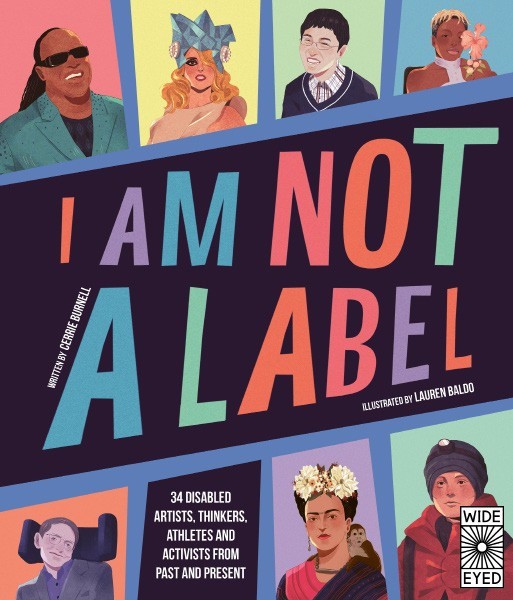
Share this:

  • Share on X (Opens in new window) X
  • Email a link to a friend (Opens in new window) Email
  • Print (Opens in new window) Print
  • Share on Facebook (Opens in new window) Facebook
Like Loading...
6 Comments
from → disability political policies, politics

Myka Stauffer: Backlash After YouTubers Give Up Adopted Son

May 29, 2020
by samedifference1

A couple who documented on a popular YouTube channel their life with an autistic toddler adopted from China are facing a backlash after they revealed he had been placed with another family.

Myka Stauffer and her husband James, based in Ohio, produced videos about Huxley’s adoption and his challenges.

Since 2017 the couple received sponsorship deals and video revenue.

While some understood the decision, critics accused the pair of exploiting Huxley to build their YouTube career.

The news that Huxley is living permanently with another family was revealed on Tuesday after followers noticed he had not been seen in a video for some time.

The couple said unspecified behavioural issues from Huxley had made life too difficult for the family, which includes four other children.

Content on the couple’s YouTube account The Stauffer Life has now been deleted.

“Extremely depressed reading about the influencer who raised funds to adopt a son, made this her ‘brand,’ discovered he has special needs, secretly rehomed him, ” wrote journalist Sophie Ross on Twitter.

Adopted children “aren’t a dog you adopted from the pound that you get to return in 14 days if they aren’t a good fit… gross”, commented another Twitter user, one of thousands to post negative reaction.

Popular videos

The couple began sharing videos about their family life in 2014 and Mrs Stauffer’s own YouTube channel Myka Stauffer grew to more than 700,000 subscribers this year.

In July 2016 they announced plans to adopt a toddler from China, and that they were considering adopting a second from “Uganda or Ethiopia”.

The adoption agency told them Huxley had “brain damage”, Mrs Stauffer wrote in a magazine article. After hesitating, the couple decided to proceed when “God softened our hearts”, she wrote.

They said revenue from sponsored videos would pay for the adoption. They also asked followers to donate $5 towards supporting their son’s needs, promising to write donors’ names in a baby book.

One video of the family going to China to meet two-year-old Huxley was extremely popular and clocked up more than 5.5 million views on YouTube.

Tapping into the popular trend of family life videos, the couple produced hours of content documenting their son and his life following adoption.

Detailed updates on Huxley’s developmental progress were included, as well as clips of him.

Other videos on the couple’s YouTube and Instagram accounts included advice about pregnancy (the couple had two more children after adopting Huxley), home-schooling, decoration and household chores.

Mrs Stauffer was also interviewed in magazines about caring for children with disabilities.

Companies including Glossier and Good American offered sponsorship deals, and the birth of their fifth child was featured in People magazine in 2019.

Huxley out of sight

In September 2019, Mrs Stauffer posted an update in which she said that Huxley had received treatment following a diagnosis of autism.

But followers noticed that in late 2019 and early 2020, Huxley stopped appearing in the videos.

On Tuesday, the couple posted an update in which they explained Huxley had been given permanently to another family for the sake of his “emotional well-being”.

The adoption agency had not given them the full picture about Huxley’s health, they said, and doctors in the US said he now needed “a different fit in his medical needs”.

“I can’t explain the amount of effort Myka has put into helping Huxley,” Mr Stauffer added.

Some who have followed the story for a while commented with messages of support. “I respect you so much for having the courage to make such a heartbreaking and hard decision,” one wrote.

But others accused the couple of “getting rid” of Huxley after making money from his experiences.

Others expressed sympathy for him. “Although I am sure this is hard for all involved, it does not even compare to the loss this child has endured,” one wrote.

The incident has again raised the issue of international adoptions whereby parents give up care of the children after a period of time, several people commented.

Share this:

  • Share on X (Opens in new window) X
  • Email a link to a friend (Opens in new window) Email
  • Print (Opens in new window) Print
  • Share on Facebook (Opens in new window) Facebook
Like Loading...
Leave a comment
from → Fellow Bloggers

AI tool automatically identifies different types of brain injury

May 29, 2020
by samedifference1

This is a guest post by Steven Baylis, Partner at Lime Solicitors: 


The consequences of a head injury can be very subtle, as well as catastrophic. The brain is divided into numerous areas, each responsible for different functions. For example, the temporal lobe is responsible for processing auditory information, and damage to this area of the brain can result in hearing loss. This same part of the brain is also associated with memory and emotion. In the initial stages following a traumatic brain injury the focus may well be on life saving, with measures such as the need to reduce intra-cranial pressure being crucially important. In the initial stages of treatment a person can be unconscious, so AI may be able to play an important role in providing a prognosis to assist with early life saving intervention. As areas of damage to the brain may be very small, the intervention of AI may assist radiographers in identifying areas of damage. This may reduce pressures on radiographers and improve the speed of initial investigations and in turn the speed at which effective treatment can be delivered.


The algorithms employed with AI do seem capable of predicting quite accurately the likelihood of a patient dying. This will not necessarily assist with providing a prognosis for those patients who survive a traumatic brain injury. The effects of what objectively look similar brain injuries can result in differing symptoms and different levels of recovery. It may be the case that the very small detail into which AI can explore may be able to accurately predict what symptoms will be suffered; however, this has yet to be fully tested. A further complication is what is known as ‘brain plasticity’, which is effectively the ability of the brain to re-wire itself. This may vary from individual to individual, so this again may dilute the ability of AI to provide an accurate prognosis. All this potential for variation will probably mean that neuro-psychological testing will continue to play a crucial part in identifying which areas of cognitive function have been adversely affected by a brain injury. This in turn will impact on the treatment and rehabilitation that is appropriate. Whilst AI might be capable of giving some general guidance it remains to be seen how accurately it will be capable of predicting all the potentially subtle effects of a traumatic brain injury and whether this might remove or reduce the need for individually administered assessments. As algorithms become more sophisticated and more research is undertaken, it will be interesting to see what developments occur. With the recent interest in head injuries in sport  more research is being undertaken all the time, which should only help with advancing the accuracy of AI in terms of providing an accurate prognosis for patients suffering from a traumatic brain injury.


The earlier a prognosis can be determined, then the sooner targeted treatment can be administered, which can only be beneficial to patients. It is too early to determine how much input AI will be able to have in terms of reducing the input of medical experts such as neurosurgeons and neurologists. I would be surprised, given the often unique and subtly variable presentation of symptoms whether medical expert input at present can be significantly reduced. Many more trials will need to be undertaken to determine the accuracy of the algorithms. If there is a subsequent error than I would anticipate the threshold for negligence being the same as it is currently for medical experts. A doctor is not negligent if they acted in accordance with a responsible body of opinion. This raises the interesting prospect of how could AI, based on the algorithmic approach not be acting in accordance with a responsible body of opinion? It will be very interesting to see how the impact of AI develops in this area of medicine.

Share this:

  • Share on X (Opens in new window) X
  • Email a link to a friend (Opens in new window) Email
  • Print (Opens in new window) Print
  • Share on Facebook (Opens in new window) Facebook
Like Loading...
Leave a comment
from → guest posts

Sirine Jahanghir On BBC Asian Network

May 28, 2020
by samedifference1

A blind 15-year-old girl has become one of the bookies’ favourites to win this year’s Britain’s Got Talent, which starts this weekend.

Sirine Jahangir, who lost her sight at the age of 10, impressed judges with her singing and piano-playing during audition rounds for the reality show.

The preliminary episodes of the series were recorded before the coronavirus lockdown came into effect.

Sirine spoke to BBC Asian Network’s Shabnam Mahmood.

Share this:

  • Share on X (Opens in new window) X
  • Email a link to a friend (Opens in new window) Email
  • Print (Opens in new window) Print
  • Share on Facebook (Opens in new window) Facebook
Like Loading...
1 Comment
from → Famously DisAbled, Fun Stuff, updates

“Blind People Live In A Tactile World”

May 28, 2020
by samedifference1

I have a friend called Dave Kent who happens to be blind. You may have seen him on a Guide Dogs sponsor-a-puppy TV ad talking about how his dog Quince once saved his life. To my mind, this rather underplayed Quince’s importance. As far as I can tell, guide dogs such as Quince save their partners’ lives over and again every time they leave the house.

Dave is from Swansea and sounds like it, although he has lived in London for most of his six decades. We have had some brilliant times together. On one occasion, he asked if he could get the train from London to Swansea with me on a Friday night, as his dog was struggling with conjunctivitis. Also in our carriage, as it happened, was the actor Philip Glenister, at that time working on the TV series Ashes to Ashes. The train was slow, hours behind schedule, and our food and drink had run out by Bristol Parkway. Dave got up to go to the buffet. 

“Don’t you need the dog?” asked Phil.

“No, man,” said Dave. “His eyes aren’t right.”

It was that kind of journey. Dave came back with all the buffet had left: several slices of fruitcake and a dozen miniature bottles of brandy. It was two in the morning when we alighted at Swansea to stagger along the platform. Me, Dave, the bloke from Life on Mars and a guide dog who couldn’t see properly. Wouldn’t have missed that journey for the world.

Soon after lockdown started, I got a couple of missed calls from Dave. Perhaps he was struggling? I geared myself up to play the hero and run over to help him out. But it turned out he was only calling to see if I was OK. Honestly, if I had asked him to do my shopping for me he would have been on his way out before I had finished the sentence.

The next call I got from him, alarmingly, was to ask if he could borrow a helmet. A friend who had come to stay to help him out had a motorbike and Dave wanted a ride. So, Dave has been just fine, but this week he is sounding a bit down. “I’ve realised this physical distancing is going to change everything for us,” he says. “Blind people live in a tactile world; we need to touch people and be touched by them. As independent as we might like to think we are, the fact is that we’re always relying on the thoughtfulness of strangers.”

I am ashamed to say this had never occurred to me. Dave and his current guide dog, Chad, are more than capable of looking after themselves. He doesn’t need pity; far from it. He is a bit sick of overenthusiastic evangelicals on public transport offering their prayers. A bloke on the Piccadilly line at Earl’s Court once asked if he could heal him. “Certainly,” said Dave, handing him one of his false eyes. “Give it a try, by all means.”

He doesn’t need healing. He doesn’t even need a hand; just an elbow to guide him. Like all blind people, whether they work with dogs or have canes, he needs to ask strangers to help him across busy roads.

“What are people supposed to say if I ask them now?” he wonders. “I don’t know if or how to ask them. And I feel a bit sorry for them, too; it puts them in an awkward position. I’m sure they’d want to help, but would it be a touch too much?”

Dave and Chad have travelled the world together, but Dave is now worried about lockdown lifting; for the first time he can remember, he is nervous about leaving his locale. He knows he can have my elbow, as well as my crash helmet, any time he wants. 

Share this:

  • Share on X (Opens in new window) X
  • Email a link to a friend (Opens in new window) Email
  • Print (Opens in new window) Print
  • Share on Facebook (Opens in new window) Facebook
Like Loading...
Leave a comment
from → coronavirus

Coronavirus: Parents Of Disabled Children ‘Cut Off And Ignored’

May 28, 2020
by samedifference1

The coronavirus lockdown has placed additional pressure on many families. But what happens if you lose your work, your support network, and have a disabled child to care for?

“You know what? It’s needs must,” says Gail Bedding, from near Grayshott in Hampshire. “We needed to pay the bills, we needed to pay the mortgage – and suddenly there’s no money coming in.”

Gail’s work has stopped – but there’s another bigger factor dominating her life. She’s the mother of a severely disabled 16-year-old son, Fergus, who is completely dependent on the care of his family.

He is in a wheelchair, non-verbal and fed through a tube.

Gail’s husband Dave also found himself without work. But with the country in lockdown, the family needed to find a way to look after Fergus.

“We had to go out and find jobs. Dave went out and got a delivery job with Sainsbury’s. I got a job stacking shelves for Sainsbury’s.

“I’ve got 18-year-old twins. They both went out to get jobs. One’s working in a care home and one’s working in a garage with a shop attached to it.”

The family rallied around in a collective effort to make sure that, even in a time of isolation, Fergus was never alone.

“We have to work out who is home, so he’s not left on his own. We have to make sure one of us is in the house with him. It’s a real juggling act for us,” says Gail.

“We all had to just get on with it,” she says. When her children got back tired from a shift at work, they still had to help.

There isn’t anything heroic about this, she says. No one is going to stand on a street and clap families like that. Instead, the feeling she describes is one of “guilt” that she can never do enough to help her son.

Gail says that for families with disabled children, the lockdown has made things even tougher. It’s created an even more intense sense of being cut off and ignored.

With travel restricted, parents have not had any access to relations or friends who might usually share the load of caring.

There are worries about jobs and money – and working from home is not easy while caring for a child with disabilities.

Getting help from paid carers has been more difficult during the lockdown. Play clubs which might give some respite are not running and some schools are closed.

The fragile health of some young people with disabilities makes it even less likely that they can go outside. And some cooped-up children are showing much more challenging behaviour.

“Unless you have a disabled child, you will never understand how it affects your life – and then this is 10 times worse, because there is no let up, no let up whatsoever,” she says.

“The doors are closed. Nobody sees our children going out now, because they’re all shut behind closed doors. They’re not allowed out, so many of them are vulnerable, they can go out even less than normal.

“Our lives are very different. Nobody else gets it. That’s not woe is me, it’s just a fact.”

Gail says she’s fortunate that Fergus can still go to school a few days a week – as it means the family can get a break from their exhausting routine.

“It’s a real relief. I know that sounds really awful. I love my son dearly, but when he’s not here, it means he’s being stimulated and looked after and doing something away from home,” she says.

There is no glimpse of self-pity in any of this. She expects her work – training with families with disabled children – will pick up again, and so will her husband’s business in reclaimed flooring.

But she really worries about the sense of confinement and that local charities might struggle to keep going. Her son goes to leisure activities run by Challengers, in Guildford, but she says such charities depend on fundraising, which has been badly hit.

“I don’t know what’s going to happen in the future, because a lot of the short breaks are charities and will be closed. Or they won’t be able to offer the same services,” says Gail.

“This social isolation we have now isn’t going to stop, it’s going to carry on and that fills me with absolute dread. To think we will have very little break in the future is pretty desperate, to be honest. I’m not sure I can cope.”

‘I love her deeply’

Caroline – not her real name – is another mother of a child with disabilities. She speaks of the crushing sense of isolation made worse during the lockdown.

Her 13-year-old daughter has “profound learning difficulties”, cannot speak or do anything for herself, and has to have her nappies changed.

“Your child grows up and gets bigger, but their mental and emotional life does not travel alongside,” she says, describing her daughter as being as vulnerable and demanding as a “baby or a toddler”.

“I love her very deeply,” says Caroline. But the pressures are emotionally as well as physically exhausting. She says for parents of disabled children there are extra constraints on top of those already placed on everyone else.

“We can’t go out for the daily family exercise. My daughter refuses to walk far. She leans on me, messes around, pulls on me and it’s infuriating. I can’t take her far because I don’t know if we will make it back.”

When they tried, her daughter had to go to the toilet, and they had to carry it back in a plastic bag.

“I am just trying to give you a glimpse into our life,” she says – and it’s one where being “lucky” meant having a spare nappy.

Caroline says she has become very dependent on a network of support services and the respite when her daughter is at school or a play group.

“Take all that away and life can feel quite bleak. If I were a single parent, living in a small flat, I don’t know what I would have done.”

It’s a theme you hear from other parents of disabled children. There is a reliance on help and fears it will be swept away by the pandemic, or the economic storm that might follow.

Another mother of a child with severe disabilities spoke of a “never-ending pressure – and you know it’s never going to go away”.

She worries that children with learning disabilities who are missing therapy and the company of other children will “regress” even further.

“You can’t understand. You don’t know what it’s like until it happens to you,” she says.

Last week, the Department for Education in England announced £10m to provide extra assistance during the pandemic for parents of disabled children, aimed at families whose children were now “at home more than usual”.

There is a great need for support says James Taylor, executive director of the disability charity, Scope. He says “many families of disabled children are telling us they feel forgotten amid the crisis”.

“Parents are juggling working from home with childcare and home-schooling, often without the right equipment or resources,” he says.

“Many have lost the respite care they usually get through relatives or other services,” he says.

It’s also a reminder, that when you go around a supermarket, whether it’s the shoppers or the shelf-stackers, everyone has their own story.


Share this:

  • Share on X (Opens in new window) X
  • Email a link to a friend (Opens in new window) Email
  • Print (Opens in new window) Print
  • Share on Facebook (Opens in new window) Facebook
Like Loading...
Leave a comment
from → coronavirus

Coronavirus: Call For Clear Face Masks To Be ‘The Norm’

May 27, 2020
by samedifference1

It’s now part of daily life for many of us – struggling to work out what someone in a supermarket or at work is saying when they’re wearing a face mask.

But for people who are deaf or have hearing loss, masks can prevent them understanding anything at all.

“You might as well be speaking in French,” says Fizz Izagaren, a paediatric doctor in the UK who has been profoundly deaf since the age of two.

“I can hear one or two words but it’s random, it makes no sense… When someone is wearing a face mask I’ve lost the ability to lip read and I’ve lost facial expressions – I have lost the key things that make a sentence.”

It is a problem she shares with the some 466 million people around the world who, according to the World Health Organization, have disabling hearing loss.

Standard face masks, which have become widespread as countries try to stop the spread of coronavirus, muffle words and obscure the mouth.

But now charities and manufacturers alike are coming up with a solution.

Main dans la Main (Hand in Hand), an association which supports deaf and hearing impaired people in Chevrières, northern France, is among the organisations around the world that have created a mask with a transparent window.

Its founder Kelly Morellon worked with her mother Sylvie to devise a design that covers the nose but makes the mouth visible, and can be washed at a high temperature to reduce infection.

“The basic aim of these transparent masks is to allow deaf and hearing impaired people to read the lips of someone speaking to them,” Kelly told the BBC.

“But they are also very useful for autistic people, people with learning difficulties and small children who might be scared of masks or need to be able to see facial expressions.

“In any case, a transparent mask allows you to see each other’s smiles, and at this sad time this could not be more important.”

Unlike some companies around the world – in Scotland, the US and Indonesia, for instance – Kelly and her mother are not able to produce their masks on a commercial basis.

Instead, they are advising people on how to make their own and there are multiple guidelines online to help. Their top tip is to use a little washing up soap to stop the plastic screen fogging up.

But one setting where homemade masks are not suitable – but where both PPE and communication are vital – is in hospitals.

There is just one company in the US that has secured Food and Drug Administration (FDA) approval to make clear masks for clinical use.

Five hundred of these masks are being used at Brigham and Women’s hospital in the US city of Boston. At the moment they are being reserved for staff to wear when they are speaking to patients with hearing loss, or vice versa. Sign language interpreters, who use facial expressions and lip movements alongside body movements to create more complex and culturally rich signs, also wear them.

“When we saw the Covid-19 pandemic beginning… we soon realised there was going to be a challenge because of the escalated use of PPE and how that would create communication barriers,” said Dr Cheri Blauwet, who leads the disability task force at the Brigham.

“We’ve had glowing feedback from patients and we’re getting broader requests from other parts of the hospital, especially the paediatric floors.”

In the UK, there are no approved manufacturers providing clear masks to hospitals. And the sole US manufacturer is not taking any more orders as it deals with overwhelming demand.

Fizz Izagaren, a paediatric registrar at Frimley Park Hospital in Surrey in the UK who is also deaf, says standard masks prevent her from taking patients’ histories verbally. She also says she feels isolated at work because she is not able to speak to her colleagues.

“Clear masks should be the norm for everyone in a healthcare setting,” she says.

She is now working with a product designer to try to come up with a mask that the NHS could use widely. But even once a design and a manufacturer are found, this could take time to roll out.

In the meantime, there are concerns the current PPE could stop medical staff getting the required consent from patients.

An intensive care nurse working in London, who is profoundly deaf, told the BBC she had one experience where a patient, who also had hearing loss, was not able to understand her or her colleagues when they were explaining a procedure. The patient could not give consent and the procedure could not go ahead.

“[Clear masks] would make things a lot easier for me,” she said.

“I would be able to do my jobs properly and safely. I would have more independence rather than having to rely on others.”

In the UK, eight charities have written to NHS bosses calling for clear masks to be commissioned, warning of “potentially dangerous situations” arising from communication problems. NHS England has not yet responded to the letter, or to the BBC’s request for comment.

The UK government says it is supporting CARDMEDIC, which provides digital flashcards and other communication aids to NHS Trusts. There are also apps that transcribe speech into text on a mobile phone.

But deaf workers say these workarounds are not always suitable for sensitive or emergency situations.

“As masks become more widespread in the community – it’s going to get harder and harder,” Dr Izagaren says.

“I’m worried the public are going to get more and more frustrated and there will be more discrimination towards the deaf community.”

It is not just people with hearing loss who could benefit, she says.

Experts suggest that other professions such as taxi drivers or even teachers may find clear masks useful as the coronavirus crisis continues.

A niche product initially designed to help the deaf community, could in fact make everyone’s lives better.

Share this:

  • Share on X (Opens in new window) X
  • Email a link to a friend (Opens in new window) Email
  • Print (Opens in new window) Print
  • Share on Facebook (Opens in new window) Facebook
Like Loading...
Leave a comment
from → coronavirus

Could Coronavirus Kickstart More Accessible Tech?

May 27, 2020
by samedifference1

Many people have changed the way they work during the coronavirus pandemic, but for some disabled people this has brought some specific challenges.

Improvements in accessible technology has seen artificial intelligence software provide real-time, on-screen transcriptions of what someone is saying in video calls, but there are concerns that some video calling platforms and apps are not as accessible as they could be.

BBC Click’s Paul Carter finds out more.

Share this:

  • Share on X (Opens in new window) X
  • Email a link to a friend (Opens in new window) Email
  • Print (Opens in new window) Print
  • Share on Facebook (Opens in new window) Facebook
Like Loading...
Leave a comment
from → coronavirus, technology

Amar Latif: Blind Presenter Using Video Call With Guide To Run Alone

May 26, 2020
by samedifference1

TV presenter Amar Latif, has been out running in a local West Yorkshire forest for the first time in 25 years.

Known for presenting programmes such as ‘Beyond Boundaries’, Mr Latif, who is blind, uses video calls to allow his friends to give him directions while he’s jogging.

He said; “It feels weird because when I’m being guided, you’re always linking on to someone. But this has opened up a new possibility.”

Now thanks to the new idea, he’s hoping to go to new locations and become a “blind adventurer”.

Share this:

  • Share on X (Opens in new window) X
  • Email a link to a friend (Opens in new window) Email
  • Print (Opens in new window) Print
  • Share on Facebook (Opens in new window) Facebook
Like Loading...
Leave a comment
from → original ideas, technology

Shadow Disabilities Minister Says Commons Return Is Discriminatory

May 26, 2020
by samedifference1

The shadow disabilities minister has claimed she is being discriminated against by the government’s decision to end the virtual parliament and suggest MPs return to Westminster in person.

Vicky Foxcroft, who has rheumatoid arthritis and is shielding on government advice as she takes immunosuppressant medication, said she would not be able to vote in person when parliament returns after the Whitsun recess.

Instead she will be asked to “pair” with an opposition MP so that neither cast a vote, thereby cancelling each other out.

She also has significant concerns that she will not be able to take part in bill committees because no video provision will be made.

The leader of the Commons, Jacob Rees-Mogg, has said he expects MPs to return on 2 June because the temporary hybrid system that allowed members to dial in by video-link is not allowing full scrutiny or lawmaking to take place.

Foxcroft, who holds Lewisham Deptford for Labour, said: “I am being disenfranchised from being able to contribute to parliament. As shadow disabilities minister I know people are feeling cut off and naturally I have a lot of important matters that I want to raise about this very matter.

“Right the way through this crisis disabled people have been discriminated against. They need to be at the heart of decision-making and not just an after-thought. They need to be a consideration right from the start of policymaking. The very fact the shadow disabilities minister is being disenfranchised from parliament is yet another example of poor policymaking.”

Rees-Mogg has said he is continuing to work with Commons authorities to find ways for MPs to contribute to proceedings. On voting, he told MPs on Wednesday that if people wanted to make an argument for the longer term about remote voting, they were entitled to do so, but it was “an argument for another day”.

Foxcroft, 42, who was diagnosed last year, said it took her a lot longer than other people to heal and there were knock-on effects from having a low immune system. For example, a common cold can last up to four weeks.

Her health could be seriously endangered if she was to contract coronavirus, and like other people with certain conditions she has been asked to shield herself until 30 June. However, MPs are expected back in just over 10 days’ time.

The Conservative chair of the education select committee, Robert Halfon, who has cerebral palsy and osteoarthritis, said the request for MPs to return to Westminster and end the hybrid parliament was effectively “euthanising’ some members from the Commons.

Foxcroft said online voting had been a vital tool for people in her situation and there was no reason for it to be abandoned.

From 2 June, any divisions will require MPs to pass through the lobbies with a two-metre distance between them. To avoid people bunching together to file past the clerks, they will be ticked off remotely by clerks using a video screen.

The Commons is expected to publish a risk assessment of how parliament can return at the end of next week.

Only MPs are being asked to return because their work is deemed essential. Their staff can remain working from home.

A Commons spokesperson said: “The Speaker continues to be very sympathetic to those who need to stay at home because they are vulnerable, shielding or have caring responsibilities, and continues to represent the views of those MPs affected to both the leader of the house and chief whip.”

Foxcroft said that throughout the pandemic there had been concerns about the way disabled people have been treated, from access to online food shopping to the significant cost of personal protective equipment they are supplying for the people who look after them.

The government has said councils have dedicated Covid-19 helplines designed to offer emergency support, and the Cabinet Office Disability Unit regularly engages with a wide range of disabled persons charities and organisations.

Share this:

  • Share on X (Opens in new window) X
  • Email a link to a friend (Opens in new window) Email
  • Print (Opens in new window) Print
  • Share on Facebook (Opens in new window) Facebook
Like Loading...
Leave a comment
from → disability political policies, politics

Tesco Expands Priority List For Hundreds Of Disabled Shoppers

May 22, 2020
by samedifference1

Hundreds of disabled people can now be added to Tesco’s priority shopping list after legal action was taken by a disabled mother unable to buy food.

Joanne Baskett, 48, who cannot leave her house, says she was discriminated against because she could not secure an online shopping slot.

A further 318 people sent claims to all of the UK’s major supermarkets for breaching the Equality Act 2010.

Tesco has now agreed to add all those people to its priority list.

The individuals were not named on the Government’s Extremely Clinically Vulnerable list, but nevertheless felt their access requirements should be taken into consideration by supermarkets.

Food banks

Ms Baskett from Swindon, who has multiple organ paralysis, says she was unable to secure an online shopping slot after returning home from hospital at the end of March.

She said: “For six weeks I would stay awake until midnight to try and get a slot but I couldn’t. It has had a huge mental and physical effect on me.”

She took legal action and accused the supermarket of breaching the Equality Act 2010 for not making reasonable adjustments to enable her, as a disabled person, to shop.

Chris Fry, from Fry Law, who handled the case, said: “We have been hearing so many heart-breaking stories about people unable to leave the house and having to rely on the charity of friends and families and even foodbanks.

“This is just the first step but it’s going to improve many people’s lives.”

The other claimants include people with sight loss, mobility issues, agoraphobia and some who have to shield due to multiple health conditions.

In a statement, Tesco urged customers facing similar issues to contact them directly.

Share this:

  • Share on X (Opens in new window) X
  • Email a link to a friend (Opens in new window) Email
  • Print (Opens in new window) Print
  • Share on Facebook (Opens in new window) Facebook
Like Loading...
1 Comment
from → coronavirus

How Disabled Students Are Losing Out In Lockdown

May 22, 2020
by samedifference1

When Harrie Larrington-Spencer was knocked off her bike at the end of the first year of her PhD, she was left with a brachial plexus injury. “My left arm and hand barely work and I have chronic pain,” she says. She knew her injury would affect many aspects of her life, but was surprised to learn just how hard it would be to do her university work as a disabled person.

“No reasonable adjustment would make me not at a disadvantage to my non-disabled peers,” she says. “There is also the ingrained but generally unseen ableism inherent in academia.”

Larrington-Spencer is used to being unable to attend writing retreats or being reprimanded for using her foot to open doors, but the coronavirus pandemic has presented the biggest challenge yet.

“I have some facilities provided at home in terms of desk and office chair but it isn’t set up professionally, and no matter how many YouTube videos I watch I can’t get it right. Without it the pain and difficulties in working are exacerbated,” she says. She also lacks the computer processing power to run the assistive software she needs. “My computer will crash every time.”

Despite this, Larrington-Spencer considers herself one of the lucky ones – she’s entitled to apply for a six-month extension to her PhD. “It’s great, but the fact that I have to apply is ridiculous. I am already registered as disabled with the university and have already had to prove my disadvantage and disability through that process,” she says.

Larrington-Spencer was among the 1,700 signatories of an open letter sent to the research councils this week, urging for automatic funding extensions for all PhD students who are registered as disabled, neurodivergent or chronically ill. The letter also asked for grants for the assistive equipment and technology necessary for working remotely.

Zara Bain, a final-year PhD student who suffers from several conditions affecting her immune system and is one of the organisers of the letter, says many disabled students are so busy trying to adapt to the circumstances that they simply don’t have time to apply for extensions. She sees the bureaucracy as part of a wider misunderstanding of what they’re going through.

“The general absence of any mention, until very recently, from UK Research and Innovation (UKRI) or universities of this particular student population – who are higher risk, more pressured and less supported, relative to the pandemic – means we’ve been sort of left to deal with all of that,” she says. “And [also] trying to meet existing PhD deadlines, and weather problems like running out of funding.”

Prof Jennifer Rubin, who works on inclusion at UKRI, says that “any UKRI-supported doctoral student who needs an extension of time because of Covid-19 can request one”. The organisation will review its policy over the summer.

But Penny Andrews, another signatory, says the response from the research councils and some universities belies a lack of understanding. “It feels like we are being fobbed off,” she says. “I am a PhD student struggling to write up, who has already been through major surgery, survived being hit by a car at 40mph, and experienced post-traumatic stress disorder and bereavement, as well as autism, ADHD, cerebral palsy, and anxiety and depression.”

It’s not just PhD students with disabilities who are struggling. Bain and Andrews’s views are echoed in a new report by the National Association of Disability Practitioners, which warned that disabled university students are struggling more than their peers during lockdown.

The report urges universities to provide better training for academic staff to ensure their online teaching is inclusive. It also warns that neurodiverse students and those with visual and hearing impairments are facing problems with access to teaching and course materials, such as poor captioning and underprepared lecture slides.

A separate survey by the Association of Non-Medical Help Providers suggested that 81% of disabled students have been negatively impacted by changes to their academic work due to coronavirus, while 73% said they had issues with access to academic resources such as libraries and workshops, and 57% said access to their teaching had been disrupted.

Piers Wilkinson, disabled students’ officer at the National Union of Students, says he was unsurprised to see these concerns. He would like to see the medical evidence requirements suspended during this time for the Disabled Students’ Allowance, which funds equipment. “Institutions must ensure disabled students can choose what best supports them, and ensure any leave of absences or suspension of studies comes at no cost,” Wilkinson says.

Stephen Campbell, dyslexia and disability coordinator at Leeds Trinity University, says universities have adapted their courses to the lockdown more effectively than he expected. “But you’re supporting more than just the medicalised condition that the student has,” he says, referring to how the lockdown is affecting students’ mental health. “My colleagues in counselling are saying there has been a direct impact from the lockdown. They’ve seen an increase in referrals to secondary care, to organisations like community mental health teams or Crisis.”

Bureaucracy was a problem even before the lockdown, Campbell adds. “If we talk about dyslexic students, there’s already a protracted process of applications and testing before they even get anywhere near their assistive technology,” he says. “Combined with the technology universities are now using to move their courses online, we’re inevitably going to find problems with inclusion in the future.”

The picture is not the same everywhere: some universities are providing better support than others, and certain disabilities have benefited from the shift to online learning. Tiri Hughes, a visually impaired medical student at Trinity College, Oxford, is grateful for her university’s adjustments so far.

“From an accessibility perspective, our remote lectures are brilliant [for visually impaired students],” she says. “We’d been calling for all faculties to do them because they’re vital for disabled students. It was often not done properly, but now we’re in lockdown, a lot of disabled students have even better access to education.”

But she adds: “It’s frustrating, because we’ve been fighting for this for years. Were we not important enough? We’re determined that, when things go back to normal, we don’t lose some of this progress.”

Share this:

  • Share on X (Opens in new window) X
  • Email a link to a friend (Opens in new window) Email
  • Print (Opens in new window) Print
  • Share on Facebook (Opens in new window) Facebook
Like Loading...
Leave a comment
from → coronavirus

Teen Asks Sighted People To Help Him And His Guide Dog Social Distance

May 21, 2020
by samedifference1

A teenager has explained the difficulties of social distancing when people are blind.

Louis Moorhouse, from Idle, near Bradford, posted on social media that guide dogs were not trained to avoid people by 2m.

The 18-year-old said those who are blind like himself or partially-sighted may not move as they may be unaware someone is there.

When someone does move, “we do genuinely appreciate it”, he said.

Share this:

  • Share on X (Opens in new window) X
  • Email a link to a friend (Opens in new window) Email
  • Print (Opens in new window) Print
  • Share on Facebook (Opens in new window) Facebook
Like Loading...
Leave a comment
from → coronavirus

Margaret Maughan: Britain’s First Paralympic Champion Dies Aged 91

May 21, 2020
by samedifference1

Margaret Maughan, Britain’s first Paralympic gold medallist, has died aged 91.

Maughan was paralysed in a car accident in Malawi in 1959 but took up archery as part of her rehabilitation at Stoke Mandeville hospital and was selected for the 1960 Paralympics in Rome.

She won two gold medals – in archery and swimming – and went on to compete in four further Games.

In 2012, she lit the flame at the London Paralympics opening ceremony.

In a BBC interview that year, she recalled the bizarre nature of how she found out she had created history in Rome.

  • No Triumph, No Tragedy – BBC’s Peter White speaks to Margaret Maughan

“All of the competitors had shot their six arrows but nobody was told what their scores were,” she said.

“I just went off and joined my other friends and went to support everyone else.

“The day went on and we were put on the coaches to go home and somebody said ‘Where’s Margaret Maughan? She’s needed for a medal ceremony.’

“So they had to find my wheelchair amongst all the others, lift me out, and off we went to a very nice little podium with ramps to get up to the first, second and third places and to my amazement I was in the gold medal position.”

She added: “I feel very proud to be at the start of all this. From just a team of 70 British people in wheelchairs at the first Games, now there are hundreds from all disabilities.”

Share this:

  • Share on X (Opens in new window) X
  • Email a link to a friend (Opens in new window) Email
  • Print (Opens in new window) Print
  • Share on Facebook (Opens in new window) Facebook
Like Loading...
Leave a comment
from → DisAbility Sport, Famously DisAbled, Paralympics, tributes

UK Jewish Community Launches Torah Scroll Fundraiser For Youngest Coronavirus Victim YY Rothschild, 20, Who Had Downs

May 20, 2020
by samedifference1

A huge crowdfunding exercise to raise money for a Torah scroll in honour of the Jewish community’s youngest Covid-19 victim neared its £60,000 target this week.

Yechiel Yosef Rothschild, known to everyone as YY, died in April aged 20 after contracting the novel coronavirus. He had Down’s Syndrome and lived in supported accommodation provided by the charity Kisharon.

Every two months he would spend the weekend away with Shabbaton L’mnucha, a Charedi charity that organises trips for families and those with special educational needs, and now the charity is organising the fundraising for a new Sefer Torah.

“He made everyone happy,” said his brother Yanki this week. “He was a very lively child, always the centre of attention, and Shabbaton L’mnucha decided to dedicate a Sefer Torah in YY’s name. It’s a wonderful gesture.”

The scrolls are hand-written and take up to a year to produce, costing tens of thousands of pounds, and as of Wednesday lunchtime the total stood at £54,000.

  • To see the donation page, click here:  https://charityextra.com/doitforyy

“The Sefer Torah will be the property of the community,” said Yanki, “because it is a communal organisation. When families and organisation want to go away for Shabbos, it will be made available to them.”


Music fan YY had difficulty speaking in his early years, until the age of eight, and this meant that he could not say his name – Yechiel Yosef – so family and friends decided to call him YY, which he could say.

He attended Side-by-Side School in Stamford Hill, where Orthodox Jewish children with special needs and no special needs learn alongside one another, as well as Kisharon College. He later went to live in accommodation supported by Kisharon, and was a regular and much-loved fixture across Stamford Hill.

“He was a beacon of light for everyone and a symbol of happiness, always with a smile cheering people up,” said Jewish Community Council director Levi Schapiro.

“I got to know him through volunteering. The team would care for him every Shabbos afternoon, take him for walks to the park, but he needed no care – he was taking care of us! He was well-known and much loved by everyone in the community.”

Hadassa Kessler, director of operations at Kisharon, said: “He was a very charismatic man with a huge circle of friends. He made friends quickly and was an extremely considerate person. He was interested in people. He worried about them and was curious about them.”

She said YY did work experience at Kisharon’s head office and “made friends with everyone, talking to them about what kind of diets they were on, what food they liked, what food he liked, music, just the kind of guy who was lovely to be around … A very many people will miss him a lot.”

She said she had been in touch with YY’s mother Leya, who was supportive of the initiative, feeling that “anything that YY’s influence could do that was positive or complimentary, and that would help other families” was to be welcomed.

This week Yanki told Jewish News that YY’s influence was still being understood. “Just the other day I met a young man who I didn’t know who told me a story of how YY helped him, which I didn’t know.

“This young man had a really tough family situation, lots of trauma, and told me one day when his parents were fighting he left his home with suicidal thoughts. One hundred metres down the road he ran into YY, who gave him a big bear hug and told him that everything would be OK.

“Obviously YY didn’t know what was going on with this young man but he sensed something wasn’t right. He felt people’s feelings and was very spiritual in that sense. The young man said it was just what he needed, just when he needed it.”

Hadassa said YY did not have any other underlying conditions, but that his health deteriorated very suddenly. “He was OK, then he really wasn’t,” she said. “He woke up on Friday with a sore throat, went into hospital on Saturday and passed away a few days later.”

He was considerate to the end, she said. “Even when he had Covid-19, he spoke to our manager Aviva, who had been ill a week earlier, and his first thought was to ask how she was. It’s just one example of who he was.”

Share this:

  • Share on X (Opens in new window) X
  • Email a link to a friend (Opens in new window) Email
  • Print (Opens in new window) Print
  • Share on Facebook (Opens in new window) Facebook
Like Loading...
Leave a comment
from → coronavirus, tributes

“The Assessor Called Me A Liar On The Phone”

May 20, 2020
by samedifference1

With many thanks to Benefits And Work.


Over 250 claimants who have had telephone assessments for personal independence payment (PIP) have so far completed our survey, which is still open. As a result we have a lot of information on the problems and pitfalls to share with readers.

Because so many people have told us about their experiences, we have had to divide this article into two parts. Part two will be published next week.

In brief
You may get an assessment call out of the blue, without any warning.

Even if you do get notice, you may not get the legal minimum or not get notice in writing.

Most assessment calls are on time. But some are late and some get their call hours before it was due.

Some people do not get called but are nonetheless told that they failed to answer their phone.

Some people received a second, follow-up call.

Almost half of assessment calls last over an hour, with some running to over two.

The length of the phone call may be used as evidence against you.

One in ten of you said that the assessor was not working from a quiet, confidential location.

Some assessors would not allow a family member or carer to help with the assessment.

IAS or Capita
People responding to our survey were fairly evenly split between Independent Assessment Services (IAS formerly Atos) on 38% and Capita on 36% as their assessment provider. 26% were not sure.

We would have expected to see IAS more heavily represented, given that they cover considerably more of the population than Capita.

No written notice
Having time to prepare yourself for an assessment is important for most people, especially if they need to have someone with them.

The law says that you should receive seven days’ written notice of the date, time and place of your assessment.

Worryingly, 13% of respondents said they didn’t get any notice at all.

“Call came out of the blue. My husband answered the phone and as soon as PIP review was mentioned and my name he handed the call over to me. Immediate reaction, was this going to be a scam call.”

“I didn’t receive any notification that the call was taking place and didn’t know it was my assessment. The first I knew was when I received a text to say they had now received my report! My PIP was reduced.”

It’s possible that some of those who received a call with no notice were not having a telephone assessment at all. Instead, IAS or Capita may have been doing a paper assessment and the assessor was just checking on a small amount of detail that wasn’t in the forms.

However, that is a process that should take just a few minutes. 30% of the people who got no notice said the call lasted between 30 minutes and an hour, 6% said it lasted over an hour and 21% were not sure. A call of 30 minutes or more is not a legitimate part of a paper assessment.

Incorrect notice
25% of our respondents said they got notice, but less than a week.

“Received letter on Tuesday informing me of my appointments for a telephone assessment will be at 9.15am on Thursday. Two days notice via letter and a reminder text sent early hours on Thursday.”

“Got a text two days before, a letter the day of assessment (today, ) assessment was at 9.15 am and letter arrived at 11.50 am…. Too late.”

“The day before my assessment I received an extremely early phone call, which woke me up, and the woman demanded I give her my NI number before she would tell me who she was, or why she was calling. As I wasn’t able to get up and find it, she got very annoyed and told me that I would *have to have it available for the assessment* which she then told me would be the next day. Then she hung up.”

Added to the 13% who got no notice at all, this means that the law was broken in over a third of assessments

Of those who were informed in advance, 18% only got contacted by phone. This may have been a text in some cases, but we would argue that a text is not the equivalent of a letter in these circumstances.

Punctuality
For many people, the assessment process causes great anxiety. This is made much worse if you are sitting waiting for the phone to ring long after your appointment time.

In general, fortunately the assessor was punctual.

70% said their call was on time, while 12% didn’t know if it was or not because they weren’t given a time.

But 18%, almost one in five, said the call was not on time.

“Half an hour after the appointment I rang and was told the assessor would be a little longer. They were still busy writing the previous report. Another 45 mins after that, the assessor finally called.”

“Appointment was 9.15am. Received first call from assessor at 9.36am informing me of a ‘problem with their systems not booting up’ and she would call me back at 10am. She called back at 10.17am to start my telephone assessment.”

“It was half hour late and the phone rang a man told me that the assessor that was doing my assessment now wasn’t and someone else would be and they would ring in about 15 minutes, all in all an hour late.”

It is worth being aware that the call may also come hours earlier than booked.

“My telephone appointment was supposed to be 11.55 but assessor phoned hour early.”

“The woman doing the assessment rang early.”

““3 hours earlier””

No call
Much worse than a delayed call, for some claimants the call never happened at all.

“Capita did not call. My appointment was at 11.45, I waited and no call was received. I phoned them at 1215hrs and was told that I had failed to attend for my assessment and that they had called 3 times! I was sat with my phone waiting for the call. They then blamed it on Vodafone saying they must have blocked them. I confirmed with Vodafone that no blocks are on my line.”

“I never slept the night before as I was so nervous, I was up early & sat waiting…and waited all day waiting for the phone call to then receive a text at 5.45pm to say it was cancelled! A new appointment was text to me but the assessor I got that day was rude & not very nice. I felt very spoken down to.”

“But my first appointment they didn’t call me or apologise for missing the call / appointment Imagine if that was the other way around.”

Second call
It’s also worth knowing that you may get a second call a day or more after the first. This may be as a result of the assessor’s report being checked by a supervisor who is not happy with some aspect of it.

“Assessor very nice on first call, but when called back it was as though she was looking for ways to catch me out. Had an agenda.”

“The Assessor called back the following morning and said she wanted a better picture of “Going out “. I was completely taken unaware and I believe I was misled into saying how going out made me feel physically ill as opposed to the psychological effects of it. The call lasted for 6 minutes. I am awaiting their decision.”

Length of the call
Be prepared for a long call from the assessor.

Many people were told the call would last about 40 minutes. In almost half of cases this was an underestimate.

11% said the call lasted less than 30 minutes and 40% said between 30 minutes and an hour.

But 46% said the assessment lasted longer than an hour whilst 4% weren’t sure how long it took.

“My assessment started at 10.30 am and finished at 12.30am I was exhausted!”

“3 and a half long draining hours”

“2 and a half hours”

“I have ADHD and Asperger’s syndrome which makes it difficult for me to process information and answer the questions in the manner required. The assessor kept saying that she would have to terminate the assessment if I did not answer is the way she needed me to. This was distressing. I explained the stress I was under and fact I needed to get the assessment over with that day. In the end she rang me back – it took all afternoon. (I had explained in my PIP form the problems I would have answering Qs in a Q and A form of assessment and would need more time and frequent stops) I am glad it is over with – but I felt pushed to answer Qs in a certain way.”

Phone call used against claimant
Worryingly, we even heard from one claimant who said that the length of the phone call was used as part of the grounds to remove their PIP award.

“My PIP was not renewed. One of the reasons given was that I managed to continue the phone call for so long. This was despite me being exhausted by the call and highly anxious throughout.”

Another said that the use of a phone had been grounds for reducing points.

“Lost points because I used a phone which was on loud speaker on the arm of the sofa and because I have strength to use a crutch which is wrong”

Somewhere private in your home
Having somewhere private in your home to make a call wasn’t an issue for most of you.

92% of those surveyed said there was somewhere quiet in their home.

But for the other 8% this was a problem.

“Had to sit in our car”

“Quite noisy neighbours at the time”

“ I’m a single parent so had to warn to kids to stay out of the room and watch their tablets”

“Also had children who I did not want to hear what was being said.”

Confidentiality
Much more worryingly, 12% of you said that the assessor did not have a quiet, confidential place to work from.

Another 22% were not sure whilst 66% didn’t report any problems.

Being assured of confidentiality during such a deeply personal and invasive process isn’t just a goal, it’s an absolute necessity. If an assessor does not have a private space to make calls, they should not be working.

“Could hear other people laughing and making comments in the background. Then someone saying sshhh.”

“Her husband was in the vicinity and I was on speaker phone.”

“There was some noise at the beginning of the call which sounded like cupboards being opened and shut, I was not sure if it was her doing this or someone she was with.”

“Could hear noises in background. At one point she had to stop and ask me to hold for about two minutes.”

“Banging, dog barking , I lost concentration!”

“There was some disruption because of her child in the background.”

“ She was working from home and had a young child to look after.”

Someone with you
You have a right to have someone else, such as a family member or carer, be part of the assessment process. A government minister recently underlined that this applies to telephone assessments as well as face-to-face ones.

In some cases, support from another person was welcomed by assessors.

“The assessor facilitated a 3 way call with my family support worker, was friendly and understanding.”

In other cases, however, the assessor was aggressively opposed to anyone else taking part.

“They didn’t like that call was on speaker phone with my partner present. Told him it was unacceptable to help me. Wouldn’t let me answer with more than a few word’s. Kept cutting me off with things like “that’s not the way pip wants it answered” “I’ve already explained to you” Numerous threats to end the call.”

“The assessor called me a liar on the phone. He demanded that I must speak for myself and not my representative. He told my representative that she is not allowed to talk on my behalf. He was rude and I was made to feel low.”

Share this:

  • Share on X (Opens in new window) X
  • Email a link to a friend (Opens in new window) Email
  • Print (Opens in new window) Print
  • Share on Facebook (Opens in new window) Facebook
Like Loading...
Leave a comment
from → disability political policies, politics

Disabled People In UK Threatened With Sack Unless They Go Back To Work

May 19, 2020
by samedifference1

Disabled people and their carers are being put at risk of catching coronavirus by returning to the workplace after being missed off the government’s vulnerable list, the Guardian has learned.

As Britain edges back to work, employers are understood to be denying some disabled people and carers paid leave to remain at home if they cannot provide a letter from the government showing proof of vulnerability, despite being at high risk from coronavirus or caring for someone who is.

The government’s register for extremely vulnerable people, which has previously been criticised for excluding a number of high-risk disabilities, is primarily designed to help signpost the need for food support. But it has emerged some employers are using the list as a condition for allowing employees to take paid leave.

Disabled people and carers who were not on the list told the Guardian they had been required to go into work by their employer or face dismissal when they could not show proof of vulnerability, with one worker forced to self-isolate between shifts in order to protect their disabled child.

They included key workers such as a teacher and a supermarket assistant. Harry Banes* has primary progressive multiple sclerosis but is having to go to work as a petrol station attendant. “The manager [has] little regard for social distancing. There are no restrictions on the amount of people coming in, and we only had a screen in front of the till last month,” he said.

Banes said he had asked to be furloughed but his boss had only offered statutory sick pay. “Because I didn’t make the government’s list, I can’t back up potential vulnerability.”

Four-year-old Charlie Sanders has type 1 diabetes with low immunity and is cared for by his parents, Jennifer and Michael. Michael stacks shelves in a supermarket, but because Charlie did not make the extremely vulnerable list, he said, his employer only offered unpaid leave. “We can’t afford that,” Jennifer said. “We’re scared stiff.”

Michael used three weeks’ holiday pay in April but has now had to go back to work. He is self-isolating within the home away from his family between shifts in order to reduce the risk. Last week, it meant he missed Charlie’s birthday. “I went into the garden and watched him open presents from a distance,” Michael said. “Charlie couldn’t understand why Daddy can’t hug him.”

Someone who is advised to shield in accordance with Public Health England guidance is entitled to statutory sick pay but this only applies to the 2.2 million people the government now counts as “clinically extremely vulnerable”.

Employers can also decide to furlough an employee who is shielding, but there is no legal obligation to do so. However, the Equality and Human Rights Commission (EHRC) says employers have a legal duty to make reasonable adjustments for disabled people if it is less safe for them to go to work than their non-disabled colleagues.

This comes after researchers warned 8 million people with underlying health conditions should be exempt from plans to get the country back to work, amid fears that they would catch the virus.

Most of those are not considered clinically “extremely vulnerable” by the Department of Health and Social Care, and so instructed to shield entirely for 12 weeks, but are still highly vulnerable to coronavirus.

Gemma Jones has ME and is cared for by her husband, Colin, who is a teacher. Despite being housebound, she did not make the extremely vulnerable list. Her husband was temporarily allowed to work from home when they explained the risk of contagion but his headteacher repeatedly called to ask for evidence of her susceptibility to the virus. “My husband has now been told he has to go back to school because I didn’t receive a letter to say I was officially high risk,” she said. “I’m terrified, honestly.

A government spokesperson said: “The clinically extremely vulnerable classification should not be used by employers to decide who can and cannot travel into work.

“We expect employers to be understanding where people aren’t able to work and need to stay at home on government advice. If an employee feels they have been unfairly treated by their employer, they should contact the Acas helpline for free and confidential advice on 0300 123 1100.”

* All names have been changed

Share this:

  • Share on X (Opens in new window) X
  • Email a link to a friend (Opens in new window) Email
  • Print (Opens in new window) Print
  • Share on Facebook (Opens in new window) Facebook
Like Loading...
Leave a comment
from → coronavirus

Meet The YouTuber Who Made Lockdown Work For Her

May 19, 2020
by samedifference1

Like millions of Britons, Jessica Kellgren-Fozard is at home. Unlike other workers, however, the impact of the coronavirus lockdown on her day job has been minimal. That’s because her home in Brighton with her wife and two dogs was already her office and her career is making YouTube vlogs for her 686,000 subscribers.

The deaf influencer, who posts upbeat videos about disability, LGBTQ+ issues, vintage fashion and other subjects, started her channel three-and-a-half years ago after she left a job as a presenter for a local TV station. Because she suffers from nerve disorder HNPP (hereditary neuropathy with pressure palsies), which results in extreme palsy in her arms and weak limbs, as well as a rare autoimmune disease called MCTD (mixed connective tissue disease), she was often unable to meet the demands of the job, and there were days when she couldn’t leave her bed.

“I really needed a more flexible way of working,” the 31-year-old says. “Trying to fit around someone else’s schedule was driving me into the ground and making me really unwell. So when I got married, my lovely wife said: ‘Why don’t you give YouTube a go? For six months I will financially support you – just have a go.’”

Success wasn’t instant. Like all YouTubers, she had to apply to the site’s partner programme to make money from adverts running on her videos. To achieve partner status, your channel needs 1,000 subscribers, and for people to have watched 4,000 hours’ worth of your videos a month. Kellgren-Fozard says she earned just £200 a month at the beginning. It wasn’t until one of her videos went viral and her subscribers swelled to more than 200,000 that she saw her business take off. Now she’s earning a five-figure salary and is the main breadwinner of the family.

As well as ad revenue, she makes money from partnering with brands to promote their products or services in her videos, and from members who pay a fee for access to exclusive content and privileges.

If you are at home now, watching viral cat videos or PE with Joe Wicks, and think you could do better, then join the two-metre spaced queue. As the number of people working from home and self-isolating increased, so did the number of people considering vlogging for the first time.

According to Google Trends, YouTube searches for “how to start a YouTube channel” increased by 230% between 14 March and 4 May, while searches for “how to edit videos” increased by 225% over the same period.

Research conducted by SEO agency Blueclaw claims that even filming mundane activities has the potential to make money. It looked at the most searched-for videos on YouTube and calculated how much the creator whose channel has been monetised stood to make.

For example, a video of someone shopping online could make them £1,523 if it is watched 1,160,988 times. Needless to say, that’s a lot of viewers, and some videos on YouTube struggle to get even hundreds of views.

https://www.youtube-nocookie.com/embed/reF-x6R1_Ms

Jennifer Quigley-Jones, founder of YouTube influencer agency Digital Voices, says it is about finding a new twist on a popular topic, for example, beauty looks inspired by specific music videos or films. Or food challenges, such as feeding a family for £5. With home schooling now widespread, explainer videos in education are also flying at the moment, she adds.

But while Kellgren-Fozard says the startup costs are minimal – initial videos can be shot on a laptop or smartphone camera and edited on free apps such as Apple’s iMovie – launching a successful channel requires a big time commitment. To launch her usual two videos a week, she works 60 hours coming up with new ideas, filming, editing and managing her social media.

The most important consideration, she says, is choosing the right content for your videos.

“For some it is working out what niche works best, whether you really enjoy making videos that are incredibly fast-paced and funny and chunkily cut together, messy and fun, or whether you want to make the long-form, slower pieces which people will have on when maybe doing the dishes or chopping food ready for dinner,” she says.

As Kellgren-Fozard found, getting enough subscribers to make your videos profitable is the real challenge. People subscribe usually once they trust your channel. If you are lucky enough to have a video go viral, that’s great, but unless you can convince people that you are more than just a one-trick pony and give them a reason to come back, you are not going to grow.

The key, Quigley-Jones says, is building up a bank of videos that shows what you specialise in, what type of content you consistently create and what your channel is about. Consistency is also vital – launch the same number of videos at the same time each week. Making longer videos, naming them in intriguing ways and tapping into trending topics as much as possible can also get your channel noticed in a sea of vlogs.

One of the biggest things that stops people starting their own YouTube channel is the idea that they have to be perfect, she adds.

“We are all perfectionists and deeply self-critical and anxious, but YouTube is not like TV. It’s not embarrassing to make mistakes,” she says. “So try to stop your perfectionist side. A lot of people stop themselves making videos because of that fear, especially women who are quite disheartened by criticism and nervous about how they might be perceived. So try to silence your inner critic and get something out there.”

Share this:

  • Share on X (Opens in new window) X
  • Email a link to a friend (Opens in new window) Email
  • Print (Opens in new window) Print
  • Share on Facebook (Opens in new window) Facebook
Like Loading...
Leave a comment
from → coronavirus

Eastenders Plans Special Episode On Ben Mitchell’s Hearing Loss

May 18, 2020
by samedifference1

EastEnders is set to air a special episode centring around Ben Mitchell and the deterioration of his hearing.

The upcoming episode will be set entirely from Ben’s perspective as he takes part in his riskiest job yet with dad Phil.

Viewers will experience limited audio levels and on-screen subtitles showing words and fractured sentences to reflect Ben’s hearing difficulties, highlighting the reality many deaf people in the UK experience today.

Ben is struggling to come to terms with this new situation, a consequence of the Thames boat incident.

In upcoming episodes, viewers will see Ben determinedly try to prove to Phil that he’s still capable of helping him out with his dodgy dealings. But when his vital operation is postponed, Phil is unsure whether to let his son partake in their new job.

When the day of the job arrives and things quickly begin to spiral out of control, will Ben be in too deep?

The soap has been working closely with the National Deaf Children’s Society, audiologists and other experts in the field to ensure the storyline is portrayed as accurately as possible.

On the announcement of the special episode, EastEnders’ executive producer Jon Sen said: “The story of Ben’s struggle with his deafness has given us a gripping insight into his character. This special point of view episode is a ground-breaking episode unlike any other attempted in the history of EastEnders.

“Helmed by a compelling performance by Max Bowden, it allows the audience the opportunity to experience the world through Ben’s eyes and ears – a story communicated purely by his dialogue and the snatched words of those around him. I am so proud of what the team have achieved and cannot wait for the fans to see it.”

Share this:

  • Share on X (Opens in new window) X
  • Email a link to a friend (Opens in new window) Email
  • Print (Opens in new window) Print
  • Share on Facebook (Opens in new window) Facebook
Like Loading...
Leave a comment
from → Fun Stuff

Fears Lockdown Is Making Dementia Deteriorate

May 18, 2020
by samedifference1

People living with dementia have said they are worried about leaving home, because weeks of the lockdown have had a profound impact on their confidence and abilities.

Teresa Davies, 66, from Flintshire, was diagnosed with early-onset Alzheimer’s disease when she was 59.

She lives alone and has found lockdown has affected her ability to carry out small tasks.

“The other day I put a pair of socks on my hands instead of my feet and put the yogurt back in the knife drawer instead of the fridge,” she said.

“I feel like my dementia is getting worse: I’m doing a lot more random things, like when I popped to the shop and realised I’d put on my blouse inside out – I’d never do things like that before lockdown.”

‘Like being diagnosed all over again’

Ms Davies, a former landscape gardener, usually spends a lot of time on the train travelling around the UK to give talks on dementia.

Now, she said she had concerns about her ability to travel and speak to large groups.

“My biggest worry is that I won’t be able to travel on the train and things because it (lockdown) really has knocked my confidence.

“I’m jumbling up words or forgetting what word I mean because I’m not as social as I was, which means I don’t want to talk as much, I’m nervous about it.

“People are isolated the moment they get diagnosed with dementia and going through lockdown, well it’s like being diagnosed all over again.

“And in Wales we’ve still got a few weeks left so I might be even worse then,” Ms Davies said.

Michelle Nelson-Greensmith, 57, from Merseyside, who has vascular dementia, said she had struggled to think about life outside of lockdown.

“I feel like I’m in an experiment,” she said. “I just don’t get it, I don’t understand why we’re in this situation.

“I just feel scared all the time and scared to go out now and after lockdown.

“I keep worrying I’m going to get the virus and if I see something online or on the news about it, it takes weeks for me to get it out of my head,” Mrs Nelson-Greensmith, who worked for the Environment Agency during the swine and avian flu outbreaks, said.

She has been able to go to the supermarket with the help of her husband, Richard, but found it difficult.

“I don’t understand what I have to do and I tell myself I’ve got to go one way and keep a distance then someone goes the other way and I have to stop and think whether I’m doing it, then I forget what I’m there for.

“All the new rules make me not want to go out really.”

But for Masood Qureshi, 56, from Stoke-on Trent, who has Alzheimer’s disease and fronto-temporal dementia, the lockdown has been a different experience, as he has been living with his three children and grandson.

“I feel like I’m one of the lucky ones because I have my family around me and it’s given me more time to spend with them and to reflect on this situation,” he said.

“But it has been stressful for them, I sometimes feel like I’m imposing.”

Mr Qureshi, a former factory worker and accountant, said he had been missing his support group and visiting the mosque during Ramadan.

“In my peer support group we’d be able to talk about our deep feelings on how we’re coping and sometimes it’s difficult to do that with your family,” he said.

“I’m missing the mosque a lot because you’ve got your friends there, the whole community is there and it’s a holy time at the moment, so not having chance to meet up there is very difficult.”

Mr Qureshi said he was not sure how lockdown would affect him in the longer term.

“I’m calling up my friends and I’m finding it’s taking all my energy to just speak to people,” he said.

“And in the back of my mind I’m concerned how people are coping because we’re all dealing with this in different ways, with our own frustrations.

“I’m just reminded, every Thursday (when we all come out for the clap) that we’re not alone even if we do feel lonely.

“I’m hopeful that the world will come out of this in a better place, society will be happier, and no one will take others for granted.”

Share this:

  • Share on X (Opens in new window) X
  • Email a link to a friend (Opens in new window) Email
  • Print (Opens in new window) Print
  • Share on Facebook (Opens in new window) Facebook
Like Loading...
Leave a comment
from → Alzheimers and dementia, coronavirus

Britain’s Got Talent: Junaid Jamshed’s DisAbled Niece Sirine Jahangir

May 18, 2020
by samedifference1


This very talented DisAbled teenager is also the niece of Junaid Jamshed, who found great fame as a pop star in Pakistan in the 90s.

Share this:

  • Share on X (Opens in new window) X
  • Email a link to a friend (Opens in new window) Email
  • Print (Opens in new window) Print
  • Share on Facebook (Opens in new window) Facebook
Like Loading...
1 Comment
from → Famously DisAbled, Fun Stuff

Transparent Face Masks Could Stop ‘Months Of Misery’ For 9 Million People, Charities Say

May 18, 2020
by samedifference1

A press release:

  • Charities say nine million people could benefit from transparent face masks.
  • Deaf people can’t lip-read or see facial expressions through face masks or coverings, leaving them at risk of isolation and loneliness.
  • Transparent face masks would make a “monumental difference” to deaf people, charities say, along with tips for communicating with deaf people.

Millions of deaf people could face “months of misery” unless transparent face masks are made widely available, some of the country’s major deaf and disability organisations have warned.

Nine organisations, led by the National Deaf Children’s Society, have written to Public Health England and NHS England urging them to work together quickly to commission transparent face masks.

Without them, the charities say deaf people face a world where they can’t understand what’s being said to them, putting them at an even higher risk of isolation and loneliness at a critical time.

There are currently around nine million people in England who are deaf or live with a hearing loss and almost all of them rely on seeing someone’s face clearly, as it helps with lip-reading and reading facial expressions.

In the letter, the charities warn that this will become impossible if the general public now start to wear standard face masks or coverings. If transparent masks were also available however, they say it would make a “monumental difference” to deaf people across nation.

The coalition, which includes the National Deaf Children’s Society, Action on Hearing Loss, Royal Association for Deaf people, Action Deafness, British Deaf Association, Sign Health, British Association of Teachers of the Deaf, Sense and the UK Council on Deafness, also asks for any future Government guidance on the topic to include advice on speaking to deaf or deafblind people whilst wearing face masks or coverings.

The National Deaf Children’s Society has provided five tips for the public when they speak to a deaf person whilst wearing a face mask, urging everyone to take them on board:

1. Write it down

If speech isn’t working, write it down or use a text message.

2. Use an app

There are mobile apps that can translate speech into text – why not give one a try?

3. Keep it clear

If you can, use a face mask with a clear panel or a clear face visor so your face is visible.

4. Find a quiet place

This will make it easier to hear, especially if technology is used to support hearing.

5. Use video calls

If you don’t need to meet face-to-face, a video call with captions or British Sign Language interpretation may work just as well and you won’t need a mask.

Susan Daniels, Chief Executive of the National Deaf Children’s Society, said:

“This is an extremely challenging time for everyone and we’re relying on each other’s support, understanding and patience to get through it. Deaf people are no exception and if face masks or coverings become widespread, they could experience months of misery as they struggle to understand what is said to them.

“This could be even harder for children, who may not have the confidence to keep asking for things to be repeated and often find it easier to just pretend they understand.

“Transparent face masks would make a monumental difference to deaf people’s lives, but we’d also ask everyone to take these simple deaf awareness tips on board. They won’t make much difference to your life, but they will have a massive effect on ours.”

Steph Halder, President of the British Association of Teachers of the Deaf, said that her organisation had already been responding to queries and concerns from its members about the impact of face masks on deaf children.

“Deaf children rely on lip patterns to support their communication and also need to see peoples’ faces for emotional understanding. The use of face masks could have a negative impact on assessments and verification of hearing aids and auditory implants.

“Deaf children do not hear well over distance and may already be struggling with social distancing measures. Clear face masks would remove some of the barriers and ensure that deaf children are not put at a disadvantage.”

Linda Richards, Chair of the British Deaf Association, said:

“Don’t mask the message. Use of clear face masks and visors/shields with Deaf people is reassuring, reduces the risk of misunderstandings, and gives us the chance – indeed, the right – to be as fully informed and involved in our treatment as is possible. Don’t mask the message with an unnecessary barrier. Be clear. Go clear.”

Craig Crowley, Chief Executive of Action Deafness, said:

“We believe this clear face mask is urgently needed and will make a huge difference to patients being able to access their communication needs, especially in this serious COVID-19 pandemic period.”


Share this:

  • Share on X (Opens in new window) X
  • Email a link to a friend (Opens in new window) Email
  • Print (Opens in new window) Print
  • Share on Facebook (Opens in new window) Facebook
Like Loading...
Leave a comment
from → coronavirus, publicity

Coronavirus: BSL Interpreter On Her New Found Fame

May 18, 2020
by samedifference1

“Did I see you on the telly?”

Cathryn McShane-Kouyaté keeps being recognised in the supermarket.

As the British Sign Language (BSL) interpreter for the Welsh Government’s televised daily Covid-19 updates, she has suddenly become a familiar face to many.

Most days the 44-year-old cycles from her home in Cardiff to Cathays Park where she shares a stage with whichever minister or official is giving the latest coronavirus developments.

Ms McShane-Kouyaté never set out to be an interpreter.

After moving from Pembrokeshire to study at Cardiff University she took a night class in BSL to try to meet people and “fell in love with it”.

“I didn’t think of it as a career until years and years later,” she said.

She has been quietly freelancing for the Welsh Government for over a decade but this this is the first time it has been so public-facing – leading to her being recognised “a lot”.

“It’s funny,” she said.

“I’ve had it in places like the post office or from the security guard at Sainsbury’s.

“People who’ve seen my face over the years and recognise me as a customer say ‘Is it you who’s on the telly?’

“People I haven’t spoken to for years have been calling or emailing me, some people I haven’t seen since school, and neighbours.”

Ms McShane-Kouyaté said she is sometimes briefed on the content of the statement at the start of the briefing but does not know what questions journalists will be asking afterwards so cannot predict what the speaker will say in response.

“Sometimes it’s complicated messages, some days it’s very statistics-heavy and quite technical and you have to step up and do the best you can,” she said.

“Some days I worry it’s not the greatest interpretation. You can’t create beautiful BSL when the source you’re given is a load of statistics.

“It varies quite a lot. It depends who is presenting on the day, it could be someone who speaks very fast, or if their content is technical. There’s different challenges with different people.”

She said her job is to give a BSL interpretation of what has been said: “I’m not signing word for word what they’re saying,” she said.

“I’m trying to convey the meaning of what they’re saying in BSL.

“It’s the BSL equivalent.”

She said the first few days the briefing was televised she had lot of feedback from deaf people on things such as camera angles.

“There was a time they were panning to people asking questions so people were missing what the questions were,” she said.

She has also been getting feedback on her outfits: “I’d been wearing my one black suit for about a week… I washed it and put on a green dress.

“Then I got texts from deaf people saying it was a better contrast [as] I’m standing in front of grey or black drapes.

“We always wear black so your hands stand out better but because of the background I was being swallowed up.

“Since then I’ve been trying to find green things, but of course, like everyone, I can’t go shopping for clothes at the moment.”

‘Taken off guard’

Like many during lockdown, Ms McShane-Kouyaté is trying to strike a balance between being well-informed about the virus and having time away from it.

“In normal times I’d have the radio on in the morning, listening to the news and be watching news on the television but we’ve stopped that, it can be too much,” she said. “I’ve stopped consuming news.”

It led to a bit of a surprise for her during one of the briefings: “The day that Donald Trump spoke about disinfectant I hadn’t seen the news that morning.

“I couldn’t believe what I was signing. ‘Am I really hearing this right?’ I was really taken off guard,” she said.

“It would have helped if I’d heard that in advance.”

The rights of deaf people have made the news recently with campaigners starting legal proceedings against the UK government over a lack of sign language interpreters at its daily coronavirus briefings.

A Twitter campaign which started as #WhereIsTheInterpreter? has now morphed into a class action legal case.

Number 10 responded, saying the BBC had agreed to use interpreters on the News Channel.

But Ms McShane-Kouyaté is proud of the way Wales has included the deaf community: “[The Welsh Government] has led by example and shown a commitment to equality,” she said.

“I hope it [the daily briefings] is raising the profile of BSL. Hopefully it’s bringing equality issues to the fore…

“Deaf people have the same rights as other people and shouldn’t have to wait until later in the day [to get the same information].”


Share this:

  • Share on X (Opens in new window) X
  • Email a link to a friend (Opens in new window) Email
  • Print (Opens in new window) Print
  • Share on Facebook (Opens in new window) Facebook
Like Loading...
Leave a comment
from → coronavirus

Meet The ‘Vulnerables’: Baroness Jane Campbell

May 18, 2020
by samedifference1

In a new mini-series, Meet The ‘Vulnerables’, Octavia Woodward sets out to find the real people dubbed “vulnerable” during the coronavirus pandemic, and turn the V-word on its head.

First up is Baroness Jane Campbell – who ranks as “the most influential disabled person in Britain” according to the Shaw Trust. She is considered a legendary figure within the disabled community for her ongoing fight for disabled rights.

Both Jane and Octavia have Spinal Muscular Atrophy (SMA), a serious genetic condition that weakens muscles and can cause difficulty with breathing.

Jane, who sits in the House of Lords, talks about her pushy parents, her brushes with the law during political protests, multiple marriages and how she struggled to like disabled people until she graduated from university.

Share this:

  • Share on X (Opens in new window) X
  • Email a link to a friend (Opens in new window) Email
  • Print (Opens in new window) Print
  • Share on Facebook (Opens in new window) Facebook
Like Loading...
Leave a comment
from → discussion

Coronavirus: Mask Wearing ‘Risks Isolating’ Deaf People

May 15, 2020
by samedifference1

Deaf people or those with hearing loss will struggle to communicate if more people wear non-medical face masks during the coronavirus pandemic, a charity has said.

Face coverings are not advised in Wales, but are part of the strategy for easing England’s lockdown.

Action on Hearing Loss said people could feel “even more isolated and scared” at an already difficult time.

It said there are more than 575,000 people in Wales with hearing loss.

Karen Robson, of Action on Hearing Loss, said: “We’re hearing a lot of concerns from the deaf community and those with hearing loss.

“Many people who are deaf or have hearing loss rely heavily on visual cues for effective communication, including facial expressions and lip-reading.

“Being able to see lip patterns and facial expressions is also vital for those who communicate through British Sign Language.”

Words which sound similar but have different meanings can become difficult to distinguish.

“Many of these people will be unavoidably impeded by face coverings,” Ms Robson said.

“This has the potential to create further isolation amongst an already marginalised community of people, causing additional stress and anxiety to people at an already very difficult time.”

With England’s advice to cover faces in some public places, it is anticipated more people in Wales will choose to wear masks too.

With more than 70% of the over-70s living with hearing loss, the charity said those people were also more likely to end up in hospital being treated for coronavirus.

There they can experience similar communication problems with nurses and doctors wearing personal protective equipment (PPE), due to being unable to lip-read or properly read expressions, and with sound more muffled by the equipment.

The UK government said it was supporting CARDMEDIC, which provides digital flashcards and other communication aids to NHS Trusts across the UK to help communicate with patients with hearing loss.

A woman from mid Wales, who did not wish to be named, said face coverings posed significant problems for her 11-year-old daughter who has hearing loss.

“British Sign Language relies heavily on facial expression which is why in itself it’s not an answer to the problem of mask wearing,” she said.

“It will help a lot but people who purely use BSL will miss out a lot on the facial expression aspect of the language, and most will use some level of lip-reading.

“It’s also really hard to sign without touching your face.”

‘Lasting trauma’

She said she was also worried about patients not being able to communicate properly.

“The difficulty of communication when wearing PPE is very near the top of my list of reasons why my daughter has to be kept safe [from coronavirus].

“The thought of her having to go to hospital, alone, with people who don’t know her and who can’t communicate with her, frightens me more than the illness.

“There are going to be people that it’s happened to who have lasting trauma because of it.

“I knew medics in PPE are verbalising their usually non-verbal stuff, literally saying ‘I am smiling at you’ to patients.”

Paul Myres, a retired Wrexham GP with hearing loss, said he too had heard of healthcare workers finding such ways to communicate.

Dr Myers, who was Public Health Wales’ lead for primary care quality and development for 10 years and a GP for 30 years, said: “Speech through masks is indistinct.

“Not only have I lost sound level but I have also lost some definition of speech, so any additional blurring makes interpretation difficult or impossible.

“I tend to move closer to speakers to catch what they say. This is not compatible with distancing.”

Dr Myers, 65, said he began to experience hearing loss in his 50s and used hearing aids, but had difficulty understanding his patients.

“I have trouble admitting disability but over the last two or three years of my working life I have informed people and asked them to speak clearly and indicate clearly if they wish to speak to me.

“I ask people to look at me. I don’t lip read as such but watching the lips does help. Understandably people, including at home, forget to look at me.

“As masks are not yet being used regularly in public, I have yet to find out how I and others respond to the difficulty in communicating – there is a temptation on my part to avoid conversation. It will be a problem.”

How can you help?

“Speak as clearly as possible, avoid soft voices but equally not speak too loudly,” Dr Myers said.

“Speak slightly slower than normal, but again if too slow it’s more difficult to interpret missed words if it takes too long to hear the whole sentence.

“Clearly speakers should not touch or lift their mask as that risks contamination. I think it may sometimes be necessary to write things down.

“I have seen masks which have a see-through area by the mouth. I wonder if it reduces the effectiveness of the mask but it allows those with hearing difficulty to see the lips move – and it also allows others to see more facial expressions, which may be reassuring to those who are anxious.

“I think it is worth making the effort to expressing how you feel. We can use our eyes but eyes alone may be misconstrued.

“The forehead may also be visible if head gear is not worn too low and that can show expression.

“Also to remember that people with hearing impairment are not (necessarily) stupid, so to avoid speaking down to them or in a patronising manner.”

Action on Hearing Loss said it had redirected its attention to address the challenges, and is promoting communication tips which include reducing background noise, writing things down, facing the person and using simple gestures.

It has launched a Covid-19 emergency appeal to provide hospitals with equipment to enable easy communication for patients and staff with hearing loss, and a BSL coronavirus information service.

It is hoping to raise £50,000 to buy 300 personal listening devices to help people in hospital.

Share this:

  • Share on X (Opens in new window) X
  • Email a link to a friend (Opens in new window) Email
  • Print (Opens in new window) Print
  • Share on Facebook (Opens in new window) Facebook
Like Loading...
1 Comment
from → coronavirus

Broadway Actor Nick Cordero Loses Leg In Coronavirus Fight

May 15, 2020
by samedifference1

A Broadway actor who had his right leg amputated while fighting Covid-19 has woken up from a medically induced coma, his wife has revealed.

Amanda Kloots said it was “a miracle” that husband Nick Cordero was on the road to recovery.

The Canadian actor, who was nominated for a Tony Award for the Bullets Over Broadway musical, has been in hospital in Los Angeles since the end of March.

Kloots has been posting regular updates about the 41-year-old’s condition.

A fundraiser set up to support the couple and their young son Elvis has raised more than $500,000 (£407,000).

Cordero was initially admitted to hospital on 30 March after being diagnosed with pneumonia, and later tested positive for coronavirus.

According to his wife, he went into septic shock while in hospital, had two “mini strokes” and had blood clotting complications that resulted in his leg being amputated.

Speaking on Instagram on Tuesday, Kloots said her husband was “extremely weak” but was “following commands which means his mental status is coming back”.

Cordero’s other theatre credits include stints in Waitress, Rock of Ages and the musical version of A Bronx Tale.

Share this:

  • Share on X (Opens in new window) X
  • Email a link to a friend (Opens in new window) Email
  • Print (Opens in new window) Print
  • Share on Facebook (Opens in new window) Facebook
Like Loading...
Leave a comment
from → coronavirus

Coronavirus: Grieving Brother’s Lockdown Mental Health Plea

May 15, 2020
by samedifference1

The brother of a teenage boy who took his own life has appealed for people to seek help if they are struggling with the psychological effects of lockdown.

Chris Mackell’s 17-year-old brother Matthew was found dead in Dunorlan Park in Tunbridge Wells on 7 May.

Mr Mackell said the A-Level student had been worried his grades would be affected by the closure of his school.

He called for “anyone that is feeling any sort of sadness and is dealing with anything” to speak out.

He said his brother had been fearful of his future, “probably because of the lockdown, where, obviously he’s not doing his work to the same quality, maybe, or he felt like he wasn’t in the right mindset to do it at home versus at school.

“He obviously didn’t see a way out of it.”

Ben West, who set up a mental health campaign after his 15-year-old brother Sam took his own life, said the isolating impacts of lockdown on young people should not be underestimated.

“I absolutely have no doubt in my mind that people who are already struggling are struggling much more because of lockdown,” he said.

“People that rely on people in their lives, such as friends that keep them happy, to not be allowed to see them, to have that lack of social connection, can really impact people’s mental health.”

Psychiatrists and psychologists have called for urgent research into the potential for the coronavirus pandemic to have a “profound” effect on people’s mental health.

Share this:

  • Share on X (Opens in new window) X
  • Email a link to a friend (Opens in new window) Email
  • Print (Opens in new window) Print
  • Share on Facebook (Opens in new window) Facebook
Like Loading...
Leave a comment
from → coronavirus

Coronavirus: Fears For People With Learning Disabilities

May 14, 2020
by samedifference1

The Care Quality Commission says there has been a 175% increase in deaths of people with learning disabilities living in adult social care organisations in England, compared with the same period last year.

But while elderly people are entitled to be tested for Covid-19, people with a learning disability are not.

BBC Breakfast spoke to disabilities campaigner, Sara Ryan, and Dr Dominic Slowie, former NHS national clinical director for learning disability.

Share this:

  • Share on X (Opens in new window) X
  • Email a link to a friend (Opens in new window) Email
  • Print (Opens in new window) Print
  • Share on Facebook (Opens in new window) Facebook
Like Loading...
Leave a comment
from → coronavirus

ESA Claimants Wrongly Forced Onto UC Win Court Of Appeal Battle

May 14, 2020
by samedifference1

With many thanks to Benefits And Work.

Child Poverty Action Group (CPAG) yesterday won a court of appeal battle on behalf of legacy benefits claimants, including an ESA claimant, who were wrongly forced onto universal credit and were worse-off as a result.

The claimants were forced to claim UC following errors by the DWP. But even when they won their appeals against the decisions, regulations prevented them from going back onto their former benefits.

PR, the ESA claimant, was £180 a month worse-off.

Another claimant, TD the mother of a disabled child, was £140 a month worse-off.

If the errors had not been made and they had eventually moved onto UC via ‘managed migration’ they would have had transitional protection to protect them from this sudden fall in their income.

The DWP’s reason for leaving the claimants worse-off was that it would be too administratively complex and expensive to correct these sort of mistakes.

The Court of Appeal held that this was not a sufficient justification to treat the claimants differently.

The DWP will now either have to return the claimants, and others like them, to their former benefits or top up their UC to make up the shortfall.

Welcoming today’s judgment, Child Poverty Action Group’s solicitor Carla Clarke said:

“Today’s judgment corrects a glaring injustice for the two households in this case, and many others in a similar situation, who end up worse off through no fault of their own. The court was clear that the way in which UC is implemented must comply with human rights. Claimants pushed onto UC when the DWP wrongly stops their old benefits should not have to tolerate an income drop that causes them real hardship simply because the DWP considers it is too costly or too complex to rectify its own mistake. Not least among those who will benefit from the judgment are children and adults who otherwise stood to lose out on crucial help with the extra costs of disability.”

You can read the full story on the CPAG website.

Share this:

  • Share on X (Opens in new window) X
  • Email a link to a friend (Opens in new window) Email
  • Print (Opens in new window) Print
  • Share on Facebook (Opens in new window) Facebook
Like Loading...
1 Comment
from → disability political policies, politics

When Can Shielders Leave Their Homes?

May 14, 2020
by samedifference1

On Sunday evening, Boris Johnson set out the roadmap for easing the lockdown in England. It was a complex and at times meandering speech. But it was striking that the prime minister said nothing of the next steps for people who are deemed high risk, who have previously been asked to “shield” from coronavirus by remaining at home for at least 12 weeks. Johnson notably paid tribute to “the fortitude of the elderly whose isolation we all want to end as fast as we can” but made no mention of disabled people enduring the same.
Less than 24 hours later, it was confirmed that “the clinically extremely vulnerable” would have to remain at home and avoid face-to-face contact for “some time yet”.

In recent days there has been concern that high-risk groups may be asked to comply with an extended lockdown just when it is eased for the general population. One poll of disabled people found that only 4% thought an extended lockdown for high-risk groups was “fair”. Meanwhile, Ros Altmann, the former pensions minister, has warned against “blanket bans” to prevent older people leaving their homes, and the actor Michael Palin has said it would be “very wrong” to exclude over-70s from an eased lockdown as there are many who “are very active, very thoughtful, who’ve got lots of ideas”.

Some of this rhetoric is less than helpful. Evidence shows that age (even if the person is fit) and underlying health conditions seriously compromise immunity. It isn’t the government that’s discriminating against older or disabled people – it’s the virus. As a high-risk disabled person, I’ve been shielding at home for months without going out at all. It is not exactly fun, especially to not even get fresh air for an hour like everyone else, but it is sensible. My “ideas” won’t keep me out of ICU.

And yet it is not hard to see why there’s frustration. The guidance for disabled and older people has been so confused in recent weeks that even the health secretary seems to be unsure of whether they are included in the “clinically vulnerable” or extremely vulnerable category. A poll by the Research Institute for Disabled Consumers last week found that 52% of respondents disagreed or strongly disagreed that the government was doing enough to support them during this crisis (up from 44% four weeks ago).

Stuck at home, after watching Downing Street unveil its opaque new “stay alert” slogan, it felt increasingly as if shielders were being forced to suffer the worst of the government’s inaction – from the lack of early testing, delayed lockdown and failure to quarantine arrivals at airports at an earlier stage, to its dire communications strategy.

It is hard to shake the sense that the burden of keeping safe is being placed disproportionately on high-risk groups. A strategy of “keep the disabledinside”, with little to no clarity on what comes next, is as much an attitude problem as a policy one.

Cultural prejudice that equates being disabled with being isolated, unproductive or sexless reinforces the idea that it doesn’t really matter if this group has to give up months – even years – of our lives. If it’s thought that disabled people don’t have jobs to keep, kids to raise, or dates in the pub like “normal people”, it’s much easier to see leaving us at home indefinitely as no big issue. Ministers and the media repeatedly using the word “vulnerable” to describe disabled people in conversations around coronavirus only reinforces this.

The fear in all this is that a two-tier pandemic society is developing. Just as working-class people are being forced back to work while middle-class professionals are staying safe at home, we could see non-disabled people being slowly allowed back out while the disabled community is stuck inside.

Currently, we know more about how close a healthy person can sit to a friend in the park than when disabled people can leave their homes. In the coming months, there will be a need for compromise between high-risk individuals shielding and the collective actions of the rest of the public, be it immunity passports, mandatory face masks, or extensive track and trace (as well as a debate about the ethical and practical issues these actions raise). The fact that unequal access means disabled people were effectively segregated for years before this pandemic only makes this more pressing.

Any prolonged lockdown for high-risk individuals needs to go hand in hand with support from the state – from financial security for those unable to work while shielding, and an increase in disability benefits, to improved food supplies and testing for carers.

We’re already seeing widespread problems with disabled and older people struggling to access food and medicine while shielding. Expecting people to stay at home indefinitely when you can’t even guarantee them a supermarket delivery slot feels very much like being forgotten.

There is rocky terrain for all ahead, and those of us at high risk will have a particularly rough path to tread. And yet what shielders need is simple recognition: to be told the facts like adults, and to feel as if ministers remember we exist. Disabled people have long been used to making judgments about our own health: what’s a risk, what’s safe, what restriction can be overcome. As we wait in hope that Johnson will provide shielders with more details, ministers would do well to ask us what we need. Disabled people’s voices, like our lives, hold more value than society often thinks.

Share this:

  • Share on X (Opens in new window) X
  • Email a link to a friend (Opens in new window) Email
  • Print (Opens in new window) Print
  • Share on Facebook (Opens in new window) Facebook
Like Loading...
Leave a comment
from → coronavirus

Minister Confirms Short-Term PIP Awards Will Be Extended

May 14, 2020
by samedifference1

With many thanks to Benefits And Work.

Claimants whose fixed short-term PIP awards are due to end will have them extended, a minister has confirmed this week, after the DWP initially said it would not do so.

Last month Justin Tomlinson told MPs that some PIP claimants were having their awards extended:

“ . . . for those that would be due for reassessment in the next three months, we’ve automatically extended their benefit by six months. If their condition has deteriorated and they feel that they would be entitled to more money, they can still request a reassessment but otherwise they automatically are extended.”

However, as we warned readers in the most recent Benefits and Work newsletter, some claimants with short-term awards and especially those awarded by a tribunal, were being told that their awards could not be extended.

The matter was raised with Tomlinson on 11 May by Labour MP Karyn Smyth, who asked:

“On 4 May, the Secretary of State assured the House that the Government would provide an automatic extension of PIP awards that are due to expire during the coronavirus virus pandemic. Can the Minister confirm that this extension applies to all claimants, including those who received an award following an appeal?”

Tomlinson responded:

“There was an issue for those on fixed-term, short awards, but we have now addressed that, and those claimants will continue to get an automatic six months’ extension if it is due in the next three months.”

We are still advising readers who think they should be covered by this extension to check with the DWP that it will actually be applied in their case..

You can read Tomlinson’s answer here.

Share this:

  • Share on X (Opens in new window) X
  • Email a link to a friend (Opens in new window) Email
  • Print (Opens in new window) Print
  • Share on Facebook (Opens in new window) Facebook
Like Loading...
Leave a comment
from → disability political policies, politics

Who Claps For Unpaid Carers?

May 13, 2020
by samedifference1

When people stand at their door to clap every Thursday evening, they might be applauding NHS staff or social care workers. But how many are thinking about the country’s army of unpaid carers?

For the past eight years, my brother and I have been caring for my mother, who has early onset dementia, diabetes and other health issues. My brother bears most of the burden, but most days I make the two-bus, six-mile journey to visit.

My brother and I wash, dress and feed Mum. I wash her hair and do her nails once a week. We administer eye drops every day, as she’s had cataracts. She has incontinence issues and we administer a weekly enema. We have little to no support from the NHS or social services. The district nurse visits every three months to change her catheter, but other than that we’re on our own.

Even before lockdown, carers were on the edge of everyday life. Hopefully their neighbours would have known and understood their responsibilities, but now they’re trapped behind closed doors, they are invisible. I fear for their mental health. If I was living with my mother, if it was just her and me, the social isolation would be unbearable.

If carers were isolated before the coronavirus crisis, we’re invisible now. I know my mental health has suffered since I became a carer. My anxiety rears itself every time I have to leave my flat and cat. Every day has been more or less the same for years – being carers has prepared me and my brother for lockdown.

There are approximately 6.5 million unpaid carers in the UK. That’s more people than are employed in the army or work in the NHS. But we are not valued, we are just ignored. When you think about it, if there are up to 6.5 million carers, that means there are 6.5 million people being kept away from hospital.

These people are propping up the NHS, even if it is by a gossamer thread. They are serving their community. Via social media, I’ve asked Matt Hancock, the health and social care secretary, and the care minister, Helen Whately, if they know the difference between unpaid carers and care workers.

I am concerned about the impact on child carers too. There are 800,000 young carers in the UK; the responsibilities they are going to have to take on are far larger, because they may also be caring for siblings as well as their parents.

Unpaid carers need as much recognition as any other frontline worker; I feel quite moved that the government has finally announced that they will have access to Covid-19 testing.

It’s difficult to know what support there could and should be for unpaid carers, but we need somebody to put their hand up and take responsibility for the altruism of these people.

GPs know who the carers are in their area. They could work closer together with local councils to give support, even if it was just someone turning up for a couple of hours to give that carer the chance to go for a walk or have a meal in a restaurant. I have not been to the pub for years; I used to love to go to the pub.

It has taken them their entire 10 years in government for the Conservatives to recognise that social care exists and there is a care crisis. The parties are battling about how to handle it when they should be working together to resolve it. They should be consulting carers, not thinktanks, on what steps they should be taking. I want to see affirmative action. The government needs to take responsibility. The care crisis is real and will only get worse.

How I have maintained actual sanity amid my own anxieties is miraculous. In all of this, despite my social isolation, poverty, ill health and lack of time to do anything, I still want to help my mum. I also want to help and shout loudly for those who have no voice. I do sometimes ask myself why should I bother, because no one seems to care. But I care for those carers who are still caring.

Share this:

  • Share on X (Opens in new window) X
  • Email a link to a friend (Opens in new window) Email
  • Print (Opens in new window) Print
  • Share on Facebook (Opens in new window) Facebook
Like Loading...
2 Comments
from → coronavirus, discussion

Coronavirus: Tricks To Train Guide Dogs During Lockdown

May 12, 2020
by samedifference1

Navigating busy roads, public transport and trips to the shops are all in a day’s work for a guide dog.

But with the training centre in Wales closed and roads quiet, there are concerns visually impaired people may have to wait longer to get a dog.

Volunteers, known as boarders, are instead using video lessons to keep training going around the house and garden during the coronavirus lockdown.

Guide dog instructor Amy John said they were going “above and beyond”.

From when they start their training at about 12 months old, guide dogs live with their boarder and are taken every day to the Guide Dogs Cymru training centre to learn essential skills.

But when social distancing measures came in, the training centre had to close, leaving it up to the volunteers to try to train the 15 dogs from their living rooms and gardens.

“They can still go out for their daily walks, or for a free run, and that’s been invaluable for the moment,” said Amy.

But with cafes and restaurants closed and less traffic on the roads, Amy said the puppies were not able to get used to many of the daily challenges guide dogs have to face.

“We take our dogs into shops and cafes, we use public transport regularly to get them used to being on buses, but at the moment all that is completely off,” she said.

Amy and her dog Bryngwyn are making videos of exercises and then sending them to the boarders, who are practising them with the dogs and sending back footage for feedback.

They may look like games, but the tricks teach essential skills, such as hand touching and putting their heads on seats, which are important to keep their owner safe and provide reassurance.

“They’re so used to going out and about while they are with us, so it’s important that we keep up this up, to keep their little minds going,” Amy said.

Near the end of their training, which normally takes 16 weeks, the dogs are “matched” with a visually impaired or blind owner, with factors like the dog’s speed taken into account.

But this has been paused until the lockdown ends.

“It was a real shame, we did have some dogs that were nearly at the end of their training and were ready to be matched,” Amy said.

Currently there are 59 visually impaired people on the waiting list for a guide dog in Wales.

But even with the volunteers’ efforts, with dogs unable to practice essential skills like guiding across busy roads and on to trains and buses, owners may have to wait a little longer.

“It will be challenging for the dogs, it will mean that when they do come back into training with us, and we are able to start training them again, it might just take that little bit longer,” Amy said.

“We will have to work quite hard on to make sure that the dogs are really confident before they are matched with a client.”

‘Victor was a bit afraid of the cardboard’

It is not just the guide dogs in the making being kept busy during lockdown – some old dogs are being taught new tricks by their owners.

Heather Worofka from Wrexham is using her time during the lockdown to teach her two-year-old guide dog Victor more skills.

Heather, 25, who is blind, has made a game using a cardboard box and a carrot, which she is using to try to teach the labradoodle, along with her retired guide dog Una, who she now keeps as a pet.

“Victor was a bit afraid of the cardboard and Una kept trying to climb into the box,” she said.

“We’ve also been testing Victor’s concentration and obedience in the garden, with my mother holding a squeaky toy and food, but fair play to Victor, he’s not distracted.”

Andrea Gordon of Guide Dogs Cymru said while visually impaired people may have to wait longer for their dogs, the efforts of the boarders were making a difference.

“A significant number of people with sight loss live alone, and the current restrictions can leave them feeling cut off from their usual support networks of friends and family,” she said.

“Many are not online, so Guide Dogs staff are making regular phone calls to check on the well-being of every single service user, helping them to access the practical support they need.

“We’ve explained that face-to-face training cannot take place at the moment as we are following government advice on social distancing.

“As an organisation, we are currently planning for such time as services can safely resume, and our plans are reviewed daily, based on the latest advice from the government.”

Share this:

  • Share on X (Opens in new window) X
  • Email a link to a friend (Opens in new window) Email
  • Print (Opens in new window) Print
  • Share on Facebook (Opens in new window) Facebook
Like Loading...
Leave a comment
from → coronavirus

Coronavirus: Bristol Boy Inspired By Captain Tom Wins PM Award

May 11, 2020
by samedifference1

A six-year-old boy with spina bifida who raised £280,000 for the NHS has won an award from the Prime Minister.

Frank Mills, from Bristol, only learned to walk 18 months ago but managed to walk 10 metres a day with his frame.

He was hoping to raise £99 to match Captain Tom Moore’s age but has raised nearly 3,000 times that.

Awarding Frank the Prime Minister’s daily Point of Light, Boris Johnson said he was as “brave and brilliant” as Captain Tom.

“Every day I say thank you to someone in our country for doing something special,” Mr Johnson said.

“And today I want to say thank you to you. Your daily walks are an amazing fundraising feat.

“Well done and thank you for all you have achieved for our wonderful NHS.”

Reacting to the announcement, the Mills family said the “thanks really should go to all those who made it happen”.

“What started as a very simple, spur of the moment response to seeing Captain Tom Moore do his fundraising walk, has become an incredible amount of money raised for an excellent charity,” they said.

“As a family we’ve been utterly overwhelmed not only by the amount of money given but by the lovely messages of support and encouragement.”

Frank’s response was simply: “Cool!”

As well as having spina bifida – a condition where a baby’s spine does not develop properly in the womb – Frank was also born prematurely at 25 weeks.

He has received care from both Southmead Hospital and the Bristol Children’s Hospital and wanted to raise the money as a thank you to the NHS.

The money will go to NHS Charities Together – an umbrella organisation that supports health service charities.


Share this:

  • Share on X (Opens in new window) X
  • Email a link to a friend (Opens in new window) Email
  • Print (Opens in new window) Print
  • Share on Facebook (Opens in new window) Facebook
Like Loading...
Leave a comment
from → coronavirus, DisAbled Challengers

Ouch Isolation Diary: Week 8

May 11, 2020
by samedifference1

After eight long weeks of isolation with wife Holly and three-year-old daughter Scout, Kate is finding her patience being tested.

She has Ehlers-Danlos Syndrome and is gaining a little bit of weight thanks to comfort eating. It’s putting a strain on her already inflamed joints but should she start being disciplined or stop feeling guilty as we are in a pandemic after all!

Worst of all, Holly, who is on immunosuppressants – suddenly feels poorly. Is she showing Covid-19 symptoms?

Produced by Amy Elizabeth – email amy.elizabeth@bbc.co.uk to get a message to Kate and Holly.

Share this:

  • Share on X (Opens in new window) X
  • Email a link to a friend (Opens in new window) Email
  • Print (Opens in new window) Print
  • Share on Facebook (Opens in new window) Facebook
Like Loading...
Leave a comment
from → coronavirus, discussion

How Face Masks Affect Deaf Kids

May 11, 2020
by samedifference1

Blog from me for @NDCS_UK on face masks and what this means for communication with deaf children. Really hope the Government starts to engage with this issue https://t.co/DGrfPEjGes

— Ian Noon (@iannoon) May 6, 2020

Share this:

  • Share on X (Opens in new window) X
  • Email a link to a friend (Opens in new window) Email
  • Print (Opens in new window) Print
  • Share on Facebook (Opens in new window) Facebook
Like Loading...
Leave a comment
from → coronavirus

When Cabin Fever Met 1800 Seconds On Autism

May 7, 2020
by samedifference1

Robyn Steward and Jamie Knight, presenters of the podcast 1800 Seconds on Autism, join the Cabin Fever team to reveal what’s been going on in their lives during lockdown.

From the pasta dish Jamie has eaten every day for five years no longer being available at the supermarket, through to Robyn’s solo trip to hospital, a notoriously noisy and discombobulating place.

What do you do if you need a solid routine but everything has changed or stopped?

Featuring Emma Tracey, and produced by Emma Tracey and Beth Rose.

Share this:

  • Share on X (Opens in new window) X
  • Email a link to a friend (Opens in new window) Email
  • Print (Opens in new window) Print
  • Share on Facebook (Opens in new window) Facebook
Like Loading...
Leave a comment
from → discussion

System For Children With Special Needs In England ‘Riddled With Inequalities’

May 6, 2020
by samedifference1

Children with special educational needs and disabilities (SEND) are being failed by a system “riddled with unexplained inequalities”, according to a damning parliamentary report.

The report says many of the 1.3 million pupils in England with SEND are not getting the support they need and end up being excluded from school, damaging their education, wellbeing and future life chances.

Prior to the coronavirus outbreak, the funding crisis in SEND and shortcomings in provision were high on the political agenda. Ministers responded with additional investment and the promise of a review of services, which is yet to be published.

The new report by MPs on the public accounts committee depicts a system in which “desperate” parents fight to secure an education, health and care plan (EHCP) – a legally enforceable package of support for those most in need – which has become seen as a “golden ticket” to get adequate support.

About 20% of children with SEND succeed in getting an EHCP, the report says, while a remaining one million children with SEND but no EHCP do not have the same legal entitlements and are at risk of missing out on support they need in overstretched mainstream schools that are under financial pressure.

MPs on the committee criticised the Department for Education (DfE) for failing to get to grips with the mounting pressure in the system and said ministers were not doing enough to try to understand the reasons for significant disparities between different groups of children and the support they receive.

Almost twice as many boys as girls are identified as having SEND, the report says, and there are large disparities across different regions and between ethnic groups, with 8% of Chinese pupils with SEND compared with 15.5% of black students.

MPs were also concerned about the disruption caused to children’s education by high levels of exclusions among students with SEND. Almost half of all permanent exclusions (44.9%) in 2017-18 were pupils with SEND, “levels even the department admits are unacceptable”, the cross-party committee said.

“Pupils with SEND deserve the same quality of education and to get the same value from our education system as their peers,” said Labour’s Meg Hillier, the committee chair.

“Disturbing disparities in identifying pupils with SEND, and in provision for them, point to underlying problems that can only be addressed through proper data collection and information.

“These children, already facing extra hurdles and challenges in this life, must not find themselves discriminated against several times over.”

Responding to the findings, Rosamund McNeil, the assistant general secretary of the National Education Union, said: “Dramatic funding cuts to local authority and school budgets have led to a loss in confidence for many parents that their child will receive appropriate SEND support.

“For many, the EHCP is seen as the only way of accessing the education provision their child needs. Sadly, this doesn’t always provide the golden ticket they are looking for.”

Geoff Barton, the general secretary of the Association of School and College Leaders (ASCL), added: “The PAC’s report paints a stark picture of a system for supporting children with special educational needs which is poorly funded and ridiculously complicated.

“It is important to understand that many teachers and support staff do an amazing job for these young people despite these circumstances, but they need more backing from the government in the form of sufficient funding, and a system which is more streamlined and less bureaucratic.”

A DfE spokesperson said: “We are committed to supporting the safety and wellbeing of children with special educational needs and disabilities, and are working to ensure they get the help they need during the coronavirus outbreak.

“Only those with the most complex needs will require an education, health and care plan, but every child deserves the opportunity to thrive in education.

“Our SEND review will look at how to improve the whole system for those children, young people and their families, who need additional help to access the support they need.”

Share this:

  • Share on X (Opens in new window) X
  • Email a link to a friend (Opens in new window) Email
  • Print (Opens in new window) Print
  • Share on Facebook (Opens in new window) Facebook
Like Loading...
2 Comments
from → education

Coronavirus: Inclusive Choir Finds Voice In Lockdown

May 6, 2020
by samedifference1

For people with special needs and their families, the coronavirus lockdown has been particularly challenging.

But in Oxford, the Soundabout Inclusive Choir is using music as a means of overcoming that isolation.

In lockdown, they’ve harnessed technology to reunite and support one another.

Share this:

  • Share on X (Opens in new window) X
  • Email a link to a friend (Opens in new window) Email
  • Print (Opens in new window) Print
  • Share on Facebook (Opens in new window) Facebook
Like Loading...
Leave a comment
from → coronavirus, technology

Thousands Sign Up For Birmingham Teen’s BSL Lessons

May 6, 2020
by samedifference1

A 15-year-old has created a series of videos teaching British Sign Language (BSL) during lockdown.

Tyrese Dibba, who has Charge Syndrome, and is deaf and partially sighted, released the videos with charity Sense in a bid to tackle isolation among people with disabilities.

The Birmingham student said more people learning BSL would “help the deaf community feel part of wider society”.

More than 7,000 people have signed up for the free classes.

“I want more people to learn to sign, so deaf people don’t get excluded,” Tyrese said.

“You should be able to chat to someone, whatever their disability might be.

“After all, no one likes feeling left out.”

‘Proud to be deaf’

His mother, Vicky Dibba, added: “I’m very proud of how Tyrese just got on with filming, not hiding any of his personality.

“Tyrese is proud to be deaf and feels more people should treat everybody equally and I’m happy to support him.”

Richard Kramer, chief executive of Sense, said: “BSL is the first language for hundreds of thousands of people who are deaf, and if more people are able to use it we can ensure that less people are left out, helping to tackle loneliness and social isolation amongst disabled people.

“It’s really fun to learn and an ideal time to learn, with so many of us stuck at home looking for new things to do.”


Share this:

  • Share on X (Opens in new window) X
  • Email a link to a friend (Opens in new window) Email
  • Print (Opens in new window) Print
  • Share on Facebook (Opens in new window) Facebook
Like Loading...
Leave a comment
from → coronavirus, original ideas

PIP Telephone Assessment Survey, Early Results And Shocking Issues

May 6, 2020
by samedifference1

With many thanks to Benefits And Work.

Benefits and Work have had over 100 responses so far to our survey of PIP claimants who have had telephone assessments, with some shocking privacy and access issues emerging. It is still not too late to contribute to the survey if you have had a telephone assessment.

We’ll be publishing a detailed look at the results in the next newsletter, but here’s a few early ones

Notice
It is a legal requirement that you receive written notice of a telephone assessment. Yet this did not happen in around a third of cases, with 18% of respondents saying they only got a phone call and 14% saying they didn’t get any warning at all.

Notice should also be at least a week in advance. But only 60% of respondents said they received the legal one week’s notice, with 22% getting less and 14% getting none at all, while 5% couldn’t remember.

Length
Most assessors are punctual in making their calls, with only 13% of you saying your call did not take place on time.

Expect your assessment to be a long one. Almost 50% said their call lasted over an hour, with a further 40% saying it lasted between 30 minutes and an hour. One person commented that theirs took an extraordinary three hours.

Technical issues and recording
17% of respondents had technical problems in the course of the call. Low volume and patchy signal were the main issues, along with the odd battery dying.

Almost 20% of you have chosen to record your assessment. As expected, people who told the assessor they were recording their assessment were told to stop and people who asked permission were refused.

Assessors and privacy
The assessors were, in general, reasonably pleasant in their approach. 53% described their assessor as encouraging, whilst 43% said they were neutral. Just 4% found them to be unfriendly.

Worryingly, however, 13% of you said the assessor seemed to have problems with having a quiet, confidential place to work from. That figure should be 0%. One person told us, shockingly:

“I could hear other people laughing and making comments in the background. Then someone saying sshhh”

Access
And there were some people for whom a telephone interview was very clearly a breach of the Equality Act, but it went ahead anyway:

One claimant had to get her daughter to help her and explained:

“I am severely deaf. I found it really difficult I was anxious had a severe headache half way through call . . . Telephone assessments are not suitable for deaf claimant they need to be face to face to be able to lip read the person to be successful to get the help a deaf person needs to fulfil their life as being deaf is a everyday problem for us”

We’ll have a more detailed breakdown of the result in a fortnight. Meanwhile, if you’ve had a PIP telephone assessment please do complete the survey. It’s all multiple choice with the option to add comments and, on average, people are taking less than 5 minutes to complete it.

Members can also download our newly updated guide to PIP claims, which covers telephone assessments and how to prepare for them in detail.

Share this:

  • Share on X (Opens in new window) X
  • Email a link to a friend (Opens in new window) Email
  • Print (Opens in new window) Print
  • Share on Facebook (Opens in new window) Facebook
Like Loading...
Leave a comment
from → disability political policies, politics

Coronavirus: Being Blind During The Pandemic

May 5, 2020
by samedifference1

The coronavirus pandemic has caused daily difficulties for everyone. But what if you are visually impaired? Blind journalist Kate Pounds explores the particular challenges the virus has thrown up.

As the train approached London Waterloo on my last journey home from work before lockdown, a fellow passenger remarked he didn’t want to press the button to open the doors because of Coronavirus.

It got me thinking. As someone who cannot see, I have to touch objects and surfaces much more than your average person.

Just at the station I have to feel around the ticket machine to find the card reader, touch the escalator’s moving handrail to see if it’s going to take me up or down, and touch the side of the train doorway to gauge the width of the gap I’m so often reminded to “mind”.

Added to these obvious hygiene problems, it’s also harder to find a bathroom or alcohol gel point when you want to wash your hands.

So how are other visually impaired people adapting?

Sajid Ali, a 40-year-old market researcher from West Yorkshire, says a trip to the supermarket is difficult – holding a week’s shop in one hand and a white cane in the other makes navigating a challenge.

He says he can lose balance and that it’s hard to walk in a straight line.

He says he usually asks for help to find the items he needs, but getting that vital assistance has proved challenging recently.

“They said they were not sure they could help because of ‘current things going on,'” he says. “I guess it was a contact thing, because of having to take someone’s arm for guiding. I waited around for over five minutes, and in the end they did help.”

Just getting to the shops is a challenge for Reanna Parkinson, 22, from Lancashire.

“There are a lot of main roads around here and hardly any crossings so I can’t get to other shops safely on my own,” she says.

Her dad gave her a lift last time but she feels this threatens the safety of her mum, who is classed as high risk and needs to shield for 12 weeks.

Reanna, a graduate in criminology and sociology, values her independence but says she now may have to move in with her parents to survive.

“Normally I get a delivery, but all the slots have been taken,” she says. “Some online services say they have prioritised people with disabilities for delivery slots. I’ve seen a lot of tweets from blind people asking how they get these priority deliveries but I haven’t seen any responses.”

But even if you manage to get a slot, shopping online is no picnic. For blind and visually impaired people, the process involves many more steps and is far slower, which matters when everyone is rushing to buy.

Sajid says by the time he had listened to the electronic voice of his screen reader, which tells him what’s available, other shoppers had already bought the items he needed.

“I’m worried everything will be out of stock by the time I’ve even looked,” he says.

Another issue with online shopping occurs when items are sold out and substituted, which can be a far bigger problem for some people with multiple impairments.

Hampshire mum-of-three, Mandy O’Malley, 42, has allergies, diabetes and children with particular dietary needs, so if the delivery people arrive with items she has not researched, she has to turn them away.

“In our delivery yesterday we had seven items unavailable and 14 substitutions,” she says.

Despite needing them, she had to decline the items because she couldn’t read the packaging, and social distancing meant the driver couldn’t help.

She isn’t alone here. In 2017, the RNIB reported that the employment rate among visually impaired people was around 25%, compared to 81% for the UK generally, putting them among the poorest in society.

The charity also reported higher rates of isolation and subsequent depression among sight-impaired people in normal times.

Sajid, who usually enjoys taking part in his local Parkrun at the weekend, is concerned that a lack of contact with people will get worse during the current crisis.

“I think there will be some lonely days ahead. Usually I work and go out, but I still spend a lot of time alone, I am used to it, but with all the restrictions I could get really isolated.”

Despite these difficulties, many of the sight-impaired people I spoke to reported they were managing well. Some feel the complications of coronavirus are the same for them as for sighted people.

And Sajid thinks visually impaired people’s strategies and resilience may sometimes put them at an advantage in tough times.

“There’s always a lot to concentrate on for visually impaired people, it’s ten times harder,” he says. “You’ve got to keep your sense of humour.

“We face this kind of stuff every day so we probably have more of that humour in the locker.”


Share this:

  • Share on X (Opens in new window) X
  • Email a link to a friend (Opens in new window) Email
  • Print (Opens in new window) Print
  • Share on Facebook (Opens in new window) Facebook
Like Loading...
1 Comment
from → coronavirus

Severely Disabled Children ‘Not Safe’ At School In Lockdown

May 5, 2020
by samedifference1

Every vulnerable child has access to school during lockdown, right?

Our daughter, Liora Sarnaik, age 13, has an education and health care plan and a social worker, so meets the government’s definition of vulnerable and should have been able to go to school when lockdown started. I actually thought I might be one of those people who work from home, learn how to bake a cake, sort through the attic, have Zoom chats. But Liora hasn’t been at school.

Today there are only 15 children attending Liora’s excellent special needs school, Downs View in Brighton. Normally there are more than 100. Liora is not one of the 15: these are all children who live in residential care because their families have not been able to cope with caring for them. So they don’t have a choice about going to school.

Liora has three life-long conditions: uncontrolled epilepsy, a chronic kidney condition and autism. She can’t speak and she’s doubly incontinent. She’s beautiful, upbeat and humorous and her father, Rahul, and I adore her.

I desperately want to send her to school because without it she is home full-time and needs someone to care for her, all day every day, from the moment she gets up to the moment she sleeps, no weekends off. My last day off was before lockdown.

So why are we not sending her to school? On the first day of the lockdown, I spoke to a school staff member on the phone. “It’s up to you, of course, but I wouldn’t send her,” he said. “I can’t see how it can be safe.”

Many of the pupils, like Liora, don’t have language, they can’t speak or understand more than simple words such as food, drink, toilet. The majority have saliva issues; they dribble and wipe their mouths on any available person or surface. They don’t know how to wipe their noses, they are not able to wash their hands without help – and often resist it. They don’t know how to social distance, they don’t know anything about the pandemic. Many are also violent to parents and teachers and they are not able to stop biting, punching and kicking. Liora is not violent to others, but she is to herself, banging her own head with her fists when in pain or frustrated. She needs close physical contact at all times to be cared for properly.

Liora’s headteacher, Adrian Carver, says if he lets more children into school, they could simply die of contracting coronavirus. These are his words, not mine, because it will be impossible to keep them – and his staff – safe. He’s having to turn desperate parents away, which he hates doing, as he knows how hard it is for us.

It’s pretty glib, then, of the government to announce that all children meeting the vulnerable criteria will receive an education. Clearly he has no understanding that thousands of disabled children can’t go to school, and thousands of families in utter crisis are having to care for their children full-time. The Disabled Children’s Partnership has just launched a survey focusing on the “hidden” lives of families with disabled children during lockdown; the findings will be announced some time in May, and I expect there will be many stories like mine.

Parents like myself can’t provide what a school can offer. We have constant big challenges with personal care, with behaviour, and with sleep deprivation, as our children are often up in the night. As well as being on the receiving end of violence. “Today I’ve been punched, kicked, had an umbrella smacked around my head, been screamed at, he’s smashed up the house AGAIN,” a parent wrote on one of my WhatsApp groups. Without school, it’s not only our children who are vulnerable, it’s the whole family: siblings hide in their rooms to get away from the behaviour, parents are close to breakdown. Liora’s father and I have a sense that we are expected to just suck it up.

So what do we need? I want recognition at the highest level for families caring for their disabled children. I want to know that, if Liora’s dad and I fail to survive looking after her full-time, there will be a place for her in residential care, a place she can be safe. However, there are no places in residential care in normal times, never mind in lockdown.

And I want professional carers to be valued and paid properly for their extremely specialist skills caring for children like Liora. Skilled carers leave their jobs because their wages are so low. Us parents are in a constant fight with each other, first to get carers and then to keep them – we are like rats in a trap.

It’s about recognition. It’s about not being forgotten.

Share this:

  • Share on X (Opens in new window) X
  • Email a link to a friend (Opens in new window) Email
  • Print (Opens in new window) Print
  • Share on Facebook (Opens in new window) Facebook
Like Loading...
Leave a comment
from → coronavirus

Disabled And Disadvantaged Students Struggling With Online Learning

May 5, 2020
by samedifference1


Loretta Charles-Cregan, an 18-year-old A-level student, considers herself lucky because her school gave her a laptop to help her do her GCSEs when she was made temporarily homeless after her house flooded. “It’s the only reason I can do my work now,” she says. “It was a blessing in disguise.”

Many students from low-income families like Charles-Cregan’s lack the basic technology they need to study online, including access to a laptop and a reliable broadband connection, along with a quiet place in which to work and complete assessments. But as universities rapidly gear up to deliver their courses online in September if social distancing measures continue, some students are worried about how they will cope.

The prospect is already influencing Charles-Cregan’s decision-making. While she still plans to attend university in September, the coronavirus crisis has made her consider choosing her offer at a London university to stay closer to her home in Ilford. But this wouldn’t solve the problem of how to actually do her work.

“It’s made me a bit more anxious,” she says. “We have the cheapest WiFi, it drops all the time. When I was doing A-levels I went to the library instead, but you can’t do that now. And there’s a lot of us in one house, my family’s quite big, so it’s not somewhere I can get motivated for work.”

Social mobility experts are warning that the shift to online learning could severely hold back some students, including those from poorer backgrounds, care leavers, students with caring responsibilities and those with disabilities. A National Union of Students survey suggested that one fifth of students struggle with access, while over half of students who rely on assistive technology felt they lacked the support needed to continue learning.

The NUS is now pressuring universities to better accommodate struggling students through a national approach to exams and assessment. “The most impacted are already the most disadvantaged. This makes no sense when there are solutions available to help them and all students,” says Claire Sosienski-Smith, NUS vice-president for higher education.

“We’ve got to be really careful that digital provision doesn’t compound the inequalities we already see in the educational system,” agrees Anne-Marie Canning, chief executive of social mobility charity The Brilliant Club.

One solution, Canning says, would be for universities should redirect general bursaries aimed at low income students towards kitting them out with the devices they need for online learning.

Some universities are already starting to do this: York has set up a philanthropic fund to support students with online learning, Coventry is exploring making courses accessible by mobile phone, and one other university plans to provide all its disadvantaged students with WiFi dongles.

But Emma Hardy, the shadow universities minister, says that these hardship loans can be difficult for students to access. “They’re limited, bureaucratic and very difficult to get paid out,” she says.

Challenges for disadvantaged students extend beyond access to technology. According to research from 2017, these students consistently perform worse through online learning than they do in face-to-face classrooms. “Taking online courses increases their likelihood of dropping out,” the authors wrote.

Chris Skidmore, the former universities minister, warns that these students already struggle with feelings of belonging and are already more likely to drop out of university.

“Remote learning must not allow these groups of students to become ever more remote,” he says. “We can’t afford for care-leavers, estranged pupils, and those from vulnerable and deprived backgrounds to miss out on their potential.”

Ian Dunn, deputy vice-chancellor at Coventry, says that his university plans to monitor the extent to which students are participating in their courses to give clues as to their wellbeing.

Martin Weller, professor of educational technology at the Open University, suggests that the mingling that happens naturally on campus can be partly reproduced through incorporating icebreaker and discussion activities into online curriculums. “There’s evidence that students who form social bonds tend to stick with a course and not drop out,” he says.

Weller adds that universities need to provide far more structured pastoral care. “That might be problematic for lots of universities that [rely] on precarious staff to provide teaching. Are they going to give them appropriate time and payment for providing a half-hour catch up every week with every student?”

Lucy Gill-Simmen, a lecturer at Royal Holloway University, has offered Zoom catchups to all 70 of her personal tutees to make sure they are coping with the shift to online. “It has a huge impact on my workload,” she says.

But she considers it essential to support her students’ mental health. She’s noticed that some are struggling with the lack of a designated study space and proper equipment. “That demotivates them, they don’t feel they’re able to get up and get working.”

Disabled students are also finding support patchy. Piers Wilkinson, NUS disabled students officer, says that although the Disabled Student Allowance funds laptops, it doesn’t cover everything.

“People like myself and others that did computer-based modelling or music and media can’t run the fundamental pieces of software that are required by their degree. So they would have to use the specialist IT suites in their department or university library. With those being closed, they’ve lost access to that.”

Wilkinson adds that although disabled students have been asking universities to roll out lecture capture for years, many have been slow to do this, and staff have not been trained on how to make video content accessible and inclusive.

Deaf students in particular find it difficult to lip-read on screens and understand seminars in which multiple people are speaking, and report that many universities do not yet supply subtitles or a British sign language interpreter. Autistic students say they are struggling with the anxiety caused by new systems.

One student from Kingston University, who has dyslexia and dyspraxia, says she is struggling to cope. “I have challenges with coordinating and I find using the online portals unfriendly. It takes me a long time to work it out, and this is not factored in when sessions start,” she says. “I’m finding the entire ordeal very stressful and I have emailed lecturers, but I’ve received no reply.”

A Kingston University spokesperson said: “Students are able to access learning materials through the university’s easily accessible virtual learning environment, Canvas, which is functioning as normal, and we are making additional adjustment for students with statement of special needs, including making available assistive technology and human support during the assessment period.”


Share this:

  • Share on X (Opens in new window) X
  • Email a link to a friend (Opens in new window) Email
  • Print (Opens in new window) Print
  • Share on Facebook (Opens in new window) Facebook
Like Loading...
Leave a comment
from → coronavirus, education
« Older Entries
Newer Entries »
  • Stairlifts Reviews 100 Best Disability Blogs
  • Subscribe To The Same Difference Newsletter

    Subscribe to the Same Difference newsletter
  • Enter your email address to subscribe to this blog and receive notifications of new posts by email.

    Join 1,679 other subscribers
  • Same Difference

    Promote your Page too
  • Blogging Against Disablism Day, May 1st 2009
  • Blog Carnival submission form - disability blog carnival
  • British Blogs
  • www.uhad2bthere.co.uk, Newsletter Click the image to see my post "All's Fair In Love And DisAbility" reprinted in a disability newsletter.
  • Visitors

    • 2,988,699 people have visited this website
  • Website Sections

    • About Same Difference
    • Blog
    • Boycott EasyJet For Disablism Campaign
    • Campaigns
    • Charities I Publicise
    • Comments Policy
    • DisAbility And Parenting
    • DisAbility On Air
    • DisAbility On Stage
    • DisAbility on TV
    • DisAbility Related Books
    • DisAbility Related Movies
    • DisAbled Comic Characters
    • DisAbled Soap Characters
    • Donate
    • Guest Bloggers
    • Home
    • How Do We Get Home Campaign
    • Inclusion Rules!
    • Inspirational Music Videos For DisAbled Music Fans
    • Inspirational Quotes And Stories
    • Is Dyslexia A DisAbility?
    • Mencap Channel 4 On-Air Apology Campaign
    • Met Police Apology, No Appeal Campaign
    • Old Is Gold Campaign
    • Past Caring
    • Poetry Ebook
    • Political Parties’ Policies On Disability
    • PR Newsfeed
    • Praise For Same Difference
    • Raise Carers Allowance To Minimum Wage Level Campaign
    • Responsible Reform- The #SpartacusReport
    • Samedifference1 On Radio
    • Samedifference1’s Favourite DisAbled Inspirations
    • Save BBC Ouch! Campaign
    • Save Our Sure Start Campaign
    • Should DisAbled Girls Be Sterilised?
    • Stop George Osborne’s Attack On DLA Campaign
    • Stop The DLA Reforms Campaigns
    • Writing Portfolio
  • campaigns

    • Boycott EasyJet For Disablism
    • How Do We Get Home?
    • Mencap Channel 4 On Air Apology
    • Met Police Apology, No Appeal
    • Old Is Gold
    • Raise Carers Allowance To Minimum Wage Level
    • Save BBC Ouch!
    • Save Our Sure Start
    • Stop George Osborne's Attack On DLA
    • Stop The DLA Reforms
  • Debates

    • DisAbility And Parenting
    • Inclusion Rules!
    • Is Dyslexia A DisAbility?
    • Should DisAbled Girls Be Sterilised?
  • DisAbility

    • A PGD Blog
    • A Writer In A Wheelchair
    • Able Radio
    • Adult Cerebral Palsy Hub
    • Alcoholics Anonymous For The Deaf/deaf
    • Alice's Bucket List
    • Andrew Farrow
    • Angel Carers
    • Astor Bannerman
    • Authors Of Our Lives
    • Autism Radio UK
    • BBC Ouch
    • Bedsores
    • Benefit Scrounging Scum
    • Blogeration
    • Blue Badge Abuse
    • Caitlyn's Wish Website
    • Cathy Reay
    • Chokolit-The Business Of Dyslexic Chocolatier Louis Barnett
    • Christina Martin
    • Chronic Holiday
    • Crippen's Personal Blog
    • Crippen- Disabled Cartoonist
    • DeafHope UK- First Deaf Women's Refuge
    • Diabetes Meters
    • Diary Of A Benefit Scrounger
    • Diary Of A Goldfish
    • Disability Arts Online
    • Disability Direct
    • Disability History Month
    • Disability Horizons
    • Disability Plus- Disabled Counsellors
    • Disability Radio UK
    • Disability Voices
    • Disabled Entrepreneurs
    • Disabled Lives
    • Disabled Survivors Unite
    • Don't Wake Me: The Ballad Of Nihal Armstrong
    • Don't Play Me, Pay Me
    • EDS And Lottie
    • Everyone Else Has A Blog
    • Find Me Good Care
    • Fit To Work: Poets Against ATOS
    • Fix The Web
    • Four Fingers And Thirteen Toes
    • Francesca Martinez
    • Funky Flamingo TV
    • Giraffe-A-Licious
    • Guiding Gus- The Blog Of A Guide Dog
    • Harry Thomas
    • Hearing Times Blog
    • Hearing Times Site
    • Helen Copeland
    • Help Heal Rhys
    • Helping Hands Homecare
    • Humprey Cushion
    • I Live For Glitter
    • Imperfect Campaign Blog
    • Imperfect Campaign Website
    • In The Blink Of An Eye- Poems By Adam Bojelian
    • Inclusive London
    • Incurable Hippie
    • Insight Radio
    • Jane Hatton
    • Jody McIntyre At CIF
    • Johnny Crescendo Myspace
    • Jono Lancaster's Website
    • Josh Blue
    • Julie McElroy's Blog
    • Julie McElroy’s Website
    • Katie Clarke
    • Khudee- Pakistan Cafe
    • Kiruna Stamell
    • Lady Bracknell
    • Life On Wheels
    • Lisy Babe’s Blog
    • Little Man, Big Apple
    • LungLeavingDay
    • Martyn Sibley
    • Media Dis & Dat
    • Medikidz- Medical Info For Kids
    • Meg's Life With Aspergers
    • Megan Baker House
    • Mencap
    • My Autistic Life
    • Naomi Jacobs At CIF
    • Never Walked In High Heels
    • Not Going Quietly
    • Not Short of Something To Say
    • Nursing Home Abuse Attorney
    • PA Pool
    • PACE- Inclusive Sports Club
    • Paralympics GB
    • Paul Carter Blogs
    • Phil Packer's Website
    • Planet Of The Blind
    • Priority Trust Blog
    • Project V: Twitter Stories
    • Respond
    • Rise Up UK
    • Rolling Around In My Head
    • Same Difference Blog on Facebook
    • Sarah Milne
    • Save Claire Dyer
    • Screw Bronze!
    • Seahorse
    • Shannon Murray
    • Share A Star
    • Shift MS
    • Skiggle
    • Snowdrop Blog
    • Spartacus Stories
    • Steve Day- Deaf Comedian
    • Style Ramp
    • Sue Sharp at CIF
    • The Amputee Diaries
    • The Authorities Are Always Right on MySpace
    • The Broken Of Britain
    • The Buzz- Website For Young People Who Can't Hear
    • The Gimp Parade
    • The Good Care Group
    • The Hardest Hit
    • The Limping Chicken
    • The Nihal Armstrong Trust
    • The One Month Before Heartbreak Blog
    • The Priority Trust
    • This Is My Blog
    • Through My Eyes
    • Through Myself And Back Again
    • UK Disabled People's Council
    • UKS Mobility
    • Uncovering The Roof
    • Victoria Brignell
    • Vishwas India
    • Walking By 2013
    • Walking By 2015
    • We Are Spartacus
    • Wheelchair Dancer
    • Wheelie Catholic
    • Where's The Benefit?
    • World of Inclusion
    • Xeni- Clothes And Jewellery For Women On Wheels
    • Yet Another Never Updated Blog
    • Youth Epilepsy
  • Mainstream Friends

    • Aaron Heath
    • Acupuncture London North West
    • Adil Oliver Sharif- Designer
    • Adventures Abroad
    • Alas! A Blog
    • Alix Mortimer
    • Angela Saini
    • Another Day Wasted- Clothing Brand
    • Arnie Saringer- Writer
    • Away From The Fray
    • Between East And West
    • Bleeding Heart Show
    • Cath Elliott
    • Cecelia Ahern- Romance Writer
    • Certain Realizations
    • Charlotte Moore on CIF
    • Chelle Johnson At CIF
    • Chelle Johnson's Website
    • Chelle Johnson- Journalist
    • Chicken Yoghurt
    • Christina Martin At CIF
    • Clairwil
    • Climate Rush Blog
    • Debi Linton
    • Desi Pundit
    • Dinner2Go- Food Delivery Service In Brighton And Worthing
    • Earwicga
    • Ekklesia
    • Enigma Creative Writing Magazine
    • Feministing
    • Hagley Road To Ladywood
    • Hope's Aussie Adventures
    • Indigo Jo
    • James Greenwood- Tennis Fan
    • Janis Sharp's Blog
    • Jatinder Daniels
    • Jennie Rigg
    • John Rack at CIF
    • Jonathan Bartley At CIF
    • Jonathan Fryer
    • Laurie Penny At The New Statesman
    • LDN Food Addict
    • Lee Griffin
    • Left Foot Forward
    • Left Outside
    • Letters From A Tory
    • Lib Dem Voice
    • Liberal Conspiracy
    • Love, Belief And Balls
    • Mars Hill
    • MediaWatchWatch
    • Ministry of Truth
    • Musings of a Mad Mom-dent
    • Mwaah Magazine Blog
    • Natalie Bennett
    • Nicky Clark At CIF
    • Nicky Clark's Blog
    • Nicky Clark's Personal Blog
    • Obsolete
    • Our Kingdom
    • Outside Left
    • Pick Me Up Magazine
    • Pickled Politics
    • Rahila Gupta at CIF
    • Ravinder Randhawa- Author
    • Rupa Huq
    • SaladMaster- Healthy Cooking And Pollution Free Cookware
    • Same Old Tories
    • Scribo Ergo Sum
    • Shaheen Hashmat- Creative Writer
    • Skitty Kitty PhD
    • Snooker Scene Blog
    • Spirit21
    • Stumbling And Mumbling
    • Sunny Hundal at CIF
    • Sunny Hundal's Website
    • The CandleWala
    • The CandleWala
    • The F Word
    • The Independent Blogs
    • The Only Way Is Bullen
    • The Power Of Choice
    • The Squealer
    • The Trials of a Singleton
    • Though Cowards Flinch
    • Through The Lens Of A Lawyer
    • Total Politics Political Blog Directory
    • What I See Project
    • Wikio Blog Rankings
    • Will Rhodes
  • Reports

    • Past Caring
    • Responsible Reform- #SpartacusReport
  • Recently At The Same Difference Blog

    • Councillor Fights Guide Dog Access Refusals
    • canvas collage of my ideal Friday night treats that would make me feel rich even if I am not
    • A pretty gift I was sent last night on TikTok to help with my ongoing fundraising for my care and support/restpite with the support for my new team over on their if you would like to join it it is called team Gem and just type Team Gem 💎 into TikTok and you can find us live most days until late at night Join if you would like to thank you any future participants of Team Gem 💎
    • The video bellow is the one that accidentally didn’t upload earlier in the week. Here I am enjoying the dancing with an inflatable blow up girl and clearly enjoying it. Participating to someone else may be a small thing, but to me participation really matters.
    • video footage of some of the live performance that I had the pleasure.
  • Recent Comments

    120+ Good Afternoon… on 100+ Good Afternoon Wishes, Me…
    150+ Heartwarming Go… on 100+ Good Afternoon Wishes, Me…
    55 Good Afternoon Bl… on 100+ Good Afternoon Wishes, Me…
    Amputee veteran told… on DWP To Amputee Veteran:…
    Annette Francis Over… on Annette Francis Overdosed In…
  • Top Posts

    • 100+ Good Afternoon Wishes, Messages & Quotes
    • Is Dyslexia A DisAbility?
    • Home
    • canvas collage of my ideal Friday night treats that would make me feel rich even if I am not
    • Councillor Fights Guide Dog Access Refusals
    • Recondition- Accessible Clothes Brand
    • PIP AR2 Light Touch Review Form, Details And Sample Copy
    • Lion: A Review
    • Wimbledon 2010: Wheelchair Doubles Results
    • Revolutionary Eye Injection Saved My Sight, Says First-Ever Patient
  • Top Clicks

    • guardian.co.uk/profile/ni…
    • blogs.independent.co.uk
    • jatinderdaniels.wordpress…
    • tygerland.net
    • jamesmakesaracquet.blogsp…
  • campaigns coronavirus council craziness DisAbility in the News DisAbility on Screen disability political policies DisAbility Sport DisAbled Challengers discussion events Famously DisAbled Fellow Bloggers Fundraising Fun Stuff guest posts international links and plugs mainstream madness Paralympics politics polls progress publicity Rants special parents technology the law tributes Uncategorized updates
  • Meta

    • Create account
    • Log in
    • Entries feed
    • Comments feed
    • WordPress.com
  • Dated Blog Archives

    March 2026
    M T W T F S S
     1
    2345678
    9101112131415
    16171819202122
    23242526272829
    3031  
    « Feb    
  • mumsnet
  • RSS Error: A feed could not be found at `https://tools.prnewswire.com/en-us/live/25821/rss`; the status code is `404` and content-type is `text/html; charset=utf-8`
  • Samedifference1 On Twitter

    Tweets by samedifference1
  • Blog Archives

    • March 2026 (44)
    • February 2026 (35)
    • January 2026 (21)
    • December 2025 (46)
    • November 2025 (49)
    • October 2025 (55)
    • September 2025 (27)
    • August 2025 (18)
    • July 2025 (51)
    • June 2025 (29)
    • May 2025 (25)
    • April 2025 (35)
    • March 2025 (28)
    • February 2025 (26)
    • January 2025 (43)
    • December 2024 (40)
    • November 2024 (45)
    • October 2024 (54)
    • September 2024 (42)
    • August 2024 (63)
    • July 2024 (49)
    • June 2024 (52)
    • May 2024 (89)
    • April 2024 (277)
    • March 2024 (505)
    • February 2024 (393)
    • January 2024 (458)
    • December 2023 (402)
    • November 2023 (376)
    • October 2023 (223)
    • September 2023 (329)
    • August 2023 (293)
    • July 2023 (368)
    • June 2023 (271)
    • May 2023 (253)
    • April 2023 (268)
    • March 2023 (167)
    • February 2023 (147)
    • January 2023 (86)
    • December 2022 (72)
    • November 2022 (73)
    • October 2022 (29)
    • September 2022 (26)
    • August 2022 (28)
    • July 2022 (28)
    • June 2022 (40)
    • May 2022 (44)
    • April 2022 (33)
    • March 2022 (37)
    • February 2022 (33)
    • January 2022 (40)
    • December 2021 (25)
    • November 2021 (41)
    • October 2021 (42)
    • September 2021 (41)
    • August 2021 (40)
    • July 2021 (32)
    • June 2021 (41)
    • May 2021 (39)
    • April 2021 (40)
    • March 2021 (55)
    • February 2021 (59)
    • January 2021 (47)
    • December 2020 (43)
    • November 2020 (46)
    • October 2020 (56)
    • September 2020 (64)
    • August 2020 (59)
    • July 2020 (58)
    • June 2020 (64)
    • May 2020 (48)
    • April 2020 (73)
    • March 2020 (54)
    • February 2020 (51)
    • January 2020 (39)
    • December 2019 (10)
    • November 2019 (28)
    • October 2019 (50)
    • September 2019 (40)
    • August 2019 (46)
    • July 2019 (58)
    • June 2019 (48)
    • May 2019 (62)
    • April 2019 (56)
    • March 2019 (51)
    • February 2019 (69)
    • January 2019 (76)
    • December 2018 (29)
    • November 2018 (52)
    • October 2018 (47)
    • September 2018 (35)
    • August 2018 (53)
    • July 2018 (53)
    • June 2018 (45)
    • May 2018 (23)
    • April 2018 (21)
    • March 2018 (59)
    • February 2018 (36)
    • January 2018 (47)
    • December 2017 (34)
    • November 2017 (44)
    • October 2017 (45)
    • September 2017 (30)
    • August 2017 (52)
    • July 2017 (23)
    • June 2017 (52)
    • May 2017 (46)
    • April 2017 (37)
    • March 2017 (49)
    • February 2017 (60)
    • January 2017 (57)
    • December 2016 (33)
    • November 2016 (62)
    • October 2016 (79)
    • September 2016 (70)
    • August 2016 (73)
    • July 2016 (71)
    • June 2016 (89)
    • May 2016 (30)
    • April 2016 (85)
    • March 2016 (127)
    • February 2016 (97)
    • January 2016 (105)
    • December 2015 (73)
    • November 2015 (114)
    • October 2015 (128)
    • September 2015 (138)
    • August 2015 (113)
    • July 2015 (108)
    • June 2015 (105)
    • May 2015 (80)
    • April 2015 (102)
    • March 2015 (128)
    • February 2015 (138)
    • January 2015 (129)
    • December 2014 (50)
    • November 2014 (94)
    • October 2014 (106)
    • September 2014 (104)
    • August 2014 (116)
    • July 2014 (140)
    • June 2014 (114)
    • May 2014 (112)
    • April 2014 (130)
    • March 2014 (131)
    • February 2014 (130)
    • January 2014 (105)
    • December 2013 (83)
    • November 2013 (153)
    • October 2013 (153)
    • September 2013 (151)
    • August 2013 (125)
    • July 2013 (114)
    • June 2013 (88)
    • May 2013 (110)
    • April 2013 (86)
    • March 2013 (116)
    • February 2013 (106)
    • January 2013 (100)
    • December 2012 (97)
    • November 2012 (91)
    • October 2012 (115)
    • September 2012 (129)
    • August 2012 (152)
    • July 2012 (125)
    • June 2012 (95)
    • May 2012 (164)
    • April 2012 (126)
    • March 2012 (142)
    • February 2012 (38)
    • January 2012 (175)
    • December 2011 (93)
    • November 2011 (96)
    • October 2011 (94)
    • September 2011 (94)
    • August 2011 (115)
    • July 2011 (108)
    • June 2011 (138)
    • May 2011 (110)
    • April 2011 (82)
    • March 2011 (122)
    • February 2011 (98)
    • January 2011 (96)
    • December 2010 (97)
    • November 2010 (99)
    • October 2010 (82)
    • September 2010 (91)
    • August 2010 (90)
    • July 2010 (71)
    • June 2010 (88)
    • May 2010 (72)
    • April 2010 (117)
    • March 2010 (70)
    • February 2010 (25)
    • January 2010 (68)
    • December 2009 (52)
    • November 2009 (65)
    • October 2009 (29)
    • September 2009 (21)
    • August 2009 (40)
    • July 2009 (36)
    • June 2009 (46)
    • May 2009 (58)
    • April 2009 (33)
    • March 2009 (30)
    • February 2009 (6)
    • January 2009 (11)
    • December 2008 (14)
    • November 2008 (7)
    • October 2008 (6)
    • September 2008 (14)
    • August 2008 (16)
    • July 2008 (34)
    • June 2008 (17)
    • May 2008 (11)
    • April 2008 (6)
    • March 2008 (6)
    • February 2008 (10)
    • January 2008 (14)
    • December 2007 (5)
    • November 2007 (7)
    • October 2007 (7)
    • September 2007 (5)
    • August 2007 (9)
    • July 2007 (1)
    • June 2007 (2)

Blog at WordPress.com.

Same Difference
Blog at WordPress.com.
Privacy & Cookies: This site uses cookies. By continuing to use this website, you agree to their use.
To find out more, including how to control cookies, see here: Cookie Policy
  • Subscribe Subscribed
    • Same Difference
    • Join 1,220 other subscribers
    • Already have a WordPress.com account? Log in now.
    • Same Difference
    • Subscribe Subscribed
    • Sign up
    • Log in
    • Report this content
    • View site in Reader
    • Manage subscriptions
    • Collapse this bar
 

Loading Comments...
 

    %d