Skip to content

BREAKING: IDS Resigns!!!

March 18, 2016

Dear readers, I know we are all celebrating this amazing piece of breaking news. I’ll be eating chocolate cake while wondering who will replace him!

Work and Pensions Secretary Iain Duncan Smith has resigned citing pressure to make cuts to disability benefits.

It comes after mounting controversy over £4bn of planned cuts to Personal Independence Payments, expected to affect 640,000 people.

Mr Duncan Smith said the cuts were “not defensible” within a Budget that “benefits higher earning taxpayers”.

Earlier, a government source indicated the changes were going to be “kicked into the long grass”.

The planned changes apply to the formula the government uses to calculate the daily living component of PIP, which will replace Disability Living Allowance (DLA) and come into effect in January 2017.

Mr Duncan Smith, who was the Conservative Party leader and Leader of the Opposition from 2001-2003, said they were a “compromise too far”.

“I am unable to watch passively whilst certain policies are enacted in order to meet the fiscal self-imposed restraints that I believe are more and more perceived as distinctly political rather than in the national economic interest,” he said in his resignation letter.

“Too often my team and I have been pressured in the immediate run up to a budget or fiscal event to deliver yet more reductions to the working-age benefit bill.

“There has been too much emphasis on money-saving exercises and not enough awareness from the Treasury, in particular, that the government’s vision of a new welfare-to-work system could not be repeatedly salami-sliced.

“It is therefore with enormous regret that I have decided to resign.”

Mr Osborne has insisted the “most vulnerable” will still be protected.

BREAKING: George Osborne Forced Into PIP Cuts U-Turn

March 18, 2016

Panicking George Osborne laid the ground for another humiliating Budget U-turn tonight amid a wave of public anger at his disability cuts.

The embattled Chancellor said he will revisit the £4.4billion cut to Personal Independence Payments (PIPs) “to make sure we get this absolutely right.”

Government sources confirmed the cuts will now be “kicked into the long grass” and could eventually be scaled right back.

“This is going to be kicked into the long grass. We need to take time and get reforms right, and that will mean looking again at these proposals,” a source said.

“It’s not an integral part of the Budget – it’s a package that came out beforehand. We are not wedded to (saving) specific sums.”

It follows two days of fury at the Chancellor’s decision to strip 370,000 disabled people of £3,500-a-year in his Budget on Wednesday .

Every single victim will be someone who needs an aid, like a handrail or walking stick, to get dressed or use the toilet.

A YouGov/Times poll revealed overwhelming public opposition to the plan, with 70 per cent of people against and just 13 per cent in support.

This morning furious disability campaigners forced him to abandon a photoshoot with the Tories’ London Mayoral candidate Zac Goldsmith.

Placard-waving protesters screamed “blood on your hands” as the pair cut short the scheduled event after just two minutes.

Speaking afterwards, a rattled Mr Osborne said: “This Government will always protect the most vulnerable and help disabled people.

“So over the coming months we’ll be talking to colleagues, to disability charities, to make sure we get this absolutely right.”

The climbdown was confirmed hours later by David Cameron , who told a press conference in Brussels: “We’re going to discuss what we put forward with disability charities and others, and make sure we get this right.”

The backlash against the cuts began even before the Budget when Tory backbencher Andrew Percy sent a letter to the Chancellor signed by 20 fellow Tory MPs, warning him not to cut PIPs.

And the pressure grew on Mr Osborne throughout Thursday and Friday as a series of senior Tories called on him to think again.

Dan Poulter, a former Tory Health Minister and qualified doctor, said he had “serious concerns”.

Nicola Blackwood – the Tory chair of the Commons science committee – said she would be “asking the Chancellor to look again at the PIP proposals.”

And Sarah Wollaston, the Tory chair of the Commons health committee and another qualified doctor, said a Government U-turn looks “likely”.

“I think it would be entirely wrong to proceed at this stage,” Dr Wollaston said.

Labour leader Jeremy Corbyn said he will force a Commons vote which could inflict another embarrassing defeat on the Chancellor.

Writing for mirror.co.uk , Mr Corbyn said: “Faced with the scale of opposition to these shameful cuts, Ministers have started to talk about consulting before they push them through.

“That’s not enough, and we will force a vote in Parliament.”

As the scale of the Tory rebellion became clear, Ministers were tonight scrambling to row back on the plan.

In a dramatic change of tone Downing Street described the cuts as a “proposal” rather than a final decision.

And Education Secretary Nicky Morgan claimed the brutal cut – the single biggest saving in Mr Osborne’s Budget – was just a “suggestion”.

Appearing on BBC’s Question Time on Thursday night , a floundering Ms Morgan said: “It is still being discussed at the moment.”

The Treasury is now frantically looking for ways to tweak the cuts to make them more palatable – but without it looking like yet another screeching U-turn from Mr Osborne.

His last Budget in July 2015 quickly unravelled when Labour and Lib Dem peers torpedoed his plan to cut tax credits.

And in 2012 Mr Osborne had to rewrite large parts of his so-called ‘Omnishambles’ Budget, amid furious opposition to new taxes on everything from pasties to caravans.

‘Twas One Day After Heartbreak- The 2016 PIP Cuts Version

March 18, 2016

There have already been two versions of this original poem by me, but these were both written during the Coalition Government. So I’ve been wanting to update it for some time now. With the mainstream starting to listen on the latest planned changes to PIP announced in the latest Budget, now seemed like perfect timing for a rewrite.

‘Twas One Day After Heartbreak

‘Twas one day after heartbreak, and all through the town
Bloggers were blogging stories of their own
The stories were written with love and with care
And knowledge that heartbreak was already there
The children were settled all snug in their beds
But nightmares of heartbreak raced round in their heads
Mothers in dresses, dads in baseball caps
Were woken by tears from dreams and from naps
Out in the streets there was such a clatter
That the mainstream came out to see what was the matter
Over to windows they ran in a flash
Tore open shutters and pulled up the sash
The sun, making slush of old melted snow,
Gave a fake brightness to the cold streets below
And what to their wondering eyes should appear
But eight wheelchair users, in a row, free of fear
With little old carers quite lively and quick
And a young man with a guide dog and a little white stick
More rapid than eagles the little group came
Screaming and shouting, calling Government Ministers by name
“Now Cameron, Osborne and IDS too
Maynard and Halfon, we were counting on you!
To the back bench, or the end of the Earth,
Go anywhere you like, our votes you’re not worth!”
At high speed those wheelchairs flew
The guide dog, the white stick and the young man too
Demanding the money they needed to live
That the Ministers threatened no longer to give
Once they had called it DLA
Then they decided to take that away
These people protested as they threatened its replacement
Something called PIP- a seed?- at my basement
They were dressed in fur from their head to their feet
Their clothes were covered in old snow and new sleet
I noticed laptops and mice on their laps
And walkers with cameras taking some snaps
To post on their blogs tomorrow, no doubt
To speak the thousand words of a long day out
Their hands they were joined in friendship forever
I didn’t think they would give up, not never!
Not till they got what they wanted, at least
To keep PIP as it was, then they’d pay for a feast
They smiled up at me as they raced out of sight
Saying “Help us keep PIP, would you, please, you know it’s right!”

Husband’s Pain As Terminally Ill Wife Loses DLA

March 18, 2016

Series Of Polls Finds That The Public Overwhelmingly Oppose Planned PIP Cuts

March 18, 2016

There is overwhelming public opposition to the disability benefit cuts put forward by George Osborne in the Budget, a series of polls has revealed.

Cuts to the Personal Independence Payment (PIP) confirmed by the Chancellor yesterday will raise £4.4 billion by 2020, by stripping people who use specially adapted appliances of payments. 

The cuts would see 370,000 disabled people lose an average of £3,500 a year, according to the Institute for Fiscal Studies.

A poll by YouGov following the Budget found that 70 per cent of the general public believe the policy is “the wrong priority”, with just 13 per cent saying it is a “good idea”

A separate poll conducted by Populus for the learning disability charity Mencap found only 7 per cent of people think the cuts will make society more equal, with 61 per cent believing it will become less equal.

Previous polling released by the charity found that 71 per cent believe the cuts will make Britain a worse place to be disabled. 

The latest PIP cut comes hot-on-the hells of at £30-a-week reduction in payments to disabled people in the so-called “work related activity group” of Employment and Support Allowance (ESA), passed by MPs this month.

The backlash against the cuts comes despite previously solid public support for welfare reductions in general. 

Against this public opinion backdrop, the Conservatives pledged to make £12 billion welfare cuts at the general election – with the largest single reduction in Wednesday’s spending statement coming from the disabled. 

Some backbench Conservative MPs have said they are nervous about the cut, with Cabinet minister Nicky Morgan last night suggesting they were not final and merely a “suggestion” that was “under consultation”.

The Department for Work and Pensions has however already completed its consultation on the changes and a source close to Iain Duncan Smith told the BBC this morning that any suggestion of a U-turn do not “tally with what we and Downing Street are saying”.

Labour leader Jeremy Corbyn said the Government had “declared war on the disabled”.

The Government has drawn particular criticism because the savings from the cuts produce as much money as George Osborne allocated for tax cuts for wealthier people. 

A coalition of 25 disability charities wrote to the DWP on the day the consultation was released arguing that the cuts would have a “severe impact” on people’s security and make it harder for them to find work.

Disabilities minister Justin Tomlinson said at the announcement of the cuts that they would make PIP work better.

“The introduction of Personal Independence Payment to replace the outdated Disability Living Allowance for working age claimants has been a hugely positive reform,” he said.

“But it is clear that the assessment criteria for aids and appliances are not working as planned. Many people are eligible for a weekly award despite having minimal to no extra costs and judicial decisions have expanded the criteria for aids and appliances to include items we would expect people to have in their homes already.

“We consulted widely to find the best approach. And this new change will ensure that PIP is fairer and targets support at those who need it most.”

Government Refusing To Back Down On PIP Cuts Despite Nicky Morgan Saying They Are A ‘Suggestion’

March 18, 2016

Suggestions by a cabinet minister that the government may back down over cuts to disability benefit have been played down amid a growing Conservative row.

Education Secretary Nicky Morgan described the plan as a “suggestion” and said it was “under consultation”.

But sources close to Work and Pensions Secretary Iain Duncan Smith said her comments don’t “tally with what we and Downing Street are saying”.

The BBC was told Mrs Morgan didn’t “seem to understand” the proposals.

A number of Tory MPs have written to the chancellor urging a rethink of the £1.3bn a year cuts to spending on aids and appliances, which the government has said will affect up to 640,000 existing claimants. The Institute for Fiscal Studies has said people could lose an average of £3,500 a year.

‘Declared war’

The government wants to change the way the daily living component of Personal Independence Payments (PIPs) is calculated from January 2017, with a public consultation closing last week. Budget documents made clear it would save the government more than £4bn by 2020-21.

But ministers have faced intense criticism over the plans, with Labour and some Tory MPs threatening to derail them in the Commons.

Labour leader Jeremy Corbyn said Chancellor George Osborne had “declared war on the disabled” and he would be seeking to force a Commons vote as soon as possible.

“The announcement made by the chancellor is a reverse of the whole trend of the past three decades, to go back to saying disabled people can’t lead independent lives, can’t get the support they need.”

He added: “Any of us could become disabled at any time. We’re just a car accident away from a major disability. We should think about that.”

‘Concession territory’

Speaking on BBC Question Time on Thursday, Ms Morgan said that the government was “continuing the conversation” to make sure money was “going to the right people to help them with the right needs”.

“First of all we’ve got to finish the consultation and the conversations that we’re having with MPs, but also with disability groups and others, before we even bring any legislation forward.

“It is something that has been put forward, there has been a review, there has been a suggestion, we are not ready to bring the legislation forward,” she said.

Fellow panel members responded with incredulity to Ms Morgan’s comments, with UKIP’s Roger Helmer asking: “The Budget is merely a suggestion, is it?”

And sources close to Mr Duncan Smith also played down the significance of her comments. “Listening to the Education Secretary you might have assumed we are in concession territory,” the source said, adding “that doesn’t tally with what we and Downing Street are saying”.

They added: “I don’t know how Nicky is explaining what she said, but she doesn’t quite seem to have understood what Iain has been saying.”


What are the proposed changes?

Recipients of PIPs are assessed using a points system to determine what level of help they receive. Claimants can get between £21.80 and £139.75 per week.

The money is meant to help people cope with the extra cost of living with a disability or long-term health problem and are used to fund everything from mobility cars to adapted baths and showers.

The weight given to the use of aids and appliances in two of the 10 daily living activities – dressing and managing toilet needs – will be reduced from January.

It follows an independent review, commissioned by the Department for Work and Pensions, which said a “significant number of people” were likely to be getting the benefit despite having “minimal-to-no” ongoing daily living extra costs.

But disability campaigners say the changes will make it harder for some disabled people to qualify for the benefit and prevent people hit by other benefit cuts from living independently.


Downing Street said it would be bringing forward “legislative proposals” and, in the meantime, would continue discussions with MPs and campaigners.

Asked whether the education secretary had spoken out of turn, the PM’s spokesman said she was making the point there would be dialogue but insisted the government’s position has not changed.

There have been growing calls within the Conservative Party for a U-turn, with some MPs unhappy that the cuts are coinciding with plans to help middle and higher-earners by raising the threshold at which people pay 40% income tax to £45,000.

Sarah Wollaston, the chair of the Commons health select committee, said the only changes she wanted to see to disability benefits was a “refocus on those in greatest need”. She tweeted: “Govt will never meet approval for change that wld reduce entitlement to #PIP at the same time as raising higher rate tax threshold”.

Backbench Conservative MP David Burrowes said the proposals were a “backward step” and urged ministers to “press ‘pause’ on it” while Andrew Percy suggested they were more about helping the chancellor meet his self-imposed cap on overall welfare spending than reforming the benefits system.

The changes will need to be approved by both the House of Commons, where the government has a majority of 12, and House of Lords, where it has no working majority. The government was forced to abandon planned cuts to tax credits last year after they were voted down in the House of Lords.

An independent review of PIP in 2014 recommended major changes to the way it was delivered to improve how claimants are assessed and treated.

Justin Tomlinson, minister for disabled people, has defended the changes, saying there would still be an increase in the number of people claiming PIPs and that the government would be spending more on disability benefits in 2020 than it does now.

He told the BBC that although hundreds of thousands of people would be hit by the cut, many of those would not lose out completely and would still be eligible for other forms of support.

“A significant chunk of that 640,000 will continue to receive the benefit,” he said.

People With Autism Dying Younger, Says Charity Autistica

March 18, 2016

People with autism are dying earlier than the general population, often through epilepsy or suicide, a charity has warned.

Citing recent research carried out in Sweden, the charity Autistica described the problem as an “enormous hidden crisis”.

The study, in the British Journal of Psychiatry, suggested autistic people die on average 16 years early.

The charity now wants to raise £10m for more research into the condition.

In the UK it is estimated 1% of the population – or 700,000 people – have autism and it causes difficulties in how they communicate and relate to others.

Epilepsy and suicide

The Swedish study looked at the health records of 27,000 autistic adults and used 2.7 million people as a control sample for the general population.

The research, carried out by the Karolinska Institute, found that those with autism and an associated learning disability, died more than 30 years early – with the average age of death being 39.

In this group of people, a leading cause of death was epilepsy.

Scientists still cannot exactly explain the link between autism and epilepsy, which is partly why the charity wants to raise the money over the next five years to enable more research.

The Swedish study also suggested that people with autism, who were not held back by any intellectual disability, died on average 12 years younger – at 58 years old rather than 70.

After heart disease, suicide was the most common cause of death for this group of people.

Past research has suggested that autistic women are more at risk of suicide than men and only half of autistic people who have considered suicide were categorised as depressed – although this latter point may be down to problems with communication in diagnosis.

The research, which was published online in November 2015, was carried out by Dr Tatja Hirvikoski, who described her findings as “shocking and disheartening” and she said there was an “urgent need for increased knowledge”.

‘Shameful’

Autistica’s chief executive Jon Spiers told the BBC the number of deaths in autistic adults was an “enormous hidden crisis”.

“The inequality in outcomes for autistic people shown in this data is shameful,” he said.

As a “spectrum” condition, it impacts on people in different ways and has symptoms that range from mild to very severe.

Around a quarter of people with autism speak very few or no words, while statistically only 15% go on to find full-time employment.

And almost three-quarters of people have at least one associated mental health condition, while 40% have two, the charity said.

Autistica also wants the government to carry out a national autism mortality review, and a petition demanding this action will be delivered to Downing Street later in the year.

Mark Lever, chief executive of the National Autistic Society, said the situation could be even worse in the UK.

“We have no reason to believe the situation would be that different here,” he added.

A Department of Health spokesperson said: “We have made monumental strides in the way we treat conditions such as autism in this country, but we must speed up progress even further.

“That is why we are working alongside people with autism, and their carers, to make sure they have access to healthcare with adjustments made for their conditions.”

Gill Ackers is the mother to Ellie, 19, who has autism and recently began having seizures.

She said: “Seeing your child suffer a seizure is shocking and painful enough.

“To know that as someone with autism they are also more likely to die early from epilepsy is a double blow.

“We need proper answers and we need them now. We cannot simply stand by and watch people with autism die because of a lack of research and specialised care.”

Latest ESA Stats Show Further Increase In Support Group Successes

March 18, 2016

With many thanks to Benefits And Work.

Statistics released by the DWP last week show a further small rise in the proportion of claimants being awarded employment and support allowance (ESA) and a small rise in the proportion being placed in the support group.

In the period from April 2015 to June 2015, the latest statistics show that:

70 per cent of claimants were entitled to Employment and Support Allowance. Of these:

  • 10 per cent of claimants were placed in the Work Related Activity Group;
  • 61 per cent of claimants were placed in the Support Group;
  • 30 per cent of claimants were assessed as Fit for Work.

This means that the number of successful claims has risen by 1%, the proportion going into the work-related activity group is unchanged and the proportion going into the support group has risen by 2%.

Success rates for appeals have dropped very slightly, with 52% of appeals being won by claimants – this is a fall of 2% on the previous quarter.

You can download the full set of statistics from this link.


Latest PIP Stats Reveal Big Difference In Success Rates

March 18, 2016

With many thanks to Benefits And Work.


The latest personal independence payment statistics reveal that fewer than half of all new claimants get an award, whilst almost three quarters of disability living allowance (DLA) to PIP claimants get an award. There is also a large difference in the success rate for mandatory reconsiderations.

Awards and rates
Statistics released by the DWP this week covered the period up to January 2016. They reveal that, excluding terminally ill claimants:

47% of new PIP claimants get an award.
74% of DLA to PIP claimants get an award.

For claimants who are not terminally ill:

37% got daily living only
8% received mobility only
55% received both

20% of claimants received the enhanced rate for both components
54% received the enhanced rate for one component

For DLA to PIP transfers only:

67% received an award at the enhanced rate
33% received the enhanced rate for both components.

Mandatory reconsideration
234,200 mandatory reconsiderations for normal rules claims had been cleared by the end of January 2016: 180,000 new claims and 54,200 DLA to PIP claims.

15% of the reassessed new claims led to a change in award.
28% of reassessed DLA to PIP claims led to a change in award.

Conditions
35% of all awards were for psychiatric disorders, including anxiety and depression.
20% were for musculoskeletal disease, including osteoarthritis.

Speed
In January 2016, the average PIP claim took 13 weeks from registration to a decision being made.

You can download the full set of statistics from this page

Watch Nicky Morgan Trying To Deny PIP Cuts On Question Time

March 18, 2016

Michael Fabricant MP Says Some Disability Benefit Claimants Are Taking The British Taxpayer For A Ride

March 18, 2016

Shocking comments by Michael Fabricant, Tory MP, in a statement a couple of hours ago.

Mr Fabricant issued his statement in an email sent to the media. This is what he said:

“George Osborne announced in the budget a further billion pounds to be spent on disability benefits – more than ever before. But with the population growing ever more elderly, it is important that benefits are targeted fairly.

“Social media has been rife with comments about changes to disability benefits. One person tweeted on budget day that a “quadriplegic has just written an excellent piece ( via voice automated keyboard)” that their benefits had been cut by the “wicked Tories” because of changes to the allowances.

“This cannot be true, so it really is time for a reality check.

“Firstly, no-one currently on disability benefits will have the amount of money they receive changed.

“And secondly, if after 2017 someone were unfortunately to begin to suffer from a severe disability, they will receive the same benefits and also not be affected by these changes.

“It is really as straightforward as that.

“But I know people, as I am sure you do, who are living with cancer, multiple sclerosis, and other diseases who want to work to keep busy, are working, and are happy to do so. Despite their problems, they lead full and productive lives.

“There are others who have far less threatening disabilities who work for reduced hours in jobs that accommodate their condition. And good for them for making the best of a difficult situation.

“And then there are others who could work, but because they are receiving benefits, they choose not to. Perhaps you know some of them too. They may not see it this way, but they are taking the British taxpayer for a ride to the tune of over £500 million, and rising, each year. That just can’t be allowed to go on when the money could be better spent on education and the NHS.

“So from 2017, if unfortunately someone becomes disabled, an independent medical team will assess that person. If they believe someone is capable of work, they will receive the same amount of money as Job Seekers Allowance just like everyone else – which is less than full disability benefit – to encourage them to seek work.

“With unemployment in the Lichfield area currently less than 1%, I think that’s only fair to both those in work who pay their income tax to pay for these benefits and, actually, to those who could lead more productive lives.

“Of course, if – once these new provisions come in – anyone feels they have been incorrectly medically assessed, they should write to their own MP. If that MM is me, I will take up their case – as I would always do.”

Planned PIP Cuts Will Also Affect Passported Benefits

March 17, 2016

The Mirror reports on how the PIP cuts planned in the Budget will affect Carers Allowance and ESA as well:

George Osborne’s own experts have exposed the vast scale of his cruel new benefit cut funding a tax break for the rich.

It confirms the Budget will slash an eye-watering £4,100 a year from 290,000 disabled people as they are disqualified from Personal Independence Payments (PIP).

The £80-a-week hit is more than what PIP pays because victims will see their other benefits fall like dominoes.

PIP claimants are automatically ‘passported’ to systems like the Carer’s Allowance – but this will end if they are disqualified, the Office for Budget Responsibility (OBR) warned.

The OBR, which is the expert body the Chancellor set up, said: “The Government has chosen to reduce the points awarded for some ‘aids and appliances’ descriptors in PIP, which we expect to save £1.3billion [per year] by 2020-21.

“This includes knock-on reductions in spending on passported benefits, including carer’s allowance and employment and support allowance.”

The OBR’s figures appear to support warnings by the MS Society that the worst-hit PIP claimants could lose £150 a week once passported benefits are included.

Chief Executive Michelle Mitchell said: “Changes to the Personal Independence Payment (PIP) will increase anxiety and fear in thousands of people with MS. This is a vital benefit and access to it needs improving – not restricting further.

“These changes will fail to support those that are most in need. We’re deeply concerned and urge the Government not to proceed.”

Cutting PIP in the Budget is dangerous – PIP keeps the lights on for sick and disabled people

March 17, 2016

km's avatarPat's Petition

The Chancellor is cutting PIP in the budget. This is supposed to be disabled people’s contribution to cutting the deficit.

PIP is a Personal Independence Payment given to sick and disabled people to cover the extra costs of disability. Points are awarded for the costs of different kinds of aids and appliances. The Chancellor is juggling the points and getting a massive saving.

But no PIP points are added for the greatest, most enduring and significant extra cost of disability. No points are added for the fact that you will possibly or probably spend many years of your adult life unable to work. And before you say the only way out of poverty is work – see Dead Parrot Campaign.

Being out of work for many years is the real massive extra cost of disability. This is what destroys any hope of financial security.

Employment and Support Allowance (ESA)…

View original post 103 more words

Single Mother Has Benefits Cut For Missing Jobcentre Appointment Because Son Was Having Brain Tumour Surgery

March 17, 2016

A single mother of three had her benefits suspended after she missed a job centre appointment as her son was undergoing brain surgery, a Scottish food bank has claimed.

Basic Foods Bank in Motherwell, North Lanarkshire, posted the woman’s story on Facebook, showing an apparent referral with a request for the centre’s help.

The post, which cannot be independently verified, explained that it was contacted by an agency aiming to return the unnamed mother’s access to benefits.

The food bank claimed the woman’s youngest son was having surgery on a brain tumour and so she could not attend an appointment at the job centre.

In a follow-up post, the food bank said the woman’s benefits had since been restored.

The food bank’s manager, David Shaw wrote on Facebook: “Further to our post about the single Mum with three kids who had been sanctioned for failure to attend the job centre, whilst she was in hospital with her son who was having surgery to remove a brain tumour. 

“Her benefit sanction has been lifted and she has access to her benefit.”

Mr Shaw added:”I have made the agency aware of the offers of support that have poured in through this Facebook page, which has been unbelievable. 

“If the Mum would like to take-up any offer of support the agency will let us know and we in turn will let you know.

“We will protect her confidentiality like we do for everybody who engages with ourselves.”

Papworth Trust gives cautious welcome to George Osborne’s disability work plans

March 17, 2016

A press release:

Papworth Trust has today given a cautious welcome to George Osborne’s plans to get more disabled people into work.

After the number of disabled people employment increased by 150,000 to more than 3.25 million over the last year, the government is taking action to increase this further.

In his Budget today, Mr Osborne revealed the government will be publishing a White Paper focusing on the roles that the health, care and welfare sectors can play in supporting disabled people and those with health conditions to get into and stay in work.

David Martin, director at the leading disability charity, said: “The government plans to get 1 million people into work by 2020. We need to see how many of these jobs will go to disabled people and whether the government will implement our proposals to help incentivise disabled people to take that leap in the dark and accept a job.

“We will be examining the contents of the forthcoming White Paper carefully but we hope it will be another step in the right direction.”

The Government also announced that it is accepting the recommendations of an expert-led taskforce on how to provide £330 million of additional funding for disabled claimants.

This will include a new, tailored peer support offer to offered shared experiences and support to disabled people, and bespoke employment support directed at key priority groups, such as young people and those suffering from mental health conditions.

Mr Martin added: “This is good news. We welcome any steps to improve the employment opportunities for the disabled people we support.”

Disabled Tory Graeme Ellis Quits Party And Sabotages Disability Group Website In Protest At Budget

March 17, 2016

A Tory disability campaigner has quit and sabotaged his own party’s website in a dramatic protest against George Osborne’s benefit cuts.

Wheelchair-bound diabetic Graeme Ellis – who has voted Conservative for 40 years – handed in his membership in disgust after today’s Budget.

And he took the entire website of the Conservative Disability Group with him – replacing it with a statement saying: “This website is temporarily closed owing to Disability Cuts”.

It comes after George Osborne gave the rich a tax cut by slashing £4.4billion from Personal Independence Payments (PIP) – hot on the heels of a £30-a-week cut to Employment and Support Allowance (ESA).

In an exclusive interview with the Mirror, the group’s webmaster called for its MP representative to quit and blasted the Chancellor for “destroying lives”

The 58-year-old, who runs a benefits advice service, told the Mirror: “I would like to say to him – does he realise how he’s destroying lives?

“I’ve had distraught clients on the phone today. I’ve had people in tears worrying about the future.

“How can I morally represent clients when I remain in an organisation that’s doing these cuts?

“I’m just an ordinary citizen but I feel as though I want to lead a campaign over this.

“I’m a disabled person and I’m involved in politics. I decided being a disabled person comes first.”

The former NHS worker from Lancaster said he has served on the national executive of the Conservative Disability Group, which is probing the impact of the party’s welfare cuts.

He also runs a support network offering advice to people facing disability benefit appeals and assessments.

Mr Ellis said the final straw was watching Mr Osborne announce a tax cut for people earning over £43,000 – at the same time as slashing PIP.

He said: “I changed the website this afternoon. I’m appalled by what’s happened and wanted to make a very public statement.

“I’ve been a Conservative voter since I could vote. But as a lifelong Conservative I could no longer agree with what the government’s doing.

“I’ve received a lot of phone calls including from the chairman of the group but I don’t want any contact with anybody in the group.”

He called for MP Paul Maynard, the group’s representative in Parliament, to quit after he voted for ESA cuts.

He said: “If he thought disabled people are so worthless they could stand a cut of £30 a week he doesn’t deserve to be involved.”

A Conservative Party spokesman said: “The Conservative Disability Group has not deactivated its website.

“The owner of the domain, who is no longer a member of the Group, has deactivated it without any instruction to do so.”

What today’s budget means for disabled people

March 17, 2016

Open letter from quadriplegic to Osborne: how is taking £120 a month from me going to get me back to work?

March 16, 2016

Tom Pride's avatarPride's Purge

This open letter to George Osborne was posted on Facebook. Please feel free to share:

I don’t usually do this sort of thing, but I am so downright disgusted I feel the need to say something. Please feel free to share this post, in the vain hope that somebody who can make a difference might get to see it.

Dear Mr Osborne,
I am intrigued by your methods and incentives to get disabled people back to work.
I have been a quadriplegic for a last 13 years of my life. Let me give you a brief description of what this entails. I have to employ a team of four carers as there is practically nothing I can do for myself. A few of these things I can’t do include going to the toilet as I need someone to stimulate my bowels digitally, holding and having any kind of sexual relationship…

View original post 247 more words

BREAKING: How Will The Budget Affect Disabled People?

March 16, 2016

Same Difference is watching the 2016 Budget live and will bring you the announcements that affect disabled people and carers the most, as these break.

Very good question, Mr Corbyn, Sir. Regards, Same Difference.

“We’re Being Treated Like A Financial Inconvenience” #Budget2016

March 16, 2016

Kate Rae, from Aveley, Thurrock, in Essex, was keen to get back to work after being diagnosed with a serious disability. And for four years, government support, in the form of the disability living allowance, allowed her to do so.

But in January, six days into a new job as an events sales executive for a four-star London hotel, Rae got a letter saying that her reassessment for the new personal independence payment (PIP) had found her capable of walking between 20 to 50 metres. She no longer qualified for a Motability car, crucial for her journey into London for work. Without it, she was forced to give up her job.

This weekend, Rae, 40, was dealt another blow: she expects to be one of the 200,000 disabled people who will lose benefit altogether, according to a Labour analysis, under further changes to disability benefit to be included in Wednesday’s budget.

“It is the last straw for me,” said Rae, who has chronic pain and Ehlers-Danlos syndrome, a disorder causing poor balance that makes walking difficult. “Under the new scheme, I will no longer qualify. I don’t know what I’m going to do. How am I supposed to feed myself, clothe myself? Without these things, I can’t get ready to work.”

Under the old scheme, Rae would have been awarded eight points, for help with daily living, including two for an aid to help with dressing and undressing and two for an aid, such as a rail support, for going to the toilet, giving her £56 a week in daily care allowance. If she was reassessed under the new criteria, she would only score six points, which means no award.

This week, after much soul-searching, she is packing up her house to move to Shropshire so that “my mum can look after me”.

“I’ve lived independently all my life since I was 18,” said Rae. “I’ve been working since I was 14. I had seven years out of work when I first was disabled, but, through work, I was starting to feel like a proper person. They’ve taken away my ability to do that. Now I’m back to feeling like a poor little disabled girl again.

“We’re being treated like a financial inconvenience. The government forget that there are actual lives at the end of these changes.”

Disabled charities have described the plans, which is expected to hit an additional 400,000 people who will see their weekly PIP payments fall from an enhanced £82 to the standard £55, as devastating. They say cuts to benefits helping people to lead independent lives is a “false economy”.

The cuts are the latest in a string of reforms, including the change from disability living allowance to PIP, to proposed changes to employment support allowance and the cuts to social care that have affected disabled people.

Bethen Thorpe, an actor and former pub landlady from Highgate, north London, also expects to be among the 200,000 people who face having their benefit stopped under the measures in Wednesday’s budget.

Thorpe, who was diagnosed with multiple sclerosis in September 2014, after losing the use of her left side and suffering vision problems, accused the government of discrimination.

“With the cuts to employment support allowance and the proposed cuts to PIP, I do feel discriminated against,” said Thorpe, 39. “These cuts are against some of society’s most vulnerable people, with the proviso that they won’t fight it.”

Following her diagnosis two years ago, Thorpe applied for PIP and was refused, but successfully appealed against the decision. Her appeal awarded her nine points, for standard daily living, including two points for an aid for using the toilet and two for an aid dressing and undressing. Under the proposed rules for each of these tasks, she would only receive one point, bringing her total to seven points and no award.

“If I don’t qualify, I will have no money coming in,” said Thorpe. “It is counterproductive to what they are saying disabled people should be doing. PIP can help cushion you getting into work or help you travel there. Without it, people with disabilities are less likely to get back to their normal lives.”

Disabled people and their relatives contacted the Guardian in response to an appeal for stories of experiences with the changes. One woman, from Nottingham, said she feared her mother, who has osteoarthritis as the result of a car accident, would lose her benefits.

The woman, who did not want to be named, said: “I’m incredibly angry. This will have a knock-on effect. My mum worked for 40 years, most recently as a housing officer. She helps me out with my son and she helps out her former husband, who has mental health problems. She is going to be trapped in her bungalow. They are targeting the wrong people.”

Liz Sayce, chief executive of Disability Rights UK, said: “It’s a false economy to make cuts in the very areas that enable people to get their lives on track. We profoundly believe that disabled people have got so much to contribute to British society. But with the cuts to benefits, social care cuts and now the tighter regulation to PIP, we are really concerned it will jeopardise independent living for disabled people, leaving them socially isolated.”

A spokeswoman from the Department of Work and Pensions said: “The truth is that these changes are about ensuring that PIP is achieving its original purpose of supporting people with the extra costs associated with their disability. We have consulted widely with disability organisations, to ensure we get this right, and have been careful to protect people with the most complex needs. We continue to spend £50bn a year on disability benefits.”

She said the majority of people leaving the motobility scheme would be eligible for a £2,000 one-off payment and that claimants could also apply for an access to work grant for support to get to work.

Analysis by DWP found that 33% of claimants who receive the daily living component of PIP qualify solely due to their use of aids and appliances.

Commons Could Be Forced Into Emergency Debate On ESA WRAG Cuts After 96,000 Sign Petition

March 16, 2016

The Commons could be forced into an emergency debate on disability benefit cuts after almost 100,000 people signed a petition condemning moves which will result in claimants losing £1,500 a year.

Conservative MPs are facing a backlash in their constituencies over plans to reduce payments under the employment and support allowance (ESA) to disabled people judged fit for “work-related activity”. The measure, which will save £1.4bn over four years and which has been condemned by charities, will mean weekly payments for new claimants being cut from £102.15 to £73.10 in April 2017. 

A petition calling for a reversal of the cuts has been signed by 96,000. When it attracts 100,000 signatures, the issue has to be considered for a Commons debate.

The petition claims the reductions will “cripple those in receipt of these benefits, leaving many in poverty”. It claims: “Lives are at risk.”

Rossanna Trudgian, head of campaigns at Mencap, said: “The Government is clearly at odds with the public when it comes to cutting ESA. They have been told time and time again by experts and disabled people that the cut will push them further away from the job market.”

The Conservative MP Kit Malthouse has been forced to resign as patron of the Multiple Sclerosis charity’s board in his Hampshire constituency of Andover because of his support in a Commons vote this month. Its chairwoman said he was no longer suitable to hold the post. The Richmond Park MP Zac Goldsmith, Tory candidate for London Mayor, has been criticised by a disability charity of which he is a patron for voting for the cuts.

My Learning Disabled Daughter Lives On £57 A Week- What More Is Left To Cut In Your Budget George Osborne?

March 16, 2016

Nicky Clark tells her daughter Emily’s story in yesterday’s Independent.

At the end of June of this year our learning disabled autistic daughter who has a profound developmental delay and behaviours that challenge, has to leave her residential school, where she is currently living, because they can’t manage her needs.

In effect she will be homeless.

The Clinical Commissioning Group have said they will fund her care which will require carers initially so at least she will have someone with her 24 hours a day, but everything else will require benefits.

After initially being refused Employment and Support Allowance, she has been allocated £57 per week. £228 per month from which we’ll have to find her food, rent, electricity, gas, water, clothes and all other utilities which all of us need to live.

This will be subject to reassessment and stands as her only income. Currently it won’t even cover rent. Unless Emily qualifies for more benefits in order to live independently she won’t be able to.

I’ve applied for Personal Independence Payment and a Department of Work and Pensions assessor had to visit with me to prove that I’m her mum. As I was already registered on the system to this address, having claimed her Disability Living Allowance and my carers allowance, it was strange having to prove this but it was just another hurdle in trying to secure her life line benefits.

The extremes of Emily’s behaviours that challenge mean her returning home is too dangerous. She can’t help her condition, she isn’t at fault or to blame and the reality of her not being able to come home is causing me to cry as I write this. It’s the hardest fact we’ve ever had to face.

The system needs a complete over haul. Young women like Emily are human beings who deserve our support and an appreciation of their rights to live independently and safely.

I knew when she was first diagnosed at three years old that Emily would have to face challenges all her life. I didn’t know that the law makers, politicians and those who are in post to protect her, would bring into force a system which drives her into poverty and us into hopelessness.

We’re fighting for her today, as we will everyday. Thoughts of a time when I am no longer here to protect her haunt my days and keep me awake at night.

Change.Org Petition To Remove IDS And Cameron As Motability Patrons

March 15, 2016

Readers, after Same Difference covered this story yesterday, we found this petition, which we’ve since signed. At time of writing it has over 7000 signatures in under 24 hours.

We the undersigned call on Declan Mahoney CEO of Motability, Mike Betts, Executive Director and the Committee of Motability Operations Group PLC, to remove David Cameron and Iain Duncan Smith as Patrons of Motability.

Both David Cameron and Iain Duncan Smith, in their roles as elected MPs and members of the Conservative Party have done, and are still doing, everything in their power to remove motability vehicles from sick and disabled people who really need them to maintain their mobility and independence. We consider it to be hypocritical in the extreme and in very poor taste that these two politicians should be patrons of a charity designed to give people freedom and independence while, at the same time, attempting to remove that same freedom and independence by making it harder to qualify for the benefits required to participate in the motability scheme.

If Anyone Is Guilty Of Disability Charity Hypocrisy It Is David Cameron Himself

March 15, 2016

johnny void's avatarthe void

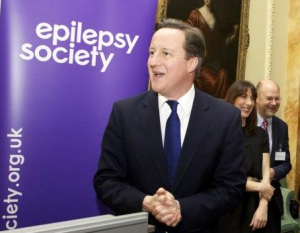
All smiles for the camera has he plots to cut the benefits of those with epilepsy All smiles for the camera as he plots to cut the benefits of those with epilepsy

It must take some front to vote to slash benefits to poverty levels for sick and disabled claimants whilst also acting as a patron or trustee for charities that claims to support them.  So it is good news that Tory MP Kit Malthouse has been forced to resign as patron of his local MS Society whilst Zac Goldsmith is also facing questions about his role as patron of a Richmond AIDS charity.  But this astonishing hypocrisy goes right to the top of the Tory Party.

David Cameron himself is vice-president of two major epilepsy charities, as well as two local cancer charities.  According to the register of minister’s interests the Prime Minister is vice-president of both the Epilepsy Society and the National Centre for Young People with Epilepsy, as well as being a Trustee…

View original post 380 more words

“The DWP Should Limit Any Form Of Contact With Humans To No More Than One Threat Per Month”

March 15, 2016

A very moving post, spotted on Facebook:

Bloody annoyed. First I get the ESA form. Took me awhile to fill in because my hands shake and spasm so much that it is difficult controlling the pen. Also, I found there is more than enough of repetition that I got really annoyed.

Next, I got a letter on Saturday, a great long thing from the DWP, telling me how DLA is coming to an end, and I will be invited to apply for PIP. It took me the whole of six pages to realise that this wasn’t happening to me right now, but may be happening soon.

I had a hard enough time with one over long form to fill in, a letter threatening that it should be sent before 21st March, and the threat of ending DLA in favour of PIP which they might grant if there is an R in the month.

I’m in poor health and getting letters and forms from Nos Feratu Duncan Smith is no welcome event. The DWP needs to limit any form of contact with humans to no more than one threat per month. If I had a lesser constituent, I could have died from the stress.. well, I’m not committing suicide. They won’t get me that way.

Blind Man Tells George Galloway Radio Phone-In: Benefit Cuts Mean I’d Be Better Off Dead”

March 15, 2016

Same Difference came across this last night on Welfare Weekly.

We think it needs to go viral.

Sense Urges Government Not To Overlook Disabled People In Upcoming Budget

March 15, 2016

A press release:

Sense urges Government not to overlook disabled people in upcoming budget

National deafblind charity warns against long-term effects of failing to protect welfare benefits and social care for disabled people

Ahead of The Budget announcement this Wednesday [16th March 2016], national deafblind charity, Sense, is calling on the government to put the brakes on further cuts to disabled people.

The last few weeks have seen drastic reductions to ESA and the expectation of cuts to PIP payments, which will adversely affect the lives of many vulnerable people across the country. Sense is asking the Chancellor to seriously consider the impact of these changes ahead of The Budget and to stop further cuts to welfare benefits and to properly fund the social care services that are critical to maintaining the dignity and independence of thousands of disabled people.

There has been speculation that there will be changes made to the management of Attendance Allowance as part of the upcoming Budget. This vital benefit enables older disabled people to continue to live independently rather than being forced into residential care. Sense is concerned that by shifting the responsibility of managing this £5billion benefit budget to local councils, without a national eligibility criteria, there is a real risk that older disabled people will be faced with a post code lottery when claiming this essential benefit.

Rather than focusing on cutting welfare for disabled people, the charity is calling on the Government to make a commitment to improving life chances for disabled people.

Richard Kramer, Deputy Chief Executive for deafblind charity Sense, said:

“All too often, the most vulnerable people are the ones hit hardest by the Government’s spending cuts and the recent changes to ESA and expected announcements on PIP are prime examples of focusing on short-term savings rather than long-term consequences.

Welfare benefits and social care are critical in supporting disabled people to live independently and as active members of the community.  Now there is speculation on changes to Attendance Allowance, which is particularly worrying as it is a vital benefit that protects older disabled people from being forced from their homes and into residential care. The threat of changes to this benefit is further evidence of quick savings trumping preventative measures.

The Government must focus on effective support to help those affected by recent cuts or else it runs the very real risk of dealing with the longer term implications of leaving some disabled people financially struggling, isolated from their communities and ultimately dependent on other services, such as the NHS, at a significant cost.

There is no room for any further cuts, which is why it is time to reframe the debate for disabled people. It is imperative that the Government refocuses on improving the life chances for disabled people and making a long term commitment to protecting the dignity and independence of disabled people across the country.”

David Cameron And Iain Duncan Smith Are Patrons Of The Motability Scheme

March 14, 2016

Same Difference has just discovered some information that you really couldn’t make up, readers.

Patrons of the Motability Scheme include David Cameron and Iain Duncan Smith.

Yet, readers, those very patrons of the scheme are sitting back and letting things like this and this and this happen.

Readers, DPAC have recently been running a very successful campaign trying to force disability charities to break links with MPs who voted for the cuts to the ESA WRAG.

Same Difference would love to see Cameron and IDS forced to step down from their roles at Motability. Even though Cameron abstained in the last vote on the policy, he leads the Government, and IDS the department, that thought it up.


Mirror Cartoon On George Osborne And Disability Benefits

March 14, 2016

Same Difference sends many thanks to reader and campaigner Nessie King who shared this on Facebook:

Mirror columnist Kevin Maguire says this week’s Budget will expose once and for all the Chancellor’s incompetence and ideological hatred of our most vulnerable

Brilliant image in the Mirror

You Can Appeal Decisions Not To Award PIP Indefinitely Or For A Longer Period

March 14, 2016

With many thanks to Disability Rights UK:

An important new Upper Tribunal judgment has clarified the legal framework for deciding whether a Personal Independence Payment (PIP) award should be an indefinite award or for a fixed term.

The judgment can be used by those disabled people who feel that they should be made an indefinite award of PIP as their daily living and/or mobility problems are unlikely to diminish.

It can also be used by those disabled people who feel that they should have been made a longer fixed term PIP award again because their daily living and/or mobility problems are likely be more long standing.

In UK/5459/2014, Upper Tribunal Judge Mitchell holds that the Welfare Reform Act 2012 provides a qualified requirement that PIP awards are to be for a fixed term.

The statutory qualification to the requirement for fixed term awards is that a fixed term award would be “inappropriate”.

In deciding whether a fixed term would be inappropriate, a key consideration is the likely persistence of an individual’s limiting conditions.

A factor in favour of concluding a fixed term award would be inappropriate is the relative ease with which the DWP may re-open the question of a PIP recipient’s entitlement even if s/he has an indefinite award.

Judge Mitchell further holds that:

  • if a fixed term award would be inappropriate, an indefinite award is to be made;
  • a First-tier Tribunal has jurisdiction to hear an appeal against a decision not to make an indefinite award; and
  • if the Secretary of State issues guidance about deciding whether a fixed term award would be inappropriate, while a First-tier Tribunal is required to have regard to the guidance it must not be treated as if it were a rule.

In fixing the duration of a fixed term award, relevant considerations will include the likely persistence of an individual’s limiting conditions and the relative ease with which PIP entitlement may be re-opened before the end of the fixed term. Generally, the likely persistence of limiting conditions and duration of a fixed term award are positively related.

In addition, Judge Mitchell finds that:

  • rigid categories for the duration of fixed term awards are not compatible with the purpose of the 2012 Act; and
  • a First-tier Tribunal has jurisdiction to hear an appeal against a decision as to the duration of a fixed term award.

This decision also clarifies that DLA to PIP transfer awards have effect from a date determined by reference to the Secretary of State’s entitlement decision, not the date of the transfer claim.


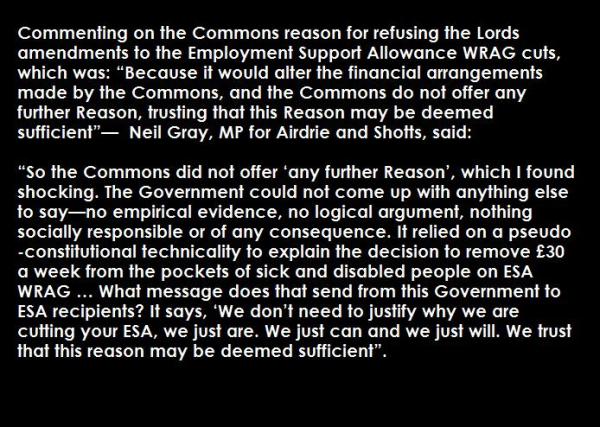
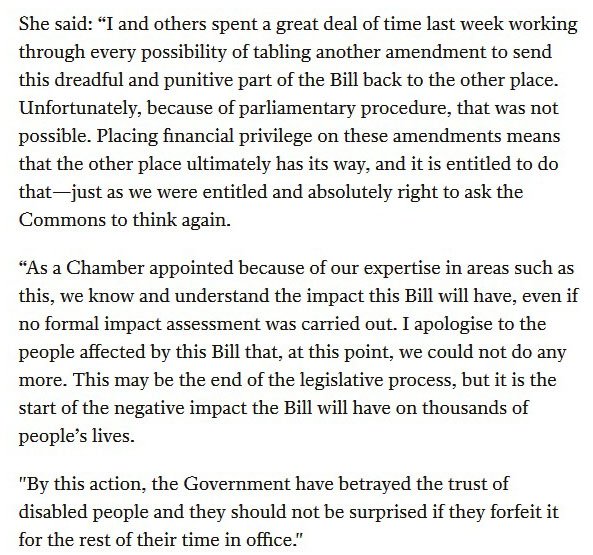
The Government’s brutal cuts to disability support isn’t ‘increasing spending’ Chancellor, but handing out tax cuts to the rich is

March 14, 2016

Kitty S Jones's avatarPolitics and Insights

Chancellor George Osborne

2 wrag

Source: Hansard

Context

Many of us recognised in 2012, when the welfare “reforms” and other cuts to public services that support the poorest citizens were forced through parliament despite considerable opposition, using only the “financial privilege” of the Commons as a justification, that the Conservatives are on an ideological crusade, which flies in the face of public needs, democracy and sound economics, to shrink the welfare state and privatise our essential services. In a wealth transfer from the poorest to the very rich, we have witnessed the profits of public services being privatised, but the losses have been socialised – entailing a process of economic enclosure for the wealthiest, whilst the burden of losses have been placed on the most marginalised social groups and our most vulnerable citizens – largely those who are ill, disabled and elderly.

That the cuts are ideologically driven, and have nothing whatsoever to do with…

View original post 2,752 more words

Alex Brooker Gives IDS A Piece Of His Mind On ESA WRAG Cuts

March 14, 2016

On the most recent episode of the brilliant The Last Leg.

“Pretty Cripples” And Devotees- The People Turned On By Disability

March 14, 2016

After posting a photo of herself online, disabled BBC Three presenter Emily Yates was shocked to receive a message saying “pretty cripple”. It led her to investigate the secret world of “devotees” – those who are sexually aroused by disabled people and their struggles.

It was 2011 and I was living in Melbourne, Australia, when I posted a photo of myself in my wheelchair on Facebook ahead of the university’s annual ball.

Later I saw a few friendly comments had been added from people wishing me a great evening but below that I was shocked to see the words “pretty cripple” posted by a friend in New York.

I was hurt that compliments and negative terms could go hand-in-hand in this way, but was even more offended when I later discovered that, to some, it was the biggest gesture of admiration he could have given me.

After an angry Facebook rant, I found myself being introduced to a community of people who are sexually aroused, and attracted to, disability as friends pointed me towards some websites about people known as devotees.

The websites would become the doorway to discovering some pretty dark stuff but, surprisingly, I found it strangely refreshing at times.

I’m ashamed to say that I often find myself almost apologising for my disability. I have cerebral palsy and, when talking to guys online, I make sure they know I’m a wheelchair user so they have a get-out clause before choosing to meet me.

In a world that constantly tells us anything out of the realms of “normal” is undesirable, I’d be lying if I said I wasn’t impressed by the idea that there are people out there who would happily love and accept every little bit of me, especially the bits that I’ve always considered flawed.

But, as I started to come face to face with people in the devotee community, I felt wary.

One of the first I met was Gray, a husband and father in the USA, who wanted to remain anonymous as even his wife doesn’t know of his interest.

He seemed both confident and lonely – accepting of his “devness” as he calls it, but equally trapped by it.

He told me he thought my legs were “very nice and sexy” and sees leg-braces or wheelchairs in the same way others see party dresses. For him, relationships with disabled women can offer more intimacy than those with able-bodied women.

Gray’s interest in disabled women first emerged at school when a girl with a very short leg and one arm entered his classroom, he says he fell immediately in love: “To me she was obviously the most gorgeous woman in the whole school district.”

As I spoke to him, though, I wondered if his attraction was more about vulnerability and power – things which I didn’t want others to consider when they look at me.

It was through meeting Gray that I discovered some devs are solely attracted to the disabled body, and cannot find sexual gratification with able-bodied partners.

Ruth Madison, an American author who writes fiction about a teenage devotee and her love for a paraplegic man, is open about her devoteeism, which is perhaps why I liked her so much.

She says she was a toddler when she first realised her desire for disabled people but knew she “couldn’t let anyone know”. This led to years of intense secrecy.

When I met Madison she proudly showed me her desk chair – it’s a second-hand wheelchair – and said her feelings are now so intense it impacts her sex life.

People she gets involved with have to be noticeably disabled. One boyfriend she had was paralysed but only had a damaged spinal cord rather than a completely severed one and so had a certain degree of mobility. “He didn’t always use equipment,” she says, “and when we were in bed together I couldn’t really see his disability.

“That would sometimes hamper things for me,” she says, and admits she would have to look at his stick or wheelchair to become aroused.

Meeting Madison and seeing her open and honest attitude empowered me.

Devoteeism finally had a face and a name which invited me into a home, was transparent and much more than an online presence with a disability fetish. It helped make me realise devotees are people too.

But I also came into contact with a section of the devotee community called the “bad devs” – those who enjoy watching someone struggle.

Simply put, this particular fetish focuses on the difficulties someone with a disability might face in their everyday life, such as using stairs.

To find out more about this for myself I decided to make my own “devotee porn” for bad devs.

Strangely, it’s not like the porn you might be thinking of. Imagine the most mundane everyday task acted out by a disabled person. Not worth watching, right? Some devotees couldn’t disagree more.

Putting a call out on social media I asked what my audience wanted to see from me. Their requests came thick and fast. Some said they would love to see me transfer from my bed to my wheelchair with a clear view of my feet and legs and someone else added they hoped I would have a few muscle spasms too. They were very upfront about what they like.

I made a short film of me transferring from my wheelchair to my beloved car, but I almost cried beforehand because I felt so objectified.

If it was a performance and I could look really sexy that could be really fun, but actually what they’re asking me to do is something I do every day and have difficulty with.

While wandering through this world of devoteeism I have come across examples of troubling empowerment and exploitation but, at the same time, I’ve learnt something important and positive.

I met many devotees along the way and some were really genuine, I understood them and liked them.

Essentially what they were saying was, “Why should we exclude anybody when disabled people can be just as beautiful?” But I think there’s also a problem when you fetishise something, that it can hamper you from having feelings for the full person.

Am I here to judge devoteeism? Of course not. In fact, I believe that putting this otherwise hidden subject out in the open will help both devotees and disabled people to find what they are looking for, or what doesn’t interest them.

Do I want to ensure that we all have the knowledge and confidence to make our own sexual decisions, weighing up pros and cons, regardless of ability? Absolutely, and I hope my investigation is just the start of encouraging that conversation to flourish.

If you are interested, you can watch the documentary on BBC Three’s Youtube channel here.

Sense Responds To Government Announcement Of Planned PIP Cuts

March 14, 2016

A press release:

Government announces additional cuts of 1.2billion for disabled people on the Personal Independence Payment (PIP)


Sense responds to the government’s decision to reform the way eligibility for PIP is assessed

[11th March 2016] National deafblind charity Sense has responded to the government announcement that it will push forward with plans to change the eligibility criteria for people applying to receive the Personal Independence Payment.  Under the proposed changes, people who qualify for the benefit due to their use of ‘aids and adaptions’ will be far less likely to score enough points to qualify for the benefit.

Sense has raised concerns that the proposal will adversely affect the lives of the deafblind and disabled people that the charity supports. People with sensory impairments often rely on a range of aids and adaptions to help with daily living, including items such as hearing aids, long canes, vibrating alarms and magnifiers, and many will face significant additional costs because of their impairments.

The government has focused on achieving short term savings by seeking further reductions in PIP expenditure without considering the longer term consequences.   If people are left without this essential support to meet the extra costs of their disability, they will inevitably become more dependent on other services in future.

Kate Fitch, Head of Public Policy at Sense said:


“We are concerned that changes to the PIP assessment criteria will mean a reduction in vital financial support for many people with sensory impairments.

A reduced income may mean that some individuals will be left without the essential support they need to pay for the extra costs of their disability.  This may include communication support, technology to access information and the costs of basic daily living.

People with sensory impairments often depend on aids and appliances to live an independent life and play an active role in their community.  The government must urgently consider the likely impact of these changes on people with sensory impairments and introduce concessions.”

Labour Party To Refer Groundless Iain Duncan Smith Claim To Statistics Watchdog Again

March 14, 2016

Kitty S Jones's avatarPolitics and Insights

Steve Bell cartoon
Iain Duncan Smith is telling fibs again. Work and pensions secretary claims that 75% of jobseekers think that benefit sanctions have helped them “focus and get on.”

The following is reported by Rowena Mason and Patrick Butler, for theguardian.com on Saturday 12th March 2016:

Labour is to challenge Iain Duncan Smith’s claim that 75% of jobseekers think benefit sanctions have helped them “focus and get on” by lodging a complaint with the official statistics watchdog.

Owen Smith, the shadow work and pensions secretary, said he would write to Duncan Smith challenging him to back up the “groundless” figure and refer the matter to theUK Statistics Authorityfor investigation.

The work and pensions secretary made the claim in an interview with theCamden New Journal, in which he suggested many claimants were grateful for the consequences of benefit sanctions.

“Seventy-five per cent of all those who have been…

View original post 683 more words

Severely Disabled Patient Used Blinks To Reveal Sexual Abuse

March 14, 2016

A severely disabled patient incapable of speech used a series of blinks to say that a nurse was sexually abusing him.

The man, who is quadriplegic and has communication difficulties, was a patient under the care of University Hospital of South Manchester Trust, when he spelled out “I am being abused.”

Nurse Ernesto Corpus has been sacked and banned from nursing by a disciplinary panel.

Corpus was acquitted of sex attacks against the patient in court in 2013, but the nursing watchdog has now called the patient’s evidence “compelling,” the Manchester Evening News reported.

The Nursing and Midwifery Council watched video evidence from the patient – whose communication has improved since the alleged abuse – and concluded he was “credible and reliable.”

Corpus has shown “no remorse” and had to be removed from the nursing register to protect the public and the reputation of the profession, the panel said.

“By performing sexual acts on the patient, Mr Corpus’ actions stripped him of his dignity and caused him and his family emotional turmoil and psychological distress.

“There remains a real risk of repetition of this sort of behaviour, should the opportunity arise.”

Another nurse gave evidence to the panel that Corpus was “professional, pleasant and personable,” and that she had no cause to doubt his ability as a nurse.

However, the panel found that he had acted in a “sexually predatory manner” towards the patient.

Why Disabled People Should Vote To Stay In The EU

March 11, 2016

Readers, on a personal level, I have already, recently, decided that I would like the UK to Remain in the EU. I admit that I’ve been influenced by media coverage of how trade will be affected if we Leave.

As a publication, Same Difference always supports whatever would be best for the UK’s disability community. We had some idea that the best option would be to Remain, but this speech, first published on DPAC’s website and reproduced here with many thanks, has confirmed our position.

Extracts from speech by Richard Howitt

 “British Disabled People Are Stronger In Europe.” Speech by Richard Howitt MEP, Co-President of the European Parliament’s All-Party Disability Rights Group 11 March 2016.


So far the European Referendum debate has been dominated – at least in the airwaves – by discussion of Treaties, trade agreements, legal competences.


These are all very important.


But ultimately they are important because of their impact on people in Britain.

And today I want to talk about how people are better off with Britain in Europe.


And in particular how British disabled people are stronger with Britain remaining in the European Union.


I used to work in the Disability Movement before going in to politics and as Vice-Chair and now again Chair of the All-Party Disability Rights Group of MEPs during all my time in the European Parliament, I still see myself as an activist.


I have often told the story about how I was motivated to stand for the European Parliament by being part of a European project where we brought British and Dutch profoundly deaf people together. At first, differences in sign language meant they couldn’t communicate. But within 15 minutes they had spontaneously found a way of doing so – very effectively.


It taught me a lesson about pulling barriers down and how people benefit by doing so.

People with disabilities will always campaign to pull down barriers.


In the European referendum, the Disability Movement should campaign against erecting new barriers.


When I was elected, let me also remind you that there was no provision for Europe to be able to pass legislation for disabled people.


And we campaigned successfully to change that, in what is now known as Article 19.


Why did we do that?


Because discrimination does not stop at borders.


In all the talk of ‘free movement’, what about the right of a wheelchair user to move freely to visit another European country?


The great moves that have been made in accessible tourism. The spirit that Britain brought to hosting the Paralympics.


That’s the same spirit I – as a British politician – take to upholding rights of access and of participation for people with disabilities in the European Union.


And what are some of our achievements by doing so?


Non-discrimination in the right to work for disabled people in all European countries.


Access requirements – never enough but very significant compared with the past – for lifts in public buildings, for web accessibility, now in all major transport modes.


Today, on the table, a European-wide general Accessibility Act.


A ban on all new funding going towards segregating, institutionalisation of people with disabilities, particularly important for people with learning disabilities amongst others.


In addition, the legal exemption from EU state aid rules to allow public authorities to directly contract, provides an important boost for people with disabilities to set up and run their own social enterprises.


Like ‘Norfolk Industries’ in which a group of a group of blind employees produce and sell animal bedding based in Norwich and a computer recycling and repair company ‘Reboot’ formed from a group of people with Aspergers – both from my own East of England constituency.


People in Britain with rare diseases, too few for effective treatments to be developed, have benefitted from European Research programmes being able to do so, when the greater numbers experiencing the same disability are put together across all 28 countries of the EU.


International copyright rules have been established which allow blind people to continue to benefit from talking books and newspapers.


Those who campaign to leave the European Union say Britain could pass these laws on our own.


But disabled people should consider: do you believe that this or any British Government would tear up all these rights and then one-by-one draw up new laws to reinstate them?


Don’t politicians always delay things or water them down?


And what those who would leave the European Union won’t tell you is that this European social legislation is a minimum standard, and there is already a specific rule that says European Union countries can go further?


If there really was such political will in Britain to go even further for the rights of people with disabilities – why hasn’t Britain done so already?


The truth is that the minimum floor of rights created in Europe has actually pulled up standards for all.


And remaining in Europe will see that gradual process of improvement continue in to the future.


Indeed there are examples where British politicians have been tempted to act against or remove rights or benefits for disabled people, which have been and are being prevented by these minimum standards of European law.


The European Non-Discrimination in Employment law meant Britain’s Disability Discrimination Act had to be extended to small businesses too, which had not previously been the case.


British Sign Language only became an official language in the United Kingdom, following years of resistance, after a declaration in the European Parliament of which I was proud to be a co-signatory.


The position of the Equalities and Human Rights Commission in the United Kingdom which has been under a barrage of criticism, is protected by the requirements of an ‘indeoendent body’ laid down in the EU non-discrimination directives.


British disabled people are stronger in Europe.


And although I am deeply sad at the abolition of the Independent Living Fund here in Britain, it is worth remembering that the whole concepts of independent living, personal assistance and personal budgets were pioneered in Europe by the Scandinavian countries and can be said to have been imported to Britain from there.


I believe remaining in the EU to be important for keeping the whole concept of ‘independent living’ itself alive.


The lesson for disabled people is that while they may not be truly independent, our country is. This very example shows social security laws – like the vast majority of areas affecting our national life – remain determined at Westminster.


But there is a lesson as well to EU ‘leave’ campaigners, from the experience of people with disabilities.


We all strive for independence. But sometimes a recognition of inter-dependence is important too. Cooperating with others can be a better route to maximising our own interests and welfare, working for and not against them.


Now the last big argument of the EU ‘leave’ campaign is that there is somehow a better alternative outside the European Union.


Could that be true for disabled people?


Just last month I helped host a visit to Brussels by organisations of disabled people from Asia, Africa and Latin America. They didn’t think it was better for them and their countries to create links to Britain if we left the European Union.


Indeed for them, life was better in the European Union and they had come to Brussels to learn from and copy our ways of working.


Add to that the campaign I and so many people have been integrally involved in, over the last decade, to successfully get agreement of a United Nations Convention on the Rights of People with Disabilities.


I know how European diplomacy played a vital role in winning support for the convention.  And it is now the first ever UN human rights convention to which the European Union as an institution has become a signatory.  Implementation of the convention is improving the lives of disabled people in Europe and in the rest of the world.


Europe wasn’t an impediment to achieving this, it was a powerful tool.


Britain in Europe does look out in to the world and is not held back from doing so.


Europe is a stepping stone, which helps us on our journey and prevents us from falling in the water.


Britain within the European Union is more influential in the world and the world is better off because of it.


Now my mention of human rights does cause me to explain that Eurosceptics deliberately confuse the Court of Justice for EU law with the European Court of Human Rights, which is nothing to do with the European Union.


Nevertheless, when the EU ‘leave’ campaign rails against the powers of the European Court, they should remember the landmark cases where disabled people’s human rights have been upheld.


Like the person with mental health [issues] who won a right to review his detention in a psychiatric hospital, the parents who challenged a hospital decision to put a ‘do not resuscitate’ notice on their severely disabled child or the woman who’d had a stroke who challenged her local authority for cutting her care package to a level which deprived her a minimum level of dignity.


It is a good not a bad thing that ‘the state’ can itself be challenged under the rule of law on such important issues of deprivation of liberty, cruel and degrading treatment and the right to life itself.


And in today’s economy of austerity, where rationing and denial of services has become the norm, never discount the fact that the economic prosperity which comes from Britain’s membership of the European Union is vital, if we are fund the public services which many disabled people believe should be theirs of right…


In the Disability Movement.


We want to pull down barriers not erect them.


We recognise discrimination does not stop at borders.


We want to protect Europe’s very significant achievements for people with disabilities, prevent others from being taken away and provide a platform for the further improvements of the future.


We know we can be independent and inter-dependent at one and the same time.


We know that there is no easy, better alternative – indeed the wider world becomes a better place if we remain in, than if we leave.


Above all, the EU referendum is about people and I have argued that British disabled people are stronger in Europe.


This is a call for people with disabilities themselves to vote in the referendum, to vote for Britain to remain in the EU and – in doing so – to vote for better lives for all disabled people in Britain and across Europe.


ENDS.


Richard Howitt MEP is Member of the European Parliament for the East of England and Co-President of the European Parliament All-Party Disability Rights Group of MEPs.


E-mail:

richard.howitt@europarl.europa.eu

Website:

www.richardhowittmep.com

Facebook:

www.facebook.com/richardhowittmep

Twitter:

@richardhowitt

Shocking Announcement: Disability Benefits To Be Slashed For 640,000 People

March 11, 2016

johnny void's avatarthe void

ceiling hoist A ‘low, one off cost’ according to the DWP

The government is set to slash benefits intended to meet the additional cost of living with a disability warning that up to 640,000 people could be affected by 2021.

The shocking announcement follows a recent consultation into Personal Independence Payments (PIP) – the benefit currently being rolled out to replace Disability Living Allowance.  This benefit is awarded based on a points system which assesses addional costs incurred due to disability such as care or mobility needs.  In a press release issued this morning the DWP have said that in future the numbers of points awarded to people who need some form of aid or appliance to help them dress or manage toilet needs will be halved.

According the department this is because much of the equipment needed by disabled people to manage these activites is available for one one off purchase…

View original post 583 more words

Government Advisor Matthew Oakley Suggests Scrapping The Support Group

March 11, 2016

Government advisor, Matthew Oakley, recently published a report titled Closing the gap: creating a framework for tackling the disability employment gap in the UK,

This report suggests a major reform of ESA and the WCA. His suggestions include scrapping the Support Group. (red bolding below mine.)


Four principles that should form the basis for reform of Employment and Support Allowance (ESA) and the WCA are outlined below. It is important to highlight that this would not be a cost-cutting exercise. The reforms proposed would combine existing money and aim to distribute it better on the basis of need.

  • Splitting benefit eligibility from setting conditionality
    As suggested in other reports, the assessment of eligibility for benefit should be split from the assessment of an individual’s ability to move towards and enter work. This would ensure that, no matter what the level of benefit an individual receives, they will still have an incentive to engage with the support available and move towards work if they are able to.
  • Creating a common income-replacement element in Universal Credit
    The most obvious way of delivering this would be to remove the WCA and create one aligned income replacement benefit within Universal Credit. Anyone out of work and claiming benefits would receive the same basic entitlement to Universal Credit.
  • Accounting for the extra costs of disability
    In effect, this would remove the Support Group element of ESA
    and align benefit rates for disabled and non-disabled claimants in Universal Credit. However, it is clear that those with a disability often face extra costs of living.To meet these extra costs, existing spending on Personal Independence Payment (PIP) / Disability Living Allowance (DLA) and the support Group element of ESA should be brought together to finance a new extra costs benefit. Eligibility for this benefit should be determined on the basis of need, with an assessment replacing the WCA and PIP assessment and designed with extensive consultation.Where individuals are unable to work, there should also be a principle that the level of benefit provided is sufficient to allow them to live comfortably and engage fully in society. In the longer-term, the Government should explore whether these benefits could be set to ensure that disabled claimants are lifted out of poverty with the income they receive.
  • Out on limb – contributory ESA (ESA(c))
    ESA(c) is currently expected to run alongside Universal Credit. However, these reforms will mean that the basis for determining eligibility (the WCA) to ESA(c) will be removed. This means that reform will be needed. Many reports have outlined arguments for strengthening the role of contributory benefits. Many of these have focussed on the role that a form of privately run social insurance could play in both increasing benefit generosity and improving the support that individuals get to manage their conditions and move back to work. These wider reforms of ESA would provide a much needed opportunity to revisit these arguments and build a benefit system that is both more supportive and more sustainable in the long term.

Readers, I would like to believe that this could be a good thing. However, I tried that with PIP which was sold to disabled people as ‘focusing on what we can do not what we can’t.”

So far, the stories I have heard about PIP have been bitterly disappointing and have left me with a deep fear of being transferred from my indefinite DLA Award, so now I have strong doubts about these new ideas.

Downs Model Madeline Stuart Stars In Beautiful Wedding Photoshoot

March 11, 2016

Madeline Stuart has modelled a series of bridal gowns for a wedding-themed shoot at Rixey Manor, a popular wedding venue in Northern Virginia.

Stuart, who has Down Syndrome has seen her modelling career go from strength to strength in the past year – walking at New York Fashion Week (twice), landing some huge ad campaigns and even having a handbag named after her – but we think this new photoshoot is one of the most breathtakingly beautiful the 18-year-old has done yet.

Isadora Martin-Dye, who owns Rixey Manor with her husband and put together the shoot, told The Huffington Post UK: “A lot of newly engaged women cannot see themselves as a bride because all the images magazines use are of these tall, thin models.

“I think that being a bride is a life experience that every woman should be able to see herself doing – and definitely not stressing about the fact that they wont look ‘perfect’ on their wedding day.”

See the shoot in full at the first link.

Same Difference sees this photoshoot as a big piece of progress for disabled women everywhere, readers. If it gives even one disabled woman who doubts she’ll ever get married hope, it will have done something very special.

Photo Of Mencap Support Worker Smoking While On Phone While At Work Goes Viral On Facebook

March 11, 2016

The post below has been shared nearly 50,000 times at time of writing.

Mencap say in the comments:

Hi Charlotte, we are appalled by what is happening in the picture. After seeing it we immediately took action, and have suspended the support worker in question and reported the issue to the relevant local authority safeguarding team. We take the wellbeing of the people we support extremely seriously, and we expect and train our staff to deliver high quality care and support services. What we see here would fall well below that standard. Our priority now, as always, is ensuring that we offer the highest quality of care to our beneficiaries so they live the lives they choose.


DWP workers please read. 

March 10, 2016

Charlotte Hughes's avatarThe poor side of life

We’ve been working on this for a while now, this things aren’t quick to publicise because we have to ensure the legalities are correct.

For too long now DWP workers have been wrongfully implementing rules that aren’t set in stone, nor does the DWP care much for honesty, compassion and common sense. So we’ve outlined the rules, knowingly ignoring these could well end up with possible court action, with the DWP worker being taken to court. Before everyone starts laughing folk have had enough of being treated like rubbish, discriminated against. So take heed, read and learn.

Also for any DWP workers out there that want to do the right thing and feel unable to, this will empower you to be able to treat claimants fairly.

Please note we don’t sit around doing nothing. We work hard challenging and trying to end the barbaric sanctioning regime.

Print this out and…

View original post 1 more word

Baroness Tanni Grey Thompson Quits 2017 Athletics Championships Over ‘Tokenistic’ Role

March 10, 2016

Tanni Grey-Thompson has become the fourth official from the 2017 World Athletics Championships to resign from the London organising committee in the space of two months saying she felt her role was “a bit too tokenistic”.

The 11-times Paralympic wheelchair champion has quit the board in frustration over her role.

In February, the managing director, Sally Bolton, resigned after fellow board members Heather Hancock and Martin Stewart left their positions.

“For me it was just all getting a bit tokenistic and it’s not fun or interesting,” Grey-Thompson told the Sport Industry Breakfast Club in London. “I don’t mind the fight – trying to challenge people about disability athletics is what I’m meant to do. But I got tired of saying: ‘And what about the Paralympic athletes?’ It needs to be someone else because I don’t feel I was having the impact in terms of taking that discussion on.”

Grey-Thompson, a member of the House of Lords, felt she was “going round in circles” trying to provide an all-round contribution to an organising committee headed by the UK Athletics chairman, Ed Warner.

“I had run out of energy in terms of having to have that fight,” Grey-Thompson said. “I was being seen as the person to carry the torch of inclusion. I can offer more than that and other people can as well. It just felt it wasn’t the place for me to be.”

London won the bid to stage the championships in a 2011 vote. The event will be held at the Olympic Stadium.

Catherine McKinnell MP Tackles PM On Motability Cuts

March 10, 2016

Newcastle North MP, Catherine McKinnell, has today tackled the Prime Minister about the number of disabled people losing their independence as a result of the Government’s benefit changes since 2013.

Speaking during Prime Minister’s Questions in the Commons, Catherine raised the case of her constituent, William Bradney, who has recently been told he is no longer eligible for a Motability vehicle despite a lifelong disability caused by contracting polio as an infant.

The Motability scheme helps disabled people to be independent by enabling them to exchange their mobility allowance to lease a car, scooter or powered wheelchair.  Previously, people in receipt of the highest rate of the ‘mobility component’ of Disability Living Allowance (DLA) were eligible for the Motability scheme.

However, following welfare reforms which replaced DLA with the Personal Independence Payment (PIP) in April 2013, new and existing claimants must now undergo a new assessment and figures uncovered by the BBC last month revealed that almost 14,000 people with disabilities had lost their Motability vehicles as a result.

Catherine asked the Prime Minister:

‘In 1949, aged 11 months, my constituent William Bradney was diagnosed with polio.

‘He has worked from the age of 15, and he continues to work at 67.

‘But following a clearly flawed PIP assessment, he’s set to lose his Motability car, potentially within three weeks. He says it will leave him unable to leave the house and unable to work.

‘Will the Prime Minister urgently review his case, and the cases of 14,000 disabled people who’ve lost this essential lifeline?’

And speaking after Prime Minister’s Questions, Catherine said:

‘I’m pleased the Prime Minister has agreed to look into my constituent’s case as a matter of urgency – and this really is urgent as Mr Bradney faces losing his car within the next three weeks.

‘But the Government’s changes have hit many thousands of disabled people across the country and there’s a cruel irony in renaming this benefit ‘Personal Independence Payment’ when it’s actually resulted in thousands of people not being able work, or even leave their house, as a result of their Motability lifeline being taken away.

‘It’s just outrageous that Mr Bradney, who values his independence and is still working at the age of 67, now faces losing all of this a result of what is clearly a flawed PIP assessment process.

‘And, whilst the Government frequently claims the change to PIP is not about cutting support for disabled people, they also have clearly stated they hope to save £2billion as a result. It cannot be both.’

A Response To ESA Cuts: “It’s As If They’re Calling Me Lazy”

March 10, 2016

Spotted on Twitter:

response to ESA

Kickstarter Campaign: Speechless By Kate Caryer

March 10, 2016

The unspoken story of growing up disabled with cerebral palsy and no speech. This inclusive company fights ignorance using dark humour.

About this project

To view the video with subtitles please follow this link.

Who are we? 

My name is Kate Caryer. I am a rude, pink-haired, theatre lover and pain in the arse. Oh, and I have a little thing called athetoid cerebral palsy, which means I use a wheelchair and a communication aid (think a punk-haired Stephen Hawking).

I have always loved theatre, but I very rarely see people like me on the stage. If they do show up, they are usually weak, uninteresting caricatures, written by non-disabled people, and not representative of the interesting, diverse group of disabled people that I know. Such roles are also usually given to non-disabled actors!

I wanted to do something about this, so I started The Unspoken Project CIC, along with Paul C. Mooney as Artistic Director, to give acting opportunities to disabled and non-disabled actors, and to bring the real stories of disabled people to the stage. Our first production, Speechless, is due to premier later this year.

What is Speechless?

Speechless shockingly overwrites everything you know about people without speech, and introduces their own stories to stage.

It tells the story of 19-year-old Rebecca. Like Kate, our director, she has no speech due to cerebral palsy. However, like many people in the UK and worldwide, Rebecca has no access to a communication aid or other methods of alternative communication. This means that her story, opinions, and devious teenage thoughts remain unspoken.

This production challenges widespread views about disabled people, through the mediums of dark humour, imaginary friends, and disabled criminals (disabled people can be evil too).

Katie Price Names And Shames Online Trolls Mocking Harvey

March 9, 2016

“For Me, The ESA Cuts Mean The End Of Independence”

March 9, 2016

One claimant tells the Independent what the ESA WRAG cut will mean to him.


I was born with congenital muscular dystrophy, a condition which has caused my muscles to weaken and waste. I use a powered wheelchair, and need help with everyday things that people take for granted. Financial support has been a lifeline for me. It’s allowed me to get a degree, to be a social and active person – and to look for work.

Watching cuts to the Employment Support Allowance stubbornly being pushed through this week against a wave of opposition spelled further doubt, anxiety, and, ultimately, financial loss for myself and many others. The cuts add to an already bleak picture of welfare reforms for disabled people like me, who can afford it the least.

The ESA cuts had previously been delayed by the Lords, but were finally pushed through by the Commons. Through people like Baroness Grey-Thompson and Lord Low of Dalston the House displayed real opposition to the cuts. They constantly called for the Government to carry out a full assessment before the proposals are rolled out. But worryingly, the Government doesn’t think an assessment is necessary.

Then again, neither do I – as I can tell them the outcome already. The struggle it will cause. How it will stunt my independence. How it will cause me stress and anxiety. How it will deny me of funds vital to maintaining links with the outside world through taxis and support towards independent living.

I am one of three campaigners, all of us living with muscle-wasting conditions, who will meet with the Disability Minister Justin Tomlinson this afternoon. At the meeting we will discuss our alarm at the latest cuts and of the repercussions of a blunt approach to the welfare system. We will speak of our fears that many disabled people are being stripped of their dignity, treated with a lack of respect and asked to pay an increasingly high price just to stay engaged with society.

The new round of ESA cuts will create further blocks to social inclusion, all while being sold to the country as somehow incentivising us to gain employment.

For many disabled people who already struggle to afford food and heating, it could prove devastating. A Muscular Dystrophy UK study found that two out of five families affected by muscle-wasting conditions struggle to pay their bills due to the extra pressure this causes. A further four out of five families do not think that the benefits system adequately covers these costs. It doesn’t seem like we’re the right group to target for making savings.

The Government speaks of the value of work, while creating barriers to our employment by the toughening of schemes many rely on for independence. Changes to Access to Work guidelines mean that disabled people are now often required to make increased contributions to equipment vital to employment. People are struggling to secure funding for wheelchairs and vehicles, leaving many stranded, stressed and struggling to find or retain a job.

The ESA cuts have been barged through at a time when many disabled people feel under increasing attack from welfare reforms that are, at best, clumsy – and, at worst, hostile. With the creation of Personal Independent Payments came stricter rules about the ‘mobility component’ of the benefit, which goes towards covering transport and offsetting the toll of an inaccessible public transport network.

A more brutal assessment came with it, which requires people to be able to walk just 20 metres, as opposed to the original 50. 20 metres down a corridor, without any of the steps, curbs, slopes, or bumps that you encounter the moment you walk out your front door.

We’ll be representing the voices of disabled people today against a system that’s failing many and putting many more under needless strain. For disabled people like me, the Government’s planned cuts to ESA represent another black gathering of clouds on an already darkening horizon.  

One PIP Claimant’s Experience At Appeal

March 9, 2016

Baroness Tanni Grey Thompson Apologised To Disabled People In House Of Lords For ESA Cuts

March 9, 2016

This is what Baroness Tanni Grey Thompson said in the House of Lords after the £30 weekly ESA WRAG cuts were forced through:

tanni gt esa

Arguments By Government For ESA WRAG Cuts Left Baroness Campbell Lost For Words

March 9, 2016

Arguments made by the Government to justify sharp disability benefit cuts were so poor they left a peer lost for words, she has said.

Baroness Campbell told the House of Lords that “words failed me” when she had heard the Government’s justification for cutting Employment and Support Allowance by £30.

The peer, a former Commissioner of the Disability Rights Commission who herself uses a ventilator, is an expert in disability reform and the benefits system.

“Our arguments, in my view, were pretty indisputable, especially in regard to the absence of evidence that cutting severely disabled people’s ESA would incentivise them to work,” she said.

“I think we all know deep down inside that it is attitudinal and environmental discrimination that really prevents this group from accessing employment.”

The crossbench peer criticised arguments by the Government in support of the cut, which she said had allowed the “niceties of parliamentary protocol [to] trump the lives of disabled people”.

The Government argues that the sharp cut in weekly payments will incentivise disabled people to find work.

It also says because the cut involves money the House of Lords should not be able to block i

Lord Low, another crossbencher who had proposed the rejected amendment, accused the Government of using “a pseudo-constitutional technicality” to force the measures through and said it was “a black day for disabled people”.

Baroness Campbell continued: “I hope and I pray that we don’t look back on this day as the moment we pushed some of the most severely disabled people in Britain over the edge.”

The peers were discussing the issue in the House of Lords after the Government invoked “financial privilege” on the cuts – meaning the peers could not overrule MPs.

Lord Low’s “Black Day For Disabled People” Speech On The ESA WRAG Cut

March 9, 2016

This is the video of the speech Lord Low gave in the House Of Lords on Monday 7th March, about the £30 weekly cut to the ESA WRAG.

Cabinet To Review All ATOS Contracts

March 8, 2016

With many thanks to Benefits And Work.


The Cabinet is to review Atos’ performance in every one of its government contracts worth more than £10 million, the Guardian has reported. This will include the personal independence payment (PIP) assessment contracts won by Atos.

The review follows severe criticism of Atos by the Public Accounts Committee in relation to a contract to develop an IT system to extract and sell data from GP practices. The committee said that Atos: “appears to have acted solely with its own short-term best interests in mind”. The expected cost of the system rose from £14m to £40m before it had got past the planning and procurement phase.

In relation to PIP, the committee may well want to look into the enormous disparity between the number of assessment centres Atos claimed it would provide and the much smaller number that are actually available.

Many people will also want to know whether the sometimes considerable travel costs being reimbursed to claimants who have been forced to undertake very long journeys are coming out of the profits of Atos or being met by the taxpayer.

You can read the full story in the Guardian.

Decision Makers ‘Plea Bargaining’ By Phone To Avoid Appeals

March 8, 2016

Yesterday Was A ‘Black Day’ For Disabled People- Lord Low

March 8, 2016

A Facebook status from campaigner Sue Jones:

The fact is that Ministers are looking for large savings at the expense of the poorest and most vulnerable. That was not made clear in the general election campaign; then, the Prime Minister said that disabled people would be protected. – [Official Report, Commons, 2/3/16; cols. 1052-58.]”

I started an article about the ESA WRAG cuts which the Tories have hammered through on the back of “financial privilege,” and after Priti Patel informing the Lords that they have “overstepped their mark” in opposing the cuts twice. The Peers have been forced to back down, with Lord Low describing yesterday as a “black day for disabled people”. It is. I’m too depressed to finish it tonight.

But contrary to what is being reported, it won’t be only new claimants affected by this. Anyone with a break in their claim (and that could be a reassessment with a decision that means you have to ask for mandatory review), and those migrated onto Universal Credit will also be affected.

Paralympic gold medallist Baroness Grey-Thompson said she was bitterly disappointed that this “dreadful and punitive” part of the Bill was going ahead.

Parliamentary procedure had prevented her putting down another amendment opposing the move, which will have a harsh, negative impact on thousands of people’s lives.

Facing a UN inquiry into grave and systematic human rights abuses of disabled people, Cameron remains completely unabashed in his government’s blatant attack on a protected social group, and the Conservatives continue to target disabled people for a disproportionately for austrity cuts. Whilst the public remain bystanders.

The “justification” the Tories offer for the cut of almost £120 a month to the lifeline support of people judged to be unfit for work by their own doctors AND the state, is that it will “help people into work”. I’ve never heard of taking money from people who already have very little described as “help” before. The Tories are such lying shameful bastards. Only this bunch of nasty, vindictive and cruel shits would contemplate cutting money from sick and disabled people, whilst gifting the millionaires with £107, 000 each per year in the form of a tax “break”.

Reducing disabled people’s incomes won’t “incentivise” anyone to find a job. It will just make life harder. Baroness Meacher warned that for the most vulnerable the cut was “terrifying” and bound to lead to increased debt.

Condemning the “truly terrible” actions of the Treasury, she urged ministers to monitor the number of suicides in the year after the change comes in, adding: “I am certain there will be people who cannot face the debt and the loss of their home, who will take their lives.” Not only have the government failed to carry out an impact assessment regarding the cuts, Lord Freud said that the impact and suicides won’t be monitored , apart from “privately” because details can’t be shared and because that isn’t a “useful approach”.

He went on to say “We have recently produced a large analysis on this, which I will send to the noble Baroness. That analysis makes it absolutely clear that you cannot make these causal links between the likelihood of dying—however you die—and the fact that someone is claiming benefit.” Actually, a refusal to investigate a correlation is not the same as that correlation not having a causal link, you stupid man. You cannot disprove that there is a causal link, and therefore commenting that there isn’t one established, whilst withholding crucial evidence in parliament and from the public domain is the action and behaviour of a f*cking tyrant.

Frankie Boyle Talks Great Sense On The ESA WRAG Cut

March 8, 2016

Longtime readers know that we at Same Difference have never been fans of Frankie Boyle. However, we give credit where credit is due, and we couldn’t have put this better ourselves.

Why The Archers Needs More Disabled Characters

March 8, 2016

BREAKING: House Of Lords Forced To Accept ESA WRAG Cuts

March 7, 2016

The Lords have chosen not to introduce new amendments to the Welfare Reform and Work Bill today.

Members of the Lords discussed MPs’ amendments on Universal Credit and Employment and Support Allowance. With reluctance, the House bowed to Parliamentary procedure and has accepted the primacy of of the House of Commons, because the Bill concerned finance.

Lord Low called it a black day for a half a million people.

The cuts to Universal Credit and Employment and Support Allowance will now go forward as the Bill will receive Royal Assent.

Victoria Derbyshire’s Breast Cancer Diary: End Of Chemotherapy

March 7, 2016

BBC journalist Victoria Derbyshire has finished the chemotherapy stage of her breast cancer treatment. She describes her emotional reaction to the end of her final cycle.

Derbyshire has been filming diaries since she was diagnosed with breast cancer at the end of July last year, to try to help demystify the treatment. Her fourth one was recorded across January and February.

Speaking on 21 February, the day before her sixth and final round of chemotherapy she says: “Every day for the past four days I have shed tears, which is really unusual because I haven’t much in the past six or seven months at all.

“I think it’s because for the whole of this process I’ve just been concentrating on and focusing on getting through it, taking each day as it comes as much as that is possible, and being pragmatic and cracking on.

“And because it’s coming to an end I’ve been reflecting on what I’ve experienced, I suppose it’s just a release of emotions and a relief. These are actually happy tears because it’s going to be over soon.”

‘Tears of joy’

The following day, as the drugs are administered at the hospital, Derbyshire says it is “great” to think it is the last time she will wear a cold cap. Tightly fitted and so cold it forms ice inside, it is designed to minimise hair loss.

In previous diaries, the presenter has revealed she is wearing a wig but the cap has helped to save about half of her hair.

When a timer rings, alerting staff to the fact the drugs have been administered, Derbyshire says, “That’s it, cool,” then cries as the nurse removes the IV line from her hand.

Derbyshire then hugs her partner and cries into his shoulder.


Watch Victoria’s diary in full here.


Speaking at home later that day she says: “I’m home and I’m happy and I can’t stop crying which is mad – I think it might be six months of tears just coming out in one go if that’s possible.

“I think when it was over – when the drugs had stopped going into me through the IV drip and the cold cap was coming off – I think I was in shock, I couldn’t speak which is not like me.

“I just want to see my boys after school, have a cuddle and a celebratory tea and get on with the rest of my life. I can’t stop crying – tears of joy.”

‘Looking forward’

In an entry filmed on 2 March, Derbyshire says she has spent a week-and-a-half sleeping, because after six sessions of chemotherapy, “your body craves sleep”.

“But psychologically, knowing it’s the last time I’ll feel shattered or achy or my taste buds aren’t right is huge, because if all goes according to plan I will never feel like this again,” she says.

“Right now, I’m looking forward to radiotherapy which starts in the middle of April. In the meantime, I’m looking forward to going back to work full time, to feeling normal, to having fun, to spring coming and to getting on with the rest of my life.”

Earlier in the diaries, Derbyshire shares her other experiences of treatment.

The fourth round of chemotherapy on 6 January left her “totally wiped out,” she says from bed four days later, causing pains in her back, legs and hips. She later says it was the most difficult round to bounce back from and the most unpleasant in terms of side-effects.

Sanguine

On 1 February, five days after the fifth round, she says extra steroids given to her by her oncologist made a massive difference in terms of managing the pain.

But there has been another side-effect – most of her eyelashes have fallen out.

“For the whole of the week my eyes were streaming, weeping really. The oncologist explained that’s because the eyes were compensating for the fact the eyelashes weren’t there to stop any bits of dust and grit from getting in,” she says.

“I am actually quite sanguine now about any more side-effects, so the eyelashes go, I think, ‘Yep, what else have you got, what else do you want to test me with?'”

Derbyshire says she is pleased to be returning to work shortly: “I’ve been trying to work out why being at work at the moment is making me feel so good – and I suppose it’s pretty obvious really, it means I’m not a cancer patient, I don’t really think about cancer when I’m at work, I’m a journalist, I’m just getting on with my job.”

Boss Of Manchester’s Grenache Restaurant Wins Public Support After Standing Up For Autistic Waiter

March 7, 2016

I know where I’ll be eating if I ever visit Manchester!

A restaurant who hit back at customers who refused to be served by an autistic waiter, branding them “down right rude”, has won the support of the public for taking a stand.

Mike Jennings, who owns Grenache restaurant in Manchester, said the unnamed diners told him they did not want to be served by waiter Andy Foster after finding out he was autistic – prompting him to take action and publicly shame them on Facebook.

Writing on the social networking site he said: “We do not discriminate! If you DO…Then please do not book a table at Grenache. You do not deserve our time, effort or respect!”

The response from the public came in quickly with the post liked and shared by hundreds of people who commented that it was a “refreshing change” and “more employers should be like you”.

Mr Jennings added that “serving the public is a hard task”and “every single customer that walks through the doors is entitled to their opinion” but when feedback is “down right rude, upsetting and discriminating” it was time to take a stand.

Former ESA Claimant Writes To His MP On WRAG Cuts

March 7, 2016

Reader Leon Carter recently shared his letter to his MP about WRAG cuts on Facebook:

Maximus Whistleblower: Criteria Meant I Had To Diagnose Mental Health Patients As Well

March 7, 2016

People with mental health problems are still being wrongly assessed by a “severely flawed” system intended to find whether they are entitled to state help, according to a doctor who was charged with improving so-called “fit-for-work” tests.

The doctor, who did not want to be named, was employed by Maximus, the US company that took over the government’s controversial scheme to determine whether claimants are entitled to employment and support allowance in March 2015. He said that despite improvements to the system, some were still “falling through the net”.

The doctor, who now works in the NHS having left the company last year after more than a year as an assessor, alleged there were a series of problems at the heart of the scheme. These include unreasonable targets leading to poor quality assessments; not enough specialists in mental health; and tests that are too subjective and often skewed against the claimant.

As a result, the tests, which were introduced by the Department of Work and Pensions (DWP), were not fit for purpose, the doctor said.

“There may be cases where a person was seriously unwell, but within the criteria in the assessment, I would have to classify them as well,” the doctor, who has psychiatric training said.

Maximus is under severe pressure after a damning report by the National Audit Office in January found it performing worse than its much-criticised predecessor, Atos, in key areas. Auditors found that one in 10 of its reports on disability claimants were below standard, that the average cost of assessments has risen and the company is struggling to retain staff.

The doctor, who trained and worked in psychiatry for four years before becoming a disability assessor, first worked for Atos before going on to work for Maximus.

One issue, they said, were targets that meant the average face-to-face time with a claimant was just 30 minutes. “Working in clinical psychiatry, an assessment of a new patient would take 45-50 minutes, with 10 minutes for dictating notes,” they said.

“The target set by Maximus was six tests a day at 65 minutes each. Around 30 minutes for assessment, 30 for writing up. The argument was you might get an easy case that would take 35/40 minutes and a difficult one that would take longer. But there were times when you had five difficult cases in a row. You get pushed into doing difficult cases fast. I would stay late most evenings and had to skimp on quality at times.”

The DWP said that the scheme had been improved following consultation with mental health experts and charities.

The doctor acknowledged improvements to the scheme, saying that, following a spate of stories about claimants killing themselves, there was a shift in emphasis to allow protection of claimants who were believed to be at risk of harm if they were found fit for work.

However, echoing criticism of the work capability assessments that has been made by mental health groups, medical professionals, user groups and a parliamentary committee, the doctor said he believed those with mental health problems were still being failed by the scheme.

“You need people with psychiatric training. I worked in mental health for three years and I still struggled. If someone tells you they are severely depressed but there is no input from their GP and no psychiatrist, and no input from the mental health system, then the assessor is more likely to put down ‘fit for work’, because the assessor is basing their assessment more on the level of input they have rather than their clinical presentations,” the doctor said. He pointed out the majority of people who killed themselves who had mental health issues had not received a medical assessment.

“Some of the signs are subtle, if they have had depression, if they have had low mood or a lack of energy, looking at their body language. Their demeanour. You can assess how bad their mental state is but that’s very difficult if you have had no training,” he said.

Maximus said all staff had training in how to recognise how a person’s mental health impacted upon their ability to work. He said: “Our doctors, therapists and nurses are responsible for carrying out functional assessments, which are not clinical psychiatric assessments. While it is not our role to diagnose someone’s mental health, we know how important it is to understand it in the context of an individual’s functional capability.”

He said the company had more than doubled the number of mental health experts to help assessors.

“We continue to engage with mental health charities and organisations to support our training and understanding of people with mental health conditions who come to us for an assessment.”

A DWP spokesman said: “We are committed to ensuring people get the right support they need – a high quality and fair assessment is key to this. The work capability assessment has been strengthened following five independent reviews, and this includes the way mental health is assessed.”

A Moving Facebook Post On ESA And Cancer

March 7, 2016
For some unknown reason, the Facebook embed of this post didn’t work for many readers. Same Difference apologises for these difficulties. We’ve pasted the full text of the post below because we believe everyone should read it.
Charles Loft

Please read this. Many people who get cancer become too ill to work, whether the cancer is treatable and eventually goes into remission or it does not. Although the headline figure is 50% cure rate, for poorer people it is more like 25% because of late detection, late start to treatment and poor lifestyles diet-wise or lack of heating-wise. And that bastard IDS wants all these poorer people who get cancer to have just £73.45 a week to live on, while their cancer gets worse and worse. Only when their cancer becomes terminal; and they have six months or less to live does the ESA go up to £105 a week as only then will they be placed in the Support group. If this doesn’t give you an idea of how cruel, callous, heinous and immoral the present government is, I don’t know what will..

Lawyers Call For Full Investigation Into Death Of David Clapson

March 7, 2016

Law firm Leigh Day are calling for a full and public investigation into the death of a 59-year-old ex-soldier who died in 2013 after he was ‘sanctioned’ by the Department for Work & Pensions (DWP).  

David Clapson was a Lance Corporal in the Royal Signals serving in Belfast at the height of the troubles before leaving the army to work for BT. After working for the telecommunications firm for 16 years he became a carer for his elderly mother.  

According to his sister Gill Thompson, David was a proud and private man who found asking for help very difficult. David also suffered Type 1 Diabetes and relied on regular insulin shots to survive.   

He died in July 2013 from fatal diabetic ketoacidosis which occurs when a severe lack of insulin means the body cannot use glucose for energy, and the body starts to break down other body tissue as an alternative energy source.  

The Department for Work and Pensions had sanctioned him for a month, leaving him without electricity and food having stopped his £71.70 Job Seekers Allowance after he failed to attend two appointments.

In a letter to David’s MP, the DWP stated they were “aware Mr Clapson was insulin dependent”.  

With no money for his electricity meter, his family claim he was unable to chill his insulin in the height of Summer. He also was found to have no food in his stomach when he died.  

David’s sister, Gill Thompson has now started a crowd funding campaign in an attempt to secure an Inquest into her brother’s death to investigate whether the benefit sanctions contributed to David suffering fatal ketoacidosis.     

She said: “I cannot bring my brother back but I believe that if there was a full and transparent investigation into his death then lessons are not just learnt, but are acted upon to prevent anymore needless suffering of the vulnerable in our society.  

“My brother was very vulnerable yet he had his JSA allowance stopped for a month, penalised by the job centre for missing two meetings. He tried his best but was vulnerable, he had worked for over 30 years and CV’s were found just feet from his body.  

“He was not a scrounger or skiver, he was simply unwell and vulnerable and needed the caring support rather than being sanctioned without a life line.”  

In 2014 Ms Thompson started a petition with Change.org which gained over 200,000 signatures which helped to secure a Parliamentary Select Committee Inquiry in March 2015, which came up with 26 recommendations.  

However, the Government rejected Gill’s calls for an Independent Review into David’s death and the deaths of others in similar circumstances and rejected the recommendation of the Select Committee that the number of peer reviews into deaths of persons subject to a sanction be made public.   

The Government also refused to accept the recommendation of an independent body to conduct more reviews into the deaths of those in receipt of ‘working-age’ benefits  Government response here.  

Merry Varney from the law firm Leigh Day who is representing Ms Thompson in her fight for an inquest into her brother’s death, said:  

“David had a made a significant contribution to the wider public good, working in the Forces at a difficult time and later providing personal care for his elderly mother. At the time he needed support, he was made destitute for failing to attend a meeting.   

“Managing Type 1 Diabetes requires good nutrition and regular insulin injections. Rendering a person unable to afford food and/or unable to chill their insulin is likely to have fatal consequences. David’s death must be investigated to make sure safeguards are in place to protect others and to establish whether the DWP knowingly cut off David’s lifeline.”

Appealing Successful PIP Decisions- The DWP’s ‘New Dirty Low’

March 5, 2016

Diagnosed With Autism Aged 71

March 4, 2016

A new national autism service is to be set up to improve support for children and adults in Wales, the health minister has announced.

It comes after National Autistic Society Cymru criticised “patchy” provision for the 34,000 people with autism and Asperger syndrome in Wales.

It said nearly two-thirds of people wait too long for diagnosis and it wants targets to back up the strategy.

The Welsh government said the new service would be more joined up.

Retired maths lecturer Ian Walker, from Newport, was diagnosed with autism at the age of 71 – and struggling with electronic devices was one manifestation.

He told BBC Wales health correspondent Owain Clarke his wife already had concerns and they started to investigate after hearing a talk about autistic savants.

Managing Mind and Money

March 4, 2016

It’s thought that half of all British adults with a debt problem have a mental health condition.

So just how far does the relationship between mental health and financial debt go?

Martin Lewis, the money advice expert, is launching a charity to research the issue. One of his ideas is to get credit card providers to freeze accounts of customers with mental health issues if there are unusual spending patterns.

CP Boy Wants ‘Magic Legs’ Like His Twin Sister

March 4, 2016

The parents of twins born with cerebral palsy are calling on the NHS to allow life altering surgery that was offered to only one of their children to be made available to everyone who needs it rather than a select few.

Emma and Phil Elbourne’s 3-year-old daughter Ava was able to have an operation that would allow her to walk, but her brother, who has the same condition, was denied the life changing operation.

Pizza Hut Restaurant Turns Down Group Booking For Severely Disabled Children

March 4, 2016

A big chain pizza restaurant turned down a booking for a group of severely disabled children after being told their carers would not be spending any money, it is claimed.

Charity boss Jean Wilson said that when she went to Pizza Hut and tried to book 14 youngsters and their care workers for two lunch outings in both April and May she was told the eaterie did not take group bookings at peak times.

In a later phone call, Ms Wilson spoke to the manager who re-stated the bookings policy, but when told the carers would not be eating is said to have replied: “I can’t have people in the restaurant that aren’t paying money.”

Pizza Hut has since apologised for making what it said was “the wrong decision with this booking”.

The company, which has restaurants up and down the UK, added the issue had nothing to do with the group being youngsters with disabilities.

However, Ms Wilson said she could not understand why her business had been turned away, when she had spotted a separate group booking for eight children when enquiring at the Worcester Shrub Hill diner on Saturday.

Paralympian David Smith Recovering From Surgery

March 4, 2016

Paralympian David Smith has undergone nine hours of life-saving surgery to a tumour just 8mm (0.3in) from his spine.

The 37-year-old said the surgery went well, but said he had been left temporarily paralysed on one side and was unable to use his left arm and leg.

The athlete, from Aviemore, won gold in rowing at the London Paralympics in 2012 and hoped to compete in Rio this summer in cycling.

However, the need to have another operation ended his dream.

If the tumour was left, there was a risk it would crush his spinal cord and stop him breathing.

In a video recorded from his hospital bed, Smith said: “I feel very good. [I’m] still here. I’m going to push on with the rehab now and get going.

“I need to learn to walk again, learn to stand and anything. Thank you so much for all the messages. Thank you everyone for the energy, it worked.”

David Cameron Abstained On ESA WRAG Cuts

March 4, 2016

The results have been released, readers, and there is big news in them.

David Cameron abstained in the vote on cuts to the ESA WRAG.

The Prime Minister of a country completely voting against his own Government’s policy would be unheard of, but he did the next best thing.

What does this mean? Is David Cameron possibly, just possibly, starting to listen to disabled people? I’m never going to be his biggest fan, readers, but sometimes he gives me just a little bit of hope. This is one of those times.

The other big news is that after last week’s speech against the cut, this time around Heidi Allen was brave enough to vote against the Government. Another two Tory MPs, Stephen McPartland and Jason McCartney, also rebelled.

All 309 votes for the cut came from Tories. Sixteen Tories including Cameron abstained. Twenty-six Labour MPs abstained. No Labour MP voted for the cut. Green MP Caroline Lucas voted against. UKIP’s Douglas Carswell did not vote.

Disappointingly, Robert Halfon and Paul Maynard both voted for the cut again.

The Mirror have included a tool in their article linked above which you can use to see how your MP voted.


Job Coaches Could Soon Be Doctoring Your Medical Records

March 3, 2016

ON FRIDAY, members of Disabled People Against Cuts (DPAC), Mental Health Resistance Network (MHRN) and Boycott Workfare will be protesting together with medical professionals against the placement of job coaches in seven Islington doctors’ surgeries.

In a move that is potentially both unethical and unsafe, NHS Islington Clinical Commissioning Group (CCG) has accepted funding from the Department for Work and Pensions (DWP) to “drive employment outcomes through strategic health commissioning,” with health professionals tasked to deliver benefit cuts for DWP.

This is supported by Richard Watts, leader of Islington council, who is quoted as saying: “We think there is much more that health services can do to promote the idea of employment for people with health conditions.”

Dr Josephine Sauvage from the CCG said: “Prescribing free and confidential employment coaching could be really beneficial to a patient’s confidence and self-esteem, as well as their long-term recovery.”

But campaigners don’t have a positive view of this pilot. We think merging healthcare and employment services in this way can go badly wrong.

The arrival of job coaches in 7 Islington GP surgeries is part of a raft of measures to support the imposition of “work cures,” including setting “employment” as a clinical outcome and allowing employment coaches to directly update patients’ previously confidential medical records.

The Islington pilot comes at a time when unemployment is being branded as a psychological disorder, for which work is the cure. There are further plans to locate Camden and Islington Psychological Therapies Service (iCOPE) staff in Islington jobcentres, compromising their clinical judgment by embedding them in a coercive “back to work” environment.

Dr Lynne Friedli says: “These ‘work cure’ programmes are not only coercive, they peddle a damaging myth that work benefits everyone and that good-quality jobs are available to all.

“In fact, stark inequalities in the UK labour market mean that for many, jobs are insecure, exploitative and don’t provide either emotional satisfaction or a living wage.”

For many disabled people who do have the capacity to work, gaining a decent-quality, fairly paid, stable job may improve their independence and quality of life. However adopting a stance that the individual is to blame in some way if they do not work ignores the barriers disabled people face both gaining and keeping employment and the attitude of employers towards employing them.

Research carried out last year for DPAC by the Public Institute Research Unit, entitled Workplace Hell for Disabled People, indicates that in the last four years there has been a deterioration in the workplace experiences and long-term job prospects of disabled workers — including increasing levels of unlawful discrimination, problems with zero-hours contracts, fewer legal rights and disintegrating long-term job prospects.

Cuts to government support through Access to Work funding and loss of Disability Living Allowance which enable disabled people to work are further compounding the difficulties faced in gaining employment.

A spokesperson for the campaign Boycott Workfare said: “We’re always receiving complaints from people who are trying to continue with courses that would give them real skills and qualifications, who face pressure from the DWP to abandon them for workfare or farcical ‘training’ from DWP contractors.”

Employment coaches for the pilot are provided by Remploy, now owned by Maximus, the private company contracted to carry out work capability assessments. This process is independently associated with increased suicide, self-reported mental health problems and prescription of antidepressants, and found by a judicial review to “disadvantage people with mental health problems, learning disabilities and autism.” It is difficult to imagine any organisation less suited to working in partnership with primary care or with a worse record in relation to mental health and disabled people.

In a recent parliamentary debate which highlighted the atrocious performance of Maximus, MP Louise Haigh stated: “We have failing contractors acting with impunity while it is the sick and disabled paying the price for the government’s flawed agenda.”

Benefit claimants with mental health issues fear that the scheme could become compulsory and that GPs will “prescribe” job coaching in place of actual treatments. They also fear that those who do not fully comply with the scheme could risk losing their benefits.

A spokesperson from Mental Health Resistance Network said: “Our concern is that this scheme will not be voluntary. Over time it will become mandatory and lead to sanctions and loss of benefits.”

Patients could be deterred from seeking urgently needed medical treatment and trust between patients and their GPs could be undermined. The pilot is due to run until September 2016, after which it likely to be rolled out in other areas, despite there being no plans for a formal evaluation of the pilot.

And these takeover plans do not end with health. The DWP aspires to “join up” all public services (including transport and housing) to “get local people back to work.”

A DPAC spokesperson warns that “many disabled people already feel they have to watch every word they say when seeing their GP, in case it is used against them to stop their benefits. Many will feel that the GP surgery is not a safe space to discuss their health concerns if a GP can prescribe job coaching.”

Medical professionals will be supporting the protest in opposition to a welfare reform agenda that is undermining ethical practice in health. 

  • The protest will take place at 3pm on Friday outside Islington’s City Road Medical Centre, 190-196 City Road, EC1V 2QH.

Sense Responds As MPs Send ESA WRAG Cut Proposals To The Lords For Third Time

March 3, 2016

A press release:

Richard Kramer, Deputy Chief Executive at Sense, said:

“We are extremely disappointed to see the government once again reject the Lords’ sensible amendments. We believe ESA cuts will be incredibly damaging to disabled people, many of whom are already struggling to make ends meet.

We are calling on the government to do a full U-turn on the proposed ESA changes. We hope the government will listen again to the concerns expressed by disabled people who have repeatedly said that the impacts of the cuts to ESA will simply make it harder to pay for the support that might allow them to find work.”

Why The £30 A Week ESA WRAG Cut WILL Affect Existing Claimants

March 3, 2016

With many thanks to The People Vs The Government, DWP And ATOS Facebook page:

“To refresh people’s memory, the Government propose to cut financial support from £102.15 to £73.10—nearly £30 a week or £1,500 a year—for new ESA WRAG claimants from 2017. However, that will also apply to existing WRAG claimants. In April, nearly half a million people who are currently on ESA WRAG will start to migrate to universal credit, and the Government intend to remove the limited capability for work component of the work element of universal credit. That means that everyone currently on ESA WRAG will ultimately be transferred to UC and have their support reduced by that £29.05 a week or £1,500 a year.”
Debbie Abrahams MP

Lord Freud Announces That ESA WRAG Permitted Work Time Limit Will Be Abolished

March 3, 2016

With many thanks to Benefits And Work.


Lord Freud has announced that employment and support allowance (ESA) claimants in the work-related activity group (WRAG) will be able to do higher limit permitted work for an unlimited period, instead of stopping after 52 weeks.

At present, ESA claimants in the support group can work for less than 16 hours a week and earn not more than £107.50 for an unlimited time.

But WRAG claimants can only do this for 52 weeks and then they have to switch to lower limit permitted work, earning not more than £20 a week. After 52 weeks of lower limit permitted work, or no work, they can again do higher limit permitted work for 52 weeks.

However, Lord Freud announced in a debate on welfare reform this week that:

“I want to act now to improve the work incentives for those continuing to get ESA—in other words, before they move on to UC—by removing the 52-week limit that applies to permitted work for those in the ESA WRAG. ESA WRAG claimants can currently work up to 16 hours and earn up to £107.50 per week under the permitted work rules, and keep their benefit. But the existing position is that, after undertaking permitted work for 52 weeks, ESA claimants in the WRAG have to stop work altogether, reduce their earnings to £20 per week, or lose their benefit. We will amend the regulations to remove the 52-week limit and allow claimants to continue to undertake 16 hours of part-time paid work and earn up to £107.50 per week, gaining skills and experience and building their confidence while still receiving benefit over a longer period.”

No date has been given ,as yet, for when the regulations will be amended. So, for the present, the 52 week rule still applies.

BREAKING: House Of Commons Rejects Lord Low Amendment Calling For Impact Assessment Into ESA WRAG Cuts #NoESACut

March 2, 2016

Readers, the House of Commons have just voted against Lord Low’s amendment on the proposed cuts to the ESA WRAG. The Amendment called for an impact assessment into the proposed cuts to the ESA WRAG, before these become law.

Same Difference is deeply saddened to be writing this result. However we admit that we are not surprised.

We will bring readers the full list of MPs who once again voted in favour of this deeply cruel cut, as soon as the information becomes available.

DWP Returns Motability Car To Claimant Who Made Mistake On Form While Appeal Progresses

March 2, 2016

A woman who had lost the right to a Motability car, after filling in her application incorrectly, has had her car returned by the Department of Work and Pensions while it considers her appeal.

Gillian Rodgers had been assessed as no longer eligible for the scheme and faces losing access to her car.

She is one of 70,000 people in Scotland who receive payments to help with cars and electric wheelchairs and who are being reassessed for the new Personal Independent Payment which replaces the Disability Living Allowance.

BBC Scotland’s Ian Hamilton has been to meet Gillian and has been following her story.

PIP Regulations For Dentures Under Aids And Appliances

March 2, 2016

John Healy wrote to Disabled People Against Cuts on Facebook a couple of days ago:

PIP regs for Dentures.

aid or appliance-
(a) means any device which improves, provides or replaces claimant’s impaired physical or mental function, and
(b) includes a prosthesis

A common dictionary definition of prosthesis is:-

‘a device either external or implanted, that substitutes for or supplements a missing or defective part of the body’.

Both (a) and (b) meet the PIP regs and it would be up to the DWP to publish a different interpretation. But if they agree it is worth 2 pts towards a PIP Daily living Component award within ‘nutrition & eating’.

Just to add, the DWP might not accept it. So far no one has got 2 pts for this but eventually there will be ‘case law’ on it.

Has to be worth a try, doesn’t it readers!

Blue Badge Holder Has Car Seized To Pay £60 Bus Lane Fine

March 2, 2016

A disabled driver claims police and council bailiffs may have broken the law by seizing her £15,000 car after accusing her of not paying a £60 bus lane fine.

Blue Badge holder Cherry Clarke says she was physically removed from her Toyota Yaris by an officer before it was towed away from her home in Walsall Road, Perry Barr.

She has now been told she has days to pay the fine, which has risen to £93, or her car – her only means of transport – will be sold to pay the debt.

Birmingham City Council claims it sent numerous letters to her address and that no Blue Badge was on display when the Toyota was taken.

But Mrs Clarke disputes the claims and has accused bailiffs and police of breaching the Taking Control of Goods Act 2013 – which exempts disabled people from having their vehicles seized.

The astonishing drama began last Tuesday when the car was clamped by council-appointed bailiffs, who stated she had not paid a driving fine from July.

Cherry, who suffers with chronic back pain and blood clots, initially managed to get the clamp removed after making a complaint to her local neighbourhood council office, insisting she had received no letters about the fixed penalty.

But at 6.30am on the Thursday bailiffs from the private company returned to her home and seized her three-year-old car, which was parked on her driveway and which she uses for regular hospital visits.

And when distraught Cherry protested by sitting in her life-line vehicle, police were called. She said: “I told the bailiffs I was disabled, I said I had a Blue Badge and needed my vehicle to get around, my husband told them too.

“The badge was on display – I showed them the badge. But they said they weren’t interested in the badge, it made no difference.

“I had received no letters from the council about this fine.

“But three police officers turned up and said the bailiffs had a right to take the car away.”

Cherry claims she was threatened with arrest before one female officer pulled her from the vehicle, which was then taken away by bailiffs.

Yet the Taking Control of Goods Act 2013 state an exemption from removal “is a vehicle on which a valid disabled person’s badge is displayed because it is used for, or in relation to which there are reasonable grounds for believing that it is used for, the carriage of a disabled person.”

And the Citizens Advice Bureau also states on its website that bailiffs can not seize, “a vehicle which is displaying a disabled blue badge and is used for transporting a disabled person.”

Cherry said: “I can’t understand how police made me give up my vehicle, I told them I was disabled. It is unacceptable that they pulled me out of my car. I was on private property and I had done nothing wrong.

“This was a civil matter the police should not have got involved. I feel bullied.”

Cherry is now making an official complaint to West Midlands Police and the council over her treatment and the potential unlawful seizure.

Perry Barr MP Khalid Mahmood has taken up her case.

He said: “I am very concerned that Mrs Clarke’s vehicle was taken from her own drive when it was known to the police and council bailiff present that she was a Blue Badge holder.

“The car is not registered as disabled in her name but then that does not always happen with people who have cars for disability use.

“Some cars are purchased in a different way and some people choose to use their allocation of funds differently.

“Whatever the circumstances which led to her not being able to pay a bus lane fine, it is absurd that the council have done this, assisted by West Midlands Police.

“Mrs Clarke has hospital appointments she needs to attend and the law is clear that she should not have had her car taken in this way because she is a Blue Badge holder.

“I’m also extremely concerned at the allegation made by Mrs Clarke that she was physically taken out of her car by a police officer.

“I’ve spoken to a senior person at the council who says as far as they are concerned they have followed procedure and the matter’s closed.

“I will continue to do all I can to ensure Mrs Clarke’s car is not sold and is returned to her. I will also be following up her allegation that she was pulled from the car by a police officer.”

A Birmingham City Council spokesman said: “There was no badge left on display in the vehicle when bailiffs visited the address on 16 and 18 February 2016.

“In addition, when the bailiff company undertook checks of the vehicle with DVLA (also undertaken by the police) the checks did not confirm the vehicle as being:a) Registered as a disabled vehicle; b) Owned and leased from Motability Finance; and c) Eligible for the Disabled Road Tax Exemption.

“Seven letters have been sent to Mrs Clarke, as the registered keeper of the vehicle, since 15 July 2015 – none of which have received replies.

“Bailiffs delivered the last letter, advising of enforcement action if the fine and charges were not paid, on 15 February 2016.”

The council refused to answer questions about whether or not it had breached the Taking of Goods Act 2013.

A spokesman for West Midlands Police said: “The woman was removed from the vehicle for her own safety.

“I would like to draw your attention to Schedule 12 of the Tribunals, Court and Enforcement Act 2007 − Section 68(1) − ‘A person is guilty of an offence if he intentionally obstructs a person lawfully acting as an enforcement agent.’

“The woman was not arrested.”

The force also ignored questions about whether its officers had also breached the Taking Control of Goods Act 2013.

House Of Commons To Debate ESA WRAG Cuts At 6PM

March 2, 2016

Same Difference understands from respected disability campaigner Paula Peters that today’s House of Commons debate on ESA WRAG cuts will begin at 6PM.

It is to be hoped that the Commons will accept the new amendment, passed by the Lords on Monday, calling for an impact assessment into the proposed cut before it becomes law.

However, we at Same Difference, along with many other disability campaigners, have been let down by the House of Commons too many times before on disability benefits. We will warmly welcome a victory, but we won’t hold our breath.

Please share this post to make people aware of the timing of the debate. Same Difference will be following the debate and we will being you the results of any votes when they break.

Updated 10am: Debbie Abrahams MP Tweets us to say:

Same Difference will be tuning in from 6PM just in case.

EHRC And ECHR React To ESA WRAG Cut Proposals As MPs Prepare To Debate Them Again Today

March 2, 2016

Ministerial proposals to cut £30 a week from the benefits of ill and disabled people found unfit to work have been criticised by the government’s equalities watchdog.

The Equalities and Human Rights Commission (EHCR) says the proposed cuts will disproportionately affect disabled people, widen inequalities and undermine the UK’s human rights obligations.

Separately, a scathing letter by the head of the EHCR warns that official assessments of the cut’s impact on disabled people “contain very little in the way of evidence” and “limited analysis” of the consequences for claimants.

The proposed cuts to employment and support allowance (ESA) will be debated again in the House of Commons on Wednesday after peers inflicted a second defeat for the government on the issue in the House of Lords earlier this week.

Ministers have been persistently challenged by peers over the apparent lack of evidence supporting the controversial cut, which the government claims will provide claimants with an “incentive” to find work.

On Monday peers successfully voted through an amendment to the welfare and work bill requiring the government to deliver a formal assessment of the impact of the cut on the health, finances and work prospects of an estimated 500,000 ESA claimants, who would see their benefits reduced by £1,500 a year.

The EHRC said the proposed cut will “cause unnecessary hardship and anxiety to people who have been independently assessed and found unfit for work”.

Letters obtained under freedom of information and seen by the Guardian reveal that the EHCR wrote to Iain Duncan Smith, the work and pensions secretary, in September offering advice to ensure the welfare reform bill draft aligned with the government’s equalities duties and international human rights obligations.

Duncan Smith’s reply suggests the government did not take up the offer, but sought to assure the ECHR that he took seriously his “responsibilities under the Equality Act to pay due regard to the public sector equality duty during the policy development process and the implementation of these important welfare reforms”.

The secretary of state defends the quality of the official impact studies as “the most robust analysis available to give a good assessment of both the rational for and the impacts of the reforms”.

But a letter sent a fortnight ago from EHRC’s chief executive, Rebecca Hilsenrath, to the Labour MP Roger Godsiff, says the government’s impact assessments lack detailed consideration of the likely impact of the cuts on disabled people.

“[The assessments] contain very little in the way of of evidence and this limits the accompanying analysis and the scope for parliamentary scrutiny and informed decision-making on the proposed legislative changes.”

The letter describes the official analysis of the impact of the ESA changes as “very limited” with no attempt to break down the limited data available to show how the cut will affect people with different forms of disability.

“This makes it difficult to understand whether the changes will affect, for example, people with some types of physical disability more or less than people with particular types of poor mental health or who experience bouts of ill-health and may therefore be in and out of work.

“It is also unclear whether applying the changes to new claimants will mean they have a more significant impact on younger disabled people or new migrant workers.”

It concludes: “These are the kinds of matters that we might have expected a more thorough analysis to have considered.”

Campaigners called on MPs to reject the government’s “entirely untenable” ESA cuts proposals and back the Lords’ amendment.

Steve Ford, the chief executive of the charity Parkinson’s UK, said: “The EHRC has provided a clear independent view on this. There is absolutely no evidence to support these proposals or any analysis into the impact they will have on people with Parkinson’s and other long term conditions.

“These are not the actions of a responsible government.”

During the last Commons vote on the ESA cuts last month, two Tory MPs – Stephen McParland and Jason McCartney – voted against the government while a third, Heidi Allen, warned that she may rebel in a future vote.

The ESA cuts would affect new claimants placed in the work-related activity group (Wrag) – meaning they have been formally declared to be too ill to work but well enough to undergo work-related interviews or training – from April 2017.

There are currently about 500,000 people in the Wrag. The cut to Wrag payments would see a person’s weekly unemployment benefit fall from £102.15 to £73.10, providing an estimated saving to the Treasury of £1.4bn over four years.

Critics argue there is no evidence that the proposed cut would help ESA Wrag recipients get back into employment, but will push claimants further into hardship and poverty.

A DWP spokesman said: “The current system needs reform because it fails to provide the right incentives to work, and acts to trap people on welfare. We are committed to ensuring that people have the best support possible, and that is what these changes are about.

“Current ESA claimants will continue to get the same level of support, and those with the most severe health conditions and disabilities will continue to get a higher rate of benefit.”

Why Did Justin Tomlinson MP Claim Not To Know How Many Disabled People Have Lost Their Motability Cars Under PIP?

March 1, 2016

On 3rd February 2016, BBC News reported that nearly 14,000 disabled people have lost their Motability cars as a result of being transferred from DLA to PIP.

On 25th February 2016, in Parliament, Justin Tomlinson MP, Minister For Disabled People, was asked by Daniel Zeichner MP, Shadow Minister For Transport, to reveal how many disabled people had had their Motability cars taken away as a result of PIP replacing DLA.

In response, Justin Tomlinson MP claimed, in Parliament:

The Department does not hold this information.


The BBC News story of 3rd February was shown on BBC television news on that day, as well as being available on the BBC website. The online link to the story  spread like wildfire across several social media pages respected by Same Difference in the first week of February.

Same Difference still remembers it well, and we are, sadly, a much smaller organisation than the DWP.

It is completely unbelievable that no one within the DWP was following BBC News over the time the story broke.

Respected disability campaigner Mike Sivier says on his respected website, Vox Political, that he believes Mr Tomlinson did know the figure of nearly 14,000 claimants, but that he misled Parliament about this simply because he wanted to save himself, and the DWP, political embarrassment because the figure was so high.

This explanation is far more believable. Same Difference shares the opinion of Vox Political on this matter.

Misleading Parliament is a very serious matter, particularly for a Government Minister. Same Difference joins Vox Political in calling for MPs to hold Mr Tomlinson to account for this.

We also join Vox  Political in calling for a Parliamentary debate on the loss of Motability cars as a result of DLA being replaced by PIP. Motability cars provide independence for many disabled people who need cars because their disabilities leave them unable to use public transport.

The numbers of people losing their Motability cars along with their DLA are, simply, far too high. Parliament needs to note the figures and step in to help thousands of disabled people find a solution to this problem as soon as possible.


Researcher Looking For Participants For Questionnaire On PIP

March 1, 2016

Born To Be Different: Series 9 Starts Tonight

March 1, 2016

The children approach their 16th year, dealing with everyday teenage challenges as well as issues most of us will never face

  • Episode 1

    William has a girlfriend, but needs expensive treatment for a tumour on his kidney. Zoe’s headmistress wants her to run for head girl. Shelbie now needs repeated blood transfusions just to stay alive.

     
  • Episode 2

    Hamish has qualified for the world para-swimming championships. Zoe and Emily compare notes on relationships and boys. The families meet for the last time before the children become adults.

“I Don’t Know Whose Badge You Are Using, But It’s Not Yours”

March 1, 2016

#Zika Causes Guillain-Barre Syndrome, Finds Small New Study

March 1, 2016

New research gives the first evidence that Zika virus might cause a severe neurological disorder called Guillain-Barré syndrome.

The study was carried out using blood samples from 42 patients who became ill in a previous outbreak.

The Lancet authors say they developed the neurological problems around six days after Zika infection.

Leading scientists described the study as “compelling”.

Zika was declared a public health emergency of international concern by the World Health Organisation (WHO) in early February.

The virus, which is transmitted by mosquitoes, has caused alarm in central and south America because of its suspected links to under-developed brains in babies – a condition called microcephaly.

But experts have also questioned whether Zika might be linked to another medical condition as well.

Guillain-Barré syndrome leads to muscle weakness and, in severe cases, breathing problems requiring intensive care.

It is a rare response to infection, which sees the immune system attacking peripheral nerves.

Zika outbreak: What you need to know

Zika: The key unanswered questions

Researchers analysed the blood of patients who developed the disorder during a Zika outbreak in French Polynesia in the Pacific two years ago.

From this work, they predict there could be one case of Guillain-Barré among every 4,000 people falling ill with Zika.

The lead author Professor Arnaud Fontanet, from the Institut Pasteur in Paris, said: “These patients tended to deteriorate more rapidly than we usually see with Guillain-Barré.

“But once they were over the acute phase of the illness, their recovery tended to be better.”

None of the 42 patients died but some still needed help walking, several months after they became ill.

The researchers say countries with Zika should prepare for extra cases of the nerve disorder.

‘Don’t be frightened’

Professor Hugh Willison, from Glasgow University, told BBC News: “On an individual level, we shouldn’t be frightening people into thinking that if they get Zika infection they’ll automatically get Guillain-Barré – because the risk is actually rather low.

“But if a million people get infected with Zika, that’s hundreds of unexpected cases of Guillain-Barré.”

Figures from the WHO show that Brazil, Colombia, El Salvador, Surinam and Venezuela have all reported increased numbers of cases of the syndrome in recent weeks.

Dr Jeremy Farrar, director of the Wellcome Trust, said: “This study provides the most compelling evidence to date of a causative link between Zika and Guillain-Barré syndrome.

“The increase in reported cases seems to suggest that a similar situation may be occurring in the current outbreak, although the link here is yet to be proven definitively.

“The scale of the crisis unfolding in Latin America has taken us all by surprise, and we should be prepared for further unforeseen complications of Zika virus infection to emerge in the coming weeks and months.”

Baroness Tanni Grey-Thompson’s Powerful Speech On #NoESACut

March 1, 2016

Cruel Tory plans to slash disability benefit have been defeated after a powerful speech by one of Britain’s greatest Paralympic athletes.

Eleven-time gold medallist Tanni Grey-Thompson begged the House of Lords tonight to stop the “ideological” £30-a-week cut to Employment and Support Allowance (ESA).

Peers voted 289-219 to halt the move until Iain Duncan Smith reviews how it will affect claimants’ mental health – which could delay it until 2020 costing the government £1billion.

Charities welcomed the 11th-hour intervention, which came after Baroness Grey-Thompson made a personal plea from her wheelchair revealing how she was told to give up her dreams.

The crossbench peer – who won gold for wheelchair racing in Barcelona, Atlanta, Sydney and Athens – said: “I was told by a special careers advisor that the best job I could ever get would be answering telephones and I should not aim too high.

“That might have been 25 or 30 years ago, but right now disabled people are being told similar things.”

Work and Pensions Secretary Mr Duncan Smith wants to cut sick and disabled peoples’ ESA from £102.15 to £73.10 a week – equal to jobseeker’s allowance – if they are deemed fit for “work-related activity”.

The cut in April 2017 will not affect existing claimants whose claims are interrupted for less than 12 weeks or those in the more severe “support group”.

Peers rejected the cut completely in January but were blocked by Tory MPs in the House of Commons, prompting Labour peers to put forward new plans tonight.

The latest vote will now be considered again by MPs in a process called “ping pong”.

The 46-year-old ex-athlete told the Lords “many people are already close to crisis point,” adding: “They feel so beaten up by the changes they are finding it hard to articulate.

“It’s not that they don’t care – it’s just that they don’t have the energy left and are just trying to survive.”

She added: “Reformers also claim there is a financial advantage to being on sickness benefit. That suggests to me they have no experience of what living on that amount of money if you’re sick or disabled is actually like.”

But Tory welfare reform minister Lord Freud attacked peers for “wrecking” the government’s plans with a large-scale trial that would delay the cut to 2020, costing £1billion.

He offered concessions including a £15million boost to the local Jobcentre flexible support fund for those with “limited capability” for work and changes to the permitted work rules.

Labour peer Lord McKenzie praised the small climbdown but accused “unacceptable and reckless” ministers of “playing havoc” with disabled peoples’ lives by cutting benefits without the right data.

Charities welcomed the House of Lords defeat.

Lucy Schonegevel of Macmillan Cancer Support said: “Cancer is the toughest thing many people will go through, and it is wrong to make it even harder by taking away crucial financial support when people can’t work because they are ill.”

Elliot Dunster of disability charity Scope added: “We urge the Government to take this opportunity to reconsider its plans.”

A DWP spokesman said: “We are committed to ensuring that people have the best support possible, and that is what these changes are about.

“Current ESA claimants will continue to get the same level of support, and those with the most severe health conditions and disabilities will continue to get a higher rate of benefit.

“The vote in the House of Lords is a routine part of the legislative process and next steps will be announced in due course.”

Sense Responds To House Of Lords Vote In Favour Of Lord Low’s ESA Cuts Amendment Calling For Delay Until Full Impact Assessment Carried Out

February 29, 2016

A press release:

House of Lords votes 289-219 in favour of Lord Low’s ESA cuts amendment calling for delay until full impact assessment carried out


Sense, the national deafblind charity, responds

29 February 2016 (London, UK) – Richard Kramer, the Deputy CEO of the national deafblind charity, Sense, said:

“The Lords have voted in support of Lord Low’s amendment for the Government to do further impact assessment before bringing in the £30 a week cut to ESA.  We support Lord Low’s amendment and call on the government to act on it.  We think Government needs to understand the possible impact of cutting ESA on disabled people before committing to a cut.

We must focus on dismantling the real barriers preventing them from finding a job, such as negative attitudes from employers, failure to make reasonable adjustments in the workplace, inaccessible transport and ineffective back to work support programmes which are continuing to fail in helping disabled people find and keep work.”

BREAKING: House Of Lords Votes For Lord Low Amendment Asking For Assessment Before Introducing WRAG Cuts #NoESACut

February 29, 2016

The House of Lords have just voted  for  Amendment B1, tabled by Lord Low, by 289-219. The amendment asks for an impact assessment into the proposed cut to the WRAG before the cut becomes law.

This is a little piece of progress for disabled people after last week’s disappointment. The Bill will now go back to the House of Commons and it is to be hoped that the Commons will accept the new amendment.


BREAKING: House Of Lords Discussion Of #NoESACut

February 29, 2016

Is happening now. Same Difference is listening as we type and we will post the results when they break.

If you would like to listen to the debate, you can do so here.

Heather Mills Becomes 7th Celebrity To Quit The Jump After Injury

February 29, 2016

This is, of course, a much bigger story than its disability link. But it has just become yet more proof that disability is everywhere.

Heather Mills has become the seventh celebrity to pull out of Channel 4’s The Jump due to injury.

She crashed during a practice run over the weekend, injuring her knee and thumb.

Her departure was announced hours after former Girls Aloud member Sarah Harding left the reality show because of a ligament injury.

Channel 4 launched an urgent safety review earlier this month in light of the number of injured contestants.

The broadcasting regulator Ofcom has also received a number of complaints about the show and is said to be considering a formal investigation.

Other celebrities to have pulled out include Olympic gymnast Beth Tweddle, actress Tina Hobley, and Made In Chelsea’s Mark-Francis Vandelli.

Linford Christie and Olympic swimmer Rebecca Adlington have also left the programme.

EastEnders actor Joe Swash chipped a bone in his shoulder, but decided to proceed with the show despite his injury. However, he was eliminated last weekend.

Mills – who is the former wife of Sir Paul McCartney – was brought in to fill one of the vacancies created by the departure of injured contestants.

Eddie “The Eagle” Edwards said earlier this month that the contestants who have had to pull out “must bear the brunt of the blame” for their injuries.

“They signed up for this, they’re being paid for this. If they are hurting, it can often be self-inflicted,” he said.

The current season of The Jump began on 31 January and is due to conclude this weekend, with The Wanted’s Tom Parker, socialite Tamara Beckwith, actor Sid Owen, rugby player Ben Cohen and singer Dean Cain competing to be crowned the winner.

The Jump: Injured celebrities

  • Britain’s most successful gymnast, Beth Tweddle, 30, needed neck surgery following a fall during training
  • Former Olympic swimming champion Rebecca Adlington, 26, withdrew after dislocating her shoulder
  • Holby City actress Hobley, 44, also headed for the exit after she dislocated her elbow and suffered two fractures to her arm
  • Made In Chelsea star Mark-Francis Vandelli, 26, pulled out after fracturing his ankle
  • 1992 Olympic 100m champion Linford Christie pulled out after he failed to recover in time from a hamstring injury
  • Sarah Harding and Heather Mills have pulled out after sustaining ligament injuries

For Those Getting PIP Or ESA Backpayment After Court Victory

February 29, 2016

Autistic Boy Matthew Garnett, 15, Thinks He’s In Prison

February 29, 2016

Matthew is 15 and believes he’s in prison indefinitely. He has autism, ADHD and learning difficulties.

For six months now, he’s been detained under the mental health act.

He’s in a psychiatric intensive care unit (Picu), which is for people with serious mental health illnesses and is only meant for short-term emergency care.

A four-hour round trip from his home in south London, his parents say staff there are doing their best.

But they say it is not equipped to deal with people like Matthew and it’s making him a lot worse.

A spokesperson for NHS England (London) told Newsbeat: “We have every sympathy with Matthew and his family, and we and his clinical team are making every effort to ensure that he receives the most suitable care as soon as possible.”

He doesn’t understand why he’s there or why all the doors are locked.

He thinks he is in prison, being punished.

His family are only able to get down to visit once or twice a week.

Since arriving he’s put on a lot of weight. His mum says he’s had no exercise or access to education. He’s had to have his head shaved because he keeps pulling his hair out.

Matthew can become aggressive when he’s upset and recently in one incident he fractured his arm.

So far he has pulled the cast off four times. Like many people with autism, he has sensory sensitivity.

His father Robin Garnett explains: “Having a cast on your arm is uncomfortable for anyone but for him it’s agony. Light touch is like searing pain.”

His mother Isabelle adds: “It takes some doing to get a cast off, so you can imagine the kind of pain he is in.”

Robin says that Matthew’s violent behaviour is a direct result of his autism and  (as yet un-assessed) mental health difficulties.

“Any child with autism has to a greater or lesser extent a difficulty recognizing, understanding and managing emotions. Matthew’s degenerating mental health means that he is now only capable of instinctive ‘fight or flight’ under stress. Obviously flight is not an option for him right now and this is adding to the agony for us. “

When Matthew was sectioned, Isabelle and Robin were told it would only take six weeks before he could be moved to a specialist place.

That was in September. Now Isabelle’s feeling desperate.

“There’s nothing left I have now other than fear and fury and grief and I want to use it,” she says.

“I can’t even see where my son sleeps. He could be sleeping on the floor for all I know. For a mother it’s agony, not to be able to protect your child on the most basic level.”

She says her natural response is to take him out of there, but that would be breaking the law. She’s started a petition on change.org to get him the help he needs. Tens of thousands of people have signed it. Even the staff who look after him have signed it, she says.

Meanwhile Robin says Matthew has deteriorated, and “our mental wellbeing is being severely tested. No one is doing anything.

“The problem is a lack of provision generally and a lot of NHS bodies aren’t joined up. No one wants it to come out of their local budgets. There are thousands of young vulnerable people like Matthew.”

They have always struggled to get care for Matthew and prior to him being sectioned, there were no places in London where he could be assessed for specialist treatment.

Although there was a bed at one hospital that technically catered for Matthew, they were told it wouldn’t be a good idea to leave him there.

Isabelle recounts the incident.

“I was told by a consultant: ‘He will be eaten for breakfast. My wards are full of young people with skunk-induced psychoses’

“My son has an IQ of 55 and he likes the Teletubbies. We couldn’t agree to admit him there.

“It’s a scandal that we don’t have provision for these people – it means they are criminalised and that’s what happened to our son.”

They ended up calling the police to try and get the support they needed. Isabelle says they were brilliant but that she felt their job was to fight crime – not care for her son.

Yet it was one night that looked like “the kind of thing you see in films” that led to Matthew being sectioned.

While they were waiting for someone to come round to assess him at home, Matthew was very unhappy because he had been taken out of school that he liked and he does not deal well with change.

Robin explains what happened: “He started punching me. I was trying to restrain him, but he was headbutting me. I’ve still got the bite marks. All the time he was screaming: ‘I want to cut your head off, I want to kill you’.

“Eventually the police arrived and put cuffs on him.

“But by the time the people arrived to assess him, I was sitting on the front steps in tears, blood dripping from various places and the police were standing over my son in handcuffs. The kind of thing you see in films but this was real life. He got sent to the nearest place that would accept someone that has that record of violence.”

Matthew doesn’t understand why he’s in the unit. He doesn’t think he’s unwell.

He tells Robin: “It’s because I hit you isn’t it dad?” so he thinks he’s been punished.

“Matthew needs to get to another place that can help him before he can go back to school and back to home and normality but we can’t tell him when that will be.”

Robin says it’s very expensive to care for Matthew at the Picu and that taxpayers’ money is being wasted.

“In fact it’s being spent to make it worse,” he says.

Isabelle is disgusted.

“We’re taking legal advice now because I just think where are his human rights in all this? This isn’t just Matthew. That’s what so disgusting about all this. And it all goes on behind closed doors and there’s no bad guy because no one is accountable for it. What we need is action. These vulnerable young people are being abused.”

A Department of Health spokesperson said: “It’s crucial children with mental illness get the right care in the right place – change is already underway to make that happen. We are investing £1.4 billion into young people’s mental health and are working with local areas to improve services so young people get better quality, preventative mental health care as quickly as possible.”

Cygnet Hospital in Woking, where Matthew is staying, say they can’t comment on individual cases but gave Newsbeat the following statement.

“We support some very vulnerable people, to whom we have a duty of care, a key part of which is respecting patients’ confidentiality. Therefore, it would not be appropriate for us to comment on an individual case.

“Our primary purpose is to assist individuals with crisis support, stabilising them ahead of admission to a clinical mental health treatment and support service. Where a placement at a specialist service is not immediately available, a clinical decision is taken which may decide the most appropriate alternative is for the individual to remain in our care until a space does become available.”

Missing: Jene Seamer, 16, Autism And LD

February 29, 2016
 

A teenage boy, who is autistic and has a mental age of six, has been reported missing in West Yorkshire.

Jene Seamer, 16, was last seen on Cousin Lane, Ovenden, today at around 8am. He is described as a white male who is 5ft 2ins tall, of slim build with mousy brown hair.

He normally wears a black jacket, grey jogging bottoms and black trainers. It is thought that he could be wearing a Batman top.

Call police on 101 quoting reference 455 with information.

Adam Perkins, Conservative narratives and neuro-neoliberalism

February 28, 2016

Kitty S Jones's avatarPolitics and Insights

164204381.pngI had a little discussion with Richard Murphy yesterday, and I mentioned that the right-wing think tank, the Adam Smith Institute had endorsed the controversial work of Adam Perkins:“The Welfare Trait.”

Richard, a well respected economist, has written an excellent article: The Adam Smith Institute is now willing to argue that those on benefits are genetically different to the rest of us on the Tax Research UK site, which I urge you to read. 

He says “What you see in this is the deliberate construction of an argument that those on benefits are genetically different from other people. The consequences that follow are inevitable and were all too apparent in the 1930s. And this comes from a UK think tank much beloved for Tory politicians.”

Eugenics in a ball gown

The government  is currently at the centre of a United Nations inquiry into abuses of the human rights of…

View original post 1,809 more words

Claimant Suggests Campaigning To Stop DWP Giving Out Bad Advice

February 27, 2016

Same Difference would agree, if we thought it would work!


The Actor With Down’s Syndrome The #Oscars Won’t Recognise But Should

February 26, 2016

The Oscars are this weekend. And their shortlists don’t just lack ethnic minority actors or women, they lack disabled actors too. But unfortunately, the mainstream media don’t seem to be highlighting that.


New Rules: PIP And Terminal Illness

February 26, 2016

With many thanks to Disability Rights UK.

New amending regulations have been issued that modify the requirement for a terminally ill claimant who is transferring from Disability Living Allowance (DLA) to Personal Independence Payment (PIP) to wait a minimum of 28 days after the first pay day for PIP to be paid.

This welcome amendment will benefit terminally claimants who are awarded a greater weekly rate of PIP than their current DLA weekly rate.

At present, DLA entitlement ends for claimants who are transferring from DLA to PIP 28 days from the first pay day following the PIP decision regardless of whether they receive more or less under PIP.

Terminally ill DLA claimants are also subject to this rule.

However, from 4 April 2016, the new rules mean that where a terminally ill DLA claimant is awarded a greater weekly rate of PIP than their current DLA weekly rate, their DLA entitlement will end the earlier of:

  • the last day of the DLA payment period; or
  • the first Tuesday after the PIP decision.

Their PIP entitlement will begin the following day.

Casting Call For A Disabled Singer

February 26, 2016
Same Difference received the following email yesterday:
I’m working with the London based production company Blink http://www.blinkprods.com/ on a short TV commercial. The film will celebrate musicians with physical handicaps / disabilities from around the world.
We are putting together a swing band to feature in the film. The band will be made up of musicians with physical handicaps and we are currently looking for a singer who can sing in a rat pack style.
I was wondering if you might know of anyone who could be a good fit. They don’t have to be professional singers, just enjoy performing.
Rose Waite
T. +447970982004

ESA WRAG Claimant Karen Lewin’s Email To Her MP #NoESACut

February 25, 2016

Spotted on Facebook. This needs to go viral.


karen lewin